Category Archives: Culture

Founders Of Hot Rodding Include Canada Born Hilborn

These 5 Hot-Rodders Forged the Legacy of the Flathead

The impact of Ford’s flathead V-8 on the hot rod scene is undeniable. But the individuals that immortalized this engine—and, along the way, laid the foundation for the hot-rod scene—are the real heroes.

photo- Brandan Gillogly

n the early 1900s, horsepower was almost exclusively for the Gatsbys of the world. Ford’s flathead V-8, introduced in the depths of the depths of the Great Depression, changed all that. But it needed some help from car obsessives, who went on to invent what we now know as hot-rodding. Learn about them below, then check out Preston Lerner’s deep dive on the Flathead and its impact here.—Ed.

While it’s not without its flaws, the Ford flathead V-8 marked a significant milestone in the history of American performance. Ford’s mass production of the flathead opened up racing to a whole new audience and helped an industry flourish. Ford wasn’t alone, however, as the factory-built flathead was just a building block. Several individuals, through their own innovation and business acumen, were able to build flathead V-8s to horsepower levels that pushed boundaries of speed, developed a massive segment of our hobby, and forged long-lasting businesses, many of which are still with us today. Here are five pioneers of the aftermarket that used the flathead V-8 to cement themselves and their companies in American culture.

Ed Winfield

Ed Winfield
Magnifico

1901-1982

Known as “The Father of Hot-Rodding,” Winfield got his first job in a blacksmith shop when he was just eight. By the time he was 11, he was stripping down the neighbor’s Model T to shed weight and make it faster. Two years later, he was working on carburetors in Harry A. Miller’s Los Angeles shop where Barney Oldfield’s groundbreaking Golden Submarine race car was being built. With a knack for machinery and an intimate knowledge of engines, Winfield started his own carburetor company in 1919 and began grinding cams the following year. His carburetors were used on eight of the ten Indy 500 winners from 1933-1946, the only exception was Wilbur Shaw, who had won with a Winfield-fed Shaw/Offenhauser engine in 1937 and switched to Maserati power for his wins in 1939 and 1940.

Winfield did it all, from serving as a riding mechanic and racing at Ascot Speedway to working with major automakers in developing engines. Winfield also helped a young Ed Iskendarian with cylinder head work. He was inducted into the Indianapolis Motor Speedway Hall of Fame in 1983 and the Motorsports Hall of Fame in 2011.

Vic Edelbrock Sr.

Vic Edelbrock Senior
Magnifico

1913-1962

Already an established mechanic, Vic Edelbrock Sr. designed the Slingshot intake manifold for flathead Ford V-8s in 1938 and tested it on his own 1932 Ford roadster on Southern California’s dry lakes. After WWII, Vic moved into a new shop in Holywood and designed his first cast aluminum cylinder head for flathead V-8s. Also in 1946, Edelbrock created its first catalog of speed parts, and soon its products were found on cars competing in virtually every form of racing, whether it was on the 1/4-mile, on circle tracks, or America’s dry lakes. His son, Vic Jr., took over the business after his passing and expanded the business to include fuel injection and superchargers. Vic Jr. passed away in 2017, but the company continues to make performance parts. To this day, the company makes Victor and Victor Jr. cylinder heads and intake manifolds that keep their legacy alive.

Stu Hilborn

Stu Hilborn
Magnifico

1917-2013

Born in Canada, Hilborn came to southern California in time to graduate high school and attend junior college in Los Angeles before enlisting in the Army Air Corps (you’re going to notice a trend here). While working on aircraft, Hilborn began scheming up a new way to feed fuel to engines, and once he was back in Southern California, he built a dry lakes racer that would prove his constant-flow fuel injection could compete and win against carburetors. The sleek racer was the first to eclipse 150 mph on the dry lakes and graced the fourth cover of Hot Rod magazine in April, 1948.

Hilborn continued to modify and improve his fuel injection design, and in 1952 Bill Vukovich drove the Fuel Injection Special in the Indy 500, where he led 150 laps and was just nine laps from the finish when a steering issue sidelined the car. That was tough luck for Vukovich, but 22-year-old Troy Ruttman passed him and took the win. Rutman, like Vukovich, was running Hilborn fuel injection, as were the remaining drivers on the podium. You can think of Hilborn’s mechanical fuel injection taking over for Winfield’s carburetors, as the individual throttle body system became the induction of choice for America’s top racers, dominating the Indy 500 for decades, claiming 34 victories along the way. Hilborn stacks appeared on road racers of all kinds, and the company’s two-port units could be found atop supercharged drag cars as well, but it all started with the dry lakes flathead.

Alex Xydias

Alex Xyadias
Magnifico

1922-2024

Alex Xydias passed away earlier this year at the age of 102, leaving behind an impressive legacy of business achievement and generosity. His name is synonymous with the So-Cal Speed Shop, the Burbank speed equipment emporium he founded after leaving the Army Air Corps in 1946. The most famous product of that enterprise is the iconic belly tank lakester that graced the January 1949 cover of Hot Rod magazine after it ran using Ford V-8-60 power. The So-Cal Speed Shop followed on the success of the lakester with a sleek streamliner that would go on to be powered by a Mercury flathead that would push the car to 210.8962mph, the fastest time of Speed Week 1950, earning Xydias back-to-back spots on the coveted Hot Rod trophy, and the first in excess of 200mph.

So-Cally Belly Tank Lakester front three quarter
Brandan Gillogly

Xydias forged relationships with speed parts manufacturers and helped get race-winning parts into the hands of southern California hot-rodders through his shop, but So-Cal Speed Shop also sold parts across the country through its mail-order catalog, using the fame of his racing success to get more enthusiasts involved by proving what the flathead was capable of.

Ed Iskenderian

Ed Isky Eskidarian
Magnifico

1921-

Ever a hot-rodder, Ed Iskenderian’s T roadster was and continues to be an influential build, but there’s a reason he’s known as the Camfather. Shortly after returning from United States Army Air Corps service during WWII, Iskendarian was eager to return to building engines, particularly flatheads, but the booming demand vastly exceeded supply. He didn’t waste time waiting for other cam grinders to catch up. Instead, Isky, already experienced with tool and die work, purchased a machine and converted it to grind cams. Not only were his camshafts effective, but Isky was a talented marketer, coining the term “5-Cycle Cam” to describe his camshafts that used valve overlap and the escaping exhaust gases to scavenge the incoming intake charge. In addition to his many pioneering valvetrain advancements, Isky is also credited with selling logo t-shirts before anyone else.

Iskendarian cams are still used by some of the quickest and fastest racers today.

Featured image via –Historic Vehicle Association For the Silo, Fabian Hoberg / Hagerty.

Most Successful TV Theme Songs Ever

If your old enough to remember big ass tube tv’s or roof antennas dangling on the roofs of the neighborhood houses then consider this- theme songs from those TV shows can immediately bring back memories and nostalgia from your childhood or teenage life. That is pretty powerful stuff right? One of the reasons why many theme songs continue to be so memorable is because they’re truly unique, written and performed by top-notch musical talent.

But which iconic tune has had the most influence over the years?

By exploring IMDb’s 100 greatest TV theme songs, our friends at Spin Genie have revealed the composers and musicians who have accumulated the most success for their contribution to iconic TV series. Using this data we will analyze the total streams, monthly listeners, and estimated earnings in CAD dollars for the appropriate TV show theme tune.

We will also judge the TV series by reviewing IMDb ratings and Rotten Tomatoes scores, as well as the annual searches for each theme song. Sound fair? Let’s dig in.

PS If you have some spare time in between binging on your favorite TV shows, check out the latest online slots available on Spin Genie.

The most successful TV theme songs:

  1. The Sopranos

Woke Up This Morning – Alabama 3

Royalty score: 8.43 out of 10

In first place is  “Woke Up This Morning”, a song by British band Alabama 3 from their 1997 album Exile on Coldharbour Lane. Best known as the opening theme song for the American television series The Sopranos. “Woke Up This Morning” has over 37.9 million streams on Spotify, with estimated earnings of $231,206, and the band has 320,321 monthly listeners. The Sopranos is one of the most influential TV dramas, smashing IMDb ratings with a score of 9.2 out of 10. On Rotten Tomatoes, the drama received a 96% audience rating and recorded 24,600 annual worldwide searches for its theme song as of July 2024.

  1. Get a Life

Stand – R.E.M.

Royalty score: 7.57 out of 10

Following up in second place is “Stand”, a song by American alternative rock band R.E.M., released as the second single from the album Green in 1989. It was used as the theme for the 1990-1992 Fox sitcom Get a Life, starring Chris Elliott. The theme song has amounted to 46.6 million Spotify streams with earnings of almost $284,100. 

Get a Life is one of the top-rated TV series on our list, recording a perfect 100% audience rating on Rotten Tomatoes. The show also performed well on IMDb, with ratings of 8.1 out of 10.

  1. The Fresh Prince of Bel-Air

The Fresh Prince of Bel-Air – DJ Jazzy Jeff & The Fresh Prince

Royalty score: 7.07 out of 10

DJ Jazzy Jeff & The Fresh Prince’s “The Fresh Prince of Bel-Air”  rounds out the top three, heard in 1990 as the theme song for the NBC sitcom The Fresh Prince of Bel-Air. The lyrics were composed by rapper and sitcom star Will Smith, performing under his stage name, the Fresh Prince, with Jeffrey Townes producing the song under his stage name DJ Jazzy Jeff. Originally, composer and producer Quincy Jones pitched the song, but Smith wrote the lyrics after reading up on an episode script. Jones immediately loved it and accepted it as the theme song.

Further findings: 

  • The song “The Fresh Prince of Bel-Air” from the sitcom of the same name is the most streamed theme song on Spotify, with a total of 123.2 million streams.
  • The Sopranos achieved the best IMDb rating of 9.2 out of 10, making it the highest-reviewed TV show.
  • M*A*S*H, an American war comedy-drama television series that aired on CBS from 1972 to 1983, has the most-searched-for theme song with almost 200,000 people searching for it. It’s a song that was written specifically for the show by Johnny Mande and Michael Altman and is called “Suicide Is Painless”.

For the Silo, Charlotte Greaves/ Digital Loft.

British Contemporary Artist Paints Nuke Blasts

Kirsty Harris depicts the most iconic man-made event that might take place in a landscape: the detonation of the atom bomb.

Often working at scale, Harris confronts her audience with a vision of awe and beauty. Mushroom clouds hang over desolate expanses of the Nevada desert, provoking contemplation at the intersection of humanity, brutality, technology and nature.

Harris’s practice is steadfast; her paintings are informed by deep research, and this arduous process is echoed in depictions of a split-second event painted over a period of several months.

– Zavier Ellis for the Saatchi exhibition 2023

Buster Jangle, Easy, 50 x 60 inches, 2016

CBP: Your paintings reconstruct photographic documents of the atomic bomb tests, often in the Nevada desert, in a range of exhibition display formats. Can you introduce the core themes of your work?

KH: I am interested in the way these events from history disrupt and scar those barren landscapes. These swirling, bubbling apparitions are like curses or spells that we’ve cast on ourselves, so violent. 

My work might feel confrontational, maybe abrupt at first, then hopefully unravelling into something more. I am also drawn in by the stories and myths that run alongside the scientific nature of the subject. We all know that beauty doesn’t have a moral duty to be inherently good. It’s something I think about, the push and pull of awe. The tests made in the desert are so fascinating, the photographs are very rich, colourful, and vivid, due to the way the light refracts and the type of film used. These practice runs at annihilation are so beautiful – it’s unreal. It’s dark.

Georg, oil on un-stretched linen, 59 x 79 inches, 2023

CBP: You talk about early memories and family history in attending CND rallies as a child. Can you discuss this influence on the subject of your painting today?

KH: As I was becoming more and more interested in landscape painting I noticed they all have something occurring, could be farmers, the sun setting, a stormy sky, a battle, a tiny stream. Alone at Tate Modern I was looking at a painting of a single cloud by Richter and then suddenly something clicked in my head. I was walking around, eyes wide with a slack jaw, thinking “oh wow this is what I must do. Paint mushroom clouds.”

The anticipation of piling onto a coach and ending up somewhere waving my homemade banner and singing and chanting at CND protests are evocative memories from my childhood. In our doorway at home, visitors were welcomed by a massive poster of Thatcher & Reagan parodied in a Gone With The Wind movie-style poster, complete with a billowing mushroom cloud in the background. We collected protest badges and leaflets and the atmosphere was potent and thrilling, but I didn’t catch on to what we were shouting about until later. So it was always there in me. A weird relationship with the subject matter. 

Plowshare, oil on linen, 80cm x 60cm, 2024

CBP: Many years ago I visited a small museum in the National Museum of Nuclear Science & History, Albuquerque, New Mexico near the atomic bomb test sites. The original photographs of the test bombs were shown alongside reportage photographs of the real bombs and their impact (I think). Also displayed was a fascinating comic book type narrative depicting the daily life of the factory workers who built the bomb and their families. I recall being quietly absorbed by the experience, though I questioned what it was I was looking at, in terms of archive material, as a museum display, and how it made me feel. 

When you research and paint your subject, how do you negotiate what you feel about the source material and its transition into you what you are painting? Has it changed over time?

KH: It feels like science fiction. 

Through the extensive documentation of nuclear detonations, I can view how these expansive entities change millisecond to millisecond, from the fireball to the pure white cloud left hanging at the end. In my publication, Completely er, unfolding itself (2019), I transcribed the first live official television broadcast of an atomic explosion – given the code name ‘Charlie’ – in 1942. The reporters struggle, grasping for the language to describe the mushroom cloud in front of them – and I get where they were coming from. 

We are in such close proximity right now to digital versions of war. Scrolling through instagram you have temu trying to sell you some shitty plastic drawers and then 1 second later a mother holding her tiny dead child wrapped in tarpaulin, and worse. It’s so brutal. 

I keep thinking how can we be doing that to ourselves, can they never see themselves in the faces of the people they kill and torture. Nothing is worth this brutality. 

I guess my brain is always negotiating how much to watch in order to feel informed but not go reeling into despair, like all of us.

Blue Danube, Oil paint on lightbox tondo, 80cm x 80cm x 11cm, 2023

CBP: In 2007 Mark Wallinger created ‘State Britain’, for the Tate, a meticulous recreation of real-life antiwar demonstrator Brian Haw’s banned protest camp outside the Houses of Parliament. Rather than importing elements of the real camp as a readymade, Wallinger chose to painstakingly recreate it as a painted facsimile. This solitary studio activity would have given him time to reflect on its impact, the life sacrifice Brian Haw made, and what he as an artist was recreating. 

How does time and the meticulous process of painting your subject impact on the meaning of the work for you?

KH: Like the women at Greenham Common, Brian Haw was the artwork, the awesome spectacle. Inconvenient clutter. The resilience is truly remarkable. Wallinger’s piece pays tribute to this but, a little like the fake Lascaux caves. Good if you can never see the real thing, but there’s no point looking up close. I found the political implications of it very interesting.

Large paintings take me such a long time, it’s ridiculous.

I have to continually change my vantage point. If it’s possible I turn the painting upside down, take photos of it and desaturate it. Stand up painting, sit down painting. Up the ladder, sat on the floor. I always imagine the next one will be more straightforward but in 25 years, that has never happened, so why would it now? But while there is much anxiety balled up in the action of painting, it is also a hypnotic and calming process. Studying a millisecond of time for so long. I don’t know if it matters to anyone else how long I’ve looked at the painting or the source material, but the act of looking is so important to me. Displaying a painting on your wall at home, you might not realise it but with so much flashing and moving imagery invading our lives (with invitation) a semi-permanent, static, image has a big impact. I love it when there are different layers of meaning to dive into, even if they are not explicit your subconscious will identify them. Looking at an artwork every day builds up a special relationship and enriches the way my mind moves. 

Buster Dog,oil on glass, 25cm x 20cm x 4cm, 2021

CBP: Scale feels important both in terms of the impact of your subject for the viewer and your immersion into it when painting it. Can you talk about this aspect of the work?

KH: When you start a painting, there are near unlimited decisions to make. One I used to have trouble with was how big it should be. So I started to use data to construct systems that help me decide. In my paintings, often each square inch (or centimetre) of linen represents a certain number of tons of TNT. This in turn is the unit of measurement chosen, by the military, to denote the yield of the detonation.

These hidden codes might reward an inquisitive viewer.

Really, what I want to do is make paintings so vast that that’s all they see and think about for a moment. 

Investigating ideas of scale in a different way: Since 2013 I have been adding to and updating an audio composition entitled How I Learned to Stop Worrying (1945-2024). It is a musical account of every officially recorded nuclear explosion detonated between 1945 and the present day: each different instrument represents a country that partook; each month in history lasts a second on the recording; each note played depicts a single bomb. Eight musicians contributed to the piece and it was quite an epic translation of data to plot out the notes.

Grapple, oil paint on glass, table, 75cm x 50cm x 60cm, 2023

CBP: Can you reveal some of the mark making techniques and tools you use in your painting. 

KH: On my larger paintings I staple the linen flat to the wall and then prime it with clear primer. This enables me to really push on the canvas without worrying if I will hit the crossbar. I would love to be laying down decisive, thick, final brush marks, but what comes out is me dabbing layers and layers of thin oil paint, leaving it to evaporate and then repeating the process. My paintings are usually very matt which somehow feels right given that I’m painting dust clouds and sand half the time. 

I painted a lot of small paintings on glass during lockdown.

There was something comforting about the contained nature of those pieces. It is quite a different process but still I am basically dabbing on paint until it gets thick enough to create some depth. In a development from these smaller pieces I created a much larger light box piece, Blue Danube, 2023. It plays with the notions of nuclear tourism, emitting its own light in a kind of perverse advert.

Nevada, oil on board, 30cm x 40cm, 2024

CBP: Your titles are short but ranging from factual to enigmatic, how do title your work?

KH: Hard to explain how some titles come to me. A lot of the detonations use people’s names for code names, a bit like cyclones. 

Some of my favourites:

“The instrument is not the Music” is the title of a tapestry where the image is a female scientist inspecting and testing a metal instrument. A still from a British documentary it shows the intricate process in a factory where workers unknowingly fabricate the components that will eventually be assembled to create an atomic bomb. tbf my boyfriend came up with that one. He is great at titles if I get stuck.

“Blue Danube” I liked because it is a river (starting in the Black Forest and ending in the Black Sea) a piece of classical music and a bomb. All the Bs, the Beautiful Blue Danube.

Always noting potential titles down in my phone notes, I also dedicate time to skim reading when I need quite a few titles at once. They always come!

Installation shot at Saatchi Gallery 2023, Charlie, oil on un-stretched linen, 112 x 69 inches, 2017

CBP: Can you talk about your studio practice routine when carrying out archival research?

KH: There is the National Archives (UK) and Internet archives (USA) which I find very useful. I trawl through images via the normal channels and in addition watch out for vintage postcards on ebay, old photographs that people have sent me from their Uncle or Grandad’s collection. Declassified documents made into pdfs. We have a decent projector at home now so it’s great to watch documentaries on a large screen. Sometimes I take screenshots from military footage so the freeze-frame I choose may not have been studied widely. It’s interesting how in some images, due to the way the camera has responded, the sky looks black and the clouds are bright white. I have some exciting opportunities coming up, some top secret documents that someone is going to let me look through. And I’d like to work out ways to access small archives. There is one in particular in Germany that looks amazing.

At the moment I’m looking for glow. 

Teapot HA, oil on un-stretched linen, 64cm x 51cm, 2019

CBP: What projects are you working on at the moment?

KH: I have time to settle into the studio right now and test out some things I have been thinking through. Last year was a busy one with a solo show at Studio KIND and a big group show at Saatchi Gallery. I am looking forward to a group show in London with some top painters (heroes) next year. Plus a possible group show in New York, just waiting to find out. I also have a soft focus vision of a show in the UK in a massive derelict space. It will be nice to hibernate like a little bear in my studio this winter and come back with new energies.

Sanctuary II, oil on un-stretched linen, 302cm x 217cm, 2018

Kirsty Harris b. 1978 Raised in Yorkshire, artist and curator based in east London.

Co-founder of Come Quick Disaster and on the steering committee for Mental Health Arts organisation – Broken Grey Wires.

Recent solo and 2 person shows include; 2023  THAT LETHAL CLOUD, StudioKIND, Braunton, Devon, UK., HEAVY WEATHER, Splice, Perseverance Works, London, UK.    2022  INTERVENTION, DIY performances during the 59th Venice Biennale, Venice, Italy.

Recent group exhibitions include; 2024 LATRINE’S HAUS OF ART, Vane Gallery, Gateshead, UK. SEX SELLS – BEYOND THE HISTORICAL MATRIX, Semjon Contemporary, Berlin, Germany, HOW LONG IS FOREVER, Galerie 37, Schöneberg, Berlin, Germany. BEYOND THE GAZE – RECLAIMING THE LANDSCAPE, Saatchi Gallery, London, UK. Curated by Zavier Ellis. 2023   A GENEROUS SPACE 3, Huddersfield Art Gallery, Yorkshire, UK. Invited by Karl Bielik, TWO PLUS TWO MAKES FOUR, Auxiliary Warehouse, Middlesbrough, UK. Curated by Broken Grey Wires, THE SUBVERSIVE LANDSCAPE, Tremenheere Gallery, Cornwall, UK. Curated by Hugh Mendes. X – Contemporary British Painting, Newcastle Contemporary Art, UK. Curated by Narbi Price. 2022 ROYAL ACADEMY SUMMER EXHIBITION, Royal Academy, London, UK.

@kirsty_harris_art

Featured image- Charlie. by Kirsty Harris.

Violent Crime Surges in Canada’s Major Cities: MLI Report

Violent Crime Surges in Canada’s Major Cities: Report
OPP officers stand near the scene of a shooting where one Ontario Provincial Police officer was killed and two others were injured in the town of Bourget, Ont. on May 11, 2023. The Canadian Press/Patrick Doyle

Violent crime is surging in some of Canada’s major cities, with sexual assault rates showing the largest increase over the short and long term, according to a new report.

Sexual assault cases climbed in eight of nine major cities over the past seven years, with Ottawa being the exception to the trend, according to a study [read the full report at the end of this post] by the Macdonald Laurier Institute (MLI). The incidence of sexual assault has risen since 2016 in Vancouver, Calgary, Edmonton, Winnipeg, Toronto, Montreal, Peel, Ont., and York, Ont., with the last nearly doubling from 2016 to 2023.

“In recent years there has been a surge in violent crime across Canada as a whole,” says the report authored by Dave Snow and Rickard Audas, senior fellows at MLI. “We found that violent crime was increasing in many cities in the short-term, most notably for sexual assaults and robberies.”

Winnipeg and Edmonton recorded the highest number of sexual assault cases during the seven-year period. In 2023, Edmonton had a sexual assault rate of 108.64 cases per 100,000 people, while Winnipeg saw a rate of 107.76. Toronto followed at 97.8 cases.

The rate in Peel, on the other hand, was 52.15 cases last year, the lowest among all major cities.

The study’s goal was to analyze crime trends at a local level. To do so, the authors looked at 10 years of police-reported violent crime records from nine major cities, which they say account for one-third of the Canadian population.

Police-Reported Crime Rises for 3rd Straight Year: Statistics Canada

They considered four crime categories: homicide, aggravated assault, sexual assault, and robbery. They did not include Vancouver data on sexual assault because of differences in how it reports the crime, they noted.

Winnipeg: Highest Robbery Rates

The robbery rate in Manitoba’s capital last year was nearly triple that of every other major city, at 305.82 cases per 100,000 population, according to the report. The rate has increased by more than 50 percent since 2016, decreasing slightly from 2019 to 2021, and reaching a peak in 2023.

The authors noted the rate decline coincides with the years of pandemic lockdowns.

The second highest robbery rate last year was in Edmonton, which had less than half that of Winnipeg, at 106.01 cases per 100,000 population. Alberta’s capital city had the second highest rate for the entire period, while Montreal and Toronto have followed closely in recent years.

By contrast, York reported the lowest robbery rates since 2016 among all major cities, with 31.66 cases last year. Ottawa and Peel also reported lower rates than other cities.

Edmonton: Highest Rates of Aggravated Assault

Edmonton’s aggravated assault rate in 2023 was more than four times that of any other major Canadian city except Winnipeg, said the report, at 38.72 incidents per 100,000 population compared to Winnipeg’s 22.81.

Aggravated assault refers to injuring, maiming, disfiguring, or endangering someone’s life, according to the Criminal Code of Canada.

The aggravated assault rate from 2016 to 2023 was highest in Edmonton, where it’s been rising steadily over the last decade, according to the study. Winnipeg had the second highest rates in the study period.

The authors said that despite being Canada’s largest city, Toronto has experienced “a considerable decline” in its aggravated assault rate over the last decade, with 8.29 cases in 2023.

York had the lowest rates since 2016, followed by Peel and Montreal. For The Silo, Carolina Avendano/The Epoch Times.

Carolina Avendano

Full MLI Report

An Anime Sale At An Army Surplus Store?

Those who are in the Armed Forces and the general population of Anime fanatics seem to overlap too often to be coincidence. What one armed forces deployment in Okinawa, Japan does to you…

Remember who you’re fighting for. For us, It’s always been Ankou team. Yukari is best girl.

To take a few educated guesses: there’s some of you who are still in denial about liking anime, some of you who are seething with rage that anime even exists in the first place, and probably a few older fellows who are about to be extremely confused. (we’re sorry)


BUT For those of you who already know what’s up: here’s the skinny- basically this post is just a heads up on a sale of all things anime at the kommandostore. Yep that store. Impressive surplus and new military style clothing and ephemera. That shit looks good and holds up. It is tough.

So what about the anime sale?

No codes, human instrumentality, getting isekai’d by truck-kun, or magical-girl transformations needed to take full advantage this weekend.
Whether you’ve deliberately sought it out or stumbled upon it on accident, there’s no running from the appeal of anime merch. It’s fun, colorful, sassy, sexy, suggestive and playful. The perfect sort of addition to a pack or helmet cover or laptop or whatever. You get the idea.
Maybe you didn’t even know that the kommandostore, known for high quality new and surplus military clothing and items even did that kind of stuff and are just finding out now? If that’s the case, know that all the merch is done in collaboration with Atamonica and is our magnum opus.


The founder of Anduril loves it so much that it’s officially licensed, but that’s a story for another day…

Anduril- transforming US & Allied military capabilities with advanced technologies.


So regardless of if you’re ready to disappoint and confuse your loved ones, or if you’re in the ironic denial phase of being an Anime-watcher ONE OF US! ONE OF US! ONE OF US! We hope you enjoy all the deals with us this weekend.​


Just throw it all in your cart and we’ll do the hard work while you finish catching up on the seasonal shows/Vtuber VODs/manga… 2D > 3D (´・ω・`)
We love the anthropomorphized missiles so much it’s unreal.
Go follow Atamonica. For the Silo, Jarrod Barker.

Where To Sell Your Old Coins In Toronto

C:\Users\Renae\Downloads\amount-blur-change-1006060.jpg

There could be a number of reasons why you are looking to sell coins in Toronto. Maybe you inherited a whole bunch and you aren’t quite sure what to do with them – or maybe you are collector and want to sell off a few for a bit of extra money. You could also be someone who found a stash of old coins at home and are wondering if any are rare and can be worth something.

In either case, it’s important that you go to a trusted source that can ensure you are getting the right value for your coins. If you visit Muzeum.ca/pages/coins you will see that they offer free evaluations by experts who can tell you if you have something worthwhile on your hands.

What They Buy

This Toronto storefront of the famous Great Canadian Roadshow will buy Canadian and American coins, but because of their large network of collectors they are able to take any kind of gold or silver coin off your hands.

Gold Coins

  • Worldwide from any nation (Austrian, Mexican, etc.)
  • American – Gold Eagle, Liberty Head, Indian Head
  • Olympic
  • Centennial
  • Royal Canadian Mint

Silver Coins

  • Worldwide from any nation (Austrian, Mexican, etc.)
  • Canadian dated 1968 and Earlier
  • American dated 1964 and Earlier
    • JFK Half Dollars 1969 and Earlier
  • British Coins dated 1946 and Earlier 

They will also buy numismatic, commemorative, proof, and uncirculated coins.

What Makes a Coin Valuable?

There are a number of factors that go into what makes coinage valuable – precious metal content being one of them. If coinage is made of gold or silver it will be worth money purely based on the fact that it is made of precious metals.

Typically, Canadian and American coins from the mid-1960s and earlier were made of silver, making them more valuable than coinage dated later. This is because after the Great Depression it became harder to make coins out of silver, so they began to make them out of bronze, copper, and/or steel.

But even then some coins like the Canadian 1948 silver dollar (dubbed the “King of Canadian Silver Dollars”) can be worth a lot of money simply because so few of them were minted. In fact, though 18,780 coins were minted only a few are said to have survived. Therefore, rarity is another determining factor of coinage value.

Another factor is the design of the coin and whether or not there were any errors in its production. Take, for instance, the 1906 Canada “Small Crown” Quarter where the crown was printed in error with a smaller crown than what it should have. These few misprints can be worth almost $1,000.

Finally, coinage maintains its value when it is well taken care of. A scale of 1 to 70 is used to determine the grade of a coin. Mint condition, uncirculated, or dated coinage is usually rated between 65 and 70.

Only One Way to Be Sure

After all is said and done, the only way you can tell for sure how much your coins might be worth is by taking them in to get evaluated. An expert will be able to check whether your items are authentic based on multiple factors including weight, precious metals, design, and minting.

5 Ways To Listen Better


In our louder and louder world, says sound expert Julian Treasure, “We are losing our listening.” In this short, fascinating talk, Treasure shares five ways to re-tune your ears for conscious listening — to other people and the world around you.

Julian Treasure studies sound and helps people and businesses to listen, speak and use sound well.
This talk was presented at an official TED conference. For the Silo, David J. Hensley.

Transcript


00:03
We are losing our listening. We spend roughly 60 percent of our communication time listening, but we’re not very good at it. We retain just 25 percent of what we hear. Now — not you, not this talk, but that is generally true.
00:18
(Laughter)
00:19
Let’s define listening as making meaning from sound. It’s a mental process, and it’s a process of extraction.
00:27
We use some pretty cool techniques to do this. One of them is pattern recognition. (Crowd noises) So in a cocktail party like this, if I say, “David, Sara, pay attention” — some of you just sat up. We recognize patterns to distinguish noise from signal, and especially our name. Differencing is another technique we use. If I left this pink noise on for more than a couple of minutes, (Pink noise) you would literally cease to hear it. We listen to differences; we discount sounds that remain the same.
00:56
And then there is a whole range of filters. These filters take us from all sound down to what we pay attention to. Most people are entirely unconscious of these filters. But they actually create our reality in a way, because they tell us what we’re paying attention to right now. I’ll give you one example of that. Intention is very important in sound, in listening. When I married my wife, I promised her I would listen to her every day as if for the first time. Now that’s something I fall short of on a daily basis.

01:28
(Laughter)
01:29
But it’s a great intention to have in a relationship.
01:32
(Laughter)
01:34
But that’s not all. Sound places us in space and in time. If you close your eyes right now in this room, you’re aware of the size of the room from the reverberation and the bouncing of the sound off the surfaces; you’re aware of how many people are around you, because of the micro-noises you’re receiving. And sound places us in time as well, because sound always has time embedded in it. In fact, I would suggest that our listening is the main way that we experience the flow of time from past to future. So, “Sonority is time and meaning” — a great quote.
02:08
I said at the beginning, we’re losing our listening. Why did I say that? Well, there are a lot of reasons for this. First of all, we invented ways of recording — first writing, then audio recording and now video recording as well. The premium on accurate and careful listening has simply disappeared. Secondly, the world is now so noisy, (Noise) with this cacophony going on visually and auditorily, it’s just hard to listen; it’s tiring to listen. Many people take refuge in headphones, but they turn big, public spaces like this, shared soundscapes, into millions of tiny, little personal sound bubbles. In this scenario, nobody’s listening to anybody.
02:51
We’re becoming impatient. We don’t want oratory anymore; we want sound bites. And the art of conversation is being replaced — dangerously, I think — by personal broadcasting. I don’t know how much listening there is in this conversation, which is sadly very common, especially in the UK. We’re becoming desensitized. Our media have to scream at us with these kinds of headlines in order to get our attention. And that means it’s harder for us to pay attention to the quiet, the subtle, the understated.
03:23
This is a serious problem that we’re losing our listening. This is not trivial, because listening is our access to understanding. Conscious listening always creates understanding, and only without conscious listening can these things happen. A world where we don’t listen to each other at all is a very scary place indeed. So I’d like to share with you five simple exercises, tools you can take away with you, to improve your own conscious listening. Would you like that?
03:55
Audience: Yes!
03:56
Good. The first one is silence. Just three minutes a day of silence is a wonderful exercise to reset your ears and to recalibrate, so that you can hear the quiet again. If you can’t get absolute silence, go for quiet, that’s absolutely fine.
04:13
Second, I call this “the mixer.” (Noise) So even if you’re in a noisy environment like this — and we all spend a lot of time in places like this — listen in the coffee bar to how many channels of sound can I hear? How many individual channels in that mix am I listening to? You can do it in a beautiful place as well, like in a lake. How many birds am I hearing? Where are they? Where are those ripples? It’s a great exercise for improving the quality of your listening.
04:40
Third, this exercise I call “savoring,” and this is a beautiful exercise. It’s about enjoying mundane sounds. This, for example, is my tumble dryer.
04:49
(Dryer)
04:50
It’s a waltz — one, two, three; one, two, three; one, two, three. I love it! Or just try this one on for size.
04:58
(Coffee grinder)
05:07
Wow! So, mundane sounds can be really interesting — if you pay attention. I call that the “hidden choir” — it’s around us all the time.
05:16
The next exercise is probably the most important of all of these, if you just take one thing away. This is listening positions — the idea that you can move your listening position to what’s appropriate to what you’re listening to. This is playing with those filters. Remember I gave you those filters? It’s starting to play with them as levers, to get conscious about them and to move to different places. These are just some of the listening positions, or scales of listening positions, that you can use. There are many. Have fun with that. It’s very exciting.
05:46
And finally, an acronym. You can use this in listening, in communication. If you’re in any one of those roles — and I think that probably is everybody who’s listening to this talk — the acronym is RASA, which is the Sanskrit word for “juice” or “essence.” And RASA stands for “Receive,” which means pay attention to the person; “Appreciate,” making little noises like “hmm,” “oh,” “OK”; “Summarize” — the word “so” is very important in communication; and “Ask,” ask questions afterwards.
06:18
Now sound is my passion, it’s my life. I wrote a whole book about it. So I live to listen. That’s too much to ask for most people. But I believe that every human being needs to listen consciously in order to live fully — connected in space and in time to the physical world around us, connected in understanding to each other, not to mention spiritually connected, because every spiritual path I know of has listening and contemplation at its heart.
06:46
That’s why we need to teach listening in our schools as a skill. Why is it not taught? It’s crazy. And if we can teach listening in our schools, we can take our listening off that slippery slope to that dangerous, scary world that I talked about, and move it to a place where everybody is consciously listening all the time, or at least capable of doing it.
07:07
Now, I don’t know how to do that, but this is TED, and I think the TED community is capable of anything. So I invite you to connect with me, connect with each other, take this mission out. And let’s get listening taught in schools, and transform the world in one generation to a conscious, listening world — a world of connection, a world of understanding and a world of peace.
07:29
Thank you for listening to me today.

Bloc Québécois Ready to Extract Gains for Quebec in Exchange for Supporting Liberals

The Bloc Québécois is ready to wheel and deal with Prime Minister Justin Trudeau’s government in exchange for support during confidence votes now that the Liberal government’s confidence and supply agreement with the NDP has ended.

That support won’t come cheap, the Quebec-based Bloc said, and the sovereigntist party led by Yves-François Blanchet has already drawn up a list of demands.

In an interview ahead of the opening of Monday’s party caucus retreat in the Outaouais region, Bloc House Leader Alain Therrien said his party is happy to regain its balance of power.

Alain Therrien

“Our objectives remain the same, but the means to get there will be much easier,” Therrien said. “We will negotiate and seek gains for Quebec … our balance of power has improved, that’s for sure.”

He called the situation a “window of opportunity” now that the Liberals are truly a minority government after New Democratic Party Leader Jagmeet Singh tore up the confidence and supply deal between the two parties last week, leaving the Bloc with an opening.

While Pierre Poilievre’s Conservatives have promised multiple confidence votes in the hope of triggering a general election, the Bloc’s strategy is not to rush to the polls and instead use their new-found standing to make what they consider to be gains for Quebec.

Related

Bloc Québécois Eyes Concessions From Liberals to Keep Them in Power

Bloc Québécois Eyes Concessions From Liberals to Keep Them in Power

Bloc Québécois Wants Investigation Into Military Rescue Mission of Afghan Sikhs

Bloc Québécois Wants Investigation Into Military Rescue Mission of Afghan Sikhs

A Bloc strategist who was granted anonymity by The Canadian Press because he was not authorized to speak publicly stated bluntly that the NDP had officially handed the balance of power back to the Bloc. The Bloc is taking for granted that when a federal election is held in about a year or less, it will be a majority Conservative government led by Poilievre, whose party has surged in the polls for over a year and has been ahead in the rest of Canada for over a year.

Quebec won’t factor so much in that win, the source added, where the Bloc will be hoping to grab seats from the Liberals and where the Conservatives hope to gain from the Bloc.

“It’s going to happen with or without Quebec,” the source said. “They (the Conservatives) are 20 points ahead everywhere in Canada, with the exception of Quebec, and that won’t change … their (Conservative) vote is firm.”

It is not surprising that the Bloc sees excellent news in the tearing up of the agreement that allowed the Liberals to govern without listening to their demands, said University of Ottawa political scientist Geneviève Tellier.

Geneviève Tellier

“The Bloc only has influence if the government, no matter which one, is a minority,” she explained. “In the case of a majority government, the Bloc’s relevance becomes more difficult to justify because, like the other parties, it can oppose, it can hold the government to account, but it cannot influence the government’s policies.”

On the Bloc’s priority list is gaining royal recommendation for Bill C-319, which aims to bring pensions for seniors aged 65 to 74 to the same level as that paid to those aged 75 and over.

A bill with budgetary implications that comes from a member of Parliament, as is the case here, must necessarily obtain royal recommendation before third reading, failing which the rules provide that the Speaker of the House will end the proceedings and rule it inadmissible.

The Bloc also wants Quebec to obtain more powers in immigration matters, particularly in the area of ​​temporary foreign workers, and recoup money it says is owed to the province.

The demands concerning seniors’ pensions and immigration powers are “easy, feasible and clear,” Therrien said.

“It’s clear that it will be on the table. I can tell you: I’m the one who will negotiate,” he added.

The Bloc also wants to see cuts to money for oil companies, more health-care funds for provinces as demanded by premiers and stemming or eliminating Ottawa’s encroachment of provincial jurisdictions. For The Silo, The Canadian Press.

Mandalas- Buddhist Art Of Tibet Coming To The Met

A mandala is a diagram of the universe—a map of true reality that in Tibet is used to conceptualize a rapid path to enlightenment.

September 19, 2024–January 12, 2025

Upcoming at The Met Fifth Avenue in Galleries 963–965

This exhibition explores the imagery of the Himalayan Buddhist devotional art through over 100 paintings, sculptures, textiles, instruments, and an array of ritual objects, mostly dating between the 12th and 15th centuries.

“Tibetan Dharma drum, one of the eight dharma instruments of Tibetan Buddhism, is one of the dharma instruments in Tibetan Buddhism. There are many kinds of dharma instruments, such as big drum, bronze drum, waist drum, crank drum, jie drum and gapala drum. Mainly used in buddhist celebrations, religious festivals, living Buddha sitting on the bed, kaiguang ceremony and other major festive activities. The drum hammer of a crank drum is bent, like a bow.

The drum is about one meter in diameter. When chanting, the lama holds the drum handle in his left hand and hits the accompaniment with a crank drum hammer in his right hand. Kala drum, also known as “zama ru” in Tibetan, is made of wood, ivory and human skulls. The falbala is played with the diamond bell.” rugrabbit.com

This dazzling visual experience provides a roadmap for understanding Himalayan Buddhist worship through early masterworks, juxtaposed with a newly commissioned contemporary installation by Tibetan artist Tenzing Rigdol.

From emmanuelgallery.org- “Tenzing Rigdol’s imposing buddha silhouettes greet the viewer in their recognizable cross-legged seated positions—a posture often associated with meditation and peace—and with a stunning visual effect enhanced by the use of silks and fire imagery. The work brings vivid colors and interesting patterns to the eye, but the fires seemingly emerging from the bodies of the buddhas are also direct acknowledgements of the 155 Tibetans who have self-immolated since February 27, 2009.

In an ultimate act of sacrifice, these Tibetans set themselves on fire with the hope of bringing attention to the oppression currently faced by their society under the laws of the Chinese government. And yet, the buddhas seem peaceful, even welcoming in their balanced postures, their calming presences perfectly harmonized by an artist well-versed in representing both destruction and construction.

The contradictions on display are meant to challenge the viewer. They are simultaneously safe and subversive: beautiful to look at, devastating to comprehend. They are emblematic of this ambitious imagery created by Tenzing Rigdol, a Tibetan artist who has never set foot in Tibet.”

The Met exhibition is made possible by the Placido Arango Fund and Lilly Endowment Inc.

Additional support is provided by the Florence and Herbert Irving Fund for Asian Art Exhibitions and the E. Rhodes and Leona B. Carpenter Foundation.

Clement Greenberg’s The Avant-garde And Kitsch

Art is, or it should be, about more than simply making marks on a surface or manipulating materials into pleasing–or indeed displeasing–shapes…. perhaps the avant-garde or kitsch. A true artist benefits immeasurably by knowing about the history that has created the universe they traverse.

Ever wonder what all that academic talk is that curators like to use so much? Do you find it pretentious or worse?

Art Theory informs in so many ways, tracing the paths that have led to a particular moment or movement. A foundational understanding of the schools of thought, the histories, the thinkers who have wrought the ground you stand on as an artist today enriches not only your own mind but your work as well.

One such thinker who made a significant impact on the art world in the 1940s was Clement Greenberg. In 1939, Greenberg published one of his seminal works Avant-Garde and Kitsch. The essay not only launched Greenberg to nearly overnight notoriety, it also sparked a major development in the art world as a whole.

The essay begins with the following statement:

“One and the same civilization produces simultaneously two such different things as a poem by T.S. Eliot, and a Tin Pan Alley song, or a painting by Braque and a Saturday Evening Post cover. “

Click on the following scan to open the full essay in PDF form-

PDF Greenburg Essay Avante-Garde and Kitsch
Click me to read full essay.

Greenberg goes on to classify Avant-Garde as those things that are untouched by the decline of taste and meaning in a society (a poem by T.S. Eliot or a painting by Braque) while Kitsch is the title bestowed on the rest of the clutter that appeals to the masses and asks nothing in return other than their money (a Tin Pan Alley song or a Saturday Evening Post cover).

The Portuguese-Georges Braque-1911.

For Greenberg, Avant-Garde situated itself outside the influences of both capitalist and communist influences that were gradually dampening society’s ability to appreciate any depth of meaning.

Greenberg wrote several other important essays over the course of his life and career. He was a strong proponent of Modernism being the last best hope for the preservation of integrity in art. Jackson Pollock and Willem de Kooning were among those he deemed the saviors of art in their time.

Understanding who Clement Greenberg was and why his influence matters is just one piece of the complex puzzle of being a well-rounded artist. There are libraries worth of books out there that will break down every bit of art theory and history you ever need to know.

Of course, who has time to read all that? How can you know where to begin? Who and what are some of the most important influences that have shaped the art world as it stands today and how are you meant to sort them out from the crowd? For the Silo, Brainard Carey

UK Style Convictions For Online Posts Possible In Canada

Several individuals in the UK have been sentenced to prison for posts they made online as authorities crack down on recent protests that led to race-motivated crimes.
The laws that were used for the arrests in the UK compare as strikingly similar to Canadian laws dealing with online speech, including both existing legislation and the proposed Bill C-63.
Why It Matters: Bill C-63, which has received second reading, significantly changes the laws governing online content in Canada.

“It’s alarming that the bill [C-63] enables individuals to anonymously file complaints with the Canadian Human Rights Commission against those they deem to be posting hate speech. If found guilty, the Canadian Human Rights Tribunal can impose fines of up to $70,000 cad and issue takedown orders for the content in question.

“If the courts believe you are likely to commit a ‘hate crime’ or disseminate ‘hate propaganda’ (not defined), you can be placed under house arrest and your ability to communicate with others restricted.” revolver.news

Via eurocanadians.ca/ The People’s Choice by Sean Adl-Tabatabai: The Trudeau government has introduced a potentially Orwellian new law called the Online Harms Bill C-63, which will give police the power to retroactively search the Internet for ‘hate speech’ violations and arrest offenders, even if the offence occurred before the law existed. This new bill is aimed at safeguarding the masses from so-called “hate speech”.

Revolver.news reports: The real shocker in this bill is the alarming retroactive aspect.

Essentially, whatever you’ve said in the past can now be weaponized against you by today’s draconian standards. Historian Dr. Muriel Blaive has weighed in on this draconian law, labeling it outright “mad.” She points out how it literally spits in the face of all Western legal traditions, especially the one about only being punished if you infringed on a law that was valid at the time of committing a crime.

Dr. Mureil Blaive-Historian & Researcher Institute for the Study of Totalitarian Regimes.

The Canadian law proposal is outright mad. It is retroactive, which goes against all our Western legal tradition, according to which you can be punished only if you infringed a law that was valid at the time when you committed a crime: “And it isn’t just stuff you’ve posted after the new law comes into force you can get into trouble for – oh, no – but anything you’ve posted, ever, dating back to the dawn of the internet. In other words, it’s a gold-embossed invitation to offence archaeologists to do their worst, with the prospect of a $20,000 cad reward if they hit paydirt. The only way to protect yourself is to go through all your social media accounts and painstakingly delete anything remotely controversial you’ve ever said.”

“Although, that won’t protect you from another clause in the bill – and this is where it trips over into as yet unimagined dystopian territory. If the courts believe you are likely to commit a ‘hate crime’ or disseminate ‘hate propaganda’ (not defined), you can be placed under house arrest and your ability to communicate with others restricted. That is, a court can force you to wear an ankle bracelet, prevent you using any of your communication devices and then instruct you not to leave the house. If the court believes there’s a risk you may get drunk or high and start tweeting under the influence – although how is unclear, given you can’t use your phone or a PC – it can order you to submit regular urine samples to the authorities. Anyone who refuses to comply with these diktats can be sent to prison.”

By externalizing the defense of free speech to the right and extreme right and by endorsing repression, the liberal left is playing a very dangerous game here. For those of us who are NOT on the right and extreme right, this is rather disheartening… The left is actually shooting itself in the foot and will come back whining, ‘amazed’ that ordinary people are so ‘ungrateful.’ Indeed it seems to have forgotten that the rule of law implies to solve disagreements in the voting booth rather than by silencing those who disagree with us. How can it hope to get the support of the public for this insanity?

An online X user recently shared that his wife wrote a letter to every Canadian MP concerning this chilling bill, and only one MP responded. He posted MP Rachel Thomas’s reply, which many are now calling one of the most insightful and well-crafted summaries on this alarming issue.

theMitchio:

My wife wrote to all Canadian MP’s about our opposition to the Online Harms Bill C-63. MP Rachael Thomas of Lethbridge is the only one who wrote back … It is the best written summary of issues I have seen yet. Long, but here it is…

“Thank you for writing to me regarding Bill C-63, the Liberal’s latest rendition of their online harms legislation.

While the federal government has touted this bill as an initiative to protect children, it does little to accomplish this noble cause, and a great deal to inhibit freedom of speech. Permit me to outline the bill in more detail.

There are four key parts to the bill: Part 1 creates the Online Harms Act; Part 2 amends the Criminal Code; Part 3 amends the Canadian Human Rights Act, and Part 4 amends An Act respecting the mandatory reporting of Internet child pornography by persons who provide an Internet service. I will focus on the first three parts of the bill in the rest of the letter.

Part 1: The bureaucratic arm will consist of three entities: the Digital Safety Commission, Digital Safety Ombudsperson, and Digital Safety Office. These new offices are made up almost entirely of Cabinet appointees and are given powers to receive and investigate complaints concerning harmful content, collect data, and develop more regulations. The Chairperson of the Digital Safety Commission would be voted on by Parliament. The Digital Safety Commission may investigate complaints and hold hearings regarding violations of the Act. The commission may act with the power of the federal court and may authorize any person to investigate compliance and non-compliance.

Penalties for violating an order of the commission or hindering anyone they authorize depend on whether a regulated service or individual commits the violation. The maximum penalty for a violation is not more than 8% of the gross global revenue of the person that is believed to have committed the violation or $25 million, whichever is greater. Cabinet and the Digital Safety Commission can make further regulations concerning the Commission’s powers and financial enforcement (fines).

Setting up a bureaucratic arm will do little-to-nothing to protect children. The last thing our system can handle right now is a stack of new complaints. It can’t even handle the existing ones.

Part 2: Bill C-63 creates a new hate crime offence that will make any offence under the Criminal Code, or any Act of Parliament, an indictable offence and punishable to life in prison if the offence was motivated by hatred. A definition of ‘hatred’ is introduced in s. 319(7), which is defined to mean ‘the emotion that involves detestation or vilification and that is stronger than disdain or dislike.’ s. 319 (8) includes the clarification that the communication of a statement does not incite or promote hatred, for the purposes of this section, solely because it discredits, humiliates, hurts or offends.

Furthermore, the bill increases the punishment for an offence in s. 318 (1), advocating genocide, to imprisonment for life. The current punishment is up to 5 years. The bill also increases the punishments for offences in s. 319 (public incitement of hatred, wilful promotion of hatred, wilful promotion of antisemitism) from up to 2 years to not more than 5 years.

Alarmingly, a peace bond is created for ‘fear of hate propaganda offence or hate crime.’ This will allow a person to seek a court-ordered peace bond if they reasonably fear that someone will commit a hate propaganda offence or hate crime against them in the future. If you’ve watched the movie “Minority Report” you know how scary this is.

Part 3: The bill reinstates Section 13 of the Canadian Human Rights Act, which empowers officials at the Canadian Human Rights Commission and Canadian Human Rights Tribunal to make subjective determinations as to what forms of expression constitute hate speech, and they may also decide on remedies including fines. This will allow any individual or group in Canada to file complaints with the Canadian Human Rights Commission against users who post ‘hate speech’ online, with an accused facing fines of up to $50,000.

The legislation defines hate speech as content that is “likely to foment detestation or vilification of an individual or group of individuals on the basis of such a prohibited ground.” In other words, the content doesn’t necessarily have to directly express vilification; it only needs to be assessed as “likely to” vilify someone by a human rights tribunal. Section 13 is a punitive regime that lacks procedural safeguards and rights of the accused that exist in criminal law. Truth is no defence, and the standard of proof that will apply to Section 13 is “balance of probabilities,” not “beyond reasonable doubt,” as exists in a criminal case.

As you have rightly pointed out, Parts 2 and 3 of this bill are a direct attack on freedom of speech and will have a significant chilling effect as people fear the possibility of house arrest or life in prison. Margaret Atwood has gone so far as to say that C-63 invites the possibility of revenge accusations and the risk of “thoughtcrime.”

Furthermore, its alarming that the bill enables individuals to anonymously file complaints with the Canadian Human Rights Commission against those they deem to be posting hate speech. If found guilty, the Canadian Human Rights Tribunal can impose fines of up to $70,000 and issue takedown orders for the content in question. Additionally, the tribunal is granted the authority to shield the identities of complainants and prohibit defendants from disclosing this information if uncovered. In essence, accusers of hate speech will have their identities safeguarded, while those accused face significant financial penalties.

Common-sense Conservatives believe that we should criminalize and enforce laws against sexually victimizing a child or revictimizing a survivor online, bullying a child online, inducing a child to harm themselves or inciting violence. Criminal bans on intimate content communicated without consent, including deepfakes, must be enforced and expanded. Conservatives believe that these serious acts should be criminalized, investigated by police, tried in court, and punished with jail, not pushed off to a new bureaucratic entity that does nothing to prevent crimes and provides no justice to victims. We will bring forward changes to the Criminal Code that will actually protect children without infringing on free speech.

Thank you again for writing to me, and please accept my best wishes.

Warmest regards,

Rachael Thomas
Member of Parliament for Lethbridge”

https://twitter.com/theMitchio/status/1781296423096508791?ref_src=twsrc%5Etfw%7Ctwcamp%5Etweetembed%7Ctwterm%5E1781296423096508791%7Ctwgr%5Ebf03932a9029c261939ea0d9a9ff9324defb9051%7Ctwcon%5Es1_&ref_url=https%3A%2F%2Fwww.eurocanadians.ca%2F2024%2F05%2Fcanada-to-imprison-anyone-who-has-ever-posted-hate-speech-online

Inuit Artwork On Display At South Korean Art Biennale

Six Inuit and three Korean artists have been selected to share their drawings as part of a Canadian pavilion during the 15th annual Gwangju Biennale in Korea. It’s the first Canada-Korea collaboration of its kind and is a feature of the 2024-2025 Year of Cultural Exchanges between the two nations.

It’s the second time Inuit artists from West Baffin Cooperative have shared their artwork at the biennale, and builds on the growing relationship between Kinngait Studios and its counterparts in Gwangju, Korea.

Kinngait Studios

Earlier this year, West Baffin Cooperative hosted two Korean cultural delegations in Toronto, Ottawa, Iqaluit, and Kinngait. During the visits they learned more about each other’s cultural practices and found a genuine fascination about the places in which each other respectively live.

Those preliminary cross-cultural exchanges served to inform this year’s pavilion, which ultimately led to the exhibition’s main theme that explores definitions of home.

In some cases, interactions between the artists were observational, about landscape, climate, or traditional attire. Other conversations were more nuanced, about linguistics and speculations around ancient Asia-Arctic migration. There were also intimate moments between the two groups, including demonstrations of identity through cuisine; exchanges of maktaaq and kimchi, palauga, and soju.

Maktaaq- a traditional food of Inuit and other circumpolar peoples, consisting of whale skin and blubber.

There were also political discussions about the still complex and often strained relationship between the government of Canada and Inuit people and those paralleled histories in Korea.

The exhibit features a set of six framed drawings taken from the 2023 pavilion, as a nod to the previous exhibition and a collaborative lithography commissioned for this project. 

Seol-a Kim Art Installation (via instagram )

The six Kinngait artists include: Saimaiyu Akesuk, Shuvinai Ashoona, Qavavau Manumie, Pitseolak Qimirpik, Ooloosie Saila and Ningiukulu Teevee. The three participating Korean artists are Sae-woong Ju, Joheum Lee and Seol-a Kim. For the Silo, Paul Clarke. Featured image- 핏설악 퀴미르픽, 무제(고향과 또 다른 장소들), 2024, 종이에 잉크 Pitseolak Qimirpik, Untitled (Home and Other Places) 2024, ink on paper.

Commodifying Art -Damien Hirst

All of modern life is a spectacle. Much of what contemporary man experiences in Western society is a false social construct mediated by images.

These mediated images create desires that can never be fulfilled; they create false needs that can never be met. “Many of our daily decisions are governed by motivations over which we have no control and of which we are quite unaware” (Berger 41). The constant spector of the mediated image creates an endless cycle of desire, consumption, and disinterest, fueling a banality in life that feeds the commodification of life.

Increasingly life itself becomes a commodity and the image more important than the reality it represents. This commodification infiltrates every aspect of human production, including the arts, and finds its pinnacle expression in the work of Damien Hirst. Hirst has carefully crafted a brand identity that has far surpassed the value of his art work in importance and worth. Working in tandem with former advertising executive turned art dealer Charles Saatchi, the spectacle of the Hirst image becomes the commodity. “Reality unfolds in a new generality as a pseudo-world apart, solely as an object of contemplation. The tendency towards the specialization of images-of-the-world finds its highest expression in the world of the autonomous image, where deceit deceives itself” (Debord
143).

No longer is the work of art itself a commodity, but rather the image of the artist (his/her/cis brand) that becomes the commodity.

It is this spectacle that drives the consumer to identify with a particular artist or brand. “The astronomical growth in the wealth and cultural influence of multi-national corporations over the last fifteen years can arguably be
traced back to a single, seemingly innocuous idea developed by management theorists in the mid-1980s: that successful corporations must primarily produce brands, as opposed to products” (Klein 4). The image has increasingly infiltrated and dominated the culture and the whole of society and has become “an immense accumulation of spectacles” (Debord 142).

Butterfly by Damien Hirst

Where once the products of labor were the commodity, now it is the spectacle that has become the commodity.

A prime example of this spectacle is Damien Hirst’s sculpture, “For the Love of God.” The sculpture consists of a platinum skull covered with 8,601 diamonds. The sculpture valued at over $100 million usd/ $129.361,000 cad [exchange rate at time of publication] is clearly out of the reach of almost any collector. The sculpture itself is not the art product, rather it is the spectacle that is the product. “Mr. Hirst is a shining symbol of our times, a man who perhaps more than any artist since Andy Warhol has used marketing to turn his fertile imagination into an extraordinary business” (Riding, nytimes.com). Acknowledging that the sculpture is out of reach for the majority of collectors, Hirst offered screen prints costing $2000 usd/ $2,587 cad to $20,000 usd/ $25,870 cad ; the most expensive prints were sold with a sprinkling of diamond dust.

Karl Marx Capital Is Money Meme

Karl Marx argued that the value of the commodity arose from its relationship with other commodities; its ability to be exchanged for other commodities. Marx used the the production of a table to illustrate his thesis:
“…by his activity, man changes the materials of nature in such a way as to make them useful to him. The form of wood, for instance, is altered if a table is made out of it. Nevertheless the table continues to be wood, an ordinary, sensuous thing. But as soon as it emerges as a commodity, it changes into a thing which transcends sensuousness.” (Marx 122)

Hirst’s diamond encrusted skull remains mere diamonds, valuable yes, but still diamonds. However, when coupled with the spectacle of Damien Hirst’s identity, the skull becomes a fetishized commodity capable of selling screen-prints valued in the thousands. The argument can be made that diamonds on their own carry value, and could be commodities themselves, however that doesn’t account for the fact the Hirst was able to sell prints of the skull for over $2000 usd/ $2,587 cad. Nor do the diamonds alone account for the spectacle surrounding the art work; it is Hirst’s brand, his image that creates the spectacle.

“The mystical character of the commodity does not therefore arise from its use-value. Just as little does it proceed from the nature of the determinants of value” (Marx 123). The value of a commodity arises from its spectacle, its ability to be desired. In Marx’s day that desire was its ability to be traded for other commodities; today that value is derived from its association to a brand, an identity, a spectacle. “Art reflects the illusory way in which society sees itself, it reflects the bourgeoisie’s aesthetic ideas as if they were universal” (Osborne 79).

The spectacle feeds itself through the mediating of the image to create desire for status and recognition, through associations.

“The ends are nothing and development is all – though the only thing into which the spectacle plans to develop is itself” (Debord 144). The spectacle’s main objective is self perpetuation. Its aim is totality. It must be noted that Hirst himself did not even create the work of art, but rather employed a studio full of jewelers to execute the sculpture, and printers to produce the prints.

Hirst exemplifies the bourgeoisie capitalist employer who retains ownership over the fruit of the employees’ labor. He is in many ways more akin to a captain of industry than he is to the romantic notion of an artist. “In the early twenties, the legendary adman Bruce Barton turned General Motors into a metaphor for the American family, something personal, warm and human” (Klein 7). Hirst has also turned himself into a metaphor, however, metaphors aren’t always true. This falsehod is at the heart of the issue. The spectacle isn’t concerned with what is true, rather it is concerned with what can be made to appear true. It is this appearance of truth that makes a commodity valuable. This fetishism of the commodity is why gold and silver have value, it is because people gave them value. It is the reason Damien Hirst, or any other brand, has value, because people gave it value.

Damien Hirst Greatest Currency on Earth Gold Diamonds and Art CNN

Damien Hirst cannot be blamed for commodifying art, he is simply following a long tradition of turning objects and products into commodities. The fact that his commodity is his own image doesn’t seem to matter. “Hirst is just playing the game. It is a game played by collectors and dealers at art fairs throughout the year; it is a game finessed as never before by Sotheby’s and Christie’s; it is a game in which, in the words of Nick Cohen, a rare British journalist to trash Mr. Hirst’s publicity coup, ‘the price tag is the art’ ” (Riding .nytimes.com).

That final statement beautifully summarizes the commodification of art, ‘the price tag is the art.’ The fact that the art is obscenely priced, and out of the reach for the majority of collectors, the fact that it is made of diamonds, a precious stone known as the blood stone because of its association with brutal and oppressive regimes, merely adds to its allure, to its spectacle. Damien Hirst is merely playing the game, like many before him. He is a part of the growing culture
industry that sells image. Images are the new commodity fetish. Images are the new mysterious commodities exchanged for more the more durable and enduring commodities. The bourgiousie sell their images, which have no real value, to the public which consumes them, in exchange for goods of real value.

“The $200 billion usd/ $270 billion cad culture industry – now North America’s biggest export – needs an every-changing, uninterrupted supply of street styles, edgy music videos and rainbows of colors. And the radical critics of the media clamoring to be ‘represented’ in the early nineties virtually handed over their colorful identities to the brand masters to be shrink-wrapped.” (Klein 115)

Nick Cohen said of Hirst, “[he] isn’t criticizing the excess, not even ironically … but rolling in it and loving it. The sooner he goes out of fashion, the better.” What Cohen fails to realize is that the spectacle is a fashion. And when one image goes out of fashion, another takes its place. Hirst may indeed go out of fashion, but another art brand will take his place, perpetuating the commodification of the arts in increasingly bombastic ways.

Equestrian Statue Of Marcus Aurelius

Perhaps art has always been a commodity?

In the past patrons would hire artists to paint them into scenes from the gospels. Patrons could be seen on the outskirts of paintings piously praying, thus creating an image of themselves as good and pious Christians. By association with the sacred art, the patron was creating a mediated image. Rulers did this all the time. The Equestrian Statue of Marcus Aurelius is a perfect example. Its a mediating image that communicates power and authority.

But none of these examples reach the level of spectacle and fetishism that is Damien Hirst. While art may have been a commodity in the past, it was never commodified. In other words, while the art itself may have been exchanged for other goods, the artist himself was not treated as a commodity. The art of the past may have served a purpose, it may have contained a mediated message, but it was still a product, and it was the product that was valued, not its brand identity.

The commodification of art creates a unique problem in history. If it is the spectacle that matters, and the artist’s identity that has value, then what value is left in the art itself?

What then separates art from ordinary objects? Is there any aesthetic emotion that remains in the work of art itself, or does the aesthetic emotion dwell completely within the spectacle? These are questions that cannot easily be answered, and ultimately will require the lens of history to answer completely. But they are a pressing concern, for when art is commodified, it may cease to be art and instead become celebrity, product, or worse, advertising. For the Silo, Vasilios Avramidis

Works Cited
Berger, Arthur Asa. Seeing is Believing: An Introduction to Visual
Communication. New York, NY: McGraw Hill, 2008. Print.
Debor, Guy. “Showing Seeing: A Critique of Visual Culture.” The Visual Culture
Reader. Ed.Nicholas Mirzoeff. New York, NY: Routelage, 1998. 142-144. Print.
Klein, Naomi. No Logo, No Space, No Choice, No Jobs. New York, NY: Picador, 2000.
Print.
Marx, Karl. “Showing Seeing: A Critique of Visual Culture.” The Visual Culture
Reader. Ed.Nicholas Mirzoeff. New York, NY: Routelage, 1998. 122-123. Print.
Riding, Alan. Alas, Poor Art Market: ‘A Multimillion Dollar Headcase.’ The New York
Times. June 2007, Damien Hirst and the Commodification of Art http://www.visual-studies.com/interviews/moxey.htm

Why Canada On Track For Record Asylum Claims This Year

ANALYSIS: Canada Is On Track for Record Asylum Claims This Year—Here’s Why
An RCMP officer and a worker look on the demolition of the temporary installation for refugee claimants at Roxham Road Monday, in St. Bernard-de-Lacolle, Que., on Sept. 25, 2023. The Canadian Press/Ryan Remiorz

The closing of the unofficial border crossing Roxham Road last year stemmed the flow of asylum-seekers into Quebec from New York state, but overall numbers are rising in Canada with a spike in those arriving by air. The rise has many reasons behind it and can’t be accounted for by the growing scope of global conflict alone, immigration experts told The Epoch Times.

A major contributor is likely an increase in travel visa approvals.

The government has recently ramped up its visa processing to eliminate a backlog from the pandemic, Montreal immigration lawyer Stéphanie Valois told The Epoch Times. After arriving on travel visas, many people proceed to claim asylum.

A group of asylum seekers wait to be processed after being escorted from their tent encampment to the Canada Border Services in Lacolle, Quebec, on Aug. 11, 2017. Canada sees influx of 25,000 asylum seekers crossing border from US (alipac.us)

Fewer travel visa applicants have been asked to prove they will return home in recent years, said lawyer and York University international relations professor Michael Barutciski in an email. This is also likely contributing to an increase in air arrivals, he said.

From January to June this year, Canada processed just over 92,000 asylum claimants. That’s a lot more than the roughly 57,000 claimants in the same period last year—and 2023 was already a record-breaking year.

By contrast, from 2011 to 2016, the number of claimants Canada received each year ranged from around 10,000 to 25,000. The numbers began to climb thereafter, and Canada’s per-capita intake of asylum-seekers is now comparable to that of Germany, the European Union’s largest host country, according to Barutciski’s analysis of EU figures for a Macdonald-Laurier Institute paper published in July.

Nearly 28,000 claimants arrived via air in the first half of this year, compared with roughly 8,000 by land. This is a reversal of a long-standing trend of land arrivals being far more common, even before Roxham Road became a heavily used route.

The total number of asylum claimants processed by Canada Border Services Agency and Immigration, Refugees and Citizenship Canada during the first six months of 2017–2024. For 2011– 2016, only annual data is available, so we cut the annual total in half to give a rough estimate for comparison. (The Epoch Times)
The total number of asylum claimants processed by Canada Border Services Agency and Immigration, Refugees and Citizenship Canada during the first six months of 2017–2024. For 2011– 2016, only annual data is available, so we cut the annual total in half to give a rough estimate for comparison. The Epoch Times

From Land to Air

Roxham Road is an unofficial border crossing between New York and Quebec used by more than 100,000 migrants since 2017. Its use waned after Canada and the United States closed a loophole in their bilateral Safe Third Country agreement in March 2023.

The agreement says anyone seeking asylum must file their claim at the first of the two countries they enter. But the loophole was that this requirement applied only to official border crossings. Now it applies anywhere along the border: Asylum-seekers will be turned back to the United States to make their claims there.

Most of the asylum-seekers in 2023 were from Mexico—about 25,000 of all claimants that year, according to the Immigration and Refugee Board (IRB) of Canada.

The federal government further tightened restrictions on migrants from Mexico in February 2024 by requiring Mexicans to have travel visas.

“This responds to an increase in asylum claims made by Mexican citizens that are refused, withdrawn or abandoned,” said the federal government’s announcement at the time. “It is an important step to preserve mobility for hundreds of thousands of Mexican citizens, while also ensuring the sound management of our immigration and asylum systems.”

Prime Minister Justin Trudeau said in June, after meeting with Quebec’s premier, that his government would “improve the visa system“ in general, but he did not elaborate and it was not a major point of discussion.

The Epoch Times asked Immigration, Refugees and Citizenship Canada for any update or specific plans but did not receive a response as of publication.  

“When people apply for a visa, it’s almost impossible to know what their intentions are when they arrive in Canada,” immigration lawyer Valois said. They may be planning to seek asylum, or sometimes the situation changes in their homeland—if a war starts, for example—and they decide to make a claim, she said.

The same is true of international students who file asylum claims, she added. Federal Immigration Minister Marc Miller has expressed alarm regarding international student claims.

The number of international students claiming asylum at Seneca College increased from about 300 in 2022 to nearly 700 in 2023. Claims from Conestoga College students rose from 106 to 450 during that same period.

These increases are “alarming” and “totally unacceptable,” Miller said in February.

As the method of entering Canada to claim asylum has changed, so have the most common countries of origin and the destinations within Canada.

Countries of Origin, Destination

The highest number of claimants so far this year have arrived from India. IRB data on country of origin is only available for January through March. It shows approximately 6,000 claimants from India. The next greatest are those from Mexico (about 5,800), Nigeria (5,061), and Bangladesh (3,016).

Given that the data is limited to only three months, it’s hard to tell how the annual total will compare to 2023. But if the number of Mexican applicants remains steady, Canada may see numbers similar to last year.

However, the number of Haitians and Colombians—which were among the highest in 2022 and 2023—appears to be on the decline. These are also groups that would have come in large numbers through Roxham Road.

The new claimants coming in now are from countries that differ from the top source countries for refugee claims worldwide, Barutciski said, referencing data he analyzed from the United Nations High Commissioner for Refugees.

Canada’s spike is not following global trends, he said, which suggests it may have to do with a perception that Canada’s asylum policies are especially lenient. In other words, Canada is attracting claimants who feel they may not successfully seek asylum elsewhere.

Asylum-seekers are specifically people who arrive in the country without pre-approved refugee status. For example, although Canada has taken in many Ukrainian refugees, Ukraine is not a top source of asylum-seekers.

The majority of claimants so far this year have arrived in Ontario, whereas for years, Quebec was at the centre of the asylum issue.

Quebec has received more claimants than Ontario almost every year since 2016. The only exceptions were 2020 and 2021, but Ontario’s numbers were only slightly higher during those years (a difference of approximately 700 people in 2020 and roughly 1,600 in 2021).

In the first half of this year, Ontario received approximately 48,000 claimants and Quebec received 33,000. British Columbia and Alberta were the next highest recipients, with roughly 5,200 and 4,500 respectively.

How to distribute claimants, along with the federal funds for helping settle them, has been a hot topic.

Quebec received a pledge of $750 million in federal funds in June, and B.C. Premier David Eby was most outspoken about other provinces wanting help as well. Minister Miller replied in June that British Columbia needs to take on more asylum-seekers if it wants more money.

Manitoba and Newfoundland and Labrador have said they are willing to take on some of Quebec’s asylum-seekers.

Quebec has requested a federal quota system that would relocate asylum-seekers to other provinces.

The Parliamentary Budget Office (PBO) in May put together an estimate of federal costs associated with each asylum claimant from a visa-exempt country.

The average cost for each claimant is $16,500 cad in 2024, the PBO said.

Asylum-seekers are eligible for a work permit, with the processing time to get it about six to eight weeks, according to the Quebec government.

The claims themselves can take years to process. The current projected wait time, according to the Immigration and Refugee Board of Canada, is two years for a refugee claim and one year for an appeal. The backlog of cases has grown over the years to more than 186,000 as of March 31 this year. For comparison, the backlog was approximately 10,000 in 2015.

The proportion of claims that are approved is rising. The data available for 2024 so far, from January to March, shows 82 percent approved—or some 11,000 out of around 13,500 claims ultimately assessed—not counting others that weren’t assessed as they were either abandoned or withdrawn by the claimant.

Similarly, in the 2023 calendar year, roughly 79 percent were approved. That was a steep increase from the 69 percent figure in 2022, and the 71 percent in 2021. If we jump back to 2013, the number was 60 percent, which increased to 64 percent in 2014 and continued to climb.

Tara MacIsaac

For the Silo, Tara MacIsaac/The Epoch Times. The Canadian Press contributed to this report. Featured image via alipac.us : A group that stated they were from Haiti line up to cross the U.S.-Canada border into Hemmingford, Quebec, from Champlain in New York, Aug. 21, 2017.

Related

Quebec Calls for Asylum Seekers to Be Distributed Throughout Canada via Federal Quota System

Quebec Calls for Asylum Seekers to Be Distributed Throughout Canada via Federal Quota System

Nine Percent Of Canada High Incomers Considering Using Foodbanks

Few Canadians are immune to the rising cost of living, according to a new report from Statistics Canada, with 9 percent of those in the highest income quintile considering using a food bank.

Data from spring 2024 shows that while 42 percent of Canadians are concerned over rising food prices, about 9 percent of those in the highest income bracket report they may have to turn to a food bank or similar community organization for help. That number rises to 14 percent for those in the second-highest income bracket, StatCan said.

A cart is filled with bags of food during a Thanksgiving food drive for the Ottawa Food Bank, at a grocery store in Ottawa on Oct. 7, 2023. The Canadian Press/Justin Tang

Nearly half of Canadians report struggling to meet day-to-day expenses, up 12 percentage points from 2022 to 45 percent.

The survey found that the number of Canadians who feel “quite a bit” or “extremely” stressed over financial issues increased slightly since 2022, from 33 percent to 35 percent this year.

Families with children and those living with a disability are struggling the most, StatCan said.

Fifty-five percent of families with children say rising costs have impacted their ability to cover daily expenses, compared to 42 percent of households without children and 37 percent of single Canadians.

Shrinkflation– a sneaky way of charging more by giving less. General Mills shrunk its “family size” boxes from 19.3 ounces to 18.1 ounces. Justin Sullivan/Getty Images

Those with disabilities are also more likely to be facing financial difficulties, with 57 percent saying they are struggling to meet daily costs, compared with 43 percent of those without a disability.

Housing is one of the biggest concerns Canadians cite, with nearly four in 10 saying they are concerned about their ability to afford a home because of rising prices. The number has risen from 30 percent in 2022 to 38 percent this year.

StatCan found that renters are more uneasy about increasing prices than homeowners, with nearly two-thirds of renters “very” concerned over housing affordability compared with about one-third of homeowners.

Food prices are another top concern for those surveyed, with more than one in five Canadians saying they may not be able to afford groceries. The number has risen to 23 percent, up from 20 percent two years ago.

Of those worried about food prices, 8 percent say they are very likely to need help from an organization such as a food bank. Another 15 percent say they are somewhat likely to need community help.

More than one in four families with children say they expect to turn to food banks and similar organizations, compared to one in five for other household types, StatCan said.

About one-third of Canadians with a disability say they expect to get food from a community organization in the next six months, compared to one in five of those without a disability, the agency said. For the Silo, Chandra Philip / The Epoch Times. The data was collected between April 19 and June 3.

Related Stories

Rent Prices Hit Record High Across Canada, New Report Finds

Rent Prices Hit Record High Across Canada, New Report Finds

Grocery ‘Shrinkflation’: Some Products Reduced Over 20 Percent in Size, Study Finds

Grocery ‘Shrinkflation’: Some Products Reduced Over 20 Percent in Size, Study Finds

Pairing Perfect Wines With Vegetarian Dishes

Melding the varied flavors of vegetable-focused cuisine with the nuanced profiles of fine—and even budget—wines can transform a simple meal into an extraordinary dining experience. From the earthy undertones of roasted vegetables to the vibrant zest of fresh herbs, each vegetable dish holds a unique flavor profile that, when paired with the right wine, can be elevated via enhancing flavors and overall meal complexity. Below are expert tips for harmonizing garden-fresh and vineyard-driven delights.

When Garden Meets Grapes: Elevating Vegetable Dishes with Perfect Wine Pairings

 vegetarian.png

Have you ever wondered why a glass of wine tastes so much better when paired with the right dish?

While it’s true for any cuisine, wine pairing for vegetable dishes in particular can be a game-changer—and not just benefitting those living a vegetarian or vegan lifestyle, but rather everyone who enjoys gastro gifts from the garden.

The art of wine pairing, once thought to be reserved for meat and seafood dishes, has evolved to embrace vegetarian cuisine. Understanding how to pair wine with vegetarian dishes is an art that can elevate your dining experience to new heights. Here, we delve into the nuances of wine pairing with vegetarian food, considering ingredients, cooking methods, and seasoning. Whether you are hosting a dinner party or enjoying a quiet meal at home, these tips and examples will help you choose the perfect wine to complement your vegetarian dishes.

Understanding the Ingredients

Vegetarian dishes often feature a variety of vegetables, grains, legumes, and plant-based proteins. Each ingredient brings its own flavor profile, from the earthy tones of mushrooms to the sweetness of roasted bell peppers. When pairing wine, consider the dominant flavors of the dish. For instance:

  • Mushrooms: Earthy and umami-rich mushrooms pair well with Pinot Noir or Chardonnay. For example, mushroom  risotto’s creamy texture and deep umami flavors of a well-made mushroom risotto are beautifully complemented by a Pinot Noir, whose earthy undertones enhance the dish’s richness.
  • Tomatoes:  The acidity and sweetness of tomatoes complement well with Sauvignon Blanc or Chianti. The savory and slightly tangy tomato sauce used in eggplant parmesan pairs excellently with Chianti. Its bright acidity and red fruit flavors balance the dish’s robust flavors.
  • Greens: Leafy greens like spinach and kale, with their slight bitterness, match nicely with crisp whites like Pinot Grigio or Grüner Veltliner.  Take Kale and Apple Salad with Lemon Vinaigrette as an example,  the fresh, slightly bitter kale, combined with sweet apple and tangy lemon vinaigrette, pairs beautifully with Grüner Veltliner. The wine’s crispness and slight peppery notes enhance the salad’s flavors.
  • Root Vegetables:  Sweet and earthy root vegetables, such as carrots and beets, pair wonderfully with wines like Merlot or Zinfandel. The sweet, earthy flavor of roasted beets pairs harmoniously with the smooth, fruity notes of Merlot.

Cooking Methods

The way a dish is prepared can significantly influence its wine pairing. Here are some common vegetarian cooking methods and corresponding wine suggestions:

  • Grilling: Grilled vegetables often have a smoky, charred flavor. Pair them with robust wines like Syrah or Malbec. The smoky, charred flavors of the grilled vegetables find a perfect match in Malbec, whose robust fruit flavors and tannins stand up to the boldness of the dish.
  • Roasting:  Roasting enhances the sweetness of vegetables. Consider wines with a hint of sweetness or spiciness, such as Riesling or Grenache, like Roasted Butternut Squash Soup. The sweet, creamy flavors of roasted butternut squash soup are complemented by the slight sweetness and acidity of Riesling, balancing the richness.
  • Stir-frying:  Stir-fried dishes, especially those with Asian influences, pair well with aromatic whites like Gewürztraminer or light reds like Gamay. The aromatic and slightly spicy flavors in stir-fried tofu or vegetables are enhanced by Gewürztraminer. This wine’s floral and lychee notes, along with its slight sweetness, balance the dish’s flavors.
  • Raw: Fresh, raw dishes such as salads or crudités benefit from crisp, light wines like Sauvignon Blanc or Rosé.   The fresh tomatoes, basil, and mozzarella in a Caprese salad pair nicely with a crisp Rosé, whose acidity and light fruit flavors enhance the dish’s freshness.

Seasoning and Sauces

Seasonings and sauces can dramatically alter the flavor profile of a dish, impacting the wine pairing. Here are some examples:

  • Herbs:  Fresh herbs like basil, cilantro, and mint call for wines that enhance their freshness. Think of Sauvignon Blanc or Vermentino for your favorite Pesto Pasta. The fresh basil in a vibrant pesto sauce pairs beautifully with Vermentino, whose citrusy and herbaceous notes complement the herb’s freshness.
  • Spices:  Spicy dishes, whether it’s a dash of chili or a complex curry, pair well with slightly sweet wines like Riesling or off-dry Chenin Blanc. The heat and aromatic spices in a chickpea curry are balanced by an off-dry Chenin Blanc, whose slight sweetness tempers the spice.
  • Creamy Sauces:  Creamy or cheesy sauces, often found in vegetarian pastas or casseroles, pair excellently with full-bodied whites like Chardonnay or Viognier. The rich, creamy sauce in fettuccine Alfredo finds a perfect match in Chardonnay, whose full body and buttery notes complement the dish’s richness.
  • Tangy Sauces:  Tangy sauces, such as vinaigrettes or lemon-based dressings, match nicely with high-acidity wines like Albariño or unoaked Chardonnay. The tangy lemon and fresh herbs in a quinoa salad pair well with the high acidity of Albariño, enhancing the dish’s bright flavors.

Pairing wine with vegetarian dishes is a rewarding endeavor that opens up a world of flavors. By considering the ingredients, cooking methods, and seasonings, you can create harmonious pairings that elevate your meals. Whether you’re enjoying a simple weeknight dinner or hosting a lavish gathering, these wine and vegetarian food pairings will impress and satisfy you.  For the Silo, Sylvia Ba.


Wine consultant Sylvia Ba is a vinicultural expert with the “VinoVoss” AI Sommelier wine search engine and recommendation system developed by BetterAI.

Go Gourmet With Your Classic Comfort Food

Poutine.  Mac n cheese.  Cup cakes.  Hot dogs.  Grilled cheese. COMFORT.

Once upon a time when you thought of these foods you thought of the basic cup cake mix, a pack of Ball Park Frank’s or a box of KD.  But now restauranteurs and chefs everywhere are adding their own unique gourmet touches – and it’s catching on.

Poutine originated in Quebec consisting of french fries, fresh cheese curds and brown gravy.

Extreme Poutine Dishes - Montreal S Best Poutine Restaurants : The ...

Today it is found all across Canada and has turned into an almost regional food.  One of the most extreme I have found was on the east coast; lobster claw and a white seafood gravy.  It’s no longer just “pub grub” either, high end restaurants have discovered adding more fat in the form of foie gras boosted flavor and their bottom line with an average price in the mid 20’s.

Same goes with grilled cheese.

10 Ways to Take Grilled Cheese to the Extreme « Food Hacks :: WonderHowTo

When I was a kid it was Kraft Singles and two slices of Wonder bread.  Now it’s full flavored brioche and smoked gruyere with options like fire roasted peppers and house cured back bacon.

Mac n cheese is definitely getting a lot of attention and, in my opinion, is one of the most customized dishes of this new gourmet classics trend.  From the meat lover to the vegetarian you can add almost anything you like.  And why stop with cheddar?  Chefs are adding all kinds of new dairy delights including cheeses that are soft, hard, smoked, brined, imported and are made from more than just cow’s milk.

So why are we so bent on changing the classics?

Have these comfort foods lost their ability to please or are we just looking to liven things up a bit?  Why not take some of these classics and add your own personal touch? It can be something as simple as adding a fried egg to your hamburger. Even a single ‘extra’ can turn your regular comfort food choice into something extra special.

Be your own comfort food connoisseur or perhaps you’ve whipped up something really outside-the-box recently. Let us know in the comments below. For the Silo, Graeme Desjarlais. Feature image is AI generated. 

LSD Guru Timothy Leary Acid House Now For Sale

Historic New York Estate Also Has Ties To Addison Mizner & Standard Oil!
Via our friends at toptenrealestatedeals.com
In what might have been the best New York real estate deal since the Dutch bought Manhattan in 1626 for $24 usd/ $33 cad in trinkets, one of New York’s historic properties, which includes a 38-room Victorian mansion, a 10,000-square-foot guest home, a stone bowling alley, a carriage house, a gatehouse, and much more on 2,078 acres, has hit the market for $65 million usd/ $ 89,101,000 cad. The property last sold for just $500,000 usd / $685,600 cad in 1963, when Standard Oil president Walter C. Teagle sold the long-neglected property to brothers Billy and Tommy Hitchcock, heirs to the Mellon family fortune. If it gets its asking price, it will more than triple the record for a real estate sale price in the Millbrook area, which currently stands at $19 million usd/ $26,053,000 cad.

The Hitchcock estate, also known as Daheim (“at home” in German), became infamous in the 1960s as the domain of Harvard psychologist-turned-LSD-evangelist Timothy Leary, who used the property for psychedelic experimentation for five years. Nina Graboi, an influential figure in the psychedelic movement, described the scene as “a cross between a country club, a madhouse, a research institute, a monastery, and a Fellini movie set.” Considered “the most dangerous man in America” by Richard Nixon, Leary hosted such counterculture luminaries as Allen Ginsberg and attracted frequent raids by the FBI, which eventually caused him to leave. The estate fell into disrepair but has undergone extensive renovations in recent years that have restored it to its former glory. Photo Credit Tyler Blodgett/ Heather Croner Real Estate Sotheby’s International Realty

3 Reasons Canadians Are Tossing And Turning At Night

Did you know that a third of Canadians are not getting enough sleep?

We all live busy lives. When it comes time to shuffle things around on the schedule, your sleep is often the first place to take a hit.

However, nothing is more frustrating than trying to be good and turning in early to finally get a good night’s sleep. You toss and turn for a few hours, looking at the clock, wide-awake. Why did you bother going to bed early? You might as well have stayed up late to watch a movie or get some work done.

Even though we’ve all been sleeping our entire lives, most of us are doing it wrong. Our sleep habits and our bedtime routines are preventing us from getting the deep rest we need.

Here are a few of them:

1. Your Mattress

Let’s start with the obvious, your mattress. We often hold onto a mattress much longer than we should. The reason is simple: mattresses are expensive to replace. Or at least they used to be.

You no longer have to squeeze as much life as you can out of your current mattress to save enough money to buy a new one. Now, you can discover the benefits of buying your mattress online for a fraction of the price that we’re used to paying at furniture shops and big-box stores.

This way, you get a far more comfortable mattress, and you can sleep better knowing it didn’t cost you a fortune.

2. Your Devices

This is such a hard habit to break. For most people, the phone or tablet is the last thing they put down before bed and the first thing they look at when they wake up.

You might find it relaxing to read on a tablet or lazily scroll through your social feed before bed, but it’s actually keeping your body awake.

There are a number of reasons that experts point to when it comes to digital devices robbing people of their sleep. However, on a physiological level, the light from the phone hurts your body’s natural melatonin levels, which keeps you awake for longer.

3. You’re Away From Home Too Much

Ever notice how tired you feel when you’re on the road a lot?

This nice big king-sized hotel bed has crisp and clean sheets. So, why can’t you wake up feeling refreshed in it?

It’s because the human body isn’t designed to sleep well when it’s not in a place is sees as “home.” In fact, only half of your brain is asleep, while the other half stands on guard to protect you from unfamiliar threats.

It’s not just that you’re travelling, active and busy. It’s that half your brain is still awake.

These are only a few reasons that you’re having trouble falling asleep or waking up feeling rested. Of course, there are always lifestyle factors that can hurt your sleep patterns.

However, you could be doing all the right things when it comes to diet or exercise, but still have trouble sleeping if you’re struggling with any of the issues we mentioned above.

Your body wants to sleep and knows how to sleep. Don’t get in its way!

How Spices Elevate Complexity Of Wine

With August already ushering in temptations laden with pumpkin, cinnamon, ginger, clove, nutmeg and other fall flavor favorites, it’s the perfect time to explore spiciness in wine–a multifaceted characteristic adding depth and excitement to the vinicultural experience. Whether it’s the peppery punch of a Syrah or the warm and gingery notes of a Gewürztraminer, spicy wines elevate the complexity of wine and enhance the overall tasting experience. 

Credit Midjourney 1.png

Earthy, mineral, spicy … these terms are commonly used to describe wine.

The spiciness in wine is like the spiciness in food, it is not a flavor, but a sensation.   Spiciness in wine is one of those intriguing characteristics that can elevate a wine and add complexity to it. It’s a sensation that parallels the heat from a chili pepper or the warmth from a touch of cinnamon. But what exactly makes a wine spicy? How can we identify it, and more importantly, how can we enjoy a spicy wine with food? 

But what exactly is a Spicy Wine?

When we talk about spicy wine, we’re referring to wines that evoke a sensation of warmth and tingling on the palate, much like certain spices do. This spiciness can manifest in various forms.

For instance, a wine with a peppery character can remind one of the sharp bite of black pepper or the more subtle heat of white pepper. On the other hand, a wine that exudes baking spices flavors might reveal the sweetness and warmth of cinnamon or nutmeg, adding a familiar touch to its profile. Other wines might bring to mind the slightly sweet and woody heat of cloves or ginger, offering yet another layer of spiciness.

Certain wines are particularly known for their spicy profiles.

Syrah, for example, is the most common spicy wine, known for its black pepper notes, especially in wines from regions like the Rhône Valley in France or the Barossa Valley in Australia. Meanwhile, Grüner Veltliner, the iconic Austrian white wine, displays a white pepper spiciness, setting it apart among white wines.

Gewürztraminer, with its exotic and aromatic profile, often carries a ginger-like spiciness, along with floral and lychee notes. In fact, “Gewürz” means “spicy” in German. On the other hand, Zinfandel, a robust and often fruity red, can express a range of spicy characteristics, from cinnamon to cloves, depending on the region and winemaking style.

Why Does My Wine Taste Spicy?

Credit Midjourney 2.png

The spiciness in wine can be attributed to several factors, primarily the grape variety and the winemaking process. The inherent spiciness in certain wines often comes from the grape variety itself due to specific chemical compounds present in the grapes.

Rotundone is the primary aroma compound responsible for peppery notes in wine.

Found in grape skins, rotundone is particularly prominent in varieties like Syrah and Grüner Veltliner, making the wines feel peppery and adding a layer of complexity to their flavor profiles. Similarly, 4-vinylguaiacol is known for contributing clove-like aromas and flavors. It’s more commonly found in wines made from grapes that have a higher phenolic content, influenced by the grape variety and growing conditions.   


No those aren’t pacman characters. From researchgate.net – Synthesis of 4-vinylguaiacol (4-VG) or 4-vinylphenol (4-VP) from ferulic acid (FA) or p-coumaric acid (p-CA) using E. coli harboring phenolic acid decarboxylase from B. licheniformis (BlPAD) on the cell surface.

Beyond the grape variety, the winemaking and aging processes can also play a significant role in developing spiciness in wine. One of the key factors here is the use of oak barrels. When wine is aged in oak barrels, it can take on additional spicy characteristics. The type of oak, the level of toasting, and the length of aging all influence the final profile. American oak, for example, tends to impart more vanilla and coconut notes, while French oak can contribute subtle spices like clove and cedar. The interaction between the wine and the wood allows for the development of complex flavors that enhance the wine’s overall spiciness.

What Food to Pair with Spicy Wine?

When it comes to wine and food pairing, the key is to complement and balance the wine’s spicy notes with the right dishes. Just like light foods with crisp wines, sweet dishes with sweeter wines, one approach is to pair spicy wine with spicy food. Similar flavor profiles can create a harmonious match where the flavors complement each other.

Credit Midjourney 3.pngFor example, pairing Syrah with pepper-crusted meats can enhance the black pepper notes in the wine, creating a cohesive and robust flavor experience. Grüner Veltliner pairs wonderfully with spicy Asian cuisine, balancing the heat of dishes like Thai green curry or Sichuan cuisine with its fresh acidity and white pepper spiciness. Gewürztraminer can be a great match for dishes that have a touch of sweetness and mild spice, such as Indian curry. The ginger-like spice in the wine enhances the overall richness of the dish. Similarly, Zinfandel pairs well with hearty, smoky dishes like barbecue ribs, where the clove and pepper notes in the wine complement the smoky, tangy flavors of the ribs.

In addition to the dishes with similar taste profiles, it’s helpful to think about broader categories of foods that pair well with spicy wines. Meats, particularly those with rich, robust flavors, often match well with spicy reds like Syrah or Zinfandel. The spiciness in the wine can stand up to the bold flavors of the meat.

For white wines with spicy notes, like Grüner Veltliner or Gewürztraminer, consider lighter fare that still offers complex flavors. Asian and Mexican cuisine, with its intricate balance of sweet, sour, salty, and spicy elements, can be an excellent match, as can dishes with a touch of sweetness or mild spice, which help to highlight the spicy characteristics of the wine.

Spiciness in wine is a multifaceted and enchanting characteristic that adds depth and excitement to the wine.

Whether it’s the peppery punch of a Syrah or the warm, gingery notes of a Gewürztraminer, spicy wines offer more complexity to the wine and pleasure to the overall tasting experience. For the Silo, Sylvia Ba.

Sylvia Ba.jpgWine consultant Sylvia Ba is a vinicultural expert with the “VinoVoss” AI Sommelier wine search engine and recommendation system developed by BetterAI.  The user-friendly online platform picks the perfect wine every time, for any occasion courtesy of a highly advanced artificial intelligence assist.  

_________________________________________________

We Should Be Consuming Fats Not GMOs

Archaeological studies have confirmed that ancient humans broke open bones for marrow and based on fossilized coprolites, ate a diet rich in fat. CP

When Dr. John Salerno – a protégé of “Atkins Diet” creator Dr. Robert Atkins – testified before the U.S.D.A. about plans for its most recent Food Pyramid revision, he spoke his mind: The food industry is corrupt and has supported recommendations that do not support the population’s health.

 “Hidden sugar, preservatives and highly processed white starch are what are really causing our health epidemic in the United States and Canada, Mexico, Australia and the United Kingdom,” says Salerno, author of “The Silver Cloud Diet,” (www.thesilverclouddiet.com). “Obesity, diabetes, heart disease, cancer and Alzheimer’s disease are killing this country, and it’s not because people are eating too much organic natural fats.”

Since the initial popularity of the Atkins food plan some years ago, however, there have been critics of the low-carbohydrate diet.

The science was and is sound, says Dr. Salerno, who worked closely with Atkins on research. The problem was that the diet itself was not sustainable.

After the terrorist bombings of September 11, 2001, Dr. Salerno served as the Medical Director for the World Trade Center Landfill, a position that earned him a commendation from then-mayor Rudy Giuliani. In this capacity, he was charged with monitoring the health of the public workers assigned to manage the landfill where debris from the World Trade Center was transferred.

“The basic principles needed revision both to make the diet sustainable and to take into account the foods available today,” he says. How does a low-carb diet work? Salerno answers the most frequently asked questions:


 • How is a low-carb diet today different from the Dr. Atkins plan? Thirty years ago, the food supply was less degraded. Now, low-carb dieters have to be more proactive about selecting chemical-free foods that are not highly processed. There are many more farming techniques today that introduce unnatural elements into our meats and vegetables, and there are many, many more highly processed foods on store shelves. We need to be vigilant about preservatives and additives; hormone-infused meat can wreak havoc on a body.


  • What’s the first step? The Fat Fast Detox quickly puts one’s body into fat-burning mode. Adhering to the carb-free diet for two weeks will have participants losing five to 15 pounds and two inches from the waistline. Breakfast, for example, could include two large organic eggs and a side of bacon, sausage or ham, which can be washed down with coffee or tea with cream and sweetener.
  • What about eating out? Sustaining a low-carb diet is pretty simple when eating at restaurants. Take the burger out of the bread and skip the French fries. You’re good to go with grilled fish, roast chicken, pot roast, pork tenderloin, shrimp, scallops and pates.


  • How can you eat on the run? A small amount of planning goes a long way. Boil eggs and keep them on hand for long car trips and office snacking. Add to that list jerky salmon, nuts and string cheese. These foods are dense with nutrients.


  • Where can you find “clean” foods? Buy as “close to the ground” as possible, meaning choose organic produce, eggs and dairy. Inquire at farmer’s markets where they grow crops. Find a local provider for meats and fish if possible.


  • Can you eat cake on a low-carb diet? As your health and vitality improves with lost weight and increased activity, you can introduce more carbohydrates into your diet.


  • Are low-carb meals safe for family members who do not need to lose weight? What’s good for you – a broad and varied diet of unprocessed foods – is good for your family!


  • When is the diet over? Eating foods that are healthy, unprocessed and natural is something you should never stop doing. However, if you feel you’re starting to gain excess weight, go on a detox regimen by cutting out carbs completely for one week.


  • So, fat is good for you? Natural fat is the most nutrient-dense food there is. It’s lubricates your joints and helps your brain function at its best. It also keeps your hair shiny and helps prevent wrinkles. When you cut out processed carbs from your diet, you don’t need to worry about natural fat, which is an appetite suppressant.
 For the Silo, Dr. John Salerno.


Canadian Navy Monitors Chinese Research Vessel in Arctic- Foreign Actors ‘Collecting Intelligence’

Report via friends at thepochtimes.com. A Canadian warship was deployed to the Bering Strait in July to keep an eye on a Chinese polar research vessel as it navigated the passage between Russia and Alaska, underscoring Beijing’s growing interest in the region.

HMCS Regina in camouflage paint scheme used to confuse or obscure enemy’s visual observation.

The HMCS Regina shadowed the Chinese Research Vessel Xue Long 2 (China’s first domestically built Arctic research vessel) sometime between July 7 when it left its home port of Esquimalt, B.C., and July 25 when it returned.

China has called itself a “near-Arctic state” and has two icebreaking polar research vessels in service, the Xue Long and the Xue Long 2. The latter, delivered in 2019, has a displacement of 15,421 tons and is capable of breaking polar ice with both its bow and stern.

polarjournal.ch “On the scientific side, several research station and two Polar research vessel (here: Xue Long) underline China’s ambitions as an Arctic power. However, the plans of the Chinese government go far beyond research and science as outlined in the White Paper presented in 2018.” Image: Timo Palo- Own work, CC By-SA 3.0, via Wikicommons

Although the federal government did not publicize this part of HMCS Regina’s trip to the Arctic Ocean, a National Defence spokesperson confirmed the encounter in an email to The Epoch Times Aug. 1.

National Defence media relations officer Andrée-Anne Poulin also confirmed a Chinese People’s Liberation Army (PLA) naval task group was in the area.

cbc.ca : “The shadowing took place just days ahead of Foreign Affairs Minister Mélanie Joly’s surprise visit to China. The minister went to Beijing in an attempt to repair the frosty diplomatic relationship between Canada and China.”

“The ship and its embarked CH-148 Cyclone Air Detachment interacted safely and professionally with the Chinese Research Vessel Xue Long 2 throughout its transit through the Bering Strait,” Poulin said, adding that the Chinese task group vessels “remained in international waters at all times” and had “no encounters with HMCS Regina.”

canada.ca : “The CH-148 Cyclone is one of the most capable maritime helicopters in the world. It is Canada’s main ship-borne maritime helicopter, and it provides air support to the Royal Canadian Navy.”

National Defence declined to give further mission details, citing security protocol.

Foreign Minister Joly in China in First High-Level Meeting in Years

Lack of Federal Mining Investment Oversight Leaving Arctic Vulnerable to China: Macdonald-Laurier Institute

The U.S. Coast Guard reported the detection of Chinese navy vessels July 6 within the country’s exclusive economic zone that stretches 200 nautical miles from the coastline of Alaska.

The HMCS Regina left port in B.C. the following day. Commander of the Canadian navy’s Pacific fleet Dave Mazur said in a July 28 social media post the ship deployed “on short notice for a brief but impactful deployment.”

The U.S. Coast Guard said the Chinese vessels replied to radio communications, saying their purpose in the vicinity was “freedom of navigation operations.”

“The Chinese naval presence operated in accordance with international rules and norms,” Coast Guard District commander Megan Dean said in a July 10 press release. “We met presence with presence to ensure there were no disruptions to U.S. interests in the maritime environment around Alaska.”

The Coast Guard said it kept the Chinese task group under surveillance until all ships had crossed back into the Pacific Ocean.

Security Issues

The risk of foreign actors invading Canadian waters is on the rise as the region becomes more accessible, Poulin said.

Competitors are “exploring Arctic waters and the sea floor, probing our infrastructure and collecting intelligence,” she said. “We are seeing more Russian activity in our air approaches, and a growing number of Chinese dual-purpose research vessels and surveillance platforms collecting data about the Canadian North that is, by Chinese law, made available to China’s military.”

Despite not being an Arctic nation, China has aspirations of becoming a “polar great power” by 2030, according to the Canadian Security Intelligence Service (CSIS).

Poulin said China is increasingly growing its navy, including its nuclear-powered submarine fleet, as well as its investments, infrastructure and “industrial scientific influence throughout the Arctic region.”

Chinese encroachment in the Arctic is not a new issue. The country’s Snow Dragon icebreaker completed its first-ever voyage through Canada’s Northwest Passage in 2017.

A China Shipping Line cargo ship sails sails off the coast of Alaska past the Finnish icebreaker MSV Nordica on Tuesday, July 11, 2017. (David Goldman/The Associated Press)

China’s Xinhua News Agency described the voyage as one to test the viability of sailing Chinese cargo ships through the Arctic waterway that connects the Atlantic and Pacific oceans.

Joly Visit

Canada’s monitoring of the Chinese ships occurred when Foreign Affairs Minister Mélanie Joly was preparing for an official visit to China to reinforce bilateral ties.

The minister met with Chinese Foreign Affairs Minister Wang Yi on July 19 “to discuss Canada-China relations as well as complex global and regional security issues,” Global Affairs Canada said.

The meeting happened as there is heightened attention in Canada to Beijing’s interference in Canadian affairs, with an ongoing public inquiry investigating the issue.

Past Hostile Encounters

Beijing has also shown hostility to the Canadian military in other encounters.

Last year, a Canadian military helicopter operating in the South China Sea was buzzed by Chinese fighter jets, putting Canadian personnel at risk, the Department of National Defence (DND) said at the time.

A year before that, in international airspace in Asia, Chinese fighter jets also buzzed Canadian planes on a U.N. mission to support sanctions against North Korea.

A similar incident again happened in 2019, where Chinese jets buzzed Canadian ships in the East China Sea. For the Silo, Jennifer Cowan.

Contemporary British Painting Artist Claudia Böse Distills And Repairs

Claudia is drawn to regions which are borderlands, geographically and psychologically and have been rendered throughout history by artists. Her work is process driven and deeply shaped by its relationship to daily life, a passion for history and art made by women.
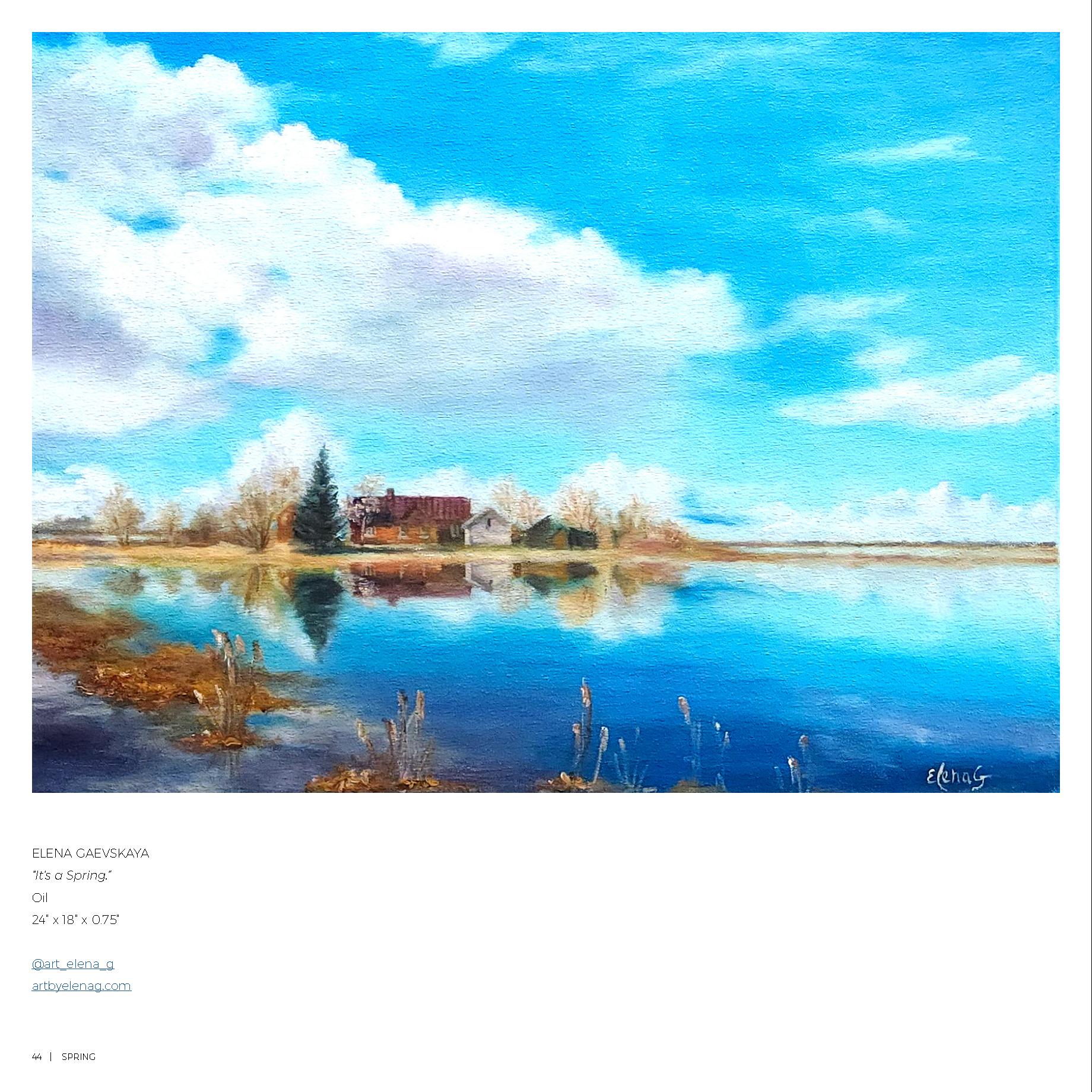
Claudia talks about her process; ‘When I get going, there is a certain energy, and impulse within me and picking up from the residues of leftovers from previous sessions, remnants that I have been living with since. One of the main ingredients that informs my decisions seems to be reacting to impulse to distil [UK spelling. US spelling ‘distill’] and repair something. Even though I don’t know what that is.’  (From Obscure Secure, exhibition catalogue, in conversation with Hayley Field and Jacqueline Utley, 2014.)

Culture, mixed media, 70cm x 80cm, 2018

CBP: Your abstract paintings feel like individual identities, each with an independent relationship with you, rather than products of a series. Can you introduce something about your approach to painting?

Claudia Böse: I very much like your first paragraph as nobody ever pointed this out to me. It is kind of obvious to me that each painting is very separate from the others and never part of a series.

I never know what I am going to paint. Painting is bigger than me.

When I start to get into the painting it is out of this world and right in it too.

Das sich zu Erwartende, oil on canvas, 2022

CBP: Describe a typical starting point for one of your paintings?

CB: I get paints, brushes, palette knives, plenty of time, rags, and quiet space. I sit for quite a long time just looking and listening. I am waiting to start. I begin at some moment and that is it. I am on auto pilot. Sometimes there are older panels in the studio which I might also work on. I might just give one painting one coat of new colour or scrape off the middle of an older work.  Anything can happen. 

For the past 10 years I painted in this Church on the second floor. Our allotment is also near.  During Covid I had this place for two years to myself which was an amazing experience. When do we get any thing like this as a painter? I wonder this might also be the only time I have ever sold so many paintings. There was a special integrity at work for a short time and has not happened again.

February, oil on board, 24cm x 18cm , 2015

CBP: Erasure and removing paint is a fundamental process of yours and other painters. Can you talk more about scraping away?

CB: Scraping away and moving paint, it is not about the surface only I think about, but as important is the below and next to it and underneath it, with its own structure and beauty and rules – on one level it is not decorative, there is a reason, giving it space also to its own being. I am German and British, but too much to get into it here.

Frame, oil on panel, 24cm x 18cm, 2015

CBP: You discuss your pull to borderless regions that have been interpreted throughout history by artists and writers. This is a very evocative connection between the feeling, process and scholarly to paint research. Could you talk about this connection in more detail?

CB: Perhaps this is something painters do to find out about visual existence and expression of finality. I moved for three years to the island of Ruegen where Caspar David Friedrich lived and worked. I moved there to see with my own eyes what he saw and painted then. Constable and Sebald interest me for similar reasons.

Green on white, oil on panel, 12cm x 12cm, 2011

CBP: You’ve talked in past articles about decisions about when and how you use paint are strongly guided by your empathy for work which has been created by other women painters. Is this through mark making appropriations or another type of approach and sensibility? Has this changed for you more recently?

CB: This is a very different question now.  Things have changed and come to an end in Europe. Women and men are equal. It will take time and all will get used to it.  For six years I was part of Obscure Secure1 and we were not sure if change will really come. I am so glad that things have changed forever.

Letting go, oil on canvas, 89cm x 70cm, 2018

CBP: Can you talk about how you work with colour to build mood and space in your painting?

CB: This question is amazing for all painters.  There are growing moods supported by colours we use in a personal way. I have always painted with the same ambition, origin and style and mood. I also always use in painting white, yellow, earth colours and pink to have a presence. There are so many different colours of each. I wonder how many colours I touch in my life?  

Loki, mixed media, 50cm x 50cm 

CBP: How prolific are you as a painter in terms of routine and successful completion of works verses the abandonment of paintings?

CB: I am aware how few phases I have left to paint in my life. This is a very interesting time. I recently started getting rid of art things I really won’t need anymore. New things will come too, I am sure.

Mother, mixed media, 90cm x 90cm, 2018

CBP: What are you working on right now?

CB: I am painting new work. I am also getting my studio open for September.

1. Obscure Secure is an artist-led collaborative project focusing on work by 20thc women artists, initiated in 2013 by Claudia Böse, Hayley Field and Jacqueline Utley with a practice based research exploring the visibility of women artists in collections. The name Obscure Secure was taken from one of The Hawstead Panels at Christchurch Mansion, most available writing about the panels say they were probably painted by Lady Drury in 1610.  The panel ‘Obscure Secure’ has an image of a bear in a cave with the text beneath it. We decided to use this title because the words and image resonated with working with collections, where work is often hidden but kept safe.

Sandra Blow, mixed media, 30cm x 30cm, 2022
Staying alive, oil on canvas, 100cm x 100cm, 2012
Trabant, oil on paper, 91cm x 116cm, 2011
Vater, watercolour, 11cm x 10cm

Claudia Böse was born in Nueremberg, Germany in 1963 and trained at Central St. Martins and the Royal Academy Schools in London. Her awards include the International Bursary, Arts Council Ireland and the Travel Grant, European Cultural Foundation for residencies in Ireland and Poland. She was also the recipient of the Something useful project in India as well as being a collaborative artist of ‘Obscure Secure’, a project supported by the Arts Council England. Her paintings have been exhibited England, Ireland, Germany, Poland, Spain, Florida and India. She is working in a church tower and has been based in Suffolk since 2002.

Recent exhibitions include: 2024; Slow Painting, Contemporary British Painting & Guests, Studio KIND at the Cornstore & The Plough Arts Centre, Exeter,  2022-3; Animal, Vegetable, Mineral, Saxmundham, Suffolk,  2022; Wells Art Contemporary, Vitalistic Fantasies, Elysium, Swansea, Paradoxes, Contemporary British Painting, Isle of Wight, Quay Arts Centre, A Generous Space, Hastings Contemporary.

Featured image- Bathroom by Claudia Böse. Watercolour, spray paint and acrylic paint.

http://www.claudiaboese.info/

@boeseclaudia

Supplemental- A kinship of process. British-Canadian artist Jarrod Barker’s “Some Assembly Required” 2024. Acrylics.

Synthesizer Spotlight- The Synergy

The Somewhat DX7 Like Alternative

The Digital Keyboards Inc Synergy II+  is a digital additive/FM synthesizer that sounds like no other. Somewhat similar to the extremely popular Japanese Yamaha DX7, its tone is mellower and warmer. The Synergy appealed to many performers and composers in that it was, like the Synclavier (one of Michael Jackson’s famous early synthesizers) , made in USA.

It’s estimated that only 700-800 Synergy keyboards were made and that less than 100 are in operation today.

Due to it’s rarity and lack of many working examples, it is not easy to garner modern day opinions and user experiences and so it makes sense to paste some stuff from wiki:

“Analog synths of the same era (the late 1970s and early 1980s when the Z-80 computer chip ruled the electronic world) were subject to environmental changes in the input controls that meant every performance, even after a short delay, would be different. The tuning capacitors would drift due to performance venue temperature changes or recording studio humidity and temperature changes making it very difficult to stay in tune with other instruments and especially other electronic instruments.

One way around this was to spend huge sums of money on the latest high end digital synthesizers that held their tunings digitally. Famous electronic artist Wendy Carlos (her originally soundtrack for The Shining remains unused to this day and I have yet to hear it. If you have a link please share in the comments below) owned a Crumar General Development System, or GDS, that was released in 1980 and sold at that time for $30,000USD / $41,544 CAD or $114,300 USD / $158,271 CAD in today’s prices after adjusting for inflation . “

The GDS was used famously on the Tron soundtrack.[9] She was also one of the instrument’s most devoted users, and still uses it to this day.

Digital Keyboards Synergy

The GDS Leads to the Synergy

With microchip prices falling including the Z-80 and with further work on the same basic concept of the GDS (additive synthesis, a system microcomputer, programmable sound generators, and a number of different input devices) the lower-cost Synergy was released in 1981.[10]  More affordable and more powerful computer chips meant that The Synergy was able to remove earlier expensive design parameters that would have required a separate stand alone computer component, and re-packaged the entire system into a case with a 77-key keyboard.

Due to it’s high price, the GDS did not sell well, allowing the Synergy to find some market share. However, when the famous Yamaha DX7 was released in 1983, it quickly took over the market. The DX7’s FM synthesis offered the same basic control over output sound as an additive synth, but could duplicate the effects of many ganged oscillators in as few as two.[11] Its $2,000 usd/ or around $7,000 usd in today’s money when adjusted for inflation. This price point eliminated any competition from the additive synths and production of the Synergy ended in 1985.

Mulogix Slave 32

A final version of the original Synergy machine was produced after Digital Keyboards was shut down in early 1985. More on this below. Digital Keyboards’ chief designer, Mercer “Stoney” Stockell, decamped and formed Mulogix with Jim Wright and Jerry Ptascynski. The Mulogix Slave 32 was a Synergy re-packaged into a 2U rack-mount module with a MIDI interface. The Slave 32 could read and write EPROM cartridges from the Synergy.[12]

Final Version

Later models of the Synergy, known as the Synergy II+, feature MIDI implementation, 24 user voice RAM, and an RS-232 computer port. This allowed support for Kaypro II portable computer systems running Synergy voicing software to open up the possibility to finally edit the sounds of the Synergy as well as to save patch and sequence data on to floppy disk. (via vintagesynth.com)

If you are searching for one of the most desirable synthesizers ever, fear not, because our friends at ToneTweakers just fully serviced a unit and it’s working great and its a desirable II+ model. Check out the video below  to hear the preset sounds. For the Silo, Jarrod Barker.

World Record Price For French Photographer’s Ferrari Print

Monaco, French Riviera – A couple of months ago on Saturday, June 8th, artworld history was made during the prestigious auction “L’Astarossa” organized by Monaco Car Auction at the Grimaldi Forum.

A photographic work by artist Philippe Shangti reached a new peak.

The photograph, a unique piece titled “Luxury Pollution Car, Signature Masterpiece,” was sold for the hammer price of €290,000 / $435,000 CAD, a world record- making Philippe Shangti the highest valued contemporary French photographer.

The event “L’Astarossa” was primarily dedicated to Ferrari collector cars but also featured artworks related to the Ferrari theme.

The centerpiece of this artistic sale, “Luxury Pollution Car,” is a composition featuring the La Ferrari car with models in Shangti’s inimitable style. The print, called “Signature Masterpiece” by the artist, is printed on museum certified paper and traced with a hologram, signed, and numbered 1/1 on the back by Shangti himself. It measures 259 x 110 cm, and 267 x 128.5 cm with its baroque wood frame and molding.

This record comes just a few months after Shangti had already broken his own record.

Indeed, on March 8th, one of his photographs titled “Luxury Fifth Dinner,” a
print numbered in an edition of 7, sold for €54,000 / $81,000 CAD at Drouot Paris.
The auction of the photograph “Luxury Pollution Car” marks a historic milestone,
being the highest ever recorded for a living French photographer, held before by
Gerard Rancinan. This recognition strengthens Philippe Shangti’s position on the
international art scene and highlights the growing appeal of his works among
collectors and art enthusiasts.

Screenings In 70MM Film Hit Differently

This past Saturday, it was back to the Aero at Santa Monica, California for more Ultra Cinematheque 70 Fest.

So far, every one of these screenings have been preceded by a short film titled “Six Tons of 70MM”, in which we follow Matt Burris, an employee of the American Cinematheque, driving around L.A., picking up the prints that will be played throughout the festival. He talks about the work and costs involved in booking, transporting, and projecting these big, heavy-ass prints — this year’s festival totals 40 films — and explains how the higher resolution format makes for a more theatrical experience, quoting Martin Scorsese with “Seventy-millimeter hits different”.

Because this short plays before every one of these 70mm screenings, I was ready to call Burris the Nicole Kidman of the American Cinematheque — if the son-of-a-bitch hadn’t already beat me to the punch during his intro to Saturday afternoon’s screening of 1996’s HAMLET, Kenneth Branagh’s *unabridged* adaptation of the Bard’s play, which was shot in Super Panavision 70. During Burris’ intro, we were told about how the length of the film — over four hours — meant that the *two* projectionists on hand for this screening would be dealing with 20 reels, each weighing about 30 lbs each, totaling about 600 pounds of movie.

I’ve only seen the play performed once, and I’ve never seen any of the film adaptations, neither the Olivier, Gibson, not even the Ethan Hawke one — but I have seen STRANGE BREW, if that counts.

So I can’t compare flicks, but really liked this pumped-up version of the play, which isn’t surprising considering Branagh’s tendency as a director to just Fuckin’ Go For It on some over-the-top shit. That approach might be off-putting to some, but I didn’t have an issue with it, just as I didn’t have an issue with it during his HENRY V. (I still want to see his FRANKENSTEIN movie, for morbid curiosity’s sake, if nothing else.) It didn’t feel like four hours, more like two-and-a-half, if I’m being honest.

I knew of this film during its original release, but totally forgot about the cast, which includes welcome-but-not-surprising appearances by Kate Winslet, Derek Jacobi, Julie Christie, Brian “Gordon’s alive!” Blessed, John Gielgud, Rufus Sewell (giving me Purple Rain-era Prince visual vibes here), and many other of the usual respected suspects for this kind of film.

But then every once in a while, someone like Jack Lemmon or Robin Williams or Charlton Heston or fuckin’ Billy Crystal will pop up and it kind of took me a bit to get acclimated to the sudden Yank-ifcation of the atmosphere; of these Special Guest Stars, I felt Crystal (no, really) and especially Heston gave the best performances.

The print looked good, some lines here and there, but there was an odd inconsistency in the rear surrounds with echoing voices in the interior scenes, some parts had it, others didn’t.

But the main thing is that it was a great looking film, shot on 70mm, shown in 70mm, and unlike say, certain foot-fetishizing filmmakers, Branagh and cinematographer Alex Thomson took full advantage of the format, filming in big, wide spaces, both interior and exterior. They do a lot of talking here, but make no mistake, this is a goddamn Movie.

There was a ten-minute intermission a little after two hours, which allowed some of us in the audience to use the restroom, get snacks, or in my case, run four blocks down to feed the meter (which by that point, had expired about ten minutes earlier) because this was a 2PM afternoon show and those Montana Ave. parking enforcers don’t get off the clock until 6pm.

Later that evening, I was back inside the Aero for STREETS OF FIRE, directed by one of my Mount Rushmore directors, Walter Hill. I had actually seen this 70MM print before at the Aero in ’17 — it starts with a British Board of Film Classification at the beginning — and both viewings were equally loud and pristine, both viewings rocked my world.

It’s not even so much a Style Over Substance deal here, it’s more like Style *Is* Substance — the music, the clothes, the attitudes, the neon-lights, the wet streets, the cars (oh my god, the cars), the bikes, the guns, and badasses of both genders.

(And Diane Lane too. I mean, wow.)

Diane Lane in Streets of Fire

Let me mention the music yet again, because both the mix of rock & roll, doo-wop, Ry Cooder score, and Jim Steinman’s breathlessly passionate rants and screeds and laments set to melody, well, they shouldn’t blend so well, and yet they do, kinda like how the film’s world of 1950s meets 1980s shouldn’t blend so well, and yet it does.

During this viewing, I focused more on the dynamic between Michael Paré’s Cody and Amy Madigan’s McCoy. I love how they don’t flex or flaunt, they’re just casually ultra-competent, it’s just what they do when called upon to do it, and I wish I lived in the timeline where we got to see them do more of it together in follow-up films. I’d have followed them anywhere.

One of the things I love about Hill is just how meat & potatoes and no-frills his stories are, they’re real cut-to-the-quick tales that don’t overstay their welcome, populated by characters that are old-school types rather than fleshed-out collections of hopes, dreams, anxieties, etc. (Hell, he didn’t even give the characters of THE DRIVER names, just designations.) He gives you the good guys and the bad guys and that’s it, that’s the Walter Hill way, and his way is an increasingly fresh — and dying — breath of air in today’s chatty and jokey “he just like me fr fr”/“so that just happened” world of action cinema. (Not that I’m against that kind of movie — I enjoyed THE FALL GUY — I just don’t want to see *only* that kind of movie.)

Give me men and women of few words and more actions, is what I mean, or to quote McCoy, “Are we gonna do it, or are we gonna talk about it?”

Hell yeah, McCoy — you can watch my six and sleep on my couch any time.

Great crowd for this showing, a packed house full of both fans and first-timers alike who clapped and laughed at all the right moments. I overheard a lot of excited reactions after the film by people who had no idea what they were in store for, but were very happy they got to experience it. Which in turn made me even happier.

On the walk back to my parking spot, I passed by a car blasting the soundtrack — this also happened when I saw this in ’17, as well as after a 35MM screening at the New Beverly Cinema in ’10. I just thought you should know that. For the Silo, E.F. Contentment. All photos by the author.

Surprising U.S.A.-Soviet Collaboration During The Cold War

Not since the British boarded the USS Chesapeake off the coast of Virginia in 1807 had an American Naval commander surrendered his ship in peacetime.

The ship was the USS Pueblo (AGER-2), a 177-foot Technical Research Ship (TRS) with a crew of 83 officers and men. It was seized in international waters off the coast of North Korea on January 23, 1968. The ship’s captain was Commander Lloyd M. “Pete” Bucher, and his superior officer, with headquarters in Japan, was Rear Admiral Frank L. Johnson, USN. The President at the time was Lyndon Bayes Johnson.

At the time of the seizure, the Pueblo was disguised as a hydrographic vessel of the AGER (Auxiliary, General Environmental Research) type. Along with $1.5 million USD (about $11.9 million USD / $16,300,000 CAD in 2024 dollars when adjusting for inflation) in highly-classified SIGINT (signal intelligence) cryptographic equipment, the Pueblo also carried hundreds of pounds of U.S. Navy, Naval Security Group (NSG), National Security Agency (NSA), and other documents; also on the spy ship was a position devoted to monitoring Soviet telemetry.

The Pueblo was spying mainly on North Korean radar and the Soviet fleet.

One crewman died, and several others were wounded, when North Korean gunboats opened fire on the lightly-armed reconnaissance ship. After eleven months of sometimes brutal detention and an American confession that was quickly disavowed, the crew was released, along with the body of Fireman Duane Hodges, USN.

During Richard M. Nixon’s 1968 presidential campaign, he swore there would never again be a “Pueblo Incident.” Five months after election day, however, President Nixon faced his own North Korean crisis, when, for the second time in fifteen months, a small, isolated North Korea, which Nixon had described as a “fourth-rate power,” attacked a U.S. Navy EC-121 spy plane, killing everyone onboard.

Mission BX-6847 Flight Path — January 26 1968

On April 15, 1969, North Koreans celebrated the birth of Kim Il-sung, the leader and founder of the “Hermit Kingdom.” Birthday cheers were quickly replaced by the familiar shouts of “Down with U.S. imperialism” and “Liberate the South” when it was announced that MiG fighters had shot down a U.S. Navy EC-121 spy plane which North Korea claimed had intruded into its airspace. The shootdown, by one or two air-to-air missiles, took the lives of 31 Americans. Some of the debris also had what was reported as “shrapnel holes.”

Due to the EC-121’s proximity to Vladivostok, USSR, the main naval base of the Pacific Fleet in the Soviet Far East, the first vessels on the scene were Soviet; so the Nixon administration requested Soviet assistance to locate debris and possible survivors.

This four-day joint U.S.-Soviet search and rescue operation became a rare example of cooperation between traditional Cold War adversaries. In Air Reservist (magazine), the official publication of the Air National Guard and Air Force Reserve, the Russians were described as “improbable allies.”

Pueblo in Wonsan Harbor — close-up

One of the first Soviet vessels to arrive was the Steregushchiy, a large anti-submarine (ASW) ship; another was the Soviet destroyer Vdokhnovennyi. A lengthy version of this story, which will appear under the title “Improbable Allies,” relies heavily on the first-hand accounts of three Russian sailors aboard the Vdokhnovennyi, including Felix Gromov, the ship’s executive officer. Later, Admiral Gromov became the Commander-in-Chief of the entire Russian Navy! For the Silo, by Bill Streifer.

Bill Streifer is a freelance journalist on North Korean history and related topics. His co-author, Irek Sabitov, is a journalist and former newspaper editor in Ufa, Russia. Their article on the subject will appear in the Autumn 2019 issue of the U.S. Navy War College Review. He is also the only American on the Editorial Board of Vostok (“East” in Russian), a journal on the Orient, published by the Russian Academy of Sciences in Moscow.

FBI- Trump Shooter Was Lone Gunman

Today, the aftermath of the attempted assassination of former President Donald Trump: a breakdown of the assassination attempt, and initial theories about the gunman. Via our friends at the Associated Press & The Epoch Times.

Highlights

A Breakdown of the Assassination Attempt Against Trump


It started at 6:02 p.m. with former President Donald Trump taking the stage in Butler, Pennsylvania. Ten minutes later Mr. Trump was lying bleeding on the stage and shielded by Secret Service agents.


Why It Matters: An attempted political assassination of a former and potential U.S. president impacts the world.


FBI Found ‘Suspicious Device’ in Shooter’s Car, Investigating Attack as Domestic Terrorism


The FBI has provided background on its investigation of the would-be killer of former President Trump and what else he may have been trying to do.
Officials said they don’t have a motive yet, but did find a suspicious device in the dead gunman’s car and continue to work with his family as the investigation continues.


Why It Matters: Many questions need to be answered, including what the shooter’s motive was, and how he was able to nearly kill a former president.

FBI Investigating Attack as Act of Domestic Terrorism

The FBI said a ’suspicious device,’ which was later defused, was found in the assailant’s car.

FBI Believes Trump Shooter Acted Alone, Investigating Attack as Act of Domestic Terrorism
State and local police block off roads surrounding the home of the suspected shooter of former President Donald Trump, as the FBI carries out an investigation, in Bethel Park, Pa., on July 14, 2024. (Rebecca Droke/AFP via Getty Images) Joseph Lord

FBI officials say they believe the would-be assassin of former President Donald Trump acted alone.

The agency is investigating the attack as both an attempted assassination and an act of domestic terrorism, officials told reporters in a call with news media on July 14.

The new details emerged less than 24 hours after the United States saw its first major assassination attempt of a president or presidential candidate since President Ronald Reagan was shot in 1981.

Authorities have identified the shooter as 20-year-old Thomas Matthew Crooks, a resident of Bethel Park, Pennsylvania. At a Trump rally in Butler, Pennsylvania, on July 13, the assailant fired several shots from an elevated position near the venue. Witnesses saw a man with a rifle on the rooftop of a nearby building.

Former President Trump’s right ear was pierced by one of the bullets before he was rushed to his car by Secret Service agents. However, one of the attendees at the rally, 50-year-old firefighter Corey Comperatore, was killed. Two other rally attendees—identified by Pennsylvania State Police as David Dutch and James Copenhaver—were injured.

Both of the injured attendees are in stable condition, according to Pennsylvania State Police, which did not provide further details on their injuries. A GoFundMe effort established by the Trump campaign for the victims and their families had raised more than $3 million usd/ $4,090,000 cad as of the evening of July 14.

FBI Investigation

The FBI has not yet identified a motive. The assailant’s family is cooperating in the investigation, officials said.

Trump Says God ‘Prevented the Unthinkable’ During Assassination Attempt

Biden Says He’s Directed an Independent Review of Security at Trump Rally

Biden Says He’s Directed an Independent Review of Security at Trump Rally

Attorney General Merrick Garland called the assassination attempt on the former president “an attack on our democracy itself.”

“[The Justice Department has] no tolerance for such violence, and as Americans, we must have no tolerance for it,” Mr. Garland told reporters. “This must stop.”

The agency said a “suspicious device” was located during a sweep of Mr. Crooks’s car. It was later defused by bomb technicians.

FBI Director Christopher Wray vowed that his agency would “leave no stone unturned” in its investigation of the attack.

“An attempt to assassinate a presidential candidate can only be described as absolutely despicable and will not be tolerated in this country,” Mr. Wray told reporters.

Earlier on July 14, President Joe Biden said he asked that the investigation be “thorough and swift.”

FBI Director Christopher Wray testifies about the bureau’s budgetary needs during a Senate Appropriations Committee hearing in Washington on June 4, 2024. (Allison Bailey/Middle East Images via AFP via Getty Images)

Prior to the attack, officials said, the perpetrator wasn’t on the FBI’s radar as a potential threat.

The FBI’s screening of the shooter’s social media presence has so far revealed no ideology or political beliefs that could have been his basis for the attack, officials said.

The FBI has received more than 2,000 tips so far, they said.

Officials believe that the rifle used in the attack was a semi-automatic rifle similar to an AR-15.

Kevin Rojek, special agent in charge of the FBI’s Pittsburgh Field Office, told reporters that the weapon belonged to the shooter’s father, who purchased it legally. It’s still unclear how Mr. Crooks got his hands on the rifle, or if his father was aware that he had taken it.

“These are facts that we’ll flesh out as we conduct interviews,” Mr. Rojek said.

Independent Review

President Biden said that he has directed an independent review of the security present at the rally.

Speaking from the White House, President Biden said the assassination attempt was “contrary to everything we stand for as a nation.”

“It’s not who we are as a nation, it’s not America, and we cannot allow this to happen,” he said.

The president said that he had a “short but good conversation” with former President Trump on the evening of July 13.

The former president, meanwhile, was due to arrive in Milwaukee for the Republican National Convention on July 14, as originally planned. He said in a social media post that he had wanted to delay the travel in the immediate aftermath of the attack, but ultimately decided against it.

Secret Service officials confirmed on July 14 that no changes have been made to security at the convention, which starts on July 15, noting that the event has already been given the highest-grade security.

“Currently, there are no known articulated threats against the RNC or anyone visiting the RNC,” Michael Hensle, special agent in charge of the FBI for Wisconsin, said at a news conference.

The Secret Service has refuted claims that the 45th president’s security team requested additional security for the July 13 event and was denied.

“This is absolutely false. In fact, we added protective resources & technology & capabilities as part of the increased campaign travel tempo,” Secret Service spokesman Anthony Guglielmi wrote in a July 14 post on X.

Former President Trump, in a statement on July 14, thanked his supporters, saying of the attack that it was “God alone who prevented the unthinkable from happening.”

The former president made a call for unity, saying, “In this moment, it is more important than ever that we stand United, and show our True Character as Americans.”

Former First Lady Melania Trump, in her own statement, called on Americans to “ascend above the hate” and “simple-minded ideas that incite violence.”

“When I watched that violent bullet strike my husband, Donald, I realized my life, and Barron’s life, were on the brink of devastating change,” Ms. Trump wrote.

She said that she was “grateful to the brave Secret Service agents and law enforcement officials who risked their own lives.”

Over on Capitol Hill, lawmakers are vowing their own investigations into the matter.

House Speaker Mike Johnson (R-La.) said Congress will probe if there were security lapses at the rally.

“We need to know: How could an individual be at that elevation that was seen by apparently bystanders on the ground—how could that not be noticed by Secret Service?” Mr. Johnson told NBC’s “Today” on July 14.

In a July 14 letter to Department of Homeland Security (DHS) Secretary Alejandro Mayorkas, House Homeland Security Committee Chairman Mark Green (R-Tenn.) revealed several pieces of information, including the security plan that was in place on the day of the shooting. The Secret Service falls under the umbrella of DHS.

A DHS spokesperson confirmed receipt of the letter.

“DHS responds to congressional inquiries directly via official channels, and the Department will continue to respond appropriately to Congressional oversight,” the spokesperson told The Epoch Times in an email. For the Silo, Joseph Lord.

Joseph Lord

The Associated Press contributed to this report.