Tag Archives: Anonymous

Met Exhibit Will Explore Human Body & Musical Instrument Physical Connections

The exhibition will feature an interactive space for visitors to make music through body movement, as well as immersive elements, live performances, and workshops
Exhibition Dates:  June 7–Sept 27, 2026
Location: The Met Fifth Avenue, Gallery 199

(New York, April, 2026)—From clapping hands and tapping feet to beatboxing and whistling, the human body is a musical instrument. In turn, instruments often draw their form and decoration from the body. Musical Bodies, which opens on June 7 at The Metropolitan Museum of Art, will explore the multifaceted relationship between musical instruments and the human body. This is the first major exhibition to address this theme and will bring together some 130 works from around the world and across time, including musical instruments, paintings, sculptures, and drawings from The Met collection along with important international loans.

Musical Bodies was conceived as an experiential exhibition. An innovative interactive will enable visitors to create music through intuitive movements and explore the blurred boundaries between body and instrument. Large-scale projections will display newly commissioned footage of beatboxing, body percussion, tap dancing, and more by such acclaimed New York–based and international artists as tap dancer Savion Glover, Beatbox House, and whistler Molly Lewis. Special activations throughout the run of the exhibition will take place in the gallery and include musical performances from an array of artists as well as workshops that activate the body as an instrument. More details will be announced at a later date.

 “Musical instruments, which represent an important part of the Met’s collection, have long been recognized and celebrated as dynamic tools for creative expression, and also as works of art in their own right,” said Max Hollein, The Met’s Marina Kellen French Director and CEO. “This multisensory exhibition is the first to explore—through remarkable instruments, objects, and works of art—the fascinating ways in which sound, musical objects and the human form have been in conversation for millennia. Including outstanding instruments, powerful performances and immersive in-gallery experiences, Musical Bodies is a show that will resonate, fascinate and inspire.”

The exhibition is made possible by Barbara Tober, the Diane W. and James E. Burke Fund, the William Randolph Hearst Foundation, and the Gail and Parker Gilbert Fund.

Additional support is provided by Anonymous, The Dancing Tides Foundation, and the Vanguard Council.

Encompassing 4,000 years of music history and art, Musical Bodies will feature a range of objects from across the visual arts, literature, religion, pop culture, and mythology. This includes ancient Egyptian rattles, paintings by Titian and Degas, instrument-inspired apparel, and one of Prince’s most notable guitars. The ways in which the boundaries between body and instrument have been artfully blurred will be explored through visionary works such as Nam June Paik’s TV Cello; the PianoArc circular keyboard designed in collaboration with Brockett Parsons, keyboardist for Lady Gaga; and a steel guitar in the form of a crutch that was made for country music singer and songwriter Barbara Mandrell while she was recovering from an automobile crash.

Musical Bodies will include prominent works from across 10 of The Met’s curatorial departments, including over 50 instruments from the Department of Musical Instruments as well as ancient works from Egypt, 19th-century masterpieces from European Paintings, and 20th -century works from the Department of Modern and Contemporary Art. The exhibition will also feature significant loans from collectors and institutions such as the Musée de la musique (Paris), the National Music Museum (Vermillion, South Dakota), and the Royal College of Music (London). One of the earliest surviving bowed string instruments, a rare figural lira da braccio from the Kunsthistorisches Museum (Vienna), and a lavish hurdy gurdy from the Victoria & Albert Museum (London) will be shown in the United States for the first time.

Musical Bodies first formed in my mind as a deceptively simple question: Why are so many instruments shaped and decorated like the human body?” said Bradley Strauchen-Scherer, Curator in the Department of Musical Instruments at The Met.”The quest for an answer has become an exploration of humanity through the lens of instruments and music. We find ourselves represented in these instruments because, for much of our history, music has been central to who we are and what we do. I hope this exhibition will reconnect all of us with our innate musicality and shared heritage of harmony.”

Through six thematic sections, the exhibition will illuminate the relationship between the body and musical instruments and how they serve as channels for self-exploration and expressions of culture and belief systems. Musical Bodies will also reveal how instruments are used to stand in for the body to address topics that are traditionally considered taboo, such as sex and death.


Credits and Related Content

Musical Bodies is conceived and organized by Bradley Strauchen-Scherer, Curator in the Department of Musical Instruments at The Met, assisted by Ava Valentino, Research Assistant in the Department of Musical Instruments.

A fully illustrated catalogue will accompany the exhibition and will be available for purchase from The Met Store.

The catalogue is made possible by the Mary C. and James W. Fosburgh Publications Fund.

The Met will host a variety of exhibition-related educational and public programs, including a Creative Convening, Artists on Artworks and Met Expert talks in the galleries, a music workshop, and more. Details will be announced.

Musical Bodies will be on view during the presentation of the exhibition Costume Art (May 10, 2026–January 10, 2027), which will examine the centrality of the dressed body in fashion and art. The two shows will provide visitors with distinct and engaging explorations of the body’s relationship to artistic expression.

For the Silo, Jarrod Barker.


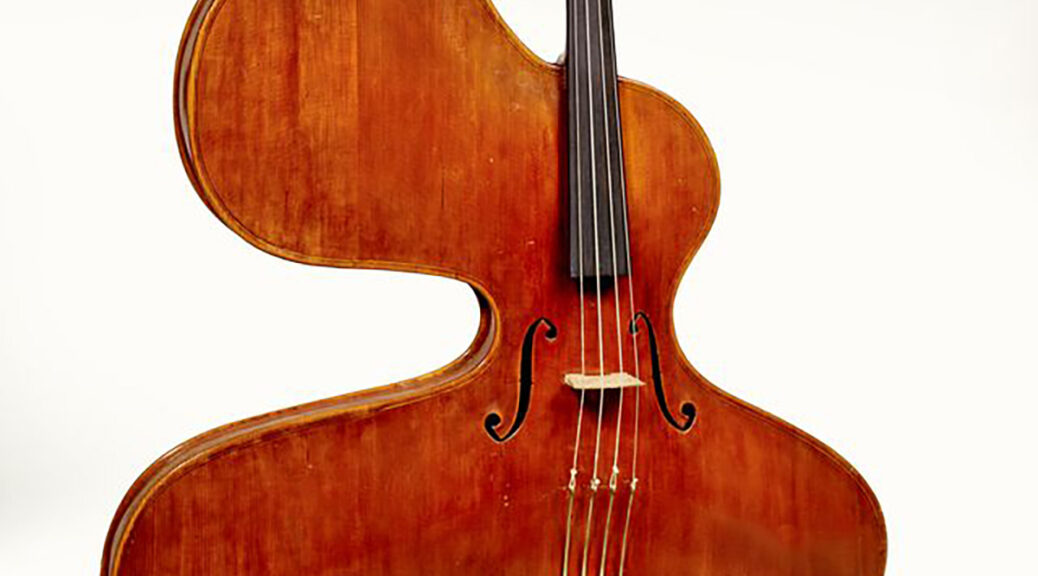
Featured Image: Thomas Zach, Violino Harpa Forma Maxima, 1874. Wood (spruce, maple, ebony), metal strings. Collections Musée de la musique / Cliché Claude Germain, 2020. Cité de la musique-Philharmonie de Paris
Visit The Met
Fifth Avenue1000 Fifth Avenue
New York, NY 10028The Met
Cloisters99 Margaret Corbin Drive,
Fort Tryon Park
New York, NY 10040 metmuseum.org

In The Future Cyberwar Will Be Primary Theater For Superpowers

Cybersecurity expert explains how virtual wars are fought

With the Russia-Ukraine war in full swing, cybersecurity experts point to a cyber front that had been forming online long before Russian troops crossed the border. Even in the months leading up to the outbreak of war, Ukrainian websites were attacked and altered to display threatening messages about the coming invasion.

“In response to Russian warfare actions, the hacking collective Anonymous launched a series of attacks against Russia, with the country’s state media being the main target. So we can see cyber warfare in action with new types of malware flooding both countries, thousands of sites crashing under DDoS (distributed denial-of-service) attacks, and hacktivism thriving on both sides of barricades,” Daniel Markuson, a cybersecurity expert at NordVPN, says.

The methods of cyberwarfare

In the past decade, the amount of time people spend online has risen drastically. Research by NordVPN has shown that Americans spend around 21 years of their lives online. With our life so dependent on the internet, cyber wars can cause very real damage. Some of the goals online “soldiers” are trying to pursue include:

  • Sabotage and terrorism

The intent of many cyber warfare actions is to sabotage and cause indiscriminate damage. From taking a site offline with a DDoS attack to defacing webpages with political messages, cyber terrorists launch multiple operations every year. One event that had the most impact happened in Turkey when Iranian hackers managed to knock out the power grid for around twelve hours, affecting more than 40 million people.

  • Espionage

While cyber espionage also occurs between corporations, with competitors vying for patents and sensitive information, it’s an essential strategy for governments engaging in covert warfare. Chinese intelligence services are regularly named as the culprits in such operations, although they consistently deny the accusations.

  • Civilian activism (hacktivism)

The growing trend of hacktivism has seen civilian cyber activists take on governments and authorities around the world. One example of hacktivism is Anonymous, a group that has claimed responsibility for assaults on government agencies in the US. In 2022, Anonymous began a targeted cyber campaign against Russia after it invaded Ukraine in an attempt to disrupt government systems and combat Russian propaganda.

  • Propaganda and disinformation

In 2020, 81 countries were found to have used some form of social media manipulation. This type of manipulation was usually ordered by government agencies, political parties, or politicians. Such campaigns, which largely involve the spread of fake news, tended to focus on three key goals – distract or divert conversations away from important issues, increase polarization between religious, political, or social groups, and suppress fundamental human rights, such as the right to freedom of expression or freedom of information.

The future of cyber warfare

“Governments, corporations, and the public need to understand this emerging landscape and protect themselves by taking care of their physical security as well as cybersecurity. From the mass cyberattacks of 2008’s Russo-Georgian War to the cyber onslaught faced by Ukraine today, this is the new battleground for both civil and international conflicts,” Daniel Markuson says.

Markuson predicts that in the future, cyber war will become the primary theater of war for global superpowers. He also thinks that terrorist cells may focus their efforts on targeting civilian infrastructure and other high-risk networks: terrorists would be even harder to detect and could launch attacks anywhere in the world. Lastly, Markuson thinks that activism will become more virtual and allow citizens to hold large governmental authorities to account.

A regular person can’t do much to fight in a cyber war or to protect themselves from the consequences.

However, educating yourself, paying attention to the reliability of sources of information, and maintaining a critical attitude  to everything you read online could help  increase your awareness and feel less affected by propaganda.  For the Silo, Darija Grobova.

Museum Celebrates Banksy- An Artist Who Hates Museums

(NEW YORK) – The presence of The Banksy Museum in New York City has been confirmed. SoHo is now the home to the world’s largest collection of Banksy’s life-sized murals and artwork. Located at 227 Canal Street (at Broadway), NYC The Banksy Museum is now open, in preview, to the public. The official press opening is Wednesday, May 15. Tickets are now available online at MuseumBanksy.com and on site at the museum. Advance reservations are strongly encouraged.
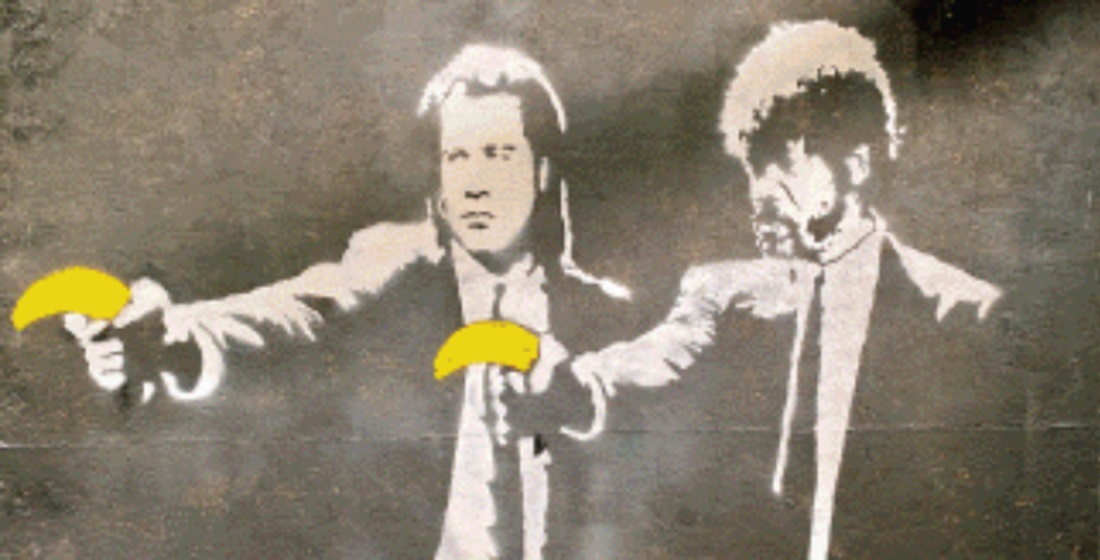
Displaying over 160 works by the world’s most famous-yet-anonymous street artist, The Banksy Museum recreates the revolutionary and often ephemeral art that Banksy has painted on surfaces in London, Bristol, Paris, Venice, Bethlehem, New York, Los Angeles, and beyond. Visitors to the museum will immerse themselves in an environmental experience, giving viewers access to Banksy creations, much of which has long since been whitewashed or dismantled. Beyond the iconic street art, the exhibition also features some of the artist’s studio work, as well as animated visual and video elements.
The New York Banksy Museum experience, an American premiere, follows successful exhibitions in ParisBarcelona, Kraków and Brussels. The new exhibition, a New York premiere, is expanded to over 160 recreations, making it the largest display of Banksy work ever seen in a single setting.
Is it even possible to create a museum that celebrates the work of an artist who once said “the only thing worth looking at in most museums of art is all the schoolgirls on day trips with the art departments”?  Banksy Museum founder Hazis Vardar initially had his doubts. “Street art belongs in the raw setting of the streets,” said Vardar. “But if people can’t see it, is it even art? Little of Banksy’s works are visible to the public at large. Most have been stolen for resale, inadvertently destroyed, or erased by overzealous city cleaning teams. Most of this transient art could only be viewed on tiny smartphone screens, which is no way to experience the scale or emotion of Banksy’s work. So we knew that we needed to create an exhibition that would bring Banksy’s art back before the public.”
Creators of The Banksy Museum faced the challenge of mounting an exhibition that was as unconventional and transgressive as the art within. “If we only trapped Banksy’s work in guilt frames on a wall, this would antithesize all that Banksy’s art represents,” says Vardar. “So we set out recreate the artworks in a life-size, re-imagined space that reflects the street experience. We employed a team of anonymous street artists, like Banksy, to recreate the work. The outcome was, truly, a magnificent reflection of Banksy’s energy, defiance, and raw talent.”  
Banksy is undoubtedly, the world’s most celebrated and elusive guerrilla street artist. Armed with little more than spray paint and stencils, the man behind the pseudonym Banksy has fostered an alluring identity that doesn’t embrace tradition, but shreds it. There’s still much we don’t know about the mysterious artist since he first made his mark in the ’90s, but what we do know is that Banksy’s striking, satirical work always delves into political and socio-critical discourse. Banksy’s artwork is characterized by striking images, often combined with slogans.  His work often engages political themes, satirically critiquing war, capitalism, hypocrisy, and greed. Common subjects include rats, apes, policemen, members of the royal family, and children. In addition to his two-dimensional work, Banksy is known for his installation artwork. A hero to some, a vandal to others, Banksy’s artwork has been known to sell for record-breaking sums, with landowners rushing to profit from – or whitewash – buildings chosen as his latest canvas.  Banksy maintains an oxymoronic relationship with the art world, demonstrating hostility to capitalism while being one of the most sought-after and collected contemporary artists. Celebrities who’ve collected Banksy art include Brad Pitt, Angelina Jolie, Christina Aguilera, and Lance Armstrong to name a few. 
Banksy was nominated for an Academy Award for his 2010 documentary feature Exit Through the Gift Shop, an examination of the relationship between commercial and street art. 
In Wall and Piece, one of his four books containing photographs of his work complemented with his own thoughts, Banksy says “copyright is for losers” and encourages non-commercial use of his work for activism and the public’s personal enjoyment.
Banksy’s art has been further amplified by worldwide media coverage of his rebellious pranks. Between 2003 – 2005, Banksy made headlines by covertly placing his artwork beside masterpieces at The Tate and The British Museums in London; The Louvre in París; and The Museum of Modern Art (MoMA), The Metropolitan Museum of Art, The Brooklyn Museum and The American Museum of Natural History in New York. In 2018, Banksy shook the art establishment when he orchestrated the self-destruction of his canvas, “Girl with Balloon,“ having it drop through a shredder built into the bottom of its gilt frame just moments after it sold for $1.4 million usd / $1.92 million cad at Sotheby’s. The first artwork in history to have been created live during an auction, the work was renamed “Love Is In The Bin” and resold for $25.4 million usd/ $34.9 million cad just three years later.
The art world has coined the phrase “the Banksy effect” to illustrate the increased interest in other street artists, largely due to Banksy’s overwhelming international success.

Where / When: The Banksy Museum, 277 Canal Street, NYC 10013 (at Broadway) is open daily, 10AM – 8PM.
How to get there by subway: N, R, Q, W, A, C, E and 6 trains to Canal Street.
Family friendly: All ages are welcome to The Banksy Museum. This is an experience that all family members can enjoy.
About the venue: The Banksy Museum is an indoor, air-conditioned venue. The museum is located on the 2nd & 3rd floors.
Accessibility: Located on the second floor, the venue is accessible, with an elevator. Guests requiring assistance throughout this experience are entitled to apply for one free pass for their personal assistant/support worker.
How long does the experience last?: Visitors are welcome to enjoy the exhibition at their own pace. The exhibition, on average, takes an hour to experience.Parking: There is no parking at this venue, but parking is available in the neighborhood.

For the Silo, Brett Oberman.