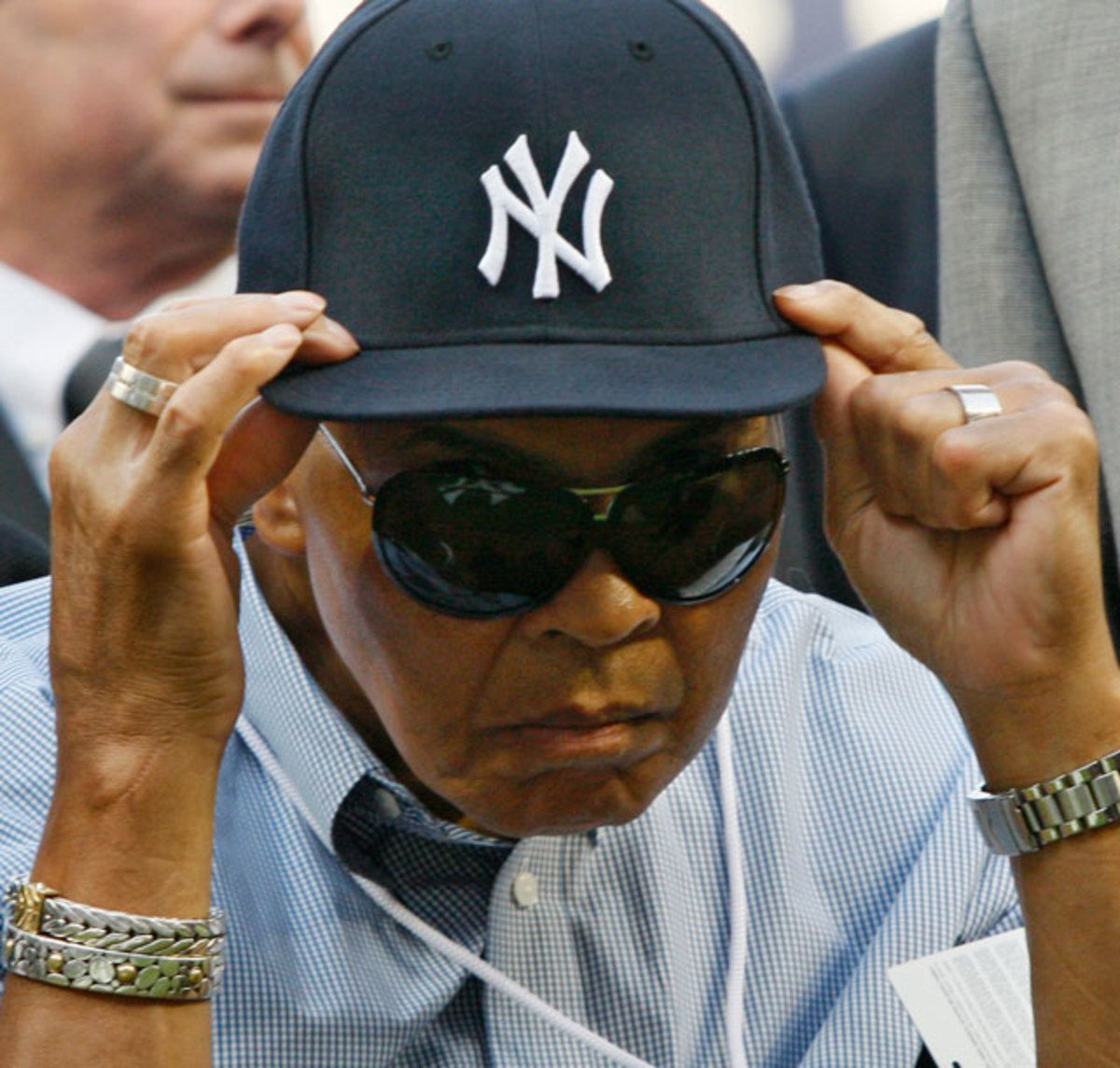
As Major League Baseball wins new fans at home and from Asia to Latin America, replicas of player jerseys, caps and warm-up jackets are being worn by trendsetters worldwide.
U.S. baseball fans have long sought out merchandise that advertises their favorite players and teams. Increasingly, baseball-themed apparel is purchased worldwide, according to the data aggregator Statista, based in Germany. The sporty look of a baseball jersey is now popular on the streets of London and Tokyo and even on Milan’s fashion runways.
Demand stems partly from the growth in international fans — Japanese baseball enthusiasts, for instance, take great pride in the Los Angeles Dodgers’ Shohei Ohtani and the San Diego Padres’ Yu Darvish. But demand is also driven by fashion-conscious youth, who might know little about the game but like the look.
A feeling of connection
Hall of Famer Ken Griffey Jr. says baseball apparel forges a connection among players and fans. He says that, during his own 22-season career (with the Seattle Mariners, the Cincinnati Reds and the Chicago White Sox), he always appreciated spotting fans wearing his jersey.
“When you see your jersey outside of your home ballpark, on the road, it’s special,” Griffey says. “You want to do something special because of those people … who support, not only you, but the organization and the city.”
The former outfielder, who ranks seventh all-time on Major League Baseball’s home-run list, influenced today’s “baseball style” by popularizing the cap worn backward. Griffey’s is not a passing interest. Though retired from the league, he partners with Baseballism and Nike to help design baseball-themed clothing and shoes.
Baseball’s influence on fashion
Baseball historian Todd Radom, author of Winning Ugly:A Visual History of the Most Bizarre Baseball Uniforms Ever Worn, notes that what the players wear on the field has shifted over the decades, moving from conservative to brighter, bolder uniforms in the 1970s, and back to classic color schemes in the 1980s.
(State Dept.)
Creative Collaborations Introduce Alternate Styles And Colors
While uniforms today are largely designed with red, blue or black lettering set against a white or gray background, the league sells merchandise in a range of popular colors. It also engages in creative collaborations with casual clothing lines like Mitchell & Ness and Goat USA and high-fashion brands like Italy’s Gucci and Moschino, and U.S.-based Ralph Lauren.
Baseball-themed runway collections combine luxury materials (leather, cashmere or silk) and expressive overlays (crystals or floral and cartoon-character appliqués).
Moschino, for example, routinely blends oversized baseball jersey dresses with cartoon figures. And sportswear lines integrate stylized ballpark logos, team mascots and Looney Tunes, Sesame Street or Scooby-Doo characters.
Baseball’s comfortable jerseys and brimmed caps easily “adapt to whatever purpose you lTolike,” playing sports or looking stylish, says Erin Corrales-Diaz, a curator at the Toledo Museum of Art and author of The Iconic Jersey: Baseball x Fashion.
Historic Jerseys Are Being Reproduced
The Philadelphia-based Mitchell & Ness Nostalgia Company reproduces historic jerseys for customers who want to recapture their childhood sports memories, says Lynn Bloom, a company director. Superstars’ jerseys are always popular, she says, and Griffey’s consistently ranks among the company’s top-10 sellers.
He’s thrilled. “I always like seeing my stuff out there,” he says. And when fans wear a player’s jersey, “you know they feel that they’re a part of the team.”
An informative 6 MINUTE READ via our friends at Share America.
August, 2026- Today, undergoing surgery is less risky than it was a generation ago. U.S. advances in medical robotics are dramatically improving surgical precision, enabling minimally invasive procedures that reduce complication rates and patient recovery times.
What Is Precision Medicine?
Combining artificial intelligence with medical robotics is further aiding the shift toward precision medicine. With AI-enhanced robotics tools, doctors are diagnosing diseases earlier and tailoring treatments to their patients’ genetics. These medical advances require a secure flow of critical minerals to make the semiconductors and microchips that power new tools.
Through the Pax Silica initiative, the U.S. State Department works with international partners to secure supply chains and enable continued technological progress and mutual prosperity amid the AI revolution. Pax Silica priorities include working with partners to prevent advanced technologies designed for healthcare from being misused. The State Department is also piloting a “concierge” service to streamline partners’ access to American-made AI products.
Here are several surgical robotics tools developed in the U.S. that are benefiting patients around the world.
California-based Intuitive Surgical Incorporated’s da Vinci robotic surgical system has been used in 20 million procedures since its launch in 2000. Updated models bring surgeons greater control, enabling operations through smaller incisions. The da Vinci 5’s AI tools help surgeons feel resistance and tension, so they can moderate force, reducing trauma. Plus, the system provides real-time data analysis during surgery.
The da Vinci 5 “has changed how I take care of patients,” says Dr. Marc Bailey , a cardiothoracic surgeon at St. Joseph’s/Candler Hospital in Savannah, Georgia. “Robotic surgery has always allowed for smaller incisions and less blood loss, and we can get you walking around faster, with less pain.”
The Miniaturized In Vivo Robotic Assistant MIRA™ Surgical System is designed to expand access to robotic surgery, according to the Virtual Incision Corporation based in Lincoln, Nebraska. Used in intestinal and other surgeries, MIRA is lightweight (2 pounds, less than 1 kilogram), allowing hospitals to move the device between operating rooms, reducing lengthy setup times.
Virtual Incision says future uses of MIRA will incorporate AI to inform decision-making and enable remote surgeries. In 2024, Virtual Incision and NASA tested the device’s remote-surgery capabilities at the International Space Station using data sent by satellite.
NASA astronaut Loral O’Hara displays Virtual Incision’s robotic-assisted surgery system aboard the International Space Station in February 2024. (NASA)
Early detection, better outcomes
Intuitive’s Ion robotic bronchoscopy system assists with minimally invasive lung biopsies that can detect early-stage cancers, improving patient outcomes. The robotic-assisted tool, initially released in 2019, added AI-powered navigation and rerouting capability in 2025 that can anticipate how a lung nodule may shift over time.
Ion’s AI-powered detection tools compare live images against the surgical plan, acting like a GPS navigation system that allows doctors to alter the course of surgery as needed. As of June 2025, there were 900 Ion systems at hospitals across 10 countries.
Real-time data, safer procedures
The Mako robotic arm, designed by the Michigan-based Stryker corporation, uses AI technology to assist doctors performing knee and hip replacement surgeries. Mako’s patient-specific, preoperative planning and feedback help surgeons adhere to preoperation plans, while other data analysis protects healthy bone.
The device also enables precise alignment of artificial knees and hips to improve joint stability and extend the lifespan of implants.
It has held champagne, breakfast cereal and even babies. It has been hoisted, hugged and almost kidnapped. It travels all over and has a team of chaperones to assure its safety.
It’s the Stanley Cup, the trophy awarded to the National Hockey League championship team each year.
This year, the Carolina Hurricanes, based in Raleigh, North Carolina, have won the coveted Cup, and the team is beginning a summer of passing the trophy from player to player. Unlike other national professional sports trophies, which are newly made and awarded to a new championship team to keep, there’s just one Stanley Cup. The champions in ice hockey only borrow the Stanley Cup for awhile, before it heads back to a vault in the Hockey Hall of Fame in Toronto.
Each Champion Player Spends A Day With The Cup- Sometimes With WIld Results
The players revere their brief turns to hold the Stanley Cup — the oldest trophy awarded to North American pro athletes. After the Cup was donated to Canada in 1892 by Sir Frederick Arthur Stanley, a British earl serving in Canada whose children loved ice hockey, the National Hockey League acquired it in 1910 to establish it as the award for League champions.
Florida Panthers Matthew Tkachuk poses in front of the Gateway Arch in St. Louis, Missouri, during his time with the Stanley Cup in 2025. (Courtesy of the Florida Panthers)
A sterling tradition
Today, each winning player has his name stamped on one of the five rings that make up the barrel of the Cup. When there is no more room for players’ names, a ring is removed and sent to storage, and another one replaces it.
No matter what mishaps or age-related stresses befall the silver-and-nickel trophy year after year, “they don’t create a new one,” says Hockey Hall of Fame official Kevin Shea, author of 21 books about hockey, including Travels with Stanley.
“It’s got its dents and scratches. It’s a real living thing,” Shea says.
If you watched the final playoff game in the championship, just after the final buzzer sounds, you would have seen Hurricanes players skating jubilantly around the rink, some carrying the massive and heavy — it’s 35 pounds (16 kilograms)! — Stanley Cup over their heads.
Soon the real fun begins.
A decades long tradition, which became official in 1995, dictates that each player and team staff member will get one day to have the Cup all to himself, celebrating in whatever way is special to him (without damaging the iconic trophy, of course).
In earlier years, the winners have come up with some sterling ways to make the most of their day with the Cup.
(State Dept./B. Insley)
The ‘Keeper of the Cup’
From one tradition grew another. Today, there is a “Keeper of the Cup” who, along with some deputies, keeps an eye on the trophy through all of this. They move with the trophy during a roughly 100-day period when players and staff members each have their day with it.
That all got started, according to the New York Rangers’ Neil Smith, when “one person took it, and the top came off. … And for some reason, somebody thought it would be wise to have an auto body guy weld it back on.”
Since then, the keeper of the Cup — Phil Pritchard, vice president of the Hockey Hall of Fame — accompanies it wherever it goes.
Pritchard and his helpers clean and polish the Stanley Cup at the end of each day before awarding it to the next player.
Players get it from 6 a.m. to midnight, with veteran players getting first dibs on the schedule. It’s a special honor, notes Shea of the Hockey Hall of Fame, since ice hockey players, out of superstition, won’t touch the Cup unless and until they win the championship.
How the Cup will enter the daily lives of 47 Hurricanes players and staff is yet to be seen. But it will connect them to champions from teams decades ago. That is what makes the tradition so inspiring, Smith says.
“Ice hockey teaches you things you can’t get anywhere else. … Great values of sharing, of being in a group,” Smith says. And the Stanley Cup, every summer, joins the group.
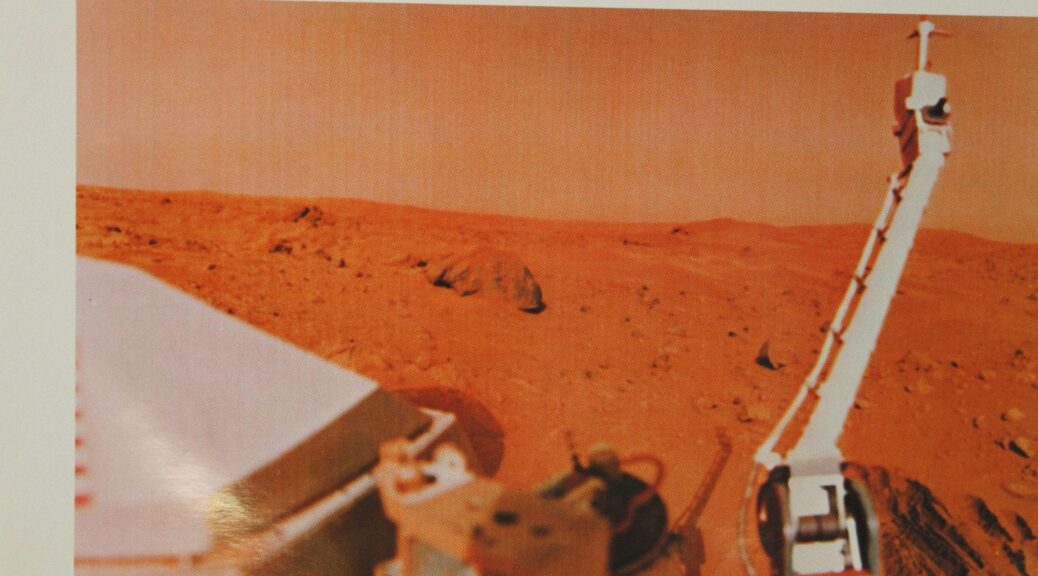
The Viking 1 lander’s photographs gave the world its first look at the surface of Mars, including this image taken before sunset August 21, 1976. (NASA/JPL)
On July 20, 1976, seven years after NASA landed a man on the moon, the U.S. space agency safely landed the first spacecraft on Mars.
Viking 1 operated for six years, far exceeding its planned 90-day mission. The lander tested soil and sent home the world’s first images of the Martian surface. While Viking 1 — consisting of an orbiter and a lander — did not find signs of life, its successful landing led to future exploration of Mars, including by the Perseverance rover launched in July 2020.
As the 50th anniversary of Viking 1 approaches, the United States is again reaching for Mars with missions that serve as a stepping stone toward sending astronauts to the red planet. NASA’s Artemis program aims to create a permanent moon base by 2032 to test human habitation on other planets and inform missions to Mars.
“We will pursue our manifest destiny into the stars, launching American astronauts to plant the Stars and Stripes on the planet Mars,” President Trump said in his January 2025 inaugural address.
Mars missions continue
This digital rendering provides a conceptual image of the Space Reactor 1 Freedom that NASA will use to study Mars. (NASA)
Other NASA missions are carrying on Viking 1’s legacy , furthering scientific knowledge of the fourth planet from the sun. Launched in November, NASA’s Escapade and Plasma Acceleration and Dynamics Explorers mission will reach Mars in 2027. The twin spacecraft will orbit Mars, collecting data on space-weather conditions to inform future robot and human missions.
In 2028, NASA will launch the Space Reactor‑1 Freedom to Mars, an uncrewed mission designed to demonstrate whether nuclear electric propulsion can work in deep space, an essential element for human flight to Mars.
A pioneering legacy
A Viking 2 image of Mars’ Utopia Plain (NASA)
Successfully landing Viking 1 on Mars was an extraordinary achievement. While other nations had tried, communications were lost on touchdown. Yet NASA repeated the feat two months later with the safe landing of Viking 2 on September 3, 1976.
Project managers weren’t certain what to expect from either mission. The Viking 1 landing, originally scheduled for America’s bicentennial on July 4, 1976, was delayed when the planned landing site appeared too rocky. Yet the Viking missions’ legacy endures. Viking orbiters mapped 97% of Mars’ surface and sent home 52,663 images. The landers returned 4,500 photos before Viking 1 finally stopped operating in November 1982.
While neither mission discovered signs of life, the search continues as scientists revisit findings from Viking and later missions. In September, NASA announced that a soil sample Perseverance collected may contain evidence of ancient microbial life, calling it “the closest we have ever come to discovering life on Mars.”
As Americans honor the 250th birthday of the United States in 2026, people around the world are joining them in marking the occasion. Other countries are commemorating America’s founding in a variety of ways, from minting coins and planting trees to flying over U.S. cities.
Kaci McEwan’s tribute is a red, white and blue tartan made with threads signifying early milestones in American history. “For me, the tartan was about telling a story,” said McEwan of Scotland’s Heriot-Watt University’s School of Textiles and Design. “Every thread and colour represents a moment in the journey towards the Declaration of Independence.”
Her Old Glory-themed take on the traditional Scottish pattern has been selected to serve as a symbol of the close cultural ties between the United States and Scotland. McEwan will deliver the tartan to Washington on July 4, Independence Day.
Here are a few more ways other countries are honoring America’s 250th birthday.
At the time of King Charles III and Queen Camilla’s visit to the White House in April, the United Kingdom’s Royal Mint issued a commemorative coin in honor of America’s 250th anniversary celebration. The large decorative coin features King Charles III on one side and America’s national bird, the bald eagle, on the other.
“Every detail tells a story of independence, partnership and the values that continue to unite our two nations,” the British Embassy in Washington said in April, when U.K. Ambassador to the United States Christian Turner delivered the coin to the White House.
Japan gifted the United States 250 new cherry blossom trees for the anniversary. The trees will replace aging ones dating to Japan’s original 1912 gift of 3,020 cherry blossom trees. The blossoms draw 1.5 million people a year to Washington for the National Cherry Blossom Festival, a springtime tradition that honors the friendship between the United States and Japan.
The United States has sent dogwood trees to Japan in return, establishing a unique diplomatic tradition. President Trump has praised the cherry blossom trees as a “living symbol of the cherished friendships” between our two nations.
The Spanish Royal Mint has issued three limited-edition coins paying tribute to early ties between the United States and Spain. The coins honor Spanish-born Jordi Farragut, who fought alongside the Continental Army in the American Revolution, as well as Spain’s King Charles III, who supported America’s fight for independence from Britain. The third coin recognizes an early U.S. coin modeled after Spanish currency.
The French Air and Space Force’s aerobatic flight team, the Patrouille de France, is commemorating France’s support for the American Revolution with a monthlong tour of flyovers of major East Coast sites, culminating July 4. Dubbed Liberté 250, the mission features aircraft painted red, white and blue in honor of the American and French flags and bearing the names of U.S. Founding Fathers Benjamin Franklin and George Washington.
French pilots will fly alongside American counterparts with the U.S. Navy’s Blue Angels and the U.S. Air Force’s Thunderbirds.
The Italian Navy’s Amerigo Vespucci, a tall sailing ship named for the 16th-century explorer who became a namesake for the United States of America, will visit New York City July 4. The Vespucci will participate in Sail4th 250 , a parade of ships from 20 countries, including Argentina, Germany, the Netherlands and Peru, making it the largest international maritime gathering in modern American history.
While enemies, the British king and American leader had similarities
7 MINUTE READ
They were sworn enemies but never met. They shared interests but couldn’t avoid conflict. And though their paths diverged — one relinquished his command, while the other clung to power — each was fiercely devoted to his cause.
They are the two Georges. General George Washington, who would become the first U.S. president, and King George III, Britain’s monarch during the American Revolution. While the former fought for a new form of government and the latter to maintain rule by divine right, the two Georges’ lives and interests overlapped a great deal, presaging the modern alliance that both countries now call “the special relationship.”
A tale of two Georges
During British King Charles’s recent visit — and bookended by President Trump’s hospitality at the White House — the king spoke to Congress and called Washington “a city which symbolizes a period in our shared history, or what Charles Dickens might have called ‘A Tale of Two Georges.’”
In truth, while we think of the two Georges as “complete opposites,” says John Powell, director for the Library of Congress exhibit, “they had, in some ways, similarities. They were both British. … They read many of the same books. And they were interested in science and farming.”
The exhibition, called The Two Georges: Parallel Lives in an Age of Revolution, honors the 250th anniversary of America’s founding. It brings together the two men’s writings for the first time, drawing on collections in the United States and United Kingdom. The idea behind it stems from work by the Library of Congress and the United Kingdom’s Royal Collection and Royal Archives to digitize the men’s letters. While it will remain available online, the physical display closes in Washington July 4 and will open next at the Science Museum in London.
The exhibit helps one understand the war-time adversaries by offering their own words … and reveals unlikely commonalities.
“Both of them were very keen on their sense of duty,” presidential historian Feather Schwartz Foster says. “They had a great sense of persona. George Washington, mainly because he wanted to, and George III, because that was how he was raised.”
Born six years apart, each of the men known as fathers of their countries lost his own father at a young age. (Washington was 11-years-old, and then-Prince George was 12.) Each was raised by a widowed mother, and each wed in the Enlightenment style, sharing influence over a marriage with his respective wife to an uncommon degree for the times. Both were family men. George Washington helped raise two step-children from his wife Martha’s first marriage, as well as nieces, nephews and grandchildren. George III and Queen Charlotte had 15 children.
They were passionate about agriculture, especially the emerging methods for farming, gardening and landscape design. Both men drew up crop rotations and took an interest in animal husbandry.
Washington worked as a surveyor, charting new territory in his home state of Virginia. The king studied surveying also, and his surveyor’s compass is included in the exhibition.
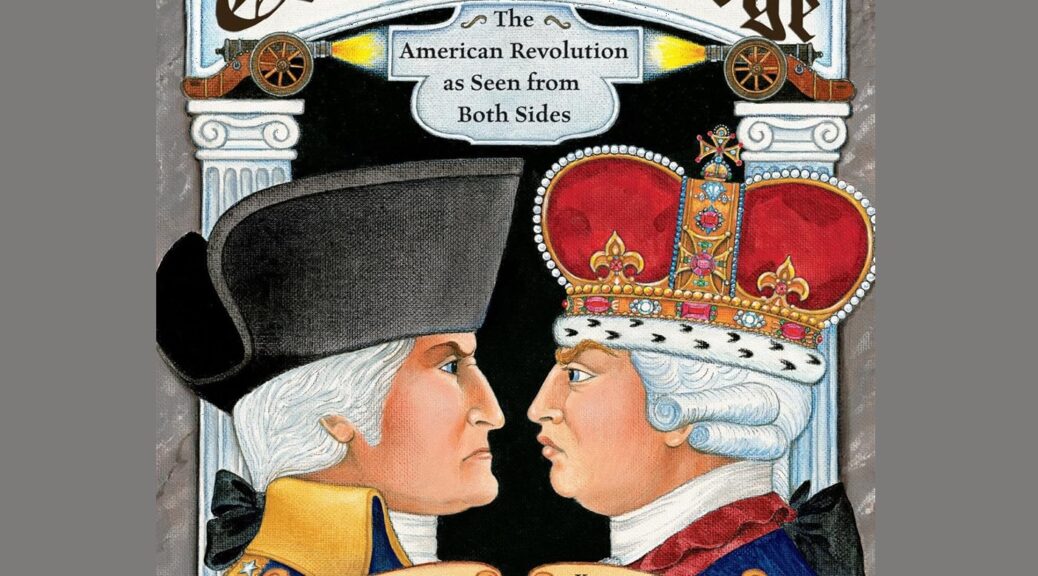
Rosalyn Schanzer, author of the children’s book, George vs. George: The American Revolution as Seen from Both Sides, notes the Georges were excellent horseback riders and enjoyed long rides in nature. “If they hadn’t been so far away from each other, they might have liked each other better than they did,” she says.
Yet Great Britain’s treatment of the American colonies set the two men at odds. Washington would fight for his fellow colonists, who had been denied representation in the British parliament and who had other serious complaints — for instance, the imposition of unjust taxes from afar by the king’s government.
The king would not give up the colonies without a fight, says Foster, the historian. George III’s attitude — “I’m king because God wants me to be, and I don’t have to answer to anybody other than God,” is how Foster describes his thinking — struck the colonists as a tyrannical attitude.
Visitors tour the “The Two Georges: Parallel Lives in an Age of Revolution” at the Library of Congress in Washington. (Library of Congress/Shawn Miller)
After the war, the two sides’ shared language and history drove something of a cultural rapprochement. While still developing their own literary traditions, many Americans read British literature, says Andrew O’Shaughnessy, a British-born history professor at the University of Virginia and co-author of “Republic and Empire: Crisis, Revolution, and America’s Early Independence.”
The newly minted United States remained a strong trading partner with its former colonizer. American ideas about human freedoms percolated in Great Britain, influencing British people’s perceptions of the aristocracy and the British government’s foreign affairs.
After leading America’s fight for independence, Washington resigned as commander-in-chief of the Continental Army and returned to his farm at Mount Vernon. Upon hearing of Washington’s decision, George III reportedly said, if “He did [this], He would be the greatest man in the world.”
Despite that admiration for Washington’s actions, the king was initially so distraught over losing the American colonies that he considered abdicating the throne. Instead, he ruled until his death in 1820. According to John Adams, the first U.S. minister to Great Britain, George III would eventually come to terms with losing the American colonies.
“I was the last to consent to the Separation,” Adams reported the king saying. “But the Separation having been made and having become inevitable, I have always said, as I say now, that I would be the first to meet the friendship of the United States as an independent power.”
For the Silo, Susan Milligan / ShareAmerica (freelance writer).
A print of George Washington by Valentine Green. (National Gallery of Art)
George Washington, who as a general led America to independence from Britain and who went on to serve as the first U.S. president, also nurtured a lifelong interest in men’s fashion.
Washington recognized his attire sent a signal about America’s standing in the world, according to Suited to Lead: The Lives of Six Presidents Through Fashion , an online exhibit of the White House Historical Association. (The exhibit also explores the fashions of presidents John Quincy Adams, Abraham Lincoln, Theodore Roosevelt, Harry S. Truman and Jimmy Carter.)
Washington “thought deeply about what his choices conveyed to the public,” says Fiona Hibbard, a graduate student in New York University’s Costume Studies program. Hibbard curated the exhibit while an intern at the society in 2025.
“Washington was interested in projecting an image of authority, unity and American identity,” she says.
The exhibit highlights how Washington’s sartorial choices conveyed leadership and created an early-American aesthetic that endured for generations.
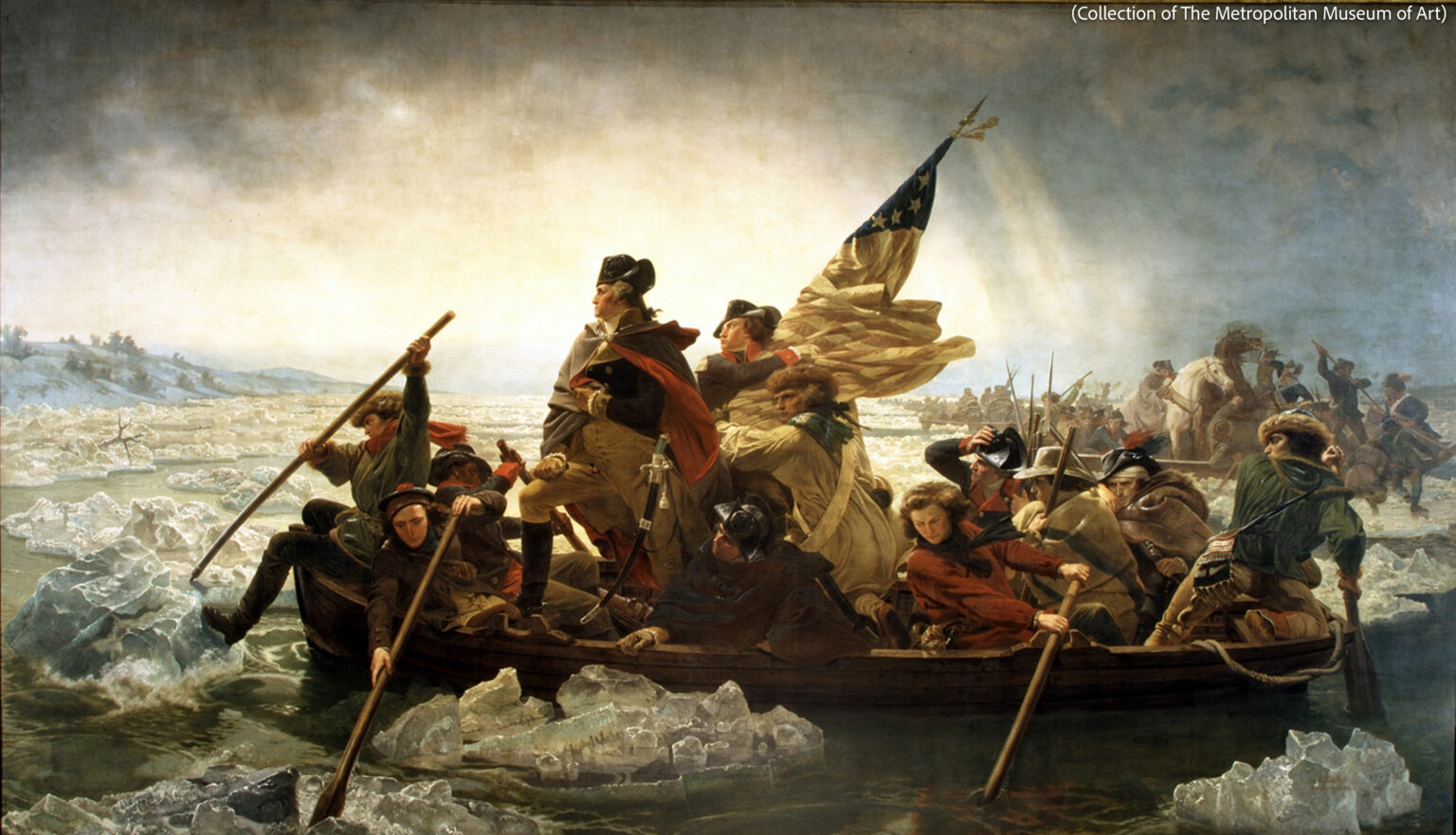
Washington chose blue for the uniforms of the Continental Army to present colonial militias as unified and to clearly differentiate the fighters from British soldiers, known as “redcoats.”
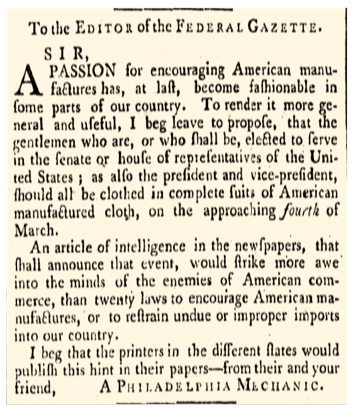
Federal Gazette, January 7, 1789
As a military commander and later as president, Washington appeared in portraits wearing a blue coat trimmed in yellow, with matching waistcoat and breeches.
Blue and yellow remained the colors of the United States Army until the Civil War in the 1860s.
Washington also adapted military uniforms to better suit soldiers to their environment by replacing breeches, which only came to the knee, with full-length trousers that better protected the soldiers’ legs as they climbed or scrambled on difficult terrain.
Washington supported American manufacturers, Hibbard says, “something most Americans can relate to and take pride in.”
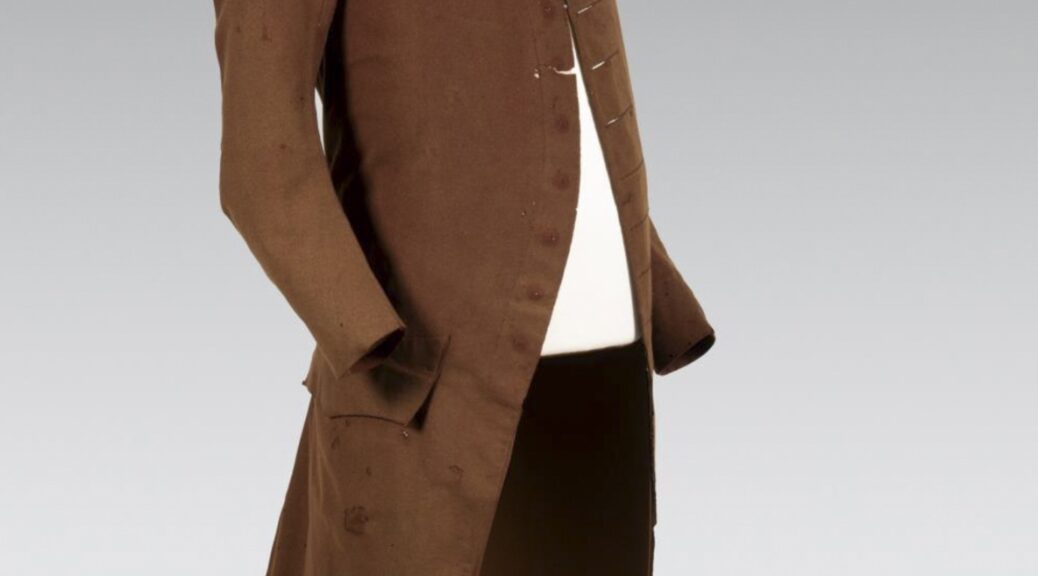
Before being sworn in as the country’s first president, he ordered high-quality American wool from a Connecticut manufacturer for his brown inaugural suit . He had deliberately avoided using British-imported fabric, according to the Mount Vernon Ladies’ Association, which runs Washington’s Virginia estate. Though commonly known as “London Brown,” Washington’s fabric became known as “Congress Brown,” a nod to the new country’s representative form of government.
“George Washington’s inaugural suit was more than attire — it was a statement of national identity,” the association says.
Washington wore American-made wool for his April 30, 1789, inauguration as the first U.S. president. (Library of Congress, Courtesy of the Mount Vernon Ladies’ Association)
This article provided by our friends at Share America/ US Department of State.
President John F. Kennedy meets with members of the Executive Committee of the National Security Council regarding the crisis in Cuba, in October 1962. (White House/Cecil Stoughton/John F. Kennedy Presidential Library and Museum)
The Cuban missile crisis of October 1962 was the moment that the United States and the Soviet Union came closest to nuclear war. The conventional wisdom is that decision-making occurred “with relatively little input from the respective bureaucracies typically involved in the foreign policy process.”
In fact, the lawyers in the State Department’s Office of the Legal Adviser played a crucial role in crafting a strategy that would simultaneously project American strength and maximize decision-makers’ political flexibility.
A brewing crisis
In July 1962, the Soviet Union secretly agreed with the Castro regime to place medium and intermediate range ballistic nuclear missiles in Cuba, a mere 90 miles off of the Florida coast, targeting the entire eastern and middle United States and a large portion of Mexico, Central and South America.
A right side view of two vehicle-mounted Soviet R-14 Chusovaya (NATO code name SS-5 Skean) intermediate-range ballistic missiles.
In early September 1962, U.S. intelligence discovered evidence of a general Soviet arms buildup, including IL-28 “Beagle” tactical nuclear bombers.
On September 4, 1962, the White House issued a statement that “All Americans, as well as all of our friends in this hemisphere, have been concerned over the recent moves of the Soviet Union to bolster the military power of the Castro regime in Cuba,” that approximately 3,500 Soviet military technicians were “in Cuba or en route,” but that there was “no evidence” of “offensive ground-to-ground missiles; or of other significant offensive capability either in Cuban hands or under Soviet direction and guidance. … Were it to be otherwise, the gravest issues would arise.” Then-President John F. Kennedy promised that the United States “shall continue to make information available as fast as is obtained and properly verified.”
On October 3, 1962, the Congress passed a joint resolution declaring that “the United States is determined to prevent by whatever means may be necessary, including the use of arms, the Marxist-Leninist regime in Cuba from extending, by force or the threat of force, its aggressive or subversive activities to any part of this hemisphere.”
On October 14, 1962, a U.S. U-2 aircraft took several pictures clearly showing sites for nuclear-armed, medium-range and intermediate-range ballistic missiles under construction in Cuba.
A map of Cuba, with a partial listing of Soviet military equipment, used during the president’s meetings with political and military advisers. (John F. Kennedy Presidential Library and Museum)
The president and his advisers considered a range of options. Some, including all members of the Joint Chiefs of Staff, argued for an air strike to destroy the missiles followed by a U.S. invasion of Cuba. Others argued for warnings to Cuba and the Soviet Union without action. The president decided upon a middle course. On October 22, 1962, he ordered a naval “quarantine” of Cuba.
The use of the word “quarantine” legally distinguished this action from a blockade, which assumed a state of war existed. The use of “quarantine” instead of “blockade” also enabled the United States to receive the support of the Organization of American States. The goal was to prevent further military deliveries to Cuba and to apply pressure on the Soviet Union to remove the existing missiles and bombers.
That same day, the president sent a letter to Soviet Premier Nikita Khrushchev declaring that the United States would not permit offensive weapons to be delivered to Cuba and demanding that the Soviets dismantle the missile bases already under construction or completed and return all offensive weapons to the Soviet Union.
The letter was the first in a series of direct and indirect communications between the White House and the Kremlin throughout the remainder of the crisis. That evening, Kennedy announced to the nation via a televised address that the United States had confirmed that a series of offensive Soviet missile sites were in “preparation” and that their purpose “can be none other than to provide a nuclear strike capability against the Western Hemisphere.”
On October 23, 1962, the president issued Proclamation 3504 , “Interdiction of the Delivery of Offensive Weapons to Cuba.” The order included “Surface-to-surface missiles; bomber aircraft; bombs, air-to-surface rockets and guided missiles; warheads for any of the above weapons; mechanical or electronic equipment to support or operate the above items; and any other classes of materiel hereafter designated by the Secretary of Defense for the purpose of effectuating this Proclamation” and provided that “to enforce this order, the Secretary of Defense shall take appropriate measures to prevent the delivery of prohibited materiel to Cuba, employing the land, sea and air forces of the United States in cooperation with any forces that may be made available by other American States.”
On October 25, 1962, the U.S. military was ordered to DEFCON 2, the alert state just short of nuclear war and the highest-level alert ever issued in U.S. history.
A Russian IL-28 bomber.
On October 28, 1962, the Soviet Union announced the dismantling of its missiles in Cuba.
On November 20, 1962, following the Soviet Union’s agreement to withdraw the IL-28 nuclear bombers from Cuba, the president terminated the quarantine.
A low-altitude reconnaissance photograph shows destroyed launch pads at medium-range ballistic missiles site number 2 in San Cristóbal, Cuba. (Department of Defense/John F. Kennedy Presidential Library and Museum)
How the legal adviser empowered U.S. decision-makers
The State Department’s Office of the Legal Adviser played a pivotal role by creating options for the president and other U.S. decision-makers to shape U.S. diplomatic strategy.
In September 1962, after it became clear that the Soviet Union was rapidly building an offensive military capability in Cuba, the White House tasked the State Department’s Office of the Legal Adviser with assessing the United States’ international legal obligations and commitments. The Kennedy administration thought that the best option available — short of military invasion or an aerial campaign — was to prevent any additional military equipment from reaching Cuba.
A problem was that Secretary of State Dean Rusk and Vice President Lyndon Johnson had both recently testified to Congress that a blockade of Cuba would be “an act of war.” Legal Adviser Abram Chayes advised against such a blockade in a now-declassified legal memo:
An excerpt from September 10, 1962, memorandum by State Department Legal Adviser Abram Chayes (John F. Kennedy Presidential Library and Museum)
Accordingly, the administration shifted from the idea of a blockade to a “defensive quarantine.” The State Department’s Office of the Legal Adviser had proposed that shift during a meeting of the Executive Committee of the National Security Council on October 19, 1962. While a defensive quarantine would not be an act of war, it would still be a use of force. Thus, a defensive quarantine would be analyzed under Article 2(4) of the United Nations Charter : “All Members shall refrain in their international relations from the threat or use of force against the territorial integrity or political independence of any state, or in any other manner inconsistent with the Purposes of the United Nations.”
The Office of the Legal Adviser analyzed the word “other” in Article 2(4) to mean that only threats or uses of force inconsistent with the purposes of the United Nations were prohibited. In other words, even measures that might impinge on the territorial integrity or political independence of a state would not necessarily violate Article 2(4) as long as such measures were not inconsistent with the purposes of the U.N. The purpose of the quarantine was to safeguard peace and stability in the region, and Article 52 of the U.N. Charter affirms that regional organizations could enact their own solutions for peace and security.
The Office of the Legal Adviser therefore turned to the Organization of American States Charter and the Rio Treaty . Article 6 of the Rio Treaty sets forth a broad authorization for regional security: When a situation “might endanger the peace of America,” the Member States would “meet immediately in order to agree on … the measures which should be taken for the common defense and for the maintenance of the peace and security of the [American] Continent.” Based on that, the State Department concluded that a defensive quarantine — and even a blockade — authorized by the Organization of American States would be consistent with the purposes of the U.N. and international law.
Now-declassified Top Secret account of the critical Organization of American States’ meeting on October 23, 1962 (John F. Kennedy Presidential Library and Museum)
The member states unanimously adopted the U.S. resolution, authorizing them to “take all measures, individually and collectively including the use of armed force which they may deem necessary to ensure that the Government of Cuba cannot continue to receive from the Sino-Soviet powers military material and related supplies which may threaten the peace and security of the Continent and to prevent the missiles in Cuba with offensive capability from ever becoming an active threat to the peace and security of the Continent.” Notably, Cuba had been suspended from the Organization of American States earlier that year because its communist government threatened the region.
The United States’ deployment of a quarantine consistent with international law proved highly effective. On October 24 and 25, some Soviet ships turned back from the quarantine line, while others were stopped by U.S. naval forces but allowed to proceed after confirming they were not carrying offensive weapons. The quarantine helped convince Soviet dictator Nikita Khrushchev to come to the negotiating table. By October 28, the United States and the Soviet Union reached a deal for the removal of the Cuban missiles, effectively ending the crisis.
Lessons learned
The Cuban missile crisis case study proves that creative legal advice can help counter U.S. adversaries, build international coalitions and preserve peace. Then, the Office of the Legal Adviser developed practical alternatives providing American political and military leaders maximum flexibility in action while at the same time informing and supporting the administration’s public diplomacy strategy. Today, the Office of the Legal Adviser provides the legal advice needed to help our clients advance American interests worldwide, and the results are evident: from Gaza to the Caucasus to eastern Africa and beyond, the president, the secretary of state, and other senior policymakers are leveraging the Office of the Legal Adviser’s innovative ideas to help make America safer, stronger and more prosperous.
For the Silo, Reed D. Rubinstein/ Legal Adviser of the U.S. Department of State.
Supplemental- How Canada was affected by the Crisis
The Cuban Missile Crisis heightened military readiness in Canada, strained U.S. Canada relations, and had lasting political implications for the Canadian government.
Military Readiness and Alert Status
During the crisis, Canada faced a direct threat from the Soviet missiles stationed in Cuba, capable of reaching both the United States and Canada. In response, Canadian armed forces were placed on heightened alert. National Defence Minister Douglas Harkness requested that Canadian military units raise their alert level to the “Ready State”, equivalent to the U.S. DEFCON 3. This decision was delayed due to internal cabinet debates, reflecting the cautious approach of Prime Minister John Diefenbaker, who was hesitant to fully commit Canadian forces without U.S. approval.
Political Implications
Diefenbaker’s indecisiveness during the crisis soured relations with the United States. His reluctance to provide unequivocal support for U.S. actions, such as the naval blockade of Cuba, led to tensions between the two countries. Diefenbaker’s government faced criticism for its handling of the crisis, which contributed to the its downfall in the 1963 election. The crisis highlighted the complexities of Canada-U.S. relations, particularly regarding military cooperation and sovereignty issues, as Diefenbaker sought to assert Canada’s independence in foreign policy.
Military Cooperation and Lessons Learned
The crisis also underscored the importance of military cooperation between Canada and the United States. Canadian naval forces participated in patrols to locate Soviet submarines in the North Atlantic, demonstrating the close coordination between the Royal Canadian Navy (RCN) and the U.S. Navy. The experience gained during the crisis influenced future Canadian military operations and emphasized the need for readiness in the face of potential threats.
Conclusion
Overall, the Cuban Missile Crisis had a profound impact on Canada, affecting its military posture, political landscape, and diplomatic relations with the United States. The events of October 1962 served as a critical moment in Canadian history, sharing its approach to defense and foreign policy in the subsequent Cold War era.
Every Thanksgiving, thousands of our friends below the border strive to make sure everyone has a meal. If it’s the third Thursday in November you can count on a lot of generous giving.
Most take part in the holiday’s rituals, including traveling to spend time with family and counting life’s blessings, and 19% also donate to charities to help others eat well around the holiday, according to a recent poll. It is a time of year that many Americans volunteer at food banks, churches or service organizations in order to help prepare meals or provide ingredients to those without enough.
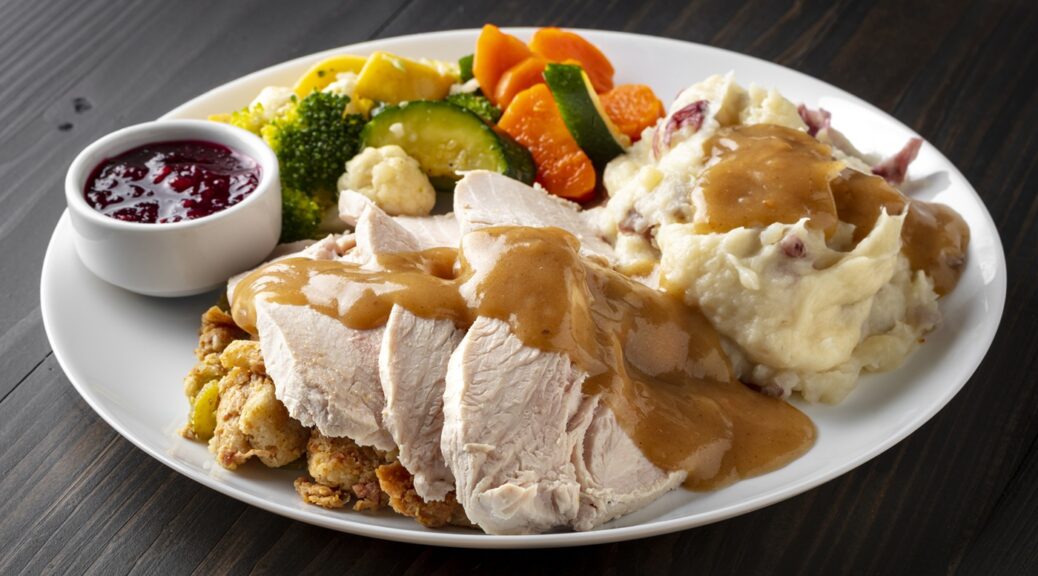
Volunteers with Operation Turkey, a national nonprofit based in Austin, Texas, cook and deliver thousands of Thanksgiving meals complete with turkey, stuffing, gravy, vegetables and a slice of pie.
After 25 years, the all-volunteer organization has expanded to about 20 cities and now operates in states beyond Texas, including North Carolina and Pennsylvania. “It’s inspiring and humbling watching our local community rally together to make a difference for their neighbors,” says Josh Ortiz , an Operation Turkey volunteer in Dallas. “It all matters and makes a difference.”
Many Americans want to help others while also getting in a little exercise before the big meal. (The average American consumes 4,500 calories on Thanksgiving, according to the Calorie Control Council). Thus, turkey trots — events where people run or walk to raise money for charities — are held in cities and towns across the country. Turkey trots make Thanksgiving “the biggest U.S. running day of the year,” according to the website RunSignup.com.
How about Canadian Thanksgiving Calories?
Ohio Turkey Trot
The 5K Turkey Trot in Granville, Ohio, drew 1,900 runners in 2024 and raised $130,000 usd/ $183,300 cad for a local food bank. Michelann Scheetz, of St. Luke’s Church, which organizes the annual event, says a team of volunteers works to pull off the Thanksgiving Day tradition that started in 2005. America’s Trot for Hunger, held in Washington, is now in its 24th year and draws thousands.
Jessica McCrorie, who served as a teen ambassador for the national nonprofit Feeding America, said she saw Thanksgiving bring out her own and others’ spirit of generosity. While volunteering with Island Harvest, McCrorie helped the nonprofit in Melville, New York, collect 30 turkeys and hundreds of dollars in donations at a grocery store.
“I feel like people may have felt more generous and connected to the issue of hunger because the Thanksgiving holiday is a time for family and friends to come together and share a meal,” she told Feeding America .