I spent most of yesterday afternoon watching and taking notes from the 86 minute documentary ELEKTRO MOSKVA. This film is so rich and interesting that I found myself sitting in reflection every time I jotted down another intriguing story element…..and believe me there were lots.
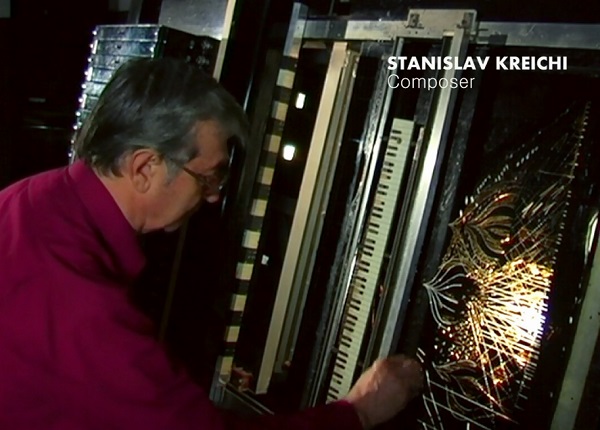
Stanislav Kreichi with ANS – world’s first ‘draw sound’ synthesizer.
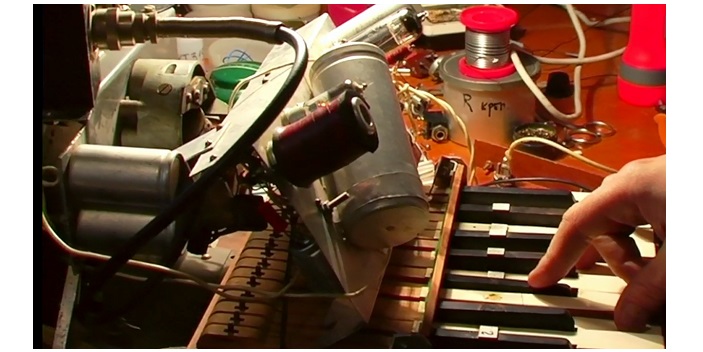
The film’s official website describes itself like this: “ELEKTRO MOSKVA is an essayistic documentary about the beginnings of the Soviet electronic age and what remained of it- a huge pile of outdated, fascinating devices. Today they are being recycled and reinterpreted by musicians, inventors and traders, who carry that legacy on into an uncertain future. An electronic fairy tale about the inventive spirit of the free mind inside the iron curtain- and beyond.”
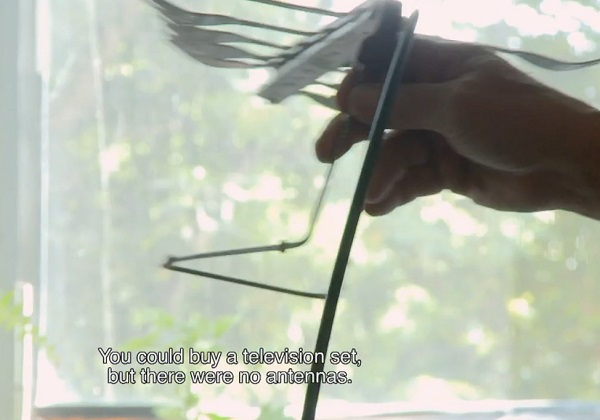
An example of everyday Soviet Russia DIY- In 1970 TV’s were readily available but not antennas.
Well all of that is certainly true but I discovered something deeper….. something partially hidden and really only stated at the end of the documentary: A metaphysical connection between electronic instruments, their circuitry and between immortality and rejuvenation. A sort of Frankenstein subplot. And that makes ELEKTRO MOSKVA much more interesting. It lingers and stays with you as all great films and documentaries tend to do.
Leon Theremin
Leon Theremin
Leon Theremin
If the inventor of the world’s first electronic instrument- The Theremin is to believed, his experimentation with electronic instrument designs led to techniques that allowed rejuvenation of human life and the bringing of the dead back to life. Kooky stuff to be sure but in our modern age of DNA manipulation and Stem Cell research shouldn’t we keep our minds open to all biological possibilities? Why is it so obtuse to think that electronic manipulation holds the key to immortality? The brain is after all- a sort of electronic computer. Why else would Russia have kept the body of Lenin whole and entombed for over a hundred years? Perhaps I’m getting ahead of myself- let’s move instead to the birth of Communist Synthesizers.
A Ghost of Communism: The backdrop for the film
It began with the Soviet electrification of the country. Then, as Russian homes and farms became wired, Science and Technical Progress became heralded by the state as ‘the new Gods’. In 1926 Léon Theremin ( Lev Sergeyevich Termen ) invented an early form of television which was adapted for border security use and classified. At the same time, the state decided that technological developments were only considered legit and legal if they strengthened communism.
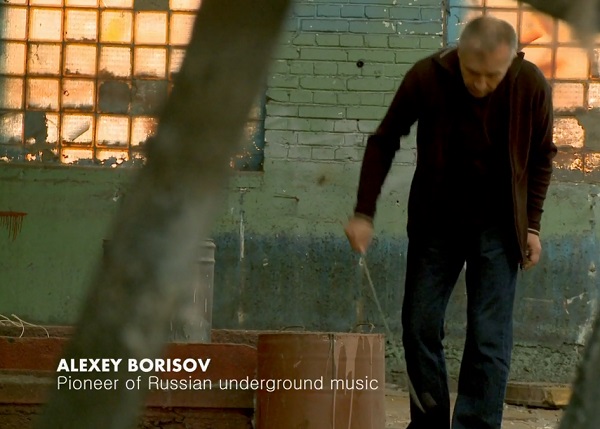
Alexey Borisov
The long awaited electrical revolution expected by the masses and any notions of new, exciting products in Russian homes became instead a sort of electrified jail and super factory. Then, after Russia had successfully developed nuclear bombs and orbited the first man in space- things changed. A celebration of technical progress and Soviet achievement became politicized through the use of synthetic music and sound. Found out what happened next by watching ELEKTRO MOSKVA online in HD. Highly recommended. For the Silo, Jarrod Barker.
Click me! New Music created from early sci-fi soundtracks incl. Theremin cameos.
Here is a recent Substack post from U.S. Secretary of State Marco Rubio on the next era of nuclear arms control.
The Cold War
During the Cold War, few negotiations proved as complex as those between the United States and the Soviet Union to limit and reduce their vast nuclear arsenals. They required trust between adversaries who had little reason to believe each other’s words, and they relied on intricate, constant systems to verify compliance. American statesmen persevered and reached a series of agreements first with the Soviet Union and then the Russian Federation that left the United States safer.
Everything has its season though and yesterday, New START expired.
Arms control advocates and many voices in the media have tried to cast the expiration as a sign that the United States is initiating a new nuclear arms race. These concerns ignore that Russia ceased implementing the New START treaty in 2023, after flouting its terms for years. A treaty requires at least two parties, and the choice before the United States was to bind itself unilaterally or to recognize that a new era requires a new approach. Not the same old START, but something new. A treaty that reflects that the United States could soon face not one, but two, nuclear peers in Russia and China.
China Arsenal
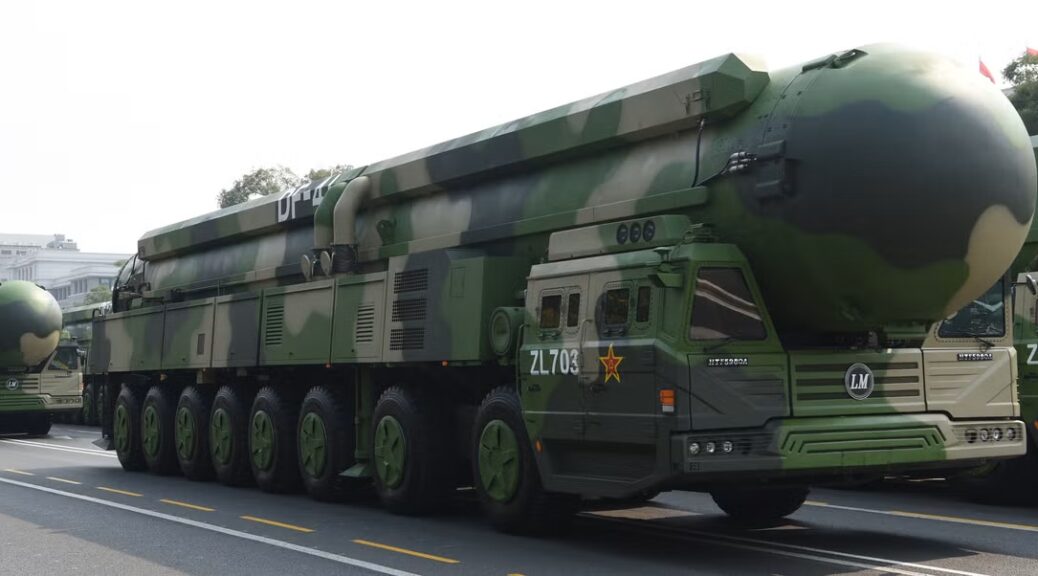
China’s rapid and opaque expansion of its nuclear arsenal since New START entered into force has rendered past models of arms control, based upon bilateral agreements between the United States and Russia, obsolete. Since 2020, China has increased its nuclear weapons stockpile from the low 200s to more than 600 and is on pace to have more than 1,000 warheads by 2030. An arms control arrangement that does not account for China’s build-up, which Russia is supporting, will undoubtedly leave the United States and our allies less safe.
President Trump has been clear, consistent, and unequivocal that future arms control must address not one, but both nuclear peer arsenals.
Our call for multilateral nuclear arms control and strategic stability talks, presented today in Geneva, reflects the principles President Trump has laid out.
No Longer A Bilateral Issue
First, arms control can no longer be a bilateral issue between the United States and Russia. As the President has made clear, other countries have a responsibility to help ensure strategic stability, none more so than China. Second, we will not accept terms that harm the United States or ignore noncompliance in the pursuit of a future agreement. We have made our standards clear, and we will not compromise them to achieve arms control for arms control’s sake. Third, we will always negotiate from a position of strength. Russia and China should not expect the United States to stand still while they shirk their obligations and expand their nuclear forces. We will maintain a robust, credible, and modernized nuclear deterrent. But we will do so while pursuing all avenues to fulfill the President’s genuine desire for a world with fewer of these awful weapons.
We understand that this process can take time. Past agreements, including New START, took years to negotiate and were built upon decades of precedent. They were also between two powers, not three or more. However, just because something is hard does not mean we should not pursue it or settle for less. No one understands that difficult deals are often the only ones worth having more than President Trump, who has repeatedly underscored the awesome power of nuclear weapons and his desire to reduce global nuclear threats. Today in Geneva, we are taking the first steps into a future where the global nuclear threat is reduced in reality, not merely on paper. We hope others will join us.
Marco Rubio was sworn in as the 72nd Secretary of State on January 21, 2025. The Secretary is creating a Department of State that puts America First.
Our friends at kommandostore talk about the Cold War on their site so often, it’s become one of their defining aesthetics…..and that’s a good thing- read on!
Grand armies and weapons are arguably less than half of the story.
Many of the cold war ‘battles’ from the 1950s through the 1990s took place in the minds and on the wrists of millions of people. Some might say they certainly still do…
Rogue media campaigns, protests & activism, black ops — they defined the hottest parts of the Cold War. But what if we told you that the watch you were wearing was just as important? The Soviet Union sure thought so…
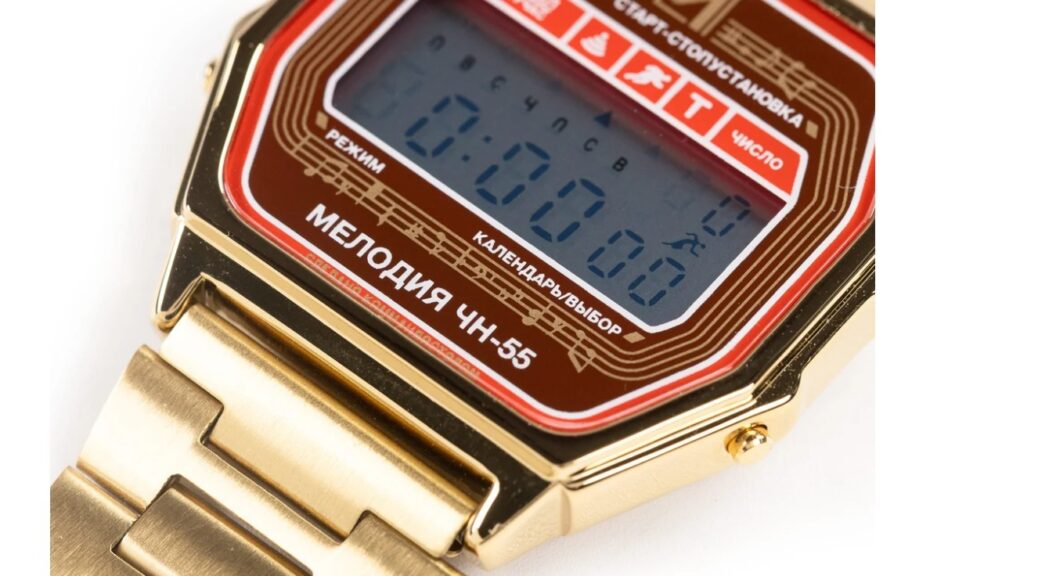
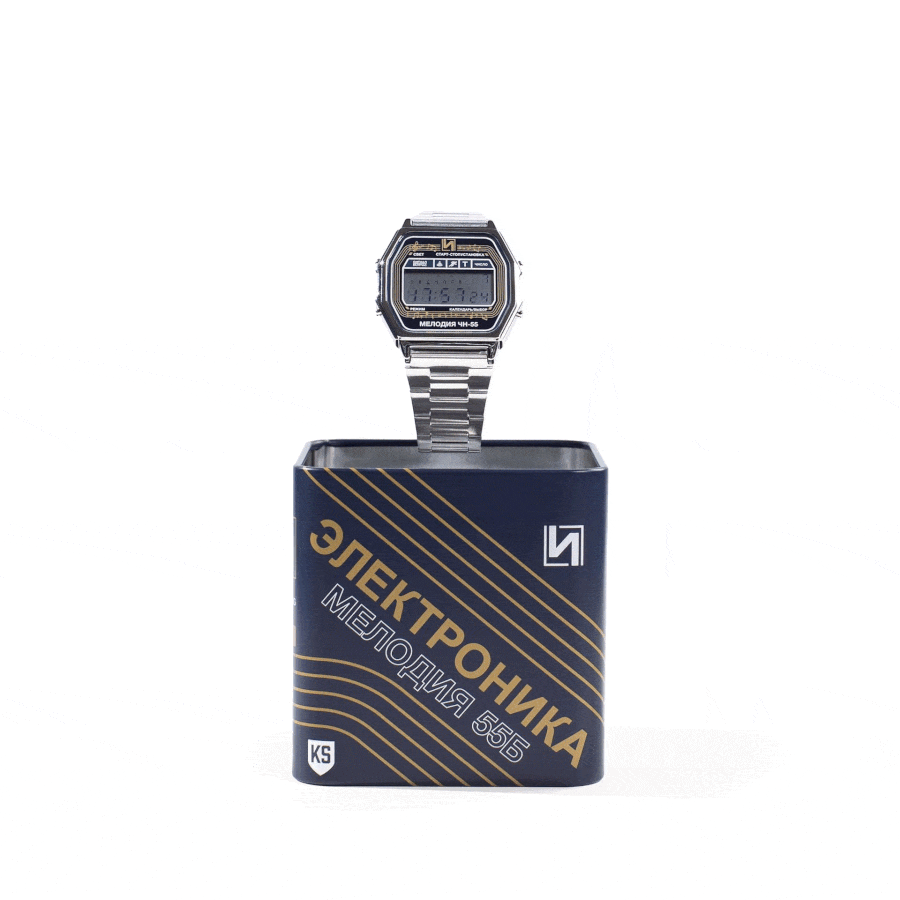
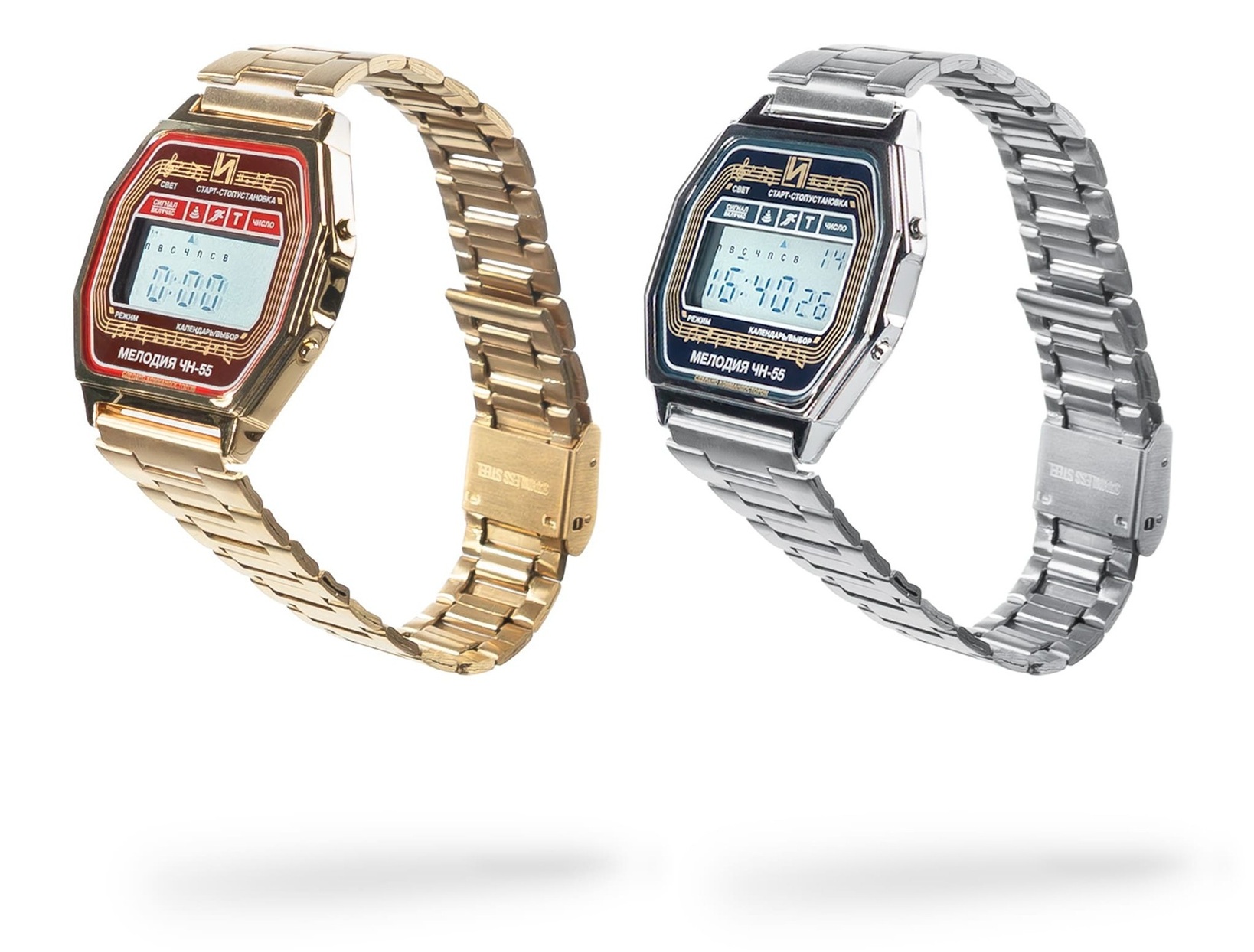
Having gotten sucked into the almost endless lore rabbithole of watches, the first thing that kommandostore sought to bring back from obscurity was the Elektronika 55B — the soviet union’s most popular digital watch that went the way of… well, the Soviet Union… When it collapsed in ’91.
Above all else, there’s one story about this watch that truly stands on its own, a story that will make you realize that there is much more to this little watch that jovially plays chiptune soviet music…
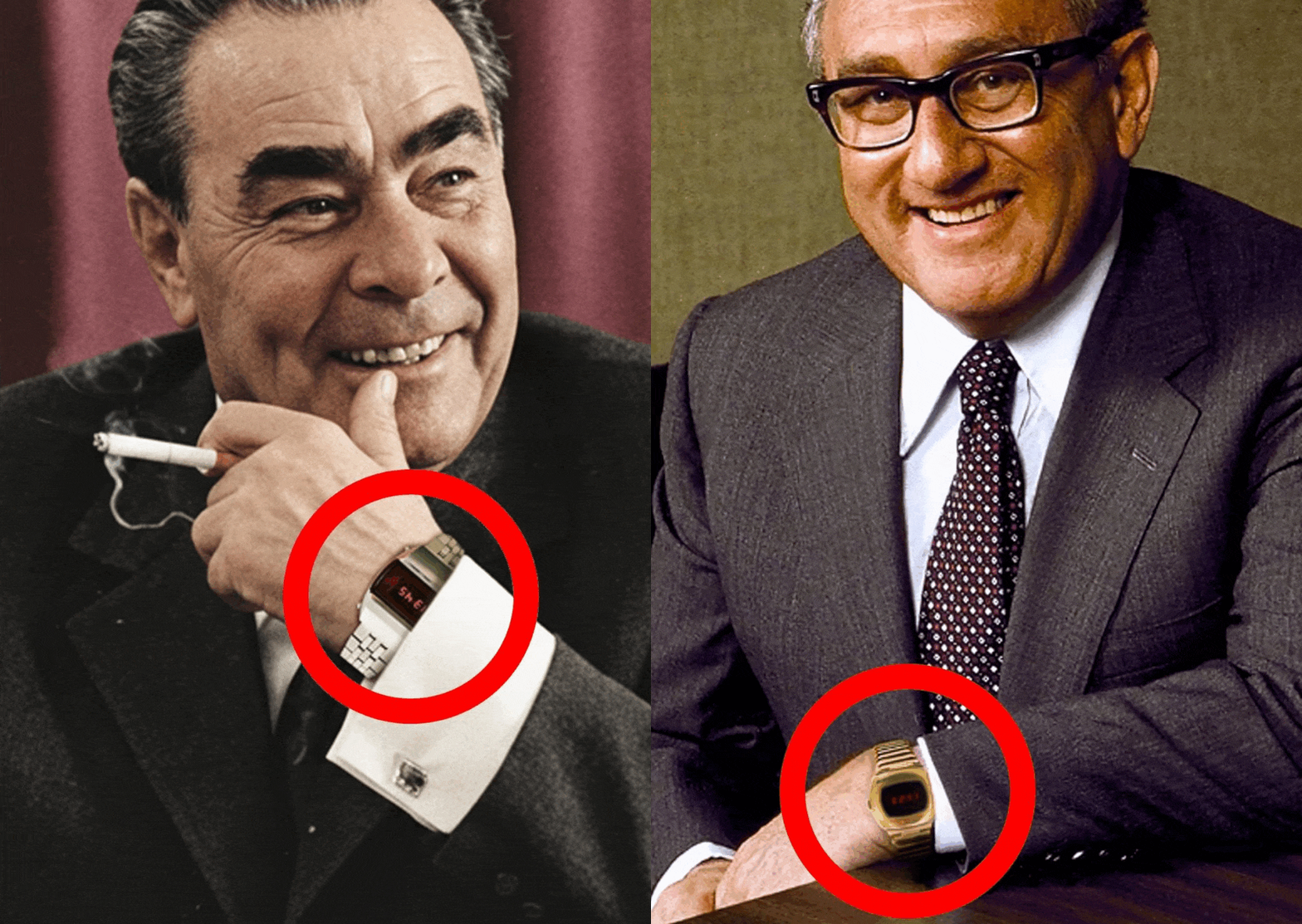
It involves two of the most powerful men in the world, Leonid Brezhnev and Henry Kissinger convening and comparing their new digital watches.
Ok, they weren’t really wearing the watches in that photo, but such an encounter really did happen between the two gentlemen in the early 70s, one that subtly let the United States know that the Soviets were right on the US’s tail for semiconductor technology.
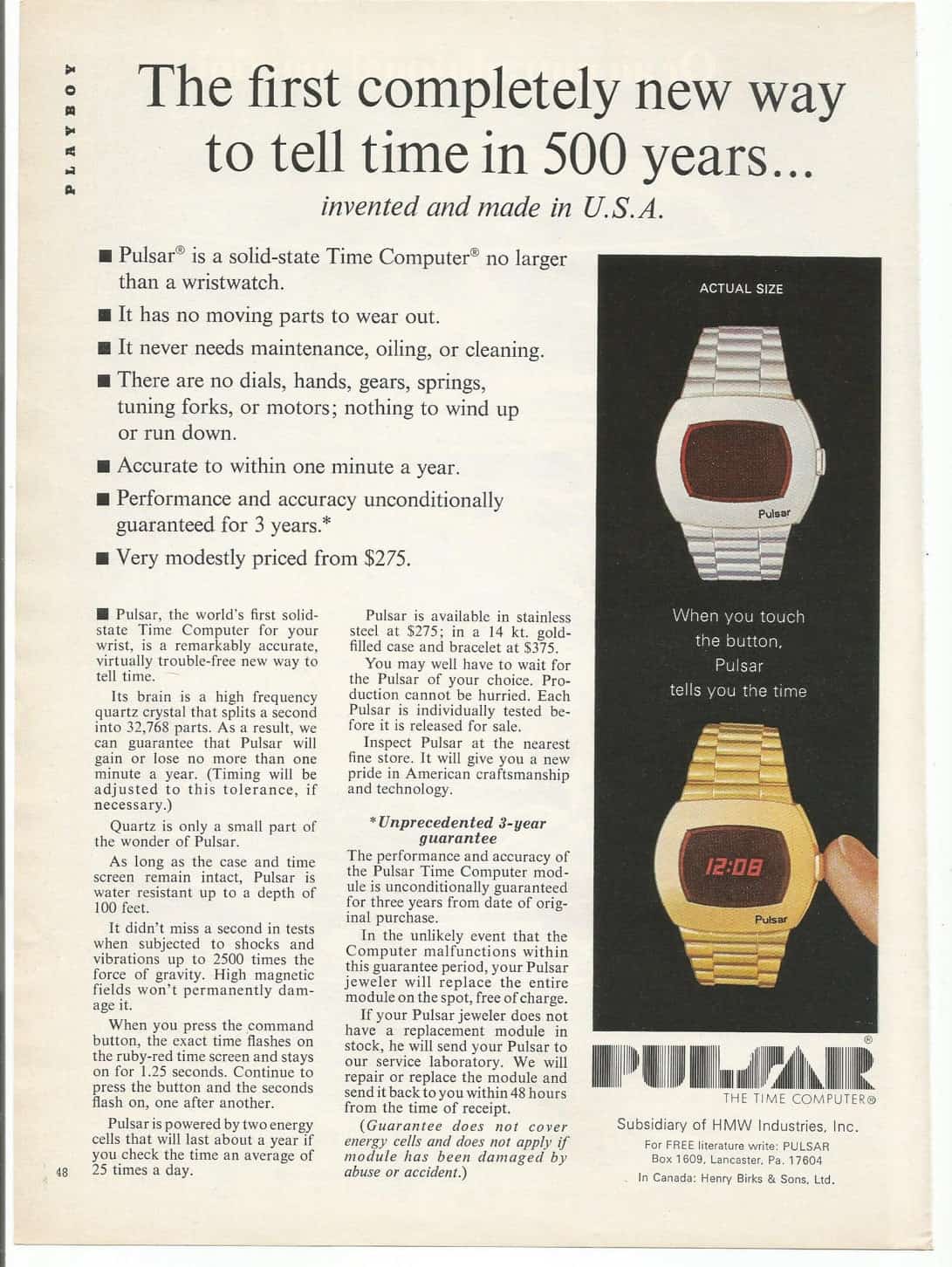
On a somewhat-routine visit to Moscow, US Secretary of State Henry Kissinger wore a Pulsar P2 Watch — one of the very first digital watches. Known for it’s striking red LED display and appearance on the wrist of none other than James bond.
It also carried a hefty price tag, with the 21k gold edition costing enough to buy you a car in today’s money.
You tell us, is $1800 usd/ $2,526 cad in today’s money worth it for one of the two base models?
The meeting was with Leonid Brezhnev, General Secretary of the Soviet Union. He remarked that he did indeed like Kissinger’s watch, being a man of taste.
Then he told Kissinger that the USSR had already developed a prototype using the very same technology.
Kissinger was reportedly astonished — and was presented with a functioning Soviet-Made digital wristwatch, the Elektronika B6-02. Featuring CMOS circuits, it was blocky, brutalist, and affordable enough for practically anyone to buy when it officially launched.
The whole Elektronika series carried this statement — the latest fancy tech of the west is cool, but when it’s done the soviet way, for way cheaper, it’s not a luxury to be worn by only the elites.
It didn’t take a horology enthusiast to buy and wear this watch. It’s Kalashnikov-esque ubiquity meant it was worn by everyone from party members to coal miners.
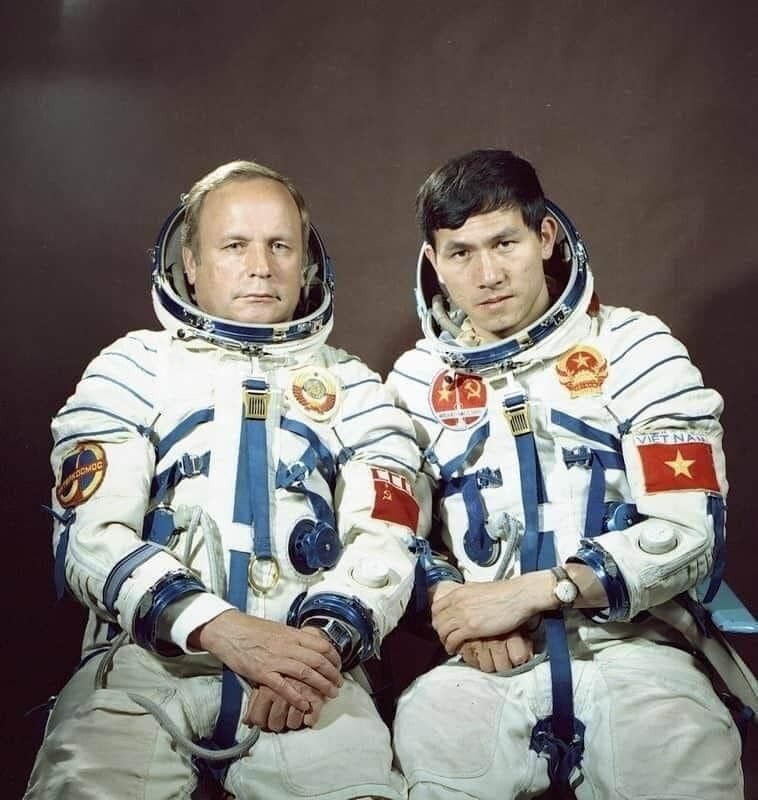
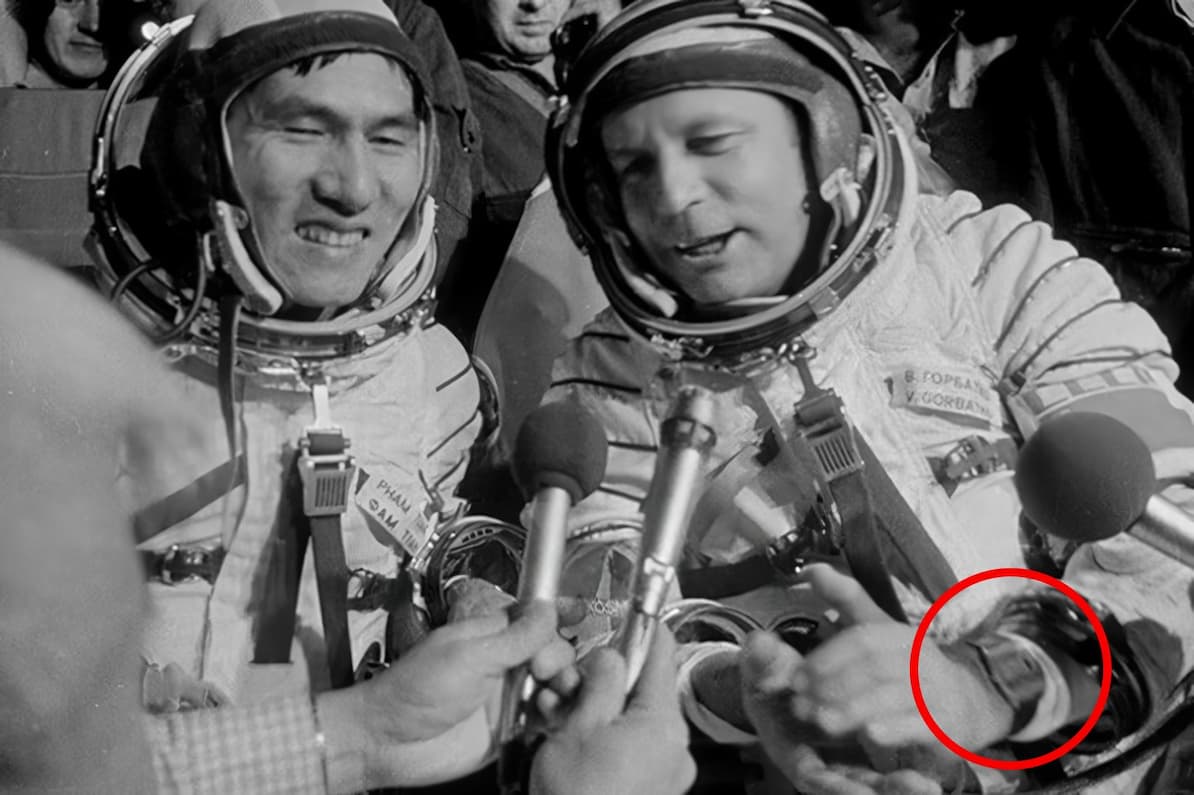
Sure, in 1969 we brought a luxury-watch masterpiece, the Omega Speedmaster, to the Moon before the Soviets were able to. But as a tool of propaganda, the USSR might have had us beat, and the Elektronika 5 appeared in space several more times…
We found it intriguing and somewhat disheartening that Elektronika, what seemed to be the people’s choice, was snuffed out much in the same time period as the Soviet union.
In a world full of Casios & Timexes, who can’t help but succumb to the charm of the plucky Elektronika, so why not give it the wrist time it deserves…because it is now available once again and this time in a near perfect reproduction right down to the packaging.
A 1:1 functional replica of the original Elektronika with 4 new Slav-approved “Melody” alarms. Sanctioned to the second-hand market (pun intended), thankfully kommandostore thought that the watch deserved a proper revival after its unceremonious disappearance following the collapse of the USSR.
Just like the original, it’s an affordable and reliable piece with just enough fun to get even the most uptight horologists asking you questions. But unlike the OGs, the sad truth of capitalism is that we’re slaves to supply and demand. They are running out fast, and even though there are plans to quickly continue production, there may be a slight gap. So, if you’re interested, this is kind of a last call.
Click the following link to place your order while supplies last.
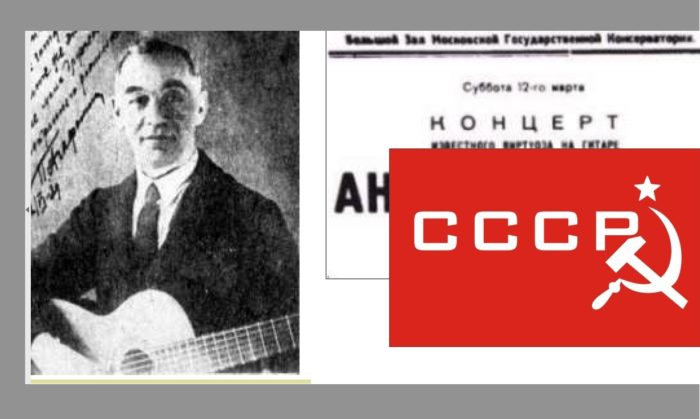
Since the collapse of the Berlin wall in 1989, the countries of eastern European have exploded in a painful big-bang that has changed the geography of Europe and Asia drastically. The new Russia was born, now being part of the Community of Independent States (CIS) that replaces the former USSR. The guitar fraternity in Russia has been living for more than 70 years in total isolation, prevented from being in touch with the West. The presence of many types of the instrument that we call “guitar” has been a constant one in Russian music life in all periods, having very old origins. But only recently has this guitar world started opening to western Europe, and we still know far too little about Russian composers for guitar and Russian guitarists. It was quite difficult for me to get information about some Russian guitarists, due both to the ever-present difficulties in communication (it is still difficult just to send a fax to Moscow during the day time)and to the problems of language comprehension.
The Guitar of the Czars- a new English summary redaction
In the past, references to the Soviet guitar world in Western music literature were always very scarce, and only in recent years has a subtle breath from that guitar world started blowing beyond the Urals. I wish to thank especially the guitarists Mikhail Goldort from Novosibirsk (central Siberia)and Piero Bonaguri, teacher at the Conservatory of Rovigo (Italy) as well as the composer Umberto Bombardelli, who helped me in collecting more information.
At the beginning there was the domra
The guitar was not the only known plucked instrument in Russia; two other instruments at least are worthy of mention: the domra and the balalaika. The domra is nowadays known in two variants with three or four metallic strings and in different sizes. It has a triangular shape, is tuned by fourths,and is played by means of a plectrum.
It is the most ancient plucked instrument, having been imported by the Mongols during the 13th century. Its tremolo is similar to the one of the Neapolitan mandolin and its range is large, due to its having 16 frets up to the junction of the neck. It is now employed both as a solo instrument and in an orchestra,together with the balalaika .
The balalaika has a peculiar triangular shape and three strings, among which two are tuned in unison and the other a fourth up. It appeared first during the 17th century. It was able to oust the domra in popularity, thanks to the preference of the Czars. It is played both by fingers and with the plectrum; from the last years of the Nineteenth Century it has existed in different sizes which cover all the frequency spectrum of the orchestra.
The guitar appeared in Russia during the 18th century, in a society far behind the European one in development. However, at the first half of the 19th century it was already known as a national instrument: the Russian guitar. Its own peculiarities were the tuning by thirds on the notes of the G scale, and having seven strings. It is known by the tender-sounding name of “semistrunaia” (a composite noun made from
“sem’ ” =seven and “struny” = strings).
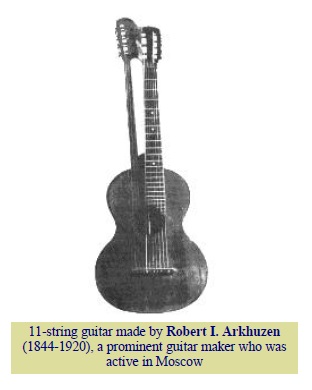
Its popularity grew among the people of all ranks, both middle and upper class, as described by many Russian poets and writers. There are also many variants of this main type, in number of strings and dimensions. By studying the surviving photos of Russian guitarists of the last century, re-published in the volume Guitar in Russia and USSR (see photo in the full PDF article linked below), we see that the guitar with 7 strings on the neck and 4 strings outside of the neck was very popular. The famous photograph of Valerian Rusanov, one of the first Russian guitar historians, with his 11-string guitar is significant in this respect. This instrument shared favor with the six string guitar (the so-called “shestistrunaia“, from “shest,” which means “six” ) tuned as in the West, and many other types. Continue reading full article PDF by clicking here. For the Silo, Marco Bazzotti.
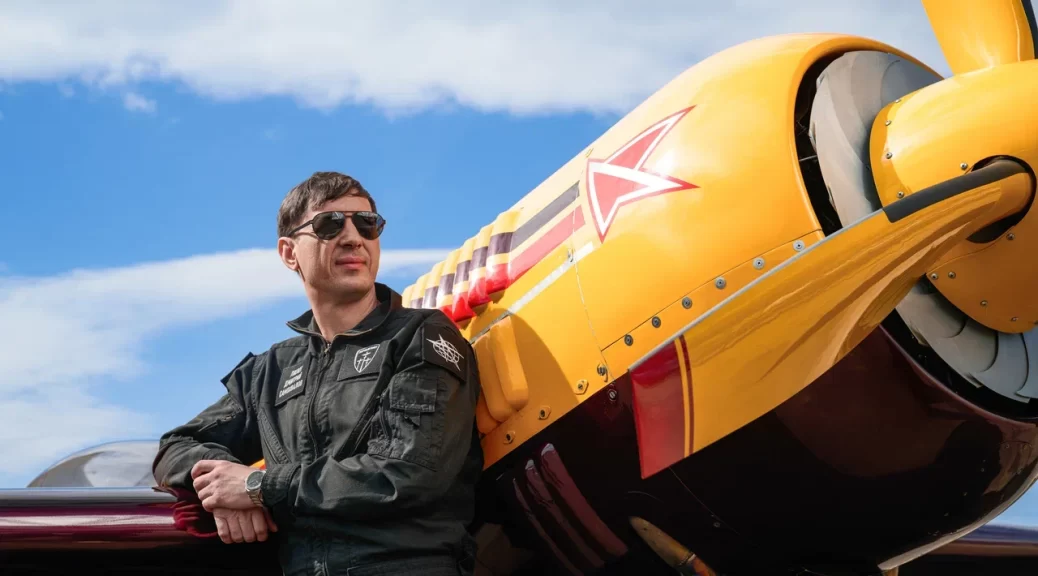
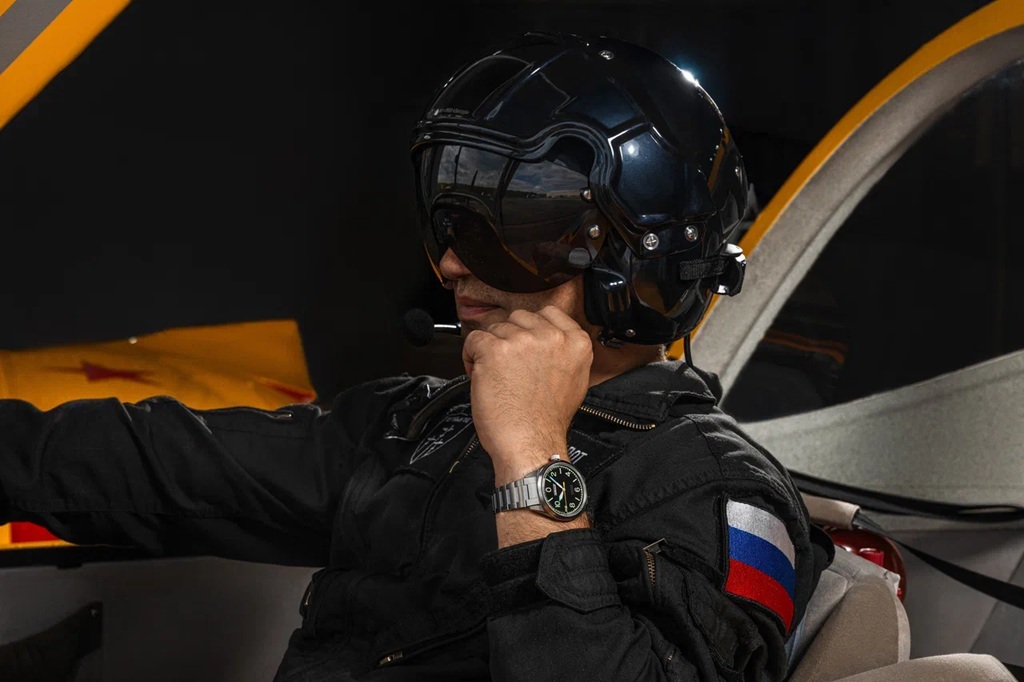
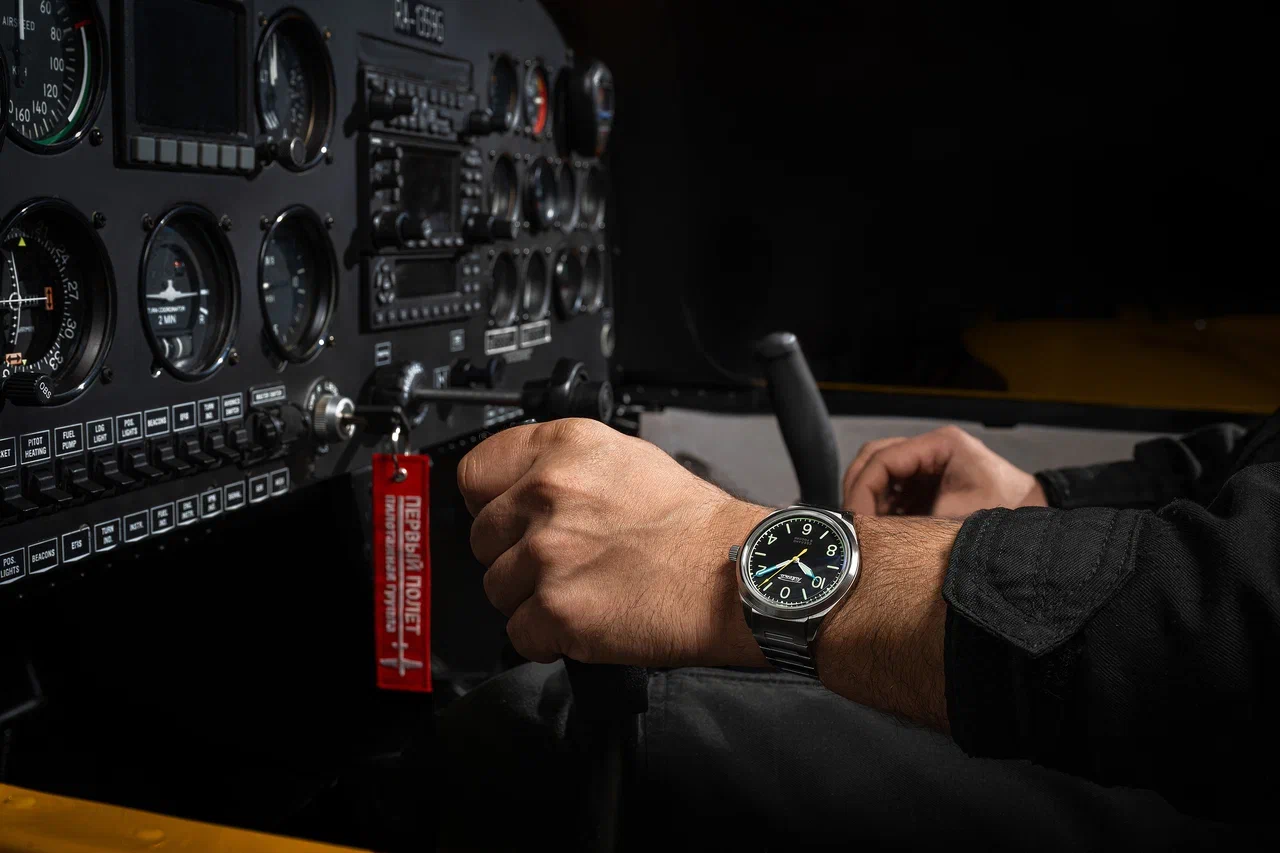
Creating specialized watches for extreme professions is a tradition at the Raketa Watch Factory and now they have just presented a new version of its popular Pilot model.
The history of aviator watches dates back to the early 20th century when aviation and wrist watches evolved side by side. The first aviator watches were built as professional tools, eschewing decorations in favor of durability, reliability and readability. They had a strict and minimalistic design: a round case, a high-contrast dial, wide hands and large numerals. Everything you need to make note of the passage of time while controlling a warbird and flying upside down.
KISS- Keep It Simple Soviet!
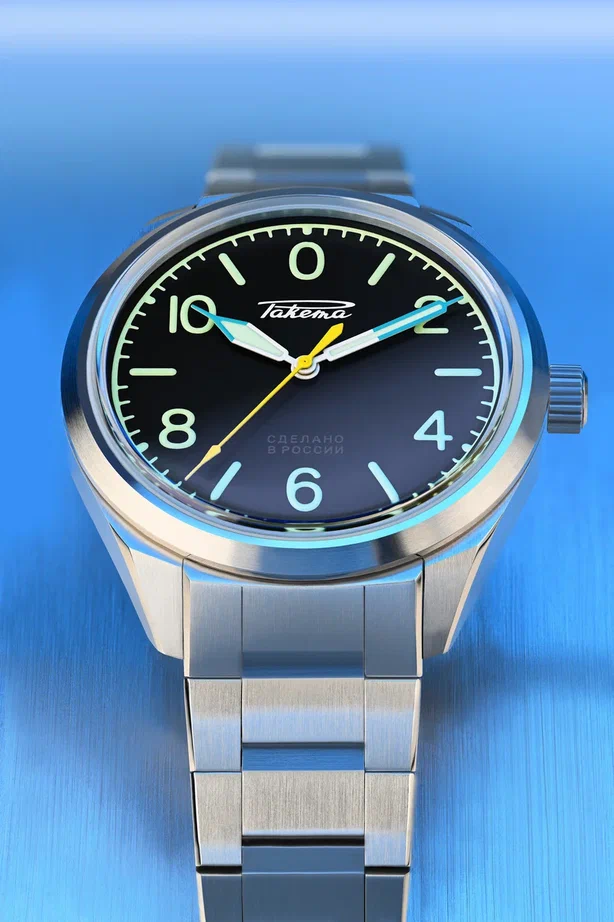
In designing its new Pilot model, Raketa tried to recreate the spirit of early aviator watches following the principle of “nothing superfluous”.
Designed in a classic style but with Raketa’s recognizable identity, the new case with its clean facets combines a glossy polish and a satin finish. This look is harmoniously continued with the stainless steel bracelet, which emphasizes the masculine character of the timepiece.
A genuine leather strap is also included in the set. The movement is protected by a screw-in crown which provides a water resistance of up to 200 meters.
Several features ensure easy readability in all lighting conditions. Super-LumiNova coating is applied to the markers and large numerals of the dial, but also to the hour and minute hands. Contrast is created through color combinations- all the hands including the bright yellow second hand perfectly stand out against the matte black dial stylized in the same manner as a precision aircraft dashboard instrument gauge.
A double-sided anti-reflective coating on the sapphire crystal provides additional assurance of accurate readings.
The heart of the Raketa Pilot is its automatic movement manufactured from A to Z at the Raketa Watch Factory in St. Petersburg, Russia.
Price
The cost is 1950 EUR (including VAT)/ $3,110 CAD at time of posting. For the comfort of customers, Raketa watches are delivered worldwide free of charge by DHL directly to your front door. For the Silo, Jarrod Barker.
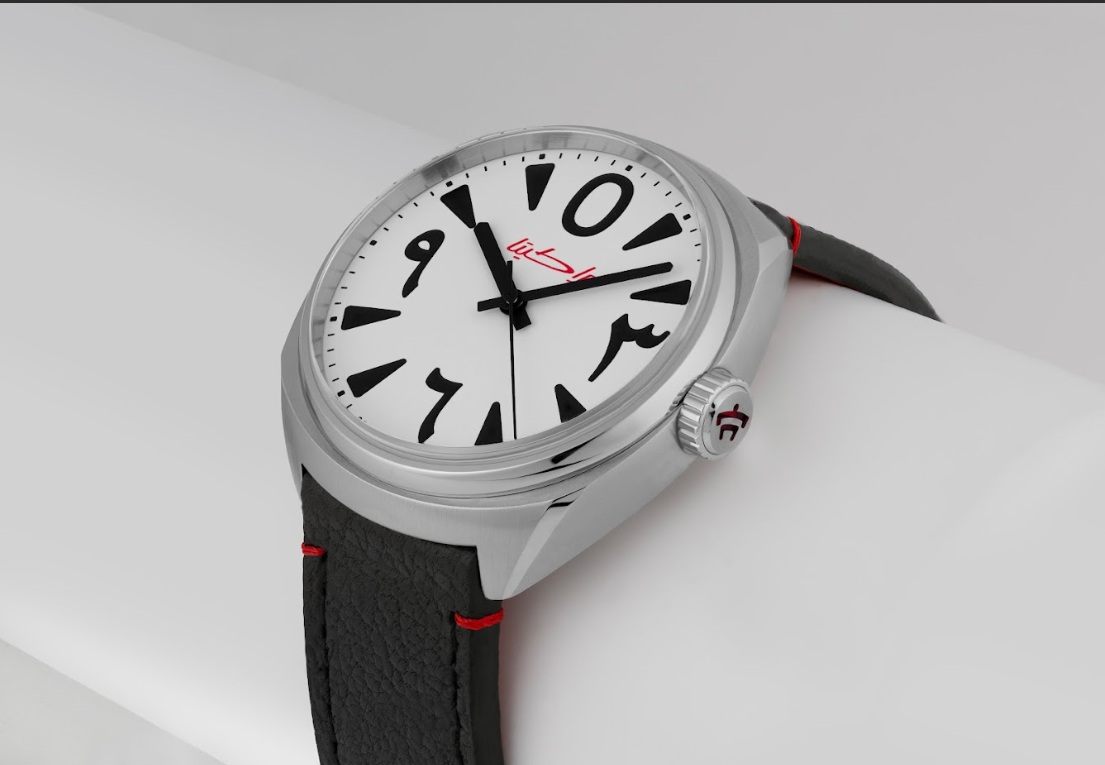
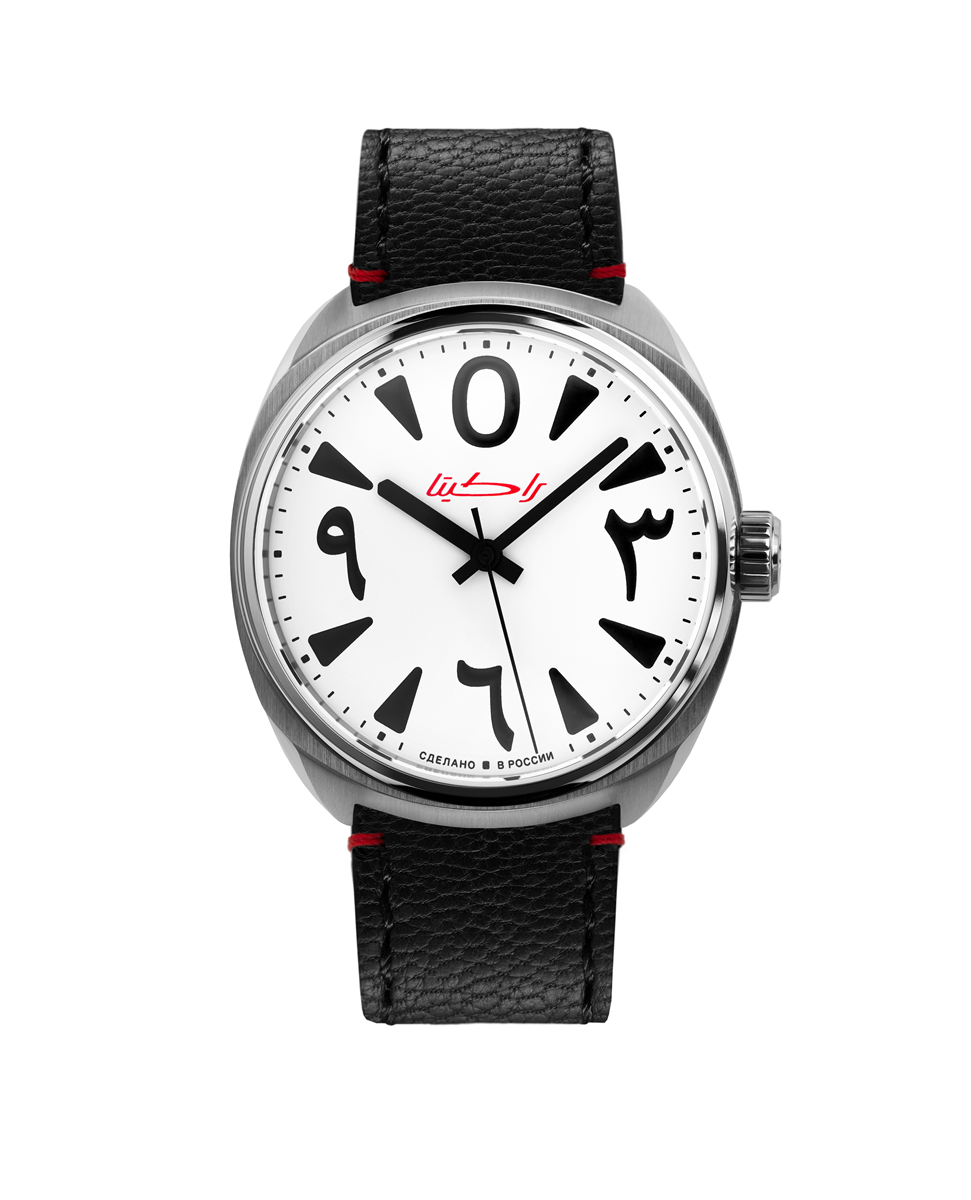
Raketa has reimagined its most emblematic model specially for the Middle East, under the name of “Big Zero” Arabic. Its exceptional design, which has become a Raketa classic, now comes with an Arabic dial.
The traditional and emblematic ‘0’ of the Raketa Watch Factory is still present on the dial, while the rest of the numerals are in Eastern Arabic, with a font design inspired by the original Soviet style model. The black and white colour scheme of the new dial is complemented by Raketa’s logo in Arabic script, created by Mohammad Sharaf, renowned calligrapher, in the brand’s signature red colour.
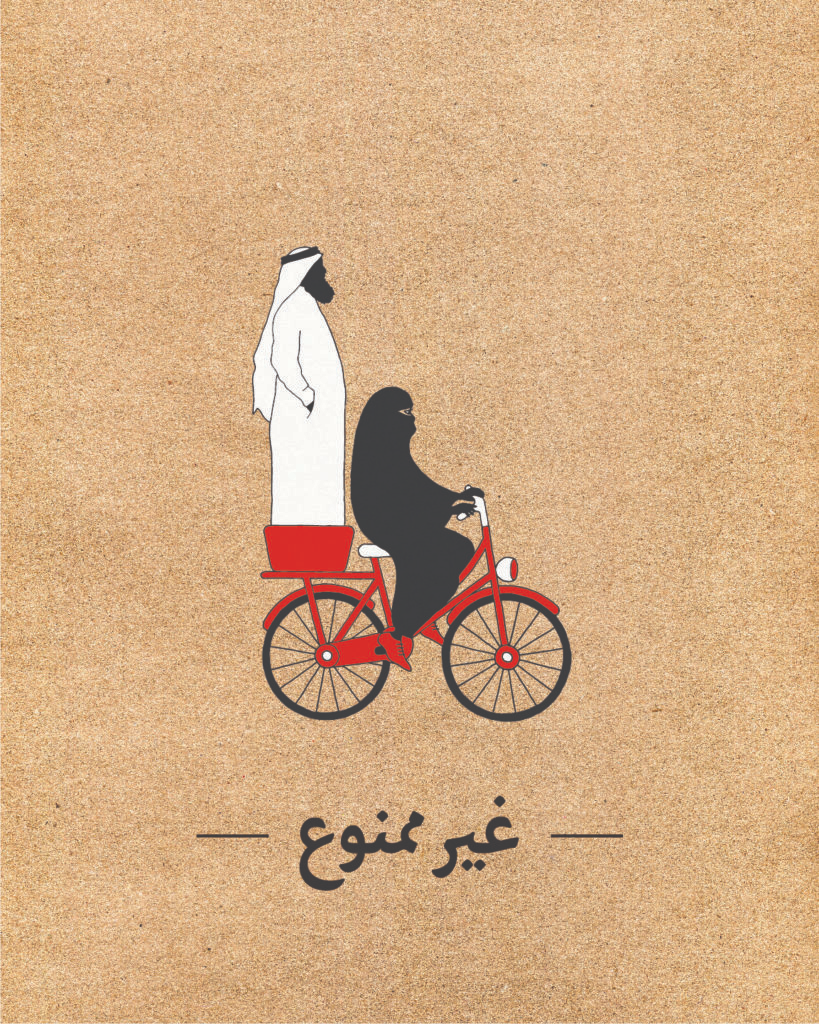
THIS IS HOW IT GOES poster by Mohammad Sharaf.
Raketa’s collaboration with this Kuwaiti artist, participant of contemporary Arabian design exhibitions and creator of bold local projects, has resulted from the growing interest in foreign watch brands in the Middle East.
Raketa in particular has found a new generation of watch-lovers in the region, who appreciate its singular designs and the manufacture’s rich history. Therefore, the “Big Zero” Arabic combines the West and the East, bringing together the history of Russian watchmaking and the Middle East’s incredible passion for fine watches.
A Unique Sound
Raketa’s mechanical movement is very Russian by its engineering design. It is also very Russian by the materials used: all the metal as well as the 24 rubis stones of the movement come from Russia. Even the hair-spring, the very heart and most complicated part of the movement, is cast from a secret Soviet alloy. All of this gives a very distinctive acoustic signature that is quite different from that of Swiss movements.
The Big Zero is one of the few Soviet-era watch designs to have conquered the hearts of the world and to have stood the test of time.
A black & white dial with oversized numerals crowned with a big 0 creates a self-evident, functional, but nevertheless radical design, which had to become the first Raketa to feature an Arabian dial.
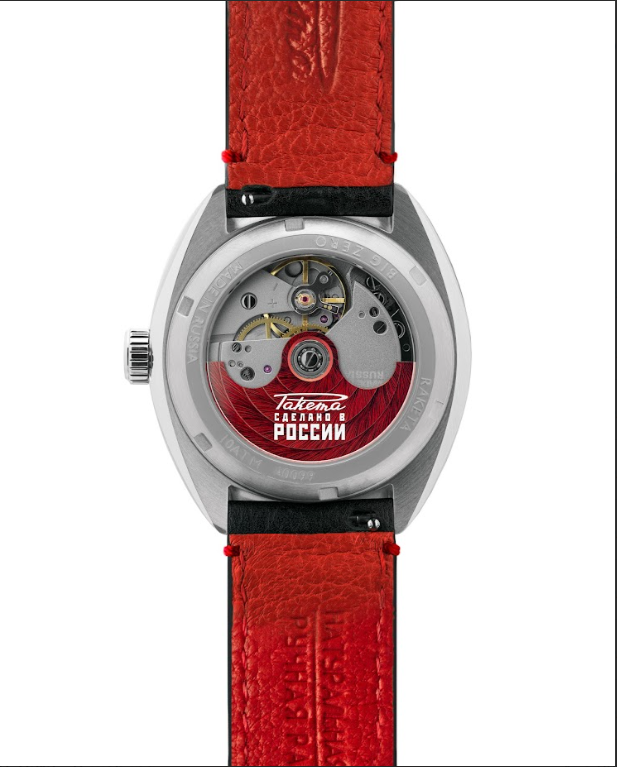
The transparent case back reveals the beautifully decorated Raketa automatic movement, which is entirely designed and manufactured at the Raketa Watch Factory in St. Petersburg.
A limited production of 100 timepieces has been released this year. Future editions will be made available according to the production plan.
The origins of this bold design
When asked what inspired Soviet designers to create this bold design with a big 0, old specialists of the Raketa factory answer that it is simply more logical to start counting time from 0. Indeed, time, like everything else in our lives, always begins from 0.
With this radically innovative concept, the Big Zero watch is at the avant-garde of time reading: time starts from 0, not from 12! It directly challenges the worldwide established convention that there should always be a 12 on the dial.
Price
The cost is 1 700 EUR (including VAT)/ $2,568 CAD. The model is offered by Raketa’s official dealers in the Middle East (UAE, Bahrain, Qatar, Saudi Arabia, Kuwait) and on the official website. For customers’ convenience, Raketa watches are delivered worldwide free of charge by DHL directly up to the front door.
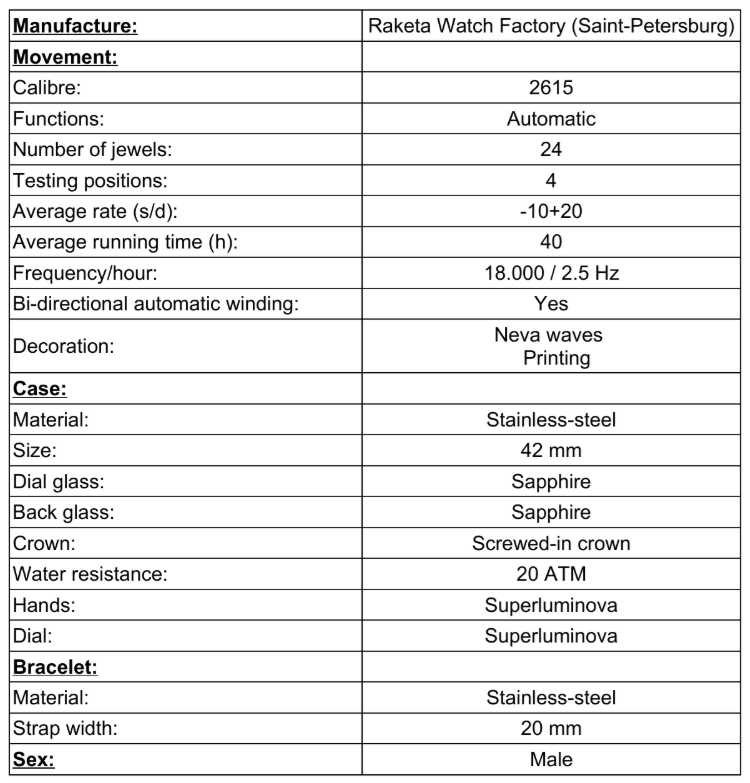
Specifications
Factory:
Raketa Watch Factory (Saint-Petersburg)
Movement:
Calibre:
2615
Functions:
Automatic
Number of jewels:
24
Testing positions:
4
Average rate (s/d):
-10+20
Average running time (h):
40
Frequency/hour:
18.000 / 2.5Hz
Bi-directional automatic winding
Yes
Stopper of self-winding unit activated during manual winding:
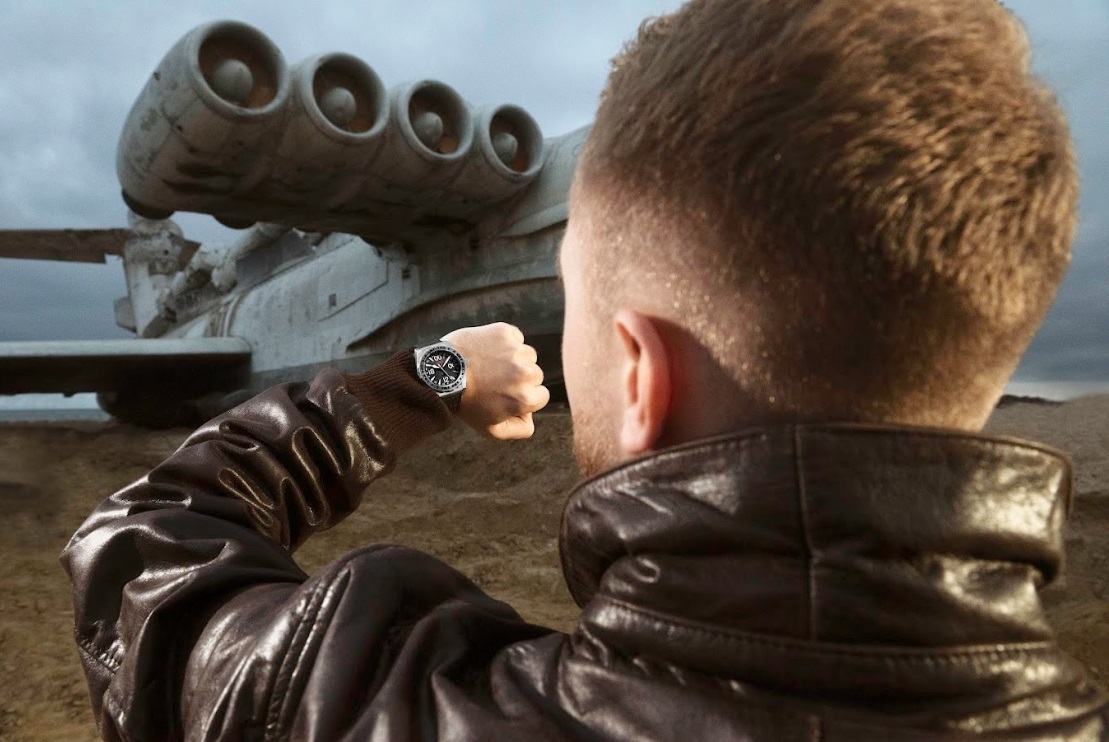
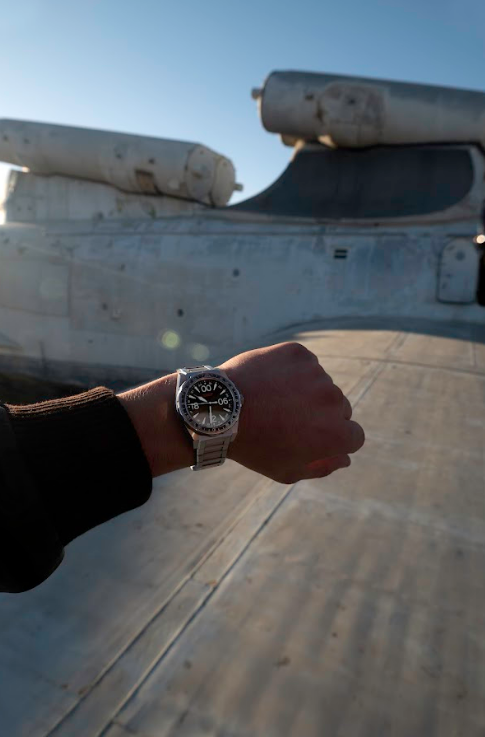
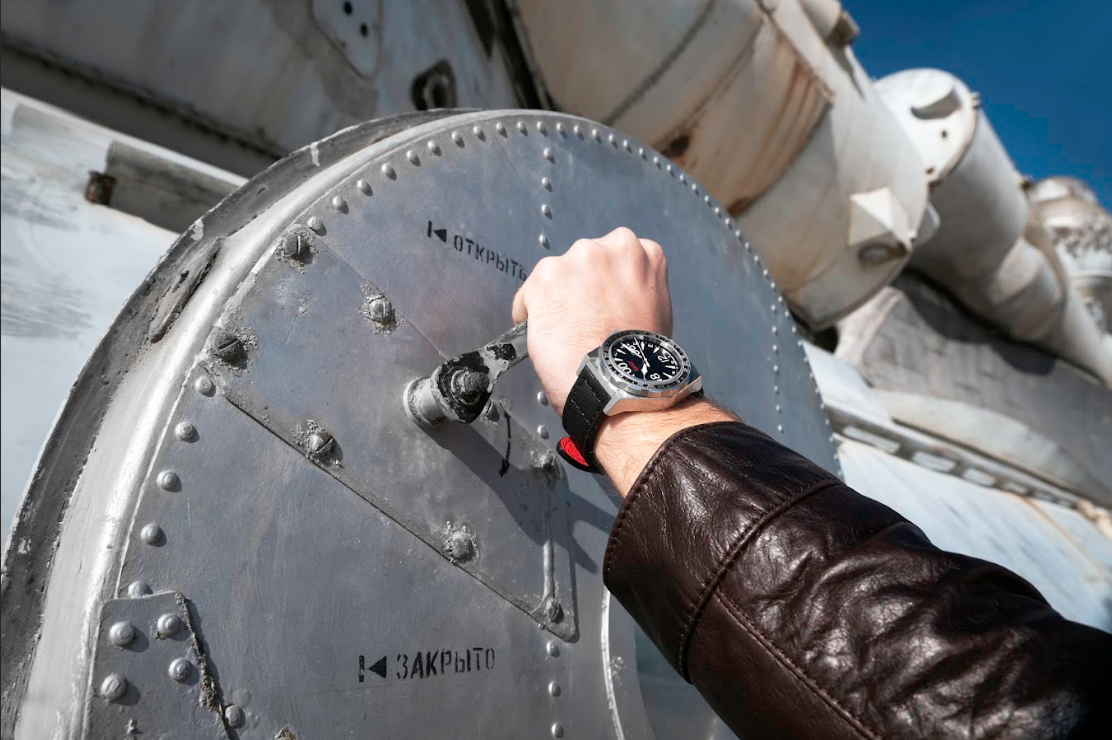
The Raketa Watch Factory launches a new tool watch dedicated to the Lun-class Ekranoplan: a Soviet era hybrid machine — half ship, half plane — unlike anything else in the world.
Legendary soviet achievement
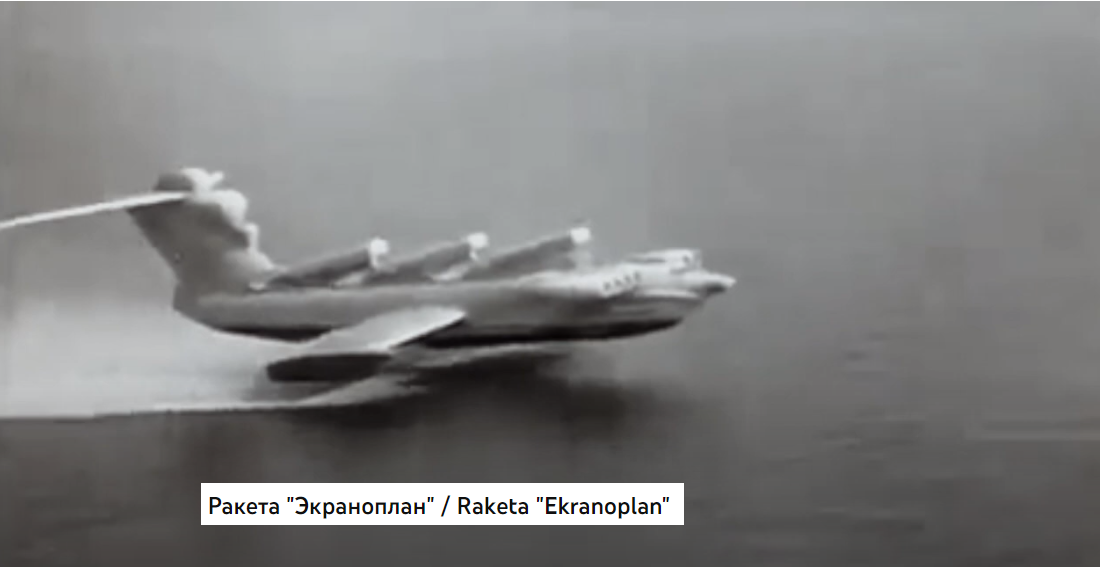
Part ship & part plane, the Lun-class Ekranoplan was built in the early 80s by the Soviet Union as an experimental coastal defence vehicle. It can claim to be one of the most extraordinary machines ever built by mankind. It combined the best characteristics of a ship and that of a plane: it could carry as much cargo as a ship and fly as fast as an airplane at speeds of up to 500 km/h. It flew over distances of up to 2,000 km using lift generated by the “ground effect” acting on its large wings when about 4 metres above the surface of the water. This enabled the Ekranoplan to fly undetected by radars.
The name “Lun” was chosen because it comes from the Russian word for “harrier”, a bird which characteristically hunts by flying silently low over open ground.
A remnant of the past
The only Lun-class Ekranoplan ever built lies today on a beach of the Caspian sea near the city of Derbent (Russia) as a lonely reminder of past achievements. With its gigantic size, unique hybrid characteristics and quirky design, the Ekranoplan is a testimony to the incredible originality of Soviet-era engineering. Even now, after almost half a century, it looks incredibly futuristic.
A watch as testimony to the Ekranoplan Lun
The Raketa Watch Factory has always been inspired by incredible human technical achievements. It has therefore designed and manufactured a tool watch as testimony to the Ekranoplan. Raketa also hopes this will attract more attention to the Ekranoplan, and thus contribute to saving it.
Especially for this model, Raketa developed a new stainless steel case and metal band: its sturdy design corresponds to the looks and spirit of the Soviet-era Ekranoplan. The Raketa “Ekranoplan” watch is directly linked to the Lun-class Ekranoplan:
– The insert of the rotating bezel is made from a piece of metal from the Lun-class Ekranoplan, officially given by the city of Derbent which is in charge of safeguarding the Ekranoplan;
– The design of the compass markings on the bezel is directly inspired by the design of the compass on the control panel in the cockpit of the Ekranoplan;
– An embossed image of the Ekranoplan is printed on the dial.
The back of the watch reveals the beautifully decorated 24-hour automatic movement which is entirely produced by the Raketa Watch Factory in Saint-Petersburg.
The Raketa “Ekranoplan” watch model is limited to 500 pieces.
Each watch model is complemented with a leather strap. The model is also available as part of a Gift set which includes the Raketa “Ekranoplan” watch model with stainless steel bracelet, an additional leather strap and a 1:400 scale model of the Lun-class Ekranoplan.
The price
The cost of the watch is 1.667 EUR (without VAT) $2,410.08 CAD at time of writing. The cost of the Gift set is 2083 EUR (without VAT) $3,011.52 CAD at time of writing. For the comfort of customers, Raketa watches are delivered worldwide free of charge by DHL directly up to their front door.
The insert of the rotating bezel is made from a piece of metal from the Lun-class Ekranoplan.
Specifications
Factory:
Raketa Watch Factory (Saint-Petersburg)
Movement:
Calibre:
2624
Functions:
Automatic
Number of jewels:
24
Testing positions:
4
Average rate (s/d):
-10+20
Average running time (h):
40
Frequency/hour:
18.000 / 2.5Hz
Bi-directional automatic winding
Yes
Decoration:
Nanocoating Neva waves Print
Case:
Material:
Stainless steel
Material of the bezel insert:
Metal from the Lun-class Ekranoplan
Size:
41,6 mm
Front glass:
Sapphire
Back glass:
Mineral
Water resistance:
20 АТМ
Hands:
Superluminova
Dial:
Superluminova
Strap/bracelet:
Material:
Stainless steel Genuine leather
Width:
22 mm
Sex:
Male
For the Silo, Lera Komolova. Photos: Lera Komolova
RAKETA “EKRANOPLAN” Entre ciel et mer !
La Manufacture horlogère Raketa lance une nouvelle montre spécialisée qui est dédiée à l’Ekranoplan Lun : un appareil hybride de l’ère soviétique – mi-avion, mi-bateau – absolument unique en son genre.
Un exploit légendaire de l’époque soviétique
Construit par l’Union soviétique au début des années 1980 en tant qu’engin expérimental de défense côtière – mi-avion, mi-bateau – l’Ekranoplan peut être considéré comme l’une des machines les plus extraordinaires jamais créées par l’homme. L’Ekranoplan réunissait les meilleures qualités d’un navire et d’un avion : il pouvait déplacer autant de cargaison qu’un bateau et pouvait voler aussi vite qu’un avion en atteignant une vitesse de 500 km/h. Il volait à des distances allant jusqu’à 2 000 km grâce à “l’effet d’écran” qui se formait sous ses immenses ailes à environ 4 mètres au-dessus de la surface de la mer. Ceci lui permettait de se déplacer sans être repéré par les radars.
Son nom « Lun » se traduit du russe comme « le busard », et non sans raison, car cet oiseau de proie est connu pour sa chasse en vol silencieux à basse altitude.
Un témoin du passé
Le seul Ekranoplan Lun jamais construit se trouve aujourd’hui sur une plage de la mer Caspienne près de la ville de Derbent (Russie), comme un rappel solitaire des exploits passés. Sa taille gigantesque, ses caractéristiques uniques et son étrange design témoignent de la force et de l’originalité de l’ingénierie soviétique. Encore aujourd’hui, presque cinquante ans après sa conception, il a l’air extrêmement futuriste.
Une montre en hommage à l’Ekranoplan Lun
La Manufacture horlogère Raketa a toujours été inspirée par les plus grands exploits techniques humains. Elle a donc produit une montre spécialisée en hommage à l’Ekranoplan Lun. Raketa souhaite aussi attirer l’attention sur l’Ekranoplan Lun et contribuer ainsi à sa préservation.
Un nouveau boîtier et bracelet en acier ont spécialement été conçus pour ce modèle : leur design rugueux et viril correspond à l’esprit de l’Ekranoplan soviétique. Le modèle Raketa “Ekranoplan” a plusieurs liens avec l’Ekranoplan Lun :
– l’insert de la lunette tournante est fabriqué à partir d’un morceau de métal de l’Ekranoplan Lun, officiellement transmis à la Manufacture Raketa par la ville de Derbent (qui est en charge de la préservation de l’Ekranoplan) ;
– le design des signes de boussole sur la lunette est inspiré de la boussole du tableau de commande situé dans le cockpit de l’Ekranoplan ;
– une image embossée de l’Ekranoplan est imprimée sur le cadran.
Le fond du boîtier permet de contempler un mouvement automatique à 24 heures Raketa, magnifiquement décoré et entièrement créé par la manufacture horlogère Raketa de Saint-Pétersbourg.
Raketa “Ekranoplan” est une édition limitée à 500 pièces.
Chaque montre est livrée avec un bracelet en cuir supplémentaire. Le modèle est également disponible dans un coffret cadeau comprenant la montre Raketa “Ekranoplan” et son bracelet en acier, un bracelet cuir supplémentaire et la maquette de l’Ekranoplan Lun à une échelle de 1:400.
Prix
Le prix est de 1 667 EUR HT pour la montre seule et de 2 083 EUR HT pour le coffret cadeau. Pour le confort de nos clients, les montres Raketa sont livrées gratuitement dans le monde entier par DHL jusqu’à leur porte d’entrée.
Paris, 9 June 2022 – UNESCO is launching a scheme to support Ukrainian women artists who have had to flee their country because of the war, in partnership with the NGO Perpetuum Mobile. It will enable them and their children to be hosted and cared for by a cultural institution in the country where they have found refuge.
“The war has driven millions of Ukrainians into exile, the vast majority of whom are women and children. Among these people, women artists who have been forced to suspend their creative activities often lack material and financial resources to resume their work in their host country,” says Audrey Azoulay, UNESCO’s Director-General.
For this reason, UNESCO decided to launch a programme dedicated to Ukrainian women artists in exile, born of a partnership with the NGO Perpetuum Mobile, initiator of the Artists at Risk platform, which brings together cultural institutions in over 15 countries.
Audrey Azoulay
The artists concerned will be supported for a minimum of three months by a cultural institution in their host country.
They will be taken care of with their children in artistic residencies, and will benefit from support in terms of networking, visibility and the conception of new cultural projects.
(Left) Ukraine electro-pop duo Bloom Twins: “It has really affected us,” said singer Anna Kuprienko. “We’re talking to our family, we have a lot of friends and our second manager living there. We go back to the Ukraine quite a lot. We were only there two months ago. We were hopeful that this situation with Russia wouldn’t go where it has and that it would resolve.” (Right) Ukraine singer Khrystyna Soloviy : “We are a generation that has never seen the Soviet Union and was born in a free Ukraine. Ukrainians are not Russians, as said by the Russian government. We have a difficult, depressed history of Russian colonisation.”
The scheme will aim to provide them with the means to become autonomous by the end of their hosting period, whether they then choose to return to live in Ukraine or to settle permanently in their host country. UNESCO has already set aside $140,000 usd (about $177,000 cad at time of this publication) to finance the scheme, which should initially benefit some 30 artists and their children.
A new link in UNESCO’s emergency response
The programme complements the range of emergency measures already deployed by UNESCO since the beginning of the war to safeguard tangible and intangible cultural heritage, secure museum collections and combat illicit trafficking in cultural property.
UNESCO partner Freemuse
Moreover, since the beginning of the war in Ukraine, UNESCO has been monitoring the situation of artists in close consultation with artists’ networks and cultural actors in the country. This work is also carried out in coordination with international organizations involved in supporting artists at risk: PEN America’s Artists at Risk Connection, Perpetuum Mobile/Artists at Risk, ICORN, Freemuse, Prince Claus Fund and the PAUSE programme. For the Silo, Lucía Iglesias Kuntz, UNESCO Press Service.
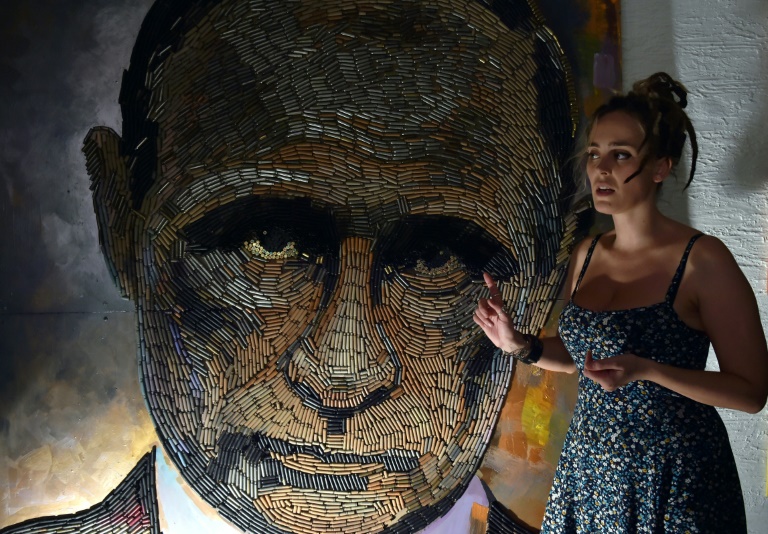
Featured image: Face of War (Putin in bullets) co-created by Daria Marchenko, 35 now exiled Ukraine woman artist.

 Russian music life in all