Via our friends at the U.S. StateDept
Oct, 2026
Author: U.S. Secretary of State Marco Rubio
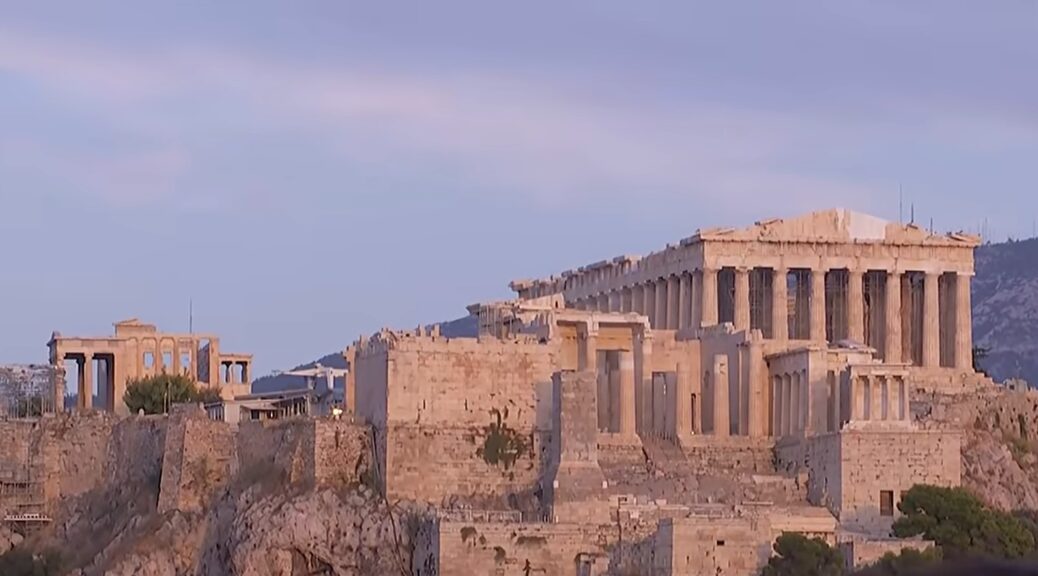
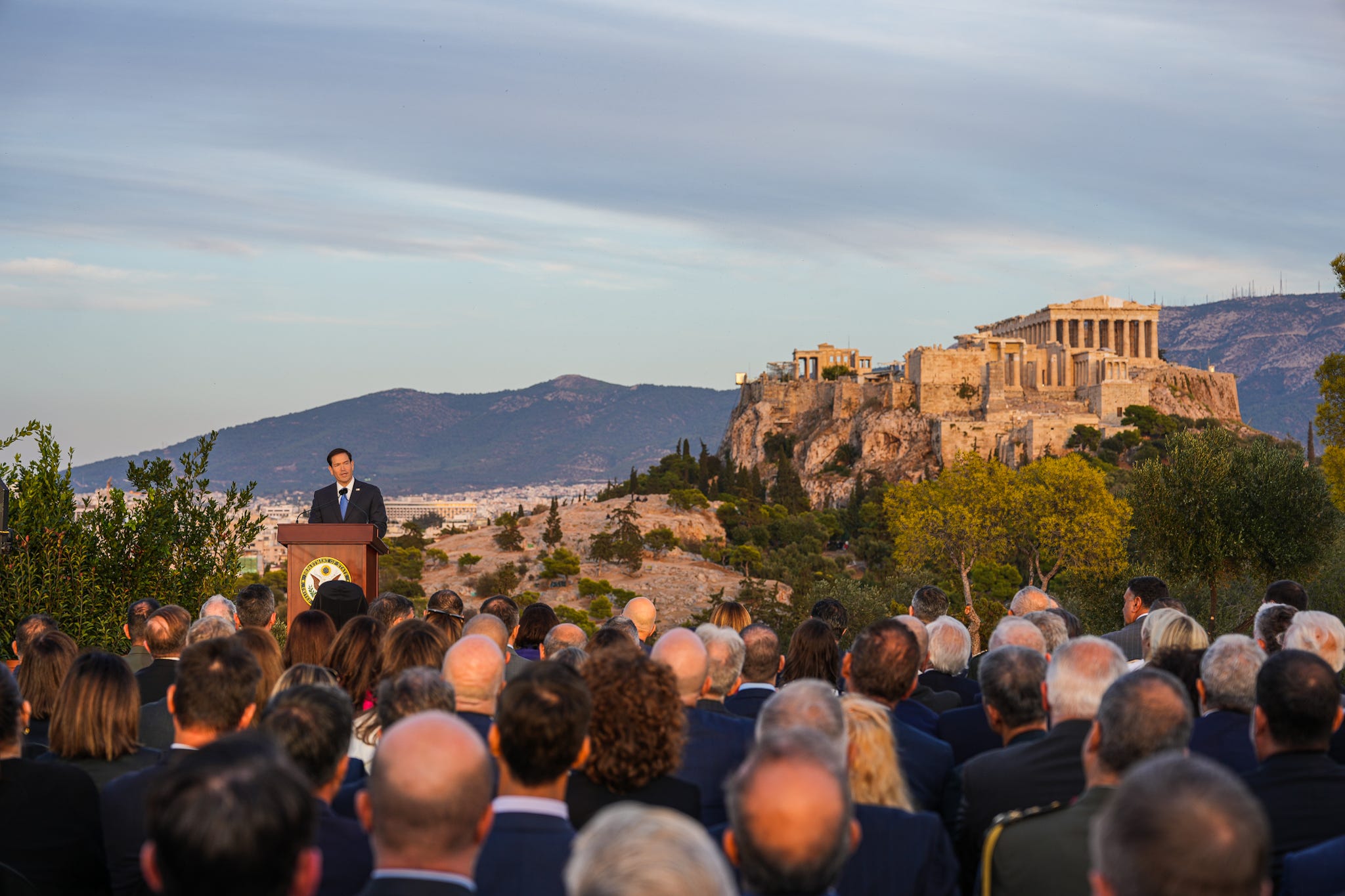
There are great ruins all across the world. In many cases, they are places where history seems to have exhausted itself: remnants of distant cultures that have long passed beyond living memory.
But the Acropolis is different.
For thousands of years, the civilization that built what stands behind me has captivated the imagination of the Western world. Generations of our statesmen, artists, and philosophers have looked to it – they’ve looked to it with wonder and they’ve looked to it with awe.
Now time has a tendency to dull the senses: great victories and catastrophic defeats, they seem to shrink to becoming like a footnote in a textbook, another fact for our schoolchildren to memorize and forget. But the Greeks of antiquity, they seem to have an almost mystical hold on our memory. They call us back to them, again and again.
480 years before Christ, the armies of Xerxes arrived in this city and they put its sanctuaries to the torch. Most Athenians had by then evacuated by ship to a nearby island. But there was a handful of them that refused to leave their home. So instead, they barricaded themselves in the rocky fortress of the Acropolis to fight an extraordinary last stand, heaving massive stones down the cliffs onto the Persian invaders and holding the greatest empire of the age at bay for days. They were eventually overwhelmed. The Persians plundered the temples, burned the shrines, and razed the Acropolis to the ground but when the Athenians returned, they gathered the broken remains of the old Acropolis and buried them in the hill where it had stood. And decades later, under Pericles, they raised the Parthenon.
For 25 centuries since, the Parthenon has stood. Empires have risen and fallen beneath its shadow. And the progeny of the men who built it – the sons of Athens and Rome – have carried their civilization with them to the ends of the Earth.
Two and a half centuries after the founding of the American republic halfway across the world from where I stand now – I stand here today as the Secretary of State of that republic, and a great-grandson of settlers who arrived in the new world from Spain – I stand here to testify to a debt that no lapse of time, no distance of space can ever extinguish.
The history of America, the history of my country, is covered with the fingerprints of antiquity. Greece is literally carved into the architecture of our government: in the towering columns, in the domes and the monuments across our capital city. The city where our Constitution was born – Philadelphia – is itself a Greek name.
The men who founded my country were fascinated by the heritage we inherited from yours. They were exceptionally well-read in history – they were vividly aware of their unique place in it – but no other age of the past held their attention or their imagination quite like that of antiquity. Many, many people are surprised to learn that the most commonly cited author in the Federalist Papers was not an Enlightenment philosopher or political theorist. No, the most commonly cited author in the Federalist Papers was Plutarch, the Greek biographer of Greece and Rome’s great men.
Now, much has been written and said about the influence of ancient Greece on the ideas of the American Founders – and, for that matter, on all of the Western philosophers and statesmen that preceded them. Most of us are familiar with the basic history. Athens gave us democracy. Plato and Aristotle gave us Western philosophy. Our ideas of law, of virtue, of citizenship, and republican government were shaped in the Greek city-states. Even much of our political vocabulary – words like democracy, tyranny, the word “politics” itself – found its origins here.
Now, all of that is true. But the things we owe to this place – as Americans, and as Westerners – are actually far far deeper. These institutions and ideas – these institutions and ideas were the outward expression of more fundamental qualities we see in the ancient Greeks – qualities that can’t be reduced to any particular political system or theory.
Here, in Athens, we found the first full realization of all the essential traits that would come to define the West: fierce individuality and relentless ambition; daring exploration and invention; a yearning for discovery, for adventure, risk and glory. An insatiable curiosity about the world and the principles by which it operates, a hunger to know the mysteries of nature and grasp the secrets of the cosmos. An impatience with the notion of impossibility, chafing at all boundaries and limits, straining to peer into the depths of the unknown.
These were not just the formulas or precepts of a particular school of philosophy. They were the characteristic of a people – expressed in their traditions, their stories, their imagination; in the qualities they demanded of their citizens; in the things they lived and fought and died for.
To know them is to know ourselves.
What blossomed here in this place was the Western desire to uncover all that ignorance, darkness, and distance had kept hidden from the mind of man. The Greeks did not just shape history; the Greeks gave us history itself. Much about – much of what we know about many ancient civilizations comes almost entirely from the records of Greek explorers and historians, explorers and historians who didn’t just chronicle the histories of their own people, but ventured outwards to observe and record the sagas of foreign peoples and cultures all across the world.
Where others looked inward, the Greeks were the first to direct their focus outward, to chase the thrill and glory of seeing all that was strange and new. It was this trait – it was this trait that would push the West to create and build things that others could not, marking us out from so many other cultures and civilizations where stability and subsistence were the highest ends of life.
But it is not just the ambition to explore the unknown that we inherit from the Greeks; it is the conviction that the unknown canbe known. The confidence that the world can be charted and measured and mapped and understood – and that there is a rational order to the cosmos, governed by certain fundamental laws, laws that men can observe and the mind can come to understand.
This was the foundation of the Western mind: our math, our science, our medicine. Our philosophy, ethics, and religion. It paved the way for the gospel of Jesus Christ to find fertile soil in Europe and flourish into the empire of Christendom. It was the foundation of the riches of Christian theology – of Augustine and Aquinas and the whole tradition of natural law.
It gave birth to a civilization marked not just by a common culture, it was marked by a common anthropology – a common view of man and his place in the universe. Its descendants would share not just the idea of a natural order, but a distinctive understanding of virtue; of destiny and fate; of truth, goodness, and beauty; of a code that dictates how men ought to live; of objective standards and ideals to strive towards.
For the Greeks of antiquity, the pursuit of excellence was the very principle of man’s existence. They organized all of civic life around contest, ambition, competition: in philosophy and poetry, in sculpture and drama, in athletics and art, in war and statecraft. The classical Greek city was an arena for great men to test and prove themselves, to hone their potential through perpetual struggle – to be the best, the strongest, the most beautiful, straining to inch ever closer to perfection.
Now I know that to modern ears, what I just described, this way of life, may sound odd; it may even sound cruel. The ideal of many ideologies in our time has, frankly, become a world of perfect safety, devoid of risk or failure, with neither the glory of victory nor the shame of defeat. Too often these days, we build downwards. We design our standards to ensure no one will lose; we preoccupy ourselves more with the comfort of the worst than the potential of the best. We hold the most exceptional things among us hostage to the average, the ordinary, the mediocre.
The men who made the Parthenon, they built upwards.They held that the highest and most noble aspiration in life was to surpass all others, to strive to be the best in all things. The ancient Greek city-states were filled. They were filled with intense passion and rivalry and faction and conflict. But from that constant struggle for distinction – from that came the great flowering of art and philosophy and political and intellectual energy that would transform a collective of Mediterranean cities into the birthplace of the greatest civilization in the world.
The thumos, as the ancient Greeks called it – the fire of passion, strength, courage, pride – is the heart of great civilization. And without it? Without it, nations lose their will to fight, the will to strive, the will to survive.
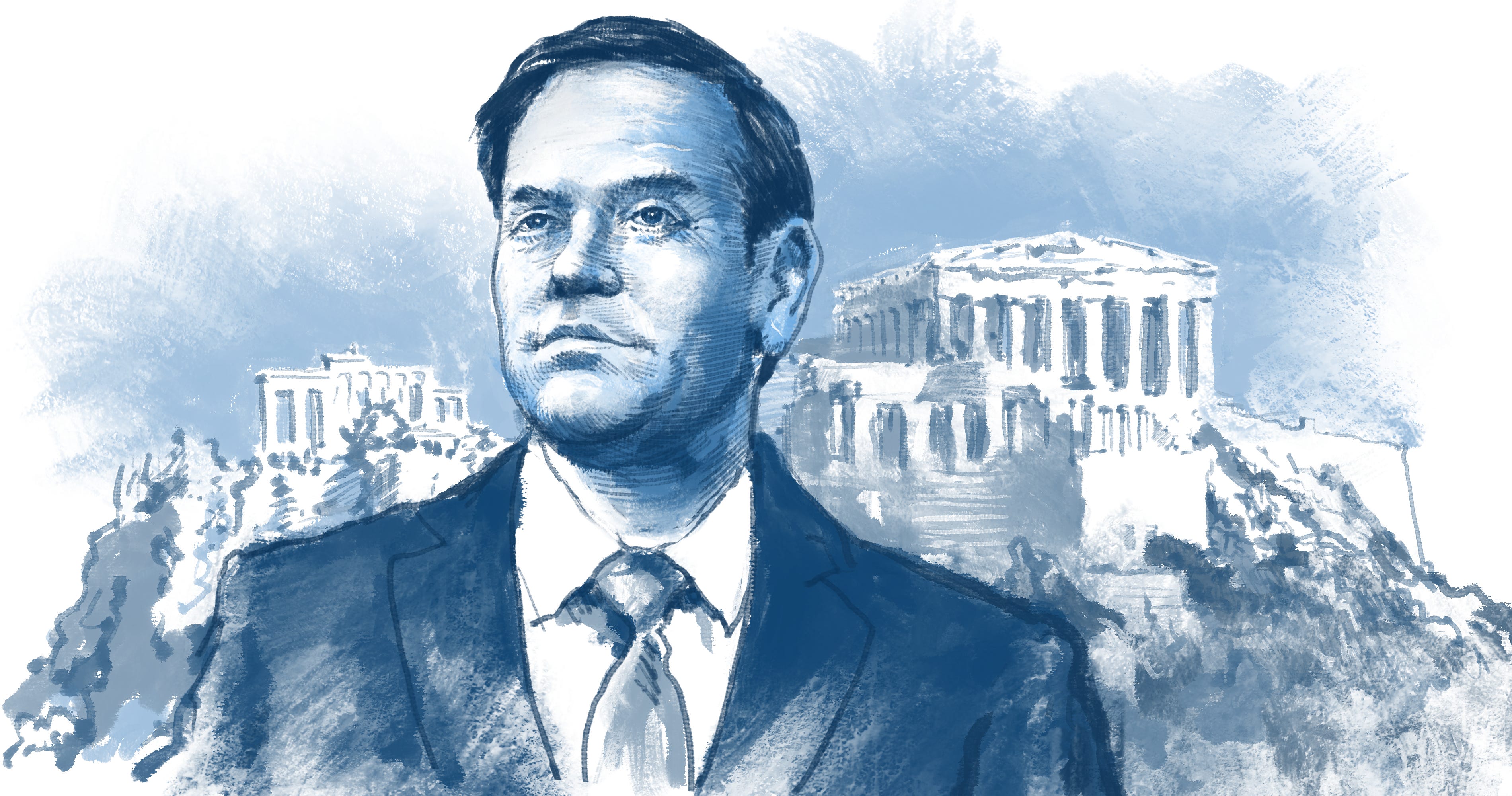
Marco Rubio was sworn in as the 72nd Secretary of State on January 21, 2025. The Secretary is creating a Department of State that puts America First.
Today, too much of the West has forgotten this quality. Over time, we in the West came to feel ashamed of the very things that made us exceptional. We felt embarrassed that our achievements set us apart from the rest of the world. Our prosperity somehow became a source of guilt. We no longer believed we deserved and had earned our greatness.
The word “nationalism” became a dirty word. And so we tore down our monuments; we condemned our own history. And in too many places, we taught our children to be ashamed of the countries they would inherit. In the process, we opened our borders and outsourced our industry, and allowed our militaries to wither and to decay.
And with every passing year, we seemed to outsource more of our sovereignty, transferring our decisions to global bureaucracies far beyond the reach of our control.
But others were all too happy to fill the vacuum that we left – the vacuum left behind by our weakness. And as the West’s confidence faltered, its adversaries and its rivals only grew more assertive, building up their own wealth and their own power in our stead.
And now, today, we find ourselves at a crossroads. Because the next decade and the decisions we make will write the story of the next century. The course we take will determine whether the West maintains its place at the head of the world or resigns itself to a future of atrophy and servitude and decline. We will either choose to act now or lose the choice to act at all.
Under President Trump, the United States has made its choice. We choose the unapologetic pursuit of national power: to take back control of our critical supply chains, to reindustrialize our economy, to rebuild our defense, to fight for dominance of the technologies and industries of the future.
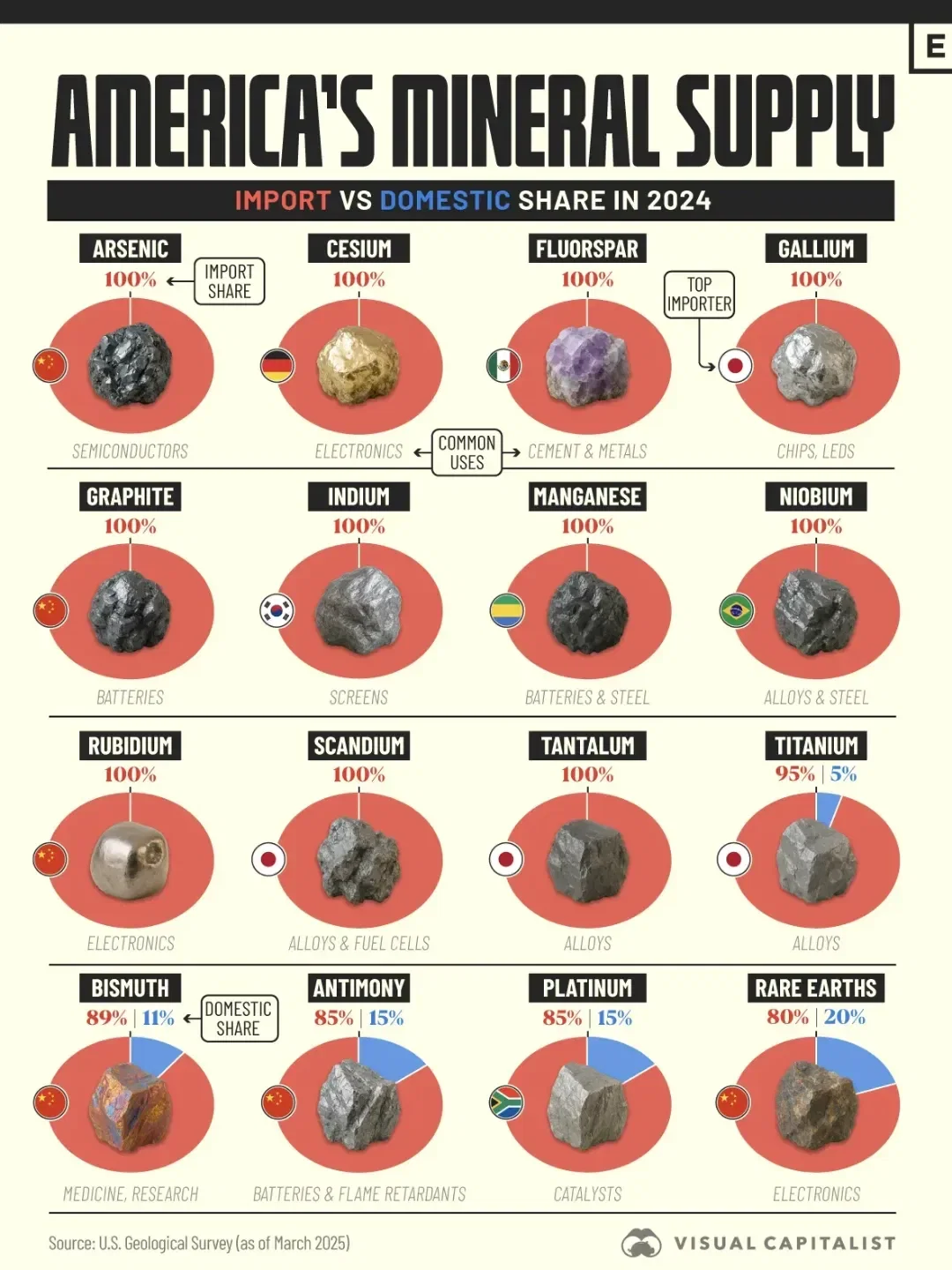
We choose to reach for new frontiers: in advanced manufacturing and super intelligence; in drones, weapons, and warfare; in chips, minerals, cyber, and every other domain of human possibility. To unleash our energy, to rebuild our factories, to return our astronauts to the moon and launch a new age of exploration in space.
Now for all their lofty ideals, the ancient Greeks were not naive. They understood that nations have interests. They understood that statecraft requires prudence and diplomacy, but they also understood that it requires the ability to wield force when prudence and diplomacy fail. They understood that power requires not only having the means to defend yourself, it requires the credibility that you are willing to use it.
This is the classical understanding of politics and of statecraft that the Trump Administration hopes to reclaim – reclaim not just for our country, but for the whole of our civilization.
We believe that Europe can awaken from its long slumber and rekindle the fire that was lit here millennia ago.
There are already signs.
Across this continent, we are witnessing what we hope will be the beginnings of a generational shift: skyrocketing defense spending, a flurry of new partnerships and programs, expanded manufacturing and production, following on the historic defense commitments made last year in The Hague.
Greece has been at the center of this shift. The people of this nation have proved themselves once again to be an indispensable friend to Europe and to the United States alike, on everything from energy to migration to defense, where Greece has been a model ally.
And it’s our sincerest hope that all of Europe will follow your example.
Though passions may, at times, have strained the bonds of affection between the United States and Europe, it must not be allowed to break them. Together, we must strengthen an alliance capable of confronting threats of our age.
And we can. Because we do not believe the transatlantic friendship should be zero sum. Quite the opposite: our vision is of an alliance whose strength is greater than the sum of its parts. It is a vision we saw in action just last month, in an unprecedented new agreement between the United States, Denmark, and Greenland – an agreement that will reshape the Arctic and bolster the security of all of NATO. All three partners in that deal emerged victorious. All of Europe – and NATO and the United States emerged safer, stronger, and more secure because of it.
We want to win together. We must win together.
Now it’s has become fashionable today to believe that enlightened foreign policy means prioritizing the global community over one’s own people. And I think here, too, we have much to learn from the men of ancient Greece because they knew that there was nothing selfish or wrong about loyalty to your nation, nor anything selfish or wrong about fighting to defend its interests above all else.
They believed – fiercely – in the ideal of the great man: the exceptional individual who obtains immortality through his own deeds. But they believed that glory and fame, those things were won through striving, sacrificing and achieving greatly for something larger than yourself. The recurring hero of the ancient Greek world was the man who was willing to pay any cost for a cause worthy of his loyalty.
We see this in Socrates, who refused to abandon the inquiry into truth even at the cost of his own life. We see it in the legendary stand of 300 Spartans – surrounded and hopelessly outnumbered by the vast armies of Persia – who refused the chance to save themselves, choosing to fight to the last man rather than abandon their post or abandon their duty. And we see it in the epic myth of Achilles, who is offered the choice to return home and live a long and peaceful life – but chooses instead to remain at Troy and perish in pursuit of eternal glory.
These – these are the qualities that would shape the Western moral imagination. From the Christian martyr who refused to betray his faith to the patriot who gave his life for his country; from Saint Thomas More to the Battle of the Alamo, running through the immortal closing words of the Declaration of Independence of the United States which says, “We mutually pledge to each other our Lives, our Fortunes and our sacred Honor.”
It is from the Greeks that the West inherited its sense of duty – an unbreakable loyalty to one’s code, one’s cause, one’s country. Our heroes, the heroes of the West are those who choose to remain faithful to their duty precisely when it is most difficult and painful to do so: the man who is bound by his word, the soldier who will not abandon his post, the captain, the proverbial captain, who goes down with his ship.
This is wholly different from what we see, even now, for example from fanatics like the radical mullahs of Iran, whose cult of death hails child suicide bombers as national heroes, and portrays martyrdom as an end to itself.
Our heroes – our heroes may be willing to die for their cause; but our heroes do not worship death. It is precisely because we value life that we come to recognize the heroism in those who would sooner sacrifice it than to betray their principles. Now, we take the West’s conception of these things – heroism, honor, duty – we take these things for granted. We assume that these somehow are universal to all people in all times and in all places. They are not. They are the product of a distinct character, a distinct character which arose here and shaped the whole story of the civilization that came after it. A civilization that we must fight to defend today with the same passion as our forefathers did.
The men who built the Parthenon were succeeded by the architects of European Christendom, who raised the cathedrals of Milan, Cologne, and Florence. The quest to perfect the human form that moved the ancient Greek sculptors found a new expression in Michelangelo. The Greek philosophers’ search for the structure of the universe was inherited by Copernicus, and then Galileo, then Kepler, and in Newton.
The hunger for new knowledge, that’s what gave birth to Magellan’s first expedition around the world, to Columbus’ discovery of the Americas, and ultimately to Apollo 11’s journey to the moon. And the qualities that led Alexander to conquer the entire known world reappeared in Caesar, then Charlemagne, and Cortes.
And in America, that same tradition rediscovered itself anew. An open and wild land became the site of a great revival of Western imagination and ambition. The Greek aspiration for new horizons became the American frontier spirit. The civilization of Athens and Rome transformed an infant seaboard republic into a continental empire.
The greatest Americans of every generation have carried the unmistakable features of their forefathers – born in Athens, formed by Rome, baptized in Christendom, hardened in the furnace of medieval Europe, endowed with the English genius for liberty, and then carried across the Atlantic to be reborn on the shores of a new world.
Together, we must now rediscover that spirit. We are at an inflection point – an inflection point not only in the history of my nation, but an inflection point in the whole of our civilization.
The threats we face today are every bit as real as they were on the dramatic stage of antiquity.
National interests did not vanish in the face of international institutions. War did not disappear simply because we preferred peace. Other states continued to arm, to seek influence, to compete for territory, and technology, and resources, and markets, and energy, and power.
And now, there is war again. There is new competition between great powers again. There is vulnerability, aggression, terrorism, a whole universe of new threats and attacks again.
And so we must rebuild our institutions and our alliances to face these threats together – understanding that the purpose of these things is not to abolish the sovereignty of the nations that constitute them; it is to defend them. And that nations need not abandon their distinct identities in order to recognize their common interests.
We have built a model of that with our partners here in Greece. In our defense partnerships, in energy and technology, in our shared ambition to secure Europe’s borders from the threats of mass migration.
Our friendship dates back to the earliest years of my nation. When Greece rose in 1821 to recover its independence after centuries of Ottoman rule, Americans recognized something familiar in that struggle. Three years later, the great American statesman Daniel Webster, he delivered a famous address to Congress, helping bring the cause of the Greek Revolution before the representatives of the young American republic.
And he began by calling their attention to everything around them. This is what he said in his speech; he said: “This free form of government, this popular assembly… this practice of free debate, and public discussion, the contest of mind with mind… even the edifice in which we assemble, these proportioned columns, this ornamented architecture, all remind us that Greece has existed, and that we, like the rest of mankind, are greatly her debtors.”
Those words are as true today as they were when he said them. And all of us – not just Americans, but Europeans and our friends across the West – must relearn the lessons our forefathers took from this place and from its history.
The history of Greece – the history of Greece does not just offer us a glimpse – it does not offer a glimpse of our institutions in their earliest forms. The history of Greece shows us an image of ourselves.
It shows us that ours is the inheritance of great heroes, and that we should be proud – that we should be intensely proud – of where we come from. We should marvel at what our forefathers carved out of this countryside. The story of our civilization is the greatest story ever known to man. And it began here, with the first men and women of the West. From them – from them – we can rediscover the virtues, the courage, and the strength to confront the dangers that we face in our time.
Thank you.