President Trump, who founded the U.S. Space Force in 2019, has announced plans for a U.S. Space Academy to train future leaders of America’s pioneering space missions.
Trump signed an executive order establishing the Space Academy last month during an August 28 ceremony at NASA’s Johnson Space Center in Houston.
“Given the rapid growth of the U.S. Space Force and commercial space industry, and the expansion of our ambitions to the moon and far beyond … it’s clear we will need to educate and train an entire generation of skilled service members, engineers, and civil operators,” the president said.
Space Is Critical To US
The order describes space as critical “for U.S. national security, economic growth, scientific discovery and technological innovation.”
During the August 28 ceremony, Trump also awarded the Congressional Space Medal of Honor to the crew of the Artemis II mission — NASA’s Christina Koch, Victor Glover and Reid Wiseman, and the Canadian Space Agency’s Jeremy Hansen. Their April flight around the moon set a record for the farthest humans have traveled from Earth.
President Trump presents an executive order establishing the U.S. Space Academy August 28 at Johnson Space Center in Houston. (NASA/John Kraus)
The only nation to land a man on the moon, the United States remains at the forefront of human space exploration. Through the Artemis program, established in Trump’s first term, NASA will return astronauts to the moon and pave the way for a moon base that will serve as a jumping-off point for future human spaceflight to Mars.
The president has prioritized America’s leading role in space exploration. He launched the Artemis Accords, a nonbinding set of principles to guide civil space exploration. Over 70 nations have signed onto the accords.
In August, Trump issued a Presidential Memorandum to reinvigorate U.S. leadership in space transportation , calling on federal agencies to promote space transportation capabilities and facilitate commercial transportation to the moon and Mars.
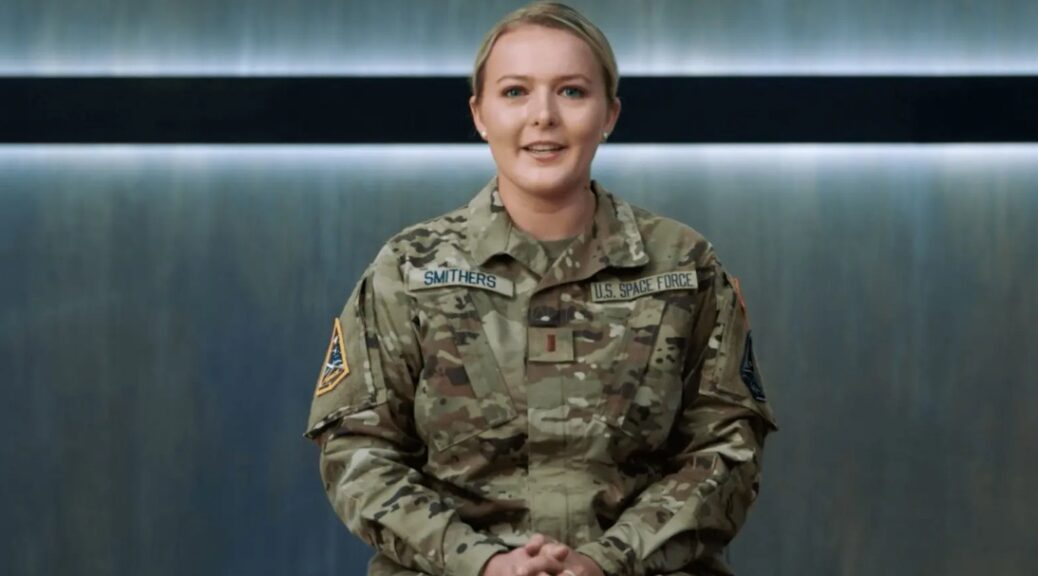
U.S. Space Force Brigadier General Matthew Holston swears new officers into the U.S. Space Force at the Pentagon. (U.S. Air Force/Technical Sergeant Michael Campbell)
NASA Administrator Jared Isaacman will lead a commission that will advise the president on creating the Space Academy, including degree programs, experiential training and service obligations for graduates. The academy will combine “rigorous technical education with leadership development, discipline, and a durable commitment to public service,” the order says.
A Transitional Step
Isaacman called plans for the Space Academy “a transformational step” for future NASA missions to return astronauts to the lunar surface, build a moon base and advance science and discovery. “I have no doubt that so much of the future talent that will graduate and contribute to these exciting endeavors will be educated at the United States Space Academy,” he said.
Cheese has once again become a hot topic in the Canada-U.S. trade dispute.
While officials work to lower sectoral tariffs on Canadian steel and aluminum, the U.S. wants Canada to change its strict rules on importing cheese, which a Canadian agricultural economist warns heavily against.
“It’s not in the Canadian interest,” explains Al Mussell, a prominent Canadian agricultural economist and policy analyst.
Last month, U.S. President Donald Trump signed an executive order threatening a 50 per cent tariff on Canada’s dairy sector, which is now in a three day suspension period as negotiations continue.
Raphael Kaiser stores some of the artisinal cheeses at the production facility of Fromagerie Fritz Kaiser in Noyan, Que., Thursday, Oct. 11, 2018.THE CANADIAN PRESS/Ryan Remiorz
Mussell explains that the U.S. wants more control over who can access Canadian retailers directly, so they can export some of their premium products to Canada.
“Of course, that’s not how our system works,” he says, adding that allowing it would threaten Canadian processors and complicate the domestic raw milk allocation system.
Canada currently gives dairy import quota access mainly to processors, while retailers are excluded under CUSMA. The U.S. argues that this restriction creates an unfair playing field because retailers are granted access under Canada’s trade agreement with the European Union.
The U.S. administration says “Canada is discriminating against the commerce of the United States through Canada’s tariff-rate quota allocation measures imposed on U.S. cheeses of all types.”
Canada and the U.S. have fought over this before
The dispute over who gets access to Canada’s dairy quotas is not new.
The U.S. first launched a formal dispute under CUSMA, arguing that Canada’s dairy import system shut out U.S. producers because it gave almost all its import permits to domestic dairy factories.
After a trade panel ruled that this was unfair, Canada changed the rules to let other dairy businesses, like distributors, get the permits too. However, retailers remain excluded.
A cow in a dairy farm, Tuesday, January 23, 2024 in Saguenay Que. THE CANADIAN PRESS/Jacques Boissinot
When the U.S. challenged Canada again, arguing retailers should also be allowed direct access, the panel sided with Canada, saying it was in compliance with CUSMA.
Mussell says the U.S. continuing to press the issue despite that ruling is not a good sign.
“I think it goes far beyond cheese or dairy products,” he says.
“When the President can come in and make threats that contravene a decision that the dispute panel under the CUSMA agreement rendered… that’s really troubling.”
What happens if retailers get more access?
Mussell says giving grocery retailers direct access would not increase the total amount of U.S. cheese entering Canada, since the quota is already essentially filled, but it could shift sales away from Canadian manufacturers.
He says it could also complicate Canada’s supply management system because raw milk is allocated to processing plants on a regulated basis.
Cows are milked at a dairy farm in Granby, Que., on Wednesday, Feb. 5, 2025. THE CANADIAN PRESS/Christinne Muschi
“That could be costly to the Canadian dairy industry,” he says.
Mussell also warns that giving grocery retailers more direct access to imports could strengthen their negotiating position with Canadian dairy suppliers.
“Your’re kind of arming them in terms of the sorts of relations that they can have with their dairy suppliers,” he says.
‘Our national food sovereignty is not up for negotiation’
“Our national food sovereignty is not up for negotiation,” said David Wiens, president of DFC.
“It is also clear that Canadians believe in the importance of having control over our food supply and ensuring that Canada’s strong domestic dairy sector is not compromised.”
The trade relationship in dairy already “massively favours the U.S.” said Mathieu Frigon, president of the DPAC.
“U.S. dairy exports to Canada far exceed Canadian dairy exports to the U.S. by more than $600 million annually and have increased by more than 150% since CUSMA came into effect,” said Frigon.
What about the quality of U.S. dairy?
Mussell says even if more U.S. milk entered Canada, there is a major difference between Canadian and U.S. dairy quality standards.
“You could have milk that shipped under the U.S. Grade A that would not be saleable in any province in Canada,” he says.
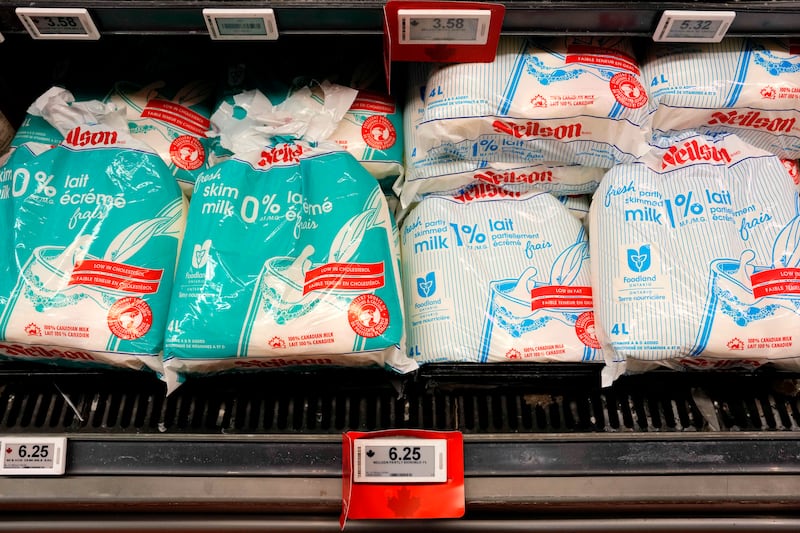
Canadian milk is seen at grocery store in Ottawa, on Wednesday, April 2, 2025. THE CANADIAN PRESS/Justin Tang
Moreover, he says a significant amount of American milk doesn’t even meet its own Grade A standard.
“Is that product being exported to Canada, made from that milk? We don’t know. They don’t label. We have no way of knowing that,” says Mussell.
He says federal funding for labs that monitor the U.S. milk testing system stopped last year.
“What’s the nature of the safety and quality of product that we’re getting from the United States? I don’t know that we have an answer for that, and it’s concerning,” says Mussell.
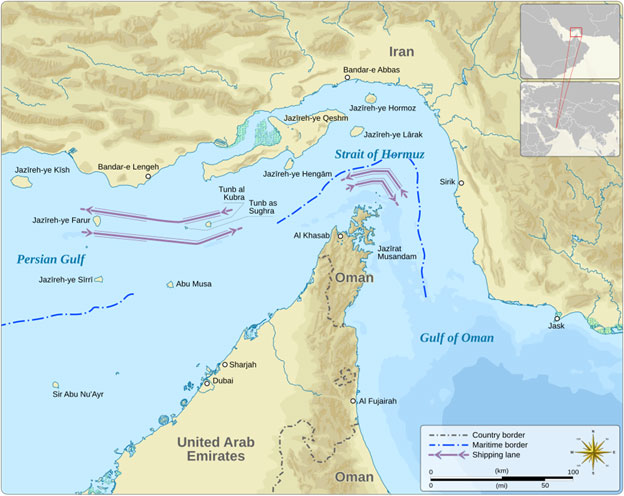
Yesterday, July 29, 2026, the United States designated the Persian Gulf Marine Insurance Company and Hormuz Safe Marine Services Authority, two Iranian entities backed by the Islamic Revolutionary Guard Corps (IRGC), for running coercive “insurance” schemes that extort international shipping transiting the Strait of Hormuz. These entities manufacture risk—including the threat of vessel seizures—and then charge commercial vessels for coverage against dangers created by the regime itself, generating revenue that sustains IRGC operations and Iran’s broader campaign of regional destabilization.
A Shadow Fleet
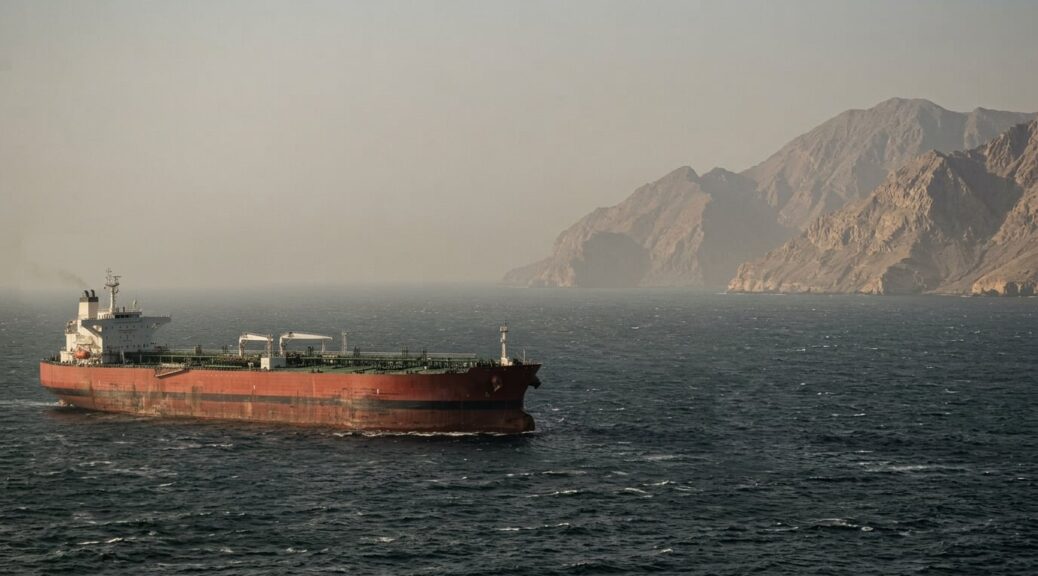
The United States also designated eight companies operating vessels that have transported illicit Iranian crude oil and petrochemical products to China and the United Arab Emirates. These vessels form part of Iran’s “shadow fleet,” which the regime relies on to evade sanctions.
Yesterday’s designations support the U.S. Navy’s enforcement of a blockade on Iranian ports and coastline and add to a sustained campaign that has now sanctioned more than 100 vessels this year.
The United States will continue to hold Iran accountable for weaponizing vital international waterways and evading sanctions through shadow fleet operations and deceptive financial schemes. Protecting navigational rights and freedoms in the Strait of Hormuz is a global interest, and the United States will act, alongside partners, to ensure Iran cannot hold international commerce hostage to finance its malign activities. We will continue working with allies to isolate the regime diplomatically and economically until it ceases its destabilizing behavior.
This most recent action was taken pursuant to Executive Order (E.O.) 13902, which targets Iran’s financial, petroleum, and petrochemical sectors. It continues the robust sanctions campaign targeting Iranian oil sales in support of the President’s National Security Presidential Memorandum 2 (NSPM-2). For more information on today’s action, please see the Department of the Treasury’s press release.
The Department of State is taking action to designate four Iran- and Belarus-based entities and individuals involved in the procurement of arms and related materiel intended to support Iran’s military.
The United States, as directed in the President’s National Security Presidential Memorandum 2, is committed to disrupting procurement efforts supporting Iran’s military programs. This action represents the commitment to stop Iran from engaging in activities related to the reconstitution of its proliferation-sensitive programs.
All Department of State targets are being designated pursuant to Executive Order (E.O.) 13949, which targets certain persons with respect to the conventional arms activities of Iran.
The Department of the Treasury is concurrently designating nine entities and individuals who have worked to procure weapons on behalf of Iran’s Islamic Revolutionary Guard Corps (IRGC). For more information on these actions, please see the Department of the Treasury’s press release.
The Department is designating the following entity and individual pursuant to Section 1(a)(i) of E.O. 13949 for engaging in activity that materially contributes to the supply, sale, or transfer, directly or indirectly, to or from Iran, or for the use in or benefit of Iran, of arms or related materiel, including spare parts.
Armory Alliance
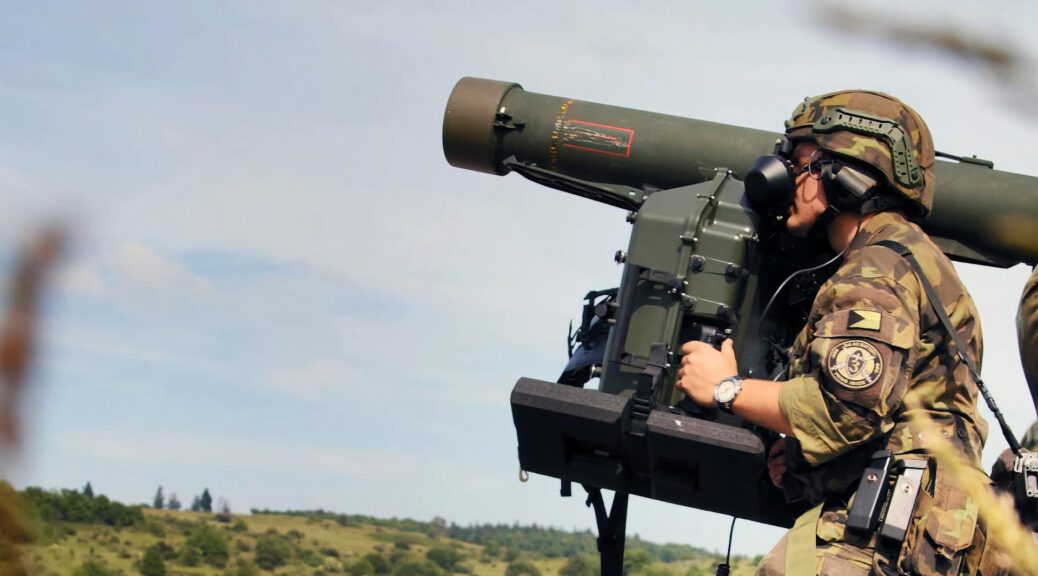
Armory Alliance is a Belarus-based entity that has acted as an intermediary between China-based companies and Iran and has been involved in facilitating the purchase of hundreds of man-portable air-defense systems (MANPADS) and their shipment from China to Iran including attempting to route the shipments through third party countries and obfuscating their origin and true end-user. The Department of the Treasury previously designated Armory Alliance pursuant to E.O. 13382 on May 8, 2026.
Mohammadmahdi Maleki
Mohammadmahdi Maleki is a Belarus-based Iranian individual who as an employee of ARMORY ALLIANCE has contributed to Armory Alliance’s efforts to procure weapons for benefit of Iran. The Department of the Treasury previously designated Mohammadmahdi Maleki pursuant to E.O. 13382 on May 8, 2026.
The Department is designating the following entity and individuals pursuant to Section 1(a)(ii) of E.O. 13949 for having provided to Iran any technical training, financial resources or services, advice, other services, or assistance related to the supply, sale, transfer, manufacture, maintenance, or use of arms and related materiel described in subsection (a)(i) of section 1 of E.O. 13949.
Center for Innovation and Technology Cooperation
Center for Innovation and Technology Cooperation (CITC) is an Iran-based government entity involved in the procurement of satellite imagery to support kinetic strikes by Iranian armed forces. CITC coordinated with the Iranian Ministry of Intelligence and Security (MOIS) about striking locations within and around a facility hosting U.S. armed forces in late March 2026. The facility was subsequently targeted by an Iranian attack in late March 2026, resulting in the injury of U.S. service members. Additionally, officials of CITC have approached China-based facilitators to attempt to procure weapons for use by Iran’s military. Center for Progress and Development of Iran (CDPI) is the latest name of Iran’s CITC. CITC was previously designated by the United States on July 12, 2012, pursuant to E.O. 13382. MOIS was previously designated by the United States on February 6, 2012, pursuant to E.O. 13224 and E.O. 13553. MOIS was also designated by the United States on April 22, 2012, pursuant to E.O. 1306; September 9, 2022, pursuant to E.O. 13694; and September 8, 2023, pursuant to E.O. 14078.
The Department is designating the following entities pursuant to Section 1(a)(iii) of E.O. 13949 for having engaged, or attempted to engage, in any activity that materially contributes to, or poses a risk of materially contributing to, the proliferation of arms or related materiel or items intended for military end-uses or military end-users, including any efforts to manufacture, acquire, possess, develop, transport, transfer, or use such items, by the Government of Iran (including persons owned or controlled by, or acting for or on behalf of the Government of Iran) or paramilitary organizations financially or militarily supported by the Government of Iran.
Sajjad Ahadzadeh
Sajjad Ahadzadeh (Ahadzadeh) is the head of CITC. Ahadzadeh has approached China-based facilitators, such as U.S.-designated China-based Yushita Shanghai International Trade Co Ltd (Yushita), to procure man-portable air-defense systems (MANPADS). Ahadzadeh has attempted to facilitate the procurement of weapons and other arms and related materiel from China for use by Iran including through U.S.-designated Yushita. Yushita was designated by the Department of the Treasury on May 8, 2026, pursuant to E.O. 13382.
February, 2026. The United States is designating individuals and entities involved in multiple weapons procurement networks based in Iran, Türkiye, and the United Arab Emirates supporting the Iranian regime’s ballistic missile and advanced conventional weapons (ACW) development. We are also sanctioning numerous shadow fleet vessels and their owners or operators that have collectively transported hundreds of millions of dollars’ worth of Iranian petroleum, petroleum products, and petrochemical products.
The Iranian regime continues to mismanage its economy, with catastrophic consequences for its people, and prioritizes funding of foreign proxies and missiles over the basic needs of ordinary Iranians. Today, sanctions target the illicit funds that the regime uses to advance its malign and destabilizing ends.
This action implements President Trump’s National Security Presidential Memorandum 2 by countering the Iranian regime’s aggressive development of missiles and other asymmetric and conventional weapons capabilities. It also denies the Islamic Revolutionary Guard Corps access to assets and resources that sustain its destabilizing activities. The nonproliferation designations today support the reimposition of United Nations restrictive measures and sanctions on Iran, which occurred as a direct result of the Iranian regime’s “significant non-performance” of its nuclear commitments.
The United States will continue to use all available means to expose, disrupt, and counter the Iranian regime’s ability to procure revenue to develop its weapons programs and fund its destabilizing behavior.
The Department of the Treasury’s action was taken pursuant to Executive Order (E.O.) 13382, which targets proliferators of weapons of mass destruction and their supporters, E.O. 13949, the Iran conventional arms authority, and E.O. 13902, which authorizes sanctions related to key sectors of Iran’s economy. For more information on today’s actions, please see the Department of the Treasury’s Press Release.