
Tag Archives: public policy

The Building Canada Act Won’t Actually Build Anything In Canada?

The number of oil and gas projects in Ottawa’s major project inventory has fallen by 76 percent from its 2017 peak. This demonstrates a sustained erosion of investment confidence in Canada’s energy sector over the better part of a decade. 

To spur investment in natural resources, mining and electricity, Parliament enacted the Building Canada Act (BCA) last June to “urgently advance projects throughout Canada.” Almost a year later, and without designating any projects under the BCA, Ottawa has now announced further reforms aimed at “Getting Major Projects Built in Canada.”   

These reforms reflect the recognition that the current system isn’t working.  Numerous reportsstudies, and indices have concluded Canada’s reputation as a place to invest and build has deteriorated. Meanwhile, everyone agrees that when project approvals become politicized, and regulators are asked to weigh broad policy factors, it reduces confidence in the Canadian system. 
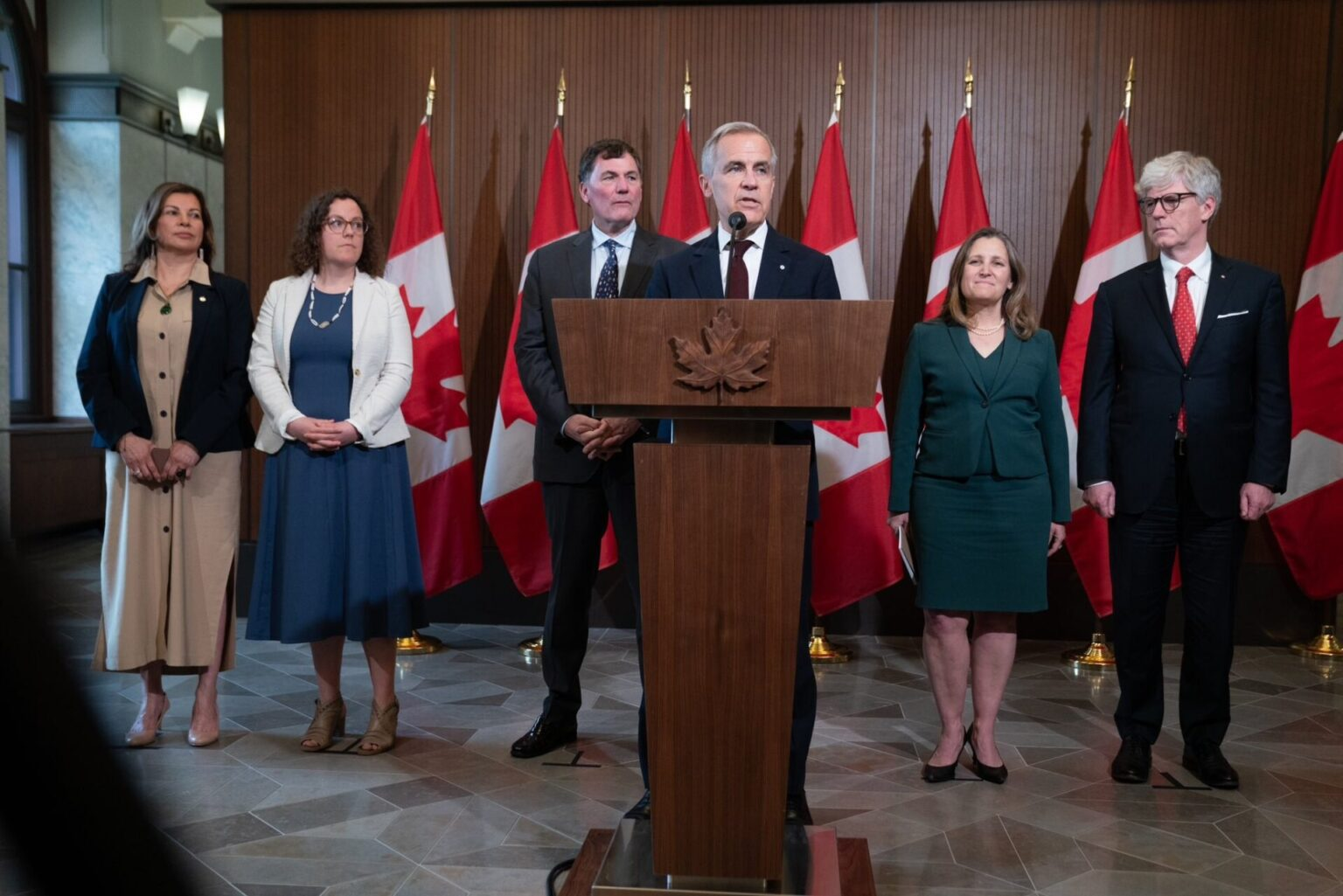
Rather than creating a clearer and more predictable approvals framework, these changes expand federal discretion and further politicize the regulatory process.  

The BCA doubles down on political decision making. First, cabinet, ministers, and – in reality – the Prime Minister’s Office, are granted virtually unconstrained discretion to control both the decision on ultimate approvals along with the process to which national interest projects should be subject. This includes the removal or amendment of current legislation or other rules that apply to national interest projects. 

With this control, Ottawa can determine the outcome of the hearing prior to the consideration of evidence, and regulators will in essence go through the motions of conducting a review to produce a record that supports the government’s political determinations.  

Moreover, it is not clear whether the BCA process replaces the existing process or actually adds to it. The BCA states that designation does not exempt a proponent from taking all measures it is required to make under enacting legislation, the Canadian Energy Regulator Act or Impact Assessment Act, to receive authorization. This suggests the CER and Impact Assessment Agency continue to conduct a regulatory review based on existing legislation. This raises new uncertainties and gives the minister ultimate discretion to consider a limited set of factors when issuing a green light. 

Even in areas where regulatory review is required, such as safety and environmental impact, the BCA adds new considerations that do not precisely jibe with what needs to be considered under existing legislation. For example, the current CER Act requires consideration of how a pipeline may affect the protection of property and the environment. The BCA only requires consideration of safety and security of regulated facilities. While it is easy to say that the minister would in fact continue to consider the factors within the CER Act, the BCA doesn’t require it. 

Indeed, the BCA does not solve the problem that current proceedings require assessments on a wide range of policy that bear little relation to direct project risks. 

Hearings on policy issues like the intersection of sex and gender, and whether the effects of the project hinder or contribute to the government’s ability to meet its environmental and climate change obligations can dissolve into a time-consuming policy debate among proponents and intervenors. 

Project reviews should instead focus on core risks, such as safety, environmental impact, and the adequacy of Indigenous consultation. Especially since the types of projects being referred, and other major projects, are often those with known adverse effects. 

And what to make of the Major Projects Office’s role in these reforms? The BCA gives this office a limited coordinating function, while its website describes its role in broader terms, causing further confusion. 

The project office states it is tasked with evaluating projects for submission and referral to the MPO itself. However, the BCA states projects require evaluation and recommendation by the minister prior to being referred.   

Next the MPO states it will recommend whether projects should be designated as national interest projects. This contrasts the BCA, which requires this evaluation to be done by the minister following consultation with provinces and territories, and Indigenous peoples, on whether to order the formal designation. 

Finally, the MPO states its mandate includes resolving policy or regulatory challenges and reduced risk, providing financial structure or investment support as well as Indigenous engagement and consultation guidance. The BCA does not empower it to conduct these activities and it is unclear how a proponent (likely an experienced and well-financed company) might benefit from MPO coordination rather than existing federal departments, and the various funding agencies, such as the new Canada Strong Fund, Canada Infrastructure Bank, or the Canada Growth Fund, all of which have already committed to better coordination.  

Taken together, we argue the BCA and the MPO’s processes will not streamline project approvals nor improve predictability or good practice in Canada’s regulatory system. 

George Vegh is a Senior Fellow at the Munk School of Global Affairs & Public Policy. Kate Koplovich is a Senior Policy Analyst for Energy with the C.D. Howe Institute. 

Intelligence Squared U.S. Begins Season Debating Saudi Arabia, Iran & Turkey – In NYC & Online September 12

Saudi Arabia and Iran are vying for regional dominance, as the latter pursues nuclear weapons. Turkey is cozying up to Russia and China. Instability, conflict, and proxy wars have engulfed Syria, Yemen, and beyond. How should the United States respond to changing power, proxy wars, terrorism, and human rights issues in the Middle East? On Thursday, September 12, America’s debate series Intelligence Squared U.S. launches their fall season with a debate not one, but three motions, all investigating 
“Shifting Power in the Middle East”:

Motion 1: Is Trump right on Saudi Arabia?
Motion 2: Is the world safer without the Iran Nuclear Deal?
Motion 3: Is Turkey an asset to NATO?

In this latest installment in Intelligence Squared U.S.’s new “Unresolved”
series, debaters must declare their “yes” or “no” stance on each separate motion, allowing for both sharp disagreements and unexpected
alliances. The debaters will be:
* Michael Doran, senior director on the National Security Council under
President Bush* Reuel Marc Gerecht, former CIA case officer* Bernard
Haykel, professor of Near Eastern Studies at Princeton* Brett McGurk, the State Department’s former Special Presidential Envoy for the Global
Coalition to Defeat ISIS* Barbara Slavin, the director of the Future of Iran Initiative

The debate will be held at NYC’s Symphony Space and stream live online, then air soon after as part of the syndicated public radio show and podcast “Intelligence Squared U.S.” On September 12, online viewers can tune in at IQ2US’s website: https://www.intelligencesquaredus.org/debates/unresolved-shifting-power-middle-east

 WHAT: Intelligence Squared U.S. Debates “Unresolved: Shifting Power in the Middle East”
WHEN: Thursday, September 12 / 7:00-8:45 PM EDT
WHERE: Peter Norton Symphony Space, 2537 Broadway, New York, NY
TICKETS: $40 ($12 for students w/ ID). To purchase, visit http://www.intelligencesquaredus.org/  

Debaters Bios: * Michael Doran, Senior Fellow, Hudson Institute
Michael Doran is a senior fellow at the Hudson Institute in Washington, D.C., where he specializes in Middle East security issues. Doran served as a senior director on the National Security Council under President Bush and was responsible for helping to devise and coordinate U.S. strategy on a variety of Middle East issues, including Arab-Israeli relations and U.S.
efforts to contain Iran and Syria. He also served in the Bush
administration as a senior adviser in the State Department and a deputy assistant secretary of defense in the Pentagon. 

* Reuel Marc Gerecht, Senior Fellow, The Foundation for Defense of
Democracies & Fmr. CIA Case OfficerReuel Marc Gerecht is a former
case officer for the CIA, where he served as a Middle Eastern targets
officer with the CIA’s directorate of operations. He is a senior fellow at the Foundation for Defense of Democracies, a non-partisan organization
centering on national security, where he focuses on Iran, sanctions,
terrorism, and the Middle East. He is the author of “Know Thine Enemy: A Spy’s Journey into Revolutionary Iran” and “The Islamic Paradox: Shiite Clerics, Sunni Fundamentalists, and the Coming of Arab Democracy,”
among others.  

* Bernard Haykel, Professor of Near Eastern Studies, Princeton University Bernard Haykel is a professor of Near Eastern Studies and the
director of the Institute for Transregional Study of the Contemporary
Middle East, North Africa and Central Asia at Princeton University. After working as a post-doctoral research fellow at Oxford University in
Islamic Studies, he joined New York University in 1998 as associate
professor before taking up his post at Princeton. He became a
Guggenheim fellow in 2010 and is co-editor of the book, “Saudi Arabia in Transition; Insights on Social, Political, Economic and Religious Change.” 

* Brett McGurk, Fmr. Special Presidential Envoy for the Global Coalition to Defeat ISISBrett McGurk served as Special Presidential Envoy for
the Global Coalition to Defeat ISIS at the U.S. Department of State, where he helped build and then lead the coalition of 75 countries and four
international organizations in the global campaign against ISIS. He served in senior positions in the Bush and Obama administrations and has led some of the most sensitive diplomatic missions in the Middle East over
the last decade. McGurk is currently the Frank E. and Arthur W. Payne
distinguished lecturer at the Freeman Spogli Institute and Center for
Security and Cooperation at Stanford University. 

* Barbara Slavin, Director, The Future of Iran Initiative, The Atlantic CouncilBarbara Slavin is the director of the Future of Iran Initiative and a nonresident senior fellow at the Atlantic Council. The author of
“Bitter Friends, Bosom Enemies: Iran, the US and the Twisted Path to
Confrontation,” she is a regular commentator on U.S. foreign policy and
Iran on NPR, PBS, and C-SPAN. Previously, Slavin served as a public policy scholar at the Woodrow Wilson International Center for Scholars. Slavin
is a career journalist, and currently writes as columnist for
Al-Monitor.com, a website devoted to news from and about the Middle
East.   

ABOUT INTELLIGENCE SQUARED U.S. DEBATES (IQ2US)
A non-partisan, non-profit organization, Intelligence Squared U.S. was
founded in 2006 to address a fundamental problem in America: the
extreme polarization of our nation and our politics. Their mission is to
restore critical thinking, facts, reason, and civility to American public
discourse. The award-winning debate series reaches over 30 million
American households through multi-platform distribution, including
radio, television, live streaming, podcasts, interactive digital content, and on-demand apps on Roku and Apple TV. With over 160 debates and
counting, Intelligence Squared U.S. has encouraged the public to “think
twice” on a wide range of provocative topics. Author and ABC News
correspondent John Donvan has moderated IQ2US since 2008.