“It’s the tiny town of Defoy. Only a gravel road from the main highway, but about a half a mile down there is the wonderful “antiques dump” of Rene Boudin and his freres.” photos: P. Ross
By the winter of 1982, we had been going to the Harbourfront Antique market every Sunday for about a year, and were making a pretty good living selling things we had bought at local auctions and garage sales. Then one day, I read in the excellent and entertaining “bible” of Antique dealing “The Furniture Doctor” by George Grotz , that the village of Defoy, Quebec was mecca for the antique picker.
To quote “there’s a wonderful secret wholesale place up in the province of Quebec. It’s the tiny town of Defoy. Only a gravel road from the main highway, but about a half a mile down there is the wonderful “antiques dump” of Rene Boudin and his freres. And here under enormous sheds you will find literally acres of antique furniture, chests, and tables piled three to five pieces high”.
“…it wasn’t hard to find because it was near town, and his name was painted boldly on the barn.”
The book had been out quite awhile so there was no telling if this situation still existed, so I asked the old guys at the market if they knew of such a place. I got several reports of it’s glory days, followed by “of course that was years ago and nobody goes anymore. That being said they also all encouraged me to give it a go, and gave me “leads” as to who may still be active. We gathered up our courage, our baby, and what cash we had, and set off.
That first twelve hour drive felt like an eternity. It was a tired crew who pulled in late afternoon to a tiny motel in Victoriaville, Quebec.
Our first move was to look up Marcel Gosselin in the phone book because he was one of our most promising leads. To our delight he was listed, and he answered and told us where and how to come the next morning. It wasn’t hard to find because it was near town, and his name was painted boldly on the barn. Marcel greeted us warmly and proceeded to lead us to his main barn. There, behind the red and white cross doors was the biggest pile of dining chairs I had ever seen. About thirty feet across it reached to the top of the barn.
Through the hatch work of legs I could see tantalizing glimpses of a cupboard and some chests. Then he took us upstairs where in a loft he had sorted hundreds of chairs in sets of four, six, or more. Some were painted and some varnished. It was $45cdn each for simple painted chairs, $65cdn each for nicer pressbacks and/or varnished ones. We got a couple of sets knowing we would get about $150cdn-$250cdn each for these when refinished., Next I asked him about that cupboard I had seen in the giant pile downstairs. He told me all about it including the age, condition and reasonable price of $250cdn and told me he would extricate it and have it ready for my next trip if I wanted it.
I said I did, and then he didn’t even want a deposit.
“That’s not the way we do it down here. Your word is good enough, until it isn’t” Marcel (R) Phil (L)
“That’s not the way we do it down here. Your word is good enough, until it isn’t. I liked him immediately and knew he was a man I would enjoy doing business with.
Next he took us to the garage attached to his 100 year old frame house. The downstairs was filled with every kind of “smalls” including small boxes, glassware, pottery, antique clothing, folk art, etc, etc; and the tiny, about to collapse, upstairs loft was filled with hundreds of pottery washsets. There were some beauties, and this was a hot item at the time in Toronto. Prices ranged from $45cdn-$75cdn per set. We bought 8 of the nicest sets knowing we would get between $145cdn to $375cdn back home.
This was getting truly exciting.
We spent a terrific four hours or so with Marcel that first day and pulled away from his place, with half our money spent, and half our truck full of interesting, excellent quality, and reasonably priced stuff, not to mention the overwhelming sense of warmth, excitement and wonderment of that first glimpse into a Quebec picker’s life. We were hooked, and we knew it was the first of many more trips to see Marcel. For the Silo,Phil Ross.
Featured image courtesy of tourismecentreduquebec.com
2023 marks 103 years since women were legally allowed to vote in the United States and 107 years since women were provided suffrage in the Western provinces of Canada.
It’s been about 3 weeks since many women celebrated Women’s Equality Day.
This day marks a significant turning point in the history of the struggle for equal treatment of women and women’s rights. In acknowledgment, we decided to look at some of the most successful women in business and how they made their millions (or in some cases, billions!).
The barriers to progress for women in the workforce are troubling.
How organizations deal with these barriers in the future will determine how our societies progress. After all, why would you want to ignore nearly half of the world’s workforce?
It’s time to celebrate the achievements of those who are paving the way for our future female leaders, CEO’s, scientists, bankers, journalists and media moguls.
In this info-graphic, we’ll show you some interesting facts about the current state of women in the workplace, gender equality and the pay gap. We’ll also give you some lesser known facts about the inspirational women we’ve chosen to profile, with information on their most prolific achievements.
If you’re in need of some girl power or motivation, then look no further than these business women who broke the mold. For the Silo, Angus Kirk.
What more is there to say about this car except “Wow”? Jim’s 1961 Tri-Power Chevrolet Impala is yet another pure gem hidden away somewhere in the rural wilds of Ontario, Canada.
Back in the day, these cars were known in the South as an excellent choice for moonshine runners. It must have been difficult if not impossible for a police car of that era to keep up with this 280 HP, Triple Deuce carbureted, 348 cubic inch big block.
With no power steering or power brakes you sure did get a pretty good feel for those windy, dirt back roads. Yet because of these removed features the car had no loss of available horsepower or throttle response.
With a borg-warner 100 T-10 4 speed transmission and posi 4:11 rear-end, this car puts the power directly to the road.
These traits also made these Impalas widely used in stock car racing and drag racing as well. This pure beauty of a car is painted in a factory Ermin white, with a factory red and ivory interior. Some of the rarer options include: front and rear bumper guards, E-Z eye solar guard glass and wide, white walls.
In a world of ‘rip it down and change it’, this car is still running an old school Delco battery and generator. It is very un-common to still have these options installed.
Owned by Jim, a stunt driver with Legend Filming Network you can bet the only way you’ll see this car in its home area of Delhi, Ontario is when it’s passing you in 3rd gear with all three deuces wide open.
Extra Facts
The big flag badging on the grille and trunk lid was specific to only 348 cars, they came in 240 HP, 280 HP and the high horsepower 350 HP models. In late 1961 Chevrolet introduced the 409. That same year, the windshield wipers swept in the same direction. For the Silo, Robb Price.
Some years ago, in 2015, I spoke with Paul Hellyer the former Canadian minister of defense, who stated he believes UFOs are from another planet and that the U.S. Government has kept it covered up.
As Canadian Minister of National Defense in 1963, Hellyer was responsible for integrating and unifying the Royal Canadian army, navy and air force into a single organization, the Canadian Armed Forces.
He is outspoken about UFOs visiting Earth and the US Banking System that he feels is greatly responsible for the present economic hard times. He feels we are naive and fail to understand we are being visited by alien life forms.
He told me he had spoken with key US government officials who confirmed aliens are visiting us and providing advanced technology.
His book, “Light at the End of the Tunnel: A Survival Plan for the Human Species” reveals that humans are hell bent for extinction unless we change our attitudes and actions with an urgency appropriate to an impending disaster. Paul Hellyer suggests that we have about ten years to wean ourselves from the oil economy and profoundly regrets that the Copenhagen Conference reflected little progress in that direction.
The whole atmosphere was one that reminded him of Emperor Nero fiddling while Rome burned. World leaders simply have to do better! The book outlines the three monumental changes required to accommodate the miracle. First, the book claims that exotic energy sources already exist. They have been developed by the U.S. “shadow government” at the massive underground “black operation” installations in Nevada and Arizona using technology borrowed from visitors from other planets. Yet they remain secret for the alleged benefit of the privileged few. Second, the money has to be found to subsidize poor nations and facilitate major changes. This can be accomplished by a fundamental re-working of the monetary and banking system. Bank leverages must be dramatically reduced and the percentage of virtual money they create as debt strictly limited so that governments can gain the financial flexibility to finance the transition to sustainability. Finally, it will be necessary for all countries, races, faiths and colors to drop their antagonisms and work together in common purpose to save the heritage they have in common.
When Hellyer was Canada’s Minister of National Defense he stated, “I got periodic reports on sightings and I looked at them very casually, and it was decided that about 80 percent of them were natural phenomena of one sort or another, and the other 20 percent roughly were unexplained, and therefore unidentified. While spending one Thanksgiving holiday north of Toronto, Hellyer and his wife spotted an UFO. “The two of us stood there transfixed for 20 minutes, looking up at this thing moving first in one direction, and then another. By process of elimination, we determined it wasn’t a star or satellite and it wasn’t the space station, so there was really no explanation for it other than it was, in fact, a UFO.”
“It looked like a star, but it maneuvered in a way that stars do not. I must admit that when I saw this one, I wondered whether it was extraterrestrial or American. And I guess the thought that occurred to me was that if it is American, then they have learned some pretty big secrets about acceleration, because it accelerated at a pace that nothing I’ve ever known about that was built here is capable of.” For the Silo, George Filer. Join MUFON.
A number of years ago the Soviet Union toured several countries with an exhibition of its industrial and economic achievements. There were the usual standard displays of industrial machinery and models of power stations and nuclear equipment.
Of greater interest to the CIA were apparent models of the Sputnik and Lunik space vehicles. U.S. intelligence twice gained extended access to the Lunik- the second time even borrowing it overnight and returning it before the Soviets missed it.
This is a true story of close cooperation between covert and overt intelligence components.
On View Abroad
The Soviets. had carefully prepared for this exhibition tour; most of the display material was shipped to each stop well in advance. But as their technicians were busily assessing the various items in one exhibition hall they received a call informing them that another crate had arrived. They apparently had not expected this item and had no idea what it was, because the first truck they dispatched was too small to handle the crate and they had to send a second.
The late shipment turned out to be the last-stage Lunik space vehicle, lying on its side in a cabin-like crate approximately 20 feet long and 11 feet wide with a roof about 14 feet high at the peak. It was unpacked and placed on a pedestal. It had been freshly painted. and three inspection windows cut in the nose section permitted a view of the payload instrument package with its antenna.
It was presumably a mock-up made especially for the exhibition; the Soviets would not be so foolish as to expose a real production item of such advanced equipment to the prying eyes of imperialist intelligence. Or would they? A number of analysts in the U.S. community suspected that they might, and an operation was laid on to find out. After the exhibition closed at this location, a group of intelligence officers had unrestricted access to the Lunik for some 24 hours.
DECLASSIFIED Authority NND 947003
The Lunik
They found that it was indeed a production item from which the engine and· most electrical and electronic components had been removed. They examined ·it thoroughly from the ·viewpoint of probable. performance, taking measurements, determining its structural characteristics estimating engine size, and so forth but not with sufficient detail or precision to permit a definitive identification of the producer or determination of the system used. It was therefore decided to try to get another access for a factory team.
Plans and Problems
As the exhibition moved from one city to another, an intercepted shipping manifest showed an item called .. models of astronomic apparatus whose dimensions were approximately those of the Lunik crate. This information was sent to the CIA Station nearest the destination with a request to try to arrange secure access if the Lunik should appear. On the basis of our experience at trade fairs and other exhibitions, we preferred access before opening of an exhibition to the alternatives of examining it while in the exhibition hall or after it had left the grounds for another destination.
Soon the Lunik crate did arrive and was taken to the exhibition grounds. The physical situation at the grounds, however, ruled out access to it prior to the show’s opening. Then during the show the Soviets provided their own 24 -hour guard for the displays, so there was no possibility of making a surreptitious night visit. This left only one chance: to get to it at some point after it left the exhibition grounds. In the meantime our four-man team of specialists from the Joint Factory Markings Center had arrived. We brought along our specialized photographic gear and basic tools. We each went out and bought a set of local clothes, everything from the skin out.
We held a series of meetings with Station personnel over the course of a week, mutually defining capabilities and requirements, laying plans for access and escape, and determining what additional equipment we would need. The Station photographed the Lunik crate repeatedly so we would get a better idea of its construction. ~
Photographs showed that the sides and ends were bolted together from within; the only way to get inside was through the roof. We therefore bought more tools and equipment-ladders, ropes, a nail puller, drop lights, flashlights, extension cords, a pinch bar, a set of metric wrenches, screwdrivers, hammers.
After the exhibition the displays would be carried by truck from the exhibition grounds toa railroad station and loaded onto freight cars for their next destination. For the interception we had to choose between the truck run and the rail haul. The initial preference was for the latter; it seemed the freight car carrying the Lunik might most easily be shunted onto a siding (preferably into a warehouse) for a night and resume its journey the next morning. A detailed check of our assets on the rail line however, showed no good capability for doing this. Careful examination of the truckage to the station, on the other hand, revealed a possibility.
DECLASSIFIED Authority NND 947003
Lunik
Lunik on Loan
As the exhibition materials were crated and trucked to the rail yard, a Soviet checker stationed at the yard took note of each item when it arrived. He had no communications bade to his colleagues at the fair grounds, however. It .was arranged to make the Lunik the last truckload of the day to leave the grounds. When it left it was preceded by a Station car and followed by another; their job was to determine whether the Soviets were escorting it to the rail yard.
When it was clear that there were no Soviets around, the truck was stopped at the last possible tum-off, a canvas was thrown over the crate, and a new driver took over.
The original driver was escorted to a hotel room and kept there for the night. The truck was quickly driven to a salvage yard which had been rented for the purpose. This yard was open to the sky but had a10-foot solid wood fence around it. With some difficulty the truck was backed in from a narrow alley and the gates closed; they just cleared the front bumper. The entire vicinity was patrolled by Station cars with two-way radios maintaining contact with the yard and the Station .
Action was suspended for half an hour: Everything remained quiet in the area, and there· was no indication that the Soviets suspected anything amiss. The Soviet stationed at the rail yard waited for a short time to see whether any more truckloads were coming then packed up his papers and went to supper. After eating he proceeded to his hotel room, where he was kept under surveillance all night.
The markings team, in local clothes and without any identification, were cruising in a car some distance from the salvage yard. We were now given the all-clear to proceed to the yard and start work.We arrived about 7:30 p.m. and were let in by a two-man watch and communications team from the Station. They had put all our equipment and tools in the yard and food and drink for the night.
Our first task was to remove enough of the crate’s roof to get in. It was made of 2-inch tongue-and-groove planks nailed down with 5-inch spikes. Two members of the team went to work on these, perspiring and panting in the humid air. The effort not to leave traces of our forced entry was made easier by the fact that the planks had been removed and put back several times before and so were already battered.
DECLASSIFIED Authority NND 947003
The Lunik
While this was going on there was a rather unnerving incident. When we had arrived at the salvage yard it was dark; the only lights were in the salvage company’s office. Now, with two men on top of the crate prying up planks, street lamps suddenly came on, flooding the place with light. We had a few anxious moments until we learned this was not an ambush but the normal lamp-lighting scheduled for this hour.
Photographers at work
The other two of us meanwhile were assembling the photographic gear and rigging up the drop lights with extension cords. We had ladders up at each end of the crate, and when the planks were off we dropped another ladder inside each end. The Lunik in its cradle was almost touching the sides of the crate, so we couldn’t walk from one end to the other inside.
Half the team now climbed into the front–nose–end with one set of photographic equipment and a drop light. . They pulled the canvas back over the opening to keep the flash of the strobe units from attracting attention.· They removed one of the inspection windows in the nose section, took off their shoes so as to leave no telltale scars on the metal surface, and squeezed inside. The payload orb was held in a central basket, with its main antenna probe extended more than half way to the tip of the cone. They filled one roll of camera film with close-ups of markings on it and sent this out via one of the patrolling cars for processing, to be sure that the camera was working properly and the results were satisfactory. The word soon came back that the negatives were fine, and they continued their work.
We on the other half of the team had tackled the tail section. Our first job was to gain access to the engine compartment by removing the Lunik’s large base cap; this was attached to its flange by some 130 square-headed bolts. We removed these with a metric wrench and by using a rope sling moved the heavy cap off to one side.
Inside the compartment the engine had been removed, but its mounting brackets, as well as the fuel and oxidizer tanks, were still in place. At the front end of the compartment, protruding through the center of .a baffle plate that separated the nose section from the engine, was the end of a rod which held the payload orb in place.
A four-way electrical outlet acting as a nut screwed onto the end of this rod was keyed by a wire whose ends were encased in a plastic seal bearing a Soviet stamp. The only way to free the orb so as to let the nose team into the basket in which it rested was to cut this wire and unscrew the outlet.
DECLASSIFIED Authority NND 947003
The Lunik
We checked with Station personnel and were assured they could duplicate the plastic, stamp, and wire. So we decided to go ahead and look for markings in the basket area. We cut the wire and passed it to one of the patrolling cars. The pair in the nose section photographed or hand copied all items in the basket area while we did those in the engine compartment. The Soviets, in removing all electrical connections and gear, had overlooked two couplings in the basket; these we took back to headquarters for detailed analysis.
Before we had finished, the new seal-wire, plastic, and stamp was delivered to the yard.
Returned in Good Condition
The exploitation of the Lunik was now complete; all that remained was to put things back together and close up the crate. The first job, re-screwing the orb in its basket, proved to be the most tricky and time-consuming part of the whole night’s work. The baffle plate between the nose and engine compartments prevented visual guidance of the rod into position, and the rod was just long enough to screw the outlet on beyond the baffle plate. We spent almost an hour on this, one man in the cramped nose section trying to get the orb into precisely the right position and one in the engine compartment trying to engage the threads on the end of a rod he couldn’t see. After a number of futile attempts and many anxious moments, the connection was finally made, and we all sighed with relief.
The wire was wrapped around the outlet and its ends secured in the plastic. The nose and engine compartments were double-checked to make sure no telltale materials such as matches, pencils, or scraps of paper had been left inside. The inspection window was replaced in the nose section, and with some difficulty the base cap was bolted into position. ·After checking the inside of the crate for evidence of our tampering we climbed out. The ladders were pulled up, the roof planks nailed into place, and the canvas spread back over. We packed our equipment and were picked up by one of the cars at 4:00a.m.
At 5:00 a.m. a driver came and moved the truck from the salvage yard to a prearranged point. Here the canvas cover was removed and the original driver took over and drove to the rail yard. The Soviet who had been checking items as they arrived the previous day came to the yard at 7:00 a.m. and found the truck with the Lunik awaiting him.
DECLASSIFIED Authority NND 947003
He showed no surprise, checked the crate in, and watched it loaded onto a car. In due course the train left. To this day there has been no indication the Soviets ever discovered that the Lunik was borrowed for a night.
The results of analysis on the data collected were published in a Center Brief. They included probable identification of the producer of this Lunik stage, the fact that it was the 6fth one produced, identification of three electrical producers who supplied components, and revelation of the system that was used here and conceivably for other Soviet space hardware. But perhaps more important in the long term than these positive intelligence results was the experience and example of fine cooperation on a job between covert operators and essentially overt collectors.
“YOUNG WOMAN SCAMS LOVE STRUCK ELDERLY MAN OUT OF $200,000” Headlines like this would be comical if they weren’t so sad – and numerous.
“Just Google and you’ll find all kinds of news stories about men who willingly give up their cash, their luxury cars, even an ex-wife’s diamond ring,” as in the Elk Grove case, says Charles D. Martin, author of “Provocateur,” (www.provocateurbook.com), a novel about smart, beautiful women and the power they wield over men.
Approximate net worth at time of marrying? $500,000,000usd
“As men, we never like to admit that we may be outsmarted by a woman – but the truth is, it is happening all the time!” And it’s getting worse, for men.
“Women are far outpacing men in numbers of college degrees. They now outnumber men, earning almost 60 percent of college degrees,” Martin says. “And while that doesn’t necessarily make them ‘smarter’ than men, it sure does add to their advantage.” In addition women have other (obvious) advantages.
Taking the power back! Author Charles D. Martin
“In the presence of a sexy woman, men lose their ability to think or act rationally,” Martin says. “
That’s an enormous advantage for women! Men do not realize that it is women that are in charge of the mating process.” How can men level the playing field? Martin has some suggestions:
• Recognize the predator –and the prey. If you are an older gentlemen, particularly one with some status or affluence and a young, attractive woman comes on to you be on guard. She probably has nefarious, not amorous, motives. Keep your pants zipped and your wallet stowed until you are totally persuaded that her affection for you is genuine.
• Remember, they don’t have to be young to be dangerous. The woman arrested in the Elk Grove, Calif., case was 30 years old. There are also recent news stories about a 54-year-old woman stealing more than $85,000 from a 93-year-old man, promising him a “big payoff.” In another case, a 45-year-old woman had a 60-year-old man paying for her elective surgeries, limousines, even a $1,000 dog. She was arrested in December. “They may be moms or grandmoms, but they’re still women,” Martin says.
• Even if you are happily married, you are still vulnerable. Beware the “perfect storm,” which occurs as a man ages and tries to hang on to his virility, just as his high school sweetheart is also showing signs of wear. That makes him vulnerable to a younger female with ulterior motives. If a sexy woman comes on to you, get away fast. These “Provocateurs” can get the best of you in a nanosecond.
About Charles D. Martin
Charles Martin runs a hedge fund, Mont Pelerin Capital, LLC, and serves on the investment committees of prominent universities. An established business writer, his first novel focuses on the intrigue that often exists between alpha females that take on – and conquer – dominant males. Martin lives with his wife in a coastal town south of Los Angeles. For the Silo, Ginny Grimsley.
IRVINE, Calif. – Waaaay back in Summer 2011, BenQ America Corp. announced that as the official gaming monitor sponsor of Major League Gaming (MLG), the world’s largest competitive video game league, it would be supplying monitors for the then upcoming 2012 MLG Pro Circuit Summer Championship that were held in Raleigh, North Carolina. At the tournament, hundreds of the top gamers from around the world competed using BenQ’s RL2450HT and GL2450HM monitors, designed specifically for professional gaming and engineered to meet the specific needs of eSports athletes. The GL2450HM was also featured in the Virtua Fighter(TM) 5 and Skullgirls(TM) Exhibition Tournaments, alongside the Pro Circuit competition.
At the 2012 MLG Pro Circuit Summer Championship, gamers — including BenQ-sponsored Team Dynamic and Manuel “Grubby” Schenkhuizen — competed for their share of nearly $215,000 in prizes playing the real-time strategy (RTS) games StarCraft(R) II: Wings of Liberty and League of Legends(R) on PC, and fighting games Mortal Kombat(TM) and SoulCalibur(R) V on the PlayStation(R)3 (PS3(TM)).
[Then] 26 year old Dutch professional videogamer Manuel “Grubby” Schenkhuizen and friend Cassandra. How good is he? Check out- http://www.sk-gaming.com/player/90-Grubby image:courtesy MechWarrior onlineThousands of spectators watched the tournament at the Raleigh Convention Center, and hundreds of thousands of fans watched the action online at www.majorleaguegaming.com/live.
For those retro system fans, there was even a Summer Championship that let fans get in on the action with Virtua Fighter 5 and Skullgirls Exhibition Tournaments, played on the good old PS3.
Anyone with a Raleigh Spectator or Competitor Pass could participate in these tournaments, which were sponsored by PlayStation. Winners of the best-of-three matches held the station until defeated and could re-enter as many times as they wished. The two players for each game with the longest winning streaks battled it out for $2,000 per tournament in the Finals on the
Fighting Games Main Stage.
Crowd shot from the MLG #gamerompfest
“The Summer Championship in Raleigh [was] sure to provide an exciting culmination to an amazing summer season, and we [were] honored to have our RL2450HT and GL2450HM in the middle of the action,” said Bob Wudeck, Director of Retail and e-Commerce at BenQ America Corp. “The fast response times of BenQ’s monitors result in high-action competition, while features such as the RL2450HT’s Black eQualizer help eSports athletes not just play the game, but conquer it. In addition, the incredibly low lag of the GL2450HM provides perfect timing in fighting and shooting games.”
Delivering a supreme RTS gaming experience, the RL2450HT was used for StarCraft II: Wings of Liberty and League of Legends PC games tournaments at the Summer Championship. The RL2450HT was engineered with input from the world-class StarCraft II professional gaming team, STARTALE, which is sponsored by BenQ. For top-level RTS gamers, the monitor features a 60-Hz refresh rate for smooth movement, an LED light engine for great color and low power consumption, and a 2-ms GtG response time with 12 million to 1 contrast ratio.
The RL Series RTS Mode maximizes StarCraft II visibility and optimizes color, while its Black eQualizer enables total visibility by allowing gamers to adjust the screen brightness without over-exposing white levels — revealing critical combat details with improved visibility in darkened areas. The RL Series Display Mode allows gamers to interchange between monitor screen sizes, while the Smart Scaling feature gives them the freedom to scale the screen manually to any custom size — from 17 to 24 inches — depending on their preferences. In addition, the unit’s adjustable height stand allows for optimal screen positioning.
The 24-inch-wide GL2450HM monitor is an ideal choice for console gaming platforms, featuring brilliant LED backlighting, a dynamic contrast ratio of 12 million to 1, and a 2-ms GtG response time that yields high dynamic videos without ghosting or other artifacts.
At a later MLG Summer Championship, console games Mortal Kombat and SoulCalibur V were played on the GL2450HM, in addition to Virtua Fighter 5 and Skullgirls in the Exhibition Tournaments sponsored by PlayStation.
Supporting competitive and competitive retro gaming, BenQ offered the monitors used in the tournament at special discount pricing available to all MLG tournament fans.
My head hits the pillow with little regard for the color of the sheets and the stains on the walls. Outside I can hear the bustling streets of Kolkata come to a standstill and in the far off distance I can make out the explosion of more fireworks, another festival. The mind turns to the weeks passed and again I can feel the slow process of realization and change occurring. Guilt is an awful feeling and more so when you are unable to identify that which you have done wrong.
The voices of those in the streets plague me as much as the faces and bare feet of their owners. “Please sir, no money, just milk for my baby.” I ignored the advances of another pleading mother. Why? Do I fear the scam of it? Not believe the legitimacy of such a plea? Not care that in her arms there lay a starving child screaming out from the pains of hunger? Or is it I am too overwhelmed to believe I am capable of doing anything in a country this size with a people this poor?
I lay for a long while as the moonlight casts its shadows upon my wall, not quite awake not quite asleep.
I see their waste high faces peering up at me, with no formal education, selling to me, begging me, joking with me. Those who I do speak with paint only the beginning of a picture; a life which I cannot ever fully understand, a life of struggle and hardship which exists to me only in the media and one they only know.
I see them playing cricket in the streets and asking me to join, happy to have a street to play in and a foreigner to practice English with. The simplicity in this humbles me. As a child I remember hearing bed time stories of men on their travels. Now I am a man on his travels imagining the stories of these children. For the Silo, Joshua Winter.
Used and broken electronics such as computers, cellphones, dvd players, washers and dryers still hold intrinsic value because if you were to peer inside these things you’d notice a lot of wire and circuitry. There is a surprisingly substantial amount of copper, silver and gold waiting for “the recycling”.
Consumerism- the acquisition of goods, is largely based today on electronic devices- large screen televisions or smartphones for example. Many of us feel the need to upgrade regularly: bigger screens for our living rooms and faster and more powerful phones. But in broad terms, our discarded electronic goods contain about the same amount of silver, copper, gold and platinum as the new items we are replacing them with.
How much value are we talking about?
It is difficult to determine an exact value of gold and other precious materials in an average cellphone. This is because no two models are exactly alike, no two batteries are exactly alike.
Lux Bringer from reddit.com:
All of a sudden these, “bring your old cellphones to us so we can recycle them for you” campaigns are making a lot more sense. Sneaky bastards.
PtrN from reddit.com:PtrN
I’m not sure. I’m seeing that the average cell phone has 1/8 a gram of gold in it from other comments. At the time of this writing, CNN currently has gold going at $1650USD per troy ounce. I crunched the numbers and am seeing that there is about $6.60USD worth of gold in a cellphone. Not too bad, but I don’t know how profitable it will be after you take into account the costs of transportation and the extraction process itself.
Thoust from reddit.com:
There are other materials in a phone they can salvage besides gold
professor_fatass from reddit.com:
According to the article you also get platinum, palladium, and copper. As well as the glass and plastic which may not be worth much but it can still be recycled.
There is gold and platinum inside computer circuit boards and hard drives. Most of the gold is an alloy or plated over another metal but at highs predicted to reach near $1,8000USD per ounce- a high volume recycling effort will pay off.
Bleepin’ Animinion from bleepingcomputer.com:
Any, true recycling effort that would be of a profitable nature needs to be EPA approved. Due to the multiple hazardous materials mixed in with the minute amounts of precious metals. As well as the highly toxic removal and heavy metals separations processes. Also as an example it would take an average of one ton of random circuit-board waste to generate one pound of gold. Add to that electronic grade precious metals are not the expensive jewelry grade high dollar metals. Therefore looking at the gold market is not the price you would get. So the profit you would make on the precious metals would be eaten up by the fees and expense of waste disposal of the one ton of hazardous useless waste product left behind after you reclaimed the precious and hazardous heavy metals. This is definitely not a a project to undertake on a small scale in your garage.
This last quote is an important thing to consider.
If you are considering dropping off your scrap electronics and appliances ask the receiving party if they are environmentally approved and a member of an Electronic Stewardship. After all, your discarded electronics will earn a tidy sum of money for a large scale salvager. The least they can do is operate within the law and operate with an environmental conscience. But there is some worry.
The salvagers are looking for an uninformed public- they set up their marketing and advertising in a way that makes no mention of the economic benefits they stand to make.
They seldom if ever offer you a small stipend for your ‘donated scrap’ and perhaps even worse, many pose as “good deed” companies ridding us of our “broken goods” destined for the landfill. The Ontario Electronic Stewardship is a non-profit group that overseas responsible recycling of electronics. This Stewardship works with existing legal frameworks put in place by Waste Diversion Ontario and the 2002 Waste Diversion Act. www.wdo.ca
In this file photo from 2001, a migrant child sits atop a pile of unrecyclable computer waste imported to Guiya, China, from other countries.
Basal Action Network
Some players are keeping it real.
Not every electronic device recycling campaign is shady. Increasingly, not-for-profit groups and volunteer fire departments are setting up large recycling bins with signage such as “your donated scrap metal and electronics helps fund X”.
If you are considering dropping off discarded electronics to your local “recycling and scrap drive” ask a few questions. Where are the profits from the salvaged materials going? Is the company operating the drive aware of the Ontario Electronic Stewardship guidelines? What happens to your donated goods at the end of the cycle- are they destined for a landfill or for China?
It has been estimated that as much as 70 percent of all marine litter will end up on the seabed.
Marine debris comes from many land and ocean sources. Yet few of us understand that our trash can travel over land, down streams, rivers and storm drains to the ocean. That’s why Project AWARE is collecting marine debris data from divers. They’re painting a clear picture of the underwater trash that threatens ocean life and are building a case against ocean trash for all of us to see.
Once again I find myself Down in the Southern U.S checking out beautiful un-restored classic cars in their usual (usual here) worn out aged condition. With very little rust. It never ceases to amaze me the sheer quantity of classics down here. I look at such a wide array of any make or model. (people actually think that they have all been picked already!). One short cruise down one back-road down here and I guarantee that you will spot at least an old Chevy truck parked out back behind a house, in a barn, or just barely sticking out of an old garage that is coming down around it.
As an extreme car enthusiast, all I can say is that it is unreal.
This, not planned, but longer than expected trip to Georgia, brought me to see a sweet 1968 el Camino SS, with a 383 stroker engine and nice black interior. I almost got to look at an original, untouched 1963 split window Corvette, parked in a carport for like 20 years. Apparently under a couple inch thick layer of dust. Go figure it was gone before I even got there.
A teaser sneak-peek at the back end and side of the 1968 ElCamino. Complete with black interior and a 383 Stroker engine.
A couple of the more odd-ball cars I looked at were a 1985 Corvette on 20inch 140spoke knock-off rims ( I don’t understand this one!), and a metallic orange 85 Monte Carlo SS jacked up about 14 inches sitting on 24’s, and featuring real bullet holes that it received in a police shootout (the guy who had it, bought it from a police auction). Neat looking car.
I also met a man down here who had to have had about 6 or 7, 58-60 Corvettes in different stages of repair. With one I believe, 1959 Corvette completely restored, in a high-gloss black, with a mint convertible top, and factory 4speed standard (manual to our UK and European friends) transmission. He also had one 1958, close to finished. They were both sweet cars. I must also add that the other 4 or 5 were scattered around his property among scrap, building supplies, and bushes. It was quite a sight.
These very rare cars in abundance on this property.
I walked out behind his shop and he had a 1957 Chevy 210 Station Wagon with no engine, but complete interior down to the factory radio! This car just parked, with bushes and weeds growing around it. (I think I am going to buy this one to build with my son and daughter and keep as the Sunday cruiser). I’m thinking a nice, loud, built small block, flat-black paint, and white wall tires on gloss-red rallys. I love these cars!
You probably noticed the first photo in this post right? Well, on a previous trip down here about two years ago I caught wind of a guy in Tennessee who apparently had 19, (that’s right!!! 19!) 1957 Chevy cars.
I couldn’t believe it when I got there and I don’t think too many people can say that they’ve seen nineteen 1957 Chevys all in one spot. It was incredible.
This guy had acres and acres of farm with cars tucked away everywhere you looked. 1951 Fords, A 59 Chrysler, 38 Chevy coupe, 59 International pickup, a 1929 Chevy Hot-rod, an I think 1930 Nash, all kinds of cars and trucks that you never see. In nearly original condition. My actual favorite here though, was his personal “parts getter” 1929 Chevy Truck Rat-rod, it was clever right down to the piston rad cap that stuck out of the hood. I really liked this one. The cool thing about finding all these cars is meeting their owners and hearing all of their stories. Car people are usually fun to hang out with, especially in the south.
1929 Chevy Truck “Rat Rod”.
I’m coming back with a friend who bought a 1966 Big back window, Chevy custom-10 short-box. Its not a half bad truck. He’s gonna fix it up. Maybe add a small block V-8. We’ll see. I’m heading back to Canada tomorrow. Goodbye t-shirt days in January, goodbye five dollar all-you- can eat buffets, goodbye three dollar smokes and goodbye constant, rare car sightings. Oh well, I always know that there will be future adventures in the deep south. Checking out sweet old cars for people, and telling them where they’re at. It’s always cool to have someone ask if I know of an old car they have been looking for and can’t find, and I can tell them “I can give you the phone number of a guy who’s got one of those”. It’s always very cool to have someone bring you a new project. So many possibilities with every car that rolls in…
A lot has been said, lately, about the increased activity and severity of storm systems around the World in the last 30 years.. Most will tell you it is because of the increased amount of Carbon Dioxide in the atmosphere, some would even hazard the aberrations are caused by deities seeking retribution for our collective sins…
But the truth is, the balance maintained for millions of years in the weather patterns of this planet have been dented, impacted, and thrown off kilter by our own change of tastes.. The larger homes of today’s tastes often include “Exotic Hardwood” floors from non-domestic species imported from third World countries, just trying to make a dime from their only primary crop,.. timber.. Another reason for the felling of trees was to create farmland for the Third World’s bulging populations.. This has led to the clear-cutting of massive stands of Equatorial Forests on the order of hundreds of square miles, of of these massive trees, at a time..
One must consider the impact of this act.. The average large tree, in North America, has the cooling effect of 15 room-size air conditioners… The average large tree in the Amazon or Indonesian Archipelago can has the cooling effect of 100 or more air conditioners…
To demonstrate the physics, 1 pound of water, heated to increase the temperature one degree Fahrenheit, would take 1 BTU of energy… This is an even measurement throughout the change from a solid (ice) to a gas (steam), or, 212 degrees, Fahrenheit, OR, 180 BTU.. The amount of energy necessary to change the state of that 1 pound of water to steam, is 965 BTU… If you can imagine that an average North American tree can evaporate 30 gallons of water, an hour, or, remove 231,600 BTU’s per hour of heat energy from the atmosphere, and, an an average Equatorial Forest tree can remove as much as 180 gallons of water per hour, or, 1,389,600 BTU per hour.., THEN, you can imagine the effect of the removal of a Million of these trees on the stability of the moderation in the balancing of storm systems that these important Equatorial Forests have…
The loss of this amount of Equatorial Forest has had a devastating affect on the World’s weather systems over the last 25 years
Storms, particularly in Europe and the U.S., have been dramatically more severe… One never, ever, heard of a thunderstorm in Europe, some 30 years ago, packing winds of up to 125 miles per hour.. Now, they are almost a common occurrence.. One storm, in the South of France, in the Autumn of 1997, destroyed a forest of ancient oak and ash trees that were planted by workers under the auspices of King Louis the thirteenth..
Though a large part of the felled trees were salvaged by sawyers cutting board stock out of the logs, the forest was destroyed, and, only lately replanting efforts have made an impact on the landscape…
“WE are known by our acts, but suffer, our choices..”
1986 film- Aliens radar motion tracker. Now this tech is ready for Queen’s Park.
Eight years ago at Queen’s Park, the Cross-Border Institute (CBI), part of the University of Windsor, hosted an event to demonstrate advances in security, surveillance and fingerprinting technology. That technology had immediate application for border crossing screening, supply chain security and cybersecurity.
The CBI hosted the event as part of its mandate to support ongoing, practical research aimed at addressing numerous cross-border issues with the United States. The CBI works in collaboration with a number of University of Windsor departments, private sector partners and organizations and all levels of government, looking at making land border crossings work better. The technologies demonstrated represented a number of research projects and initiatives currently being conducted at the University of Windsor as part of its strategic focus related to understanding borders. These projects and activities were also supported by the Department of Research and Innovation at the University of Windsor.
Queen’s Park staff and members had a first-hand opportunity to see the work of Dr. Roman Maev’s high-speed biometrics ultrasonic system for 3-D fingerprint imaging. This system allows reconstruction of fingerprint patterns from deeper layers of skin while embedding the internal parameters of these deeper layers as key features of the fingerprints. Also on display was Dr. Sazzadur Chowdhury’s 77GHz short range radar. At the time- the smallest and thinnest in the world and economical enough to be carried by an individual for mobile motion detection or used in multiples in such large surveillance application as airports. Cue the Aliens movie soundtrack. Both Drs. Maev and Chowdhury are members of the University of Windsor Faculty.
The University of Windsor has developed an area of expertise in technologies that can detect threats and violations, provide positive identification and secure the transfer of data. The projects all have practical security applications and are at or approaching the commercialization stage. All of these projects have received support from the Federal Development Corporation for Southern Ontario (FedDev Ontario) Prosperity Initiative Project 802390, which is administered by the Cross-Border Institute at the University of Windsor.
Quick Facts: The Cross-Border Institute at the University of Windsor was founded in 2008 under the direction of Dr. Bill Anderson. The Centre approaches the study of border issues from a multi-disciplinary perspective that includes economic development, geography, engineering, management science and political science. The CBI has focused on initiatives, events and research that address ongoing challenges at land crossings between Canada and the United States. The CBI, as part of the University of Windsor, looks at the impact of trends in cross-border transportation and the impact of policy decisions by governments on both sides of the border. Currently, the CBI is working to launch Canada’s first university level certificate program in border management, Managing Borders and International Trade.
Technology Quick Facts: Short Range Radar for Surveillance Applications – UWindsor engineering professor Dr.Chowdhury has developed the world’s smallest and thinnest short-range radar unit. Because it is inexpensive to build and completely weatherproof it can be used effectively in a variety of applications for motion detection, ranging from individual units attached to a soldiers uniform to arrays of units for border and perimeter surveillance.
High Speed Biometrics Ultrasonic System for 3D Fingerprint Imaging – World-renowned UWindsor physicist Dr. Maev has taken a new approach to fingerprinting using acoustic microscopy technology. This device generates far more detailed information from fingerprint images below the skin level, making it more accurate than conventional technologies, yet it is fast and practical.
Real Time Location System for Security and Indoor Location – Based on the novel indoor positioning method developed by Dr. Majid Ahmadi and Dr. Rashid Rashidzadeh at the University of Windsor, this system will identify, locate and track people in indoor environments. Its positioning algorithm takes advantage of various sensors on smartphones to improve positioning accuracy.
Automated Vehicle Identification – Cameras that can read license plate information are increasingly common. University of Windsor computer scientists Dr. Imran Ahmad and Dr. Boubakeur Boufama have taken this technology several steps farther, allowing the shape and colour of a car to be extracted from video feeds and stored in a database. This technology will be tested in the University of Windsor’s new parking structure in the Spring of 2015.
Data Encryption Using Graphical Processing Units (GPUs) – Data encryption is an increasingly important function that normally requires the use of expensive add-on cards known as crypto-accelerators. UWindsor researcher, Dr. Roberto Muscedere has developed algorithms that make it possible to achieve the same kind of encryption using much cheaper GPU units typically found in laptop computers and game consoles.
Secure vehicle-to-vehicle (v2v) communications – Advanced vehicular communications technology has enabled such life-saving features as collision warning, collision avoidance and emergency vehicle signaling. However these systems may be vulnerable to cyber-attacks that threaten the privacy and safety of drivers and passengers. University of Windsor faculty researchers Dr. Mitra Mirhassani, Dr. Kemel Tepe and Dr. Wu and their students are working to fill security gaps in V2V systems.
Control, Monitoring and Surveillance in Wireless Systems – Large scale power and communications systems, manufacturing and process control plants, networked building energy systems and others are increasingly controlled by autonomous, sensor-rich, wireless systems. Given the consequence of failure in these systems and the danger of cyber-attacks upon them, UWindsor researchers Dr. Mehrdad Saif, Dr. Rashid Rashidzadeh, Dr. Alavi and Dr. Razavi-Far are developing methods to detect intruders and faults early.
Sensor fusion for concealed weapons detection – Conventional images are good for revealing a person’s identity, while infrared images can spot concealed weapons. But what if you want to both identify a person and know if they are concealing a weapon? A University of Windsor engineer, Dr. Jonathan Wu, has found a way to fuse information from different sensors to produce a clear image not only of a suspect’s appearance but also of any concealed weapon they are carrying. For the Silo, Jarrod Barker. Learn More: www.uwindsor.ca/crossborder
[This article was first published by The Silo on April 22, 2014] On June 10, 2009, the Honourable Justice Murray Sinclair, Marie Wilson and Chief Wilton Littlechild were appointed as Commissioners to the Truth and Reconciliation Commission of Canada (TRC), a component of the Indian Residential Schools Settlement Agreement.
Canada’s Truth and Reconciliation Commission is unique from other commissions around the world in that its scope is primarily focused on the experiences of children and its research spans more than 150 years (one of the longest durations ever examined). It is also the first court-ordered truth commission to be established and most notable, the survivors themselves set aside 60 million dollars of the compensation they were awarded to help establish the TRC.
Over the course of its 5 year mandate, one of the main tasks of the Commission is to create an accurate and public historical record of the past regarding the policies and operations of the former residential schools, what happened to the children who attended them, and what former employees recall from their experiences.
It is difficult for Canadians to accept that the policy behind the government funded, church run schools attempted to “kill the Indian in the child”. The violent underpinnings of the policy challenge the way we think about Canada, and call into question our national character and values. We have been taught to believe that we are a peaceful nation, glorious and free.
The residential school legacy shines a light in our darkest corners, where we feel most vulnerable.
Over 130 Residential Schools were located across Canada, with the last one closing in 1996. More than 150,000 First Nations, Métis and Inuit children as young as five years old were forcibly removed from their families and placed in institutions that shamed their languages, customs, families, communities, traditions, cultures and history. In essence, they were not allowed be themselves and denied the love and belonging owed to all children.
While some former students had positive experiences at residential schools, many suffered emotional, physical and sexual abuse, and others died while attending these schools. Other lessons in trauma included assimilating children to gender roles, non-skilled labour and religion to prepare them for future integration. For the parents left behind, the worst lessons in shame, grief, loss and disconnection. Whole societies were undone.
In addition to creating the public historical record of the past, the survivors also tasked the Commission to reveal to Canadians the full and complete story.
What were they thinking? Why should it matter to ordinary Canadians?
Here’s why: When we tell our stories we change the world. When we don’t tell our stories we miss the opportunity to experience empathy and to cultivate authenticity, joy and belonging. (Brené Brown, 44) Through story-telling, the survivors are compelling Canadians to listen and respond with deep compassion and to re-set relationships in a big way in this country. This is our greatest opportunity to recognize shared history and our shared humanity. These stories are a gift and will help us to shape our shared future.
Thomas Moore before and after his entrance into the Regina Indian Residential School in Sasketchewan in 1874. image: Library and Archives Canada/NL-022474
Through statement gathering at national or regional events and at TRC Community Hearings, former students, their descendants and anyone who has been affected by the Residential Schools legacy, had an opportunity to share their individual experiences in a safe and culturally supportive environment. The TRC concluded its last community hearing in March 2014 and has collected more than 6, 200 statements.
Almost all of them were video-and-audio-recorded and range from a few minutes to a few hours. The statements will be stored at the National Research Centre on Indian Residential Schools at the University of Manitoba. Students, researchers and members of the public will be able to access the statements to learn about residential schools and the legacy they leave behind.
As the TRC begins to reveal to Canadians the full and complete story of residential schools and inspire a process of reconciliation across this country, ordinary Canadians seem ill-equipped to make the journey from shame to empathy. “We know the voices singing, screaming, wanting to be heard- but we don’t hear them because fear and blame muffle the sounds” (Brené Brown, 42) We need to prepare ourselves to go to the dark corners of our history, so we can stand in the light together as equals.
In my next article, I will share with you more about empathy, how to practice empathy and why its essential to building meaningful and trustworthy relationships.) For the Silo, Leslie Cochran.
(Brené Brown, 42 and Brené Brown, 44) are taken from her first book “I thought it was just me.”
Sometimes, not knowing the truth about something of immediate importance can create some of the most intense stress, says former chronic pain sufferer Janet Komanchuk.
“The families of victims who’ve been missing for years or decades – identifying the body of their loved one, for example, can bring closure. For me, being diagnosed with fibromyalgia was also a relief – it meant that I had a name for my chronic pain,” says Komanchuk, whose pain was so intense over a period of several years that she had to retire as a schoolteacher.
Studies of Monkey’s may help solve causes of stress in humans- http://wabe.org/post/study-monkeys-may-help-solve-stress-humans
“My diagnosis meant I wasn’t crazy, that the pain wasn’t ‘all in my head,’ as some had suggested. It meant that my flu-like symptoms,
accompanied by intense waves of pain, finally had form and dimension. I understood I was just one of many suffering with chronic pain that at last had a name.”
Fibromyalgia syndrome is a complex, chronic condition of widespread muscular pain and fatigue. It often includes sleep disturbances, impaired memory and concentration, depression and other debilitating symptoms. The syndrome is one of the most common chronic pain disorders, affecting nearly one in every 60 North Americans.
When medical leave, morphine patches, codeine and myriad pharmaceuticals brought no relief, I tried a different approach in combination
says Komanchuk, (www.jkomanchuk.com), who has since enjoyed more than 13 years of pain-free and prescription-free living after finding an alternative healing therapy that works for her. She now works as an educational writer and public relations assistant with Joy of Healing, the alternative healing modality that she says brought about her remission.
Is Yoga a ‘healing therapy’? Forbes thinks it is and more- see Supplemental below CP
“Through the years, I’ve learned a thing or two about dealing with the psychological trauma of illness.” Komanchuk shares tips to keep in mind for those suffering from an indeterminate condition.
• Trust in yourself. “At times, the pain was so intense that I was certain my flesh was tearing away from my bones,” says Komanchuk, who was just like the more than 100 million Americans who suffer from chronic pain, which costs nearly $600 billion annually in medical treatments and lost productivity, according to the Institute of Medicine. Despite her unmistakable pain, the critical doubt from others as to what she was experiencing was disheartening, at times causing her to doubt herself.
“Trust in yourself, for you know what you’re feeling,” she says. “Don’t fall victim to the judgment and criticism of others who doubt your illness and the limitations it places on you or your activities.”
• Don’t quit! Despite the immense scope of chronic pain, very little is spent on research to find better ways to manage pain. Komanchuk was faced with the prospect of spending the rest of her life in a nursing home.
“Yes, the pain was excruciating, debilitating and fatiguing, yet I still felt as though my life had the potential for vitality,” she says. “The idea of going to a nursing home – reasonable for some – felt like a kind of death to me.”
Convinced that there was hope for her in overcoming fibromyalgia, she persisted in her search for wellness answers.
• Seriously consider alternatives. She was able to achieve what she thought was impossible – not just temporary relief, but permanent, lasting mind-body-spirit wellness. She had been to orthopedic surgeons, neurologists, rheumatologists, psychologists, underwent MRIs and took all manner of medications for her unbearable pain. In a narrow sense, it would seem as though she exhausted her options – until she looked beyond traditional Western medicine. Alternative treatment guided her to recognize the layers of stress throughout her life that she believes were a primary driver of her chronic pain.
“Every day, I am filled with gratitude for the fact that I am free of the torment from fibromyalgia that had plagued me throughout my
life,” she says. “I just wish I could give others a piece of the relief that I’ve found. All I can say is keep your eyes open, keep the hope alive and don’t give up!” For the Silo, Ginny Grimsley
New Amsterdam Records releases are special and Surface Image, the album-length composition for solo piano with 40-channel 1-bit electronics, composed by Tristan Perich and performed by pianist Vicky Chow is no exception.
“Surface Image is a stunning marriage of Perich’s inspired electronic aesthetic and Chow’s nuanced yet fiercely virtuosic playing. The line between electric and organic is artistically blurred, as the simple hand-wired electronics fuse with the individual notes of the piano on the same, expansive plane. Recorded at EMPAC’s sound studio by producer Argeo Ascani and mix engineer Jeffrey Svatek.”
A look at the performance set-up in “Surface” by Tristan Perich for a piano performance by Vicky Chow“Surface’s” Tristan Perich and Vicky Chow
Curated by Alexis Lowry Murray, “Audible Spaces” presents three sound installations that encourage participants to explore the subtleties of listening. Tristan Perich, Zarouhie Abdalian, and [The User] have each created immersive environments using seemingly uniform sounds that dissolve into tonal, tactile, and temporal variations as participants engage with them. Perich’s Microtonal Wall (2011), on view in the Cohen Gallery at the Granoff Center, demonstrates the extraordinary complexity that can be generated using only the most basic electronic tools. Drone-like from a distance, this 25 ft long sound field of 1-bit noise dissolves into 1500 unique frequencies.
God-like powers? The United States Federal Reserve essentially drives the entire world economy.
Money runs the world’s economy. It determines who rules nations, and it rules lives.
These are the three most significant properties attributed to the power of money, in addition to its basic function as a medium of exchange. But we can attribute several less significant properties, although similarly important, to the power of money. They include:
1. Money separates people of the same nation into classes, divisions and groups.
2. The pursuit of money and wealth can turn man against man, son against father, family against family and nation against nation.
3. Money’s devaluation of natural values makes Nature the object of buying and selling.
4. The ability of man to perform labor by placing a price on his head allows one man, or group of men, to enslave another individual or group of individuals.
5. The ability of money to corrupt tends to change man’s personality from social being to self-oriented individual.
6. The power of money drives people to produce services in order to pursue everyday life. This inflicts stress upon people, leading to a spiritual breakdown manifested in acts of crime and mental illnesses.
Bitcoin- electronic currency invented in the 21st century- poised to revolutionize what money is and can be? It’s value in US dollars in 2013 tripled in one year. CP
Amazingly enough, not many people in modern society are aware of the source of the power or money, including businessmen such as bankers, money market brokers and financiers, who consider themselves money experts.
Perhaps one of the reasons the origin of money’s power is one of the least discussed subjects among academics is the non-existence of prehistoric written records. The second reason is historians’ failure to unveil when and how currency converted from an ordinary medium of exchange into the dominant value of society by expanding its usage to include rendered labor compensation. Also, when and what societal changes elevated the abstract value of currency into an absolute ruling power over humans, including all natural values and treasuries of the Earth.
The blank page left by the theory of early civilization about the invention and rise of money invited independent thinkers to develop their own theories.
The records indicate that this enigma is hidden in the formation of the first state and government. Reforms enacted almost 4,000 years ago led to the breakup of the original communion society, creating conditions that enabled different classes of people to pursue independent ways of life.
From above… 2. The pursuit of money and wealth can turn man against man, son against father, family against family and nation against nation.
Regulating all natural values and treasuries, including human labor, through money, one individual was able to declare himself the king, and establish absolute ruling power over society by entrapping people within guarded wall.
This historic event advanced the abstract value of money from the ordinary medium of exchange to an absolute ruling power unparalleled in the real world. Some ancient spiritual leaders expressed a serious concern about the prudence of the proposed reforms. They warned that the enactment of these reforms would void the God-given dominant role of natural values within society at the expense of the abstract value of money. This would subsequently interrupt the relationship between man and nature, and change the original role of man upon the Earth from the guardian of nature to the biggest annihilator of nature.
But the followers of the philosophical doctrine of man’s uniqueness compared to other species dismissed such warnings. Promoting man’s spiritual virtue of freedom to make his own norms and laws instead of following the law of nature, they were delighted by the proposed reforms.
Ever since, the corruption, exploitation of one man over another and class warfare became the norms of the New World Order leadership.
The comparatively recent freedom movements that led to the French and Bolshevik revolutions failed to liberate people from the chains of money’s absolute power. Despite that, the idea of freedom lives on in people’s minds, inspiring liberators to wonder why the formation of a communist state failed to succeed.
The liberators failed to realize that the institution of state and government is the foundation that, by providing the conditions for money currency to function, imposes absolute ruling power over society. This means that the institution of state and government is not a suitable foundation for the establishment of a free, classless society.
Is the only way to liberate society from the absolute power of money a return to the system of farming communities and declaring abolition of money currency, which would ultimately lead to dismantling the institutions of state and government?
However, taking into account that man is biologically a mortal relative entity incapable of resisting temptation offered by the absolute power of money, the prospect for the abolition of money is not practically realistic. For the Silo, Michael Vladimirovich Trisho.
Featured image: imagesci.com
Michael Vladimirovich Trisho is the author of “How Did Humanity Become Enslaved to Money?” Born in Panchevo, currently part of Serbia, Trisho’s tendency to inquire about the mysteries of the world using reason and logic were evident at an early age. All his life, he wondered how humankind became entrapped by money and why people believe a money-based society is best. After immigrating to the United States, he continued to examine early history in search of answers about the monetary system and its relation to the institution of state. Examining archeological fossils and excavations focused only on a narrow part of early human experience and did not reveal important events that played a critical role in society’s development. Michael created his own reconstruction of events, the product of which is his debut novel.
After perusing the many niches of reality TV — well-to-do housewives in multiple major cities, the rugged Alaska lifestyle, and working the dirtiest jobs known to man — employment strategist Richard B. Alman wonders why we haven’t seen a show about a popular and compelling subject: long-term unemployment and drop-outs. (Spoiler alert- Life imitates art, this has in fact become reality…read on)
It’s a numbers game
While unemployment rates ebb and flow, according to various Government agencies such as the Bureau of Labor Statistics in the United States or Statistics Canada here at home, there is no reliable data for the long-term unemployed – those who’ve been jobless for 27 weeks or more – and for the underemployed.
“Recent college grads, who are typically saddled with student debt, still struggle to find terra firma in the professional world, and there’s a large blind spot for older unemployed workers, who may have gone back to school or taken a lesser job for which they’re overqualified, or they’re still searching,” says Alman, principal of Recruiter Media, owner of www.RecruiterNetworks.com, the world’s largest owner/operator of career websites.
The 1990 arcade game Smash TV- set in 1999 and with a vague story arc. Officially, the plot of Smash TV revolves around a futuristic game show in which players compete for various prizes, as well as their lives. Urban legend has included references to ‘out of work teens and college drop-outs’ being some of the principle characters.
“Drama, struggle, learning moments and, yes, hope – that’s what you’d get with an un- and underemployment-themed reality TV show.”
Life imitating art imitating life? The Running Man takes place in the year 2017- and pits ‘society discards against one another in a reality based TV show set in a dystopic future’.
Alman reviews how the first season might play out.
• Week 1: Job-seekers are happy to have a gig. Since reality show participants are paid, all are happy for this opportunity. Newly graduated college students are grateful to have a place to crash for several weeks with Wi-Fi and other free amenities, and love interests begin to develop. Older professionals, however, will have mortgages and families; for them, the show is a business trip. Underemployed job-seekers tell their stories of working long hours in unfulfilling positions.
• Week 2: Putting the reality into “reality TV.” “Un- and underemployment touches nearly everyone; we all know someone without enough work,” Alman says. While reality includes fortuitous wealth and fame for a few, it also includes tough times for many. The second week would feature job-seekers sticking to old methods of searching that have not worked in the past and continue to fail them.
• Week 3: The reveal – participants find out it’s a competition. While the cameras have sparked renewed vigor in their individual searches – a few participants may have even tried some wildly unconventional tactics – the group has had relatively little success. Producers reveal that it’s not just a reality show about job-seekers, it’s a competition. The group is separated into two teams. Participants from the winning team get legitimate interviews with Fortune 500 companies.
• Week 4: Job-seekers gain important tips. No matter how much experience, talent, youth or beauty they have, job-seekers still make mistakes with their strategies. While a well-written cover letter, an impressive education and a great resume certainly help – they’re not everything. Professionals give participants tips for staying relevant in today’s market, including the importance of doing volunteer work, preferably in roles that match their talents and training.
“I really cannot overemphasize this tip enough. Volunteering is probably the best way for the long-term unemployed to demonstrate their abilities, initiative and effectiveness in a marketplace that hasn’t given you enough of a chance,” Alman says. “It builds new skills, introduces you to a new network of potential employers, and adds recent experience to your resume.”
• Final week: All are on their way to gainful employment. After several weeks, most of the participants have made significant progress in landing career positions. While the winning team gains a great opportunity with a guaranteed, high-quality interview, there are no losers on this show. And, those who’ve made an excellent impression on the program are sure to gain additional opportunities.
For the Silo, Richard B. Alman
Supplemental-Following the theme of this story, you might like to consider the US game show “Paid Off”. Accordingly the contestants are graduates competing to have their student loans paid off.
Canada has some world leading parks but our neighbours to the South sure have their fair sure as well.
Utah’s five National Parks featured on Utah.com offer adventure travelers and families a unique blend of accessibility and grandeur that have put these beauties on bucket lists since their birth a hundred years ago. Utah’s magnificence extends far beyond the borders of its national parks, as travelers logging on to Utah.com will discover. While visiting Arches you can explore mountain bike slickrock trails in Moab; stop by Coral Pink Sand Dunes on your way to Zion; ski the slopes of Brian Head after you hike Navajo Loop in Bryce Canyon; swim in Calf Creek Falls while exploring Capitol Reef country; and rock climb in famous Indian Creek on your way out of Canyonlands.
Utah.com’s local expert team recently spent three days in Zion National Park where they browsed the area’s best rock shops, interviewed the park’s Director of Wildlife and went hiking with the locals.
They know where to take a six-year-old hiking; divulge the best spots to paddle a brand new kayak; and they’re keen to tell you which local bed and breakfast has the friendliest hosts and coziest fireplaces—and you can book all these experiences on the spot right on the site.
Travelers looking for meaningful and inspiring experiences in Utah can find itineraries about small towns like Kanab that are perfect for family excursions to national parks and other unexplored areas.
Utah.com also gives travelers practical hiking and biking trail information with difficulty ratings, photos, and waypoints. Adventurers can learn about places that locals have been quietly exploring for generations, and find the best base camps to maximize their limited time in the world’s top destination. For travelers on a budget, there are always tips about free admission days and where to take your kids when the weather rains on the outdoor parade.
And for the digitally dependent family member who longs to get off the grid? Utah.com’s off-season tips and information prove that Utah is a year-round wilderness of glorious solitude where Wi-Fi isn’t even a temptation.
Utah.com helps travelers discover, plan and book intergenerational traditions. They’ll want to take their children to Bryce Canyon National Park and pontificate about geological uplift, erosion and the Paunsaugunt Plateau after days of wandering through hoodoos—humanoid sandstone pillars. Eyes may roll, but those littles will find themselves giving the same speech to their kids decades later–in the exact same spot. Utah.com will lead them to national parks and awe-inspiring places they’ll never forget and will always preserve. For the Silo, Victoria George.
“Underground” is a word, which is an essential part in the title of the “Keep it simple, make it fast” conference. Not only in punk, also in techno this is a term very frequently used, referred to and rejected at the same time.
Many claim, this terms doesn’t make much sense anymore nowadays.
Is this really true, or is there just a lack of a fitting theory to explain, why this term seems still to be central for discourses in and about music scenes? So called ‘scenesters’ say they prefer things “more underground”.
Matrix Dance Club
One of my interviewees, a label owner, put it succinctly, “Berlin isn’t Lady Gaga or Paul van Dyk; this is the capital city of the underground.” What does this term mean here, and how is it sociologically rooted in the cultural field of electronic dance music (Bourdieu, 1996)?
Current post-subcultural theories, such as from Andy Bennett, David Muggleton or Ronald Hitzler (2010; 2008; 2003), offer little means to understand these claims and differences; and how to explain why they don’t disappear, but re-shape and accommodate with newer developments.
Although I broadly agree with the insights of post-subcultural theories, a crucial feature of the music scene has been lost along the way: a systematical sociological exploration of the roles that distinctions play and how they are rooted in the music scene’s cultural economy (Kühn, 2011, 2013).
So far, the economy of scenes has been mostly understood as being part of the cultural industries (or creative industries by now), or not even economic at all (Gebesmair, 2008; Wicke, 1997).
Music industry research sees them as fully integrated actors of global and national music markets, classified into so-called independents and majors (Handke, 2009) and differentiated along lines of size, musical specialties and originality. Creative industries research tries to subsume them as major drivers for the attractiveness of cities and national economies by their engagement into supposedly very innovative products (Caves, 2002; Florida, 2003; Hartley, 2004).
What both perspectives have in common is that they do not approach economic structures from the music scene’s perspective, but rather from an economic-industrial point of view. And thereby they overlook and underestimate structural peculiarities.
In order to define the economic sphere of electronic dance music scenes sociologically, I argue for the term scene economy (Kühn, 2011).
Although previous insights have been extremely illuminating, these studies have lacked a systematic perspective that analyses the aesthetic, distinctive and commercial attitudes of hobbyist and professional scene participants within the conditions of their specific cultural norms and scene-based reproduction.
My assumption is that the scene economy of ‘underground’ electronic dance music scenes represent their own differentiated economic fields with specific structures that have developed their own organizational logic. The consequences and the basis of this logic are particular conditions for action and relations of production within the scenes’ own infrastructure and value-creation chain that result from the specific cultures and market relations of electronic dance music.
To understand the specific structure, the following features need to be considered: Scene-based cultural production instead of industry-based cultural production, the emphatic role of the music culture, the internal subcultural hierarchy and the role of distinctions in maintaining and re-shaping the scene economy, music culture and attractiveness.
The following remarks and claims are firstly based on my research, using focused ethnography, on producers of electronic dance music, twelve expert interviews with individuals active in various areas of the scene economy. And secondly on my own long-standing participation in the scene as a DJ, booker and media producer as forms of sociological ethnography. I use ideal-type descriptions. That is, I work with exaggerated representations of differences that in reality occur in a substantially more mixed and indistinct way. And yet, their exaggeration is precisely what allows the core of their specificities to be represented most clearly.
Tresor
Towards neo-subcultural theory
In his theory on cultural fields, Pierre Bourdieu noticed a general trend towards two poles with opposing cultural logics. The ‘autonomous pole’ defines itself by its cultural orientation; in which the furthering of art itself takes highest priority over any political, moral, or economic interest. The other pole has a commercial orientation; treating art as just another form of commerce like any other, in which art is produced based on its marketability. Each pole has its way of making value and profiting from it, but they are also in tension with each other.
This tension also exists in electronic dance music: on the ‘autonomous’ side of things you find house and techno music, along with the club/open-air party culture of Berlin. On the other side, you find mass-produced and profit-driven so-called EDM ‘dance pop’, which readily absorbs anything that promises to increase sales and reach. Both poles have very different definitions of success, as well as sharply divergent aesthetics and modes of production.
Aesthetic subcultures
(and not class-based anymore) with their own identity and infrastructures struggling to maintain aesthetic and seductive cores against unwanted external influences and political, moral or economic instrumentalization. To understand the dynamics of post-modern popular cultures, it is necessary to overcome the opposition of subcultural and post-subcultural readings of music scenes. The reality is, in the case of electronic dance music such as house and techno, neither strictly the one or the other. As small scale underground music culture and their big scale counterparts suggests, also in other fields of music, both are closely intertwined and distinct from each other at the same time.
Click to view on I-tunes
Pierre Bourdieu’s field theory helps to extend the concept of the music scene and re-shape the concept of subculture to understand the cultural dynamics between “underground” and “mainstream” as different forms of meaningful culture-economic infrastructure and social identity.
By combining Bourdieu’s theory of the cultural field (2001) with updating scene and subcultural theory, the presented approach is linking both subcultural identities and cultural-economic structures and is heading towards overcoming the current dichotomy of subcultural and post-subcultural theory.
DJ SiSeN and Berlin Goth culture
Scene-based cultural production
Involvement in house and techno music typically starts with a random visit to a techno club, or by first listening to the music through recorded DJ sets. Some become very passionate about music and clubbing and start to visit clubs very frequently. In the beginning, participation remains passive, but quickly may evolve I : People start to look for certain sub-genres, follow certain DJs, gain certain scene-specific sets of knowledge about clubs, do’s and don’ts, artists, and so on. Then, to participate more deeply and earn money, some start to DJ, throw parties, launch music labels, found scene specific agencies or just start to work in clubs or for labels and agencies.
They start to combine their passion for a certain aesthetic with commercial and distinctive attitudes: For some, it will always just remain a hobby, but others quickly become professional and turn their scene participation into a business. However, for the passionate, this business orientation remains strongly limited by the cultural institutions of the music scene. They don’t start making other music just because it is more profitable. They relinquish economic opportunities, because the feelings of enjoyment and freedom experienced through the music are more important to them. They see economic activity as being able to get by instead of pure profit-maximization.
This means that they associate the generation of sufficient income and social protection with their main desire for economic self-determination, artistic freedom and passion in life. For them, money exists to make their lives possible, in which they will be able to ideally pursue their personal goals in artistic freedom—but not in order to secure as much wealth as possible, following a logic of accumulation.The small-business structure of many lone entrepreneurs promotes this logic, since it imposes fewer practical constraints on the individual than a large organization with numerous employees. This connection through a commonly shared passion also results in individuals working together in clubs or labels, often referring to their friends and colleagues as a “family”.
To summarize: Their private desires and business activities become closely coupled and integrated, resulting in a deeply culturalized economic orientation. One recruits “bottom-up” out of the fascination for a certain music and prioritizes cultural orientations over economic possibilities. This makes small-scale actors who mainly do it for the fun and a feasible outcome. An atomistic structure of many sole entrepreneurs dominates the markets. Instead of pure sale orientation, subjective aesthetics and political interests dominate the cultural products and business co-operations among the scene economy participants.
The emphatic role of the music culture
As participants of a certain music culture, their activity is oriented on the cultural institutions of Detroit Techno and Chicago House and thereby framed by its opportunities and restrictions. These cultural institutions enable and demand certain cultural practices to be fulfilled and followed in order to reproduce and accommodate the seductive core of the music scene. The norms are typical music tracks to be seamlessly mixed by DJs in front of a dancing crowd on a loud sound system. What are these institutions? Although very roughly and surely not exhaustively, house can be understood as established musical practices condensed as tracks with repetitive and loop based beats, with a focus on groove, making crowds dance in clubs, mixing in DJ sets and played on events at high volume.
Genre-typical patterns for house and techno music are the four to the floor beats, between 100 and 150 beats per minute speed, elements like basslines, kickdrums, snare drums, hi-hats and track themes. Techno sounds rather dark and heavy, house sound rather soft, funky and easy-going. Tracks are typically composed with intros, breakdowns, a main section, climaxes and outros. Tracks are supposed to make people dance at events and to be mixed in continuous sets by DJs (Kühn, 2009; Mathei, 2012; Volkwein, 2003).
The central role of distinctions in the music scenes economy
As a result of their scene-based involvement and fandom of house and techno, many scene participants towards the autonomous pole exert distinctions in order to conserve and develop their preferred set of aesthetics and scene-based cultural production (Strachan, 2007; Mäe & Allaste, 2011; Moore, 2007). In the post-modern world, aesthetics can flow everywhere and thereby can be used and adopted anywhere. Even in contexts, that many scene participants find not very much desirable.
The current boom of electronic dance music in the US, with associated artists like David Guetta, Swedish House Mafia, Skrillex and so on, is a good example of this. With the increasing success of so-called “mainstream” EDM, many scene participants insists of debunking that culture as “fake” and “inappropriate” – and try to keep these aesthetics, actors and corresponding organizations out of their scene contexts. Sociologically speaking, they draw boundaries around their aesthetics and modes of production.
It is a form of resistance not primarily rooted in class, but in the preservation and defense of aesthetically-based life-worlds. Typically, these distinctions are about a perceived corruption of cultural logics by the economic logics of apparently too commercialized music and events, or about external actors like companies, political shareholders or councils who are not intrinsically interested in the music culture, rather using them for their own allegedly purely commercial or political aims. Aims that eventually might endanger the productivity and survival of the music scenes by for example causing gentrification or mainstream identity.
These distinctions have become a background knowledge of the subcultural field and are also expected by the participants in order to enable economic cooperation. From these distinctions the possibility and necessity of an internal subcultural hierarchy within the field of electronic dance music evolves.
*See (Kühn, 2013) for an example, how event producers use distinctions to avoid unwanted music, DJs, insfluences and crowds on their partys.
Various forms of distinctions as a form of “aesthetic resistance” become the primary means to keep out unwanted aesthetics and modes of production in order to preserve the aesthetic core of the music scene. For the Silo, Jan Michael Kühn.
Funding:
This work was supported with a 3 years scholarship from the Hans Böckler Stiftung within the doctoral study group (Promotionskolleg) “Die Produktivität von Kultur – Die Kultur- und Kreativwirtschaft unter den Bedingungen globalisierter Mediennetzwerke”.
References
Bennett, A., & Peterson, R. A. (2010).
Music Scenes: Local, Translocal, and Virtual
. Vanderbilt Univ Pr. Bourdieu, P. (1996).
Rules of Art: Genesis and Structure of the Literary Field
(Auflage: New.). Cambridge: Wiley-Blackwell. Caves, R. E. (2002).
Creative Industries: Contracts Between Art and Commerce
(New Ed.). Harvard University Press. Florida, R. (2003).
The Rise of the Creative Class: And How It’s Transforming Work, Leisure, Community and Everyday Life
(Pbk.). Basic Books. Gebesmair, A. (2008).
Die Fabrikation globaler Vielfalt: Struktur und Logik der transnationalen Popmusikindustrie
(1., Aufl.). Transcript. Hall, S., & Jefferson, T. (2006).
Resistance Through Rituals: Youth Subcultures in Post-War Britian
(0002 ed.). Routledge Chapman & Hall. Handke, C. (2009). Indies im Aufwind?
: die Krise am Tonträgermarkt und ihr Verteilungseffekt. In Musikwirtschaft und Medien
: Märkte – Unternehmen – Strategien. – Baden-Baden
: Nomos, ISBN 978-3-8329-4383-7. – 2009, p. 49-72
. Hartley, J. (2004).
Creative Industries (First Edition, Later Impression.). Wiley-Blackwell. Hesmondhalgh, D. (1998). The British Dance Music Industry: A Case Study of Independent Cultural Production.
The British Journal of Sociology ,49 (2), 234. doi:10.2307/591311 Hitzler, R., Honer, A., & Pfadenhauer, M. (2008).
Posttraditionale Gemeinschaften: Theoretische und ethnografische Erkundungen (1st ed.). Vs Verlag. Kühn, J.-M. (2009).
Wie entsteht Neues bei der Produktion elektronischer Tanzmusik im Homerecording- Studio? Eine explorative ethnografische Erhebung
(Diplomarbeit). Technische Unversität Berlin, Institut für Soziologie. Retrieved from http://www.berlin-mitte-institut.de/wie-entsteht-neues-bei-der-produktion-elektronischer-tanzmusik-im-homerecordingstudio/ Kühn, J.-M. (2011). Working in the Berlin Techno Scene: Theoretical Sketch of an Electronic Music “Scene Economy.” 2011 ,translation made by Luis-Manuel Garcia from: Kühn, Jan-Michael (2011): Arbeiten in der Berliner Techno-Szene: Skizze der Theorie einer Szenewirtschaft elektronischer Tanzmusik, in: Journal der Jugendkulturen 17.
Kühn, J.-M. (2013). Underground und Kulturproduktion: Die Rolle von Distinktionen beim Veranstalten Berliner Techno-Partys. In B. Lange, H.-J. Bürkner, & E. Schüßler, (Eds.),
Akustisches Kapital: Wertschöpfung in der Musikwirtschaft
. Bielefeld: transcript. Lange, B., & Bürkner, H.-J. (2010). Wertschöpfung in der Kreativwirtschaft: Der Fall der elektronischen Klubmusik.
Zeitschrift Für Wirtschaftsgeographie , 54 (1), 46-68. Mäe, R., & Allaste, A.-A. (2011). Making Distinctions on Autonomous Cultural Field: the Case of Small-scale Alternative Music Festival Organisers in Estonia. Retrieved from http://core.kmi.open.ac.uk/display/1028677
Keep it Simple, Make it Fast! An approach to underground music scenes 286 Mathei, D. (2012).
Oh my god – it’s techno music!: Definition und Abgenzung des Technostils unter Berücksichtigung historischer, stilistischer und soziologischer Aspekte (1st ed.). Universität Osnabrück. Erzieh.- u. Kulturwiss.
Moore, R. (2007). Friends Don’t Let Friends Listen to Corporate Rock Punk as a Field of Cultural Production.
Journal of Contemporary Ethnography ,36 (4), 438-474. doi:10.1177/0891241607303520 Muggleton, D., & Weinzierl, R. (2003).
The post-subcultures reader . Berg. Strachan, R. (2007). Micro-independent record labels in the UK Discourse, DIY cultural production and the music industry.
European Journal of Cultural Studies ,10 (2), 245-265 doi:10.1177/1367549407075916 Thornton, S. (1995).
Club Cultures: Music, Media and Subcultural Capital . Blackwell Publishers. Volkwein, B. (2003).
What’s Techno?. Geschichte, Diskurse und musikalische Ge stalt elektronischer Unterhaltungsmusik
(1., Aufl.). Universität Osnabrück. Wicke, P. (1997). Popmusik als Industrieprodukt. Webseite Humboldt Universität Berlin. Retrieved from http://www2.hu-berlin.de/fpm/textpool/texte/wicke_popmusik-als-industrieprodukt.htm
It’s been eight years since an historic landing took place between an European Space Agency drone and a comet.(which looked suspiciously a lot like an asteroid to us!)
At that time a report from Deep Space Industrieslaid out their business plans up to 2020 and what they had committed to sounded more like science fiction than fact.
But it wasn’t and they’d already secured investors.
A 2019 announcement from NASA stating that it would be the National Space Administration in the lead instead ( NASA will soon begin hunting a nickel laden asteroid ) spoke volumes about not only the possibility of asteroid prospecting- but also to its inevitability in the private sector.
DSI concept of “coming soon” asteroid mining.
And yet, things have changed…..again.
In early 2020 Deep Space Industries (along with the only other asteroid mining company, Planetary Resources) were purchased by Bradford Space Group and ConsenSys Group respectively and all plans for private asteroid mining were shelved indefinitely. Deep Space Industries is now focused on developing space propulsion systems and ConsenSys is now focused on developing blockchain security applications for space technology.
What could have been- Deep Space Industries ambitious plan before the take over
Their plan was to send an entire fleet of prospector spaceships to Near-Earth asteroids in order to harvest them for precious metals and other undisclosed resources. (space rubies anyone?). Starting in 2015, Deep Space Industries were to begin their operation by sending three small spacecraft called FireFlies to selected asteroids near earth for sample taking and photo reconnaissance. One year later, bigger craft called DragonFlies were to leave on four year missions to retrieve asteroid samples and bring them back to Earth. An ambitious project to be sure and not surprisingly, the timeline had been regularly pushed back.
This press release from DSI said a precursor mission was scheduled to launch in 2017: “Recently, Deep Space Industries and its partner, the government of Luxembourg, announced plans to build and fly Prospector-X™, an experimental mission to low-Earth orbit that will test key technologies needed for low-cost exploration spacecraft. This precursor mission is scheduled to launch in 2017. Then, before the end of this decade, Prospector-1 will travel beyond Earth’s orbit to begin the first space mining exploration mission.”
Valuable materials exist in abundance in space and have strong economic potential. Using their tested indicators as investment attractors, Deep Space will move towards securing a commercial space operation and start into the next phase of its business plan. This involves concentrating firstly on processing rocket fuel from asteroid-harvested water.
This fuel, harvested and processed in space will save millions of dollars, since existing communications satellites will no longer be ‘thrown away’ when their fuel supply has been used up. (Satellites that can longer ‘move’ and stay in orbit by using their rocket engines are left to slowly fall towards earth and burn up in the atmosphere ).
Deep Space Industries past-CEO David Gump estimated that a satellite ‘refueled’ and saved from burn up is worth up to $8,000,000 per month. Those figures start to add up when you factor in the number of satellites in use and being launched every year. Another plan during this phase of their business operations is to return precious group metals such as platinum and gold back to earth.
After all, if you’re splitting up asteroids and discover metal commodities, why not bring it back down to earth?
Deep Space believed that other metals harvested from asteroids also have an in-orbit value. They are developing the Microgravity Foundry- a type of 3D printer that will be used to fabricate and machine metal parts in space from pure asteroid metal such as high strength nickel parts.
Deep Space cgi mockup of their planned 3D space printer.
Since this factory will operate in space and in zero gravity and produce parts in space, the idea of permanent space development and human habitation is economically feasible. Stephen Covey co-founder of Deep Space Industries and inventor of the Microgravity Foundry process: “What’s cool about the [3D] printer is that it can take its own parts, grind them up, and recycle them into new parts.”
Stephen Covey- inventor of the Microgravity Foundry process
Deep Space Industries past-CEO David Gump: “Using resources harvested in space is the only way to afford permanent space development. More than 900 new asteroids that pass near Earth are discovered every year. They can be like the Iron Range of Minnesota was for the Detroit car industry last century- a key resource located near where it is needed. In this case, metals and fuel from asteroids can expand the in-space industries of this century. That is our strategy.” Company estimates place a value of 1 ton of raw asteroid material at a worth of $1,000,000 [usd] in orbit.
Buy outs over the last few years have all but ended the dream and it will be the various space agencies such as NASA and ESA that will fulfill Deep Space Industries abandoned plan. For the Silo, Jarrod Barker.
“Our ability to fight off disease resides in our muscles,” Dr. Osborn says. “The greatest thing you can do for your body is to build muscle.”
He cites a large, long-term study of nearly 9,000 men ages 20 to 80. After nearly 19 years, the men still living were those with the most muscular strength. (BMJ, formerly British Medical Journal, 2008).
Muscle is all protein – “nothing but good for you,” Dr. Osborn says.
Fat, however, is an endocrine organ, meaning it releases hormones and other chemicals. When a person has excess fat, he or she also has a
disrupted flow of excess biochemicals, which can increase insulin resistance and boost risk factors for stroke and high blood pressure, among other problems.
“Increased cytokines, an immune system chemical, for example, are associated with increased risk for cardiovascular disease,” Dr. Osborn says. “You’re only as old as your arteries!” Strength-training has health benefits for everyone, he adds, no matter their size. “Some fat is visceral fat – it’s stored around the organs and it’s even more dangerous than the fat you can see,” he says. “People who look thin may actually be carrying around a lot of visceral fat.”
So, what’s the workout Dr. Osborn recommends?
“Back to basics,” he says. “These five exercises are the pillars of a solid training regime.”
• The squat is a full-body exercise; it’s the basic movement around which all training should be centered. Heavy squats generate a robust hormonal response as numerous muscular structures are traumatized during the movement (even your biceps). Standing erect with a heavy load on your back and then repeatedly squatting down will stress your body inordinately – in a good way — forcing it to grow more muscle.
• The overhead press primarily activates the shoulders, arm extenders and chest. Lower body musculature is also activated as it counters the downward force of the dumbbell supported by the trainee. From the planted feet into the hands, force is transmitted through the skeletal system, stabilized by numerous muscular structures, most importantly the lower back.
• The deadlift centers on the hamstrings, buttocks, lumbar extensors and quadriceps, essentially the large muscles of your backside and the front of your thighs. As power is transferred from the lower body into the bar through the upper body conduit, upper back muscles are also stressed, contrasting with the squat, which is supported by the hands. Deadlifts are considered by some to be the most complete training exercise.
• The bench press mostly targets the chest, shoulders and triceps; it’s the most popular among weightlifters, and it’s very simple – trainees push the barbell off the lower chest until the arms are straight. This motion stresses not only the entire upper body, but also the lower body, which serves a stabilizing function. This provides a big hormonal response and plenty of bang for your buck.
• The pull-up / chin-up stress upper body musculature into the body. A pull-up is done when hands gripping over the bar; a chin-up is where hands are gripping under the bar. Nine out of 10 people cannot do this exercise because most simply haven’t put in the effort. It’s also been called a “man’s exercise, which is nonsense,” he says. There are no gender-specific exercises. Women, too, should aspire to enjoy the health benefits entailed with this pillar.
“There are no secrets to a strong and healthier body; hard work is required for the body that will remain vital and strong at any age,” Osborn says. “Always practice proper form and safety. Otherwise, the result will be the opposite of your goal, an injury.”
There have been countless anecdotal claims about the benefits of practicing meditation since the Eastern tradition has become more popular in the West.
Now, there’s plenty of Western-based scientific evidence to support them, says Dr. Matt Mumber, a radiation oncologist and co-director of a non-profit integrative oncology program.
“Meditation is to the brain what physical activity is to the body. We’ve found meditation to be an important facet of health care, both for prevention and maintenance as well as in the treatment of disease, including cancer,” says Dr. Mumber, co-author with colleague and Yoga instructor Heather Reed of “Sustainable Wellness: An Integrative Approach to Transform Your Mind, Body, and Spirit,” (www.sustainablewellnessonline.com).
Mumber and Reed, who are co-facilitators of non-profit residential retreats for cancer patients, say one can experience sustainable wellness by developing a life practice grounded in the cultivation of awareness. This awareness is paying attention without attachment. The ability to be aware can be increased by a meditation tool called mindfulness.
“Life is a constant series of adjustments, matching your inner being with your outer doing,” Reed says. “One way to heighten your awareness is through practicing meditation.”
Mumber and Reed say there’s plenty of new evidence that the resulting sense of balance and peace is not just a psychological effect:
• Mindfulness meditation leads to increases in regional brain gray matter density: Recently published in Psychiatry Research: Neuroimaging, shows that measurable changes in gray-matter density in parts of the brain associated with memory, sense of self, empathy, and stress occurred with study participants who meditated for 30 minutes a day for eight weeks.
• Meditation practitioners have longer attention spans: Published by the journal PloS Biology, a study analyzed people with three months of rigorous training and found that they gained a drastically improved attention span – not only longer, but less susceptible to internal or external distraction. They also showed improved memory and enhanced performance in several tasks, from driving a car to playing piano.
• Reduces stress and blood pressure: Presented to the American Heart Association by researchers at the at the Medical College of Wisconsin in Milwaukee and the Institute for Natural Medicine and Prevention, a study including 200 high-risk patients for heart attack found that meditation reduced their chances for heart attack by 50 percent.
Oncologist Matt Mumber co-author of Sustainable Wellness
“Studies involving people seeking to reduce stress and other problems in their lives via meditation will continue, as well as for those who want to enhance performance of various duties,” Mumber says.
“For those skeptical of the medical benefits of this Eastern practice, there’s now plenty of Western proof.” Matt Mumber, MD
Matt Mumber, MD, is a practicing board-certified radiation oncologist with the Harbin Clinic in Rome, Ga. He completed his radiation oncology residency at Wake Forest University Bowman Gray School of Medicine and graduated from the Associate Fellowship Program in Integrative Medicine at the University of Arizona. Dr. Mumber is past president of the Georgia Society of Clinical Oncology. He founded Cancer Navigators Inc, a non-profit organization offering cancer patients access to nurse navigation, social services and educational programs to support and augment the clinical care they receive. Dr. Mumber received the Hamilton Jordan Founders Award for involvement in statewide oncology activities and in 2008 he was named a Health Care Hero by Georgia Trend magazine. He serves on the editorial board for the journals Current Oncology and Journal of Oncology Practice and is on the board for the Society of Integrative Oncology.
Yoga instructor Heather Reed of “Sustainable Wellness: An Integrative Approach to Transform Your Mind, Body, and Spirit
Heather Reed has been teaching Yoga since 1996. She expresses an integrative, adaptive approach and specializes in using Yoga and meditation techniques for people living with cancer, post-polio syndrome and other chronic illnesses. Heather received an Experienced Teacher Certification from Esther Myers Yoga Teacher Training Program and has had extensive training with senior staff of the Commonweal Cancer Help program and Dr. Dean Ornish’s Program for Reversing Heart Disease. She developed Yoga classes for cancer patients at The Wellness Community, Atlanta. Since 2008, she has been Yoga teacher and co-facilitator for the Residential Retreat Program for Cancer Navigators of Rome, Ga. For the Silo, Ginny Grimsley
Dark spots can be treated with topical vitamin crèmes but much larger doses are needed.
Way back in 2013 a poll by Penn Schoen Berland revealed that women’s worries about wrinkles, dark spots and other aging skin concerns aren’t all vanity. Forty-two percent of women ages 50 to 59 believed they needed to look young to be successful at work.
“Increasingly, both men and women have anxiety about looking older, but the good news is that science has developed natural tools to help us look younger longer,” say Drs. Rick and Arlene Noodleman, the husband-and-wife physician team at Silicon Valley’s Age Defying Dermatology, national leaders in medical and cosmetic dermatology and integrative medical treatments.
Something we all battle daily is damage from free radicals, a term that has entered the public lexicon with little understanding by most people.
“Free radicals are oxygen molecules that have lost electrons through oxidation, making them unstable. If your body doesn’t have enough antioxidants to stabilize them and render them harmless, they can damage cell membranes, which eventually breaks down the proteins that support and plump the skin,” explains preventive medicine specialist Dr. Arlene Noodleman.
“We’re bombarded by free radicals every day”, she says. “We produce them when we metabolize food and even when we breathe. They’re also in the environment – diesel exhaust, air pollution, UV radiation (from the sun) and cigarette smoke are all major producers.”
“What’s worse, those free radical oxygen molecules are always looking to stabilize themselves by swiping electrons from stable molecules, which creates even more free radicals,” says dermatologist Dr. Rick Noodleman. “We have lots of natural defenses against free radicals, but as we age, we begin to lose them,” he says.
Some vitamins are antioxidants, meaning their molecules provide electrons that stabilize the free radicals.
Clinical studies have found that certain of these are effective in preventing damage, or correcting damage such as reducing wrinkles and dark spots. In certain cases, “taking your vitamins” means applying them on your skin so they can work from the outside-in, the physicians say.
• Vitamin A – “There is significant scientific evidence that the form of vitamin A called retinoid, when applied topically, can treat damage caused by sun exposure,” says Dr. Arlene Noodleman. “It can soften fine lines and wrinkles and lighten dark spots.” In one study, subjects had significantly fewer fine wrinkles after applying a prescription-strength retinoid cream (0.1 percent isotretinoin) once a day for 36 weeks. “Of the over-the-counter retinoid products, Retinol appears most effective”, Dr. Noodleman says.
• Vitamin C – “Vitamin C applied topically is much more effective than taken orally”, says Dr. Rick Noodleman. “That’s because vitamin C is relatively unstable — it quickly oxidizes when exposed to air and in certain other conditions. So, to get the full benefit, you would need it in much greater amounts than you would normally consume in a tablet. You can get that benefit by using a topical formulation,” he says. “Look for ‘stable’ vitamin C of the L-ascorbic variety, which offers the best protection against sun damage”, he states. “It reduces lines and wrinkles, protects against sun damage, and encourages production of collagen, one of the proteins susceptible to free radical damage. Importantly, collagen makes up 75 percent of our skin and gives it support and volume.”
• Vitamin B3 – “As a ‘damage corrector’, test-tube studies have shown that vitamin B3 boosts collagen production and clinical studies have shown that it reduces dark spots”, says Dr. Arlene Noodleman. In one significant study, 50 Caucasian women applied a 5 percent vitamin B3 solution to one side of their faces every day for 12 weeks. They had a marked reduction in dark spots, redness and yellowing, and increased elasticity.
It might seem like “too much” but topical vitamin crèmes need to be applied relatively heavy in order for them to be effective.
The two doctors advise that, for best results, people should buy these topical vitamin products at concentrations that have proved effective
– and use them for the length of time recommended.
Dr. Rick Noodleman, a board-certified, Stanford-trained dermatologist, is an expert in the medical and surgical management of skin disease, aging skin, and advanced cosmetic techniques. Dr. Arlene Noodleman, board-certified in preventive medicine and fellowship-trained in integrative medicine, is a healthy aging expert who focuses on the whole person and strategies that facilitate the body’s innate healing response. Together,the Noodleman’s created the Revercel cosmeceutical and neutraceutical product line which includes products containing vitamins in the amounts and forms scientifically proven to be effective. They include Eye Perfection and Intensive Repair Serums with Retinol and Vita-C Emulsion. For the Silo, Ginny Grimsley.
Fancy staying on a home exchange this wintry Spring and stretching your skiing budget?
Here are the top 10 European ski destinations chosen by HomeExchange Members. Stay near or in a resort, borrow ski accessories for kids and save on accommodation costs. There’s really something for everyone, from Jacuzzis to sledges and beautiful views to hundreds of mountain chalets and apartments.
Val d’Isere, France
There’s a reason why Val d’Isere, at 1,850 meters, continues to be the top choice of European skiers each winter. It offers the perfect blend of challenging ski terrain for advanced skiers and learner-friendly beginners zones for those new to the snow. The resort center is lined with high-end shops, lively après-ski bars and fantastic restaurants, all housed within beautiful, stone-clad buildings.
Chamonix Les Houches, France
The diversity on offer in Chamonix these days makes it impossible to review the whole resort as one destination. At 950 meters, Les Houches is one of the closest resorts to Geneva Airport and offers kilometer after kilometer of tree-lined skiing, making it the perfect destination for families and beginners. The resort center has a village feel and is an outstanding spot from which to take in the incredible views.
Cosy chalet near Mont Blanc, Les Houches – 10 minutes from Chamonix
Klosters, Switzerland
While the ski area between Klosters (at 1,179 meters) and Davos offers lots to explore, Klosters is without doubt the more attractive base for your ski holiday. The village center is charming and affluent, but with a relaxed vibe, while the trails are popular with advanced skiers enjoying an abundance of easily accessible off-piste in the area.
Cosy chalet just 10 minutes from the ski lifts at Klosters
Les Gets, France
A resort that’s been quietly minding its own business for years, Les Gets, at 1,200 meters, is now developing into a chic, family-orientated resort that offers quick and easy access to the 650-kilometer Portes du Soleil ski area. Several piste-side restaurants offer views of Mont Blanc so it’s easy to find a sunny spot on which to enjoy an après tipple or two.
Luxury mountain ski chalet – Exceptional view
Crans-Montana, Switzerland
There’s one thing that makes these two interconnected resorts stand out, and it may not be for everyone. Crans, at 1,500 meters, and its neighbour Montana are not villages; although right on the edge of a great ski area, they’re most definitely towns with a very urban feel. This is a very sunny spot in which to base yourself and there’s varied terrain to suit all ability levels.
Farm with beautiful views 10 minutes from Crans Montana
La Rosière, France
We love La Rosière, at 1,850 meters, not just because of its high elevation and snow certainty. The ski area offers two great experiences for the price of one when you cross over the Petit St Bernard pass into Italy. Wide pistes descend for kilometers into La Thuile over the border and getting back is no hassle at all. The main village is quiet but well stocked, and the views are exceptional.
Madonna di Campiglio, Italy
Italian ski resorts are always authentic, traditional and charming, and Campiglio, at 1,550 meters, is no different. The car-free resort huddles on the valley floor and the center is stylish with several chic shops. The ski area spreads over 150 kilometers, and there have been several lift upgrades over recent years, making it quick and easy for you to cover a considerable distance on skis each day.
Luxurious apartment 5 minutes from ski lifts with fantastic view over the Dolomites
Courchevel Moriond 1650, France
Rebranded back in 2011 to recognise the differences between its more blingy neighbour higher up the valley, Courchevel 1650 is now an attractive, unpretentious resort with a stack of new facilities, including Aquamotion, a huge center for water sports that opened in December 2015. And let’s not forget: On your doorstep you’ll find the largest linked ski area in the world. The 600 kilometers of the 3 Valleys network never disappoint.
Selva, Val Gardena, Italy
Seasoned skiers, this one’s for you. At 1,563 meters, Selva serves up challenging ski terrain on both sides of a valley, accessed by both gondolas and quick chair lifts. The village center is packed with charm and character and there’s also a collection of well-maintained beginner slopes and progressive tree-lined runs enjoyed by families.
Geilo, Norway
No list of top 10 ski resorts is complete without mentioning Norway and the town of Geilo, at 800 meters. It is one of the country’s most popular resorts. It’s a small, well-equipped town that’s currently investing heavily in new runs, new lifts and new facilities. Between January and April you can also ski until 8pm on flood-lit slopes. Photo Credit: Geilo, Norway
For the Silo and HomeExchange, Alexandra Origet du Cluzeau.
About HomeExchange
Founded by Ed Kushins, a pioneer of the “collaborative consumption” movement, HomeExchange has facilitated over one million home swaps since 1992. It was featured in 2006 in the cult movie “The Holiday” starring Cameron Diaz, Kate Winslet and Jude Law. In 2015, 65,000 HomeExchange members made 130,000 home swaps across 150 countries. The revolutionary Passport™ program now makes home swapping even easier. Members earn a ‘balloon’ by hosting another Member and redeem their ‘balloon’ for a one-way stay anywhere in the world. HomeExchange makes it easy to plan and enjoy a home exchange vacation and offers a memorable, authentic experience while giving travel real meaning. It was voted “Best Site for Booking Your Stay 2016” by readers of USA TODAY and 10Best.
As a technology writer for the Silo, I am always focusing and thinking about the evolution of technology. I write about how computers and video games have changed over the years, but of course, many other things change around us and the one I have been thinking about a lot lately is shopping. ( Consumers Distributing may be back, the relaunch namesake follows us on Twitter )
CD had some serious PPMP’s (Portable Personal Music Players)- notice how the colour and graphic schemes are totally late 80’s/early 90’s?
When I was a kid, I remember getting the Consumers Distributing catalog and taking it into my room to read thoroughly. Of course, I tended to go directly to the toys section and more specifically I looked at the video games and computers. I dreamed about the day I would own some of these items, and I patiently saved my pennies from my job as a paper route carrier. Life can be tough when you are 12.
Started in 1957, Consumers Distributing tried to save costs for consumers by creating a warehouse like environment that allowed them to operate in smaller locations.
Customers would typically shop through a catalog (which they could take home or use in-store) and fill out a request form. This form was taken to the counter where a customer service representative would go fetch your item(s) and ring up the sale.
At its peak the chain would grow to 243 outlets in Canada and 217 in the United States. By 1996, however, the customers were fading as frustration grew with items being out of stock (or, more accurately, the customer perception was that items were always out of stock). In 2006, the company appeared to emerge from bankruptcy protection but little has been done to revive the stores to the way they once were.
Nothing says vintage or captures the ‘aura’ of shopping in a Consumers Distributing store quite like a polaroid.
Even though the end of the chain could be considered a failure, the evolution of the concept continues to this day. Stores like Home Depot and Costco operate in a warehouse-like environment, there are just no catalogs.
Canadian retail giant Hudson’s Bay Company also thought it was a pretty good idea since they purchased and ran a competitive chain of stores called “Shop-Rite” that were open from 1972 to 1982.
.At its peak, Shop-Rite had 65 stores in Ontario before conceding defeat to Consumers. It wasn’t the competition that was really the problem, it was the concept.
With the recent closing of the retail operations of Blockbuster and Rogers Video, we are seeing another step in the evolutionary process. Decades from now, people will probably think it was quite strange to obtain our movies from a retail store because everything will be digitally beamed into our homes and the physical disks and tapes we use now will be completely gone.
My friend Dave Thielking is a lot like me and he remembers the days when we were kids flipping through those catalogs.
So when he obtained some old catalogs I knew we could work together to put them online and share with our other friends who remember the old days of shopping and the great toys and items we wanted to save our pennies for. The result is a new website called the Consumers Distributing Archive and you can find it at http://www.cdarchive.ca.
We are never going to be able to stop evolution – of any kind – but it doesn’t mean we have to like it, or that we can’t go back to the way things were even just for an afternoon or two. For the Silo, Syd Bolton.
In 1981 RCA introduced Selectavision even though they knew they had little chance of getting these things into most people’s homes. Laserdiscs had been on the market for several years and video cassette recorders were starting to become more affordable and popular. But RCA had invested millions of dollars and spent 17 years engineering a way to extend the playing time of the LP record and embed full color, full motion video. The fact that they were successful seems incredible given the age of the vinyl medium. It had been around for a long time.
That’s part of what makes this format so wonderful.
It’s an analog medium and when properly set up and viewed it can create a rich, warm viewing experience, far closer to a movie theater showing film than DVD. Yes I said that and I know there will be many that will think I am wrong. If you are one of them leave a comment at the bottom of this post and I will be happy to send you screen shots and a couple of reasons why what I’m saying makes sense. This is what family cinema was meant to be. It isn’t about lines of resolution and eight channels of sound, it’s about experiencing film as nostalgia, as fun, as intimacy, together as a family, even as art. Consider how a painting compares to the print or the digital copy of that painting. The original painting has a richness and a vivid quality that is difficult to describe in words. It has an immediacy and a temperature. Prints and digital images, although fine for technical analysis, do not create the same connection with the viewer.
There are other ways that collectors of CED’s (Capacitance Electronic Discs or Selectavision for short) connect with this unique format. They take special pride in the jukebox like mechanism that extracts the vinyl disc from its protective plastic jacket. They appreciate the fantastic sound quality of stereo transfers- most stereo discs carry the Dolby Stereo/Surround information signal which can be decoded with modern receivers. They admire technicolor movies that have a certain ‘glow’ on this format. (Still image screenshots do not demonstrate this strength because the effect is accumulative via moving images and scene transitions.) They enjoy watching classic movies on classic 4:3 television screens. They reminisce and appreciate a time when small screen sizes meant watching movies and shows from a physically closer position- circled around a TV in a cozy nook.
These folks probably never gave up their vinyl record collections and who can blame them? They’re laughing on that one, by the way. For the Silo, Jarrod Barker.
The manufacturing process.
-Unaltered CED Movie Screenshots-
The Thomas Crown Affair 1968 director Norman Jewison
Rocky2 1979 director Sylvester Stallone
TRON 1982 Director Steven Lisberger
Black Orpheus 1959 Director Marcel Camus
Superman The Movie 1978 Director Richard Donner
The Hound of the Baskervilles 1959 Director Terrance Fisher
Playboy Collectors Video #2
Star Trek: The Motion Picture 1979 Director Robert Wise
New York City is home to over 70 of the world’s billionaires, but when they want to get away to decompress, many shed their suit and tie for a guayabera, white slacks and boat shoes and head to South Florida for the white sand beaches, fine dining, yachting and golfing. Some have been heading to Sunny Isles, Florida where, according to the developer, over 20 billionaires have purchased a home at Porsche Design Tower.
What a space! What a view!
New owners at the Porsche building were the first in North America to be able to take their cars up an elevator to their personal sky garage, including the $USD 32.5 million penthouse. Three patented Dezervators, a glass drive-in elevator rising at 600-feet per minute, will enable residents to keep an eye on their Ferraris, Porsches and Rolls Royces while sitting in their living rooms reading the Wall Street Journal and checking out the Atlantic Ocean views.
The 60th-floor Porsche penthouse comes with a huge living and dining area, state-of-the-art kitchen, family room and four ensuite bedrooms with a total of seven baths, floor-to-ceiling glass walls, 20-foot ceilings and a private people elevator. The outdoor living areas are equally impressive with a private terrace pool and roof pool, two balconies and two summer kitchens. It has two sky garages and a separate 3,000-square-foot car gallery. The gallery can be customized by the owner for fewer cars to substitute a game room or extra living space.
Building amenities include a three-story lobby with glass car elevator observatory, movie theater, game room, oceanside restaurant with indoor/outdoor dining, private wine lockers, oceanside bar and lounge with fireplace and large-screen TVs, oceanfront pool with food and beverage service, Intracoastal Waterway sunset deck, virtual golf simulator, virtual car-race game, ballroom with bar and catering kitchen, oceanfront gym and yoga room, spa, sauna, steam rooms, hair salon and a car concierge available to give the luxury cars a wash and maintenance.
Having broken ground in 2014, the tower is now sold out.
The penthouse is priced at $32.5 million; other units when remaining were listed for sale starting at $6.2 million. Porsche is located in Sunny Isles – a ritzy part of the Atlantic Ocean stretch of Miami Beach to Fort Lauderdale condos. The developer is Dezer Development in Sunny Isles Beach, Florida.
In Other Real Estate News- “San Francisco Clock Tower Penthouse”. Few can say that they start off their dinner parties with cocktails inside a century old clock. That is to say, no one except the new owners of this historic three-level landmark loft apartment gleaned from the clock tower of a factory in San Francisco’s South of Market neighborhood that was converted into live-work spaces in 1992 by architect David Baker.
The historic clock tower was constructed in 1907 and the large building complex that supported it became the West Coast’s largest printing company by 1921. The owner of the business, Max Schmidt, decided to construct a penthouse level in the clock tower where natural light poured in from all four sides of the clock faces so that his lithographers would find it easier to work. In 1930, the plan for the new Bay Bridge was solidified, which would require tearing down a portion of the printing buildings, including the clock tower. Schmidt would have none of that and used his clout, threatening to move his business to the other side of the bay. The city, unwilling to lose one of their largest businesses, gave in and agreed to take the highway around Schmidt’s complex and the tower was saved. In 1992, the old factory was repurposed into 127 contemporary live/work lofts and offices. Commuters have come to depend on the clock as they travel to and from work each day.
Now for the first time in almost a quarter of a century, the penthouse is for sale. The sleek contemporary condo with spectacular city views measures in at a spacious 3,000 square feet of living space, including a room inside the clock itself and has large wrap-around terraces providing outdoor space for lounging and entertaining. The two-bedroom, two-bath residence has been designed to optimize the loft’s spaciousness with an expansive living-dining room divided by a double-sided glass fireplace with French doors opening to the terrace. Original brick walls, hardwood and polished concrete floors and built-in bookcases following the lines of the beams are highlights of the structure. Included are a gourmet kitchen with top-end appliances and space for a table, office, game room, library, large master suite and the clock room.
San Francisco’s historic registered Landmark Clock Tower four-story penthouse loft apartment with conversation piece furnished room inside the clock is listed at $8.5 million.
Visit TopTenRealEstateDeals.com for more celebrity homes and real estate news. For the Silo, Terry Walsh.


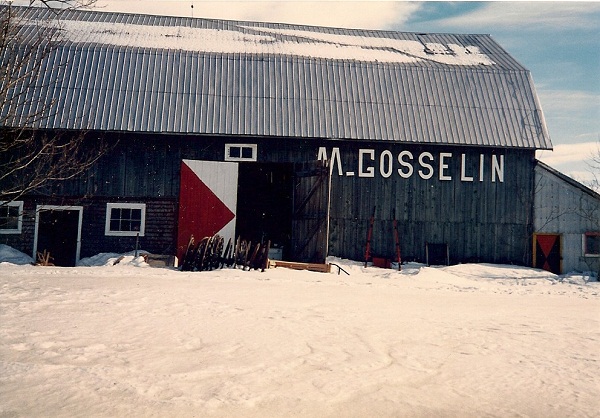
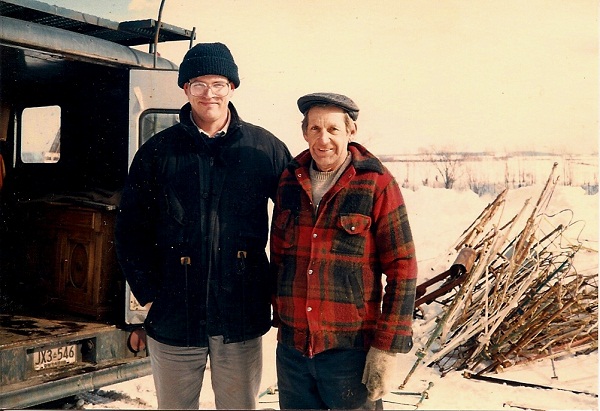








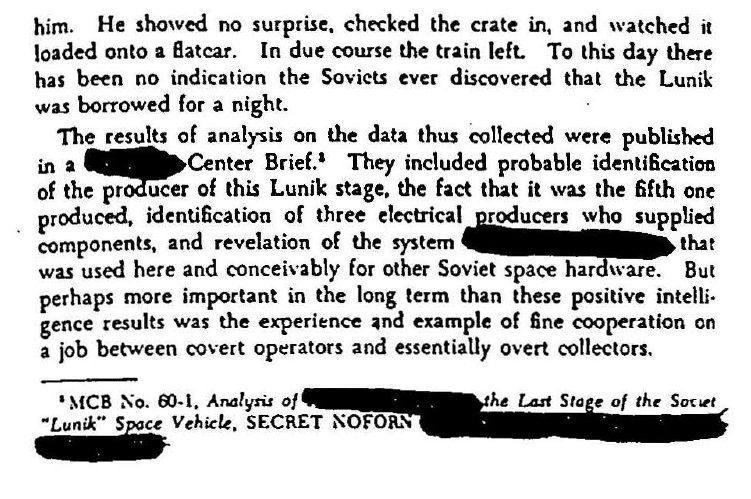


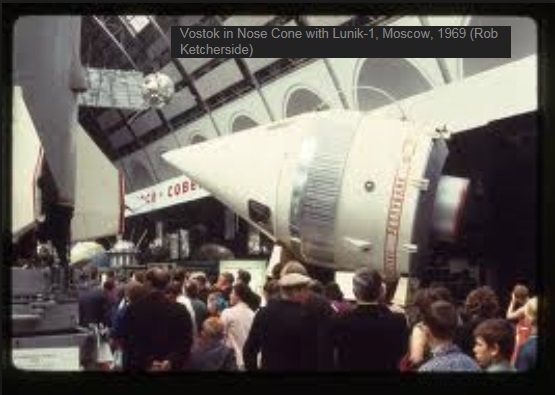


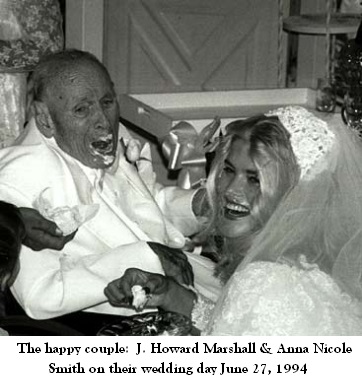


















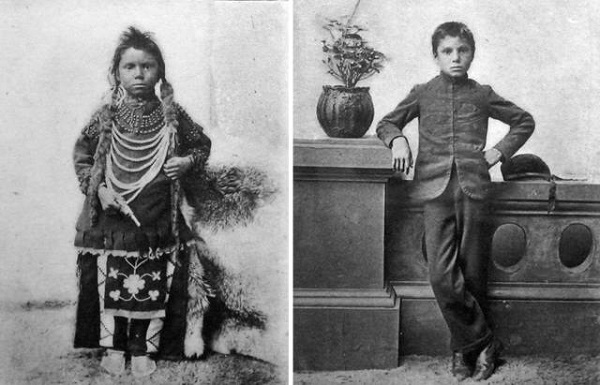













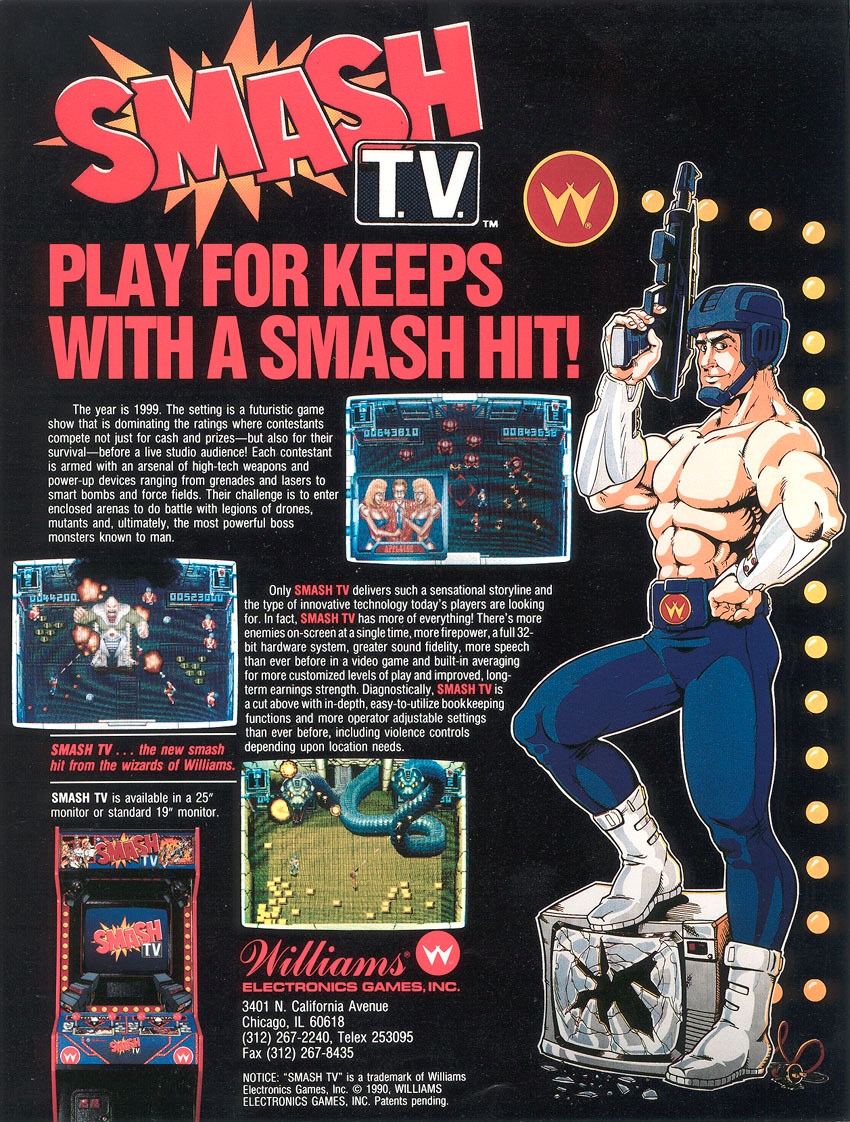
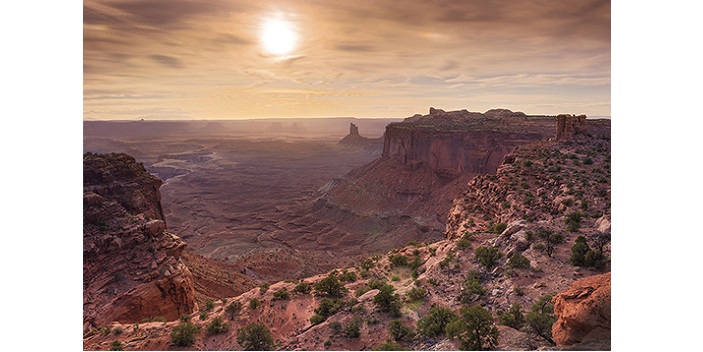

 Travelers looking for meaningful and inspiring experiences in Utah can find




















 There’s a reason why Val d’Isere, at 1,850 meters, continues to be the top choice of European skiers each winter. It offers the perfect blend of challenging ski terrain for advanced skiers and learner-friendly beginners zones for those new to the snow. The resort center is lined with high-end shops, lively après-ski bars and fantastic restaurants, all housed within beautiful, stone-clad buildings.
 The diversity on offer in Chamonix these days makes it impossible to review the whole resort as one destination. At 950 meters, Les Houches is one of the closest resorts to Geneva Airport and offers kilometer after kilometer of tree-lined skiing, making it the perfect destination for families and beginners. The resort center has a village feel and is an outstanding spot from which to take in the incredible views.
 While the ski area between Klosters (at 1,179 meters) and Davos offers lots to explore, Klosters is without doubt the more attractive base for your ski holiday. The village center is charming and affluent, but with a relaxed vibe, while the trails are popular with advanced skiers enjoying an abundance of easily accessible off-piste in the area.
 A resort that’s been quietly minding its own business for years, Les Gets, at 1,200 meters, is now developing into a chic, family-orientated resort that offers quick and easy access to the 650-kilometer Portes du Soleil ski area. Several piste-side restaurants offer views of Mont Blanc so it’s easy to find a sunny spot on which to enjoy an après tipple or two.
 There’s one thing that makes these two interconnected resorts stand out, and it may not be for everyone. Crans, at 1,500 meters, and its neighbour Montana are not villages; although right on the edge of a great ski area, they’re most definitely towns with a very urban feel. This is a very sunny spot in which to base yourself and there’s varied terrain to suit all ability levels.
 We love La Rosière, at 1,850 meters, not just because of its high elevation and snow certainty. The ski area offers two great experiences for the price of one when you cross over the Petit St Bernard pass into Italy. Wide pistes descend for kilometers into La Thuile over the border and getting back is no hassle at all. The main village is quiet but well stocked, and the views are exceptional.
 Italian ski resorts are always authentic, traditional and charming, and Campiglio, at 1,550 meters, is no different. The car-free resort huddles on the valley floor and the center is stylish with several chic shops. The ski area spreads over 150 kilometers, and there have been several lift upgrades over recent years, making it quick and easy for you to cover a considerable distance on skis each day.
 Rebranded back in 2011 to recognise the differences between its more blingy neighbour higher up the valley, Courchevel 1650 is now an attractive, unpretentious resort with a stack of new facilities, including Aquamotion, a huge center for water sports that opened in December 2015. And let’s not forget: On your doorstep you’ll find the largest linked ski area in the world. The 600 kilometers of the 3 Valleys network never disappoint.
 Seasoned skiers, this one’s for you. At 1,563 meters, Selva serves up challenging ski terrain on both sides of a valley, accessed by both gondolas and quick chair lifts. The village center is packed with charm and character and there’s also a collection of well-maintained beginner slopes and progressive tree-lined runs enjoyed by families.
 No list of top 10 ski resorts is complete without mentioning Norway and the town of Geilo, at 800 meters. It is one of the country’s most popular resorts. It’s a small, well-equipped town that’s currently investing heavily in new runs, new lifts and new facilities. Between January and April you can also ski until 8pm on flood-lit slopes. Photo Credit: Geilo, Norway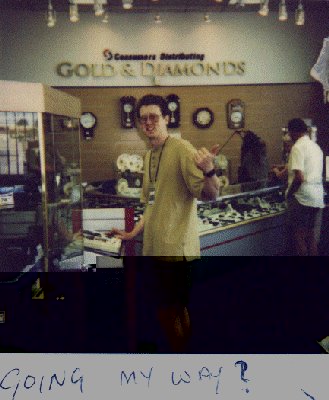
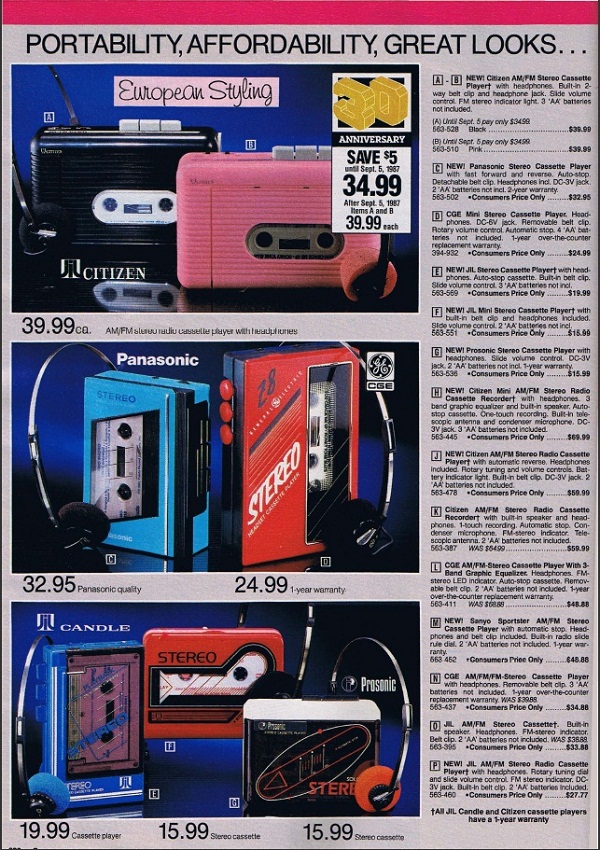
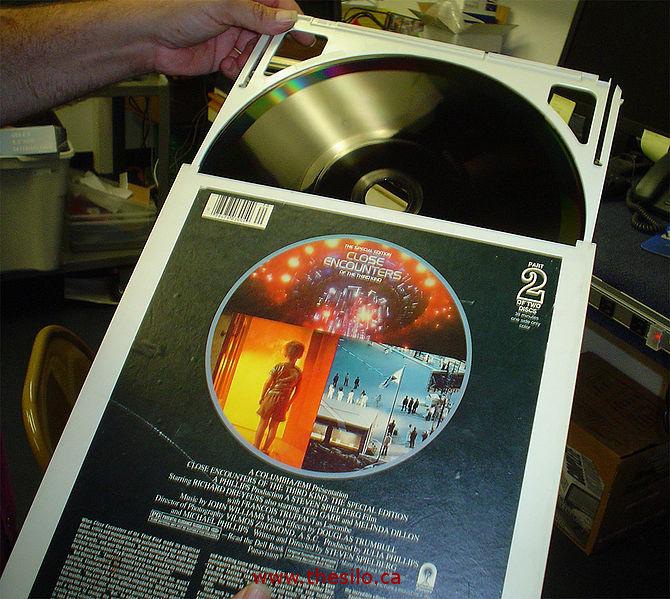










































 Building amenities include a three-story lobby with glass car elevator observatory, movie theater, game room, oceanside restaurant with indoor/outdoor dining, private wine lockers, oceanside bar and lounge with fireplace and large-screen TVs, oceanfront pool with food and beverage service, Intracoastal Waterway sunset deck, virtual golf simulator, virtual car-race game, ballroom with bar and catering kitchen, oceanfront gym and yoga room, spa, sauna, steam rooms, hair salon and a car concierge available to give the luxury cars a wash and maintenance.
 Having broken ground in 2014, the tower is now sold out.