Tag Archives: automotive

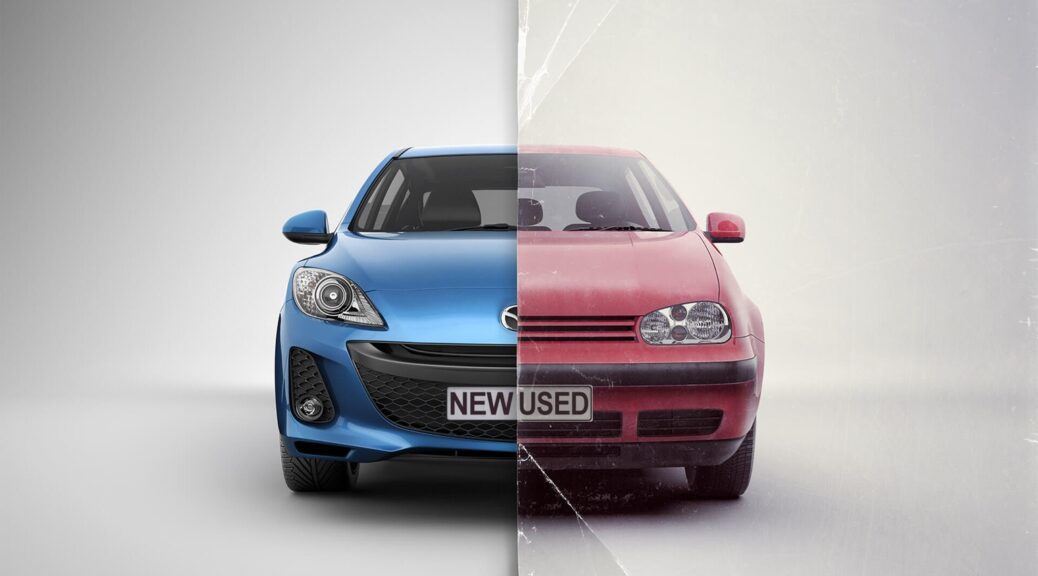
Car Shopping. Should You Buy New Or Used? Let Us Help You Decide.

The car shopping market is presenting drivers with the same classic dilemma: should you buy new or used? But, there are modern-day considerations as several factors and current events shape this debate, including depreciation trends, interest rates and price shifts in both new and used car markets. Making the right choice requires a close look at your financial situation and ownership goals.

Our friends Zach & Ray Shefska, Co-Founders of CarEdge, offer an easy-to-understand breakdown to help consumers make this all-important decision that will impact them for years to come.

When to Buy New:

  • You plan to keep the car for 5+ years and want the latest features.
  • You qualify for low APR financing and want predictable monthly payments.
  • Manufacturer incentives significantly reduce the cost.
  • To avoid depreciation altogether, consider leasing a new car.

When to Buy Used:

  • You want to avoid rapid depreciation and pay less upfront.
  • You’re willing to shop for 3-5 year-old vehicles in good condition.
  • You don’t mind driving a car with fewer bells and whistles.
  • You’re prepared to negotiate a great used car deal.

Here are details on some of the key considerations to help you determine whether buying new, buying used, or leasing makes the most sense for you.

Financing Deals Versus Depreciation Risks

New cars are known for their steep depreciation. A new car can lose 20-30% of its value within the first two to three years of ownership. However, buying new has its advantages, too. Manufacturer incentives are sweetening the deal for buyers with attractive lease offers, low APR financing, and cash incentives that simply aren’t available for used car buyers.

Why Buy New?

  • Incentives Galore: Automakers are offering competitive promotions to attract buyers, including 0% APR financing and cash-back deals.
  • Peace of Mind: New cars come with full warranties, the latest safety features, and no concerns about wear and tear from previous owners.
  • Custom Orders: Buying new allows you to select the exact trim, color, and features you want. However, custom orders can come at an even higher price.

Drawbacks of Buying New:

  • Higher Initial Cost: Even with incentives, new cars come with higher upfront prices compared to used options.
  • Depreciation Risk: If you plan to sell your car in less than five years, you’ll likely face a significant financial loss due to depreciation.
  • If you’re considering a new car but worry about depreciation, leasing may be a better option for you. It allows you to enjoy the benefits of driving new without the financial impact of resale value losses.

Interest Rates Matter – New Cars Have Lower Rates

Interest rates are a defining factor in the new versus used car debate. While borrowing costs remain high, automakers make it easier to finance new cars by offering low APR financing. Used car loans, on the other hand, often come with higher interest rates from banks and credit unions.

Why New Cars Win on Interest Rates:

  • Lower APR Offers: Many manufacturers are advertising rates as low as 0% APR for new car buyers, helping you save thousands over the life of the loan.
  • Better Loan Terms: Lenders tend to offer more favorable terms for new cars compared to used, including longer loan periods and lower down payment requirements.

Used car loans typically come with interest rates about 5% higher than those for new vehicles. Over a five-year loan term, this can significantly increase the total cost of financing a used car. If monthly payments are a concern, financing a new car with low APR may actually make more financial sense.

However, NEVER negotiate monthly payments – always negotiate the Out-the-Door Price to avoid add-ons and ripoffs.

New Tools Make Negotiating Easier Than Ever

The days of guessing what to pay for a new car are over. Today, buyers have access to tools that provide insight into dealer pricing, invoice costs, and manufacturer incentives.

How to Save Big When Buying New:

  • Use Dealer Invoice Pricing: This allows you to see what the dealer pays for the car and giving you leverage in negotiations.
  • Keep Up With Local Market Trends: Today, any car buyer in America can see the ins and outs of their local car market for each make and model..
  • Compare Offers Across Dealers: With free online tools, you can easily master the art of negotiating. A big part of this is learning how to effectively cross-shop between dealerships. Always compare prices and incentives from multiple dealerships to ensure you’re getting the best deal.
  • Leverage Manufacturer Incentives: Research available incentives to maximize your savings before heading to the dealership. We gather the best incentives in one spot for you.

These tools make it easier than ever to negotiate confidently and secure the best deal on a new car. That said, deals can still be hard to come by without the right negotiating tools.

Why Consider Buying Used?

  • Lower Upfront Costs: Used cars are more affordable than their new counterparts, making them a better choice for budget-conscious buyers. Saving $100 or more on monthly payments over five to six years really adds up!
  • Avoid Steep Depreciation: Buying a 3-5 year-old used car allows you to avoid the steepest depreciation period, saving you thousands. If you decide to sell in a few years, you won’t feel the heavy depreciation that a new car buyer in a similar situation would experience.
  • Used Cars Are Negotiable: As competitive new car incentives remain, fewer car shoppers are heading to the used car lots. A slump in demand is good news for those willing to negotiate used car prices.

Challenges of Buying Used:

  • Higher Interest Rates: As mentioned earlier, used car loans often come with higher APRs, which can offset some of the savings. The average used car loan rate in North America is nearly 14% APR.
  • Limited Incentives: Unlike new cars, used vehicles don’t come with manufacturer promotions or warranties. However, you can get a fair deal on an extended warranty.
  • Condition Concerns: Always get a pre-purchase inspection to avoid surprises with hidden issues.
  • Despite these challenges, buying used is still the go-to option for many drivers who prioritize affordability and don’t mind sacrificing the latest features.

For many car buyers, a 3-5 year-old used car strikes the perfect balance between affordability, reliability, and long-term value. This “sweet spot” in the used car market offers significant benefits that make it a smart choice for budget-conscious drivers who don’t want to sacrifice quality or performance.

Here’s why a 3-5 year-old used car could be the ideal option for you:

  • Avoid Steep Depreciation – New cars typically lose 30-40% of their value within the first three years, making depreciation one of the biggest hidden costs of buying new. 
  • Lower Upfront Costs – Compared to buying new, 3-5 year-old used cars are significantly more affordable.
  • Modern Features Without the Premium – A car that’s 3-5 years old still comes equipped with many of the features found in today’s new models, such as advanced safety systems and driver assistance.
  • Remaining Warranty Coverage (Depending on Mileage) – A 3-5 year-old car is typically well within its prime and often covered by a portion of the manufacturer’s original powertrain warranty. If coverage is about to run out, get an Extended Warranty quote for peace of mind.
  • Better Financing Options Compared to Older Cars – While interest rates for used car loans are higher than those for new cars, lenders generally offer better rates for late-model used cars compared to older vehicles. This makes financing a 3-5 year-old car more manageable and less risky.

How to get the best of ‘both worlds’

By choosing a 3-5 year-old used car, you get the best of both worlds: modern features at a lower price, and the ability to avoid the financial pitfalls of buying new. It’s a smart compromise for car buyers looking for value and reliability. To ensure you’re making a wise investment, always research market trends, request vehicle history reports, and schedule a pre-purchase inspection before buying any used car.

Founded in 2019 by father-and-son team Ray and Zach Shefska, CarEdge is a leading platform dedicated to empowering car shoppers with free expert advice, in-depth market insights, and tools to navigate every step of the car-buying journey.

5 ‘Bad Cars’ I Still Want Anyway And Why

Isuzu

There’s an old joke, later made into an internet meme, that goes something like this: “Have you seen my dog? He has brown fur, he’s missing his right ear, blind in one eye and has three legs. He answers to the name of ‘Lucky’.” An underdog if ever there was one. And it’s in that spirit that I share the next installment of a sadly, almost endless list of cars with not-so-good reputations. They’re cars that for reasons neither I, my parents, my children, my wife, my close friends, nor even mere acquaintances can explain—I still want.

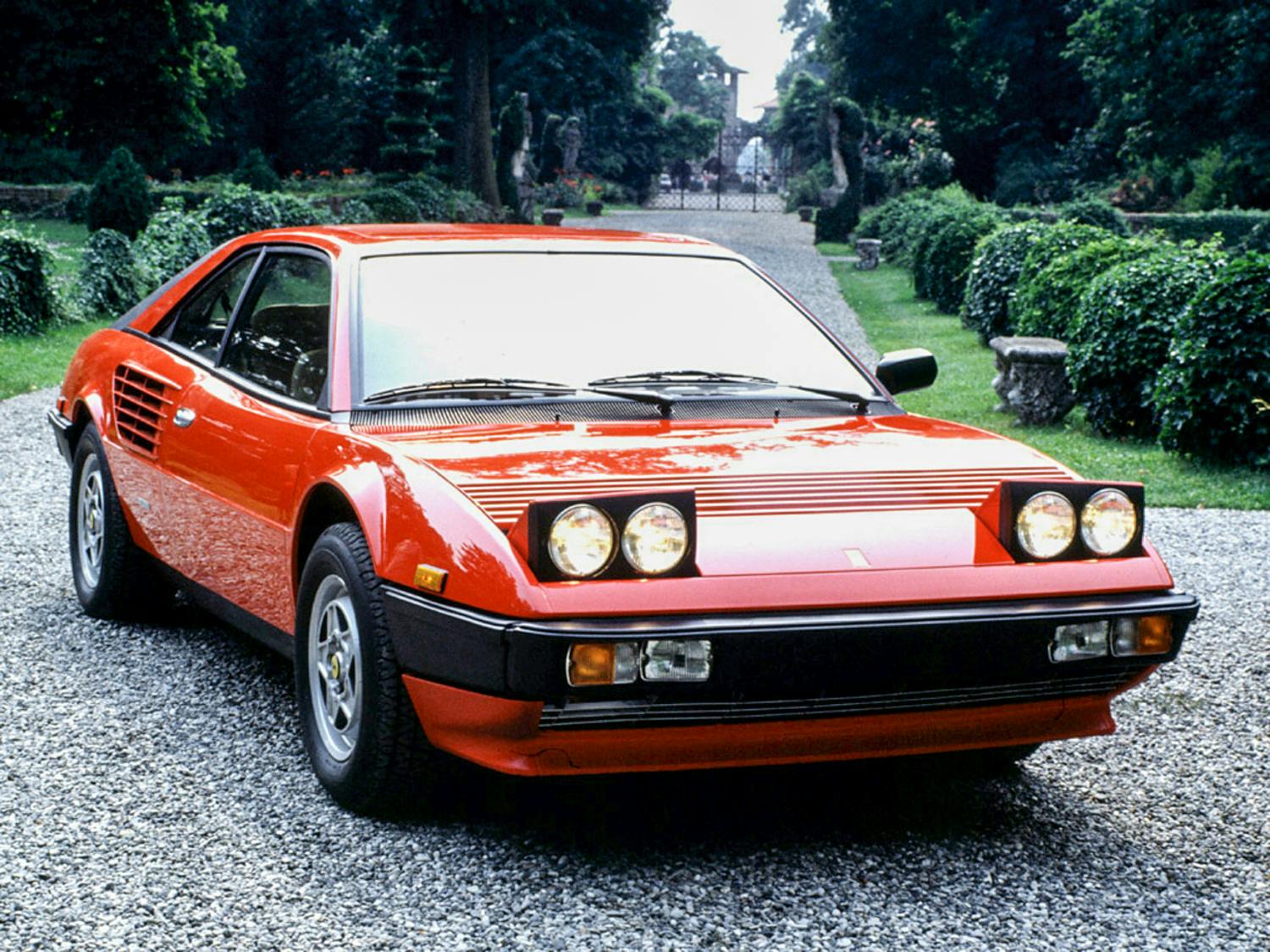
1980–82 Ferrari Mondial 8

Ferrari Mondial
Ferrari

What it is: The Mondial was the replacement for the Bertone-designed Ferrari (Dino) 308 GT4, a rather underrated, wedge-shaped mid-engine 2+2. The Mondial incorporated some of the design language of the Berlinetta Boxer and the Testarossa along with a pair of semi-usable rear seats. A cabriolet was added later.

What makes it bad: Road & Track asked if this was Ferrari’s Oldsmobile. Ouch. The two-valve, fuel-injected 3.0-liter V-8 was a bit of a dog. With a little over 210-horsepower, the Mondial 8 took an excruciating 9 seconds to reach 60 miles per hour. Mondial 8s were rust-prone and had fuse boxes reminiscent of the junior electrical engineer educational toy that brother bought my kid for his birthday a few years ago. Some people also found them unattractive. I find that assessment harsh, but truth be told, its predecessor, the 308 GT4 has aged better.

Why I want one: Ten years ago, I had a 308 GTS. It was great. Reliable (once I replaced the fuse box with a modern one), and a lot of fun to drive. Was it fast? Not really, but it sounded great, smelled great, and was wonderful to look at. Sadly, today I’d have to settle for a project car for what I paid for my perfect 21,000-mile 308 back then, so a Mondial is kind of it Ferrari-wise, unless I want to launch a raid on my kids’ college funds. I think the key here is to buy a coupe (the only way the two-valve 8 came). In black, they’re actually quite attractive, and there’s nothing like the sound of the little flat-plane crank V-8 and the tactility of a real gated shifter.

1985–89 Merkur XR4Ti

Merkur xr4ti front three quarter snow
Ford

What it is: Ford had one success to its name in importing and selling one of its European sporty cars—the Capri was a sort of mini-Mustang that was hugely popular until exchange rate fluctuations made it less profitable to sell here. By the early 1980s, the exchange rate again favored the U.S. dollar and then-V.P. of Ford Bob Lutz thought it might be a good idea to import an Americanized version of the Ford Sierra, under the banner of “Merkur,” which is German for “Mercury.” Get it? The 2.3-liter turbo four, also found in the Thunderbird Turbo Coupe and SVO Mustang made the XR4Ti a credible E30 BMW competitor, but like every car on this list, there were issues.

What makes it bad: Apparently European Ford quality in the ’80s wasn’t at the top of the priority list and the XR4Ti suffered from electrical problems, overheating, and turbochargers with a short life. Mercury dealers despised them, and with Ford’s then-new 48-month/50,000-mile warranty, they saw tons of them. After 1989, the Merkur signs came down and Ford was done with the XR4Ti and its larger brother the Scorpio. Immediately after warranties expired, Merkurs began the not-so-slow slog into the automotive fossil record.

Why I want one: I love the Merkur’s many quirks like the goofy biplane rear spoiler, and XR4Tis are rare even at RADwood or LeMons events, which is precisely why I want one. Honestly, you could do worse that to put together a collection of Bob Lutz-inspired cars—Everything from a BMW Bavaria, to a Viper and a Pontiac G8. An XR4Ti would fit nicely in the middle, and a perfectly nice one would barely cost five figures.

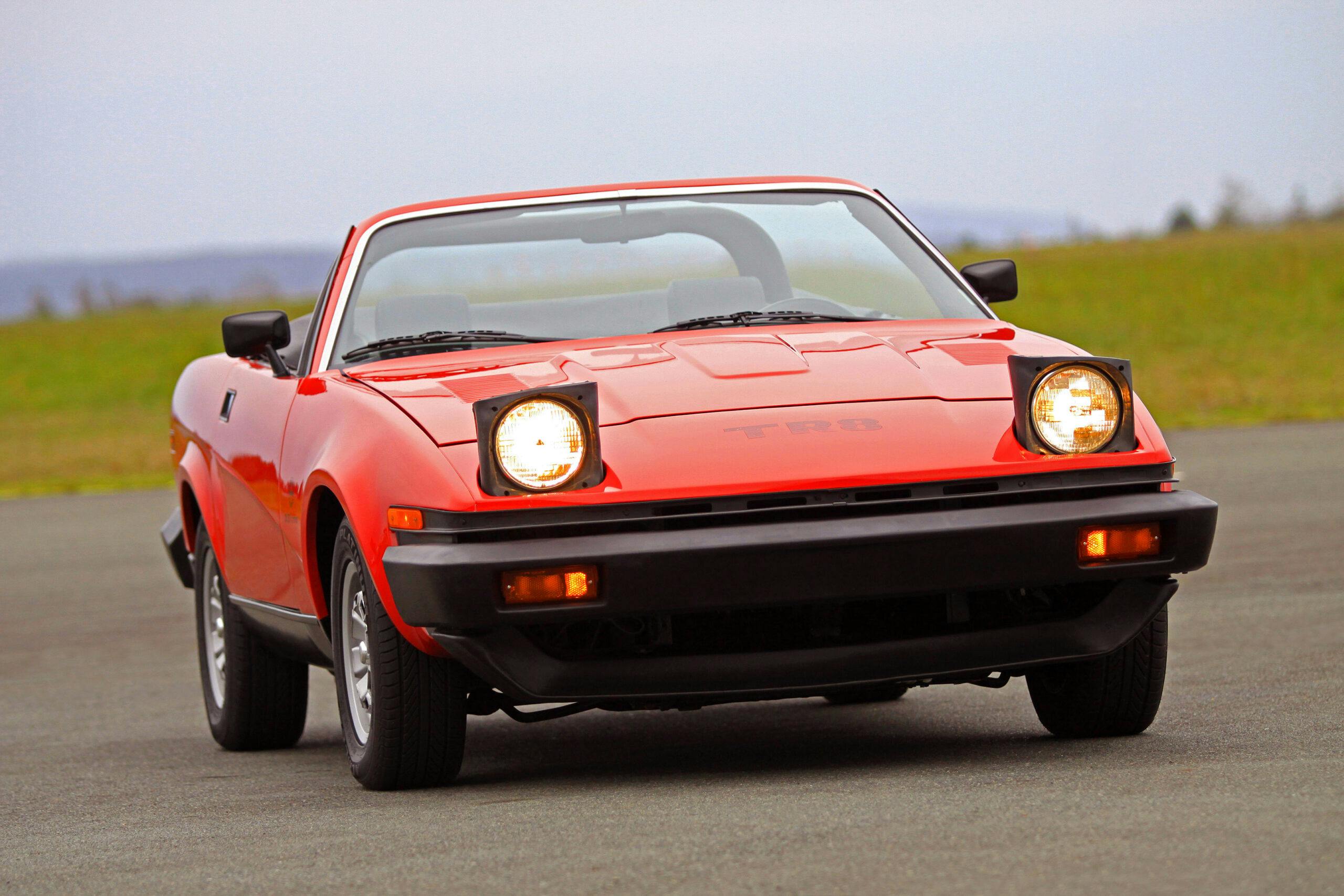
1980–81 Triumph TR8

Triumph TR8 convertible front three quarter
Triumph

What it is:  The Triumph TR7 was supposed to be the car that brought the British sports car out of the paleolithic era of pushrod tractor engines and separate bodies and chassis. And while the story that Harris Mann designed it on the back of a cocktail napkin (after a lot of cocktails) might be apocryphal, it’s totally plausible. The idea behind the TR8 was to make buyers forget about the four-cylinder TR7’s odd looks by offering V-8 noise and performance. The ex-Olds/Buick/Pontiac aluminum 3.5-liter V-8 by Rover just about did the trick.

What makes it bad: The same thing that made every British car of the era bad—lousy workmanship, poor quality components from suppliers that still included the infamous Lucas, and low R&D budgets. While the TR8 was predominantly produced in what was arguably one of Jaguar/Rover/Triumph’s better plants (the Rover factory in Solihull which is still cranking out Land Rovers to this day), the TR7’s reputation soiled the TR8.

Why I want one: What can I say? I’m a glutton for punishment, and I happen to love a V-8 stuffed into a small British sports car. Of the three most famous—Shelby CobraSunbeam Tiger and Triumph TR8—only the latter remains affordable. Nice ones can be had in the high-teens to low-20s.

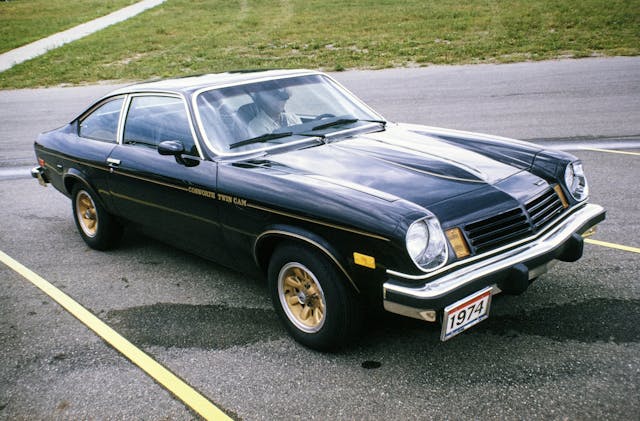
1975–76 Chevrolet Cosworth Vega

1975 Chevrolet Cosworth Vega
Chevrolet

What it is: The Cosworth Vega was supposed to be a high-performance version of the compact Vega that had debuted for 1971. Cosworth in the U.K. developed an alloy DOHC cylinder head for the Vega’s four-cylinder, which was mated with Bendix electronic fuel injection. It was very modern, very European.

What makes it bad:  While the Vega finally had a smooth, powerful engine, it still made 110 horsepower instead of the anticipated 140. Then there was the fact that it still wore the maligned Vega badge, and while good handling and balance were always part of the package, indifferent assembly quality and rustproofing were in the Vega’s DNA as well. Oh, and it was also barely cheaper than a Corvette.

Why I want one:  The magazines of the day touted Cosworth Vegas as instant collectibles, and many of the cars were stored, or intentionally kept with very low miles. The idea of owning a genuine Malaise Era time-capsule is more than intriguing. Plus, I’ve always liked the way Vegas look, a bit like miniature Camaros.

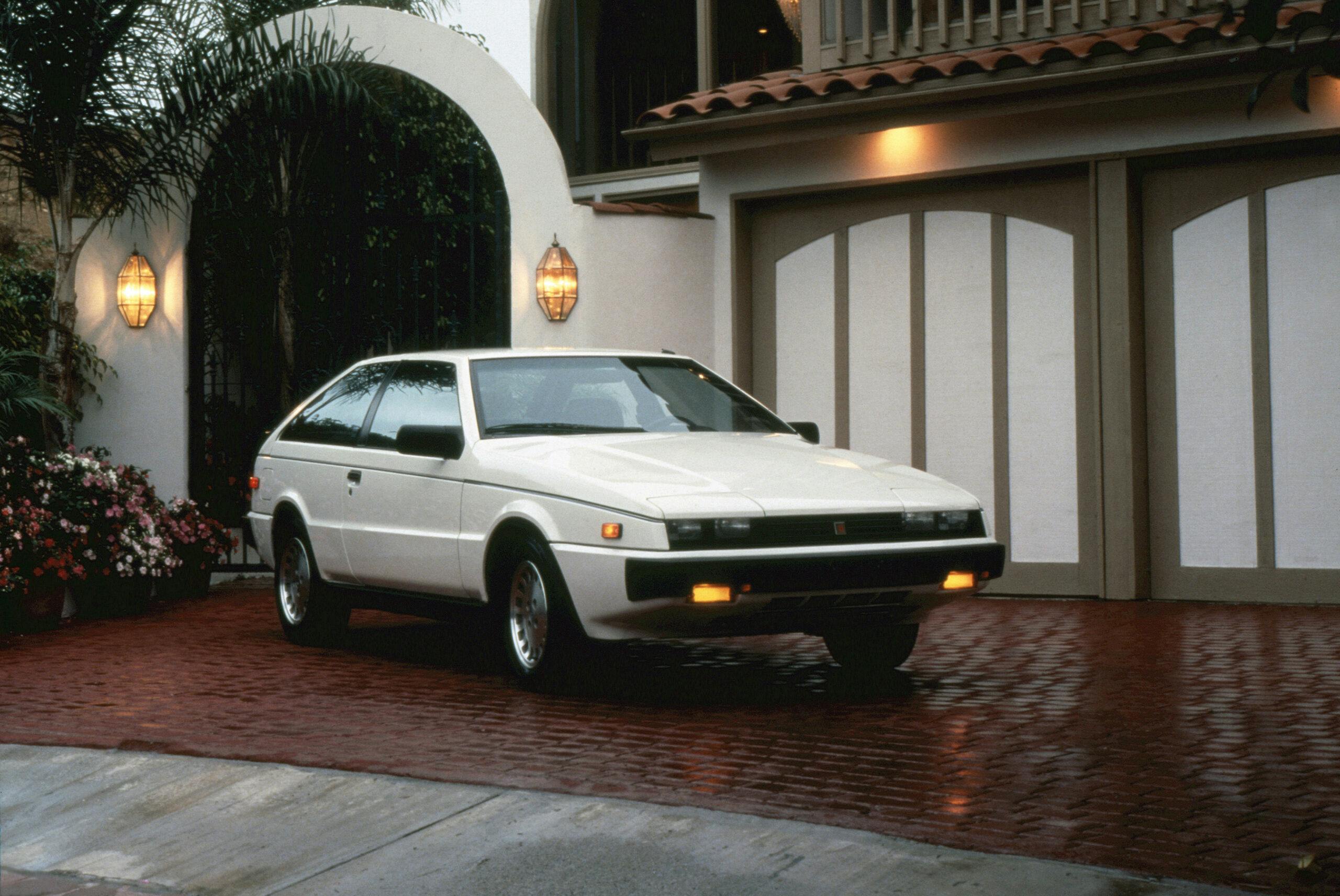
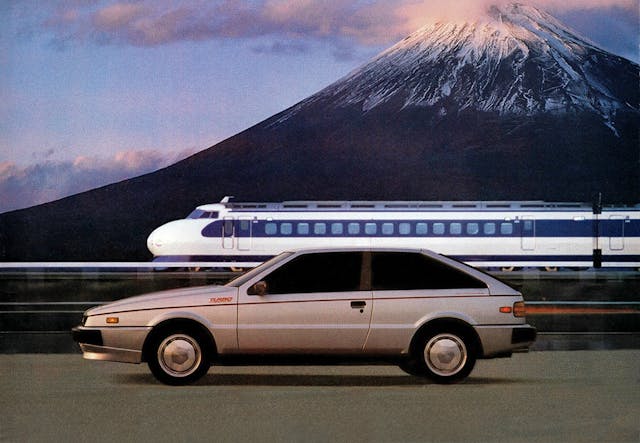
1983–89 Isuzu Impulse

Isuzu Impulse front three quarter
Isuzu

What it is:  Isuzu had a surprisingly fruitful relationship with the great Giorgetto Giugiaro of Italdesign, and it stretched back to the 1960s, when Giugiaro styled the lovely Isuzu 117 coupe. That car lasted all the way up until 1981, so because of its longevity and popularity, its successor had to be something special. The car was teased as a nearly production-ready Isuzu “Ace of Clubs” concept car. It went on sale the next year as the Piazza outside of North America, and as the Impulse in the U.S. and Canada.

What made it bad:  Seemingly, the entire budget for the car went to Italdesign. Brakes, chassis and engine were bargain-basement stuff, as under its pretty Italian skin, the Piazza/Impulse was based on the General Motors T-car platform. That’s right, it wouldn’t be much of a stretch to call the Impulse a Chevette in an Italian suit. Things did get a bit better later in the car’s run with turbocharging and chassis refinements by Lotus, but few were sold and almost none survive.

Why I want one:  The low survivorship factor makes these cars exceedingly rare, and it’s one of the few opportunities that anyone has to own something that looks like an ’80s concept car. It’s also an opportunity to be king for a day at RADwood, and when Impulses do turn up, they’re almost always cheap.

For the Silo, Rob Sass.

Pros And Cons Of Buying A Car On Amazon Autos

Amazon’s move into online car listings through Amazon Autos in 2024 has been widely framed as a breakthrough for consumers. But, for buyers considering this new option, the real story is more nuanced. While the platform offers a familiar, streamlined shopping experience and no-haggle pricing, it does not eliminate dealerships, negotiations behind the scenes, or the traditional profit structures that shape car pricing.

A quick heads up fellow Canucks- Amazon Autos is not yet available in Canada but plans are in place for expansion so stay tuned.

Trade Offs

As more North Americans explore buying a vehicle through alternative means including Amazon, experts say the key question isn’t whether it’s easier, but whether shoppers understand the trade-offs they’re making. Knowing the pros, the cons, and the fine print can be the difference between convenience and costly compromise.

What Works, What Doesn’t, and What to Watch For When Buying a Car on Amazon

amazon autos.png

Is It A True Breakthrough?

Amazon’s move into online car listings through Amazon Autos has been widely framed as a breakthrough for consumers. But, for buyers considering this new option, the real story is more nuanced. While the platform offers a familiar, streamlined shopping experience and no-haggle pricing, it does not eliminate dealerships, negotiations behind the scenes, or the traditional profit structures that shape car pricing. As more Americans explore buying a vehicle through Amazon, experts say the key question isn’t whether it’s easier, but whether shoppers understand the trade-offs they’re making. Knowing the pros, the cons, and the fine print can be the difference between convenience and costly compromise. 

Amazon Autos, has generated headlines over the past year for a number of reasons. Some heralded the launch as a true game changer in the car market. But in reality, buying a car on Amazon is not all that different from buying a car the old fashioned way.

Participating automakers (like Hyundai) or dealers (like rental car giant Hertz) can now list their inventory on Amazon. But make no mistake: you’re still buying from a dealer. Amazon Autos is only acting as an online marketplace for cars, meaning that the cars you see listed are only there because traditional car dealers listed their inventory on the platform. Amazon is just making online car shopping feel like the Amazon experience that nearly 200 million Americans are familiar with.

There are pros and cons of buying a car on Amazon.

Amazon advertises no-haggle pricing, but there’s something crucial that most shoppers overlook: that rarely means you’re truly getting the best price possible. No-haggle pricing is crafted by dealers to ensure healthy profit margins on their end, while making consumers feel relieved that they don’t have to deal with unpleasant negotiations or salespeople. The truth is, buying the actual vehicle still takes place at a dealership. There are still salespeople involved. It can still be inconvenient or uncomfortable.

Dealers are thrilled with the assumption that pricing is already agreed upon before the customer even arrives. Remember, dealers have plenty of profit in the form of holdbacks, manufacturer-to-dealer cash, and even volume bonuses. That’s not to mention more money for them if you finance with them, or purchase an extended warranty or other add-on.

All of this means that you’re much more likely to overpay than if you were to go your own way and negotiate confidently.

In summary, when you buy a new or used car on Amazon, you’re still buying through a traditional dealership. Amazon doesn’t hold any of the inventory you see online, they’re merely adding the online Amazon experience many consumers are familiar with to online car shopping. In most cases, that means trading competitive pricing for convenience.

For some, that may be a compromise you’re willing to make in order to skip the haggling process. But it’s important to know that you’re limiting your ability to land a great deal when you forfeit your chance to negotiate car pricing.

Research Required

To best ensure you’re not leaving money on the table, thoroughly research the car market. Always research demand factors for the cars you’re interested in. Are you shopping for a car that’s less popular than the hottest sellers on the market? Does it sell slower than the market average in your area? If so, you’re much more likely to overpay with ‘no-haggle pricing’. Find inventory that has been sitting on the dealership lot the longest. Those are the cars that dealers are motivated to sell at a discount.

For the Silo, Justin Fischer.

Justin Fischer is an automotive retail analyst and consumer advocate at CarEdge, a leading consumer platform dedicated to empowering car shoppers to make confident, informed and financially savvy decisions.

Canada Is One Of World Economic Forum Top Technology Pioneers

From electro-chromatic e-windows to using supernova explosions to explore the earth for mineral deposits: World Economic Forum 2025 Technology Pioneers Leading New Wave of Global Innovation

  • The World Economic Forum selects 100 start-ups from 28 countries to join its Technology Pioneers community.
  • The new cohort marks a global surge of emerging technologies, from smart robotics and spatial AI to flying taxis and scalable quantum solutions.
  • Now in its 25th year, the community has recognized over 1,200 start-ups that have gone on to transform industries and societies worldwide.
  • For more information on the Annual Meeting of the New Champions 2025, visit wef.ch/amnc25 and share on social media using the hashtag #amnc25, or #2025夏季达沃斯#. Read more about the 2025 Technology Pioneers here.

Geneva, Switzerland, 2025 – The World Economic Forum 2025 Technology Pioneers community is a group of 100 early-stage companies from 28 countries driving innovation across industries and borders. Now in its 25th year, the program celebrates its strongest cohort yet, marked by broader geographical representation, greater diversity beyond Silicon Valley and the rise of more ambitious frontier technologies.

Reflecting wider shifts in the innovation landscape, many of the companies spotlighted are using artificial intelligence (AI) to reach greater scale and sophistication with fewer resources. Several are venturing into less explored frontiers – from asteroid mining and flying electric taxis, to leveraging satellite imagery to transform agriculture and harnessing energy from supernova explosions to locate critical minerals beneath the Earth’s surface.

The geography of innovation is also evolving.

While the United States remains the top contributor to the community, Europe’s share has surged to 28% – up from 20% last year – reflecting the rise of strong tech ecosystems across the region. China and India are also emerging as major tech innovation hubs.

“There has never been a more exciting time to dive headfirst into tech innovation. But no one gets far alone – you need a community to move your mission forward,” said Verena Kuhn, Head of Innovator Communities, World Economic Forum. “As we mark 25 years of the Technology Pioneers programme, this global community continues to connect start-ups to the networks and ecosystems they need to scale.”

This year also marks the 25th Anniversary of the Technology Pioneers programme. Since its inception in 2000, the community has championed early-stage innovation and recognized more than 1,200 companies, many of which have gone on to reshape industries worldwide. Alumni include household names such as Google, PayPal, Dropbox and SoundCloud, underscoring the community’s role as a launchpad for ideas and impact.

The 2025 cohort stands out for its concentration of companies developing breakthrough technologies to address pressing global challenges. These include advanced robotics, customisable space launch services, micro nuclear reactors and more accessible quantum computing applications. These pioneers will contribute cutting-edge insights to Forum initiatives over a two-year engagement program and will also be invited to participate in the Annual Meeting of the New Champions 2025, taking place on 24-26 June in Tianjin, People’s Republic of China.

The 2025 Technology Pioneers include:

Australia
•    Cauldron – Commercializing advanced continuous fermentation technology to unlock price parity for mainstream bio-manufactured goods.

Brazil
•    Brain4care – Using AI-based technology to enable timely medical interventions for patients with neurological conditions.

Canada


•    Ideon Technologies – Harnessing the energy from supernova explosions in space to image deep beneath the Earth’s surface, transforming how mining companies recover critical minerals.
•    Miru – Developing dynamic electrochromic windows that deliver high functionality, experience and energy efficiency for the automotive, transportation and architectural sectors.

Greater China
•    Deep Principle – Integrating advanced AI models and quantum chemistry to accelerate the discovery and development of chemical materials.
•    GS Biomats – Developing furan bio-based material, a renewable alternative to petroleum-based chemicals, for various uses including biomedical applications.
•    HiNa Battery – Producing more sustainable, high-performance, low-cost sodium-ion batteries.
•    KaiOS – Providing affordable internet and access to financial services to unserved populations, primarily in South Asia and Africa.
•    Lightstandard – Making large language model computing faster and more energy-efficient with photonic computing.
•    Noematrix – Focusing on researching and developing embodied intelligence systems and related tools and platforms, which are compatible with diverse hardware.
•    Novlead – Designing a molecular technology platform providing available, accessible and affordable nitric oxide solutions for major clinical needs.
•    Shengshu Technology – Building generative AI infrastructure that develops native multi-modal large models such as images, 3D and video. 
•    TRANSTREAMS – Engineering chips and solutions to address the computing power shortages in China during the era of AI-generated content.
•    Turing – Providing cutting-edge computing infrastructure and comprehensive AI solutions to drive the future of intelligent computing.

Colombia
•    Plurall – Supporting early-stage entrepreneurs in emerging markets with fast, accessible working capital and digital payment solutions, leveraging AI models for risk assessment, collections and embedded lending.

Denmark
•    Arcadia eFuels – Developing and deploying technology to produce electro-sustainable aviation and diesel fuels using renewable electricity, seawater, and captured CO2.

Egypt
•    Thndr – Offering a digital investment platform with a range of flexible funding methods and educational resources to empower investors.

France
•    Ascendance Flight Technologies – Decarbonizing aviation with a hybrid electric propulsion system and hybrid vertical take-off and landing (VTOL) aircraft.
•    Beyond Aero – Building the first electric business aircraft powered by hydrogen propulsion, as a sustainable alternative to traditional business jets.
•    CO2 AI – Helping large and complex organizations measure their environmental impact, identify credible levers and decarbonize at scale through AI.
•    Jimmy – Developing a micro nuclear reactor to provide carbon-free, competitive heat for industrial processes.
•    Nabla – Reducing clinician burnout by automating clinical documentation with AI.
•    Orakl Oncology – Creating a biology and AI-powered simulation platform to revolutionize oncology drug development.
•    Phagos – Deploying a sustainable alternative to antibiotics using bacteriophages and AI
•    Quobly – Making scalable, cost-competitive, large-scale quantum computers.
•    Sweetch Energy – Enabling osmotic power generation by harnessing the salinity gradient between freshwater and seawater.

Germany
•    Accure – Providing predictive battery analytics software to enhance safety, optimize performance and extend the lifetime of battery systems.
•    Black Forest Labs – Building generative deep learning models for media, particularly images and videos
•    eleQtron – Developing quantum computers by leveraging trapped-ion technology.
•    Tozero – Pioneering the delivery of recycled lithium in Europe by sustainably recovering critical materials from battery waste.

India
•    Agnikul – Providing affordable and customizable space launch services.
•    CynLr – Building robots with intuitive vision and enabling manufacturers and logistics providers to build fully automated factories.
•    Dezy – Leveraging AI-powered diagnostic technology to build affordable and accessible dental care. 
•    Digantara – Providing crucial operational support to commercial space operators and space surveillance intelligence to global space agencies.
•    Equal – Providing an integrated solution that combines identity verification with consent-driven financial data sharing.
•    Exponent Energy – Making 15-minute rapid charging for electric vehicles affordable and scalable through an innovative battery management system, charging algorithms, thermal management and a charging network.
•    Freight Tiger – Building India’s largest software-enabled freight network to help businesses move goods with full visibility, efficiency and lower costs.
•    GalaxEye – Creating a comprehensive, multi-sensor Earth observation system.
•    SolarSquare – Helping homes switch to solar in India with its full-stack solar panel systems.
•    The ePlane Co. – Developing flying electric taxis designed for intra-city transportation.

Ireland
•    Equal1 – Democratizing quantum computing by leveraging existing semiconductor technologies.

Israel
•    Fermata – Providing computer vision solutions for farmers to reduce crop losses and pesticide use.
•    Illumex – Empowering organizations to run governed and reliable AI agents through unified business data language and to democratize data access to every user.
•    LightSolver – Building a photonic supercomputer by harnessing the power of coupled lasers.
•    NanoSynex – Offering a rapid and accurate diagnostic platform for bacterial resistance.
•    ZutaCore – Developing waterless direct-to-chip liquid cooling for AI and high-performance computing (HPC) data centres.

Italy
•    Arsenale Bioyards – Building new lab-to-production infrastructure enabling fast, low-cost biomanufacturing at an industrial scale.

Japan
•    Sagri – Leveraging satellite data and AI to transform agriculture through land use optimization and sustainability.

Republic of Korea
•    Hylium Industries – Providing safe and innovative liquid hydrogen solutions for carbon-free mobility.
•    NARA Space – Building South Korea’s first microsatellite constellation for methane point source detection. 
•    Robocon – Developing robotics and smart factory solutions for the construction and steel industries.

Luxembourg
•    Tokeny Solutions – Building the compliance infrastructure for digital assets in blockchain and fintech.

Mexico
•    Allie – Creating closed-loop optimization systems for manufacturing that autonomously adjust production parameters in real time.

Nigeria
•    Cybervergent – Providing a platform to automate cybersecurity compliance and risk governance.
•    Sabi – Powering the sourcing and distribution of physical goods and critical commodities in Africa.
•    ThriveAgric – Empowering smallholder farmers across Africa by linking them to finance, data-driven best practices, and access to local and global markets.

Saudi Arabia
•    Intelmatix – Making enterprise AI accessible through industry-specific, context-aware AI agents.

Singapore
•   Manus – Automating a wide range of practical tasks for personal and professional use with a general AI agent.
•    Rize – Decarbonizing rice cultivation in Asia through scalable agricultural innovations.

Spain
•    Crisalion Mobility – Offering sustainable air and ground mobility solutions.
•    INBRAIN Neuroelectronics – Developing brain-computer interfaces to treat neurological disorders.

Sweden
•    Graphmatech – Developing advanced materials infused with graphene to make large-scale industries more innovative and resource efficient.
•    Lovable – Using AI to help users create software and web apps without coding expertise.

Switzerland
•    HAYA Therapeutics – Developing RNA-based medicines to treat heart, lung and tissue diseases.
•    Neural Concept – Accelerating product design through 3D generative engineering and AI.

Uganda
•    Numida – Using credit models and digital underwriting to provide loans to micro businesses.

Ukraine
•    Respeecher – Enabling scalable voice cloning across languages and contexts.

United Kingdom
•    CuspAI – Using frontier AI to accelerate the discovery and development of materials with specific functionalities.
•    Obrizum – Offering personalized digital learning services at scale through an AI-powered platform.
•    Oxford Ionics – Building high-performance quantum computers using trapped-ion technology.

United States
•    Ammobia –Fuelling the world with cost-effective, lower-carbon ammonia production.
•    Archetype AI – Pioneering a new form of Physical AI capable of perceiving, understanding and reasoning about the world through analysing real-time, multimodal sensor data.
•    Arine – Integrating cutting-edge AI, clinical expertise and advanced data analytics to deliver medication-based care interventions at the population level.
•    AstroForge – Making critical minerals more accessible to humanity by mining asteroids.
•    BforeAI – Using behavioural AI to predict and automatically pre-empt malicious campaigns and stop cyberattacks before they occur. 
•    Candidly – Developing an AI-powered platform to help borrowers manage and overcome educational loans.
•    Claryo – Helping warehouse operators maximize operational efficiency by leveraging spatial generative AI.
•    Distyl AI – Enabling enterprises to seamlessly integrate AI agents into operations.
•    Emvolon – Converting methane emissions into carbon-negative fuels for hard-to-abate sectors onsite.
•    Exowatt – Delivers solar power on demand by storing energy and converting it into electricity as needed, helping data centres and the grid run on clean energy 24/7.
•    Foundation Alloy – Commercializing solid-state metals technology to make higher performance metals using less energy.
•    HAIQU – Developing a new application execution stack for all modalities of near-term quantum computers.
•    Hertha Metals – Developing technology to decarbonize primary steel production.
•    Hyfe – “Turns food processing waste into chemicals that replace petroleum in everyday goods”.
•    Lumu Technologies – Providing cybersecurity operations capabilities to help businesses control the impact of cybercrime.
•    One Bio – Using biotechnology to add anti-inflammatory plant-based fibres to everyday foods.
•    Oberon Fuels – Developing innovative carbon-neutral fuels for maritime, propane, and hydrogen sectors.
•    Osmo – Combining frontier AI and olfactory science to digitize scent and enhance well-being.
•    Outtake – Securing digital identities by detecting and removing harmful AI-generated content.
•    Parallel Learning – Providing licensed therapy and instruction to students with learning differences through a digital platform.
•    Pavilion – Increasing efficiency in US public procurement with an AI-enabled government marketplace.
•    Reality Defender – Offering multimodal detection of AI-generated media to prevent fraud and disinformation.
•    RoboForce – Building AI-powered robotic systems designed for high-risk or repetitive work, to enhance efficiency, productivity and safety across industries.
•    Rubi Laboratories – Using biocatalysis to transform CO2 into essential materials like cellulose.
•    Shiru – Leveraging AI to identify and develop naturally occurring functional ingredients.
•    Starcloud – Constructing data centres in space to solve the AI energy challenge.
•    Waterplan – Delivering an AI-powered platform to measure, manage and mitigate water risk.
•    Workera – Providing AI-driven workforce skills intelligence and upskilling pathways.
•    Workhelix – Helping companies identify AI transformation opportunities and measure return on investment.

Uruguay
•    Prometeo – Creating a single, borderless banking application programming interface to connect companies with financial institutions across the Americas.

About the Annual Meeting of the New Champions 2025
The 16th Annual Meeting of the New Champions will take place from 24 to 26 June 2025 in Tianjin, People’s Republic of China, under the theme “Entrepreneurship for a New Era.” The meeting will convene over 1,700 leaders from business, government, civil society, academia, international organizations, innovation and media to explore entrepreneurial solutions to global challenges.

About the Technology Pioneers
Launched in 2000, the Technology Pioneers community marks its 25th anniversary in 2025 as a leading platform for early-stage companies from around the world that are shaping the future through breakthrough technologies and innovations. These companies are selected for their potential to have a significant impact on business and society and are invited to engage with public and private sector leaders through the World Economic Forum’s global platform.

The Technology Pioneers community is part of the Innovator Communities within the Forum’s Centre for the Fourth Industrial Revolution. The Innovator Communities convene the world’s leading global start-ups across different growth stages from early-stage Technology Pioneers to growth-stage Global Innovators and unicorn companies valued at more than $1 billion usd/ $ 1.373 billion cad.

10 Coolest Porsche Headlights- Don’t You Agree?

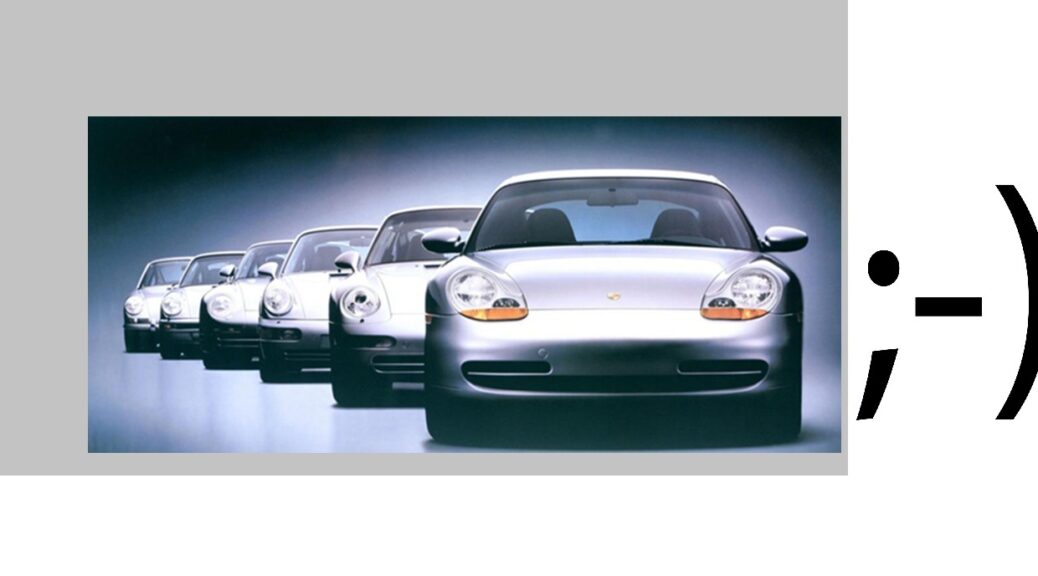
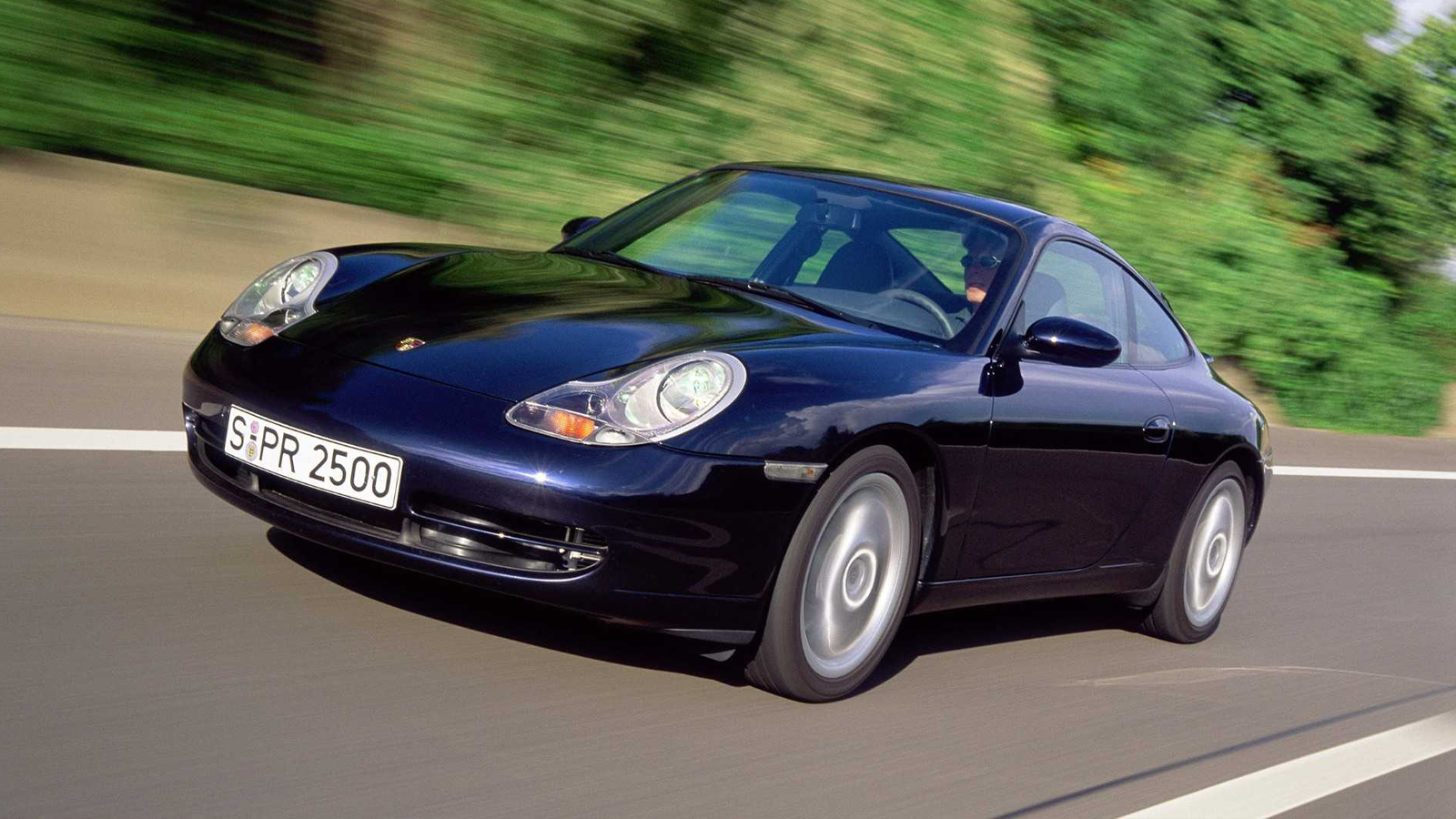
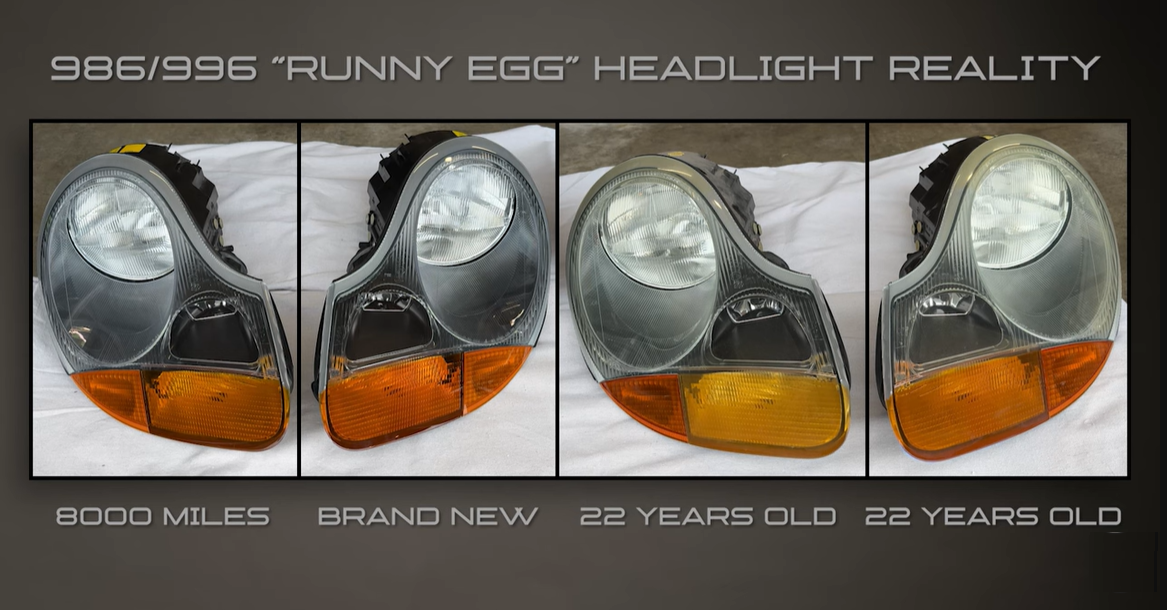
10. Porsche 911 (996, 1998–2004) — The Controversial “Fried Egg” Design

Initially divisive, the 996’s integrated headlamp clusters (combining main, high, and indicator lights under one cover) represented Porsche’s first major step into modern production efficiency. The “Fried Egg headlight” design was so controversial that when introduced, many car purchasers (especially those owning the first generation Porsche Boxster 986) modified the headlights with window tint to “hide the yolk”!

Regardless of how acceptance was split, the design was sensible and borrowed from the 911 GT1 race car, this setup improved aerodynamics and manufacturing simplicity. Over time, enthusiasts have come to appreciate its boldness, and we’re going as far as naming it in our top 10 list of the coolest Porsche headlights ever!

9. Porsche 911 RSR (2017–Present) — The Perfect Fusion of Heritage and Function

The 911 RSR’s headlights combine classic round symmetry with cutting-edge LED tech and aerodynamic sculpting. The signature four-point LEDs maintain Porsche’s unmistakable night-time identity. In endurance racing, where function dominates, the RSR’s lights prove that beauty and performance can coexist perfectly.

8. Porsche 917K (1970) — Racing Eyes Built for Le Mans

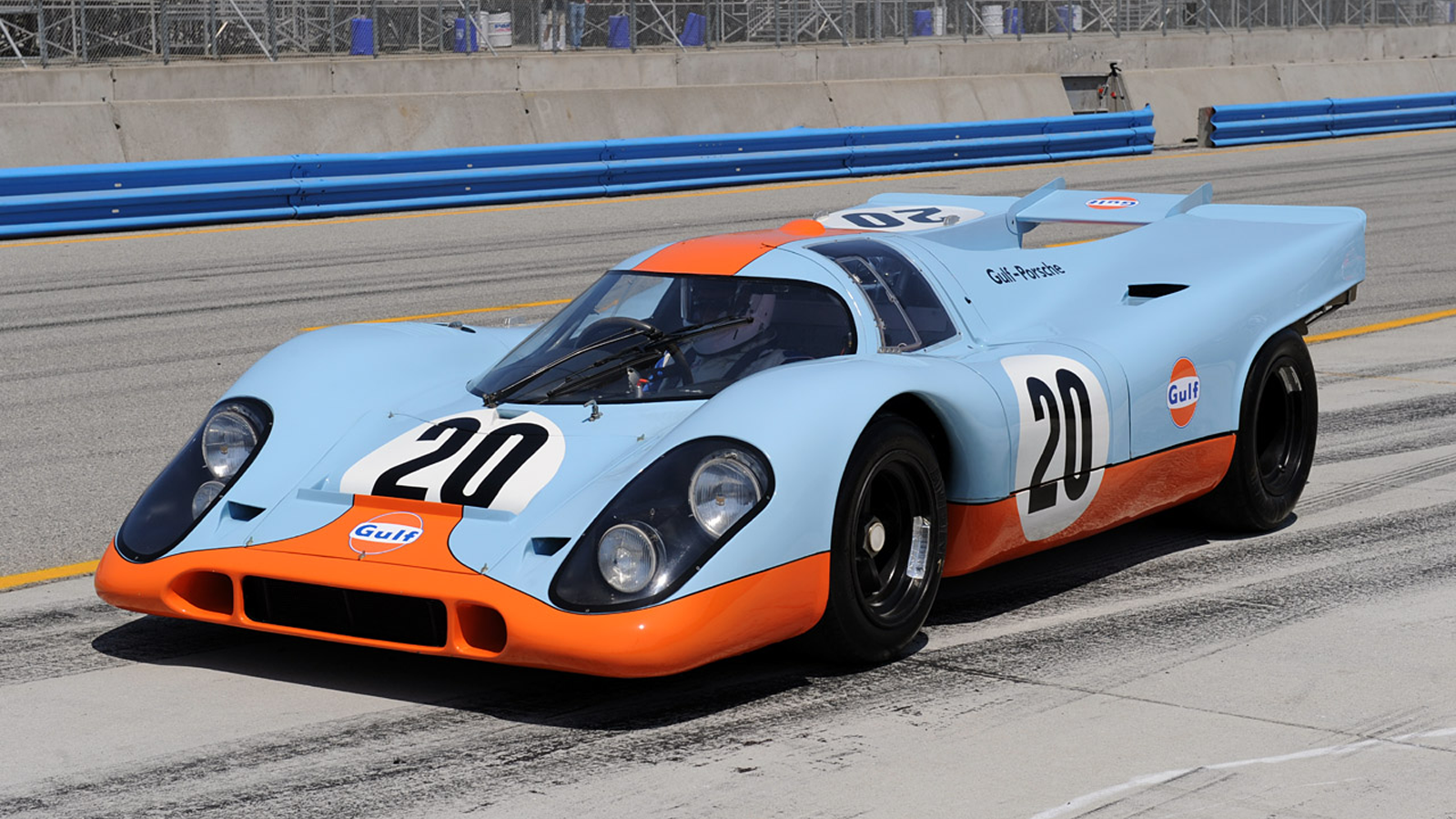
The 917K’s headlights weren’t just for show; they were shaped by necessity. With their low, wide fairings and Plexiglas covers, the lights became a critical aerodynamic component at speeds exceeding 220 mph. Their integrated look and teardrop housing gave the car a menacing, purposeful face that influenced Porsche’s endurance racers for decades.

7. Porsche 918 Spyder (2013–2015) — Laser Precision and Modern Drama

A leap into the hybrid era, the 918 Spyder’s four-point LED headlights introduced a motif that defined Porsche design for the next decade. Their sharp-edged housings and distinctive daytime running light pattern made them unmistakable, even in the dark. They also pioneered Porsche’s adaptive light technology, blending form, function, and digital precision.

6. Porsche 993 (1993–1998) — The Last of the Classic Round Lamps

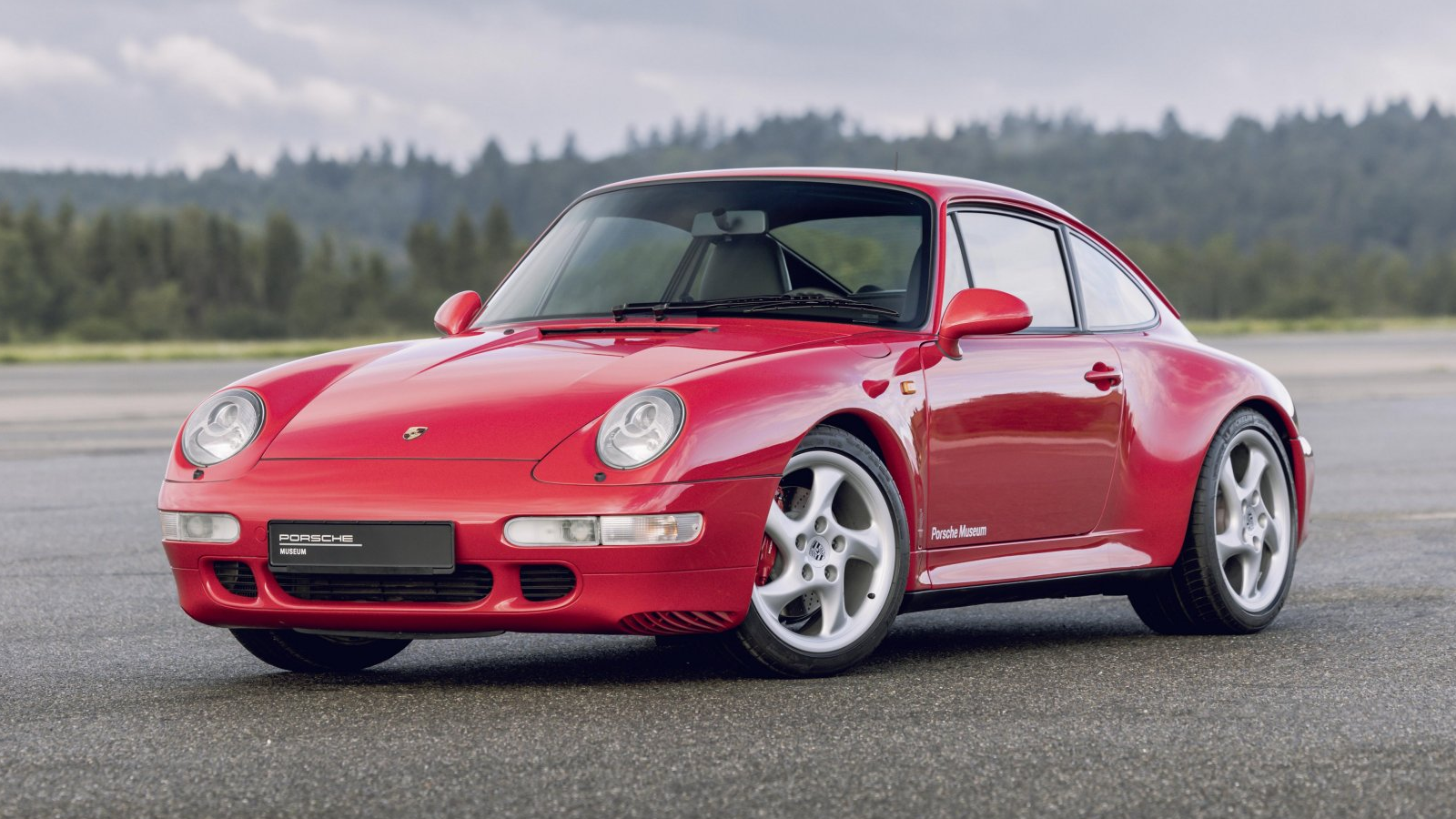
The 993 introduced a new, sloped front end with headlights that followed the hood line, a significant break from tradition. The design, though controversial at launch, ultimately modernized the 911’s appearance and improved aerodynamics. Its flush, oval lenses became icons of the 1990s Porsche aesthetic and marked the final air-cooled era’s visual identity.

5. Porsche 911 (964) — Classic Form Meets Modern Function

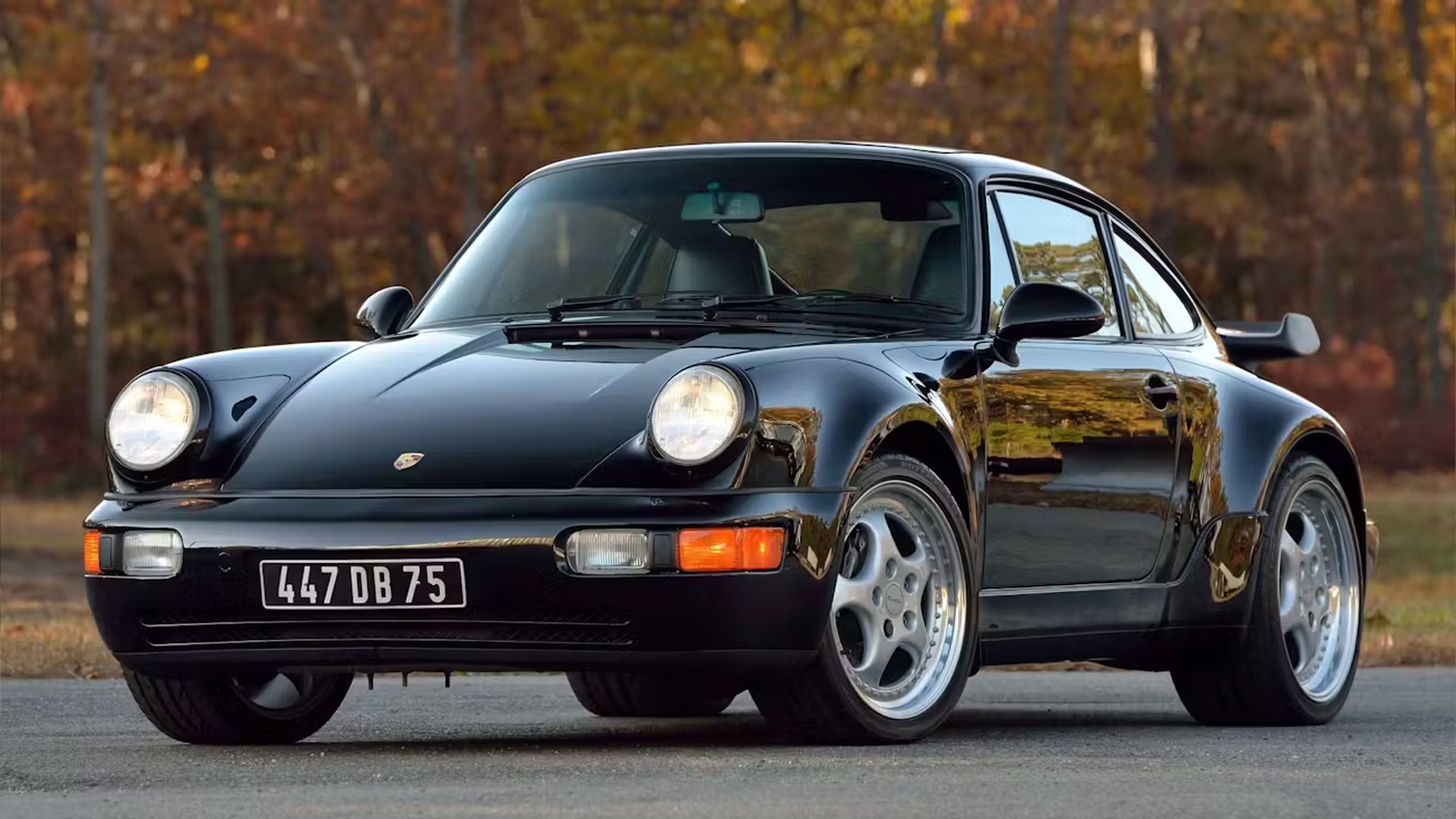
The 964 retained the round 911 lights but subtly reshaped them to fit new, smoother bodywork. They were slightly more upright and used improved reflectors and halogen elements for better illumination. This generation is often overlooked, but its headlights mark the bridge between old-school air-cooled charm and modern Porsche precision.

4. Porsche 356 (1948–1965) — The Blueprint for Porsche’s “Eyes”

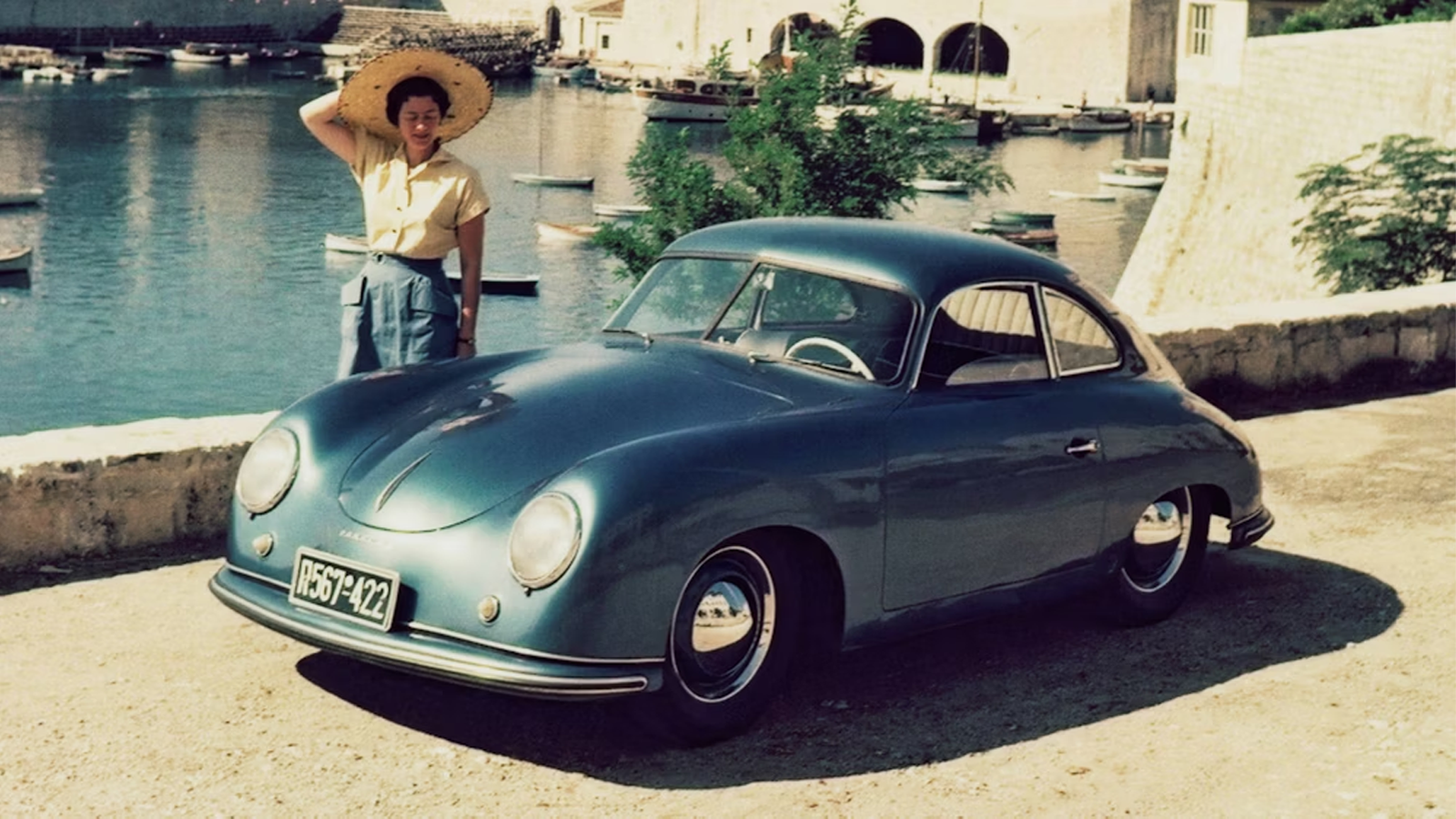
The 356 established the signature oval headlight shape that became Porsche’s visual identity for decades. Mounted high and slightly reclined, the chrome-rimmed lenses gave the car a friendly yet purposeful look. Though rooted in postwar simplicity, their integrated design flowed seamlessly with the rounded fenders, a foundational cue that carried into every 911 thereafter.

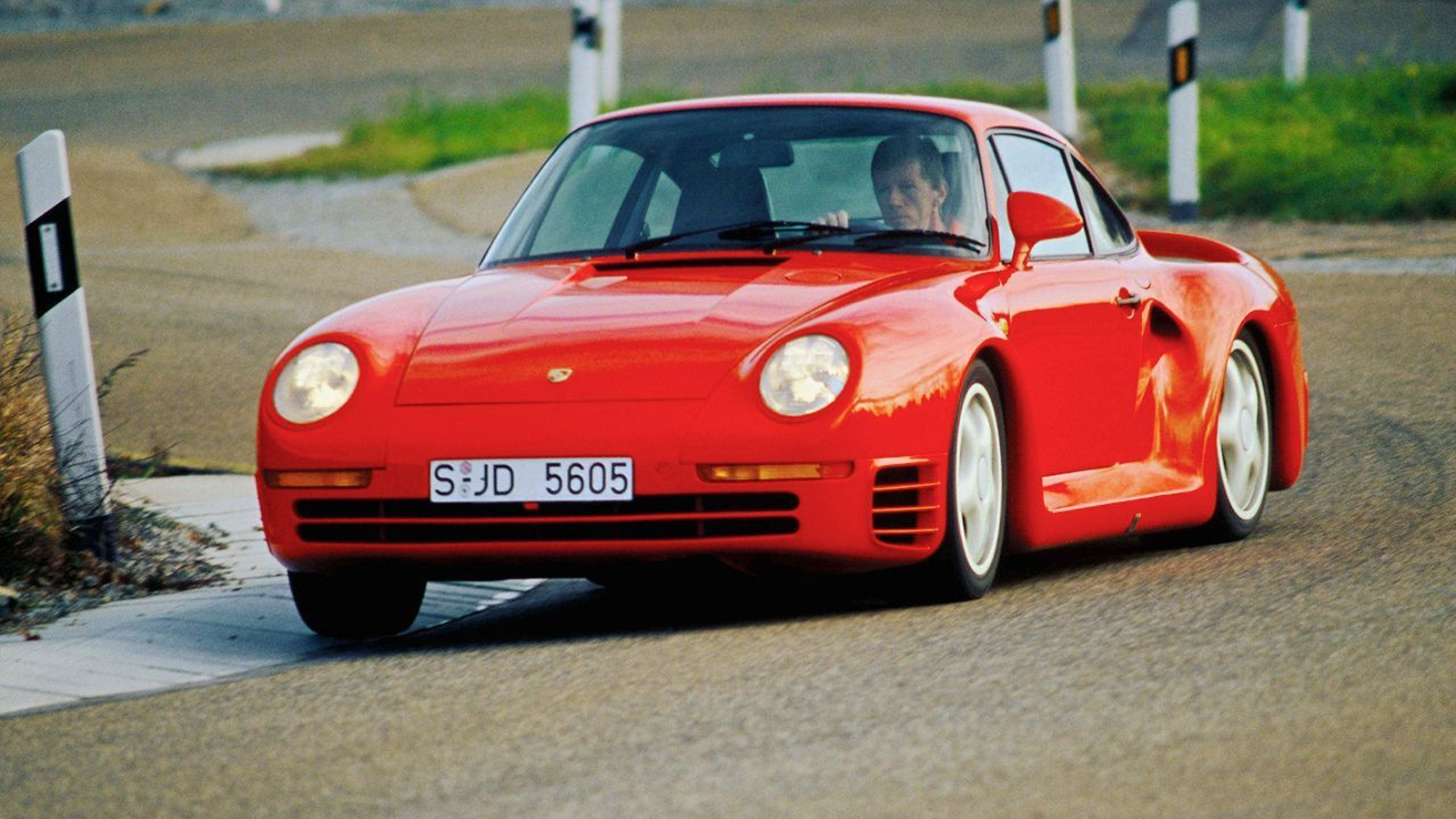
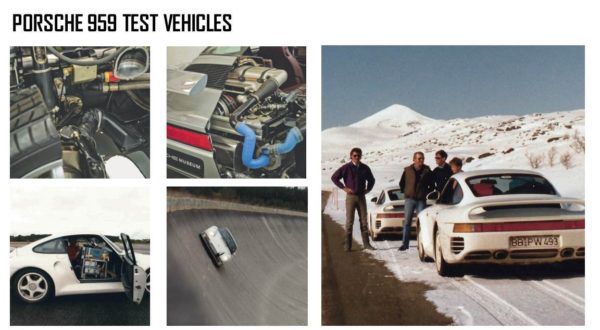
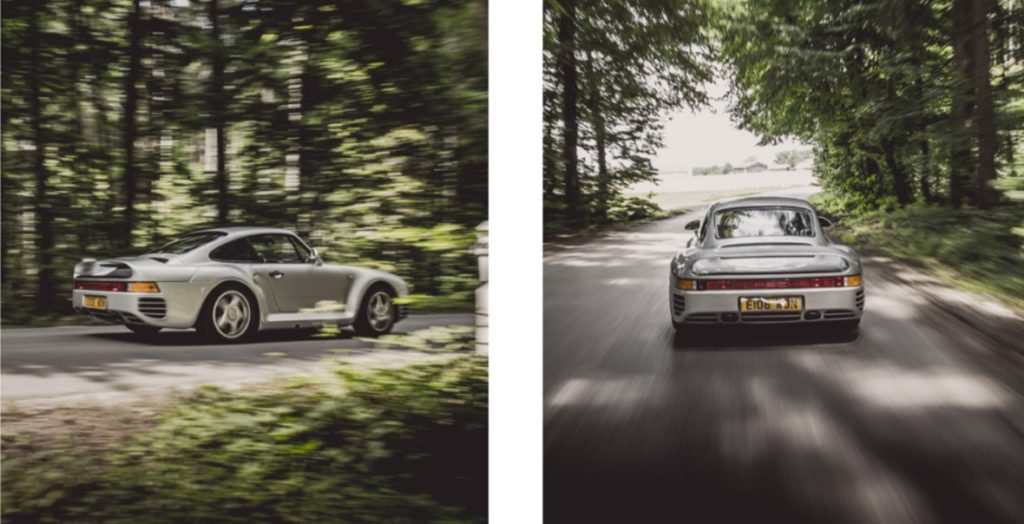
3. Porsche 959 (1986–1988) — Aerodynamic Function in a Supercar Form

The 959’s headlights were a turning point for Porsche’s design language. They maintained the classic round outline but were deeply recessed into the front fenders for aerodynamic efficiency. Flush glass covers gave the car a sleek, cohesive face that previewed Porsche’s shift toward modern integration and minimal drag. Beneath the surface, their lighting performance outclassed most of the era’s supercars.

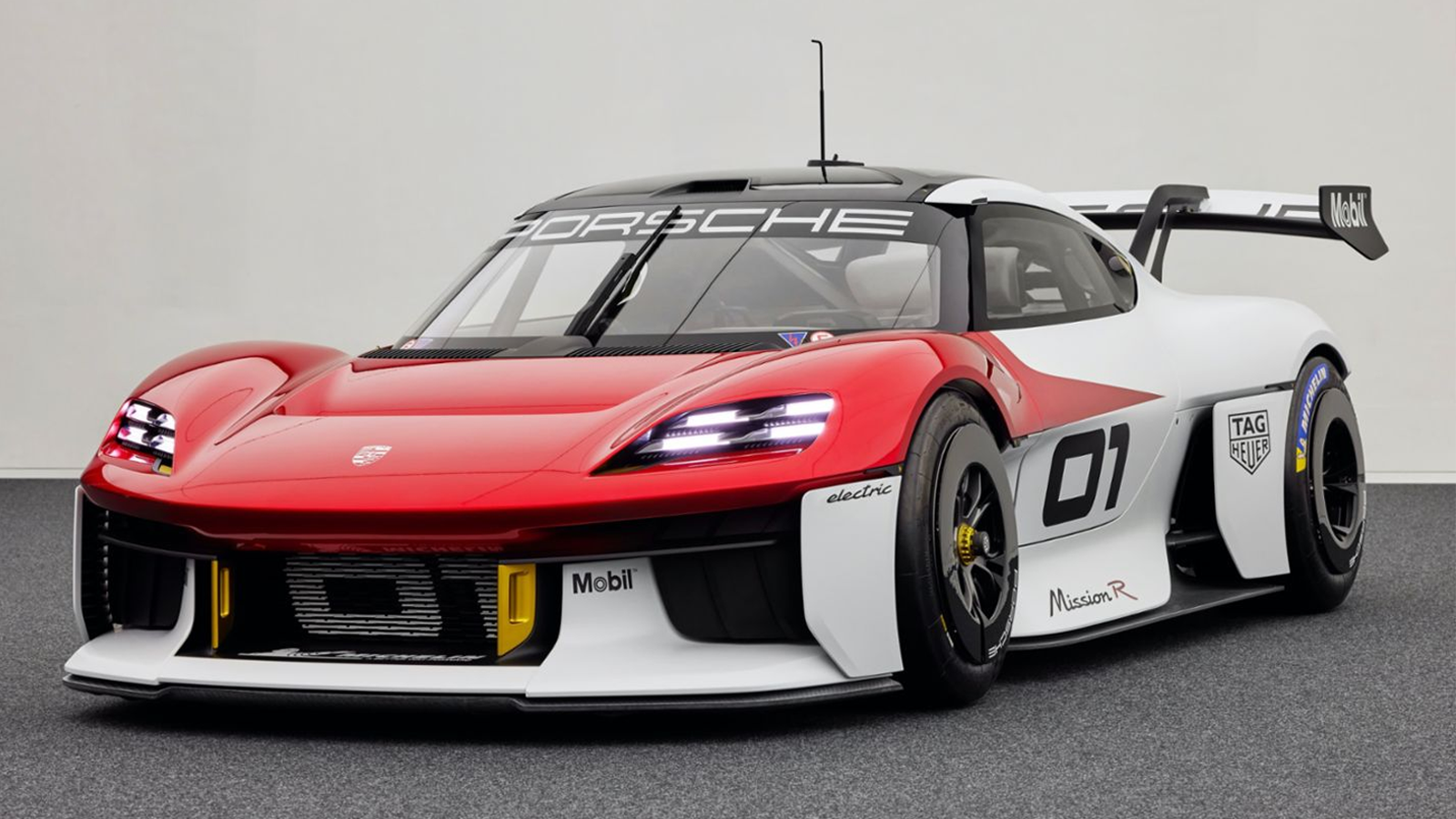
2. Porsche Mission R Concept (2021) — The Future in Plain Sight

With its slim, vertically stacked LED units framed by a minimalist housing, the Mission R’s headlights reimagined Porsche’s “four-point” look for the electric age. They were both expressive and efficient, incorporating cooling ducts and DRL elements into a single sculptural assembly. The design hints at the next generation of motorsport and production cars from Porsche.

1. Porsche Carrera GT (2003–2007) — Pure Function, Clean Form

The Carrera GT’s headlights embodied Porsche’s design minimalism at its finest. With visible projector lenses under a clear polycarbonate cover, they echoed the look of endurance racers while maintaining a sculptural, lightweight appearance. The compact design allowed for large air channels around them, aiding cooling and aerodynamics, beauty born from engineering.

For The Silo, Verdad Gallardo/Rennlist.com

Our Horse Powered Past Drove Today’s Auto Tech

Where did auto tech start?

A horse and buggy. Excellent horse-power huh? People got tired of the nurturing it took to take care of a work horse. People wanted more and as with anything the need for something better fuels the spark for innovation. How about something to do work, but doesn’t need rest? Doesn’t need medication? Doesn’t need someone to shovel up its crap? Take this formula and you get the steam engine, not a crazy engine, but an engine none-the-less. Suddenly the glowing aura of potential is perceivable, right on the horizon. Now we can have multiple horse-power without the care. Still needed someone to shovel though.

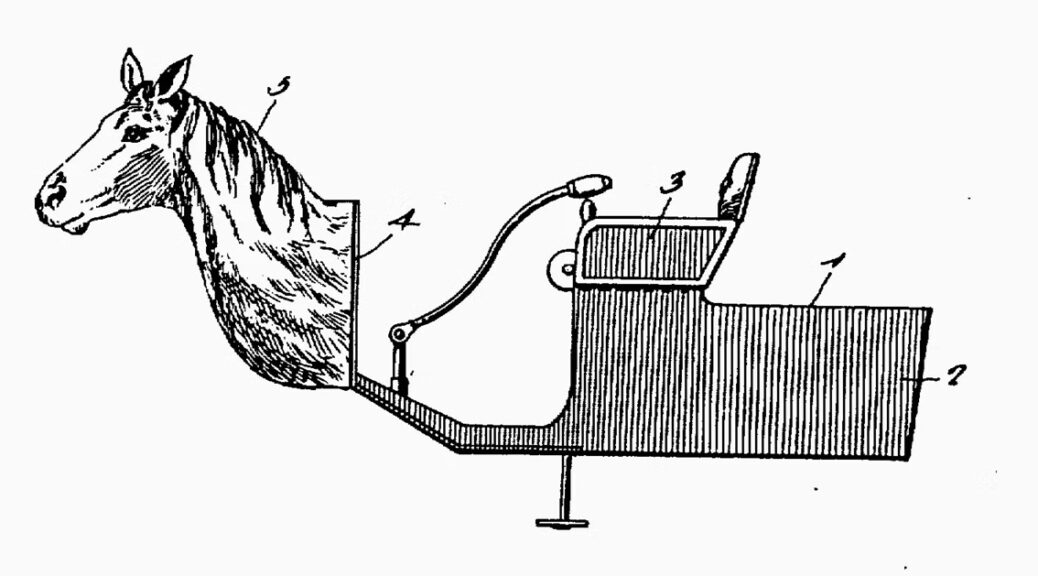
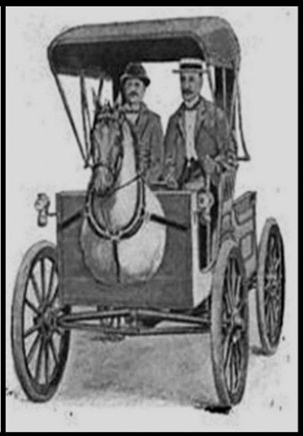
The Horsey Horseless. Designed to prevent horses being frightened by a car.

Enter, the mother of current automotive technology today, the oil industry.

Instead of burning coal, why not find some ways to refine oil to be used as fuel sources to run things on? Who knows, we could have been running advanced versions of steam engines today? They actually can be made to be fairly efficient and clean using current technology and were quite practical cars back in 1918.

Then the internal combustion engine enters the scene the oil companies love this, and a mass marketed engine that is completely dependent on oil is born. Just think, this is awesome for business, these engines need oil for fuel and lubrication. Then all the different designs start flowing. (Off the top of my head and in no chronological order) The single cylinder, then 2, then 4, then 6, then the flathead V8. Now this is where we start to see major horse-power and design improvements. The trusty ole’ inline 6’s, the small block eating slant 6’s,The overhead valve V engine, big blocks, small blocks, Hemi’s. There are pancake engines, W engines, rotary engines, v-tecs, boxster engines and many, many more. (Not to mention all of the different fuel delivery systems!)

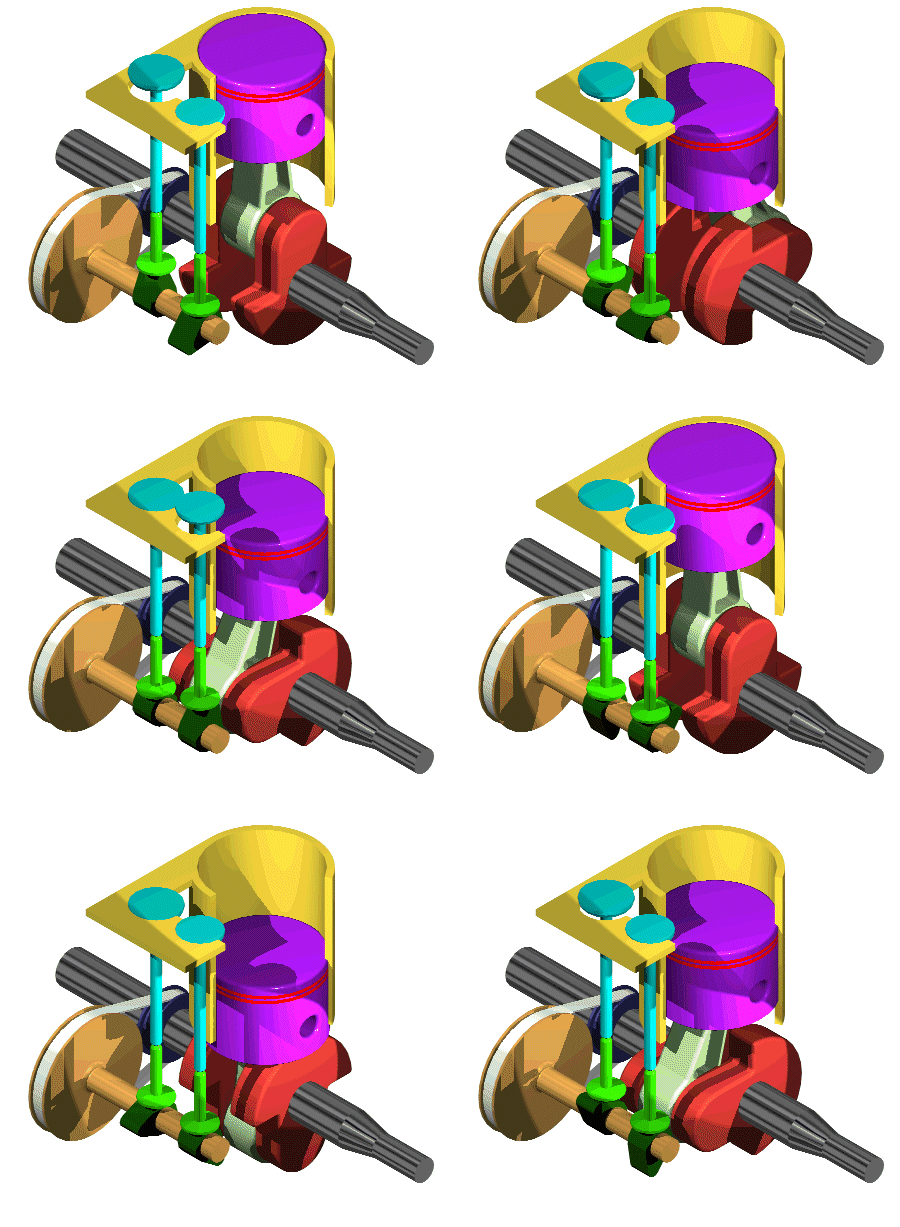
The cylinder and valves and crankshaft of the Internal Combustion Engine

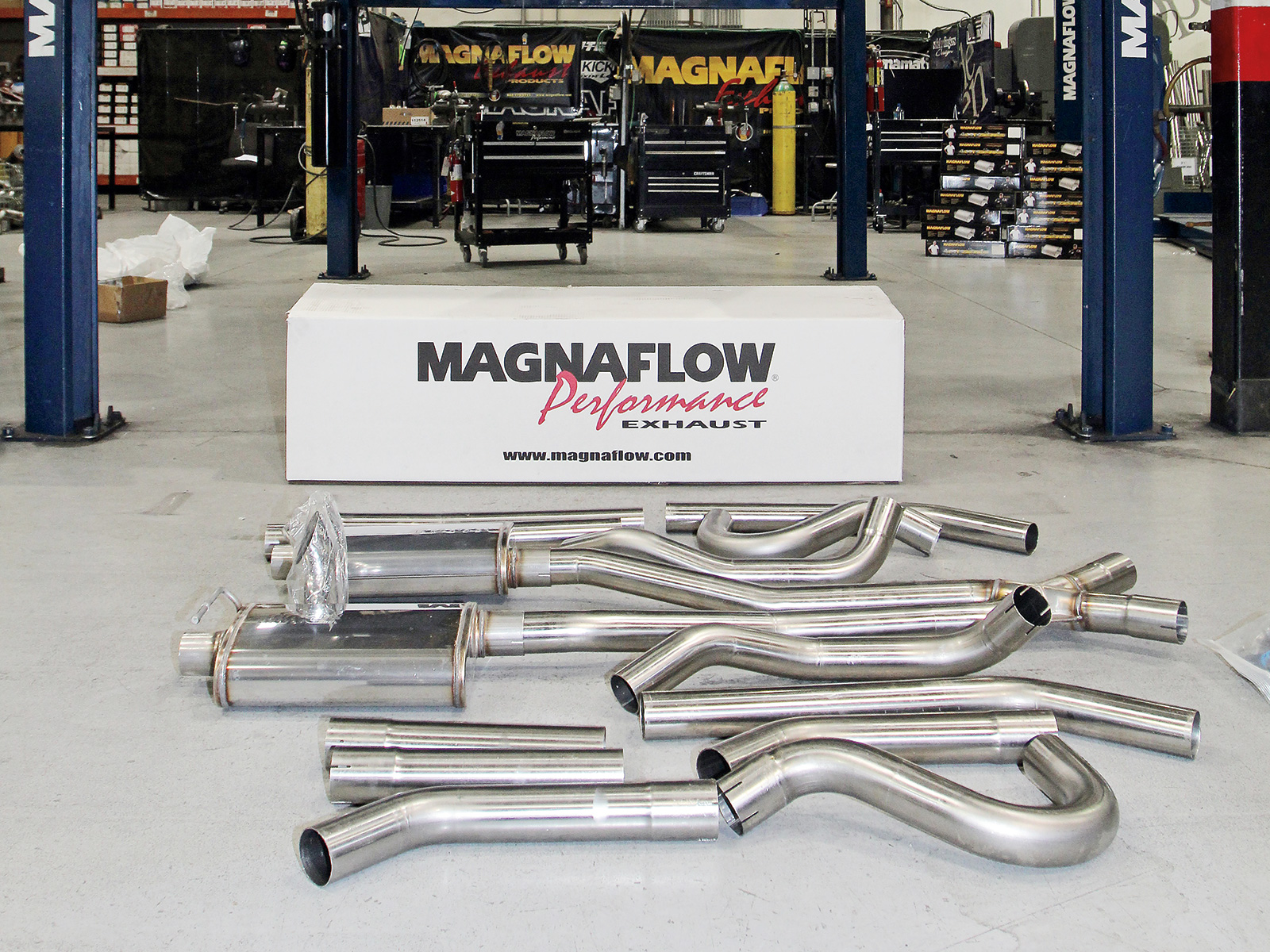
The one thing that really makes me scratch my head is the fact that it took so long getting hybrids, smart-cars, electric cars, and hydrogen cars that are actually worth looking at and driving. I mean, why is it that I can take a full size 2008 Chevrolet Silverado with a 5.3 L vortec engine, put: a cold air intake, a magnaflow exhaust system, and a good edge products programmer, and I can get an average of over 36miles per gallon, with the same horse-power? Why is it that I (not being an automotive engineer) can do this, but you can’t just buy one with those numbers from the manufacturer?


Not to mention brown-gas converters that have been tested on most common engine types that can take, mineral water, and a reaction from current between two electrified plates (similar to a car battery) and create a safe amount of hydrogen gas as a by-product which can make your car run the same on half the amount of fuel. The thing that boggles me is that most people have never even heard of these. You can buy the plans off the internet (not as complicated as it sounds) or I can even get ready to install ones from my performance part supplier. I just find it strange that automotive technology and fuel sources have taken this long to start to veer just slightly away from oil (or as ‘ol Jed calls it “Texas tea”).

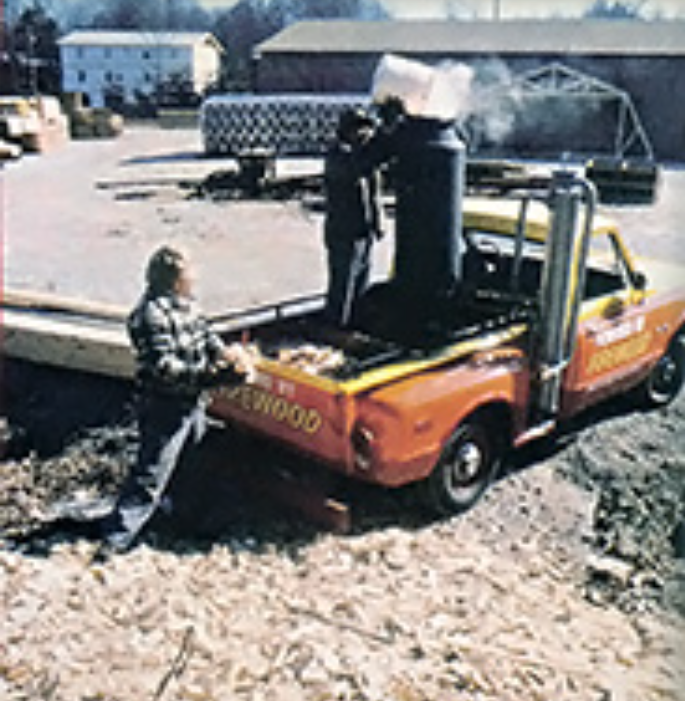
At one point we bridged the gap from a horse and buggy to a steam engine, and then to internal combustion. With the technology we have now, we should have much higher mpg’s and horse-power or an extremely viable alternative. It really makes me wonder where we might be now if this technology was steered in a different direction from the start. It’s been over 100 years now of improving the same technology using more or less the same fuel source. There are guys in the States who run their own garage refined deep fryer grease to power their small pickups and VW buses. There are guys who run pickups off wood-fire smoke. Just something to think about. 

For the Silo, Robb Price.

Own One Of These Exotic Cars While On A Budget

Earlier this month our friends at Hagerty reported on the some of the absolute cheapest ways to get into the old-car hobby. These included cars like the 1975–81 Triumph TR7, the 1986–91 Cadillac Seville, and the 1973–77 Olds Vista Cruiser. The “ew gross” reaction these cars elicited in some of the comments wasn’t too surprising; no one, it seems, wants to shop for fun cars at a suburban Goodwill.

But what about the fun cars you might find at, say, the Goodwill in Beverly Hills? 

That’s right, we’re talking about bargain-basement exotics—not exactly a tagline that inspires confidence when shopping for often-temperamental imports, but they are out there. Just know that service history and records are important to consider here. And just because a car is cheap, or keenly priced, if you prefer, doesn’t mean it’s not worth owning, especially if it provides entry into a marque you’ve always coveted. So give some consideration to these five once-distinguished Euro-mobiles, the cheapest models from their makers and all rated in #3 (good) condition. Let us know if you think we have missed any other contenders.

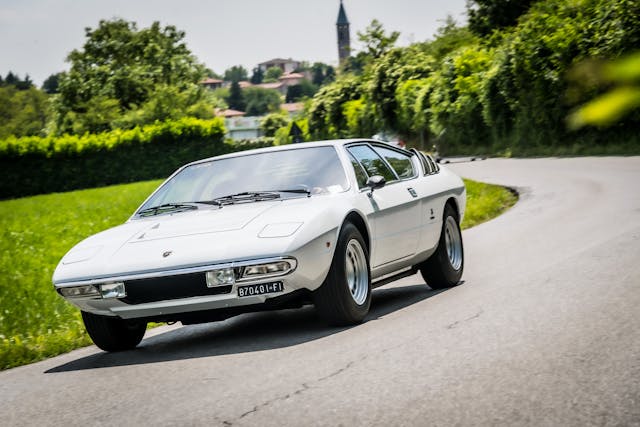
1973–77 Lamborghini Urraco

lamborghini Urraco front three-quarter action
Lamborghini/Massimiliano Serra

Lamborghini announced the Urraco in 1970 as a Marcello Gandini–styled 2+2 coupe with a transverse V-8 mounted amidships. As a sharper-edged follow-up to the swoopy Miura, it foreshadowed the shape of Lambos to come. When it finally arrived for 1973, it made a fine competitor to the Ferrari Dino 308 GT4 and was available in 220-hp 2.5-liter P250 form, while the 265-hp 3.0-liter P300 launched in 1975. When that car arrived in the U.S. a year later, however, power was severely choked by emissions equipment, down to around 180 horses. Not many were built—just 522 of the P250s and 205 P300s—but today a #3 example ranges from $49,000 usd/ $68,350 cad for a P250 to $59,000 usd/ $82,290 cad for the P300. Given the ascendancy of Miura, Countach, Diablo, and Murcielago prices in recent years, that the Urraco is still so cheap is a bit surprising.

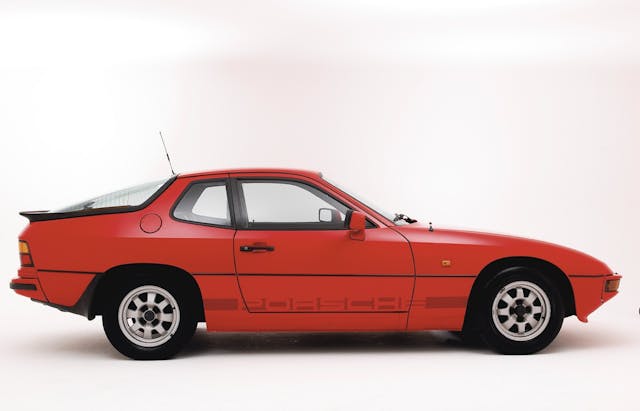
1977–82 Porsche 924

1983 Porsche 924 side
Getty Images

From the start, it seemed like Porsche vs. the world when it came to the 924. Whether because it was front-engined, or water-cooled, or simply a discount sports car meant to be a Volkswagen, plenty of people discounted it from the get-go. Until they drove it and realized, hey, this thing’s great. And it was great. Still is. With just enough power (110 hp from ’77 on) from a VW/Audi-sourced 2.0-liter four to complement its finely poised chassis, the 924 remains an excellent, easily approachable driver’s car, with good club support. Rust has killed many of them, and although Porsche built around 150,000 examples, parts are available but spendy, especially interior bits. A good #3 example should set you back about $8500 usd/ $11,856 cad. For comparison, an early 944 in the same shape is around $10,500 usd/ $14,645 cad.

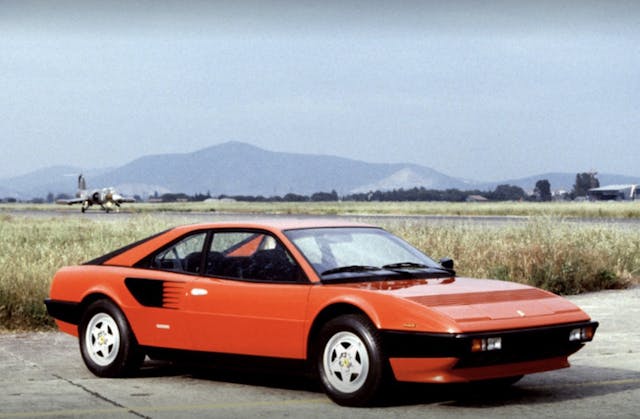
1980–87 Ferrari Mondial 8 / Mondial 3.2 Coupe

Ferrari Mondial 8
Ferrari

When it came time to replace the Bertone-designed Dino 308 GT4, Ferrari tapped Pininfarina, and the resulting Mondial debuted in 1980 as a 2+2 coupe, with a convertible joining the lineup four years later. The GT4’s 2927-cc transversely mounted V-8 carried over, with Bosch fuel injection replacing Weber carbs, and in the Mondial it made 214 hp. They were sharp handlers, with more interior space than their predecessor, but no one ever accused them of being fast. Other Mondial variants arrived throughout the ’80s to address that, however, including the Quattrovalvole (QV) in 1984, the 260-hp 3.2 of 1986, and the radically different t of 1989, but it is the early coupes, along with the 3.2 coupes, that are most affordable. Today, a #3 Mondial 8 or 3.2 coupe costs about $22,000 usd/ $30,686 cad.

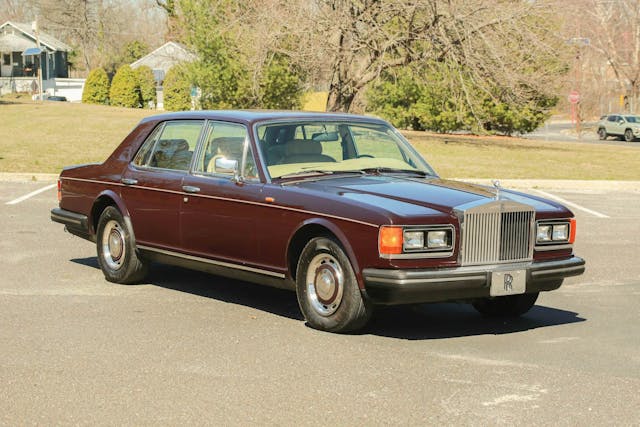
1981–87 Rolls-Royce Silver Spirit

1982 Rolls-Royce Silver Spirit front 3/4
Hagerty Marketplace/William_Cooper

If you’re an enthusiast of affordable opulence and Dijon mustard, then then look no further than the Silver Spirit. Successor to the upright Silver Shadow, the Spirit utilized a 220-hp 6.75-liter V-8 mated to a three-speed automatic. Inside, of course, you got all the trimmings, with Connolly leather seating, Wilton wool carpeting, and burl walnut inlays, as well as A/C and power everything. Giving the Spirit its silky-smooth road manners was a Citroën-sourced self-leveling hydropneumatic suspension. Rolls-Royces from this era have never been cheap to maintain, and deferred maintenance issues claimed many of them, so records are key with any Silver Spirit you might have your sights on. The right one, in #3 condition, won’t cost you much, at around $8400 usd/ $11,716 cad, but it will likely have needs, which could cost a lot.  

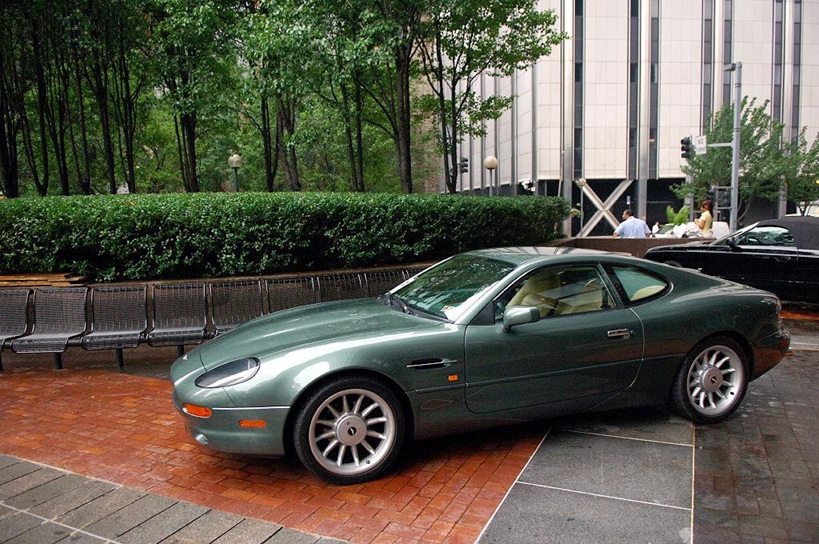
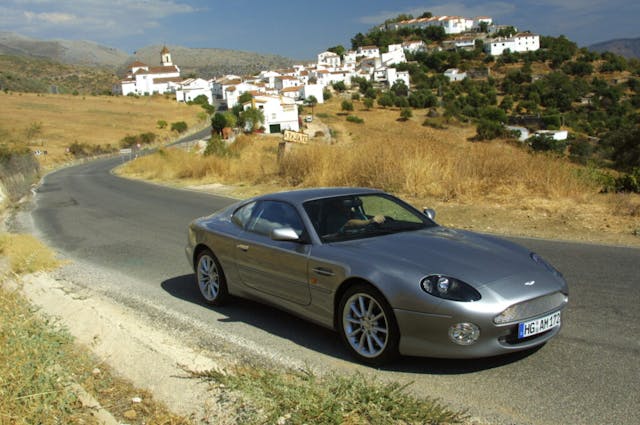
1997–99 Aston Martin DB7

Aston Martin DB7 Vantage
Aston Martin

Even 30 years on, the 335-hp Aston DB7 still looks gorgeous from every angle, and upon its arrival, it was instantly an Aston worthy of the famous DB badge. If you can overlook its relative lack of exclusivity, with more than 7000 produced in both coupe and convertible form, what you get is a proper English grand tourer with excellent performance and luxurious interior appointments. Subtle differences set it apart from the contemporary Jaguar XK8 (which costs less, it should be noted), and the higher costs associated with maintenance and repair are likely to set it apart as well. But right around $21,000 usd/ $29,291 cad should get you a good coupe, with the convertibles slightly cheaper. 

For the Silo, Stefan Lombard, Author at Hagerty Media.

Hagerty protects all kinds of collector cars, trucks, and modified vehicles. Let’s talk about your special ride.

Get an insurance quote

These Classic Cars Gaining Value In A Slowing Market

We’ve passed the mid-way point in the year, and driving season is in full swing. In the classic car market, the first half has been a roller coaster with an optimistic start in January, then a steady softening as we made it through spring. Moving into the second half of the year, and with this week’s newest release of the Hagerty Price Guide, it seems that trend is primed to continue.

That’s not the case with everything, though.

Our friends at Hagerty did watch some vehicles buck the trend and post some meaningful gains in value. Here are just a few of the more newsworthy winners this past quarter (measured by average value increase across all four condition ratings).

Got questions about how they arrived at these changes? You can read more about the methodology behind the Hagerty Price Guide here.

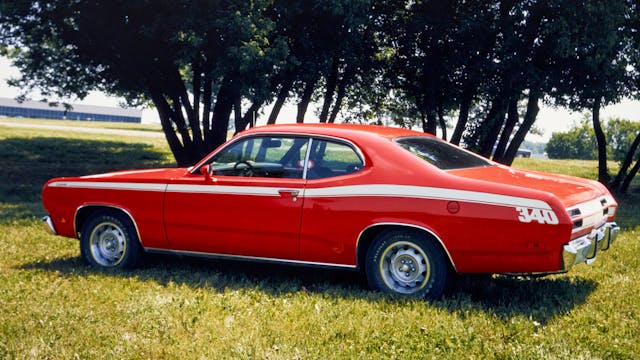
1970-76 Plymouth Duster

Plymouth-Duster-rear-three-quarter-crop
Plymouth

Average increase: +32%

Based on the A-Body along with the Valiant and Dodge Dart, Plymouth’s Duster offered the Mopar faithful a sporty, compact car on a budget. Much like its market competitors (Chevy Nova, Ford Maverick, AMC Hornet), Dusters could be had with everything from a fuel-sipping six-cylinders to fire-breathing V-8s, along with some truly outrageous graphics packages. A Duster 340 making 275hp was king of the hill for this series, eventually being replaced by a more moderately rated Duster 360, choked down by smog regulations and lower compression. Like the Mopars of today, a dizzying number of different packages were available, from the Gold Duster and Space Duster to the efficiency-minded Feather Duster.

This spring, Dusters performed exceptionally well, racking up big gains in public sales, listings and insurance quotes. Standard 318-powered cars can still be had cheaply, and $18,000-$20,000 usd / $24,640 cad- $27,380 cad (via exchange rate at time of posting) will land you a good (#3) condition car. The spicier 340-powered cars will reach into the $30,000 usd- $41,060 cad range, which is still a lot of muscle for the money, but an average increase of 32% is shocking for a 50-plus-year-old car from a brand that’s been dead for nearly 25.

So, what gives? Why the sudden jump?

Well, for one, cheaper cars are still performing well, and even though the majority of muscle cars are softening in value, they’re still inexpensive fun. Our theory, though, is pop culture. Around the time Duster prices started climbing, a new crime series debuted on Max. The name of the show, funny enough, is Duster, and it prominently features a Duster 340. Coincidence? Perhaps, but we’ve seen this phenomenon before. As an honorable mention, the sibling Dodge Dart also experienced a bump, but at a more modest 17% average gain. You can bet that Dusters will be a car to watch for a while, strong sales usually bring more and more quality examples to market, offering further insights into this unexpected jump.

2024 Porsche 911 S/T

Porsche 911 ST heritage appearance package
Porsche

Average increase: +25%

Yes it’s exclusive and yes it’s expensive, so it’s probably easy to tune out and move on, but hear me out. The S/T is not just some badge-engineered 911 that Porsche overcharged for. It’s an obsessively lightened 911 with the high-revving engine out of the GT3, and it’s actually both quicker and lighter than a GT3. It’s more exclusive as well, with just 1960 cars produced worldwide. Not necessarily rare, but you’re gonna have to work to stumble across one. Ultimately, if you’re a Porsche fan with the money, this is a car to have.

Just as impressive as the raw performance is the market performance. The standard MSRP last year was $292,000 usd – $399,689 cad without optional extras, and that’s if you could manage to secure an allocation from your local dealer. The market for these cars is simple supply and demand. Porsche made them just scarce enough that buyers are willing to shell out major money. Public transactions have shown that buyers are willing to pay $700,000 usd- $958,160 cad or more to get their hands on one. The case of the 911 S/T also shows the world that there is still an appetite for cars geared towards hyper-enthusiasts; they want performance-focused cars, and they want them with a manual transmission. More companies should get the hint. While most of us will never afford something like a 911 S/T, or perhaps wouldn’t care to own one if we could, the insane enthusiast response to it may be the wake up call to all manufacturers to start making cars we actually want.
1979-94 Saab 900

Saab-900-Turbo-Cabriolet-front-three-quarter-yellow
Saab

Average increase: +20%

This sweet Swede is one rad ride. I know because I have owned and enjoyed three Saab 900 cars over the years including a beauty 5 speed with moonroof which I regret selling to this day. If Saab does anything well, it’s coming up with something truly unique. This company, which is also well-known for its aeronautical division, does an exceptional job of combining practicality and safety along with a dash of the sportiness of a Saab 37 Viggen fighter jet. This mid-size automobile came in standard commuter trim, but a warmed-over Turbo and SPG version could be had to satiate the hot hatch enthusiasts.

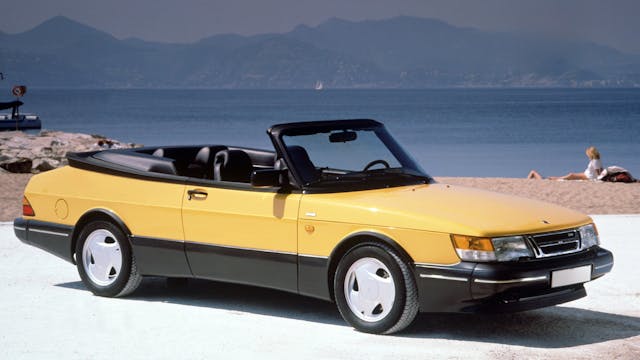
The Saab might be a bit of an oddity or a cult vehicle here in the states, but it does carry strong enthusiast interest. It is really everything that embodies the coolness and nostalgia of the 1980s and 1990s, and they’re generally affordable. Even with the strong percentage increase, a base 900 can be scored for under $10,000 usd- $13,690 cad in good condition, while a Turbo can be picked up in the mid-teens. If you’re after the more taut and sporty SPG, be prepared to shell out around $26,000 usd- $35,590 cad for a decent one. If you’re after a fun and funky car from the ’80s, the 900 is worth a look, and with market activity picking up, more may be coming out of the woodwork. Fortunately they remain relatively affordable, just not as dirt cheap as they used to be.

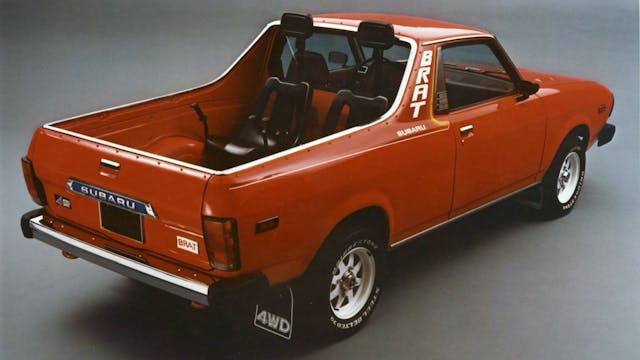
1978-87 Subaru Brat

Subaru Brat studio rear three quarter
Subaru

Average increase: +18%

Subaru’s Bi-drive Recreational All-terrain Transporter, or Brat, was one of many small Japanese trucks coming into the US in the 70s and 80s. Except it wasn’t a truck, technically, but we’ll cover that in a minute. Based on a car chassis, much like the Ranchero or El Camino, it was small yet capable, featuring a single-range four-wheel drive system, not far removed from the all-wheel drive setup for which Subaru is so well regarded today. Where things go off the rails a bit is when you look in the truck bed. Like I said, it’s a truck, but not technically. In the back, there is a pair of jump seats affixed to the back, which in the legal sense made the Brat a car. This was a workaround from the U.S. tariff scheme, which taxed imported cars at a rate of 2.5% instead of the 25% for trucks.
These are funky vehicles that could only have existed in the 1980s, when Japanese manufacturers were trying everything. They’re incredibly well loved around the world and are seeing an uptick in popularity here in the U.S. They’re still moderately affordable; a good example will fetch nearly $20,000 usd- $27,380 cad these days, but due to recent transactions, that’s up noticeably from the recent past. While not as commonly seen as other Japanese trucks of the era, these things are cool as hell and certainly a conversation starter, so we expect interest will stay strong.

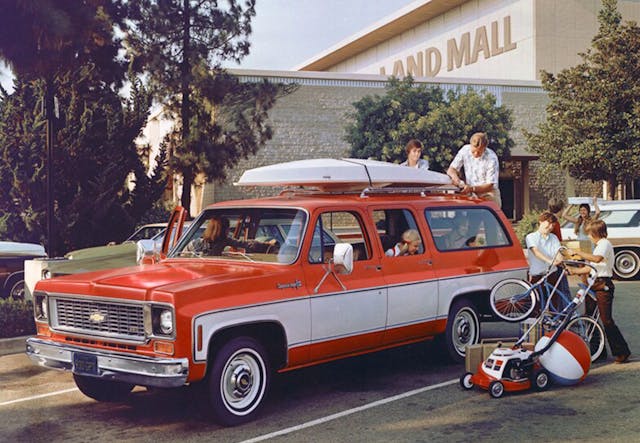
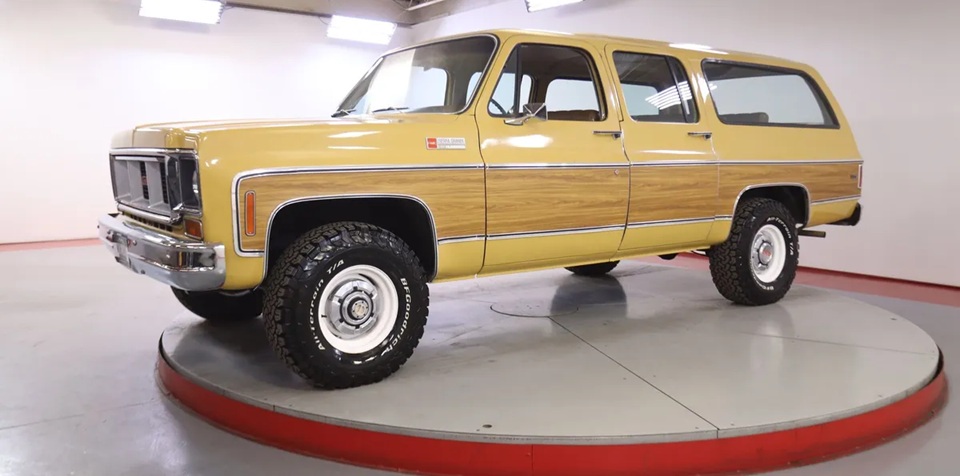
1973-91 Chevrolet/GMC Suburban

1974 Chevy Suburban front three-quarter
GM

Average increase: +12%

North America’s longest serving nameplate is still the mighty Suburban, lasting an astonishing 90-years, and counting.

It began as a truck-based station wagon in the 1930s, but the Suburban we know and love today saw its roots planted in 1973. The update to GM’s truck line, known by enthusiasts today as the “square body” saw the Suburban go from a three-door to four-door for better passenger accessibility, and it dripped in creature comforts missing from previous models. Better sound deadening, cushy seats and multiple trim levels evolved the Suburban from a utilitarian people hauler to more of a luxury truck. This design stuck around until 1991, when GM added the Suburban and Blazer to the GMT400 line. The rest, as they say, is history. Suburbans would become more and more cushy (and expensive), making them somewhat of a discreet status symbol today.

The 1973-91 Suburban is a sweet spot for enthusiasts; they’re plentiful compared to earlier series, parts are easy to come by, and they are extremely usable. They’re also still pretty affordable compared to the pickups and Blazers from the same era. A good condition Suburban can be scored for under $20,000 usd-$27,380 cad , even for the 4×4 versions. We’ve observed an uptick in sales and market activity with these trucks, and combined with our quote data suggesting that Suburban owners are averaging on the younger side, this could be a strong indicator that this bump in value will stick or even grow over time.

For the Silo, Jarrod Barker courtesy of friends at Hagerty Insurance.

9 Old Automotive Tools Almost Nobody Uses Anymore

If you have them should you keep them? Read on via this interesting article from our friends at Hagerty.

The nuts and bolts that make up our beloved automobiles have not changed that much over the last 150 years. But the tools needed to maintain them? Those have changed a lot. Software has cemented itself as part of a service technician’s day-to-day regimen, relegating a handful of tools to the history books. (Or, perhaps, to niche shops or private garages that keep many aging cars alive and on the road.)

How many of these now-obsolete tools do you have in your garage? More to the point, which are you still regularly using?

Spark-plug gap tool

Though spark-plug gap tools can still be found in the “impulse buy” section of your favorite parts store, these have been all but eliminated from regular use by the growing popularity of iridium and platinum plugs. These rare-earth metals are extremely resistant to degradation but, when it comes time to set the proper gap between the ground strap and electrode, they are very delicate. That’s why the factory sets the gap when the plug is produced.

These modern plugs often work well in older engines, meaning that gapping plugs is left for luddites—those who like doing things the old way just because. Nothing wrong with that; but don’t be surprised if dedicated plug-gapping tools fade from common usage fairly quickly.

Verdict: Keep. Takes up no real space. 

Dwell meter

Snap On dwell meter
sodor/eBay

50 years ago, a tuneup of an engine centered on the ignition system. The breaker points are critical to a properly functioning ignition system, and timing how long those points are closed (the “dwell”) determines how much charge is built up in the ignition coil and thus discharged through the spark plug. Poorly timed ignition discharge is wasted energy, but points-based ignition systems disappeared from factory floors decades ago, and drop-in electronic ignition setups have never been more reliable (or polarizing—but we’ll leave that verdict up to you.)

Setting the point gap properly is usually enough to keep an engine running well, and modern multifunction timing lights can include a dwell meter for those who really need it. A dedicated dwell meter is an outdated tool for a modern mechanic, and thus most of the vintage ones are left to estate sales and online auction sites.

Verdict: Toss once it stops working. Modern versions are affordable and multifunctional. 

Distributor wrench

Snap on distributor wrench set
Snap On tools

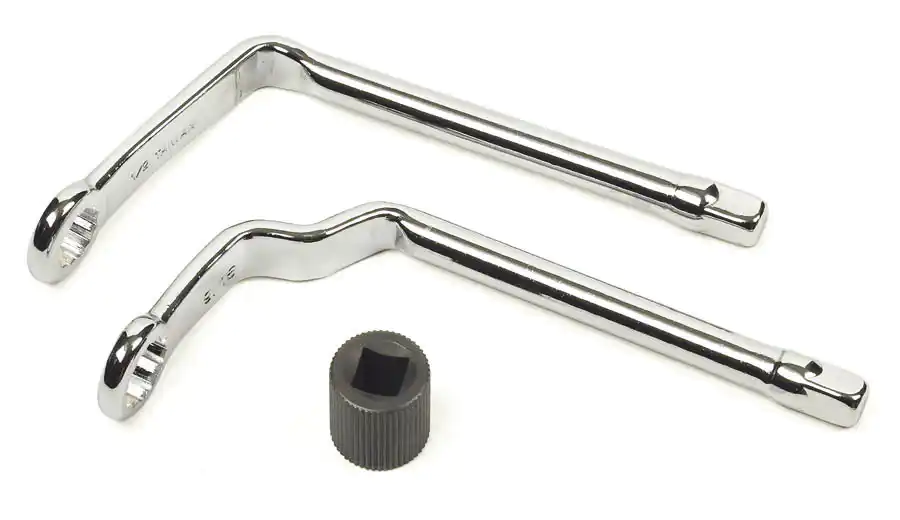
When mechanics did a lot of regular timing adjustments and tuning, a purposely bent distributor wrench made their lives much easier. However, much like ignition points, distributors have all but disappeared. Thanks to coil-on-plug ignition systems and computer-controlled timing, the distributor is little more than a messenger: It simply tells the computer where the engine is at in its rotation.

Timing adjustments have become so uncommon that a job-specific tool is likely a waste of space. If you’ve got room in your tool chest, keep yours around; but know that a standard box-end wrench can usually get the job done and is only fractionally less convenient than the specialized version.

Verdict: Keep if you have them. No need to buy if you don’t. 

Pre-OBDII diagnostic scan tools

Prior to the required standardization of on-board diagnostic computers by the U.S. in 1996, a single car could host a wild mix of analog and digital diagnostic methods. OBDII, which stands for On-Board Diagnostic II, wasn’t the first time that a small computer was used to pull information from the vehicle via an electronic connection; it merely standardized the language.

Throughout the 1980s and early 1990s each OEM had its own version of a scan tool. Now those tools can be reverse-engineered and functionally spoofed by a modern computer, allowing access to diagnostic info tools that, at the time, were only available to dealers. Since many pre-OBDII cars are now treated as classics or antiques and driven far less frequently, the need for period-correct diagnostic tools is dropping.

Verdict: Keep. These will only get harder to find with time, and working versions will be even rarer. 

Distributor machine

A distributor is simple in concept. Trying to balance the performance and economy of the ignition system, with the distributor attached to a running engine, and achieving proper operation starts to get pretty complicated. That’s where a distributor machine comes in.

A distributor is attached to the apparatus and spun at engine speed by an electric motor. This allows you to literally see how the points are opening and closing. You can also evaluate the function of vacuum or mechanical advance systems. These machines are still great but the frequency that this service is needed these days is few and far between, especially when trying to justify keeping a large tool around and properly calibrated.

Verdict: Keep, if you are a specialty shop or tool collector. 

Engine analyzer

Sun Master Motor Tester
ajpperant

Even a casual enthusiast can see there is a lot more information that can be gleaned from a running engine than whatever readouts might be on the dash. Enter the engine analyzer, a rolling cabinet of sensors and processors designed to fill in the data gaps between everything that is happening in a car and what its gauges report.

An engine analyzer is essentially a handful of additional instruments packaged into a small box hanging around the bottom of your tool drawers. It can also house a lot of sensors in a giant cabinet, which was likely wheeled into the corner of the shop in 1989 and left to gather dust. Now engine analyzers can be found listed online for as cheap as $200usd/ $287cad.

The funny thing is that many of the sensors in these engine analyzers are often the same systems that come built into modern dynamometer tuning systems. In a dyno, the sensors allow the operator to see more than max power; they also show how changes to an engine’s tune affect emissions. Maybe engine analyzers didn’t disappear so much as change clothes.

Verdict: Toss. The opportunity cost of the space these take up can be tough for most home garages. Sensors went out of calibration decades ago so the information you might get from one is dubious at best. 

Most pneumatic tools (for home shops)

Ingersoll Rand air impact
Ingersoll Rand

Air tools hold an odd place in the hearts of many gearheads. For many years the high-pitched zizzzz and chugging hammers of air-driven die grinders and impact drills were the marks of a pro. Or, at least, of someone who decided that plumbing high-pressure air lines around the shop was easier than installing outlets and maintaining corded tools. Air tools are fantastic for heavy use, as they are much easier to maintain and can be rebuilt and serviced.

Those tools can really suffer in lack of use, though, since pneumatic tools rely on seals and valves, neither of which deal well with dry storage. Battery tools have caught up to air tools for most DIY folk. No more air lines or compressors taking up space in the shop—and requiring additional maintenance—and, in return, a similarly sized yet more agile tool.

Verdict: Keep, if you already have the compressor. Don’t have one? Invest in battery tools. 

Babbitt bearing molds/machining jigs

Every engine rebuild has to have bearings made for it in some fashion. Today’s cars use insert bearings that are mass-produced to surgical tolerances for a multitude of applications. If you wanted—or more accurately needed—new bearings in your Model T circa 1920, you needed to produce your own … in place … inside the engine. Welcome to Babbitt bearings.

The process is a true art form, from the setup of the jigs to the chemistry of pouring molten metal and machining the resulting orbs to actually fit the crankshaft and connecting rods. Now there are newly cast blocks for your T that replace the Babbitt with insert bearings. Since those antique Ford engines just don’t get abused the way they used to, and lead fairly pampered lives, they need rebuilding far less often than they did in-period. Modern oils also do a better job of protecting these delicate bearings. Since they are less and less in demand, the tooling and knowledge to make Babbitt bearings are difficult to find, and precious when you do.

Verdict: Keep. It’s literally critical to keeping a generation of cars alive. 

Split-rim tire tools

split rim tool ad
Universal Rim Tool Company

Among the realm of scary-looking tools that have earned their infamy, split-rim tools hold court. The concept is simple: The rim is sectioned, allowing it to contort into a slight spiral that can be “screwed” into a tire. (This is almost the reverse of a modern tire machine, which stretches the tire around a solid wheel rim.) When tires needed tubes, both tire and rim were relatively fragile, and the roads were rough, split rims were popular—and for good reason. Now the tooling for drop-center wheels is ubiquitous and shops often won’t take on split-rim work. Success is hard to guarantee, even if techs are familiar with split rims—and they rarely are.

Verdict: Keep. No substitute for the right tools with this job. 

These tools might not make much sense in a dealership technician’s work bay, but that doesn’t mean they should disappear forever. Knowing how to service antiquated technology is as important as ever, whether using old tools or new ones. If you’ve got any of these items, consider it your responsibility to document what the tool does and how to safely use it. Keeping alive the knowledge of where our modern tools came from is powerful.

For the Silo, Kyle Smith.

Six Pack Of American 1980s Cars For Under 25K

Ugh it’s winter and here in Southern Ontario as I type this we are at the tail end of the Polar Vortex. It’s damn cold out. But there are some things that lend themselves well to “tossing another log on” and staying cozy while enjoying being indoors or perhaps in your heated shop or garage.

In fact, the winter is a great time to take stock and plan for your automotive future. Maybe you’ve packed your summer car away for the season and realized there’s still room for one more, or perhaps you’ve been whiling away the winter daydreaming about the car that got away years ago.

Get Out The Hair Gel

Whatever the case, our friends at Hagerty put together their latest valuation info to find some cool ’80s-vintage North American cars and trucks that we would like to add to our collections, and we think you might agree with at least some of them. Read on brave winter warrior….

The following six vehicles can all be had for less than $25,000 usd/ $35,8300 cad in #3 (Good) condition. That’s a solid starting place for a classic you plan on putting some miles on, and a great place to start if you want a running and driving project that you can cruise to RADwood with. Here then are their excellent picks, in descending order based on value.

1989 Ford Mustang LX 5.0

1987 Ford Mustang coupe side proifle
Ford

#3 Value: $24,900 usd/ $35,680 cad

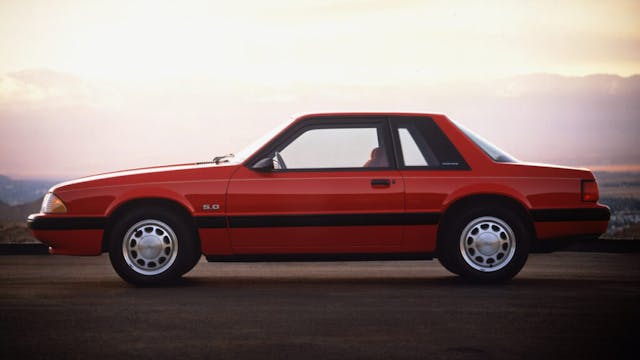
The LX was a bit of a sleeper as it had the same EFI 5.0-liter V-8 as the GT without the flashy bits. We like the later Fox-body styling, and while the ’89 comes close to the $25,000 usd price cap, 1987 and 1988 models look just as good and tend to be just a bit more affordable. Of course, four-eyed Fox-body Mustangs (which some of the Hagerty team find more stylish) tend to be even less expensive, but they are also less powerful. One of these later LX models would be a great place to start for a mild build to enjoy the fantastic 5.0-liter soundtrack, as few platforms have the kind of aftermarket behind it that the Fox-body still enjoys.

1987 Buick Regal T-Type Turbo

Buick-Regal-T-Type-Turbo-rear-three-quarter
Mecum

#3 Value: $23,800 usd/ $38,400 cad

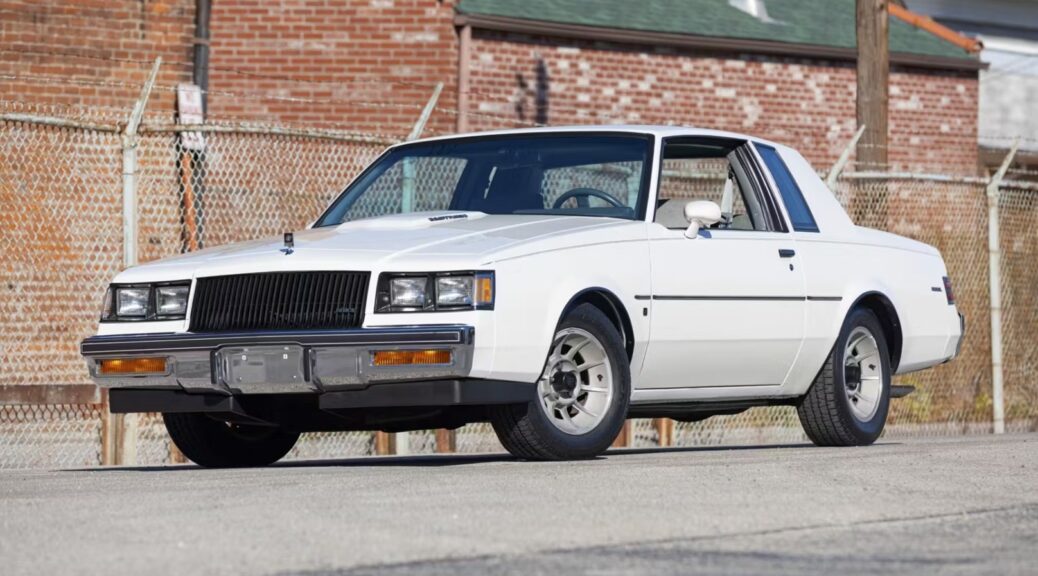
Speaking of sleepers, the turbocharged Buicks of the ’80s are some of the most infamous. Even when the sinister black Grand National gained a reputation, the less overt turbocharged Buick models still flew under the radar. The later turbo Buicks were fuel injected and Buick kept improving the punchy 3.8-liter V-6, with final models getting upgraded airflow by way of a new charge cooler, an aluminum intake manifold, and an improved turbocharger. The final tweaks gave 1987 turbo Buicks 245 hp and 355lb-ft of torque. While those numbers aren’t particularly impressive when compared to more modern performance cars (keeping in mind that hp isn’t everything when it comes to performance measurements) , or family sedans for that matter, they put Buicks firmly in the fight for the title of quickest new cars on the market. Their interesting development history makes them a worthy collectible, and the less flashy T-Type is a great entry point at about 35 percent less than a comparable Grand National.

1989 Chevrolet Corvette Callaway

1989 Chevrolet Corvette Callaway
Callaway Cars

#3 Value: $23,800 usd/ $34,100 cad

If 245 horsepower was a lot in 1987 (it was), imagine how exotic a 382hp twin-turbo Corvette must have been. The late Reeves Callaway had a long history of building exciting and powerful Corvettes, and even the earliest models were an ambitious project. The first twin-turbo Corvettes his company turned out in 1987 produced 345 hp, the same rating the first C5 Corvettes would receive with their naturally aspirated LS1 V-8s starting in 1997. Ever improving, Callaway soon had the 350-cubic-inch small-block pumping out 382 hp and 525 lb-ft of torque, making it one of the most powerful cars you could buy. It even came with a 12-month warranty. Just 69 Callaway Twin-Turbo Corvettes were built in 1989 and today their #3 value is just less than the $26,000 usd cost of the B2K RPO code that indicated the rare powertrain option. They might be more trouble to maintain than the rugged and simple 350 that came in everyday C4 Corvettes, but the Callaway Twin-Turbo mill was truly special. It’s also one of the best-looking C4 variants ever created, if you ask us.

1988 Stutz Bearcat

1988-Stutz-Bearcat-II
Stutz Motor Car Company

#3 Value: $23,100 usd/ $33,100 cad

The Stutz Bearcat is not well known, and those that do have any knowledge of the low-volume cars probably remember the ’60s iteration, a reemergence of the nameplate, and based on the Pontiac Grand Prix. Few will remember the original: a racy, brass-era runabout, and you can bet that if you arrived at a show in the final version of the Bearcat, based on the third-gen Firebird and sporting a carbon fiber composite body built in Turin, you’d be met with a lot of puzzled looks. Only about a dozen were built on the F-body platform, making them a truly rare sight. While the ubiquitous small-block drivetrain would make them easy to maintain, everything else about the car would be difficult to replace. Still, it’s quite a head-turning piece of American and Italian coachwork.

1980 International Harvester Scout Terra

#3 Value: $22,400 usd/ $32,100 cad

International Harvester gave its Scout lineup a makeover for its final year, featuring a new grille designed by Dick Hatch that used rectangular headlights. We think that the final grille is a great fit for the simple, blocky trucks and SUVs. The one shown above, with orange and yellow graphics, is practically perfect. While the standard wheelbase Scout II and the stretched Scout Traveler SUV are both outside of our $25,000 usd threshold, the stretched wheelbase Terra pickup is a more affordable entry point to Scout and meets the criteria when equipped with either the six-cylinder Nissan turbodiesel or the 196-cube four-cylinder that used the passenger bank of the company’s venerable 392 V-8. We love these rugged rigs and the Terra, with its 118-inch wheelbase and short overhangs, combines a decent-sized bed with maneuverability that’s appreciated off-road. The final year of Scout production would make an excellent addition to a collection where it could pitch in with its rugged utility and look great doing it.

1989 Chevrolet Camaro IROC-Z

Courtesy Throttlestop/Andrew Marvan

#3 Value: $18,800 usd/ $26,900 cad

Chevrolet’s competitor to the lighter, more angular Mustang GT was the IROC-Z, the performance-oriented F-body that finally got the 350-cubic-inch Tuned-Port Injection (TPI) engine from its big brother, Corvette, starting in 1987. The 5.7-liter powerplant was only available with a four-speed auto as the T5 transmission that fits under the Camaro’s floorplan couldn’t handle the larger motor’s torque. The TPI intake, perched like a spider on top of the engine, featured long runners that favored low-speed torque. Unfortunately the intake, and the engine’s meager cylinder heads, weren’t great at maintaining that torque to get the power numbers up, Still, it competed well against the smaller Ford V-8 in the Mustang. Contemporary reviews praised the IROC-Z’s power, road-holding, steering feel, and traction compared to its Mustang counterpart, but the 5.0-liter Mustangs were formidable opponents. Your choice might come down to brand loyalty or whether you prefer the boxy Fox-body or the sleek F-body. If we found one of these in our garage, we’d be tempted to troll eBay and swap meets for vintage ’80s speed parts to build a day-two IROC-Z for canyons and backroads. But that is just us.

When Buick And Oldsmobile Promoted Cars With Space Themed Musicals

General Motors’ affinity for using entertainment to promote its products reached a fever pitch in 1955, as an estimated two million people attended Motorama in New York City, Boston, Miami, San Francisco, and Los Angeles. It was followed that same year by Powerama in Chicago, a show that highlighted GM’s non-automotive businesses and featured a musical dubbed “More Power to You.” It included French acrobats atop a 70-foot crane, 35-ton bulldozers dancing the mambo, and a battle of strength between a top-hatted elephant and a bulldozer in which the pachyderm is sent packing. The show ran for 26 days and attracted two million visitors. 

But that wasn’t the end of it, as GM produced musicals—yes musicals—to help move the metal. The result would be Buick’s Spacerama (so many -ramas) and Oldsmobile’s The Merry Oh-h-h.

Oldsmobile in 1955

1955 Oldsmobile black white
Flickr/Chad Horwedel

Having reached record sales of 583,179 units for the 1955 model year, Oldsmobile hoped to continue the sales boom for 1956, even though its lineup was mostly carryover. The biggest news was the Jetaway Hydra-matic automatic transmission, which was redesigned for the first time since its introduction in 1940. For the first time, it offered a Park position, like modern automatics, and featured two fluid couplings to enhance shifts between its four gears. The Jetaway was standard on the 98 and Super 88. 

J.F. Wolfram, Oldsmobile general manager, confidently predicted Oldsmobile would sell 750,000 cars for the 1956 model year as Oldsmobile employment reached a record high of 19,170 employees.

To stoke enthusiasm, the company created a musical dubbed “The Merry Oh-h-h”, which debuted in New York City at the Ziegfeld Theatre. The show starred Chita Rivera, who had appeared in “Call Me Madam” and “Can Can.” Here she plays Miss Jetaway Drive alongside singer Mildred Hughes and Billy Skipper, who danced in “Annie Get Your Gun.” Other notable names include Joe Flynn, Frank Gorshin, Charles Cooper and Bern Hoffman. It was directed by Max Hodge, who would go on to work on the TV shows “Mission: Impossible” and “Mannix.”

General Motors Merry Oh h h
GM

The musical, which at the time cost GM $150,000 usd / $210,000 cad to produce, espoused the glories of power steering, automatic transmissions and Rocket V8 engines. Songs included “Tops in Transmission,” “Advancing on Lansing” and “The Car is the Star.”

After its New York debut, the musical and its 34-member cast went on tour to San Francisco, Fort Worth and Chicago before arriving in Lansing, Michigan, Oldsmobile’s hometown, which included an appearance by pop star Patti Page.

But the show generated unintentional notoriety when its piano player, Robert Orpin, was found dead in his room at the Hilton Hotel in Fort Worth. Orpin, who hailed from Forest Hills, Long Island, was found in a filled bathtub with the hot water running. He was discovered by a maid who heard the running water running. His death was later ruled accidental. 

“The Merry Oh-h-h” would play to 30,000 Oldsmobile employees and their families nationwide. But it did little for Oldsmobile sales, as demand fell to 485,492 units for the model year.

Buick heads for Spacerama

General Motors Spacerama
GM

No doubt using a stage show to promote new models was hardly an isolated idea at GM in 1955. In fact, Buick arrived at the idea before Oldsmobile, thanks to their ad agency at the time, the Kudner Agency and its vice president, Myron Kirk.

Kirk had attended GM’s 1954 Motorama during its nine-day stand in Boston, where he ran into Ivan Wiles, vice president and general manager of Buick, and Al Belfie, Buick’s general sales manager. While watching the theatrics, Kirk told the executives of the impressive dancing he had seen in the then-new movie, “Seven Brides for Seven Brothers.” Kirk arranged a private viewing of the film for them, and afterwards, Kirk received approval to bring in the movie’s choreographer, Michael Kidd, to produce a show to promote the 1956 Buick lineup.

General Motors Spacerama
GM

He tapped Alan Lipscott and Robert Fisher to write the show. The duo was well-known for writing scripts for such TV shows as “Make Room For Daddy,” “The Donna Reed Show” and “Bachelor Father” along with many others. The plot concerned mankind’s search for the obtaining transportation from the Stone Age to the current day, where a trip to Mars reveals a depressed population. They overcome their depression when they are brought to earth to see the 1956 Buick lineup. The show starred Mark Dawson and comedian Jack E. Leonard. 

For the music, Kirk’s agency chose Bernie Wayne, who is best known for such songs as “Blue Velvet,” “The Magic Touch,” the Miss America theme, and the commercial jingle “Chock Full O’Nuts Is the Heavenly Coffee.” For Buick’s musical, Wayne composed such songs as “Just Like Coming Home Again,” “Switch the Pitch,” and ‘The Peak of Civilization.”

The show started in Flint, Michigan before heading to Los Angeles, Houston, Chicago, Atlanta, Detroit, and wrapping up in New York City. In all, 50,000 Buick dealers, employees and their families saw the show.

Still, you have to wonder why GM went to so much trouble. “We have about 12,000 dealers and their salesmen,” a Buick spokesman told the Detroit Free Press in September 1955. “Many of them will sell as much as $150,000 usd of our products next year. You surely can afford to spend $100 or more to entertain them.”

Of course, GM could afford such largesse; they were on their way to their first billion-dollar annual profit. Now that’s a lot of spacebucks. For the Silo, Larry Printz/ Hagerty. Featured image- GM’s Spacerama 2 promo.

Puma Sneakers Celebrate 50 Years Of Porsche Andial

Time goes by – fast. And even faster in the world of Porsche performance. Making it no surprise that 2025 already marks the 50th anniversary of one of the most renowned chapters in the history of Porsche performance tuning: ANDIAL. A legacy, founded in California in 1975 by three passionate minds. Sustained for 50 years by its countless fans all over the world. In celebration of this remarkable anniversary, Porsche and PUMA present a special limited-edition ANDIAL collection.

The synergy between the three founders was instrumental to ANDIAL’s success. Arnold Wagner brought the expertise in parts and office. Dieter Inzenhofer delivered mechanical engineering precision. And Alwin Springer contributed his extensive knowledge of technology and systems. With their united vision, they shaped the brand. With their combined names, they formed the acronym: ANDIAL.

The ANDIAL heritage lives on beyond outstanding performance – with its iconic design. PUMA and Porsche have transferred the memorable ANDIAL colors and liveries from the road to street style. With a unique pair of sneakers, available in two different colors. A timeless tribute to the best-times, driven by ANDIAL race cars. If that’s not enough, check out the limited edition t-shirt, trucker cap and detailed car model.

Great Tips For Winter Storing Your Classic

The trees are almost bare and the evening arrives sooner each day. We all know what that means: It’s time to tuck away our classics into storage.

Just when you thought you’d heard every suggestion and clever tip for properly storing your classic automobile, along comes another recommendation—or two, or three or twelve 😉

As you can imagine, I’ve heard plenty of ideas and advice about winter storage over the years. Some of those annual recommendations are repeated here. And some have been amended—for example, the fragrance of dryer sheets is way more pleasing to noses than the stench of moth balls, and the fresh smell actually does a superior job of repelling mice.

Wash and wax

ferrari 458 wax
Sabrina Hyde

It may seem fruitless to wash the car when it is about to be put away for months, but it is an easy step that shouldn’t be overlooked. Water stains or bird droppings left on the car can permanently damage the paint. Make sure to clean the wheels and undersides of the fenders to get rid of mud, grease and tar. For added protection, give the car a coat of wax and treat any interior leather with a good conditioner.

Car cover

Viper car cover
Don Rutt

Even if your classic is stored in a garage in semi-stable temperatures and protected from the elements, a car cover will keep any spills or dust off of the paint. It can also protect from scratches while moving objects around the parked car.

Oil change

Checking oil 1960 plymouth fury
Sabrina Hyde

If you will be storing the vehicle for longer than 30 days, consider getting the oil changed. Used engine oil has contaminants that could damage the engine or lead to sludge buildup. (And if your transmission fluid is due for a change, do it now too. When spring rolls around, you’ll be happy you did.)

Fuel tank

camaro red fill up gas
Sabrina Hyde

Before any extended storage period, remember to fill the gas tank to prevent moisture from accumulating inside the fuel tank and to keep the seals from drying out. You should also pour in fuel stabilizer to prevent buildup and protect the engine from gum, varnish, and rust. This is especially critical in modern gasoline blended with ethanol, which gums up more easily. The fuel stabilizer will prevent the gas from deteriorating for up to 12 months.

Radiator

This is another area where fresh fluids will help prevent contaminants from slowly wearing down engine parts. If it’s time to flush the radiator fluid, doing it before winter storage is a good idea. Whether or not you put in new antifreeze, check your freezing point with a hydrometer or test strips to make sure you’re good for the lowest of winter temperatures.

Battery

car battery
Optima

An unattended battery will slowly lose its charge and eventually go bad, resulting in having to purchase a new battery in the spring. The easiest, low-tech solution is to disconnect the battery cables—the negative (ground) first, then the positive. You’ll likely lose any stereo presets, time, and other settings. If you want to keep those settings and ensure that your battery starts the moment you return, purchase a trickle charger. This device hooks up to your car battery on one end, then plugs into a wall outlet on the other and delivers just enough electrical power to keep the battery topped up. Warning: Do not use a trickle charger if you’re storing your car off property. In rare cases they’ve been known to spark a fire.

Parking brake

For general driving use it is a good idea to use the parking brake, but don’t do it when you leave a car in storage long term; if the brake pads make contact with the rotors for an extended period of time, they could fuse together. Instead of risking your emergency brake, purchase a tire chock or two to prevent the car from moving.

Tire care

Ferrari tire care
Sabrina Hyde

If a vehicle is left stationary for too long, the tires could develop flat spots from the weight of the vehicle pressing down on the tires’ treads. This occurs at a faster rate in colder temperatures, especially with high-performance or low-profile tires, and in severe cases a flat spot becomes a permanent part of the tire, causing a need for replacement. If your car will be in storage for more than 30 days, consider taking off the wheels and placing the car on jack stands at all four corners. With that said, some argue that this procedure isn’t good for the suspension, and there’s always this consideration: If there’s a fire, you have no way to save your car.

If you don’t want to go through the hassle of jack stands, overinflate your tires slightly (2–5 pounds) to account for any air loss while it hibernates, and make sure the tires are on plywood, not in direct contact with the floor.

Repel rodents

buick in the barn
Gabe Augustine

A solid garage will keep your car dry and relatively warm, conditions that can also attract unwanted rodents during the cold winter months. There are plenty of places in your car for critters to hide and even more things for them to destroy. Prevent them from entering your car by covering any gaps where a mouse could enter, such as the exhaust pipe or an air intake; steel wool works well for this. Next, spread scented dryer sheets or Irish Spring soap shavings inside the car and moth balls around the perimeter of the vehicle. For a more proactive approach and if you’re the killing type, you can also lay down a few mouse traps (although you’ll need to check them regularly for casualties).

Maintain insurance

In order to save money, you might be tempted to cancel your auto insurance when your vehicle is in storage. Bad idea. If you remove coverage completely, you’ll be on your own if there’s a fire, the weight of snow collapses the roof, or your car is stolen. If you have classic car insurance, the policy covers a full year and takes winter storage into account in your annual premium.

  • “An ex-Ferrari race mechanic (Le Mans three times) recommends adding half a cup of automatic transmission fluid to the fuel tank before topping up, and then running the engine for 10 minutes. This applies ONLY to carburetor cars. The oil coats the fuel tank, lines and carb bowls and helps avoid corrosion. It will easily burn off when you restart the car.”
  • A warning regarding car covers: “The only time I covered was years ago when stored in the shop side of my machine shed. No heat that year and the condensation from the concrete caused rust on my bumpers where the cover was tight. The next year I had it in the dirt floor shed and the mice used the cover ties as rope ladders to get in.”
  • “I use the right amount of Camguard in the oil to protect the engine from rust. It’s good stuff.”
  • Your car’s biggest villain is rust, that’s why I clean the car inside and out, and wax it prior to putting it in storage. For extra protection, I generously wax the bumpers and other chrome surfaces, but I do not buff out the wax. Mildew can form on the interior; to prevent this I treat the vinyl, plastic, and rubber surfaces with a product such as Armor All.
  • “Ideally, your car should be stored in a clean, dry garage. I prepare the floor of the storage area by laying down a layer of plastic drop cloth, followed by cardboard. The plastic drop cloth and cardboard act as a barrier to keep the moisture that is in the ground from seeping through the cement floor and attacking the underside of my car.”
  • “Fog out the engine. I do this once the car is parked where it is to be stored for the winter, and while it is still warm from its trip. Remove the air cleaner and spray engine fogging oil into the carburetor with the engine running at a high idle. Once I see smoke coming out of the exhaust, I shut off the engine and replace the air cleaner. Fogging out the engine coats many of the internal engine surfaces, as well as the inside of the exhaust with a coating of oil designed to prevent rust formation.”

Relax, rest, and be patient

Ford Model a roadster in garage
Gabe Augustine

For those of us who live in cold weather provinces or states, there’s actually a great sense of relief when you finally complete your winter prep and all of your summer toys are safely put to bed before the snow flies. Relax; you’ve properly protected your classic. It won’t be long before the snow is waist-high and you’re longing for summer—and that long wait may be the most difficult part of the entire storage process. Practice patience and find something auto-related to capture your attention and bide your time. You’ll be cruising again before you know it. (Keep telling yourself that, anyway.) For the Silo, Rob Siegel/Hagerty.

Is New Porsche 911 GT3 Touring All The car You’ll Ever Need?

Top Gear UK November 2024- Not one but two new Porsche 911 GT3s are upon us, both a regular be-winged car and the more subtle Touring model. And for once, the headline news isn’t the power, the peak revs or the Nürburgring lap time, but how practical it is.

That’s right, because for the first time in the 25-year history of the GT3, it’s being offered with back seats.

It’s only for the Touring, but that addition alone will be enough to start The Internet chattering about whether this is ‘all the car you’ll ever need’.

However, if kids, or at least taking your kids with you, isn’t your thing, then worry not. The back seats are merely an option, and the non-Touring GT3 can’t be had with them at all. Plus, if you’re the sort of Porsche purest who hates weight, you can double down on that ethos with either a Weissach pack for the GT3 or a Leichtbau (aka Lightweight) pack for the Touring.

As for what else is new (and there are a lot of detailed, GT3 RS-inspired changes), join Top Gear’s Tom Ford for an in-depth walkaround of both new GT3s with Andreas Preuninger, Porsche’s Director of GT Cars…

7 Of The Best Sounding Car Exhausts

We asked our friends at Hagerty what defines a great sounding automotive engine. Here’s what they had to say.

When executed just right, a proper exhaust is the cherry on top of the perfect automotive sundae—it stands out in its own right, but it also completes the package. And it’s not just the sound, glorious though it may be. The visual—and sometimes the artistry—that a good set of pipes can add sometimes does more to define a car than any bit of thoughtfully penned bodywork.

We got to thinking about the sights and sounds that captivate us most, and this list was the result. We could have gone on for days, though, and we bet you have some favorites, too, so give our submissions a read, then tell us your favorite exhaust—for whatever reasons you choose—in the comments!

Ford GT40

I’m going to go with the Ford GT40’s “bundle of snakes” exhaust. When you stop to consider the precision with which such a system had to be fabricated, your mind kind of melts a bit. If you’ve never YouTubed one of these things at full honk, do yourself a favor and click play below. — Nate Petroelje

https://youtube.com/watch?v=iMocr95cYfU%3Fsi%3DSRXSg-GEQNSI5Tcf%26enablejsapi%3D1

Gurney Eagle

Dan Gurney Eagle-Weslake T1G Grand Prix Of Great Britain 1968
Dan Gurney, Eagle-Weslake T1G, Grand Prix of Great Britain, Silverstone, 20 July 1968.Bernard Cahier/Getty Images

The first time I ever saw a Gurney Eagle was at Gooding’s Pebble Beach auction in 2013.

The car was on display in the lobby area of the tent, and I remember being flabbergasted at the intricacies of the exhaust pipes coming out of that Gurney-Weslake V-12. I’d never seen anything like it, and all I could think of was spaghetti twirled up on a fork. — Stefan Lombard

1966 AAR Gurney Eagle Mk I-1
Stefan Lombard

Outlaw Dirt Sprint Car

Outlaw Dirt Track Sprint Cars race action
Cameron Neveu

No question, there are some lovely-to-look-at exhausts here, but I’m more moved by the sound an engine makes through that exhaust, and that’s a tough call. On several occasions I’ve been lucky enough to be at a racetrack when vintage Ferrari Formula 1 cars were making an exhibition run, and the Ferrari 412 T2’s fabric-tearing sound from its 3.0-liter V-12 is just otherworldly. But I’m picking something far less sophisticated: An exhaust note made by simple unmuffled headers fed by a 410-cubic-inch V-8 engine in an outlaw dirt sprint car. One car is loud; 24 sprint cars, representing about 21,600 horsepower, is thunder. The biggest sanctioning body for sprint cars is the World of Outlaws, which runs about 90 races a year, in a season that, in 2024, starts on February 7 and ends on November 9.

Due to local zoning laws, the WoO requires mufflers for 22 of the races. Since my hearing is shot already (Kids! Don’t do drugs, but DO wear earplugs!), I’ll take the unmuffled races, and the unmistakable smell of methanol in the evening. — Steven Cole Smith

Drag Headers

2021 Dream Cruise woodward ave action hot rod
Cameron Neveu

The best exhaust systems are the ones that end after the headers.

I couldn’t have said it much better than SCS. A 410 engine belching out of unmuffled Schoenfeld headers is tops.

But a close second are drag headers. Zoomies or fenderwell are my favorite on old drag cars. That cackle. That’s the noise I’d like to hear out of the trumpets as I approach heaven’s gate. Oh, and the visual appearance of four pipes directing exhaust up and over fat slicks, or peaking around the lip of a fender. Get outta here! — Cameron Neveu

Milan Nostalgia Drags Willys Truck Gasser
“The Haymaker” Willys gasser.Cameron Neveu

Mercedes SLR McLaren and 1987–93 Mustang LX

Mercedes-Benz SLR McLaren exhaust
Mercedes Benz

My favorite exhaust in terms of looks is the side exit exhaust of the 2003–10 Mercedes SLR McLaren, because of that insane amount of space between the front wheel and the cowl and the subtle little twin pipes peeking under that area. The flat belly pan likely made this a mandatory location, but that only adds to the appeal. But when it comes to looks and sounds, for me there’s nothing like a 1987-93 Mustang LX with its signature chrome double-barreled shotgun tailpipes, and that small block Ford rumble. I could look and listen to that exhaust all day. — Sajeev Mehta

1990 ford mustang LX exhaust
Ford

Shelby Mustang GT350

1966 Ford Mustang Shelby GT 350
Ford

I grew up on V-8s in a GM family.

That said, the first time I heard the idle and subsequent roar of a 289 in an early Shelby GT350, I knew Ford had done something right.

It wasn’t till I was older that I learned all about how firing order, crank design, and exhaust setup influenced the amazing sounds that come from our favorite engines. That 289 was what I remember as my earliest favorite so that’s what I picked for this response, but like Steven Cole Smith said, there are so many great sounds out there that it’s a really tough call. Eddy Eckart

These Fun, Affordable 21st-Century Cars Aren’t Classics…Yet


Every so often, I engage in a particularly futile and depressing ritual—I shop for cars that I’ve foolishly let go. They’re cars that could have been feasible 10 years ago, but not today. I’ve been priced out of the market for virtually all of them. And while the market might be settling down at the moment, there are few signs of an out-and-out retreat to pre-pandemic pricing. Among cars from the 1970s through the early 1990s, there are precious few bargains. But go a little bit newer, where there’s even some depreciation yet to be done, and the picture gets more enticing. I’m talking cars from the 2000s to 2010s that are getting older, but still aren’t considered any kind of “classic” or “collectible” yet. Here are some highlights.

Fiat 500 Abarth

Fiat

The 500 Abarth is the closest thing to a real hot hatch that Fiat has ever offered in the U.S., a market that is sadly short on real hot hatches. There were more interesting varieties of the Punto and Ritmo, but those were Euro-only cars that frankly weren’t very good compared to competition from Renault, Peugeot, VW, and Ford. As for the 500 Abarth, although it first arrived here in the early 2010s, the 160-hp pocket rocket feels more like a 1990s hot hatch. It’s crude, the ride is choppy, and a 10 year-old Fiat probably wears more like a 20 year-old VW. But it’s loud, analog-feeling, and fun. Most importantly, it’s cheap. Around $8000usd to $10,000usd/ $11,000cad to $13,700cad buys one with under 50,000 miles/ 80,467kms. That’s tons of fun per us or canadian dollar in a package that offers an old school driving experience in something that’s new enough to have most contemporary features and conveniences.

MazdaSpeed3

2010 mazdaspeed3
Mazda/Guy Spangenberg

Back in the days of the Zoom Zoom tagline, Mazda fielded the incredibly entertaining MazdaSpeed3. Offered from 2007-13, it’s a four-door hatch with 263 hp and 280 lb. ft. of torque. It’s exactly the kind of car enthusiasts and auto journalists beg manufacturers for, but rarely head to a dealership and actually buy.  Everyone who tested a Speed3 back in the day found the car fun, especially those of us who were entertained by the torque-steer. Car and Driver wasn’t, comparing driving the car to a game of tug-of-war. But, affordability and perfection don’t often go hand-in-hand, so for $10,000usd to $12,000usd/ $13,700cad tp $16,400cad at current prices you could do far worse than the powerful and practical Speed3.

C5 Corvette

C5 Corvette Front Country Road Action
Josh Sweeney

If hot hatches aren’t your jam, there’s always the bargain Corvette of the moment, the 1997-2004 C5. While some variants, most notably the Z06, sailed beyond true affordability in the last several years, a base manual C5 with somewhere between 75,000 and 100,000 miles/ 120,000km and 160,934km can still be had in the $13,000usd to $15,000usd range/ $17,760cad – $20,490cad. That’s a huge bargain for what was an utterly clean sheet design, one of the few in Corvette history, and more performance than almost anything in this price point. Interiors are standard 2000s GM, but livable. And the styling, over a quarter-century after it was introduced, is aging quite nicely.

2003-08 BMW Z4

2006 bmw z4 roadster front
BMW

The 2003-08 Z4 is a bit like the C5 Corvette in that it wasn’t universally loved when new, but is aging well. Available in 2.5- and 3.0-liter six-cylinder forms, the Z4 was larger and more practical than its predecessor, the Z3. Its odd surface detailing and Kamm-tail also look better now than they did 20 years ago. The Z4’s list of maladies is well-known at this point—the VANOS variable valve-timing system can give trouble (it’s often the solenoids), as can the cooling system. These are pricy repairs, but with nice cars available in the $9000usd to $12,000usd/ $12,300cad to $16,400cad range, if you budget $2000usd-$3000usd/ $2,730cad-$4,100cad to sort things out, these can still be a compelling deal in semi-modern convertible German sports car.

2012 Mercedes-Benz SLS AMG CoupePalm Coast, Florida

2005-2014 Ford Mustang

2005 mustang convertible skyline beach
Ford Motor Company

You could argue that the 2005 Mustang was the first one to really look like a Mustang since maybe 1973. The brilliant Sid Ramnarace-designed S197 Mustang managed to look the part without being foolishly retro, a hard balance to achieve. Special editions, and certainly the Shelby versions of the S197 are not cheap, but a lightly optioned V-8 coupe or convertible is still one of the best cheap V-8 pony cars out there. Being a Mustang, there are always plenty on the market to choose from at any given time, and a decent manual transmission car can be had in the $12,000usd to $14,000usd/ $16,300cad to $19,130cad range.  For the Silo, Rob Sass/Hagerty.

Featured image: Mazda/Guy Spangenberg

Extraordinary Porsche 959 Attracted Extraordinary Customers

The sound. The style. The power. The experience. All inimitable….. Introducing you to classic PORSCHE 959, an exquisitely-produced book from publishers Delius Klasing. 

porsche959testvehicles

This fascinating boxed set is a literary monument to the Porsche 959 that is still breathtaking to behold 36 years after its first roll-out.

Readers will be taken through the history of one of the most exceptional vehicles in automotive history. Continue reading Extraordinary Porsche 959 Attracted Extraordinary Customers

England’s EV Commercial Truck Earns Grants For Urban Deliveries

Tilbury, England. March 2023: British electric vehicle manufacturer Tevva has secured government plug-in truck grant (PITrG) eligibility for its 7.5t battery-electric truck. UK organizations looking to decarbonize operations and future-proof their fleets will benefit from a potential £16,000 ($26,260 CAD) discount, removed from the purchase price by Tevva.  The current maximum Canadian EV amount is $5,000CAD.

To be eligible for the grant, N2 vehicles :trucks that weigh between 5-12 tonnes must have a CO2 emissions figure of at least 50 percent less than the conventional equivalent vehicle that can carry the same capacity and can travel at least 60 miles without any tailpipe emissions at all. (In the UK, a ton = 2,200 pounds and in Canada a ton is metric and = 2,000 pounds.) Tevva’s 7.5t battery-electric truck offers up to 140 miles (227 kilometers) from its 105-kWh battery on a single charge, and is ideal for last-mile and urban delivery fleets. 

The Tevva 7.5t battery-electric truck is the only vehicle from a British manufacturer to qualify for the PITrG, and becomes only the third eligible truck to be listed on the government website. The grant pays for 20 percent of the purchase price, up to a maximum of £16,000 ($26,260 CAD) , reducing Tevva 7.5t battery-electric truck total cost of ownership (TCO),

This news follows hot on the heels of another significant company milestone in January, when Tevva secured European Community Whole Vehicle Type Approval (ECWVTA) for its 7.5t battery-electric truck. This meant that Tevva could start producing and selling in volume across the UK and Europe and represented the key regulatory step in the development and commercialization of the Tevva business.

Tevva Founder and CEO Asher Bennett said: “We know first-hand that demand for electric trucks is growing at speed, as we have been inundated with requests for our 7.5t battery-electric truck since going into full production last month. Now we are able to offer UK organisations a noticeable discount, thanks to the government grant, which will surely make zero emission trucking even more appealing to fleets.”

Tevva’s 7.5t battery-electric truck will be followed by a 7.5t hydrogen-electric truck, which benefits from a hydrogen range-extender that enhances vehicle range to up to 354 miles (570 km). The hydrogen-electric truck recently completed a 620-mile ‘border run’ between Tevva’s London HQ and the Scottish border at Berwick-on-Tweed – England’s most northernmost town. The return journey saw the truck cover almost 350 miles alone, without needing a single stop for recharging.

Thrilling Test Drive Of Rolls Royce Wraith

Now THAT'S how you launch a new Rolls....and especially one called Wraith- smoke, vapor, mist, theatrics and a spooky performer. All images A. Maughan/The Silo
Now THAT’S how you launch a new Rolls….and especially one called Wraith- smoke, vapor, mist, theatrics and a spooky performer. All images A. Maughan/The Silo

A Silo look back article 🙂

It’s Fall 2013 and the “now brand new” Wraith from the Rolls-Royce car company is not something I get exposed to often. Let’s face it,  I’m a mid size car guy. Not high-end luxury.  I rationalize my affordability factor by saying that high end’s are too ‘heavy’ and shee-shee poo-poo. Up until now, that may have been as true.

Rolls had an unveiling of their new car The Wraith the other week here in beautiful Vancouver. And well, like the locale, the car itself did stand out even beyond the scenery. The Silo was invited to attend and I earned the assignment. Life is hard 😉

After entering the front doors of the party where a silver painted goddess of sorts and a sleek feather black wraith slowly and elegantly moved around the scene, one can only be sure to expect nothing short of the best attention to these prospective buyers.

There was jewelry set to the tone of $425,000 (Canada’s biggest pink Diamond); a price tag similar to the cars standing right next to them. The food was excellent and the company certainly discerning.

"Emily" or the Flying Lady is the venerable hood ornament for Rolls-Royce automobiles. The live actress seen here on the right captured the mystery and drama behind the creation of the emblem.
“Emily” or the Flying Lady is the venerable hood ornament for Rolls-Royce automobiles. The live actress seen here on the right captured the mystery and drama behind the creation of the emblem.

There was not shortage of demonstration of other models and those with mostly older not only in lineage but also in style, heralding a tradition one has come to know of Rolls Royce. Which is why when the time came for the unveiling of the new car, there was nothing short of a surprise. The car looked sleek and modern while maintaining the more discernable feature Rolls is known for. It looked like, well, not quite a Rolls. It seemed sporty even.

For those who wanted performance but still the luxury that comes with expectations. People actually gasped and well, they should have.

Once the shock settled opera singers belted out a song of elegance that matched the vehicle’s looks and appearance. I became transported and wanted to change careers all of sudden.

On hand for the North American launch of the Wraith? Only, the largest pink Diamond in Canada.

The show was a success, so now came the long shot that I would get to test-drive one of them. I am not a buyer, no sir.


“So when can I test drive one, ahahaha”


“Are you free tomorrow at 3pm?”


Ummm….yeah maybe sure….oh look at that I am free. Perfect” Gulp.


So on to the test drive.

I show up at the Rolls dealership in Vancouver and was met with nothing but interest and enthusiasm for someone who clearly was not in the market for such a car. That didn’t matter much as they were very excited to show off their new marvel. Ha! I thought. No way this thing can actually drive as cool as it looks. Well, my dear readers, was I wrong.

0-100 in 4.4 seconds. Quite. Handles like a dream. Smooth. Great suspension. 14 speaker sound system. Crazy navigation. Just crazy. The holographic road map was floating next to a virtual speedometer in/on (?) the windshield. Touch sensitive screen for drawing on. I mean the whole thing was about performance from interior to engine.

"There she is!" My first look at the Wraith and I'm getting ready to test drive this gorgeous machine. It looks fast.
“There she is!” My first look at the Wraith and I’m getting ready to test drive this gorgeous machine. It looks fast.

The camera system is a cool feature, however at the end of the experience I didn’t really know how to use them. What happens is a 5-camera system captures unique perspectives and through an algorithm creates a bird eyes view of the car. Very cool. However, I just used my mirrors and the over–the-shoulder-one-arm-on-the-back –of-the-passenger-seat to look behind me for the approach in backing up. Technology is great but it has to actually be effective or helpful. Give the user a certain level of confidence that she or he would never have alone otherwise.

And boy did I check my mirrors often when driving. I didn’t want to risk a dent or a scratch.

Just pulling out for the first time was nerve racking, but once you got the feel for it, which happens quick, you are instantly spoiled as a driver which is of course the point when dealing with luxury cars. And it seems Rolls still has been able to retain the  ability to spoil its driver no matter what. The wraith delivers. For the Silo,  Arthur Maughan.

Yes it was rainy and a bit wet that day. Yes, the Wraith had a secret umbrella compartment. Now where is that machinegun button ?

Click to view on I-tunes

Self Driving Vehicles And The Trolley Problem

With the imminent arrival of Autonomous Vehicles, many people have started worrying about the safety of this new technology, especially when an issue arises to do with choice.

In this piece, we’ll delve into the issue of the “Trolley Problem” and how AVs will deal with this and whether all manufacturers have the same stance.

Infographic courtesy of our friends at selectcarleasing.co.uk

Supplemental- Silo archives, Fall 2015: Ontario became the first province to test AV’s on Canada’s roads.

Million Dollar Race Car The Hoonicorn RTR Was Built Secretly

Tech and cars go together: the Hoonicorn RTR, the famous hybrid race and demo car.

The first tech start-up in a garage wasn’t Hewlett Packard. Back in the day, pre-Silicon Valley, it was the men and women bolting together cars, optimizing engines, lovingly perfecting car technology in their garages and taking it to the streets.

Profiled on RxSpeed’s website in the LAB [link below CP], take a visual tour of this incredible car and wild video and other modified cars.

Like building a spaceship around an astronaut, this million-dollar racecar was built around a driver, the needs of his craft and the exploration of a genre.

For two years the Hoonicorn RTR was kept a secret.

No one outside the very small and tight-knit circle knew about the project; even best friends were left out. Shrouded in secrecy, the six-cylinder 1965 Mustang Notchback 3-speed was cut and sewn back together into the Hoonicorn RTR, a hybrid race and demo car.

Cell phones and computers provide access to such an incredibly fast-paced information network that keeping anything hidden from prying eyes is becoming increasingly rare—and a Ken Block Gymkhana car is on another level of vulnerability. With over a quarter of a billion views on the Gymkhana franchise, the reveal of the next-generation car is on par with anything the automakers can throw out, which is why the Hoonicorn RTR was such a big surprise to the world.

It’s not cheap or quick modifying a stock car. To keep costs down, motorheads can visit RxSpeed to check out where to buy automotive products at the lowest cost. More over-the-top car stories can be found in the LAB

About RxSpeed

www.rxspeed.com is a comparison shopping engine for the automotive aftermarket. It saves consumers time & money during their research and purchase process. Their proprietary software platform catalogs millions of parts from hundreds of brands to help match customers with retailers easier and faster than ever before.

Lawn And Garden Lovers Should Use E10 Or Less In Lawn And Garden Equipment

Spring is on the way and garden, lawn and outdoor lovers need to know how to properly fuel their favorite yard and garden equipment. Surveys show that many people think that the same gas that goes in their cars, can go into their outdoor power equipment. But that’s not the case.

The Outdoor Power Equipment Institute (OPEI) wants to remind consumers that it’s important to “Look Before You Pump.” There are many fuel blends on the market now. Most gasoline-powered lawn mowers, leaf blowers, and other outdoor power equipment are warranted and designed to use E10 or less fuel (10% or less ethanol).

Fuel with more than 10 percent ethanol can damage or destroy lawn and garden equipment. Always check the owner’s manual and use E10 or less in lawn and garden equipment. Visit www.lookbeforeyoupump.com and hashtag #LookB4UPump for more information.

ethanol in gasoline ontario laws


Consumers need to hear this message. In a Nielsen/Harris poll last year, 51 percent of North Americans said they don’t give fuel ethanol content much thought as they tend to fill up their portable gas tanks with the same fuel used to fill their vehicle. Nearly 57 percent, confess that they typically only pay attention to labels on fuel pumps if they read “Warning” or “Do Not Use In…” on the pump. For the Silo, Debbi Mayster.

Supplemental- Forbes: It’s final, corn ethanol is of no use.

UPDATE- Opinions are polarized on the use of ethanol in gasoline. Check out the comments below and the short video that defends the use of ethanol.

Significant Gasoline Price Hikes At Ontario Pumps

January 1st kicked off 2017 with significant gasoline price hikes at the pumps courtesy the Ontario Liberal government’s cap and trade legislation. I obviously voted against that bill.

Ontario’s cap and trade, Canada’s price on carbon

Another reality is that Canada is putting a price on carbon, the nature of which is still being negotiated with the provinces. With national carbon pricing being the new reality, Opposition Leader Patrick Brown has written an open letter to Justin Trudeau indicating that Kathleen Wynne’s cap and trade law “does not have Ontario’s best interests at heart,” and requesting that Ontario cap-and-trade be removed from the Trudeau carbon pricing system. I’m not holding my breath on that one.

The problem with the provincial cap and trade tax and the federal price on carbon is that going electric is neither technologically nor economically feasible for most, thanks to the Ontario Liberal’s Green Energy Act. I also voted against that bill.  The cap and trade tax system serves as a stick to try and modify behavior without offering a viable alternative and without a carrot to reward changes made, other than using the revenue for more subsidies for things like electric cars and Toronto transit.

As Ontario’s Official Opposition we have committed to dismantle the cap and trade system ever bearing in mind the federal government is mandating all provinces put a price on carbon.

On January 1, the province capped greenhouse emissions and will sell allowances to companies who have to exceed the cap. The province will lower the cap over time. Companies exceeding their cap can also buy additional allowances, or if they come in below their annual limit, can sell their emission allowances to other companies within a market comprised of Ontario, Quebec and California.

It is estimated Ontario businesses will be paying $300 million a year to California.

We maintain the government is so desperate to hike taxes, they have rejected a revenue-neutral plan – cap-and-trade money will disappear into general revenues.

Cap and trade has clearly not been designed to return money to those paying – it is a blatant $2 billion-a-year tax grab under the guise of environmentalism. It will seriously impact everyone’s pocket book. Oil refineries for example will pass their recovery costs of cap and trade to their customers at the pumps. It subtracts money from people, not only for gasoline, diesel, propane, natural gas, heating oil and aviation fuel but also for groceries, clothing and other consumer goods produced and delivered by carbon-fueled plant, equipment and transportation.

Ontario drivers are being treated like clowns.

Ontario’s Auditor General reports the cap and trade tax will cost families an extra $156 this year for gasoline and natural gas, rising to $210 by 2019. Added transportation costs for goods and services will be another $75 per household by 2019.

We are committed to dismantling the cap and trade scheme and the Green Energy Act. This is the best way to ensure people’s hard-earned money stays exactly where it should stay…in their pockets.

In conclusion, I ask you the reader – where do we go from here? There probably won’t be an election until June 2018 and this is the time to consult on policy.

Click me!
Click me!

Provincially, the Ontario PC Party has committed to dismantle the Wynne cap and trade law, as well as the Green Energy Act. However, carbon pricing is now the reality in Canada and Ontario will be bound by the Trudeau price on carbon.  For the Silo, Haldimand-Norfolk MPP Toby Barrett.

Better Bungee™ Is Stronger Environmentally Safe For All Uses

The Better Bungee is excited to officially launch into the US and CANADIAN market, available at GRAINGER and AMAZON, The Better Bungee, made in the USA of a new high tech material; that will not crack, break or become brittle and is virtually weightless, allowing The Better Bungee to safely stretch twice its original length but still retain its stretch.  The Better Bungee is great for organizing the garage, hauling, storage and more!  A great life hack for organizing, saving space in small rooms or uncluttering your garage.


US Made Bungee is Ultra-Lightweight, Stronger and More Versatile

The Better Bungee™ is the most durable, top-of-the-line tie downs to fit every application; cargo control, ATV, Camping / Outdoor adventures, Motor Cycles, Boating, water sports, to mention a few.  The Better Bungee™ products are made to withstand extreme temperatures and weather conditions, are resistant to oil, diesel fuel, salt water and most household chemicals.  Made in the USA of a new high tech material; that will not crack, break or become brittle and is virtually weightless, allowing The Better Bungee to safely stretch twice its original length but still retain its stretch.  Available on Amazon.com, Gemplers.com, Imperial Supply and Grainger.com. The variety of straps, cords, ropes, lengths, colors and accessories make this product one of a kind.

Deb Dershem
Deb Dershem

Deb Dershem, President of The Better Bungee™ “We are excited to launch the Better Bungee into the US with a high-tech environmentally friendly material that is safer and stronger and lighter in weight.  It is the BETTER option now on the market for any rubber or shock cord applications.”


The Better Bungee™ Product Offerings: 


The Better Bungee™ heavy duty Strap is available with galvanized, stainless and over-molded nylon ends available in lengths of 12”, 18”, 24”, and 36”.  This product stretches to twice its length.  The super strong nylon ends are molded into the material to create a one-piece strap.  The ends will not pull out and are super strong and non-marring.

The Better Bungee™ Cord is a medium duty one-piece cord with over-molded super strong non-marring ends and is available in lengths of 12”, 18”, 24”.  This product stretches to twice its length.

The Synch™ Cord is medium duty; has a loop on one end and an over-molded super strong non-marring end on the other.  It is available in 30” and is perfect for applications where 2 hooks just won’t work.  It can make an anchor point easily by wrapping the cord around a bar or through a hole; then put the hook through the loop, pull tight then secure the hook end.   It makes a superior storage organizer for cords, rope and hoses!  Also great for holding things tight against a garage wall.

The Slotted Strap is versatile and heavy duty, will adjust from lengths of 12” to 36” and has either 2 over-molded super strong non-marring nylon ends or two galvanized hooks.  It can be used as an all in one tie down or for storage and organization.  This product is extremely versatile! When you can only have one this is for you!

The Better Bungee™, Build A Bungee™ kit comes with rope or strap.  This is the answer to any custom bungee cord needs.  Rope is available in 2 sizes: 1/4” or 5/16” and non-marring adjustable hook ends for building customized bungee cords.  Add our super strong O-ring to create custom cargo.

Innovative- Better Bungee Rope and Strap Kit

The Better Bungee™ rope and strap is a great replacement for shock cord.  It can be used to customize just about anything- tarp tie downs, shock cord on canoes, kayaks, covers for trucks, the uses are endless.  The rope material is available in reels of 50 feet and in diameters of 5/16” and 1/4”.  The strap material is 5/32 x 3/4″ and available in reels of 50 feet.  Larger or smaller rolls are available in bulk packages.

About The Better Bungee

Launched in 2016, The Better Bungee™ is the creator of superior bungees and tie down systems.  They are the only company in the industry to use the Betterthane 8000™ to manufacture all of their products.  Superior design and manufacturing practices allow us to sell our products at a price point that is economically feasible for all people. The versatility, environmentally friendly, safety and durability of this product are what set it apart from other bungee product lines.  Available in the US and Canada. Contact [email protected] for ordering information.

Supercars At London Motor Show Include Rolls Royce Dawn

London’s famous Motor Show is back! Thanks to our friends at selectcarleasing.co.uk for the nifty infographic.

London Motor Show 2016 Infographic

Is this what Bruce Wayne is driving? Rolls-Royce Wraith arrives in Canada

You've heard the expression "the photo doesn't do it justice" right? You're best bet is to surf this link and watch the video. http://tinyurl.com/opu3uow
You’ve heard the expression “the photo doesn’t do it justice” right? You’re best bet is to surf this link and watch the video. http://tinyurl.com/opu3uow

Rolls-Royce know how to throw a party and turn an unveiling into the perfect analog unwrapping for the Wraith: the most powerful, technologically advanced and arguably the most beautiful Rolls to date.  On the evening of Wednesday, 28 August 2013, Rolls-Royce Motor Cars “got ‘er done” by celebrating the Vancouver arrival of its newest and most powerful model, with a dramatic unveiling event at the Rocky Mountaineer Train Station.  The private event, hosted by Rolls-Royce Motor Cars Vancouver was carefully thought out and put together  to reflect the dark beauty and unparalleled power that are the hallmarks of Rolls-Royce Wraith and we were there! Take a deep breath and sit down…..

We knew this car was something out of the ordinary back in March, when we paid attention to the Geneva roll-out and a few months later, we were blown away by the Hollywood-esque Wraith promo films we were privileged to see. The Wraith seemed like the de facto standard automobile for a superhero in disguise or a secret agent and that’s a good thing.

“The Rolls-Royce Wraith is unlike any automobile produced in Rolls’ long and fabled history, so it is especially fitting that its arrival in Vancouver be marked by an event that [was] as grand as this,” commented Eric C. Shepherd, President  of Rolls-Royce Motor Cars North America. “The  Wraith represents a bold and powerful new statement by Rolls-Royce, so this event [had] been designed convey those same qualities, while bringing  this premier luxury brand to life in a way that is relevant to our  customers.”

It’s a Fastback!
Wraith’s sweeping fastback gives the car its unique character. Bold lines, tension in the panels and a raked rear screen evoke the image of an
athlete poised in the starting blocks. Further expression of dynamic intent can be seen in Wraith’s deeply recessed grill and wide rear track.

Coach doors open to reveal a sumptuous interior complete with softest  Phantom-grade leathers and expanses of wood. Named after the famous cove in the South of France where Sir Henry Royce and his design and  engineering teams spent their winters, the Canadel finish sweeps through
the contemporary interior, cosseting four occupants in a space bathed in  light and warmth.

Sumptuous- tasteful.....but is there a hidden 'machine gun' or 'oil slick' switch in here somewhere? hmmmm.
Sumptuous- tasteful…..but is there a hidden ‘machine gun’ or ‘oil slick’ switch in here somewhere? hmmmm.


The interior ambiance is complemented by Starlight Headliner, a Bespoke  feature available beyond Phantom family cars for the first time. 1,340
fiber optic lamps are hand-woven into the roof lining to give the  impression of a glittering, starry night sky.

A twin-turbocharged V12 engine married to 8-speed automatic ZF  transmission ensure that power delivery is effortless, but dramatic. 624
bhp is available to the driver while the 0-60 mph sprint is achieved in  4.4 seconds, compared with 563 bhp and 0-60 in 4.7 seconds for Ghost.

From 1,500 rpm 590 ft lbs of torque available, a wide rear track, shorter  wheelbase and lower roof height further underwrite the Wraith as the most  powerful, involved driving experience of any Rolls-Royce in history.  Performance delivers as the car’s suspension has been tuned to minimize body roll and discreetly amplify feedback when cornering; while steering weight is heavier at high speeds and lighter at low speeds to give a more polished and spirited drive.

624 BHP. 250 KPH/ 155 MPH with a Governor? A "spirited ride" indeed Helmut!
624 BHP. 250 KPH/ 155 MPH with a Governor? A “spirited ride” indeed Helmut!

Satellite Aided Transmission   The Wraith is no GT bruiser. Agility improvements have been achieved with absolutely no compromise to the sensation of riding on a bed of air. Furthermore, the debut of Satellite Aided Transmission technology takes the powertrain to a new level of effortless delivery, one that perfectly suits the Rolls-Royce brand.

Satellite Aided Transmission uses GPS data to read the road ahead. It sees  beyond what the driver sees; anticipates his next move based on location  and current driving style, then selects the most appropriate gear for the terrain ahead. Corners, motorway junctions and roundabouts are all anticipated meaning Wraith is constantly poised to deliver on its promise of performance.

A more polished, effortless driving experience and even better response brings a new even more dynamic dimension to the famous Rolls-Royce trait, waftability.

For over a century a Rolls-Royce motor car has featured technologies designed to support occupants discreetly, delivering a peerless driving
experience epitomized by the term ‘effortlessness’. In every Rolls-Royce these assist the driver when called upon, but are prepared to return
without fuss to the background when no longer required.

A real "Smart Car". Rolls-Royce innovates once again with Satellite aided transmission: GPS technology interprets the roads physical construction and predicts the best transmission settings for the road ahead. Case in point: Curves ahead. The computer makes adjustments to ensure the driver has the ultimate amount of power and control at their disposal.
A real “Smart Car”. Rolls-Royce innovates once again with Satellite aided transmission: GPS technology interprets the roads physical construction and predicts the best transmission settings for the road ahead. Case in point: Curves ahead. The computer makes adjustments to ensure the driver has the ultimate amount of power and control at their disposal.

Advances in mechanical and electrical technology deliver systems like head-up display, adaptive headlights and Wraith’s keyless opening trunk.
But improvements in connectivity have taken the human-machine interface to a new level of sophistication, a suite of aids that could be likened to a contemporary on-board valet.

Voice activation commands, for example, come with a one-touch call button located on the steering wheel. A destination no longer requires manual input from a navigation menu and route assistance begins immediately, on-screen and via audio guidance following a voice command such as “navigate to 5th Avenue in New York City.”

Additional improvements in communications come in the design and functionality of the elegant Spirit of Ecstasy Rotary Controller. This
allows navigation through on-screen functions using a touch pad that features pinch and pull functionality to echo smart phone usage. Letters
can also be “drawn” onto the pad by hand rather than by scrolling through a series of available characters on-screen. CP ***coming soon- a Silo field report from Vancouver correspondent Arthur Maughan AND his experience driving this incredible machine. Stay tuned.

TECHNICAL SPECIFICATIONS

Rolls-Royce Wraith

Dimensions

Vehicle length
5269 mm / 207.4?
Vehicle width
1947 mm / 76.7?
Vehicle height (unladen)
1507 mm / 59.3?
Wheelbase
3112 mm / 122.5?
Turning circle
12.7 m / 41.7 ft
Trunk Volume (DIN)
470 ltr / 16.6 ft3

Weight

Unladen Weight (DIN)
2360 kg / 5203 lb

Engine

Engine / cylinders / valves
V / 12 / 48
Fuel management
Direct injection
Power output @ engine speed
624  bhp /  465 kW @ 5,600 rpm
Max torque @ engine speed
590 lb ft  / 800 Nm @  1,500-5,500 rpm
Fuel type
Super unleaded1

Performance

Top speed
250 km/h / 155 mph (governed)
Acceleration 0 – 60 mph
4.4 sec
Acceleration 0 – 100 km/h
4.6 sec


Montreal

Rolls-Royce Motor Cars Quebec

5155 Rue de Sorel Montreal Quebec H4P 1G7

Request contact

                Phone: +1 514 738 3030

Visit website


Toronto

Rolls-Royce Motor Cars Toronto

740 Dupont Street Toronto Ontario M6G 1Z6

Request contact

                Phone: +1 416 530 1880 Fax: +1 416 530 4495

Visit website


Vancouver

Rolls-Royce Motor Cars Vancouver

1717 West 5th Avenue Vancouver British Columbia V6J 3H5

Request contact

                Phone: +1 604 736 7381

Visit website