Tag Archives: Engine

How 1972 Change To Horsepower Measurements Affects Today Muscle Car Values

A multitude of factors conspired to hamstring the American muscle car market in the early 1970s, most of all a 1972 change in how horsepower was measured. Here’s how that rating change affects the values of eight familiar collector cars.

Let’s Dig In!

Hagerty Marketplace

As anyone who’s ever wrung out a small sports car will tell you, horsepower isn’t everything. Driving is more about feel than what’s on a spec sheet. But that magical equine number, first adopted in the eighteenth century to measure the output of steam engines, does count for a lot, and domestic carmakers have been using it to sell cars for generations.

This was especially true during the second half of the 1960s, when muscle cars were flexing their hardest and 400-plus horsepower V-8s were readily available. Starting in 1971–72, though, the muscle car market famously came crashing down, and it wasn’t until the spread of electronic fuel injection in the 1980s that the numbers finally started to catch up to those of the ’60s.
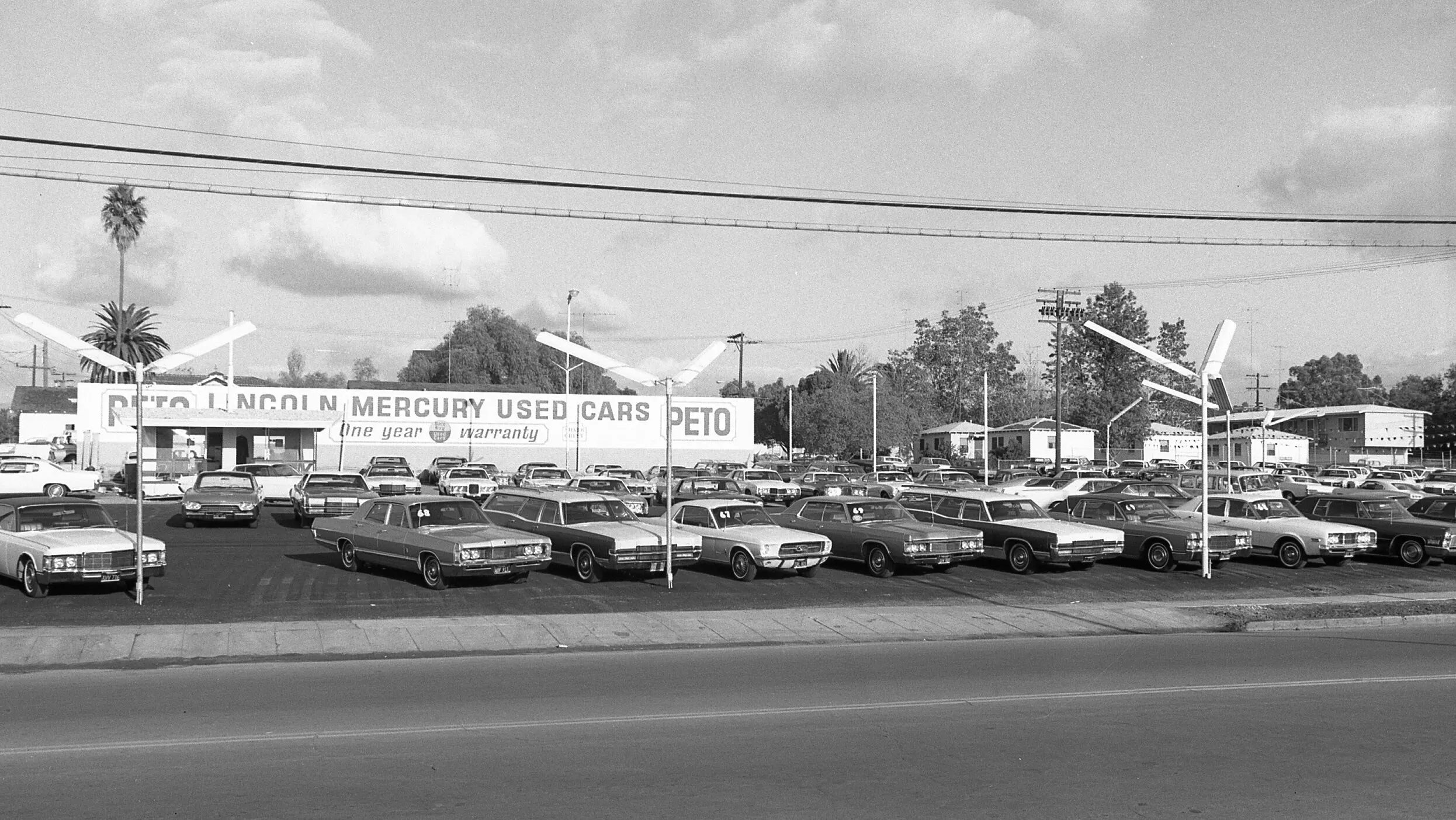
Used car dealership early 70s
Flickr/CSUSM

Understanding that early ’70s crash takes some explaining.

Muscle cars faced the multi-whammy of increased emissions regulations, crash safety rules mandating fatter bumpers, spiking insurance rates for high-performance automobiles, and lower compression ratios with the advent of lower-octane unleaded gas. There was also the 1973 oil crisis and well as the recession and 55-mph speed limits that resulted.

pumps during opec fuel crisis
Pictorial Parade/Getty Images

On top of all this was a 1972 switch in how horsepower was measured, which made the drop in muscle car performance seem worse than it actually was.

Prior to 1972, American carmakers used the SAE (Society of Automotive Engineers) “gross” measurement of horsepower, which is a figure taken from the engine running on a stand with no power-robbing accessories or mufflers. “Net” horsepower, meanwhile, measures the engine with accessories connected. Some carmakers started advertising gross and net figures in 1971, but a California law requiring only the net figure in any advertising materials starting in 1972 effectively prompted the switch to the net figure across the industry. Some American muscle favorites appeared to suddenly “lose” 100 hp.

That wasn’t strictly the case, though, and our friends at Hagerty recently started wondering what effect that gross-to-net switch might have on classic car values. Is there a discount to be had by ignoring the arbitrary numbers and going after an American V-8 classic from 1972 instead of its nearly identical ’71 counterpart? The answer is, sometimes “yes,” and sometimes “not really.” Below are eight examples. NOTE all monetary values are in US dollars- at time of posting multiply by 1.38 for CAD dollars.

Chevrolet Corvette LT1

Chevrolet Corvette LT1 engine air filter detail
Mecum

Regular Production Option (RPO) LT1 debuted in 1970 on the Corvette and the Z/28 Camaro. In the Corvette, what it got you was a 350cid V-8 with solid lifters, tight 11:1 compression ratio, forged pistons, balanced crankshaft, freer-breathing heads, and more improvements that helped push the new hot-rodded, high-revving small-block to 370 hp and 380 lb-ft. Unfortunately, the LT1 arrived just in time for the horsepower wars to start winding down, and with its compression ratio lowered to 9:1 in the 1971 version, performance was down to 330 hp. A bit disappointing, sure, but still lots of oomph.

Chevrolet Corvette LT1 1972 engine
1972 LT1 350/255 HP V-8 engineMecum

For the 1972 Corvette, RPO LT1 dropped to 255 hp with the switch to net ratings. The LT1 option disappeared after 1972, which was also the last year for chrome bumpers at both ends of America’s sports car. Visually, all 1970–72 LT1 Corvettes look nearly identical, but values drop way off as the power ratings decrease. A 1970 LT1 convertible is currently worth $108K in #2 (excellent) condition in our price guide. The equivalent coupe is currently worth $89,600. The 1971 model falls to $82,300 for a convertible in #2 condition, and $64,500 for a coupe. At the bottom, the 1972 LT1 currently carries #2 values of $74,300 for a convertible and $73,000 for a coupe. Condition #3 (good) values for these cars typically come in at about 25 to 30 grand less than the #2 value.

As for the Camaro Z/28, its #2 value drops from $53,600 for a 1971 model to $52,800 for a ’72, while the condition #3 value drops from $39,400 to $32,700.

AMC Javelin

1972 AMC Javelin front three quarter
1972 AMC JavelinAaron McKenzie

American Motors redesigned its plucky pony car, the Javelin, for 1971. The new second-gen model sprouted the famous exaggerated, creased wheel arches and long hood for which the Javelin is perhaps best known, in part thanks to Mark Donohue’s dominant ’71 Trans Am season behind the wheel of one. AMC’s two-seater AMX model also disappeared after 1970, but was added to the Javelin lineup as a high-performance submodel.

New for ’71 was a 401cid V-8, available in both Javelin SST and Javelin AMX trim. In gross horsepower terms, the 401 made 330 hp. In 1972, the net rating dropped that figure to 255 hp. Values also drop from ’71 to ’72, despite there being few cosmetic differences between the two years. For ’71 Javelins, an SST is worth $35K in #2 condition, and an AMX is worth $49,300. For ’72 models, these figures fall to $25,700 for an SST and $43,200 for an AMX.

Cadillac Eldorado
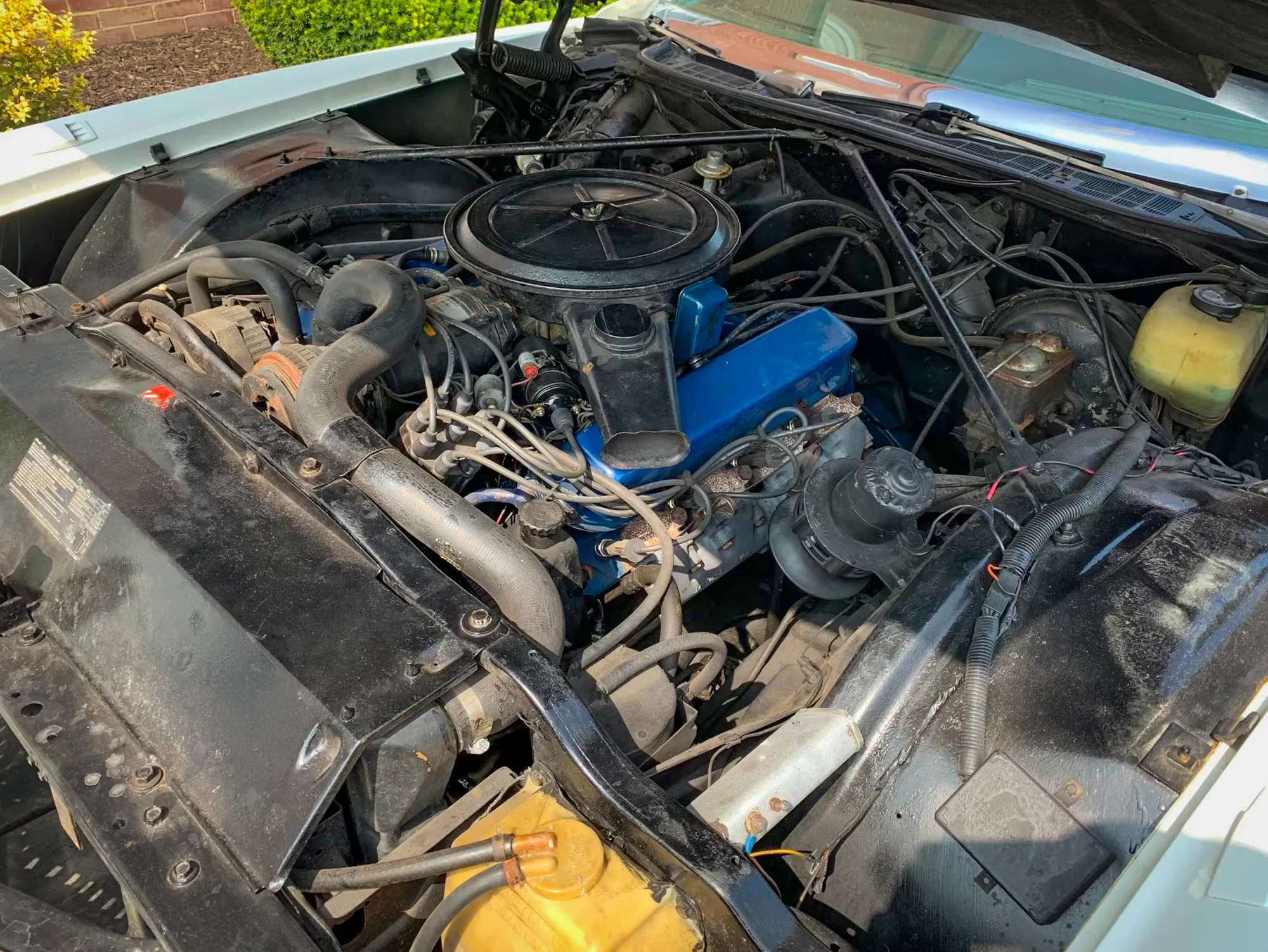
Cadilac-Eldorado-500-CID
500cid V-8Mecum

The ninth-generation Eldo came out in 1971, growing in wheelbase, overall length, and weight over its predecessor. Fender skirts were another addition, as was a convertible body style. Motivating this huge Caddy was a similarly huge V-8, which displaced a whopping 500 cid (8194 cc). The 500-cube unit had made 400 hp in the ’70 Eldorado, but this dropped to a still-potent 365 horses in ’71. The switch to net ratings suggested a huge drop, though, with the figure dropping to 235 hp for 1972.

The ’72 discount is fairly modest for the Eldorado, a car that never sold itself on speed, anyway. For 1971 models, a convertible is worth $37K in #2 condition, and a hardtop is worth $25,200. A ’72 convertible is worth $35,600, and a hardtop is worth $25,200.

Oldsmobile Toronado
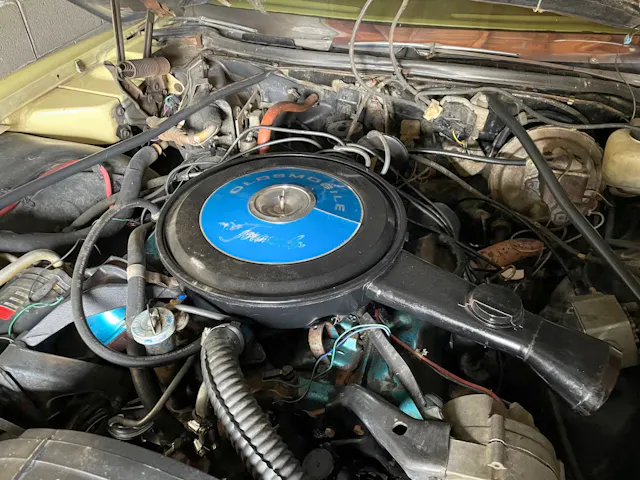
1971-Oldsmobile-Toronado-455-CI horsepower rating
455cid Rocket V-8Mecum

Oldsmobile’s large, groundbreaking front-wheel drive Toronado entered its second generation in 1971. Like the Eldorado, it was larger than its predecessor. Its 455cid Rocket V-8 carried over from the ’70 model, and carried a gross rating of 350hp. The switch to net ratings knocked off a full 100 ponies, for 250hp total. But, also like the Cadillac, the Toronado’s primary selling point was never power, despite its monstrous engine.

That goes a long way in explaining why a ’71 Toronado and a ’72 Toronado are worth almost exactly the same, with a ’71 coming in at $16,000 in #2 condition and a ’72 coming in at $15,600.

Plymouth GTX
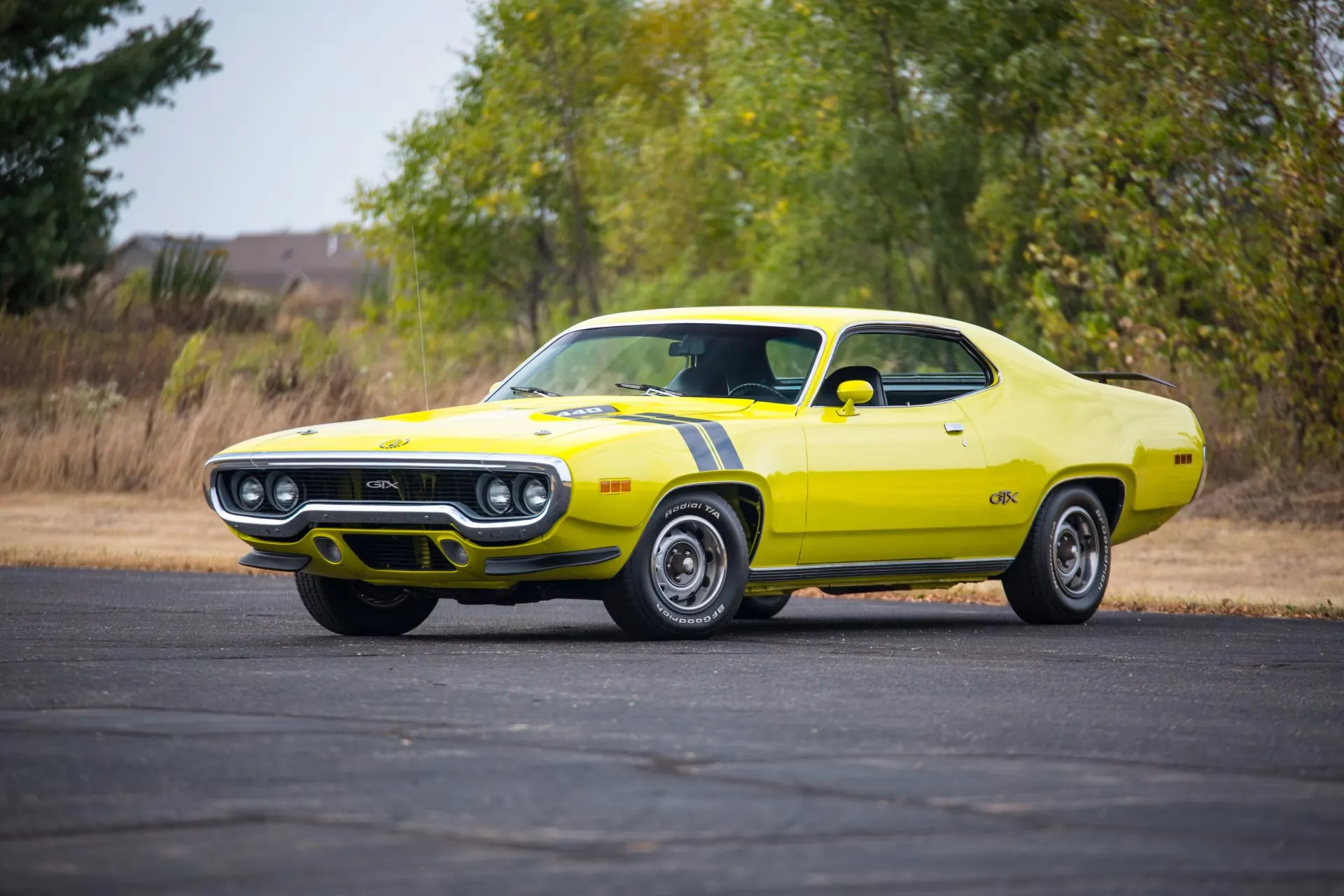
1971 Plymouth GTX front three quarter
1971 Plymouth GTXMecum

Plymouth redesigned its Road Runner, upon which the GTX was based, for 1971. The handsome fuselage theme included a loop bumper and a high trunk. While the 426-cid/425-hp Hemi was still available in the ’71 GTX, most got a version of the 440, either the three-carb 440-cid/375-hp “Six Pack” or the 440-cid/370-hp four-barrel.

By 1972, the original Street Hemi was gone, closing a major chapter in the history of Mopar muscle. The Six Pack was gone, too, leaving only the four-barrel 440 for GTX buyers, and its rating dropped from 370hp to 280hp. The GTX also ceased to be its own model that year, instead becoming an option package for the Road Runner, though styling remained largely the same. The discount in choosing ’72 over ’71 in this case is significant. The current #2 value for a 1971 GTX is $64,100, and for a ’72 Road Runner GTX it’s $53,300.

Pontiac GTO
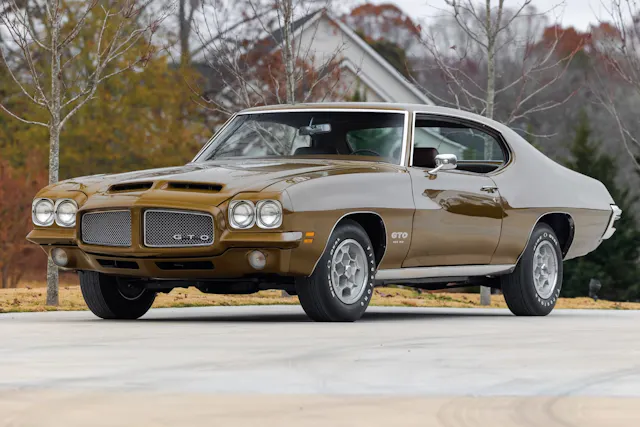
1971 Pontiac GTO front three quarter
1971 Pontiac GTOMecum

By 1971, the second-gen GTO’s muscles had atrophied a bit. The splashy colors of “The Judge” were still available, but the potent Ram Air engines were not, and compression ratios dropped across the GM lineup. The Pontiac’s most potent powerplants were now a 455 cid/325 hp or a 455 cid/335 hp.

For 1972, the GTO went from being its own separate model to being an option package on the Le Mans, just as it had been when it kicked off the muscle car era in 1964. In net terms, the 455 engines now carried ratings of either 250 hp or 300 hp.

As collector cars, there is naturally some variation in terms of value. The ’71 455/325 GTO carries a #2 value of $54,300, while the ’72 455/250 is worth $41,000. With the higher-output engines, though, they are essentially worth the same, with both ’71 455/335 and ’72 455/300 sitting at around $64,000, possibly due to the rarity of the later car.

Oldsmobile 4-4-2 W-30
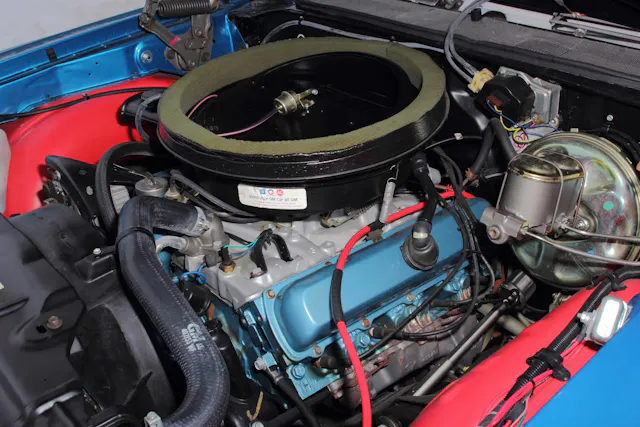
1971 Oldsmobile 442 W-30 engine horsepower rating
455cid V-8Mecum

The second-gen 4-4-2, like the GTO, was a staple GM muscle car built on the A-body platform from 1968–72. It was similarly down on power and compression in 1971, with the high-performance W-30 package offering a 455-cid/350-hp V-8, down from 370 horses the year before. Net horsepower for the 1972 W-30, when the 4-4-2 reverted to being an option package on the Cutlass, sank the number to 300 hp. The beefier, slower third-gen 4-4-2 debuted in 1973 with GM’s malaise era “Colonnade” styling.

Olds 4-4-2 values drop significantly as the horsepower numbers go down. A 1970 W-30 Holiday Coupe in #2 condition is worth $99,200. The 1971, 350-hp equivalent is worth $82,800, and the 1972, 300-hp version is worth $69,400.

Chevrolet Chevelle SS

1971 Chevrolet Chevelle SS rear
1971 Chevrolet Chevelle SSMecum

Also an A-body, the Chevelle got a mild facelift in 1971, with two headlights instead of four, and four circular taillights instead of two rectangular ones. While the big dog in 1970 was the 454-cid/450-hp LS6 engine, it disappeared from the Chevelle lineup in ’71, and the top engine became the 454-cid/365-hp LS5. For 1972, little changed visually other than an updated grille and new front parking lights, but the LS5’s stated output dropped to 270 hp. A completely new and significantly less exciting, Colonnade-bodied third-gen Chevelle debuted for 1973.

LS5 values don’t vary too much from ’71 to ’72. A ’71 convertible in #2 condition is worth $93,300 or $73,100 in #3 condition, while a sport coupe in #2 condition is worth $70,500 or $53,500 in #3 condition. A ’72 convertible in #2 condition is worth $89,700 or $75,300 in #3 condition, while a sport coupe in #2 condition is worth $69,300 or $55,400 in #3 condition.

For the Silo, Andrew Newton.

The Inimitable Mezger Engine

Take it from our friends at rennlist, Porsche has built some truly remarkable engines over the years. The air-cooled 911/83 engine that powered the 1973 911 2.7L Carrera RS is just one example. But if you were asked to go on and list the ten all-time greatest Porsche engines there is a good chance the list would be dominated by various Mezger engines.

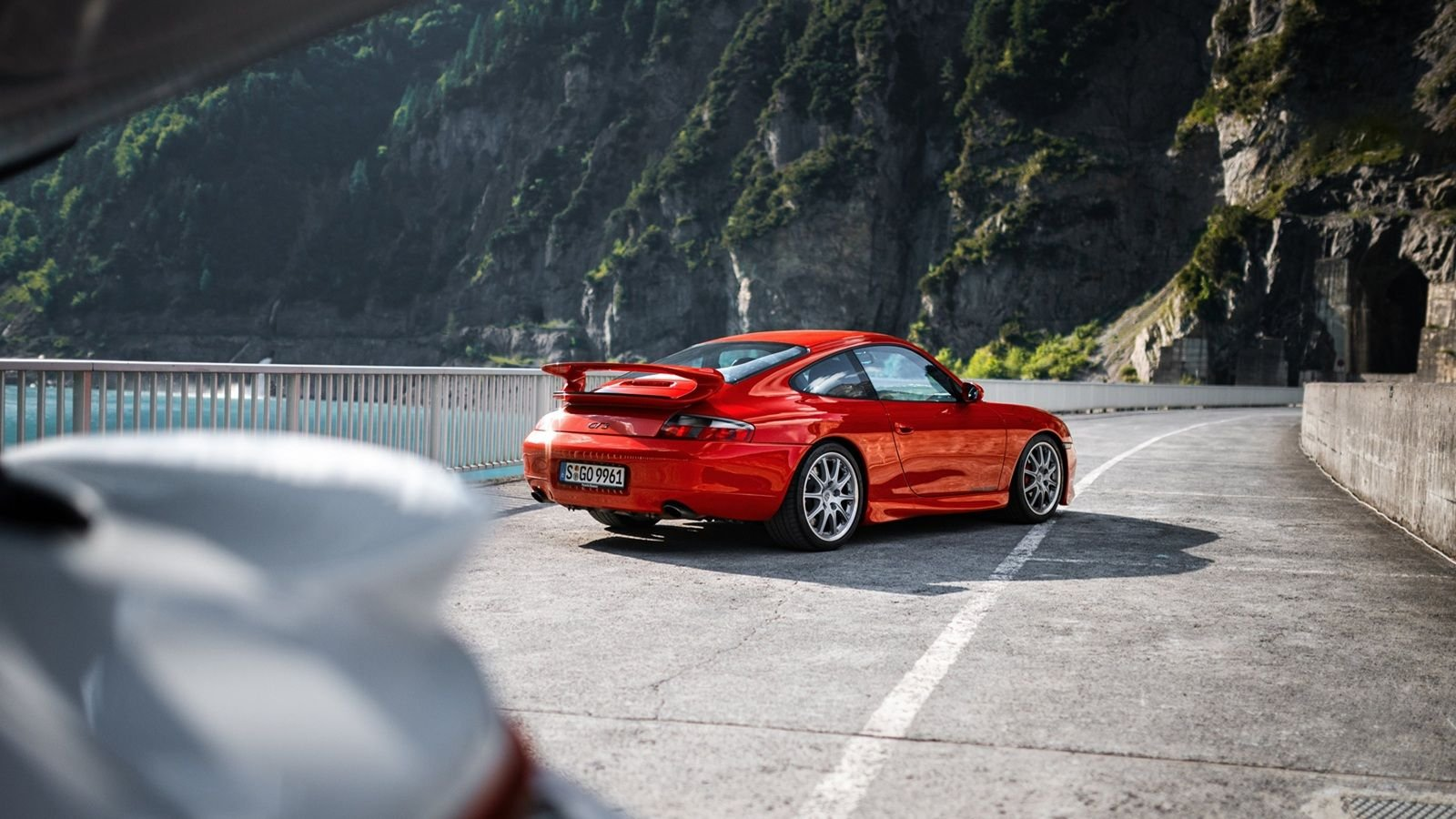
The 12-cylinder found in the Le Mans-winning Porsche 917? That’s a Mezger. The 3.6L flat six in the 996 GT3? That’s a Mezger. The 4.0L in the 997 GT3 RS 4.0? That’s a Mezger.

How about going all the way back to the original 901/911 engine? Yup, that’s a Mezger.

But what is a Mezger engine, and why are they so special? That is what we are going to discuss here today. We have come up with 9 reasons why the Mezger engine is so special. And there is no other place to begin the discussion than the legendary man behind these engines, Hans Mezger.

1. Hans Mezger

A single slide can in no way capture all that the legendary Hans Mezger accomplished. He joined Porsche back in October of 1956. He loved Porsche sports cars, but his first job was working on diesel engine development. In 1960, he began to work on the type 753 flat-eight engine for Porsche’s first Formula 1 car. Soon after he designed the 6-cylinder boxer engine for the 901/911. He was then promoted to the head of race car design. He was responsible for the 917 and the 12-cylinder engine that powered it to Porsche’s first Le Mans victory in 1970. He then was responsible for the turbocharged 917/10 and 917/30 cars that dominated Can Am. He designed and developed the six-cylinder turbo engines for the Type 935 and 936 race cars.

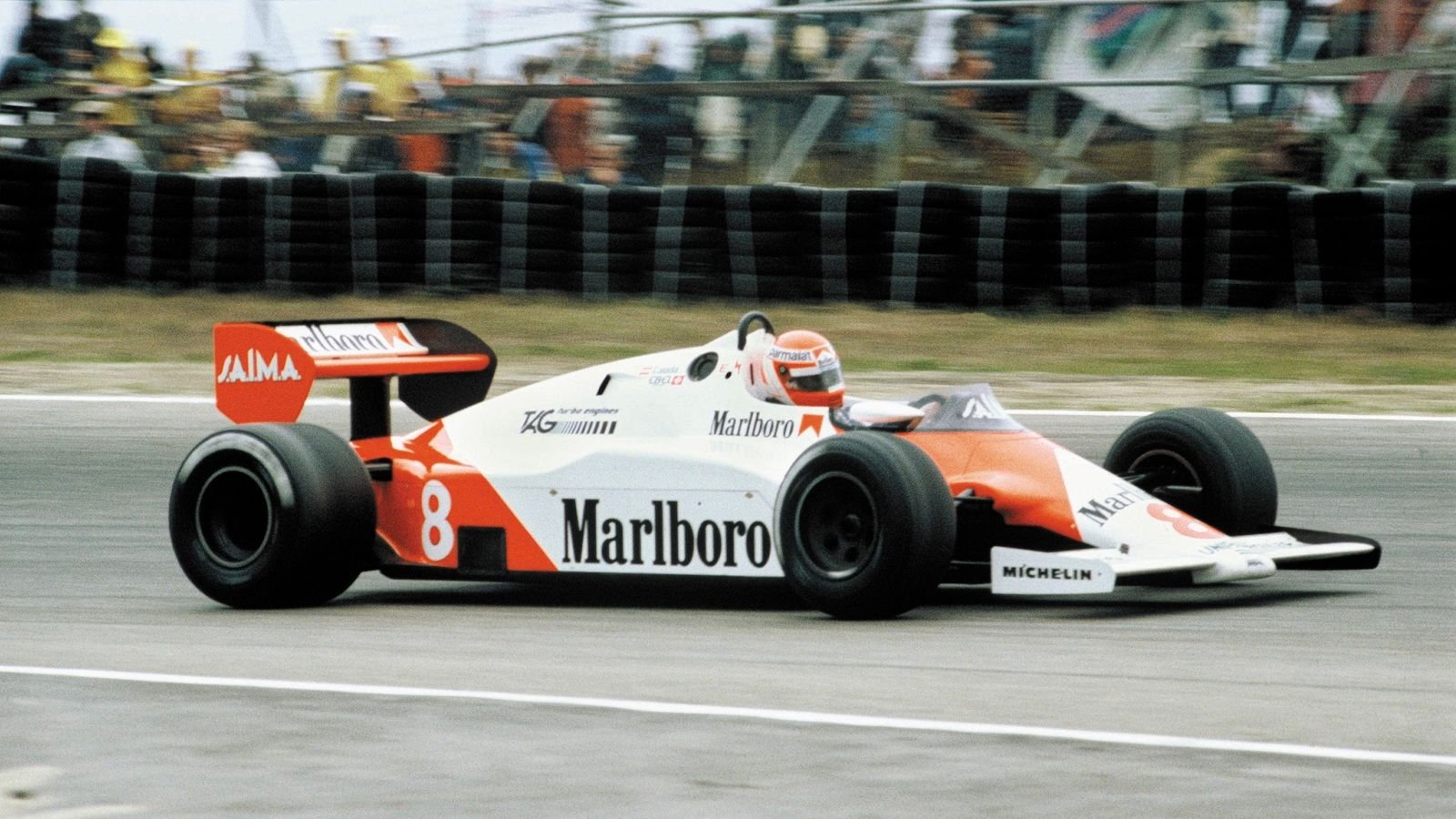
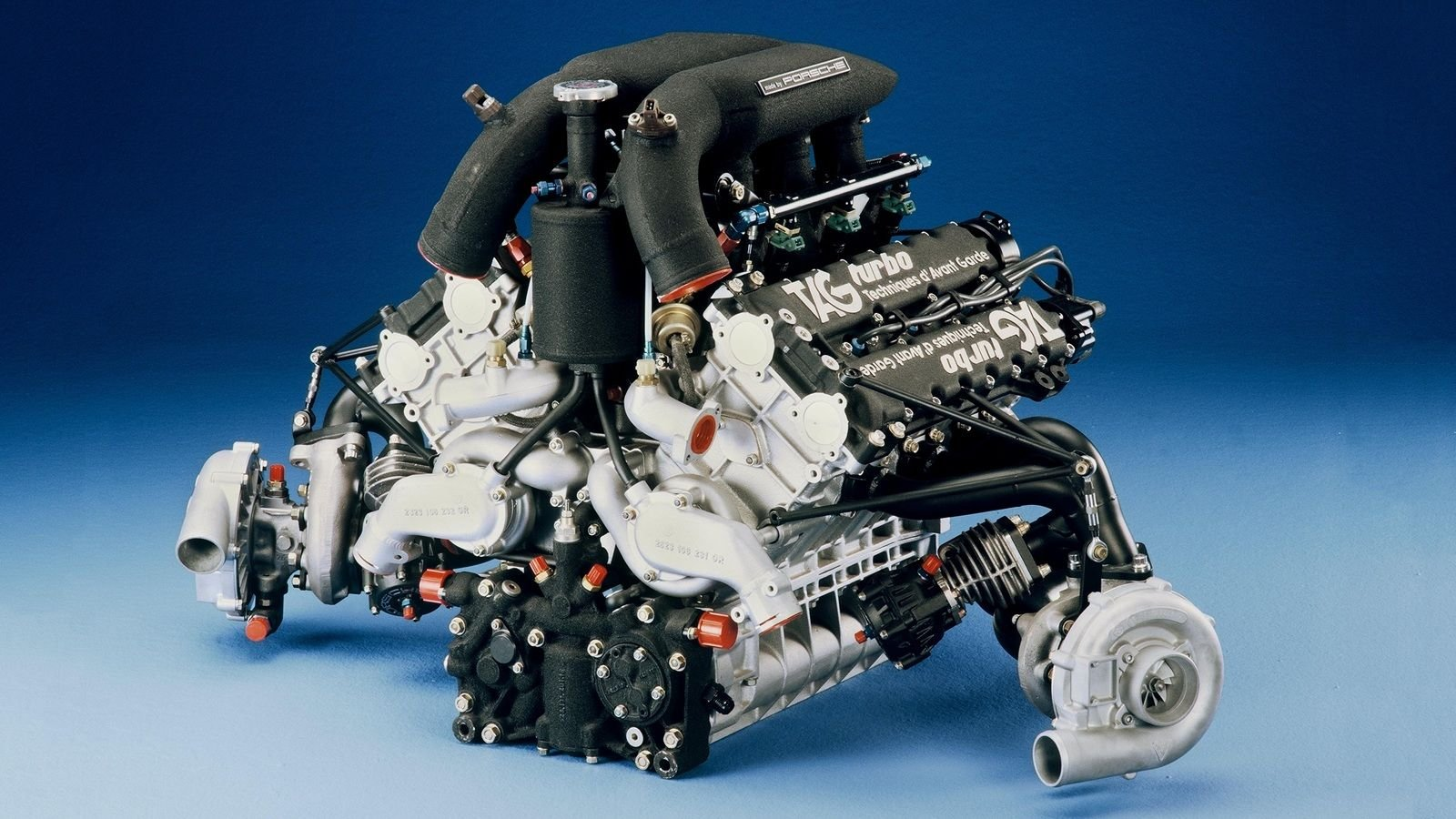
Mezger designed the 1.5L V6 engine known as the TAG Turbo that powered the McLaren Formula 1 cars to championships in 1984, 1985 and 1986. His engines would eventually be found in the most performance-oriented Porsche road cars such as the 996 GT3, GT2 and Turbo. Mezger remained closely connected with the Porsche brand until he passed away on June 10, 2020, at the age of 90.

2. Motorsport Pedigree

Mezger built engines for the most demanding races in the world. His engines that were put into Porsche road cars have the same engineering approach. These engines are designed for long-term high performance. They are essentially overbuilt for road use. These engines were not designed to meet a certain price point. They were designed to provide the best performance. There were no corners cut with any Mezger engine.

3. Birth of the GT3

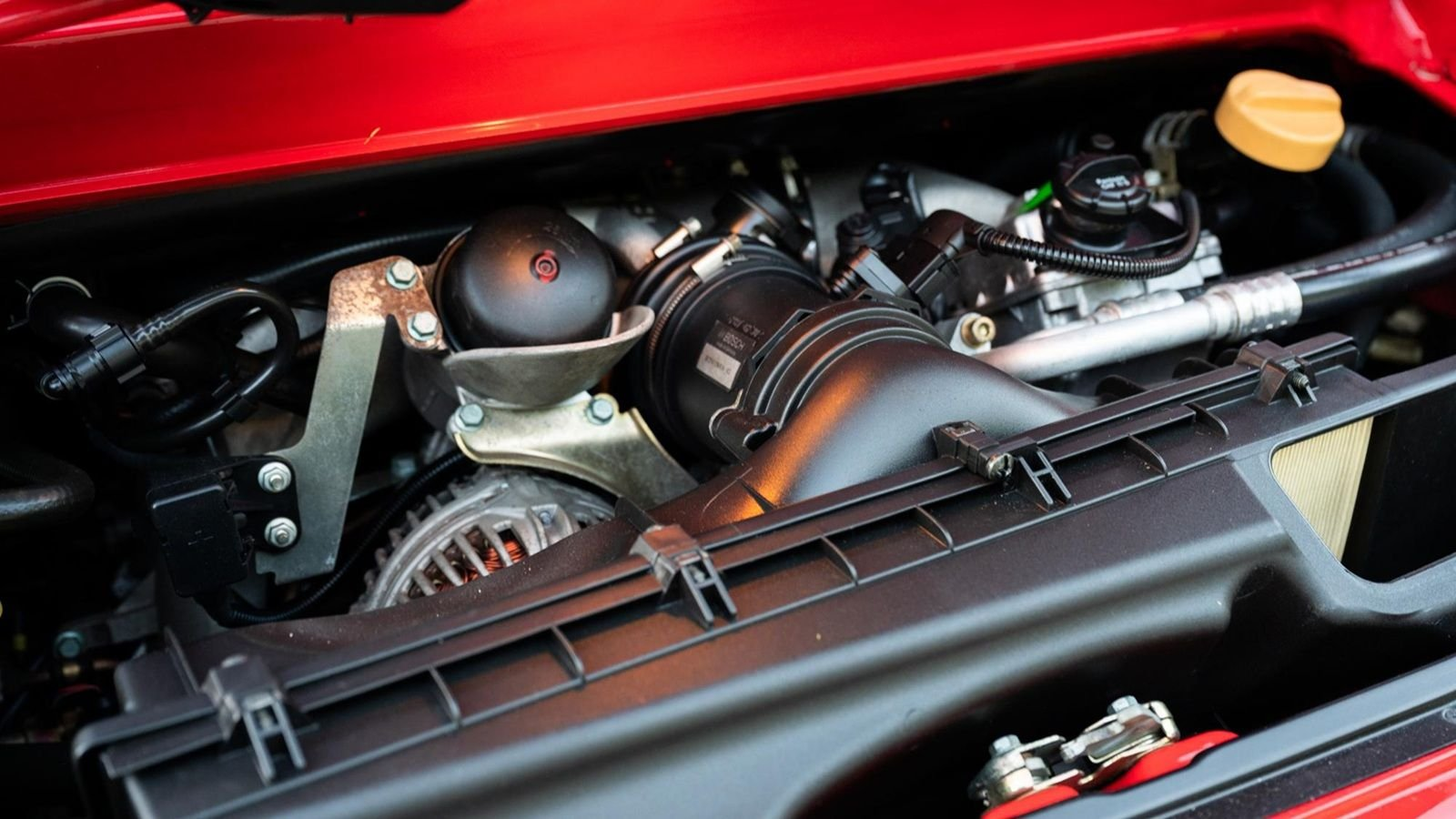
Many people view the 911 GT3 models as the pinnacle of the 911 range. One of the main reasons why is because of the track-focused, high-revving flat-six engine out back. It all started with the M96.79 engine found in the 996 GT3. The European market got the GT3 a few years before us and had the M96.76 engine, but the point is the same. The GT3 legend began in large part because of the incredible engine that powered it. This dry sump engine could rev to 8,200 rpm all day long. The engine was derived from the Porsche 911 GT1-9,8 which happened to win a little race called the 24 Hours of Le Mans. The street version of this engine is nearly bulletproof,f and the GT3 legend was born.

4. Turbocharged Versions

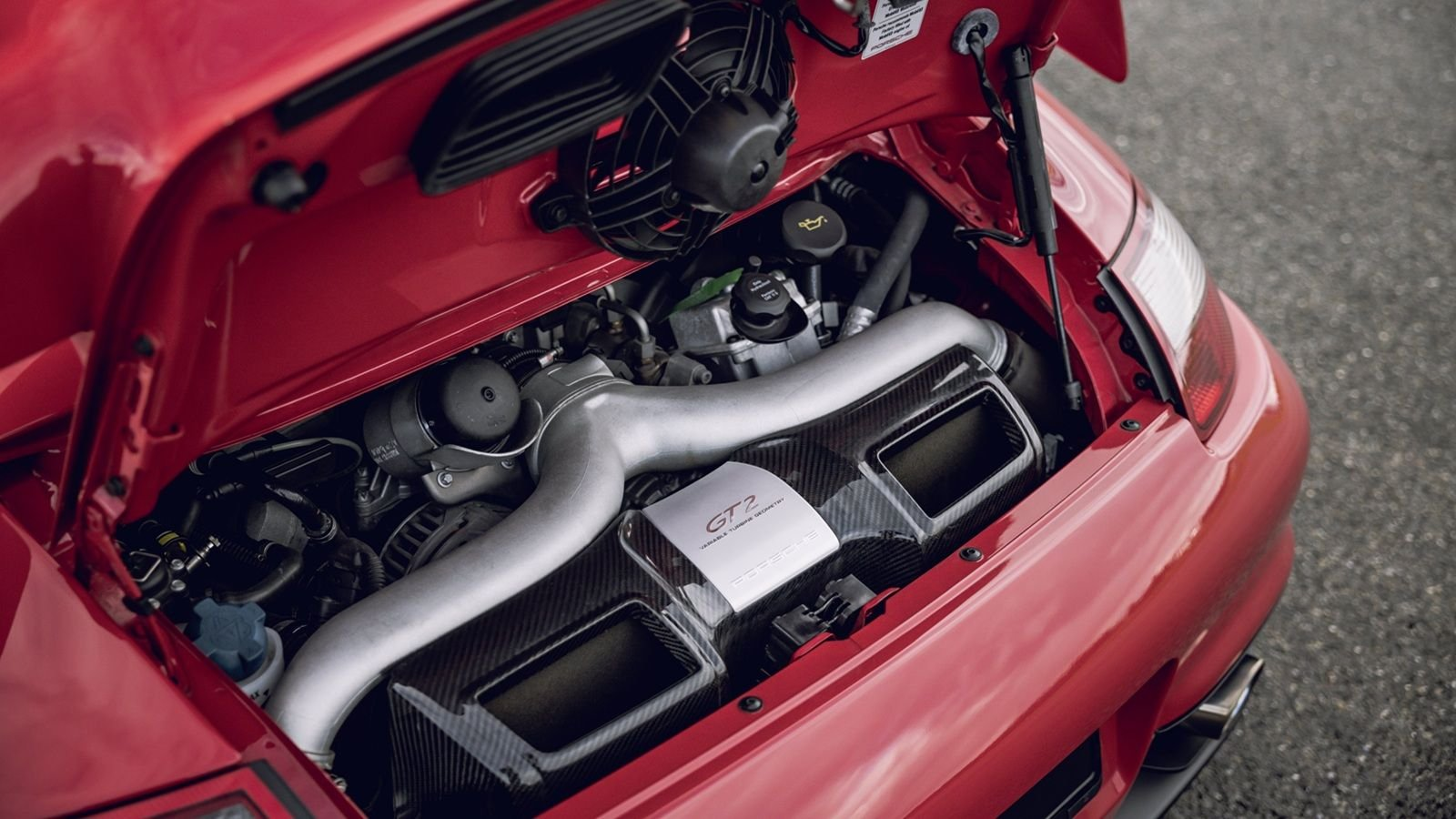
If the GT3 was just not powerful enough for you, Porsche had a solution. The GT2 and Turbo also used Mezger engines, but with a pair of turbochargers. They are not as high-revving as the normally aspirated units, but they offer more power and a lot more torque. And these engines are just as reliable.

5. Reliability

The Mezger engines are not just more powerful but also more reliable. The knock on the M96 and M97 engine series has long been the IMS bearing. But the Mezger versions don’t have the same design. Instead, they use plain bearings that are pressure-fed engine oil for lubrication. These bearings don’t fail. That alone makes the Mezger significantly more reliable.

6. Sound

Even if these engines were not more durable and powerful, people would buy them for their sound alone. It is not just their high-revving nature in naturally aspirated form. But the design of the engine itself, with features such as dual timing chains that give these engines a more characterful sound. They are more gravely and “motorsporty” sounding than the non-Mezger engines.

7. Power Upgrades

These engines were overbuilt and as such, are typically able to comfortably handle more power if you want to modify them. The turbo versions can easily be tuned to reliably make more power. Of course, every engine has its limitations, but the Mezger engine is robust enough to make more power without hurting reliability.

8. The 997 GT3 RS 4.0

Many people consider the 997 GT3 RS 4.0 to be the best Porsche 911 road car of all time. It just so happens to be equipped with the last Mezger engine. A 4.0L jewel making nearly 500 naturally aspirated horsepower. The engine revs to 8,500 rpm and has more character in it than an entire truckload of new 992.2 Carreras. The 4.0L marked the end of an era. It is the last and possibly the best road-going Mezger engine ever produced.

9. Rarity and Desirability

Not every Porsche got a Mezger engine. Technically, all the air-cooled 911s have a Mezger-designed engine, but they have been out of production for over a quarter of a century now. Only a small percentage of water-cooled Porsche engines were a Mezger design. And Porsche is not building any more of them. So, what is out there today is all that will ever be out there. These engines are found in the most desirable Porsche models, and these cars are collectible today and will continue to be collectible for the foreseeable future. If you buy a Porsche with a Mezger engine today, the chances are good that it will be worth the same or even more tomorrow. For the Silo, Joe Kucinski.

Images: Porsche

>>Join the conversation about the Mezgar engine right here via our friends at Rennlist.com.

Porsche Commit Long Term To Gasoline Engines

Change of Plans

There was a time, not terribly long ago, when it seemed like the automotive industry was on the fast track to total electrification.

Ahead of Their Time

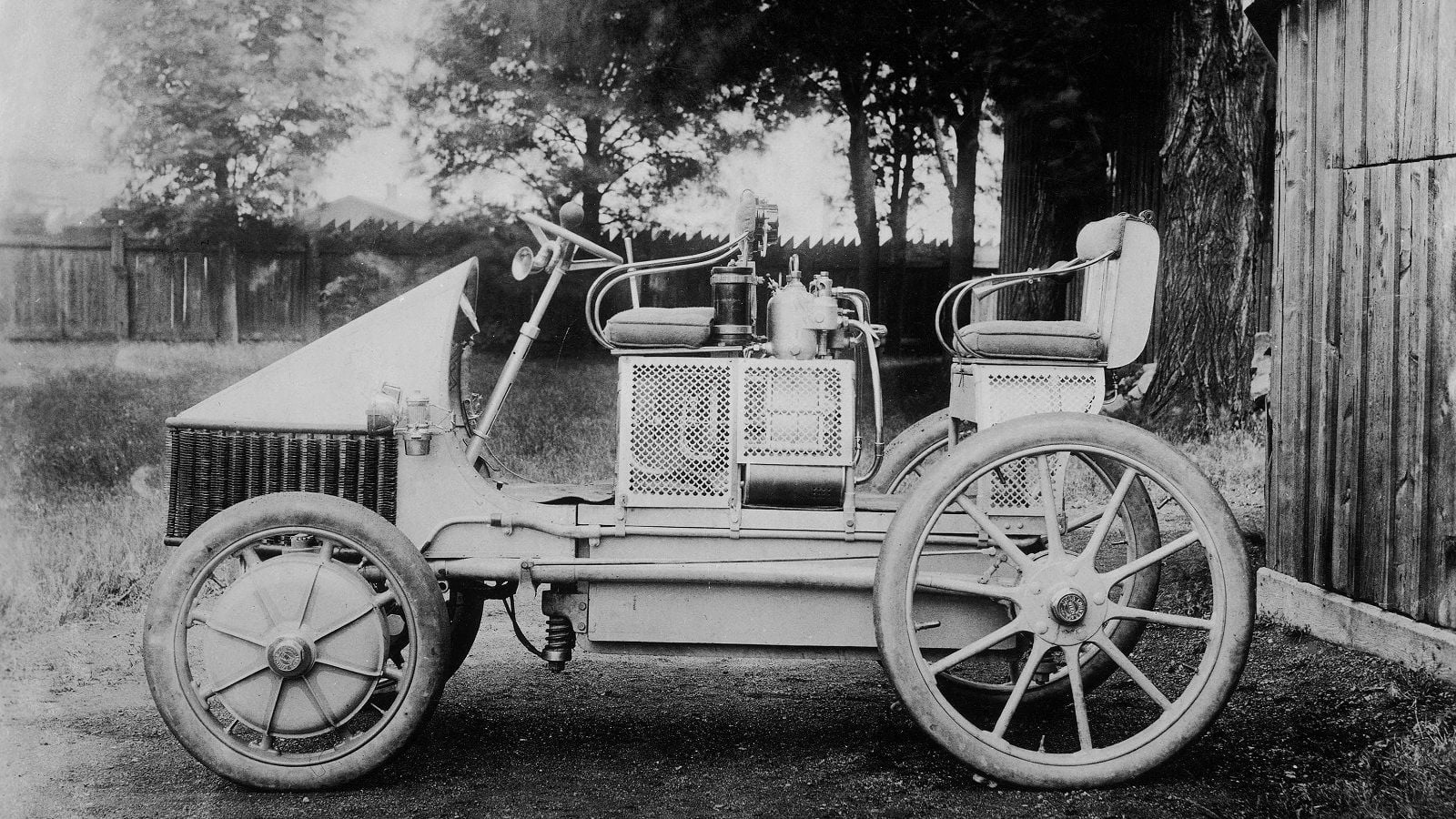
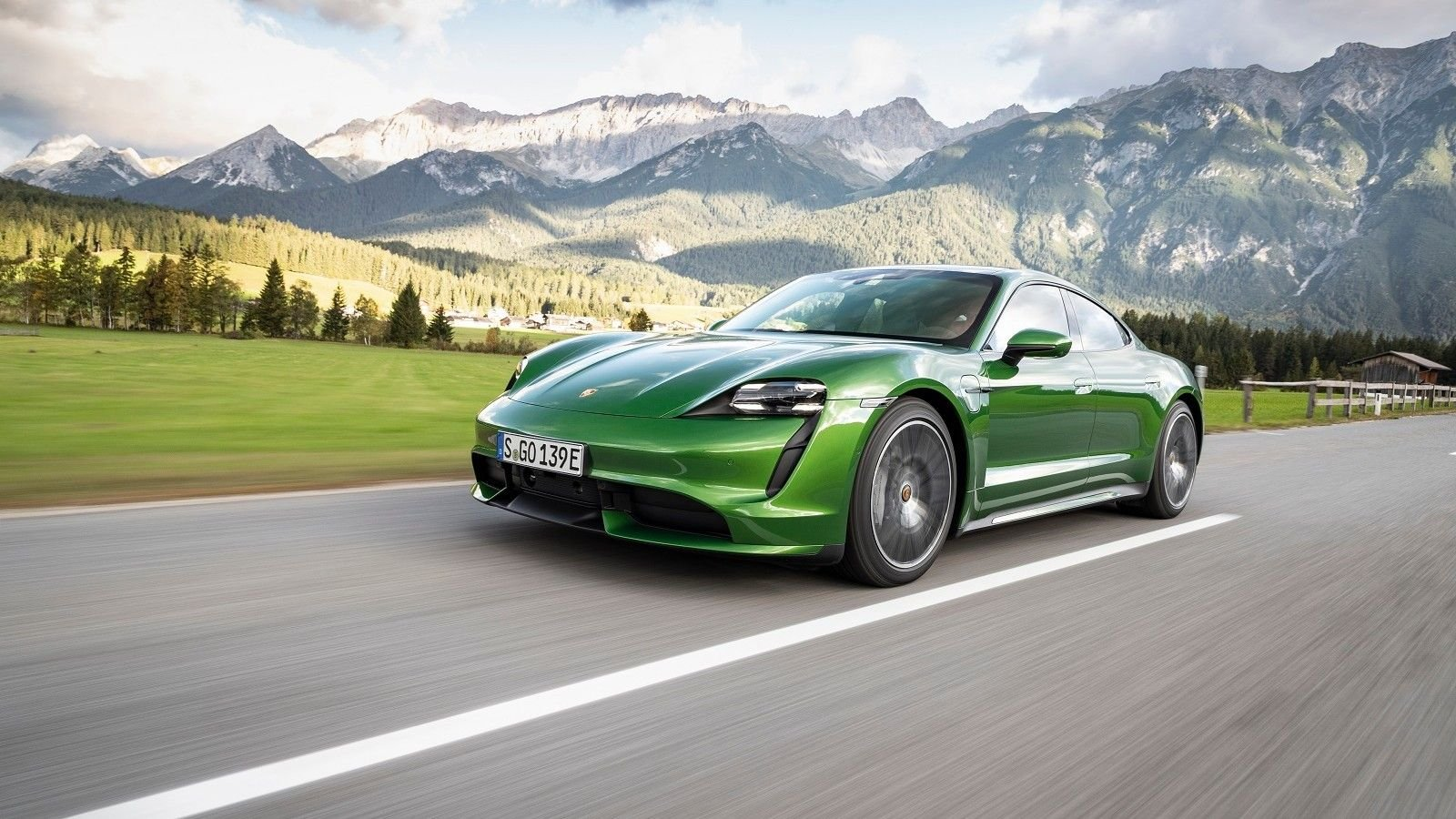
Many of us think of hybrid or all-electric power as a relatively new technology. After all, Porsche just introduced its very first production EV, the Taycan. But in reality, electricity has been around in the automotive world for over a century. And Ferdinand Porsche was one of very first pioneers to embrace this technology. When Porsche was a teenager back in 1893, he installed an electric lighting system in his parents’ house. Even the very first vehicles he designed had electric drives. After toying around with a few different ideas, Porsche designed the world’s first functional hybrid car, the Semper Vivus (Latin for “always alive”), in 1900. But due to its modest power output, heavyweight, and lack of infrastructure, the idea was relegated to the back burner for many years. 

Amid concerns over global warming, governments around the globe began floating regulations that sought to ban ICE vehicles outright – but in recent months, with demand falling behind expected levels of growth, a lot has changed, and now, those same plans are being scaled back.

Up To and Beyond

While Porsche recently revealed that it continues to develop the all-electric version of its Cayenne crossover, it also plans to continue to offer hybrid and combustion engine-powered examples of that same model – “up to and beyond 2030,” in fact.

Keeping the V8

Interestingly, Porsche also noted that the currently, third generation of the Cayenne will be upgraded and will continue to be offered alongside the fourth, all-electric generation model. Engineers will focus on the Cayenne’s ICE powertrains, however, including its twin-turbocharged V8, which it will need to tweak to ensure that it meets increasingly stringent emissions standards.

Still Focused

This is obviously great news for fans of ICE powertrains and the V8 in general, but also note that Porsche remains focused on an electrified future, regardless. “Our product strategy could enable us to deliver more than 80 percent of our new cars fully electrified in 2030 – depending on the demand of our customers and the development of electromobility in the regions of the world.” Oliver Blume CEO Porsche AG.

As such, Porsche plans to continue making gas engines for some time, it seems. 

ONLINE ONLY CAR AUCTION RECORD BROKEN

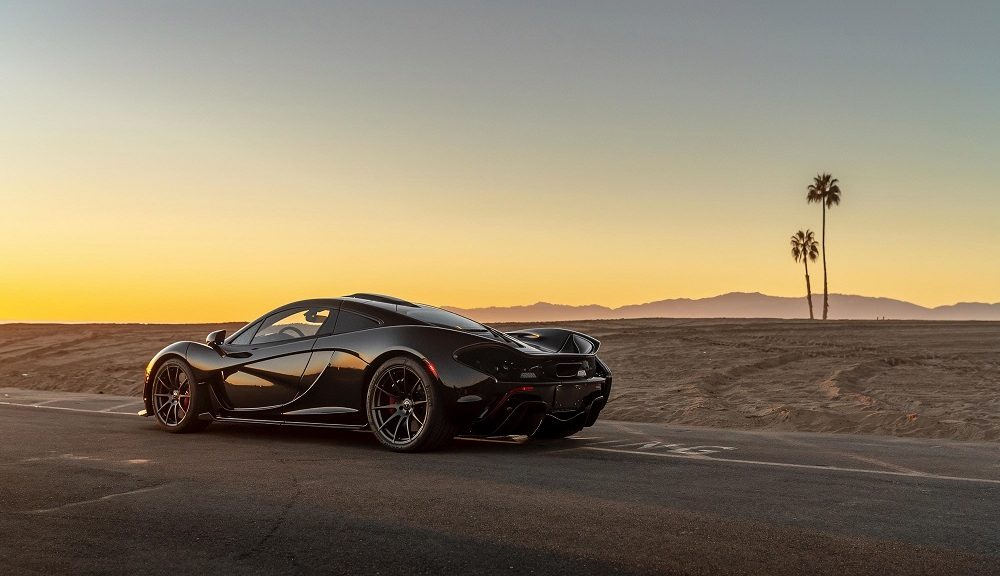
A global online marketplace founded by a British car dealer has just broken the online-only world record for a car auction, selling a McLaren P1 for an incredible $1,600,888 usd or $2,010,851 cad .

No other online-only platform for collectible cars has ever achieved a higher sales price.

Unlike traditional auctions, where cars are transported to a central location and bidders attend in person, Collecting Cars has disrupted the industry with an online-only format that has already notched up multiple world records. Cars stay with their owners, and more than 90% of sales happen without a physical viewing. This is made possible by the technology and knowledge behind the platform, which gives bidders a ‘virtual viewing’ of the car in question; supported by more than 150 photos and comprehensive detail on its features and maintenance history.

Bids entered during the online-only auction are legally binding, and Collecting Cars levies a low buyer’s premium of just 5% (+ VAT for UK buyers), which is substantially lower than traditional auction houses that typically charge 12% or more. Furthermore, the buyer’s premium is capped at £5,000 / $5,000 (+ VAT if applicable). On hammer prices above £1m, this means that the buyer’s premium is 0.6% or less.

The world-record car in question was a McLaren P1, one of just 375 examples built, and with only 433 miles from new. Motortrend.com: “The twin-turbocharged hybrid V-8 engine develops 903 horsepower and will launch to 62 mph in under 3 seconds. It’s made of exotic materials like carbon fiber and titanium.”

An original US-market vehicle; it was collected from the McLaren factory in the UK by its first and only owner. The car had also covered less than 100 miles since its most recent maintenance, which also included full checks of all electrical and battery equipment, at a total cost of more than $7,000 usd.

The Founder and CEO of Collecting Cars, Edward Lovett, said: “For around 60 years, car auctions have traditionally charged substantial commissions and premiums, often taking more than 15% out of the total value of the deal. We knew there was a better approach, and we have developed a world-class online marketplace for sellers and buyers without the unnecessary overheads, which is breaking records.

“This result shows the game-changing power Collecting Cars now wields in the global market, with online-only auctions that are cost-free and hassle-free for the seller, and which represent outstanding value for the buyer. In this case, the buyer’s premium for the winning bidder was just 0.3%.”

The company, which has sold over 4,700 lots since launch, was founded by British car dealer Edward Lovett in 2019.

Lovett was born into the family car business, and in more recent years has provided a private brokerage service, finding homes for some of the most sought-after collector cars in the world. Drawing on his significant experience, he saw the opportunity to develop a dedicated online-only platform for iconic, collectible and sporting cars.

Tokyo Lawyer Commutes in a Freaking McLaren P1
This P1 is a daily driver for renowned Tokyo Lawyer Hiramatsu.

As well as its very low premium for buyers, Collecting Cars offers significantly better value for sellers. The detailed photographic presentation and professional descriptions mean their car is showcased in the best possible way, and it is marketed to a huge captive audience of passionate enthusiasts. Furthermore, there is no listing fee, and they receive 100% of the hammer price. For the Silo, Jules Tipler.

About Collecting Cars:

Collecting Cars is an online auction platform that curates consignments from around the world and markets them to a global audience. The streamlined and transparent process makes buying and selling cars, motorbikes, and automobilia via its online auctions one of the most effective and hassle-free ways of transacting.

To date, the Collecting Cars platform has sold more than 4,700 lots, and total sales value generated for sellers exceeds £170 million or $2,864,53718 cad . It also has more than 50,000 registered users around the world. The multi-national auction company has headquarters in London, and offices in Munich, Sydney, and Los Angeles.

More than 90% of sales since launch have happened without a physical viewing, underscoring the significant trust that Collecting Cars has earned among its customers.

Million Dollar Race Car The Hoonicorn RTR Was Built Secretly

Tech and cars go together: the Hoonicorn RTR, the famous hybrid race and demo car.

The first tech start-up in a garage wasn’t Hewlett Packard. Back in the day, pre-Silicon Valley, it was the men and women bolting together cars, optimizing engines, lovingly perfecting car technology in their garages and taking it to the streets.

Profiled on RxSpeed’s website in the LAB [link below CP], take a visual tour of this incredible car and wild video and other modified cars.

Like building a spaceship around an astronaut, this million-dollar racecar was built around a driver, the needs of his craft and the exploration of a genre.

For two years the Hoonicorn RTR was kept a secret.

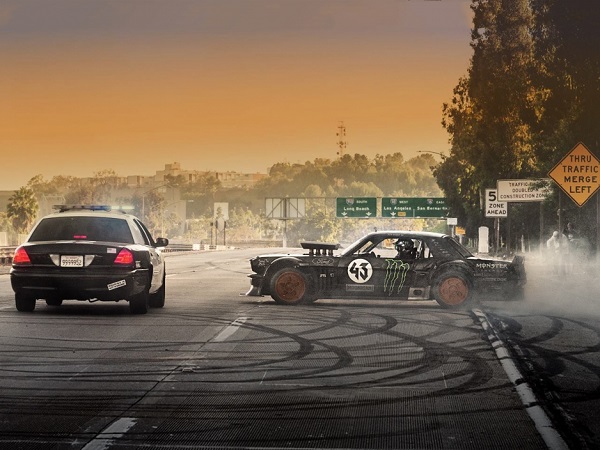
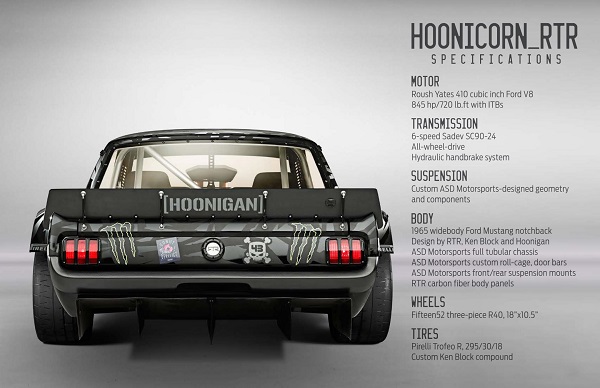
No one outside the very small and tight-knit circle knew about the project; even best friends were left out. Shrouded in secrecy, the six-cylinder 1965 Mustang Notchback 3-speed was cut and sewn back together into the Hoonicorn RTR, a hybrid race and demo car.

Cell phones and computers provide access to such an incredibly fast-paced information network that keeping anything hidden from prying eyes is becoming increasingly rare—and a Ken Block Gymkhana car is on another level of vulnerability. With over a quarter of a billion views on the Gymkhana franchise, the reveal of the next-generation car is on par with anything the automakers can throw out, which is why the Hoonicorn RTR was such a big surprise to the world.

It’s not cheap or quick modifying a stock car. To keep costs down, motorheads can visit RxSpeed to check out where to buy automotive products at the lowest cost. More over-the-top car stories can be found in the LAB

About RxSpeed

www.rxspeed.com is a comparison shopping engine for the automotive aftermarket. It saves consumers time & money during their research and purchase process. Their proprietary software platform catalogs millions of parts from hundreds of brands to help match customers with retailers easier and faster than ever before.

How F1 Cars Move Around The World For Races

This year’s 2019 Formula 1 Etihad Airways Abu Dhabi GP is almost here! Have you ever wondered how the cars make it to the race?  It’s a logistical miracle. Custom containers. Hydraulic platforms. Modified cargo jet airliners and much, much more. If you’re a fan of F1 races you may have wondered how your favorite team manages to travel all around the globe in order to make it to the circuit safely on time. Some teams save money by using cargo ships and traveling via sea. Sometimes, they are required to complete this entire process from start to finish in only 48 hours!

Take a look at this nifty infographic from our friends at storagecentres.co.uk to learn more and have another level of appreciation for this incredible sport.