More than 500 leaders and experts, including 15 ministers and nearly 150 CEOs and chairs, will gather in Dubai from 13 to 15 October for the inaugural Annual Meeting of Global Future Leaders.
The meeting will connect today’s decision-makers with the next generation of leaders to develop forward-looking responses to shared challenges and strengthen resilience in a volatile world.
New research will be published during the meeting on youth, leadership, innovation-driven solutions to sustainability challenges and data-centre infrastructure.
Follow the Annual Meeting of Global Future Leaders 2026 here and on social media using #AMGFL26.
Dubai, United Arab Emirates, October 2026 – The World Economic Forum, in collaboration with the Government of the United Arab Emirates, will convene the inaugural Annual Meeting of Global Future Leaders in Dubai from 13 to 15 October 2026. Opportunity-driven and future-oriented, the meeting will provide a platform for emerging and established leaders to create new opportunities for all and build resilience amid uncertainty.
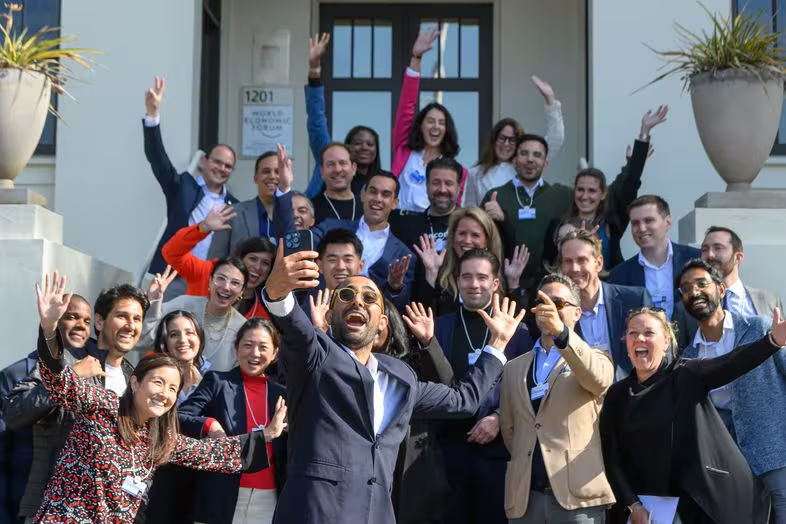
More than 500 next-generation leaders and experts, including 15 ministers and nearly 150 CEOs and chairs, will engage in intergenerational dialogue on pressing global challenges and the partnerships needed to address them. Participants will include members and alumni of the Forum’s Young Global Leaders community, alongside select Global Shapers and Social Innovators, as well as leaders from government, business, academia, science, technology and civil society.
Reflecting both the persistent concerns highlighted in the WEF’s Youth Pulse 2026 and the striking optimism young people have expressed in Youth Pulse findings over the past decade, meeting participants will examine how AI and other frontier technologies are reshaping jobs and opportunities. Discussions will also consider economic uncertainty, geopolitical change and climate challenges and explore practical responses in a shifting global and regional landscape.
“The decisions we make today will shape the world the next generation inherits. Emerging leaders should have a voice in those decisions, not just live with their consequences,” said Alois Zwinggi, President and CEO, World Economic Forum and Principal Chairman of the Annual Meeting of Global Future Leaders. “This inaugural meeting will bring different generations and perspectives together to look beyond immediate challenges and work together on practical ideas for the decades ahead.”
“This meeting reflects the strong partnership between the UAE Government and the WEF, and a shared commitment to advancing international cooperation and constructive global dialogue. At a time of rapid technological, economic, and geopolitical transformation, preparing future leaders is more important than ever,” said HE Mohammad Al Gergawi, Minister of Cabinet Affairs of the United Arab Emirates and Principal Chairman of the Annual Meeting of Global Future Leaders. “By bringing together emerging voices from around the world, we aim to equip them with the insights and tools needed to turn challenges into opportunities for innovation, growth, and sustainable development.”
The event will be co-chaired by Milojko Spajić, Prime Minister of Montenegro; Ohood Bint Khalfan Al Roumi, Minister of State for Government Development and the Future of the United Arab Emirates; Fadel Adib, Professor and Entrepreneur, Massachusetts Institute of Technology; Khalfan Belhoul, Chief Executive Officer, Dubai Future Foundation; and Mirjam Staub Bisang, Chair, BlackRock Switzerland.
The programme will be organized around six strategic themes designed to advance dialogue and joint action across generations. Topics will include geopolitical uncertainty, technological disruption, economic resilience and prosperity, leadership, science and innovation, and climate and nature. Sessions such as Trust Test for Agentic AI, Working the Line: Humans and Machines, Trade in a Changing World and Economics after Certainty will examine issues likely to define the coming decade. Select sessions will be livestreamed here.
The meeting will also launch Future20, bringing together 20 next-generation leaders working across growth, innovation and resilience to create opportunities for current and future generations. New research will include a Leadership Commitment Framework, Middle East and North Africa-focused analysis of AI applications for sustainable development and data-centre infrastructure optimization. Insights from the meeting will inform the Forum’s ongoing work, including the Strategic Intelligence gathering in Geneva and the Annual Meeting 2027 in Davos-Klosters.
About the Annual Meeting of Global Future Leaders 2026 To strengthen intergenerational dialogue and practical collaboration on issues shaping the future, the World Economic Forum will bring together more than 500 leaders and experts in Dubai, United Arab Emirates, on 13–15 October 2026 for the inaugural Annual Meeting of Global Future Leaders.
The World Economic Forum provides a global, impartial, not-for-profit platform and insights to support meaningful connections between political, business, academic, civil society and other leaders. (www.weforum.org).
56% of surveyed economists expect a stable or improving outlook in the year ahead, a sharp improvement from May, when 89% expected conditions to weaken.
69% say fiscal support drove the global economy’s resilience since 2020, but only 28% expect it to play the same role in the year ahead.
97% expect AI adoption to rise, but 79% foresee data-centre expansion facing significant backlash, with 61% not expecting significant global job creation.
Household costs are set to rise, led by food (88%), electricity (83%) and transport (77%), while real incomes stagnate or fall in most regions.
Read the Chief Economists’ Outlook here. Follow the Sustainable Development Impact Meetings 2026 here and on social media using #SDIM26.
New York, United States, September 2026 – The global economy is stabilizing, but the fiscal support that cushioned successive shocks since 2020 is unlikely to play the same role in the year ahead, according to the World Economic Forum’s Chief Economists’ Outlook, published today.
A majority (56%) of chief economists surveyed expect the global outlook to remain stable or improve, a sharp improvement from May, when 89% expected conditions to weaken. The improvement comes with limited confidence that the stabilization will hold. Nearly all respondents (97%) name geopolitical conflicts as a likely source of uncertainty over the next year, 58% expect asset-price corrections, and only one-quarter expect the global economy to become more resilient.
“Chief Economists expect the global economy to stabilize, but uncertainty remains high with geopolitical volatility, potential asset-price corrections, greater scrutiny of AI investment and persistent cost-of-living pressures,” said Attilio Di Battista, Head of Economic Growth and Transformation at the World Economic Forum. “Government support played a critical role in navigating successive crises, but fiscal capacity is likely to be more constrained going forward. The priority now is to strengthen the foundations of resilience before the next shock arrives.”
Past resilience rested on fiscal support that is unlikely to return Since 2020, fiscal support has been the most significant source of resilience for the global economy, cited by 69% of surveyed economists. Only 28% expect it to play that role over the next 12 months. Instead, future resilience is expected to depend increasingly on flexible supply chains, technological innovation and energy-market adaptation, with the United States and China seen as best placed to withstand shocks.
AI optimism holds, but the data-centre build-out faces backlash Over the next 12 months, 97% of respondents anticipate artificial intelligence (AI) adoption to increase and 69% expect the technology to unlock meaningful productivity gains. Around eight in 10 (78%) expect data-centre investment to drive a significant share of global growth, but 79% expect the expansion to face significant pushback from local communities.
At the same time, 61% do not expect data-centre investment to drive a significant share of global job creation, and majorities expect the expansion to raise electricity (78%) and water (58%) prices.
The AI race between China and the United States is expected to narrow, with 69% expecting Chinese large language models to catch up to their US counterparts in the next 12 months.
Fragmentation and divergence expected to increase Seventy-seven percent of surveyed economists expect geoeconomic fragmentation to rise over the next year, with 55% anticipating tariff increases in the United States and 43% in Europe. Trade and investment will continue to adapt: two-thirds expect global trade volumes to rise, and 83% expect Chinese exports to markets outside the United States to increase.
The United States is expected to continue being the most favourable business environment for multinational companies, followed by South-East Asia and Europe, which both rose by one position. India has fallen to fourth place; China remains fifth.
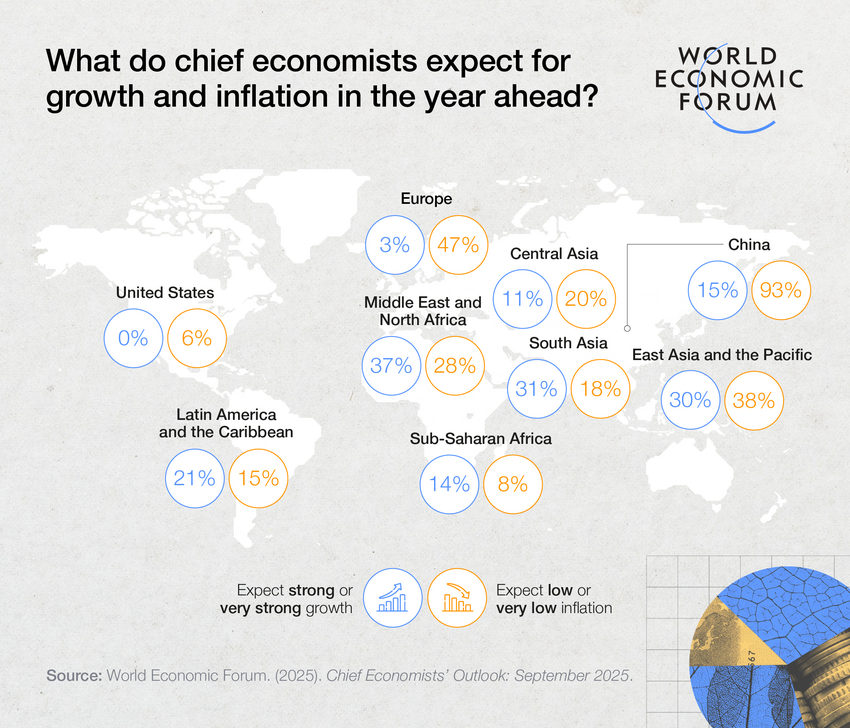
Growth prospects have strengthened across most regions but remain uneven. India, South-East Asia, Central Asia and the United States receive the strongest assessments. China’s outlook has weakened, with about one in three economists expecting weak growth. Europe has improved modestly but remains the weakest region, with 61% expecting weak or very weak growth. Around one in three economists expect unemployment to increase in the United States, China and Europe, while monetary policy is expected to diverge. Tighter settings are expected in Japan (70% of surveyed economists), the euro area (53%) and the United States (42%), while 49% anticipate looser policies in China.
Cost of living expected to increase and erode real incomes in many regions Respondents anticipate increases in costs of living, led by food (88% of respondents), electricity (83%) and transport (77%). Most surveyed economists expect real incomes to decrease or stagnate across most regions, apart from South-East Asia and India, where over 60% of respondents anticipate increases. Governments are expected to favour broad, visible responses: tax reductions on essential goods (60%), consumption subsidies (54%) and price caps (50%) are viewed as most likely, while only 36% expect tax reductions for low-income households and 26% expect targeted cash transfers.
About the Chief Economists’ Outlook The report builds on extensive consultations and surveys with chief economists from the public and private sectors, organized by the World Economic Forum’s Centre for the New Economy and Society. The report supports the WEF’s Future of Growth Initiative, a space for exchange and collaboration to enable greater competitiveness and economic transformation. The survey featured in this edition was conducted from 4 to 20 August 2026.
About the Sustainable Development Impact Meetings 2026 The Sustainable Development Impact Meetings 2026 (SDIM26) have begun and will take place in New York until 24 September and bring together senior leaders from across sectors and regions to advance solutions to shared opportunities and challenges, with a particular focus on long-term impact and building momentum before the World Economic Forum Annual Meeting 2027.
Inaugural World Economic Forum survey of CSOs (Chief Sustainability Officers) finds the global sustainability transition advancing with a clear economic case despite geopolitical fragmentation; 63% expect progress to hold steady or accelerate over the next 12 months.73% expect AI to meaningfully accelerate sustainability progress, but 77% flag AI infrastructure’s energy and resource intensity as its most significant negative impact.
85% expect adaptation to become a bigger global priority over the next three years, though 62% cite uncertain cost-benefit assessments as the main barrier to investment. Read the report here.
Geneva, Switzerland, September 2026 – The World Economic Forum’s Chief Sustainability Officers Outlook, published today, finds a global transition showing clear signs of progress backed by commercial and technological momentum despite significant drag from geopolitical fragmentation and marked scrutiny on short-term performance.
The inaugural survey, conducted as escalating conflict in the Middle East disrupted the Strait of Hormuz and rattled global markets, sees CSOs navigating the geoeconomic volatility with more conviction than caution. Some 63% expect global sustainability progress to hold steady or accelerate over the next 12 months, and three in four expect companies’ transition-related investment to do the same driven by a clear economic argument (64%) and increasingly applicable technologies (56%). The result, according to the report, is a “green divergence”, a transition splitting into different sectors and regions moving at very different speeds, even as the global green economy, now worth more than $5 trillion annually, is on track to top $7 trillion by 2030 and remains among the fastest-growing segments of the world economy.
“Chief sustainability officers are telling us the transition is no longer a question of ambition, it’s a question of execution,” said Sebastian Buckup, Managing Director, World Economic Forum. “As companies deliberately anchor sustainability strategies in growth, security and resilience needs, execution speed and priorities increasingly diverge across regions and sectors.”
A widening green divergence Despite geopolitical volatility, momentum has not stalled but has fragmented. Some 78% of CSOs expect geopolitical and macroeconomic headwinds, from conflict to inconsistent policy and weakening multilateralism, to weigh on progress over the coming year. Rather than a uniform slowdown, CSOs describe a green divergence – some sectors and markets pulling ahead on the strength of clear economics, while others stall under policy uncertainty or unconvinced boards.
AI’s double-edged impact Some 73% of CSOs expect artificial intelligence to meaningfully accelerate sustainability progress over the next year, particularly in measurement, reporting, efficiency and risk modelling. Yet 77% of CSOs flag the energy and resource intensity of AI infrastructure itself as its most significant negative impact, as data centres already account for roughly 1.5% of global electricity demand, a green divergence playing out inside a single technology.
Adaptation is becoming the next clear priority Some 85% of CSOs expect adaptation to become a bigger global priority over the next three years and 77% say private-sector investment will be decisive to scaling it. Companies already managing resilience proactively are seeing adaptation bets paying off. CDP estimates that businesses actively managing supply-chain risk have generated $13.6 billion in savings to date, with a further $165 billion in potential financial benefits still on the table.
“The conversation is shifting from whether to act on sustainability to how fast we can prove it pays off. CSOs today are expected to deliver a business case as rigorous as any other investment decision, on resilience, on AI, on the transition as a whole. The organizations that treat this as a growth opportunity, not a compliance exercise, are the ones that will be ahead when the numbers are finally called in,” said Katharina Beumelburg, Chief Sustainability and New Technologies Officer, Heidelberg Materials.
As the report highlights, “the challenge is no longer recognizing physical risks but demonstrating the value of investing in resilience” – a shift laid bare this year as extreme heat and wildfires forced companies and insurers alike to confront the cost of being unprepared. The clearest signal comes from California. Insurers had paid $22.4 billion in claims from the 2025 Los Angeles wildfires by early 2026, while new analysis suggests that rebuilding affected communities to wildfire-resilience standards could cut projected future losses by around one-third.
About the Chief Sustainability Officers Outlook The World Economic Forum’s Chief Sustainability Officers Outlook tracks how the CSO role is evolving and what is driving, or blocking, progress on global sustainability. The inaugural report draws on the Chief Sustainability Officers Outlook Survey, conducted between 10 February and 18 March 2026, gathering responses from 103 sustainability leaders across five continents, members of the Forum’s CSO community, convened by the Forum’s Centre for Nature and Climate. For more information, visit the Centre for Nature and Climate.
About the Sustainable Development Impact Meetings 2026 The Sustainable Development Impact Meetings 2026 (SDIM26) will take place in New York, USA, on 21-24 September and bring together senior leaders from across sectors and regions to advance solutions to shared opportunities and challenges, with a particular focus on long-term impact and building momentum before the World Economic Forum Annual Meeting 2027.
The World Economic Forum’s Top 10 Emerging Technologies Report 2026 identifies breakthrough innovations in energy, medicine and infrastructure.
The report highlights 10 emerging technologies expected to achieve real-world impact within the next three to five years.
These technologies could help broaden access to energy, healthcare and critical resources, making access to them less dependent on geography or existing resource availability.
Learn more about the Annual Meeting of the New Champions 2026 here. Follow on social media using #amnc26, #2026夏季达沃斯# and #InnovateScaleImpact. Read the report here.
Dalian, People’s Republic of China, 23 June 2026 – Our friends at The World Economic Forum released its annual Top 10 Emerging Technologies Report 2026 today, identifying breakthroughs poised to reshape economies and societies within the next three to five years.
Produced in collaboration with Frontiers, a leading scientific publisher, the report examines technologies approaching a critical inflection point where advances in research are beginning to translate into large-scale, real-world applications.
The report identifies 10 emerging technologies approaching commercial and societal scale:
1. Everything-to-grid energy: Buildings, vehicles, factories and data centres can increasingly act as both energy consumers and suppliers, sending stored electricity back to electricity grids when needed. This could improve energy resilience while making better use of local renewable power.
2. Direct lithium extraction: Removes lithium from brine in hours rather than months, while using less land and water than conventional methods. It could unlock new sources of a critical battery material and strengthen supply chains.
3. Passive radiative cooling materials: These materials cool buildings and equipment without electricity by reflecting sunlight and releasing heat into the atmosphere. They could reduce energy demand and improve resilience in hotter climates.
4. PFAS destruction: New technologies can break down per- and polyfluoroalkyl substances (PFAS), known as “forever chemicals”, that have long resisted conventional treatment. This could help remove persistent pollutants from water supplies and the environment.
5. Precision fermentation: Uses microorganisms to produce specific ingredients and materials more efficiently. It could enable new ways to manufacture food, chemicals and pharmaceuticals with fewer resources.
6. Exosome drug delivery: Exosomes are natural particles produced by cells that can be engineered to deliver therapies precisely within the body. They may enable treatments to reach previously inaccessible targets, including the brain.
7. Personalized mRNA cancer vaccines: Trains a patient’s immune system to recognize the unique mutations in their tumour. They could improve the ability to prevent cancer recurrence following treatment.
8. Quantum simulation for drug discovery: Models molecular interactions with unprecedented accuracy, helping researchers identify promising drug candidates faster and more efficiently.
9. World models: Enable AI systems to build a shared understanding of physical environments using multiple forms of data. They could improve how machines predict, plan and interact with the real world.
10. Lattice-based cryptography: Designed to protect data from decryption by both today’s computers and future quantum machines. It could help secure digital infrastructure as quantum computing advances.
Many of the technologies highlighted in the report point towards systems that may become more distributed, personalized and resource-efficient over time.
“While each of these technologies has the potential to make a meaningful impact on its own, together they tell a broader story about where innovation is heading,” said Stephan Mergenthaler, Managing Director, World Economic Forum. “They reveal new patterns across energy, medicine and manufacturing that could challenge long-held assumptions about how we use technology to address some of the world’s most pressing challenges, such as food insecurity, climate change and untreatable diseases.”
Technologies such as everything-to-grid energy systems, direct lithium extraction and precision fermentation suggest how production systems could become less dependent on centralized infrastructure and traditional geographic constraints. Passive radiative cooling materials similarly point to new ways of managing energy demand and environmental pressures in regions where cooling has traditionally relied on energy-intensive systems.
Several of the technologies also suggest that value creation could increasingly depend on the ability to produce, adapt or optimize systems closer to the point of use. Personalized mRNA cancer vaccines, exosome drug delivery and quantum simulation for drug discovery all point to more individualized approaches to treatment and molecular design, enabled by advances in computation, modelling and targeted delivery systems.
Infrastructure, technical capability and deployment capacity could become increasingly important alongside traditional resource endowments, particularly in sectors where production, energy systems and advanced manufacturing are becoming more distributed and adaptive.
The report also highlights how technologies such as PFAS destruction, passive radiative cooling materials and lattice-based cryptography could reshape how industries and governments address long-standing environmental, infrastructure and security challenges. Several of these technologies raise the possibility of overcoming constraints previously viewed as difficult, persistent, or economically impractical to solve. Whether these patterns translate into real-world success, however, will depend on factors such as infrastructure readiness, regulatory adaptation, manufacturing capacity, public trust and long-term investment.
“Understanding which technologies are approaching a true inflection point requires access to the best available evidence and expertise,” said Frederick Fenter, Chief Executive Editor, Frontiers. “Open science enables researchers around the world to build on one another’s work, accelerating discovery while improving transparency and trust. That shared foundation is critical for identifying and developing innovations that can deliver lasting societal benefit.”
Developed with the Dubai Future Foundation, the report also explores the conditions that will shape how these technologies evolve and scale through 2031, including infrastructure readiness, governance, investment and public adoption. Together, these factors will play a critical role in determining whether today’s emerging technologies deliver broad societal impact tomorrow.
About the Top 10 Emerging Technologies Report Now in its 14th edition, the Top 10 Emerging Technologies report provides trusted foresight to help leaders navigate scientific and technological change. Drawing on the expertise of scientists, researchers and futurists, the report identifies ten innovations expected to scale within five years and deliver wide societal benefits. Technologies are selected through a rigorous process combining AI-enabled analysis of scientific literature, investment and ecosystem trends, and expert evaluation.
About the Annual Meeting of the New Champions 2026 The 17th Annual Meeting of the New Champions will take place from 23 to 25 June 2026 in Dalian, People’s Republic of China, under the theme “Innovating at Scale”. The meeting will bring together over 1,700 participants cross-sector leaders to explore how innovation and emerging technologies can unlock new growth models and drive positive economic momentum in a fast-shifting global landscape.
This year’s cohort stands out for building the software and physical infrastructure needed to power autonomous AI systems at scale.
Companies are advancing breakthrough technologies in AI, energy, quantum computing, biotechnology, climate innovation, space and advanced manufacturing.
Learn more about the Annual Meeting of the New Champions 2026 here. Follow on social media using #amnc26, #2026夏季达沃斯# and #InnovateScaleImpact.
Frontier Innovation
Geneva, Switzerland, June 2026 – The World Economic Forum has announced its 2026 Technology Pioneers cohort, recognizing 100 early-stage companies from 23 countries that are developing breakthrough technologies with the potential to transform industries and societies. The cohort reflects the growing geographic diversity of frontier innovation, with nine companies from India and record representation from the Republic of Korea.
What sets this year’s cohort apart is its focus on enabling the next era of artificial intelligence (AI). While recent advances have centered on models and consumer applications, many of the Tech Pioneers are building the software and physical infrastructure needed to AI at scale.
Two groups stand out: companies developing the foundations for autonomous AI agents, including identity verification, payments, security and enterprise integration; and those addressing AI growing energy, computing and storage demands.
Frontier Innovation
The cohort also reflects the expanding geographies of frontier innovation. India contributes nine companies, many focused on deep-tech and space innovation, while the Republic of Korea records its strongest representation to date across AI, robotics and quantum technologies. Companies from the Middle East, Latin America and South-East Asia are also strengthening their presence in emerging technology ecosystems.
“For 26 years, the Technology Pioneers community has been an early indicator of where technology is going,” said Verena Kuhn, Head of Innovator Communities, World Economic Forum. “What’s new is that early-stage companies are now tackling challenges that until recently required enormous budgets, infrastructure and large teams. AI is not just what these companies are building; it is also what is making it possible.”
Beyond AI infrastructure, the cohort highlights the breadth of early-stage innovation. Companies are developing cleaner energy sources, improving cancer detection, increasing industrial efficiency, protecting data from future quantum-computing threats, enabling in-orbit satellite servicing and creating lower-impact materials. Many of these ambitions once required the resources of large corporations or government programmes. Advances in AI, simulation and automation are allowing smaller teams to tackle complex scientific and industrial challenges, accelerating innovation across sectors.
The pioneers will contribute expertise to Forum initiatives through a two-year engagement programme and be invited to participate in the Annual Meeting of the New Champions 2026, taking place on 23-25 June in Dalian, People’s Republic of China.
More information about the Technology Pioneers community and past cohorts is available here.
The 2026 Technology Pioneers are:
Australia
Uluu – Developing seaweed-based biodegradable biomaterials as sustainable alternatives to traditional plastics.
Brazil
Comp – Providing compensation management, salary benchmarking and merit cycle tools for technology companies.
Canada
Intuitive AI – Delivering AI-powered food waste monitoring and recycling analytics for commercial kitchens.
China
Deep Wisdom – Developing an automated machine learning platform for e-commerce and manufacturing.
DeepCtrls Technologies – Building physics-informed AI for energy-efficient control of industrial systems.
Landing Med – Using AI-powered digital pathology for early cancer detection.
Ninetech – Enabling enterprise digital transformation through large language models and robotic process automation.
OneAIX Technology – Providing AI solutions for trade and intelligent systems.
PhaBuilder – Engineering halophilic microorganisms to produce biodegradable materials and chemicals.
Pheno Innovations – Advancing breakthroughs in critical materials across industries through AI-powered technologies.
Tripo AI – Generating AI-powered 3D models for gaming and mixed reality applications.
Robeaute – Building modular microrobots for minimally invasive neurosurgical interventions.
Germany
Dunia – Combining AI and robotics to accelerate the discovery of electroactive materials.
SPARK Microgravity – Enabling microgravity research collaboration through integrated hardware and software platforms.
India
Airbound – Operating drone networks to deliver blood and critical medical supplies to rural healthcare systems.
Bellatrix Aerospace – Developing and manufacturing propulsion technologies for in-space mobility.
BorderPlus – Supporting healthcare professionals to access high-growth international opportunities.
Dhruva – Building small satellite platforms to advance India’s growing space ecosystem.
Ethereal Exploration Guild – Developing reusable medium-lift launch vehicles for cost-efficient orbital access.
Fermbox Bio – Producing alternative lipids, proteins and green chemicals through fermentation-based biomanufacturing.
OrbitAID – Developing technologies for on-orbit satellite servicing, including refuelling, repair and de-orbiting.
Sarla Aviation – Building electric vertical take-off and landing (eVTOL) aircraft for urban air mobility.
Varaha – Leveraging remote sensing and blockchain technologies for agriculture-based climate solutions in developing markets.
Israel
NeoLogic – Developing quasi-CMOS microprocessor technology to reduce chip power consumption and size.
Ray Security – Delivering AI-driven proactive cybersecurity to limit data access and prevent ransomware attacks.
Japan
3DC – Developing graphene meso-sponge materials to address electrode expansion challenges in batteries.
Fermelanta – Producing rare plant-based ingredients for medicine and cosmetics through microbial fermentation.
Godot – Combining behavioural science and AI to advance human augmentation technologies.
NanoQT – Building quantum interconnects compatible with optical fibre for long-distance quantum communication.
OptQC – Developing photonic quantum computers that leverage light for practical applications.
Kenya
Pezesha – Connecting micro, small and medium-sized enterprises to credit and supply chain finance through embedded finance infrastructure.
Mexico
OTIF – Operating an online booking platform connecting shipping companies, logistics providers and customers.
Saudi Arabia
intella – Providing Arabic-first speech-to-text and analytics solutions for call centres and media.
Nommas Technologies – Developing AI-powered visual inspection systems for manufacturing quality control.
Singapore
Gero – Integrating physics and AI to accelerate drug development for age-related diseases.
Sentient Labs – Empowering the development of open-source AGI.
SixSense – Providing a no-code deep learning platform for computer vision applications in manufacturing.
Slovenia
Sunrise Robotics – Developing autonomous robotic cells with AI-powered perception for manufacturing.
Republic of Korea
A-Robot – Building humanoid and service robots designed for human-robot coexistence.
bitsensing – Developing radar solutions for vehicle safety, urban traffic management and healthcare monitoring.
RLWRLD – Building foundation models that enable robots to perceive and manipulate physical environments.
SDT – Providing edge computing and internet-of-things hardware for enterprise digital transformation.
Switzerland
Atinary Technologies – Offering a no-code AI platform for self-driving laboratories to accelerate molecule and materials research and development.
Metafuels – Converting green methanol into sustainable aviation fuel.
United Arab Emirates
Fasset – Delivering stablecoin-powered banking, international payments and investment access.
United Kingdom
Caristo Diagnostics – Building AI-driven imaging to detect and predict cardiovascular disease.
Epoch BioDesign – Engineering AI-designed enzymes for low-temperature biorecycling of nylon polymers.
IONATE – Developing hybrid intelligent transformers for smart grid power flow control.
MatNex – Accelerating materials discovery through AI-driven quantum calculations.
Opna – Building the coordination, verification and financing layer for critical power equipment.
Paid – Building business infrastructure for AI agents, including pricing, billing and renewals.
Sitehop – Delivering 200Gbps full duplex encryption for enterprise network infrastructure.
Uplift360 – Advancing chemical recycling technologies for carbon fibre and advanced composites.
United States
Adaption Labs – Developing adaptive AI systems that continuously learn and evolve across industries.
Albert – Providing an AI platform for materials science research and laboratory data management.
Alta Resource Technologies – Deploying novel refining technologies to produce high-purity minerals more efficiently and sustainably.
AOA Dx – Combining AI and biomarkers for early-stage cancer detection through liquid biopsy.
Autonomize – Using AI to contextualize unstructured clinical data and improve patient outcomes.
DeepLook Medical – Developing medical imaging AI for cancer visualization across ultrasound, CT and MRI.
Emerald AI – Enabling data centres to dynamically adjust power usage and stabilize electricity grids through AI.
Endolith – Using AI-guided microbes to recover copper from low-grade ore with lower energy consumption.
GridCARE – Forecasting electricity grid capacity with generative AI to support data centre development.
Hello Robot – Building open-source mobile manipulators for embodied AI research and education.
Helios – Predicting agricultural commodity prices and supply chains through AI-powered analytics.
Hertility – Offering at-home diagnostic testing and personalized care plans for hormonal health, fertility and menopause.
Inception Labs – Developing diffusion large language models that power applications such as coding assistance, voice interaction and search optimization.
Interlune – Building machinery to extract helium-3 from the lunar surface.
Istari Digital – Delivering digital twin and simulation technologies for aerospace and defence.
Kredete – Providing mobile banking and credit-building services for African immigrants in North America.
Laminar – Combining AI-driven precision automation with spectral sensors for industrial manufacturing.
Lunar Outpost – Developing space robotics and lunar surface mobility systems.
Mantel – Advancing molten-salt carbon capture for high-temperature industrial processes.
Mazama Energy – Harnessing superhot rock geothermal energy for renewable power generation.
Northwood – Building ground networks powered by phased array technology to support space operations.
Odyssey – Developing general-purpose world models capable of predicting and interacting with real-world environments over extended periods.
Overview Energy – Advancing manufacturing technologies for aerospace energy systems.
Parallel Bio – Combining human immune organoids and AI to improve drug safety prediction and discovery.
Pow.Bio – Building continuous fermentation platforms that reduce production costs by separating growth and production phases.
Power to Hydrogen – Producing hydrogen from renewable electricity using anion exchange membrane electrolyzers.
Pure Lithium – Developing lithium metal vanadium batteries for electric vehicles and grid storage.
QuSecure – Delivering post-quantum cryptography solutions to protect against future cybersecurity threats.
Rainmaker – Enhancing precipitation through cloud seeding, drones and weather modelling for agriculture.
Realta Fusion – Building compact modular fusion systems for zero-carbon industrial heat.
Reditus Space – Enabling microgravity manufacturing and hypersonic re-entry as a service.
Samaya AI – Developing AI agents for financial research, analysis and decision-making in asset management.
Savor – Producing real fats directly from carbon without relying on animals or farmland.
Skyfire – Enabling AI agents to conduct commerce through identity verification and payment infrastructure.
Stepful – Empowering communities with accessible pathways to healthcare careers through training and certification programmes.
Tern – Developing satellite-free navigation systems for vehicles and defence using real-time mapping data.
Tradeverifyd – Helping enterprises monitor and address supply chain risks in line with regulatory and financial requirements.
Vaulted Deep – Permanently removing carbon through geological sequestration of carbon-rich biomass waste.
Venus Aerospace – Developing reusable hypersonic flight systems powered by detonation ramjet engines.
VESSL AI – Providing an MLOps platform for training and deploying AI models at scale.
Voltai – Building AI models for next-generation semiconductor technologies.
WindBorne – Delivering AI weather forecasting through a global network of long-duration smart balloons.
Zartico – Using AI to deliver the clearest view of visitor behaviour for the tourism industry.
About the Technology Pioneers
Launched in 2000, the Technology Pioneers is a leading community for early-stage companies from around the world that are shaping the future through breakthrough technologies and innovations. These companies are selected for their potential to have a significant impact on business and society and are invited to engage with public and private sector leaders through the World Economic Forum’s global platform.
The Technology Pioneers community is part of the Innovator Communities at the World Economic Forum, which convene the world’s leading global start-ups across different growth stages from early-stage Technology Pioneers to growth-stage Global Innovators and unicorn companies valued at more than $1 billion.
About the Annual Meeting of the New Champions 2026
The 17th Annual Meeting of the New Champions will take place from 23 to 25 June 2026 in Dalian, People’s Republic of China, under the theme “Innovating at Scale”. The meeting will bring together 1,500 cross-sector leaders to explore how innovation and emerging technologies can unlock new growth models and drive positive economic momentum in a fast-shifting global landscape.
Fragmentation is already costing the global economy $213–$307 billion annually, while adding 0.2–0.3 percentage points to global inflation.
Fragmentation is spreading beyond geopolitical rivals to traditionally allied economies, including the EU, Canada, Japan and South Korea.
Emerging markets are likely to be hit the hardest by these shocks as countries outside the major geopolitical blocs face an estimated 10.7% hit to GDP growth versus 6.4% globally, even as regional initiatives offer new solutions.
New York, USA, June 2026 – Geoeconomic fragmentation imposing an annual cost of $213–$307 billion usd/ $296- $426 billion cad on the global economy, according to a new World Economic Forum report release today. Driven by geopolitical tensions, economic security concerns and shifting trade relationships across major economies, fragmentation accelerated through 2025 and 2026 and is increasingly affecting trade, finance and investment systems.
Deepening Divides: The Cost of a More Fragmented Financial System — published in collaboration with Oliver Wyman, a Marsh business, and the second in the Forum’s fragmentation series — finds that these pressures are playing out through escalating tariffs, investment restrictions and retaliatory measures.
The report finds that the growing use of economic statecraft in 2025 and 2026 marked a turning point for global trade and finance. While the first report focused primarily on fragmentation risks between geopolitical rivals, the latest findings suggest a broader structural shift is underway. Tariffs and investment restrictions are increasingly affecting traditionally aligned economies, including the US, the EU, Canada, Japan and South Korea, raising costs for businesses and increasing uncertainty for cross-border trade and investment.
“The global financial system has faced increasing pressures from geopolitical and economic fragmentation,” says Matthew Blake, Managing Director and Head of the Centre for Financial and Monetary Systems World Economic Forum. “Despite these pressures, the financial system has remained resilient. Markets have continued to provide real-time feedback on evolving policies while policy-makers have generally avoided actions that could erode confidence in the international financial system. As fragmentation persists, preserving the trust and stability that underpin global finance will be critical to supporting long-term growth and prosperity.”
The economic costs are rising As fragmentation becomes more embedded across markets and financial systems and barriers rise even among allies, the risks of escalation and long-term economic disruption increase. If current trends accelerate into more severe fragmentation scenarios, global losses could reach as much as $6.9 trillion usd, or 6.4% of global GDP, according to the report’s modelling, an economic impact larger than every economy in the world except the US and China.
Ultimately, fragmentation impacts both businesses and households. Current fragmentation policies are estimated to add 0.2–0.3 percentage points to global inflation, eroding purchasing power across most economies. The sharpest real wage impacts are seen in the United States, where real wages are estimated to be 0.33% lower for low-skilled workers, 0.49% lower for medium-skilled workers and 0.66% lower for high-skilled workers, with similar purchasing-power pressures visible in other major economies.
“In conversations with business leaders around the world, the message is remarkably consistent: What businesses need most right now is predictability, and they are not getting it,” says Daniel Tannebaum, Partner and Global Leader, Anti-Financial Crime Practice, Oliver Wyman, a Marsh business. “Without clearer guardrails around tariffs, sanctions and other economic measures, the risks to investment, growth and financial stability will continue to mount.”
Emerging markets face the sharpest exposure Emerging markets and developing economies (EMDEs) are likely to be the hardest hit by the impacts of growing financial fragmentation. In the most extreme fragmentation scenario, countries outside the major geopolitical blocs, most of which are EMDEs, could face output losses of 10.7%, compared to a global decline of 6.4%.
Structural factors like shallower capital markets make EMDEs more dependent on international capital flows and more vulnerable to the negative impacts of a less integrated financial system.
Africa exemplifies both the risks and potential resilience pathways. The continent’s exposure to external capital flows means a more fragmented system would make development financing more expensive and less predictable. At the same time, regional integration – through initiatives like the African Continental Free Trade Area (AfCFTA) and payment systems such as Pan-African Payment and Settlement System (PAPSS) – offers pathways to build resilience in Africa, which also stands to benefit from such secular trends as population growth and an abundance of critical raw materials.
While fragmentation is unlikely to reverse in the near term, it can be managed. The report identifies five actions policy-makers can take to mitigate fragmentation:
Policymakers can limit the damage
Establish shared guardrails to protect the financial system from fragmentation, emphasizing principles like safeguarding the rule of law and independent monetary policy, limiting the seizure of sovereign assets, and protecting the integrity of government data.
Align on rules to guide the use of economic statecraft policies that advance national security and resilience objectives without undermining global growth.
Ensure policy predictability to sustain investment flows and allow for the continued functioning of cross-border capital and financial markets.
Maintain interoperability across payment and digital currency systems and prepare businesses for a more fragmented geoeconomic operating environment.
Advance regional integration initiatives such as the AfCFTA and PAPSSP, as well as support the development of domestic and regional capital markets, including the European Savings and Investments Union.
Together, these measures can help preserve financial stability and resilience even as the global economy becomes more fragmented.
Report methodology
The report updates the Forum’s 2025 fragmentation analysis to reflect policy and market developments across 2025 and early 2026. Its quantitative modelling estimates the economic impact of current trade and financial policies and examines multiple escalation scenarios across output, inflation, trade flows and wages.
The analysis also incorporates updated assumptions on tariffs, countermeasures, pass-through rates and restrictions on services trade, alongside qualitative insights from business leaders, policy-makers and financial-sector experts, including regional perspectives from Africa.
About the Annual Meeting of the New Champions 2026
The 17th Annual Meeting of the New Champions will take place from 23 to 25 June 2026 in Dalian, People’s Republic of China, under the theme “Innovating at Scale”. The meeting will bring together 1,500 cross-sector leaders to explore how innovation and emerging technologies can unlock new growth models and drive positive economic momentum in a fast-shifting global landscape.
New Analysis Identifies 50+ Investible Opportunities Delivering Financial Returns
More than 50 investible opportunities, across 13 sectors, that are already generating revenue or cost savings for industry and investors have been identified by new World Economic Forum research.
Though more than half of global GDP is highly or moderately dependent on nature, capital continues to flow disproportionately towards nature-negative activities, leading to potential systemic risks and undervalued business opportunities.
From precision agriculture and sustainable cement to battery recycling and industrial water management, growing numbers of investment opportunities can both protect nature and deliver returns for investors.
Geneva, Switzerland, March 2026 – More than 50 investible opportunities could turn capital flows into lucrative nature-positive business practices and contribute up to $10.1 trillion in annual business revenues and cost savings by 2030, according to a new World Economic Forum report just launched.
The report, 50 Investible Opportunities for a New Nature Economy, developed in collaboration with Oliver Wyman, also highlights how nature risk and capital flow misalignment represents a growing systemic economic risk and a significant missed commercial opportunity for business.
This comes at a time when global capital flows remain deeply misaligned. According to the United National Environment Programme (UNEP), an estimated $7.3 trillion continues to be invested annually in activities that degrade ecosystems, compared to roughly $220 billion invested in nature-based solutions. The report’s 50 investible opportunities offer revenue-generating and cost-saving approaches to close this gap.
Who Is Falling Behind?
Similar to the Paris Agreement for climate targets, the international community is falling behind on biodiversity targets. Renewed action and novel strategies are needed to meet goals of halting and reversing nature loss by 2030.
“We need to transition towards an economic system that delivers prosperity within planetary boundaries,” said Sebastian Buckup, Managing Director, World Economic Forum. “Industries, including the financial sector, will pursue this not just as an act of corporate social responsibility or impact investing but because it makes good business sense to do so.”
As companies face increasing exposure to water scarcity, soil degradation, pollution and tightening environmental regulation, nature-related risks are no longer abstract sustainability concerns but material financial issues affecting long-term profitability.
Drawing on analysis of approximately 250 business activities, the report identifies 50+ investment-ready opportunities across 13 high-impact sectors to support halting and reversing nature loss by 2030. From precision agriculture and sustainable concrete to battery recycling and industrial water management, these solutions reduce pressure on land, water and resources while generating revenue growth, cost savings and risk mitigation.
Case Study: Sustainable Cement and Concrete Blends
For example, the report looks at sustainable concrete blends as an investible opportunity. These blends reduce reliance on newly quarried raw materials by substituting a portion with recycled industrial byproducts or recovered construction materials. They provide similar structural performance to traditional concrete while helping companies meet regulatory standards and growing market demand for low-impact building solutions.
These blends also have an array of nature benefits, including reducing new quarrying, lowering pollution and reducing the energy intensity needed for new concrete.
While these products are commercially viable today and can often be integrated into existing production facilities with moderate capital investment, many sustainable blends retail at a higher price than conventional concrete, as the latter benefits from established logistics, economies of scale and similar factors that lower costs. As economies of scale are built and business models are derisked, sustainable concrete offers an opportunity for investors to put capital towards a business-ready, nature-positive solution that can generate returns.
“At its core, this is a capital allocation challenge,” said Derek Baraldi, Head of Sustainable Finance, World Economic Forum. “Financial institutions and businesses that integrate nature into strategy today are not just managing risk but positioning themselves for competitive advantage.”
The Role of Capital and Financial Institutions
Financial institutions can help scale these solutions by providing the capital companies need to invest in new production processes and facilities. They can also reduce risk through tools such as sustainability-linked loans, guarantees or blended financing, helping innovative materials reach the market faster.
To support financial institutions looking to invest in nature-positive solutions, the report outlines five priority actions for financial institutions to mobilize capital into nature-positive opportunities. By strengthening internal “nature fluency”, innovating financial products, building coalitions, improving data use and leveraging nature transition conversations to surface investible opportunities, financiers can build a robust pipeline of nature-positive opportunities to deliver both mainstream and sustainable finance.
Business depends on reliable water supplies, fertile soils, biomass and ecosystem services such as pollination and flood protection. Industry successes are already delivering value while supporting nature-positive goals, such as industrial water management to tackle water shortages and precision agriculture techniques that save farmers input costs while reducing fertilizer run-off into waterways. Realigning capital flows with nature-positive investments that protect biodiversity and offer financial returns is essential to safeguarding the natural systems which underpin the global economy.
More about Nature-Positive Transitions
The World Economic Forum’s Nature-Positive Transitions report series explores transformative pathways to halt and reverse nature loss by 2030. Focusing on critical sectors, the series highlights the dual impacts and dependencies of these industries on nature, alongside the priority actions businesses can take to avoid and reduce negative impacts, mitigate nature-related risks, build resilience and unlock opportunities across value chains. Nine sectors have been involved: technology, automotive, cement and concrete, chemicals, household and personal care products, mining and metals, ports and offshore wind.
The World Economic Forum provides a global, impartial, not-for-profit platform and insights to support meaningful connections between political, business, academic, civil society and other leaders. (www.weforum.org).
Chief Economists Perceive Relative Resilience but Remain Concerned about Asset Prices, Debt and Geoeconomic Tensions
Acknowledging the relative resilience of the global economy amid turbulence, 53% of chief economists surveyed expect global economic conditions to weaken in the year ahead, down from 72% in September 2025.Uncertainty around technology remains high, with 52% expecting AI-related stocks to decline and 40% expecting gains. On growth, expectations diverge by region, with economists expecting strong momentum in South Asia and East Asia and weak to moderate growth in Europe.
On macroeconomics, nearly a third of respondents are concerned about sovereign debt crises in advanced economies and nearly half in emerging economies; over 60% expect governments to rely on higher inflation and tax revenues to manage elevated debt.Learn more about the Chief Economists’ Outlook here.
Follow the Annual Meeting 2026 here and on social media using #WEF26.
Geneva, Switzerland, January 2026 – The global economic outlook has improved modestly but remains uncertain, with asset valuations, mounting debt, geoeconomic realignment and rapid artificial intelligence deployment creating both opportunities and risks, according to the World Economic Forum’s latest Chief Economists’ Outlook, published today. Although 53% of chief economists expect global economic conditions to weaken in the year ahead, this marks a significant improvement from the 72% who held this view in September 2025.
“The Chief Economists survey reveals three defining trends for 2026: surging AI investment and its implications for the global economy; debt approaching critical thresholds with unprecedented shifts in fiscal and monetary policies; and trade realignments,” said Saadia Zahidi, Managing Director, World Economic Forum. “Governments and companies will have to navigate an uncertain near-term environment with agility while continuing to build resilience and invest in the long-term fundamentals of growth.”
AI and other asset valuations are under scrutiny Concentrated AI stock gains are splitting the views of the chief economists. A narrow majority (52%) are expecting AI-related US stocks to decline over the next year, but 40% foresee further increases. Should values fall sharply, 74% believe impacts would spread across the global economy. Cryptocurrencies face bleaker prospects, with 62% anticipating further declines following market turbulence, while 54% believe gold has peaked after recent rallies.
When it comes to the potential expected returns from AI, there is wide variation across regions and sectors. Roughly four in five chief economists expect productivity gains within two years in the US and China. Chief economists expect the information technology sector to adopt AI fastest, with nearly three-quarters anticipating imminent productivity gains. Financial services, supply chain, healthcare, engineering and retail follow as “fast-movers”, with one to two-year timelines. By firm size, the chief economists expect companies with 1,000+ employees to see gains earlier than others: 77% of chief economists expect meaningful productivity gains within two years.
The employment picture in relation to AI is expected to evolve over time: two thirds expect modest job losses over the next two years, but views diverge sharply over the longer term: 57% anticipate net losses over 10 years, while 32% foresee gains as new occupations emerge.
Debt may drive difficult trade-offs Managing elevated debt levels has become a central challenge for policy-makers, particularly as spending pressures rise. Defence spending is almost unanimously expected to increase, with 97% of chief economists anticipating rises in advanced economies and 74% in emerging markets. Digital infrastructure and energy spending are also expected to rise. Most other sectors are expected to see stable levels of spending, while a majority of surveyed economists anticipate spending on environmental protection to decline in both advanced (59%) and emerging economies (61%).
Views are split equally on the likelihood of sovereign debt crises in advanced economies, while nearly half (47%) see them as likely in the year ahead in emerging economies. A large majority of chief economists expect governments to rely on higher inflation to reduce burdens (67% in advanced economies, 61% in emerging markets). Tax increases are also viewed as likely by 62% for advanced economies and 53% for emerging markets. Some 53% of chief economists anticipate seeing debt restructuring or default as a debt management strategy in emerging markets over five years, compared to just 6% for advanced economies.
Trade flows and regional growth outlooks are realigning Global trade and investment are adjusting to a new, competitive reality. Chief economists expect import tariffs between the US and China to remain mostly stable, though competition could intensify in other domains. Some 91% expect US tech export restrictions to China to remain or increase; 84% anticipate the same for Chinese critical mineral restrictions.
In this new context, 94% of chief economists expect more bilateral trade deals and 69% anticipate growth in regional trade agreements. Some 89% expect Chinese exports into non-US markets to further increase, while surveyed economists are split on the future of global trade volumes. Meanwhile, almost half of them foresee the continued rise of international investment flows, and 57% expect FDI into the US to increase compared to 9% who expect increased inflows to China.
When it comes to growth expectation among the chief economists surveyed, South Asia leads with 66% anticipating strong or very strong performance, driven by robust growth in India. Some 45% expect strong growth and 55% moderate growth in East Asia and the Pacific. Some 36% expect strong growth and 64% moderate growth in the MENA region. The US outlook improved notably, with 69% expecting moderate growth versus 49% in September 2025, but only 11% expecting strong growth. China faces mixed prospects, with 47% expecting moderate growth and 24% strong growth and nearly an equal number – 29% – expecting weak growth. Europe confronts the weakest outlook, with 53% expecting weak growth, 44% moderate growth, and only 3% anticipating strong growth.
About the Chief Economists’ Outlook The report builds on extensive consultations and surveys with chief economists from the public and private sectors, organized by the World Economic Forum’s Centre for the New Economy and Society. The report supports the Forum’s Future of Growth Initiative, aiming to foster dialogue and actionable pathways to sustainable and inclusive economic growth. The Chief Economists’ Outlook is complemented by other recent publications with economic foresight. Four Futures for the New Economy and Four Futures for Jobs in the New Economy explore strategic implications for businesses navigating geopolitical shifts, technology disruption and workforce transformation through 2030, offering indicators to track and strategies to prepare for multiple scenarios.
About the Annual Meeting 2026 The World Economic Forum’s 56th Annual Meeting, taking place today the 19th and running until 23 January 2026 in Davos-Klosters, Switzerland, will convene leaders from business, government, international organizations, civil society and academia under the theme, A Spirit of Dialogue. Click here to learn more.
A Spirit of Dialogue Brings Record Numbers of World Leaders to Davos for World Economic Forum Annual Meeting 2026
A record 400 top political leaders, including close to 65 heads of state and government – with six G7 leaders expected – nearly 850 of the world’s top CEOs and chairs, and almost 100 leading unicorns and technology pioneers will convene in Davos-Klosters for one of the highest-level gatherings in the Annual Meeting’s history. Held under the theme of A Spirit of Dialogue, the 56th Annual Meeting will provide an impartial platform for close to 3,000 participants from over 130 countries to navigate the major economic, geopolitical and technological forces reshaping the global landscape.
A major focus will be on the unprecedented speed of innovation and technological advancement with key voices from industry and academia present.– At a pivotal moment for global cooperation, the World Economic Forum will convene its 56th Annual Meeting today in Davos-Klosters, Switzerland, bringing together close to 3,000 cross-sector leaders from over 130 countries under the theme A Spirit of Dialogue. Marking record levels of governmental participation, 400 top political leaders – including close to 65 heads of state and government and six of the G7’s leaders – are expected to take part, alongside nearly 850 of the world’s top CEOs and chairpersons, and almost 100 leading unicorns and technology pioneers.
Amid the most complex geopolitical backdrop in decades – marked by rising fragmentation and rapid technological change – the need for an impartial platform that brings together diverse and sometimes diverging voices across industries, regions, and generations is urgent. Building on the Forum’s long-standing tradition of providing a trusted space for dialogue and public-private collaboration, the Annual Meeting 2026 will enable an open exchange of ideas and perspectives on the issues that matter most to people, economies and the planet, turning shared understanding into action.
“Dialogue is not a luxury in times of uncertainty; it is an urgent necessity,” said Børge Brende, President and CEO, World Economic Forum. “At a critical juncture for international cooperation – marked by profound geoeconomic and technological transformation – this year’s Annual Meeting will be one of our most consequential. With historic levels of participation, it will provide a space for an unparalleled mix of global leaders and innovators to work through and look beyond divisions, gain insight into a fast-shifting global landscape, and advance solutions to today’s and tomorrow’s biggest and most pressing challenges.”
“As the World Economic Forum enters its next chapter, this year’s Annual Meeting is bringing together a record number of global leaders from government, business, and non-governmental organizations at a moment when dialogue matters more than ever,” said Larry Fink, Interim Co-Chair, World Economic Forum. “Understanding different perspectives is essential to driving economic progress and ensuring prosperity is more broadly shared.”
“At a moment when cooperation matters more than ever, the Annual Meeting provides a unique space to turn dialogue into meaningful progress,” said André Hoffmann, Interim Co-Chair, World Economic Forum. “By bringing together leaders across regions and sectors, it creates the conditions to rebuild trust, align priorities and advance solutions that support long-term, sustainable growth for all, within planetary boundaries.”
Switzerland is the host country for the meeting. 400 government leaders are expected to attend this year, representing the highest level of government participation in the Annual Meeting’s history, including close to 65 heads of state and government, 55 ministers for economy and finance, 33 ministers for foreign affairs, 34 ministers for trade, commerce and industry, and 11 Governors of Central Banks. High-level government representation is expected from all key regions, including six G7 leaders and heads of state from countries central to dialogue on critical global situations – from Ukraine to Gaza and the broader Middle East, and beyond.
Top political leaders taking part include:
Top political leaders taking part include: Donald Trump, President of the United States of America; Mark Carney, Prime Minister of Canada; Friedrich Merz, Federal Chancellor of Germany; Ursula von der Leyen, President of the European Commission; He Lifeng, Vice-Premier of the People’s Republic of China; Javier Milei, President of Argentina; Prabowo Subianto, President of Indonesia; Pedro Sánchez, Prime Minister of Spain; Guy Parmelin, President of the Swiss Confederation 2026; Vahagn Khachaturyan, President of the Republic of Armenia; Ilham Aliyev, President of the Republic of Azerbaijan; Bart De Wever, Prime Minister of Belgium; Gustavo Petro, President of Colombia; Félix-Antoine Tshisekedi Tshilombo, President of the Democratic Republic of the Congo; Daniel Noboa Azín, President of Ecuador; Alexander Stubb, President of Finland; Kyriakos Mitsotakis, Prime Minister of Greece; Micheál Martin, Taoiseach, Ireland; Aziz Akhannouch, Head of Government, Kingdom of Morocco; Daniel Francisco Chapo, President of Mozambique; Dick Schoof, Prime Minister of the Netherlands; Mian Muhammad Shehbaz Sharif, Prime Minister of Pakistan; Mohammed Mustafa, Prime Minister of the Palestinian National Authority; Karol Nawrocki, President of Poland; Mohammed Bin Abdulrahman Al Thani, Prime Minister and Minister of Foreign Affairs of the State of Qatar; Aleksandar Vučić, President of Serbia; Tharman Shanmugaratnam, President of Singapore; Isaac Herzog, President of the State of Israel; Ahmad Al Sharaa, President of Syria; Volodymyr Zelenskyy, President of Ukraine.
Heads of international organizations taking part include:
António Guterres, Secretary-General of the United Nations; Ngozi Okonjo-Iweala, Director-General of the World Trade Organization; Ajay S. Banga, President of the World Bank Group; Kristalina Georgieva, Managing Director of the International Monetary Fund; Mark Rutte, Secretary-General of the North Atlantic Treaty Organization; Tedros Adhanom Ghebreyesus, Director-General of the World Health Organization; Alexander De Croo, Administrator of the United Nations Development Programme; Mathias Cormann, Secretary-General of the Organisation for Economic Co-operation and Development; Doreen Bogdan-Martin, Secretary-General of the International Telecommunication Union; Barham Salih, UN High Commissioner for Refugees; Jasem Al Budaiwi, Secretary-General of the Gulf Cooperation Council.
Around 1,700 business leaders, including close 850 of the world’s top CEOs and chairpersons from the World Economic Forum’s Members and Partners, will also participate, alongside almost 100 CEOs and chairpersons of Unicorn companies and Tech Pioneers who are transforming industries and shaping the future or technology worldwide.
Some of the top voices in technology and innovation taking part include:
JensenHuang, NVIDIA; Satya Nadella, Microsoft; Dario Amodei, Anthropic; Dina Powell McCormick, Meta; Demis Hassabis, Google DeepMind; YoshuaBengio, Université de Montréal; Alex Karp, Palantir Technologies; SarahFriar, OpenAI; YuvalHarari, Centre for the Study of Existential Risk; Khaldoon Khalifa Al Mubarak, Mubadala; PeggyJohnson, Agility Robotics; Arthur Mensch, Mistral AI; BretTaylor, Sierra; PengXiao, G42; EricXing, Mohamed bin Zayed University of Artificial Intelligence.
“In an era where exponential technological innovation and geopolitical disruption are deeply intertwined, the need for constructive dialogue between policy-makers and industry is clear,” said Mirek Dušek, Managing Director, World Economic Forum. “Leaders will share views from across sectors to help build the understanding needed to balance short-term priorities and immediate challenges with long-term value creation.”
Close to 200 leaders from civil society and the social sector – including labour unions, non-governmental and faith-based organizations, as well as experts and heads of the world’s leading universities, research institutions and think tanks – will also participate in the meeting. Heads of civil society organizations participating include:
David Miliband, President and CEO, International Rescue Committee; Sania Nishtar, CEO, Gavi, The Vaccine Alliance; Luc Triangle, General Secretary, International Trade Union Confederation; Kirsten Schuijt, Secretary General, WWF International; Mohammad Al-Issa, Secretary General, Muslim World League; Comfort Ero, President and CEO, International Crisis Group; Pinchas Goldschmidt, Chief Rabbi and President, Conference of European Rabbis; Oleksandra Matviichuk, Nobel Peace Laureate and Chair, Ukraine Center for Civil Liberties; Peter Sands, Executive Director, The Global Fund; Amitabh Behar, Executive Director, Oxfam International; Aulani Wilhelm, President and Executive Director, Nia Tero.
The 2026 programme is centred around five pressing global challenges where public-private dialogue and cooperation, involving all stakeholders, are critical for collective progress:How can we cooperate in a more contested world?How can we unlock new sources of growth?How can we better invest in people?How can we deploy innovation at scale and responsibly?How can we build prosperity within planetary boundaries? “In a global economy shaped by technology, geoeconomics, and demographics, the defining challenge will be whether opportunity is broadly shared or if growth remains sluggish and uneven,” said Saadia Zahidi, Managing Director, World Economic Forum. “The meeting will connect leaders to discuss how to unlock growth, jobs and economic transformation that translate into progress for communities everywhere. “The meeting’s Arts and Culture Programme will further amplify the diversity of voices and perspectives needed to advance impact, while showcasing the power of art, influence, and culture to drive change and create unique space for dialogue. Renowned artistic and cultural leaders in attendance include:
Marina Abramović, Jon Batiste, Thijs Biersteker, Sabrina Elba, Renaud Capuçon, Hiro Iwamoto, Suleika Jaouad, Sir David Beckham, Ahmad Joudeh, Yo-Yo Ma, Emi Kusano, Harvey Mason Jr, Hans Ulrich Obrist, Katie Piper, Ronen Tanchum, JR and will.i.am.
The Open Forum, now in its 23rd year, will host public panel discussions for the local community and participants from around the world, encouraging wider participation and open dialogue on key global issues.
The Global Cooperation Barometer 2026 reveals strong pressures on multilateral institutions are causing global cooperation to evolve rather than retreat.
While multilateral forms of cooperation declined, smaller and more agile coalitions of countries –and, at times, companies – were instrumental in maintaining overall cooperation levels.
Climate and technology saw strong increases in cooperation even in the face of headwinds, health and trade stayed broadly flat and there was a sharp drop of cooperation in peace and security.
Learn more about the Barometer and read the accompanying report here. Follow the Annual Meeting 2026 here and on social media using #WEF26.
Geneva, Switzerland, January 2026 – Global cooperation is proving resilient even as multilateralism continues to face strong headwinds, according to the World Economic Forum’s Global Cooperation Barometer 2026. However, cooperation is below where it needs to be to address critical economic, security and environmental challenges. Within a more complex and uncertain geopolitical context, open and constructive dialogue is a critical factor in identifying potential collaborative pathways that advance shared interests.
In its third year, the Global Cooperation Barometer 2026, developed in collaboration with McKinsey & Company, uses 41 metrics to assess the level of cooperation worldwide across five pillars: trade and capital; innovation and technology; climate and natural capital; health and wellness; and peace and security.
The 2026 Barometer indicates that the overall level of cooperation has largely been unchanged in recent years but the composition of cooperation appears to be evolving. Innovative, smaller collaborative arrangements are emerging, often within and between regions, as cooperation through multilateral avenues has weakened. Progress on global priorities has shown the greatest momentum when it aligns with national interests – with climate and nature and innovation and technology seeing relatively strong increases in cooperation. Other pillars, including health and wellness and trade and capital, have stayed flat. The peace and security pillar experienced the largest drop.
“Amid one of the most volatile and uncertain periods in decades, cooperation has shown resilience,” said Børge Brende, President and CEO, World Economic Forum. “While cooperation today may look different than it did yesterday, collaborative approaches are essential to grow economies wisely, accelerate innovation responsibly and prepare for the challenges of a more uncertain era. Flexible, nimble and purpose-driven approaches are most likely to withstand the current turbulence and deliver results.”
“Leaders are reimagining collaboration across borders,” said Bob Sternfels, Global Managing Partner, McKinsey & Company. “Cooperation may look different today, and involve different partners, but importantly, it continues to deliver on some critical shared priorities. Collaborative progress can, and does, continue to happen even amid global divisions.”
Global cooperation is reinventing itself
The changing dynamics of cooperation are visible in each of the five pillars of the Barometer.
Trade and capital cooperation flattened. Cooperation remained above 2019 values, but its makeup is shifting. Goods volumes grew, albeit slower than the global economy, and flows are shifting to more aligned partners. Services and select capital flows show momentum, particularly among aligned economies, especially where they can contribute to bolstering domestic capabilities. While the global multilateral trade system faces rising barriers, smaller coalitions of countries are cooperating through initiatives such as the Future of Investment and Trade (FIT) Partnership.
Innovation and technology cooperation rose to unlock new capabilities even amid tighter controls. IT services and talent flows are up, and international bandwidth is now four times larger than before the COVID-19 pandemic. Restrictions on flows of critical resources, technologies and knowledge expanded – especially, but not only, between the United States and China. However, new cooperation formats are rising, with instances of cooperation on AI, 5G infrastructure and other cutting-edge technologies among aligned countries.
Climate and natural capital cooperation grew, but is still short of global goals. Increased financing and global supply chains stimulated deployment of clean technologies, which reached record levels in mid-2025. While China accounted for two-thirds of additions of solar, wind and electric vehicles, other developing economies stepped up. As multilateral negotiations become more challenging, groups of nations – for example, the European Union and ASEAN (Association of South-East Asian Nations) – are combining decarbonization with energy security goals.
Health and wellness cooperation held steady, with outcomes resilient for now, but aid is under severe pressure. Topline cooperation in this pillar did not fall, in part because health outcomes continued to improve after the end of the COVID-19 pandemic. Although health outcomes have stayed resilient, the stability masks growing fragility. Pressures on multilateral organizations have eroded support flows and development assistance for health contracted sharply – with further tightening in 2025 – affecting low- and middle-income countries most acutely.
Peace and security cooperation continued to decrease, as every tracked metric fell below pre-COVID-19 pandemic levels. Conflicts escalated, military spending rose and global multilateral resolution mechanisms struggled to de-escalate crises. By the end of 2024, the number of forcibly displaced people reached a record 123 million globally. However, growing pressures are creating an impetus for increased cooperation, including through regional peacekeeping mechanisms.
The Global Cooperation Barometer shows countries are rewriting the way they engage in cooperation. Creating new cooperative formats will require new structures, from trade agreements to standards alliances, and new types of partnerships, including public-private and private-private, to manage them effectively. The report concludes by highlighting the need for leaders to focus on rebuilding an effective dialogue with partners as the foundation for identifying and advancing shared interests.
About the Global Cooperation Barometer The Global Cooperation Barometer – first launched in 2024 – evaluates global collaboration across five interconnected dimensions: trade and capital; innovation and technology; climate and natural capital; health and wellness; and peace and security. The Barometer is built on 41 indicators, categorized as cooperative action metrics (evidence of tangible cooperation, such as trade volumes, capital flows, or intellectual property exchanges) and outcome metrics (broader measures of progress such as reductions in greenhouse gas emissions or improvements in life expectancy). Spanning 2012-2025 and indexed to 2020 to reflect pandemic-era shifts, the Barometer normalizes data for comparability (e.g., financial metrics relative to global GDP and migration metrics to population levels). Given rapid developments across all the areas the barometer covers, this year’s report complements the 2024 findings with more recent 2025 data where available, through partial-year data or projections. In addition, two surveys were conducted: one with around 800 executives and another with about 170 experts who are current or former members of the World Economic Forum’s Network of Global Future Councils.
About the Annual Meeting 2026 The World Economic Forum’s 56th Annual Meeting, taking place on 19-23 January 2026 in Davos-Klosters, Switzerland, will convene leaders from business, government, international organizations, civil society and academia under the theme A Spirit of Dialogue. Click here to learn more.
Forum Économique Mondial, public.affairs@weforum.org La coopération mondiale fait preuve de résilience face aux vents contraires géopolitiques
Le Baromètre de la coopération mondiale 2026 indique qu’en dépit de fortes pressions sur les institutions multilatérales, la coopération mondiale ne recule pas, mais progresse.
Alors que les formes multilatérales de coopération ont reculé, des coalitions plus petites et plus agiles de pays, et même parfois d’entreprises, ont contribué à maintenir les niveaux de coopération globaux.
On a pu observer une forte augmentation de la coopération en matière de climat et de technologie, malgré les vents contraires, une relative stabilité en matière de santé et du commerce, et une forte baisse en matière de paix et de sécurité.
Pour en savoir plus sur le Baromètre et consulter le rapport associé, cliquez ici. Suivez l’Assemblée annuelle 2026 ici et sur les réseaux sociaux grâce au hashtag #WEF26.
Genève, Suisse, janvier 2026 – Selon le Baromètre de la coopération mondiale 2026 du Forum Économique Mondial, la coopération mondiale fait preuve de résistance alors même que le multilatéralisme continue d’être confronté à de forts vents contraires. Toutefois, la coopération n’est pas à la hauteur de ce qu’elle devrait être pour relever les défis économiques, sécuritaires et environnementaux décisifs. Dans un contexte géopolitique plus complexe et incertain, un dialogue ouvert et constructif est essentiel pour identifier les voies de collaboration potentielles faisant progresser les intérêts communs. Pour la troisième année, le Baromètre de la coopération mondiale 2026, élaboré en collaboration avec McKinsey & Company, se base sur 41 paramètres pour évaluer le niveau de coopération à l’échelle mondiale, selon cinq dimensions : le commerce et les capitaux, l’innovation et la technologie, le climat et le capital naturel, la santé et le bien-être, ainsi que la paix et la sécurité. Le Baromètre 2026 indique un niveau global de coopération globalement inchangé sur les dernières années, avec toutefois une évolution dans la composition de cette coopération. Des accords de collaboration innovants, souvent de moindre ampleur, émergent au sein d’une même région ou entre régions, dans un contexte de recul de la coopération multilatérale. Les avancées concernant les priorités mondiales ont été les plus marquées lorsqu’elles s’alignaient sur les intérêts nationaux, avec notamment une progression notable de la coopération dans les domaines du climat et de la nature, ainsi que de l’innovation et de la technologie. Les autres dimensions, y compris la santé et le bien être ainsi que le commerce et les capitaux, sont restées stables. La dimension paix et sécurité a connu la plus forte baisse. « Au sein de l’une des périodes les plus instables et incertaines de ces dernières décennies, la coopération a fait preuve de résilience, » déclare Børge Brende, Président-Directeur général du Forum Économique Mondial. « Bien que la coopération actuelle soit différente de ce qu’elle était hier, les approches collaboratives sont essentielles pour faire croître les économies à bon escient, accélérer l’innovation de manière responsable et se préparer aux défis d’une ère plus incertaine. Les approches flexibles, souples et axées sur les objectifs sont les plus susceptibles de résister aux turbulences actuelles et de produire des résultats. » « Les dirigeants redéfinissent la collaboration transfrontalière », déclare Bob Sternfels, Global Managing Partner chez McKinsey & Company. « Si la coopération se présente aujourd’hui sous un nouveau jour, impliquant des partenaires différents, il est important de noter qu’elle continue de 1 répondre à certaines priorités communes essentielles. Le progrès collaboratif peut se poursuivre, et se poursuit, même au milieu des divisions mondiales. » La coopération mondiale se réinvente La dynamique changeante de la coopération est visible dans chacune des cinq dimensions du Baromètre.
La coopération en matière de commerce et de capitaux s’est stabilisée. La coopération est restée supérieure aux valeurs de 2019, mais on observe une évolution de sa composition. Les volumes de marchandises ont augmenté, quoique plus lentement que l’économie mondiale, et les flux commerciaux se redéploient vers des partenaires plus étroitement alignés. On observe un dynamisme des services et de certains flux de capitaux, en particulier au sein des économies alignées, surtout lorsqu’ils peuvent contribuer à renforcer les capacités nationales. Alors que le système de commerce multilatéral mondial est confronté à des obstacles croissants, des coalitions de pays à moindre échelle coopèrent dans le cadre d’initiatives telles que le Partenariat pour l’avenir de l’investissement et du commerce (Future of Investment and Trade – FIT).
La coopération en matière d’innovation et de technologie a augmenté, libérant de nouvelles capacités malgré des contrôles plus stricts. Les services informatiques et les flux de talents sont en hausse, et la bande passante internationale est aujourd’hui quatre fois plus importante qu’avant la pandémie de COVID 19. Les restrictions pesant sur les flux de ressources, de technologies et de connaissances essentielles se sont multipliées, notamment entre les États Unis et la Chine. Toutefois, de nouveaux formats de coopération voient le jour, avec des exemples de coopération en matière d’IA, d’infrastructure 5G et d’autres technologies de pointe entre les pays alignés.
La coopération en matière de climat et de capital naturel s’est développée, mais reste en deçà des objectifs mondiaux. L’augmentation des financements et des chaînes d’approvisionnement mondiales a stimulé le déploiement des technologies propres, avec des niveaux record mi-2025. Si la Chine a été à l’origine de deux tiers des nouveaux véhicules 2 solaires, éoliens et électriques, d’autres économies en développement ont accéléré leurs efforts. Les négociations multilatérales devenant plus difficiles, des groupes de nations, dont, par exemple, l’Union européenne et l’ANASE (Association des nations de l’Asie du Sud-Est), combinent la décarbonisation avec des objectifs de sécurité énergétique.
La coopération en matière de santé et de bien-être est restée stable, avec des résultats qui demeurent pour l’instant résilients, mais l’aide est soumise à de fortes pressions. La coopération en première ligne au sein de cette dimension n’a pas diminué, en partie grâce à l’amélioration des résultats en matière de santé après la fin de la pandémie de COVID 19. La stabilité des résultats en matière de santé masque une fragilité croissante. Les pressions exercées sur les organisations multilatérales ont érodé les flux de soutien, et l’aide au développement de la santé s’est fortement contractée, avec un nouveau resserrement en 2025, affectant plus particulièrement les pays à faible revenu et à revenu intermédiaire.
La coopération en matière de paix et de sécurité a continué à diminuer, tous les indicateurs suivis étant en-deçà des niveaux atteints avant la pandémie de COVID 19. Les conflits se sont intensifiés, les dépenses militaires ont augmenté et les mécanismes multilatéraux de résolution des conflits ont eu du mal à désamorcer les crises. Fin 2024, le nombre de personnes déplacées de force a atteint le chiffre record de 123 millions. Toutefois, des pressions croissantes incitent à une coopération accrue, y compris par le biais de mécanismes régionaux de maintien de la paix. Le Baromètre de la coopération mondiale montre une nouvelle manière pour les pays de s’engager dans la coopération. De nouveaux formats de coopération appelleront des structures renouvelées, des accords commerciaux aux alliances de normalisation, et des partenariats innovants (notamment public-privé et privé-privé) pour en assurer une gestion efficace. Le rapport conclut en soulignant la nécessité pour les dirigeants de se concentrer sur le rétablissement d’un dialogue efficace avec les partenaires, fondement de l’identification et de la promotion d’intérêts communs. À propos du Baromètre de la coopération mondiale Lancé pour la première fois en 2024, le Baromètre de la coopération mondiale évalue la collaboration mondiale à travers cinq dimensions interconnectées : le commerce et les capitaux, l’innovation et la technologie, le climat et le capital naturel, la santé et le bien-être, ainsi que la paix et la sécurité. Le Baromètre s’appuie sur 41 indicateurs, classés en mesures d’action coopérative (preuves d’une coopération tangible, telles que les volumes d’échanges commerciaux, les flux de capitaux ou les échanges de propriété intellectuelle) et en mesures de résultats (mesures plus larges des progrès réalisés, telles que la réduction des émissions de gaz à effet de serre ou l’amélioration de l’espérance de vie). Couvrant la période 2012-2024 et indexé à 2020 pour refléter les changements de l’ère pandémique, le Baromètre normalise les données pour les rendre comparables (par exemple, les mesures financières par rapport au PIB mondial et les mesures migratoires par rapport aux niveaux de population). En outre, deux enquêtes ont été menées : l’une auprès d’environ 800 cadres et l’autre auprès d’environ 170 experts, membres actuels ou passés du réseau des conseils pour l’avenir du monde du Forum Économique Mondial. À propos de la réunion annuelle 2026 La 56e réunion annuelle du Forum Économique Mondial, qui se tiendra du 19 au 23 janvier 2026 à Davos-Klosters, en Suisse, réunira des dirigeants d’entreprises, de gouvernements, d’organisations internationales, de la société civile et du monde universitaire autour du thème Un esprit de dialogue. Cliquez ici pour en savoir plus.
New report reveals that green revenues are growing twice as fast as conventional revenues on average, while companies involved in green markets often secure cheaper capital and typically enjoy valuation premiums.
Yet green markets are moving at different speeds, with mature solutions such as solar, wind, batteries and electric vehicles achieving cost competitiveness at the global level, while costly technologies such as low-carbon hydrogen and carbon capture, utilization and storage (CCUS) require substantial support to bend the cost curve.
Learn more about the report here. Follow the Annual Meeting 2026 here and on social media using #WEF26.
Geneva, Switzerland, December 2025 – Businesses across industries are already benefiting from the strong growth of the green economy, the second-fastest growing sector over the past decade. A new report, Already a Multi-Trillion-Dollar Market: A CEO Guide to Growth in the Green Economy, finds that the green economy has already reached $5 trillion a year and is on track to exceed $7 trillion within the decade.
Developed in collaboration with the Boston Consulting Group, the research indicates that despite economic uncertainty and diverging environments, investment in green technologies continues to reach record highs. The report identifies the green economy as one of the world’s fastest growing sectors, outpaced only by tech, and highlights the advantages enjoyed by many companies embracing green solutions.
“Two years ago, in the World Economic Forum’s Winning in Green Markets: Scaling Products for a Net Zero World, we argued that pioneering in green markets is a bet that would pay off and that large-scale green markets would become a reality proving the business case. Despite the current headwinds for global climate action, this report shows that the green economy is not a distant opportunity but already a major growth engine of this decade,” said Pim Valdre, Head of Climate and Nature Economy, World Economic Forum.
The research shows that companies with green revenues often outperform across multiple financial metrics. On average, green revenues grow two times faster than conventional business lines across the market, while the cost of capital for companies with green revenues is typically lower. Firms generating more than 50% of their revenues from green markets often enjoy valuation premiums of 12%-15% on capital markets, reflecting investor confidence in their long-term resilience and profitability.
Technological cost declines have accelerated this trend, although solutions are moving at different speeds across markets. Since 2010, the cost of solar photovoltaics and lithium batteries has fallen by around 90% and offshore wind by 50%, making low-carbon solutions increasingly cost competitive. The report estimates that 55% of global emissions reductions needed to decarbonize can now be achieved with solutions that are already cost competitive, with another 20% addressable at minor cost premiums and 5% requiring a behavioural change. However, an additional 20% of critical deep decarbonization technologies currently face major cost disadvantages and will require dedicated policy and industry support to achieve cost competitiveness.
These cost declines follow massive investment in clean energy, increasingly led by China. The report finds that in 2024 China invested $659 billion in clean energy and is responsible for over 60% of new global renewable capacity additions through 2030. It leads the world in patents for solar, electrical vehicles and battery technologies, reshaping global supply chains and shifting the centre of green innovation to the East.
Lessons from the Leaders
The report features 14 case studies from members of the World Economic Forum’s Alliance of CEO Climate Leaders, showcasing how pioneering companies have turned participation in green markets into a competitive advantage. The report concludes with a CEO playbook, which shows how leading companies leverage growth accelerators – scaling technologies to cost maturity, shaping regulatory ecosystems and unlocking diversified finance – to win in the green economy.
“Three things are striking: the resilience of the green economy, with investments in green technologies jumping from record to record against a change in public headlines and sentiments; China’s leadership in manufacturing, innovation and deployment of green technologies; and the opportunity for companies operating in green markets to outperform and earn a premium in capital markets,” said Patrick Herhold, Managing Director and Senior Partner, Boston Consulting Group. “With projections to become a $7 trillion market, there will be many more opportunities for companies that act boldly today.”
About the Annual Meeting 2026
The World Economic Forum’s 56th Annual Meeting, taking place 19-23 January 2026 in Davos-Klosters, Switzerland, will convene leaders from business, government, international organizations, civil society and academia under the theme, A Spirit of Dialogue. Click here to learn more.
From electro-chromatic e-windows to using supernova explosions to explore the earth for mineral deposits: World Economic Forum 2025 Technology Pioneers Leading New Wave of Global Innovation
The World Economic Forum selects 100 start-ups from 28 countries to join its Technology Pioneers community.
The new cohort marks a global surge of emerging technologies, from smart robotics and spatial AI to flying taxis and scalable quantum solutions.
Now in its 25th year, the community has recognized over 1,200 start-ups that have gone on to transform industries and societies worldwide.
For more information on the Annual Meeting of the New Champions 2025, visit wef.ch/amnc25 and share on social media using the hashtag #amnc25, or #2025夏季达沃斯#. Read more about the 2025 Technology Pioneers here.
Geneva, Switzerland, 2025 – The World Economic Forum 2025 Technology Pioneers community is a group of 100 early-stage companies from 28 countries driving innovation across industries and borders. Now in its 25th year, the program celebrates its strongest cohort yet, marked by broader geographical representation, greater diversity beyond Silicon Valley and the rise of more ambitious frontier technologies.
Reflecting wider shifts in the innovation landscape, many of the companies spotlighted are using artificial intelligence (AI) to reach greater scale and sophistication with fewer resources. Several are venturing into less explored frontiers – from asteroid mining and flying electric taxis, to leveraging satellite imagery to transform agriculture and harnessing energy from supernova explosions to locate critical minerals beneath the Earth’s surface.
The geography of innovation is also evolving.
While the United States remains the top contributor to the community, Europe’s share has surged to 28% – up from 20% last year – reflecting the rise of strong tech ecosystems across the region. China and India are also emerging as major tech innovation hubs.
“There has never been a more exciting time to dive headfirst into tech innovation. But no one gets far alone – you need a community to move your mission forward,” said Verena Kuhn, Head of Innovator Communities, World Economic Forum. “As we mark 25 years of the Technology Pioneers programme, this global community continues to connect start-ups to the networks and ecosystems they need to scale.”
This year also marks the 25th Anniversary of the Technology Pioneers programme. Since its inception in 2000, the community has championed early-stage innovation and recognized more than 1,200 companies, many of which have gone on to reshape industries worldwide. Alumni include household names such as Google, PayPal, Dropbox and SoundCloud, underscoring the community’s role as a launchpad for ideas and impact.
The 2025 cohort stands out for its concentration of companies developing breakthrough technologies to address pressing global challenges. These include advanced robotics, customisable space launch services, micro nuclear reactors and more accessible quantum computing applications. These pioneers will contribute cutting-edge insights to Forum initiatives over a two-year engagement program and will also be invited to participate in the Annual Meeting of the New Champions 2025, taking place on 24-26 June in Tianjin, People’s Republic of China.
The 2025 Technology Pioneers include:
Australia • Cauldron – Commercializing advanced continuous fermentation technology to unlock price parity for mainstream bio-manufactured goods.
Brazil • Brain4care – Using AI-based technology to enable timely medical interventions for patients with neurological conditions.
Canada
• Ideon Technologies – Harnessing the energy from supernova explosions in space to image deep beneath the Earth’s surface, transforming how mining companies recover critical minerals. • Miru – Developing dynamic electrochromic windows that deliver high functionality, experience and energy efficiency for the automotive, transportation and architectural sectors.
Greater China • Deep Principle – Integrating advanced AI models and quantum chemistry to accelerate the discovery and development of chemical materials. • GS Biomats – Developing furan bio-based material, a renewable alternative to petroleum-based chemicals, for various uses including biomedical applications. • HiNa Battery – Producing more sustainable, high-performance, low-cost sodium-ion batteries. • KaiOS – Providing affordable internet and access to financial services to unserved populations, primarily in South Asia and Africa. • Lightstandard – Making large language model computing faster and more energy-efficient with photonic computing. • Noematrix – Focusing on researching and developing embodied intelligence systems and related tools and platforms, which are compatible with diverse hardware. • Novlead – Designing a molecular technology platform providing available, accessible and affordable nitric oxide solutions for major clinical needs. • Shengshu Technology – Building generative AI infrastructure that develops native multi-modal large models such as images, 3D and video. • TRANSTREAMS – Engineering chips and solutions to address the computing power shortages in China during the era of AI-generated content. • Turing – Providing cutting-edge computing infrastructure and comprehensive AI solutions to drive the future of intelligent computing.
Colombia • Plurall – Supporting early-stage entrepreneurs in emerging markets with fast, accessible working capital and digital payment solutions, leveraging AI models for risk assessment, collections and embedded lending.
Denmark • Arcadia eFuels – Developing and deploying technology to produce electro-sustainable aviation and diesel fuels using renewable electricity, seawater, and captured CO2.
Egypt • Thndr – Offering a digital investment platform with a range of flexible funding methods and educational resources to empower investors.
France • Ascendance Flight Technologies – Decarbonizing aviation with a hybrid electric propulsion system and hybrid vertical take-off and landing (VTOL) aircraft. • Beyond Aero – Building the first electric business aircraft powered by hydrogen propulsion, as a sustainable alternative to traditional business jets. • CO2 AI – Helping large and complex organizations measure their environmental impact, identify credible levers and decarbonize at scale through AI. • Jimmy – Developing a micro nuclear reactor to provide carbon-free, competitive heat for industrial processes. • Nabla – Reducing clinician burnout by automating clinical documentation with AI. • Orakl Oncology – Creating a biology and AI-powered simulation platform to revolutionize oncology drug development. • Phagos – Deploying a sustainable alternative to antibiotics using bacteriophages and AI • Quobly – Making scalable, cost-competitive, large-scale quantum computers. • Sweetch Energy – Enabling osmotic power generation by harnessing the salinity gradient between freshwater and seawater.
Germany • Accure – Providing predictive battery analytics software to enhance safety, optimize performance and extend the lifetime of battery systems. • Black Forest Labs – Building generative deep learning models for media, particularly images and videos • eleQtron – Developing quantum computers by leveraging trapped-ion technology. • Tozero – Pioneering the delivery of recycled lithium in Europe by sustainably recovering critical materials from battery waste.
India • Agnikul – Providing affordable and customizable space launch services. • CynLr – Building robots with intuitive vision and enabling manufacturers and logistics providers to build fully automated factories. • Dezy – Leveraging AI-powered diagnostic technology to build affordable and accessible dental care. • Digantara – Providing crucial operational support to commercial space operators and space surveillance intelligence to global space agencies. • Equal – Providing an integrated solution that combines identity verification with consent-driven financial data sharing. • Exponent Energy – Making 15-minute rapid charging for electric vehicles affordable and scalable through an innovative battery management system, charging algorithms, thermal management and a charging network. • Freight Tiger – Building India’s largest software-enabled freight network to help businesses move goods with full visibility, efficiency and lower costs. • GalaxEye – Creating a comprehensive, multi-sensor Earth observation system. • SolarSquare – Helping homes switch to solar in India with its full-stack solar panel systems. • The ePlane Co. – Developing flying electric taxis designed for intra-city transportation.
Israel • Fermata – Providing computer vision solutions for farmers to reduce crop losses and pesticide use. • Illumex – Empowering organizations to run governed and reliable AI agents through unified business data language and to democratize data access to every user. • LightSolver – Building a photonic supercomputer by harnessing the power of coupled lasers. • NanoSynex – Offering a rapid and accurate diagnostic platform for bacterial resistance. • ZutaCore – Developing waterless direct-to-chip liquid cooling for AI and high-performance computing (HPC) data centres.
Italy • Arsenale Bioyards – Building new lab-to-production infrastructure enabling fast, low-cost biomanufacturing at an industrial scale.
Japan • Sagri – Leveraging satellite data and AI to transform agriculture through land use optimization and sustainability.
Republic of Korea • Hylium Industries – Providing safe and innovative liquid hydrogen solutions for carbon-free mobility. • NARA Space – Building South Korea’s first microsatellite constellation for methane point source detection. • Robocon – Developing robotics and smart factory solutions for the construction and steel industries.
Luxembourg • Tokeny Solutions – Building the compliance infrastructure for digital assets in blockchain and fintech.
Mexico • Allie – Creating closed-loop optimization systems for manufacturing that autonomously adjust production parameters in real time.
Nigeria • Cybervergent – Providing a platform to automate cybersecurity compliance and risk governance. • Sabi – Powering the sourcing and distribution of physical goods and critical commodities in Africa. • ThriveAgric – Empowering smallholder farmers across Africa by linking them to finance, data-driven best practices, and access to local and global markets.
Saudi Arabia • Intelmatix – Making enterprise AI accessible through industry-specific, context-aware AI agents.
Singapore • Manus – Automating a wide range of practical tasks for personal and professional use with a general AI agent. • Rize – Decarbonizing rice cultivation in Asia through scalable agricultural innovations.
Spain • Crisalion Mobility – Offering sustainable air and ground mobility solutions. • INBRAIN Neuroelectronics – Developing brain-computer interfaces to treat neurological disorders.
Sweden • Graphmatech – Developing advanced materials infused with graphene to make large-scale industries more innovative and resource efficient. • Lovable – Using AI to help users create software and web apps without coding expertise.
Switzerland • HAYA Therapeutics – Developing RNA-based medicines to treat heart, lung and tissue diseases. • Neural Concept – Accelerating product design through 3D generative engineering and AI.
Uganda • Numida – Using credit models and digital underwriting to provide loans to micro businesses.
Ukraine • Respeecher – Enabling scalable voice cloning across languages and contexts.
United Kingdom • CuspAI – Using frontier AI to accelerate the discovery and development of materials with specific functionalities. • Obrizum – Offering personalized digital learning services at scale through an AI-powered platform. • Oxford Ionics – Building high-performance quantum computers using trapped-ion technology.
United States • Ammobia –Fuelling the world with cost-effective, lower-carbon ammonia production. • Archetype AI – Pioneering a new form of Physical AI capable of perceiving, understanding and reasoning about the world through analysing real-time, multimodal sensor data. • Arine – Integrating cutting-edge AI, clinical expertise and advanced data analytics to deliver medication-based care interventions at the population level. • AstroForge – Making critical minerals more accessible to humanity by mining asteroids. • BforeAI – Using behavioural AI to predict and automatically pre-empt malicious campaigns and stop cyberattacks before they occur. • Candidly – Developing an AI-powered platform to help borrowers manage and overcome educational loans. • Claryo – Helping warehouse operators maximize operational efficiency by leveraging spatial generative AI. • Distyl AI – Enabling enterprises to seamlessly integrate AI agents into operations. • Emvolon – Converting methane emissions into carbon-negative fuels for hard-to-abate sectors onsite. • Exowatt – Delivers solar power on demand by storing energy and converting it into electricity as needed, helping data centres and the grid run on clean energy 24/7. • Foundation Alloy – Commercializing solid-state metals technology to make higher performance metals using less energy. • HAIQU – Developing a new application execution stack for all modalities of near-term quantum computers. • Hertha Metals – Developing technology to decarbonize primary steel production. • Hyfe – “Turns food processing waste into chemicals that replace petroleum in everyday goods”. • Lumu Technologies – Providing cybersecurity operations capabilities to help businesses control the impact of cybercrime. • One Bio – Using biotechnology to add anti-inflammatory plant-based fibres to everyday foods. • Oberon Fuels – Developing innovative carbon-neutral fuels for maritime, propane, and hydrogen sectors. • Osmo – Combining frontier AI and olfactory science to digitize scent and enhance well-being. • Outtake – Securing digital identities by detecting and removing harmful AI-generated content. • Parallel Learning – Providing licensed therapy and instruction to students with learning differences through a digital platform. • Pavilion – Increasing efficiency in US public procurement with an AI-enabled government marketplace. • Reality Defender – Offering multimodal detection of AI-generated media to prevent fraud and disinformation. • RoboForce – Building AI-powered robotic systems designed for high-risk or repetitive work, to enhance efficiency, productivity and safety across industries. • Rubi Laboratories – Using biocatalysis to transform CO2 into essential materials like cellulose. • Shiru – Leveraging AI to identify and develop naturally occurring functional ingredients. • Starcloud – Constructing data centres in space to solve the AI energy challenge. • Waterplan – Delivering an AI-powered platform to measure, manage and mitigate water risk. • Workera – Providing AI-driven workforce skills intelligence and upskilling pathways. • Workhelix – Helping companies identify AI transformation opportunities and measure return on investment.
Uruguay • Prometeo – Creating a single, borderless banking application programming interface to connect companies with financial institutions across the Americas.
About the Annual Meeting of the New Champions 2025 The 16th Annual Meeting of the New Champions will take place from 24 to 26 June 2025 in Tianjin, People’s Republic of China, under the theme “Entrepreneurship for a New Era.” The meeting will convene over 1,700 leaders from business, government, civil society, academia, international organizations, innovation and media to explore entrepreneurial solutions to global challenges.
About the Technology Pioneers Launched in 2000, the Technology Pioneers community marks its 25th anniversary in 2025 as a leading platform for early-stage companies from around the world that are shaping the future through breakthrough technologies and innovations. These companies are selected for their potential to have a significant impact on business and society and are invited to engage with public and private sector leaders through the World Economic Forum’s global platform.
The Technology Pioneers community is part of the Innovator Communities within the Forum’s Centre for the Fourth Industrial Revolution. The Innovator Communities convene the world’s leading global start-ups across different growth stages from early-stage Technology Pioneers to growth-stage Global Innovators and unicorn companies valued at more than $1 billion usd/ $ 1.373 billion cad.
中文 | 日本語 | Español Quick Takeaways -72% of chief economists expect global economy to weaken in 2026 as disruptions in trade, technology, resources and institutions signal a shift to a new economic environment. -Regional growth pathways are diverging: 56% anticipate greater divergence between advanced and developing economies, with MENA and South Asia emerging as bright spots. -Debt risks are intensifying in advanced economies, with 80% of respondents expecting vulnerabilities to grow.
New York, USA, October 2025 – The global economy is entering a period of weak growth and systemic disruption, according to the World Economic Forum’s latest Chief Economists’ Outlook, published today. Some 72% of surveyed chief economists expect the global economy to weaken over the next year, amid intensifying trade disruption, rising policy uncertainty and accelerating technological change. The findings point to the emergence of a new economic environment shaped by persistent disruption and growing fragmentation.
Diverging Pathways in a Fragmented Global Economy The Outlook highlights sharp regional fault lines. Emerging markets are anticipated to be the main engines of growth, with the Middle East and North Africa (MENA), South Asia and East Asia and Pacific seen as bright spots. One in three chief economists expect strong or very strong growth in these regions. The outlook for China is more mixed, with 56% of chief economists anticipating moderate growth, though deflationary pressures are expected to persist. Growth is expected to remain more stagnant in advanced economies. In Europe, 40% expect weak growth with fiscal loosening (74%) and low or moderate inflation (88%). In the United States [& Canada ed.], most chief economists (52%) anticipate weak or very weak growth and high inflation (59%) as monetary policy is loosened (85%).
The chief economists warn that advanced and developing economies are on increasingly divergent growth pathways – 56% expect greater divergence over the next three years.
Towards a New Economic Environment Chief economists overwhelmingly agree that today’s disruptions are structural rather than cyclical. Large majorities anticipate long-term disruption in natural resources and energy (78%), technology and innovation (75%), trade and global value chains (63%) and global economic institutions (63%). This marks an important shift. The global economy is not so much weathering isolated shocks as realigning, raising the stakes for new forms of leadership, cooperation and resilience.
“The contours of a new economic environment are already taking shape, defined by disruption across trade, technology, resources and institutions,” said Saadia Zahidi, Managing Director, World Economic Forum. “Leaders must adapt with urgency and collaboration to turn today’s turbulence into tomorrow’s resilience.”
Trade Realignment, Fiscal Strain and Debt Risks Structural shifts in the global economy are playing out most visibly in trade, fiscal policy and debt. Some 70% of surveyed chief economists rate the current level of trade disruption as “very high”, far above other domains of the economy, and over three-quarters also expect disruption to trade and global value chains to cascade into other domains. In financial markets and monetary policy, 45% of surveyed economists rate disruption as high or very high, yet only 21% expect it to last. Even so, while 52% see a major near-term crisis in advanced economies as unlikely, 85% warn that any shock could have wide systemic effects.
With global public debt levels mounting, the chief economists surveyed highlight that debt vulnerabilities, once largely associated with emerging economies, are increasingly centred in advanced ones – 80% expect risks in advanced economies to grow in the year ahead. Fiscal vulnerabilities are also more frequently identified among the top growth inhibitors in advanced economies (41%) compared to developing economies (12%). Follow the Sustainable Development Impact Meetings 2025 here and on social media using #SDIM25.
About the Chief Economists’ Outlook The report builds on extensive consultations and surveys with chief economists from the public and private sectors, organized by the World Economic Forum’s Centre for the New Economy and Society. The report supports the Future of Growth Initiative, aiming to foster dialogue and actionable pathways to sustainable and inclusive economic growth.
About the Sustainable Development Impact Meetings 2025 The Sustainable Development Impact Meetings 2025 takes place from 22 to 26 September in New York, bringing together over 1,000 global leaders from diverse sectors and geographies. Held ahead of the World Economic Forum Annual Meeting 2026, these meetings are part of the Forum’s year-round work to accelerate progress on the growth, resilience and innovation through multistakeholder dialogues and action.
The Global Cooperation Barometer indicates that international cooperation has “flatlined”, driven by heightened geopolitical tensions and instability, but positive momentum in climate finance, health and innovation offers hope. In an era of heightened volatility, leaders will need to embrace “disordered” cooperation and dynamic, solutions-driven decision-making to deliver tangible results and build trust. AI and other emerging technologies are reshaping the global landscape and driving upheaval. Concerted cooperation will be critical to harness benefits and minimize risks.
Geneva, Switzerland, January 2025 – The World Economic Forum’s Global Cooperation Barometer offers a critical assessment of the state of global cooperation, showing a world grappling with heightened competition and conflict, while also identifying various areas where leaders can drive progress through innovative collaboration. Released amid geopolitical, technological and sociopolitical upheaval, the Forum’s flagship annual report underscores the urgency of addressing shared challenges and offers leaders guidance on what cooperation can look like in a shifting world.
The Global Cooperation Barometer 2025, developed in collaboration with McKinsey & Company, uses 41 indicators to measure the current state of global cooperation. The aim is to offer leaders a tool to better understand the contours of cooperation broadly and along five pillars: trade and capital flows, innovation and technology, climate and natural capital, health and wellness, and peace and security. Now in its second edition, the Barometer draws on new data to provide an updated picture of the global cooperation landscape, with a particular focus on the impact of the new technological age.
“The Barometer is being released at a moment of great global instability and at a time when many new governments are developing agendas for the year, and their terms, ahead,” said Børge Brende, President and CEO of the World Economic Forum. “What the Barometer shows is that cooperation is not only essential to address crucial economic, environmental and technological challenges, it is possible within today’s more turbulent context.”
“This second edition of the Global Cooperation Barometer focuses on where cooperation stands today and what it can look like in the new technological age,” said Bob Sternfels, Global Managing Partner, McKinsey & Company. “Advancing global innovation, health, prosperity and resilience cannot be done alone. Leaders will need new mechanisms for working together on key priorities, even as they disagree on others, and the past several years have shown this balance is possible.”
The latest edition of the Barometer highlights that global cooperation is at a critical juncture. The report’s analysis reveals that after trending positively for a decade and surpassing pre-pandemic levels, overall cooperation has stagnated.
This has been driven by a sharp decline of the peace and security pillar of the Barometer over the past seven years, caused by mounting geopolitical tensions and competition which have significantly eroded global collective security. Levels of conflict and attendant humanitarian crises have increased in the past year to record levels, driven by crises including, but not limited to, the Middle East, Ukraine and Sudan.
As the largely stable cooperative order that defined the post-Cold War period is giving way to a more fragmented landscape, solutions to pressing challenges – from climate action to technological governance – require collaboration. And despite the global security crises, the new findings indicate that collaboration has continued in various areas including vaccine distribution, scientific research, renewable energy development, and more – offering models for future cooperation.
Notably, peace and security have declined sharply in recent years, but other pillars of the Barometer have remained resilient and reveal emerging opportunities for international cooperation,
Innovation and technology. While geopolitical competition is rising in regard to certain frontier technologies such as semiconductors, overall global cooperation on technology and innovation advanced in 2023, in part due to digitization of the global economy. This helped drive the adoption of new technologies, a strong ramp-up in the supply of critical minerals – and a related drop in price of lithium batteries – and a rebound in student mobility. However, rapid disruption from emerging technologies such as AI is reshaping the global landscape, raising the possibility of a new frontline of geostrategic competition or even an “AI arms race”. Cooperative leadership and inclusive strategies will be key to harness its vast potential while tackling risks.
Climate and natural capital: Cooperation on climate goals improved over the past year, with increased finance flows and higher trade in low-carbon technologies such as solar, wind and electric vehicles. Yet, urgent action is required to meet net-zero targets as global emissions continue to rise. Greater global cooperation will be essential to scale up technologies and secure the financing needed to meet climate goals by 2030.
Health and wellness: Some health outcomes, including life expectancy, continued to improve post-pandemic, but overall progress is slowing compared to pre-2020. While cross-border assistance and pharmaceutical R&D have declined, and cooperation on trade in health goods and international regulations stalled, various health metrics including child and maternal mortality remain strong. Given rising health risks and ageing populations, leaders should invest in global cooperation to bolster public health and sustainable health systems.
Trade and capital flows: Metrics related to the flow of goods and services, trade, capital and people had mixed outcomes in 2023. Goods trade declined by 5%, driven largely by slower growth in China and other developing economies, while global fragmentation continued to reduce trade between Western and Eastern-aligned blocs. Despite this, global flows of services, capital and people showed resilience. Foreign direct investment surged, particularly in strategic sectors like semiconductors and green energy, while labour migration and remittances rebounded strongly, surpassing pre-pandemic levels.Looking ahead, leaders will need to find ways to work together, even as competition increases, as tangible results will be crucial to maintain public trust and support. The report concludes by underscoring the urgent need for adaptive, solutions-driven leadership to navigate a turbulent global landscape. By pivoting towards cooperative solutions, leaders can rebuild trust, drive meaningful change and unlock new opportunities for shared progress and resilience in the complex years ahead.
About the Global Cooperation Barometer Methodology
The Global Cooperation Barometer – first launched in 2024 – evaluates global collaboration across five interconnected dimensions: trade and capital, innovation and technology, climate and natural capital, health and wellness, and peace and security. The Barometer is built on 41 indicators, categorized as cooperative action metrics (evidence of tangible cooperation, such as trade volumes, capital flows, or intellectual property exchanges) and outcome metrics (broader measures of progress like reductions in greenhouse gas emissions or improvements in life expectancy). Spanning 2012–2023 and indexed to 2020 to reflect pandemic-era shifts, the Barometer normalizes data for comparability (e.g., financial metrics relative to global GDP and migration metrics to population levels) and weights it equally within and across pillars.
About the Annual Meeting 2025
The World Economic Forum Annual Meeting 2025, taking place in Davos-Klosters from 20 to 24 January, convenes global leaders under the theme, Collaboration for the Intelligent Age. The meeting will foster new partnerships and insights to shape a more sustainable, inclusive future in an era of rapidly advancing technology, focusing on five key areas: Reimagining Growth, Industries in the Intelligent Age, Investing in People, Safeguarding the Planet, and Rebuilding Trust. Click here to learn more.
World Economic Forum’s EDISON Alliance Impacts Over 1 Billion Lives, Accelerating Global Digital Inclusion.
The EDISON Alliance has connected over 1 billion people globally to essential digital services like healthcare, education and finance through a network of 200+ partners in over 100 countries.
Investments in bridging the universal digital divide could bring $8.7 trillion usd/ $11.7 trillion cad in benefits to developing countries, home to more than 70% of the Alliance’s beneficiaries.
The Alliance’s 300+ partner initiatives, including digital dispensaries in India, economy digitalization programmes in Rwanda and blended learning in Bangladesh, continue to shape a digitally equitable society.
Follow the Sustainable Development Impact Meetings 2024 here and on social media using #SDIM24.
New York, USA, September 2024 – The EDISON Alliance, a World Economic Forum initiative, has successfully connected over 1 billion people globally – ahead of its initial 2025 target – to essential digital services in healthcare, education and finance in over 100 countries. Since its launch in 2021, the Alliance has united a diverse network of 200+ partners from the public and private sectors, academia and civil society to create innovative solutions for digital inclusion.
Despite living in a digitally connected world, 2.6 billion people are currently not connected to the internet.
This digital exclusion impacts access to healthcare, financial services and education, contributing to significant economic costs for both the individuals involved and their countries’ economies.
Klaus Schwab- German mechanical engineer, economist and founder of the World Economic Forum.
“Ensuring universal access to the digital world is not merely about connectivity, but a fundamental pillar of equality and opportunity,” said Klaus Schwab, Founder and Chairman of the World Economic Forum. “Let us reaffirm our commitment to ensuring that every individual, regardless of their geographic or socioeconomic status, has access to meaningful connectivity.”
The Alliance has made substantial progress in South Asia and Africa.
In Madya Pradesh, India, The EDISON Alliance fostered the Digital Dispensaries initiative, a collaboration between the Apollo Hospitals Group and a US telecom infrastructure provider. This partnership has successfully delivered quality and affordable healthcare, improving patient engagement, addressing gender health disparities and optimizing patient convenience, and making it a scalable model for delivering patient-centric healthcare through digital solutions. Other partner projects improved digital access through economy digitalization programmes in Rwanda, provided solutions for bridging the education gap in Bangladesh with blended learning techniques and explored solutions to reduce financial exclusion in Pakistan.
“Everybody, no matter where they were born or where they live, should have access to the digital services that are essential for life in the 21st century,” said Hans Vestberg, Chair of the EDISON Alliance, Chairman and CEO of Verizon. “Making sure that everybody can get online is too big a challenge for any one company or government, so the EDISON Alliance brings people together to find practical, community-based solutions that can scale globally.”
By driving digital inclusion through its 300+ partner initiatives, the Alliance contributes to unlocking the immense potential of the digital economy. Achieving universal internet access by 2030 could require $446 billion usd/ $600 billion cad, but would yield $8.7 trillion usd/ $11.7 trillion cad in benefits for developing countries. This highlights the significant potential of digital inclusion to drive economic growth and improve lives. The EDISON Alliance has made substantial contributions to this goal, with over 70% of its impact concentrated in developing nations.
The milestone of connecting 1 billion lives was initially targeted for 2025.
Achieving this ahead of schedule demonstrates the effectiveness of its partners, through collaboration and targeted projects, in bridging the digital divide and providing access to critical services to underserved communities.
Beyond digital access, the rapidly evolving technological landscape – marked by such advancements as artificial intelligence, presents opportunities and challenges. The EDISON Alliance remains committed to ensuring that marginalized communities can fully benefit from these developments and avoid being left behind. As technology continues to advance, the Alliance will focus on expanding digital access, fostering innovation and addressing the digital gender gap to create a more inclusive digital future.
About the Sustainable Impact Meetings 2024
The Sustainable Development Impact Meetings 2024 are being held this week in New York. Over 1,000 global leaders from diverse sectors and geographies will come together to assess and renew global action around the United Nations Sustainable Development Goals (SDGs) through a series of impact-oriented multistakeholder dialogues. The meetings are an integral part of the Forum’s year-round work on sustainable development and its progress.
Dalian, People’s Republic of China, June 2024 – The World Economic Forum announces today the publication of its annual Top 10 Emerging Technologies Report featuring technologies with the greatest potential to make a positive impact in the world in the next three to five years.
“Organizations make better choices when they understand the factors shaping the future. The report identifies technologies poised to significantly influence societies and economies,” said Jeremy Jurgens, Managing Director, World Economic Forum and Head of the Centre for the Fourth Industrial Revolution. “It also spotlights technologies with immense potential for revolutionizing connectivity, addressing the urgent challenges of climate change and driving innovation across various fields.”
“Drawing on the expertise of Frontiers’ Chief Field Editors worldwide brings our shared commitment to transformative science into clear focus, bringing insight and clarity to breakthrough technology that has the ability to change societies, economies, and lives for the better,” said Frederick Fenter, Chief Executive Editor, Frontiers. “This is open science in action and we are delighted to partner with the World Economic Forum in bringing these technologies to the attention of business, science and political leaders across the globe.”
The Top 10 Emerging Technologies of 2024 are:
AI for scientific discovery: While artificial intelligence (AI) has been used in research for many years, advances in deep learning, generative AI and foundation models are revolutionizing the scientific discovery process. AI will enable researchers to make unprecedented connections and advancements in understanding diseases, proposing new materials, and enhancing knowledge of the human body and mind.
Privacy-enhancing technologies: Protecting personal privacy while providing new opportunities for global data sharing and collaboration, “synthetic data” is set to transform how information is handled with powerful applications in health-related research.
Reconfigurable intelligent surfaces: These innovative surfaces turn ordinary walls and surfaces into intelligent components for wireless communication while enhancing energy efficiency in wireless networks. They hold promise for numerous applications, from smart factories to vehicular networks.
High-altitude platform stations: Using aircraft, blimps and balloons, these systems can extend mobile network access to remote regions, helping bridge the digital divide for over 2.6 billion people worldwide.
Integrated sensing and communication: The advent of 6G networks facilitates simultaneous data collection (sensing) and transmission (communication). This enables environmental monitoring systems that help in smart agriculture, environmental conservation and urban planning. Integrated sensing and communication devices also promise to reduce energy and silicon consumption.
Immersive technology for the built world: Combining computing power with virtual and augmented reality, these technologies promise rapid improvements in infrastructure and daily systems. This technology allows designers and construction professionals to check for correspondence between physical and digital models, ensuring accuracy and safety and advancing sustainability.
Elastocalorics: As global temperatures rise, the need for cooling solutions is set to soar. Offering higher efficiency and lower energy use, elastocalorics release and absorb heat under mechanical stress, presenting a sustainable alternative to current technologies.
Carbon-capturing microbes: Engineered organisms convert emissions into valuable products like biofuels, providing a promising approach to mitigating climate change.
Alternative livestock feeds: protein feeds for livestock sourced from single-cell proteins, algae and food waste could offer a sustainable solution for the agricultural industry.
Genomics for transplants: The successful implantation of genetically engineered organs into a human marks a significant advancement in healthcare, offering hope to millions awaiting transplants.
About the Top 10 Emerging Technologies Report The Top 10 Emerging Technologies Report, now in its 12th edition, serves as a vital source of strategic intelligence for professionals. Drawing on insights from scientists, researchers and futurists, the report identifies 10 technologies poised to significantly influence societies and economies. In addition to promising major benefits to societies and economies, these emerging technologies must also be disruptive, attractive to investors and researchers, and expected to achieve considerable scale within five years.
This year’s edition introduced an innovative trend analysis methodology, incorporating academic literature, funding trends and patent filings, to ensure the accuracy and relevance of the selected technologies. The technologies featured in the report, produced in collaboration with Frontiers, were identified through a rigorous selection process involving over 300 world-leading academics and experts from the Forum’s Global Future Councils, the University and Research Network, the Frontiers network comprising over 2,000 chief editors worldwide from top institutions, and Mariette di Christina and Bernard Meyerson, Co-Chairs of the Emerging Technologies Steering Group.
A press photographer works next to the logo of the World Economic Forum (WEF) at the opening of their annual meeting in Davos on Jan. 15, 2024. (Fabrice Coffrini/AFP via Getty Images)
Close interactions between Canadian cabinet ministers and the World Economic Forum are well-documented, but a newly revealed letter suggests forum staff may have been doing more work with the federal government than previously disclosed.
In an undated letter to a WEF official, former Finance Minister Bill Morneau praised the organization and its collaboration to achieve “common” objectives.
“I would also like to take this opportunity to express my sincere appreciation to the WEF staff, for the support provided to the Government of Canada,” wrote Mr. Morneau in the letter obtained through the access-to-information regime.
Neither the WEF nor the Canadian government typically advertise what support the forum provides. The finance department has not replied to a request for information about the date of the letter and details of how WEF staff helped the government.
The letter was addressed to Philipp Rösler, a former German politician who served as a WEF manager and head of its Centre for Regional Strategies.
The federal government is known to have been involved in at least two WEF policy initiatives: the Known Traveller Digital Identification (KTDI) project and the Agile Nations network.
KTDI was a pilot project between Canada, the Netherlands, and private sector interests to develop a system of digital credentials for airplane travel between countries. Agile Nations is a group of countries working to streamline regulations to usher in the WEF-promoted “Fourth Industrial Revolution” that includes gene editing and artificial intelligence.
KTDI began in 2018, and Canada signed onto Agile Nations in November 2020, a few months after Mr. Morneau resigned during the WeCharity scandal. Both projects were worked on while Mr. Morneau was finance minister from 2015 to 2020.
Since both these projects fell outside of Mr. Morneau’s portfolio as finance minister, it seems to suggest that his letter of appreciation to the WEF was referring to other joint collaborations.
Canada’s then-minister of Finance Bill Morneau speaks to the Canadian Club of Canada in Toronto, on March 6, 2020. (Cole Burston/The Canadian Press)
The WEF’s mission statement says it is dedicated to “improving the state of the world.” It gathers leaders in the fields of politics, business, and activism to promote progressive policies on issues like climate change and making capitalism more “inclusive.” As is routine with the organization, it did not respond to requests for comment.
Critics of the WEF, which gathers world elites to shape global policies, often disagree with its progressive agenda and warn about its influence on countries.
“No staff, no ministers, no MPs in my caucus will be involved whatsoever in that organization,” Conservative Party Leader Pierre Poilievre said in January.
He added that officials who attend the forum’s annual meeting in Davos are “high flying, high tax, high carbon hypocrites” who travel in private jets while telling average citizens not to “heat their homes or drive their pickup trucks.”
Alberta Premier Danielle Smith has also criticized the WEF, saying in 2022 she finds it “distasteful when billionaires brag about how much control they have over political leaders, as the head of that organization has.”
Ms. Smith was likely referring to comments made by WEF founder and chairman Klaus Schwab in 2017, when he said said he was “very proud” to “penetrate the cabinets” of world governments, including that of Prime Minister Justin Trudeau.
“I know that half of his cabinet or even more than half of his cabinet are actually Young Global Leaders of the World Economic Forum,” Mr. Schwab told an audience at Harvard University.
WEF founder Klaus Schwab delivers a speech during the “Crystal Award” ceremony at the World Economic Forum annual meeting in Davos, on Jan. 16, 2023. (Fabrice Coffrini/AFP via Getty Images)
Davos Links
Mr. Morneau’s letter to the WEF comes from internal Finance Department records and is the only document in the release package that pertains to Mr. Morneau. It consists mostly of praise for the organization.
“As a Steward of Economic Growth and Social Inclusion, I have had the privilege of observing first-hand and benefiting from the WEF’s important contributions to foster public and private collaboration towards developing concrete solutions for strong, broad-based economic growth,” he wrote, adding that WEF analysis of different topics such as “structural reform priorities” was “helpful to develop substantive policy measures.”
He wrote that “as we enter another ambitious year for the WEF, I look forward to a continued fruitful collaboration to pursue our common objective of achieving stronger, sustainable and more inclusive growth.”
Other department records relate to current Finance Minister Chrystia Freeland and her involvement with the WEF. She is a board member of the forum and also an alumnus of the Young Global Leaders program that Mr. Schwab referenced.
Mr. Morneau, who resigned as minister in 2020, is listed on the WEF website as an “agenda contributor“ and a ”digital member.” He was a regular participant at the group’s annual meetings in Davos, Switzerland, while he was in office.
During those years, the Finance Department’s media relations office wasn’t shy about advertising ministerial trips to Davos.
“Canada’s strong presence at the Forum underscores the importance of this meeting for shaping the international agenda and advancing economic opportunities for Canadians,” read a January 2020 press release from the department announcing Mr. Morneau’s trip.
The Finance Department has not returned inquiries in recent years pertaining to Ms. Freeland’s involvement with the WEF, nor has it issued press releases referencing her involvement.
Some have questioned whether Ms. Freeland’s role as deputy prime minister and finance minister as well as a forum board member constitutes a conflict of interest. The Office of the Conflict of Interest and Ethics Commissioner said in its 2022 annual report it received more than 1,000 requests in a two-month period from members of the public to investigate the participation of MPs and ministers in the WEF.
The office said the requests “did not provide sufficient information to warrant an investigation.” Ms. Freeland’s leadership position with the WEF has been declared to the office and has therefore been cleared.
World Economic Forum’s AI Governance Alliance says a global effort is needed to create equitable access to artificial intelligence. Artificial intelligence holds the potential to address global challenges, but it also poses risks of widening existing digital divides or creating new ones. Three new Forum papers offer recommendations on building safe systems and technologies, ensuring responsible applications and transformation, and advancing resilient governance and regulation.
Davos-Klosters, Switzerland, 18 January 2024 – The AI Governance Alliance (AIGA) released today a series of three new reports on advanced artificial intelligence (AI). The papers focus on generative AI governance, unlocking its value and a framework for responsible AI development and deployment.
The alliance brings together governments, businesses and experts to shape responsible AI development applications and governance, and to ensure equitable distribution and enhanced access to this path-departing technology worldwide.
“The AI Governance Alliance is uniquely positioned to play a crucial role in furthering greater access to AI-related resources, thereby contributing to a more equitable and responsible AI ecosystem globally,” says Cathy Li, Head, AI, Data and Metaverse, World Economic Forum. “We must collaborate among governments, the private sector and local communities to ensure the future of AI benefits all.”
AIGA is calling upon experts from various sectors to address several key areas. This includes improving data quality and availability across nations, boosting access to computational resources, and adapting foundation models to suit local needs and challenges. There is also a strong emphasis on education and the development of local expertise to create and navigate local AI ecosystems effectively. In line with these goals, there is a need to establish new institutional frameworks and public-private partnerships along with implementing multilateral controls to aid and enhance these efforts.
While AI holds the potential to address global challenges, it also poses risks of widening existing digital divides or creating new ones. These and other topics are explored in a new briefing paper series, released today and crafted by AIGA’s three core workstreams, in collaboration with IBM Consulting and Accenture. As AI technology evolves at a rapid pace and developed nations race to capitalize on AI innovation, the urgency to address the digital divide is critical to ensure that billions of people in developing countries are not left behind.
On international cooperation and inclusive access in AI development and deployment, Generative AI Governance: Shaping Our Collective Global Future – from the Resilient Governance and Regulation track – evaluates national approaches, addresses key debates on generative AI, and advocates for international coordination and standards to prevent fragmentation.
Unlocking Value from Generative AI: Guidance for Responsible Transformation – from the Responsible Applications and Transformation track – provides guidance on the responsible adoption of generative AI, emphasizing use case-based evaluation, multistakeholder governance, transparent communication, operational structures, and value-based change management for scalable and responsible integration into organizations.
In addition, for optimized AI development and deployment, a new Presidio AI Framework: Towards Safe Generative AI Models – from the Safe Systems and Technologies track – addresses the need for standardized perspectives on the model lifecycle by creating a framework for shared responsibility and proactive risk management.
AIGA also seeks to mobilize resources for exploring AI benefits in key sectors, including healthcare and education.
Quotes from the initiative:
“As we witness the rapid evolution of artificial Intelligence globally, the UAE stands committed to fostering an inclusive AI environment, both within our nation and throughout the world. Our collaboration with the World Economic Forum’s AI Governance Alliance is instrumental in making AI benefits universally accessible, ensuring no community is left behind. We are dedicated to developing a comprehensive and forward-thinking AI and digital economy roadmap, not just for the UAE but for the global good. This roadmap is a testament to our belief in AI as a tool for universal progress and equality, and it embodies our commitment to a future where technology serves humanity in its entirety.” – H.E. Omar Sultan Al Olama, Minister of State for Artificial Intelligence, Digital Economy and Remote Work Applications of the United Arab Emirates
“Rwanda’s participation in the AI Governance Alliance aims to ensure Rwanda and the region do not play catch up in shaping the future of AI governance and accessibility. In line with these efforts, Rwanda’s Centre for the Fourth Industrial Revolution, in collaboration with the World Economic Forum, will host a high-level summit on AI in Africa towards the end of 2024, creating a platform to engage in focused and collaborative dialogue on the role of AI shaping Africa’s future. The event’s primary goal will be to align African countries on common risks, barriers, and opportunities and, ultimately, devise a unified strategy for AI in Africa.” – Paula Ingabire, Minister of Information Communication Technology and Innovation of Rwanda
“IBM continues to drive responsible AI and governance. We all have an obligation to collaborate globally across corporations, governments and civil society to create ethical guardrails and policy frameworks that will inform how generative AI is designed and deployed. IBM is proud to work with the Forum’s AI Governance Alliance as the knowledge partner for this paper series.” – Gary Cohn, IBM Vice-Chairman . “The evolution of AI is unique in that the technology, regulation and business adoption are all accelerating exponentially at the same time. It’s critical that the public and private sector come together to share insights, resources and best practices for building and scaling AI responsibly. Leaders in this space must prioritize inclusive AI so that the benefits of this technology are shared in all parts of the world, including emerging markets. The Forum’s three-part briefing paper series offers insightful considerations across responsible applications, governance and safety to empower businesses, respect people and benefit society.” – Paul Daugherty, Chief Technology Innovation Officer, Accenture.