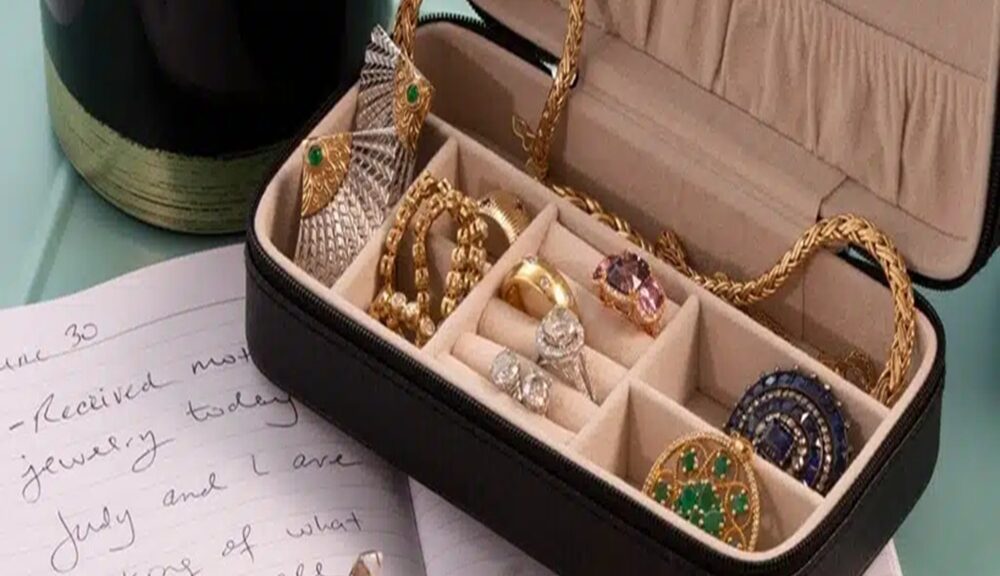
Following weaker-than-expected U.S. and Canada jobs data while gold rebounds to its highest level in weeks, more North Americans are looking around their homes for fast sources of cash … and family jewelry is increasingly becoming the first asset they choose to sell. But, consumer advocates warn that many sellers rush into pawn shops, mail-in buyers, or hotel gold-buying events without ever learning what their jewelry is actually worth, potentially leaving hundreds or even thousands of dollars behind. With gold prices climbing again and household budgets still under pressure, knowing how to value jewelry before selling has become more important than ever.
Why more North Americans are cashing in family jewelry, the biggest resale mistakes consumers make, and how AI is helping sellers avoid pawn shop pricing traps
As inflation, rising household costs, and economic uncertainty continue squeezing family budgets, many Americans are looking around their homes for quick sources of cash. One asset is suddenly attracting renewed attention: old gold and silver jewelry. With precious metal prices near record highs, consumers are increasingly selling inherited jewelry, broken chains, forgotten rings, and unused pieces to generate extra income. But experts warn that the rush to sell is also creating opportunities for lowball offers, misleading valuations, and resale scams that can cost consumers hundreds or even thousands of dollars.
Nidhi Singhvi, Co-Founder and CEO of AI-powered jewelry valuation platform Unvault, has talked extensively about how today’s jewelry resale market works, why so many consumers unknowingly accept offers far below market value, and the simple steps sellers should take before walking into a pawn shop or mailing away valuable pieces. Using AI-powered image analysis, live precious metals pricing, and transparent valuation models, Unvault helps consumers understand what their jewelry may actually be worth before deciding whether to sell. The platform was built specifically to replace the opaque appraisal process that has traditionally dominated the resale market while giving consumers more control over their financial decisions.
According to Unvault, Americans alone may be sitting on an estimated $750 billion usd to $1 trillion usd worth of gold jewelry that is largely untracked and often significantly undervalued by its owners. Add in jewelry collections from Mexican and Canadian families and the numbers get staggering.
As gold prices have climbed, consumer interest has surged, with Unvault reporting rapid growth in jewelry assets being tracked as more people seek transparent valuations before selling.
Keep the following key points in mind when considering selling
Why are soaring gold prices prompting more North Americans to sell jewelry to cover everyday expenses?
What are the biggest red flags that suggest a buyer may be dramatically undervaluing your jewelry?
Why do pawn shop offers and resale quotes vary so widely?
How do you determine whether jewelry should be sold, insured, or held as a long-term asset?
What are the common misconceptions people have about inherited, broken, or outdated jewelry?
How can AI provide a market-based jewelry valuation in under a minute using only photos?
Why should consumers know their jewelry’s value before entering any resale negotiation?
Which types of gold and silver jewelry typically retain the strongest resale value?
What are the safest ways to sell valuable jewelry while protecting against fraud and pricing manipulation?
Research which practical advice is there for maximizing resale value without falling victim to common industry pricing tactics.
Untold millions are sitting on unrecognized cash as most people have jewelry tucked away in a drawer and no clear idea what it’s actually worth … or how to rapidly and safely monetize it. From broken chains and inherited rings to forgotten gold bracelets tucked away in drawers, women and men are realizing that items once viewed as purely sentimental may carry significant financial value at a time when gold prices remain historically elevated and household budgets are tightening..
How To Turn That Stash Into Cash
For years, the only options to turn unwanted jewelry into cash have been those pawn shops as well as local buyers, or resale channels where pricing feels inconsistent and the process lacks transparency and third-party validation. That uncertainty has stopped many consumers from ever trying, leaving potentially valuable items sitting unused. AI is changing that with online tools that now give consumers a fast, transparent way to understand what they have so they can make informed financial decisions.
Today, by simply uploading a photo of a gold necklace, ring or other piece of every day jewelry, users can receive an instant valuation range based on real market data, along with the option to track or sell their items through a more structured process.
“A growing number of households are now reassessing what they already own,” said Nidhi Singhvi, Co-Founder of Unvault , a fintech platform designed to ease and expedite the appraisal and sale of gold jewelry to function as readily monetizable liquid assets. “Jewelry, often dismissed as sentimental rather than financial, is emerging as a hidden source of liquidity. Yet most consumers have no clear understanding of what their pieces are actually worth.”
Unvault is addressing this gap by using AI and live market data to deliver near instant valuations from a simple photo upload, often within 60 seconds. The platform has already processed more than 75,000 valuations and tracks over $50M usd/ $68.5M cad in user assets.
– Gold prices near record highs fueling resale interest (World Gold Council)
– Retail jewelry markups can reach up to 5X intrinsic value
Ugh it’s winter and here in Southern Ontario as I type this we are at the tail end of the Polar Vortex. It’s damn cold out. But there are some things that lend themselves well to “tossing another log on” and staying cozy while enjoying being indoors or perhaps in your heated shop or garage.
In fact, the winter is a great time to take stock and plan for your automotive future. Maybe you’ve packed your summer car away for the season and realized there’s still room for one more, or perhaps you’ve been whiling away the winter daydreaming about the car that got away years ago.
Get Out The Hair Gel
Whatever the case, our friends at Hagerty put together their latest valuation info to find some cool ’80s-vintage North American cars and trucks that we would like to add to our collections, and we think you might agree with at least some of them. Read on brave winter warrior….
The following six vehicles can all be had for less than $25,000 usd/ $35,8300 cad in #3 (Good) condition. That’s a solid starting place for a classic you plan on putting some miles on, and a great place to start if you want a running and driving project that you can cruise to RADwood with. Here then are their excellent picks, in descending order based on value.
1989 Ford Mustang LX 5.0
Ford
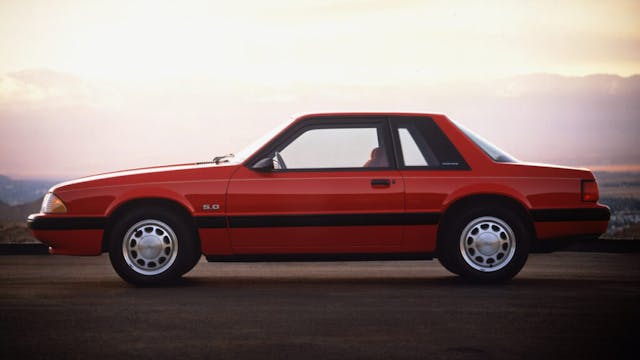
#3 Value: $24,900 usd/ $35,680 cad
The LX was a bit of a sleeper as it had the same EFI 5.0-liter V-8 as the GT without the flashy bits. We like the later Fox-body styling, and while the ’89 comes close to the $25,000 usd price cap, 1987 and 1988 models look just as good and tend to be just a bit more affordable. Of course, four-eyed Fox-body Mustangs (which some of the Hagerty team find more stylish) tend to be even less expensive, but they are also less powerful. One of these later LX models would be a great place to start for a mild build to enjoy the fantastic 5.0-liter soundtrack, as few platforms have the kind of aftermarket behind it that the Fox-body still enjoys.
1987 Buick Regal T-Type Turbo
Mecum
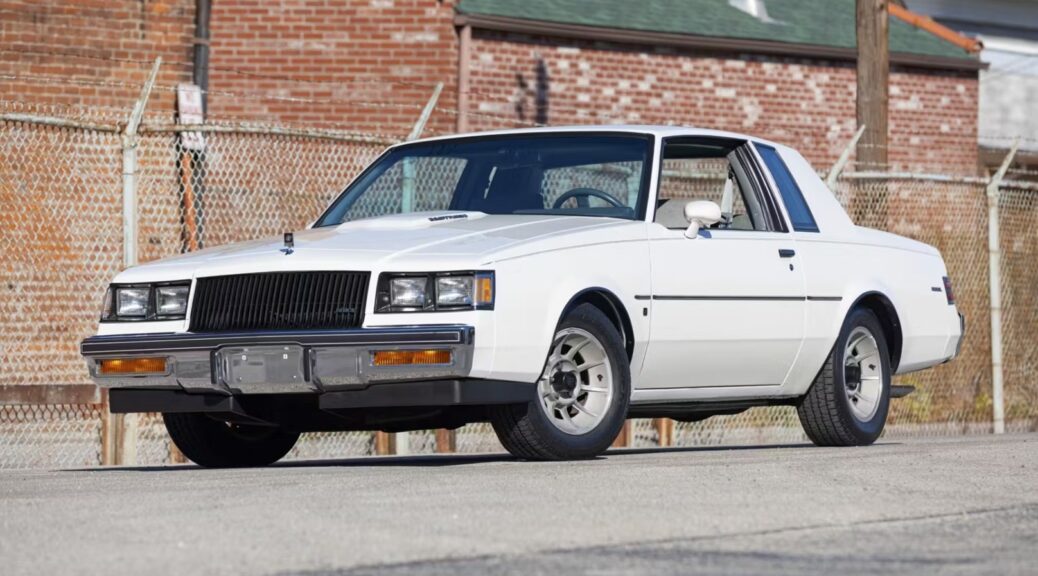
#3 Value: $23,800 usd/ $38,400 cad
Speaking of sleepers, the turbocharged Buicks of the ’80s are some of the most infamous. Even when the sinister black Grand National gained a reputation, the less overt turbocharged Buick models still flew under the radar. The later turbo Buicks were fuel injected and Buick kept improving the punchy 3.8-liter V-6, with final models getting upgraded airflow by way of a new charge cooler, an aluminum intake manifold, and an improved turbocharger. The final tweaks gave 1987 turbo Buicks 245 hp and 355lb-ft of torque. While those numbers aren’t particularly impressive when compared to more modern performance cars (keeping in mind that hp isn’t everything when it comes to performance measurements) , or family sedans for that matter, they put Buicks firmly in the fight for the title of quickest new cars on the market. Their interesting development history makes them a worthy collectible, and the less flashy T-Type is a great entry point at about 35 percent less than a comparable Grand National.
1989 Chevrolet Corvette Callaway
Callaway Cars
#3 Value: $23,800 usd/ $34,100 cad
If 245 horsepower was a lot in 1987 (it was), imagine how exotic a 382hp twin-turbo Corvette must have been. The late Reeves Callaway had a long history of building exciting and powerful Corvettes, and even the earliest models were an ambitious project. The first twin-turbo Corvettes his company turned out in 1987 produced 345 hp, the same rating the first C5 Corvettes would receive with their naturally aspirated LS1 V-8s starting in 1997. Ever improving, Callaway soon had the 350-cubic-inch small-block pumping out 382 hp and 525 lb-ft of torque, making it one of the most powerful cars you could buy. It even came with a 12-month warranty. Just 69 Callaway Twin-Turbo Corvettes were built in 1989 and today their #3 value is just less than the $26,000 usd cost of the B2K RPO code that indicated the rare powertrain option. They might be more trouble to maintain than the rugged and simple 350 that came in everyday C4 Corvettes, but the Callaway Twin-Turbo mill was truly special. It’s also one of the best-looking C4 variants ever created, if you ask us.
1988 Stutz Bearcat
Stutz Motor Car Company
#3 Value: $23,100 usd/ $33,100 cad
The Stutz Bearcat is not well known, and those that do have any knowledge of the low-volume cars probably remember the ’60s iteration, a reemergence of the nameplate, and based on the Pontiac Grand Prix. Few will remember the original: a racy, brass-era runabout, and you can bet that if you arrived at a show in the final version of the Bearcat, based on the third-gen Firebird and sporting a carbon fiber composite body built in Turin, you’d be met with a lot of puzzled looks. Only about a dozen were built on the F-body platform, making them a truly rare sight. While the ubiquitous small-block drivetrain would make them easy to maintain, everything else about the car would be difficult to replace. Still, it’s quite a head-turning piece of American and Italian coachwork.
International Harvester gave its Scout lineup a makeover for its final year, featuring a new grille designed by Dick Hatch that used rectangular headlights. We think that the final grille is a great fit for the simple, blocky trucks and SUVs. The one shown above, with orange and yellow graphics, is practically perfect. While the standard wheelbase Scout II and the stretched Scout Traveler SUV are both outside of our $25,000 usd threshold, the stretched wheelbase Terra pickup is a more affordable entry point to Scout and meets the criteria when equipped with either the six-cylinder Nissan turbodiesel or the 196-cube four-cylinder that used the passenger bank of the company’s venerable 392 V-8. We love these rugged rigs and the Terra, with its 118-inch wheelbase and short overhangs, combines a decent-sized bed with maneuverability that’s appreciated off-road. The final year of Scout production would make an excellent addition to a collection where it could pitch in with its rugged utility and look great doing it.
1989 Chevrolet Camaro IROC-Z
Courtesy Throttlestop/Andrew Marvan
#3 Value: $18,800 usd/ $26,900 cad
Chevrolet’s competitor to the lighter, more angular Mustang GT was the IROC-Z, the performance-oriented F-body that finally got the 350-cubic-inch Tuned-Port Injection (TPI) engine from its big brother, Corvette, starting in 1987. The 5.7-liter powerplant was only available with a four-speed auto as the T5 transmission that fits under the Camaro’s floorplan couldn’t handle the larger motor’s torque. The TPI intake, perched like a spider on top of the engine, featured long runners that favored low-speed torque. Unfortunately the intake, and the engine’s meager cylinder heads, weren’t great at maintaining that torque to get the power numbers up, Still, it competed well against the smaller Ford V-8 in the Mustang. Contemporary reviews praised the IROC-Z’s power, road-holding, steering feel, and traction compared to its Mustang counterpart, but the 5.0-liter Mustangs were formidable opponents. Your choice might come down to brand loyalty or whether you prefer the boxy Fox-body or the sleek F-body. If we found one of these in our garage, we’d be tempted to troll eBay and swap meets for vintage ’80s speed parts to build a day-two IROC-Z for canyons and backroads. But that is just us.
Your home isn’t the just place that you reside and raise your family, it is also an investment. This is why it is important to try and improve the overall value of your house whenever possible. Thus, if you need to sell it in the future, you can end up making quite a profit. Of course, this can only be achieved if you make the right changes to your home. To figure out what these are, keep reading…
Upgrade the Right Parts of Your Home
Believe it or not, only a few sections of your home need to be updated. The rest can be left as is and you can simply modify them with a coat of paint. However, there are some regions that people use more than others. So, by ensuring that they are kept modern and effective, you can boost your home value quite a bit.
In particular, you should upgrade your kitchen and your bathrooms. Now, there is no need to go overboard – a serious overhaul will not provide you with the return on investment that you are looking for. Instead, make changes to improve the look and the functionality of these spaces. Home buyers will look for these modifications in particular.
Add More Rooms
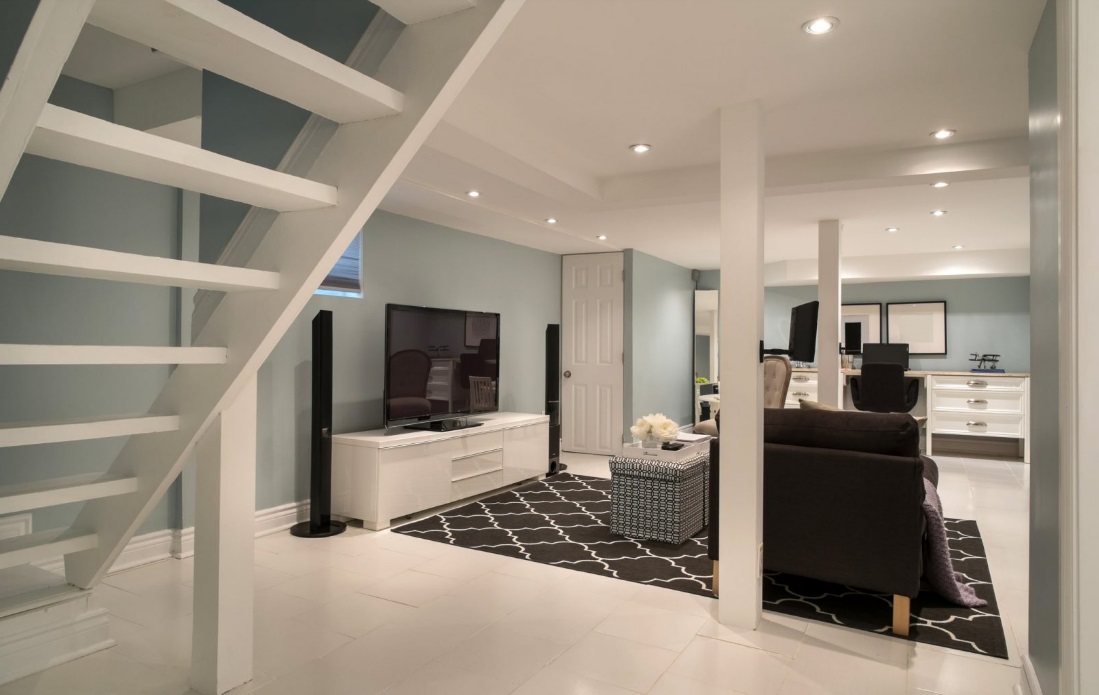
As you can imagine, homes with a greater number of bedrooms are also held in high value. This is why you should try to add one for the lowest price possible. So, instead of building a new space, see if you can convert a current room in your home. For instance, do you have a basement? If so, check out these Penguin Basements ideas to see just how you can transform this space into a functioning, livable area. It is actually a lot easier than you might imagine.
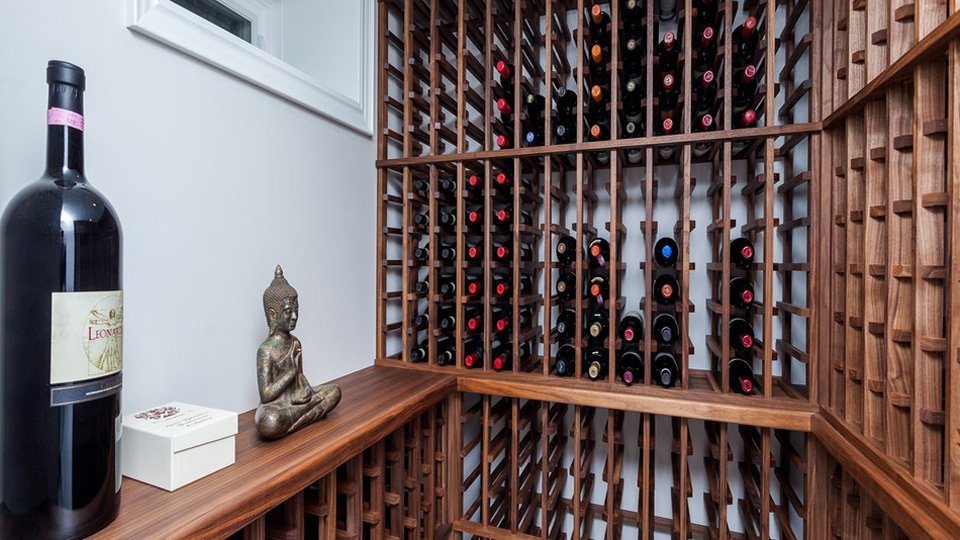
Penguin wine storage solution.
Create a Versatile Space
Even if you don’t want to build an extra bedroom, you should still get a quote for a basement finishing in Brampton. Why? This is because your basement can be used for a number of different purposes. And, while you may not have much need for it, the next family might. Thus, by making sure that it is all cleaned up and waterproofed, you will automatically be creating a versatile space. You will then be able to market this in any way that you want, depending on the people that you would like to sell it to.
Maintain Aesthetic Appeal
As you can imagine, aesthetic appeal can be rather important when selling your home. After all, most home buyers will base much of their decisions on how the house looks. Thus, painting the interior and exterior can go a long way towards boosting value. Not to mention, you should also fix or replace any fixtures or features that are worn out or damaged in any way. Last but certainly not least, make it a point to keep your gardens and curbs in good condition.
These are all of the ways that you can add some serious value to your home. So, if you are considering making any changes, these are the ones that you should begin with.