Tag Archives: artificial intelligence

Former Canada Finance Minister’s Thank-You Letter to WEF Suggests More Collaboration Than Disclosed

Former Finance Minister’s Thank-You Letter to WEF Suggests More Collaboration Than Disclosed
A press photographer works next to the logo of the World Economic Forum (WEF) at the opening of their annual meeting in Davos on Jan. 15, 2024. (Fabrice Coffrini/AFP via Getty Images)
Noé Chartier

By our friends at Epoch Times/ Noé Chartier

Close interactions between Canadian cabinet ministers and the World Economic Forum are well-documented, but a newly revealed letter suggests forum staff may have been doing more work with the federal government than previously disclosed.

In an undated letter to a WEF official, former Finance Minister Bill Morneau praised the organization and its collaboration to achieve “common” objectives.

“I would also like to take this opportunity to express my sincere appreciation to the WEF staff, for the support provided to the Government of Canada,” wrote Mr. Morneau in the letter obtained through the access-to-information regime.

Neither the WEF nor the Canadian government typically advertise what support the forum provides. The finance department has not replied to a request for information about the date of the letter and details of how WEF staff helped the government.

The letter was addressed to Philipp Rösler, a former German politician who served as a WEF manager and head of its Centre for Regional Strategies.

The federal government is known to have been involved in at least two WEF policy initiatives: the Known Traveller Digital Identification (KTDI) project and the Agile Nations network.

Poilievre Reaffirms Ban on WEF Ties in Conservative Party, Calls Davos Crowd ‘Hypocrites’

John Robson: The Feds’ Green Dreams Touted at WEF Are Detached From Reality

KTDI was a pilot project between Canada, the Netherlands, and private sector interests to develop a system of digital credentials for airplane travel between countries. Agile Nations is a group of countries working to streamline regulations to usher in the WEF-promoted “Fourth Industrial Revolution” that includes gene editing and artificial intelligence.

KTDI began in 2018, and Canada signed onto Agile Nations in November 2020, a few months after Mr. Morneau resigned during the WeCharity scandal. Both projects were worked on while Mr. Morneau was finance minister from 2015 to 2020.

Since both these projects fell outside of Mr. Morneau’s portfolio as finance minister, it seems to suggest that his letter of appreciation to the WEF was referring to other joint collaborations.

Canada's then-minister of Finance Bill Morneau speaks to the Canadian Club of Canada in Toronto, on March 6, 2020. (Cole Burston/The Canadian Press)
Canada’s then-minister of Finance Bill Morneau speaks to the Canadian Club of Canada in Toronto, on March 6, 2020. (Cole Burston/The Canadian Press)

The WEF’s mission statement says it is dedicated to “improving the state of the world.” It gathers leaders in the fields of politics, business, and activism to promote progressive policies on issues like climate change and making capitalism more “inclusive.” As is routine with the organization, it did not respond to requests for comment.

Critics of the WEF, which gathers world elites to shape global policies, often disagree with its progressive agenda and warn about its influence on countries.

“No staff, no ministers, no MPs in my caucus will be involved whatsoever in that organization,” Conservative Party Leader Pierre Poilievre said in January.

He added that officials who attend the forum’s annual meeting in Davos are “high flying, high tax, high carbon hypocrites” who travel in private jets while telling average citizens not to “heat their homes or drive their pickup trucks.”

Alberta Premier Danielle Smith has also criticized the WEF, saying in 2022 she finds it “distasteful when billionaires brag about how much control they have over political leaders, as the head of that organization has.”

Ms. Smith was likely referring to comments made by WEF founder and chairman Klaus Schwab in 2017, when he said said he was “very proud” to “penetrate the cabinets” of world governments, including that of Prime Minister Justin Trudeau.

“I know that half of his cabinet or even more than half of his cabinet are actually Young Global Leaders of the World Economic Forum,” Mr. Schwab told an audience at Harvard University.

WEF founder Klaus Schwab delivers a speech during the "Crystal Award" ceremony at the World Economic Forum annual meeting in Davos, on Jan. 16, 2023. (Fabrice Coffrini/AFP via Getty Images)
WEF founder Klaus Schwab delivers a speech during the “Crystal Award” ceremony at the World Economic Forum annual meeting in Davos, on Jan. 16, 2023. (Fabrice Coffrini/AFP via Getty Images)

Davos Links

Mr. Morneau’s letter to the WEF comes from internal Finance Department records and is the only document in the release package that pertains to Mr. Morneau. It consists mostly of praise for the organization.

“As a Steward of Economic Growth and Social Inclusion, I have had the privilege of observing first-hand and benefiting from the WEF’s important contributions to foster public and private collaboration towards developing concrete solutions for strong, broad-based economic growth,” he wrote, adding that WEF analysis of different topics such as “structural reform priorities” was “helpful to develop substantive policy measures.”

He wrote that “as we enter another ambitious year for the WEF, I look forward to a continued fruitful collaboration to pursue our common objective of achieving stronger, sustainable and more inclusive growth.”

Other department records relate to current Finance Minister Chrystia Freeland and her involvement with the WEF. She is a board member of the forum and also an alumnus of the Young Global Leaders program that Mr. Schwab referenced.

Mr. Morneau, who resigned as minister in 2020, is listed on the WEF website as an “agenda contributor“ and a ”digital member.” He was a regular participant at the group’s annual meetings in Davos, Switzerland, while he was in office.

During those years, the Finance Department’s media relations office wasn’t shy about advertising ministerial trips to Davos.

“Canada’s strong presence at the Forum underscores the importance of this meeting for shaping the international agenda and advancing economic opportunities for Canadians,” read a January 2020 press release from the department announcing Mr. Morneau’s trip.

The Finance Department has not returned inquiries in recent years pertaining to Ms. Freeland’s involvement with the WEF, nor has it issued press releases referencing her involvement.

Some have questioned whether Ms. Freeland’s role as deputy prime minister and finance minister as well as a forum board member constitutes a conflict of interest. The Office of the Conflict of Interest and Ethics Commissioner said in its 2022 annual report it received more than 1,000 requests in a two-month period from members of the public to investigate the participation of MPs and ministers in the WEF.

The office said the requests “did not provide sufficient information to warrant an investigation.” Ms. Freeland’s leadership position with the WEF has been declared to the office and has therefore been cleared.

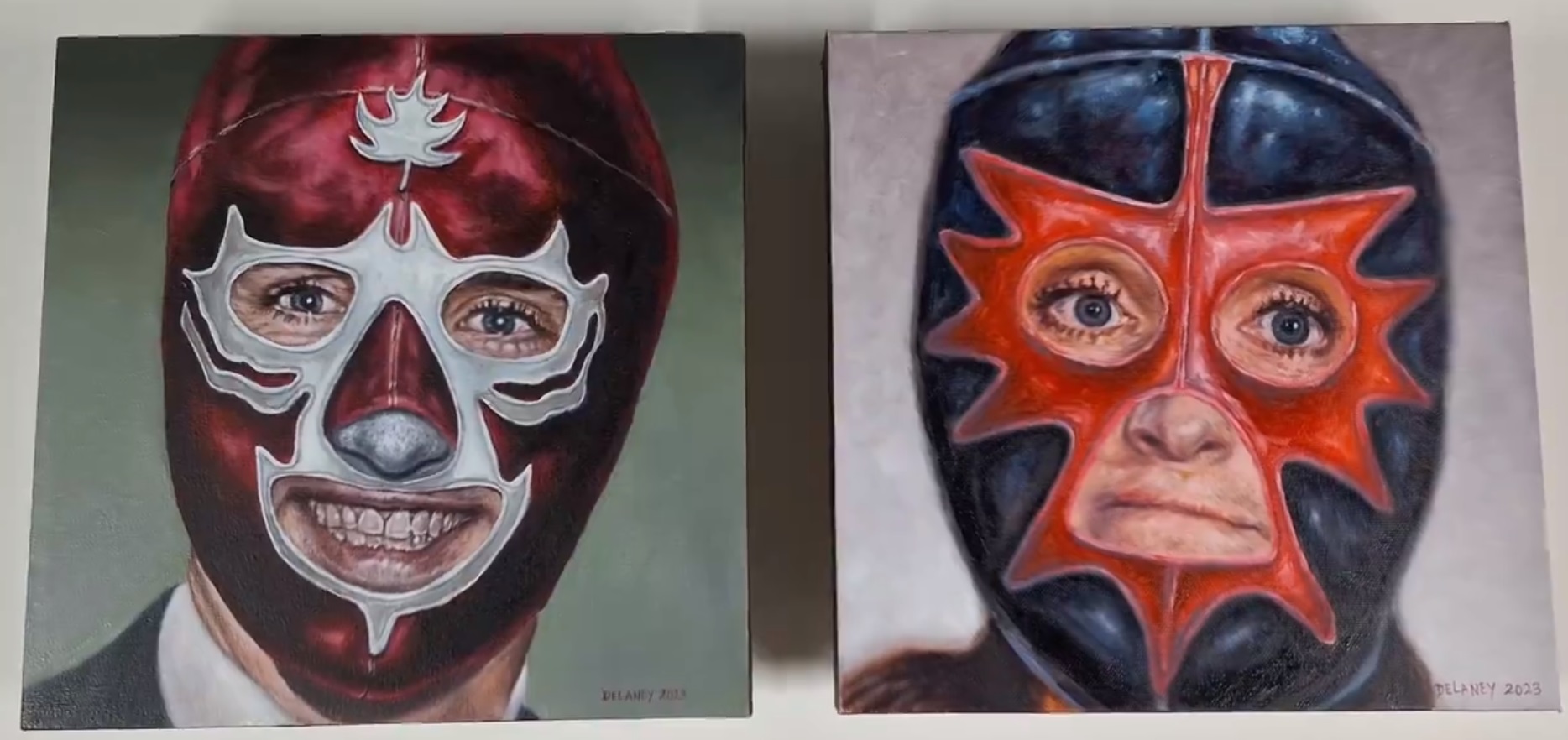
Featured image: Original paintings by R. Delaney.

How AI Is Transforming Wine Selection and Curation

The meeting and event planning industry is experiencing a significant transformation amid an era where the vintage charm of wine meets the cutting-edge sharpness of Artificial Intelligence (AI). This renaissance, characterized by a blend of tradition with technology, is reshaping the essence of event-driven wine selection, moving away from the notion that tech seeks to replace tradition. Instead, it introduces a paradigm of harmonious enhancement, where data-driven precision and the sommelier’s artistry converge, creating a personalized wine journey for every guest’s palate as detailed in the narrative below.

To discuss AI’s impact on the meeting and events industry, I would love to connect you with Angel or Arsalan Vossough, CEO and CTO of BetterAI, develooper of the “VinoVoss” AI Sommelier — a wine search engine and recommendation system revolutionizing the $39B usd/ $53B cad wine sector.

Tech Meets Tannins:
A.I. Transforming Preference-Based Wine Curation for Event Clientele


4.png

The days when the sommelier’s intuition, refined through years of experience and sensory development, solely guided wine selection are evolving. AI, with its vast collection of data and analytical capabilities, steps into the domain as a digital sommelier, marking a critical shift from purely tradition-led approaches. This integration signifies a future where wine recommendations are enhanced by data analytics, achieving a level of personalization and precision once thought impossible.

This shift from traditional expertise to technological innovation in wine selection is reflective of a broader transformation within event planning. AI’s role extends beyond wine selection, revolutionizing aspects from operational logistics to enhancing guest experiences. By leveraging predictive analytics, AI provides planners with deep insights into guest preferences, optimizes inventory management, and significantly cuts waste. This ability to personalize wine lists to the individual tastes of attendees, a feature once reserved for high-end, exclusive gatherings, is now accessible on a larger scale. This transition not only ensures that each wine selection deeply resonates with attendees’ unique preferences but also illustrates the industry’s wider adoption of innovation, prioritizing customization and quality in every aspect of event planning.


The AI-Driven Transformation in Wine Selection

Crafting Personalized Wine Journeys

three-colleagues-using-digital-tablet-in-the-b.jpg

At the heart of Artificial Intelligence (AI)’s transformative influence within the event planning sphere is its unparalleled ability in providing wine recommendations to align perfectly with individual preferences. This capability is not just about selection but about creating a narrative for each event that is as unique as the guests themselves. By meticulously analyzing vast datasets that include a wide range of variables—from individual guest tastes profile and detailed consumption patterns to the dynamic ups and downs of emerging wine trends—AI crafts wine selections that resonate deeply with the event’s demographic profile. Each recommendation is more than a suggestion; it’s a reflection of the event’s ethos, designed to enhance the dining experience profoundly.

Predictive Analytics: Looking into the Wine Future

Positioned at the forefront of wine selection, AI leverages the power of predictive analytics to cast a visionary gaze into the future of guest expectations and wine trends. This innovative approach advances traditional selection methods by empowering event planners with the ability to not just respond to current tastes but to anticipate and shape them. By using sophisticated algorithms, AI scans through historical data and current market analyses to predict which wines will captivate and delight attendees, opening the way for the introduction of emerging varietals and regions. This strategic approach allows for a level of exploration and discovery that enhances the event experience, inviting guests on a wine journey that is both educational and experiential.

Furthermore, the scope of predictive analytics in wine selection extends beyond individual choices to provide a broader understanding of global shifts in the wine industry. From climate change impacts on vineyard yields to innovations in winemaking techniques, AI’s predictive capabilities offer event planners a curated window into the wine world’s future. This comprehensive approach ensures that wine lists are not just reflective of contemporary tastes but are also forward-thinking, positioning events at the cutting edge of culinary innovation and offering guests a taste of the future, today. In doing so, AI doesn’t simply predict preferences; it helps define them, crafting personalized wine journeys that are as visionary as they are satisfying.

Operational Efficiency Through AI

Streamlining Inventory, Embracing Sustainability


5.png

In the world of event planning, the development of Artificial Intelligence (AI) has catalyzed a revolution in operational efficiency, particularly in the domain of inventory management. By utilizing AI’s advanced predictive capabilities, event planners can now make sure that wine orders are carefully aligned with the anticipated demand of each unique event. This precision in forecasting addresses one of the industry’s major challenges—excess inventory and waste—head-on. AI’s ability to analyze past event data, current consumption trends, and even guests’ preferences means that every bottle ordered has a purpose, significantly reducing the likelihood of surplus stock that contributes to waste.

This strategic reduction in waste not only demonstrates a commitment to environmental sustainability but also translates directly into notable cost savings for event organizers. By purchasing only what is needed, events can operate more leanly and efficiently, passing on the benefits of reduced costs to clients while also contributing positively to the planet. This dual advantage spotlights the pivotal role AI plays in driving forward an event planning paradigm that is both economically viable and ecologically responsible.

Moreover, AI’s analytical insights extend beyond just numbers, offering event planners guidance on selecting wines from vineyards and producers committed to sustainable practices. This approach enables events to not only offer of a curated wine selection that is exceptional and environmentally friendly but also aligns with the growing societal demand for responsible consumption. By aligning wine selections with sustainable practices, AI allows event planners to contribute to a larger narrative of environmental responsibility, setting a new standard for the industry.

Synergy Between AI and Human Expertise

Elevating the Sommelier’s Craft


2.png

The integration of Artificial Intelligence (AI) into the process of wine selection marks not the end but a significant transformation in the role of the sommelier. This evolution is characterized by the seamless merging of AI’s analytical strengths with the sommelier’s deep understanding of wine, culture, and personal guest interactions. AI’s entry into this domain provides sommeliers with a suite of tools that enrich their ability to tailor wine selections to the precise preferences and tastes of attendees. By accessing AI-generated insights into guest preferences, historical consumption data, and predictive trends, sommeliers are empowered to provide wine experiences that are deeply personalized, enhancing the dining experience in a way that was previously unimaginable.

This synergy between AI and human expertise allows sommeliers to transcend traditional boundaries, enabling them to craft compelling narratives around each bottle. These stories, woven from the rich history of the wine’s heritage, its journey from grape to glass, and its unique flavor profile, transform each tasting into a memorable experience. The collaboration between AI and sommeliers ensures that the human element of wine selection—the personal touch that elevates a meal into an experience—remains intact, blending the precision of technology with the irreplaceable warmth and authenticity of human interaction.

Balancing the Algorithmic with the Authentic

In the delicate dance between leveraging AI and maintaining the authenticity of wine service, the art of sommeliership shines brighter than ever. While AI provides a powerful platform for enhancing operational efficiency and delivering exceptional personalization in wine selection, it is the sommelier who infuses these recommendations with life. The sommelier’s role shifts from mere selection to that of a storyteller, an educator, and a bridge between the guest and the intricate world of wines. This balance between the algorithmic accuracy of AI and the authentic, personal touch of the sommelier ensures that wine selection remains an art form—a deeply human endeavor that connects, enchants, and leaves a lasting impression on guests.

1.png

The collaborative relationship between AI and sommeliers doesn’t dilute the human aspect of wine service but rather enhances it, ensuring that each recommendation carries with it a story worth telling. This unique partnership introduces a new chapter in wine selection, one where technology and tradition combine to create experiences that are not only personalized but deeply resonant. The future of wine service, thus, lies in this harmonious blend, where AI opens the door to possibilities that were previously unexplored, and sommeliers guide guests through a journey that is as enriching as it is delightful, marking each event with the signature of unforgettable excellence.

Navigating the Challenges

The Ethical Aspects of Data Use

In the quest to utilize Artificial Intelligence (AI) for enhancing wine selection processes, the ethical handling of data stands as a crucial concern. As AI systems delve deep into personal preferences and consumption patterns to deliver personalized wine recommendations, the need to protect guest privacy increases. This requires not only the implementation of robust data protection measures but also the development of ethical frameworks that govern the use of such data. The goal is to develop a trust-based relationship with guests, reassuring them that their personal information is handled with the highest care and respect. This foundational commitment to privacy and ethical data usage is vital in maintaining the integrity of the digital transformation in wine selection. It’s about ensuring that the technological advancement enhances the guest experience without damaging the trust that is essential to the hospitality industry.

Overcoming Technological and Cultural Barriers

The integration of AI into the traditional art of wine selection introduces a complex set of technological and cultural hurdles. Technological challenges such as system compatibility, data integration, and the seamless operation of AI within existing event planning infrastructures present tangible obstacles. Concurrently, cultural challenges emerge, rooted in skepticism towards the role of technology in an area traditionally dominated by human expertise. Overcoming these barriers necessitates a multifaceted approach:

  • Education is key in demystifying AI and showcasing its value as a tool for enhancing rather than replacing the sommelier’s role.
  • Transparent communication plays a crucial role in addressing concerns and setting realistic expectations about what AI can and cannot do.
  • A focus on AI as an enhancer of human expertise rather than a competitor is essential in shifting perceptions and creating a culture of acceptance.

Together, these strategies form the foundation of a successful transition to AI-enhanced wine curation, bridging the gap between technological innovation and the timeless tradition of personalized wine selection. By addressing these challenges head-on, the event planning industry can fully embrace the benefits of AI, ensuring a future where technology and tradition coexist in harmony to create enriched, personalized wine experiences.

Envisioning the Future

The Next Frontier in Wine Recommendation


As machine learning algorithms become increasingly sophisticated, the future of wine recommendation looks promising. AI’s ability to analyze complex patterns and preferences suggests a horizon where every wine selection is not just personalized but also, anticipating guests’ desires before they even articulate them. This is not just about enhancing the event experience but about reimagining the possibilities of personalization.

The implications of AI in wine curation hint at a broader transformation in event planning. From menu customization to entertainment selection, AI’s potential to personalize every aspect of the event experience is vast. This future, where every detail is personalized to the guest’s tastes, brings a new era of event planning, characterized by a high level of customization and engagement.

The fusion of technology and tradition in wine selection represents more than a shift in methodology; it signifies a fundamental change in how we approach the planning of and execute event planning. As AI continues to weave its narrative through the tapestry of event planning, its promise extends beyond operational efficiency or personalized recommendations. It offers a glimpse into a future where every event is a reflection of the guests’ deepest preferences, a celebration not just of the occasion but of the individuality of each attendee. In this future, tech meets tannins, not as adversaries but as allies, crafting experiences that connect on a personal level, setting a new standard for what events can aspire to be. For the Silo, Arsalan Vossough.


Arsalan Vossough, CTO and Co-Founder of BetterAI, specializes in advanced AI technologies, including Machine Learning and NLP. Solutions include “VinoVoss” (www.VinoVoss.com ), a semantic search and recommendation system creating a virtual wine sommelier. The Silicon Valley-headquartered BetterAI excels in developing cutting-edge AI solutions, and is aptly leveraging leading edge technologies like AI, Machine Learning, Generative AI, Natural Language Processing, and Computer Vision to hone transformative solutions. It’s VinoVoss platform empowers users to make highly-informed decisions about their wine selections, explore new varietals, find new favorites and even rediscover old gems quicker and easier than ever before. With a background in quantitative finance and teaching, Arsalan has a Bachelor’s in Computer Engineering, an MBA from Corvinus University, and a Data Science Master’s from UC Berkeley, graduating with honors. Connect with Arsalan at www.BetterAI.io.

AI Governance Alliance Calls for Inclusive Access to Advanced Artificial Intelligence


World Economic Forum’s AI Governance Alliance says a global effort is needed to create equitable access to artificial intelligence. Artificial intelligence holds the potential to address global challenges, but it also poses risks of widening existing digital divides or creating new ones. Three new Forum papers offer recommendations on building safe systems and technologies, ensuring responsible applications and transformation, and advancing resilient governance and regulation.

Davos-Klosters, Switzerland, 18 January 2024 – The AI Governance Alliance (AIGA) released today a series of three new reports on advanced artificial intelligence (AI). The papers focus on generative AI governance, unlocking its value and a framework for responsible AI development and deployment.
 
The alliance brings together governments, businesses and experts to shape responsible AI development applications and governance, and to ensure equitable distribution and enhanced access to this path-departing technology worldwide.
 
“The AI Governance Alliance is uniquely positioned to play a crucial role in furthering greater access to AI-related resources, thereby contributing to a more equitable and responsible AI ecosystem globally,” says Cathy Li, Head, AI, Data and Metaverse, World Economic Forum. “We must collaborate among governments, the private sector and local communities to ensure the future of AI benefits all.”
 
AIGA is calling upon experts from various sectors to address several key areas. This includes improving data quality and availability across nations, boosting access to computational resources, and adapting foundation models to suit local needs and challenges. There is also a strong emphasis on education and the development of local expertise to create and navigate local AI ecosystems effectively. In line with these goals, there is a need to establish new institutional frameworks and public-private partnerships along with implementing multilateral controls to aid and enhance these efforts.
 
While AI holds the potential to address global challenges, it also poses risks of widening existing digital divides or creating new ones. These and other topics are explored in a new briefing paper series, released today and crafted by AIGA’s three core workstreams, in collaboration with IBM Consulting and Accenture. As AI technology evolves at a rapid pace and developed nations race to capitalize on AI innovation, the urgency to address the digital divide is critical to ensure that billions of people in developing countries are not left behind.
 
On international cooperation and inclusive access in AI development and deployment, Generative AI Governance: Shaping Our Collective Global Future – from the Resilient Governance and Regulation track – evaluates national approaches, addresses key debates on generative AI, and advocates for international coordination and standards to prevent fragmentation.
 
Unlocking Value from Generative AI: Guidance for Responsible Transformation – from the Responsible Applications and Transformation track – provides guidance on the responsible adoption of generative AI, emphasizing use case-based evaluation, multistakeholder governance, transparent communication, operational structures, and value-based change management for scalable and responsible integration into organizations.
 
In addition, for optimized AI development and deployment, a new Presidio AI Framework: Towards Safe Generative AI Models – from the Safe Systems and Technologies track – addresses the need for standardized perspectives on the model lifecycle by creating a framework for shared responsibility and proactive risk management.
 
AIGA also seeks to mobilize resources for exploring AI benefits in key sectors, including healthcare and education.
 
Quotes from the initiative:
 
“As we witness the rapid evolution of artificial Intelligence globally, the UAE stands committed to fostering an inclusive AI environment, both within our nation and throughout the world. Our collaboration with the World Economic Forum’s AI Governance Alliance is instrumental in making AI benefits universally accessible, ensuring no community is left behind. We are dedicated to developing a comprehensive and forward-thinking AI and digital economy roadmap, not just for the UAE but for the global good. This roadmap is a testament to our belief in AI as a tool for universal progress and equality, and it embodies our commitment to a future where technology serves humanity in its entirety.” – H.E. Omar Sultan Al Olama, Minister of State for Artificial Intelligence, Digital Economy and Remote Work Applications of the United Arab Emirates
 
“Rwanda’s participation in the AI Governance Alliance aims to ensure Rwanda and the region do not play catch up in shaping the future of AI governance and accessibility. In line with these efforts, Rwanda’s Centre for the Fourth Industrial Revolution, in collaboration with the World Economic Forum, will host a high-level summit on AI in Africa towards the end of 2024, creating a platform to engage in focused and collaborative dialogue on the role of AI shaping Africa’s future. The event’s primary goal will be to align African countries on common risks, barriers, and opportunities and, ultimately, devise a unified strategy for AI in Africa.” – Paula Ingabire, Minister of Information Communication Technology and Innovation of Rwanda
 
“IBM continues to drive responsible AI and governance. We all have an obligation to collaborate globally across corporations, governments and civil society to create ethical guardrails and policy frameworks that will inform how generative AI is designed and deployed. IBM is proud to work with the Forum’s AI Governance Alliance as the knowledge partner for this paper series.” – Gary Cohn, IBM Vice-Chairman
.
“The evolution of AI is unique in that the technology, regulation and business adoption are all accelerating exponentially at the same time. It’s critical that the public and private sector come together to share insights, resources and best practices for building and scaling AI responsibly. Leaders in this space must prioritize inclusive AI so that the benefits of this technology are shared in all parts of the world, including emerging markets. The Forum’s three-part briefing paper series offers insightful considerations across responsible applications, governance and safety to empower businesses, respect people and benefit society.” – Paul Daugherty, Chief Technology Innovation Officer, Accenture.

Disinformation Tops Global Risks 2024 

  • Misinformation and disinformation are biggest short-term risks, while extreme weather and critical change to Earth systems are greatest long-term concern, according to Global Risks Report 2024.
  • Two-thirds of global experts anticipate a multipolar or fragmented order to take shape over the next decade.
  • Report warns that cooperation on urgent global issues could be in short supply, requiring new approaches and solutions.
  • Read the Global Risks Report 2024 here, discover the Global Risks Initiative, watch the press conference here, and join the conversation using #risks24.

Geneva, Switzerland, January 2024 – Drawing on nearly two decades of original risks perception data, the World Economic Forum’s Global Risks Report 2024 warns of a global risks landscape in which progress in human development is being chipped away slowly, leaving states and individuals vulnerable to new and resurgent risks. Against a backdrop of systemic shifts in global power dynamics, climate, technology and demographics, global risks are stretching the world’s adaptative capacity to its limit.

These are the findings of the Global Risks Report 2024, released today, which argues that cooperation on urgent global issues could be in increasingly short supply, requiring new approaches to addressing risks. Two-thirds of global experts anticipate a multipolar or fragmented order to take shape over the next decade, in which middle and great powers contest and set – but also enforce – new rules and norms.

The report, produced in partnership with Zurich Insurance Group and Marsh McLennan, draws on the views of over 1,400 global risks experts, policy-makers and industry leaders surveyed in September 2023. Results highlight a predominantly negative outlook for the world in the short term that is expected to worsen over the long term. While 30% of global experts expect an elevated chance of global catastrophes in the next two years, nearly two thirds expect this in the next 10 years.

“An unstable global order characterized by polarizing narratives and insecurity, the worsening impacts of extreme weather and economic uncertainty are causing accelerating risks – including misinformation and disinformation – to propagate,” said Saadia Zahidi, Managing Director, World Economic Forum. “World leaders must come together to address short-term crises as well as lay the groundwork for a more resilient, sustainable, inclusive future.” 

Rise of disinformation and conflict

Concerns over a persistent cost-of-living crisis and the intertwined risks of AI-driven misinformation and disinformation, and societal polarization dominated the risks outlook for 2024. The nexus between falsified information and societal unrest will take centre stage amid elections in several major economies that are set to take place in the next two years. Interstate armed conflict is a top five concern over the next two years. With several live conflicts under way, underlying geopolitical tensions and corroding societal resilience risk are creating conflict contagion.

Economic uncertainty and development in decline
The coming years will be marked by persistent economic uncertainty and growing economic and technological divides. Lack of economic opportunity is ranked sixth in the next two years. Over the longer term, barriers to economic mobility could build, locking out large segments of the population from economic opportunities. Conflict-prone or climate-vulnerable countries may increasingly be isolated from investment, technologies and related job creation. In the absence of pathways to safe and secure livelihoods, individuals may be more prone to crime, militarization or radicalization.

Planet in peril


Environmental risks continue to dominate the risks landscape over all timeframes. Two-thirds of global experts are worried about extreme weather events in 2024. Extreme weather, critical change to Earth systems, biodiversity loss and ecosystem collapse, natural resource shortages and pollution represent five of the top 10 most severe risks perceived to be faced over the next decade. However, expert respondents disagreed on the urgency of risks posed – private sector respondents believe that most environmental risks will materialize over a longer timeframe than civil society or government, pointing to the growing risk of getting past a point of no return.

Responding to risks


The report calls on leaders to rethink action to address global risks. The report recommends focusing global cooperation on rapidly building guardrails for the most disruptive emerging risks, such as agreements addressing the integration of AI in conflict decision-making. However, the report also explores other types of action that need not be exclusively dependent on cross-border cooperation, such as shoring up individual and state resilience through digital literacy campaigns on misinformation and disinformation, or fostering greater research and development on climate modelling and technologies with the potential to speed up the energy transition, with both public and private sectors playing a role.

Carolina Klint, Chief Commercial Officer, Europe, Marsh McLennan, said: “Artificial intelligence breakthroughs will radically disrupt the risk outlook for organizations with many struggling to react to threats arising from misinformation, disintermediation and strategic miscalculation. At the same time, companies are having to negotiate supply chains made more complex by geopolitics and climate change and cyber threats from a growing number of malicious actors. It will take a relentless focus to build resilience at organizational, country and international levels – and greater cooperation between the public and private sectors – to navigate this rapidly evolving risk landscape.”

John Scott, Head of Sustainability Risk, Zurich Insurance Group, said: “The world is undergoing significant structural transformations with AI, climate change, geopolitical shifts and demographic transitions. Ninety-one per cent of risk experts surveyed express pessimism over the 10-year horizon. Known risks are intensifying and new risks are emerging – but they also provide opportunities. Collective and coordinated cross-border actions play their part, but localized strategies are critical for reducing the impact of global risks. The individual actions of citizens, countries and companies can move the needle on global risk reduction, contributing to a brighter, safer world.”

About the Global Risks Initiative


The Global Risks Report is a key pillar of the Forum’s Global Risks Initiative, which works to raise awareness and build consensus on the risks the world faces, to enable learning on risk preparedness and resilience. The Global Risks Consortium, a group of business, government and academic leaders, plays a critical role in translating risk foresight into ideas for proactive action and supporting leaders with the knowledge and tools to navigate emerging crises and shape a more stable, resilient world.

Seven Steps For Countries To Regulate Generative AI In Education

Generative artificial intelligence (GenAI) tools have far-reaching implications for education and research. 

Yet the education sector today is largely unprepared for the ethical and pedagogical integration of these powerful and rapidly evolving technologies.

A recent UNESCO global survey of over 450 schools and universities showed that less than 10% of them had policies or formal guidance on the use of GenAI applications, largely due to the absence of national regulations. And only seven countries have reported that they had developed or were developing training programmes on AI for teachers.

That is why UNESCO has developed and released the first-ever global Guidance for Generative AI in Education and Research to support countries amidst the rapid emergence of GenAI technologies.

The new guidance, recently launched during UNESCO’s flagship event Digital Learning Week in Paris, calls on countries to implement appropriate regulations, policies, and human capacity development, for ensuring a human-centred vision of GenAI for education and research. 

What the guidance is proposing

The guidance presents an assessment of potential risks GenAI could pose to core humanistic values. It offers concrete recommendations for policy-makers and institutions on how the uses of these tools can be designed to protect human agency and genuinely benefit students, teachers and researchers.

The guidance proposes seven key steps for governmental agencies to regulate the use of GenAI in education:

Step 1: Endorse international or regional General Data Protection Regulations or develop national ones. The training of GenAI models has involved collecting and processing online data from citizens across many countries. The use of data and content without consent is further challenging the issue of data protection.

Step 2: Adopt/revise and fund national strategies on AI. Regulating generative AI must be part and parcel of broader national AI strategies that can ensure safe and equitable use of AI across development sectors, including in education.

Step 3: Solidify and implement specific regulations on the ethics of AI. In order to address the ethical dimensions posed by the use of AI, specific regulations are required.

Step 4: Adjust or enforce existing copyright laws to regulate AI-generated content: The increasingly pervasive use of GenAI has introduced new challenges for copyright, both concerning the copyrighted content or work that models are trained on, as well as the status of the ‘non-human’ knowledge outputs they produce.

Step 5: Elaborate regulatory frameworks on generative AI: The rapid pace of development of AI technologies is forcing national and local governance agencies to speed up their renewal of regulations.

Step 6: Build capacity for proper use of GenAI in education and research: Schools and other educational institutions need to develop capacities to understand the potential benefits and risks of GenAI tools.

Step 7: Reflect on the long-term implications of GenAI for education and research: The impact and the implications of GenAI for knowledge creation, transmission and validation – for teaching and learning, for curriculum design and assessment, and for research and copyright.

A human-centered vision for digital learning and AI

The guidance is anchored in a humanistic approach to education that promotes human agency, inclusion, equity, gender equality, cultural and linguistic diversity, as well as plural opinions and expressions. In line with UNESCO’s Recommendation on the Ethics of Artificial Intelligence and the Beijing Consensus on Artificial Intelligence in Education, it also responds to the flagship report, Reimagining our futures together: A new social contract for education which calls to redefine the relationship between humans and technology.

UNESCO is committed to steering technology in education, guided by the principles of inclusion, equity, quality and accessibility. The latest Global Education Monitoring Report on technology in education highlighted the lack of appropriate governance and regulation. UNESCO is urging countries to set their own terms for the way technology is designed and used in education so that it never replaces in-person, teacher-led instruction, and supports the shared objective of quality education for all.

Making Life Easy With Easier Parking

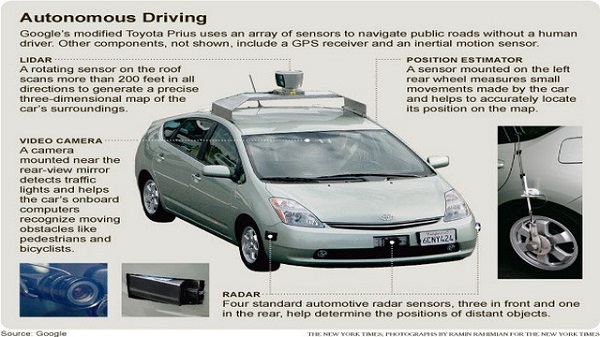
With driverless cars already on the streets, will there be similar AI breakthroughs in the future of parking?

In the ’60s, The Jetsons, a cartoon about a family living in the future, featured a flying car that folded down into a briefcase when not in use. It is unlikely that we will ever see that solution to parking become a reality, but many other sci-fi books and films have predicted self-driving vehicles, and we know they are coming because they kind of exist today.

future of parking
Parking facilities in the future must make allowances for electric vehicles. (Photo by guteksk7/Shutterstock)

While brands like Tesla have pushed the boundaries of driver assistance to become a version of self-driving, including parking the vehicle automatically, currently the parking infrastructure has not really kept up. 

But we know that cannot continue, and the reality is that as transport technology evolves, parking solutions will have to evolve as well. But what does that mean long term? Will we be able to arrive at a parking center, get out and leave the car to it, then call it back to us when we want to leave? That seems like the dream approach to parking, but what does it need to make it happen? 

Parking tech

There are two parts to that kind of service, the technology in the car park itself, and the technology within the car. For such a seamless experience, the two will need to work together, in that the vehicle must be able to drive autonomously, but also receive information about parking locations and when it should return to the entrance, from the car park itself. Both sets of technology actually exist today, not as refined as required for a reliable autonomous parking experience, but that is only a matter of time and development. But is it the right answer? 

Right now, parking systems know which cars are parked where within the car park, this data is used to establish remaining capacities and so on, and while not universal, there are cars that can go off and park themselves when needed. So that future service is nearer than we think, but in the meantime what does car parking look like? Some may say that the future is already here without needing self-driving cars.

In Japan and some cities in the US, lift-based parking solutions offer a similar experience today. You arrive at a parking garage; your vehicle is pulled into a cubicle which is then lifted away. When you want to return to your car, the system finds the right cubicle garage and then returns it to the entrance, so you can drive away. 

There are advantages to this approach, without the need for ramps to drive up and down to reach the parking, more cars can be parked in a given space. Because no one actually enters the building where vehicles are stored, it is also incredibly secure too. These systems are being constantly refined, and in the future, it is likely such a garage could be completely automated. With the advantages of space and security, is that more likely to be the future of high-density parking? If we look at other factors, it may well be. 

Cities are increasingly looking to decrease car numbers, opening up spaces instead for social areas, encouraging cycling and other more environmentally friendly approaches to transportation. This is unlikely to change even with the widespread adoption of electric cars, so parking will naturally require large hubs with high-density parking that allows easy access to walks, bikes or public transport to central areas. To get an idea for the future of parking, we can look at what technology best fits this scenario. 

Robotic Solutions

It is likely that these robotic lift-type solutions that pack more vehicles into each parking area fit the needs of city designers better than any more traditional multi-story or underground system that requires ramps and so on, whether the cars are operated by drivers or park themselves. There are other things that are in favor of this approach too. 

Architects are under pressure to soften the appearance of buildings in cities across the world, to create spaces that have more light and elegance. A more compact multi-story space, or an underground alternative with only one small entrance space is easier to disguise with cladding, color and other design tricks that much larger car parks that have ramps and so on. 

There is also the matter of technology. While there are cars that can drive themselves in a limited way now, and numbers are only going to increase, they are not all cars, and may never be. Holden stopped making cars in 2020, but in 20 years’ time, there will still be Holden cars driving on the roads. Those cars can never use autonomous parking systems, but they can use the robotic systems that take your car away and bring it back via a crane lift. They can use them today, and they can use them in the future. 

Machine learning to park

So, the dream of a car swooshing away into its own spot automatically could well be the future. However, it is more likely to be carried there by a machine rather than drive itself. But not all parking is in cities with integrated parking solutions ran by the local authorities. For parking elsewhere, things will develop alongside vehicle technology, and there is one area that must advance for the future of the automotive industry itself, never mind parking. That is electric car charging

Right now, charging is a bit of a mess: different speeds depending on the charger installation, there is no real cohesive system and owners often have to wrestle with a number of different apps to access charging networks on the go. Then there are the mechanics of charging, a heavy cable that has to be plugged in, account information and payment input before the car can be charged. As with phones, wireless charging is the solution, it removes much of the hassle and fail points for a better experience. But what would that look like in cars? 

The obvious answer is charging areas embedded into the road or parking space, with a vehicle stopping on top of it automatically charging. There are hurdles to this, it would mean an end to the various account systems currently used to access charge networks, and instead have something tied to the vehicle itself. However, this kind of solution offers easy and efficient charging without the hassle we have today. 

This would also require new technology for parking. For instance, our robotic car parks could have a charge loop in each container or cubicle, so electric vehicles charge automatically once they are taken away for storage. Likewise, on-road parking at parking meters could include chargers under each space.

This makes the charging process so much less hassle but allows for electric car charging without having to install endless charge stations in streets, and avoiding all the cables that the current system will need. Given the sheer number of electric cars that will be in operation in just a decade or so, and one cable per car, you can see how much an alternative is required. 

But while technology will continue to drive the parking experience, and in cities and communities the need for clean, open spaces will change where we park and what that parking looks like, there will still be areas where parking sits outside of these grand designs. At its heart, a parking space is somewhere to store a vehicle while you go off and do something, and that need is not going to change. Large robotic parking systems in cities may appear in numbers, but they are not going to be the norm in areas with a smaller traffic flow or specific needs. 

What we may see, and it is happening now, is that entrepreneurs and visionaries can find ways to provide a more selective parking solution on a smaller scale, that caters to a very specific need in a specific location. Not only are these services essential and in high demand, but they can be a source of income for anyone who has access to suitable parking space. With more cars than ever on the roads, and with a shift to electric not changing that, the future of parking looks to be heading in multiple directions.

The centralized systems operated in cities and other large communities will follow an approach that minimizes the space required and seek to integrate such facilities into an overall plan for the area. However, in some areas where there is no overall control of parking operations, the idea that you can rent a parking spot from a single person makes sense. Some people have space, others need that space, and as more cars are used, that space is in ever higher demand. This article is an excerpt from the complete e-book Parking Made Easy by Daniel Battaglia.

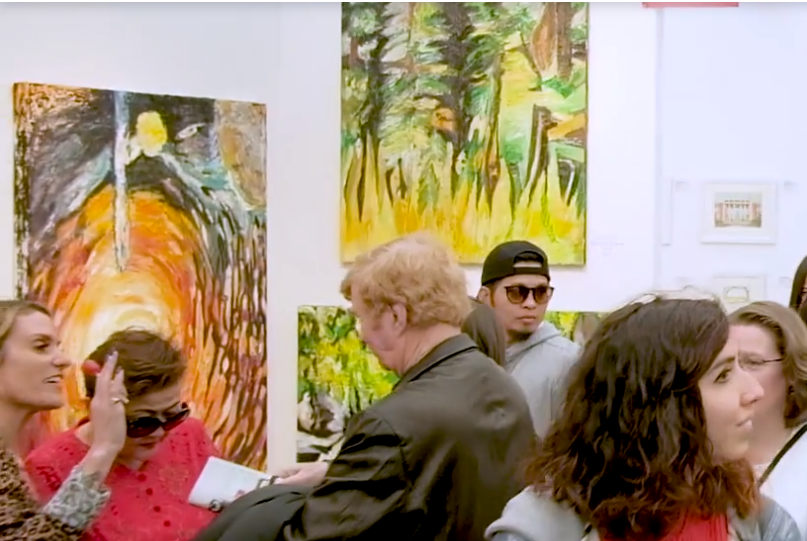
Art Vancouver, Western Canada’s Largest International Art Fair Now Happening

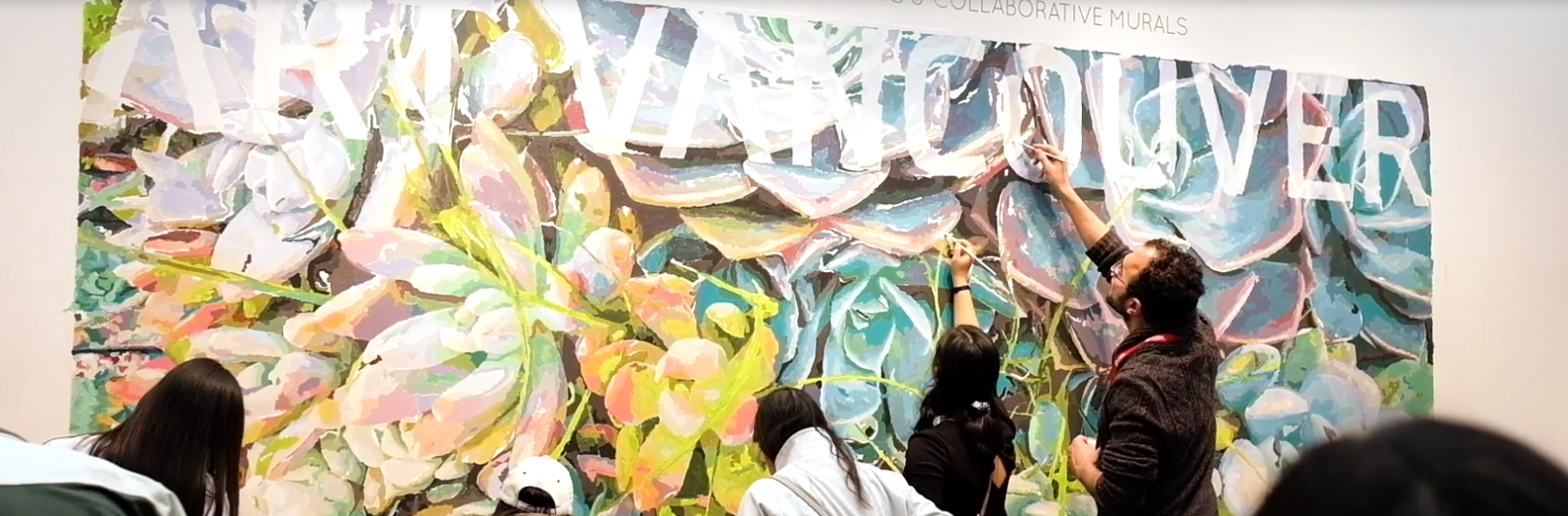
Vancouver, B.C. – Art Vancouver, Western Canada’s largest international art fair is once again uniting the world through art, held at the Vancouver Convention Centre West on May 4–7, 2023.  

Art Vancouver’s vision is a noble one that seeks to use the universal language of art to connect people from different parts of the world and to promote a sense of global community.

By bringing together artists and galleries from across Canada and around the world, Art Vancouver aims to showcase a diverse range of contemporary artwork that reflects the unique perspectives, experiences, and cultures of each participating artist.

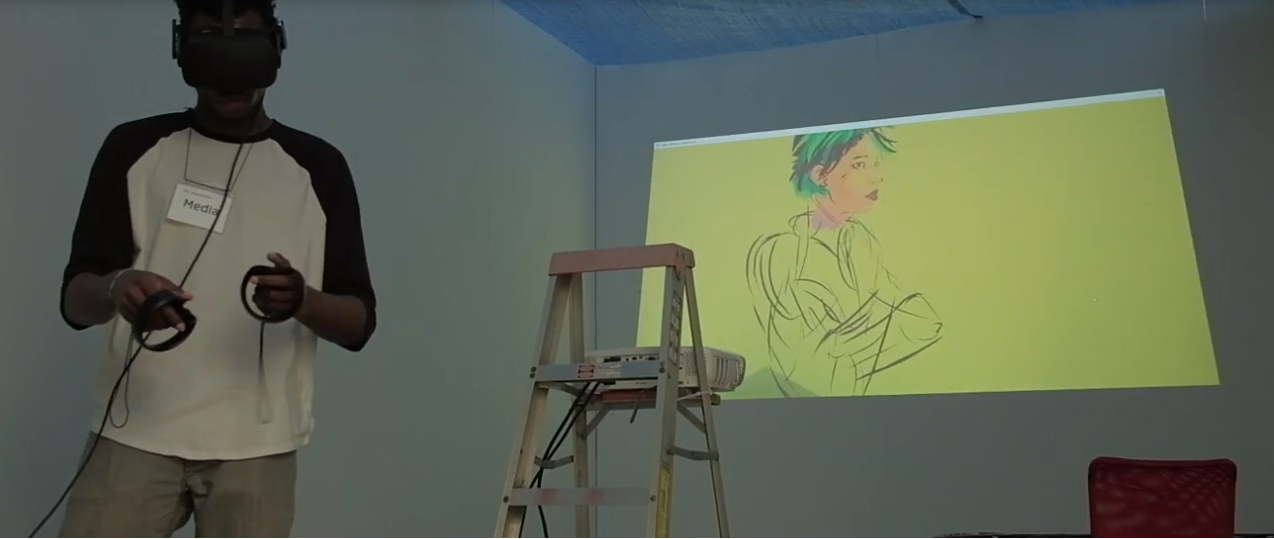
Art Vancouver marks its 7th edition, welcoming 100+ exhibitors, making Vancouver a destination city for artists, collectors and art lovers alike. Unique to this year, is a panel discussion about the intersection of Artificial Intelligence and art, providing valuable insights and perspectives from experts in the field.

Artist talks, demonstrations and art classes are always a great way for attendees to learn new skills and techniques, and having more of them available means that more people can benefit from the educational opportunities. 

Art Vancouver has put together a diverse and engaging program that offers something for everyone. Whether attendees are artists themselves, or simply enthusiasts of art and creativity, there should be plenty of opportunities to learn, engage, and be inspired.


Tickets are available for purchase here.

For the latest updates on Art Vancouver, visit www.artvancouver.net.

Social Media Handles:

Instagram – @artvancouver

Twitter – @Art_Vancouver

Facebook – @artvancouverexhibition

Dates: May 4–7, 2023

Venue: Vancouver Convention Centre

About Vancouver Visual Art Foundation

Established in 2017, the non-profit organization was started to make art accessible to everyone, with the goal of promoting and developing Vancouver’s visual art community into a thriving international art scene. VVAF hosts their main annual event, Art Vancouver, a four-day international art fair showcasing artists from across Canada and around the world. For the Silo, Christina Ioannou.

Can C3.AI Stock Keep Rallying with AI in the Spotlight?

The recent rise of Artificial intelligence (AI) programs such as ChatGPT has created a frenzy around AI-related stocks.


C3.AI, a pure play AI stock, is up over 100% since late December.

But is this rally sustainable? After all, the public was already surrounded by AI without realizing it. Almost everything people use in daily life is affected by AI already: 

  • advertising
  • entertainment streaming services
  • social media
  • cars (collision detection and blind spot monitoring)
  • fraud prevention
  • screening job applicants
  • email spam filters
  • many other applications

C3.AI is a company that creates software to help other companies deploy AI projects. C3 software is being used in multiple ways, including managing inventories, monitoring for energy inefficiencies, and predicting system failures. [Of particular note is one new product from C3 called ex machina which allows users to program AI initiatives without using any coding at all but instead via a series of visual programming tools. CP]

AI stocks, and technology stocks as a whole, were a neglected market in 2022. The Nasdaq 100, an index heavy in technology stock, fell more than 30% in 2022. C3.AI fell over 65% in 2022, and is currently down almost 90% from its 2020 high (even after the 100% rally in 2023). All currency quotes that follow are in USD.

C3.AI recently peaked at $30.92 on February 6. It then reached a low of $20.31 on March 1 before rallying back to $29.98. It has since fallen and is back near the $20.33 low.

This puts the stock at a crucial level.

An analyst from SafeTradeBinaryOptions.com had this input: “Right now, the stock is in an uptrend, albeit a precarious one. The price has been making higher swing lows and higher swing highs throughout 2023. But if the price drops much below $20, that will no longer be the case. The price will have made a lower high on March 6 (compared to February 6) and if the price drops below the March 2 low, that is a lower low. These are signs of a downtrend starting — not an uptrend.”

All facets of our modern world are already in the embrace of A.I. whether we know it or not.

This $20 region is important because if the area holds, this indicates the price is moving in a range, with the possibility of the price moving back up to the top of the range near $29. If that happens, there is still hope that the price will eventually break out of the range to upside, continuing its advance to $40, for example. 

However, if the price drops below the $20 region, the range is broken and the uptrend is in jeopardy. 

It’s important to watch C3.AI to see how investors are perceiving the future of AI, and what that may mean for the industry’s future. 

As of March 2023, C3 doesn’t have a lot of direct competition. The company is not yet even profitable. How the stock moves is based on whether investors believe the company can eventually generate profits — and in this case, its profits largely depend on whether AI becomes even more widespread than it already is. For the Silo, Kat Fleischman.

Esports Betting Data Levels Up Via Artificial Intelligence

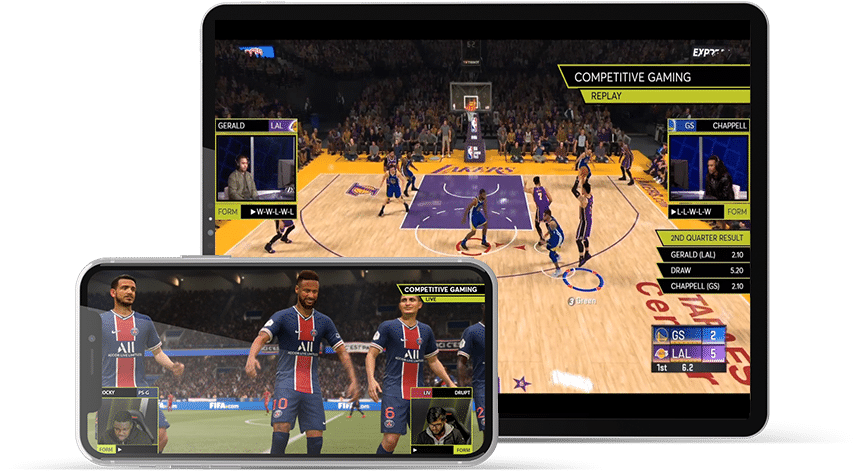
AMSTERDAM — HUDstats, the pioneering esports data analytics company, has partnered with the leading multi-channel supplier of 24/7 live betting services, Sports Information Services (SIS) to deliver actionable, real-time data for esports betting purposes

“We’re looking forward to working with SIS and providing esports fans and esports betting aficionados with engaging and fascinating data and statistics for their favourite streams,” said Andrei Bălănescu, CEO of HUDstats. 

As part of the partnership, HUDstats will use its proprietary Advanced Video Analysis (AVA) technology to collect, standardize and distribute accurate esports data from SIS Ebasketball and Esoccer streams for the creation of real-time esports betting products. 

“Our technology stack allows us to provide a great number of accurate match data points in real-time, at a sub-second speed,” said Bălănescu. “Our partners, SIS, can use them to create engaging on-screen graphics and betting commentary that increase performance for their customers.” 

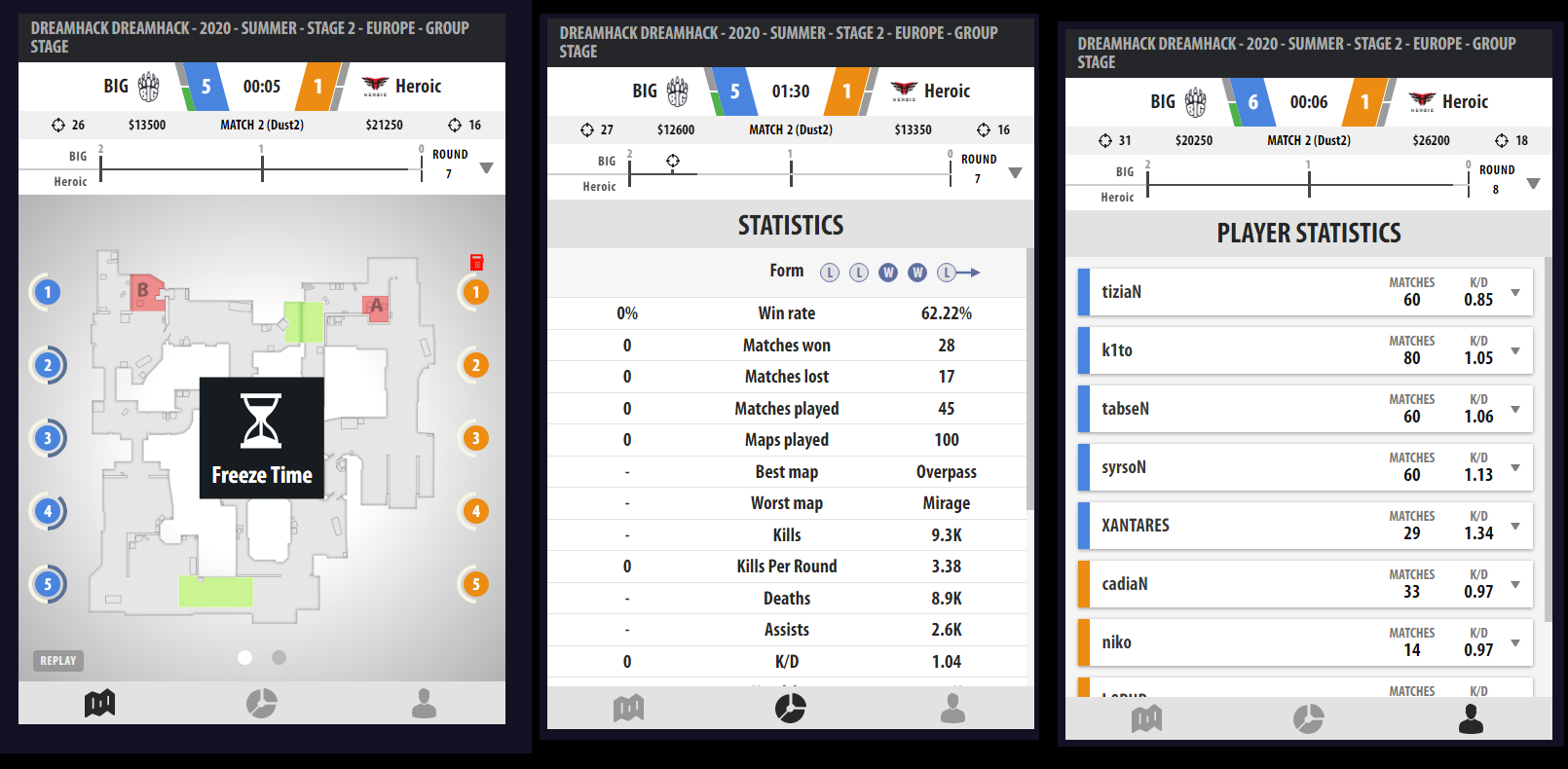
Live AI stats from Counter Strike provide bettors informed choices when wagering on this popular esports game.

Conleth Byrne, Product Director at SIS added, “HUDstats provides a ground-breaking and easy-to-integrate solution that enables us to scale our 24/7 Competitive Gaming content with automated and accurate in-play event tracking.”

Tracking Multiple In-Game Events for Ebasketball and Esoccer

The HUDstats – SIS partnership currently involves tracking more than 20 major in-game events for Esoccer and 40 in-game events for Ebasketball.

For example, in Esoccer, HUDstats covers data points from events such as ball location, free kicks, goal kicks, throw-ins, substitutions, added time, offsides, goals, corners, and more. For Ebasketball, HUDstats can track free throws, 2-pointers, 3-pointers, timeouts, fouls, the team in possession, and others.

“HUDstats showcases all the noteworthy aspects of the match and even more in-depth features, such as what side a corner is taken from or if a free-kick is from a dangerous position,” said Bălănescu. “That’s a feat otherwise impossible to obtain in real-time by manual input.”

Highly-Scalable, Reliable, Sub-Second, Fast Data Collection

HUDstats covers a full range of esports titles such as EA FIFA, NBA2k, EA NHL, EA NFL Madden, as well as the big three: League of Legends, Dota 2, and Counter-Strike: Global Offensive. 

Its proprietary technology generates data directly from the esports stream or game server and can collect over 1,000 data points for every single minute of a game.

HUDstats is able to scale its data-collection solution to numerous streams at a time, analysing hundreds of angles and allowing esports bettors to experience a new dimension of esports. 

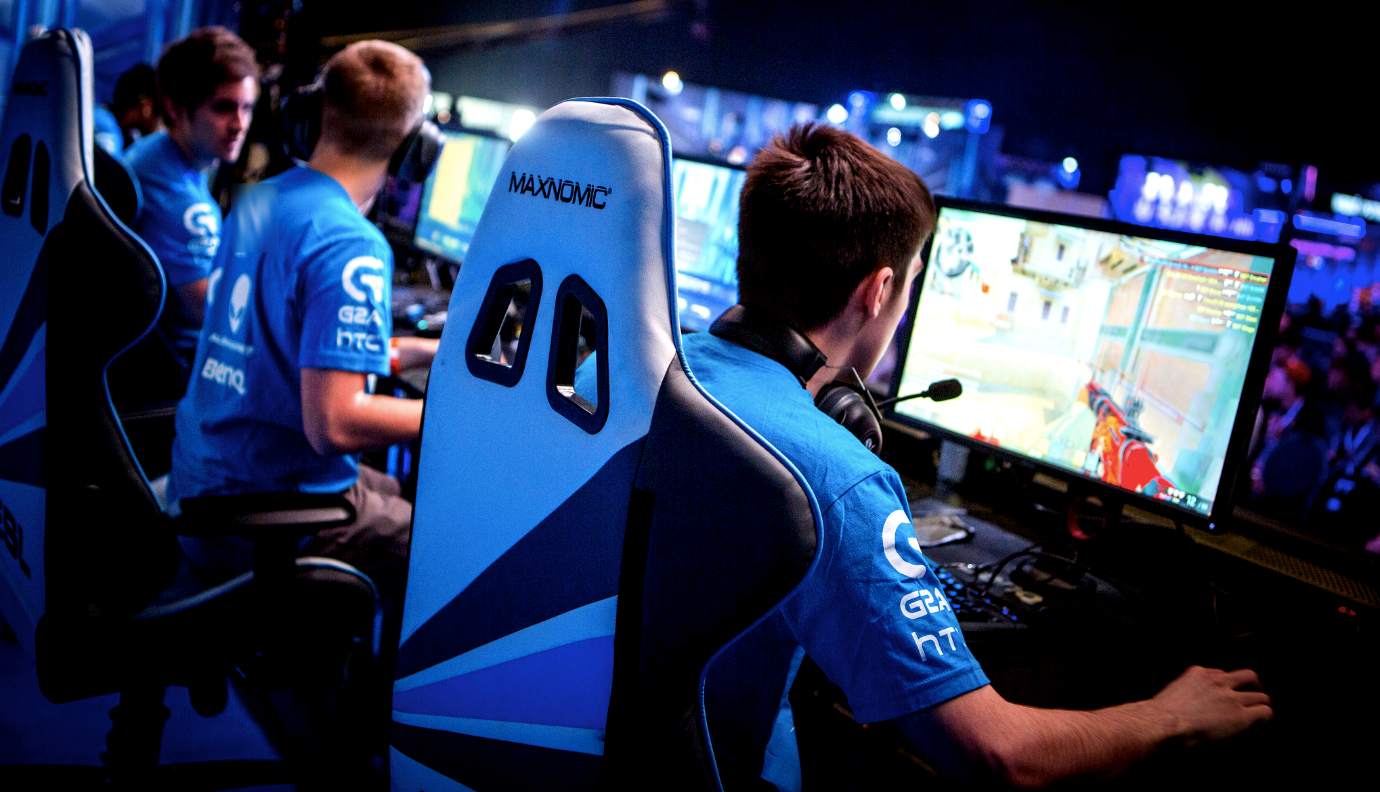
esports team doing their best in CS:GO

About SIS (Sports Information Services)

SIS (Sports Information Services) has been at the forefront of live pictures and data delivery to the global betting industry for over 35 years with a rich heritage in creating and distributing betting events for horse and greyhound racing, as well as esports and live numbers draws. 

SIS is the leading supplier of high-quality 24/7 live betting services, delivering a range of 24/7 channels to retail and online operators globally 365 days a year. To complement their horse and greyhound racing, they provide a flexible SIS Trading Services offer, which now includes a fully outsourced managed trading service. 

In addition to racing, they also offer over 150,000 highly competitive esports events a year, all underpinned with robust integrity, and provide over 300,000 Live Numbers draws annually. 

SIS partners with over 400 operators in more than 50 countries, offering rights holder partners the opportunity to showcase their first-class content across six continents. 

Supplemental-

How to bet on CSGO Counterstrike: Global Offensive

How AVA is used with sensors to mine consumer behaviors and patterns. by Ontario’s Privacy Commissioner Ann Cavoukian.

The Sentient AI Future is Here And She’s A Lovely Stranger Named Frankie

Bringing work home can put stress stress on a marriage, especially when that “work” is a beautiful woman who seems too cozy with the husband. But in Bruce Deitrick Price’s genre-busting tragicomedy book “Frankie”, looks are deceiving.

Raymond Mason, an AI genius and college professor, brings Frankie, his latest, most human-like creation, to dinner. Raymond knows his wife will be impressed.

No way! Julia Mason feels competitive and threatened. 
Raymond touches Frankie in a romantic way.

Julia is hostile and drinks too much. She passes out as Professor
Mason runs upstairs to find a gun. An hour later, Julia wakes to find
her husband dead and Frankie gone. Julia, semi-hysterical, races into
the night to find the missing masterpiece.

Simon, a grad school drug dealer, falls in love with Frankie. He
realizes he can build a cult around this spiritually evolved woman.
First, he has to hide her.

For different reasons, many people search frantically for Frankie.
Meanwhile, more unexplained deaths are reported. Panic sweeps  New Jersey. Some experts think that humanity is dealing with
an alien invasion.

A pathologist says he has never seen so many beautiful corpses. Cause of death: unknown.

“Elon Musk believes that AI will destroy us. 

First there will be lots of misunderstandings, confusion, and paranoia,” Price says. “Frankie is a look into the future of AI. The smarter the robots, the more likely that strange, unanticipated things will happen.”

About the Author

Bruce Deitrick Price is a novelist, poet, artist and education
reformer. He wrote his first article about robots around 1990. 

Featured image: Historic “Mona Lisa of the Pacific Islands” photograph Mestiza de Sangley, c. 1875

finally a Machine will curate an Art exhibit

The Museum of Wild and Newfangled Art (mowna) Announces the Debut of an AI Experiment in Art Curation: “This Show is Curated by a Machine ?”


The free call for international submissions is now open for all to take part in an experiment that defines how we move forward with AI curation in an ethical way


NEW YORK (July, 2021) – The Museum of Wild and Newfangled Art (mowna) is currently designing an artificial intelligence curator for their final show of the year “This Show is Curated by a Machine 🤖” which directly answers the Whitney Museum of American Art’s curatorial question,“The Next Biennial Should Be Curated by a Machine.” 

The curator, an AI bot machine, will learn to curate by looking at the data set from the 2021 mowna Biennial, an exhibit of an international pool of artists selected from 44 countries gathered through a free call for submissions process that ran from January through March of 2021.

The Biennial includes all forms of art made from 2019 to 2021. The machine will also learn from other data sets of recently made art. The AI machine will curate the show by looking at the text data of the submissions as well as the artwork files. There will also be human curators, so that a comparison can be made. 

The show will be viewable at mowna.org, and a detailed writeup of the process, results, and thoughts about the future of artificial intelligence related to art curation will be made available. Early questions are available here in the mowna blog.


“We are interested in creating a machine that can curate in a diverse and ethical way, that is not founded in white supremacy or structures of inherent racism. Much of the art world is affected and effected by both of these issues. So mowna asks, is it possible to create an AI that looks at the art and curates with diversity, equity and inclusion? It is important to build this machine now, before other big tech companies design algorithms that erase the artist and define AI curation.” ~cari ann shim sham*, Co-founder and Curator of mowna.

logo


“This Show is Curated by a Machine 🤖” marks the third online art experience by mowna, the first being its Opening Show now available to members in the mowna collection, and the second being the current exhibit, the 2021 mowna Biennial. The Biennial is mowna’s direct response to the gap in the art world seen after the coronavirus pandemic, and showcased art of all mediums that otherwise would’ve gone unseen. Tickets to the Biennial will be available until the show closes on September 22nd, and are sliding scale pay what you wish, after which “This Show is Curated by a Machine 🤖” will be installed and available for online viewing. 


Artists may submit up to 10 works of art per submission and artists will be paid 70% of ticket and membership sales from the show, with the other 30% paying for the creation of the platform. There is no submission fee to apply, and all mediums of art are welcome. The works must have been completed after January 1, 2020. The deadline for submissions is August 20, 2021 at 12 PM ET. Contact The Silo for more information.


As the global community continually moves further into a multi-faceted technological way of life, the way art, across all mediums, is consumed, has been changing in ways to make art more accessible while remaining true to the integrity of all genres. mowna recognized this growing, transformational need pre-pandemic which catalyzed the formation and birth of the Museum of Wild and Newfangled Art  to meet the ever-growing needs of an ever-changing art world.


mowna is at the center of the exponentially changing art world and makes it their priority to showcase art from all walks of life. With a mix of what is familiar and unfamiliar, patrons will see artists who’ve been curated by the Whitney or the MoMA along with artists available only on mowna


“This Show is Curated by a Machine 🤖” will run from September 23, 2021 through January 31, 2022 at mowna.org.  mowna exists to provide an international online platform for the most timely, diverse, and preeminent artists. 

Astrophysicist Wins Millions Of Dollars For Blackhole And Quasar Study

Schmidt Futures Grants Lehman Astrophysicist $2.94 Million USD For Study of Quasars, Black Holes

BRONX, N.Y. – (August , 2020) – A Lehman College astrophysicist has been awarded a $2.94 million grant by Schmidt Futures, for a five-year study about the structure and evolution of the universe, black holes, quasars and dark energy.

Where have all the quasars gone?

Schmidt Futures is a philanthropic initiative, founded by Eric and Wendy Schmidt. Eric Schmidt is the former CEO of Google. The grant will award $1.8 million directly to Lehman College and the remainder as a subaward to the University of Montreal.

“This by far is the biggest project we’ve ever attempted,” said Matthew O’Dowd, an associate professor in the Physics and Astronomy Department and writer and host of PBS Space Time. “It’s quite ambitious…and will define the next five years of our scientific lives.”

O’Dowd will lead a team of researchers and students from Lehman, the Borough of Manhattan Community College (BMCC) and the University of Montreal as they study data collected from the Vera C. Rubin Observatory (previously referred to as the Large Synoptic Survey Telescope (LSST), currently under construction on Cerro Pachón in Chile. It is an 8-meter-class telescope coupled to a 3.2-gigapixel camera – the world’s largest digital camera ever fabricated for optical astronomy.

A photograph and rendering mix of the exterior of the Vera C. Rubin Observatory building on Cerro Pachón in Chile. Image credit: LSST/NSF/AURA

The observatory, the first in the U.S. to be named after a woman, will survey the entire sky of the Southern Hemisphere every three days for the next decade, O’Dowd said, and will map the dynamic nature of the universe. Each single snapshot will cover an area 40 times the size of the full moon.

O’Dowd’s team will develop a machine-learning pipeline (also known as artificial intelligence) for the observatory “to analyze the flickerings of thousands of distant quasars whose light in the very distant universe is powered by violent storms of matter falling into gigantic black holes,” he said.

Due to the enormous dataset and the non-linearity of the problem, machine learning methods are the only viable method for integrating these effects into a model and analyzing thousands of quasars in real time.

“I believe I have assembled the only people in the world who can do this before LSST begins operation, including some machine learning leaders who have just taken faculty jobs at the University of Montreal,” he said. “So that’s our plan: to develop new machine-learning techniques and build them into an analysis pipeline for (the observatory).”

“People are fascinated by these things and we hope to extend their curiosity about the wonders of the universe,” O’Dowd said.

Once the team begins work, O’Dowd will invite Lehman graduates, post-doctoral fellows and current Lehman undergraduates to participate in the project.

“This project is exciting and will help us attract excellent grad students and if it also helps influence other students to come to Lehman, then that’s fantastic,” he said.

“This is an excellent project that will push the limits of precision of measurement and very difficult computing to clarify important questions in cosmology and high-energy astrophysics,” said Stuart Feldman, chief scientist of Schmidt Futures. “We are delighted to support this path breaking work.”

“This is an incredibly prestigious award and we are incredibly proud of Matt,” said Dr. Pamela Mills, dean of the College’s School of Natural and Social Sciences. “He is very good at communicating science and is an amazing physicist. He is, and has been tapped, as one our young leaders.”

Human Consciousness & Artificial Intelligence Meet In Designer’s Fabrics

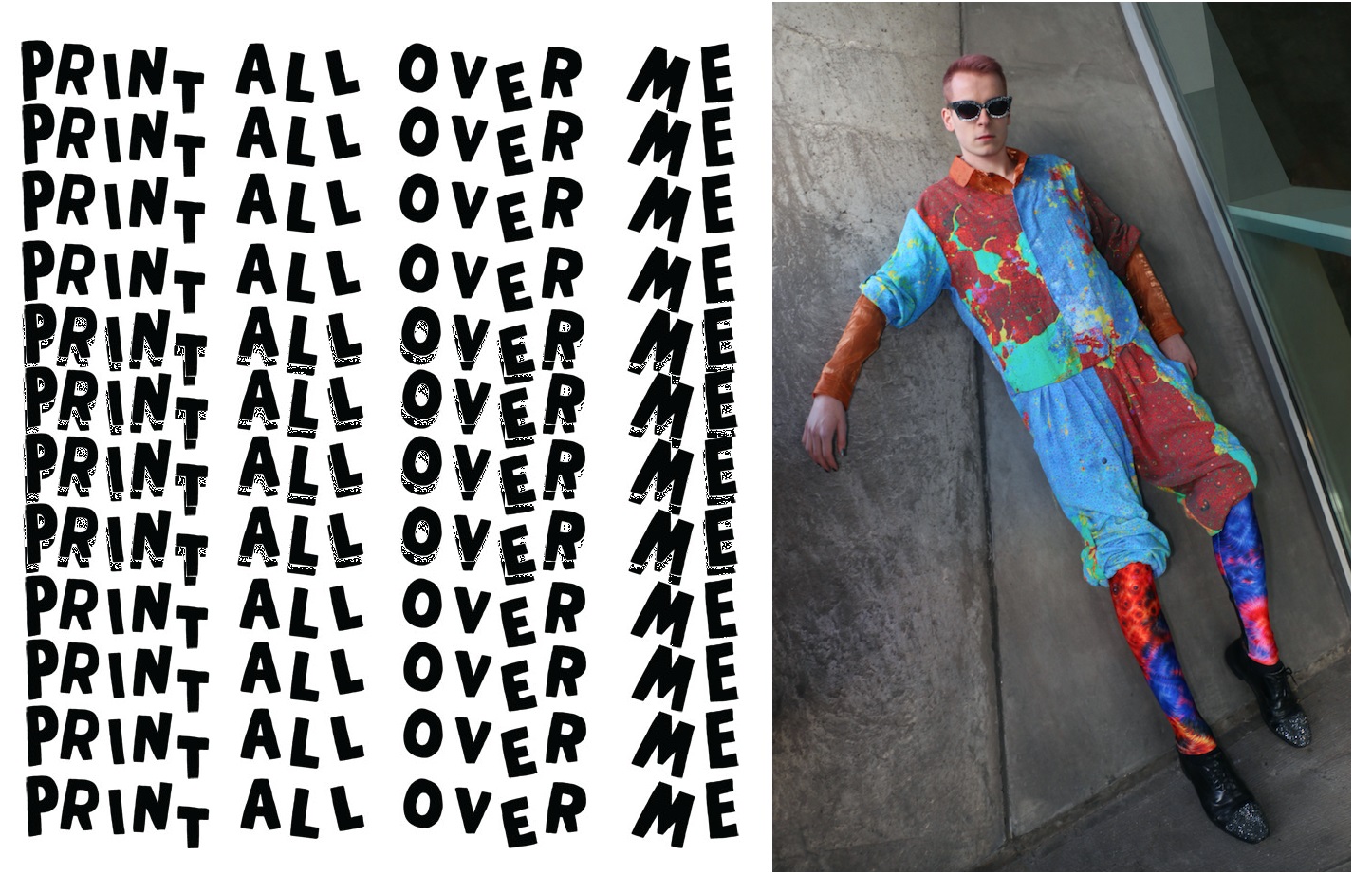
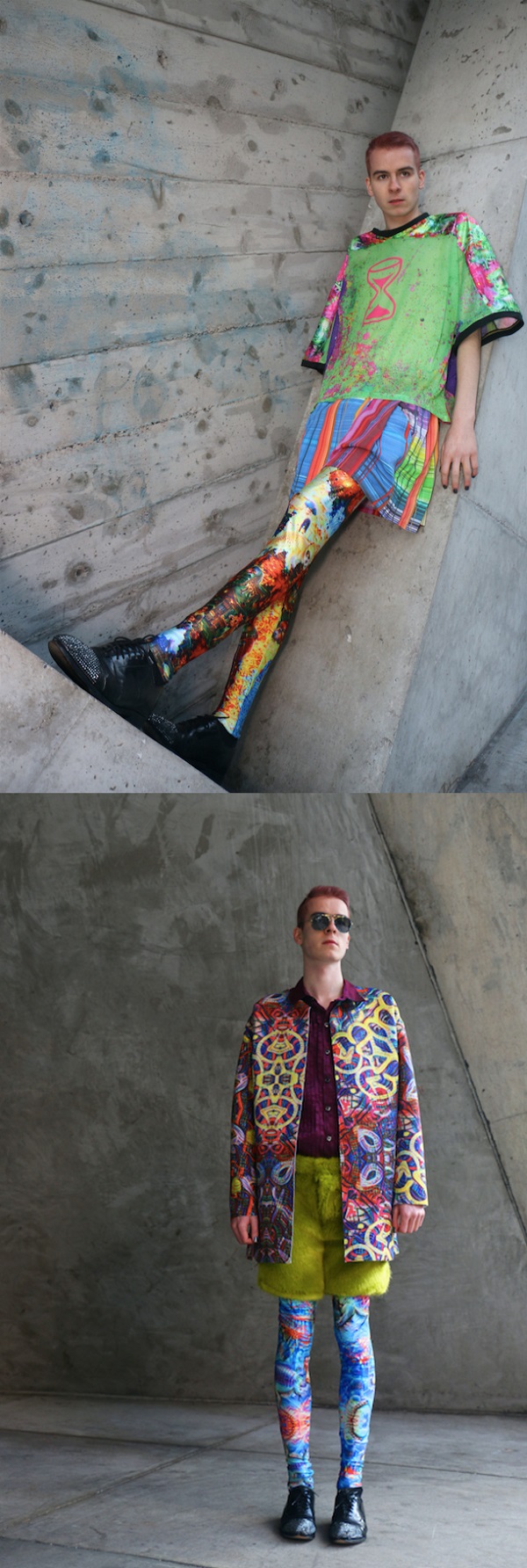
Featured Designer Brian Swift used PAOM to print fabric for his latest collection inspired by the Technological Singularity: a theoretical time in which human consciousness and Artificial Intelligence merge and become a new, unrecognizable species.

shop the designer PAOMBrian collaborated with a machine learning algorithm to imbibe his photographs with a psychedelic quality. These computer generated compositions were then printed onto fabric and used throughout his latest collection.

brian swift tshirt

For more work check out Brian’s site brianswift.com

print all over me ai fabric brian swiftdesigns

paom smiley face

Supplemental- MONA the world’s first artificial intelligence clothing designer

Artificial Intelligence Or AI Is Set To Take Over Many Industries

Is there any question that Artificial Intelligence, or “AI”, is going to play a huge role in the future? The short answer is no- it’s already playing a large part today, so let’s delve into this new tech and look at how it is benefiting the energy sector and what we can expect to see from this AI phenomenon in the not so distant future.

AI In Energy Sector

Government Of Belgium Battling Social Media Sites Blocking Nude Artwork

Facebook and other social media sites are blocking masterpieces of “nude” art from Rubens, Bruegel, Van Eyck and others. In an open letter, several top European Museums are asking social networks to reconsider their policy. Facebook has been in the spotlight recently for blocking content including some parts of the United States Constitution and other historical documents and multimedia content.

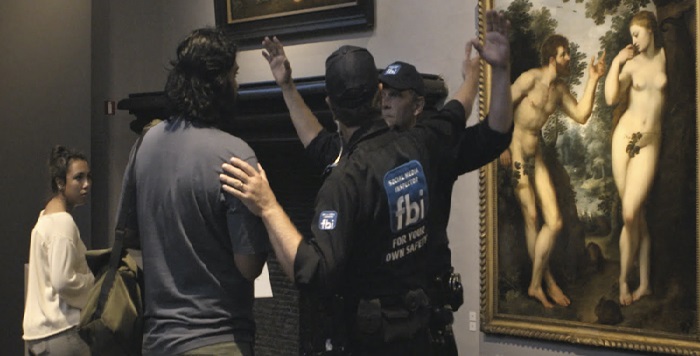
Artistic censorship continues to pursue Peter Paul Rubens. In the 17th century, the Flemish Baroque painter was asked by the Catholic Church to paint camouflaging ‘loincloths’ over certain body parts of his Venus figures. Nowadays, social media networks, including Facebook, go one step further. All breasts, buttocks and cherubs painted by artists such as Rubens are banned on these platforms. ‘Bots’ on Facebook use artificial intelligence to screen for nudity, but do not make a distinction between pornographic images or nudity in art. Flanders – the perfect place to enjoy the Flemish Masters in all their glory – is denouncing this artistic censorship in a playful manner. At the Rubens House, ‘nudity viewers’ with a Facebook account were blocked from viewing nudity by a group of “social media police agents”.

Peter Paul Rubens Flemish Master Painter

The Flemish Masters are best experienced in Flanders, the number one destination for art lovers. After all, this is where Rubens, Bruegel and Van Eyck lived and worked. Their work can often be found still hanging in the very same places for which they were made. “We want to promote this unique experience,” says Peter De Wilde, CEO of VISITFLANDERS. “Our Flemish Masters attract hundreds of thousands of visitors to Flanders each year and we are proud of this achievement.

Pieter Bruegel Flemish Master Painter

With our multi-year program focusing on Rubens, Bruegel and Van Eyck, which was launched in 2018, we are aiming for three million visitors by the end of 2020. At the moment it is not possible for us to promote our unique cultural heritage via one of the most popular social media networks. Our art is categorized as being indecent and sometimes even pornographic. This is such a shame as it restricts the promotion of our Flemish Masters.”

Eve detail Ghent Altarpiece by Jan van Eyck

The agency in charge of promoting tourism in Flanders, Belgium explains that they have invested 30 million US dollars in 2018 to improve the experience of cultural travelers visiting that region, especially in cities like Antwerp, Bruges, Ghent and Brussels. Now they can’t promote some of those museums due to restrictive policies applied by some online social networks.

Jan van Eyck Flemish Master Painter

‘We are for it and not against it’ is what the people of Flanders say. Peter De Wilde explains, “Social media and art have a lot in common. Art brings people together. Social media brings people together, and our Flemish Masters too. This is why we want to enter into discussions with Facebook so that we can use this platform as one way in which to make our art visible. Surely it’s not that difficult to differentiate between cultural heritage and gratuitous nudity?”

VISITFLANDERS position is supported by several top museums in Belgium and around Europe. In an open letter, the institutions ask Mark Zuckerberg to revise Facebook’s policy related to art, culture and heritage. Click here to read the open letter.

“We tried various channels to bring this matter to Facebook’s attention. Unfortunately nobody listened,” De Wilde explains. Flanders hopes the comedy video produced in Rubens’s House will facilitate a discussion to solve the issue and allow users to view this content that is present in encyclopedias and elementary school grade text books. “Flanders is a unique art destination. But because we are naturally modest in Flanders, we do not shout out about it often enough. This stunt enables us to make our presence felt and also honor the spirit of Pieter Paul Rubens. He was an artistic rebel who was not afraid of engaging in social debate. There’s no finer tribute to honor our Flemish Master than by taking up the battle against unnecessary artistic censorship.”  For the Silo, Marcos Stupenengo.

About the Flemish Masters.
For over 250 years, from the 15th to long into the 17th century, Flanders was a figurehead for fine arts in Western Europe and the source of inspiration for well-known art movements of the time, such as the Flemish primitives, the Renaissance and the Baroque. Artists were known for their craftsmanship, creativity and technical innovations and they transformed the prosperous and urbanized Flanders into one of the most refined cultural regions with their impressive artistic and architectural creations.

About Peter Paul Rubens, master of female nudity.
Rubens is the best-known Flemish Master. This Baroque painter, illustrator and diplomat was one of the most celebrated artists of the 17th century. He exerted a particularly strong influence. He was a master of color, composition and painting techniques and also an expert in painting female nudity. His nude figures – which often refer to mythical beings – appear extremely lifelike, made from flesh and blood, with a fair amount of cellulite and with all kinds of body shapes visibly on display.

About Antwerp, the home of the Flemish Baroque movement.
Lonely Planet selected the best cities to visit in 2018 and included Antwerp in its top 10. According to the travel guide, Antwerp is one of Europe’s best kept secrets. And there is certainly plenty to see and do there in 2018. The “Antwerp Baroque 2018. Rubens inspires” festival shows you the finest places in Antwerp: www.antwerpbaroque2018.be

5 Disruptive Luxury Travel Trends Shattering The Status Quo

With the global luxury market collectively growing at 4 percent to an estimated $1.15USD (€1.08) trillion in 2016, according to a recent “Bain & Company Luxury Study,” coupled with optimistic forecasts that the luxury goods market will pick up this year, the hospitality industry is gearing up for elevated demand among both leisure and business travelers. This amid evidence that, despite widespread geopolitical uncertainties, luxury consumers are redirecting their spending toward new and more personalized high-end experiences like luxury travel, food and wine.

“The luxury market has reached a maturation point,” said Claudia D’Arpizio, lead author of the study. “Brands can no longer rely on low-hanging fruit. Instead, they really need to implement differentiating strategies to succeed going forward. We are already starting to see clear polarization when it comes to performance with winners and losers emerging across product categories and segments.”

D’Arpizio also underscored that personal luxury market brands that “take an omni-channel, customer-centric approach will rise to the top.” Such is the prevailing wisdom for both the B2C and B2B luxury travel sector, specifically, with personalized experiences, quality of service and private booking options serving as primary distinguishing factors for luxe brand positioning throughout 2017 and beyond.

Here how these key drivers will converge with evolving luxury travel trends to greatly influence various vertical sectors—and, in doing so, the marketplace at large—in the months ahead:

1. Small group cultural immersions loom large.
Group Courtesy TheLuxeList.com.jpgTravelers are increasingly seeking exclusive and regionally-authentic itineraries that cater to small groups. Tour companies like Fort Washington, Pennsylvania-based Gate 1 Travel are capitalizing on this trend with offerings that provide the convenience of an escorted tour with the intimate view of local cultures that large groups just can’t provide. “Our small group tours option has seen, by far, the most significant increase in booking volume–up 50% in 2016,” the company reports.

A City Lodge Hotel Group report concurs that the trend of being “connoisseurs of local culture” will boom this year. It emphasizes that indigenous tourism experiences and cultural immersion will remain a big factor whether traveling within your own home country or jaunting to faraway lands. “We’ll see more people wanting to visit more than the big landmarks and monuments of their destination,” it says. “Rather people are more likely to be interested in knowing about the locals–those that call that place home. Trips to the rural communities will become popular, and travelers are likely to be more interested in private guides that teach them about the traditional ways of life.”

2. Private villa travel surpassing leading luxe resorts.
Today’s breed of private villa rentals have become the ultimate in luxury travel lodging for vacationers and business travelers, alike. This is due to the vast array of benefits and creature comforts it proffers for couples, families and small groups. While maximized privacy and security, uber-tailored guest service and 5-star accommodations and amenities are chief reasons the trend toward private villa lodging is exploding, an elite few have offerings far beyond that don’t just rival, but far exceed, those offered by high-end resorts, including their elite Penthouse suit options.

Courtesy Casa Dos Cisnes.jpgAccording to luxury travel agent Sandy Webb who books elite vacations all over the world “private villa residences offering first class, one-of-a-kind services are ushering in an entirely new era of bespoke hospitality around the globe. They are, in fact, single handedly setting a new and decidedly elevated standard for luxe travel worldwide.”

One private villa exemplifying this new standard is Casa Dos Cisnes–Puerto Vallarta’s foremost premier private oceanfront villa vacation experience. This  10,000 square foot Casa Dos Cisnes property, a five-bedroom colonial style home with breathtaking views of the Pacific that can accommodate up to 10 adults, goes well over-and-above to ensure each guest’s needs, desires, hopes and expectations for an extraordinary private villa vacation are fulfilled.

According to owner Cathryn Arnell, this includes proffering a bevy of premium benefits, including an authentic and stylishly-appointed residential setting, custom-prepared gourmet meals from an on-site private chef, 24/7 bilingual butler service and multiple staff, monitored security, housecleaning services, private infinity-edge ocean view pool, fully equipped state-of-the-art gym, large media-entertainment room, concierge and spa service, musicians for hire, sports and boating excursions, VIP treatment at the city’s leading beach club and most renowned restaurants, and more. “Given that guests enjoy complete privacy and security in the most exclusive area in Puerto Vallarta, commandeering the entire 10,000 square foot space with all of the relaxation, solitude and discretion that affords, the result is a one-of-a-kind holiday providing an unparalleled culinary and luxury living experience.”

3. Higher caliber private jet jaunts.
Jet Courtesy TheLuxeList.com.jpgAccording to Sergey Petrossov, founder and CEO of JetSmarter—an industry-leading private jet company based in Dubai, people are increasingly growing accustomed to personalized experiences, so much so, that it isn’t a demand anymore; it is now an expectation that needs to be met.

In order for brands to be memorable, they need to remember their customers and offer unique customized experiences. For its part, this JetSmarter achieves by placing a heavy emphasis on member relationships, with each assigned a relationship manager who is responsible for creating personalized and customizable private travel experiences.

JetSmarter also cites that there’s a very thin line between high-end and luxury, with the difference barely noticeable. “The travel industry is inundated with both high-end and luxury brands, however the distinction is relatively minor,” Petrossov said. “People often confuse high-end brands for luxury ones. Luxury brands essentially need to heighten their levels of service to be able to distinguish themselves from their high-end counterparts.”

4. Next-gen travel tech eases and expedites.
Smartphone Courtesy TheLuxeList.com.jpgArtificial Intelligence (AI) is another tech trend that will continue to evolve at a rapid pace. According to Advito’s 2017 Industry Forecast, AI has already enabled a range of apps, bots and software that makes it easier for industry purveyors to interact with travelers at every step of a trip to expedite, ease and enhance. AI automates computer processes to work in the same way as the human brain. Natural language processing (NLP) helps computers understand human speech or typing, and AI then applies machine learning to provide a useful response.

Advito reveals that the travel industry is “well-positioned to embrace AI,” and also that the wider travel industry is adopting AI as, for example, KLM passengers are now able to use Facebook Messenger to confirm bookings, get boarding passes and flight status updates. “AI is still in its infancy, but it is in our immediate future,” the report asserts. “As it develops, it will help simplify complex travel decisions, shorten the buying process and deliver a more personalized offering.”

5. Game changing smart suitcases solve perennial problems.

Courtesy Diego Cespedes.Bluesmart.jpgTravel is tough enough in the best of circumstances and is all-too-often replete with challenges. From crowded freeways, overbooked flights, Wi-Fi downtime and generally not having necessary items at hand, getting from point A to point B can be fraught with more than its fair share of frustrations.  Not surprisingly, technologists have responded with problem-solving gadgets and gear that exemplify tremendous innovation and ingenuity both in concept and execution. One glowing example of this is the Bluesmart Suitcase. Billed as “the world’s first smart suitcase,” this carry-on keeps traveler’s belongings tracked, devices charged, bag secure and trips hassle-free thanks to integrated technology that syncs to an associated mobile app that’s compatible with both iPhone and Android.

The suitcase features a built-in battery/charger with 2 USB ports. The substantial 10.000 mAh battery can charge your phone up to six times, juicing up this and any other USB-connectable device from the USB port on the back or the inside. The bag also boasts a 3G+GPS tracker with global coverage to track the suitcase anywhere in the world; a scale built right into the handle that interfaces with the app to tell you the approximate weight of your suitcase; and a remote digital lock that can be set up to lock itself when you step away and to unlock when you return. The TSA- approved smart lock provides distance alerts, notifying you if you leave it behind. Of course, the bag needs to carry you belongings, so the main compartment does provide large space for clothes, shoes, and coats, while a secondary TSA-friendly compartment is able to accommodate up to a 15″ laptop.

Despite the fact that luxury sales fell flat in 2016 as consumers shunned traditional products, it’s experiences—namely travel and entertainment—that are predicted to drive sector sales growth up ahead.  “There is a progressive shift from physical products to experiences, especially in the last year,” Federica Levato, partner at Bain & Company and co-author of the study, told Reuters, predicting that trend would continue. With the world economy poised to regain momentum this year and the penchant among wealthy consumers to spend on travel and gourmet food and wine rather than clothes and accessories, the future is bright for high-end hospitality. For the Silo, Merilee Kern.

MAIN-RT-LO-Tight-2.jpgAbout the author: Branding, business and entrepreneurship success pundit, Merilee Kern, MBA, is an influential media voice and lauded communications strategist. As the Executive Editor and Producer of “The Luxe List International News Syndicate,” she’s a revered consumer product trends expert and travel industry voice of authority who spotlights noteworthy marketplace change makers, movers and shakers. Merilee may be reached online at www.TheLuxeList.com. Follow her on Twitter here: http://twitter.com/LuxeListEditor and Facebook here: www.Facebook.com/TheLuxeList.


Sources:

http://www.bain.com/about/press/press-releases/the_global_personal_luxury_goods_market_holds_steady_at_249_billion_amid_geopolitical_uncertainty.aspx

http://www.thediamondloupe.com/articles/2016-04-12/bain-forecasts-drop-luxury-market-sales-2016-rebound-next-year

www.clhg.com/blog/2016/11/2017-travel-trends/

https://www.advito.com/advito-industry-forecast-2017/

Spotlight image- centraljetcharter.com
Ontario Set to be First Province to test Auto-driving Vehicles and Technology

Ontario First to Test Automated Vehicles on Roads in Canada

Province Supports Innovation in Transportation Technology


You should take auto-driving cars seriously- every major Auto manufacturer is venturing forward with concepts like this one- GM's EN-V
You should take auto-driving cars seriously- every major Auto manufacturer is venturing forward with concepts such as this one from General Motors- the GM EN-V
 

Ontario is launching a new pilot to allow for the testing of automated vehicles on Ontario roads.


Automated vehicles are driverless or self-driving vehicles that are capable of detecting the surrounding environment using artificial intelligence, sensors and global positioning system coordinates. Automated and connected vehicle technologies have the potential to help improve fuel efficiency as well as reduce traffic congestion, greenhouse gas emissions and driver distraction.

 

Beginning on January 1, 2016, Ontario will lead Canada as the first province to test automated vehicles and related technology on-road. Currently there are nearly 100 companies and institutions involved in the connected vehicle and automated vehicle industry in the province. The pilot will enable those companies to conduct research and development in Ontario rather than in competing jurisdictions, as well as support opportunities to bring automated vehicles to market.


The province is also pledging an additional $500,000 in funding to the Ontario Centres of Excellence Connected Vehicle/Automated Vehicle Program, in addition to the $2.45 million in funding recently provided. The program brings academic institutions and business together to promote and encourage innovative transportation technology.


Ensuring Ontario’s place as a world leader in the auto, transportation, information and communications technology sectors are part of the government’s plan to build Ontario up. The four-part plan includes investing in people’s talents and skills, making the largest investment in public infrastructure in Ontario’s history, creating a dynamic, innovative environment where business thrives, and building a secure retirement savings plan.

Not all concepts are futuristic looking such as Google's modded Prius. We're betting Ontario will test more conservatively styled auto-drivers such as this one. CP
Not all concepts are futuristic looking such as Google’s modded Prius. We’re betting Ontario will test more conservatively styled auto-drivers such as this one. CP image: New York Times

QUOTE


“In the world of transportation, Ontario has the opportunity to show leadership on automated technology. Today, Ontario is making its claim in the global marketplace by taking the next steps in automated vehicle innovation. The automated vehicle pilot will ensure that the province’s roads remain safe without creating burdens that stifle investment and innovation in Ontario’s dynamic business environment.”

— Steven Del Duca, Minister of Transportation


“Ontario is a global leader in developing and manufacturing the next generation of vehicles.

This new pilot program will build on our success, and help Ontario lead the development of automated and connected car technologies. In this highly competitive global economy, investing in people’s talents and skills to create the next generation of innovative technologies is good for business, and can help lead to the easier movement of goods and services across the province.”

— Brad Duguid, Minister of Economic Development, Employment and Infrastructure


QUICK FACTS


  • Information about applying for the pilot will be available online from the Ministry of Transportation in late November.
  • The Institute of Electrical and Electronics Engineers forecast that by 2040, autonomous vehicles will account for 75 per cent of all vehicles on the road.


LEARN MORE


Ontario Investing in the Next Generation of Connected Vehicles

Connected Vehicle/Automated Vehicle (CVAV) Research Program


Who wouldn't want to ride/drive Chevrolet's FNR concept car?
Who wouldn’t want to ride/drive Chevrolet’s FNR concept car?


Disponible en français:
L’Ontario est la première province à mettre à l’essai les véhicules automatisés La province encourage l’innovation dans les technologies des transports 
L’Ontario lance un projet pilote en vue de la mise à l’essai de véhicules automatisés sur ses routes.
Les véhicules automatisés sont des véhicules sans chauffeur ou autoconduits qui peuvent détecter l’environnement avoisinant grâce à l’intelligence artificielle, aux capteurs et aux coordonnées fournies par le système de positionnement global. Les technologies relatives aux véhicules automatisés et connectés ont le potentiel d’améliorer le rendement du carburant et de réduire la congestion routière, les émissions de gaz à effet de serre et la distraction au volant.
Dès le 1er janvier 2016, l’Ontario sera le premier lieu au Canada à mettre à l’essai les véhicules automatisés et les technologies connexes sur la route. Près d’une centaine d’entreprises et d’établissements œuvrent actuellement dans le secteur des véhicules connectés et automatisés dans la province. Le projet pilote permettra à ces entreprises de mener des activités de recherche et de développement en Ontario plutôt que dans les territoires concurrents, en plus de créer des possibilités qui favoriseront l’introduction des véhicules automatisés sur le marché.
La province s’engage aussi à injecter 500 000 $ de plus dans le Programme de recherche sur les véhicules connectés et autonomes par l’intermédiaire des Centres d’excellence de l’Ontario, outre le financement de 2,45 millions de dollars récemment alloué. Ce programme réunit des établissements universitaires et des entreprises en vue de promouvoir les technologies de transport novatrices et d’encourager leur utilisation.
S’assurer de faire de l’Ontario un chef de file mondial dans les secteurs de l’automobile, du transport et des technologies de l’information et des communications s’inscrit dans le plan du gouvernement visant à renforcer la province. Ce plan comprend quatre volets : investir dans les talents et les compétences de la population, faire le plus important investissement dans l’infrastructure publique de l’histoire de l’Ontario, créer un environnement dynamique et novateur où les entreprises prospèrent, et établir un régime d’épargne-retraite sûr.
CITATIONS
« L’Ontario a l’occasion de montrer l’exemple par le recours à la technologie automatisée dans le domaine des transports. L’Ontario marque aujourd’hui le marché mondial de son empreinte en franchissant une nouvelle étape pour stimuler l’innovation dans l’automatisation des véhicules. Le projet pilote sur les véhicules automatisés sera mis en œuvre de façon à s’assurer que les routes de la province restent sûres sans créer des fardeaux qui étoufferaient l’investissement et l’innovation dans le dynamique environnement commercial de l’Ontario. »— Steven Del Duca, ministre des Transports
« L’Ontario est un chef de file mondial dans la conception et la fabrication de la prochaine génération de véhicules. Ce nouveau projet pilote misera sur notre succès et aidera la province à prendre les devants dans le développement des technologies des véhicules automatisés et connectés. Dans cette économie mondiale hautement concurrentielle, le fait d’investir dans les talents et les compétences de la population afin de créer la prochaine génération de technologies innovatrices est bon pour les affaires et peut faciliter un mouvement plus fluide des biens et des services dans l’ensemble de la province. »— Brad Duguid, ministre du Développement économique, de l’Emploi et de l’Infrastructure
FAITS EN BREF

  • Le ministère des Transports offrira de l’information en ligne sur la présentation de demandes dans le cadre du projet pilote à la fin novembre.
  • L’Institut des ingénieurs électriciens et électroniciens prévoit que les véhicules autonomes compteront pour 75 p. 100 de tous les véhicules sur la route d’ici 2040.

 POUR EN SAVOIR DAVANTAGE
Soutenir l’innovation dans les technologies de transportProgramme de recherche sur les véhicules connectés et autonomes

Computer Controlled Vanity App Enhances Selfies With A.I.

Amazingly natural, artifact-free "face slimming" feature.
Amazingly natural, artifact-free “face slimming” feature.

Way back in August, 2015 the world’s first “intelligent selfie app” was released by Anthropics Technology. 

Combining artificial intelligence and image enhancement, Mira understands what makes people look good and lets users airbrush faces automatically.

Chief Mira Scientist Tony Polichroniadis comments:

“By understanding what makes people look beautiful, Mira can improve all aspects of a selfie with just one tap. Users do not need to use any special tools: the app understands what to do and does it for you. This is the culmination of over ten years of research, and we are thrilled to be releasing this technology to smartphone users everywhere.”

Perfect Your Selfies AppExample1

Skin BeautificationPERFECT YOUR SELFIES

Mira’s unique cutting-edge features include:

Relighting – change the light source to flatter your face. World first

Lens correction – fix unflattering cameraphone distortion. World first

Skin perfection – remove spots, wrinkles and blemishes.

Best in class skin enhancer.

Face refining – slim the face and de-emphasize prominent features. Intelligently moves face towards beauty.

Click Me!
Click Me!

About Mira:

Mira has been developed by the makers of PortraitPro, the world’s best-selling portrait enhancement software. Used by over half a million professional photographers and retouchers, PortraitPro is the best reviewed and most advanced software for automatic face enhancement.

About Anthropics Technology:

Anthropics Technology has been the overwhelming world leader in professional face beautification since 2005. We are now bringing our unique intelligent technology to mobiles.

Click to view on I-tunes