
Tag Archives: Lidar

New Moon Vehicle Will Safely Return Sick Astronauts To Artemis Base

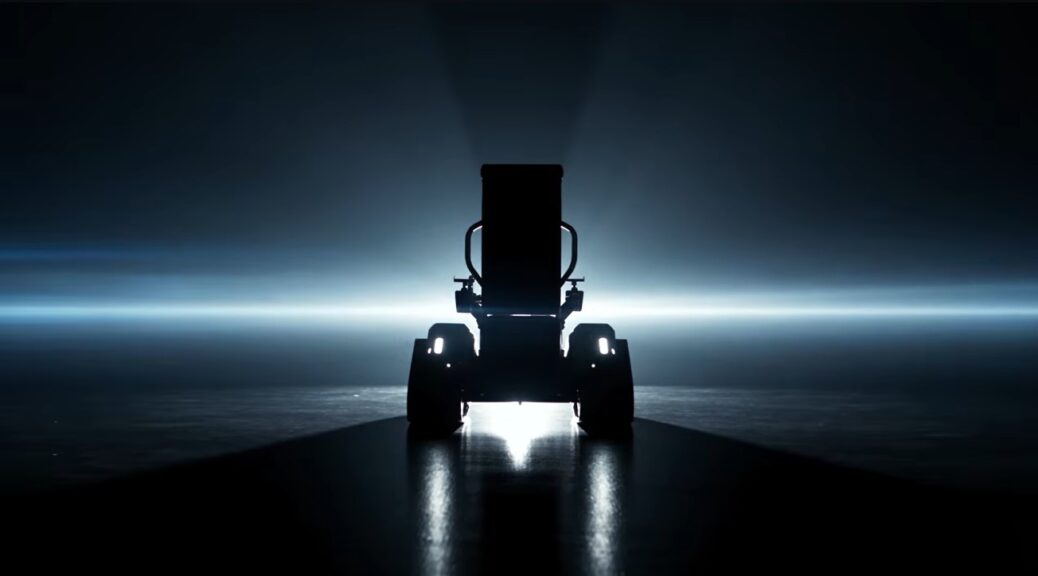
ALTA LUNA  © Venturi Space Paris, France September 2026 – Venturi Space unveils ALTA LUNA, a compact and manoeuvrable rover designed for local operations around future lunar bases. Designed to assist astronauts, it will also be able to carry out missions involving the handling and transport of payloads. At the International Space Summit, held in Paris on 9 and 10 September 2026, the team led by Gildo Pastor, President of Venturi Space, is presenting ALTA LUNA. This single-person lunar mobility vehicle has been conceived as a local utility vehicle capable of operating close to habitats.

With a target mass of 300 kg, ALTA LUNA’s compact size gives it a high degree of manoeuvrability. The vehicle is also designed to offer particularly high obstacle-crossing capability.

ALTA LUNA is designed to operate in two modes: with an astronaut on board or autonomously. In autonomous mode, navigation will rely on a combination of LiDAR, stereo cameras and artificial intelligence. AI will also be able to assist the astronaut in driving the vehicle.

In autonomous mode, ALTA LUNA will be able to carry out operations including excavation, grading and terrain preparation, as well as site development and the creation of routes and basic infrastructure. It will also be able to transport payloads. Each vehicle will be able to operate alone or in coordination with other ALTA LUNA vehicles. For certain operations, several vehicles will therefore be able to work together on the same task, pooling their efforts.

ALTA LUNA, VENTURI SPACE’S NEW LUNAR
UTILITY VEHICLE
ALTA LUNA · Payloads transport © Venturi SpaceThe onboard electronic system is designed to connect to the astronaut’s spacesuit and collect health data. If the astronaut becomes unwell, ALTA LUNA will be able to return the astronaut autonomously to base. The interface will also provide the pilot with essential information for driving and mission safety, including alerts relating to the space environment, such as an approaching solar storm.

With ALTA LUNA, Venturi Space is exploring a tracked mobility architecture for the first time as part of its lunar programmes. This choice has one specific objective: to allow the vehicle to climb steeper slopes than would be possible with a wheeled architecture.

ALTA LUNA will use the battery and battery management system (BMS) developed by Venturi Space. These two technologies are integrated into Venturi Astrolab’s CLV-1, which has been selected by NASA for the Artemis campaign.

Fifteen months after unveiling the MONA LUNA rover, and as the launch of FLIP to the lunar South Pole approaches (*), Venturi Space continues to strengthen its position in the space industry, just five years after its creation.

|
Gildo Pastor, President of Venturi Space:
“I enjoy designing vehicles for extreme environments, but above all I like to see them prove their value in real-world conditions. I will therefore devote all the necessary energy to ensuring that ALTA LUNA supports the first inhabitants of the Moon in their daily lives”

Dr. Antonio Delfino, Director of Venturi Space:
“On the Moon, we will need to build, develop sites, transport, maintain and connect. We will face challenges similar to those of industrialisation on Earth: transport routes, habitats, infrastructure and logistics. This will require a range of specialised mobility solutions capable of operating as a fleet and carrying out a wide variety of missions. This is the new phase of lunar activity that we are preparing for”(*) Developed by the US company Venturi Astrolab, the FLIP rover is equipped with hyper-deformable wheels and high-performance batteries designed and manufactured by Venturi Space. Its launch aboard Astrobotic’s Griffin-1 lander is scheduled by the end of 2026, with the lunar South Pole as its destination. Venturi Space, a European company, is Venturi Astrolab’s strategic partner.

For the Silo, Jarrod Barker.
Ontario Set to be First Province to test Auto-driving Vehicles and Technology

Ontario First to Test Automated Vehicles on Roads in Canada

Province Supports Innovation in Transportation Technology


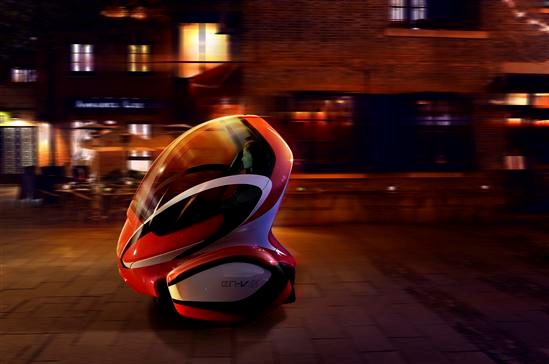
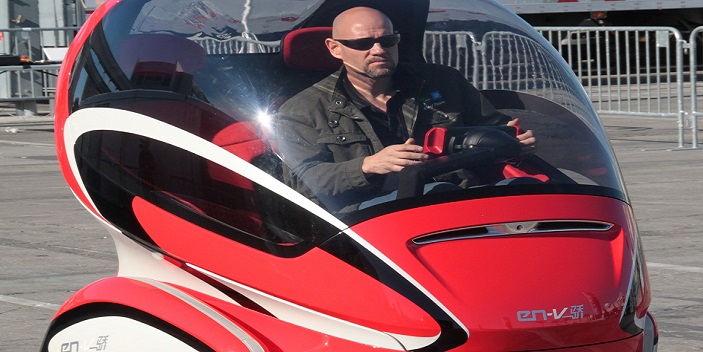
You should take auto-driving cars seriously- every major Auto manufacturer is venturing forward with concepts like this one- GM's EN-V
You should take auto-driving cars seriously- every major Auto manufacturer is venturing forward with concepts such as this one from General Motors- the GM EN-V


Ontario is launching a new pilot to allow for the testing of automated vehicles on Ontario roads.


Automated vehicles are driverless or self-driving vehicles that are capable of detecting the surrounding environment using artificial intelligence, sensors and global positioning system coordinates. Automated and connected vehicle technologies have the potential to help improve fuel efficiency as well as reduce traffic congestion, greenhouse gas emissions and driver distraction.


Beginning on January 1, 2016, Ontario will lead Canada as the first province to test automated vehicles and related technology on-road. Currently there are nearly 100 companies and institutions involved in the connected vehicle and automated vehicle industry in the province. The pilot will enable those companies to conduct research and development in Ontario rather than in competing jurisdictions, as well as support opportunities to bring automated vehicles to market.


The province is also pledging an additional $500,000 in funding to the Ontario Centres of Excellence Connected Vehicle/Automated Vehicle Program, in addition to the $2.45 million in funding recently provided. The program brings academic institutions and business together to promote and encourage innovative transportation technology.


Ensuring Ontario’s place as a world leader in the auto, transportation, information and communications technology sectors are part of the government’s plan to build Ontario up. The four-part plan includes investing in people’s talents and skills, making the largest investment in public infrastructure in Ontario’s history, creating a dynamic, innovative environment where business thrives, and building a secure retirement savings plan.

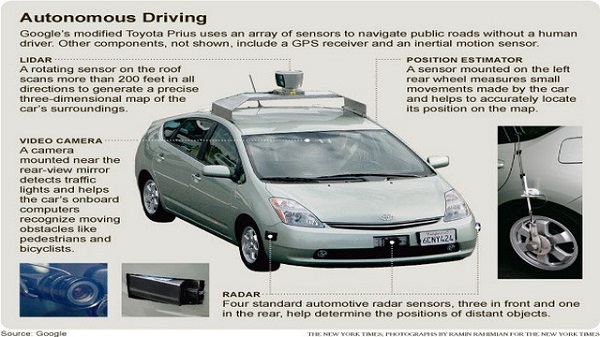
Not all concepts are futuristic looking such as Google's modded Prius. We're betting Ontario will test more conservatively styled auto-drivers such as this one. CP
Not all concepts are futuristic looking such as Google’s modded Prius. We’re betting Ontario will test more conservatively styled auto-drivers such as this one. CP image: New York Times

QUOTE


“In the world of transportation, Ontario has the opportunity to show leadership on automated technology. Today, Ontario is making its claim in the global marketplace by taking the next steps in automated vehicle innovation. The automated vehicle pilot will ensure that the province’s roads remain safe without creating burdens that stifle investment and innovation in Ontario’s dynamic business environment.”

— Steven Del Duca, Minister of Transportation


“Ontario is a global leader in developing and manufacturing the next generation of vehicles.

This new pilot program will build on our success, and help Ontario lead the development of automated and connected car technologies. In this highly competitive global economy, investing in people’s talents and skills to create the next generation of innovative technologies is good for business, and can help lead to the easier movement of goods and services across the province.”

— Brad Duguid, Minister of Economic Development, Employment and Infrastructure


QUICK FACTS


  • Information about applying for the pilot will be available online from the Ministry of Transportation in late November.
  • The Institute of Electrical and Electronics Engineers forecast that by 2040, autonomous vehicles will account for 75 per cent of all vehicles on the road.


LEARN MORE


Ontario Investing in the Next Generation of Connected Vehicles

Connected Vehicle/Automated Vehicle (CVAV) Research Program


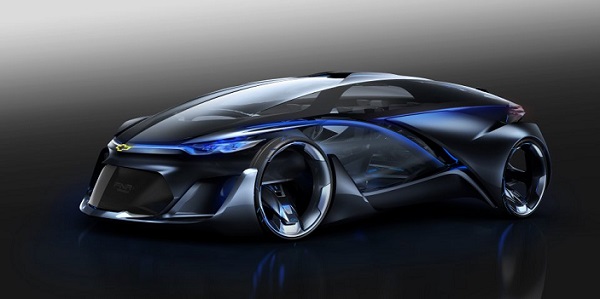
Who wouldn't want to ride/drive Chevrolet's FNR concept car?
Who wouldn’t want to ride/drive Chevrolet’s FNR concept car?


Disponible en français:
L’Ontario est la première province à mettre à l’essai les véhicules automatisés La province encourage l’innovation dans les technologies des transports 
L’Ontario lance un projet pilote en vue de la mise à l’essai de véhicules automatisés sur ses routes.
Les véhicules automatisés sont des véhicules sans chauffeur ou autoconduits qui peuvent détecter l’environnement avoisinant grâce à l’intelligence artificielle, aux capteurs et aux coordonnées fournies par le système de positionnement global. Les technologies relatives aux véhicules automatisés et connectés ont le potentiel d’améliorer le rendement du carburant et de réduire la congestion routière, les émissions de gaz à effet de serre et la distraction au volant.
Dès le 1er janvier 2016, l’Ontario sera le premier lieu au Canada à mettre à l’essai les véhicules automatisés et les technologies connexes sur la route. Près d’une centaine d’entreprises et d’établissements œuvrent actuellement dans le secteur des véhicules connectés et automatisés dans la province. Le projet pilote permettra à ces entreprises de mener des activités de recherche et de développement en Ontario plutôt que dans les territoires concurrents, en plus de créer des possibilités qui favoriseront l’introduction des véhicules automatisés sur le marché.
La province s’engage aussi à injecter 500 000 $ de plus dans le Programme de recherche sur les véhicules connectés et autonomes par l’intermédiaire des Centres d’excellence de l’Ontario, outre le financement de 2,45 millions de dollars récemment alloué. Ce programme réunit des établissements universitaires et des entreprises en vue de promouvoir les technologies de transport novatrices et d’encourager leur utilisation.
S’assurer de faire de l’Ontario un chef de file mondial dans les secteurs de l’automobile, du transport et des technologies de l’information et des communications s’inscrit dans le plan du gouvernement visant à renforcer la province. Ce plan comprend quatre volets : investir dans les talents et les compétences de la population, faire le plus important investissement dans l’infrastructure publique de l’histoire de l’Ontario, créer un environnement dynamique et novateur où les entreprises prospèrent, et établir un régime d’épargne-retraite sûr.
CITATIONS
« L’Ontario a l’occasion de montrer l’exemple par le recours à la technologie automatisée dans le domaine des transports. L’Ontario marque aujourd’hui le marché mondial de son empreinte en franchissant une nouvelle étape pour stimuler l’innovation dans l’automatisation des véhicules. Le projet pilote sur les véhicules automatisés sera mis en œuvre de façon à s’assurer que les routes de la province restent sûres sans créer des fardeaux qui étoufferaient l’investissement et l’innovation dans le dynamique environnement commercial de l’Ontario. »— Steven Del Duca, ministre des Transports
« L’Ontario est un chef de file mondial dans la conception et la fabrication de la prochaine génération de véhicules. Ce nouveau projet pilote misera sur notre succès et aidera la province à prendre les devants dans le développement des technologies des véhicules automatisés et connectés. Dans cette économie mondiale hautement concurrentielle, le fait d’investir dans les talents et les compétences de la population afin de créer la prochaine génération de technologies innovatrices est bon pour les affaires et peut faciliter un mouvement plus fluide des biens et des services dans l’ensemble de la province. »— Brad Duguid, ministre du Développement économique, de l’Emploi et de l’Infrastructure
FAITS EN BREF

  • Le ministère des Transports offrira de l’information en ligne sur la présentation de demandes dans le cadre du projet pilote à la fin novembre.
  • L’Institut des ingénieurs électriciens et électroniciens prévoit que les véhicules autonomes compteront pour 75 p. 100 de tous les véhicules sur la route d’ici 2040.

 POUR EN SAVOIR DAVANTAGE
Soutenir l’innovation dans les technologies de transportProgramme de recherche sur les véhicules connectés et autonomes