From last year: STRUTT Sizzle 2012- find the video on Vimeo
St. Catharines, Canada — The Niagara Artists Centre’s (NAC) 2013 STRUTT Wearable Art Weekend (STRUTT) is outlandish, bold and more spectacular than ever before. STRUTT takes place on November 15 and 16, 2013 culminating with the STRUTT Runway Show, which takes place Saturday, November 16 at the WS Tyler Factory in St. Catharines, ON.
Doors open at 8 p.m. and the runway show begins at 9 p.m. The STRUTT Runway Show showcases over 40 unique wearable artworks by local and province-wide artists, and will be scored by crown princes of Trans-Canadian cosmic rock, The Sadies. The event website is www.struttwearableartshow.ca
“We do whatever we can to bring the ‘WTF’ factor to every STRUTT. It doesn’t matter if you’ve been to the last ten or you’ve never been before, you’re going to get your head spun,” expresses NAC “Minister of Energy, Minds, and Resources,” Stephen Remus.
“Art and fashion are two things that academics, upper crust types, and anybody else who likes to be full of themselves has almost ruined completely. Thankfully, STRUTT brings it all back to earth in glorious style like a boulder of good times smacking down on a jelly doughnut.”
Find STRUTT on facebook for updates and info on Calls for Submissions CP
STRUTT is a surreal party scene where the absurd is commonplace. As Doug Herod of the St. Catharines Standard reflects, “STRUTT rocks! STRUTT is a wearable art fashion show, but that description doesn’t do it justice. It’s music, it’s entertainment, it’s theatre – and a lot of fun.” In addition to the art on the runway, The Sadies will be taking the stage and there are a variety of other spectacles leading up to the STRUTT Runway Show on November 15 at the WS Tyler Factory to keep partygoers entertained. The weekend’s events feature a photography
exhibit showcasing over 300 works of art that have been created over the past 14 years, and a dinner party featuring a live performance of chamber music combined with breathtaking imagery, local wine and a four-course epicurean feast.
Fooled you- this still from one of Oskar Schlemmer’s Bauhaus costume parties is from the 1920’s. Dadaism was influencing progressive art circles and wearable art made an impact.
STRUTT 2013 sponsors, partners and supporters are (in alphabetical order) Brock University Centre for the Arts, Canadian Tire Financial Services, City of St. Catharines, Design Electronics, Eight Contracting and Restorations, Henley Honda, Liberty! Bikes, Ontario Arts Council, Pen Financial Credit Union, Province of Ontario, Shannon Passero, The St. Catharines Performing Arts Centre, STORM Hair Group, and Suitcase In Point.
55 years after Schlemmer: “We’re not men. We are DEVO”
NAC is a not-for-profit, charitably registered, member-driven collective formed by and dedicated to serving the working artists and community of Niagara. Founded in 1969 as a collective of working artists, NAC is one of the oldest artist-run organizations in Canada. For more information visit www.nac.org
Dr. Jack Newman: “Breastfeeding should almost always work” image: breastfeedinginc.ca
Earlier today [Sept 30, 2013 ed.] , our provincial government announced an investment of more than $2.5-million for enhanced breastfeeding supports. This will include the launch of a 24-hour helpline providing access to lactation experts with service in more than 100 languages. This really is a fantastic program for breastfeeding mothers who can benefit from increased support, no matter what region of Ontario they call home.
Ontario Government Helping Babies Get Healthy Start
Ontario newborns and their families will soon benefit from enhanced breastfeeding supports, helping ensure that every woman who wants breastfeeding support can get it.
Breastfeeding helps to encourage healthy development and can reduce the likelihood of overweight and obesity in adolescence and adulthood. As part of Ontario’s Healthy Kids Strategy, the government is investing more than $2.5 million to help families give their infants a sound nutritional start by:
* Providing 24-hour telephone access to expert support for mothers who are breastfeeding.
* Supporting Ontario’s hospitals and community health care organizations with training, tools, guidance and resources to help them achieve the World Health Organization’s Baby-Friendly Initiative<http://www.who.int/nutrition/topics/bfhi/> designation and adopt clinical best practices in infant feeding that meet Baby-Friendly Initiative designation requirements.
· Targeted support for mothers in population groups that have lower rates of breastfeeding.
* Providing new resources to support breastfeeding through Best Start: Ontario’s Maternal Newborn and Early Child Development Resource Centre.
These initiatives fulfill recommendations made by the Healthy Kids Panel.
Giving Ontario’s children the healthiest start in life helps deliver on our Action Plan for Health Care to provide the right care, at the right time, in the right place. This is part of the Ontario government’s economic plan to invest in people, invest in infrastructure and support a dynamic and innovative business climate.
In Ontario, approximately 90 per cent of mothers want to breastfeed, but only 60 per cent do so when they leave the hospital after giving birth. By six months, only 28 per cent are breastfeeding- that means 72 per cent are feeding their infant formula.
QUOTES-
“We’re helping moms to breastfeed with round-the-clock telephone support and expert
help from hospitals and community health providers. Breastfeeding promotes closeness
between mom and baby, helps protect against illness, and sets babies on the path to
leading healthy lives right from the start.”
– Deb Matthews, Minister of Health and Long-Term Care
“Experts tell us that the first few years of our lives have a major impact on our
health as adolescents, teenagers and in adult life. This investment will help
mothers who want to breastfeed and create more Baby-Friendly Initiative certified
places where they can go to get answers and supports that are critical to raising
healthy children.”
– Teresa Piruzza, Minister of Children and Youth Services
“Breastfeeding should almost always work. Almost all breastfeeding problems are
preventable and if they are not prevented, they can be fixed. Unfortunately in
Ontario today, mothers have significant difficulties with breastfeeding because they
cannot get the best start from day one and they cannot always find help when they
need it. The initiatives the Ontario government is announcing today will help moms
get the support they need to breastfeed successfully.”
– Dr. Jack Newman, International Breastfeeding Centre and Newman Breastfeeding Clinic
“Though breastfeeding is natural, it is a learned behaviour and two must learn. Here
in Ontario there hasn’t been enough knowledgeable help for learning mothers and
babies up until now. I am hopeful with these new initiatives announced today that we
will see a vast improvement in the support mothers receive to achieve their
breastfeeding goals.”
– Edith Kernerman, International Breastfeeding Centre, Newman Breastfeeding Clinic,
Centre for Breastfeeding Education and Ontario Lactation Consultants Association
QUICK FACTS
* In Ontario, approximately 90 per cent of mothers want to breastfeed, but only 60 per cent do so when they leave the hospital after giving birth. By six months, only 28 per cent are breastfeeding.
* The benefits of breastfeeding include improved cognitive development and reduced incidence of illness during infancy, childhood and later in life.
* For each month a baby is breastfed until the eight month, the risk of obesity is reduced by four per cent – resulting in a reduced risk of obesity of 32 percent overall when a baby is breastfed for the first eight months.
But why do we continue to feed government? Why would we participate in any political or economic system that is not serving our best interests?
Government is basically unproductive and can only give what it takes. Bigger government takes more and gives less.
The fruits of our labour are controlled, confiscated, and redistributed through taxation, inflation, interest, and government spending. There is also a systemic shortage of official currency, which leads to a shortage of paid employment, and the jobs that are available might be completely unproductive. We are forced to compete for currency that is systemically scarce, even though there are plenty of worthwhile activities that can be done and there are plenty of people who are willing and able to do productive work.
There seems to be an increasing level of dissatisfaction with government and the political process, but there certainly isn’t a consensus in defining the problem or offering a solution that will sufficiently address all of our concerns or satisfy everyone. This poses a challenge, but it also presents us with an opportunity to carefully examine the form and function of government, and explore a full range of possible alternatives.
If we have freedom of choice and a free market then we should be able to individually select the goods and services that we wish to purchase from a variety of producers and providers, who should be able to compete for customers based on the quality and price of their products and services. All products and services, including government programs and services, should be able to compete in a free market.
Trade and exchange should be voluntary and mutually beneficial. We should not be forced to pay for anything that we don’t want or don’t use, and we should not have to do business with anyone who consistently offers poor quality goods and services or who does not pay their legitimate debts.
If we have economic freedom then we should be able to negotiate agreeable prices, accept or refuse any form of payment, control the allocation of our credit, and use any method or medium of exchange. We should not be compelled to use a systemically scarce currency that is created as interest-bearing debt.
If the purpose of an economic system is to facilitate the production and exchange of goods and services then it should be possible to create numerous ways to serve this purpose, with various concurrent systems operating in any location. This would give us more control over our time, labour, skills, and resources.

If government is a provider of services then it should compete for customers based on the quality and price of any services that it is actually willing and able to provide, including education, health care, and defence. If government services were the best ones available then we would presumably choose to use them. Our wealth should not be confiscated and redistributed to pay for anything that we don’t want or don’t use.
We can already seek membership in various communities, organizations or other groups, based on our own political, religious, social, recreational, or business interests. If we have freedom of association and political freedom then we should even be able to choose a apolitical system and type of government, without having to move to a different place, and without imposing or choice on anyone else. This would give us the option to hire people to manage our affairs and make decisions on our behalf, but we would not be represented or lead without imposing our consent.
Any imposed political system or government is a method of control. Political freedom does not exist if an individual is forced to accept the decisions of any other individual or group, even if it calls itself a majority.
Imposed political systems and territorial governments with their restrictive geopolitical boundaries can be replaced with a variety of voluntary communities, mutual benefit associations, and autonomous protective groups, with overlapping membership in any location. Multiple communities can exist in any geographic region, without any imposed territorial monopolies for the provision of services.
Individual participation in any economic or political system should be entirely voluntary, based on choice and consent, rather than coercion and compulsion. No person is an island, but everyone should essentially be able to individually decide how he or she would like to organize and manage his or her economic and political activities.

Government is a human invention that has changed over time and will continue to change, but the direction of this change will be determined by the way we think and the choices we make.
Diverse methods and arrangements can co-exist simultaneously in any location to facilitate the production, provision, distribution, and exchange of goods and services, for the mutual benefit of all voluntary participants, at their own risk and expense. James Clayton
Note- boldfacing was not indicated in the original submitted letter to the Silo.
Synopsis-A privately-owned spaceship built by Orbital Sciences Corp. made an Earth-rattling trip into orbit from Virginia on Wednesday, September 25th starting a four-day chase of the International Space Station to close out a nearly $700 million NASA program to foster a fleet of commercial spaceships to replace capabilities lost with the space shuttle’s retirement. Today (Sept 29th) is the end of the chase and culminates in a docking via Canadian Robotic arm capture with the ISS International Space Station. Read the full story from our friends at Spaceflight Now
Ahhh Jane Jetson- you really know how to take advantage of technology.
We know they let you watch TV on the go, surf online, send emails and, oh yeah, make phone calls. But an innovative new tool now also gives you the power to use your mobile device to switch on any light in your home, open your garage door or turn on any other piece of electronic equipment, no matter where you’re located.
Ontario Technology firm: The Skylink Group – which previously introduced Skylink HomeControl, an affordable and easy-to-use system to wirelessly control your entire house – recently launched a mobile application, Skylink HomeControl App, that effectively turns your smartphone, tablet or PC into a remote control.
The handy app allows users to control just about anything in their home with the touch of a couple buttons on a virtual keypad, which can be customized to the specific devices they want to be able to access remotely.
You might be surprised to learn that home automation has been around for a long time and since the earliest days of electricity in the home, inventors and entrepreneurs have scrambled to find a useful and profitable way of harvesting radio waves and electricity. Tesla was one such visionary and among his many accomplishments is perhaps the first use of control by remote- considered at the time, an important form of automation. In 1898 he constructed and demonstrated this remote control model boat in New York. image: kerryr.net
“Anyone who already understands how to use a mobile device or a computer tablet will be able to use this app easily. That’s the key to getting the greatest benefit from new technologies – making them easy to understand and user friendly,” says Philip Tsui, CEO and the Chairman of Skylink Group.
The Skylink HomeControl System is designed for do-it-yourselfers and uses control modules which can be wired out of sight and wireless receivers plugged into wall outlets or lamp sockets, even wall switches and dimmers which replace your existing wall switches. For professionals, the Skylinkhome Wireless Control System has modules with three wires that can be installed almost anywhere.
The Wireless Control System can be used to control anything electronic, including:
. Lamps
. Coffee makers
. Fans
. Stereos
. Fire places
. Ceiling fans
. Indoor and outdoor lighting
. Garage doors
. Security systems
. Countless other electronic devices and appliances
Often cited as the “McDonald’s of Home Automation” X-10 modules were considered a major breakthrough when they entered the consumer market in the 1970’s. A central control unit (here seen in lovely 70’s woodgrain) controlled separate modules that were plugged directly into a home power outlet. An appliance requiring automation such as a lamp, was plugged into the module and controlled via wired or wireless control from the X-10 ‘brain’. CP
For those who may not have a smartphone or computer tablet, Skylink also has a remote control – the credit card-sized SkylinkPad – which can be used to wirelessly control devices in your house.
In addition to convenience, the Skylink HomeControl System helps users realize significant energy savings. With the touch of a button, you can shut off all of your lights or set up motion sensors to work with the system. The wireless system also uses timers to ensure that lights and electronic equipment can be shut off when they’re not needed. Dimmers also reduce energy usage, contributing to a greener environment and lower electricity bills.
About Skylink Group:
The Skylink Group understands the needs and concerns of the homeowner in providing a safe and comfortable environment for their family whether they are at home or away. Established in 1990, Skylink Group operates out of Brampton, Ontario. On
Twitter at @skylinkhome.
printing will change everything. You heard it here first. CP
On September 11th, 2013 – (New York City, US – Global Release) botObjects finally announced the ProDesk3D the world’s first Full Color 3D Desktop Printer (the ProDesk3D).
The firm aims to change the face of the 3D desktop printing market with the launch of the ProDesk3D, enabling the advancements to trigger mass market adoption of this technology – opening up a new generation of innovation, by doing so – accelerating the customer growth around the world. On the back of recently announcing their US high school education plans and its 3DDPE (3D Desktop Printing Education) Program – the firm believes that this market and the ProDesk3D is rightly timed for ‘hype to turn to reality’ – with new types of consumers buying this technology to innovate at home, and high schools shifting their expense policies to accommodate this technology in the curriculum. The market is now seeing a much wider set of professionals buy too – seeking automation & manufacturing efficiencies, new ways to gain client satisfaction, and finally, identifying new business opportunities as a result of using this technology.
Co-founder of botObjects Martin Warner
“Our customers and friends are sharing with us their ideas for this technology and how the ProDesk3D gives them finally a product that can address the shortfalls in competitor products – such as professional resolution, better speed, amazing advantages of full color, and a product that is really plug and play. The ideas we are hearing are sensational from advancements in human prosthetics, to teeth dentures, to toy figurines, to advanced precision-based components, to food manufacturing testing and much, much more.
This revolution is happening at such a rapid pace that we won’t recognize it in 10 years time – everyone will touch this market in some way or another”, said Martin Warner, CEO & Co-founder.
botObjects announces expands its distribution footprint to UK, Austria and Korea We are pleased to announce today our Sole Distributor and strategic partner –EBM 3D Limited who in celebration will be launching Xerika, their brand supporting the best of new technology across the UK.
Today, botObjects proudly announced that 3D-Fabrik as their Sole Distributor and strategic partner in Austria. 3D-Fabrik will be announcing new web announcements & local pricing shortly. Continuing the Asian distribution release efforts, botObjects announced Alien Technology Asia as the Sole Distributor and strategic partner in Korea. botObejcts also confirmed that new web announcements due out shortly for this territory.
Co-founder of botObjects, Mike Duma.
“We are extremely proud to announce our new strategic partners today, and look forward to announcing more countries very shortly in the build up to the global release of the ProDes3D”, said Mike Duma, CTO & Co-founder.
“”Greens will fight to protect the places we love. Let’s leave our children the rich natural heritage we have enjoyed.” image: redd-monitor.org
ONTARIO CAN’T AFFORD TO DELETE ENVIRONMENTAL PROTECTIONS (Queen’s Park): Trashing Ontario’s Endangered Species Act is unacceptable, says Green Party of Ontario leader Mike Schreiner.
“We can’t let the Wynne government bulldoze environmental protections,” says Schreiner.
“Greens will fight to protect the places we love. Let’s leave our children the rich natural heritage we have enjoyed.”
Schreiner joined environmental groups in calling on the Premier to reverse a Cabinet decision to grant sweeping exemptions to species protection. Over a thousand GPO supporters have sent letters to the Premier asking her to protect endangered species.

“The Premier failed her first big environmental test,” says Schreiner. “It’s not surprising that the Liberals’ short-sighted attack on endangered species has led to a lawsuit. Breaking their own legislation threatens protections for water, farmland and healthy communities. And the silence from the NDP and PC opposition on these issues is deafening.”
There is a better way to move forward without sacrificing environmental protection. The Green Party agrees with the Drummond Report: user fees should pay for environmental protection. User fees are fair and economical, and they discourage wasteful use of precious natural resources.

The Green Party is also calling on the government to support paying farmers and landowners for environmental good and services that benefit everyone.
“Instead of destroying species or regulating farmers out of business, Ontario should recognize the economic value of environmental goods and services,” says Schreiner. “Once again, other provinces and countries are way ahead of us in protecting what we value most.” For the Silo, Becky Smit
(Queen’s Park): Green Party of Ontario leader Mike Schreiner is calling for an end to political gamesmanship at Queen’s Park. Instead,
Schreiner wants the minority legislature to move on legislation that protects food and water, democracy and local jobs during the fall session.
“Greens will push the government to protect the people and places we love,” says Schreiner. “The status quo parties need to stop playing political games so that we can get things done for the people of Ontario. Greens succeeded in pushing the Premier to save the Experimental Lakes Area [ search our site for more on the Experimental Lakes Area CP] in the spring, which was more than the Tories accomplished with 36 seats.”
As the only political leader to sign the Food and Water First pledge to protect prime farmland and source water, Schreiner is challenging the Premier and opposition parties to follow his lead.
“We can’t eat subdivisions, quarries or pipelines,” says Schreiner. “Ontario is losing farmland at an accelerating rate, bees are dying, and 2 pipeline proposals threaten our drinking water. None of the status quo parties are doing enough to protect the places we love.”
Greens know that part of the solution is to reduce the influence of powerful vested interests by banning corporate and union donations to political parties.
“People vote, not corporations,” says Schreiner. “We have to get politics back on track by closing the money taps that buy influence for powerful corporations and big unions.”
Greens are also calling on the government to remove barriers for entrepreneurs to create local jobs. Schreiner wants to see changes to finance laws to allow crowd source funding for new businesses.
“Ontario must invest where the puck is going, not where it is,” says Schreiner. “People want to invest in their communities to support entrepreneurs in clean tech and low carbon industries.”
For the Silo, Becky Smit
The Ontario government will introduce legislation to establish a Financial Accountability Officer, an independent officer of the Legislative Assembly. Ontario is the first province in Canada to introduce this oversight measure.
If the legislation is passed, the Financial Accountability Officer would provide independent analysis to all MPPs about the state of the province’s finances, including the Ontario Budget, as well as trends in the provincial and national economies. In addition, at the request of a legislative committee or an MPP, other types of research could be provided by the officer, including the financial cost or benefit to the province of any public bill. The Financial Accountability Officer could also be asked to review and estimate the financial cost or benefit to the province of any proposal that relates to a matter over which the Legislature has jurisdiction, such as the establishment of a new program.
Increasing financial openness is part of the government’s plan to work collaboratively, attract investment, create jobs and help people in their everyday lives.
“We are proposing the creation of a Financial Accountability Officer to further
enhance the openness and transparency of government. This would also include the
financial assessment of any public bill brought forward to the Legislature by an
MPP. The work undertaken by this independent officer will help better inform the
house on possible financial impacts of a proposed bill and increase information
available to Ontarians.”
– Charles Sousa, Minister of Finance
“We are fulfilling our commitments with the introduction of the Financial
Accountability Officer Act. I look forward to working with the opposition to pass
this Bill and other important legislation that we will be debating this fall.
Ontarians want to see minority government working, and I’m optimistic we’ll be able
to make progress in the Legislature.”
– John Milloy, Government House Leader
QUICK FACTS
§ The Financial Accountability Officer would be selected by a panel consisting of
one member from each recognized party, chaired by the Speaker of the Assembly who is
a non-voting member.
§ The Financial Accountability Officer would produce an annual report on or before
July 31 of each year.
§ The establishment of a Financial Accountability Officer builds on previous
government actions to enhance accountability and transparency, such as the Fiscal
Transparency and Accountability Act, 2004.
PIERRE-AUGUSTE RENOIR (French, 1841-1919) and RICHARD GUINO (French, 1890-1973) Grande Vénus victorieuse (Large Venus Victorious), 1914-15 Original plaster 71 inches (180.3 cm) high Published by Vollard, Paris THE RENOIR COLLECTION With her weight rested on her right hip, holding a drape in her left hand and the golden apple in her right, this standing female nude is said to be the culmination of Renoir’s sculptural works. Transforming paradox into perfection, Renoir marries contradictory attributes to personify his idea of female quintessence. Vénus victorieuse the Woman is majestic yet simple, engaged and yet isolated, familiar but also obscure. With this sculpture, Renoir redefines classical theme and form to portray the eternal beauty of Woman – a leitmotiv apparent in much of his work. LITERATURE: P. Haesaerts, Renoir Sculptor, New York, 1947, p. 24, no. 6, illustrations of another cast pls. XIV-XXI. NOTE: This original foundry plaster is not copyright protected. images :ha.com
The collection is an intimate glimpse inside the personal and professional life of the master painter through a trove of important documents, including his marriage certificate, photographs and letters written to Renoir from friends and contemporaries such as Monet, Manet, and Rodin. The collection also features a selection of original sculptural plaster maquettes created at Renoir’s estate in Cagnes, France, in the twilight of his career. Battling severe arthritis, Renoir collaborated with a young and able-handed artist, Richard Guino, at his dealer Ambroise Vollard’s suggestion.
This museum-level collection is superb in its completeness and reveals volumes about the man and his art,” said Brian Roughton, Managing Director of Fine Art at Heritage Auctions. “It touches every corner of his life and represents the last time this collection will appear assembled ever again. In addition to the personal letters and objects, we’re also thrilled to have the opportunity to offer 20 carefully collected original plaster maquettes.”
PIERRE-AUGUSTE RENOIR (French, 1841-1919) Médaillon de Coco Piece Mold & Original Plaster of Relief, 1907 Original plaster 8-1/2 inches (21.6 cm) (relief diameter) 11-1/2 inches (29.2 cm) (diameter with borders) Published by Hodebert, Paris & Flechtheim, Berlin THE RENOIR COLLECTION Renoir’s first sculptural work, this medallion and the bust of his youngest son, Claude “Coco” Renoir are the only two sculptures Renoir executed entirely with his own hands. The work was intended to decorate the fireplace in the dining room of Les Collettes at Cagnes, where it was displayed once finished. Estimate: $20,000 – $30,000. LITERATURE: P. Haesaerts, Renoir Sculptor, New York, 1947, p. 19, no. 1, illustration of another cast pl. III.
Renoir’s pince-nez, spectacles popular in the 19th century supported without earpieces by pinching the bridge of the nose, in a hinged leather case with royal purple velvet lining. Estimate: $1,000 – $1,500. Artist Unknown:. Condition Report*: 4.25 x 1.5 inches
Scottevest’s excellent design approach to fashion: hybrid vest/jacket with gobs of discreet storage room. Looking for something for the female persuasion? Look below for the Phoebe Dress- elegant and modern.
If you’re a ticket holder or an occasional stadium goer you probably already know that in 2013, the NFL outlawed bags at stadiums as a security measure and the policy is quickly catching on at other sports stadiums and entertainment venues. Meanwhile, clothing brand SCOTTEVEST has been consistently declared a compliant alternative, allowing sports fans to beat the ruling; and continue to bring their personal items to the game. Let’s face it, if you’re taking in a three hour game, you need to make your stay as comfortable as possible.
How are smarter fans still carrying what they want into the stadium? By wearing SCOTTEVEST brand pocketed clothing. SCOTTEVEST has created a complete line of vests, jackets, and other clothing, all of which are carefully engineered with a large variety of unique purpose-built pockets. Always stylish and never bulging with a fans cleverly concealed cargo (wink, wink, nod, nod), SCOTTEVEST garments allow for the discreet, secure, and efficient storage of a multitude of different items, from technological gadgets to everyday; or game day; essentials. Cameras, binoculars, tablet computers, personal hygiene items and sunglasses are just some examples of personal belongings that have a specifically-designed home in SCOTTEVEST clothing. And to beat the exorbitant cost of stadium or concert food or drink, wearing SCOTTEVEST provides an incognito way to enhance your purchased goods and bring in snacks and even personal beverages to games or concerts.
The NFL ban applies to all bags, including purses and backpacks. It requires items to be put into NFL sanctioned clear bags; or into clothing pockets.
Because SCOTTEVEST clothing offers the benefit of up to 37 pockets per item and looks like regular fashion-outerwear even with the pockets full, it is rapidly becoming the go-to solution for football fans. Both male and female fans appreciate the fact that with SCOTTEVEST, what they bring in to the game remains their business alone.
SCOTTEVEST CEO Scott Jordan said, “The NFL policy is in effect and we expect it to be copied by other sports organizations, arenas, and even concert halls. It is a real issue that fans had struggled to come to terms with until SCOTTEVEST figured out a way to beat the system with pockets.”
For a more minimalist approach, fans can also try patented PortaPocket hands-free carrying cases, which can add a single pocket to any outfit. For the Silo, Jarrod Barker.
Ontario Premier Kathleen Wynne (Lib) in Thunder Bay, ON home to new law school.
Ontario Premier Kathleen Wynne attended the opening of two professional programs in Northern Ontario on September 4th, as part of her commitment to help young people in every part of the province prepare for promising careers.
Lakehead University’s Faculty of Law in Thunder Bay and Laurentian University’s School of Architecture in Sudbury are Northern Ontario’s first law and architecture schools, and the first of their kinds to open in the province in more than 40 years.
The schools will help Northern Ontario students enter the law and architecture professions, and study closer to their families and the communities where they grew up. There is currently a shortage of lawyers who specialize in Northern issues, and Lakehead’s new law school will help bridge that gap by focusing on issues such as access to justice in Northern and rural communities, as well as Aboriginal, natural resource and small- or single-practitioner law.
The Ontario government is committed to making smart investments that will help Northern Ontario’s economy grow and create more jobs.
“I want young people in every part of this province to be able to pursue their
dreams, find great careers and give back to their communities. These two exciting
programs bring new opportunities to a wonderful part of our province.”
—Kathleen Wynne, Premier of Ontario
“A post-secondary education continues to be one of the most important investments
people can make in themselves and their future. Programs like these will help
prepare students in the North for the global economy, give them better access to
good jobs and help Ontario build the highly skilled and educated workforce it
needs.”
—Brad Duguid, Minister of Training, Colleges and Universities
“These two new programs further establish Thunder Bay and Sudbury as destinations
for specialized post-secondary education and training. Our government is so proud to
be able to work with educational institutions in Northern Ontario to ensure we have
the infrastructure needed to educate the workforce of tomorrow.”
—Michael Gravelle, Minister of Northern Development and Mines
Laurentian University. Main campus. photo: Google.ca
QUICK FACTS
§ The Ontario government invested $1.5 million in Lakehead’s new Faculty of Law building, and $21 million in Laurentian’s new School of Architecture.
§ Approximately 57 per cent of Lakehead’s 60 new Faculty of Law students are from Northern Ontario. Laurentian’s inaugural School of Architecture class is comprised of 70 students.
§ Laurentian is the first Canadian school of architecture outside of Quebec to offer French programming. It also provides students with access to an Elder-in-residence, and several courses focused on Aboriginal teachings.
Dear Silo, you’ve probably heard me talk about my daughter Hannah in the past. She has been called many things: “The future of social media”, “Eco-Warrior”, “Changemaker” and “Activist”. At 10 years old, she is all of these things. And now, she can add Free The Children’s “We Day” speaker to the list. There will be nine We Days across Canada this school year, plus two in the United States. And the first U.K. We Day will happen in London next spring. [More on what “We Day” is all about below CP]
She created her blog, www.CallMeHannah.ca , at 9 years old, with the goal of sharing her growing knowledge and concern for the environment. Having always loved animals, Hannah made the connection between animals and the effects of environmental destruction on their habitats and lives. Hannah has become an engaged global citizen seeking to further her own understanding of her connection to and responsibility to the world. Believing that even the little things that we do add up to make a difference, her journey and discovery meet her call to action through her blog.
Issues that Hannah has written about in the past year include eco-friendly living, fair trade, bullying, clean water and child labour. She seeks inspiration and motivation from those who have come before her and regularly features the stories of her role models on her blog.
Not limiting herself to her laptop, Hannah has put her words into actions. She organized a shoreline cleanup in her community, was a WWF Earth Hour Team Captain 2013 and spoke at the WWFs Earth Hour event in Toronto, was the official “on the ground eco-blogger” for the JUNO Awards and launched We Create Change. Her impassioned speech at two local schools motivated her peers to collect 97,500 pennies for Free The Children’s clean water projects. An effective communicator, Hannah is comfortable and confident on both sides of the camera or in front of a crowd. She has honed her skills as an interviewer through conducting interviews with Craig Kielburger, Spencer West and Severn Suzuki. Hannah has appeared on CanadaAM, The Marilyn Dennis Show, APP Central, CBC’s Fresh Air and The George Stroumboulopoulos Show. She has been featured in a spotlight from Chickadee Magazine and named as a Champion of the Earth in Owl Magazine and was the youngest team captain for The WWF’s Earth Hour in 2013. As you can see, I am very proud of my daughter and her efforts to improve the world we live in. Her current focus is on We Day.
“We Day is a room that can transform people, where messages about bullying and social issues can resonate and a place where students can find people just like them,” said Free The Children ambassador Demi Lovato. “Growing up I was forced to deal with many personal struggles and I craved a space where I not only belonged but felt powerful enough to make a difference. To me, that‘s what We Day does – it brings people together in a day of celebration for world change, showing them they aren‘t alone in their journey and that it is cool to care. And I am so grateful to be a part of that.”
“As kids, we face different pressures all the time,” said Austin Mahone, Award-Winning American pop singer. “You‘ve got to surround yourself with positive people in your life, and that‘s what We Day does. It brings people together to celebrate the difference we can make for each other. I‘m so excited to be a part of it for the first time this year!”
We Day is a stadium-sized educational event and a movement of young people leading local and global change. We Day is tied to the year-long program, We Act, which supports students and educators with free educational resources, student-led campaigns and support materials to help turn the event‘s inspiration into sustained activation. Since 2007, youth involved in the We Act program have raised $37 million dollars for over 1000 local and global causes and logged more than 9.6 million volunteer hours.
“I had the opportunity this past summer to participate with Free The Children‘s communities in Kenya, and see first-hand the lasting impact that youth in North America are making through their charitable work,” said Joe Jonas from the Grammy® nominated, multi-platinum band the Jonas Brothers. “I understand what it means to these communities to have access to clean water and an education and I was thrilled to get involved by committing to help build two schools overseas with Free The Children. It may seem like a simple assignment to make one local and one global commitment, but these efforts fundamentally impact the lives of people around the world.” Eric Halper.
Free The Children is an international charity and educational partner. Founded in 1995 by international activist Craig Kielburger, Free The Children believes in a world where young people are free to achieve their fullest potential, and empowers youth to remove barriers that prevent them from being active local and global citizens. The organization‘s domestic programs—which includes We Day, Free The Children‘s signature youth empowerment event—educate, engage and empower 1.7 million young people across North America, the UK and around the world to become engaged global citizens. Its international projects have brought more than 650 schools and school rooms to youth and provided clean water and sanitation, health care and food security to one million people around the world, freeing children and their families from the cycle of poverty.
The organization has received the World’s Children’s Prize for the Rights of the Child, the Human Rights Award from the World Association of Non-Governmental Organizations, and has formed successful partnerships with leading school boards and Oprah’s Angel Network. For more information, visit www.freethechildren.com.
Ontario’s ruling Liberals want to ban Teen Tanning but need support to pass the legislation.
“PCs and NDP Threaten to Stall Youth Tanning Bed Ban” (Queen’s Park) One day after calling on the government to fast-track Bill 30, legislation to ban youth access to tanning beds, the PCs and NDP are threatening procedural tricks to stall the bill in the Ontario Legislature.
“When the House returns next month, our government will move a programming motion in the Legislature in order to quickly pass this life-saving bill into law by the end of September,” said Liberal MPP Deb Matthews. “The PCs and NDP have already pledged to support Bill 30 – it’s concerning to hear the opposition parties might play procedural games to prevent this vital legislation from passing.”
Matthews was referring to published media reports that indicate both opposition parties are backtracking from a commitment to fast-track the tanning bed ban:
· NDP Health Critic France Gelinas said Thursday the Government should pass the legislation “fast, very fast…[Ontario Liberals] controls the calendar.” (Toronto Sun, August 22, 2013). Today, Gelinas said the Liberals “are not in control” and “can’t simply push legislation through the house without getting agreement from the two opposition parties.” (Toronto Sun, August 23, 2013).
· The PCs said Thursday “We support the legislation” and called for a time allocation motion to secure speedy passage (Toronto Sun, August 22, 2013). The same day, the PCs wouldn’t confirm if they will follow through on their pledge to fast-track the Bill (Globeandmail.com, August 22, 2013).
“It’s time to put an end to the procedural games blocking our efforts to pass new tanning legislation so we can prevent skin cancer among young Ontarians. MPP France Gelinas has been unclear on whether or not she will support our efforts to fast-track this legislation. I would like a clear answer from Ms. Gelinas – yes or no – will her party help us get this bill passed before the end of September? All MPPs have a shared responsibility to make the legislature work so we can help to keep young people safe,” stated Matthews.
The proposed legislation would prevent skin cancer among youth and create awareness potential harm by prohibiting the sale of tanning services to youth under 18. It ould also require that tanning bed operators request identification from anyone who appears under25 years old.
Last spring, the opposition blocked progress on Bill 30, Skin Cancer Prevention Act(Tanning Beds), 2013 by needlessly extending debate on three other bills for more than55 hours – far more than required. By running out the clock debating the Local Food Act, the Air Ambulance Amendment Act & Co-op Housing legislation, the opposition prevented this important tanning bed legislation from moving forward.
The Project: The 980,000 sq. ft. acute care community hospital replaces two aging facilities in the Niagara region and accommodates 375 acute care beds, with associated outpatient and support services.
New Health Care Complex – St. Catharines Site “2oth Century NOT included”
It provides a comprehensive range of clinical services including:
• a cancer centre serving 1,200 patients close to home, relieving them from the stress of travelling to Hamilton or Toronto for treatments
• a longer-term mental health service that includes 53 beds
• dialysis services
• cardiac catheterization services, which provides diagnostic investigation, reduces hospitalizations for heart disease and provides faster local care for residents of the Niagara region
The goal of this project was to provide Niagara Health System with a modern, state-of-the-art, one million square foot building capable of providing one million square feet of care.
In addition to design and construction management, PCL’s [ PCL comprises a family of general contracting companies and is the largest such organization in Canada and the fifth largest in the U.S. CP ]scope of work also included the procurement and installation of more than 25,000 pieces of medical equipment, as well as medical gas, head walls, nurse call system, information technology, audio visual, and security technology.
Some of the many interesting features that set this building apart include construction of the first radiation suites in the Niagara region, an enclosed ambulance bay to provide protection to incoming patients, an interior design that strategically locates departments to minimize clinical travel time by staff, and an exterior design that implements materials indigenous to the Niagara region.
Interior and exterior architectural designs affect patient and staff psychology so why not design accordingly? This ceiling detail of the Walker Cancer Care Treatment Room ceiling reveals the care and consideration that went into the hospitals designs. CP
Architectural
• Main Street feature wall using a combination of indigenous and complementary stones that tell a story of the geological formation of the Niagara Escarpment.
• Use of structural elements in the form of a tree at the main entry and cafeteria to create the canopy.
• First operating rooms in Canada to use Corian wall finishes.
• Integrated interior finishes and way finding system,using landmarks to help visitors and patients locate themselves in the facility.
• Enhanced use of natural light to infiltrate deeper into the building, with particular attention to patient spaces.
• An acoustical design at the building envelope to mitigate and isolate noise generated by a nearby train corridor.
Structural
• Blending structural elements with architectural finish and spectacle.
• Strategy of a structural grid system to maximize open spaces and floor to ceiling height.
• Foundation system and MRI inertia slab to address vibrations created by train traffic and a nearby machine stamping plant.
• Post Disaster design to address potential seismic event, to allow the facility to operate during and after as a relief centre.
• Use of cast-in-place elements to allow equipment flexibility.
Mechanical/Electrical
• Pandemic containment capability to deal with infectious outbreaks and disasters, allowing the facility to isolate building sections and departments.
• Building automation system, fully integrated with building elements and equipment to monitor and ensure optimal building performance.
• Back-up and dual power systems to ensure fundamental building and medical systems remain available and functioning at all times, including integration with the building automation system, to allow targeted load distribution to non fundamental systems to become available as required.
The Operating Theater. It’s understandable if you think that this is a set from Star Trek-
Sustainability
• The project is targeted for LEED® certification. As part of the construction and design strategy, the project team developed several innovations and elements for a significant improvement of the target to LEED® Silver certification – from 26 to 35 points.
• Incorporated an energy efficient lighting strategy using natural lighting as much as possible, as well as the broad use of occupancy sensors and low energy lighting systems.
• Integrated and efficient cooling and heating systems, and an optimized building envelope system that helps to reduce greenhouse gas emissions.
• The overall energy strategy resulted in the Energy Model that realizes an energy savings of 46% relative to the Model Energy Code for Buildings, which is expected to produce savings to the client in excess of $1 million annually.
• Use of native and hardy plant species and an integrated storm water management program, including irrigation and water features to eliminate city water use for landscape elements.
A look at the state-of-the-art radiation treatment facility.
You’ve heard the expression “the photo doesn’t do it justice” right? You’re best bet is to surf this link and watch the video. http://tinyurl.com/opu3uow
Rolls-Royce know how to throw a party and turn an unveiling into the perfect analog unwrapping for the Wraith: the most powerful, technologically advanced and arguably the most beautiful Rolls to date. On the evening of Wednesday, 28 August 2013, Rolls-Royce Motor Cars “got ‘er done” by celebrating the Vancouver arrival of its newest and most powerful model, with a dramatic unveiling event at the Rocky Mountaineer Train Station. The private event, hosted by Rolls-Royce Motor Cars Vancouver was carefully thought out and put together to reflect the dark beauty and unparalleled power that are the hallmarks of Rolls-Royce Wraith and we were there! Take a deep breath and sit down…..
We knew this car was something out of the ordinary back in March, when we paid attention to the Geneva roll-out and a few months later, we were blown away by the Hollywood-esque Wraith promo films we were privileged to see. The Wraith seemed like the de facto standard automobile for a superhero in disguise or a secret agent and that’s a good thing.
“The Rolls-Royce Wraith is unlike any automobile produced in Rolls’ long and fabled history, so it is especially fitting that its arrival in Vancouver be marked by an event that [was] as grand as this,” commented Eric C. Shepherd, President of Rolls-Royce Motor Cars North America. “The Wraith represents a bold and powerful new statement by Rolls-Royce, so this event [had] been designed convey those same qualities, while bringing this premier luxury brand to life in a way that is relevant to our customers.”
It’s a Fastback!
Wraith’s sweeping fastback gives the car its unique character. Bold lines, tension in the panels and a raked rear screen evoke the image of an
athlete poised in the starting blocks. Further expression of dynamic intent can be seen in Wraith’s deeply recessed grill and wide rear track.
Coach doors open to reveal a sumptuous interior complete with softest Phantom-grade leathers and expanses of wood. Named after the famous cove in the South of France where Sir Henry Royce and his design and engineering teams spent their winters, the Canadel finish sweeps through
the contemporary interior, cosseting four occupants in a space bathed in light and warmth.
Sumptuous- tasteful…..but is there a hidden ‘machine gun’ or ‘oil slick’ switch in here somewhere? hmmmm.
The interior ambiance is complemented by Starlight Headliner, a Bespoke feature available beyond Phantom family cars for the first time. 1,340
fiber optic lamps are hand-woven into the roof lining to give the impression of a glittering, starry night sky.
A twin-turbocharged V12 engine married to 8-speed automatic ZF transmission ensure that power delivery is effortless, but dramatic. 624
bhp is available to the driver while the 0-60 mph sprint is achieved in 4.4 seconds, compared with 563 bhp and 0-60 in 4.7 seconds for Ghost.
From 1,500 rpm 590 ft lbs of torque available, a wide rear track, shorter wheelbase and lower roof height further underwrite the Wraith as the most powerful, involved driving experience of any Rolls-Royce in history. Performance delivers as the car’s suspension has been tuned to minimize body roll and discreetly amplify feedback when cornering; while steering weight is heavier at high speeds and lighter at low speeds to give a more polished and spirited drive.
624 BHP. 250 KPH/ 155 MPH with a Governor? A “spirited ride” indeed Helmut!
Satellite Aided Transmission The Wraith is no GT bruiser. Agility improvements have been achieved with absolutely no compromise to the sensation of riding on a bed of air. Furthermore, the debut of Satellite Aided Transmission technology takes the powertrain to a new level of effortless delivery, one that perfectly suits the Rolls-Royce brand.
Satellite Aided Transmission uses GPS data to read the road ahead. It sees beyond what the driver sees; anticipates his next move based on location and current driving style, then selects the most appropriate gear for the terrain ahead. Corners, motorway junctions and roundabouts are all anticipated meaning Wraith is constantly poised to deliver on its promise of performance.
A more polished, effortless driving experience and even better response brings a new even more dynamic dimension to the famous Rolls-Royce trait, waftability.
For over a century a Rolls-Royce motor car has featured technologies designed to support occupants discreetly, delivering a peerless driving
experience epitomized by the term ‘effortlessness’. In every Rolls-Royce these assist the driver when called upon, but are prepared to return
without fuss to the background when no longer required.
A real “Smart Car”. Rolls-Royce innovates once again with Satellite aided transmission: GPS technology interprets the roads physical construction and predicts the best transmission settings for the road ahead. Case in point: Curves ahead. The computer makes adjustments to ensure the driver has the ultimate amount of power and control at their disposal.
Advances in mechanical and electrical technology deliver systems like head-up display, adaptive headlights and Wraith’s keyless opening trunk.
But improvements in connectivity have taken the human-machine interface to a new level of sophistication, a suite of aids that could be likened to a contemporary on-board valet.
Voice activation commands, for example, come with a one-touch call button located on the steering wheel. A destination no longer requires manual input from a navigation menu and route assistance begins immediately, on-screen and via audio guidance following a voice command such as “navigate to 5th Avenue in New York City.”
Additional improvements in communications come in the design and functionality of the elegant Spirit of Ecstasy Rotary Controller. This
allows navigation through on-screen functions using a touch pad that features pinch and pull functionality to echo smart phone usage. Letters
can also be “drawn” onto the pad by hand rather than by scrolling through a series of available characters on-screen. CP ***coming soon- a Silo field report from Vancouver correspondent Arthur Maughan AND his experience driving this incredible machine. Stay tuned.
TECHNICAL SPECIFICATIONS
Rolls-Royce Wraith
Dimensions
Vehicle length
5269 mm / 207.4?
Vehicle width
1947 mm / 76.7?
Vehicle height (unladen)
1507 mm / 59.3?
Wheelbase
3112 mm / 122.5?
Turning circle
12.7 m / 41.7 ft
Trunk Volume (DIN)
470 ltr / 16.6 ft3
Weight
Unladen Weight (DIN)
2360 kg / 5203 lb
Engine
Engine / cylinders / valves
V / 12 / 48
Fuel management
Direct injection
Power output @ engine speed
624 bhp / 465 kW @ 5,600 rpm
Max torque @ engine speed
590 lb ft / 800 Nm @ 1,500-5,500 rpm
Fuel type
Super unleaded1
Performance
Top speed
250 km/h / 155 mph (governed)
Acceleration 0 – 60 mph
4.4 sec
Acceleration 0 – 100 km/h
4.6 sec
Ottawa, ON – Green Party leader and Guelph candidate Mike Schreiner called for the complete protection of prime farmland in Ontario.
“We can’t eat subdivisions, quarries or pipelines,” said Schreiner while attending the Association Municipalities of Ontario Conference
in Ottawa.
“The Ontario government must stop destroying prime farmland before it’s too late.” Only five percent of Ontario’s land mass is suitable for growing food. Less than 0.5% is prime farmland. Yet Ontario is losing approximately 126,000 acres of farmland each year to development.
“People are tired of the Liberal’s bait and switch government that says one thing and does another. The government’s local food act is meaningless if the Liberals fail to protect prime farmland,” added Schreiner. “There will be no local food if the province continues to lose farmland at a rate equal to the size of Toronto each year.”
The Green Party is pushing the government to protect prime farmland from development in the new Provincial Policy Statement, which is currently under review. Schreiner is the only political leader to sign the Food and Water First pledge to protect farmland and source water regions. He has challenged other political leaders to sign the pledge.
“Good soil is priceless and must be protected. It is a shame no Liberal, NDP or PC MPP has taken a simple pledge to put food and water first in Ontario,” said GPO deputy leader Kevin O’Donnell. “The Greens will always put food and water first before developers, quarries and pipelines.” CP
Big rise in per acre value in only 12months. We’re not sure why but Norfolk County and Haldimand County farmland values are missing from this chart and we were unable to find those stats anywhere on the RE/MAX farm realty site.
Dear Silo, Dave and I would like to take this opportunity to thank everyone for a successful 6th annual horse fundraising open house event which was held on July 13, 2013. It was a great success again this year reaching our goal of $20,000.
The volunteers did a great job and worked very hard; without their dedication the rescue would not be possible.
A special thank you to all who attended, it was overwhelming to see the support for our cause. Many commented on how much enjoyment they had spending the afternoon on the farm. There was something for everyone including a garage sale, tack sale, BBQ, bake sale, pony rides, face painting and prize table. The petting zoo was a hit with Cashew and Peanut, the mini donkeys being the favourite!
We would also like to thank our event sponsors for providing items and supplies; we are very grateful for your donations.
Lastly, we want to thank you- the media for the continued coverage of Whispering Hearts Horse Rescue’s ongoing operations; it is the public awareness that bring us all together to make a difference.
The proceeds from our event will help with the ongoing care and expenses of over 60 horses, building 4 new paddocks, vaccinating over 60 horses at a cost of $6000 and purchasing much needed hay for the winter. It is this annual event that allows us the opportunity to continue our mission to help horses in need.
Whispering Hearts Horse Rescue has been humbled by the generosity of so many people that have been touched by our rescue efforts. In the past six years, thanks to the overwhelming aid from the public, Dave and I have been able to build a quarantine area for new arrivals; a new barn addition with 5 stalls; fatten up hungry bodies; heal wounds; attend to feet and health issues; and most importantly nurture over 180 lost souls.
We could not do this without help.
This has been an amazing team effort between the Public, Volunteers and generous Community Partners.
“Rock n roll is not about happy, happy, happy, everything’s okay” Alice Cooper. In this YouTube video, filmed last year – the icon himself explains that today’s generation of rock fans and rock industries are missing something. Perhaps it’s the lack of meat in their diet says Alice, as if this that prevents their ability to “get the blood pumping”. Have new bands that are being qualified and labeled as “rock n roll” anemic?
What’s at stake here is categorization. Mr. Cooper uses Mumford and Sons and the Lumineers as prime examples of today’s rock and roll misfits. Simply put- he asks why the industry has labeled these bands as Rock and roll artists and that’s a question worth contemplating but take note, it’s not a criticism of the bands’ songwriting abilities and musicianship.
From an historical consumer point of view, the pop music condition has always seemed to me to have been one of extremes. Either you follow the pack in terms of ‘what’s popular’ and listen to what’s on the hit list or you’re a lone wolf and seek out new bands and artists that are not as popular as the industry-promoted talent.
To categorize listeners like this today however would be a mistake because the World Wide Web and digital technologies have rewritten the rules. Access to all types of music has never been more available and an offshoot of this is a vast, untamed sea of variety and choice. YouTube further strengthens the notion of schizophrenic listening and lifestyle because nothing is really ‘in’ anymore. Everything that has been labeled as ‘good’ or ‘cool’ in the past is still considered ‘good’ or ‘cool’ in the now- there does not appear to be mainstream rebellion against former generations music. I think this is the point that Alice Cooper is also making. He is old enough and wise enough to understand the phrase “not your father’s music”.
Let’s think about the qualitative issue of seeking out music. Before the internet, you had to seek out – borrow, beg and steal music that was more than a few years old. Major music department stores were in effect cultural libraries. Rural teenagers might have planned a trip to Toronto’s Sam the Record Man [RIP] for months in excited anticipation of finding records that mattered to them; records that were spoken of in hushed tones or discovered on late night distant radio. We’re talking about an experience. Today you only need to wait for the computer search to deliver the goods. As long as you have access to the internet you can purchase anything.
Alice Cooper really wants the Rock Music categorization to reflect the “rebelliousness” that it once did.
Back to Alice- Perhaps then it’s this sea change that has nauseated the old stage troubadour. Alice Cooper really has a grievance for categorization. It’s not that he doesn’t like Mumford and Sons and it’s not that he doesn’t acknowledge their posits, it’s just…..he can’t understand why they are considered a Rock and Roll band. He has a good point. Perhaps the reason why bands like Mumford and Sons and the Lumineers are now fit into those spots is that the industry has said so. After all, they control the distribution and marketing and they want to grow their product and if we consider contemporary rock and roll bands that have the rebelliousness and the anti-socialism that energized the previous generations of rock- there aren’t many. Those that are left, perhaps a throwback to the 1990’s or beyond are aging quickly and if it’s hard to imagine who today’s generation of rockers are, what can we expect in another twenty years?
Comments-
Nathaniel A. Walrus Alice makes some great points here, recognizing the talent of some of these dainty acoustic rock bands… But they don’t have the spirit of rock and roll. The Edge radio played pearl jams new tune today, and it was the first new song in months that doesnt feature a synthesizer. What is happening to rock and roll? Hopefully Dead End Sessions can be a part of the salvation.
Rob Lamothe He’s sure got a lot of rules for what a ‘rocker’ is supposed to be. I love Alice. Saw him in a restaurant once in Los Angeles. He was there with his Mom, which I thought was cool. But the coolest thing ever is when Alice tells Wayne and Garth about the history of Milwaukee. Classic. http://www.youtube.com/watch?v=o5FT3IGXtAk Wayne’s World (8/10) Movie CLIP – Alice’s History Lesson (1992) HD
Adam Platsko We’re not Worthy!!!! We’re not Worthy!!!!
Nathaniel A. Walrus Does this guy know how to party or what! via mobile
Jack Nicholson, playing The Joker in the 1989 Tim Burton film Batman, said “I don’t know if it’s art, but I LIKE IT!” Looking at artist Sarah Smith’s ersatz ceramic food sculptures I am convinced this work is incredibly effective art. And I like that. A lot.
Part of Smith’s inspiration comes from the cultural differences found when it comes to food preparation and presentation. From her experiences, European’s tend to favor and appreciate food that not only tastes good but looks just as good to match. In the discipline known as culinary arts, the appearance of food is intrinsically linked with the skill of the chef and also with the intended effect on the consumer. In other words, form effects function. Strong components in any art form, Sarah Smith has applied this notion to fake food, emphasizing and reminding the viewer that strong physical reactions can be manipulated through visual presentation.
Throughout time, food has been linked with human emotion and health. Consider this: Apples are associated with our health and death. The “perfect” apple and the “poison” apple. “An apple a day keeps the doctor away.”
Symbiosis of food and the human body. Cucumber slices and orange slices are a remedy for tired eyes and worry lines. Black eyes are healed with a raw steak. Aromatherapy consisting on some level as ‘concentrated scents of food’ (coconut, vanilla, bananas….attempts to create a strong physical reaction such as calming through an associated mental- visual representation. But why is that and is this what Smith is asking us with her food? How do we feel when we see a raw pork chop?
So it’s connections like this that demand we consider Smith’s artistic motivation. Her work exists on many levels. Is it hyper-realism? Surrealism? Pop-art? I believe it is all of those things and more. For the Silo, Jarrod Barker.
The very first handcrafted mock-up of GI Joe, the original 12″ tall Real American Hero and simply the most prized collectible there could be for generations of men, crossed the block at Heritage Auctions on Aug. 10, 2013 as the centerpiece of the company’s Entertainment and Music Memorabilia event. It carried a starting bid of $125,000+ usd.
“There are few more hallowed pop culture artifacts that could come up for auction than this,” said Ed Jaster, Executive Vice President at Heritage Auctions. “Ten years ago when we sold this piece at Heritage it realized slightly over $200,000, which we believe it may bring or exceed again. To help make sure that it finds a new steward, however, we’ve joined with the consignor and placed what we feel is a conservative $125,000+ estimate on it.”
Also being offered in the auction are the prototype for the first G.I. Joe dressed in an Air Force uniform (Palitoy/Hasbro, 1964) and an early production model G.I. Joe Navy Talking Action Figurine (Hasbro Circa 1967), both formerly from the collection of G.I. Joe creator Don Levine, and both estimated at $12,500+.
Early production model G.I. Joe Navy Talking Action Figurine (Hasbro Circa 1967)
G.I. Joe First Dressed Air Force Prototype Action Figure”The two rare Joes, while not as historically important as the prototype, both mark important evolutions in the toy,” said Jaster. “Not only do you have GI Joe branching out into the other U.S. Military branches, these also represent the broadening of the character that would lead to the entire world of G.I. Joe characters that exists today.”
The prototype, carefully constructed of hand-shaped and shaved plastic, hand-crafted metal, and hand-sewn fabric, was the brainchild of Don Levine, Creative Director at Hasbro in the mid-1960s, who developed an idea first proffered by licensing guru Stan Weston, that little boys would play with a doll as much as little girls would — it simply had to be the right doll, and it had to be called an “action figure.”
“In 1964, Hasbro’s proposed 12″ GI Joe toy line flew in the face of conventional wisdom,” said GI Joe expert Mark Bellomo. “The company defied a nation of traditionally-minded consumers who considered poseable dolls a product expressly made for girls. Hasbro saw an opening and invented their GI Joe line, marketing him as a ‘Moveable Fighting Man.’ The rest is history.”
G.I. Joe Navy Original Talking Action Figurine Adopting the roles of Action Marine, Action Pilot, Action Sailor, and Action Soldier, GI Joe became the central figure in countless backyard adventures. Thanks to Hasbro, boys could now commandeer a strike force of realistic, 12″ tall, fully-articulated GI Joe action figures, all of them descendent from this single example.
The prototype is crafted and consists of a plastic body with wire-spring joints, a hand-painted plastic head that was created by pulling a temporary mold from a carved wooden original and a completely hand-sewn uniform of olive-drab fatigues and requisite four-pocketed field jacket with a set of hand-stitched, superbly-detailed three-tiered chevrons worn on each shoulder, reflecting the rank of E-5 [sergeant].
The GI Joe brand has rightly been inducted into the National Toy Hall of Fame (ca. 2004), and this irreplaceable iconic artifact exists as one of the most important cultural touchstones on the planet. The toy is about to celebrate its’ 50th anniversary and has seen an upsurge of popularity in recent years with a variety of licensed toy properties, television programs and movies. CP
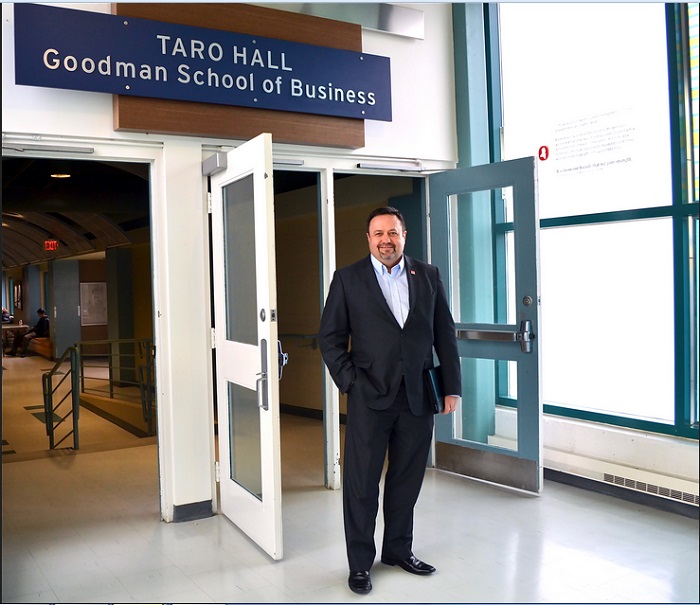
Professor Maxim Voronov during The Silo’s exclusive Skype interview- “the Ontario industry needs to consider the construction of a “meta-image” for Ontario wine, an overarching “meaning structure,” including, perhaps, environmental sustainability, that will resonate with both domestic and international consumers, backed up by the consistently reproducible quality of the product.”
Maxim Voronov is Associate Professor of Strategic Management at the Goodman School of Business, Brock University, and is also a Fellow of the Cold Climate Oenology and Viticulture Institute (CCOVI), one of the principle academic research engines currently informing the Ontario wine industry; helping it find its rightful and deserved place in the global marketplace.
Oenology (pr. Een-ology) comes from the Greek root oinos, and essentially means “the study or science of winemaking.” Professor Voronov, along with fellow Brock colleagues Dirk De Clercq and Narongsak Thongpapanl, and with Bob Hinings of the University of Alberta School of Business, recently completed a 6 year study of the Ontario wine industry and its strategic positioning in relation to its international, and often more established competitors.
In an exclusive interview with The Silo via Skype, Professor Voronov outlined the overall methodology of his study. He and his colleagues conducted interviews with various stakeholders in the Ontario wine industry, including makers and growers, LCBO executives, wine critics, and they surveyed press coverage, websites, and over 250 restaurateurs regarding their attitudes toward Ontario wine. Their conclusions: the Ontario wine industry needs to adopt a two-fold focus in order to hold their own in a competitive global market. There are 3 distinct growing regions or “appellations” in Ontario (otherwise known as DVA’s or Designated Viticultural Areas). They are the Niagara Peninsula, our largest and arguably most “storied” region, Prince Edward County to the east, and the Lake Erie North Shore appellation to the south-west, beneficiary of the greatest number of heat-units per growing season, including Pelee Island and, hopefully soon, our own, relatively new “South Coast” growing region. But in spite of these localized differentiations, cautions Voronov, ultimately our industry represents a cool-climate production zone by international standards and needs to focus on grape varietals that can consistently and reliably perform in a somewhat unreliable climate.
Appellations of Ontario Origin. image: vqaontario.com
The second area of focus needs to be the conscious practice of exporting the best of Ontario fine wines to the “tastemaking” markets of the wine world, like New York and London. Commercial and critical success in these regions will not only cement Ontario’s legitimate place in the global wine industry, but also enhance the attractiveness of Ontario fine wines in our own, domestic market, somewhat akin to the phenomenon of the Canadian actor or musician who labours away in relative obscurity for years, until finally being “discovered” by some international authority and emerging as a hometown hero. A recent effort on this front was the “Rediscover Canadian Wines” trade and media tasting event at the Canadian Embassy in Trafalgar Square, London, England. Supported by Wine Country Ontario, in partnership with Foreign Affair and International Trade Canada, The Ontario Ministry of Agriculture and Food, and the Canadian High Commission in London, this was a major wine happening. Our own CCOVI hosted and organized the wine submissions for the screening process.
About 100 Canadian wines were chosen for the high profile tasting. On May 16th, the day of the event, world renowned wine expert Jancis Robinson, author of The Oxford Companion to Wine, now in its third edition, tweeted: “Today’s Canadian tasting in London shd have dispelled a few prejudices” (@JancisRobinson). Still, Ontario remains one of the most open marketplaces in the world, which means that domestic wines must compete with a vast array of both new and established global brands without necessarily enjoying a home advantage. Ontario does not currently export significantly to other markets, and local wineries are caught in a kind of dilemma: that of establishing conformity with old-world traditions in a “New Age” of Ontario fine-winemaking, while at the same time trying to assert their distinctiveness in the context of international trade.
A word here on price-point. Many Ontario consumers who would otherwise like to support the local industry wonder why they should pay more for an Ontario wine than a proven, reliable import. A good question. According to Voronov there is a simple answer: economies of scale. The greater number of product units generated, the lower the overall cost per unit to the consumer. Comparatively, most Ontario wineries are small and have to contend with fickle climates. Ontario simply cannot compete on a unit cost basis with international wineries boasting thousands of acres of land in relatively stable climates. And in a global industry currently fascinated with big, bold red wines—which flourish primarily in warm growing regions—Voronov believes Ontario needs to unapologetically embrace its cool-climate status and focus on light to medium-bodied reds which can be consistently and confidently produced, wines like Pinot Noir, Cabernet Franc and the Baco-Noir hybrid so successfully expressed by Niagara’s Henry of Pelham.
A notable exception came up in the April 27th edition of Vintages Magazine, where Norfolk County’s own Burning Kiln Winery’s “Strip Room Merlot/Cabernet Franc” was identified and praised as an “Ontario appassimento.” Burning Kiln is one of a number of Norfolk County Wineries to receive the VQA (Vintner’s Quality Assurance) stamp of approval. The VQA designation, similar to the AOC and DOC systems in France and Italy respectively, provides assurance that the consumer is purchasing quality “wines of origin” that have met strict guidelines for excellence (www.vqaontario.com). Now back to appassimento. The method is an ancient one and involves drying harvested grapes to the point of shriveling, in order to concentrate the fruit sugars and therefore the overall boldness and complexity of the wine. Italian Amarone is well known appassimento, but it exists in very elite class, with retail prices starting in the $40-$60 range and up.
A fitting metaphor? The Bunch of Grapes by William Adolphe Bouguereau 1868 in the style of Neoclassicism. CP
Coming in at $24.95 a bottle, Burning Kiln’s Strip Room appassimento is a bargain and may well be worth trying as a new, local expression of an ancient technique. There is debate over whether, in the long term, appassimento can be seen as an answer to Ontario’s problem producing bolder reds. According to Professor Voronov, we need to concentrate on what we do best, including aromatic whites like Riesling and Chardonnay, grapes whose character actually benefit from ample day to night temperature fluctuations and generally cooler conditions. An interesting side note: Australia, with its warm climate, has had little success in producing a Riesling of note. According to celebrated wine critic Ian D’agata, Director of the International Wine Academy in Rome: “Once wine lovers the world over realize that Ontario and parts of BC are some of the few viticultural areas in the world with the potential for truly memorable pinot noir, and that Canada is already one of the three or four best countries in the world for riesling, with more than adequate chardonnay, pinot gris and more, Canadian wines will become increasingly sought after.” As an example, Cave Springs Estates Riesling, of the Beamsville Bench Niagara sub-appellation, has gained a reputation as one of the world’s finest dry Rieslings. In the opinion of Voronov et. al, the Ontario industry as a whole needs to have a conversation about its identity, its image—its “symbolic value in the aggregate.”
Symbolic value refers to a sense of “specialness” above and beyond what is simply contained in the bottle. There are several recognized ways to create symbolic value for any experience-based product, one of which is called “rhetorical history.” Interestingly, big multinationals like Kellogg’s and IBM have begun to employ “corporate historians,” people with a knack for selectively engaging the “facts” in order to create value-laden narratives for the benefit of their brands. In other words, Ontario wineries need to tell compelling stories about their products: the generations of family who have worked the land, the continued utilization and restoration of historic buildings, connections to old-world practices and techniques, and meaningful innovations based on their particular terroir (which I will come back to shortly). Again, Burning Kiln asserts itself as a savvy business in this respect. It turns out that tobacco kilns maximize air flow and provide a perfect drying environment for the appassimento style. In this way, the winery can embrace its history of tobacco production on the land while at the same time profiting from historic structures (the kilns, not to mention the attractive main building, which is a repurposed pack barn) to create a novel, local innovation tied to a centuries-old Greek and Italian wine tradition.
This brings us back around to the concept of terrior [April 2011 https://www.thesilo.ca/terroir-what-this-means-to-local-wine-and-cheese-by-scott-jensen/ CP] —I promised I’dreturn. Literally the word means “land,” but in the wine industry, terroir is an essential part of the story of any wine or wine region. It refers to the set of special characteristics that the geography, geology, soil conditions and climate of a particular place, interacting with plant genetics, add to agricultural products such as wine, coffee, chocolate, etc. You can visit the website of virtually any global winery and find a detailed discussion of its particular, and therefore inherently “special,” terroir. But put aside for a moment the individual soil characteristics of the various Ontario wine regions, dating back to glacial histories—which do indeed influence the personalities of individual wines—and consider the overarching and, according to Voronov and associates, critical variable of cold and often fluctuating climate conditions.
And then consider a very interesting case study and global success story: New Zealand. New Zealand, as a cool-climate wine region, is producing some respectable reds like Pinot Noir and Syrah, a mellower version of the now famous Australian Shiraz (same varietal, different spelling). But the vintners of New Zealand, overall, seem to have consciously and intentionally hitched their wagons to the production of aromatic whites like Chardonnay, Pinot Gris and, most especially, Sauvignon Blanc. Now, I am no certified sommelier, but I can say that my experience of Kim Crawford’s Marlborough Sauvignon Blanc, one of the region’s leading and critically acclaimed exponents of the varietal, stands as an utterly distinct expression of the grape compared to European examples. Its full-mouth, fruity and floral character completely sets it apart from traditional European Sauvignon Blancs. It is absolutely worth the extra few dollars. It is unique, distinct: “special.” New Zealand has embraced its uniqueness, and, this point is instructive—so has the rest of the world. Because New Zealand, unlike Ontario, exports its wines prodigiously. The Ontario Wine industry could take a few pointers here.
Symbolic value, in the end, won’t mean much if the wine in the bottle doesn’t live up to its constructed narrative, no matter how enticing. Ontario’s climate, on the whole, lends itself to the production of some respectable light to medium- bodied reds, but, like New Zealand, our terroir, on the whole, is most amenable to producing exceptional aromatic whites. The Prince Edward County appellation, not to mention being uncommonly picturesque, is Ontario’s coldest wine region, with a shorter growing season and colder winters than Niagara, yet it still produces wines of both national and international distinction. According to Montreal Gazette wine critic Bill Zacharkiw, much like New Zealand, “PEC’s greatest strength, aside from its limestone soils, is that it seems to have accepted who it is and is comfortable with that.” In his six year study, Voronov found what he considers an over-emphasis on the part of Ontario wineries with conformity to “old-world” traditions, and not enough emphasis on our distinctiveness, our specialness—on what we and only we can do given the particularities of our unique terroir. For Voronov, the Ontario industry needs to consider the construction of a “meta-image” for Ontario wine, an overarching “meaning structure,” including, perhaps, environmental sustainability, that will resonate with both domestic and international consumers, backed up by the consistently reproducible quality of the product.
Think about it: wouldn’t it be great to see a day when more Ontario consumers pick up a bottle of locally produced wine and say, “Ya, this is worth the extra few bucks.” For the Silo, Alan Gibson.
Oil pipelines already cross Canada and the United States- Ontario’s Green Party stands opposed to a proposed Oil pipeline (using a modified natural gas pipeline) set to cross into and through Ontario. CP image: leadenergy.org
Ottawa – Green Party leader Mike Schreiner is pledging to fight two oil pipeline projects through Ontario. Joining Ottawa South candidate Taylor Howarth on a campaign tour, Schreiner and Howarth raised concerns about the health, environmental and economic effects of TransCanada Corp.’s proposed east coast pipeline, which travels through Ottawa, and Enbridge’s proposed Line 9 pipeline. Both projects
will pump tar sands oil east.
“Greens will fight for the health and safety of our communities,” says Schreiner. “If BC can say no to dirty oil pipelines, Ontario should too.” TransCanada’s proposed Energy East pipeline could transport as much as 850,000 barrels of tar sands oil per day. The project would require retrofitting a 55 year old natural gas pipeline to handle the heavy, more abrasive and corrosive tar sands oil.
“I don’t want to see a tragedy in my community, and I will fight to prevent it,” says Howarth. “This pipeline was not built to handle tar sands oil, and as MPP, I will push the Ontario government to oppose the project. Every vote for the Green Party sends this message to Queen’s Park.”
According to the Montreal Gazette- Municipalities and Counties strung along the Line 9b pathway received cash donations from Enbridge. CP
Studies in the U.S. reveal that pipelines carrying tar sands oil spilled almost three times as much crude oil per mile of pipeline between 2007 and 2010 compared to the U.S. national average. And heavy tar sands oil is more difficult and expensive to clean up than light crude or natural gas. “Both of these pipeline projects are a bad deal for Ontario,” says Schreiner.
“These pipelines are all risk and no reward.” Instead of projects that will increase pollution and greenhouse gas emissions, the Green
Party is calling for policies to support clean tech innovation. “Ontario must invest in where the puck is going, not where it is, to create jobs and clean prosperity,” says Schreiner. “Ontario should commit to building electric cars that don’t pollute and support made in Ontario renewable energy, not pipelines that threaten our communities.” For the Silo, Becky Smit.
Most patterns in crop circle formations are not readily visible from the ground.
Most tangible of Earth mystery
Created anew each year
On underground currents of energy
By sacred sites do appear –
Bedazzle us with your beauty yet again!
There are few mysteries more accessible than crop circles. Each spring and summer these enigmatic patterns appear overnight in crop fields, particularly around the Avebury landscape temple in Wiltshire, England. Whenever possible we enter these beautiful creations within hours of their forming, when the energy of a genuine formation is at its strongest. Cosmic works of art, ET communications in sacred geometric format, pranksters’ hoaxes, spiritual guidance or a warning voice from Gaia, whatever your opinion crop circles are fascinating and truly remarkable.
We have access to the information network that provides breaking news on the latest formations. Some days expert researchers will join us in the circles to share their knowledge and perspectives with us, showing us what to look for or how to dowse for any energy present. You may want to sit quietly in meditation, try and discover what the pattern is (often difficult to tell from the ground inside a formation) or dance with the flow of the lain stalks. Everyone reacts differently to crop circles but no-one can ignore them.
This part of England is also home to some of the world’s most powerful ancient sacred sites including Stonehenge, Avebury and Glastonbury. We will take time to truly experience these places of power including exclusive access to the world famous Stonehenge for a private visit outside of normal hours. Being based close to the World Heritage Site of Avebury Landscape Temple we have daily access to such sites as Silbury Hill, West Kennet Long Barrow and the Sanctuary. In historic Glastonbury we will visit the Abbey, Chalice Well and the Tor.
We’re also offering a pre-tour extension to attend the prestigious Summer Crop Circle Lectures where you will hear fascinating presentations and meet the presenters as well as all the other ardent ‘croppies’.
Track 7 Disc 2: “Trampled Underfoot”
Tour Highlights:
• Visits into crop circles
• An optional helicopter flight over these exquisite patterns
• Private out-of-hours access into Stonehenge
• Attendance at the world’s leading Crop Circle Conference with International researchers
• Visits to some of England’s most powerful sacred sites
Supplemental- Crop circles discovered West of Port Dover, Ontario?
Brantford, ON. The Personal Computer Museum is publishing a brand new book called “Collecting for Dragon’s Lair and Space Ace” (ISBN 978-1490383583) that covers two of the most loved LaserDisc video games ever made. Dragon’s Lair officially turned 30 years old on June 19, 2013.
Written by Syd Bolton, who (according to the CBC) has the largest collection of video games in Canada.
Collecting for Dragon’s Lair and Space Ace not only chronicles the hundreds of home releases of games, clothing, collectible merchandise, magazines, toys and more, but also includes an incredible amount of behind-the-scenes information on the development of the games which continue to see home releases right up until this year.
“Along with an introduction that’ll likely slap a nostalgic smile across your face, Syd Bolton has exhaustively aggregated and annotated virtually every Dragon’s Lair and Space Ace video game and merchandise known to modern man” says Marc Saltzman, syndicated gaming and technology columnist, author, TV and radio show host. “While it’s a specialist’s book, game enthusiasts, retro fans, and old folks will find it a fun read” says Steven Kent, noted video game historian and author of “The Ultimate History of Video Games”.
The book will ship next week (July 24, 2013) and can be ordered through the website
www.collectingfor.com, which will contain support materials for the book shortly. The book will also be available on Amazon.com next week. It is 170 pages, 8.5″x11″, full color and perfect bound.
Dragon’s Lair recently celebrated its 30th anniversary and was the first fully animated LaserDisc video game. It generated millions in sales and revived, for a short time, the ailing arcade industry. The follow-up, Space Ace, was released in the Spring of 1984. Unfortunately, the arcade business continued to decline. Both games have been available for home computers and game consoles since 1984 spanning hundreds of releases and also spawned many related items.
Interest in the franchise has continued to this day and there is even a new documentary film “Inside the Dragon’s Lair” in the works which is expected to release in 2014. For the Silo, by Syd Bolton.
See the supplemental section below for more on this photo-
Green Party of Ontario leader Mike Schreiner made the following statement in response to the Ombudsman’s 2012-2013 Annual Report [search the report here at thesilo.ca CP ]: “Whether it’s safe transportation for medical issues, our civil liberties or responsible, accountable government, the Liberal government has put people at risk by failing to act.
It is especially irresponsible that the Liberal government has failed to introduce legislation to address the appalling conditions of non-emergency medical transportation services.
The current Premier promised action two years ago when she was Minister of Transportation, yet nothing has happened. According to the Ombudsman, the current Transportation Minister was unaware of how serious this issue is and the need to take action now. Ontario can’t afford to wait for a tragedy to take action.
Three years after the Liberals violated our civil liberties at the G20 summit in Toronto, the outdated Public Works Protection Act: http://www.e-laws.gov.on.ca/html/statutes/english/elaws_statutes_90p55_e.htm has not been overhauled. All three status quo parties at Queen’s Park shoulder the blame for the delay in fixing this serious breach of our civil liberties.
Finally, it is embarrassing that Ontario remains the only province without Ombuds oversight of hospitals, long term care facilities, children aide societies and other MUSH sector public institutions. With the Liberals third-rate cover up of the gas plant scandal, we’ve seen this government demonstrate a fear of proper oversight and accountability.
It’s unacceptable that they continue to fail to provide citizens with proper oversight of the MUSH sector.
The Ombudsman’s annual report once again shows the Liberals are a bait and switch government. They say one thing and do another or simply fail to act.” For the Silo, Becky Smit
“Whenever you offer the highest-graded copy of one of the top comics in the hobby you can bank on fierce bidding,” said Barry Sandoval, Director of Comics Operations for Heritage Auctions. “This auction is an ideal hunting ground for elite collectors and the 9.2 grade example of Batman #1 represents the quality offered throughout the entire event.”
A landmark edition in the halls of American pop culture, Batman #1 features the first appearances of both the Joker and Catwoman, among the very few comic book villains to have attained true “household name” status. It is expected to reach $500,000+.
A worthy follow up to such an iconic comic book is Frank Miller’s iconic original cover art to The Dark Knight Returns #2, which also is expected to bring $500,000+. The instantly recognizable image of Batman, crippled with rage, is one of several pieces of original art from the groundbreaking Dark Knight series offered by Heritage in the last year.
“For fans of Modern comics, this drawing is where everything really begins,” said Todd Hignite, Vice President at Heritage Auctions. “This moment defines Miller’s Dark Knight, and the modern day perception of Batman, like no other drawing. The only one that comes close, perhaps, is the iconic Splash page from Dark Knight #3, featuring both Batman and Carrie Kelley (Robin), which we sold two years ago for $448,125.”
Among the high-grade examples of the most coveted comic books ever produced comes a near pristine copy of an increasingly popular comic book, Avengers #1 — in stunning 9.4 grade — is expected to realize $175,000+; a 9.4 grade copy of Tales of Suspense #39, the first appearance of Iron Man, which is expected to bring $100,000+; a rare, 9.0 grade copy of Walt Disney’s Comics and Stories #1 may fetch $30,000+ as the finest copy in a remarkable run that also includes a 9.4 grade of issue #2 and a 9.2 grade of issue #3 from the series, both of which are the highest-graded copies.
A collector’s pick of high-grade examples continues as the only 9.8 grade copy of Marvel Spotlight #5, the first appearance of Ghost Rider, is expected to realize $25,000+.
In addition to the dramatic cover from Dark Knight #2, the auction’s offering of original art includes a remarkable movie poster painted by Frank Frazetta for The Night They Raided Minsky’s. Frazetta usually worked in much smaller sizes, making this 38-inch by 28-1/2-inch poster from 1968 an extreme rarity expected to bring $150,000+.
Perhaps two of the most anticipated lots link to The King of Comics himself, Jack Kirby, to a covert Iranian rescue operation as depicted in the Academy Award-wining film Argo [ See a nod to Canada’s connection in Ben Affleck’s acceptance speech below CP].
The film tells the story of how the CIA used a fake movie production crew to conceal a daring rescue mission of six Americans held in Iran. The “movie within a movie” was at one time a genuine project titled “Lord of Light,” based on the novel by Roger Zelazny. Producer Barry Geller commissioned Jack Kirby to create a set of concept drawings for the film, but the project stalled and was mostly forgotten, until the CIA used it in their top-secret mission. Two of Kirby’s original oversized concept scene drawings for the project — “Pavilions of Joy” and “Planetary Control Room (Interior)” — remain testaments to his signature style and are expected to bring $10,000+ each.
The 10 foot tall ( 3.048 m) work in progress Robocop statue. image: freep.com
In the 1987 the Dutch auteur film maker Paul Verhoeven created a movie unlike any other. He called it Robocop and I’m old enough to remember watching this dark comedy sci-fi masterpiece when it was brand spanking new.
This film and its sequel (humbly titled: Robocop 2) continue to resonate and influence today’s art and culture. Sometime this year or perhaps next, in the real-world city of Detroit a ten-foot tall Officer Murphy (aka Robocop himself) statue will be unveiled- 26 years after Verhoeven chose Detroit as the setting for a near future city on the brink of disaster due to the privatization of that city’s police force and its resulting corporate mismanagement.
It seems OCP, Detroit’s police force, have no choice but to create a half-man half-machine cyborg in hopes of not only a public relations coup but with an eye on a bright future of profitable policing. Enter the complicated messages stitched into Robocop.
Film like all media, has been used as a political statement before but perhaps Robocop did this unintentionally. It’s a sci-fi movie first and foremost but the personal message exists too: THIS MIGHT HAPPEN. “Dead or alive….you’re coming with me.” CP