The Best Theater Sound System In Finland

— Kino Piispanristi integrates Genelec’s famous “The Ones” loudspeaker range along with the latest Dolby Surround technology to deliver premium audio quality — the best to be found (and heard) in Finland.

NATICK, MA, August, 2024 —Kino Piispanristi is a full-service 286-seat independent movie theater close to Turku, Finland. The venue is a long-time passion project of Henry Erkkilä, a movie lover who wanted to create a modern cinema that transcends tradition when it comes to audio-visual technology. Kino Piispanristi cinema strives to continually deliver a superior experience, so its luxury new premium screen features a Genelec sound system comprising the brand’s unmatched smart active studio loudspeakers and subwoofers.

Genelec “The Ones”

Erkkilä discovered his love for the film industry as a young boy. His father had a film projector that he travelled around Sweden with, bringing the latest screen favorites to audiences in his home country. Prior to the screening, Erkkilä would be tasked with dropping off advertisements in the local area, showcasing the movie on offer that evening and encouraging people to attend.

Inspired by his father, he set up his very own touring movie theater concept in 1998, but it wasn’t until 2017 that Erkkilä finally opened his first permanent space. Kino Piispanristi began with two theaters, but now the cinema boasts five screens, as well as additional venues in Turku, Salo and Laitila.

“We strive to offer all the perks of a modern cinema without being a faceless corporation,” begins Erkkilä.

A look at some of the Genelec’s installed in Kino Premium.

“We react to trends quickly and make moves boldly so that our customers can walk in and out feeling happy. Having the greatest theater sound system in Finland is an excellent way to help us light up people’s faces!”

Kino Piispanristi’s newest screen is a premium, more intimate space with exceptional picture quality and a 7.1 audio system based around Genelec’s “The Ones” family of coaxial three-way studio loudspeakers – which deliver extended frequency response, controlled directivity and fatigue-free listening. Three 8361s – the flagship of The Ones range – are deployed for LCR, with six of the more compact 8341s in the surround positions, complemented by two 7380 subwoofers for clean, controlled LF performance.

“For our premium space theater, sound is everything.”

“Theater technology, be it projectors, screens, audio or seats, is constantly evolving and unless you’re among the frontrunners, you might get left behind,” Erkkilä explains. “Genelec is widely known and admired as a wonderful example of Finnish engineering and design. As a local business, we try to emphasize the importance of using locally sourced products, and Genelec’s quality is unmatched. This was a pilot project for us and we’re looking into expanding our other spaces – since it’s been such a hit. We charge a few Euros extra for the premium screen, but the movie experience is so good that our customers still see it as excellent value.”

GLM Space calibration software at work.

Usually found powering the world’s most notable music, broadcast and film studios, Genelec’s studio loudspeakers are now being specified for an increasing number of high-end residential and boutique commercial cinemas around the world – thereby allowing customers to experience the same kind of sonic detail and clarity as the movie creators themselves.

The Ones models provide optimized performance by intelligently adapting to the acoustics of the room, achieved by a combination of GLM space calibration software and internal DSP within each loudspeaker and subwoofer. “GLM calibration allowed us to achieve a better balance with the lower and higher voices on screen,” explains Erkkilä. “Without it, it’s likely that the room would’ve changed the natural feel of the audio. It gave us full control over the system.”

PDF brochure on how Genelec used this cinema for a product case study.

GLM offers precise calibration of each loudspeaker’s in-room frequency response, playback level and distance delay, minimizing unwanted room influences and ensuring the best possible audio quality. In addition to the Genelec system, Kino Piispanristi uses Dolby Cinema processors which bring a natural feel to film soundscapes – immersing the audience in the true excitement of cinema.

“Our expertise in cinema and Genelec’s legacy in sound was the perfect match, and the collaboration was even more meaningful because of the local connection,” concludes Erkkilä. “The Ones loudspeaker series has completely transformed the cinema, and now we can offer audiences everything that the big players can – and more. The cinema is a result of a lot of hard work and dedication, and the Genelec system feels like the icing on the cake. It’s reinvented what we show on the screen.”

Supercars Can Be Financed

Take this 2005 Porsche Carrera GT for example:

Lot 214 |Monterey Jet Center 2024 Thursday, 15 August 2024

2005 Porsche Carrera GT Lot 214 Estimate: $1,100,000 – $1,300,000 USD/ $1,509,000 CAD- $1,704,000 CAD
Illustrative Hammer: $1,100,000 USD/ $1,509,000 CAD
Illustrative Purchase Price*: $1,215,000 USD/ $1,667,000 CAD
Down Payment: $500,000 USD/ $686,100 CAD
Amount Financed: $715,000 USD/ $981,000 CAD
Monthly Payments**: $7,299
USD/ $10,015 CAD

Broad Arrow Auctions | 2005 Porsche Carrera GT

Broad Arrow Auctions | 2005 Porsche Carrera GT

Broad Arrow Auctions | 2005 Porsche Carrera GT

Broad Arrow Auctions | 2005 Porsche Carrera GT

Broad Arrow Auctions | 2005 Porsche Carrera GT

Broad Arrow Auctions | 2005 Porsche Carrera GT

Broad Arrow Auctions | 2005 Porsche Carrera GT

Broad Arrow Auctions | 2005 Porsche Carrera GT

Broad Arrow Auctions | 2005 Porsche Carrera GT

Broad Arrow Auctions | 2005 Porsche Carrera GT

Broad Arrow Auctions | 2005 Porsche Carrera GT

Broad Arrow Auctions | 2005 Porsche Carrera GT

Broad Arrow Auctions | 2005 Porsche Carrera GT

Broad Arrow Auctions | 2005 Porsche Carrera GT

Broad Arrow Auctions | 2005 Porsche Carrera GT

Broad Arrow Auctions | 2005 Porsche Carrera GT

Broad Arrow Auctions | 2005 Porsche Carrera GT

Broad Arrow Auctions | 2005 Porsche Carrera GT

Broad Arrow Auctions | 2005 Porsche Carrera GT

Broad Arrow Auctions | 2005 Porsche Carrera GT

Broad Arrow Auctions | 2005 Porsche Carrera GT

Broad Arrow Auctions | 2005 Porsche Carrera GT

Broad Arrow Auctions | 2005 Porsche Carrera GT

Broad Arrow Auctions | 2005 Porsche Carrera GT

Broad Arrow Auctions | 2005 Porsche Carrera GT

Broad Arrow Auctions | 2005 Porsche Carrera GT

Broad Arrow Auctions | 2005 Porsche Carrera GT

Broad Arrow Auctions | 2005 Porsche Carrera GT

Broad Arrow Auctions | 2005 Porsche Carrera GT

Broad Arrow Auctions | 2005 Porsche Carrera GT

Broad Arrow Auctions | 2005 Porsche Carrera GT

Broad Arrow Auctions | 2005 Porsche Carrera GT

Broad Arrow Auctions | 2005 Porsche Carrera GT

Broad Arrow Auctions | 2005 Porsche Carrera GT

Broad Arrow Auctions | 2005 Porsche Carrera GT

Broad Arrow Auctions | 2005 Porsche Carrera GT

Broad Arrow Auctions | 2005 Porsche Carrera GT

Broad Arrow Auctions | 2005 Porsche Carrera GT

Broad Arrow Auctions | 2005 Porsche Carrera GT

Broad Arrow Auctions | 2005 Porsche Carrera GT

Broad Arrow Auctions | 2005 Porsche Carrera GT

Broad Arrow Auctions | 2005 Porsche Carrera GT

Broad Arrow Auctions | 2005 Porsche Carrera GT

Broad Arrow Auctions | 2005 Porsche Carrera GT

Broad Arrow Auctions | 2005 Porsche Carrera GT

Broad Arrow Auctions | 2005 Porsche Carrera GT

Broad Arrow Auctions | 2005 Porsche Carrera GT

Broad Arrow Auctions | 2005 Porsche Carrera GT

Broad Arrow Auctions | 2005 Porsche Carrera GT

Broad Arrow Auctions | 2005 Porsche Carrera GT

Broad Arrow Auctions | 2005 Porsche Carrera GT

Broad Arrow Auctions | 2005 Porsche Carrera GT

Broad Arrow Auctions | 2005 Porsche Carrera GT

Broad Arrow Auctions | 2005 Porsche Carrera GT

Broad Arrow Auctions | 2005 Porsche Carrera GT

Broad Arrow Auctions | 2005 Porsche Carrera GT

Broad Arrow Auctions | 2005 Porsche Carrera GT

Broad Arrow Auctions | 2005 Porsche Carrera GT

Broad Arrow Auctions | 2005 Porsche Carrera GT

Broad Arrow Auctions | 2005 Porsche Carrera GT

Broad Arrow Auctions | 2005 Porsche Carrera GT

Broad Arrow Auctions | 2005 Porsche Carrera GT

Broad Arrow Auctions | 2005 Porsche Carrera GT

Broad Arrow Auctions | 2005 Porsche Carrera GT

Broad Arrow Auctions | 2005 Porsche Carrera GT

Broad Arrow Auctions | 2005 Porsche Carrera GT

Broad Arrow Auctions | 2005 Porsche Carrera GT

Broad Arrow Auctions | 2005 Porsche Carrera GT

Broad Arrow Auctions | 2005 Porsche Carrera GT

Broad Arrow Auctions | 2005 Porsche Carrera GT

Broad Arrow Auctions | 2005 Porsche Carrera GT

Broad Arrow Auctions | 2005 Porsche Carrera GT

Broad Arrow Auctions | 2005 Porsche Carrera GT

Broad Arrow Auctions | 2005 Porsche Carrera GT

Broad Arrow Auctions | 2005 Porsche Carrera GT

Highlights of this supercar include:

  • A desirable single-owner example offered with less than 23,643 documented miles at the time of cataloging
  • One of just 477 produced for the U.S. market in 2005
  • Finished in classic Communication Colors of GT Silver exterior over Ascot Brown leather interior
  • Unmodified and offered with four pieces of its factory luggage set and other delivery accessories
  • Features servicing and maintenance by a single authorized Porsche dealer
  • One of the most collectible Porsche models ever produced

Chassis No. WP0CA29875L001120

Porsche seldom exits a motorsports arena without a taste of triumph. Yet, in 1991, an exception proved the rule as Porsche ventured into Formula One, supplying engines to the Footwork-Arrows team with their newly developed 3.5-liter naturally aspirated V12. This engine, essentially a combination of two TAG-Turbo V6s from Porsche’s McLaren days proved cumbersome and prone to reliability issues. Midway through the season, Footwork-Arrows terminated their contract with Porsche due to these setbacks.

Undeterred, Porsche embarked on a solitary path of refinement over the subsequent three years, nurturing the engine’s potential through advancements in technology and engineering. Eventually, they succeeded in transforming it into a robust and potent V12 powerplant. This worthwhile endeavor of internal engineering spurred Porsche to further explore Formula One’s evolving regulations, resulting in the development of a 3.5-liter V10 engine—purely as an educational pursuit. Later iterations saw this V10 engine grow to 5.5-liters and find application in Porsche’s LMP2000 sports racing prototype, codenamed Typ 9R3 and conceived for the prestigious 24 Hours of Le Mans. Despite its initial promise, the LMP2000 project met an untimely demise, leaving the formidable V10 engine temporarily abandoned until a pivotal turn of events.

Porsche’s engineers were fervently engaged in another ambitious project—the Carrera GT prototype, internally referred to as SCM (Super Car Millennium).

Housed in Huntington Beach, California, a select team of designers undertook the task of bringing SCM to life. In a nod to its showpiece stature, the decision was made to equip this extraordinary prototype with the same 5.5-liter V10 engine originally developed for the 9R3 project. So fantastic was the reaction to the prototype driven along the Champs-Élysées to the 2000 Paris Motor Show that the approval of a production version was a foregone conclusion.

Commencing in 2003, the Carrera GT swiftly became the quintessential analog supercar of its era. Embracing a back-to-basics philosophy, in stark contrast to its technologically intricate predecessor, the 959, the Carrera GT boasted a raw engineering ethos. Its naturally aspirated 5.7-liter V10, renowned for its rapid revving capability, paired seamlessly with a six-speed manual transmission nestled within a carbon fiber monocoque chassis. Eschewing electronic driving aids, the Carrera GT epitomized a driver-centric experience, delivering unrivaled auditory and performance thrills akin to those found on the racetrack. Produced for a short two years, just 644 Carrera GTs were sold through U.S. Porsche dealerships

This 2005 Carrera GT was constructed in the final year of production and was delivered new to Howard Cooper Porsche of Ann Arbor, Michigan with a purchase date noted in the service book as 22 December 2004 with 15 delivery miles/ 24 kms. Selected with XT Bucket Seats and finished in the Carrera GT’s official Communication Color of GT Silver Metallic over an Ascot Brown leather interior, this fantastic single-owner example features a clean CARFAX and, at time of cataloging, less than 24,000 miles/ 38,624 kms. GT Silver was a long-held bespoke color for the Carrera GT and certainly one of the most popular, echoing those giant-killing RS Spyders of the late 1950s and ’60s.

According to its CARFAX and ownership records, this Carrera GT features servicing while under single ownership by the consignor at Howard Cooper Porsche, later known as Germain Porsche and now Porsche Ann Arbor. One of the many benefits of a single-owner super sports car such as this is the familiarity between the official Porsche dealer and owner and the expected elevated level of trust between the two. Twenty visits to the selling dealer over the 19 years have ensured that this Carrera GT has remained in regular hands during those service visits, remaining at the ready for those special Michigan days that offer the most to both car and driver. Partial service records on file show a Major Maintenance in 2009 with a new windshield at 10,739 miles and two recorded maintenance visits in 2015 and 2017, the latter being a two-year service visit. Furthermore, it should be noted that all services have been conducted at the original selling dealer, Porsche Ann Arbor.

Offered with service records on file dating from 2007 to 2020, this single-owner Carrera GT is accompanied by an impressive number of delivery items including its original window sticker, owner’s manuals, hard top panel bags, centerlock socket, tools, and factory fitted indoor car cover. Furthermore, all Carrera GTs were delivered with a set of factory fitted luggage by Ruspa of Italy, color-coordinated to the selected interior color of the car. Over the years many of these sets have become disassociated with their cars, yet this Carrera GT retains a nearly complete set in Ascot Brown—an additional, and welcome benefit.

Created by specialist teams with a narrow focus and cloaked in secrecy, with little interference from the corner offices, the Porsche Carrera GT is an exquisite example of race-honed engineering brought to life on the road. Never before offered for sale, this single-owner Carrera GT, number 455, should make an enjoyable addition to those in search of the finest motorsport-derived super sports car of the 2000s. Just as Porsche intended. For the Silo, Jakob Greisen.

Internet bidding is not available for this lot. Please contact [email protected] for more information.

Feds False News Checker Tool To Use AI- At Risk Of Language & Political Bias

Ottawa-Funded Misinformation Detection Tool to Rely on Artificial Intelligence

Ottawa-Funded Misinformation Detection Tool to Rely on Artificial Intelligence
Canadian Heritage Minister Pascale St-Onge speaks to reporters on Parliament Hill after Bell Media announces job cuts, in Ottawa on Feb. 8, 2024. (The Canadian Press/Patrick Doyle)

A new federally funded tool being developed with the aim of helping Canadians detect online misinformation will rely on artificial intelligence (AI), Ottawa has announced.

Heritage Minister Pascale St-Onge said on July 29 that Ottawa is providing almost $300,000 cad to researchers at Université de Montréal (UdeM) to develop the tool.

“Polls confirm that most Canadians are very concerned about the rise of mis- and disinformation,” St-Onge wrote on social media. “We’re fighting for Canadians to get the facts” by supporting the university’s independent project, she added.

Canadian Heritage says the project will develop a website and web browser extension dedicated to detecting misinformation.

The department says the project will use large AI language models capable of detecting misinformation across different languages in various formats such as text or video, and contained within different sources of information.

“This technology will help implement effective behavioral nudges to mitigate the proliferation of ‘fake news’ stories in online communities,” says Canadian Heritage.

Related-

OpenAI, Google DeepMind Employees Warn of ‘Serious Risks’ Posed by AI Technology

OpenAI, Google DeepMind Employees Warn of ‘Serious Risks’ Posed by AI Technology

With the browser extension, users will be notified if they come across potential misinformation, which the department says will reduce the likelihood of the content being shared.

Project lead and UdeM professor Jean-François Godbout said in an email that the tool will rely mostly on AI-based systems such as OpenAI’s ChatGPT.

“The system uses mostly a large language model, such as ChatGPT, to verify the validity of a proposition or a statement by relying on its corpus (the data which served for its training),” Godbout wrote in French.

The political science professor added the system will also be able to consult “distinct and reliable external sources.” After considering all the information, the system will produce an evaluation to determine whether the content is true or false, he said, while qualifying its degree of certainty.

Godbout said the reasoning for the decision will be provided to the user, along with the references that were relied upon, and that in some cases the system could say there’s insufficient information to make a judgment.

Asked about concerns that the detection model could be tainted by AI shortcomings such as bias, Godbout said his previous research has demonstrated his sources are “not significantly ideologically biased.”

“That said, our system should rely on a variety of sources, and we continue to explore working with diversified and balanced sources,” he said. “We realize that generative AI models have their limits, but we believe they can be used to help Canadians obtain better information.”

The professor said that the fundamental research behind the project was conducted before receiving the federal grant, which only supports the development of a web application.

Bias Concerns

The reliance on AI to determine what is true or false could have some pitfalls, with large language models being criticized for having political biases.

Such concerns about the neutrality of AI have been raised by billionaire Elon Musk, who owns X and its AI chatbot Grok.

British and Brazilian researchers from the University of East Anglia published a study in January that sought to measure ChatGPT’s political bias.

“We find robust evidence that ChatGPT presents a significant and systematic political bias toward the Democrats in the US, Lula in Brazil, and the Labour Party in the UK,” they wrote. Researchers said there are real concerns that ChatGPT and other large language models in general can “extend or even amplify the existing challenges involving political processes posed by the Internet and social media.”

OpenAI says ChatGPT is “not free from biases and stereotypes, so users and educators should carefully review its content.”

Misinformation and Disinformation

The federal government’s initiatives to tackle misinformation and disinformation have been multifaceted.

The funds provided to the Université de Montréal are part of a larger program to shape online information, the Digital Citizen Initiative. The program supports researchers and civil society organizations that promote a “healthy information ecosystem,” according to Canadian Heritage.

The Liberal government has also passed major bills, such as C-11 and C-18, which impact the information environment.

Bill C-11 has revamped the Broadcasting Act, creating rules for the production and discoverability of Canadian content and giving increased regulatory powers to the CRTC over online content.

Bill C-18 created the obligation for large online platforms to share revenues with news organizations for the display of links. This legislation was promoted by then-Heritage Minister Pablo Rodriguez as a tool to strengthen news media in a “time of greater mistrust and disinformation.”

These two pieces of legislation were followed by Bill C-63 in February to enact the Online Harms Act. Along with seeking to better protect children online, it would create steep penalties for saying things deemed hateful on the web.

There is some confusion about what the latest initiative with UdeM specifically targets. Canadian Heritage says the project aims to counter misinformation, whereas the university says it’s aimed at disinformation. The two concepts are often used in the same sentence when officials signal an intent to crack down on content they deem inappropriate, but a key characteristic distinguishes the two.

The Canadian Centre for Cyber Security defines misinformation as “false information that is not intended to cause harm”—which means it could have been posted inadvertently.

Meanwhile, the Centre defines disinformation as being “intended to manipulate, cause damage and guide people, organizations and countries in the wrong direction.” It can be crafted by sophisticated foreign state actors seeking to gain politically.

Minister St-Onge’s office has not responded to a request for clarification as of this posts publication.

In describing its project to counter disinformation, UdeM said events like the Jan. 6 Capitol breach, the Brexit referendum, and the COVID-19 pandemic have “demonstrated the limits of current methods to detect fake news which have trouble following the volume and rapid evolution of disinformation.” For the Silo, Noe Chartier/ The Epoch Times.

The Canadian Press contributed to this report.

3 Reasons Canadians Are Tossing And Turning At Night

Did you know that a third of Canadians are not getting enough sleep?

We all live busy lives. When it comes time to shuffle things around on the schedule, your sleep is often the first place to take a hit.

However, nothing is more frustrating than trying to be good and turning in early to finally get a good night’s sleep. You toss and turn for a few hours, looking at the clock, wide-awake. Why did you bother going to bed early? You might as well have stayed up late to watch a movie or get some work done.

Even though we’ve all been sleeping our entire lives, most of us are doing it wrong. Our sleep habits and our bedtime routines are preventing us from getting the deep rest we need.

Here are a few of them:

1. Your Mattress

Let’s start with the obvious, your mattress. We often hold onto a mattress much longer than we should. The reason is simple: mattresses are expensive to replace. Or at least they used to be.

You no longer have to squeeze as much life as you can out of your current mattress to save enough money to buy a new one. Now, you can discover the benefits of buying your mattress online for a fraction of the price that we’re used to paying at furniture shops and big-box stores.

This way, you get a far more comfortable mattress, and you can sleep better knowing it didn’t cost you a fortune.

2. Your Devices

This is such a hard habit to break. For most people, the phone or tablet is the last thing they put down before bed and the first thing they look at when they wake up.

You might find it relaxing to read on a tablet or lazily scroll through your social feed before bed, but it’s actually keeping your body awake.

There are a number of reasons that experts point to when it comes to digital devices robbing people of their sleep. However, on a physiological level, the light from the phone hurts your body’s natural melatonin levels, which keeps you awake for longer.

3. You’re Away From Home Too Much

Ever notice how tired you feel when you’re on the road a lot?

This nice big king-sized hotel bed has crisp and clean sheets. So, why can’t you wake up feeling refreshed in it?

It’s because the human body isn’t designed to sleep well when it’s not in a place is sees as “home.” In fact, only half of your brain is asleep, while the other half stands on guard to protect you from unfamiliar threats.

It’s not just that you’re travelling, active and busy. It’s that half your brain is still awake.

These are only a few reasons that you’re having trouble falling asleep or waking up feeling rested. Of course, there are always lifestyle factors that can hurt your sleep patterns.

However, you could be doing all the right things when it comes to diet or exercise, but still have trouble sleeping if you’re struggling with any of the issues we mentioned above.

Your body wants to sleep and knows how to sleep. Don’t get in its way!

How Spices Elevate Complexity Of Wine

With August already ushering in temptations laden with pumpkin, cinnamon, ginger, clove, nutmeg and other fall flavor favorites, it’s the perfect time to explore spiciness in wine–a multifaceted characteristic adding depth and excitement to the vinicultural experience. Whether it’s the peppery punch of a Syrah or the warm and gingery notes of a Gewürztraminer, spicy wines elevate the complexity of wine and enhance the overall tasting experience. 

Credit Midjourney 1.png

Earthy, mineral, spicy … these terms are commonly used to describe wine.

The spiciness in wine is like the spiciness in food, it is not a flavor, but a sensation.   Spiciness in wine is one of those intriguing characteristics that can elevate a wine and add complexity to it. It’s a sensation that parallels the heat from a chili pepper or the warmth from a touch of cinnamon. But what exactly makes a wine spicy? How can we identify it, and more importantly, how can we enjoy a spicy wine with food? 

But what exactly is a Spicy Wine?

When we talk about spicy wine, we’re referring to wines that evoke a sensation of warmth and tingling on the palate, much like certain spices do. This spiciness can manifest in various forms.

For instance, a wine with a peppery character can remind one of the sharp bite of black pepper or the more subtle heat of white pepper. On the other hand, a wine that exudes baking spices flavors might reveal the sweetness and warmth of cinnamon or nutmeg, adding a familiar touch to its profile. Other wines might bring to mind the slightly sweet and woody heat of cloves or ginger, offering yet another layer of spiciness.

Certain wines are particularly known for their spicy profiles.

Syrah, for example, is the most common spicy wine, known for its black pepper notes, especially in wines from regions like the Rhône Valley in France or the Barossa Valley in Australia. Meanwhile, Grüner Veltliner, the iconic Austrian white wine, displays a white pepper spiciness, setting it apart among white wines.

Gewürztraminer, with its exotic and aromatic profile, often carries a ginger-like spiciness, along with floral and lychee notes. In fact, “Gewürz” means “spicy” in German. On the other hand, Zinfandel, a robust and often fruity red, can express a range of spicy characteristics, from cinnamon to cloves, depending on the region and winemaking style.

Why Does My Wine Taste Spicy?

Credit Midjourney 2.png

The spiciness in wine can be attributed to several factors, primarily the grape variety and the winemaking process. The inherent spiciness in certain wines often comes from the grape variety itself due to specific chemical compounds present in the grapes.

Rotundone is the primary aroma compound responsible for peppery notes in wine.

Found in grape skins, rotundone is particularly prominent in varieties like Syrah and Grüner Veltliner, making the wines feel peppery and adding a layer of complexity to their flavor profiles. Similarly, 4-vinylguaiacol is known for contributing clove-like aromas and flavors. It’s more commonly found in wines made from grapes that have a higher phenolic content, influenced by the grape variety and growing conditions.   


No those aren’t pacman characters. From researchgate.net – Synthesis of 4-vinylguaiacol (4-VG) or 4-vinylphenol (4-VP) from ferulic acid (FA) or p-coumaric acid (p-CA) using E. coli harboring phenolic acid decarboxylase from B. licheniformis (BlPAD) on the cell surface.

Beyond the grape variety, the winemaking and aging processes can also play a significant role in developing spiciness in wine. One of the key factors here is the use of oak barrels. When wine is aged in oak barrels, it can take on additional spicy characteristics. The type of oak, the level of toasting, and the length of aging all influence the final profile. American oak, for example, tends to impart more vanilla and coconut notes, while French oak can contribute subtle spices like clove and cedar. The interaction between the wine and the wood allows for the development of complex flavors that enhance the wine’s overall spiciness.

What Food to Pair with Spicy Wine?

When it comes to wine and food pairing, the key is to complement and balance the wine’s spicy notes with the right dishes. Just like light foods with crisp wines, sweet dishes with sweeter wines, one approach is to pair spicy wine with spicy food. Similar flavor profiles can create a harmonious match where the flavors complement each other.

Credit Midjourney 3.pngFor example, pairing Syrah with pepper-crusted meats can enhance the black pepper notes in the wine, creating a cohesive and robust flavor experience. Grüner Veltliner pairs wonderfully with spicy Asian cuisine, balancing the heat of dishes like Thai green curry or Sichuan cuisine with its fresh acidity and white pepper spiciness. Gewürztraminer can be a great match for dishes that have a touch of sweetness and mild spice, such as Indian curry. The ginger-like spice in the wine enhances the overall richness of the dish. Similarly, Zinfandel pairs well with hearty, smoky dishes like barbecue ribs, where the clove and pepper notes in the wine complement the smoky, tangy flavors of the ribs.

In addition to the dishes with similar taste profiles, it’s helpful to think about broader categories of foods that pair well with spicy wines. Meats, particularly those with rich, robust flavors, often match well with spicy reds like Syrah or Zinfandel. The spiciness in the wine can stand up to the bold flavors of the meat.

For white wines with spicy notes, like Grüner Veltliner or Gewürztraminer, consider lighter fare that still offers complex flavors. Asian and Mexican cuisine, with its intricate balance of sweet, sour, salty, and spicy elements, can be an excellent match, as can dishes with a touch of sweetness or mild spice, which help to highlight the spicy characteristics of the wine.

Spiciness in wine is a multifaceted and enchanting characteristic that adds depth and excitement to the wine.

Whether it’s the peppery punch of a Syrah or the warm, gingery notes of a Gewürztraminer, spicy wines offer more complexity to the wine and pleasure to the overall tasting experience. For the Silo, Sylvia Ba.

Sylvia Ba.jpgWine consultant Sylvia Ba is a vinicultural expert with the “VinoVoss” AI Sommelier wine search engine and recommendation system developed by BetterAI.  The user-friendly online platform picks the perfect wine every time, for any occasion courtesy of a highly advanced artificial intelligence assist.  

_________________________________________________

Virgin Galactic Completes New Spaceship Manufacturing Facility

Orange County, Calif. – Virgin Galactic Holdings, Inc. (NYSE: SPCE) (“Virgin Galactic” or the “Company”) recently announced the completion of its new manufacturing facility in Mesa, Arizona (Greater Phoenix area), where final assembly of its next-generation Delta spaceships is scheduled to take place starting in Q1 2025.

An initial team of Virgin Galactic technical operations and manufacturing personnel has begun preparing the facility to receive and install tooling, expected to arrive in Q4 2024. The facility will then begin to receive major subassemblies, including the wing, the fuselage, and the feathering system next year, as the team scales to build the first two ships of the Delta fleet. Once ground testing is complete, Virgin Galactic’s mothership will ferry completed spaceships to Spaceport America, New Mexico for flight test ahead of commercial operations, which are expected to begin in 2026.

The multiuse facility includes two hangars equipped with multiple bays, designed for maximum flexibility in building and testing space vehicles.

Work at the facility will be supported by the Company’s digital twin technology, which enables seamless integration between Virgin Galactic and suppliers through real-time collaboration, promoting strong governance and increased efficiency and reliability.

In May 2024, Virgin Galactic opened a ground testing facility in Southern California for Delta subsystems, including avionics, feather actuation, pneumatics, and hydraulics, using an Iron Bird test rig.

Design concept- Virgin Galactic’s MACH 3 Supersonic commercial passenger jet – a partnership with Rolls Royce (Concorde engines) could mean this design stands a real chance of being produced as well in the future.

Virgin Galactic’s Delta spaceships will seat up to six private passengers, and each is expected to be capable of flying up to eight missions per month, dramatically increasing access to space.

“The completion of our new manufacturing facility is an important milestone in the development of our fleet of next-generation spaceships, the key to our scale and profitability. Tooling will begin arriving in a matter of months to support spaceship final assembly, which we expect to commence in Q1 2025.”

Michael Colglazier • CEO of Virgin Galactic

We Should Be Consuming Fats Not GMOs

Archaeological studies have confirmed that ancient humans broke open bones for marrow and based on fossilized coprolites, ate a diet rich in fat. CP

When Dr. John Salerno – a protégé of “Atkins Diet” creator Dr. Robert Atkins – testified before the U.S.D.A. about plans for its most recent Food Pyramid revision, he spoke his mind: The food industry is corrupt and has supported recommendations that do not support the population’s health.

 “Hidden sugar, preservatives and highly processed white starch are what are really causing our health epidemic in the United States and Canada, Mexico, Australia and the United Kingdom,” says Salerno, author of “The Silver Cloud Diet,” (www.thesilverclouddiet.com). “Obesity, diabetes, heart disease, cancer and Alzheimer’s disease are killing this country, and it’s not because people are eating too much organic natural fats.”

Since the initial popularity of the Atkins food plan some years ago, however, there have been critics of the low-carbohydrate diet.

The science was and is sound, says Dr. Salerno, who worked closely with Atkins on research. The problem was that the diet itself was not sustainable.

After the terrorist bombings of September 11, 2001, Dr. Salerno served as the Medical Director for the World Trade Center Landfill, a position that earned him a commendation from then-mayor Rudy Giuliani. In this capacity, he was charged with monitoring the health of the public workers assigned to manage the landfill where debris from the World Trade Center was transferred.

“The basic principles needed revision both to make the diet sustainable and to take into account the foods available today,” he says. How does a low-carb diet work? Salerno answers the most frequently asked questions:


 • How is a low-carb diet today different from the Dr. Atkins plan? Thirty years ago, the food supply was less degraded. Now, low-carb dieters have to be more proactive about selecting chemical-free foods that are not highly processed. There are many more farming techniques today that introduce unnatural elements into our meats and vegetables, and there are many, many more highly processed foods on store shelves. We need to be vigilant about preservatives and additives; hormone-infused meat can wreak havoc on a body.


  • What’s the first step? The Fat Fast Detox quickly puts one’s body into fat-burning mode. Adhering to the carb-free diet for two weeks will have participants losing five to 15 pounds and two inches from the waistline. Breakfast, for example, could include two large organic eggs and a side of bacon, sausage or ham, which can be washed down with coffee or tea with cream and sweetener.
  • What about eating out? Sustaining a low-carb diet is pretty simple when eating at restaurants. Take the burger out of the bread and skip the French fries. You’re good to go with grilled fish, roast chicken, pot roast, pork tenderloin, shrimp, scallops and pates.


  • How can you eat on the run? A small amount of planning goes a long way. Boil eggs and keep them on hand for long car trips and office snacking. Add to that list jerky salmon, nuts and string cheese. These foods are dense with nutrients.


  • Where can you find “clean” foods? Buy as “close to the ground” as possible, meaning choose organic produce, eggs and dairy. Inquire at farmer’s markets where they grow crops. Find a local provider for meats and fish if possible.


  • Can you eat cake on a low-carb diet? As your health and vitality improves with lost weight and increased activity, you can introduce more carbohydrates into your diet.


  • Are low-carb meals safe for family members who do not need to lose weight? What’s good for you – a broad and varied diet of unprocessed foods – is good for your family!


  • When is the diet over? Eating foods that are healthy, unprocessed and natural is something you should never stop doing. However, if you feel you’re starting to gain excess weight, go on a detox regimen by cutting out carbs completely for one week.


  • So, fat is good for you? Natural fat is the most nutrient-dense food there is. It’s lubricates your joints and helps your brain function at its best. It also keeps your hair shiny and helps prevent wrinkles. When you cut out processed carbs from your diet, you don’t need to worry about natural fat, which is an appetite suppressant.
 For the Silo, Dr. John Salerno.


Canadian Navy Monitors Chinese Research Vessel in Arctic- Foreign Actors ‘Collecting Intelligence’

Report via friends at thepochtimes.com. A Canadian warship was deployed to the Bering Strait in July to keep an eye on a Chinese polar research vessel as it navigated the passage between Russia and Alaska, underscoring Beijing’s growing interest in the region.

HMCS Regina in camouflage paint scheme used to confuse or obscure enemy’s visual observation.

The HMCS Regina shadowed the Chinese Research Vessel Xue Long 2 (China’s first domestically built Arctic research vessel) sometime between July 7 when it left its home port of Esquimalt, B.C., and July 25 when it returned.

China has called itself a “near-Arctic state” and has two icebreaking polar research vessels in service, the Xue Long and the Xue Long 2. The latter, delivered in 2019, has a displacement of 15,421 tons and is capable of breaking polar ice with both its bow and stern.

polarjournal.ch “On the scientific side, several research station and two Polar research vessel (here: Xue Long) underline China’s ambitions as an Arctic power. However, the plans of the Chinese government go far beyond research and science as outlined in the White Paper presented in 2018.” Image: Timo Palo- Own work, CC By-SA 3.0, via Wikicommons

Although the federal government did not publicize this part of HMCS Regina’s trip to the Arctic Ocean, a National Defence spokesperson confirmed the encounter in an email to The Epoch Times Aug. 1.

National Defence media relations officer Andrée-Anne Poulin also confirmed a Chinese People’s Liberation Army (PLA) naval task group was in the area.

cbc.ca : “The shadowing took place just days ahead of Foreign Affairs Minister Mélanie Joly’s surprise visit to China. The minister went to Beijing in an attempt to repair the frosty diplomatic relationship between Canada and China.”

“The ship and its embarked CH-148 Cyclone Air Detachment interacted safely and professionally with the Chinese Research Vessel Xue Long 2 throughout its transit through the Bering Strait,” Poulin said, adding that the Chinese task group vessels “remained in international waters at all times” and had “no encounters with HMCS Regina.”

canada.ca : “The CH-148 Cyclone is one of the most capable maritime helicopters in the world. It is Canada’s main ship-borne maritime helicopter, and it provides air support to the Royal Canadian Navy.”

National Defence declined to give further mission details, citing security protocol.

Foreign Minister Joly in China in First High-Level Meeting in Years

Lack of Federal Mining Investment Oversight Leaving Arctic Vulnerable to China: Macdonald-Laurier Institute

The U.S. Coast Guard reported the detection of Chinese navy vessels July 6 within the country’s exclusive economic zone that stretches 200 nautical miles from the coastline of Alaska.

The HMCS Regina left port in B.C. the following day. Commander of the Canadian navy’s Pacific fleet Dave Mazur said in a July 28 social media post the ship deployed “on short notice for a brief but impactful deployment.”

The U.S. Coast Guard said the Chinese vessels replied to radio communications, saying their purpose in the vicinity was “freedom of navigation operations.”

“The Chinese naval presence operated in accordance with international rules and norms,” Coast Guard District commander Megan Dean said in a July 10 press release. “We met presence with presence to ensure there were no disruptions to U.S. interests in the maritime environment around Alaska.”

The Coast Guard said it kept the Chinese task group under surveillance until all ships had crossed back into the Pacific Ocean.

Security Issues

The risk of foreign actors invading Canadian waters is on the rise as the region becomes more accessible, Poulin said.

Competitors are “exploring Arctic waters and the sea floor, probing our infrastructure and collecting intelligence,” she said. “We are seeing more Russian activity in our air approaches, and a growing number of Chinese dual-purpose research vessels and surveillance platforms collecting data about the Canadian North that is, by Chinese law, made available to China’s military.”

Despite not being an Arctic nation, China has aspirations of becoming a “polar great power” by 2030, according to the Canadian Security Intelligence Service (CSIS).

Poulin said China is increasingly growing its navy, including its nuclear-powered submarine fleet, as well as its investments, infrastructure and “industrial scientific influence throughout the Arctic region.”

Chinese encroachment in the Arctic is not a new issue. The country’s Snow Dragon icebreaker completed its first-ever voyage through Canada’s Northwest Passage in 2017.

A China Shipping Line cargo ship sails sails off the coast of Alaska past the Finnish icebreaker MSV Nordica on Tuesday, July 11, 2017. (David Goldman/The Associated Press)

China’s Xinhua News Agency described the voyage as one to test the viability of sailing Chinese cargo ships through the Arctic waterway that connects the Atlantic and Pacific oceans.

Joly Visit

Canada’s monitoring of the Chinese ships occurred when Foreign Affairs Minister Mélanie Joly was preparing for an official visit to China to reinforce bilateral ties.

The minister met with Chinese Foreign Affairs Minister Wang Yi on July 19 “to discuss Canada-China relations as well as complex global and regional security issues,” Global Affairs Canada said.

The meeting happened as there is heightened attention in Canada to Beijing’s interference in Canadian affairs, with an ongoing public inquiry investigating the issue.

Past Hostile Encounters

Beijing has also shown hostility to the Canadian military in other encounters.

Last year, a Canadian military helicopter operating in the South China Sea was buzzed by Chinese fighter jets, putting Canadian personnel at risk, the Department of National Defence (DND) said at the time.

A year before that, in international airspace in Asia, Chinese fighter jets also buzzed Canadian planes on a U.N. mission to support sanctions against North Korea.

A similar incident again happened in 2019, where Chinese jets buzzed Canadian ships in the East China Sea. For the Silo, Jennifer Cowan.

Contemporary British Painting Artist Claudia Böse Distills And Repairs

Claudia is drawn to regions which are borderlands, geographically and psychologically and have been rendered throughout history by artists. Her work is process driven and deeply shaped by its relationship to daily life, a passion for history and art made by women.

Claudia talks about her process; ‘When I get going, there is a certain energy, and impulse within me and picking up from the residues of leftovers from previous sessions, remnants that I have been living with since. One of the main ingredients that informs my decisions seems to be reacting to impulse to distil [UK spelling. US spelling ‘distill’] and repair something. Even though I don’t know what that is.’  (From Obscure Secure, exhibition catalogue, in conversation with Hayley Field and Jacqueline Utley, 2014.)

Culture, mixed media, 70cm x 80cm, 2018

CBP: Your abstract paintings feel like individual identities, each with an independent relationship with you, rather than products of a series. Can you introduce something about your approach to painting?

Claudia Böse: I very much like your first paragraph as nobody ever pointed this out to me. It is kind of obvious to me that each painting is very separate from the others and never part of a series.

I never know what I am going to paint. Painting is bigger than me.

When I start to get into the painting it is out of this world and right in it too.

Das sich zu Erwartende, oil on canvas, 2022

CBP: Describe a typical starting point for one of your paintings?

CB: I get paints, brushes, palette knives, plenty of time, rags, and quiet space. I sit for quite a long time just looking and listening. I am waiting to start. I begin at some moment and that is it. I am on auto pilot. Sometimes there are older panels in the studio which I might also work on. I might just give one painting one coat of new colour or scrape off the middle of an older work.  Anything can happen. 

For the past 10 years I painted in this Church on the second floor. Our allotment is also near.  During Covid I had this place for two years to myself which was an amazing experience. When do we get any thing like this as a painter? I wonder this might also be the only time I have ever sold so many paintings. There was a special integrity at work for a short time and has not happened again.

February, oil on board, 24cm x 18cm , 2015

CBP: Erasure and removing paint is a fundamental process of yours and other painters. Can you talk more about scraping away?

CB: Scraping away and moving paint, it is not about the surface only I think about, but as important is the below and next to it and underneath it, with its own structure and beauty and rules – on one level it is not decorative, there is a reason, giving it space also to its own being. I am German and British, but too much to get into it here.

Frame, oil on panel, 24cm x 18cm, 2015

CBP: You discuss your pull to borderless regions that have been interpreted throughout history by artists and writers. This is a very evocative connection between the feeling, process and scholarly to paint research. Could you talk about this connection in more detail?

CB: Perhaps this is something painters do to find out about visual existence and expression of finality. I moved for three years to the island of Ruegen where Caspar David Friedrich lived and worked. I moved there to see with my own eyes what he saw and painted then. Constable and Sebald interest me for similar reasons.

Green on white, oil on panel, 12cm x 12cm, 2011

CBP: You’ve talked in past articles about decisions about when and how you use paint are strongly guided by your empathy for work which has been created by other women painters. Is this through mark making appropriations or another type of approach and sensibility? Has this changed for you more recently?

CB: This is a very different question now.  Things have changed and come to an end in Europe. Women and men are equal. It will take time and all will get used to it.  For six years I was part of Obscure Secure1 and we were not sure if change will really come. I am so glad that things have changed forever.

Letting go, oil on canvas, 89cm x 70cm, 2018

CBP: Can you talk about how you work with colour to build mood and space in your painting?

CB: This question is amazing for all painters.  There are growing moods supported by colours we use in a personal way. I have always painted with the same ambition, origin and style and mood. I also always use in painting white, yellow, earth colours and pink to have a presence. There are so many different colours of each. I wonder how many colours I touch in my life?  

Loki, mixed media, 50cm x 50cm 

CBP: How prolific are you as a painter in terms of routine and successful completion of works verses the abandonment of paintings?

CB: I am aware how few phases I have left to paint in my life. This is a very interesting time. I recently started getting rid of art things I really won’t need anymore. New things will come too, I am sure.

Mother, mixed media, 90cm x 90cm, 2018

CBP: What are you working on right now?

CB: I am painting new work. I am also getting my studio open for September.

1. Obscure Secure is an artist-led collaborative project focusing on work by 20thc women artists, initiated in 2013 by Claudia Böse, Hayley Field and Jacqueline Utley with a practice based research exploring the visibility of women artists in collections. The name Obscure Secure was taken from one of The Hawstead Panels at Christchurch Mansion, most available writing about the panels say they were probably painted by Lady Drury in 1610.  The panel ‘Obscure Secure’ has an image of a bear in a cave with the text beneath it. We decided to use this title because the words and image resonated with working with collections, where work is often hidden but kept safe.

Sandra Blow, mixed media, 30cm x 30cm, 2022
Staying alive, oil on canvas, 100cm x 100cm, 2012
Trabant, oil on paper, 91cm x 116cm, 2011
Vater, watercolour, 11cm x 10cm

Claudia Böse was born in Nueremberg, Germany in 1963 and trained at Central St. Martins and the Royal Academy Schools in London. Her awards include the International Bursary, Arts Council Ireland and the Travel Grant, European Cultural Foundation for residencies in Ireland and Poland. She was also the recipient of the Something useful project in India as well as being a collaborative artist of ‘Obscure Secure’, a project supported by the Arts Council England. Her paintings have been exhibited England, Ireland, Germany, Poland, Spain, Florida and India. She is working in a church tower and has been based in Suffolk since 2002.

Recent exhibitions include: 2024; Slow Painting, Contemporary British Painting & Guests, Studio KIND at the Cornstore & The Plough Arts Centre, Exeter,  2022-3; Animal, Vegetable, Mineral, Saxmundham, Suffolk,  2022; Wells Art Contemporary, Vitalistic Fantasies, Elysium, Swansea, Paradoxes, Contemporary British Painting, Isle of Wight, Quay Arts Centre, A Generous Space, Hastings Contemporary.

Featured image- Bathroom by Claudia Böse. Watercolour, spray paint and acrylic paint.

http://www.claudiaboese.info/

@boeseclaudia

Supplemental- A kinship of process. British-Canadian artist Jarrod Barker’s “Some Assembly Required” 2024. Acrylics.

Cutting Edge Practical Effects Featured In New Sci Fi Fantasy SPACEMAN

J.K. Simmons and Mena Massoud star in Dan Abramovici’s New Sci-Fi Fantasy

SPACEMAN

New sci fi fantasy by Canadian Film Center alumni is a coming of age film breaks barriers via a deeply human handcrafted story made by fusing old Hollywood techniques with state-of-the art cinematic mastery.

TORONTO (July, 2024) – Press Play Films announces their newest film, SPACEMAN. Written and directed by emerging visionary filmmaker Dan Abramovici, the film stars Academy Award-winner J.K. Simmons (Whiplash, Being the Ricardos, Red One), Mena Massoud (Aladdin, The Royal Treatment) and Trevor Copp (Bulfinch’s Mythology). SPACEMAN is not only a fresh and innovative take on some of the most beloved and renowned cinematic genres, it’s something brand-new: A mix of sci fi, fantasy, and coming of age, combining elements of classic Hollywood, a la Chaplin and Keaton, with cutting edge practical effects, in a film that brings to mind classic works by Michel Gondry and Baz Luhrman. 

SPACEMAN is produced by Ali Mashayekhi (The Last King, Evolving Vegan), Mena Massoud, and Dan Abramovici.

SPACEMAN uses mime, stop motion, classic animation, and theatrical elements, to explore one artist’s loss of creative passion and his journey to get it back. Allied with his passion (Mena Massoud), Spaceman (Trevor Copp) has to travel through the looking glass, and battle his imposter syndrome (J.K. Simmons), in order to truly see himself once more.

The film is an exploration of identity, artistic passion, and the fragile nature of human connection. It weaves themes of self-discovery, mental health, and the pursuit of dreams. 

“My hope is to blur the lines between the tangible and the ephemeral. By delving into Spaceman’s subconscious we are able to explore  the cathartic nature of artistic creation and the ways in which it can offer a sense of purpose, as well as the danger and risk to one’s sense of self.” Said Abramovici. 

“Spaceman is a unique film in many ways, including it being highly commercially viable while staying true to its artistic integrity. It’s a movie that audiences all over the world will relate to on so many levels.” Said Mashayekhi. 

After immigrating to Canada, Abramovici used filmmaking to explore his many questions about identity, often using a surrealist approach to broach complex human moments. He began his career  as an actor, most recently on projects such as Sofia Coppolla’s Priscilla, HBO’s  Jane, FX’s What We Do In The Shadows, and CBS’s Star Trek Discovery.

Abramovici is an alumni of the CFC/ Canadian Film Center.

Abramovici sold his first feature film, the comedy BEN’S AT HOME to Netflix and then jumped behind the camera, writing and directing a series of short films, including the Academy-Qualifying PLAY IT AGAIN (Austin FF Best Short Winner 2021), LIMINAL (Raindance, HollyShorts), STUCK (Dances With Films LA), and SPACEMAN.

He is also a Top 10 screenwriting award winner at Cinequest, where Laurence Kasdan (Star Wars, Indiana Jones) and Dennis Lehane (The Wire, The Drop) served as writing mentors.

Abramovici’s upcoming feature, SEARCHING FOR MARCEAU, builds upon this previous work. It has ranked in the top 1% of projects on Coverfly, is a Shore Scripts Finalist, Top 50 at the LaunchPad competition, and a CineStory recipient.Ali Mashayekhi has produced over 85 films around the world since 2003 including; Japan, Indonesia, USA, Netherlands and France, screening at over a 100 festivals and winning several high profile awards including Best Short Film for “Play it Again”, directed by Dan Abramovici, at the Austin Film Festival in 2021. 

Ali is also the Executive Director of the Ethnically Diverse Artists (EDA) Foundation, a non-profit and charitable organization founded by Mena Massoud (Aladdin), which aims to inspire inclusivity and diversity in the arts. Additionally, Ali is the “Lead Creative Ambassador” for the International Network of Aid and Relief Association (INARA) founded by Ex-CNN senior international correspondent Arwa Damon, bringing creative film related initiatives to philanthropic work. 

Recently Ali premiered at Raindance Film Festival 2024 a Stephen King short story adaptation based on Sherlock Holmes, The Last King, entirely in the Persian language.

This fall, Ali is producing a gritty crime-thriller with Fortin Films, a Canadian production company from Toronto. Currently Ali is the Executive Producer on the travel vegan food show Evolving Vegan, with producing partner and Host Mena Massoud under their Press Play Productions company. 

J.K. Simmons has appeared in a diverse range of projects spanning from motion pictures, television and the stage on and off-Broadway.  He won the 2015 Academy Award for Best Supporting Actor for his portrayal of merciless jazz instructor, ‘Fletcher’ in Sony Pictures Classics’ “Whiplash.” His performance in the film also garnered him a Screen Actors Guild Award, Golden Globe, Independent Spirit Award and BAFTA Award, as well as many critics’ group awards around the world.  “Whiplash” premiered at the 2014 Sundance Film Festival and won the Dramatic Audience Award and Grand Jury Prize for Best Film.  The film also garnered five Academy Award nominations including Best Picture.  Simmons will next be seen in “The Union,” “Red One,” “SNL 1975,” and “Juror #2.”

In 2021, Simmons was seen starring alongside Nicole Kidman and Javier Bardem in Amazon’s biographical drama about Lucile Ball, “Being the Ricardos” in which he received an Academy Award nomination.

Simmons was also seen starring in STX’s, “National Champions’ and starring alongside Chris Pratt in Amazon’s sci-fi thriller “The Tomorrow War.” 

In 2020, Simmons starred in Hulu’s “Palm Springs”, alongside Andy Samberg and Cristin Milioti. He also appeared in the Apple TV+ miniseries, “Defending Jacob,” based on the 2012 novel of the same name.

In 2019, Simmons starred in the second season of the critically acclaimed Starz series “Counterpart” which began its run in 2017. Created by Justin Marks, Simmons portrays both primary characters as two vastly differing versions of themselves.  

In 2018, Simmons starred in Director Brian Kirk’s action thriller “21 Bridges,” alongside Sienna Miller, Taylor Kitsch and Chadwick Boseman. The film follows a disgraced NYPD detective (Boseman) who is thrust into a citywide manhunt for a cop killer. Simmons was also seen in Jason Reitman’s “The Front Runner” with Hugh Jackman and Vera Farmiga. He was recently seen in Universal’s thriller “The Snowman” with Michael Fassbender and Rebecca Ferguson and the Warner Bros. comedy “Father Figures” with Owen Wilson and Ed Helms.  In 2017, he was seen in the highly anticipated “Justice League” where he portrayed the iconic ‘Commissioner Gordon.’  

In 2016, Simmons voiced the character of Kai in Dreamworks’ highly anticipated “Kung Fu Panda 3” that released in January and voiced the character of ‘Mayor Leodore Lionheart’ in Disney’s “Zootopia” which released in March. Also in 2016, Simmons was seen in Sony Pictures Classics “The Meddler” with Susan Sarandon and Rose Byrne and Gavin O’Connor’s “The Accountant” with Ben Affleck and Anna Kendrick. Simmons also portrayed the real-life hero Jeff Pugliese in the 2016 Boston marathon film “Patriot’s Day” directed by Peter Berg. That same year Simmons completed production on an independent film entitled “I’m Not Here” which was directed by his wife Michelle Schumacher.  

He is known for playing the character J. Jonah Jameson in Sam Raimi’s “Spider Man” trilogy and memorably, his portrayal of the off-beat but not deadbeat father, Mac McGuff, in the hit comedy “Juno.” 

Past projects include “Terminator: Genisys,” “Jobs,” “Labor Day,” “The Words,” “The Music Never Stopped,” “Jennifer’s Body,” “Extract,” “The Vicious Kind,” “I Love You Man,” “Beginner’s Guide to Endings,” “Contraband,” “Hidalgo,” “The Ladykillers,” “The Mexican,” “Off the Map,” “For Love of the Game,” “The Gift,” “Thank You for Smoking,” “Rendition,” “Burn After Reading” and the Academy Award-nominated “Up in the Air.” 

On the small screen, Simmons played LAPD Assistant Chief Will Pope in TNT’s hit series “The Closer.” He also played Vern Schillinger on HBO’s acclaimed drama “Oz,” and had a recurring role as Dr. Emil Skoda on NBC’s “Law & Order.” He has had guest starring roles on NBC’s “Parks and Recreation,” and a recurring role on TBS’ hit comedy “Men at Work.” Simmons has appeared on the Broadway stage in performances of “Guys and Dolls,” “Laughter on the 23rd Floor,” “A Change in the Heir,” “Peter Pan” and “A Few Good Men.”  J.K. Simmons is repped by Gersh. 

Mena was born in Cairo, Egypt and raised in Markham, Ontario, Canada. He attended the University of Toronto for Neuroscience before transferring to Ryerson University’s notable theater program and graduating with a BFA in acting. He got his first big break starring in ABC Spark & Teen Nick’s mystery-drama television series “Open Heart” as “Jared Malik.”

After several years of acting in high-profile television and film projects, Massoud went on to star as “Tarek Kassar” in the highly-anticipated series “Tom Clancy’s Jack Ryan”.

In 2018 it was announced that, after an extensive worldwide search and multiple auditions, he had landed the coveted role of “Aladdin” in the Disney live-action remake of “Aladdin,” directed by Guy Ritchie. After leading “Aladdin” to the highly coveted $1 Billion Dollar mark at the box office, Massoud went on to star in Netflix’s “The Royal Treatment” which became its #1 film worldwide for several weeks in a row in 2022.

Mena’s banner Press Play Productions was set up to address a growing need for diverse stories and content, particularly from the MENA region, which comprises fast-growing entertainment industries. The international expansion of streaming services such as Netflix into MENA has provided more commissioning opportunities for companies like Press Play. Mena Massoud is repped by LINK Entertainment, Gersh and Hensen, Jacobson, Teller & Hoberman.

For the Silo, Lon Haber.

Synthesizer Spotlight- The Synergy

The Somewhat DX7 Like Alternative

The Digital Keyboards Inc Synergy II+  is a digital additive/FM synthesizer that sounds like no other. Somewhat similar to the extremely popular Japanese Yamaha DX7, its tone is mellower and warmer. The Synergy appealed to many performers and composers in that it was, like the Synclavier (one of Michael Jackson’s famous early synthesizers) , made in USA.

It’s estimated that only 700-800 Synergy keyboards were made and that less than 100 are in operation today.

Due to it’s rarity and lack of many working examples, it is not easy to garner modern day opinions and user experiences and so it makes sense to paste some stuff from wiki:

“Analog synths of the same era (the late 1970s and early 1980s when the Z-80 computer chip ruled the electronic world) were subject to environmental changes in the input controls that meant every performance, even after a short delay, would be different. The tuning capacitors would drift due to performance venue temperature changes or recording studio humidity and temperature changes making it very difficult to stay in tune with other instruments and especially other electronic instruments.

One way around this was to spend huge sums of money on the latest high end digital synthesizers that held their tunings digitally. Famous electronic artist Wendy Carlos (her originally soundtrack for The Shining remains unused to this day and I have yet to hear it. If you have a link please share in the comments below) owned a Crumar General Development System, or GDS, that was released in 1980 and sold at that time for $30,000USD / $41,544 CAD or $114,300 USD / $158,271 CAD in today’s prices after adjusting for inflation . “

The GDS was used famously on the Tron soundtrack.[9] She was also one of the instrument’s most devoted users, and still uses it to this day.

Digital Keyboards Synergy

The GDS Leads to the Synergy

With microchip prices falling including the Z-80 and with further work on the same basic concept of the GDS (additive synthesis, a system microcomputer, programmable sound generators, and a number of different input devices) the lower-cost Synergy was released in 1981.[10]  More affordable and more powerful computer chips meant that The Synergy was able to remove earlier expensive design parameters that would have required a separate stand alone computer component, and re-packaged the entire system into a case with a 77-key keyboard.

Due to it’s high price, the GDS did not sell well, allowing the Synergy to find some market share. However, when the famous Yamaha DX7 was released in 1983, it quickly took over the market. The DX7’s FM synthesis offered the same basic control over output sound as an additive synth, but could duplicate the effects of many ganged oscillators in as few as two.[11] Its $2,000 usd/ or around $7,000 usd in today’s money when adjusted for inflation. This price point eliminated any competition from the additive synths and production of the Synergy ended in 1985.

Mulogix Slave 32

A final version of the original Synergy machine was produced after Digital Keyboards was shut down in early 1985. More on this below. Digital Keyboards’ chief designer, Mercer “Stoney” Stockell, decamped and formed Mulogix with Jim Wright and Jerry Ptascynski. The Mulogix Slave 32 was a Synergy re-packaged into a 2U rack-mount module with a MIDI interface. The Slave 32 could read and write EPROM cartridges from the Synergy.[12]

Final Version

Later models of the Synergy, known as the Synergy II+, feature MIDI implementation, 24 user voice RAM, and an RS-232 computer port. This allowed support for Kaypro II portable computer systems running Synergy voicing software to open up the possibility to finally edit the sounds of the Synergy as well as to save patch and sequence data on to floppy disk. (via vintagesynth.com)

If you are searching for one of the most desirable synthesizers ever, fear not, because our friends at ToneTweakers just fully serviced a unit and it’s working great and its a desirable II+ model. Check out the video below  to hear the preset sounds. For the Silo, Jarrod Barker.

His Programming Shocked Kids During Legendary Sesame Street Synthesizer Appearance

Clive Smith – recording artist, composer, performer, sound designer

You might have heard him on the soundtrack for the ’80’s cult film Liquid Sky. You might have come across his name on a whole lot of session-work and collaborations. Clive Smith, often credited as the ’Fairlight Programmer’. And you can see him below on the legendary 1983 Sesame Street-episode, in which Herbie Hancock is demonstrating the Fairlight. But that’s just the tip of the iceberg…

Whether it is your typically structured mainstream music, or the more textured, experimental kind: Clive Smith morphs fluently between both realms. “I’ve always been interested in texture, as well as in structural music composition.” He started out as a trumpet player in high school, is a trained musician and has taught himself to play guitar, bass-guitar and keyboards. “Those sparked to me a lot more. The trumpet, it never really sat with me as well as the ’rock instruments’.  But occasionally, I pick up the trumpet to keep my lips in shape, or to play it on some album. When I went to university, i took a multimedia-course, which was basically visual arts and sonic arts.

There was a VCS3, the ’Putney’, and I really fell in love with synths and the ability to create and craft your own sounds; to manipulate them. I was always interested in electronic sounds. Prior to the synths, I used tape. My father had an expensive tape recorder. I used to have lots of fun with it, recording all sorts of sounds, noises, trying to play it backwards.” He reckoned how John Lennon discovered that by accident. “I was very interested in those kind of things. “

Becoming the Fairlight expert

Clive came fresh out of college with a degree in musical composition. But… What to do next? ”One of my professors started this non profit organisation called Public Acces Synthesizer Studios. I started out as the associate director and later, I became director. In 1980, there was an Audio Engineering Society convention in New York City. There was this Australian company called Fairlight, showing this instrument; it was probably one of the first times it was shown in the US. Back then, it was just called the Fairlight CMI, for there were no Series II, IIx, etcetera yet. I was amazed by it. It took a little bit of doing, but the following year, we had one at PASS, on loan to us.

I fully immersed myself in it, trying to learn as much about it as I possibly could.  The great thing was, there were no specific rules on how to use the instrument. I took lots of time sampling and creating my own sounds and I thoroughly enjoyed the fact that there weren’t any boundaries someone else already had defined. That was extremely satisfying. ”

“As soon as I learned everything about the Fairlight, this Russian director, Slava Tsukerman, came in at PASS, as he wanted to create the soundtrack of what later would become Liquid Sky. He realized he couldn’t operate this computer himself, so he initially hired Brenda Hutchinson, who started working on the project with him. She was called away for a job on the West coast. So I took over and did the remaining two third of the project. I think there were three or four different types of classical pieces that the director came to us with.’ They programmed that into the Fairlight. You might call that a hell of a job.

Clive: ‘It was very much like old-fashioned computer programming, using a code for every note, every change, like velocity or note durations.” At that time, there was only the Series 1. So, no easy peasy sequencing, using Page R, which was introduced into the Series II, in 1982. ”There were two types of recording. The first one was non-real time, using Musical Composition Language. The second method was called Page 9. It recorded in real time, but there were no visuals; you couldn’t really see what you were doing on the screen. When you made a mistake, you had to start all over again.”

Quick and dirty

“Slava isn’t a musician himself. But he did have musical ideas and a clear vision of what he had in mind for the soundtrack. He’d just tap a rhythm, or hum a melody, moving his arms in a particular way, saying: I want this for that scene.”  And I would just play around with some ideas. When there was something he liked he said: “OK, lets record this.” We’d immediately be recording the ideas, right when they were fresh. Often, I wanted to do it again, for I thought it was too sloppy. I wanted to go back, perfecting it. But then he‘d say: “No, I like it. Lets make it quick and dirty. He liked the sort of clunkiness; the marriage between the computer high tech and the punk approach.

I had sampled lots of different percussive sounds. Some wooden, metal and glass wind chimes. I put them all together, and I think that’s what we ended up using for the creature sounds. They weren’t specifically made for the movie. I played it to Slava, he liked it. They fitted with his vision for the movie. So they ended up being part of the alien sounds.

Brenda had seen some of the footage. When I started working on it, I never saw any footage. So it was only his verbal description of things. So in a way, I wasn’t influenced at all by visuals. I was strictly translating what he was conveying to me. It wasn’t until the actual premiere that I saw how it all worked together. And it worked very well. Me and Brenda, we got the credits for composing, but it was his vision. He was coming across with moods. I only matched with what he was doing. And if he would have let me be alone with it, it would never have turned out that way.” 

Rocking it on Sesame Street

Because of Liquid Sky, the US branche of the Fairlight company asked if he would work for them. He left PASS and became one of their consultants, from 1983 ’till about 1989.  Clive: ”That was incredibly great. I had access to the equipment, I promoted their product doing demos, and I was doing session work on the side.” So, how did he end up with Herbie Hancock on Sesame Street? Clive: ”Alexander Williams, he did sort of what I was doing, on the West Coast. When Herbie Hancock purchased his Fairlight, he had Will training him on how to use the machine. When he wanted to capture his ideas, in a session, on the fly, Will was able to help him out with the technical side.

When Herbie visited the East Coast, I kind of did the same thing for him. Will and I knew each other, and it turned out Herbie and I had some mutual friends. So, that worked out nicely. I think, if I remember correctly, Herbie didn’t travel with his Fairlight, so he used mine for the Sesame Street-session. The show went pretty much as shown; the children were very excited about this new technology. Just like the kids are today. We didn’t do anything different. That clip was pretty much the entire take.

People were always very curious about it. And It’s very inviting; something that looked like a ‘60’s tv-screen, a bit of a retro sci-fi-look, a huge white keyboard, playing melodies with barking dogs… It looked accessible, more ‘friendly’ and less intimidating than a modular synth with patch chords, knobs and sliders.”

An early 1979 model Fairlight CMI.

“I’m really glad I got the opportunity to work with Herbie Hancock. Up until then, I never realised what an amazing musician he is. It was great to see the ideas running in his brain, coming out. Always, his first ideas were immediately great. Watching him listening to a musical piece he’d never heard before and then, coming up with this great keyboard part. Very enlightening to see. And he’s a very nice, very friendly down to earth kinda person. 

You know, formally trained musicians often want to play tunes on a synth using their keyboard technique. Herbie, he was very open to coming up with interesting sounds, being Interested in things that had some internal movement on the things he was playing. I think, that’s what we have in common: having this split personality between being a trained musician, using structured forms, and being able to work with textures, creating sounds, the approach a non-musician might have. The more creative approach by just going in and thinking: ’What would i like to happen?’.

Big bam boom

In 1984, I bought my own IIx; that’s when the session work really took off. In ‘86, the series III was released and I was able to purchase one fairly early in its existence. There are certain things that are unique to the IIx, but I could do so much more on the III. It expanded on the things I wanted to do. I started using them both.” And so, he was moving around New York, carrying around two fairly heavy machines. ”I was doing a lot of session work in New York, mostly in the avant-garde music scene. I was either playing in progressive rock bands, avant-garde rock bands or free jazz and noise bands. And all of a sudden, I was called in to do sessions with very mainstream artists. There was this buzz going ‘round about the Fairlight. People were looking for that extra spice to add to their music. So, I was hired to make a few noises on the track.”  Laughing: ”It felt a bit like being the odd one out.”

In 1984, he was asked to work on the Hall & Oates-record Big Bam Boom. “They were listening a lot to Sgt. Pepper’s. They wanted to take a different approach. They didn’t want to emulate The Beatles, but it was the whole idea that they needed to break out of their old approach and treat the studio in a different way, instead of archiving and capturing what they did playing live. That was essentially what it was. That’s why they brought in the Fairlight. They didn’t know exactly what it did, or what they thought it would do. But they might have thought it could be the ingredient pushing them into a new era. Of course, they did the pop music that they were known for, but in a slightly different way and I think it was successful. Their new approach did work out for them.”

“They didn’t have all the songs written yet; just some words, some of the choruses were done. A lot of things were formed in the studio. The way I worked with them was a little unorthodox. Next to the control room, in the Electric Ladyland studios, there’s the vocal booth. They took the door off that separated the booth from the control room. And they’d have me set up with the Fairlight and some speakers, letting me hear the same play-back the producer, Bob Clearmountain, was hearing.

They had me playing along with the music and every now and then they’d listen to what was coming out on my channel; what I was coming up with. When they liked it, they decided to put that on the record. I’d put something in, or Robbie Kilgore, the other keyboard player they hired. That’s how we worked for about three months. It was done very professionally, almost like a regular nine-to-five job. At 10 am, we’d come in, we’d have a short lunch break, and around 6 pm we were usually out of there. No drinking or drugs were allowed in the studio; they were very disciplined, especially Daryl. It was a very instructive experience and it got me a lot of jobs at sessions. It was a great opportunity.“

Programmer? Keyboard player? 

On album credits, guys like Clive were often referred to as ’Fairlight programmer’. Which makes you think: didn’t he play some decent notes at all on all these records? Clive: “They didn’t know what to make of it, so they called it Programmer. Which was fine with me. The lesser known music I worked on was where I got to play more. On some of those, I even play the guitar. People brought me in as the Fairlight programmer, but then they learned I play keyboards and guitar as well. So often, they’d ask: ’Oh, you play guitar? Bring yours tomorrow!’ and they’d let me lay down a couple of tracks as well.

Right before the final days of the series III had arrived, before the original Fairlight company went down, I had a midi guitar. I used to bring it to sessions, so I could play the Fairlight from the midi guitar. That was great, because I was able to do things I couldn’t do on the regular keyboard. Especially when it comes to bending pitches in a particular way; that sort of thing. Each string could have a different sound to it. So with the midi guitar, in a way, you had six keyboards with different sounds attached to each string. Sometimes you ended up with some very wonderful things. I’ve used that on the more obscure records, because people were more open to try different things than they were on mainstream recordings.”

Shaping and creating

Over the past few years, Clive has worked on many, many projects, providing music, or musical textures for a dozen tv-shows, doing session work, being a sound designer for Korg… And today, he’s working on a variety of interesting collaborations. ”There’s always something going on.vAt the moment, I’m doing sounds for PARMA. They approached me, because they liked a particular piece I’ve made in the past. So they asked if I had any more material like that. I’m actually working on that at the moment. I’ve finished about 25 minutes of music for it. And it will probably be 50 minutes, so I’m halfway through.

It’s fairly textural material, but tonal at the same time. Recently, I’ve become very interested in this composer Arvo Pärt who’s been around for a long time, but I became familiar with his work just recently. Some of the things I was touching on are similar to what he’s been doing for years. It inspired me to go further down this particular path. It almost felt as if we were aligned in some way. So, that’s the direction this particular suite of pieces is going to.’

“I’ve always been interested in texture. There is something about texture in the visual realm as well as in the sonic realm that I love. Getting inside of a sound, reconstructing it. With the textured soundscapes, I feel it’s communicating more directly with your subconscious. That’s the impact of art and music combining. It reaches you in ways that are difficult to articulate. it’s just… telling you a specific story.” 

One of the other things he’s been working on, is archiving some of his older Works. “I recently uncovered some recordings from the early days of the Fairlight, and I also recovered some old tapes. I’m trying to transfer them into ProTools, before I lose acces to it, not being able to play these things back. I discovered some unfinished things that I made. I might revisit them. I work on those things which strike me the most at that time, in between the session work I do.”

Theres no time like the present

Of course, there’s just one question left: does he still use his Fairlights? Clive: ”Unfortunately, my Series III is not completely operational right now. But I will probably be able to use it again very soon. My IIx on the other hand is completely functional. That is, everything except for the light pen. But, I don’t really need the light pen anyway.

Even today, when I purchase new hardware or software, it always comes down to: does it excite and inspire me in some way? Just because it’s new doesn’t mean it’s great. It has to surprise me. But, the other way around: I do have some vintage guitars and I like them. Not because they’re vintage, it’s because I have built a relationship with them over time.

I don’t want to be locked into a specific time-period. So, to me, it’s not about a specific age or about nostalgia. Having said that: the Fairlight grabbed me in a way that no other instrument did before that. And I do still love them.”

For the Silo, Mirjam van Kerkwijk. Read more from Mirjam about the revolutionary Fairlight here: http:// www.fortheloveofthefairlight.com or here: https://www.thesilo.ca/tag/fairlight-cmi/.

Canada- Discarding Used Solar Panels in Landfills Poses Significant Pollution Risk

Global Affairs Canada is seeking a contractor who can present an environmentally friendly way to recycle solar panels.

Discarding Used Solar Panels in Landfills Poses ‘Significant’ Pollution Risk, Gov’t Says
A worker installs solar panels on the rooftop of a house in Pomona, Calif., on Oct. 19, 2023. (Mario Tama/Getty Images)

Via friends at the epoch times. Landfilling of used solar panels poses a “significant” pollution risk due to toxic chemicals potentially leaching into groundwater, a government document says.To solve this issue, Global Affairs Canada is seeking a contractor who can present a cost-effective and environmentally friendly way to recycle solar panels, according to a July 23 notice on the government website.

“Solar panels have valuable materials, including critical materials such as aluminum, tellurium, and antimony as well as gallium and indium in some thin-film modules, which are currently not being recycled once the panels reach their end of life,” said the notice posted by Global Affairs Canada.

Solar panels and renewables are part of the federal plan to get to net-zero greenhouse gas emissions by 2050, the government says. As more and more panels are used, however, Ottawa needs a plan to recycle them in order to reduce the pollution risk.

The government has earmarked $1.15 million CAD for the contract.

“As the photovoltaic market grows, both for public and private use, the volume of end-of-life solar panels will also grow, which will result in significant pollution risks,” the website notice says.

“The overall environmental impact of solar panels is much higher if they are dumped in landfills, where hazardous chemicals and heavy metals can leach into groundwater.” For the Silo, Chandra Philip.

Chandra Philip

RELATED STORIES

‘Dirty Secret’: Made-in-China Solar Panels Produce 3 Times More Carbon Emissions Than UN Claims: Study

‘Dirty Secret’: Made-in-China Solar Panels Produce 3 Times More Carbon Emissions Than UN Claims: Study

Solar Panel Waste Predicted to Hit 1 Million Tonnes by 2030: Australian Research

Solar Panel Waste Predicted to Hit 1 Million Tonnes by 2030: Australian Research

As part of the contract, proposals must ensure that all materials removed from the solar panels are free from contaminants like metals and radiation. Contractors are also required to manage the toxic chemicals from the panels, like lead and cadmium, ensuring they will not be released into the environment or cause health risks to humans.

Solar panels also contain some key elements that are worth recycling and reusing, the website says.

“These individual materials are often a part of the devices that Canadians use every day such as smartphones and computers,” Global Affairs says. “As such, recycling these materials should provide significant economic, environmental, and social benefits.”

Solar panel recycling can also reduce the need for critical mineral mining, an activity that has extensive negative environmental and social impacts, the government notice says.

The way solar panels are constructed, however, can make it difficult to separate and recycle these valuable materials, Global Affairs says.

“Separating those materials and uniquely recycling them is a complex and expensive process as opposed to the cheap method of discarding the entire panel into a landfill,” says the website.

Global Affairs says it wants a “scalable and cost-effective” recycling solution that can be used for solar panels at any time during their lifecycle: production, use period, and end-of-life stage. The agency says it may give out multiple contracts to help solve the problem.

World Record Price For French Photographer’s Ferrari Print

Monaco, French Riviera – A couple of months ago on Saturday, June 8th, artworld history was made during the prestigious auction “L’Astarossa” organized by Monaco Car Auction at the Grimaldi Forum.

A photographic work by artist Philippe Shangti reached a new peak.

The photograph, a unique piece titled “Luxury Pollution Car, Signature Masterpiece,” was sold for the hammer price of €290,000 / $435,000 CAD, a world record- making Philippe Shangti the highest valued contemporary French photographer.

The event “L’Astarossa” was primarily dedicated to Ferrari collector cars but also featured artworks related to the Ferrari theme.

The centerpiece of this artistic sale, “Luxury Pollution Car,” is a composition featuring the La Ferrari car with models in Shangti’s inimitable style. The print, called “Signature Masterpiece” by the artist, is printed on museum certified paper and traced with a hologram, signed, and numbered 1/1 on the back by Shangti himself. It measures 259 x 110 cm, and 267 x 128.5 cm with its baroque wood frame and molding.

This record comes just a few months after Shangti had already broken his own record.

Indeed, on March 8th, one of his photographs titled “Luxury Fifth Dinner,” a
print numbered in an edition of 7, sold for €54,000 / $81,000 CAD at Drouot Paris.
The auction of the photograph “Luxury Pollution Car” marks a historic milestone,
being the highest ever recorded for a living French photographer, held before by
Gerard Rancinan. This recognition strengthens Philippe Shangti’s position on the
international art scene and highlights the growing appeal of his works among
collectors and art enthusiasts.

Screenings In 70MM Film Hit Differently

This past Saturday, it was back to the Aero at Santa Monica, California for more Ultra Cinematheque 70 Fest.

So far, every one of these screenings have been preceded by a short film titled “Six Tons of 70MM”, in which we follow Matt Burris, an employee of the American Cinematheque, driving around L.A., picking up the prints that will be played throughout the festival. He talks about the work and costs involved in booking, transporting, and projecting these big, heavy-ass prints — this year’s festival totals 40 films — and explains how the higher resolution format makes for a more theatrical experience, quoting Martin Scorsese with “Seventy-millimeter hits different”.

Because this short plays before every one of these 70mm screenings, I was ready to call Burris the Nicole Kidman of the American Cinematheque — if the son-of-a-bitch hadn’t already beat me to the punch during his intro to Saturday afternoon’s screening of 1996’s HAMLET, Kenneth Branagh’s *unabridged* adaptation of the Bard’s play, which was shot in Super Panavision 70. During Burris’ intro, we were told about how the length of the film — over four hours — meant that the *two* projectionists on hand for this screening would be dealing with 20 reels, each weighing about 30 lbs each, totaling about 600 pounds of movie.

I’ve only seen the play performed once, and I’ve never seen any of the film adaptations, neither the Olivier, Gibson, not even the Ethan Hawke one — but I have seen STRANGE BREW, if that counts.

So I can’t compare flicks, but really liked this pumped-up version of the play, which isn’t surprising considering Branagh’s tendency as a director to just Fuckin’ Go For It on some over-the-top shit. That approach might be off-putting to some, but I didn’t have an issue with it, just as I didn’t have an issue with it during his HENRY V. (I still want to see his FRANKENSTEIN movie, for morbid curiosity’s sake, if nothing else.) It didn’t feel like four hours, more like two-and-a-half, if I’m being honest.

I knew of this film during its original release, but totally forgot about the cast, which includes welcome-but-not-surprising appearances by Kate Winslet, Derek Jacobi, Julie Christie, Brian “Gordon’s alive!” Blessed, John Gielgud, Rufus Sewell (giving me Purple Rain-era Prince visual vibes here), and many other of the usual respected suspects for this kind of film.

But then every once in a while, someone like Jack Lemmon or Robin Williams or Charlton Heston or fuckin’ Billy Crystal will pop up and it kind of took me a bit to get acclimated to the sudden Yank-ifcation of the atmosphere; of these Special Guest Stars, I felt Crystal (no, really) and especially Heston gave the best performances.

The print looked good, some lines here and there, but there was an odd inconsistency in the rear surrounds with echoing voices in the interior scenes, some parts had it, others didn’t.

But the main thing is that it was a great looking film, shot on 70mm, shown in 70mm, and unlike say, certain foot-fetishizing filmmakers, Branagh and cinematographer Alex Thomson took full advantage of the format, filming in big, wide spaces, both interior and exterior. They do a lot of talking here, but make no mistake, this is a goddamn Movie.

There was a ten-minute intermission a little after two hours, which allowed some of us in the audience to use the restroom, get snacks, or in my case, run four blocks down to feed the meter (which by that point, had expired about ten minutes earlier) because this was a 2PM afternoon show and those Montana Ave. parking enforcers don’t get off the clock until 6pm.

Later that evening, I was back inside the Aero for STREETS OF FIRE, directed by one of my Mount Rushmore directors, Walter Hill. I had actually seen this 70MM print before at the Aero in ’17 — it starts with a British Board of Film Classification at the beginning — and both viewings were equally loud and pristine, both viewings rocked my world.

It’s not even so much a Style Over Substance deal here, it’s more like Style *Is* Substance — the music, the clothes, the attitudes, the neon-lights, the wet streets, the cars (oh my god, the cars), the bikes, the guns, and badasses of both genders.

(And Diane Lane too. I mean, wow.)

Diane Lane in Streets of Fire

Let me mention the music yet again, because both the mix of rock & roll, doo-wop, Ry Cooder score, and Jim Steinman’s breathlessly passionate rants and screeds and laments set to melody, well, they shouldn’t blend so well, and yet they do, kinda like how the film’s world of 1950s meets 1980s shouldn’t blend so well, and yet it does.

During this viewing, I focused more on the dynamic between Michael Paré’s Cody and Amy Madigan’s McCoy. I love how they don’t flex or flaunt, they’re just casually ultra-competent, it’s just what they do when called upon to do it, and I wish I lived in the timeline where we got to see them do more of it together in follow-up films. I’d have followed them anywhere.

One of the things I love about Hill is just how meat & potatoes and no-frills his stories are, they’re real cut-to-the-quick tales that don’t overstay their welcome, populated by characters that are old-school types rather than fleshed-out collections of hopes, dreams, anxieties, etc. (Hell, he didn’t even give the characters of THE DRIVER names, just designations.) He gives you the good guys and the bad guys and that’s it, that’s the Walter Hill way, and his way is an increasingly fresh — and dying — breath of air in today’s chatty and jokey “he just like me fr fr”/“so that just happened” world of action cinema. (Not that I’m against that kind of movie — I enjoyed THE FALL GUY — I just don’t want to see *only* that kind of movie.)

Give me men and women of few words and more actions, is what I mean, or to quote McCoy, “Are we gonna do it, or are we gonna talk about it?”

Hell yeah, McCoy — you can watch my six and sleep on my couch any time.

Great crowd for this showing, a packed house full of both fans and first-timers alike who clapped and laughed at all the right moments. I overheard a lot of excited reactions after the film by people who had no idea what they were in store for, but were very happy they got to experience it. Which in turn made me even happier.

On the walk back to my parking spot, I passed by a car blasting the soundtrack — this also happened when I saw this in ’17, as well as after a 35MM screening at the New Beverly Cinema in ’10. I just thought you should know that. For the Silo, E.F. Contentment. All photos by the author.

Triumph of Valet Of The Dolls


Breaking barriers in high heels.


In a bustling city with over 100 valet companies, a striking disparity persists: while inexperienced men effortlessly secure valet jobs, women are routinely turned away. Amidst this male-dominated landscape, one company stands out as a beacon of change: Valet Of The Dolls.

Founded in 2003, this trailblazing business has shattered stereotypes, carving out a niche as the go-to valet service for the entertainment industry and even prestigious events at the White House.


Gillian Harris, the current owner, has been at the helm for 21 years, guiding the company with a steadfast commitment to empowering women. Her dedication comes at a time when women’s rights and empowerment are increasingly under threat. “14.7% of all valet attendants are women, while 85.3% are men,” Harris notes, highlighting the gender imbalance that persists in the industry.
Under her leadership, Valet Of The Dolls has built a sterling reputation, attracting hundreds of loyal customers. The company’s motto, “A drive for ambition & an Ambition to Drive,” perfectly encapsulates its spirit and mission.

But the journey hasn’t been easy.

Harris reveals that male competitors are keen to buy her company, not to continue its mission, but to absorb its client base and eliminate the competition posed by a female-led valet service.
This stark reality underscores the vital importance of preserving Valet Of The Dolls. Harris is now focused on finding a successor who will carry forward the company’s mission of female empowerment. “The mission is too important to let it be diluted or disappear,” she asserts. Her search for a like-minded leader is crucial to ensure that the company’s legacy endures.


Valet Of The Dolls isn’t just a business; it’s a statement. In an industry that often sidelines women, it provides a platform for ambitious women to thrive. Harris’s vision for the future includes not only maintaining the high standards of service but also expanding opportunities for women in the valet industry. She envisions training programs, partnerships with women’s organizations, and initiatives to raise awareness about gender disparities in traditionally male-dominated fields.
Harris is a pioneer for the challenges women face in the valet industry.


For over two decades, Valet Of The Dolls has proven that women can excel in any arena, even one as traditionally male-dominated as valet services. As Harris looks to the future, she remains unwavering in her mission to empower the next generation of women drivers, ensuring that Valet Of The Dolls continues to set the standard in excellence and equality. For the Silo, Katherine Fleischman.

Truths And Concerns- The Miracle Drug Ozempic

Ozempic: A Microcosm That Can Teach Us a Lot about Canadian Healthcare Markets Ozempic (and other GLP-1 medications) have been having their moment.

Headlines hail a “miracle drug” for weight loss , others say that’s too good to be true, and there’s even a South Park episode titled “the end of obesity.” It’s all new territory for medications for type-2 diabetes and weight loss treatment.


And all the media attention gives us a teaching moment to help illuminate the behind-the-scenes dynamics that affect international pharmaceutical markets, insurance companies, public healthcare systems and government finances.
This article summarizes the various issues that have been in the spotlight and additional posts linked in the supplemental section at the end of this article will go further behind the curtain, using Ozempic as an example, to explain the interconnected and complex economic factors and government machinery that play roles in determining the supply, demand and accessibility of pharmaceutical treatments and products, as well as broader economic responses.

First, some background.

GLP-1 receptor agonists (like Ozempic) have been used for more than 16 years to treat type 2 diabetes and for weight loss for the past nine years. Ozempic is Novo Nordisk’s brand name for a semaglutide marketed and sold for treating type 2 diabetes. Other medications in the same class include Trulicity (dulaglutide, GLP-1) and Mounjaro (tirzepatide, a dual GLP-1/GIP).

While Ozempic is heavily associated with weight loss in the media, it is NOT approved by the FDA or Health Canada as a weight-loss drug.

From the globex press release: “GlobexPharma® is thrilled to announce the launch of Ozempic Chewable Gummies for Kids®, a groundbreaking prescription treatment designed to combat obesity in children aged 1 to 5 years.”

Health Canada approved it in 2018 for adult patients with type 2 diabetes, noting that there was limited information on safety and efficacy for minors or people over age 75. The FDA has authorized it for similar purposes and also includes reducing the risk of heart attacks and strokes in type 2 diabetes patients with known heart disease.

Wegovy, a similar injectable medication containing higher amounts of semaglutide and made by the same company, is approved for weight loss in obese patients by the FDA and recently entered the Canadian market (it was approved in 2021, but only became available to consumers in May 2024). Saxenda (liraglutide, GLP1), is approved for weight management in obese pediatric patients over 12 years of age in Canada.


The class of medications is not new, their effectiveness for weight loss in non-obese patients, as well as their potential to improve fertility, reduce cardiac risks, and reduce the risk of kidney failure have all increased the attention and discussion of this class of medications.

Their growing weight-loss popularity has disrupted the market, and provides an opportunity to investigate many interrelated market dynamics including:

  • The incentives and potential for pharmaceutical companies to expand markets for existing products by finding new applications for them.
  • Similarly, off-label prescribing by physicians can provide patients access to treatments, even if a full-scale clinical trial has not been conducted.
  • Market expansion through new indications and off-label prescribing can create surges in demand that increase financial risks for public and private drug insurance plans.
  • Similarly, rapidly increasing demand increases the risk of drug shortages, at least until manufacturing capacity can expand to meet the new market demand.
  • Both shortages and financial risk for insurance companies can lead to restricting coverage and rationing supplies to prioritize particular patient groups.

The healthcare market and broader economy respond to these dynamics in sometimes unexpected or potentially counterproductive ways. For example, counterfeit or black market versions of the regulated medications, a proliferation of virtual services advertising directly to consumers that they can provide access, and patients failing to complete treatment due to costs or shortages.
There is evidence of wider economic responses as well.

For example, Nestlé is launching a new line of frozen pizzas and pastas enriched with protein, iron, and calcium designed for people taking appetite suppressing drugs.

That’s our landscape. For The Silo, Rosalie Wyonch.

Supplemental

Dig into the various strategies insurance providers and governments are using to manage financial risks and mitigate drug shortages.

Examine the counter-balancing industry and consumer responses that seek to maintain broad access or capitalize on the new and growing market.

North America’s Most Famous Photographer Lists California Hideaway

via our friends at toptenrealestatedeals.com.

Annie Leibovitz’s Picture-Perfect California Hideaway Is For Sale

Annie Leibovitz – Self-portrait, c.1990. Auction passed via Galerie Bassenge (Dec 2010).

North America’s most famous living photographer, Annie Leibovitz, had quite the surprise when she bought her 65-acre home and farm in 2019 and learned that North America’s most famous photographer of the 20th century, Ansel Adams, had photographed one of the farm’s barns a century ago. It was the perfect metaphor for her purchase of The Hideaway in Bolinas, California.

Annie Leibovitz – Queen Elizabeth II. Sold for $27,500 usd/ $37,600 cad via Phillips (April 2012).

Leibovitz is renowned for her intimate portraits of celebrities for Rolling Stone, Vanity Fair, and Vogue. She did Mick Jagger, Adele, Linda Ronstadt, Queen Elizabeth II, Bruce Springsteen, The Blues Brothers, and the Barack Obama family.

Her snapshot of John Lennon wrapped around Yoko Ono, taken just a few hours before his death, is one of Rolling Stone’s most famous cover images. And her photos of then 15 year old Miley Cyrus sparked controversy and marked a turning point in the young singer’s career.

Leo DiCaprio with Swan 1997 by Annie Leibovitz

Declared a Living Legend by the Library of Congress, Annie is the first woman to have a feature exhibition at Washington’s National Portrait Gallery. Born in Connecticut and based in New York, the self-described “California Person” purchased a 65-acre home and farm, known as The Hideaway, in Bolinas, California in 2019, hoping to spend more time on the West Coast, where she had majored in photography at the San Francisco Art Institute. But with her three young adult children on the East Coast, Annie has decided to list the property for sale at $8.9 million usd/ $12.8 million cad.

With her new property dating back to the 1800s, Leibovitz spent over $2 million usd/ $ 2,736,000 cad on improvements, which included several structures: a home with four bedrooms, a guest house, a caretaker’s residence, and a converted garage.

The original, vintage rotary dial phone was retained in the renovation.

A previous owner, Hardly Strictly Blue Grass founder Warren Hellman, added a recording studio and a performance venue with a banquet hall to the property.

An equestrian’s dream, the complex has impressive horse facilities, including a 100′ x 200’ all-weather riding arena and a top-of-the-line, seven-stall barn with exposed beams and an attached office. Spectacular rolling hills and verdant pastures provide fodder for horses, cattle, or other livestock.

Last but definitely not least: gorgeous views of Bolinas Lagoon, Stinson Beach, Mount Tamalpais, the Pacific Ocean, San Francisco, and the surrounding countryside add even more allure to the picture.

What might be described as the perfect California location on Bolinas Bay, Bolinas has a small-town atmosphere but is only an hour’s drive north to San Francisco. Known for its reclusive residents, Bolinas is only accessible via unmarked roads. The Hideaway is close to bird and seal sanctuaries, botanical gardens, great spots for kayaking and surfing, and the charming Bolinas and Stinson Beach towns. Almare Falls, one of only two beach waterfalls in the continental United States, is accessible via the California Coastal Trail. Other celebrities hiding away in this uniquely beautiful, secluded area include director Joel Coen, actress Frances McDormand, chef and restaurateur Alice Waters, and Third-Eye Blind frontman Stephan Jenkins.

The listing is held by Alexander Fromm Lurie at Compass. Photo credit: Jacob Elliott, courtesy of Compass.

7000 Words About The Dubious Refragmentation Of The Economy

One advantage of being old is that you can see change happen in your lifetime.

A lot of the change I’ve seen is fragmentation. For example, US politics and now Canadian politics are much more polarized than they used to be. Culturally we have ever less common ground and though inclusiveness is preached by the media and the Left, special interest groups and policies have a polarizing effect. The creative class flocks to a handful of happy cities, abandoning the rest. And increasing economic inequality means the spread between rich and poor is growing too. I’d like to propose a hypothesis: that all these trends are instances of the same phenomenon. And moreover, that the cause is not some force that’s pulling us apart, but rather the erosion of forces that had been pushing us together.

Worse still, for those who worry about these trends, the forces that were pushing us together were an anomaly, a one-time combination of circumstances that’s unlikely to be repeated—and indeed, that we would not want to repeat.

Describe How a Mass Culture Developed in America - JeankruwHumphrey

The two forces were war (above all World War II), and the rise of large corporations.

The effects of World War II were both economic and social. Economically, it decreased variation in income. Like all modern armed forces, America’s were socialist economically. From each according to his ability, to each according to his need. More or less. Higher ranking members of the military got more (as higher ranking members of socialist societies always do), but what they got was fixed according to their rank. And the flattening effect wasn’t limited to those under arms, because the US economy was conscripted too. Between 1942 and 1945 all wages were set by the National War Labor Board. Like the military, they defaulted to flatness. And this national standardization of wages was so pervasive that its effects could still be seen years after the war ended. [1]

Business owners weren’t supposed to be making money either.

FDR said “not a single war millionaire” would be permitted. To ensure that, any increase in a company’s profits over prewar levels was taxed at 85%. And when what was left after corporate taxes reached individuals, it was taxed again at a marginal rate of 93%. [2]

Socially too the war tended to decrease variation. Over 16 million men and women from all sorts of different backgrounds were brought together in a way of life that was literally uniform. Service rates for men born in the early 1920s approached 80%. And working toward a common goal, often under stress, brought them still closer together.

Though strictly speaking World War II lasted less than 4 years for the USA, its effects lasted longer and cycled North towards Canada.

Wars make central governments more powerful, and World War II was an extreme case of this. In the US, as in all the other Allied countries, the federal government was slow to give up the new powers it had acquired. Indeed, in some respects the war didn’t end in 1945; the enemy just switched to the Soviet Union. In tax rates, federal power, defense spending, conscription, and nationalism the decades after the war looked more like wartime than prewar peacetime. [3] And the social effects lasted too. The kid pulled into the army from behind a mule team in West Virginia didn’t simply go back to the farm afterward. Something else was waiting for him, something that looked a lot like the army.

If total war was the big political story of the 20th century, the big economic story was the rise of new kind of company. And this too tended to produce both social and economic cohesion. [4]

The 20th century was the century of the big, national corporation. General Electric, General Foods, General Motors. Developments in finance, communications, transportation, and manufacturing enabled a new type of company whose goal was above all scale. Version 1 of this world was low-res: a Duplo world of a few giant companies dominating each big market. [5]

The late 19th and early 20th centuries had been a time of consolidation, led especially by J. P. Morgan. Thousands of companies run by their founders were merged into a couple hundred giant ones run by professional managers. Economies of scale ruled the day. It seemed to people at the time that this was the final state of things. John D. Rockefeller said in 1880

Image result for john d rockefeller

The day of combination is here to stay. Individualism has gone, never to return.

He turned out to be mistaken, but he seemed right for the next hundred years.

The consolidation that began in the late 19th century continued for most of the 20th. By the end of World War II, as Michael Lind writes, “the major sectors of the economy were either organized as government-backed cartels or dominated by a few oligopolistic corporations.”

For consumers this new world meant the same choices everywhere, but only a few of them. When I grew up there were only 2 or 3 of most things, and since they were all aiming at the middle of the market there wasn’t much to differentiate them.

One of the most important instances of this phenomenon was in TV.

Popular culture and daily life of Americans in the 1950s - WWJD

Here there were 3 choices: NBC, CBS, and ABC. Plus public TV for eggheads and communists (jk). The programs the 3 networks offered were indistinguishable. In fact, here there was a triple pressure toward the center. If one show did try something daring, local affiliates in conservative markets would make them stop. Plus since TVs were expensive whole families watched the same shows together, so they had to be suitable for everyone.

And not only did everyone get the same thing, they got it at the same time. It’s difficult to imagine now, but every night tens of millions of families would sit down together in front of their TV set watching the same show, at the same time, as their next door neighbors. What happens now with the Super Bowl used to happen every night. We were literally in sync. [6]

In a way mid-century TV culture was good. The view it gave of the world was like you’d find in a children’s book, and it probably had something of the effect that (parents hope) children’s books have in making people behave better. But, like children’s books, TV was also misleading. Dangerously misleading, for adults. In his autobiography, Robert MacNeil talks of seeing gruesome images that had just come in from Vietnam and thinking, we can’t show these to families while they’re having dinner.

I know how pervasive the common culture was, because I tried to opt out of it, and it was practically impossible to find alternatives.

When I was 13 I realized, more from internal evidence than any outside source, that the ideas we were being fed on TV were crap, and I stopped watching it. [7] But it wasn’t just TV. It seemed like everything around me was crap. The politicians all saying the same things, the consumer brands making almost identical products with different labels stuck on to indicate how prestigious they were meant to be, the balloon-frame houses with fake “colonial” skins, the cars with several feet of gratuitous metal on each end that started to fall apart after a couple years, the “red delicious” apples that were red but only nominally apples. And in retrospect, it was crap. [8]

But when I went looking for alternatives to fill this void, I found practically nothing. There was no Internet then. The only place to look was in the chain bookstore in our local shopping mall. [9] There I found a copy of The Atlantic. I wish I could say it became a gateway into a wider world, but in fact I found it boring and incomprehensible. Like a kid tasting whisky for the first time and pretending to like it, I preserved that magazine as carefully as if it had been a book. I’m sure I still have it somewhere. But though it was evidence that there was, somewhere, a world that wasn’t red delicious, I didn’t find it till college.

It wasn’t just as consumers that the big companies made us similar. They did as employers too. Within companies there were powerful forces pushing people toward a single model of how to look and act. IBM was particularly notorious for this, but they were only a little more extreme than other big companies. And the models of how to look and act varied little between companies. Meaning everyone within this world was expected to seem more or less the same. And not just those in the corporate world, but also everyone who aspired to it—which in the middle of the 20th century meant most people who weren’t already in it. For most of the 20th century, working-class people tried hard to look middle class. You can see it in old photos. Few adults aspired to look dangerous in 1950.

But the rise of national corporations didn’t just compress us culturally. It compressed us economically too, and on both ends.

Along with giant national corporations, we got giant national labor unions. And in the mid 20th century the corporations cut deals with the unions where they paid over market price for labor. Partly because the unions were monopolies. [10] Partly because, as components of oligopolies themselves, the corporations knew they could safely pass the cost on to their customers, because their competitors would have to as well. And partly because in mid-century most of the giant companies were still focused on finding new ways to milk economies of scale. Just as startups rightly pay AWS a premium over the cost of running their own servers so they can focus on growth, many of the big national corporations were willing to pay a premium for labor. [11]

As well as pushing incomes up from the bottom, by overpaying unions, the big companies of the 20th century also pushed incomes down at the top, by underpaying their top management. Economist J. K. Galbraith wrote in 1967 that “There are few corporations in which it would be suggested that executive salaries are at a maximum.” [12]

Speaking Out Meant Standing Alone

To some extent this was an illusion.

Much of the de facto pay of executives never showed up on their income tax returns, because it took the form of perks. The higher the rate of income tax, the more pressure there was to pay employees upstream of it. (In the UK, where taxes were even higher than in the US, companies would even pay their kids’ private school tuitions.) One of the most valuable things the big companies of the mid 20th century gave their employees was job security, and this too didn’t show up in tax returns or income statistics. So the nature of employment in these organizations tended to yield falsely low numbers about economic inequality. But even accounting for that, the big companies paid their best people less than market price. There was no market; the expectation was that you’d work for the same company for decades if not your whole career. [13]

Your work was so illiquid there was little chance of getting market price. But that same illiquidity also encouraged you not to seek it. If the company promised to employ you till you retired and give you a pension afterward, you didn’t want to extract as much from it this year as you could. You needed to take care of the company so it could take care of you. Especially when you’d been working with the same group of people for decades. If you tried to squeeze the company for more money, you were squeezing the organization that was going to take care of them. Plus if you didn’t put the company first you wouldn’t be promoted, and if you couldn’t switch ladders, promotion on this one was the only way up. [14]

To someone who’d spent several formative years in the armed forces, this situation didn’t seem as strange as it does to us now. From their point of view, as big company executives, they were high-ranking officers. They got paid a lot more than privates. They got to have expense account lunches at the best restaurants and fly around on the company’s Gulfstreams. It probably didn’t occur to most of them to ask if they were being paid market price.

The ultimate way to get market price is to work for yourself, by starting your own company. That seems obvious to any ambitious person now. But in the mid 20th century it was an alien concept. Not because starting one’s own company seemed too ambitious, but because it didn’t seem ambitious enough. Even as late as the 1970s, when I grew up, the ambitious plan was to get lots of education at prestigious institutions, and then join some other prestigious institution and work one’s way up the hierarchy. Your prestige was the prestige of the institution you belonged to. People did start their own businesses of course, but educated people rarely did, because in those days there was practically zero concept of starting what we now call a startup: a business that starts small and grows big. That was much harder to do in the mid 20th century. Starting one’s own business meant starting a business that would start small and stay small. Which in those days of big companies often meant scurrying around trying to avoid being trampled by elephants. It was more prestigious to be one of the executive class riding the elephant.

By the 1970s, no one stopped to wonder where the big prestigious companies had come from in the first place.

Famous 1970s Logos: The Best 70s Logo Design Examples

It seemed like they’d always been there, like the chemical elements. And indeed, there was a double wall between ambitious kids in the 20th century and the origins of the big companies. Many of the big companies were roll-ups that didn’t have clear founders. And when they did, the founders didn’t seem like us. Nearly all of them had been uneducated, in the sense of not having been to college. They were what Shakespeare called rude mechanicals. College trained one to be a member of the professional classes. Its graduates didn’t expect to do the sort of grubby menial work that Andrew Carnegie or Henry Ford started out doing. [15]

And in the 20th century there were more and more college graduates. They increased from about 2% of the population in 1900 to about 25% in 2000. In the middle of the century our two big forces intersect, in the form of the GI Bill, which sent 2.2 million World War II veterans to college. Few thought of it in these terms, but the result of making college the canonical path for the ambitious was a world in which it was socially acceptable to work for Henry Ford, but not to be Henry Ford. [16]

I remember this world well. I came of age just as it was starting to break up. In my childhood it was still dominant. Not quite so dominant as it had been. We could see from old TV shows and yearbooks and the way adults acted that people in the 1950s and 60s had been even more conformist than us. The mid-century model was already starting to get old. But that was not how we saw it at the time. We would at most have said that one could be a bit more daring in 1975 than 1965. And indeed, things hadn’t changed much yet.

But change was coming soon.

And when the Duplo economy started to disintegrate, it disintegrated in several different ways at once. Vertically integrated companies literally dis-integrated because it was more efficient to. Incumbents faced new competitors as (a) markets went global and (b) technical innovation started to trump economies of scale, turning size from an asset into a liability. Smaller companies were increasingly able to survive as formerly narrow channels to consumers broadened. Markets themselves started to change faster, as whole new categories of products appeared. And last but not least, the federal government, which had previously smiled upon J. P. Morgan’s world as the natural state of things, began to realize it wasn’t the last word after all.

What J. P. Morgan was to the horizontal axis, Henry Ford was to the vertical. He wanted to do everything himself. The giant plant he built at River Rouge between 1917 and 1928 literally took in iron ore at one end and sent cars out the other. 100,000 people worked there. At the time it seemed the future. But that is not how car companies operate today. Now much of the design and manufacturing happens in a long supply chain, whose products the car companies ultimately assemble and sell. The reason car companies operate this way is that it works better. Each company in the supply chain focuses on what they know best. And they each have to do it well or they can be swapped out for another supplier.

Why didn’t Henry Ford realize that networks of cooperating companies work better than a single big company?

One reason is that supplier networks take a while to evolve. In 1917, doing everything himself seemed to Ford the only way to get the scale he needed. And the second reason is that if you want to solve a problem using a network of cooperating companies, you have to be able to coordinate their efforts, and you can do that much better with computers. Computers reduce the transaction costs that Coase argued are the raison d’etre of corporations. That is a fundamental change.

In the early 20th century, big companies were synonymous with efficiency. In the late 20th century they were synonymous with inefficiency. To some extent this was because the companies themselves had become sclerotic. But it was also because our standards were higher.

It wasn’t just within existing industries that change occurred. The industries themselves changed. It became possible to make lots of new things, and sometimes the existing companies weren’t the ones who did it best.

Microcomputers are a classic example.

Ms Dos 1.25 (1982)(Microsoft) Game

The market was pioneered by upstarts like Apple, Radio Shack and Atari. When it got big enough, IBM decided it was worth paying attention to. At the time IBM completely dominated the computer industry. They assumed that all they had to do, now that this market was ripe, was to reach out and pick it. Most people at the time would have agreed with them. But what happened next illustrated how much more complicated the world had become. IBM did launch a microcomputer. Though quite successful, it did not crush Apple. But even more importantly, IBM itself ended up being supplanted by a supplier coming in from the side—from software, which didn’t even seem to be the same business. IBM’s big mistake was to accept a non-exclusive license for DOS. It must have seemed a safe move at the time. No other computer manufacturer had ever been able to outsell them. What difference did it make if other manufacturers could offer DOS too? The result of that miscalculation was an explosion of inexpensive PC clones. Microsoft now owned the PC standard, and the customer. And the microcomputer business ended up being Apple vs Microsoft.

Basically, Apple bumped IBM and then Microsoft stole its wallet. That sort of thing did not happen to big companies in mid-century. But it was going to happen increasingly often in the future.

Change happened mostly by itself in the computer business. In other industries, legal obstacles had to be removed first. Many of the mid-century oligopolies had been anointed by the federal government with policies (and in wartime, large orders) that kept out competitors. This didn’t seem as dubious to government officials at the time as it sounds to us. They felt a two-party system ensured sufficient competition in politics. It ought to work for business too.

Gradually the government realized that anti-competitive policies were doing more harm than good, and during the Carter administration started to remove them.

The word used for this process was misleadingly narrow: deregulation. What was really happening was de-oligopolization. It happened to one industry after another. Two of the most visible to consumers were air travel and long-distance phone service, which both became dramatically cheaper after deregulation.

Deregulation also contributed to the wave of hostile takeovers in the 1980s. In the old days the only limit on the inefficiency of companies, short of actual bankruptcy, was the inefficiency of their competitors. Now companies had to face absolute rather than relative standards. Any public company that didn’t generate sufficient returns on its assets risked having its management replaced with one that would. Often the new managers did this by breaking companies up into components that were more valuable separately. [17]

Version 1 of the national economy consisted of a few big blocks whose relationships were negotiated in back rooms by a handful of executives, politicians, regulators, and labor leaders. Version 2 was higher resolution: there were more companies, of more different sizes, making more different things, and their relationships changed faster. In this world there were still plenty of back room negotiations, but more was left to market forces. Which further accelerated the fragmentation.

It’s a little misleading to talk of versions when describing a gradual process, but not as misleading as it might seem. There was a lot of change in a few decades, and what we ended up with was qualitatively different. The companies in the S&P 500 in 1958 had been there an average of 61 years. By 2012 that number was 18 years. [18]

The breakup of the Duplo economy happened simultaneously with the spread of computing power. To what extent were computers a precondition? It would take a book to answer that. Obviously the spread of computing power was a precondition for the rise of startups. I suspect it was for most of what happened in finance too. But was it a precondition for globalization or the LBO wave? I don’t know, but I wouldn’t discount the possibility. It may be that the refragmentation was driven by computers in the way the industrial revolution was driven by steam engines. Whether or not computers were a precondition, they have certainly accelerated it.

The new fluidity of companies changed people’s relationships with their employers. Why climb a corporate ladder that might be yanked out from under you? Ambitious people started to think of a career less as climbing a single ladder than as a series of jobs that might be at different companies. More movement (or even potential movement) between companies introduced more competition in salaries. Plus as companies became smaller it became easier to estimate how much an employee contributed to the company’s revenue. Both changes drove salaries toward market price. And since people vary dramatically in productivity, paying market price meant salaries started to diverge.

By no coincidence it was in the early 1980s that the term “yuppie” was coined. That word is not much used now, because the phenomenon it describes is so taken for granted, but at the time it was a label for something novel. Yuppies were young professionals who made lots of money. To someone in their twenties today, this wouldn’t seem worth naming. Why wouldn’t young professionals make lots of money? But until the 1980s being underpaid early in your career was part of what it meant to be a professional. Young professionals were paying their dues, working their way up the ladder. The rewards would come later. What was novel about yuppies was that they wanted market price for the work they were doing now.

The first yuppies did not work for startups.

AM2407 Spark blog: 1980s - The Yuppie

That was still in the future. Nor did they work for big companies. They were professionals working in fields like law, finance, and consulting. But their example rapidly inspired their peers. Once they saw that new BMW 325i, they wanted one too.

Underpaying people at the beginning of their career only works if everyone does it. Once some employer breaks ranks, everyone else has to, or they can’t get good people. And once started this process spreads through the whole economy, because at the beginnings of people’s careers they can easily switch not merely employers but industries.

But not all young professionals benefitted. You had to produce to get paid a lot. It was no coincidence that the first yuppies worked in fields where it was easy to measure that.

More generally, an idea was returning whose name sounds old-fashioned precisely because it was so rare for so long: that you could make your fortune. As in the past there were multiple ways to do it. Some made their fortunes by creating wealth, and others by playing zero-sum games. But once it became possible to make one’s fortune, the ambitious had to decide whether or not to. A physicist who chose physics over Wall Street in 1990 was making a sacrifice that a physicist in 1960 wasn’t.

The idea even flowed back into big companies. CEOs of big companies make more now than they used to, and I think much of the reason is prestige. In 1960, corporate CEOs had immense prestige. They were the winners of the only economic game in town. But if they made as little now as they did then, in real dollar terms, they’d seem like small fry compared to professional athletes and whiz kids making millions from startups and hedge funds. They don’t like that idea, so now they try to get as much as they can, which is more than they had been getting. [19]

Meanwhile a similar fragmentation was happening at the other end of the economic scale. As big companies’ oligopolies became less secure, they were less able to pass costs on to customers and thus less willing to overpay for labor. And as the Duplo world of a few big blocks fragmented into many companies of different sizes—some of them overseas—it became harder for unions to enforce their monopolies. As a result workers’ wages also tended toward market price. Which (inevitably, if unions had been doing their job) tended to be lower. Perhaps dramatically so, if automation had decreased the need for some kind of work.

And just as the mid-century model induced social as well as economic cohesion, its breakup brought social as well as economic fragmentation. People started to dress and act differently. Those who would later be called the “creative class” became more mobile. People who didn’t care much for religion felt less pressure to go to church for appearances’ sake, while those who liked it a lot opted for increasingly colorful forms. Some switched from meat loaf to tofu, and others to Hot Pockets. Some switched from driving Ford sedans to driving small imported cars, and others to driving SUVs. Kids who went to private schools or wished they did started to dress “preppy,” and kids who wanted to seem rebellious made a conscious effort to look disreputable. In a hundred ways people spread apart. [20]

Almost four decades later, fragmentation is still increasing.

Has it been net good or bad? I don’t know; the question may be unanswerable. Not entirely bad though. We take for granted the forms of fragmentation we like, and worry only about the ones we don’t. But as someone who caught the tail end of mid-century conformism, I can tell you it was no utopia. [21]

My goal here is not to say whether fragmentation has been good or bad, just to explain why it’s happening. With the centripetal forces of total war and 20th century oligopoly mostly gone, what will happen next? And more specifically, is it possible to reverse some of the fragmentation we’ve seen?

If it is, it will have to happen piecemeal. You can’t reproduce mid-century cohesion the way it was originally produced. It would be insane to go to war just to induce more national unity. And once you understand the degree to which the economic history of the 20th century was a low-res version 1, it’s clear you can’t reproduce that either.

20th century cohesion was something that happened at least in a sense naturally. The war was due mostly to external forces, and the Duplo economy was an evolutionary phase. If you want cohesion now, you’d have to induce it deliberately. And it’s not obvious how. I suspect the best we’ll be able to do is address the symptoms of fragmentation. But that may be enough.

The form of fragmentation people worry most about lately is economic inequality, and if you want to eliminate that you’re up against a truly formidable headwind—one that has been in operation since the stone age: technology. Technology is a lever. It magnifies work. And the lever not only grows increasingly long, but the rate at which it grows is itself increasing.

Which in turn means the variation in the amount of wealth people can create has not only been increasing, but accelerating.

The unusual conditions that prevailed in the mid 20th century masked this underlying trend. The ambitious had little choice but to join large organizations that made them march in step with lots of other people—literally in the case of the armed forces, figuratively in the case of big corporations. Even if the big corporations had wanted to pay people proportionate to their value, they couldn’t have figured out how. But that constraint has gone now. Ever since it started to erode in the 1970s, we’ve seen the underlying forces at work again. [22]

Not everyone who gets rich now does it by creating wealth, certainly. But a significant number do, and the Baumol Effect means all their peers get dragged along too. [23] And as long as it’s possible to get rich by creating wealth, the default tendency will be for economic inequality to increase. Even if you eliminate all the other ways to get rich. You can mitigate this with subsidies at the bottom and taxes at the top, but unless taxes are high enough to discourage people from creating wealth, you’re always going to be fighting a losing battle against increasing variation in productivity. [24]

That form of fragmentation, like the others, is here to stay. Or rather, back to stay. Nothing is forever, but the tendency toward fragmentation should be more forever than most things, precisely because it’s not due to any particular cause. It’s simply a reversion to the mean. When Rockefeller said individualism was gone, he was right for a hundred years. It’s back now, and that’s likely to be true for longer.

I worry that if we don’t acknowledge this, we’re headed for trouble.

If we think 20th century cohesion disappeared because of few policy tweaks, we’ll be deluded into thinking we can get it back (minus the bad parts, somehow) with a few countertweaks. And then we’ll waste our time trying to eliminate fragmentation, when we’d be better off thinking about how to mitigate its consequences.

Notes

[1] Lester Thurow, writing in 1975, said the wage differentials prevailing at the end of World War II had become so embedded that they “were regarded as ‘just’ even after the egalitarian pressures of World War II had disappeared. Basically, the same differentials exist to this day, thirty years later.” But Goldin and Margo think market forces in the postwar period also helped preserve the wartime compression of wages—specifically increased demand for unskilled workers, and oversupply of educated ones.

(Oddly enough, the American custom of having employers pay for health insurance derives from efforts by businesses to circumvent NWLB wage controls in order to attract workers.)

[2] As always, tax rates don’t tell the whole story. There were lots of exemptions, especially for individuals. And in World War II the tax codes were so new that the government had little acquired immunity to tax avoidance. If the rich paid high taxes during the war it was more because they wanted to than because they had to.

After the war, federal tax receipts as a percentage of GDP were about the same as they are now.

In fact, for the entire period since the war, tax receipts have stayed close to 18% of GDP, despite dramatic changes in tax rates. The lowest point occurred when marginal income tax rates were highest: 14.1% in 1950. Looking at the data, it’s hard to avoid the conclusion that tax rates have had little effect on what people actually paid.

[3] Though in fact the decade preceding the war had been a time of unprecedented federal power, in response to the Depression. Which is not entirely a coincidence, because the Depression was one of the causes of the war. In many ways the New Deal was a sort of dress rehearsal for the measures the federal government took during wartime. The wartime versions were much more drastic and more pervasive though. As Anthony Badger wrote, “for many Americans the decisive change in their experiences came not with the New Deal but with World War II.”

[4] I don’t know enough about the origins of the world wars to say, but it’s not inconceivable they were connected to the rise of big corporations. If that were the case, 20th century cohesion would have a single cause.

[5] More precisely, there was a bimodal economy consisting, in Galbraith’s words, of “the world of the technically dynamic, massively capitalized and highly organized corporations on the one hand and the hundreds of thousands of small and traditional proprietors on the other.” Money, prestige, and power were concentrated in the former, and there was near zero crossover.

[6] I wonder how much of the decline in families eating together was due to the decline in families watching TV together afterward.

[7] I know when this happened because it was the season Dallas premiered. Everyone else was talking about what was happening on Dallas, and I had no idea what they meant.

[8] I didn’t realize it till I started doing research for this essay, but the meretriciousness of the products I grew up with is a well-known byproduct of oligopoly. When companies can’t compete on price, they compete on tailfins.

[9] Monroeville Mall was at the time of its completion in 1969 the largest in the country. In the late 1970s the movie Dawn of the Dead was shot there. Apparently the mall was not just the location of the movie, but its inspiration; the crowds of shoppers drifting through this huge mall reminded George Romero of zombies. My first job was scooping ice cream in the Baskin-Robbins.

[10] Labor unions were exempted from antitrust laws by the Clayton Antitrust Act in 1914 on the grounds that a person’s work is not “a commodity or article of commerce.” I wonder if that means service companies are also exempt.

[11] The relationships between unions and unionized companies can even be symbiotic, because unions will exert political pressure to protect their hosts. According to Michael Lind, when politicians tried to attack the A&P supermarket chain because it was putting local grocery stores out of business, “A&P successfully defended itself by allowing the unionization of its workforce in 1938, thereby gaining organized labor as a constituency.” I’ve seen this phenomenon myself: hotel unions are responsible for more of the political pressure against Airbnb than hotel companies.

[12] Galbraith was clearly puzzled that corporate executives would work so hard to make money for other people (the shareholders) instead of themselves. He devoted much of The New Industrial State to trying to figure this out.

His theory was that professionalism had replaced money as a motive, and that modern corporate executives were, like (good) scientists, motivated less by financial rewards than by the desire to do good work and thereby earn the respect of their peers. There is something in this, though I think lack of movement between companies combined with self-interest explains much of observed behavior.

[13] Galbraith (p. 94) says a 1952 study of the 800 highest paid executives at 300 big corporations found that three quarters of them had been with their company for more than 20 years.

[14] It seems likely that in the first third of the 20th century executive salaries were low partly because companies then were more dependent on banks, who would have disapproved if executives got too much. This was certainly true in the beginning. The first big company CEOs were J. P. Morgan’s hired hands.

Companies didn’t start to finance themselves with retained earnings till the 1920s. Till then they had to pay out their earnings in dividends, and so depended on banks for capital for expansion. Bankers continued to sit on corporate boards till the Glass-Steagall act in 1933.

By mid-century big companies funded 3/4 of their growth from earnings. But the early years of bank dependence, reinforced by the financial controls of World War II, must have had a big effect on social conventions about executive salaries. So it may be that the lack of movement between companies was as much the effect of low salaries as the cause.

Incidentally, the switch in the 1920s to financing growth with retained earnings was one cause of the 1929 crash. The banks now had to find someone else to lend to, so they made more margin loans.

[15] Even now it’s hard to get them to. One of the things I find hardest to get into the heads of would-be startup founders is how important it is to do certain kinds of menial work early in the life of a company. Doing things that don’t scale is to how Henry Ford got started as a high-fiber diet is to the traditional peasant’s diet: they had no choice but to do the right thing, while we have to make a conscious effort.

[16] Founders weren’t celebrated in the press when I was a kid. “Our founder” meant a photograph of a severe-looking man with a walrus mustache and a wing collar who had died decades ago. The thing to be when I was a kid was an executive. If you weren’t around then it’s hard to grasp the cachet that term had. The fancy version of everything was called the “executive” model.

[17] The wave of hostile takeovers in the 1980s was enabled by a combination of circumstances: court decisions striking down state anti-takeover laws, starting with the Supreme Court’s 1982 decision in Edgar v. MITE Corp.; the Reagan administration’s comparatively sympathetic attitude toward takeovers; the Depository Institutions Act of 1982, which allowed banks and savings and loans to buy corporate bonds; a new SEC rule issued in 1982 (rule 415) that made it possible to bring corporate bonds to market faster; the creation of the junk bond business by Michael Milken; a vogue for conglomerates in the preceding period that caused many companies to be combined that never should have been; a decade of inflation that left many public companies trading below the value of their assets; and not least, the increasing complacency of managements.

[18] Foster, Richard. “Creative Destruction Whips through Corporate America.” Innosight, February 2012.

[19] CEOs of big companies may be overpaid. I don’t know enough about big companies to say. But it is certainly not impossible for a CEO to make 200x as much difference to a company’s revenues as the average employee. Look at what Steve Jobs did for Apple when he came back as CEO. It would have been a good deal for the board to give him 95% of the company. Apple’s market cap the day Steve came back in July 1997 was 1.73 billion. 5% of Apple now (January 2016) would be worth about 30 billion. And it would not be if Steve hadn’t come back; Apple probably wouldn’t even exist anymore.

Merely including Steve in the sample might be enough to answer the question of whether public company CEOs in the aggregate are overpaid. And that is not as facile a trick as it might seem, because the broader your holdings, the more the aggregate is what you care about.

[20] The late 1960s were famous for social upheaval. But that was more rebellion (which can happen in any era if people are provoked sufficiently) than fragmentation. You’re not seeing fragmentation unless you see people breaking off to both left and right.

[21] Globally the trend has been in the other direction. While the US is becoming more fragmented, the world as a whole is becoming less fragmented, and mostly in good ways.

[22] There were a handful of ways to make a fortune in the mid 20th century. The main one was drilling for oil, which was open to newcomers because it was not something big companies could dominate through economies of scale. How did individuals accumulate large fortunes in an era of such high taxes? Giant tax loopholes defended by two of the most powerful men in Congress, Sam Rayburn and Lyndon Johnson.

But becoming a Texas oilman was not in 1950 something one could aspire to the way starting a startup or going to work on Wall Street were in 2000, because (a) there was a strong local component and (b) success depended so much on luck.

[23] The Baumol Effect induced by startups is very visible in Silicon Valley. Google will pay people millions of dollars a year to keep them from leaving to start or join startups.

[24] I’m not claiming variation in productivity is the only cause of economic inequality in the US. But it’s a significant cause, and it will become as big a cause as it needs to, in the sense that if you ban other ways to get rich, people who want to get rich will use this route instead.

Thanks to Sam Altman, Trevor Blackwell, Paul Buchheit, Patrick Collison, Ron Conway, Chris Dixon, Benedict Evans, Richard Florida, Ben Horowitz, Jessica Livingston, Robert Morris, Tim O’Reilly, Geoff Ralston, Max Roser, Alexia Tsotsis, and Qasar Younis for reading drafts of this. Max also told me about several valuable sources. Essay from http://paulgraham.com/re.html

Bibliography

Allen, Frederick Lewis. The Big Change. Harper, 1952.

Averitt, Robert. The Dual Economy. Norton, 1968.

Badger, Anthony. The New Deal. Hill and Wang, 1989.

Bainbridge, John. The Super-Americans. Doubleday, 1961.

Beatty, Jack. Collossus. Broadway, 2001.

Brinkley, Douglas. Wheels for the World. Viking, 2003.

Brownleee, W. Elliot. Federal Taxation in America. Cambridge, 1996.

Chandler, Alfred. The Visible Hand. Harvard, 1977.

Chernow, Ron. The House of Morgan. Simon & Schuster, 1990.

Chernow, Ron. Titan: The Life of John D. Rockefeller. Random House, 1998.

Galbraith, John. The New Industrial State. Houghton Mifflin, 1967.

Goldin, Claudia and Robert A. Margo. “The Great Compression: The Wage Structure in the United States at Mid-Century.” NBER Working Paper 3817, 1991.

Gordon, John. An Empire of Wealth. HarperCollins, 2004.

Klein, Maury. The Genesis of Industrial America, 1870-1920. Cambridge, 2007.

Lind, Michael. Land of Promise. HarperCollins, 2012.

Mickelthwaite, John, and Adrian Wooldridge. The Company. Modern Library, 2003.

Nasaw, David. Andrew Carnegie. Penguin, 2006.

Sobel, Robert. The Age of Giant Corporations. Praeger, 1993.

Thurow, Lester. Generating Inequality: Mechanisms of Distribution. Basic Books, 1975.

Witte, John. The Politics and Development of the Federal Income Tax. Wisconsin, 1985.

 

Surprising U.S.A.-Soviet Collaboration During The Cold War

Not since the British boarded the USS Chesapeake off the coast of Virginia in 1807 had an American Naval commander surrendered his ship in peacetime.

The ship was the USS Pueblo (AGER-2), a 177-foot Technical Research Ship (TRS) with a crew of 83 officers and men. It was seized in international waters off the coast of North Korea on January 23, 1968. The ship’s captain was Commander Lloyd M. “Pete” Bucher, and his superior officer, with headquarters in Japan, was Rear Admiral Frank L. Johnson, USN. The President at the time was Lyndon Bayes Johnson.

At the time of the seizure, the Pueblo was disguised as a hydrographic vessel of the AGER (Auxiliary, General Environmental Research) type. Along with $1.5 million USD (about $11.9 million USD / $16,300,000 CAD in 2024 dollars when adjusting for inflation) in highly-classified SIGINT (signal intelligence) cryptographic equipment, the Pueblo also carried hundreds of pounds of U.S. Navy, Naval Security Group (NSG), National Security Agency (NSA), and other documents; also on the spy ship was a position devoted to monitoring Soviet telemetry.

The Pueblo was spying mainly on North Korean radar and the Soviet fleet.

One crewman died, and several others were wounded, when North Korean gunboats opened fire on the lightly-armed reconnaissance ship. After eleven months of sometimes brutal detention and an American confession that was quickly disavowed, the crew was released, along with the body of Fireman Duane Hodges, USN.

During Richard M. Nixon’s 1968 presidential campaign, he swore there would never again be a “Pueblo Incident.” Five months after election day, however, President Nixon faced his own North Korean crisis, when, for the second time in fifteen months, a small, isolated North Korea, which Nixon had described as a “fourth-rate power,” attacked a U.S. Navy EC-121 spy plane, killing everyone onboard.

Mission BX-6847 Flight Path — January 26 1968

On April 15, 1969, North Koreans celebrated the birth of Kim Il-sung, the leader and founder of the “Hermit Kingdom.” Birthday cheers were quickly replaced by the familiar shouts of “Down with U.S. imperialism” and “Liberate the South” when it was announced that MiG fighters had shot down a U.S. Navy EC-121 spy plane which North Korea claimed had intruded into its airspace. The shootdown, by one or two air-to-air missiles, took the lives of 31 Americans. Some of the debris also had what was reported as “shrapnel holes.”

Due to the EC-121’s proximity to Vladivostok, USSR, the main naval base of the Pacific Fleet in the Soviet Far East, the first vessels on the scene were Soviet; so the Nixon administration requested Soviet assistance to locate debris and possible survivors.

This four-day joint U.S.-Soviet search and rescue operation became a rare example of cooperation between traditional Cold War adversaries. In Air Reservist (magazine), the official publication of the Air National Guard and Air Force Reserve, the Russians were described as “improbable allies.”

Pueblo in Wonsan Harbor — close-up

One of the first Soviet vessels to arrive was the Steregushchiy, a large anti-submarine (ASW) ship; another was the Soviet destroyer Vdokhnovennyi. A lengthy version of this story, which will appear under the title “Improbable Allies,” relies heavily on the first-hand accounts of three Russian sailors aboard the Vdokhnovennyi, including Felix Gromov, the ship’s executive officer. Later, Admiral Gromov became the Commander-in-Chief of the entire Russian Navy! For the Silo, by Bill Streifer.

Bill Streifer is a freelance journalist on North Korean history and related topics. His co-author, Irek Sabitov, is a journalist and former newspaper editor in Ufa, Russia. Their article on the subject will appear in the Autumn 2019 issue of the U.S. Navy War College Review. He is also the only American on the Editorial Board of Vostok (“East” in Russian), a journal on the Orient, published by the Russian Academy of Sciences in Moscow.

Why I’m Still Here Is Still Such An Amazing, Quirky Film

It’s been almost a decade and a half since Casey Affleck’s I’m Still Here perplexed us all. On reflection, it is a piece of modern motion picture history and a masterpiece.

I say history because this just might be a first. Not even Borat with its pseudo-documentary style challenged moviegoers to discern whether what they were seeing was real or scripted. One thing is certain, Affleck’s film had us all believing that what we are witnessing on screen was in fact real. That’s because the film I’m Still Here was pitched, produced, filmed and shown worldwide as a documentary when in fact it wasn’t one. Or was it?

Plot Arc

A famous Hollywood actor will act no more and wants only to pursue his dream of becoming a rap music artist.

The Caper

While this film was being made- many people in Joaquin Phoenix’ circle including David Letterman, Ben Stiller and rap artist-producer Sean “Puff Daddy” Combs believed that Phoenix was going critical mass and turning his life away from cinema for good.

Stylistically, this film is a voyeur’s dream come true.

The camera follows him everywhere. Nothing seems set up or imagined. There isn’t much humor in this film unless you enjoy seeing a man seemingly self–implode and wreak havoc around insular members of his posse. (I laughed more than once.) Or, unless you cynically enjoyed David Letterman interviewing Joaquin and failing miserably in front of millions of live viewers.  (I laughed more than once.)

How about watching Joaquin stalk Puff Daddy with his demo CD only to be told “we ain’t working together”?

Whatever hidden meanings are to be found, this is a dark, dark film that impacts so forcefully because Affleck’s vision peels away the layers of Phoenix’ psyche. To an unsuspecting viewer it might all be real and that allows the movie to offer two legitimate yet different meanings. If this pre-AI mockumentary/documentary can seem so believably real, then we need to question everything that we see and read because it proves that the recipes available for cinema are indeed powerfully manipulative.

No One Is Safe From The Brute Force Of Introspection

Joaquin’s best friend appears as loyal manservant and tragically flawed aspiring musician who feeds Joaquin’s desires and takes a bastion of abuse (you’ll have to see it to believe it). The story revolves and evolves around these types of  dysfunctional connections and we are meant to endure it all. While doing so a powerfully subconscious investment in the characters is formed- it’s almost the same effect as slowing down at an accident scene and not being able to take your eyes off the situation.

Before watching this film I did not fully comprehend the impacts that media, fandom and an expectant audience have on a celebrity: Joaquin is mocked and misunderstood.  And for what? For establishing a new persona and a new artistic goal. For example, after a filmed rejection by Phoenix and perhaps believing Joaquin’s behavior to be real,  Ben Stiller wears a long hair wig, unruly beard and glasses for an Academy Award night schlock presentation. Hey, wasn’t that Steven Spielberg in the audience belly laughing along?

This movie’s effect is profound.

It’s a bag of emotional extremism, sympathy, repulsion, sorrow, and a dash of joy. It’s biblical in theme and it might not be such a stretch to suggest that Phoenix’ story mirrors aspects of The Mocking Of Jesus.

There are never enough positives to really help us feel good while trying to understand the point of it all.  Even if Joaquin manages to discard his former celebrity actor self and transform we wonder if he will be any happier as a rap artist. He seems like he’s incapable of happiness, unless of course it’s all an act.

Is the film a cautionary tale about the ramifications of an a-list celebrity actor that turns their back on the Hollywood establishment? Does it suggest that we take inventory of our expectations and of our blind trust in the media complex? Should we now question what we think, see and believe? Watch this film and find out for yourself. For the Silo, Jarrod Barker.

FBI- Trump Shooter Was Lone Gunman

Today, the aftermath of the attempted assassination of former President Donald Trump: a breakdown of the assassination attempt, and initial theories about the gunman. Via our friends at the Associated Press & The Epoch Times.

Highlights

A Breakdown of the Assassination Attempt Against Trump


It started at 6:02 p.m. with former President Donald Trump taking the stage in Butler, Pennsylvania. Ten minutes later Mr. Trump was lying bleeding on the stage and shielded by Secret Service agents.


Why It Matters: An attempted political assassination of a former and potential U.S. president impacts the world.


FBI Found ‘Suspicious Device’ in Shooter’s Car, Investigating Attack as Domestic Terrorism


The FBI has provided background on its investigation of the would-be killer of former President Trump and what else he may have been trying to do.
Officials said they don’t have a motive yet, but did find a suspicious device in the dead gunman’s car and continue to work with his family as the investigation continues.


Why It Matters: Many questions need to be answered, including what the shooter’s motive was, and how he was able to nearly kill a former president.

FBI Investigating Attack as Act of Domestic Terrorism

The FBI said a ’suspicious device,’ which was later defused, was found in the assailant’s car.

FBI Believes Trump Shooter Acted Alone, Investigating Attack as Act of Domestic Terrorism
State and local police block off roads surrounding the home of the suspected shooter of former President Donald Trump, as the FBI carries out an investigation, in Bethel Park, Pa., on July 14, 2024. (Rebecca Droke/AFP via Getty Images) Joseph Lord

FBI officials say they believe the would-be assassin of former President Donald Trump acted alone.

The agency is investigating the attack as both an attempted assassination and an act of domestic terrorism, officials told reporters in a call with news media on July 14.

The new details emerged less than 24 hours after the United States saw its first major assassination attempt of a president or presidential candidate since President Ronald Reagan was shot in 1981.

Authorities have identified the shooter as 20-year-old Thomas Matthew Crooks, a resident of Bethel Park, Pennsylvania. At a Trump rally in Butler, Pennsylvania, on July 13, the assailant fired several shots from an elevated position near the venue. Witnesses saw a man with a rifle on the rooftop of a nearby building.

Former President Trump’s right ear was pierced by one of the bullets before he was rushed to his car by Secret Service agents. However, one of the attendees at the rally, 50-year-old firefighter Corey Comperatore, was killed. Two other rally attendees—identified by Pennsylvania State Police as David Dutch and James Copenhaver—were injured.

Both of the injured attendees are in stable condition, according to Pennsylvania State Police, which did not provide further details on their injuries. A GoFundMe effort established by the Trump campaign for the victims and their families had raised more than $3 million usd/ $4,090,000 cad as of the evening of July 14.

FBI Investigation

The FBI has not yet identified a motive. The assailant’s family is cooperating in the investigation, officials said.

Trump Says God ‘Prevented the Unthinkable’ During Assassination Attempt

Biden Says He’s Directed an Independent Review of Security at Trump Rally

Biden Says He’s Directed an Independent Review of Security at Trump Rally

Attorney General Merrick Garland called the assassination attempt on the former president “an attack on our democracy itself.”

“[The Justice Department has] no tolerance for such violence, and as Americans, we must have no tolerance for it,” Mr. Garland told reporters. “This must stop.”

The agency said a “suspicious device” was located during a sweep of Mr. Crooks’s car. It was later defused by bomb technicians.

FBI Director Christopher Wray vowed that his agency would “leave no stone unturned” in its investigation of the attack.

“An attempt to assassinate a presidential candidate can only be described as absolutely despicable and will not be tolerated in this country,” Mr. Wray told reporters.

Earlier on July 14, President Joe Biden said he asked that the investigation be “thorough and swift.”

FBI Director Christopher Wray testifies about the bureau’s budgetary needs during a Senate Appropriations Committee hearing in Washington on June 4, 2024. (Allison Bailey/Middle East Images via AFP via Getty Images)

Prior to the attack, officials said, the perpetrator wasn’t on the FBI’s radar as a potential threat.

The FBI’s screening of the shooter’s social media presence has so far revealed no ideology or political beliefs that could have been his basis for the attack, officials said.

The FBI has received more than 2,000 tips so far, they said.

Officials believe that the rifle used in the attack was a semi-automatic rifle similar to an AR-15.

Kevin Rojek, special agent in charge of the FBI’s Pittsburgh Field Office, told reporters that the weapon belonged to the shooter’s father, who purchased it legally. It’s still unclear how Mr. Crooks got his hands on the rifle, or if his father was aware that he had taken it.

“These are facts that we’ll flesh out as we conduct interviews,” Mr. Rojek said.

Independent Review

President Biden said that he has directed an independent review of the security present at the rally.

Speaking from the White House, President Biden said the assassination attempt was “contrary to everything we stand for as a nation.”

“It’s not who we are as a nation, it’s not America, and we cannot allow this to happen,” he said.

The president said that he had a “short but good conversation” with former President Trump on the evening of July 13.

The former president, meanwhile, was due to arrive in Milwaukee for the Republican National Convention on July 14, as originally planned. He said in a social media post that he had wanted to delay the travel in the immediate aftermath of the attack, but ultimately decided against it.

Secret Service officials confirmed on July 14 that no changes have been made to security at the convention, which starts on July 15, noting that the event has already been given the highest-grade security.

“Currently, there are no known articulated threats against the RNC or anyone visiting the RNC,” Michael Hensle, special agent in charge of the FBI for Wisconsin, said at a news conference.

The Secret Service has refuted claims that the 45th president’s security team requested additional security for the July 13 event and was denied.

“This is absolutely false. In fact, we added protective resources & technology & capabilities as part of the increased campaign travel tempo,” Secret Service spokesman Anthony Guglielmi wrote in a July 14 post on X.

Former President Trump, in a statement on July 14, thanked his supporters, saying of the attack that it was “God alone who prevented the unthinkable from happening.”

The former president made a call for unity, saying, “In this moment, it is more important than ever that we stand United, and show our True Character as Americans.”

Former First Lady Melania Trump, in her own statement, called on Americans to “ascend above the hate” and “simple-minded ideas that incite violence.”

“When I watched that violent bullet strike my husband, Donald, I realized my life, and Barron’s life, were on the brink of devastating change,” Ms. Trump wrote.

She said that she was “grateful to the brave Secret Service agents and law enforcement officials who risked their own lives.”

Over on Capitol Hill, lawmakers are vowing their own investigations into the matter.

House Speaker Mike Johnson (R-La.) said Congress will probe if there were security lapses at the rally.

“We need to know: How could an individual be at that elevation that was seen by apparently bystanders on the ground—how could that not be noticed by Secret Service?” Mr. Johnson told NBC’s “Today” on July 14.

In a July 14 letter to Department of Homeland Security (DHS) Secretary Alejandro Mayorkas, House Homeland Security Committee Chairman Mark Green (R-Tenn.) revealed several pieces of information, including the security plan that was in place on the day of the shooting. The Secret Service falls under the umbrella of DHS.

A DHS spokesperson confirmed receipt of the letter.

“DHS responds to congressional inquiries directly via official channels, and the Department will continue to respond appropriately to Congressional oversight,” the spokesperson told The Epoch Times in an email. For the Silo, Joseph Lord.

Joseph Lord

The Associated Press contributed to this report. 

7 Of The Best Sounding Car Exhausts

We asked our friends at Hagerty what defines a great sounding automotive engine. Here’s what they had to say.

When executed just right, a proper exhaust is the cherry on top of the perfect automotive sundae—it stands out in its own right, but it also completes the package. And it’s not just the sound, glorious though it may be. The visual—and sometimes the artistry—that a good set of pipes can add sometimes does more to define a car than any bit of thoughtfully penned bodywork.

We got to thinking about the sights and sounds that captivate us most, and this list was the result. We could have gone on for days, though, and we bet you have some favorites, too, so give our submissions a read, then tell us your favorite exhaust—for whatever reasons you choose—in the comments!

Ford GT40

I’m going to go with the Ford GT40’s “bundle of snakes” exhaust. When you stop to consider the precision with which such a system had to be fabricated, your mind kind of melts a bit. If you’ve never YouTubed one of these things at full honk, do yourself a favor and click play below. — Nate Petroelje

https://youtube.com/watch?v=iMocr95cYfU%3Fsi%3DSRXSg-GEQNSI5Tcf%26enablejsapi%3D1

Gurney Eagle

Dan Gurney Eagle-Weslake T1G Grand Prix Of Great Britain 1968
Dan Gurney, Eagle-Weslake T1G, Grand Prix of Great Britain, Silverstone, 20 July 1968.Bernard Cahier/Getty Images

The first time I ever saw a Gurney Eagle was at Gooding’s Pebble Beach auction in 2013.

The car was on display in the lobby area of the tent, and I remember being flabbergasted at the intricacies of the exhaust pipes coming out of that Gurney-Weslake V-12. I’d never seen anything like it, and all I could think of was spaghetti twirled up on a fork. — Stefan Lombard

1966 AAR Gurney Eagle Mk I-1
Stefan Lombard

Outlaw Dirt Sprint Car

Outlaw Dirt Track Sprint Cars race action
Cameron Neveu

No question, there are some lovely-to-look-at exhausts here, but I’m more moved by the sound an engine makes through that exhaust, and that’s a tough call. On several occasions I’ve been lucky enough to be at a racetrack when vintage Ferrari Formula 1 cars were making an exhibition run, and the Ferrari 412 T2’s fabric-tearing sound from its 3.0-liter V-12 is just otherworldly. But I’m picking something far less sophisticated: An exhaust note made by simple unmuffled headers fed by a 410-cubic-inch V-8 engine in an outlaw dirt sprint car. One car is loud; 24 sprint cars, representing about 21,600 horsepower, is thunder. The biggest sanctioning body for sprint cars is the World of Outlaws, which runs about 90 races a year, in a season that, in 2024, starts on February 7 and ends on November 9.

Due to local zoning laws, the WoO requires mufflers for 22 of the races. Since my hearing is shot already (Kids! Don’t do drugs, but DO wear earplugs!), I’ll take the unmuffled races, and the unmistakable smell of methanol in the evening. — Steven Cole Smith

Drag Headers

2021 Dream Cruise woodward ave action hot rod
Cameron Neveu

The best exhaust systems are the ones that end after the headers.

I couldn’t have said it much better than SCS. A 410 engine belching out of unmuffled Schoenfeld headers is tops.

But a close second are drag headers. Zoomies or fenderwell are my favorite on old drag cars. That cackle. That’s the noise I’d like to hear out of the trumpets as I approach heaven’s gate. Oh, and the visual appearance of four pipes directing exhaust up and over fat slicks, or peaking around the lip of a fender. Get outta here! — Cameron Neveu

Milan Nostalgia Drags Willys Truck Gasser
“The Haymaker” Willys gasser.Cameron Neveu

Mercedes SLR McLaren and 1987–93 Mustang LX

Mercedes-Benz SLR McLaren exhaust
Mercedes Benz

My favorite exhaust in terms of looks is the side exit exhaust of the 2003–10 Mercedes SLR McLaren, because of that insane amount of space between the front wheel and the cowl and the subtle little twin pipes peeking under that area. The flat belly pan likely made this a mandatory location, but that only adds to the appeal. But when it comes to looks and sounds, for me there’s nothing like a 1987-93 Mustang LX with its signature chrome double-barreled shotgun tailpipes, and that small block Ford rumble. I could look and listen to that exhaust all day. — Sajeev Mehta

1990 ford mustang LX exhaust
Ford

Shelby Mustang GT350

1966 Ford Mustang Shelby GT 350
Ford

I grew up on V-8s in a GM family.

That said, the first time I heard the idle and subsequent roar of a 289 in an early Shelby GT350, I knew Ford had done something right.

It wasn’t till I was older that I learned all about how firing order, crank design, and exhaust setup influenced the amazing sounds that come from our favorite engines. That 289 was what I remember as my earliest favorite so that’s what I picked for this response, but like Steven Cole Smith said, there are so many great sounds out there that it’s a really tough call. Eddy Eckart

Ferry Travelling In Europe Is Very Popular For Summer- Here Are Costs

Far from the stress of crowded airports or stations, ferries allow you to travel in comfort while taking your time.

Our friends at Vivanoda, a web platform that enables all travelers to find ferry, bus, train and plane tickets, wanted to launch a major study into ferry prices in Europe in order to gain a better understanding of the variations in ferry ticket prices according to a number of criteria (destination country, distance, seasonality, etc.).

Fortunately for those of us interested in a Europe trip that includes ferrying, they have analyzed tens of thousands of ferry fares on hundreds of routes in Europe, as well as crossings to Turkey and the Maghreb countries (Morocco, Algeria, Tunisia), to get as exhaustive a picture as possible. If you enjoy comparing prices using graphs you are going to want to keep reading…

It’s not difficult to understand the appeal of Ferry travel- leisurely comfortable rides with great views.

Here are the key points highlighted by this study at European level:

  • Ferry crossings to Tunisia, Lithuania, Latvia, Poland and Sweden have the lowest price index.
  • Conversely, ferry crossings to Turkey, the UK and Morocco have the highest price indexes.
  • Connections between Greece and Turkey and those between Morocco and Spain are proportionally the most expensive in Europe.
  • Connections between Germany and Lithuania or Latvia are the least expensive in relation to the distance travelled.
  • The shorter the crossing, the more expensive it is.
  • Across Europe, prices are higher on average from July to September. They are also slightly higher at weekends.
Ferry price index in Europe by country

For The Silo, Nicolas Pellier.

About Vivanoda
Vivanoda is a web platform that makes it easy to find ferry, train, bus and plane tickets for travel in Europe. Launched in 2013, the site has received awards from the European Commission, the International Union of Railways and the Groupama insurance group.

Traditional Family Fades In Canada As Some Women Advocate For Revival

On her fridge door, along with numerous family pictures, Danielle Brandt has a handwritten quote by Dr. John Trainer: “Children are not a distraction from more important work. They are the most important work.”

A proud Calgary mother of three boys (Aiden, 10, Theodore, 4, and Silas, 2), Mrs. Brandt is a homemaker. Her husband, Adam Brandt, is the breadwinner. At the core of their parenting philosophy is the belief that strong families make strong societies, Mrs. Brandt says.

She was a music teacher before becoming a stay-at-home mom, but when she returned to work shortly after giving birth to her first child, she says she realized she wanted to be fully involved in raising her children.

“The idea that your identity is found at home with your family and not out in the world with your peers, and that your parents and your family are what matters first … that’s the reason I wanted to be home with my children.”

While Mrs. Brandt persists in adhering to her traditional role in the family, there is declining interest among young Canadian women to pursue the same path.

Canadians are “increasingly less likely” to form families, and if they do, they are choosing to have fewer children, if any at all, according to a May 2024 report jointly published by the Macdonald-Laurier Institute (MLI) and the Centre for the Study of Living Standards.

ANALYSIS: To Reverse Canada’s Declining Birth Rate, Cultural Changes May Be More Important Than Economic Ones

How Marxism Broke Down the Nuclear Family

How Marxism Broke Down the Nuclear Family

The same report, based on evidence from existing data and literature, found that traditional families enjoy more prosperity and better health.

Adults who are in a couple tend to earn more money per person than singles of the same age and, if married, they tend to live longer, have healthier lifestyles, and are less stressed. Similarly, children benefit from being raised by their two biological parents in a stable marriage, appearing to have a higher standard of living and educational attainment, and being less likely to engage in risky behaviour, the report found.

But a significant fraction of Canadian children will see their families break up by the time they are 14, and more than a quarter live in one-parent families, the report said. The author, Tim Sargent, deputy executive director of the Centre for the Study of Living Standards, concluded that the rates of family dissolution in Canada are higher than those in the United States and the UK, culturally comparable countries.

Janice Fiamengo, a retired University of Ottawa English professor who now gives talks on the role of women in society, says the downward trends in family formation are largely due to how women’s priorities are being redefined in Canada.

“Their primary goal in life is to be independent, to have a career, and to regard marriage and childbearing as secondary, if not undesirable in general,” Ms. Fiamengo told The Epoch Times, describing the trends and messages aimed at young women today.

Trends Among Canadian Women

Women are now taking longer to complete their higher education. From 2000–2022, the participation in education of women aged 20 to 24 rose by 12 percent (to 51 percent), according to Statistics Canada.

Only 37 percent of men in the same age range participated in education in 2022, and that rate grew by just four percentage points since 2000. Similar trends are seen among men and women aged 25 to 29.

Source: Statistics Canada 2023h, Table 37-10-0196-01. (Chart: Carolina Avendano/The Epoch Times)

Women’s participation in the labour market has also increased dramatically in recent decades, with fewer and fewer women choosing to be stay-at-home moms.

Employment among women aged 25 to 54 has almost doubled from 40 percent in 1976 to about 80 percent as of May 2024, according to Statistics Canada. Employment rates for women in general remain higher than they were prior to the pandemic in 2017 and 2019.

In addition, more women aged 25 to 34 now delay living with their partner. The proportion of those who live with their parents increased by 3.3 percentage points, from 12.8 percent in 2011 to 16.1 percent in 2021.

Marriage rates are on the decline while divorce rates are increasing, and women are waiting until later to have children.

At the same time, Canada’s fertility rate has been declining persistently for the past 15 years, with the national rate hitting an all-time low in 2022 at 1.3 children per woman.

A study by the think tank Cardus found that the top factors that diminish a woman’s desire to be a mother are wanting to grow as a person, wanting to save money, focusing on a career, and believing that kids require intense care.

“Any woman who decides that what she primarily wants to do is to marry and to have children, that woman is seen as having failed, having let down other women, and having failed herself,” says Ms. Fiamengo.

She says the prevalence of feminism in Canada has played a role in shaping these views.

Changing Views on Traditional Family Roles

It wasn’t until the second-wave feminism of the 1980s that an idea with communist roots took hold—the dissolution of the traditional family structure, Ms. Fiamengo says.

Feminism takes many forms and contains different ideas—in the 19th century, it was about women’s suffrage. The idea that the traditional family is at odds with gender equality and women’s fulfilment has its origins in communist ideology.

In his 1884 book titled “The Origin of the Family, Private Property and the State,” Friedrich Engels, based on notes by Karl Marx, made the first allusion to the monogamous family as “the world historical defeat of the female sex,” in which the woman was reduced to servitude and turned into an instrument for the production of children.

He thus advocated for the liberation of the wife, the abolishment of the family, and for the care and education of the children to become a public affair.

“[Engels] explicitly makes that connection, that the man—the patriarch—is the capitalist oppressor. The woman is in the situation of being the oppressed worker or the sex slave in the family,” says Ms. Fiamengo.

“He saw no distinction between prostitution, in which a woman is bought by a man to have her body used for the man’s pleasure, and the situation of a woman in a marriage.”

Betty Friedan’s 1963 book “The Feminine Mystique,” a precursor of feminism as a struggle between genders, urged women to break free from the domestic sphere and find their own identity outside the home. Friedan promulgated that fulfillment could not be found through marriage and motherhood alone.

Ms. Fiamengo says feminism’s lack of encouragement for women to start a family makes them miss out on what she thinks is one of the greatest joys of human life—childbearing.

“The fact that our government doesn’t encourage marriage … or encourage couples to stay together for the good of their children, is doing a terrible disservice to the future generations,” she says.

Peter Jon Mitchell, program director for Cardus Family, says the prevalent view of marriage in Canada is that “it’s nice, but unnecessary.”

“We don’t really talk a lot about marriage and the benefits of marriage in our culture.” Mr. Mitchell also that, compared to the United States, where the two-parent privilege—the fact that children fare better in two-parent rather than single-parent households—and the benefits of marriage are part of the public discourse, Canada lags behind.

The May MLI report cites some studies showing that children in two-parent households fare better. One published by the National Library of Medicine in 2014 found such children do better physically, emotionally, and academically.

Likewise, in a 2015 research paper, David Ribar, honorary professor at the University of Melbourne, found that children who grow up with married parents enjoy more economic and family stability. Mr. Ribar argues that the benefits of marriage for children’s wellbeing are hard to replicate through policy interventions other than those that support marriage itself.

Consequences of Putting Family Role Second

Sociologist Brigitte Berger noted in her book “The Emerging Role of Women” that work is important for both sexes. Yet liberation through work means different things to different people.

To the working-class women and the poor, for whom work is a necessity, liberation means freedom from financial burden and the freedom to devote time to things that matter outside of work, such as family, community, and hobbies. Among women for whom work is not a necessity, modern thinking has led them to find identity and liberation through paid labour.

According to a 2021 survey by the Canadian Women’s Foundation, 28 percent of mothers reported difficulty keeping up with work demands, and half of mothers felt exhausted trying to balance work and childcare responsibilities.

“I think most mothers would prefer to be part-time,” says Mrs. Brandt. “They don’t actually want to leave their kids 100 percent of the time with someone else.”

She says the widespread notion that women can do it all is not realistic and can lead many to burnout. “I can’t fully parent my children well and fully do another job [outside the home], at least not the way I want to,” she says. “Something has to give; there’s not enough of me.”

Mrs. Brandt says she is not worried about her chances of returning to work at some stage.

“We live a long time nowadays. You can’t always have kids, you can’t always be with your kids when they’re young or get that time back when they’re young,” she adds. “But you could do a career later, and that’s the amazing thing about our culture, too.”

Last year, a study by the think tank Cardus found that half of Canadian women are not having as many children as they would like, and that this group reported lower life satisfaction than women who achieved their fertility goals.

Cardus senior fellow Lyman Stone noted low fertility rates are not because women want few kids, but the timeline most of them follow for school, work, self-development, and marriage leaves too few economically stable years to achieve the families they want.

One of the most striking findings of the May MLI report is that Canada has seen a marked deterioration in the mental health of young women over the last decade.

More than three-quarters of women aged 15 to 30 reported excellent or very good mental health between 2009 and 2010. Throughout the following nine years, that figure dropped 22.5 percentage points, to 54 percent. For women aged 31 to 46, mental well-being also declined, but only by 10.1 percentage points.

Source: Canadian Community Health Survey, 2003 to 2019. (Chart: Carolina Avendano/The Epoch Times)

Motherhood and Women’s Happiness

A Cardus 2023 study concluded that women’s happiness and fertility are linked. The think tank surveyed 2,700 women aged 18 to 44 about family and fertility, and found that mothers are happier than non-mothers everywhere (except when they are under 25 or living in poverty).

“The role of the mother really is to nurture and to develop children,” says Mrs. Brandt. “My husband is a wonderful nurturer, he’s fantastic at it, but my boys, even the ones that have the closest relationship with him, they still need mom … I’m still the safe place.

“I am not saying that men can’t do it, but sometimes women are built for it, and there’s nothing wrong with that.”

Danielle Brandt with her youngest son, Silas, at her Calgary home on June 1, 2024. Mrs. Brandt homeschools her oldest son, Aiden, because she saw he was falling behind in class. Seeing the positive response, she now plans to also homeschool her other two children. (Carolina Avendano/The Epoch Times)

She draws inspiration from her mother, who was also a teacher turned homemaker. Mrs. Brandt says her mother was always available for her and her three siblings, and would show up at their most important moments, including sporting events, school functions or field trips. “We felt like we were the priority because we were,” she says.

But being a stay-at-home mom is also demanding, Mrs. Brandt adds. Although it’s rewarding, she says the challenge is that there is no time off. “But at the end of the day, when I look at my children and see them peacefully sleeping, [I think to myself] ‘That’s it, that’s what this is about,’” she says. “They are the future generation. I want to pour into that, and there is no more valuable work than that.” For the Silo, Carolina Avendano.

Featured image- Danielle and Adam Brandt with their sons Silas (L), Aiden (C), and Theodore at their home in Calgary on June 1, 2024. (Carolina Avendano/The Epoch Times)

Mid Century Native American Artist Mary Sully At The Met

(New York, July, 2024)—This summer, The Metropolitan Museum of Art will present the exhibition Mary Sully: Native Modern, opening July 18, 2024. Born Susan Mabel Deloria on the Standing Rock Reservation in South Dakota, Mary Sully (1896–1963) was a little-known, reclusive Yankton Dakota artist who, between the 1920s and 1940s, produced highly distinctive work informed by her Native American and settler ancestry. The exhibition is part of The American Wing at 100, a series of gallery reinstallations and exhibitions marking the wing’s 2024 centennial.

Image: Mary Sully (Dakota, 1896–1963). Alice (detail), ca. 1920s–40s. The Metropolitan Museum of Art, New York, Purchase, Morris K. Jesup Fund and funds from various donors, 2023

The exhibition is made possible by the Barrie A. and Deedee Wigmore Foundation.

“This compelling exhibition celebrates how Mary Sully’s cultural sensibilities influenced her unconventional body of work,” said Max Hollein, The Met’s Marina Kellen French Director and Chief Executive Officer. “Sully translated her life and experiences into a unique graphic language, culminating in an intensely creative perspective from which to consider Indigenous cultures and imagery.”

This first solo exhibition of Sully’s groundbreaking production highlights recent Met acquisitions and loans from the Mary Sully Foundation, works that call into question traditional notions of Native American and modern art.

The Met Fifth Avenue. 82nd Street New York, NY, 10028

Working without patronage, in near obscurity, and largely self-taught, Sully produced approximately 200 intricately designed and vividly colored drawings in colored pencil, graphite, and ink on paper that captured meaningful aspects of her Dakota community mixed with visual elements observed from other Native nations and the aesthetics of urban life. Euro-American celebrities from popular culture, politics, and religion inspired some of her most striking works, which she called “personality prints”—abstract portraits arranged as vertical triptychs.

Panel from Titled Husbands in the USA by Mary Sully (1896–1963), 1927–1945. Colored pencil on paper, 12 7/8  by 18 inches. None of Sully’s pieces are dated, but it is estimated that they were all created between 1927 and 1945. Except as noted, all objects illustrated are in the collection of Philip J. Deloria. via themagazineantiques.com

Featuring 25 rarely seen Sully compositions—primarily her “personality prints”—as well as archival family material and other Native American items from The Met collection, the exhibition offers a fresh and nuanced lens through which to consider American art and life in the early 20th century. 

Sylvia Yount, Lawrence A. Fleischman Curator in Charge of the American Wing, said: “We’re thrilled to present Mary Sully: Native Modern as a special feature of the department’s 100th anniversary in 2024. Born of particular Native and Euro-American cultural entanglements, Sully’s work is highly relevant and resonant for the American Wing, The Met’s historic department of a broadly defined American art by diverse makers, with a deepening concentration of work by women and artists of color.”

Portion of Mary Sully’s The Indian Church (around 1938-45)Collection of Philip J. Deloria

Bottom of Sully’s The Indian Church (c. 1938-45)© Collection of Philip J. Deloria via theartnewspaper.com

About Mary Sully

As a great-granddaughter of the successful 19th-century portraitist Thomas Sully (1783–1872), Susan Deloria expressly adopted the name of her mother, Mary Sully (1858–1916), daughter of Alfred Sully (1820–1879) and the Dakota woman Susan Pehandutawin (dates unknown), an artist in her own right. Deloria grew up in a distinguished family of Dakota leaders. Her sister Ella Cara Deloria (1889–1971), with whom she primarily lived, was a linguistic ethnographer trained by the esteemed Columbia University anthropologist Franz Boas. Her nephew, Vine Deloria, Jr. (1933–2005), was an author, theologian, historian, and activist for Native American rights. And her great-nephew, historian Philip J. Deloria, is the author of Becoming Mary Sully: Toward an American Indian Abstract (University of Washington Press, 2019), the only scholarly investigation of her art and life.

Related Presentation in Art of Native America Installation

In late June, the American Wing unveiled a new rotation of works by Native American artists focusing on intergenerational knowledge and their critical role as knowledge keepers. These include recent acquisitions by contemporary basket makers Jeremy Frey (Passamaquoddy) and Theresa Secord (Penobscot), in addition to painter Rabbett Strickland (Red Cliff Ojibwe).

Credits and Related Content

Mary Sully: Native Modern is curated by Patricia Marroquin Norby (P’urhépecha), Associate Curator of Native American Art, and Sylvia Yount, Lawrence A. Fleischman Curator in Charge of the American Wing.

The exhibition is conceived in partnership with the Mary Sully Foundation and the Minneapolis Institute of Art.

Featured imageMary Sully, “Good Friday” From Philip J. Deloria, “Becoming Mary Sully; Toward an American Indian abstract” (Seattle, University of Washington Press: 2019) ISBN 978-0-295-74504-6. Courtesy University of Washington Press.

Found Objects & Waste Transmutation Dominates African Art?

Found Object, Recycled Art, Readymade or Junk Art?

Abstract

The phenomenon of found objects and waste transmutation into works of art, dominates contemporary African art ostensibly as the new continental creative identity. Majority of contemporary African artists experiment with waste as their preferred artistic medium and find in them (waste), potent metaphors for creative expressionism. However, although this art form is rapidly gaining prominence and international acclaim, it is surrounded by equivocations emanating from available literature sources.

Calixte Dakpogan – between tradition and modernism | AFRICAN CONTEMPORARY ART NOW (wordpress.com)

Discourses have emerged which attempts to theorize this genre of art but such discourses have only created varying levels of ambiguities which impedes understanding of its history, conceptuality and context in contemporary art-space. This article reviews recent literature dealing with found object appropriation in Africa, to expose the obscurities inherent in such studies. Using discourse analysis, this review indicates the existence of ambiguities ranging from terminology devising and classification to issues of hegemonic exclusivity and problems of contextualization. On the premise of these existing gray areas, I propose an in-depth study into this modern African art type, such study should adopt a particularized system to investigate the methodology of African found object art, its ideology and cultural motivation as basic criteria to enable our understanding and establishing of this modern art form as traditional to Africa in form, content and context and subsequently differentiate it from those of European art conventions to which it is currently erroneously likened to.

Keywords: Found Object, Readymade, Ambiguity, Junk Art, Upcycling, Surrealistic Object, Bricolage.

1. Introduction

Incorporation of materials from pop culture into African visual practice may have existed since the continent’s encounter with the west during slave trade and even earlier, as evidenced in the use of European spirit bottles assembled to build deities and shrines (Shiner 1994). But very little is found in literature that provides an account of any in-depth investigation into the historiography of this African art convention. This art genre (waste and found objects appropriation) has proliferated across the entire continent and now dominates contemporary art practice. As observed by Sylla and Bertelsen (1998), “found object art dominates modern African visual practice and very few are those who have not practice found object appropriation art in the continent”.

Numerous reasons are responsible for the fast propagation of this art type and subsequent adoption of ‘bricolage’ creative methodology by African artists, but the most noticeable factor is globalisation (Shiner 1994, Sylla & Mertelsen 1998). While through 21 st century advances in technology and innovations the world is becoming a global village, it conversely leads to increased consumption and accompanying generation of varieties of waste. These waste and found materials occasioned by modernity, become materials for artistic use (Kart 2009). Modern waste (the bye products of modernity and civilization) are employed by Africans as effective visual metaphors for creative explorations and expressionism. This interconnectivity between globalization, modernity and waste generation, accompanied by technological advancements in contemporary Africa, results in waste uniquely adapted into art to a high level it has even been argued that, discarded objects incorporation into art originated from Africa. Evans (2010, p.1) posited that, “through found object transformation, African artists have created a truly unique art form and have bequeathed a new art context to the world”. Reasons being that, for many contemporary African artists trained in western art education systems and equipped with such artistic conceptualism, interrogating the rich meanings locked in waste and found objects is considered quintessential for artistic self expressionism and creation of heighten multifarious layers of meanings since according to Aniakor (2013), “images and objects are plaited with meanings and only by interrogating them, that knowledge is extended and certain messages and ideologies expressed”. Thus, such artists tailor their creative experimentations towards achieving artistic self expressionism and higher codified meanings. This is because as observed by O.Connor, found object artworks are believed to be enriched with superlative double fluidity of meaning (Op cit 2013).

Mamiwata, 2006 Calixte Dakpogan

It is perhaps achieving that fluidity of meaning which has driven modern African artists to position themselves as material experimentalist to creatively interrogate waste and found objects, exploring their artistic qualities and meanings, as well as using such works to reflect societal circumstances and issues in contemporary Africa, as the basis for their art. They do so because, according to Fontaine (2010, p57), “by engaging with ready-mades from pop culture, the artist becomes an agency through which the inherent beauty and art qualities trapped in found/waste materials are brought to lime light via transmutation”.

From an African

Arts and Design Studies www.iiste.org ISSN 2224-6061 (Paper) ISSN 2225-059X (Online) Vol.12, 2013 42 trajectory, not just the beauty in waste is considered but the circumstances creating these waste (globalization, modernity and consumption) forms the ideological/conceptual framework for waste transformation into new art conventions. Whilst this genre of art is gaining prominence and widespread international recognition, it has stirred up scholarly interest from both African/western art historians and critics. Available literature with regards to this contemporary African art form, consist of numerous ambiguities which impedes understanding of its contextual artistic existence. Such literatures have sprang up in the 21st century by scholars [African and western] who, ignoring the historiography of this African art form, only problematically treat found object transmutation into art in Africa as a recent artistic endeavour.


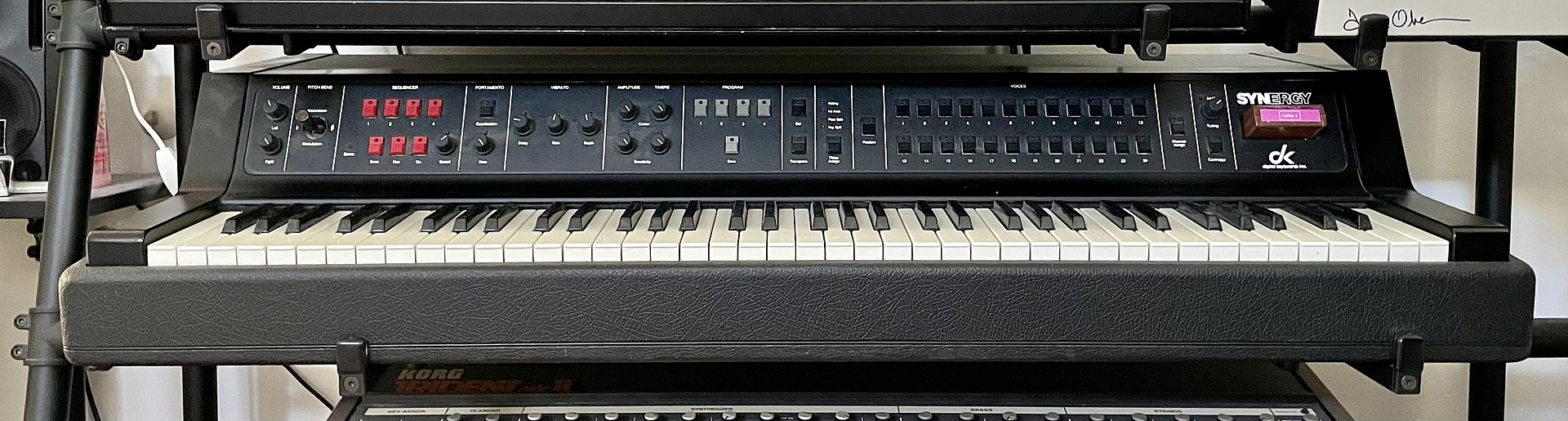

A lot of hasty generalizations and confused contextualizations exist, pointing to the fact that no in-depth research has been conducted to provide clarity to existing gaps in this body of knowledge. Some scholars have struggled with devising a rubric for this art form that will define and categorize it as African. Others have adopted what may be considered a problematic discourse of likening this art form in parallel morphological and ideological terms with European Readymade, Dadaism, Surrealism and Found Object Art, indicating the extent to which scholars have grappled with this subject.


The rubric ‘Recycling in Contemporary African Art’ has been problematically adopted by scholars to holistically describe this African art form in the past two decades, a rubric which Binder (2008) argues that is “misleading”. Binders view point is supported by Van-Dyk who observed that “A lot of artists have made art out of found materials before the word ‘recycle’ was even known in our society… the term Recycling in African Art therefore is a misconception” (Van- Dyk, 2013. P2). This paper reviews recent articles and catalogues which deals with waste transmutation into art, in order to reveal the ambiguities surrounding this modern art genre in Africa, it goes further to posit that for proper understanding to be attained, an in-depth research into found object art is exigent.

Providing solutions to these existing gaps is beyond the scope of this paper, however, in the course of this discourse, insights will be provided into ways through which studies can be effectively directed using cultural perspectivalism of particularised methodological investigation which will enable the possible establishing of this contemporary art convention as African in form, content, and context and, distinguish it from those of western art culture.

2. Articles, Submissions and Gray Areas on waste ‘Upcycling’ into contemporary Africa art:

Four literature sources (three papers and a book) are reviewed in this section to bring to lime light gray areas and gaps in the body of knowledge with regards to found object appropriation in contemporary African art.

African Folk Art Recycled Tin Can Turtle Tanzania

2.1 Globalizing East African Culture: From Junk to Jua Kali Art.

By Margaretta Swigert-Gacheru 2011 Swigert-Gacheru’s paper focuses on waste transformation into art practiced in East Africa, using Kenya as case study. The main idea from an economic and innovative view point purported by the author is that, Jua Kali Ingenuity which culminates into Kenyan Junk Art is a contemporary East African renaissance movement which not only defines a unique genre of art, but contributes to boosting the economy through its bricolage productivity. Also, the author pointed out that Jua Kali is the most dynamic contemporary art form in Kenya which exists as a heighten level of creative ingenuity inspired by the presence of global waste/throw-away and poverty (Swigert- Gacheru 2011. P129).

She further observed that, by virtue of its appropriation of global waste, Jua Kali Junk Art bridges the gap between African and western art worlds by creating a global flow through such hybridization which in turn defies the myth of tribal art and primitive order (Swigert-Gacheru 2011. P127). Another submission made by the author is that, through creative resuscitation of discarded materials deposited in East Africa from Europe, Jua Kali Junk Art combines makeshift creativity with entrepreneurship as a strategy for survival (Swigert-Gacheru 2011. P129). Thus, poverty is cited as the motivation for the innovation of Jua Kali Junk Art in Kenya, whilst various artists inspired by economic hardship are listed. Although Swigert-Gacheru presents evidence of how makeshift creativity in the arts can boost the economy of both the artists and the nation, and also brought to lime light the fact that this ingenuity in East Africa was relegated to the background before now by scholars, the authors classification of what constitutes junk and debris is very confusing and especially problematic because this classification is the proviso for her dubbing of this art form as Junk Art.

The author stated that Junk Art is made from electronic garbage and found natural objects, while environmental debris and old clothes are used in installation (Swigert-Gacheru 2011, p. 131). This classification brings about various unanswered questions which subvert this genre of contemporary African art. For instance, can all art made from junk in Africa be classified as Junk Art? How does natural found object like stones, sea shells etc which are not electronic garbage justify their inclusion in the categorisation Junk Art? Or, does the inclusion of discarded materials into an artwork in this case as the author enumerated (old clothes and environmental debris), automatically transform such works into installation art? Is discarded material Upcycling into art, the-same as installation art? By using media as the criterion for devising the rubric ‘Jua Kali Junk Art’, one will assume that all artworks in East Africa or Africa at large made from found, discarded or readymade

Arts and Design Studies www.iiste.org ISSN 2224-6061 (Paper) ISSN 2225-059X (Online) Vol.12, 2013 43 objects will ideally fall into this category (junk art) but this isn’t the case. Castellote (2011) observed that Olu Amoda uses discarded materials and junk which he prefers to call ‘Re-Purpose Materials’, and that his art be looked at as ‘Repurpose Material Art’. One observes that, Olu Amoda and other African artists even though make use of junk, devise different names for their waste materials and refuse that their artworks be called junk art. This is why Swigert-Gacheru’s adoption of the term junk art to generalize found objects transmutations in Kenya is problematic because other waste appropriation artists in Kenya have different names for their waste materials. Furthermore, by using numerous names for waste materials, devised by different artists as the main trust or generic mode of investigation to explore and interrogate this genre of African art, such line of enquiry as adopted by Swigert-Gacheru and other scholars has only lead to different confused classifications. Two issues stand out from Swigert-Gacheru’s study.

Firstly, the fact that the categorization of what constitutes waste and what falls into the typology debris is problematic means the terminology adopted for this art form is equally problematic. From the author’s submissions, it implies that natural objects, old clothes or environmental debris are excluded from the typology Junk art and by virtue of their waste composition, have become installation art. Also, classifying electronic garbage as the material used for making Junk Art, means they can’t be used in installation art by the author’s submission which makes her proposition very confusing. Secondly the author’s problematic waste categorisation culminates in an inability to differentiate junk art from Installation art. We are thus left with a rubric (Junk Art), which doesn’t even encompass all of Kenya’s found object appropriation, neither does it, reflect or encompass found object transmutation practiced elsewhere in East Africa, nor the entire African continent, and submissions which leaves us unaware of the boundaries between this art (Junk Art) and Installation Art. These unanswered questions and issues stated above, indicates the presence of more than a modicum of gray areas and uncertainties in Swigert-Gacheru’s paper.

2.2 Zimbabwe: The Lost and Found Art.

By Knowledge Mushohwe 2012 This article provides peripheral insights into contemporary African found object appropriation and possesses accompanying obscurities. The main purport of the article is the branding of art that utilizes available waste or ready-mades as ‘Found Object Art’, with the author positing that Zimbabwean artists use found object art as a way of finding meaning in thrash to communicate encoded messages. One major assertion made by the author is that, found object works of art are superlative to the more mundane forms of sculptures which are the old conventions. Arguing that, the punctuated coding system within found object art gives such sculptures a contemplative challenging quality which is an edge over traditional forms of sculpture (Mushohwe, 2012. P1). That additive aesthetic edge is born out of the complex creative process which the author describe as ‘Organised Vandalism’, a process which involves displacing old meanings and forms of objects to create and accord them new forms and meanings (Mushohwe, 2012. P1).

Whilst pointing to the fact that, found object art involves re-contextualisation of objects by dislocating them from their original context and locating them in higher realms of artistic existence, the author equally draws ones attention to the fact that its vandalising nature constitutes a cause for concern as critics question the legality of such practice. Most noticeably and ambiguously so too, is the fact that the author describes and associates found object art in Africa to those of western rebellious art movements. He stated that, “the rebel nature of this found object art is traced to Dadaism and its principal exponent is Marcel Duchamp” (Mushohwe, 2012. p2). Such a bold assertion however, is not proven with adequate facts which make it confusing and problematic as will be enunciated in the next paragraph. Although this paper provides some new insights into this genre of contemporary African sculpture, especially by branding it ‘Found Object Art’ and establishing the fact that, because this art form dislocates discarded objects from their original context to a new creative realm, it assumes contemplative/challenging qualities which accord them aesthetic/creative edge over traditional forms of sculpture such as modelled statues, carvings etc, the article notwithstanding, constitutes further ambiguities and raises various questions.

The author’s likening of this African art convention to Dadaism and purporting that Marcel Duchamp is the founder of Dadaism is shrouded in obscurities without sufficient scholarly evidence to support such claims. Firstly, in as much as Duchamp, Ricaba and Man Ray started anti art in America, Duchamp is not the founder of Dadaism.

Dadaism began in Zurich with artist like Tristan Tzara, Marcel Janco, Jean Arp, etc credited for stemming the process that lead to Dadaism (Hans 1965, Uwe M 1979, Sandqvist 2006). However, Duchamp a pioneer member of anti-art in America originated the ‘Readymade’ which varies from Dadaist Surrealistic objects in various respects. Therefore, his linking of Duchamp’s Readymade and Surrealistic Found Object in same category is problematic. This is because, he implies by such proposition that Duchamp’s Readymade and Surrealist found objects are same art types which from literally evidence is not the case. Duchamp’s Readymade is a conceptual art style arrived at through his disinterested art ideology and experimentation with his ‘Creative Order and Infrathin’ [aesthetics of indifference] emphasizes the intellectual/conceptual content of an artwork over its visual form, to question what defines/constitute art and the entire art institution. Furthermore, such Readymade were unaltered by the artist and only assumed the dignity of art through ‘Dislocated Contextual Description’ (Read 1985, Obalk 2000, Arts and Design Studies www.iiste.org ISSN 2224-6061 (Paper) ISSN 2225-059X (Online) Vol.12, 2013 45 El Anatsui’s works and practice methodology.

Her main submission is that Anatsui’s works frequently interpreted principally in relation to clothe, should instead be read as conceptual contemporary sculpture, and a localized reading be adopted in discussing his practice of incorporating locally available or sourced materials into his art. The author also argues that the rubric ‘Recycling in Contemporary African Art’ used to describe all modern African art involving material reclamation is misleading. Also, the term Found Object Art is said to be inappropriate and a wrong reflection of Anatsui’s practice and works since the artist himself chooses to refer to his materials and works as “Objects the Environment Yielded” (Binder 2008, p.27). Thus, she refers to Anatsui’s works as ‘Transformations’ instead of Found Object Art on the premise that the term ‘Found Object’ was born to art history of a particular European movement not relating to Africa, so the term ‘Transformation’ is more appropriate and not only signifies ownership but also an elevation of the material form of Anatsui’s art.

Citing Dilomprizulike (The Junk man of Africa) who works with discarded materials and always requires his works whether they are transformed or not to be called ‘Junk’ as an example, Binder argues that although many artists in Africa work with discarded materials, they are dissimilar in many ways thus, the dubbing of this art type “Recycling in Contemporary African Art” is cloaked in misconceptions. Another valid contribution in this paper is the advocating for a ‘Localized Reading’ of discarded material appropriation in modern African art as the most appropriate method of investigation for understanding its individual cultural peculiarities, since studies and categorizations with emphasis on material rather than practice methodology is inadequate. (Binder 2008, p.35)

By proposing a ‘Localized Reading’, the author indicates that dissimilarities exist between African artists practicing found object appropriation and between this African art convention and those of western art cultures. This view is supported by Olu Oguibe who observed that “the found object for Anatsui was not complete in and of itself, but required the transfiguring intervention of human agency in order to be translated into sculptural form thus, his works differ from others” (Oguibe 1998, p.48). This is why Binder proposed a localized reading into individual’s practices to be able to understand this art phenomenon.

What this reiterates is the fact that, the individual/cultural ideology, methodology and motivation behind found object creative manipulation are key to understanding the works produced and determines the way we perceive and appreciate such oeuvres. This is because “ones aesthetic responses are often functions of what one’s beliefs and perceptions about an object are” (Danto 1981. p99). Furthermore, the suggestion for a localized reading into this genre of contemporary African art is one that will provide a possible vantage point towards really understanding its modern art qualities and conceptuality. If a localized methodological reading is adopted perhaps alongside cross cultural comparison, then Binder’s argument that the adopted rubric ‘Recycling in Contemporary African Art’ for this art genre by western and African scholars is ambiguous and misleading will properly be understood and addressed.

This is because, only by understanding the practice methodology, cultural inspiration and ideology upon which these works derive the potency for their artistic being that the point of departure can be established that will lead to a comprehensive understanding as to why this art form may be peculiarly African. This said, propositions in Binder’s article raises a lot of issues that further contribute to the obscurity ubiquitous on this subject matter. The author classifies Anatsui’s artworks as ‘Transformations’ and her decision to adopt this terminology as appropriate for this style of art, hinges on two hypothesis; on the one hand is the fact that the found materials are manipulated creatively and the degree of such manipulation is employed as a vital coefficient and on the other hand, the ideology and intended codified messages locked in the piece to be expressed or communicated to the general public.

This paradigm of thinking though insightful, leads to the following lines of questioning; If the degree of manipulation of the discarded is the basis for devising the rubric and classification ‘Transformation’, how is Anatsui’s works different from Jua Kali Junk Art which adopts even deeper levels of material manipulation? By adopting the degree of artistic manipulation of the discarded as the sine qua non for classification, it is apparent that Anatsui’s assemblages or constructions are not different from Kenyan Junk art nor are they different from those of other Nigerian and African artists who work with found objects. On this premise, can those other works be classified too as Transformations? Or, the other way round, Anatsui’s works as Junk Art? Furthermore, by citing technique of making (Construction) as the basis for differentiating Anatsui’s works from others, does it mean that artworks made with this same technique (Assemblage/Construction) using different materials are or not qualified for this sobriquet Transformations?

Another trajectory in Binder’s investigation is the use of intent/metaphoric content (ideology) behind the works as a criterion and reason for underpinning the exclusive categorization of Anatsui’s works as Transformations. If the conceptuality, and metaphoric content are central to terminology devising for art types, then it becomes very confusing why Anatsui’s art should be treated as exclusive from others nor is there any need for discussing and differentiating found object appropriation in Africa under numerous terminologies by scholars because, almost all African artists who engage in this practice uses their art for same purposes; which according to Peek (2012), “is to create aesthetic objects for appreciation or to comment on the present condition of modern societies”. Issues relating to over consumerism, socio-economic and political ills and cultural/moral decadence are regular Arts and Design Studies www.iiste.org ISSN 2224-6061 (Paper) ISSN 2225-059X (Online) Vol.12, 2013 46 themes associated with this art genre in Africa, which is equally the conceptual feature in most postcolonial art.

Which is the aesthetics of humanity that engages with the current and transforming state of human race and defined by such extend of engagement with these concerns (Young 2010). As this is the case, based squarely on ideology and messages conveyed like in most post colonial African art, there are no major differences between Anatsui’s art and those of other African artist who work with waste and convey same contemporary concerns in visual form.

Olu Amada “Trois Jeunes Filles

Conversely, will it then be a misplaced submission, if Anatsui’s art is called Junk or Found Object art? Or can Jua Kali Junk Art or that of Zimbabwe, those of Delomprizulike or the works of Olu Amoda qualify to fall under the typology Transformations? While Binder’s article provides great insights into Anatsui’s practice, as well as pointing out the fact that, attempting to generalize this genre of African art under the rubric ‘Recycling in Contemporary African Art’ as is often the case is misleading, and further observing that, adopting Euro-American terminologies and likening African found object art tradition to those of the west is a faulty proposition, her assertions in this article equally bellies lots of uncertainties observed above which hasn’t help provide clarifications needed on this subject.

3. Ambiguities Identified

This brief survey indicates the presence of gaps in the knowledge and discourse of found object appropriation in modern Africa. Thus, various issues emanating from the reviewed literature sources are categorised into the following problems subheadings:

3.1 Muddle Terminologies and Classification Problem

From the foregoing, it is apparent that the first ambiguity is the problem of classification. Terminologies such as Junk Art, Trash Art, Found Object Art, Recycled Art, Transformations, Readymade, Objects the environment yielded, Re-purpose Material Art, etc have all been adopted by scholars and artists alike to exclusively discuss and describe their art as products of individual ingenuity even though their artworks like those of others, equally involves the use of same creative methodologies and ideologies for waste and found object appropriation from pop culture into art in Africa. This trenchant attempt at carving out a unique individualistic identity or for ethnic groups or gilds working in this modern African art convention as is the main purport in many literary discourses, is an evidence of classification ambiguity which constitutes into grappling with devising or coining a suitable terminology for this art form which will effectively categorize it as individually exclusive or holistically encompassing to accommodate all African art forms made from readymade or found materials into one typology.

3.2 Hegemonic Exclusion of the Historiography of African Found Object Appropriation

There is also the problem of hegemonic exclusion which is made manifest in the writings of western scholars on African contemporary art. In an attempt to co-opt other art traditions into western art mainstreams, these scholars have refused to investigate or make any references to the origin of found object art in Africa and have concentrated in treating this art form as a recent artistic endeavour. In doing so over the years, that is ignoring the historiography of this African art convention, western scholars have fashioned a discourse on African found object transmutation art, which problematically excludes its historic context (origin). The resultant effect is evidenced in the fact that, even African scholars and critics have adopted this paradigm and thus, problematically treats African found object appropriation as simply an extension of European modernism rather than an art form with any cultural particularities/inspirations or determined by traditional philosophies.

So long as this remains the case and the origin of this art convention in Africa hegemonically excluded from contemporary discourse, the ambiguities surrounding it will continue to impede any comprehensive understanding of its contemporary artistic existence.

3.3 Problem of Contextualization

“There has been much debate surrounding the applicability of Euro-American terminology and classification to systems of art production outside of that specific history. While I am in no way arguing that these terms are not also applicable to practices other than those in Europe and America, I am suggesting a considered application rather than a catch-all grouping of the work as either recycling or found object. The answer is to acknowledge the local while assessing the reciprocity of art practices in a global historical context” (Binder 2008, p36) Binder’s argument is on the premise that, Euro-American terminologies may not effectively reflect or apply to art traditions or styles that fall outside the specific history which generated such terminologies.

If this happens, that is, Euro-American terminologies applied to outside art traditions, it will deprive such art forms or traditions drawn into European art mainstreams, of their true cultural artistic value, identity and conceptuality. Binder’s observation exhibits another level of ambiguity surrounding found object appropriation art in Africa as equally observed in the studies surveyed earlier in this paper, which is the problem of contextualization. Most writers both African and western, have applied Euro-American terminologies to describe this genre of art and in the process contextualize it based on western art movements of the 1900s like Readymade, Found Object, Dadaism etc. This application has not proven to be exceptionally adequate because, the ideological and conceptual frameworks that gave birth to those art forms and movements in the west are not responsible for the innovation.

Arts and Design Studies www.iiste.org ISSN 2224-6061 (Paper) ISSN 2225-059X (Online) Vol.12, 2013 47 of this modern African art form. This means that such Euro-American terminologies cannot effectively reflect and encompass this art type in Africa. Other writers have invented terminologies to treat this art type as uniquely African yet they fall into the pit fall of making references to and likening this African art convention to western terminologies/theories and modernists art movements attempting to justify their course, but in the process, do not provide enough evidence to establish why this art form is uniquely African and different from those of the west. Such multifarious terminology devising and faulty contextualization for exclusivity purposes by these scholars and artists end up excluding others in the continent who work in same style convention and beclouding their art practices in ambiguities.

This problem exists because contemporary African artists and critics as well as their western counterparts have consciously and continuously engaged in the discourse of treating found object art in Africa as a very recent artistic endeavor and have avoided any trace of history to establish the origin of this African art form. If an in-depth research into the origin and growth of found object art in Africa is conducted, then the problem of contextualization of this art genre will be addressed.

4 Conclusion

Whilst found object appropriation into art in Africa has become the core of almost all contemporary creative experimentation, artist’s inventions of numerous rubrics to describe their materials in unison with some African and western scholars, has lead to problematic and obscured submissions. Such problematic propositions as this paper illustrates, has created various levels of obscurities (muddle terminologies/classification problem, problem of western hegemonic exclusion of the historiography of this art form in Africa and the problem of contextualization) which impedes understanding of this modern art convention.

Available literature sources reviewed in this discourse which contextualizes this art type in analogous aesthetic context with European art movements are misleading, while those that treat it as traditional to Africa provide insufficient information to underpin their assertions. Conversely, it is my opinion that for clarity to be attained, an in-depth research into found object transmutation into art in Africa is exigent. The point of departure firstly for such investigation will be to examine the origin and history of found object art in Africa. If the origin is established, it will determine if this art convention is inspired by traditional culture or occasioned by western influences.

Furthermore, such study should adopt a particularized reading system to examine the practice methodologies of African found object appropriation artists, the ideologies and cultural motivations behind this art convention. If a particularized reading is conducted into these three key aspects of African found object art, both the colonial, cultural and contemporary context of waste and found object appropriation into African art will be accorded much needed clarity and the problem of contextualization addressed. If this is done, it will effectively establish it (found object and waste appropriation genre of art in the continent), as African in form, content and context as well as differentiate it from European art movements/art cultures for which it is currently erroneously likened to. Providing solutions to these ambiguities is beyond the scope of this investigation.

Rather, what I have done is simply bringing to lime light the various obscurities surrounding this modern art type and suggesting directions for further investigations. For the Silo, Clement Emeka Akpang, School of Art and Design, University of Bedfordshire, Luton, United Kingdom.

Featured image- Dadaab Refugee Camp :: Behance

References

Adewunmi, A. ed (2008) Art is Everything 7: International Waste-to-art Workshop Catalogue. Nigeria: Timex Press Aniakor, C. (2013) ‘Interrogation of Objects and Images as means for Postgraduate Visual Enquiry in Environmental Sciences’ [Oral Interview]. Cross River University of Technology Calabar-Nigeria. 20th June, 2013 Arthur, D. (1981) The Transfiguration of the Commonplace. Cambridge: Harvard University Press. Breton, A (1938) Surrealist Situation of the Object, in Manifestoes of Surrealism, trans. R. Seaver and H. R. Lane Michigan: University of Michigan Press, 272. Breton, A. (1987) Mad Love, trans. Mary Ann Caws. Lincoln: University of Nebraska Press. Binder, L. M. (2008). ‘El Anatsui: Transformations’. African Arts, 41(2), 24-37. Castellote, J (2011) ‘Olu Amoda’ A View From My Corner [Online] Available at: http://jesscastellote.wordpress.com/2011/01/16/olu-amoda/ Accessed on: 10 th June 2013 Emgin, B. (2012) ‘Trashion: The Return of the Disposed’. Design Issues, 28(1), 63-71. Evans, B (2010) ‘Contemporary African Art’ Contemporary African Art Newsletter [Online],

Available at :http://www.contemporary-african-art.com/contemporary-african- art.html#sthash.wGlqQyzZ.dpuf….14 Accessed: 3rd June 2013 Hans, R. (1965), Dada: Art and Anti-art. Oxford: University Press. Iversen, M (2004) ‘Readymade, Found Object, Photograph’ Art Journal Vol. 63, No. 2, pp. 44-57 Kart, S. (2009). ‘The Phenomenon of Récupération at the Dak’Art Biennale’ African Arts, 42(3), 8-9. Mushohwe, K. (2012) ‘Zimbabwe: The Lost and Found Art’. The Herald [Online]

Available at: Arts and Design Studies www.iiste.org ISSN 2224-6061 (Paper) ISSN 2225-059X (Online) Vol.12, 2013 48 http://www.allafrica.com/stories/201210240435.html?viewall=1 Accessed: 8th April 2013. O’Connor, L., (2013) ‘El Anatsui: When I Last Wrote to You about Africa’ CAA Reviews [Online] p.1-3. Available from: Art Full Text (H.W. Wilson), Ipswich. Accessed June 5, 2013. Oguibe, O. (1998). “El Anatsui: Beyond Death and Nothingness,’ African Arts 21(1):48-55. Sandqvist, T. (2006) Dada East: The Romanians of Cabaret Voltaire. London: MIT Press Shiner, L. (1994) ‘`Primitive fakes,’ `Tourist Art,’ and the Ideology of Authenticity’, Journal of Aesthetics & Art Criticism, 52 (2), pp.225. Swigert-Gacheru, M. (2011) ‘Globalizing East African Culture: From Junk to Jua Kali Art’, Perspectives on Global Development & Technology, 10 (1), pp.127-142 Sylla, A., Betelsen, M. (1998) ‘Contemporary African Art: A Multilayered History’, Diogenes, 46 (184), pp.51- 70. Uwe M, S. (1979), George Grosz, His life and work: Universe Books Van Dyk, M. (2013) ‘The Transformer: Mine Hill artist Re-imagines Found Objects as Art’ Daily Report [Online].

Available at: http://www.dailyrecord.com/article/20130509/GRASSROOTS/305090005/The- transformer-Mine-Hill-artist-re-imagines-found-objects-art?nclick_check=1 Accessed on: 29 th August, 2013 Young R. J. C. (2010) Explorations – What do we mean by Postcolonial Art [Video]. Edinburgh: British Council. Available Online At: http://vimeo.com/15559912 Accessed: 5th June 2013.

How This 5000 Dollar Compact Loudspeaker Delivers

PS Audio Introduces Its Compact, High-Performance aspen FR5 Loudspeaker

– New FR5 stand-mount speaker delivers expansive sound in a room-friendly design

Boulder, Colorado, July 2024 – PS Audio recently announced the introduction of its aspen FR5 loudspeaker, a stand-mounted speaker that delivers the same quality of extraordinary musical realism as the larger aspen Series models, in a compact design that fits easily into smaller and medium-sized rooms.


The new FR5 features a custom-designed PS Audio push-pull planar magnetic high-frequency driver, complemented by a newly-designed midrange/woofer, and a high-excursion passive radiator. Available in satin black or satin white with optional matching stands, the PS Audio FR5 is styled to complement any décor.

Paul McGowan, PS Audio CEO pointed out: “The FR5 was designed to bring the same level of uncompromising sound quality as all aspen Series speakers into any listening environment, and is ideal for living spaces where floorstanding speakers can’t be used. Although it’s small, the FR5 delivers powerful and dynamic sound with extended bass, and will play surprisingly loud even in larger rooms.”

The FR5 measures 14.5 inches high by 8 inches wide by 13 inches deep (28.25 inches high with optional stands). The drivers in the FR5 are purpose-designed by PS Audio and are tuned for optimum performance in a two-way stand-mount configuration. The 2.5-inch planar magnetic ribbon tweeter is the same unit used in all aspen Series loudspeakers. It utilizes a symmetrical push-pull design with a high-strength magnet and a diaphragm made from Teonex® film, a material that provides exceptional clarity, transient response and resolution.

The aspen FR5 features a newly-designed 6.5-inch cast frame midrange/woofer made from Curv woven polypropylene, a material that is drawn into thin monofilaments and woven and reinforced using a proprietary process. The high-excursion driver employs a split-gap magnet structure with dual Faraday rings and a custom suspension. It’s augmented by a rear-firing 6 by 9-inch passive radiator to achieve in-room low-frequency extension down to 30 Hz. Both FR5 drivers are mounted on a thermoset resin front baffle that adds rigidity and minimizes diffraction effects.

PS Audio’s aspen FR5 utilizes a new enclosure technology, with viscoelastic damping sheets between the bracing and cabinet side walls, and around the woofer. This minimizes unwanted enclosure vibrations and contributes to the FR5’s superb imaging and spaciousness. The crossover uses air-core inductors, metallized poly capacitors, and wirewound resistors to ensure maximum sonic purity and seamless driver integration.

The FR5’s simple, elegant design is complemented by its optional matching stand, which has an integrated wire management system and can be mass-loaded. The FR5 comes with magnetically detachable grilles.

The aspen FR5 will be available in August 2024 at a suggested retail price of US $3,499/ CAD $4,771 per pair. The optional stands will be available at US $500/ CAD $682 per pair.

aspen FR5 Features at a Glance:

  • Enclosure type: sealed
  • High-frequency transducer: 2.5-inch planar magnetic ribbon tweeter with Teonex diaphragm
  • Midrange/low-frequency transducer: 6.5-inch cast-frame, Curv woven polypropylene, split-gap magnet structure with dual copper Faraday rings
  • Passive radiator: 6 by 9-inch rear-firing
  • Thermoset resin fiberglass-composite woofer baffle
  • Magnetically-attached grille
  • Custom crossover with premium metallized poly capacitors, air-core inductors and wirewound resistors
  • Frequency Response: 35 Hz – 20 kHz (- 6 dB, half-space; 30 Hz – 6 dB in-room)
  • Crossover Frequency: 1,750 Hz
  • Sensitivity: 83.5 dB
  • Nominal Impedance: 6 ohms (5.6 ohms minimum)
  • Recommended Amplifier Power: 50 – 150 watts
  • Dimensions: 14.5 x 8 x 13 inches (speaker only), optional stand, 28.25 x 11.75 x 14 inches
  • Weight: speaker, 26.6 lbs. (12.1 kg), stand, 13.7 lbs. (6.2 kg)

For the Silo, Frank Doris.

Teonex is a registered trademark of DuPont Teijin Films.

Canada's 'biggest little blogspace'