Pursuant to the desire of the Government of The United States of America and the Government of New Zealand, the countries held a bilateral Space Dialogue in Washington, D.C. on March 23 and on March 26 to strengthen bilateral space cooperation. The Space Dialogue demonstrates the robust and growing cooperation between the United States and New Zealand in outer space.
The U.S. delegation was led by Valda Vikmanis, Director of the Office of Space Affairs of the Bureau of Oceans and International Environmental and Scientific Affairs, and by Eric Desautels, Director of the Office of Critical Domains for the Bureau of Emerging Threats. The New Zealand delegation was led by Andrew Johnson, Deputy Head of the New Zealand Space Agency. Chris Seed, New Zealand’s Ambassador to the United States, delivered opening remarks that underscored priorities of strengthening commercial space ties, enhancing space security cooperation, and advancing scientific collaboration. Both delegations included whole-of-government participation.
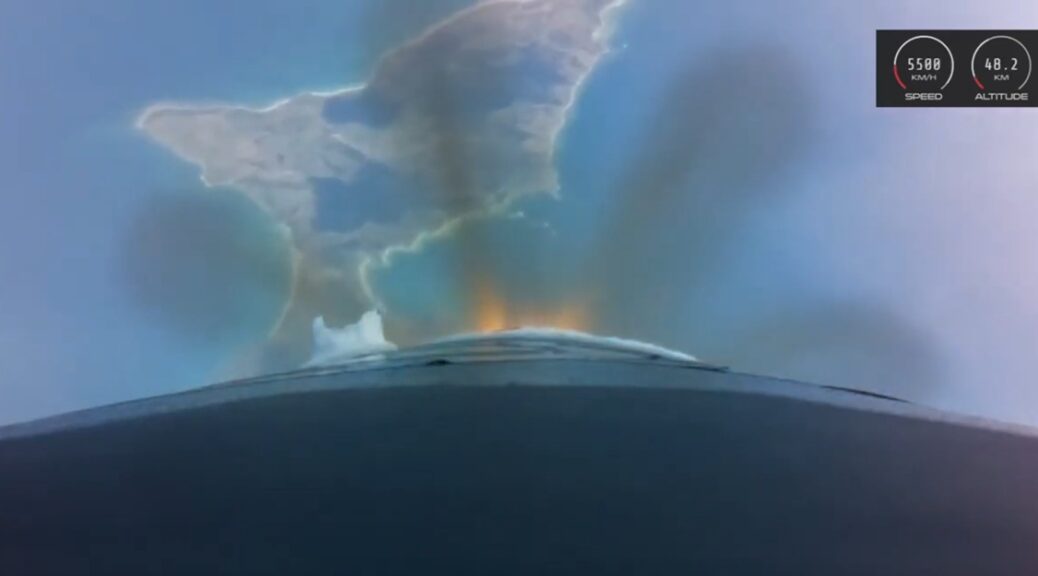
The participants welcomed the holding of the Dialogue during a period in which the United States and New Zealand share a close cooperation on space which has had mutual benefits for both countries. In October 2024, New Zealand became the third most frequent launcher of orbital rockets, with U.S. headquartered and New Zealand founded company Rocket Lab propelling New Zealand to these new heights.
A significant focus of the Dialogue was the evolving role of the commercial space sector in supporting both economic growth and shared security interests. Discussions covered the changing role of government in enabling commercial activity and the expanding range of applications, with both sides expressing their intent to continue cooperation on spaceflight safety, launch, payloads, science and innovation, and associated technology security measures. Both sides also discussed opportunities for further cooperation to address space-related threats to shared security interests, including military space cooperation and managing the risks to ground-based space infrastructure.
The delegations recognized the potential for expanded cooperation on policy and regulatory interoperability related to commercial space, including space situational awareness, launch and reentry, and commercial remote sensing. They decided to work closely together to address regulatory constraints that hinder effective cooperation, commercial engagement, and mutual benefits.
Participants welcomed the open and productive nature of the Dialogue, which included discussion on space cooperation grounded in the principles of the Artemis Accords, to which New Zealand was an early signatory. Both sides emphasized the importance of promoting peaceful and transparent behavior in outer space.
Participants acknowledged New Zealand’s geographic advantages have enabled frequent and responsive launches for U.S. industry and government agencies, adding strategic resilience to launch capacity. New Zealand’s location has enabled hosting of ground-based space infrastructure to enhance both space situational awareness and communications with spacecraft. The United States noted New Zealand’s recently passed, world‑first legislation on the operation of ground-based space infrastructure, which strengthens its ability to protect New Zealand’s national interests and values.
New Zealand’s growing focus on space security has opened new avenues for cooperation, strengthening the United States and New Zealand partnership and advancing practical efforts to promote stability, resilience, and the responsible use of space.
New Zealand’s Space Scholarships program, where New Zealand funds post graduate students to complete a three-month internship at the Jet Propulsion Laboratory in Southern California, where they contribute to cutting-edge space technology projects, was acknowledged as a way to create enduring space connections between New Zealand and the United States.
Participants also welcomed the announcement of the first round of joint research projects between New Zealand research institutes and NASA centers, focusing on Earth observation. These projects lay the foundation for future collaborations in other research areas, including potential contributions to the Artemis program following the March 24-25 Ignition events and announcements at NASA headquarters.
Both countries resolved to continue working together in these areas and to explore other opportunities for strengthening bilateral cooperation, including facilitating bilateral commercial connections.
Orange County, Calif. – Virgin Galactic Holdings, Inc. (NYSE: SPCE) (“Virgin Galactic” or the “Company”) recently announced the completion of its new manufacturing facility in Mesa, Arizona (Greater Phoenix area), where final assembly of its next-generation Delta spaceships is scheduled to take place starting in Q1 2025.
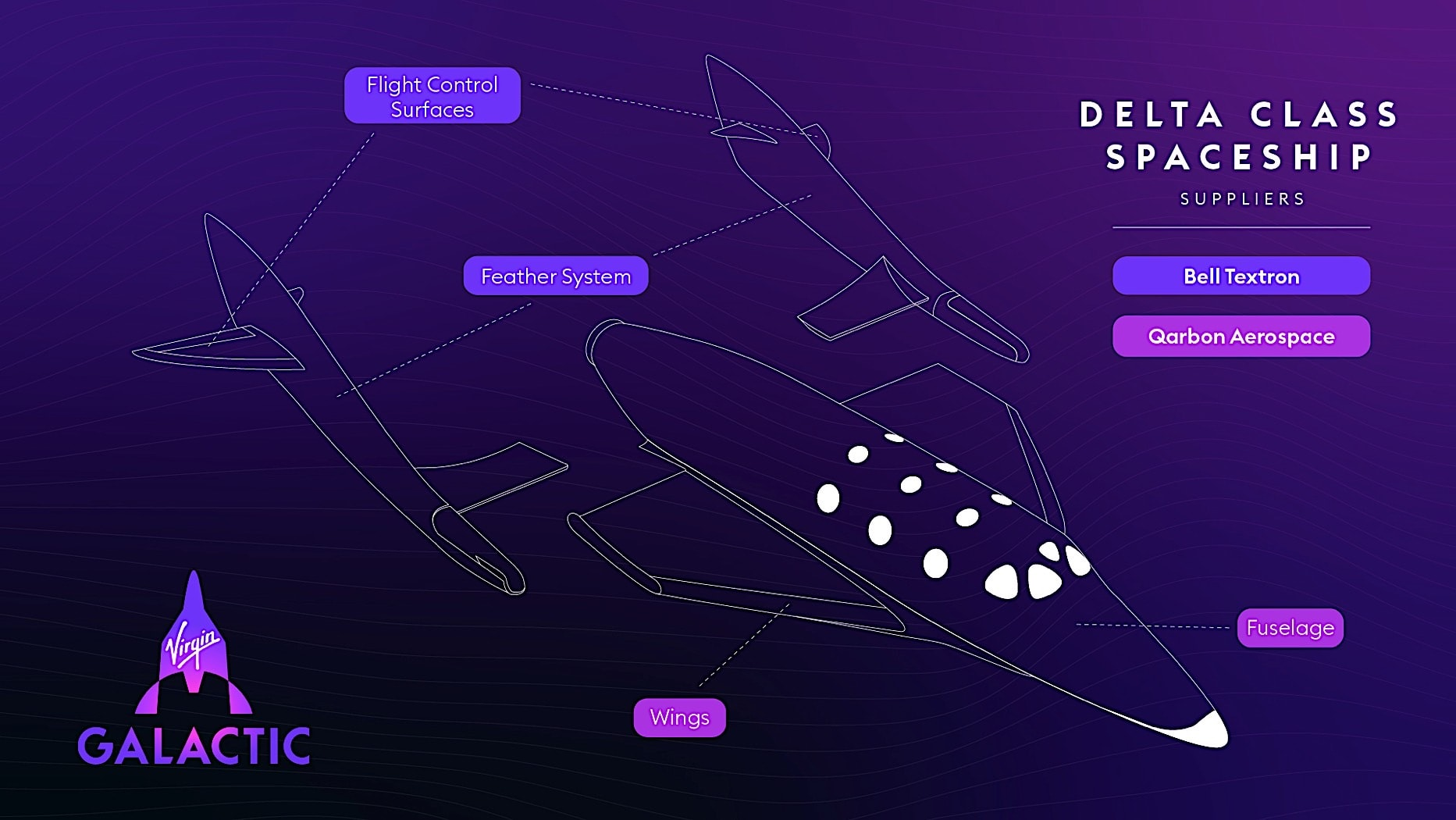
An initial team of Virgin Galactic technical operations and manufacturing personnel has begun preparing the facility to receive and install tooling, expected to arrive in Q4 2024. The facility will then begin to receive major subassemblies, including the wing, the fuselage, and the feathering system next year, as the team scales to build the first two ships of the Delta fleet. Once ground testing is complete, Virgin Galactic’s mothership will ferry completed spaceships to Spaceport America, New Mexico for flight test ahead of commercial operations, which are expected to begin in 2026.
The multiuse facility includes two hangars equipped with multiple bays, designed for maximum flexibility in building and testing space vehicles.
Work at the facility will be supported by the Company’s digital twin technology, which enables seamless integration between Virgin Galactic and suppliers through real-time collaboration, promoting strong governance and increased efficiency and reliability.
In May 2024, Virgin Galactic opened a ground testing facility in Southern California for Delta subsystems, including avionics, feather actuation, pneumatics, and hydraulics, using an Iron Bird test rig.
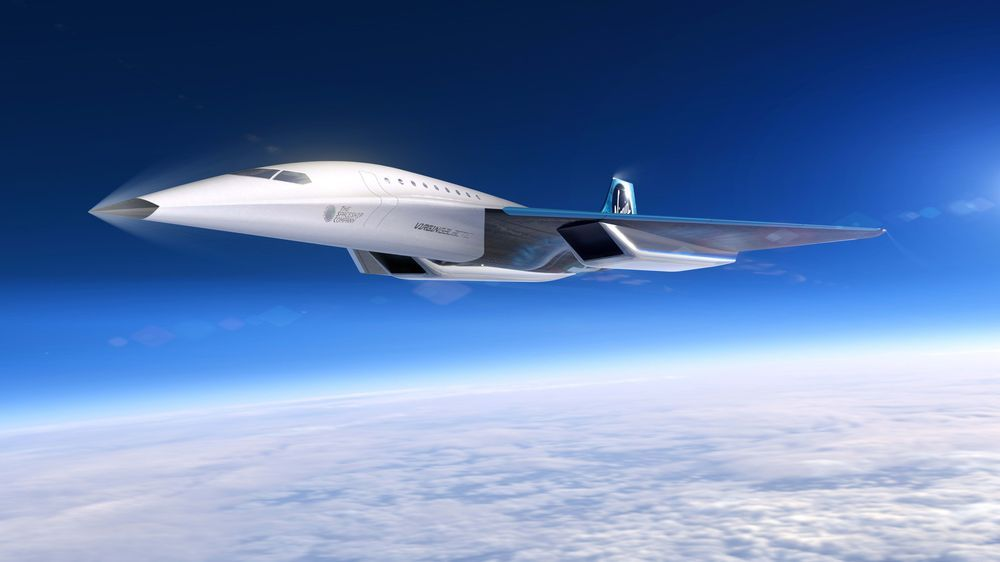
Design concept- Virgin Galactic’s MACH 3 Supersonic commercial passenger jet – a partnership with Rolls Royce (Concorde engines) could mean this design stands a real chance of being produced as well in the future.
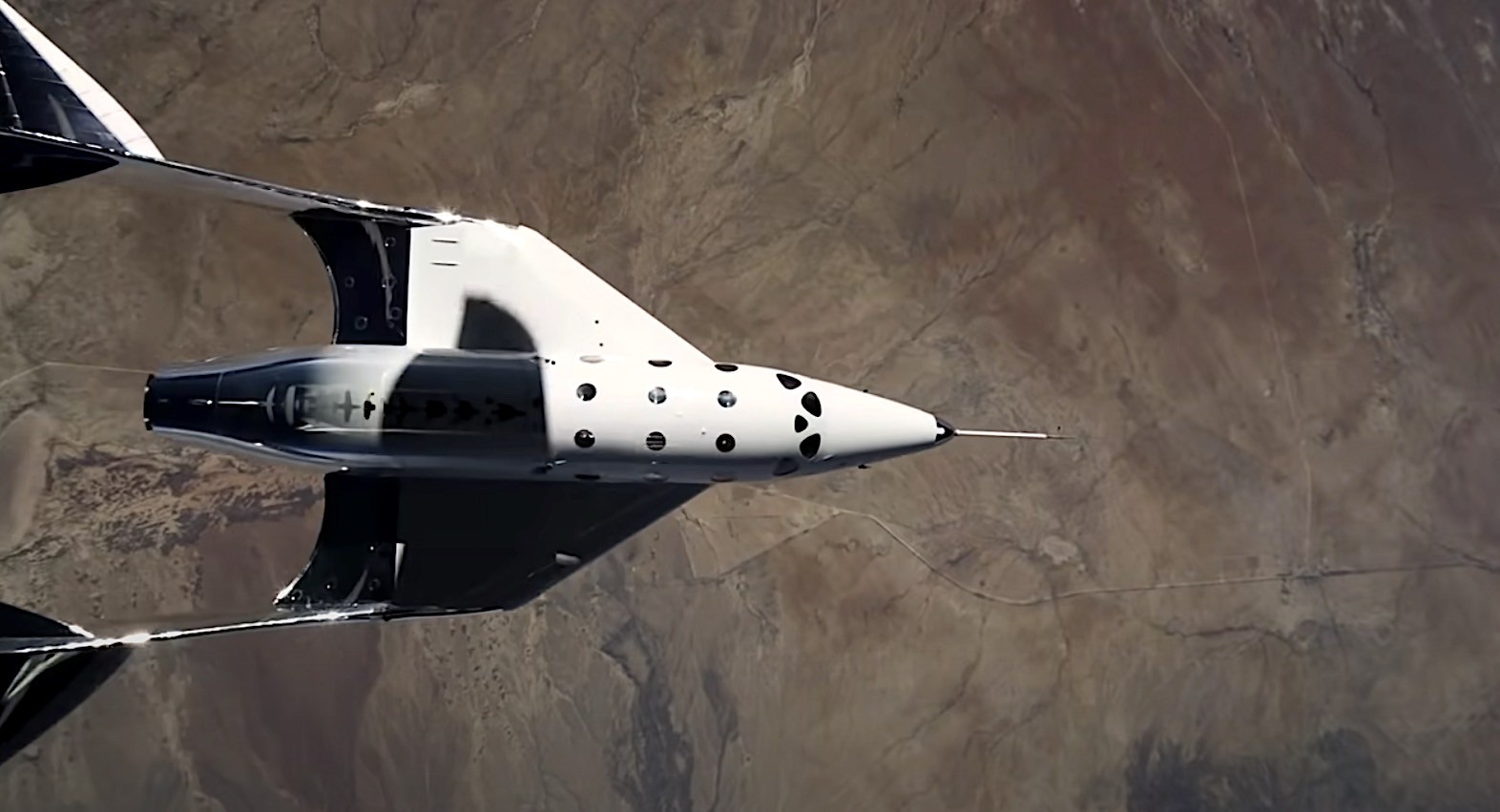
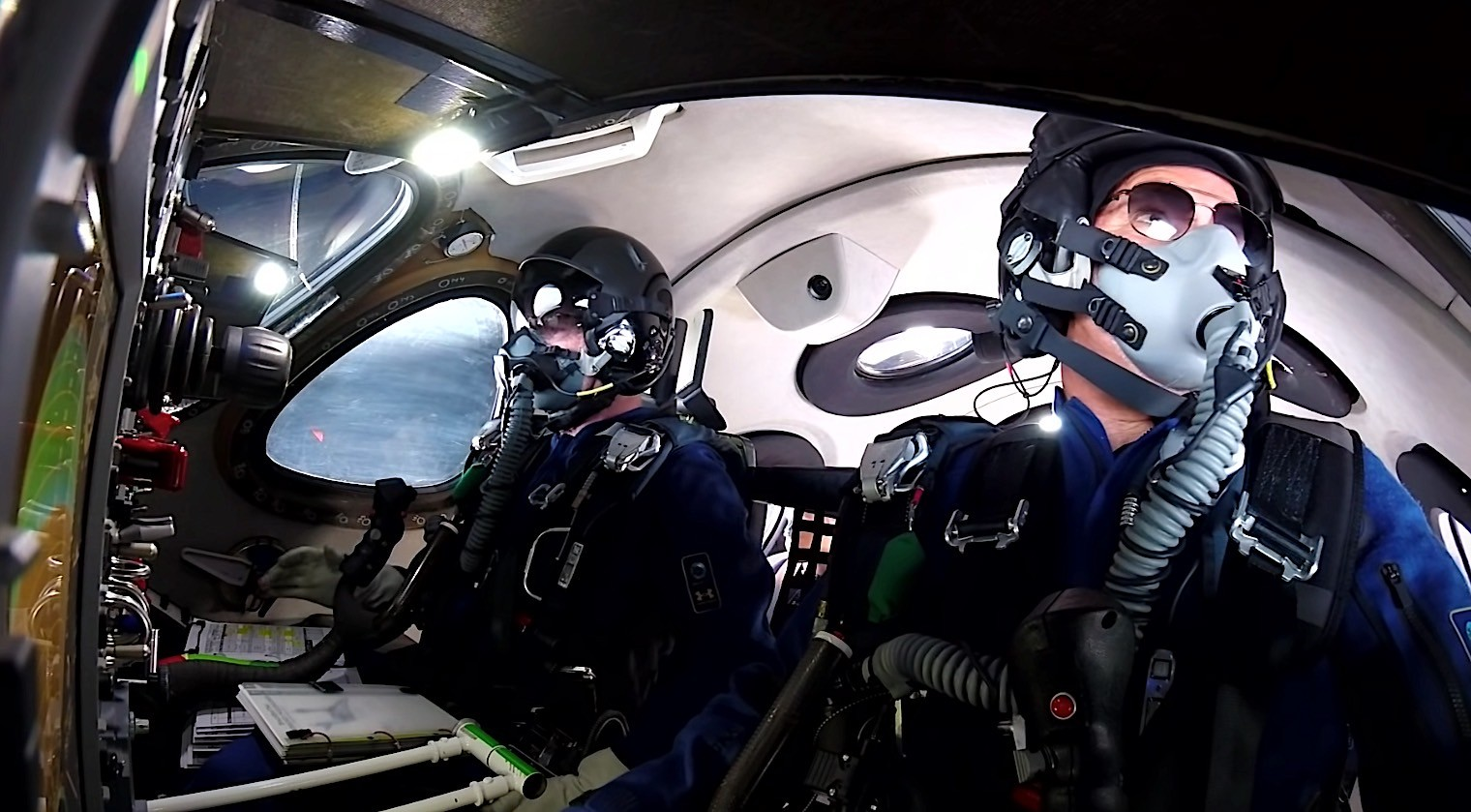
Virgin Galactic’s Delta spaceships will seat up to six private passengers, and each is expected to be capable of flying up to eight missions per month, dramatically increasing access to space.
“The completion of our new manufacturing facility is an important milestone in the development of our fleet of next-generation spaceships, the key to our scale and profitability. Tooling will begin arriving in a matter of months to support spaceship final assembly, which we expect to commence in Q1 2025.”