I’m sure you’ve had those days where you wake up and scarf down something for breakfast that’s convenient so you can get out the door as fast as possible. Now it should go without saying that starting your day with foods like doughnuts, pastries, or pancakes is a fat storing Nightmare.
But most folks turn to other so-called healthier alternatives that are nearly just as bad.
Here are 3 of the Worst Foods to Eat in the Morning
1. Muffins
Most store-bought muffins are giant, which means they can sometimes contain over 600-700 calories that have absolutely No protein or healthy fats to keep you feeling full and satisfied.
2. Bagels
Would you sit down and knowingly eat Four slices of bread?
Well, Most bagels have the equivalent of four servings of bread, which will quickly convert into sugar making you store fat and feel lethargic in no time.
3. Cereals
Over-the-counter cereals are, by far, one of the worst foods for your waistline and your health.
The majority of over-the-counter cereals are empty calories, simple carbs and sugar, cleverly disguised as a “healthy” breakfast.
There are a few rare exceptions, like some of the cereals in the Ezekiel 4:9® line from Food for Life®, but I never eat cereal when I’m trying to get leaner.
Seriously, they’ll make you literally swell up, while making you feel fat and bloated the entire day.
They also Force your body to depend on sugar all day-instead of burning fat.
However, there are certain foods that you can eat in the morning that are guaranteed to turn your fat burning switch to ‘On’ as soon as you wake up.
They’re called E-Factor Foods which are specifically designed to make you look and feel leaner—all while holding less water. You’ll quickly see why adding these 4 E-Factor Diet Hacks into your day can make you look and feel leaner in less than 24 hours from now. Stay fit and keep learning. For the Silo, Antony Thomas.
The Greatest Generation is a term coined by journalist Tom Brokaw in reference to those who grew up during the Great Depression and went on to fight in World War II. Brokaw described them as, “the greatest generation any society has ever produced,” arguing that rather than fighting for fame and recognition, these men and women fought because [history has shown] it was the right thing to do.
Following the war it was this Greatest Generation who came home to build the social, cultural and economic strength that we all continue to benefit from today. I think of 65 years of new and expanding commercial, industrial and agri-business that rebuilt strong North American economies. Today we continue to see their significant contributions to science, literature, art, industry, and a renewed economic strength unparalleled in history.
WW2 Vet Jimmy Johnson in Port Dover, ON
As with those who fought WWI, this generation was united by a common purpose, and by common values—values that include duty, honour, economy, courage, service, love of family and country, and, above all, responsibility for oneself. Instead of state-of-the-art technology, they had loyalty, integrity, and determination that overshadowed any fears. We should all strive to emulate their examples of selflessness and noble character.
There is one clear difference between that generation and subsequent ones – no sense of entitlement. No one believed that he or she was entitled to special privileges and no one expected the world to be fair. They took the world as they found it, made the best of it, and then made it better.
They succeeded on every front. After returning victorious from the war, they immediately began the task of rebuilding their lives and the world they wanted. Marrying in record numbers, they gave birth to the next distinctive generation known as the Baby Boomers. Despite the accomplishments and essential contributions as they experience the twilight of their adventurous and productive lives, the Greatest Generation remains, for the most part, exceptionally modest. They have so many stories to tell, stories that in many cases they have never told before, stories that we can all learn from if we only take the time to listen.
We have many opportunities at this time of year to recognize the dedication and service of this generation – and others – who fought for us.
While our thoughts and thanks go to those who are presently on, or supporting, the front lines, we must continue to learn from the lessons of the past – those that were taught to us by the ‘Greatest Generation’. For the Silo, Toby Barrett MPP.
Our world seems to be changing faster than ever – technologically, environmentally, socially – and in so many other ways. It is hard for any of us to keep up with the astonishing pace and scale of developments, and their impact for better or for worse on our own lives and the ways in which they affect the future of our planet.
Yet too often it seems that those with the greatest stake in the future, are least empowered to shape it: young people. This is something the Commonwealth has for more than 50 years been working hard to change; and never more so than today.
Population growth means that there are now more young people in the Commonwealth than ever before, and this offers choices and challenges for all involved in planning and making policy, and for young people themselves. The combined population of the Commonwealth is now 2.4 billion, of which more than 60 per cent are aged 29 or under, and one in three between the ages of 15 and 29.
Through social media, young people are more connected, informed, engaged and globally-aware than ever before. Even so, their potential to drive progress and innovation is often overlooked or remains untapped, despite pioneering Commonwealth leadership over the decades on inclusiveness and intergenerational connection.
Since the 1970s, Commonwealth cooperation has supported member states with provision of education and training for youth workers, who have a central role to play in encouraging, enabling, and empowering young people. Practitioners may be of any age, and operate in many settings: youth clubs, parks, schools, prisons, hospitals, on the streets and in rural areas.
Commonwealth approaches and engagement recognise the dynamic role youth workers can play in addressing young people’s welfare and rights, and in connecting and involving them in decision-making process at all levels. In some Commonwealth countries, youth work is a distinct profession, acknowledged in policy and legislation to deliver and certify quality of practice, including through education and training. In others it is institutionalised less formally through custom and practice. In some countries there is little or no youth work activity – formal or informal.
To advance the cause of young people, and their direct participation in nation-building and the issues affecting them, the Commonwealth Secretariat supports the governments of member countries with technical assistance relating to policy and legislation in professionalising youth work. A pioneering Commonwealth contribution is the Commonwealth Diploma in Youth Development, which has been delivered in almost 30 Commonwealth member states.
The new Commonwealth Degree and Diploma in Youth Work provides countries with a resource for developing human capital using a consortium business model that makes the training resources accessible at low cost for persons in low income contexts.
The Commonwealth also supports the global collectivisation of youth work professionals through the emerging Commonwealth Alliance of Youth Workers’ Associations (CAYWA), an international association of professional associations dedicated to advancing youth work across the Commonwealth. CAYWA facilitates the cross-pollination of ideas and collegial support among youth work practitioners, and is developing into a unified global influence providing support to governments and all stakeholders in youth work profession.
Expertise is offered by the Commonwealth Secretariat with the design of short courses and outcomes frameworks that support just-in-time and refresher training to augment diploma and degree qualifications. Guidance is also offered on establishing youth worker associations that can help towards building and sustaining professional standards, thereby safeguarding the quality of services offered to young people.
In 2019 a conference in Malta bringing together youth workers from throughout the Commonwealth continued to build recognition and professional standards of youth work in member countries. Among outcomes was the establishment of a week-long celebration of the extraordinary services of full-time practitioners and volunteers – recognized as youth workers – who support the personal development and empowerment of young people.
Youth Work Week, with the theme ‘Youth Work in Action’, was observed 4 -10 November 2019 in the 53 member states of the Commonwealth including Canada.
Looking forward to the 2020 Commonwealth Heads of Government Meeting (CHOGM) in Rwanda next June, Youth Work Week will bring into sharper focus the challenges young people in our member countries face, and the opportunities they are offered – including through Commonwealth connection.
By recruiting and placing appropriately trained and properly supported youth workers, communities in Commonwealth countries can help young people channel their energies and talent in positive directions, especially during the transition from education into work.
Supported by positive role models and with mentors to whom they can relate, young people can be guided towards healthy and productive lives. When equipped to develop as well-rounded individuals and to contribute to the societies in which they live, young people can make immense contributions towards transforming our communities and our Commonwealth and – above all – to their own future.
For The Silo, by Patricia Scotland, Commonwealth Secretary-General
Graphic Classics use a variety of styles and each work has a unique identity.
MOUNT HOREB, Wisconsin- Graphic Classics, the acclaimed series of comics adaptations of literary classics from publisher Eureka Productions, has had multiple titles included in the Diamond Distribution Core Curiculum List. Of the nearly 100 books on the list, 23 were from the Graphic Classics series, including VOLUME 2: ARTHUR CONAN DOYLE, VOLUME 4: H.P. LOVECRAFT, VOLUME 8: MARK TWAIN, VOLUME 18: LOUISA MAY ALCOTT, and VOLUME 22: AFRICAN-AMERICAN CLASSICS.
To help educators and librarians select materials to fit into their Common Core Standards curricula, Diamond Book Distributors have created the Diamond Graphic Novel Common Core List. Arranged by grade level, the Diamond Graphic Novel Common Core List offers 98 graphic novels from our publishers that will fit into a Common Core curriculum, along with resources including Library Classifications, Subject Headings, and Core Standards which apply to each book. The list is intended both as an aide to educators and librarians and to show that Diamond supports the Common Core Standards as an effective tool to prepare students for the challenges in college and the workforce.
Graphic Classics publisher Eureka Productions has also partnered with Overdrive and Comics Plus: Library Edition to make Graphic Classics digital editions available to libraries across North America and around the world. Among the library systems which have already started carrying digital editions of Graphic Classics are the Boston Public Library, Seattle Public Library, and the Dayton Metro Library.
Library users can borrow digital editions of Graphic Classics from their local library system for reading on smart phones, tablets, and computers. Digital editions are also available to consumers through the ComicsPlus and Ave Comics apps. Check with your local Library for Graphic Classics digital editions. CP
There are many reasons to plant a tree – to shade your home, help the environment, or just for the pleasure and beauty it brings. There are many questions when it comes to choosing the right tree. What kind of tree will thrive in my community, and on my property? How fast will it grow? Should I worry about choosing a native Ontario tree?
The Tree Atlas
You can get answers to those questions and much more information from an online Tree Atlas (ontario.ca/treeatlas).
The Tree Atlas shows you which trees will work where you live, your soil type, and other conditions to consider. It can also help you find the kind of tree that helps you achieve other goals, like offering shade to keep your home cool in the summer, attracting birds, or a fast-growing, bushy species to hide an unsightly view.
The Tree Atlas describes trees that are native to Ontario, so you’ll be planting a tree that’s adapted to the province and supports a healthy environment. You’ll also find tips on when and how to plant a tree to give it the best chances to thrive on your property.
Trees clean our air and water, help fight climate change, increase wildlife habitat, provide shade and help prevent flooding. When you plant a tree, you’re helping the environment.
The Tree Atlas was developed by the Ministry of Natural Resources, so you can be confident that the information provided is accurate and reliable.
Many Ontario towns and cities have tree planting programs – check with your municipality for tree planting information and assistance in your area. For the Silo, Emmilia Kuisma, District Strategic Officer Ministry of Natural Resources.
Canada is in the midst of an audiobook boom. Though sales numbers aren’t available yet, they’ve been growing rapidly in the United States, and north of the border, there’s been a substantial influx of publishers entering the audiobook market.
Why Do Canadians Listen to Audiobooks?
What’s behind their growing popularity? It all comes down to the pleasure of listening. Canadians are busy, stressed out, and looking for a way to slow down. Carving time out of the day to sit back and listen to a book is a chance to clear out the cobwebs, recharge, and rebalance. You can listen to audiobooks at the end of a long day, on your commute, on a lazy Saturday morning, or while you’re cleaning up and doing the dishes.
There’s also the appeal of the narrator. Talented voice actors bring great stories from the page to the speaker. They can bring a different personality to a book and new life to a story you already love.
While not every author has a voice made for narration, some of the best audiobooks available are narrated by the authors themselves. Neil Gaiman is a standout in this category. A natural-born storyteller, Gaiman has narrated a number of his own audiobooks and graced other works with his signature voice, though he’s not alone. Writers like Jenny Lawson, Christopher Hitchens, and Seamus Heaney have all made names for themselves narrating their own books.
Indie Canadian Publishers Getting into Audiobooks
It’s not just international publishers that are producing audiobooks in Canada. Independent publishers like House of Anansi and ECW Press have entered the audiobook market, producing some of their own award-winning titles and making them available on various audiobook platforms.
Titles like Tanya Talaga’s Seven Fallen Feathers, Eden Robinson’s Song of a Trickster, and Cherie Dimaline’s bestselling Empire of Wild are just some of the titles available as audiobooks thanks to the recent uptick in the Canadian market.
Great Canadian Talent
Canada has been relatively slow to enter this market, but it’s uncovered a hidden talent pool. As independent publishers have looked toward local actors, they’re discovering Canadians have a knack for narrating. Some audiobook producers are hoping more Canadians will make it easier to find great voice actors for their titles.
How Audiobooks Are Changing Book Clubs
Audiobooks have also opened up new opportunities for book clubs, moving from solitary reading to listening as a social activity. Clubs can now appreciate titles together and talk about what they think chapter by chapter. Club meetings can even be hosted online.
How Do Canadians Get Their Audiobooks?
Subscriptions have become the preferred way for Canadians to get their audiobooks. They work like a “book of the month club.” For example, a subscription with Audible gets you credits to pick one audiobook each month. You can buy more if you’re a voracious listener, and there are usually other membership benefits, such as access to podcasts.
With fast-growing sales and increased production, Canadian book-lovers can look forward to lots of new Canadian titles making the transition to audiobook format.
The artist Maren Hassinger with children from Pearl City, the historic African American neighborhood where the majestic 100-year-old banyan tree, the “Tree of Knowledge,” still stands today. The children joined hundreds of community members to create together thousands of aerial branches from recycled newspapers for Hassinger’s new monumental installation. Clifford Ross in the ocean surf, photographing hurricane waves.
The power of nature is unleashed with two timely, powerful exhibitions at the Boca Raton Museum of Art for the new season. Both of these original shows ─Maren Hassinger: Tree of Knowledge and Clifford Ross: Waves ─ will kick off the museum’s 70th anniversary season (on view November 5th – March 1st).
The museum is presenting both exhibitions together because the two shows sound a clarion call for environmental awareness. These shows also remind viewers that the beauty of nature can still inspire us, despite the over-saturation of society by hand-held devices and screens. The two exhibitions are presented side-by-side in adjoining galleries.
The artist Maren Hassinger with children from Pearl City, the historic African American neighborhood where the majestic 100-year-old banyan tree, the “Tree of Knowledge,” still stands today. The children joined hundreds of community members to create together thousands of aerial branches from recycled newspapers for Hassinger’s new monumental installation.Clifford Ross in the ocean surf, photographing hurricane waves.The Clifford Ross exhibition features a new approach to his monumental depictions of ocean waves that the artist captures during extreme weather. The result is the most comprehensive survey of his process ever shown in a museum.
Ross dramatically presents the monstrous power of the seas in his new exhibition at a crucial moment in time for our planet: the United Nations recently issued a major new report warning that the dangerous effects of climate change on our oceans is much worse than previously thought. The new findings warn about warming oceans and damaged ecosystems.
Sea levels are rising faster than previously predicted, glaciers and ice sheets melting more rapidly than expected, shrinking the fisheries that feed millions. Watch the spectacular video of Clifford Ross in the ocean surf at vimeo.com/168830477 The new report warns that many cities around the world will experience annual flooding events by 2050 that previously occurred only once per century.
The world’s oceans have been warming since 1970 and have absorbed 90 percent of the planet’s excess heat, killing off vast stretches of coral reefs. Absorbing massive amounts of carbon has made the ocean more acidic and inhospitable to corals that millions of species depend on for survival.
“When I first began photographing these hurricane waves 30 years ago, most of us were unaware that global warming was seriously damaging our oceans,” said Clifford Ross. “Now, as I look back on my work, it takes on a whole new meaning.”
Above – the two artists headlining the new season: Clifford Ross and Maren Hassinger. MAREN HASSINGER: TREE OF KNOWLEDGERenowned sculptor and performance artist Maren Hassinger was commissioned by the museum for a residency that explored the staying power of nearby Pearl City, Boca Raton’s historic African-American neighborhood.
This is the largest installation that Hassinger has ever created in her long and celebrated career. Her new site-specific installation is based on Pearl City’s landmark, the “Tree of Knowledge.” This majestic, 100-year-old banyan tree still stands today and is protected by the Historic Preservation laws. The tree has served the people of Pearl City since the dawn of the 20th century, as a gathering place for sharing stories and communal spirit. The majestic 100-year-old banyan tree at Pearl City is the inspiration for Maren Hassinger’s Tree of Knowledge.(photo by Aylin Tito) Hassinger vigorously engaged the public to recreate the tree’s aerial roots by gathering many groups over several months.
People from the community and visitors to the museum spent hundreds of hours twisting by hand thousands of recycled newspapers. Thousands of recycled newspapers were twisted to mimic the aerial roots of the banyan tree for Maren Hassinger’snew installation Tree of KnowledgeThese banyan “branches” will be suspended from the ceiling of the main gallery, representing the community-based “Creation-Stations.” The participants’ names will be incorporated into the monumental new work.
“I want visitors to the museum to think about the endurance of the tree and the endurance of the people who live beside it,” said Maren Hassinger. “I hope they realize it’s possible to build a world in which, like this installation, people work together side by side. Both the tree and the residents have inspired me with their mutual endurance.
In new reports, the United Nations warns that fires such as those causing de-forestation in the Amazon elevate concerns for the planet’s natural life support systems. This global call to action urges countries, companies and consumers to build a new relationship with nature.
The destruction of the world’s largest rainforest calls attention to the need to prevent ecosystems from declining to a point of no return, with dire consequences for humanity.
This year, the leading scientists of the world warned that civilization was in jeopardy due to forest clearance, over-usage of land, climate change, and pollution, putting a million species at risk of extinction.
Hassinger’s new installation is about nature as knowledge and about education. The twisted ropes of newspaper are made of words and stories.
“I hope the community and all of the visitors to the museum take a moment to think about the materials used in the project, which are not traditional art materials, and realize that this giant project was made not by artists, but by the public, working together,” adds Maren Hassinger.
“Both adults and children from the community welcomed my project with enthusiasm and proceeded to twist and twist to create the aerial branches. Their enthusiasm and spirit of camaraderie is uplifting and contagious,” says Hassinger.
Paper is a natural material, made from trees, and throughout the installation there will be fans that evoke the wind blowing gently through nature, as opposed to the hurricane winds of Ross’s work.Wind, the video by Maren Hassinger, will also be part of the exhibition. Watch the video trailer here vimeo.com/368811486
“Following the theme of nature for our new season at the Museum, how appropriate that Maren Hassinger would choose this legendary tree, known as the Tree of Knowledge, as the subject for her site-specific installation,” said Irvin Lippman, the executive director of the Boca Raton Museum of Art. “From its inception to its installation, this has involved audiences of all ages from every corner of our community to participate in the making of the aerial roots from streams of recycled newspapers. Much in the manner of the Banyan tree, we are all connected to one another,” adds Irvin Lippman.
Hassinger’s new exhibition will also feature the installation Love – an experiential portal for visitors to walk through. As the entranceway into the museum’s main galleries, it will surround visitors with hundreds of recycled pink plastic bags that will completely cover all of the surfaces around them. The shopping bags are filled with the air of human breath, and contain human love notes inside. Love, by Maren Hassinger. This installation will serve as the entryway featuring hundreds of recycled pink plastic bags, surrounding visitors.The bags are filled with human breath and contain human love notes.Maren Hassinger (still from her video Pink Trash).
CLIFFORD ROSS: WAVES On the subject of Clifford Ross: Waves, Irvin Lippman adds: “It would seem obvious that a museum with a coastal address such as ours would naturally be ever fascinated by the subject of waves. The subject of Clifford’s photographs in this new exhibition, however, goes deeper into the unpredictable shapes of waves, as much about abstraction as realism.” The effect of being engulfed in a room full of his work is profound, causing some viewers to claim they can actually hear the sound of the ocean waves although there is no sound component. Ross is celebrated worldwide for his Hurricane Waves series, monumental images that were photographed by the artist during storms and while hurricanes were off-shore, while he was attached by a tether to his assistant who remained on land as Ross braved the ocean surf.
The size of these images is humbling. The angle of vision, from as low as possible, is calculated to inspire awe. The waves dominate us, framed or cropped; we feel their full force. These waves invoke the power of wind as well as the power of water, the great cyclical forces of nature that generate energy. This major survey includes his monumental hurricane wave images. The exhibition also features a site-specific installation of extremely large-scale prints on wood, as well as the artist’s Digital Waves – A computer generated video displayed on an LED wall that has been acquired by the museum for its collection. Other sections include: the Horizons series (photographs that explore movement with the added power of obstruction); his Hurricane Scrolls; and the Grains series of bold abstract works exploring the purity of color.Clifford Ross, Hurricane LXIII, 2009. Archival pigment print.“The pure abstraction of the Grains series is an antidote to the hurricane, a space to calm down. A quiet end to this stormy story where we can recompose our thoughts,” said Clifford Ross. While it explores the limits of photography and abstraction, this exhibition is also a dramatic declaration about climate change. “This exhibition is a thorough survey of my working methods,” said Ross. “an effort to show all the ways I have approached the subject of ocean waves. But there’s also a deeper theme of addressing climate change – unavoidable in this day and age.”A work from Clifford Ross’s Digital Waves series (computer generated videos displayed on an LED wall) has been acquired by the museum for its collection. “Somehow the apocalyptic quality of the show does not erase the basic lyricism and beauty that I see in nature. When I started out, wanting to celebrate nature by creating bodies of work that were an homage to the sublime, I didn’t understand that the images were also capturing evidence – evidence of our negative impact on nature.”
“The ferocity, the forms of these waves were partially due to global warming. This project has come full circle, as much a meditation on the medium of photography as it is a photographic reflection of our world,” said Clifford Ross.
Clifford Ross, Wood Wave LIV, 2017. Triptych UV cured ink on maple veneer. Caption for first photo at top: Clifford Ross, Hurricane LI, 2009. Archival pigment print.
MORE ABOUT THE TWO ARTISTS: Above – the two artists headlining the new season: Maren Hassinger and Clifford Ross. Maren Hassinger has work held in the permanent collections of the Hammer Museum in Los Angeles; the Reginald F. Lewis Museum of Maryland African American History & Culture in Baltimore; the California African American Museum in Los Angeles; Portland Museum of Art; The Studio Museum in Harlem; Williams College Art Museum in Williamstown; and the San Francisco Museum of Modern Art, among others. Her many awards include: the Lifetime Achievement Award from the Women’s Caucus for Art, Maryland Institute College of Art; Joan Mitchell Foundation Grants; Anonymous Was a Woman; and the Pollock-Krasner Foundation, among others. More about Maren Hassinger here. The works of Clifford Ross are held in the collections of the J. Paul Getty Museum in Los Angeles, The Museum of Modern Art in New York, and the Museum of Fine Arts in Houston, among others. He is the editor of the book Abstract Expressionism: Creators and Critics, and is Chairman of the Helen Frankenthaler Foundation. His work has been widely exhibited in the United States, Europe, Brazil and China. He has lectured in numerous university and museum settings, including Princeton, Yale, and New York University. Ross is a member of the Yale School of Art Dean’s Advisory Board. More about Clifford Ross here.
The majestic 100-year-old banyan tree at Pearl City is the inspiration for Maren Hassinger’s Tree of Knowledge. (photo by Aylin Tito) Love, by Maren Hassinger. This installation will serve as the entryway featuring hundreds of recycled pink plastic bags, surrounding visitors.The bags are filled with human breath and contain human love notes. Thousands of recycled newspapers were twisted to mimic the aerial roots of the banyan tree for Maren Hassinger’s new installation Tree of Knowledge A work from Clifford Ross’s Digital Waves series (computer generated videos displayed on an LED wall) has been acquired by the museum for its collection.
New book explores the story of India’s richly coloured textiles ahead of ROM original exhibition
Photography by Tina Weltz
TORONTO — The Royal Ontario Museum (ROM) is pleased to announce the publication of Cloth that Changed the World: The Art and Fashion of Indian Chintz on December 2, 2019. The collection of essays explores the far-reaching influence this vividly printed and painted cotton cloth has had on the world, from its origins 5,000 years ago to its place in fashion and home décor today. The volume is the official companion to the ROM-original exhibition The Cloth that Changed the World: India’s Painted and Printed Cottons, which runs from April 4 to September 27, 2020 in Toronto.
“The world would be a drab place without India,” says Sarah Fee, editor, Cloth that Changed the World and ROM Senior Curator of Eastern Hemisphere Fashion and Textiles. “Our blue jeans and printed T-shirts trace much of their lineage back to the ingenuity of India’s cotton printers and dyers. This exhibition and companion book celebrate how India ‘clothed the world’ in exuberantly coloured cottons for thousands of years. It explores the art’s resiliency in the face of modern industrial imitation and shares the exciting stories of reviving natural dyes and hand skills in India today.”
Contributing writers include leading experts Ruth Barnes, Rosemary Crill, Steven Cohen, Deepali Dewan, Max Dionisio, Eiluned Edwards, Sarah Fee, Maria João Ferreira, Sylvia Houghteling, Peter Lee, Hanna Martinsen, Deborah A. Metsger, Alexandra Palmer, Divia Patel, Giorgio Riello, Rajarshi Sengupta, Philip Sykas, and João Teles e Cunha, and a preface by Sven Beckert, Harvard University’s Laird Bell Professor of History.
The striking exhibition will explore thought-provoking themes, including the ingenuity, skill and technique of Indian artisans; the adaptation of chintz for international markets; and the environmental impact of the global textile industry over time. With a focus on attire and home furnishings, the exhibition features 80 objects spanning 10 centuries and four continents. Religious and court banners for India, monumental gilded wall hangings for elite homes in Europe and Thailand, and luxury women’s dress for England showcase the versatility and far-reaching desire for Indian Chintz.
About Sarah Fee (Curator and Editor)
Dr. Sarah Fee is Senior Curator of Eastern Hemisphere fashion and textiles at the Royal Ontario Museum. She has degrees in Anthropology and African studies from Oxford University and the School of Oriental Studies, Paris, and in 2002, guest-curated an exhibition on Madagascar for the Smithsonian’s National Museum of African Art. Today, she continues to focus on Malagasy historic textiles and fashions, in addition to those of Zanzibar and Western India. A research associate at the Musée du Quai Branly, Paris, and the Indian Ocean World Centre at McGill University, Fee also teaches at the University of Toronto’s Department of Art. Fee is a past Board Member of the Textile Society of America, and currently sits on the editorial board of the Textile Museum Journal (TMJ).
About the Publication
Cloth that Changed the World: The Art and Fashion of Indian Chintz Editor: Sarah Fee Available at the ROM store starting December 2, 2019. 9 x 12, 272 pages, 300 colour illustrations. $50.00. Royal Ontario Museum and Yale University Press.
Founded in 1914, the Royal Ontario Museum showcases art, culture and nature from around the world and across the ages. Among the top 10 cultural institutions in North America, Canada’s largest and most comprehensive museum is home to a world-class collection of 13 million art objects and natural history specimens, featured in 40 gallery and exhibition spaces. As the country’s preeminent field research institute and an international leader in new and original findings, the ROM plays a vital role in advancing our understanding of the artistic, cultural and natural world. Combining its original heritage architecture with the contemporary Daniel Libeskind-designed Michael Lee-Chin Crystal, the ROM serves as a national landmark, and a dynamic cultural destination in the heart of Toronto for all to enjoy.
There are plenty of reasons to consider replacing your current residential windows with new ones. All it really takes is determining that making repairs would be more costly and ultimately less satisfying than investing in new Oshawa windows. Outside of that, why else would you take on this type of project? Here are four scenarios to consider. One of them may relate to your current circumstances.
You’re Buying A First Home
Purchasing a first home is exciting, even if the place could use some work. One of the benefits of new windows is that they will make the place for energy efficient. They’ll also improve the look of the place. As you look around for the best deals for Waterloo windows, keep factors like cost, energy rating, and style uppermost in your mind. Your choices now will pay off in the years to come.
You’re Planning on Flipping A Residential Property
Your entrepreneurial instincts tell you that a certain residential property can be purchased for a low price, remodeled, and sold for quite a profit. One of the upgrades you’ll make is ripping out the old windows and replacing them with new ones. Make sure you go with Energy Start windows that fit nicely with the home’s style. Doing so will impress potential buyers and go a long way toward generating interest in the property.
You Hope To Sell The Home In Five Years
For now, the plan is to live in the home for several years and then place it on the market. Opting for new windows now will benefit you in two specific ways. The first is that the home is more comfortable during your years of occupancy. Since it’s easier to heat and cool, that means lower utility costs.
The second has to do with ensuring the home enjoys plenty of attention from potential buyers. When they see the windows are in great condition, that’s one more reason to see what else the property has to offer. See the windows as a way to receive offers sooner rather than later. There’s also more of a chance of getting higher offers. Think of what that means in terms of having more money to go toward your next home.
You Want To Remodel The Home Before Retiring
You’ve loved your home since the first moment that you saw it. The plan is to remain in the home for the rest of your life. With retirement looming in several years, now is the time to make any changes, repairs, and upgrades that will ensure the place is in top condition.
Along with determining if anything needs to be done with the wiring, plumbing, and insulation, take a good look at the windows. Do they all work properly? Are they energy efficient? Would you prefer a different style?
Preparing the home for retirement means wanting to avoid costly repairs later on. It also means making sure your utility costs are more affordable and that the place is easier to maintain. The right replacement windows will go a long way toward guaranteeing that the place will be a home sweet home during those retirement years.
Whatever your reasoning, spend some time looking into all your options for new residential windows. Feel free to ask questions and listen to the answers that the professionals provide. In the long run, you’ll end up with windows that make life easier in more than one way.
Technology, including online technology, never stands still. There’s always something new or at least a different way to use it. Making the most of technology does require an expert touch. When you choose to seek out help from some of the best SEOs in Toronto, like Mike Zhmudikov, you position your online presence to more easily connect with your target audience. Here are some examples of how current and emerging technology is enhancing how you make and maintain those connections.
You Have More Ways To Tell Your Story
The factors that you should include in all of your SEO campaign strategies are more varied than they were 10 or 15 years ago. These days, there are many more ways to tell your story online and attract people who really want to hear that story. Making use of all those approaches improves the odds of broadening your reach.
For example, the prudent use of social media allows you to reach more people. Images included with the posts make a difference. You’ll also find that embedding videos in posts, or at least linking to them, also attract attention. Don’t overlook the potential of using text advertising to go along with email campaigns. Look at each way to engage consumers and identify the ones that resonate with your target audience. You may be surprised at how many avenues are actually open to you.
Providing More Information In Less Time Has Never Been Easier
Information in any form must not only be accurate. It also needs to be delivered quickly and in forms that consumers readily digest. That means optimizing your mobile site so everything loads quickly. The same is true for your traditional website.
Remember that attention spans are not what they were a generation ago. Today’s audience requires quick and accurate returns to their queries. If your pages lag, some will move on in disgust and never come back. By contrast, if you offer relevant data that loads without a long wait time, you have a good chance of making a new connection.
Technology Makes Relationship Marketing Simpler
You want to make information easier for users to share. When they come across your great social media feed and especially like a specific post, ensure they can share it with ease. Use widgets to ensure site visitors can share your pages on the most popular social media sites. You want your text or email ad to be easy to share with others. Today’s technology makes sharing a task that requires no more than one or two steps. Tap into that and you’re poised to reach more people.
Enhanced Customer Support and Building Rapport
When people think of customer support, their minds rightly move toward taking care of existing customers. That’s certainly the primary focus. What is sometimes overlooked is that potential customers are likely to contact support teams before they reach out to sales and marketing personnel. You can benefit from this by using technology to acknowledge their queries and then move them over to those who can onboard them as customers.
In order to do this, use technology to make reaching your customer support team easy. Along with voice and email, do make use of real-time messaging. While it can be automated up to a point, auto-attendants can only accomplish so much. Ultimately, you want actual people who review queries and step into the conversation.
How would technology help increase your brand recognition, online reputation, and motivate more consumers to turn to you? Only an expert can provide specifics. Work with someone who understands technology, SEO, and other elements of contemporary online strategies. You can bet that the investment of time and resources will be worth it.
Debt is much more common than you think. Almost everyone has encountered it at least once in his or her life, and it’s nothing to be ashamed of. What is most important is being able to recognize it and address that you need help.
One way to get help is by consulting a not-for-profit credit counselling agency that offers holistic support in all aspects of debt maintenance. The right agency will offer advice on everything from how to spot and avoid credit repair scams to delivering judgment-free credit rebuilding advice through wise credit and money management.
To avoid future situations of financial uncertainty start saving for an emergency fund once you’ve been able to knock off some of your debt. Having a safety net will make you feel more stable in years to come, and as the title suggests, it’s always an excellent idea to have funds available if any sort of emergency takes place.
It takes time and dedication, but you’ll thank yourself later on when you can pay debts off in half the amount of time as it would normally take.
How Much Should You Save?
Of course, everyone’s situation is different. Depending on if you have a family or you live on your own, if there is a beloved pet that may require medical care — there are many factors that can affect how you should consider initiating your emergency fund.
It’s a common belief that a typical person should be able to access six-months of salary at any time. This is incredibly unrealistic for most people, but it can be a long-term goal.
Look at what you earn per month, and think of an amount that makes sense to set aside in a savings account each paycheque.
How to Build the Emergency Fund
Speak with your Credit Counsellor first to gain some insight on what your emergency fund could look like, and consider these ideas.
The first step is to save one month of living expenses. Sit down and plan out how much your food, entertainment, bills, rent, and so on cost. Work out how long it would take to save that amount, and set aside a chunk of money each month. Even if takes a few months, the point is that you’re working toward a goal.
If time and health allow, get supplemental income. Are you free on weekends to work a few shifts at your friend’s store? Perhaps you could take on an additional freelance writing or design gig to chip away at in the evenings. It’s hard work, but if you’re able to take on something a little extra, it will pay off.
Save your tax refund. It might not be possible to save the entire amount, but if you’re able to, do it! After you’ve filed your taxes and if you qualify for a refund, saving it can be a simple way to boost your savings.
Think about the benefits of opening an emergency fund. You’ll feel so much more secure and calm knowing that there are funds available in case something unpredictable happens.
You will get back on track and you can plan for the future.
Trade ministers from across the Commonwealth today made a commitment to resist all forms of protectionism, and to work urgently together towards reforming the World Trade Organisation, which sets the global rules for international trade.
Following a meeting in London, ministers from the 53 Commonwealth member countries declared their collective support for free trade in a transparent, inclusive, fair and open multilateral trading system, with the WTO as its core institution.
They agreed that any WTO reform should take into account the views of all members, underlining the special circumstances of the developing and the least developed countries, as well as small and vulnerable economies, including Small Island Developing States (SIDS).
Ministers also endorsed an action plan designed to boost trade among their countries to at least $2 trillion by 2030, through the Commonwealth Connectivity Agenda. Intra-Commonwealth trade is projected to reach $700 billion by next year.
“The multilateral trading system is the only way for our countries, as diverse as they are, to trade in a predictable, stable, transparent and fair environment. While the global trading system may be far from perfect, it is the surest pathway towards eradicating poverty.
“Building on this, the Commonwealth Connectivity Agenda will help businesses, including micro, small and medium sized enterprises, to plug into global trade networks and benefit from world trade. In this way, intra-Commonwealth trade offers immense opportunities to contribute to reducing poverty and achieving sustainable development.”
The Chair of the meeting, UK Secretary of State for International Trade and President of the Board of Trade Liz Truss said:
“The UK along with its Commonwealth partners has today clearly set out its commitment to fight against protectionism. We must work together to promote free trade and reform the multilateral system to make sure it works for every nation, small or large.
“Trade has the power to drive growth, jobs and opportunities – it is an essential tool in the fight against extreme poverty and insecurity.
“By sharing experience across the diverse Commonwealth community, we can help to break down existing barriers to trade which currently prevent businesses in all our countries from trading successfully.”
Ministers called for an end to the impasse regarding the WTO’s Appellate Body – a key panel of judges, whose rulings help resolve the trade disputes.
They highlighted the need to update WTO rules to address new challenges and opportunities, including e-commerce. They pledged support for a global agreement that would prohibit certain forms of fisheries subsidies that contribute to overcapacity and overfishing, and eliminate subsidies that contribute to illegal, unreported and unregulated fishing by the end of 2019.
In their communiqué issued from the meeting, ministers also welcomed progress made under the Commonwealth Connectivity Agenda, including the work of active country-led ‘clusters’ focused on five areas: digital, physical, regulatory, supply side and business-to-business connectivity.
The outcomes of the meeting will inform leaders’ discussions at the forthcoming Commonwealth Heads of Government Meeting in Kigali, Rwanda in June 2020. For the Silo, Jarrod Barker.
My book, Money: Whence It Came, Where It Went, tells us that “The study of money, above all other fields in economics, is one in which complexity is used to disguise truth or to evade truth, not to reveal it.
The process by which banks create money is so simple the mind is repelled.”
Graham Towers, the first Governor of the Bank of Canada, explained the process by which banks create money: “The manufacturing process consists of making a pen-and-ink or typewriter entry on a card in a book. That is all. Each and every time a bank makes a loan, new bank credit is created – new deposits – brand new money.
John Kenneth Galbraith- mystic or curmudgeon? image: poorwilliam.net
Broadly speaking, all new money comes out of a bank in the form of loans. As loans are debts, then under the present system all money is debt.”
Money created by banks and other financial institutions is interest-bearing debt. They create the principal and expect their money to be returned with interest. We can’t create interest the way they create the principal, so we must obtain it from some other money that was also created as interest-bearing debt. There is never enough of this money in existence at any time to pay off all of our collective debt. More interest-bearing money must continually be borrowed into existence.
In 2013, not so long ago, the ratio of household debt in Canada, including mortgages and consumer debt, was more than 160% of disposable income after mandatory deductions and income taxes and this statistic will keep growing with each year. The federal debt in Canada then was more than $600 billion, and interest payments on the debt in 2011-2012 cost $31 billion dollars or 11 cents of every tax dollar. Now in 2019, the federal debt has grown to $768 billion.
The five largest banks in Canada reported more than $27 billion in combined net income for the 2012 fiscal year.
Canada’s central bank, the Bank of Canada, claims to “regulate credit and currency in the best interests of the economic life of the nation”, and to mitigate “fluctuations in the general level of production, trade, prices and employment”, yet the purchasing power of the Canadian dollar has dropped steadily since the Bank of Canada was founded in 1934. As a store of value the dollar has not performed very well. It should also be noted that Canadian banknotes ceased to be redeemable for gold in 1929.
Bank of Canada notes are fiat money that the federal government declares to be legal tender, and the Bank has a monopoly on the issuance of bank notes. These notes are supplied to financial institutions to satisfy public demand. Chartered banks in Canada are no longer required to maintain statutory cash reserves for the loans they make. According to some estimates, Bank of Canada notes add up to less than 2% of the total amount of loans made by the banks and other financial institutions.
Money created as interest-bearing debt is scarce from the moment it is created, which curtails its effectiveness as a medium of exchange. Every dollar comes into existence as interest-bearing debt, and the overall cost of interest is reflected in the price of everything we buy. This is not to suggest that interest should be banned or that interest rates need to be controlled by a central bank. Anyone should be free to lend his or her savings at a mutually agreeable rate. Equity financing, with shared risks and rewards, is another option.
What is being suggested here is that we ask some fundamental questions about the monetary system and the function of money.
Are you able to use your goods, services, labour, knowledge, skills and abilities to obtain enough money to purchase other goods and services?
Are you able to obtain credit when you need it and are also willing and able to pay it back? Are you able to negotiate an agreeable price for credit and loans? Are you on a treadmill of debt, no matter how hard you work, how many expenses you cut, or how hard you try to save?
Are your savings secure and retaining their value?
Money is basically credit, like an IOU. Our ability to exchange our goods and services should not be hampered by the price of credit or an inadequate supply of money. Anything physically possible is financially possible. We can extend credit to anyone who wants to purchase anything from us and who is willing and able to provide us with a mutually agreeable amount of his or her goods and services. In essence, goods and services pay for other goods and services.
A mutual credit clearing system is an alternative method that can be used to facilitate reciprocal exchange.
Members of a credit clearing association have a trading account where an ongoing record is kept of their sales and purchases, their credits and debits. Every transaction includes a credit entry for one member and a debit entry for another, but interest does not have to be paid when an account temporarily has more debits than credits. Credit is extended to members from the rest of the traders in the group, and the major benefit of this system is that members can obtain interest-free credit. In the long term every member is expected to provide as much as they obtain. It all balances out within the community of traders. It’s all a simple matter of bookkeeping.
Direct credit clearing systems can be operated on a fee-for-service basis to cover expenses and to compensate those who provide this service. Nobody is ever forced to join any trading group and members are also free to leave when their debts are clear. Anyone can start their own credit clearing service, which allows competition between associations based on quality and price of service. Associations can also cooperate with each other to increase the number of potential trading partners and broaden the range of goods and services that are available.
Credit does not have to be scarce or expensive. We can control our own credit and allocate it as we choose. Are your best interests being served by the money you use? For The Silo, John Kenneth Galbraith.
When I think back to the 1980’s I have mostly fond memories. It was time of great fun and discovery for me personally. I had both Commodore and Apple computers and a hairstyle that is happy to remain in my past. I listened to cool groups like “Twisted Sister” and wouldn’t publicly admit that I enjoyed “Culture Club”. Being in high school, I was painfully shy and didn’t have a lot of success with girls.
Apple had a pretty similar experience if you think about it. They were a little shy and reserved, but very much loved by those who understood them. They didn’t go out much – choosing to stay in schools and in a very few select homes. They had their share of identity crisis’ in the early 80’s and tried to break free with a whole new persona called “Macintosh” in 1984.
They walked around confused between educational, business, and recreational use and staggered out of the fog towards the end of the decade.
The 1990’s brought about a new confidence and independence. I had started a business just at the end of the 80’s and took my experience to heart as I tried to find the right niche for me. I knew that computers was where I was meant to be and grew a business from nothing to exceptional sales in a short time.
Steve Jobs and Apple’s Macintosh Computer.
I also saw the market hinge and my sales erode and I wasn’t quite able to move fast enough to recover my previous glory.
Apple saw their market share grow and decline in the 90’s as well. They knew that computers were where they were meant to be, but they couldn’t decide if they were the company to make them. They tried licensing out their operating system to others in a move that ultimately
muddied the market and left their loyal customers wondering just exactly where they were going next. Following graph courtesy of www.saypeople.com
The 2000’s became a year of maturity for me. More confident in the path I was following, I followed my dreams to open a computer museum and finally saw it through in 2005. I refocused my energies with my passion for video games to acquire the largest collection in Canada while at the same time educating others along the way.
I worked my way towards a global following for those that have shared my vision. Apple made the move from niche computer to dedicated
music device, to a more advanced smart phone in the 2000’s. They grew their loyal following in the computer market by making some radical
changes to their core operating system and integrating their new consumer devices flawlessly. They became the company they had always
dreamed they could be.
Today, I ’m following my dreams and am no longer the shy, awkward guy I was in high school. I ’m successful and I ’ve moved on from “Culture Club”. My life is very interesting because I like to keep one foot in the past to enjoy the good times, while putting another foot forward into the exciting future.
The best is yet to come, and I think the same is true for Apple. For the Silo, Syd Bolton. Check out www.pcmuseum.ca in Brantford,Ontario.
It’s the kind of headline that makes dog behaviorist and author Melissa Berryman’s blood boil: “Dog on Trial after Attacking Child.”
According to the report, a pointer-hound mix named Milo, a dog that had never caused any problems, was napping on the couch in his home in January when a 6-year-old neighbor arrived. The boy sat down on the couch and started petting the sleeping dog. The child was bitten in the face after being left alone with the dog. No one witnessed the incident.
“The dog was put on trial for an accident that’s preventable when people understand what our behavior means to dogs,” says Berryman, who has spent years studying dog bites and is the author of “People Training for Good Dogs:What Breeders Don’t Tell You and Trainers Don’t Teach”. She also teaches classes on safety and liability protection for dog owners, provides community safety solutions andpromotes the right way to behave around dogs through The Dog Owner Education and Community Safety Council
Author Melissa Berryman (right) is a US national dog bite consultant.
“Dog owners are set up for failure because our default is to blame the dog. Owners get fined or sued for repeated human mistakes. Dogs often pay with their lives for mistakes made by people,” Berryman says.
That’s the case for the American canine Milo. At his Feb. 27 hearing in Mansfield, Mass., selectmen voted to euthanize him. The owners have 10 days to appeal.
“Prevention has to be the priority,” Berryman says. “Sure, it’s cute to us when the baby hugs the dog. But dogs do not say ‘I love you’ with a hug. When one dog ‘hugs’ another, it’s an act of domination. It should be a given that people do not hug dogs. Yet the message for children to hug dogs is prevalent in our culture and the facial bites continue.”
What are some other common misperceptions people have about dog and human behaviors – and how you can change to prevent catastrophes?
Berryman shares 5:
1. Myth: When greeting a new dog, you should extend your hand for it to sniff.
Fact: Dogs don’t sniff each other’s paws when greeting and like us prefer to be asked before being touched by a stranger. Instead, ask the owner and then also ASK the dog by tapping your hand on your thigh simulating a wagging tail and act friendly. The dog will relax and nuzzle you, need to sniff more to get to know you or will stay away.
2. Myth: Breed dictates temperament.
Fact: Dogs, first and foremost, are predatory canines that live in groups. Breeds are generalizations that enable breeders to better market the product they sell. What dictates temperament is their pack position, the role you, the human, play in the group and the rank of group members. Dogs have superior/inferior interrelationships and command and defer accordingly. And just as siblings in a family have the same parents yet are very different, one cannot purchase behavior by buying a dog of a certain breed.
3. Myth: When a dog charges, there is nothing you can do.
Fact: When a dog charges you, it’s trying to decide if you are friend, foe or prey. Their eyesight is poor so hats, sunglasses and other objects you may push or carry can scare them. Act like a friend and pretend you are not afraid. Stand facing the dog with relaxed body language, tap your thigh with your hand and use a high-pitched voice for a friendly greeting like “good girl.” Fake it if you are afraid.
4. Myth: Posting a “Beware of Dog” sign will protect you from liability if your dog injures someone on your property.
Fact: Dogs can only read body language. These signs make people react to your dog in a fearful manner, which is more likely to cause a dog to consider visitors prey and bite them. Use No Trespassing and Dog At Play signs instead.
5. Myth: Only bad dogs owned by bad people bite.
Fact: Even responsible dog owners operate under the same false beliefs about human and canine behavior. They are also encouraged to take a passive role concerning their dog. Any dog can bite especially when it feels personally threatened, is exposed to prey behavior or thinks that someone lower in rank threatens its resources, such as food, toys, bedding and the attention of its owner.
About Melissa Berryman– author of People Training for Good Dogs:What Breeders Don’t Tell You and Trainers Don’t Teach
A Massachusetts animal control officer from 1993 to 1999, Melissa Berryman is a US national dog bite consultant who founded the Dog Owner Education and Community Safety Council (www.doecsc.org) and works with communities, rescue groups, dog owners and bite victims. She also designed and teaches a safety and liability class for dog owners, from which “People Training for Good Dogs” is derived. She has worked with more than 10,000 dogs. Berryman holds an undergraduate degree in Animal Science Pre-Veterinary Medicine, and a master’s in Public Administration. For the Silo, Ginny Grimsley.
astragon Entertainment and developer Jujubee are happy to present the virtual trucking trucks of the next license partner of the mobile game Truck Simulation 19. The originally licensed trucks of US manufacturer MACK® will give virtual truckers the opportunity to drive along iconic United States highways and make their American truckin’ dream come true. The mobile game Truck Simulation 19 will be released for iPhone®, iPad® and smartphones and tablets using the AndroidTM operating system.
Diverse environments and more than 30 US cities aren’t the only aspects creating an immersive trucker feeling in Truck Simulation 19. Other essential elements are authentic vehicles in the typical US truck design with enough horsepower for the transport of different kind of freights as well as pulling heavy trailers. Of course a real US truck also needs to provide a certain level of pleasant driving comfort.
All those important features come together in the three true-to-original truck models of the truck brand MACK®: the MackAnthemTM, the PinnacleTM Axle Back and the TITAN BY MACKTM.
As is possible with every other truck in the game, the truck models of MACK® can be equipped with different kinds of cabs for short-, middle- and long-range trips. If these customization options aren’t enough, every owned MACK® truck can be customized in a variety of ways. Compared to other playable trucks in Truck Simulation 19 the customization options for the three MACK® trucks are widely expanded with a lot more modifications to choose from offer quite some additional modifications to choose from: Not only the color of each model but also the bumpers, the wheels and the wheel sizes, the rims as well as the exterior mirrors and many more parts are completely customizable. By doing so truck fans will be able to conquer the highways with a special MACK® truck that reflects their unique tastes and preferences.
Apple, the Apple logo, iPhone, iPad, and iPod touch are trademarks of Apple Inc., registered in the U.S. and other countries. App Store is a service mark of Apple Inc. Google Play and the Google Play logo are trademarks of Google Inc. All other registered trademarks or trademarks are property of their respective owners.
______________________________
astragon Entertainment GmbH
astragon Entertainment (founded in 2000) ranks among the leading independent games publishers in Germany. Our versatile product portfolio focuses on high-quality technical simulation games such as Construction Simulator, Farming Simulator or Bus Simulator, but also covers complex economic simulations and strategy games. The distribution of the Big Fish franchise (Mystery Case Files, Dark Parables, Grim Tales) completes our exciting product range. Games by astragon are available world- wide on many different platforms such as consoles, smartphones, tablets and PC.
Jujubee
Jujubee S.A. is a game development studio that has developed titles like “FLASHOUT 3D,” “Suspect in Sight,” “Take Off – The Flight Simulator,” the real-time strategy game “Realpolitiks,” and the upcoming documentary-adventure game “KURSK.” The company’s goal is to create inspiring and unconventional games for all significant device platforms, such as iOS (iPhone, iPod, iPad), Android, Mac, PC and consoles.
The new NHL season is just around the corner and you can’t say it’s been a quiet summer for the league. Throughout the NHL, there have been twists and turns throughout the offseason, setting the foundations for another fascinating campaign. On the back of a thrilling 2018/19 season in which the St. Louis Blues lifted the Stanley Cup after an enthralling finals series, over half the league will feel as though they have a realistic chance of going all the way this year.
So, ahead of the start of the new regular season, let’s take a look at the offseason’s biggest stories:
Fenton’s Fall
Undoubtedly, the story of the summer has to be Paul Fenton’s dismissal from his role in charge of the Minnesota Wild after one dismal year. While the decision to replace Fenton with Bill Guerin was understandable, to do so after the draft and free agency has been something many have questioned. The question is now whether or not the Wild will respond on the ice.
RFAs Still On Offer
It’s particularly strange to see so many restricted free agents still available at this point in the offseason. Mitch Marner (now signed), Mikko Rantanen, Kyle Connor and Ivan Provorov are just four unsigned RFAs, with many more still expected to hold talks with their franchises throughout preseason training, with some potentially remaining up in the air by the time the regular campaign gets started.
Devils And Rangers Set To Do Battle
The division that has caught the attention the most throughout the summer has been the Metropolitan. The New Jersey Devils and the New York Rangers could be set to rekindle their rivalry after picking up the top two draft selections as well as signing some top veterans – both now around 40/1 with the latest NHL betting odds to win the Stanley Cup. It’s been a while since these two were able to battle it out at the top of the Metropolitan, but that could change this season.
Managerial Merry-Go-Round
Having a Red Wings hero as a player, Steve Yzerman is back in Detroit this season looking to have a similar impact as a general manager after leaving Tampa Bay. The man he’s replacing, Ken Holland, will look to turn around the fortunes of Edmonton. In terms of head coaches, six teams will start the new season with a new man behind their bench. They may be two years away from joining the league but Seattle’s NHL team know former Pittsburgh, Carolina and Toronto man Ron Francis will be their general manager.
There’s no doubt the Nashville Predators needed to solve the huge power-play issues they struggled with last year but they may have taken a big risk to try to achieve that. To make room for forward Matt Duchene, the Predators decided it was P.K. Subban who would have to make way for Duchene, with the defenceman joining the Devils. Now, we will see whether swapping one of the best defenders in the league for, hopefully, a game-breaking forward pays off.
He had no idea his life would change so significantly……For 31 years, Dennis and Hope Freed had a fulfilling marriage. They raised a family, built a home, and shared their dreams with one another and their two sons.
Then Hope got cancer, and their lives changed drastically overnight. She fought a long brave battle, and went through over 250 chemotherapy treatments, but on April 7, 2012, on an evening that heralded Passover in the United States and Easter in Israel, she died.
Dennis Freed’s beloved wife and best-trusted friend had gone, leaving him alone to figure out a future he’d never imagined. For the first year, he sorted through what society expected of a long-term caregiver and widower. Eventually, Dennis emerged from mourning, his heart ready for life’s next chapter. Is there love after marriage?
In Love, Loss and Awakening, Dennis Freed tells the story of how he began to go out with women again. He shares the reality of dating at age 50-plus—how he endured the awkward and hilarious encounters and embarrassments a man experiences when he hasn’t been on a date with a new woman for decades. Dennis’s book chronicles how one finds love after the death of a spouse. He describes his courageous and uplifting journey through sorrow, his search for new love, and his rediscovery of love and happiness.
Drawing upon the wisdom and personal experiences he acquired dating middle-aged women in all the wrong places, Freed takes the mystery out of the many lessons he learned. Dennis found out that as a widow or widower you can find love again, but it’s a difficult road. Love isn’t unique to the person you loved first. That love never fades, but your heart has room for more. You can get love back in your life. Your new love becomes a special love in its own right.
Here are just a few of the valuable insights:
Hole Heart/ Whole Heart
When you lose your best, most trusted friend, the hardships just begin. You are now alone. Your whole heart collapses to half its size. It transforms into a Hole Heart. The process of resurrecting it to wholeness is like Lego construction, built one little brick at a time. At first, bricks of varying shapes and sizes are sorted through and meticulously placed. Slowly they assume the weight and shape of your newly imagined Whole Heart.
Learn How to Be Physical, Affectionate, and Intimate
You spent thirty-plus years kissing no one but your spouse. If you spend your time worrying about the “what if” instead of enjoying the right now, it will rob you of your joy today. Sometimes you just have to learn something new, like all the kissing pleasures one never experienced. It’s not such a bad idea. Understand that it takes time and practice, and that each person you meet is unique. You’ll make hurtful intimacy mistakes just like a teenager. You’ll make stupid and inconsiderate mistakes. It’s a fact. Practice and learn so that when the right person comes along, you’ll be ready.
A Hundred Bottles of Beer on the Wall
You are going to date a lot of people. It is okay to be sad, mad, depressed, empty, lost after a date that isn’t perfect. Embrace the journey! Feel! Live it! Then get on to the next one so your failures don’t consume you. Have fun searching. Let your dating escapades become the target of jokes for your friends. Entertain them with style!
Love, Loss and Awakening
Dennis P. Freed
List $ 12.95US
88 pages, trade softcover, also available in ebook version
ISBN 978-0-9971916-1-5
Tolawaken Press
The death of a loved one is devastating, and can leave us questioning our new path. Will I ever want to find love again, and if so, how do I find it? What’s appropriate behavior for a widowed fifty-four-year-old? Should I explore dating sites? Meet women in bars? Rely on introductions from friends? The questions far outnumber the answers. In Love, Loss and Awakening, Dennis Freed shares his experiences and his journey to new love and the rediscovery of happiness.
Dennis P. Freed is a native of Brooklyn, New York, and, from age three, grew up in Oceanside, Long Island, where he later raised his family. He earned a BS in Civil Engineering at the University of Rhode Island. After a stint as a structural engineer, he entered the Construction Management and Development profession in New York City, where he has led teams to construct and develop more than sixty-five buildings. Also an associate professor at Pratt University in New York, he teaches Construction Management to architecture students.
What People Are Saying
“Love, Loss, and Awakening is an engaging story of how one man bounces back after losing the love of his life. It is an ode to the power of being in relationship, especially when faced with incredibly difficult and heartbreaking loss. And it is with much humor that Dennis Freed takes the reader on a journey to find what we are all looking for to be joyous and fulfilled in relationship.”
—Harville Hendrix, Ph.D., and Helen LaKelly Hunt, Ph.D., Creators of Imago Therapy and authors of Getting the Love You Want
“This is a story of digging deep after loss, finding that being with another is worth the risk, and staying open to lessons both human and Divine. At times an excruciating memoir of living with cancer, at others, a combination of ‘How To’ and, more useful, ‘How NOT To’ of middle-aged dating. Those who have loved deeply will be reminded of what they have or have lost; for others, it’s the promise of how good a relationship can be. The book has a happy ending, yet acknowledges that seeking love must always include a willingness to lose again.”
—Cynthia Wall, LCSW, author of The Courage to Trust: A Guide to Building Deep and Lasting Relationships
“Get ready to cry, laugh, cringe, and howl with wonder and delight as you go through Dennis Freed’s amazing experiences after the loss of his wife. He offers heartfelt real-life insights on how to cope with the despair and overcome the pain so you can face the world and find love and happiness anew.”
—Paul J. Krupin, author of Words People Love to Hear Simple Verbal Recipes for Making the People Around You Feel Good
Ontario is modernizing services related to the province’s building code to help speed up the construction of new housing and building projects. Better services, up-to-date tools and new resources will help people better understand and meet building code requirements, while maintaining the same high standards for public safety.
“This should be a good step forward towards alleviating housing shortages across our two counties,” said Toby Barrett, Haldimand-Norfolk MPP. “For many years the building sector and the public have been calling on government to do a better job of providing a range of services related to the Building Code,” said Steve Clark, Minister of Municipal Affairs and Housing. “We are proposing some solutions and are launching a consultation to find out what people think.”
The government is proposing to create an administrative authority that could deliver new and enhanced services, such as:
* Developing digital tools to support municipal e-permitting and make the building code easier to use and understand;
* Providing supports to help municipal governments increase the number of building inspectors in Ontario;
* Introducing continuing professional development to make sure registered building code professionals remain up-to-date on building code requirements; and
* Providing supports to small, rural and northern municipalities to help them deliver local building services. Maintaining Ontario’s high standards for building safety is a priority, so our government is also proposing to strengthen enforcement tools to address non-compliance with the building code.
“A new administrative authority for building services in Ontario could address a range of municipal challenges. E-permitting, for example, would help streamline development. It could also help with capacity issues, training and retention of building officials, and improved enforcement of building codes,” said AMO President, Jamie McGarvey, Mayor, Town of Parry Sound. “AMO looks forward to working with the Province to ensure the initiative meets these goals. To create safe and thriving communities, we need to make sure we get this right.”
The public and building sector professionals are invited to share their thoughts on the proposed changes https://ero.ontario.ca/notice/019-0422 online. The consultation closes Nov. 25, 2019. A new innovation guide https://ontario.ca/page/add-second-unit-your-house was also released today to help people who want to add a second unit, like a basement apartment, to their home. Second units can help address the shortage of lower-cost rental housing.
They can also produce income to help with mortgage payments or provide independent living space for a senior parent or adult child. The guide is the first in a series being developed to encourage a wider range of options in housing. “This guide is a useful tool to home owners who are looking to create new rental units as well as the municipalities who approve the suites,” said Matt Farrell, President, Ontario Building Officials Association (OBOA). “It translates complex building code language into user-friendly information that will help all applicants as they move through the process of developing secondary suites. It needs to be at the front counter of every municipal office so building officials can advise residents accordingly.”
Quick Facts
* An administrative authority is a not-for-profit corporation that helps ensure Ontario’s consumer protection and public safety laws are applied and enforced.
* Ontario’s construction industry contributes an estimated $38 billion annually to the province’s economy.
* Over 131,000 building permits were issued in Ontario in 2018.
> Dear Silo, It’s your life.
> You are the star of your own movie, it’s as important as that of the billionaire and the celebrity, just don’t expect anybody else to watch it or care about it.
>
> Social media is where you connect and share with your friends, if you’re doing it to brag and establish a career, you’re doing it wrong.
>
> Friends are everything. Build your crew. Share your ideas. Laugh. If your buds are unsatisfying, feel free to bring in new blood, or to graduate all together. But accolades without a posse to enjoy them are worthless.
>
> Money is irrelevant. Not if you don’t have enough, then that’s unfortunate and it’s all you can think about. But if you can pay for food, health and shelter, don’t nickel and dime, at the end of your life you’ll realize it’s just not worth it. Give a few extra percentage points as a tip. Lend money and don’t ask for it back. Pay the fee to put your bag underneath the plane as opposed to schlepping it on board. Being cheap only hurts yourself.
>
> You’re your own hero. The truth is everybody else is just as clueless as you. Don’t look up to anyone else, just build your confidence, and know that everybody’s unsure of the path.
>
> Having said that, everyone has expertise in different areas, it’s the nature of life. You’ll find if you share your dilemmas with others they’ll have loads of insight and will help you navigate what you find so challenging.
>
> Your experience is all that matters, and when you’re gone it evaporates with you.
>
> The government can’t protect you from the scam. Maybe after the fact it can help you claw some money back, but the truth is deception and even fraud are the cornerstones of even the biggest businesses. Just try to cancel a service… It’s nearly impossible. Better yet, try to renegotiate your cable bill. You’ll spend hours on the phone and only few will get a great deal. Buying a car has been democratized by the internet, but signing up, canceling and adjusting your cable bill is akin to the wild west.
>
> Don’t let the testosterone get you. Feel free to say no to the group. Get guys together and one will propose the outrageous and the others will be afraid to be labeled wimps and will go along with what might be dangerous. It takes a lot to say no, but if your insides tell you to, do so.
>
> And just because your fellow travelers in estrogen tell you you’re beautiful and rally around you when your romantic life is challenged, don’t think they’ve got accurate insight into guys. Sure, there are cads, players and manipulators, never mind those who don’t follow through. But the truth is most men are clueless and moldable. If there’s a spark, feel free to text and call them, you’re in the driver’s seat…unless you place all your faith in testosterone and go where your man goes, but that might leave you in a bad place, just like the guys above.
>
> Buy something if you’re gonna use it, don’t buy it to show it off. The truth is no one cares.
>
> Tell your story. Women are good at this, men are bad at this, fearful of appearing weak. But once you tell somebody the way that you feel…you’ve got the opportunity for them to respond in a warm, understanding way and you’ll feel connected, which is the ultimate desire of all people on this planet.
>
> Life is a hassle. You’ll lose and be hurt and despite having plenty of people to blame, you won’t get compensation, or if you do it won’t make up for your loss. Accept this. Plans will get broken, as will you. You can stay at home and never go out or you can enter the world and have unexpected, great experiences, but you’ll be exposed to greater danger. Life is a risk. If you’re playing it safe, it’s pretty damn boring.
>
> Work is about fulfillment more than money. Don’t envy those who don’t work, they’re empty and unsatisfied at the core. Try to have a job you love, but don’t assume just because you’re passionate about it you’ll get rich. But it’s okay to have a mediocre job to support your hobbies. Just don’t have a mediocre job and a mediocre life.
>
> Change happens. The journey to the other side will be painful. But you’ll always end up in a better spot, as long as you can let go of the past.
>
> Don’t be vindictive. Don’t try to get even. No one is keeping score and the longer you try to settle scores the more time you’re losing in life.
>
> Relationships are not about love but commitment, never forget it.
>
> Divorce may be necessary, but it will haunt you forever.
>
> Children center your life, they give you something to live for, they give you purpose. But don’t have them with someone who is unwilling to make themselves subservient to your progeny.
>
> Most of what popular culture will tell you is important is not. Enjoy that movie, follow politics, but if you think it amounts to a hill of beans you’re too deep in the weeds. Records and movies come and go. Who is President will affect you, via Supreme Court decisions if nothing else, but what’s in the news every day is about selling advertising.
>
> The older you get, the less you know. When someone is sure, they’re usually young or insecure.
>
> He who is famous today is forgotten tomorrow. If you’re doing it to be remembered, you won’t.
>
> Lefsetz…………..
> —
> Visit me: http://lefsetz.com/wordpress/
> —
> http://www.twitter.com/lefsetz
(Toronto, Ontario) Seven in ten Canadians have given to charity in 2018, and almost half of donors are open to different sorts of giving approaches than just the traditional solicitation letter, according to the 2018 What Canadian Donors Want Survey, conducted by the Association of Fundraising Professionals (AFP) Foundation for Philanthropy – Canada in partnership with Ipsos.
The survey, which featured 1,500 Canadians age 18 or older, found that the percentage of people giving to charity in 2017 jumped by four points from the 2015 survey, returning to previous giving levels. Even as more Canadians are giving, they are giving less—an average of $772 cdn in 2017 compared to average giving levels of $924 cdn in 2015 and $726 cdn in 2013.
Eighty percent of donors give to more than one cause, with 23 percent giving to 4-5 charities and 13 percent supporting 6 or more causes. The top recipients of donations are social services and health charities—more Canadians (59% and 57%) gave to those causes than any other.
Overall, Canadians are more confident in the charitable sector than ever before, with nearly eight in ten respondents (78%) saying they’re confident in the organizations that comprise the charitable sector. That figure represents a five-point increase from 2015 and is significantly higher than confidence in the private sector (67%) or the public sector (60%).
Roger Ali Foundation for Philanthropy Canada
“Overall, the survey shows a Canadian population that is very supportive of the work of the country’s charities and a good understanding of how charities work to support communities,” said Roger Ali, CFRE, chair of the AFP Foundation for Philanthropy – Canada. “However, there are signs that donors are changing how they want to give and interact with charities, and the sector needs to understand and adapt to these changes so that we remain relevant to the people who support us and the people we serve.”
Changes in Volunteering, Giving Behavior
One troubling sign is a drop in volunteerism rates. According to the survey, one-third of Canadians volunteered their time to a charity or non-profit in the past 12 months and spent an average of 88 hours—down precipitously from 110 hours in 2015. “We’ll be watching this closely in our next survey to see if this is a one-time drop or a trend,” Ali added.
Canadians continue to change in how they want to be approached for donations. While 44% express a preference for traditional requests, such as mail, one quarter prefer a more personal approach like peer-to-peer contact or crowdfunding. Three in ten (31%) say they’re open to anything, having no specific preference.
Fundraising preferences vary significantly by age. Baby Boomers (54%) are the most likely to prefer being solicited through traditional requests, compared to Gen X’ers (43%) or Millennials (33%). By contrast, Millennials (17%) lead the way on crowdfunding, preferring this option to a greater extent than their Gen X (11%) or Boomer (5%) counterparts.
Perceptions of Charity Roles, Performance
Many underlying views on charities have remained relatively stable over time. Three-quarters of Canadians continue to agree that charities play an important role in society to address the needs not being met by the government, the public sector or the private sector. Majorities also believe that charities are trustworthy (61%) and act responsibly with the donations they receive (63%).
Canadians are more divided on how much charities spend on their programs and services vs. how much they spend on supplies, administration, salaries and fundraising. A growing majority (58%, up six percentage points from 2015) trust charities on how much they say they spend money on programs and overhead.
However, about a third of Canadians (34%, down 4 points) are less trusting, indicating that charities overstate how much they spend on the cause or programs (24%), or that charities are being intentionally misleading (10%). Yet, when presented with factors and asked how important each one is in evaluating a charity’s effectiveness, Canadians placed more emphasis on a charity’s ability to achieve its mission and create impact than managing its operation or its fundraising.
“Donors are looking for charities that create impact to change the world for the better,” said Lorelei Wilkinson, CFRE, chair of the AFP Foundation for Philanthropy – Canada Research Committee. “But it’s always clear that they keep a careful eye on administrative costs and a charity’s operations. The charitable sector needs to do a better job of explaining that overhead costs are essential for growth and sustainability —for things like equitable salaries, updated computer equipment, etc.— as part of being efficient with their use of donor dollars.”
Looking Ahead
Almost half of Canadians (46%) indicate that they are very likely to give in the next 12 months, while another one-third (34%) are somewhat likely to donate. However, 59% say they are also concerned about the economy, which may force them to reassess their giving plans.
A considerable number of Canadians (42%) proactively seek out information on the cause/charity and contact them to donate, while six in ten (58%) say the charity approaches them and they donate based on the information they receive. When looking for information on charities they support, Canadians continue to rely on online information (75%) as opposed to family, friends or colleagues (39%).
Social Media
The 2018 What Canadian Donors Want Survey also asked general questions about Canadians’ use of social media.
Similar to 2015, eight in 10 Canadians (81%) have a social media account. This applies across every age group, from 91% of Millennials through to 85% of Gen X’ers and 70% of Baby Boomers. Women (84%) are more likely than men (78%) to maintain at least one social media account.
Facebook dominates the Canadian social media landscape: three in four Canadians (75%) say they have a Facebook account, placing it well ahead of Twitter (29%), Instagram (28%), Reddit (5%) or other social media (13%).
Nearly two in ten Canadians on social media (18%) have donated to a charity in response to a request that came through their social media account. Millennials (23%) and Gen X Canadians (19%) are more likely than Baby Boomers (13%) to have made a charitable donation in response to a social media invitation or post.
“As generations age, we expect that email and social media will continue to become more prevalent in fundraising,” said Mary Bowyer, CFRE, member of the AFP Foundation for Philanthropy – Canada Research Committee. “For now, we’re seeing a blend of different approaches, and the most successful charities will be those who personalize their appeals based on what individual donors want, meaning a mix of mail, email, videos, Tweets and other communications.”
About the Survey
The 2018 What Canadian Donors Want Survey was based on a poll conducted between October 10 and October 17, 2017, on behalf of the AFP Foundation for Philanthropy – Canada. For this survey, a sample of 1,500 Canadians aged 18+ was interviewed. Weighting was then employed to balance demographics to ensure that the sample’s composition reflects that of the adult population according to Census data and to provide results intended to approximate the sample universe.
The precision of Ipsos online polls is measured using a credibility interval. In this case, the poll is accurate to within ±2.5 percentage points, 19 times out of 20, had all Canadian adults been polled. The credibility interval will be wider among subsets of the population. All sample surveys and polls may be subject to other sources of error, including, but not limited to coverage error, and measurement error.
The Association of Fundraising Professionals (AFP) is the largest international association of fundraising professionals in the world. AFP has over 33,000 members world-wide, with 3,800 in Canada. AFP promotes the importance and value of philanthropy, and enables people and organizations to practice ethical and effective fundraising. AFP Canada was formally created in 2017.
As the philanthropic arm of AFP, the AFP Foundation for Philanthropy – Canada supports many programs and services through its fundraising efforts. Fulfilling the promise of philanthropy by funding programs and services in the areas of research, diversity & inclusion, supporting the profession and leadership. To find out more, please visit www.afpnet.org.
Hey Silo readers! This infographic courtesy of FuelFighterUK demonstrates how production could look in 2040 and what is being done to make our world a greener place. The infographic covers the projected worldwide growth in energy demand, what is being invested to change the renewable outlook and some awesome eco-friendly innovations that have been made by technology companies. For the Silo, Louis Dixon
Kids love to make things. Everyone is born creative – if you feel like you don’t have a creative bone in your body, it’s not because you lack some inherent trait. It’s because your natural instinct to imagine was educated out of you by a school system that values standardized testing over creativity. That’s something you can help your kids avoid.
Creativity isn’t a mysterious trait only possessed by artists and entrepreneurs. It’s something that can be encouraged and cultivated, like any skill or body of knowledge. And business today is hungry for innovation. Businesses are looking for leaders who can think outside the box and come up with their industry’s next Big Idea. That takes creativity.
Signing up your kids for classes that foster creativity helps them continue to explore and nurture their imaginative side.
1 Photography
The technology in smartphones and tablets means that kids have more access to cameras than any time in the past. A photography class can give kids skills way beyond your average selfie. Photography classes teach kids about timing, focus, perspective, and framing. They may also learn how to use editing technology and bring their digital photos to new heights.
Learning how to make a video game combines creativity with math and problem-solving skills. All creative endeavors come down to problem solving one way or another: how do you use the materials you have to create the effect you want? When it comes to making video games, the solutions lie in the coding language and what you can tell a computer to do.
You can find coding classes at Real Programming 4 Kids for a wide range of ages and ability levels. From age 7 up, coding courses for kids introduce the logic and language of coding. Intermediate and more advanced levels begin teaching kids the coding languages used by professional video game developers today.
Coding is a great way for students who are more mathematically inclined or interested in computers to exercise their imaginative muscles.
3 Painting and Drawing
Visual art requires specialized skills and learning how to use the tools of the medium: paint, brushes, pencils, charcoal. It takes discipline and patience to learn how to use your materials and transform it into the vision you see in your head on the page.
Painting and drawing starts with the imagination, but it becomes about the process of making something come to life.
Behind every creative pursuit is a valuable lesson. Not only are kids being taught skills that help them bring their projects to life, they’re also learning the patience and discipline it takes to master those skills.
An arts education is far more than time to play or imagine. PBS reports that kids who participate in the arts regularly (three hours a day at least three days in a week) are four times more likely to excel at academics and receive some kind of recognition for it.
Arts are an important part of childhood development from a young age to the teenage years. Sign your kids up for creative classes today. For the Silo, Mila Urosevic.
During meetings, doorknocking and attending community events, I find the provision of health care remains the number one issue for Ontario taxpayers. Access to publicly funded health care is fundamental to our shared understanding of what it means to be an Ontarian and a Canadian. However, there are threats to the long-term sustainability of our system – not the least of which includes an increasingly aging population with complex needs.
The future of the health care system we cherish and expect is at risk. To that end, Ontario’s Health Minister Christine Elliott attended AMO – Association Municipalities of Ontario – to present our plan to build a modern, connected and sustainable public health care system. Our system is in need of transformational change. With the creation of Ontario Health, the province’s new central health agency, and the work toward establishing the first wave of local Ontario Health Teams, the goal is to build a connected, integrated, coordinated system of care — centered on the patient.
To ensure patient-centered care, health teams will be based on and driven by local communities. We must also consider how best to deliver public health, a central component of community health care, in a way that is resilient, efficient, nimble, and modern. Municipalities stress the need to consult more broadly. That is why Premier Ford made a commitment to pause any changes to the funding for 2019. Doing so will offer municipalities the time needed to find ways to support the shared objective for a more sustainable public health care system.
Starting January 1, 2020, all municipalities will transition to a 70-30 cost sharing funding model – 70 province and 30 municipality. I sit on the Standing Committee on Public Accounts. In 2017, Ontario’s Auditor General reported that public health units are poorly coordinated and duplicative. Since 2014, one-third of public health units have undertaken research on a number of common topics – like sugar-sweetened beverages, energy drinks, e-cigarettes and alcohol. We question the need to invest taxpayer dollars to produce multiple reports on the same topics. People need to know that the services offered by their public health unit are available to them, no matter where they live in the province.
Currently, there is inconsistency across Ontario in the services available. Something has to be done.
The status quo is not an option. That is why our government will launch renewed consultation with municipalities and other partners in public health. The next phase of engagement will be open and transparent, anchored by the release of a discussion paper. Among other aspects of the new regional entities, this paper will outline our proposals for boundaries for the new regional public health entities.
Ontario will not be reducing funding to land ambulance services.
In fact, municipalities will receive on average nearly four per cent more in funding for the 2019 calendar year, and can expect continued growth for 2020. Together, we are building a modern, sustainable and integrated health care system that starts and ends with the patient. Modernizing our public health sector and our emergency health services are an important part to the plan. Because of the important work being done today, people in Ontario can rest assured that there will be a sustainable health care system for them when and where they need it. For the Silo, Toby Barrett MPP Haldimand-Norfolk.
FYI exercise is medicine image: www.hungry-runner.com
Toronto, Ontario – The numbers are well-known – regular exercise can reduce the risk of heart disease by 40 per cent, lower the risk of stroke by 27 per cent, decrease the incidence of high blood pressure and diabetes by 50 per cent and lower the risk of colon cancer by 60 per cent. Exercise has also been noted to reduce mortality and the risk of recurrent cancer by 50 per cent and to reduce the risk of developing Alzheimer’s by a third.
It is clear that the role of exercise and the profession of Kinesiology, as human movement professionals, will continue to grow.
“The creation of the College of Kinesiology of Ontario set the stage for a significantly increased focus on the role of physical activity in both the prevention and a treatment of illness and chronic disease,” said Janice Ray, President of the Ontario Kinesiology Association.
But instead of being concerned with the single hour that clients and patients spend in the gym or rehab facility, many Kinesiologists are focusing on ways to help promote optimal health during the other 23 hours of the day as well.
Dr. Chris Ardern, a Kinesiology Professor at York University, and a Research Scientist at Southlake Regional Health Centre in Toronto, has spent his career focusing on obesity and physical activity and how they affect a number of other precursors to chronic disease. Dr. Ardern has published or co-authored almost three dozen papers on obesity and physical activity.
Beyond the standard focus on leisure-time activity, says Dr. Ardern, more attention needs to be paid to curbing the sedentary time people spend at work or commuting. A focus on daily routine from a more holistic point of view is required instead of just how much time is spent being “moderate-to-vigorously active” if we are to make a more significant impact on preventing obesity, chronic disease and other illnesses.
Like obesity, physical inactivity is now understood as a serious problem, says Dr. Ardern. He suggests that aggressive promotion of physical activity is vital to offseting the impact of obesity and chronic disease. For Kinesiologists who see the consequences of our current lifestyles every day, there is a sense of urgency to counter-act the relentless marketing surrounding foods high in fat and sugar, and the inactvie lifestyles that come from sitting in front of some kind of screen for hours on end.
“Every little bit helps,” says Ray, referring to every opportunity, nor matter how small, to get moving throughout the day. “Modern lifestyles often don’t leave much time for dedicated physical activity, and too many if us aren’t even programmed to think about the little opportunities that can really make a difference.”
Here are some simple ideas to get you started:
· Avoid elevators and escalators – take the stairs whenever possible (at least take them down if up is too much) · Park in the back corner of the shopping mall or workplace parking lot (spots are easier to find too) · Walk to the corner store (remember walking is a real mode of transportation) · You don’t have to be a smoker to get outside on your break, (go ahead, enjoy a breath of fresh air and move around) · Share a walk with your kids, spouse, significant other, sibblings, parents, friends etc. (it’s a great way to talk without having to look at each other, or just as good – not talk)
The important role of physical activity to reduce the risk of chronic disease are well documented. Large and small efforts all combine to reduce the risks of many chronic diseases, and when combined with the benefits physical activity brings to the treatment and management of chronic disease and illness and the it becomes clear the Provincial Government should be including a greater focus on physical activity to improve outcomes for patients and improve the quality of life for the people of Ontario.
About Kinesiology
As authorities on movement and exercise, Kinesiologists are committed to enhancing quality of life through the promotion of physical activity and workplace safety, the prevention and management of injury and chronic disease, and the improvement of health and performance.
About the Ontario Kinesiology Association (OKA)
The Ontario Kinesiology Association (OKA) is the voice for Kinesiologists in Ontario. Actively working on behalf of its members, the OKA is dedicated to promoting Kinesiology as an integral part of Ontario’s healthcare team and raising the profile of the profession across the province. For the Silo,John Armstrong
All eyes were on Rio for two weeks when the world’s greatest athletes competed in the 2016 Summer Games. Next years Summer Olympics look to be no different. While it’s great to enjoy the games, there are actually some very important lessons that everyone can learn from watching Olympic athletes.
Steve Siebold
Steve Siebold, a former professional athlete, psychological performance coach and author of 177 Mental Toughness Secrets of The World Class, says there are 10 important lessons we can all learn about success from Olympic athletes:
They never stop learning: Olympic athletes are at the top of their games because they spend so much time practicing, watching replays of their performance and strategizing with their coaches. If you want to be the best at something, you must commit yourself to being a student for life.
2. They overcome obstacles: When most people run into an obstacle, they seek escape. Olympic athletes have a plan to push forward when this happens and learn all they can from the challenge. They know facing adversity is part of being successful.
Click me! You can beat adversity! The 2016 #1 ranked player lost to skill and mental toughness.
They think big: Ask most people what they’re thinking at any given time, and you might be surprised to learn how many think about just getting by. That’s called selling yourself short. If you ask every athlete in Rio if they think they are going to win the gold, they would all tell you ‘yes.’ They fully believe in themselves and their abilities, and nothing you could say will talk them out of it. They think big and therefore get big results.
They know consciousness is contagious. Olympic athletes live together and spend so much time together because consciousness is contagious. Your level of success in any area of your life is most likely the same as the people you spend the most time with. If you want to be better at something, get around people who push you to greatness.
They are consistently great. The reason Olympians are so consistent is because their actions are congruent with their thought processes. They have a very clear mental picture of what they want, why they want it and how to move closer to their target objective. Do you?
They compartmentalize their emotions. In other words, Olympic athletes have the ability to put aside anything else going on at that very moment, and focus only on the task in front of them: winning the gold.
They know very good is bad. For the average person, to be classified as very good is something to be proud of. For the great ones like Olympians, it’s an insult. Don’t settle for mediocrity. Why just be happy with the bronze or silver when you can go for the gold?
They are held accountable: Olympic athletes are held accountable on so many levels. One of the biggest problems is that most people have no means of accountability or a support system in place when it comes to what they’re trying to accomplish. Whether it’s losing weight, making more money or anything else, being held accountable changes everything.
They know it’s their desire that counts. Olympic athletes know winning isn’t everything. It’s wanting to win that counts. Olympians have a “whatever it takes” attitude. They’ve made the decision to pay any price and bear any burden in the name of victory.
They are comeback artists: While most people are demoralized by setbacks and defeat, Olympians know that large scale success is based on a series of comebacks. Emotionally speaking, they don’t understand the concept of giving up. On the physical plane, they have perseverance. On the mental plane, they have toughness. On the spiritual plane, we call it artistry. For the Silo, Jack Allen.
Tokyo edges Singapore (2nd) and Osaka (3rd) again to take the top spot globally in 2019.Two North American cities make up the top ten, including Toronto (6th) and Washington, DC, (7th).The remaining top ten cities are: Amsterdam (4th), Sydney (5th), Copenhagen and Seoul (tied 8th) and Melbourne (10th).The 2019 edition of the index includes ten new indicators, of which eight are related to environmental resilience.
The Economist Intelligence Unit today releases the third edition of the Safe Cities Index (SCI) at the Safe Cities Summit in Singapore. The index, which is the centre piece of a research project sponsored by NEC Corporation, ranks 60 cities worldwide across five continents. It measures the multifaceted nature of urban safety, with indicators organised across four pillars: digital, infrastructure, health and personal security.
Cities in the Asia-Pacific (APAC) region make up six of the top ten safest cities, with Tokyo taking the top spot for the third time in a row. Along with Tokyo, other APAC cities, as in the past, dominate the SCI2019. Singapore and Osaka come second and third, while Sydney and Melbourne also make the top ten.
Toronto and Washington, DC, are the highest ranked North American cities in the SCI2019, with Washington, DC, entering the top ten for the first time. Overall, North American cities perform well in digital security, accounting for seven of the top ten cities in this category. These cities include Chicago, Washington, DC, Los Angeles, San Francisco, Dallas, New York and Toronto.
Vaibhav Sahgal, consultant at The Economist Intelligence Unit, says: “US cities continue to perform well in digital security as the government strengthens its cyber-security regulations, while Canadian cities tend to fare better than their US counterparts in personal security. None of the cities in the US make it into the top 20 in the personal security category—Washington, DC, only ranks 23rd, together with Shanghai.”
The SCI2019 benefits from a major revision designed to better capture “urban resilience”—the ability of cities to absorb and bounce back from shocks—a concept that has had an increasing influence on thinking in urban safety over the last decade, especially as policymakers worry about the implications of climate change. The 2019 edition is the third, following the 2015 and 2017 iterations.The SCI2019 scores are not evenly spread, with a large number of cities clustered at the top, and the rest showing wider variation in scores. Just ten points separate the overall scores of the top 24 cities, while the following 36 are 40 points apart. The research shows that levels of transparency in cities correlate as closely as income with index scores.
Research shows that the performance of different safety pillars correlates very closely with each other, signifying that different kinds of safety are thoroughly intertwined. The top performers in each pillar are as follows: Digital security: Tokyo (1), Singapore (2), Chicago (3), Washington, DC, (4), Los Angeles/San Francisco (5)Health security: Osaka (1), Tokyo (2), Seoul (3), Amsterdam (4), Stockholm (5)Infrastructure security: Singapore (1), Osaka (2), Barcelona (3), Tokyo (4), Madrid (5)Personal security: Singapore (1), Copenhagen (2), Hong Kong (3), Tokyo (4), Wellington (5) The leading cities got the basics right, including easy access to high-quality healthcare, dedicated cyber-security teams, community-based police patrolling and/or disaster continuity planning. The accompanying SCI2019 report explores the index results, incorporating 14 in-depth interviews with industry experts around urban safety.
Naka Kondo, senior editor at The Economist Intelligence Unit, and editor of the SCI2019 report says: “Overall, while wealth is among the most important determinants of safety, the levels of transparency—and governance—correlate as closely as income with index scores. Our research shows the many ways that transparency and accountability are essential in every pillar of urban security, from building safer bridges to developing the trust needed for relevant stakeholders to share information on cyber-attacks. The research also highlights how different types of safety are thoroughly intertwined—that it is rare to find a city with very good results in one safety pillar and lagging in others. Policies, service planning and provision should also take this into account—and this year, we have decided to convene stakeholders from around the world in a Safe Cities Summit to discuss such matters around urban safety.”
Online fantasy sport games are becoming increasingly popular in the modern era, with more and more variations on traditional fantasy games. There are now fantasy games for most sports, including but not limited to American football, soccer and rugby union. In particular, companies have latched onto major sporting competitions and offer fantasy games for those events. Most recently, there have been plenty of fantasy games created for the Rugby World Cup, which took place in England and Wales throughout September and October a few years ago.
Traditionally, fantasy sport games have been created purely for entertainment reasons. However, in recent years, a number of fantasy games have been created that require people to pay in order to enter the leagues. DraftKings is perhaps the most famous and widely advertised, and they offer DAILY fantasy leagues on a number of sports, mainly baseball, American football and ice hockey. To enter these fantasy leagues, you need an account and can stake money in order to win funds, which you can in turn choose to withdraw or restake.
It’s a little confusing for the fantasy novice and even more so for those who have been playing old-school free fantasy games for decades. But this new system appears to work, although the amount of skill and ability needed certainly makes it close to gambling. For example, you need skill to play online casino games like Blackjack by 32Red. This is widely recognized as gambling, so why should it be any different simply because it’s linked to an online fantasy game? Many people believe it shouldn’t. Both take up a reasonable level of talent to play, and require funds – in a way, they are incredibly similar.
Furthermore, quite a few people have compared staking money on fantasy football to placing a bet on players to score in real-life sporting events. For example, you can place wagers on Houston Texans wide receiver DeAndre Hopkins on DraftKings but you can also stake money on Hopkins to score a touchdown, rack up ‘x’ amount of receiving yards and other markets at a range of both online and offline bookmakers.
However, many fantasy games are free to enter and don’t require additional funds. The NFL fantasy football game allows players to play free of charge, and users are able to compete in either NFL-managed leagues or custom-made leagues with friends and family members. For American football fans, this is the perfect fantasy game for those players who are more concerned about the enjoyment and having fun rather than winning money – even the NFL teams understand the need for the public to play. It’s a relatively simple website and they also have a downloadable app that can send reminders for changing and setting your line-up.
Most importantly, you don’t have to pay anything. You say have because there is the option to open a league with a prize fund. However, that is a season-long thing and certainly shouldn’t be considered as gambling. There aren’t any fantasy options at websites like 32Red, blackjackballroom, or caesarscasino but you can stake money on real-life American football matches and build accumulators. Fantasy football is an incredibly popular game across the world and free versions will always be welcomed by those who aren’t too concerned about winning money and those who play purely for the enjoyment and excitement of competing against others.
Moreover, soccer fans can access the Premier League’s official fantasy game free of charge, too. Football is one of the greatest sports on the planet and millions of people keep up to date with all of the latest injury news and transfers in the sporting world. The Premier League version could branch out to allow those wanting to stake funds the opportunity to do so, but for now it remains a free game for the masses. As soccer is so universally followed, many have called for the Premier League’s fantasy football game to offer a paid version and it wouldn’t be a huge surprise to see this in the future.
Are paid fantasy games gambling? Well, it depends on a number of key variables and external factors. If you’re staking on a daily basis, playing more because you’re addicted and focused on winning money than for the sheer enjoyment of fantasy sports, then that’s a worry. However, the majority of fantasy users aren’t like that and enjoy placing simple stakes, quite like many of the same people who enjoy playing online casino games such as Blackjack and Roulette. For the time being, there isn’t a huge need to classify fantasy sports as gambling but that could change if fantasy games adopt a similar stance as DraftKings and they all become ‘pay-to-play’ games in the future.

 Here are 3 of the Worst Foods to Eat in the Morning
 If you wake up and eat Any of the above 3 foods to start your day it’s like being stung by a bee.



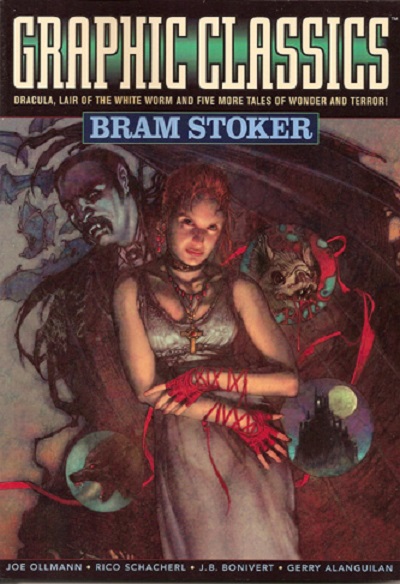






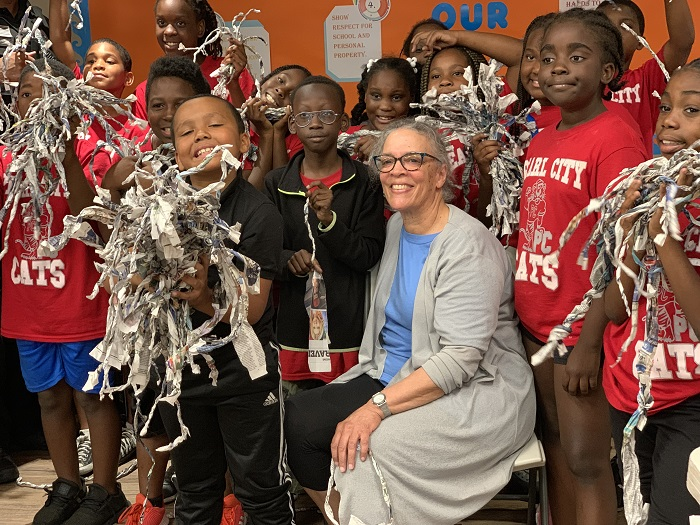



















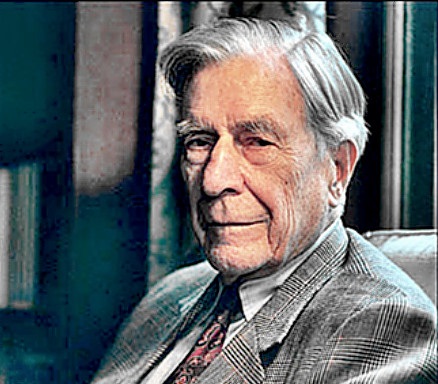



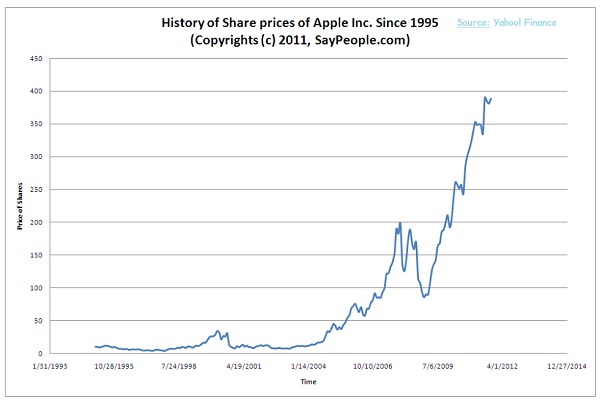



 Compared to other playable trucks in Truck Simulation 19 the customization options for the three MACK® trucks are widely expanded with a lot more modifications to choose from offer quite some additional modifications to choose from: Not only the color of each model but also the bumpers, the wheels and the wheel sizes, the rims as well as the exterior mirrors and many more parts are completely customizable. By doing so truck fans will be able to conquer the highways with a special MACK® truck that reflects their unique tastes and preferences.



 Then Hope got cancer, and their lives changed drastically overnight. She fought a long brave battle, and went through over 250 chemotherapy treatments, but on April 7, 2012, on an evening that heralded Passover in the United States and Easter in Israel, she died.
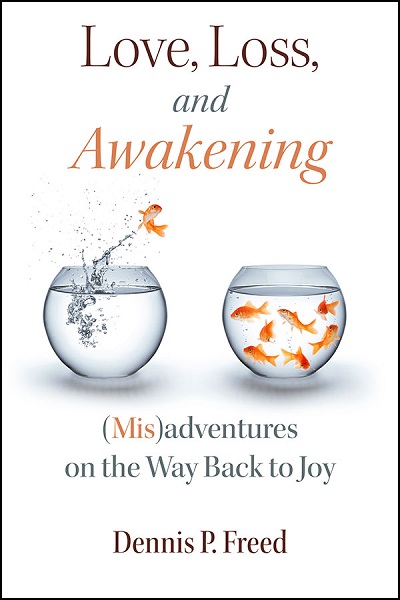 Love, Loss and Awakening


 > Dear Silo, It’s your life.