Life sometimes can seem off kilter as responsibilities mount and people plow all their physical and mental resources into what seems to be the most pressing crisis of the moment.
But Lumbie Mlambo says that’s a good time to take a step back. Everyone has the potential to shine in life’s darkest moments, but the key to achieving goals and an overall better existence is to maintain a balance so that one aspect of your life isn’t consumed by another.
While some people might say balance in life is an impossible goal, she disagrees and says when each of us find our equilibrium, we become more productive and a greater asset to our communities.
“There’s balance in everything we do, be it walking, talking, eating, sleeping, working or spending time with family,” says Mlambo, editor of Equanimity Magazine, an online publication that features inspiring stories of life and success.
“For example, look at how we try to deal with our work-life situation. We balance our workload so that we can still make room for other activities, to spend more time with our spouses or our children. We do that because we understand how important it is.”
She offers these reasons for why living a balanced life is essential.
• The health factor. Staying balanced is a key to a healthier and successful life. Both mental health and physical health benefit, and as a result, so do our overall lives. “When we’re healthy, we’re able to care for ourselves and others in our community,” Mlambo says.
• The empathy factor. When we find balance in life, we can better understand the importance of helping the underprivileged, says Mlambo, who grew up in a rural area in Zimbabwe. You begin to realize that someday you could be in their situation, which makes you a more empathetic person. “Your economic situation is like your health,” she says. “Nothing is guaranteed.”
• The role-model factor. Sharing our stories – whether it’s a tale of success or even a tale of failure – is important because others can learn from us or be inspired by us as they too strive for a balanced life. “When you tell your story, it empowers, motivates and encourages people to not give up on their dreams and goals,” Mlambo says. “Maybe you think your story is just not that interesting or important. But for someone out there, it may be the spark that ignites them to great things.”
Mlambo always strove to find balance in her life. But she became even more passionate about it after she suffered a stroke in 2001 that left her partially paralyzed. She since has recovered, but says the event had a profound impact on her and she will always consider herself a stroke patient.
“Before the stroke, I thought my life was balanced in a way,” she says. “I mean, I ate healthy foods. I exercised seven days a week. But it was not balanced in the way I wanted. I had been too focused on myself. I realized that life was not just about me, but about others.”
Finding balance in life isn’t just a feel-good concept, Mlambo says. As people achieve balance, they realize they have the potential to rise above their circumstances. They can become more productive in their communities and that is good for everyone.
“Staying proactive and shifting the way we think can even help the economy to grow and can help create more jobs,” she says.
Certainly, maintaining a balanced life may be tougher than ever because technology allows work – emails, text messages, telephone calls – to intrude on people’s “off” hours. But that’s just all the more reason to make a concerted effort to strive for balance, Mlambo says.
She says it’s become popular in some circles to argue that a balanced life is a myth and can’t be achieved. But regardless of their views, she says, most people seem to be trying to bring balance to their lives, even if they don’t think of it that way.
“We eat healthy to stay balanced, we get enough sleep or rest to avoid stress, we juggle our daily activities to stay balanced,” Mlambo says. “To be successful in anything we do, we must have some sort of balance.” For the Silo, Lumbie Mlambo.
Screenshot from waaaay back in 2010 and from an Ontario Lottery Gaming commercial. The premise? You’re stuck in a desert in a stalled car with a giant robot attacking. But then you remember what’s in the glove compartment…watch the video below and realize that counting on a lottery win is not the best way to financial security.
Maybe you’ve seen the ad, or one like it? For example-an Ontario Lottery Gaming commercial that depicts an attractive woman climbing out of bed, enjoying a leisurely cup of coffee before climbing into the cockpit of a sailboat, the implication being that if one wins a multi-million dollar jackpot, one can have the “yachty” lifestyle.
As I write this, I am sitting in the cockpit of my sailboat sipping a cup of coffee while enjoying the morning sun, and I have never won the lottery. In fact, I will be going to work at my average-guy, average-wage job shortly. Then, at the end of the workday, I will be returning to my sailboat, to enjoy the sunset.
For several years my wife, and I, and our dog, have spent the spring, summer and fall aboard our small sailboat. We return to our “dirt-home” only occasionally, to do laundry, mow the lawn so the neighbours don’t complain, collect mail and make sure the place hasn’t burned down.
This is the view that Bryan enjoys along with his ‘dock coffee’ at the Port Dover Harbour Marina. photo: B. Jones
After all, we need some place to live when the water is too hard and too cold to float a sailboat.
When new acquaintances find out that we are sailors and dock-rats, we often hear, “Oh, I have always wanted to sail!” or “I have always wanted to live on a boat!” What follows is often an enjoyable conversation about how to make it happen, how to “live the dream.”
I will confess, though, when hearing “Oh, I have always wanted to…” that the curmudgeonly little voice in the back of my head wants to retort, “No, you haven’t. If you really did, you would be doing it.”
Because it ain’t that hard to do.
We’re not rich. As I mentioned, my wife and I are pretty average people. Average age, average income, average credit scores, average sized mortgage, kids in college… look up “average” in the dictionary, and you don’t see our picture, because there are millions of folks just like us, and somebody way up the line got the honour.
We made a choice. We chose to buy a good, old boat for a mid-four- figure sum, invest a few hundred bucks a year on maintenance and a few hundred more on a slip to dock it in.
Our boat cost less than the annual membership at many golf clubs, and our slip fee for 6 months is less than a two week cottage rental in Turkey Point.
Bryan’s solution to beating the heat is to leave the dock and sail into the wind.
(Okay, before you start pelting me with hate mail, there’s absolutely nothing wrong with golf or vacationing in Turkey Point. Really. Except the clothes. KIDDING!)
It isn’t all fun and games and Jimmy Buffett tunes though.
Before you dash out and buy an old boat, here’s ten things my wife and I have learned over the past few seasons:
1. The stuff that bothers each of you about each other in 2000 sq ft on land does not magically go away in less than 200 sq ft on water. Learn to communicate, consider and compromise.
2. If you take it out, put it away. Now.
3. Each new item onboard means an old item has to leave.
4. Its okay to not talk.
5. One cooks, one does dishes. Helping doesn’t help.
6. When the dog needs shore patrol, the dog. Needs. Shore. Patrol. Now.
7. Find your own quiet spot, whether it is the v-berth, quarter berth, foredeck or cockpit.
8. You don’t have to get there today. You don’t even have to get there tomorrow.
9. When docking, mooring, anchoring, tacking or damn near anything goes awry, talk it out, and then hug it out.
10. There is a difference between being heard, and yelling.
We live in a slip on a dock with no services. No electricity and no water (aside from that which the boat floats in, smart-alecks,) means we have to refill our onboard water tank from 6 gallon water jugs hauled up the dock a couple of times a week, heat water on our alcohol stove to wash dishes, use solar panels to keep our batteries topped up and we don’t have air conditioning, or a microwave, or a big flat screen TV. A shower is a 10 minute dinghy ride or 15 minute walk away.
And we’re cool with that. We have become better, more creative cooks, we read more, we talk more, and the sunsets here and the characters we share them with more than compensate. We have talked more, laughed more and shared more with our dock-side neighbors than we ever have with our neighbors “on the dirt.” Our house is a house, but this is our home. For the Silo, Brian Jones.
Agrarians from various ancient cultures around the world discovered the soil fertility benefits of charred biomass over two thousand years ago.
Now known as ‘biochar’, this ancient soil management practice has been enjoying a renaissance of late for a number of reasons largely related to the need for more resilient and productive soils and biochar’s ability to sequester carbon in a safe and beneficial manner.
Biochar is made by baking organic material in an oxygen-limited environment, called pyrolysis. Benefits vary depending on the soil, crops and climate where biochar is used with poor soils benefiting the most. Providing long-lasting organic material, improving water and nutrient holding capacity, and improving overall soil tilth are all potential benefits.
Due to its porous nature and cation exchange capacity, biochar can also be used as a filtration medium to prevent nutrient run-off from farms into local water bodies. In Europe livestock farmers are adding small amounts of biochar to feed rations to improve feed conversion ratios and overall animal health. Biochar as carbon fodder has also shown promise as a way to reduce enteric methane emissions.
“When we first started in 2011 to load biochar with high amounts of liquid NP-fertilizer and tested them in pod trials, we could prove reduced nutrient leaching after simulated strong rain events. When we planted a second culture (paprika after radish) in the same pods without additional fertilization, plant growth was significantly improved in the biochar treatments (see image). From an economic point of view, the difference in growth might have been not relevant as some additional fertilization would have been cheaper than the price of biochar that saved some mineral fertilizer. However working with low amounts of nutrient enhanced biochar [1 t per hectare] applied as slow release fertilizer close to the roots every year seems very promising when viewed from both an economic and ecological perspective. ” Ithaka Institute
Biochar is increasingly available to purchase but farmers can also convert their on-farm waste biomass in to biochar.
Farm scale equipment for making biochar is evolving and shows promise not just as a waste conversion technology which produces a valuable soil amendment, but also as a means for farmers to generate renewable energy in the form of heat, and in some cases electricity. For the Silo, Kathleen Draper.
Seen here: “…we focused on organic plant nutrients and started multiple tests with a wide variety of nutrient rich biomass wastes including: liquid animal manure, urine, feathers, yeasts, wool, vinasse etc. Over the past four years we have developed a panoply of organic carbon fertilizer that can be produced commercially or manufactured by farmers themself all over the world. One of our favourites is the sheep wool, vinasse, pyrolyse ash, biochar pellets with 7% Norg / 6.5% P2O5 / 6% K2O “
Kathleen Draper is the US Director of the Ithaka Institute for Carbon Intelligence, a non-profit focused on research, education and program services that promote climate positive solutions which enhance land management, urban design, and resource efficiency.
Paris, January, 2023 – The World Heritage Committee meeting in an extraordinary session on Thursday inscribed the Landmarks of the Ancient Kingdom of Saba, Marib (Yemen) on the List of World Heritage in Danger.
The Landmarks of the Ancient Kingdom of Saba, Marib, is a serial property comprising seven archaeological sites that bear witness to the rich Kingdom of Saba and its architectural, aesthetic and technological achievements from the 1st millennium BCE to the arrival of Islam around 630 CE.
Yemen’s recorded history started when it was known as Saba/Sheba three thousand years ago, on the main spice route from the east to Europe, and was rich and powerful. The Queen of Sheba’s visit to King Solomon appears in both the Bible and the Koran.
They bear witness to the complex centralized administration of the Kingdom when it controlled much of the incense route across the Arabian Peninsula, playing a key role in the wider network of cultural exchange fostered by trade with the Mediterranean and East Africa.
Located in a semi-arid landscape of valleys, mountains and deserts, the property encompasses the remains of large urban settlements with monumental temples, ramparts and other buildings.
The irrigation system of ancient Ma’rib reflects technological prowess in hydrological engineering and agriculture on a scale unparalleled in ancient South Arabia, resulting in the creation of the largest ancient man-made oasis.
Marib Dam photos before and after the destruction. photo: German Archaeological Institute/Burkhard Vogt
The World Heritage Committee used an emergency procedure to inscribe this site on the List of World Heritage in Danger, due to threats of destruction from the ongoing conflict.
The List of World Heritage in Danger provides access to enhanced international assistance, both technical and financial, and helps mobilize the entire international community for the protection of sites.
To commemorate the company’s 60th anniversary, Audio-Technica released a limited-edition Sound Burger portable turntable this past November – four decades after its original debut. A-T never imagined the overwhelming response the release would generate.
That limited-edition AT-SB2022 retro red Sound Burger sold out in a matter of days worldwide – faster than anyone projected.
The Sound Burger will return in spring 2023.
Inspired by the response and acknowledging the loud chorus of fans who were not able to purchase the limited-edition model (but were still hungry for Sound Burgers), the company has announced that the Sound Burger will return in the spring of 2023.
“The response to the 60th anniversary limited-edition model of the Sound Burger portable turntable was nothing less than extraordinary,” said Gary Boss, Director of Marketing. “We heard loud and clear the frustration of those who hoped to buy one of these turntables but were unable to do so. While the new model coming in the spring will not feature the 60th anniversary numbered badge, color and packaging of the limited-edition version, it will be more widely accessible. We hope Sound Burger fans will be just as excited about this new model and that it will inspire the next generation of analog enthusiasts.”
Love at first listen, the Sound Burger is an affordable entry-level machine in terms of both features and price. For those who are new to vinyl records, it is a doorway to a deeper knowledge of analog music.
Thanks to its Bluetooth® connection and compact, lightweight design, the Sound Burger is the perfect partner for parties, picnics, or condensed living spaces. It easily connects to Bluetooth headphones or speakers for up to 12 hours of wireless record listening.
The Sound Burger offers high-quality sound reproduction with a belt-drive system that plays 33-1/3 and 45 RPM records. To achieve both portability and stability, the tonearm employs a dynamic balance system in which stylus pressure is applied via a spring. In addition, a high-precision DC motor maintains stable rotation. Accessories include a 45 RPM adapter, RCA audio cable (3.5 mm male to dual RCA male), and USB cable for charging (USB Type-A / USB Type-C™). The stylus on the Sound Burger can be upgraded with the higher quality ATN3600L (sold separately).
The research by GoShorty looked at worldwide car production figures from previous years, the number of people employed in the automotive industry, and other factors to reveal which countries produce the most and least commercial vehicles in the world.
Countries with the biggest decreases in car production:
Rank
Country
Cars Produced
Commercial Vehicles Produced
Total Produced 2021
% change variation2020/2021
1
Slovenia
95,797
–
95,797
-32%
2
Canada
288,235
826,767
1,115,002
-19%
3
Uzbekistan
236,667
4,982
241,649
-15%
4
Germany
3,096,165
212,527
3,308,692
-12%
5
Serbia
21,109
154
21,263
-9%
6
Spain
1,662,174
435,959
2,098,133
-8%
7
United Kingdom
859,575
72,913
932,488
-6%
8
Romania
420,755
–
420,755
-4%
9
Czech Republic
1,105,223
6,209
1,111,432
-4%
10
Hungary
394,302
–
394,302
-3%
Slovenia’s motor vehicle production was reported at 95,797 units in Dec 2021. This records a decrease from the previous number of 141,714 units for Dec 2020. Global car manufacturers like Renault have made plans to cut production in the country. Renault has cut production in its Revoz Slovenia unit and reduced its staff by 350 people.
Canada had the second biggest decrease in car production in 2021 compared to the previous year, a decrease in production of -19%. The low production numbers, down from 1.4 million in 2020 and close to two million in 2019, came as the global auto sector was hit by a shortage of semiconductor chips caused by pandemic-related production issues and a surge in demand for electronics.
Uzbekistan had the third biggest decrease in car production in 2021 compared to the previous year, a decrease in production of -15%. In 2021, Uzbekistan produced 236,667 passenger cars. That means that compared to 2020, production decreased by 15%. Despite the reduction in production, Uzbekistan increased the export of cars by more than a third.
The countries with the highest increases in car production:
Rank
Country
Cars Produced
Commercial Vehicles Produced
Total Produced 2021
% change variation2020/2021
1
Argentina
184,106
250,647
434,753
69%
2
Indonesia
889,756
232,211
1,121,967
63%
3
India
3,631,095
768,017
4,399,112
30%
4
Kazakhstan
80,679
11,738
92,417
24%
5
Morocco
338,339
64,668
403,007
23%
6
Thailand
594,690
1,091,015
1,685,705
18%
7
South Africa
239,267
259,820
499,087
12%
7
Brazil
1,707,851
540,402
2,248,253
12%
9
Portugal
229,221
60,733
289,954
10%
10
Austria
124,700
12,000
136,700
9%
Argentina saw the highest percentage increase in car manufacturing in 2021 compared to 2020, at a rate of 69%. Argentina’s motor vehicle production was reported at 434,753 units in Dec 2021. This records an increase from the previous number of 257,187 units for Dec 2020. This year, Argentina’s Senate has approved a bill to promote the automotive industry. The initiative was spearheaded and supported by IndustriALL affiliates in the country.
Indonesia had the second-highest increase in car production in 2021 compared to 2020, at an increase of 63%. As well as being the fourth most populous country in the world,
India was the country that witnessed the third-highest increase in car production in 2021 compared to the previous year, at an increase of 30%. India’s automotive sector is benefiting from a host of improvements, which include global supply-chain rebalancing and government incentives to increase exports.
Methodology:
We started by taking the International Organization of Motor Vehicle Manufacturers’ 2021 PRODUCTION STATISTICS to get World Motor Vehicle Production figures, to find the total number of commercial vehicles and car production for each country. This data is accurate as of 01/11/2022.
Ukraine and Russia were omitted due to the ongoing conflict between the two countries.
We ranked our countries based on their total production of both commercial vehicles and cars in 2021. We were also able to rank these countries based on their % change in variation between the years of 2020/2021 to find which countries had an increase in the number of produced cars in recent years.
We used ACEA’s Share of direct automotive employment in the EU, by country, to find the total share of direct automotive employment in total manufacturing for each of the 27 member states of the European Union in 2020. We were able to rank each country by the share of automotive employment. This data is accurate as of 01/11/2022.
Further findings:
China is the world’s biggest manufacturer of cars – it produced the most cars and commercial vehicles in 2021, with a total of 26 million units manufactured.
Egypt had the second lowest number of vehicles manufactured in 2021, with a total of 23,754 commercial vehicles and cars produced annually.
Slovakia has the highest share of automotive employment in Europe – it accounts for 16.2% of employment in the country.
Expanding foam is a versatile material that is commonly used in construction, DIY projects, and home repairs. It is a polymer foam that expands upon application and hardens to fill gaps, cracks, and voids. Expanding foam is useful for insulating walls, sealing leaks, and stabilizing structures. While it is readily available for purchase at hardware stores and home improvement centers, it is also possible to make expanding foam at home. Visit here to learn more.
Making expanding foam at home is a cost-effective alternative to purchasing premade foam. It also allows you to customize the foam to your specific needs and preferences. In this guide, we will walk you through the steps of making expanding foam at home.
Step 1: Gather materials
To make expanding foam at home, you will need the following materials:
The ratio of ingredients needed to make expanding foam varies depending on the desired consistency and expansion rate. A common ratio is 2 parts polyurethane resin to 1 part isocyanate and a small amount of catalyst and foaming agent.
Measure out the ingredients using a mixing container or a measuring cup. It is important to be precise with the measurements to ensure that the foam expands and hardens properly.
Step 3: Mix the ingredients
Pour the polyurethane resin and isocyanate into the mixing container. Use the stirring stick to mix the ingredients together until they are fully combined.
Step 4: Add the catalyst and foaming agent
Once the polyurethane resin and isocyanate are fully combined, add a small amount of catalyst and foaming agent. The exact amount of catalyst and foaming agent needed will depend on the size of the batch and the desired expansion rate.
Step 5: Stir the mixture
Stir the mixture until the catalyst and foaming agent are fully incorporated. It is important to stir the mixture thoroughly to ensure that the foam expands and hardens properly.
Step 6: Pour the foam into the desired area
Pour the foam into the area where it is needed. The foam will begin to expand as soon as it comes into contact with the air. Use a tool, such as a spatula or putty knife, to shape the foam as desired.
Step 7: Allow the foam to harden
Allow the foam to harden completely before handling or using it. The drying time will depend on the size of the batch and the desired expansion rate.
Benefits Of Expanding Foam
Expanding foam is a versatile and widely used material in construction, DIY projects, and home repairs. It is a polymer foam that expands upon application and hardens to fill gaps, cracks, and voids. Expanding foam is useful for a variety of purposes, including insulation, sealing leaks, and stabilizing structures. In this article, we will explore the many benefits of expanding foam and how it can be used in a variety of applications.
Insulation: One of the primary benefits of expanding foam is its ability to insulate a space. When applied to walls, attics, or crawl spaces, expanding foam can help to keep a building or home warm in the winter and cool in the summer. This can save energy and reduce heating and cooling costs. Expanding foam is also effective at blocking drafts, which can further improve energy efficiency.
Sealing leaks: Expanding foam can be used to seal leaks around windows, doors, pipes, and other openings. It is an effective way to prevent water damage and improve the overall energy efficiency of a building or home.
Stabilizing structures: Expanding foam can be used to stabilize structures, such as foundations, roofs, and walls. It is often used in situations where traditional methods of repair are not feasible, such as when access to the damaged area is limited.
Filling gaps and cracks: Expanding foam is an excellent material for filling gaps and cracks in walls, floors, and other surfaces. It can be used to fill small gaps and cracks as well as larger voids.
Durability: Expanding foam is a durable material that can withstand a range of temperatures and weather conditions. It is resistant to water, moisture, and rot, making it an ideal choice for use in damp or humid environments.
Easy to use: Expanding foam is easy to apply and does not require any special tools or equipment. It can be applied using a simple nozzle or applicator and hardens quickly, making it convenient to use.
Customizable: Expanding foam can be customized to suit specific needs and preferences. The expansion rate and consistency of the foam can be adjusted by adjusting the ratio of ingredients used to make it. This allows for a wide range of applications and allows the foam to be tailored to specific requirements.
Versatility: Expanding foam can be used in a wide range of applications, including construction, home repairs, and DIY projects. It is an effective material for filling gaps and cracks, sealing leaks, insulating spaces, and stabilizing structures.
Conclusion:
Making expanding foam at home is a cost-effective and customizable alternative to purchasing premade foam. With the right materials and a little bit of elbow grease, you can easily make expanding foam at home. Just follow the steps outlined in this guide and you’ll be on your way to using your very own homemade expanding foam in no time.
I am sure that many of you will agree that the streetcars that rumbled through Toronto from 1800s until… let’s say 1990’s helped shape many neighborhood. They were the most effective way to connect Toronto’s core with its suburbs and greatly encouraged development of the communities as new grocery stores, restaurants, galleries, shops and banks as amenities have been built near the streetcar lines.
Standing in the middle of road, going nuts being stuck behind a streetcar, it is sometimes difficult to appreciate how important role they have played in the city’s history.
First Streetcars in Toronto
Inspired by the success of horse-drawn streetcars in the U.S., Alexander Easton’s Toronto Street Railway company started operating in 1861. New rail lines played a vital important role in connecting the city centre with its sleepy suburbs. What started as an enterprise with 6 miles of track and 11 cars, turned slowly into 68 miles of track with 361 street cars. The company expired in 1891 and the management was turned over to the Toronto Transit Commission (TTC).
The next company to take control over the system was the Toronto Railway Company, under which first electric streetcars were introduced. All services were later taken over by the Toronto Transportation Commission, which was later renamed to the Toronto Transit Commission (TTC).
Building street car tracks on Bay St. Toronto circa 1918
However, even streetcars had their bad times. In the 1960s they were almost abandoned when people thought of it as an outdated mode of transportation. Thirty years later it fell upon hard times once again because of budget cuts, the recession and its inability to service the rapidly-growing parts of the city.
It took months for the TTC to pull itself out of its bad times, but streetcars somehow managed to return back to their previous fame. Since then, the company’s services have been improving every year, but there are still some issues. Let’s take a look at the current state of the streetcar rail services in Toronto, its advantages and the most annoying faults.
The Ashbridges Bay street car line 1917.
Present
Although the number of streetcars crossing the city declined in the latter half of the 20th century, they never disappeared completely. In fact, streetcars have become a vital part of Toronto’s history and nearly every citizen’s life. Nowadays, the city owns 247 streetcars, of which 52 are higher-capacity articulated streetcars. These operate over 11 routes, serving a total of 617 stops over a system length of 75 kilometers. These numbers make it by far the largest surface rail system in North America.
Public transportation in Toronto relies heavily on streetcars in the downtown core which is the thin red lines you see on the TTC map above. Technically, they’re light rail trains, but locals refer to them as streetcars. Each line usually follows a street e.g. 501 Queen St., so it shouldn’t be too hard to get on the right vehicle.
Done right, streetcars can really encourage the overall development of the city, they are able to define whole neighborhoods, reduce traffic congestion, reinforce retail, bring life to streets and fit easily into the surroundings without disruption to existing businesses, residents or traffic.
Pros
One of the main advantages of streetcars is its high passenger capacity. Streetcars carry between 75 and 100 people per vehicle.
Regarding energy efficiency, streetcars are believed to do a little bit more for the environment that other public transport systems. Because every streetcar user means one less car on the road, words such as clean air quality, for environmental sustainability, for climate protection are often associated with streetcars. In fact, nothing drops greenhouse gas emissions faster than effective rapid transit, so if we truly want green for Toronto, streetcars might be the answer.
Another argument made in favor of streetcars is their long lifespan. The vehicles are designed to be very durable and can keep running for over 30 years. In contrast, buses wear out after just 8 – 12 years.
One of the “last” Toronto street cars. image: blogto.com
Since they are longer-lasting than other means of transport, the cost of repair and replacement is typically also much lower.
One ride costs $3.25, making it a very cheap transit option across the city. At the same time they are relatively fast to build, without impacting the city for a long period of time and resulting in minimal disruption to the neighborhood.
Streetcars can be so charming. Well, this is a subjective opinion, but have you seen vintage trolleys in San Francisco or New Orleans? They’re so awesome.
Cons
There are two sides to every coin so we have to mention disadvantages of streetcars, too. Once again, let’s talk about their passenger capacity. Even though they carry a relatively high number of passengers, the difference between a streetcar, LRT and subway is noticeable. Just for comparison, a subway train can hold up to 1500 passengers and an LRV can hold up to 255 people in a single vehicle (depending on speeds, frequency and actual vehicle length and capacity).
Next, streetcars require “loops” to turn around, which slows them down. This is not the case with cars, LRVs or subways.
Streetcars are noticeably slower than cars as they are travelling at speed of about 17km/h. LRVs run at an average of 27km/h and subways at 32km/h.
Streetcars are said to contribute to traffic congestion greatly. Imagine a situation when a streetcar stops to let passengers load on or get off. In such situation, both lanes at of traffic are blocked. This causes delays and angst among riders. If you’ve ever driven behind a streetcar, you know how much of a problem this is. You have nowhere to go, unless you stand far back enough to turn your car around.
At certain times they may pose danger to both passengers and pedestrians. For example, when cars try to pass them before they stop.
When it comes to costs, it is important to distinguish between the cost of laying down streetcar tracks, maintaining the streetcars themselves and maintaining roads. Streetcars require a whole lot of special mechanics and thus the cost of maintenance is much higher.
And let’s not forget about pollution. You might disagree with a statement that streetcars are a reason behind increased pollution in our city, but if you think about it for a second, you will realize there is some truth in it. Since it creates traffic congestions, it also adds to pollution.
Future of Streetcars
Even though many people are getting more and more angry at streetcars, they are not going anywhere. When (then Mayor) Rob Ford tried to cancel the Transit City light-rail-plan and build tunnels underground in some parts of the city, city council decided to keep new transit lines above ground. The main reason behind this decision was the cost of tunneling and powering subways.
And for those unhappy citizens who are queuing up behind streetcars every morning, the least Toronto could do is indicate that they are keeping an open mind about new subway lines. And let’s not forget that the city intends to build and operate new light rail transit lines, which means that people will be able to travel in new dedicated lines, separated from motor vehicle traffic. For the Silo, Jamie Sarner.
When I think about whether working from home is right for any person, I remember a story that Richard Kiosaki told in his book “Poor Dad- Rich Dad”. He talks about his two dads who had two very different mentalities about money. One had the mentality of an employee and the other of a business owner. Both dads believed they were giving correct advice although they were advising exactly the opposite.
His “poor” dad told him to choose employment because it offered job security and corporate ladder, where he could become somebody after years of being promoted. The “rich” dad asked him to choose the path of an independent business owner because that way he could work for something that he owns.
Of course when you talk to most people about starting your own business and having a passion about some new idea, you will get two main reactions.
There will be … The Naysayers – These are the people who will tell you, “you will never make it” and that you are “stupid to attempt the impossible”.
But then you will find people who are…
The supporters – These are the people who will say go for it. They say “don’t worry” and “we will be there for you when you need us”.
While you may have your questions and even your doubts, listening to the naysayers will never get you where you want to go. Listen to those who will ask good questions, who will give you good advice and support you if your desire is to do something unique and be your own boss.
The fact is, working from home has some fantastic advantages. 1. Flexibility When you are juggling a family and other obligations, having a work from home business is a huge bonus. Firstly, you can more easily accommodate your customers in all the different time zones. Rather than being tied down to a regular office hour routine, having the ability to work part time or full time, takes on a whole new meaning.
2. Your overhead costs are reduced You will save money on gas, the wear and tear your vehicle (not to mention the wear and tear on your nerves), office space and utilities. The reality is that with those savings you can be a lot more flexible in how you are pricing your product.
3. Testing,Testing When you realize that more than 50% of all new businesses fail, then testing out your new business without a lot of overhead is common sense. When you test and tweak your home business, you can determine its viability before you start investing a lot of money!
4. Tax Benefits Many people don’t realize the major tax incentives there are for having a home business and while the tax laws are different from country to country, some of the perks are:
– A percentage for rent or mortgage costs (for the space you use to operate your business)
– A percentage for utility bills such as gas, electricity, water
– Business operating software and management tools, which also includes webpages etc.
– Phone and communications, including internet expenses
and of course the biggest tax saving
The initial investment you paid to start your business
5. Experience A home based business will allow you to gain invaluable business experience and business skills such as internet marketing, identifying markets, learning how to market yourself and all the other traits needed to run a successful home business. This experience can be transferred to other projects that you wish to pursue.
6. Turning Creativity into a profit Creating a home business is the ideal way to turn your hobbies or passions into a business that will be unique to your talents and what you really love to do.
You also have to be realistic in understanding what owning a home business is all about! “Working from home”, it has a wonderful sound to it doesn’t it? I bet many of you have visions in your head of sleeping in, lazing around and working when the mood strikes you right?
Like anything else there are also challenges that you should take into consideration and create a plan on tackling them. Any problem can be solved as long as you are prepared for what is coming your way.
1. Motivation It’s great to be your own boss, but with no code of conduct to follow or formal routines to keep you on track, it’s easy to fall into the trap of putting off doing your business and procrastination. If you have an ineffective time management schedule, it makes it hard to reach your goals.
Solution Make sure that you follow your passion and this will help you with getting motivated and working extra time when needed. 2. Lack of privacy Unless you have a separate office set up, privacy can be a big concern. For example if you have created your office near the family room, and your house guests drop by, they will be near your work area. Your documents, work and even files can be fair game to everyone! Take that thought one step further and if you have kids, they will come in and distract you while you work
. Solution
Create your own workspace and set your own hours. Make everyone aware that when you are working you can’t be disturbed and if anyone needs your help they need to respect your schedule like everyone else.
Finding a workplace that offers privacy can be a challenge at first. We don’t recommend setting up a home office in your bathroom. CP image: guardian.co.uk
3.Learning When starting a home based business, you are going to have to develop a lot of new skills, which will take time. You will be wearing many hats and in the beginning you won’t be able to afford to hire specialists who can quickly and efficiently do new tasks to you. You will have to learn things which you never thought you would need to learn.
Solution This generally is a positive thing. You would never embark on new challenges if it wasn’t for your business. As the oldsaying goes, “knowledge is power” and along with building your business you are becoming an expert in new domains.
4.While its nice to be the boss, you will find that you will be facing unexpected situations you will have to deal with on your own. When you make a mistake you will be dealing with the consequences on your own.
Solution Being the Boss is rewarding but paying unnecessary bills for unqualified decisions is not fun.
“One of the most important leadership lessons is realizing, you are not the most important person or the most intelligent person in the room at all times.”
~ Mario Btali
5.Loneliness is a huge downside to running your own business at home. In the beginning you love the fact that you can get your work done, but after a few days or weeks, you may find that you are tired of hearing your own voice.
It’s a sort of dread that happens and you might turn to such things as web surfing or chatting with friends to relieve the nervousness you may experience.
Solution
In business you need to talk to people about your ideas and brainstorm to see if they are workable. Set up a “support system” early in your business, and you will find yourself not only running into less problems, but you will have someone to exchange your ideas with and have good conversation when you need to step away from daily tasks.
6. Legalities. Most people do not realize that whether you are “telecommuting” or creating a home based business, you need to be sure that you are covered by insurance, that you have checked zoning laws, and that you have the proper paperwork for taxes. Completing paperwork like NDA forms is important to safeguard your business.
Solution First don’t worry about not knowing all the legalities. The Government and your suppliers will quickly communicate to you what your obligations are. They will scream loudest, and you will comply with their demands. 7. Dependency. Most people do not realize that even as a business owner, you need to create team of people who you work with. In case of a car accident, you still want to come back to functional business and want to have someone who can handle daily tasks where you are not around.
Solution Have family, business partners or a team of supporters be involved early in your business, at the very least have part time bookkeeper or a person who will answer phones for you when you are away. 7. Balancing your life. Working at home can cause a lot of stress in your life, juggling the needs of your family with the needs of your work and for some people it can cause a lot of strain in their relationships. You will want to take vacations which will require someone to look after your business while you rest and recharge. You will need to plan for things like this, so you are not surprised by life, because life has a tendency to surprise us when we least expect it.
Solution Although business is important at all times, you will not be able to benefit from it if you are stressed, tired and sick. Implement periodic holidays and time away from your work. Leave your home far enough so you can’t do anything business related while you are away. This will provide you with time to recharge.
As you can see having a home business can be a very workable solution to creating a good income. However, like anything, you need to look at all sides of the equation. Ask yourself the question, will you take the advice of the “poor” dad and be the employee or the “rich” dad and choose the path of becoming an independent business owner.
For me, I chose to be an independent owner and I have never had any regrets!
So how do you respond when someone brings you into the conversation? How do you answer when they ask you for your opinion or who you’re going to vote for?
You could always just doodle on a receipt like this one from J. Barker 🙂
Sharon Schweitzer, an international etiquette expert, author and founder of Protocol & Etiquette Worldwide, says you have options.
Has politics become a reality TV show?
You don’t want to respond
Keeping your opinion to yourself can be difficult; however, it is possible. Say something like, “In the midst of such a contentious political season, I feel it’s best to keep my opinion to myself. I do appreciate your interest and wish you the best in your political decisions.”
By acknowledging and thanking them for their genuine interest, you are able to get out of sticky political conversations but retain your well-mannered and ever sophisticated demeanor.
If they push again
If they keep pushing for a response, you can play the undecided card and change the subject.
“I’m still evaluating the candidates and the issues and haven’t made up my mind yet. It will be interesting to see how it plays out.”
To get them off the topic for good, ask them about something meaningful to them that they will want to talk about. “I hear your son got accepted to Ohio State. Congratulations!” “Great job on closing that account. How did you do it?” “Tell me about your trip to the mountains a few weeks ago. I hear it is beautiful this time of year.”
You want to respond
If you would like to express your beliefs, the best way to do so is to cite research and concrete reasons why your views align a certain way, as this will encourage more of an intellectual conversation than a possible war of opinions. Just as you want to express your beliefs, be courteous and let the person you are speaking to express his or her beliefs, even if you disagree.
If you disagree
It’s inevitable that disagreements will arise, but when they do, handle them with grace, dignity and respect. Say something like, “That’s an interesting way to look at it and you bring up some valid points; however, I feel that…” Never raise your voice, show anger, abruptly walk away or make it personal.
Either way
Whether you decide to respond or not, be tactful, polite, and remember that educated responses will help you either to cordially engage, or graciously decline whenever these inevitable conversations cross your path. For the Silo, Alex Smith.
Concrete workers are unsung heroes. Their work doesn’t end, even when winter hits and the temperature drops.
Unlike people who work in the warmth of an indoor space, they may not have the luxury of avoiding the harsh weather.
Without the right precautions, they may suffer from problems such as hypothermia, frostbite, or trench foot. The wet weather can also increase their risk of injury. If the weather is extremely harsh, then work can be called off for safety reasons.
However, workers who are trained and experienced to work in cities that experience colder climates usually adapt well. For example, if you need someone to help you with concrete cutting in Calgary – then you can easily find a reputable and professional locally owned and operated company that’s been serving clients in cold climates for decades.
Here are a few ways concrete contractors adapt to the winter:
#1 They Pay Attention to the Weather Forecast
When working outside, contractors pay attention to the weather forecast. They identify potential weather-related issues so that they can prepare in advance. They also try to use daylight to their advantage and have artificial light to help if necessary.
#2 They Protect Their Body
When working in the cold, concrete contractors usually wear multiple layers. Some also wear insulated clothes, which shield the skin from moisture, and thermal undergarments. The outer layers are waterproof and quickly removable. On their heads, they may wear a wool liner under their hard hat.
In the winter, contractors may take more short breaks to warm up their bodies or their clothes. They may also try to get the most work done during the warmest part of the day. The buddy system also comes in handy during the winter, where partners can look out for each other.
#3 They Protect Their Hands
Gloves are especially important in the winter. Many contractors prefer leather gloves because they’re more resistant than cotton gloves, which can get damp. When the temperature drops to less than 20 C, they may switch to mittens. However, mittens aren’t always practical for work.
#4 They Protect Their Feet
Waterproof boots are a must in the winter. Contractors may treat their leather boots to waterproof them further and wear insulated socks. They may also wear multiple layers of socks, with the outer sock being the largest size. Some carry extra socks in case they need to work outdoors for longer periods.
#5 They Protect Their Equipment
After donning the proper equipment, concrete contractors also take precautions with their equipment. They avoid using cold tools because this can lead to problems. Instead, the tools are warmed up before they can contact concrete.
Tools with metal handlebars are treated with extra caution. Metal handles are covered with an insulating material to protect workers. Usually, contractors only use equipment that’s designed to be handled with gloves or mittens. Contractors may also use powerful tools that are integrated with dust collection to avoid cutting wet.
These are a few ways concrete contractors adapt to the winter when doing outdoor work. With the right precautions and appreciation from their clients, they get the job done correctly and safely.
The Montecito mansion, where Prince Harry and Meghan Markle filmed much of their Netflix documentary Harry & Meghan, is on the market at $33.5 million. Fit for royalty, the Mediterranean-style, six-bedroom home with 13,599 square feet includes ocean and mountain views, multiple terraces, and a regal great room chandelier and arched windows – where Meghan was extensively filmed for the show’s interviews. The home was built in 2006.
The home’s exterior includes two acres of lush grounds with romantic walkways and year-round flowers, soaring palm trees and accent vines, a vegetable garden, citrus orchards, and even a chicken coop for fresh eggs. Amenities include a pool, hot tub, bar, gym, game room and a theater. A picturesque guest house is perfect for any king or royal relative who might drop by for the beautiful Southern California weather.
The Duke and Duchess of Sussex moved to Montecito in 2020 where they lived for a few months at Tyler Perry’s home before buying their own $14.7 million mansion. The six-part Harry & Meghan docuseries follows the couple from the early days of their courtship up to their well-publicized resignation from the royal family and move from England, and is setting television viewership records.
Montecito has long been a favorite escape for the wealthy, including John and Jacqueline Kennedy’s honeymoon in 1953, and increasingly drawing Hollywood types such as Oprah Winfrey, Kim Kardashian, Gwyneth Paltrow and Ariana Grande.
The home is listed with Ryan Malmsten of Santa Barbara Brokers. Photos by Jim Bartsh.
Until quite recently, the field of early modern history largely focused on Europe.
The overarching narrative of the early modern world began with the European “discoveries,” proceeded to European expansion overseas, and ended with an exploration of the fac-tors that led to the “triumph of Europe.” When the Journal of Early Modern History was established in 1997, the centrality of Europe in the emergence of early modern forms of capitalism continued to be a widely held assumption. Much has changed in the last twenty years, including the recognition of the significance of consumption in different parts of the early modern world, the spatial turn, the emergence of global history, and the shift from the study of trade to the commodities themselves.
Sometimes conferences disappear from view as soon as the delegates disperse.
Other times, when the papers are published in an edited volume, conferences come to be seen as important milestones in the historiography. The two volumes edited by James Tracy, entitled The Rise of Merchant Empires and The Political Economy of Merchant Empires published in 1990 and 1991, respectively, move through their various stages of production, ownership, transmission and transformation .
Moreover, those stages are overlapping, circulatory and contradictory; objects move in and out of collections, as they move in and out of fashion, and meanings are never stable. When a feathered crown is produced in Spanish America, for example, it has a very different meaning from when it enters into a cabinet of curiosity, and when it is taken out of the cabinet to appear in a spectacular performance in the street or in the theatre, it once again takes on a different meaning.
Objects gain biographies; earlier meanings of objects are never erased but reshaped and translated to new circumstances, as Leah Clark showed in her study of the circulations of gems and jewels through the hands of a variety of owners in quattrocento Italy. Have we lost this meaning connection with mass produced items from China?
Such insights have benefitted not only from the global turn but also from developments in the fields of anthropology and art history, making the field more interdisciplinary than it was when the study of the trade in goods focused more on their trade than on the goods themselves.
The Founding of a New Journal
Despite Tracy’s efforts, European actors continued to hold central stage in the field. When the Journal of Early Modern History (JEMH) was established in 1997, a decade after the Minnesota conference, the centrality of Europe in the emergence of early modern forms of capitalism, for example, continued (and still continues) to be a widely held assumption. In part, this can be explained by the powerful legacy of giants in the field like Fernand Braudel and Immanuel Wallerstein.
1 James Tracy, ed.,The Rise of Merchant Empires: Long-Distance Trade in the Early Modern World, 1350-1750, Studies in Comparative Early Modern History (Cambridge, 1990); James Tracy, ed., The Political Economy of Merchant Empires, Studies in Comparative Early Modern History (Cambridge, 1991).
2 Herman Van der Wee, “Structural Changes in European Long-Distance Trade, and Particularly in the Reexport Trade from South to North, 1350-1750,” in The Rise of Merchant Empires, 14-33; Niels Steensgaard, “The Growth and Composition of the Long-Distance Trade of England and the Dutch Republic before 1750,” in The Rise of Merchant Empires, 102-52; The importance of comparative methodologies is also spelled out in the short editorial that accompanies the first part of the first volume of the JEMH. See James D. Tracy, “From the Editors,” Journal of Early Modern History 1 (1 January 1997):3
Braudel’s concern was entirely with European history over the longue durée; Wallerstein’s 1976 study identified Europe as one of the core regions in the modern capitalist economy as it emerged in the sixteenth century. Regions like Central Africa, India and China were designated as peripheries, meaning that their natural resources and low-skill, labor-intensive production sustained the economic growth of the core region. Wallerstein’s framing of the relationship between the early modern European core and its peripheries formed the base for much of the scholarship of the past decades, including numerous studies of the long-distance or intercontinental trade between core and periphery.
Much that was written also continued to identify long-distance trade as the preserve of either the various East India Companies associated with individual nations, or of the specifically named merchant communities such as the Armenians, the Jews, Wang Gungwu’s Hokkien merchants, or the Bajaras and Banyas merchant communities.
Such groups appear in the literature as having a clear identity that separates them from other groups and an often marginal status that makes them especially suited to the life of the itinerant merchant who covers vast distances.
And for much of the 1990s and beyond, the emphasis continued to be on commodities traded over long distances, from Asia to Europe via land or sea routes, including luxury items that justified the high cost associated with their transport. Precious metals were sent from the Americas to Asia, silks and spices arrived in the Levant via overland trade routes, and once the Europeans had rounded the Cape of Good Hope, luxury goods like porcelains, precious stones, and exotic hardwoods were shipped across the oceans along with silks and spices. Long-distance trade as it appears in Tracy’s two volumes on merchant empires was undoubtedly seen as important, but as essentially different from the bulk trade in grains, timber and salt that, for example, underpinned the growth of the early modern Dutch economy.
3 Fernand Braudel,Civilization and Capitalism, 15th-18th Century, trans. Siân Reynolds, 3 vols. (Berkeley, 1992); Immanuel Maurice Wallerstein, The Modern World-System: Capitalist Agriculture and the Origins of the European World-Economy in the Sixteenth Century (New York, 1976). At least 23 research articles published between 1997 and the present in JEMHquote Braudel’s work, and a further five quote Wallerstein.
4 Gungwu Wang, “Merchants without Empire: The Hokkien Sojourning Communities,” in The Rise of Merchant Empires, 400-422; Irfan Habib, “Merchant Communities in Precolonial India,” in The Rise of Merchant Empires, 371-99.
In other words, when the JEMH was founded, the centrality of Europe in shaping global trade relations, the separation of agents into distinct nation-based groups, and the classification of goods over long distances as luxuries of less importance all still had a very strong presence.
One major change did occur, however, more or less between the appearance of The Rise of Merchant Empires in 1990, and the establishment of the JEMH in 1997.
John Brewer and Roy Porter’s 1993 Consumption and the World of Goods was one of those transformative collections of articles that inaugurated a whole new way of doing history.6 Brewer and Porter were not the first to use the title; Mary Douglas and Baron Isherwood had already published a book with a very similar title in 1979. But Brewer and Porter, and many others who went on to publish in the field of what we might call consumption studies, took the study of the consumer in a new direction, away from the eighteenth-century European debates over whether the consumption of luxury goods was morally justifiable, and towards sophisticated studies of the complex contexts in which people desired goods and in which that desire and demand for goods went on to transform society, culture and the ………… to continue reading click here for full document in PDF format.
For the Silo by Anne Gerritsen, University of Warwick. Paper courtesy of academia.edu
During the busy holiday season, nothing is more exhausting than being on the go – whether jet-setting for work or a tropical Christmas family get together or leisure, avoiding the “same box, different city” syndrome can reduce fatigue by making travelers feel like they’ve arrived to a glamorous second home, rather than a bland stopover in a new location. For example: tiny hotels can be structured as houses, lodges or camps, letting guests feel fully enveloped in beautiful landscapes or big city living, slipping into local life with total ease.
When it comes to hotels, bigger isn’t always better.
For some, there’s something appealing about mega-resorts with seemingly endless activities, numerous dining and drinking options, and pools as far as the eye can see. But for those looking for a more intimate, personalized and under-the-radar experience, here are five to consider from smallest to largest.
Ignacia Guest House, Mexico City
Perfect for design aficionados and those looking to blend into to daily life in the beloved Colonia Roma neighborhood, Ignacia Guest House is a trendy eco-friendly bed and breakfast. Featuring just five unique suites, the hotel’s namesake is Ignacia, the housekeeper who took care of this 1913 colonial mansion for more than 70 years. Led by architects Factor Eficiencia and interior design studio A – G, the restoration of this casona blends Mexican tradition with history and contemporary design. Opened in 2017, artists, architects, designers, photographers from all over have been drawn to the property for its internationally acclaimed award-winning design, décor and style.
The hotel can only host 10 guests at a time,
so guests can expect privacy, personalized attention and truly superb
concierge service. The chef modifies menus to include personal
specifications, from vegan to lactose-free. Each morning, the chef
prepares fresh-baked breads, and complimentary signature breakfasts like
Chilaquiles, Molletes and Sopecitos are made from scratch – as is
freshly squeezed orange juice and homemade orange marmalade from the
garden’s two old-growth citrus trees, planted by Ignacia herself. All
ingredients (fruits, vegetables, legumes, coffee, eggs, dairy,
tortillas) come from small local producers, which guarantees their
freshness and quality, as well as supporting the local community. Guests
return home to a complimentary garden cocktail hour, where the chef
creates custom drinks, such as a mango-and-mezcal concoction and more.
Fun Fact: Guests can peruse
the library, where a curated selection of Mexican design books and
magazines live, along with a growing collection of cookbooks, books,
poetry and photography from past artistic guests.
Insider Tip: Ignacia Guest House recommends learning about the street food scene with an insider tour by Eat Like a Local Mexico City, taking an authentic Mexican cooking class upstairs in Casa Jacaranda or venturing on a hot air balloon ride over the Teotihuacan Pyramids. Or, join an adventurous itinerary curated by Wild Terrains, women-only group trips to Mexico City where guests support local, female-run businesses and creative activities – along with a stay at Ignacia Guest House (also female-owned).
If you go: All guests receive complimentary Wi-Fi, breakfast, daily cocktail hour in the garden and more. Nightly rates for the suites range from $440 – $315USD.
Kichuguu Camp, Tanzania
Opened in June 2017, Chaka Camps’ newest lodge Kichuguu Camp’s 11 Tents are situated in a quiet woodland between the Tarangire River basin and Silale Swamp, which provides excellent game viewing.
Kichuguu (‘termite mound’ in English) Camp is
a thematic representation of the termite mounds that dot the Tarangire
landscape. The hidden details and patterns of the intricate mounds
appear in items like the bedside lamps, which resemble spires and tables
and lamps are shaped like carved tunnels. Organic materials and shapes
are used in artwork and overhead lighting, while open chimneys and vent
holes replicate termite mounds’ ventilation.
Kichuguu Camp was inspired by the way
termites use the surrounding environment to build a home and partnered
with sustainable design company Dunia Designs to recycle Arusha’s waste
plastic into flooring, mirror stands and furniture filling. Along with
distinctive décor, the camp features gourmet Swahili cuisine and warm
Tanzanian hospitality. The Chaka Camps boutique collection includes
three sustainable luxe tented camps: the original Chaka Camp, Kiota Camp
and Kichuguu Camp – all deliver extraordinary wildlife experiences with
comfort and style.
Fun Fact: Guests of Chaka Camps can find a small library at the camps with Africa’s traditional musical instruments – and test out the mbira, a wooden board with metal tines for plucking.
Insider Tip: June-October
is dry season, the best time to visit Tarangire National Park. During
that time, the Tarangire River and Silale Swamp are among the only
sources of fresh water in the region, drawing dense populations of
wildlife including elephant, impala, giraffe, lion, buffalo, zebra and
wildebeest. Additionally, with more than 550 bird species, Tarangire is a
birder’s paradise. Night game drives are also available.
If you go: Rates start at $400USD per double per night. Includes all food and beverage, bottled drinking water and snacks, nightly fireside evenings with a mobile bar, complimentary Wi-Fi, toiletry supplies and more. Bush breakfasts and private dinners under the stars are also available. Full package safaris can also be arranged through partner company Duma Explorer, an adventure travel outfitter based in Arusha.
Les Ilets de la Plage, Saint Barths
Saint Barths: full-speed glamour without the
typical hotspot pretense. The island features plenty of ultra-posh
hotels, but there are also down-to-earth, accessible private villa
options for those looking for the privacy and relaxation of a beach
escape.
An affordable way to vacation on the beautiful of St Barths, the intimate, family-owned beach resort of Les Ilets de la Plage offers 12 private villas with direct access to the white sand beach and azure sea. Secluded yet central, Les Ilets de la Plage has been a well-kept secret for years, many guests return year after year to the same villa, leaving luggage and personal items with the staff for their next stay.
Beachside and garden villas offer luxe accommodations and all the amenities you’d expect from a hotel, combining the privacy and serenity of a villa with concierge service…at an affordable price. The attractive studio, one-two and three bedroom villas are perfect for a romantic couples’ retreat, solo travelers, a friends’ getaway, or a relaxing family holiday.
In addition to gorgeous private beach access,
there’s a private pool with cabanas and a sun deck. They also have full
concierge service—fresh croissants, bread, pain au chocolats delivered
to your door each morning, lunch and dinner reservations, grocery
shopping, even childcare is easily arranged.
Fun Fact: Les Ilets de la Plage is
a pet-friendly resort, so if you don’t want to leave your furry friend
at home, find out what is needed to bring your pooch to Saint Barths.
Pet amenities include cushions, bowls and treats to make furry visitors
feel right at home!
Insider Tip: Want to stay active
during your vacation? Their wellness experience combines relaxation with
healthy initiatives like daily yoga, aqua Pilates and /or island spa
treatments. Hike the beautiful surrounding hills, power walk along the
beach at dawn, swim in the ocean or do laps in the resort pool. Paddle
boarding tones up muscles well, but guests can also have unlimited
access to a state-of-the-art gym in Gustavia with superb facilities and
classes. Enjoy healthy, delicious lunches or dinners using the freshest
Caribbean ingredients supplied by Mayas-to-Go.
If you go: All villas have full kitchen facilities, air conditioning in the bedrooms, satellite TV, complimentary Wi-Fi throughout, a daily maid service and delivery of fresh breads and pastries right to the door.
Adler Lodge Ritten, Italy
Opened in June, 2019, ADLER Lodge Ritten, a sister to established properties like ADLER Thermae in Tuscany and ADLER Lodge Alpe, is a new 20-room hotel in the Dolomites region. The hotel is set on the Ritten plateau, a popular weekend getaway for city dwellers, and will overlook some of the Dolomites’ most majestic mountain peaks, such as the Rosengarten and the Latemar. ADLER Lodge Ritten is committed to an eco-conscious existence, thanks to its sustainable construction and locally inspired cuisine (here, farm-to-table isn’t a buzzword, but truly part of the chef’s philosophy).
The hotel consists of a spacious main building with reception area, lobby, bar, restaurant and spa. There are two additional structures, with 10 junior suites. Also scattered throughout the property are 20 one- and two-story chalets, some set around a small natural lake. All rooms have private bio saunas, balconies or terraces, and chalets that feature wood-burning fireplaces.
Fun Fact: ADLER Lodge Ritten has two saunas deep in the forest with a heated pool. (actual forest bathing), reached only by a short narrow path into the forest. Glistening peaks and old larch trees surround fragrant saunas and the steaming pool.
Insider Tip: Renon’s historic narrow-gauge railway, the Rittnerbahn, stops just 200 meters from the hotel at the Stella station, so rental cars aren’t needed. The thriving city of Bolzano is just a 12-minute ride away via cable car. Activities are designed to highlight the distinctive beauty of each season and might include skiing, snowshoeing, Nordic walking, wine tasting or cycling (the hotel offers complimentary electric-bike rentals). Or, if you can extend your vacation, from the dreaming meadows of the south Tyrol to the towering spires of Tre Cime, On Foot Holidays‘ self-guided walk in the Dolomites of northern Italy is a longtime favorite.
If you go: Rates start at 240€ per day per person or from 1,670€ per person for a week. The all-inclusive room rate includes all meals, soft drinks, wines and spirits.
Calabash Cove Resort and Spa, Saint Lucia
Where an ocean view room really means RIGHT THERE. Calabash Cove Resort and Spa is one of the most popular all-inclusive, adults-only boutique hotels in Saint Lucia, a Caribbean treasure offering seclusion, beauty and mesmerizing views. With just26 suites (only three are identical), old Caribbean charm is coupled with modern luxurious resort amenities. Highlights include the Windsong restaurant and lively C-Bar overlooking the infinity pool, and the peaceful Ti Spa. Chef Paul Odle leads the culinary team at Windsong Restaurant and accommodates any dietary needs and personal requests including vegan, vegetarian, gluten-free, lactose-free and more. The unconditional all-inclusive covers all meals and beverages including room service, daily food specials including a daily lobster dish (when in season), premium drinks, a stocked in-room bar (with full size bottles), over 20 wines from the wine list by the bottle for breakfast, lunch or dinner, gratuities/tips and Wi-Fi. The only restriction is the “Reserve du Patron” section of the wine list. Calabash Cove has a small Cybex cardiovascular fitness center and provides kayaks, paddle boards and snorkeling gear free of charge to guests.
Fun Fact: Saint Lucia is a magnet for destination weddings and honeymoons. Unlike other hotels on island, Calabash Cove only confirms one wedding on any given day. A bride and groom will never have to wait for a gazebo to become free from the wedding prior.
Insider Tip: The hotel concierge can arrange an all-day private climb of Mount Gimie, Saint Lucia’s highest peak, a volcano covered in a lush tropical rainforest (3117 ft). With
a few days advance notice guests just need to bring good hiking gear
and a backpack and Calabash Cove will arrange a private guide, lunch and
a transfer to and from the mountain. The tour includes approximately
5-6 hours of hiking in steep terrain. This is not a run-of-the-mill
experience, with guests trekking through two valleys, along a small
creek and up and down on a barely visible trail.
If you go: Rates for the all-inclusive start at $295.50USD including taxes and service charges per person per night based on double occupancy. The resort also offers a rate for room with breakfast only. For visits of 7 paid nights or longer booked with the resort directly, Calabash Cove offers guests private car airport transfers. For the Silo, Katherine Han.
Personal power is a core leadership competency that everyone needs to develop before they can lead others. It has to do with being able to
lead yourself.
“Personal power is the ability to achieve what you want,” according to Frederick Mann, a successful entrepreneur and author of The Economic Rape of America.
“More than anything else, it is personal power that brings you success and happiness. The biggest barrier to success in almost
any endeavor is powerlessness, negativity, helplessness, and inertia. They belong together. The problem is not only our own powerlessness, but also the powerlessness of those around us.”
We can help harness and learn to use our personal power by understanding and working on our Emotional Intelligence (EI) skills.
Not long ago, when I worked in a corporate environment, there was a strong push to incorporate EI into the organization’s leadership
training curriculum as an array of skills and characteristics that drive leadership performance.
EI is “the ability to monitor one’s own and others’ feelings and emotions, to discriminate among them and to use this information to guide
one’s thinking and actions,” according to psychologists John D. Mayer and Peter Salovey, who co-developed the concept and were two of the three authors of the Emotional Intelligence Test.
a. Pay attention to the feedback of friends and co-workers, good and bad. Train yourself to repeat the behaviors that get positive feedback and work on eliminating those that make people react negatively.
b. View constructive criticism as just that. When we become defensive, we don’t hear what can be very helpful feedback.
c. Learn to handle conflict and confrontation from a perspective of compassion and caring.
Personal coaching can be very helpful in learning to be more diplomatic in your interactions with others.
Dr. Salovey (left) and Dr. Mayer (right)
My EI training and its practical applications to my work team environment still resonate in my personal life. They became skills that I now methodically apply to current situations in both personal and entrepreneurial pursuits.
There are several EI models, but the one to which I ascribe is the mixed model introduced by Daniel Goldman, a combination of ability and traits. Here are Goldman’s five main EI constructs, and my views on how each of us can develop them:
1. Self-awareness: the ability to know one’s emotions, strengths, weaknesses, drives, values and goals and recognize their impact on others while using gut feelings to guide decisions.
In order to become self-aware, you need to conduct an honest self-assessment to determine your strengths and weaknesses, such as powerlessness and inertia, and determine the root causes. You then need to create a plan that will help you overcome your fears, which are barriers to courage and stand between you and your successes.
While I am a big proponent of using my intuition to guide my decisions, whenever it is appropriate, I need to caution that unless your gut
feelings are often more right than wrong, you cannot make decisions solely based upon intuition. You need to use a balanced combination of intuition and logic.
2. Self-regulation: involves controlling or redirecting one’s disruptive emotions and impulses and adapting to changing circumstances.
Simply put, you need to exercise self-discipline and know how to control your emotions and be flexible in order to adapt to changing
situations. You cannot continue on the same trajectory or keep the same plans when the circumstances or facts have changed. Your plans need to be modified accordingly.
3. Social skills: managing relationships to move people in the desired direction.
Your social skills refer to your interpersonal skills or your ability to relate and connect with people, which can motivate them to deploy discretionary efforts to help you achieve goals that are best accomplished via partnership and collaboration.
Here are some tips for improving your social skills:
a. Pay attention to the feedback of friends and co-workers, good and bad. Train yourself to repeat the behaviors that get positive feedback and work on eliminating those that make people react negatively.
b. View constructive criticism as just that. When we become defensive, we don’t hear what can be very helpful feedback.
c. Learn to handle conflict and confrontation from a perspective of compassion and caring.
Personal coaching can be very helpful in learning to be more diplomatic in your interactions with others.
4. Empathy – considering other people’s feelings, especially when making decisions.
Some people believe empathy cannot be learned, but I believe just the opposite. Put yourself in the other person’s shoes and try to see
situations from their perspective. Might they be feeling fear? Shame? Guilt? How do those emotions make you feel? Understanding and addressing the concerns of others is essential to EI.
Always consider intent versus impact, and how your actions or decisions may affect the individuals or groups involved.
5. Motivation – being driven to achieve for the sake of achievement.
Simply put, what motivates you? What are your benchmarks for success? Once you achieve certain levels of success, you need to consistently
set new benchmarks to keep chasing personal excellence!
Practice your EI skills on yourself first, and you’ll develop greater personal power. That can lead to achievements you may never have dreamed possible. For the Silo, Lynda Chervil.
Lynda Chervil is the author of “Fool’s Return,” http://lyndachervil.com/, a new novel that incorporates valuable life lessons in a page-turning tale that touches on technology, the green movement, and other aspects of contemporary society.
Like other authors who write about innovation, I love Thomas Edison stories. He was an inventive genius and found the code to serial innovation more than 120 years ago.
That code is still in use by companies like IDEO who’ve learned his lessons and both improved upon them and added to them. But the basic core is still the same.
Less well known is Edison’s entrepreneurial side. He put financiers, government officials, politicians and inventors like himself together in an inspired coalition that built the first electrical grid in New York City. After all, what good is a light bulb if you don’t have a source of electricity to power it?
But his inventions were not always successful, nor were his attempts to market and sell them.
For example, very few people today know about Edison’s talking doll. Expected to sell during the 1890 Christmas season, she was a marketing failure.
Creepy even for the 19th Century
I think she looks like the “Bride of Chucky” and is more than a little spooky. Talking, animated objects are commonplace today, but Edison was the first to have the idea and execute it.
Click on any image to hear Edison’s doll speak.
What gave her voice was a tiny version of the phonograph – another of his inventions. He thought it would be novel to make a talking doll and hoped it would catch on. The doll market was already thriving, so a talking doll could potentially reach the top of the heap.
But not all of Edison’s creativity turned into cash, and his Bride of Chucky was a dismal failure. The little talking machine went inside the doll with the handle protruding from her back. Edison produced 2,500 of the dolls but only 500 sold. They were $10 each — two weeks of the average pay back in 1890 – and many of those sold were returned for quality problems.
Edison quickly turned his back on her.
I particularly like this story because it shows the critical difference between innovation and entrepreneurship. Great ideas are not always great opportunities. Opportunities possess five characteristics that differentiate them from great ideas:
Durability – They keep creating value over time.
Sustainability – The organization has the willpower, manpower and resources to sustain the idea through failure, rethinking and reformulation.
Defensibility – The potential return on investment makes it worth the time, resources and risk that accompany all new ventures, thus making it worth doing this over doing something else.
It creates value – It creates value for the person willing to reach into their pockets for money to pay for the intangible form and thus it creates value for the company.
It is compelling – The Innovation is differentiated in some critical way that makes a customer segment just have to have it.
Entrepreneurs differ substantially from innovators because they have the discipline to determine whether a great idea is also a great opportunity. This takes a lot of work, failure, rethinking and, most of all, passion to get you through all of this vetting. Many innovators lose interest after the idea stage and don’t understand that innovation without value creation may be fun – but it’s also folly.
Edison, like many other inventors, fell in love with his baby and he built a bunch of them, assuming a slam dunk in the market. In fact, these dolls were not just spooky looking, they were big and heavy and cost a lot of money.
Edison’s enthusiasm for his ability to make a talking doll was not counterbalanced by the discipline necessary to determine whether the idea was just that or a real opportunity. He was so eager to produce them that he didn’t ask if the market wanted such an invention and at what price.
I am sure that Edison was OK with failure, as he once said that he had not failed in his efforts to create the light bulb, but rather found a thousand ways that didn’t work. For the Silo, Neal Thornberry, Ph.D.
Life insurance is commonly regarded as an investment that should be considered much later in life, when you are older. Young investors frequently favor high-risk, high-reward investments such as equities and commodities. Even the most conservative millennials prefer investments such as fixed deposits or debt mutual funds. Insurance is being replaced by investment options that promise greater monetary returns sooner.
However, the fact remains that investing in life insurance early has numerous benefits.
You’ll understand why investing in life insurance plans early in your career should be an important part of your retirement planning once you’ve learned the benefits. So, here are 3 of the many benefits of purchasing a life insurance policy at a young age.
You will pay lower premiums
Purchasing life insurance at a young age can save you money in the long run. The insurer frequently considers factors such as the applicant’s age and general health condition when determining the premium payable. People in their twenties and thirties are generally in better health.
As a result, premium charges are less expensive than those charged to older investors. Another reason why buying life insurance at a young age is less expensive is that your risk of dying is much lower. To take advantage of this provision, it is best to purchase life insurance early in life.
Your money has enough time to grow
When you purchase a life insurance policy at a young age, your money has more time to grow. As a result, investing in your twenties increases the death or maturity benefits payable at the end of the policy’s term.
For example, if you purchase a life insurance policy at the age of 25 and continue to pay premiums until you are 60, your money will have 35 years to accumulate into a retirement corpus. If you buy the same life insurance at 40, you only have 20 years to make your money grow. Investing early can thus increase your investment’s cash value in the long run.
The future of your family is secure
Most people, by the time they reach retirement age, will have amassed a sizable corpus to help keep their family financially secure. Most people’s children would have graduated from high school or have a job by the age of 50 or 60. When you’re younger and just starting out in your career, your family may be in a more vulnerable position.
In the unfortunate event that you die, your spouse and young children will struggle to cope without a financial safety net. Investing in a life insurance policy at a young age can provide your dependents with this benefit.
As you can see, investing in life insurance at a young age can be a really big deal if you want to save money in the long run. It will also protect you and your dependents no matter what if you had to die unexpectedly. If you need any advice, you should contact a professional that will help you choose the right life insurance according to your needs.
New customers are essential to long-term business growth. The more customers you attract, the easier it will be for your company to grow. But how to attract new customers every day? Here are some ideas for gaining new customers.
Understand your customers
To gain new clients, you must first understand who your ideal customers are. This allows you to target and nurture them into making a purchase. So, before you do anything else, make sure you have accurate information about the customers you want to reach. Creating a buyer persona is a great way to improve your targeting.
Find the best channels for attracting new customers
When you know your customers, it’s easier to find them in the places they frequent the most. This could be done on social media platforms such as Facebook, Twitter, or Instagram. Or at your physical store. Analyzing your current customers to understand where they came from is the best way to know where you are likely to gain more customers.
Wall mounted prisma-print makes for a perfect outdoor display sign.
If you got them through mail or social media, you’re likely to get more if you target the same channel. However, if most of your customers discovered you with your physical store, you should focus on an outdoor display sign for example.
While it is acceptable to focus on one channel, especially if it is promising, a multichannel marketing strategy is recommended. Keep in mind that one channel can backfire.
Set objectives for attracting new customers
Setting goals motivates you to stay on track. Consider the following for the best experience when and after setting goals:
Make a list of everything you want to accomplish.
Analyze and prioritize your objectives.
Set a time limit to meet those objectives.
Begin with short-term objectives.
Recognize the purchasing procedure
How do customers contact you to make a purchase? If you know the answer to this question, it will be much easier to make the necessary changes to attract new customers. For example, if you discover that the majority of your customers are completing purchases on your site (which is not mobile-friendly), you can speed up the improvement process to attract more people.
Create compelling content
There is no other way to put it. Simply ensure that every piece of content you publish or share with your prospects establishes you as an expert in your field. This will encourage more people to interact with your content. You can even hire someone to create content for you if you find the DIY route too difficult.
Nothing can stop you from gaining new customers if you create content that your target audience is looking for and do it well. Remember that people enjoy reading and sharing rich content.
Having side cash from time to time, or even better continually, is a great source of wealth.
Not only that it enables you to collect money for something that you really need, but it really can boost your emergency fund, or just let you spoil yourself from time to time.
To get extra money and get it fast you can do several different jobs from ride-share services to doing some online surveys – they all pay differently, but they all will get you extra money.
Here are some of the best ways to earn money quickly this year.
Start With Home Care Services
You will be surprised to learn that additional help in-home care areas are always more than welcome.
With Boomers retiring and Millennials taking over the job market, it seems only logical for Millennials to provide additional care for senior citizens. Not only that you can find home care services jobs in Canada easily and fast, but next to quick money this type of job will also bring you a safe working environment, great companionship, and also provide you with a flexible work schedule, and an opportunity to learn new skills.
Sell Your Used Items
This is an old one, but a gold one.
Use well-known offline and online marketplaces, such as Craigslist, to sell items that no longer serve you.
You may not enjoy them anymore, but someone will be more than happy to welcome an original lamp from the 19th century or a preserved CD from ’90.
Do your best to present the product well:
Take great photos
Provide an accurate and brief description
Post items online
Pro tip: High-quality clothes and perfumes are the first to sell
Think also about selling old electronics, including tablets, fitness trackers, game consoles, and laptops.
The great thing about electronics is that if you cannot sell them, you can always trade them and get something that you can actually sell.
Freelance Online
Use large platforms for freelancers such as UpWork and Fiverr to get an online gig.
These sites are more than packed with different opportunities for people of various skills to land a job. Think about a position such as a virtual assistant, or a data entry assistant.
Good to know: It may take a while to get your first job, but in the long run this can be an ongoing source of additional money.
Can you guess how these gift cards tie in?
10 Ideas On How To Make Money Quickly
Sell unused gift cards
Be an affiliate marketer
Take online surveys
Tutor students
Delivery
Sell on eBay
Sell photos
Teach English online
Pet sitting
Dog Walking
There are dozens of different ways to earn money quickly and continually.
Before you start, be honest and know how much time you can invest in working on the side.
Once you determine that know what skills you can actually use to get that extra money. From there, find a place where your skills can be put to good use and sold.
In the meantime, check your loft and see what you have around collecting dust and sell.
Domestic and foreign cinema has long been interested in the issue of gambling. The topic is as interesting as the very life of such a gaming establishment as a casino is impressive.
Life, shrouded in many secrets and intrigues, attracts the attention of the most famous screenwriters and directors. In this review we will show the diversity and originality of the approach to the description of the casino theme.
FAMOUS MOVIES OF THE LAST DECADES
Let’s list a few movies of recent years that deserve special attention:
Joueurs, premiered 2018 (France).
This is a film about the underground casinos of France and the life of adventurers-lovers. Adventures turning into a whole drama. The audience will be interested in the intriguing denouement of the plot.
Molly’s Game, premiered 2018 (USA).
The film is autobiographical. The plot was the life of the athlete Molly Bloom.
The House, premiered 2017 (USA).
This comedy will help to get away from the gray everyday life. Enterprising residents of one of the houses in the United States decided to make good money by opening a casino in the basement of their house. If this is the basement of the house, then we know that it is not very convenient compared to today’s opportunity to have fun and relax, say, in the same online slots in Canada. Comfortable, safe and no hassle.
Runner, Runner, premiered 2013 (USA).
In this crime thriller, Ben Affleck and Justin Timberlake perfectly played their roles. The intrigue itself will be promised to you.
Killing Them Softly, premiered 2012 (USA).
This criminal detective is quite interesting due to great play of the popular American actor Brad Pitt.
MOST POPULAR MOVIES
These movies have been heard for a long time and do not cease to amaze with their grandeur and scope of the topic. The following ones have the largest rollout:
The Hangover, premiered 2009 (USA).
This wonderful comedy has become the best in this genre. Watch and enjoy the game of famous American actors and the unpredictability of the plot.
Ocean’s Thirteen, premiered 2007 (USA).
This film is the conclusion of the famous American crime comedy trilogy (“Ocean’s Eleven” and “Ocean’s Twelve”).
Casino Royale, premiered 2006 (USA).
The well-known agent 007 James Bond appears before us in all his male attractiveness. Handsome, strong, smart, enterprising and mysterious – why not a hero to follow. Again – a great game of actors catches the eye.
The Cooler, premiered 2004 (USA).
The film, shot in the genre of romantic drama, tells about the life of an outstanding personality – a casino employee. The presence of this employee at the gaming table predicts a clear failure and loss to all players. And this, unfortunately, happens in films.
Pistol Whipped, premiered 2008 (USA).
The plot of this American action movie was based on the story of a police officer who was addicted to gambling and alcohol.
21, premiered 2008 (USA).
The very name of the show speaks for itself. It’s about the popular game of blackjack. The plot of the film is based on real events noted in the casinos of Las Vegas.
There may not be enough time today to even list films with a “casino” theme. All of them are interesting in their own way and, somewhere, even instructive. There is no “easy money” in gambling. To earn “big”, you need hard work and practice a lot. Gambling is loved by those strong in spirit and constant in their aspirations. Carpe diem!
Do you get tired of eating the same or similar food every day? No matter how creative you might be in the kitchen, you cannot avoid repeating some recipes over and over again.
Healthy eating is usually linked with habits, as only in that manner you can keep your health in balance and keep diseases away.
Still, what to do when you get bored eating great all the time? Should you go after that burger? Should you indulge in high-sugar food?
Or you should do something completely unexpected? The answer is very simple as all you should do is vary your meals.
If you eat broccoli on Monday and don’t place it on your plate before Friday again, you are spinning your meals and your body will love it.
Here is how to vary your meals, so you can still eat healthily.
Do Not Ignore Sweets
Healthy eating doesn’t mean that you should completely forget about eating sweets, ever again.
No, eating well is more about balance and finding ingredients packed with high-quality products and no sugar or with a more natural sugary option. This is why vegan frozen desserts are always a great idea when you want to continue eating great, but enjoying that taste that homemade treats offer.
Frozen desserts are always easy to store and great to have around when you have unplanned guests.
Add Greek Yogurt To Your Diet
Ok, this is a life hack. Greek yogurt is not only great to store, and easy to carry with you, but it is also very beneficial when it comes to your health.
Greek yogurt is famous for its creamy and thick texture, making it great for salads or a nice addition to fruit salad.
Greek yogurt can be used alone, as a snack on the go, and you can choose between plain and flavored options.
Increase Your Protein Intake
When you include protein-based food into your diet, you will immediately start eating healthier and more diverse.
Nuts are packed with protein and snacking them throughout the day sounds great, right?
Food that is naturally rich in protein is usually great to eat as a snack, to mix with other ingredients, and serves perfectly for weight loss.
Here are some sources of protein that should make your diet more diverse instantly:
dairy products
nuts
peanut butter
eggs
beans
lean meat
Last But Not Least… Drink Water
Did you know that people are often just thirsty when they need food? This is because when a dehydrated body sends signs that it needs to be filled, the brain doesn’t dissolve immediately if you need water or food.
This is why people tend to overeat and later on realize that they just need more glasses of water.
Plus, drinking water regularly is important for your overall health so stick to it.
It’s safe to say Blockchain technology has disrupted the internet in quite a dramatic fashion.
Despite only being invented about fourteen years ago, cryptocurrency has formed a world of its own and it is now estimated the market will hit well above a $1 trillion USD valuation from four years ago…..
Allowing transactions, alongside other things such as documents and invoices, to be sent across a P2P network, the technology has been praised for its advanced security and anonymity benefits.
The latest infographic crafted by Bitfortune looks into how many ways Blockchain technology impacted the world and various business industries, such as charities and banking.
In the world of cybersecurity, Blockchain can help reduce or eliminate fraud and errors, along with being a more accurate and confidential platform for industry professionals.
For example, REMME is a secure platform that has eliminated the need for passwords and instead uses Blockchain as a form of authentication.
In supply chain management, Blockchain is being used to reduce the number of errors and exposure to potential threats.
The technology also helps reduce time and increase efficiency – a win-win all around, really. FedEx recently announced plans for an internal Blockchain pilot program that will help solve customer disputes while IBM and Maersk are also working together on a new company that will use Blockchain within global shipping supply chains.
Take a look at the infographic below to learn how Blockchain is disrupting other industries around the world for the better and why it’s time to start thinking about how you can incorporate the technology into your lives.
“In my personal archaeological research I’ve been focused on the shores of Lake Erie (and a few inland sites) beach and general shoreline lithic retrievals— on the Canadian side of the lake—for many years.”
Top Left- one of the retrieval locations. Top Right- one of the retrieved teeth sent to Dr. Walker. Center- eg’s of stone artifacts discovered in indirect association with some of the teeth.
The surf and weather are odd bedfellows, on one hand revealing and on the other destroying, so it seemed obvious to me that I should keep eyes to the ground, sand, and wave line and to pick up what seemed to me to be artifacts.
Occasionally friable materials turn up such as large, disarticulated bones. Even a basket made from reeds turned up. And then there’s the teeth— found in several varied locations and in indirect association with what look to me like artifacts and pierced pebbles.
I’ve yet, however, to find any of this material in situ, i.e. still buried in its confining sediments.
Some of the teeth seem to have been ‘broken’ perpendicular to the long axes, some seem to have been burned and some show calcified deposits of calculus in the interproximal grooves (I worked in dentistry for several years so have a basic understanding of tooth morphology and deposit identification etc).
Some teeth were found inland quite a few miles away from Lake Erie. I later contacted Dr. Danny Walker, RPA, Wyoming Assistant State Archaeologist at the Comparative Osteology Museum and Zooarchaeology Laboratory. I emailed to him photos and descriptions of the teeth. He kindly offered to study several of the teeth. (Dr. Walker is a co-author of the research paper, Unraveling the sequence and structure of the protein osteocalcin from a 42 ka fossil horse, Geochimica et CosmochimicaActa 2006;70(8):2034-44.)
(Center) Equus Scotti- Pleistocene horse once native to North America.
Along with his graduate students, Dr. Walker identified the teeth that I had mailed to him as Equusscotti—Pleistocene ice-age horse. Now the story begins to resemble somewhat the X-files. The established archaeological community here in Ontario and the Royal Ontario Museum (I made all aware of the teeth, the lithics and the identification offered by Dr. Walker) disputed the finds, the identification and the lithics. The Royal Ontario Museum also told me that if I had the teeth dated and they showed as pre-contact, then they would offer this explanation— that the teeth were deposited on the Lake Erie shoreline after being brought aboard lake freighters from Europe; i.e. that they may have filled their ballast with gravels which could have included the teeth.
Putting aside the low probability of this possibility, as well as the fact that Equus scotti is a North American horse, the skeptics have failed to address the fact that some teeth were discovered inland—many miles away from Lake Erie. For the Silo, Jarrod Barker.
Drinking with friends until late at night is fun, which is why lots of people do it especially on weekends. You get to talk with friends about your romantic problems and work issues, or you may enjoy watching live games in sports bar with other fervent fans. But what can you do after the bars close? Many take things easy and wind down with one of the excellent erotic massages in Montreal. That seems like the perfect way to end a fun night.
However, there are other ways to continue having fun even when the bars all seem closed late at night. Discuss matters with your friends, and see if any of these suggestions suit their fancy:
Drink Coffee
Haven’t you noticed how many of these specialty coffee shops are open 24 hours? That’s because they know that when people are done drinking but they don’t want to go home yet, they get coffee to continue their story-swapping activities.
Coffee is perfect for those who have been drinking, since it can keep people from just sleeping. Your friends will hate you if they have to drag your sleeping body home. So drink some coffee, and afterwards hire a cab back to your place. Just don’t drive! You may be awake, but you’re still drunk!
Eat Something
Lots of people experience the “munchies” when they’ve been drinking. So once the drinking is done, it may be time to continue the night with some fast food treat like a nice juicy burger or some hot pizza. You may also want to try shawarma.
Scientific studies have confirmed that alcohol can really make you feel hungry. It’s been found that alcohol fires up a type of brain cell that’s also active when you’re starving. So when you drink, your brain thinks you haven’t eaten for a long while.
Play Video Games
In some cities like Montreal, you may find arcade places where you can play various video games even at 3:00 AM. You can play Tekken and other fighting games if you’re one of those inclined to violence after a bit of drinking—at least this time, no one gets really hurt!
You can also try any of the racing games, and you may find out why it’s a bad idea to drink and drive. Of course, even if you do well in these games it doesn’t mean you’re ready to drive home for real.
Sing Some Karaoke
You may be a shy wallflower type when you’re sober, but you may be a performer yearning to break free once you’ve imbibed enough alcohol. You’re not alone, so why not join other would-be singers and have some fun belting out your favorite tunes?
The nice thing about being drunk is that it makes you brave enough to try this, and you’re also drunk enough to think you’ve done justice to that Bon Jovi song you’ve always liked. Most people in these places are non-judgmental, so even if you’re off-key they won’t mind. Not that you’d know you were off-key…
Go Bowling
Bowling is another activity that somehow seems a lot more fun when you’ve been drinking. It also shows you exactly how drunk you are—if your bowling ball can’t hit any of the pins every time, then it may be time to call it a night. Bowling is something you can do if the bar you went to closed early at 1AM or so, as some bowling places may close at 3AM.
Try Your Luck at a Casino
You better believe that if you’re a well-behaved drunk, the casino will love you. You get to enjoy yourself playing blackjack, while the casino plies you with drinks as they happily take your money! For the Silo, Dimitry Karloff.
Emerging soon- the Cecropia caterpillar takes two months to develop before forming their cocoon which has to last an entire winter.
The Cecropia Moth is North America’s largest native moth and is a member of the giant silk moth family. It can be found in all Canadian provinces except BC and Newfoundland. The wings are reddish brown, and crossed in the middle with a white band. In the middle of each wing there is a crescent-shaped white spot bordered with red. The moths can have a wingspan up to 160 mm (6 inches!)
Females have a large abdomen for egg production, and males have hugely feathered antennae to detect the pheromones that the female emits. The male is capable of smelling the female from over a kilometer away.
Once mated, the female will lay her eggs near host trees. Typically they choose maple trees for their host, but they can also be found on other trees like Birch, Alder, Apples and Willow. The eggs will hatch in about 2 weeks and the newly born caterpillar will eat its eggshell.
Young Cecropia larva are shedding their ‘skin’. image: courtesy www.wormspit.com
The Cecropia larva (caterpillar) has two rows of blue tubercles along each side, two rows of yellow tubercles down its back, and two pairs of large red tubercles on the thorax. It takes the caterpillar approximately 2 months to reach full size at which time they will find a dark secluded place to attach themselves to a branch or stick and form their cocoon. This cocoon will overwinter and the adults will emerge the following spring.
Adult Cecropia moths do not have mouth parts and thus are unable to eat. As a result, the lifespan for an adult is generally only about 7-10 days. For the Silo,Dixie Greenwood.
“YOUNG WOMAN SCAMS LOVE STRUCK ELDERLY MAN OUT OF $200,000” Headlines like this would be comical if they weren’t so sad – and numerous.
“Just Google and you’ll find all kinds of news stories about men who willingly give up their cash, their luxury cars, even an ex-wife’s diamond ring,” as in the Elk Grove case, says Charles D. Martin, author of “Provocateur,” (www.provocateurbook.com), a novel about smart, beautiful women and the power they wield over men.
Approximate net worth at time of marrying? $500,000,000usd
“As men, we never like to admit that we may be outsmarted by a woman – but the truth is, it is happening all the time!” And it’s getting worse, for men.
“Women are far outpacing men in numbers of college degrees. They now outnumber men, earning almost 60 percent of college degrees,” Martin says. “And while that doesn’t necessarily make them ‘smarter’ than men, it sure does add to their advantage.” In addition women have other (obvious) advantages.
Taking the power back! Author Charles D. Martin
“In the presence of a sexy woman, men lose their ability to think or act rationally,” Martin says. “
That’s an enormous advantage for women! Men do not realize that it is women that are in charge of the mating process.” How can men level the playing field? Martin has some suggestions:
• Recognize the predator –and the prey. If you are an older gentlemen, particularly one with some status or affluence and a young, attractive woman comes on to you be on guard. She probably has nefarious, not amorous, motives. Keep your pants zipped and your wallet stowed until you are totally persuaded that her affection for you is genuine.
• Remember, they don’t have to be young to be dangerous. The woman arrested in the Elk Grove, Calif., case was 30 years old. There are also recent news stories about a 54-year-old woman stealing more than $85,000 from a 93-year-old man, promising him a “big payoff.” In another case, a 45-year-old woman had a 60-year-old man paying for her elective surgeries, limousines, even a $1,000 dog. She was arrested in December. “They may be moms or grandmoms, but they’re still women,” Martin says.
• Even if you are happily married, you are still vulnerable. Beware the “perfect storm,” which occurs as a man ages and tries to hang on to his virility, just as his high school sweetheart is also showing signs of wear. That makes him vulnerable to a younger female with ulterior motives. If a sexy woman comes on to you, get away fast. These “Provocateurs” can get the best of you in a nanosecond.
About Charles D. Martin
Charles Martin runs a hedge fund, Mont Pelerin Capital, LLC, and serves on the investment committees of prominent universities. An established business writer, his first novel focuses on the intrigue that often exists between alpha females that take on – and conquer – dominant males. Martin lives with his wife in a coastal town south of Los Angeles. For the Silo, Ginny Grimsley.
IRVINE, Calif. – Waaaay back in Summer 2011, BenQ America Corp. announced that as the official gaming monitor sponsor of Major League Gaming (MLG), the world’s largest competitive video game league, it would be supplying monitors for the then upcoming 2012 MLG Pro Circuit Summer Championship that were held in Raleigh, North Carolina. At the tournament, hundreds of the top gamers from around the world competed using BenQ’s RL2450HT and GL2450HM monitors, designed specifically for professional gaming and engineered to meet the specific needs of eSports athletes. The GL2450HM was also featured in the Virtua Fighter(TM) 5 and Skullgirls(TM) Exhibition Tournaments, alongside the Pro Circuit competition.
At the 2012 MLG Pro Circuit Summer Championship, gamers — including BenQ-sponsored Team Dynamic and Manuel “Grubby” Schenkhuizen — competed for their share of nearly $215,000 in prizes playing the real-time strategy (RTS) games StarCraft(R) II: Wings of Liberty and League of Legends(R) on PC, and fighting games Mortal Kombat(TM) and SoulCalibur(R) V on the PlayStation(R)3 (PS3(TM)).
[Then] 26 year old Dutch professional videogamer Manuel “Grubby” Schenkhuizen and friend Cassandra. How good is he? Check out- http://www.sk-gaming.com/player/90-Grubby image:courtesy MechWarrior onlineThousands of spectators watched the tournament at the Raleigh Convention Center, and hundreds of thousands of fans watched the action online at www.majorleaguegaming.com/live.
For those retro system fans, there was even a Summer Championship that let fans get in on the action with Virtua Fighter 5 and Skullgirls Exhibition Tournaments, played on the good old PS3.
Anyone with a Raleigh Spectator or Competitor Pass could participate in these tournaments, which were sponsored by PlayStation. Winners of the best-of-three matches held the station until defeated and could re-enter as many times as they wished. The two players for each game with the longest winning streaks battled it out for $2,000 per tournament in the Finals on the
Fighting Games Main Stage.
Crowd shot from the MLG #gamerompfest
“The Summer Championship in Raleigh [was] sure to provide an exciting culmination to an amazing summer season, and we [were] honored to have our RL2450HT and GL2450HM in the middle of the action,” said Bob Wudeck, Director of Retail and e-Commerce at BenQ America Corp. “The fast response times of BenQ’s monitors result in high-action competition, while features such as the RL2450HT’s Black eQualizer help eSports athletes not just play the game, but conquer it. In addition, the incredibly low lag of the GL2450HM provides perfect timing in fighting and shooting games.”
Delivering a supreme RTS gaming experience, the RL2450HT was used for StarCraft II: Wings of Liberty and League of Legends PC games tournaments at the Summer Championship. The RL2450HT was engineered with input from the world-class StarCraft II professional gaming team, STARTALE, which is sponsored by BenQ. For top-level RTS gamers, the monitor features a 60-Hz refresh rate for smooth movement, an LED light engine for great color and low power consumption, and a 2-ms GtG response time with 12 million to 1 contrast ratio.
The RL Series RTS Mode maximizes StarCraft II visibility and optimizes color, while its Black eQualizer enables total visibility by allowing gamers to adjust the screen brightness without over-exposing white levels — revealing critical combat details with improved visibility in darkened areas. The RL Series Display Mode allows gamers to interchange between monitor screen sizes, while the Smart Scaling feature gives them the freedom to scale the screen manually to any custom size — from 17 to 24 inches — depending on their preferences. In addition, the unit’s adjustable height stand allows for optimal screen positioning.
The 24-inch-wide GL2450HM monitor is an ideal choice for console gaming platforms, featuring brilliant LED backlighting, a dynamic contrast ratio of 12 million to 1, and a 2-ms GtG response time that yields high dynamic videos without ghosting or other artifacts.
At a later MLG Summer Championship, console games Mortal Kombat and SoulCalibur V were played on the GL2450HM, in addition to Virtua Fighter 5 and Skullgirls in the Exhibition Tournaments sponsored by PlayStation.
Supporting competitive and competitive retro gaming, BenQ offered the monitors used in the tournament at special discount pricing available to all MLG tournament fans.
Nice, France textile artist Stéphanie Lobry frantically fashions her art with an unexpected yet satisfyingly fitting leitmotiv: feminism.
A Teacher when she’s not at the loft, where she created and exhibited her works, Stéphanie Lobry is busy hanging a crochet. Entitled 1.8 cubic meter, “parce c’est la taille qu’il fait”, lies in the piece, in the middle of a crowd of scattered bodies which share this small space with balls of yarn and needles.
If we pay attention to all red wires that surround and hang throughout her living room, we realize that they are, in fact, a gun.
“I wanted to divert the everyday objects. And to do so with needles and wool. No, no to knitting scarves for her daughters in some kind of ‘good housewife’ role, but rather to rediscover the woman inside, and then to discover humans in general.”
Why crochet? Rolled cigarette in mouth, she passes a nonchalant hand into blond spiky hair. She thinks… “This practice is also ancestral, but has potential for feminist messages and aesthetics when it is diverted from its original use and put towards the service of art. I’ve always been very creative and a little hyper active yet the only compliment I could expect from that was to be commended for being a good mother…”. I got fed up.” Reduced once too often to the status of “the good historical female”, Stéphanie Lobry “lost it”and held her first exhibition.
Our compulsive crocheter remembers having hesitated….stalled somewhere between a choice of direction. Between science and art: “When I started my studies in molecular biology, my mother asked me if I was sure didn’t want to make fine art instead.” Would an academic focus on science bind her passions? In her artistic process, she discovered that there was in fact a synthesis manifested through the act of the creation, which after all, begins with the cells inside the brain. Fittingly, her art work began with a small croqueted skull which “immediately went to Gallery’. The creative process then dissected and took over other parts of the body.
An Ariane of modern times
Sweeping my gaze around her workshop, it stops suddenly on the croqueted heart, “it was a participatory project I created shortly after Charlie.” Surely a way to re – unite people, to reconnect, “everyone needed it.” The artist put out a call using social media, letting all participants know that their name would be displayed at the bottom of the finished work. In a few weeks, she received 763 balls of wool, from more than 120 donors, scattered to the four corners of the world, from Paris to Noumea, the Chile, the Belgium and the Greece.
A Runaway success requires a lot of hard work.
It takes almost a month to sort the fabrics and create a ball that weighs more than 40 kg. As for the hook… 45 days are necessary for the realization of a typical piece of finished work: “the ball weighed a ton! I couldn’t do more than five knots without being exhausted.” It is a technique so grueling and time-consuming, but I feel like I’m really at the beginning, I still have a lot to say.” She seems to have found her way alright and is brimming with ideas to express her commitment.
Worried perhaps about her peers who see their emancipation sometimes as endangered, this knitter doesn’t fail to hang onto a hint of conviction to her works. I remember especially this sort of determined representation that she had given at the Théâtre National de Nice, last May, dressed in a full suit. Knitted of course. Delivering metaphors spun into all of her creations. For the Silo, Marine de Rocquigny originally for Art and Factswww.artandfacts.fr
*photos by Florian Lévy
Stéphanie Lobry accroche l’œil au crochet avec son cœur. Ledit, intitulé 1,8 mètre cube, « parce c’est la taille qu’il fait », gît dans la pièce, au milieu d’une foule d’organes éparpillés, partageant ce petit espace avec les pelotes de laine et les aiguilles.
Pourquoi le crochet ? Cigarette roulée au bec, elle passe une main nonchalante dans ses blonds cheveux en bataille. Elle songe… « Cette pratique aussi ancestrale soit-elle, prend des allures féministes quand elle est détournée de son utilisation pour se mettre au service de l’art. » Car c’est bien avec une volonté libératrice et féministe qu’elle s’est lancée il y a maintenant sept ans : « J’ai toujours été très créative et un peu hyper active pourtant le seul compliment que je pouvais espérer c’était d’être une bonne mère de famille… J’en ai eu marre. » Réduite une fois de trop au statut de BMF, Stéphanie Lobry « pète les plombs » et organise une première exposition.
Alors que les curieux s’aventurent dans ses appartements, elle les reçoit en nuisette, repassant chemise après chemise, la main collée à son fer. Et si l’on prête attention à l’ensemble de fils rouges qui l’entourent et parcourent son salon, on s’aperçoit qu’ils forment, en fait, un pistolet. « J’ai voulu détourner les objets du quotidien. » Elle se munie dès lors d’aiguilles et de laines. Non, pas pour tricoter des écharpes à ses filles en bonne femme d’intérieur, mais plutôt pour redécouvrir l’intérieur de la femme, puis de l’humain en général.
Rencontre logique. La crocheteuse compulsive se souvient avoir longtemps hésité entre la science et l’art : « Quand j’ai commencé mes études en biologie moléculaire, ma mère m’a demandé si j’étais sûre de ne pas vouloir plutôt faire les Beaux-Arts. » Alors autant entreprendre une reconversion qui pourrait lier ses passions et ses connaissances. Dans sa démarche artistique, elle revient donc à la genèse de la création, qui commence avec des cellules. Elle commence avec un petit crâne « tout de suite parti en galerie », puis dissèque et reprend toutes les parties du corps. Du neurone au pied. Du sexe aux poumons.
Une Ariane des temps modernes
En balayant du regard son atelier, elle s’arrête sur le cœur, « c’était un projet participatif que j’ai crée peu après Charlie. » Surement une façon de re-fédérer les gens, de renouer les liens, « tout le monde en avait besoin. » L’artiste lance alors un appel sur les réseaux sociaux, tous les participants verront leur nom affiché au bas de l’oeuvre. En quelques semaines, elle reçoit 763 pelotes de laines, provenant de plus de 120 donneurs, dispersés au quatre coins du monde, de Paris à Nouméa, en passant par le Chili, la Belgique ou la Grèce. Succès fulgurant. Travail titanesque en perspective. Il lui faut près d’un mois pour trier les tissus et constituer une pelote de plus de 40 kilos. Quant au crochet… 45 jours nécessaires à la réalisation de l’organe démesuré. « Les aiguilles étaient énormes et la pelote pesait une tonne ! Je ne pouvais pas faire plus de cinq nœuds sans être épuisée.
Une technique épuisante donc et laborieuse que la « quinqua » ne compte pas abandonner de si tôt: « J’ai l’impression que je ne suis vraiment qu’au tout début, j’ai encore beaucoup de choses à dire. » Sorte d’Ariane des temps modernes. Elle semble avoir trouvé sa voie grâce au fil et regorge d’idées pour exprimer son engagement. Inquiète au sujet de ses consœurs qui voient leur émancipation parfois en péril, cette tricoteuse ne manque pas d’accrocher un soupçon de conviction à ses œuvres. On se souvient notamment de cette représentation qu’elle avait donnée au Théâtre National de Nice, en mai dernier, enfermée dans une combinaison intégrale tricotée comme dans sa condition féminine, attendant qu’on tire sur les fils pendants pour la délivrer. Une cause qui lui tient à cœur, une métaphore filée sur l’ensemble de ses créations. Marine de Rocquigny pour Art and Factswww.artandfacts.fr



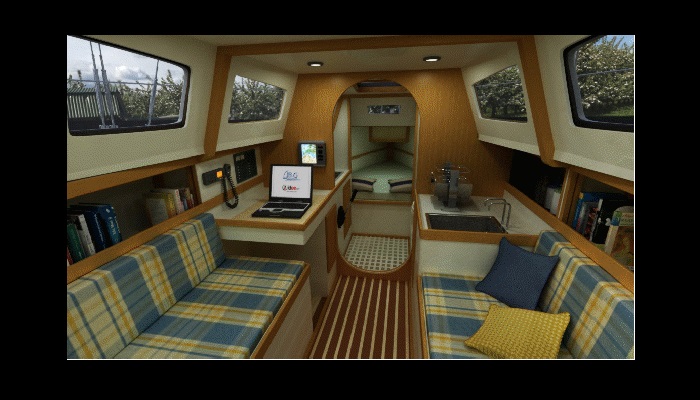




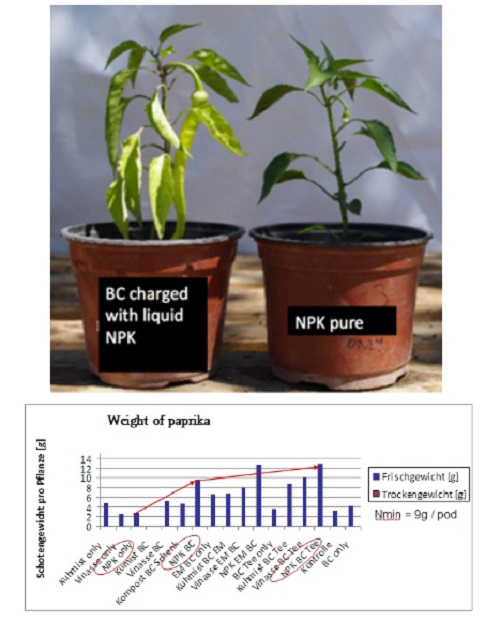

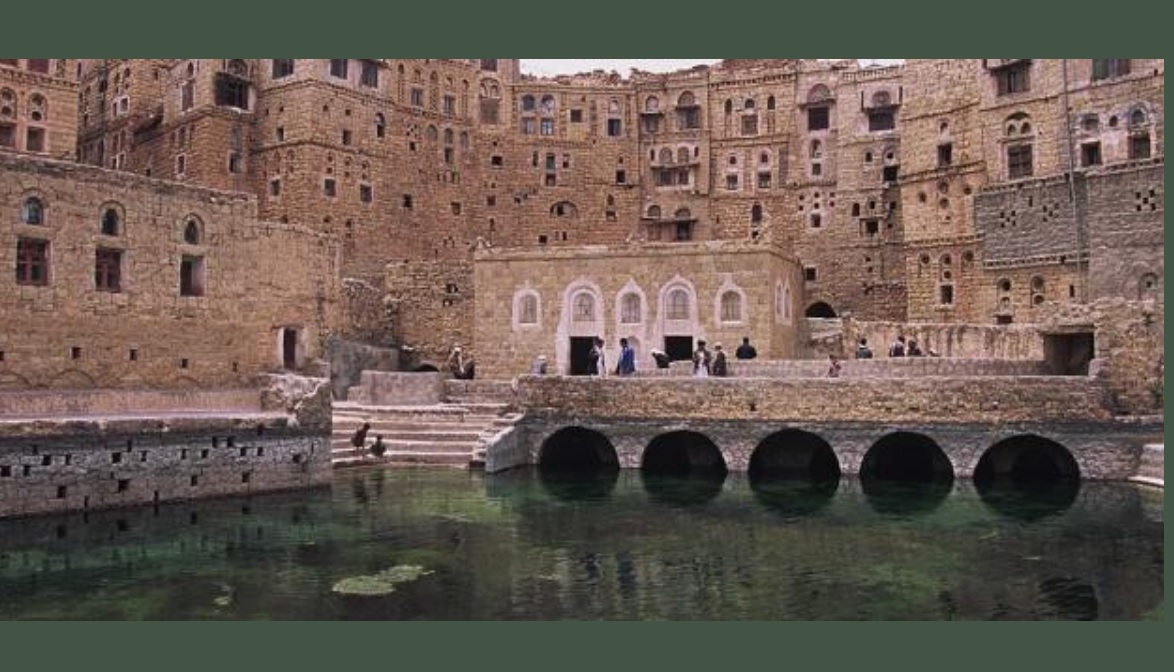







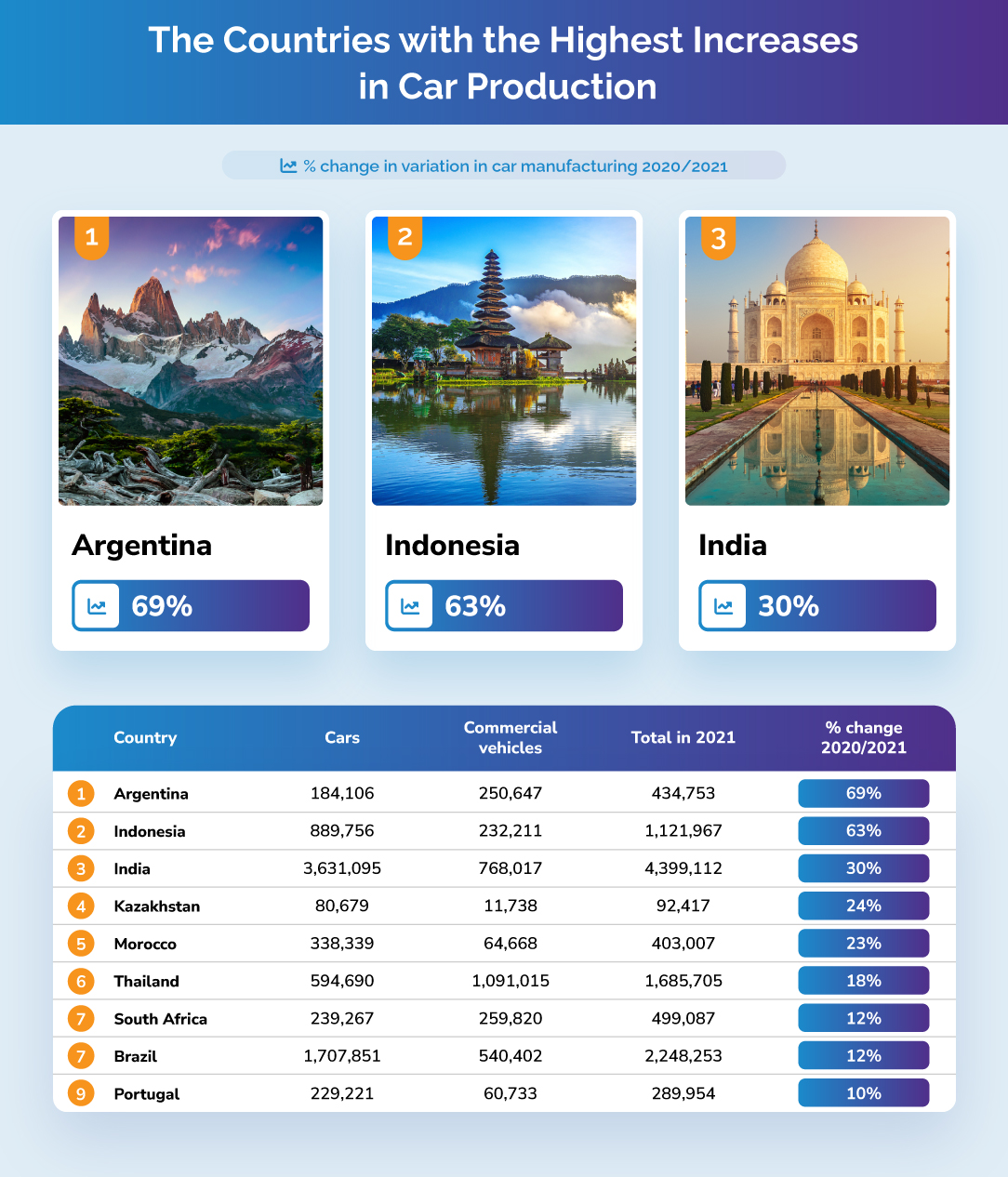
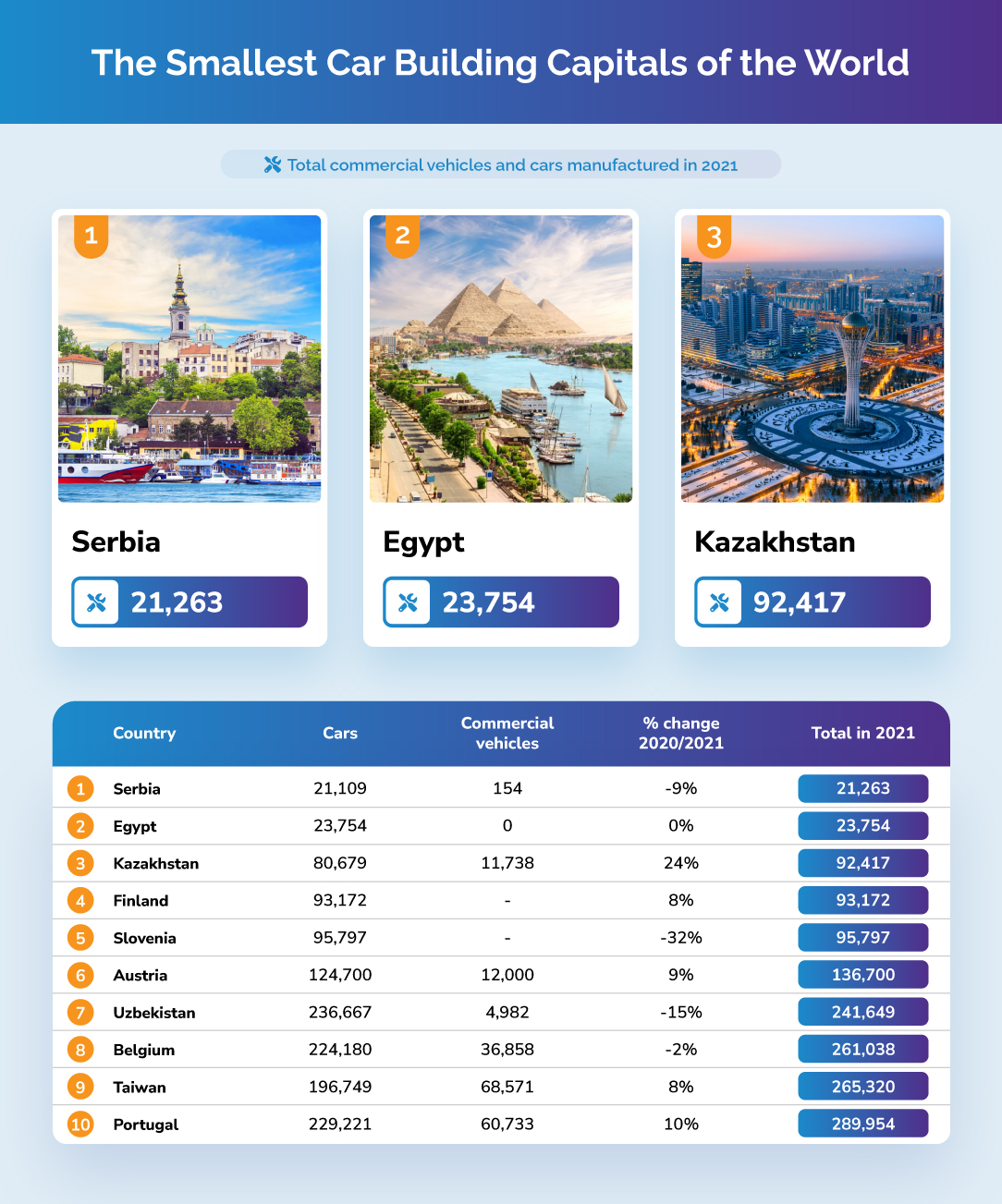
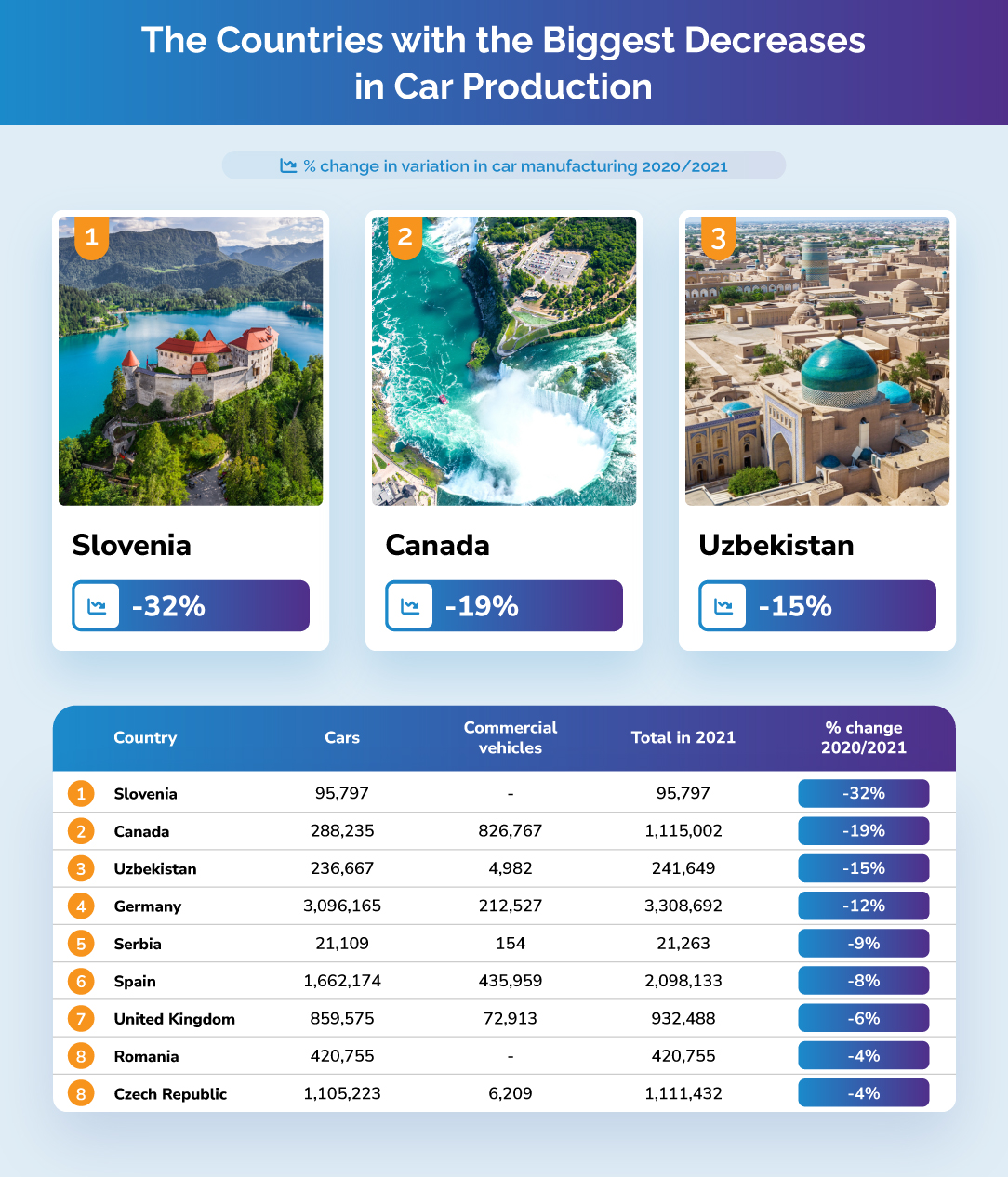




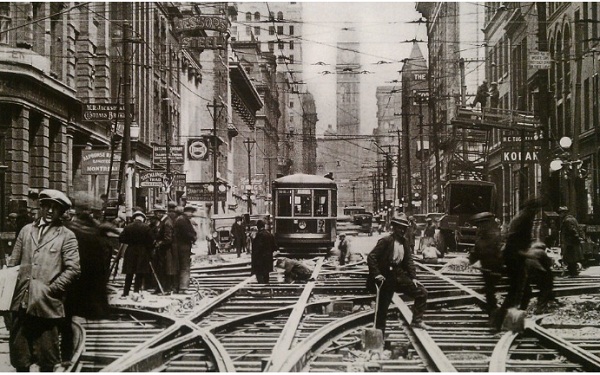

















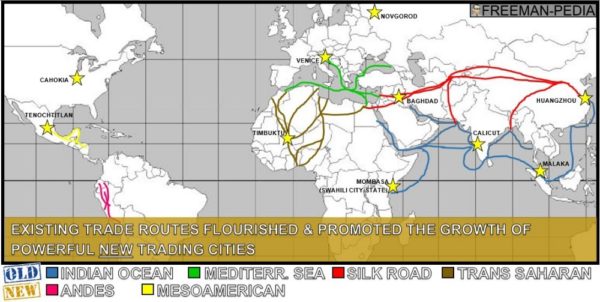





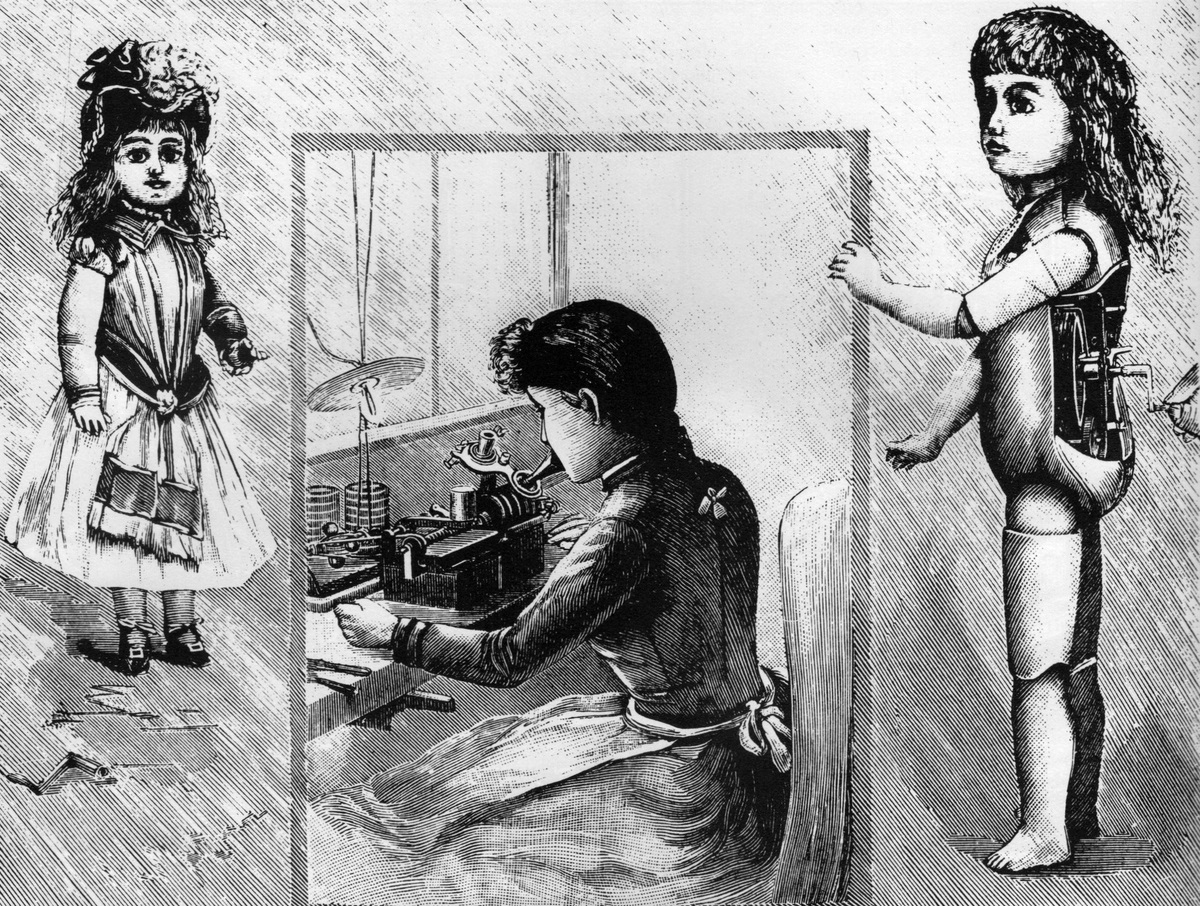
















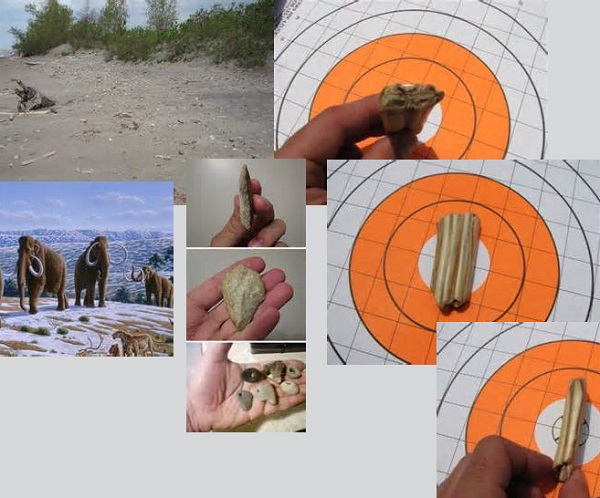
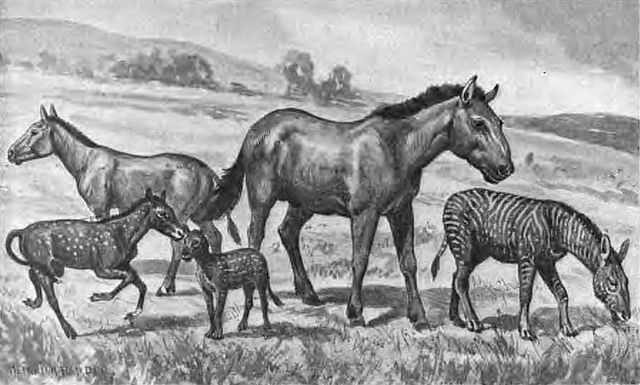
















 Why crochet? Rolled cigarette in mouth, she passes a nonchalant hand into blond spiky hair. She thinks… “This practice is also ancestral, but has potential for feminist messages and aesthetics when it is diverted from its original use and put towards the service of art. I’ve always been very creative and a little hyper active yet the only compliment I could expect from that was to be commended for being a good mother…”. I got fed up.” Reduced once too often to the status of “the good historical female”, Stéphanie Lobry “lost it”and held her first exhibition.