Category Archives: Culture

Freddie Mercury’s London Home Offered For Sale

One of the greatest rock frontmen of all time, Queen’s Freddie Mercury was famous for his theatrical style and four octave vocal range.

Born Farrokh Bulsara in Zanzibar, he fled to England with his family in the wake of the Zanzibar Revolution, in which many Arabs and South Asians were massacred. Settling near London, he studied graphic art and design (which he would later use to design Queen’s logo) and sold second-hand clothes with future Queen drummer Roger Taylor at the Kensington Market.

Garden Lodge- Trees in bloom

He fronted a series of bands, but his career really took off in 1973, when he joined with Taylor, guitarist Brian May, and bassist John Deacon to produce Queen’s first self-titled album. He would perform over 700 shows with the band, thrilling sold-out stadiums with his unique style and strong connection to his audience. He died of AIDS in 1991, but his music lives on, with Queen’s Greatest Hits the best-selling album of all time in the UK, and two of his songs “We Are The Champions” and “Bohemian Rhapsody” voted best songs of all time in major polls, and his induction into the Grammy Hall of Fame. 

Mercury left his Kensington home to his former partner and longtime friend Mary Austin.

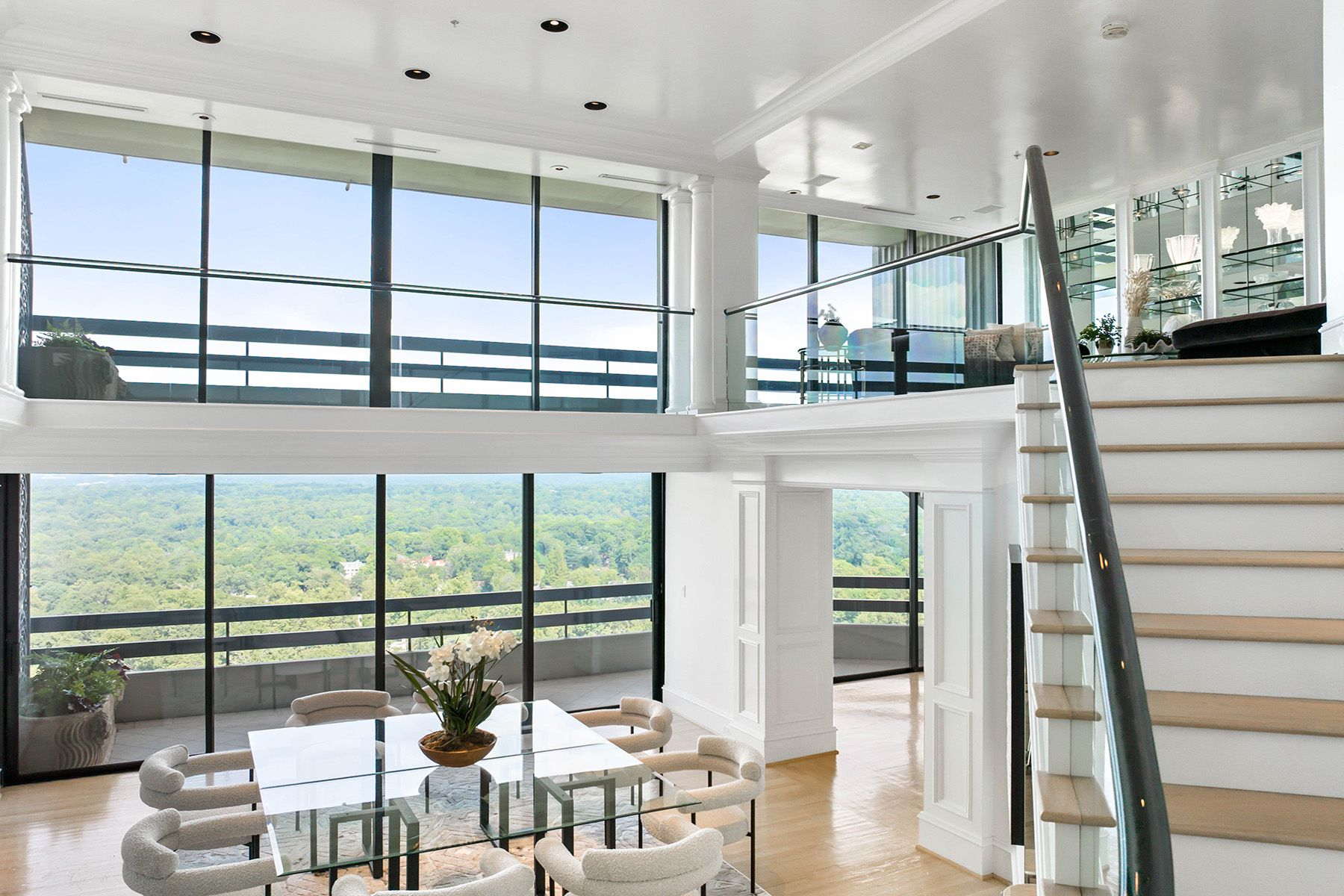
Garden Lodge- Dining Room.

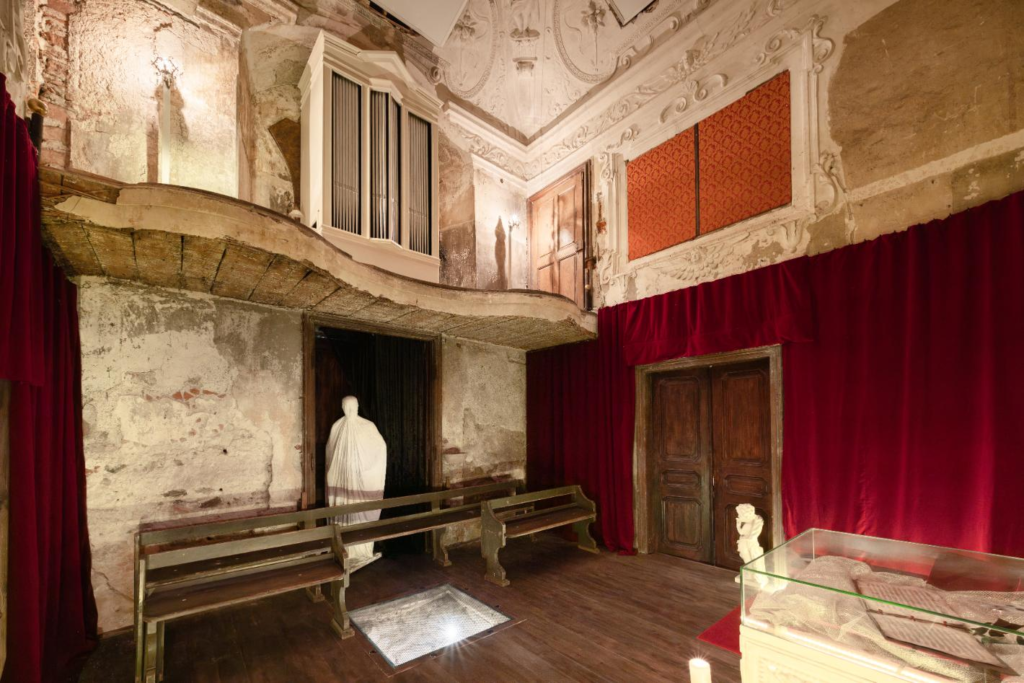
Though he would pursue romantic relationships with men, he considered Mary the love of his life and common-law wife. Garden Lodge is a stunning Neo-Georgian mansion which served as Mercury’s “country house in London”, a sanctuary from his high-intensity life on tour. Meticulously preserved for thirty years by Austin, this time capsule of music history is offered for sale for the first time since Mercury’s purchase in 1980, accepting offers in excess of £30m ($38m usd/ $51.7m cad). 

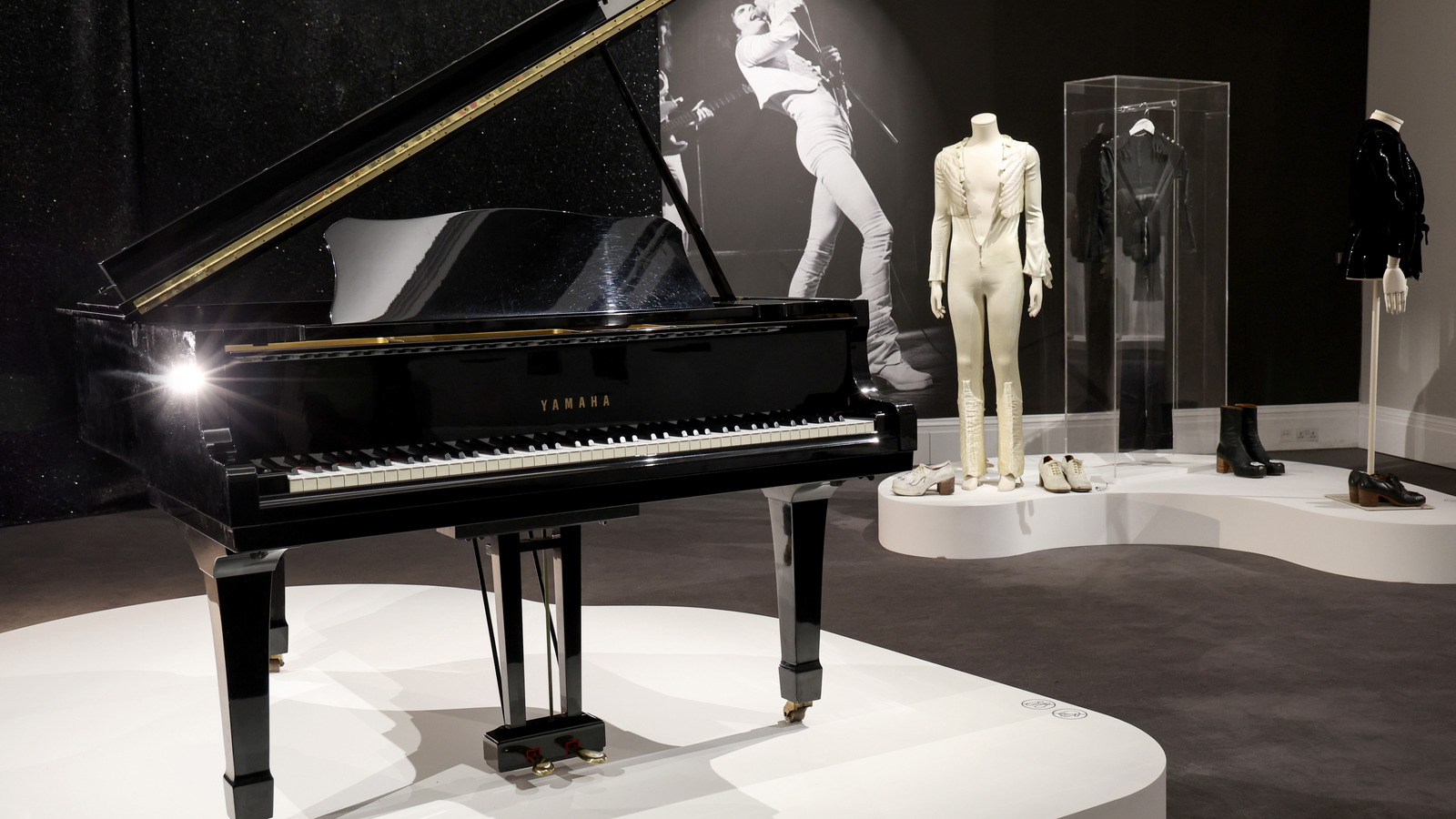
Freddie’s grand piano which once lived at Garden Lodge sold via Sotheby’s Auction for $2.2m USD/ $2.96m CAD.

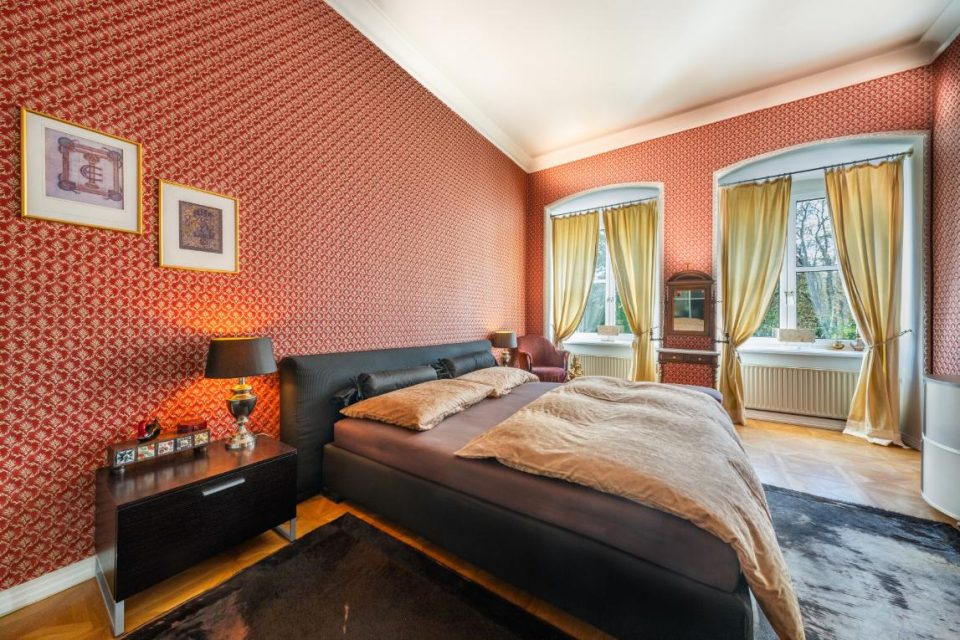
Garden Lodge’s centerpiece is a two-story drawing room, which once housed the grand piano on which Mercury composed his signature hit, “Bohemian Rhapsody.” French doors lead from the Japanese sitting room to the beautiful gardens. Every room of the house is infused with Mercury’s vibrant personality, with design choices made personally by the artist, including citrus-toned yellow walls in the intimate dining room, and floor-to-ceiling mirrors in the lavish dressing room that once housed his extensive collection of stage costumes. Surrounded by stone walls, the chance to own this unique cultural landmark is a once-in-a-lifetime opportunity. 

Garden Lodge- A view from the hall looking towards the famous ‘Green Door’.

According to Austin, “This house has been the most glorious memory box, because it has such love and warmth in every room. Ever since Freddie and I stepped through the fabled green door, it has been a place of peace, a true artist’s house, and now is the time to entrust that sense of peace to the next person.”

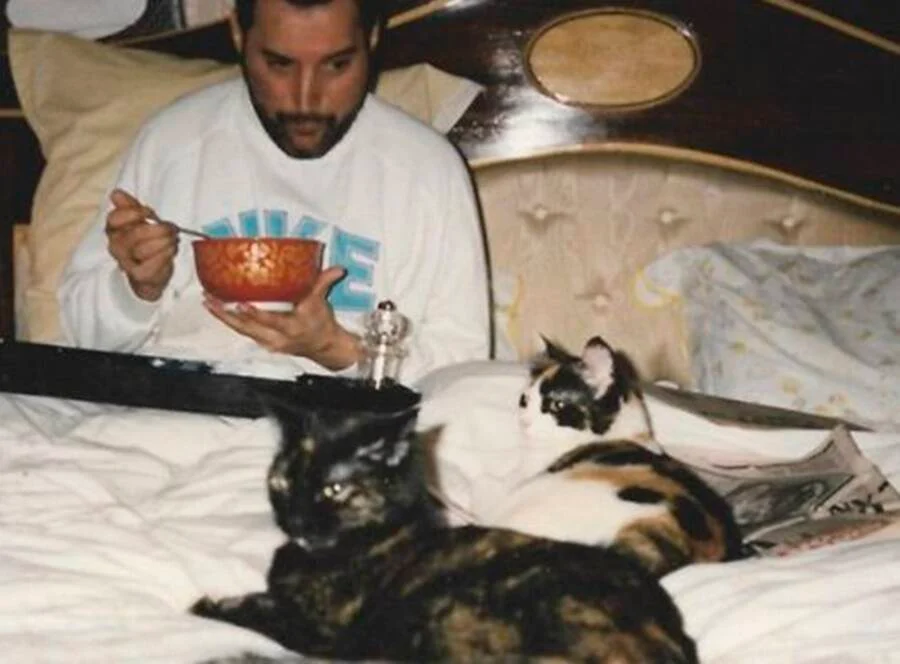
Freddie- at home in Garden Lodge and in bed eating a meal that needed a peppermill close by.

Kensington is an upscale London neighborhood known for its stately Victorian homes. Nearby options for entertainment include the Natural History Museum, the Design Museum, Kensington Palace, and Kensington Gardens. The chic boutiques on Kensington High Street and star-studded concerts at Royal Albert Hall are both within walking distance. Popular with celebrities, the neighborhood’s notable residents include Eric Clapton, Stella McCartney, Rowan Atkinson, and Dido. For the Silo, Bob Walsh/toptenrealestatedeals

The listing is held by Knight Frank. Photos of Garden Lodge courtesy Knight Frank.

Inuk Artist, Shuvinai Ashoona Wins Governor General’s Award in the Arts

Inuk artist becomes the second person from the West Baffin Cooperative to receive prestigious award.


Kinngait (Cape Dorset), Nunavut – Inuk artist Shuvinai Ashoona has been named a recipient of the Governor General’s Awards in the Arts for her dedication to the expression and practice of Inuit art and her contribution to Canada’s larger contemporary art community.

ᓱᕕᓇᐃ ᐊᓱᓇ
SHUVINAI ASHOONA


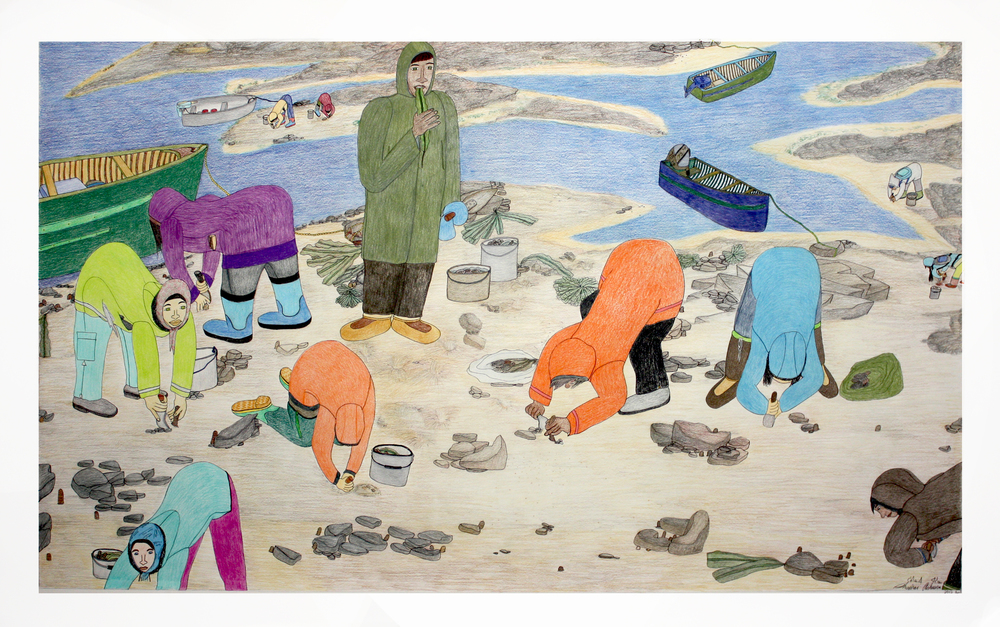
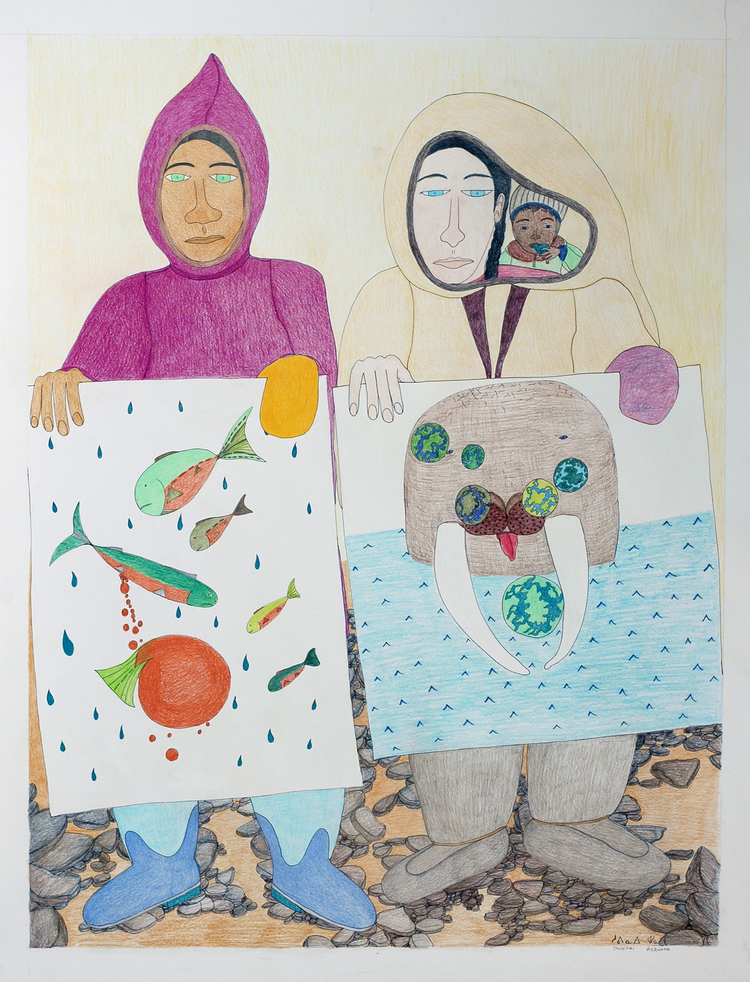
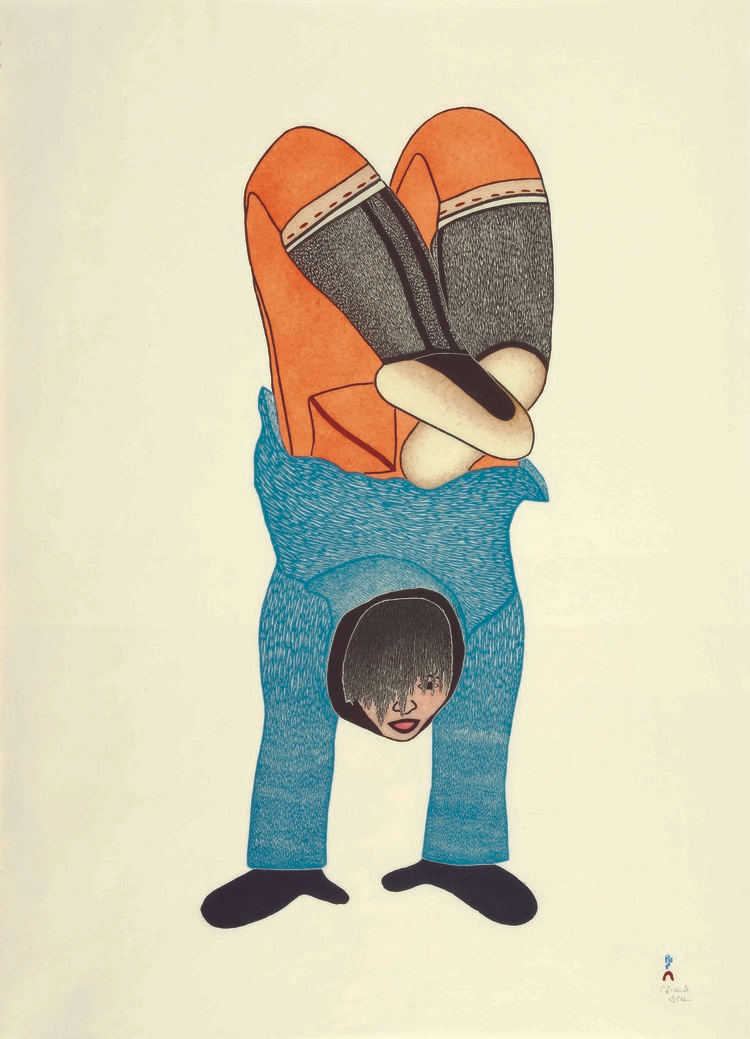
For more than two decades, Ashoona has been changing the face of Inuit art. Working from her home base in Kinngait, Nunavut, Ashoona’s ever-evolving drawing practice has resulted in a still growing body of work that stands as a unique contribution to the artistic expression of her time. Ashoona’s innovative drawings, many of which are ambitiously scaled, freely mix elements drawn from historic Inuit culture with contemporary references to more recent history and popular culture.

Untitled. 2010.

Her subjects include fantastical and otherworldly beings
as well as self-reflexive images that comment directly on the process and practice of representation. Never content to follow rules and expectations, Ashoona’s unconventional artistic vision has successfully challenged and revolutionized how the public perceives Inuit art and contemporary Indigenous art more generally, helping
to create a new space for expression and artistic freedom.

A longtime artist member of West Baffin Cooperative, Ashoona works frequently at the organization’s Kinngait Studios and has become a mentor to many next generation Inuit creators.
“I don’t even think about getting awards for making my art,” said Shuvinai Ashoona. ‘I’m just happy when people can see my drawings in galleries and museums and books. I think this award means that many, many people are getting to see my artworks.”


Throughout her career, Ashoona has maintained a busy practice supported by an expansive program of exhibitions.

Her work has been featured in several important exhibitions at the National Gallery of Canada, including Sakahàn: International Indigenous Art, that institution’s landmark 2013 showcase of contemporary Indigenous expression from around the world.
“Shuvinai Ashoona is one of Canada’s most influential visual artists and has fast become an internationally important creator,” said West Baffin Cooperative President Pauloosie Kowmageak. “Ashoona has achieved remarkable success and recognition for her art practice and for the community of Kinngait; I can’t imagine a more deserving recipient of this prestigious award.”

Handstand. 2010. Stonecut and stencil.


Ashoona has been active within the commercial gallery sphere as well. Her work has been featured in several solo and group commercial exhibitions, many of which have been presented by Vancouver’s Marion Scott Gallery, which nominated her for this award, and Toronto’s Feheley Fine Arts. Ashoona’s drawings have also been collected by many of Canada’s major art institutions, including the Art Gallery of Ontario, the National Gallery of Canada, the Winnipeg Art Gallery, Musée des beaux arts de Montréal and the Vancouver Art Gallery.

Ashoona has also collaborated with artists from beyond her Baffin Island community, including Shary Boyle (2015) and John Noesthedan (2008).

“Shuvinai Ashoona’s startling expression makes connections and bridges cultures,” said Robert Kardosh, third generation owner of Vancouver’s Marion Scott Gallery. “Her images tell us something important about ourselves and the world we all share. This award acknowledges and celebrates that deep resonance. It’s also a testament to her tenacious dedication to her vision and community.”


In 2022, she produced her first immersive installation, entitled Help Us. Commissioned by the Marion Scott Gallery, Ashoona’s floating constellation of drawn geometric forms was featured that same year at Art Toronto, where it earned critical and popular acclaim.


The last five years have been especially important ones for the artist, not just for her continuing creative growth but also in terms of her growing national and, increasingly, international profile. In 2019, The Power Plant Contemporary Art Gallery in Toronto presented Shuvinai Ashoona: Mapping Worlds, an exhibition that brought together a decade’s worth of Ashoona’s most ambitious works. Curated by Nancy Campbell, the high-profile exhibition toured to several venues across Canada, exposing the general public to Ashoona’s singular vision while confirming her status as one of Canada’s most exciting and talked about contemporary artists.

The exhibition’s catalogue is itself a monument to Ashoona’s practice and place in contemporary Canadian art. At the beginning of 2019, just as the Power Plant’s exhibition was being launched, it was announced that Ashoona had won the 2018 Gershon Iskowitz Prize at the AGO, making her the first Inuk in history to win this prestigious award. In 2021, as part of the terms of the prize, the artist’s work was profiled at the Art Gallery of Ontario in a major exhibition that was entitled Shuvinai Ashoona: Beyond the Visible, making her work even more visible to a wider audience.

Alongside these major breakthroughs within Canada’s borders has been a recent series of announcements, exhibitions and awards that reflect Ashoona’s steadily growing reputation abroad. In 2021, Ashoona’s work was featured in a solo exhibition at the Institute of Contemporary Art Miami, entitled Shuvinai Ashoona: Drawings. The exhibition in Miami wasn’t only Ashoona’s first show in a US museum, but it also marked the first time that a US contemporary art institution has presented a solo exhibition by a Canadian Inuk artist.

In 2022, Ashoona’s work was included in The Milk of Dreams, the 59th International Art Exhibition, also known as the Venice Biennale.

Ashoona’s inclusion in this major international showcase brought her distinctive expression to the attention of a global audience for the first time. The official jury’s decision to award Ashoona one of two special mentions brought even more attention to her installation, further attesting to her work’s unique power and appeal. Those same drawings are currently being featured at London’s The Perimeter, in a presentation entitled Shuvinai Ashoona: When I Draw, the artist’s second solo exhibition in the UK. For more biographical information about Shuvinai Ashoona click here. For the Silo, Paul Clarke.

Featured image: SHUVINAI+ASHOONA-2009 untitled graphite coloured pencil and pentel pen.

Will You Marry Me? In Space?

A romantic restaurant opens in Outer Space Starting from 2025, it will be possible to propose during an intimate dinner in space. On board a space capsule lifted by a stratospheric balloon, lovers will have the opportunity to savor an exceptional meal prepared by a French Michelin-starred chef and served by an AI-powered robot.
The agency ApoteoSurprise, specialized in orchestrating extravagant marriage proposals in Paris, is launching a brand-new service priced at 750,000 euros/ $1.1 million cad, allowing the romantics of tomorrow to ask for their beloved’s hand at an altitude of 35 kilometers. Upon their arrival at the spaceport, a pilot will welcome the couple and invite them to board a spherical and futuristic space capsule equipped with top-notch amenities for their comfort. In the center of the cabin, a table will be elegantly set, reminiscent of the most refined Parisian restaurants. The lovers will be introduced to StellarEmbrace, the robot that ApoteoSurprise developed in collaboration with a British startup. Equipped with artificial intelligence, the robot will adapt to the emotions and desires of the couple, providing a truly unique interaction. From the moment they meet, StellarEmbrace will address the young woman by her name and, presenting her with a bouquet of roses, announce that a gourmet dinner for two in space awaits. Lifted by a helium-inflated stratospheric balloon, the pressurized capsule will then embark on a peaceful two-hour ascent, offering breathtaking 360° views of our planet through its immense windows. At an altitude of 35 kilometers, the space module will be above 99% of Earth’s atmosphere, allowing the couple to gaze at the curvature of the Earth, its blue halo, and the total darkness of space. Like only 600 astronauts before them, the lovers will experience the overview effect, a cognitive shift that will redefine their view of the world and connect them to all of humanity. The woman and her partner will take their seats at the table, and for three hours, the robot will serve them a five-course gourmet dinner with wines and champagne specially crafted for the occasion by a renowned French chef with two Michelin stars. A carefully selected playlist will accompany the culinary experience, featuring iconic tracks such as “Space Oddity” (David Bowie), “Across the Universe” (The Beatles), or “Walking on the Moon” (Police). Just before dessert, StellarEmbrace will playfully interrupt the tasting to inform the man that he has forgotten something important. The robot will promptly bring him a luminous box that a secret code will open. Suddenly, the suitor will remember the code and enter it. The box will split in two, revealing a luxurious case containing an engagement ring. The man will then propose to his beloved, sealing his love in the eternity of space. A little later, the capsule will begin its slow descent. After a two-hour journey, the betrothed will be back on Earth, discovering that the robot has recorded every moment of their voyage, from their arrival at the capsule to their tender farewells.
About ApoteoSurprise: ApoteoSurprise is a high-end agency specializing in the organization of spectacular marriage proposals in Paris. Founded in 2006 by the aeronautical engineer Nicolas Garreau, the company offers 30 turnkey proposal packages online. These include the appearance of Cinderella’s carriage with a magical slipper, a shower of 1000 roses covering a yacht during a dinner cruise, the sending of a messenger dove to one’s beloved, a limousine tour with a super-bright declaration of love displayed at the foot of the Eiffel Tower, and starting from 2027, a romantic voyage around the Moon. Available at prices ranging from 290 euros to 125 million euros, ApoteoSurprise’s extravagant engagements have enchanted over 2000 lovers in its 17 years of operation. This includes celebrities such as heads of state, Hollywood actors, television stars, or players from the FIFA World Cup.

Nanni Balestrini Political Art Retrospective Exhibition Includes Early Computer Works

CENTER FOR ITALIAN ART ANNOUNCES NEW EXHIBITION: 
NANNI BALESTRINI: ART AS POLITICAL ACTION ONE THOUSAND AND ONE VOICES ON VIEW NOW UNTIL- JUNE 22, 2024
Nanni Balestrini, Cavallo, 1963. Collage on paper. Private collection, courtesy Frittelli arte contemporanea, Florence
(New York, February/March, 2024) – The Center for Italian Modern Art (CIMA) has launched its new exhibition, NANNI BALESTRINI: ART AS POLITICAL ACTION. ONE THOUSAND AND ONE VOICES, curated by Marco Scotini. This is the first retrospective exhibition in the United States of Nanni Balestrini (1935-2019), an Italian experimental visual artist, poet, and novelist known for his revolutionary artistic practice and passionate involvement in the social-political movements of the 1960s and 1970s. 
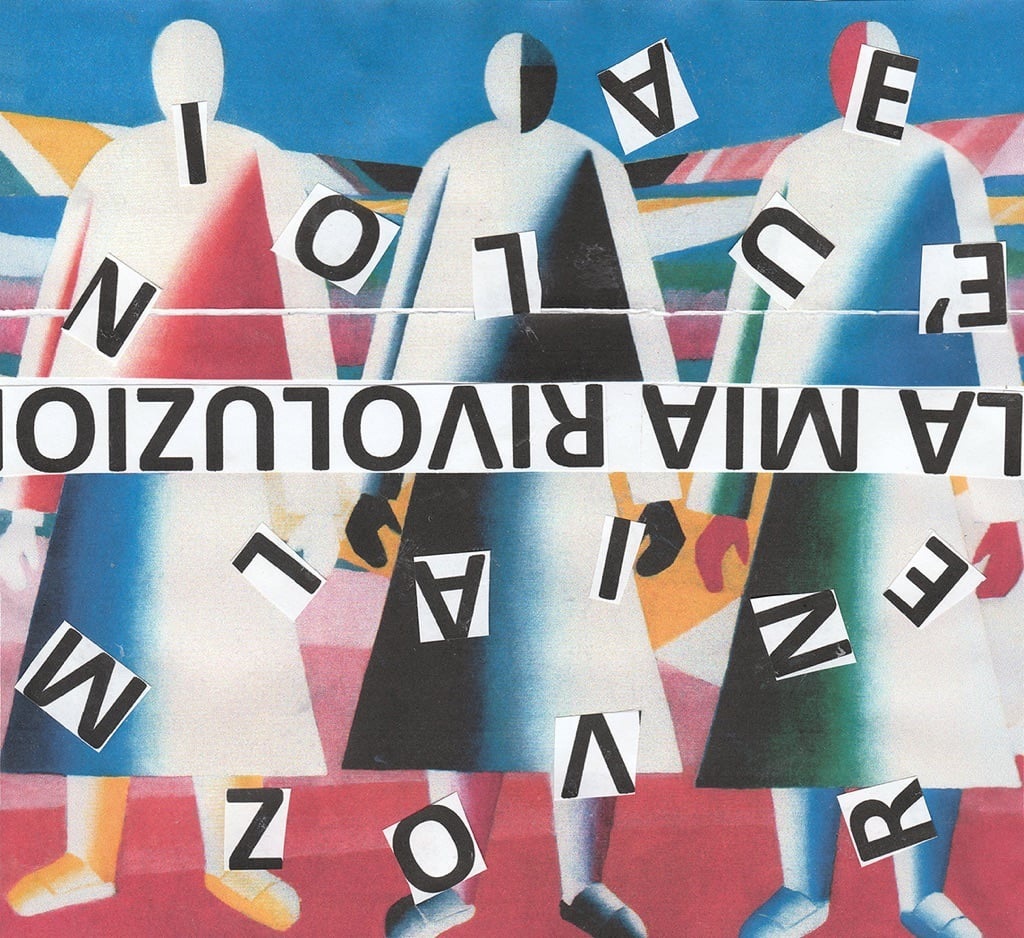
Born in Milan in 1935, Balestrini was a key protagonist of post-WW2 Italian literary and social avant-garde movements: he approached experimental poetry with a visual sensibility stemming from the artistic use of collage, and with a compositional practice that gave importance to the editing and recombining of existing texts (especially newspapers, magazines, and political slogans) in search for the expression of a collective enunciation.

Nanni Balestrini born July 1935 died May 2019

Nanni Balestrini, 65000 Ètudiants, 1972. Mixed media on panel. Collezione Emilio Mazzoli, Modena
Nanni Balestrini, Cronogramma, 1960s. Collage on paper. Private collection.
He worked side by side with contemporary composers interested in the creative potential of stochastic music and the relationship between computer technology and art. Much of his radical artistic and literary research also developed in dialogue with his participation in the student and workerist movements of the late 1960s and 1970s, and their explosive political charge. Much emphasis has been placed on the exclusively typographical character of writing in Balestrini’s artistic works. This exhibition will instead draw attention to the double acoustic and visual level of Balestrini’s word or, better yet, to what Paolo Fabbri described as its “phonic-optic indiscernibility.”

NANNI BALESTRINI: ART AS POLITICAL ACTION. ONE THOUSAND AND ONE VOICES, curated by Marco Scotini, focuses on two crucial decades in the career of Balestrini, the 1960s and the 1970s. It includes over 70 works by the artist, along with a range of documentary material. The works from the 1960s illustrate a creative phase when Balestrini shared research interests with Luigi Nono, one of the most important 20th-century experimental composers, and when the neo-avant garde literary movement Gruppo 63 was also founded. The creative relationship between Balestrini and Nono lasted an entire decade, and the exhibition sheds light on the search for the disalienation of the word pursued by both, as well as on their use of technology as a way to seize and subvert the means of industrial production and explore their artistic potential.

The final works in the exhibition date back to the late 1970s; some of them were conceived in connection with a poem dedicated to the New York City electricity blackout of 1977. Planned as an “action for voice” to be performed by Greek-Italian lyricist and vocal experimenter Demetrio Stratos in May 1979, the work was never performed due to the premature death of Stratos and Balestrini’s indictment surrounding the political movement Autonomia Operaia.

The exhibition also includes a reconstruction of Balestrini’s Tape Mark I (1961), one of the earliest examples of computer-generated art. A combinatory poem produced by an algorithm written in the Unix programming language on a massive IBM mainframe computer, Tape Mark I anticipates many of the contemporary questions surrounding Artificial Intelligence, and was featured in the 1962 edition of the Bompiani Literary Almanac, which was dedicated to “the application of computers to ethics and literature”, a theme of utmost relevance today. 

To provide context to Balestrini’s work, the show features a selection of early words-in-freedom works by Futurist artist Carlo Carrà, a form of avantgarde visual poetry that liberated words and letters from the conventions of grammar and syntax, making them part of visual and performative compositions. This technique was co-opted by the Italian Neoavanguardia in the 1960s, due to the revolutionary potential of the early Futurist movement.
NANNI BALESTRINI: ART AS POLITICAL ACTION. ONE THOUSAND AND ONE VOICES is on view at CIMA (421 Broome Street, 4th Floor, New York, NY 10013) from February 22nd – June 22nd, 2024. See visiting hours below. 

Python reconstruction of 1961 electronic poem “TAPE MARK 1”

Nanni Balestrini, Giornale di bordo (La partita a carte), 1964. Collage on paper. Private collection, Mirano (Venezia)
CIMA OPEN HOURS: • Friday and Saturday: 11am to 6pm with guided tours at 11am and 2pm (last entry at 5pm)• Members-only hours: Monday-Thursday by appointment• General admission: $15usd for guided tours; $10usd for open hours• Members & students: free
ABOUT CIMA:Founded in 2013, CIMA is a public non-profit dedicated to presenting modern and contemporary Italian art to international audiences. Through critically acclaimed exhibitions—many of them bringing work to U.S. audiences for the first time—along with a wide variety of public programs and substantial support for new scholarship awarded through its international fellowship program, CIMA situates Italian modern art in an expansive historic and cultural context, illuminating its continuing relevance to contemporary culture and serving as an incubator of curatorial ideas for larger cultural institutions. CIMA works to add new voices to scholarship on modern Italian art with annual fellowships that open fresh perspectives and new avenues of research. A visit begins with a complimentary espresso, followed by an informal exhibition tour with one of the resident fellows. Visitors are welcome to linger for additional viewing and conversation.

ABOUT CURATOR MARCO SCOTINI: Marco Scotini is an art critic and curator. He currently is artistic director of FM Centro per l’Arte Contemporanea in Milan, a center specializing in the preservation and enhancement of private collections, artists’ archives and the promotion of contemporary art. Since 2004, he has been director of the Department of Visual Arts at Nuova Accademia di Belle Arti of Milan and Rome. He is scientific director of the Gianni Colombo Archive, the Bert Theis Archive, the Clemen Parrocchetti Archive and the Nanni Balestrini Archive. Since 2014, he has been responsible for the exhibition program of PAV- Parco Arte Vivente in Turin. He was artistic director of the 2nd Yinchuan Biennale in 2018 and was a member of the Italian Council from 2019 to 2021. He has curated exhibitions for leading national and international art institutions, including the Albanian pavilion at the Venice Biennale (2015), three editions of the Prague Biennale (2003, 2005, 2007), Anren Biennale (2017), 2nd Yinchuan Biennale (2018) and was advisor for Bangkok Biennale (2020 and 2022). He took part in the 17th Istanbul Biennale (2022) and the BETA Timișoara Biennale (2022). He has been part of the project TV Politics at documenta 14 (2017). Scotini’s project Disobedience Archive is part of the 60th Mostra Internazionale d’Arte della Biennale di Venezia (2024), curated by Adriano Pedrosa.

Quality Over Quantity: How Canada’s Immigration System Can Catch Up


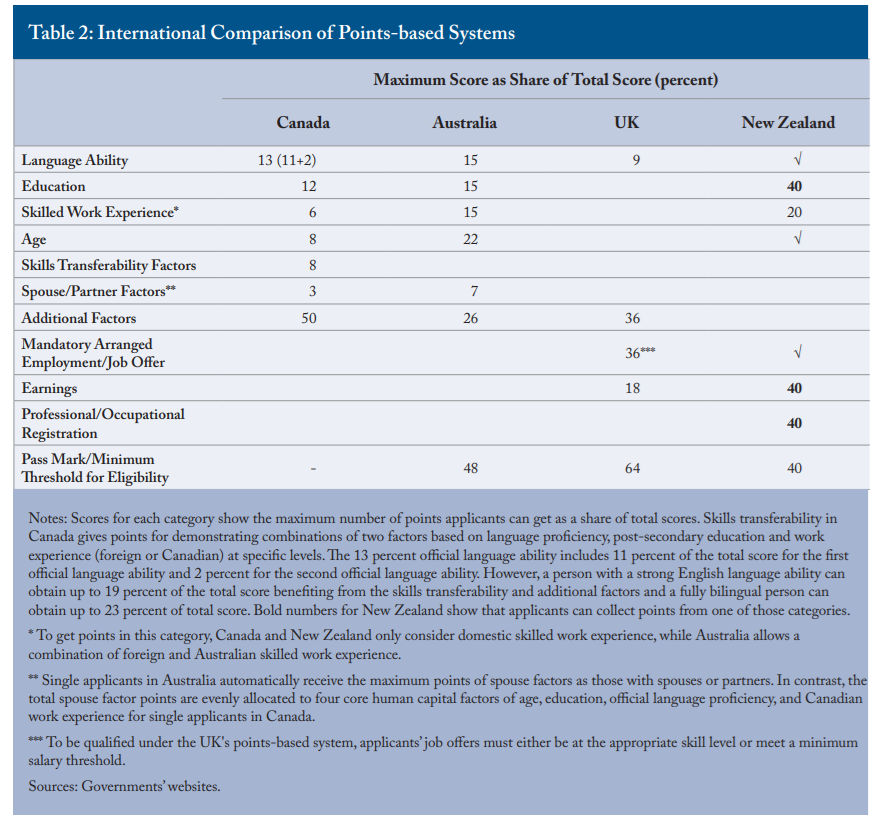
Canada’s immigration point system is designed to select skilled immigrants who have the potential to contribute to the country’s economic growth and meet its evolving skills needs. However, Canada faces challenges in fully leveraging increased immigration levels to enhance the well-being of Canadians due to weaknesses in capital investment and a quantity/quality trade-off in selecting economic immigrants. Furthermore, recent reforms may work at cross purposes to this goal. They include category-based selection that targets low-paying occupations, which can discourage capital investment, and a recent surge in the number of temporary residents in low-wage jobs that also may have adverse effects on the quality of potential candidates for permanent residency.
 

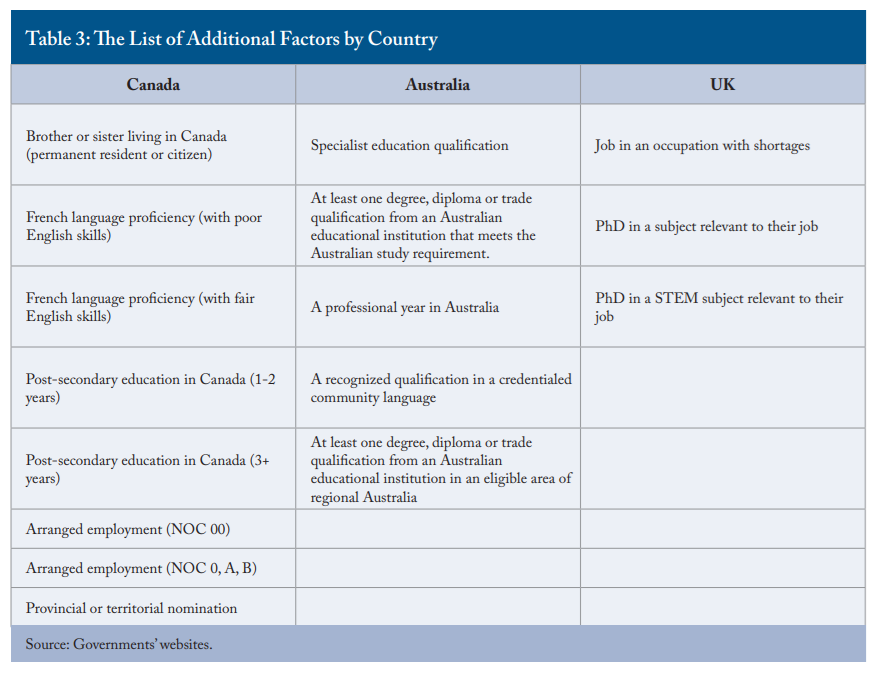
This study compares skilled immigration selection policy in Canada, Australia, New Zealand, and the UK, with the objective of identifying key areas for improvement in Canadian policy. The skilled immigration point systems in Canada and Australia share some similarities, with both prioritizing a two-step immigration process, placing an emphasis on English proficiency and workforce age, and requiring pre-migration credential and English proficiency assessments. However, the two countries differ mainly in their strictness of criteria and their emphasis on occupational and language skills. Furthermore, Australia has shown more agility and creativity in its skilled migration reforms. Reforms in the UK and New Zealand have also put them ahead in the competition for talent.
 

Based on this international comparison, the author makes recommendations for improvement. They include: 1) Setting a Minimum Points Threshold for Eligibility. As it is, Canada imposes no minimum points threshold for eligibility in its Express Entry points-based system. 2) Considering a Pre-admission Earnings Factor. Studies show the importance of pre-immigration earnings in predicting immigrants’ outcomes after arrival. The UK, New Zealand and Australia include this factor. 3) Boosting Standards under the Language Requirement. Official language skills are as important in predicting the initial earnings of principal applicants admitted under Canada’s Express Entry system as pre-immigration Canadian work experience, and even more important than educational level and age at the time of immigration. 4) Raising Business Immigration Numbers. Canada faces the challenge of weak business investment but is failing to select business immigrants with entrepreneurial skills, putting it at a disadvantage compared to competitors like Australia and the UK.

The author thanks Tingting Zhang, Charles DeLand, Rosalie Wyonch, Charles Beach, Jodi Kasten, Mikal Skuterud and anonymous reviewers for comments on an earlier draft. The author retains responsibility for any errors and the views expressed.

Read the full report here.

For the Silo, Parisa Mahboubi/C.D. Howe Institute.

Parisa Mahboubi

Parisa Mahboubi

Parisa Mahboubi is a Senior Policy Analyst and leads the C.D. Howe Institute’s human capital policy program. Her research interest focuses on social policy with a concentration on demographic, skills, education, and labour market concerns. In addition to authoring research studies, she regularly writes a column for the Globe and Mail’s business section.

Moon Landing Included Lunaprise Museum First Beyond Earth

New York City – February, 2024 – In a historic moment that marks a significant milestone in the intersection of art, music, and space exploration, the Lunaprise Museum proudly announced the successful lunar landing of artworks as part of SpaceBlue’s’ curated and managed archive on the recent Lunar Lander as part of the historic space mission. Though not the first art project to involve the Moon (reported here by us July 2019), it is the first art project to remain on the Moon.

Among the historic pioneers is a pioneering trio: designer/artist Kelly Max, artist Samy Halim, and music producer/artist Brayden Pierce. This momentous event sees these creative visionaries become among the first artists in history to archive their works in the form of digital twins on the moon for over a billion years in a nano fiche disk, establishing a lasting legacy that transcends the boundaries of Earth.

A New Horizon for Art and Music

With the successful landing of the Lunar Lander on February 22, 2024 at 6:23PM EST the Lunar Landing has achieved a groundbreaking feat by hosting the first museum on the moon called Lunaprise. Among its prized collections are the collaborative efforts of Kelly Max and Samy Halim on the Modernist Art project, and Brayden Pierce’s musical compositions that have resonated with themes of space exploration and innovation.

The Modernist Art collection, highlighted by the “MoonRider” piece carrying 180 names pivotal to the artists’ journey, alongside a comprehensive collection of 420 Modernist Originals and 9,724 generative Modernist Genesis Artworks, represents a significant contribution to this lunar museum. Selected by Curator SpaceBlue and launched on February 15, 2024, these artworks not only celebrate the creative spirit but also symbolize human achievement and aspiration.

This nickel disc containing compressed files of the artwork is now curated on the Moon.

Kelly Max’s contributions to the Lunaprise Museum mission extend far beyond his collaboration with Samy Halim on the Modernist Art project. Together, Kelly and Samy designed the Lunaprise Mission Patch, a symbol of human creativity and resilience in the face of the vast unknown. Kelly’s visionary approach didn’t stop there; his role expanded as he became the lead designer for all key brand communications for the mission, showcasing his leadership and creative expertise in shaping the mission’s identity.

Brayden Pierce: Echoing Through Space

Introduced to the Lunaprise Museum mission by Kelly, Brayden Pierce’s artistic contributions have carved a unique niche in the halls of space history. As the first-ever EDM artist to have his music on the moon, Brayden Pierce’s “Capture The Moon” is immortalized on the moon in two versions: The Modernist Edition and the MOOON.PARTY Mix. This collaboration with Kelly underscores a synergy between the two creatives which exploded into the founding of MOOON.PARTY: a visionary venture that aims to blend art, music, space, and space content recording into a pioneering festival brand. This initiative, co-founded by Kelly and Brayden, is set to redefine immersive entertainment experiences, leveraging the backdrop of space to inspire and captivate audiences worldwide.

“Bringing art and music to the lunar surface goes beyond exploration; it signifies embedding humanity’s creative essence into the fabric of the cosmos. This endeavor isn’t merely a step forward for us as individual artists but represents a monumental leap for global art and culture. Collaborating with Samy, Brayden, and the Lunaprise Museum on this mission has unfolded as a profound journey of discovery, unity, and limitless creativity. Together, we’ve ignited a beacon of human expression on the moon, casting light across the cosmos to inspire future generations to dream beyond the confines of our known world. This project mirrors the moon’s impartial gaze upon Earth, reminding us that in its light, we are all seen equally. Our ultimate aim is to embody this universal perspective, fostering a tangible sense of unity on Earth, now enriched by the presence of art and music in the lunar realm.” adds Kelly Max.

Legacy Beyond the Stars

The Lunaprise Museum landing not only signifies the establishment of the first museum beyond Earth but also serves as a beacon of human creativity and ingenuity. Lunaprise is leading a historic disruption in space tech, leveraging patented technologies to archive and authenticate digital assets using blockchain, heralding the convergence of space exploration and digital technology. Collectors of music and art will delight in rare, verified assets that are one-of-a-kind, linked to identical twin digital files stored in the Lunaprise museum on the moon.  The artworks of Kelly Max, Samy Halim and Brayden Pierce, now permanently archived on the lunar surface, stand as a testament to the boundless potential of artistic expression. Their achievements herald a new era where art and music extend their reach into the cosmos, inspiring future generations to dream big and reach beyond the known limits.

For The Silo, Gabriela Gutiérrez.

Canadians Should Understand Their Private Healthcare System – And How It’s Changing


The Study in brief

The intense debate pitting private versus public healthcare in Canada needs a reality check. Private aspects of healthcare exist in different forms and to varying degrees across Canadian provinces, largely depending on their respective legislation and regulations.
 For healthcare professionals providing insured services, most bill through the public system, but not all. The current and future scope of their role is the pressing issue at hand.


 Health Canada has had success in eliminating extra billing and user fees under sections 18 and 19 of the Canada Health Act. However, provinces have considerable authority in determining key terms like “medically necessary” or “insured services” that are covered under the Act. The result has been a diversity of approaches.
 Provinces have the legislative tools to constrain the growth of private healthcare, if that is their objective. Similarly, provinces have considerable authority to increase the scope of private healthcare, if that is their objective (even within the current parameters of the CHA), by revising provincial legislation or regulation.


 Either way, the specific policy direction undertaken would be different for each jurisdiction, as the legislative and other barriers to private healthcare (such as market size limiting the viability of private delivery) vary across provinces. This Commentary provides clarity about the different forms of “private” healthcare and a comprehensive view of the current policy landscape defining the balance between public and private healthcare.

All health systems incorporate some mix of public and private healthcare. In 2021, public sector spending in Canada amounted to 73 percent of total healthcare expenditure, exactly equivalent to the OECD average of 73 percent (OECD 2023). Yet these summary figures tell us little about the public/private contours of any healthcare system. Private healthcare can manifest in a multitude of ways, and the precise configuration of the relationship between public and private healthcare tells us more about the system than the absolute level of public or private spending.

Under the Canadian Constitution, provinces have wide-ranging jurisdiction over the provision of healthcare in Canada, both explicitly (hospitals) and through judicial interpretation (“matters of a merely local or private nature,” as well as authority over insurance). The Canada Health Act (CHA) does provide a national framework (supported by federal transfer funds) that has, for several decades, ensured a certain level of congruence across provinces in the provision of public healthcare. But each province’s health legislation is unique, and it is this interplay between federal and provincial legislation that provides a regulatory space for private healthcare. Variation across provinces means private healthcare in Canada is not a uniform phenomenon.

The objectives of this Commentary are fourfold: first, to describe the ways we can understand “private” healthcare; second, to explain the different ways provincial legislation permits or prohibits aspects of private healthcare; third, to discuss the supply- and demand-side variables causing private healthcare to take its current shape across provinces; and fourth, to analyze the relationship between provincial healthcare legislation and the CHA with reference to the expansion of private healthcare in Canada. This Commentary does not address the utility of private healthcare per se. Rather, it focuses on the confusion inherent in so many discussions referencing “private healthcare.” Both exponents and critics of private healthcare can pick and choose from numerous manifestations of private healthcare to support their respective positions. By requiring proponents and opponents to clarify precisely what they mean by “private healthcare,” the potential costs and benefits can be more clearly identified in each case.

What do we mean by “Private Healthcare”?

Critics of private healthcare point to the costs and inequities of the American healthcare system to argue against it, while proponents reference European mixed public/private models to show how effective it can be. First Aid Course Hamilton. Any discussion of the role of private healthcare should therefore first clarify what, precisely, is meant by “private healthcare.” Healthcare systems can generally be broken down into three constituent parts: delivery, financing, and regulation. Any of these elements can include a public or private (for-profit or not-for-profit) component (Wendt et al. 2009; Böhm et al. 2013; Marchildon 2022).

Delivery of Healthcare Services

Much healthcare in Canada is delivered by private providers. When medicare was introduced in Saskatchewan in 1947, physicians vehemently protested. A settlement was reached only when the province agreed to recognize physicians as private independent operators rather than as employees of the state (Marchildon 2020). This model was followed by other provinces as they introduced their own medicare legislation. Ambulance services across Canada are often private, with these companies negotiating service contracts with health authorities or provinces. Nursing care in hospitals and district nursing programs is generally provided publicly, but private nursing firms (such as the not-for-profit VON for home care, or for-profit firms supplying temporary placements in hospitals) are also commonly utilized.

Historically, hospitals in Canada (especially those founded by religious orders) were largely based on a private, independent, not-for-profit model. As hospitals became amalgamated into health authorities, they were consolidated in provincial governments’ financial statements and their operation was generally subsumed within the public infrastructure – even as many (especially larger) hospitals with boards of directors remain not-for-profit organizations.

Key Takeaways

What, exactly, is a “not-for-profit” (NFP) organization in Canada, and how does it differ from a private or a public one? Legally, NFPs are “bodies corporate without share capital”: in other words, revenues must be directed to the mission of the organization rather than to shareholders. NFPs also enjoy specific tax breaks. Unlike fully public bodies, however, they are self-governing. Generally, they will have boards of directors who are accountable for funds raised and debts incurred. Like directors in a private company, these directors have a fiduciary responsibility to use resources wisely. Unlike private companies, directors of NFP organizations are directly responsible to the corporate entity rather than to members (i.e., shareholders). The corporate entity, in turn, is responsible to the government jurisdiction (federal or provincial) wherein it is incorporated.

Increased attention has been paid to private surgical companies. Individual medical specialists are generally considered independent private operators who contract their services to medical facilities or universities, although their payment models often include elements such as base salary, research stipend, fee for service, etc. Surgical specialists have in many provinces established discrete private businesses where bulk services (a specific number of certain surgical services) are provided over a set period for a negotiated price (e.g., the Shouldice Hernia Centre in Ontario or Scotia Surgery in Nova Scotia). They may use public infrastructure (hospital operating rooms) or provide their own physical space. There is considerable debate whether contracting these services is superior to establishing them as part of the public system (e.g., Day 2023; Lewis 2022; Longhurst 2023). However, as the funding and administration of these services is controlled by provinces (or provincial health authorities), and as patients use these services as they would fully public services (i.e., free at point of delivery), they are not considered a “two tier” form of access to healthcare. Patients cannot access these services directly; rather, they are routed through the public system. Grey areas of private service delivery, described in more detail below, include the private delivery of medically necessary diagnostic services, infusion clinics on hospital sites, and certain forms of virtual care.

Also relevant to the discussion of private delivery is the type of private entity under consideration. “Private” hospitals that are not-for-profit may in fact operate more like a public institution than a private one; here one might usefully distinguish institutions which are functionally embedded in provincial healthcare system (e.g., via accounting practices) from those that operate at arm’s length. Conversely, evidence from the United States suggests private not-for-profit hospitals can also show the kind of profit-driven behaviour more commonly seen in for-profit entities (Silver-Greenberg and Thomas 2022). Others have argued that small independent private health clinics (such as Algomed or Bluenose, in Canada) are in a different category from large American corporate entities (such as the Hospital Corporation of America) (Deber 2003).

Financing of Healthcare Goods and Services

As noted, some privately provided services (such as ambulance services or surgical clinics) are often funded publicly. And, while it is not as common, publicly provided services can be funded privately (e.g., in systems where money follows the patient, private insurers may be able to find places for their patients in publicly funded hospitals). Charitable NFP organizations can be another source of healthcare funding. In Canada, much attention is paid to the division of healthcare into services that are, or are not, insured publicly. For example, the provision of cosmetic surgery (undertaken for aesthetic reasons) is commonly private, and is paid for privately and directly out-of-pocket. The private provision of services that are publicly funded (such as cataract or hip replacement surgery), as noted, is more controversial, but is not uncommon within Canada. The main point of controversy in Canada is whether publicly insured services should also be available for direct purchase to individuals within the private sector, bypassing the public system altogether.

Out-of-pocket financing in Canada is largely targeted to healthcare services that are not covered by public insurance (the precise list of insured versus non-insured services varies across provinces). Only 12.6 percent of Canadian healthcare expenditure in 2021 was comprised of out-of-pocket spending (WHO 2023); the remainder was covered by public or private insurance.

So how is healthcare insurance structured in Canada?

Public insurance: In all provinces, most medically necessary healthcare services are largely funded on a tax-based model, where citizens support healthcare services through their general tax contributions. Some provinces do require provincial inhabitants to pay “healthcare premiums” but, as these contributions simply go into the provinces’ general operating funds, rather than a bespoke account used only for healthcare, these premiums can be considered simply as another form of taxation. As a condition of receiving federal health transfers, the CHA requires that each province has a public insurer. Böhm et al. (2013) argue, for this reason, that states such as Canada and Australia, which are structured on a public insurance system, are more properly considered to possess “national health insurance systems” rather than “national health systems,” as typified by the UK.

Each province has the authority to determine what it insures publicly (which is why coverage for “medically necessary services” varies across provinces). In general, medically necessary services provided by physicians and in hospitals are covered (as required by the CHA) but, as explained below, this is much more complicated than it appears. Services such as vision care and dental care provided in hospitals are also generally covered, as are diagnostics, physiotherapy, and other related services.

Provinces are not required to cover everyone: those in the armed forces or federal penitentiaries, for example, are insured by the Government of Canada. Although provincial healthcare systems provide many of the services for these specific groups, the provinces are reimbursed by the federal government. Those injured in the workplace are usually covered by workers’ compensation. Certain categories of migrants (such as refugees) are also insured federally until they receive permanent citizenship status, whereupon they fall under provincial insurance. Depending on the type of work and the length of stay, migrant workers are insured both through provincial health plans and workers’ compensation programs (for a fuller discussion, see Fierlbeck and Marchildon 2023).

Most provinces expand public health insurance beyond what is required by the CHA. While the CHA does not specifically mandate the public provision of dental care, optometry services, and pharmaceuticals outside of hospitals, provinces generally have some form of coverage of these services for vulnerable groups. These are determined either by cohort (e.g., seniors or children), service (pharmacare or dental care), income category (below a certain ceiling), or some combination of all three. These programs vary considerably across provinces.

Private health insurance: Formally, there are several types of private health insurance, each serving a different function.

  • Supplementary health insurance covers any goods or services that are not covered by public insurance. In Canada, these include companies like Blue Cross, Sun Life, or Canada Life Assurance. Any healthcare system incorporating public insurance will also have an array of private and private not-for profit supplementary health insurance companies which generally cover vision care, physiotherapy, pharmaceuticals, travel insurance, etc.
     
  • Complementary health insurance completes the cost of a service, where public or social insurance only pays partial costs. In many countries, for example, public insurance will only cover around 60 percent – 80 percent of hospital stays, pharmaceuticals, primary care, and sometimes even emergency care. In these cases, private insurance will “top up” the remaining costs so patients do not have to pay out-of-pocket. Some insurers may ask patients to pay the remaining costs up front, and reimburse them after the fact; others may cover the costs at point of payment. This “top up” system is not common in Canada, but in Quebec (which mandates pharmacare insurance) private insurers are allowed to cover any co-pays for pharmaceuticals that patients must pay directly for amounts not covered by the mandated insurers.
     
  • Substitutive health insurance applies in systems (e.g., in Germany) where citizens earning above a set income are allowed to opt out of public insurance systems altogether, and use private for-profit insurance to cover medical needs.
     
  • Duplicative (or “dual” or “parallel”) health insurance is the source of most political controversy in Canada. Duplicative insurance privately covers services that are also offered in the public sector. Four provinces (Ontario, Manitoba, Alberta, and PEI) explicitly prohibit duplicative insurance, three (Saskatchewan, British Columbia, and Quebec) explicitly permit duplicative insurance under certain conditions (i.e., only for certain services, only if the insurer is private not-for-profit, only for services provided by practitioners outside of the public system), and three (Newfoundland, Nova Scotia, and New Brunswick) neither expressly permit nor prohibit it (Appendix Table A2).1 The advantage for those with duplicative insurance is that they can access these services quicker, or access more enhanced variants of these services. It is really with this particular kind of private insurance that the issue of “two tier” healthcare arises. The argument in favour of duplicative insurance is that it “takes pressure” off of the public system (e.g., Globerman 2020), while other research has found that public wait times actually increase when publicly insured services become privately available. One reason given for this is the depletion of resources from the public sector. Policy analysts also suggest that those offering private services have incentives to keep public wait times longer, as patients will only find private services attractive if they cannot easily access them in the public sector (e.g., Besley et al. 1998; Duckett 2005). Countries such as the UK that permit duplicative insurance nonetheless continue to have considerable issues with long wait lists in the public health system (e.g., Duncan et al. 2023).
     
  • Private not-for-profit insurance: Another category of health insurance that causes much confusion is statutory health insurance (SHI; also referred to as “social health insurance” or the “Bismarck health system”). This system is quite common in Europe, although the precise configuration varies across states. In this model, health insurance is not covered in the first instance through general taxation revenue. Rather, workers and employers pay into “sickness funds,” which provide health insurance benefits depending on the terms negotiated. These sickness funds are technically “private” bodies operating on a not-for-profit basis. They are, however, highly regulated in their authority and function. Because of the degree of regulation – and the importance of the social function they fulfill – they are generally considered a form of “public” insurance. However, governments tend to differ in their approach to consolidating these operations into government expenditures.2  Jurisdictions using this model of health insurance have different methods for covering unemployed or retired persons, often including funds directed from government taxation revenue or from pooled sickness funds.

Regulation of Healthcare Financing and Delivery

The nature of “private” healthcare is determined not only according to the way services are delivered or funded but, more importantly, according to the way they are regulated. Permitting a “private” form of health service or insurance is not an all-or-nothing condition; governments have the authority to determine the terms and conditions under which these services are to be offered. There can, for example, be limitations on the kinds of services offered or insured, on the professions allowed to offer them, on the prices that can be set for them, where they can be provided, and so on. These limits, as discussed below, can be enough to discourage the provision of health services even when these services are technically legal, as the terms within which private services are allowed may not be sufficiently profitable. In the European Union (EU), governments are more restricted in their ability to regulate private healthcare services because, ultimately, the ethos of the EU is to maintain the free movement of goods and services. Fully public health services are under the authority of member states but, where states utilize private components in their healthcare systems, attempts to limit the ability of private health firms to compete can result in charges of breaching fair-competition regulations. In Canada, however, there are fewer restrictions on the limits that provinces can place on private health providers, given the political will to do so. The regulatory aspects of healthcare financing and delivery will be addressed in more detail in the next section.

Private-public Partnerships

Another category of “private” healthcare is the implementation of private-public partnerships (P3s) in healthcare (McKee et al. 2006). In the past, this has been limited to large capital projects, such as the construction of hospitals, but more recently the implementation of P3s has expanded to the point where verdicts on their effectiveness can be rendered. Importantly, there is no single model of public-private partnerships; each is generally negotiated on its own terms. Proponents explain the logic of this approach as capturing the advantages of both systems: governments can access more competitive financing for projects, while firms undertake the process of construction more efficiently with each day of overrun increasing the cost of a project. Critics argue that the logic of P3s rests in the effectiveness of offloading costs to the other partner, and that the party with the most expertise in negotiating P3 contracts (generally large multinational firms with experience in this area) are those who are most able to shift costs. At the same time, because P3 projects allow costs to be diffused over a long period of time, budget-conscious governments have been eager to enter into these agreements.

Empirical evidence suggests that the effectiveness of P3 projects in Canada has been quite varied (Murphy 2008; Vining and Boardman 2008; Siemiatycki 2015). More recently, provinces have expanded the use of P3s to include large outlays for medical infrastructure. These agreements, often known as “value partnerships” or “managed equipment service agreements,” generally focus on diagnostic equipment – providing MRIs, CT scans, and X-rays – and they range from 15 to 30 years. The private partner will source, install, and maintain this equipment over the life of the agreement. As the private partner owns the equipment and covers the cost of installation, there are minimal upfront costs for the public partner. Other advantages of this model include a reduction in equipment downtime, decreased administrative burden in monitoring equipment maintenance, protection from unpredictable costs involved in equipment failure (CADTH 2022), and a replacement plan for equipment that reaches the end of its recommended useful life. At the same time, long-term service contracts can diminish flexibility in accessing different equipment over the lifespan of the contract, and the private contractor may demand confidentiality agreements which could diminish the transparency and accountability of the process. Like other forms of P3s, the effectiveness of managed equipment services will largely depend on the specifics of negotiated agreements, including clearly defined outcomes and expectations, as well as transparent and accountable protocols and public scrutiny of this documentation (CADTH 2022).

Internal Markets

While “internal markets” are not formally an aspect of private healthcare per se, they frequently arise in discussions of the utility of private healthcare mechanisms in the reform of public healthcare. Most famously employed in the Thatcherite reforms of the National Health Service in the United Kingdom, this model simply divides public healthcare professionals into “purchasers” of acute care services (usually primary care professionals) and “providers” of acute care services (usually hospitals). The theory underlying the purchase-provider split is that GPs will select the best value for money, obliging hospitals to compete by offering quality services for less. While the results of Britain’s experiment with the internal market are mixed at best (for a discussion of the internal market reforms see, e.g., LeGrand, Mays, and Mulligan 1998; and Ham 2007), a number of other countries (such as the Netherlands) have since incorporated this mechanism into their own healthcare systems.

Conclusions

The nature and extent of private healthcare provision has always been a subcurrent in discussions of Canadian healthcare. As Flood and Archibald clearly demonstrated in 2001, however, the precise nature of private healthcare depends upon the structure of provincial legislation. In general, provinces with a critical mass of population and wealth had to be more actively restrictive in their policy instruments regarding private healthcare, with smaller provinces able to enjoy a more liberal legal framework safe in the knowledge that low demand would make the opportunity immaterial. While legal frameworks are generally holding firm, the practice and context of healthcare provision have been changing rapidly. Both supply and demand pressures are making private healthcare more available and more attractive to those requiring healthcare.

This Commentary has not discussed the provision of duplicative private health insurance in Canada. The experience of post-Chaoulli Quebec has shown that the demand for duplicative insurance is still limited given the current policy framework (see Quesnel-Vallée et al. 2020). Nonetheless, if private service provision becomes widespread, and the demand remains constant (or increases), provinces that permit private insurance (but have not experienced demand) may well see its tentative development within their jurisdictions, while provinces where duplicative insurance is proscribed may experience greater political pressure to allow it.

Laverdière (2023) has argued that a “plausible interpretation” of the CHA is that “transfer reductions can only occur when the public system in a province or territory does not provide satisfactory access to medically necessary services.” This is not an incorrect observation per se; it merely confuses the legal and political aspects of the CHA. Whether provinces have met the contractual conditions to expect the funds set out by Ottawa is a largely technical matter. The success that Health Canada has had in eliminating extra billing and user fees under sections 18 and 19 is illustrative of the utility of a clear and specific set of requirements that are monitored and enforced (with the added incentive that provinces can recoup any past losses if they make prospective changes). More complicated are the charges that provinces have been non-compliant with the CHA beyond sections 18 and 19. Because provinces have considerable authority in determining key terms like “medically necessary” or “insured services,” it is difficult to make justiciable claims against provinces for non-compliance more broadly. The contest over diagnostic services and virtual care will be an interesting one. But the terms of the dispute are more political than legal. As in the past, the federal government is using the CHA as a political statement to affirm its commitment to public healthcare; as such, the legal outcome of the controversy may be less important than the political battle.

Is the CHA obsolete? The demand that the CHA should be revised, either to prevent or facilitate private healthcare, is misplaced. The instruments determining the extent of private healthcare largely rest, as they always have, with the provinces and the political will of their electorates. In the past, the best barrier to privatization has been an effective and responsive public system. For this reason Ottawa’s role in funding provincial healthcare remains paramount. Provinces have the legislative tools to constrain the growth of private healthcare, if that is their objective. Similarly, provinces have considerable authority to increase the scope of private healthcare, if that is their objective (even within the current parameters of the CHA), by revising provincial legislation or regulation.

Either way, the specific policy direction undertaken would be different for each jurisdiction, as legislation and other barriers to private healthcare (such as market size) vary across provinces. For example, should Ontario wish to expand the private provision of healthcare, it could simply rescind sections 15(a) of the Ontario Health Insurance Act and section 10(3) of the Commitment to the Future of Medicare Act (along with the corresponding regulations). To expand the scope of private healthcare, the nine provinces that already allow physicians to opt out of the public insurance system have a number of mechanisms at their disposal. These include permitting physicians to charge above the current fee schedule where that is now explicitly prohibited, reimbursing patients who use private-sector physicians where they do not already do so, or permitting “dual” or “duplicative” insurance where it is currently prohibited. The greatest effect would be in the wealthier and more populous provinces where a critical mass of individuals who would be willing to pay to access these services would make private healthcare a viable commercial venture. The scope for expanding private healthcare in smaller provinces is more restricted, but still could be facilitated by, for example, allowing physicians to bill above the public fee schedule.

Similarly, provinces can use legislative mechanisms at their disposal to further restrict the expansion of private healthcare by, for example, refusing to reimburse patients who have paid physicians directly for services listed as “insured services” (as some already do). Doing so could also potentially expand private healthcare by increasing the number of non-participating physicians (who are outside the purview of the CHA). However, this could in turn be addressed by restricting the fee schedule of non-participating physicians or, like Saskatchewan, by permitting liberal private care only up to the point that it is deemed to undermine public care. Moreover, simply by changing the definition of “insured services” from “medically required services provided by physicians” to “medically required services provided by physicians and nurse practitioners” (which can in some jurisdictions be done through orders-in-council alone), some provinces could forestall the expansion of private nurse-practitioner-run clinics. Provinces can also control the precise scope and nature of additional private healthcare services by tightly regulating the specific terms under which these services are permitted. Quebec, for example, has for years allowed private health insurance only for specific procedures; Saskatchewan permits private health insurance, but only if offered by non-profit entities. Privatization, in this way, does not necessarily entail a “wild west” of unrestricted commercial ventures. At the same time, provinces that pursue this route will also have to commit considerable resources for monitoring and ensuring compliance (where currently most provinces simply utilize a complaint-driven system).

Canada’s unique federal system means that fears of privatization can also be useful in leveraging more funding from Ottawa. Rather paradoxically, provinces have an incentive not to contain the growth of private healthcare within their borders in order to make the case that more public funding is necessary. At the same time, Ottawa has agency with regard to going beyond the mandated provisions of sections 18 and 19. It could demand provinces cleave to the spirit of the CHA by publicly insuring services regardless of whether they are provided in the way they were when medicare was first conceived. Ultimately, however, governments are responsive to their electorates. The legal intricacies that exist in the nexus of provincial legislation and the CHA will always remain secondary to the wider political opposition to, or support for, private healthcare. To engage in this political debate, however, it is important to understand clearly what private healthcare is and is not, and how it manifests within the legislative landscape of each jurisdiction. For the Silo, Katherine Fierlbeck.

Dr. Fierlbeck is cross-appointed to the Department of Community Health and Epidemiology, the Department of International Development Studies, and the European Studies Program at Dalhousie University. She is a Senior Research Fellow at the Healthy Populations Institute, and is on the research committee for the MacEachen Institute for Public Policy.


Canada Ranks Fourth In World For Top Actors

The Emmys and the Golden Globes took place last month, and the Oscars are now just around the corner. With nomination season underway, a new study has revealed which nations and US states produced this year’s most acclaimed actors. 

We asked our friends at Spin Genie to analyze 2024’s nomination lists for the Oscars, Emmys, and Golden Globes to reveal the countries with the most nominated actors in the world. 

Countries with the most nominated actors 

RankCountry of nationalityNumber of Nominees
1United States111
2United Kingdom25
3Australia6
4Canada5
5Ireland3 

1. United States

Number of Nominees: 111

Home to Hollywood and major film studios, the United States dominates the global acting scene, producing some of the most outstanding talents on the silver screen. America stands out with 111 actor nominations across major awards, including the Golden Globes,  Emmys, and the Oscars. 

Some of the most notable nominations include Robert Downey Jr. and Emma Stone, who have both won Golden Globes for their performances on the big screen. Both have also secured Oscar nominations, Robert Downey Jr. for his supporting role in ‘Oppenheimer’ and Emma Stone’s performance as an ‘Actress in a Leading Role’ in the comedy fantasy ‘Poor Things.’

2. United Kingdom 

Number of Nominees: 25

The UK has the second most nominated actors, with 25 nominees in total in the Emmys, Golden Globes, and Oscars. From Carey Mulligan to Daniel Radcliffe, some several noteworthy actors and actresses are shaping the landscape of international film recognition. 

‘Succession’ star Matthew Macfadyen received nominations from the Emmys and the Golden Globes, winning awards for his supporting role in both. 

3. Australia 

Number of Nominees: 6

Australia ranks third with six nominations across the three notable accolades. The country has produced remarkable talents, from everyone’s favourite ‘Barbie’ Margot Robbie, who received a nomination for ‘Best Performance by a Female Actor’ at the Golden Globes, to royalty’s finest, ‘The Crown’s’ Elizabeth Debicki, who won a Golden Globe and an Emmy nomination for her supporting role as Princess Diana in the popular series. 

4. Canada

Number of Nominees: 5

Though falling short on today’s list, Canadian actors have done exceedingly well in the past and this year, Ryan Gosling landed a nomination for ‘Best Performance by an Actor in a Supporting Role’ for his performance as Ken in ‘Barbie’.


Here are some Canadian-born actors who have been nominated for an Emmy, Golden Globe or an Oscar:


-Ryan Gosling. Nominated for an Oscar for Best Actor in a Leading Role for “Half Nelson” in 2006 and
for Best Actor in a Leading Role for “La La Land” in 2016.
-Elliot Page. Nominated for an Oscar for Best Actress in a Leading Role for “Juno” in 2007.
-Brendan Fraser. Won the Oscar for Best Actor in a Leading Role for “The Whale” in 2022.
-Brian Cox. Nominated for both Golden Globes and Emmys for his role in “Succession”.
-Kieran Culkin. Nominated for both Golden Globes and Emmys for his role in “Succession”.
-Jeremy Strong. Nominated for both Golden Globes and Emmys for his role in “Succession”.

Further research shows:

  • Meryl Streep has received the all-time most Oscar nominations, with 17 nominations for Best Actress and 4 for Best Supporting Actress. The Sophie’s Choice and Devil Wears Prada actress has received a total of 21 nominations and has won 3 of them. 
  • California is the state with the most nominated actors, with 23 nominees. New York is just behind with a total of 16 nominees. 

Iconic Mid-Century Modern Home For Sale

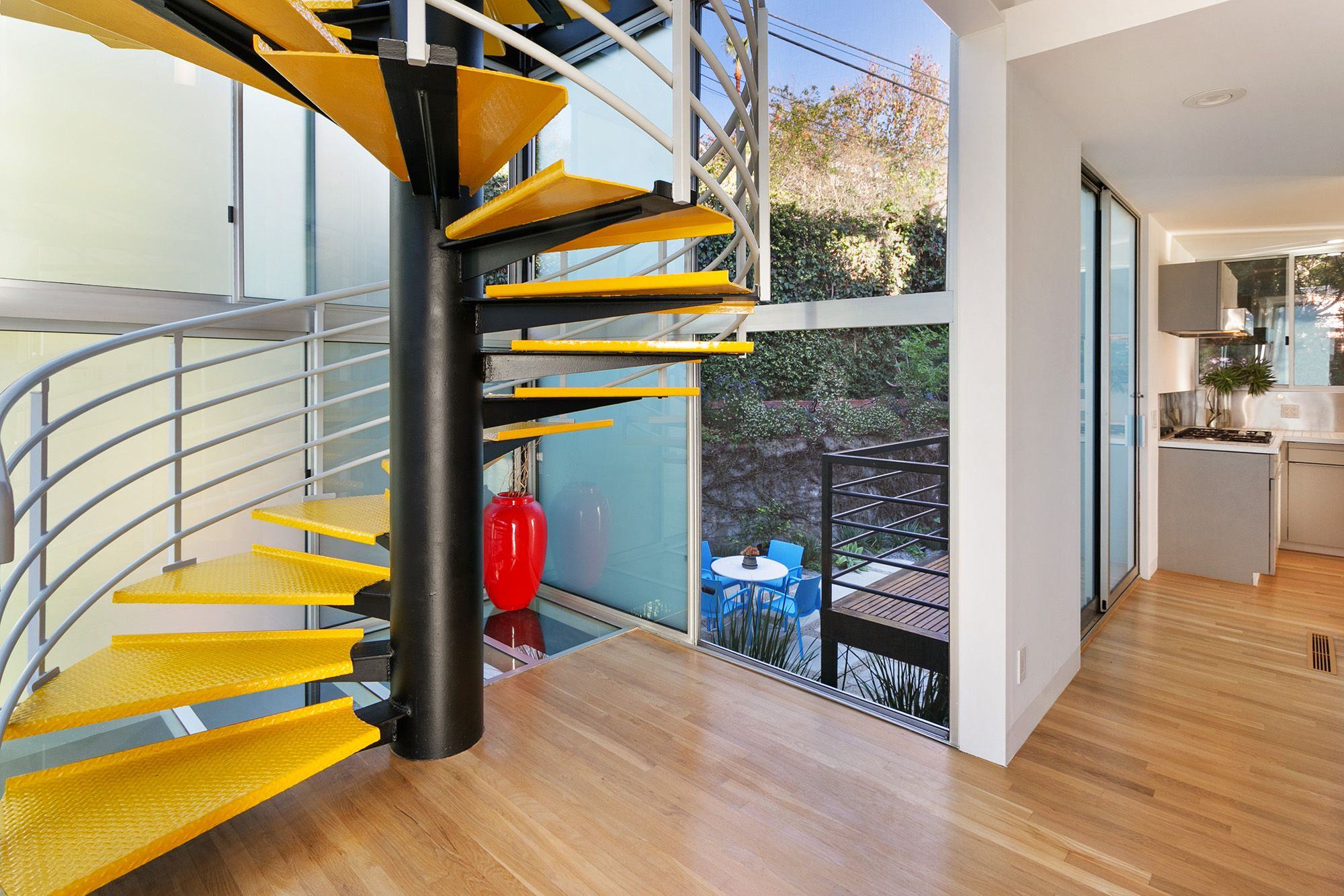
Pierre Koenig was one of the most iconic architects of the mid-century modern movement, which focused on functional designs, harmony with nature, geometric lines, and the use of steel and glass. Koenig’s final project, a gorgeous geometric home in Santa Monica known as the Schwartz House, has been listed for sale at $4.55 million usd / $6.13 million cad. 

More like a work of art than a typical house, the rare historic home sits atop four structural steel columns, designed to minimize the home’s ecological impact and promote a harmonious relationship with nature. The residence’s rotated design is focused on southern exposure and capturing the sea breezes to conserve energy but also offers an attention-getting look. Stark lines, black-steel framing, galvanized wall panels, and floor-to-ceiling glass provide the classic mid-century modern aesthetic for which Koenig is so famous.

More from our friends at toptenrealestatedeals.com. Photos by Cameron Carothers.

National Black Arts Festival 2024


NBAF is manifesting more this year: more impact, more engaging programming, more opportunities for artists, more exposure, and more funding. We are coming for it all in the new year! In celebration of what will be an amazing year, it is my honor to give you a peek into what we have in store as we prepare to do things even bigger and better in 2024.  

Our programming theme for this year is “Artistry Unbound,” an exploration of the resounding power of African American art to propel us toward the realization of our collective freedom. This theme celebrates the profound contributions of African American artists in their relentless pursuit of social justice, equality, and financial equity. It celebrates the trailblazers who have paved the way for a new generation of artists, continuing the legacy of social commentary and artistic innovation. This theme calls us to be “black on purpose” and create programs that directly speak to the injustices that we still face as a people and find artistic and creative ways to address these issues.

We are excited to bring this theme to life through carefully curated programming that will kick off with the NBAF Black History Month event, “Blacklisted! Banned Book Fair”, which speaks directly to the injustices highlighted through recent campaigns designed to censor and diminish Black voices.

Blacklisted! Banned Book Fair takes place on February 24th and 25th, and aligns with NBAF’s mission to:

  • Expose audiences to important and diverse works by African American authors,
  • Educate the public on how the banning of African American literature has been part of a larger pattern of censoring voices that advocate for social justice, civil rights, and the dismantling of racial prejudices,
  • Engage young and old readers alike with the wealth of African American books available to them, and
  • Entertain audiences with informative panel discussions, staged readings, an indie book market, and more!
             For more info, please visit our Black History Month page on nbaf.org

There are so many exciting things on the horizon for NBAF this year and we look forward to bringing you quality multi-disciplinary programming focused on uplifting and highlighting Black art and artists in new ways throughout 2024.  As we continue our transition back to larger immersive events and chart a path back to the renowned NBAF Festival, our team is committed to innovatively presenting the best in Black art and we look forward to continuing to make an impact in the community with your partnership. We look forward to seeing you soon online or at an upcoming event! For the Silo, Stephanie R. Owens.

Reflecting on the remarkable journey of 2023, we’re excited to share the significant impact your support has made on our mission and community. We encourage you to delve into the highlights and accomplishments of the past year in our 2023 Impact Report, available here.

Click on the image above to view a visual journey of the transformative moments and positive change that helped us achieve in 2023.

NBAF PROGRAMS & EVENTS

Check out these upcoming events from NBAF!

Blacklisted! Banned Books Fair
Saturday & Sunday, February 24th & 25th
Atlanta, GA
Calling all authors, literature lovers, and vendors to join us in celebrating the written word!
NBAF’s 2024 Black History Month program, Blacklisted! Banned Book Fair celebrates the African American authors creating work that challenges the status quo and speaks truth to power.

The programming features:

• Moderated panel discussions with Black Authors, Activists & Intellectuals
• Indie Black Book Market featuring African American booksellers and authors
• Youth Book Fair with interactive children’s activities
• Community Book Drive to benefit youth-centered non-profits
• Interactive exhibitions about banned African-American literature and authors
• Social Photo booths, food vendors & more!

Mark your calendars and get ready for a weekend filled with storytelling, creativity, and activism. This interactive experience is in partnership with the Morehouse College Movement Memory and Justice Project, South Fulton Arts, 44th & 3rd Bookseller and the Black Writers Weekend.

If you’re an author, bookseller, or have literature/education or activism related products, apply to be a vendor on the NBAF website. Spaces are limited, so secure your space today!
Authors Vendor AppPublishers Vendor AppMerch Vendor App

SAVE THE DATE!

Saturday, March 27

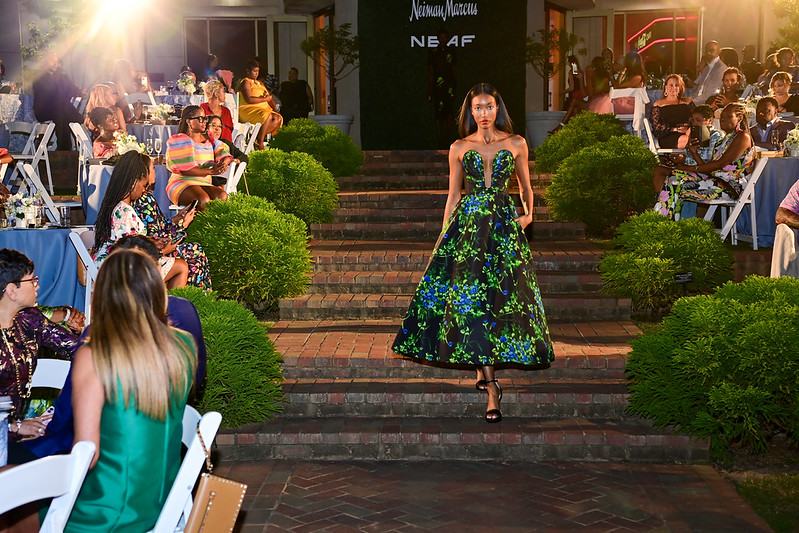
Taking place at the Atlanta History Center and in partnership with Neiman Marcus, FA+F attendees enjoy food + drinks, an impeccably curated fashion show, fashion icons and artists award presentations, and are introduced to the winning student designer of the annual Fashion Forward Student Design Competition.

Fine Art + Fashion raises funds to support NBAF’s operations and programs for artists of all ages and disciplines, particularly our youth arts education programs for underserved students of African descent.

LEARN MORE AND PURCHASE YOUR SEAT!
2024 NBAF Fashion Forward
A Competition for Student Fashion Designers
NBAF Fashion Forward honorees are selected by a distinguished panel of judges and receive a cash prize of $1,500. The 2024 NBAF Fashion Forward honorees will be presented at NBAF’s Fine Art + Fashion Benefit on Wednesday, March 27, 2024 in Atlanta, GA. To get started, check out nbaf.org/fashion-forward to download the Fashion Forward Fact Sheet to learn more about the application requirements. If you have any questions or need further information, please contact Fashion Forward Coordinator, Page Yang, at [email protected]. Please mention thesilo.ca when contacting.
The deadline to apply is Friday, January 26, 2024 at 11:59 PM EST. APPLY HERE!
2024 Artist Project Fund Applications
Eligible Metro Atlanta Artists Apply Today  
The 2024 Artist Project Fund (APF) is a $2,000 usd grant and 6-month artistic development program for Metro Atlanta artists seeking funds to complete an ongoing project. APF supports 20 professional artists in the completion of an ongoing artistic project, fosters a sense of community and creative collaboration, and provides immersive artistic and career development experiences to help them grow as artists and creative entrepreneurs.
The deadline to apply is Friday, February 2, 2024 at 11:59 PM EST.
APPLY HERE!

SHOP THE NBAF STORE

New Merch! Your purchase supports NBAF’s year round programming.

Select from special limited edition art prints, t-shirts, tote bags, note books, and more!Black Art Matters TeeNBAF Commemorative PinsRadcliffe Bailey NBAF 10th Anniversary PostersBlack Art Matters stainless steel tumblerNBAF tote bagNBAF Logo Unisex Hoodie
With Shop Pay you can get it now and pay later! Pay in 4 interest-free installments for orders over $50.00.  

Don’t miss out on NBAF news and events.
Follow us on social to stay in the know!

Canada’s Surging Non-Permanent Resident Population Crisis

Mahboubi, Skuterud – A Multi-Pronged Strategy for Managing Canada’s Surging Non-Permanent Resident Population
January, 2024 – Recent years have seen an unprecedented increase in Canada’s non-permanent resident population, far surpassing increases in annual admissions of new permanent residents. This unbalanced growth in the two migration streams will inevitably result in a growing undocumented population and forced deportations. Both developments risk inflaming Canada’s immigration politics and undermining public confidence in the immigration system. It is imperative that the government take immediate steps to stem the ongoing growth in foreign student and temporary foreign worker entries. Here’s how it can do it.

Recent years have seen an unprecedented increase in Canada’s non-permanent resident (NPR) population far surpassing increases in annual admissions of new permanent residents. This unbalanced growth in the two migration streams will inevitably result in a growing undocumented population and forced deportations. Both developments risk inflaming Canada’s immigration politics and undermining public confidence in the immigration system.  

It is imperative that the government take immediate steps to stem the ongoing growth in foreign student and temporary foreign worker entries.

Several factors have contributed to the NPR population surge, including ad-hoc programs aimed at expanding eligibility for permanent status, the well-documented postsecondary appetite for international tuition revenue, and eased employer access to temporary foreign workers, most notably in low-wage occupations.

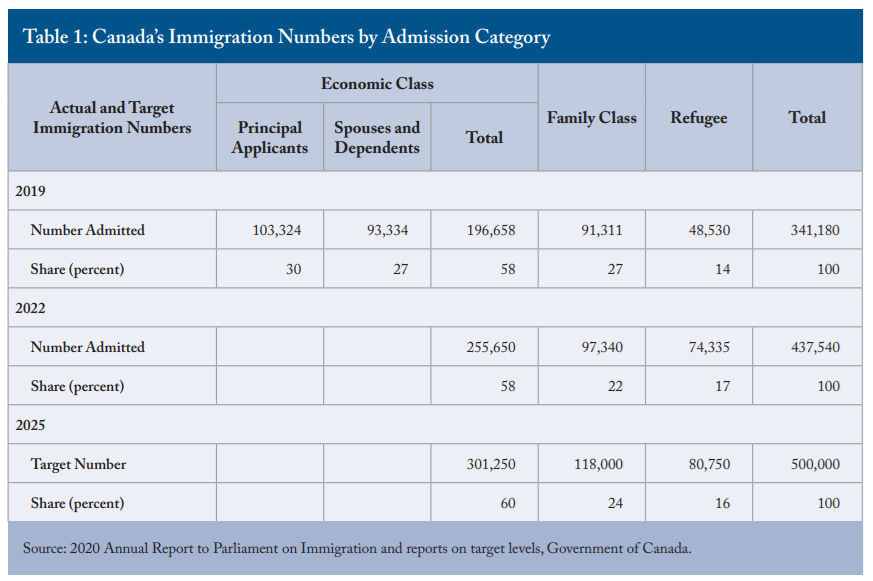
Statistics Canada estimates that by the fourth quarter of 2023, Canada’s non-permanent population had exceeded 2.5 million, while entries of new permanent residents remained below 500,000 and which the government has announced will stabilize in 2025. The tightening bottleneck in temporary-to-permanent residency flows is worsened because many permanent slots go to applicants residing abroad, not non-permanent residents.

A key factor driving the growth in non-permanent inflows is the government’s repeated announcements of ad hoc programs aimed at easing the pathway to PR status for lower-skilled migrants who would otherwise struggle to clear the hurdle of the Express Entry skilled-based points system.

Examples include the February 2021 decision to provide permanent status to all economic class candidates in the applicant pool regardless of their eligibility scores and the April 2021 provision of pathways to 90,000 “essential workers” including cashiers and truck drivers. And the government expanded the program in January 2023 to give PR status to undocumented construction workers and plans to broaden the program, allowing all undocumented people to apply for permanent status. 

No wonder large numbers of migrants try their luck.

But given limited permanent admissions, large numbers of justifiably hopeful NPRs will be unable to realize their dreams. As their study and work permits expire, many will be unable or unwilling to return to their home countries. This leaves them increasingly vulnerable to workplace exploitation, which can distort wage outcomes in lower skilled labour markets, and leaves them in poverty with no recourse to government supports because they are ineligible.

Canada urgently requires a multipronged strategy to stem this ongoing NPR growth and restore the stability and integrity of the immigration system. In our view, policies should be aimed at helping applicants make better decisions about seeking NPR status in Canada by offering a straightforward, predictable system against which they can realistically assess their prospects.

On international students, we recommend reintroducing the cap on off-campus work at 20 hours a week that was waived in October 2022 and recently extended to April 30. Continued policy punting is unhelpful in restoring predictability for prospective foreign students. Study permits have become de facto work permits, and brings job-seekers, not committed students.

We also recommend restricting study permits to institutions of a certain standard. Designated Learning Institutions (DLIs) whose students are currently ineligible for Post-Graduate Work Permits should also be ineligible for study permits. The government should also revoke designation based on the measured immigration and labour market outcomes of an institution’s graduates. Those outcomes should be regularly published by the immigration department to help prospective migrants make informed decisions and combat false dreams pushed by education recruiters.  

On temporary workers, extended measures allowing, for example, 30 percent of certain workforces to be low-wage temporary foreign workers, need reconsideration. Stemming the growth in the Low-Wage Stream of the Temporary Foreign Worker Program and restoring the pre-2020 hiring regulations recognizes recent evidence of adverse effects of this program on wages and local unemployment rates.

Most important, the government needs to bring back predictability in its permanent resident admission system in the economic-class applicant pool. Though well intentioned, the one-off programs easing the pathway to permanent status are contributing to temporary resident explosion. The department needs to return to its Comprehensive Ranking System as it did before 2020. The transparency of its points system and a stable minimum eligibility score over time will mean that applicants can see what skills or training they need for entry, thereby advancing the objective of our skilled immigration program.

If these policy levers are collectively applied, they can stem the unhealthy growth in Canada’s non-permanent population, restore fairness and transparency in the permanent admission stream, and secure the immigration system’s integrity and sustainability. In doing so, we can ensure that Canada continues to be a welcoming and prosperous country for all. *note this article was sent as a letter by the C.D. Howe Institute authors to  The Honourable Marc Miller, Minister of Immigration, Refugees and Citizenship Canada.

Parisa Mahboubi is a senior policy analyst at the C.D. Howe Institute. Mikal Skuterud is a professor of economics at the University of Waterloo, director of the Canadian Labour Economics Forum and a fellow-in-residence of the C.D. Howe Institute.

Icons Masked In League Of Wrestling Paintings

The League of Wrestling Mask Portraits is a growing body of work, undertaken in 2023, by realist painter, Richard Delaney. The work is a satirical, Pop Art-style, examination of the famous and controversial people of our time, such as Donald Trump, Joe Biden, Justin Trudeau, Elon Musk, and Greta Thunberg. Delaney paints their approximately, life-size portraits, in an unconventional manner. Politicians and celebrities are depicted wearing personalized wrestling masks (as in professional wrestling, aka Lucha Libra, often referred to as Mexican wrestling masks). They wear their masks as if ready to battle/wrestle in the social and political ring.  

Each mask is customized for the individual wearer with clues to their identity imbedded in the design.

The symbolic clues help the viewer identify the person when the facial features alone are not enough. For example, the design of Greta Thunberg’s mask reflects her climate activism. Yellow flame-patterned, patches, around her eyes, nose, and mouth, rise up to symbolically melt what appears to be an ice cap on the top of her head, causing melt-water to flow into the blue, ocean-like area of the mask, covering her face. The dominant colours, light blue and yellow, reference Thunberg’s country, Sweden, and its flag.     

Delaney’s paintings in oil and acrylic are garish, bombastic, and humorous. They are fresh and contemporary while being reminiscent of 1960’s Pop Art. The visual aesthetic is like a combination of cartoon, realistic painting, and or photo collage. The mask component has a hint of vintage, comic book art, and pulp art illustration. In contrast, the facial features of the subjects are rendered in a somewhat, photorealistic style.

Conceptually, the League of Wrestling Mask Portraits, is very much Pop Art, and may have roots in the work of Warhol.

Both artists use mass media as a reservoir of ideas. They each present the concept of fame and celebrity in a uniquely identifiable style. There is no doubt that the ‘mask’ in Delaney’s work is simultaneously a visual brand, and a concept to be pondered.  


Delaney has coined the terms “maskified” and “maskification,” to describe his portraits. The maskified portraits cannot be viewed without some consideration for the basic idea and purpose of a mask, that is, to conceal true identity, and or to project a persona. The maskification of Donald Trump, for example, in a red mask with gold trim and crown, draws a comparison to classic comic book superheroes or villains, depending on one’s political stance. The connection with Mascaras de Lucha Libra is of course, intentional, and it is this simple juxtaposition that makes the work visually and intellectually, compelling.        

Delaney plans to produce a large collection of portraits by the end of 2024.

Ultimately, he imagines them displayed and for sale in a contemporary art gallery. For the time being, they are available to view on social media in the form of humorous reels and videos. There are many potential subjects that Delaney would like to paint, including, for example, Dylan Mulvaney, Joe Rogan, Kamala Harris, King Charles, Pierre Poilievre, and Jordan Peterson. Who do you think should be maskified? You can make suggestions by following Delaney on social media where he will be frequently unveiling new paintings for his League of Wrestling Mask Portraits. 

Making Sexual Decisions You Are Comfortable With: Dry January

Some of us are participating in Dry January – (giving up alcohol for the whole month after enjoying it during December festivities) has become pretty popular worldwide. We must agree it`s giving the New Year a quite strong health kick.  

Dry January`s popularity is not a surprise at all and has a lot of benefits; it saves money, makes people sleep better, no hangovers (hello morning sex), and brings numerous health welfare – reduced blood pressure, improved skin, more energy – the thing that people really need, according to LELO survey. For 61.28% of respondents, low energy level makes them hard to make it through January

And even though you might not be a regular drinker, you (and your liver) surely deserve a small break. With this in mind, LELO endorses Dry January with a small note on a side – not everything has to be dry (wink, wink). 

While Dry January has its charm and a good cause, there is a widespread myth that it is also quite a challenge – especially if you want to continue enjoying your sex life. An encounter without the help of that small something that makes you relax your nerves might sound less exciting, but actually, it turns out, all that not drinking has some pretty positive effect on your sex life.  

And no, it`s not just about the “being present at the moment”; being sober significantly improves the physical side of sex. If you have ever experienced drooping after drinking, you`ll know that erectile dysfunction is a real thing.

Drinking can cause struggles to get and have an erection, leading to disappointment in sex.

Besides that, studies have shown that women are more likely to orgasm when they are entirely sober because alcohol reduces physical sensitivity, meaning it`s also harder to feel pleasure. Also, women might struggle to get aroused in the first place when drinking. Making your vagina free from the influence of alcohol gives sex a whole new dimension. 

Also, it is a fact that alcohol leads to irresponsible sex encounters; people are more likely to forget to use condoms because alcohol lowers inhibitions, leading to unwanted pregnancy and STIs. Being alcohol-free sounds pretty responsible here, right? 

Men are not being left out- Lelo F1S Red.

Studies show that alcohol often leads to having partners you might not actually be that keen on, as well as post-sex unsatisfaction. Knowing this, Dry January will ensure you choose people you want, make sexual decisions you are comfortable with, and enjoy it without regret. Additionally, according to the LELO survey, 93.7% of people would be willing to try something new sex-wise to cheer themselves and/or their partner. Is there a better timing than “depressing” January? 

Some of LELO’s new and best selling adult products.

To wrap it all up, cutting out alcohol (a well-known depressant) will make you well rested and more energetic, which automatically increases your libido and improves your sex life. The highlight of Dry January will be more exciting and engaging sex – the one you actually remember. And if we add 51.7% of our survey respondents who will consider buying a new toy to incorporate into their love life, January will be anything but dry.  

Online Remote Doctoring In Canada Effective This Flu Season

How to keep your kids healthy this winter

Kids never seem to get sick when it’s convenient. It always seems to hit in the middle of the night or the morning of a big test, and it’s not always obvious if they need to see a doctor or not. If your little one’s sick, your teen needs a doctor’s note for school, or you have health questions, Maple has you covered.

Maple is a virtual care provider that connects you with Canadian-licensed doctors and specialists, 24/7.

Even if your child isn’t currently sick, getting virus after virus may feel unavoidable. However, there are ways you can help to protect your kids from the worst of cold and flu season. Here’s how to keep your kids healthy this winter and what to do if they come down with something despite your best efforts.

How to keep your kids from getting sick

Cold weather doesn’t have to mark the start of fever and runny nose season. Here’s how to help protect your kids from getting sick.

1 Stay up to date with vaccinations

Getting your child to roll up their sleeve for a vaccine isn’t always easy. Despite that, the flu shot is a great option for protecting your family against the virus.
The flu vaccine changes every year based on which strains of flu are circulating. While it can’t completely guarantee your child won’t get the flu, it does prime their immune system to recognize the virus more quickly. This helps protect against more severe illness and any accompanying complications.

2 Prioritize healthy eating

No one food can completely protect your child from getting sick. However, vegetables, fruits, protein, and healthy fats provide necessary micronutrients to support their immune system function. Kids don’t always want to eat what’s best for them though. Even if they’re not a picky eater, devouring a rainbow of vegetables might not be your child’s thing. If you’re worried they’re not getting enough nutrients, speaking to a dietitian can help you understand if your child’s diet is lacking anything. Even better, they can suggest healthy meals your kids will actually eat.

3 Supplement their diet with vitamin D

Vitamin D is one of the building blocks of healthy immune functioning. But it’s difficult to get enough from sunlight and diet alone, leaving many Canadian kids deficient. Incorporating a vitamin D supplement is a great way to make sure they’re meeting their requirements.

4 Promote proper hand hygiene

The influenza virus can live on some surfaces for up to 7 days, just waiting for a chance to go from your child’s hand to their mouth, nose, or eyes. Support your child to wash their hands properly to help curb this.

5 Consider masking in public indoor settings

They may not be everyone’s preference, but masks are a great tool to prevent your child from breathing in cold and flu viruses. As an added bonus, they also help safeguard against COVID-19 when worn in public indoor places.

6 Ask them to give their friends space

Flu and cold viruses pass easily through close contact. Remind your child not to share utensils, food, or drinks with their friends.

7 Create good sleep habits

Lack of sleep can negatively affect the immune system, putting your child more at risk of getting sick. Keep a consistent wakeup and lights out schedule and avoid screens for at least an hour before bedtime to encourage a full night’s rest.

How to help your child recover comfortably

Viruses spread easily, and even the most conscientious kids can get sick. No matter what they’re sick with, however, encouraging your child to rest is one of the best things you can do to promote recovery. You can also make them more comfortable by:

  • Prioritizing hydration. Give your child frequent small sips of water to keep the mucus flowing and help reduce congestion.
  • Running a cool mist humidifier to ease nasal congestion and breathing. Don’t forget to use purified water and disinfect regularly to avoid dispersing bacteria or mold into the air.
  • Investing in a good quality nasal aspirator for babies and children who can’t blow their own nose.
  • Using a purified saline solution to clear nasal passages. You can combine this with a nasal aspirator tool.

What medications should I give my child for cold or flu?

Provided they don’t have any allergies to the medicines and you dose by weight, you can safely give your child fever-reducers like acetaminophen (Tylenol or Tempra) or ibuprofen (Advil or Motrin). These also address other symptoms like sore throat and headache.

However, giving children under 18 Aspirin for headaches or other symptoms is a definite no as it can cause Reye’s Syndrome, a serious illness. And, since antibiotics only treat bacterial infections, they won’t work against the viruses that cause colds and flu.

If giving your child medication is feeling tricky, talking to a doctor online can help to answer any questions you have. They may also be able to provide prescription medication like antiviral drugs to shorten the severity and length of your child’s flu. This is especially helpful for children at higher risk of flu complications, like the immunocompromised or kids under five.

If you go this route, timing is everything since antivirals are most effective within 48 hours of symptom onset. With Maple, you can connect to a doctor within minutes. And, if they do prescribe an antiviral, it can be faxed to the pharmacy of your choice, or delivered free to your door.

Without antivirals, how long does the flu last in kids? Recovery should take about a week although coughing and low energy can linger for a week or two after. In contrast, colds take about 7-10 days to run their course.

Quote: "No matter what they're sick with, however, encouraging your child to rest is one of the best things you can do to promote recovery."

Should I let my child’s fever run its course?

Fever isn’t just distressing, it can also be confusing — is 37.5°C a fever in a child? Is 38°C? And how do you know when a fever is too high for a child?

While it can be upsetting to watch your child wrestle with a fever, there are clear guidelines for treating them.

For starters, an underarm or oral measurement above 37.5°C is considered a fever. For ear and rectal temperature, 37.9°C is top of the normal range. But, while you can treat a temperature above these, you don’t have to. If your child’s comfortable, focus on keeping them hydrated and well rested.

When to have your child see a doctor for a cold or the flu

You know your child best. If you think something’s wrong, it’s never a bad idea to speak to a doctor. Beyond that, you should also reach out to a healthcare provider if:

  • Your child goes from getting better to suddenly getting worse.
  • Your child has a barking cough and raspy-sounding breathing — this may indicate croup.
  • A persistently high fever in a child with no other symptoms lingers beyond 48 hours. It may indicate an underlying medical issue or infection.

It’s time to take your toddler or child to the hospital when they:

  • Have a fever and are experiencing confusion, lethargy, severe drowsiness, or a stiff neck
  • Are having difficulty breathing — this can look like working hard to breathe or having difficulty catching their breath just sitting or talking
  • Are showing signs of dehydration

No matter how old they are, seeing your child sick can be stressful. With Maple, get the convenience of 24/7 virtual care anytime, anywhere and connect with a Canadian-licensed healthcare provider to help ease your concerns and get the treatment you need. If you’re looking to get an online prescription or see a healthcare provider quickly, Maple has you covered whether it’s the middle of the day or the middle of the night. Sign up today to help your child feel better, faster.

See a doctor now

Get started

The Met Acquires Monumental Tiffany Window

(New York, December, 2023)—The Metropolitan Museum of Art has announced the acquisition of a monumental Tiffany three-part window, Garden Landscape. The window—over ten feet wide and nearly seven feet tall—was designed by Agnes Northrop in the studios of Louis Comfort Tiffany, the attribution of which is based on a signed design drawing for the center panel that resides in The Met collection.

As part of the Museum’s American Wing 100th anniversary, the window will be installed in the Charles Engelhard Court in November 2024. The window will be dramatically framed by the columns from Laurelton Hall, Tiffany’s Long Island country estate.

The acquisition is made possible by Alan Gerry Gift; 2023 Benefit Fund; Louis V. Bell, Harris Brisbane Dick, Fletcher, and Rogers Funds and Joseph Pulitzer Bequest; funds and gifts from various donors, by exchange; Ronald S. Kane Bequest, in memory of Berry B. Tracy; Lila Acheson Wallace, several members of The Chairman’s Council, The Erving and Joyce Wolf Foundation, Martha J. Fleischman, Elizabeth J. and Paul De Rosa, Women and the Critical Eye, Mr. and Mrs. Richard Lockwood Chilton Jr., Cheryl and Blair Effron, The Felicia Fund, Julie and James Alexandre, Elizabeth and Richard Miller, Anonymous, John and Margaret Ruttenberg, and The Gerald H. Ruttenberg Foundation Gifts.

Max Hollein, The Met’s Marina Kellen French Director and CEO, said: “This stunning work of art is an extraordinary example of the transformational creativity of Agnes Northrop and Tiffany Studios. Magnificent in concept and execution and more than grand in size, it deepens the American Wing’s Tiffany holdings and will enhance the already stunning Engelhard Court with a powerful, immersive viewing experience.”

Sylvia Yount, Lawrence A. Fleischman Curator in Charge of the American Wing at The Met, said: “Northrop’s remarkable environmental work further strengthens our representation of women artists in the American Wing and allows us to share broader stories of early-20th-century culture with our visitors.”

The window was originally commissioned by Sarah Cochran, Pittsburgh businesswoman and philanthropist, for Linden Hall, the grand Tudor-Revival estate she had built in 1912 in Dawson, Pennsylvania. She personally requested the subject of the window, which represents a lush landscape and garden suggestive of her own at the estate. Placed on the stair landing of the house, the window enticed the viewer up marble steps and offered a long vista through tall, majestic pines flanking a central fountain amidst profuse flowers—pink and blue hydrangeas, poppies, and nasturtiums. The two side panels depict, on the left, foxglove and peonies, and on the right, hollyhocks, exquisitely rendered in glass. These were subjects favored by Northrop and American Impressionist painters.

Northrop was one of the most important designers in Tiffany’s employ and his preeminent woman designer. In a field dominated by men, Northrop established herself as one of the leading designers of windows, and was recognized for her work by winning a prestigious award at the Exposition Universelle in Paris in 1900. She helps shed light on the critical and often unrecognized role played by women in the art of Louis Comfort Tiffany. Northrop and Tiffany pioneered new landscape and garden subject matter for stained glass, and the window reveals Northrop’s careful observations of nature and her gift for translating it into glass.

Alice Cooney Frelinghuysen, Anthony W. and Lulu C. Wang Curator of American Decorative Arts, said: “This extraordinary evocation of a garden landscape is Northrop’s masterpiece. Made during the height of Louis Tiffany’s career, it was conceived, commissioned, and crafted by women. Featuring flowers in bloom from spring through summer, seen in the enigmatic light of approaching twilight, the window presents a luxuriant garden perennially in bloom.”

Tiffany’s opalescent glass shares a zeitgeist with American Impressionism, merging imagery with chromatic light. Northrop exploited the varied textures, lush colors, and light effects that were only possible with Tiffany’s special Favrile glass made at his furnaces in Corona, Queens, utilizing especially innovative and unusual techniques, some unique in a stained-glass window. The ingenious selection of the glass as well as the cutting of the glass into often thousands of pieces of almost impossible shapes was done by Tiffany’s skilled artisans, who were also largely women. Tiffany deemed the Linden Hall window of such note that he put it on public view in his New York showroom before shipping it to Cochran’s Pennsylvania home.
Featured image: Image: Three-part Garden Landscape window for Linden Hall, Designed by Agnes F. Northrop (1857–1953), Tiffany Studios (1902–32), New York, 1912. Leaded Favrile glass. 124 × 82 inches; 88 3/4 × 81 5/8 inches; 88 3/4 × 81 5/8 inches; center panel: 124 × 82 in. (315 × 208.3 cm); side panels: 88 3/4 × 81 5/8 in. (225.4 × 207.3 cm)

Amadeus Mozart Last Castle To Be Auctioned Off

According to many musical fans and our friends at toptenrealestatedeals.com, Wolfgang Amadeus Mozart is often considered the greatest musical genius to have ever lived. With over 800 works including operas, symphonies, and concertos, he defined the classical period and inspired later composers including Beethoven and Tchaikovsky.

Historic rooms abound.

His music continues to be performed all over the world to this day.

A child prodigy, Mozart composed his first pieces at age five and his first symphony at eight. With his family, he toured Europe performing for royalty. At only 13 years old, he was appointed court concertmaster in Salzburg in 1769 and would go on to work for various royal patrons including Emperor Joseph II before striking out on his own as an independent. In 1791, at just 35 years old, Mozart fell ill while conducting the premiere of his opera, La Clemenza di Tito, and died. His final year was a productive one, responsible for some of his best-loved works, including the opera The Magic Flute and his Requiem, which he was unable to finish before his passing. 

Mozart’s final work was commissioned by Count Franz von Walsegg of Schloss Stuppach in Salzburg, present-day Austria.

This historic castle, one of the few in lower Austria still in private hands, will be auctioned at Sotheby’s Concierge Auctions in New York, with bidding open to December 14. The palace was previously listed for 12 million euros. Known as “Mozart’s Last Castle” the property currently serves as a world-class performance space, including several independent businesses. The experience theatre, club salon, concert program, and castle shop are included in the property purchase. 

Modern entertainment via a home cinema.

The castle’s rich history dates to at least 1130, with partial redesigns in the 15th and 17th centuries. In 1945, the Nazis ordered the castle blown up to prevent it from falling into Soviet hands, but the officer in charge refused and the castle survived. Its architecture reflects the different periods of its construction, with elements of medieval, Renaissance and Baroque styles.

The gorgeous four-story residence is surrounded by a landscaped park with elaborate gardens and ancient trees.

The requiem chapel dates back to the Renaissance.

Inside, the historic home is appointed with priceless antiques. The castle’s 50 rooms include numerous entertainment spaces such as a cinema, two halls, formal dining rooms, and a library. The estate also includes the Renaissance-era Requiem chapel and a dungeon. Besides Mozart, other famous visitors to the castle include Napoleon Bonaparte, Franz Schubert, Pope Pius VI, Princess Isabelle von Bourbon-Parma, and Emperor Franz Stephan von Lothringen.

Simple, modern bedroom furnishings exist today.

Schloss Stuppach is located in the small mountain town of Gloggnitz, Austria. The area offers numerous Gothic and Baroque buildings and lots of history. Conveniently placed, it is only about an hour by train or car from Vienna. Known as the “City of Music”, Vienna has a long and storied history of opera, theatre, and classical music. Mozart himself spent much of his career in the city, was married at its St. Stephen’s Cathedral, and lies buried at its Cemetery of St. Marx. His preserved apartment, a museum, and numerous monuments attest to the composer’s deep connection with Austria’s vibrant capital. 

Yes there is a dungeon!

The auction will be held by Sotheby’s Concierge Auctions. Photos: Thomas Meyer Photography provided by Concierge Auctions.

Source: www.conciergeauctions.com

9 Suggestions For Light And Delicious Desserts

Craving a dessert that won’t weigh you down? The struggle is real. But fear not, as this guide will unveil the art of crafting desserts that are both light and delectable.

The struggle is real, but the solution is incredibly sweet. In a world where indulgence often comes with guilt, these dessert ideas offer a refreshing change. They’re the epitome of culinary elegance, balancing flavor and lightness in a harmonious blend.

The Magic of Fruit-Based Treats

Fruit serves as nature’s candy, offering sweetness. Consider a mango sorbet, a dish that dances on the palate while being kind to the waistline. A chilled grapefruit brûlée can also be a revelation, its tartness mellowed by a thin layer of caramelized sugar.

The Tasty Note: Strawberry Sour Candy

In a realm of endless possibilities, let’s not forget the simple joys like strawberry sour candy. Sometimes, a single piece can offer a burst of flavor and nostalgia, encapsulating the essence of light and delicious desserts.

The Allure of Dairy Alternatives

Dairy often contributes to the heaviness of desserts. However, alternatives like almond milk and coconut cream can work wonders. Imagine a chocolate mousse made with avocado and coconut cream. It’s a luxurious experience that leaves you satisfied, not stuffed.

The Charm of Miniature Portions

Sometimes, less truly is more. Opt for desserts that are small but big on flavor. A single chocolate truffle infused with lavender can be more satisfying than a whole bar of milk chocolate. Similarly, a small serving of panna cotta flavored with a hint of vanilla and lemon zest can be a heavenly experience.

The Elegance of Herbal Infusions

Herbs aren’t just for savory dishes; they can elevate desserts too. A basil and peach compote can be a game-changer, offering a complex flavor profile that’s both unexpected and delightful. Rosemary can also be a surprising ally, especially when paired with citrus flavors in a light sorbet.

The Sophistication of Sugar Alternatives

Sugar is often the culprit behind heavy, overly sweet desserts. But alternatives like stevia, monk fruit, and honey can offer a different kind of sweetness. Picture a lemon tart sweetened with honey, its tanginess perfectly balanced, making each bite a small celebration.

The Enigma of Unconventional Ingredients

Ever thought of incorporating vegetables into dessert? A beetroot and chocolate cake can be moist, rich, and surprisingly low in calories. Another intriguing option is a zucchini bread made with almond flour, a treat that’s both nutritious and indulgent.

The Craftsmanship of Technique

The way a dessert is prepared can significantly impact its lightness. Techniques like folding and whisking can introduce air into the mixture, making it lighter. A well-whisked aquafaba can replace heavy cream in many recipes, offering a vegan and lighter alternative.

The Grand Finale: A Symphony of Choices

The world of light and delicious desserts is vast and inviting. It beckons with the promise of guilt-free indulgence, a symphony of choices that cater to every palate and preference. So go ahead, take a culinary leap, and discover the myriad ways to satisfy your sweet tooth without the weight of regret.

In this guide, each suggestion serves as a note in a grand symphony, creating a melody of flavors that’s both light and irresistibly delicious. The struggle is real, but the rewards are sweet—literally and figuratively. For the Silo, Bill Gordon.

How Weight Loss Classes Can Benefit Your Holistic Wellness

Canadians are still bouncing back from the health impacts of years of isolation. A recent survey of over 1,000 citizens shows that almost one-third of them don’t exercise at all, despite the country’s health officials’ recommendation of at least 150 minutes per week of physical activity. After all, finding the motivation to go to the gym or do that morning run can be difficult when you only have yourself to be accountable for. This is why more people are opting to attend weight loss classes, helping them to stay consistent with their routine. But the effects of weight loss classes transcend merely the physical. Here are a few ways they can benefit your overall health:
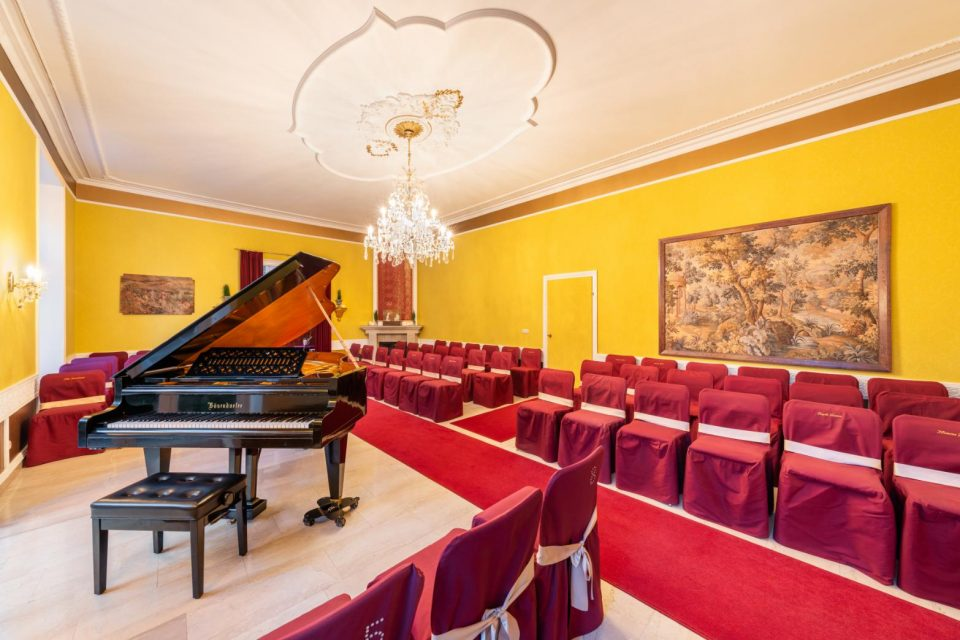
Physical wellness

Weight loss workshops are as crucial as meal plans and gym sessions because they provide holistic guidance and tips to keep you on the right track, from changing your relationship with food, sharing stories about your unique challenges, and sourcing motivation to keep exercising, among other benefits. By searching “weight loss classes near me” online, you can evaluate which features work for you. In-person classes allow you to meet with coaches and like-minded peers. If those don’t fit your schedule, a bevy of virtual workshops can connect you to a coach who will help you work on your wellness goals with science-backed strategies and inspiration, even at a distance. Peer group virtual workshops can help you get out of a fitness rut by providing support and accountability. These build the foundation for a consistent fitness routine that ultimately benefits your body.

Mental wellness

Group workouts offer a unique balm to your mental health that working out alone may not. A group setting facilitates a more engaging and energizing environment that encourages you to have fun and even engage in some healthy competition. If you’ve had a difficult day, it can help you get “out of your head” instead of stewing in negative thoughts. In a previous post, we talked about how yoga can calm the mind, relieve stress, and reduce anxiety. These effects are further emphasized in group yoga, where shared energy and cohesiveness can bring a comforting sense of community, encouraging dynamic balance and mental clarity. In a study, 64 women with severe anxiety and post-traumatic stress disorder (PTSD) were asked to participate in a weekly 1-hour yoga class for ten weeks. By the end, 52% of participants no longer met the criteria for PTSD.
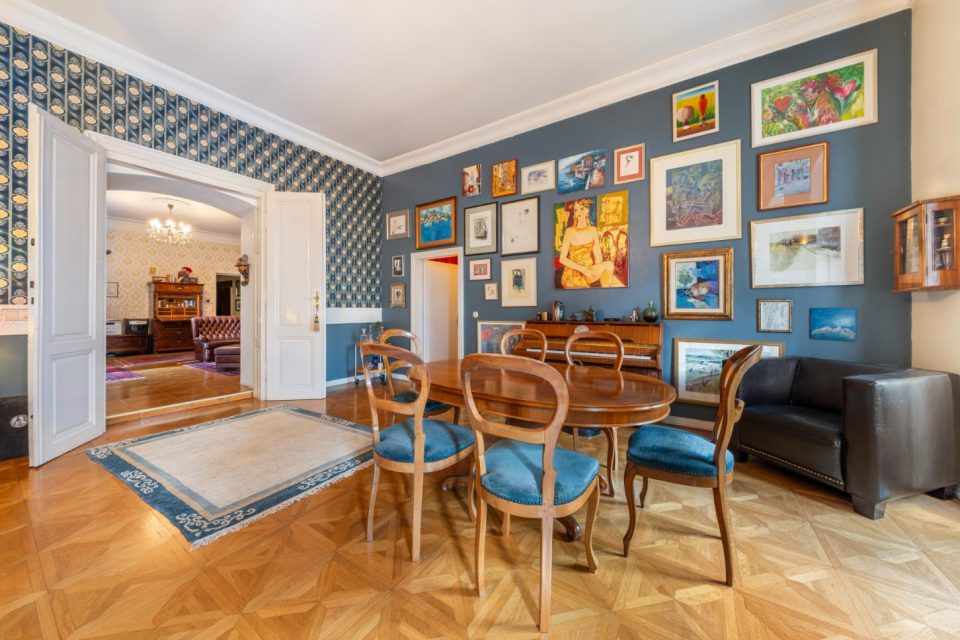
Social wellness

Mental health issues like depression and anxiety are inextricably tied to loneliness, which is why it’s concerning that over 40% of Canadians report feeling lonely some or all of the time. Excess weight may be another interconnected factor; among obese Canadian adults, 11% report being depressed or having a mood disorder compared to only 6.9% of normal-weight adults. For those who live alone or work from home, social interactions may not be as seamlessly integrated into their schedules, which is where group weight loss classes come in. They can help target the sedentary lifestyle commonly associated with loneliness, as well as provide a sense of belonging for people who need it. Participants often arrange social gatherings before or after classes, such as sharing meals or grocery shopping, to build camaraderie and keep one another on a healthy path for weight loss.
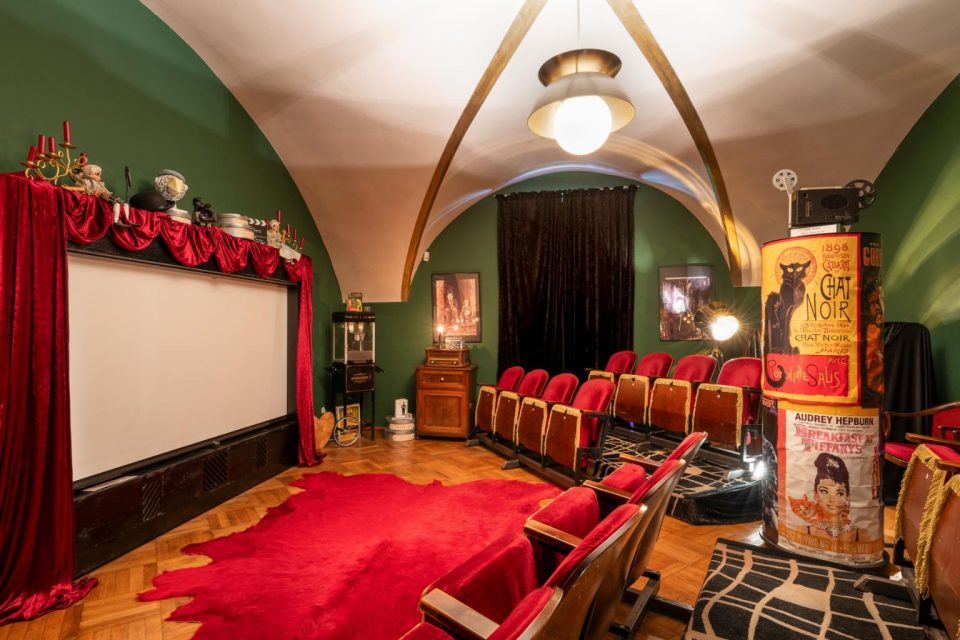

While weight loss may manifest most noticeably in your physical appearance, the team spirit offered by group weight loss classes carries mental and social benefits that can help you keep the weight off long-term. Having supportive figures you can lean on for advice and encouragement enables you to perceive weight management in a healthier, more positive light – and not something you must go through alone.

UK Tuition Highest Among Most Influential Countries Canada Ranks Fifth

Data calculated by Learnbonds.com shows that the United Kingdom has the highest tuition fees among the top ten world’s most influential countries at $13,900 per year.

Tuition fees compared

Among the top countries, Japan ranks second with an average of $12,400 to represent a percentage difference of 10.7% with the UK.

According to the data:

“The United States ranks third with average public college tuition of $10,000 representing a percentage difference of 28% when compared to the UK.”

Israel ranks fourth with $9,200 followed by Canada at $4,700. In the sixth position, is Italy with average tuition fees of $3,800. China and Russia are among countries that rank lower in average tuition at $3,650 and $3,500 respectively.

Among the top ten most influential countries, Germany and France are the only nations with average tuition below the $1000 mark. In Germany, the public college tuition fee is at least $900 while France is $620.

Germany’s cheap tuition fees can be attributed to the free tuition policy. In France, the fees are affordable for students with the EU/EEA and Switzerland.

In most countries, the cost of education is higher when you factor in the cost of living. Students have to incur extra costs in food and housing.


Top 10 Countries by International Influence
Details: according to 2019 dataData: US News

Chart
#CountryGDPPopulationGDP per Capita
1.United States$20.5 trillion327.2 million$62,869
2.China$13.6 trillion1.4 billion$18,116
3.United Kingdom$2.8 trillion66.5 million$45,741
4.Russia$1.7 trillion144.5 million$28,797
5.Germany$4.0 trillion82.9 million$52,386
6.France$2.8 trillion67.0 million$45,893
7.Japan$5.0 trillion126.5 million$44,246
8.Italy$2.1 trillion60.4 million$39,676
9.Israel$369.7 billion8.9 million$37,994
10.Canada$1.7 trillion37.1 million$49,690

Apart from tuition fees, students also have to pay for other expenses, such as housing, food, and books, which can run into thousands of dollars a year. However, in the United States, the cost of education depends on the choice of institution. The student loan burden is at crisis levels in the US, say many observers.

Israel comes fourth with an average fee of $9,200 while Canada occupies the fifth position. Between 2019-2020, the average college fees in the North American country were $4,700 representing a figure almost three times less than the UK.

In the sixth position, is Italy with average college fees of $3,800. During the period under review, compared to the UK, a percentage difference of 72.6%.

China and Russia also rank among countries with low tuition fees at $3,650 and $3,500 respectively.

China has invested heavily for years in its education system to make it affordable for citizens and foreigners. Chinese universities have a reputation for offering quality education with high-standard facilities.

France, Germany among countries with the cheapest college fees

Among the top ten most influential countries, Germany is among countries with average public college tuition below $1000. During the period under review, the average cost was $900. Compared to the UK, this is a percentage difference of 93.5%.

In Germany, the low cost of education can be attributed to factors such as the existing free tuition system. However, students can incur extra costs in student union and semester fees. Despite the extra charges, compared to other countries, the fee is still affordable.

However, France has the most affordable college education among the rated countries. The average public college is $620 to represent a percentage difference of over 95% compared to the UK. Generally, in France, tuition fees are lower for students from the EU/EEA and Switzerland. Students outside this region pay more.

Although most students can afford tuition fees in most countries, extra charges such as housing and food make college education more expensive. The situation is worsened especially in regions with a high cost of living. Globally, private tuition fees are usually higher compared to public institutions, ranging between $15,000 – $40,000.

For the Silo, Justinas Baltrusaitis -learnbonds.com

What Is The Mystery Phenomenon Of Shoe Tossing?

Shoe tossing and shoe posting are seen in most Canadian cities and rural motorways.

Its history and its symbolism are remarkably complex.

Shoe tossing is when shoelaces are tied and tossed over telephone or power lines so that the shoes hang loosely above the ground. Yet shoe tossing does not accurately describe shoes that are affixed to telephone poles or other inanimate objects using nails and staples. It seems that “shoe posting” would be a more appropriate terms for such occurrences. Nevertheless, each tossed or posted shoe represents either personal or cultural meaning.

There is a cultural meaning to each and every ‘tossed’ shoe- but what is it?

It may come as some surprise that shoe tossing holds a distressing history.

For example, many have noted that tossed shoes indicate the specific location where drugs like crack and heroin are used or sold. Moreover, others have mentioned that tossed shoes signify the physical boundaries of gang territory. For this reason the mayor of Los Angeles, California launched a campaign to remove tossed shoes from the city altogether. Further still, shoe tossing may be the product of bullying, theft and other forms of civil disobedience.

Is it safe to say that shoe tossing is primarily a form of civil disobedience or is there more to it?

On the other hand, there are some positive aspects of this mysterious phenomenon.

Shoe tossing, for instance, has been known to represent a rite of passage associated with graduation from an educational institution or a discharge from military service. While tossed and posted shoes mark our social environment in negative and positive ways they also call to mind images from the not so distant past.

Could there be a deep rooted collective unconscious meaning to shoe posting/nailing? H Joie Crockett Photos – Near the entrance to Rangeley Lake State Park you will find this oddity of a telephone pole with shoes nailed to it. The question is “Why?”

The pilfering of clothing and other possessions in extermination camps by Nazi forces during World War II included the shoes of men, women and children. These shoes were generally thrown on top of each other one by one. The result is a dense heap of shoes that were once filled with Jewish feet. Now, these shoes piles exist in Holocaust museums around the world as evidential markers of Nazi atrocity.
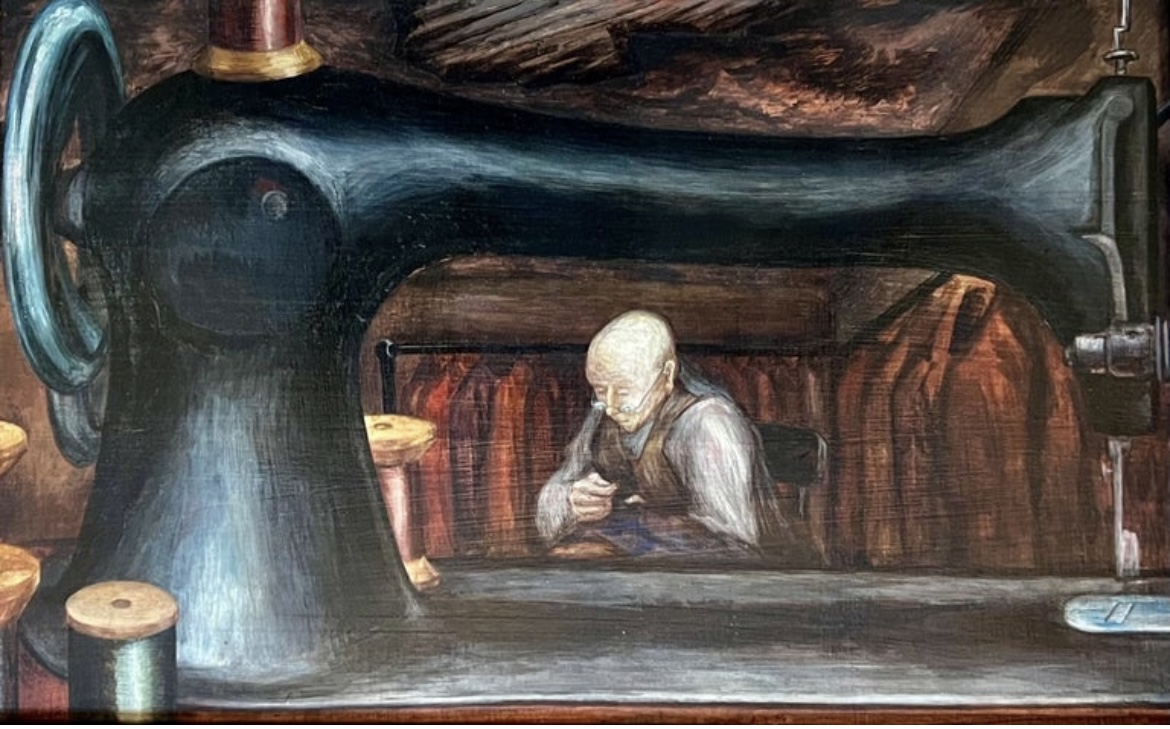
Holocaust shoes

Can tossed or posted shoes be thought of without considering the indelible Nazi shoe piles?

This is an idea that has not been explored and deserves further attention in visual culture discourse.
It is difficult to deny that the formal appearance of tossed and posted shoes in contemporary society reference past images of Nazi piles of Jewish shoes during the Holocaust. This may arguably be a far stretch for some; but for others, the sight of tossed and posted shoes may trigger the painful memories and agonizing reminders.
Shoe tossing is at once close to life but never far from death. The meaning one subscribes to these curious objects is, like most things, one’s own. However that does not suggest that particular objects seen in everyday life, like tossed or posted shoes, cannot allude to the images of history. For the Silo, Dr.Matthew Ryan Smith

Biometric Sensory Art Experiences Inspired By Four Cities

PURPLE are now working on a multi-city arts project in China and Hong Kong with The House Collective, a collection of uniquely intimate luxury hotels that includes Upper House in Hong Kong that was just listed as part of World’s 50 Best.

‘Encounters Across Cultures’ will be an immersive journey that travels across four dynamic cities: Hong Kong, Shanghai, Chengdu, and Beijing with The House Collective taking a stance on the importance of creativity within Chinese tourism.

The projects will feature singer-songwriter Vicky Fung, music producer TJoe, erhuist Chu Wan Pin, and the visionary new media artist, Keith Lam. Together, their work will harness the power of biometric data to craft mesmerizing musical compositions and awe-inspiring data sculptures that capture the very soul of each city. Below is a quick snapshot of the key elements of ‘Encounters Across Cultures’:

·        Vicky Fung and Keith Lam have created a series of multi-sensory data sculptures that follow four traveling artists – TJoe, Chu Wan Pin, and themselves – as they tour each city.

Data sculpture rendering

·        Creating a tangible journey for audiences, ‘Encounters Across Cultures’ will weave together these stories to create four musical pieces and data sculptures, designed with soundscape recordings of the musicians’ movements and biometric data, such as pulse and skin resistance.

Graphic Notation Keith’s Biometric data

·        The process includes Lam’s representation of this biometric data into emotive graphics, which Fung reshapes into musical tracks; the biometric data is then transformed into data sculptures that embody each traveller’s visceral sense of the city.

·        The House Collective’s four Houses will host the installations, capturing these private journeys into one shared experience for visitors.

This journey begins in October and continues until January, with specific dates for each location as follows:

• The Upper House in Hong Kong: October 9th to October 23rd

• The Middle House in Shanghai: October 30th to November 13th

• The Temple House in Chengdu: November 20th to December 6th

• The Opposite House in Beijing: December 14th to January 15th, 2024

THE HOUSE COLLECTIVE UNVEILS ‘BIOMETRIC’ SENSORY ART EXPERIENCES INSPIRED BY FOUR CITIES FOR THIS YEAR’S ‘ENCOUNTERS ACROSS CULTURES’

Artists and travelers collaborate to capture the heartbeat of four cities, inviting viewers to experience their emotive journeys across each city soundscapes through art, music, and technological forms.

The multi-sensory installations combine numerous art mediums to question whether technology is always a force disconnecting us from one another, or if it can reveal our innermost emotions.

October , 2023 – The House Collective, a collection of intimate luxury hotels, announces the third iteration of its biennial program ‘Encounters Across Cultures’ , which celebrates the immeasurable creativity fostered through multicultural and multidisciplinary collaboration. This year’s program explores the intersection of technology and the creative arts through four multi-sensory data sculptures and music tracks, inspired by biometric data captured during journeys across four cities — ‘Encounters Across Cultures’ will open at The Upper House in Hong Kong, travelling to The Middle House in Shanghai, The Temple House in Chengdu, and The Opposite House in Beijing.

“Art and culture are part of The House Collective’s core DNA and values. Since the launch of Encounters Across Cultures in 2019, we’ve worked with global artists to stimulate creativity and showcase the power of collaboration across borders. This program is not only an extension of The House Collective’s values, but we also hope to invite our guests to explore the beauty of cross-cultural connections, and to be immersed in this unique and sensory art experience together.” – Teresa Muk, Head of Brand and Strategic Marketing at Swire Hotels.

In their first ever collaboration, Hong Kong-based artist and music producer Vicky Fung and media artist Keith Lam have created a series of multi-sensory data sculptures that follow four travelers – guitarist TJoe, erhuist Chu Wan Pin, and themselves – as they tour the four cities. Creating a tangible journey for audiences, ‘Encounters Across Cultures’ weaves together all of these stories to create four musical pieces and data sculptures, designed with soundscape recordings of the musicians’ movements and biometric data, such as pulse and skin resistance. The process includes Lam’s representation of this biometric data into emotive graphics, which Fung reshapes into musical tracks; the biometric data is then transformed into data sculptures that embody each traveler’s visceral sense of the city. The four Houses will host the installations, capturing these private journeys into one shared experience for visitors. 

“I do not see the biometric data that we have collected as cold and lifeless data points – instead, each biometric moment is a representation of the traveler’s thoughts and feelings through their movements, and their changing reactions as they enter new environments. We wanted to share our heartbeats, our senses of touch and sight, with everyone through this immersive installation so that they could really feel exactly as we did in each city.” – Keith Lam, Program Artist.

“While we may come from very different backgrounds and live in different places, when I studied the biometric data, I instead found that we were all experiencing many of the same feelings and emotional journeys. The installation brought us closer together, as I felt totally connected to the person on the other side.” – Vicky Fung, Program Artist.

“Earlier this year, we celebrated the brand’s expansion in Tokyo through a cross-disciplinary dance performance that tells the story of honored tradition, modernity, harmony and new possibilities. For this year’s Encounters Across Cultures, The House Collective continues to tell cross-disciplinary stories, pushing the boundaries of innovation and delving into the dynamic realm of Art Meets Tech. Through these programs, we aim to share unforgettable experiences with our guests and expose them to locally curated artistic flavors, where we offer the comfort of being Houses not Hotels.” – Dean Winter, Managing Director of Swire Hotels

Viewers are invited to take a seat on the multi-sensory data sculptures, where they can be immersed in the music created from the biometric data. The result allows viewers to interact with their sense of touch, sight, and sound as they explore the installation.

Spread across the four Houses, ‘Encounters Across Cultures’ will run at The House Collective throughout October, until the beginning of next year. For more details, please visit the website at https://www.thehousecollective.com/en/art-and-culture/encounters-across-cultures-2023/.

The Upper House Hong Kong

The Middle House Shanghai

The Temple House Chengdu

The Opposite House Beijing

Keith Lam Programme Artist

Vicky Fung Programme Artist

About The House Collective

The House Collective by Swire Hotels is a group of refined, highly individual properties that defy comparison. Each uniquely imagined, The Opposite House in Beijing, The Upper House in Hong Kong, The Temple House in Chengdu and The Middle House in Shanghai were designed for seasoned travelers who seek a different, intimate and personalised experience in luxury travel. Each House is a sophisticated, singular piece of design, created by talented architects and designers, that reflect the unique qualities of their surroundings.

Program Creators

Keith Lam – Media Artist

Media Artist and Co-founder and Artistic Director of Art & Technology studio Dimension Plus. His works have won awards at international art festivals, including Prix Ars Electronica and Japan Media Arts Festival. His works have been shown around the world at top museums and art festivals including Hong Kong Museum of Arts, The National Art Centre at Tokyo, OK Center for Contemporary Art, Ars Electronica Festival, The New Technological Art Award Biennial at Belgium, FILE, ISEA, National Taiwan Museum of Fine Arts, National Taichung Performing Arts Center and Hong Kong Art Festival.  

Vicky Fung – Artist and Music Producer

Artist, music producer, singer-songwriter and curator, Vicky has always presented uniqueness and novelty in her works with a strong sense of emotional synchronicity. A Clore Fellow of 2023, she has worked with many prominent music artists in Hong Kong with an impressive list of music awards from media and professional associations and seeks to develop her interest in socially engaged art projects. In recent years, she has ventured into multi-media creation, including “Utopia…Momentarily” (2016) in the New Vision Media Festival, interactive virtual reality experience “Silili and The Tree” (2021) and immersive art and music performance “Soul Walk” (2022). 

Joel Kwong – Media Art Curator

Joel Kwong is a media art curator, writer, producer and educator based in Hong Kong. She is currently the Program Director for Microwave International New Media Arts Festival, and the founder of SIBYLS – a creative Arts x Tech consultation and production agency. Most recent produced and curated projects include Reimagines Heritage (online portal) (2023), Out of Thin Air – HK Film Arts & Costumes Exhibition at Hong Kong Heritage Museum (2023). Juried around Asia include VH Award (South Korea) (2022), and Siggraph Asia 2020 (South Korea) etc. She has given lectures in many Hong Kong tertiary institutions and universities and has also given talks at international art festivals including Ars Electronica in Linz, Transmediale in Berlin, and ACT Festival in Gwangju, South Korea. 

Tjoe Man Cheung – Guitarist

Tjoe Man Cheung, London-based musician and producer working across with artists across UK and Europe, including Brown Penny and PYJÆN, and in different festivals across the world. Alongside, Tjoe also initiated his own solo music projects and has founded NTBM (a jazz collective formed by emerging musicians from around the world) and his solo music projects. A graduate from the Musicians Institute, Tjoe was inspired and nurtured under the tutorship of Scott Henderson, Allen Hinds, Brad Rabuchin and Daniel Gilbert, with influences of jazz, funk, blues and pop. 

Wan Pin Chu – Erhuist

Wan Pin CHU is an international award-winning Erhuist and film composer based in Hong Kong. Wan is recognized as a versatile performer with rich emotions and limitless virtuosity in his music. In the UK, he is the first Chinese instrumentalist to perform in The Duke’s Hall in Royal Academy of Music and have performed in over hundreds of concerts all over the world including UK, US, France, Netherlands, Switzerland, Japan, Malaysia, Philippines, Hong Kong, Mainland China, and won an impressive list of national and international music competitions. Chu is is also a dedicated composer and have participated in the scoring of many films, televisions, games and commercials. 

15th Anniversary of Audiocosm

Thanksgiving’s Underlying Message Of Gratitude Helps Willpower Around Food

As millions upon millions of Canadians and Americans look ahead to Thanksgiving with trepidation about overeating, Susan Peirce Thompson, Ph.D., a brain and cognitive scientist specializing in the psychology of eating, offers this timeless wisdom:

Thanksgiving, with its underlying message of gratitude, can help, not hinder, willpower around food.

author susan peirce thompson

In fact, says Susan — who is President of the Institute for Sustainable Weight Loss  author of the forthcoming book, Bright Line Eating: The Science of Living Happy, Thin and Free (Hay House, March 2017) — when incorporated into the scaffolding of your life, giving thanks before EVERY meal has immeasurable health and weight control benefits, for the following reasons:

It reinforces the routine of eating meals on a regular schedule

Eating regular meals at consistent times is crucial in that it lengthens the body’s fasting window, which increases fat loss and strengthens the process by which cells recycle and repair. It also improves insulin sensitivity and lowers cholesterol.

It takes the burden off willpower

Willpower depletion is a very real phenomenon. In fact, research shows we may have as little as 15 minutes of willpower at our disposal before it runs dry. However, research also shows that something as simple as making a gratitude list can replenish its stores. Hence, practicing an “attitude of gratitude” is one of the best ways to harness the brain’s ability to resist unwanted and unneeded extra food.

man pigging out and eating turkey leg

Turning thoughts toward gratitude eases temptations themselves

No matter where you are in the world, no matter what party or occasion, no matter what restaurant, you can always turn your mind toward gratitude. Doing so shifts the focus from what you want, or crave, to what you have. It also supports mindfulness, helping sharpen awareness of your actions and lead to better choices.

Supplemental- From paleoholic.com …..Why your diet failed you.

Most Famous And Weirdest Retired Soccer Jersey Numbers


With the retirement of Francesco Totti five years ago, fans had been wondering if his team, Roma, would retire his famous number 10 shirt. In the end, they did not.   

That got us thinking, what are the most famous shirt retirements in Soccer – Football history? Let’s take a look.

Kanazawa Japan Keeping Geigi Culture Alive

Kanazawa remains one of Japan’s most curious cities. True to its deep roots, its architecture and layout continue to reflect the style and look that dominated its feudal era during the famed Edo period. Even today, its mysterious districts draw visitors and photographers from around the world who wish to experience and capture its intrigue, which is well-depicted on the Visit Kanazawa website replete with captivating visuals and trip planning resources. 

One of its most intriguing elements is its Geigi culture—a world that is quite mysterious to many.   In Kanazawa, Geisha is called “Geigi” and the life of these women is dedicated to mastering various forms of entertainment that is performed for guests, from dancing and singing to playing instruments and games.  Brittanica notes that “many geisha are also adept at flower arranging, performing the tea ceremony, or calligraphy.”


A report on Bokksu.com notes that, “Nowadays, there are just 1,000 geisha left in Japan, most of whom live and work predominantly in Tokyo and Kyoto. These modern geisha tend to remain within their district, where they’re treated with the utmost respect by Japanese locals, and not approached for photos or conversation.”

For its part, Kanazawa is home to three distinct Geigi districts and, though it can be difficult to secure, a private appointment with a Geigi is actually possible. These opportunities are not for the budget conscious.  However, the experience promises to be an unforgettable evening once you are able to get your foot in the door.  

A private appointment with a Geigi must come by personal referral, or through a trusted travel partner with proper access when on-site.  Once in, the evening is a captivating series of conversations, questions, performances and masterful displays of the arts accompanied by several courses of unique traditional Japanese dishes.  Guests are able to engage, observe and take photos with the Geigi while they ponder such a lifestyle and glean a more defined understanding of the culture that is still so vibrant today in Kanazawa’s labyrinth-like streets.

For those who don’t need the private appointment to fulfill their curiosity, there are plenty of alternative options.  Geigi Evenings are available at Kaikaro teahouse, the largest teahouse in Kanazawa, which offers guests an opportunity to see Geigi in full traditional dress, makeup and ornate hairstyle.  One of the highlights at Kaikaro is to meet the legendary landlady, Lady Baba, who provides informative, entertaining speeches regarding the teahouse and Geigi culture entirely in English.  And, if one happens to visit off season when Geishas take a break from full dress, it’s possible to take in the Geigi Practice Session where you can observe the ladies during daytime hours , roaming makeup-free with natural hair and casual dress as they practice their performances.

Geigi culture reconvenes annually each September with Kanazawa Odori, where performers from Kanazawa’s three teahouse districts unite to perform together with various musical instruments and traditional dances that tell stories.  

The Visit Kanazawa Facebook page is a great place to get inspired and learn more about the wonders of this enigmatic destination.

~~~

Merilee Kern, MBA is an internationally-regarded brand strategist and analyst
 who reports on cultural shifts and trends as well as noteworthy industry change makers, movers, shakers and innovators across all categories, both B2C and B2B. This includes field experts and thought leaders, brands, products, services, destinations and events. Merilee is Founder, Executive Editor and Producer of “The Luxe List” as well as Host of the Savvy Living” lifestyle TV show that airs in New York, Los Angeles, San Francisco, Miami, Atlanta and other major markets on CBS, FOX and other top networks; as well as the “Savvy Ventures” business TV show that airs nationally on FOX Business TV and Bloomberg TV.

http://www.kerncomm.com/NewLLLogoLO.jpg

Merilee also hosts the Savvy Ventures Podcast & Radio show available globally on W4CY Radio—the #1 ranked live streaming radio station—among others as well as all major podcast platforms, including Pandora, Audible, Spotify, Amazon Music, Apple Podcasts, Streamyard, iHeart Radio and dozens more.  As a prolific lifestyle, travel, dining and leisure industry voice of authority and tastemaker, Merilee keeps her finger on the pulse of the marketplace in search of new and innovative must-haves and exemplary experiences at all price points, from the affordable to the extreme.

Her work reaches multi-millions worldwide via broadcast TV (her own shows and copious others on which she appears) as well as a myriad of print and online publications and she is a regular contributor here at The Silo.

Connect with her at www.TheLuxeList.com and www.SavvyLiving.tv / Instagram www.Instagram.com/MerileeKern / Twitter www.Twitter.com/MerileeKern / Facebook www.Facebook.com/MerileeKernOfficial / LinkedIN www.LinkedIn.com/in/MerileeKern.


Sources:

https://www.britannica.com/art/geisha

https://www.bokksu.com/blogs/news/do-geishas-still-exist#:~:text=Nowadays%2C%20there%20are%20just%201%2C000,approached%20for%20photos%20or%20conversation

***Some or all of the accommodations(s), experience(s), item(s) and/or service(s) detailed above may have been provided or arranged at no cost to accommodate if this is review editorial, but all opinions expressed are entirely those of Merilee Kern and have not been influenced in any way.*** 

Sir Elton John Lists Atlanta Condo

I bet you did not know these facts from our friends at toptenrealestatedeals.com : British singer-pianist-composer Elton John is the most successful solo artist in the history of the Billboard charts, with more than 50 number-one hits, seven number-one albums, and over 300 million in record sales. 

He has received two Oscars, a Tony, a star on the Hollywood Walk of Fame, induction into the Rock and Roll Hall of Fame, and a knighthood from Queen Elizabeth II. The revered artist has recently completed his final tour, Farewell Yellow Brick Road, which became the highest-grossing concert series of all time.

Now moving permanently to his Windsor, England estate, he is offering the Atlanta condo that has been his US base for thirty years for sale at $4,995,000 usd / $6,744,249 cad.


John originally purchased a duplex on the 36th floor of the luxurious Park Place high-rise tower in Atlanta’s Buckhead neighborhood for $925,000 usd/ $1,248,935 cad, then added five neighboring units over the years to construct his 13,300 square-foot, four-bed, seven-bath residence spanning two floors.

The meticulously designed home features stunning wood walls, floor-to-ceiling windows, and 360 degrees of city skyline and western canopy views. 

Prehistoric Ocarinas-Ancient Flints Contain Musical Scales

A few years back, I posted the “I Found a… Pipe” blogpost – an attempt to initiate a series of found object accounts; exploring the dynamics of curiosity, the chance encounters, the chains of association, the pratfalls and prat-uplifts that may accompany such discoveries. 

One of the persistent themes is the idea that electronic-equivalents of sound-making processes can be found for free in the physical world – an ideal driven by poverty and its resultant anti-capitalism, and accompanying skepticism towards commercial electronic hardware flavours-of-the-months.  Whereas the “pipe of 2018” had limited sound-making value, this new blogpost examines the musical scales obtainable from multi-holed hollow flints, found during pandemic walkabouts.

I’ve been traipsing around fields. 

The flint-rich geology of the locale boasts rocks with hollow cavities – channels left by decayed ancient sea sponges.  These hollow flints are difficult to spot, as their holes are usually clogged with mud.  After some cleaning with water and bell-wire, the cavities can be cleared, creating almost ocarina-like ‘instruments’.  So far, a number of different flints have been found with interlinked channels, each offering unique microtonal musical scales.

These stones, each with their own in-built set of pitches formed 500 million years ago, are good grist for the arbitrary tuning mill. 

Why is arbitrary tuning important?  I consider it a topic all-too-frequently dismissed.  For those who enjoy the divergent aspects of differently-tuned music, or wish to escape the ubiquity of the equal tempered musical scale, it may be surprising that microtonal/xenharmonic music offers very little refuge – it is here that just intonation and “pure” harmonic mathematical dogmatism supplants one tyranny with another.  I exaggerate here a bit, but it’s fair to say that random/arbitrary musical scales are generally viewed as unsophisticated in microtonal music circles.

https://twitter.com/i/status/1273936272562753536

A few years ago I tried to establish a historical basis for ‘intuitively selected tuning systems’ in my Radionics Radio project (on Sub Rosa records), but drawing upon a fringe science – no matter how artistically groundbreaking those acoustic-radionic activities were in the late 1940s – didn’t convince many (radionics involves ‘psychically’ selecting frequencies that correspond to thoughts). 

Random tunings offer complete freedom, and reveal the idiosyncrasies of the instruments used, as well as the identities of soundmakers.  I would go as far to politicise it: arbitrary tuning is perhaps the ultimate musical ‘decolonisation’ whilst also being a practical and philosophical ideal for microtonal music’s LGBTQ+ lineage that embraces such varied personalities as Kathleen Schlesinger, Elsie Hamilton, to Harry Partch and Wendy Carlos – a lineage rarely-discussed, but deeply rooted, I believe, in the opposition to the norms of western equal temperament (and the contra-norms of just intonation and equal divisions of the octave).

The hollow flint… containing a scale.

Hollow flints found in fields speak of the primacy of arbitrary tunings: random, fully individuated tunings literally set in stone

My favourite is a handheld flint with five channels.  Unlike the specially-lipped ocarina, hollow flints cannot produce pure tones when blown into, unless a sharp ‘labium tip’ is expertly chiselled into it somehow (a feature of all fipple flutes).  This isn’t necessarily a problem – for instance, sound artist Akio Suzuki has been playing upon unrefined natural stones for decades, eliciting exploratory pitched noise: half-tonal, half-percussive, and sensitively done.  Covering the holes on the flint while blowing does produce vague pitches, but too broad to measure precisely.

Kathleen Schlesinger, in her 1939 deep-study of ancient greek auloi (reeded wind instruments dug up from historical sites) and their possible scales remarked that “it is impossible to determine the pitch, scale, or modality of any pipe that lacks a mouthpiece which will play it”. 

These rocks are not instruments, and it is indeed tricky treating them as such: even if a fipple mouthpiece (from a wind recorder, for instance) is introduced to the rock (which I did), the pitch of the notes varies due to its player’s breath pressure: the more open holes there are, the more breath pressure is required to produce a tone – and the natural reflex action is to supply more breath pressure, an action so unconscious that it almost feels as if the rock becomes an extension of the body.  Try it yourself.

It is possible to connect a small lapel microphone to a loudspeaker amplifier, and place the microphone inside the flint to hear feedback.  The feedback pitch is relative to the cavity, and alters according to the fingering of the cavities.  I did a brief experiment with this on camera, and posted it to Facebook to advertise the episode of Wavelength on Resonance FM where I describe these experiments.

On the internet, there’s always either a miserable don’t-know-who, or a know-it-all nonsenseclown poised to blurt. 

If they’re remotely connected to creative doings, it tends to spur on the mission to legitimise arbitrary scales.  On this occasion, one such character (I can’t discern which) emerged from the woodwork to advertise their obliviousness to these experiments’ contexts: “eh, this is like sticking a piezo transducer in anything. Ok; weird, somewhat regulated noise. ‘Man farting in field’ has been Lucier’d to death.”

Maybe this person is rightfully irate to some extent: the volume required to obtain the pitches of the flint cavity is horrendous on the ear.  To record it, one rainy afternoon I walked to the field where the flint originated, specifically to avoid remonstrations.  Alvin Lucier used compressors to limit the volume of his object-based feedback.  This feedback technique actually pre-dates Lucier’s work by eight decades – the feedback flute was proposed by Alfred Graham, patented in 1894 – a failed history I’ve excavated and written about in ‘Magnetic Music…‘ and ‘Failed Histories of Electronic Music‘, and recreated as a working model.  Graham recognised the many variables affecting the flute’s pitch, such as battery power, the shape and construct of the loudspeaker and microphone, and their relative positions. 

Nevertheless, the feedback flint, if held stable enough, is a fairly accurate approximation of the pitch intervals obtainable.  By comparing the feedback-generated intervals with the intervals obtained with an attached fipple, and also with the vague windy tones created when blowing, mean averages can be obtained.

Alfred Graham’s feedback flute, 1894.

With the lowest note registering as 669Hz, the ratios are calculable as 1/1, 737/669, 775/669, 263/223, 269/223 and 828/669 (giving an ascending 167.590, 254.628, 285.622, 324.674, 369.149 in cents).

What can be done with these notes? 

Well, the scale of this handheld flint encompasses less than four semitones (3.69, to be exact), which is a restrictive set of notes, but frequent exposure to the notes acclimatises the ear to soundmaking/melodic possibilities.  This is something noted by the composer Susan Alexjander who derived scales from DNA bases.  DNA bases’ tunings might as well be arbitrary, such is the inharmonic chaos – they seemed “so strange and alien that one at first despairs of ever creating a beautiful work of art, or making any coherent ‘sense’ out of them”, according to Alexjander.  By constant exposure to the new scales “played over and over on the synthesiser, some arrestingly beautiful combinations began to appear”…  so when dealing with such disorientating scales, perseverance is key! For the Silo, Dan Wilsen.

More can be heard on Wavelength, broadcast on Resonance 104.4FM on 19th June 2020. “A programme of multiple agendas presented by William English. This week: a tape sync with Oscillatorial Binnage member Daniel Wilson who, prevented from bin-diving during the Covid-19 epidemic, instead turns to “ground-diving” to dig out unusual stones from the earth. The potential for producing ‘rock music’ is showcased after a lengthy preliminary chat with William on the current state of the second-hand book trade.”

Stranger Things Tops List Of Most Popular TV Series But Who’s Next?

From Stranger Things dropping the first teaser for its final season to Sex Education Season 4, September is shaping up to be an exciting month for TV fans. New research has revealed the most popular TV series and Stranger Things tops the list. *costs are listed in USD

Our friends at Spin Genie have looked at a range of factors including the cost of the pilot episode, annual Google searches, number of Instagram posts and TikTok views as well as the IMDb rating of the world’s most popular TV series to determine the most successful series of all time. 

The most Googled TV shows:

RankShowAnnual Google searches
1Stranger Things191.3 M
2Game Of Thrones69.2 M
3The Walking Dead54.1 M
4Bridgerton22.5 M
5The Witcher21.7 M
6Westworld17.1 M
7The Mandalorian15.7 M
8Narcos11.0 M
9Orange Is the New Black10.3 M
10 13 Reasons Why10.2 M

The most searched for TV show is Stranger Things, with over 191 million annual searches. The show is also Instagram’s most popular TV show with over 15.5 million hashtagged posts on the app.

Taking the second spot is Game Of Thrones which receives nearly 70 million Google searches each year. The series was a worldwide success, with media attention lasting for eight years while the show was on air, drawing over 18.1 billion TikTok views and 13.8 million Instagram posts.

The Walking Dead takes the third spot with 54.1 million Google searches annually. The Walking Dead revolutionised the zombie apocalypse genre and captured the attention of millions of viewers across the world.

The research also revealed the top 10 most successful TV shows of all time: 

Rank Show Pilot BudgetGoogle SearchesInstagram PostsTikTok ViewsIMBD RatingSuccess Score 
1Game of Thrones$10.0M69.2M13.8M18.1B9.29.64
2Stranger Things$6.0M191.3M15.5M130.2M8.78.10
3The Mandalorian$12.5M15.7M2.4M4.6B8.77.86
4The Walking Dead $3.4M54.1M7.9M21.0B8.17.50
5Narcos$2.5M11.0M722.3K44.7M8.86.43
6Bridgerton $7.0M22.5M737.0K17.4B7.46.19
6Westworld$25.0M17.1M410.0K277.7M8.56.19
8The Witcher$10.0M21.7M1.3M3.3B8.16.07
9House of Cards$5.0M7.0M454.4K145.3M8.75.84
10The Crown $13.0M589.2K571.3K 5.1B8.65.83

Game of Thrones tops the list of the most successful TV shows, scoring 9.64 out of 10. The series is the highest-rated of any of the TV shows on the list, with an IMDB rating of 9.2 out of 10 and has also inspired 13.8 million Instagram posts, the second highest total of any shows. 

In second place is Stranger Things with a score of 8.1. The popularity of this series has influenced the charts, with Kate Bush’s Running Up That Hill re-entering the charts after appearing on Stranger Things. The series has more Google searches and Instagram posts than any other show in this study, even though the pilot episode budget was just $6 million. 

Rounding out the top three with a success score of 7.86 is The Mandalorian. The Disney+ exclusive’s third season stars Pedro Pascal, and the show’s pilot episode is reported to have cost $12.5 million.  The series has 15.7 million annual Google searches, 2.4 million Instagram posts and an impressive 4.6 billion TikTok views.

Further findings:

  • Vinyl has the most expensive pilot episode of any of the TV shows profiled. Created by Mick Jagger and Martin Scorsese, the first episode cost a reported $30 million but failed to generate enough attention for a second season. 
  • When it comes to TikTok, The Walking Dead tops the list as the most popular TV series totalling more than 21 billion views on the platform.
  • Narcos has the cheapest pilot debut of the series profiled, costing $2.5 million. Despite this, the show has gained a following of fans and has over 722,000 Instagram posts about it. Narcos also achieved a high rating of 8.9 on IMDB. 

Online Exhibition Of 1930s American Art Now Running

Walter Quirt

“This generation of Americans has a rendezvous with destiny.”           President Franklin Delano Roosevelt, June 27, 1936

A Rendezvous with Destiny: 1930s American Art, the new online exhibition from Helicline Fine Arthas started and runs through November 5, 2023. The exhibition features a variety of artistic styles and subject matters from urban, industrial and rural to abstract, people working and scenes of everyday life. For New York City based artists, the City itself was glorified on canvas, paper and bronze. Several of the artists who thrived during that period are still well known today, but most are obscure.


The exhibition, of predominantly 1930s artworks, features that range. The Metropolitan Museum of Art’s new exhibition, “Art for the Millions: American Culture and Politics in the 1930s” celebrates the American spirit during the depression era and serves as the inspiration for Helicline Fine Art’s new exhibition. 

After the stock market crash of 1929, Americans experienced a time of great transition at every level of society. After a terrible slump, the men and women of the country came together to rebuild the economy, their lives and their spirits. For the first time, our government paid artists to create. To this day, many Federal buildings – post offices, court houses, schools, hospitals, administrative buildings – still have the murals of WPA artists emblazoned on the walls and statues standing in courtyards. The work of these artists reflected that renewal. 

The artists of that generation are being rediscovered in 2023 and for generations into the future, thanks to the Met’s new exhibition, and galleries that keep the modernist art flame burning. Helicline’s proprietors, Keith Sherman and Roy Goldberg, recall discovering the WPA period. “We had just moved into our first apartment, constructed in 1929, on the Upper West Side. In attempting to furnish our home we realized we had no sense of style or taste. We spent time in the Strand Book Store to see what homes looked like in the 20s and 30s,” said Goldberg. “We discovered Art Deco, the Machine Age, the WPA and more.

We spent time in museums, art fairs and something that has disappeared from the cultural landscape, antique shows, where we developed our eye. Today we are collectors turned dealers still collecting. The WPA period is in our hearts,” added Sherman. 

Highlights of A Rendezvous with Destiny: 1930s American Art include a bold Stuart Davis gouache on paper; a “Mercury” bronze by Joseph Freedlander that sat on top of 5th Avenue traffic lights from the 1930s-60s; two works by Daniel Celentano (Thomas Hart Benton’s first and youngest student), many works depicting New York City, including a Cecil Bell of street life under the EL train and a Reginald Marsh depicting the Brooklyn Bridge, mural studies, and a Mervin Jules oil of a tailor with astonishing perspective.
MORE ABOUT HELICLINE FINE ART:MORE ABOUT HELICLINE FINE ART:Helicline Fine Art, founded in 2008 by Roy Goldberg and Keith Sherman, specializes in American and European modernism. The gallery’s core offerings are works from the WPA period. Additionally, Helicline offers American scene, social realism, mural studies, industrial landscapes, regionalism, abstracts, and other artwork. Located in a private space in midtown Manhattan, Helicline is open by appointment. The artworks on the site represent a sampling of available works. Helicline’s offerings are also available on artsy.net and 1stDibs.com.

Featured image- |Reginald Marsh.

Mervin Jules