Screenshot from the 1981 Canadian sci-fi film Scanners directed by Canadian film maker David Cronenberg.
I am a chronic Migraine sufferer. Are you?
I was diagnosed when I was 18 and now in my 40’s I still get cluster migraines. Cluster Migraines are recurrent, severe headaches that usually stick to one side of the head, for me it’s the left. I’ve probably suffered from them since I was a very young child. Throughout my life, I have dealt with many hurtful comments from those unable to understand my affliction. Their comments used to really get under my skin. Migraines are very severe. They are not just a very bad headache. No two Migraine sufferers are the same when it comes to patterns of pain or management. To make matters worse Migraines are an ‘invisible illness’.
An invisible illness is something that the sufferer feels but no one else sees or acknowledges. Those that are afflicted with migraines are often accused of faking or imagining their disabilities.
But it’s not entirely hard to understand why- these disabilities are not always obvious to the onlooker and the cyclic nature of migraines means that they are a chronic disability that are never going to go away.
To suffer with migraines is to know not only physical pain but also at times, sociological pain and even ostracization. It’s when you’ve been motoring onward through life and everybody looks at you like you are a healthy person but in actuality, there’s that one thing that keeps you from being the person you see yourself to be. This compounds your mood and may even trigger that other “invisible illness”: Depression.
Yes, migraines come with a lot of misunderstandings from critics that refuse to believe what is happening.
My favorite line has always been: “You’re young, there is nothing wrong with you…”. It’s shameful! The idea of simplifying health into a debate about youth and middle or old age. You take the time to try to explain and inform people what your life is about and yet they still believe that your suffering is all in your head. That’s when I usually hear comments like- “Get outside and get some fresh air, that’ll fix it.” or ” You just need to get over it, move on with your life”. The worse thing for me to hear is ” If you’re that sick how come you are doing that?” The sad truth is that all these phrases come from people who can’t understand what it is like to deal with an invisible illness.
Migraines occur when the blood flows through the brain causing blood vessels to rapidly expand, which in turn causes pain and other symptoms.
For me, it all starts with an unbelievable pain that can persist anywhere from 24 to 72 hours. I refer to it as having a huge Mack truck stuffed inside my head. While this happens, symptoms include: vertigo, numbness, mass nausea, fainting, blurred vision, and sensitivities to light, sounds and smells. I have been told that many of these symptoms are very close to what one would feel if they were having a stroke. Sometimes these symptoms can occur without the associated pain. I look at those as ‘added extras’. They include bright sparkles in the sky that only I can see…an added extra.
When things are at their worse and I have tried taking all the suggested and prescribed medications such as aleve, and the pain just won’t go away I plop myself in a car and have somebody drive me to the hospital.
If you were me and had experienced this you may have ended up spending four hours at the hospital on a good night. When you were admitted they may have looked at you like you were a drug addict. They may have checked you for signs of a stroke at which point they may have placed you in a bed where you wait and wait and wait. You may have been hooked up to an IV with sodium solution to help rehydrate you. Then they may have started you on the meds.
For me it’s always been 2mg of Maxeran (anti-nausea medication for people who go through chemotherapy) and 5mg of Toradol ( a strong pain medication). Perhaps it’s that mixture that worked for you and you sat there and waited, maybe even had a snooze. The nurse observed when you started to feel better because the colour flowed back into your face and you became very hungry. At this point you are finally ready to go home and start all over again knowing that the next day will always be the best day.
Perhaps you are like me- I turn into a bit of an energizer bunny… with the pain removed and the symptoms gone I actually feel pretty healthy and am ready to face the world again.
But what triggers these attacks?
This is the hardest part. These horrid brain attacks can be caused by almost anything- physically exhausting yourself on one extreme or simply walking down the soap isle in the grocery store on another. Almost anything and everything can trigger a migraine for me. The weather for instance is a trigger that I have been stuck with for years. Before a storm, a build-up of barometric pressure can be an instant trigger. Flying on airplanes is a trigger due to the change in the atmosphere.
If you want simpler triggers how about MSG, Artificial Food Colourings, Caffeine, Red Wine or Preservatives? Even certain veggies tend to make the list. Other things that are triggers can be strong perfumes/soaps, too much stress, bright lights and loudness. Basically anything that could possibly cause a disturbance to my personal inner balance. It is consoling to know that not all of these are triggers for everyone who suffer with migraines. Somethings effect more people than others. Trying to maneuver between what does and what doesn’t trigger is a battle in itself.
This invisible illness leaves me helpless.
The idea that it can pop up at any point in time means there is no space for future time planning. Making plans in my life is non-existent. I can say I am going to go here or there but in the long run until I get up that morning I will never be sure. Then there are the times that I take the chance and go out because I am just so tired of my couch no matter how bad I feel. Other times I stay home and safe.
Few non-sufferers know that in certain places Migraines have been upgraded to a neurological disorder. Another fact that most people don’t know is that it will never go away. There is no cure only pacifiers that help you to deal with everything that transpires. Sometimes these pacifiers worsen the attack.
And the frequency of attacks?
I get them 15 days out of a month which doesn’t leave much time to actually live a carefree lifestyle. There are so many things that I and other sufferers have lost because of this illness. Jobs and career goals go right out the window. The simplest things like enjoying a movie at the theater, going to see a live band or even a family gathering are at risk. It has to be just right and on a good day. It’s very stressing trying to keep up. I haven’t even mentioned the troubles it creates within a personal relationship, between you and the significant other. Between everything you have to do and the things that you want to do. All this takes place within such limiting time frames. I almost feel grateful, to have dealt with them from such an early age because it has prepared me to deal with this kind of lifestyle. In a way it’s made me so much stronger then I ever thought I could be. I have learned how to look at life in a different way. Don’t get me wrong, I would give anything to live without them but because that is not an option…I will reluctantly settle for this.
This is a side of me that many people do not get to see.
It’s something that I have only shared with the most important people in my life. There is a huge stigma out there when it comes to diseases or conditions that go unseen. When I get an attack you wouldn’t know it, you can’t see it. You can’t see the numb and tingles that invade my body. A lot of people just do not understand nor do they really want to. In our fast paced society it gets lost. I am sharing my story because I would love to see the stigma removed. I want people to understand that just because someone seems healthy and able it doesn’t mean that they actually are.
All those comments that I pointed out at the beginning of this article are things that I have heard for years. I still deal with it to this day. People that I have had to deal with who never understood no matter how much you try to explain it. I know that other people have gone through the same things that I have and I want to let them know that they are not alone. I also want to let other people know that they need to think before making a judgment on somebody else. Keep in mind that old saying: “Do not assume or judge somebody until you have walked a mile in their shoes…” For the Silo, Dawn Bank.
Over the past decade, Canadian math scores on the Program of International Student Assessment (PISA) and Trends in International Mathematics and Science Study (TIMSS) have declined in all provinces. Canadian fourth-grade students performed below the international average on nearly every benchmark level of math achievement on the 2023 TIMSS assessment.
Research shows early math achievement predicts later academic achievement and future earnings. Strong math skills are crucial for career sectors like technology, finance, and data science.
Canada’s declining math performance is an urgent national concern requiring immediate action by provincial governments.
This E-Brief via our friends at the C.D. Howe Institute outlines five recommendations to reverse Canada’s declining math scores: align math instruction with the science of learning; use assessments and data to drive improvement; strengthen provincial math curricula; improve teachers’ math knowledge; and appoint implementers committed to reform goals.
Introduction
Strong math skills are essential for careers that drive Canada’s economy, including technology, artificial intelligence, finance, and data science. To remain globally competitive and address long-term income gaps, improving math achievement among Canadian students must be a national priority.
The link between early math skills and later academic success is well established (Duncan et al. 2011; Siegler et al. 2012). Early math achievement also correlates positively with future career earnings. According to Werner et al. (2024), math achievement in childhood is a better predictor of adult earnings at age 30 than reading, health, or social-emotional skills. These effects were observed across all demographic groups.
Canada ranked in the top 10 in math on the 2022 PISA survey, an international OECD assessment of 15-year-olds. However, ranking near the top of a falling curve does not imply that all is well. Math achievement has been falling for well over a decade, beginning well before the COVID-19 pandemic. More Canadian students now struggle in math, fewer excel, and in several provinces, the decline is roughly equivalent to two or more years of schooling.
The OECD estimates that a 20-point drop on PISA roughly equates to about one year of learning (OECD 2023). Math scores in all provinces declined more than 20 points since 2003. Seven provinces experienced declines of over 40 points,1 representing approximately two years of lost learning, while the 58-point drop in Manitoba and Newfoundland and Labrador is close to three years.
In all provinces, the share of students below Level 2 on PISA increased since 2003, more than doubling in every province except Prince Edward Island and Quebec. Level 2 reflects the baseline level of mathematics proficiency to participate fully in society. Over the same period, the proportion of top performers declined in every province (OECD 2023; Richards 2025). In four provinces, at least 30 percent of students scored below Level 2 on the 2022 PISA test.2
The latest results from TIMSS3 have flown under the radar in Canada, but they should be another wake-up call. PISA and TIMSS assess different constructs. PISA focuses on mathematical literacy while TIMSS tests Grade 4 and Grade 8 students on curriculum-based academic skills (e.g., arithmetic, fractions, pre-algebra), which are essential for later math courses.
Students from Alberta, Manitoba, Newfoundland and Labrador, Ontario, and Quebec wrote the 2023 Grade 4 TIMSS assessment. While not all provinces participated, these jurisdictions educate well over half of Canada’s students. Results showed a clear downward trend since 2015, predating the COVID-19 pandemic: Canadian Grade 4 students scored below their peers in the United States, well below those in England, and significantly below top-performing countries like Singapore (Figure 1).
Even more alarming, Canadian fourth graders fell below the international median at nearly every benchmark level of math achievement (Table 1).
Provincial assessments tell a similar story. Ontario’s most recent EQAO tests show that 36 percent of Grade 3 students, 49 percent of Grade 6 students, and 42 percent of Grade 9 students are not meeting provincial standards in 2024-2025. Scores have remained stagnant over the last three years, despite provincial efforts to improve math performance (EQAO 2025).
Canada invests heavily in education, spending more per student than the OECD average (Figure 2), but higher education spending does not necessarily translate into better outcomes. Evidence suggests that cumulative expenditure per student between ages six and 15 improves PISA performance up to approximately US$100,000/ CAD $139,000, after which additional investment yields minimal measurable gains in student achievement (OECD 2024). For example, the cumulative spending per student between ages 6 and 15 in Canada is US$125,260/ CAD $173,848, yet Canadian 15-year-olds are outperformed by their Japanese counterparts, even though Japan spends approximately 14 percent less per student (OECD 2024). This suggests that increased funding alone cannot resolve educational performance gaps.
High-performing systems tend to strategically allocate resources toward evidence-based interventions, such as teacher quality improvements, rigorous curriculum design, standardized assessments, and targeted student support. For countries already spending above the threshold, including Canada, improving educational outcomes may require refocusing resources rather than increasing spending.
Evidence-based instructional strategies need to drive education investment decisions. This E-Brief outlines actionable policy recommendations to reverse the downward trend in Canada’s math performance and maximize returns on existing educational expenditure.
Align Math Instruction with the Science of Learning
Math Instruction Must be Grounded in High-quality Evidence
A major barrier to improving math outcomes in Canada is that many school math programs are not grounded in scientific evidence about how best to teach and learn math. Many popular math programs emphasize approaches such as inquiry-based or discovery-based learning,5 collaborative problem solving, or open-ended tasks.6 But a large body of research shows that problem-solving ability develops most effectively through explicit teacher-led instruction, which incorporates clear explanations, worked examples, purposeful practice, and feedback (Archer et al. 2011; Fuchs et al. 2021; Hughes et al. 2017; Stockard 2018; Sweller et al. 2010; Kirschner et al. 2006; Hartman et al. 2023; Guilmois et al. 2025).
As Andreas Schleicher, Director for Education and Skills at the OECD, has noted, PISA results reveal that teacher-directed instruction is a stronger predictor of achievement than student-oriented learning (Schleicher 2019). Recent analyses of PISA data from a sample of European countries found that student-oriented (or inquiry-based) instruction was negatively associated with PISA math achievement (Liu et al. 2024). Similar correlations have been observed in the 2010 Pan-Canadian Assessment Program (PCAP) data; the use of teacher-directed instruction was associated with better math performance, while indirect instruction was strongly associated with lower scores (CMEC 2012).
Explicit instruction benefits diverse groups of learners and is particularly critical for novice learners. Powell et al. (2025) describe systematic, explicit instruction as “the instructional approach that has amassed the strongest research base in mathematics, particularly when supporting students with mathematics disabilities or difficulties.” Hughes et al. (2017) identified five essential components of explicit instruction, based on the research literature:
Model: Teacher demonstrates key concepts clearly and concisely.
Break down concepts: Teach complex skills in manageable steps.
Fade support: Gradually reduce instructional guidance as students gain independence.
Respond and feedback: Provide frequent opportunities for student responses and feedback.
Practice: Create purposeful practice opportunities to build mastery.
Teacher professional development in math rarely focuses on explicit instruction. Some popular Canadian math programs even actively discourage teacher-led demonstrations, disparaging explicit instruction as “mimicking” (Boryga 2024). This disconnect between evidence and classroom practices undermines student success.
Provinces Must Set Evidence Standards
Most math programs and instructional approaches are marketed as “research-based,” but the term carries no specific criteria for what qualifies as credible evidence. In science, that phrase usually means rigorous, replicated evidence. In education, it can mean a survey, a case study, or an opinion dressed up as evidence. Without clear standards for what constitutes evidence, schools will continue to adopt programs unsupported by rigorous studies.
The What Works Clearinghouse practice guides published by the Institute of Educational Sciences (IES) identify, evaluate, and rate recommended instructional approaches (e.g., Fuchs et al. 2021; Gersten et al. 2009). High-quality research on effective math instruction has also been summarized by the National Math Advisory Panel (NMAP 2008) and Barak Rosenshine (Rosenshine 2012).
Provincial governments should set evidence standards, drawing on evidence syntheses such as the NMAP Final Report and IES practice guides, prioritizing randomized controlled trials and peer-reviewed studies that show measurable improvements in math achievement. Funding should be directed toward evidence-based programs.
Engage Science of Learning Experts in Math Reform
Cognitive scientists, behavioral scientists, and educational psychologists have warned about the limited use of evidence-based math instruction and persistence of pseudoscientific practices in math classrooms (e.g., Codding et al. 2023; Hartman et al. 2023). These experts offer underused insights about how students develop mathematical knowledge and skills. Provincial governments should actively engage them in setting evidence standards and ensuring that instructional programs align with the best available research on how children learn math.
Math Reform Lags Behind Reading Reform
Recent Right to Read Inquiry reports in Ontario, Saskatchewan, and Manitoba (Ontario Human Rights Commission 2022; Saskatchewan Human Rights Commission 2023; Manitoba Human Rights Commission 2025) found that existing practices ignored the abundance of research on how to best teach reading, known as the “science of reading.” In response, some Canadian provinces and school districts have begun to correct decades of damage done in reading instruction by aligning policies with this evidence (Timmons 2024; CBC Radio 2024; Macintosh 2025). Math has not received the same level of attention or urgency. Despite a strong body of rigorous research, there is limited awareness among educators about how students learn math most effectively. Unlike literacy, where students may gain incidental exposure at home (e.g., by parents reading aloud), many Canadian students are only exposed to meaningful math learning in classrooms, making evidence-aligned instruction even more critical.
Actionable recommendations
Set clear evidence standards for math programs, prioritizing randomized controlled trials and peer-reviewed studies that demonstrate measurable gains in math achievement.
Prioritize funding for math programs and professional development aligned with high-quality evidence.
Engage science of learning experts, such as those in cognitive science, behavioural science, and educational psychology, alongside experienced educators with a track record of effective math instruction, to guide evidence-based practices for teaching math.
Use Assessments and Data to Drive Improvement
Canada lacks clear, consistent measures of student progress in math. Without reliable data, schools cannot accurately diagnose problems early, intervene effectively, or determine whether students are on track in math. Provincial governments should prioritize two types of assessments: standardized tests and universal screening.
Provincial Standardized Testing
Standardized tests are typically given at the end of a term or school year to measure student achievement, monitor system performance, and ensure transparency.
Test scores from school-aged students are a good predictor of later academic outcomes, including post-secondary readiness and future earnings (DeChane et al. 2024). Access to reliable data allows education systems to focus on closing proficiency gaps early, thereby narrowing educational disparities later. Bergbauer et al. (2018) analyzed PISA microdata from over two million students across 59 countries, spanning six testing cycles from 2000 to 2015, and found that accountability systems using standardized tests to compare results across schools and students are associated with higher student achievement. In countries like Estonia and Portugal, standardized assessments have led to rising PISA outcomes and greater equity. In contrast, systems with limited standardized testing, such as Spain in the 1990s, struggled to identify and support struggling students, leading to greater inequality (Crato 2021).
Standardized tests provide critical information for teachers, parents, policymakers, and the public. They give parents a clear picture of their child’s academic progress so they can advocate effectively. They provide policymakers with reliable data to evaluate system effectiveness and target resources. It is standard practice in many countries to conduct annual standardized assessments, with aggregate results published by school districts, enabling transparency and accountability to the public, but it is uncommon in Canada.
Current testing is too infrequent, which hinders early intervention and accountability.7 Moreover, provincial assessments may lack diagnostic value. For example, Ontario’s EQAO assessments allow calculators, even for Grade 3 students, making it impossible to determine whether students have mastered basic arithmetic or learned math facts to automaticity.
Math Fact Fluency Matters
Basic arithmetic fluency is the foundation for later math success, yet many provincial assessments do not adequately determine whether students have mastered foundational skills. England addressed this by introducing mandatory multiplication tables checks for nine-year-old (Year Four) students, sending a clear signal that math fact fluency matters, and prompting schools to prioritize automaticity with math facts (Gibb 2025; Gibb and Peal 2025; UK Department for Education 2025).
The ability to recall math facts, like times tables, accurately and effortlessly from memory, is known as math fact fluency8 or automaticity. This is crucial since it reduces cognitive load, making it easier to tackle complex math problems that involve math facts (National Math Advisory Panel 2008; Hartman et al. 2023; McNeil et al. 2025). For example, when adding two fractions with denominators 6 and 8, math fact automaticity allows students to quickly produce 24 as the least common denominator. Students without math fact automaticity will struggle with fraction arithmetic.
Evidence-based methods for developing math fact fluency have been documented (for example, see Codding et al. 2011; Poncy et al. 2007, 2010 and 2015; and Stokke 2024 for an overview), but if reliable data is not being collected, schools may not devote sufficient resources to this critical skill or may fail to identify students who need support. A mandatory times tables check in primary school is a straightforward, high-impact policy.
Universal screening identifies students at risk of falling behind
While standardized tests provide system-level data, universal screeners are brief, timed assessments given two to three times per year. They are designed to quickly identify students who are behind so that evidence-based interventions can be used to provide remediation to ensure more equitable access to the core curriculum.
Provincial Human Rights Commission reports highlight the importance of universal screening for reading (Ontario Human Rights Commission 2022; Saskatchewan Human Rights Commission 2023; Manitoba Human Rights Commission 2025). Math requires the same urgency. Early studies found that when this kind of data is paired with effective math interventions, student math achievement improved (Fuchs et al., 1989; Fuchs et al., 1991; Allinder et al., 2000; Nelson et al. 2023). The IES practice guide on Response to Intervention recommends screening K-8 students in math twice per year using measures that are efficient (less than 20 minutes), reliable, and demonstrate predictive validity (Gersten et al. 2009). Using valid screeners is essential to accurately identify students at risk (VanDerHeyden et al. 2021; VanDerHeyden and Solomon 2023).
Screening alone is insufficient. Screening must be paired with intervention programs that incorporate evidence-based strategies, since ad hoc or “design your own” programs are unlikely to turn things around for struggling students.
Addressing Myths About Timed Activities
Concerns that timed assessments cause math anxiety are not supported by research. In fact, struggling with math has been identified as a factor in the development of math anxiety (Maki et al. 2024). Therefore, the best way to reduce math anxiety is to improve student achievement in math. Timed activities, such as low-stakes timed practice and timed retrieval practice, are essential for developing fluency. Timed activities are a key recommendation in the IES practice guide on evidence-based supports for struggling students, and there is strong evidence that they increase math achievement (Fuchs et al. 2021). Many timed activities and assessments are brief, and students tend to enjoy them.
Timed activities such as standardized tests and screening are essential to ensure students get the support they need. Standardized tests allow students to show what they have learned, and universal screeners are like academic “check-ups,” helping to catch problems early.
Actionable recommendations
Adopt a mandatory times tables check before the end of Grade 4.
Prohibit calculators on primary school provincial assessments.
Implement universal screening in math for all K-8 students using screening tools with demonstrated predictive validity.
Pair screening with evidence-based interventions.
Strengthen provincial standardized testing, implementing tests at key grades and tracking student progress over time.
Strengthen Provincial Math Curricula
Delays in Foundational Content are Holding Students Back
In a 2015 C.D. Howe Institute Commentary (Stokke 2015), I recommended that K-8 math curricula focus on concepts critical for later success in algebra and beyond. Most Canadian math curricula still delay foundational skills, leaving students behind their peers in other countries. When students build strong fluency early, they are better equipped to participate in advanced problem solving and mathematical reasoning.
Some provinces have made changes since 2015. Alberta’s 2023 revisions of the K-6 curriculum reinstated core concepts at appropriate grade levels. Ontario’s 2020 curriculum update requires recall of multiplication facts up to 12 x 12 by Grade 5. This is later than international benchmarks, and it is unclear whether fluency will improve since EQAO tests permit calculators. Manitoba and Saskatchewan also delay recall of multiplication facts (up to 10 x 10) until the end of Grade 5 and provide no accountability measures to ensure mastery. British Columbia’s 2016 curriculum is even worse, delaying or omitting key concepts entirely, and explicitly stating in the Grade 5 curriculum that “memorization of [math] facts is not intended” (Province of British Columbia, Ministry of Education, 2016). In contrast, the US Common Core and other international curricula expect students to achieve multiplication fact fluency by the end of Grade 3.
Fraction arithmetic is a strong predictor of later math achievement (Siegler et al. 2012), but is not taught in most Canadian provinces until Grades 7 or 8. This is two to three years behind the US Common Core State Standards, where students learn fraction arithmetic in Grades 4 and 5 (National Governors Association Center for Best Practices & Council of Chief State School Officers 2023). The NMAP stressed improving fraction fluency to improve algebra outcomes (NMAP 2008).
Delays in teaching foundational topics widen inequities by disproportionately harming disadvantaged students, whose families are less able to pay for private tutoring to compensate for gaps. Delays reduce practice time, leading to compounding knowledge gaps and lower success in advanced math.
The above table, based on recommendations from the NMAP final report and benchmarks from high-performing jurisdictions, serves as a guide for when key topics should be covered.
Actionable recommendations
Revise provincial math curricula to emphasize foundational topics at earlier grades, using the above table as a guideline.
Require automatic recall of basic math facts as an explicit learning outcome in provincial curricula where it is not currently mandated.
Curriculum changes alone are not enough. Without evidence-based math programs and accountability measures such as mandatory times tables checks, rigorous standardized assessments, and restrictions on calculator use in early grades, even strong curriculum outcomes will have limited impact on improving student achievement.
Strengthen Teacher Content Knowledge in Mathematics
To improve math outcomes for students, we must ensure they are taught by teachers with strong math knowledge. The most practical time to build this knowledge is during university, when teacher candidates complete coursework to prepare for their careers. We have a responsibility to future generations to make this investment now, before teachers enter the profession and impact students.
Math Teachers Need More than High School Math
A high school math background and pedagogy courses are not sufficient preparation for teaching K-8 math. Teachers need deep mathematical knowledge, extending beyond the content they are expected to teach, in order to anticipate misconceptions and prepare students for future math success (Ma 1999; Hill et al. 2005).
Since provincial governments certify teachers, they have a duty to ensure that teacher preparation meets minimum standards. Claims suggesting that teachers’ math knowledge is unimportant or negatively related to teaching effectiveness have been debunked (Barr et al. 2024).
Most Canadian provinces follow a generalist model in K-8, where teachers instruct all subjects, including math. In my 2015 Commentary, I recommended that provinces require K-8 teacher candidates to complete at least six credit hours in math content courses designed to give them a solid understanding of the math they will teach. I also recommended implementing math teacher licensure exams for K-8 teachers to ensure minimum proficiency, a recommendation recently echoed by the National Council on Teacher Quality (NCTQ) (Drake et al. 2025).
The NCTQ recommends that teacher candidates receive at least 105 instructional hours in math content and 45 hours of math pedagogy,9 which is equivalent to three to four university-level math content courses in Canada. Apart from Quebec, no Canadian province meets this expectation, and some are regressing.
Manitoba briefly required two math content courses for students entering teacher preparation programs after 2015, with the first affected cohort graduating in 2020, but eliminated the requirement in 2024 (Macintosh 2025). While intended to boost enrolment in teacher education programs, this decision comes at the expense of students taught by unprepared teachers.
The NCTQ also recommends that elementary teacher candidates pass a strong math licensure exam, covering four core math topics.10 Ontario has recently introduced a Mathematics Proficiency Test for teacher certification, effective February 2025 (EQAO, n.d.). Other provinces have yet to follow suit.
Actionable recommendations
Require a minimum of six credit hours in math content courses tailored to K-8 teachers, as part of licensing requirements.
Implement rigorous math licensure exams for K-8 teachers prior to certification.
Appoint Implementers Committed to the Reform Goals
Reform in math education cannot succeed when implementation is entrusted to individuals who oppose or misunderstand its goals. Policymakers in Canada may recognize the problems within the current system and propose promising solutions to improve math achievement. However, too often, reforms fail when implementation is led by individuals invested in maintaining the very system that needs fixing. For example, despite the Ontario government’s commitment to improving student achievement, improvement has been inadequate, prompting a newly announced external review (Ontario Ministry of Education 2025). To achieve meaningful and lasting improvements in math outcomes, leaders must stay engaged at every stage of the reform process. This includes carefully selecting implementers who are genuinely committed to the goals of reform, building coalitions of educators and stakeholders who support evidence-based practices, and establishing clear accountability measures to track progress and address resistance.
Conclusion
Improving math achievement in Canada requires both immediate action and long-term investments. Policymakers can implement high-impact, low-cost reforms immediately, such as introducing a mandatory times tables check and implementing universal math screening. At the same time, they can work to ensure math instruction aligns with evidence, improve provincial math curricula, and strengthen teacher certification standards.
Below is a summary of actionable recommendations for provincial policymakers and education leaders:
Use assessments and data to drive improvement
Adopt a mandatory times tables check by the end of Grade 4.
Prohibit calculators on primary school provincial assessments to ensure arithmetic fluency.
Implement universal screening in math for all K-8 students, paired with evidence-based interventions.
Strengthen provincial standardized testing by adding assessments at key grades and tracking student progress over time.
Align math instruction with the science of learning
Set clear evidence standards for math instructional programs, prioritizing randomized controlled trials and peer-reviewed studies showing measurable gains in math achievement.
Prioritize funding for math programs and professional development aligned with high-quality evidence.
Engage science of learning experts, such as those in cognitive science, behavioural science, educational psychology, as well as experienced educators with a track record of effective math instruction to guide evidence-based practices for teaching math.
Strengthen provincial math curricula
Revise math curricula to introduce foundational topics earlier, following benchmarks from the National Math Advisory Panel.
Require automatic recall of basic math facts as an explicit learning outcome in all provincial curricula.
Strengthen teacher content knowledge in math
Require a minimum of 6 credit hours in math content courses tailored to K-8 teachers, as part of licensing requirements.
Implement rigorous math licensure exams for K-8 teachers before certification.
Appoint implementers committed to the reform goals
Appoint committed implementers who support evidence-based practices to ensure policies are carried out as intended.
Better math education is crucial for Canada’s students, workforce, and economic future. The time to fix math instruction in Canada is now. With committed leadership, evidence-based policies, and meaningful action, provinces can reverse the decline and set students up for long-term success in mathematics.
The author thanks Colin Busby, Brian Poncy, Narad Rampersad, John Richards, Andrew Sharpe, Benjamin Solomon, Ross Stokke, Rosalie Wyonch, and Tingting Zhang for comments on an earlier draft. The author also thanks John Mighton and Nuno Crato for discussions and advice. The author retains responsibility for any errors and the views expressed.
Archer, Anita, and Charles A. Hughes. 2011. Explicit Instruction: Effective and Efficient Teaching. New York: Guilford Publications.
Barr, Darja, Jim Clark, James Currie, Payman Eskandari, Shakhawat Hossain, Narad Rampersad, Anna Stokke, Ross Stokke, and Matthew Wiersma. 2024. “Fact-checking Research Claims about Math Education in Manitoba.” Nonpartisan Education Review 20(2): 1–47.
Bergbauer, Annika, Eric Hanushek, and Ludger Woessman. 2018. “Testing.” NBER Working Paper 24836. Cambridge, MA: National Bureau of Economic Research. https://doi.org/10.3386/w24836.
Codding, Robin, Corey Peltier, and Jared Campbell. 2023. “Introducing the Science of Math.” Teaching Exceptional Children 56(1): 6-11. https://doi.org/10.1177/00400599221121721.
Codding, Robin, Matthew Burns, and Gracia Lukito. 2011. “Meta–Analysis of Mathematic Basic–Fact Fluency Interventions: A Component Analysis.” Learning Disabilities Research & Practice 26(1): 36-47.
Council of Ministers of Education (CMEC), Canada. 2012. PCAP-2010 Contextual Report on Student Achievement in Mathematics. Toronto: Council of Ministers of Education.
CMEC, Canada. 2023. Measuring Up: Canadian Results of the OECD PISA 2022 Study. Toronto: CMEC.
Crato, Nuno. 2021. “Setting up the Scene: Lessons Learned from PISA 2018 Statistics and Other International Student Assessments.” In Improving a Country’s Education, edited by Nuno Crato. Cham: Springer.
DeChane, Darrin, Takako Nomi, and Michael Podgursky. 2024. “College and Career Ready: How Well Does 8th Grade MAP Performance Predict Post-Secondary Educational Attainment?” CALDER Working Paper No. 300-0524.
Deans for Impact. 2015. The Science of Learning. Austin, TX: Deans for Impact.
Drake, Glenn, Russell Noble, and Heather Peske. 2025. Teacher Prep Review: Solving for Math Success. Washington, DC: National Council on Teacher Quality. April.
Duncan, Greg, and Katherine Magnuson. 2011. “The Nature and Impact of Early Achievement Skills, Attention Skills, and Behavior Problems.” In Whither Opportunity?: Rising Inequality, Schools, and Children’s Life Chances, 47–69.
Fuchs, Lynn, Douglas Fuchs, Carol Hamlett, and Pamela Stecker. (1991). “Effects of Curriculum-Based Measurement and Consultation on Teacher Planning and Student Achievement in Mathematics Operations.” American Educational Research Journal 28(3): 617-641. https://doi.org/10.3102/00028312028003617.
Fuchs, Lynn, Rebecca Newman-Gonchar, Rebecca Schumacher, Barbara Dougherty, Natalie Bucka, Karen Karp, John Woodward, Bradley Clarke, Nancy Jordan, Russell Gersten, Madhavi Jayanthi, Brenda Keating, and Sarah Morgan. 2021. “Assisting Students Struggling with Mathematics: Intervention in the Elementary Grades (WWC 2021006).” Washington, DC: National Center for Education Evaluation and Regional Assistance, Institute of Education Sciences, US Department of Education.
Gersten, Russell, Sybilla Beckman, Benjamin Clarke, Anne Foegen, Laurel Marsh, Jon Star, and Bradley Witzel. 2009. “Assisting Students Struggling with Mathematics: Response to Intervention (RtI) for Elementary and Middle Schools (NCEE 2009-4060).” Washington, DC: National Center for Education Evaluation and Regional Assistance, Institute of Education Sciences, US Department of Education.
Gibb, Nick. 2025. “From Decline to Top Rankings: How England Transformed Education with Nick Gibb.” Interview by Anna Stokke. Chalk & Talk (podcast). May 30. https://www.podbean.com/ew/pb-zps9p-18c1e97.
Gibb, Nick and Robert Peal. 2025. Reforming Lessons: Why English Schools Have Improved Since 2010 and How This Was Achieved. 1st ed. London: Routledge.
Guilmois, Celine, Tom Rohmer, and Maria Popa-Roch. 2025. “Learning basic mathematic skills in primary school: testing the effectiveness of socio-constructivist and explicit instruction.” School Effectiveness and School Improvement. https://doi.org/10.1080/09243453.2025.2536485.
Hartman, Judith, Sarah Hart, Eric Nelson, and Paul Kirschner. 2023. “Designing Mathematics Standards in Agreement with Science.” International Electronic Journal of Mathematics Education 18(3): em0739. https://doi.org/10.29333/iejme/13179.
Hill, Heather, Brian Rowan, and Deborah Ball. 2005. “Effects of Teachers’ Mathematical Knowledge for Teaching on Student Achievement.” American Educational Research Journal 42(2): 371–406. https://doi.org/10.3102/00028312042002371.
Hughes, Charles, Jared Morris, William Therrien, and Sarah Benson. 2017. “Explicit Instruction: Historical and Contemporary Contexts.” Learning Disabilities Research & Practice 32(4). https://doi.org/10.1111/ldrp.12142.
Kirschner, Paul, John Sweller, and Richard Clark. 2006. “Why Minimal Guidance During Instruction Does Not Work: An Analysis of the Failure of Constructivist, Discovery, Problem-Based, Experiential, and Inquiry-Based Teaching.” Educational Psychologist 41(2): 75 86. https://doi.org/10.1207/s15326985ep4102_1.
Liu, Xin, Kajsa Hansen, Valcke, Martin, and Jan Neve. 2024. “A Decade of PISA: Student-Perceived Instructional Quality and Mathematics Achievement across European Countries.” ZDM: The International Journal on Mathematics Education. https://doi.org/10.1007/s11858-024-01630-7.
Ma, Liping. 1999. Knowing and Teaching Elementary Mathematics: Teachers’ Understanding of Fundamental Mathematics in China and the United States. Mahwah, NJ: Lawrence Erlbaum Associates.
Maki, Kathrin, Anne Zaslosky, Robin Codding, and Breanne Woods. 2024. “Math Anxiety in Elementary Students: Examining the Role of Timing and Task Complexity.” Journal of School Psychology 106. https://doi.org/10.1016/j.jsp.2024.101316.
Mayer, Richard. 2017. “Educational Psychology’s Past and Future Contributions to the Science of Learning, Science of Instruction, and Science of Assessment.” Journal of Educational Psychology 110: 174-179. https://doi.org/10.1037/edu0000195.
McNeil, Nicole, Nancy Jordan, Amanda Viegut, and Daniel Ansari. 2025. “What the Science of Learning Teaches Us About Arithmetic Fluency.” Psychological Science in the Public Interest 26(1): 10–57. https://doi.org/10.1177/15291006241287726.
National Mathematics Advisory Panel (NMAP). 2008. Foundations for Success: The Final Report of the National Mathematics Advisory Panel. Jessup, MD: US Department of Education.
Nelson, Gena, Allyson J. Kiss, Robin S. Codding, Nicole M. McKevett, Johna F. Schmitt, Soyoung Park, Monica E. Romero and Jiyung Hwang. 2023. “Review of Curriculum-Based Measurement in Mathematics: An Update and Extension of the Literature.” Journal of School Psychology 97: 1-42. https://doi.org/10.1016/j.jsp.2022.12.001.
OECD. 2023. PISA 2022 Results: The State of Learning and Equity in Education. Vol. I. Paris: OECD Publishing.
Poncy, Brian, Erica McCallum, and Ara Schmitt. 2010. “A Comparison of Behavioral and Constructivist Interventions for Increasing Math-Fact Fluency in a Second-Grade Classroom.” Psychology in the Schools 47(9): 917–930.
Poncy, Brian, Chris Skinner, and Kimberly Jaspers. 2007. “Evaluating and Comparing Interventions Designed to Enhance Math Fact Accuracy and Fluency: Cover, Copy, and Compare versus Taped Problems.” Journal of Behavioral Education 16(1): 27–37.
Poncy, Brian, Kathryn Jaspers, Paul Hansmann, Levita Bui, and William Matthew. 2015. “A Comparison of Taped-Problems Interventions to Increase Math Fact Fluency: Does the Length of Time Delay Impact Student Learning Rates?” Journal of Applied School Psychology 31: 63–82. https://doi.org/10.1080/15377903.2014.963273.
Powell, Sarah, Elizabeth Hughes, Erica Lembke, Matthew Burns, Gena Nelson, Brian Poncy, Robin Codding, Ben Clarke, Corey Peltier, and Genesis Arizmendi. 2025. “The NCTM/CEC Position Statement on Teaching Mathematics to Students with Disabilities: What’s in It and What’s Not.” Research in Special Education 2. https://doi.org/10.25894/rise.2796.
Siegler, Robert, Greg Duncan, Pamela Davis-Kean, Kathryn Duckworth, Amy Claessens, Mimi Engel, Maria Ines Susperreguy, and Meichu Chen. 2012. “Early Predictors of High School Mathematics Achievement.” Psychological Science 23(7): 691–697.
Stockard, Jean, Timothy Wood, Cristy Coughlin, and Caitlin Rasplica Khoury. 2018. “The Effectiveness of Direct Instruction Curricula: A Meta-Analysis of a Half Century of Research.” Review of Educational Research 88(4): 479–507. https://doi.org/10.3102/0034654317751919.
Sweller, John, Richard Clark, and Paul Kirschner. 2010. “Teaching General Problem-Solving Skills Is Not a Substitute for, or a Viable Addition to, Teaching Mathematics.” Notices of the American Mathematical Society 57(10): 1303–1304.
Timmons, Kristy 2024. “Changes Are Coming to Ontario’s Kindergarten Program – What Parents and Caregivers Need to Know.” The Conversation, February 12.
VanDerHeyden, Amanda, Matthew Burns, Corey Peltier, and Robin Codding. 2021. “The Science of Math: The Importance of Mastery Measures and the Quest for a General Outcome Measure.” Communiqué 50(5).
VanDerheyden, Amanda, and Benjamin Solomon. 2023. “Valid Outcomes for Screening and Progress Monitoring: Fluency Is Superior to Accuracy in Curriculum-Based Measurement.” School Psychology. https://doi.org/10.1037/spq0000528.
von Davier, Matthias, Ann Kennedy, Katherine Reynolds, Bethany Fishbein, Lale Khorramdel, Charlotte Aldrich, Allison Bookbinder, Ummugul Bezirhan, and Liqun Yin. 2024. TIMSS 2023 International Results in Mathematics and Science. Boston College, TIMSS & PIRLS International Study Center. https://doi.org/10.6017/lse.tpisc.timss.rs6460.
Werner, Kevin, Gregory Acs, and Kristin Blagg. 2024. “Comparing the Long-Term Impacts of Different Child Well-Being Improvements.” Washington, DC: Urban Institute.
Words like “sweatshirt” and “motel” are so common in Americans’ and Canadians everyday speech that it’s hard to imagine they were ever new. Yet in 1925 those were among the words just coming into regular use in U.S. society, according to Merriam-Webster .
A century later, in 2025, the Springfield, Massachusetts-based company issued the 12th edition of its Collegiate Dictionary, adding 5,000 new words to the volume that the editors call an “up-to-date reference for the current, active vocabulary of American English.”
The new words in Merriam-Webster’s first new Collegiate Dictionary in 22 years offer insight into how American English and the U.S. culture that influences it have evolved over the past two decades.
New additions, like “teraflop,” a measure of computer calculating speed, reflect the technological innovation that is a hallmark of American society.
In a nod to the internet’s continuing influence on North American life, Merriam-Webster President Greg Barlow notes that 1 billion visitors search the company’s website for definitions each year. “But people still love books,” Barlow said, announcing the new Collegiate Dictionary is “thoroughly updated and redesigned for students, professionals and word lovers.”
“Telework” is among the new words that reflect changing cultural trends. Others include “cold brew,” for coffee steeped 12 to 24 hours at room temperature or below, and “farm-to-table,” for food producers sell directly to consumers.
And there are new words for romance. “Love language,” a noun, is “a person’s characteristic means of showing love or care for another,” while “friend zone” is a state of friendship where one person’s romantic interest is unreturned.
The inclusion of informal, slang terms speaks to Merriam-Webster’s mission to “tell the truth about words by describing the language as it’s actually used.” While “rizz” conveys charisma or charm, “adulting” means performing the tasks of a responsible adult. “Doggo” even earned a place as an informal, relaxed term for man’s best friend. (U.S. State Dept./D. Thompson)
When pressure spikes, positive thinking and mental reframing often collapse, leaving people confused about why they cannot regain emotional control. New insights from somatic psychology suggest the issue is not mindset at all, but nervous system capacity. In a timely conversation, Owen Marcus, founder of MELD and a longtime emotional regulation authority, explains how the “window of tolerance” determines whether people stay present or slip into survival responses under stress. His perspective reframes stress, resilience, and emotional stability as trainable physiological skills rather than personal shortcomings, offering a more practical path to lasting regulation and mental steadiness.
Regulation, not mindset, determines how well you handle pressure, emotion, and connection
For years, conversations about stress, emotional regulation, and resilience have focused almost exclusively on mindset. Think differently. Reframe the story. Stay positive. While these approaches sound reasonable, they often fail at the moments people need them most, when the body has already shifted into threat. To understand why so many well-intentioned strategies break down under pressure, it helps to look beneath thoughts and behaviors and examine what is happening in the nervous system itself. That is where the concept of the window of tolerance becomes not just useful, but essential.
The phrase “window of tolerance” is widely used and often misunderstood. Many people treat it as a mindset issue, something to be managed through better thinking or stronger discipline. That framing misses the point. The window of tolerance is a physiological bandwidth. It reflects the capacity of the autonomic nervous system to stay present, relational, and responsive rather than slipping into survival.
When someone is within this window, emotions can be felt without being hijacked by them. Thinking stays flexible. Connection remains possible. When the system falls outside of this range, the nervous system shifts into threat. Choice narrows. Habit takes over. What looks like poor coping is usually a loss of regulatory capacity.
This distinction matters. The goal is not to cope better. Coping is often part of the survival strategy itself. The work is about regulating and recovering more quickly.
What the Window of Tolerance Actually Describes
At its core, the window of tolerance describes how much activation the nervous system can handle before defaulting into protection. Widening that window means increasing the range of activation that can be experienced while staying present.
Within this range, emotions move rather than run the system. Anger becomes an experience that is felt rather than a reaction that spills outward. When anger becomes disproportionate to the moment, it signals that the system has left the window. Others sense that immediately. Disconnection follows. Safety drops. Survival responses cascade.
This is rarely about the situation itself. It is about capacity.
Two Ways the Nervous System Leaves the Window
There are two primary ways the nervous system exits this optimal range.
The first is hyperarousal. This is the familiar fight or flight response. It often appears as anxiety, urgency, anger, fear, or a need for control.
The second is hypoarousal. This is the freeze response. When fighting or fleeing does not feel possible, the system drops into an older survival strategy. Dissociation follows. Emotional and sometimes physical collapse occurs. Fatigue, withdrawal, and numbness dominate.
Most chronic stress problems are not caused by too much stress. They result from too little regulatory capacity. The nervous system loses the ability to stay relaxed under activation.
Why Common Stress Approaches Fail
After decades of working with men and women, including running a mindfulness-based stress reduction company in the 1990s, a consistent pattern emerged. Most stress management approaches fail to create lasting change.
They rely on top-down strategies. Breathe more. Think positively. Reframe thoughts. Avoid triggers. Stay calm.
These methods ask the conscious mind to override a much older survival system. That rarely works when someone is already outside the window of tolerance. In a stress response, physiology dominates. Thinking cannot pull the system back.
The way forward is physiological. Sensation must be reconnected. The nervous system must be reoriented. Insight follows regulation.
The MELD Model and the Order of Change
Drawing on two decades of research and work with thousands of people, the MELD model was developed to align with how the nervous system actually changes.
The first principle is regulation before insight. When regulated, access to creativity, connection, and learning increases. When stressed, resources shift toward survival.
The second principle is capacity before catharsis. Emotional release alone does not widen the window unless the body has enough containment. Regulation must come first.
The third principle is repetition over revelation. Lasting change does not come from a single breakthrough. It comes from repeated mild to moderate activation followed by successful return to regulation. Neuroplasticity follows repetition.
What Widening the Window Looks Like
Widening the window does not mean eliminating activation. It means recovering faster. Spending less time in extremes. Having more choice under pressure.
Tension is noticed earlier. Breath shifts are felt. The body signals reaction before habit takes over. Over time, activation occurs less frequently and resolves more efficiently.
Somatic Awareness as Foundation
Somatic awareness is a foundational skill. It is the ability to track sensation. Stephen Porges describes this as interoception. Awareness of internal signals such as muscle tension, breath changes, or gut tightening.
When these signals are noticed early and named, a different path opens. The system stays within the window rather than sliding into overwhelm. Everything does not need to be felt at once. Small doses are enough.
Practiced over time, this reduces chronic stress, what researchers call allostatic load. Stimuli that once triggered threat become neutral. They pass through without sticking.
The ROC Formula
Another core principle is the ROC formula.
Relax. Slow down and allow the nervous system to settle. Open. Allow awareness beyond insight. Be vulnerable to experience. Connect. First to self. Then to others or the environment.
Emotion follows physiology. When the body is addressed first, the trajectory changes. Without this step, habitual reaction dominates.
Relational Regulation and Co-Regulation
Humans are wired for connection. Attachment theory shows that lack of connection registers as threat. Co-regulation describes how one regulated nervous system helps another settle. Through voice, posture, facial expression, and presence, safety is communicated. Mirror neurons respond automatically. When one person stays within their window, others often follow. Conflict shifts toward cooperation.
Communal Regulation and the Myth of Self-Reliance
The nervous system evolved in communities. Regulation happens more easily together. A supportive group can hold regulation when an individual cannot. Over time, this external regulation trains internal capacity. Children show this naturally. A regulated parent allows a child to settle quickly and return to play. The same principle applies throughout life.
The belief that regulation must be entirely self-generated is flawed. Healthy relationships and group-based somatic work scale capacity far beyond individual effort.
Trauma-Informed Without Trauma-Fixation
Being trauma-informed helps. Being trauma-fixated does not. Much of what is labeled PTSD reflects a physiological pattern stuck outside the window rather than a psychological story needing endless retelling. The goal is presence, not reliving.
Measuring Progress Differently
Progress is not fewer triggers. Triggers remain part of life. Progress is faster awareness. Faster recovery. Greater choice.
The nervous system learns through experience. With the right conditions, it can learn again.
Let’s face it you still misplace your tools from time to time don’t you?
Tools have a habit of disappearing in many shops. Set one down and look away for a moment, and poof! it jumps into an alternate dimension. That happens enough to be a trope, but finding new tools in your shop? Now that’s a wild concept. Could every day be new tool day in your garage? If you know where to look, you’ll probably find these seven.
Funnels
This was one made for some special task, but I have continued to use it because it’s handy. Kyle Smith
Something that is cheap, plentiful, and all of us have a few of that we can never find when we need them. Or worse, are never clean when we need them. Pouring oils and other chemicals can be messy and annoying at best and dangerous at worst, but funnels help keep the liquids flowing where we want them.
And when looking around your shop, a whole host of items are only one sharp blade away from being perfect funnels: Empty oil containers are the prime example. Cut a quart oil container in half, turn it upside down, and suddenly there is a funnel. Empty soda bottles are a great one to consider while on a road trip.
Breaker Bar Extension
Real luxury with the padded handle. Kyle Smith
Sometimes we just need a little extra oomph to get a stuck lugnut or suspension bolt broken loose, and while battery impact wrenches are getting smaller than ever, there is still a time and a place for an old-school breaker bar. And when the two-foot breaker bar still doesn’t have the leverage? Well, make it longer.
There are a few prime things to grab for this, which are often hovering around in a home shop. The handle of a hydraulic jack is often right nearby, but an old metal fence post or other off-cut of tubing is perfect. Be aware though, extending the handle of a breaker bar can create a lot of force for a little effort, so be careful and maybe even prepared for the head of the breaker bar to fail. Don’t put force on the handle in a way that would harm you should it let go. Of course, if you are at this stage, don’t forget penetrating oil and heat as helpers on your stuck-hardware journey.
Light-Duty Jack Extension
A good chunk of 4 x 4 fencepost can be helpful in supporting things a jack can’t reach. Kyle Smith
Floor jacks give us garage-dwellers superhuman strength to pick up and place our rusting hulks on safe stands for work. Sometimes these same jacks are called in to help support items during a repair or maintenance process. Supporting a transmission or lfting a control arm to release the spring pressure from a ball joint are prime examples.
In these instances, it can sometimes be a balancing act to get the car at the right height for the jack to actually reach and provide assistance. For these situations, there is a simpler solution: the good ol’ chunk of wood. Of course, this is something to be used carefully and specifically, and, as always, you should never get below something supported only by a jack. For the example above, the engine is still in its mounts but this block of wood keeps the whole thing from tipping back; the jack alone wouldn’t have reached high enough.
Small Lathe
Kyle Smith
For anyone who reaches a certain level of DIY, the capabilities of a lathe can unlock a kind of superpower. Few of us have the shop space or power required to install a lathe, though, and thus miss out on most of the benefits that come from having a machine to spin parts and pieces. However, you likely have a tiny lathe on your workbench and don’t even realize it: a drill.
Most corded or battery-powered drills have a three-jaw chuck that can hold up to a 1/2-inch round item. This can be useful for cleaning hardware quickly and easily. Chuck small round parts like caliper slide pins in a drill and turn them slowly, giving a perfect even finish when combined with an abrasive pad or polishing compound.
Drain Pans
Free, and easy to drain. Kyle Smith
Much like the funnels above, drain or catch pans can be anything—assuming they are well placed. Large sheet drip pans are great for catching the small drops that happen while parked between drives, but smaller catch containers are nice when doing work, and in my shop one that gets heavy use is a coolant jug with the side cut out. This leaves the lid for easy pouring when full, and I have almost a gallon of capacity. This is perfect for draining a differential or a motorcycle crankcase.
Wrench Extender
Leverage is always your friend. Kyle Smith
Sometimes all that fits on the bolt you need to get out is a wrench, and while there are some of us who multiple copies of each wrench in various lengths, others have the one set in hand and nothing else. Although a jack handle can be used here as seen in example 2 above, it can be tough to get a pipe that fits over the end of larger wrench sizes or that works well on smaller ones. Instead, look in the same wrench drawer rather than elsewhere.
Grab an open-end wrench a few sizes bigger than the one needed and combine the two to make plenty of leverage. Hooking the two wrenches together does take a little staring and thinking to get right sometimes, but in the end this is often a great solution.
Painting Hangers
Kyle Smith
Whether it’s putting a fresh coat of paint on an old part being restored or putting a more durable coat of matching paint on a new part going onto an old car, spraying paint is a common DIY task, and anyone who has done enough of it is familiar with the overspray on fingers and hands that often comes with trying to hold something while spraying. Instead, grab lanyards or wire coat hangers to enable trouble-free suspension of parts, not only for cleaner and more even paint coverage (not to mention cleaner fingers), but also for easy drying.
Albert Einstein (left) and Robert Oppenheimer (right) warned then-President Roosevelt about a number of security threats such as Nazi Germany’s work on an atomic bomb but what they sent along in 1947 was earth-shattering.
In June of 1947 Albert Einstein and J. Robert Oppenheimer together wrote a TOP SECRET six page document entitled “Relationships with Inhabitants of Celestial Bodies”. Aliens?
It was in 1947 and it said the presence of unidentified spacecraft is accepted as de facto by the military.
It also deals with where do they come from, what should we do in the event of colonization and/or integration of peoples, and why are they here? Finally, the document addresses the presence of celestial astroplanes in our atmosphere as a result of actions of military experiments with fission devices of warfare. Einstein and Oppenheimer encourage consideration of our potential future situation and safety due to our present and past actions in space. How can we avoid a perilous fate?
Extract majestic document:
Relationships with extraterrestrial men presents no basically new problem from the standpoint of international law; but the possibility of confronting intelligent beings that do not belong to the human race would bring up problems whose solution it is difficult to conceive. In principle, there is no difficulty in accepting the possibility of coming to an understanding with them, and of establishing all kinds of relationships.
If these intelligent beings were in possession of a more or less culture, and a more or less perfect political organization, they would have an absolute right to be recognized as independent and sovereign peoples. Another possibility may exist, that a species of Homo sapiens might have established themselves as an independent nation on another celestial body in our solar system and evolved culturally independently from ours. Living conditions on these bodies let’s say the moon,-or the planet Mars, would have to be such as to permit a stable, and to a certain extent, independent life, from an economic standpoint.
Hypothetically other planets may have life forms. Water has been found on our Moon and Mars that can be separated into hydrogen and oxygen, using an electric current or the short wave radiation of the sun. The oxygen could be used for breathing purposes; the hydrogen night be used as a fuel. There is indication that the inhabitants of celestial bodies, or extraterrestrial biological entitle (EBE) desire to settle here.
1.If they are politically organized and possess a certain culture similar to our own, they may be recognized as an independent people.
2.If they consider our culture to be devoid of political unity, they would have the right to colonize. Of course, this colonization cannot be conducted on classic lines. A superior form of colonizing will have to be conceived, that could be a kind of tutelage, possibly through the tacit approval of the United Nations. We cannot exclude the possibility that a race of extraterrestrial people more advanced technologically and economically may take upon itself the right to occupy another celestial body.
The division of a celestial body into zones and the distribution of them among other celestial states. A moral entity? The most feasible solution it seem would be this one, submit an agreement providing for the peaceful absorption of a celestial race(s) in such a manner that our culture would remain intact with guarantees that their presence not be revealed. It would merely be a matter of internationalizing celestial peoples, and creating an international treaty instrument.
The presence of unidentified space craft flying in our atmosphere (and possibly maintaining orbits about our planet) is now accepted by our military. Military strategists foresee the use of space craft with nuclear warheads as the ultimate weapon of war. Attack no longer comes from an exclusive direction, nor from a determined country, but from the sky, with the practical impossibility of determining who the aggressor is.
When artificial satellites and missiles find their place in space, we must consider the potential threat that unidentified space craft pose. One must consider the fact that miss-identification of these space craft for an intercontinental missile in a re-entry phase of flight could lead to accidental nuclear war.
This document was written in 1947 but extremely relevant what with the recent United States declassified UFO release.
Not all ideas are ‘shot down’ by an intimidating boss- Albert Einstein’s formal letter paved the way to American atom bomb research.
Everyone says they want innovation in their organization, but when an ambitious employee offers it to a Boss or CEO, for example, the idea is often shot down, says Neal Thornberry, Ph.D., faculty director for innovation initiatives at the Naval Postgraduate School in California. There has to be a way of getting your ideas accepted, right?
“Senior leaders often miss the value-creating potential of a new concept because they either don’t take the time to really listen and delve into it, or the innovating employee presents it in the wrong way,” says Thornberry, who recently published “Innovation Judo,” (www.NealThornberry.com), based on his years of experience teaching innovation at Babson College and advising an array of corporate clients, from the Ford Co. and IBM to Cisco Systems.
Neal Thornberry: ” Innovation should be presented as opportunities, not ideas. Opportunities have gravitas while ideas do not!”
Thornberry outlines a template for innovation that works:
1 Intention: Once the “why” is answered, leaders have the beginnings of a legitimate roadmap to innovation’s fruition. This is no small task and requires some soul searching.
“I once worked with an executive committee, and I got six different ideas for what ‘innovation’ meant,” he says. “One wanted new products, another focused on creative cost-cutting, and the president wanted a more innovative culture. The group needed to agree on their intent before anything else.”
2 Infrastructure: This is where you designate who is responsible for what. It’s tough, because the average employee will not risk new responsibility and potential risk without incentive. Some companies create units specifically focused on innovation, while others try to change the company culture in order to foster innovation throughout. “Creating a culture takes too long,” Thornberry says. “Don’t wait for that.”
3 Investigation: What do you know about the problem? IDEO may be the world’s premier organization for investigating innovative solutions. Suffice to say that the organization doesn’t skimp on collecting and analyzing data. At this point, data collection is crucial, whereas brainstorming often proves to be a waste of time if the participants come in with the same ideas, knowledge and opinions that they had last week with no new learning in their pockets.
4 Ideation: The fourth step is also the most fun and, unfortunately, is the part many companies leap to. This is dangerous because you may uncover many exciting and good ideas, but if the right context and focus aren’t provided up front, and team members cannot get on the same page, then a company is wasting its time. That is why intent must be the first step for any company seeking to increase innovation. Innovation should be viewed as a set of tools or processes, and not a destination.
If you’re gonna ‘demo’ your idea you better have practiced and perfected your routine before showing your boss-
5 Identification: Here’s where the rubber meets the road on innovation. Whereas the previous step was creative, now logic and subtraction must be applied to focus on a result. Again, ideas are great, but they must be grounded in reality. An entrepreneurial attitude is required here, one that enables the winnowing of ideas, leaving only those with real value-creating potential.
“Innovation without the entrepreneurial mindset is fun but folly,” Thornberry notes.
6 Infection: Does anyone care about what you’ve come up with? Will excitement spread during this infection phase? Now is the time to find out. Pilot testing, experimentation and speaking directly with potential customers begin to give you an idea of how innovative and valuable an idea is. This phase is part selling, part research and part science. If people can’t feel, touch or experience your new idea in part or whole, they probably won’t get it. This is where the innovator has a chance to reshape their idea into an opportunity, mitigate risk, assess resistance and build allies for their endeavor.
7 Implementation/Integration: While many talk about this final phase, they often fail to address the integration part. Implementation refers to tactics that are employed in order to put an idea into practice. This is actually a perilous phase because, in order for implementation to be successful, the idea must first be successfully integrated with other activities in the business and aligned with strategy. An innovation, despite its support from the top, can still fail if a department cannot work with it.
For the Silo, Neil Thornberry.
Working 9 to 5? Think about the best times to approach your boss.
Neal Thornberry, Ph.D., is the founder and CEO of IMSTRAT, LLC a consulting firm that specializes in helping private and public sector organizations develop innovation strategies. A respected thought leader in innovation, Thornberry is a highly sought-after international speaker and consultant. He also serves as the faculty director for innovation initiatives at the Center for Executive Education at the Naval Postgraduate School in Monterey, Calif. Thornberry, author of “InnovationJudo:Disarming Roadblocks & Blockheads on the Path to Creativity”, holds a doctorate in organizational psychology and specializes in innovation, corporate entrepreneurship, leadership and organizational transformation.
When designing the Great Seal of the United States, the Founding Fathers wanted a symbol to convey the strength and independence of the new nation. So they chose the bald eagle.
On the seal — used to authenticate treaties and other official documents — the white-crowned eagle clutches an olive branch (representing peace) in one talon and arrows (representing war) in the other. The eagle faces the olive branch, symbolizing America’s preference for peace.
After the adoption of the seal on June 20, 1782, the bald eagle quickly spread through American culture as a symbol of freedom, patriotism and power , says Preston Cook, a collector of eagle memorabilia and author of American Eagle: A Visual History of Our National Emblem.
The majestic bird, with a wingspan of 1.8 to 2.3 meters (6 feet to 7.5 feet), can spot prey 5 kilometers (3 miles) away, making it a match for a country of natural grandeur and vast, wild landscapes.
The bald eagle has become a decorative motif for everything from furniture and textiles to metalwork. U.S. gold coins have been known as eagles since 1795. Eagle-inspired hood ornaments adorned classic American cars of the 1930s through the 1950s. Philadelphia, which served as the first U.S. capital, has adopted the eagle as its professional football team’s mascot.
Eagles have symbolized power since ancient times, when Roman legions decorated their battle flags with images of the raptors. The Founding Fathers chose the bald eagle to represent their nation because the bird is indigenous to North America, according to Jack E. Davis, author of The Bald Eagle: The Improbable Journey of America’s Bird. But by the 20th century, bald eagles’ numbers in the wild had declined from habitat loss, illegal hunting and the pesticide DDT.
Conservation measures, including the U.S. government’s 1972 DDT ban, increased bald eagle populations. The species was removed from the endangered species list in 2007 and now lives in every U.S. state except Hawaii and in many areas of Canada as well.
The National Eagle Center , located in Wabasha, Minnesota, showcases bald eagles and highlights their connection to American values of freedom and courage. Visitors can meet live birds and, in the summer, take river cruises to spot bald eagles in their natural habitat.
Cook, the collector, donated some 40,000 eagle-related items to the National Eagle Center, including a drum from the U.S. Civil War painted with a bald eagle.
Eagle art on a Civil War drum (Courtesy of National Eagle Center)
After years of researching the bald eagle’s ties to American culture, Cook was surprised to learn the bird had never been officially recognized as a national symbol.
Members of the U.S. Congress from his home state of Minnesota offered legislation he drafted to make the bald eagle the U.S. national bird. In December 2024, Congress unanimously passed the bill and it was signed into law.
Cook continues working with the National Eagle Center and with curator Alex Lien on bald eagle exhibits. The center is planning a new educational exhibit for the United States’ 250th anniversary in 2026.
Eagles, especially bald eagles, “are in every aspect of American culture throughout the past 250 years,” Lien
For the Silo, Lauren Monsen/ShareAmerica. Featured image via State Dept./S. Gemeny Wilkinson.
Our friends at the Porsche Club of America (they have many chapters in Canada btw) sure have and they have a lot of interesting things to share in the following podcast.
Little brothers and ugly cousins
This time, it is Episode 199 where PCA welcome Mike Maurer who sold new Porsches for over 30 years. They are chatting about Porsche’s past entry level cars. How they came to be, and how Porsche enthusiasts accept them (or don’t), what the media at the time thought of those new entry level models when they launched and perhaps most importantly, how entry level Porsches are regarded now.
The original 1997 first gen Porsche Boxster might not be considered entry level by most drivers and automotive reviewers- especially when you consider the cost for a base model at time of launch was $57,000 usd/ $71,400 cad – (adjusted into todays currency for inflation, that works out to $111,100 usd/ $152,500 cad. Big money for an ‘entry level’ car).
When introduced in 1975, the Porsche 924 cost 5,625 British Pounds / $10,400 cad/ $7,560 usd. Accounting for inflation this equals $62,608 cad/ $45,500 usd.
It’s an informative episode that will have you thinking back to a car or two you may have owned. If so, please do leave a comment below…..
This rare and refurbished 1969 Vintage Moog Model IIIP Modular Synthesizer System lights up like a Christmas Tree and Is Now For Sale.
This unit has been disassembled, cleaned inside and out, fully refurbished by vintage synth specialists with decades of experience (our friends at tonetweakers.com), systematically tested by perfectionists over a long period and working like new again after 56 years! Few sellers invest the time, love and money tonetweakers do in the preparation of gear, and this is justifiably reflected in their prices.
The Moog modular was one of the first commercially available synthesizers.
Sold in different configurations, the IIIP consisted of 3 portable cabinets of modules. Containing ten (!) 901 series oscillators, the best lowpass and highpass filters in the biz, and a magical spring reverb that makes things sound more organic, I can’t think of any other synth that matches the warmth and fatness of this genuine 1969 vintage Moog modular. Wendy Carlos’s classic album Switched on Bach and I Feel Love by Donna Summer were recorded on similar Moog modular systems.
Tonetweakers just finished refurbishing this gorgeous example (assuming they don’t find any problems as they continue to test every single part of it). Restoration was done in stages and took many months to complete. Total tech time spent was around 85 hours. They hit a snag when some parts ordered turned out to be fakes – a sadly common occurrence these days – but they eventually managed to track down some legit replacements.
They also have a smaller (single cabinet) real vintage Moog Model 15 that’s ready for sale. (Search their website for Moog Model 15).
The first photo and video of this unit in their studio shows 2 switch modules in the right most cabinet which were removed from this system since it does not belong with it. They were replaced with a blank .com metal panel. All other pics here show the .com panel in place.
This system came to tonetweakers without a keyboard. A Kenton Pro-2000 MIDI to CV converter and a MIDI keyboard is a much better option than the original Moog keyboard anyway as it offers so much more control. One of the cases does not have a front cover, which means less closet space wasted once you set it up in your studio.
Tonetweakers are all about negotiation and only ask that interested parties make a serious offer.
Trades of similar vintage modulars considered (ARP 2500, Roland System-700, Buchla Electric Music Box, EMS Synthi 100, Buchla 200/300, Polyfusion, Emu modular, etc). If we don’t get any offers we like, this classic instrument will likely end up in a vintage synth studio museum we may eventually open up here in New York City. Please message us if you’d like to be involved, if and when that happens. For the Silo, Jarrod Barker.
Here are a couple videos of this incredibly tight Moog IIIP in action:
Part of what makes this hobby and the markets surrounding it so interesting is how organic and ever-changing they are. Tastes shift, new people start participating in the old car world, and prices adjust to reflect that. That’s why Hagerty updates our price guide four times per year.
Over the past 12 months, words like “cooling,” “softening,” or “more cautious” have dominated conversations about the market as a whole, but that doesn’t mean there weren’t big moves for certain individual vehicles. Below are the ones that moved the most up, and the most down, in 2025.
These pickups were showroom rivals to GM’s Advanced Design line. They were also Ford’s first all-new postwar vehicles, as well as the very first F-Series, which has since become the most recognized and best-selling line of pickups out there.
The field of classic trucks, however, is a crowded one. Although these first-gen F-Series effectively doubled in value from 2015 to the early 2020s, they’ve been sliding since the beginning of 2024. The current median #2 value is $31,800 usd/ $43,887 cad, which is lower than it was at the beginning of 2019, before even adjusting for inflation.
Fiat marketed attractive convertible models in the U.S. and Canada starting in the 1950s. They were typically lower-priced but less lively than the alternatives from Alfa Romeo. This trend continued into the 1960s with the 124 Spider, introduced in 1966. The handsome, Pininfarina-styled convertible started with a 1.5-liter twin-cam engine but displacement changed over the years, even if the basic styling and layout of the car didn’t. After Fiat left the U.S. market (for the first time) in ’83, Pininfarina picked up the mantle and sold the same basic car as the “Pininfarina Azzurra” for another few years. For decades, these svelte Fiats and Pininfarinas were one of the cheapest ways into motoring dolce vita, but prices have definitely gone up, especially this year.
This is less a story of big-dollar gains than it is one of percentages. In excellent condition, most Fiat-badged versions can be had in the low-$20K usd/ $27,600 cad range. The Pininfarina versions are rarer, supposedly better built, and have a more premium badge, but they still sit at $33K usd/ $45,540 cad in excellent condition. Few classic Italian drop-tops can be had for so little.
Hornets are neat cars. They rode on Hudson’s unique “step-down” chassis that gave it a lower, sleeker profile and driving position than other American cars of their day, and despite the early models’ six-cylinder engines, Hornets regularly bested more powerful competition in early ’50s NASCAR racing.
But Hudson also became a defunct brand before many car enthusiasts were even born. Even with some star power as “Doc Hudson” in the Pixar movie Cars, the Hornet doesn’t have the staying power and wider cultural relevance as something like a Tri-Five Chevy, ’57 Thunderbird, or ’59 Cadillac. Hornet prices grew a bit during the early 2020s along with just about every other classic car, but have been falling since last year. The current median #2 value of $32,300 usd/ $44,577 cad is roughly the same as it was three years ago in pure dollar terms. Adjusted for inflation, though, the value is about where it was in 2013.
Honda’s famous two-seater hatchback, the CRX, brought cheap and cheerful fun to enthusiasts across North America and became an icon of tuner culture. These little cars are definitely still cheerful, but they’re not so cheap anymore, as the supply of clean, unmodified, low-mileage examples has dwindled in front of higher demand.
Indeed, the CRX has made several of these “winner” lists from the Hagerty Price Guide in recent years, and since the beginning of 2020 the median condition #2 value is up by a whopping 168%. The desire for these pocket rockets is so strong that one of the 1988-91 cars in excellent shape is currently worth $45,500 usd/ $62,100 cad. That much money will almost buy you a brand new Civic Type R, which comes with exactly triple the horsepower as well as a warranty, but doesn’t come with the same old-school charm.
On the new car market, the love for pricey, premium luxury 4x4s in North America is as strong as ever. The roots of our affection for luxury SUVs go back a lot further, though, and Jeep’s 1984-91 Grand Wagoneer was the weapon of choice in the affluent suburbs and vacation towns of yuppie-era America.
Nostalgia for those woodgrain-clad boxes helped pull prices up in the late 2010s and values exploded during the early 2020s. In the gotta-have-it, pay-whatever-it-costs craziness of 2022, we even asked if a $154K usd/ $212.5 K cad Grand Wagoneer sale was “peak market insanity.” Yep, turns out it was. Sale prices have definitely come back down to earth since. The median #2 value for Grand Wagoneers at the end of 2025 is $45,900 usd/ $63,350 cad . At first glance that looks a lot higher than the $36,600 usd/ $49,680 cadit was at the beginning of 2020, but when you adjust for inflation the two numbers are within a hundred bucks of each other.
Like the Grand Wagoneer in the ’80s, the Mercedes G-Wagens mostly serve as bougie-mobiles that don’t see anything rougher than a gravel driveway, but the earliest versions (aka the W460) were rugged and relatively simple off-roaders, sort of like a German Land Rover. Mercedes-Benz didn’t market the W460 in America, as we identified the three-pointed star with luxury and high-performance, whereas this was a spartan runabout with underpowered four-, five-, and six-cylinder gas or diesel engines. W460s are therefore pretty rare here.
Several huge sales over the past 12 months have been impossible to ignore, however, and it appears the W460 is gaining a big following. Current values vary widely depending on body style, engine, and model year. Certain hardtop wagon models can be had for under $40K usd/ $55.2 cad (exchange rate at time of posting) in excellent condition, while certain convertibles are nearly 90 grand. For the Silo, Andrew Newton.
Because writing is generally a solitary activity, writers need to cultivate and maintain social contacts. For me the Cape Cod branch of the National League of American Pen Women serves as both a social and professional outlet. The following 1,000-word article was composed as the first in a series intended to deepen the connection between artists and writers who make up our organization.
A four-hour interview with photographer/writer Linda Ohlson Graham was the article’s basis. I think it is a good example of how the methodical collection of information serves a writer. Other than the correct spelling of her name, her town of residence and the general impression that she led an interesting life, I had no specific knowledge about Linda prior to our interview. I’ve conducted countless interviews (and will write about the process in future posts!), but, regardless of length, each one requires people to trust me with something that belongs to them.
A PROVINCETOWN ARTIST: LINDA OHLSON GRAHAM
Linda Ohlson Graham is a woman whose life and art have been defined by space and place. Her stunning photographs of sprawling, near shapeless coastal landscapes depict the glorious union of earth, sea and sky, a theme that has become the core of her writing as well as her photography. Her tiny 200-square-foot room on the ground level of a hilltop house behind Bradford Street in Provincetown, on the very tip of Cape Cod in Massachusetts, USA seems an anomaly until one learns she lived aboard a sailboat for five years and has survived three near-death experiences.
Born and raised in Worcester, Massachusetts, Graham moved to Provincetown at nineteen. Unhappy with the town’s in-season chaos, she decided to visit Detroit and stayed for six months, working in a restaurant and spending long, peaceful days in the presence of the grand frescoes of Diego Rivera in the Detroit Institution of Art. When she returned to Provincetown, she worked at several restaurants, but left again when the opportunity to go sailing arose.
EARTH OCEAN HEAVENS- with love. Photo- Linda Ohlson Graham.
She spent most of her late 20s and early 30s on several boats, exploring the Inland Waterway and covering 12,000 miles visiting ports in the Caribbean and Central and South America. Within these years she learned to meditate and chant, and cites an example of their benefit on a day the boat was becalmed and the engine “clanged and banged, then died,” says Graham. “We chanted for the wind and it came up.” In her travels she used a Canon Rebel with Fuji film to photograph people from diverse cultures and countries and has some particularly striking images of Haitians whom she describes having “joy in their hearts and a lilt in their voices.”
Graham also began developing a skyscape collection. “I always wanted the (shipboard) watches at sunrise and sunset because of the spectacularly gorgeous streams of color,’ she said. “Sunrises and sunsets are each so individual. The name “EARTH OCEAN HEAVENS came to me like a lightning bolt out on the open ocean, with the thought that I would publish a book some day by that title.”
After returning to Provincetown in the fall of 1978, she took a job cooking at the Café Edwige. She also crewed occasionally for the Hindu, a 65-foot, two-masted schooner that made cruises and day trips out of Provincetown. When she was 32, her mother encouraged her to come out to Colorado. In Denver she married Douglas Graham, twenty-three years her senior, who owned an extraordinary 1,000-piece collection of works by English Romantic landscape artist J. M. W. Turner. Together they opened his home as a Turner museum, and in it their daughter Isis was born. “I was proud of the museum and loved living in it,” Graham says. “We had popular concerts there once a month.”
PARADISE
She had not sought an explanation for her dizzy spells until she and her husband separated after nine years of marriage. A physician insisted she have a CAT scan immediately. It revealed a golf ball-sized cyst. She had brain surgery the next day. After surgery she began writing, a voluminous collection now titled “Notes from My Journal Immediately Following Brain Surgery.” She says that the writing simply flowed, and from it she began to pull out single lines or passages that particularly appealed to her. She has made framed work that incorporates both her photography and writings.
When she returned to the Cape in 1996, there was a rainbow over the Sagamore Bridge. Coming back to Provincetown “was heaven,” she says. “It was home in my heart. I know so many people here; I have so many longtime friends here. I’ve known one since he was fourteen. “
Photographs and Mementos
On a recent occasion she was heading back to Provincetown from an Upper Cape meeting on global peace. Her violet wool beret, plum-colored scarf, long black skirt, socks and clogs readily identified her as artistically inclined. She stepped aside to let a visitor enter her L-shaped room which contains a bed, two large chairs, four small chairs, two tables and an inestimable number of books whose titles reveal her interests and passions: Dead Sea Scrolls, the Gnostic Bible, Pablo Neurda, Milton, Discourses on Rumi. Photographs and mementos are everywhere. Colorful rugs cover the floor and a small bowl of dried leaves and silky white milkweed seeds serve as decoration, as do a collection of necklaces, horseshoes, and her daughter Isis’ artwork.
Inches, not feet, separate the components of her home.
A small refrigerator is a few steps away from her bed, table and chairs, and Graham says she does a lot of cooking on the diminutive stove nearby. Perhaps it is her Thoreauvian lack of material burdens that enables Graham to explore whatever interests her, whether Stonehenge monoliths and crop circles in England or Caribbean shores.
But for a free spirit, she has quiet ways. In conversation her dark chocolate brown eyes may glance mischievously for a listener’s response to some surprising revelation or turn aside to watch a distant idea take shape. She plays with her glasses as she recites a poem, one of many she has memorized. She has a soft speaking voice, but demonstration of a chant proves it to be surprisingly loud.
Graham has been a member of the Salt Winds Poets in Harwich and Gulf Gate Poets in Sarasota, Florida. Her art work has been displayed in solo exhibits at the Cape Cod Museum of Fine Art, Falmouth Library, and Cape Cod 5 Bank in Orleans, among others. Out of the majesty of her photographic images and the personal urgency of her prose writing has come a purpose, a mission: global peace.
She has worked on several peace initiatives and was named poet laureate of Colorado’s Department of Peace. Graham believes it is attainable through quieting the human mind. One of her favorite personal writings is “Please hold the thought with me that peace on earth and calm weather patterns can easily happen … in a moment or two of silence in enough of the collective mind.” She continues to write and photograph in hope that her vision of peace will find universal acceptance, if not today, perhaps tomorrow.
LA’s Stahl House – Most Famous US Modern Home Since Fallingwater – Lists $25 Million usd/ $34.3 Million cad
In 1945, Arts and Architecture magazine commissioned major architects to create the Case Study Homes, an experiment in architectural design intended as a creative solution to the impending post-war housing boom. Constructed from industrial materials, these homes would help to define the mid-century modern movement, none more so than Case Study House #22, known as the Stahl House.
The Pierre Koenig masterpiece is cantilevered over a Hollywood hillside, which had been deemed unbuildable by previous architects. The home was immortalized by renowned photographer Julius Shulman in an image that shows two women in white party dresses lounging in the living room that seems to float above the glittering city.
It is perhaps the most famous modern-style US home and architectural photograph since Frank Lloyd Wright’s 1930s Fallingwater. A true cultural landmark, the home is a City of Los Angeles Historic-Cultural Monument and listed on the National Register of Historic Places.
Owned by the Stahl family since its inception, this one-of-a-kind icon of modern design has hit the market for the first time.
Representing the optimism of the atomic age, the Stahl House features the steel-and-glass construction so emblematic of the modern movement. Its legendary glass walls were created from the largest glass panels commercially available when it was built between 1958 and 1960. They offer sweeping 270-degree views of Los Angeles. A picture window in the primary bathroom frames the Hollywood Sign.
An airy open floor plan connects the living spaces in the 2,200-square-foot home, anchored by a central fireplace with natural stone details. Blonde wood enhances the charming kitchen, which features a spacious island with counter seating that ingeniously tucks away when not in use. The concrete floors sport radiant heating for ultimate comfort. Sliding doors open onto the gorgeous pool deck with an expansive swimming pool and more awesome views. Situated at the end of a gated drive, the property offers a rare combination of discretion, security, and serenity high above the city. Since 2007, the house has offered public tours, and the family seeks not just a buyer but a custodian who will honor the house’s history, respect its architectural purity, and ensure its preservation for generations to come.
Located in the Hollywood Hills, the house is about a mile from the legendary Sunset Strip, the epicenter of LA’s rock-and-roll scene in the 1960s and still home to top-notch venues for music, comedy and food. The neighborhood is very popular with celebrities, with A-listers like Leonardo DiCaprio, Keanu Reeves, Halle Berry and Taylor Swift owning homes in the hills. The Stahl House is a celebrity in its own right, having been featured in numerous films and TV shows, including Columbo, Nurse Betty and Galaxy Quest. For the Silo, Jarrod Barker.
Tim Allen playing Jason Nesmith in 1999 Galaxy Quest – The Stahl house
The listing is held by William Baker of the Agency Beverly Hills.
Photo Credit: Cameron Carothers; Original Photos by Julius Shulman, courtesy of The Getty Museum
Featured Conversation: In this episode, a talk with Dr. Carlos Canales about his transformative journey from Peru to becoming a pioneering voice in somatic group therapy.
Dr. Canales shares how his experience of separation and cultural displacement in early life shaped his innovative integration of Somatic Experiencing with group psychotherapy.
Our Bodies Carry Culture
We explore what it means to be truly grounded, how our bodies hold both individual and collective trauma, and why attending to physiological responses deepens rather than diminishes group intensity. Dr. Canales offers powerful insights about cultural difference in groups and demonstrates how recognizing and regulating the body creates space for genuine connection—wisdom born from finding belonging between worlds. Throughout, he makes a compelling case for why attachment theory must evolve to address how our bodies carry culture, while sharing his vision for a future of group therapy that integrates generosity and play alongside rigorous clinical work.
For the Silo, Angelo Ciliberti/The Group Dynamics Dispatch.
The holiday gifting rush is here, and finding the perfect item for everyone on your list can feel like a daunting task. Sound familiar? Don’t stress because we have so many perfect ideas for you. Let’s begin!
Whether you’re shopping for the tech-savvy, the fashion-forward, the wellness enthusiast, the gourmand, the home body or the impossible-to-buy-for, our curated holiday gift guide has you covered. From splurge-worthy surprises to budget-friendly finds, these handpicked ideas are sure to make your loved ones smile—and maybe even earn you the title of “Most Thoughtful Gift Giver.” Get ready to wrap up the holidays with confidence and ease.
GADGETS
JURA ENA 8 Automatic Coffee Machine
The new JURA ENA 8 Automatic Coffee Machine expands the possibilities for coffee lovers, with more one-touch specialty options than ever before for the award-winning ENA 8 design. This high-technology compact machine now features a two-cup function to brew two cups of coffee or espresso at the same time – and an Extra Shot option to supercharge a cappuccino, flat white or latte macchiato for an extra boost. A brilliant combination of state-of-the-art technologies guarantees the ultimate coffee experience – always freshly ground, not capsuled. The Professional Aroma Grinder achieves a more consistent grind, enhancing coffee aroma by 12.2% versus conventional grinders. With its two-cup function, the ENA 8 can now make two black coffee specialties at the same time. JURA’s innovative fine foam technology creates beautifully light milk foam for trend specialties. With the easy-to-use touchscreen display and intuitive operation, 15 specialties can each be prepared at a single touch. The milk system cleaning function can be initiated at the touch of a button, ensuring the utmost in hygiene. Thanks to integrated Wi-Fi technology, the ENA 8 is compatible with the JURA Operating Experience (J.O.E.®), so it can be operated from a smartphone or tablet. J.O.E. lets users personalize their favorite beverages, initiate brewing, view maintenance instructions and videos, and more. The ENA 8 stands out for its compact footprint that fits anywhere. The minimalist design features clean lines, high-quality materials, and elegant accents, such as the chrome-plated cup tray and the crystal-clear diamond-look water tank – perfect for anyone who appreciates good design and perfect coffee.
X-TERRA ELITE Metal Detector from Minelab
Help your loved one strike gold this holiday season. The X-TERRA ELITE Metal Detector from Minelab redefines treasure hunting by combining cutting-edge Multi-IQ technology with affordability, versatility and unmatched performance. Perfect for both professionals and hobbyists, it’s designed to excel in all terrains with features that elevate the hunting experience. The X-TERRA ELITE combines the capabilities of multiple detectors—ensuring no terrain or treasure is out of reach. Its pre-programmed search modes (2 Park, 2 Field, 2 Beach) make it effective everywhere, from open fields to underwater depths of 16 feet, thanks to its IP-68 waterproof rating. Other key features include stable IDs and 25 sensitivity levels for extreme precision, versatile audio tones for target clarity and advanced iron bias and volume controls to separate treasure from trash. Plus, the included V12X coil offers exceptional coverage, with additional compatible coil options for greater flexibility. Built for durability and extended use, this metal detector features lighting, vibration alerts and backlit controls for nighttime scavenging. The X-TERRA ELITE comes with a three-year warranty and is supported by Minelab’s global network—affirming the company’s place in the market as where innovation meets adventure.
TikiTunes Portable Bluetooth Wireless Speaker by Limitless Innovations
This holiday season, create the ultimate oasis atmosphere with the perfect pairing: A playlist and some mood lighting. The original TikiTunes Portable Bluetooth Wireless Speaker provides up to nine hours of continuous audio playtime and a tiki-inspired LED flickering flame. Equipped with an IP65 rating, which indicates a product is protected against dust and water, it’s the perfect speaker for use at home or on-the-go—offering true stereo sound by connecting the two speakers together for a dynamic experience. Or, if you want an even more authentic tiki look, grab a pole and ground stake to easily attach the speaker and line the yard in tropics-inspired style. The company even offers its own compatible accessory Pole & Ground Stake for an additional cost. TikiTunes Portable Bluetooth Wireless Speaker is compatible with iPhones, Androids, Pixels, tablets and laptops from Apple and other brands. Since 2012, Limitless Innovations has operated as a small, family-owned business with a passion for conceptualizing and developing products that help consumers simplify, charge and enjoy their life. Limitless Innovations has grown from the idea of a single cable organization, to developing several award-winning and nationally-recognized brands of products that span across five different categories: Consumer electronics; home goods; lighting; hardware; and personal protective equipment.
G-ROK Wireless Golf Speaker by ROKFORM
Wanting to upgrade your loved one’s golfing experience this holiday? Look no further than ROKFORM’s G-ROK Wireless Golf Speaker. This award-winning tech allows users to enjoy great music on the green—all from a magnetic, rugged and portable device. With a 24-hour battery life, 30-foot range, quality sound and powerful ability to hold to golf carts or any other metal surfaces, the waterproof G-ROK Wireless Golf Speaker provides directional audio control through your phone and can be connected to a TV, tablet or any Bluetooth device. Even more, it includes a handy aluminum hook that can easily attach to a golf bag. No phone? No problem. The speaker comes with an optional SD card that can store up to 5,000 songs, so owners can play music with or without a device. It can also be double-upped with a second G-ROK for the ultimate stereo experience. These durable speakers have an IPX7 water rating and can be submerged in one meter of water for up to 30 minutes. They’re also dustproof for use in rain or shine, while their heavy-duty construction resists shocks and drops.
FlexBeam Wearable Red Light Therapy Device by Recharge Health
Looking for an effective way to relieve pain, recover faster, boost energy levels and optimize health? FlexBeam by Recharge Health is a powerful, wearable red light therapy device that’s transforming the world of recovery and longevity. Developed with NASA-inspired technology and trusted by global elite athletes, this non-pharmaceutical and non-invasive solution offers 5.9 watts of total optical power output—outperforming competitors threefold. It also is engineered for maximum effectiveness in the infrared spectrum and delivers eight times more power than leading products in this space. How does it work? Scientists discovered that light at specific red-and near-infrared wavelengths stimulate the body’s natural process of healing. FlexBeam’s targeted infrared light therapy device can be worn on different areas of the body, helping to support gut health by boosting the microbiome and promoting melatonin production for better sleep. Even more, customers experience 33 percent faster recovery after a muscle pull, 40 percent improvement in strength performance and 75 percent reduction in muscular-skeletal pain. Based in Norway, Recharge Health’s team of innovators are dedicated to unlocking the full potential of the human body. The company’s FlexBeam device has gained the endorsement of top-tier athletes like Casper Ruud and Martin Ødegaard—making it a game-changer in the athletic world. With many ways to wear for the ultimate benefits, give the gift of better health this holiday season with this revolutionary device.
Smart Lock U100 by Aqara
Give the gift of peace of mind this holiday with Aqara’s Smart Lock U100. This advanced home system seamlessly blends reliable security features with a sleek and modern design. Users can enjoy keyless entry, remote access control and real-time monitoring—all through the convenience of their smartphones. Its high-precision fingerprint reader offers unparalleled convenience with an accuracy rate of 98.6 percent and the ability to store up to 50 fingerprints locally, serving you and your family effortlessly. The Smart Lock U100 also integrates with Apple Home Key—allowing your loved one to say goodbye to the hassle of fumbling with keys, instead welcoming the efficient experience of unlocking their front door with a simple touch of an iPhone or Apple Watch. Other features include easy installation with simple tools, without the need of drilling for most doors, and permanent, periodic and one-time passwords to grant access to friends, services or guests in an Airbnb. Even more, Aqara’s device touts a long battery life that lasts up to eight months and functions off AA batteries that can be easily replaced. Live in areas with extreme weather? The Smart Lock U100’s outer panel is 1P65-rated and operates at temperatures ranging from negative-31 degrees Fahrenheit to 150-degrees Fahrenheit. It even offers additional ways to access your door during an emergency, including physical keys or the USB-C emergency port located on the outer panel to ensure there’s always a back-up plan to enter the home.
Standard Issue 8×25 Waterproof Binoculars by Nocs Provisions
An ideal present for outdoor enthusiasts, the Standard Issue 8×25 Waterproof Binoculars by Nocs Provisions are ready to join on any trip and bring owners closer to their surroundings. These pro-level performance accessories offer an unrivaled, ultra-wide field of view with true edge-to-edge clarity, multilayer phase-correction coatings applied to the Swiss-designed prism and a close focus of less than 6 feet—allowing the light of the outside world to match the inside optics. Other notable core features include its IPX7 waterproof and fog-proof capabilities, which make the binoculars submersible for 30 minutes in up to 3 feet of water, while their medical-grade, O-ring assembly injects the binoculars with inert nitrogen gas so they will never fog up in the field—guaranteed. Lastly, the binocular’s ridges are not only aesthetically pleasing but are designed to fit in small and large hands alike and provide plenty of grip. These patented ridges also double to protect the optics from impact by dissipating impact force, making them rugged enough to take just about anywhere.
Ayla Mini Vacuum by Ayla & Co.
We all know that a home or office full of chaos can make it difficult to stay efficient, and it can increase the stress in our lives, too. Meet The Ayla Vacuum by Ayla & Co.—the trendy and effective new way to clean at home, work or traveling that can help you be your most productive self. Cleaning up after spills and messes is part of life, but that doesn’t mean you have to resort to a shop vac or heavy vacuum to get the job done. Why not opt for convenience and use a lightweight, powerful and cordless device that easily fits in your bag or tucked away in any cabinet at home? Think about those nooks and crannies of the couches, car, refrigerator, freezer, pantry, office space, etc. It’s an everyday lifesaver designed to make daily tasks easier by providing a quick cleanup wherever and whenever it happens. The 1-pound vacuum has several key features, including dual suction, a removable and washable filter, rechargeable USB battery and patented, ergonomic design. Since 2020, Ayla & Co. has grown from a small start-up with three products to a reputable brand with more than 300 product stock keeping units (SKUs). Still, the family-owned company’s goal behind its creation remains the same: help parents everywhere navigate the chaos of parenthood with a little more ease.
FASHION AND STYLE
Cubic Zirconia Tennis Bracelet from Diamond Veneer
Looking for a show-stopping gift for that special someone, without breaking the bank? Diamond Veneer has you covered with the Cubic Zirconia Tennis Bracelet with Safety Chain. This stunningly-crafted alternative captures all of the brilliance and elegance desired from a traditional diamond bracelet—at a fraction of the cost. Plus, safety chains serve both practical and aesthetic purposes and are true chameleons in the jewelry sphere. Not only do they provide bracelets with an air of authenticity, but also give the sparkling accessory more weight and value with its added security. Think of them as the bouncers of the bracelet world, helping to prevent the wrist adornment from making a dramatic exit during wild dance moves or accidental tugs. Adding a safety chain also instantly elevates the bracelet’s style. It’s like slipping on a tailored blazer over a T-shirt—it says, “I’m here to impress.” The chain dangles gracefully, catching the light and winking at admirers with extra flair. Diamond Veneer’s Cubic Zirconia Tennis Bracelet and Safety Chain comes in the standard seven-inch length, but is available in varying longer sizes for an extra cost. This piece offers a combination of benefits making it a great gift choice1) Deceptive Glamour: Safety chains can give your bracelet an air of authenticity. At a fancy event, when onlookers admire your wrist, you can hold your secret with a smile, letting them wonder if it’s the real deal; 2) The Illusion Game: Just like makeup can enhance features, safety chains can make your CZ bracelet appear more substantial and valuable. With a slight tilt, you’ll leave people guessing if it’s platinum or white gold; 3) Value Perception: Wearing a bracelet with a safety chain elevates it in others’ eyes, suggesting you have taste and sophistication, making it a delightful accessory; 4) Sophistication Upgrade: A safety chain adds instant class, catching the light and drawing admiration. It transforms your CZ from ordinary to extraordinary; 5) Security Last: Think of safety chains as protectors, ensuring your bracelet stays secure during lively outings. Enter code FLASH60 at checkout to receive the $19.99 usd price, which is 60% off the regular retail price of $49.99 usd.
Artisan Fine Jewelry with Lifetime Buy Back Guarantee by Sonalore
In today’s saturated jewelry market, finding the best brand from which to gift someone something special during the holidays can be challenging. But, thanks to Sonalore Fine Jewelry, you can find gorgeous, ethically made artisan pieces made to last. From bracelets and necklaces to rings and earrings, Sonalore Fine Jewelry prides itself on offering a selection of gold jewelry and precious stones without the inflated industry markups and full product transparency. Even more, the company’s lifetime buyback guarantee program allows customers to get instant and fair buyback valuations based on the current market price of gold, turning your accessories into assets … also allowing you to refresh your collection anytime. In fact, Sonalore Fine Jewelry’s AI-powered platform offers upfront estimates and one click transactability—similar to how other industry technologies can provide instant estimates for a new car or home. Other brand highlights include exclusive designs crafted by global artisans from India to Italy, fair wages for workers, virtual try-ions and superior customer service. Sonalore Fine Jewelry was founded by two friends who wanted to shake up the U.S. jewelry market by offering affordable, quality 18-karat gold pieces and precious gemstones that don’t tarnish. Its products were crafted with the freedom to be passed down through generations or sell back whenever.
Lucy Ostrich Feather Handbag from Gus & Violet
Do you have a fashionista on your gift list this year? Elevate their versatile style with Gus & Violet’s fashionable and functional Lucy Ostrich Feather Handbag. The accessory’s stunning fusion of genuine ostrich feathers and patent leather trim screams luxury, and is available in chic black and nude/cream colors. But, that’s not all. Owners can mix it up with interchangeable bracelet handles or a sleek chain strap in gunmetal, silver or gold—giving fashionistas endless styling possibilities with a single handbag. The bag includes a drawstring interior to keep phones and necessities protected inside, while the felt dust bag keeps the exterior in tip-top shape with proper storage. Whether you’re feeling bold and edgy or classic and elegant, Gus & Violet allows you to effortlessly switch up your look, believing accessories should be as unique as you are. The company’s premium handbags and belts are designed with interchangeable hardware to match any mood or occasion—ranging from feather and fringe handbags to knotted belt buckles. Gus & Violet’s build your bag or belt feature on its website showcases just how customizable its accessories are, and encourages shoppers to create their own garment from the handle to the finished piece. After all, when it comes to style, why settle for one when you can have it all?
Floral Red Mary Poppins Weekender Carpet Bag from Max Carpetbags Works
Elevate someone’s travel game with the Floral Wine Mary Poppins Weekender Carpet Bag, a stunning fusion of Victorian elegance and modern practicality from Max Carpetbag Works. Handcrafted with care, this bag features thick chenille carpets for a luxurious feel, paired with genuine leather accents that add timeless charm. Perfect for weekend getaways or short trips, the Floral Red Mary Poppins Weekender bag offers both style and functionality and measures at 19 and ¼ inches wide, 8 and ¼ inches in diameter and 14 and ⅛ inches tall—providing ample room for all your essentials. The interior is thoughtfully designed with a zippered pocket covered in leather and six slip pockets for easy organization, while the bronze stands at the bottom add vintage flair that keep the bag stable and upright. For added versatility, the weekender bag comes with a detachable and adjustable 55-inch shoulder strap made from the same lush chenille material, allowing you to carry it comfortably in hand or as a crossbody option. Whether for yourself or as a gift, the Floral Wine Mary Poppins Weekender combines classic design, durable materials and practical features—making it a must-have for stylish travelers.
Classic Mulberry Silk Pajama Set from Fishers Finery
Winter is pajama season and what better way to ring in this cozy time of year than with a brand-new set? Introducing the Classic Mulberry Silk Pajama Set, Fishers Finery’s two-piece item that includes a button-front top with silk covered buttons and a full-length pant with drawstring waist. This luxe duo is constructed with 100 percent pure mulberry silk—the same as the brand’s Good Housekeeping award-winning pillowcases—and is beautifully constructed with high-quality French seams. The set also comes with a gorgeous gift box and mesh wash bag for easy cleaning. Perfect for a slumber party with friends or the night before your wedding, the Classic Mulberry Silk Pajama will make for an amazing gift or addition to your or your loved one’s wardrobe with nine different color options. Plus, this stylish outfit will even provide its wearer a more restful sleep. With all the benefits of silk’s natural fibers, sleeping in Fishers Finery’s 100 percent silk pajama set provides breathability, sleep temperature regulation and a hypoallergenic option all year round. Earning the tried and tested Good Housekeeping seal and the Oeko-Tex “Made in Green” certification, the industry standout sleep outfit gives owners peace of mind that their pjs have been tested for harmful substances, manufactured using environmentally friendly processes and created under socially responsible conditions.
Eco-Minded Clothing by Coalatree
Not sure how to show your favorite outdoor enthusiast you care this season? Get them some quality gear that they can look and feel good about wearing. Coalatree’s Trailhead Pants are constructed from revolutionary ripstop nylon with four-way ripstop stretch, anti-microbial fabric and a water-repellent finish. These fan-favorite pants already have more than 2,000 five-star reviews and are available in seven colors and two pant widths. A popular feature of the Trailhead Pants is that they can be packed down for easy travel and storage by stuffing them into the front right pocket of the garment. They’re also adaptable for both an urban or mountain adventure, featuring functional drawstring ankle ties to wear long or cinch up into capris. Coalatree’s Trailhead Shorts are another ideal option for movers, coming in identical styles for men and women. Wearers can expect that same breathable, four-way stretch the brand’s bottoms are known for and offer extra versatility with its pack-down into the front pocket function. Even more, the shorts’ water-proof, stain-resistant, tear-resistant and antimicrobial design allows customers to wear them all day long. Coalatree strives to use sustainable materials throughout the production process, including recycled coffee grounds. The company regularly gives back to its surrounding communities by partnering with local organizations to maintain the hiking and biking trails its employees frequent and to protect the integrity of area watersheds.
Forme’s Posture-Correcting Fitness Apparel
Do you find yourself or someone you know slouching over the computer during the work day? Collectively improve posture this year with Forme’s Posture-Correcting Garments. The company’s Power Bra is an FDA-registered posture-correcting bra designed to immediately improve the wearer’s upper body alignment and body foundation. Celebrities like Taylor Swift can even vouch for the bra’s effectiveness, as she’s been seen wearing Forme’s posture-correcting sports bra while rehearsing for the Eras Tour. Embedded with posture-correcting, wearable technology, the six varied tension fabrics and eight double-fabric panels aid in both fashion and function. Forme’s posture bra has patented technology inside that transforms and trains the body to develop muscle memory that allows people to walk, sit and stand straighter without conscious effort. The brand’s best-selling Sculpt+ Leggings and Sculpt Shorts go a step further by not only correcting its owner’s posture, but also helping prevent hip, knee and foot pain. These leggings are designed to provide lower back support and engage the core, spine and hip muscles—allowing customers to get the most out of their yoga practice. The item’s patented, five-inch, triple mesh high waistband engages muscle memory in the core, glutes, hamstring and spine to improve owners’ daily ergonomics and tucks. It also supports the midsection to streamline the wearer’s silhouette and improve form and posture. The leggings come in six colors and sizes from XS to XXL. Forme is ranked in the top 20 percent of Inc.’s Fastest Growing Companies in America this year and offers a transformative solution for daily posture training.
T-100 Elite-Series Insoles by Protalus
While the outer look of shoes is important, what’s on the inside can actually have the most impact. The T-100 Elite-Series Insoles by Protalus are designed for running shoes, tennis shoes, dress shoes, athletic shoes, sneakers and everyday wear–helping you to feel comfortable from the first moment you step into them. This universal insole is constructed with patented rebound foam and patented alignment technology that provides superior relief by keeping your ankle aligned and in a safe range of motion. In fact, Protalus insoles improve the alignment of the ankle by 31 percent when compared to generic stock shoe inserts. They specifically offer support for the subtalar joint, preventing overpronation or oversupination and reducing stress on the ankles, knees and hips by creating less weight per square inch of your foot. The innovative combination of high-quality materials provides excellent impact reduction and moisture-wicking capabilities for unmatched comfort for up to a year of use. Protalus based its unique insole design on 50-plus years of medical research and third party laboratory testing, breaking down everything medical history knows about foot pain and relief. It’s no coincidence that over 95 percent of people who try Protalus have positive results—it’s by design.
Personalized Dog Collars by Angie & Allie
Gift your favorite dog parent something for their furry friend with Angie & Allie’s comfortable and stylish Personalized Dog Collars. Made with 100 percent organic cotton, these soft and breathable accessories are gentle on dogs’ skin, ensuring ultimate comfort even for pets with sensitivities. They are a natural choice for eco-conscious pet owners who want the best for their four-legged companions and the planet, and not only look great but are also incredibly functional. The collars’ organic cotton material provides a lightweight yet durable solution, perfect for daily wear. Customization is made easy with options to engrave you or your loved one’s pet’s name, phone number and address in six elegant fonts—giving l peace of mind in case your pet wanders off. Paired with sleek black or brass hardware, the collars balance practicality with a touch of sophistication, with sizes ranging from XX-Small to XX-Large so every breed can find the perfect fit in Angie and Allie’s collection. And, shopping couldn’t be easier—enjoy worldwide shipping and free delivery on all U.S. orders. This holiday season, choose Angie & Allie’s Personalized Dog Collars for a blend of comfort, safety and timeless style that’s as unique as your pet.
FOOD & KITCHEN
14-Piece Forged Cutlery Set by Viking Culinary
Give the home chef in your life the best tools to add to their culinary arsenal this year with essential, razor-sharp knives forged from high carbon, 1.4116 German steel. Viking Culinary’s 14-Piece Forged Cutlery Set features a collection of full-tang blades that run the entire length of the handle for impeccable balance—becoming natural extensions of any cook’s hands. The knives’ forged design showcases ergonomic, triple-riveted ABS handles that ensure a secure, hygienic and comfortable grip and heftier weighted bolsters for improved safety and accurate cutting control. Plus, the German steel’s high-carbon content allows these knives to hold a precise, sharper edge for much longer than other cutlery, while their taper ground edges are carefully laser tested for an exact, 15-degree cutting edge. The 14-Piece Forged Cutlery Set includes all the essentials, including an 8-inch chef’s knife, 8-inch bread knife, 8-inch carving knife, 8-inch honing steel, 5-inch utility knife, 3.5-inch paring knife, kitchen shears, set of six non-serrated steak knives and an elegant black rubberwood block for easy countertop storage. The Viking brand began 40 years ago with the introduction of the iconic Viking Range line, which was later followed by the creation of Viking Culinary to meet the performance levels of chefs and cooking enthusiasts with quality cookware and kitchenware for home kitchens.
12-inch Portable Electric Indoor and Outdoor Pizza Oven by Newair
Up your friends and family’s home culinary game this holiday with Newair’s 12-Inch Portable Electric Indoor and Outdoor Pizza Oven. It’ll transform your kitchen into a pizzeria, delivering delicious, restaurant-quality pizzas in minutes. Simple controls, dual-heating elements and temperatures reaching up to 900 degrees Fahrenheit ensure artisan-style results at home or on the go every time. The advanced heating elements and a ceramic-coated surface ensure a perfectly crispy crust and toppings cooked to perfection every time. This portable, electric appliance is compact and thoughtfully designed, coming with essential accessories to create restaurant-quality ‘zas cooked to perfection in minutes. Newair’s foldable legs and a compact construction that make it easy to bring along for tailgates, camping trips and any outdoor gatherings. Plus, it includes a durable, dustproof camp cover to protect the oven during transport and storage. All essential accessories are included for ultimate convenience: a door baffle, pizza peel and ceramic pizza stone. Its temperature control dial was crafted with convenience in mind—eliminating the cumbersome presets and control settings to automatically distribute heat throughout the oven evenly. Founded in Orange County, California, the 20-year-old company was built by and for the consumer, and aims to provide customers with quality products and services that make life more enjoyable where you live, where you work and where you play.
Self-Cleaning Glass Bowl Air Fryer by Fritaire
The Self-Cleaning Glass Bowl Air Fryer by Fritaire is the ultimate solution for smart, chic, healthy and more convenient cooking—and a top-tier gift for just about anyone this holiday season. Beyond its beautiful design, the air fryer’s 1500 watts, 400-degree Fahrenheit halogen heater and engineered vortex convection achieve crispy and even results every time, while the unique self-cleaning glass bowl makes for effortless post-cooking clean up. Fritaire’s Self-Cleaning Glass Bowl Air Fryer features three cooking accessories—the rotisserie, the french tumbler and the air stand—and offers six one-touch cooking functions for ultimate versatility and convenience. It’s also the first-ever self-cleaning air fryer with BPA-free and Teflon-free certifications, and is free of plastics and phthalates for an even healthier cooking experience. After enjoying a Fritaire-made meal, the air fryer’s self-cleaning process is simple: just fill the bowl with water, add some dish soap and turn it on according to the self-clean guide instructions. From there, the device does the rest. Choose from the brand’s eye-catching colorways and retro-chic aesthetic to make the perfect accessory for your loved one’s countertop, including lavender, mauve rose, cherry, sage green, lily white, orange and black.
Air Fryer Cooking Tools & Recipes from Cathy Yoder, the “Queen of Air Fryers”
Amid holiday cooking and gifting season and those New Year wellness goals beyond, Cathy Yoder—affectionately known as the “Queen of Air Fryers”—is helping us make festive meals easier, healthier and even more fun with an assortment of affordable air fryer finds under $25 usd. Yoder, a mother of eight who built a social media empire around her dislike for cooking, which she parlayed into air-frying expertise, went from simply experimenting with recipes to amassing nearly 730,000 followers across socials and over a million monthly visitors to her platforms. Each day, Yoder empowers throngs of home cooks to dust off their air fryers and turn quick, tasty meals into a daily routine. To help home chefs elevate their air fryer, or gifting, game without breaking the bank, Yoder offers a curated selection of budget-friendly tools and resources through her online store, Pine & Pepper—the eComm arm of her Empowered Cooks multimedia platform that provides an array of video instruction and other resources specific to the joy of air fryer cooking. The paperback book “Easy Air Fryer Recipe Book: Best Air Fryer Cookbook Recipes for Beginners to Advanced” provides readers find more than 150 easy and delicious recipes complete with gorgeous photos. This includes delicious, healthy and effortless meals conveniently organized into six sections: Breakfast, Main Dishes (grouped by protein), Veggies & Sides, Snack & Sandwiches, and Desserts. At the end of the book, you’ll find additional quick tips, cheat sheets, conversion charts, and other resources. For those who like precision, the Instant Read Food Thermometer is ideal for checking the internal temperature of meats and other delicate dishes. This little gadget ensures food is cooked perfectly, adding both safety and satisfaction to your meals. Achieve a perfect, light coat of oil without drowning your food in calories with the Mistifi 6oz Oil Spray Bottle. This compact sprayer helps evenly distribute oil on foods, making it essential for getting crispy results without excess oil. Plus, it’s easy to refill and looks sleek on any kitchen counter. Say goodbye to stuck-on messes! The Pine & Pepper Premium Air Fryer Liners keep food from sticking and make cleanup a breeze. They’re especially useful for messier recipes and ensure that your air fryer basket stays in pristine condition. A quick solution to save time, hassle, and scrubbing.
Self Heating & Cleaning Lunchbox by UVI
In today’s age, what’s old has been re-made new. That includes the dependable lunch bag of yesterday, which has gotten a major upgrade—and is the perfect gift for essentially everyone in your life. A brand of the The Future Products Company innovation house, the UVI Self Heating and Cleaning Lunchbox is the solution for enjoying hot and healthy meals on the go. Featuring a plug-in design with a powerful heat source, it can heat refrigerated food in 25 minutes, cook rice and steam vegetables, among other abilities. It boasts an integrated UV light that kills up to 99 percent of bacteria, along with a detachable power cord for easy refrigerator storage. The box’s insulated liner keeps food hot for up to two hours without power, while its movable divider easily accommodates different foods of various shapes and sizes. Durable and leak-proof, the UVI’s shell and odor-resistant liner are easy to maintain, too. After rinsing the box, simply put the washed tableware into the lunch box, close the lid and touch the UV button to start the disinfection process. Capture your loved one’s personality with one of the UVI Self Heating and Cleaning Lunchbox’s three contemporary colors: Green Pea; Salmon and Yellow.
Mrs. G’s Hot Pepper Jellies
Spice up your holiday table or loved one’s stocking this year with a little sweet heat. Mrs. G’s Hot Pepper Jellies can quite literally elevate hundreds of recipes with their fresh, non-GMO ingredients. With just enough sweet kick to complement grilled meats, veggies, desserts or charcuterie spreads, these gluten-free hot pepper jellies contain no preservatives to ensure excellent taste and quality. Mrs. G’s Hot Jellies are sourced, produced and packaged in Southern California—offering a delicious collection of four classic flavors: Ja-Ha (Jalapeño-Habanero), Jalapeño Garlic Lime, Mango Ginger Habanero and Peach Habanero. Each is sold individually in 10-ounce packaging or in the brand’s festive Sampler Collection Gift Box, which features 5-ounce jars of all four options. Now in its eleventh year of business, Mrs. G’s Hot Jellies began when Cindy Greaver started making jalapeño and habanero jellies for friends and family out of her kitchen and garden. Over the years, she began expanding her reach to various retailers and customers throughout the country but stayed true to her original recipes. In Temecula, California, you can find these sweet and spicy jellies in many of the area wineries’ lavish charcuterie boards and gift shops, on a PB&J burger at a popular local bistro or on the shelves of retailers in Old Town Temecula. Bottom line: they’re a sure hit for every creative home chef on your gift list.
Gourmet Chocolates and Treats from Bonnie & Pop
Whether you’re a certified chocoholic or just someone who appreciates a good sugar fix, chocolate is a classic holiday gift that’s always in style. As you put on your Santa hat and check your list twice this year, Bonnie & Pop has you covered. This mother-daughter-owned business has put together an unbelievable selection of irresistible gourmet treats—ranging from decadent chocolates and sweet and salty, to fruity and creamy and nutty and chewy for all your friends, relatives, co-workers, teachers, the dog-walker, your hairdresser (you get the picture) to enjoy! Take Bonnie & Pop’s Forbidden Fruits Basket. If you know a “hostess with the mostest,” they’ll love this brightly assorted basket turned tray that is filled to the brim with artisanal slices of Washington apple wedges, Mediterranean apricots and California yellow peaches. Other yummy fruits include mango slices, pears, kiwi slices, California dates, Angelina plums and prunes. All items are kosher-certified by Star-K-Parve. For cocoa fanatics, the company’s Belgian Bliss Truffle Treasures offer its best-selling batch of Belgian white, milk and dark chocolates. The perfect treat for the sweet-and-salty lover, this kosher-certified gift includes 36 individually wrapped Belgian chocolate truffles. Bonnie & Pop’s Savory Snacker’s Stash satiates your favorite cravings with treats like praline peanuts, spicy pub mix, decadent mixed nuts and more, and is also kosher-certified by OK Kosher-Dairy. Each festive gift box or basket is beautifully packaged, shipped and delivered contact-free right to the recipient’s door. Order now and the company guarantees customers’ purchases will make delivery in time for the December holidays. You can even enter code “PRBONNIE” at checkout and get $5 usd off your order. For the Silo, Merilee Kern. Just us next time for part 2 with more interesting and unique Holiday Gift ideas. Seasons Greetings!
Merilee Kern, MBA is an internationally-regarded brand strategist and analyst who reports on cultural shifts and trends as well as noteworthy industry change makers, movers, shakers and innovators across all categories, both B2C and B2B. This includes field experts and thought leaders, brands, products, services, destinations and events. As a prolific lifestyle, travel, dining and leisure industry voice of authority and tastemaker, Merilee keeps her finger on the pulse of the marketplace in search of new and innovative must-haves and exemplary experiences at all price points, from the affordable to the extreme. Her work reaches multi-millions worldwide via broadcast TV (her own shows and copious others on which she appears) as well as a myriad of print and online publications. Connect with her at www.TheLuxeList.com and www.SavvyLiving.tv / Instagram www.Instagram.com/MerileeKern / Twitter www.Twitter.com/MerileeKern / Facebook www.Facebook.com/MerileeKernOfficial / LinkedIN www.LinkedIn.com/in/MerileeKern.
***Some or all of the accommodations(s), experience(s), item(s) and/or service(s) detailed above may have been provided or arranged at no cost to accommodate if this is review editorial, but all opinions expressed are entirely those of Merilee Kern and have not been influenced in any way.***
How about an extraordinary gift for the whiskey lover in your life this season? The WhistlePig 10 Limited Edition PiggyBank Rye from WhistlePig Whiskey is pure gold in a bottle. In its third year, the brand’s annual WhistlePig 10 PiggyBank Rye Limited Edition shines bright with an all-gold makeover to celebrate WhistlePig’s standing as the world’s most awarded rye whiskey. The original Berkshire Bitter Pig replica decanter is gold-coated from the snout down to the jingle balls, making a hog-like home for WhistlePig’s flagship, 10-year aged rye whiskey with an extra 10 proof for holiday cheer—bottled at 110 proof.
With each year adding a little more sparkle and shine, this limited-edition collectible is the golden hog of the holiday season, the crown jewel of any festive feast and sure to hog all the attention on your home bar or mantle. The one-of-a-kind collectible packaging even doubles as a piggy bank, complete with a coin slot to begin saving for that next great cause.
The WhistlePig farm is a rugged and fertile ground for whiskey exploration and is surrounded by 500 acres of rye and experimental crop fields in Shoreham, Vermont. Always brimming with new ideas, the WhistlePig team focuses on big-age statements and bold flavors that can be found in its collection of 16 available whiskeys.
Grand Cru Collection Gift Set by L’Ecole № 41
Do you have a few wine lovers on your gift list this holiday season? Look no further than the Grand Cru Collection Gift Set by L’Ecole № 41. This luxurious offering features three of the brand’s most esteemed wines—each representing the pinnacle of L’Ecole № 41’s winemaking expertise: The 2021 Ferguson from its Estate Ferguson Vineyard; 2021 Perigee from its Estate Seven Hills Vineyard; and 2021 Apogee from Pepper Bridge Vineyard, all hailing from the renowned Walla Walla Valley. With its robust structure and complex flavors, the 2021 Ferguson showcases the unique terroir of the winery’s Estate Ferguson Vineyard in a pre-eminent Bordeaux blend.
Customers can expect complex, mineral-laced aromas of cassis, blueberry, boysenberry, iron, tobacco and sandalwood. The 2021 Perigee from L’Ecole № 41’s Estate Seven Hills Vineyard, on the other hand, offers a harmonious blend of perfumy fruit and refined tannins—embodying the essence of its celebrated vineyard. And, as the winery’s flagship wine, the Perigee explodes with pretty aromas of spiced cassis, black raspberry, tobacco leaf, pencil lead, leather and cocoa lifted by notes of spring flowers, sage and rosemary.
The last of the trio, the 2021 Apogee, derives from L’Ecole № 41’s Pepper Bridge Vineyard and delivers a bold, spicy and sophisticated profile—making it a standout in any collection. Each gift set is beautifully presented in a box with a personalized gift message and complementary ground shipping throughout the United States. Whether for the holidays, a special occasion or a thoughtful gesture, L’Ecole № 41’s Grand Cru Collection Gift Set is the perfect choice for wine enthusiasts and collectors, alike.
Premium Wine Gift Sets—Silver Oak & Donum Estate
What better way to toast the holiday season and usher in the New Year than with a stellar glass of wine?
Donum Estate and Silver Oak wineries both have premium gift sets that are sure to impress any wine aficionado. Donum Estate’s 2020-2022 Zodiac Vertical celebrates the winery’s 2020-2022 Carneros Estate Pinot Noirs with this special collector’s bundle, created in homage to artist Ai Weiwei’s “Circle of Animals/Zodiac Heads.” Ai Weiwei’s iconic artwork adorns Donum Estate’s wine labels, with this unique vertical of its flagship Carneros Estate Pinot Noir helping to recognize Weiwei’s talent. The 2020-2022 Zodiac Vertical includes a bottle from the Year of the Rat (2020), the Ox (2021) and the newly released Tiger (2022).
A perfect gift for any wine collector, this set beautifully blends fine art with exceptional winemaking. Another exclusive set, Silver Oak’s Two-Bottle Holiday Gift features one bottle each of Silver Oak’s famously American oaked 2020 Alexander Valley and 2019 Napa Valley Cabernet Sauvignon wines. The fan-favorite bottles come packaged in the brand’s classic holiday gift box and are sure to make a luxurious addition to a red wine-lover’s collection.
Frog’s Leap Wine: Chavez Leeds Ranch Collection Gift Set
Here’s an A-plus wine gift sure to please. Frog’s Leap’s Chavez Leeds Ranch Collection Gift Set showcases the best of the Napa Valley-based winery, including a special appearance of its estate-grown olive oil. An homage to Frog’s Leap’s special relationship with the Chavez-Leeds family, and their ranch which has been part of the winery since 1989, this collection highlights made from some of the finest crops grown on the prized Rutherford land.
The 2019 Chavez Leeds Vineyard Cabernet Sauvignon features a rich, black and silky fruit that offers notes of dried herbs and flowers that embody the “Rutherford dust.” The second bottle in the Chavez Leeds Ranch Collection Gift Set, Frog’s Leap’s 2022 Cabernet Franc is a special, rare lot of Cabernet Franc and is prized for its lush red fruited character, black pepper and spice aromas. The winery’s estate grown Extra Virgin Olive Oil showcases the olive trees that feed pollinators and provide habitat for birds and other organisms essential to organic farming. Growing olives extends Frog’s Leap’s harvest season—ensuring the winery’s crews have year-round employment. Frog’s Leap is a family-owned and-operated winery with 100-percent organically grown grapes and upholds a commitment to eco-friendly practices with deep respect for the natural expression of the vine to promote balanced farming.
Frog’s Leap wines are deliciously drinkable, versatile and ideal for food pairing. For wine and food lovers in your life, the Chavez Leeds Ranch Collection Gift Set helps you feel good knowing you’re choosing a wine that’s as ethical as it is exquisite.
The Stemless Glassware by Glasvin
Housewarmings aren’t the only reason to elevate a living space and its accessories. Give the gift of premium, versatile drinkware with Glasvin’s Stemless collection. This ultra-light, all-purpose option is ideal for any household, whether for drinking fine wine, a crafted cocktail or simply hydrating with water. Every glass is hand blown and crafted by skilled artisans—making each one unique.
The stemless glassware’s elegant and modern design, along with a functional aesthetic, ensures that the glassware can be a sophisticated addition to any table setting. Glasvin takes pride in its partnerships with experienced glassblowers, working directly with them to refine the craft and ensure fair compensation for their expertise. By cutting out the middleman and offering direct pricing, Glasvin delivers luxury, hand-crafted glassware that is accessible to all for everyday use (and is dishwasher-safe) without the fear of high-breakage costs typically associated with premium glassware.
The company is breaking metaphorical glass as well—working to increase the participation of minorities in the exclusive world of wine as a proud minority-owned business. Glasvin is the trusted choice of 100-plus restaurants, including more than 25 Michelin-starred establishments such as Torrisi, Oiji Mi and Gabriel Kreuther in New York, Alinea and Indienne in Chicago, Niku Steakhouse in San Francisco and Kato in Los Angeles.
Personalized Wine Selections via the ‘VinoVoss AI Sommelier’ by BetterAI
The VinoVoss AI Sommelier app is a revolutionary smartphone app and web-based semantic wine search and recommendation system, developed by BetterAI, is designed to elevate your own wine discovery experience—and that for gift-giving. VinoVoss picks the perfect wine for any occasion courtesy of a highly advanced artificial intelligence architecture. The tool leverages advanced artificial intelligence to act as your personal sommelier, providing tailored wine recommendations based on your unique taste preferences, occasion, and budget. The app’s signature feature, Smart Somm, is an AI-powered chatbot trained by world-renowned sommeliers, ready to answer any wine-related questions and guide you to the perfect bottle.
The interactive Smart Somm chat intelligently assists in wine exploration, answers questions, and provides educational insight. The database is continually updated and monitored by the VinoVoss team of wine experts and sommeliers to keep up-to-date with today’s wine trends. From beginner to seasoned devotee, this search engine is a powerful and streamlined tool to help users build knowledge and shop, sip, and savor.
VinoVoss understands that the process of selecting wine can be overwhelming. The breadth of viniculture is challenging to navigate without a skilled guide, and the subjective nature of taste has long stumped traditional search engines. The VinoVoss platform provides a solution, combining the power of AI with the knowledge of sommeliers in a pocket-size package. With an intuitive interface, VinoVoss allows users to search for wines by grape variety, region, or price, and offers detailed tasting notes to enhance your wine appreciation. On iOS, Android, and Desktop, users can browse wines using its advanced natural language search bar, which can understand prompts of any length or complexity. The app also includes innovative features like scanning multiple wine bottles simultaneously, comparing expert and peer ratings, and creating a personalized wine collection.
Whether you’re a novice or a connoisseur, VinoVoss makes finding the ideal wine for any occasion effortless and enjoyable. VinoVoss greatly simplifies wine discovery, exploration and enjoyment of wines of the world. It is a personalized, interactive experience that empowers users to make wine selections with confidence.
FOR THE HOME
Green Chintz Tablecloth by Decor Mantra
When it comes to mealtime, who says the food has to be the centerpiece of the dining table?
Decor Mantra’s Green Chintz Tablecloth is the perfect addition to a host’s arsenal—helping infuse timeless charm into any dining space for both casual or formal gatherings. Inspired by the historic “Indian chintz,” the tablecloth’s pattern features intricate florals in a fresh green palette, which are meticulously hand-painted, block-carved and printed by skilled artisans.
The Green Chintz Tablecloth is also crafted from 100 percent premium cotton, is durable, machine-washable and easy to iron—making it both practical and beautiful. After all, its versatile and monochromatic design offers endless styling possibilities and ensures the dining table is always beautifully set. Committed to preserving traditional textile arts, Decor Mantra supports artisan communities through ethical sourcing, small batch productions and fair wages.
Through this mission, the company delivers sustainable, beautifully made products that bring both elegance and a touch of tradition into customers’ homes. And, with more than 450 five-star reviews, Decor Mantra is sure to complement anyone’s personal style and taste, while livening up the space, with its diverse tablecloth selections that are available in various shapes and sizes.
PeachSkinSheets’ Luxury Bedding Products
‘Tis the season for all things cozy and comforting!
The Original PeachSkinSheets has just the items for all your gifting needs this year. The brand’s luxurious Sheet Set, available in fully 34 colorways, is made from a breathable, high-performance and athletic-grade SMART fabric that is great for hot sleepers since it has thermal-control and moisture-wicking properties. In addition, the ultra-soft, brushed finish provides a softness level that parallels 1500 thread count cotton, without the high cost, shrinkage, wrinkles and pilling.
PeachSkinSheets’ quality product also includes OEKO-TEX Standard 100 certification that keeps owners safe from harmful substances. Versatile and suitable for bed frames of all sizes, these deep-pocket sheets include elastic all the way around—capable of fitting mattresses up to 22-inches thick, such as memory foam, custom number and double pillow top. Instead of a mattress, the company’s PeachyMink X PeachSkinSheets Luxury Faux Mink Robe was created to be wrapped around its owners—whether they’re indoors or outdoors.
The incredibly soft and luxurious garment features a shawl lapel, oversized hood, lined pockets, belted tie with loops, soft jersey lining and an ultra-plush faux fur exterior. Made from 100 percent polyester, the Luxury Faux Mink Robe is an equal opportunity robe ideal for both men and women and is available in sizes small to 5X in colors Arctic White Mink and Black Mink.
Live Moss Air Filter Minis by MossPure
Transform your loved one’s space this holiday season with stunning live moss art Minis by MossPure. After all, who doesn’t want a little greenery to liven up their home or office décor? MossPure is the world’s only company to use 100 percent live moss as an air filter, stress relief device and aesthetically pleasing accentuate that requires no watering, sunlight or maintenance.
The brand’s patent-pending design and award-winning science allows the moss to live indefinitely, and the company reports it has also been tested for air quality by a certified U.S. laboratory. Rather than simply adding live moss to a décor piece for it to only last a few days, every square foot of MossPure’s live moss air filters capture 300,000 ppm of carbon dioxide and 1.5 million particles of toxic pollutants, including dust and allergens — all in just two minutes. MossPure was created at a startup competition at MIT in June 2020, where it won first place.
During the competition, it was realized that other moss wall and décor companies use preserved moss, which is no longer living and processed with toxic chemicals. This type of moss has several disadvantages: not lasting more than one year without needing to be replaced or thrown out; producing a strong chemical smell; and being a low-quality product. MossPure’s founder reportedly applied their 20 years of experience in biology and engineering to create the Minis’ revolutionary technology that is now the world’s only plant-based product to have certified air quality testing—all while helping to create a modern environment for owners to enjoy.
Outdoor Cushion Seat Set by BADESOFA
Add a touch of comfort to you or your loved one’s outdoor space with the ultra-versatile Outdoor Seat Set by BADESOFA. Perfect for use both in and out of the water, this set of three seat pillows is especially great for placement on a hot pool deck surface, a Jacuzzi with a hard exterior or in shallow pool water. After all, relaxation truly becomes a complete experience when it maximizes comfort and is free of sharp edges and rough spots.
Developed with sofa-style quality, the Outdoor Seat Set pillows retain their shape with CleanDry+ technology—effortlessly preventing water logging for continued use. The UV-resistant fabric makes the pillows ideal to withstand the elements of the outdoors, and the cover and inner pillow can be separated for washing purposes. BADESOFA was founded with the goal of revolutionizing the bathing and wellness experience. In fact, the name “bath sofa” is a direct translation of the brand name from German’s “Badesofa.”
For Founder Natalie Steger, even bathing in her beautiful—yet oversized—bathtub felt more like acrobatics than relaxation. This discomfort was the catalyst for her to tackle the problem and develop the first comfortable bathtub cushion: BADESOFA. With the innovative product’s creation, the case for outdoor use became even more apparent. Consumers can complete the set with optional back and foot cushions—helping to set a new relaxation standard.
Pro-Lifter 20 Heavy Lifting Tool by GRABO
Transform your favorite do-it-yourselfer, hobbyist or construction worker into the ultimate pro this holiday season with GRABO’s Pro-Lifter 20. This smart and professional-grade power tool revolutionizes heavy lifting with its robust vacuum pump technology—capable of handling surfaces weighing up to 375 pounds. The Pro-Lifter 20’s digital pressure sensor and display, smart weight and pressure settings can lift any slab of flat, solid material. And, unlike other large and expensive material handling solutions, this device is portable, reliable and ergonomically designed to provide better grip and less fatigue when moving heavy objects. It works perfectly with glass, wood, ceramic tiles, metals and other flat materials, and also serves as an effective vacuum lifter for dusty, semi-porous or rough surfaces.
The Pro-Lifter 20’s operation is also simple. Just turn on the unit and place it straight onto the surface you want to lift. Its innovative technology automatically activates the vacuum pump, maintaining optimal pressure and performance while eliminating guesswork. With an impressive airflow of 20 liters per minute, the tool can last for 900 cycles or up to 1.5 hours on nonstop running. Users can also expect the Pro model to come with four metal external anchor points for official and third-party attachments—opening up a world of lifting possibilities.
SELF CARE
‘BFF’ Beauty, Fresh & Fun Makeup Starter Set from M2U NYC
If there’s a popular makeup trend that’s taken 2025 by storm, it’s the no-makeup, makeup look. For this holiday season, M2U NYC has shoppers covered with its BFF: Beauty, Fresh & Fun Makeup Starter Set. Whether just starting a makeup journey or refreshing the tried-and-true routine, this kit includes everything needed to enhance natural beauty with ease. Inside, owners will find five essential products designed to deliver performance, versatility and convenience. The Liquid Blush offers a lightweight, blendable formula for a healthy, rosy glow, while the Tubing Mascara provides smudge-proof, buildable volume and length for lashes that last all day.
The Liquid Highlighter adds a radiant touch to any look, while the creamy Eye Crayon brightens eyes effortlessly. To finish, the Lip Gloss does its job by giving a glossy, moisturizing touch for a polished look that feels as good as it appears. Each product is crafted with skincare-infused, clean, vegan and cruelty-free formulas—making it a thoughtful choice for beauty lovers. The set’s compact and travel-friendly design ensures easy touch-ups at home or on the go. Either as a gift for a loved one, or a little self-care treat, this all-in-one collection will inspire confidence, elevate routines and help everyone shine this season.
Medical Grade Silicone Gel Scar Diminishing Serum from ScarScience
Help your friends and family say goodbye to scars old and new this year with ScarScience’s Medical Grade Silicone Gel Scar Diminishing Serum. Perfect for sensitive skin, this self-dispensing treatment comes in two no-touch application formats: Brush or Massage Roller. Both are housed in a clickable, pen-like tube that is portable and easy-to-use—even for children. The odorless gel dries in minutes to form a flexible, breathable, non-tacky and waterproof protective covering over the affected area.
Massage as long as recommended by doctors to break up collagen and soften tissue, improving the appearance of scars. The massage roller option combines this technique with clinically-proven silicone technology to offer a unique, two-pronged approach to scar reduction. It’s proven to eliminate redness, maintain moisture and hydration, improve elasticity and soften and minimize the appearance of scars and blemishes.
The Scar Diminishing Serum is ideal for hypertrophic or keloid scars resulting from injuries, burns, surgeries, cosmetic procedures, piercings, acne, stretch marks, cuts and more. Trusted globally by doctors, dermatologists and plastic surgeons, ScarScience is dedicated to merging dermatological expertise with pioneering technology, ensuring every scar is just a chapter and not the entire story of its owner’s experience. Even more, it’s the No. 1 doctor-recommended scar reduction treatment in the U.S.
For the Silo, Merilee Kern. Happy Holidays!
Merilee Kern, MBA is an internationally-regarded brand strategist and analyst who reports on cultural shifts and trends as well as noteworthy industry change makers, movers, shakers and innovators across all categories, both B2C and B2B. This includes field experts and thought leaders, brands, products, services, destinations and events. As a prolific lifestyle, travel, dining and leisure industry voice of authority and tastemaker, Merilee keeps her finger on the pulse of the marketplace in search of new and innovative must-haves and exemplary experiences at all price points, from the affordable to the extreme. Her work reaches multi-millions worldwide via broadcast TV (her own shows and copious others on which she appears) as well as a myriad of print and online publications. Connect with her at www.TheLuxeList.com and www.SavvyLiving.tv / Instagram www.Instagram.com/MerileeKern / Twitter www.Twitter.com/MerileeKern / Facebook www.Facebook.com/MerileeKernOfficial / LinkedIN www.LinkedIn.com/in/MerileeKern.
***Some or all of the accommodations(s), experience(s), item(s) and/or service(s) detailed above may have been provided or arranged at no cost to accommodate if this is review editorial, but all opinions expressed are entirely those of Merilee Kern and have not been influenced in any way.***
It’s that time of the year again and giving is caring. There’s the mailman, mail woman and the doorman, door woman, the pet sitter and personal trainer, not to forget the housekeeper, home healthcare worker and many others. So just who do you tip this holiday season and how much?
Sharon Schweitzer, an international etiquette expert, author, and the founder of Protocol & Etiquette Worldwide, offers this simple tipping checklist of which service providers you need to tip this holiday season and how much:
Business (check corporate policy):
Clients: Business gift baskets of chocolate, edible fruit, nuts, cheese, wine, cookies, petite fours; golf balls & non-logo gifts.
CEO/Boss: Group gift to their favorite charity or non-profit foundation
Assistant: Bonus or gift based on relationship length
Colleagues: gift they will like for sports, hobby, or dining, gift card.
Office Gift Exchange: don’t go rogue, follow the spending guidelines.
Education & Schools (follow policy):
Professor: greeting card, no gift
Teacher: Consider a group gift with parents pooled funds
Assistant /Aide: $25 – $50 gift certificate
Multiple Teachers: small gift, candle, baked goods, gift certificate.
Principle: Holiday card & baked goods
School Secretary: café gift card, small gift or gift certificate
School Nurse: café gift card, small gift or gift certificate
Home or Building Personnel:
Live-in help (cook or butler): between a week-month’s pay, plus a gift
Housekeeper: if they come once a week: equivalent of a day’s pay, or $50. If they come daily: equivalent of a week’s pay, and possibly a gift
Gardener: equivalent of a week’s service
Landscaping crew: equivalent of a week’s service, divided among the crew
Pool cleaning crew: equivalent of one session, divided among the crew.
Garage attendant: between $15 and $40 or give a small gift
Garbage/recycling: if city permits, $10-$30 each for extra holiday effort
Doorman: between $50 – $100 each, or gift, depending on extra duties
Elevator Operator and Handyman: between $20 – $50 each
Newspaper delivery: between $10 – $35, or give a small gift
Healthcare providers:
Private health care nurse: week’s pay or a gift of similar value
Home health employee: follow policy / generous gift basket of holiday treats
Nursing home staff: follow policy / gift basket of holiday treats for all
Personal grooming:
Hairstylist, manicure, pedicure, specialist: equivalent of a visit
Barber: haircut & shave equivalent or give a gift
Massage therapist/personal trainer: session equivalent or give a gift
Pet care:
Groomer: equivalent of one session or give a gift
Walker: week’s pay equivalent or “1-2 visits” per com
Sitter: a week’s pay and a paw print note from your pet
Package & Mail Delivery:
The United States Postal Service provides the public with a tipping and gift receiving policy on their website, FedEx and UPS do not. The information provided for FedEx and UPS is from customer service representatives who preferred not to give their names.
United States/Canada Postal Service:
Employees may accept baked goods (homemade/store bought) items to share with the branch office. Customers may give edible arrangements, gift cards for merchandise or services valued up to $20 per interaction. Gifts cannot exceed $50 per calendar year.
Company policies discourage gift cash or gift cards. The driver will politely decline the holiday gratuity. If the customer is insistent, the driver may ultimately accept the gift.
UPS
UPS does not have a limit; tipping is left to customer’s discretion.
Avoid giving holiday tips to people on this list; send holiday e-cards instead:
coming soon- NASA CHRISTMAS SPACE MEMORABILIA AUCTIONIS SATURDAY, DEC. 6TH PLACE BIDS VIRTUALLY AT NOON EST
Our friends at Bid Again Auctions of Orlando have more than 200 lots of holiday cheer for that space lover on your gift list at the Saturday, Dec. 6th virtual “NASA Christmas 2025 Space Memorabilia Auction,” a charity fundraiser for the American Space Museum in Downtown Titusville, Florida.
Pre-bids are being taken now on this rich collection of space items. The final hammer falls beginning at 12 noon EST on Dec. 6. The 217 lots range from a rich collection of authentic moonwalker autographs to NASA photographs to real Space Shuttle Thermal Protection Tile. There are dozens of lots with space flown hardware, and even insulation “Kapton foil” flown to the Moon and back covering the Apollo Command Modules.
Auctioneer Chuck Jeffery, and ASM’s collection analyst, had hand-picked some amazing artifacts of the space age that will satisfy any collector at any level. These auctions support the non-profit museum with an added charity fee of 20% that is the bidders in-kind donation to the U.S. Space Walk of Fame Foundation. This is the 41st American Space Museum Charity Space Memorabilia Auction conducted by Bid Again Auctions. For the Silo, Jarrod Barker.
Questions about auction items? Call Bid Again Auctions at: (407) 947-8954 or email: chuck@americanspacemuseum.org. Click on the text block below to preview all auction lots.
Restored in its originally delivered livery of Speedster White over Red leatherette
Considerable history dating back to the late-1970s, documenting long-term preservation into the late 2010s
Original U.S.-specification 1600 Speedster delivered to Hoffman Motors
Fitted with a period-correct 1956 1,600-cc engine with twin Solex carburetors paired with its numbers-matching transmission
Furnished with a copy of its factory Kardex warranty card, Porsche CoA, owner’s manual, and toolkit
Chassis No. 82181
Engine No. 63249 Transmission No. 8775
USD 485,000$/ CAD 678,130$ (exchange rate at time of posting)
Dispatched to Hoffman Motors in New York City in the spring of 1956, this 1956 Porsche 356 A 1600 Speedster was among those U.S.-market examples delivered via the legendary American-market distributor and tastemaker. It left the factory wearing Weiss (White) paint over Red leatherette, the same striking livery it wears today. Additional options noted on the Kardex include a speedometer in miles and sealed beam headlights.
The earliest history of the car dates to the late 1970s when it was sold via Weldon Scrogham’s G&W Motorwerkes to R.A. Hendricks of Waynesboro, Virginia. Service invoices show that by at least 1983 the car was in the hands of long-term owner Carter Elliott based in nearby Charlottesville. Elliott would take fastidious care of the car while under his ownership, a span that would last over three decades.
Invoices on file reveal more
Invoices remain on file showing parts purchases and work completed by the best suppliers throughout the 1980s and 1990s, including Stoddard, Performance Products, and H.G. Bieker. In 2018 the story of Speedster chassis number 82181 simultaneously began anew and circled back to familiar hands when noted 356 Porsche expert and restorer Cole Scrogham (son of Weldon) was tasked with a thorough refresh. Directed by its then-owner to keep as much of the original car intact as possible, Scrogham is said to have been able to retain the majority of its original, Reutter-built sheet metal with an eye on preservation while the car was refinished to “show quality” in its original shade of Speedster White.
A period-correct 1,600-cc flat-four (serial number 63249) from a 1956 356 A powers the wheels through its numbers-matching transmission. In the nicely detailed engine compartment, you’ll find proper FRAM and Bosch decals, correct finishes and components, as well as a pair of Solex carburetors topped by silver Knecht air cleaners.
Today, this Speedster appears just as Max Hoffman and the Porsche factory intended: in elegant White over Red, with such details as accessory chrome guards protecting the sealed-beam headlights, period-style Michelin XZX 165 tires, and gold-tone badging serving as clear indicators as the quality of its restoration. A matching red vinyl boot (trunk) covers the occasional soft top when it’s folded. Inside, the red vinyl bucket seats made famous by the Speedster wear contrasting ivory edge piping. A correct ivory two-spoke steering wheel with a horn ring frames a body color dashboard covered with a red upholstered top. VDO instruments feature with correct green lettering — including a miles-per-hour speedometer, as specified in the original Kardex. In a smart nod to modernity, the car is equipped with a pair of vintage style lap belts. Otherwise, Speedster chassis number 82181 presents very much as it did when delivered new in 1956 — down to its exquisite color selection.
In addition to extensive documentation dating back more than four decades, this iconic 356 A Speedster is furnished with a toolkit, a spiral-bound driver’s manual, a Porsche Certificate of Authenticity, a copy of its Kardex warranty card, and side curtains with their protective case.
Canada’s fertility rate has just hit a record low.
In case you missed it- the world is quietly entering a population crisis. Global fertility rates have plunged to their lowest level in 60 years, raising profound questions about how societies will sustain themselves in the decades ahead. In Canada, births have fallen to just 1.25 children per woman, the lowest in our history. Behind the numbers are shifting values, economic pressures, and growing uncertainty about the future. This week, let’s examine the global decline in birth rates and explore what’s driving it—and what it means for the economy, family, and national identity.
An Impending Population Crisis? World Fertility Rate Hits 60-Year Low For the Silo, By Sylvia Xu / Epoch Times.
Fertility rates have plummeted worldwide over the past six decades, leading experts to warn of dire consequences as the downward trend continues. Continued low fertility rates will cause “a gradual implosion of the world’s economy as the population ages and dies,” Steven Mosher, president of the Population Research Institute. Mosher is an expert on population control, demography, and China.” This will not occur overnight, of course, but once it is well underway, it will be difficult, if not impossible, to reverse course,” he said. The fertility rate is the average number of children born to a woman in her lifetime; the birth rate is the number of live births per 1,000 people in a population over a given period. Macroeconomist Jesús Fernández-Villaverde called low fertility rates “the true economic challenge of our time” in a February report for the American Enterprise Institute. In 1960, the fertility rate was between four and five. By 2023, that number had halved to 2.2, approaching 2.1, the level at which a population replaces itself from one generation to the next.In July, the U.S. Census Bureau projected that the world’s population will reach 8.1 billion this year. Experts say that although the figure has grown from 3 billion in 1960, the number to watch is the pace of population growth.” The rate of growth peaked decades ago in the 1960s and has been declining since and is projected to continue declining,” the Census Bureau stated. Fernández-Villaverde warned that although the sagging rate of growth may not have immediate consequences, in less than 50 years, declining fertility will affect the world economy. Countries with low or negative birth rates will contend with a shrinking workforce and the ballooning costs associated with an aging population. Global Fertility Rates Only about 4 percent of the world’s population is in countries with high fertility rates—more than five children per woman—and all of those nations are in Africa, according to the Census Bureau. Even in those countries, fertility rates are generally lower than they once were. The Census Bureau reported that nearly three-quarters of the world’s population is in countries where fertility rates are at or below the replacement level. The fertility rate in India, the world’s most populous country, has steadily declined over the past six decades. In June, the U.N. Population Fund reported that India’s fertility rate stood at 1.9 children per woman, down from five or six children in 1960. In Canada, fertility rate fell to 1.25, well below the replacement level of approximately 2.1 children per woman needed to maintain a stable population. In 1990, China’s fertility rate was 2.51, despite its one-child policy. By 2023, it had dropped to less than one birth per woman, according to the U.N.’s population division.In the United States, fertility has undergone a persistent decline. It fell below the replacement level in 1972, and in 2023, it reached 1.62—a historic low.Asian and European countries have the lowest fertility rates in the world, and South Korea (0.72), Singapore (0.97), Ukraine (0.977), and China (0.999) all have rates below one. (Read More →)
Black Friday and Cyber Monday are a cultural phenom. One that American and (in the past few years) hard-boiled Canadian consumers look forward to each year. We brave the crowds, set out a savings mission plan and shop like a thrifty gladiator entering the battle arena of value.
WHEN IT COMES TO BLACK FRIDAY/CYBER MONDAY…
While images of people camped out in Walmart parking lots regularly dominates the Black Friday news cycle (as well as trampling and fights), we wanted to find out how people really intend to spend these consumer holidays-and more importantly, how much they intend to spend. We also looked at Holiday Gift searches from the last few years on our sister site-interestingly, there’s apparently a big market for discontinued perfumes.
SOME INTERESTING FACTS FROM THE STUDY
* Men are much more open to violence on Black Friday/ Cyber Monday: One out of 10 guys (11%) would pull something out of the hands of another shopper.
* 86% of Generation Y intends to use Black Friday and Cyber Monday discounts on items for themselves.
* Men are the most generous: 26% of guys plan to spend at least $1,000 usd/ $1,410 cad (exchange at time of article) on holiday gifts.
* Very few people are procrastinating: While 4% claim they’re already finished with their holiday shopping, 41% intends to complete it on Black Friday/Cyber Monday.
* 43% will wait up to an hour on Black Friday; 24 people said they’d willingly camp out for MULTIPLE NIGHTS.
* Bosses and co-workers are at the bottom of everyone’s shopping list: Children, understandably rule (followed by spouses/significant others).
The following info-graphic is based on responses from 6,354 online shoppers who were surveyed last year immediately after checking out. Odds are things haven’t changed much this year. Here’s more from our friends at Tada (or Pollpay depending on your region), they are awesomely obsessed with reporting on all the things that online shoppers value. For the Silo, shopzilla.com/Jarrod Barker.
Supplemental-
What were shoppers interested in 13 years ago? Take a look at this data chart from 2012.
When a child misbehaves—either through screaming, hitting, or freezing up—parents will naturally feel flabbergasted or at a loss. One might ask, “Why is this occurring?” or “Is this simply bad behavior?” The reality is, behavior is communication. Regardless of the action, even behavioral actions, it’s for a reason.
Knowing the four functions of behavior allows support persons and professionals to respond with strategy and empathy. The functions are not simply clinical ideas—men can be observed with these functions around the block and with both kids and grown-ups. With proper support, families are able to more effectively handle these behaviors and bring about positive change with the help of something like Toronto, ON’s SenseBloom Therapy or at-home ABA therapy.
What are the 4 Functions of Behavior?
In Applied Behavior Analysis (ABA), all the behavior—particularly troublesome behavior—always comes under four basic functions:
Attention
Escape or Avoidance
Access to Intangibles (Services or Events)
Reinforcement
Image- autismspeaks.org
Sensory or Automatic Reinforcement
Both these functions account for the fact that the behavior is occurring. The proper function is the first step toward responding with a view to training for preferable behavior and the diminishment of suffering—for all parties.
1. Attention Seeking Behavior in Daily Life
Kids are naturally attention seekers, and that is all part of the developmental process. But if the attention is sparse or delayed, then the child will utilize negative actions to receive it. Some examples include whining, interrupting, or even violent temper flailing.
Real-life example: A kid begins screaming at dinner. The parents immediately go to try to settle the child down. The child learns that screaming gets an immediate response—albeit a negative one.
What to do: Integrate frequent, positive attention throughout the day. Reward tiny, proper behaviors (“Good job, waiting your turn”) and dismiss meek attention-seeking actions when it is safe to do so. Such services as at-home ABA treatment tend to assist parents in identifying and reacting to these instances with calm consistency.
2. Escape or Avoidance Behavior
When an activity is overwhelming, boring, or challenging, a child will attempt to escape it with tantrums, fleeing, or freezing. The function is particularly prevalent with transitions or new procedures.
Real-world application: The child balks at doing homework. The parent withholds the task until the child is relaxed. The child now equates that action with evading work.
How to assist: Divide tasks into minuscule steps. Apply visual schedules and explicit expectations. Reward effort, not merely completion. When the function is escape, do not reinforce it by retaining expectations and providing support. SenseBloom Therapy applies personalized strategies for children to eventually tolerate and execute challenging tasks.
3. Tangible Commodites Access
Occasionally, behavior is exhibited due to the want of something—such as a toy, a snack, or TV time. When an object is provided for following through with a behavior such as crying or hitting, that behavior tends to follow.
Real-world example: The child yell at the store for a candy bar. To prevent a scene, the parent purchases it. The child learns that yelling results in a reward.
How to assist: Educate children to ask for items politely. Give choices and incorporate “yes” opportunities the remainder of the day. Enforce boundaries firmly and steadily. Speak with a calm, firm voice and support waiting or saying the words. Instruction of these substitutes is an integral component of ABA therapy at home, aiding skill acquisition for the child within the natural environment.
4. Automatic or Sensory Behavior
Certain behaviors are to serve a sensory purpose—they are comforting or assist with emotional regulation. These are not other PEOPLE’s reactions, but rather self-needs. Some examples are hand-flapping, dancing or rocking, or humming.
Real-world example: A child rotates around and around. Even without an audience or reactions, the child repeats it because the feeling is soothing or exciting.
How to assist: Offer sensory-safe, age-appropriate outlets for sensory requirements. Fidget tools, movement time, or sensory routines are potential examples. Family collaboration with occupational specialists and ABA specialists is able to assist relatives to determine what sensory supports are the most effective. Clinics for sense, for example, SenseBloom Therapy, utilize sensory-sensitive areas to facilitate this process.
Why Knowing the Function Matters
Responding to a behavior without an understanding of why it’s occurring can result in band-aids for the moment—but not permanent repairs. Taking punishment for an attention-seeking child, for instance, can inadvertently strengthen the action if it affords interaction.
When the behavior is understood, the caregiver is able to substitution with a healthier, more effective behavior. The consequence is the encouragement of the emotional safety and ultimate success.
Effective Strategies for Caregivers and Parents
Note patterns: Carry around a mini-journal to mark when behaviors occur, what causes them, and the consequence.
Remain constant: Kids do best with clear expectations and definite consequences.
Model communication: Encourage children to verbalize with words, use gestures, or point with visuals.
Use soothing reactions: Refrain from reacting angrily. Remaining regulated enables the child to remain regulated too.
Receive professional help: Consulting with ABA therapists, particularly with in-home ABA therapy, allows for personalized techniques with your child’s requirements. A Humane Response to Behavior Behavior always has a meaning. Kids are not being obstinate—kids are communicating the best that they can. When families understand the four functions of behavior, families can respond with patience, with structure, with an awful lot of loving. With proper direction, all children can be taught to do it differently. Whether through formal sessions at SenseBloom Therapy or child-centered support at home, change is always achievable.
From Black Friday electronics deals and top appliance discounts to the best savings on furniture, sporting goods, and smartphones, North America’s biggest shopping event is fueled by one major factor: the use of credit cards for Black Friday purchases.
To understand how spending patterns have evolved, and how credit cards shape the Black Friday season, researchers from our friends at InvestorsObserver analyzed Black Friday shopping trends over the past three decades.
Though the focus was USA based (looking at trends on state-by-state and national sales data for durable goods, credit card transaction volumes, and shifts in consumer spending across key product categories like electronics, appliances, furniture, sporting goods, and jewelry), some parallels can be drawn between Canada and Mexico shopping habits.
The report reveals what was really driving Black Friday sales from 1997 till 2024. It shows which states and product categories had the biggest surge in spending, how much of that growth was fueled by increased credit card use, and which items have fallen out of favor with today’s shoppers.
Essentially, North Americans are using credit to buy smarter, invest in technology and fitness, and adapt their Black Friday shopping to reflect quickly changing priorities and lifestyles.
Key findings
Nationwide, US inflation-adjusted spending on durable goods during the Black Friday season increased by over 90% between 1997 and 2024, with states like Florida and Texas more than doubling their totals. Inflation is also a factor in Canada and Mexico.
Spending on telephone and related communication equipment surged over 600% in the top states.
Average credit card balances at major issuers (Amex, Discover, Capital One) have grown at an average monthly rate of 0.5% (approximately 6% per year) since 2020, with bold spikes during the Black Friday season.
Spending on traditional Black Friday luxury items, such as jewelry and new vehicles, dropped in several states.
Spending on sporting equipment, guns, and related goods soared, making these some of the fastest-growing Black Friday categories nationwide.
The 10 states where Black Friday spending on durable goods has skyrocketed
Over the past 30 years, Black Friday has exploded into a huge shopping event, totally changing how and where North Americans splurge on big-ticket items.
A few states are crushing it, with locals ramping up real spending on durable goods at huge rates during Black Friday season. The top 10 show not just wild shopper hype, but big shifts in what people actually purchase when those deals drop.
These states have seen their Black Friday durable goods spending, especially in technology, surge ahead of the national average. When Black Friday advertising kicks in, shoppers increasingly target the best deals on electronics, particularly smartphones, tablets, and communication devices.
Retailers have responded to it, making Black Friday the primary opportunity to upgrade devices and connect households at a fraction of the regular price.
North Carolina and North Dakota lead with over 600% growth, showing how the appetite for electronics has exploded since the late ‘90s, as more homes gained internet connectivity and mobile devices.
The Pacific Northwest and Sun Belt, including Washington, Nevada, and Texas, have also surged, which aligns with fast-growing populations and tech-forward consumer culture.
Hawaii and Maine’s high growth rates highlight how even small, geographically unique states have embraced Black Friday to shop for technology that bridges distances – both literal and social.
The overwhelming increase in spending on communication technology during the Black Friday season shows how the event has become less about traditional holiday shopping and more about allowing households to seize the latest digital opportunities. For millions of North Americans, Black Friday is now the time to connect and upgrade their devices.
Where Black Friday spending fell: Top 10 states with the biggest drops in durable goods purchases
While most states saw Black Friday spending on durable goods soar over the past 25 years, not every category or region had gains. In fact, several states experienced notable declines, particularly in traditional big-ticket Black Friday items like jewelry, watches, and new cars.
This change reveals new consumer values, the impact of modern technology, and a growing focus on more practical or tech-driven purchases.
Jewelry and watches in retreat
The sharpest drop comes from jewelry and watches. Vermont, Maine, Connecticut, Iowa, and Michigan all had double-digit declines. This suggests that big-ticket jewelry has lost its luster as a Black Friday buy. Americans may be choosing technology upgrades and home improvements over luxury items that were once holiday staples.
New motor vehicles lose their spot
For decades, Black Friday was also the season of auto deals and year-end vehicle promotions. However, states like Illinois, Connecticut, Michigan, and Ohio had a significant real decline (–10 to –15%) in Black Friday spending on new cars. Today’s shoppers may be holding onto cars longer, buying used, or shifting their big December purchases toward electronics and appliances.
The fall of traditional electronics
West Virginia stands out as one of the few states where spending on video, audio, photographic, and information processing equipment has actually declined since 1997, dropping by 16% when adjusted for inflation. West Virginians are moving away from traditional Black Friday electronics, like older TVs, cameras, and stereo systems, and are investing less in these categories than they did a generation ago.
What’s behind these Black Friday drops?
Priorities are changing. North Americans are investing in what makes daily life more comfortable and modern, leaving behind items seen as old-fashioned luxuries.
The tech has taken over. Gadgets, home entertainment, and fitness equipment now win out over jewelry and autos for Black Friday deals.
Economic reality has shifted. The increasing role of credit cards and shifting family budgets means shoppers are looking for purchases that deliver daily utility rather than show status.
In other words, today’s Black Friday is less about “once-in-a-lifetime” traditional purchases and more about value, technology, and practical upgrades. The states with the biggest declines in jewelry and car sales are signals of this broader cultural and economic change.
America’s top 10 states for Black Friday durable goods spending (2024)
Black Friday remains the biggest shopping event of the year, and nowhere is this more apparent than in the nation’s leading states for durable goods purchases. Some states outpace the rest of the U.S. in total spending on high-value items, like appliances, electronics, home furnishings, and more, during the Black Friday season. Their money and excitement drive shopping trends across the country.
Massive market size
California, Texas, and Florida are not just the largest states by population. They’re also the biggest spenders. Together, they account for nearly a quarter of all U.S. durable goods bought during Black Friday. This shows the influence of large, diverse, and economically dynamic populations.
Urban economies and consumer power
States such as New York, Illinois, and Pennsylvania maintain their spots in the top ten thanks to their large metropolitan areas and strong traditions of holiday shopping, where residents spend big on household upgrades and electronics.
Quick growth in the Sun Belt
North Carolina and Georgia have shot up the rankings in recent years. Their booming real estate, ongoing migration trends, and family-driven consumption translate into strong demand for appliances, furniture, and home technology each Black Friday.
Consistent Midwest and Northeast strength
Ohio and New Jersey round out the list, proving that established economies with significant suburban populations continue to drive major Black Friday spending, particularly for goods that make life more comfortable and connected.
In essence, these top 10 states are the engine rooms of North American Black Friday shopping. Their combined impact shapes national retail sales and spotlights where the most dollars flow when the country’s biggest holiday deals are up for grabs.
Top 10 increases in durable goods spending 2020–2024
The years since 2020 have been some of the most dynamic for Black Friday shopping in North American history. Faced with a global pandemic, shifting work habits, and new priorities at home, North Americans unleashed a wave of spending on major purchases, especially during the Black Friday season when deals were too good to pass up.
Some American states stand out for their extraordinary growth in durable goods spending, which reveals where the economic recovery and post-pandemic demand have hit hardest and fastest.
Pandemic-era investment in the home
From 2020 to 2024, North Americans spent more time at home than ever before, fueling a rush on Black Friday for home electronics, appliances, workout gear, and home office upgrades. For example, this is reflected in the double-digit growth seen in states like North Carolina, Nevada, and Texas.
Southern and Mountain West States are leading
The Sun Belt and fast-growing Western states dominate the top of the list. With population inflows, a hot housing market, and greater focus on quality-of-life purchases, places like Florida, Nevada, and Idaho led the way in increased spending.
Credit card power and Black Friday strategy
More consumers used credit cards to access historic Black Friday discounts, and they didn’t hold back. Their willingness to borrow, upgrade, and outfit homes helped power this unprecedented jump in durable goods purchases.
The return of consumer confidence
After the initial shock of the pandemic, these states came roaring back with strong job markets and economic growth. This confidence spilled over into Black Friday shopping, with many households finally making upgrades or purchases they had delayed.
Not just the big states – smaller markets shine
States like Idaho, Utah, and New Hampshire emerged as “growth champions,” showing that the Black Friday boom was not limited to the biggest economies, but spread across America’s most dynamic regions.
In essence, between 2020 and 2024, Black Friday’s power as an engine for big purchases was on full display in these top 10 states. The post-pandemic years became a transformation period for millions of households, with Americans seizing the moment – and Black Friday deals – to upgrade, renovate, and invest in what matters most.
Methodology and sources
The Personal Consumption Expenditure (PCE) data is collected from the U.S. Bureau of Economic Analysis.
The data is provided for every U.S. state.
For each state, we collected data on consumption expenditures in the following categories:
Durable goods: New motor vehicles; Furniture and furnishings; Household appliances; Tools and equipment for house and garden; Video, audio, photographic, and information processing equipment and media; Sporting equipment, supplies, guns, and ammunition.
Other durable goods: Jewelry and watches; Telephone and related communication equipment.
Expenditures are expressed in millions of dollars. The data covers the years 1997 through 2024. Each year’s data is adjusted for inflation using the Consumer Price Index for All Urban Consumers: All Items in the U.S. City Average (CPIAUCSL)
We calculated how expenditures have changed over time (1997–2024). All calculations are inflation-adjusted.
We pulled monthly credit loan issuance data (2018–2025) for American Express, Discover, and Capital One straight from Bloomberg.
The sport, which started in the U.S., is now played in 60 countries including Canada, where the women’s team won a bronze medal in Tokyo 2020.
Softball joins baseball as a combined 2028 Olympic sport, with women playing softball and men, baseball. Lacrosse and cricket also return, while flag football and squash debut. (Photos: Shutterstock.com)
Softball’s return to the Olympics, for the games to be held in Los Angeles in 2028, will mark the first time a nation has twice hosted the sport for Olympic competition, a fitting tribute for the country where the game began.
Softball’s origins date to 1887, when reporter George Hancock saw someone in Chicago hitting a boxing glove with a broom handle. In 1895, firefighters in Minneapolis played a similar game using a ball of yarn wrapped in leather.
Originally called “indoor baseball,” the game later moved outside to fields that were too small for a baseball diamond. In 1926, Walter Hakanson, who would later become president of the Amateur Softball Association, proposed unifying the various versions of the game into one sport called softball.
While the rules and size of the ball have varied over the ensuing decades, different versions of softball are still played across the United States and the world.
An Olympic return
At the LA28 Olympics, softball joins baseball as a combined Olympic sport, with women playing softball and men playing baseball.
“It’s great for the sport that we’re back,” USA Softball Executive Director Craig Cress said, noting softball’s U.S. popularity helped get the sport included in the 2028 Olympics.
Upward of 9 million people played softball in the United States in 2023, according to the Sports and Fitness Industry Association. And Little League Softball , started in the United States in 1974, has expanded to where 300,000 participants now play on 25,000 teams across 25 countries.
It’s important for us to “show the values of what our sport does, and how important it is,” to the United States and other countries, Cress said. More than 60 countries compete internationally in softball.
LA28 marks softball’s sixth appearance in the Olympics. Softball debuted as a medal sport in Atlanta in 1996, then was played in Sydney 2000, Athens 2004, Beijing 2008 and Tokyo 2020.
How to play
Although similar to baseball, softball is played with a larger ball and on a smaller field. The pitcher throws underhand using a fast windmill motion that can generate pitches in excess of 112 kilometers per hour (70 miles per hour). Pitchers throw from a flat circular area, in contrast to baseball where pitchers stand on a raised mound. A softball game is also shorter than baseball, with only seven innings compared to nine.
The 2028 Olympic softball games will be played in Oklahoma City, 2,000 kilometers (1,243 miles) east of Los Angeles. Oklahoma City’s 13,000-seat stadium will allow players to compete on an existing field made for softball, rather than a reworked baseball field or a newly constructed complex.
Six countries will compete in the Olympic softball tournament. As the host nation, the United States is guaranteed entry. Other qualifiers will include the winners of the World Baseball Softball Confederation’s 2027 Women’s Softball World Cup, regional championships and a last-chance qualifier tournament.
The teams competing in the 2028 Olympics will first compete against each other in a preliminary round, with the gold medal game scheduled for the day before the Olympic closing ceremony.
The formula for a life well lived might look something like this: Dive in head first > fail > repeat.
Life is a series of cycles.
There is of course the broad cycle, we are born, we live, we age, we die. But within this scope are countless other cycles for every part and parcel of our time on the planet. The cycle of making mistakes, of continually pouring your guts out to the world and enduring the consequences, is one of the most important there is for artists. From this process you learn the most about who you are, and how you fit in the world. There will be plenty of moments when you are a total mismatch, when you throw yourself into the deep end and struggle to stay afloat. Under no circumstances should these moments be viewed as set-backs or failure.
Salvador Dali once said, “Have no fear of perfection, you’ll never reach it.” Take a minute to consider that.
Really let it sink in. Let your mind internalize this notion and let it unleash a wave of relief through your whole body. What fantastic news this is, no matter what you do, no matter how long you live, you, I, we, not one of us, will ever be perfect. So how can you take this beautiful knowledge and use it to your own advantage? Once you are free from the restraints of perfection, how can this inform the way you continue on your path?
By adopting the formula above and not letting go no matter what.
You probably know stories about how mistakes have changed history for the better over and over again. The accidental discovery of Penicillin because scientists noticed that the mold on some forgotten fruit killed bacteria. Or the invention of silly putty (perhaps not on par with life-saving antibiotics when it comes to historic moments, but a great boon to childhood all the same) quite by accident in a military lab as scientists tried to create an inexpensive substitute for rubber. But have you ever really stopped to consider what these stories mean to an artist? How they can be freeing examples of the importance of making mistakes?
There is likely not a person out there who truly believes that perfection is attainable, but we are told far too often that we ought to strive for it. This leads to untold restraint, dissatisfaction, and who knows how many missed opportunities for glorious screw ups. Do not let this trap take hold of you. Throw your best and worst, craziest and most tame ideas out there for all the world to see. Who cares if you land flat on your face, as long as you’re still able to pick yourself up there’s no harm done.
As an artist you will be the recipient of rejection letters and emails.
Stacks of them. Count on it. In every creative field, there are piles and piles of rejections to be gone through. Walt Disney was once fired for what his editor deemed a lack of imagination. Countless famous artists throughout history were rejected in their lifetimes, some only achieving posthumous success. Van Gogh, Manet, Turner, they all have in common that they faced painful rejection in their lifetimes. They also have in common that they didn’t give up their unique perspective on the world nor did they allow something as insignificant as rejection stand in the way of their forward momentum.
Collect your rejection letters. Create a special binder for them. Own them with pride knowing that you earned each and every one of them by putting a piece of yourself out into the world. Begin to think of rejection as a victory in itself because it means you tried. The moment you receive a rejection letter, consider that at that same moment, had you not tried, there would be nothing at all. Not trying isn’t really a way of avoiding rejection, it is simply a way of hiding from the world. You will never get anywhere at all if you don’t reveal yourself.
Artists are perhaps particularly vulnerable when it comes to the consequences of baring their souls to the world. Art is highly personal and the thought of making a mistake when the stakes are so intimately high can be enough to frighten even the boldest spirit. Rejection can feel like a very personal affront and can make it difficult to want to try again. It comes down to a choice really, to stay safe and make no progress, or let it all hang out and learn from every single mistake.
Just like with everything else in life, you will become accustomed to accepting rejection and mistakes as par for the course. There will come a day when you will leaf through your binder of rejection letters with a wisdom that can only be gained through the repeated process of failing. For the Silo, Brainard Carey.
If you thought that ageing was boring, you were wrong. Gone are the days of the bingo-playing Senior (although, there’s nothing wrong with a little bingo). Nowadays, you can find Seniors engaging in activities of all sorts.
Well-rounded activities aren’t limited to nursing homes or assisted living centres. Because more and more people are choosing to age at home, you can find Seniors participating in community and neighborhood events. Find the right home health care agency for your loved one so he or she can reap the benefits of a Personal Support Worker (PSW) and an in-home caregiving team!
With home health care, your family member or friend can engage in activities right in the comfort of their own home and community. Professional caregiving teams can help find clubs and activities for Seniors that are accessible and in the neighborhood.
Consider these fun activities that older adults can enjoy.
Walking Clubs
Walking around the community is an excellent way for Seniors to fit exercise into their daily routine. When done with others, it’s also a way to make friends and to keep social. Many communities organize special transportation so that club members can walk in nearby parks or walking paths.
Group Exercise Classes
Group exercise classes such as chair yoga, tai chi, or ballroom dancing are engaging ways to keep Seniors physically active. It’s also another opportunity to meet other people and to make friends who have similar interests.
Regular physical activity will also keep Seniors in shape and is a good preventative measure against falling because it increases stability through muscle strengthening and stretching.
Book Clubs
It’s also important for Seniors to exercise their minds, and to incorporate reading into their routines.
Senior book clubs exist in many community centres and churches, and becoming a member is always a good idea. It encourages people to read so that they can participate in book club discussions with fellow members.
Seniors will maintain sharp mental awareness and make a few friends in the process!
Gardening Clubs
Seniors have more time to devote to hobbies than when they were working full-time or had a family to raise. When people choose to stay at home and have access to a yard or even a balcony, they can cultivate a garden and exercise that green thumb.
Gardening is an excellent way to relax, and the feeling of harvesting flowers, vegetables, and fruits and watching them grow is a truly unique experience.
Participate in Charitable Works
Giving back to the community is a great way to stay engaged and participate in worthwhile and meaningful activities. Donating one’s time to a charitable endeavor gives Seniors a sense of purpose.
Contact local charities, churches and spiritual centers, museums and other cultural institutions, health organizations — the list goes on and on — to see if your loved one can contribute to particular projects and events.
It’s also a great way to meet people and to stay connected to the community.
Although playing bingo is entertaining on occasion, there are so many other fulfilling activities out there for Seniors. Explore what your loved one’s community has to offer! For the Silo, Mila Urosevic.
A few years ago, Keiran and I were visiting antique stores in Connecticut when we came across an American flag that had fallen from its flagpole and was lying on the steps to a manor house, which doubled as an antique store.
We looked at each other in horror. This was one of those All-American towns where flags flew proudly and the anthem played on the radio. The store owner probably played quarterback in high school. What would his reaction be to learn his flag had been desecrated?
Flags aren’t such a big thing in Canada, so I’m not entirely sure of the rules.
But I’m fascinated by the strict set of protocols for displaying and respecting flags, an inanimate object. Can you wear them? What happens if you accidentally fly one upside down? How do you store one? What spell do you have to cast if it accidentally falls on the ground? And most pressing: why?
The artist Carla Edwards is also interested in the state-issued protocols for handling the American flag, and sets out to upend said formal rules by dismantling, dyeing, and reconfiguring standard-issue American flags in her Flag Series. The work becomes unrecognizable from its origin, transformed into patterned tapestries with abstractions that harken to the domestic activity of quilting.
Edwards’s sculptural work, made from rope configured in gravity-dying shapes that come to take on human-like qualities, continues her pursuit of shifting materials through rigorous process. Just like a flag, it seems like ropes and knots come with their own set of rules: how to tie them properly, and the practical roles they play.
I think about all the metaphors we have for ropes and knots: walking a tightrope, enough rope to hang oneself, tied up in knots, tying the knot.
Another inanimate object takes on outsized proportions.
Edwards takes it even further, imbuing pieces with energy and anthropomorphic qualities that make the viewer think for a beat longer about what these objects mean—and, most importantly, why.
Below is a look inside Carla Edwards’s studio in Brooklyn, NY. The artist will have work at Art Basel Miami with Night Gallery.
Carla Edwards (b. Illinois) received her MFA in Sculpture from the Rhode Island School of Design, Providence, RI. She has exhibited her work nationally and internationally, including at the Studio Museum in Harlem, New York, NY; Louisiana State University Museum of Art, Baton Rouge, LA; Crystal Bridges Museum of American Art, Bentonville, AR; Paula Cooper, New York, NY; Nuit Blanche Toronto, Canada; Volta5, Basel, Switzerland; Night Gallery, Los Angeles, CA; and Lyles & King, New York, NY, among other venues. She has exhibited public sculpture at the Socrates Sculpture Park in Queens, NY and at Lighthouse Works, NY. The artist is an alumna of Skowhegan School of Painting and Sculpture and was a studio fellow in the Whitney Independent Study Program. Her works are included in numerous private collections and the public collections of Crystal Bridges Museum, Bentonville, AR; Institute of Contemporary Art, Miami, FL; Vera Institute of Justice, Brooklyn, NY; and JP Morgan Chase. She lives and works in Brooklyn, NY.
Image and article via our friends at The Epoch Times The world is quietly entering a population crisis. Global fertility rates have plunged to their lowest level in 60 years, raising profound questions about how societies will sustain themselves in the decades ahead. In Canada, births have fallen to just 1.25 children per woman, the lowest in our history. Behind the numbers are shifting values, economic pressures, and growing uncertainty about the future. Let’s examine the global decline in birth rates and explores what’s driving it—and what it means for the economy, family, and national identity.
Fertility rates have plummeted worldwide over the past six decades, leading experts to warn of dire consequences as the downward trend continues. Continued low fertility rates will cause “a gradual implosion of the world’s economy as the population ages and dies,” Steven Mosher, president of the Population Research Institute, told The Epoch Times in an email. Mosher is an expert on population control, demography, and China. “This will not occur overnight, of course, but once it is well underway, it will be difficult, if not impossible, to reverse course,” he said. The fertility rate is the average number of children born to a woman in her lifetime; the birth rate is the number of live births per 1,000 people in a population over a given period. Macroeconomist Jesús Fernández-Villaverde called low fertility rates “the true economic challenge of our time” in a February report for the American Enterprise Institute. In 1960, the fertility rate was between four and five. By 2023, that number had halved to 2.2, approaching 2.1, the level at which a population replaces itself from one generation to the next.In July, the U.S. Census Bureau projected that the world’s population will reach 8.1 billion this year. Experts say that although the figure has grown from 3 billion in 1960, the number to watch is the pace of population growth. “The rate of growth peaked decades ago in the 1960s and has been declining since and is projected to continue declining,” the Census Bureau stated. Fernández-Villaverde warned that although the sagging rate of growth may not have immediate consequences, in less than 50 years, declining fertility will affect the world economy. Countries with low or negative birth rates will contend with a shrinking workforce and the ballooning costs associated with an aging population. Global Fertility Rates Only about 4 percent of the world’s population is in countries with high fertility rates—more than five children per woman—and all of those nations are in Africa, according to the Census Bureau. Even in those countries, fertility rates are generally lower than they once were. The Census Bureau reported that nearly three-quarters of the world’s population is in countries where fertility rates are at or below the replacement level. The fertility rate in India, the world’s most populous country, has steadily declined over the past six decades. In June, the U.N. Population Fund reported that India’s fertility rate stood at 1.9 children per woman, down from five or six children in 1960.In Canada, fertility rate fell to 1.25, well below the replacement level of approximately 2.1 children per woman needed to maintain a stable population. In 1990, China’s fertility rate was 2.51, despite its one-child policy. By 2023, it had dropped to less than one birth per woman, according to the U.N.’s population division .In the United States, fertility has undergone a persistent decline. It fell below the replacement level in 1972, and in 2023, it reached 1.62—a historic low.Asian and European countries have the lowest fertility rates in the world, and South Korea (0.72), Singapore (0.97), Ukraine (0.977), and China (0.999) all have rates below one.



 Research shows early math achievement predicts later academic achievement and future earnings. Strong math skills are crucial for career sectors like technology, finance, and data science.












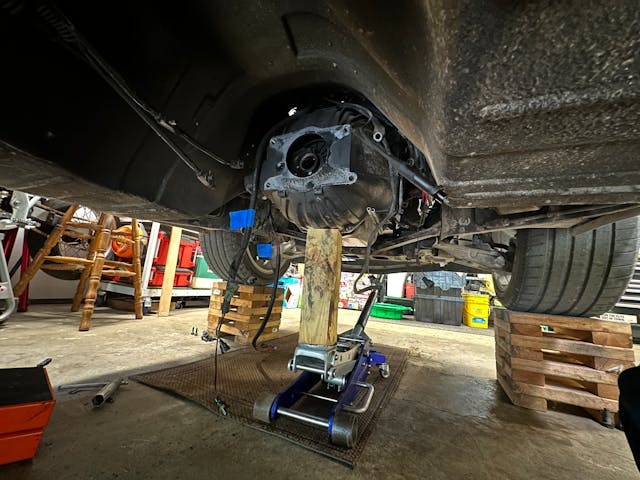
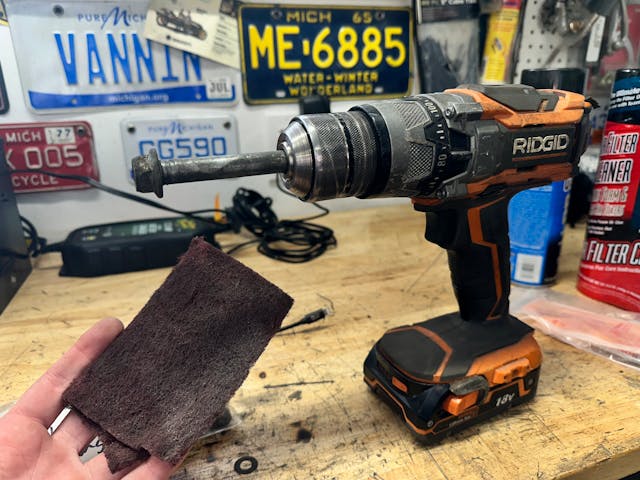
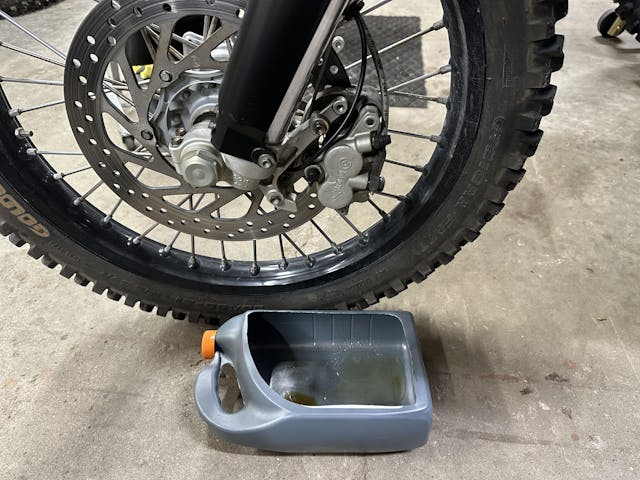
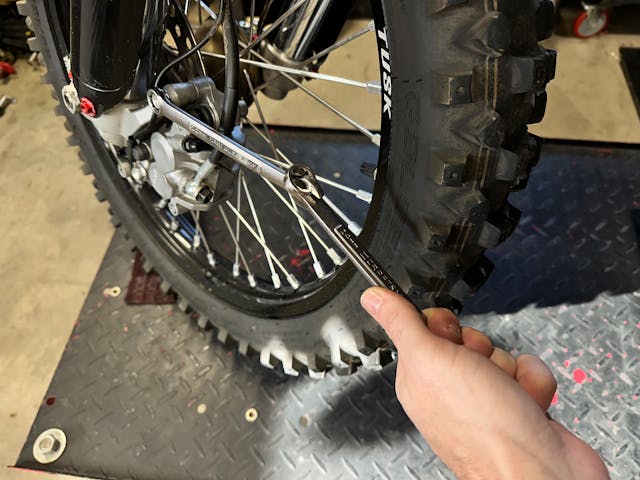
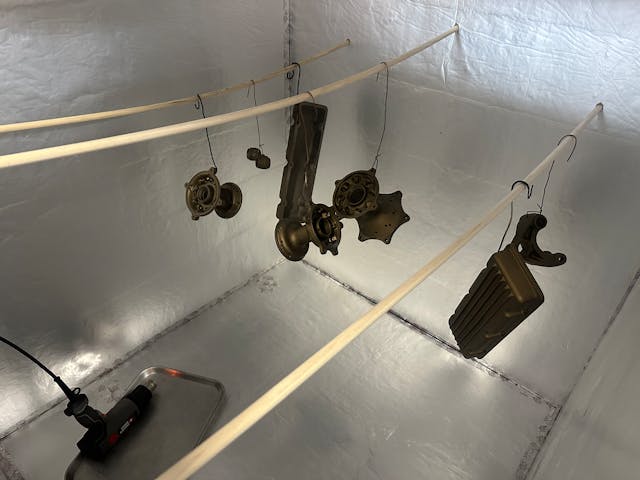



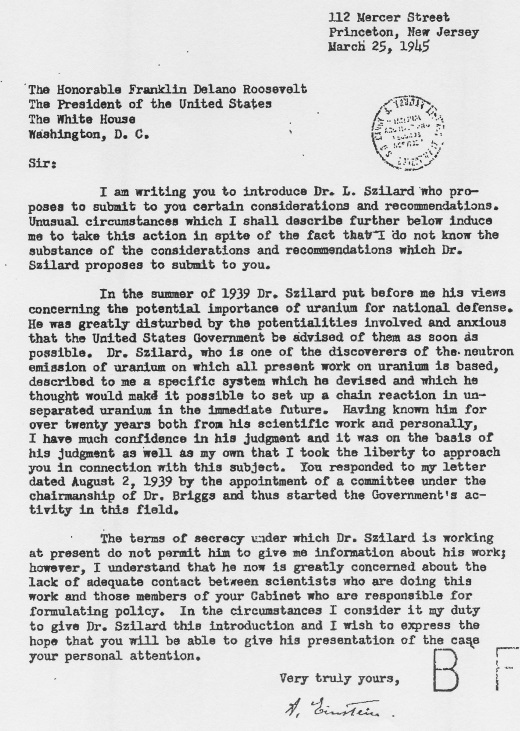









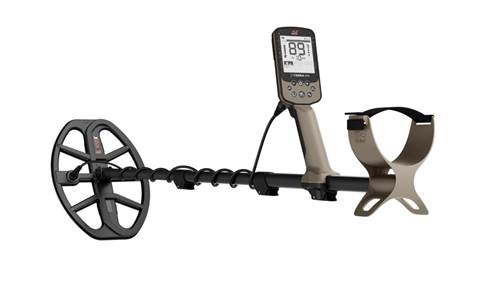
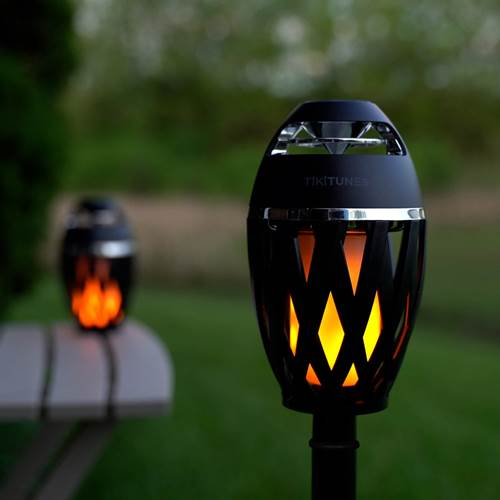




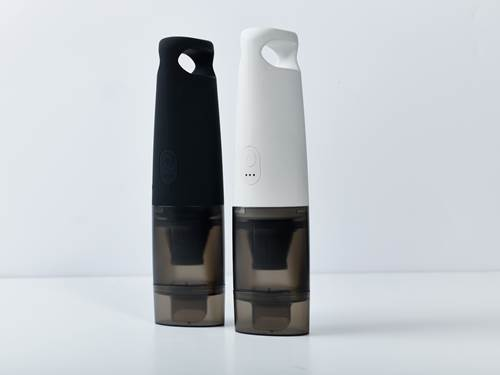








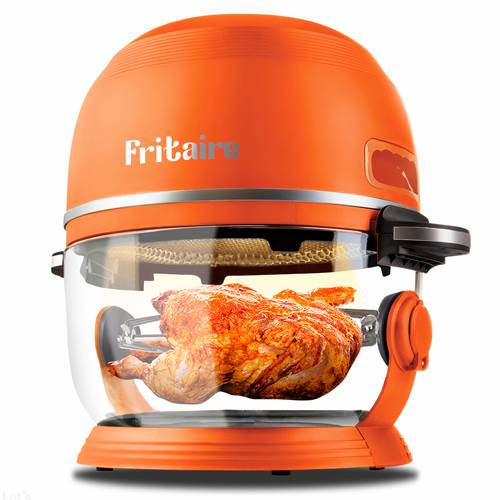

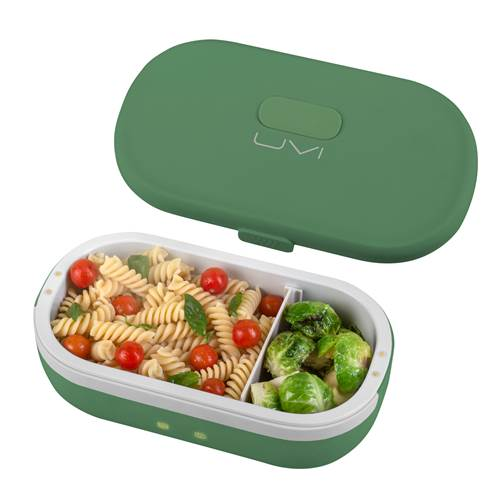










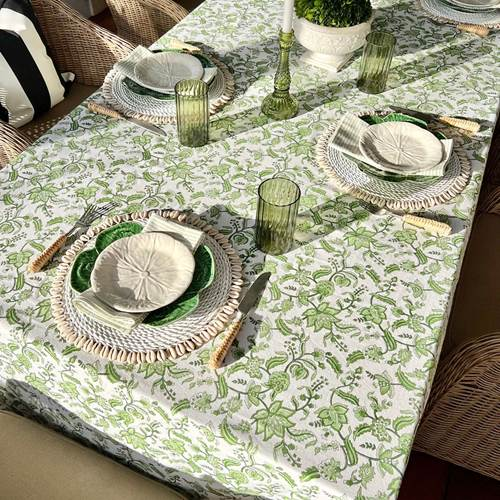










 In case you missed it- the world is quietly entering a population crisis. Global fertility rates have plunged to their lowest level in 60 years, raising profound questions about how societies will sustain themselves in the decades ahead.
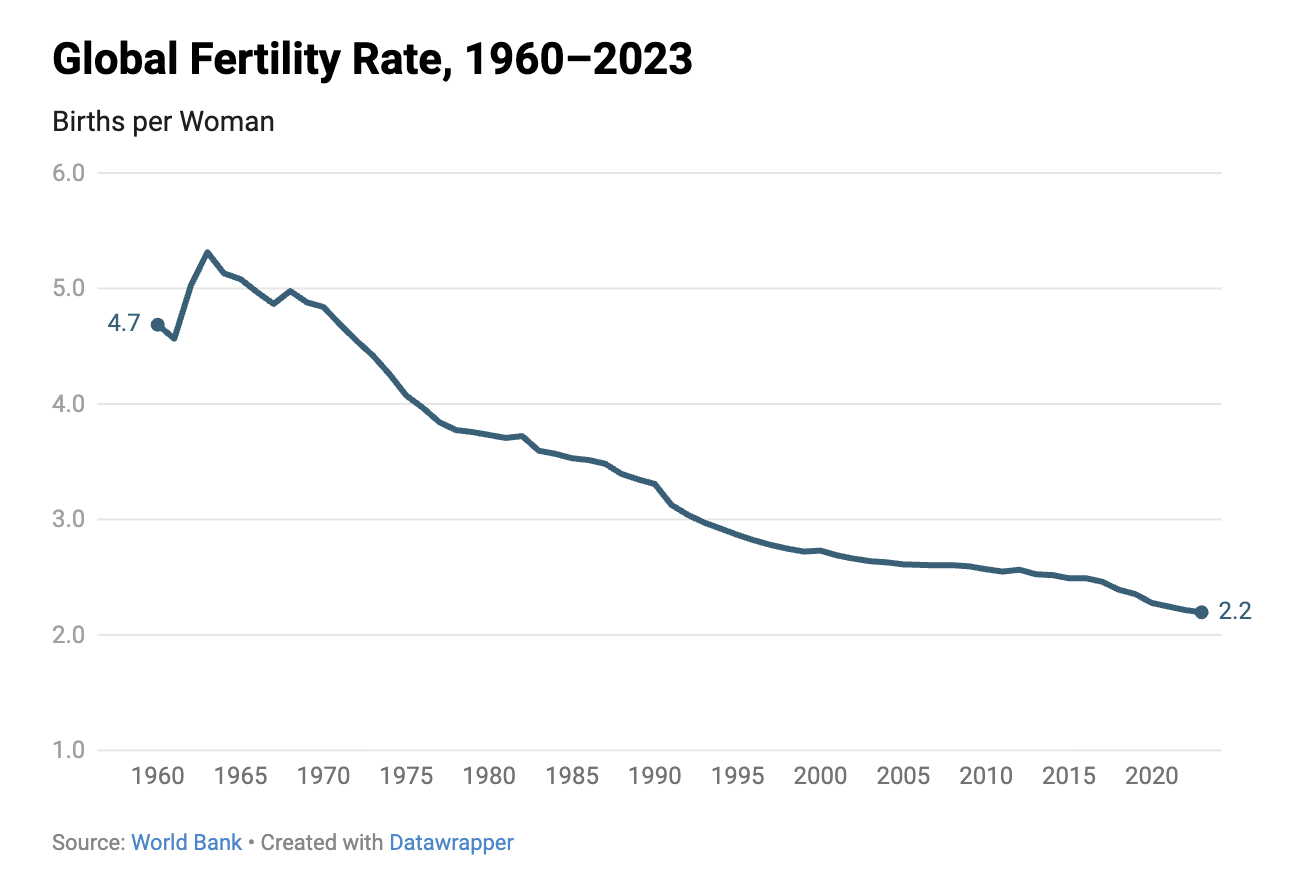 In July, the U.S. Census Bureau projected that the world’s population will reach 8.1 billion this year. Experts say that although the figure has grown from 3 billion in 1960, the number to watch is the pace of population growth.”
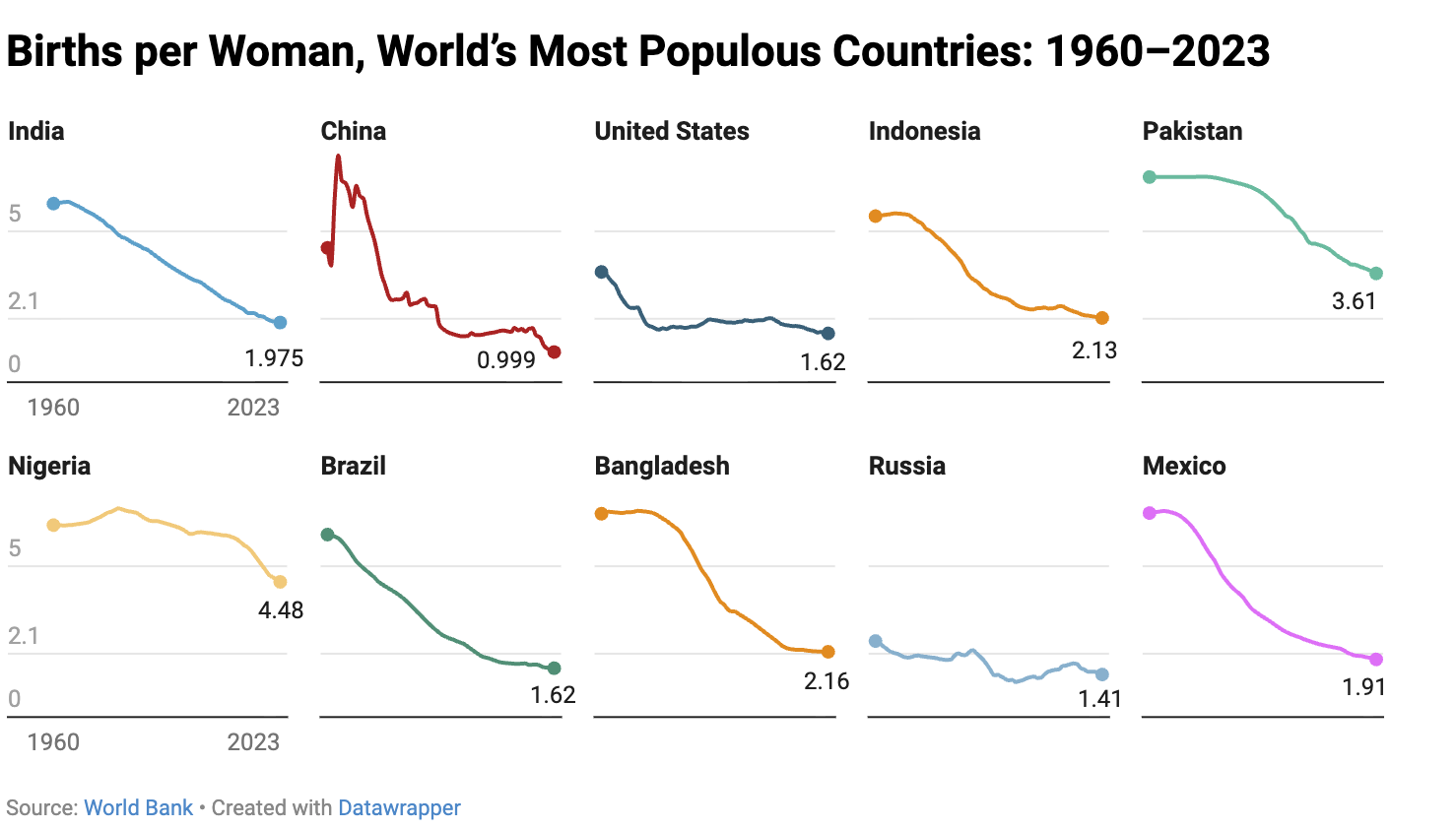 Asian and European countries have the lowest fertility rates in the world, and South Korea (0.72), Singapore (0.97), Ukraine (0.977), and China (0.999) all have rates below one. (
 Source: Statistics Canada

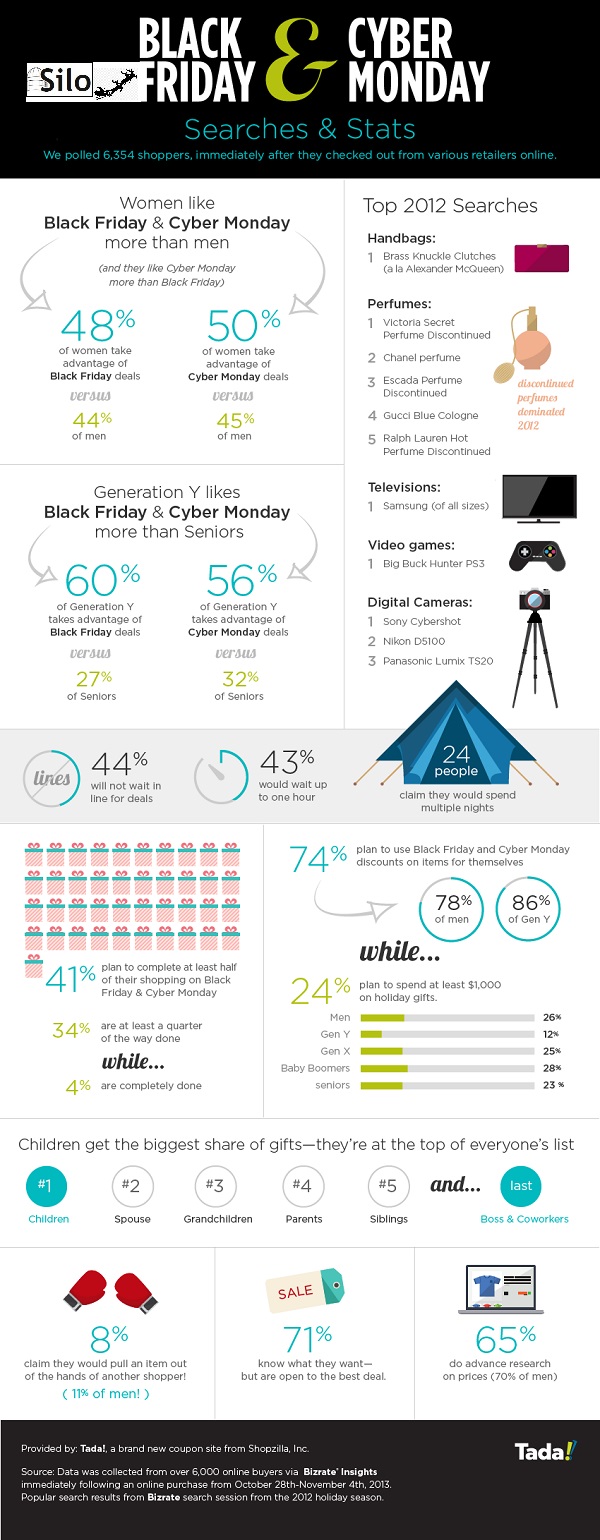


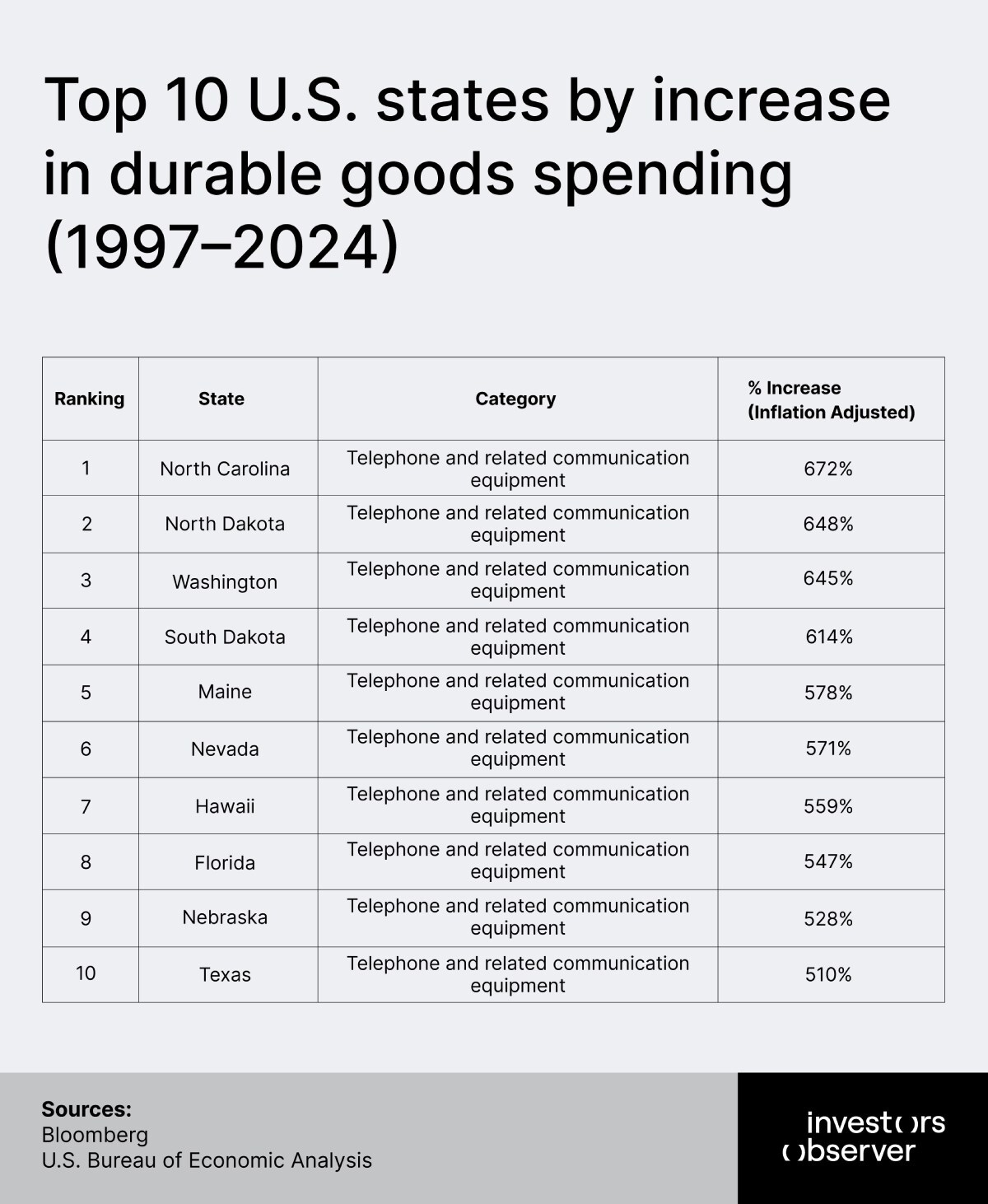





 As an artist you will be the recipient of rejection letters and emails.