On Sunday, October 19, a burglary took place at the Louvre — one of the best known museums in the world. In broad daylight, minutes after the museum opened, thieves broke into the Apollo Gallery and stole the French Crown Jewels, valued at around 88 million EUR/ $142.5 million CAD.
While criminals entered the famous museum through a window, the robbery exposed a whole host of security problems at the Louvre, including issues with digital security. For example, French media claim that according to the documents they’ve seen, the server managing the museum’s video surveillance was once protected by a weak password “LOUVRE.”
Media in France cite audit documents which show that the Louvre neglected security issues for years, including holes in physical security, outdated software, shoddy maintenance, and poor password and cybersecurity management.
Karolis Arbačiauskas, Head of Product at the cybersecurity company NordPass, comments:
“Publicly available information increasingly suggests that the museum’s IT security system — which manages access control, alarms, and video surveillance — suffers from numerous vulnerabilities. According to a 2014 audit by the French National Cybersecurity Agency (ANSSI), the museum’s system also relied on insecure passwords. For example, the server managing the museum’s video surveillance was protected by the password ‘LOUVRE.'”
“This is horrible. Such a password breaks all the principles of creating secure passwords. On the other hand, it’s not that shocking. Truth to be told, our own research shows that cybersecurity in the public sector is not the best. Tens of thousands of public sector employee passwords are already on the dark web.”
“But we need to be careful and refrain from pointing fingers until the investigation is completed. The audit data cited by the media is quite old, and we don’t know if the Louvre took ANSSI recommendations into account. Crucially, poor passwords were not the point of entry for the criminals; they gained access through a window, indicating a broader, comprehensive security failure.”
“Personally, I would like to see a positive side to this horrible story. This theft has become the ultimate penetration test for the Louvre, so I hope it will serve as a stimulus to review and upgrade all of the museum’s security systems and policies, including passwords and outdated software. Otherwise, this robbery may embolden criminals and potentially lead to more crimes in the future”
“Proper password should be at least 20 characters long and consist of a random combination of numbers, upper and lower case letters, and special symbols. Passwords on routers and security systems, including those that manage security cameras, must be extremely strong and perhaps go beyond what is considered a strong password, as these systems can literally and figuratively open almost any door. It is also paramount to never reuse passwords. The rule of thumb is that each account should have a unique password because if one account gets taken over, hackers can use the same credentials for other accounts.”
Rolling Hills School: Where Classrooms Meet the Fields
ROLLING HILLS, Alberta — On a crisp fall morning, the hum of tractors in the distance blends with the chatter of children filing into Rolling Hills School. For many of these students, the day began not with cartoons or cereal, but with feeding calves or checking irrigation lines before the bus arrived. Here, agriculture isn’t just a subject in the curriculum—it’s the backbone of the community, and the school has embraced that identity wholeheartedly to create a unique practical learning environment that is innovating and providing students with real world skills.
A School Where Learning Meets The Land
Rolling Hills is a small K–9 school in a hamlet of just a few hundred people, surrounded by endless prairie fields. “Our kids live and breathe farming,” says one teacher. “It only makes sense that their education reflects that.”
From science lessons on soil composition to math problems based on crop yields, the school finds ways to connect classroom learning to the realities of rural life. Students don’t just read about ecosystems in textbooks—they see them unfold in the fields outside their windows.
The Community as a Classroom
What sets Rolling Hills apart is the way the wider community steps in as co-educators. Parents and neighbors, many of them farmers, regularly bring their expertise into the school. A rancher might arrive with a trailer of calves for a hands-on biology lesson, while a grain farmer explains the mechanics of GPS-guided combines during harvest.
“It’s not unusual for a student to raise their hand in class and say, ‘That’s how we do it on our farm,’” notes the principal. “That lived experience enriches the whole classroom.”
Students attend a live stock auction.
The school also doubles as a gathering place. Harvest suppers, farm safety days, and 4-H showcases bring families together, blurring the line between school events and community traditions.
A New Chapter: The Agricultural Academy Barn
This year, Rolling Hills School received a $10,000 cad grant to support the construction of an Agricultural Academy Barn on school grounds. The barn will serve as a hub for hands-on learning, giving students the chance to work directly with animals, crops, and agricultural technology in a structured environment.
“This is a game-changer for us,” says a staff member involved in the project. “The barn will allow students to experience agriculture in a way that goes beyond the classroom or even their family farms. It’s about creating a shared space where learning, innovation, and tradition come together.”
The barn is expected to host projects ranging from animal care and feed management to experiments in sustainable farming practices. For younger students, it will be a place to nurture curiosity; for older ones, it will provide practical skills that could shape future careers.
Learning by Doing
The barn will complement existing initiatives like the school garden, where students plant, tend, and harvest vegetables. Together, these projects reinforce the idea that education is not just about absorbing information but about applying it in meaningful ways.
Older students already take on complex projects—experimenting with irrigation techniques, studying crop rotations, or shadowing local farmers. With the barn, these opportunities will expand, offering a year-round space for agricultural exploration.
Growing More Than Crops
Agriculture teaches patience, responsibility, and resilience—qualities Rolling Hills School works hard to instill. Students who care for animals through 4-H or classroom projects learn that consistency matters, whether it’s feeding livestock or showing up prepared for class.
Environmental stewardship is another theme. With water scarcity and soil health pressing concerns in southern Alberta, the school emphasizes conservation and sustainable practices. “We want our students to see themselves as caretakers of the land,” says a teacher. “That’s part of their legacy.”
A Model for Rural Education
In an era when many rural schools struggle to maintain enrollment and identity, Rolling Hills stands out as a model of resilience. By leaning into its agricultural roots—and now investing in the Agricultural Academy Barn—the school has created a learning environment that is both relevant and inspiring.
Graduates leave with more than academic knowledge. They carry with them a sense of pride in their heritage, practical skills rooted in real-world experience, and a deep connection to their community.
As one parent put it during a recent harvest supper: “This school doesn’t just teach our kids—it raises them, alongside the land that raises us all.” UFA Foundation/ Copilot.
Initially divisive, the 996’s integrated headlamp clusters (combining main, high, and indicator lights under one cover) represented Porsche’s first major step into modern production efficiency. The “Fried Egg headlight” design was so controversial that when introduced, many car purchasers (especially those owning the first generation Porsche Boxster 986) modified the headlights with window tint to “hide the yolk”!
Regardless of how acceptance was split, the design was sensible and borrowed from the 911 GT1 race car, this setup improved aerodynamics and manufacturing simplicity. Over time, enthusiasts have come to appreciate its boldness, and we’re going as far as naming it in our top 10 list of the coolest Porsche headlights ever!
9. Porsche 911 RSR (2017–Present) — The Perfect Fusion of Heritage and Function
The 911 RSR’s headlights combine classic round symmetry with cutting-edge LED tech and aerodynamic sculpting. The signature four-point LEDs maintain Porsche’s unmistakable night-time identity. In endurance racing, where function dominates, the RSR’s lights prove that beauty and performance can coexist perfectly.
8. Porsche 917K (1970) — Racing Eyes Built for Le Mans
The 917K’s headlights weren’t just for show; they were shaped by necessity. With their low, wide fairings and Plexiglas covers, the lights became a critical aerodynamic component at speeds exceeding 220 mph. Their integrated look and teardrop housing gave the car a menacing, purposeful face that influenced Porsche’s endurance racers for decades.
7. Porsche 918 Spyder (2013–2015) — Laser Precision and Modern Drama
A leap into the hybrid era, the 918 Spyder’s four-point LED headlights introduced a motif that defined Porsche design for the next decade. Their sharp-edged housings and distinctive daytime running light pattern made them unmistakable, even in the dark. They also pioneered Porsche’s adaptive light technology, blending form, function, and digital precision.
6. Porsche 993 (1993–1998) — The Last of the Classic Round Lamps
The 993 introduced a new, sloped front end with headlights that followed the hood line, a significant break from tradition. The design, though controversial at launch, ultimately modernized the 911’s appearance and improved aerodynamics. Its flush, oval lenses became icons of the 1990s Porsche aesthetic and marked the final air-cooled era’s visual identity.
5. Porsche 911 (964) — Classic Form Meets Modern Function
The 964 retained the round 911 lights but subtly reshaped them to fit new, smoother bodywork. They were slightly more upright and used improved reflectors and halogen elements for better illumination. This generation is often overlooked, but its headlights mark the bridge between old-school air-cooled charm and modern Porsche precision.
4. Porsche 356 (1948–1965) — The Blueprint for Porsche’s “Eyes”
The 356 established the signature oval headlight shape that became Porsche’s visual identity for decades. Mounted high and slightly reclined, the chrome-rimmed lenses gave the car a friendly yet purposeful look. Though rooted in postwar simplicity, their integrated design flowed seamlessly with the rounded fenders, a foundational cue that carried into every 911 thereafter.
3. Porsche 959 (1986–1988) — Aerodynamic Function in a Supercar Form
The 959’s headlights were a turning point for Porsche’s design language. They maintained the classic round outline but were deeply recessed into the front fenders for aerodynamic efficiency. Flush glass covers gave the car a sleek, cohesive face that previewed Porsche’s shift toward modern integration and minimal drag. Beneath the surface, their lighting performance outclassed most of the era’s supercars.
2. Porsche Mission R Concept (2021) — The Future in Plain Sight
With its slim, vertically stacked LED units framed by a minimalist housing, the Mission R’s headlights reimagined Porsche’s “four-point” look for the electric age. They were both expressive and efficient, incorporating cooling ducts and DRL elements into a single sculptural assembly. The design hints at the next generation of motorsport and production cars from Porsche.
1. Porsche Carrera GT (2003–2007) — Pure Function, Clean Form
The Carrera GT’s headlights embodied Porsche’s design minimalism at its finest. With visible projector lenses under a clear polycarbonate cover, they echoed the look of endurance racers while maintaining a sculptural, lightweight appearance. The compact design allowed for large air channels around them, aiding cooling and aerodynamics, beauty born from engineering.
Click on the full auction catalog below to learn about this unique car.
The Zürich Auction1 November 2025 The Dolder Grand – Zürich, Switzerland
Swiss-Sourced Collector Cars
It is no surprise that our friends at Broad Arrow are proud to present a selection of Swiss-sourced vehicles to be offered at their inaugural Zürich Auction. The vehicles are varied and exceptional and the setting could not be better.
Switzerland’s reputation for precision, care, and high standards extends beyond its watches and craftsmanship. These qualities are frequently reflected in the quality of its vehicles with Swiss-sourced cars often offering distinct advantages including:Exceptional Maintenance Standards: Thanks to strict technical inspections, such as the MFK, Swiss vehicles are typically kept in excellent condition. Low Mileage: Cars in Switzerland generally show less wear, as average annual mileage trends lower than many other markets. Clean, Verifiable History: Rigorous registration and control systems mean provenance is often clear and verifiable. Favorable Tax Conditions for Classic Cars: As with several European countries, vehicles over 30 years old may qualify for reduced VAT rates. Reliable Logistics Support: Broad Arrow has established partners throughout the region available to assist with customs, shipping, and other logistical needs. For more information on any of the offerings in our Zürich Auction, and for a complete list of Swiss-sourced vehicles, I invite you to contact their knowledgable team of specialists, or to reach out to their client service team.
Bidder registration is open with options for in-person, telephone, internet, and absentee bidding available. Contact their client service team for personalized assistance at bid@broadarrowauctions.com. Please mention the Silo when contacting. For the Silo, Jarrod Barker.
Our friends at kommandostore talk about the Cold War on their site so often, it’s become one of their defining aesthetics…..and that’s a good thing- read on!
Grand armies and weapons are arguably less than half of the story.
Many of the cold war ‘battles’ from the 1950s through the 1990s took place in the minds and on the wrists of millions of people. Some might say they certainly still do…
Rogue media campaigns, protests & activism, black ops — they defined the hottest parts of the Cold War. But what if we told you that the watch you were wearing was just as important? The Soviet Union sure thought so…
Having gotten sucked into the almost endless lore rabbithole of watches, the first thing that kommandostore sought to bring back from obscurity was the Elektronika 55B — the soviet union’s most popular digital watch that went the way of… well, the Soviet Union… When it collapsed in ’91.
Above all else, there’s one story about this watch that truly stands on its own, a story that will make you realize that there is much more to this little watch that jovially plays chiptune soviet music…
It involves two of the most powerful men in the world, Leonid Brezhnev and Henry Kissinger convening and comparing their new digital watches.
Ok, they weren’t really wearing the watches in that photo, but such an encounter really did happen between the two gentlemen in the early 70s, one that subtly let the United States know that the Soviets were right on the US’s tail for semiconductor technology.
On a somewhat-routine visit to Moscow, US Secretary of State Henry Kissinger wore a Pulsar P2 Watch — one of the very first digital watches. Known for it’s striking red LED display and appearance on the wrist of none other than James bond.
It also carried a hefty price tag, with the 21k gold edition costing enough to buy you a car in today’s money.
You tell us, is $1800 usd/ $2,526 cad in today’s money worth it for one of the two base models?
The meeting was with Leonid Brezhnev, General Secretary of the Soviet Union. He remarked that he did indeed like Kissinger’s watch, being a man of taste.
Then he told Kissinger that the USSR had already developed a prototype using the very same technology.
Kissinger was reportedly astonished — and was presented with a functioning Soviet-Made digital wristwatch, the Elektronika B6-02. Featuring CMOS circuits, it was blocky, brutalist, and affordable enough for practically anyone to buy when it officially launched.
The whole Elektronika series carried this statement — the latest fancy tech of the west is cool, but when it’s done the soviet way, for way cheaper, it’s not a luxury to be worn by only the elites.
It didn’t take a horology enthusiast to buy and wear this watch. It’s Kalashnikov-esque ubiquity meant it was worn by everyone from party members to coal miners.
Sure, in 1969 we brought a luxury-watch masterpiece, the Omega Speedmaster, to the Moon before the Soviets were able to. But as a tool of propaganda, the USSR might have had us beat, and the Elektronika 5 appeared in space several more times…
We found it intriguing and somewhat disheartening that Elektronika, what seemed to be the people’s choice, was snuffed out much in the same time period as the Soviet union.
In a world full of Casios & Timexes, who can’t help but succumb to the charm of the plucky Elektronika, so why not give it the wrist time it deserves…because it is now available once again and this time in a near perfect reproduction right down to the packaging.
A 1:1 functional replica of the original Elektronika with 4 new Slav-approved “Melody” alarms. Sanctioned to the second-hand market (pun intended), thankfully kommandostore thought that the watch deserved a proper revival after its unceremonious disappearance following the collapse of the USSR.
Just like the original, it’s an affordable and reliable piece with just enough fun to get even the most uptight horologists asking you questions. But unlike the OGs, the sad truth of capitalism is that we’re slaves to supply and demand. They are running out fast, and even though there are plans to quickly continue production, there may be a slight gap. So, if you’re interested, this is kind of a last call.
Click the following link to place your order while supplies last.
I was doing a bit of ‘specific purpose’ shopping at a local grocery store to pick up some of their No Name Yogurt. I buy this all the time and use it mixed with fruit, or when making a smoothie with yogurt, milk and berries.
It is worth noting, that some consumers remain staunchly brand-loyal and even brand-dependent.
They believe that no-name products are ‘not as good’ as the brand name products that they favor. In reality many no-name brands are manufactured using the same ingredients and at the same factory as the brand product, the only difference being the price and the look of the label. That being said, I’m not ready to trade in my Heinz ketchup for the no-name brand….but Aylmer is a close second. Can you taste the difference?
As I was about to take several tubs (5) off the shelf, I noticed a pad of tear-off coupons right above the yogurt. They were for $1.00 (Cdn) off each tub of No Name Yogurt that you purchased. Since I had 5 tubs in my tote basket, I peeled off 5 coupons. When I got to the check-out, I put the coupons on each tub and the cashier deducted $5.00 off my bill. The regular cost was $1.97 a tub, which would have made the total cost $9.85. I paid $4.85. I was very, very happy. I got the yogurt that I intended to buy, and I got a bargain. Also the empty tubs can be put in recycling bins, or used as food-savers for leftovers.
The ‘no-name’ brand Loblaws Canada use bright black on yellow packaging.
A friend of mine, Ken, who worked in the food industry, once told me, “Coupons are an easy way for customers to save money. The store does not loose any money, the coupons go right back to the company.”
A few years back, I decided to see if coupons did save me money. Each week I went through the newspapers, magazines, online site and store coupons I had collected as well as free coupon bins in their stores. These bins are there for customers who don’t want to use their coupons, but throw them in a bin so that other customers strolling by can scoop up whatever they want to use. I used an old duo tang notebook to record my savings, a ruler, line paper, and a pen. I drew lines across the page. I also drew lines vertically down the page for categories.
The first category was NUMBER, and then ITEM PURCHASED, then COUPON PRICE, and lastly PRICE TOTAL. I found an old, very large mayonnaise jar with a lid (the kind they used in restaurants that buy in large quantities). I put a slot in the top of the lid so that it was more convenient to drop coins into the jar rather than unscrewing the cap each time.
I labeled the jar, “Coupon Money.” Every time I went to the store and used a coupon, I put the actual money I saved into the jar. It may have been only 35 cents, or 50 cents. Then I recorded the information in my duo-tang.
I decided to do this project for one year. I started in February. I never told anyone what I was doing. If my wife used a coupon, she also added the money to the jar, and recorded the information. Never did I use the proceeds from the jar during the year, but I was tempted many times. Over the months of the year, I took the change that was accumulating and transferred it into bills, starting with $5.00, then $10.00, then $20.00 bills. The idea was to use coupons on products that I normally purchased, not to get 50 cents off a product I wouldn’t normally buy.
I was very diligent with my project that year. It was kind of a game made especially fun when I would get the jar out and look with envy at all the bills stuffed in there.
As the year anniversary was approaching, my wife started telling people about the “Coupon Project.”
I heard comments like, “How silly.” “Why would you want to waste your time doing that?” “When I get coupons I throw them out.” “You won’t make any savings on them.” But at the end of the year, the jar contained $520.00. As it turned out, we needed a new couch. We purchased a brand new bed-chesterfield, including delivery, for $500.00
A week later, two friends who had thought that my “Coupon Project” was nonsense, remarked on how beautiful and expensive our couch looked. They asked, “How did you afford to buy such a beautiful couch?” I replied proudly, “coupons.” For the Silo, Blair R. Yager.
35 years ago, a mysterious and strikingly beautiful aircraft touched down on a dusty airfield in the Nevada desert. Can you imagine what kind of advanced aircrafts are being developed now?
The F-117 Nighthawk
Since its public reveal decades ago (consider that development started in the 1970’s on this amazing machine), the Nighthawk served with quiet distinction through the latter half of the Cold War, the first Gulf War, a kerfuffle in Yugoslavia (bet you don’t remember that one) , and the invasion of Iraq in 2003. Despite and official ‘retirement’ in 2008, the F-117 still gets spotted in the skies over Nevada where it is rumored to serve as an ‘aggressor aircraft’, helping to train pilots.
What’s the F-117 about?
With it’s cyberpunk like profile and stunning angles, the F-117 Nighthawk instantly captured the public’s imagination and birthed a lot of UFO /UAP stories, especially in the late 1980’s and early 1990’s when it’s unusual shape confused expectations of what an aircraft could and should look like. A radical departure from the retro-aerodynamic curves of traditional aircraft design, the F-117’s odd shape serves a singular purpose.
Stealth.
The Nighthawk was conceived by Lockheed’s Skunk Works, a secretive development team responsible for some of the most capable aircraft of the 20th century. Designed to slip through deep Soviet territory, the Nighthawk incorporated radical new technology to achieve an incredibly small radar and thermal signature. Hard edges, radar-absorbing coatings, a unique twin-tail, and special endinge cowlings reduced the aircraft to the size of a sparrow on Soviet radar. The Nighthawk was deemed fully operational in the early 1980’s and nearly a decade her pilots and crew flight night sorties in complete secrecy. Seven years later, the USAF and the Department of Defense decided the Nighthawk would work better as a deterrent if the world knew about it and it’s capabilities.
Plans were made to reveal the aircraft to the world at Nellis AFB on April 21, 1990. Those of us who saw this event live on television will always remember the shock and awe inspiring gasp it created- nothing like it had ever been seen before and it surely looked like something from a science fiction novel or movie. On a hot spring day, a flight of two F-117s landed in front of thousands of cheering spectators, kicking off one of the most memorable air shows in US history. After opening the show, the F-117s sat quietly on the tarmac surrounded by an entourage of armed airmen and curious onlookers. Although little was said about the new “stealth fighters”- blimps, fighter jets, and mock dog fights continued the day’s entertainment in style.
Even with talks of ‘spending prioritization’ and ‘doctrinal appropriateness’, the Nighthawk has endured, in it’s own special way, for nearly 40 years. Everything about the F-117 that made it great in the 1980’s still captivates us today. It’s razor-sharp edges, futuristic technology, and it’s family tree of stealthy cousins (foreign and domestic). Here is hoping many more years of this little black triangle up in the sky… via our friends at kommandostore.com
Since the collapse of the Berlin wall in 1989, the countries of eastern European have exploded in a painful big-bang that has changed the geography of Europe and Asia drastically. The new Russia was born, now being part of the Community of Independent States (CIS) that replaces the former USSR. The guitar fraternity in Russia has been living for more than 70 years in total isolation, prevented from being in touch with the West. The presence of many types of the instrument that we call “guitar” has been a constant one in Russian music life in all periods, having very old origins. But only recently has this guitar world started opening to western Europe, and we still know far too little about Russian composers for guitar and Russian guitarists. It was quite difficult for me to get information about some Russian guitarists, due both to the ever-present difficulties in communication (it is still difficult just to send a fax to Moscow during the day time)and to the problems of language comprehension.
The Guitar of the Czars- a new English summary redaction
In the past, references to the Soviet guitar world in Western music literature were always very scarce, and only in recent years has a subtle breath from that guitar world started blowing beyond the Urals. I wish to thank especially the guitarists Mikhail Goldort from Novosibirsk (central Siberia)and Piero Bonaguri, teacher at the Conservatory of Rovigo (Italy) as well as the composer Umberto Bombardelli, who helped me in collecting more information.
At the beginning there was the domra
The guitar was not the only known plucked instrument in Russia; two other instruments at least are worthy of mention: the domra and the balalaika. The domra is nowadays known in two variants with three or four metallic strings and in different sizes. It has a triangular shape, is tuned by fourths,and is played by means of a plectrum.
It is the most ancient plucked instrument, having been imported by the Mongols during the 13th century. Its tremolo is similar to the one of the Neapolitan mandolin and its range is large, due to its having 16 frets up to the junction of the neck. It is now employed both as a solo instrument and in an orchestra,together with the balalaika .
The balalaika has a peculiar triangular shape and three strings, among which two are tuned in unison and the other a fourth up. It appeared first during the 17th century. It was able to oust the domra in popularity, thanks to the preference of the Czars. It is played both by fingers and with the plectrum; from the last years of the Nineteenth Century it has existed in different sizes which cover all the frequency spectrum of the orchestra.
The guitar appeared in Russia during the 18th century, in a society far behind the European one in development. However, at the first half of the 19th century it was already known as a national instrument: the Russian guitar. Its own peculiarities were the tuning by thirds on the notes of the G scale, and having seven strings. It is known by the tender-sounding name of “semistrunaia” (a composite noun made from
“sem’ ” =seven and “struny” = strings).
Its popularity grew among the people of all ranks, both middle and upper class, as described by many Russian poets and writers. There are also many variants of this main type, in number of strings and dimensions. By studying the surviving photos of Russian guitarists of the last century, re-published in the volume Guitar in Russia and USSR (see photo in the full PDF article linked below), we see that the guitar with 7 strings on the neck and 4 strings outside of the neck was very popular. The famous photograph of Valerian Rusanov, one of the first Russian guitar historians, with his 11-string guitar is significant in this respect. This instrument shared favor with the six string guitar (the so-called “shestistrunaia“, from “shest,” which means “six” ) tuned as in the West, and many other types. Continue reading full article PDF by clicking here. For the Silo, Marco Bazzotti.
Star Wars:The Arcade Game (ColecoVision, 1984) Game Cartridge – Early Concept & Film Screening Logo
Star Wars was an important movie for many reasons beyond the success it achieved as a motion picture. The Star Wars phenom had been born.
Not only did we see the almost immediate impact it would have on motion picture technology, or computer camera controlled stop motion animation, but it wrote the playbook on movie merchandising. Merchandising that included arcade games and home video games. Converting a state of the art Vector graphic arcade game into a home system was a challenge for all systems except for when it came to the ahead-of-its-time Coleco Vision. More on this later….
Had to pay for movie adaptation comic to be created
It’s hard to believe that a movie we have ‘only ever known to enjoy’ the runaway success it has now didn’t have that success so assured early on. That it really came down to one man, first LFL marketer Charles Lippincott – who barely managed to get a toy deal done with Kenner (after MEGO turned him down), and who had to pay (via Fox/Alan Lad Jr.) for the first 5 issues in order for Marvel to agree to draw and write the comic book series, and have the first issue ready before the movie would hit theaters in 1977.
By the time this video game was made by Parker Bros. for the Coleco Vision game console, Star Wars had become a movie merchandising juggernaut, and it was now time to not only refashion the same thrill late 70’s kids experienced through toys, comics and trading cards, but to open up their imagination by reinterpreting iconic ships like the X-Wing and TIE Fighters in pitched battle in a video game format to be played on on their own TV screens at home.
In 1984, Coleco Vision released this Star Wars arcade game.
And to anyone remembering the vibe and nostalgia of growing-up in those early days of video games and the arcade experience, it’s an image that’s been burned into your brain. However, what you might not realize is that this arcade conversion cartridge utilized a very early logo that was used on the first movie poster. It was part of early concepts logos that Ralph McQuarrie had come up with for use in the very early screenings of the movie. The cone-top of this original early Star Wars logo evokes the iconic opening crawl of the film, which was completely unknown to audiences in 1977. Don Perri, the person who came up with the conceptual design, was influenced by the 1939 film Union Pacific’s opening credits.
Label Variant
There are collectors of early arcade games, there are collectors of early Star Wars cartridges and video games, and then there are collectors who just buy any of the early logos used on merchandise. Because of the label, this cart has great cross-collector appeal, and while I haven’t tested it for some time (used to play it with my oldest, who is now off to college), here is a screenshot I took when we played it on our home projector. I have decided to pass this beauty on and so it is for sale and I am happy to tell you more about this totally awesome cartridge.
David Paulides is an ex-cop on a mission. After years of investigating missing persons and studying thousands of missing persons reports he has discovered strange coincidences and similarities that he has documented clearly and factually in several of his books including Missing 411.
When pushed for a theory on what is causing these events David is reluctant to offer one and instead maintains that his role is to continue to collect and organize the vast numbers of cases and wait for an answer to come from an external source.
Perhaps even from someone like you or me…..
Historical records reveal that missing persons have occurred in North America for hundreds of years and what connects these cases is both frightening and confusing. David has discovered geographical connections that include- national park locations, urban locations near bodies of water, boulder fields, mountain elevations and other seemingly ‘safe’ locations.
He has found that there are vast differences in distance between reported disappearance and body discovery (or in rare cases when the missing person is found alive). Often mysterious events occur prior to the disappearance such as indications of strange behaviors or distress. In one case a man had reported repeatedly via cell phone that “people were outside” and in another case a man had fired a weapon as if in self defense.
Many times personal items such as clothing are found but not bodies or not complete bodies.
In some cases clothes are found in organized piles- as if they have been left behind carefully folded. Even more confusing is that this may occur during the Winter or at an elevated location where the idea of removing clothing simply does not make sense.
David’s research has shown that oddly, many missing persons in these cases are highly intelligent and healthy individuals that include doctors, scientists and marathon runners. In other cases the victims are hunters or seasoned hikers- people who would actually be most likely to prevent outdoor mishaps.
David is quick to rebuff any suggestion of paranormal causes such as ‘alien abductions’ or ‘bigfoot’.
He works hard to ensure that his research is taken very seriously and shows absolute respect for surviving family members and that’s when the eerie reality set in: there does not seem to be any explanation as to what is happening and families are being torn apart with no hope of closure.
Earlier this month our friends at Hagerty reported on the some of the absolute cheapest ways to get into the old-car hobby. These included cars like the 1975–81 Triumph TR7, the 1986–91 Cadillac Seville, and the 1973–77 Olds Vista Cruiser. The “ew gross” reaction these cars elicited in some of the comments wasn’t too surprising; no one, it seems, wants to shop for fun cars at a suburban Goodwill.
But what about the fun cars you might find at, say, the Goodwill in Beverly Hills?
That’s right, we’re talking about bargain-basement exotics—not exactly a tagline that inspires confidence when shopping for often-temperamental imports, but they are out there. Just know that service history and records are important to consider here. And just because a car is cheap, or keenly priced, if you prefer, doesn’t mean it’s not worth owning, especially if it provides entry into a marque you’ve always coveted. So give some consideration to these five once-distinguished Euro-mobiles, the cheapest models from their makers and all rated in #3 (good) condition. Let us know if you think we have missed any other contenders.
1973–77 Lamborghini Urraco
Lamborghini/Massimiliano Serra
Lamborghini announced the Urraco in 1970 as a Marcello Gandini–styled 2+2 coupe with a transverse V-8 mounted amidships. As a sharper-edged follow-up to the swoopy Miura, it foreshadowed the shape of Lambos to come. When it finally arrived for 1973, it made a fine competitor to the Ferrari Dino 308 GT4 and was available in 220-hp 2.5-liter P250 form, while the 265-hp 3.0-liter P300 launched in 1975. When that car arrived in the U.S. a year later, however, power was severely choked by emissions equipment, down to around 180 horses. Not many were built—just 522 of the P250s and 205 P300s—but today a #3 example ranges from $49,000 usd/ $68,350 cad for a P250 to $59,000 usd/ $82,290 cad for the P300. Given the ascendancy of Miura, Countach, Diablo, and Murcielago prices in recent years, that the Urraco is still so cheap is a bit surprising.
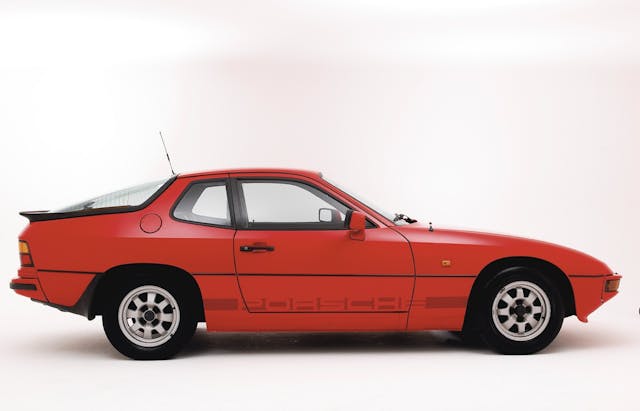
1977–82 Porsche 924
Getty Images
From the start, it seemed like Porsche vs. the world when it came to the 924. Whether because it was front-engined, or water-cooled, or simply a discount sports car meant to be a Volkswagen, plenty of people discounted it from the get-go. Until they drove it and realized, hey, this thing’s great. And it was great. Still is. With just enough power (110 hp from ’77 on) from a VW/Audi-sourced 2.0-liter four to complement its finely poised chassis, the 924 remains an excellent, easily approachable driver’s car, with good club support. Rust has killed many of them, and although Porsche built around 150,000 examples, parts are available but spendy, especially interior bits. A good #3 example should set you back about $8500 usd/ $11,856 cad. For comparison, an early 944 in the same shape is around $10,500 usd/ $14,645 cad.
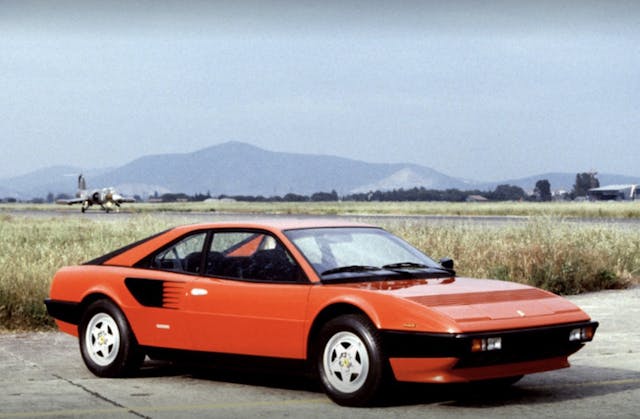
1980–87 Ferrari Mondial 8 / Mondial 3.2 Coupe
Ferrari
When it came time to replace the Bertone-designed Dino 308 GT4, Ferrari tapped Pininfarina, and the resulting Mondial debuted in 1980 as a 2+2 coupe, with a convertible joining the lineup four years later. The GT4’s 2927-cc transversely mounted V-8 carried over, with Bosch fuel injection replacing Weber carbs, and in the Mondial it made 214 hp. They were sharp handlers, with more interior space than their predecessor, but no one ever accused them of being fast. Other Mondial variants arrived throughout the ’80s to address that, however, including the Quattrovalvole (QV) in 1984, the 260-hp 3.2 of 1986, and the radically different t of 1989, but it is the early coupes, along with the 3.2 coupes, that are most affordable. Today, a #3 Mondial 8 or 3.2 coupe costs about $22,000 usd/ $30,686 cad.
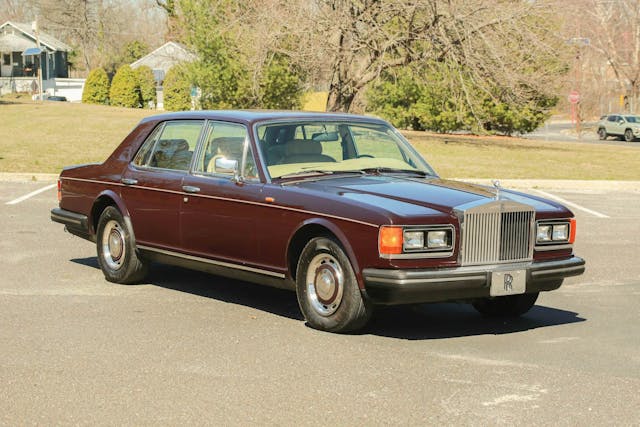
1981–87 Rolls-Royce Silver Spirit
Hagerty Marketplace/William_Cooper
If you’re an enthusiast of affordable opulence and Dijon mustard, then then look no further than the Silver Spirit. Successor to the upright Silver Shadow, the Spirit utilized a 220-hp 6.75-liter V-8 mated to a three-speed automatic. Inside, of course, you got all the trimmings, with Connolly leather seating, Wilton wool carpeting, and burl walnut inlays, as well as A/C and power everything. Giving the Spirit its silky-smooth road manners was a Citroën-sourced self-leveling hydropneumatic suspension. Rolls-Royces from this era have never been cheap to maintain, and deferred maintenance issues claimed many of them, so records are key with any Silver Spirit you might have your sights on. The right one, in #3 condition, won’t cost you much, at around $8400 usd/ $11,716 cad, but it will likely have needs, which could cost a lot.
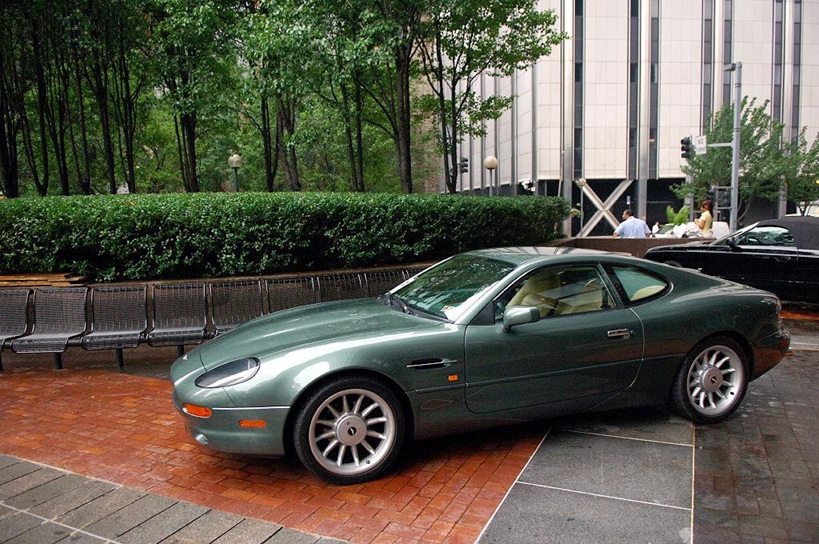
1997–99 Aston Martin DB7
Aston Martin
Even 30 years on, the 335-hp Aston DB7 still looks gorgeous from every angle, and upon its arrival, it was instantly an Aston worthy of the famous DB badge. If you can overlook its relative lack of exclusivity, with more than 7000 produced in both coupe and convertible form, what you get is a proper English grand tourer with excellent performance and luxurious interior appointments. Subtle differences set it apart from the contemporary Jaguar XK8 (which costs less, it should be noted), and the higher costs associated with maintenance and repair are likely to set it apart as well. But right around $21,000 usd/ $29,291 cad should get you a good coupe, with the convertibles slightly cheaper.
California Wants to Turn Down Volume on Ads Played by Streamers
The bill makes Netflix, Prime, and other streaming services regulate ad volume. It passed unanimously and now goes to the state governor. Is it time for similar legislation here in Canada?
The logos for Netflix, Hulu, Disney Plus and Sling TV on a remote control, in Portland, Ore., on Aug. 13, 2020. Jenny Kane/AP Photo
Netflix and other video streamers might need to chill a bit more when it comes to the volume of commercials played in California.
California lawmakers want to moderate blaring advertisements that play louder than the shows. They passed a bill on Sept. 22 to address the issue.
“Have you noticed the increased volume of ads in the middle of your favorite shows? They’re so jarring!” Santa Ana Democrat Sen. Tom Umberg said about the bill on social media. “If they can target ads to me based on my age and favorite cereal, I have the utmost faith they could fix this problem.”
Senate Bill 576 passed the Legislature unanimously and was sent to the governor’s desk.
If signed, the bill would go into effect July 1, 2026, to close a loophole that exempts streaming services from complying with the national CALM Act, enforced by the Federal Communications Commission (FCC).
The federal rules were adopted in 2011 and went into effect a year later. They require commercials to have the same average volume as the programs they accompany.
The way people watch shows and movies, however, has changed. Consumers are using entertainment apps, or video streaming services, much more often now, and these haven’t kept up with the protections, according to Umberg.
“As a result, consumers are increasingly subjected to loud, disruptive commercial advertisements with no regulatory safeguards,” Umberg said in a legislative analysis. “By ensuring that commercial advertisements do not play at a volume higher than the primary video content, this bill enhances the viewing experience and protects individuals with hearing sensitivities—including seniors, children, and those with auditory processing disorders—from sudden and jarring noise spikes.”
Netflix pioneered the switch to streaming services by introducing video streaming in January 2007, followed by Hulu in 2008, Amazon Prime Video in 2011, and Disney+ in late 2019.
The services have quickly become a household staple, Umberg added.
The bill does not give the state any enforcement power and doesn’t include a way for consumers to report violations.
State Sen. Tom Umberg (D-Santa Ana) speaks at a Public Safety Committee hearing in Sacramento on March 28, 2023. Screenshot via California State Senate
The legislation faced opposition from the Motion Pictures Association, which represents Walt Disney Studios, Netflix, Paramount Pictures, Prime Video and Amazon MGM Studios, Sony Pictures Entertainment, Universal Pictures, and Warner Bros. Discovery.
According to the group, the legislation was “unnecessary” as the studios were working voluntarily on the issue of loud advertisements.
Many streaming services have undertaken efforts to adjust the loudness of ads that come from server-side ad insertion. They are also working with the Interactive Advertising Bureau and the Audio Engineering Society to establish the best way to “normalize” the volume level of advertising, according to the association. For the Silo, Jill McLaughlin/ The Epoch Times.
Joe Rogan’s car collection already includes a SharkWerks 997 GT3 RS, a 964 RS America, and a 993 Gunther Werks 911. Now, the comedian and podcast host has taken delivery of a custom-built Porsche 911 RSR tribute from The RSR Project. Nicknamed Silver 2, the car is designed to echo Porsche’s early motorsport roots while offering upgraded performance for modern driving.
The Build Process
The project began with a galvanized 1985 Carrera tub, which was stripped down and reworked with steel flares and fiberglass panels to achieve the classic long-hood RSR profile. The body was finished in a glossy silver paint that recalls bare metal and paired with period touches such as a ducktail spoiler, fiberglass bumpers, and 15-inch Braid Fuchs wheels wrapped in Michelin TB15 vintage tires
Power and Engineering
Founder Richard Schickman led the build, which included a complete mechanical overhaul. Rogan’s car is powered by a 3.5-liter flat-six producing 310 horsepower, equipped with twin-plug heads, GT3 intake plenum, Clewett Engineering throttle bodies, Elgin cams, Lucas injectors, and Bosch ignition components. The motor is controlled by an Emtron SL ECU and paired with a fully rebuilt transmission. Suspension and braking systems were also refreshed to meet both performance and reliability standards.
“Our goal with every build is to honor Porsche’s motorsport heritage while elevating performance to meet modern expectations,” Schickman explained.
Precision Rebuild Standards
Every RSR Project car undergoes a full teardown. Engines are disassembled, magnafluxed, and sonic cleaned, while rotating components are balanced to within a gram. Cylinder heads are resurfaced, valve guides replaced, and transmissions rebuilt with new synchros and seals. The result, according to the company, is a drivetrain that looks factory-new but performs with modern precision and durability.
Interior Details
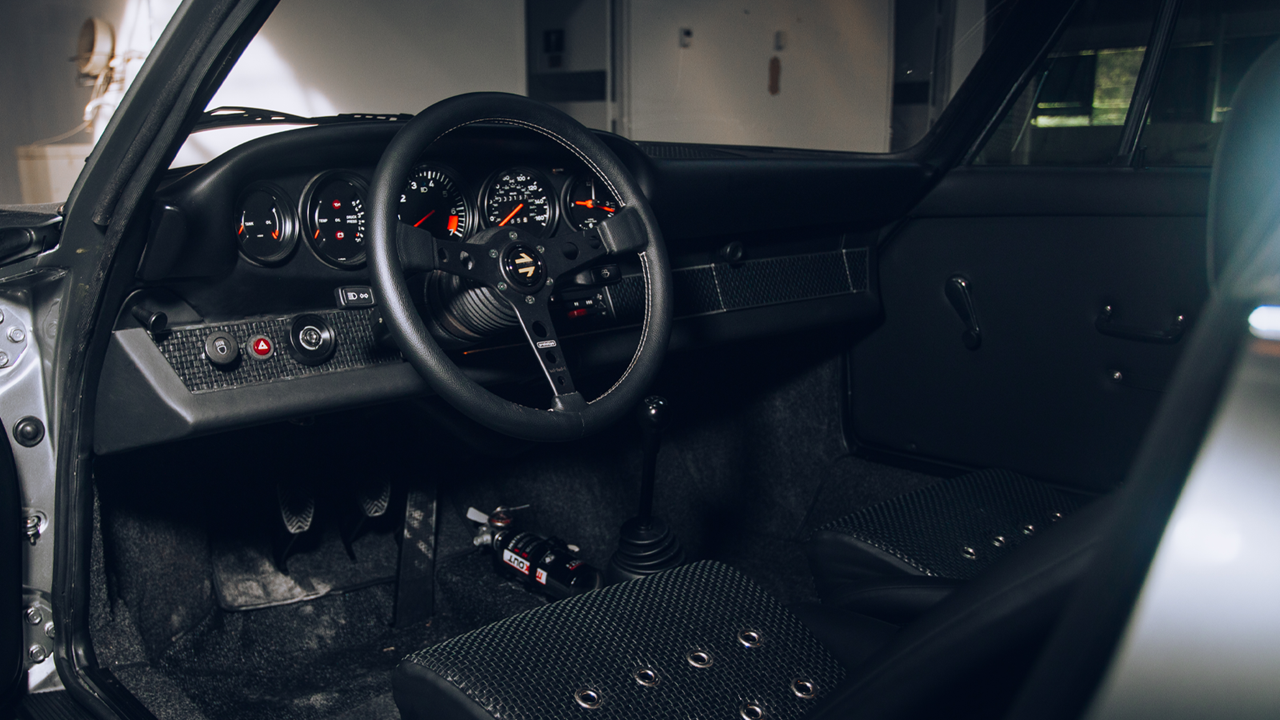
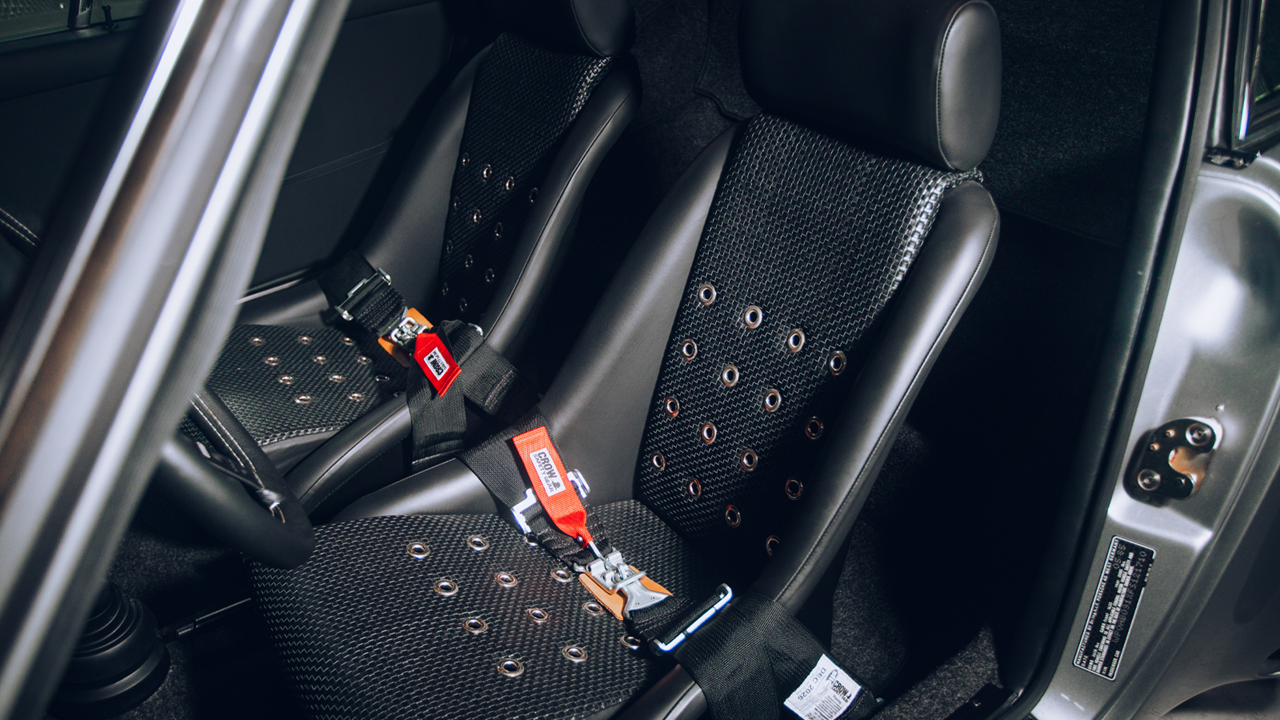
The interior follows the same philosophy of heritage blended with bespoke craftsmanship. Rogan’s build features black fixed-shell bucket seats trimmed in woven leather with nickel grommets, a nod to 1960s GT40s. The dashboard was replaced with a Porsche Classic unit, paired with RS-style door panels, lightweight Perlon carpeting, and a Momo Prototipo steering wheel. The minimalist approach is reinforced by details like pull straps, a radio block-off plate, and a Wevo short shifter.
Rogan declined extras like a sound system, opting instead for a stripped-down cabin that celebrates Porsche’s racing DNA. The only modern concession is an electric air conditioning system.
Road-Proven Performance
The RSR Project emphasizes that its cars are built for driving, not static display. Rogan’s Porsche underwent more than 700 miles of testing before delivery to ensure reliability and fine-tuned performance. As Schickman noted, “Every RSR we create is built to be driven and enjoyed thoroughly.”
Time and Cost of an RSR Build
Building a Porsche to this level is a significant undertaking. Each project typically requires 12 to 18 months to complete, with prices starting at $375,000 usd/ $516,750 cad (at time of posting). Clients can select additional options such as upgraded engines, modernized braking systems, and electric air conditioning. Earlier in the year, the company also unveiled RSR Project No. 21, a Signal Orange homage to the 1973 Rennsport Rennwagen.
If you are like me- someone who has drunk much more than one coffee in your life, you might be interested in pondering this question: Why do you think the multi-billion-dollar global coffee industry can be a losing business for the growers, whose hands till the land from where coffee starts?
In fact, if you drink 2 cups of coffee a day for one year, you’ll be spending more than the annual income of the coffee farmer in a developing country. To help present to fellow North American coffee drinkers this huge disparity between the farmer and the other key players across the coffee value chain, take a look at the infographic below.
Considering that North America is the biggest coffee consumer in the world, we can make a big dent by supporting the fair trade advocacy that ensures farmers get paid properly. Take a look at the infographic again. It describes how coffee is made from the farm to the mill, to the roasting plant and all the way to the consumer. Here are some of its highlights that show the bigness of this industry:
– 100 M people depend on coffee for livelihood; 25 M of which are farmers
– The U.S. spent 18 B for coffee yearly, equivalent to Bosnia’s GDP
– Coffee is the second most globally traded commodity after petroleum
For the Silo, Alex Hillsberg Web Journalist
Supplemental- How North Americans can help the #fairtrade program
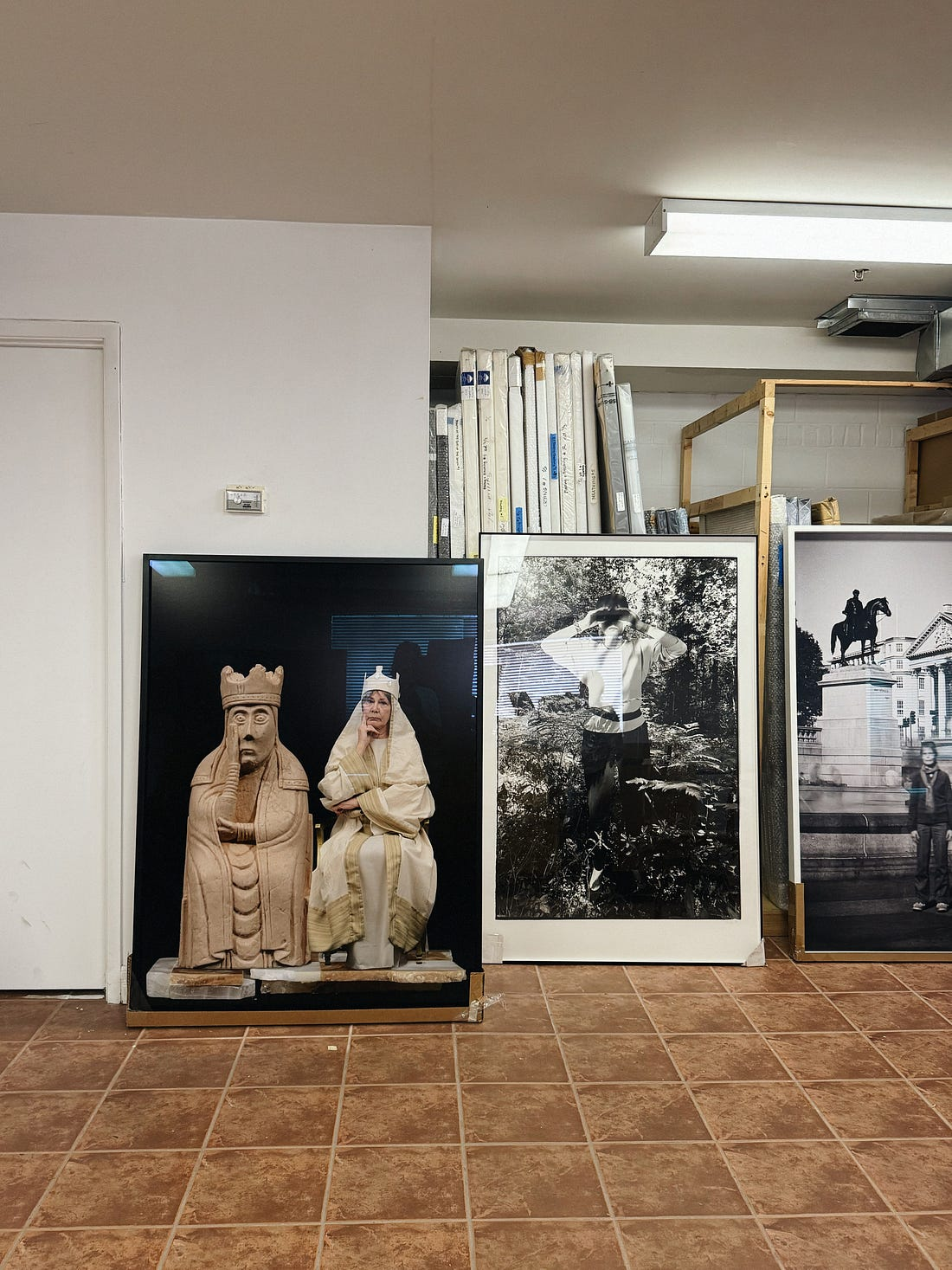
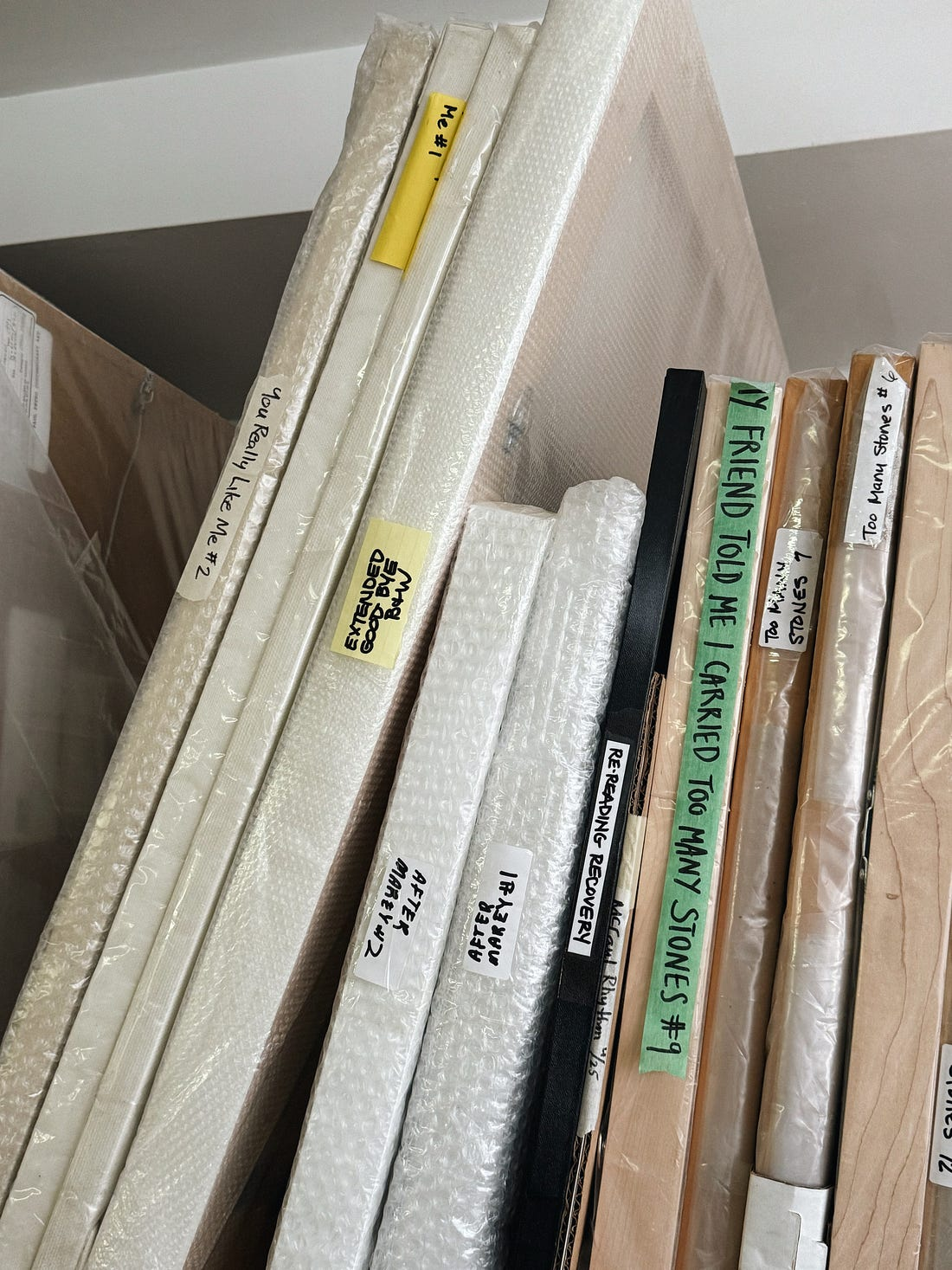
Roughly once a month, I visit an artist’s studio for the ongoing series Studio Visits. I take iPhone photos of the corners and nooks of their studio, offering a more intimate look into a practice that usually takes place behind closed doors. I’ve said it before, and I’ll say it again: it’s such a gift to be invited into an artist’s studio, which often doubles as a kind of sanctuary for them.I don’t often visit photographers’ studios.
This changed a couple of weeks ago when I was invited to visit Suzy Lake at her studio in Toronto. I’m a huge fan of Lake, and I might have said as much a few times in our email correspondence, no doubt coming across as a crazed fan girl. But I’m a fan for good reason! An American-Canadian artist, Lake has been seminal in both countries for the last five decades. Her photographs combine self-portraiture and performance to comment on larger themes: political justice, the role of an artist, feminism, and aging.
She played a foundational role in shaping Conceptualism in Canada. There’s so much to admire in Lake’s career, and the work itself is equally compelling. So here I am, at Lake’s studio, one of the foremost photographers in Canada, and I am taking pictures. As you can imagine, I am very self-conscious. I start clicking away on my iPhone, no doubt diminishing the medium with my lack of artistic ability. (Of course, this series isn’t about the photos themselves, but a desire to document and archive important artist practices.)
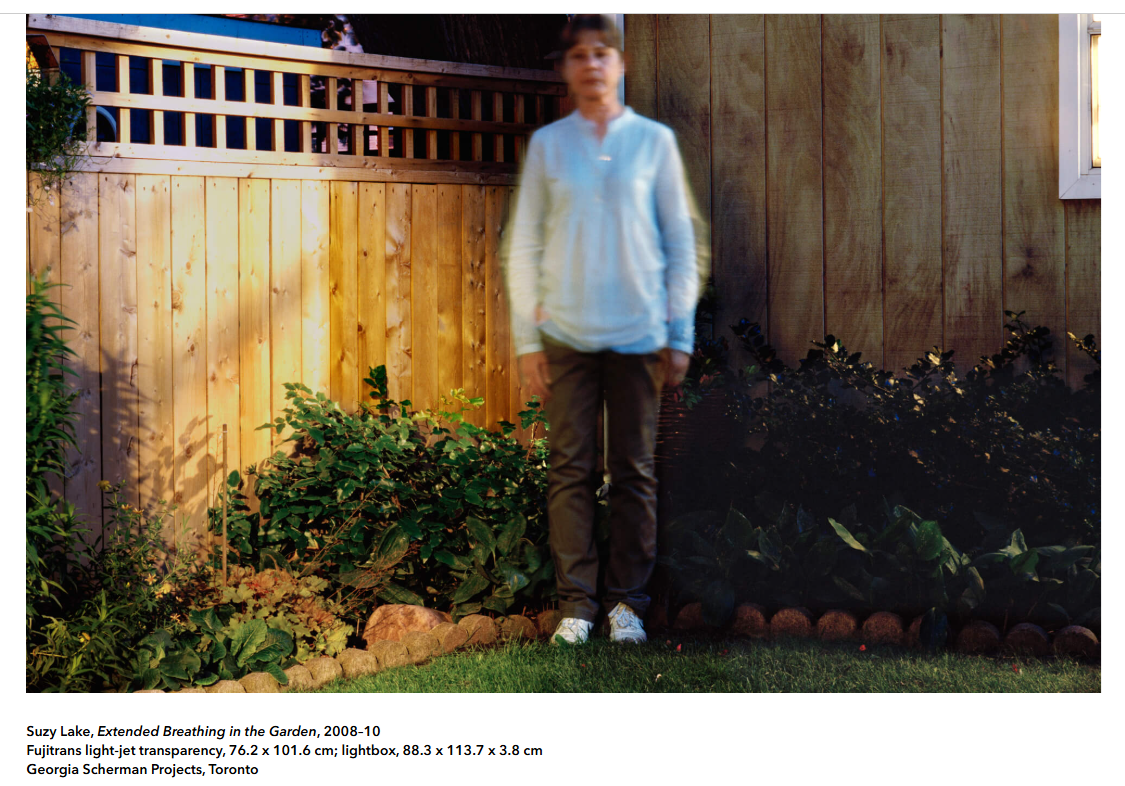
For Lake, the act of photographing is important. The images are complex and layered. The photograph doesn’t happen the moment the shutter clicks, but in the process, creation, and performance that spans the duration of the photograph.For example, in her seminal series, Extended Breathing (2008-14) [see image below], Lake stands still for long enough to be picked up by the long exposure—at least 30 minutes. These photographs become touchstones for how we are remembered, the self as a constant, as life moves around us. Lake is asserting agency over the medium, conveying a powerful message through process.
Artist Bio: Suzy Lake is an American-Canadian artist based in Toronto, Canada. Lake’s work explores the politics of body and identity through performance, video and photography. Her later work addresses the ageing body, questioning structures of power politically and poetically. Lake’s work has been presented extensively across Canada and internationally at the Centre Pompidou-Metz, Museum of Modern Art (New York), Metropolitan Museum of Art (New York), National Gallery of Canada (Ottawa), Brandhorst Museum (Munich), Montreal Museum of Fine Arts, Vancouver Art Gallery, Hayward Gallery (London), Santa Monica Museum of Art, Los Angeles Museum of Contemporary Art, the Musée d’art contemporain de Montréal, and the Art Gallery of Windsor.
For the Silo, Tatum Dooley.
Featured image- Suzy-Lake_1983_Pre-Resolution_Using-the-Ordinances-at-Hand
Did you know that, every year, home renovation projects are derailed by hidden costs, vague language, and inconsistent contractor bids—pushing 78% of jobs over budget and forcing two-thirds of homeowners into debt? It’s not just homeowners who feel the pain: contractors, property managers, real estate agents, investors, and flippers all struggle to assess and compare bids quickly and accurately.
The problem is that contractor quotes are rarely “apples to apples,” often missing critical details or disguising inflated charges—making it hard to identify true scope, cost, and risk. Now, the free-to-use and industry first BidCompareAI tool analyzes and compares multiple contractor bids, instantly identifying missing scope items, unrealistic allowances and other red flags before any work begins … often with tens of thousands of dollars on the line. In minutes, the AI generates a clear, line-by-line report that standardizes bids into transparent, actionable insights—helping homeowners avoid costly overruns, while enabling industry pros to quote with confidence, negotiate smarter, close deals faster, and protect ROI. Interest in this innovation raising industry transparency standards?
AI Reveals These Top 10 Home Renovation Bid Red Flags
First-of-its-kind free AI tool turns confusing, inconsistent contractor bids into clear, side-by-side insights—helping homeowners avoid costly overruns and enabling industry pros to quote, negotiate and close with confidence
Renovations are one of the most expensive and stressful decisions a homeowner makes. Yet 78% of projects blow their budgets, and 2 in 3 homeowners go into debt just to pay for them. Why? Because contractor bids are often riddled with hidden costs, vague language, and missing work that leave you paying more than you bargained for. Thankfully, new AI technology is now making these red flags impossible to ignore—saving homeowners thousands before a hammer is even swung. BidCompareAI is the first-ever AI tool that lets homeowners upload multiple bids and get a fast, detailed report comparing scope, pricing, and red flags—no construction expertise needed and no signup or payment required.
“Homeowners have been forced to make major financial decisions based on unclear or incomplete bids,” says GreatBuildz Co-CEO Jon Grishpul. “BidCompareAI adds instant transparency and clarity—saving people from costly mistakes before a project even starts. For contractors, property managers, and real estate professionals, it’s a credibility and efficiency tool that streamlines communication, builds trust and helps win more business.”
Here are the top 10 red flags often hiding in contractor bids, and how the BidCompareAI tool reveals them instantly:
1. Missing Scope Items — “Surprise” Costs Waiting to Blow Your Budget
Your contractor’s quote doesn’t include demolition, cleanup, or critical tasks? That’s a ticking time bomb. Now, homeowners can catch these omissions so you never get hit with surprise charges.
2. Vague Allowances — The Fine Print That Drains Your Wallet
Ambiguous line items like “fixtures” or “materials” can mean anything. The AI tool flags vague terms so you can demand specifics upfront.
3. Unrealistically Low Bids — Too Good to Be True? Usually Are
Low-ball bids often mean corners will be cut or costs will balloon later. This AI exposes these dangerously low estimates before you get stuck with change orders.
4. Pricing Inconsistencies — Comparing Apples to Oranges?
Quotes come in all formats with wildly different terminology. This advanced technology standardizes and compares them side-by-side, so you’re not left guessing.
5. Hidden Fees — The Black Box of Renovation Budgets
Permits, procurement, and labor fees sometimes get lumped in mysteriously. The AI reveals these “hidden” charges clearly in its summary report.
6. Overlapping or Duplicate Charges — Paying Twice Without Knowing It
Some bids unknowingly charge for the same work twice. The AI delivers a line-by-line analysis that spots these costly errors fast.
7. Unclear Project Timelines — When Delays Lead to Extra Costs
Vague or missing timelines can spiral into costly delays. While timelines aren’t priced, spotting missing info helps you demand accountability.
8. Missing Cleanup and Disposal — Don’t Get Stuck with the Mess
Quotes that don’t include cleanup leave you responsible for hauling debris and disposing of waste. This AI highlights these crucial omissions.
9. Discrepancies in Material Quality — Low-Quality Where You Expected Premium
One bid may specify high-end fixtures while another hides “allowances” that could mean anything. The AI tool flags these differences so you know exactly what you’re paying for.
10. Inconsistent Labor Charges — Watch for Inflated or Unexplained Fees
Labor costs vary widely, and some bids overcharge or include unnecessary markups. This user-friendly technology points out these red flags clearly.
“This is about more than just tech,” added Paul Dashevsky, Co-CEO of GreatBuildz. “It’s about empowering homeowners to feel confident and in control of their renovation projects—and helping contractors better serve their clients.”
Renovations don’t have to be a financial nightmare. As consumer-facing AI tools proliferate across industries, the BidCompareAI innovation demonstrates how artificial intelligence can bring real-world value by making complex, high-stakes decisions—like selecting the right contractor—faster, clearer and far less stressful. For the Silo, Marsha Zorn.
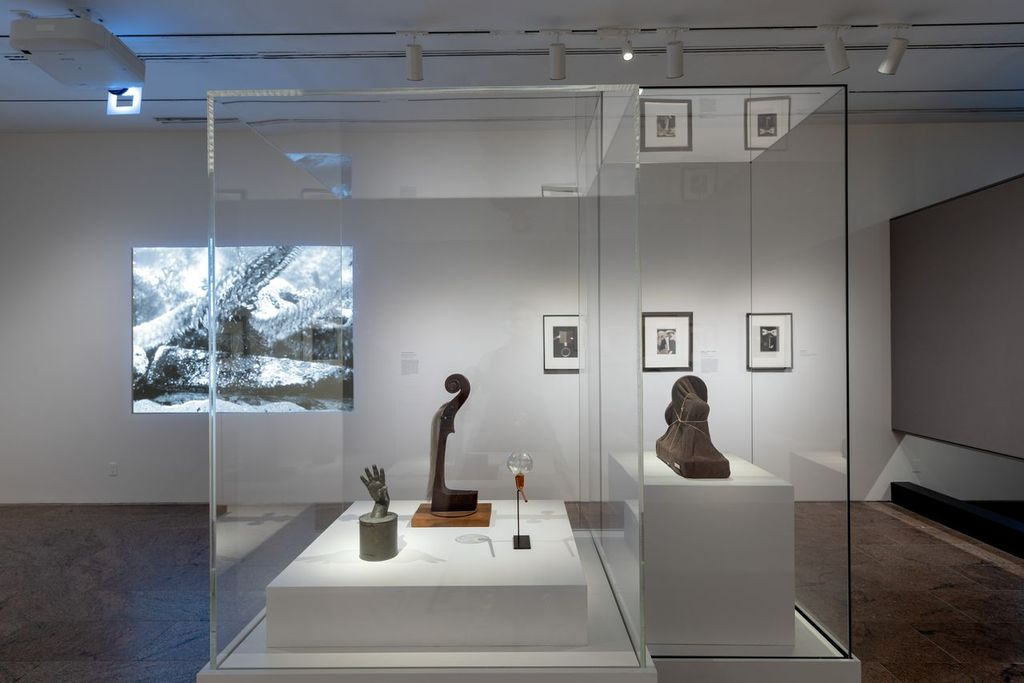
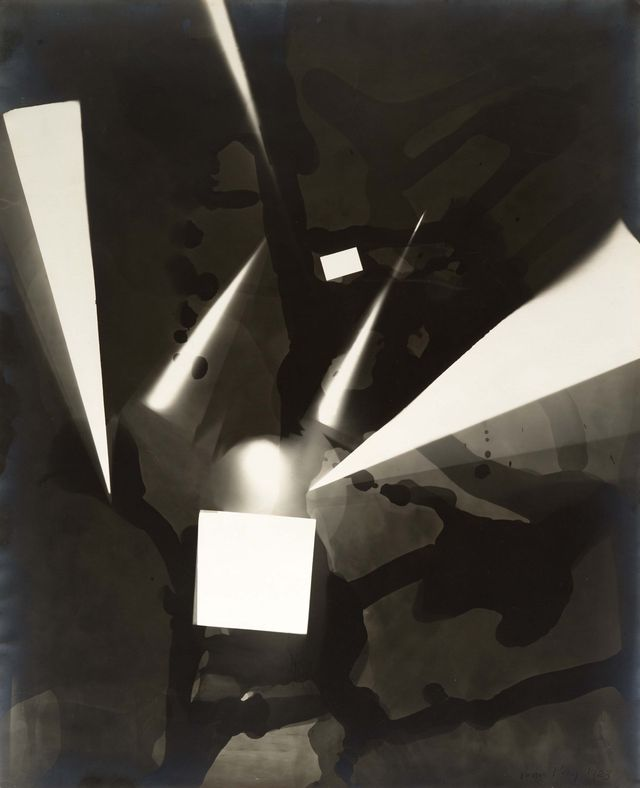
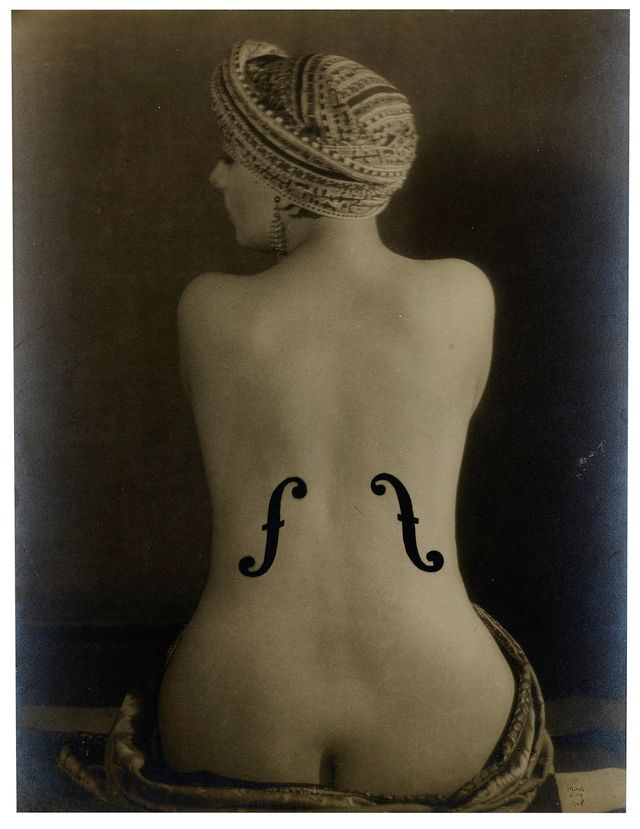
Installation view of Man Ray: When Objects Dream, on view September 14,2025–February 1, 2026at The Metropolitan Museum of Art. Photo by Anna-Marie Kellen, Courtesy of our friends at The Met.
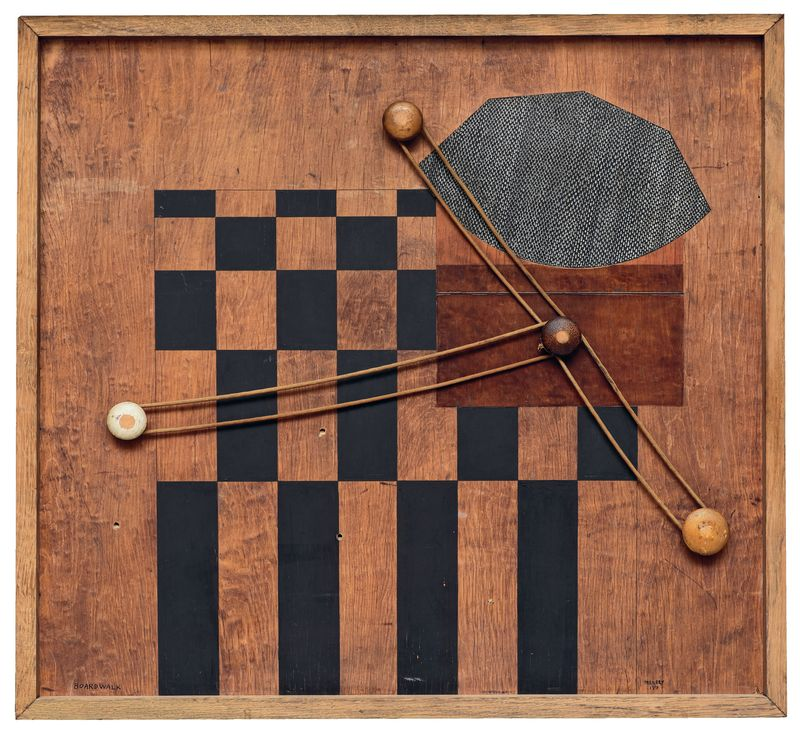
American artist Man Ray (1890–1976) was a visionary known for his radical experiments that pushed the limits of photography, painting, sculpture, and film. In the winter of 1921, he pioneered the rayograph, a new twist on a technique used to make photographs without a camera. By placing objects on or near a sheet of light-sensitive paper, which he exposed to light and developed, Man Ray turned recognizable subjects into wonderfully mysterious compositions.
Introduced in the period between Dada and Surrealism, the rayographs’ transformative, magical qualities led the poet Tristan Tzara to describe them as capturing the moments “when objects dream.”
The exhibition will be the first to situate this signature accomplishment in relation to Man Ray’s larger body of work of the 1910s and 1920s. Drawing from the collections of The Met and more than 50 U.S. and international lenders, the exhibition will feature approximately 60 rayographs and 100 paintings, objects, prints, drawings, films, and photographs—including some of the artist’s most iconic works—to highlight the central role of the rayograph in Man Ray’s boundary-breaking practice.
“Before my eyes an image began to form, not quite a simple silhouette of the objects as in a straight photograph, but distorted and refracted … In the morning I examined the results, pinning a couple of the Rayographs—as I decided to call them—on the wall. They looked startlingly new and mysterious.” — Man Ray
The exhibition is made possible by the Barrie A. and Deedee Wigmore Foundation.
Major funding is provided by Linda Macklowe, the Horace W. Goldsmith Foundation, The Daniel and Estrellita Brodsky Foundation, The International Council of The Metropolitan Museum of Art, Andrea Krantz and Harvey Sawikin, and Schiaparelli.
Additional support is provided by the Vanguard Council.
The catalogue is made possible by the Mellon Foundation.
Additional support is provided by James Park, the Carol Shuster-Polakoff Family Foundation, and Sharon Wee and Tracy Fu.
Exhibition Catalog
Man Ray: When Objects Dream
This volume is the first in-depth study of Man Ray’s groundbreaking rayographs of the 1920s and their interconnections with his Dada and Surrealist works.
The “D” word. Stressful right? When your divorce is finally final, how will you begin again?
The transition can be liberating for some, daunting for others. Mixed feelings – anger, relief, sadness, joy, fear and uncertainty – are common and may take time to sort out.
Meanwhile, the clock on your new life is ticking, and regardless of your emotions, it is time for a freedom-inspired relaunch, says Jacqueline Newman, a Manhattan-based divorce lawyer and author of Soon To Be Ex: A Guide to Your Perfect Divorce & Relaunch (www.Jacquelinenewman.com).
The divorce proceedings – all the time spent with your attorney and in court, all the hours burned while considering highly emotional and financial factors, from the impact on your children to the division of assets – put a big part of your life on hold, not to mention a major strain on it. And now with the difficult process over, Newman says, it is important to focus on creating a brand new you.
“The last umpteen months have been about your kids, your ex, and your divorce,” says Newman, “thus, a little ‘me’ time is in order. Here is an opportunity to be free from having to answer to anyone but yourself. So live your life to its fullest.”
Newman’s message is that divorce does not have to be the worst thing that could have happened to you.
There are silver linings as you begin to take control of what you can, and she offers three tips on how to relaunch after a divorce.
• Treat yourself. Right out of the divorce gate, buy something meaningful for yourself. Lose the guilt your ex made you feel for spending on clothes or expensive shoes. Your gift could be something symbolic and therapeutic that fires a shot back at your ex. “I would absolutely recommend you buy yourself a divorce present of some kind,” Newman says. “You deserve it. One woman I represented was constantly mocked by her husband during their marriage for being flat-chested. It is easy to guess what she bought as soon as her cash payment cleared.”
• Embrace single hood. This does not mean you have to hug your first post-divorce dinner partner. It means embracing a new stage of discovery, with the different, interesting people you meet while dating becoming part of your growth. Newman recommends online dating as a way to “relearn how to date.” Many newly divorced people feel insecure about dating, but Newman suggests learning about people outside your comfort zone. And rather than trying to focus on finding Mr. or Mrs. Right, Newman says, “Give yourself some time to look around and meet different types of people. You may learn something that can broaden your perspective on life. If you can start seeing relationships not as the goal but as opportunities for growth, then you can start being more accepting with the outcome of each relationship.”
• Expand your freedom. Use your new windows of time to catch up with friends you have not seen. Newman recommends Facebook as an easy way to reconnect. On weekends when the ex has the kids, strengthen your friendship circle and broaden it. Explore and re-discover yourself. Pursue new hobbies or renew ones you did not have as much time for in marriage. Advance your career. “Your post-divorce life is offering you a chance to go after the promotion you have been dreaming about,” Newman says.
By doing the things you long wanted to do, you can find the new you.
“You are free to be who you are without judgment from a spouse,” Newman says, “and to do whatever you want. Learn to love yourself.” For the Silo, Cathy K. Hayes.
He listened to Mike Oldfield. He saw the pictures on the albums and he read about ‘this thing called a Fairlight’. Which raised Klaus’ curiosity about this ‘Computer Instrument’. Fellow keyboardists told him it was a mission impossible, getting your hands on one. But Klaus managed to find the holy grail…
‘To me, It’s still fresh. I can use the Fairlight to create sounds no one’s ever heard before.’
If we take a look at the history of popular musical style creation we see a common theme: new technology leads to new inventions leads to new possibilities for musicians and composers. Consider the evolution of the modern piano from its beginnings as a somewhat-limited-oft-out-of-tune harpsichord. Or the evolution of the electric guitar from the acoustic guitar- by adding an pickup to electronically capture sound, another inadvertent effect became possible: the ability to alter the signal and sound characteristic via electronic manipulation. Heavy Metal music would never have been possible without the distortion pedal, which itself is an evolution of overdriven mixing board input channels and later on- fuzz pedals.
The first fuzz pedal to hit the market was the Maestro Fuzz-Tone, which was launched in 1962. It was developed by engineer Glenn Snoddy in collaboration with Gibson Guitars.
Inspired by Grady Martin’s distorted bass, Glenn worked with Revis Hobbs to create a device that could replicate the sound consistently. Despite its clever design, the Maestro Fuzz-Tone wasn’t really liked by many musicians. They were unfamiliar with this new distorted sound and didn’t know how to use it into their music.
However, this all changed in 1965 when The Rolling Stones used it in their hit song “(I Can’t Get No) Satisfaction.” pedalplayers.com
In a similar way the Fairlight, the AKAI MPC, the EMU and other sampling based instruments allowed for extreme sound manipulation and even the creation of entirely new sounds leading to new techniques of musicianship and composition. Will we see another development to change the playing field? Is AI the next musical frontier?
”I was lucky enough to find a Series II, back in 2010. It’s quite a historical piece, for it used to belong to Synthesizer Studio Bonn, one of the only two Fairlight retailers in Germany. They bought it in 1982. It was their demo machine and It was kept in their shop until 1999. They went bankrupt, and the Fairlight was sold to a synth collector, who went bankrupt as well. He had to sell a lot of his equipment, including the Series II. I got it for a good price. But I do hope I won’t be the third one to go bankrupt.”
Klaus Himmelstein has been a music and science teacher on several German international schools for about twenty years now. He developed a special interest in electronic music, but originally he is a classically trained violin player. ”That’s how I started, at the age of 8. My parents took me to violin lessons, because they discovered I have perfect pitch hearing. I really love to play the violin and I still play it. Through the years, I got more and more interested in electronic instruments.”
Green screen, big box
”I remember getting my hands on a Yamaha DX7 for the first time, when I was about 12 years old. That was in 1986. I didn’t know what any of these knobs were for. I tried out the presets and I tried to tweak them, to get some other sounds out of it. Around that time period, I also heard about the Fairlight for the first time. I listened to Mike Oldfields’ albums and I read he was using a ‘Fairlight computer’. So I thought: ’What the hell is a Fairlight computer?’ And then, I figured out it was this funny machine with this keyboard and this green screen and a big box, pictured on some of his albums.”
He bought his first synth in 1991. ”A Roland D-5. Not to be confused with the famous D-50. The reason I bought it was because it is multitimbral. I already had an Atari ST computer. I used this set-up for making my first compositions. And, around that time, I started asking other keyboard players about the Fairlight. Some people didn’t know anything about it. But the people who knew about it, they’d be saying things like: ’Oh boy, that’s the holy grail…’, ’15.000 Deutsche Mark’, ’You won’t get your hands on one’ or ’That’s only for the big studios’. By the end of the nineties, Klaus had built himself quite a studio with a decent amount of vintage synthesizers. ”I started looking on eBay, checking for Fairlights. I’ve learned there are two types of Fairlight-ads: either the refurbished machines which cost a fortune, or just crap.”
Closing the deal
In 2010, an acquaintance of his – the guy from RetroSound, who publishes videos of pretty much every vintage synthesizer you can think of – notified Klaus there was a Fairlight for sale. “He knew I was looking for one, through my posts on forums. So one day, he sent me an e-mail. He knew there was one for sale, somewhere in the Eiffel area. A Series II, not in perfect condition, but good enough. He offered to put me in touch with the seller.
So, in the end, I went to this guy, checked it out, talked about the price and closed the deal. It was pretty easy going. I picked it up myself, for I don’t trust companies like UPS and DHL too much handling valuable packages. I had a huge car back in the day, a station wagon. I put lots of cushions and blankets in the back of the car. I wrapped it all up and drove back to my studio, which was located in the city of Münster. I set it all up and after that, people didn’t see me for quite some time, for I was in the studio all of the time.
I went through all the floppy disks. They contained a large collection of samples from Synthesizer Studio Bonn. They made their own samples, their own sounds. It was used for demo sessions. I checked out all the sounds; quite some unique stuff in there.”
Nothing like the real thing
”I was always fascinated by its sound. That was one of the reasons I wanted to have one. Not just for collecting purposes. I’m not treating it like some piece of history that sits in my studio, like some precious artefact, being polished every day. I really want to use it for making music.” Of course, it took some getting-used-to. Klaus: ”When you start to work with it, you’ll probably find out it’s quite difficult. For instance, the light pen isn’t as accurate as you think it might be; no drag ’n drop, no pull-down menu’s. But in the end, after a couple of days, I’ve found my way around it.
I also figured out, and this is a thing I learned from other users as well: after two or three hours working with the light pen, your arm gets really tired. And that CRT monitor, that green screen compared to todays monitors.… It isn’t too comfortable. But that sound, it makes it all worth while. I think the percussive sounds are the best in the world. And it’s that 8-bit sound… I don’t know why exactly, but I think it’s just the best. It’s unique. You don’t get that particular sound out of todays software. For instance, Arturia’s CMI V, it’s really nice, it’s a good reproduction. But if you want that original particular sound, there’s nothing like the original Fairlight CMI.”
Warm community
”I bought it back in 2010 and I have been using it ever since. It’s still in quite good condition, except for the CRT-monitor. It’s a little bubbly and not quite clear around the edges. But furthermore, the light pen is still working, one of the floppy drives still works, as well as the 8 voice cards. At the age of almost 40 years, it’s still a good machine. Together with Jean-Bernard Emond from France, I’ve made some modifications. For instance, we’ve replaced on of the floppy drives with an SSD-drive. Peter Wielk helped me out with one of the voice cards. I had a dead one. He had one in Australia, so he sent it to me.
I have two Emulators, and one of them just serves as a box of spare parts. I figured out there aren’t too many people familiair with repairing an Emulator. And it’s very, very difficult to get spare parts for it. With the Fairlight on the other hand, there’s a well grown community, pretty much world wide. You can get parts from France, from Australia, from the UK… There’s always someone somewhere in the world, with a great love for the instrument and lots of knowledge, who can help you out with any issue you might have.”
Inspirators
“In my studio, there are at least 25 keyboards and a whole lot of modules and other stuff. The Fairlight is a part of ’the orchestra.
I’m a big fan of Tangerine Dream, that is to say: their early work. Everything after about 1989 began to sound like pretty much everything else. They used cutting edge technology. But the funny thing is: they never used a Fairlight. According to Edgar Froese, they used a Synclavier, and Emulators. Their music comes close to what inspires me. Some people are comparing some of my work to Tangerine Dream. Others are saying it reminds them of Jean-Michel Jarre. The perception is quite different. I’m totally happy when people like my tracks. If they don’t? That’s fine with me. I’m working on my ideas and I’m enjoying the proces. That’s it. Sometimes, I get involved in some recordings, I made a couple of jingles for radio commercials and I once made a small movie score. Sometimes, I play keyboards and violin in bands. I’d prefer doing a little less teaching and a little more music production. The good thing about being a teacher: it’s a steady job. The bad thing about being a musician on the free market: you’re never sure of income. I prefer the more secure way. Teaching music actually is a lot of fun. Recently, we performed a few pieces with some students. I love teaching music to kids. But, I don’t take many of my synthesizers to school. My Moog Rogue is the only one I bring from time to time. They can tweak on pretty much every knob or slider; it doesn’t go out of order. But I’m not bringing the Fairlight to school. I don’t want to transport it too often.”
Final thoughts
“The Fairlight CMI, it’s a particular part of history. It has integrated sampling into modern music. Without the Fairlight, things would have happened totally differently. Back in the early 80’s, it was the latest thing to go on, the latest way to produce new kinds of music. I love that particular sound. For me, it’s still up to date. It’s not old-fashioned, it’s not vintage. For me, it is still fresh. In my opinion, I can use the Fairlight – as well as the Emulator – to create new and fresh sounds that have never been heard before. I’m convinced of that.” For the Silo, Mirjam van Kerkwijk/ Jarrod Barker. Read more about the Fairlight via For The Love Of The Fairlight . Have a fun Fairlight story to tell? Contact Mirjam at mirjam@fortheloveofthefairlight.com.
American Federation of Arts Announces New Season of Touring Exhibitions for Fall 2025 through 2027 ‒ Museums in over 11 cities will headline art exhibitions created by the American Federation of Arts, with more cities to come ‒
The American Federation of Arts (AFA), the leader in traveling exhibitions worldwide since its founding in 1909, proudly announces the new season for the fall of 2025 through 2027. So far, museums in over 11 cities will headline several art exhibitions created by the AFA and its partners, with more cities to come. Throughout its celebrated 116-year history, the nonprofit institution has helped to spearhead the course of art for generations by enriching the public’s experience and understanding of the visual arts.
Pauline Forlenza at the 2024 AFA Gala in New York (Photo by Alycia Kravitz)
“The AFA’s expansive panorama of new exhibitions demonstrates the importance of listening to the input of visual arts leaders nationwide, focusing on what audiences want to see, and continuing our legacy of shining a light on new artists and trends,” says Pauline Forlenza, the Director and CEO of the American Federation of Arts. “Our longstanding commitment to touring art exhibitions, publishing exhibition catalogues with scholarly research, and developing educational programs is vital – now more than ever.”
These traveling museum shows will open doors to creativity for the next sixteen months to museumgoers. Some of the shows include:
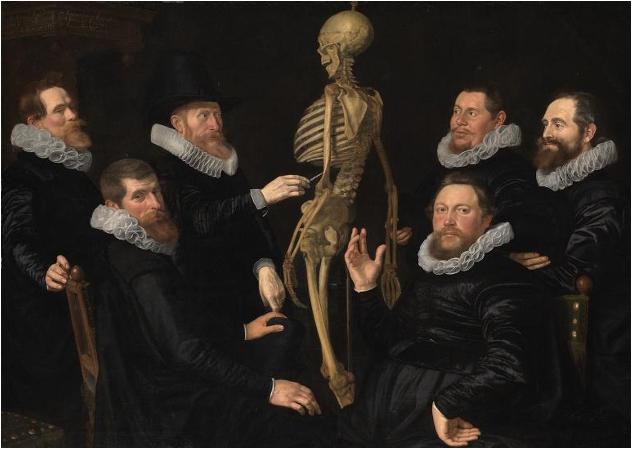
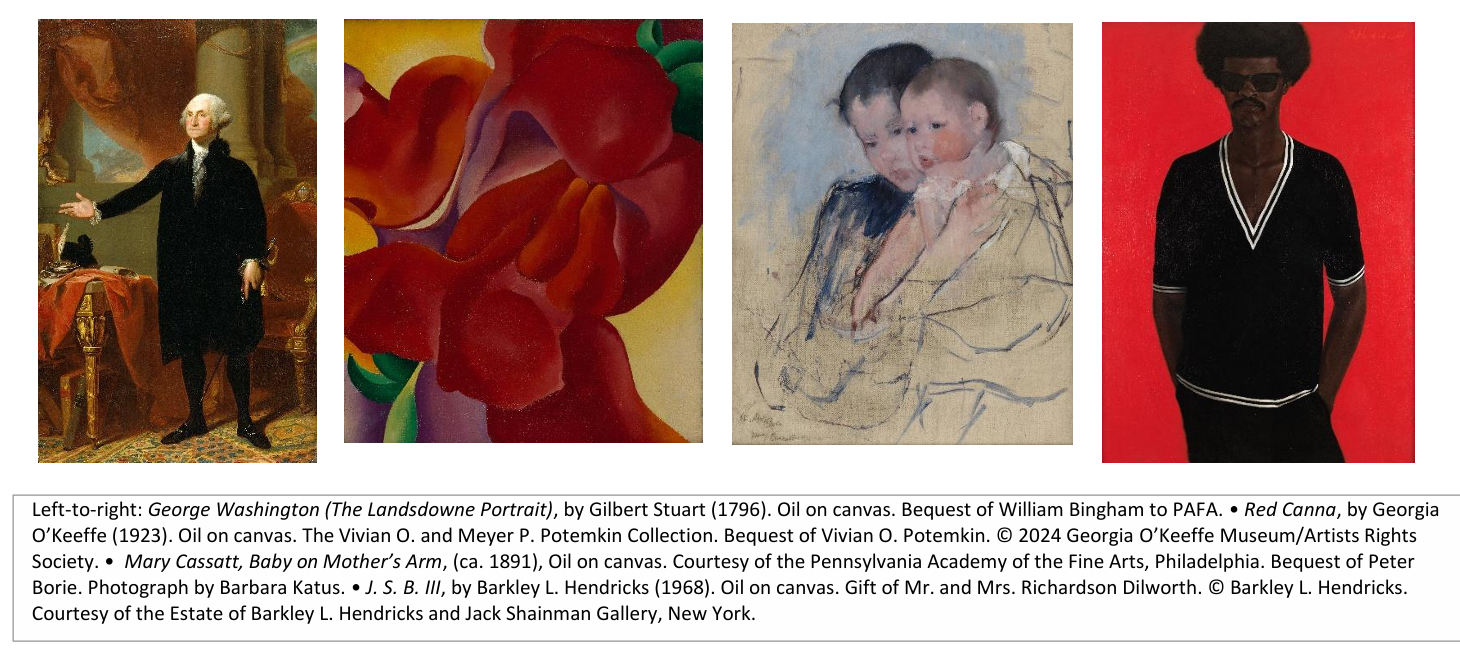
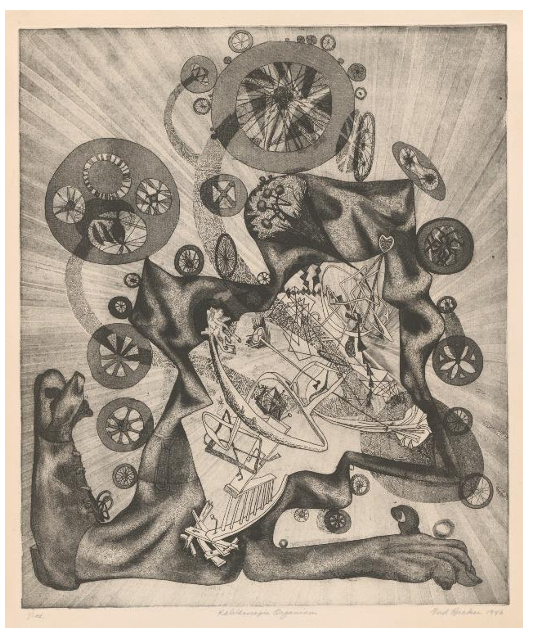
Abstract Expressionists: The Women • Alex Katz: Theater and Dance Civic Virtue in Rembrandt’s Amsterdam: 17th-Century Group Portraits from the Amsterdam Museum • Presence: The Photography Collection of Judy Glickman Lauder • Making American Artists: Stories from the Pennsylvania Academy of the Fine Arts, 1776–1976 • Experimental Ground: Modernist Printmaking in Paris & New York at Atelier 17
Making Their Mark: Works from the Shah Garg Collection, and more. Links to all of the AFA’s 2025 through 2027 exhibition tours may be viewed at: current shows and upcoming tours. Pauline Forlenza at the 2024 AFA Gala in New York (Photo by Alycia Kravitz)
Some of the museums across the country include: National Museum of Women in the Arts, Wichita Art Museum, Muscarelle Museum of Art, Southampton Arts Center, The Gibbes Museum of Art, Taubman Museum of Art, Peabody Essex Museum, Indianapolis Museum of Art, New Orleans Museum of Art, Mobile Museum of Art, and the Museum of Contemporary Art San Diego, among others.
Since 1909, the AFA has toured more than 3,500 exhibitions that have been viewed by millions of people in museums in every U.S. state, and in Canada, Latin America, Europe, Asia, and Africa. From the Smithsonian – “A vital part of American art history, the AFA was one of the first organizations to develop successfully the concept of traveling art exhibitions on a national and international level. Many arts organizations and museums have followed the AFA’s precedent. This national nonprofit museum service organization is recognized for striving to unite American art institutions, collectors, artists, and museums.”
“Through the years, the AFA has also had an impact on patronage in the arts. During its 116-year history, the Federation’s exhibitions of contemporary art provided collectors with knowledge of new artists and avant-garde art forms, creating a broader demand and market for this type of work. Museums and collectors began purchasing work by new or obscure American artists whom they learned about through AFA exhibitions and programs. The AFA also recognizes the importance of the exchange of cultural ideas.”
“Throughout its history, the organization has concentrated on its founding principle of broadening the audiences for contemporary American art, breaking down barriers of distance and language to expand the knowledge and appreciation of art. The touring exhibitions have brought before the public contemporary American artists and craftspeople, genres, and artistic forms of experimentation – exposing viewers to new ways of thinking and expression.”
Highlights from the New Season
View the full list of tours at: amfedarts.org/exhibitions/current and amfedarts.org/exhibitions/upcoming-exhibitions/. The complete lists of current and upcoming touring museum shows are updated regularly, as new exhibitions and new museum dates are added. Following are highlights of eight of the AFA exhibitions that will be touring during the fall of 2025 through 2027.
Abstract Expressionists: The Women
Explores the vital, under-acknowledged innovation of women artists in the Abstract Expressionist movement, the first internationally renowned artistic movement to originate in the U.S. • Featuring 47 works from The Levett Collection, by more than 30 women artists who worked in New York, California, and Paris from the early 1940s through the 1970s.
“Too often, the canon of art history has relegated women artists to supporting roles in major art movements,” says Pauline Forlenza, the Director and CEO of the AFA. “This exhibition upends that narrative, asserting that women painters were critical contributors to the formulation of Abstract Expressionism from the very beginning.
Equally talented and visionary, the female artists featured in this show helped put American art on the map,” adds Forlenza. The exhibition is organized by the American Federation of Arts from the Christian Levett Collection and FAMM (Female Artists of the Mougins Museum), France. This exhibition is curated by Ellen G. Landau, PhD, Andrew W. Mellon Professor Emerita of the Humanities at Case Western Reserve University.
17th-Century Group Portraits from the Amsterdam Museum
The large group portraits in this exhibition have rarely left Amsterdam since they were commissioned in the 1600s, and have never traveled in the U.S. as a group. • The show traces how life in the largest and most important city of Holland was based on the collective responsibility of the burghers, who combined their mercantile wealth with political power. • Amsterdam’s economic success, however, was the result of ruthless trade wars within Europe, colonization and enslavement overseas. • Artists include Adriaen van Nieulandt, Gerrit Berckheyde, Ludolf Bakhuizen, Frederik Jansz, Dirck Santvoort, Ferdinand Bol, Bartholomeus van der Helst, Nicolaes Eliasz Pickenoy, Jan Victors, and of course, Rembrandt van Rijn. • By governing and guarding the city, by organizing and managing a social safety net for the poor and needy, and by stimulating scientific and industrial developments, the burghers contributed to making Amsterdam the most prosperous city in Europe.
The Osteology Lesson of Dr. Sebastiaen Egbertsz, artist unknown (1619). Oil.
Presence: The Photography Collection of Judy Glickman Lauder 100 photographs by 70 artists. • Explores the concept of presence through the tenderness of portraits, the awe within landscapes, the clarity of reportage, and the spontaneity of cityscapes. • Works by Merry Alpern, Diane Arbus, Richard Avedon, Irving Bennett Ellis, Nan Goldin, Dorothea Lange, Danny Lyon, Sally Mann, Susan Meiselas, Helmut Newton, Ruth Orkin, Gordon Parks, Edward Steichen, Joyce Tenneson, James Van Der Zee, Todd Webb, Edward Weston, and more. • Photographs can be imprinted with the totality of human experiences, and this exhibition embraces that totality, examining the deeply humanistic history of photography.
Robert Mapplethorpe and Patti Smith, New York, by Norman Seeff (1969). Archival pigment print. Portland Museum of Art, promised gift from the Judy Glickman Lauder Collection.
Making American Artists: Stories from the Pennsylvania Academy of the Fine Arts, 1776–1976
Presenting more than 100 of the most acclaimed and recognizable works of American art. • New narratives of the history of American art, embracing stories about women artists, LGBTQ+ artists, and artists of color, alongside iconic works traditionally associated with PAFA. • Women artists participated in PAFA’s exhibitions as early as 1811, and this show includes paintings by Sarah Miriam Peale, Mary Cassatt, Cecilia Beaux, Alice Neel, and May Howard Jackson (the first African American woman to receive a scholarship to attend PAFA, in 1895). • By 1900, PAFA acquired its first work by a Black artist, Henry O. Tanner. PAFA educated African American artists and acquired their works throughout the twentieth century, and this show features works by Joshua Johnson (one of the first professional Black artists in America), Dox Thrash, Laura Wheeler Waring, Edward Loper, and Barkley L. Hendricks.
Curated by Anna O. Marley, PhD., a scholar of American art and material culture from the colonial era to today.
The first comprehensive museum presentation of Katzʼs highly collaborative and playful work with choreographers, dancers, and members of avant-garde theater ensembles over six decades. • Showcases Katz’s deep and lasting influence on the history of the American performing arts. • Rare archival materials, major sets and paintings, and previously unexhibited sketches from more than two dozen productions. • Spotlights fifteen productions that Katz produced with Paul Taylor, exploring their creative partnership that generated some of the most significant postmodern dance and art of the twentieth century. • Artworks from the show are drawn from the Alex Katz holdings at the Colby College Museum of Art (home to a collection of nearly 900 works by the artist), from Paul Taylor Dance Archives, and from the artist’s studio.
• Provides an innovative kind of retrospective: that of an artistic sensibility. • Attesting to the intertwined histories of painting and stage design in Katzʼs works. • Curated by Levi Prombaum, former Katz Consulting Curator, Colby College Museum of Art.
Willie Birch: Stories to Tell
Chronicles Birch’s unique vision of the Black American experience and examines the interconnected nature of global art forms. • The first ever career retrospective brings together groundbreaking works from the early 1970s to the present.
Throughout his career, the artist has explored how African traditions have been retained in music, art, and culture in America and beyond. • Birch was raised in New Orleans and trained in Europe, Baltimore, and New York. • His work as an artist, community organizer, and cultural provocateur questions why certain things are retained and not others, unearthing uncomfortable truths about American identity, but also offering possibilities for greater cultural awareness.
Left to-right: Memories of the 60’s, by Willie Birch (1992). Papier mâché, mixed media. Courtesy of Arthur Roger Gallery, New Orleans. • Uptown Memories (A Day in the Life of the Magnolia Project), by Willie Birch (1995). Painted papier-mâché and mixed media. New Orleans Museum of Art, Gift of Frederick R. Weisman. Image Copyright of New Orleans Museum of Art / Photo: Roman Alokhin.
Making Their Mark: Works from the Shah Garg Collection
Reveals the intergenerational relationships fostered among women artists over the last eight decades, assembling over 70 works made by 60 women artists between 1946 and today. • Sculpture, painting, installation, textiles, pottery, and mixed media works all converge. • Pioneering examples of post-war abstraction —including early works by Janet Sobel, Judy Chicago, and Mary Corse — are shown alongside compositions by leading contemporary artists such as Julie Mehretu, Lorna Simpson, and Aria Dean. • Paintings and mixed media works by Christina Quarles, Tschabalala Self, and Firelei Báez blur the boundaries between abstraction and figuration. • Connections between the handmade and digital emerge in the various forms of piecework employed in Faith Ringgold’s quilts, Howardena Pindell’s collages, and the pixelated, hypermediated canvases made by Jacqueline Humphries and Anicka Yi.
Works by the Freedom Quilting Bee, Françoise Grossen, and Sheila Hicks explore irregular geometries and eccentric abstractions via fabric and fiber. • Curated by Cecilia Alemani of High Line Arts in New York City. Sisters, by Tschabalala Self (2021). Velvet, felt, tulle, marbleized cotton, craft paper, fabric, and digitally printed, hand-printed, and painted canvas on canvas. Collection of the Shah Garg Foundation. Crisscross, by Sarah Sze (2021). Oil, acrylic, acrylic polymer, and ink on composite aluminum panel, with wood support. Collection of the Shah Garg Foundation. Counterculture B, by Rose B. Simpson (2022). Carved New Mexico pine, twine, clay and acrylic. Collection of the Shah Garg Foundation.
Experimental Ground: Modernist Printmaking
In Paris & New York at Atelier 17 The first large-scale survey of original prints made at Atelier 17 to tour the U.S. in 50 years. • This revolutionary printmaking workshop (1927 to 1988) was famous for its impact on the development of modern art.
Kaleidoscopic Organism, by Fred Becker (1946). Softground etching. Courtesy of O’Brien Art Project Foundation.
It served as a hub of artistic and intellectual exchange — first for Surrealists in interwar Paris, and after World War II for the exploration of abstraction and other modernist styles. • Commemorates 100 years since the founding of the studio. • Presents works by notable artists who gained formative skills at Atelier 17, such as Joan Miró, Yves Tanguy, Louise Bourgeois, Franz Kline, Jackson Pollock, Louise Nevelson, and Krishna Reddy, among many other artists who participated in intense collaborations at the studio. • Atelier 17 attracted hundreds of international artists, drawn to the radical vision of printmaking as a mode for experimentation rather than reproduction.
About the American Federation of Arts
The American Federation of Arts (AFA) is the leader in traveling exhibitions in the U.S. and worldwide. One of the first to successfully tour art exhibitions on a national and international level, the organization unites American art institutions, collectors, artists, and museums. The AFA has toured more than 3,500 exhibitions that have been viewed by millions of people in museums in every U.S. state, and in Canada, Latin America, Europe, Asia, and Africa.
A nonprofit organization founded in 1909, AFA is dedicated to enriching the public’s experience and understanding of the visual arts through organizing and touring art exhibitions for presentation in museums around the world, publishing exhibition catalogues featuring important scholarly research, and developing educational programs.
Abstract Expressionists: The Women is organized by the American Federation of Arts from the Christian Levett Collection and FAMM (Female Artists of the Mougins Museum), France. The exhibition is curated by Dr. Ellen G. Landau. It is generously supported by Berry Campbell Gallery, Betsy Shack Barbanell, Monique Schoen Warshaw, Christian Levett, and Clare McKeon and the Clare McKeon Charitable Trust. Additional support has been provided by the Pollock-Krasner Foundation and the Every Page Foundation.
Making Art, Making History: 200 Years of American Stories from the Pennsylvania Academy of the Fine Arts is co-organized by the American Federation of Arts and the Pennsylvania Academy of the Fine Arts. Lead support was provided to PAFA by the William Penn Foundation, with additional support from the Richard C. von Hess Foundation and donors to PAFA’s Special Exhibitions Fund. In-Kind support is provided by Christie’s and Gill & Lagodich Fine Period Frames, New York. This exhibition is supported by an indemnity from the Federal Council on the Arts and the Humanities.
Alex Katz: Theater and Dance is organized by the American Federation of Arts and Colby College Museum of Art. This exhibition is curated by Levi Prombaum, former Katz Consulting Curator, Colby College Museum of Art. The 2022 presentation of Alex Katz: Theater and Dance was organized by the Colby Museum with curatorial guidance from Robert Storr.
Willie Birch: Stories to Tell is co-organized by the American Federation of Arts and the New Orleans Museum of Art. Major support for the exhibition and catalogue is provided by the Andy Warhol Foundation for the Visual Arts, the Henry Luce Foundation, Wyeth Foundation for American Arts, and the Terra Foundation for American Art.
Making Their Mark: Works from the Shah Garg Collection is organized by the American Federation of Arts and the Shah Garg Foundation. The exhibition is curated by Cecilia Alemani, the Donald R. Mullen, Jr. Director and Chief Curator of High Line Arts in New York City.
Experimental Ground: Modernist Printmaking in Paris & New York at Atelier 17 is organized by the American Federation of Arts. This exhibition is curated by Ann Shafer and Christina Weyl. Civic Virtue in Rembrandt’s Amsterdam: 17th-Century Group Portraits from the Amsterdam Museum is organized by the American Federation of Arts.
Presence: The Photography Collection of Judy Glickman Lauder is co-organized by the Portland Museum of Art, Maine, and the American Federation of Arts.
Untitled. abstract expressionism- oil on canvas Jarrod Barker 2021
The concrete Malibu mansion abandoned mid-renovation by Kanye West is back on the market with a previous deal now on the rocks.
The Malibu Beach home that Kanye West bought in 2021 for $57.3 million usd/ $79.03 million cad but then gutted, abandoned and sold for $21 million usd/ $28.97 million cad has hit a new snag. The 4,000-square-foot home, designed by renowned architect Tadao Ando, has bounced between several developers and is now back on the market for $34.9 million usd/ $48.14 million cad.
It’s the latest twist in the saga of the oceanfront house, designed by award-winning Japanese architect Tadao Ando, which the rapper purchased in 2021.
West bought the three-story home for $57.3 million—and then immediately gutted it, leaving only a concrete shell with no windows, plumbing or electricity when he dumped the project about two years later.
Note- prices below are in USD, please read intro paragraph above for CAD conversion at time of publication.
The skeletal beach house then sold for $21 million last year to Steven “Bo” Belmont, a developer who returned it to the market within months. He quickly went into contract to sell it to another developer, the Montana-based Andrew Mazzella, for $30 million, both parties confirmed.
Listing images show the home before a gut renovation was begun.The Oppenheim Group/Roger Davies
The deal with Mazzella, a luxury home developer, was scheduled to close in May but has now stalled, as the shell of a house was back on the market as of Wednesday asking $34.9 million, down from an initial ask in March of $39 million.
According to Belmont, CEO of crowdfunding platform Belwood Investments, the deal is enirely dead, he told Mansion Global on Monday. Belmont cancelled the contract after Mazzella requested a third extension to find financing when the second extension expired on July 31.
Mazzella confirmed that they mutually cancelled the contract earlier this month, but was quoted as saying he’s “not out of the game just yet”, and is “still interested in negotiating a deal for the house”.
Roughly 1,200 tons of concrete were used to build the original home.The Oppenheim Group/Roger Davies
Prior to the March deal, Belmont had already begun the $8.5 million process of returning the 4,000-square-foot home to its original design by the Pritzker Prize-winning architect, built in 2013 for financier Richard Sachs, he said. He consulted with Sachs and hired the same design-build firm, Marmol Radziner, who had constructed the house originally.
Belmont plans to sell the building as-is at the new price to recoup the money already invested, or return to the original plan of restoring it and selling the completed house—which he expects to be in even more demand in the wake of the January wildfires.
“Malibu is going to get a full face lift, with fire-retardant concrete homes, and we have the ultimate high-end concrete home. A tsunami can’t take it out. A fire can’t take it out,” Belmont said. “And it’s the only Ando for sale.”
The listing is with Jason Oppenheim of the Oppenheim Group and Mauricio Umansky of the Agency, who have been representing the seller from the start. Oppenheim previously repped Kanye in the sale to Belmont, as well. Neither immediately responded to a request for comment.
Realtor.com first reported the home’s return to the market.
Mazzella had also planned to complete the reno of the house and list it closer to Kanye’s original purchase price. “It’s a very complicated construction project,” he said.
Mazzella is working on restoring another Los Angeles mansion and plans to keep looking for opportunities if the deal for this one does fall through. “I consider my business style to be that of Trump, Musk and Carl Icahn combined so it’s not an easy process,” he said.
For the Silo, Liz Lucking/ Mansion Global, Jarrod Barker.
Attachment parenting (AP) is a philosophy that basically means: the closer you keep your children to you, you provide a security, a centre. When children grow up, they are very compassionate, loving human beings. Parts of this style include extended breastfeeding, a safe sleep environment (close to parents) and baby-wearing and balance (martyrdom is not a requirement). The tenet of AP is that by meeting your baby’s needs, the child feels secure in their world.
One can practice AP while working. One can also practice AP while bottle feeding (dads don’t nurse). What matters most is meeting your baby’s needs and bonding. A newborn, a child, has basic needs. They need to eat (as humans, meant to drink Mamma’s milk), they need to poop/pee, they need to sleep, and they need to feel loved. Babies feel love by contact and closeness.
Hubby and I said that our babies would never sleep in our bed. From 6-9 months, my eldest and I barely slept. He woke up often to nurse, and with the stringent rules the nurses gave me at the hospital about nursing (rules which I now don’t agree), I was sleeping maybe 40 minutes between nursing sessions. In desperation, I brought him into our bed and ‘hid’ him there until he was around a year old. When Jeff finally discovered him, he said, “That’s why you have been so much nicer lately?” “Yes, because I could finally sleep!”
[The Big Bang Theory’s Mayim Bialik says attachment parenting is “a style of parenting that basically harkens to the way primates parent — things like natural birth, breast feeding, sleeping safely near your child, holding your child. ” CP]
I should say that the Canadian Pediatric Society says not to sleep with your child. But, there has been research the past 6 years that clearly shows that if certain precautions are in place (no smoking, drinking or drugs that put you into a deep sleep, never on a couch, and no pillows/blankets around baby’s face), sleeping with a parent is safe. Most babies who die sleeping with their parent had at LEAST one of those risk factors, if not more. A great website that will give a fully informed choice is (http://www.isisonline.org.uk/). Sleeping with your children is a contentious topic in western culture, but quite normal overseas.
I was a full time midwifery student when my baby girl (last of 4 children) was 7 months. I still was an AP’er. We both slept better at night. She stayed connected to me even though I was gone during the day or days. Of my 4 children (now ranging from 8-16), none have been bullies. They all left our bed. They all stopped nursing when we both chose. It worked for us.
This Digital Dad could use a sling… “Ever since my baby boy was born on February first, everyone keeps asking the same thing. How is it that I can find so much time for video games? Having a baby is very time consuming and, even with my generous 6 weeks of parental leave, I still found it hard to find time for myself (ie: gaming time). That is, before I discovered that my shoulder is more comfortable to a newborn than any bed, pillow, blanket or hammock made by man” from http://tinyurl.com/2qlcm4
Baby-wearing is AWESOME in a mall. Strangers do not enter your private space to look at your child, as they would if your child was in a stroller. They see the world from the safety of mom or dad’s arms. This type of parenting may not work for everyone. No judgement. Like breastfeeding, the choice is with the parent, not society. My children are very resilient and loving human beings. For the Silo,Stephanie MacDonald.
Rep. Anna Paulina Luna tells Joe Rogan she has seen photos of UFOs in a classified setting and is “very confident there’s things out there that have not been created by mankind.” pic.twitter.com/eL3GWcoRfF
Theodore “T.R.” Roosevelt, Jr. was an American politician, author, naturalist, soldier, explorer, mason and historian who served as the 26th President of the United States.
Remember last year, when there was ongoing UAP/Drone activity hitting the news cycle and without any official explanation of what was happening over the skies of New Jersey and the rest of the world? There is still no answer and it is fascinating to consider that this phenomena is in fact not new and has been reported for over one hundred years.
The drones have become unsettlingly frequent in Monmouth County, New Jersey (Picture: Monmouth County Sheriff’s Office. Dec 2024)
When one thinks of U.S. Presidents and UFOs several of our Chief Executives come to mind. Firstly, there is President Eisenhower purportedly meeting aliens at Edwards Air Force Base in 1954.
Then there is JFK’s memo to the CIA asking for disclosure on UFOs ten days before his assassination:
More humorously but perhaps true is the story of Richard Nixon treating comedian Jackie Gleason to a view of dead alien Grays at Homestead Air Force Base in 1974.
But what about Teddy Roosevelt?
Is anyone in the UFOlogy Community even aware of a documented UFO sighting over the 26th US president’s home, Sagamore Hill, in Oyster Bay, New York on August 1, 1907 when he was in his second term of office?
According to an old clipping found by UFOlogist Kay Massingill from a newspaper called the D.C. Evening Star dated August 2, 1907, two events of a mysterious nature occurred in the town of Oyster Bay in a twenty-four hour period and both concerned Mr. Roosevelt.
In the latter, the town librarian Miss Denton opened up the library on the morning of the 1st and discovered a beautiful mahogany chair donated by Teddy to the museum from his days as Governor of New York had split down the backside sometime the night before. More peculiar was the fact that on the reverse back of the chair was the Bald Eagle Seal of the United States of America and it was split in half! An ominous sign indeed! Was it an omen?
However, the main event occurred the evening before between the hours of 9 p.m. and 11 p.m. when a brilliant white light was seen to hang motionless over Sagamore Hill.
According to the dispatch, it was a light “considerably larger than a star” and hung about 300 feet in altitude over the house according to numerous witnesses. It was an “intense white light” and after 11 p.m. it began to fade to a spark and then extinguished. Meanwhile in the library a short distance away, a chair associated with Sagamore Hill’s occupant was coming undone in a most mysterious way.
The home on Sagamore Hill
Was Mr. Roosevelt home the night of the UFO sighting? The article doesn’t say and we’ll probably never know but it is known that Sagamore was called Roosevelt’s Summer White House and it was the middle of summer.
So the main question to ask is why would a ball of light attend to Mr. Roosevelt in the heat of 1907? Two clues can be found concerning his agenda as President that year.
The speech is mundane for the most part dealing with anti-trust actions, railroads, the Department of Agriculture, conservation, unions and such but near the end of it Roosevelt begins to lay out the groundwork for creating the world’s most dominant modern navy. It seemed Roosevelt had a great grasp of what was happening in the world concerning Japan, Germany and China and their eventual rise on the world’s stage. He specifically recommended dredging Pearl Harbor to make it a world class naval base and increasing Alaska’s defenses. Did he know something about the world no one else did? His maneuvering just months after the Sagamore Hill incident directly led to America’ emergence as the modern world’s greatest Suprerpower. Did he have help from E.T. whispering in his ear? During his tenure America’s Navy grew from 5th to 3rd in the world in size.
The second clue is the very interesting coincidence of the Second International Peace Convention held at The Hague, Netherlands that year from June 15 to October 18, 1907 which was during the Sagamore Hill sighting. That convention was the brainchild of none other than Teddy Roosevelt! It was an attempt to codify the rules of war – particularly naval warfare. More importantly, it was seen as the world’s first attempt at an international governing body – a forerunner to the League of Nations and the United Nations.
The Tin Foil Hat Question
Are aliens attempting to lay out the groundwork for, or interfere with, the earth’s direction in the 20th and 21st centuries? And might they have been in contact with American Presidents long before Eisenhower’s 1954 encounter? To see the complete newspaper clipping go to http://www.worldufowatch.com/historical_newspaper_clippings For the Silo, Robert Spearing.
Another boss article via friends at Hagerty. Vintage Corvettes have been bought and sold as collector vehicles for decades, and so you could be forgiven for thinking that all the hot ones have been accounted for, and that the current body of research has documented all that’s known about them.
That’s not the case, and to seasoned Corvette hunters like Kevin Mackay, that’s actually good news. Mackay started his business, Corvette Repair, 30 years ago in Valley Stream, N.Y. His timing could not have been better. Chevy had just launched the exciting C4 model, and the Corvette collector hobby was shifting into hyper drive. That trend brought a renewed interest in the Corvette’s heritage, including racing.
Canada Corvette Connection?
There were already expert collectors well versed in Corvette history, but history has a way of changing. As deeper dives would reveal gaps in Corvette knowledge, those who applied the resourcefulness and tenacity of TV police detective Columbo were able to find and authenticate super-rare Corvettes.
1968 Sunray DX L88
You won’t find Mackay wearing a rumpled raincoat around his shop, but his detective work continues to uncover cars thought to have been lost. Some of those are race cars that have come through his shop, including the 1960 Briggs Cunningham Le Mans car, 1962 Yenko Gulf Oil, 1966 Penske L88, 1968 Sunray DX L88 (found in a barn) and 1969 Rebel L88. All were Le Mans, Daytona or Sebring class winners. Corvette aficionados will see a pattern: Among lost Vettes that Mackay hunts are ones campaigned in those races.
The Rebel was one of the most successful C3 Corvette race cars ever, winning the GT class at Daytona and Sebring in 1972, where it also took fourth overall behind two prototype-class Ferraris and a prototype Alfa Romeo. Mackay tracked the car to a southern scrapyard 24 years ago and restored it; the car sold at Barrett-Jackson’s Scottsdale sale in January 2014 for $2.86 million usd/ $3.95 million cad.
“I know where every Corvette that raced Le Mans is,” Mackay said. Knowing, of course, is only the start of a long road to acquiring a car. Aspiring Corvette hunters might take note of other cars that grab Mackay’s interest.
Listen to What The Man Says
It could go without saying that any Corvette collector would want to stumble upon an L88 hiding in a barn. It’s a comparatively small group of cars, but it’s bigger than originally thought.
“We located 13 factory L-88 cars not previously known,” said Mackay, adding that three of the 20 1967 L88s are still missing. So, when an elderly man approached him with a claim that he still owned a 1967 L-88 that he bought new, Mackay listened, if with a skeptic’s ear.
“That happens a lot,” he said. “Guys claim they have a car that nobody has ever seen.”
A doubter may dismiss such claims, but Mackay says his experience has shown that sometimes, they lead to Corvette treasure. For example, he knows of a 1967 L-89 car, one of 16 made, that hasn’t been seen in decades; it was driven just 11 miles / 17.7KM from new and put away.
Not every lead pans out, but patience can lead to gold, Mackay advises.
“I waited 11 years to buy one particular car,” he said. “I’d call the owner every year. It was all about building trust.”
And so comes another lesson in hunting and buying classic Corvettes: It’s not always about the money. Mackay said that some owners are too emotionally attached to their cars to let go. And some never do, leaving valuable cars to be auctioned by heirs. In such cases, years of patience and building trust can seem wasted. But Mackay loves the challenge of the hunt.
For another car, he waited 19 years. And he’s got a list of others.
“There are two cars I’ve been waiting nine years to buy,” he said. “I always tell the owner that he’s just holding them for me for free storage.”
Follow the Clues
Many car enthusiasts enjoy reading old magazine articles. Mackay reads them for clues. “I look for names of people associated with cars, such as race mechanics, and then I look for those people,” he said.
Knowing where a Corvette was sold can be a help for an experienced hunter. If you have a Corvette’s VIN, you can get its original shipping data – including the selling dealer – from the National Corvette Restorers Society (NCRS) for $40. Even if the dealer is no longer in business, the information could lead to other clues.
Sometimes, answering an ad for parts leads to whole cars. While hunting down a lead on parts for a 1969 Baldwin-Motion Phase III Corvette, Mackay stumbled across a super-rare Phase III GT that turned out to be a car a customer owned when new and had regretted selling many years before. Mackay has also found engines and then later located the cars they belong to.
Serial Boxes
Some collectors like to own “firsts” and “lasts” and therefore hunt low and high serial number cars. The top prize in that category would of course be the very first Corvette built, but the first two were test cars thought to have been destroyed. Yet, as Lt. Columbo might ask, “Where’s the body?”
Mackay can claim something close. He found the original chassis to 1953 serial No. 3 for a customer. He explained: “The first three made were test cars. Before GM sold No. 3, they swapped the chassis, because the first one had been used in Belgian block testing, and there were concerns about possible stress cracks.”
Somehow, the first chassis got out of GM’s grasp and was discovered underpinning a 1955 body in the 1970s. Another chassis swap ensued, and 1953 No. 3 just needed to be reunited with its original body. Mackay said the owner of that car, however, was not interested.
So, instead, Mackay is building a unique cutaway 1953 Corvette around the chassis. It’s something he said could be shown and enjoyed by the whole Corvette hobby.
Other aspects can catch a collector’s fancy. It should be no surprise that original color can affect value, but the effect might be bigger than you thought.
“Black is the most sought-after color for Vettes,” said Mackay. “A black 427/435 car could be worth double a green version.”
And then there are production oddities, the kinds of things that likely would never happen on today’s computerized assembly lines with their just-in-time parts inventory control systems. The fabulous center knockoff wheel offered as an option for the 1964-1966 Corvette actually made an earlier appearance. Mackay said 12 cars got the wheels in 1963. One is claimed to be a Z06 “big-tank” car.
New Landmark Exhibition at The Met to Explore Powerful Imagery of the Gods of Ancient Egypt
Over 200 stunning works on view together for the first time will reveal how ancient Egypt’s important gods were believed to manifest themselves through extraordinary imagery and depictions. Exhibition Dates: Oct 12, 2025–Jan 19, 2026 Location: The Met Fifth Avenue, The Tisch Galleries, Gallery 899, 2nd floor
(New York, July, 2025)—Divine Egypt at The Metropolitan Museum of Art—the first major exhibition of Egyptian art at the Museum in over a decade—will explore how images of gods in ancient Egypt were experienced not merely as spiritual depictions in temples, shrines, and tombs but were the instruments that brought the gods to life for daily worship, offering ancient Egyptians a vital connection between the human and divine worlds. Opening on October 12, the exhibition will bring together over 200 spectacular works of art to examine the imagery associated with the most important deities in ancient Egypt’s complex and always-expanding constellation of gods.
Over more than 3,000 years, the Egyptian people’s belief system grew to include more than 1,500 gods with many overlapping forms and traits. Divine Egypt will feature impressive works of art, ranging from monumental statues to small elegant figurines in gleaming gold and silver and brilliant blue faience, that represent 25 of ancient Egypt’s principal deities, including the stately falcon-headed Horus, the potentially dangerous lion-headed Sakhmet, the great creator-god Re, and the serene mummiform Osiris. The exhibition will reveal the ways in which subtle visual cues, like what a figure wore, how they posed, or the symbols they carried, helped identify them and their roles.
The exhibition is made possible by The John A. Moran Charitable Trust.
Additional support is provided by the Kelekian Fund, Alaina and Stirling Larkin, and Norby Anderson.
“Divine Egypt will immerse visitors in the breathtaking imagery of the most formidable ancient deities and expansive universe of the Egyptian gods,” said Max Hollein, The Met’s Marina Kellen French Director and Chief Executive Officer. “The Museum’s galleries for Egyptian art are among the most beloved by our millions of yearly visitors, and this dazzling exhibition brings together some of our most exquisite works with loans from leading global institutions for an exceptional, once-in-a-lifetime exhibition of ancient Egyptian art.”
The exhibition will include magnificent works of ancient Egyptian art that have never been exhibited together before, many of them on loan from institutions such as the Museum of Fine Arts, Boston; the Musée du Louvre, Paris; and the Ny Carlsberg Glyptotek, Copenhagen. There will also be over 140 works from The Met’s own iconic Egyptian art collection. Highlights range from impressive sculpture to a striking pectoral in gold and lapis (the substances that the bodies of gods were believed to be made of) to detailed metal and wood sculptures. A solid gold statue of the god Amun will adorn a re-creation of a divine barque, a type of boat that held the principal deity of a temple and would be paraded through the streets during festivals so that people could commune directly with the god. Each section of the exhibition will provide an immersive opportunity to examine the ways in which the kings and people of ancient Egypt recognized and interacted with their gods.
“The ways in which the ancient Egyptian gods were depicted are vastly different from the divine beings in contemporary religions and therefore are intriguing to modern audiences,” said Diana Craig Patch, Lila Acheson Wallace Curator in Charge of Egyptian Art. “The identity of an ancient Egyptian god may at first seem easy to recognize but looks can be deceiving, as one form can be shared by many deities. Across more than 3,000 years of history, gods, attributes, roles, and myths were rarely dropped from use, yet the Egyptians of the time had no difficulty understanding and accepting the resulting multiplicity. Through hundreds of spectacular objects, Divine Egypt will allow visitors to understand the complex nature of these deities and help translate the images that were needed to make the inhabitants of the celestial realm available to ancient Egyptians.”
By focusing on the imagery associated with many of the most important and powerful deities in ancient Egypt, the exhibition will reveal the multifaceted nature of ancient Egyptian religion as well as the ease with which ancient Egyptians connected with their complicated divine landscapes. Some deities deceptively employed the same imagery with the result that one form could be shared by many gods, while in other cases the roles of deities would expand or change over ancient Egypt’s long history, with one god taking on many forms. The evolution of this landscape over time created deities with numerous roles often having a different representation for each manifestation. Hathor, for example, can appear as a cow, a woman wearing a headdress of horns protecting a sun disk, or a human-headed snake, while some gods maintained consistent forms over thousands of years, like Ptah, who is almost always mummiform and wears a cap.
Divine Egypt will also look at how two categories of society interacted differently with the gods: the Pharaoh and high priests had access to the gods in daily temple rituals, while non-royal Egyptians were not permitted to enter the inner sanctuaries of the great temples where the deities came to Earth and inhabited their images. Through objects of private devotion, including donations to offering tables and shrines in temples and images of deities found in homes and villages, the people of Egypt could find support from their gods daily.
The exhibition will conclude with artifacts relating to the transition to the next life—a reality shared by Egyptians of all rank—with depictions of the gods who together oversaw each person’s passage from this world to the next: chief god of the underworld, Osiris, supported by his sisters, Isis and Nephthys, and Anubis, the canid-headed god who supervises the embalming process.
Credits and Related Content
Divine Egyptis curated by Diana Craig Patch, Lila Acheson Wallace Curator in Charge of Egyptian Art at The Met, with Brendon Hainline, Research Associate, Department of Egyptian Art.
A fully illustrated catalogue will accompany the exhibition and be available for purchase from The Met Store.
The catalogue is made possible by the Kelekian Fund.
Additional support is provided by Patricia A. Cotti.
The Met will host a variety of exhibition-related educational and public programs, including “Sunday at The Met” on Sunday, October 19; Met Expert Talks; an afternoon of scholarly presentations on Thursday, December 4; a film screening; and art-making workshops at both the Museum and offsite with community partners. More details will be announced at a later date.
Education programs are made possible in part by the CORA Foundation.
The exhibition is featured on The Met website, as well as on social media.
Accidental Landlords: ADU Owners Disrupt Rental Markets From Driveways
Here in Canada we have been pre-programmed to some extent about the possibility and perhaps inevitability of living in a tiny home- and one that we won’t even own. In some cases, these homes seem to be little more than utility sheds fitted with utilities and small appliances but there are exceptions like this exceptionally designed ADU.
In America, many ADU (Accessory Dwelling Unit) owners didn’t set out to be landlords, but new laws and economic pressures there are turning suburban homeowners into accidental real estate moguls. With situations the same here in Canada and with migrant levels increasing month after month, can we expect to see more and more cities following Ottawa’s lead in tiny home renting? It sure seems like a strong possibility.
Let’s Look At The USA
As state and city-level ADU laws continue to loosen across the U.S., a growing wave of suburban homeowners are becoming first-time landlords, many without ever intending to enter the real estate game. These decentralized landlords are renting out backyard cottages, granny flats and in-law suites, garage conversions and prefab units—quietly changing the economics of their neighborhoods and offering a hyperlocal solution to the housing shortage.
Accidental Landlord Essentials: What to Know Before Renting Out Your ADU
Right after housing family, passive rental income is one of the top reasons people want to build an ADU on their property, and we can definitely see why. Becoming a landlord is a great way to supplement your income and create a healthy nest egg for retirement or savings. But, it’s important to remember that being landlord is still considered a job with responsibilities. There are certain expectations that should be adhered to in order to ensure your tenant(s) are comfortable in your ADU, ensuring prolonged success.
So, what makes the difference between an “okay” landlord and a fantastic landlord with happy tenants? Here are some key things to know before you start renting out your new unit.
What do I need before I rent out my ADU?
Before renting out your ADU, you will need two crucial things: a Certificate of Occupancy and landlord insurance.
Certificate of Occupancy
In the USA, there is an important document called a Certificate of Occupancy, issued by the local building department, confirming that the accessory dwelling unit (ADU) complies with all relevant building codes and regulations and is safe for occupancy. To obtain a Certificate of Occupancy, you will need to schedule an inspection of your ADU to ensure it meets all required standards for habitability, fire safety, and structural integrity.
Once you have obtained the necessary Certificate of Occupancy and ensured compliance with local regulations, you can proceed with renting out your ADU.
Landlord Insurance
It’s also a good idea to consider obtaining landlord insurance to protect your property and assets as a rental property owner. Landlord insurance, also known as rental property insurance, is a type of insurance policy specifically designed to protect property owners who rent out their properties to tenants. Here are some key aspects of landlord insurance:
Property Coverage: This aspect of landlord insurance typically covers the physical structure of the rental property, including the dwelling itself and any structures on the property, such as garages or sheds. It can protect against damage caused by covered perils like fire, vandalism, or natural disasters.
Liability Coverage: Landlord insurance often includes liability coverage, which protects you financially if a tenant or visitor is injured on your rental property and holds you liable. This coverage can help pay for legal fees, medical expenses, and damages if you’re found responsible for an accident or injury.
Loss of Rental Income: If your rental property becomes uninhabitable due to a covered loss, such as fire or storm damage, landlord insurance can provide compensation for the lost rental income during the time it takes to repair or rebuild the property. This coverage can help mitigate the financial impact of a temporary loss of rental income.
Additional Coverages: Depending on the policy and insurer, landlord insurance may offer additional coverages or optional endorsements to address specific risks or circumstances. These could include coverage for landlord liability arising from wrongful eviction or discrimination claims, coverage for theft or vandalism by tenants, or coverage for legal expenses related to evictions.
It’s important to note that in America, landlord insurance is distinct from homeowners insurance, which is intended for owner-occupied properties. Landlord insurance policies are tailored to the unique risks and responsibilities of rental property ownership, providing coverage for situations that may not be addressed by standard homeowners insurance.
Once you have these two things in place, you can move on to establishing the lease terms of your ADU.
What should rental lease terms be for an ADU?
The great thing about owning your own ADU is that you can set any rules you want. All of this should be laid out in a lease so that all parties can have the rules in writing and you can avoid any conflict in the future. Here are just a few things you should think about including in your lease:
When is rent due?
Is this a long-term lease (1+ years) or month-to-month
Do you allow pets? Size, type, and quantity restrictions? Is a deposit and pet rent required?
Is smoking allowed?
Are utilities included?
Is parking included?
Will the tenant have access to yard space or other outdoor areas?
When do quiet hours begin?
This is just a sample of things you should be thinking about when drafting your lease.
While you do have free reign in placing any rules for your ADU (as long as you don’t violate any laws) you should also think about what will be on people’s checklists in your area. Living close to a college campus for example, will likely attract students looking for short-term housing. Living close to a high population area where parking can be tough, you’ll have tons of rental applications if you offer free parking.
There are plenty of lease agreement templates that you can find online, but make sure you read them carefully and edit as needed to make sure they cover everything you require.
If you’d rather go the easier route, you can always hire a property management company who can draft the lease and collect the signatures for you. We’ll go more into property managers later.
How do you figure out the charge for rent?
There’s no one-size fits all answer to this question. The rent you can charge for your ADU will depend on city, neighborhood, ADU size, amenities, number of bedrooms and more. But, by doing some quick research you can arrive to a baseline number that makes sense for your ADU.
To start, check out similar listings in your area to get a general range of how much rent you can charge for your ADU. Sites like Zillow, Apartments.com, Craigslist, and Trulia are great places to look first. Especially look at going rates in your specific neighborhood. Rental rates can fluctuate heavily from neighborhood to neighborhood within the same city, so you want to make sure you’re not pricing your ADU too high or low for your immediate area.
Next, take your amenities into consideration. A washer and dryer in the unit is a hot commodity that people will be willing to shell out a few extra dollars for.
If you want to add these types of amenities to your unit, make sure you discuss it with your designer so that they can make the space for them in the designs.
Also, look back at your lease and what you’re offering. Qualities like included utilities, pet friendly, and a month-to-month lease mean you can charge a little bit extra.
Take a look at where your property is located. Units closer to popular locations like a trendy shopping strip or a university call for slightly higher rent whereas ADUs in more suburban or rural areas will benefit from having lower rent.
Once you’ve settled on a final price, consider knocking back a few dollars. Doing this, you’ll attract a larger pool of tenants. The tenant ultimately get approved will feel like they’re getting a great deal and will be more likely to hold on to that rental for longer. It’s a win situation for you too since you won’t have to worry about losing money replacing tenant after tenant that’s searching for a more affordable home.
With your rental rate and lease terms ironed out, you can start advertising your ADU, but it’s critical you adhere to anti-discrimination laws like the Fair Housing Law.
What is the Fair Housing Law?
“The Fair Housing Act protects people from discrimination when they are renting or buying a home, getting a mortgage, seeking housing assistance, or engaging in other housing related activities.” -Hud.gov
This law in America protects individuals from housing discrimination based on the following:
Race or ancestry
Religion
Disability, mental or physical
Sex, gender
Sexual orientation
Gender identity
Marital/familial status
Source of income (e.g., alimony, child support, Section 8, vouchers, etc)
When Americans are listing their ADU, they should also avoid using terminology like “ideal for a student” or “looking for a couple” as these can be considered discriminatory. Keep listings simple and stick to just mentioning the great features of your ADU.
What’s expected from me as a landlord?
Being a landlord isn’t just kicking back and collecting rent checks. Keep in mind that as a landlord you have a few responsibilities.
You should be the first point of contact for repairs, complaints, upkeep, etc. Accidents are bound to happen. Having a list of reliable professionals that you can contact to fix things around the unit is a smart idea. Here’s just a quick list of professionals you should consider having on your list:
Plumber
Electrician
Gardener
Roofer
General handyperson
Exterminator
If you want to save an extra dollar, you can also teach yourself to do easy beginner level repairs like unclogging drains.
Being easy to reach and quick to act when your tenant needs something fixed is an excellent way to keep your tenant happy and ensure they’ll stick around for the long run.
But, what if you own multiple properties or work full time and can’t be on-call 24/7? That leads us to our next topic.
Do I need to hire a property management company?
If you’re mostly home or have a lot of free time, you can probably handle all of the responsibilities on your own. Otherwise, you’ll want to hire a property manager.
They’ll be in charge of preparing leases and getting them signed, repairs, advertising and finding tenants, collecting and depositing checks, and pretty much everything else.
Property management companies will typically charge 5-10% of your rental revenue for their services, so think carefully before you decide to hire them on. As we mentioned before, if you’re capable of handling the responsibilities on your own, then you’ll probably be able to skip on it.
Can any American rent out their ADU on Airbnb or other short-term rental platforms?
It depends on your local laws. Many cities in America have placed restrictions on short-term rentals (typically stays under 30 days), especially when it comes to ADUs. Some jurisdictions allow it only if the homeowner lives on the property, while others ban it altogether or require a permit. These rules are often different from those that apply to your main home, so it’s important to research carefully. Violating local ordinances could lead to hefty fines.
The main purpose some states have made ADUs so accessible is because the government wants to encourage the development of more long-term housing. So, renting your ADU as a vacation rental defeats the purpose and is often not encouraged.
Defining your goals and what you want to get out of your rental is the first step towards becoming a successful landlord. For the Silo, Paul Dashevsky.
With several decades of experience in the construction and renovation business, Paul Dashevsky is Co-CEO of MaxableSpace.com—the industry-leading ADU property design / build / construction resource website for granny flats, in-law suites, guest houses, casitas and other types of Accessory Dwelling Units. Paul is also Co-CEO of GreatBuildz—a freeservice that matches homeowners with reliable, pre-screened general contractors. He may be reached at www.greatbuildz.com.
We’ve passed the mid-way point in the year, and driving season is in full swing. In the classic car market, the first half has been a roller coaster with an optimistic start in January, then a steady softening as we made it through spring. Moving into the second half of the year, and with this week’s newest release of the Hagerty Price Guide, it seems that trend is primed to continue.
That’s not the case with everything, though.
Our friends at Hagerty did watch some vehicles buck the trend and post some meaningful gains in value. Here are just a few of the more newsworthy winners this past quarter (measured by average value increase across all four condition ratings).
Got questions about how they arrived at these changes? You can read more about the methodology behind the Hagerty Price Guide here.
Based on the A-Body along with the Valiant and Dodge Dart, Plymouth’s Duster offered the Mopar faithful a sporty, compact car on a budget. Much like its market competitors (Chevy Nova, Ford Maverick, AMC Hornet), Dusters could be had with everything from a fuel-sipping six-cylinders to fire-breathing V-8s, along with some truly outrageous graphics packages. A Duster 340 making 275hp was king of the hill for this series, eventually being replaced by a more moderately rated Duster 360, choked down by smog regulations and lower compression. Like the Mopars of today, a dizzying number of different packages were available, from the Gold Duster and Space Duster to the efficiency-minded Feather Duster.
This spring, Dusters performed exceptionally well, racking up big gains in public sales, listings and insurance quotes. Standard 318-powered cars can still be had cheaply, and $18,000-$20,000 usd / $24,640 cad- $27,380 cad (via exchange rate at time of posting) will land you a good (#3) condition car. The spicier 340-powered cars will reach into the $30,000 usd- $41,060 cad range, which is still a lot of muscle for the money, but an average increase of 32% is shocking for a 50-plus-year-old car from a brand that’s been dead for nearly 25.
So, what gives? Why the sudden jump?
Well, for one, cheaper cars are still performing well, and even though the majority of muscle cars are softening in value, they’re still inexpensive fun. Our theory, though, is pop culture. Around the time Duster prices started climbing, a new crime series debuted on Max. The name of the show, funny enough, is Duster, and it prominently features a Duster 340. Coincidence? Perhaps, but we’ve seen this phenomenon before. As an honorable mention, the sibling Dodge Dart also experienced a bump, but at a more modest 17% average gain. You can bet that Dusters will be a car to watch for a while, strong sales usually bring more and more quality examples to market, offering further insights into this unexpected jump.
Yes it’s exclusive and yes it’s expensive, so it’s probably easy to tune out and move on, but hear me out. The S/T is not just some badge-engineered 911 that Porsche overcharged for. It’s an obsessively lightened 911 with the high-revving engine out of the GT3, and it’s actually both quicker and lighter than a GT3. It’s more exclusive as well, with just 1960 cars produced worldwide. Not necessarily rare, but you’re gonna have to work to stumble across one. Ultimately, if you’re a Porsche fan with the money, this is a car to have.
Just as impressive as the raw performance is the market performance. The standard MSRP last year was $292,000 usd – $399,689 cad without optional extras, and that’s if you could manage to secure an allocation from your local dealer. The market for these cars is simple supply and demand. Porsche made them just scarce enough that buyers are willing to shell out major money. Public transactions have shown that buyers are willing to pay $700,000 usd- $958,160 cad or more to get their hands on one. The case of the 911 S/T also shows the world that there is still an appetite for cars geared towards hyper-enthusiasts; they want performance-focused cars, and they want them with a manual transmission. More companies should get the hint. While most of us will never afford something like a 911 S/T, or perhaps wouldn’t care to own one if we could, the insane enthusiast response to it may be the wake up call to all manufacturers to start making cars we actually want.
This sweet Swede is one rad ride. I know because I have owned and enjoyed three Saab 900 cars over the years including a beauty 5 speed with moonroof which I regret selling to this day. If Saab does anything well, it’s coming up with something truly unique. This company, which is also well-known for its aeronautical division, does an exceptional job of combining practicality and safety along with a dash of the sportiness of a Saab 37 Viggen fighter jet. This mid-size automobile came in standard commuter trim, but a warmed-over Turbo and SPG version could be had to satiate the hot hatch enthusiasts.
The Saab might be a bit of an oddity or a cult vehicle here in the states, but it does carry strong enthusiast interest. It is really everything that embodies the coolness and nostalgia of the 1980s and 1990s, and they’re generally affordable. Even with the strong percentage increase, a base 900 can be scored for under $10,000 usd- $13,690 cad in good condition, while a Turbo can be picked up in the mid-teens. If you’re after the more taut and sporty SPG, be prepared to shell out around $26,000 usd- $35,590 cad for a decent one. If you’re after a fun and funky car from the ’80s, the 900 is worth a look, and with market activity picking up, more may be coming out of the woodwork. Fortunately they remain relatively affordable, just not as dirt cheap as they used to be.
Subaru’s Bi-drive Recreational All-terrain Transporter, or Brat, was one of many small Japanese trucks coming into the US in the 70s and 80s. Except it wasn’t a truck, technically, but we’ll cover that in a minute. Based on a car chassis, much like the Ranchero or El Camino, it was small yet capable, featuring a single-range four-wheel drive system, not far removed from the all-wheel drive setup for which Subaru is so well regarded today. Where things go off the rails a bit is when you look in the truck bed. Like I said, it’s a truck, but not technically. In the back, there is a pair of jump seats affixed to the back, which in the legal sense made the Brat a car. This was a workaround from the U.S. tariff scheme, which taxed imported cars at a rate of 2.5% instead of the 25% for trucks.
These are funky vehicles that could only have existed in the 1980s, when Japanese manufacturers were trying everything. They’re incredibly well loved around the world and are seeing an uptick in popularity here in the U.S. They’re still moderately affordable; a good example will fetch nearly $20,000 usd- $27,380 cad these days, but due to recent transactions, that’s up noticeably from the recent past. While not as commonly seen as other Japanese trucks of the era, these things are cool as hell and certainly a conversation starter, so we expect interest will stay strong.
North America’s longest serving nameplate is still the mighty Suburban, lasting an astonishing 90-years, and counting.
It began as a truck-based station wagon in the 1930s, but the Suburban we know and love today saw its roots planted in 1973. The update to GM’s truck line, known by enthusiasts today as the “square body” saw the Suburban go from a three-door to four-door for better passenger accessibility, and it dripped in creature comforts missing from previous models. Better sound deadening, cushy seats and multiple trim levels evolved the Suburban from a utilitarian people hauler to more of a luxury truck. This design stuck around until 1991, when GM added the Suburban and Blazer to the GMT400 line. The rest, as they say, is history. Suburbans would become more and more cushy (and expensive), making them somewhat of a discreet status symbol today.
The 1973-91 Suburban is a sweet spot for enthusiasts; they’re plentiful compared to earlier series, parts are easy to come by, and they are extremely usable. They’re also still pretty affordable compared to the pickups and Blazers from the same era. A good condition Suburban can be scored for under $20,000 usd-$27,380 cad , even for the 4×4 versions. We’ve observed an uptick in sales and market activity with these trucks, and combined with our quote data suggesting that Suburban owners are averaging on the younger side, this could be a strong indicator that this bump in value will stick or even grow over time.
For the Silo, Jarrod Barker courtesy of friends at Hagerty Insurance.
Is it time for an open talk with your parents? Read on…..
Most of us have a specific preference when it comes to sexual arousal and being turned on. As long as it’s safe, sane, and consensual, hey… you do you! But, as we become more open about sexuality and the diverse ways people experience pleasure, it’s natural to start wondering if your preferences and sexual needs are something that is passed down like fear, eye colour or hair type. You might not want to hear it, but your parents are responsible for the way you see and have sex. Well, at least partly. And it seems like there is so much more that comes into play than the dreaded sex talk we all had at one point or another.
There is science behind it, and our friends at LELO are here to explain it.
Turn-ons, kinks, and fetishes – what’s the difference? Before diving into the possibly interesting family discussion, let’s quickly get our definitions straight: ● A turn-on is something that excites you sexually. It could be anything from a cologne scent to a dirty text. ● A kink is a non-conventional sexual interest, like bondage or role play. ● A fetish, however, is typically a more intense and specific need. Often, it’s a need for an object, body part (like feet), or material (like latex), without which arousal is difficult or even impossible.
In short, all fetishes are kinks, but not all kinks are fetishes.
How do fetishes develop over time? You may wonder where fetishes actually come from. A study published in the Journal of Personality highlights that personality traits, like openness to experience, neuroticism, and extraversion, are partially heritable. Since personality plays a huge role in how we approach sex, it’s not a stretch to imagine that certain people might be more genetically inclined to develop unconventional sexual interests. But here’s the kicker: fetishes are rarely the product of one factor. They’re more like a mix of factors, like:
● Biology: Brain chemistry, hormone sensitivity, and neural wiring contribute. ● Psychology: Your experiences and formative moments matter. ● Environment: What you’re exposed to, media, culture, and family attitudes, can all influence sexual development. For example, researcher Samuel Hughes at the University of California identified five stages of fetish development, from childhood exposure to community belonging and sexual practice: ● Childhood: This is when a kink or fetish has been encountered before the age of 10, very often before the concept of a kink or fetish has been realised and before said kink or fetish causes sexual arousal. ● Self-exploration: Between the ages of five and 14, one might seek out certain kinds of erotica whilst learning about their bodies and what they like. ● Introspection: Between the ages of 11 and 14, one realises that they have particular interests and can evaluate how they impact their lives, positively or negatively. ● Community: This phase is about realising that others share the same kinks and fetishes as you, and it happens after age 11. This community is often discovered via the Internet and at events, groups, or conferences after the age of 18. This sense of community usually gives the person a feeling of belonging and allows them to see their kink or fetish in a positive light. ● Outside exploration: This is when a person actively participates and engages in their kink or fetish. This is often being with another person and practicing their preferences.
Are fetishes hereditary? Here’s where things get interesting. Science hasn’t landed on a definitive “yes” or “no” when it comes to whether fetishes are hereditary. At least, not yet. But there are clues suggesting that at least some aspects of our sexual preferences might have biological roots. If you were raised in an environment where certain materials or aesthetics were normalized or eroticized, either openly or subtly, your brain might wire arousal around them. Even pre-conscious experiences can shape sexual arousal pathways. This helps explain why someone might associate arousal with very specific, seemingly random things, like rubber gloves or the sound of heels on tile.
The psychological terrain you grow up in and your unique biology can set the stage. If your parents are open-minded and you’re genuinely curious about family sexual history for the sake of understanding yourself better, having an honest, light-hearted conversation could be enlightening (and oddly bonding).
Asking questions like “Do you think our family tends to be more sexually open?” or “Have you noticed any patterns around desire or relationships in our family?” can be a healthy start. So, the conclusion is no, fetishes aren’t directly passed down like grandma’s porcelain collection. The way we feel about sex is not written in our DNA. What you like in the bedroom and what things about other people turn you on are not ingrained in your brain, nor do they come from your astrology chart.
All those things are learned the same way you learned to speak and walk. We don’t have proof that fetishes are inherited in the way eye colour is, but traits that influence fetishes (like personality and openness) may be. And since sexual preferences are shaped by a mix of biology, experience, and culture, they might feel hereditary even if they aren’t technically passed through genes. At the end of the day, you are unique, just as your kinks and fetishes, so enjoy and celebrate them. The possibilities are endless.
LELO is not just a sex toy brand; it’s a self-care movement aimed at those who know that satisfaction transcends gender, sexual orientation, race, and age. We’re offering the experience of ecstasy without shame, the pleasure of discovering all the wonders of one’s body, thus facilitating our customers with confidence, that leads to a fulfilled intimate life. LELOi AB is the Swedish company behind LELO, where offices extend from Stockholm to San Jose, from Sydney to Shanghai.






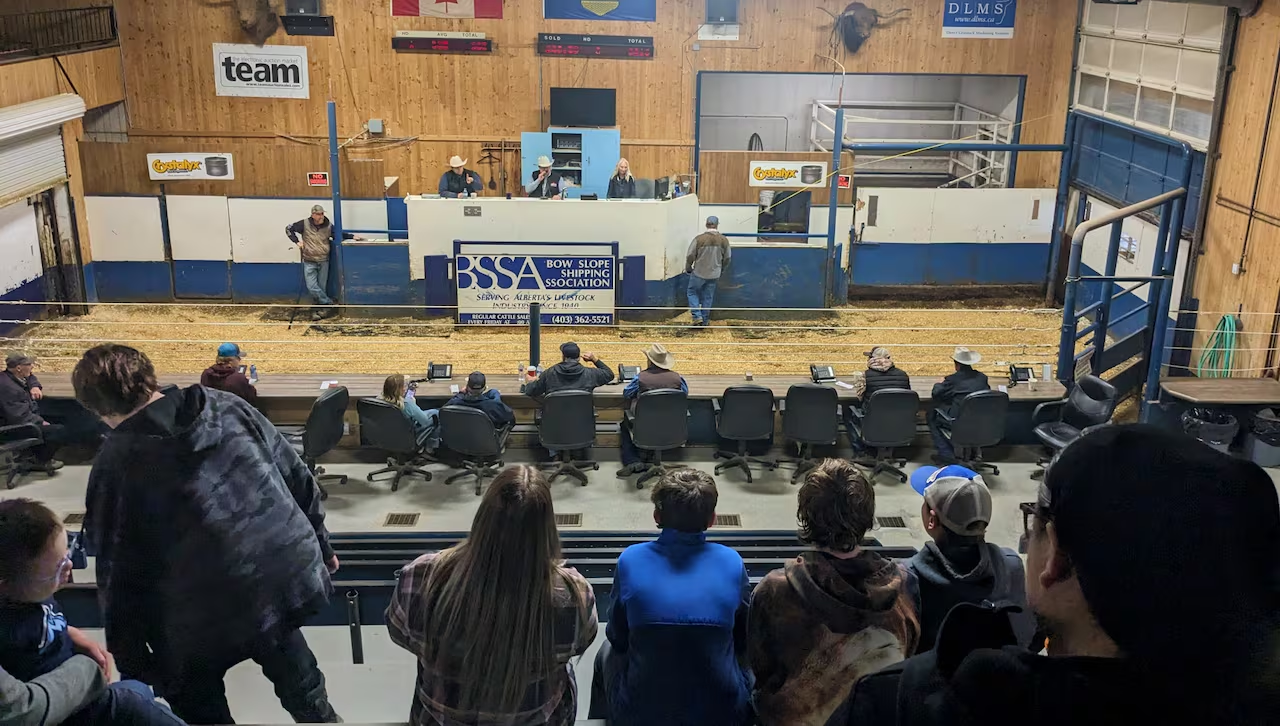

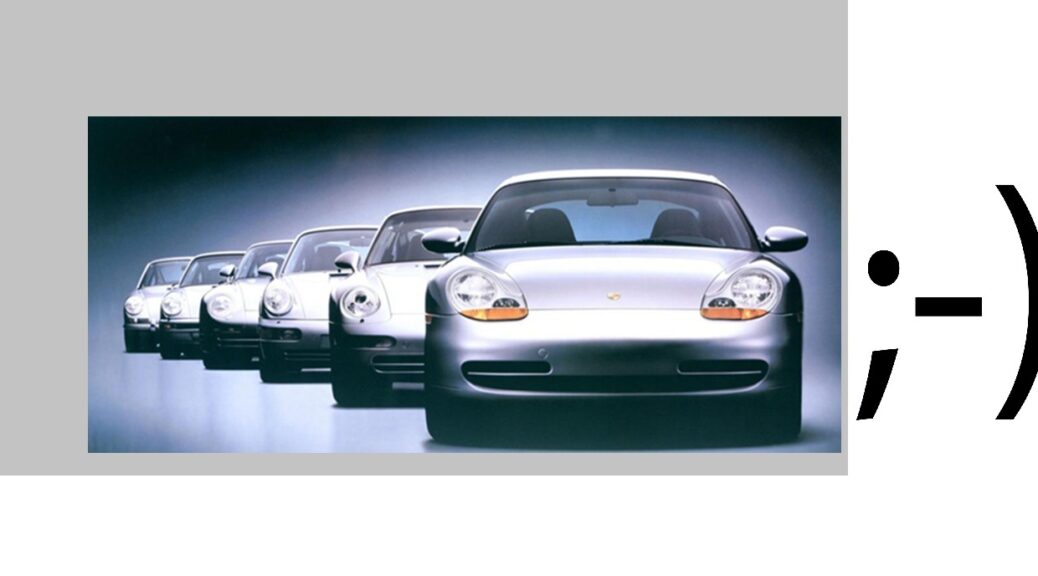













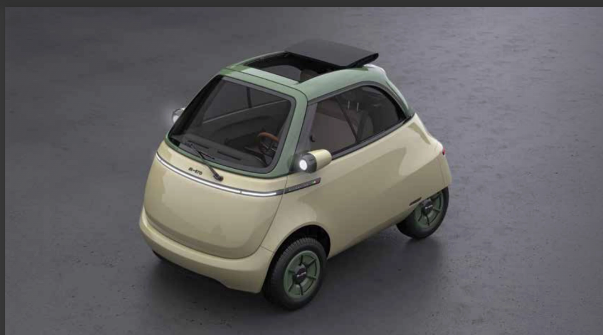


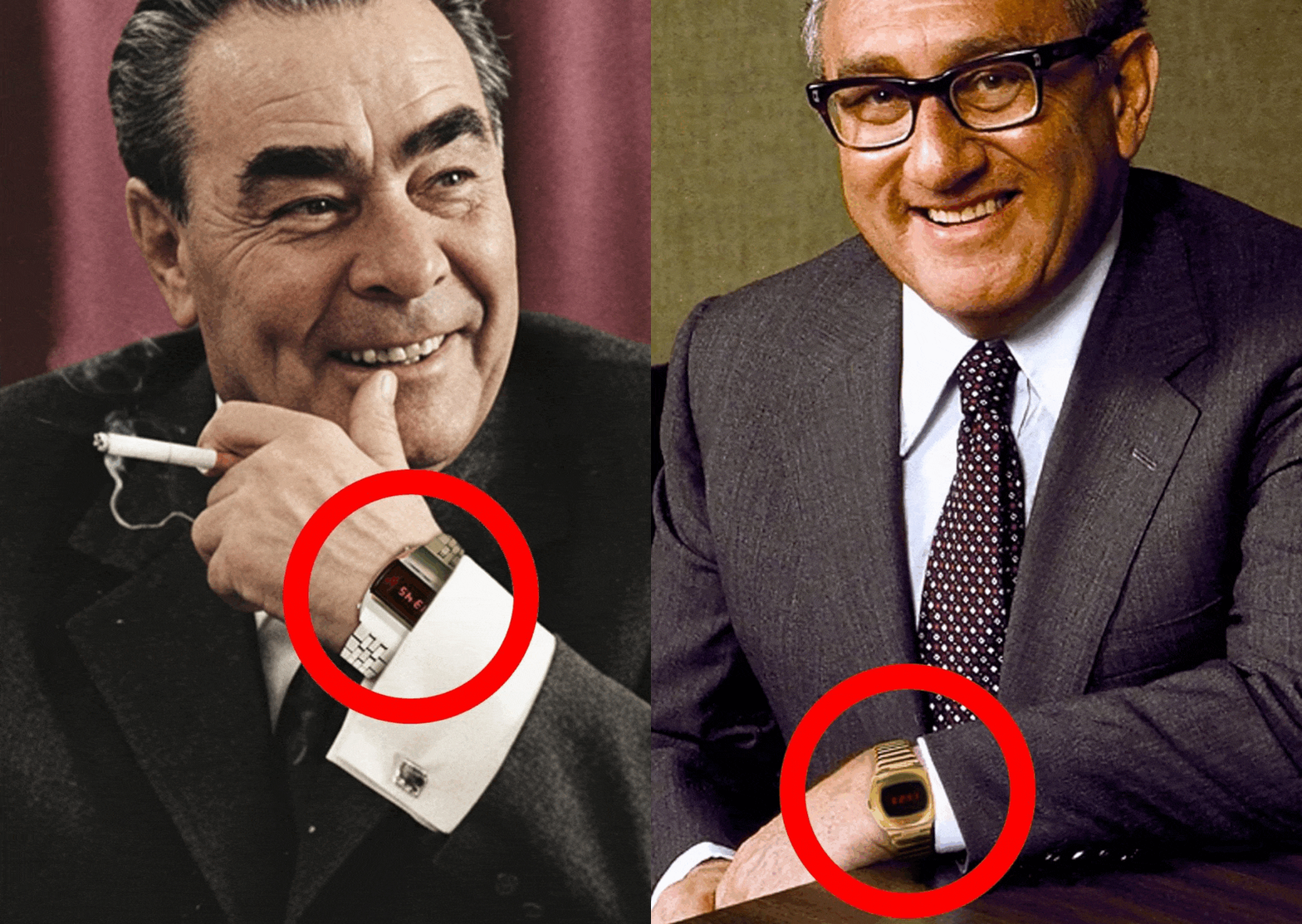
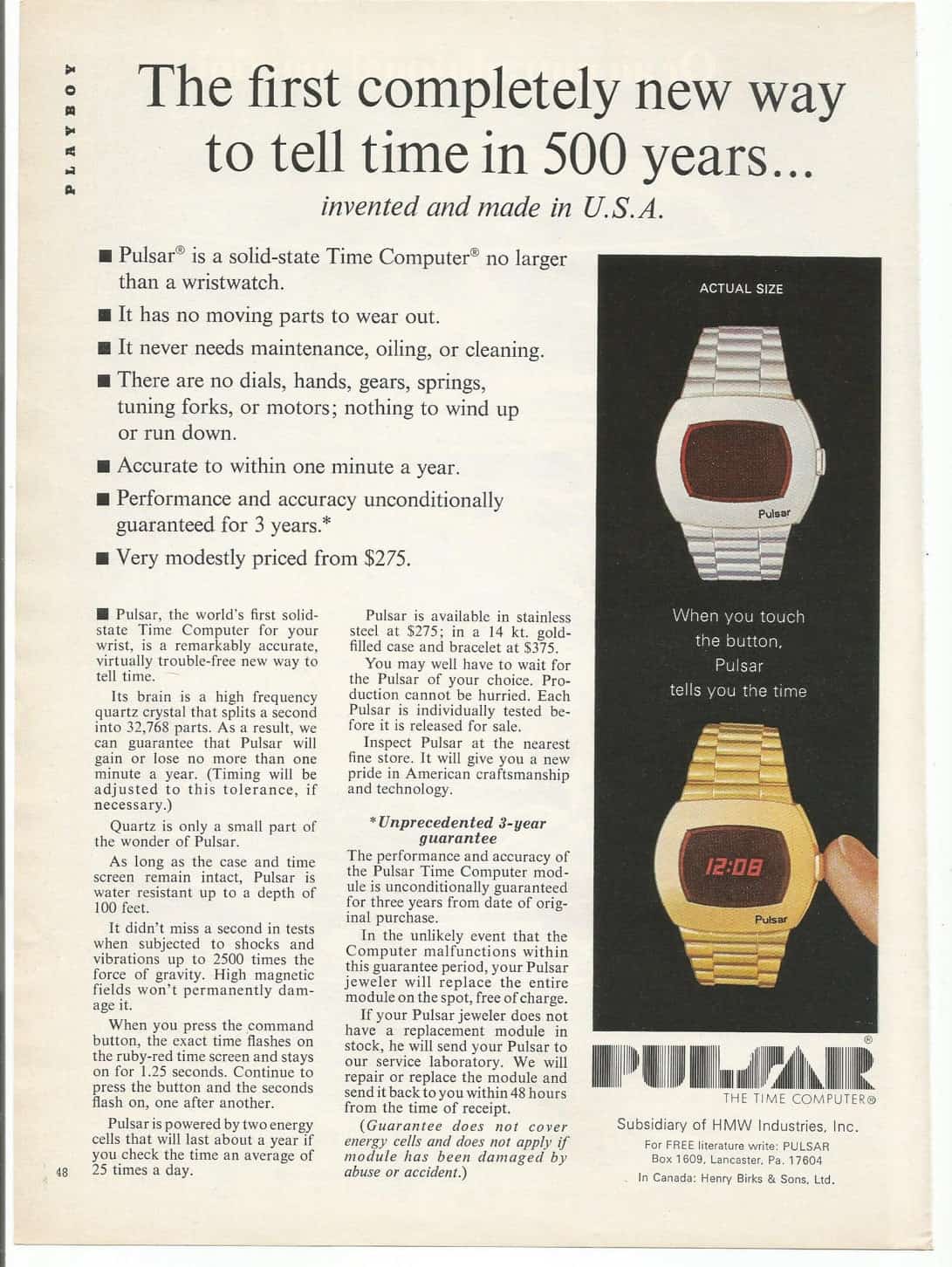






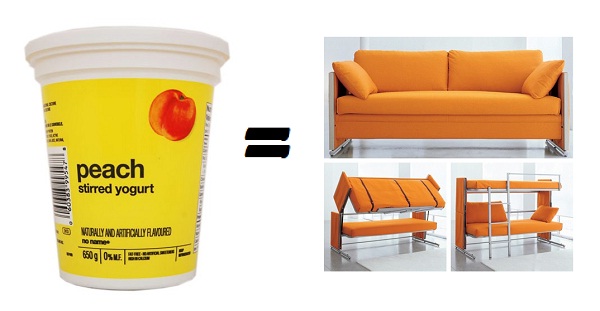




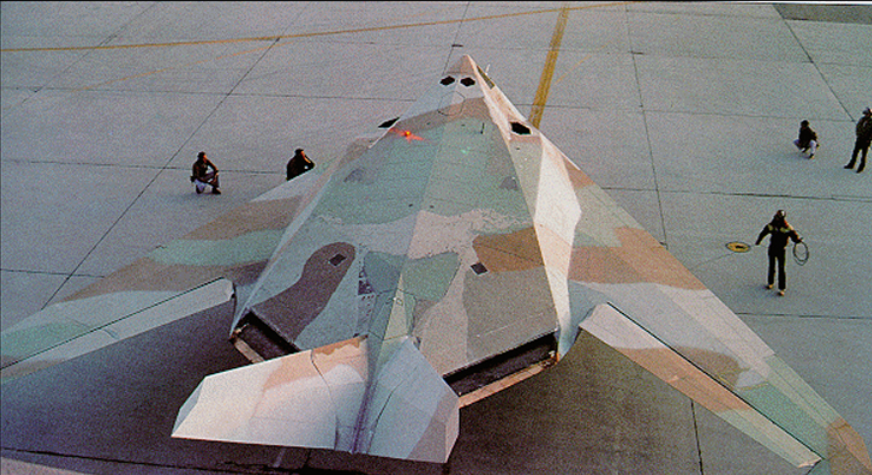


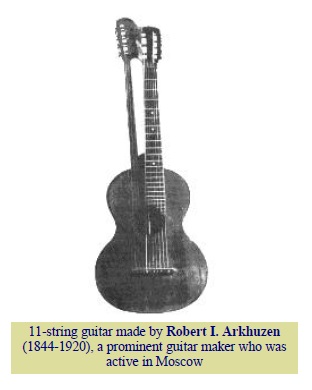 Russian music life in all


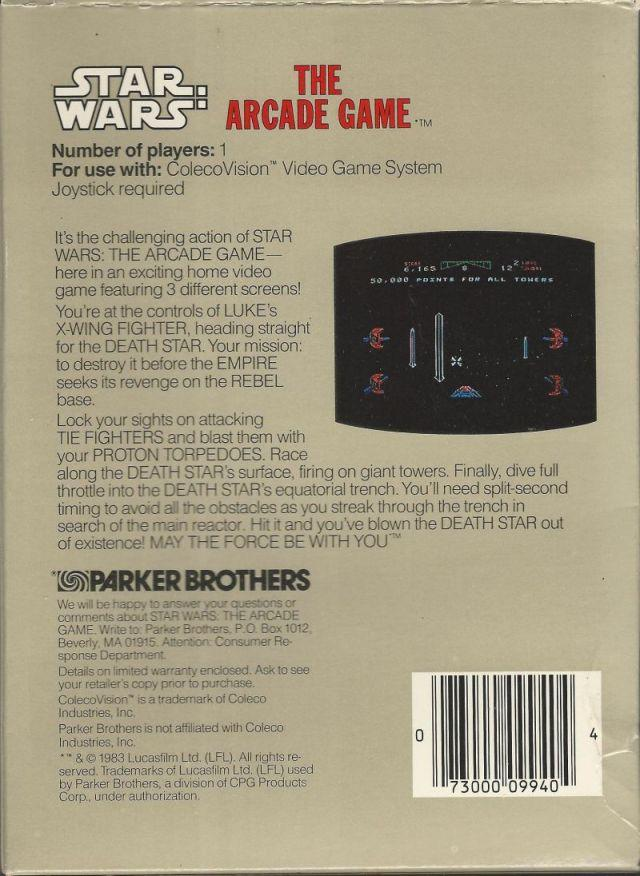


 Historical records reveal that missing persons have occurred in North America for hundreds of years and what connects these cases is both frightening and confusing. David has discovered geographical connections that include- national park locations, urban locations near bodies of water, boulder fields, mountain elevations and other seemingly ‘safe’ locations.
 David’s research has shown that oddly, many missing persons in these cases are highly intelligent and healthy individuals that include doctors, scientists and marathon runners. In other cases the victims are hunters or seasoned hikers- people who would actually be most likely to prevent outdoor mishaps.