New Analysis Identifies 50+ Investible Opportunities Delivering Financial Returns
- More than 50 investible opportunities, across 13 sectors, that are already generating revenue or cost savings for industry and investors have been identified by new World Economic Forum research.
- Though more than half of global GDP is highly or moderately dependent on nature, capital continues to flow disproportionately towards nature-negative activities, leading to potential systemic risks and undervalued business opportunities.
- From precision agriculture and sustainable cement to battery recycling and industrial water management, growing numbers of investment opportunities can both protect nature and deliver returns for investors.
- Learn more about the report here.
Geneva, Switzerland, March 2026 – More than 50 investible opportunities could turn capital flows into lucrative nature-positive business practices and contribute up to $10.1 trillion in annual business revenues and cost savings by 2030, according to a new World Economic Forum report just launched.
The report, 50 Investible Opportunities for a New Nature Economy, developed in collaboration with Oliver Wyman, also highlights how nature risk and capital flow misalignment represents a growing systemic economic risk and a significant missed commercial opportunity for business.
This comes at a time when global capital flows remain deeply misaligned. According to the United National Environment Programme (UNEP), an estimated $7.3 trillion continues to be invested annually in activities that degrade ecosystems, compared to roughly $220 billion invested in nature-based solutions. The report’s 50 investible opportunities offer revenue-generating and cost-saving approaches to close this gap.
Who Is Falling Behind?
Similar to the Paris Agreement for climate targets, the international community is falling behind on biodiversity targets. Renewed action and novel strategies are needed to meet goals of halting and reversing nature loss by 2030.
“We need to transition towards an economic system that delivers prosperity within planetary boundaries,” said Sebastian Buckup, Managing Director, World Economic Forum. “Industries, including the financial sector, will pursue this not just as an act of corporate social responsibility or impact investing but because it makes good business sense to do so.”
As companies face increasing exposure to water scarcity, soil degradation, pollution and tightening environmental regulation, nature-related risks are no longer abstract sustainability concerns but material financial issues affecting long-term profitability.
Drawing on analysis of approximately 250 business activities, the report identifies 50+ investment-ready opportunities across 13 high-impact sectors to support halting and reversing nature loss by 2030.
From precision agriculture and sustainable concrete to battery recycling and industrial water management, these solutions reduce pressure on land, water and resources while generating revenue growth, cost savings and risk mitigation.
Case Study: Sustainable Cement and Concrete Blends
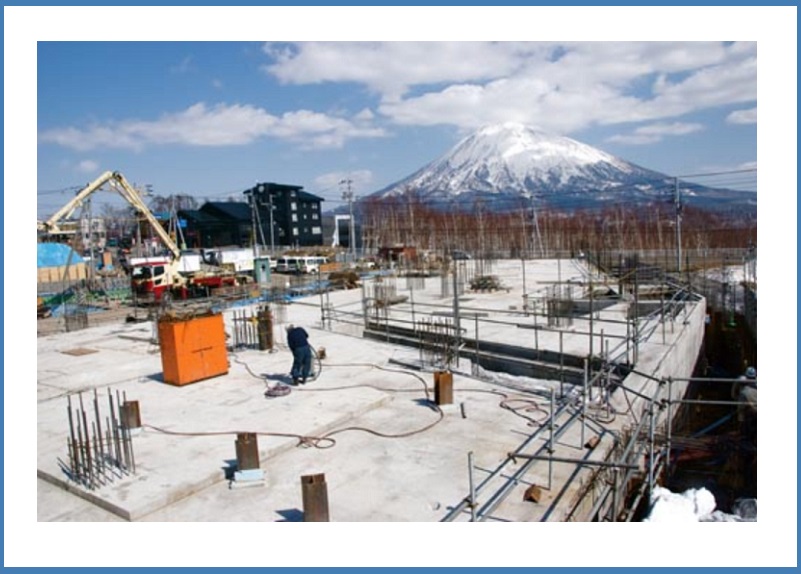
For example, the report looks at sustainable concrete blends as an investible opportunity. These blends reduce reliance on newly quarried raw materials by substituting a portion with recycled industrial byproducts or recovered construction materials. They provide similar structural performance to traditional concrete while helping companies meet regulatory standards and growing market demand for low-impact building solutions.
These blends also have an array of nature benefits, including reducing new quarrying, lowering pollution and reducing the energy intensity needed for new concrete.
While these products are commercially viable today and can often be integrated into existing production facilities with moderate capital investment, many sustainable blends retail at a higher price than conventional concrete, as the latter benefits from established logistics, economies of scale and similar factors that lower costs. As economies of scale are built and business models are derisked, sustainable concrete offers an opportunity for investors to put capital towards a business-ready, nature-positive solution that can generate returns.
“At its core, this is a capital allocation challenge,” said Derek Baraldi, Head of Sustainable Finance, World Economic Forum. “Financial institutions and businesses that integrate nature into strategy today are not just managing risk but positioning themselves for competitive advantage.”
The Role of Capital and Financial Institutions
Financial institutions can help scale these solutions by providing the capital companies need to invest in new production processes and facilities. They can also reduce risk through tools such as sustainability-linked loans, guarantees or blended financing, helping innovative materials reach the market faster.
To support financial institutions looking to invest in nature-positive solutions, the report outlines five priority actions for financial institutions to mobilize capital into nature-positive opportunities. By strengthening internal “nature fluency”, innovating financial products, building coalitions, improving data use and leveraging nature transition conversations to surface investible opportunities, financiers can build a robust pipeline of nature-positive opportunities to deliver both mainstream and sustainable finance.
Business depends on reliable water supplies, fertile soils, biomass and ecosystem services such as pollination and flood protection. Industry successes are already delivering value while supporting nature-positive goals, such as industrial water management to tackle water shortages and precision agriculture techniques that save farmers input costs while reducing fertilizer run-off into waterways. Realigning capital flows with nature-positive investments that protect biodiversity and offer financial returns is essential to safeguarding the natural systems which underpin the global economy.
More about Nature-Positive Transitions
The World Economic Forum’s Nature-Positive Transitions report series explores transformative pathways to halt and reverse nature loss by 2030. Focusing on critical sectors, the series highlights the dual impacts and dependencies of these industries on nature, alongside the priority actions businesses can take to avoid and reduce negative impacts, mitigate nature-related risks, build resilience and unlock opportunities across value chains. Nine sectors have been involved: technology, automotive, cement and concrete, chemicals, household and personal care products, mining and metals, ports and offshore wind.
The World Economic Forum provides a global, impartial, not-for-profit platform and insights to support meaningful connections between political, business, academic, civil society and other leaders. (www.weforum.org).
For the Silo, Jarrod Barker.