Tag Archives: earth

How Cell Phone Behavioral Data Can Help Save Our Planet

Zurich, Switzerland- A report from a few years ago deserves a second look. That study demonstrated how leveraging mobile network data can estimate levels of carbon emissions and air pollution in cities, an approach that could substantially reduce the cost of implementing the Paris Agreement.

  • The study analyses mobility patterns derived from mobile network data to estimate the usage of different transport modes within a city and derive conclusions about the respective pollution they cause.

  • This innovative methodology allowed scientists to estimate the concentration of air pollutants in urban areas with up to 77% accuracy.

  • The method could provide a scale-able and cost effective way to help understand and combat greenhouse gas (GHG) emissions in cities worldwide.

Big data analytics company and ETH Zurich spin-off Teralytics, Telefónica NEXT and sustainability solution provider South Pole Group conducted the  study in Nuremberg, Germany and revealed the analysis of mobile network data is an effective way to estimate CO2 and NOX emissions in urban areas at very low cost. To achieve this, Teralytics examined aggregated and anonymized data, which is generated when mobile devices communicate with Telefónica’s mobile communication cells during user calls, text messages or while using phones to browse the internet. Teralytics was able to refine this raw data into human mobility patterns to understand how the different modes of transport, for instance trains or cars, are frequented. Combining this information with data on the emissions of the different transport modes, the three entities were able to estimate air pollution and GHG emissions in the city.

As each form of transportation produces a unique amount of CO2 and NOX emissions, understanding urban mobility patterns is vital to understand the source of emissions. The study in Nuremberg used this information to estimate with up to 77 per cent accuracy the concentration of air pollutants in the city. These findings encourage further exploration of how big data can be used to understand and ultimately solve environmental issues such as air pollution in cities across the world. This is particularly interesting with regards to the lower cost of analyzing and interpreting data compared to the higher cost of production and maintenance of elaborate measuring stations. The novel approach could thus allow an ongoing analysis on a nationwide scale.

George Polzer

“While our contemporary urban lifestyles result in the generation of harmful greenhouse gasses, it also generates large amounts of behavioural data. Our mission at Teralytics is to use this data for the benefit of society,” says Georg Polzer, CEO of Teralytics. “Our findings from Nuremberg showed that this data can be used to give city planners insights into how human mobility contributes to pollution. This is a vital part to efficiently design and implement clean air and low carbon strategies. We are looking forward to further exploring this opportunity.”

Using a three-level process, the fully anonymized and aggregated data was first transformed into movement flows by the data scientists at Teralytics, identifying over 1.2 million transportation routes during the analyzed time period, as depicted in Figure 2. The sustainability solution expert South Pole Group then used an atmospheric model to estimate air pollution levels caused by the usage of the different modes of transportation, taking into account meteorological data and information on the respective traffic carriers’ emission levels from the German Federal Ministry for the Environment (BMUB). In the third step, the accuracy of the method was examined by comparing the findings with existing data from air pollution measuring stations. The values measured at these stations were found to correlate up to 77 per cent with those from the Teralytics’ calculations.

The results of this pilot study in Nuremberg constitute a sound basis to further develop the methodology.

Following its success, the consortium was able to secure financial support from Climate KIC’s Low Carbon City Lab (LoCaL), an initiative that brings together cities, business, academia and NGO’s to deliver high environmental and societal impact. With this backing, the research partnership will expand and improve the methodology, focusing on short travel routes and taking into account local emission factors like airports, large-scale events, and types of vehicles on the road (i.e. electric cars and SUVs). Moreover, the influence of factors such as traffic jams and red lights will be taken into account in order to make even more accurate estimations of the air pollution levels in a city.

“The results from this pilot study exceed our expectations,” says Maximilian Groth, responsible for Business Development & Partnerships at Teralytics. “We are confident that we will soon be able to scale this product to cities worldwide to support urban planners in making our air cleaner and achieving the goals of the Paris Agreement at the lowest possible cost.”

This research follows other successful studies on usage of mobile network data, including a smart data analysis for transport in Stuttgart by Teralytics, Telefónica Germany, and Fraunhofer IAO.
Renat Heuberger

“Approximately 70 per cent of global greenhouse gas emissions are generated in cities, meaning that they play a key role in climate protection. We see great potential in the use of continuously generated data, such as mobile network data, to measure and reduce pollution levels in cities.” States Renat Heuberger, CEO of South Pole Group.

Florian Marquart

Florian Marquart, Managing Director of Telefónica NEXT for Advanced Data Analytics: “The pilot project in Nuremberg has clearly shown the specific added value of anonymised mobile network data for the environment. This is data from people for people. We see great potential in the results and will start the next phase of our research. The goal is to develop a product that German cities, German states and the German federal government can use to better face the challenges of emissions pollution”.  For the Silo, Ricky Sutton.

About Teralytics

Teralytics is the trusted data analytics partner for some of the largest telecom operators in North America, Europe and Asia. Using technology built for operators by data scientists, they have perfected the ingestion, modelling and transformation of raw signals from subscriber actions and movements on operator networks to deliver meaningful and actionable insights, that delivers new value to our mobile operator partners. By unlocking and processing a massive scale of device movement and consumer intelligence data from location and behavioral signals, they can analyze people, places and things and offer actual insights to help city planners, venue owners, retailers, NGOs and media companies make informed decisions, optimize operations and maximize ROI. Headquartered in Zurich, Teralytics has offices in New York, and Singapore.

Last Talk From Area 51 Scientist Boyd Bushman Was About UFO Aliens

Shortly before Boyd Bushman passed away on August 7, 2014, he was recorded on video candidly speaking about his personal experiences at Area 51, of UFOs, aliens and anti-gravity ideas.

Boyd was a retired Senior Scientist for Lockheed Martin. His career spanned over forty years, he was awarded many patents, and his record of work included spans with several major United States defense contractors. He claimed to have had contact with Extraterrestrials who had five fingers and five toes. He indicated that some UAPs / UFOs are ours and that he worked on them. He went further by stating that we also have the capability to take ET home- in other words, interstellar travel capability. Considering that he spent much of his time working on types of new energy this is a very interesting statement.

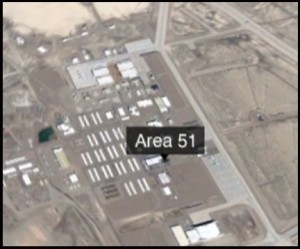
Bushman verified that Area 51 in Nevada was indeed the place where alien craft were tested– but that such testing moved to a facility in Utah after Area 51 became well known.

Area 51 has recently been officially "recognized" by the CIA along with a "aliens do not exist" statement. Click image to learn more.
Area 51 has only recently been officially “recognized” by the CIA along with a “aliens do not exist” statement. Click image to learn more.

Bushman also revealed that he was friends with a Navy doctor that treated a pilot who shot down the infamous Roswell craft in 1947. Though he didn’t state the specific type of weapon that was used.

As a Senior Research Scientist at Lockheed Martin he also revealed that Lockheed Martin has researched antigravity technology, specifically gravity manipulation by means of magnetic fields, and that he had personally experimented at Lockheed Martin’s Fort Worth, Texas facilities, proving that magnetic fields affect the gravitational field and because of that, bodies don’t fall with the same acceleration, a result different from the classical experiments made by Galileo with no magnetic fields present.

EXPERIENCE:

Lockheed Martin Aeronautics Company, 1986 to 2000

Mr. Bushman had participated in Advanced Aircraft Concepts as a member of the technical team. He had conducted European Theater Tactical Fighter performance analysis. He developed laser, electro-optical sensor, and power systems. He developed and taught analysis courses. Several million-dollar contracts were obtained directly from him.

Texas Instruments, 1979-1987

Mr. Bushman worked on the development of laser guided smart bombs, Tank Mounted Infrared FLIR systems, focal plane arrays and GPS Systems all of which are currently deployed as major components of Tactical Land Air and Sea systems.

From 1976 to 1979 Mr. Bushman was a Manager at Parsons International of Iran, Mexico and then Louisiana with the U.S. department of Energy’s Strategic Oil Reserve Program. He managed a division of Trans Universal Finance Company in Southern California. Funding was obtained for multimillion dollar projects.

Whatever you believe- ask yourself this question- What could Bushman gain by lying?

Hughes Aircraft (Now Ratheon), 1968-1976

Mr. Bushman was the Manager/Technical Liaison officer to the Infrared Sensor Division (SBRC Santa Barbara Research Center). He was involved in technical description and financial disbursement. Systems were deployed to aircraft and satellite systems.

At Electro-Optical Systems (Now Ratheon), 1966-1968 as Program manager, he developed and produced Night Vision Image Intensifier Systems for military night operations. These are similar to night vision goggles used by pilots. Mr. Bushman achieved sustained production of hundreds of units per month.

1963-1966, General Dynamics (Pomona)

He coordinated the analysis, testing and development and production of the Redeye (Now Stinger Missile). The development and testing was achieved in concert with Sidewinder Missile Development team at China Lake Test Facility in California. Mr. Bushman coordinated the computer based operations analysis and system performance analysis for missile development and manufacture. Bushman holds 26 US Patents and some are still classified. This man was a genius. Should we believe him?

Below are the titles of six of his patents: ( US patent lookup by #- http://www.uspto.gov/patents/process/search/index.jsp )

6,606,578 System and method for electromagnetic propulsion fan
6,411,001 Variable ratio angled magnetic drive
6,028,434 Method and apparatus for detecting emitted radiation from interrupted electrons
5,999,652 Plume or combustion detection by time sequence differentiation of images over a selected time interval
5,982,180 Metal detection system and process using a high voltage to produce a visible electrical discharge
5,929,732 Apparatus and method for amplifying a magnetic beam

For the Silo, George Filer.

2022 And NOT Another Year Closer To Private company Asteroid Mining

It’s been eight years since an historic landing took place between an European Space Agency drone and a comet.(which looked suspiciously a lot like an asteroid to us!)

At that time a report from Deep Space Industries laid out their business plans up to 2020 and what they had committed to  sounded more like science fiction than fact.

But it wasn’t and they’d already secured investors.

A 2019 announcement from NASA stating that it would be the National Space Administration in the lead instead ( NASA will soon begin hunting a nickel laden asteroid ) spoke volumes about not only the possibility of asteroid prospecting- but also to its inevitability in the private sector.

DSI concept of “coming soon” asteroid mining.

And yet, things have changed…..again.

In early 2020 Deep Space Industries (along with the only other asteroid mining company, Planetary Resources) were purchased by Bradford Space Group and ConsenSys Group respectively and all plans for private asteroid mining were shelved indefinitely. Deep Space Industries is now focused on developing space propulsion systems and ConsenSys is now focused on developing blockchain  security applications for space technology. 

What could have been- Deep Space Industries ambitious plan before the take over

Their plan was to send an entire fleet of prospector spaceships to Near-Earth asteroids in order to harvest them for precious metals and other undisclosed resources. (space rubies anyone?). Starting in 2015, Deep Space Industries were to begin their operation by sending three small spacecraft called FireFlies to selected asteroids near earth for sample taking and photo reconnaissance. One year later, bigger craft called DragonFlies were to leave on four year missions to retrieve asteroid samples and bring them back to Earth. An ambitious project to be sure and not surprisingly, the timeline had been regularly pushed back.

dsi timeline mission planning

This press release from DSI said a precursor mission was scheduled to launch in 2017: “Recently, Deep Space Industries and its partner, the government of Luxembourg, announced plans to build and fly Prospector-X™, an experimental mission to low-Earth orbit that will test key technologies needed for low-cost exploration spacecraft. This precursor mission is scheduled to launch in 2017. Then, before the end of this decade, Prospector-1 will travel beyond Earth’s orbit to begin the first space mining exploration mission.”

daniel faber ceo deep space industries

Valuable materials exist in abundance in space and have strong economic potential. Using their tested indicators as investment attractors, Deep Space will move towards securing a commercial space operation and start into the next phase of its business plan. This involves concentrating firstly on processing rocket fuel from asteroid-harvested water.

This fuel, harvested and processed in space will save millions of dollars, since existing communications satellites will no longer be ‘thrown away’ when their fuel supply has been used up. (Satellites that can longer ‘move’ and stay in orbit by using their rocket engines are left to slowly fall towards earth and burn up in the atmosphere ).

Deep Space Industries past-CEO David Gump estimated that a satellite ‘refueled’ and saved from burn up is worth up to $8,000,000 per month. Those figures start to add up when you factor in the number of satellites in use and being launched every year. Another plan during this phase of their business operations is to return precious group metals such as platinum and gold back to earth.

After all, if you’re splitting up asteroids and discover metal commodities, why not bring it back down to earth?

Deep Space believed that other metals harvested from asteroids also have an in-orbit value. They are developing the Microgravity Foundry- a type of 3D printer that will be used to fabricate and machine metal parts in space from pure asteroid metal such as high strength nickel parts.

Deep Space cgi mockup of their planned 3D space printer.

Since this factory will operate in space and in zero gravity and produce parts in space, the idea of permanent space development and human habitation is economically feasible. Stephen Covey co-founder of Deep Space Industries and inventor of the Microgravity Foundry process: “What’s cool about the [3D] printer is that it can take its own parts, grind them up, and recycle them into new parts.”

Stephen Covey- inventor of the Microgravity Foundry process

Deep Space Industries past-CEO David Gump: “Using resources harvested in space is the only way to afford permanent space development. More than 900 new asteroids that pass near Earth are discovered every year. They can be like the Iron Range of Minnesota was for the Detroit car industry last century- a key resource located near where it is needed. In this case, metals and fuel from asteroids can expand the in-space industries of this century. That is our strategy.” Company estimates place a value of 1 ton of raw asteroid material at a worth of $1,000,000 [usd] in orbit.

Buy outs over the last few years have all but ended the dream and it will be the various space agencies such as NASA and ESA that will fulfill Deep Space Industries abandoned plan. For the Silo, Jarrod Barker.

Supplemental: http://www.businessinsider.com/deep-space-industries-asteroid-mining-plans-2013-1#ixzz2Io8Qg8uc

Updates: Deep Space Industries aligns with Luxembourg Government, applauds space commercialization policy.

Mexican commercial space company MXSpace partners with Deep Space Industries.

NASA hunting nickel 16 Psyche asteroid worth quadrillions of dollars.

Will Ontario’s Poison Caterpillar Return This Summer?

The Hickory Tussock Moth Caterpillar as found on Prospect Street, Port Dover, Ontario
This Hickory Tussock Moth Caterpillar was found on Prospect Street, Port Dover, Ontario

Important safety tip: if you see a caterpillar that has hypodermic-like needles poking out from its body DON’T TOUCH.

That might seem like common sense but Summer 2014 had Ontarians reporting to emergency rooms and to family doctors with symptoms ranging from swelling and rashes to vomiting and intense pain. All this from a seemingly harmless caterpillar sting.

Nature has a way with defense mechanisms and the hickory tussock moth caterpillar is no exception.

During mid to late Summer this caterpillar has one thing on its mind: time to cocoon. In order to accomplish that task, it needs to crawl around out in the open to discover the best places to begin its transformation. So it’s easy pickings if you’re a hungry bird. That explains the caterpillars needle like barbs and the poisonous toxin that they deliver.

Other signals to predators  that say “stay away” are black dots on the belly of the caterpillar .

If you see one of these critters the best way to handle them is to use a leaf or a stick to gently encourage the caterpillar to hop on board. That way you will remain safe when you transport them somewhere else- away from those areas that your family and pets enjoy. For the Silo, Jarrod Barker.

Creativity Espoused By Mainstream Media Is Sadly About Machine Creativity

Science!

[You may know him from the movies “What The Bleep Do We Know”  and “Down The Rabbit Hole” – Two great introductory documentaries on Quantum Physics you really owe it to yourself to see.  Let the Silo introduce you to a welcomed, new contributor-  Dr. Amit Goswami – Author, Speaker and Scientist. Ed.]

“I am very excited about one of my recent books- Quantum Creativity.  The main message of this book is this: If you are interested in creativity and in thinking quantum, you have the basics of what it takes to be creative, in fact, to be extraordinary in your creativity.

Quantum physics is the physics of possibilities. Quantum physics says reality is both possibility and actuality.

The objects of the universe are possibilities, quantum possibilities; they become objects of actuality in our experience when we observe because we have chosen actuality from the possibilities proffered.  This two-level complementary reality is an important aspect of our consciousness. The unmanifest, (psychologists call it the unconscious, spiritual traditions call it the transcendent) is the realm where consciousness processes possibilities (unconscious processing) but without awareness, without subject-object separation.

The manifest (psychologists call it the conscious, spiritual traditions call it the immanent) is the domain of actualities that consciousness processes with awareness, with subject-object split.

Quantum thinking consists of this two-level processing—both unconscious and conscious.  Quantum thinking understood in this way liberates you, anyone, from any assumed ordinariness.  With its help, anyone can be creative.

A stylish dude? We love the sun hat Dr G. :)

Creativity was difficult for people of the olden days because they had to pursue it blindly, they did not know how human creativity works; they assumed it is all mystery, all arts.  And today, lots of people shortchange their creativity because of their faulty mechanistic worldview.

The truth is, we cannot discuss the relevant issues of human creativity without a lot of make-belief within our current mechanistic worldview based on the metaphysics of scientific materialism—everything is matter moving in space-time and material interaction.

The science of creativity that the protagonists of a mechanistic worldview talk about, and which today you read about in the media, is about machine creativity.  To a large extent it is sophistry, about how determined machines can somehow appear to be creative.

It is self-evident that human creativity requires consciousness as a causal entity with free will, freedom to choose.

It is self-evident that human creativity requires the capacity to process meaning, that human creativity involves affects (agony and ecstasy), and that human creativity begins with intuition.

sophistry

Dealing with human creativity requires a worldview in which consciousness is causally potent, in which not only our physical experiences but also our experiences of thinking, feeling and intuition are validated. Quantum physics, properly interpreted, gives us that worldview. Engaging the two level complementary reality of quantum physics gives human creativity all its wonderful and mysterious attributes that material machines moving in a one-level space-time reality cannot possibly simulate.” For the Silo, Dr. Amit Goswami.

Crickets And Grasshoppers Relaxing Sounds For Your Mind

If you didn’t know already, crickets and grasshoppers are not the same insect- though they do share a distant common ancestor from somewhere back in time.

How can you tell them apart?

For one thing, grasshoppers have short antennae whereas crickets have long antennae. Considering that crickets are active at night, in the dark- it makes sense for them to have “supercharged” antennae.

Oh but the sound.

It’s amazing to know that together and in unison, thousands upon thousands of orthopterans (the common order that is shared by crickets and katydids,  grasshoppers and locusts) can create a huge amount of sound from nothing more than, in the case of grasshoppers: rubbing their hind legs against their forelimbs or in the case of crickets: rubbing their fore wings together.  Judging by the number of nature recordings ready for streaming,  many of us are enjoying these sounds as a soothing treatment to help us unwind, relax and fall asleep.  For the Silo, Jarrod Barker.

Cricket or grasshopper? What do you think? photo: Dixie Greenwood

From the nature recordist NeCubFlyer:

“I’ve been recording high quality nature sounds for over 26 years for my own personal use. When I first started, nature recordings didn’t exist and when these types of recordings finally hit the market, they were so overly compressed & attenuated it didn’t even remotely sound natural!

Throughout some recordings you may find sounds that are man made.

All of my recordings are captured in nature as it happens. None of my recordings have been “Computer Generated” or are short segments looped together. I have traveled to some of the most remote areas of the US to capture my nature sounds only to find jets flying overhead or a train off in the distance blowing its horn. It is virtually impossible to capture a clean recording without the “Hand of Man” being heard. To remove these sounds would take some serious computer manipulation and destroy the integrally of the recording! Being a purest… what you hear is what you get… just like the real world.

If you enjoy these soothing sounds, please   visit my site  and help show your support…I hope you enjoy this beautiful recording as much as I have!!!”

Travel To Sustainability Pioneer Tongsai Bay

On a regular basis The Silo informs you about companies who do their part in changing our world to a better place.

Green Pearls® Unique Places is dedicated to the Tongsai Bay in Thailand and recognizes the amazing work that created a sustainable tourism industry there nearly four decades ago.

How it all began

In 1986, Khun Akorn Hoontrakul was on a boat trip with his twelve year old son Thanakorn and they spotted the bay from the sea. Khun Akorn immediately felt passionate about it – something Thanakorn did not understand back then. “My 12 year old mind didn’t really appreciate its beauty at that time. The sand was coarse and the water was dark blue because of its depth. It was my Dad who saw the potential and later said to me: ‘It was love at first sight'”, recounts Thanakorn.

Sleeping under the stars

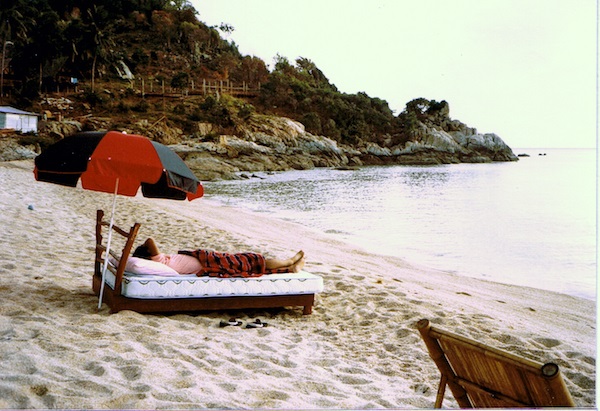
Within one week Khun Akorn bought the land and started building the hotel. At a time when nobody thought about sustainable tourism, he believed in the responsibility to protect nature. To ensure that no tree was felled and the impact on nature was kept as low as possible, he slept at the beach for three months.

Setting a good example

Today, the hotel is led by Thanakorn and his wife Saisiri. They share the same passion about sustainable tourism believing that everyone is responsible for the protection of the environment. Their deep belief is that every little step makes a difference. They set a good example for everybody in their private and professional life: “It’s a way of life, to not destroy the environment. It’s a constant thought to make sure habits don’t contribute to waste. If we forget our water bottle, we won’t drink, as we do not drink from plastic”.

Acting sustainable is a holistic approach

Leading the hotel in a sustainable way does not only mean to take green aspects into account. Furthermore it involves a holistic approach, taking into account environmental as well as social aspects, like fair salary, staff training and education. Just as in their private life they focus on waste prevention: kitchen waste for example is composted and reused as fertilizer in the own garden.


Open for everyone: the organic garden

The hotel’s own horticulturist and gardeners are responsible for the organic garden which provides the vegetables and herbs for the kitchen. They developed a fermenting process from oranges and limes using different kinds of micro organisms for an efficient cleaning process. The garden and its plants are open for guests, who can use for example the aloe vera to treat sun burned skin. Additionally there is natural mosquito repellent made by locals, glass cleaner made out of pineapples as well as natural toothpaste.

What has changed since the opening (or in a good way not changed)

Many trees have been planted along the walkway leading to the Cottages providing more shade and in the space of ten+ years there will be a tree tunnel with shade all day long which makes walking much easier in the heat. This is to say that Tongsai is even greener than it used to be. There are 66 kinds of birds spotted in Tongsai in the past 12 years. The star resident bird is the colorful Pink-Necked Pigeon, and even a slow Loris had been spotted near NangGong Villa by Gob and Goya back in 2002. There is still a lot of natural space left in the territory but instead of building more man-made structures the business is not being expanded and natural areas are left untouched.

Pink-Necked Pigeon

The German Green Pearls GmbH ( based in Darmstadt, Germany ) unifies international tourism companies that support environmental protection and demonstrate social commitment. Thereby, Green Pearls is the first holding company worldwide that consolidates sustainable hotels, destinations and restaurants in a global data source.

Among the criteria of admission to Green Pearls® Unique Places, are a sustainability plan on management level, sustainable architecture, comprehensive water, energy saving and waste recovery measures, the use of seasonal and regional ingredients in the kitchen, as well as a large commitment for the social balance in each of the vacation regions.

Weak Labeling Rules for Canadians

From toothpaste to shampoo, to all-purpose cleaner and dish soap, cleaning and personal care products are essentials that we use every day.

Whether we choose a product based on the price or the brand, we often don’t realize that the ingredients in these products can contain harmful ingredients not indicated on the labeling.

product labelling

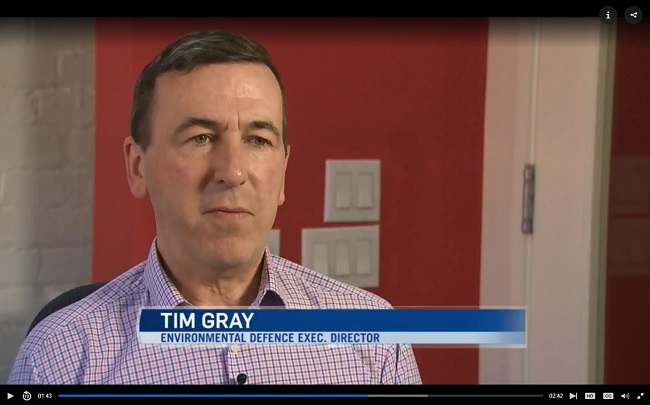
Findings from focus groups conducted by Environics Research on behalf of Environmental Defence show that long-term health impacts are not at the top of consumers’ minds when choosing which cleaning or personal care products to buy. That’s not because people don’t care about the chemicals that they’re exposed to, but because interviewed Canadians trust that the products found on store shelves are tested and proven to be safe by government agencies and industry. Sadly though, under current regulations Canadian manufacturers don’t need to prove that chemicals are safe before they’re added to products. (Listen to Executive Director Tim Gray on Radio Canada International speak about this issue).

Cleaning products such as window, counter and toilet bowl cleaners are not required to have a full ingredient list. Although an ingredient list is required on cosmetics and personal care products, it is often incomplete. What many people don’t know is that in order to get that citrus-y or fresh scent found in our deodorants, cleansers and moisturizers, manufacturers are only required to mention “parfum” or “fragrance” on the label without listing the actual chemicals. This is due to an outdated legal exemption that deems scents a “trade secret”.

It’s on you to look it up to see what you’re ingesting or putting on your skin…but we’re not scientists. Within reason, they should be putting warnings on stuff.

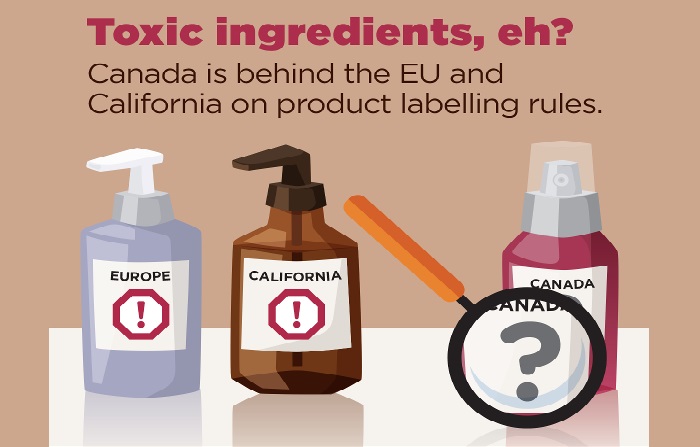
Why Canada needs to strengthen its product labeling rules

Warning labels have been used for decades as a useful tool to inform consumers of potential health risks associated with using a certain product. Mandatory warning labels on tobacco products have helped reduce smoking rates around the world by informing the public about the dangers of smoking.

Another example comes from Proposition 65 in California which requires manufacturers to put warning labels on their products if they contain specific chemicals of concern, such as BPA. To avoid warning labels, manufacturers are reformulating their products to remove harmful chemicals.

Policies in the European Union require the use of graphic health warning labels on cleaning products to caution consumers of possible skin irritation, chronic health hazards and if a product may be toxic to aquatic life.

product labelling

Canada needs to step up and do the same. That’s why we are calling on the federal government to update its labeling rules and make full ingredient disclosure and easy-to-understand warning labels a reality.

What you can do?

1. Make your voice heard and tell the Canadian government to strengthen Canada’s toxics regulations.

2. When you shop for cleaning or personal care products, always check the ingredient list (if provided) for harmful ingredients – especially those listed in our Toxic Ten Pocket Guide.

3. Go the extra step and look for eco-certified alternatives that use plant-based ingredients instead of harmful chemicals.

For the Silo, Sarah Jamal.

FEDS ADD PLASTIC TO TOXIC SUBSTANCES LIST

This Plastic Free July The Environmental Defence Canada organization is calling out Canada’s top plastic polluters, also known as Big Plastic—the companies that turn oil and gas into plastics.

This spring, the federal government added plastic to the Toxic Substances List under the Canadian Environmental Protection Act (CEPA). The listing means Canada can better manage the production, use and disposal of plastic and it will be required to address the harms caused by plastic in the environment. This is progress! But now Canada is being sued by its three biggest plastic producers—NOVA Chemicals, Dow Chemical and Imperial Oil—in an effort to prevent any regulations that would help reduce plastic pollution.

To add insult to injury, Big Plastic insists plastic is safe and necessary while blaming others, namely society and municipal waste systems, for the havoc their products wreak on our environment.  Big Plastic has been flying under the radar for too long. It’s time to call them out!
alt_text
Canada now finds itself on the front lines of a war waged by high-priced lawyers and public relations professionals on behalf of some of the biggest companies in the world. Instead of being part of the solution, Big Plastic is rolling out trashy tactics to protect its bottom line and increase production.  

Help us call out NOVA Chemicals, Dow Chemical and Imperial Oil for suing the federal government. Let’s hold them accountable for their role in creating one of the world’s biggest pollution crises.  

Not on Twitter? No problem! You can still take action. If you haven’t already, tell the federal government that you support regulations to end Canada’s plastic pollution problem. Help us spread the word by sharing this action on Facebook or simply forwarding this email to your family and friends. Together for change,
For the Silo, Karen Wirsig.

Dry Cleaning Clothes May Be Harmful To Your Health


Twitter Facebook YouTube
Why you shouldn’t dry clean your “Dry Clean Only” clothes


Spilled BBQ sauce on your favourite shirt this weekend? Dry cleaning may be your go-to, but did you know PERC, a toxic chemical that’s been phased out in several jurisdictions around the world, is the most commonly used solvent in Canada? Read two common misconceptions about “Dry Clean Only” clothing labels and tips on how you can clean your linen, silks, and cottons the greener, non-toxic way.
 
the algae
monster
is back!
Lake Erie is expected to experience a significant algae bloom this summer. Read our latest blog to learn more about what causes the blooms and what this summer’s algae forecast could mean for the lake and the people who rely on it.


You can also show your support for the lake by taking our Lake Erie Pledge.

 
Show us how
Life’s a Beach
for a chance
to win
Our Blue Flag program is once again hosting the Life’s a Beach Photo Contest. This summer, share with us your best photos of your favourite Canadian beach. You could win $1,000 for new camera gear! Visit blueflag.ca/photocontest to learn more. The deadline to enter is Sept. 1.

 
POST TO FACEBOOK


Learn some tips on how you can clean your linen, silks, and cottons the greener, non-toxic way

POST TO TWITTER


Learn some #tipsandtricks for cleaning your linen, silks, and cottons the greener #toxicfree way

 
OTHER CAMPAIGNS WE’RE WORKING ON AT ENVIRONMENTAL DEFENCE


Alberta’s toxic tailings ponds keep growing and the cleanup costs keep rising. Giving feels good (over-stuffed closets don’t.) This year, throw an ECHOage birthday for us. Our work is possible thanks to caring people like you. Please make a charitable gift today in support of our environment!
READ MORE
LEARN HOW
DONATE TODAY


AT ENVIRONMENTAL DEFENCE WE CHALLENGE AND INSPIRE
CHANGE IN GOVERNMENT, BUSINESS AND PEOPLE TO ENSURE A
GREENER, HEALTHIER AND MORE PROSPEROUS LIFE FOR ALL.
  Twitter Facebook Youtube  

Zakistar Flip-Flops With Pebbles That Simulate Barefoot Walking

Summer is almost here and so is the time for everyone’s favorite footwear: flip-flops. Let me introduce you to the world’s first flip flop that turns a summer stroll into a unique beach experience. How? Zakistar flip-flops have beach pebbles attached the sole so you can take the beach with you wherever you go.

image: emargo.com See supplemental section below.
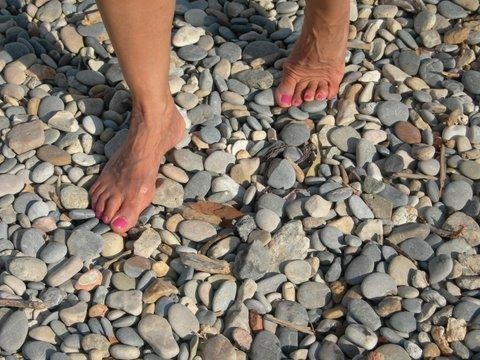
There are benefits to walking on pebbles.  See supplemental section  below.  Image: emargo.com

We love walks along sandy beaches and we’re positive you do too. The pebbles on Zakistar flip-flops increase the blood circulation in your feet and are therefore very beneficial for your wellbeing. The massage effect with every step also helps reduce the strain of stress in your everyday life.

You do not have to give up style to get maximum comfort. Zakistars are designed to grab attention. They are simple and elegant and go well with everything. Wear them to work, beach or your next shopping trip.

What are they made of?

Quality was our first priority at Zakistar, and we only use the best quality materials. The Vibram sole is used by many outdoor sport footwear brands because it does not slip on any surface. The straps are genuine leather which offers support and durability.

Kickstarter, we’re coming!

Every Zakistar flip-flop is a unique piece. They are hand made with love and care. To keep the quality at its best, we require molds and special tools for the production of our flip-flops. This is why we have decided to apply for a Kickstarter campaign. Kickstarter is an internet platform for collecting funds for innovative ideas. If our campaign is as successful as we hope, it will give us a chance to expand our production and bring new ideas to life as well.
Health in your feet.

We all know that walking barefoot is the healthiest option. There are countless pressure points and nerve endings on the soles of our feet and by pressing on those correctly, you can benefit from reflexology. This is something that is already integrated into the Zakistar flip flops.

Who is the face behind Zakistar?

A young ambitious Aljaž Pazlar from Bled is a man of many original ideas, and Zakistar is only one of them. More than 20 people have joined in and helped him with this project. Their aim is to improve our everyday life with pure and simple means.

Origin of the idea.

Aljaž spent some of his free time walking along the shorelines of the Sava river, contemplating about his ideas. After he paid a visit to one of our greatest inventors Peter Florjančič, the seed was planted and it grew into an amazing idea which has now become a reality. For the Silo, Lojze Žust.

Supplemental-  Self-Reflexology and Benefits of Walking on Pebbles

New Organism Discovered On Space Station 6 Years Ago

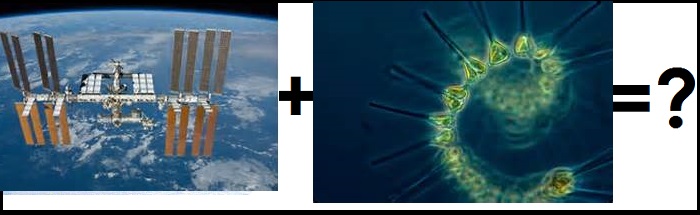
Life in Space  Joe Martino writes, “In what is a cool mainstream find, Russian cosmonauts have discovered LIFE clinging to the outside of the International Space Station. This is the first time living organisms have been found on the space station and scientists are not sure how “it” got there.

“Results of the experiment are absolutely unique,” Russian ISS Orbital Mission Chief Vladimir Solovyev told the ITAR-TASS News Agency. “This should be studied further.”

In 2014, Cosmonauts found microorganisms on the exterior of the Inter national Space Station. The creatures were found during a space walk to clean the surface of the space station. The organisms seem to be a type of sea plankton and how they remained alive in space is what seems to be troubling scientists. According to Sploid, Russian scientists are both “shocked by [the] discovery and can’t really explain how [it] is possible.”

“Results of the experiment are absolutely unique,” Russian ISS Orbital Mission Chief Vladimir Solovyev told the ITAR-TASS News Agency. “This should be studied further.”

So far authorities have been withholding actual imagery of the discovered life forms. image: Earth Ocean Plankton examples

To some of us we might already believe in aliens, others may not hold that belief, either way; this is cool news because it further shows the possibility of life in space for those that currently don’t believe it’s possible.

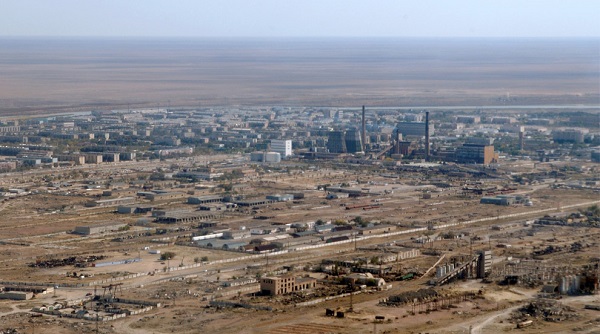
Some scientists believe that the organisms were carried from the ocean by uplifting air currents. Since the organisms are not native to Baikanour, Kazakhstan where the vessel took off, many don’t believe they were brought up during flight. This makes it very difficult to answer the question: “How did they get there?”

The organisms found on the vessel have a mouth, limbs, digestive tract, muscles, and a nervous system! They are aliens! Just not in the typical sense we may picture when thinking about life in space. Known as tardigrades, these little creatures are amazing at enduring harsh conditions, which is why drawing the conclusion that they could have originated in space isn’t so tough.

To believers in aliens this is a mainstream discovery that will help open the minds of those who deny any possibility of life in space.

For the Silo, George Flier via File’s Files #41

No ocean in sight! Baikanour "Space City" in Kazakhstan where launches to the ISS originated from.
No ocean in sight! Baikanour “Space City” in Kazakhstan where launches to the ISS originated from.

Supplemental- Phytoplankton life cycle animation  What are “tardigrades”?

The Biggest March On Climate Change Ever

Way back in 2014, our community decided on a crazy goal – the largest mobilization on climate change in history. So on September 23rd, we blew past our wildest expectations, with a climate march *6 times* the size of anything before it!!! This was 80 city blocks of New York:

World March For Climate 2014 Avaaz

And this was London, Berlin, Bogota, Paris, Delhi, and Melbourne…

World March For Climate 2014

Over 675,000 of us marched around the world. It was a beautiful expression of our love for all that climate change threatens, and our hope that we can save this world and build a society powered by 100% safe, clean energy. Together, we made history, but it’s just the beginning. The crucial Paris climate summit is 15 months from now — that’s where we need a global deal. By March next year, countries have pledged to make their national commitments — so our movement will divide to focus on these national targets. But every few months until Paris we’ll come together globally again and again, bigger and bigger, to beat a drum for change, for 100% clean energy, that our leaders can only follow. The movement we’ve been waiting for has begun.

With gratitude, Ricken, Emma, Alice, Iain, Nataliya, Patri, Oliver, Diego, Rewan and the whole Avaaz team

PS – We worked with thousands of organisations to make this day happen and particularly love our friends at 350. But our community deserves to celebrate the step we’ve taken. The Avaaz team and community played a central role in almost all the marches and events held. The Guardian called it “an organising triumph” for Avaaz and the BBC said “the marches brought more people on to the streets than ever before, thanks to the organisational power of the social media site Avaaz.” We fielded hundreds of organisers and thousands of volunteers, and donations from our community provided millions in funding to the effort. The challenges of our time call us to be better, and together we’ve done that, growing and changing into a new and more effective kind of movement, a movement that is now both online, and offline. Huge gratitude to everyone who made it happen.

Avaaz.org is a 38-million-person global campaign network that works to ensure that the views and values of the world’s people shape global decision-making. (“Avaaz” means “voice” or “song” in many languages.) Avaaz members live in every nation of the world; our team is spread across 18 countries on 6 continents and operates in 17 languages. Learn about some of Avaaz’s biggest campaigns here, or follow us on Facebook or Twitter.

Winners And Losers Around The World In School Lunches

School has ‘been in’ for awhile now. Does your child’s school lunches sound healthy to you? How do you think it compares to school dinners from around the world? And how much do school meals affect energy levels for post-lunch learning and does that have an impact on PISA test results?

Check out this infographic to discover what the school meals of other countries look like and how each nation scores on the PISA test. For the Silo, Dinah Makani.

around the world in school lunchboxes infographic
CLICK ME to visit this graphic’s sponsor 🙂

Alten’s Book VOSTOK Warned President Obama Against UFO Investigation?

Vostok By Steve Alten Rebel Press February 17, 2015 ISBN-10: 1681020009 ISBN-13: 978-1681020006
Vostok
By Steve Alten
Rebel Press
February 17, 2015
ISBN-10: 1681020009
ISBN-13: 978-1681020006

What is it about the idea of UFOs that makes people nervous? While there have been many documented incidents over the years (with no other logical explanation), the government still won’t discuss it – and even pilots rarely report sightings for fear of losing their job. Steve Alten, New York Times bestselling author, isn’t afraid to talk about it. In fact, he weaves classified information on UFOs throughout his latest riveting book, Vostok.

In 2015, Obama Advisor John Podesta revealed that his biggest regret since leaving office was “keeping the UFO issue a secret.”  Now, a shocking book by NY Times bestselling author Steve Alten, has blown the lid off those secrets. The author’s source – Steven M. Greer, M.D., the world’s foremost authority on Extraterrestrial Intelligence (ETI) and the same person who provided the extensive briefing to John Podesta on UFOs shortly after President Obama took office in 2009.

Dr. Greer, an emergency room physician who left his medical career to dedicate his life to disclosing the truth about UFOs, also briefed James Woolsey, President Clinton’s first CIA director, along with the heads of the Defense Intelligence Agency, the Head of Intelligence Joint Staff, members of the Senate Intelligence Committee, and a select number of Congressmen.

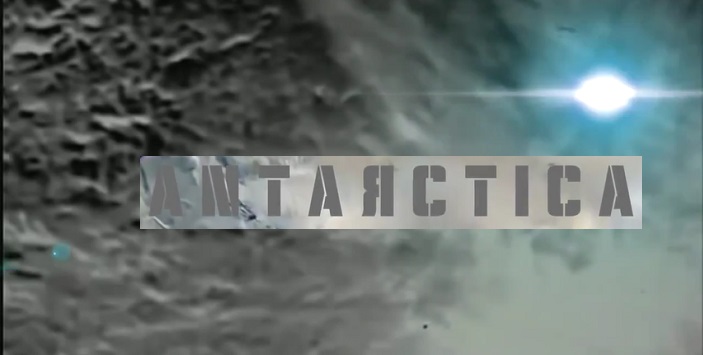
Best-selling author Steve Alten incorporated over thirty hours of private interviews with Dr. Greer into the storyline of Vostok (Rebel Press). Fans of thrillers will be drawn into the story – Vostok is a very real 15 million-year-old sub-glacial lake located beneath two-and-a-half miles of ice in East Antarctica. Incredibly, there is also a magnetic anomaly inside the lake that has baffled experts as to what it could be. Three scientists are selected to venture into this underwater realm in a submersible. What they discover will keep readers frantically turning pages…  

 
But Vostok is much more. The thriller exposes a secret transnational Cabal which draws an estimated $80 billion Black Ops budget from US taxpayers with no congressional oversight. Made up of bankers, oil oligarchs, and members of the military industrial complex, the Cabal has used its influence to improperly seize over 5,100 US patents, many for new energy devices that would replace fossil fuels. As a result, clean free energy systems that would literally transform the planet (and the dominant U.S. macro-economy) have been black-shelved, their inventors threatened… and worse.
 
According to the author and his source, “presidents Clinton and Obama were both ‘warned off’ pursuing their UFO investigations; Clinton when CIA Director William Colby was murdered after he decided to cross the powers-that-be, and Obama on his trip to Norway to accept his Nobel Peace Prize when a Scaler weapon blast (an ET technology reverse-engineered decades ago) caused the Oslo night sky to light up with a blue spiral.” Vostok names names, along with the locations of super secret military bases where ARVs (Alien Reproduction Vehicles) are harbored and may one day be used in the ultimate false flag event.
 
Yes, truth is stranger…and far scarier…than fiction.


Supplemental- BBC’s The Lost World of Lake Vostok

Purchase VOSTOK E-book from Amazon

The Commonwealth Opinion: Extreme Events Are Reversing Development Goals

Cyclones in the Caribbean and Pacific, devastating bushfires in Australia, recurrent floods and droughts in Asia and Africa, increasingly bring tragic loss of life to our nations and communities, inflicting physical and mental trauma on survivors, and causing irreparable damage to centuries old ways of life and undermining prospects for future prosperity and growth.

The current bushfires in Australia have been among the most distressing manifestations, leading the government to declare a state of emergency.

The total cost to the economy of the bushfires with which Australia is grappling seems likely to run into billions of dollars. Continuous drying of undergrowth creates optimal conditions for bushfires, leading to tragic loss of human lives and destruction of infrastructure. There is devastating impact on the precious biodiversity of flora and fauna, threatening drastically to affect the ecology of the region. Heightened levels of air pollution in the affected and adjoining regions are having adverse impacts on the respiratory health of scores of people.

20190731_Secretary-General_op-ed_photo_landscape.jpg

Such extreme events are occurring with rising frequency, destroying the means of livelihood for millions people in Commonwealth countries, increasing vulnerability and reducing resilience. The Commonwealth collectively recognises that without well-planned and integrated national and international action, natural disasters and extreme events will continue to challenge the resilience of affected communities and smaller countries. The Commonwealth Secretariat is working alongside member nations to protect the environmental health of fragile and susceptible ecosystems, including through increased national preparedness for tackling natural disasters and mobilising resources.

For the arid and drought-prone member countries, which are highly vulnerable to dryness and bushfires, the Commonwealth provides support for governments to develop projects on sustainable and resilient landscape management, with the Commonwealth Climate Finance Access Hub (CCFAH) helping to unlock necessary financial resources. Similarly, by pooling information into a streamlined platform for better and more convenient access to information, the Commonwealth Disaster Risk Finance Portal currently in development will help countries find suitable sources of finance and support to deal with disasters.

On behalf of citizens of all Commonwealth countries, I express my heartfelt condolences to all families and communities who have lost loved ones in the tragic events of recent days. I commend the courage and commitment of firefighters, emergency service personnel and all others who are battling to rescue and protect people and property, wildlife and natural resources, or human infrastructure. In these testing times, the wider Commonwealth family stands in solidarity alongside the Government and people of Australia. For the Silo, by Patricia Scotland, Commonwealth Secretary-General

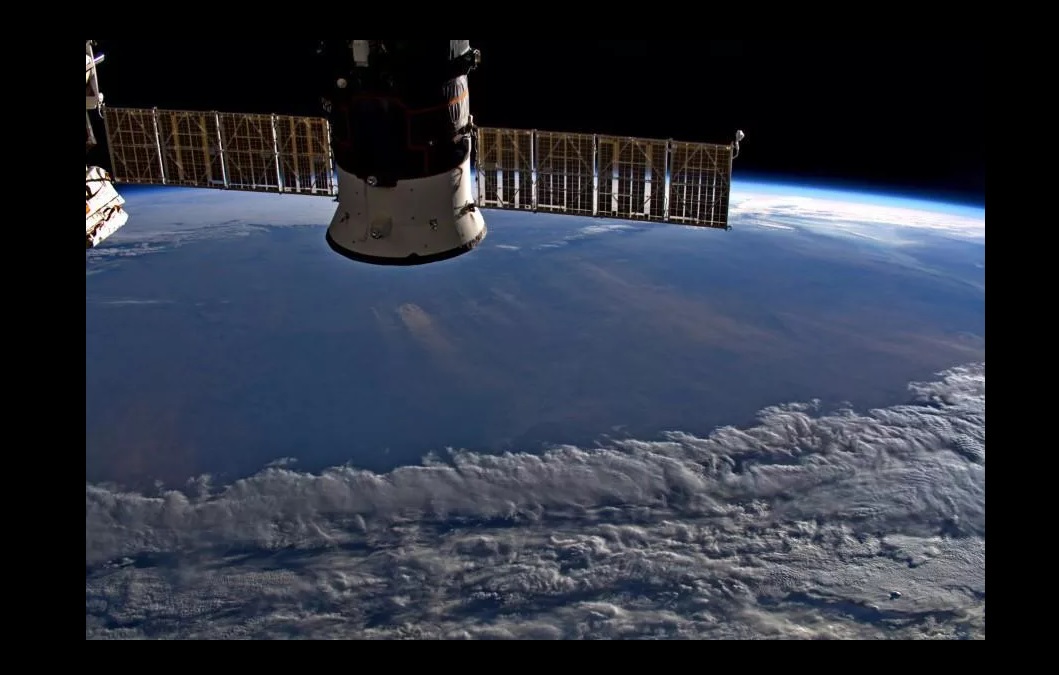
Featured photo- Luca Parmitano ESA Astronaut – Australia “Ash cloud” as viewed from the ISS International Space Station.

Ministers Call On More Countries To Put Forward Stepped-Up Climate Crisis Education Plan

Madrid, December 2019–Two pioneering countries this week committed to stepped-up climate and environmental education in order to equip a new generation with the knowledge, awareness and skills needed to navigate the emerging challenges of the 21st C.

Italy and Mexico, speaking at a press conference at COP25 in Madrid, urged other countries to follow suit in order to make strong, environmental education a world-wide phenomenon.

They proposed Earth Day in April next year as one of a series of milestones in 2020 where like-minded nations could announce higher ambition on climate and environmental education.

The plan is to have a critical mass of countries committed to the environmental and climate education agenda by the time of the UN climate conference (COP26) taking place in Glasgow, UK in November.

Lorenzo Fioramonti, Italy’s Minister of Education, Innovation and Research, said: “Young people are demanding that governments take climate change far more seriously. There are many areas of society where we must act, and act with increased ambition: compulsory education on these topics needs to be a key part of this national and international response to the big issues of our time”.

The Italian Education Minister said that Earth Day 2020 represents one of the key moments in this important year to recognize the centrality of climate and environmental education including through  ‘Teach-Ins’ as one way of raising awareness among the young.

He said he hoped other countries would take the same opportunity mark Earth Day’s 50th anniversary and the birth of the environmental movement.

Teach-ins, in which students organize debates and propose solutions to environmental challenges, was a key feature of the first Earth Day where over 20 million young people and citizens protested in 1970, triggering in the process new laws and action by the then US administration.

Martha Delgado, Vice Minister of Global Affairs in Mexico’s Ministry of Foreign Affairs, said her country had now incorporated mandatory environmental education into Mexico’s constitution as the first step in a new comprehensive plan.

“Mexico is now committed to mandatory environmental education at home, but we are also committed to promoting environmental education internationally. The challenges we are facing are national but also global. Young people everywhere need the knowledge to fully respond to what is unfolding on in our world,” he said.

“Great transformations can only be achieved through knowledge, awareness and the sense of collaboration. We are convinced that environmental education is the route to meeting Sustainable Development Goals, an essential tool to fight the climate crisis and can prompt a profound cultural change to contribute to our planet’s sustainability,” said Vice-Minister Delgado.

Kathleen Rogers, President of the Earth Day Network, said environmental literacy had been at the core of Earth Day since its inception in 1970 but that governments had not gone far enough.

“Young people, through movements such as Fridays for Future, have been asking governments to tell the truth about the climate and environmental emergencies that we are now facing—‘telling the truth’ needs to happen in the schools and universities, and needs to happen now,” she said.

Rogers said that while globally climate and environmental education exist across the spectrum, from decades of formal implementation to continued exclusion of the topic as a whole, it is time to make these critical subjects compulsory and to link them to civic education so that students will develop both the knowledge and the civic skills they need to fully engage in the solutions to climate change.

 “These are the core elements of transforming our societies so that a new, far better informed and active generation can emerge to ensure governments truly respond to the challenges of our time,” she said.

Patricia Espinosa, Executive Secretary of the UN Framework Convention on Climate Change (UNFCCC), welcomed the announcements of Italy and Mexico as a key contribution to realizing the aims of the Paris Climate Change Agreement.

Under the Agreement governments are looking to enhance their Nationally Determined Contribution (NDCs) in 2020 as contribution to climate action but also the Sustainable Development Goals.

From Madrid and COP25, focus will also be on the Congregation for Catholic Institutes of the Holy See which has chosen Earth Day 2020 as a preparatory meeting for the Global Compact on Education that Pope Francis will launch on May 14th.  It aims to promote a global commitment that also teaches new generations respect for humankind and nature.

Earth Day Italia is working together with the Italian Ministry for the Environment and the Festival for Sustainable Education to support this initiative. For the Silo, Denice Zeck.

Climate Peril Book Highlights Predicted Ecological Catastrophe

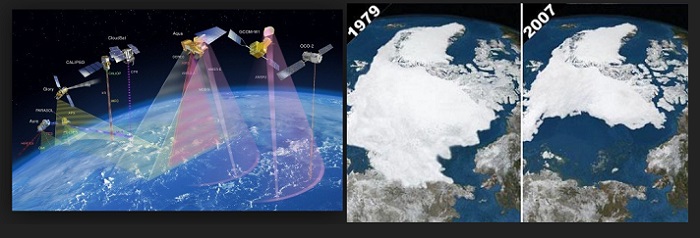
How do we know? "Orbital climate satellites will measure changes in energy that is entering and exiting the atmosphere as well as the effect that manmade greenhouse gases (GHG) or aerosols, are having on the atmosphere." http://green.blorge.com/2011/01/the-glory-climate-satellite-will-join-the-a-train/
Orbital climate satellites measure changes in energy that is entering and exiting the atmosphere as well as the effect that manmade greenhouse gases (GHG) or aerosols, are having on the atmosphere. image: green.blorge.com

A new, authoritative climate book puts all major aspects of the climate crisis into a broad national and international perspective, revealing that the gravity, imminence, and permanence of the crisis are widely misunderstood.

Climate Peril
Climate Peril: The Intelligent Reader’s Guide to Understanding the Climate Crisis (Northbrae Books) by energy and climate expert Dr. John J. Berger  has an introduction by Dr. Paul and Anne Ehrlich of Stanford University and a foreword by Dr. Ben Santer, an internationally respected climate scientist with Lawrence Livermore National Laboratory and the Intergovernmental Panel on Climate Change.

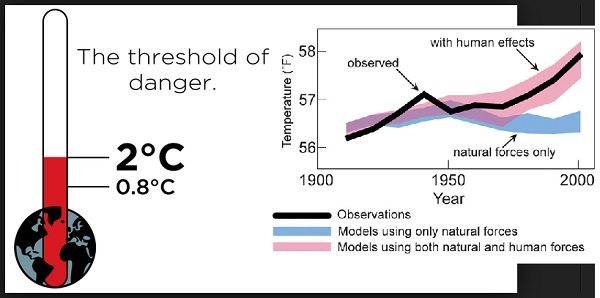
The book underscores the unprecedented urgency of the climate crisis, providing detailed revelations about the grave harm climate change is now doing to human health, national and international security, our economy, natural resources, including the oceans, and biodiversity. Climate Peril demonstrates, for example, that holding global heating to 2° C is no guarantee of climate safety, contrary to the assumptions of many policymakers, and that the world is very likely to exceed this limit anyway.

2degrees threshold

Readers have found that Climate Peril makes important findings of climate science easily accessible and helps them better understand the breadth of the climate threat to our economy and society. The book begins by explaining how the climate system naturally operates and then illustrates how human activity has disturbed it.

Climate Peril goes on to document the broad consequences of rapid climate change, drawing attention to its impacts on nature, the economy, human health, and national security. In the process, Climate Peril highlights our proximity to irreversible climate tipping points and to ecological catastrophe.

Supplemental- Why a two degrees C increase in global average temperature IS a big deal by Elizabeth May  https://www.greenparty.ca/blogs/7/2013-01-21/why-two-degree-celsius-increase-global-average-temperature-big-deal

Chasing Ontario’s Tornados

Part One

I have seen many storms in my life. Most storms have caught me by surprise, so I had to learn very quickly to look further and understand that I am not capable of controlling the weather, to exercise the art of patience and to respect the fury of nature”

My name is Spencer Sills, and I am a storm chaser, some of you may remember a few years back reading about my good friend David Chapman and myself in this very newspaper and our journeys on the road to capture Nature’s fury through our lenses. Not much has changed since then, we are both still on the hunt for the elusive supercell and what fury may come with it.

In 2014 my overall goal to capture a tornado in Ontario was once again successful, on July 7th I teamed with Scott Burlovich of Restless Skies photography and his chase partner Harry for the day and we set out to capture some pulse storms that were flaring up in the afternoon, most of these cells were just rain makers but on the way back to my home I had noticed a wall cloud that was lit up by the sun, we pulled off to the side of the road directly South of Norwich and briefly documented a EF0 tornado in a farmers field before it lifted causing no damage since it was in a dry field. This was my only tornado of the year, in a busy season. I did however get to document several gorgeous storm cells throughout the year, including several beautiful stacked shelf clouds and a great Wall cloud early in the season that brought golf ball sized hail to the area.

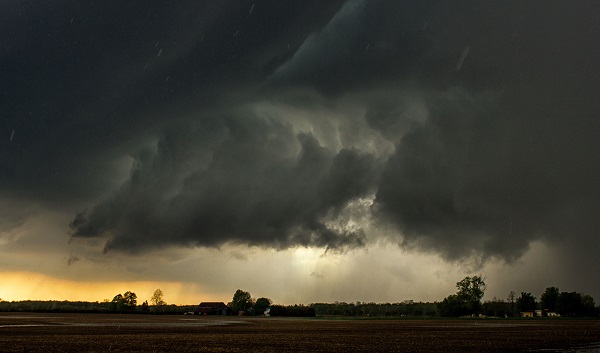
A Wall cloud in SW Ontario approaches my location as the RFD cuts around with hail starting to fall.

In 2015 I hope to achieve a few goals, one of which is to capture yet another tornado in this province, hopefully just like 2014 in an open field away from any properties. I also have set my sights on some goals with lightning and capturing it in a different perspective, I can’t go into much detail but it will be a stunning sight if I can achieve it. As far as how I believe the season will go, I do believe it will be a slow start, April and May will bring the return of storms, but I don’t expect anything too severe until June and July once the humidity and warmth really have a chance to build in. I do however once again stress to leave chasing to the pros, if you’re interested in storm spotting, please look into Canwarn, the more spotters in the province the quicker warnings can be issued thanks to verified ground reports.

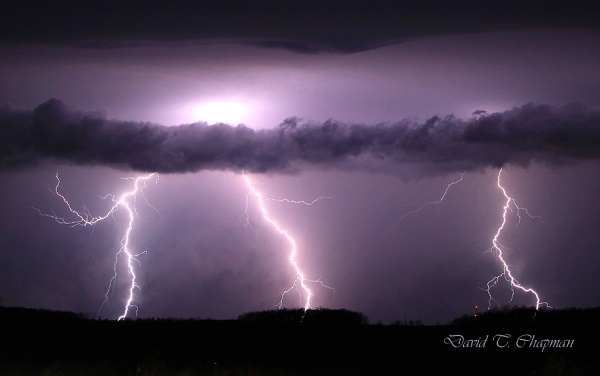
Lightning by Chapman

I will be working alongside another photographer and storm spotter this year, Scott Burlovich of Restless Skies, please feel free to check out his amazing work at restless-skies.com and give him a follow on twitter @restless_skies , you can also follow my journey for the year at Lightningfastphotography.com or on twitter @spencersills. I also want to send my best wishes to David Chapman for a great 2015, and as always look forward to meeting him in the field under the Meso, stay tuned for more updates and stay sky aware this summer!

Part Two

Another winter has come and gone, although perhaps slower than a lot of us would like. At least this means that the storm season is once again upon us in Ontario. As usual, Brian Chapman and I, a father and son chase team, will be back out on the roads looking for the best images of lightning and searching for Ontario’s tornadic super cells.

We will also be in close communication with our good friends and fellow chasers, Spencer Sills and Scott Burlovich, as we tend to share a lot of information about the biggest potential storms before we go chasing. You’ll notice when you look through their photography collections that they are a couple of the best for chasing down the biggest storms in our province.

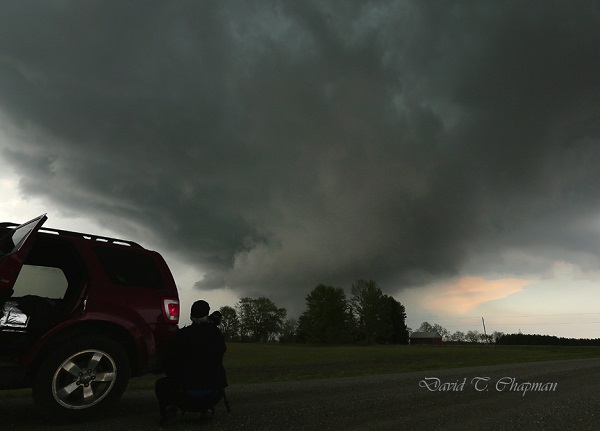
You might be curious on what we do when it comes to chasing the actual storm. Brian’s job is to be the driver. This is his first priority. Once we are parked and in a safe but photographic position for the storm, he is our main videographer. As for myself, I choose where I think the biggest storm will form from looking at weather models that meteorologists use as well as talking to fellow storm chasers in the area. I am also the main photographer. I do some video work and navigate us to the most photogenic side of the storm. This is usually right next to the most dangerous part of the storm but still in the safest position possible.

Rapidly Rotating wall-cloud photo being documented by Brian Chapman)

In the past 2 years, our team has seen and recorded a number of funnel clouds, 2 confirmed tornadoes and 4 waterspouts. One of the tornadoes was near Arthur, Ontario on August 7, 2013 and the landspout tornado was near Listowel, Ontario on May 14th 2014. The Arthur tornado was a really great one to document. It lasted for close to 15 minutes and we were able to see it from start to finish. The best part about it was the fact that  no one was injured and it caused very little damage. Those are the kinds of tornadoes we love to see because they allow you to enjoy the pure power and beauty that they possess but without injuries or major destruction.

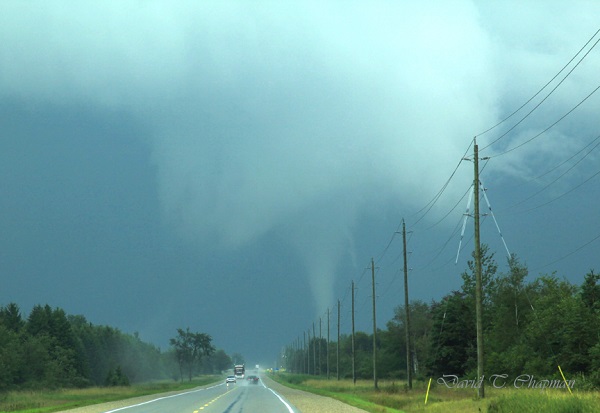
Tornado by Chapman

Another thing that was interesting with the tornado that hit near Arthur was the fact that it tried to form a second tornado at the same time the first one was on the ground. If that funnel had reached the ground, it would have been called a satellite tornado. They are typically smaller and weaker but not always. In Pilger, Nebraska in 2014, two EF-4’s were on the ground at the same time. Sadly they hit a town, killing 5 people and injuring 19. Those are the days I dread as a chaser and hope I never see first hand. As for the second funnel near Arthur, it didn’t quite have the energy to make it the rest of the way to the ground. This probably wasn’t such a bad thing with so many people focusing on the main, larger tornado just to its north.

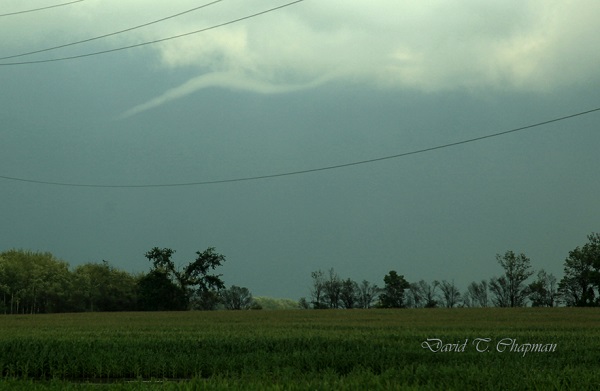
A Funnel Cloud
A Funnel Cloud

Fortunately, a lot of Ontario’s tornadoes hit open areas that cause little to no damage. There have been some exceptions, as the tornadoes that hit both Durham, Ontario on August 20, 2009 and Goderich on August 21, 2011 showed, both killing one person in each of them. That is why many storm chasers as well as dedicated weather enthusiasts in our province have a direct line to Environment Canada that allows us to contact them when we see threatening weather approaching the area we are in. It can help Environment Canada confirm what they are seeing on radar so that they can issue the proper watches and warnings accordingly. Refer to Spencer Sills’ Part One above for more details on how you can become a spotter. Lightning will also be a big focus for our team this year. We continue to work to get lightning photos as close as possible in order to capture the positive leaders that come up to meet the main negative current coming down from the cloud. The leaders can come from the ground, hydro poles, houses and even people.

Although this may be risky and dangerous, we have worked out ways to minimize the risk to us. We stay in the car when lightning is close with the windows up. We also won’t park under a tree, not so much from the fear of a direct lightning strike but in case lightning hits and splits the tree causing it to fall on the vehicle. I remember seeing one like that when I was young and it has had an everlasting impression on me. One of the first big wind storms I chased along Lake Erie on November 1, 2013 knocked down a tree onto a woman‘s car and unfortunately she was in it and was killed. So debris is always a concern and something to be very aware of when it comes to storm chasing.

You can follow our storm chasing throughout the year on our social media pages. https://twitter.com/DTChapmanPics https://www.facebook.com/pages/David-T-Chapman/173134962767601?fref=ts https://twitter.com/WeatherHunters

Toby Barrett
~CLICK ME~


Can Another Ottawa Residence Win Canada’s Best Garden Street?

Congratulations! Russell Avenue in Ottawa’s Sandy Hill neighbourhood is the winner of the Canada’s Best Garden Street contest.
Russell Avenue in Ottawa’s Sandy Hill
neighbourhood is the winner of the Canada’s Best Garden Street contest.

Toronto, ON Garden Days – The month of June hosts Canada’s three-day celebration of gardens and gardening. There are loads of Garden Days official activities scheduled across the country, and almost every province has a Flagship Event for you to enjoy. It’s the perfect time to get dirty in one’s own garden, visit a nearby public garden or spend some time in a local garden center.

You’ll be in great company
If you’re planning travelling around the province or across Canada this Summer, be sure to visit a few of the many public gardens that we’re becoming world renowned for.  Dr. Richard Benfield, author of ‘Garden Tourism’ estimates that annually there are 6 million garden tourists in Canada.

And the winner is . . .

On the occasion of our upcoming National Garden Day, Friday, June 13, the Canadian Garden Council is pleased to announce the winner of the Garden Days’ ‘Best Garden Street’ Contest which celebrates the contribution that public and/or private gardens have made to the quality of life on individual streets and neighbourhoods.  The winner of $1000 worth of Marks’ Choice Lawn and Garden products from Home Hardware, and the bragging rights to be named ‘Canada’s Best Garden Street’ is: Mary Moreland, Russell Avenue, Ottawa.

Garden Days spokesperson, Mark Cullen, recently said, “The partnership between the hand of man and Mother Nature has produced some of the highest quality green spaces and gardens in Canada and on earth.  Garden Days, a new idea that’s all about this successful collaboration, has been sown on fertile soil.  I have no doubt that the ideas and principles behind the concept will sprout and grow into national significance.  And the sooner the better.”
This coming weekend join in the national celebration of everything that the Garden contributes the quality of all our lives.

Garden Days are a family affair. Photo: Pierre Boucher

Organized by the Canadian Garden Council, and kicked off with National Garden Day, always the Friday before Father’s Day, Garden Days is a three-day celebration of gardens and gardening.  The program’s objective is to draw attention to Canada’s garden culture, history and innovations and to underscore the importance of public and private gardens, the values of home gardening and the promotion of environmental stewardship. For the Silo, Courtney Charette.

Terrace Photographer Captures Sunrise And Sunset From Fourteenth Story

Great vantage point! A "terrace photograph" from Kim's new book.
Great vantage point! A “terrace photograph” from Kim’s new book.

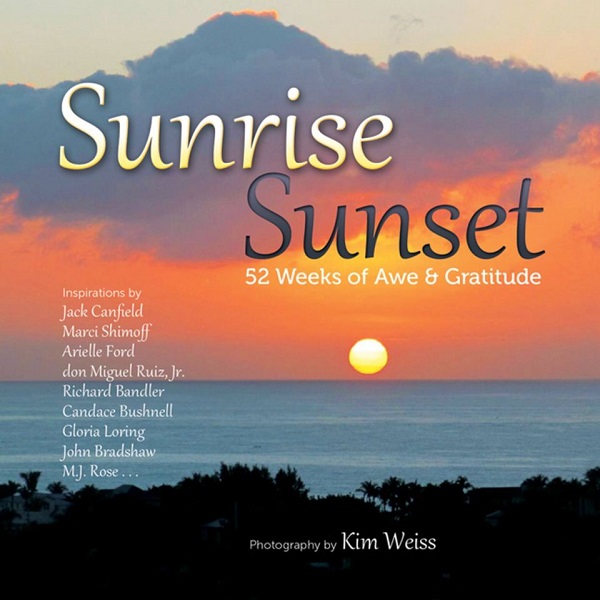
“It’s important in today’s world that we counter all the bad news we read or hear about by savoring positive moments as if our lives depended on it.” So says author/photographer, Kim Weiss, who every days stops to “smell the sunshine” and photographs nature scenes from her 14th story balcony. This daily ritual, now documented in a small gift book and peppered with inspirational words is called Sunrise, Sunset: 52 Weeks of Awe & Gratitude, Weiss’ offering that reminds us that there’s more to life than what the media shows to us.  A significant portion of the proceeds from book sales is donated to AVDA – an organization dedicated to helping victims of domestic violence.

Kim Weiss- "Sunrise, Sunset" author/photographer
Kim Weiss- “Sunrise, Sunset” author/photographer

“I never thought that my hobby of photographing the sun would turn into my ‘passion project,’ never mind a book,” says photographer/author, Kim Weiss about, Sunrise, Sunset: 52 Weeks of Awe & Gratitude (HCI Books) “Odd as it is to go from publicist to ‘author,’ I was moved to share the sense of awe I get to experience every day from my 14th floor terrace.” Her universally loved sunrises (& sunsets) fill the pages, accompanied by the sage words of inspiring people we admire. Each week commentary from people like Candace Bushnell, Lisa Nichols, Jack Canfield, Joan Halifax, Marty Becker, Marci Shimoff and many, many more complement the visual beauty of the sun rising and setting.

“I’m actually thrilled to see that a growing number of admirers of my photographs have convened on Facebook and Instagram and not only like my pictures but are inspired to post their own,” says Weiss. “We’re many thousands strong and have posts from Nova Scotia to Guam.”

Another lovely photo from Kim's book.
Another lovely photo from Kim’s book.

Sunrise, Sunset, (which happens to fit nicely inside a bag, or perch on a nightstand), is the ultimate gift book for saying “thank you,” sharing a blessing, or offering an oasis for spiritual awakening. From sunrise to sunset this book will be a perennial source of inspiration.

ABOUT THE AUTHOR

Kim Weiss (Boynton Beach, FL) has been a publicist in the book industry for many years and coaches other writers aspiring to be bestselling authors. Her love of nature and photography began when she was just a little girl and bloomed into the writer and photographer she is today. From her 14th floor terrace she witnesses the beauty of nature and captures it through the lens of her camera. As a storyteller, Kim has contributed to the hugely popular Chicken Soup for the Soul series and The Ultimate Bird Lover. 

Weiss’s actively growing community of backyard photographers can be joined on her Facebook page: https://www.facebook.com/KimWeissSunriseSunset and all her events and reviews can be seen at: www.sunrisesunsetbook.com

Sunrise Sunset, happens to fit nicely inside a bag, or perch on a nightstand :)


Pull On Blundstone Boots Style Every Season

Blundstone wearers are devoted- its not that unusual for the artist types to even sketch their beloved, worked-in Blunds.... sketch: Richard McLean image: redbubble.com
Blundstone wearers are devoted- its not that unusual for the artist types to even sketch their beloved, worked-in Blunds…. sketch: Richard McLean image: redbubble.com

A pair of Blundstone boots has a way of replacing a big chunk of your everyday footwear. Not only because Blundstone boots are so functional, but also because these are boots you want to wear every day. The two-tone styles aim to appeal to those who like a bit more colour in their fashion choices. Blundstone’s two-tone styles give you the same fantastic quality in a more colourful package.

“In the past, we’ve played it safe with neutral colours like Classic Black, Steel Grey and Rustic Brown,” says Ian Heaps of Blundstone Footwear. “The two-tone boots are perfect for those who want the same great quality, durability and functionality of the classic Blundstone boot, but with a little extra edge and a pop of colour.”

Blundstone Canada CEO Mr. Ian Heaps


Blundstones are widely recognized for their practicality and adaptability as footwear, but they are also an extremely versatile fashion accessory. All styles are unisex, and the sleek look of the boots make them compatible with anything from jeans or shorts, to slacks and even skirts. The two-tones styles are available in women’s 6 to men’s 14 sizes.


#1319 Rustic Brown with two tone sole from Blundstone Boots Fall line.


....and the devilishly stylish #1316 Red and Black with two tone sole.
….and the devilishly stylish #1316 Red and Black with two tone sole.


About Blundstone

Blundstones have been available in Canada since 1993 at Australian Boot Company and other retailers, and now sold at over 600 locations across Canada.  Tin Shack is the exclusive Canadian distributor of Blundstone, located in Collingwood, Ontario.  Founded in Vancouver in 1998, Tin Shack distributes footwear made by Blundstone, Pty, of Tasmania, Australia.  Founded in 1870, Blundstone is Australia’s leading manufacturer of quality footwear and remains a family-owned company to this day.  Blundstones have been toughing it out for no-nonsense, go-anywhere, do-anything types seeking comfort, durability and rugged style.  Boasting pull-on comfort, Blundstones are all-weather, lightweight, durable and no-gimmick footwear.  For more information, visit www.blundstone.ca.


Sugar Battery Set To Power Phones, Tablets And Other Devices

Catalyzing Commercialization Sugar could some day be used to power smartphones, tablets, and other electronic devices thanks to a recent breakthrough by Blacksburg, VA-based Cell-Free BioInnovations, Inc. It might seem strange to use an ingredient found in cupcakes and cookies as an energy source, but it’s not, as most living cells break down sugar to produce energy. And, interestingly, the energy density of sugar is significantly higher than that of current lithium-ion batteries.

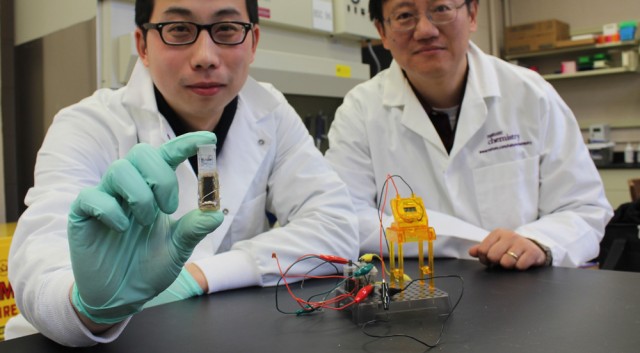
Working under a Small Business Innovation Research (SBIR) grant from the National Science Foundation, a research team led by Y-H Percival Zhang, Chief Science Officer of Cell- Free BioInnovations and an associate professor of biological systems engineering at Virginia Tech, has successfully demonstrated the concept of a sugar biobattery that can completely convert the chemical energy in sugar substrates into electricity.

As reported in the January 2014 issue of Nature Communications, this breakthrough in sugar-powered biobattery can achieve an energy-storage density of about 596 A-h/kg — an order of magnitude higher than the 42 A-h/kg energy density of a typical lithium-ion battery.

A sugar biobattery with such a high energy density could last at least ten times longer than existing lithium-ion batteries of the same weight, drastically reducing how often users need to recharge their electronic devices. This nature-inspired biobattery is a type of enzymatic fuel cell (EFC)— an electrobiochemical device that converts chemical energy from fuels such as starch and glycogen into electricity.

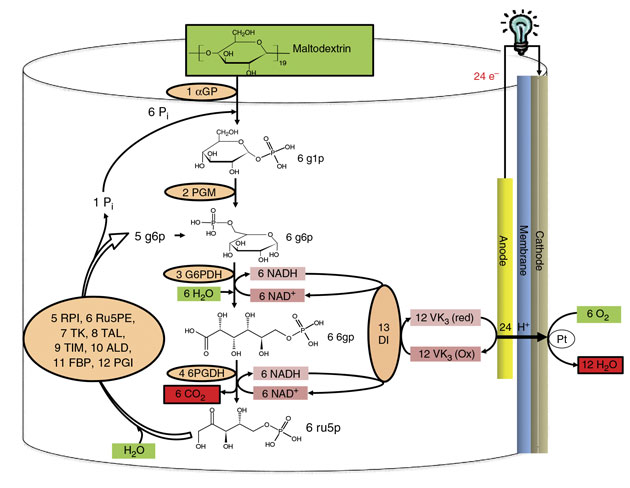
While EFCs operate under the same general principles as traditional fuel cells, they use enzymes instead of noble metal catalysts to oxidize the fuel. Enzymes allow for the use of more-complex fuels (e.g. glucose), and these more-complex fuels are what give EFCs their superior energy density. For example, the complex sugar hexose can release 24 electrons per glucose molecule during oxidation, whereas hydrogen (a fuel used in traditional fuel cells) releases only two electrons. Until now, however, EFCs have been limited by incomplete oxidation, releasing just two to four electrons per glucose molecule.

“We are not the first who proposed using sugar as the fuel in the biobattery,” says Zhiguang Zhu, a senior scientist at Cell-Free BioInnovations. “However, we are the first to demonstrate the complete oxidation of the sugar in the biobattery, enabling our technology to have a near-theoretical energy conversion yield that no one has ever reported.”

Zhang and his team constructed a synthetic catabolic pathway (a series of metabolic reactions that break down complex organic molecules) containing 13 enzymes to completely oxidize the glucose units of maltodextrin, yielding nearly 24 electrons per glucose molecule.

We put specific thermostable enzymes into one vessel to constitute a synthetic enzymatic pathway that can perform a cascade of biological reactions the sugar, converting it into carbon dioxide, Zhang says. Unlike natural catabolic pathways for the oxidation of glucose in cells, the designed synthetic pathway does not require costly and unstable cofactors, such as adenosine triphosphate (ATP), coenzyme A, or a labile cellular membrane. The researchers used two redox enzymes that generate reduced nicotinamide adenine dinucleotide (NADH) from sugar metabolites. NADH, a reducing agent involved in redox reactions, is a natural electron mediator that carries electrons from one molecule to another. They also used ten other enzymes responsible for sustaining metabolic cycles and an additional enzyme that transfers electrons from NADH to the electrode.

This new synthetic pathway enables the biobattery to extract the theoretical number of electrons per glucose unit and thereby use all the chemical energy in the sugar. This, the team reports, represents a significant breakthrough.

In addition to its superior energy density, the sugar biobattery is also less costly than the Li-ion battery, refillable, environmentally friendly, and nonflammable. While researchers  continue to work on extending the lifetime, increasing the power density, and reducing the cost of electrode materials for such a battery, they hope that the rapidly growing appetite for powering portable electronic devices could well be met with this energy dense sugar biobattery in the future. For the Silo, Zhiguang Zhu, chief scientist at”The Sweet Battery Project”.

This technology was funded through the America’s NSF Small Business Innovation Research Program.

Canadian Garden Days Is Annual Event Celebrating Vital Role Of Gardening

'Garden Days' - June 13, 14 & 15 - are the ideal time to see what lies beyond your nearest public garden's gate. Photo: Tara Nolan
‘Garden Days’ – are the ideal time to see what lies beyond your nearest public garden’s gate.
Photo: Tara Nolan

DO YOU LIVE ON CANADA’S BEST GARDEN STREET? Canada is a country made up of neighbourhoods, and in many are streets where neighbours take pride in making their gardens – and even city-owned medians – as pretty as possible through their collaborative ‘green thumbed’ efforts.

As part of this year’s Garden Days program, being held across the country from June 16 to 24, the Canadian Garden Council invites you to register your Garden Days activity. Let us know why your street is the prettiest in the country and how it contributes to your, and the neighborhood’s, quality of life. All Canadian gardens, garden centres, horticultural and plant societies, garden clubs, schools, garden-related businesses and communities are invited to organize Garden Days activities or events – between June 16 and 24 – to celebrate public gardens and home gardening.

Twelve garden gnomes have escaped from The Butchart Gardens on Vancouver Island! Might they be among the dahlias? Help find them during 'Garden Days', June 13, 14 & 15
The Butchart Gardens on Vancouver Island.

Garden Days is organized by the Canadian Garden Council, and begins with National Garden Day on the Friday before Father’s Day, Garden Days is a three-day celebration of gardens and gardening across Canada.  The program’s objective is to draw attention to Canada’s garden culture, history and innovations and to underscore the importance of public and private gardens, the values of home gardening and the promotion of environmental stewardship. Garden Days is a joyful, country-wide celebration of the role of gardens in our communities and in our lives. To find a Garden Days activity near you visit:  http://www.gardendays.ca and click on the ‘Activity’ button. For the Silo, Courtney Charette.

Garden Days is sponsored by: Scott’s, Miracle-Gro, bullfrogpower and supported by Communities in Bloom and the Canadian Nursery Landscape Association.

Follow Garden Days on Twitter http://www.twitter.com/CanadasGardens  and join in the conversation at #GardenDaysCanada

Into The Depths Is How Far Down Companies Drill For Oil

Have you ever wondered how far down companies have to drill for oil? It’s quite staggering!

Over the years, companies have had to go further and further into the earth in order to find Earth’s remaining oil and today we are deeper than ever.

In this piece, we’ll be looking at the Z-44 Chayvo Well, the deepest on the planet, and we show you comparisons so you can see clearly just how amazing this feat is.

We’ll also show you the depth of this well in comparison to the earth’s core. How close does this drill actually get?

And finally, we’ll outline just how much it costs to pull off the deepest ever oil extraction. For the Silo, Rose Baldwin and fuelfighter.co.uk
drilling for oil infographic

All Parties Support Ontario Greenbelt And Recognize Immense Values

Last week, a video was released showing Ontario’s PC Party leader Doug Ford promising to open up a “big chunk” of the Greenbelt to allow development on its protected areas, an idea he attributed to the “biggest developers in this country.”   

Our Executive Director, Tim Gray responded in the news that this would have severe consequences and allow land speculators to build massive subdivisions, at immense profits, on farms, forests and natural areas currently protected in the Greenbelt.

Watch Tim Gray’s interview on CTV news.

Ontario’s PC Party leader Doug Ford later reversed his position. This is consistent with polls that suggest more than 89 per cent of Ontarians support the protection of the Greenbelt. Ontarians like you.

The good news is that now all parties support the Greenbelt and recognize its immense values. Thank you for your help in securing the future of farmland, forests and water systems in Ontario. 

Over the last few months, many of you signed petitions supporting expansion of the Greenbelt. Your voice matters now more than ever. We encourage you to ask candidates questions on their views during the upcoming provincial and municipal elections.

It’s time to set the record straight.

The Greenbelt does not constrain housing supply or cause high house prices. In fact, municipal data shows that there is enough land available to provide for housing development within existing Greater Toronto and Hamilton Area urban boundaries until 2031.

The best way to address housing prices and supply in our region is by directing growth to existing urban areas, limiting sprawl, and building different kinds of affordable homes close to transit.

Read our latest blog highlighting 7 facts about the Greenbelt and what really impacts housing prices in the Greater Toronto and Hamilton Area. 

Thank you,

Susan Lloyd Swail
Livable Communities, Senior Manager

Ontario Law Protects Bees By Reducing Neonicotinoid Corn And Soybean Crops

On July 1, 2015, Ontario was the first jurisdiction in North America to protect bees and other pollinators through new rules to reduce the number of acres planted with neonicotinoid-treated corn and soybean seeds by 80 per cent.

Over the years, Ontario beekeepers have experienced unusually high over-winter losses of honey bees, reaching 58 per cent following the winter of 2013-14. image: naturalblaze.com

To support this goal, new requirements were put in place for the sale and use of neonicotinoid-treated corn and soybean seed that will help ensure treated seed is only used when there is evidence of a pest problem. Reducing neonicotinoid use in these two crops presents the greatest potential to reduce pollinator exposure to the neurotoxic insecticide.

Pollinators, including bees, birds and butterflies, play a crucial role in agriculture and our ecosystem. The level of over-winter losses considered to be acceptable and sustainable by most apiculturists is 15 per cent.


The new rules are one part of Ontario’s strategy to improve pollinator health. The province will also develop a pollinator health action plan in consultation with the public and experts to address other stressors that affect pollinators.

Ensuring a strong and healthy agricultural sector is part of the government’s economic plan for Ontario. The four part plan is building Ontario up by investing in people’s talents and skills, making the largest investment in public infrastructure in Ontario’s history, creating a dynamic, innovative environment where business thrives, and building a secure retirement savings plan.

A flowering tobacco plant. Close to 100 per cent of corn seed and 60 per cent of soybean seed sold in Ontario is treated with neonicotinoid insecticides.

QUOTES

“Much of the food we eat and the vibrancy of Ontario’s natural habitats depend on a healthy pollinator population. Our government is taking necessary action to protect these vitally important species and the ecosystems they support from the effects of neurotoxic neonicotinoids.”

— Glen Murray, Minister of the Environment and Climate Change

“Farmers are environmental stewards of their land and this regulation will enable our province’s farmers to strengthen their approach to protecting their crops. To have a significant impact on improving pollinator health, over the coming months, we collectively need to focus on three additional contributors: habitat and nutrition, disease and pests as well as weather and climate change.”

— Jeff Leal, Minister of Agriculture, Food and Rural Affairs

 “Farmers care about the health of pollinators. That’s why the Ontario Federation of Agriculture (OFA)  has worked closely with the Government of Ontario to have these new regulatory requirements work for the province’s farmers. The OFA supports the need for a complete pollinator policy.  The OFA will continue to work with the government toward the successful implementation of this regulation, keeping the concerns of farmers top of mind as part of a pollinator strategy.”

  • Don McCabe, President, Ontario Federation of Agriculture

 “Friends of the Earth is pleased and impressed by Ontario’s leadership in finalizing this first permanent reduction in the use of neonicotinoids in Canada. With its new pesticide regulation, Ontario is delivering important benefits for nature including honey bees, native bees and other vulnerable species.”

  • Beatrice Olivastri, Chief Executive Officer, Friends of the Earth Canada

“Doctors are delighted Ontario will be North America’s first jurisdiction to introduce regulatory restrictions on bee-killing neonic pesticides. Assuming Ontario hits its target of an 80% reduction by 2017, this will be the most important pollinator-protection policy on the continent — and a major contributor to food security.”

  • Gideon Forman, Executive Director, Canadian Association of Physicians for the Environment


QUICK FACTS


  • There are more than 400 pollinator species in Ontario and bees are the most common pollinator.
  • Bees and other pollinators are responsible for pollinating roughly 13 per cent of agricultural crops in Ontario (crops worth about $897 million), and support $26 million annually in honey production.
  • The province conducted a comprehensive, two-stage consultation process with the public and stakeholders to develop its neonicotinoid regulatory requirements.
  • Neonicotinoid-treated seeds are widely used in agriculture. Close to 100 per cent of corn seed and 60 per cent of soybean seed sold in the province is treated with neonicotinoid insecticides.


LEARN MORE


Learn more about the new regulatory requirements to protect pollinators

Learn about the importance of protecting bees and other pollinators

Supplemental- New York Times: Bee death may be linked to Tobacco ringspot virus

Support Needed To Ensure Clean Water Supplies In Ontario Greenbelt

Dear Silo, in December last year 2017, the Province launched a consultation process on expanding the Greenbelt to protect critical water resources in Ontario. While several significant water systems are included in the proposal, key vulnerable areas are missing.

We have 24 hours to tell the government to expand their proposal to ensure clean water supplies for future generations.

Over 1.25 million people in our region rely on groundwater for their drinking needs. And, our lakes and wetlands are home to numerous at-risk species of fish and wildlife. We urgently need features like moraines, wetlands and headwaters that filter and store water protected from the impacts of urban sprawl and climate change.

9 in 10 Ontarians support the Greenbelt’s protection of water, farmland and nature. You can be one of them.

Together we can grow the Greenbelt to protect our most precious resource, water.

Thank you,

Susan Lloyd Swail
Livable Communities, Senior Manager

P.S. you can read our blog to learn more.