All posts by The Silo

Canadian Group: Australian Wildfire Facts Blocked by IFCN

(Calgary, Alberta) Australian wildfire facts are being blocked from public distribution by the International Fact Check Network (IFCN), Poynter Institute and facebook.  Friends of Science Society has issued a rebuttal to Climate Feedback’s Australian wildfire analysis, a member of IFCN, that claims human-caused ‘climate change’ is the culprit behind Australian wildfire stories, not arsonists or untenable fuel load.  In turn, relying on Climate Feedback’s ‘authority’, facebook has been demoting page quality of those who post Australian wildfire stories that don’t fit the climate catastrophe narrative. Friends of Science wildfire expert says “fuel rules” in the case of wildfires, not temperature.

Facebook and Poynter Institute have partnered in a journalism ‘integrity’ project intended to prevent the spread of false news, but instead, they are promoting a singular climate dogma narrative. Most mainstream media outlets toe the line on the pronouncements of Poynter’s IFCN/Climate Feedback without question. Friends of Science Society argues that this is contrary to the principles of freedom of the press and is damaging to the safety of the public. 

Decades of detailed wildfire research by the National Fire Protection Association, a global non-profit established in 1896, has shown that proper setbacks of shrubbery, removal of combustible material, and other house-proofing measures can significantly increase the likelihood that a house will survive a wildfire. Wildfire management techniques like clearing firebreaks and managing combustible fuel loads of dead or dry shrub vegetation and the cutting of firebreaks are well-known, successful wildfire risk reduction techniques.

In their rebuttal to Poynter’s “Climate Feedback”, Friends of Science Society points out that in Alberta, the 2011 statistics of human caused fires versus those caused by lightning reached 72% in the five-year average.  Human-caused wildfire includes arson, accidental or negligent activity and fires started from human infrastructure issues – like power lines sparking on contact with tree branches. Some of the largest Canadian wildfires, like the 2011 Slave Lake catastrophe, have been identified as arson.

For those people demanding climate action to reduce carbon dioxide from human industry, the grand irony is that poor forestry and fuel load management lead to wildfires which in turn emit huge quantities of carbon dioxide, as reported by Esquire.  Proper forestry management would reduce those emissions.

Many climate activists condemn Australia as being at fault for climate warming because it is a coal-producing nation. Based on those claims, Australia is facing economic trade wars by Greenpeace, BankTrack, and even Greta Thunberg.  But as discussed in Friends of Science Society’s “Burning Questions” 2015 report, wildfires, especially those that create huge Pyrocumulonimbus clouds, are a significant driver of climate change.  “The Untold Story of Pyrocumulonimbus” explains the complex findings of wildfire’s influence on climate and environment, with the research led by Mike Fromm of US Naval Research Lab. 

Likewise, Friends of Science Society’s report “Unfriend ENGOs – Befriend Facts” deconstructs the green trade wars against essential prime power industries like coal, natural gas and oil, driven by environmental groups acting as proxies for ‘green billionaires’ who are deeply invested in pushing global cap and trade, carbon pricing and their vested interests in renewables.

Climate activists, Poynter and facebook are suppressing freedom of the press and freedom of speech, while falsely proclaiming a climate emergency, a concept developed by a clinical psychologist in the US, intended to scare people into compliance. The same “Climate Mobilization” organization advocates for World War II style rationing, managed economy, and massive restrictions on freedoms.

On April 6, 2020, Friends of Science Society’s 17th Annual Event “Freedom of Speech! No Climate Emergency” will host investigative journalist Donna Laframboise to address these diminishing freedoms, and Dr. Roy Spencer, who will offer “10 Reasons Why There is No Climate Emergency.”

Friends of Science Society is an independent group of earth, atmospheric and solar scientists, engineers, and citizens who are celebrating its 17th year of offering climate science insights. After a thorough review of a broad spectrum of literature on climate change, Friends of Science Society has concluded that the sun is the main driver of climate change, not carbon dioxide (CO2).
Friends of Science Society
P.O. Box 23167, Mission P.O.
Calgary, Alberta
Canada T2S 3B1
Toll-free Telephone: 1-888-789-9597
Web: friendsofscience.org
E-mail: contact(at)friendsofscience(dot)org
Web: climatechange101.ca

Alten’s Book VOSTOK Warned President Obama Against UFO Investigation?

Vostok By Steve Alten Rebel Press February 17, 2015 ISBN-10: 1681020009 ISBN-13: 978-1681020006
Vostok
By Steve Alten
Rebel Press
February 17, 2015
ISBN-10: 1681020009
ISBN-13: 978-1681020006

What is it about the idea of UFOs that makes people nervous? While there have been many documented incidents over the years (with no other logical explanation), the government still won’t discuss it – and even pilots rarely report sightings for fear of losing their job. Steve Alten, New York Times bestselling author, isn’t afraid to talk about it. In fact, he weaves classified information on UFOs throughout his latest riveting book, Vostok.

In 2015, Obama Advisor John Podesta revealed that his biggest regret since leaving office was “keeping the UFO issue a secret.”  Now, a shocking book by NY Times bestselling author Steve Alten, has blown the lid off those secrets. The author’s source – Steven M. Greer, M.D., the world’s foremost authority on Extraterrestrial Intelligence (ETI) and the same person who provided the extensive briefing to John Podesta on UFOs shortly after President Obama took office in 2009.

Dr. Greer, an emergency room physician who left his medical career to dedicate his life to disclosing the truth about UFOs, also briefed James Woolsey, President Clinton’s first CIA director, along with the heads of the Defense Intelligence Agency, the Head of Intelligence Joint Staff, members of the Senate Intelligence Committee, and a select number of Congressmen.

Best-selling author Steve Alten incorporated over thirty hours of private interviews with Dr. Greer into the storyline of Vostok (Rebel Press). Fans of thrillers will be drawn into the story – Vostok is a very real 15 million-year-old sub-glacial lake located beneath two-and-a-half miles of ice in East Antarctica. Incredibly, there is also a magnetic anomaly inside the lake that has baffled experts as to what it could be. Three scientists are selected to venture into this underwater realm in a submersible. What they discover will keep readers frantically turning pages…  

 
But Vostok is much more. The thriller exposes a secret transnational Cabal which draws an estimated $80 billion Black Ops budget from US taxpayers with no congressional oversight. Made up of bankers, oil oligarchs, and members of the military industrial complex, the Cabal has used its influence to improperly seize over 5,100 US patents, many for new energy devices that would replace fossil fuels. As a result, clean free energy systems that would literally transform the planet (and the dominant U.S. macro-economy) have been black-shelved, their inventors threatened… and worse.
 
According to the author and his source, “presidents Clinton and Obama were both ‘warned off’ pursuing their UFO investigations; Clinton when CIA Director William Colby was murdered after he decided to cross the powers-that-be, and Obama on his trip to Norway to accept his Nobel Peace Prize when a Scaler weapon blast (an ET technology reverse-engineered decades ago) caused the Oslo night sky to light up with a blue spiral.” Vostok names names, along with the locations of super secret military bases where ARVs (Alien Reproduction Vehicles) are harbored and may one day be used in the ultimate false flag event.
 
Yes, truth is stranger…and far scarier…than fiction.



Supplemental- BBC’s The Lost World of Lake Vostok

Purchase VOSTOK E-book from Amazon

Prix d’Ami -Discovering Antique Pickers Barns

Kojak’s young helper. image: courtesy of P. Ross

Discovering the Picker’s barns…after visiting Marcel Gosselin [last issue- http://tinyurl.com/7g4oxnk CP ] we went on to a large picker’s barn we had noticed on the way into Victoriaville which is where we met Jean (Kojak) Deshaies. As we arrived, the place was buzzing with activity as several pickers clamored for the attention of a completely bald man; pointing at, and demanding prices of items still being unloaded from his pickup truck. Not being used to this type of “pressure” buying we went inside and started to peruse the rows of furniture and items there.

Nothing was priced. We made note of several things of interest, and waited.

After several minutes the bald man came in and approached us introducing himself in a distinctive, low raspy voice as Kojak, and started simply “how can I help you?”. I was slightly taken aback by the intensity of his voice, abrupt manner, powerful short build, and the fact that he had absolutely no facial hair including eyebrows. He seemed….slightly hostile. We explained that we were dealers from Ontario, and that this was our first trip to Quebec. He immediately broke into a big smile and grabbed my hand and gave it a firm shake, and after introductions asked us what we found interesting. As we pointed out several pieces of early furniture, rugs, carvings, etc., he would offer a short description and then bark out the prices. As we said yes to an item, a young helper would grab the piece and haul it off to a place by the entrance where he started to make a pile. Kojak wrote the prices on a piece of scrap paper. He warmed with every item chosen and before long would sometimes follow the price quoted with a second lower price he called “prix d’ami” or “friend’s price”.

After awhile I noticed the large pile we had accumulated. I expressed my concern that I might not have enough cash for everything, but he said not to worry because a cheque would be fine. I was surprised at this sign of trust but he joked that he knew I would be back, and besides if the cheque was not good he would soon be at my door to collect, and I wouldn’t want that to happen.

He told us that he and a few of the other local dealers were just back from New York City where they had marched unannounced into the office of a downtown lawyer who had bought several items in the area with bad cheques, and had not answered their calls. “We just walked into his office, grabbed him by the scruff of the neck and told him we wanted our stuff back.  We didn’t have to do more. He took us right to the warehouse. We were back home ten hours later.”If you had trouble covering a cheque it was fine as longs as you were up front about it, and made it right. No problem.”

Getting all of the stuff we bought into the truck was another thing but we managed. For the Silo, Phil Ross. Visit Phil’s blog at www.shadflyguy.com

Can You Replace Your Windows And Doors During Winter In Kitchener?

C:\Users\Renae\Downloads\winter-670314_1280.jpg

There are a number of reasons why you might want to replace your windows and doors in the winter. Either you’ve just moved in and want to upgrade them because they are old, or maybe you feel like they aren’t performing well, or perhaps even you may just feel like they are out-dated and that your home needs a new look. 

Windows and doors are an essential part of any home. They allow us to enter and exit our home, to let air and light in, but they are also designed to protect us from the elements and intruders when necessary. When they aren’t performing optimally, windows and doors can be the cause of heat loss in a home which can in turn make your furnace overwork – meaning you will be paying more on your energy bills.

When considering window replacement, it’s important that you find a window and door company in Kitchener that manufactures their products according to the highest energy standards. Look for a company that can offer you ENERGY STAR® certified windows that can help you lower your household energy bills by an average of 12 percent. Bonus: by lowering your energy consumption you are also helping to reduce greenhouse gas emissions.

Best Time to Replace Windows and Doors

You might be thinking that the middle of winter isn’t the most ideal time to contact your local window installer. Not only may it seem like it would be difficult for them to work in bad weather, but you’re probably also worried about the snow and cold getting into your home while they work.

Despite your worries, professional, certified window installers are typically able to install your units in one day. They also take precautions to ensure that your home is protected while they work, like by putting up plastic sheeting to keep the elements out and your things protected.

You can trust a window company that takes the time to assess your home and give you a quote before beginning work. The best ones will even do the measurements and check the work being done twice before starting – this ensures that everything is exactly to your specifications.

Once a day has been selected, your window and/or door installation team will likely ask you to move items at least two feet away from the areas being worked on. They’ll also ask if there is anything outdoors that they need to be careful of – like a favourite bush or flower bed.

By providing them with the information they need upfront, they’ll be able to prepare properly to make sure that nothing gets damaged in the process. If it’s just a straight replacement, things generally go smoothly and quickly, and as already noted can typically be finished in a day.

With the right windows and doors, you can protect your home from heat loss this winter, lower your energy bills, and also beautify the inside and outside of your home.

The Commonwealth Opinion: Extreme Events Are Reversing Development Goals

Cyclones in the Caribbean and Pacific, devastating bushfires in Australia, recurrent floods and droughts in Asia and Africa, increasingly bring tragic loss of life to our nations and communities, inflicting physical and mental trauma on survivors, and causing irreparable damage to centuries old ways of life and undermining prospects for future prosperity and growth.

The current bushfires in Australia have been among the most distressing manifestations, leading the government to declare a state of emergency.

The total cost to the economy of the bushfires with which Australia is grappling seems likely to run into billions of dollars. Continuous drying of undergrowth creates optimal conditions for bushfires, leading to tragic loss of human lives and destruction of infrastructure. There is devastating impact on the precious biodiversity of flora and fauna, threatening drastically to affect the ecology of the region. Heightened levels of air pollution in the affected and adjoining regions are having adverse impacts on the respiratory health of scores of people.

20190731_Secretary-General_op-ed_photo_landscape.jpg

Such extreme events are occurring with rising frequency, destroying the means of livelihood for millions people in Commonwealth countries, increasing vulnerability and reducing resilience. The Commonwealth collectively recognises that without well-planned and integrated national and international action, natural disasters and extreme events will continue to challenge the resilience of affected communities and smaller countries. The Commonwealth Secretariat is working alongside member nations to protect the environmental health of fragile and susceptible ecosystems, including through increased national preparedness for tackling natural disasters and mobilising resources.

For the arid and drought-prone member countries, which are highly vulnerable to dryness and bushfires, the Commonwealth provides support for governments to develop projects on sustainable and resilient landscape management, with the Commonwealth Climate Finance Access Hub (CCFAH) helping to unlock necessary financial resources. Similarly, by pooling information into a streamlined platform for better and more convenient access to information, the Commonwealth Disaster Risk Finance Portal currently in development will help countries find suitable sources of finance and support to deal with disasters.

On behalf of citizens of all Commonwealth countries, I express my heartfelt condolences to all families and communities who have lost loved ones in the tragic events of recent days. I commend the courage and commitment of firefighters, emergency service personnel and all others who are battling to rescue and protect people and property, wildlife and natural resources, or human infrastructure. In these testing times, the wider Commonwealth family stands in solidarity alongside the Government and people of Australia. For the Silo, by Patricia Scotland, Commonwealth Secretary-General

Featured photo- Luca Parmitano ESA Astronaut – Australia “Ash cloud” as viewed from the ISS International Space Station.

How Technology Will Shape Teaching In The Future

In the past decade and a half cellphones have evolved from contraptions you make calls from to devices that do so much more. Now they can help you organize your social life, perform your banking and act as a food diary. There’s an app to be found that is based on your entire existence!

With tablets being commonly used in schools, and the fact that ICT is a relatively new subject, technology is changing the way students are being taught.

In this piece, we’ll provide a comprehensive guide of how technology will shape the future of education and what students will be studying and using in years to come.

From making use of 3D printers, to using virtual reality as part of an immersive learning experience, the possibilities are endless!

So what are you waiting for? Take that first step to get ahead in the future by having a sneak peek in this infographic from our friends at educationcity.com.

Chef Shows Celeb Couple Art Of Truffles And Pasta

Beverly Hills CA  – Chrissy Teigen and John Legend celebrate life with Cook Unity (cookunity.com), a Los Angeles-based meal delivery. The couple cuddled up in their Beverly Hills home around Cook Unity’s Chef Luciano Pellegrini while learning the secrets of making the perfect fresh pasta stuffed with Fontina Cheese and Black Truffles.

The couple shared the experience with some of their closest friends and relatives and shared a few snaps on snapchat for their fans.

Cook Unity is a  decadent catering and meal delivery service that has been aiding Hollywood A-listers get through the summer with their alluring, ever-changing menu designed to keep you in shape and conveniently delivered to your doorstep daily. Cook Unity (formerly crateful.com)  is quickly becoming the most sought-after, luxurious meal delivery service in Southern California with an ever growing roster of high profile clients throughout Hollywood, such as Cindy Crawford, Jamie King, January Jones.

WHAT THEY MADE:

    . 


About Cook Unity

Cook Unity makes every chef-prepared meal using state-of-the-art cuisine techniques, creating perfectly balanced portions with the highest quality ingredients available. Together with a team of award-winning chefs and nutritionists, all produce is organic, wholesome and always fresh. All meal plans are calorie controlled and personalized to the individual’s dietary needs allowing a wide range of customization for each meal plan.  Offering four different menus,  all with Gluten, Dairy, Soy Free options, and with 42 different meals per menu in the breakfast, lunch and dinner categories, there is always something new and exciting to try. Cook Unity set out to revolutionize meal delivery services, by combining slowly and artfully prepared food with fast and convenient delivery.

Inspired by their Italian roots and new world innovation, they offer chef-prepared gourmet meals with locally-sourced and organic ingredients. All dishes are designed and prepared to taste just as delicious when you eat them as the moment they came out of the oven. Preparing them in the lightest and healthiest way possible allows leverage whilst enhancing the quality of the wholesome ingredients.

Jaime King and Cook Unity’s Chef Luciano Pellegrini during a behind the scenes look at how Cook Unity makes their organic, on the go, fresh meals. This took place at Jaime King’s House. | January Jones arriving on the set of  The Last Man on Earth carrying a special bag of goodies.

All photos except Snapchat pics by Eclat Public Relations

Prehistoric Trails Across Southern Ontario Farm Lands

Haldimand Norfolk Archaeology

For over 25 years archaeological efforts have been ongoing to delineate where potential prehistoric trails exist across the landscape of southern Ontario.   Trails were created and used by the earliest inhabitants of the region after glaciers disappeared some 15,000 years ago.  One of the roles for a trail system was to help keep people alive.

The challenge to identify the existence of these trails is that they existed approximately 10,000 years ago.  The primary region for this research has been Haldimand-Norfolk County.  In the past seven years the search for prehistoric trail systems in these two counties has become increasingly intensive as part of the Haldimand-Norfolk Archaeological Regional Project (HNARP) http://www.hnarp.ca/ .

The premise of the regional project is to better understand how early people lived and managed their lives on a  landscape once rich with animal, plant, and raw resources such as rock for making stone tools.

A critical activity that has assisted this regional project is permission to walk over farm lands from supportive agricultural land owners to help find these trails.  Access to farm lands assists archaeologists to identify where people lived in the region.  The land mass of the two counties combined covers approximately 2,000 square kilometers.

Historically, it was always possible to read information written down and recorded about trails in the region.  This would include place names and popularly used trails.  Even oral history in Haldimand County by senior land owners some 30 years ago mentioned trails used by people to walk across the landscape to neighbouring farms, villages, and the shores of Lake Erie.

Haldimand Norfolk Archaeology

To date, archaeologists have identified artifacts left behind by people still exist after 10,000 years of changes to the landscape.  One piece of evidence has been the type of stone used for making tools.  Throughout the world people searched out different types of rock for making stone tools.

In Haldimand County, chert formations created over tens of millions of years ago can be found.  These chert formations have different identifying markers such as colours and fossils that make chert distinct from others.  It is these identifying markers that help chert to be identified from its original source and help to develop new evidence to show where and when people lived and crossed the landscape.

It is hoped that finding and identifying the different colour cherts and fossils in the rock will help archaeologists piece together Haldimand-Norfolk County’s long forgotten past.   For the Silo, Lorenz Bruechert.

Audio-Technica Offering Innovative 2020 Audio Products

At CES 2020 Audio-Technica will introduce a host of innovative products including headphones, turntables and mics across a wide variety of categories, from high value to ultimate-performance.

New QuietPoint truly wireless in-ear headphones combine next-generation truly wireless technology with digital hybrid active noise-cancelling electronics. The result is improved high-fidelity sound with superior noise cancelling performance.

A new belt-drive turntable combines an exceptional vinyl listening experience with a stunning, high-gloss piano black finish that complements any music system. The turntable includes a VM95E phono cartridge, built-in phono preamp and accessories.

Audio-Technica will introduce four all-new high-end headphones. The on-ear models combine beautifully crafted exotic woods with superb sound. The in-ear model features an exclusive hybrid multi-driver system for unmatched in-ear listening. All offer Hi-Res Audio quality.

Two Sonic Sport in-ear headphones will make their debut. One model features a built-in portable music player for the ultimate in on-the-go listening convenience. Both headphones offer a host of fitness-friendly features and powerful, immersive sound.

Audio-Technica’s newly upgraded ATR Series microphones feature improvements such as USB-C connectivity, high-performance internal A/D converters and restyled designs. They’re ideal for streaming, podcasting, recording, live performance and more. For the Silo, Frank Doris.

If you find yourself in the area, please visit us at CES Booth 20648, South Hall 1, Las Vegas Convention Center to hear these and other products.

A NEW DECADE FOR PRINCESS DIANA

The decade that just ended was one Princess Diana would have treasured.

Both of her sons – Prince William and Prince Harry, married lovely women:  Kate Middleton and Meghan Markle, respectively.  Diana now has 4 grandchildren whom she would have loved and adored.

But that was not meant to be.  Tragically, she died in a car crash more than 20 years ago.  Princess Diana’s legacy continues as musicals about her life are flourishing in 2020 and beyond.

Singer/songwriter Karen Sokolof Javitch’s newly revised Princess Diana the Musical is being re-released by Heuer Publishing in early 2020.  Featuring over 25 of her original songs, one of the most touching is, ‘Hope in My Heart’. “It’s a beautiful song that Princess Diana sings while visiting a hospital.  Even with all of her problems, ‘hope’ is what she carried with her and ‘hope’ is what she gave to all of us.  In this new decade, there is still so much trouble in the world and divisiveness in our country. We could use a little ‘hope in our hearts’ right now,” Ms. Javitch reveals.

Link here to the song, “Hope in My Heart”, sung by Sasha Weiss: 

https://jmrproductions.com/wp-content/uploads/2019/12/Hope-in-my-Heart.mp3

Princess Diana the Musical has been performed in many community theaters in the United States.  “Our production entertains audiences about the public and private life of this iconic woman and most beloved princess,” explains songwriter Karen Sokolof Javitch. “Even after many successful runs, I recently revised the script and songs and I’m thrilled to re-release it to America’s theaters through Heuer Publishing Company,” explains Ms. Javitch.

Javitch wrote the music and lyrics and co-authored the book with Elaine Jabenis in 2000.  The inspiring story journeys in song with the “People’s Princess” through her trials and tribulations of being an unknown 17-year old to becoming the most famous woman in the world. With Karen’s original songs, Princess Diana the Musical captures the grace, charm, compassion, and style that was Diana.

About Karen Sokolof Javitch:

Karen has written and produced 15 albums of her music, and she has co-written 4 musicals.  She was the creator and co-host of a popular Omaha, United States radio show, “It’s the Beat.”  Besides her musical about Princess Diana, her others are From Generation to Generation and Love! at the Café. (also published at Heuer).

These shows have been performed in many cities in the United States. Ms. Javitch has raised over $350,000 USD for US national and local charities with her original music and musicals. Featured image- from Princess Diana The Musical.

Universal Language Hopes To Bring Cultures Closer Together In New Year

International migration continues to grow on a scale never seen before, bringing with it social and cultural diversity, and inequalities in living standards. At the same time, the world has seen a sharp rise in terrorism, threats of war, populist politics and significant lack of confidence in leadership. But can the arts build on its foundation of “universal language” and actually bring cultures closer together?

Survey after survey in recent years have pointed to the significant connections between strong academic achievement and arts learning.

Professor Ada Aharoni, who lives in Israel and is the founding President of the International Forum for the Literature and Culture of Peace (IFLAC), believes that education has a critical role to play in the peace process. Intercultural communication, peace literature and a peace media can substantially help in healing the urgent ailments of our global village. However, Aharoni notes, “Peace and tolerance education should be given to the teachers and the parents too. If a child goes back home after class to parents that are intolerant and violent, the child, despite his peace and tolerance education at school, will be forcefully influenced by the values, customs and traditions of his parents.” Today’s youth are living in a globalized world, and a true global citizen according to Aharoni is, “a human guardian of all the people in our global village, and not only of the country she or he lives in.”

Professor Ada Aharoni received the President Shimon Peres Award for Peace in 2012 for her peace research, her books and her work with IFLAC. She was nominated for the Nobel Peace Prize 2014.

Ada, in your opinion, what does it mean to be a true ‘global citizen’?

A true global citizen, in my view, is a human guardian of all the people in our global village, and not only of the country she or he lives in.

image- CMRubin

Many claim that without conflict and competition there is no advancement. If the world were completely at peace, could we develop or would the world be at a complete stand-still when it comes to new discoveries/ revolutions?

When the world one day will be completely at peace, after having thrown out of our lives, of our planet and of our dictionaries, the destructive concept and practice of war – we would develop our creativity and all our abilities at a fruitful rate the world has never seen before.

You grew up learning about other cultures. In today’s age, classrooms are becoming more diverse than ever yet people are afraid of certain cultures and religions. Do you believe that peace begins in a classroom? How important is the role of education in nurturing tolerance?

Education is the most important element in developing, nurturing and propagating peacemaking, conflict resolution, tolerance and harmony. However, Peace and Tolerance education should be given to the teachers and the parents too. If a child goes back home after class to parents that are intolerant and violent, the child, despite his peace and tolerance education at school, will be forcefully influenced by the values, customs and traditions of his parents.

Professor Ada Aharoni

International cooperation can develop, strengthen and empower people to be both loyal global citizens and loyal patriots at the same time.” — Ada Aharoni

Are ‘patriot’ and ‘global citizen’ mutually exclusive terms? Can someone love and want the best for their country while also advocating for international cooperation?

A “global citizen” can, and should, also be a loyal patriot to his own country. International cooperation can develop, strengthen and empower people to be both loyal global citizens and loyal patriots at the same time.

Your movie talks about government accountability and the falsifying of history, especially when it comes to the origins of Jews in Israel. In what way do you see younger generations demanding accountability and transparency from their world leaders? Do you think politics are becoming more or less accessible to people?

I am glad you watched my movie: The Pomegranate of Reconciliation and Honor, and understood it so well. However, it is not the falsifying of history, but ignoring the history and the uprooting of more than half the citizens of Israel – the Sephardi citizens who were thrown out or escaped from the Arab countries, after the establishment of the State of Israel in 1948.

This history is so important as it can promote the Reconciliation between the Palestinians and Israelis. When the Palestinians realize that they are not the only victims of the Arab-Israeli Conflict, it gives them back their “honor” and they become open to a reconciliation.

The Ministry of Education in Israel should teach in schools – both in Jewish and Arab schools – the History and the Uprooting of the Jews from Arab countries, and its importance as a major element to Peace Making and Reconciliation. This history, of half the citizens in Israel, should be learned and practiced also by all the leaders on both the Israeli and Palestinian sides.

In today’s volatile, uncertain world, can literature and the arts truly bring about change? What has your experience with your own work taught you?

Yes, I believe that words, communication, literature and the arts can promote peace, tolerance and harmony, and bring about a change. Our work at IFLAC has shown us this again and again. For instance, I received many enthusiastic letters and messages from Palestinians who watched my film, The Pomegranate of Reconciliation and Honor, on YouTube, and wrote that the movie had instilled hope of peace in them and had given them back their honor as Palestinians.

For the Silo, David Wine/CMRubinWorld. Featured image via news.ucsb.edu. 

Why Smart Speakers Were Popular Gift Idea Again This Holiday Season

Smart Speakers 101  The trendy devices can help you with everything from appointment reminders to grocery shopping lists to playing your favorite music and podcasts. It’s that last item that has the radio world excited. Find out why all the buzz is good news not only for broadcasters but also importantly for you.

A recent trend has shown an increase in radio listenership through popular smart speakers such as Google Home and Amazon Alexa. So what can broadcasters do to take advantage of this trend? Steve Goldstein of Amplifi Media and Sonic Ai aims to help.

A broadcaster by trade, most recently as EVP at Saga Communications, Steve saw a shift to on-demand content, and in 2015 launched Amplifi, a firm focused on developing on-demand audio—the intersection of podcasting and broadcasting. Earlier this year, Steve partnered with Jacobs Media on Sonic Ai, who develops smart speaker skills (more on skills later) for podcasters and broadcasters.

So what is it about smart speakers that make it easier for people to listen to radio? Steve explains, “There are a number of factors. For starters, the number of radios in the home has been on a steady decline. By some estimates, two-thirds of homes do not have radios. Generationally it’s even fewer.” Steve says the notion that it’s a choice between a radio and something else isn’t really true anymore – in some homes, there is no radio.


While it may be hard for those of us in the broadcast industry to imagine, the smartphone has replaced the radio and clock radio in many homes. “The smartphone is an entertainment hub,” Steve says. “It’s where people listen to music, get the news, watch videos, and so on. It’s transitioned from a telephone to a full-fledged hub. Part of that hub can be radio, but very little listening to radio occurs through the device.”

Steve says radio stations need to think beyond the transmitter and audio stream. While there are only so many radio stations in a market, there are 100,000 radio stations available via the TuneIn Radio app, streaming services like Spotify and Pandora, and 400,000 podcasts. “You’re talking about an awful lot of audio,” he asserts. “The focus needs to be on-demand content. That’s the trend. The expectation today is that content is available on-demand.” The ability to listen whenever and wherever a listener desires—in the car, while they’re walking the dog, when they’re exercising—is in step with today’s lifestyles.

Steve Goldstein

It’s the same arc we’ve seen on the video side with on-demand services such as Netflix, Hulu, and others. While adoption has been slower on the audio side, the conversion is happening rapidly among millennials.

An Edison Research study from NPR earlier this year showed that somewhere between 7-11% of homes in the U.S. have these devices and the largest group of users is millennials (18-34). And we should expect this trend to continue, especially with the holidays upon us. “We should expect these devices are going to sell like hotcakes over holiday season,” Steve says. He points out that some analysts predict that market penetration may increase to 15-18% by the end of the year.

Smart Speaker

With the trend toward radio and audio consumption through smart devices, it’s apparent the way forward for broadcasters is to develop new ways to connect audiences to their content.

Got Skills?
You’ve probably heard the term skills thrown about when smart speakers are discussed. So what exactly are skills? And how do they relate to broadcast audio consumption via smart speakers? Steve explains. “Think of smart speakers as computers… They don’t know what to do until you teach it. In this case, Amazon refers to the learning aspect of the device as a skill. We develop skills and invocations for the stations we work with.”

As an example, Sonic Ai built a skill for WMMR in Philadelphia called ‘Open MMR.’ The listener hears a greeting from the morning show, then is offered a menu of choices. Listeners can choose to listen to the live stream, the latest podcast of the morning show, or the show’s top feature, called ‘The Bizarre Files’—an 8-12 minute piece of audio you can listen to without sitting through the entire morning show. Steve says WMMR has seen significant traction from listeners who missed the segment on the morning show tuning in to listen at a time convenient to them.

For a top-performing morning show, this is huge; for the first time, there’s a retention strategy, with the ability to repurpose and reuse audio. Additionally, in PPM markets, listening to content within 24 hours of the original broadcast is accretive to a station’s ratings.

Steve points out that when it comes to a radio station’s invocations and skills, getting it right is essential. Depending on the name or phrase used to identify a station, the invocation might not provide the audio stream you’re looking for. Steve cites the phrase ‘Lite FM’ as an example. “If you say ‘Play Lite FM’ as your invocation, you’re going to get Lite FM in Beirut, Lebanon, or an Inspirational station in Albany, NY. So you need to get your name and invocation correct, and register it.”

Steve suggests however that if stations are only doing this for streaming purposes, that’s not enough. “The real opportunity is with on-demand audio, which is what we’re focused on.”

The capabilities of smart speakers are constantly being enhanced, and they’re used for a variety of tasks, but audio is by far the top option. That’s the good news, Steve says, but the challenge for broadcasters is that that audio is coming from a variety of sources. “The linear AM/FM notion is going away, but the notion that broadcasters create relevant content is not, so they need to be more flexible about where content is being consumed, less focused on the transmitter, and more focused on devices that can play audio.”

It’s a new challenge, but with booming sales of smart speakers and potential for a measurable increase in listeners, it’s a challenge broadcasters need to embrace. Steve sums it up. “Broadcasters need to get out of the radio business and into the audio business. That will change your thinking about everything.” For the Silo, Dave Sarkies/Telos Alliance.

Supplemental-
For more about the impact of smart speakers on the broadcast industry, check out TWiRT 372 – Tom Vernon on Smart Speakers 

Human Face Carved On Pebble 15000 Years Ago

There is a paucity of Palaeolithic art in the southern Levant prior to 15000 years ago. The Natufian culture (15000–11500 BP; Grosman 2013) marks a threshold in the magnitude and diversity of artistic manifestations (Bar-Yosef 1997). Nevertheless, depictions of the human form remain rare—only a few representations of the human face have been reported to date. This PDF article presents a 12000-year-old example unearthed at the Late Natufian site of Nahal Ein Gev II (NEGII), just east of the Sea of Galilee, Israel (see Figure 1 PDF link below). The object provides a glimpse into Natufian conventions of human representation, and opens a rare opportunity for deeper understanding of the Natufian symbolic system.
The NEGII face is carved from a limestone pebble measuring 90×60mm.

Minimalistic manipulation of the pebble’s surface creates a simple but realistic human expression. The artist used the natural form of the pebble to represent the outline of a human head, and slightly modified the stone’s perimeter with a flat band to shape the contours of the face(see Figure 2a PDF link below). The main modification engraved on the front of the pebble consists of a T-shaped linear relief that emphasizes an eyebrow ridge and nose; two low arcs that meet at the centre of the pebble form the eyebrow ridge and then turn downward to depict a straight, elongated nose.

By skillful play with line depth and curvature,the artist has achieved a soft depiction of the cheeks and deep, shaded eye sockets (see Figure 3 PDF link below). The artistic qualities of the representation are schematic, but they present a realistic and uniquely expressive human face.

Leore Grosman

The back of the pebble is not carved but is lightly modified at the edges. Microscopic analysis shows a few small, smooth and shiny areas that may have been created by gentle polishing of the surface with a soft material such as skin or fabric, or by…… continue reading this article by clicking here.  For the Silo by Leore Grosman, with Natalie Munro and Hadas Goldgeier/ academia.eu. Feature image photo by Dana Shaham.

A Canadian Christmas Tradition: The Queen’s Message

Pre-Christmas debate in the Ontario Legislature provided me an opportunity to highlight upcoming changes in parliamentary protocol, and procedure with respect to the Crown. For example, a change to the Legislature’s Standing Orders will add a clause: “Following prayers on the first sitting Monday of each month, the Canadian national anthem and the Royal Anthem shall be sung in the chamber.” Although I love the concept, I can’t recall hearing parliamentarians singing “God Save the Queen” in the legislative chamber. I find this strange, considering every elected member has sworn allegiance to the reigning monarch – I would assume since the times of Loyalist Lieutenant Governor John Graves Simcoe – in the House since 1792.

For Ontario MPPs since 1952, that monarch has been Her Majesty Queen Elizabeth the Second. Upon the death of her father, King George the Sixth, in February 1952, Queen Elizabeth became head of the Commonwealth<https://en.wikipedia.org/wiki/Head_of_the_Commonwealth> and Queen Regnant<https://en.wikipedia.org/wiki/Queen_regnant> of the then seven Commonwealth nations: Canada, Australia<https://en.wikipedia.org/wiki/Australia>, New Zealand<https://en.wikipedia.org/wiki/New_Zealand>, South Africa<https://en.wikipedia.org/wiki/Union_of_South_Africa>, Pakistan<https://en.wikipedia.org/wiki/Dominion_of_Pakistan>, Ceylon<https://en.wikipedia.org/wiki/Dominion_of_Ceylon>, and, of course, the United Kingdom. Her Majesty has reigned through major political transformations, such as devolution in the United Kingdom<https://en.wikipedia.org/wiki/Devolution_in_the_United_Kingdom>, Canadian patriation<https://en.wikipedia.org/wiki/Patriation>, and the decolonisation of African<https://en.wikipedia.org/wiki/Decolonisation_of_Africa> republics.

Through all that, what hasn’t wavered is the admiration, respect, and affection people in Ontario feel for the Royal Family. Something else that hasn’t changed is the anticipation loyal Ontarians and Royal Watchers have each year for the Queen’s Christmas message. Our Queen’s grandfather, King George the Fifth, initiated the Christmas message in 1932. He was initially unsure about using radio in this manner, but a visit to the BBC to see their cutting-edge technology reassured him.

The first Christmas message was written by poet and writer Rudyard Kipling. The first sentence being: “I speak now from my home and from my heart to you all; to men and women so cut off by the snows, the desert, or the sea that only voices out of the air can reach them.” The first televised message was broadcast live in 1957. It allowed viewers to see the Queen in her own residence, decorated for Christmas like many viewers’ homes. As I read through my favourites of the Queen’s Christmas message, it impresses me how tied to current events – both good and bad – they are. I was touched by her humanity when she mentioned the 2018 Manchester bombing tragedy -truly a monarch with a heart and conscience. Throughout her 68-year reign, Her Majesty has demonstrated tremendous dedication to serving the public. It is a commitment that has inspired countless others to follow in her footsteps. She has been involved in the work of hundreds of organizations, charities, and causes and has met more people than any other monarch in the United Kingdom and elsewhere in the Commonwealth.

Her humanity and commitment to good causes fits perfectly into the spirit of the Christmas season, and is the main reason, year after year, millions eagerly tune in to hear her speak. Christmas is the time of year that brings us together and reminds us to appreciate those in our lives. May Christmas fill you with joy and peace, and the yuletide spirit fill your heart and home with laughter, harmony and many blessings. From my family and staff, have a wonderful Merry Christmas and a safe and Happy New Year. God Save the Queen. For the Silo, Toby Barrett MPP for Haldimand-Norfolk.

Fascinating Diversity In Committee’s Worldwide Cultural Heritage Safeguarding List

The Intergovernmental Committee for the Safeguarding of the Intangible Cultural Heritage Saturday ended its 14th session recently which took place in the Colombian capital under the Chair María Claudia López Sorzano. The Committee adopted guidelines for the safeguarding of intangible cultural heritage in emergency situations such as conflict and disaster (both natural and human-induced).

The guidelines build on the research and experience acquired by UNESCO in recent years, including among Syrian refugees, internally displaced populations in the Democratic Republic of the Congo and disaster risk reduction strategies in the Pacific Islands.

During the last day of the session, the Committee decided that its 15th session was to be held in Kingston under the chair of Jamaica’s Minister of Culture, Gender, Entertainment and Sport, Olivia Grange this month.

The Committee also inscribed five elements on the List of Intangible Cultural Heritage in Need of Urgent Safeguarding and 35 on the Representative List of the Intangible Cultural Heritage of Humanity.

The Committee also added two projects to the Register of Good Safeguarding Practices and allotted US$387,770 from the Intangible Cultural Heritage Fund to the Burkina Faso’s Capacity building for stakeholders involved in safeguarding the intangible cultural heritage in Burkina Faso.

For the first time, the Intergovernmental Committee removed one element from the Representative List of the Intangible Cultural Heritage of Humanity.

The session which brought together more than 1,000 participants was opened on 9 December by President Iván Duque Márquez of Colombia and UNESCO Director-General Audrey Azoulay.

Additions to the List of Intangible Cultural Heritage in Need of Urgent Safeguarding:

Spring rite of Juraŭski Karahod, Belarus
Seperu folkdance and associated practices, Botswana
Rituals and practices associated with Kit Mikayi shrine, Kenya
Sega tambour Chagos, Mauritius,
Buklog, thanksgiving ritual system of the Subanen, Philippines

A group of ritual specialists gather at the special offering altar while a member of the community places an offering in the ‘sangat’
© National Commission for Culture and the Arts of the Philippines, 2018

The List of Intangible Cultural Heritage in Need of Urgent Safeguarding features elements of living heritage whose viability is under threat. It mobilizes international cooperation and assistance to strengthen the transmission of these cultural practices, in agreement with the concerned communities.

Additions to the Representative List of Intangible Cultural Heritage of Humanity:

Armenian letter art and its cultural expressionsArmenia
Transhumance, the seasonal droving of livestock along migratory routes in the Mediterranean and in the AlpsAustria, Greece, Italy
Date palm, knowledge, skills, traditions and practices, Bahrain, Egypt, Iraq, Jordan, Kuwait, Mauritania, Morocco, Oman, Palestine, Saudi Arabia, Sudan, Tunisia, United Arab Emirates, Yemen
Ommegang of Brussels, an annual historical procession and popular festival, Belgium
The festival of the Santísima Trinidad del Señor Jesús del Gran Poder in the city of La PazBolivia (Plurinational State of)
Cultural Complex of Bumba-meu-boi from Maranhão, Brazil
Morna, musical practice of Cabo Verde, Cabo Verde
Byzantine chant, Cyprus, Greece
Music and dance of Dominican Bachata, Dominican RepublicDominican Republic
Ethiopian epiphany, Ethiopia
Alpinism, France; Italy, Switzerland
Traditions of Pencak Silat, Indonesia
Provision of services and hospitality during the Arba’in visitation, Iraq
Irish harping, Ireland
Celestinian forgiveness celebration, Italy
Ak-kalpak craftsmanship, traditional knowledge and skills in making and wearing Kyrgyz men’s headwear, Kyrgyzstan
Traditional skills of crafting and playing Dotār, Iran (Islamic Republic of)
Artisanal talavera of Puebla and Tlaxcala (Mexico) and ceramics of Talavera de la Reina and El Puente del Arzobispo (Spain) making process, Mexico, Spain
Silat, Malaysia
Traditional technique of making Airag in Khokhuur and its associated customsMongolia
Gnawa, Morocco
Kwagh-Hir theatrical performance, Nigeria
Practice of traditional music and dance in Setesdal, playing, dancing and singing (stev/stevjing), Norway
‘Hatajo de Negritos’ and ‘Hatajo de Pallitas’ from the Peruvian south-central coastline, Peru
Winter festivities, Carnival of Podence, Portugal
‘Ie Samoa, fine mat and its cultural value, Samoa
Drotárstvo, wire craft and art, Slovakia
Holy Week processions in Mendrisio, Switzerland
Nuad Thai, traditional Thai massage, Thailand
Traditional Turkish archery, Turkey
Practices and craftsmanship associated with the Damascene rose in Al-Mrah, Syrian Arab Republic
Traditional turkmen carpet making art in Turkmenistan, Turkmenistan
Tradition of Kosiv painted ceramics, Ukraine
Khorazm dance, Lazgi, Uzbekistan
Practices of Then by Tày, Nùng and Thái ethnic groups in Viet Nam,Viet Nam
 

All together now: National Harp Day with Clodagh, Oisín and Alva at y=the Lexicon Cultural Centre, Dún Laoghaire. Co Dublin
© Tom Honan Photography, 2017

The Representative List seeks to enhance visibility for the traditional practices and know-how of communities.

Additions to the Register of Good Safeguarding Practices:

Safeguarding strategy of traditional crafts for peace building, Colombia
Biocultural programme for the safeguarding of the tradition of the Blessed Palm in Venezuela, Venezuela (Bolivarian Republic of)
 

The Register of Good Safeguarding Practices allows States Parties, communities and other stakeholders to share successful safeguarding experiences and examples of how they surmounted challenges faced in the transmission of their living heritage, its knowledge and practice to the future generation. These methods and approaches should be useful as lessons and models that can be adapted to other circumstances, including those in developing countries.

Featured images- Jacques Perler,2017 Fondazione Processione Storiche di Mendrisio, 2008

Tips For Planning A Corporate Holiday Party In Toronto

C:\Users\Renae\Downloads\friends-dance-at-formal-party.jpg

If you’ve been tasked with organizing your company’s holiday party in Toronto, you may find yourself overwhelmed with the responsibility. Even if it isn’t your first time planning one, you may be having flashbacks to last year and what a hassle it was to plan, and are now just dreading the idea of it.

Hopefully, these tips will help you get through the experience a little easier, and will inspire you on how to plan a great holiday party that everyone will love.

Top Priority: Food

People love food – it’s a known fact that one of the ways to make someone happy is to give them something great to eat. This is why it’s important that you hire the right Toronto-based corporate catering company for your holiday event.

Should you use the same one that will cater your next corporate lunch in Toronto or should you search for a company that can specializes in large-scale events? The answer is that it really depends on the company that you go with.

Take a look at their website and see if they only do small-scale catering or if they have a reputation for doing larger corporate events. Check out their reviews online so you can to get sense of how well they’ve performed in the past.

If you have good food at your holiday party, then the rest doesn’t really matter. All everyone will be talking about was how great their meal was.

Remember: Don’t Do it Alone

You might not want to bother other people about planning, but it will be a huge help to you and will also ensure the success of the event. Put together a team of people willing to help you out, and be sure to delegate. Consider assigning responsibilities like:

  • Someone to find a venue/designate space at the office
  • Someone who will order and arrange decorations
  • Someone to handle invites
  • Someone who will arrange transportation (if the party is off-site)
  • Someone who will handle entertainment

With this stuff out of the way, you can focus on the when.

When is the Best Time to Have a Company Party?

It’s generally thought that company parties are best held during lunch (though not everyone will always be able to make it) and on a Friday when there are typically less work responsibilities.

After-work parties that are held off-site are more expensive, as you need to pay the costs to rent out the space, as well as other factors like transportation options for guests. I.e. will you be reimbursing their taxi fare?

Don’t Forget IT

Your IT department is going to be your best friend during this time. Make sure to work closely with them so that if there is any presentation happening that you will be ready. You’ll need them to set up PowerPoint presentations, TV displays, or microphones, if there is going to be any speaking or entertainment.

If you work with them from the beginning and let your expectations be known sooner than later, you’re more likely to have a successful party without any hitches.

Just remember that it’s all about planning ahead of time to ensure a great event that people will be sure to love.

ArtyA “Lion’s Head Timepiece” Combines Classical Engraving With Sculptured Figures

During the medieval Gothic period, depictions of lions were important talismans. A knight wearing a lion’s head on his breastplate or his shield channeled the power and dominance of the King of the Jungle. That’s why Yvan Arpa, CEO of Artya, was looking for the right combination of elements for his new Lion’s Head Tourbillon timepiece, and he found it when he met Bram Ramon.

Born in Flanders, Belgium, Ramon is a sculptor and engraver. A few years ago, ArtyA introduced the Brabant Tourbillon and the Arabesque Tourbillon, and a couple of years later Arpa and Ramon debuted the Lion’s Head Tourbillon.

Inspired by the neo–‐renaissance style and the armed knights of medieval times, Arpa and Ramon came up with a brand new way of engraving that combines deep chiseling with sculpture, and the result is incredible.

Ramon’s specialty is combining classical engraving with sculptured figures. As an example, the Lion’s Head at 12 o’clock is so powerful it appears to be leaping off the face of the watch, especially with its eyes of 24 ct gold.

This had never been done before in a watch, and Artya dared to pair this with one of watchmaking’s most traditional complications, the flying tourbillon. The Lion’s Head exudes power, a touch of Gothic spirit, a hint of religion and an artisan’s excellence.

Just looking at the Lion’s Head is captivating, as the eye is drawn to the mixture of grooves, crevasses and sculpted figures. And the tourbillon complication at six o’clock finishes off this exceptional, unique piece.

“I love working with Bram,” says Arpa. “We had such fun the first two times around, with the Tourbillon Arabesque and the Brabant Tourbillon, I couldn’t wait to get another project going with him. I love this piece so much –‐–‐ I don’t really want to sell it.”

Design Features:

–‐Dial and bezel entirely Hand–‐engraved with 24cts gold inlays following a 19th century style: the “Neo–‐Renaissance” style only made by a master engraver

–‐ Relief Engraving technique

–‐ Lateral insert in black PVD steel

Technical Specifications:

Dial & Bezel in High–‐grade 316L steel with 24cts gold inlays

Case: 44mm

Exclusive ArtyA flying tourbillon

manual winding

19 Jewels

Exhibition Back

Two anti–‐reflective sapphire crystals, front and back Hours, minutes, seconds

Frequency: 21,600 vph

Power reserve: 100 hrs

Genuine Crocodile strap

Unique Piece   1/1

Price: 180,000 CHF

ALIPH Allocates USD 10 Million For Cultural Heritage Protection In 12 Conflict Countries

Geneva, December 2019 

The International alliance for the protection of heritage in conflict areas (ALIPH) said on Tuesday it has allocated another USD 10 million to support 20 projects that safeguard cultural heritage in 12 countries struggling to recover from conflict, particularly in the Middle East and Africa.

Cultural heritage has been targeted in recent years by armed conflicts; its rehabilitation is now essential for social and cultural reconstruction efforts in affected countries.

ALIPH is the only global fund dedicated to the protection of cultural heritage in conflict areas. To this end, the foundation finances preventive measures, emergency interventions and concrete post-conflict rehabilitation projects all around the world.

Created in response to the massive destruction of cultural heritage in the Middle East and the Sahel region, its offices opened in Geneva in September 2018. These 20 new projects will bring this young organization’s total number of supported projects to 43, for a financing envelope of more than USD 17 million to date.

“Through these interventions, we reaffirm our commitment to help preserve mankind’s collective history and to assist those living in countries affected by conflict in building a renewed sense of hope, community and dignity”, said Dr. Thomas S. Kaplan, Chair of ALIPH Foundation Board. 

This new funding announcement deepens ALIPH’s engagement in three areas of intervention: protecting monuments and sites, safeguarding museums and their collections, and documenting and interconnecting heritage.

The Alliance will also fund, for the first time, an intangible heritage project in Afghanistan to safeguard decorative tile making, carpet weaving and Tambor making. “ALIPH’s support will allow our team to protect, safeguard, and document our priceless heritage which has been gravely weakened by decades of conflict across Afghanistan,” said Hamid Hemat, Cultural Heritage Senior Specialist and Project Manager, at the NGO Turquoise Mountain.

Image result for Hamid Hemat,
Hamid Hemat

This funding cycle will expand ALIPH’s presence from 7 to 12 countries: Afghanistan, Eritrea, Georgia, Iraq, Lebanon, Libya, Palestine, Peru, Somalia, Sudan, Yemen and a project in Denmark to digitize documents on the heritage of Palmyra, Syria. The depth and scope of these projects is possible only because of the strong support of its Member States and private donors.

ALIPH’s ongoing projects have already achieved several milestones, in particular the long-term initiative “Mosul Mosaic” (Iraq) that aims to rehabilitate sites representative of the cultural and religious diversity of the Old City. For instance, the Mosul Museum has now been stabilized, part of its collections safely stored, and its overall rehabilitation action plan finalized. The next step has just been approved by ALIPH, which aims to restore the collections, build capacities and pave the way for the building’s reconstruction.

Two emergency grants in Africa have also concluded: in Mali, staff were trained at the Al-Aqib Library in Timbuktu to restore 3,000 manuscripts, and in Abidjan, the protection of the collection of the Musée des Civilisation de Côte d’Ivoire has been reinforced. “This excellent project is the first of its kind in West Africa. Indeed, thanks to ALIPH’s generous support, the collections of the Museum are now well protected,” said Museum Director, Dr. Silvie Memel-Kassi.

Dr. Silvie Memel-Kassi

Download Factsheet about the projects

About ALIPH

The International alliance for the protection of heritage in conflict areas (ALIPH) provides concrete support for the protection and reconstruction of cultural heritage in conflict zones and post-conflict situations. The Alliance was founded in March 2017 in response to the massive destruction of outstanding, often ancient, cultural heritage in recent years. Operating under Swiss law, this Geneva-based foundation, also has the status of an international organization.

ALIPH financially supports associations, foundations, academic, cultural and heritage institutions, and international organizations working to preserve cultural heritage in the face of imminent conflict or to intervene for its rehabilitation. Its three areas of intervention are: preventive protection to limit the risks of destruction, emergency measures to ensure the security of heritage, and post-conflict actions to enable local populations to once again enjoy their cultural heritage.

ALIPH selects projects through regular calls—the next call will be open from 15 January-16 March. Emergency relief funding can also be applied for on a rolling basis. More information available at: www.aliph-foundation.orgFor the Silo, Sandra Bialystok Aliph Communication and Partnerships Officer.

Why We Have A Romantic Conception Of Reverberation

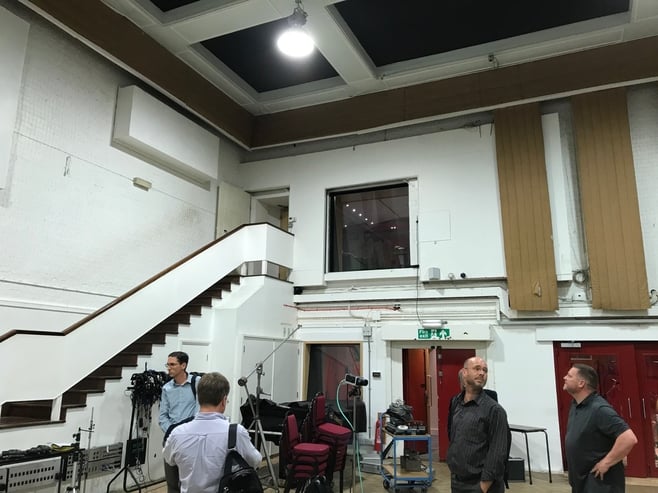
Reverberation. Why are its effects so pleasing to our ears and how is reverberation designed and controlled?

Ministers Call On More Countries To Put Forward Stepped-Up Climate Crisis Education Plan

Madrid, December 2019–Two pioneering countries this week committed to stepped-up climate and environmental education in order to equip a new generation with the knowledge, awareness and skills needed to navigate the emerging challenges of the 21st C.

Italy and Mexico, speaking at a press conference at COP25 in Madrid, urged other countries to follow suit in order to make strong, environmental education a world-wide phenomenon.

They proposed Earth Day in April next year as one of a series of milestones in 2020 where like-minded nations could announce higher ambition on climate and environmental education.

The plan is to have a critical mass of countries committed to the environmental and climate education agenda by the time of the UN climate conference (COP26) taking place in Glasgow, UK in November.

Lorenzo Fioramonti, Italy’s Minister of Education, Innovation and Research, said: “Young people are demanding that governments take climate change far more seriously. There are many areas of society where we must act, and act with increased ambition: compulsory education on these topics needs to be a key part of this national and international response to the big issues of our time”.

The Italian Education Minister said that Earth Day 2020 represents one of the key moments in this important year to recognize the centrality of climate and environmental education including through  ‘Teach-Ins’ as one way of raising awareness among the young.

He said he hoped other countries would take the same opportunity mark Earth Day’s 50th anniversary and the birth of the environmental movement.

Teach-ins, in which students organize debates and propose solutions to environmental challenges, was a key feature of the first Earth Day where over 20 million young people and citizens protested in 1970, triggering in the process new laws and action by the then US administration.

Martha Delgado, Vice Minister of Global Affairs in Mexico’s Ministry of Foreign Affairs, said her country had now incorporated mandatory environmental education into Mexico’s constitution as the first step in a new comprehensive plan.

“Mexico is now committed to mandatory environmental education at home, but we are also committed to promoting environmental education internationally. The challenges we are facing are national but also global. Young people everywhere need the knowledge to fully respond to what is unfolding on in our world,” he said.

“Great transformations can only be achieved through knowledge, awareness and the sense of collaboration. We are convinced that environmental education is the route to meeting Sustainable Development Goals, an essential tool to fight the climate crisis and can prompt a profound cultural change to contribute to our planet’s sustainability,” said Vice-Minister Delgado.

Kathleen Rogers, President of the Earth Day Network, said environmental literacy had been at the core of Earth Day since its inception in 1970 but that governments had not gone far enough.

“Young people, through movements such as Fridays for Future, have been asking governments to tell the truth about the climate and environmental emergencies that we are now facing—‘telling the truth’ needs to happen in the schools and universities, and needs to happen now,” she said.

Rogers said that while globally climate and environmental education exist across the spectrum, from decades of formal implementation to continued exclusion of the topic as a whole, it is time to make these critical subjects compulsory and to link them to civic education so that students will develop both the knowledge and the civic skills they need to fully engage in the solutions to climate change.

 “These are the core elements of transforming our societies so that a new, far better informed and active generation can emerge to ensure governments truly respond to the challenges of our time,” she said.

Patricia Espinosa, Executive Secretary of the UN Framework Convention on Climate Change (UNFCCC), welcomed the announcements of Italy and Mexico as a key contribution to realizing the aims of the Paris Climate Change Agreement.

Under the Agreement governments are looking to enhance their Nationally Determined Contribution (NDCs) in 2020 as contribution to climate action but also the Sustainable Development Goals.

From Madrid and COP25, focus will also be on the Congregation for Catholic Institutes of the Holy See which has chosen Earth Day 2020 as a preparatory meeting for the Global Compact on Education that Pope Francis will launch on May 14th.  It aims to promote a global commitment that also teaches new generations respect for humankind and nature.

Earth Day Italia is working together with the Italian Ministry for the Environment and the Festival for Sustainable Education to support this initiative. For the Silo, Denice Zeck.

Artificial Intelligence Or AI Is Set To Take Over Many Industries

Is there any question that Artificial Intelligence, or “AI”, is going to play a huge role in the future? The short answer is no- it’s already playing a large part today, so let’s delve into this new tech and look at how it is benefiting the energy sector and what we can expect to see from this AI phenomenon in the not so distant future.

AI In Energy Sector

8 Great Christmas Presents For Caregivers To Give To Themselves:

Peter Rosenberger, author of Hope for the Caregiver, offers these 8 great tips for caregivers to give to themselves for this holiday season and time of visiting family and friends.

1) Commit to seeing a doctor. More than 70% of caregivers don’t see a doctor

2) Commit to doing something that brings joy to your heart. It doesn’t have to be exotic: a good movie, watch a standup comedian, read a good book, paint, play the piano …something that speaks beauty and joy to you in the middle of your stuff.

3) Make a list of people you resent and forgive them and then burn the list. Lose the grudges but keep boundaries.

4) Make one small change in your diet. For instance, substitute water for a sugary drink. Grab a piece of fruit instead of a candy bar. Substitute a salad for a burger … olive oil for butter.

5) Send a Christmas card to yourself. Pick out a card your loved one would send if he/she were healthy emotionally and physically. And put a $10 bill in it.

6) Do something physical. Walk to the back of the house and back. Alan Alda walks around to John Phillips Sousa to help with his Parkinson’s. He’s not a doctor but he played one on TV …and it’s pretty good advice. He lifts up his knees. Something that simple can really benefit caregivers. Weight gain is common in caregivers. Peter quips, “I got so big my picture fell off the door and it took 2 dogs to bark at me!”

7) Isolation is crippling. Go to church or other places of worship. Slip in and listen to the music of the season.

8) Call a trusted friend and tell them you’re struggling. Take a leap of faith that they will listen. Don’t ask for solutions …just an ear and a tender heart.

A 30+ year caregiver for his wife, Gracie, who lives with severe disabilities, Peter Rosenberger understands the caregiver’s journey in ways few do. Broadcasting on Sirius XM’s Family Talk Channel (131) and an additional 180 stations through American Family Radio, Peter hosts the nation’s #1 show for family caregivers. From Autism to Alzheimer’s to Addiction, Peter addresses the needs of those caring for loved ones with chronic impairments.

EA Still Making Winning Hockey Games After Nearly 30 Years

As game franchises go, EA Sports produce some of the best and certainly some of the most durable. A video game often doesn’t stand the test of time too well given the advancement in technology, but sport is a constant in the lives of fans the world over and EA have taken full advantage. They have several famous titles with the Madden series for the NFL and the FIFA series for soccer, but their NHL franchise has been a hit ever since it was first released.

Why has it been such a success? Let’s take a look…

Hitting the early consoles

The first game in the series was released in 1991 on the Sega Mega Drive and received excellent reviews. It was, for many, the first time ice hockey had been placed firmly in their consciousness and people lapped it up.

Between 1992 and 1995 there were four more NHL titles from the team at Electronic Arts, all of which could be played on console. They were all given high praise from industry critics with NHL 96 getting top marks for the SNES (Super Nintendo Entertainment System) version by Next Generation magazine who gave five out of five stars.

Enter windows

The first titles to appear on PC arrived in 1996 as Microsoft brought out Windows 95. The PC allowed the graphics to be further enhanced and these titles were a huge success. At this period in time, the Detroit Red Wings were the dominant force in the NHL winning back-to-back Stanley Cups in 1997 and 1998.

Just to highlight how times have changed, the Red Wings have NHL betting odds of +150000 to win a Stanley Cup in 2020, the longest odds of any team. The team in the late 1990s was full of stars, which contrasts with the current day and EA was able to render them with realistic graphical modelling – for the time – which delighted the fans.

The PC was competing with Sony’s PS1 and then, in 2000, the PS2, which meant graphics and gameplay became more and more life-like. The crowds also had an overhaul as did the sound effects which made fans feel as though they were in the arena but the next generation consoles took it further still.

Next-gen blows the mind

EA improved the features and control systems when Xbox was released and deke moves were conducted using the joystick on the controllers making them like an extension of the actual players stick.

The latest version have found it harder to get top reviews as fan expectation level continue to increase. NHL 15 was the first game to feature on the PS4 and Xbox One and these were not well received due to the rushed feel and missing features. GameSpot actually gave NHL 15 a score of five out of 10, which was hugely disappointing for EA.

The most recent version has seen much improvement thanks to the time which has been spent in development, generally tweaking the good features and remodeling those that didn’t work.

NHL 20 is like a different world compared to the very first release from the franchise and EA are still going strong after close to 30 years – here’s to 30 more.

4 Tips For Eating With Your New Dentures

Have you had complete or partial dentures put in recently? If so, you’re probably still getting used to them.

Dentures can rejuvenate a person’s smile and give them a huge boost in confidence, especially if they’re between the ages of 40 and 60. However, it can take days or weeks for people to get used to their new dentures. This is particularly true when it comes to eating food.

If you recently got a pair of dentures from Koster Denture Clinic or any other denturist clinic, you should use the tips and tricks mentioned below.  

1 – Start with Soft Foods

Although you may be tempted to bite into something crunchy, like an apple or piece of candy, you need to take things slowly. If you try to chew too aggressively too soon, you can potentially damage the dentures and your gums (which is the last thing that you want).

To keep your dentures and gums in good condition, you should stick to liquid-based foods for a couple of days. Some examples include:

  • Soup or stew (without red meat)
  • Oatmeal
  • Apple sauce
  • Ice cream

By eating these foods, you’ll be able to keep your energy levels up without harming your mouth.

2 – Chew as Evenly as Possible

Most people have the habit of chewing with one side of their mouth. Regardless of if it’s the left or right side, this is a bad idea if you’ve recently had dentures put in.

When you chew with one side of your mouth, you are over-working that particular part of your dentures. This can cause them to shift or fall out of place.

Instead of chewing with one side of your mouth, you should make the effort to take smaller bites and chew with both sides of your mouth.

3 – Avoid Sticky Foods

Many people like to snack on sticky treats like taffy and caramel. Although these treats are delicious, they can do some serious damage to your new dentures.

Sticky foods tend to get trapped in the crevasses of your dentures. If the food particles aren’t removed promptly, you can end up getting a serious infection.

If you can’t stay away from your favorite sticky snacks, then you need to thoroughly clean your dentures afterwards. This will ensure that your gums and mouth stay healthy.

4 – Be Cautious Around Hot Beverages

People all around the world like to start the day with a piping-hot cup of coffee. Not only does this drink warm you up, but it can also give you a much-needed boost of energy in the morning.

However, if you’ve recently had new dentures put in, you need to be careful around hot beverages, like coffee and tea. Modern dentures have powerful insulating properties, which makes it difficult for people to sense the heat level of a beverage (until the damage has been done).

Before taking a big gulp, you should test the hot beverage beforehand by taking a small sip. This will ensure that you won’t burn your mouth or throat.

GlobalData : Travelers From Japan To France Set To Reach 1.3 Million By 2023

The number of international travelers from Japan to France is set to grow from 1.1 million in 2019 to 1.3 million in 2023, increasing at a compound annual growth rate (CAGR) of 4.6%, says GlobalData, a leading data and analytics company.  

GlobalData’s latest report: ‘Tourism Source Market Insight: Japan’ reveals that the Japanese are specifically drawn to Paris due to their perception that it is a romantic city. 

Ralph Hollister, Travel and Tourism Analyst at GlobalData, comments: “This substantial growth forecast illustrates that the Japanese source market is willing to sacrifice affordability and sometimes accessibility due to the cultural draw of a destination. The city is a popular tourist destination due to Japan’s fascination with all things French; cities such as Tokyo are filled with French patisseries and luxury French fashion outlets such as Chanel and Louis Vuitton.” 

Image result for japanese tourist in france
PR7476

According to GlobalData, France overtook Guam in 2018 to become the fifth largest outbound market for Japanese travelers. Guam is a destination which is much closer to Japan (average flight time of 3 hours 45 minutes, compared to 12 hours 50 minutes to France), thus making it more accessible and affordable also. However, Japanese travelers are willing to sacrifice these vital aspects of a holiday in order to experience  the French tourism product, due to the nation being heavily romanticized by the Japanese media. 

Hollister continues, “Air France and New Caledonia-based Aircalin have renewed their codeshare agreement for five years in October 2019. The airlines offer a daily service between Paris and Noumea, with additional frequencies during peak periods and optimized connections at Tokyo Narita and Osaka Kansai airports. This renewal will no doubt contribute to this accelerated growth rate.” 

It is clear to see that the majority of Japanese travelers are flocking to Paris, contributing to the growing issue of over-tourism in the capital. Atout France – the national tourism development agency, should focus on promoting less touristic cities to the Japanese source market such as Bordeaux. This city is popular for its gastronomy and many chateaux’s (castles), which are the type of famed stereotypes that attract Japanese travelers.  

About GlobalData

4,000 of the world’s largest companies, including over 70% of FTSE 100 and 60% of Fortune 100 companies, make more timely and better business decisions thanks to GlobalData’s unique data, expert analysis and innovative solutions, all in one platform. GlobalData’s mission is to help our clients decode the future to be more successful and innovative across a range of industries, including the healthcare, consumer, retail, financial, technology and professional services sectors.

Search For North America’s (And The World’s) Longest Married Couple

OMAHA, NEBRASKA – Award-winning singer-songwriter, Karen Sokolof Javitch, today announced that she is looking for America’s longest married couple in her worldwide launch of her personalized “Anniversary Song”.

“Everyone knows the ‘Happy Birthday’ song, yet we all stumble when we try to sing a song for someone’s anniversary,” explains Ms. Javitch. “The song will be sung by Karen to the oldest married couple. We hope to eventually find the oldest married couple in the world! And to reward their faithfulness, we’ll donate $1000 to the charity of their choice.”

Anyone wishing to register their marriage date may do so by visiting Karen’s website, jmrproductions.com, listen to the anniversary song and send in their names, date of marriage and e-mail address to [email protected]

Besides Karen’s 15 albums, she has co-written 4 musicals and was the creator and co-host of a popular radio show, “It’s the Beat.” Her musicals include “Princess Diana the Musical,” “From Generation to Generation,” and “Love at the Café.” These shows have been performed in many cities in the United States. In addition, Ms. Javitch has raised over $350,000 for national and local charities through her original music.

“My anniversary song is short and very easy to learn. Now when you go to someone’s anniversary party – you’ll know what to sing,” Ms. Javitch concluded.

Lyrics to sing to the next happy couple you see who is celebrating an anniversary:

Happy Anniversary, Happy Anniversary (wife’s name) and (husband’s name) we’re so happy to be at your (add # of years) Anniversary.

Karen’s music website JMR Productions

NOTE: A free MP3 of the song is available upon request to: [email protected]

Watch the Happy Anniversary Music Video.

ABOUT KAREN SOKOLOF JAVITCH…

Karen Sokolof Javitch has produced and written the songs for 15 CD’s, including 4 musicals and was the creator and co-host of a popular Omaha radio show, “It’s the Beat”. Feeling very thankful she can express herself through her music, she tries to help others by raising money with her songs and musicals and has raised more than $350,000 for national and local charities though her original music.  Her musicals, including one about Princess Diana, have been performed all over the country.  She is an award-winning songwriter and her music has been on television and in some movies.

Karen’s music includes a variety of songs about exercising and good health, celebrities, holidays, weddings, politics, children, babies, education, patriotism, love and family.  She especially loves to put on shows where kids and teenagers sing her songs! Some of her performances may be viewed on YouTube, as she has more than 90 music videos on the site and some have gone viral such as her hilarious song about the Octomom that has garnered about 10 million views. Karen’s songs are for anyone between the ages of 1 and 121! Visit Karen’s music website JMR Productions to see more of her musical and charitable work. For the Silo, Gerald McGlothlin.

Visit http://jmrproductions.com

Featured image- American’s longest married couple (85 years) John and Ann Betar.