
Tag Archives: Ipsos Survey

Rising Hunger Continues To Put Pressure On Canada

Increasing Pressure on Canadian Community Organizations as Good Food Goes to Waste

State of Food Charity in Canada survey, conducted by Ipsos for Second Harvest, finds growing demand for food support and mounting pressure on community organizations
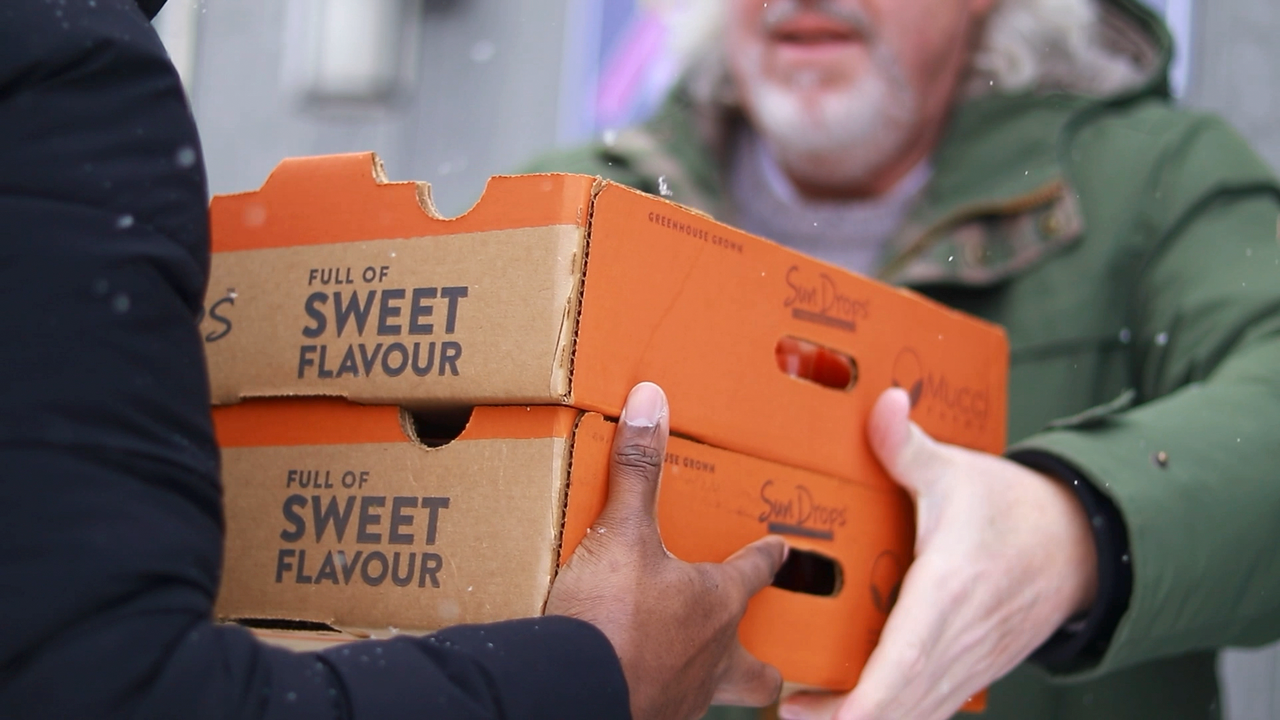
TORONTO, ON – October, 2026 – More people across Canada are turning to community organizations for help putting food on the table, while the organizations supporting them are struggling to keep up.  

Turning People In Need Away

New findings from The State of Food Charity in Canada survey show that 89% of organizations surveyed saw an increase in demand for food over the past year. One in three (33%) has a waitlist for support, while 35% have had to turn people away due to limited food or resources.  

Among organizations with a waitlist, the average was 878 people waiting for support. Of those that had turned people away, 41% estimated they had turned away more than 50 people, with an average of 269 people turned away.  

“Every week, organizations like ours are seeing more families reach out for food support, including working families who never imagined they would need help,” says Vivian N. Etuka, founder and executive director of Bethel Outreach Community Services. “When programs are full or there’s a waitlist, hunger doesn’t wait. It means parents going without so their children can eat, seniors struggling to stretch what little they have and families choosing between groceries and rent, utilities or other essential bills.”    

Where Second Harvest Fits In
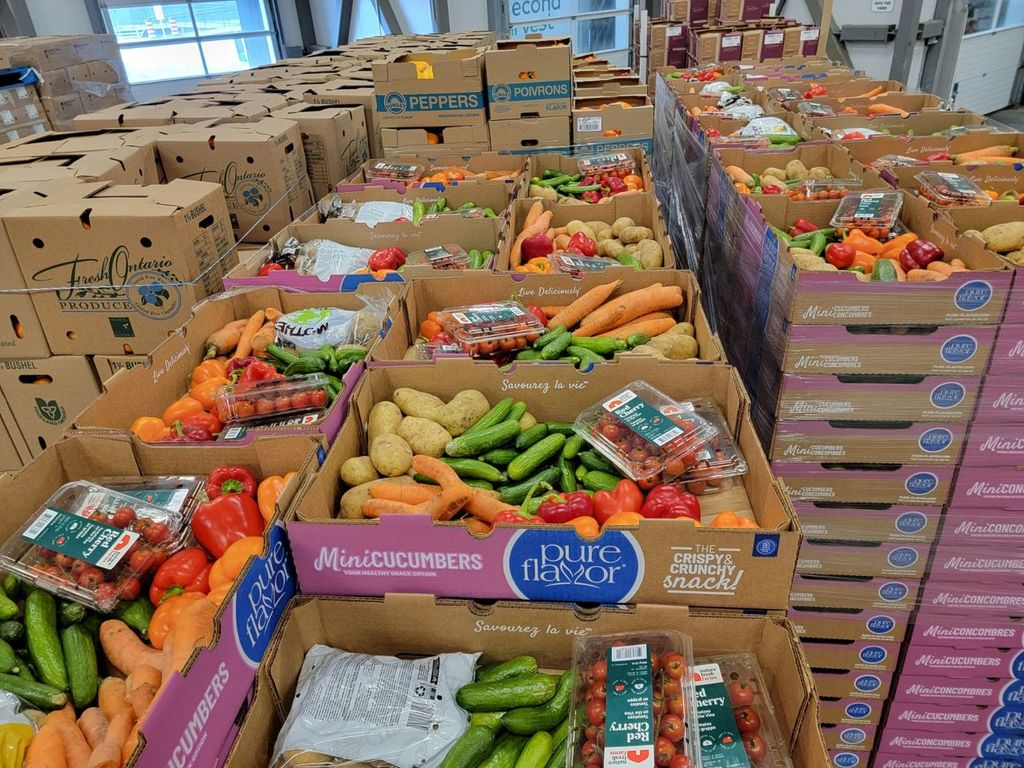
At the same time, the findings point to an opportunity to make better use of food that is already available.  On average, 36% of the food available at responding organizations comes from Second Harvest. Among respondents, 91% said Second Harvest enables them to access more food, while 85% said it helps them save money.  

“Canada has enough food to come out of this situation, but too much good food is still going to waste while organizations supporting people are struggling to keep up with demand,” says Lori Nikkel, CEO of Second Harvest. “Connecting surplus food with communities is one practical way we can help strengthen the organizations that are already doing this essential work.”  

The findings come five years after Second Harvest’s “Canada’s Invisible Food Network” research highlighted the thousands of community organizations across the country that provide food and other support to people experiencing food insecurity.  

The new survey also shows that this network extends well beyond traditional food bank systems. Nearly half (49%) of organizations surveyed said they do not access food or other supports through the federal, provincial or regional food bank networks. Respondents included food banks and pantries, shelters, community development organizations, faith-based organizations, public institutions, and food recovery and redistribution organizations, among others.  

An App For Businesses With Surplus Food

Through the Second Harvest Food Rescue App, food businesses can post surplus food that is available for donation, while local non-profit organizations can claim the food and arrange a pickup. The app helps connect surplus food with organizations serving people in their communities.   

Food businesses can join it and connect their surplus food with local non-profit organizations.  

About the Survey  

The State of Food Charity in Canada survey was conducted by Ipsos for Second Harvest from May 29 to July 13, 2026. Ipsos distributed the questionnaire to 2,468 organizations in Second Harvest’s partner network. A total of 1,610 organizations completed the survey, representing a 65% response rate. The findings reflect the organizations that responded to the survey.  

About Second Harvest  

Second Harvest is Canada’s largest food rescue organization and a global thought leader on food waste and perishable food redistribution. It rescues unsold surplus food from thousands of food businesses from across the supply chain to redistribute it to non-profits in every province and territory. This prevents harmful greenhouse gases from entering the atmosphere while improving access to nutrition for millions of Canadians experiencing food insecurity. Beyond food rescue and redistribution, Second Harvest is deeply involved in advocacy, research, training and education. Its groundbreaking reports, such as “The Avoidable Crisis of Food Waste,” provide critical data and insights to inform public policy and educate the public on sustainable food systems.  
  
Second Harvest is committed to driving systemic change, helping to shape policies and practices that reduce food waste and address its role in climate change, while also supporting communities by providing them with the food they need.   

To learn more, visit www.secondharvest.ca 
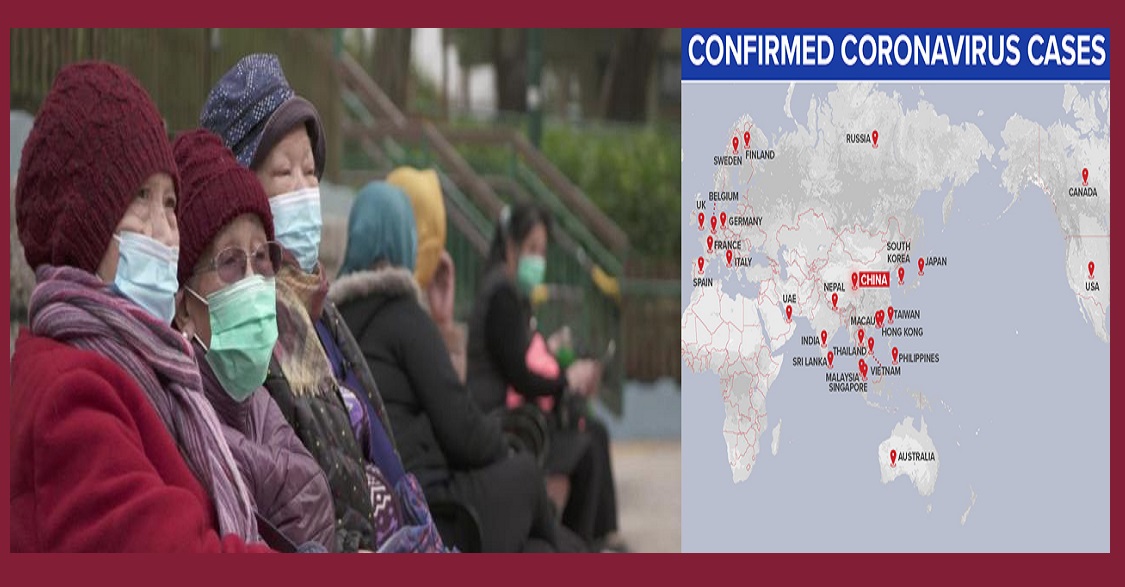
Most Say Coronavirus An On-going Threat As Countries Call For Travel Bans And Quarantines

February, 2020; Paris, France – A majority of people across eight large countries say the coronavirus poses a high or very high threat to the world and an additional one in three say the virus is a moderate threat to the world.

More than one in two people in Japan (66%), Australia (61%) and the United States (55%) are concerned about the threat of the outbreak on the world. Canada (42%) and Russia (42%), the United Kingdom (43%), and Germany (47%) have slightly lower levels of high or very high threat. 

These are some of the findings of an Ipsos survey conducted online from February 7 to 9, 2020 among 8,001 adults aged 16 (18) -74 in Australia, Canada, France, Germany, Japan, Russia, the United Kingdom, and the United States.

Less Than One In Five Feel Coronavirus Outbreak Contained

On average, only one in five people (19%) agree the coronavirus outbreak has been contained and will soon be over, while more than twice as many disagree (46%). People in the U.K. (55%), Canada (51%), Australia (50%), and Japan (49%) were most likely to disagree the outbreak has been contained. One in three Russian respondents believe the coronavirus outbreak has been contained (33%).

Added to that, more than four in five (86%) people across these eight countries say they have seen, heard, or read a great deal or fair amount about the outbreak.

Together, this data shows that most people are closely tracking the coronavirus outbreak and are also worried the health epidemic will continue to worsen before it gets better.

In response, there is widespread support for significant actions to control the virus. On average, four in five (85%) people support mandatory screening of those traveling from infected countries, and there is a similar level of strong support for mandatory quarantine of those who could have the infection. Two-thirds (66%) of people agree the government should ban travel to and from impacted countries, and that airlines in their country should be restricted from flying to China.

Topline data follows:

Q. How much, if at all, have you seen, read or heard about the coronavirus outbreak?                  

USCanadaFranceUnited KingdomAustraliaGermanyJapanRussia
Base: All respondents10001000100010001000100110001000
A great deal42%40%67%39%42%27%39%29%
A fair amount43%45%28%54%47%49%53%48%
Not very much12%13%4%7%9%22%5%21%
Nothing at all2%1%0%1%1%1%1%1%
Don’t know1%1%1%0%1%1%2%1%
Summary
T2B: Great deal/fair amount85%86%95%92%88%76%92%77%
B2B: Nothing/Not much14%14%4%7%10%23%6%22%

Q. (The world) What level of threat do you think the coronavirus poses to each of the following?

USCanadaFranceUnited KingdomAustraliaGermanyJapanRussia
Base: All respondents10001000100010001000100110001000
Very high threat23%13%16%12%28%13%26%11%
High threat31%29%33%31%33%34%40%30%
Moderate threat32%38%34%42%27%35%27%36%
Low threat9%15%10%11%7%13%4%14%
Very low threat3%3%4%3%2%3%2%6%
Don’t know2%2%3%2%2%2%1%2%
Summary
T2B: High threat55%42%49%43%61%47%66%42%
B3B: Low threat43%55%48%56%37%51%33%57%

Q. (The coronavirus outbreak has been contained and will soon be over.) Do you agree or disagree with the following (is that strongly or somewhat?):

USCanadaFranceUnited KingdomAustraliaGermanyJapanRussia
Base: All respondents10001000100010001000100110001000
Strongly agree6%3%2%4%5%5%2%7%
Somewhat agree15%13%14%12%15%16%13%26%
Neither agree nor disagree26%26%30%22%26%33%32%28%
Somewhat disagree27%32%29%36%29%28%31%18%
Strongly disagree19%19%13%20%21%14%18%14%
Don’t know7%8%12%7%5%5%5%7%
Summary
T2B: Agree21%15%16%16%19%20%15%33%
B2B: Disagree46%51%42%55%50%42%49%33%

Q. (Total strongly & somewhat agree) To what extent, if at all, would you support or oppose each of the following measures?

USCanadaFranceUnited KingdomAustraliaGermanyJapanRussia
Base: All respondents10001000100010001000100110001000
Anyone travelling to and from infected countries should undergo mandatory screening83%86%87%86%88%78%78%91%
Government should impose mandatory quarantine for those who could have the infection79%83%84%84%87%74%80%84%
Airlines from my country should stop flying to China68%67%68%70%75%59%67%61%
The government should ban any travel to and from affected countries70%66%68%66%73%50%71%64%
Public transit systems in my country, including buses, subways, and trains, should be taking precautions to prevent the further spread of coronavirus73%60%56%61%70%48%76%72%
The government should send doctors, materials, supplies abroad to help countries affected by the virus61%55%52%49%52%62%56%56%
Airlines from my country should stop flying to other infected countries besides China62%54%59%57%59%44%46%54%

About the Study

These are the results of an Ipsos survey conducted February 7-9, 2020 on the Global Advisor online platform among 8,001 adults aged 18-74 in Canada and the United States and 16-74 in Australia, France, Germany, Japan, Russia and the United Kingdom.

The sample consists of approximately 1000+ individuals in each country. The samples in Australia, Canada, France, Germany, Japan, the U.K. and the U.S. can be taken as representative of these countries’ general adult population under the age of 75. The sample in Russia is more urban, more educated and/or more affluent than the general population and should be viewed as reflecting the views of the more “connected” segment of the population. The data is weighted so that each market’s sample composition best reflects the demographic profile of the adult population according to the most recent census data.

Where results do not sum to 100 or the ‘difference’ appears to be +/-1 more/less than the actual, this may be due to rounding, multiple responses or the exclusion of don’t knows or not stated responses.

The precision of Ipsos online polls are calculated using a credibility interval with a poll of 1,000 accurate to +/- 3.5 percentage points and of 500 accurate to +/- 4.8 percentage points. For more information on the Ipsos use of credibility intervals, please visit the Ipsos website. For the Silo, by Dianne Bankay.

This study did not have any external sponsors or partners. It was initiated and run by Ipsos with the intention to share our understanding about the world we live in and how citizens around the globe think and feel about their world.

About Ipsos

Ipsos is the world’s third largest market research company, present in 90 markets and employing more than 18,000 people.

Our passionately curious research professionals, analysts and scientists have built unique multi-specialist capabilities that provide true understanding and powerful insights into the actions, opinions and motivations of citizens, consumers, patients, customers or employees. We serve more than 5000 clients across the world with 75 business solutions.

Founded in France in 1975, Ipsos is listed on the Euronext Paris since July 1st, 1999. The company is part of the SBF 120 and the Mid-60 index and is eligible for the Deferred Settlement Service (SRD).

ISIN code FR0000073298, Reuters ISOS.PA, Bloomberg IPS:FP www.ipsos.com