Category Archives: Politics

ISIS Goal Splits Family And Divides Muslims

History is made in moments, often of crisis and uncertainty, and the wisdom with which we meet them. This is one of those moments.

ISIS goal is to split the human family. To divide the world’s 1.5 billion Muslims from everyone else. Those in our societies who sow fear, suspicion and hatred of Muslims  are the best allies the extremists who attacked Paris and Beirut could ask for.

Muslims are almost one quarter of humanity, and 99% are as horrified by the ISIS attacks as everyone else. They have been the greatest victims of ISIS, and have the greatest power to help defeat it. So let’s answer hate with humanity, and seize this chance for transformative change. For all of us – Muslims and Non-Muslims everywhere – to fiercely welcome each other into our one human family like never before.

We Are All One

Sign the global “Undivided” message, add your own, and share the page with everyone – If enough us join now, we can start a global wave of solidarity, and make the pain of these attacks the birth pangs of a more beautiful world. When we get to 500,000 signatures Avaaz will run ads in Muslim community papers and online, as well as key right wing papers that spread fear and division: 

https://secure.avaaz.org/en/loving_transformation_loc/?bsOTIab&v=69561&cl=8992696952

The real front line of this war is not just in the dusty towns of Syria and Iraq, but in the media and social media forums where the stories we tell ourselves compete. There is a fraternity of ignorance and hatred and it stretches across borders, in which extremists on all sides work together to drag the rest of us down into their backward world of spiraling brutality.

Our governments will need to increase their vigilance in preventing attacks, and support military efforts to defeat ISIS. But our job as people, and our leaders’ jobs as moral leaders, is to ensure that love, the transformational antidote to ISIS’ hate, blooms between Muslims and everyone else everywhere. THAT would be ISIS’ worst nightmare – it might even give some of the angry young men they recruit cause to hesitate – a chance to see an alternative as inspiring to them as the backward brand of faith that ISIS markets.

At the darkest times, our light as humanity can shine brightest. Human rights were not recognized until after the second world war. The world got it wrong after 9/11, when leaders play into Al Qaeda’s hands by stoking Islamaphobia. This time, let’s be wiser, come together as Muslims and non-Muslims more closely than ever before, and brightly shine the light of the world we’re building:

https://secure.avaaz.org/en/loving_transformation_loc/?bsOTIab&v=69561&cl=8992696952

From a place of love, we might begin to listen to our brothers and sisters among Muslims that have lent ISIS some support. First and foremost those Sunnis from Syria and Iraq, who have been treated unjustly by Iraq’s government, and incredibly brutally oppressed by Syria’s dictator Al Assad. We might begin to understand that when we failed to offer their families protection and relief from the horrors they faced, ISIS offered that protection, and some accepted it. We might focus on learning from this, and offering them a better deal.

With that lesson, we might see the stories of the peoples around the world that ISIS fighters come from. From Chechnya, where generations of Muslim families were horrifically murdered while the world looked away. Or from Egypt, or Algeria, or dozens of other countries, where sickeningly brutal state security police have tortured and murdered countless Muslims who dared to stand up to their venal corruption – something that is a religious responsibility for Muslims.

And maybe then we will understand that while ISIS is a monster that we must defeat, the monster is more than just the group itself. It’s the desperation of millions of people suffering under horrific conditions, and looking for a way out. And the rest of us in the human family, Muslims and non-Muslims, have either looked away, failed to effectively address, or often, backed and supported these horrors.

So let’s seize this moment with wisdom, to bring down the monster we face, the one we all have lines of responsibility for. Let’s see the human family united like never before to defeat ISIS – not just on the battlefield, but in our own societies, in the media and social media, and most of all in the thousands of Muslim communities that live today around the world in fear.  Let’s encourage Muslim and Non-Muslim communities everywhere to embrace each other, welcome refugees with compassion, escalate our pressure on Egypt and other brutal governments to stop brutalizing opponents and creating the ISIS’ of the future, redouble our efforts to achieve a peace deal in Syria, protect at-risk communities like the Rohingya, stop constant terrifying drone attacks on communities, and ensure that the military actions we support are scrupulously careful to avoid traumatizing the civilians who are suffering enough already under ISIS’ boot. If we do these things, we’ll do far more than defeat ISIS, we’ll defeat the misery that has given rise to them, and in a way that takes the human family one wiser step further on our journey together.

With love and gratitude for this amazing community,

Ricken, Luis, Ben, Alice, Rewan, Elana, Mohammed, Steve, Emma and the whole Avaaz team.

Do’s And Don’ts Of Political Conversations

We live in one of the most politically heated times in history. Expressing your point of view is a personal decision and can be tricky.  Although conversations may start out benign, they can quickly become a toxic dialogue.

Sharon Schweitzer, an international etiquette expert, author, and the founder of Access to Culture, says there are several “do’s and dont’s” to make sure polite political discourse doesn’t turn into hostile debates.

DO   

Show respect for differing opinions

It can be challenging to listen to those with different opinions. It’s important to show respect and take time to listen, giving the other person the opportunity to share their viewpoints. The Platinum rule encourages treating others as they wish to be treated. Stay calm, collected and respectful.

Agree to disagree

If their opinions are different from your views, you can agree to disagree. Try saying something along the lines of, “I respect your perspective, but I think we may need to agree to disagree” or “That’s a different way of thinking about the issue, but I’m comfortable if you and I can agree to disagree.”

Ask questions

If someone asks you a question about your political beliefs, you can reciprocate by asking them about their own beliefs. Let the other person do the talking while you listen. Try to ask open-ended questions such as, “What are your thoughts on the current political atmosphere?” or “How do you feel about the media’s portrayal of …?”

Change the subject

  • If someone continues to ask your opinion, change the topic by saying: “It’s impossible to keep track of the different versions of the news. How is your family doing by the way?” “With the divisive political atmosphere, I’m not comfortable sharing my personal opinions, but thank you for your interest.” “I can’t answer that question, but what I can discuss is… ”

DON’T

Get angry, cross or upset

It can be difficult to keep your temper, but don’t get angry or upset if you don’t agree with someone’s viewpoints. Expressing sarcasm, bitterness or passive aggressiveness won’t change any minds. It will only damage your reputation.

Talk over them

The worst thing you could do is interrupt conversation and start talking about your own opinion. Be respectful of other opinions and views. Listen attentively, especially when you don’t agree with that viewpoint. It gets easier the more you practice.

Overshare

Politics is a difficult conversation, particularly with family members and close friends. If you are speaking to someone you’ve just met, refrain from oversharing. In this case, less is more. Avoid saying something you will later regret.

Make assumptions

We make mental notes when we first meet someone new. We make a first impression based on hair, shoes, watch, clothing, mannerisms, etc. However, political views are hidden unless they are shared verbally or by wearing a revealing detail.  It’s important to approach people with an open mind to avoid awkward and potentially toxic conversations.

For the Silo, Scott Jones.

Featured image- http://ashleylewis-oldmeetsnew.blogspot.ca/

Ontario Takes Historic Action To Raise Minimum Wage To $15 Hour By 2019

Fair Workplaces, Better Jobs- $15 Minimum Wage and Equal Pay for Part-Time and Full-Time Workers Part of Plan to Help People Get Ahead in a Changing Economy

May 30, 2017 10:20 A.M.

Ontario is taking historic action to create more opportunity and security for workers with a plan for Fair Workplaces and Better Jobs. This includes hiking the minimum wage, ensuring part-time workers are paid the same hourly wage as full-time workers, introducing paid sick days for every worker and stepping up enforcement of employment laws.

Over the past three years, Ontario’s economy has outperformed all G7 countries in terms of real GDP growth. While exports and business investments are increasing and the unemployment rate is at a 16-year low, the nature of work has changed. Many workers are struggling to support their families on part-time, contract or minimum-wage work. Government has a responsibility to address precarious employment and ensure Ontario workers are protected by updating the province’s labour and employment laws.

To help safeguard employees and create fairer and better workplaces, Premier Kathleen Wynne announced today that the government is moving forward with a landmark package of measures, including:

-Raising Ontario’s general minimum wage to $14 per hour on January 1, 2018, and then to $15 on January 1, 2019, followed by annual increases at the rate of inflation.
-Mandating equal pay for part-time, temporary, casual and seasonal employees doing the same job as full-time employees; and equal pay for temporary help agency employees doing the same job as permanent employees at the agencies’ client companies.
-Expanding personal emergency leave to include an across-the-board minimum of at least two paid days per year for all workers.
-Bringing Ontario’s vacation time into line with the national average by ensuring at least three weeks’ vacation after five years with a company.
-Making employee scheduling fairer, including requiring employees to be paid for three hours of work if their shift is cancelled within 48 hours of its scheduled start time.

The government will also propose measures to expand family leaves and make certain that employees are not mis-classified as independent contractors, ensuring they get the benefits they deserve. To enforce these changes, the province will hire up to 175 more employment standards officers and launch a program to educate both employees and small and medium-sized businesses about their rights and obligations under the Employment Standards Act.
QUOTES

” The economy has changed. Work has changed. It’s time our laws and protections for workers changed too. Too many families are struggling to get by on part-time or contract work and unstable employment. And no one working full time in Ontario should live in poverty. With these changes, every worker in Ontario will be treated fairly, paid a living wage and have the opportunities they deserve.”
– Kathleen Wynne
Premier of Ontario

” These changes will ensure every hard-working Ontarian has the chance to reach their full potential and share in Ontario’s prosperity. Fairness and decency must be the defining values of our workplaces.”
– Kevin Flynn
Minister of Labour
QUICK FACTS

Today’s announcement responds to the final report of the Changing Workplaces Review, conducted by Special Advisors C. Michael Mitchell and John C. Murray, over the course of two years. It is the first-ever independent review of the Employment Standards Act, 2000 and Labour Relations Act, 1995.
The report estimates that more than 30 per cent of Ontario workers were in precarious work in 2014. This type of employment makes it hard to earn a decent income and interferes with opportunities to enjoy decent working conditions and/or puts workers at risk.

In 2016, the median hourly wage was $13.00 for part-time workers and $24.73 for full-time workers. Over the past 30 years, part-time work has grown to represent nearly 20 per cent of total employment.
Currently, half of the workers in Ontario earning less than $15 per hour are between the ages of 25 and 64, and the majority are women.
More than a quarter of Ontario workers would receive a pay hike through the proposed increase to the minimum wage.
Studies show that a higher minimum wage results in less employee turnover, which increases business productivity.
Ontario is proposing a broad consultation process to gain feedback from a wide variety of stakeholders on the draft legislation it intends to introduce. To facilitate this consultation, it is proposing to send the legislation to committee after First Reading.
LEARN MORE

The Changing Workplaces Review — Final Report

Disponible en Français

Équité en milieu de travail, meilleurs emplois

Salaire minimum de 15 $ l’heure et parité salariale pour travail à temps partiel et à temps plein afin d’aider les gens à réussir au sein de l’économie en évolution

30 mai 2017 10h20

L’Ontario adopte des mesures historiques afin de créer plus de possibilités et de sécurité pour les travailleuses et travailleurs grâce à un plan pour l’équité en milieu de travail et de meilleurs emplois. Il s’agit notamment de hausser le salaire minimum, de veiller à ce que les travailleurs à temps partiel touchent le même taux horaire que les travailleurs à temps plein, de prévoir des congés de maladie payés pour tous les travailleurs et de renforcer la mise en application des lois régissant le travail.

Au cours des trois dernières années, le rendement de l’économie de l’Ontario a surpassé celui de tous les pays du G7 sur le plan de la croissance réelle du PIB. Certes, les exportations et les investissements des entreprises sont à la hausse et le taux de chômage est à son plus bas en 16 ans, mais nous constatons aussi que la nature du travail a changé. De nombreux travailleurs éprouvent de la difficulté à subvenir aux besoins de leur famille avec un emploi à temps partiel, contractuel ou au salaire minimum. Le gouvernement a la responsabilité d’agir face à la précarité de l’emploi et de veiller à ce que les travailleurs de l’Ontario soient protégés en actualisant les lois provinciales qui régissent le travail et l’emploi.

Pour contribuer à protéger les employés et créer des milieux de travail plus équitables et plus conviviaux, la première ministre Kathleen Wynne a annoncé aujourd’hui que le gouvernement va de l’avant avec un train de mesures inédites, dont les suivantes :

hausser le salaire minimum général en Ontario à 14 $ l’heure le 1er janvier 2018, puis à 15 $ le 1er janvier 2019, ce qui sera suivi par des hausses annuelles correspondant au taux d’inflation;
rendre obligatoire la parité salariale des employés à temps partiel, temporaires, occasionnels et saisonniers qui font le même travail que les employés à temps plein, et une paie égale pour les employés des agences de placement temporaire qui font le même travail que le personnel permanent de leurs entreprises clientes;
élargir le droit à des congés d’urgence personnelle pour inclure un minimum général d’au moins deux jours rémunérés par an pour tous les travailleurs;
faire correspondre la durée des vacances annuelles en Ontario à la durée moyenne nationale en accordant au moins trois semaines de vacances après 5 ans d’emploi avec le même employeur;
rendre plus équitable la planification des horaires de travail, ce qui comprend exiger que les employés soient payés pendant trois heures si leur quart de travail est annulé dans les 48 heures précédant l’heure de début planifiée.

Le gouvernement proposera aussi des mesures pour rendre plus équitable la planification des horaires du personnel, augmenter les congés familiaux et prévenir la classification erronée d’employés en tant qu’entrepreneurs indépendants, de manière à ce qu’ils obtiennent les avantages sociaux qu’ils méritent. Pour appliquer ces changements, la province embauchera jusqu’à 175 agentes et agents des normes d’emplois et lancera un programme de sensibilisation des employés et des petites et moyennes entreprises concernant leurs droits et obligations aux termes de la Loi de 2000 sur les normes d’emploi.

CITATIONS

« L’économie et le marché du travail d’emploi ont évolué. Il est temps d’adapter aussi nos lois et les mécanismes de protection de notre main-d’oeuvre. Trop de familles ont du mal à joindre les deux bouts avec du travail à temps partiel, contractuel ou instable. Aucun travailleur à temps plein en Ontario ne devrait vivre dans la pauvreté. Grâce à ces changements, les travailleuses et travailleurs de l’Ontario seront traités avec équité, toucheront un revenu décent et auront les possibilités qu’ils méritent.»
– Kathleen Wynne
première ministre de l’Ontario

« Ces changements feront en sorte que les Ontariennes et Ontariens qui ont du coeur à l’ouvrage puissent avoir la chance de réaliser tout leur potentiel et de partager la prospérité de l’Ontario. L’équité et la cordialité doivent être des valeurs définitoires de nos lieux de travail.»
– Kevin Flynn
ministre du Travail

FAITS EN BREF

L’annonce d’aujourd’hui va dans le sens du rapport final de l’Examen portant sur l’évolution des milieux de travail que les conseillers spéciaux C. Michael Mitchell et John C. Murray ont mené pendant une période de deux ans. Il s’agit du tout premier examen indépendant de la Loi de 2000 sur les normes d’emploi et de la Loi de 1995 sur les relations de travail.
Le rapport évalue que plus de 30 % des travailleurs ontariens avaient un emploi précaire en 2014. Ce genre d’emploi fait qu’il est difficile d’obtenir un revenu suffisant et compromet les chances de profiter de conditions de travail décentes, en plus de faire subir des risques aux travailleurs.
En 2016, le salaire horaire moyen était de 13 $ pour les travailleurs à temps partiel et de 24,73 $ pour les travailleurs à temps plein. Au cours des 30 dernières années, le travail à temps partiel a augmenté de sorte qu’il représente près de 20 % de tous les emplois.
À l’heure actuelle, la moitié des travailleurs en Ontario qui gagnent moins de 15 $ l’heure ont de 25 à 64 ans et la majorité de ces effectifs sont des femmes.
Plus du quart des travailleurs de l’Ontario recevraient une hausse salariale grâce à l’augmentation proposée du salaire minimum.
Des études démontrent qu’un salaire minimum plus élevé réduit le roulement du personnel, ce qui accroît la productivité des entreprises.
L’Ontario propose un vaste processus de consultation afin d’obtenir la rétroaction d’une grande variété d’intéressés concernant le projet de loi envisagé. Pour faciliter cette consultation, il est proposé de soumettre le projet de loi à un comité après la première lecture.

POUR EN SAVOIR DAVANTAGE

Examen portant sur l’évolution des milieux de travail — rapport final

Reader Letter To The Silo Regarding Motion 103 And Hamilton Protest Rally

Dear Silo, there was a protest rally held at City Hall in Hamilton this past weekend. The purpose was to discuss or protest “Motion-103 “the motion put forth by one Ms. Iqra Khalid to stop as she sees it “Islamophobia.” For many the idea of “M-103” seems almost redundant as hate speech and any sort of hate crime based on religion is already under the “Criminal Code, The Charter of Human Rights & The Constitution.” Some have opined that Ms. Khalid is grandstanding & perhaps they may be correct.

The protest was as it went peaceful & low key. The police presence was minimal and well placed. Directly on site there were six uniforms, but a bit further back there were two mounted units, and further back out of sight behind city hall were three more mounted units.

The speaker at this event was a Muslim woman who was well spoken and exhorted the crowd with slogans, chants & political sayings, touting the Liberal regime and downplaying the Conservative aspect.It was my understanding that there would be both aspects of this motion represented at the protest, but for the near 3 hours I was present I only heard one side of the story [but] perhaps another side spoke later. I saw on the 6:00 pm news, things turned a bit ugly, and the police stepped in to quell any further incident, so who knows.

For many, it seemed a “ family event,” and I saw a few children there, [but] in my humble opinion [this] is no place for kids. In the “ Vietnam” years when the protest was clearly in many cases, a daily event, there never were any children present, mostly due to the fact protests can at any given time turn from something sedate to an angry, ugly mess, ergo no kids. I for one seriously have to ponder the parental abilities of such an action.

There was a few tables set up, all proffering their political views, the Communist Party, ( the mainstay at any protest), a painting table where you could add your hand to a large almost like paint-by-numbers setup where you could if so inclined could add your hand to it. There was a Muslim table set up and two young men who would engage you in conversation about their faith and handed out books & pamphlets, one of them at the time I stopped by, was engaged in a somewhat intense conversation with a Christian young man. Several people were working the crowd by handing out flyers, pamphlets and flash cards with their message on it. The “ Socialist group”, ever present at any event, was handing out small flyers promoting  worker solidarity,” the Marxist group was there too, handing out flyers to combat racism, the “ No Borders Manifesto,” an 18 point small booklet promoting a “ grassroots movement “ to promote the movement to the “ new world.” There were “ Stop the War Coalition,” the “ Know your Rights,” group & “ Hamilton Against Fascism,” and regarding [this]protest it seemed a well-rounded outpouring that way.

As I said, as protests go it was for the 3 hours I was there a peaceful, almost fun event. Later after things went south and everyone had done their barking and bitching sessions, they packed up their wares, printed material and children, and went home to read the tea leaves of the event and to generally pat themselves on the back for a job well done.

Protests are an integral part of the Canadian fabric and should be allowed at all times. The message I received from this one was that the potential for “ free speech,“ could be quashed possibly if this motion is put into a bill and becomes law. Do we have concern?? Perhaps as many feel we do, and it becomes the responsibility of all of us, to be open-minded, observant of what our government says and does. It falls to us to yes question what they tell us so that democracy as we live it will be ongoing and ever present so that we may all move forward with a proper sense of things for all who live and come to this great country we know it.


James R. Charlton

The Dakota Access Pipeline, Environmental Injustice And More?

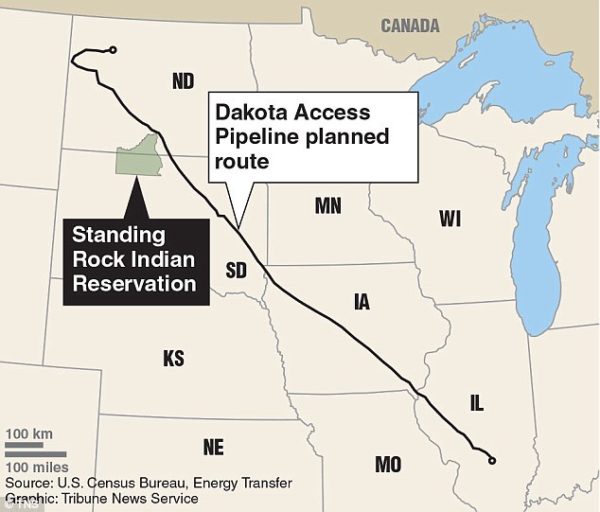
“Standing Side by Side in Peaceful Prayer”   Starting in April 2016, thousands of people, led by Standing Rock Sioux Tribal members, gathered at camps near the crossing of the Missouri and Cannon Ball Rivers to stop the construction of the Dakota Access Pipeline (DAPL) there- creating the #noDAPL movement. DAPL is a 1,172-mile pipeline for transporting crude oil from North Dakota to refineries and terminals in Illinois.

As a business venture, DAPL’s advocates claim the pipeline will meet the highest environmental safety standards. They also claim the venture will produce greater U.S. energy independence and jobs at the same time it lessens the environmental risks of oil trains, though it is opaque how the new pipeline could increase oil production, oil consumption, employment, and state tax revenues.

Part of what makes things contentious: The Planned route- depending on who you speak to, either crosses, nears, touches, goes through, or avoids Standing Rock Reservation.

The #NoDAPL movement sees the pipeline as posing risks to the water quality and cultural heritage of the Dakota and Lakota peoples of the Standing Rock Sioux Tribe. Part of DAPL’s construction is occurring on lands and through waters the….click here for full article.
Article by Kyle Whyte, academia.edu.

Supplemental- News about Dakota Access Pipeline

Ontario Ministry Of Transportation Assure “Historic Amount Of Infrastructure Being Built”

Patrick Brown spoke to the Ontario Road Builders Association where he made a number of false statements about the province. Facts Still Matter in Ontario, especially when it comes to the historic amount of transportation infrastructure being built right now across the province.


He said: I believe we’ve seen lip service to infrastructure over the last 10 years but we’re not seeing shovels in the ground”


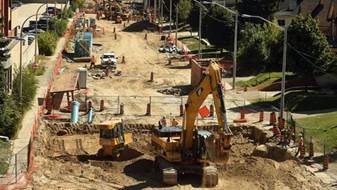
Fact: Here are some pictures of shovels in the ground

Eglinton LRT

eglington-lrt

Spadina Subway Extension

spadina-subway-extension

Waterloo LRT

waterloo-lrt


Highway 404 Extension

 highway404extension

(Source: http://m.thecrosstown.ca/Text-Summary-Eglinton-Crosstown-Update?device=mobile)

(Source: http://urbantoronto.ca/news/2012/07/work-progressing-stations-spadina-subway-extension)

(Source: http://www.therecord.com/news-story/6119872-video-drone-s-eye-view-of-lrt-construction-through-kitchener-and-waterloo/)

(Source: http://www.bluestarconstruction.ca/operations-services/projects/404-2/)


He said: “You go to Gujarat, you think you’re on Canadian roads. They’ve really invested in Infrastructure. No wonder they’ve seen their economy grow. No wonder Gujarat was leading India in job growth.”


Fact: The next time he wants to make this point he’s welcome to use Ontario as an example. It’s no coincidence that our government is making the largest infrastructure investment in Ontario’s history and leading the G7 in economic growth.

(Source: https://www.ontario.ca/page/building-ontario, http://www.fin.gov.on.ca/en/economy/ecaccts/)


He said: We want to make sure that historic infrastructure 130 billion is actually spent on infrastructure not spent simply on, on promises, on press releases”


Fact: Cost of the new GO station in Richmond Hill: $22 million, cost of the press release announcing it was open: $0, cost of catching Patrick Brown making up facts: priceless

(Source: https://news.ontario.ca/mto/en/2016/11/ontario-making-daily-commute-easier-for-york-region-families.html)


He said: We have become the capital of red tape in North America”


Fact: The CFIB nominated has nominated the Ontario government for its golden scissors award for cutting red tape 3 years in a row. This year the government received two nominations.

(Source: http://www.cfib-fcei.ca/english/article/4786-cfib-announces-golden-scissors-award-finalists.html)


He said:Projects need to start within mandate… It’s an insincere commitment promising something for 2019 or 2031”


Fact: Meaningful projects take longer than 4 years to build. If Patrick Brown won’t build anything that takes longer than 4 years that means he wouldn’t build any new subways or LRT’s.

(Source: http://vivanext.com/blog/2009/12/01/the-spadina-subway-extension-moves-forward/)


He said: “The biggest announcement was for Hydro One, government said we’d get money for infrastructure. Of the first $4 billion sold, 0 went into infrastructure, money has been diverted to general revenue”


Fact: All of this money went into the Trillium Trust to be spent on projects like like GO Regional Express Rail, Mississauga and Hamilton LRT’s and the recently announced natural gas expansion.

(Source: https://news.ontario.ca/mof/en/2015/04/the-trillium-trust-and-moving-ontario-forward.html, https://news.ontario.ca/moi/en/2017/01/expanding-natural-gas-to-more-communities-across-ontario.html)

For the Silo, Alana Kiteley.

A Reassurance To Muslims In Brant County- MPP Dave Levac

In light of the terrorist attack in Quebec, isolated acts of hate crimes in Ontario and the change of direction in American politics, I want to take this opportunity to take a stance and let my constituents know who and what I stand for. I know many have a sense of foreboding and fear, and I want to assure the Brant community that we are and always will be a place of acceptance, inclusion and peace.

First and foremost, I want to reassure Muslims in the Brant community that I stand with them and support them in this time of fear. We are your neighbours and your friends. You belong here. The city of Brantford, the region of Brant, and the province of Ontario is yours just as much as anyone’s. Ontario does not belong to one group of people, to one race or to one religion. It is a province for all; and at this time, I want to extend this message especially to Muslims who may feel scared or threatened at this time.

mpp dave levac brantI also want to convey this sentiment to any other immigrant, refugee or newcomer to Brant. I will do everything in my role as MPP to support anyone experiencing anxiety and trepidation as a result of their faith, background or ethnicity. As your MPP, I am elected to represent all people of Brant, regardless of religion or country of origin.


Ontario is the most multicultural province in Canada, where half of all new immigrants make their home.
Ontario has been and will continue to be a land of opportunity. We are a prosperous and democratic society built on the hard work of immigrants. At this time, we need to recognize the foundations of our rich heritage and culture. We need to proclaim the values of acceptance, tolerance and multiculturalism in direct defiance of the politics of hate, division, segregation and fear.

As Pierre Elliot Trudeau stated, “A society which emphasizes uniformity is one which creates intolerance and hate.” The constitution of Canada protects against intolerance and hate by guaranteeing everyone the freedom of conscience, religion, thought, belief, opinion and expression. Everyone has the right to life, liberty and security of the person and the right not to be deprived thereof except in accordance with the principles of fundamental justice. Everyone does truly mean everyone.

Whether you are a multi-generational Canadian, a new Canadian, an immigrant or a refugee, you have the right to life, liberty and security, and the freedom to practice any religion. No matter where you come from, if you are in Canada, you are protected by these rights.

I became an MPP in order to make Brant the best place to live, work, play and raise a family. I believe that this includes making Brant a place of multiculturalism, acceptance and tolerance. I believe that there is no room for hate at all. Love uplifts the soul. We must stand united in defense of this great beacon of hope in the world. Reject hate: embrace love. For the Silo, Dave Levac.

Ontario Boosts Transit Funding Across Province Doubles Municipal Share Gas Tax

Ontario is boosting support for nearly 100 cities and towns across the province, providing them with reliable, long-term funding to improve and expand their local transit systems and offer more travel options for commuters and families.

Premier Kathleen Wynne and Transportation Minister Steven Del Duca were at York Region Transit’s Richmond Hill facility today to announce the new investment.

The province has heard directly from people who are frustrated by their daily commute and from municipalities [Municipalities are often also incorrectly called “County”- though they are legally incorporated as a super-city Ed.]  that are struggling to meet their transit needs. In response to these concerns, starting in 2019, Ontario will be increasing funding for local transit through an enhancement to the existing gas tax program, doubling the municipal share from two cents per litre to four cents by 2021. There will be no increase in the tax that people in Ontario pay on gasoline as a result of the enhancement to the program.

Cities and towns receiving the new funding are able to plan for and make major infrastructure upgrades, buy additional transit vehicles, add more routes, extend hours of service, implement fare strategies and improve accessibility.

Ontario recognizes that commuters need reliable transit options before revenue-generating measures such as road tolls are implemented. For example, the ongoing GO Regional Express Rail project will not be completed and in service before 2024. That is why the province is not supporting plans for municipal road tolls at this time. This new investment, along with Ontario’s $31.5-billion transit and transportation investment across the province, will support more buses in cities like Thunder Bay and Windsor, new LRT lines in Waterloo and Ottawa, and GO Regional Express Rail in the Greater Toronto and Hamilton Area, including SmartTrack in Toronto.

Supporting stronger public transit systems is part of our plan to create jobs, grow our economy and help people in their everyday lives.
QUOTES

” People in communities across Ontario can’t afford to waste time stuck in traffic — we all need better options to get to work and home to our families sooner. This substantial boost to funding for local transit in cities and towns across the province will help them make significant improvements that will have a big impact on people’s day-to-day lives.”
– Kathleen Wynne
Premier of Ontario

” We’ve heard loud and clear from municipalities that they need more sustainable funding for public transit to keep up with the demand to provide more service. By modernizing Ontario’s gas tax program we are helping municipalities improve their local transit service so people can easily get where they need to be.”
– Steven Del Duca
Minister of Transportation
QUICK FACTS

Funding will increase to 2.5 cents per litre in 2019–20, 3 cents in 2020–21 and 4 cents in 2021–22.
This year the province committed $334.5 million in gas tax funding to 99 municipalities [Municipalities are sometimes incorrectly called “County”- though they are legally incorporated as a super-city Ed.] . This amount is expected to increase to about $401.3 million in 2019–20, $481.5 million in 2020–21 and $642 million in 2021–22.
Ontario made its gas tax program permanent in 2013 to provide a stable source of funding for municipalities.
One bus takes up to 40 vehicles off the road and keeps 25 tonnes of greenhouse gas emissions out of the atmosphere each year.
Research shows that every $100 million of public infrastructure investment in Ontario boosts GDP by $114 million, particularly in the construction and manufacturing sectors.
LEARN MORE

Gas Tax Funding for Municipalities
Ontario.ca/BuildON

Available Online

Disponible en Français

L’Ontario accroît le financement des transports en commun des villes de l’ensemble de la province
Plus d’options pour les déplacements et amélioration du transport en commun local pour les navetteurs et les familles

27 janvier 2017 09h35

L’Ontario accroît son soutien à près de 100 villes de la province en leur fournissant un financement à long terme stable qui favorise l’amélioration et l’expansion des transports en commun locaux et offre un plus grand nombre d’options aux navetteurs et aux familles.

La première ministre, Kathleen Wynne, et le ministre des Transports, Steven Del Duca, se sont rendus aujourd’hui à la gare de transports en commun de la région de York à Richmond Hill pour faire l’annonce de ce nouvel investissement.

La province a directement recueilli les propos de navetteurs frustrés et de représentants de municipalités qui éprouvent des difficultés à répondre à la demande en services de transport en commun. Pour donner suite à ces préoccupations, l’Ontario augmentera à partir de 2019 le financement qu’il accorde aux transports en commun locaux et bonifiera son programme actuel de financement par la taxe sur l’essence en doublant la part municipale pour la porter de deux cents le litre à quatre cents d’ici 2021. Cette bonification du programme n’entraînera pas de hausse de la taxe provinciale sur l’essence.

Les villes qui toucheront ces nouveaux fonds pourront planifier et entreprendre des rénovations d’importance à l’infrastructure, l’achat de véhicules de transports en commun supplémentaires, l’ajout de circuits, la prolongation des heures de service, la modification de leur structure tarifaire et l’offre de services plus accessibles.

L’Ontario reconnaît que les navetteurs ont besoin d’options de transports en commun fiables, avant même que des mesures génératrices de revenus soient mises en oeuvre. Par exemple, le service régional express de GO Transit est en chantier et ne sera pas opérationnel avant 2024. C’est pourquoi la province ne soutient pas de plans pour installer des péages municipaux en ce moment. Ce nouvel investissement, qui s’ajoute à l’investissement de la province de 31,5 milliards de dollars dans les transports en commun et les transports à la grandeur de son territoire, soutiendra l’achat d’un plus grand nombre d’autobus dans des villes comme Thunder Bay et Windsor, la construction de nouvelles lignes de train léger sur rail (TLR) à Waterloo et à Ottawa, de même que le service régional express de GO Transit dans la région du grand Toronto et de Hamilton, dont le SmartTrack à Toronto.

Le soutien permettant l’amélioration des réseaux de transport fait partie de notre plan visant à créer des emplois, à stimuler notre économie et à améliorer la vie quotidienne de notre population.
CITATIONS

« Les habitants des collectivités ontariennes ne peuvent se permettre de perdre du temps dans des embouteillages — nous avons tous besoin de meilleures options pour nous rendre au travail et rentrer à la maison afin d’y retrouver notre famille plus rapidement. Cette hausse substantielle du financement affecté au transport en commun local aidera les municipalités à apporter des améliorations appréciables qui auront des effets marqués pour les gens dans leur vie de tous les jours.»
– Kathleen Wynne
première ministre de l’Ontario

« Les municipalités nous ont clairement fait comprendre qu’elles ont besoin d’un financement plus durable pour le transport en commun afin de satisfaire à la demande accrue en services. C’est en modernisant le Programme de financement par la taxe sur l’essence que nous aiderons les municipalités à améliorer leurs services de transport régionaux, de telle sorte que les gens pourront se déplacer plus facilement.»
– Steven Del Duca
ministre des Transports
FAITS EN BREF

Le financement augmentera à 2,5 cents le litre en 2019-2020, à 3 cents en 2020-2021 et à 4 cents en 2021-2022.
Cette année, la province s’est engagée à verser 334,5 millions de dollars en financement par la taxe sur l’essence à 99 municipalités. Ce montant devrait augmenter jusqu’à environ 401,3 millions de dollars en 2019-2020, 481,5 millions de dollars en 2020-2021 et 642 millions de dollars en 2021-2022.
C’est en 2013 que l’Ontario a rendu permanent son Programme de financement par la taxe sur l’essence pour ainsi offrir une source de financement stable aux municipalités.
Un seul autobus permet de retirer jusqu’à 40 véhicules de la route et réduit de 25 tonnes par année les émissions de gaz à effet de serre de l’atmosphère.
Des recherches démontrent que chaque tranche de 100 millions de dollars d’investissement dans l’infrastructure publique de l’Ontario fait croître le PIB de 114 millions de dollars, tout particulièrement dans le secteur de la construction et le secteur manufacturier.
POUR EN SAVOIR DAVANTAGE

Financement par la taxe sur l’essence pour les municipalités
Ontario.ca/ONrenforce

Disponible en ligne

Available in English

Significant Gasoline Price Hikes At Ontario Pumps

January 1st kicked off 2017 with significant gasoline price hikes at the pumps courtesy the Ontario Liberal government’s cap and trade legislation. I obviously voted against that bill.

Ontario’s cap and trade, Canada’s price on carbon

Another reality is that Canada is putting a price on carbon, the nature of which is still being negotiated with the provinces. With national carbon pricing being the new reality, Opposition Leader Patrick Brown has written an open letter to Justin Trudeau indicating that Kathleen Wynne’s cap and trade law “does not have Ontario’s best interests at heart,” and requesting that Ontario cap-and-trade be removed from the Trudeau carbon pricing system. I’m not holding my breath on that one.

The problem with the provincial cap and trade tax and the federal price on carbon is that going electric is neither technologically nor economically feasible for most, thanks to the Ontario Liberal’s Green Energy Act. I also voted against that bill.  The cap and trade tax system serves as a stick to try and modify behavior without offering a viable alternative and without a carrot to reward changes made, other than using the revenue for more subsidies for things like electric cars and Toronto transit.

As Ontario’s Official Opposition we have committed to dismantle the cap and trade system ever bearing in mind the federal government is mandating all provinces put a price on carbon.

On January 1, the province capped greenhouse emissions and will sell allowances to companies who have to exceed the cap. The province will lower the cap over time. Companies exceeding their cap can also buy additional allowances, or if they come in below their annual limit, can sell their emission allowances to other companies within a market comprised of Ontario, Quebec and California.

It is estimated Ontario businesses will be paying $300 million a year to California.

We maintain the government is so desperate to hike taxes, they have rejected a revenue-neutral plan – cap-and-trade money will disappear into general revenues.

Cap and trade has clearly not been designed to return money to those paying – it is a blatant $2 billion-a-year tax grab under the guise of environmentalism. It will seriously impact everyone’s pocket book. Oil refineries for example will pass their recovery costs of cap and trade to their customers at the pumps. It subtracts money from people, not only for gasoline, diesel, propane, natural gas, heating oil and aviation fuel but also for groceries, clothing and other consumer goods produced and delivered by carbon-fueled plant, equipment and transportation.

Ontario drivers are being treated like clowns.

Ontario’s Auditor General reports the cap and trade tax will cost families an extra $156 this year for gasoline and natural gas, rising to $210 by 2019. Added transportation costs for goods and services will be another $75 per household by 2019.

We are committed to dismantling the cap and trade scheme and the Green Energy Act. This is the best way to ensure people’s hard-earned money stays exactly where it should stay…in their pockets.

In conclusion, I ask you the reader – where do we go from here? There probably won’t be an election until June 2018 and this is the time to consult on policy.

Click me!
Click me!

Provincially, the Ontario PC Party has committed to dismantle the Wynne cap and trade law, as well as the Green Energy Act. However, carbon pricing is now the reality in Canada and Ontario will be bound by the Trudeau price on carbon.  For the Silo, Haldimand-Norfolk MPP Toby Barrett.

Economic Aspects Of Globalization In The Past Material World

Questions and deliberations concerning globalization are more than a hot topic of extended cross-disciplinary focus in academia; they are also central to the long-simmering debates regarding policies and their implications that today often enter the public arena. For example, a quick perusal of broadly accessible media outlets from late 2013 and early 2014 reflects a suite of still unresolved but vibrant civic pondering: “When did globalization start” (The Economist 2013), “The dark side of globalization: why Seattle’s 1999 protesters were right” (Smith 2014), and  “Have we reached the end of globalization?: (CNN 2014).

Yet can such issues really be evaluated judiciously without defining the critical elements of globalization, and then dissecting and assessing its historical scope? Given the broad temporal and spatial elements implied by the concept of “globalization”, it is not most likely that the outcomes and effects of this multifaceted process would be highly variable across time and space?

But through a diachromic and comparative examination of human connections over time, might we see some commonalities and learn relevant lessons?

Continue reading this essay by Gary Feinman by clicking here.

*Banner image of Ronald McDonald -McDonalds China courtesy of image.minyanville.com

Read Here- Putin “Bilateralism” Christmas Letter To Trump

Statement from President-Elect Donald J. Trump 
(Palm Beach, FL) – President-elect Donald J. Trump released the following statement in response to the attached letter from Russian President Vladimir Putin.

“A very nice letter from Vladimir Putin; his thoughts are so correct. I hope both sides are able to live up to these thoughts, and we do not have to travel an alternate path.”

christmas letter to trump from putin2016bannerClick on the hyperlink above to read the full letter.


Regular Updates- President-Elect Donald J. Trump Announces Senior White House Leadership Team

(New York, NY)- President-elect Donald J. Trump today announced that Trump for President CEO Stephen K. Bannon will serve as Chief Strategist and Senior Counselor to the President, and Republican National Committee Chairman Reince Priebus will serve as White House Chief of Staff.   Bannon and Priebus will continue the effective leadership team they formed during the campaign, working as equal partners to transform the federal government, making it much more efficient, effective and productive. Bannon and Priebus will also work together with Vice President-elect Mike Pence to help lead the transition process in the run-up to Inauguration Day.

“I am thrilled to have my very successful team continue with me in leading our country,” said President-elect Trump. “Steve and Reince are highly qualified leaders who worked well together on our campaign and led us to a historic victory. Now I will have them both with me in the White House as we work to make America great again.”

Photo: Reuters News. Did you know? Reuters computer predicted large Republican win for presidency? Click image for more info.

“I want to thank President-elect Trump for the opportunity to work with Reince in driving the agenda of the Trump Administration,” noted Bannon. “We had a very successful partnership on the campaign, one that led to victory. We will have that same partnership in working to help President-elect Trump achieve his agenda.”

“It is truly an honor to join President-elect Trump in the White House as his Chief of Staff,” added Priebus. “I am very grateful to the President-elect for this opportunity to serve him and this nation as we work to create an economy that works for everyone, secure our borders, repeal and replace Obamacare and destroy radical Islamic terrorism. He will be a great President for all Americans.” For the Silo, Trump For America, Inc.

Ontario Passes Landmark Climate Change Legislation

Today, Ontario passed landmark climate change legislation that lays a foundation for the province to join the biggest carbon market in North America and ensures that the province is accountable for responsibly and transparently investing proceeds from the cap and trade program into actions that reduce greenhouse gas pollution, create jobs and help people and businesses shift to a low-carbon economy.

Under the Climate Change Mitigation and Low-Carbon Economy Act, money raised from Ontario’s cap and trade program will be deposited into a new Greenhouse Gas Reduction Account. The account will invest every dollar in green projects and initiatives that reduce emissions.

Following extensive consultation with industry and other groups, the legislation was strengthened by now requiring enhanced accountability and public reporting on the province’s upcoming Climate Change Action Plan and investment of cap and trade proceeds.

From J. Magnuson's Book on the approaching post-carbon economy. Link below.
           From J. Magnuson’s Book on the approaching post-carbon economy. Link below.

Ontario will post its final cap and trade regulation upon royal assent of the legislation. The regulation covers detailed rules and obligations for businesses participating in the program. The final design was also informed by extensive consultation https://www.ontario.ca/page/cap-and-trade-consultations-summary with businesses, industry, the public, environmental organizations and Indigenous communities.

Climate change is not a distant threat – it is already costing the people of Ontario. It has damaged our environment, caused extreme weather like floods and droughts, and hurt our ability to grow food in some regions. Over the near term, climate change will increase the cost of food and insurance rates, harm wildlife and nature, and eventually make the world inhospitable for our children and grandchildren.

Minister of Climate Change Glen Murray
         Minister of Climate Change Glen Murray

Fighting climate change while supporting growth, efficiency and productivity is part of the government’s economic plan to build Ontario up and deliver on its number-one priority to grow the economy and create jobs. The four-part plan includes investing in talent and skills, including helping more people get and create the jobs of the future by expanding access to high-quality college and university education. The plan is making the largest investment in public infrastructure in Ontario’s history and investing in a low-carbon economy driven by innovative, high-growth, export-oriented businesses. The plan is also helping working Ontarians achieve a more secure retirement.

QUOTES

“Passing the Climate Change Mitigation and Low-Carbon Economy Act marks the start of the next chapter in Ontario’s transformation to an innovative and prosperous low-carbon economy — one that will benefit households, businesses, industry and communities across the province. This legislation is about enshrining in law our resolve and action to protect and strengthen our environment for generations to come.”

— Glen Murray, Minister of the Environment and Climate Change

QUICK FACTS

§ Ontario’s Climate Change Action Plan is the next step in Ontario’s ongoing fight against climate change and is expected to be released in spring 2016. The plan will describe actions that will help more Ontario households and businesses to adopt low- and no-carbon energy in homes, vehicles and workplaces.

§ Ontario’s $325-million Green Investment Fund http://www.ontario.ca/greeninvestment , a down payment on the province’s cap and trade program, is already strengthening the economy, creating good jobs and driving innovation while fighting climate change — a strong signal of what Ontarians can expect from proceeds of the province’s cap and trade program. These investments will help secure a healthy, clean and prosperous low-carbon future and transform the way we live, move and work while ensuring strong, sustainable communities.

§ The Greenhouse Gas Reduction Account will receive proceeds from auctioning allowances under Ontario’s cap and trade program. The first auction will be held in March 2017.

§ Ontario intends to link its cap and trade program with Quebec and California.

LEARN MORE

Ontario’s Climate Change Strategy https://www.ontario.ca/page/climate-change-strategy

Learn How Cap and Trade Works https://www.ontario.ca/page/cap-and-trade

Green Investment Fund https://www.ontario.ca/page/green-investment-fund

Supplemental- Joel Magnuson’s Book- The Approaching Great Transformation: Toward a Livable Post-Carbon Economy

Ontario Greens Push To Ban Political Donations For Counties And Province

Time to get big money out of Ontario politics
(Queen’s Park): “Political fundraising in Ontario doesn’t pass the stink test,” says GPO leader Mike Schreiner.
Schreiner is challenging the Liberal government to ban corporate and union donations to political parties in Ontario. The GPO is also pushing the government to amend the Municipal Elections Act to allow municipalities to ban such donations. The City of Toronto has done this, but other municipalities do not have provincial authority to do it.
“People are sick and tired of reading stories about big ticket events that give deep-pocketed insiders special access to Ministers and the Premier,” says Schreiner. “Serious questions about special deals are being raised. Corporate and union donations have no place in politics.”
The federal government banned corporate and union donations to political parties in 2003 and extended the ban to include donations to candidates in 2006. The new Alberta government made banning corporate and union donations their first legislative act in 2015. The GPO believes it is time for Ontario to clean up its act.
Meat Grinder Metaphor“Citizens vote, not corporations,” says Schreiner. “Government policy should be focused on what’s good for the public. Even the perception that big money might have influence in securing special deals or driving policy decisions is bad for democracy. What about the 100 companies being given a free ride under the new cap-and-trade plan? Are any of them donors to the Liberal party?”
The Green Party of Ontario supports campaign finance reforms that ban corporate and union donations, limit third party advertising and provide some public financing for eligible parties.
“It’s past time to get big money out of Ontario politics,” says Schreiner.
The GPO is on a mission to bring honesty, integrity and good public policy to Queen’s Park. For the Silo, Becky Smit

Greens: Ontario Has Forgotten Many Residents In Radiation Pill Mail-Out

Arbitrary boundaries put WhitbyOshawa residents at higher risk from nuclear radiation accident

(Whitby-Oshawa): “Does the Liberal government care about the safety of my neighbours in Whitby-Oshawa?” asks GPO candidate Stacey Leadbetter.
“So many residents of our community have been left out of the government’s mailing of potassium iodine (KI) pills. These pills protect us from thyroid cancer if there is a radiation leak – we need to make sure that everyone at risk will have them.”
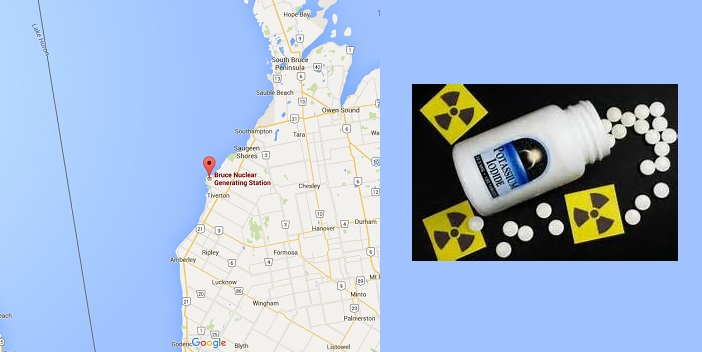
The GPO is calling on the government to extend the pre-distribution zone to residents living within 30-50 km of the Pickering, Darlington and Bruce nuclear generating stations.
Governments in Europe like Switzerland pre-distribute KI pills to residents living within a 50 km radius of a nuclear facility. New Brunswick pre-distributes KI pills in a 20 km radius. In Ontario, only those residents living within a 10 km radius of nuclear stations receive them. 
On November 4 2015, the Regional Council of Durham passed a motion asking the province to consider the feasibility of extending the 10 km primary zone for nuclear emergency planning.
“Will Kathleen Wynne step up, listen to science and protect the residents of Whitby-Oshawa at risk from a nuclear radiation leak?” asks Mike Schreiner, GPO leader.
“People’s safety is too important to make this stuff up on the fly,” adds Schreiner. “We desperately need an evidence based, public review of nuclear emergency plans. This is especially important when determining the radius of the primary zone and the pre-distribution of KI pills.”   For the Silo, Becky Smit.

Six Nuclear Unit Refurbs means Ontario Commits to Future in Nuclear Energy

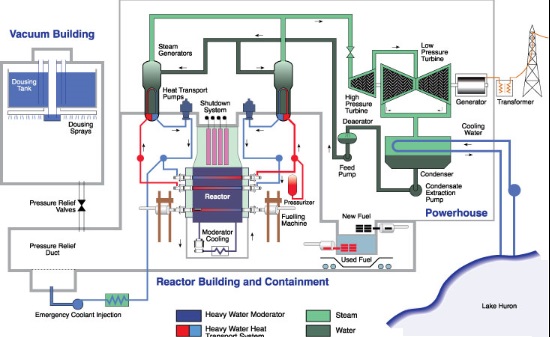
Ontario has updated its contract with Bruce Power and will proceed with the refurbishment of six nuclear units at the Tiverton-based nuclear generation station.

Nuclear refurbishment will boost economic activity across Ontario, create jobs, ensure savings for ratepayers and secure a clean supply of reliable electricity. The Bruce Power refurbishment project will make up to 23,000 jobs possible and generate about $6.3 billion in annual economic benefits in communities throughout the province. Ontario is home to a globally recognized CANDU nuclear supply chain with more than 180 companies employing thousands of highly skilled workers.

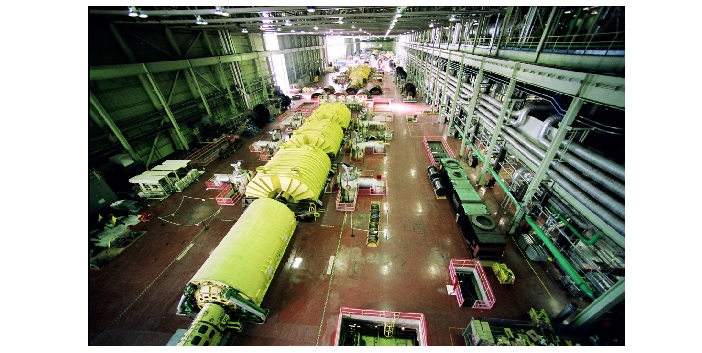
Note: At Bruce Power-station, each reactor has its own turbine set.
              Note: At Bruce Power-station, each reactor has its own turbine set.

The government was further able to optimize the nuclear refurbishment schedule in order to maximize the value of existing nuclear units. The revised timeline will mean construction commences in 2020, rather than the previously estimated start date of 2016.

Accordingly, the updated agreement has achieved $1.7 billion in savings for electricity customers when compared to the forecast in the 2013 Long-Term Energy Plan (2013 LTEP).  This means a reduction in forecast household electricity bills by about $66 each year over the next decade. The contract also protects the interests of electricity consumers by ensuring Bruce Power assumes full risk for any potential cost overruns or delays.

Key aspects of the updated agreement include:

  • Securing 6,300 MW of emissions-free, baseload generating capacity while deferring major project work to 2020, to maximize value of the units
  • Bruce Power would invest approximately $13 billion of its own funds and agrees to take full risk of cost overruns on refurbishments of the six nuclear units
  • Initial price for Bruce Power’s generation set at $65.73/MWh starting January 1, 2016. The average price over the life of the contract is estimated to be $77/MWh, or 7.7 cents per kilowatt hour (kWh).
  • Both prices are within the range assumed in the 2013 LTEP for refurbished nuclear energy and are lower than the average price of electricity generation in Ontario, which in 2015 was $83/MWh
  • Definitive contract off-ramps that allow the government to assess Bruce Power’s cost estimates for each reactor prior to its refurbishment and stop the refurbishment if the estimated cost exceeds a pre-defined amount

The province is achieving balance by contracting affordable, stable and reliable generation for residents and businesses while securing investments that will be a key source of local job creation and economic growth.

Securing clean, reliable baseload power for decades to come is part of the government’s plan to build Ontario up. The four-part plan is includes investing in people’s talents and skills, making the largest investment in public infrastructure in Ontario’s history, creating a dynamic, innovative environment where business thrives and building a secure retirement savings plan.

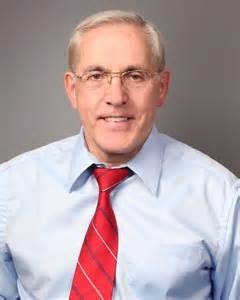
 Ontario Minister Of EnergyBob ChiarelliQUOTES

“This agreement makes 23,000 jobs possible and supports an estimated $6.3 billion in annual, local economic development. Our updated agreement with Bruce Power secures 6,300 MW of emission-free, low-cost electricity supply. These actions will save the electricity system $1.7 billion and provide important relief for electricity consumers.”

— Bob Chiarelli, Minister of Energy

““Today is a major milestone in the history of Bruce Power as we build on our existing agreement with the province and extensive experience to enter the next phase of our site development. This provides us the opportunity to secure our long-term role as a supplier of low-cost electricity by demonstrating we can successfully deliver this program incrementally.”

— Duncan Hawthorne, President and CEO, Bruce Power

QUICK FACTS

  • Following the release of the 2013 LTEP, the amended BPRIA was negotiated over two years by the Independent Electricity System Operator (IESO).
  • The Bruce nuclear site is the world’s largest operating nuclear facility. Since it was formed in 2001, Bruce Power and its industry partners have engineered and developed first-of-a-kind technologies that helped return four dormant nuclear units to service.
  • Nuclear energy plays a fundamental role in Ontario’s electricity system. It provides over half of Ontario’s annual generation, meeting most of Ontario’s baseload requirements.

LEARN MORE


Supplemental- The CANDU Bruce Nuclear Generating Station on Lake Huron is the largest nuclear power plant in the world.

Premier of Ontario’s Mission to China generates $2.5Billion in Business agreements

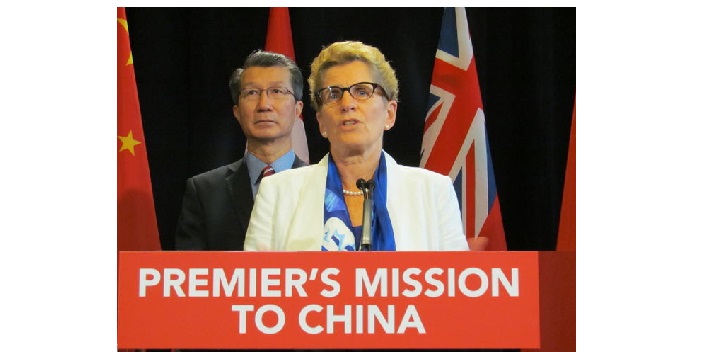
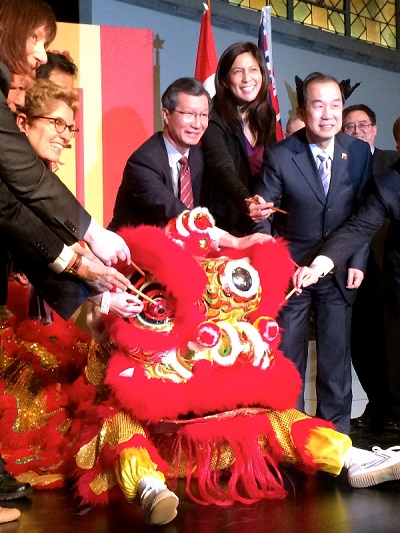
Premier Wynne Trade Mission To China Premier Kathleen Wynne concluded her second mission to China on Friday the 13th this month in Beijing, where 38 new agreements valued at $750 million were signed by delegates. This brings the estimated total value of agreements from the mission to $2.5 billion. The agreements are expected to create 1,700 jobs in Ontario.


At a signing ceremony in Beijing, Wing On New Group Canada Inc. signed three agreements totaling $230 million, including:

  • A $100-million agreement with JD.com to purchase Canadian produce and provide business services to Canadian enterprises in the Chinese e-commerce market.
  • An $80-million agreement with China Telecom Group Best Tone Information Co. Ltd. to import food and Canadian nutritional products to China. The Chinese company will also provide financial services to Wing On and jointly develop a Chinese e-commerce market with Wing On and JD.com.
  • An agreement with Cross-border City Americo Wholesale to purchase $50 million in Canadian produce over the next three years, and open 30 new stores in 2016, with an Ontario Produce Exhibition Booth in every new store.

Hydrogenics signed four certified integrator agreements to supply fuel cell technology for integration into zero-emission public transport buses. In aggregate, the company anticipates a market opportunity of up to $100 million in revenue over a 3 to 5 year period, with approximately $10 million in the first year.

image: niagarathisweek.com

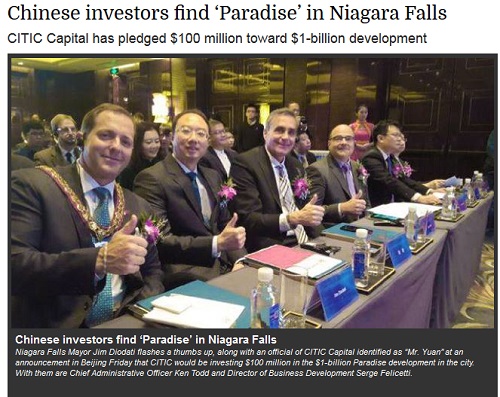
Also in Beijing, CITIC Capital announced a $100 million investment towards Paradise, a new attraction and residential development in Niagara Falls. The development is led by China-based GR Investments Co. Ltd., which has purchased 484 acres of property located west of Marineland and adjacent to Thundering Waters Golf Club.


The Premier also announced that the Ontario Ministry of Agriculture, Food and Rural Affairs (OMAFRA) has hired a new agri-food trade advisor in Shanghai to assist Ontario food exporters. The advisor will increase food export sales by providing international market information and identifying suitable business opportunities and strategic alliances for Ontario food and beverage suppliers. OMAFRA already has trade advisors in India, the United Kingdom and the United States.


During the mission, the City of Wuxi, in Jiangsu Province, and the Region of Durham signed a Friendship Agreement, creating a sister city relationship to promote economic co-operation, trade and collaboration in education and tourism. Also in Wuxi, Trent University entered into a Partnership High School Memorandum of Understanding (MOU) with Wuxi No. 1 High School and Wuxi Foreign Language School.


Investments also formalized include Shenzhen Bauzer Investment Group Co. Ltd., which acquired an 80% share of EDI, a Toronto-based leader in the field of robotics automation. With this acquisition, Shenzhen Bauzer intends to create an additional 200 jobs in Ontario.


Attracting new investments and helping the province’s businesses compete globally is part of the government’s plan to build Ontario up by investing in people’s talents and skills, making the largest investment in public infrastructure in Ontario’s history, creating a dynamic, innovative environment where business thrives, and building a secure retirement savings plan.


QUOTES


“Trade is essential for Ontario’s economic growth and international competitiveness. This mission has strengthened Ontario’s political and economic ties with China. By signing new trade agreements valued at $2.5 billion and further developing our relationships with political leaders, Ontario has made a significant impact throughout this mission.”

— Kathleen Wynne, Premier of Ontario


“The tremendous success of the mission is further evidence of the enduring relationship between China and Ontario and the compelling business case our province offers for global investment. Our government will continue working collaboratively with the private sector and research community to build an innovative, dynamic economy that supports long-term growth and job creation.”

— Brad Duguid, Minister of Economic Development, Employment and Infrastructure


“China is an important and long-term partner for Ontario in trade development, investment attraction, and science and technology collaboration. Our diversity and our highly skilled workforce are advantages that allow Ontario to create products and services for the global marketplace. The successful signings from this mission reinforce Ontario’s position as a top trading economy and will help create more jobs and economic opportunities across our province.”

— Michael Chan, Minister of Citizenship, Immigration and International Trade


QUICK FACTS


  • On the final day of the mission, Ontario delegates signed 38 agreements, which are valued at $750 million.


  • Ontario delegates signed more than 100 agreements and MOUs during the mission, with an estimated total value of $2.5 billion.
  • Over the last two years, Premier Wynne’s 2014 and 2015 missions to China have generated agreements worth an estimated $3.8 billion — including agreements signed by delegates during and after the missions.


LEARN MORE


Discover why Ontario’s highly diversified economy is attractive to investors


Read about Ontario’s Going Global Trade Strategy

Why Ontarians Continue Having Trouble Paying For Electricity

high electricity bills

[See Comments at the end of this article for updates Ed.] “All my pension goes to pay my electricity” – constituent.     With Ontario boasting the highest energy prices in North America, quite honestly I don’t know how some people get by. When people bring their electricity bills into my office, it provides a line-by-line window on just how difficult it has become to pay the bills.

Recently I met with a couple who live in a modest 790 square foot house – they heat with one electric space heater, have been wearing heavy sweaters all winter and are doing absolutely everything they can to keep costs down. But their hydro bill for January was $641.67 — $233.89 of which was delivery charge. During the meeting I was told: “All my pension goes to pay my electricity.”

Nowadays if you can’t afford your electricity, in many cases, you don’t have the option of paying interest or getting caught up later – your service is simply shut off. To have service reconnected is often hundreds of dollars. If someone can’t afford their bills in the first place how will they ever be able to pay exorbitant fees for reconnection? Apart from closing down cheap coal generation, there are many reasons why hydro has skyrocketed.

For example, the Feed-in-Tariff (FIT) Program pays out massive subsidies for wind and solar contracts to produce power we don’t need. This continues to drive up the cost of electricity which rose by 26 per cent between 2008 and 2010 – projected to rise another 46 per cent by the end of this year. The FIT Program, with its overly-generous payments, will cost taxpayers $4.4 billion more than the previous Standard Offer Program. Wind generators operate at 28 per cent capacity and their output is out of phase with electricity demand during certain times of the day.

You can’t store electricity, so we pay the U.S. and Quebec to take the surplus power off our hands. We’ve paid them $1.8 billion over the past six years. Their industries use this cheap power to compete even harder with our manufacturers, and so the downward spiral continues.

If you’re a large user, look for the words ‘Global Adjustment’ on your hydro bill. Simply put, Global Adjustment covers the spread between market price and guaranteed price paid to generators, plus the cost of paying standby natural gas plants not to produce electricity, as well as paying for conservation programs. One North Bay manufacturer had a Global Adjustment — nonexistent on their 2009 hydro bills — of $1,700 on their electricity charge of $1,400 for that month. The Global Adjustment is expected to increase tenfold, from $700 million in 2006 to $8.1 billion in 2014. This will certainly cause more Ontario manufacturers to close up shop and move to cheaper locales.

Also, watch for the Smart Meter charges to hit home. The computer system cost $250 million, and the bill is now due.

Let’s not forget the cancellation of the Oakville power plant and cancelling, demolishing and relocating the Mississauga power plant. These cancellations were nothing more than political ‘seat savers’ for the last election and will cost taxpayers $1.1 billion.

Click Me!

In many ways the Green Energy Act  put the desires of the renewable power industry ahead of the needs of people and Ontario businesses – a perfect formula for killing jobs and crippling consumers. For the Silo, MPP Toby Barrett

DID YOU KNOW?- Norfolk Power (and in fact all Ontario Municipal power companies to the best of our knowledge-CP) has a 13 days past due policy for Service Termination Proceedings. Even small “ma and pa” businesses provide 30 day terms and even 60-90day terms before sending out Collection Letters or Warning Letters. We contacted Norfolk Power and were told that “it’s standard policy- set by Ontario’s Energy Board”. Hmmm- that sounded like a standard “sub-standard” explanation to us, so a bit of research showed that the Ontario Energy Board is a self-regulated, internally filled board that sounds impartial but is anything but- in fact we were unable to determine exactly who or how board positions are filled, never a good sign for impartiality. If you decide to call them at 416 481 1967 be ready for one of the most confusing answering services you will ever find. Messages prompt you with a never ending supply of websites and telephone numbers- finally if you are persistent enough you will be asked to “press 9” to consent for your personal information to be gathered, recorded and used by the Ontario Energy Board- not exactly consumer friendly. I suppose you could always speak with one of the Public Information Officer but then they will refer you to media relations. You won’t be transferred (we were told they aren’t allowed to) so keep a document open and handy- 416 544 5171 and then the process begins again only this time you are immediately connected with an answering machine asking for your credentials.  *sigh Fifteen minutes later from when we started our initial inquiry we realized we might as well be prospecting for dare we say it “oil”. [Update- Many Municipal aka “County” Hydro companies including Norfolk Power have sold their electricity services to Hydro One but have held onto their Water services. Ontarians will now receive a separate bill for Water and a separate bill for electricity. Perhaps more confusing, in Spring of 2015 Ontario announced that it would sell 15% of its Hydro One holdings in an IPO plan that will eventually sell off another 45% in order to raise money for debt repayment, transportation and infrastructure programs. Targeted buyers would be Canada’s largest pension plans. http://www.bloomberg.com/news/articles/2015-04-16/ontario-to-sell-15-of-hydro-one-one-of-biggest-ipos Ed. ]

If you have the brain power – take a look at this excerpt from the Energy Board’s website- listing (in broad terms) changes to Ontario’s energy act- which ultimately affects consumers in Ontario and their payment and use of energy:

1907-1959

The Natural Gas and Oil Wells Act marked the Province’s early concern for the proper management of its energy resources – a concern that evolved through the Natural Gas Act of 1918, the Natural Gas Conservation Act of 1921 and the Ontario Fuel Board Act of 1954.

1960-1998

The Ontario Energy Board Act, 1960 created the Ontario Energy Board (OEB) as a successor to the Ontario Fuel Board. The OEB was authorized to set just and reasonable rates for the sale and storage of gas and to make orders granting leave to construct pipelines for the transmission of oil or gas to expropriate land for oil or gas pipes.The Ontario Energy Act, 1964 clarified certain powers of the OEB and strengthened the sections dealing with gas storage. An amendment to this Act in  1965 set out the ground rules for the OEB in determining the rate base of gas utilities and giving the OEB power to make regulations prescribing a uniform system of accounts for gas companies.On June 7, 1973, the Premier announced the establishment of the Ministry of Energy which would include the OEB. Further amendments were made to the Ontario Energy Board Act which included provisions for the appointment of additional board members and making the OEB responsible for annual reviews of rate and rate-related matters of Ontario Hydro.In the late 1960s and early 1970s, the oil crisis developed in the Middle East, causing natural gas prices to soar. Ontario Hydro turned to nuclear generation and the public became conservation conscious. During that time, the Board decided on hundreds of natural gas applications and conducted major reviews of Ontario Hydro rates.

1998

The mandate of the Board changed significantly with the passage of the Energy Competition Act, 1998 (ECA)  The ultimate goal of the ECA was the creation of a competitive market in the electricity and natural gas industries.To achieve the goal of creating a competitive market in the electricity industry, the former Ontario Hydro monopoly was replaced by several business entities including two distinct commercial companies, Ontario Power Generation (OPG) and Hydro One Inc., and one Crown corporation, the Independent Electricity Market Operator, now known as the Independent Electricity System Operator (IESO). OPG has taken responsibility for the generation of electricity while Hydro One owns and maintains transmission and distribution wires. The IESO manages the province’s electricity system and operates the wholesale electricity market.  The OEB had varying degrees of regulatory authority over all three corporations as well as the province’s municipal electric utilities.The OEB became responsible for regulating local distribution companies and  for ensuring that the distribution companies fulfill their obligations to connect and serve their customers. The OEB also became responsible for licensing certain participants in the market.  The OEB regulated all market participants in the province’s natural gas and electricity industries and it provided advice on energy matters referred to it by the Minister of Energy and/or the Minister of Natural Resources.

2002

On May 1, 2002, Ontario’s new electricity market opened. The new market was the culmination of over five years of work by the electricity industry, government, the OEB, the IESO and many other market participants. The generation of electricity became a competitive activity, with electricity bought and sold on the new spot market at competitive prices. The IESO successfully began operating the wholesale market.Over the summer of 2002, record-high temperatures drove up the demand for electricity as well as the market price, which resulted in considerable consumer concern. In response, the government introduced the Electricity Pricing, Conservation and Supply  Act, 2002. This legislation, which received Royal Assent on December 9, 2002, capped the price of electricity at 4.3 cents per kilowatt hour for residential, small-business and other designated low-volume consumers, effective May 1, 2002 to May 1, 2006. This legislation also provided refunds, retroactive to May 1, 2002, to compensate those consumers for any costs in excess of the 4.3-cent cap.All transmission and distribution rates were frozen at existing levels until at least May 1, 2006. Utilities were required to receive written approval from the Minister of Energy before any application for rate changes could be submitted to the OEB. This legislation also deemed any interim rate order to be final. In addition, the new legislation modified the OEB’s objectives in the areas of energy efficiency and conservation with respect to both natural gas and electricity from “facilitating” to “promoting.”

2003

Proclaimed on August 1, 2003, the Ontario Energy Board Consumer Protection and Governance Act, 2003, established the new OEB as a self-financing crown corporation and gave the OEB the opportunity to do its work more efficiently and effectively. In particular, the legislation provided for a management committee to manage the activities of the OEB. The legislation further enhanced the OEB’s role in protecting and educating energy consumers.In December 2003, the government introduced the Ontario Energy Board Amendment Act (Electricity Pricing), 2003, which put in place a new interim electricity pricing structure, replacing the 4.3 cent per kilowatt hour (kWh) price cap as of April 1, 2004. Under the interim structure, residential, low-volume and other designated consumers paid 4.7 cents per kWh for the first 750 kWh consumed per month, and 5.5 cents per kWh for consumption above that level.The Act called on the OEB to develop a new electricity pricing mechanism. It also charged the OEB with the responsibility to protect and renew Ontario’s electricity grid by ensuring reasonable charges for the delivery of electricity.The legislation also required the OEB to allow local distribution companies to recoup costs (called “regulatory assets”), the recovery of which had been put on hold in 2002 by the Electricity Pricing, Conservation and Supply Act, 2002. These recoveries would be spread over a four-year period so that they would have only a modest impact on the final price to consumers.

2004

In June 2004, the Government of Ontario proposed a restructuring of the province’s electricity sector in order to encourage new electricity supply, energy conservation and stable prices at a level reflecting the true cost of electricity.The Electricity Restructuring Act, 2004, received Royal Assent on December 9, 2004. The new legislation amended the Ontario Energy Board Act, 1998, and the Electricity Act, 1998.The OEB became responsible for developing a transparent mechanism for establishing electricity commodity prices for eligible consumers who have not signed contracts with electricity retailers. The Regulated Price Plan, which took effect May 1, 2005, replaced the interim two-tier pricing of 4.7 cents per kilowatt hour (¢/kWh) and 5.5 ¢/kWh hour that had been in place since April 2004.The OEB also assumed responsibility for the Market Surveillance Panel, previously the responsibility of the IESO.A new agency, the Ontario Power Authority (OPA), was established to ensure an adequate, reliable and secure supply of electricity in Ontario for the medium and long term. The OEB was given the duty of approving the OPA’s fees and its integrated power system plan and procurement process. The OEB is also responsible for licensing the OPA.

2009

The Green Energy and Green Economy Act, 2009 received Royal Assent on May 14, 2009.  Among other things, the legislation amended the Ontario Energy Board Act, 1998 and the Electricity Act, 1998.  It established important responsibilities for the OEB and other entities in achieving the objectives of conservation, promotion of renewable generation, and technological innovation through the smart grid.The OEB’s three new objectives are:

  1. The promotion of renewable energy, including the timely connection of renewable energy projects to transmission and distribution systems;
  2. The promotion of conservation and demand management; and
  3. The facilitation of the implementation of a smart grid.

The OEB has an important role to play in ensuring the government’s objectives in the legislation are achieved. That includes ensuring that electricity distributors meet the requirements for renewable generation connection, smart grid implementation and conservation and demand management.

2010

In 2010, Ontario passed the Energy Consumer Protection Act, that would ensure Ontarians have the information they need about electricity contracts and bills, as well as the comfort of knowing they can rely on fair business practices. The new rules come into effect in January 2011.

Silo reader “Jack” sent us this scan of his hydro bill- over 500$ for two months of service for a small 2 Bedroom basement apartment. Notice that he was unable to pay his bill on time due to the fact that his bill accounted for almost 50% of his rent.

The first bill was $237 and the next month was even higher at almost 300$ for a single months worth of hydro service CP
The first bill was $237 and the next month was even higher at almost 300$ for a single month of hydro.

Canada Was Being Transformed Due To Stephen Harper’s Government

MacLean’s columnist, Paul Wells, wrote a book on Prime Minister Stephen Harper entitled “The longer I’m Prime Minister: Stephen Harper and Canada 2006 –“.  In this book, the author warns that as the years pass with Harper in office, Canada is being radically transformed.

The Longer Im In Power Book Excerpt

Truthfully, Canada is being transformed because of Stephen Harper’s government in Ottawa  – just not in the way that Paul Wells anticipated it would be.  Wells pictured our federal government being fashioned into a reflection of a Reagan-esque Washington, where an enduring small-c government will be his legacy.

If Wells is right and that was Harper’s goal, then he hasn’t accomplished it.  Canada’s Economic Action Plan was one of this country’s largest ever public spending policies and Harper’s government has run deficits each year in office, except for the last budget.

But Stephen Harper has changed Canada, and in at least one case irreparably, because of his influence on Provincial politics.

Stephen Harper

Over the course of the past 50 years, provincial leaders have postured during campaigns that Ottawa has been unfair to their province.  Trudeau’s National Energy Policy was pure gold to the Alberta PC’s led by Peter Lougheed.  Anti Liberal sentiment has endured and kept the PC’s in power for more than a generation after Trudeau left office.

Canadian voters inherently understand the need for checks and balances by electing a strong Premier who promises to guard against the power of the federal government.

The trend in Ontario is if the Prime Minister is a Liberal, then the Premier will be a PC – and vice versa.  This trend has been going on for generations.

In reaction to Stephen Harper being Prime Minister, Ontarians have sleep-walked into re-electing Liberals who have put in place policies that have devastated the Ontario economy.  Seven years have passed since the great recession and Ontario shows scant few signs of recovery.  The crown jewel of the Ontario economy, it’s manufacturing sector, has left Ontario after years of artificially high energy costs and unnecessary red tape.  Local economies once buttressed by auto manufacturing are left reeling under Kathleen Wynne’s government.

The longer that Stephen Harper remains Prime Minister, the deeper the chasm for Ontarians created under provincial Liberal mismanagement.  With public debt loads skyrocketing, it will soon be impossible for the next generation to find its footing after a decade of reckless waste.

What is going on in Ontario today under the ardently left wing government of Kathleen Wynne should be a splash of cold water in the faces of Albertans who recently voted to give a majority mandate to the NDP.

Alberta had 42 years of provincial PC power.  During that time, they saw four conservative Prime Ministers, Joe Clark, Brian Mulroney, Kim Campbell, and Stephen Harper.  (Clark and Campbell held power for only a few months and they had little impact on provincial politics.)

When Mulroney won his massive majority by piecing together a winning coalition of conservative voters in Alberta and Quebec, his government elicited a jarring reaction from Alberta voters.  Rather than change the provincial government, Albertans birthed a new federal party, the Reform Party, and booted all of the federal PC’s out of the province in the next election.

And the provincial vs. federal dynamic played a role in last night’s Alberta election results.  A former high ranking cabinet minister in the Harper government, Jim Prentice was soundly rejected by voters, ending the PC dynasty as the party moves from first to third in the provincial legislature.  Simply put, Jim Prentice was too close to Stephen Harper.  And when Alberta’s only sound opposition, former Wildrose leader Danielle Smith,  shocked her party to join Prentice in an attempt to “strengthen forces” we saw the idea backfire magnificently in last night’s results with a crushing Orange wave.  Alberta voters did not trust Prentice to provide the checks and balances that will see the province through the economic crisis brought on by low oil prices.

Does an Alberta Orange Wave mean that Stephen Harper’s support in Alberta is waning?  Will we see prominent cabinet ministers defeated on October 19th?

Anti-Harperites might think so but there really isn’t a chance the CPC will lose seats in Alberta this time around.

Alberta has an Albertan Prime Minister.  Many of the most powerful cabinet ministers are also Albertan.  When Harper retires, his successor will likely also be an Albertan.

Alberta voters have people in Ottawa that they know they can count on.

On the other hand, the two other federal options can be easily discounted.  Mulcair and Trudeau are both from Montreal and each have a checkered history with Alberta oil interests.

Rather than change the Prime Minister, Alberta voters decided that they will change the provincial government instead .

Checks and balances will be restored in the voter’s minds. For the Silo, Maddie Di Muccio.

Click me!
Click me!

ABOUT MADDIE:

A former municipal town councillor in Newmarket, Ontario, Di Muccio often appears as a political pundit in the media and her freelance columns in the Toronto Sun discuss political issues across Canada. She currently serves as President of York Region Taxpayer’s Coalition and President of the Society for Quality Education.

Ontario Increasing Minimum Wage- will also affect Liquor Servers, Students

Province Committed to Providing Fairness for Workers, Predictability for Business

Ontario is raising the general minimum wage from $11 to $11.25 per hour, effective October 1, 2015. Minimum wage rates for jobs in special categories such as liquor servers, homeworkers, and students are also increasing at the same time.

25Cents might not seem like much (after all, payphone calls require two of them) but it does add up: 25 hour part time job works out to an extra $300/ year.

The increase is the result of recent changes to the Employment Standards Act, 2000 (ESA) that tie minimum-wage increases to Ontario’s Consumer Price Index (CPI). This was recommended by the Minimum Wage Advisory Panel in its final report last year.

Increasing the minimum wage in a fair and predictable manner is part of the government’s economic plan for Ontario. The four-part plan is building Ontario up by investing in people’s talents and skills, building new public infrastructure like roads and transit, creating a dynamic, supportive environment where business thrives and building a secure savings plan so everyone can afford to retire.

Kevin Flynn Minister“Our government has taken politics out of minimum wage increases while ensuring wages for Ontario workers keep pace with inflation and businesses have time to prepare for payroll changes. This puts more money in people’s pockets, gives our businesses predictability and helps build a more prosperous economy, while ensuring a fair society for all.”

 – Kevin Flynn, Minister of Labour


QUICK FACTS


  • The government enacted legislation last fall that amended the Employment Standards Act, 2000 (ESA) to tie future annual increases to minimum wage to Ontario’s Consumer Price Index (CPI).
  • This will be the ninth minimum wage increase since 2003.
  • The primary sectors employing minimum wage earners are accommodation and food, retail trade, and agriculture.
  • Minimum wage increases are to be announced by April 1 each year, and will be effective on October 1 of the same year.
 

LEARN MORE


Disponible en français- Contacter le Silo, si vous souhaitez lire ceci en Français


Letter To The Silo- Ways To Catch Wild Pigs Is How To Create Socialism

Dear Silo,  a thought to remember-  Marx said,”Remove one freedom per generation and soon you will have no freedom and no one would have noticed.” These are words to the wise, if you can understand what’s going on around you…. *

There was a chemistry professor in a large college that had some exchange students in the class. One day, the professor noticed one young man, an exchange student, who kept rubbing his back and stretching as if his back hurt. The professor asked the young man what was the matter. The student told him he had a bullet lodged in his back. He had been shot while fighting communists in his native country who were trying to overthrow his country’s government and install a new communist regime. In the midst of his story, he looked at the professor and asked a strange question.

He asked: “Do you know how to catch wild pigs?” The professor thought it was a joke and asked for the punch line. The young man said that it was no joke. “You catch wild pigs by finding a suitable place
in the woods and putting corn on the ground. The pigs find it and begin to come every day to eat the free corn. “When they are used to coming every day, you put a fence down one side of the place where they are used to coming. When they get used to the fence, they begin to eat the corn again and you put up another side of the fence.

“They get used to that and start to eat again. You continue until you have all four sides of the fence up with a gate in the last side. “The pigs, which are used to the free corn, start to come through the gate to eat that free corn again. You then slam the gate on them and catch the whole herd. “Suddenly the wild pigs have lost their freedom. They run around and around inside the fence, but they are caught. Soon they go back to eating the free corn. They are so used to it that they have forgotten how to forage in the woods for themselves, so they accept their captivity.”

The young man then told the professor that is exactly what he sees happening in Canada .

The government keeps pushing us toward Communism/Socialism and keeps spreading the free corn out in the form of programs such as supplemental income, tax credit for unearned income, tax exemptions, tobacco subsidies, welfare entitlements, medicine, drugs, etc., while we continually lose our freedoms, just a little at a time.

One should always remember two truths: There is no such thing as a free lunch, and you can never hire someone to provide a service for you cheaper than you can do it yourself. Name withheld by request. Originally post Fall 2014.

Ontario Strengthens Protections For Marine Mammals Including Pool Size

Ontario will be the first province to set specific standards of care for marine mammals Image: Spock mind melds in Star Trek IV.
Ontario will be the first province to set specific standards of care for marine mammals

Ontario is moving ahead with enhanced standards of care for marine mammals – such as  dolphins, belugas and walruses – to ensure both greater protection and improved treatment.

These new standards of care, reflecting advice from an expert report by University of British Columbia marine biologist Dr. David Rosen, will be among the best in the world.

New standards would be developed in a number of areas including:

The size of pools used to house marine mammals
Environmental considerations such as bacteria content, noise and lighting
Appropriate social groupings
Regulations for the handling and display of marine mammals

The government will establish a technical advisory group composed of veterinarians, animal welfare groups, industry, and enforcement partners to provide advice on the final standards and timing of their implementation. This group will report back with their findings within six months.

The government will also be moving forward with legislation to prohibit the future breeding and acquisition of orcas (killer whales) and establish Animal Welfare Committees at every facility with marine mammals. These committees will provide both oversight and access to additional protections such as veterinarians with expertise in marine mammals.

John Lennon "Walrus advocate"
John Lennon “Walrus advocate”

“Our government is moving forward with stronger protections for marine mammals to ensure these unique animals receive the best possible treatment and care. This is something that Ontarians expect and these animals deserve. These higher standards of care, along with prohibiting any future breeding or acquisition of orcas in Ontario, are both the right thing to do and builds on our government’s ongoing efforts to have the strongest animal protection laws in Canada.”
Yasir Naqvi, Minister of Community Safety and Correctional Services

QUICK FACTS


  • Ontario will be the first province to set specific standards of care for marine mammals.
  • Ontario has the toughest animal protection laws in Canada.
  • There are over 60 zoos and aquariums in Ontario — more than any other province.
  • Ontario provides the Ontario Society for the Prevention of Cruelty to Animals (OSPCA) with $5.5 million annually to strengthen the protection of animals.

 LEARN MORE

Find out about the work of the OSPCA

Read the University of British Columbia Report on Standards of Care for Marine Mammals in Captivity
Ministère de la Sécurité communautaire et des Services correctionnels

L’Ontario renforce la protection des mammifères marins

La province prend des mesures pour mieux protéger les mammifères marins et interdire l’acquisition et la reproduction en captivité des épaulards

L’Ontario va de l’avant avec des normes de soins améliorées pour les mammifères marins – dont les dauphins, les bélugas et les morses – afin d’assurer à ces animaux à la fois une plus grande protection et un meilleur traitement.

Ces nouvelles normes de soins, fondées sur les recommandations d’un rapport d’expert rédigé par David Rosen, un biologiste respecté spécialisé en vie marine de l’Université de Colombie-Britannique, seront parmi les plus rigoureuses au monde
De nouvelles normes seront ainsi élaborées sur divers sujets, dont les suivants : 

  • Taille des bassins utilisés pour garder les mammifères marins;
  • Facteurs environnementaux, comme la teneur en bactéries, le bruit et l’éclairage;
  • Groupements sociaux appropriés;
  • Règlements relatifs à la manipulation et à l’exposition des mammifères marins


Le gouvernement mettra en place un groupe consultatif technique, composé de vétérinaires ainsi que de représentants de groupes de protection des animaux, de l’industrie et de partenaires de l’application de la loi, pour fournir des conseils sur les normes définitives et sur le calendrier de leur mise en œuvre. Ce groupe communiquera ses conclusions dans un délai de six mois.


Le gouvernement ira aussi de l’avant avec une nouvelle législation pour interdire la reproduction en captivité et l’acquisition de ces animaux à l’avenir et pour établir des comités pour la protection des animaux dans tous les établissements où se trouvent des mammifères marins.

Ces comités seront chargés de la supervision et fourniront des protections additionnelles, dont l’accès à des vétérinaires spécialisés dans les mammifères marins. 


CITATIONS


« Notre gouvernement va de l’avant en renforçant la protection des mammifères marins afin que ces animaux uniques reçoivent les meilleurs soins et traitements possibles. C’est ce à quoi s’attendent les Ontariens et aussi ce que ces animaux méritent. Ces normes de soins plus rigoureuses et l’interdiction d’acquérir et de reproduire en captivité des épaulards à l’avenir en Ontario sont des mesures appropriées qui s’inscrivent dans le cadre des efforts continus de notre gouvernement visant à doter l’Ontario des lois les plus rigoureuses du Canada pour la protection des animaux. »

  • Yasir Naqvi, ministre de la Sécurité communautaire et des Services correctionnels


FAITS EN BREF


  • L’Ontario possède la législation la plus rigoureuse du Canada pour la protection des animaux.
  • Il y a plus de 60 zoos et aquariums en Ontario — plus que dans toute autre province du Canada.
  • La province accorde à la Société de protection des animaux de l’Ontario une subvention de 5,5 millions de dollars par an pour renforcer la protection des animaux.


POUR EN SAVOIR DAVANTAGE


  • Renseignez-vous sur le travail de la SPAO (en anglais seulement)
  • Lisez le Rapport de l’Université de la Colombie-Britannique sur les normes de soins pour les mammifères marins en captivité

Native Blockade Shuts Down Caledonia’s Douglas Creek Estates

The bypasses and bridges of Haldimand County    On February 28, 2006, Janie Jamieson and Dawn Smith led a blockade shutting down construction of Caledonia’s Douglas Creek Estates. The subdivision has been occupied by native activists ever since.

Protesters tend to a burning blockade at Douglas Creek Estates in 2006.

Over the ensuing nine years, protests and demands have had an impact on traffic, construction and plans for future transportation projects in the area.

For example, last year work to replace the 1924 Cayuga bridge ground to a halt twice because of aboriginal protesters occupying the site. Charges weren’t laid for stopping construction.  Arguments can be made occupying the bridge impedes the public’s ability to use the bridge, and further I consider this mischief.

During debate in the Ontario Legislature, I maintained the shutdown was beyond the control of the Minister of Transportation and the Minister of Aboriginal Affairs. When the protestors show up, construction workers pack up and go home. Last week, as well as last December, I advocated the Minister of Community Safety take control of affairs.

And there’s another ongoing question: Nine years ago, I distributed every MPP in the Legislature a photograph showing a group of people throwing a van off an overpass at Haldimand County Sixth Line, on to the provincial highway below. In my estimation, that goes beyond mischief. Theft over $5,000 and public endangerment come to my mind. Still, despite photographic evidence of the perpetrators nine years ago, no charges have been laid.

If you break the law, you pay the penalty. Justice is blind and nobody is above it. The rule of law is based on a strict set of principles to which we all agree as a society. The rule of law is not subject to raw emotion, financial influence, or political correctness.

Our debate of Bill 31, the Making Ontario’s Roads Safer Act has now opened the proposed legislation for public hearings.

I also believe government is missing the mark and endangering lives on Haldimand County roads and bridges by not tackling other long-overdue construction issues on provincial highways #3 and #6. In my speech to Bill31, I highlighted other public safety and traffic congestion concerns related to Highway #6 that aren’t being addressed.

Unfortunately, yet another fatal accident last month north of Caledonia highlighted the need. Several residents contacted me with ideas on how to address the problem. I forwarded those to the minister along with a cover letter, and communication continues. There are four lanes, high traffic volumes and no barriers between Caledonia and Upper James in Hamilton. I advocate relieving traffic volume by completing the planned link from the Hamilton airport bypass to the Caledonia bypass bridge – a new stretch of road that would parallel the problematic #6.

The downtown Caledonia bridge, which was built in 1927, is long overdue for replacement. Hopefully, after 11 years of lobbying, we will see action this year.

There is also obvious need for a Hagersville truck bypass to finally deal with the noise congestion and serious accidents downtown.

I suspect DCE and the protests at the Cayuga bridge are fuelling reticence in a government that construction will re-ignite tensions and result in more protests. This is truly unfortunate as not addressing the problem can be downright dangerous.

Now that’s something the Making Ontario’s Roads Safer Act could address, but probably won’t. For the Silo, Toby Barrett MPP Haldimand-Norfolk

Contraband Tobacco solution requires more than Federal legislation ‘tinkering’

Illegal Cigarettes Stashed

SOLVING ILLICIT TOBACCCO  A National Strategy  There is no debate that the global trade in contraband tobacco has far-reaching implications for society. Too much evidence exists today to deny that the black market in tobacco draws in the involvement of a host of problems for public safety and national security.  Complicating the picture is the inevitable Canadian debate relative to which level of government has control over what activities and in so doing responsibility for quelling the illicit tobacco industry falls between the cracks.

The reality of the debate is much more visceral when viewed through the lenses of aboriginal rights and commercial responsibilities. Competing “constituencies” in the debate continue to pursue support by staking out scientific, social and moral positions on the smuggling and selling of untaxed and unregulated tobacco products.  The Ontario Convenience Store Association points fingers at the Canadian First Nations as the source of contraband tobacco off reserve.  Law Enforcement warns of the role of Organized Crime – up to 175 gangs and the Italian Mafioso too!  Band leaders on reserve say that it is their right to deal in tobacco all they want so long as it helps the economic prosperity of the community.  Ontario farmers blame the McGuinty Liberal Government for “ripping them off” for 69 cents for the tobacco pounds they agreed not to grow pursuant to the Tobacco Transition Program of 2008.  All in all, things are a mess!

The provisions of Bill C10, An Act to amend the Criminal Code (trafficking in contraband tobacco), which was sent to the Senate for “sober second thought” has passed Third Reading and awaits proclamation. The Bill will pass but it will leave a sour taste in the mouths of some of the Bill’s “constituencies”, including First Nations. During the Senate “consultation” process, several First Nations leaders decried the flawed consultation process with Canada’s First Nations.

Despite the progress against contraband tobacco with Bill C-10 from a law enforcement point of view, many of the conditions that support the illicit trade in tobacco remain. Save for high profile busts like the “Sweet Dreams” takedown last spring in Montreal that netted the Sicilian Mafia connection, the slow burn of the illicit tobacco trade has caused convenience store closures, stripped billions of dollars from federal and provincial tax coffers, made criminals out of law abiding farmers, and has opened new routes to marketing cigarettes to children on school grounds.


A National Approach

The solution to the many problems associated with contraband tobacco require more than just tinkering with federal legislation yet again. The complexities of the issue require a complete re-thinking of the problem of illicit tobacco and how best to deal with it.

A truly novel and potentially much more effective way of dealing with all tobacco regulation in Canada would be to appoint a National Tobacco Ombudsman (NTO) with sufficient investigative and search and seizure powers to greatly reduce or even eliminate the prevalence of illicit tobacco in Canada. To avoid any constitutional confusion, the NTO would be specifically national in scope but multi-jurisdictional in its powers and therefore a uniquely derived capability that can cross federal/provincial/First Nations lines to arrive at practical solutions.


Tobacco and Competing Constituencies

When it comes to a serious attempt to address the problems associated with the illicit tobacco trade in Canada, the solution needs to focus on four areas that need fixing. All four need to be dealt with rationally and objectively and potentially all by a properly selected and resourced NTO.

  • Law Enforcement


To date in Canada the RCMP has been afforded the mandate and financial resources to combat contraband tobacco. Unfortunately, the Mounties have been sorely inadequate to the task.  Despite RCMP press releases that take credit for illicit tobacco busts, two realities remain.  First, most of the Mounties believe that stopping the flow of contraband tobacco is an insult to their mandate as Canada’s federal police force.   Instead of trying to convince the RCMP that this is important work for them to pursue, it would be better to shift law enforcement to local and provincial police forces and provide them with the manpower and financial resources they need to investigate and pursue offenders.

Besides pursuing organized crime groups and chasing terrorism-related financial networks, there are many other, less sexy law enforcement activities that need to be attended to in order to fully address the contraband problem. For one example, enforcing the regulations that control the production and distribution of tobacco are provincial matters but require the monitoring and investigative expertise that comes with experienced and trained law enforcement personnel.

A NTO should be given the mandate to define the roles and resources of local and provincial police forces to support the enforcement of tobacco growing and distribution legislation and regulations at both the provincial and federal levels. Moreover, should the provisions of Bill C-10 (or something like it) come into effect, sworn peace officers from local and provincial forces will need to be coordinated in training and procedure.


  • First Nations – Rights and Fairness

A First Nations Chief stated that Bill C-10 effectively allows the Canadian Government to enter the 6 Nations of the Grand River or Tyendinaga, both in Ontario, with no-knock raids, flash bangs, police dogs and RCMP in riot gear if we have in our possession unstamped tobacco products.  In both the Akwesasne and Kahnawake reserves in Quebec there are no less than 50 illicit cigarette factories.  First Nations here have long served notice to both legislative authorities and law enforcement that they are most unwelcome.  Both of these reserves continue to produce high volumes of contraband tobacco that continue to be distributed across Canada.


  • Growers – the 69 cent solution


Farmers in Southern Ontario believe fervently that they have been “screwed” by the Ontario Government. This screwing took place when Premiere McGuinty reneged on a deal, as part of the Federal Government’s Tobacco Transition Program of 2008, to pay farmers sixty-nine cents for every pound of tobacco they would not grow in future.  Some of the farmers lost their farms; others found ways to circumvent the deal – take the money from the feds and continue to grow tobacco for sale to the black market.

The NTO would not permit this fiasco to develop. Fairness would have dictated a process for negotiating the buyout such that all parties would be agreeable to the outcome and all parties would respect the terms of activity or payment.  To give the deal teeth, the NTO would have the resources to monitor the results of the agreement, including payments promised and behaviour modified.


  • Taxation Rationalization


It is widely known that the infamous U.S. mobster, Al Capone, was convicted for tax evasion in order to put him away for life. Present day mobsters are involved in using contraband proceeds to engage in other serious criminal activities such as drug, gun and human trafficking and terrorism funding.

Illegal Cigarette Profits Feed Terrorism

Studies by reputable think tanks such as the US Mackinac Institute have determined that there is a sweet spot in government taxation levels that represents the most effective price deterrent to smoking and the point where tax hikes drive consumers – especially young consumers – to buy contraband cigarettes.

A NTO would have the ability to provide much wisdom and hopefully much influence in advising governments at all levels how to set tax policy and rates within the context of knowledgeable consequences. The other important aspect that would be performed by the NTO is to ensure harmonization across jurisdictions which would eliminate “spatial arbitrage” between jurisdictional lines.


Action Required

The concept of a National Tobacco Ombudsman requires immediate discussion and very near term implementation so that tax bases can be restored with money now flowing to the criminal elements in Canada and abroad.

Ombudsmen are about protecting the rights of the public. A NTO with criminal investigative powers led by a credible Ombudsman  would protect the legitimate interests of the First Nations communities, provide law enforcement with the tools to rid our communities of organized crime groups, provide guidelines for the orderly growing of tobacco on or off reserves, and stop the lust for tax grabs at the expense of public safety.  This Ombudsman would be answerable to Parliament and would not be buried in the bureaucracy with hierarchical structures that have been established to protect and avoid issues of significant importance.  Contraband tobacco in Canada continues to be a multi-billion dollar rip off that fuels organized crime and is a significant threat to national security as the illicit trade moves with fluidity across national and international borders.

The establishment of the NTO requires unwavering leadership, transparency and accountability at all levels of government, within commercial activity involving tobacco, and within First Nations’ communities. For the Silo, Edward R. Myers

SupplementalTobacco.org home to tobacco news and information

In England, convenience store owners (called Publicans) are charged and serve jail time for selling illegal cigarettes and tobacco

New Ontario Gov’t Tax Credit to Benefit Farmers and Communities

A new tax credit is helping put nutritious, fresh, locally grown food on the plates of those who need it most.

The Food Donation Tax Credit for Farmers — the only one of its kind in Canada — is giving farmers a tax credit valued at 25 per cent of the fair market value of the agricultural products they donate to community food programs, including food banks and student nutrition programs.

The tax credit is a part of the Ontario government’s local food strategy and Local Food Act, 2013 to promote the good things that are grown and harvested across the province.

Building a stronger agri-food industry is part of the government’s economic plan to support a dynamic and innovative business climate, invest in people and invest in infrastructure.

QUOTES

“This new tax credit will help farmers donate more fresh food to their local food banks, which will support our farmers, drive local economic growth, and benefit families in communities across the province.”

— Charles Sousa, Minister of Finance

“This new tax credit is an integral part of our government’s commitment to support farmers, increase access to nutritious, locally grown food and promote the good things that are grown right across the province.” Jeff Leal, Minister of Agriculture, Food and Rural Affairs
“This new tax credit is an integral part of our government’s commitment to support farmers, increase access to nutritious, locally grown food and promote the good things that are grown right across the province.”
Jeff Leal, Minister of Agriculture, Food and Rural Affairs


“Ontario’s farmers have a long tradition of donating their agricultural products to charitable causes, and we believe this credit will both honour that tradition and help motivate others to donate.”

Neil Currie, General Manager, Ontario Federation of Agriculture

“Everyone should have the opportunity to enjoy local food, and we applaud the Ontario government for introducing a tax credit that will encourage more farmers to make that food available to families and individuals who need it most. Many food bank clients do not receive the recommended daily servings of fruits, vegetables, and protein, which causes additional strains on one’s health and well-being. A balanced diet with local, fresh, and nutritious foods will help improve the health of food bank clients as well as the health of communities across Ontario.”

— Bill Laidlaw, Executive Director, Ontario Association of Food Banks

“Hamilton Food Share has focused on increasing the amount of fresh product distributed to local emergency food programs as the thousands of people who visit a food bank do not have access to fresh food on an ongoing basis. We remain deeply committed to food security and we believe the new tax credit for farm donations will help us forge new partnerships within the agricultural sector in our community.”

— Joanne Santucci, Executive Director, Hamilton Food Share.

QUICK FACTS

One-third of the 375,000 Ontarians served by a food bank every month are children.
More than 600,000 children and youth participate in breakfast, snack and lunch programs in communities across Ontario.
Under the proclaimed legislation, farmers can claim the new tax credit for donations dating back to Jan. 1, 2014.
Ontario’s agri-food sector contributes about $34 billion to the province’s economy and supports more than 740,000 jobs across Ontario.

LEARN MORE

Find local food sources and organizations on the ministry’s Local Food webpage

Ontario Association of Food Banks

Ontario Student Nutrition Program Network

Student Breakfast Clubs

Seasonal recipes at Foodland Ontario

Premier Wynne talks leadership and politics at Alma Mater in Richmond Hill

"Andrea Horwath’s decision to force this election has put all of these improvements at risk of Tim Hudak’s slash and burn agenda." Ontario Premier Kathleen Wynne
“Andrea Horwath’s decision to force this election has put all of these improvements at risk of Tim Hudak’s slash and burn agenda.” Ontario Premier Kathleen Wynne

Premier Kathleen Wynne spoke to high school students about leadership today at a Free the Children event at Richmond Hill High School. A proud graduate of Richmond Hill High School, Premier Wynne was excited to return to her alma mater. She joined Marc Kielburger and Free the Children to discuss leadership and her values as Premier.

Wynne told the students that leadership is about standing up for what’s right, even when others try to shout you down. Leaders have a vision, and they are willing to work with others to make it a reality.

As Ontario Premier, Wynne has led by making the tough decisions that are necessary to ensure our economic recovery and make our province a better place to live and do business, including:

·Ontario Liberals introduced the 30% Off Tuition Grant, which saves eligible students with $1,730 on tuition in degree programs and $790 for students in diploma or certificate programs. Last year, the grant supported about 230,000 students with the cost of post-secondary.

·Investing $295 million over two years for the highly successful Ontario Youth Jobs Strategy, which gives young people the opportunity to gain a foothold in the job market. The strategy has already helped over 10,000 young people get work experience and find jobs.

·Standing up to Stephen Harper and the federal government after they refused to address the emerging pension crisis. Premier Wynne proposed an Ontario Retirement Pension Plan, a made-in-Ontario solution to help people save for their retirement.

·Kathleen Wynne Liberals have a plan that includes more than $11 billion for elementary and secondary education infrastructure and $11.4 billion in major hospital expansion and redevelopment projects.

Andrea Horwath’s decision to force this election has put all of these improvements at risk of Tim Hudak’s slash and burn agenda.

On June 12, Ontarians will choose between Premier Wynne’s plan for jobs and growth and Tim Hudak’s radical cuts.

QUOTE

“There’s nothing more inspiring than speaking with young people. I can’t wait to see the great leaders that they become. I believe that leadership is about making tough decisions – ones that provide opportunity now, as well as into the future. That’s what I will continue to do as Premier of Ontario.”

– Premier Kathleen Wynne

QUICK FACTS

·Kathleen Wynne’s Liberals have a 10-year plan for a stronger Ontario that includes creating jobs with a new $2.5 billion Jobs and Prosperity Fund.

·Our plan includes investing $130 billion in transit, infrastructure, hospitals and schools to make Ontario a better place to live and do business.

·According to the Mowat Centre, the people of Ontario contributed $11 billion more to the federal government than they received in return in 2009–10. This represents about $850 per Ontarian.  For the Silo, Rebecca MacKenzie

Eat Right Ontario

Greens Say Merging Ontario School Boards Will Better Fund All Students

"For many years, the GPO has called for the merger of the Catholic and public school boards into one English board and one French board. The cost savings of this merger could fund special education needs, protect communities from school closures, and address persistent human rights concerns. GPO"
“For many years, the GPO has called for the merger of the
Catholic and public school boards into one English board and one
French board. The cost savings of this merger could fund special
education needs, protect communities from school closures, and address
persistent human rights concerns. GPO”


Green Party of Ontario leader Mike Schreiner is calling for the Liberal government to immediately make funds available so that kids with special needs can go to school every day.

“It is unacceptable for the Liberals to fail kids with special needs when the money is there,” said Schreiner. “Right now we are wasting it on duplicate services and empty chairs. If Ontario ended school segregation and merged the public and Catholic boards, we could save more than $1 billion a year.”

According to a study conducted by People for Education, 49% of school principals have asked parents to keep children with special needs at home, mainly staffed.    In elementary schools there is only one special education teacher per 37 students with special needs. In high schools the number falls to one for every 74 students.

“I have to say I’m ashamed. How can we be failing these kids in this way?” said Schreiner. “I’m not even sure it’s legal,” he added. The
Education Act requires that children attend school unless they are ill.

For many years, the GPO has called for the merger of the Catholic and public school boards into one English board and one French board. The cost savings of this merger could fund special education needs, protect communities from school closures, and address persistent human rights concerns.   For the Silo, Amy Watson. To learn more contact 416-977-7476 Please mention the Silo when contacting.