Tag Archives: contraband

A Contraband Sandwich In A Spacesuit

“I hid a sandwich in my spacesuit,” Astronaut John W. Young confessed in the April 2, 1965, issue of Life Magazine. The conversation about and the consumption of the sandwich, which lasted only about 30 seconds during the Gemini III flight, became a serious matter that drew the ire of Congress and NASA’s administrator after the crew returned home. Congress was particularly upset and brought the matter to leadership’s attention at hearings about NASA’s 1966 budget. Representative George E. Shipley was especially disgusted, knowing how much money and time NASA had spent to prepare the Gemini III spacecraft for launch. The fact that a crewmember brought something into the crew cabin, which Shipley likened to a “surgeon’s operating room,” put the techniques used to prevent a spaceflight mission from failing at risk; crumbs could have made their way behind instrument panels interfering with the operation of flight equipment and the loss of the mission and its crew. Shipley called Young’s antics “foolish” and asked NASA leaders to share their thoughts.

A Beef with Corned Beef

George Mueller, associate administrator for Manned Space Flight, stated unequivocally that the agency did not “approve [of] unauthorized objects such as sandwiches going on board the spacecraft.” And he promised Shipley that NASA has “taken steps, obviously, to prevent recurrence of corned beef sandwiches in future flights. There was no detriment to the experimental program that was carried on, nor was there any detriment to the actual carrying out of the mission because of the ingestion of the sandwich.” Manned Spacecraft Center Director Robert R. Gilruth was more forgiving of Young’s decision. These sort of antics, he told the committee, helped the crews to “break up the strain” of spaceflight, and he hesitated “to be too strict in the future by laying down a lot of rules for men who have this responsibility and who, in all the flights so far, have done such good jobs.” Webb disagreed and said, “this is the United States of America’s space program and, as a matter of policy, we are not going to permit individuals to superimpose their judgment as to what is going to be taken on these flights. I think it is fine for Dr. Gilruth to take a very strong position with respect to the individuality of these men, but from those of us who have to look at the totality of the matter, this was not an adequate performance by an astronaut.”

The loss of a Gemini mission, especially one so early in the program, would have been particularly challenging for an agency attempting to land humans on the Moon where each mission built on the previous flight. The United States was in a race with the Soviet Union, and for Congress at least, the purpose of Gemini and the cost of the space program was far too serious for these sorts of fun and games. For NASA Administrator James Webb, it was a sign that Gilruth was too lax when it came to managing his astronauts. Gemini III was just one example of the lack of control he noticed, and he pressed Gilruth for a report on the sandwich incident to determine if Young should be disciplined or at the very least reprimanded.

The In-Flight Meal

Young hatched the idea during training, when his commander, Virgil I. “Gus” Grissom grew “bored” with the food they practiced with for the mission. Grissom regularly complained about the dehydrated “delicacies” food scientists concocted. Bringing a sandwich onboard, an item that was freshly made and did not have to be rehydrated, “seemed like a fun idea at the time” to Young.

Grissom and Young inside the Gemini III spacecraft

Astronauts Gus Grissom (foreground), command pilot; and John Young, pilot, are shown inside their Gemini III spacecraft as they prepared for their launch from Cape Kennedy, Florida, on March 23, 1965.

NASA

One of the goals of their flight was to evaluate NASA’s flight food packaging and whether the containers leaked when foods were reconstituted, as well as the procedures for disposing of the meal and its packaging after eating. Foods included rehydratable items such as chicken bites, applesauce, or drinks, and compressed foods such as brownie bites. The Gemini food system was not haute cuisine, however, and crews complained about its taste. Young described the chicken bites as “barely edible” in his post-flight debriefing. Don L. Lind, a scientist-astronaut selected in 1967, described the early Gemini food as “strange.” Their class took some to jungle survival training in Panama, and while no one wanted to eat it on the first two days, by the third day they were so hungry that they were willing to give it a try. Another problem was that all rehydrated meals for Gemini were mixed with cold water, which made them less appetizing than a hot meal.
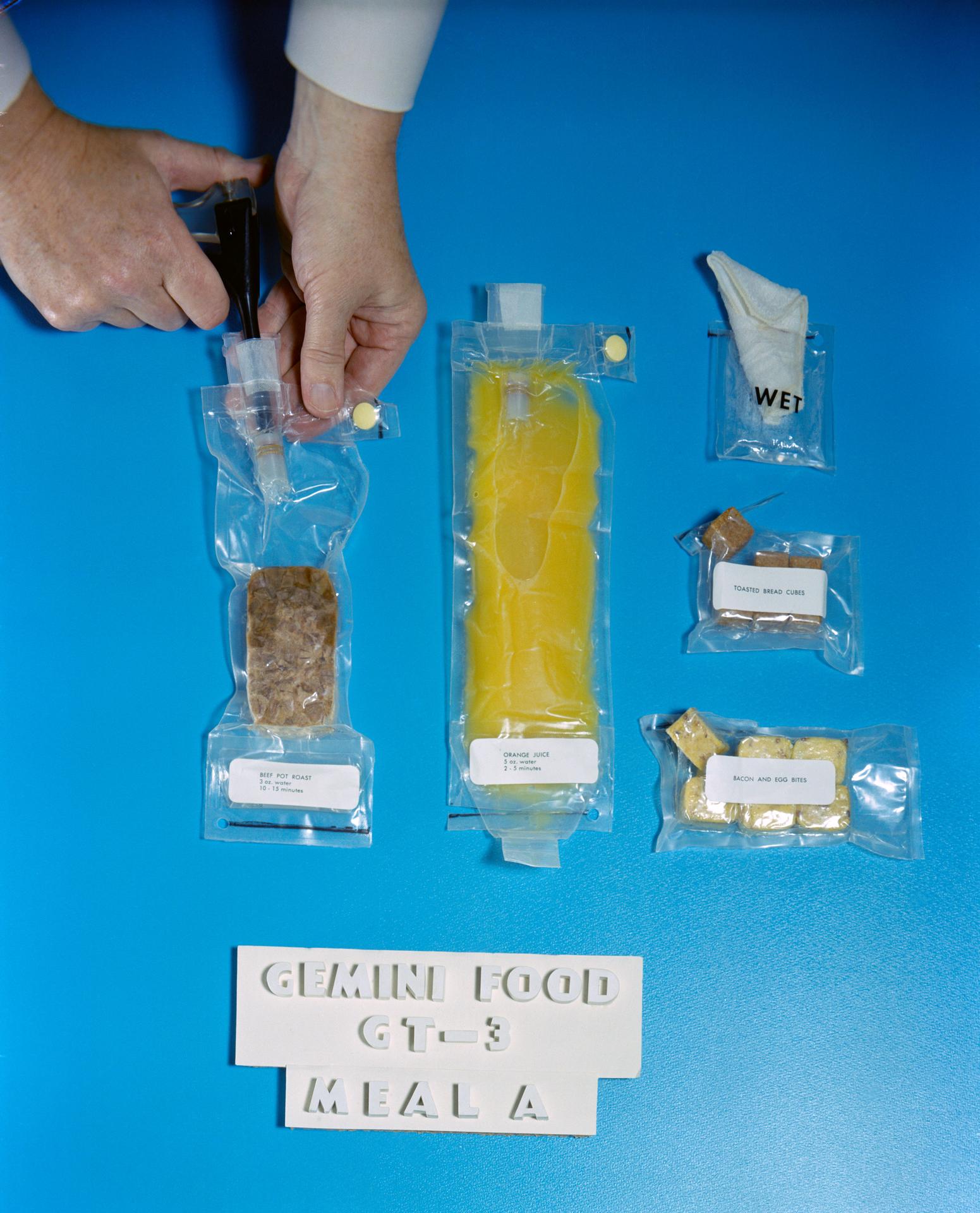
An array of food items in clear plastic packaging is shown on a blue background

Food packets planned for the Gemini III flight, including dehydrated beef pot roast, bacon and egg bites, toasted bread cubes, orange juice and a wet wipe. The astronaut’s method for rehydrating a pouch of dehydrated food with water is shown in the top left.

Locally Made Corn Beef Sandwich

A freshly made corned beef sandwich made at a local restaurant sounded like a better option, so Young had fellow astronaut and backup command pilot Walter M. “Wally” Schirra pick one up. Schirra purchased the sandwich for Young, and as he headed out to the launchpad, Young put it in the pocket of his pressure suit.

Nearly two hours into the flight, as Young started his food and waste evaluation, he pulled out the sandwich from his suit and offered it to his commander. As captured on the air-to-ground recordings, Grissom asked what it was and where it came from. “I brought it with me,” Young responded, “Let’s see how it tastes.” He didn’t expect the sandwich to be so pungent, “Smells, doesn’t it?” Grissom took a bite but found the rye crumbled so he placed the sandwich in his suit pocket to prevent the crumbs from floating about the cabin.

Where did that come from?
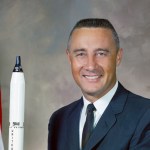
Gus Grissom

Gus Grissom

Gemini III Commander

Two days later, nearly a thousand members of the media from the United States and around the world gathered to hear from the crew and NASA management at the postflight press conference at the Carriage House Motel in Cocoa Beach, Florida. Space reporter Bill Hines asked Young about the sandwich, erroneously referring to it as a “baloney sandwich,” and what happened when Gus was offered a taste. “And,” he asked, “what became of the sandwich?” Young seemed surprised, “How did you find out about that?” and then laughed adding Grissom “ate the sandwich.”
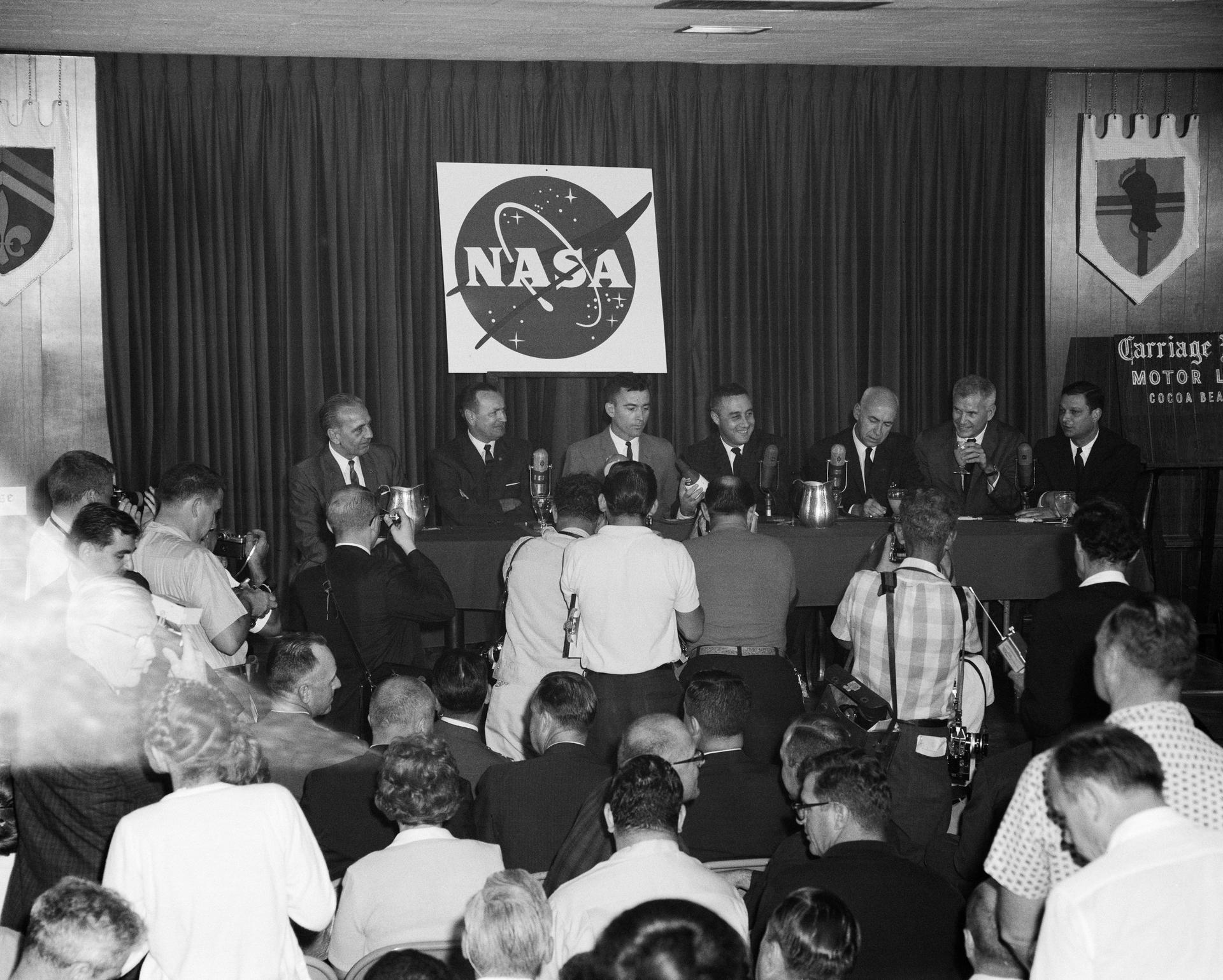
Gemini III press news conference

John Young and Gus Grissom speak with the press about the Gemini III mission during a news conference at the Carriage House Motel in Florida. Behind the table, left to right, are Dr. Kurt H. Debus, director of Kennedy Space Center, Christopher C. Kraft, Jr., MSC assistant director for Flight Operations, astronauts John Young and Gus Grissom, Dr. Robert R. Gilruth, MSC director, Dr. Robert C. Seamans, NASA associate administrator, and Julian Scheer, assistant administrator for NASA’s Office of Public Affairs.

Carry-on Restrictions for Spaceflights

Ironically the Gemini Program offered astronauts more control over their flights than during Project Mercury, including the ability to maneuver their spacecraft and to be more independent from Mission Control; but the uproar over this event led NASA to draft rules about what astronauts could and could not take onboard a spacecraft. Starting with Gemini IV, flight crews had to present a list of items they planned to take on their missions. Prohibited items naturally included sandwiches as well as bulky or heavy items or metal that could negatively impact the operation of spacecraft equipment. (NASA still allowed astronauts to take personal items such as wedding bands or coins for families and friends in their personal preference kit.)

Young never received a formal reprimand for the incident but was made aware of Congress’s frustration. Others in the corps were advised to avoid similar stunts and to focus on the mission. The decision to bring a sandwich onboard did not have a negative impact on Young’s career. He was the first astronaut to fly to space six times —two Gemini missions; two Apollo missions, including the dress rehearsal for the first lunar landing; and two space shuttle missions including STS-1, known as the bravest test flight in history. He also served as chief of the Astronaut Office for 13 years.

For the Silo,
The headshot image of Jennifer Ross-Nazzal

Jennifer Ross-Nazzal. NASA Human Spaceflight Historian

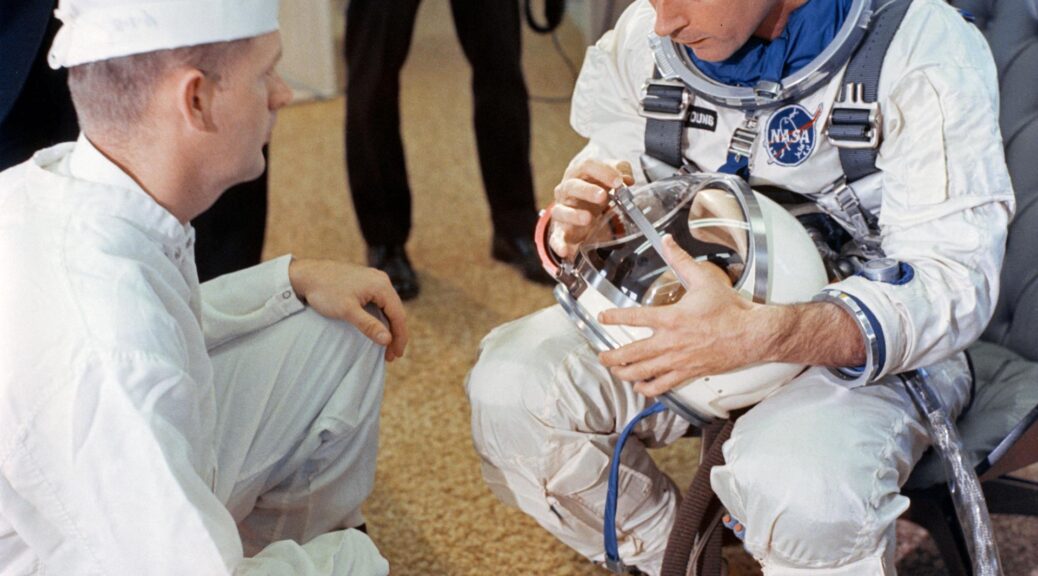
Featured image- Astronaut John W. Young, the pilot for Gemini III, checks over his helmet prior to flight. Credits: NASA

Contraband Tobacco solution requires more than Federal legislation ‘tinkering’

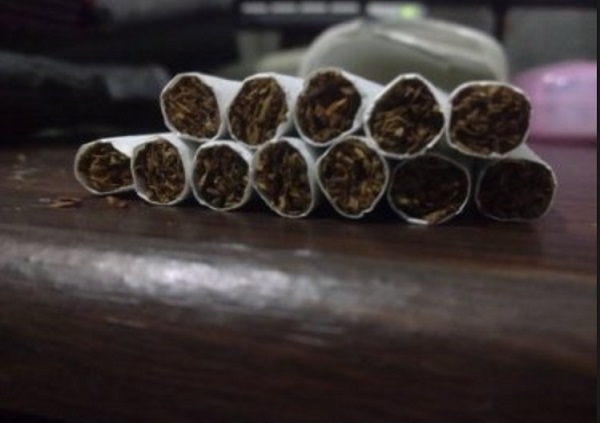
Illegal Cigarettes Stashed

SOLVING ILLICIT TOBACCCO  A National Strategy  There is no debate that the global trade in contraband tobacco has far-reaching implications for society. Too much evidence exists today to deny that the black market in tobacco draws in the involvement of a host of problems for public safety and national security.  Complicating the picture is the inevitable Canadian debate relative to which level of government has control over what activities and in so doing responsibility for quelling the illicit tobacco industry falls between the cracks.

The reality of the debate is much more visceral when viewed through the lenses of aboriginal rights and commercial responsibilities. Competing “constituencies” in the debate continue to pursue support by staking out scientific, social and moral positions on the smuggling and selling of untaxed and unregulated tobacco products.  The Ontario Convenience Store Association points fingers at the Canadian First Nations as the source of contraband tobacco off reserve.  Law Enforcement warns of the role of Organized Crime – up to 175 gangs and the Italian Mafioso too!  Band leaders on reserve say that it is their right to deal in tobacco all they want so long as it helps the economic prosperity of the community.  Ontario farmers blame the McGuinty Liberal Government for “ripping them off” for 69 cents for the tobacco pounds they agreed not to grow pursuant to the Tobacco Transition Program of 2008.  All in all, things are a mess!

The provisions of Bill C10, An Act to amend the Criminal Code (trafficking in contraband tobacco), which was sent to the Senate for “sober second thought” has passed Third Reading and awaits proclamation. The Bill will pass but it will leave a sour taste in the mouths of some of the Bill’s “constituencies”, including First Nations. During the Senate “consultation” process, several First Nations leaders decried the flawed consultation process with Canada’s First Nations.

Despite the progress against contraband tobacco with Bill C-10 from a law enforcement point of view, many of the conditions that support the illicit trade in tobacco remain. Save for high profile busts like the “Sweet Dreams” takedown last spring in Montreal that netted the Sicilian Mafia connection, the slow burn of the illicit tobacco trade has caused convenience store closures, stripped billions of dollars from federal and provincial tax coffers, made criminals out of law abiding farmers, and has opened new routes to marketing cigarettes to children on school grounds.


A National Approach

The solution to the many problems associated with contraband tobacco require more than just tinkering with federal legislation yet again. The complexities of the issue require a complete re-thinking of the problem of illicit tobacco and how best to deal with it.

A truly novel and potentially much more effective way of dealing with all tobacco regulation in Canada would be to appoint a National Tobacco Ombudsman (NTO) with sufficient investigative and search and seizure powers to greatly reduce or even eliminate the prevalence of illicit tobacco in Canada. To avoid any constitutional confusion, the NTO would be specifically national in scope but multi-jurisdictional in its powers and therefore a uniquely derived capability that can cross federal/provincial/First Nations lines to arrive at practical solutions.


Tobacco and Competing Constituencies

When it comes to a serious attempt to address the problems associated with the illicit tobacco trade in Canada, the solution needs to focus on four areas that need fixing. All four need to be dealt with rationally and objectively and potentially all by a properly selected and resourced NTO.

  • Law Enforcement


To date in Canada the RCMP has been afforded the mandate and financial resources to combat contraband tobacco. Unfortunately, the Mounties have been sorely inadequate to the task.  Despite RCMP press releases that take credit for illicit tobacco busts, two realities remain.  First, most of the Mounties believe that stopping the flow of contraband tobacco is an insult to their mandate as Canada’s federal police force.   Instead of trying to convince the RCMP that this is important work for them to pursue, it would be better to shift law enforcement to local and provincial police forces and provide them with the manpower and financial resources they need to investigate and pursue offenders.

Besides pursuing organized crime groups and chasing terrorism-related financial networks, there are many other, less sexy law enforcement activities that need to be attended to in order to fully address the contraband problem. For one example, enforcing the regulations that control the production and distribution of tobacco are provincial matters but require the monitoring and investigative expertise that comes with experienced and trained law enforcement personnel.

A NTO should be given the mandate to define the roles and resources of local and provincial police forces to support the enforcement of tobacco growing and distribution legislation and regulations at both the provincial and federal levels. Moreover, should the provisions of Bill C-10 (or something like it) come into effect, sworn peace officers from local and provincial forces will need to be coordinated in training and procedure.


  • First Nations – Rights and Fairness

A First Nations Chief stated that Bill C-10 effectively allows the Canadian Government to enter the 6 Nations of the Grand River or Tyendinaga, both in Ontario, with no-knock raids, flash bangs, police dogs and RCMP in riot gear if we have in our possession unstamped tobacco products.  In both the Akwesasne and Kahnawake reserves in Quebec there are no less than 50 illicit cigarette factories.  First Nations here have long served notice to both legislative authorities and law enforcement that they are most unwelcome.  Both of these reserves continue to produce high volumes of contraband tobacco that continue to be distributed across Canada.


  • Growers – the 69 cent solution


Farmers in Southern Ontario believe fervently that they have been “screwed” by the Ontario Government. This screwing took place when Premiere McGuinty reneged on a deal, as part of the Federal Government’s Tobacco Transition Program of 2008, to pay farmers sixty-nine cents for every pound of tobacco they would not grow in future.  Some of the farmers lost their farms; others found ways to circumvent the deal – take the money from the feds and continue to grow tobacco for sale to the black market.

The NTO would not permit this fiasco to develop. Fairness would have dictated a process for negotiating the buyout such that all parties would be agreeable to the outcome and all parties would respect the terms of activity or payment.  To give the deal teeth, the NTO would have the resources to monitor the results of the agreement, including payments promised and behaviour modified.


  • Taxation Rationalization


It is widely known that the infamous U.S. mobster, Al Capone, was convicted for tax evasion in order to put him away for life. Present day mobsters are involved in using contraband proceeds to engage in other serious criminal activities such as drug, gun and human trafficking and terrorism funding.

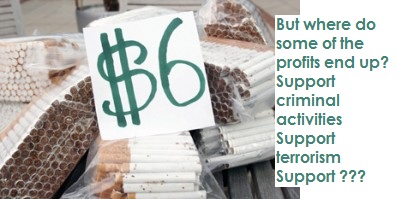
Illegal Cigarette Profits Feed Terrorism

Studies by reputable think tanks such as the US Mackinac Institute have determined that there is a sweet spot in government taxation levels that represents the most effective price deterrent to smoking and the point where tax hikes drive consumers – especially young consumers – to buy contraband cigarettes.

A NTO would have the ability to provide much wisdom and hopefully much influence in advising governments at all levels how to set tax policy and rates within the context of knowledgeable consequences. The other important aspect that would be performed by the NTO is to ensure harmonization across jurisdictions which would eliminate “spatial arbitrage” between jurisdictional lines.


Action Required

The concept of a National Tobacco Ombudsman requires immediate discussion and very near term implementation so that tax bases can be restored with money now flowing to the criminal elements in Canada and abroad.

Ombudsmen are about protecting the rights of the public. A NTO with criminal investigative powers led by a credible Ombudsman  would protect the legitimate interests of the First Nations communities, provide law enforcement with the tools to rid our communities of organized crime groups, provide guidelines for the orderly growing of tobacco on or off reserves, and stop the lust for tax grabs at the expense of public safety.  This Ombudsman would be answerable to Parliament and would not be buried in the bureaucracy with hierarchical structures that have been established to protect and avoid issues of significant importance.  Contraband tobacco in Canada continues to be a multi-billion dollar rip off that fuels organized crime and is a significant threat to national security as the illicit trade moves with fluidity across national and international borders.

The establishment of the NTO requires unwavering leadership, transparency and accountability at all levels of government, within commercial activity involving tobacco, and within First Nations’ communities. For the Silo, Edward R. Myers

SupplementalTobacco.org home to tobacco news and information

In England, convenience store owners (called Publicans) are charged and serve jail time for selling illegal cigarettes and tobacco