The Indonesian Pharmacist Association or more popularly abbreviated as Pafi is a forum for pharmacists in Indonesia to participate in improving the level of public welfare, especially in the fields of Public Health and Pharmacy, in addition to their daily duties.
One of the active branches that continues to strive to improve the quality of pharmaceutical services is Pafi Muara Bungo. For more complete information, check the website .
To facilitate providing the best service to the community, Pafi Muara Bungo continues to develop various initiatives and programs, including providing online registration for pharmacist members in the district.
The PAFI organization is a Professional Organization that is Work and Service-oriented.
In this case, it has 4 goals, such as:
Realizing a Just and Prosperous Society based on Pancasila and the 1945 Constitution quoted from the central PAFI, in fact, Indonesian Pharmacists have existed since the Proclamation of Independence of the Unitary State of the Republic of Indonesia on August 17, 1945, have fought side by side with all groups of society, to eliminate colonialism from the face of the earth of Indonesia, and have actively participated in defending the Unitary State of the Republic of Indonesia and then participated in Community and State Development.
Therefore, Indonesian Pharmacists are one of the development potentials that have never been absent in the struggle for state development until today, continuing to optimize services to the Indonesian people.
Realizing Optimal Health for the Indonesian People
The second goal of PAFI is to realize optimal health for the Indonesian people. In this case, PAFI Muara Bungo is actively disseminating information about health and the importance of proper drug use. Such as, recommendations to increase awareness before consuming these drugs, consulting with doctors and pharmacists before using drugs, and providing education related to disease prevention.
Developing and improving Indonesian Pharmaceutical Development
Developing and improving development in the world of automatic pharmacy can also increase efficiency and accuracy in providing services to the wider community.
Both the central Pafi and Pafi Muara Bungo in particular have developed an integrated pharmaceutical information system. It is expected to be able to provide faster and more accurate information online. So that health information is easily accessible to various levels of society.
Improving Member Welfare
One of the main goals of Pafi Muara Bungo is to improve the competence and welfare of its members. Various training and seminar information for Muara Bungo pharmacy experts is updated on the website.
It is hoped that with the increasing competence possessed, the welfare of Pafi members will also increase. Good news for pharmacists can join the training, the first step, register first to become a member of Pafi Muara Bungo.
Training and seminars on pharmacy management, the use of technology in pharmacy services, and the development of soft skills such as communication and auto services can be followed. In addition, there is a lot of job vacancy information for fresh graduates and pharmacists for better jobs. For the Silo, Anna Melnikova.
Let’s Hope for Solid Hit from the PBO’s Third Swing at Carbon Tax Analysis
The “corrected” analysis by the Parliamentary Budget Office of the carbon tax and rebates is due soon. One hopes it will get more things right in this third crack at evaluating the government of Canada’s assurance that most Canadians will receive enough from the carbon tax rebates to cover their cost of paying the tax.
Reporting in 2022 and in an update last year, the PBO analysis confirmed the government assertion so long as induced economic effects from the carbon levy are not included. However, once the economic damage from the levy is included, the PBO concluded that the rebates fall short of keeping family budgets whole.
The PBO’s conclusion was seized on by Conservative politicians and others to justify calls to revoke the carbon tax. Now, more knives have come out. The NDP says it would scrap the tax on households and put the burden on large emitters, but it does not yet explain how it would square that with the current big-emitter carbon tax. And BC, where carbon taxing began in Canada, has said it would drop the tax if Ottawa removed the legal requirement.
Much is at stake with this third PBO swing.
After the second report, the PBO admitted that its analysis had included, in addition to the carbon tax on households, the tax on large emitters as well. The economic impacts had been taken from work passed over to the PBO by Environment and Climate Change Canada (ECCC), which included the effects of the tax as applied to both industrial and household payers. The budget officer said the error was small and had little consequence for the analysis and promised a corrected version this fall.
The Canadian Climate Institute estimates that 20-48 percent of the emissions reduction by 2030 will come from the levy on large emitters compared to 8-14 percent from households. Given the scale of the large emitters tax, it is likely that it has significant economic effects on any forecast. Fixing this should not, however, be the most consequential revision to its analysis.
The PBO’s first two efforts had an analytical asymmetry. It measured the economic cost originating in the tax, exaggerated as it turned out, but did not attempt to capture the economic benefits (not to mention any health gains) from the effects of the household carbon levy in mitigating climate change. Put differently, their work was, in effect, based upon the faulty premise that climate change brings no economic damage. The massive and growing costs of cleaning up fire and flood damage and adapting to the many other consequences of global warming bear evidence of such costs. The PBO could and should do its own analysis of those climate change costs and, hence, the benefits of mitigation. Or it could more easily tap into the substantial body of available literature.
Lowering Canada’s Gross Domestic Product
In Damage Control, the Canadian Climate Institute estimated climate change would lower the Gross Domestic Product by $35 billion from what it would otherwise have been in 2030; the impact would rise to $80 to $103 billion by 2055. Through cutting emissions, the household carbon tax will reduce this cost. International literature is rich, and the PBO could review it for applicability to Canada. As but one example, Howard and Sterner’s (2017) meta-analysis on the impacts of climate change concluded most studies underestimated them. Their preferred estimate points to a GDP hit of between 7 and 8 percent of GDP if there are no catastrophic damages and 9 to 10 percent if there are. Conceptual thinking is also advancing. Consideration is being given to there being “tipping points” where a certain degree of climate change may have much more non-linear dramatic economic effects. Some, like Stern and Stigliz, even question the worth of comparing an economic outlook with mitigation action against a status quo baseline as the PBO has done. They argue that without mitigation, there may not be a sustainable economic outcome.
Finally, those still inclined to think that a corrected Fall 2024 PBO report will provide ammunition to “axe the tax” need to ask themselves two questions.
First, is there value in the emissions reduction resulting from the household carbon tax? The Canadian Climate Institute concludes that the 8-14 percent contribution to emissions reduction by 2030 will grow in later years. Even with the tax and all the other policies announced to date, there is a 42-megatonne gap in Canada’s 2030 emissions reduction target. More than 200 Canadian economists signed an open letter asserting that “carbon pricing is the lowest cost approach because it gives each person and business the flexibility to choose the best way to reduce their carbon footprints. Other methods, such as direct regulations, tend to be more intrusive and inflexible, and cost more.” If not the household carbon tax, then what else?
Don Drummond is the Stauffer-Dunning Fellow in Global Public Policy and Adjunct Professor at the School of Policy Studies at Queen’s University and a Fellow-In-Residence at the C.D. Howe Institute.
To: Canadians concerned about prosperity From: Don Wright Date: September 4, 2024 Re: Some Basic Living Standard Arithmetic for Governments
Governments often talk about “creating jobs,” but what they really do is choose some jobs at the expense of others. With their myriad spending, taxing and regulatory decisions, all governments try to direct job growth to different sectors – public or private, services or goods, resources or non-resources, and so on.
We all hope governments choose wisely.
It would help if they started paying more explicit attention to one factor: The impact of their decisions on Canadians’ standard of living.
A country’s standard of living is largely determined by the wages and net government revenue its tradeable goods and services sector can pay while remaining competitive against international competitors. If a company or sector is uncompetitive, it will have to either lower its wages, pay less tax or go out of business. These pressures on companies are never-ending. They determine both the wages a sector can afford to pay, and, through the interconnectedness of labour markets, average wages across the economy.
Some industries are so productive they can pay relatively high wages and significant taxes and yet remain competitive.
Industries that aren’t as productive can only pay lower wages and less tax.
Governments whose policies have the effect of moving labour from one sector to another had better pay attention to such facts.
Canadians may not like it but many of the country’s best-paying and most tax-rich jobs are found in natural resources. I was head of British Columbia’s public service. For most of B.C.’s history the province’s economic base has been dominated by natural resource industries – forestry, mining, oil and gas, agriculture and fishing. For a variety of reasons, these industries face strong political headwinds. Many groups press to constrain them and diversify away from them. The alternatives proposed include technology, film and tourism.
A few years ago, I asked officials in the province’s finance ministry to assess the relative performance of these different industries along the two key dimensions of average wages and net government revenue. In 2019-20 B.C. spent approximately $11,700 per citizen. Half the population was employed that year. So, to “break even” (i.e., have a balanced budget), the province had to collect $23,400 per employed person. If you look at things this way, each industry’s “profit” or “loss” is simply its revenue per employee less $23,400.
No such calculation will be exact, of course.
Several assumptions have to be made to get to an average “profit” or “loss” per employee. But, with that caveat, the numbers the officials brought back were telling. The industry with the biggest return to the province was oil and gas, at $35,500 per employee. Forestry was next, at $32,900. Then mining, at $14,900, and technology, though only at $900.
By this measure of profit and loss, however, film was a money loser, at -$13,400, and so was tourism, at -$6,900.
The negative numbers for the film industry reflect the very significant subsidies that B.C. (like many other provinces) provides to this sector. The negative number for the tourism sector primarily reflects low average wages per employee, which translate into relatively low personal income tax, sales tax and other taxes paid by employees.
These “profit or loss” numbers are not in any way a judgment about workers in these sectors. People find the best employment available to them in the labour market. Relative demands in that market are determined by many factors, none of which workers control. That said, if governments consciously move resources from the “profit” industries to the “loss” industries, they had better be aware of the consequences for wages, taxes and the overall standard of living.
The numbers I’ve cited were for a single year in British Columbia. The same analysis for other provinces or for Canada as a whole would likely produce different numbers – though I’d be surprised if the overall pattern were much different. Voters will draw their own conclusions about the impact on British Columbians’ standard of living from constraining the resource industries and promoting other industries instead.
Unfortunately, this type of analysis is rarely done when Canadian governments make decisions about what types of jobs they want to give preference to through their taxation, spending and regulatory decisions. They should do more of it. Ultimately, if [they] care about Canadians’ standard of living, governments need to start paying attention to the basic arithmetic of that standard of living.
Don Wright, senior fellow at the C.D. Howe Institute and senior counsel at Global Public Affairs, previously served as deputy minister to B.C.’s premier, cabinet secretary and head of the public service.
June,2024 – Lengthy delays and regulatory uncertainty is deterring investment in major infrastructure projects in Canada, according to a new report from the C.D. Howe Institute. In “Smoothing the Path: How Canada Can Make Faster Major-Project Decisions”, authors Charles DeLand and Brad Gilmour find that Canada’s regulatory approval process is creating high costs for investors and preventing critical projects in hydrocarbon production, mining, electricity generation, electricity transmission, ports and other infrastructure from being built.
Sectors that have historically driven business investment and productivity in Canada—mining, oil and gas—are most affected by complex regulatory procedures.
While investments in these sectors have supported high incomes for workers and high revenues for government in the past, they are now trending downwards. “Canada is struggling to complete large infrastructure projects in a reasonable time frame and at a reasonable price and the proposed amendments to the Impact Assessment Act (IAA) are insufficient,” says Gilmour.
Canadians have been debating whether Canada’s regulatory and permitting processes strike the right balance between attracting investments in major resource projects and mitigating potential harm from those investments.
These regulatory processes typically apply to complex and expensive projects, such as mines, large hydrocarbon production projects (oil sands, liquefied natural gas [LNG], offshore oil), electricity generation (hydroelectric dams, nuclear), electricity transmission (wires), ports and oil or natural gas pipelines. These projects often involve multiple levels of jurisdiction and can prove particularly slow to gain government approval.
Canada struggles to complete large infrastructure projects, let alone cheaply and quickly. We propose improving major project approval processes by: (a) ensuring that provincial and federal governments respect jurisdictional boundaries; (b) leaving the decision-making to the expert, politically independent tribunals that are best positioned to assess the overall public interest of an activity; (c) drafting legislation with precision that focuses review on matters that are relevant to the particular project being assessed; and (d) confirming the need to rely on the regulatory review process and the approvals granted for the construction and operation of the project.
Paul Jenkins – The West and a Workable New World Order?
From: Paul Jenkins
To: Global governance observers
Date: May 2, 2024
Re: The West and a Workable New World Order?
One can describe the so-called liberal world order as a set of ideas for organizing world democracies. While openness and trade, rules and institutions, and co-operative security have been the principles that have shaped the liberal order, it also required sovereign nation states to provide the foundation for the creation and development of a system of intergovernmental organizations, or system of global governance.
In the aftermath of the Second World War, the system was designed primarily for the advancement, economically and politically, of Europe and the United States. Yet since 1945 the liberal world order has evolved, giving impetus to the steady increase in global economic integration to the benefit of many nations and people.
Advances in science and technology have been critical to the evolution of the liberal order, but there has also been a need for the structures of global governance to evolve and keep pace.
On the economic front, for example, the collapse of the Bretton Woods system of fixed exchange rates, following Richard Nixon’s 1971 decision to abandon the dollar’s link to gold, gave rise to the creation of the G7. And the Asian Crisis of 1999 led to the creation of the G20.
Throughout the entire postwar period, however, tensions inherent between the sovereign authority of the nation-state and the need for collective global governance increasingly challenged the liberal order.
Indeed, the advent of the Cold War led to the liberal world order becoming hegemonic, organized around the economic and political strength of the United States with its dominance of global governance through the various institutions making up the global governance system.
But over the years, pushback took hold. As the benefits of global economic integration spread and the United States was no longer the singular engine of growth, both democratic and autocratic countries found voice and began to resist the principles that shaped the liberal order. Even core nations of the liberal order began to voice their concerns in the aftermath of the Global Financial Crisis as the market-based financial system failed to self-regulate (as had been advertised), and as the liberal order proved unable to provide social protection for those adversely affected by globalization.
Effectively, a new world order began to unfold, with the resulting slowing and even fragmentation [DS1][PJ2] of global economic integration.
At the same time though, virtually all nations, regardless of regime or stage of development, are facing the same challenges: Financial instabilities, rising inequality, weak productivity growth, climate change, spread of infectious disease, AI, cyber security and on and on.
These vulnerabilities represent global risks that can only be tackled and minimized through collective action. This in turn requires a new world order that treats the world as it is, not how we wish it to be.
What does this mean for the West, and in particular the United States and Canada?
The unique advantages of the United States are its open society, fair and law-based market economy, and allure for talent from around the world. To sustain these advantages, maintaining its wealth and its position as the centre of the free world, it cannot close its doors to further global economic integration.
Geopolitically, what might this look like?
John Ikenberry argues that the answer can be found in the principles of sovereignty, territorial integrity, and non-intervention of the Westphalian system, the 1648 treaties that ended the Thirty Years’ War and established the modern nation state. The key insight of the Westphalian system is that all countries are vulnerable to the same global risks. The leap forward in mindset that is required is the acceptance that states are the rightful political units of legitimate rule.
For the West, and the United States in particular, this implies the need to accept these new realities, and in so doing, the need to work together to build a new world order that preserves their liberal democratic values, and those of its allies, while at the same time recognizing that the economic challenges they face are not unique to them.
The unfolding relationship between the United States and China will define whether we achieve a workable new world order.
The economic incentives are there for this to happen.
For China, the incentive is further progress in closing both its internal income gap as well as the gap between itself and the developed world. The payoff would be setting in place the foundation for a sustained rise in living standards for all its citizens.
For the United States, the incentive is in preserving its strength as an open society and its vision of the world that has considered the interests of others. In many respects, it remains uniquely capable of playing the central role in sustaining the global economic system.
The challenge in re-imagining such a new world order is geopolitical. The task is to renew global governance with today’s realities in sharp focus.
Paul Jenkins. Mister Jenkins is a former senior deputy governor of the Bank of Canada and a senior fellow at the C.D. Howe Institute.
Canada Minister of Public Safety Dominic LeBlanc speaks in the Foyer of the House of Commons on Parliament Hill in Ottawa, on March 20, 2024. (The Canadian Press/Spencer Colby)
After learning that samples of deadly Ebola and Nipah viruses had been sent from Canada’s top-security lab in Winnipeg to China, Public Safety Minister Dominic LeBlanc said his reaction was similar to that of an MP who expressed incredulity upon learning of the move.
“I’m really concerned about the March 2019 incident where [Winnipeg lab scientists Xiangguo Qiu and Keding Cheng] were implicated in a shipment of live Ebola in Hanipah [Nipah] viruses on a commercial Air Canada flight. How the hell did that happen?” NDP MP Charlie Angus asked during a House of Commons Canada-China committee meeting on April 15.
In response, Mr. LeBlanc said, “When I saw that report, and publicly, I had the same reaction as you.”
A partly redacted national memo sent by the prime minister’s national security advisor to Prime Minister Justin Trudeau on June 29, 2017.
The minister deferred Mr. Angus’ question to the Public Health Agency of Canada, saying, “I don’t have any [information], but I had the same reaction as you, Mr. Angus.”
Mr. LeBlanc, who became minister of public safety in July 2023, was previously minister of intergovernmental affairs starting in July 2018.
The National Microbiology Laboratory (NML) in Winnipeg shipped 15 different strains of Nipah and Ebola viruses to the Wuhan Institute of Virology (WIV) in China on March 31, 2019. The package was sent from Winnipeg to Toronto and then on to Beijing via a commercial Air Canada flight.
Ms. Qiu and Mr. Cheng
The request to the NML management for the shipment of the viruses was facilitated by Ms. Qiu. The shipment was eventually approved by the NML management.
Ms. Qiu and Mr. Cheng, a married couple, were escorted out of the NML in July 2019 while under RCMP investigation. The couple were fired from their positions on Jan. 20, 2021, for having undisclosed ties to Chinese regime entities.
In 2021, in response to MPs’ questions about why the NML shipped virus samples to the Wuhan lab, laboratory management said the shipment followed all proper protocols and was in response to a letter from the Chinese lab indicating that they were to be used to understand their pathophysiology—the nature of infection—and the development of antivirals.
Declassified intelligence documents show that Ms. Qiu also sent antibodies and other materials to China without prior approval.
Shipments included antibodies for the China National Institute for Food and Drug Control, as well as small amounts sent to laboratories in the United Kingdom and the United States for testing.
The documents show that Ms. Qiu discussed the shipment of Ebola and Nipah with WIV employees in July 2018, and initially suggested that a formal agreement is not necessary as “no one owns the IP.” She also expressed “hope there is another way around” rather than issuing a formal agreement.
The documents also show that Ms. Qiu signed on to a project at WIV involving research on Ebola, and that some of the virus strains that were shipped from NML were meant for this project. Ms. Qiu had asked that the project remain a secret to her Canadian management as WIV was in the process of requesting the transfer of the virus strains from NML, the documents say.
Researchers work in the National Microbiology Laboratory in Winnipeg, Man., where the ZMapp antibody “cocktail” was created to fight Ebola. PHOTO BY HANDOUT
The Wuhan lab has been involved in synthetic biology research on the deadly Nipah virus, according to testimony from a U.S. scientist. Synthetic biology involves creating or redesigning biological entities and systems.
“The Nipah virus is a smaller virus than SARS2 [the virus causing COVID-19] and is much less transmissible,” Dr. Steven Quay, a Seattle-based physician-scientist, told a U.S. Senate subcommittee hearing on Aug. 3, 2022. “But it is one of the deadliest viruses, with a greater than 60 percent lethality” and 60 times deadlier than SARS2, he said. “This is the most dangerous research I have ever encountered.”
Chinese Talent Recruitment
During the April 15 House committee meeting, Mr. LeBlanc acknowledged revelations from the declassified documents that Ms. Qiu was involved in China’s Thousand Talents Program. The program was recognized by U.S. authorities as China’s efforts to “incentivize its members to steal foreign technologies needed to advance China’s national, military, and economic goals.”
It is clear that “elements from a Chinese-sponsored recruitment program were involved” at the Winnipeg lab, Mr. LeBlanc said. “It is well known that such programs are one way that China seeks to incentivize academics to participate in activities that exploit advancements in Canadian technologies.”
China is using the programs “to improve its military and intelligence capabilities, as well as the economic competitiveness all at the expense of Canada’s national interest,” the minister said.
He declined to address concerns raised by Conservative MP Michael Cooper regarding the delay in removing Ms. Qiu from the NML, saying it should be addressed to the health minister whose department is in charge of the Public Health Agency of Canada, which in turn oversees the NML.
Although concerns about the two were first raised in 2018, they weren’t fired until three years later. For The Silo, Andrew Chen. Omid Ghoreishi and Noé Chartier contributed to this report
A press photographer works next to the logo of the World Economic Forum (WEF) at the opening of their annual meeting in Davos on Jan. 15, 2024. (Fabrice Coffrini/AFP via Getty Images)
Close interactions between Canadian cabinet ministers and the World Economic Forum are well-documented, but a newly revealed letter suggests forum staff may have been doing more work with the federal government than previously disclosed.
In an undated letter to a WEF official, former Finance Minister Bill Morneau praised the organization and its collaboration to achieve “common” objectives.
“I would also like to take this opportunity to express my sincere appreciation to the WEF staff, for the support provided to the Government of Canada,” wrote Mr. Morneau in the letter obtained through the access-to-information regime.
Neither the WEF nor the Canadian government typically advertise what support the forum provides. The finance department has not replied to a request for information about the date of the letter and details of how WEF staff helped the government.
The letter was addressed to Philipp Rösler, a former German politician who served as a WEF manager and head of its Centre for Regional Strategies.
The federal government is known to have been involved in at least two WEF policy initiatives: the Known Traveller Digital Identification (KTDI) project and the Agile Nations network.
KTDI was a pilot project between Canada, the Netherlands, and private sector interests to develop a system of digital credentials for airplane travel between countries. Agile Nations is a group of countries working to streamline regulations to usher in the WEF-promoted “Fourth Industrial Revolution” that includes gene editing and artificial intelligence.
KTDI began in 2018, and Canada signed onto Agile Nations in November 2020, a few months after Mr. Morneau resigned during the WeCharity scandal. Both projects were worked on while Mr. Morneau was finance minister from 2015 to 2020.
Since both these projects fell outside of Mr. Morneau’s portfolio as finance minister, it seems to suggest that his letter of appreciation to the WEF was referring to other joint collaborations.
Canada’s then-minister of Finance Bill Morneau speaks to the Canadian Club of Canada in Toronto, on March 6, 2020. (Cole Burston/The Canadian Press)
The WEF’s mission statement says it is dedicated to “improving the state of the world.” It gathers leaders in the fields of politics, business, and activism to promote progressive policies on issues like climate change and making capitalism more “inclusive.” As is routine with the organization, it did not respond to requests for comment.
Critics of the WEF, which gathers world elites to shape global policies, often disagree with its progressive agenda and warn about its influence on countries.
“No staff, no ministers, no MPs in my caucus will be involved whatsoever in that organization,” Conservative Party Leader Pierre Poilievre said in January.
He added that officials who attend the forum’s annual meeting in Davos are “high flying, high tax, high carbon hypocrites” who travel in private jets while telling average citizens not to “heat their homes or drive their pickup trucks.”
Alberta Premier Danielle Smith has also criticized the WEF, saying in 2022 she finds it “distasteful when billionaires brag about how much control they have over political leaders, as the head of that organization has.”
Ms. Smith was likely referring to comments made by WEF founder and chairman Klaus Schwab in 2017, when he said said he was “very proud” to “penetrate the cabinets” of world governments, including that of Prime Minister Justin Trudeau.
“I know that half of his cabinet or even more than half of his cabinet are actually Young Global Leaders of the World Economic Forum,” Mr. Schwab told an audience at Harvard University.
WEF founder Klaus Schwab delivers a speech during the “Crystal Award” ceremony at the World Economic Forum annual meeting in Davos, on Jan. 16, 2023. (Fabrice Coffrini/AFP via Getty Images)
Davos Links
Mr. Morneau’s letter to the WEF comes from internal Finance Department records and is the only document in the release package that pertains to Mr. Morneau. It consists mostly of praise for the organization.
“As a Steward of Economic Growth and Social Inclusion, I have had the privilege of observing first-hand and benefiting from the WEF’s important contributions to foster public and private collaboration towards developing concrete solutions for strong, broad-based economic growth,” he wrote, adding that WEF analysis of different topics such as “structural reform priorities” was “helpful to develop substantive policy measures.”
He wrote that “as we enter another ambitious year for the WEF, I look forward to a continued fruitful collaboration to pursue our common objective of achieving stronger, sustainable and more inclusive growth.”
Other department records relate to current Finance Minister Chrystia Freeland and her involvement with the WEF. She is a board member of the forum and also an alumnus of the Young Global Leaders program that Mr. Schwab referenced.
Mr. Morneau, who resigned as minister in 2020, is listed on the WEF website as an “agenda contributor“ and a ”digital member.” He was a regular participant at the group’s annual meetings in Davos, Switzerland, while he was in office.
During those years, the Finance Department’s media relations office wasn’t shy about advertising ministerial trips to Davos.
“Canada’s strong presence at the Forum underscores the importance of this meeting for shaping the international agenda and advancing economic opportunities for Canadians,” read a January 2020 press release from the department announcing Mr. Morneau’s trip.
The Finance Department has not returned inquiries in recent years pertaining to Ms. Freeland’s involvement with the WEF, nor has it issued press releases referencing her involvement.
Some have questioned whether Ms. Freeland’s role as deputy prime minister and finance minister as well as a forum board member constitutes a conflict of interest. The Office of the Conflict of Interest and Ethics Commissioner said in its 2022 annual report it received more than 1,000 requests in a two-month period from members of the public to investigate the participation of MPs and ministers in the WEF.
The office said the requests “did not provide sufficient information to warrant an investigation.” Ms. Freeland’s leadership position with the WEF has been declared to the office and has therefore been cleared.
OTTAWA—Near the two-year anniversary of the federal government’s invocation of the Emergencies Act, hundreds of people gathered on Parliament Hill on Feb. 17 to celebrate the original Freedom Convoy protest and a recent victory in Federal Court.
People gather on Parliament Hill for the two-year anniversary of the Freedom Convoy protest, on Feb. 17, 2024. (Matthew Horwood/The Epoch Times)Protesters march in downtown Ottawa to mark the two-year anniversary of the Freedom Convoy protest, on Feb. 17, 2024. (Annie Wu/NTD)People gather on Parliament Hill in Ottawa to mark the two-year anniversary of the Freedom Convoy protest, on Feb. 17, 2024. (Annie Wu/NTD)
“This is like coming home again. It’s a big family reunion,” said Edward Vachon, who attended the original trucker protest in early 2022.
“The spirit that was there two years ago is still here. We still have the same convictions and we’re standing up.”
Hundreds of people, many of whom attended the original truckers’ Freedom Convoy protest in downtown Ottawa, gathered on Parliament Hill and on Wellington Street in front of the Hill, waving Canadian flags and holding signs against government overreach.
Dozens of vehicles drove by the protest honking and waving Canadian flags throughout the day, but the Ottawa Police Service ensured that none of them parked downtown. The police wanted to avoid a repeat of the original Freedom Convoy protest where trucks encamped in the downtown core for weeks.
Later in the afternoon, the crowd participated in a march through downtown Ottawa under the close watch of Ottawa police.
Protesters gather on Parliament Hill in Ottawa to mark the two-year anniversary of Freedom Convoy on Feb. 17, 2024. (Annie Wu/NTD)Protesters gather on Parliament Hill in Ottawa to mark the two-year anniversary of Freedom Convoy on Feb. 17, 2024. (Annie Wu/NTD)
Bethan Nodwell, who helped organize the original Freedom Convoy protest, said the 2022 event “changed the course of Canadian history.” She said many of the people attending this weekend’s event were “forever changed” by the convoy and will continue to meet every year to celebrate “the new Canada that was born in 2022.”
Genevieve Desmarais, wearing a Canadian flag draped around her back, told our friends at The Epoch Times that she came to the Freedom Convoy protest two years ago because she was upset by government overreach with its COVID-19 restrictions.
Louis Desmarais said he saw the day’s events not only as a commemoration of the anniversary of the trucker protest but also as a celebration of the recent victory in Federal Court.
On Jan. 24, Federal Court Justice Richard Mosley ruled that the Liberal government’s use of the Emergencies Act “was not justified in relation to the relevant factual and legal constraints that were required to be taken into consideration.”
“Finally, we got a federal judge to say ‘No, it was wrong to call the Emergencies Act, it wasn’t justified.’ That’s a big moment,” Mr. Desmarais said.
“Now the lawsuits are going to come out, that’s going to bring out the truth about all the lies, so that’s a step in the right direction.”
Protesters gather on Parliament Hill in Ottawa to mark the two-year anniversary of Freedom Convoy on Feb. 17, 2024. (Annie Wu/NTD)Protesters gather on Parliament Hill in Ottawa to mark the two-year anniversary of Freedom Convoy on Feb. 17, 2024. (Annie Wu/NTD)
Federal Court Justice Mosley found that invocation of the Emergencies Act infringed on Section 2(b) and Section 8 of the Canadian Charter of Rights and Freedoms. Section 2(b) deals with “freedom of thought, belief, opinion, and expression,” and Section 8 deals with the “right to be secure against unreasonable search seizure.”
The freezing of protesters’ bank accounts was also not “minimally impairing,” Justice Mosley said, as the directive was overly broad and there were “less impairing options available.”
Emboldened by the court ruling, the original organizers of the Freedom Convoy filed a $2 million lawsuit on Feb. 13 against the federal government for violating their charter rights when it invoked the Emergencies Act. On Feb. 14, a total of 20 people who had their bank accounts frozen under the act also filed a tort lawsuit against federal ministers and financial institutions behind the decision.
Justice Mosley’s ruling was in contrast with that of the Public Order Emergency Commission created after the Emergencies Act was invoked, tasked with evaluating whether its use was justified. Justice Paul Rouleau, who oversaw the commission, ultimately said the government was within its rights to invoke the act on Feb. 14, 2022, to clear the protests.
Deputy Prime Minister Chrystia Freeland said Ottawa will appeal Justice Mosley’s ruling, saying that the decision to invoke the act was done following “careful deliberation” and was “the necessary thing to do.”
Protesters gather on Parliament Hill in Ottawa to mark the two-year anniversary of Freedom Convoy on Feb. 17, 2024. (Annie Wu/NTD)
Doha, January 2024 //The Arab Center for Research and Policy Studies announced the results of their public opinion poll regarding the Israeli war on Gaza on Wednesday 10 January 2024. The poll was carried out on a sample of 8000 respondents (men and women) from 16 Arab countries. The survey questions were selected to determine the opinions of citizens in the Arab region on important topics related to the Israeli war on Gaza.
The results of the survey demonstrate the locality of the war as felt by Arab public opinion, with 97% of respondents expressing psychological stress (to varying degrees) as a result of the war on Gaza. 84% expressed a sense of great psychological stress.
Extent of psychological stress felt during the war on Gaza
About 80% of respondents reported that they regularly follow news of the war, compared to 7% who said that they do not follow it, a further indication that the Arab public sees this war as a local event. To access the news 54% of respondents relied on television, compared to 43% who relied on the internet.
Extent of news followship about Israel’s war on Gaza
It is noteworthy that the results highlighted that Arab public opinion does not believe that the military operation carried out by Hamas on 7 October 2023 was in pursuit of a foreign agenda. 35% of respondents considered that the most important reason for the operation was the continued Israeli occupation of the Palestinian territories, while 24% attributed it mostly to defence against Israel’s targeting of Al-Aqsa Mosque, and 8% saw it as a result of the ongoing siege of the Gaza Strip.
The most important motivations for Hamas to carry out the military operation on 7 October 2023
Most important
Second most important
The ongoing Israeli occupation of Palestinian land
35
13
Defending al-Aqsa Mosque against attacks
24
21
The ongoing blockade of Gaza
8
12
Ongoing and expanding settlement on Palestinian land
6
8
Liberating Palestinian detainees and prisoners in Israeli prisons
6
13
Israel’s rejection of the establishment of a Palestinian state
4
5
The United States’ failure to achieve a just peace
2
3
The international community’s disregard for Palestinian rights and the ongoing occupation
4
5
Halting the normalization process between Arab governments and Israel
2
3
Carrying out the plan or agenda of a foreign power such as Iran
2
2
Other
2
1
Don’t know / Declined to answer
5
0
No second option
0
14
Total
100
100
While 67% of respondents reported that the military operation carried out by Hamas was a legitimate resistance operation, 19% reported that it was a somewhat flawed but legitimate resistance operation, and 3% said that it was a legitimate resistance operation that involved heinous or criminal acts, while 5% said it was an illegitimate operation.
Assessments of Hamas’ military operation on 7 October 2023
The results showed that there is an Arab consensus of 92% expressing solidarity with the citizens of the Arab region with the Palestinian people in Gaza. While 69% of respondents expressed their solidarity with Palestinians and support for Hamas, 23% expressed solidarity with Palestinians despite opposing Hamas, and 1% expressed a lack of solidarity with the Palestinians.
Solidarity with Palestinians and support for Hamas
The majority of respondents rejected comparisons between Hamas and ISIS made by predominately Israeli and Western politicians and media personalities.
Comparisons between Hamas and ISIS
When asked about the responses of regional and international powers to Israel’s war on Gaza, 94% considered the US position negatively, with 82% considering it very bad. In the same context, 79%, 78%, and 75% of respondents viewed positions of France, the UK, and Germany negatively. Opinion was split over the positions of Iran, Turkey, Russia, and China. While (48%, 47%, 41%, 40%, respectively) considered them positively (37%, 40%, 42%, 38%, respectively).
Evaluation of international and regional positions
In the same context, 76% of respondents reported that their position toward the United States following the Israeli war on Gaza had become more negative, indicating that the Arab public has lost confidence in the US. Furthermore, respondents demonstrated a near consensus (81%) in their belief that the US government is not serious about working to establish a Palestinian state in the 1967 occupied territories (The West Bank, Jerusalem, and Gaza).
About 77% of respondents named the United States and Israel as the biggest threat to the security and stability of the region. While 51% saw the United States as the most threatening, 26% considered the biggest threat to be Israel. While 82% of respondents reported that US media coverage of the war was biased towards Israel, only 7% saw it as neutral.
How opinion on US policy in the Arab region has changed since the war on Gaza
Evaluation of US seriousness in establishing a Palestinian state in the 1967 Occupied Palestinian lands
Biggest threats to the peace and stability of the region
Greatest Threat
Second Greatest Threat
Gaza war
2022
2020
2018
Gaza War
2022
2020
2018
United States
51
39
44
43
25
25
23
28
Israel
26
41
37
37
33
28
38
40
Iran
7
7
10
13
10
13
19
15
Russia
4
6
2
3
8
8
4
7
France
2
2
2
1
10
5
3
1
Turkey
2
2
2
1
3
2
5
2
China
1
2
1
0
2
2
2
0
Other
1
—
—
—
2
—
—
—
Don’t know / Declined to answer
6
1
2
2
0
—
—
—
No second option
0
—
—
—
7
17
6
7
Aggregate
100
100
100
100
100
100
100
100
Evaluation of US media coverage of the war on Gaza
Arab public opinion sees the Palestinian Cause as an Arab issue, and not exclusively a Palestinian issue. A consensus of 92% believe that the Palestinian question concerns all Arabs and not just the Palestinians. On the other hand, 6% said that it concerns the Palestinians alone and they alone must work to solve it. It is worth noting that this percentage is the highest recorded since polling began in 2011, rising from 76% at the end of 2022, to 92% this year. Some countries recorded significant increases. In Morocco, it rose from 59% in 2022 to 95%, in Egypt from 75% to 94%, in Sudan from 68% to 91%, and in Saudi Arabia from 69% to 95%, a statistically significant increase that represents a fundamental shift in the opinions of the citizens of these countries.
Consideration of the Palestinian Cause as an Arab issue over time
Arab public opinion is almost unanimous in rejecting recognition of Israel, at a rate of 89%, up from 84% in 2022, compared to only 4% who support its recognition. Of particular note is the increase in the percentage of those who rejected recognition of Israel in Saudi Arabia from 38% in the 2022 poll to 68% in this survey. Such a statistically significant increase also applies to other countries such as Morocco, where the percentage rose from 67% to 78%, and Sudan, where it increased from 72% to 81%.
Support/opposition for recognizing Israel over time
When asked about their opinions on what measures Arab governments should take in order to stop the war in Gaza, 36% of respondents stated that Arab governments should suspend all relations or normalization processes with Israel, while 14% of them stated that aid and support should be brought into Gaza without Israeli approval, and 11% said that the Arab governments should use oil as a weapon to assert pressure on Israel and its supporters.
Measures that should be taken by Arab governments to stop the war on Gaza
Most important measure
Second most important measure
Suspend relations or normalization with Israel
36
15
Deliver aid to Gaza without Israeli approval
14
16
Use the oil weapon to pressure Israel and its supporters
11
13
Establish a global alliance to boycott Israel
9
11
Provide military aid to Gaza
8
10
Announce military mobilization
5
6
Reconsider relations with the United States
4
6
Reconsider relations with states that support Israel’s war on Gaza
3
5
Build alliances with states that have taken practical steps against Israel
3
4
Other
3
2
Don’t know / Declined to answer
4
0
No second option
0
12
Total
100
100
There is a near consensus among Palestinian respondents from the West Bank (including Jerusalem), around 95%, that safety and freedom of movement between the governorates and cities of the West Bank and their sense of security and personal safety have been affected negatively since 7 October 2023.
Negative effects experienced in the West Bank since 7 October 2023
A further 60% of Palestinian respondents in the West Bank said that they had been subjected to or were witnesses to raids by the occupation army forces, while 44% said that they were subjected to arrest or interrogation by the Israeli army, and 22% reported that they were subjected to harassment by settlers.
Frequency of witnessing or happening upon incidences of raids, arrests, or settler harassment in the West Bank since 7 October 2023
This survey is the first of its kind to gauge public opinion on the topic across the Arab region. The field work was conducted from 12 December 2023 to 5 January 2024 in Mauritania, Morocco, Algeria, Tunisia, Libya, Egypt, Sudan, Yemen, Oman, Qatar, Kuwait, Saudi Arabia, Iraq, Jordan, Lebanon, and the West Bank, Palestine (including Jerusalem). The surveyed communities represent 95% of the population of the Arab region and its far-flung regions. The sample in each of the aforementioned communities was 500 men and women, drawn according to cluster and self-weighted sampling methods to ensure that every individual in each country had an equal probability of appearing in the sample.
For the Silo, Dr Ahmed Hussein, researcher at the Arab Center for Research and Policy Studies.
Misinformation and disinformation are biggest short-term risks, while extreme weather and critical change to Earth systems are greatest long-term concern, according to Global Risks Report 2024.
Two-thirds of global experts anticipate a multipolar or fragmented order to take shape over the next decade.
Report warns that cooperation on urgent global issues could be in short supply, requiring new approaches and solutions.
Geneva, Switzerland, January 2024 – Drawing on nearly two decades of original risks perception data, the World Economic Forum’s Global Risks Report 2024 warns of a global risks landscape in which progress in human development is being chipped away slowly, leaving states and individuals vulnerable to new and resurgent risks. Against a backdrop of systemic shifts in global power dynamics, climate, technology and demographics, global risks are stretching the world’s adaptative capacity to its limit.
These are the findings of the Global Risks Report 2024, released today, which argues that cooperation on urgent global issues could be in increasingly short supply, requiring new approaches to addressing risks. Two-thirds of global experts anticipate a multipolar or fragmented order to take shape over the next decade, in which middle and great powers contest and set – but also enforce – new rules and norms.
The report, produced in partnership with Zurich Insurance Group and Marsh McLennan, draws on the views of over 1,400 global risks experts, policy-makers and industry leaders surveyed in September 2023. Results highlight a predominantly negative outlook for the world in the short term that is expected to worsen over the long term. While 30% of global experts expect an elevated chance of global catastrophes in the next two years, nearly two thirds expect this in the next 10 years.
“An unstable global order characterized by polarizing narratives and insecurity, the worsening impacts of extreme weather and economic uncertainty are causing accelerating risks – including misinformation and disinformation – to propagate,” said Saadia Zahidi, Managing Director, World Economic Forum. “World leaders must come together to address short-term crises as well as lay the groundwork for a more resilient, sustainable, inclusive future.”
Rise of disinformation and conflict
Concerns over a persistent cost-of-living crisis and the intertwined risks of AI-driven misinformation and disinformation, and societal polarization dominated the risks outlook for 2024. The nexus between falsified information and societal unrest will take centre stage amid elections in several major economies that are set to take place in the next two years. Interstate armed conflict is a top five concern over the next two years. With several live conflicts under way, underlying geopolitical tensions and corroding societal resilience risk are creating conflict contagion.
Economic uncertainty and development in decline The coming years will be marked by persistent economic uncertainty and growing economic and technological divides. Lack of economic opportunity is ranked sixth in the next two years. Over the longer term, barriers to economic mobility could build, locking out large segments of the population from economic opportunities. Conflict-prone or climate-vulnerable countries may increasingly be isolated from investment, technologies and related job creation. In the absence of pathways to safe and secure livelihoods, individuals may be more prone to crime, militarization or radicalization.
Planet in peril
Environmental risks continue to dominate the risks landscape over all timeframes. Two-thirds of global experts are worried about extreme weather events in 2024. Extreme weather, critical change to Earth systems, biodiversity loss and ecosystem collapse, natural resource shortages and pollution represent five of the top 10 most severe risks perceived to be faced over the next decade. However, expert respondents disagreed on the urgency of risks posed – private sector respondents believe that most environmental risks will materialize over a longer timeframe than civil society or government, pointing to the growing risk of getting past a point of no return.
Responding to risks
The report calls on leaders to rethink action to address global risks. The report recommends focusing global cooperation on rapidly building guardrails for the most disruptive emerging risks, such as agreements addressing the integration of AI in conflict decision-making. However, the report also explores other types of action that need not be exclusively dependent on cross-border cooperation, such as shoring up individual and state resilience through digital literacy campaigns on misinformation and disinformation, or fostering greater research and development on climate modelling and technologies with the potential to speed up the energy transition, with both public and private sectors playing a role.
Carolina Klint, Chief Commercial Officer, Europe, Marsh McLennan, said: “Artificial intelligence breakthroughs will radically disrupt the risk outlook for organizations with many struggling to react to threats arising from misinformation, disintermediation and strategic miscalculation. At the same time, companies are having to negotiate supply chains made more complex by geopolitics and climate change and cyber threats from a growing number of malicious actors. It will take a relentless focus to build resilience at organizational, country and international levels – and greater cooperation between the public and private sectors – to navigate this rapidly evolving risk landscape.”
John Scott, Head of Sustainability Risk, Zurich Insurance Group, said: “The world is undergoing significant structural transformations with AI, climate change, geopolitical shifts and demographic transitions. Ninety-one per cent of risk experts surveyed express pessimism over the 10-year horizon. Known risks are intensifying and new risks are emerging – but they also provide opportunities. Collective and coordinated cross-border actions play their part, but localized strategies are critical for reducing the impact of global risks. The individual actions of citizens, countries and companies can move the needle on global risk reduction, contributing to a brighter, safer world.”
About the Global Risks Initiative
The Global Risks Report is a key pillar of the Forum’s Global Risks Initiative, which works to raise awareness and build consensus on the risks the world faces, to enable learning on risk preparedness and resilience. The Global Risks Consortium, a group of business, government and academic leaders, plays a critical role in translating risk foresight into ideas for proactive action and supporting leaders with the knowledge and tools to navigate emerging crises and shape a more stable, resilient world.
Los Angeles, CA … Lawyers for Donald Trump on Monday asked the federal judge presiding over his election subversion case in Washington to recuse herself, saying her past public statements about the former president and his connection to the January 6, 2021, riot at the U.S. Capitol call into question whether she can be fair.
“Regardless of anyone’s personal opinion on the matter, Donald Trump’s motion for recusal has merit under the express provisions of 28 U.S.C. § 455, which requires a judge to recuse himself or herself in any proceeding in which [her] impartiality might reasonably be questioned. It is irrelevant whether the judge is actually biased. The U.S. Supreme Court squarely addressed this issue in Liljeberg v. Health Services Acquisition Corp., 486 U.S. 847, 860, which held that recusal is required even when a judge lacks actual knowledge of the facts indicating his interest or bias.
Judge Chutkan
Here, Judge Tanya Chutkan has made previous comments such as ‘Presidents are not kings, and Plaintiff is not a President’ and, in a December 2021 sentencing hearing, she stated, ‘the issue of who has or has not been charged is not before me. I don’t have any influence on that. I have my opinions, but they are not relevant.’ She has therefore publicly acknowledged her bias, which, at the very least, creates an appearance of partiality. This is nevertheless an uphill battle, as the motion has been submitted to Judge Chutkan, who will rule on this motion.
Having litigated this issue extensively in Angelica Limcaco v. Steve Wynn, Case No. 19-15949 (9th Cir. 2020), Donald Trump has to navigate a difficult path because the optics are problematic for him. The Justice Department will likely argue that Judge Chutkan has no financial interest, or something to that effect. Of course, if the motion is denied, the decision could result in an interlocutory appeal that may delay the case,” explained Jordan Matthews, a litigation partner at Weinberg Gonser LLP.
For the first time, Burkina Faso tops the list of the world’s most neglected displacement crises, according to a new report from the Norwegian Refugee Council (NRC). Redirection of aid and attention towards Ukraine has increased neglect of some of the world’s most vulnerable people.
The annual list of neglected displacement crises is based on three criteria: lack of humanitarian funding, lack of media attention, and a lack of international political and diplomatic initiatives. The crisis in the Democratic Republic of Congo ranks second, having appeared first or second on the list every year since its inception seven years ago. Colombia, Sudan, and Venezuela follow in this grim ranking.
“Tell the world we have suffered. We have suffered a lot. Our neighbours have suffered. Our friends have suffered. Our relatives have suffered. We lost many. Most of them killed. I am thanking God because none of my family was left there, and we are all in safety. I do not want to return, but I am asking God for peace, for peace in this place,” says Halimata (35). Together with her family, she fled fighting in the east of Burkina Faso and sought safety in Kaya.
“Neglect is a choice – that millions of displaced people are cast aside year after year without the support and resources they so desperately need is not inevitable,” said Jan Egeland, NRC’s Secretary General.
“The powerful response to the suffering inflicted by the war in Ukraine demonstrated what the world can deliver for people in need. Political action for Ukrainians has been impactful and swift, borders kept open, funding plenty, and media coverage extensive. Those in power need to show the same humanity towards people affected by crises in places such as Burkina Faso and the Democratic Republic of the Congo.”
More than five times more articles were written about the Ukrainian displacement crisis last year than about all the world’s ten most neglected crises in total. For every dollar raised per person in need in Ukraine in 2022, just 25 cents were raised per person in need across the world’s ten most neglected crises.
The Democratic Republic of Congo continued to make the list this year. Patient* 43, lives with his 6 children in the town of Bule, Djugu Territory, Ituri Province, DR Congo.‘We fled in February 2021. We’ve moved around a lot, and now we are trying to build a new home. During the war, we’ve never had enough to eat, and we have no money to buy medicines if the children get sick. We used to live in a beautiful village, and had a big house. Now, all we have is this shelter. When it rains a lot, the water will come through the roof’. *Name changed for security reasons.
The repeated warnings of increased disparity due to the reallocation of resources to the Ukraine response have now become reality. The redirection of a large amount of aid money towards Ukraine and towards hosting refugees in donor countries means that many crises have seen a drop in assistance, despite growing needs. Total aid to Africa, where we find seven out of the ten most neglected crises, was 34 billion USD in 2022, representing a drop of 7.4 per cent compared to 2021.
The Ukraine crisis also contributed to an increase in food insecurity in many of the countries featured in the report, worsening already dire crises, and increasing the number of people in need.
“The world has failed to support the most vulnerable, but this can be reversed. The lives of millions of people suffering in silence can improve, if funding and resources are allocated based on need, not geopolitical interest, and media headlines of the day,” said Egeland. “Last year the gap between what was needed and what was delivered in humanitarian assistance was 22 billion USD. This is a huge sum of money, but no more than Europeans spend on ice cream a year. We need donors to increase support and new donor countries to step up to share responsibility.”
Burkina Faso’s decline since the crisis broke out five years ago has been swift and devastating. More than 2 million people have been forced to flee their homes, and nearly a quarter of the population now requires humanitarian aid. Across the country, 800,000 people are living in areas under blockade by armed groups where they have no access to even basic services. The situation is increasingly dire with some people forced to eat leaves to survive.
Maïga Abibou is an Internally Displaced Person (IDP) from Wapassi in the North region of Burkina Faso. Because of rampant insecurity in Wapassi, she made her first move with her family to Naoubé, a village in the Center North. A few months later, she fled again with her family to Louda, a village located a few kilometers from Kaya. There, she has been living with dozens of other families out in the open for over a month while hoping to get shelters soon before the rainy season begins in Burkina Faso. “We want the world to know about our difficulties, about what is worrying us now. We fled from far away to come here. This is our second escape. We could not bring anything with us. We moved with our carts; we were in the bush and there were no vehicles,” Abibou said.
“We must do more to end the suffering in Burkina Faso before despair becomes entrenched and it is added to the growing list of protracted crises. That this crisis is already so deeply neglected shows a failure of the international system to react to newly emerging crises, as it also fails those lost in the shadows for decades. Ultimately, greater investment in diplomatic solutions is needed if we hope to pull crises off this list,” said Egeland. For the Silo, Jessica Wanless. Featured image: FILE – Children wait for their turn to buy water from a privately-owned water tower, amid an outbreak of the coronavirus disease, in Taabtenga district of Ouagadougou, Burkina Faso, April 3, 2020.
Facts and figures:
Each year, the Norwegian Refugee Council (NRC) publishes a list of the ten most neglected displacement crises in the world. The purpose is to focus on the plight of people whose suffering rarely makes international headlines, who receive no or inadequate assistance, and who never become the centre of attention for international diplomacy efforts. The report is available here.
The neglected displacement crises list for 2022 analyses 39 displacement crises based on three criteria: lack of funding, lack of media attention, and lack of international political and diplomatic initiatives. Full details on the methodology can be found in the report.
The full list in order this year is: Burkina Faso, DR Congo, Colombia, Sudan, Venezuela, Burundi, Cameroon, Mali, El Salvador, Ethiopia.
Burkina Faso has appeared on this list for the previous four years. It ranked second on last year’s report, seventh in 2020, and third in 2019.
DR Congo is a textbook example of a neglected crisis. It has topped the list three times (2021, 2020 and 2017). It previously ranked second on the list in 2019, 2018 and 2016.
Colombia and El Salvador appear in this report for the first time this year.
The total funding to the Burkina Faso humanitarian response plan was 339 million USD in 2022, of the 805 million USD requested – making the response just 42 per cent funded (OCHA).
In 2022, 3.5 million people were in need of humanitarian assistance in Burkina Faso – by the end of the year this has skyrocketed to 4.9 million people. This is a 40% increase and nearly equal to 1 in 4 Burkinabè (OCHA).
There are almost 2 million internally displaced people in Burkina Faso (IDMC).
800,000 people are living in 23 blockaded towns and cities in Burkina Faso, unable to access aid regularly. Half of them are in the city of Djibo (Access Working Group).
The average humanitarian appeal was just over half funded in 2022, while the Ukraine appeal was almost 90% funded (OCHA).
The gap between the total humanitarian appeals by the UN and partners and the money actually received amounted to 22 billion USD in 2022 (OCHA).
Total aid to Africa was USD 34 billion in 2022 (overseas development assistance, including development aid and humanitarian), representing a drop of 7.4% compared to 2021 (OECD).
Collectively the world’s most powerful donor countries used more of their aid on the reception of refugees at home than on overseas humanitarian assistance in 2022 (OECD).
The European Ice Cream Market was estimated to be valued at $21.7 Billion in 2021 (Research and Markets).
212 USD was raised per person in need inside Ukraine, while 52 USD was raised per person in need across the world’s ten most neglected crises in 2022 (OCHA).
In total, 375,000 articles were written in the English media about the world’s ten most neglected displacement crises last year, according to statistics from Meltwater. In comparison, 1.98 million articles were written in English about the displacement crises in Ukraine during the same period (Meltwater).
U.S. leadership ratings retreated after the U.S. withdrew from Afghanistan,with most of the world disapproving of Russia’s leadership after its invasion of Ukraine
Washington, D.C. — A new Gallup reportbased on interviews in 137 countries in 2022 shows the honeymoon is over for U.S. President Joe Biden, and Germany’s image has lost some of its clout under new Chancellor Olaf Scholz. Though global approval ratings of the U.S. and Germany dipped in 2022, both countries are still in much stronger positions than Russia — which saw its ratings plunge after its invasion of Ukraine — and China.
German Chancellor Olaf Scholz (L) with Canada Prime Minister Justin Trudeau (R)
Here are some of the key findings from Gallup’s Rating World Leaders 2023 report:
U.S. leadership ratings around the world rebounded in 2021 in the first year of Biden’s presidency but declined in his second.
Ratings for the U.S. first slipped after withdrawal from Afghanistan in August 2021.
There were double-digit decreases in U.S. leadership approval in 36 countries between 2021 and 2022 — mostly in Europe and the Americas.
Russia’s approval ratings plunged worldwide after the invasion of Ukraine, and the majority of adults around the world now disapprove of Russia’s leadership.
Majorities in 81 of the 137 countries surveyed disapproved of Russian leadership.
A look back to last year’s rankings and previous years.
Implications Beyond 2023:
One of the biggest foreign policy challenges facing the U.S. and its allies in 2023 and beyond will be to ensure the transatlantic unity that was so greatly tested in 2022 does not fracture as Russia’s war against Ukraine continues.
The images of the U.S. and Germany are in slightly weaker positions than before the war started, but they are still in much stronger positions than Russia. But perhaps more importantly, the soaring disapproval of Russia’s leadership in all parts of the world shows they are not the only countries that care.
QUEEN’S PARK – Haldimand-Norfolk MPP Bobbi Ann Brady has introduced legislation that, if passed, will protect Ontario’s farmland.
“Land use planning affects our daily lives and Ontario’s farmland and arable land is an essential resource for the sustainability and security of our food systems, environment and local economies,” Brady said. “Farmland and arable land is productive, valuable and essential but most importantly it is finite and non-renewable, which is vital to consider in the face of increasing pressure to develop housing in the province.”
With Ontario having 52 per cent of the country’s prime arable land, and much of that being adjacent to cities, Brady said protecting these lands should be paramount. Further, according to census data, Ontario is losing 319 acres of farmland each day. Brady feels this is unsustainable. Constituents in Haldimand-Norfolk have also raised this same concern with the MPP since well before her election.
“As the government continues with its target to create 1.5 million new homes in Ontario, it is vital to put in place policies that will protect our farmers and their land, as well as the province’s food security, both now and in the future,” she said.
The bill requires the Minister of Agriculture, Food and Rural Affairs to develop a strategic action plan that aims to protect Ontario’s farmland and arable land from development, aggregate mining and the effects of fluctuating commodity prices and the availability of vacant land. It also stipulates a stakeholder-led Farmland and Arable Land Advisory Committee be set up to advise the Minister of Agriculture, Food and Rural Affairs. For the Silo, Jeff Helsdon.
The bill will be back before the Legislature for second reading debate on March 8.
For more information, contact MPP Bobbi Ann Brady directly at 519-428-0446 or 905-765-8413 or babrady-co@ola.org Please mention The Silo when contacting.
So how do you respond when someone brings you into the conversation? How do you answer when they ask you for your opinion or who you’re going to vote for?
You could always just doodle on a receipt like this one from J. Barker 🙂
Sharon Schweitzer, an international etiquette expert, author and founder of Protocol & Etiquette Worldwide, says you have options.
Has politics become a reality TV show?
You don’t want to respond
Keeping your opinion to yourself can be difficult; however, it is possible. Say something like, “In the midst of such a contentious political season, I feel it’s best to keep my opinion to myself. I do appreciate your interest and wish you the best in your political decisions.”
By acknowledging and thanking them for their genuine interest, you are able to get out of sticky political conversations but retain your well-mannered and ever sophisticated demeanor.
If they push again
If they keep pushing for a response, you can play the undecided card and change the subject.
“I’m still evaluating the candidates and the issues and haven’t made up my mind yet. It will be interesting to see how it plays out.”
To get them off the topic for good, ask them about something meaningful to them that they will want to talk about. “I hear your son got accepted to Ohio State. Congratulations!” “Great job on closing that account. How did you do it?” “Tell me about your trip to the mountains a few weeks ago. I hear it is beautiful this time of year.”
You want to respond
If you would like to express your beliefs, the best way to do so is to cite research and concrete reasons why your views align a certain way, as this will encourage more of an intellectual conversation than a possible war of opinions. Just as you want to express your beliefs, be courteous and let the person you are speaking to express his or her beliefs, even if you disagree.
If you disagree
It’s inevitable that disagreements will arise, but when they do, handle them with grace, dignity and respect. Say something like, “That’s an interesting way to look at it and you bring up some valid points; however, I feel that…” Never raise your voice, show anger, abruptly walk away or make it personal.
Either way
Whether you decide to respond or not, be tactful, polite, and remember that educated responses will help you either to cordially engage, or graciously decline whenever these inevitable conversations cross your path. For the Silo, Alex Smith.
Brady stands up for educational workers and students
QUEEN’S PARK – Haldimand-Norfolk MPP Bobbi Ann Brady over the past two days, stood in the House and implored the government and CUPE to tone down the rhetoric, work together through negotiations, and stop using education workers and students as political pawns.
“To this government, to CUPE, stop using some of the province’s lowest paid education workers and stop using our kids as political pawns,” MPP Brady stated in the Legislature.
The government declared Bill 28 to operate the notwithstanding clause during the dispute involving school board employees represented by the Canadian Union of Public Employees. The notwithstanding clause blocks the ability of the union employees to walk off the job and keep students from class.
As an Independent member of the Legislature, MPP Brady has the unique position of viewing legislation genuinely and providing honest feedback about how it will affect her constituents as well the rest of the province.
Through her question and statement on Tuesday and Wednesday respectively, Brady expressed her frustration with both sides of the House. She then questioned which side actually cares about education workers and students.
“I’m a bit cranky with what is happening here. Who here actually cares about our education workers? Who cares about our students?”
Brady is fearful that if the lives of students are impacted, education workers will be blamed by Ontario parents who are frustrated with kids being in and out of school the past few years.
In a line of questioning yesterday, MPP Brady encouraged the government to do treat educational workers fairly and do what is right for Ontario students.
For more information, contact MPP Bobbi Ann Brady at babrady-co@ola.org or 519-428-0446 Please mention The Silo when contacting.
Unless trust is restored, the FBI’s Mar-a-Lago raid may begin the “collapse” of U.S. law enforcement, according to police expert Michael Letts.
Over the past few years, the FBI has acted politically often enough that many Americans now struggle to trust it, Letts said. He runs In-Vest USA, a nonprofit that provides bulletproof vests to police departments.
Without explanations, acts such as the Mar-a-Lago raid create distrust between local and federal law enforcement, he said. They also create civilian distrust for law enforcement in general.
“Mar-a-Lago is just another nail in the coffin,” he said.
U.S. law enforcement runs on trust, according to Letts. Without trust, the system collapses into “Third-World status,” where police serve power instead of enforcing the law.
“Then, you have coup d’états, you have overthrows, riots. And then, whatever power happens to win at that particular day tries to solidify. The forces that it controls run out and eliminate everybody that’s not on their bandwagon,” he said.
Lack of Transparency in Politically Sensitive Case
The FBI made several decisions at Mar-a-Lago that could catastrophically damage trust in law enforcement, Letts said.
First, the raid itself shouldn’t have happened, he said.
Presidents often take many documents with them when they leave the White House. Often, staff accidentally pack at least a few secret documents by mistake. Most of the time, the federal government doesn’t punish this mistake, according to Letts.
Trump’s predecessor, former President Barack Obama, turned over 30 million documents to the National Archives.
“More often than not, they look at and realize [the document] no longer needs to be classified anymore,” he said.
But the FBI raided Trump’s home for the documents.
The FBI also refused to let Trump’s lawyer observe the search. Without someone else present, law enforcement could potentially plant fake evidence or steal a suspect’s property, Letts said. This has led many to now wonder whether the FBI demanded secrecy for alleged misconduct.
“They should have never provided fodder to the American people to have these kinds of questions,” he said.
Finally, FBI and DOJ leaders have failed to provide the public with a clear explanation as to why the raid had to happen.
In-Vest USA CEO Michael Letts. (Image courtesy of In-Vest USA)
Although the government released the warrant and receipt for property taken, these things didn’t provide enough of an answer, Letts said.
Since then, reports have been spreading about an internal FBI and Department of Homeland Security bulletin, leaked in part by CNN, NBC, and CBS, of an increase in bomb threats made online to law enforcement and officials following the Mar-a-Lago raid.
If the government truly wants to calm the situation, it needs to provide a full explanation, according to Letts.
“We need straight and direct answers,” he said. “We need congressional leadership. It needs to be a bipartisan effort.”
Trust: Cornerstone of the American System
The distrust from the FBI raid doesn’t only affect politics, Letts said. It also affects the inner workings of law enforcement.
Law enforcement agencies have to cooperate to do their work, he said. Federal and state police often join forces for investigations.
In these investigations, trust is crucial, according to Letts. If the FBI and local police don’t trust each other, they can’t cooperate.
Even law enforcement on drug dealing will fall apart if the FBI and police don’t trust each other, he said. If the FBI targets conservative politicians today, it might target anyone tomorrow.
“Is there something else behind the scenes? You’re willing to lie on FISA reports to courts. Are you willing to lie about this?” he asked.
The FBI’s Mar-a-Lago raid will also cause the public to distrust state and local police, as most of the time, the public doesn’t see the difference between local police, state police, and federal law enforcement, according to Letts.
“If anybody’s wearing a badge—sheriff, deputy, city police—they all get mixed into the same boat,” he said. “And now they all get vilified.”
In the past few years, law enforcement’s trust foundations have been weakened from a number of events, Letts said. Some media outlets have villainized them for alleged racism, which the police deny, during deaths in custody, while some city councils have cut their budgets. Officers faced immense pressure from all angles during the COVID-19 pandemic. Many police officers have resigned; few are recruited.
“They’re having to pull extra shifts. They’re at the highest stress rates. I mean, look at their divorce rates. They have some of the lowest morale we’ve ever seen in history,” he said of the police.
At some point, the “thin blue line” will snap, according to Letts.
“Who will they call when somebody is banging on their door to try to break in?” he asked.
We hope you enjoy our coverage! As you are visiting us today, we’d like to ask you one question — How much do you think news media outlets actually impact your life? …Probably more than you realize. For the Silo/Epoch Times, Jackson Elliott.
Featured image: Protesters gather in front of the Federal Building in Los Angeles on Aug. 13, 2022, to voice anger over FBI’s Mar-a-Lago raid. (Linda Jiang/The Epoch Times)
SOMERVILLE, Mass.—While the United States likes to claim it has the gold standard of arms export control measures, in practice the measures offer few restrictions on U.S. presidents’ ability to ship arms wherever they like, according to a new report from the World Peace Foundation (WPF) at Tufts University’s The Fletcher School of Law and Diplomacy.
The Arms Export Control Act (AECE) of 1976, as well as the United States’ international obligations, are meant to ensure decisions to export arms take into account the potential to escalate conflict or fall into the hands of U.S. enemies. The AECA sets up Congress as a check on presidential decisions.
“The potential for arms sales to exacerbate a conflict rarely stops a sale,” said report author Jennifer Erickson, associate professor of political science and international studies at Boston College. “When we do restrain exports, more often than not, political calculations are at work, rather than the legal checks and balances Congress put in place.”
Among the key findings of On the Front Lines: Conflict Zones and U.S. Arms Exports:
Conflict is not a consistent deterrent for U.S. arms exports. The United States usually prioritizes diplomatic and economic ties in export decision making—regardless of the conflict status of the recipient.
Presidents face few restrictions on using arms sales to meet policy goals. U.S. law sets an almost unreachable vote threshold for Congress to block or modify arms sales.
Even when the U.S. chooses not to supply weapons to conflict zones, it can and does use alternative means, such as common allies, to get arms to combatants.
There is no realistic way for the U.S. government to guarantee the weapons it sells are used only by the buyer, in ways that conform with U.S. interests. We cannot ensure weapons are only used defensively, for instance. And arms have staying power. Years after initial sales, they may be used instead for priorities the U.S. opposes.
Interpretation of regulations may become looser still as the U.S. enters a “New Cold War” with China or Russia.
In coming to these conclusions, the report examines U.S. arms sales, and restraint, connected to recent conflicts in Libya, Nigeria, South Sudan, Syria and Yemen. The World Peace Foundation commissioned similar studies on arms sales by the governments of the United Kingdom and France.
These studies follow earlier research by the WPF on which nations send arms into conflict zones, available on the website, Who Arms War?
“The United States has all the regulations and policy tools it needs to ensure we do not make already dangerous places even more deadly,” said Alex de Waal, World Peace Foundation executive director and research professor at The Fletcher School. “We have mechanisms that can minimize the risk of America arming deadly actors. What we don’t seem to have is the political will to actually use those mechanisms. On numerous occasions American arms have made the world a more dangerous place, including for Americans.”
ABOUT THE WORLD PEACE FOUNDATION
Established by the publisher Edwin Ginn in 1910, the World Peace Foundation aims to “educate the people of all nations to a full knowledge of the waste and destructiveness of war and of preparation for war, its evil effects on present social conditions and on the wellbeing of future generations, and to promote international justice and the brotherhood of man, and generally by every practical means to promote peace and goodwill among all mankind.”
The past week has been a whirlwind of activity in Ontario politics. Some have asked about my absence from the Legislature for the vote on May 31.
With the advent of COVID-19, all political parties decided to divide the sitting members of the Legislature into two groups with equal representation from all parties.
Separate groups in the Legislature are an attempt to diminish the spread of COVID-19.
The Legislature is divided into two groups or cohorts in case COVID-19 swept through the sitting members, which could result in all members being in quarantine and the Legislature grinding to a halt. Instead, with two groups, only part of the Legislature would end up in quarantine and the other half could take over.
My group was not designated to be in the Legislature May 31. For this reason, I was not present in the House. All parties agreed to not have remote voting in the Ontario Legislature. I am presently working from home, including serving virtually on Standing Committees.
The motion passed on Monday relates to the ability to extend and amend existing orders under the Reopening Ontario Act. Orders made under the Act’s authority have always been, and will continue to be, required to be extended in 30-day increments by Cabinet. All orders may also be amended by Cabinet at any time to loosen or tighten restrictions as necessary. These Orders have been the mechanism that we use to implement the COVID-19 response since last July, including the colour-coded framework, the shutdown, and now the roadmap to reopening.
Please note that the declaration of emergency and Stay-at-Home orders have expired as a result of key indicators for COVID-19 trending in the right direction and significant progress being made in vaccinations.
However, because of the new, fast-growing Indian B.1.617.2 and to allow for higher vaccination rates, our government made the difficult decision to continue with remote learning for all elementary and secondary students across the province for the remainder of this school year. This will allow the province to continue its focus on accelerating COVID-19 vaccinations to support a safe summer and return to in-person learning in September for the 2021-22 school year.
The health and safety of Ontario students, staff, educators and families remains a top priority.
On a personal note, my wife Cari and I both contracted COVID-19 and have completely recovered. Cari is home from Joseph Brant Hospital and is doing very well after a week-and-a-half there, including one week in Intensive Care. We have ended our self-isolation, although we continue to follow public health guidelines.
We can’t begin to express our appreciation for all the messages of support and concern – thank you everyone!!
My positive test for the N501Y mutation of the UK B.1.1.7 variant was a result of picking up the virus just prior to my vaccination.
We must also be vigilant as the new B.1.617.2 variant, which was first identified in India and entered the province through Canada’s international borders, grew in Ontario by 600 per cent from May 12 to May 19.
The threat of new variants reinforces my belief that we all must continue to be cautious because of this highly transmissible disease. For the Silo, Toby Barrett MPP for Haldimand-Norfolk.
Ottawa, ON – The Hon. Erin O’Toole, Leader of Canada’s Conservatives and the Leader of the Official Opposition, issued the following statement calling on Justin Trudeau to withdraw Bill C-10:
“In a democratic society, abuses of power and authority can and should be called out without fear of retribution. Social media has rapidly become the platform for this purpose, from cellphone videos of interactions with police to social media posts by survivors of sexual assault and harassment leading to the #MeToo movement.
“But in the midst of a pandemic, while Canadians are stuck at home and relying on social media for information, connectivity, and entertainment more than ever before, the Liberal government is quietly moving to radically change how Canadians use the internet.
“In a society that values freedom of speech and expression, Bill C-10 leaves the door open for a massive abuse of power on the rights of Canadians.
“Canada’s Conservatives support creating a level playing field between large foreign streaming services and Canadian broadcasters, and championing Canadian arts and culture. A Conservative government would do so without compromising Canadians’ fundamental rights and freedoms.
“We are calling on Justin Trudeau to withdraw Bill C-10 today. If this is not done, a Conservative government will stand up for Canadians and repeal this deeply flawed legislation. While the NDP and the Bloc may look the other way on the freedom of expression, Canada’s Conservatives will not.”
Le chef des conservateurs Erin O’Toole demande à Justin Trudeau d’annuler le projet de loi C-10
Ottawa (Ontario) – L’honorable Erin O’Toole, chef des conservateurs du Canada et de l’Opposition officielle, a fait la présente déclaration demandant à Justin Trudeau d’annuler le projet de loi C-10 :
« Dans une société démocratique, les abus de pouvoir et d’autorité peuvent et doivent être dénoncés sans crainte ni représailles. Les médias sociaux sont rapidement devenus la principale plateforme à cet effet, qu’il s’agisse de vidéos d’interactions avec la police réalisées à l’aide de téléphones portables ou de messages publiés sur les médias sociaux par des victimes d’agressions et de harcèlement sexuels, qui ont donné naissance au mouvement #MeToo.
« Or, en pleine pandémie, alors que les Canadiens sont coincés chez eux et dépendent des médias sociaux pour obtenir de l’information, se connecter et se divertir, plus que jamais auparavant, le gouvernement libéral a discrètement tenté de changer radicalement comment les Canadiens peuvent utiliser les médias sociaux.
« Dans une société qui valorise la liberté de parole et d’expression, le projet de loi C-10 ouvre la porte à un abus de pouvoir et à une atteinte aux droits des Canadiens.
« Les conservateurs soutiennent des conditions égales entre les gros services de diffusion continue étrangers et les radiodiffuseurs canadiens, ainsi que la défense des arts et de la culture du Canada. Un gouvernement conservateur le ferait sans compromettre les droits fondamentaux et la liberté d’expression des Canadiens.
« Nous demandons à Justin Trudeau d’annuler le projet de loi C-10 aujourd’hui. Si cela n’est pas fait, un gouvernement conservateur défendra les intérêts des Canadiens et abrogera cette loi profondément défectueuse. Le NPD et le Bloc peuvent fermer les yeux sur la liberté d’expression, mais pas les conservateurs. »
●Tokyo, Japan has the most expensive cannabis, at 32.66 USD per gram.
●Quito, Ecuador has the least expensive marijuana, at 1.34 USD per gram.
●Based on the average US marijuana tax rates currently implemented, New York City could generate the highest potential tax revenue by legalizing weed, with 156.40 million USD per year. New York City also has the highest consumption rate of cannabis, at 77.44 metric tons per year.
●Cannabis costs $7.82 per gram in Toronto, Canada.
Berlin, Germany – Automatic cultivator device, Seedo, after much research and data gathering, previously released the 2018 Cannabis Price Index, detailing the cost of marijuana in 120 global cities. Seedo is one of the many new ventures embracing the newly legalized cannabis industry. Their main goal is to allow both medicinal and recreational consumers to grow their own supply, avoiding extra taxes and bypassing harmful pesticides. The aim of this study is to illustrate the continuous need for legislative reform on cannabis use around the world, and to determine if there are any lessons to be learned from those cities at the forefront of marijuana legalisation.
Although Seedo’s technology enables smokers to get off the grid, this study considers one of the biggest byproducts of legalising cannabis—the potential tax revenue for the local government body. For this reason, Seedo decided not only to research the cost of cannabis around the world, but also to calculate how much potential tax a city could generate if they were to legalise marijuana.
The study began first by selecting 120 cities across the world, including locations where cannabis is currently legal, illegal and partially legal, and where marijuana consumption data is available. Then, they looked into the price of weed per gram in each city. To calculate how much potential tax a city could make by legalising weed, Seedo investigated how much tax is paid on the most popular brand of cigarettes, as this offers the closest comparison. They then looked at what percentage marijuana is currently taxed in cities where it’s already legalised in the US.
“This study has revealed some incredible insights into the kind of tax revenue that legalising weed could generate.” says Uri Zeevi, CMO at Seedo. “Take New York City for instance, which has the highest consumption level in the study at 77.44 metric tons of cannabis per year. If they taxed marijuana at the average US cannabis tax level, the city could make $156.4 million in potential tax revenue per year. This is equivalent to providing nearly 3 months worth of free school meals to every single public school kid in New York City.”
The table below reveals a sample of the results for Toronto, Canada:
City
Legality
Price per gram, US$
Total possible tax collection, if taxed at cigarette level, mil US$
Total possible tax collection, if taxed at average US marijuana taxes, mil US$
Total consumption in metric tons
Toronto
Partial
7.82
124.15
33.38
22.75
The table below shows the top 10 most and least expensive cities for cannabis:
Top 10 Most Expensive Cities
Top 10 Least Expensive Cities
#
City
Country
Legality
Price per gram, US$
#
City
Country
Legality
Price per gram, US$
1
Tokyo
Japan
Illegal
32.66
1
Quito
Ecuador
Partial
1.34
2
Seoul
South Korea
Illegal
32.44
2
Bogota
Colombia
Partial
2.20
3
Kyoto
Japan
Illegal
29.65
3
Asuncion
Paraguay
Partial
2.22
4
Hong Kong
China
Illegal
27.48
4
Jakarta
Indonesia
Illegal
3.79
5
Bangkok
Thailand
Partial
24.81
5
Panama City
Panama
Illegal
3.85
6
Dublin
Ireland
Illegal
21.63
6
Johannesburg
South Africa
Illegal
4.01
7
Tallinn
Estonia
Partial
20.98
7
Montevideo
Uruguay
Legal
4.15
8
Shanghai
China
Illegal
20.82
8
Astana
Kazakhstan
Illegal
4.22
9
Beijing
China
Illegal
20.52
9
Antwerp
Belgium
Partial
4.29
10
Oslo
Norway
Partial
19.14
10
New Delhi
India
Partial
4.38
N.B. These tables are a sample of the full results. To find the complete results for all 120 cities, please see the bottom of the press release.
The table below shows the top 10 cities who could generate the most potential tax by legalising cannabis, if taxed at the same rate as the most popular cigarette brand:
#
City
Country
Legality
Price per gram, US$
% of cigarette tax
Possible tax revenue, mil US$
1
Cairo
Egypt
Illegal
16.15
73.13
384.87
2
New York
USA
Partial
10.76
42.54
354.48
3
London
UK
Illegal
9.20
82.16
237.35
4
Sydney
Australia
Partial
10.79
56.76
138.36
5
Karachi
Pakistan
Illegal
5.32
60.7
135.48
6
Melbourne
Australia
Partial
10.84
56.76
132.75
7
Moscow
Russia
Partial
11.84
47.63
128.97
8
Toronto
Canada
Partial
7.82
69.8
124.15
9
Chicago
USA
Partial
11.46
42.54
119.61
10
Berlin
Germany
Partial
13.53
72.9
114.77
N.B. % of cigarette tax refers to the tax percentage on the most popular brand. Possible tax revenue refers to the total possible tax collection per year, if taxed at cigarette level. For a full explanation of how the study was conducted, please see the methodology at the bottom of the press release.
The table below shows the top 10 cities who could generate the most potential tax by legalising cannabis, if taxed at the average US marijuana tax rate:
#
City
Country
Legality
Price per gram, US$
Possible tax revenue, mil US$
1
New York
USA
Partial
10.76
156.4
2
Cairo
Egypt
Illegal
16.15
98.78
3
London
UK
Illegal
9.20
54.22
4
Chicago
USA
Partial
11.46
52.77
5
Moscow
Russia
Partial
11.84
50.82
6
Sydney
Australia
Partial
10.79
45.75
7
Melbourne
Australia
Partial
10.84
43.9
8
Karachi
Pakistan
Illegal
5.32
41.89
9
Houston
USA
Partial
10.03
39.32
10
Toronto
Canada
Partial
7.82
33.38
N.B. Possible tax revenue refers to the total possible tax collection per year, if taxed at average US marijuana tax rate.
The table below shows the top 10 cities with the highest and lowest consumption of cannabis, per year:
Highest Consumers of Cannabis
Lowest Consumers of Cannabis
#
City
Country
Legality
Price per gram, US$
Total consumption, metric tons
#
City
Country
Legality
Price per gram, US$
Total consumption, metric tons
1
New York
USA
Partial
10.76
77.44
1
Singapore
Singapore
Illegal
14.01
0.02
2
Karachi
Pakistan
Illegal
5.32
41.95
2
Santo Domingo
Dominican Rep.
Illegal
6.93
0.16
3
New Delhi
India
Partial
4.38
38.26
3
Kyoto
Japan
Illegal
29.65
0.24
4
Los Angeles
USA
Legal
8.14
36.06
4
Thessaloniki
Greece
Partial
13.49
0.29
5
Cairo
Egypt
Illegal
16.15
32.59
5
Luxembourg City
Luxembourg
Partial
7.26
0.32
6
Mumbai
India
Partial
4.57
32.38
6
Panama City
Panama
Illegal
3.85
0.37
7
London
UK
Illegal
9.20
31.4
7
Reykjavik
Iceland
Illegal
15.92
0.44
8
Chicago
USA
Partial
11.46
24.54
8
Asuncion
Paraguay
Partial
2.22
0.46
9
Moscow
Russia
Partial
11.84
22.87
9
Colombo
Sri Lanka
Illegal
9.12
0.59
10
Toronto
Canada
Partial
7.82
22.75
10
Manila
Philippines
Illegal
5.24
0.6
N.B. Total consumption is calculated per annum.
Additional quotes:
“The way that the legalised cannabis industry is rapidly evolving alongside new technologies shows how innovative emerging tech companies are today.” says Uri Zeevi, CMO at Seedo. “Take the way that cannabis and cryptocurrency have joined forces, with examples such as HempCoin or nezly, which manage processes and payments in the new marijuana industry. When you consider too the potential that these new technologies have to disrupt the cannabis industry, there’s no denying that these are very exciting times.”
“At Seedo, we’ve built technology that helps regular smokers to grow cannabis plants of the utmost quality from the comfort of their own home, avoiding pesticides and taking ownership of their personal supply.” says Uri Zeevi, CMO at Seedo. “We believe that by understanding the cost of weed around the world, we can help to educate smokers about the potential financial benefits of hydroponic growing technology.”
“That illegal cannabis use is so high in countries that still carry the death penalty, such as Pakistan and Egypt, those in power ought to see how desperately new legislation is needed.” comments Uri Zeevi, CMO at Seedo. “By removing the criminal element from marijuana, governments will then able to more safely regulate production, take away power from underground gangs, and as we’ve shown in this study, generate huge tax revenues.”
Further findings:
●New York City, USA has the highest consumption rate of cannabis, at 77.44 metric tons per year.
●Boston, USA has the most expensive cannabis of all the cities where it’s legal, at 11.01 USD, while Montevideo, Uruguay has the least expensive at 4.15 USD.
●While Tokyo, Japan has the most expensive cannabis of all cities where it’s illegal, at 32.66 USD, Jakarta, Indonesia has the least expensive at 3.79 USD, despite being classed as a Group 1 drug with harsh sentences such as life imprisonment and the death penalty.
●For cities where cannabis is partially legal, Bangkok, Thailand has the most expensive at 24.81 USD, while Quito, Ecuador has the least expensive at 1.34 USD.
●Bulgaria has the highest tax rates for the most popular brand of cigarettes, at 82.65%, while Paraguay has the lowest, with rates of 16%.
●Cairo, Egypt would gain the most revenue in tax if they were to legalise cannabis and tax it as the same rate as cigarettes, at 384.87 million USD. Singapore, Singapore would gain the least, at 0.14 million USD, due in part to the city’s low consumption of marijuana at 0.02 metric tons per annum.
●Based on the average US marijuana tax rates currently implemented, New York City could generate the highest potential tax revenue by legalising weed, with 156.4 million USD per year. Singapore, Singapore would gain the least, at 0.04 million USD
About “Seedo”: Seedo is a fully automated hydroponic growing device which lets you grow your own medicinal herbs and vegetables from the comfort of your own home. Seedo controls and monitors the growing process, from seed to plant, while providing optimal lab conditions to assure premium quality produce year-round. Seedo’s goal is to simplify the growing process, making it accessible for everyone, without compromising on quality.
The full results of the 2018 Cannabis Price Index:
#
City
Country
Legality
Price per gram, US$
Taxes of cigarettes, % of the most sold brand
Total possible tax collection, if taxed at cigarette level, mil US$
Total possible tax collection, if taxed at average US marijuana taxes, mil US$
Total Consumption in metric tons
1
Tokyo
Japan
Illegal
32.66
64.36
32.14
9.37
1.53
2
Seoul
South Korea
Illegal
32.44
61.99
31.61
9.57
1.57
3
Kyoto
Japan
Illegal
29.65
64.36
4.64
1.35
0.24
4
Hong Kong
China
Illegal
27.48
44.43
19.72
8.33
1.62
5
Bangkok
Thailand
Partial
24.81
73.13
99.11
25.44
5.46
6
Dublin
Ireland
Illegal
21.63
77.80
29.31
7.07
1.74
7
Tallinn
Estonia
Partial
20.98
77.24
22.13
5.38
1.37
8
Shanghai
China
Illegal
20.82
44.43
49.12
20.75
5.31
9
Beijing
China
Illegal
20.52
44.43
43.10
18.21
4.73
10
Oslo
Norway
Partial
19.14
68.83
19.28
5.26
1.46
11
Washington, DC
USA
Partial
18.08
42.54
47.51
20.96
6.18
12
Cairo
Egypt
Illegal
16.15
73.13
384.87
98.78
32.59
13
Reykjavik
Iceland
Illegal
15.92
56.40
3.97
1.32
0.44
14
Belfast
Ireland
Illegal
15.81
77.80
13.55
3.27
1.10
15
Minsk
Belarus
Illegal
15.80
51.15
9.08
3.33
1.12
16
Athens
Greece
Partial
14.95
79.95
7.42
1.74
0.62
17
Auckland
New Zealand
Partial
14.77
77.34
106.03
25.73
9.28
18
Munich
Germany
Partial
14.56
72.90
50.90
13.10
4.80
19
Helsinki
Finland
Partial
14.42
81.53
27.12
6.24
2.31
20
Singapore
Singapore
Illegal
14.01
66.23
0.14
0.04
0.02
21
Berlin
Germany
Partial
13.53
72.90
114.77
29.55
11.64
22
Stuttgart
Germany
Partial
13.50
72.90
20.20
5.20
2.05
23
Thessaloniki
Greece
Partial
13.49
79.95
3.17
0.75
0.29
24
Stockholm
Sweden
Illegal
13.20
68.84
15.06
4.11
1.66
25
Vienna
Austria
Partial
12.87
74.00
59.21
15.02
6.22
26
Copenhagen
Denmark
Partial
12.47
74.75
20.65
5.18
2.22
27
Moscow
Russia
Partial
11.84
47.63
128.97
50.82
22.87
28
Hamburg
Germany
Partial
11.64
72.90
50.16
12.92
5.91
29
Chicago
USA
Partial
11.46
42.54
119.61
52.77
24.54
30
Philadelphia
USA
Partial
11.30
42.54
68.37
30.16
14.22
31
Bucharest
Romania
Partial
11.18
75.41
17.23
4.29
2.04
32
Cologne
Germany
Partial
11.14
72.90
28.51
7.34
3.51
33
Geneva
Switzerland
Partial
11.12
61.20
5.90
1.81
0.87
34
Boston
USA
Legal
11.01
42.54
28.59
12.61
6.10
35
Adelaide
Australia
Partial
10.91
56.76
41.60
13.75
6.72
36
Istanbul
Turkey
Partial
10.87
82.13
21.79
4.98
2.44
37
Melbourne
Australia
Partial
10.84
56.76
132.75
43.90
21.58
38
Sydney
Australia
Partial
10.79
56.76
138.36
45.75
22.59
39
New York
USA
Partial
10.76
42.54
354.48
156.40
77.44
40
Düsseldorf
Germany
Partial
10.70
72.90
15.82
4.07
2.03
41
Brisbane
Australia
Partial
10.63
56.76
66.88
22.12
11.09
42
Hanover
Germany
Partial
10.51
72.90
13.46
3.47
1.76
43
Prague
Czech Rep.
Partial
10.47
77.42
63.95
15.50
7.89
44
Frankfurt
Germany
Partial
10.29
72.90
18.06
4.65
2.41
45
Wellington
New Zealand
Partial
10.11
77.34
19.53
4.74
2.50
46
Dallas
USA
Partial
10.03
42.54
51.01
22.50
11.95
47
Houston
USA
Partial
10.03
42.54
89.13
39.32
20.89
48
Vilnius
Lithuania
Illegal
10.00
75.76
5.20
1.29
0.69
49
Zurich
Switzerland
Partial
9.71
61.20
10.33
3.17
1.74
50
Montpellier
France
Illegal
9.70
80.30
12.21
2.85
1.57
51
Canberra
Australia
Partial
9.65
56.76
10.96
3.63
2.00
52
Zagreb
Croatia
Partial
9.43
75.26
24.35
6.07
3.43
53
Nice
France
Illegal
9.40
80.30
15.80
3.69
2.09
54
Phoenix
USA
Partial
9.35
42.54
58.26
25.71
14.65
55
Paris
France
Illegal
9.30
80.30
102.25
23.90
13.69
56
Miami
USA
Partial
9.27
42.54
16.24
7.16
4.12
57
San Francisco
USA
Legal
9.27
42.54
30.94
13.65
7.85
58
London
UK
Illegal
9.20
82.16
237.35
54.22
31.40
59
Colombo
Sri Lanka
Illegal
9.12
73.78
3.98
1.01
0.59
60
Riga
Latvia
Illegal
9.00
76.89
10.23
2.50
1.48
61
Bratislava
Slovakia
Illegal
8.92
81.54
7.24
1.67
1.00
62
Milan
Italy
Partial
8.85
75.68
46.06
11.42
6.88
63
Varna
Bulgaria
Illegal
8.83
82.65
4.84
1.10
0.66
64
Marseille
France
Illegal
8.69
80.30
36.23
8.47
5.19
65
Glasgow
UK
Illegal
8.65
82.16
15.21
3.47
2.14
66
Toulouse
France
Illegal
8.62
80.30
18.67
4.36
2.70
67
Birmingham
UK
Illegal
8.58
82.16
27.73
6.34
3.93
68
Kuala Lumpur
Malaysia
Illegal
8.54
55.36
6.61
2.24
1.40
69
Monterrey
Mexico
Partial
8.45
65.87
4.17
1.19
0.75
70
Edinburgh
UK
Illegal
8.41
82.16
12.22
2.79
1.77
71
Lisbon
Portugal
Partial
8.36
74.51
4.69
1.18
0.75
72
Strasbourg
France
Illegal
8.35
80.30
11.13
2.60
1.66
73
Warsaw
Poland
Partial
8.31
80.29
29.27
6.84
4.39
74
Lyon
France
Illegal
8.20
80.30
19.45
4.55
2.95
75
Los Angeles
USA
Legal
8.14
42.54
124.88
55.10
36.06
76
Liverpool
UK
Illegal
7.94
82.16
10.86
2.48
1.67
77
Amsterdam
Netherlands
Partial
7.89
73.40
20.94
5.35
3.61
78
Manchester
UK
Illegal
7.88
82.16
58.99
13.48
9.11
79
Rome
Italy
Partial
7.86
75.68
88.16
21.86
14.82
80
Toronto
Canada
Partial
7.82
69.80
124.15
33.38
22.75
81
Denver
USA
Legal
7.79
42.54
20.53
9.06
6.20
82
Naples
Italy
Partial
7.75
75.68
29.82
7.40
5.08
83
Leeds
UK
Illegal
7.67
82.16
16.93
3.87
2.69
84
Seattle
USA
Legal
7.58
42.54
20.59
9.08
6.39
85
Madrid
Spain
Partial
7.47
78.09
93.40
22.45
16.01
86
Calgary
Canada
Partial
7.30
69.80
52.23
14.05
10.25
87
Luxembourg City
Luxembourg
Partial
7.26
70.24
1.62
0.43
0.32
88
San Jose
Costa Rica
Partial
7.23
69.76
7.84
2.11
1.56
89
Buenos Aires
Argentina
Partial
7.13
69.84
25.32
6.81
5.09
90
Brussels
Belgium
Partial
7.09
75.92
15.50
3.83
2.88
91
Santo Domingo
Dominican Rep.
Illegal
6.93
58.87
0.67
0.21
0.16
92
Graz
Austria
Partial
6.84
74.00
4.81
1.22
0.95
93
Budapest
Hungary
Illegal
6.74
77.26
7.70
1.87
1.48
94
Sofia
Bulgaria
Illegal
6.66
82.65
12.83
2.91
2.33
95
Ottawa
Canada
Partial
6.62
69.80
35.43
9.53
7.67
96
Vancouver
Canada
Partial
6.40
69.80
23.44
6.30
5.25
97
Sao Paulo
Brazil
Partial
6.38
64.94
68.55
19.81
16.55
98
Rotterdam
Netherlands
Partial
6.33
73.40
12.75
3.26
2.74
99
Ljubljana
Slovenia
Partial
6.32
80.41
3.43
0.80
0.67
100
Barcelona
Spain
Partial
6.23
78.09
39.59
9.51
8.14
101
Montreal
Canada
Partial
6.15
69.80
60.52
16.27
14.10
102
Kiev
Ukraine
Partial
6.00
74.78
14.73
3.70
3.28
103
Abuja
Nigeria
Illegal
5.88
20.63
7.40
6.73
6.10
104
Lima
Peru
Partial
5.88
37.83
12.28
6.09
5.52
105
Mexico City
Mexico
Partial
5.87
65.87
22.58
6.43
5.84
106
Cape Town
South Africa
Illegal
5.82
48.80
2.47
0.95
0.87
107
Karachi
Pakistan
Illegal
5.32
60.70
135.48
41.89
41.95
108
Manila
Philippines
Illegal
5.24
74.27
2.32
0.59
0.60
109
Rio de Janeiro
Brazil
Partial
5.11
64.94
28.82
8.33
8.69
110
Mumbai
India
Partial
4.57
60.39
89.38
27.78
32.38
111
New Delhi
India
Partial
4.38
60.39
101.20
31.45
38.26
112
Antwerp
Belgium
Partial
4.29
75.92
4.10
1.01
1.26
113
Astana
Kazakhstan
Illegal
4.22
39.29
1.78
0.85
1.07
114
Montevideo
Uruguay
Legal
4.15
66.75
19.54
5.50
7.06
115
Johannesburg
South Africa
Illegal
4.01
48.80
3.76
1.45
1.92
116
Panama City
Panama
Illegal
3.85
56.52
0.81
0.27
0.37
117
Jakarta
Indonesia
Illegal
3.79
53.40
1.92
0.68
0.95
118
Asuncion
Paraguay
Partial
2.22
16.00
0.16
0.19
0.46
119
Bogota
Colombia
Partial
2.20
49.44
15.80
6.00
14.53
120
Quito
Ecuador
Partial
1.34
70.39
0.56
0.15
0.60
Methodology
Selection of the cities:
To select the cities for the study, Seedo first looked at the top and bottom cannabis consuming countries around the world. Then they analysed nations where marijuana is partially or completely legal, as well as illegal, and selected the final list of 120 cities in order to best offer a representative comparison of the global cannabis price.
Data:
●Price per gram, US$ - Crowdsourced city-level surveys adjusted to World Drug Report 2017 of the United Nations Office on Drugs and Crime.
●Taxes on Cigarettes, % of the most sold brand – Taxes as a percentage of the retail price of the most sold brand (total tax). Source: Appendix 2 of the WHO report on the global tobacco epidemic, 2015.
●Annual possible tax collection is calculated in the following way:
●Population: latest available local population data sources.
●Annual Prevalence (percentage of population, having used weed in the year). Source: World Drug Report 2017 of the United Nations Office on Drugs and Crime
●Average Consumption of weed per year in grams (people who consumed weed at least once in the previous year).
●Estimation, with the assumption, that one use of weed on average means one joint.
●One joint is assumed to have 0.66 grams of weed as in the paper of Mariani, Brooks, Haney and Levin (2010).
●The distribution of use during the year is assumed to be the same as in Zhao and Harris (2004), where the yearly usage varies from once or twice a year to everyday.
●Population: latest available local population data sources.
●Annual Prevalence (percentage of population, having used weed in the year). Source: World Drug Report 2017 of the United Nations Office on Drugs and Crime
●Average Consumption of weed per year in grams (people who consumed weed at least once in the previous year).
●Estimation, with the assumption, that one use of weed on average means one joint.
●One joint is assumed to have 0.66 grams of weed as in the paper of Mariani, Brooks, Haney and Levin (2010).
●The distribution of use during the year is assumed to be the same as in Zhao and Harris (2004), where the yearly usage varies from once or twice a year to everyday.
●US tax level - Average tax level in the states of US where weed is legal: Alaska, California, Colorado, Maine, Massachusetts, Nevada, Oregon and Washington. Includes retail sales taxes, state taxes, local taxes and excise taxes.
●Legality
○Legal, if possession and selling for recreational and medical use is legal.
○Illegal, if possession and selling for recreational and medical use is illegal.
○Partial, if
■Possession of small amounts is decriminalised (criminal penalties lessened, fines and regulated permits may still apply)
■OR medicinal use legal
■OR possession is legal, selling illegal
■OR scientific use legal
■OR usage allowed in restricted areas (e.g. homes or coffee shops)
■OR local laws may apply to legality (e.g. illegal at federal level, legal at state level)
First quote: Based on New York City Council’s free lunch initiative which began in September 2017, with 1.1 million public school children, at a cost of $1.75 per child per day.
Beirut / Tehran – The 2,750 metric tons of ammonium nitrate which caused a massive explosion in the port of Beirut originated in Iran before being loaded onto the Russian ship MV Rhosus whose cargo ultimately ended up being unloaded in the port of Beirut.
This revelation comes from an intelligence operative within Tehran’s government who has been secretly working with pro-democracy activists. The information comes from the NGO ‘The New Iran’ which has a track record of successfully smuggling sensitive information out of Iran, including much of the video footage seem in the media of widespread protests within Iran following the Iranian military shooting down Ukraine National Airlines flight PS752.
Intelligence Operative Connected to Pro-Democracy Movement
The intelligence operative communicated the details over a secure messaging technology The New Iran uses for coordinating with their democratic allies within the country.
Lebanese government sources have disclosed that the ammonium nitrate was seized in 2013. This date is perhaps significant the source says because it follows shortly after the opening of an ammonium nitrate factory within Iran.
“Our source is risking his life to bring us this information,” says Dr. Iman Foroutan, Chairman of The New Iran, “because he believes that recent developments within the government are going to make these kinds of disasters more common.”
At the end of June, the government of Iran approved an agreement for a “25-year comprehensive cooperation plan between Iran and China.”
The two countries are calling it a “strategic partnership.”
The agreement is designed to help Iran get around the punishing sanctions of the United States, which more and more is being looked at as a common enemy by both Tehran and Beijing. China will be investing $400 billion USD into Iran with an immediate payment of $320 billion USD – a substantial portion of which is going into strengthening ports and military capability.
“The Iranian regime is the world’s leading sponsor of terrorism,” says Dr. Foroutan who along with other influential Iranians in exile are working to fully expose the danger of Ayatollah Ali Khamenei’s radicalism and eventually free the Iranian people. “Now with the cover of China, one of the world’s rising superpowers, Iran will be able to move more weapons and weapons components throughout the region and the world.”
Hezbollah leader Hassan Nasrallah has already twice threatened to blow up the port of Haifa in Israel. Hezbollah allegedly sought to acquire ammonium nitrate via Syria since 2009 and tried to infiltrate the agriculture ministry in Lebanon to do so, according to leaked diplomatic cables.
In February 16, 2016 Nasrallah also said that ammonia is stored in Haifa and that there are 15,000 tons of gas Haifa and that explosions there might cause the deaths of tens of thousands of people. “the expert added that this is exactly like a nuclear bomb. In other words, Lebanon has a nuclear bomb. This is not an exaggeration.” Nasrallah laughs as he says this in the video.
https://youtu.be/hp_Pdew_sG8
“With the agreement between China and Tehran allowing the regime to ship under the cover of China, potentially deadly materials like ammonia nitrate [may be] circumventing US sanctions,” says Iman Foroutan, “The next explosion may not be an accident.” For the Silo, Lance Laytner.
Prepared by the United States Intelligence Community and Director of National Intelligence Daniel R. Coats and presented as a 2019 assessment of threats to US National Security. Presented to Chairman Burr, Vice Chairman Warner and Members of the Senate Committee. Click on 6048 link below to read the full PDF.
Our world seems to be changing faster than ever – technologically, environmentally, socially – and in so many other ways. It is hard for any of us to keep up with the astonishing pace and scale of developments, and their impact for better or for worse on our own lives and the ways in which they affect the future of our planet.
Yet too often it seems that those with the greatest stake in the future, are least empowered to shape it: young people. This is something the Commonwealth has for more than 50 years been working hard to change; and never more so than today.
Population growth means that there are now more young people in the Commonwealth than ever before, and this offers choices and challenges for all involved in planning and making policy, and for young people themselves. The combined population of the Commonwealth is now 2.4 billion, of which more than 60 per cent are aged 29 or under, and one in three between the ages of 15 and 29.
Through social media, young people are more connected, informed, engaged and globally-aware than ever before. Even so, their potential to drive progress and innovation is often overlooked or remains untapped, despite pioneering Commonwealth leadership over the decades on inclusiveness and intergenerational connection.
Since the 1970s, Commonwealth cooperation has supported member states with provision of education and training for youth workers, who have a central role to play in encouraging, enabling, and empowering young people. Practitioners may be of any age, and operate in many settings: youth clubs, parks, schools, prisons, hospitals, on the streets and in rural areas.
Commonwealth approaches and engagement recognise the dynamic role youth workers can play in addressing young people’s welfare and rights, and in connecting and involving them in decision-making process at all levels. In some Commonwealth countries, youth work is a distinct profession, acknowledged in policy and legislation to deliver and certify quality of practice, including through education and training. In others it is institutionalised less formally through custom and practice. In some countries there is little or no youth work activity – formal or informal.
To advance the cause of young people, and their direct participation in nation-building and the issues affecting them, the Commonwealth Secretariat supports the governments of member countries with technical assistance relating to policy and legislation in professionalising youth work. A pioneering Commonwealth contribution is the Commonwealth Diploma in Youth Development, which has been delivered in almost 30 Commonwealth member states.
The new Commonwealth Degree and Diploma in Youth Work provides countries with a resource for developing human capital using a consortium business model that makes the training resources accessible at low cost for persons in low income contexts.
The Commonwealth also supports the global collectivisation of youth work professionals through the emerging Commonwealth Alliance of Youth Workers’ Associations (CAYWA), an international association of professional associations dedicated to advancing youth work across the Commonwealth. CAYWA facilitates the cross-pollination of ideas and collegial support among youth work practitioners, and is developing into a unified global influence providing support to governments and all stakeholders in youth work profession.
Expertise is offered by the Commonwealth Secretariat with the design of short courses and outcomes frameworks that support just-in-time and refresher training to augment diploma and degree qualifications. Guidance is also offered on establishing youth worker associations that can help towards building and sustaining professional standards, thereby safeguarding the quality of services offered to young people.
In 2019 a conference in Malta bringing together youth workers from throughout the Commonwealth continued to build recognition and professional standards of youth work in member countries. Among outcomes was the establishment of a week-long celebration of the extraordinary services of full-time practitioners and volunteers – recognized as youth workers – who support the personal development and empowerment of young people.
Youth Work Week, with the theme ‘Youth Work in Action’, was observed 4 -10 November 2019 in the 53 member states of the Commonwealth including Canada.
Looking forward to the 2020 Commonwealth Heads of Government Meeting (CHOGM) in Rwanda next June, Youth Work Week will bring into sharper focus the challenges young people in our member countries face, and the opportunities they are offered – including through Commonwealth connection.
By recruiting and placing appropriately trained and properly supported youth workers, communities in Commonwealth countries can help young people channel their energies and talent in positive directions, especially during the transition from education into work.
Supported by positive role models and with mentors to whom they can relate, young people can be guided towards healthy and productive lives. When equipped to develop as well-rounded individuals and to contribute to the societies in which they live, young people can make immense contributions towards transforming our communities and our Commonwealth and – above all – to their own future.
For The Silo, by Patricia Scotland, Commonwealth Secretary-General
Ontario is modernizing services related to the province’s building code to help speed up the construction of new housing and building projects. Better services, up-to-date tools and new resources will help people better understand and meet building code requirements, while maintaining the same high standards for public safety.
“This should be a good step forward towards alleviating housing shortages across our two counties,” said Toby Barrett, Haldimand-Norfolk MPP. “For many years the building sector and the public have been calling on government to do a better job of providing a range of services related to the Building Code,” said Steve Clark, Minister of Municipal Affairs and Housing. “We are proposing some solutions and are launching a consultation to find out what people think.”
The government is proposing to create an administrative authority that could deliver new and enhanced services, such as:
* Developing digital tools to support municipal e-permitting and make the building code easier to use and understand;
* Providing supports to help municipal governments increase the number of building inspectors in Ontario;
* Introducing continuing professional development to make sure registered building code professionals remain up-to-date on building code requirements; and
* Providing supports to small, rural and northern municipalities to help them deliver local building services. Maintaining Ontario’s high standards for building safety is a priority, so our government is also proposing to strengthen enforcement tools to address non-compliance with the building code.
“A new administrative authority for building services in Ontario could address a range of municipal challenges. E-permitting, for example, would help streamline development. It could also help with capacity issues, training and retention of building officials, and improved enforcement of building codes,” said AMO President, Jamie McGarvey, Mayor, Town of Parry Sound. “AMO looks forward to working with the Province to ensure the initiative meets these goals. To create safe and thriving communities, we need to make sure we get this right.”
The public and building sector professionals are invited to share their thoughts on the proposed changes https://ero.ontario.ca/notice/019-0422 online. The consultation closes Nov. 25, 2019. A new innovation guide https://ontario.ca/page/add-second-unit-your-house was also released today to help people who want to add a second unit, like a basement apartment, to their home. Second units can help address the shortage of lower-cost rental housing.
They can also produce income to help with mortgage payments or provide independent living space for a senior parent or adult child. The guide is the first in a series being developed to encourage a wider range of options in housing. “This guide is a useful tool to home owners who are looking to create new rental units as well as the municipalities who approve the suites,” said Matt Farrell, President, Ontario Building Officials Association (OBOA). “It translates complex building code language into user-friendly information that will help all applicants as they move through the process of developing secondary suites. It needs to be at the front counter of every municipal office so building officials can advise residents accordingly.”
Quick Facts
* An administrative authority is a not-for-profit corporation that helps ensure Ontario’s consumer protection and public safety laws are applied and enforced.
* Ontario’s construction industry contributes an estimated $38 billion annually to the province’s economy.
* Over 131,000 building permits were issued in Ontario in 2018.
FYI exercise is medicine image: www.hungry-runner.com
Toronto, Ontario – The numbers are well-known – regular exercise can reduce the risk of heart disease by 40 per cent, lower the risk of stroke by 27 per cent, decrease the incidence of high blood pressure and diabetes by 50 per cent and lower the risk of colon cancer by 60 per cent. Exercise has also been noted to reduce mortality and the risk of recurrent cancer by 50 per cent and to reduce the risk of developing Alzheimer’s by a third.
It is clear that the role of exercise and the profession of Kinesiology, as human movement professionals, will continue to grow.
“The creation of the College of Kinesiology of Ontario set the stage for a significantly increased focus on the role of physical activity in both the prevention and a treatment of illness and chronic disease,” said Janice Ray, President of the Ontario Kinesiology Association.
But instead of being concerned with the single hour that clients and patients spend in the gym or rehab facility, many Kinesiologists are focusing on ways to help promote optimal health during the other 23 hours of the day as well.
Dr. Chris Ardern, a Kinesiology Professor at York University, and a Research Scientist at Southlake Regional Health Centre in Toronto, has spent his career focusing on obesity and physical activity and how they affect a number of other precursors to chronic disease. Dr. Ardern has published or co-authored almost three dozen papers on obesity and physical activity.
Beyond the standard focus on leisure-time activity, says Dr. Ardern, more attention needs to be paid to curbing the sedentary time people spend at work or commuting. A focus on daily routine from a more holistic point of view is required instead of just how much time is spent being “moderate-to-vigorously active” if we are to make a more significant impact on preventing obesity, chronic disease and other illnesses.
Like obesity, physical inactivity is now understood as a serious problem, says Dr. Ardern. He suggests that aggressive promotion of physical activity is vital to offseting the impact of obesity and chronic disease. For Kinesiologists who see the consequences of our current lifestyles every day, there is a sense of urgency to counter-act the relentless marketing surrounding foods high in fat and sugar, and the inactvie lifestyles that come from sitting in front of some kind of screen for hours on end.
“Every little bit helps,” says Ray, referring to every opportunity, nor matter how small, to get moving throughout the day. “Modern lifestyles often don’t leave much time for dedicated physical activity, and too many if us aren’t even programmed to think about the little opportunities that can really make a difference.”
Here are some simple ideas to get you started:
· Avoid elevators and escalators – take the stairs whenever possible (at least take them down if up is too much) · Park in the back corner of the shopping mall or workplace parking lot (spots are easier to find too) · Walk to the corner store (remember walking is a real mode of transportation) · You don’t have to be a smoker to get outside on your break, (go ahead, enjoy a breath of fresh air and move around) · Share a walk with your kids, spouse, significant other, sibblings, parents, friends etc. (it’s a great way to talk without having to look at each other, or just as good – not talk)
The important role of physical activity to reduce the risk of chronic disease are well documented. Large and small efforts all combine to reduce the risks of many chronic diseases, and when combined with the benefits physical activity brings to the treatment and management of chronic disease and illness and the it becomes clear the Provincial Government should be including a greater focus on physical activity to improve outcomes for patients and improve the quality of life for the people of Ontario.
About Kinesiology
As authorities on movement and exercise, Kinesiologists are committed to enhancing quality of life through the promotion of physical activity and workplace safety, the prevention and management of injury and chronic disease, and the improvement of health and performance.
About the Ontario Kinesiology Association (OKA)
The Ontario Kinesiology Association (OKA) is the voice for Kinesiologists in Ontario. Actively working on behalf of its members, the OKA is dedicated to promoting Kinesiology as an integral part of Ontario’s healthcare team and raising the profile of the profession across the province. For the Silo,John Armstrong
Saudi Arabia and Iran are vying for regional dominance, as the latter pursues nuclear weapons. Turkey is cozying up to Russia and China. Instability, conflict, and proxy wars have engulfed Syria, Yemen, and beyond. How should the United States respond to changing power, proxy wars, terrorism, and human rights issues in the Middle East? On Thursday, September 12, America’s debate series Intelligence Squared U.S. launches their fall season with a debate not one, but three motions, all investigating “Shifting Power in the Middle East”:
Motion 1: Is Trump right on Saudi Arabia? Motion 2: Is the world safer without the Iran Nuclear Deal? Motion 3: Is Turkey an asset to NATO?
In this latest installment in Intelligence Squared U.S.’s new “Unresolved” series, debaters must declare their “yes” or “no” stance on each separate motion, allowing for both sharp disagreements and unexpected alliances. The debaters will be: * Michael Doran, senior director on the National Security Council under President Bush* Reuel Marc Gerecht, former CIA case officer* Bernard Haykel, professor of Near Eastern Studies at Princeton* Brett McGurk, the State Department’s former Special Presidential Envoy for the Global Coalition to Defeat ISIS* Barbara Slavin, the director of the Future of Iran Initiative
WHAT: Intelligence Squared U.S. Debates “Unresolved: Shifting Power in the Middle East” WHEN: Thursday, September 12 / 7:00-8:45 PM EDT WHERE: Peter Norton Symphony Space, 2537 Broadway, New York, NY TICKETS: $40 ($12 for students w/ ID). To purchase, visit http://www.intelligencesquaredus.org/
Debaters Bios: * Michael Doran, Senior Fellow, Hudson Institute Michael Doran is a senior fellow at the Hudson Institute in Washington, D.C., where he specializes in Middle East security issues. Doran served as a senior director on the National Security Council under President Bush and was responsible for helping to devise and coordinate U.S. strategy on a variety of Middle East issues, including Arab-Israeli relations and U.S. efforts to contain Iran and Syria. He also served in the Bush administration as a senior adviser in the State Department and a deputy assistant secretary of defense in the Pentagon.
* Reuel Marc Gerecht, Senior Fellow, The Foundation for Defense of Democracies & Fmr. CIA Case OfficerReuel Marc Gerecht is a former case officer for the CIA, where he served as a Middle Eastern targets officer with the CIA’s directorate of operations. He is a senior fellow at the Foundation for Defense of Democracies, a non-partisan organization centering on national security, where he focuses on Iran, sanctions, terrorism, and the Middle East. He is the author of “Know Thine Enemy: A Spy’s Journey into Revolutionary Iran” and “The Islamic Paradox: Shiite Clerics, Sunni Fundamentalists, and the Coming of Arab Democracy,” among others.
* Bernard Haykel, Professor of Near Eastern Studies, Princeton University Bernard Haykel is a professor of Near Eastern Studies and the director of the Institute for Transregional Study of the Contemporary Middle East, North Africa and Central Asia at Princeton University. After working as a post-doctoral research fellow at Oxford University in Islamic Studies, he joined New York University in 1998 as associate professor before taking up his post at Princeton. He became a Guggenheim fellow in 2010 and is co-editor of the book, “Saudi Arabia in Transition; Insights on Social, Political, Economic and Religious Change.”
* Brett McGurk, Fmr. Special Presidential Envoy for the Global Coalition to Defeat ISISBrett McGurk served as Special Presidential Envoy for the Global Coalition to Defeat ISIS at the U.S. Department of State, where he helped build and then lead the coalition of 75 countries and four international organizations in the global campaign against ISIS. He served in senior positions in the Bush and Obama administrations and has led some of the most sensitive diplomatic missions in the Middle East over the last decade. McGurk is currently the Frank E. and Arthur W. Payne distinguished lecturer at the Freeman Spogli Institute and Center for Security and Cooperation at Stanford University.
* Barbara Slavin, Director, The Future of Iran Initiative, The Atlantic CouncilBarbara Slavin is the director of the Future of Iran Initiative and a nonresident senior fellow at the Atlantic Council. The author of “Bitter Friends, Bosom Enemies: Iran, the US and the Twisted Path to Confrontation,” she is a regular commentator on U.S. foreign policy and Iran on NPR, PBS, and C-SPAN. Previously, Slavin served as a public policy scholar at the Woodrow Wilson International Center for Scholars. Slavin is a career journalist, and currently writes as columnist for Al-Monitor.com, a website devoted to news from and about the Middle East.
ABOUT INTELLIGENCE SQUARED U.S. DEBATES (IQ2US) A non-partisan, non-profit organization, Intelligence Squared U.S. was founded in 2006 to address a fundamental problem in America: the extreme polarization of our nation and our politics. Their mission is to restore critical thinking, facts, reason, and civility to American public discourse. The award-winning debate series reaches over 30 million American households through multi-platform distribution, including radio, television, live streaming, podcasts, interactive digital content, and on-demand apps on Roku and Apple TV. With over 160 debates and counting, Intelligence Squared U.S. has encouraged the public to “think twice” on a wide range of provocative topics. Author and ABC News correspondent John Donvan has moderated IQ2US since 2008.
With all the constant problems in our political system, Karen Sokolof Javitch has released the song ‘We’re So Unhappy with Our Leaders.’
The song talks about the constant arguments between Democrats and Republicans and pleas them to work together to fix the United States of America.
Karen has also released the song ‘Why Don’t You Run For President’ which introduces listeners to the many candidates running for the democratic nomination.
Karen’s diverse creations include songs about exercising, celebrities, holidays, political figures, babies, children, math, patriotism, love and family.
Here to talk about her music is Karen Sokolof Javitch.
What inspired the creation of your song We’re So Unhappy with Our Leaders? I get very tired of listening to the news and all of the fighting that takes place between the republicans and the democrats. the democrats are moving further to the left and that is very frightening. President Trump gets blasted for doing some of the same things that President Obama did.
What ways do you think our government needs to change? Congress needs to call out all of the people in congress who are anti-semitic. They don’t seem to care about that. Ilman Omar is on the foreign relations committee as a freshman and she seems to hate Israel and Jews and everyone on the democratic side keeps their mouths shut about that.
Which candidates do you think have the best chance against Donald Trump? At this point, I don’t think anyone has a good chance. they are too far to the left.
Moving away from Politics, what are some other songs that you have been working on? Exercise songs – for all ages – old and young. I just put up a video for my song – Movin’ to the Beat! where I selected old dance scenes from old movies and it turned out terrific!
What are some of your most popular songs? I have a musical about Princess Diana and I have sold a lot of these albums. On youtube, one of my ‘octomom’ songs went viral and some others have thousands of hits. Again, my Princess Diana youtube videos and my exercise videos have done really well. So have my children’s songs!
About
Karen Sokolf Javitch:
Besides Karen’s 15 albums, she has co-written 4 musicals and was the creator and co-host of a popular Omaha radio show, “It’s the Beat.” Her musicals include “Princess Diana the Musical,” “From Generation to Generation,” and “Love at the Café.” These shows have been performed in many cities in the United States. In addition, Ms. Javitch has raised over $350,000USD for national and local USA charities with her original music.






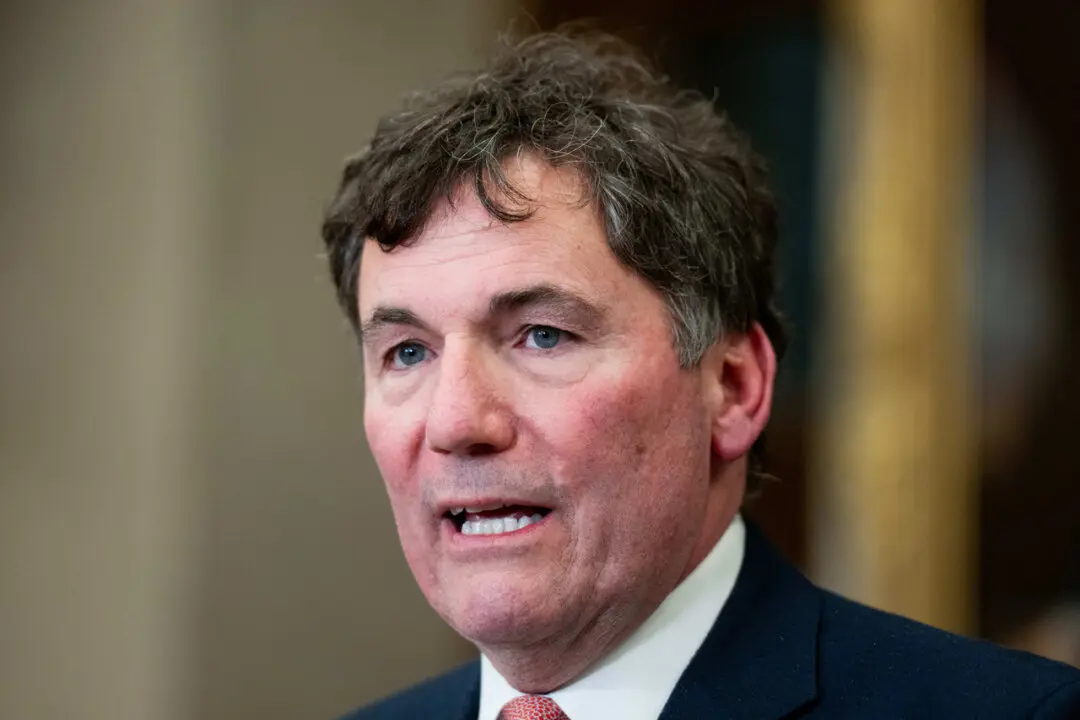
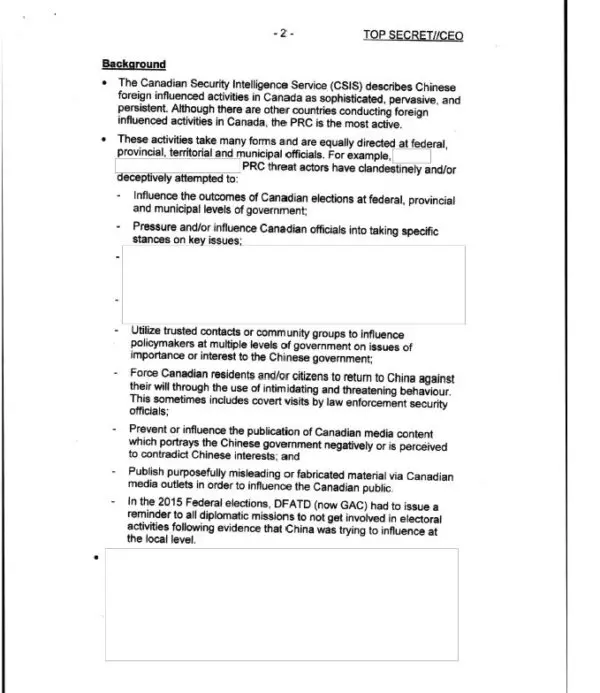



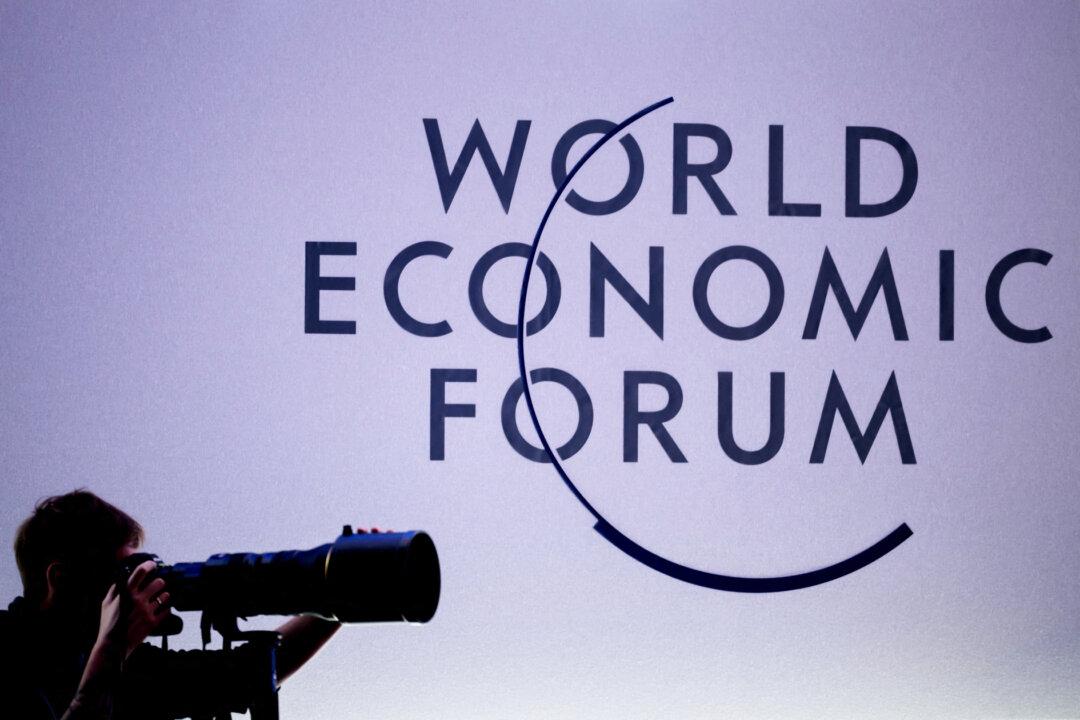

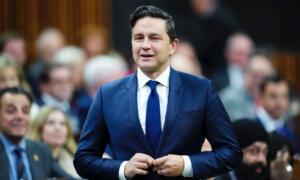

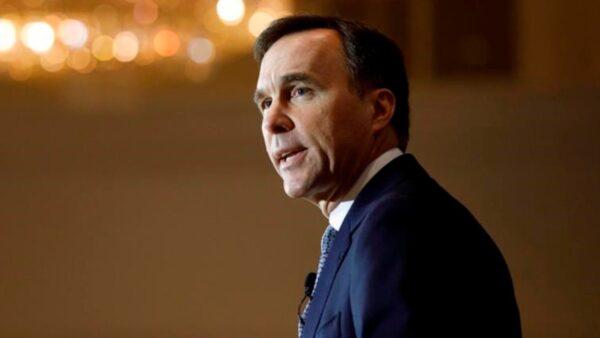

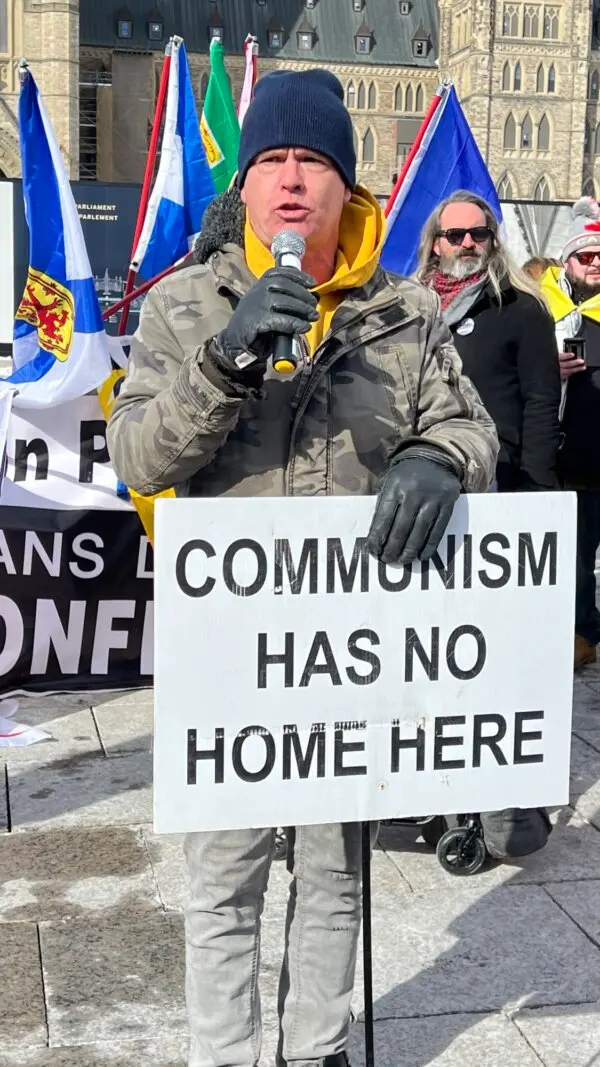
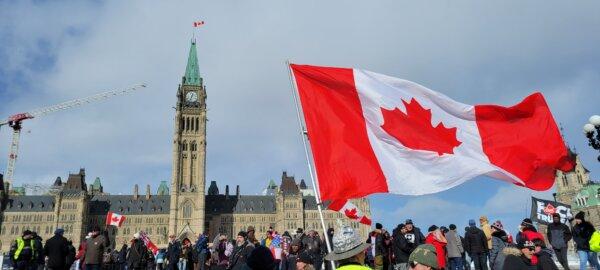
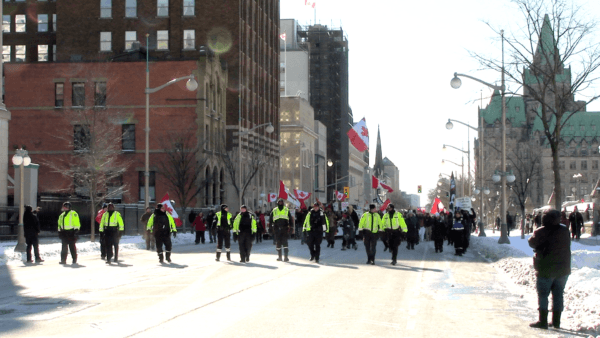

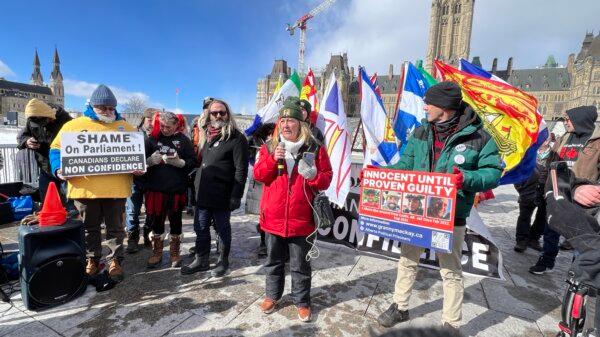
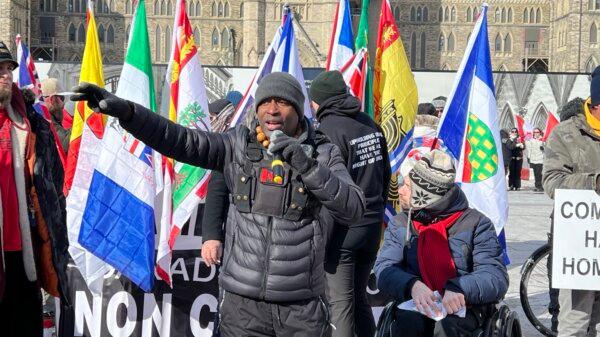
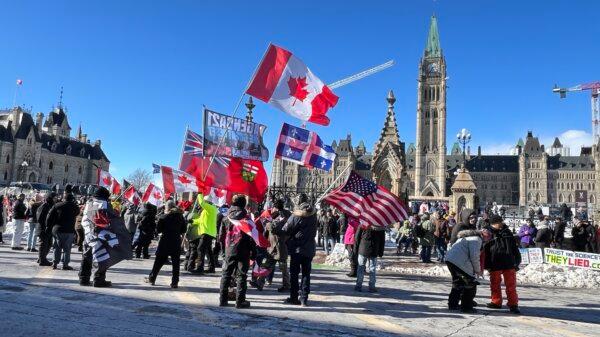
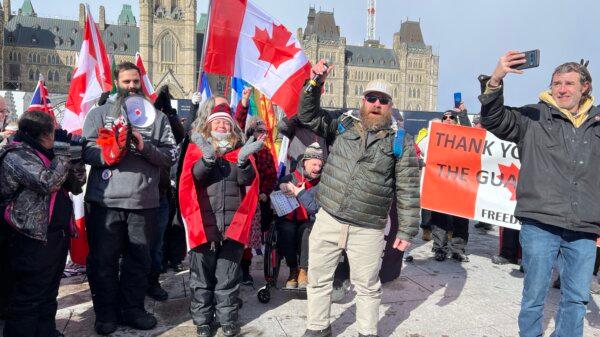
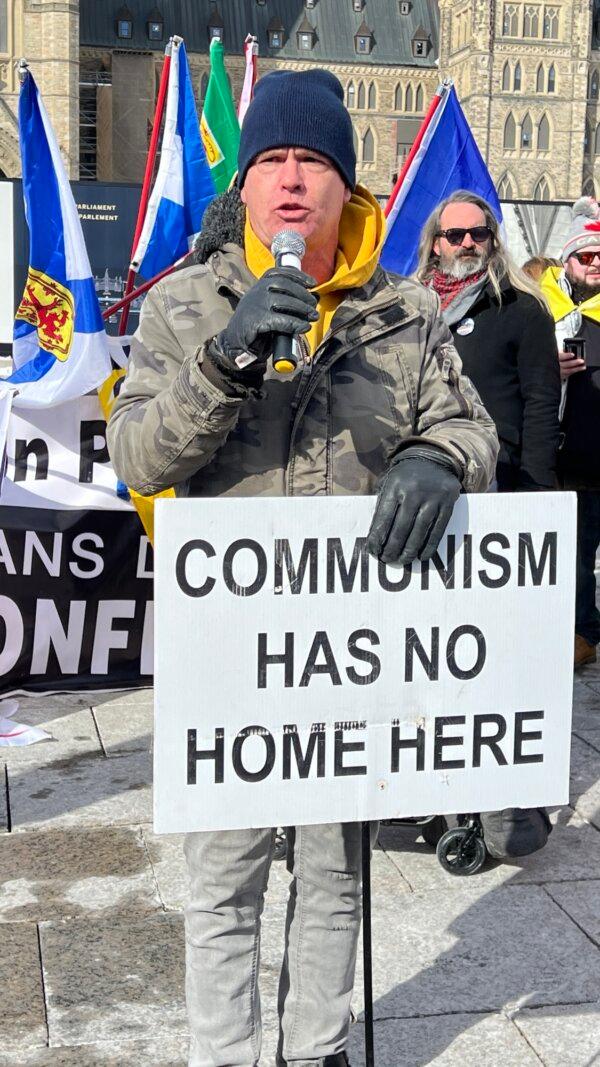







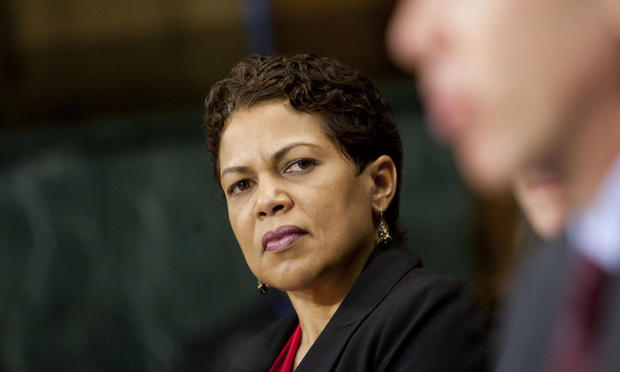
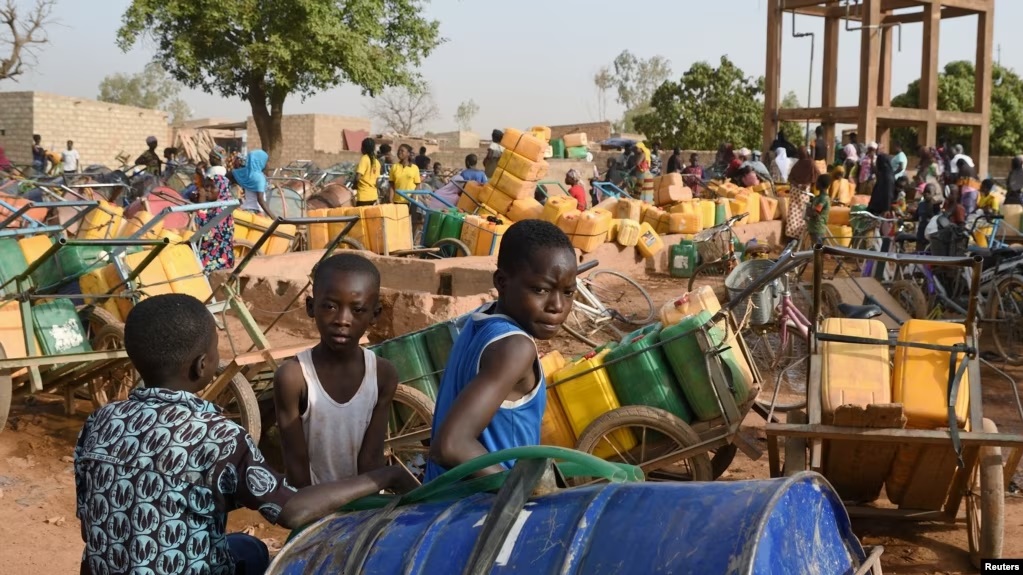
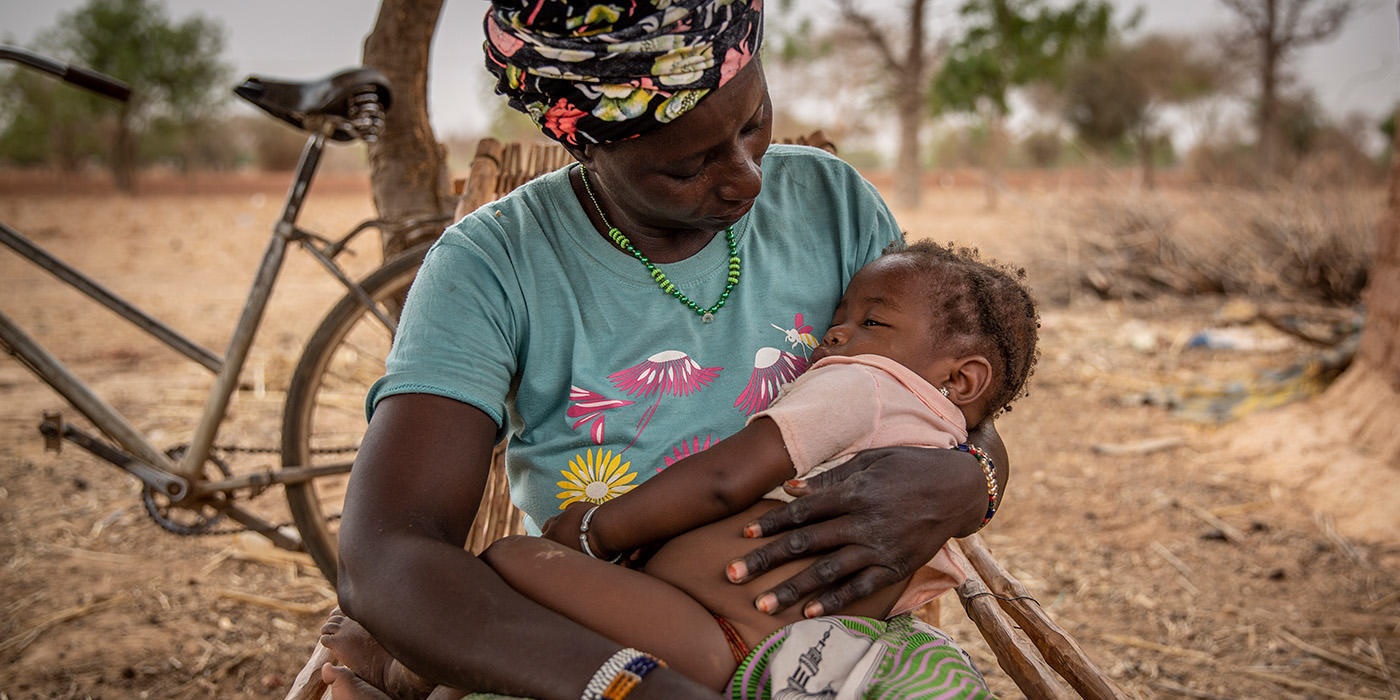
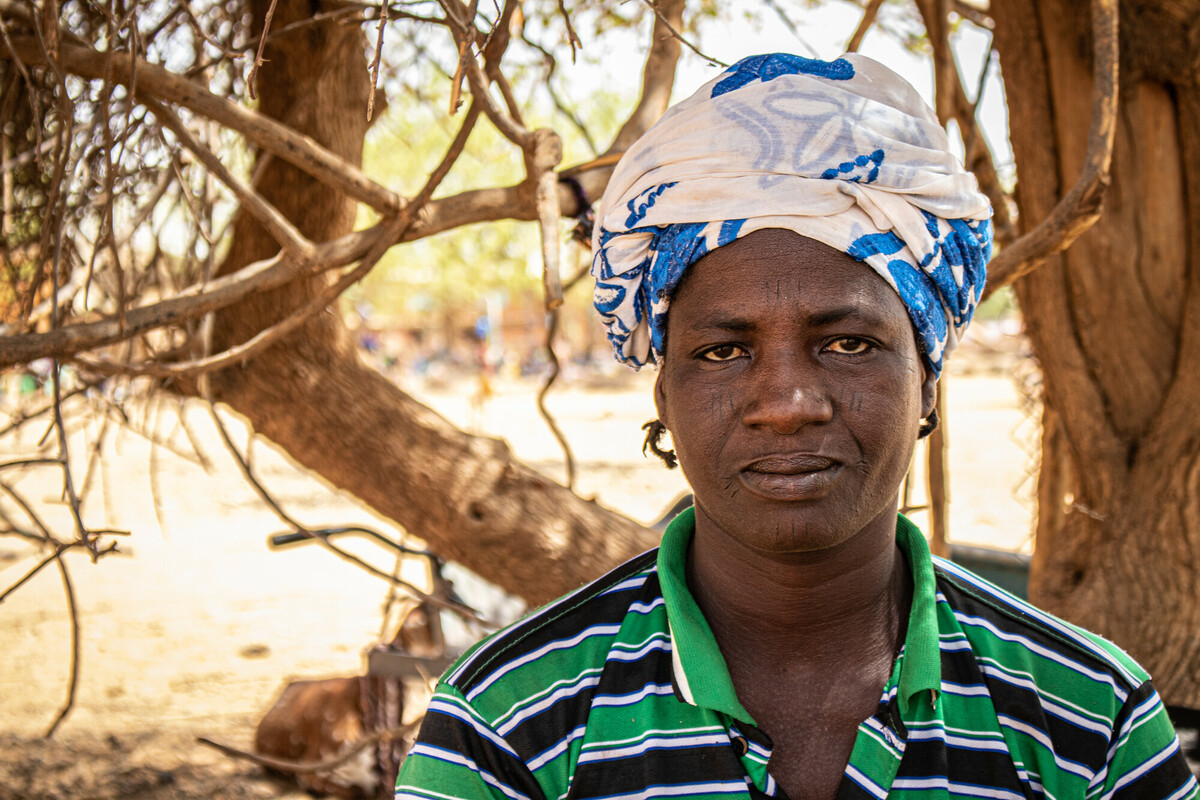

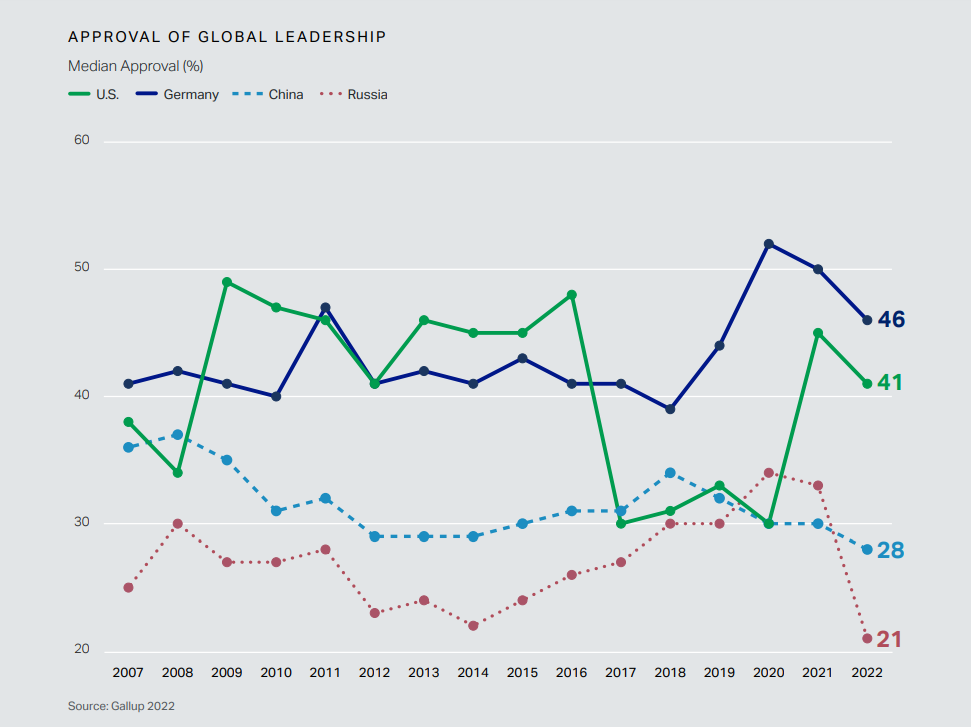

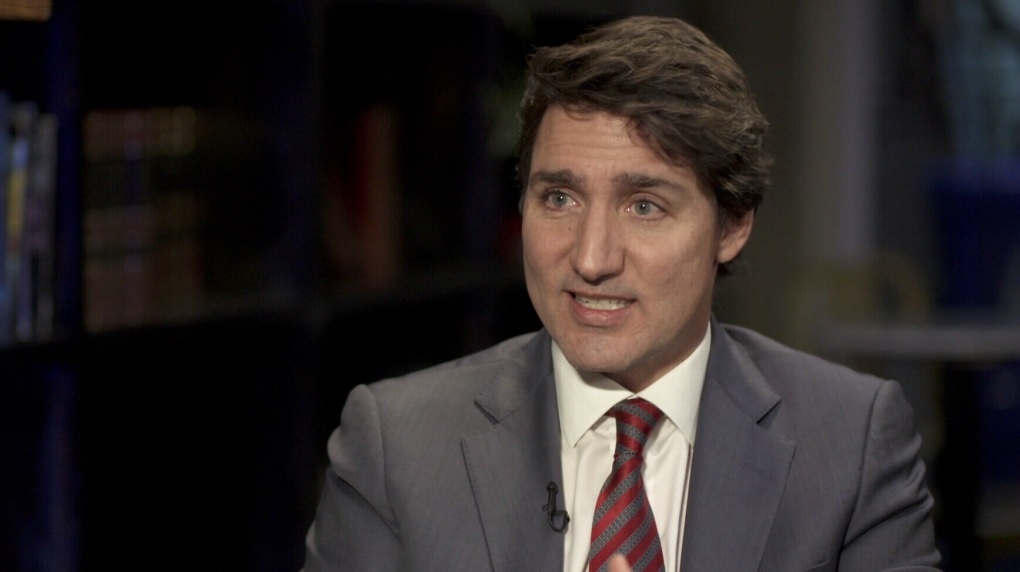

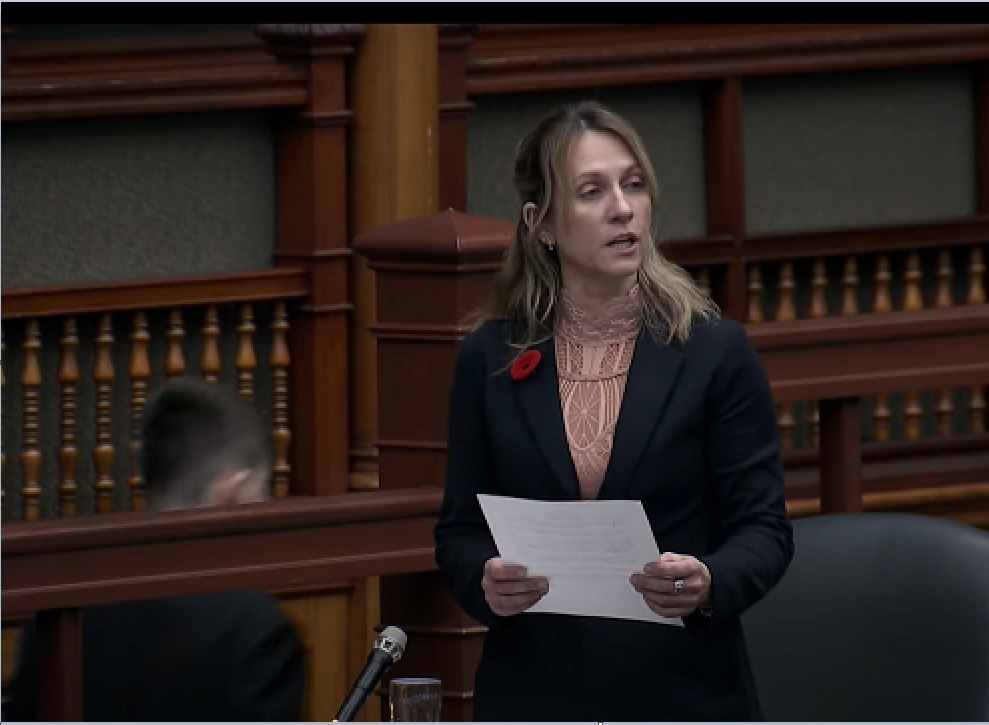
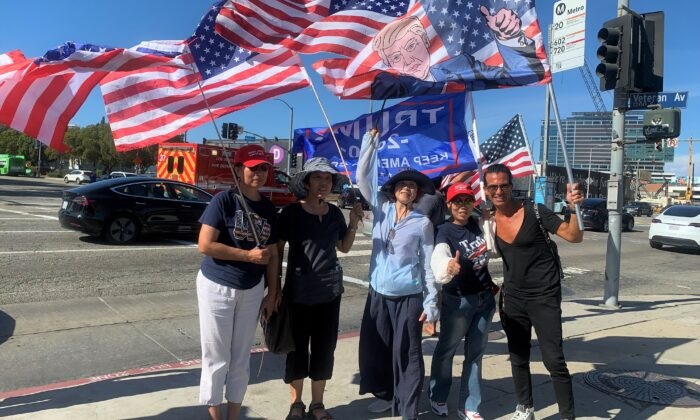
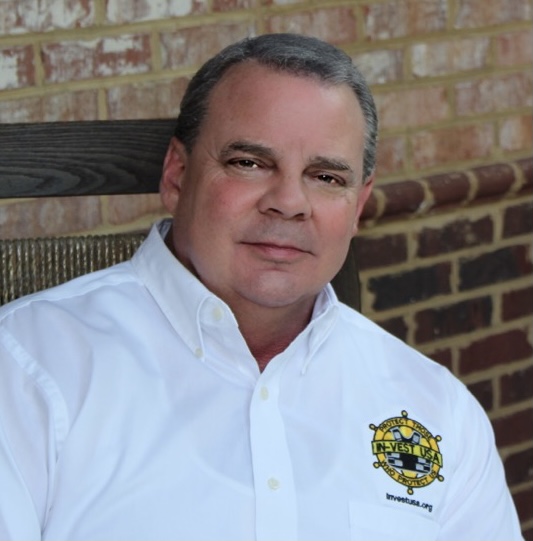

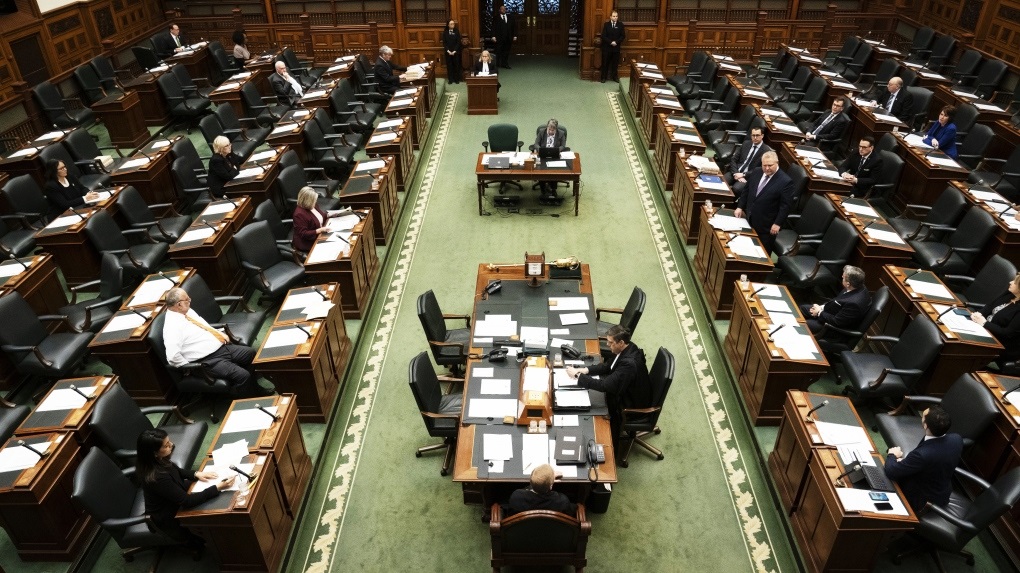
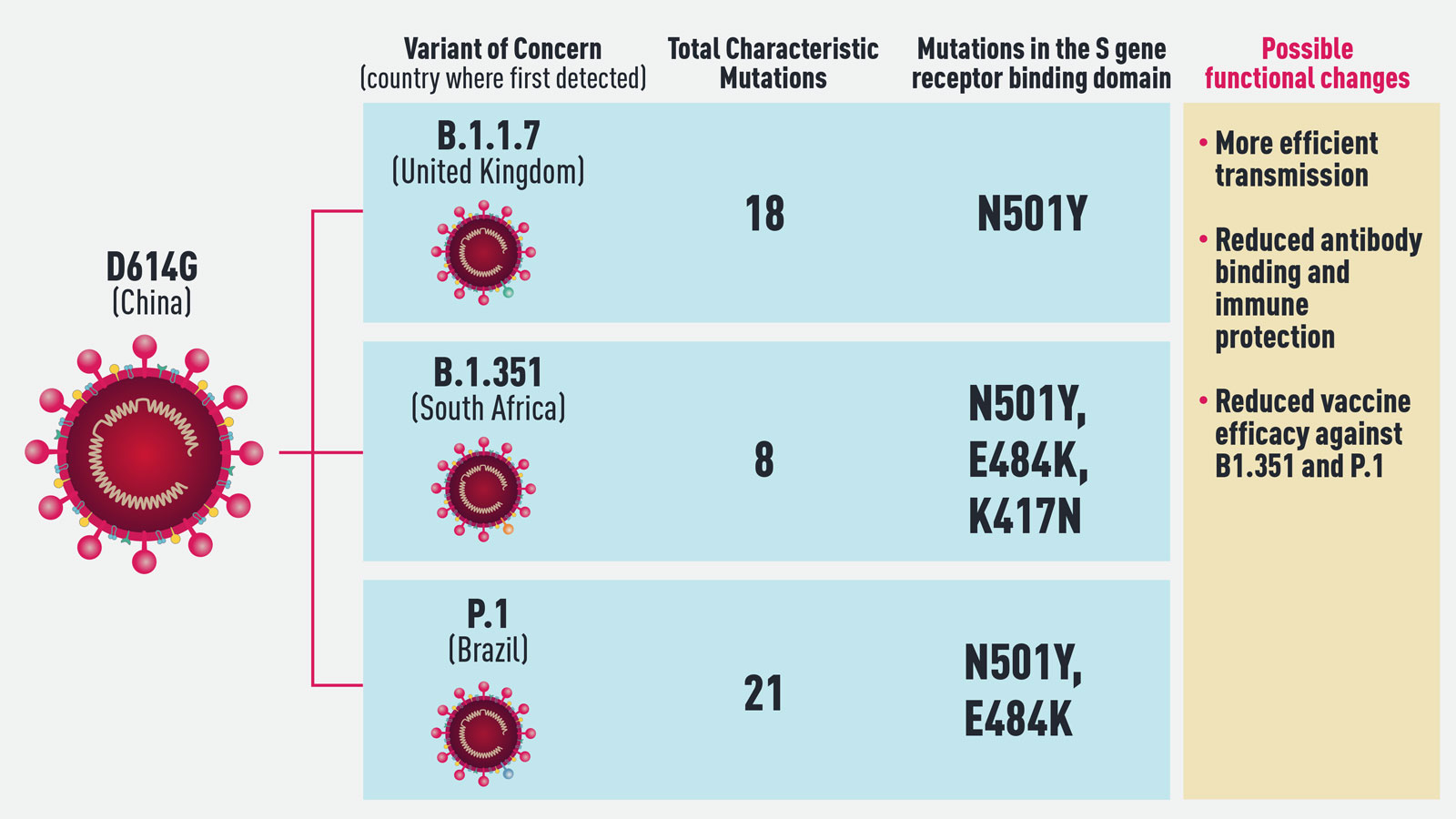
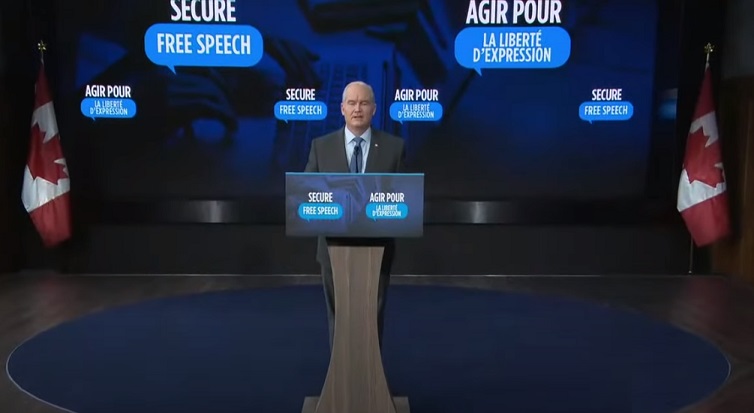
 Le chef des conservateurs Erin O’Toole demande à Justin Trudeau d’annuler le projet de loi C-10