Category Archives: Earth

How Everyone Can Afford Luxury Travel

There is no denying that travel would be a lot more fun if you could crisscross the globe in comfort and luxury. Unfortunately, this kind of experience can end up setting you back a considerable amount of money. Naturally, this is something that few people can afford… Or is it? There is actually a way for you to enjoy a better class of travel without having to empty out your bank account. Here are the tricks to doing this:

Find Ways to Book Private Flights

There is nothing particularly enjoyable about flying commercial. The lines are long, the seats are uncomfortable, and there is a limit to how much luggage you can carry. At the same time, private air travel can often seem out of your reach. If you play your cards right, though, this doesn’t have to be the case.

The Gulfstream G650

For instance, if you are traveling in a larger group, check out Gulfstream G650 as an option. When you combine the overall cost of the commercial plane ticket prices, you may just discover that hiring a single plane is cheaper!

Furthermore, there may be other ways to get you discounts on your Chicago charter or other flights as well. See in many cases, people will only book a one-way flight. Of course, since the plane has to head back to its original destination, it ends up losing money. To counteract this, certain companies will offer lower rates for these flights, if you can change up your schedule a little.

Explore Less Popular Parts of the World

If you are going to go to a place that is a popular tourist destination, you will be unable to afford the top hotels there. After all, there will be a much higher demand for these spots. This is why you may want to look at other less traveled locations.

Whether you are looking for beautiful beaches, culture, or good food, you can guarantee that you can find a more remote option. Since these areas aren’t visited as often, the cost of accommodation is much lower. Thus, you can enjoy a luxurious stay without having to pay nearly as much.

Splurge Wisely

In an ideal world, you would be able to spend on whatever it is that you want. The reality, however, isn’t quite as accommodating. This doesn’t mean that you can’t splurge on certain luxurious items, though. Instead, it is about being careful about what you splurge on.

Look at your holiday and think about which areas you wouldn’t mind skimping on. For instance, instead of eating at the hotel, you should be able to easily find cheaper venues in the city. This may leave you with more money to go shopping at some high-end stores. It is all about managing a careful balancing act.

These are all of the ways that virtually any individual can afford luxury travel. So, if you put your mind to it, you will be able to enjoy a truly wonderful experience. The next time you have to plan a vacation, keep these following tops in mind for the greatest results.
When Planting Native Ontario Trees Use This Tree Atlas

There are many reasons to plant a tree – to shade your home, help the environment, or just for the pleasure and beauty it brings. There are many questions when it comes to choosing the right tree. What kind of tree will thrive in my community, and on my property? How fast will it grow? Should I worry about choosing a native Ontario tree?

The Tree Atlas

You can get answers to those questions and much more information from an online Tree Atlas (ontario.ca/treeatlas).

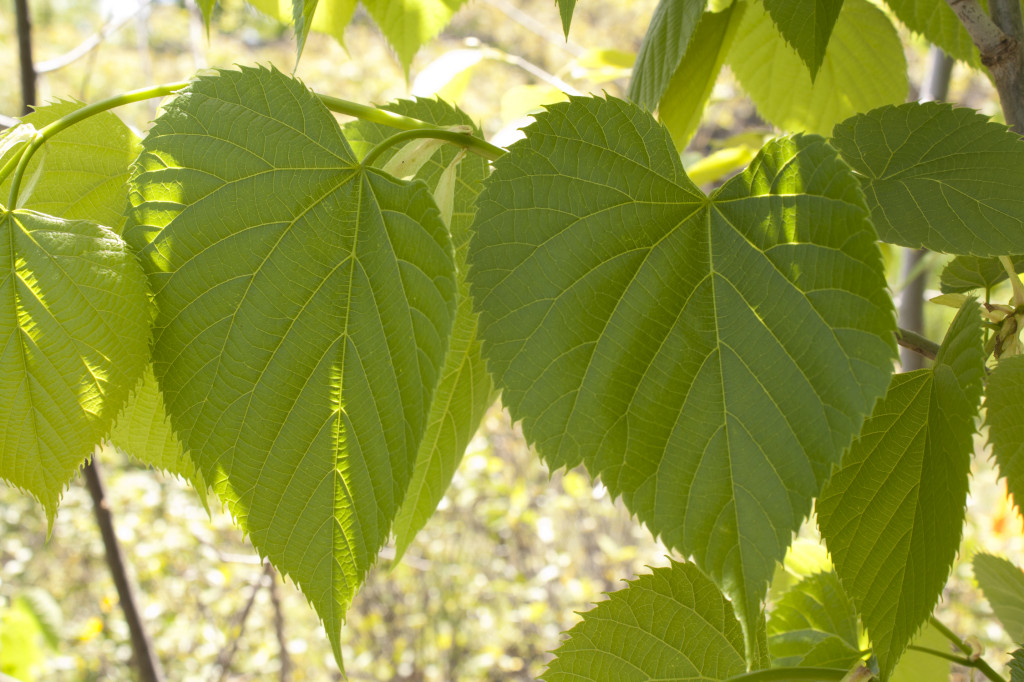
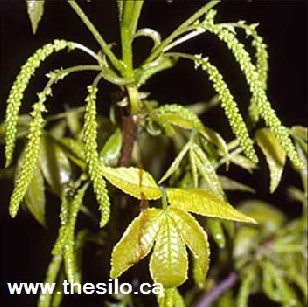
The Tree Atlas shows you which trees will work where you live, your soil type, and other conditions to consider. It can also help you find the kind of tree that helps you achieve other goals, like offering shade to keep your home cool in the summer, attracting birds, or a fast-growing, bushy species to hide an unsightly view.

The Tree Atlas describes trees that are native to Ontario, so you’ll be planting a tree that’s adapted to the province and supports a healthy environment. You’ll also find tips on when and how to plant a tree to give it the best chances to thrive on your property.

Trees clean our air and water, help fight climate change, increase wildlife habitat, provide shade and help prevent flooding.  When you plant a tree, you’re helping the environment.

The Tree Atlas was developed by the Ministry of Natural Resources, so you can be confident that the information provided is accurate and reliable.

 Many Ontario towns and cities have tree planting programs – check with your municipality for tree planting information and assistance in your area. For the Silo, Emmilia Kuisma, District Strategic Officer Ministry of Natural Resources.

Renewable Energy Outlook for 2040 Includes Cancelling Your Print Newspapers

Hey Silo readers! This infographic courtesy of FuelFighterUK demonstrates how production could look in 2040 and what is being done to make our world a greener place. The infographic covers the projected worldwide growth in energy demand, what is being invested to change the renewable outlook and some awesome eco-friendly innovations that have been made by technology companies. For the Silo, Louis Dixon


Energy Outlook For 2040 Infographic 

Get Dirty And Grow Organic

Rick’s lettuce- yummylicious

We’re too fat.  That’s what the media tell us.

We’re too lazy.  They say that too.  And North Americans in general are pretty unhealthy.  I’m saying that. Yet at the same time there are daily press releases about eating healthier, supporting local agriculture, the 100-mile diet, and buying organic produce.  Of course, that requires some thought and decision-making.  The default setting is to support economies of California or China, which we do, pay for the increasing cost of importing,which we do, and wonder what residual chemicals are in our salad greens, which we should.

I was at a high-end organic market in the GTA recently and I hate to say it, but the organic vegetables were a great disappointment.  I felt it was a misrepresentation of what organic produce should be.  But what if you grew your own? Or at least tried?

You don’t need a degree in agriculture, and don’t have to be intimidated by those who have been gardening for years.  It’s OK to be new.  It’s fun to be new.  There are all kinds of health benefits derived from gardening, aside from the produce itself.   And it gives you some time alone with your thoughts.

My advice is to just do it. 

Time and experience will be your best teachers.  Start simple, start small.  I had mini-gardens in townhouse patios and on apartment balconies for years.   At this point, I’m a big supporter of raised bed gardening for almost endless reasons. If you don’t want to go it alone, find a friend or two and have a competition. Like – who will have the first ripe tomato, (Grow the heirloom variety called stupice to win), or the biggest carrot, (oxheart will win, if you can find seed). The first thing to do is select your site.  Simply, the more sun the better.

The second step:  Prepare the bed. 

If you are going to put in a raised bed, you can just mound up the soil into a kind of plateau, or actually construct a container.  Avoid using pressure treated wood since the chemicals could leach out into the soil.  I’ve seen beds built with bricks and patio stones stood up on their edges.  I am
experimenting with various-sized lumber.

The next step is to add or amend the soil. 

The key is to add organic matter, and not just fertilizer pellets.  I think of it like feeding a child – you would never give your kids just water and vitamin pills and expect them to thrive.  Mixed organic matter (leaves, composted kitchen waste, composted manure, old straw…) builds the soil, feeds the worms, and adds the micro-nutrients that will eventually find their way into your vegetables.  Shortcuts are not sustainable. The most important rule is this:  feed the soil, and the soil will feed the vegetables.

If the soil is healthy, the plants will also tend to be healthy and be less susceptible to infestation by insect pests.  It’s one of the laws of nature that the sick and the weak are targets for the predator.  So it is in the garden.   Also consider “companion planting” for plant health.  Among other things I plant strategically-placed marigolds, nasturtium and herbs for insect control.

In selecting the plants for your garden, in the beginning start with what your family likes.  Even for the small garden you can get a pretty good yield in a small space.  For early spring grow leaf lettuce.  You can extend the season by picking off the outer leaves or cutting off the entire head about an inch above ground.  It will push more tender leaves until the summer heat arrives.

Love peas?

Try early bush snow peas, inter-planted with carrots and radishes.  All of them are great for small spaces. Grow herbs for your salads and seasoning.  You’ll decrease the desire for salt and sugar on your plate which will help you stay healthy. You just have to grow tomatoes. Locate a source for an heirloom variety.  Nothing compares with the taste of an old-fashioned vine-ripened tomato still holding the sun’s heat. For the Silo, Rick Posavad.

Climate Peril Book Highlights Predicted Ecological Catastrophe

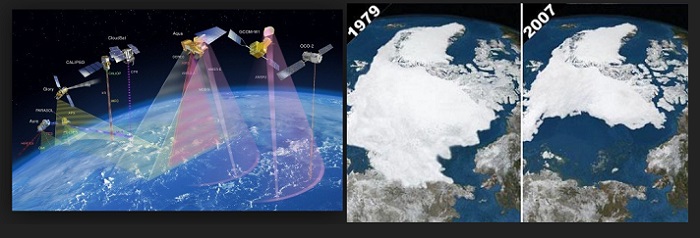
How do we know? "Orbital climate satellites will measure changes in energy that is entering and exiting the atmosphere as well as the effect that manmade greenhouse gases (GHG) or aerosols, are having on the atmosphere." http://green.blorge.com/2011/01/the-glory-climate-satellite-will-join-the-a-train/
Orbital climate satellites measure changes in energy that is entering and exiting the atmosphere as well as the effect that manmade greenhouse gases (GHG) or aerosols, are having on the atmosphere. image: green.blorge.com

A new, authoritative climate book puts all major aspects of the climate crisis into a broad national and international perspective, revealing that the gravity, imminence, and permanence of the crisis are widely misunderstood.

Climate Peril
Climate Peril: The Intelligent Reader’s Guide to Understanding the Climate Crisis (Northbrae Books) by energy and climate expert Dr. John J. Berger  has an introduction by Dr. Paul and Anne Ehrlich of Stanford University and a foreword by Dr. Ben Santer, an internationally respected climate scientist with Lawrence Livermore National Laboratory and the Intergovernmental Panel on Climate Change.

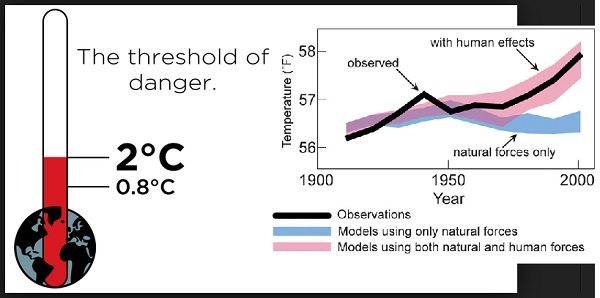
The book underscores the unprecedented urgency of the climate crisis, providing detailed revelations about the grave harm climate change is now doing to human health, national and international security, our economy, natural resources, including the oceans, and biodiversity. Climate Peril demonstrates, for example, that holding global heating to 2° C is no guarantee of climate safety, contrary to the assumptions of many policymakers, and that the world is very likely to exceed this limit anyway.

2degrees threshold

Readers have found that Climate Peril makes important findings of climate science easily accessible and helps them better understand the breadth of the climate threat to our economy and society. The book begins by explaining how the climate system naturally operates and then illustrates how human activity has disturbed it.

Climate Peril goes on to document the broad consequences of rapid climate change, drawing attention to its impacts on nature, the economy, human health, and national security. In the process, Climate Peril highlights our proximity to irreversible climate tipping points and to ecological catastrophe.

Supplemental- Why a two degrees C increase in global average temperature IS a big deal by Elizabeth May  https://www.greenparty.ca/blogs/7/2013-01-21/why-two-degree-celsius-increase-global-average-temperature-big-deal

Ontario Can’t Afford To Not Win War On Phragmites

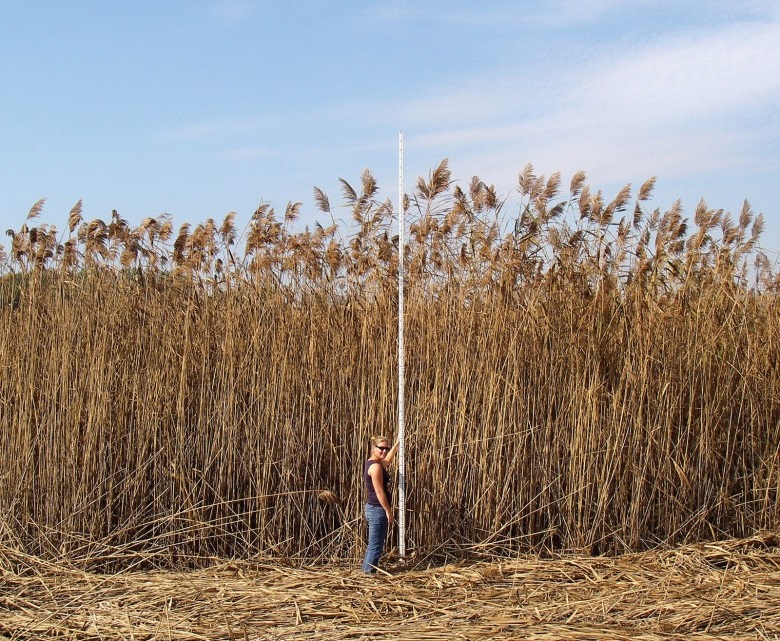
Phragmites is likely the largest invasive plant threat facing Ontario today. It has taken over our wetlands, invaded our ditches and can get a foothold just about anywhere. It’s the monster that keeps coming back – we can’t let our guard down.

Phragmites was first found locally in the Long Point wetlands 20 years ago.

Spraying of glysophate started at Long Point and Rondeau Provincial Parks in September 2016, and has proven 99.7 per cent successful. When the phragmites is dead, the seed bank of native species, like cattails, will reactivate. Although spraying works, it must be followed up by rolling or cutting and burning. On Long Point Bay, there is a combination of private, provincial and federal wetlands. Much of the private wetlands are in the hands of hunt clubs, most of which have been active in controlling phragmites.

The Crown Marsh and the Turkey Point beaches are provincial holdings.

The Canadian Wildlife Service land, which comprises most of the point itself and the Big Creek marsh, are federal. I recently attended the meeting of the Long Point Phragmites Action Alliance – a local group dedicated to fighting this invader. They donated $20,000 toward continuing spraying in the Long Point Crown Marsh last year. Their annual fundraiser, Rocking the Point, will be August 24th.

My office worked tirelessly to ensure phragmites were sprayed last fall at Turkey Point beach after several years of inaction by the previous government. This spring the dead plants were flattened and burned. The Ministry of Natural Resources and Forestry is working with a number of conservation partners to coordinate prevention, control, research and management activities to help address this serious threat in recognition of the importance of the prevention, early detection, early response and eradication of invasive species.

This year the Ontario government is investing over $2 million in invasive species programs and education, and will be investing $850,000 in the centre to support ongoing research and management. Based in Sault Ste. Marie, the centre brings together government, academia, industry and Indigenous communities and organizations to conduct research, response planning, management and habitat restoration.

Early detection is especially important because once invasive species become established it is extremely difficult to remove them, potentially causing long-lasting damage to our environment.

For federal lands, thanks to the actions of MP Diane Finley, the Nature Conservancy of Canada (NCC) will receive $375,000 over the next three years to aid in the removal and prevention of phragmites growth in sensitive ecosystems. Recently, we saw another win for the ongoing control of phragmites with the Ontario Trillium Foundation’s significant contribution of $90,000 to NCC to purchase a boat to control this invasive. Now in its fourth year, the partners have effectively controlled phragmites in over half the coastal wetlands at Long Point and Turkey Point.

With the help of the Ontario Trillium Foundation funds, NCC will be able to continue monitoring the shorelines for phragmites – catching remnant populations before they spiral out of control. Early detection and constant monitoring and control are key to successfully eradicating those devastating invaders and returning the marshes and shorelines to havens for turtles, birds and waterfowl. Although $2 million has been spent on phragmites control in the area, we must be vigilant as the monster will return. For the Silo, Toby Barrett MPP for Haldimand-Norfolk.

Supplemental- The Ontario Phragmites Working Group.

Featured image- Phragmites Great Lakes region photo by Janice Gilbert 2007

5 Most Famous Hotels In London England

London's Most Famous Hotels

Luxurious living, money and fame are things that spring to mind when thinking about hotels London. Many of them have stood the test of time and built a sterling reputation all over the world attracting many of the rich and famous.

Here we’ve compiled a list of the most renowned hotels in London.

Claridge’s, London

Claridge's London- 5 Star Hotel. Address: 49 Brook St, London, Greater London W1K 4HR, United Kingdom
Claridge’s London- 5 Star Hotel. Address: 49 Brook St, London, Greater London W1K 4HR, United Kingdom

Opened in 1854 Claridges London is one of the oldest hotels in the city. Located in London’s infamous Mayfair, Its clientele are among the rich and famous with celebrities such as Brad Pitt and Mick Jagger no stranger to its doors. TV favorite Gordon Ramsay also had his own restaurant there for a time.

Its décor and facilities boast the best in fine dining and luxury living unrivalled in London and has over its long lifespan attracted royalty from all over the world. The hotel was also the feature of a 3 part documentary series for the BBC entitled ‘Inside Claridges’.

The Connaught, London

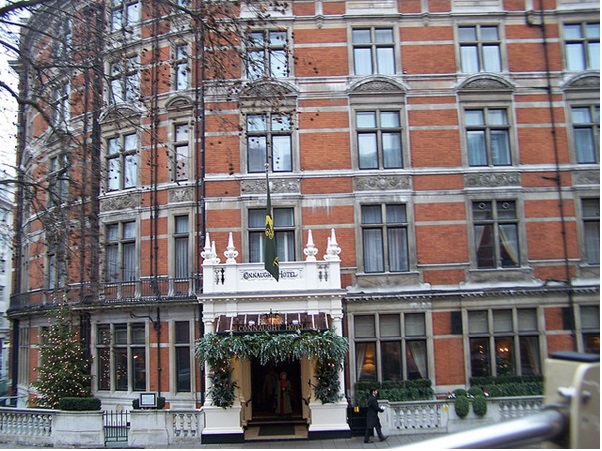
The Connaught London. Five star Hotel. Carlos Pl, London W1K 2AL, United Kingdom

Residing in Mayfair, the Connaught first opened its doors in 1815. The hotel allows both traditional British and contemporary design to co-exist by maintaining its Victorian exterior and completing a 70 million pound internal refurbishment by lead designer Guy Oliver.

This hotel and its staff have won many prestigious awards over its lifespan including its spa winning first prize in the spa category in the Hotel & Lodge Awards 2012 and it’s very own bartender Agostino Perrone winning International Bartender of the Year 2010.

Brown’s, London

Brown's Hotel London. Five star Hotel. 33 Albemarle St, London W1S 4BP, United Kingdom
Brown’s Hotel London. Five star Hotel. 33 Albemarle St, London W1S 4BP, United Kingdom

One of London’s most established hotels is Browns. Opening its doors in 1837, it celebrated its 175th anniversary in 2012 and has consistently attracted guests of wealth and fame, most notably President Theodore Roosevelt and Oscar Wilde.

Not only does this Mayfair hotel boast a stunning Victorian 5 star setting it is also within walking distance to some of London’s busiest attractions such as Hyde Park, Bond Street, Regent Street and some of its most famous landmarks.

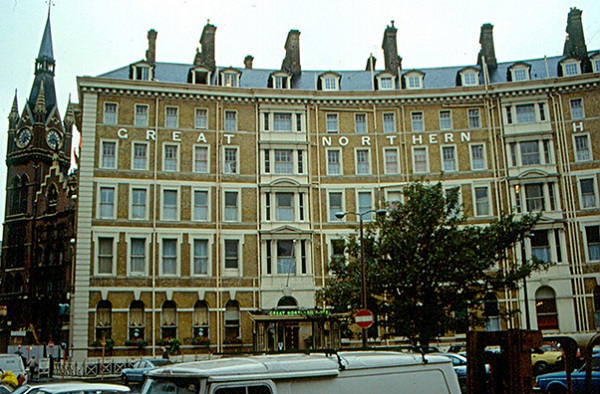
The Great Northern Hotel

First opened in 1854, London's Great Northern Hotel is "an exquisitely designed luxury boutique hotel with an extraordinary location, literally within King's Cross Station and just 25 metres from the Eurostar terminus at St Pancras International."
First opened in 1854, London’s Great Northern Hotel is “an exquisitely designed luxury boutique hotel with an extraordinary location, literally within King’s Cross Station and just 25 metres from the Eurostar terminus at St Pancras International.”

Dubbed as ‘The World’s First Great Railway Hotel’ , The Great Northern is a stunning boutique hotel with rail connections to Europe and beyond via the Eurostar. It stands tall above the areas surrounding buildings and it’s a significant point of interest for all arriving into Kings Cross St Pancras station.

Designed by infamous architect Lewis Cubitt stood as the centrepiece for the steam revolution.

The Berkeley

The Berkeley Hotel London is a five star Hotel. Wilton Pl, Knightsbridge, London SW1X 7RL, United Kingdom

The Berkeley is a five star deluxe hotel, located in Knightsbridge, London. Its history spans well over a 100 years and has even moved buildings. The infamous hotel began its life at Berkeley Street and served as accommodation for mail coach drivers travelling to the West Country.

In 1972 it moved to its current location, incorporating an entirely new refurbishment to include London’s only rooftop swimming pool. Aside from its unique facilities and décor the Berkleley has attracted numerous Michelin star chefs including Pierre Koffmann and more recently Gordon Ramsay and his Boxwood Café. For the Silo, Susan Varano.

Renewable Energy Housing Why & How To Do It

Every year, the public is swarmed with a range of statistics, estimates and consequences of their energy consumption. On average, most households go through their energy supply for similar things, and despite some inconsistencies, could resolve most of their consumption issues with the same line of measures.

The use of renewable energy sources has been key to making private residential buildings all the more sustainable. It not only regulates their consumption, but also provides a clearer overview of how much energy is necessary to keep the household going, and ultimately allows homeowners to reduce their carbon footprint.

With so much research and preparation made against exploitation of limited resources, it is important to keep informed on the main reasons leading to this practice that concern each individual homeowner, as well as the key ways to get started with renewable energy generation.

What is Renewable Energy?

In order to get started with your housing energy improvements, it is important to know what kind of process you are dealing with. Renewable energy, specifically, is the process of generating energy from renewable sources like the sun, wind, soil, which are largely available in nature.

If done properly, this practice can be rather sustainable, meaning it will help homeowners regulate consumption, reduce expenses and contribute to a healthier environment.

Main Reasons for Renewable Energy Housing

As noted so far, this practice resolves some of the major concerns homeowners have, both on the micro and macro level. Ana from safeatlast.co has done the work for us, distinguishing a few top priorities that cause people to turn to renewable energy:

· Cost – Energy price soars, as well as additional expenses appearing over the years have had detrimental effects on homeowners’ budgets;

· Climate change – Greater awareness of the greenhouse effect has made people more concerned about their home’s carbon footprint;

· Control – People are alarmed by the realization that they have no idea how much energy they need to meet their everyday needs;

· The current state of the home – Construction characteristics, underground waters, insulation and other features could cause major problems, calling for a more permanent solution.

Top Ways to Achieve Renewable Energy Housing

Nowadays, there is a range of equipment, construction material and entire systems that can be installed into your existing homes in order to achieve greater energy conservation. Most of these make use of the natural, renewable sources of energy to improve the overall quality of life.

While they may be somewhat expensive as an investment, subsidiary programs and initiatives, as well as the long-term payout have gotten many homeowners interested in the following options:

1. Solar power systems – Solar panels placed on rooftops allow homeowners to use the sun’s heat to generate heating power for water, space heating, or electric power generation, alternatively;

2. Biomass boilers – Burning natural residues, these boilers help homeowners get rid of waste and keep their homes warm at the same time, all the while controlling their carbon emissions;

3. Insulation – Proper insulation is just as crucial as the systems listed above, with cavity wall, external and internal wall insulation, as well as high performance doors being the top picks among homeowners.

World Heritage Committee Adds 29 New Sites Including Alberta On UNESCO’s World Heritage List

Baku, Azerbaijan, July—The city of Fuzhou (China) will host the next session of the World Heritage Committee in 2020. This decision concluded the work of the 43rd session of the World Heritage Committee, meeting in Baku since 30 June.

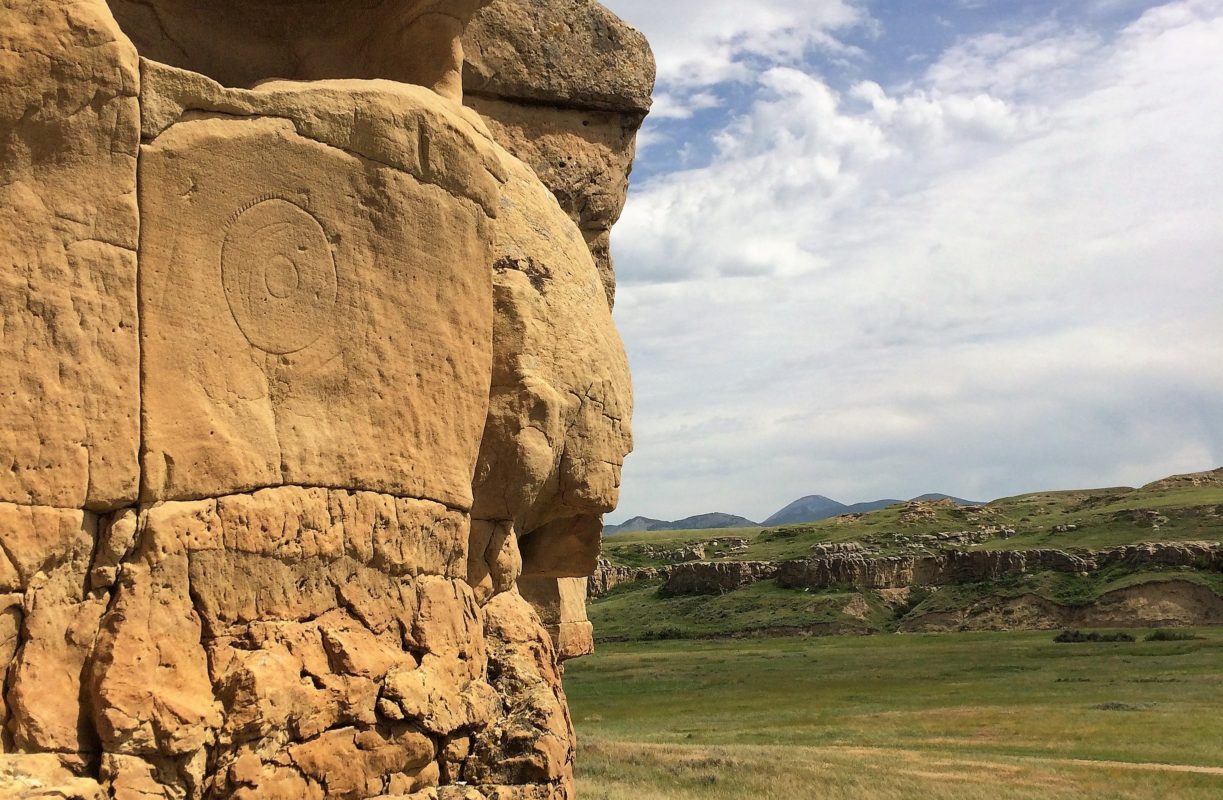
During this year’s session, the World Heritage Committee inscribed a total of 29 new sites on the World Heritage List (one in Africa, two in the Arab States, ten in the Asia Pacific region, 15 in Europe and North America including Writing-on-Stone Provincial Park in Alberta, Canada and one in Latin America).

The World Heritage List now features 1,121 sites in 167 countries.

The Committee approved the removal from the List of World Heritage in Danger of the sites of Humberstone and Santa Laura Saltpeter Works (Chile) and Birthplace of Jesus: the Church of the Nativity and Pilgrimage Route, Bethlehem (Palestine). One property has been added to the List of World Heritage in Danger: the Islands and Protected Areas of the Gulf of California (Mexico).

This session reaffirmed the potential of heritage in strengthening cooperation between States, with the inscription of the transboundary site of the Erzgebirge Mining Region/Krušnohoří (shared by Germany and Czechia) and the extension into Albania of the natural and cultural heritage site of the Ohrid Region (Northern Macedonia).

Cooperation and mediation work on heritage also allowed for consensus on decisions regarding the Middle East thanks to constructive discussion with the delegations concerned, notably Israel, Jordan and Palestine.

Several major archaeological sites were added to the List, including the Dilmun Burial Mounds (Bahrain), the Ancient Ferrous Metallurgy Sites of Burkina Faso and the iconic site of Babylon (Iraq), once the centre of the Neo-Babylonian Empire and site of the Hanging Gardens, one of the Seven Wonders of the Ancient World, which have inspired artistic, popular and religious culture worldwide.

The inscription of Babylon, combined with significant investment by Iraq, contributes to UNESCO’s efforts to rebuild the country and its flagship Reviving the Spirit of Mosul initiative.

Sites essential for the preservation of global biodiversity have also been inscribed. They include the Migratory Bird Sanctuaries along the Coast of Yellow Sea-Bohai Gulf of China (Phase I) (China) and the site of the French Austral Lands and Seas (France) with a record surface area of over 67 million hectares that is home to one of the highest concentrations of birds and marine mammals in the world.

Finally, the inscription of the sites of Budj Bim Cultural Landscape within Australia’s Gundijmara Aboriginal region, and of Canada’s Writing-on-Stone / Áísínai’pi, a sacred landscape of the Blackfoot (Siksikáítsitapi) people, recognizes the knowledge of indigenous peoples, essential for the preservation of cultural and natural heritage.

Significant efforts are still needed to enhance and preserve African heritage, which remains largely under-represented on the List. UNESCO also renewed its call for unflagging rigour, integrity and responsibility in the examination of nominations so as to ensure the credibility of the World Heritage Convention and its future standing.

The new natural sites are:

Migratory Bird Sanctuaries along the Coast of Yellow Sea-Bohai Gulf of China (Phase I) (China)

French Austral Lands and Seas (France)

Vatnajökull National Park – dynamic nature of fire and ice (Iceland)

Hyrcanian Forests (Islamic Republic of Iran)

Mixed site:

Paraty and Ilha Grande – Culture and Biodiversity (Brazil)

Cultural sites:

Budj Bim Cultural Landscape (Australia)

Historic Centre of Sheki with the Khan’s Palace (Azerbaijan)

Dilmun Burial Mounds (Bahrain)

Ancient ferrous Metallurgy Sites of Burkina Faso (Burkina Faso)

Writing-on-Stone / Áísínai’pi (Canada)

Archaeological Ruins of Liangzhu City (China)

Landscape for Breeding and Training of Ceremonial Carriage Horses at Kladruby nad Labem (Czechia)

Erzgebirge/Krušnohoří Mining Region (Czechia, Germany)

Water Management System of Augsburg (Germany)

Jaipur City, Rajasthan (India)

Ombilin Coal Mining Heritage of Sawahlunto (Indonesia)

Babylon (Iraq)

Le Colline del Prosecco di Conegliano e Valdobbiadene (Italy)

Mozu-Furuichi Kofun Group: Mounded Tombs of Ancient Japan (Japan)

Bagan (Myanmar)

Megalithic Jar Sites in Xiengkhuang – Plain of Jars (Lao People’s Democratic Republic)

Krzemionki Prehistoric Striped Flint Mining Region (Poland)

Sanctuary of Bom Jesus do Monte in Braga (Portugal)

Royal Building of Mafra – Palace, Basilica, Convent, Cerco Garden and Hunting Park (Tapada) (Portugal)

Seowon, Korean Neo-Confucian Academies (Republic of Korea)

Churches of the Pskov School of Architecture (Russian Federation)

Risco Caido and the Sacred Mountains of Gran Canaria Cultural Landscape (Spain)

Jodrell Bank Observatory (United Kingdom of Great Britain and Northern Ireland)

The 20th-Century Architecture of Frank Lloyd Wright (United States of America)

For the Silo/UNESCO, Lucía Iglesias Kuntz.

Featured image: Description: Shield-bearing warrior and the distant Sweetgrass Hills
Date: 01/06/2017 
Author: Alberta Parks
Copyright: © Alberta Parks

Evaluation Of Practices Is Key For Lyme Disease Strategy

Another year has ticked by and Lyme disease remains a problem across much of North America.

Over the years I have met with so many people – farmers, outdoor activists, friends, neighbours – who have come down with Lyme – so many, often young people, afflicted in the prime of their life.

Time and time again I am told our health care system seems unaware and unprepared to deal with what remains essentially a new and emerging infectious disease – a disease that mimics other ailments and all too often has flummoxed those not expert in tropical diseases or public health.

Compounding the problem is the confusing and somewhat dubious advice prevalent on social media.

We have government for a reason and to that end in 2015, I introduced legislation – a Private Member’s Bill – to mandate the Ontario Minister of Health to develop ‘A Provincial Framework and Action Plan Concerning Emerging Vector-Borne Diseases,’ to quote the title of the bill.

The bill passed second reading with all-party support and became the law of the land.

Given my previous background in both research and health, I felt bound to take a purely objective evidence and science-based approach to creating this legislation. I called for a provincial framework and an action plan through our Ministry of Health – a plan that, primarily, encompasses surveillance, education materials and guidelines – guidelines for prevention, identification, diagnosis, treatment and management, including emergency preparedness – and calls for the sharing of best practices provincially and across our country. It instructs the Minister of Health to bolster research collaboration among all concerned, particularly those in the public.

One of my goals is to facilitate an efficient, more effective allocation; essentially, of what I consider scarce health resources. Going back to prevention, it is much more cost-effective to prevent than to treat. We know that the worldwide cost of SARS, for example, was $40 billion, and the bill in Canada came in at $2 billion, so prevention is key. Prevention is certainly key when there is no vaccine or little in the way of effective treatment. When you are dealing with a particular affliction like Lyme, prevention is the only option.

A committee was struck because of my legislation, and three years after my bill passed, released recommendations in April 2018.

Their advice included a call for reviews of current tick surveillance activities; of current testing methodologies for diagnosing Lyme disease and other tick-borne illnesses; and a review of current clinical practice guidelines focussing on assessment, prevention and treatment.

The committee also, as in my legislation, calls for research, education and public awareness. It calls for improved communications to regulated health professionals regarding standards of practice for diagnosis and treatment, as well as, the provision of professional education, and a coordinated care model for patients at all stages of these diseases.

The spread of Lyme disease in Ontario is an important issue for the Ministry of Health.

Health Quality Ontario (HQO), in partnership with Public Health Ontario (PHO) and in collaboration with clinical experts, patients and caregivers across the province has developed a clinical guidance document for early-localized Lyme disease. HQO continues to review the evidence and has committed to making any necessary changes to the guidance document as the evidence warrants.

In my view, the Ministry of Health is making progress.

For the Silo, Toby Barrett -MPP for Haldimand-Norfolk.

Record Number Of Clean Beach Blue Flags Now Flying

Pinterest
More Canadian beaches and
marinas awarded Blue Flags

2018 is another record year for Canada’s waterfronts, 27 beaches and nine marinas have been awarded a coveted Blue Flag, including our very first coastal flag at beautiful Aboiteau Beach, NB. The Blue Flag is the internationally recognized symbol of environmental excellence for beaches and marinas. Read on to find the best waterside spots to spend your Victoria Day weekend.

Time for
the Government
to step up on
plastic waste
Only 11 per cent of Canada’s plastic waste is recycled.  Let that sink in for a minute.  This problem goes way beyond individual changes, we need the Federal Government to step up and take meaningful action before it’s too late. Sign the petition now to ask for a plastic free environment.
Banned chemicals found in products that babies chew, play and nap on A new study reveals that 86 per cent of tested products sold in Canada contain toxic chemicals, some of which are banned. Baby bibs, blankets and more were found to contain water and stain resistant chemicals linked to hormone disruption, and even cancer. Find out how you can take action.
Tell Canada that all high-carbon projects need an impact assessment What the frack?! The Canadian government is proposing to exempt fracking and in situ tar sands from the new federal environmental review process. We have until June 1st to fix this – send a letter now to tell the government that ALL high-carbon projects should get an impact assessment.

Canada Passes Bill Ending Captivity Of Whales & Dolphins

OTTAWA, CANADA (June, 2019) – In Defense of Animals applauds Canada’s passing of Bill S-203, the Ending the Captivity of Whales and Dolphins Act, which passed through the House of Commons in Ottawa, Canada on Monday, June 10, 2019.

First introduced by Senator Wilfrid Moore in 2015, the legislation will officially make it illegal to hold any cetacean in captivity, for reasons other than rehabilitation and scientific research. Breeding or trading reproductive materials of whales and dolphins will also be prohibited. Any breach of this ban carries fines of up to $200,000.

“We applaud Canada for passing this progressive legislation, since whales and dolphins suffer greatly in captivity, no matter the size of the tank,” said Marilyn Kroplick M.D., President of In Defense of Animals. “The overwhelming support for this ban demonstrates how many Canadians are opposed to the inherent cruelty of keeping and breeding cetaceans.”

Two facilities currently hold cetaceans captive within Canada.

Vancouver Aquarium holds one dolphin captive. The ‘beluga breeding mill’ was shamed in #9th place on In Defense of Animals’ Ten Worst Tanks list, and faced significant public pressure regarding its cruel activities from many concerned citizens including world-famous Dr. Jane Goodall and thousands of In Defense of Animals supporters. The Vancouver Parks Board passed a captive cetacean ban in 2017, prompting the Aquarium to announce its plans to phase out its cetacean exhibit.

https://www.facebook.com/LeParadisDeLimage/videos/365798150957404/

Marineland in Ontario is placed as #2 Worst Tank and continues to hold captive more than 50 belugas, five bottlenose dolphins, and Canada’s last captive orca. All of these animals will be grandfathered in, so the passing of the Ending the Captivity of Whale and Dolphin Act will not directly impact them. However, Marineland will be required to halt all captive breeding at its facility, ultimately putting an end to the cetacean captivity industry throughout Canada.

Over 10,000 members of In Defense of Animals contacted Canadian decision-makers to support this historic bill, demonstrating significant public support for this important animal protection legislation.

Keeping dolphins and whales in captivity, forcing them to perform degrading tricks and being placed on perpetual display, is archaic and not in line with scientific discoveries about their significant cognitive and emotional sophistication.

The time has come for the unethical captive animal industry to dissolve–and Canada has taken steps to ensure this will happen. We urge Marineland to abide by the spirit of the Ending the Captivity of Whales and Dolphins Act, and the wishes of the Canadian people who stand by this landmark legislation, and release the dolphins and whales it holds captive to seaside sanctuaries.
For the Silo, Laura Bridgeman/IDA In Defense of Animals.

Rising Cost Of European Airline Snacks And Drinks

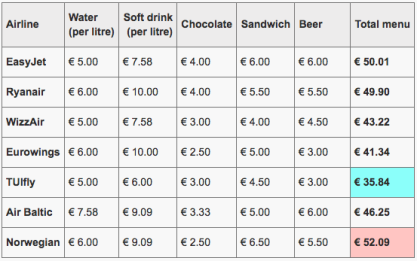
German budget carrier Eurowings will now charge economy passengers for snacks and drinks on board its flights, the travel platform fromAtoB conducted research into the costs of food and drinks on different airlines.

• Ryanair charges more than other airlines for soft drinks and chocolate

• Ryanair and EasyJet menus relatively expensive

• German airlines offer the cheapest beer and best overall value for money

• Eurowings joins the majority of low-cost airlines, which now charge for snacks and beverages

Berlin, June 2019. None of us are keen to fork out for snacks and drinks on budget airlines, but since we are forced to dispose of liquids before going through security, we are often left with no choice. Travel platform fromAtoB compared the current prices for drinks and snacks in ten European low-cost airlines to see which are the worst offenders.

Water is often the first thing passengers need, and the price of this basic necessity can vary widely. EasyJet, TUIfly, and Wizzair all charge €2.50 for a 500ml bottle of water, while Ryanair and Pegasus charge €3. [One euro at time of publishing = $1.50 Canadian dollar]

Soft drinks also cost anywhere between €2.50 and €3 for varying sizes. The price per litre varies significantly between airlines. While TUIfly charges €6, Ryanair and Eurowings ask for €10. 

German airlines offer the cheapest beer

As is fitting for a country known for its beer, flights to and from Germany offer the best value, with a 330ml can costing just €3 with Eurowings and TUIfly. EasyJet makes passengers dig a little deeper into their pockets, charging twice as much, while a beer on a Ryanair flight will set passengers back €5.50.

Food for thought

The cost of a sandwich also varies significantly. The East European carrier Wizzair offers the cheapest options for just €4, while Eurowings passengers can expect to pay €5 for a chicken roll. Both Norwegian and Spanish airline Vueling charge €6.50 for a club sandwich.

TUIfly: best value overall

Almost all airlines offer a combined menu that often includes a sandwich, drink, and snack. A Wizzair meal deal costs between €6 and €8.50, while a meal alone with Norwegian costs €8.

TUIfly offers the best overall value for money, with all items on the menu totalling €35.84, compared the Norwegian menu which totals €52.09, and Easyjet at €50.         

The full data can be seen here.  

Comparing costs of European airline snacks and drinks

For the Silo, Carmen Cracknell.

Supplemental- The 10 Best US Airlines Ranked by Free Snacks https://mashable.com/article/best-airline-free-snacks/

Texas NRCS Accepting Conservation Applications From Rice Producers

TEMPLE, Texas – Rice producers wanting to enhance current conservation efforts are encouraged to apply for a special Conservation Stewardship Program (CSP) sign-up.  Led by the USA Rice-Ducks Unlimited Rice Stewardship Partnership, the Gulf Coast Water and Wetlands Regional Conservation Partnership Program (RCPP) and the Lower Colorado River Authority (LCRA), the RCPP provide an opportunity to enhance conservation on rice lands in 12 Texas counties. Applications for RCPP-CSP are accepted on a continuous basis, but to be considered for this funding period applications must be received by June 28, 2019.

The special sign-ups assists landowners and rice producers who voluntarily implement conservation and management practices that aim to provide waterfowl habitat on rice production lands.  Nutrient management and integrated pest management (IPM) to address water quality concerns are also a priority.  Although enhancements are limited, irrigation efficiencies are also a focus.   

“NRCS is pleased to partner with USA Rice and Ducks Unlimited and others in these RCPP efforts.  said State Conservationist Salvador Salinas. “RCPP-CSP provides an opportunity for rice producers to build their businesses while implementing conservation practices that help ensure the sustainability of their operations and improve the environment for Texas’ citizens.”

These special RCPP CSP sign-ups are targeted for rice production acreage in Brazoria, Calhoun, Chambers, Colorado, Fort Bend, Jackson, Jefferson, Lavaca, Liberty, Matagorda, Waller and Wharton counties. These projects will provide a special CSP allotment of approximately 110,000 acres in 2019 to Texas rice growers, 80,000 acres under Gulf Coast Water and Wildlife RCPP and 30,000 acres under the LCRA RCPP respectively.

“NRCS has updated the program to help producers better evaluate their conservation options and the benefits to their operations and natural resources,” said Rice Stewardship Coordinator Kyle Soileau. “Partnership staff can help producers see up front why they are or are not meeting stewardship thresholds and allow them to pick practices and enhancements that work for their conservation objectives. These tools also enable producers to see potential payment scenarios for conservation early in the process.”

For additional information producers interested in CSP or other conservation planning, technical and financial assistance can contact their local USDA service center or visit www.tx.nrcs.usda.gov.

Chasing Ontario’s Tornados

Part One

I have seen many storms in my life. Most storms have caught me by surprise, so I had to learn very quickly to look further and understand that I am not capable of controlling the weather, to exercise the art of patience and to respect the fury of nature”

My name is Spencer Sills, and I am a storm chaser, some of you may remember a few years back reading about my good friend David Chapman and myself in this very newspaper and our journeys on the road to capture Nature’s fury through our lenses. Not much has changed since then, we are both still on the hunt for the elusive supercell and what fury may come with it.

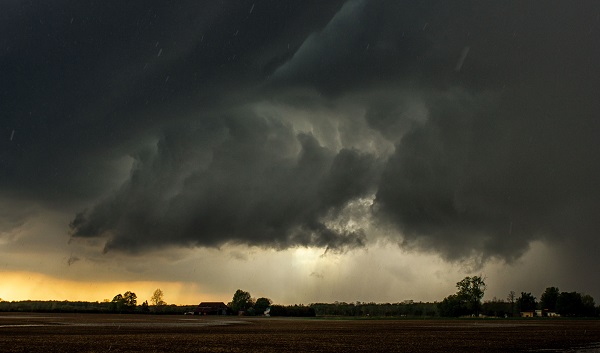
In 2014 my overall goal to capture a tornado in Ontario was once again successful, on July 7th I teamed with Scott Burlovich of Restless Skies photography and his chase partner Harry for the day and we set out to capture some pulse storms that were flaring up in the afternoon, most of these cells were just rain makers but on the way back to my home I had noticed a wall cloud that was lit up by the sun, we pulled off to the side of the road directly South of Norwich and briefly documented a EF0 tornado in a farmers field before it lifted causing no damage since it was in a dry field. This was my only tornado of the year, in a busy season. I did however get to document several gorgeous storm cells throughout the year, including several beautiful stacked shelf clouds and a great Wall cloud early in the season that brought golf ball sized hail to the area.

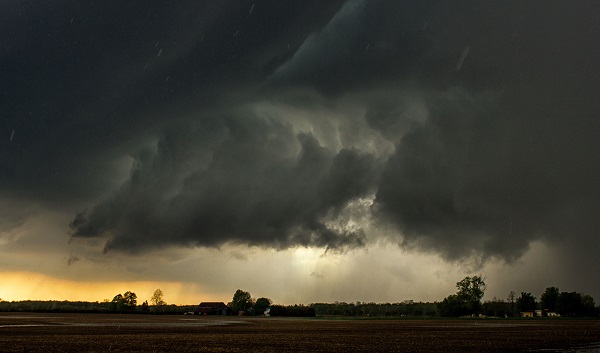
A Wall cloud in SW Ontario approaches my location as the RFD cuts around with hail starting to fall.

In 2015 I hope to achieve a few goals, one of which is to capture yet another tornado in this province, hopefully just like 2014 in an open field away from any properties. I also have set my sights on some goals with lightning and capturing it in a different perspective, I can’t go into much detail but it will be a stunning sight if I can achieve it. As far as how I believe the season will go, I do believe it will be a slow start, April and May will bring the return of storms, but I don’t expect anything too severe until June and July once the humidity and warmth really have a chance to build in. I do however once again stress to leave chasing to the pros, if you’re interested in storm spotting, please look into Canwarn, the more spotters in the province the quicker warnings can be issued thanks to verified ground reports.

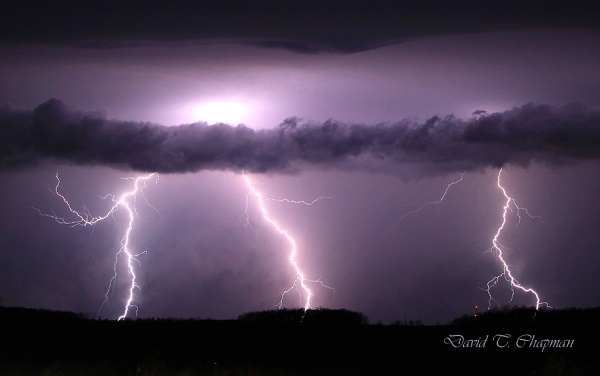
Lightning by Chapman

I will be working alongside another photographer and storm spotter this year, Scott Burlovich of Restless Skies, please feel free to check out his amazing work at restless-skies.com and give him a follow on twitter @restless_skies , you can also follow my journey for the year at Lightningfastphotography.com or on twitter @spencersills. I also want to send my best wishes to David Chapman for a great 2015, and as always look forward to meeting him in the field under the Meso, stay tuned for more updates and stay sky aware this summer!

Part Two

Another winter has come and gone, although perhaps slower than a lot of us would like. At least this means that the storm season is once again upon us in Ontario. As usual, Brian Chapman and I, a father and son chase team, will be back out on the roads looking for the best images of lightning and searching for Ontario’s tornadic super cells.

We will also be in close communication with our good friends and fellow chasers, Spencer Sills and Scott Burlovich, as we tend to share a lot of information about the biggest potential storms before we go chasing. You’ll notice when you look through their photography collections that they are a couple of the best for chasing down the biggest storms in our province.

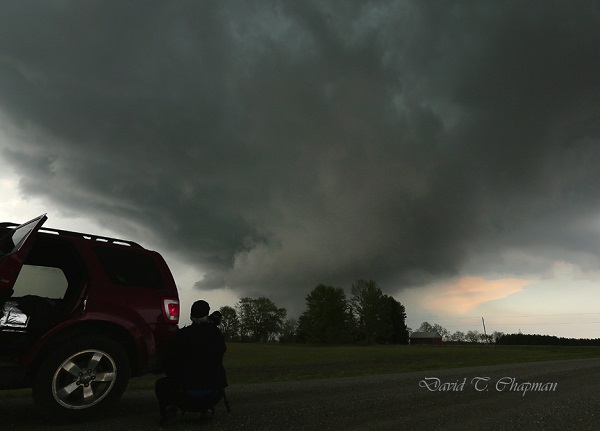
You might be curious on what we do when it comes to chasing the actual storm. Brian’s job is to be the driver. This is his first priority. Once we are parked and in a safe but photographic position for the storm, he is our main videographer. As for myself, I choose where I think the biggest storm will form from looking at weather models that meteorologists use as well as talking to fellow storm chasers in the area. I am also the main photographer. I do some video work and navigate us to the most photogenic side of the storm. This is usually right next to the most dangerous part of the storm but still in the safest position possible.

Rapidly Rotating wall-cloud photo being documented by Brian Chapman)

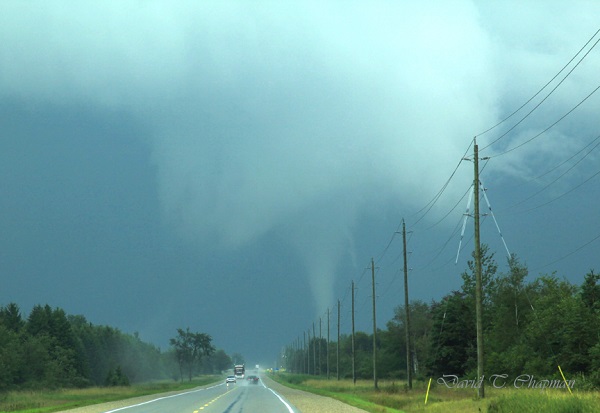
In the past 2 years, our team has seen and recorded a number of funnel clouds, 2 confirmed tornadoes and 4 waterspouts. One of the tornadoes was near Arthur, Ontario on August 7, 2013 and the landspout tornado was near Listowel, Ontario on May 14th 2014. The Arthur tornado was a really great one to document. It lasted for close to 15 minutes and we were able to see it from start to finish. The best part about it was the fact that  no one was injured and it caused very little damage. Those are the kinds of tornadoes we love to see because they allow you to enjoy the pure power and beauty that they possess but without injuries or major destruction.

Tornado by Chapman

Another thing that was interesting with the tornado that hit near Arthur was the fact that it tried to form a second tornado at the same time the first one was on the ground. If that funnel had reached the ground, it would have been called a satellite tornado. They are typically smaller and weaker but not always. In Pilger, Nebraska in 2014, two EF-4’s were on the ground at the same time. Sadly they hit a town, killing 5 people and injuring 19. Those are the days I dread as a chaser and hope I never see first hand. As for the second funnel near Arthur, it didn’t quite have the energy to make it the rest of the way to the ground. This probably wasn’t such a bad thing with so many people focusing on the main, larger tornado just to its north.

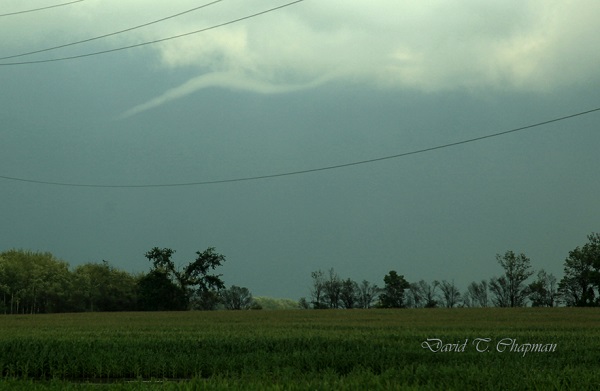
A Funnel Cloud
A Funnel Cloud

Fortunately, a lot of Ontario’s tornadoes hit open areas that cause little to no damage. There have been some exceptions, as the tornadoes that hit both Durham, Ontario on August 20, 2009 and Goderich on August 21, 2011 showed, both killing one person in each of them. That is why many storm chasers as well as dedicated weather enthusiasts in our province have a direct line to Environment Canada that allows us to contact them when we see threatening weather approaching the area we are in. It can help Environment Canada confirm what they are seeing on radar so that they can issue the proper watches and warnings accordingly. Refer to Spencer Sills’ Part One above for more details on how you can become a spotter. Lightning will also be a big focus for our team this year. We continue to work to get lightning photos as close as possible in order to capture the positive leaders that come up to meet the main negative current coming down from the cloud. The leaders can come from the ground, hydro poles, houses and even people.

Although this may be risky and dangerous, we have worked out ways to minimize the risk to us. We stay in the car when lightning is close with the windows up. We also won’t park under a tree, not so much from the fear of a direct lightning strike but in case lightning hits and splits the tree causing it to fall on the vehicle. I remember seeing one like that when I was young and it has had an everlasting impression on me. One of the first big wind storms I chased along Lake Erie on November 1, 2013 knocked down a tree onto a woman‘s car and unfortunately she was in it and was killed. So debris is always a concern and something to be very aware of when it comes to storm chasing.

You can follow our storm chasing throughout the year on our social media pages. https://twitter.com/DTChapmanPics https://www.facebook.com/pages/David-T-Chapman/173134962767601?fref=ts https://twitter.com/WeatherHunters

Toby Barrett
~CLICK ME~


The Consolidation Of North American Food

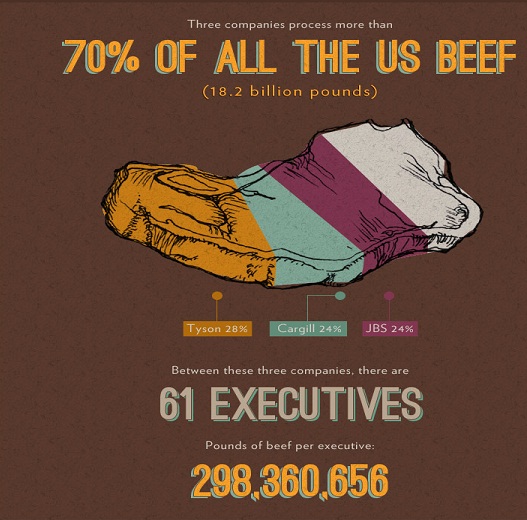
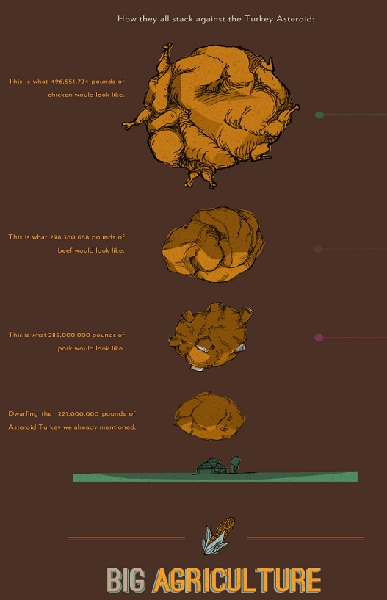
Adam Jacob sent in this tell-all graphic that is pretty shocking. If these statistics are true then ‘it’s clear the small food producer is an endangered species. Unless of course, they start supplying the big chain corporate grocery store chains. And that will likely spell the end of family farm gate-retail…and that will spell the end of the family farm. It is so important to support local farm to table initiatives and preserve food that is not only grown for profit, but grown for quality and healthy consumption.

To learn more about the consolidation of (North) American food and the implications for Ontarians, visit Silo Direct Link to Frugaldad.com


The Many Cultural Charms Of Buenos Aires Argentina

Obelisk in Buenos Aires
George at the obelisk…

Feel Cooler Than You Really Are. If you want to learn to dance the tango the place to be is Buenos Aires, Argentina. This is a city that expresses its passion and national pride through their music, soccer, dancing, horses, and writing earning it the title of “City of Cool”.

Buenos Aires, (English meaning Fair Winds) Argentina.
With a population of 2.7 million people this capital city of Argentina is a place oozing with charm and things to do. From the moment you begin wandering downtown streets you know it’s going to be interesting. It’s a place to be cool even if you aren’t. Okay, let’s make it clear, I’m not cool, but for some unknown reason I started to feel this way when I mingled with the Argentineans. They spoke, what sounded like to me, an exotic language (Castilian Spanish), and looked and dressed like they were right out of the pages of Vogue magazine. It’s a city that never sleeps, populated by residents obsessed with fashion and image. Slim is beautiful is an established and largely uncontested fact.

Curvy architecture emphasizes the ‘tango’ speed and ‘coffee’ streamlining of Buenos Aires culture

Architecture
The downtown architecture is quite different from the rest of Latin America. It is strongly influenced by European styles with more than the half of the city buildings being French style. Countless museums, historical buildings, shopping centres, and hotels are yours to discover. And if you do get the urge to learn to tango there are plenty of tango-dancing schools (known as academias) throughout the city.

Bueons Aires is also known as a “city of buildings”

The Tango
Tango music was born in the suburbs, notably in the brothels of poorer suburbs. Its raw sensual dance moves were not seen as respectable until adopted by the Parisian high society in the 1920’s and then all over the world. There are loads of places with free tango shows in restaurant-bars such as Gitanos, where you can also try the national drink. I found it more like herbal tea than anything and its drunk out of a pot-like container through a metal straw. Even though it was foul-tasting, Argentineans say, it’s more addictive than coffee. To each their own.

Walking and Safety
When you walk in any largely populated area don’t be silly and carry an expensive camera slung over your shoulder and don’t ever wear an expensive watch that sets you apart from the crowd. It’s like saying rob-me, rob-me. Use common senses; err on the side of caution. I hid my camera in a plastic shopping bag. Always cross street at crosswalk. I’ll say it one more time to be sure it sinks in…Always walk at crosswalks and don’t begin until all vehicles have come to a stop.

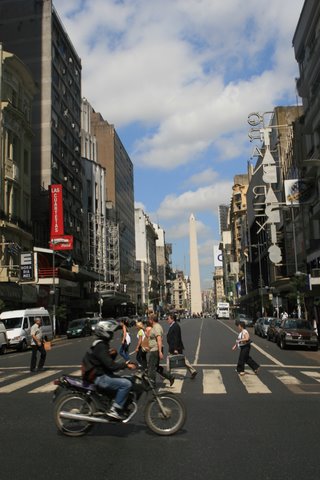
Streets are busy but have marked crosswalks and are well laid out

Recoleta Cemetery
Don’t pass up the chance to visit to the Recoleta Cemetery established in 1822. It’s the final resting place for Argentina’s wealthiest and most famous families and people. The mausoleums are fairly small, befitting the size of the cemetery in an urban setting, and it’s common for many members, and generations even, of the same family occupying one mausoleum. One grave that I did seek out was that of Eva Peron who was the wife of Juan Peron, 3 time president of Argentina. Both are idolized for their efforts to eliminate poverty and to bring dignity to the labour movement. Because of this they were despised by the oligarchy of Argentina’s wealthy and powerful. I found it strange and a bit sad that her neighbours in death are those that despised her in life. Her husband is buried in another cemetery in the city.

Mausoleum at the Recoleta Cemetery

Art and Craft Museums
These museums are all the rage here, with the top attraction being the Malba, which is dedicated to Latin American modern art, the Museo National de Bellas Artes (National Museum of Fine Arts) and Recoleta’s Cultural Centre.  You’ll find the general atmosphere in most of these places is more snooty than sincere. If art and crafts is not your thing, you’ll want to bypass all of these places and scout out somewhere to eat or sit on the grass in Plaza Francia. It’s easy to while away a few hours people-watching. I did both.

Where ever you travel, remember to take time to meet the local people. You will learn much about the culture of a place by watching and talking with citizenry.

The Obelisk
Another must see is to join the gaggle of tourists (and pigeons) that flock to the Plaza de Mayo. This is the site for some of the country’s most important historical occasions, including the revolution in 1810 which led Argentina gaining independence from Spain .If your legs are willing, take a stroll along Avenida Corrientes. When you get to the junction with Avenida 9 de Julio, which claims to be the world’s widest road where you can’t miss the famous Obelisk monument. For goodness’ sake use the pedestrian crossing if you don’t want to die! It’s the cities icon and the place the very spot where the Argentina flag was raised for the first time.       For the Silo, George Bailey. 

Winds Of Change Bring New Environmental Reality

The Ontario government is taking action to address issues of climate change.  Once in office, we have been acting as quickly as possible to fulfill our commitment to Ontario families and businesses.  For example, we revoked the cap-and-trade carbon tax and ended emissions trading and allowances. In addition, we have now released our Made-in-Ontario Environment Plan that takes concrete steps to protect our air, water, and land and fight climate change.

Climate change is here.  It is a reality and our environmental legacy will be predicated on our capacity to adapt, and to stop the worst consequences from materializing.

Fortunately, another reality is the fact the Ontario government is committed to protecting the environment using a sensible and balanced approach that creates jobs, respects taxpayers and grows the economy. But it is important to discuss what we’re fighting…the actual impact climate change can have on all of us.

Our government understands that climate change is a reality. It is a serious, worldwide problem.

More frequently, we hear media reports of severe weather that results in flooded basements, structural damages, and costly cleanups—sometimes in our own backyard. And the insured losses we’ve incurred in Ontario during 2018 give an unnerving snapshot of the consequences.

Earlier this year, a storm caused more than $46 million of insured damage in Brantford, Cambridge, London and the GTA. A spring storm in southern Ontario resulted in almost $80 million in costs. Soon after, winds and rains hit Hamilton and the GTA and caused over $500 million in damage. Last summer, a rainstorm in Toronto caused $80 million in damage. Further, we can’t forget the destruction left in the path of the Ottawa tornadoes this September.

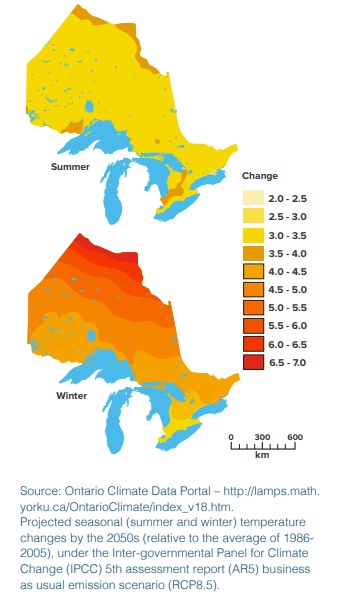
The people across Haldimand-Norfolk are close to the land and are among the first to notice changes in the weather and the attendant damage and costs extreme weather can inflict on crops and buildings.  Farmers and those that work outdoors have long been aware of fluctuating temperatures and are taking note when scientists predict that the average annual temperature in Ontario could be increasing significantly.

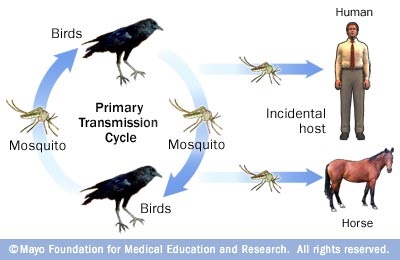
Prediction Ontario Rising TemperaturesMilder winters and hotter summers create a paradise for insect and plant diseases. Are you getting more tick and mosquito bites? Lyme disease and West Nile virus, and other mosquito and tick-borne diseases, have been moving northward as our part of the world warms.  And with increasing temperatures and phosphorus loads, many have taken notice of Lake Erie’s more frequent algal blooms and accelerated aquatic plant growth.

These aren’t news items from a far-off land.  These events effect our health, increase food costs, hurt our communities, and can mean large repair bills and higher insurance premiums.

In a subsequent column, I’ll discuss our Made-in-Ontario Environment Plan and how it’s constructed to meet the needs of Ontarians by protecting and conserving our air, land and water; fighting litter and waste; building resilience to the impacts of climate change—particularly extreme weather—and illustrating ways for all of us to do our part to decelerate climate change by reducing greenhouse gas emissions.

As one with a background in agriculture and the outdoors, I’m excited about our environment plan. It draws on the expertise of environmentalists, scientists, stakeholders, Indigenous people, and the general public—more than 8,000 ideas and recommendations were received through our online portal.   But more on that in a future column. For the Silo, Toby Barrett.

Rankings Of One Day Cost At Over 300 Beaches Worldwide

Amsterdam, Netherlands,Online travel specialists, TravelBird, have released their annual Beach Price Index, featuring more than 300 seaside locations from 70 countries around the globe. On a year-to-year basis, the price of holiday beaches can change substantially when you take into account factors such as currency fluctuation and inflation. As a company which prides itself on inspiring travelers, TravelBird ranked the beaches in order to provide holidaymakers with the information they need to make a smart decision when booking.

TravelBird first examined an extensive catalogue of the world’s most popular beaches, before reducing this to a final shortlist of just over 300 locations, ranked on the cost of spending a day at each. To calculate their affordability, the price of five essentials were then researched for each destination: the cost of a bottle of sun cream (200 ml), a bottle of water (500 ml), a beer (33 cl bottle), lunch (including drink and dessert for one person), and an ice cream. The sum of these five essentials determined the final affordability ranking of each seaside location. All prices were calculated by standardizing the sizes of products, and with monetary transactions true to exchange rates on 1st June 2017.

Steve Klooster

“It is very interesting for travelers who are planning their trip to see how much the price of spending a day at the beach varies across the world. There are many useful tips in here. One to easily forget, currency fluctuations can make a big difference in the actual cost of your holiday, so keep those in mind. For example, beaches in the UK have become almost 10% more affordable for continental European visitors due to the decline of the pound after the Brexit referendum.” Said TravelBird CEO Steven Klooster. “Also, if you are keen on enjoying local food on the beach, pick Vietnam for instance, where you can enjoy delicious local food on the beach that is very affordable. Another one: in some places you pay a lot for sunscreen, up to 3 times more than you would pay in The Netherlands, so make sure you take some with you!“

The study reveals the 10 most expensive beaches are:

#

Beach

Country

Sunscreen

Water

Beer

Ice-cream

Lunch

Total (USD)

1

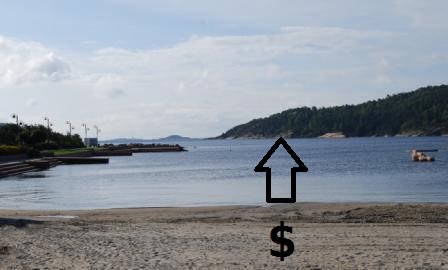
Kristiansand Beach

Norway

$21.58

$2.65

$8.48

$4.53

$27.37

$64.61

2

Huk Beach

Norway

$20.67

$2.97

$8.83

$5.09

$24.38

$61.94

3

Solastranda

Norway

$20.14

$2.83

$7.63

$4.71

$25.02

$60.33

4

Mareto Plage Publique

French Polynesia

$21.96

$2.01

$7.30

$3.99

$23.43

$58.69

5

La Plage de Maui

French Polynesia

$20.88

$2.01

$7.49

$3.53

$24.49

$58.40

6

Åkrasanden

Norway

$22.26

$2.57

$8.47

$4.24

$20.44

$57.98

7

Hamresanden

Norway

$22.97

$2.39

$7.42

$4.35

$20.01

$57.14

8

Ribersborg Beach

Sweden

$17.38

$2.12

$6.79

$3.31

$25.73

$55.33

9

Anse Vata

New Caledonia

$15.33

$1.82

$7.42

$2.28

$28.29

$55.14

10

Anse Georgette

Seychelles

$26.63

$0.94

$6.89

$1.24

$17.66

$53.36

Most expensive beach according to study- Kristiansand Beach, Norway. image: kristiansand.norway.com

In contrast, the study reveals the 10 most affordable beaches are:

#

Beach

Country

Sunscreen

Water

Beer

Ice-cream

Lunch

Total (USD)

310

Cua Dai Beach

Vietnam

$1.95

$0.50

$2.04

$0.88

$7.81

$13.18

309

City Beach

Vietnam

$2.32

$0.33

$2.14

$0.88

$8.23

$13.90

308

Long Beach

Vietnam

$2.57

$0.43

$2.09

$0.99

$8.34

$14.42

307

Marsa Nayzak

Egypt

$6.61

$0.21

$1.96

$0.83

$6.83

$16.44

306

Sunken City

Egypt

$7.12

$0.20

$2.02

$0.84

$6.64

$16.82

305

Varkala Beach

India

$3.98

$0.37

$3.32

$0.73

$9.21

$17.61

304

Benaulim Beach

India

$4.65

$0.31

$3.20

$0.61

$9.15

$17.92

303

Palolem Beach

India

$4.65

$0.24

$3.13

$0.67

$9.52

$18.21

302

Cavelossim Beach

India

$4.65

$0.37

$3.41

$0.83

$9.15

$18.41

301

Sharm El-Naga Bay

Egypt

$7.12

$0.21

$1.96

$0.84

$8.44

$18.57

Most affordable beach according to study- Cua Dai Beach, Vietnam. image: vietnamguidenews.com

Click here for the full results: https://travelbird.nl/beach-price-index-2017/

4 Canadian beaches appear in the Index, with the following results:

#

Beach

Region

Sunscreen

Water

Beer

Ice-cream

Lunch

Total (USD)

118

Grand Beach

Manitoba

$9.15

$1.61

$3.59

$2.89

$20.90

$38.14

121

Brady’s Beach

British Columbia

$9.28

$1.74

$3.65

$3.00

$20.00

$37.67

136

Wasaga Beach

Ontario

$9.15

$1.70

$3.59

$3.38

$19.08

$36.90

149

Parlee Beach

New Brunswick

$8.87

$1.66

$3.57

$2.95

$18.87

$35.92

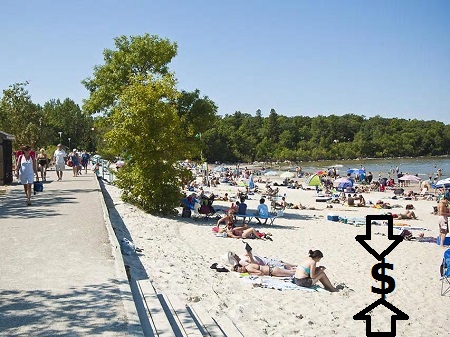
Grand Beach, Manitoba. image: travelmanitoba.com

Other findings from the study include:

Sun cream is most expensive when bought from beaches in The Seychelles, costing $26.63 for a 200ml bottle. In comparison, Cua Dai Beach in Vietnam has the world’s least expensive sun cream, costing just $1.95 per bottle.

The seaside location with the most expensive bottle of water is Huk Beach in Norway, costing $2.97 for a 500ml bottle. The beach with the least expensive bottle of water is Sunken City in Egypt, where the same sized bottle costs just $0.20.

The beach with the most expensive beer globally is Huk Beach in Norway, where a 33cl bottle costs $8.83. In contrast, Soma Bay in Egypt is the seaside destination with the least expensive beer, available for just $0.63.

Norway’s Huk Beach also has the world’s most expensive ice creams, at $5.09 each. Egypt’s El Gouna is the beach with the least expensive ice creams in the world, costing just $0.52.

West Palm Beach in the American state of Florida has the world’s most expensive seaside lunch, costing $28.61 for one person. Egypt’s El Gouna is the beach with the most affordable lunches, available for just $5.63.

About our friends at TravelBird: TravelBird is an online travel company offering a curated collection of holiday and travel experiences – from short inspirational breaks to international get-aways. TravelBird’s passionate local travel advisors work directly with tour operators across the world to offer a selection of travel experiences that invite travellers to discover something new and immerse themselves in different cultures. For more information, please visit: https://travelbird.nl

Methodology:

The study has 310 of the most visited beaches in 70 countries based on local tourism board numbers and data from the UNWTO.  

Total Price = $ Sunscreen + $ Water + $ Beer + $ Ice-cream +$ Lunch

Sunscreen costs calculated by taking an average cost from a store in local resort/hotel, a hostel and local pharmacy or supermarket (all where available). We searched for SPF 30, 200 ml.

Lunch costs calculated by taking full meal cost, including a drink and dessert, for one person from a walking distance of maximum 10 minutes from the beach or the closest establishments to it (largely within tourist areas), outlets include hotels and restaurants.

Beer costs were calculated by taking an average of the biggest local beer brand along with the retail cost of Heineken, Budweiser, Becks, Guinness and Fosters at local prices, where available. Where sizes were not available, calculations were undertaken to make serving sizes equal.

Water calculations were found by taking the three largest local brands and calculating an average of these.

Ice-cream costs calculated by taking an average prepackaged branded ice-cream price in the capital city of each country and applying consumer produce cost differences to each area, where applicable.  For the Silo, Ricky Sutton.

Featured image- Wasaga Beach, Ontario courtesy of expedia.com

How Your Startup Company Will Benefit From Energy Consultant

If you’re just starting your own company, then it’s understandable that you’ll be very busy at first. After all, you have so much to do to nurture and grow your business. But sooner or later (preferably sooner), your startup needs to take advantage of the services of a top-notch energy consultant.

Here are some compelling reasons why you should use an energy consultant right away.

size doesnt matter Shakespeare quote1. Size doesn’t matter. Maybe you think your company has to grow bigger first before you can enjoy the benefits of energy consulting. But that’s not entirely true. Even a small company can enjoy huge advantages when an energy consultant is on board.


2. Unbiased advice. Since an energy consultant isn’t really part of your company, you can get independent advice. You won’t have to worry about getting recommendations and findings from your employees or departments which may or may not be biased.

3. Energy usage patterns. Every company has its own patterns of energy usage. Some days and time frames will see a very heavy use of energy, while during other times there may not be a lot of energy use at all. Your energy consultant can then identify these times as part of their examination, and that can eventually help your company become more energy-efficient.

For example, it may be possible to arrange the heavy use of electricity during the time of day when the cost of electricity is at its lowest.

4. Alternative energy sources. Your energy consultant will have the necessary knowledge and experience regarding other ways of powering your business. Your company can get a comprehensive analysis regarding your possible use of these energy sources.

The report may examine several alternative sources of energy regarding their suitability for your business, and these may be solar energy or wind turbine power. The energy consultant may find out exactly how much it will cost your business to buy and install these systems. They may also determine how long it will take to complete the installation, and how easy it is to operate these systems. At the same time, the consultant can also find out exactly how much money you can cut from your current energy bills.

meme by ICANHASCHEEZBURGER.COM

5. Using green energy. Many businesses today focus on being environmentally friendly. It’s not just right for the world, but it’s also right for your business as you can include your use of green energy as part of your marketing plan. When your company can help reduce carbon emissions, you can make your place and your neighborhood healthier, while it also boosts the reputation of your company.

6. Regular advice. Your energy consultant may be asked to come in on a regular basis. Because of this, your company may keep current on the latest developments regarding the use of renewable energy. This means you’ll learn about new technology and changes in alternative energy laws. Also, your energy consultant can fine-tune your use of alternative energy and also make sure that your renewable energy system is running at peak efficiency. For the Silo, Dimitry Karloff.


Sugar Battery Set To Power Phones, Tablets And Other Devices

Catalyzing Commercialization Sugar could some day be used to power smartphones, tablets, and other electronic devices thanks to a recent breakthrough by Blacksburg, VA-based Cell-Free BioInnovations, Inc. It might seem strange to use an ingredient found in cupcakes and cookies as an energy source, but it’s not, as most living cells break down sugar to produce energy. And, interestingly, the energy density of sugar is significantly higher than that of current lithium-ion batteries.

Working under a Small Business Innovation Research (SBIR) grant from the National Science Foundation, a research team led by Y-H Percival Zhang, Chief Science Officer of Cell- Free BioInnovations and an associate professor of biological systems engineering at Virginia Tech, has successfully demonstrated the concept of a sugar biobattery that can completely convert the chemical energy in sugar substrates into electricity.

As reported in the January 2014 issue of Nature Communications, this breakthrough in sugar-powered biobattery can achieve an energy-storage density of about 596 A-h/kg — an order of magnitude higher than the 42 A-h/kg energy density of a typical lithium-ion battery.

A sugar biobattery with such a high energy density could last at least ten times longer than existing lithium-ion batteries of the same weight, drastically reducing how often users need to recharge their electronic devices. This nature-inspired biobattery is a type of enzymatic fuel cell (EFC)— an electrobiochemical device that converts chemical energy from fuels such as starch and glycogen into electricity.

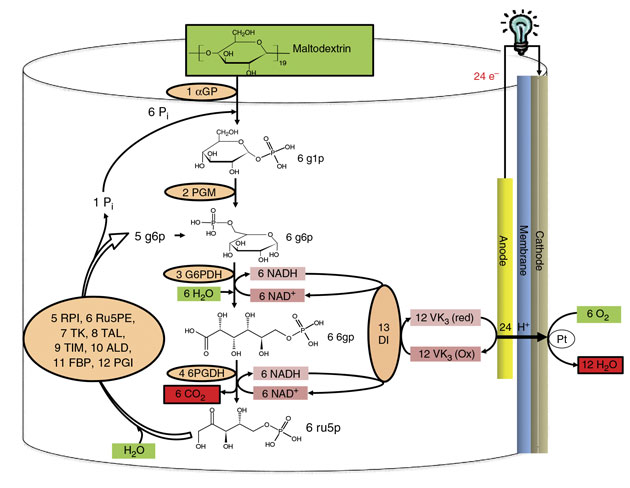
While EFCs operate under the same general principles as traditional fuel cells, they use enzymes instead of noble metal catalysts to oxidize the fuel. Enzymes allow for the use of more-complex fuels (e.g. glucose), and these more-complex fuels are what give EFCs their superior energy density. For example, the complex sugar hexose can release 24 electrons per glucose molecule during oxidation, whereas hydrogen (a fuel used in traditional fuel cells) releases only two electrons. Until now, however, EFCs have been limited by incomplete oxidation, releasing just two to four electrons per glucose molecule.

“We are not the first who proposed using sugar as the fuel in the biobattery,” says Zhiguang Zhu, a senior scientist at Cell-Free BioInnovations. “However, we are the first to demonstrate the complete oxidation of the sugar in the biobattery, enabling our technology to have a near-theoretical energy conversion yield that no one has ever reported.”

Zhang and his team constructed a synthetic catabolic pathway (a series of metabolic reactions that break down complex organic molecules) containing 13 enzymes to completely oxidize the glucose units of maltodextrin, yielding nearly 24 electrons per glucose molecule.

We put specific thermostable enzymes into one vessel to constitute a synthetic enzymatic pathway that can perform a cascade of biological reactions the sugar, converting it into carbon dioxide, Zhang says. Unlike natural catabolic pathways for the oxidation of glucose in cells, the designed synthetic pathway does not require costly and unstable cofactors, such as adenosine triphosphate (ATP), coenzyme A, or a labile cellular membrane. The researchers used two redox enzymes that generate reduced nicotinamide adenine dinucleotide (NADH) from sugar metabolites. NADH, a reducing agent involved in redox reactions, is a natural electron mediator that carries electrons from one molecule to another. They also used ten other enzymes responsible for sustaining metabolic cycles and an additional enzyme that transfers electrons from NADH to the electrode.

This new synthetic pathway enables the biobattery to extract the theoretical number of electrons per glucose unit and thereby use all the chemical energy in the sugar. This, the team reports, represents a significant breakthrough.

In addition to its superior energy density, the sugar biobattery is also less costly than the Li-ion battery, refillable, environmentally friendly, and nonflammable. While researchers  continue to work on extending the lifetime, increasing the power density, and reducing the cost of electrode materials for such a battery, they hope that the rapidly growing appetite for powering portable electronic devices could well be met with this energy dense sugar biobattery in the future. For the Silo, Zhiguang Zhu, chief scientist at”The Sweet Battery Project”.

This technology was funded through the America’s NSF Small Business Innovation Research Program.

Molds Pose Serious Health Risks Whether In Home Or Business

Ottawa, Ontario – To increase awareness against molds and their health impacts, Mold Busters has created a scholarship program which caters to select Canadian students. Molds are harmful organisms which grow as a result of water damage or excess humidity within the home or office. Whether it’s in the home or business, molds pose serious health risks and can spread fast, causing damage to the walls and furniture. Incidence of molds when not properly taken care of can consume the entire building and cause damaging health risks.

Describing the company, Mold Buster’s spokesperson said: “Mold and indoor air quality (IAQ) awareness is at an all-time high. Across Ottawa, Montreal and other larger cities, people are realizing that exposure to poor IAQ may be triggering recurring physical symptoms, such as sneezing, coughing, skin irritation and other allergies. It’s time to take action against indoor air pollutants like mold, asbestos and VOCs. We are Mold Busters, a reputable mold inspection and mold remediation company that offers comprehensive testing and removal services in cities all over Ontario and Quebec.”

The Ottawa-based mold removal company, Mold Busters, launched the biannual writing contest, an Environment Scholarship Program (https://www.bustmold.com/mold-busters-scholarship), for Canadian college and university students in a bid to raise awareness regarding the harmful effects of mold and of poor indoor air quality (IAQ). Students from any program in all Canadian post-secondary institutions are encouraged to submit an expository essay to qualify for the scholarship. The essays subject is based on mold, asbestos, or other indoor air pollutants. Participating students should explore causes and effects of air pollution on building structures and human health, and can also discuss the various remediation techniques and practical prevention tips.

Mold Busters since its establishment in 2005 has been concerned with the testing and removal of molds and other air pollutants from the indoor living environment thereby ensuring that the indoor environment is both healthy and safe for habitation. The company is certified by the National Association of Mold Professionals (NAMP) and operates in strict adherence to the IICRC remediation guidelines. Services offered by Mold Busters include inspection of homes in Ottawa and other neighboring cities as far as Montreal with the mission to provide fast and accurate information which will aid timely decision in combating incidence of mold. Additionally, Mold Busters offers testing services and a variety of remediation services including mold remediation, asbestos removal, ozone cleaning, and attic insulation removal.

Supplemental- Mold In Workplace Buildings- Ontario Ministry of Labour


Ontario To Citizenry: Fight Lyme Disease, Protect Yourself From Ticks & Mosquitoes

Ontario’s Chief Medical Officer of Health is reminding all Ontarians to protect themselves and their families against Ticks, Lyme disease and West Nile virus this summer.

Dr. David Williams is asking people to take simple measures to avoid being bitten by blacklegged ticks that can carry Lyme disease. If not identified and treated early, infection can lead to recurring arthritis, neurological problems, numbness and paralysis.

Reducing exposure to ticks is the best defense against Lyme disease. You can protect yourself and family by:

  • Wearing closed-toe shoes, long-sleeved shirts and pants
  • Pulling your socks over your pant legs to prevent ticks from crawling up your legs
  • Wearing light-coloured clothing to spot ticks more easily
  • Using insect repellent containing DEET or Icaridin on clothing as well as on exposed skin, following the instructions carefully
  • Showering or bathing within two hours of being outdoors to remove ticks that can be on your skin but not yet attached
  • Doing a daily full body check for ticks. Young blacklegged ticks can be as small as a poppy seed, so look carefully. Check children and pets for ticks as well.

West Nile Virus Mosquito TransmissionDr. Williams is also reminding Ontarians to protect themselves from mosquito bites to reduce their risk of getting infected with West Nile virus. Simple precautions to take include:

  • Using insect repellent containing DEET or Icaridin on clothing as well as on exposed skin, following instructions carefully.
  • Wearing light-coloured clothing, a long-sleeved shirt and long pants
  • Making sure screen doors and windows are in good repair to keep mosquitoes outside
  • Eliminating mosquito breeding sites around your home by emptying standing water in flowerpots and birdbaths on a regular basis, and getting rid of compost and dense, overgrown shrubbery.

Tick Removal TweezersMost people who catch West Nile virus will experience fever, head and body aches, a mild rash and swollen lymph glands. More serious symptoms include encephalitis (swelling of the brain), difficulty swallowing and confusion. Adults 50 years of age and older and people with underlying medical conditions and/or weaker immune systems are at greater risk.

If you or a family member are experiencing serious symptoms and health effects, or have concerns about any symptoms, contact your health care provider right away.

QUOTES

“Ontarians should definitely enjoy all the province has to offer outdoors this summer. However, they should keep in mind that while outdoors, they can be exposed to Lyme disease and West Nile virus. Taking the necessary precautions to prevent tick and mosquito bites is the best defense against these diseases.”

— Dr. David Williams, Ontario’s Interim Chief Medical Officer of Health

“As a public health physician, I know that Lyme disease is a serious issue. Our government is committed to protecting Ontarians from Lyme disease and other diseases carried by ticks and mosquitoes. It’s important that all Ontarians take these simple steps to protect themselves while enjoying the outdoors this summer.”

— Dr. Eric Hoskins, Minister of Health and Long-Term Care

QUICK FACTS

  • Risk areas for Lyme disease in Ontario include: Thousand Islands National Park area (prior to 2013, known as the St. Lawrence Islands National Park), Long Point Provincial Park, Rondeau Provincial Park, Point Pelee National Park, Prince Edward Point National Wildlife Area, Wainfleet Bog Conservation Area, Turkey Point Provincial Park, Pinery Provincial Park, Rouge Valley, and locations in the Rainy River region of Northwestern Ontario.
  • If you have visited Lyme disease risk areas and are exhibiting symptoms, let your doctor know. Most cases of Lyme disease can be treated successfully with a few weeks of antibiotics if diagnosed and treated early.
  • West Nile virus has been reported in different parts of Ontario – cities as well as rural areas. Contact your local public health unit to find out when and where you are most at risk to exposure to West Nile virus.

LEARN MORE


Canadian Garden Days Is Annual Event Celebrating Vital Role Of Gardening

'Garden Days' - June 13, 14 & 15 - are the ideal time to see what lies beyond your nearest public garden's gate. Photo: Tara Nolan
‘Garden Days’ – are the ideal time to see what lies beyond your nearest public garden’s gate.
Photo: Tara Nolan

DO YOU LIVE ON CANADA’S BEST GARDEN STREET? Canada is a country made up of neighbourhoods, and in many are streets where neighbours take pride in making their gardens – and even city-owned medians – as pretty as possible through their collaborative ‘green thumbed’ efforts.

As part of this year’s Garden Days program, being held across the country from June 16 to 24, the Canadian Garden Council invites you to register your Garden Days activity. Let us know why your street is the prettiest in the country and how it contributes to your, and the neighborhood’s, quality of life. All Canadian gardens, garden centres, horticultural and plant societies, garden clubs, schools, garden-related businesses and communities are invited to organize Garden Days activities or events – between June 16 and 24 – to celebrate public gardens and home gardening.

Twelve garden gnomes have escaped from The Butchart Gardens on Vancouver Island! Might they be among the dahlias? Help find them during 'Garden Days', June 13, 14 & 15
The Butchart Gardens on Vancouver Island.

Garden Days is organized by the Canadian Garden Council, and begins with National Garden Day on the Friday before Father’s Day, Garden Days is a three-day celebration of gardens and gardening across Canada.  The program’s objective is to draw attention to Canada’s garden culture, history and innovations and to underscore the importance of public and private gardens, the values of home gardening and the promotion of environmental stewardship. Garden Days is a joyful, country-wide celebration of the role of gardens in our communities and in our lives. To find a Garden Days activity near you visit:  http://www.gardendays.ca and click on the ‘Activity’ button. For the Silo, Courtney Charette.

Garden Days is sponsored by: Scott’s, Miracle-Gro, bullfrogpower and supported by Communities in Bloom and the Canadian Nursery Landscape Association.

Follow Garden Days on Twitter http://www.twitter.com/CanadasGardens  and join in the conversation at #GardenDaysCanada

Into The Depths Is How Far Down Companies Drill For Oil

Have you ever wondered how far down companies have to drill for oil? It’s quite staggering!

Over the years, companies have had to go further and further into the earth in order to find Earth’s remaining oil and today we are deeper than ever.

In this piece, we’ll be looking at the Z-44 Chayvo Well, the deepest on the planet, and we show you comparisons so you can see clearly just how amazing this feat is.

We’ll also show you the depth of this well in comparison to the earth’s core. How close does this drill actually get?

And finally, we’ll outline just how much it costs to pull off the deepest ever oil extraction. For the Silo, Rose Baldwin and fuelfighter.co.uk
drilling for oil infographic

All Parties Support Ontario Greenbelt And Recognize Immense Values

Last week, a video was released showing Ontario’s PC Party leader Doug Ford promising to open up a “big chunk” of the Greenbelt to allow development on its protected areas, an idea he attributed to the “biggest developers in this country.”   

Our Executive Director, Tim Gray responded in the news that this would have severe consequences and allow land speculators to build massive subdivisions, at immense profits, on farms, forests and natural areas currently protected in the Greenbelt.

Watch Tim Gray’s interview on CTV news.

Ontario’s PC Party leader Doug Ford later reversed his position. This is consistent with polls that suggest more than 89 per cent of Ontarians support the protection of the Greenbelt. Ontarians like you.

The good news is that now all parties support the Greenbelt and recognize its immense values. Thank you for your help in securing the future of farmland, forests and water systems in Ontario. 

Over the last few months, many of you signed petitions supporting expansion of the Greenbelt. Your voice matters now more than ever. We encourage you to ask candidates questions on their views during the upcoming provincial and municipal elections.

It’s time to set the record straight.

The Greenbelt does not constrain housing supply or cause high house prices. In fact, municipal data shows that there is enough land available to provide for housing development within existing Greater Toronto and Hamilton Area urban boundaries until 2031.

The best way to address housing prices and supply in our region is by directing growth to existing urban areas, limiting sprawl, and building different kinds of affordable homes close to transit.

Read our latest blog highlighting 7 facts about the Greenbelt and what really impacts housing prices in the Greater Toronto and Hamilton Area. 

Thank you,

Susan Lloyd Swail
Livable Communities, Senior Manager

Ontario Law Protects Bees By Reducing Neonicotinoid Corn And Soybean Crops

On July 1, 2015, Ontario was the first jurisdiction in North America to protect bees and other pollinators through new rules to reduce the number of acres planted with neonicotinoid-treated corn and soybean seeds by 80 per cent.

Over the years, Ontario beekeepers have experienced unusually high over-winter losses of honey bees, reaching 58 per cent following the winter of 2013-14. image: naturalblaze.com

To support this goal, new requirements were put in place for the sale and use of neonicotinoid-treated corn and soybean seed that will help ensure treated seed is only used when there is evidence of a pest problem. Reducing neonicotinoid use in these two crops presents the greatest potential to reduce pollinator exposure to the neurotoxic insecticide.

Pollinators, including bees, birds and butterflies, play a crucial role in agriculture and our ecosystem. The level of over-winter losses considered to be acceptable and sustainable by most apiculturists is 15 per cent.


The new rules are one part of Ontario’s strategy to improve pollinator health. The province will also develop a pollinator health action plan in consultation with the public and experts to address other stressors that affect pollinators.

Ensuring a strong and healthy agricultural sector is part of the government’s economic plan for Ontario. The four part plan is building Ontario up by investing in people’s talents and skills, making the largest investment in public infrastructure in Ontario’s history, creating a dynamic, innovative environment where business thrives, and building a secure retirement savings plan.

A flowering tobacco plant. Close to 100 per cent of corn seed and 60 per cent of soybean seed sold in Ontario is treated with neonicotinoid insecticides.

QUOTES

“Much of the food we eat and the vibrancy of Ontario’s natural habitats depend on a healthy pollinator population. Our government is taking necessary action to protect these vitally important species and the ecosystems they support from the effects of neurotoxic neonicotinoids.”

— Glen Murray, Minister of the Environment and Climate Change

“Farmers are environmental stewards of their land and this regulation will enable our province’s farmers to strengthen their approach to protecting their crops. To have a significant impact on improving pollinator health, over the coming months, we collectively need to focus on three additional contributors: habitat and nutrition, disease and pests as well as weather and climate change.”

— Jeff Leal, Minister of Agriculture, Food and Rural Affairs

 “Farmers care about the health of pollinators. That’s why the Ontario Federation of Agriculture (OFA)  has worked closely with the Government of Ontario to have these new regulatory requirements work for the province’s farmers. The OFA supports the need for a complete pollinator policy.  The OFA will continue to work with the government toward the successful implementation of this regulation, keeping the concerns of farmers top of mind as part of a pollinator strategy.”

  • Don McCabe, President, Ontario Federation of Agriculture

 “Friends of the Earth is pleased and impressed by Ontario’s leadership in finalizing this first permanent reduction in the use of neonicotinoids in Canada. With its new pesticide regulation, Ontario is delivering important benefits for nature including honey bees, native bees and other vulnerable species.”

  • Beatrice Olivastri, Chief Executive Officer, Friends of the Earth Canada

“Doctors are delighted Ontario will be North America’s first jurisdiction to introduce regulatory restrictions on bee-killing neonic pesticides. Assuming Ontario hits its target of an 80% reduction by 2017, this will be the most important pollinator-protection policy on the continent — and a major contributor to food security.”

  • Gideon Forman, Executive Director, Canadian Association of Physicians for the Environment


QUICK FACTS


  • There are more than 400 pollinator species in Ontario and bees are the most common pollinator.
  • Bees and other pollinators are responsible for pollinating roughly 13 per cent of agricultural crops in Ontario (crops worth about $897 million), and support $26 million annually in honey production.
  • The province conducted a comprehensive, two-stage consultation process with the public and stakeholders to develop its neonicotinoid regulatory requirements.
  • Neonicotinoid-treated seeds are widely used in agriculture. Close to 100 per cent of corn seed and 60 per cent of soybean seed sold in the province is treated with neonicotinoid insecticides.


LEARN MORE


Learn more about the new regulatory requirements to protect pollinators

Learn about the importance of protecting bees and other pollinators

Supplemental- New York Times: Bee death may be linked to Tobacco ringspot virus

New Way Of Experiencing New York Adirondack Mountains

Wild Walk, or the “High Line of the Forest” is changing the way people experience and interact with nature, and is just another reason to travel to the revered Adirondack Mountains this summer.

Adirondack Mountains Hollow Tree Platform

An elevated path that takes visitors up a winding trail of bridges and platforms from ground level to breathtaking treetops, Wild Walk gives visitors a novel and one-of-a-kind perspective on nature from groundbreaking angles such as a four-story twig tree house, swinging bridges, a human-sized spider’s web hovering 24-feet off the ground and a walk through a giant dead tree to see the amazing life thriving within.

Wild Walk Preview Video from The Wild Center on Vimeo.

Demonstrations at vantage points throughout the walk bring everything to life, such as how spiders can 3D print different threads for different uses, that within a dead tree is actually something more like a high rise building filled with life, and more.

Quick Facts:

  • This summer marks the 11th anniversary of The Wild Center, a pioneering “un-museum” that helps people not only explore the Adirondacks but their relationship with nature.  
  • Gas Prices: If gas prices decrease as predicted and with travelers heightened interest in exploring the US – this is the summer for road trips
  • The Power of Awe: Studies show that a sense of awe (often caused by majestic, natural landscapes) can make you happier, less-stressed, and more creative – one more reason to make nature a focus for summer travels this year
  • Adirondacks: The untouched and authentic Upstate New York experience for all ages with additional attractions including camping, glamping, kayaking, local breweries, wineries, farmer’s markets, Lake Placid and more
  • Family Travel: Educational and entertaining trips where kids are safe to run free and explore; the boardwalk is also wheelchair and stroller accessible
  • Accessibility: Wild Walk is accessible to people of all generations and abilities. There will be side paths and options to take, suspension bridges, and stairs down, but the entire main structure, from the trail leading to Feeder Alley all the way to the viewing pod on the final tower platform was built specifically so that it would afford everyone the chance to experience the Walk.

For the Silo, Alexis Chernoff