Tag Archives: indigenous

The Building Canada Act Won’t Actually Build Anything In Canada?

The number of oil and gas projects in Ottawa’s major project inventory has fallen by 76 percent from its 2017 peak. This demonstrates a sustained erosion of investment confidence in Canada’s energy sector over the better part of a decade. 

To spur investment in natural resources, mining and electricity, Parliament enacted the Building Canada Act (BCA) last June to “urgently advance projects throughout Canada.” Almost a year later, and without designating any projects under the BCA, Ottawa has now announced further reforms aimed at “Getting Major Projects Built in Canada.”   

These reforms reflect the recognition that the current system isn’t working.  Numerous reportsstudies, and indices have concluded Canada’s reputation as a place to invest and build has deteriorated. Meanwhile, everyone agrees that when project approvals become politicized, and regulators are asked to weigh broad policy factors, it reduces confidence in the Canadian system. 
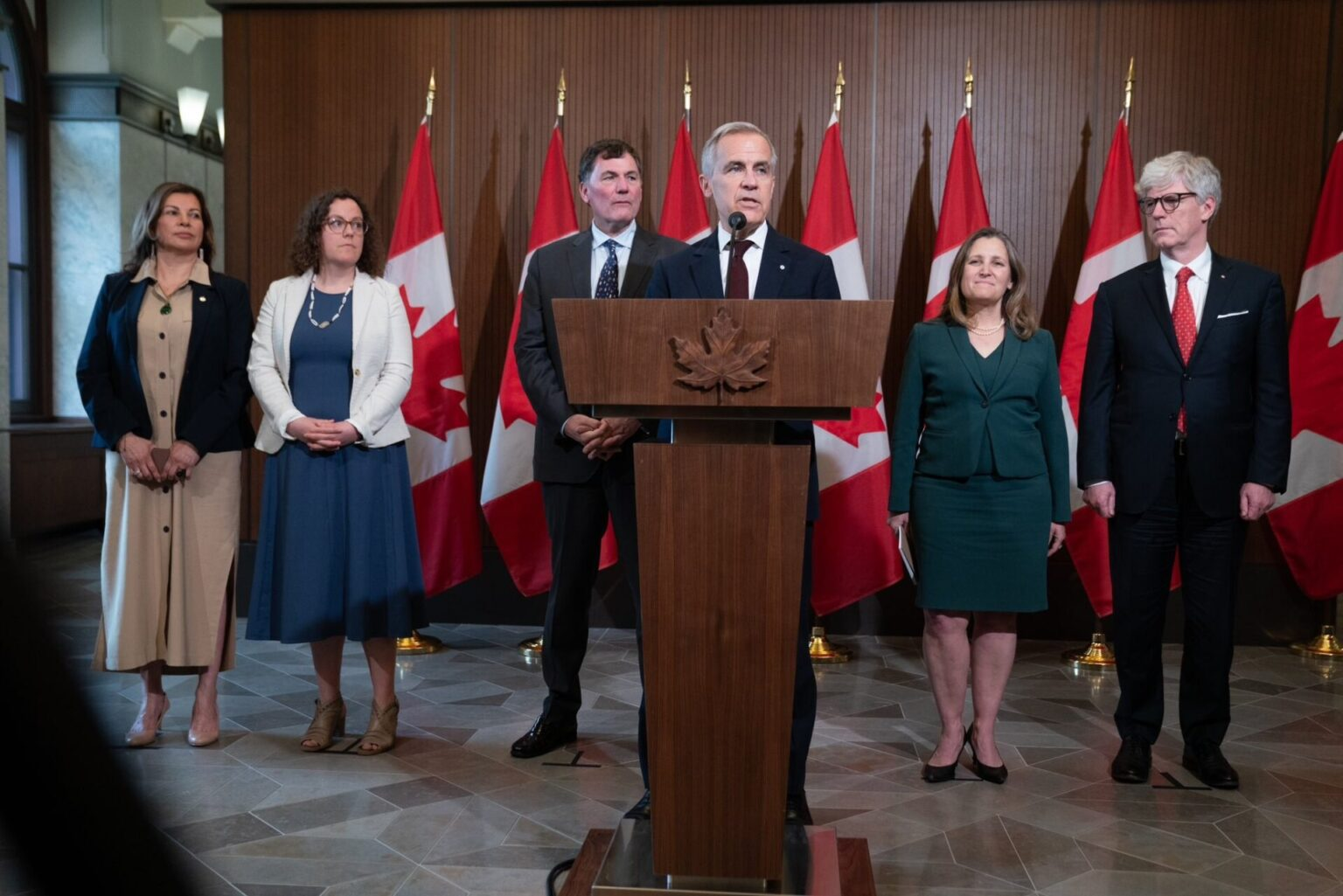
Rather than creating a clearer and more predictable approvals framework, these changes expand federal discretion and further politicize the regulatory process.  

The BCA doubles down on political decision making. First, cabinet, ministers, and – in reality – the Prime Minister’s Office, are granted virtually unconstrained discretion to control both the decision on ultimate approvals along with the process to which national interest projects should be subject. This includes the removal or amendment of current legislation or other rules that apply to national interest projects. 

With this control, Ottawa can determine the outcome of the hearing prior to the consideration of evidence, and regulators will in essence go through the motions of conducting a review to produce a record that supports the government’s political determinations.  

Moreover, it is not clear whether the BCA process replaces the existing process or actually adds to it. The BCA states that designation does not exempt a proponent from taking all measures it is required to make under enacting legislation, the Canadian Energy Regulator Act or Impact Assessment Act, to receive authorization. This suggests the CER and Impact Assessment Agency continue to conduct a regulatory review based on existing legislation. This raises new uncertainties and gives the minister ultimate discretion to consider a limited set of factors when issuing a green light. 

Even in areas where regulatory review is required, such as safety and environmental impact, the BCA adds new considerations that do not precisely jibe with what needs to be considered under existing legislation. For example, the current CER Act requires consideration of how a pipeline may affect the protection of property and the environment. The BCA only requires consideration of safety and security of regulated facilities. While it is easy to say that the minister would in fact continue to consider the factors within the CER Act, the BCA doesn’t require it. 

Indeed, the BCA does not solve the problem that current proceedings require assessments on a wide range of policy that bear little relation to direct project risks. 

Hearings on policy issues like the intersection of sex and gender, and whether the effects of the project hinder or contribute to the government’s ability to meet its environmental and climate change obligations can dissolve into a time-consuming policy debate among proponents and intervenors. 

Project reviews should instead focus on core risks, such as safety, environmental impact, and the adequacy of Indigenous consultation. Especially since the types of projects being referred, and other major projects, are often those with known adverse effects. 

And what to make of the Major Projects Office’s role in these reforms? The BCA gives this office a limited coordinating function, while its website describes its role in broader terms, causing further confusion. 

The project office states it is tasked with evaluating projects for submission and referral to the MPO itself. However, the BCA states projects require evaluation and recommendation by the minister prior to being referred.   

Next the MPO states it will recommend whether projects should be designated as national interest projects. This contrasts the BCA, which requires this evaluation to be done by the minister following consultation with provinces and territories, and Indigenous peoples, on whether to order the formal designation. 

Finally, the MPO states its mandate includes resolving policy or regulatory challenges and reduced risk, providing financial structure or investment support as well as Indigenous engagement and consultation guidance. The BCA does not empower it to conduct these activities and it is unclear how a proponent (likely an experienced and well-financed company) might benefit from MPO coordination rather than existing federal departments, and the various funding agencies, such as the new Canada Strong Fund, Canada Infrastructure Bank, or the Canada Growth Fund, all of which have already committed to better coordination.  

Taken together, we argue the BCA and the MPO’s processes will not streamline project approvals nor improve predictability or good practice in Canada’s regulatory system. 

George Vegh is a Senior Fellow at the Munk School of Global Affairs & Public Policy. Kate Koplovich is a Senior Policy Analyst for Energy with the C.D. Howe Institute. 
World Heritage Committee Adds 29 New Sites Including Alberta On UNESCO’s World Heritage List

Baku, Azerbaijan, July—The city of Fuzhou (China) will host the next session of the World Heritage Committee in 2020. This decision concluded the work of the 43rd session of the World Heritage Committee, meeting in Baku since 30 June.

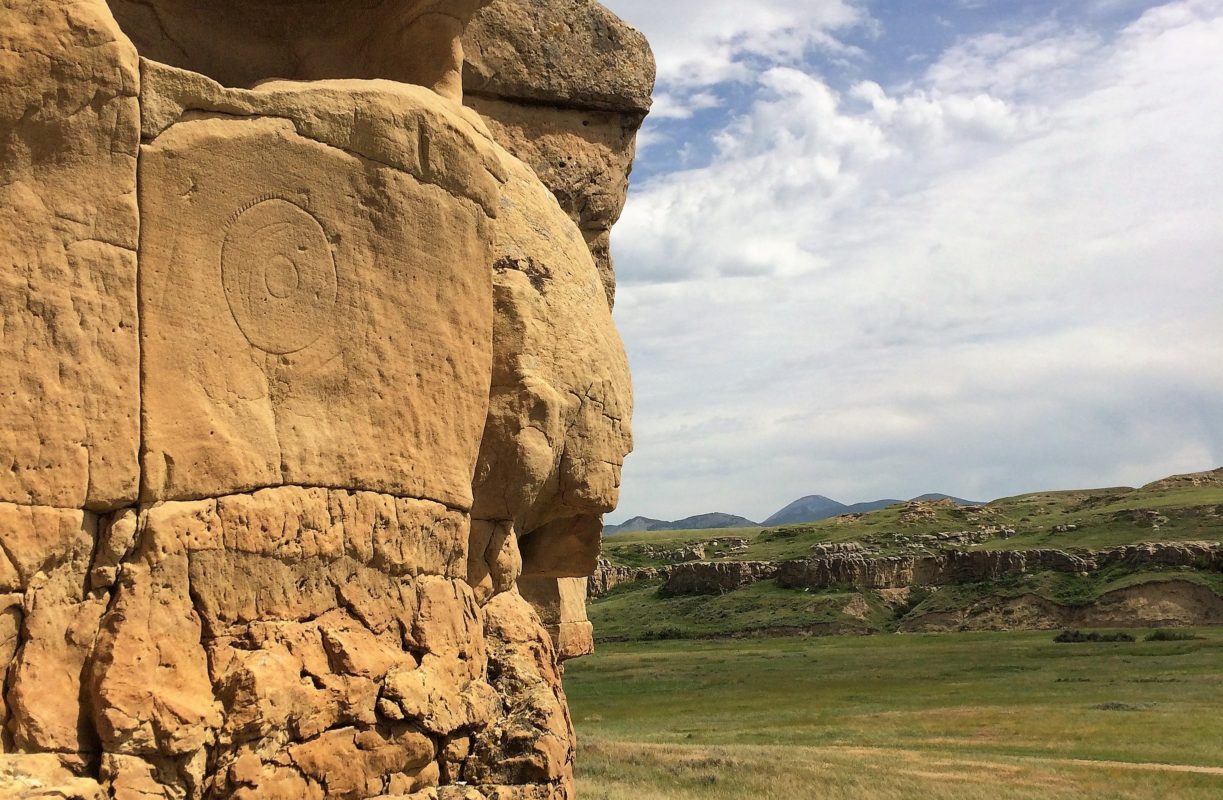
During this year’s session, the World Heritage Committee inscribed a total of 29 new sites on the World Heritage List (one in Africa, two in the Arab States, ten in the Asia Pacific region, 15 in Europe and North America including Writing-on-Stone Provincial Park in Alberta, Canada and one in Latin America).

The World Heritage List now features 1,121 sites in 167 countries.

The Committee approved the removal from the List of World Heritage in Danger of the sites of Humberstone and Santa Laura Saltpeter Works (Chile) and Birthplace of Jesus: the Church of the Nativity and Pilgrimage Route, Bethlehem (Palestine). One property has been added to the List of World Heritage in Danger: the Islands and Protected Areas of the Gulf of California (Mexico).

This session reaffirmed the potential of heritage in strengthening cooperation between States, with the inscription of the transboundary site of the Erzgebirge Mining Region/Krušnohoří (shared by Germany and Czechia) and the extension into Albania of the natural and cultural heritage site of the Ohrid Region (Northern Macedonia).

Cooperation and mediation work on heritage also allowed for consensus on decisions regarding the Middle East thanks to constructive discussion with the delegations concerned, notably Israel, Jordan and Palestine.

Several major archaeological sites were added to the List, including the Dilmun Burial Mounds (Bahrain), the Ancient Ferrous Metallurgy Sites of Burkina Faso and the iconic site of Babylon (Iraq), once the centre of the Neo-Babylonian Empire and site of the Hanging Gardens, one of the Seven Wonders of the Ancient World, which have inspired artistic, popular and religious culture worldwide.

The inscription of Babylon, combined with significant investment by Iraq, contributes to UNESCO’s efforts to rebuild the country and its flagship Reviving the Spirit of Mosul initiative.

Sites essential for the preservation of global biodiversity have also been inscribed. They include the Migratory Bird Sanctuaries along the Coast of Yellow Sea-Bohai Gulf of China (Phase I) (China) and the site of the French Austral Lands and Seas (France) with a record surface area of over 67 million hectares that is home to one of the highest concentrations of birds and marine mammals in the world.

Finally, the inscription of the sites of Budj Bim Cultural Landscape within Australia’s Gundijmara Aboriginal region, and of Canada’s Writing-on-Stone / Áísínai’pi, a sacred landscape of the Blackfoot (Siksikáítsitapi) people, recognizes the knowledge of indigenous peoples, essential for the preservation of cultural and natural heritage.

Significant efforts are still needed to enhance and preserve African heritage, which remains largely under-represented on the List. UNESCO also renewed its call for unflagging rigour, integrity and responsibility in the examination of nominations so as to ensure the credibility of the World Heritage Convention and its future standing.

The new natural sites are:

Migratory Bird Sanctuaries along the Coast of Yellow Sea-Bohai Gulf of China (Phase I) (China)

French Austral Lands and Seas (France)

Vatnajökull National Park – dynamic nature of fire and ice (Iceland)

Hyrcanian Forests (Islamic Republic of Iran)

Mixed site:

Paraty and Ilha Grande – Culture and Biodiversity (Brazil)

Cultural sites:

Budj Bim Cultural Landscape (Australia)

Historic Centre of Sheki with the Khan’s Palace (Azerbaijan)

Dilmun Burial Mounds (Bahrain)

Ancient ferrous Metallurgy Sites of Burkina Faso (Burkina Faso)

Writing-on-Stone / Áísínai’pi (Canada)

Archaeological Ruins of Liangzhu City (China)

Landscape for Breeding and Training of Ceremonial Carriage Horses at Kladruby nad Labem (Czechia)

Erzgebirge/Krušnohoří Mining Region (Czechia, Germany)

Water Management System of Augsburg (Germany)

Jaipur City, Rajasthan (India)

Ombilin Coal Mining Heritage of Sawahlunto (Indonesia)

Babylon (Iraq)

Le Colline del Prosecco di Conegliano e Valdobbiadene (Italy)

Mozu-Furuichi Kofun Group: Mounded Tombs of Ancient Japan (Japan)

Bagan (Myanmar)

Megalithic Jar Sites in Xiengkhuang – Plain of Jars (Lao People’s Democratic Republic)

Krzemionki Prehistoric Striped Flint Mining Region (Poland)

Sanctuary of Bom Jesus do Monte in Braga (Portugal)

Royal Building of Mafra – Palace, Basilica, Convent, Cerco Garden and Hunting Park (Tapada) (Portugal)

Seowon, Korean Neo-Confucian Academies (Republic of Korea)

Churches of the Pskov School of Architecture (Russian Federation)

Risco Caido and the Sacred Mountains of Gran Canaria Cultural Landscape (Spain)

Jodrell Bank Observatory (United Kingdom of Great Britain and Northern Ireland)

The 20th-Century Architecture of Frank Lloyd Wright (United States of America)

For the Silo/UNESCO, Lucía Iglesias Kuntz.

Featured image: Description: Shield-bearing warrior and the distant Sweetgrass Hills
Date: 01/06/2017 
Author: Alberta Parks
Copyright: © Alberta Parks