Category Archives: Earth

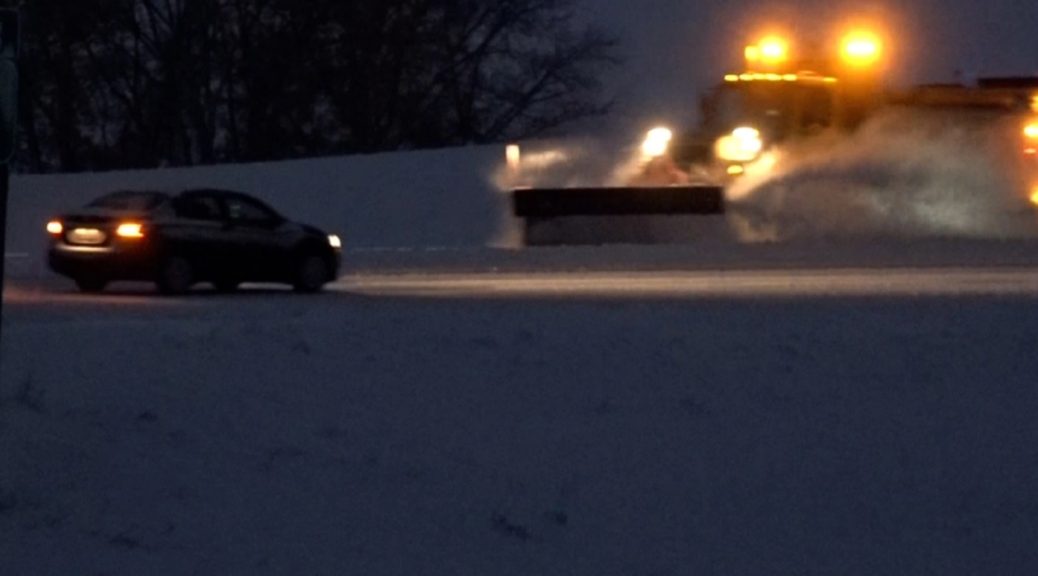
Early-season snowstorm snarls travel throughout Rocky Mountains

A yardstick / meterstick was needed to measure snow in one part of Montana, and the disruptive storm proved “irritating” for one motorist in the middle of a 20-plus-hour drive.

Autumn is in full swing across the United States with Halloween candy filling the shelves at grocery stores and pumpkin spice-flavored beverages being served up at coffee shops across the country. But one region just had a full-scale preview of winter.

The first widespread snowstorm of the season blanketed the Intermountain West over the weekend and through the first part of the week, causing disruptions from the mountains of Montana to the rim of the Grand Canyon.

AccuWeather National News Reporter Bill Wadell was in Montana for the storm where some trees were still sporting vibrant foliage amid the wintry scene.

The storm left behind more than a winter wonderland.

Over a foot of snow / 0.3 M blanked parts of the northern Rockies, including the higher elevations of Montana and Wyoming. Thundersnow was even reported amid some intense bursts of snow.

A yardstick / meterstick was also required to measure the accumulation in Pony, Montana, where snow totals approached the 30-inch / 76.2 cm mark in just 24 hours.

Traffic through mountain passes, such as Bozeman Pass in Montana, ground to a halt at times as poor road conditions clogged the roads for a time. Traffic was flowing again at Bozeman Pass by Tuesday afternoon, although the snow was still slowing down some traffic.

A 50-mile / 80.4 km stretch of Interstate-25 reopened on Wednesday after being closed for almost 24 hours due to the winter storm, Wadell reported. Some sections of Interstates 25, 80 and 90 remained closed in Wyoming as of late Wednesday morning.

In Buffalo, Montana, Wadell caught up with Spokane, Washington, resident Sonia Lasoya, who was hitting plenty of wintry hurdles in her cross country drive to Uvalde, Texas. In Buffalo, off of Interstate 90, Lasoya saw those travel plans run into closed road signs due to the heavy snow.

“It is irritating because I’ve got 20 more hours to go yet, so now hopefully they’ll open the road, but we don’t even know if they’ll open it,” she said.

With a bag full of clothes packed for the warm weather of Texas, Lasoya said she wasn’t totally prepared to have to spend a night stuck in the cold grip of an early-season storm.

“I had this coat, which is really warm. I didn’t really pack warm clothes because it’s like 85 down there in Uvalde,” she said. “I’m not really ready for winter yet, but up in Spokane they kind of start to winterize early… I guess I’m in denial.”1/11

Heavy snow caused I-25 to close in Buffalo, Wyoming October 12. Bill Wadell reports.

In other areas of the region, colorful leaves still clung to trees, wreaking power outage havoc for some. Sheridan, Wyoming, resident Phil Jackson told Wadell that seeing the mix of fall foliage and wintry precipitation was an uncommon alignment, but something he felt prepared for.

“It’s not something we normally get every year in October, but it can happen and it’s something to be prepared for,” Jackson said. “Because a lot of the leaves are still on the tree, that’s the big deal, it’s usually the heavy wet spring type snow that can cause some havoc, but it can happen.”

Jackson told Wadell that his house, along with many of his neighbors, lost power as “6 to 8 inches ” / 15.2 to 20.3 cm fell, although he said it was hard to measure because of how quickly it melted on the ground.

After such a sweltering summer, he added, the quick turn to winter was a shock, but not all that unwelcomed.

“For this year, it’s been a hot, dry summer so I don’t mind the wet snow at all, but it can play havoc with you,” he said. “It doesn’t usually happen, but I’m not surprised, just the nature of it. Branches coming down, there are branches coming down all over the place. Just the nature of it.”

Sonia Lasoya told AccuWeather National Reporter she was in the midst of a cross-country drive from Washington to Texas when the snowstorm snarled her travel plans. (AccuWeather/Bill Wadell)AccuWeather / Bill Wadell

Yellowstone National Park was one of the more mountainous areas that saw snow with the steam from Old Faithful blending into the snowy scenery surrounding the famous geyser.

Over 500 miles / 804.6 km to the southwest, snow was also accumulating at the rim of the Grand Canyon with park officials warning visitors of snow-packed and icy roads on Tuesday morning.

The same system responsible for the snow also sent chilly air across the region. No daily record lows were broken, but temperatures did dip as much as 15 to 30 degrees Fahrenheit / 9.4 to 18.8 C below normal.

The mercury in Missoula, Montana, dipped down to 17 F / -8.3C early Tuesday morning, the lowest temperature in the town since Feb. 28.

It was not quite as cold in Salt Lake City, but residents had to bundle up when stepping outside on Tuesday morning when AccuWeather RealFeel® Temperatures bottomed out at 20 F / -6.7 C.

The early-season snowstorm may have been disruptive, but it did have some benefits.

“Some people are not ready for this blast of winter weather, but the snow and cold is a welcome relief for fire crews that have been battling wildfires out here for weeks,” Wadell said.

The rain and snow are also a step in the right direction to help with the widespread drought across the interior West, although this storm was just a drop in the bucket for what is needed to end the long-term drought. For the Silo, AccuWeather Public Relations, State College, PA, USA.

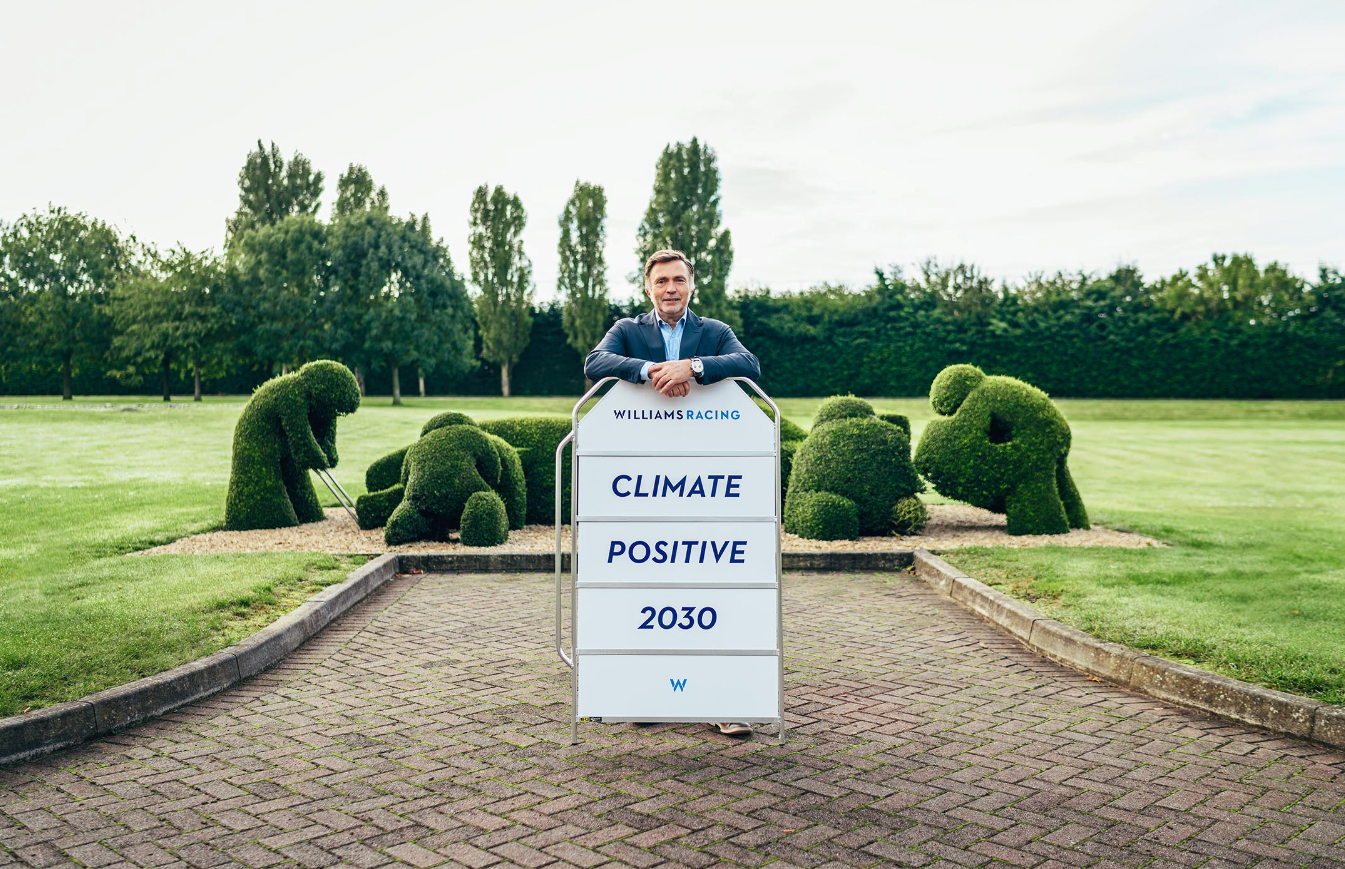
WILLIAMS F1 RACING TO BECOME CLIMATE POSITIVE BY 2030

Grove, Oxfordshire UK: Williams Racing, one of the most successful teams in Formula One history, commits to a far-reaching climate change target.  Building on the progress the global motorsport industry has made on sustainability in recent years, Williams Racing goes further than any other race team or motor racing series in the world, to commit to becoming climate positive by 2030.  
To achieve this ambitious goal, Williams Racing has developed a series of robust technological and data driven initiatives, as part of a comprehensive purpose driven sustainability strategy, aiming to address some of the most important environmental and societal challenges facing Formula One, global sport and the planet.

The Williams Racing Sustainability Strategy, which has been developed over the course of the last year after extensive expert analysis, is based around five key pillars: Climate Action, Biodiversity Stewardship, Sustainable Innovation, Industry Access for All and Purpose Driven Leadership. Each pillar defines actions that Williams will be taking in the short and medium term to accelerate the transition to a better planet. Adding further transparency and accountability, each objective will be measured, audited and annually reported.

Williams is committed to learning and sharing best practices from all sectors and adhering to international initiatives. Accordingly, this strategy brings its emissions reduction target in line with the below 2 degrees Celsius target of the Paris Climate Agreement and UN Climate Change Global Agenda. Williams Racing is now the first Formula One Team to be a signatory of the UNFCCC, UN Sports for Climate Action Framework. In addition, Williams Racing Sustainability objectives are aligned with 12 of the 17 United Nations Development Goals (SDGs).  Williams Racing is also aligned with industry specific standards and has recently gained FIA Three-star environmental accreditation.   

Jost Capito, CEO, Williams Racing: “Williams Racing is a pioneer in Formula One and the racing world and has a strong heritage developing Formula One technology and transferring it to the EV and sustainable transport and energy sectors. We are living in a time when our planet and society is changing faster than ever. Building on the progress the global motorsport industry has made on sustainability in recent years, we have taken time to thoroughly analyse our entire operation and develop a comprehensive purpose driven, Sustainability Strategy to accelerate our sustainable transformation. As a team, we wanted to push the envelope and be the pace setter for sustainability in global motorsport and in the wider automotive industry. So today we are making the commitment to be climate positive by 2030 and we will be using our knowledge to nurture and develop advanced technology to meet this goal.

“We know where we are strong and understand where improvement is required and we are open to learning from others and sharing best practices in pursuit of our ambitious objectives. To help raise the baseline of sustainable performance in our industry, we welcome interaction and partnerships with key motorsport stakeholders, automotive companies, brands and organisations who share our vision.” 

“As a huge global sporting platform, Formula One has the power to inspire millions of people across the world and as the pinnacle of so many advanced technologies, Formula One has the ability to create technical solutions to help tackle the challenges we face as a planet. As we progress towards our goal to be climate positive in the years ahead, my hope is that Williams Racing can inspire all those connected with our sport and beyond, using motorsport as a catalyst for significant and long-lasting change.”

The five key pillars of the Williams Racing Sustainability Strategy

Climate Action, covers the strategy and targets for how the team will reduce carbon emissions for travel and energy consumption at HQ, reduce waste and water usage and over time create its own energy, on its journey to becoming climate positive.  

Biodiversity Stewardship, covers the strategy and targets for how the team protect and preserve the biodiversity on the 60 acres of the HQ campus, including the Letcombe Brook – one of only 240 chalk streams in the world.  

Sustainable Innovation, covers the strategy and targets to foster sustainable and innovative solutions that tackle global challenges in and outside of F1™. This includes Williams Racing undertaking full life cycle management of its racing cars, deploying circular economy strategies within the team and being actively involved in projects such as carbon capture technologies.

Industry Access for All, covers the strategy and targets to make motorsport more accessible by creating an environment in which anyone can thrive, and a workforce that reflects our community through academy programmes, scholarships and Esports.

Purpose Driven Leadership, covers the strategy and targets for Williams Racing to act as pace setters for sustainability within the motorsport industry. Building a strong, transparent and accountable culture in our team, at races, with our partners, suppliers, local community and fans.

Lindita Xhaferi-Slihu, Sector Engagement in Climate Action, Lead, from the UNFCCC commented “We are pleased to welcome Williams Racing as a signatory to the UN Sports for Climate Action Framework. The team is the first Formula One Team joining the Framework, sending a clear signal on the growing importance of setting clear climate targets and of using the sport and technologies as a catalyst for change. We look forward to working together with Williams Racing to deliver on the goals of the Framework.”

The Williams Racing Sustainability Strategy was developed with support from Enovation Consulting, a purpose driven sustainability and strategic management agency.

About Williams Racing

Williams Grand Prix Engineering Limited’s core competencies are the design and development of racing cars to compete in the Formula One World Championship. As one of the world’s leading Formula One teams, the company has secured 16 FIA Formula One World Championship titles since its foundation in 1977. Nine of these titles have been won in the Constructors’ Championship in association with Cosworth, Honda and Renault. The remaining seven titles were won in the Drivers’ Championship with Alan Jones, Keke Rosberg, Nelson Piquet, Nigel Mansell, Alain Prost, Damon Hill and Jacques Villeneuve.

About Enovation Consulting

Enovation Consulting is a purpose-driven sustainability and strategic management agency with the mission to drive positive and meaningful changes through sport. We deliver creative and innovative research-based solutions that empower our clients to integrate sustainability into their business strategies – delivering on their short, medium and long-term ESG goals.

About UNFCCC Sports for Climate Action Framework

The UNFCCC Sports for Climate Action Framework is the UN Climate Change initiative, a climate action for sport movement of sports organizations and their stakeholders. This initiative aims at supporting and guiding sports actors in achieving global climate change goals, offering a forum where participants can pursue climate action in a consistent and mutually supportive fashion by learning from each other, disseminating good practices, lessons learned, developing new tools, and collaborating on areas of mutual interest. Signatories commit to a series of principles and goals which are incorporated into their strategies, policies and procedures.

M5 Electric Scooter Is Foldable Fun

Imagine spending pennies on electricity instead of hundreds of dollars on gas during the busiest travel season.

On the new, fully-electric M5 E-Scooter from EcoReco, a mere one dollar will power the scooter for approximately 500 miles.

The M5 is perfect for short-distances and last-mile commutes. They also work well on corporate campuses, and for casual rides around town.

M5E Scooter

The M5 has many of the same great features from its previous M3 model, but also has a rear-suspension system, which gives you a much smoother ride. Also new is the option to have a front pneumatic tire, which are available for purchase.

The M5’s quiet, electromagnetic motor gives off no CO2 emissions, making it environmentally safe. The M5 can reach a top speed of 20 mph and travel up to 20 miles per charge on flat ground. It also comes with a smart charger that can quickly charge the battery from zero to 85 percent in just 2.5 hours. The M5 features a direct-drive, brushless hub motor and high-capacity Lithium Iron Phosphate (LFP) battery.

The M5 model is foldable and has a lightweight design, which makes the scooter can easily be stored for public transportation rides or on longer commutes.

The patented M5 E-Scooter from EcoReco is now available  for $1,250 (USD). Contact [email protected] for ordering information and further product information.

FEDS ADD PLASTIC TO TOXIC SUBSTANCES LIST

This Plastic Free July The Environmental Defence Canada organization is calling out Canada’s top plastic polluters, also known as Big Plastic—the companies that turn oil and gas into plastics.

This spring, the federal government added plastic to the Toxic Substances List under the Canadian Environmental Protection Act (CEPA). The listing means Canada can better manage the production, use and disposal of plastic and it will be required to address the harms caused by plastic in the environment. This is progress! But now Canada is being sued by its three biggest plastic producers—NOVA Chemicals, Dow Chemical and Imperial Oil—in an effort to prevent any regulations that would help reduce plastic pollution.

To add insult to injury, Big Plastic insists plastic is safe and necessary while blaming others, namely society and municipal waste systems, for the havoc their products wreak on our environment.  Big Plastic has been flying under the radar for too long. It’s time to call them out!
alt_text
Canada now finds itself on the front lines of a war waged by high-priced lawyers and public relations professionals on behalf of some of the biggest companies in the world. Instead of being part of the solution, Big Plastic is rolling out trashy tactics to protect its bottom line and increase production.  

Help us call out NOVA Chemicals, Dow Chemical and Imperial Oil for suing the federal government. Let’s hold them accountable for their role in creating one of the world’s biggest pollution crises.  

Not on Twitter? No problem! You can still take action. If you haven’t already, tell the federal government that you support regulations to end Canada’s plastic pollution problem. Help us spread the word by sharing this action on Facebook or simply forwarding this email to your family and friends. Together for change,
For the Silo, Karen Wirsig.

Dry Cleaning Clothes May Be Harmful To Your Health


Twitter Facebook YouTube
Why you shouldn’t dry clean your “Dry Clean Only” clothes


Spilled BBQ sauce on your favourite shirt this weekend? Dry cleaning may be your go-to, but did you know PERC, a toxic chemical that’s been phased out in several jurisdictions around the world, is the most commonly used solvent in Canada? Read two common misconceptions about “Dry Clean Only” clothing labels and tips on how you can clean your linen, silks, and cottons the greener, non-toxic way.
 
the algae
monster
is back!
Lake Erie is expected to experience a significant algae bloom this summer. Read our latest blog to learn more about what causes the blooms and what this summer’s algae forecast could mean for the lake and the people who rely on it.


You can also show your support for the lake by taking our Lake Erie Pledge.

 
Show us how
Life’s a Beach
for a chance
to win
Our Blue Flag program is once again hosting the Life’s a Beach Photo Contest. This summer, share with us your best photos of your favourite Canadian beach. You could win $1,000 for new camera gear! Visit blueflag.ca/photocontest to learn more. The deadline to enter is Sept. 1.
 
POST TO FACEBOOK


Learn some tips on how you can clean your linen, silks, and cottons the greener, non-toxic way

POST TO TWITTER


Learn some #tipsandtricks for cleaning your linen, silks, and cottons the greener #toxicfree way

 
OTHER CAMPAIGNS WE’RE WORKING ON AT ENVIRONMENTAL DEFENCE


Alberta’s toxic tailings ponds keep growing and the cleanup costs keep rising. Giving feels good (over-stuffed closets don’t.) This year, throw an ECHOage birthday for us. Our work is possible thanks to caring people like you. Please make a charitable gift today in support of our environment!
READ MORE
LEARN HOW
DONATE TODAY


AT ENVIRONMENTAL DEFENCE WE CHALLENGE AND INSPIRE
CHANGE IN GOVERNMENT, BUSINESS AND PEOPLE TO ENSURE A
GREENER, HEALTHIER AND MORE PROSPEROUS LIFE FOR ALL.
  Twitter Facebook Youtube  

USA’s first-ever Olympic Surf Team and Wyland Foundation partner for healthy oceans

Rancho Santa Margarita–To commemorate USA Surfing’s first ever event at the Olympic Games in Tokyo, renowned marine life artist Wyland created a limited time commemorative USA Surf collection with a signature Octopus in his beautiful Japanese-influenced Gyotaku style. This lucky Octopus shows up throughout the collection.

See the full limited time commemorative USA Surf collection by Wyland Foundation here: https://wylandfoundation.org/product-category/usa-surfing/

Proceeds support the ocean conservation partnership between USA Surfing and the Wyland Foundation.

Orders are NOW ready to ship.

WSL and Olympic surfer / artist Courtney Conlogue recently joined Wyland at his studio to talk surfers, dolphins and the Olympics.

About the Wyland Foundation

Founded in 1993 by environmental artist Wyland, the Wyland Foundation, a 501c3 non-profit organization dedicated to promoting, protecting, and preserving the world’s ocean, waterways, and marine life. The foundation encourages environmental awareness through community events, education programs, and public art projects. This year the Wyland National Mayor’s Challenge for Water Conservation marks its 10th anniversary promoting health of U.S. waters.

NightSwapping Is New Euro Model of Sustainable Tourism

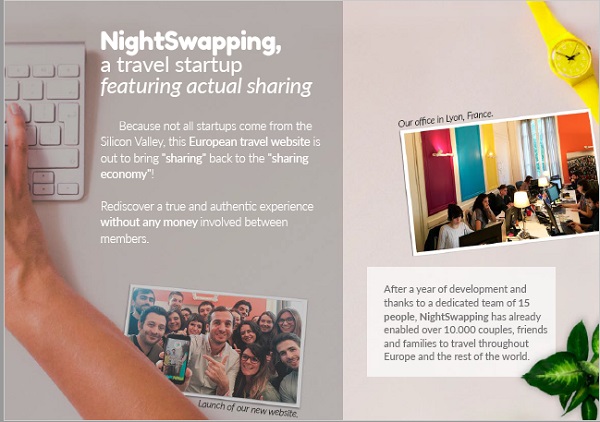
In a time when the sharing economy is generalizing eco-friendly solutions for a sustainable development, a European startup has brought up to date one of the oldest tourism ideas in the world to lower the carbon footprint on your next vacation. It’s called swapping or more precisely, NightSwapping.

A simple idea that is enjoyed for its human dimension, authenticity and the absence of money between members.

NightSwapping1

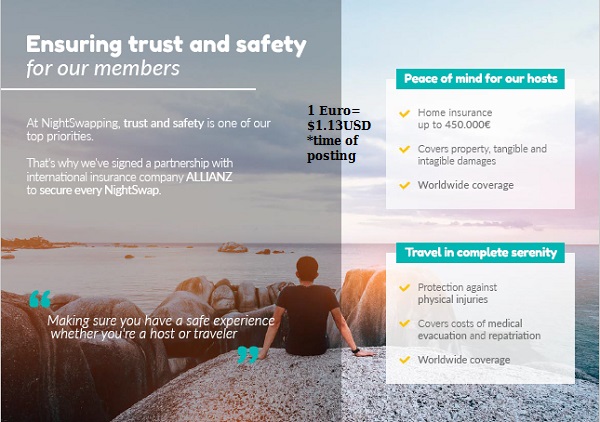
It is therefore with the utmost respect for traditional cultures, local territory and people that NightSwapping represents a new model for a sustainable tourism.

Has it not become common for travelers to stay at a local’s rather than hotels or resorts?

NightSwapping2

These new behaviors seem motivated by the desire to draw closer to local cultures and pass down certain values to our young ones…

Within this changing industry, a European concept has found a way to challenge the giants from the Silicon Valley. NightSwapping  is the Sharing Economy at its core: no money exchanged, just sharing and authentic experiences.

NightSwapping3

A promising idea that continues to convince travelers around the world. For the Silo,  Quentin Mittelett.  

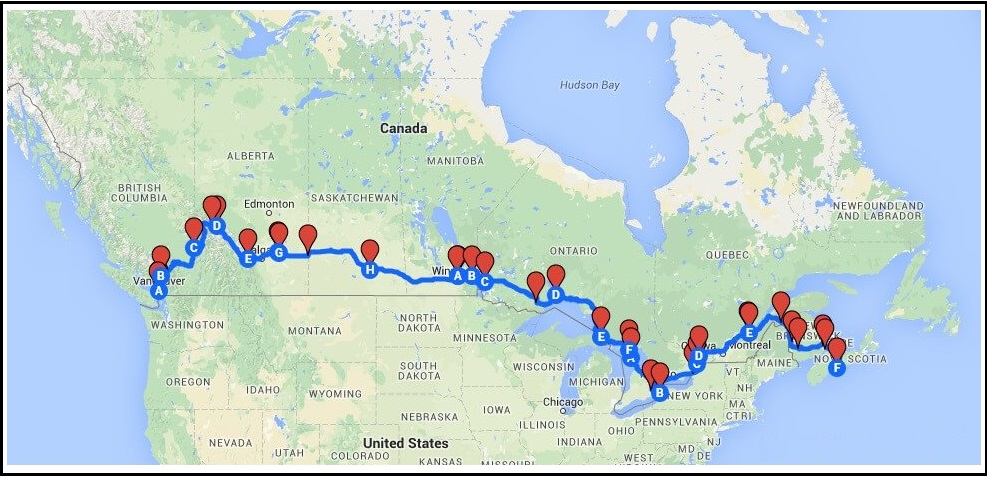
NightSwapping4

Have you tried this? Would you try this? Let us know in the comments below.

A Guide To Taking A Road Trip Across Canada

One of the best decisions that you can make is to take a road trip across Canada. For one thing, it is a great way to see just what this great country has to offer in terms of nature and landscapes. At the same time, being on the road ensures that an adventure is just a town away. Of course, road tripping across such a large region is no joke. So, if you want to make sure that you get it right and stay safe, you should follow these tips:

Draw Up a Plan

Hitting the open road provides you with a sense of unbridled freedom. However, considering the sheer size of the area that you will be covering, you can’t really head out without a plan. Keep in mind, there can be a long distance between rest stops, motels, and restaurants.

So, to make sure that you always have a place to sleep and can stock up on some supplies, you will need to do your research. Mark out some areas between long, empty stretches of road. These will come in handy, particularly if you are driving though late at night.

Brush Up on Local Laws

Now, for the most part, the road rules don’t really change too much from one place to another. Nevertheless, there are some discrepancies. So, to avoid getting into any legal trouble, brush up on impaired driving consequences in the regions that you are heading to. You may just learn some interesting details.

If you really want to stay on the right side of the law, though, you may want to look up how to get DUI help as well. After all, on a road trip, the easiest place to make new friends is in a bar. So, it is quite likely that you will be putting away a couple of drinks away each night. It is important to make sure that you don’t get into any trouble after this.

Prepare for All Kinds of Weather Conditions

Even if your road trip is taking place during the summer, you can’t simply assume that it will be smooth sailing all the way through. Remember, rain and thunderstorms are always a possibility, so you should be prepared. Not to mention, the climate can change from one area to the next, so make sure to pack all kinds of clothes so that you will be ready for anything. In case you are going exploring during the winter, take all of the gear, clothing, and equipment you may need.

Make a List of Must-Do Items

Each city, town, or province has something interesting to offer. So, make sure that you don’t just pass through during your road trip. Make up a list of all the activities you want to try and sights you want to see. Then, try to cross off as many as you can. In the end, you will find that all of these experiences really add to your road trip.

So there you have it, the ultimate tips to follow when road tripping in Canada. All that is left for you to do is to have some fun.

Best Countries For Post Covid Study Abroad Programs

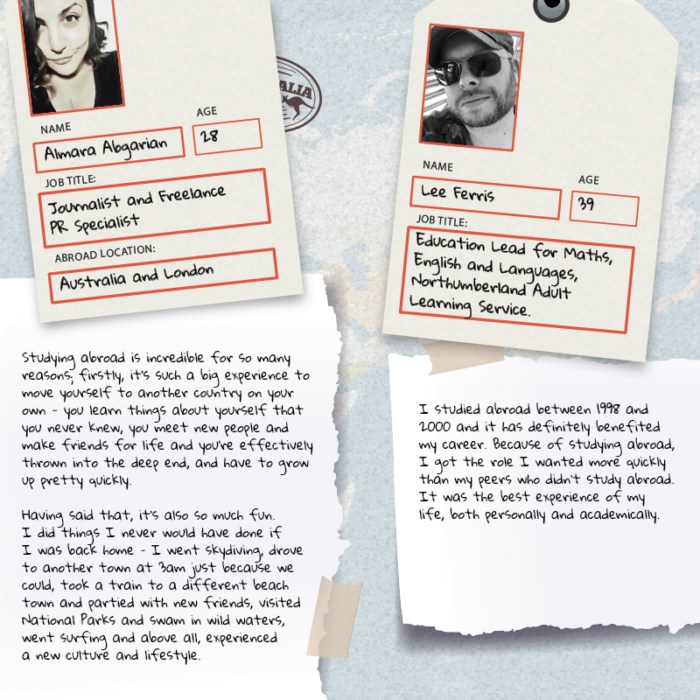
As more students are heading towards graduation each year, the struggle to get a graduate job is becoming more difficult, and students have to ensure strong CVs in order to stand out from the crowd.  The Covid pandemic has put a halt to students having options in countries other than their own. However, with a bit of luck, the pandemic will continue to end and travel restrictions will be eased. When that happens, international students will finally be allowed to return to studying abroad, learning new skills and experiencing new cultures.

Although this may be seen as one long holiday to those not in the know, those that study abroad will, in fact, have a higher starting salary, earning an extra 5% more than those who don’t. On average, this could amount to an extra £75,000 ($126,709 CDN at time of this article)  over a career.

Study Abroad Graduates

Not only will they earn more, they are also almost ¼ less likely to be unemployed after graduation. So although all study abroad programs come with a cost, with readily available bursaries, this opportunity is accessible to any student who is hoping to boost their employ-ability and is an opportunity that should be taken.

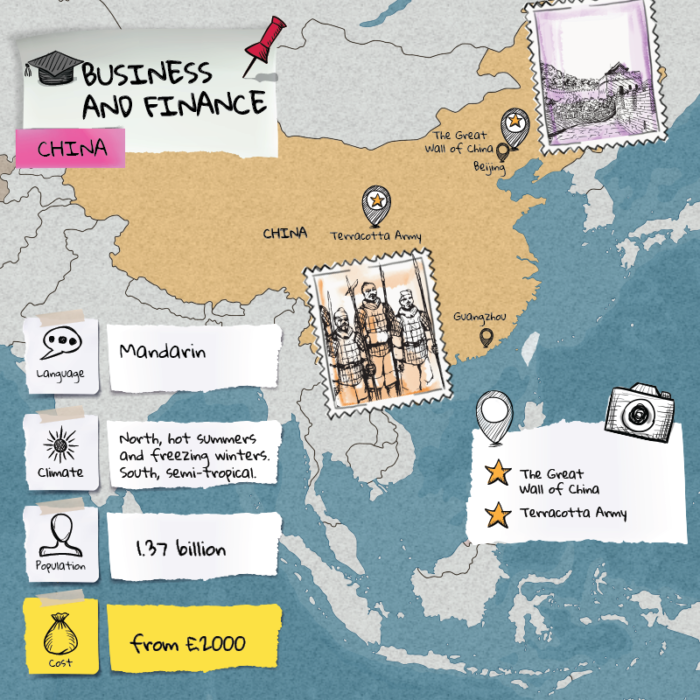
Business and Finance Students – China: As the second largest economy in the world, China offers endless business opportunities, whilst encouraging students to learn the most widely spoken language in the world, Mandarin.

Business and Finance Studies in China

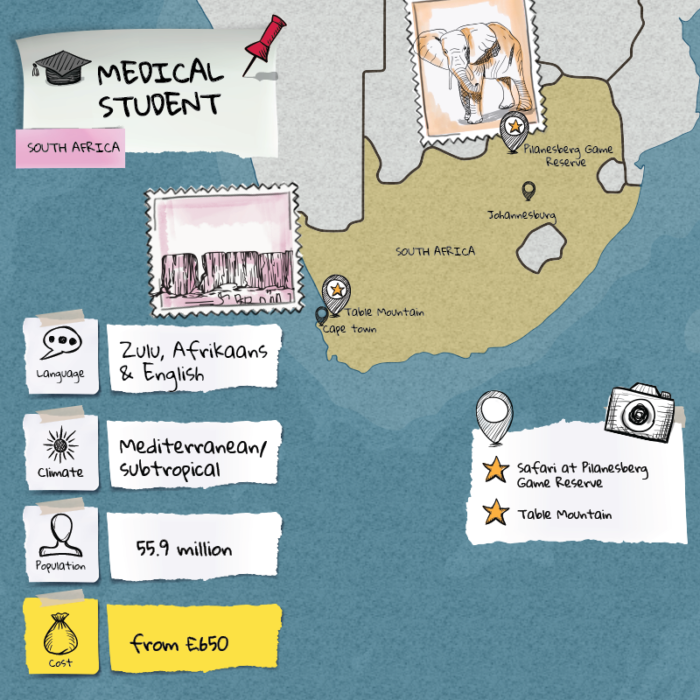
Medical Students – South Africa: Of the 234 million surgical procedures made every year, just 4% of these happen in the poorest third of the global population. When medical students choose to volunteer in South Africa, they will gain experience in a different medical setting, and all whilst giving back.

Medical Student study in South Africa

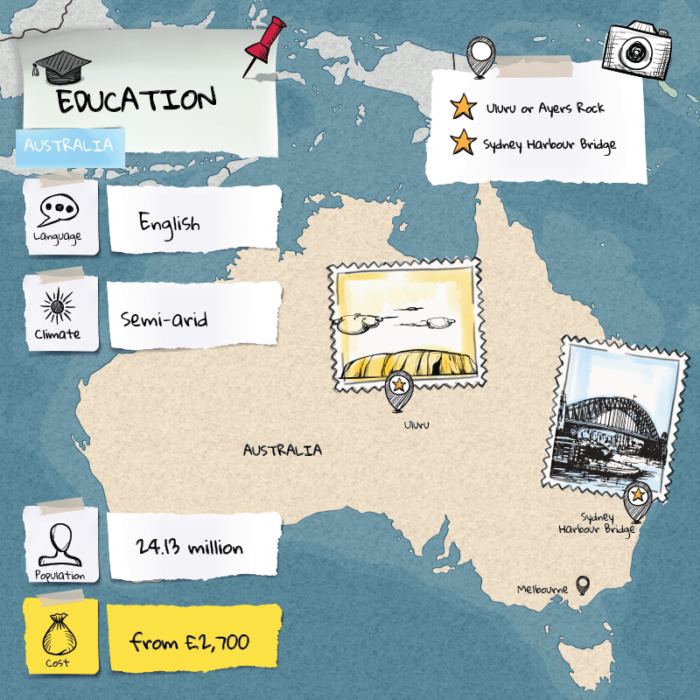
Education Students – Australia: As an English-speaking country, Australia is the perfect study abroad opportunity for future teachers. With the average UK class size standing at 30 pupils, the Australian’s average size of 16 will be a lot easier to manage. Plus for those who decide to stay in Australia long-term, new teachers can expect to earn £40,000+ ($67,572 CDN) compared to the £22,000 ($37,164 CDN) starting salary in the UK.

Education studies in Australia

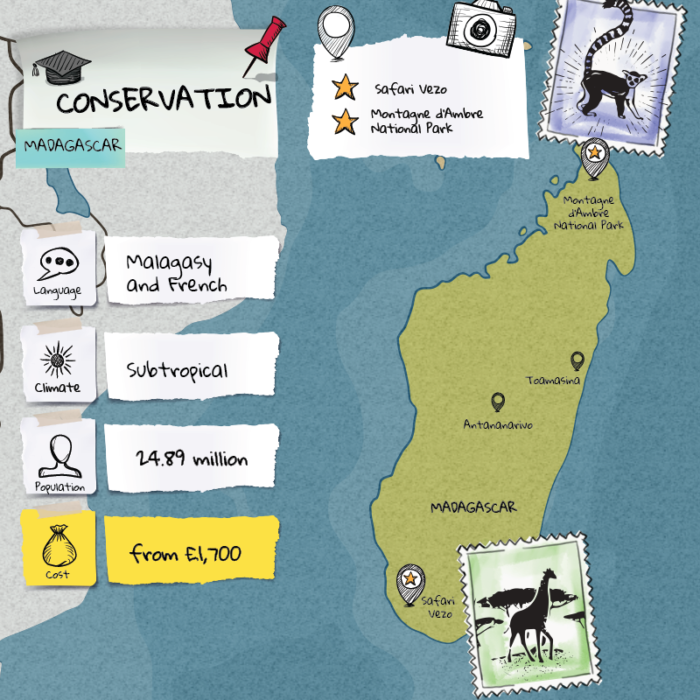
Conservation – Madagascar: Conservation is a growing industry as concern grows for animals and the environment. As the fourth largest island in the world, and as home to species not found anywhere else, Madagascar is the perfect opportunity for a once in a lifetime opportunity for conservation enthusiasts.

Conservation Studies in Madagascar

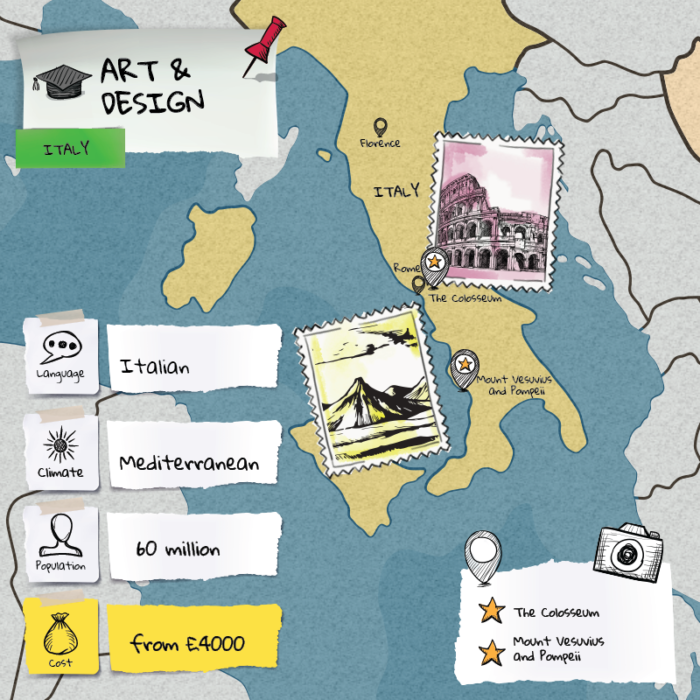
Art & Design Students – Italy: From ancient and classic sculpture to modern day art, Italy is the perfect place to learn and gain an even greater passion for art history.

Art and Design Studies in Italy

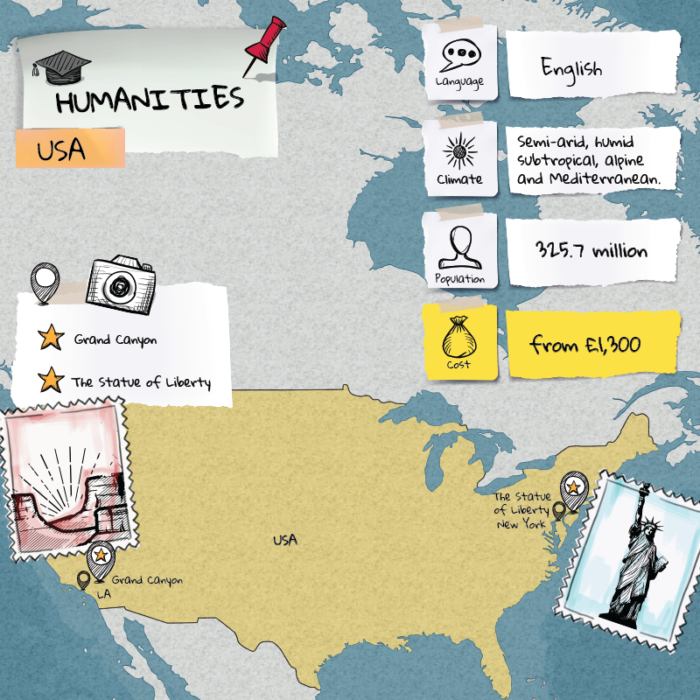
Humanities Students – USA: With three of the top five humanities universities based in the USA, America offers a vast array of historical and literary studying options. This time abroad will open up options for students who are wanting to work in academia, journalism or teaching.

Humanities Studies in the United States
For the Silo, Bekki Ramsay/storageworld.

Marriage Proposals While Orbiting Moon By 2022

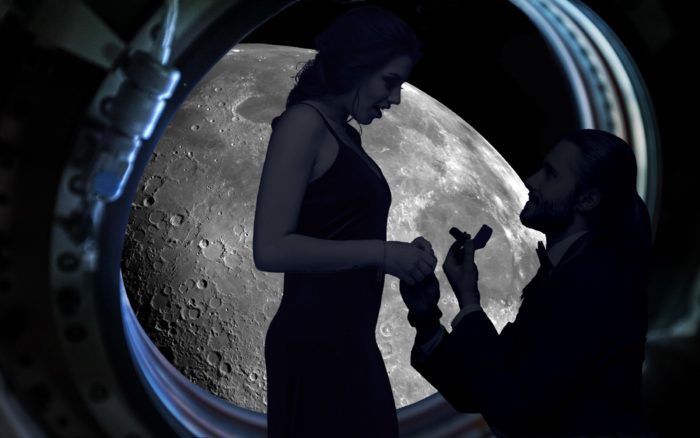
Starting in 2022 it will be possible to ask for the beloved’s hand in marriage while flying over the lunar surface to the sound of Frank Sinatra’s “Fly Me to the Moon”. The one-week interplanetary flight will be carried out using a self-contained and autonomous spacecraft allowing the two lovers to travel alone.

The ApoteoSurprise agency, a French marriage proposal planner specialized in creating extravagant proposals, introduces a whole new service for 145 million dollars which will allow 21st century handsome princes to propose while flying around the Moon. Reaching for the Moon in the name of love is about to become a reality, the ultimate goal of the Paris-based agency being to “stage the craziest and most outstanding marriage proposal of the last 13.8 billion years“.

Apoteo Marriage Proposals France

From March 2022, elite lovers will be able to book the all-included service on the site www.proposeinparis.com and five months later find themselves enjoying the following program:
– Twelve weeks of pre-requisite technical and physical training.
– Takeoff on D-Day from the Kennedy Space Center in Cape Canaveral, Florida.
– Richard Strauss’s “Thus spoke Zarathustra, Op.30” (Theme from 2001 Space Odyssey) resounding in the two space tourists’ helmets when the first effects of weightlessness are felt.
– Arrival in lunar orbit, three days later, flying over the satellite’s grayish surface at only 200/300 kilometers altitude.

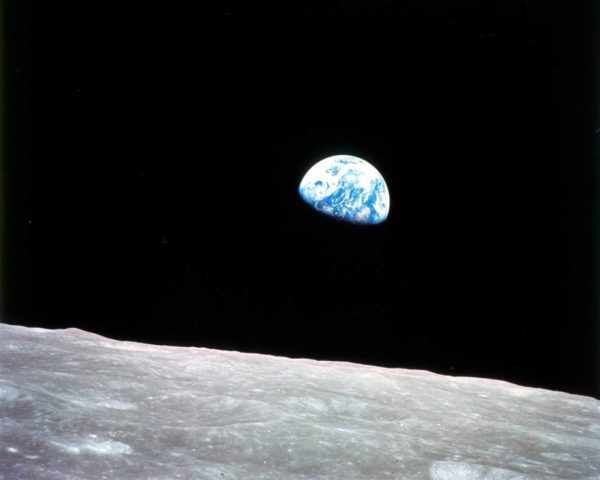
Earthrise Apollo 8
The famous ‘Earthrise’ photo from Apollo 8, the first manned mission to the moon. The crew entered lunar orbit on Christmas Eve, Dec. 24, 1968. That evening, the astronauts held a live broadcast, showing pictures of the Earth and moon as seen from their spacecraft. photo:NASA

– Cut-off of all communication with Earth for around thirty minutes while the capsule flies over the dark side of the Moon.
– The Frank Sinatra song “Fly Me to the Moon” played halfway through the orbital flight, allowing the suitor to make his marriage proposal far from any form of human life (engagement ring secretly hidden in his spacesuit).
– A spectacular Earth-rise seen from behind the lunar craters and return trip of nearly four days before atmospheric re-entry and final touchdown.

The flight-plan followed by the space capsule will mirror that of the mythical Apollo 8 mission in 1968. The spacecraft, traveling at a speed of up to 38,000 km/h, will be equipped with eight cameras allowing the couple to immortalize their entry into the history of the conquest of space and the conquest… of love! For the Silo, Nicolas Garreau.

My Magical Mystery Tour of Abbey Road Studio In London

Have you ever experienced something surreal?

I had reason to visit and work at Abbey Road Studio in London, and it still seems surreal!! My colleague Jayson Tomlin, Gary Katz (producer of Steely Dan), and myself were there to do testing and evaluation of some new technologies we’ve been working on for broadcast and consumer applications.

We spent a full day working in one of the mix-down studios, along with members of the BBC, Scotland Yard, Abbey Road, David Perreau, Felix Konrad, and some of Gary’s record producer ‘buddies”…Hugh Padgham (Genesis, Rush, Phil Collins, Police, Sting, XTC), and Elliott Randall (studio guitarist for Steely Dan).

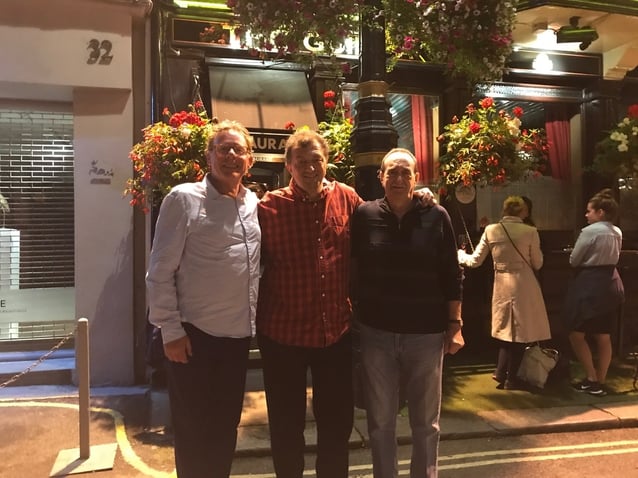
Frank with Hugh Padgham (left) and Gary Katz (right)

Our connection with Gary has enabled us to connect with key members of the music production world, which in turn has enabled us to further evolve technologies for broadcast, and soon the consumer markets. Our work at Abbey Road was another step along this process, and it raised the bar for us, on what is expected of our products.

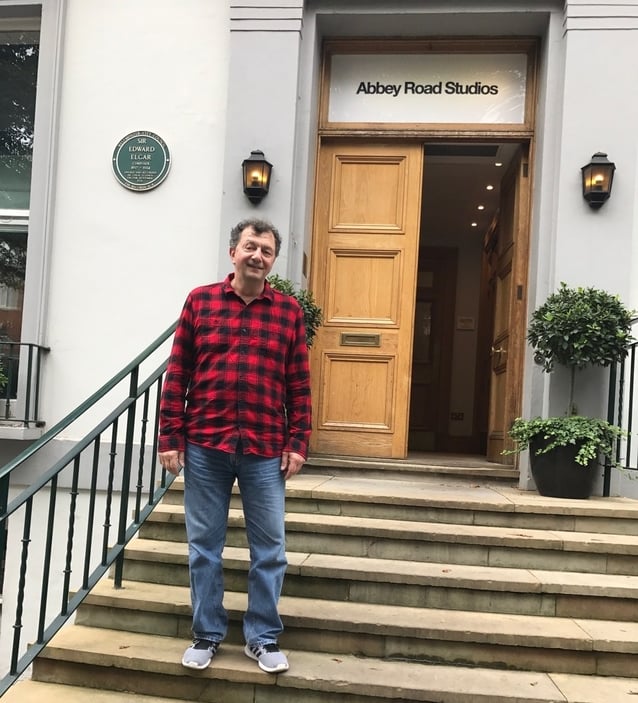
Frank on the steps of Abbey Road Studios

Being able to set foot into the building and studio where the Beatles recorded and produced all of their material was breathtaking. I’ll never forget, as we were wrapping up the events for the day, the studio engineer, whom we were working with, said “hey guys come with me, two is now open!” In my mind I’m thinking “this is where all the ‘magic’ happened.” So, off we went, and sure enough we walk into studio #2, and it’s still pretty much the same as if John, Paul, George, and Ringo were there the day before.  Getting chills—again—as I write this!!

Jayson Tomlin and others take in Studio #2

Probably the most gratifying moment that day was towards the end. Hugh Padgham had been listening to some tech I’d developed, and told me how he’d done work with the late George Martin. His comment was how he had a good sense about how George produced the Beatles, and could we apply my ‘gizmo’ to their music.

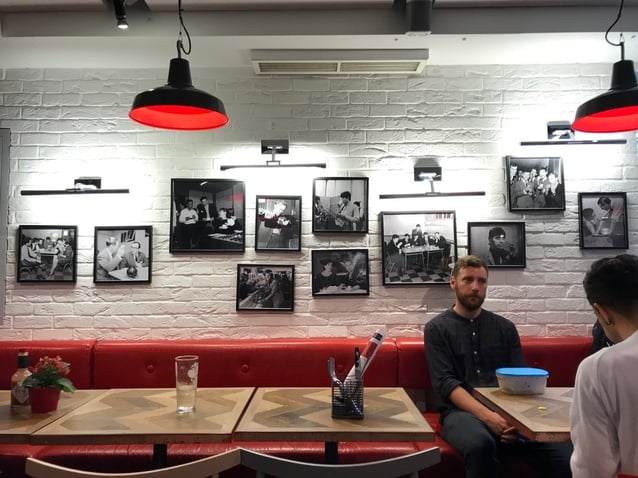
Abbey Road Cafeteria

So…in the building they recorded the album Abbey Road, we added some treatment to the song “Golden Slumbers.” Together, all of us were in awe to hear the Beatles music, with some treatment from our efforts, done at Abbey Road!

Tape deck used in the recording of Sgt. Pepper's
Tape deck used in the recording of Sgt. Pepper’s

There’s a skylight in the ceiling of the studio we were working in. While listening, I looked upward through the skylight, and thought, “if Mr. Martin, Mr. Lennon, and Mr. Harrison are listening, my hope is you won’t feel I let you down.” I felt a tear trickle down upon having this thought. Quite possibly one of the coolest occurrences in this boy’s life!!

Frank between pianos used for the Beatles' “Get Back” and John Lennon's “Imagine”
Frank between pianos used for the Beatles’ “Get Back” and John Lennon’s “Imagine”

Modestly, it was reassuring when each of our well-known music industry guests gave us the “thumbs up’ for our efforts. Further indication of how our little organization keeps growing and raising the bar! In closing, my sincere thanks to Jayson Tomlin, Gary Katz, Hugh Padgham, Andrew Scheps, and Elliott Randall for your feedback and friendship!!

Recording mixer used to record Pink Floyd's The Dark Side of the Moon
Recording mixer used to record Pink Floyd’s The Dark Side of the Moon

For the Silo, Frank Foti.

US Climate Scientist Pushes For Canadian Carbon Tax Serfdom?

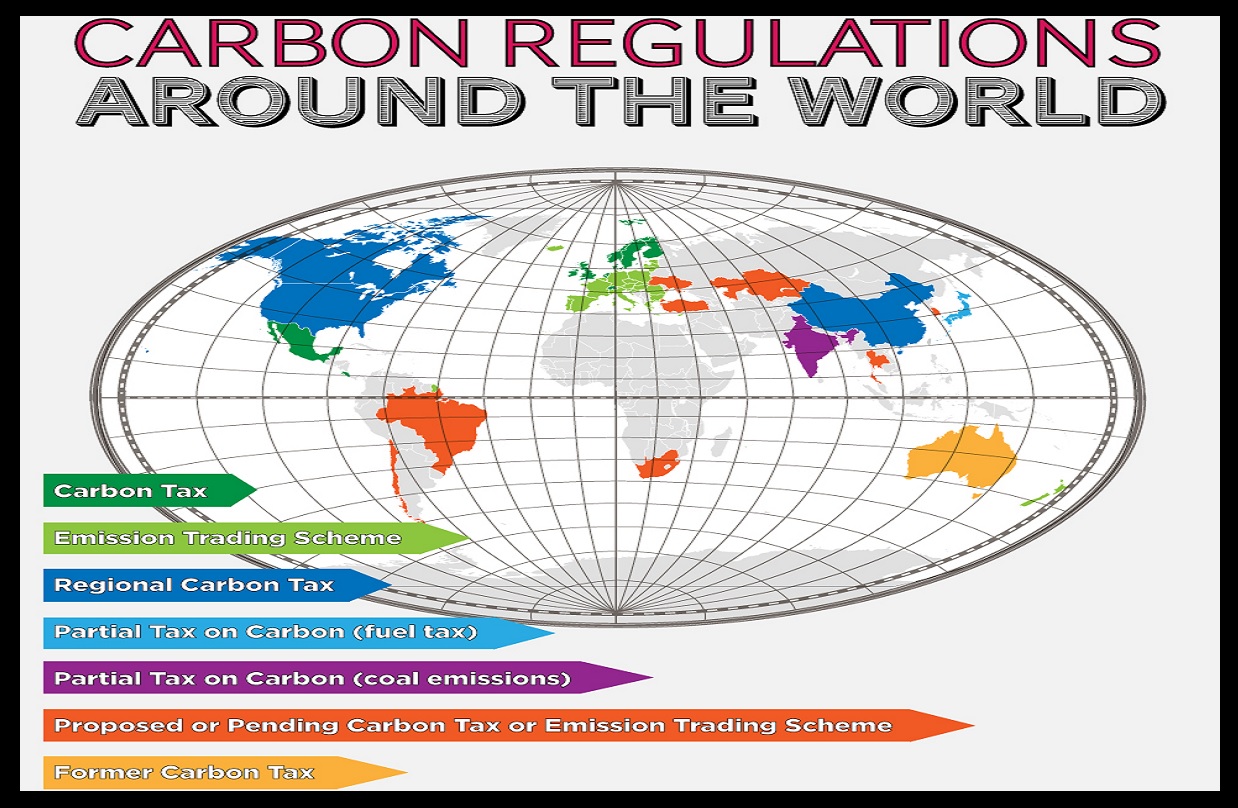
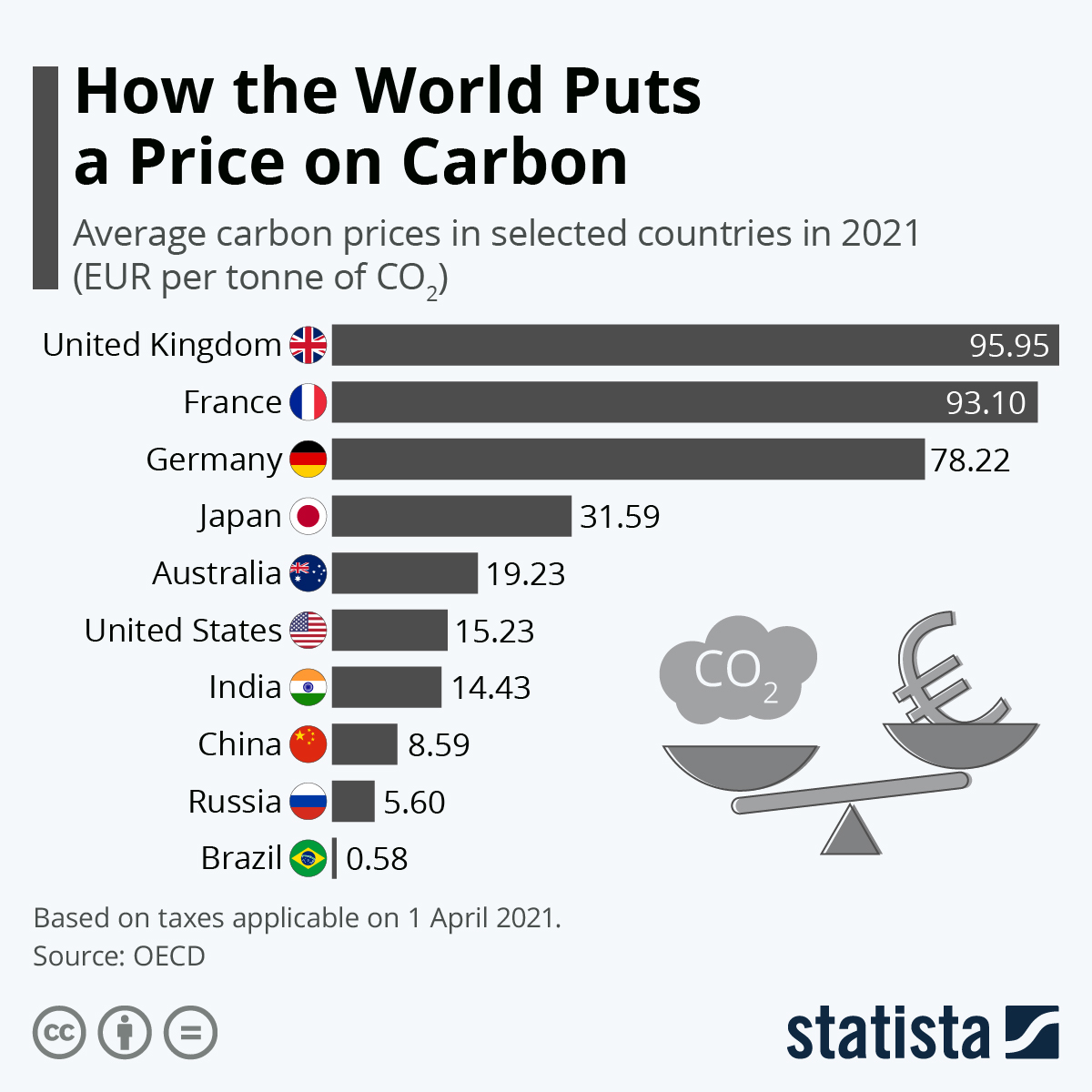
(Calgary, Alberta) The Canadian Federation of Taxpayers (CTF) has issued a new report on global carbon taxes, showing most countries have frozen or rolled back carbon taxes, but US climate scientist James Hansen is pushing for a $210/t carbon tax in Canada by 2030Hansen’s argument is that the tax has to be high enough that people will buy into the carbon dividend (rebate to lower income households) – effectively making Canadians into carbon serfs and a carbon welfare society. CTF reports: About half of the emissions covered by carbon taxes are priced below US$10/tCO2e, according to the World Bank’s most recent State and Trends of Carbon Pricing (2019).”  Canada has more than 600 greenhouse gas reduction/incentive measures on the books, which have never been audited for effectiveness.

This begs the question of “what is a climate scientist doing dabbling in Canada’s domestic affairs on carbon taxes, pushing a carbon tax that is 21 times that of the world,” says Friends of Science Society. 

As revealed by Lawrence Solomon in the 2009 article “Enron’s Other Secret” “James Hansen, the scientist who more than any other is responsible for bringing the possibility of climate-change catastrophe to the public, was among the scientists Enron commissioned.”

Chart: How the World Puts a Price on Carbon | Statista

Enron had profited from cap and trade, but the company collapsed into a pile of ashes in 2001 due to off-book accounting and financial fraud.

None-the-less, a group of green billionaires took up the global cap-and-trade challenge, apparently working from the Enron carbon/cap-and-trade scheme model, as reported by Nisbet in 2018.  Like Enron, they have funded local and global environmental groups to agitate for policies in countries around the world, favorable to their proposed global cap and trade plan. The plans require a price on carbon with the intention of funding their trillions in vested interests in renewables.  Many of these groups are associated with the Tar Sands Campaign that has falsely created “Fear and Loathing” of the Alberta oil sands and driven a downturn in the economy.

Michael Moore’s recent movie “Planet of the Humans” revealed how this green crony capitalism is destroying the planet for no climate benefit.

Canadians now face an onslaught of Carbonbaggers – the number one being Mark Carney, now UN Climate Czar and former Bank of England and Bank of Canada governor.  Carney threatens firms with bankruptcy if they do not comply with his demands to report on climate risk and abandon fossil fuel investments.

As Robert Lyman’s new report shows: “Broken Promises: Why Renewables Offer No Resilient Recovery”, Carney is misleading the public and investors on global oil consumption and demand.

Both oil production and consumption have risen by more than one million barrels per day per year since 2012.

• Oil demand is at its highest level in history.

• In absolute terms, oil demand is growing twice as fast as renewables.

• Global oil reserves have risen throughout the period, from 1141 billion barrels in 1998 to 1730 billion barrels in 2018; peak oil is nowhere in sight. That is a 10 million barrel per day increase over the nine years.

• In absolute terms, natural gas is experiencing the fastest rate of growth of all energy sources, almost three times as fast as renewables.

• Natural gas demand is at its highest level in history.

Friends of Science Society says carbon dioxide from human industry is a nominal influence on climate change, known since the 2013 IPCC AR5 report.  The fact that financial ‘experts’ like Mark Carney are still pushing the climate-carbon dioxide catastrophe theme constitutes a violation of securities regulations related to ‘material change’.  Furthermore, as Roger Pielke, Jr. reports, climate catastrophe scenarios are the product of green billionaires pushing the ‘climate porn’ scenario, which is far from reality or business-as-usual.

“Green” groups in Canada are demanding that the new Canadian Infrastructure Bank be used to finance their green crony capitalist schemes. 

Friends of Science Society issued a request for ethics investigation into the development of the Canadian Infrastructure Bank in Nov. 2017.  The Conflict of Interest concerns expressed there are still valid in their opinion.

Evidence from Norway to Zimbabwe shows that carbon taxes have no discernible impact on emissions reduction and are simply oppressive to taxpayers and industry.  Friends of Science Society says Carbonbaggers should not be using carbon taxes as a means of creating a Canadian climate welfare state, especially not driven by foreign influences, street theatre, and deception.

See “The Roots of Global Warming”.

About

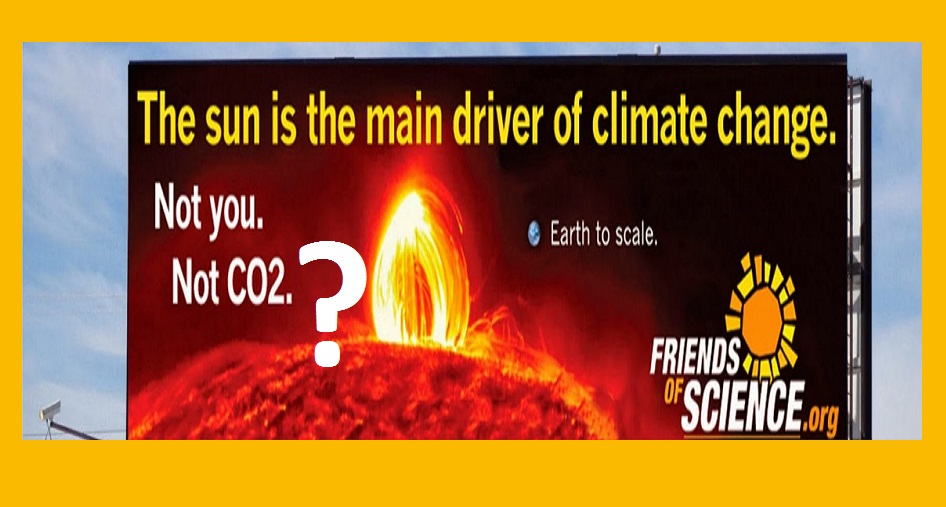
Friends of Science Society is an independent group of earth, atmospheric and solar scientists, engineers, and citizens who are celebrating its 17th year of offering climate science insights. After a thorough review of a broad spectrum of literature on climate change, Friends of Science Society has concluded that the sun is the main driver of climate change, not carbon dioxide (CO2).

Featured image by @HeatherLibby

The Canada Goose

CANADA GOOSE aka Branta canadensis

The Giant Canada Goose is one of the most common and widespread species of goose in North America. It is most easily identified by its brownish-grey body, long black neck with a black head, and white patches on the face.

Canada Geese live around ponds, rivers and lake shores, and have become quite a common sight in parks. It’s hard to believe that they were nearly extinct in the 1960’s!

Geese feed mostly on land and frequently spend 12 hours a day or more feeding. Their diet consists of a variety of grasses, aquatic vegetation, and various grains.

Canada geese find mates during their second year and once paired, the geese remain together for life. Females usually return to the same nesting area each year.

Although an increasing number of Canada Geese are choosing to winter in Canada, especially in urban areas, the majority fly south to the United States and even Mexico

The spectacle of Canada Geese migrating in long, honking, irregular “V” formations across spring or autumn skies is one of the most dramatic indications of the change of seasons in Canada. For the Silo, Dixie Greenwood. 

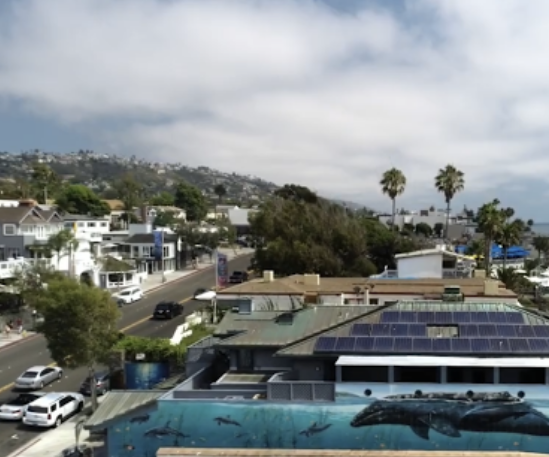
Environmental Artist Uses Large Scale Building Murals To Promote Marine Life

Wyland, marine life artist and environmental activist, is making waves with his latest nationwide campaign for conservation. He’s best known for his series of 100 monumental marine life murals around the globe.

Steve Creech, President of the Wyland Foundation, is one of many behind the work the org is doing to enlist the support of cities and mayors nationwide to urge conservation. Hundreds enlisted this year- see latest participants here. The group works on educating constituents about CO2 emitted from our homes and lifestyles.  For the Silo, Virginia Chavez.

About the Wyland Foundation

Founded in 1993 by environmental artist Wyland, the Wyland Foundation, a 501c3 non-profit organization dedicated to promoting, protecting, and preserving the world’s ocean, waterways, and marine life. The foundation encourages environmental awareness through community events, education programs, and public art projects.

France Has Reopened Borders To Canadian Travelers

In case you missed it, on June 30, France and the other Member States of the European Union adopted a recommendation on the reopening of Europe’s external borders from July 1, 2020, to a first list of fourteen countries, including Canada, Japan, South Korea, Australia [this may not be the case considering Covid developments there the past few days] , Thailand, as well as China, subject to reciprocity. This list will be reviewed every two weeks.

In view of the satisfactory epidemiological evolution on European territory, new measures have been adopted following the decisions taken on June 15 with regards to the reopening of European borders (Schengen area) and the opening of borders to international visitors after July 1.

Image

The first countries eligible for this reopening are: Australia, Canada, South Korea, Japan, New Zealand, Rwanda, Thailand, Uruguay, three North African States (Algeria, Morocco, Tunisia), two Eastern European States (Montenegro, Serbia) and Georgia.

The United States, Russia, Israel, Turkey and Saudi Arabia are, at this stage, excluded from this list, as the situation of the Covid-19 pandemic is considered to be more serious there than in Europe. The reopening of borders with China is moreover suspended on the principle of reciprocity (China has not yet reopened its borders to European travellers).

As a reminder, the internal borders of the European Union – Schengen area reopened June 15 (and Spain’s on June 21). All health and security measures are being taken on a case-by-case basis to ensure that the border restrictions are lifted in the best possible conditions.

However, the British government (the United Kingdom being, in the post-Brexit transition period, still considered as an EU Member State) has decided to impose since June 8 a 2-week period quarantine on foreign travellers, therefore France is applying the rule of reciprocity until further notice. However, the 2-week period quarantine measure should evolve in the near-future.  For the Silo, Marie-Andree.Boucher.

France was visited by 1.2 million Canadians in 2018.

More information on reopening and sanitary precaution’s in France can be found on France.fr.

Premium Passports Lose Their Shine In Post Pandemic World

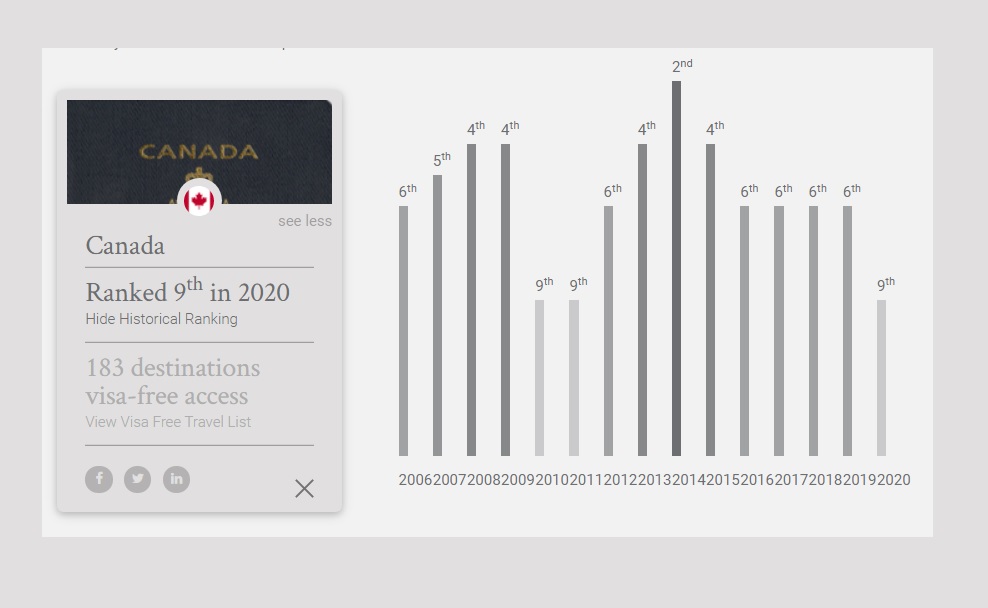
As parts of the globe cautiously begin to open up, the focus is on what travel freedom and global mobility will look like in a post–Covid-19 world. Last week the EU released a list of countries whose residents would be allowed entry into the bloc from 1 July based on coronavirus-related health and safety criteria. Included on the welcome list are countries such as Australia, Canada, Japan, and South Korea that traditionally score highly on the Henley Passport Index — the original ranking of all the world’s passports according to the number of destinations their holders can access without a prior visa. However, in a move perceived as a stinging rebuke for its poor handling of the pandemic, the US was notably excluded from the list, as were Brazil and Russia.

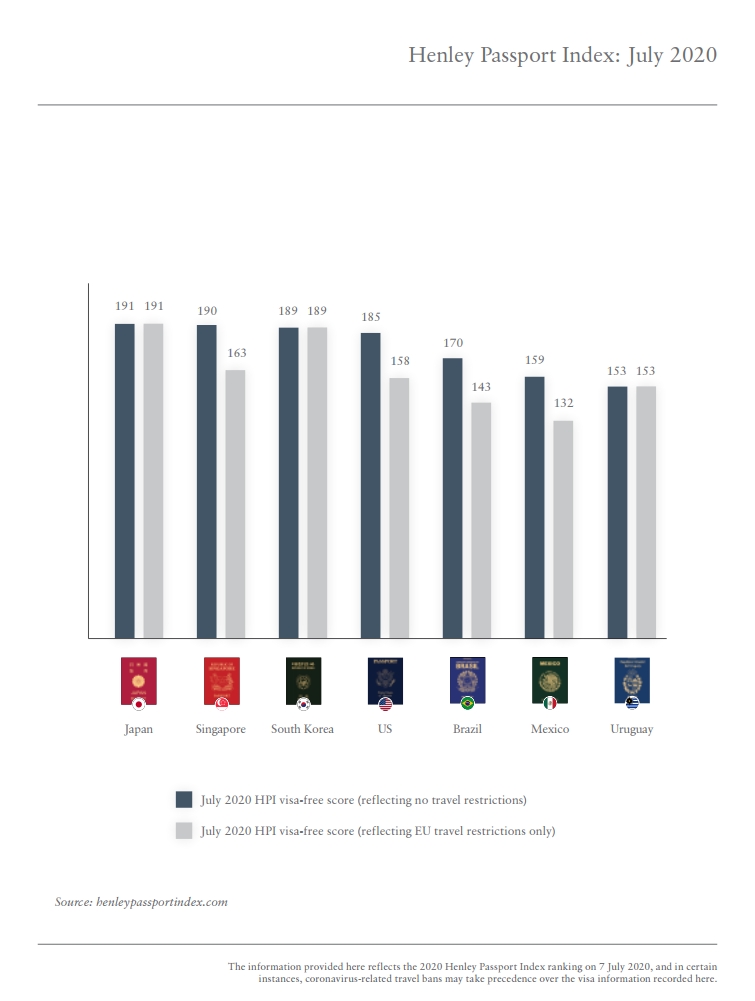
Although not reflected in the latest ranking, which does not take temporary travel bans into account, it is eye-opening to consider what travel freedom currently looks like for the holders of once-prestigious passports. For instance, before Covid-19 the US passport usually ranked within the top 10 on the Henley Passport Index in 6th or 7th place, with its citizens able to access 185 destinations around the world without requiring a visa in advance. However, under the current EU ban, the picture looks starkly different. US nationals now have roughly the same level of travel freedom as citizens of Uruguay (included on the EU’s list of welcome countries), which ranks 28th on the index, with a visa-free/visa-on-arrival score of 153. In another striking inversion, the US’s dramatic decline in passport power means that Americans find themselves with a similar level of travel freedom usually available to citizens of Mexico (25th on the index, with a score of 159), current travel bans notwithstanding, albeit temporarily.

This is one of many extraordinary shifts in passport power caused by the temporary pandemic-related bans. Brazilian passport holders, for example, find their passport strength greatly diminished. The country usually ranks highly on the index ¾ most recently placed 19th, with a visa-free/visa-on-arrival score of 170 ¾ but the loss of access to the EU means Brazilians currently have roughly the same extent of travel freedom as citizens of Paraguay (36th on the index, with a score of 142).

HPI_JULY_Comparison_Visa-Free_Scores_200706.jpg

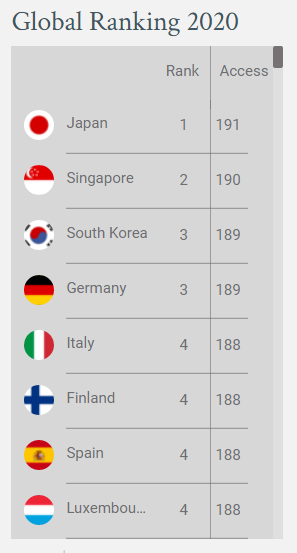
Without taking the various travel bans and restrictions into account, Japan continues to hold the number one spot on the Henley Passport Index with a score of 191. Singapore remains in 2nd place with a score of 190, while Germany and South Korea are in joint-3rd place, each with a score of 189. Both Japan and South Korea have been included on the EU’s list of ‘safe’ countries, while Singapore has been excluded, which means Singaporean passport holders currently have far less travel freedom than their closest competitors on the index, which is based on exclusive data from the International Air Transport Association (IATA). 

Dr. Christian H. Kaelin, Chairman of investment migration firm Henley & Partners and the inventor of the passport index concept, says the EU’s recent decision will have far reaching effects. “As we have already seen, the pandemic’s impact on travel freedom has been more drastic and long lasting than initially anticipated. This latest decision by the EU indicates that there is more upheaval to come. Look at the US passport, for example ¾ in 2014, it held the number one spot in the world on our index, but US nationals currently have far less travel freedom than most citizens of other wealthy, industrialized nations and even of some less developed nations, being effectively locked out of Europe. We see an emergence of a new global hierarchy in terms of mobility, with countries that have effectively managed the pandemic taking the lead, and countries that have handled it poorly falling behind.”

Immigration controls in US and UK tighten amid calls for co-operation

While the US looks set to be significantly affected by the EU’s latest decision, it has issued stringent immigration controls of its own over the past few months. Greg Lindsay, Director of Applied Research at NewCities, says that the Trump administration’s temporary suspension of all work visas will have far-reaching effects. “The executive order, signed on the 22 June, will bar as many as 525,000 foreign workers from entering the country for the rest of the year.” As Lindsay points out, this decision is only the latest salvo in White House aide Stephen Miller’s years-long campaign to curtail worker visas, arguing that they harm employment prospects for Americans.

In the UK, the pandemic’s effect on mobility has also been severe. Robert McNeil, Deputy Director of the Migration Observatory at the University of Oxford, says that the almost complete cessation of international arrivals into the country has generated serious challenges for industries that have become dependent on seasonal migrant workers from the EU. McNeil says that despite public attitudes around immigration softening, the Brexit process has not slowed down. “In May, the government pushed through the new Immigration Bill, paving the way for a new ‘points-based’ immigration system. The new restrictions would prevent many people from becoming key workers in the UK in future. Around half of the EU citizens currently in key worker positions in the UK would not meet the new salary and skills thresholds required to move to the country from 2021.”

Changing priorities in a transformed world

As premium passports lose their shine in a post-Covid world, experts suggest that the crisis is likely to make international mobility more restricted and unpredictable in the longer term. “Even as countries open their borders, it is expected that numerous governments will use epidemiological concerns as a justification for imposing new immigration restrictions and nationality-targeted travel bans that will mainly be aimed at citizens of developing countries,” says Prof. Dr. Yossi Harpaz, Assistant Professor of Sociology at Tel Aviv University. Noting the recent decision by the EU with respect to the US and other countries, Harpaz says, “The passports of both developing and developed nations stand to decrease in value, at least temporarily. In such uncertain times, global demand for dual citizenship and investor visas is expected to increase.”

Discussing the impact of the pandemic on global migration trends, Charles Phillips, researcher and consultant for Oxford Business Group, suggests that environmental health concerns could become a priority for those seeking alternative residence or citizenship. “We can expect places that are governed well and better equipped to deal with pandemics to become destinations people will seek to move to. Just as travel choices will likely be more strongly influenced by health considerations, we may see those acquiring alternative residence or citizenship placing a greater emphasis on a country’s health policies when deciding where to reside.”

Dr. Juerg Steffen, CEO of Henley & Partners, says the growing demand for additional residence and citizenship options comes as no surprise. “We have seen extraordinary upheaval over the past few months, with many certainties falling away. For investors and their families, having a second citizenship or an alternative residence is an even more precious asset than ever before, as concerns over access to first-rate healthcare, global mobility, and quality of life take on a new urgency. In turn, investment migration programs provide invaluable economic security to the countries that offer them.

As we enter the worst recession since the Great Depression, a small country like Montenegro, for instance, is better equipped to weather the storm. The recently launched Montenegro Citizenship-by-Investment Program provides permanent access and the right to stay in this beautiful and safe European country. It also provides the country with an immediate liquidity injection of much needed debt-free foreign capital that can be used to buffer the impact of the pandemic and create significant societal value.” For the Silo, Sarah Nicklin.

About the 2020 Henley Passport Index

Boasting cutting-edge expert commentary and historical data spanning 15 years, the Henley Passport Index is the original ranking of all the world’s passports according to the number of destinations their holders can access without a prior visa. The ranking is based on exclusive data from the International Air Transport Association (IATA), which maintains the world’s largest and most accurate database of travel information, and it is enhanced by extensive, ongoing research by the Henley & Partners Research Department.  Along with the Kälin  – Kochenov Quality of Nationality Index, it is considered a major reference tool for global citizens and the standard reference for governments in this field.

About Henley & Partners

Henley & Partners is the global leader in residence and citizenship planning. Each year, hundreds of wealthy individuals and their advisors rely on our expertise and experience in this area. The firm’s highly qualified professionals work together as one team in over 30 offices worldwide.

The concept of residence and citizenship planning was created by Henley & Partners in the 1990s. As globalization has expanded, residence and citizenship have become topics of significant interest among the increasing number of internationally mobile entrepreneurs and investors whom we proudly serve every day.

The firm also runs a leading government advisory practice that has raised more than USD 8 billion in foreign direct investment. Trusted by governments, the firm has been involved in strategic consulting and in the design, set-up, and operation of the world’s most successful residence and citizenship programs.

The Storms Of Ontario & The Chasers Behind Them

Now that Storm Season is underway in Ontario, I felt it was time to write another article on the subject. This one will be a little different compared to the Silo articles I have written in the past. It will be about those golden moments when both the storm chaser and the breathtaking cloud structure will be in the same scene together. 

There are a lot of excellent storm chasers in our province who have an absolute love for weather.

I could write a entire paragraph with just the names of those in our province alone. Whether it be photographing, forecasting from home, or reporting the storms, the chasers share the same dedication and passion. They all have different qualities that make them enjoyable to be around and to share the experiences as a group. In this collection, you will see a series of photos showing the storm chasers in action across various parts of the province. I only wish I had more photos of everyone in the storm chasing community. 

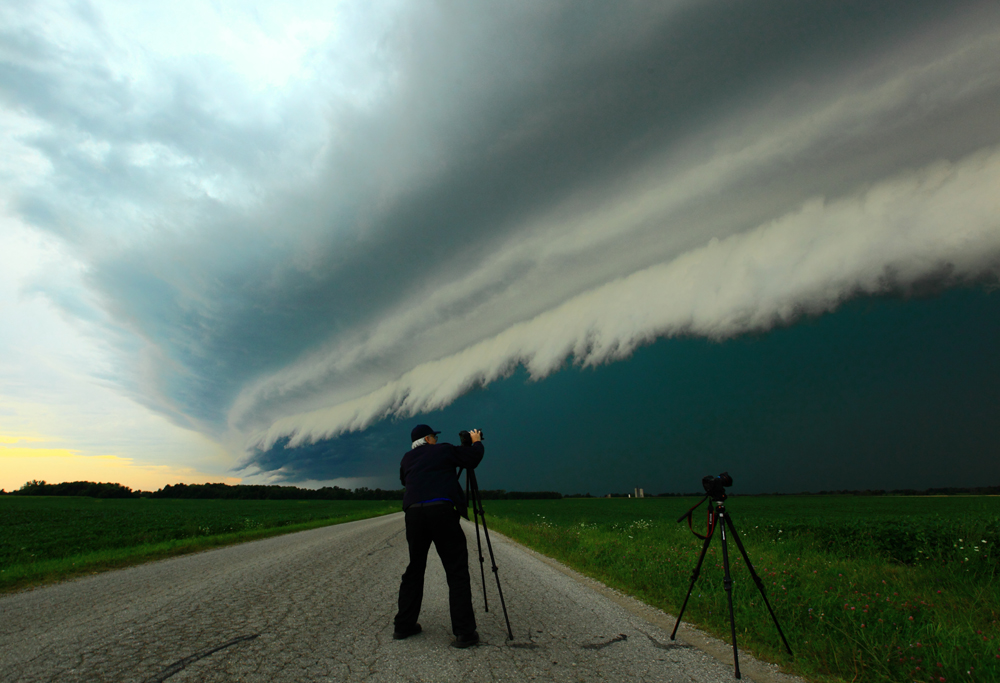
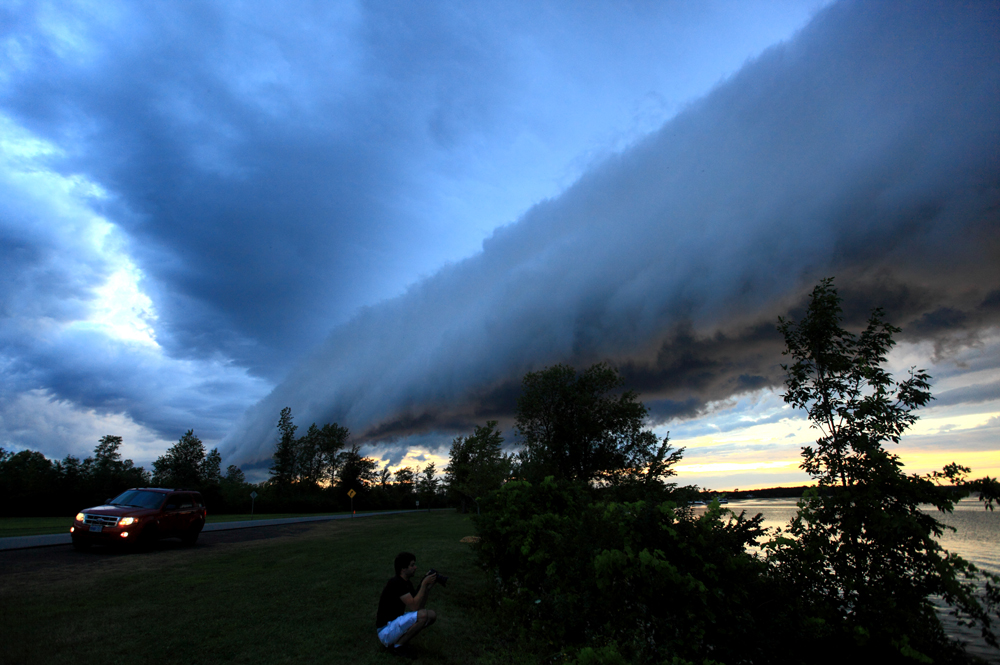
This photo is of a man I have chased with for over 19 years now. He is my dad, Brian Chapman. He and I have worked along side each other for many years, tracking down numerous lightning storms, several tornadoes and epic squall lines like that which is visible in this photograph. This storm was taken on August 2, 2016, south of Goderich, Ontario. You can see the layering of the gust front shelf cloud as it approached our location. The storm also had golf-ball sized hail in it with damaging winds. There were unconfirmed reports of a tornado wrapped in rain and hail with this storm, just north of our location, according to fellow chasers in the area.

Brian and I chased for 9 years without portable radar, using radar at home. I would animate it in my head and figure out where we had to be. Also, while out there, we would use AM radio to gage how intense the storms were as well as their general location based on the intensity of the static on the station. We are both happy to have portable information now, but when that fails every now and then, we are both quite comfortable using only visual cues. 

It is hard to believe that Spencer Sills and I used to live 10 kilometres apart when we were kids. We were both crazy about the weather. I even went to church across the road from where he lived, yet we didn’t know each other until connecting on social media years later when our friendship grew into an unbreakable bond. He and I both used to chase on our bicycles when we were younger, before we could drive, if no adult was able to take us out.  That definitely led to some quick peddling back home at times.

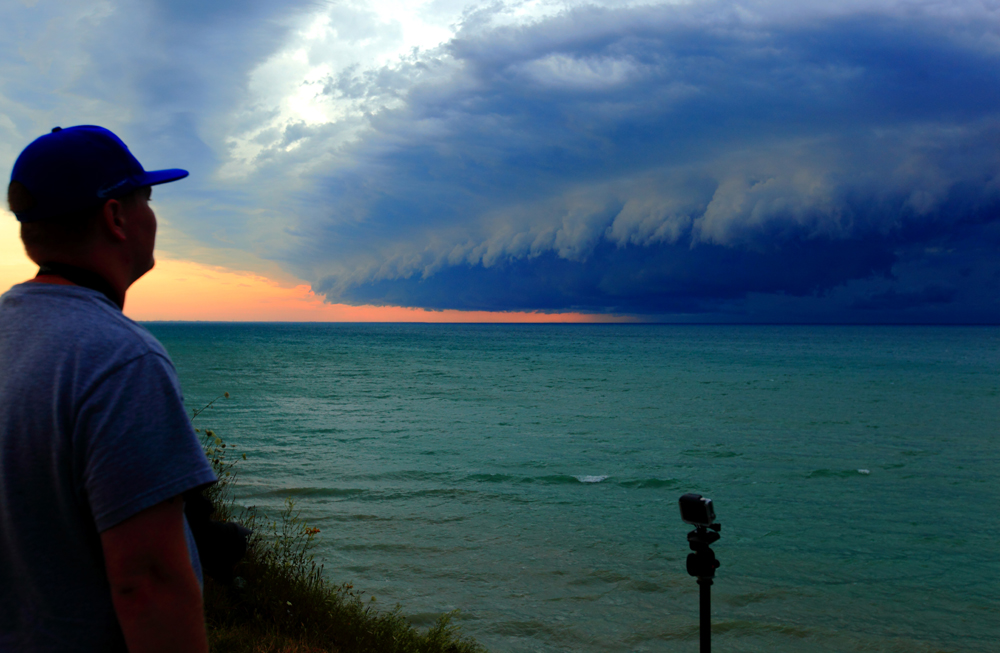
We both have a background where instinct is a big part of chasing. We feel comfortable not having radar information. Spencer is an amazing forecaster and helped get me started in the world of forecasting. He is one of my all-time favorite photographers whether it is storm related or other various subjects. In this particular photo, you can see the huge shelf cloud coming across Lake Huron, just north of Grand Bend.

It was roughly 10 minutes after this, that we had an experience of a lifetime.   

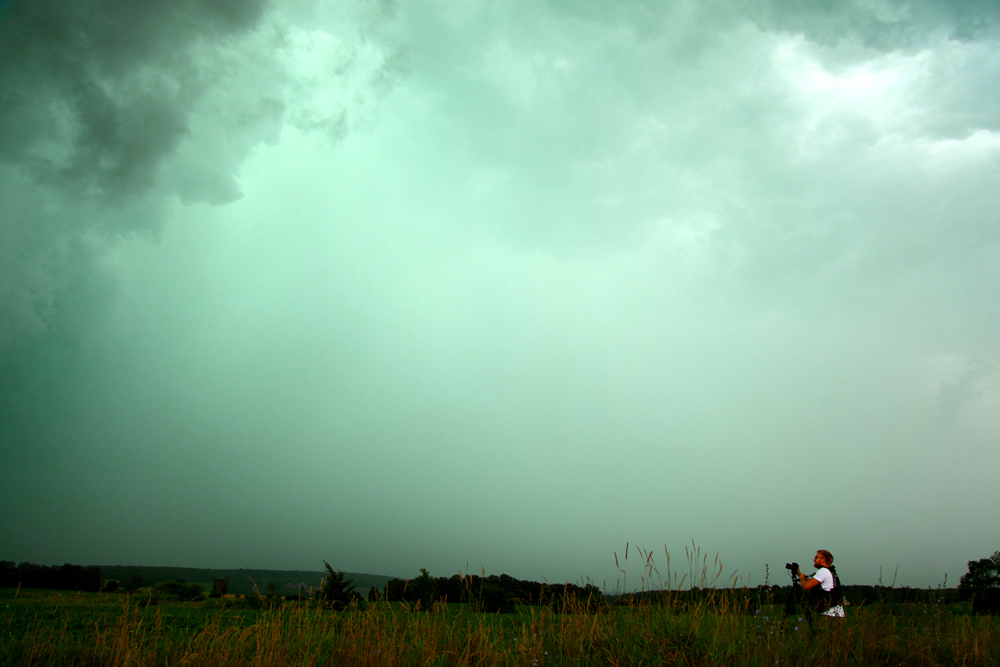
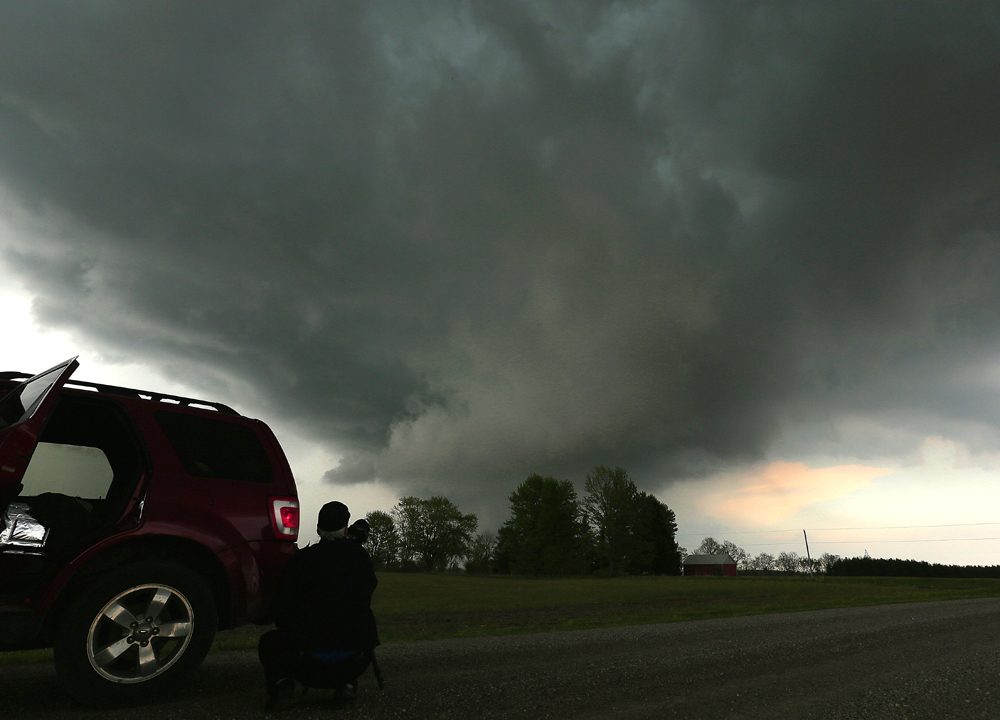
In the photo above, you see that we have a very large and heavy rain/hail core coming at us. Not quite as green as in the previous photo but this storm was dropping hail around quarter-size. It was a long chase day, something Kyle Robertson and I are used to doing.

Both Kyle, my dad and I have something in common in this respect — that is, we will literally chase anywhere in any type of terrain for as long as necessary. We are comfortable no matter how heavy the trees are for blocking visibility because we always believe we will get that opening when we need it most. To give you an idea, we have all chased in the Bancroft area, north of Georgian Bay towards Sudbury and even on the north end of Manitoulin Island.

In this particular chase, we started in the Listowel area after leaving the Niagara region, ending up in the Owen Sound area before getting something to eat in Collingwood.  As we were on our way home, a line of storms fired up on Lake Erie, so we headed to Port Maitland and then across to Crystal Beach until 3:00 a.m. in the morning. This is typically how Kyle and I both are. We have a confidence in each other for getting us to the target area and that we will get amazing photos when we arrive. Kyle is one of the most determined, driven people that I know. He has a superb knowledge on the history of tornadoes in Ontario and is an excellent photographer. 

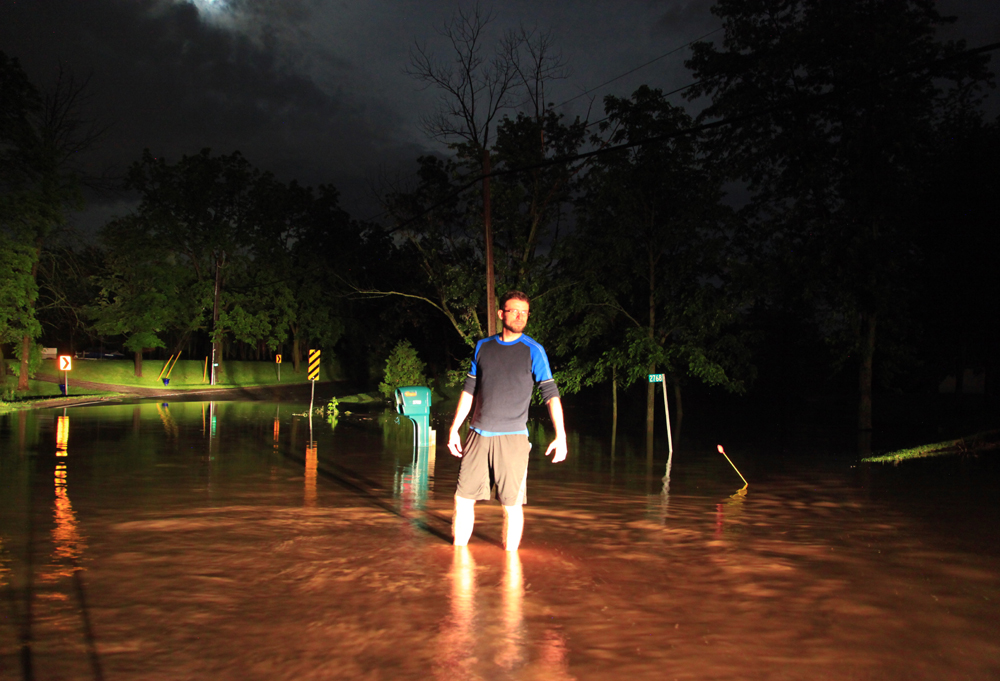
I don’t have many photos of myself while storm chasing.

I am often busy running from camera to camera. On June 12, 2014, close to Fonthill and travelling towards St. Catharines, there was a tornado warned storm that went through this area. It put on a tremendous lightning show along with very heavy rain as you can see on this roadway near the town of Rockway. My dad and I tracked this storm around midnight. Fortunately, it did not develop a tornado. Tornadoes are bad at anytime but when they hit at night, it can be a lot worse due to the fact that people are sleeping. It is a good thing that Ontario is not prone to having many tornadoes at night. It is still important to listen to all warnings but generally we have not had any really major tornadoes hit at night in recent years.

The photo above is another look at my dad doing what he loves to do which is videotaping  rotating wall-clouds. He used the vehicle in this situation to shield him and the camera from the winds. It helps to eliminate camera shake when hit by gusty winds. This rotating wall cloud, like most of them in the northern hemisphere, was rotating counter-clockwise. It was shortly after this that it tightened up into a nice cylinder shape before dissipating and eventually elevating over Lake Erie. 

My brother, Eric Chapman, doesn’t get to storm chase often but when he does, we often get to see some interesting cloud structure like this one.

This was a large outflow boundary that first developed near Grimsby, Ontario,  where it was still attached to the storm. We continued to track this storm all the way to Niagara Falls before following it south down the Niagara River to Fort Erie. At this point it had completely detached itself from the core of the storm. This is often when storms form a roll cloud but this one didn’t quite have those characteristics. I call these “rolling shelf clouds” because they have features of both. Generally, you can see the rolling effect in the bottom part of it, and at the same time it has a shelf-like feature above, but with no rain-core or storm attached to it.  

A little change of pace in the photo above.

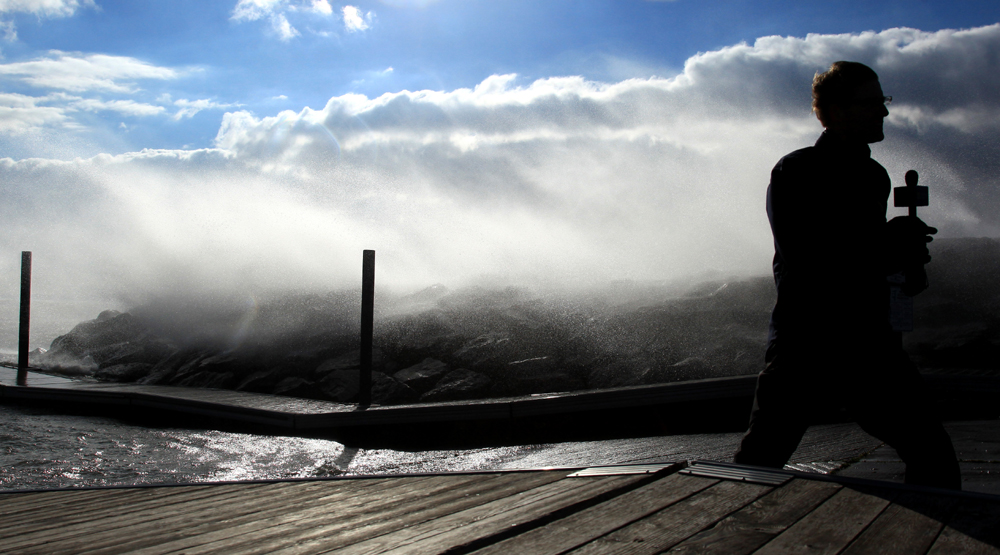
My friend, Mark Robinson, also known as one of the Storm Hunters on The Weather Network, has a passion for extreme weather. He has chased storms like Hurricane Katrina, as well as the largest tornado in recorded history in the El Reno area, on May 31, 2013, that measured as much as 5.2 kilometres in width. That all said, he is very much dedicated to what we get here in Ontario. From storm chasing in the summer and winter, to hunting down the big autumn wind storms, like this one, that seem to hit at least once every November. This particular photo was taken in Crystal Beach, Ontario. A hot spot for big waves and strong winds during the fall and spring. 

A fellow storm chaser and friend of mine, Dave Patrick, a.k.a. “Tornado Dave“, is one of my all-time favorite chasers. After growing up in Grey County and chasing with my dad for around 5 years, Dave was the first storm chaser in Ontario that I learned about outside of our own team. It was when I came across his website, that I realized there were other dedicated chasers in our province.

It was really neat to study his site for years and then to finally meet him in March of 2012.

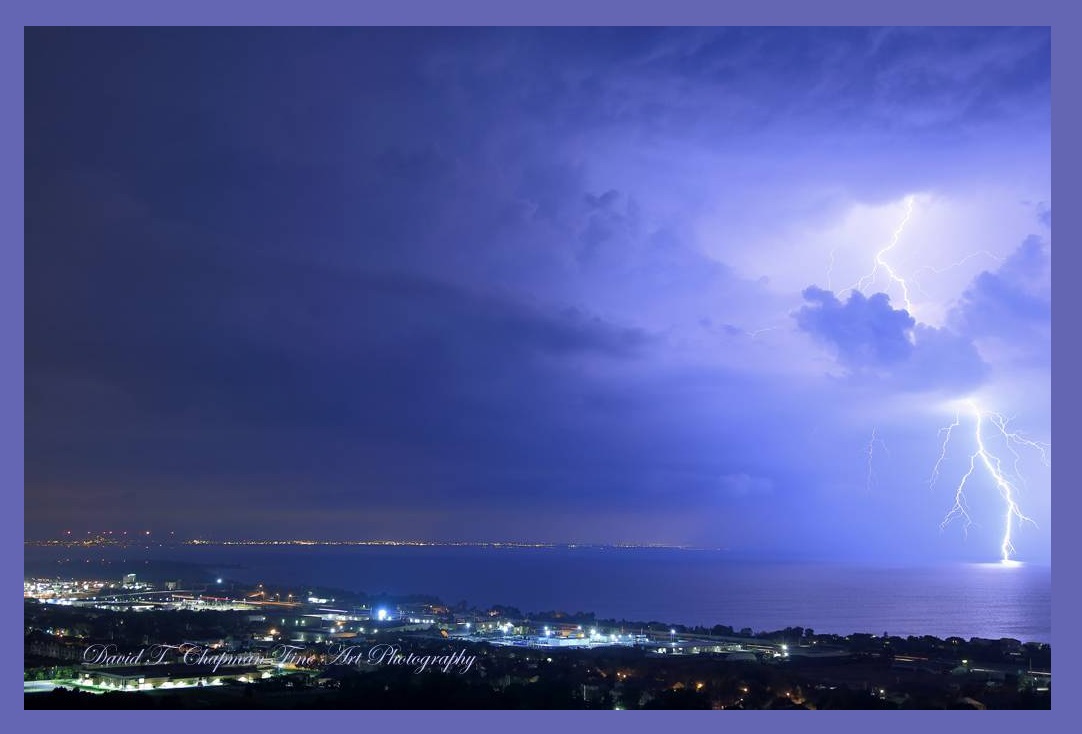
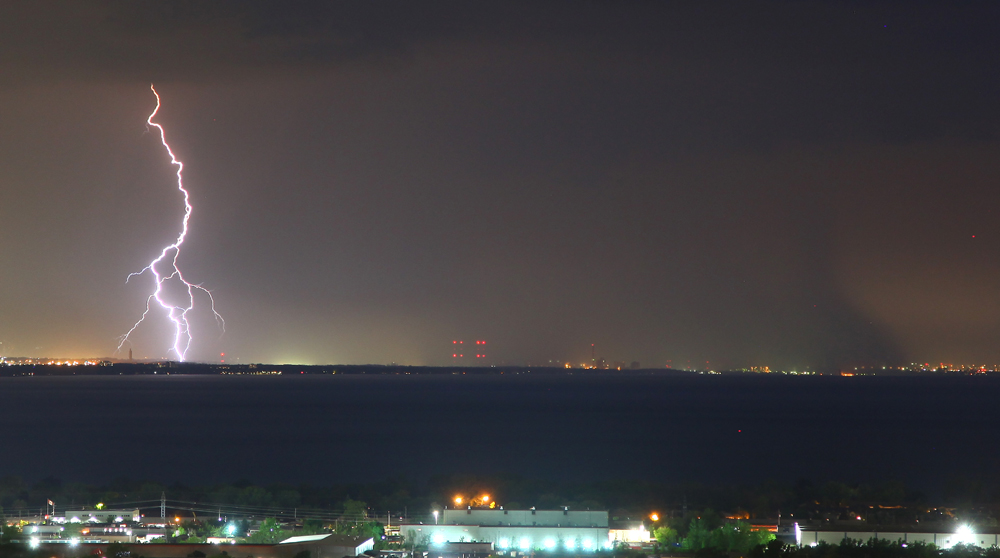
It was in August, 2013, after both he and our team were tracking the same tornado east of Arthur, that our friendship and bond grew. Like many of the chasers I have mentioned, Dave and I could talk for hours about storms, tornadoes and whatever else was in the sky. I have learned a lot from him for which I am truly grateful. He truly has a gift of reading both the sky in the daytime as well as at night. Although I don’t have any photos of him, I chose a photo of lightning because of the force of a person that he is and the dedication he demonstrates when documenting weather.  


The main focus for our team this year will be anything that forms a super cell tornado or waterspout.

Kyle, Brian and myself have documented so much in the way of thunderstorm activity now, that we only really need to work on adding to our already good-sized tornado and waterspout collection. It is also our true passion to try to figure out the puzzle of where the next major event could happen and to be there when it does. Waterspouts are easier in that respect, but it still requires a lot of work to make sure you are in the right location at the right time. As for tornadoes, our province averages about 12.5 per year or as I like to call it, 12 tornadoes and a funnel cloud. Many of them are short lived and can be quite sporadic with respect to where they form. So when you start to break it all down, to get the timing just right is more like an art form than anything else.

We never stop working on ways to improve the methods of forecasting and documentation. The waterspout you see in this photograph was taken on Halloween, 2017, on the most eastern part of Lake Erie, south of Fort Erie, looking east towards the city of Buffalo, New York. It was by far one of the best Halloweens I have ever had. I saw 9 waterspouts, 17 funnels and 2 spray rings that day. It was amazing to witness that over a span of only 2 hours.   

For the 2020 storm chasing season, I will only be out for supercell tornadoes, waterspouts, sprites, blue jets and local lightning work.

I have every other aspect of thunderstorms that I need ranging from the small to the big to the unusual. I have combined all of my years of data and have created a powerful, educational and entertaining series of programs that I present in person in front of crowds and which are now also available through online virtual presentations.  For the Silo, David. T. Chapman.

To learn more about Kyle Robertson, Spencer Stills and some of the storm chasers mentioned in this article, contact David T. Chapman at his link above. 

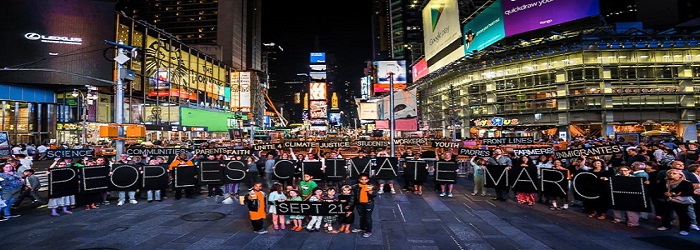
The Biggest March On Climate Change Ever

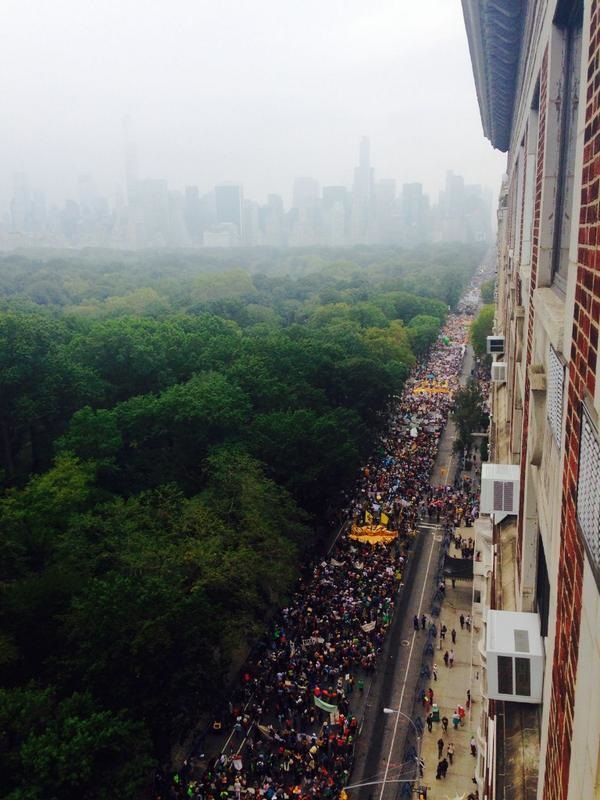
Way back in 2014, our community decided on a crazy goal – the largest mobilization on climate change in history. So on September 23rd, we blew past our wildest expectations, with a climate march *6 times* the size of anything before it!!! This was 80 city blocks of New York:

World March For Climate 2014 Avaaz

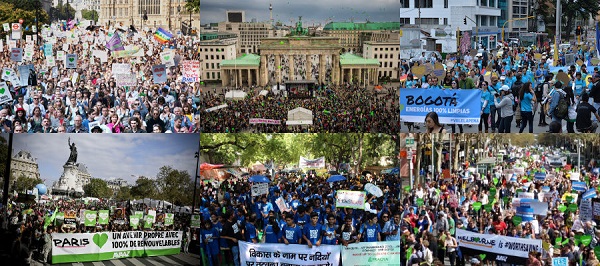
And this was London, Berlin, Bogota, Paris, Delhi, and Melbourne…

World March For Climate 2014

Over 675,000 of us marched around the world. It was a beautiful expression of our love for all that climate change threatens, and our hope that we can save this world and build a society powered by 100% safe, clean energy. Together, we made history, but it’s just the beginning. The crucial Paris climate summit is 15 months from now — that’s where we need a global deal. By March next year, countries have pledged to make their national commitments — so our movement will divide to focus on these national targets. But every few months until Paris we’ll come together globally again and again, bigger and bigger, to beat a drum for change, for 100% clean energy, that our leaders can only follow. The movement we’ve been waiting for has begun.

With gratitude, Ricken, Emma, Alice, Iain, Nataliya, Patri, Oliver, Diego, Rewan and the whole Avaaz team

PS – We worked with thousands of organisations to make this day happen and particularly love our friends at 350. But our community deserves to celebrate the step we’ve taken. The Avaaz team and community played a central role in almost all the marches and events held. The Guardian called it “an organising triumph” for Avaaz and the BBC said “the marches brought more people on to the streets than ever before, thanks to the organisational power of the social media site Avaaz.” We fielded hundreds of organisers and thousands of volunteers, and donations from our community provided millions in funding to the effort. The challenges of our time call us to be better, and together we’ve done that, growing and changing into a new and more effective kind of movement, a movement that is now both online, and offline. Huge gratitude to everyone who made it happen.

Avaaz.org is a 38-million-person global campaign network that works to ensure that the views and values of the world’s people shape global decision-making. (“Avaaz” means “voice” or “song” in many languages.) Avaaz members live in every nation of the world; our team is spread across 18 countries on 6 continents and operates in 17 languages. Learn about some of Avaaz’s biggest campaigns here, or follow us on Facebook or Twitter.

Hong Kong Board Predicts This New Post Covid Tourism Landscape

The Hong Kong Tourism Board (HKTB) hosted a web conference on April 24, 2020 to provide the latest updates on tourism development and introduce the HKTB’s strategic framework of recovery plan. HKTB Chairman Dr. YK Pang said that the Covid-19 pandemic has posed unprecedented challenges to Hong Kong tourism and put global tourism to a halt.

He continued, “The tourism landscape will be reshaped. In the post-pandemic world, we will see a shift in preference and behavior among travelers – the public health conditions of destinations, and the hygiene standards of transportation, hotels and other tourism facilities will become a top priority; people will prefer short-haul breaks and shorter itineraries; wellness-themed trips will become a new trend. It is an ideal time for us to review and rethink Hong Kong’s position in the global tourism market and elevate service standards. Together with the travel trade, the HKTB is going to map out the long-term development strategy for our tourism industry.”

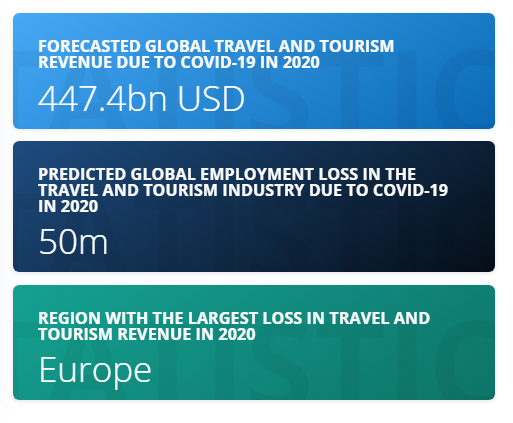
source: statista.com

The web conference was attended by close to 1,500 representatives from travel agencies, attractions, hotels, airlines, the retail and dining industries, as well as Meetings, Incentives, Conventions and Exhibitions (MICE) and cruise sectors. Representatives from the HKTB’s worldwide offices also participated in the meeting to provide insights into the latest developments in various market regions:

Mainland Market

  • The Mainland has gradually resumed economic activities and people have returned to work.
  • Given the outbreak’s impact on the economy, consumers will become more price-conscious and pursue value-for-money holidays. After prolonged confinement, visitors will also place greater emphasis on health and nature. When choosing destinations for future trips, they will favor those that pose low risks to health.
  • The Meeting and Incentive market has slowed down as many activities have been postponed or will be held online.

Short-haul and New Markets

  • Domestic travel will be the major preference shortly after the pandemic, and outbound travel will resume soon after.
  • Regional competition will be fiercer than ever, as the tourism authorities and travel trade of various destinations are gearing up for intensive promotions to vie for visitors.
  • In Japan, Korea and Taiwan, the young and middle-aged segments will be the most eager to travel. Green tourism and the outdoors will be favored, while short-haul travel will be preferred due to financial and holiday leave constraints.

Long-haul Markets

  • Currently, governments are focusing on containing the outbreak within the region. A longer time is expected for these markets to recover and outbound travel may resume in the last quarter of this year at the earliest.
  • Ethnic Asian visitors are expected to be the first to visit Hong Kong after the pandemic.
  • Consumer sentiment is comparatively more positive in Canada, France and Germany and outbound travel is expected to recover at a faster rate in these markets.

The HKTB has announced earlier that it will be allocating HK$400 million (US$51.2 million) to support promotions by the trade. HKTB Executive Director Dane Cheng explained that the HKTB has devised a three-phase plan to reinvigorate Hong Kong tourism. The exact timeline will depend on the development of the pandemic.

Phase 1 (Now) – Resilience

  • The HKTB is preparing a recovery plan for Hong Kong tourism.

Phase 2 – Recovery

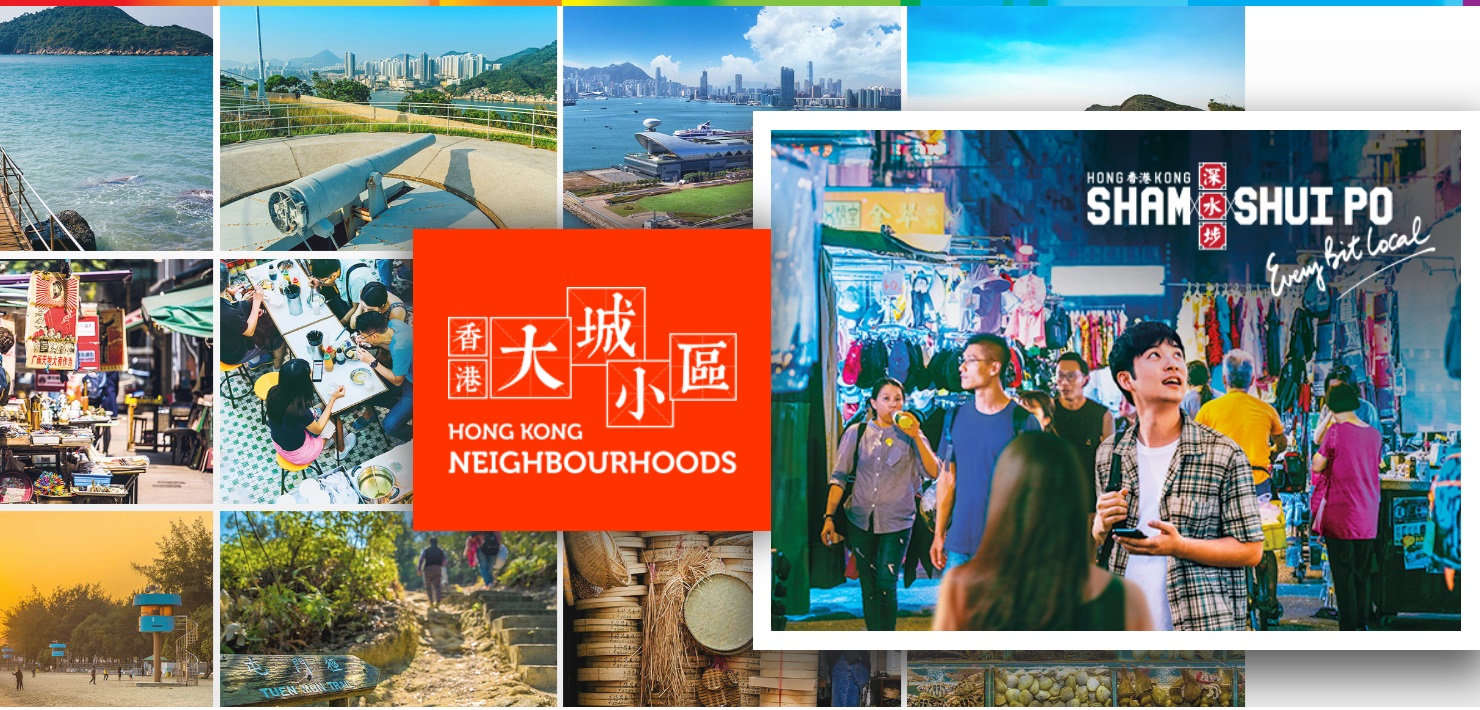
  • When the pandemic shows signs of abating, the HKTB will first focus on local market to promote positive ambiance in Hong Kong by encouraging locals to rediscover different neighborhoods and community cultures in order to send a positive message to visitors and restore their confidence in the city. Meanwhile, the HKTB will launch tactical promotions with the trade in selected markets based on the developments of individual markets to stimulate people’s interest to visit Hong Kong.

Stage 3 – Relaunch

  • Mega events and a new tourism brand campaign will be launched to rebuild Hong Kong’s tourism image.

Record-Breaking Global Mobility Grounded By COVID-19 Pandemic

With global travel almost at a standstill, the latest results of the Henley Passport Index offer disturbing insight into the indiscriminate havoc caused by the COVID-19 pandemic. Since its inception in 2006, the index has provided the authoritative annual ranking of global passport strength. Travel freedom has increased dramatically over the period in 2006, a citizen could travel to 58 destinations on average without a visa from the host nation; 14 years later, this number has almost doubled to 107. 

The first ranking of the new decade published in January this year conclusively confirmed that overall, people were the most globally mobile than we had ever been in the history of humankind, with the top-ranking passport (Japan) offering its holders access to a record-breaking 191 destinations without requiring a visa in advance. Just three months later, the picture looks very different indeed.

Australia's Coronavirus Travel Bans Feed Old Fears
The result of the latest travel ban in Australia. Image: jacobinmag.com

Japan’s passport continues to hold the top spot on the Henley Passport Index as we enter the second quarter of 2020, but the reality is that current stringent travel restrictions mean that most non-essential travel for Japanese nationals is heavily curtailed.

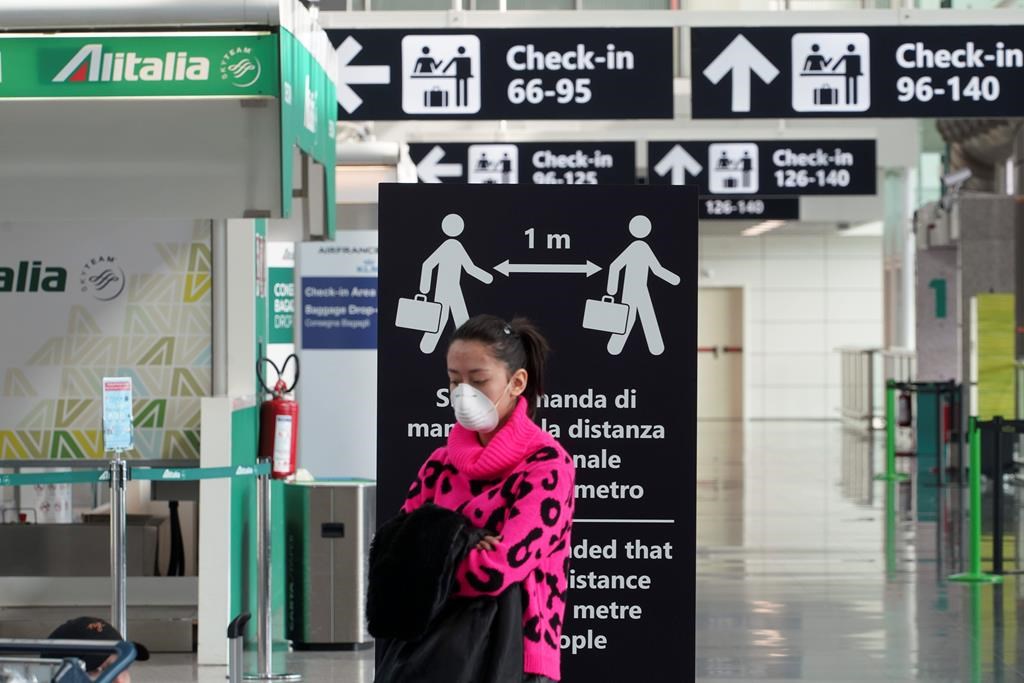
This is true for almost every country of course, as more travel bans are implemented daily, and ever-more stringent coronavirus lockdown regulations are imposed by governments worldwide. With 3.5 billion people, nearly half the global population, presently living in voluntary or mandatory confinement, the latest results from the index — which is based on exclusive data from the International Air Transport Association (IATA) — raise challenging questions about what travel freedom and global mobility really mean, both currently and in a deeply uncertain post-pandemic future.

Dr. Christian H. Kaelin, Chairman of Henley & Partners and the inventor of the passport index concept, points out that in an unprecedented global health emergency such as this, relative passport strength becomes temporarily meaningless. “A Swiss citizen can, in theory, travel to 185 destinations around the world without needing a visa in advance, but the last few weeks have made it apparent that travel freedom is contingent on factors that occasionally can be utterly beyond our control. This is, of course, something that citizens of countries with weak passports in the lower ranks of the index are all too familiar with. As public health concerns and security rightfully take precedence over all else now, even within the otherwise borderless EU, this is an opportunity to reflect on what freedom of movement and citizenship essentially mean for those of us who have perhaps taken them for granted in the past.”

Q&A: New travel ban shakes up airlines, passengers - NEWS 1130
Image: citynews1130.com

The future of international mobility after COVID-19

Commenting on the latest Henley Passport Index, bestselling author and the Founder and Managing Partner of FutureMap, Dr. Parag Khanna, says the combined effect of the COVID-19 pandemic on public health, the global economy, and social behavior could lead to much deeper shifts in our human geography and future distribution around the world. “This may seem ironic given today’s widespread border closures and standstill in global transportation, but as the curtain lifts, people will seek to move from poorly governed and ill-prepared ‘red zones’ to ‘green zones’ or places with better medical care. Alternatively, people may relocate to places where involuntary quarantine, whenever it strikes next, is less torturous.

In the US, both domestic and international migration were surging before the pandemic, with Gen-Xers and millennials shifting to cheaper, second-tier cities in the Sun Belt or abroad to Latin America and Asia in search of an affordable life.

Once quarantines lift and airline prices stand at rock bottom, expect more people across the globe to gather their belongings and buy one-way tickets to countries affordable enough to start fresh.”

This is supported by emerging research and analysis commissioned by Henley & Partners, which suggests that despite freedom of movement currently being restricted as a temporary measure, there is a risk that this will negatively affect international mobility in the long run. Political science researchers Uğur Altundal and Ömer Zarpli of Syracuse University and the University of Pittsburgh, respectively, note that public health concerns have historically been used to justify restricting mobility, but governments usually adopt travel restrictions temporarily, in response to short-term health needs. Until now, health security has not been a significant determinant or requirement when negotiating visa waivers, but Altundal and Zarpli warn that “increasing public health concerns due to the outbreak of COVID-19 may change thisthe quality and level of health security of a country could be a significant consideration for visa waivers in future”. The unprecedented and overwhelming focus on health security and pandemic preparedness we now see may change the face of global mobility forever.

On the other hand, Prof. Simone Bertoli, Professor of Economics at CERDI, Université Clermont Auvergne in France, says that the necessity of international collaboration in fighting the pandemic could ultimately reduce current barriers to international mobility. “Humanity is confronted with a truly global challenge against which no country ­— irrespective of its level of income — can fully protect itself. This pandemic could therefore trigger renewed and more intense international cooperation, something that has (so far) not happened with the other main global challenge that the world is currently facing, namely climate change.”

No Official Travel Ban In The U.S., But Isn't It Time To Self-Ban?

Brexit, travel bans, and changing timelines

The chaos caused by the COVID-19 pandemic has cast further doubt on the timeline for the implementation of the UK’s post-Brexit immigration system, according to Madeleine Sumption, Director of the Migration Observatory at the University of Oxford. The UK, currently in 7th place on the Henley Passport Index, with citizens theoretically able to access 185 destinations without acquiring a visa in advance, was set to end free movement with the EU in January 2021. However, as Sumption says, “The UK can only implement its new immigration system when the post-Brexit ‘transition period’ is over, and if this is extended to give negotiators more time to discuss trade and other issues, we may not be seeing the end of free movement with the EU quite yet.”

In the US, also in 7th place on the Henley Passport Index, the impact of travel bans implemented at the beginning of the year appear to have been compounded by the pandemic, according to Greg Lindsay, Director of Applied Research at NewCities. “For the children of a rising global middle class with more and more options, this pandemic may prove to be the tipping point in terms of choosing educational destinations. When the world gradually recovers with China, South Korea, and Singapore already succeeding in slowing the outbreak through effective quarantines don’t be surprised if the best and brightest take coronavirus responses into consideration when deciding on their future options.”

A unique hedge against volatility in an uncertain future

Commenting on the ever-expanding growth and popularity of the investment migration industry, Dr. Juerg Steffen, CEO of Henley & Partners, says: “We believe that in the post COVID-19 environment, investment migration will take on a dramatically enhanced importance for both individual investors and sovereign states. Acquiring alternative residence or citizenship will act as a hedge against the significant macro-economic volatility that is predicted, creating even more sovereign and societal value across the world.” For the Silo, by Sarah Nicklin.

Supplemental

Global Headlines for Q2 2020: growth in travel freedom over past decade

  • Japan retains its top spot on the Henley Passport Index, with a visa-free/visa-on-arrival score of 191. Over the past decade its travel freedom score has increased by 31 points: in 2010, the country was ranked 6th worldwide, with a visa-free/visa-on-arrival score of 160.
  • Singapore continues to hold onto 2nd place, with a visa-free/visa-on-arrival score of 190. Over the past decade Singapore’s travel freedom score has increased by 35 points: in 2010, the country was ranked 11th worldwide, with a visa-free/visa-on-arrival score of 155.
  • Germany remains in 3rd place, with access to 189 destinations compared to the 161 destinations its passport holders were able to access a decade ago. It shares 3rd position with South Korea, which has increased its travel freedom score by 38 points: in 2010, South Korea was ranked 13th worldwide, with a visa-free/visa-on-arrival score of 151.
  • The UK is currently ranked 7th on the index, with a visa-free/visa-on-arrival score of 185. Over the past decade the UK’s travel freedom score has increased by 19 points: in 2010, the country was ranked 1st worldwide, with a visa-free/visa-on-arrival score of 166.
  • The US is also currently ranked 7th on the index, with a score of 185. Over the past decade, the US’s travel freedom score has increased by 26 points: in 2010, the country was ranked 7th worldwide, with a visa-free/visa-on-arrival score of 159.
  • The UAE has seen the biggest increase in travel freedom over the past 10 years. In 2010, the country was ranked 65th worldwide, with a visa-free/visa-on-arrival score of 64. It is now ranked 18th, with a score of 171  which means the country has added a remarkable 107 visa-free travel destinations over that period. 

Landmark Deep Sea Mission To Boost Ocean Action & Science

A deep-sea scientific mission to uncharted depths in the Maldives and Seychelles will gather valuable data to support the Commonwealth Blue Charter on ocean action and train local scientists.

The newest Commonwealth member country, Maldives, has joined Seychelles to launch a major joint scientific expedition to investigate unexplored depths of the Indian Ocean.

The ground-breaking multidisciplinary research mission, known as ‘First Descent: Midnight Zone’, was officially launched at the Commonwealth headquarters at Marlborough House. 

Led by the UK research institute Nekton, the goal is to boost the sustainable governance of Seychelles and Maldivian waters, including the protection of 629,000 km2 of ocean. 

It supports the Commonwealth Blue Charter – a shared commitment by member countries to protect the ocean from the effects of climate change, pollution and overfishing.
 

FD mission2.jpg

Minister for Fisheries, Marine Resources and Agriculture of the Maldives, Zaha Waheed, said: “It is vital to comprehensively understand what lies beneath our waters in order for us to be informed enough to take necessary actions towards a healthy and prosperous ocean.

“This mission will, for the first time, show a glimpse of what the deep sea features and the biodiversity it holds. It will also contribute to the wider goal of marine spatial planning and ocean governance.”

A 50-person crew will set sail on 16 March, using the world’s most advanced deep diving submersible, equipped with a suite of research tools including sensor and mapping technology.

The data they collect will help countries define conservation and management priorities and map out marine protected areas. It will also help measure the impact of climate change and human activity in the area. 

Commonwealth Secretary-General Patricia Scotland said: “We cannot protect what we don’t know and we cannot govern what we don’t understand. With 95 per cent of the ocean still unexplored by humans, we are only just beginning to grasp its profound influence on life, including its effect on global climate and ecosystems. 

“It is pleasing to see the commitments of our Commonwealth Blue Charter leading to such far-reaching and innovative science-backed ocean action in, with and for our member countries.”

The expedition will focus on undersea mountains or ‘seamounts’ in the Midnight Zone – depths from 1,000 to 4,000 metres, where biodiversity peaks. This zone holds critical indicators to measure the impact of the climate crisis, fisheries management, heat absorption, acidification, ocean carbon cycle, and plastic, agricultural and industrial pollution. 

DSSV Pressure Drop at sea. Photo: Nexton

The damage or overexploitation of seamounts can have widespread consequences on ocean health, food security, and other benefits the ocean provides, such as the discovery of new medicines.

Principal Secretary at the Ministry of Environment, Energy and Climate Change of Seychelles, Alain Decormamond said: “Seamounts form some of the most fascinating and richest locations in our waters and beyond in the wider Indian Ocean. We are therefore looking forward to exploring even deeper depths of our ocean to have a better understanding of natural characteristics and richness of these locations.” 

The mission’s principal scientist Lucy Woodall from the University of Oxford added: “We find the greatest biomass in the upper few hundred metres of the ocean, but the peak of biodiversity is in the greater depths, in the Midnight Zone, from 1,000 to 4,000 metres. That said, less than 300 of 170,000 known major seamounts found in this zone have been researched to date, and they remain one of the least researched parts of the ocean.”

Nekton is also working with Commonwealth countries to develop the tools, skills, knowledge and networks to sustainably manage the ocean. Seychellois and Maldivian scientists will join the expedition to conduct pioneering research into their national waters. This is supported by training programmes, research grants and fellowships with the University of Oxford.

Seychelles champions the Commonwealth Blue Charter action group on marine protected areas. To date, 13 countries have stepped forward to lead on 10 topics they identified as priorities.

For updates on the expedition, visit nektonmission.org 

For more information about the Commonwealth Blue Charter, visit bluecharter.thecommonwealth.org

The Commonwealth Blue Charter

The Commonwealth covers a third of the world’s coastal oceans, 45% of coral reefs and the majority of the world’s big ocean states and territories. Forty-seven out of our 54 countries have a coastline, and three of the remaining landlocked states border great lakes. The Commonwealth Blue Charter is a landmark agreement that engages all 54 Commonwealth countries to commit to actively co-operating to solve ocean-related problems and meet commitments for sustainable ocean development. Visit our website to learn how to join action groups.

Seychelles

The Seychelles Blue Economy Strategic Roadmap and Plan has been developed and implemented by the Government of Seychelles in partnership with the Commonwealth Secretariat. A key component of this, the Seychelles’ Marine Spatial Plan, is being undertaken in partnership with The Nature Conservancy. By March 2020 this will result in the sustainable management of all the Exclusive Economic Zone including 30% within the newly formed Marine Protected Areas (445,000 km2 of 1,336,559 km2). The implementing partner for the expedition is the Ministry for Environment, Energy and Climate Change. Seychelles champions the Commonwealth Blue Charter Action Group on Marine Protected Areas.

Maldives

Maldives Blue Prosperity Programme is being undertaken by the Government of the Maldives in partnership with the Blue Prosperity Coalition and the Waitt Institute.  The Programme begins in 2020 with a goal of the sustainable management of the Maldivian Exclusive Economic Zone including a spatial target of at least 20% within newly formed Marine Protected Areas (184,000km2 of 923,000km2). The implementation partner for the expedition is the Ministries of Fisheries, Marine Resources and Agriculture. First Descent: Midnight Zone is the third of four expeditions being undertaken in Maldives in support of Maldives Blue Prosperity.  #KanduFalhuDhiraasaa and #NooRaajje

First Descent: Midnight Zone 

First Descent is a series of missions undertaken by Nekton in partnership with Governments in the Indian Ocean region. Beginning in Seychelles in 2019, the Mission concludes with a State of the Indian Ocean Summit in October 2022 to deliver scientific consensus on the state of the Indian Ocean and to galvanise 30% protection by 2030. Each mission combines national commitments to ocean protection, marine spatial planning, applied research to inform ocean policy, inspirational communications to strengthen the public support for political action and investments in capacity development to create a legacy of long-term sustainable ocean governance. #MidnightZone #FirstDescent

Seamounts 

Seamounts are undersea mountains formed by volcanic activity. Scientists estimate there are at least 100,000 seamounts higher than 1,000 meters around the world. Recent estimates suggest that, taken together, seamounts encompass about 28.8 million square kilometres – a surface area larger than deserts, tundra, or any other single land-based global habitat on the planet. Seamounts attract an abundance of marine life, many of which are endemic to individual locations. Seamounts are productive fishing grounds for more than 80 commercial species worldwide. 

Nekton 

Nekton is an independent not-for-profit research institute working in collaboration with the University of Oxford and is a UK registered charity. Nekton’s purpose is to explore and protect the ocean. Nekton’s missions are supported by a unique alliance of 40 business, government, academia and civil society partners uniting behind a common purpose to explore and conserve the ocean. They include: 

  • Mission Partners (2): Omega, Kensington Tours 
  • Strategic Partners (8): The Commonwealth; Teledyne Marine, Sonardyne (Official Subsea 
  • Technology Partners), Caladan Oceanic (Expedition Partner), Associated Press (Official News Agency Partner), Inmarsat (Official Satellite Communications Partner), Blue Prosperity Coalition, Waitt Institute (Maldives Blue Prosperity). 
  • Collaborating Partners (17): CEFAS (Subsea Research Equipment); Deep Sea Power and Light, Paralenz, Bowtech (Subsea Camera & Light Partners); Triton (Submersible Partners); Priavo Security (Maritime Security); Technicolor, AXA-XL & Encounter EDU (Education); University of Oxford; Institute of Marine Engineering, Science & Technology – IMarEST; EYOS Expeditions (Logistics); Great Campaign (UK Government, Foreign & Commonwealth Office); Ocean Unite, Helly Hansen (Apparel), IUCN, Project Zero, Sky Plc. 
  • Founding Partners of Nekton (3): AXA-XL, Garfield Weston Foundation, Kensington Tours.

Blue Prosperity Coalition

The Blue Prosperity Coalition is a global coalition of NGO’s, academic institutions, and foundations working together to promote growth and prosperity while empowering sustainable management of marine resources and ecosystems. The coalition assists committed governments in developing and implementing sustainable marine spatial plans to protect the environment and improve the economy at the same time. Primary members in the Maldives partnership include Waitt Institute, National Geographic Pristine Seas, Scripps Institution of Oceanography, and Nekton. #BlueProsperity 

Waitt Institute

Established by Gateway, Inc. co-founder Ted Waitt in 1993, the Waitt Institute, partners with committed governments to develop and implement comprehensive, science-based ocean management plans that benefit both the economy and the environment with the ultimate goal of sustainable, resilient, and thriving seas that benefit all.

Most Say Coronavirus An On-going Threat As Countries Call For Travel Bans And Quarantines

February, 2020; Paris, France – A majority of people across eight large countries say the coronavirus poses a high or very high threat to the world and an additional one in three say the virus is a moderate threat to the world.

More than one in two people in Japan (66%), Australia (61%) and the United States (55%) are concerned about the threat of the outbreak on the world. Canada (42%) and Russia (42%), the United Kingdom (43%), and Germany (47%) have slightly lower levels of high or very high threat. 

These are some of the findings of an Ipsos survey conducted online from February 7 to 9, 2020 among 8,001 adults aged 16 (18) -74 in Australia, Canada, France, Germany, Japan, Russia, the United Kingdom, and the United States.

Less Than One In Five Feel Coronavirus Outbreak Contained

On average, only one in five people (19%) agree the coronavirus outbreak has been contained and will soon be over, while more than twice as many disagree (46%). People in the U.K. (55%), Canada (51%), Australia (50%), and Japan (49%) were most likely to disagree the outbreak has been contained. One in three Russian respondents believe the coronavirus outbreak has been contained (33%).

Added to that, more than four in five (86%) people across these eight countries say they have seen, heard, or read a great deal or fair amount about the outbreak.

Together, this data shows that most people are closely tracking the coronavirus outbreak and are also worried the health epidemic will continue to worsen before it gets better.

In response, there is widespread support for significant actions to control the virus. On average, four in five (85%) people support mandatory screening of those traveling from infected countries, and there is a similar level of strong support for mandatory quarantine of those who could have the infection. Two-thirds (66%) of people agree the government should ban travel to and from impacted countries, and that airlines in their country should be restricted from flying to China.

Topline data follows:

Q. How much, if at all, have you seen, read or heard about the coronavirus outbreak?                  

USCanadaFranceUnited KingdomAustraliaGermanyJapanRussia
Base: All respondents10001000100010001000100110001000
A great deal42%40%67%39%42%27%39%29%
A fair amount43%45%28%54%47%49%53%48%
Not very much12%13%4%7%9%22%5%21%
Nothing at all2%1%0%1%1%1%1%1%
Don’t know1%1%1%0%1%1%2%1%
Summary
T2B: Great deal/fair amount85%86%95%92%88%76%92%77%
B2B: Nothing/Not much14%14%4%7%10%23%6%22%

Q. (The world) What level of threat do you think the coronavirus poses to each of the following?

USCanadaFranceUnited KingdomAustraliaGermanyJapanRussia
Base: All respondents10001000100010001000100110001000
Very high threat23%13%16%12%28%13%26%11%
High threat31%29%33%31%33%34%40%30%
Moderate threat32%38%34%42%27%35%27%36%
Low threat9%15%10%11%7%13%4%14%
Very low threat3%3%4%3%2%3%2%6%
Don’t know2%2%3%2%2%2%1%2%
Summary
T2B: High threat55%42%49%43%61%47%66%42%
B3B: Low threat43%55%48%56%37%51%33%57%

Q. (The coronavirus outbreak has been contained and will soon be over.) Do you agree or disagree with the following (is that strongly or somewhat?):

USCanadaFranceUnited KingdomAustraliaGermanyJapanRussia
Base: All respondents10001000100010001000100110001000
Strongly agree6%3%2%4%5%5%2%7%
Somewhat agree15%13%14%12%15%16%13%26%
Neither agree nor disagree26%26%30%22%26%33%32%28%
Somewhat disagree27%32%29%36%29%28%31%18%
Strongly disagree19%19%13%20%21%14%18%14%
Don’t know7%8%12%7%5%5%5%7%
Summary
T2B: Agree21%15%16%16%19%20%15%33%
B2B: Disagree46%51%42%55%50%42%49%33%

Q. (Total strongly & somewhat agree) To what extent, if at all, would you support or oppose each of the following measures?

USCanadaFranceUnited KingdomAustraliaGermanyJapanRussia
Base: All respondents10001000100010001000100110001000
Anyone travelling to and from infected countries should undergo mandatory screening83%86%87%86%88%78%78%91%
Government should impose mandatory quarantine for those who could have the infection79%83%84%84%87%74%80%84%
Airlines from my country should stop flying to China68%67%68%70%75%59%67%61%
The government should ban any travel to and from affected countries70%66%68%66%73%50%71%64%
Public transit systems in my country, including buses, subways, and trains, should be taking precautions to prevent the further spread of coronavirus73%60%56%61%70%48%76%72%
The government should send doctors, materials, supplies abroad to help countries affected by the virus61%55%52%49%52%62%56%56%
Airlines from my country should stop flying to other infected countries besides China62%54%59%57%59%44%46%54%

About the Study

These are the results of an Ipsos survey conducted February 7-9, 2020 on the Global Advisor online platform among 8,001 adults aged 18-74 in Canada and the United States and 16-74 in Australia, France, Germany, Japan, Russia and the United Kingdom.

The sample consists of approximately 1000+ individuals in each country. The samples in Australia, Canada, France, Germany, Japan, the U.K. and the U.S. can be taken as representative of these countries’ general adult population under the age of 75. The sample in Russia is more urban, more educated and/or more affluent than the general population and should be viewed as reflecting the views of the more “connected” segment of the population. The data is weighted so that each market’s sample composition best reflects the demographic profile of the adult population according to the most recent census data.

Where results do not sum to 100 or the ‘difference’ appears to be +/-1 more/less than the actual, this may be due to rounding, multiple responses or the exclusion of don’t knows or not stated responses.

The precision of Ipsos online polls are calculated using a credibility interval with a poll of 1,000 accurate to +/- 3.5 percentage points and of 500 accurate to +/- 4.8 percentage points. For more information on the Ipsos use of credibility intervals, please visit the Ipsos website. For the Silo, by Dianne Bankay.

This study did not have any external sponsors or partners. It was initiated and run by Ipsos with the intention to share our understanding about the world we live in and how citizens around the globe think and feel about their world.

About Ipsos

Ipsos is the world’s third largest market research company, present in 90 markets and employing more than 18,000 people.

Our passionately curious research professionals, analysts and scientists have built unique multi-specialist capabilities that provide true understanding and powerful insights into the actions, opinions and motivations of citizens, consumers, patients, customers or employees. We serve more than 5000 clients across the world with 75 business solutions.

Founded in France in 1975, Ipsos is listed on the Euronext Paris since July 1st, 1999. The company is part of the SBF 120 and the Mid-60 index and is eligible for the Deferred Settlement Service (SRD).

ISIN code FR0000073298, Reuters ISOS.PA, Bloomberg IPS:FP www.ipsos.com

Gucci Joins The Lion’s Share Fund To Support Wildlife Conservation

NEW YORK, February, 2020 – Gucci, one of the world’s leading luxury fashion brands, has joined The Lion’s Share Fund, a unique initiative raising much-needed funds to tackle the crisis in nature, biodiversity and climate across the globe. 

Led by the United Nations Development Programme (UNDP) and a coalition of businesses and UN partners, the Fund aims to raise over $100 million per year within the next five years for animal conservation, biodiversity and climate by asking brands to contribute 0.5% of their media spend every time an animal is featured in their advertisements.

https://youtu.be/qnT8yDfrP5M

Achim Steiner, UNDP Administrator, said: “This partnership with Gucci marks the continuing evolution of this innovative fund, which provides a unique opportunity for brands across all industries to join forces and help preserve and protect biodiversity across the globe. Wildlife populations are half the size they were just 50 years ago, and their habitats and ecosystems are destroyed at an unprecedented rate due to human activity. Lion’s Share is an idea that is as innovative as it is simple – and it makes a real impact on wildlife conservation.”

Achim Steiner Portrait
Achim Steiner

Marco Bizzarri, President and CEO of Gucci, said: “The Lion’s Share Fund is an important addition to our conservation strategy. Nature and wildlife provide Gucci with inspired creation that is an integral part of our narrative through our collections and campaigns. With the increasing threats to the planet’s biodiversity, groundbreaking initiatives like The Lion’s Share Fund have the potential to be transformative by organically connecting the business community with direct action to protect our natural habitats and most threatened species.” Bizzarri continued “In a similar way, since 2018, Gucci has been totally carbon neutral across our supply chain and we offset our remaining emissions every year through REDD+, which protects critical forests and biodiversity around the world.”

Image result for Marco Bizzarri, President and CEO of Gucci
Marco Bizzarri

Launched in September 2018, the Fund is already having an impact, providing a grant to improve critical radio systems for law enforcement officers protecting wildlife in Mozambique’s Niassa Nature Reserve and helping reduce the elephant poaching rate to zero, and providing a grant to help secure land for endangered orangutans, elephants and tigers in North Sumatra in Indonesia.

Animals appear in approximately 20 per cent of all advertisements in the world, yet despite this, animals do not always receive the support they deserve.

The Lion’s Share gives brands the opportunity to take urgent and significant action and play their part in protecting our planet.

For more information, visit TheLionsShareFund.com.

About GUCCI

Founded in Florence in 1921, Gucci is one of the world’s leading luxury fashion brands, with a renowned reputation for creativity, innovation and Italian craftsmanship.

Gucci is part of Kering, a global Luxury group managing the development of a series of renowned Houses in Fashion, Leather Goods, Jewelry and Watches.

For further information about Gucci, visit www.gucci.com

About The Lion’s Share Fund

The Lion’s Share was established in June 2018 by the United Nations Development Programme (UNDP) with FINCH, Mars, Incorporated, Nielsen and BBDO as founding members. The fund tackles the crisis in biodiversity and climate by asking advertisers worldwide to donate 0.5 percent of their media spend for each advertisement that features an animal. Those funds are pooled and distributed to projects globally that have a significant impact on animal conservation, habitat loss and the climate crisis. The Lion’s Share contributes to the Sustainable Development Goals, the UN’s universal call to action to end poverty and protect the planet.

About the United Nations Development Programme (UNDP)

UNDP partners with people across societies to help build nations that can withstand crisis, and drive and sustain the kind of growth that improves the quality of life for everyone. On the ground in nearly 170 countries and territories, we offer global perspective and local insight to help empower lives and build resilient nations. For more information on UNDP, visit undp.org.

Canadian Group: Australian Wildfire Facts Blocked by IFCN

(Calgary, Alberta) Australian wildfire facts are being blocked from public distribution by the International Fact Check Network (IFCN), Poynter Institute and facebook.  Friends of Science Society has issued a rebuttal to Climate Feedback’s Australian wildfire analysis, a member of IFCN, that claims human-caused ‘climate change’ is the culprit behind Australian wildfire stories, not arsonists or untenable fuel load.  In turn, relying on Climate Feedback’s ‘authority’, facebook has been demoting page quality of those who post Australian wildfire stories that don’t fit the climate catastrophe narrative. Friends of Science wildfire expert says “fuel rules” in the case of wildfires, not temperature.

Facebook and Poynter Institute have partnered in a journalism ‘integrity’ project intended to prevent the spread of false news, but instead, they are promoting a singular climate dogma narrative. Most mainstream media outlets toe the line on the pronouncements of Poynter’s IFCN/Climate Feedback without question. Friends of Science Society argues that this is contrary to the principles of freedom of the press and is damaging to the safety of the public. 

Decades of detailed wildfire research by the National Fire Protection Association, a global non-profit established in 1896, has shown that proper setbacks of shrubbery, removal of combustible material, and other house-proofing measures can significantly increase the likelihood that a house will survive a wildfire. Wildfire management techniques like clearing firebreaks and managing combustible fuel loads of dead or dry shrub vegetation and the cutting of firebreaks are well-known, successful wildfire risk reduction techniques.

In their rebuttal to Poynter’s “Climate Feedback”, Friends of Science Society points out that in Alberta, the 2011 statistics of human caused fires versus those caused by lightning reached 72% in the five-year average.  Human-caused wildfire includes arson, accidental or negligent activity and fires started from human infrastructure issues – like power lines sparking on contact with tree branches. Some of the largest Canadian wildfires, like the 2011 Slave Lake catastrophe, have been identified as arson.

For those people demanding climate action to reduce carbon dioxide from human industry, the grand irony is that poor forestry and fuel load management lead to wildfires which in turn emit huge quantities of carbon dioxide, as reported by Esquire.  Proper forestry management would reduce those emissions.

Many climate activists condemn Australia as being at fault for climate warming because it is a coal-producing nation. Based on those claims, Australia is facing economic trade wars by Greenpeace, BankTrack, and even Greta Thunberg.  But as discussed in Friends of Science Society’s “Burning Questions” 2015 report, wildfires, especially those that create huge Pyrocumulonimbus clouds, are a significant driver of climate change.  “The Untold Story of Pyrocumulonimbus” explains the complex findings of wildfire’s influence on climate and environment, with the research led by Mike Fromm of US Naval Research Lab. 

Likewise, Friends of Science Society’s report “Unfriend ENGOs – Befriend Facts” deconstructs the green trade wars against essential prime power industries like coal, natural gas and oil, driven by environmental groups acting as proxies for ‘green billionaires’ who are deeply invested in pushing global cap and trade, carbon pricing and their vested interests in renewables.

Climate activists, Poynter and facebook are suppressing freedom of the press and freedom of speech, while falsely proclaiming a climate emergency, a concept developed by a clinical psychologist in the US, intended to scare people into compliance. The same “Climate Mobilization” organization advocates for World War II style rationing, managed economy, and massive restrictions on freedoms.

On April 6, 2020, Friends of Science Society’s 17th Annual Event “Freedom of Speech! No Climate Emergency” will host investigative journalist Donna Laframboise to address these diminishing freedoms, and Dr. Roy Spencer, who will offer “10 Reasons Why There is No Climate Emergency.”

Friends of Science Society is an independent group of earth, atmospheric and solar scientists, engineers, and citizens who are celebrating its 17th year of offering climate science insights. After a thorough review of a broad spectrum of literature on climate change, Friends of Science Society has concluded that the sun is the main driver of climate change, not carbon dioxide (CO2).
Friends of Science Society
P.O. Box 23167, Mission P.O.
Calgary, Alberta
Canada T2S 3B1
Toll-free Telephone: 1-888-789-9597
Web: friendsofscience.org
E-mail: contact(at)friendsofscience(dot)org
Web: climatechange101.ca

The Commonwealth Opinion: Extreme Events Are Reversing Development Goals

Cyclones in the Caribbean and Pacific, devastating bushfires in Australia, recurrent floods and droughts in Asia and Africa, increasingly bring tragic loss of life to our nations and communities, inflicting physical and mental trauma on survivors, and causing irreparable damage to centuries old ways of life and undermining prospects for future prosperity and growth.

The current bushfires in Australia have been among the most distressing manifestations, leading the government to declare a state of emergency.

The total cost to the economy of the bushfires with which Australia is grappling seems likely to run into billions of dollars. Continuous drying of undergrowth creates optimal conditions for bushfires, leading to tragic loss of human lives and destruction of infrastructure. There is devastating impact on the precious biodiversity of flora and fauna, threatening drastically to affect the ecology of the region. Heightened levels of air pollution in the affected and adjoining regions are having adverse impacts on the respiratory health of scores of people.

20190731_Secretary-General_op-ed_photo_landscape.jpg

Such extreme events are occurring with rising frequency, destroying the means of livelihood for millions people in Commonwealth countries, increasing vulnerability and reducing resilience. The Commonwealth collectively recognises that without well-planned and integrated national and international action, natural disasters and extreme events will continue to challenge the resilience of affected communities and smaller countries. The Commonwealth Secretariat is working alongside member nations to protect the environmental health of fragile and susceptible ecosystems, including through increased national preparedness for tackling natural disasters and mobilising resources.

For the arid and drought-prone member countries, which are highly vulnerable to dryness and bushfires, the Commonwealth provides support for governments to develop projects on sustainable and resilient landscape management, with the Commonwealth Climate Finance Access Hub (CCFAH) helping to unlock necessary financial resources. Similarly, by pooling information into a streamlined platform for better and more convenient access to information, the Commonwealth Disaster Risk Finance Portal currently in development will help countries find suitable sources of finance and support to deal with disasters.

On behalf of citizens of all Commonwealth countries, I express my heartfelt condolences to all families and communities who have lost loved ones in the tragic events of recent days. I commend the courage and commitment of firefighters, emergency service personnel and all others who are battling to rescue and protect people and property, wildlife and natural resources, or human infrastructure. In these testing times, the wider Commonwealth family stands in solidarity alongside the Government and people of Australia. For the Silo, by Patricia Scotland, Commonwealth Secretary-General

Featured photo- Luca Parmitano ESA Astronaut – Australia “Ash cloud” as viewed from the ISS International Space Station.

Prehistoric Trails Across Southern Ontario Farm Lands

Haldimand Norfolk Archaeology

For over 25 years archaeological efforts have been ongoing to delineate where potential prehistoric trails exist across the landscape of southern Ontario.   Trails were created and used by the earliest inhabitants of the region after glaciers disappeared some 15,000 years ago.  One of the roles for a trail system was to help keep people alive.

The challenge to identify the existence of these trails is that they existed approximately 10,000 years ago.  The primary region for this research has been Haldimand-Norfolk County.  In the past seven years the search for prehistoric trail systems in these two counties has become increasingly intensive as part of the Haldimand-Norfolk Archaeological Regional Project (HNARP) http://www.hnarp.ca/ .

The premise of the regional project is to better understand how early people lived and managed their lives on a  landscape once rich with animal, plant, and raw resources such as rock for making stone tools.

A critical activity that has assisted this regional project is permission to walk over farm lands from supportive agricultural land owners to help find these trails.  Access to farm lands assists archaeologists to identify where people lived in the region.  The land mass of the two counties combined covers approximately 2,000 square kilometers.

Historically, it was always possible to read information written down and recorded about trails in the region.  This would include place names and popularly used trails.  Even oral history in Haldimand County by senior land owners some 30 years ago mentioned trails used by people to walk across the landscape to neighbouring farms, villages, and the shores of Lake Erie.

Haldimand Norfolk Archaeology

To date, archaeologists have identified artifacts left behind by people still exist after 10,000 years of changes to the landscape.  One piece of evidence has been the type of stone used for making tools.  Throughout the world people searched out different types of rock for making stone tools.

In Haldimand County, chert formations created over tens of millions of years ago can be found.  These chert formations have different identifying markers such as colours and fossils that make chert distinct from others.  It is these identifying markers that help chert to be identified from its original source and help to develop new evidence to show where and when people lived and crossed the landscape.

It is hoped that finding and identifying the different colour cherts and fossils in the rock will help archaeologists piece together Haldimand-Norfolk County’s long forgotten past.   For the Silo, Lorenz Bruechert.

Ministers Call On More Countries To Put Forward Stepped-Up Climate Crisis Education Plan

Madrid, December 2019–Two pioneering countries this week committed to stepped-up climate and environmental education in order to equip a new generation with the knowledge, awareness and skills needed to navigate the emerging challenges of the 21st C.

Italy and Mexico, speaking at a press conference at COP25 in Madrid, urged other countries to follow suit in order to make strong, environmental education a world-wide phenomenon.

They proposed Earth Day in April next year as one of a series of milestones in 2020 where like-minded nations could announce higher ambition on climate and environmental education.

The plan is to have a critical mass of countries committed to the environmental and climate education agenda by the time of the UN climate conference (COP26) taking place in Glasgow, UK in November.

Lorenzo Fioramonti, Italy’s Minister of Education, Innovation and Research, said: “Young people are demanding that governments take climate change far more seriously. There are many areas of society where we must act, and act with increased ambition: compulsory education on these topics needs to be a key part of this national and international response to the big issues of our time”.

The Italian Education Minister said that Earth Day 2020 represents one of the key moments in this important year to recognize the centrality of climate and environmental education including through  ‘Teach-Ins’ as one way of raising awareness among the young.

He said he hoped other countries would take the same opportunity mark Earth Day’s 50th anniversary and the birth of the environmental movement.

Teach-ins, in which students organize debates and propose solutions to environmental challenges, was a key feature of the first Earth Day where over 20 million young people and citizens protested in 1970, triggering in the process new laws and action by the then US administration.

Martha Delgado, Vice Minister of Global Affairs in Mexico’s Ministry of Foreign Affairs, said her country had now incorporated mandatory environmental education into Mexico’s constitution as the first step in a new comprehensive plan.

“Mexico is now committed to mandatory environmental education at home, but we are also committed to promoting environmental education internationally. The challenges we are facing are national but also global. Young people everywhere need the knowledge to fully respond to what is unfolding on in our world,” he said.

“Great transformations can only be achieved through knowledge, awareness and the sense of collaboration. We are convinced that environmental education is the route to meeting Sustainable Development Goals, an essential tool to fight the climate crisis and can prompt a profound cultural change to contribute to our planet’s sustainability,” said Vice-Minister Delgado.

Kathleen Rogers, President of the Earth Day Network, said environmental literacy had been at the core of Earth Day since its inception in 1970 but that governments had not gone far enough.

“Young people, through movements such as Fridays for Future, have been asking governments to tell the truth about the climate and environmental emergencies that we are now facing—‘telling the truth’ needs to happen in the schools and universities, and needs to happen now,” she said.

Rogers said that while globally climate and environmental education exist across the spectrum, from decades of formal implementation to continued exclusion of the topic as a whole, it is time to make these critical subjects compulsory and to link them to civic education so that students will develop both the knowledge and the civic skills they need to fully engage in the solutions to climate change.

 “These are the core elements of transforming our societies so that a new, far better informed and active generation can emerge to ensure governments truly respond to the challenges of our time,” she said.

Patricia Espinosa, Executive Secretary of the UN Framework Convention on Climate Change (UNFCCC), welcomed the announcements of Italy and Mexico as a key contribution to realizing the aims of the Paris Climate Change Agreement.

Under the Agreement governments are looking to enhance their Nationally Determined Contribution (NDCs) in 2020 as contribution to climate action but also the Sustainable Development Goals.

From Madrid and COP25, focus will also be on the Congregation for Catholic Institutes of the Holy See which has chosen Earth Day 2020 as a preparatory meeting for the Global Compact on Education that Pope Francis will launch on May 14th.  It aims to promote a global commitment that also teaches new generations respect for humankind and nature.

Earth Day Italia is working together with the Italian Ministry for the Environment and the Festival for Sustainable Education to support this initiative. For the Silo, Denice Zeck.

GlobalData : Travelers From Japan To France Set To Reach 1.3 Million By 2023

The number of international travelers from Japan to France is set to grow from 1.1 million in 2019 to 1.3 million in 2023, increasing at a compound annual growth rate (CAGR) of 4.6%, says GlobalData, a leading data and analytics company.  

GlobalData’s latest report: ‘Tourism Source Market Insight: Japan’ reveals that the Japanese are specifically drawn to Paris due to their perception that it is a romantic city. 

Ralph Hollister, Travel and Tourism Analyst at GlobalData, comments: “This substantial growth forecast illustrates that the Japanese source market is willing to sacrifice affordability and sometimes accessibility due to the cultural draw of a destination. The city is a popular tourist destination due to Japan’s fascination with all things French; cities such as Tokyo are filled with French patisseries and luxury French fashion outlets such as Chanel and Louis Vuitton.” 

Image result for japanese tourist in france
PR7476

According to GlobalData, France overtook Guam in 2018 to become the fifth largest outbound market for Japanese travelers. Guam is a destination which is much closer to Japan (average flight time of 3 hours 45 minutes, compared to 12 hours 50 minutes to France), thus making it more accessible and affordable also. However, Japanese travelers are willing to sacrifice these vital aspects of a holiday in order to experience  the French tourism product, due to the nation being heavily romanticized by the Japanese media. 

Hollister continues, “Air France and New Caledonia-based Aircalin have renewed their codeshare agreement for five years in October 2019. The airlines offer a daily service between Paris and Noumea, with additional frequencies during peak periods and optimized connections at Tokyo Narita and Osaka Kansai airports. This renewal will no doubt contribute to this accelerated growth rate.” 

It is clear to see that the majority of Japanese travelers are flocking to Paris, contributing to the growing issue of over-tourism in the capital. Atout France – the national tourism development agency, should focus on promoting less touristic cities to the Japanese source market such as Bordeaux. This city is popular for its gastronomy and many chateaux’s (castles), which are the type of famed stereotypes that attract Japanese travelers.  

About GlobalData

4,000 of the world’s largest companies, including over 70% of FTSE 100 and 60% of Fortune 100 companies, make more timely and better business decisions thanks to GlobalData’s unique data, expert analysis and innovative solutions, all in one platform. GlobalData’s mission is to help our clients decode the future to be more successful and innovative across a range of industries, including the healthcare, consumer, retail, financial, technology and professional services sectors.