Tag Archives: climate action

World Economic Forum- Commercial Momentum Will Drive Climate Progress

Inaugural World Economic Forum survey of CSOs (Chief Sustainability Officers) finds the global sustainability transition advancing with a clear economic case despite geopolitical fragmentation; 63% expect progress to hold steady or accelerate over the next 12 months.73% expect AI to meaningfully accelerate sustainability progress, but 77% flag AI infrastructure’s energy and resource intensity as its most significant negative impact.

85% expect adaptation to become a bigger global priority over the next three years, though 62% cite uncertain cost-benefit assessments as the main barrier to investment. Read the report here.

 
Chief Sustainability Officers Say Commercial Momentum Will Drive Climate Progress – Despite Significant Geopolitical Uncertainty

Geneva, Switzerland, September 2026 – The World Economic Forum’s Chief Sustainability Officers Outlook, published today, finds a global transition showing clear signs of progress backed by commercial and technological momentum despite significant drag from geopolitical fragmentation and marked scrutiny on short-term performance.

The inaugural survey, conducted as escalating conflict in the Middle East disrupted the Strait of Hormuz and rattled global markets, sees CSOs navigating the geoeconomic volatility with more conviction than caution. Some 63% expect global sustainability progress to hold steady or accelerate over the next 12 months, and three in four expect companies’ transition-related investment to do the same driven by a clear economic argument (64%) and increasingly applicable technologies (56%). The result, according to the report, is a “green divergence”, a transition splitting into different sectors and regions moving at very different speeds, even as the global green economy, now worth more than $5 trillion annually, is on track to top $7 trillion by 2030 and remains among the fastest-growing segments of the world economy.

“Chief sustainability officers are telling us the transition is no longer a question of ambition, it’s a question of execution,” said Sebastian Buckup, Managing Director, World Economic Forum. “As companies deliberately anchor sustainability strategies in growth, security and resilience needs, execution speed and priorities increasingly diverge across regions and sectors.”

A widening green divergence
Despite geopolitical volatility, momentum has not stalled but has fragmented. Some 78% of CSOs expect geopolitical and macroeconomic headwinds, from conflict to inconsistent policy and weakening multilateralism, to weigh on progress over the coming year. Rather than a uniform slowdown, CSOs describe a green divergence – some sectors and markets pulling ahead on the strength of clear economics, while others stall under policy uncertainty or unconvinced boards.

AI’s double-edged impact
Some 73% of CSOs expect artificial intelligence to meaningfully accelerate sustainability progress over the next year, particularly in measurement, reporting, efficiency and risk modelling. Yet 77% of CSOs flag the energy and resource intensity of AI infrastructure itself as its most significant negative impact, as data centres already account for roughly 1.5% of global electricity demand, a green divergence playing out inside a single technology.

Adaptation is becoming the next clear priority
Some 85% of CSOs expect adaptation to become a bigger global priority over the next three years and 77% say private-sector investment will be decisive to scaling it. Companies already managing resilience proactively are seeing adaptation bets paying off. CDP estimates that businesses actively managing supply-chain risk have generated $13.6 billion in savings to date, with a further $165 billion in potential financial benefits still on the table. 

“The conversation is shifting from whether to act on sustainability to how fast we can prove it pays off. CSOs today are expected to deliver a business case as rigorous as any other investment decision, on resilience, on AI, on the transition as a whole. The organizations that treat this as a growth opportunity, not a compliance exercise, are the ones that will be ahead when the numbers are finally called in,” said Katharina Beumelburg, Chief Sustainability and New Technologies Officer, Heidelberg Materials.

As the report highlights, “the challenge is no longer recognizing physical risks but demonstrating the value of investing in resilience” – a shift laid bare this year as extreme heat and wildfires forced companies and insurers alike to confront the cost of being unprepared. The clearest signal comes from California. Insurers had paid $22.4 billion in claims from the 2025 Los Angeles wildfires by early 2026, while new analysis suggests that rebuilding affected communities to wildfire-resilience standards could cut projected future losses by around one-third.

About the Chief Sustainability Officers Outlook
The World Economic Forum’s Chief Sustainability Officers Outlook tracks how the CSO role is evolving and what is driving, or blocking, progress on global sustainability. The inaugural report draws on the Chief Sustainability Officers Outlook Survey, conducted between 10 February and 18 March 2026, gathering responses from 103 sustainability leaders across five continents, members of the Forum’s CSO community, convened by the Forum’s Centre for Nature and Climate. For more information, visit the Centre for Nature and Climate.

About the Sustainable Development Impact Meetings 2026
The Sustainable Development Impact Meetings 2026 (SDIM26) will take place in New York, USA, on 21-24 September and bring together senior leaders from across sectors and regions to advance solutions to shared opportunities and challenges, with a particular focus on long-term impact and building momentum before the World Economic Forum Annual Meeting 2027.

For the Silo, Jarrod Barker.

Canada Banks Fueling Canada Climate Crisis

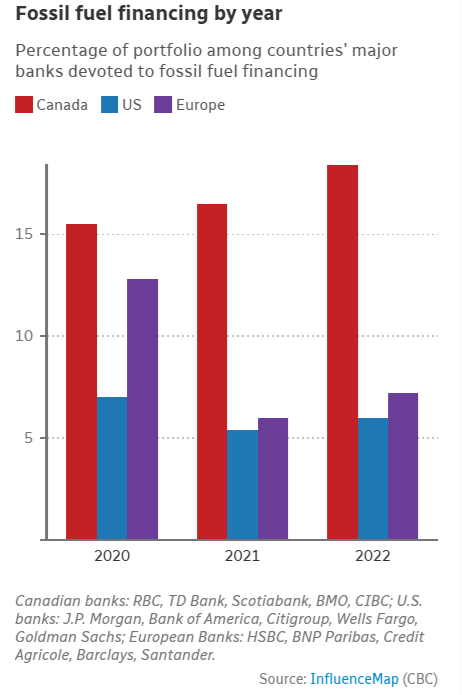
Did you know that Canada’s five biggest banks are among the 20 largest fossil fuel financiers in the world?

Since the Paris Agreement was signed in 2015, they have invested over $900 billion into the fossil fuel industry. This means that your hard-earned dollars are being invested in projects that make it impossible to meet Canada’s climate targets. While not well known, the financial sector is the missing piece in ensuring a climate-safe future.

Last week, the CEOs of Canada’s top 5 banks were in Ottawa testifying about their role in the climate crisis. Environmental Defence was on the front line of this critical moment. We were invited to testify in this important study and use our expertise to advise policy solutions to align our financial system with climate action.

Won’t you help us keep the heat on the banks to take responsibility for their role in the climate crisis?

Canada can only keep a safer climate if finance aligns with climate action, and new rules from the government would help make that happen. And, we are creating public awareness of the issue and mobilizing Canadians to speak up by writing letters and attending rallies- increasing the pressure on the federal government to take action.

At a time when climate-fueled disasters (such as wildfires, droughts and floods) are rising, it’s ludicrous that Canadian banks are allowed to fund oil and gas industries at a rate of over $100 billion per year. We will be watching future proceedings closely. And, we will continue to push the federal government to ensure that Canadian banks are helping, not hindering our climate goals. For The Silo, Alex Walker. Program Manager, Climate Finance for Environmental Defence.

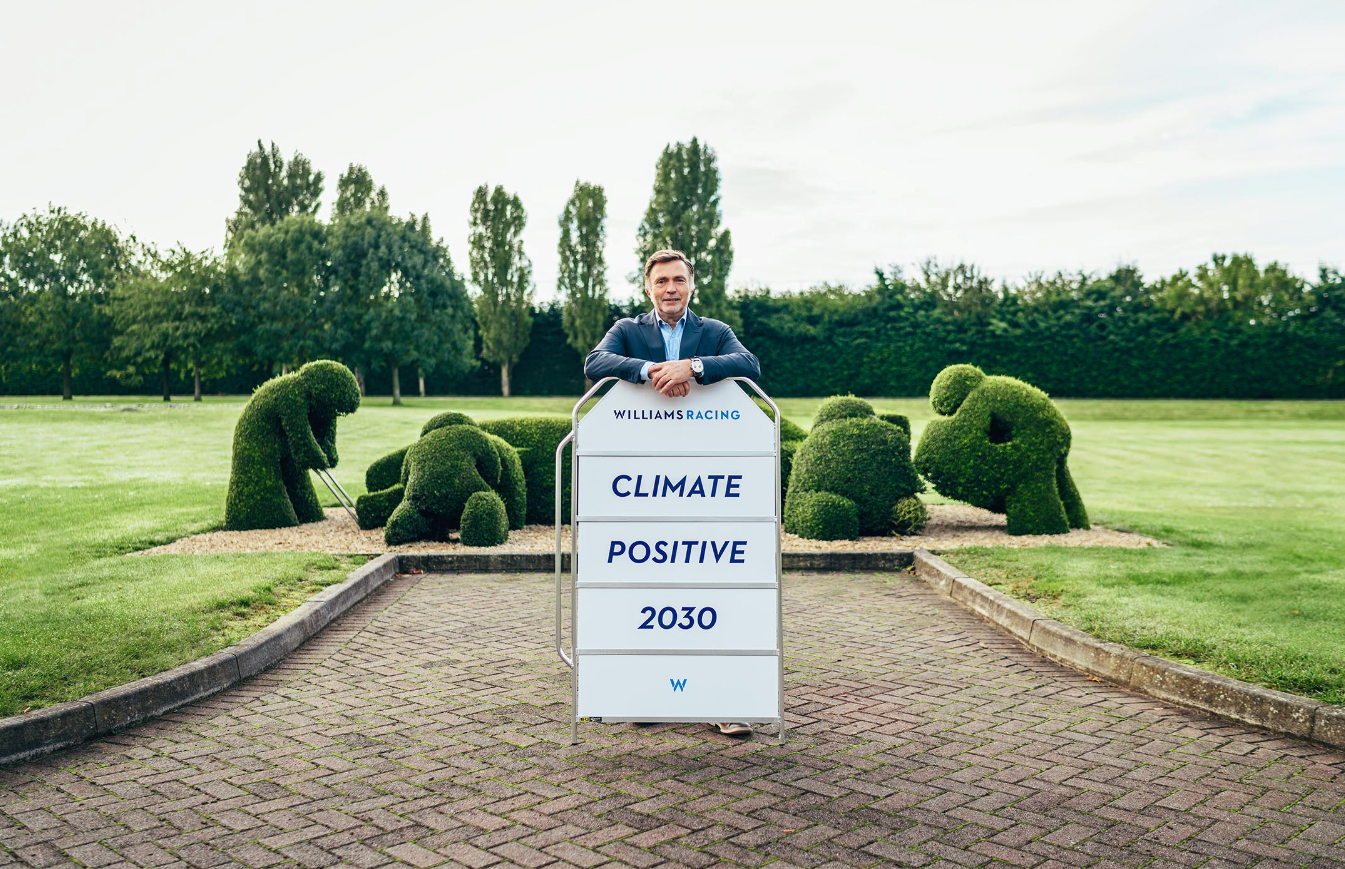
WILLIAMS F1 RACING TO BECOME CLIMATE POSITIVE BY 2030

Grove, Oxfordshire UK: Williams Racing, one of the most successful teams in Formula One history, commits to a far-reaching climate change target.  Building on the progress the global motorsport industry has made on sustainability in recent years, Williams Racing goes further than any other race team or motor racing series in the world, to commit to becoming climate positive by 2030.  

To achieve this ambitious goal, Williams Racing has developed a series of robust technological and data driven initiatives, as part of a comprehensive purpose driven sustainability strategy, aiming to address some of the most important environmental and societal challenges facing Formula One, global sport and the planet.

The Williams Racing Sustainability Strategy, which has been developed over the course of the last year after extensive expert analysis, is based around five key pillars: Climate Action, Biodiversity Stewardship, Sustainable Innovation, Industry Access for All and Purpose Driven Leadership. Each pillar defines actions that Williams will be taking in the short and medium term to accelerate the transition to a better planet. Adding further transparency and accountability, each objective will be measured, audited and annually reported.

Williams is committed to learning and sharing best practices from all sectors and adhering to international initiatives. Accordingly, this strategy brings its emissions reduction target in line with the below 2 degrees Celsius target of the Paris Climate Agreement and UN Climate Change Global Agenda. Williams Racing is now the first Formula One Team to be a signatory of the UNFCCC, UN Sports for Climate Action Framework. In addition, Williams Racing Sustainability objectives are aligned with 12 of the 17 United Nations Development Goals (SDGs).  Williams Racing is also aligned with industry specific standards and has recently gained FIA Three-star environmental accreditation.   

Jost Capito, CEO, Williams Racing: “Williams Racing is a pioneer in Formula One and the racing world and has a strong heritage developing Formula One technology and transferring it to the EV and sustainable transport and energy sectors. We are living in a time when our planet and society is changing faster than ever. Building on the progress the global motorsport industry has made on sustainability in recent years, we have taken time to thoroughly analyse our entire operation and develop a comprehensive purpose driven, Sustainability Strategy to accelerate our sustainable transformation. As a team, we wanted to push the envelope and be the pace setter for sustainability in global motorsport and in the wider automotive industry. So today we are making the commitment to be climate positive by 2030 and we will be using our knowledge to nurture and develop advanced technology to meet this goal.

“We know where we are strong and understand where improvement is required and we are open to learning from others and sharing best practices in pursuit of our ambitious objectives. To help raise the baseline of sustainable performance in our industry, we welcome interaction and partnerships with key motorsport stakeholders, automotive companies, brands and organisations who share our vision.” 

“As a huge global sporting platform, Formula One has the power to inspire millions of people across the world and as the pinnacle of so many advanced technologies, Formula One has the ability to create technical solutions to help tackle the challenges we face as a planet. As we progress towards our goal to be climate positive in the years ahead, my hope is that Williams Racing can inspire all those connected with our sport and beyond, using motorsport as a catalyst for significant and long-lasting change.”

The five key pillars of the Williams Racing Sustainability Strategy

Climate Action, covers the strategy and targets for how the team will reduce carbon emissions for travel and energy consumption at HQ, reduce waste and water usage and over time create its own energy, on its journey to becoming climate positive.  

Biodiversity Stewardship, covers the strategy and targets for how the team protect and preserve the biodiversity on the 60 acres of the HQ campus, including the Letcombe Brook – one of only 240 chalk streams in the world.  

Sustainable Innovation, covers the strategy and targets to foster sustainable and innovative solutions that tackle global challenges in and outside of F1™. This includes Williams Racing undertaking full life cycle management of its racing cars, deploying circular economy strategies within the team and being actively involved in projects such as carbon capture technologies.

Industry Access for All, covers the strategy and targets to make motorsport more accessible by creating an environment in which anyone can thrive, and a workforce that reflects our community through academy programmes, scholarships and Esports.

Purpose Driven Leadership, covers the strategy and targets for Williams Racing to act as pace setters for sustainability within the motorsport industry. Building a strong, transparent and accountable culture in our team, at races, with our partners, suppliers, local community and fans.

Lindita Xhaferi-Slihu, Sector Engagement in Climate Action, Lead, from the UNFCCC commented “We are pleased to welcome Williams Racing as a signatory to the UN Sports for Climate Action Framework. The team is the first Formula One Team joining the Framework, sending a clear signal on the growing importance of setting clear climate targets and of using the sport and technologies as a catalyst for change. We look forward to working together with Williams Racing to deliver on the goals of the Framework.”

The Williams Racing Sustainability Strategy was developed with support from Enovation Consulting, a purpose driven sustainability and strategic management agency.

About Williams Racing

Williams Grand Prix Engineering Limited’s core competencies are the design and development of racing cars to compete in the Formula One World Championship. As one of the world’s leading Formula One teams, the company has secured 16 FIA Formula One World Championship titles since its foundation in 1977. Nine of these titles have been won in the Constructors’ Championship in association with Cosworth, Honda and Renault. The remaining seven titles were won in the Drivers’ Championship with Alan Jones, Keke Rosberg, Nelson Piquet, Nigel Mansell, Alain Prost, Damon Hill and Jacques Villeneuve.

About Enovation Consulting

Enovation Consulting is a purpose-driven sustainability and strategic management agency with the mission to drive positive and meaningful changes through sport. We deliver creative and innovative research-based solutions that empower our clients to integrate sustainability into their business strategies – delivering on their short, medium and long-term ESG goals.

About UNFCCC Sports for Climate Action Framework

The UNFCCC Sports for Climate Action Framework is the UN Climate Change initiative, a climate action for sport movement of sports organizations and their stakeholders. This initiative aims at supporting and guiding sports actors in achieving global climate change goals, offering a forum where participants can pursue climate action in a consistent and mutually supportive fashion by learning from each other, disseminating good practices, lessons learned, developing new tools, and collaborating on areas of mutual interest. Signatories commit to a series of principles and goals which are incorporated into their strategies, policies and procedures.