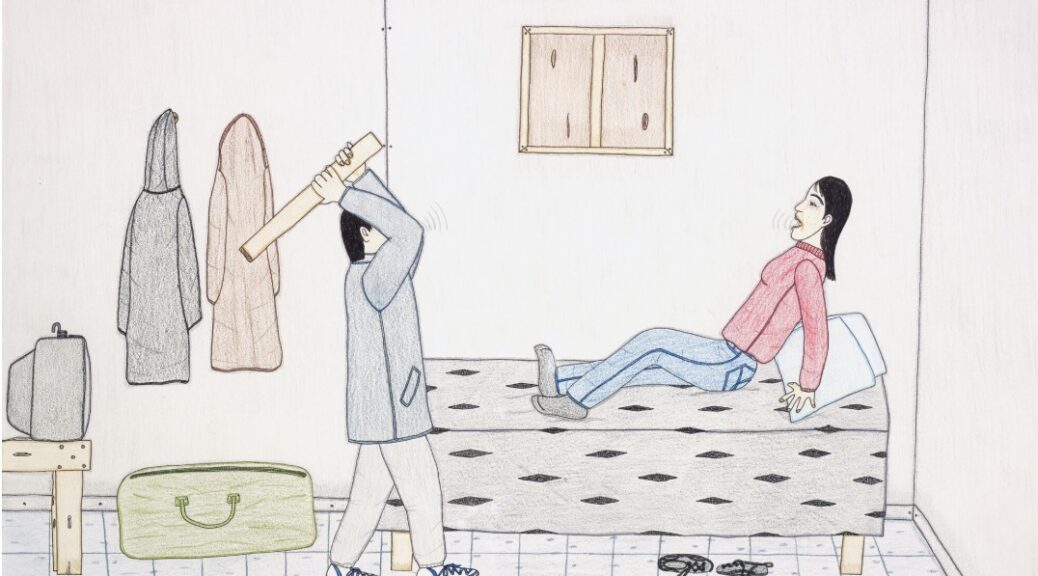
Annie Pootoogook’s drawing entitled Man Abusing His Partner was selected as one of the best 100 artworks of the 21st century by ArtNews.
Kinngait (Cape Dorset), Nunavut – A drawing by late Inuit artist Annie Pootoogook, who died under suspicious circumstances in 2016, has been named as one of the best artworks of the 21st century by ArtNews, one of the most trusted sources for news about the global art world and art market.
Known for her drawings that depict contemporary Inuit life, her drawing entitled Man Abusing His Partner was selected as one of greatest artworks of the past 25 years.
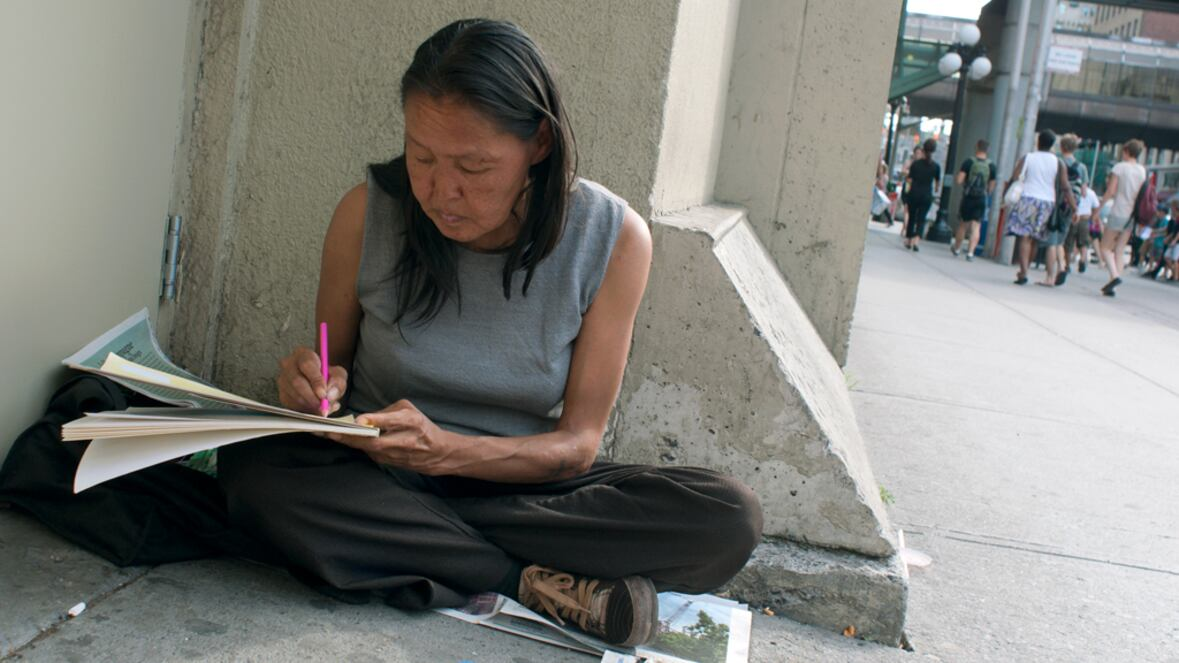
Annie Pootoogook works on her art on July 10, 2013, in Ottawa. The investigation into her 2016 death has stalled, sources tell CBC News. (Alexei Kintero)
The work on paper illustrates a haunting personal memory from Annie’s life during the early 1990s, when she was in an abusive relationship with a man in Nunavik.
The artwork depicts a violent and threatening scene, with a male figure holding a piece of wood above his head, directed toward a woman who lies defenseless on a bed. Initially, like many women facing similar situations, Annie remained silent about her experiences, reflecting the broader social stigma and silence surrounding violence against women. However, as she found her voice, it became clear that Annie possessed immense courage. She began sharing her story of survival as an Inuit woman, using her artwork as a powerful medium to communicate struggles with addiction, mental health, and intimate partner abuse.
Sadly, on September 19, 2016, Annie’s body was found in the Rideau River in Ottawa. Police declared it a suspicious death, however no arrests were ever made. Annie’s story, which she often conveyed through her work, became a representation of the broader experiences of Inuit and Indigenous women, highlighting the ongoing impact of colonialism and patriarchy in their lives. Her drowning and the subsequent police investigation drew significant attention because of her status as an internationally renowned artist and Inuit woman.
“This significant recognition of Annie Pootoogook is a testament to her enduring importance as a contemporary creator,” said West Baffin Cooperative President Pauloosie Kowmageak. “As we remember her significant contributions we also have the opportunity to look forward, knowing that her personal resilience and artistic innovation is inspiring new generations.’
Pootoogook was an artist member of the West Baffin Cooperative, Canada’s oldest Inuit owned and led social enterprise.
She was the third youngest in a family of ten children and grew up surrounded by artists, including both of her parents, as well as her grandmother, the renowned artist Pitseolak Ashoona (c.1904–1983), and her uncle, Kananginak Pootoogook (1935–2010).
Influenced by them, Annie based her drawings on her personal experiences, including her struggles with addiction and domestic violence. Her work found fame in the larger art world and was showcased at the National Gallery of Canada, Art Gallery of Ontario, McMichael Canadian Art Collection, The Power Plant, Biennale de Montreal, Art Basel and Documenta 12, among other exhibitions.
Established in 1959, West Baffin Cooperative has enjoyed an international reputation for the exquisite prints, drawings and carvings created by its Inuit artist members. In addition to operation of the Kinngait Studios at the Kenojuak Cultural Centre in Kinngait, the cooperative maintains a Toronto marketing division office, Dorset Fine Arts, which is responsible for interfacing with galleries, museums, cultural professionals, Inuit art enthusiasts and the art market globally. The mandate of West Baffin Cooperative includes public relations, promotion, advocacy, government relations and special projects relating to Kinngait Inuit art. Governed by an all-Inuit Board of Directors, the organization also maintains a local retail grocery/hardware store, a restaurant, rental properties and various utility contracts. As a community owned organization, practically all Kinngait adults are shareholders, profits are distributed back to the community in the form of annual dividends.
Featured image- Annie Pootoogook, Man Abusing His Partner, 2002 Coloured pencil and ink on paper, 51 x 66.5 cm Collection of John and Joyce Price
The Metropolitan Museum of Art to Receive Major Gift of Relief Prints by renowned Inuit printmakers from René Balcer and Carolyn Hsu-Balcer.
(New York, March, 2025)—The Metropolitan Museum of Art announced today the landmark gift of the René Balcer and Carolyn Hsu-Balcer Inuit Print Collection, which features over 500 relief prints by renowned Inuit printmakers from multiple regions across Nunavut and Nunavik, the semiautonomous Arctic homeland of Canada’s Inuit population. This important collection, gifted to The Met by René Balcer and Carolyn Hsu-Balcer, is among the strongest examples of Inuit graphic art in the United States. With works ranging from the mid-1940s to the present day, it includes major works by some of the most influential Indigenous women artists in history and will significantly enhance The Met’s collections of Inuit objects. The Balcer Collection represents diverse Inuit printmaking methods, including sealskin and paper stencils; monoprints; and carved stone, or stone-cuts, on paper, and features imagery of birds, animals, Inuit peoples, transformative figures, dreams, cosmologies, and hunting scenes.
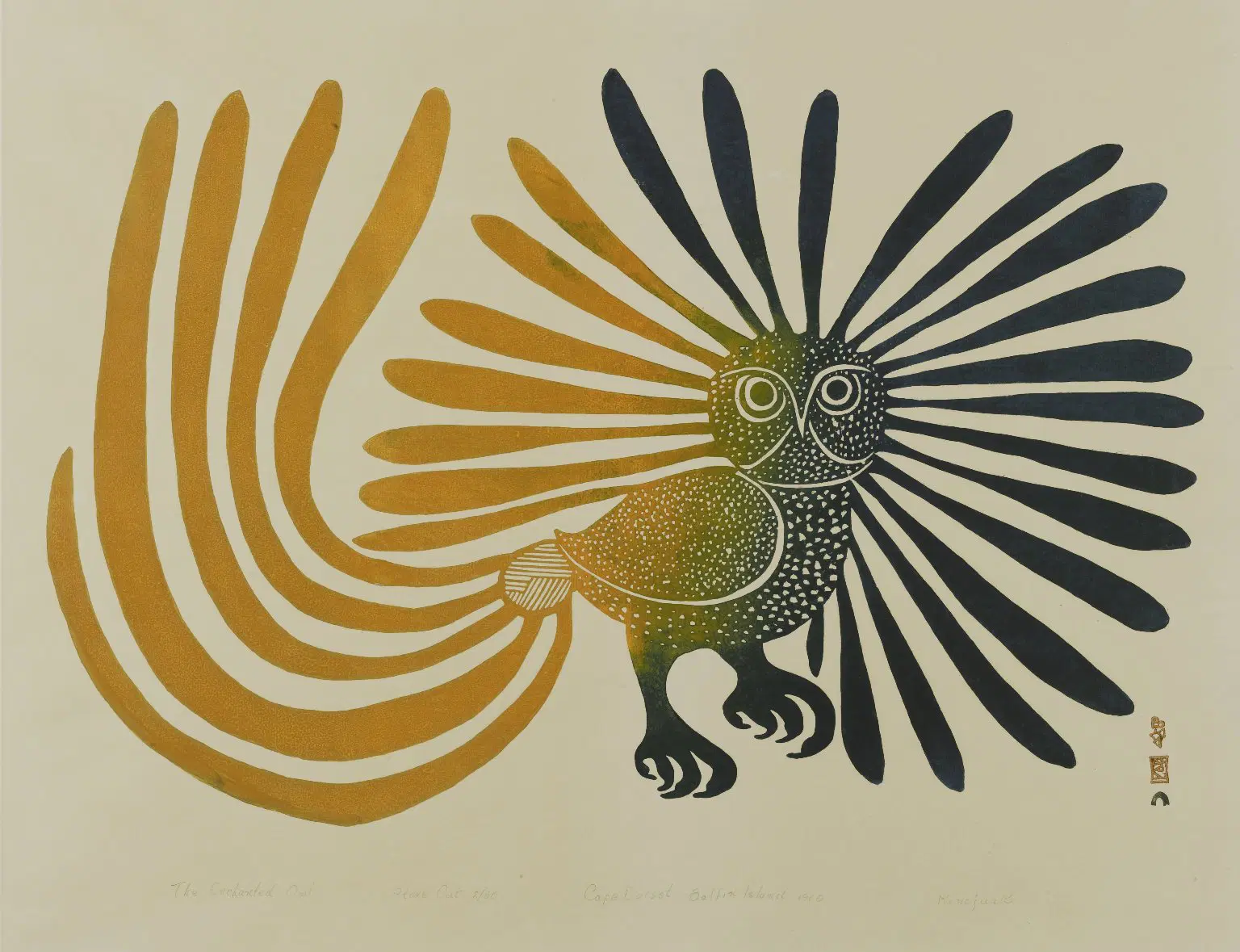
Kenojuak Ashevak’s drawings and prints feature fantastical creatures and bold colors and forms. This captivating image of an arctic owl was among the first prints produced by the West Baffin Eskimo Cooperative. It quickly became a Canadian icon, and in 1970 the print was chosen for the country’s commemorative stamp.
“We are deeply grateful to René Balcer and Carolyn Hsu-Balcer for this extraordinary gift, which is a leading collection of Inuit masterworks in a U.S. museum,” said Max Hollein, The Met’s Marina Kellen French Director and Chief Executive Officer. “Mr. and Mrs. Balcer’s dedication to the support of Inuit artists is evident in this magnificent and comprehensive collection that celebrates the remarkable artistry of Native and Indigenous individuals and communities, and we are thrilled to be able to share these prints with visitors in our American Wing galleries.”
René Balcer began collecting Inuit art in Montreal, Canada, in the late 1970s. The René Balcer and Carolyn Hsu-Balcer Inuit Print Collection highlights the famous artists’ collective and printmaking studio at Baffin Island’s Cape Dorset, the source of Inuit printmaking that was established in the 1950s. The original artists working at Cape Dorset collectively identified as the West Baffin Eskimo Co-operative, and in 1960 they released their first official catalogued collection of 41 prints to great critical acclaim. The René Balcer and Carolyn Hsu-Balcer Inuit Print Collection includes some of the most celebrated Inuit artists associated with the collective, such as Jessie Oonark (1906–1985) and Kenojuak Ashevak (1927–2013), whose print The Enchanted Owl (1960) was featured on a commemorative Canadian postal stamp in 1970 and was on view in The Met exhibition A Decade on Paper: Recent Acquisitions, 2014–2024(August 26, 2024–February 23, 2025). Looking ahead, select works in the Balcer Collection will be included as part of ongoing annual rotations in the Art of Native America installation in the Museum’s American Wing.
“This is an aesthetically and culturally significant gift, and it has been an absolute pleasure to work with René Balcer and Carolyn Hsu-Balcer in our mutual goal to more strongly represent Inuit artists in The Met collection,” said Patricia Marroquin Norby (P’ urhépecha), Associate Curator of Native American Art in the American Wing. “The arrival of this beautifully curated collection aligns with our departmental vision to prioritize previously underrepresented artists and the presence, voices, and experiences of peoples and communities who have contributed greatly to our cultural and national identities. We look forward to collaborating with Inuit communities and individual artists to highlight these works in our galleries and programming.”
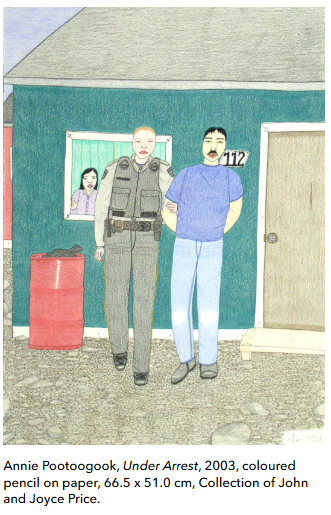
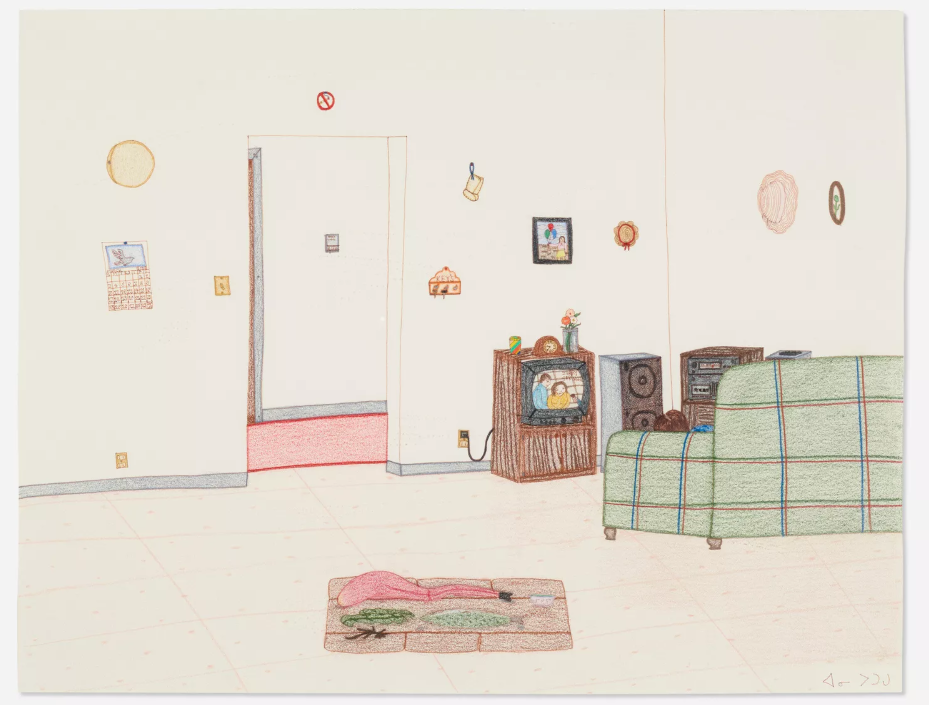
René Balcer and Carolyn Hsu-Balcer said, “One of the greatest challenges the Inuit face vis-à-vis the southern world is invisibility. At best, the Inuit and their brethren in the Circumpolar region are an abstraction to the rest of the world, glimpsed mostly through the distorted lens of pop history. At worst, the reaction the Inuit get when meeting non-Indigenous people is, ‘Oh, I thought you all died off years ago.’ It is our modest hope that this collection will demonstrate that the Inuit and their culture are very much alive and very much engaged in the modern world (to wit, see the following image of Annie Pootoogook’s Watching Jerry Springer from 2003). My wife, Carolyn, and I are very grateful to The Met for accepting the collection and committing its vast resources and reach to showcase to the world the creative brilliance, wisdom, and humor of Inuit artists.”
About René Balcer and Carolyn Hsu-Balcer
René Balcer is an Emmy-winning writer, producer, and creator of critically acclaimed TV series and documentaries. René’s engagement with the Canadian North began as a teenager working in lumber mills, hydro projects, and construction on airstrips in remote communities, often alongside First Nations and Inuit coworkers.
Among other artistic endeavors across North America and Asia, René and Carolyn recently organized and participated in a multiyear artist’s residency with Chinese artist Wu Jian’an and Inuit artists at the Uqqurmiut Centre for Arts and Crafts in Pangnirtung, Nunavut, and with renowned artists Shuvinai Ashoona, Ningiukulu Teevee, and Qavavau Manumie at Kinngait Studios (Cape Dorset). René’s poignant photographs of the Arctic have been featured in gallery exhibitions in New York and appear in his recently published portfolio, Seeing As (ACC Art Books UK). For the Silo, Meryl Cates/ The Metropolitan Museum of Art.
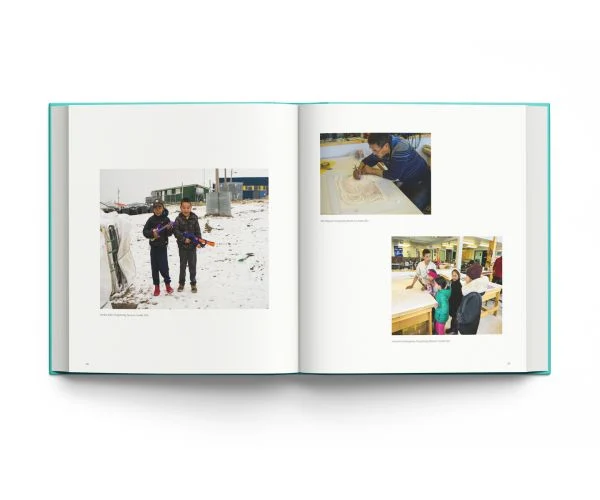
(above) Sample pages from Rene’s “Seeing As” Artbook
About The Met
The Metropolitan Museum of Art was founded in 1870 by a group of American citizens—businessmen and financiers as well as leading artists and thinkers of the day—who wanted to create a museum to bring art and art education to the American people. Today, The Met displays tens of thousands of objects covering 5,000 years of art from around the world for everyone to experience and enjoy. The Museum lives in two iconic sites in New York City—The Met Fifth Avenue and The Met Cloisters. Millions of people also take part in The Met experience online. Since its founding, The Met has always aspired to be more than a treasury of rare and beautiful objects. Every day, art comes alive in the Museum’s galleries and through its exhibitions and events, revealing both new ideas and unexpected connections across time and across cultures.
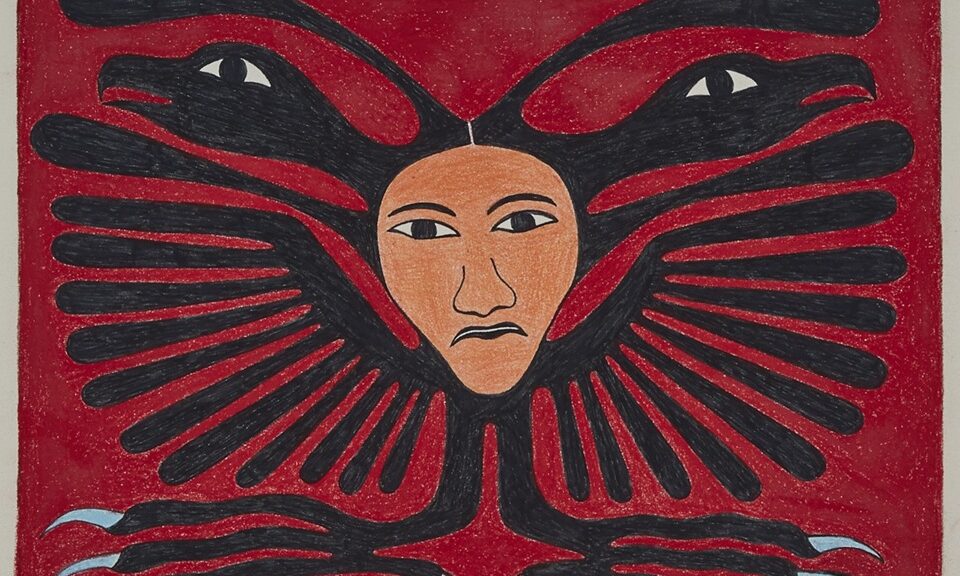
Feature Image: Kenojuak Ashevak. “Untitled (red woman/birds/wings/feet),”Drawing, pencil and ink 10x14in, 25.4×35.6 cm. Waddington, 9/18/20. René Balcer and Carolyn Hsu-Balcer Collection, Gift of René Balcer and Carolyn Hsu-Balcer, 2024 Kenojuak Ashevak. “Untitled (red woman/birds/wings/feet),”Drawing, pencil and ink 10x14in, 25.4×35.6 cm. Waddington, 9/18/20. René Balcer and Carolyn Hsu-Balcer Collection, Gift of René Balcer and Carolyn Hsu-Balcer, 2024