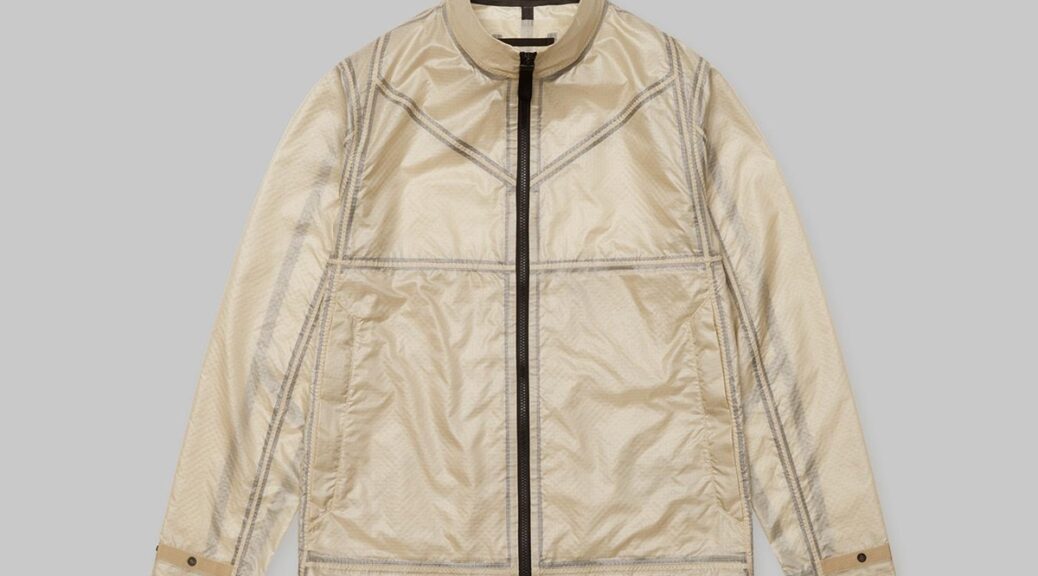
After landing a probe a billion miles from Earth (on a moon shrouded in methane monsoons and covered in cryovolcanoes spewing out jets of -179°C hydrocarbon rain) our friends at vollebak took the most significant material in human history, chopped it up, and turned it into a 300 gram jacket.

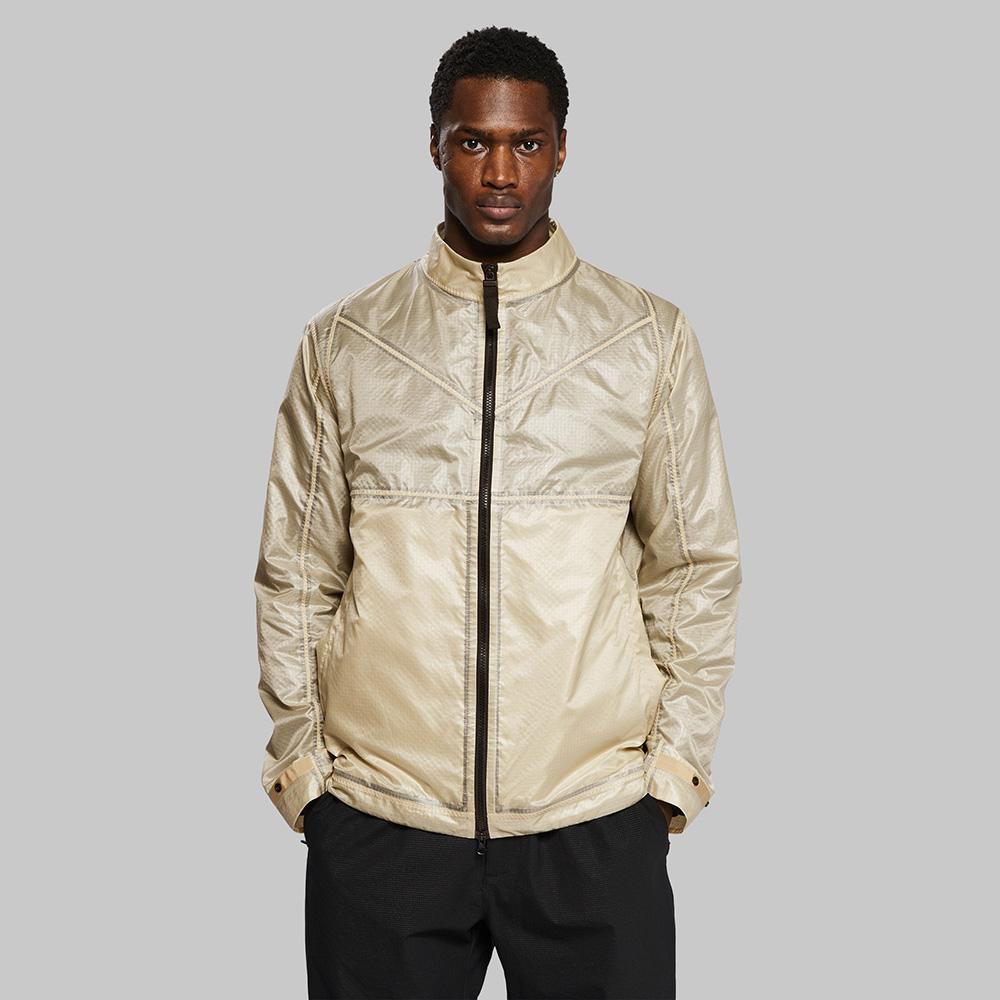
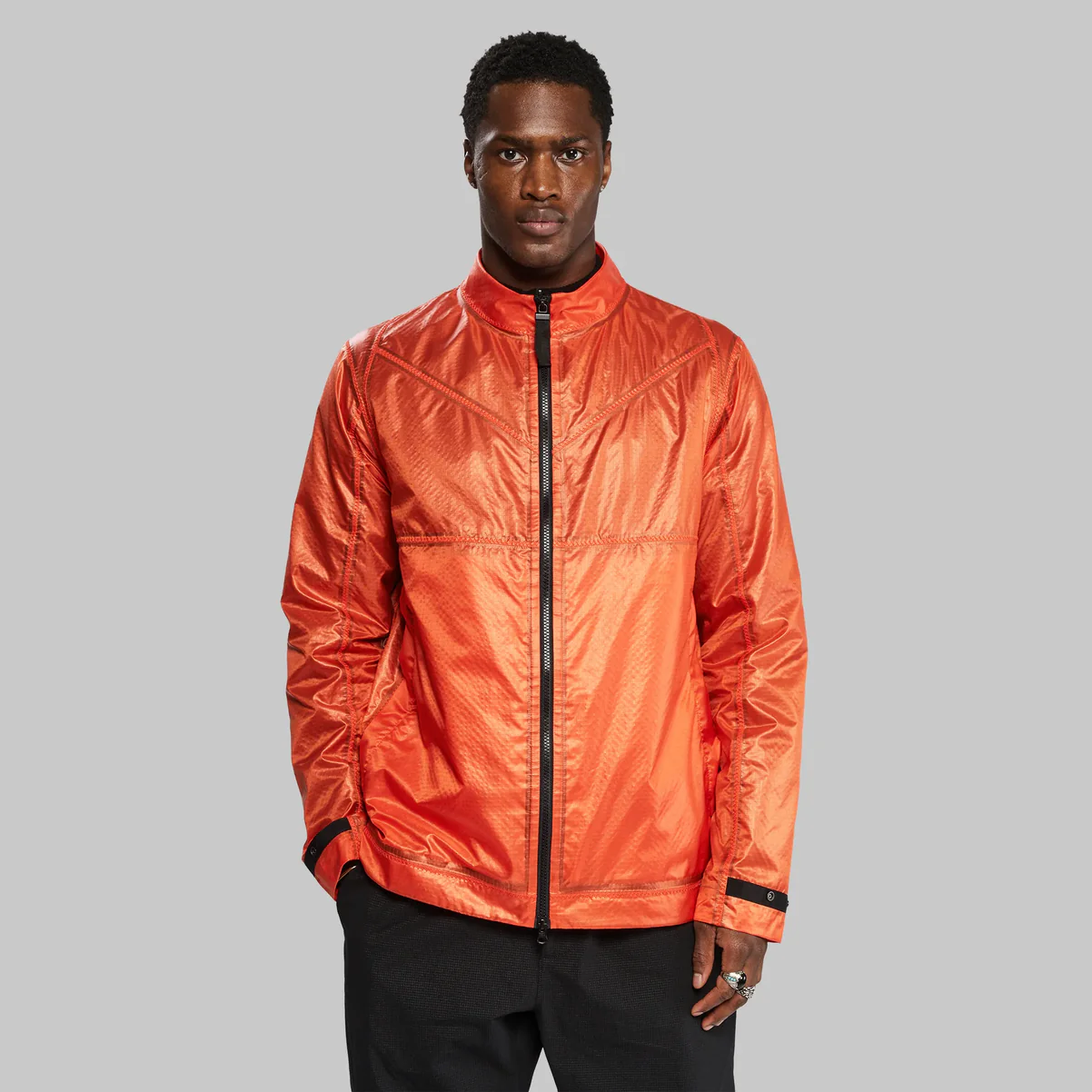
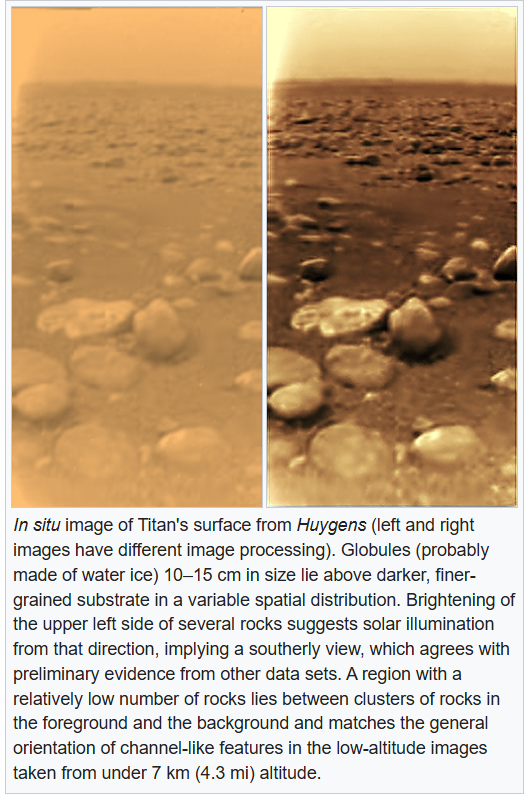
| We’ll start by pointing out the obvious – the material The Martian Mach 16 Jacket is made from, wasn’t created to build clothes. It started life as a hypersonic deep space parachute designed to land a multi-billion dollar mission a billion miles away in the outer solar system – on a moon shrouded in methane monsoons, and covered in cryovolcanoes spewing out jets of -179°C hydrocarbon rain. …So it’s just a couple of levels of performance up from your average umbrella. To put a billion miles in perspective, the space-junk we left on the moon is only about 240,000 miles away. A billion miles is also 1,300 times further away than the James Webb Telescope. And over five million times further from Earth than the International Space Station. It also takes a long time to travel a billion miles. So by the time the parachute was deployed it had been in the deep freeze of deep space for 7 years – so it’s a pleasant surprise that it didn’t pull a hamstring. Instead it successfully landed the first probe in the outer solar system – which is the furthest any human spacecraft had ever landed. And during its 2.5 hour parachute-assisted descent, the Cassini-Huygens probe sent back images to Earth of the surface of Titan – a place NASA thinks might be a likely future home. It wasn’t done yet though. Because over a decade later, it was brought out of retirement to land the Perseverance Rover on Mars – the other place where humans are trying to get a foot on the property ladder. It’s why the jacket comes in a Project Mercury edition that’s based on the first spacesuits of the Mercury Program. And a Rover Orange edition – which is the same International Orange used in the Perseverance parachute. On 18 February 2021, as the Rover was heading towards Mars at 20,000kmph, or Mach 16, the parachute was put to work again. This time it was given just over a second to slow the Rover down to 320kmph in a −60°C Martian dust storm. Now breaking instantaneously at Mach 16 is not easy. For reference Tom Cruise was flying a lot slower than that in the last Top Gun as he used Earth’s atmosphere as a one man racetrack – hitting a conservative Mach 10. And if he’d braked to a stop in just over a second he’d have turned into soup. This braking strength is even more astonishing given how light the material is. The entire 21.5 metre wide parachute was packed into a nose cone about the size of the average back pack. Today you’ll find Perseverance still happily trundling around Mars, and the parachute in a slightly untidy, dusty heap in the Jezero Crater. So if you, your kids, or your grandchildren, end up on these planets, sipping a coffee watching the Earth rise, we’ll have this material to thank. It helped give the world today a window into the worlds of tomorrow. And as you’d imagine, a material that can survive methane monsoons, cryogenic cold, Martian dust storms, hydrocarbon rain, cryovolcanoes and hypersonic braking, also makes a pretty miraculous jacket here on Earth. |
For the Silo, Jarrod Barker.