Category Archives: Culture

River Water Levels Are Favorite Discussion Among Ontario Paddlers
 SUP- Stand up paddling is a popular sport along the Grand River system. image: grandriverrafting.ca
Is the water level in the river going to be okay for canoeing or kayaking on any given weekend?
This is a common question that people call the GRCA to ask. It is also an important question. Usually what they mean is ” will there be enough water?”, but occasionally, there is actually way too much water for most people to canoe or paddle safely.
Fly fishermen too need to check river levels so they are safe and don’t get swept off their feet by a strong current.
An angler will likely move to a different area rather than take a chance. As an organization, the GRCA does not make recommendations as to appropriate water flows for recreational activities along the Grand River and its tributaries because there are many variables to consider. Some people have the expertise and training to enjoy high flows that could be fatal to inexperienced and ill equipped paddlers.

Very low flows make for slow going as there may not be enough water for the canoe to float and it may need to be pulled to deeper water at certain times. A skilled paddler will be able to read the water to find the deepest water and will have fewer problems. Some people have a bad day if they have to step out of their boat even once, while others are more tolerant of low flows. That is why there is no definitive answer to this question.
Appropriate water levels are a favorite discussion among paddlers. Those who paddle regularly have their own personal chart, whether it is in their head or on a spreadsheet.
Checking flow information
Many avid river recreation enthusiasts in Southern Ontario bookmark the River Data section of the GRCA’s website and check it when trip planning. This is one of the most visited sections on the GRCA’s website and provides hourly updates on river flows from 39 gauges on the Grand and eight tributaries. Some gauge information is also posted on an Environment Canada website that includes rivers in other parts of Canada, but the GRCA site has data for more gauges from this
watershed.
The main chart here is called the Flow Summary.
Recreational users should pay attention to the column headed “flow.” This one is measured in cubic metres per second or cms. If the rate is 10 cms, that means that 10,000 litres of water is moving past the flow gauge each second at this part of the river. The cms gets bigger as the river moves towards Lake Erie. There are huge changes in river flow due to seasons, weather, ice jams and dam operation.
Compare this to the “summer lowflow” which is the average flow during the dry summer months and you will see in relative terms how much water is flowing down the river. Following this Flow Summary is a list of sections of the rivers and tributaries with graphs. For example, one of the most popular sections of the river for a day trip, Cambridge to Paris, a paddler would check the Galt gauge on the “Middle Grand River“section. The graph will tell you if the level is going up, down, or holding steady. Occasionally a flow gauge does not operate and the information can be inaccurate, so the information is provisional. There is also a River Flow Information line that is updated regularly and can be reached at 519-621-2763, ext. 2511.

Outfitter information
There are several local outfitters in the area and they have cut off levels, when they stop canoe rentals. Canoeing the Grand in Kitchener has a safety section on their website with a five step rating chart for paddling. This scale goes from “Excellent” to “No Go” with five levels, depending on the paddler’s age, skill, expertise and river conditions.

When river flows skyrocket
As the graph above shows, the Grand River may not give much warning of a sudden increase in river flows, which is why the GRCA must sometimes issue high water safety warnings to the public. This is the flow information from the week of May 2 to 9 from a few years ago. Note that it shows heavy rain on Thursday night May 3 in the northern part of the watershed meant flows ballooned from 8 cms to 120 cms within a couple of hours, as the data from Marsville shows. The GRCA issued a warning after the storm. The rainwater gushed down the river and by the afternoon of Friday May 4, flows were dropping at Marsville but skyrocketing at West Montrose. By Saturday May 5, the river flows in Brantford were extreme and then they peaked at York on the southern Grand on Sunday.
A final important note, Dams can make the impact of a rainstorm less severe but they don’t eliminate flooding or high flows.
For the Silo ,Janet Baine, GRCA Communications Specialist

How to Have Much Better Digestive Health
Everyone experiences sporadic digestive symptoms such as an upset stomach, heartburn, nausea, gas, diarrhea, or dreaded constipation. Symptoms often go away on their own; however, they can cause major disruptions to your life when they occur frequently.
Fortunately, lifestyle and diet changes can have a positive influence on your gut health and some simple home remedies may ease discomfort.
In this article, we discuss a few ways that can help you to have better digestive health. Enjoy reading!

Relax (Manage Stress)
Anxiety and stress can affect the digestive system. Many people have a nervous stomach before a big event or important occasion, but sustained stress can affect the connection between the brain and the gut, causing continuing problems. There is a bond between physical and mental health, and reducing stress can positively impact both.
When you’re having a busy day, it can be tempting to rush your meals, but that can cause indigestion and stomach discomfort. Make the time to relax, especially before and after eating.
In addition, reducing stress by seeking support and making lifestyle changes may improve problems with digestion. It is well known that meditation, cognitive-behavioral therapy, acupuncture, and yoga have improved digestive symptoms.
Include Fermented Foods in Your Diet
Fermented foods are partially or wholly broken down by microorganisms such as bacteria. These microorganisms work to preserve food, and they can also benefit your gut health.

Kimchi- Lactic acid produced by bacteria during fermentation creates a tangy, pungent flavor similar to that of sauerkraut.
Bacteria occur naturally in the gut. There are good bacteria that help digest food, but there are bad ones that can cause problems with digestion if there are too many in the body. Furthermore, fermented foods contain good bacteria (probiotics) that may help you maintain a healthy digestive system. You can easily increase your probiotic intake by incorporating these fermented foods into your diet: probiotic yogurt, sourdough bread, sauerkraut, kefir, or miso.
Probiotic yogurt is particularly known as a good choice in a fight with gastrointestinal disorders. Moreover, it’s an easy way to meet your daily probiotics goal, and it contributes to healthy gut flora.

Stay Hydrated
Low fluid consumption is a frequent cause of constipation. Experts recommend drinking 50–66 oz. (1.5–2 liters) of non-caffeinated drinks per day to prevent constipation.
An additional way to help fulfill your daily fluid intake needs is to include vegetables and fruits high in water, such as cucumber, zucchini, peaches, tomatoes, melons, celery, strawberries, and grapefruit.

Chew Your Food
We all know digestion starts in your mouth. Your teeth break down the food into smaller pieces, and that way, they support the enzymes in your digestive system to also break it down better.
So keep this in mind next time you eat. Remember to chew your food slowly and make it ready for digestion!
To sum up, simple diet and lifestyle changes may help improve your digestion if you experience occasional, frequent, or even chronic digestive symptoms. In order to relieve some of these symptoms, try our suggestions from above. You will be surprised by the results!

Beautiful Minecraft Coffee Table Book Features Stunning In Game Built Art
Twelve years ago to the day, back in the year 2009 – a Video game called #Minecraft was unassumingly released. The sandbox video game became the second best selling PC-based game in history and was bought by Microsoft for $2.5B usd in 2014.
In keeping with our look back celebration, let’s check out this wonderful book for Minecraft lovers everywhere: Beautiful Minecraft ($19.95, 112 pp., 4C, hardcover).

As they pore over the pages in this remarkable collection, Minecraft lovers of all stripes will find themselves immersed in a world of astonishing creations like floating steampunk cities, massive alien worlds, detailed classical sculptures, fantastical landscapes, and architectural marvels. The sculptures and scenes throughout the book are built from thousands to millions of blocks and represent months and even years of design work on the part of their creators.
I wanted to show how a video game can become a true artistic medium…how players can become artists.
 “Beautiful Minecraft is the sort of thing that fans of the game are sure to love because it brings them even closer to the game they love,” said No Starch Press founder Bill Pollock. “Since my first visit to MineCon in 2011, I’ve been inspired by the passion Minecraft fans have for something that is much more than a game. Beautiful Minecraft shows us how in game creations can be high art, and the results are nothing less than amazing.”
For the Silo, James Delaney-author, managing director of BlockWorks: a team of Minecraft artists from around the world. BlockWorks has created artwork for companies like Disney, Microsoft, Warner Brothers, and The Guardian.
Publisher: No Starch Press
Author: James Delaney
Print ISBN: 978-1-59327-765-9
Price: $19.95
Specs: 112 pp., 4C, Hardcover
You Might Also Be Interested In:

The Game Console by Evan Amos
The Arduino Inventor’s Guide by Derek Runberg and Brian Huang
The Hardware Hacker by Andrew “bunnie” Huang
Available in fine bookstores everywhere and from http://www.oreilly.com/nostarch, or by contacting marketingdirector@thesilo.ca
About No Starch Press
No Starch Press has published the finest in geek entertainment since 1994, covering topics like LEGO, hacking, science, math, and programming for all ages. Our titles have personality, our authors are passionate, and our books tackle topics that people care about.

Worlds Leading Architects Include Sir Norman Foster
Who is Sir Norman Foster? A British born architect world renowned for his ground-breaking interpretations of neo futuristic and post-modern design, that’s who.
Perhaps most famously known for designing and constructing “The Gherkin” tower in London, England at a cost of 138 million pounds. This office building is sure to turn the heads of tourists and Londoners alike.


Change Your Life And Connect To Higher Realms
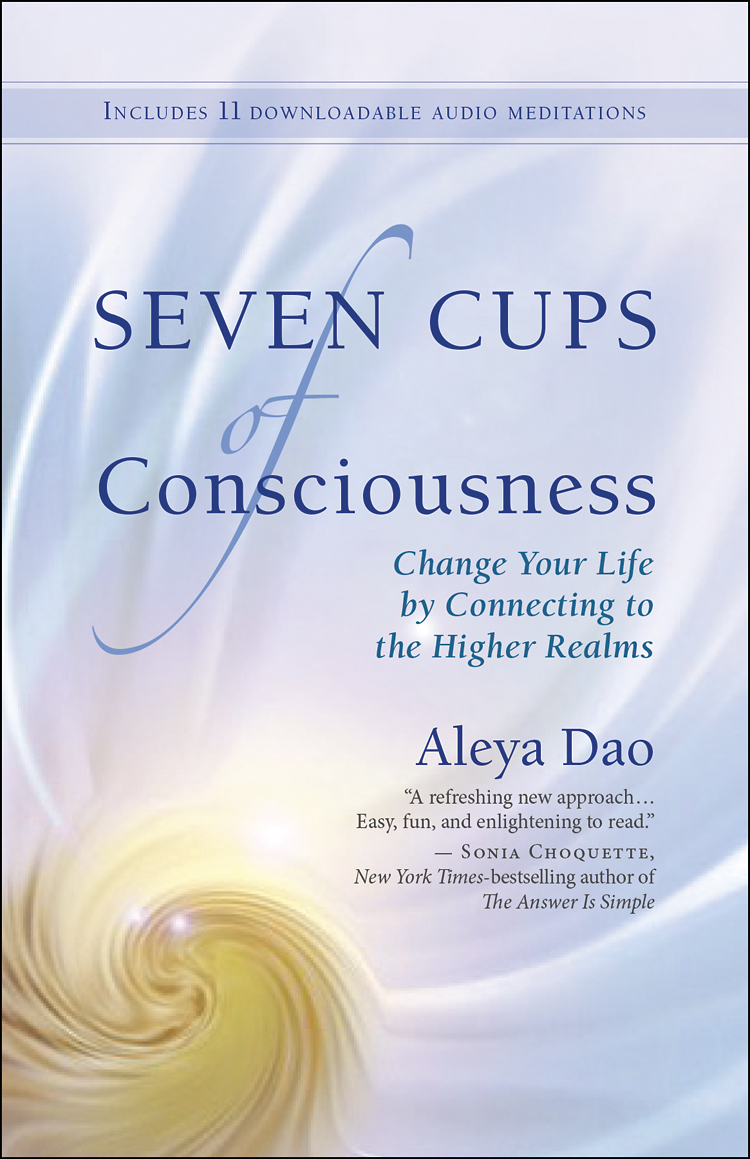
Aleya Dao was a successful alternative health practitioner undergoing a sound healing session herself when she had one of those extraordinary ascents into an entirely expanded level of cosmic consciousness. And what she discovered in those few minutes and the days and years afterward, was how ready her Higher Self, her Body Deva and an array of personal multidimensional Team members were to help her overcome her own perceived shortcomings, destructive habits and life’s speedbumps. She decided on change. The woman she is today is not the woman she was then–and she gives full credit to the Higher Realms for helping her evolve to the happy and fulfilled trailblazing spiritual teacher, healer and author that she has become.
In her astonishing and powerful book, Seven Cups of Consciousness: Change Your Life by Connecting to the Higher Realms (New World Library), Aleya offers a direct manual on how to engage with the higher dimensions to advance your own evolution–to create a life filled with happiness and purpose, always connected with a divine and perfect aspect of yourself, protected and guided by a loving angelic presence. She shows how this kind of life becomes possible when we learn to consciously connect at the spiritual level with higher dimensions.
“When you explore your inner realms, along with the higher dimensions, your life will change in amazing ways,” writes Aleya, a sound healer, Doctor of Oriental Medicine, acupuncturist and spiritual guide for 20 years in the Southwest. She practiced in Telluride, CO, before moving to Santa Barbara, CA where she currently serves an international clientele. “The basic idea is that all your work is done at a level higher than your physical reality. There are aspects of you that exist in higher dimensions, at the spiritual level. I call these parts of you your energy self or your Higher Self.”
Seven Cups of Consciousness offers step-by-step practical guidance for reaching beyond one’s limited physical experience and energetically opening to the guidance and support of multidimensional resources.
Her book outlines specific processes built around “cups of consciousness” that are designed to give readers access to the energetic realm and the innumerable resources it contains. “The physical realm is only one of many. You are a multidimensional being expressing yourself in multiple dimensions,” writes Aleya. “You are never alone. Using your angelic resources can assist you in enormous ways.”
Just as a cup of coffee or tea helps you wake up in the morning, Aleya promises readers that sipping from the “cups of consciousness” she offers will help them awaken to higher levels of consciousness and energetic support:
- First Cup – You Live in a Multidimensional Reality
- Second Cup – You Are Never Alone
- Third Cup – You Can Change Your Inner World
- Fourth Cup – Your Challenges Can Help You Grow
- Fifth Cup – Your Body Is a Nature Spirit
- Sixth Cup – You Have Soul’s Wisdom
- Seventh Cup – You Are Perfect
Aleya has created energetic practices designed to help readers release old patterns and gain access to a higher consciousness for each of the seven cups. Links to eleven powerful downloadable audio meditations that guide readers through these processes are also included.

- Become acquainted with your own River of Light, adjacent to the front of your spinal cord
- Dialogue with your Team to resolve old “stuff” that keeps you mired in lack, limitation, real world problems and broken romances
- Communicate with your Body Deva, the nature spirit that is embodied as your physical self
- Begin living a multidimensional life, so that you solve problems from a vantage point that you cannot by living a 2D existence
- Enable your Higher Self, Team and Body Deva to support you in living a life that is fully expressed with joy, fulfillment, purpose, self-love and even romance!
“The key lies in your ability to focus on your inner world, using your imagination and intent as a way to connect to other dimensions,” writes Aleya. “You will learn that your real power comes from within and from beyond. As you develop these tools, your consciousness will evolve, your challenges will transform, and a deep inner peace and empowerment will bloom.”

The Greatest Places To See POST COVID Art In The City Of Toronto
If you were to ask a tour guide where to see art in Toronto once the city opens back up post-Covid, they would likely tell you to get tickets for the Art Gallery of Ontario. While the gallery is a wonderful place to see new exhibitions and long-standing collections, it’s not the only spot that the city has to offer. After walking through the halls of the AGO, you should check out these other cultural venues and events:
Graffiti Alley
Graffiti can turn outdoor spaces into sprawling art galleries. Take an afternoon to venture over to graffiti alley to see a series of increasingly bold and colorful murals adorning the backs of buildings. You can grab a hot coffee from one of the nearby cafes and then take a stroll through the unconventional art collection.
Nuit Blanche
Graffiti Alley turns a part of a neighborhood into a gallery. The festival Nuit Blanche transforms the entire city of Toronto into an interactive gallery for a single night. This year the celebration takes place on October 5th. You can see everything from beautiful zen gardens to riveting dance performances to participatory installations. The art projects span across neighborhoods from downtown to Don Mills.
The Drake
One of the cultural destinations that always participates in Nuit Blanche is The Drake. They are partners with the festival, along with the Canadian Art Foundation, the Museum of Contemporary Art (MOCA) and the IMAGES Festival.
All of the six Drake venues are the perfect spots to experience art, all while enjoying a tantalizing dinner or sipping a strong drink. Go to The Drake Hotel on Queen West to feast on appetizers like hand-cut steak tartare or charred octopus before exploring the location’s gorgeous art collections. You’ll find the collection One Way Out by the artist Greg Ito displayed in their lobby and café. Ito uses paintings, installations and sculptures to delve into the concept of escapism. So, you can finish off your specialty cocktails and get transported to a fantastical destination.
The Hotel has the multifaceted performance venue known as the Drake Underground. The cultural hub hosts musicians of all genres to get crowds screaming and dancing until the early hours of the morning. It also hosts poetry slams, where you can hear the city’s up-and-coming spoken word artists compete for the top performance of the night. You can see a full list of what’s going on at The Drake Hotel here.
If you’re looking for a low-key way to spend your afternoon, head to the Drake Mini Bar across the lobby from Drake One Fifty in the Financial District. The venue manages to pack a lot of art into a small space. It’s been a solo exhibition site for the visual artist Rajni Perera in the past and now features the conceptual work of Thomas Trum. The artwork is displayed on murals and tabletops, so you can drink in the thought-provoking images and mood-altering colors while sipping on a freshly-made mojito.
Incredible art exists outside of galleries. You can see it sprayed on the backs of buildings in a narrow alleyway. You can spot it in a sprawling festival. And you can find it the hottest hotels and eateries, where even your menu feels like it should be framed. For the Silo, Mila Urosevic.
Angels In Starships? There’s Lights All Over The World

A thousand UFOs are reported each month and are usually seen with lights or as bright orbs. They often appear to be signaling their presence. I have been told by high ranking personnel that UFOs definitely have a religious aspect involved in their presence. Most are friendly but some have their own agenda. The Ten Commandments has instructions for mankind to abide by rules or laws that mankind should use when they travel in space such as do not kill and steal.
The Bible frequently mentions lights.
“You are the light of the world. Let your light shine before men, that they may see your good deeds and praise your Father in heaven.” Matthew. 5:14-16: The Bible promises life after death. Are these ships here to pick up human souls as they die? People’s bodies are known to lose less than an ounce at death.

“A fourteenth century fresco of the Madonna and Child by St Giovannino, in the Palazzo Vecchio in Florence, attributed to the 15 Century school of Filippo Lippi. A UFO hovers in the distance. A blow up of this fresco reveals details of the UFO including port holes. It seems to indicate a religious involvement between UFO’s and the appearance of the Christ Child. ” from disclose.tv
Ralph Waldo Emerson wrote, “The soul comes from without into the human body, as into a temporary abode, and it goes out of it anew … it passes into other habitations, for the soul is immortal.”
Angels in Starships

There are thousands of books about angels and first hand contacts with humans. The book “Angels in Starships” tells of Angels or aliens in Italy. The book states, “And now the facts: Giorgio, Tina, Paolo, and other friends have a number of ‘eye-to-eye’ contacts with space brothers, with rides in starships, and with conversations, in which it is revealed to them that they are the so-called ‘angels’ of the Bible, or mediators and messengers of those who served God’s will, and still serve, to reveal the truth to men of Earth, and to guide them on the path toward higher development. During the encounter their car received tremendous heat and the engine was severely damaged.
In the course of such meetings, the group received important revelations and messages of utmost seriousness, which concern all the inhabitants of this afflicted planet. The invitation to follow paths to a better way of life is well advised, for the time of great catastrophes and dreadful happenings about which the Apocalypse speaks is coming nearer; the day in which “one will be taken away and the other left behind.”
On the occasion of one of these unusual meetings, the Earthly friends, who had been entrusted with messages and teachings, and had been guests on the flying saucers and the starships, were allowed to have the wonderful experience of visiting a distant planet.
A few examples of UFO encounters : In Indian Sanskrit, space vehicles are generally called ‘Vimanas.’ Cicero, in the 43rd chapter of his “De Divinatione”, writes of ‘balls in the heavens’; Julius Obsequens, in “Prodigia”, writes of ‘flaming shields’, and these descriptions occur likewise in Aschylos, Plutarch, Seneca, and Valerius Maximus. and Xenophon. Dio Cassius related that, at the first landing of the Romans in Great Britain under Aulus Plautus in the year 43 B. C., a round object flew like lightning from east to west. Roman soldiers had UFO like objects on their shields.
‘Dark globes’ were seen over Basel in the Middle Ages, and similarly, there were ‘airships’ in the skies of the United States toward the end of the 19th century. During World War II, ‘balls of light’ and so-called ‘foo-fighters’ followed both the Allied and the German aircraft. For the Silo, George Filer. Search “Filers Files” for more about UFO’s
Supplemental: Kniha angels in starships
.
WFH Is Hard But Working Den Aims To Change That
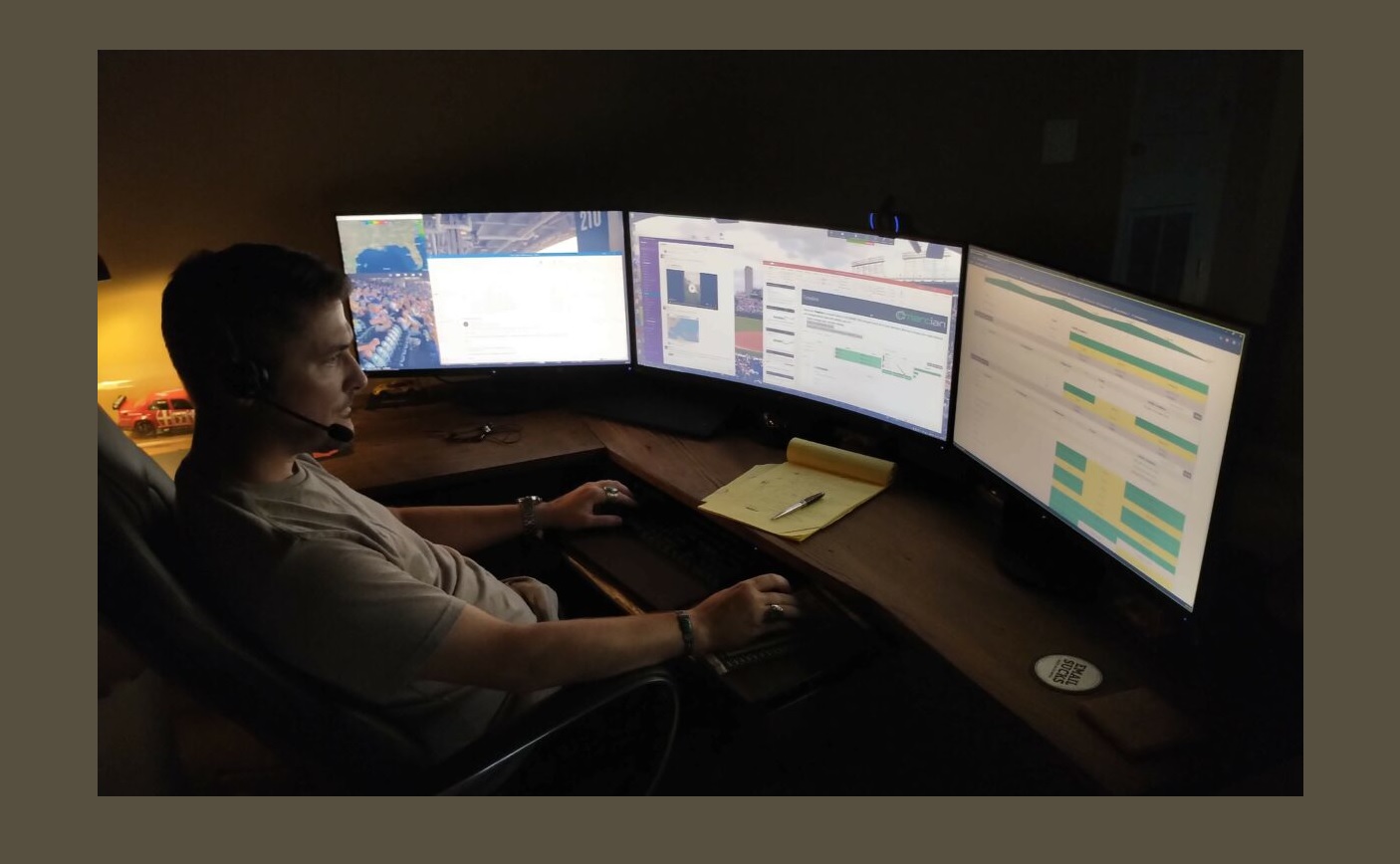
Launching at a time when the world is going remote, Working Den aims to serve the growing community of remote workers and businesses globally by offering a holistic solution to help members create a healthier, motivating and sustainable work environment.
With more and more businesses turning to remote working options, it is the best time to look at ways to ensure the wellbeing of virtual workers, as it is directly linked to their productivity and overall health. Working Den is affordable and easy to use software, offering a tailored and science-based service based on your profile, provided by a team of top professionals including psychologists, human resource and workplace leaders.

The platform is founded by Upwork’s top freelance talent Daniel Hall who has vast experience in remote working and has invested time in building the ideal virtual work environment. Led by the physical and mental problems he experienced in his 8 years working from home, Daniel hired a team of health and scientific experts to come up with solutions for Working Den. Together the features have created a go-to platform for wellbeing and mental health issues linked to remote working.

Working Den aims to improve physical and mental health via expert guidance, tests and ongoing support. Once the user signs up, he or she then takes a DSE assessment (Display Screen Assessment) which is a legal requirement in the UK, in order to establish what issues there are with the home working setup. It then provides solutions to the problems users have to ensure that they know how to have the ‘perfect’ home set up. This goes far beyond just a suitable chair and desk. Working Den service includes the Pomodoro timer built for productivity, a gratitude diary to help with depression, a depression assessment and an eye strain push notifications every 20 minutes to stop eye strain.
The solution that Working Den provides, apart from being affordable thanks to its SaaS nature, is a unique and competitive tool for individuals, virtual companies and companies who work with remote workers and virtual members.
The project serves as a successful case study for the UK Government’s Business Bounce Back loans scheme. Daniel’s advertising business was adversely affected during lockdown due to companies pausing their advertising internationally. To “bounce back” Daniel saw a gap in the market to help the masses of people who were working remotely for the first time with not much consideration given to their health. And the Bounce Back loan that Daniel borrowed is what has funded the business.
In Daniel’s words: “Working from home has nearly been the death of me. The loneliness of hardly ever seeing anyone, the constant long hours because you are always by a computer and the burn out that followed.
Lots of people who have started working from home since Covid will have experienced this and lots more will experience it as time goes on. I want to teach people there is a healthier way of doing things. What we have launched is only the start, we already have more features in development and I’ll do everything I can to improve the lives of people who are working from home.” For the Silo, Christina Ioannou.
Featured image- dmarcian.com

UK PM Johnson: You May Need Vaccination Proof To Enter Pubs
51%
Only days after it was announced that 51% of British adults have received at least one doses of their COVID vaccine, Prime Minister Boris Johnson has said that people may need to present a vaccination certificate in order to go to the pub. One month ago, Johnson had said that this would not be the case.
One Year Later
When the UK first entered lockdown one year ago, Johnson recognized he was “taking away the ancient, inalienable right of free-born people of the United Kingdom to go to the pub” but now he is suggesting limits on how many of them will be given back that right.
British political analyst and commentator Jonathan Sacerdoti says the UK’s vaccination program has been impressive, beating the rest of Europe by far. “This has been for three main reasons,” he explains. “Firstly, the UK implemented skillful procurement of vaccines, which enabled the country to ensure a plentiful if varying supply level of the newly developed vaccines. Having finally broken free of the European Union after years of Brexit back-and-forth, the UK was able to make its own decisions just in time, and signed early and favorable contracts with vaccine manufacturers.”
AstraZeneca
“Secondly, the UK also invested in developing its own vaccine, the Oxford AstraZeneca vaccine. This has offered a far cheaper alternative to the Pfizer BioNtech vaccine which the UK is also using, and is far easier to transport. It does not require the deep refrigeration that some other vaccines do, and it can therefore also be administered in pharmacists and smaller medical practices, or even in old age homes, rather than only in mass vaccination centers. Despite some concerns over possible blood clots as a side effect, the vaccine is widely accepted to be safe and effective. It has enabled the UK to make progress with vaccinating its population quickly, and promises to help vaccinate poorer countries around the world.”
Extended Dosage Gap
“Thirdly, the UK made the controversial decision to extend the gap between the two vaccine doses each person needs, from 21 days to 12 weeks. This was not backed up but he vaccine makers’ research, but was based on wider knowledge of immunology and how other vaccines have been developed. At the time it was seen as highly controversial and even risky. But ongoing testing for antibodies has shown a continued, strong immune response even with the prolonged gap. This single decision has enabled the country to effectively provide a high level of protection to double the number of people in the same time. As long as vaccine supply and availability continue uninterrupted, the second doses will be given within 12 weeks and the population will continue to benefit both individually and as a whole.”
EU Lags
Meanwhile, the European Union is lagging far behind in its rate of vaccination, causing a rift between the bloc and its recent ex-member state the UK. Threats of banning or controlling exports of vaccines manufactured in the EU to countries which are far ahead in their programs has caused a diplomatic war of words. The UK determined to have its commercial contracts fulfilled regardless of the EU’s weak performance in acquiring and administering vaccines. The EU is desperate to claw back more vaccines for use in its own countries, despite slow progress in administering them.
Jonathan Sacerdoti is a British broadcaster and social commentator, widely featured on British and international television and media. He provides commentary for a wide range of TV stations including regular appearances on the BBC (including on their international show Dateline London) and the UK’s Sky News. He also appears on Channel 4 News, Al Jazeera English, NDTV in India, France 24, i24News Cheddar News and others. He has been published by the Daily Telegraph, The Spectator, the New Statesman and Jewish Chronicle. He is also a well-known campaigner on racism issues.

Canadians aware country is #1 in extreme, unfair mobile rates
My name is Ann Murray (not that Ann Murray), and I’m a publicist for RingCredible, the next practical, affordable, secure and reliable solution in mobile VoIP calling. I’m writing to explain how consumers can spend as little as possible on mobile calling charges each month – and quickly hack their household mobile calls spending.
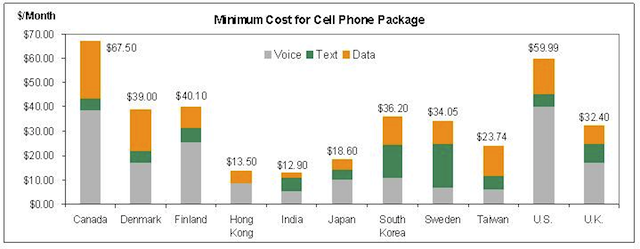
This topic is especially timely, given how Canada’s mobile rate calling rates are one of the world’s worst – and also given the recent acquisition of Mobilicity by Telus. [see link below CP]
Why the hefty price? This is the fault of “The Pricey Three” – Bell, Rogers, and Telus – that lock customers into very expensive calling plans. If you’re in one of the Pricey Three’s plans, you are more likely to run out of call credits, you will have less minutes included, and the price of additional minutes will be more expensive than the rates of your friends and family around the world.
The solution is RingCredible’s “How to hack your mobile phone bill,” which include the following tips:
5. Use calling cards, which is a very cheap way to make calls (just not very convenient)
4. Try the smaller mobile calling alternatives owned by Bells, Rogers or Telus
3. Go with free peer-to-peer calls using Viber
2. Sign up for Wind and Mobilicity, which sell all-inclusive packages (Mobilicity was recently acquired by Telus)
1. Sign up for a VoIP provider such as Skype [Skype The Silo: thesiloteam CP], Fongo, or VoipGo
Our solution, RingCredible (App’s available at www.ringcredible.com) is a great, and nearly free calling choice, with the added benefit of offering the same user experience as when making a normal mobile call.
Some other interesting results to consider include:
* What the acquisition of Mobilicity by Telus means to the consumer http://mobilesyrup.com/2013/05/28/one-step-closer-ontario-superior-court-of-justice-approves-telus-acquisition-of-mobilicity/
* How to save when you’re out of the country and calling back home
* How other countries have hacked their own mobile calling rates

For the Silo, Ann Murray.

5 Ways Conversation Could Get You Punched In The Mouth
Take it from the queen of verbal mishaps, there may not be a right way to start a conversation but on the wrong day, a poor choice of words could get your tongue snatched out of your mouth. Believe me when I say, you do not want that problem on your hands. So, to minimize your risks, I’ve narrowed down a solid list of WRONG ways to start a conversation, with the hopes that you’ll take heed and have more thoughtful discussions in the New Year.
I’m not condoning violence of any sort but I can tell you with absolute certainty that you are in great danger if you say any of these things to the wrong person. Choose wisely.
She was asking for it-
If somehow in your mangled mind you believe that a woman who dresses provocatively, gets drunk or “chooses” an abusive partner deserves to be assaulted, well you might just deserve to lose a few teeth. The reality is, we could all make better choices from time to time but you don’t get to be the judge of anyone but yourself. Victim blaming is never okay. This type of thinking perpetuates a culture of abuse. You’re better than that…right? Hold abusers accountable for their actions. If you can’t do that, just be quiet.

Are you pregnant?-
You know good and well I’m not pregnant. This age old attempt to body shame women has gotten many people hurt, from the ancient times of Jesus of Nazareth to the current age of the Kardashians. Taking cheap shots at a woman’s body is simply a bad idea. If you’re genuinely curious to know if a woman is pregnant, you’ll just have to wait until she announces it. If the news never comes, well there’s your answer. If you’re concerned that she could possibly be gaining too much weight, start an exercise group and invite all of your friends to participate.

The earth is flat-
You would think a person would only say this in a conversation for shock value or to be provocative but it turns out this is actually a thing. There are real people out here who refuse to believe the earth is round and this is problematic. This conversation would likely start off with laughs and jeers but quickly turn ugly when the flat-earther suggests you’re stupid for allowing yourself to be brainwashed by live footage from outer space, actual satellite images and scientific research. It’s only a matter of time before this debate transforms into a full on brawl and somebody ends up in the ER.

If you can say “nigger/nigga,” why can’t I?-
Why are we still having this discussion? I mean, really. We’ve only been talking about this for the last 60 years. You need to be more concerned about your twisted obsession with wanting to say that word. What is it in you that just cannot accept that there is a word born out of hatred that you should not use? Even more so, why does it bother you that a marginalized group of people have taken the power from an otherwise derogatory word and transformed it into a term of endearment. If you cannot understand that this does not involve you, you have bigger problems than using the “N word.” You’ve been warned.

What are you?-
What do you mean, ‘what am I?’ What are you? I’m a human being who is minding my own business and not walking around challenging other people on their ethnicity. Biracial and multiethnic people do not owe it to you to satisfy your curiosity about the realities that exist outside of Mayberry. I’m sorry if your limited understanding of the world leaves you confused and intrigued. Find a travel agent and book yourself a trip to another zip code. And while we’re on the topic , ‘no, you cannot touch my hair.’
Some accidents in life are preventable. Hopefully, this guide will help you avoid conversation calamities in the New Year.
#AskMe Tees spark thoughtful and meaningful conversations about important and fun topics but we cannot keep up with the shenanigans and tomfoolery of habitual line crossers. Simply put, there isn’t a t-shirt for every conversation. So, we created this. For the Silo, Ayanna Smith.

 Ayanna Smith is the founder of #AskMe Tees, the award-winning Escape Lounge breakout games in Washington, D.C., and Ridlz. She is brutally honest, sharp-tongued, quick-witted and hard to embarrass, yet philanthropic, service-oriented and deeply compassionate. Between her budding business ventures and family, she has a lot to talk about!
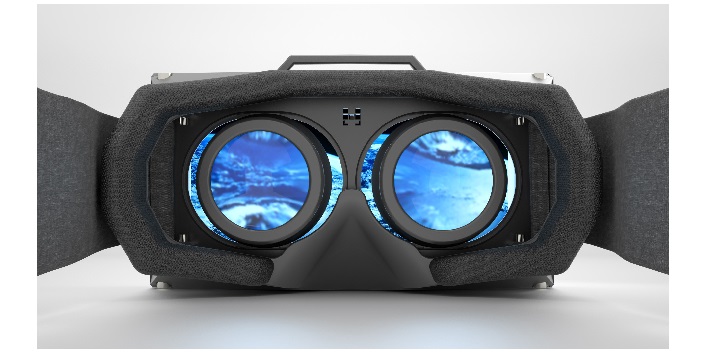
Dead Media- 3D
I’ve always been fascinated with stereo viewers. Once upon a time, when I was a wee lad, I visited my great-grandmother at her wee home in Jolly Olde England. It turned out that she had the same regard for immersive technology as I did- she had a Victorian era stereograph viewer and a sick collection of antique 3D stereo cards. Steampunk or what?
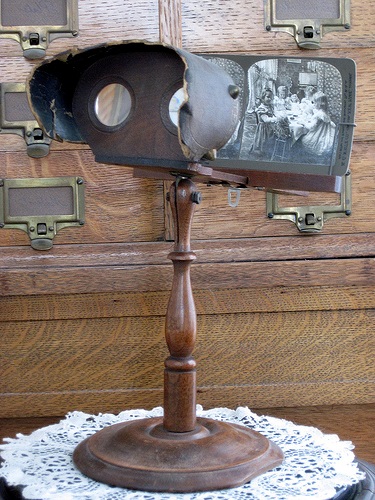 Yes, stereoscopy has been around for a long time. That contraption belonging to my great-grandmother was made of wood and had two glass lenses. It weighed so much I had to brace it on the floor, on top of a pillow, and lie in front, resting my head on my elbows. It was worth the effort. I could see ‘into’ the photograph and felt like I was transported into space and time. On a side note- I had this experience again decades later when I bought a heavily discounted (read: cheap) Nintendo Virtual Boy.
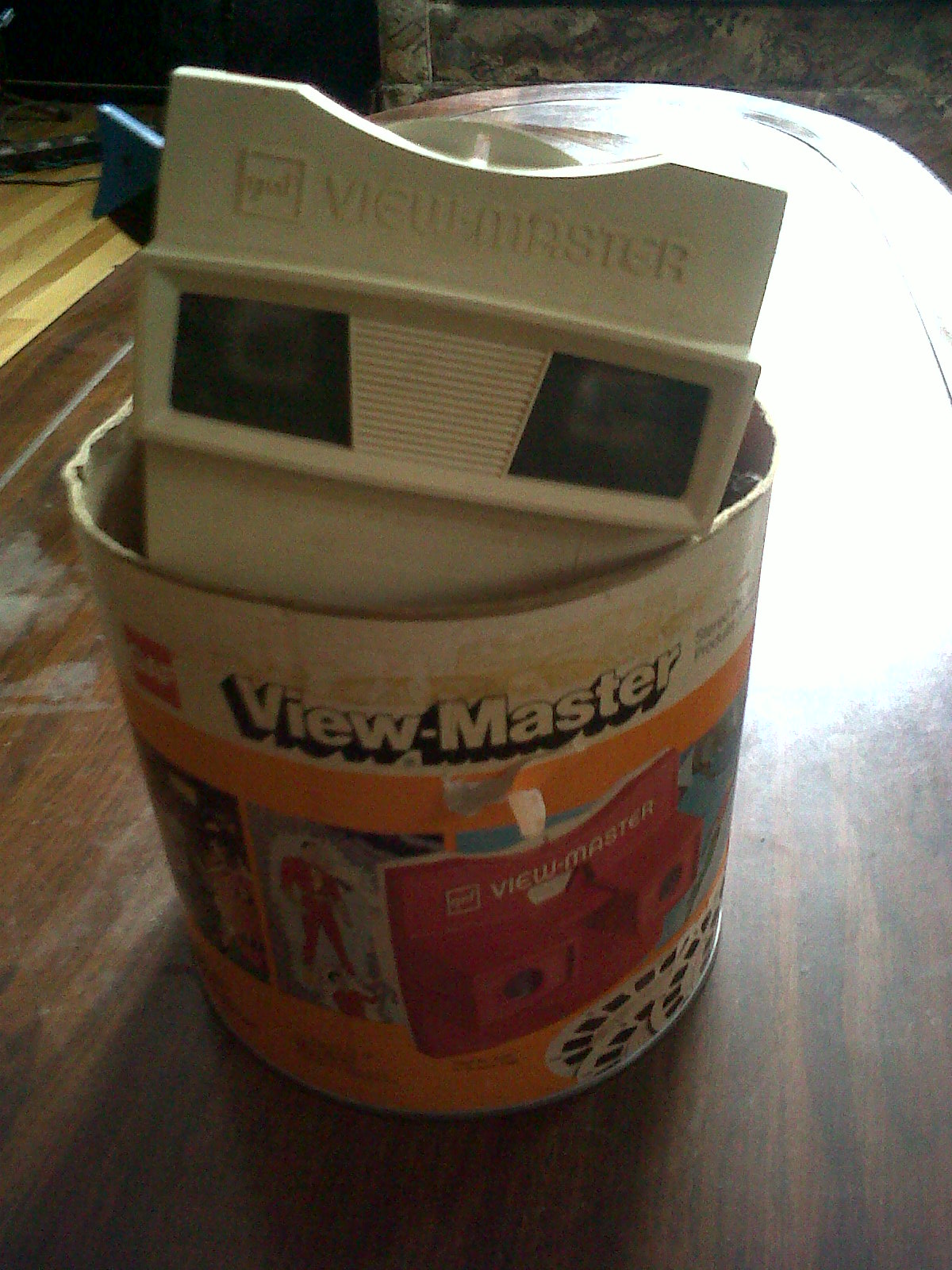
View-Master
This feeling of traveling outside of the body and experiencing a sense of virtual surroundings was shared by millions of kids and adults when the View-Master was first released in the late 1930’s. Here’s what Wikipedia has to say: “View-Master, since 1939, has been a device for viewing seven 3-D images (also called stereo images) on a paper disk. Although the View-Master is now considered a childrens’ toy, it was originally marketed as a way for viewers to enjoy stereograms of colourful and picturesque tourist attractions.”
Whatever the original intent was, View-Master has become synonymous with several generations of Pop Culture geeks and depending on your age, the sight of a black or red (or red and blue) View-Master conjures up images of Donald Duck, The Lone Ranger, or E.T., The Extra-Terrestrial.

Like most immersive technologies, educational and practical uses were developed. The U.S. Military used the View-Master as an aid in the identification of airplanes. The Gruber Company used the View-Master to develop human anatomy study guides. But for all of this, the best View-Master reels are 1960’s Batman and 3D stills from the original Tron film. Of course this is highly personal and your tastes may be different.
3D is back sort of…..although the last few years have seen North American releases of 3D blurays finally end (and no 3D televisions being manufactured), Europe continues to see new releases and these can be purchased online. This is a good thing. Sure I can dust off the bluray 3D version of Tron (Tron: Legacy). and still enjoy it’s jaw dropping immersion but it’s nice to know that the newer releases such as Wonder Woman 1984 can still be added to the collection.
Oculus Quest 2
If 3D is dying a slow death the same can’t be said for it’s direct descendant. Virtual Reality gaming and simulation takes immersion to an entirely other level: it provides a full 360 degrees of movement and viewing, complete with real world effects such as light and shadow movement and visual scaling. If you haven’t already tried VR gaming then you are missing out. But that’s a story for a future article.
For the Silo, Jarrod Barker.

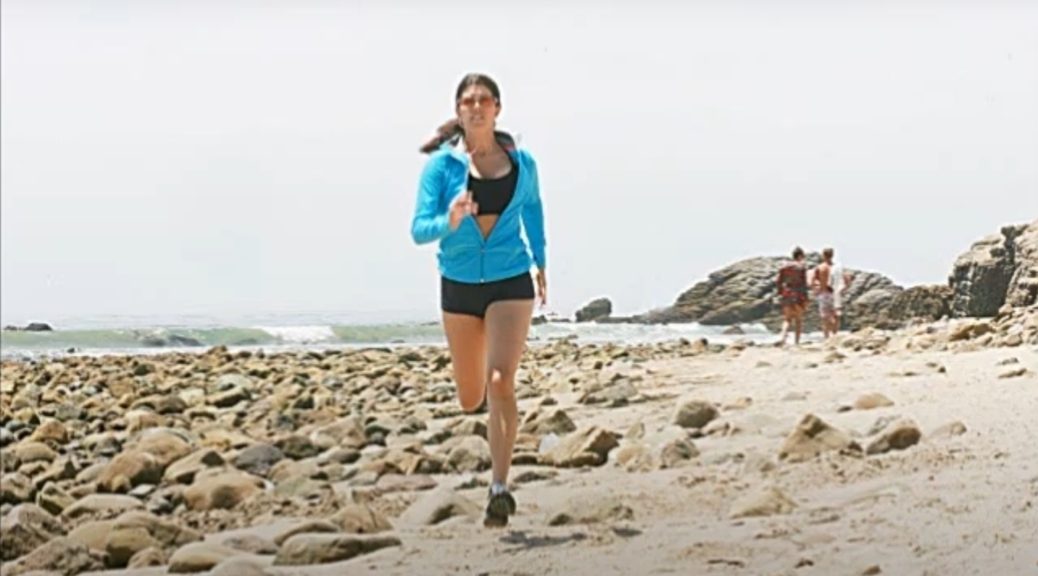
The Healthy Body Needs Shocking
Fitness plateaus – we’ve all hit them before and they are nearly impossible to break. Did you know that health journals may help you get past a plateau or move back toward unhealthy habits?
Logging food intake and exercising seems tedious; however, Jenn Zerling http://jzfitness.com , MS, CPT, the author of Breaking the Chains of Obesity, 107 Tools shares the importance of a health journal:
Make it simple.
Food diaries and activity points allow you to see common threads of repetition, which causes the body to become stagnant in weight loss. The body needs to be SHOCKED; therefore, switching up healthy foods and exercise programs will end stagnancy and help you get to your goal.
The lost ages: August – January
Don’t lose sight of fitness goals after the summer. Most North Americans gain between 5 to 15 pounds during fall and winter. These are the most dreaded pounds to lose as they are more “vanity” weight. Get into the same game of New Year, New You all year-round by logging food intake and activity points.
Demolishing the need to attempt weight loss from February through May: keep good track of the optimal behaviors needed during the “lost ages” time frame and you won’t worry about meeting your weight goals. Focus on common plateau causes including: Healthy hydration, Fiber: simple vs. complex carbs, Sedentary lifestyles: 9 to 5 work days should = three 10-minute bursts of fitness, Lifestyle and stress. For the Silo, Kelly Taylor.

‘Paws Off My Waterhole!’ Some Thoughts On The Study Of Hierarchies
Who benefits, and how, from the operation of human social hierarchies?
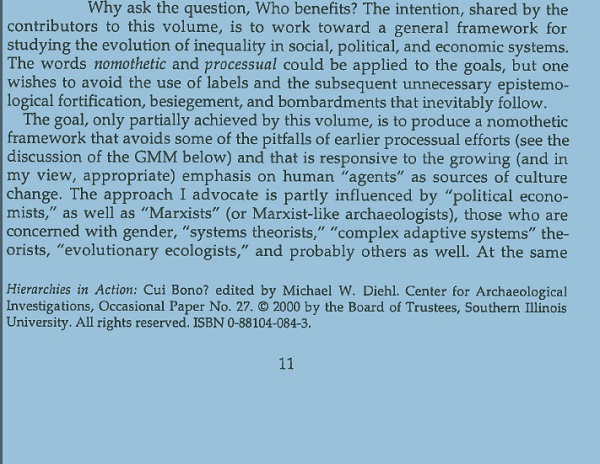
This article from Michael W. Diehl looks at social and economic inequality and the need to asses the costs and benefits that accrue to persons of varying status in social hierarchies.
This “behavioral ecology” has historically been concentrated on food selection between classes or statuses. Has ancient competition for food resulted in modern human social and economic equality? Read on by clicking on the blue image below. CP
Supplemental- Abraham Maslow’s Hierarchy of Needs motivational model

No Wonder Thor Is Smiling In Vintage Comics
This time around in comic news we are looking back at the Journey into Mystery comic auction from Heritage Auctions.
What made this auction particularly interesting is the fact that pricing was reasonable and grading conditions were meticulous. Not always the case on other online auction sites (E-something, Kiji-something), Heritage Auctions or “HA” take great pride in the fact that their faculty includes not only comic fanatics but also experts in antique books and printing. It’s safe to say that ‘what you see and what you read’ here is ‘what you get’.

What about the comics?
In my opinion, Tales of Mystery starring the Marvel character Thor is still an undervalued comic book, even with all of the Marvel movie appearances. Consider that the first run Thor series was benefited by the pencil skills of Mr. Jack Kirby. Jack is an icon in the comic book collector world. Unique style? Check. Quality character poses? Check.
Sure, we all know the main reason for the comic was to set the stage for Thor (introduced by the way in 1962’s Tales of Mystery #83) but there’s also the less considered crossover appeal of major stories (and covers) utilizing such Marvel characters as Magneto , The Incredible Hulk and even Hercules.
Tales of Mystery, like other comics from the early 1960’s, has a naivete and a simple message: Good guy half-god deals with life and an identity crisis. And that’s the fun factor.

It’s been almost sixty years since Marvel introduced the comic character Thor.
That’s a long time. Thor is still around, starring in major motion pictures and wielding the mighty mjolnir. He’s not going away. So if you have the money, investing in one or more of these books is not only a fun move, it’s a wise move. Sure to increase in value. For the Silo, Jarrod Barker.

How To Setup A Low Budget Home Gym
Back in college, I used to be very fit.
I swam three times a week, ran a few miles every other day and on weekends, I would bike with friends. There was not an ounce of fat in my body. But as years passed, I became too busy with work and eventually with raising a family that exercise became less important and I didn’t bother going to the gym. It came to a point when I saw myself in the mirror and hardly recognized my own body. In a span of 14 years, I gained over a hundred pounds.  I realized I needed to do something about it and fast. So I browsed the best online shopping sites looking for affordable gym equipment that I could just set up at home. I can’t go to a gym because, well…… Covid duh! Plus I can only workout in the wee hours of the morning when everyone else in my home is still fast asleep.
Start Cheap
Many of my friends made the mistake of investing in equipment that cost over a thousand dollars and ended up not using them anyway. The truth of the matter is that it’s very possible to create a home gym for very little money. In doing so, you won’t be wasting money in case you find yourself not using your home gym and if you do decide to fully commit yourself to a healthy and active lifestyle then you can always upgrade your equipment and machines in the future.
The following are the most essential things you’ll need:
1. Private Space
It’s difficult to work out when you have screaming kids running around you. Ideally, pick a room with a door so that you can exercise uninterrupted.
2. Full-Length Mirror
Being able to see yourself working out is a great motivator and it’s also a good way to check your form and technique. You can buy a full-length mirror for around $20 – $30.
3. Weights
Every home gym should have a set of dumbbells. For women, start with 5, 10 and 15 lbs. Men should use heavier weights. Or you can get an adjustable dumbbell that will enable you to add or swap weights easily.
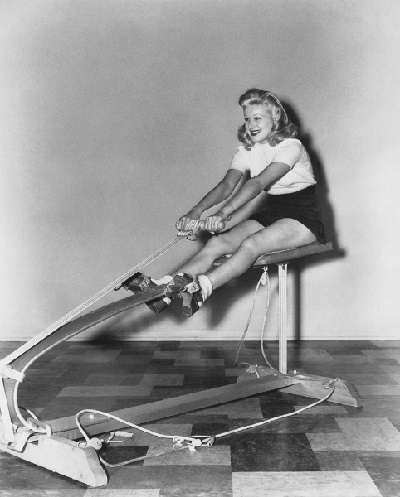
4. Stability Ball
Old school trainers would never recommend the use of a stability ball but it’s actually very popular among fitness experts today. With a stability ball, you can improve your core strength and balance. Besides, there are many exercises you can do with this ball – body bridges, squats, crunches, hamstring curls, and others.
5. Resistance Bands
These bands are very versatile despite looking plain and simple. You can strap it to a door, bench or table to do squats, chest presses, and lat pull-downs, to name a few.
6. Cardio
You can get a skipping rope so that you can do cardio exercises in your home gym. Or you can just go outside to run, jog or walk. Cardio exercises are essential to help your body burn fat faster. For the Silo, Dimitry Karloff.
Supplemental– Looking for some examples of cool home gyms on a budget?

5 Ways to Stay in Touch With Your Customers
If you are a business owner, you probably know the importance of taking care of your business to last longer. This includes various steps, such as audience retention, brand reach and customer satisfaction. There are many practices that help in building the brand and trust. Staying in touch with your audience can be a great way to build your business.
This is a great way to remind them of your service. This builds trust and authenticity. Keeping the existing customers happy can be. There are many ways one can go about staying in touch with your customers. Initially, a business can start with manual modes of staying in touch. This can be feedback calls, offers, SMS, etc.
Here are five ways to stay in touch with your customers and audience to build brand authenticity and trust.
Automated Bulk SMS
SMS is a quick way to update your customers about offers, deals, etc. Although this can be done manually up to a certain point, it gets difficult once the number increases. There are many SMS API providers that enable you to send bulk messages to your customers. Bulk SMSes helps in providing timely and personalized information to the customers.
This increases user engagement, satisfaction rates and customer lifetime values. You can check out any SMS API provider to understand the deals and go with the one that suits your requirements.
![The Importance Of Lead Nurturing – Statistics and Trends [Infographic]](https://www.invespcro.com/blog/images/blog-images/lead-nurturing-post.jpg)
Lead Nurturing
Be it an inquiry or just someone who has come in touch with your brand, treat them as your potential customers. Lead nurturing is an integral process of branding and growing your business.
Take care of them by checking on them, letting them know about your business, offering them a solution for their needs. Be the brand that strikes them when they have a business need that is similar to yours.
By email marketing, you can nurture your leads. Send them monthly emails about the new things in your company or brand. Update them with the latest deals and offers, and invite them to experience your service. This increases brand retention.
Social Media Marketing
Social media marketing has been on the rise and is proven to be one of the efficient ways to market in today’s digital world. Social media marketing is a form of digital marketing. Unlike traditional marketing, digital marketing focuses more on the customer than the brand itself.
This is a great way to tell your customers that you care about them. Social Media marketing also enables you to have a one on one conversation with your audience.
Make sure you use this space to increase customer satisfaction and to understand your audience better. Be present on all the relevant social media handles and nail down a content strategy that will add value to your customers.

Adapting and Improvising
Adapting is a fundamental process for a business to sustain. With new trends emerging every day, it is essential to keep moving forward along with it.
Be it strategy or message; it is important to improvise it according to what the customers need at the moment.
One way you can do this is to constantly be updated. Be aware of the new trends. Keep track of your audience and their activity.
Value Customer Feedback
Be it any business; the customer is the king. You are running the business for the customers, and it is essential to value customer feedback highly.
Customer feedback tells what a customer actually feels about your service. This valuable information can be used to improve your service to improve satisfaction.
A business that has an idea of a customer’s opinion goes a long way. This can also let you know about the needs of the customers.
You can send in a monthly customer feedback form the customers where they can rate their experience with you. This can be based on different areas of business like service, product, after-sales service extra.
Running a business is a journey that constantly needs an upgrade and improvisation. If you wish to run a successful long term business, you must start putting your customer before you. Little gestures you make for your customers will certainly take your business a long way.
It is a long term process, but taking customer satisfaction for granted can seriously cause great damage to your business.
Stay in touch with your audience and remind them that you care about them. This will take your business a long way and help in growing in the right direction. For The Silo, Esther Adams.
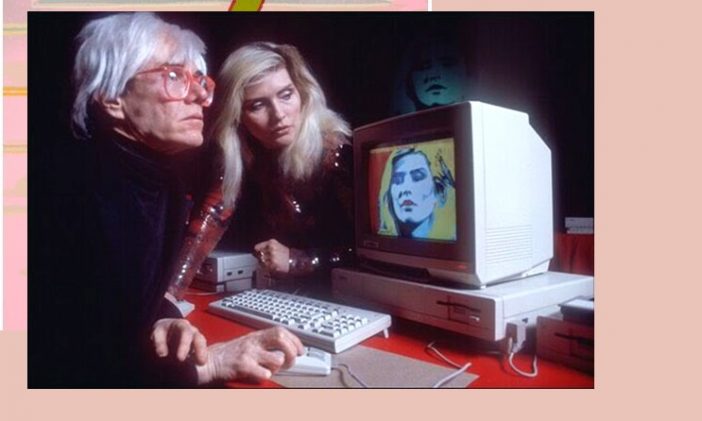
Warhol, Lichtenstein Art Auction look back

Almost one decade ago: Andy Warhol’s “Endangered Species and Ads” prints bring a combined $677,000 USD alone at this notable Modern and Contemporary Art event.
Two complete portfolios by Andy Warhol, Endangered Species, 1983 and Ads, 1985, sold for $338,500 USD each to far exceed their estimates among a field of fresh-to-market iconic works during Heritage Auctions’ $2.9 million USD Modern and Contemporary Art Signature® Auction, May 22 in Dallas.
The auction sold 90% by value and 78% by lot.

Ads, 1985
Portfolio of ten screenprints on Lenox Museum Board
38 x 38 inches (96.5 x 96.5 cm)
Ed. 50/190
Each signed and numbered in pencil
Printed by Rupert Jasen Smith, New York
Published by Ronald Feldman Fine Arts, Inc., New York
PROVENANCE:
Private collection, Texas
LITERATURE:
Feldman & Schellmann, II.350-359
Warhol, Andy:. American painter, photographer, filmaker and publisher, 1928-1987
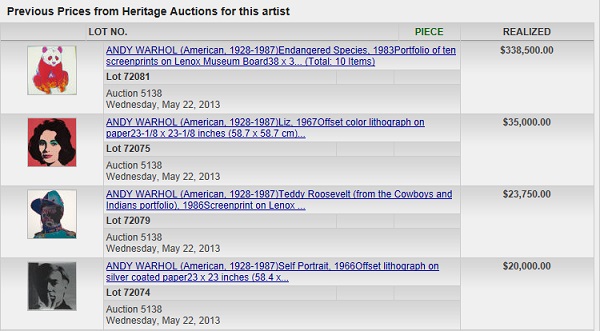
ANDY WARHOL (American, 1928-1987)
Ads, 1985
Portfolio of ten screenprints on Lenox Museum Board
38 x 38 inches (96.5 x 96.5 cm)
Ed. 50/190
Each signed and numbered in pencil
Printed by Rupert Jasen Smith, New York
Published by Ronald Feldman Fine Arts, Inc., New York
PROVENANCE:
Private collection, Texas
LITERATURE:
Feldman & Schellmann, II.350-359
Warhol, Andy: American painter, photographer, filmaker and publisher, 1928-1987
Condition Report*:
With original Ronald Feldman Fine Arts, Inc. cardboard portfolio box and index print. All screenprints unframed and in good condition with specifics listed below. Mobil: Minor rubbing 3/8″ in due to former frame. A few incidental surface scratches and rubs. One 5/8″ abrasion, resulting in very minor loss. Paramount: Minor rubbing 3/8′ to 1/2″ due to former frame. Very minor bumping to bottom right corner. Chanel: 1/2″ to 1″ light rubbing due to former frame. Slate purple backgrund has hazy toning, beginning about 1/4″ in. Apple: Very minor incidental rubbing to edge. Rebel Without A Cause (James Dean); Van Heusen (Ronald Reagan); Blackglama (Judy Garland): All have only very minor edgewear. Volkswagen; Life Savers: Very minor surface rubbing and edgewear. Donald Duck: Very minor edgewear. Top corners have minor wear. Light handling creases. Some wrinkling and an indentation at end of signature. Left side center shows some moderate wrinkling and creases with some minor loss, beginning at 11″ from the bottom up to 24″, and affecting 3″ into the work. The face and body of Donald Duck is affected somewhat, as well as the background near edge. Light wear in top left corner and a small abrasion on middle right side. Unframed
Two works by Ed Ruscha responded well among buyers as his gunpowder on paper titled Rustic Pines, 1967, realized $290,500 USD and a color screenprint, Double Standard, 1969, sold for $182,500 USD , setting a record for the work. Mel Ramos’ Georgia Peach, 1964, fresh from a Texas collection, sold for $158,500 USD.
“The market for good contemporary art doesn’t seem to have hit any ceiling,” said Frank Hettig, Director of Modern and Contemporary Art at Heritage. “Our focus is presenting fantastic, fresh-to-market discoveries and bidders certainly responded in kind. It gives us high expectations for our November 2 Modern and Contemporary auction in Dallas.”
Among the modern masterpieces in the auction, the magnificent, 7-foot Cobalt Chandelier, 2003, by Dale Chihuly reached $158,500 USD. It is the largest Chihuly chandelier to appear on the secondary market and was offered through a federal court-appointed receivership overseeing the sale of assets previously owned by R. Allen Stanford of Stanford Financial Group.

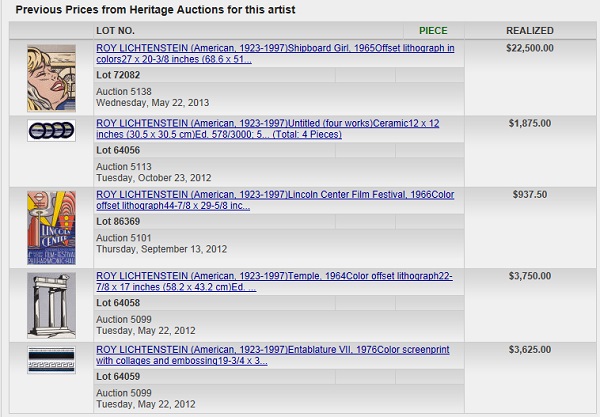
Roy Lichtenstein’s Forms in Space, 1985, a screenprint published by the artist for the Institute of Contemporary Art’s Rally round the Flag benefit, achieved $53,125 USD and Georges Rouault’s Chemineau, 1937, realized $40,625 USD.
Sculptural art performed well as Étienne Hajdu’s La Mer, 1964, sold for $35,000 USD and Pablo Picasso’s Vase deux anses hautes, 1953, sold for $30,000 USD while Robert Graham’s Frieze Figure I-G, 1989/1990, brought $21,250 USD.
So what is that Volkswagen Warhol worth today in 2021? It’s hard to pen the value but in Spring 2019 one single print ad brought 30,000 UK Pounds ( 52,000 $ CAD) in a Christie’s auction.
ROY LICHTENSTEIN (American, 1923-1997)
Forms in Space, 1985
Screenprint in colors on Rives BFK paper
31 x 47-1/2 inches (78.7 x 120.7 cm)
Ed. 35/125
Signed, dated and numbered in pencil
LITERATURE:
Corlett, 217
NOTE:
Published by the artist for the Institute of Contemporary Art, University of Pennsylvania, Philadelphia.
Forms in Space has been created especially in honor of ICA’s benefit, Rally round the Flag (label on frame verso) .
Lichtenstein, Roy:. American painter, printmaker; born 1923 in New York City, died 1997 in New York City
Condition Report*:
Sheet: 35.75 x 51.5 A crease in upper center at extreme sheet edge; small pressure mark at lower right corner; lower right corner lightly bumped; paper lightly undulates; framed. Framed Dimensions 36.25 X 52.5 Inches
Supplemental- Apple logo designer dishes on history http://www.macworld.com/article/1142322/logo_design.html

Being In Canada 54 Years And Involved In Social Change
This year, I have been in Canada 54 years. It is difficult to define what I need to do but I have to be more active, more involved in positive social change…….The state of Trumpism gnaws at me.
A few years ago, during March 2017, about 40 of my photographs (1967 – 1974) of Toronto’s Baldwin St. were exhibited at the Toronto Arts & Letters Club. I recently spoke at the Club about my experience as an immigrant in 1967 with a draft dodger avoiding the Vietnam War.
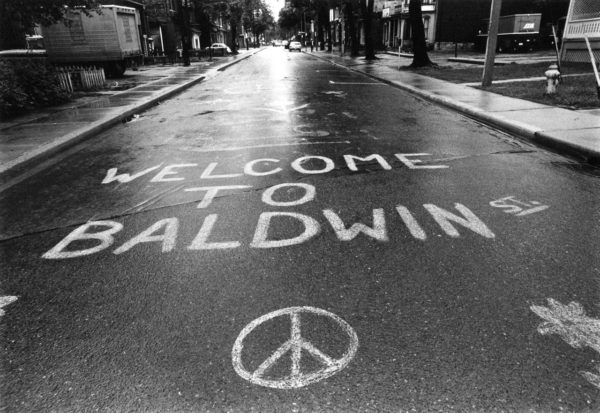
In Feb. of that same year, I was fortunate enough to have exhibited photographs at Unlovable Gallery that John Phillips (my ex-husband and late husband) and I took of the American Civil Rights Movement. Last year, I gave a slide presentation at the Women’s Art Association on Canadian women photographers who worked between 1865 -1915. Three projects – war resisters, civil rights, and feminism.

My son, Bennett Jones Phillips, and his partner, Lisa Pereira are in the process of creating a record store on Baldwin St. and I am going to have an exhibition space- provided the current Covid epidemic is managed, controlled and finally defeated. (I had a gallery in the past on Baldwin). Here is a chance to be more active and socially involved. My plan includes an expanded “coming to Canada” exhibit with blow ups of my and John’s photos and some pages of John’s FBI file and underground papers. It looks like the space will be a shipping container. The opening event will likely include having a tent in the former Silverstein Bakery parking lot and having music, poetry, and a 60’s feel with Baldwin Street history – Irish, Jewish, Chinese, and American immigration being part of the opening focus.
There are lots of possibilities. I am very open to ideas and involvement of other people. So what do you think? Cheers, Laura Jones.

Big Money! When North America’s Most Expensive Home Was For Sale
In 2016, the most expensive home on the U.S. market was in Manalapan, Florida and priced then at USD$195 million. Let’s take a look back in this feature via our friends at TopTenRealEstateDeals.com. as North America’s elite homes get more elaborate and expensive every year.

The mansion that was at the top of the price list a year earlier in 2015 near Fort Lauderdale, Florida was priced at USD$159 million and came with its own IMAX theater, a USD$2 million staircase and an entry gate decorated with 22-karat gold leaf. This year, Southern California has the #2 home on the market at USD$150 million with 38,000 square feet that was built on the site of Barbara Streisand’s former estate in Holmby Hills. In third place is Palazzo di Amore on 25 acres in Beverly Hills with 12 bedrooms and 23 baths at USD$149 million. An 11-acre estate in the Hamptons comes in at #4 for USD$140 million.
In 2016, Florida again claimed the top for-sale spot with the Gemini Estate near Palm Beach at USD$195 million. Designed by architect Marion Sims Wyeth and built in the 1940s for the Lambert pharmaceutical family (“Listerine kills germs that cause bad breath”), the Gemini estate was eventually sold to high-society couple Loel and Gloria Guinness as a winter retreat. It was purchased by the current owners, the Ziff publishing family, in the 1980s and underwent a four-year expansion and reconstruction that was completed in 2003.

Sited on almost 16 acres on a barrier island in Manalapan with over 1,500 varieties of tropical trees and plants acting as a nature preserve and privacy hedge from coastal highway traffic, the estate stretches from its 1,200 feet of Atlantic Ocean beachfront to 1,300 feet on the Intracoastal Waterway. The coral-clad main residence with over 62,000 square feet includes 12 bedrooms, 12 baths, two libraries, golf trophy room, kitchen with hand-painted tiles and three dishwashers.
Also, a seven-bedroom home named Mango House, a manager’s house with four apartments and two four-bedroom beach cottages with private quarters for extended family and friends. Grounds are thoughtfully planned with both activity and relaxation in mind. A sports complex offers a half basketball court, tennis court, practice golf course with two greens, a swimming pool surrounded by cultivated jungle, treehouse and butterfly garden, miniature golf course, a wide deserted beach and a boat dock with ocean access. A tunnel with its own living room and fireplace runs under South Ocean Boulevard to connect the mansion with the estate’s guest house and boat dock on the Intracoastal Waterway. Overall, the property totals almost 85,000 square feet of living space with 33 bedrooms and 47 baths.
 The walled compound can be self-sufficient with two generators, gas pumps and propane tanks. America’s most expensive home is listed by Joseph Liguori of Premier Estate Properties in Boca Raton, Florida at USD$195 million. For the Silo, Terry Walsh.

Protect Your Belongings With Self Storage

People often store their belongings because they want to use them at a later time. However, keeping your items in your garage, crawlspace, or any other makeshift storage areas in your home can compromise your belongings and your overall organization and indoor air quality.
Instead of turning your home into a storage facility, consider saving space and protecting your items by keeping them in a self-storage unit. This option is a much better alternative to storing your items at your home in a shed or garage.
When you store your items outside, you have no control over the rising and dropping temperature. You won’t even know how these temperatures impact your belongings until you reach for something, and it’s not working anymore.
The good news is that there are many spacious, climate controlled storage units in Canada available so that you can store your belongings without compromising them or your space. Consider how keeping your items in a self-storage unit can not only benefit you but benefit your belongings.
Store Items in a Controlled Climate
When you store your items outside in your garage or shed, you can’t regulate the storage temperature. Keep your things in a climate-controlled self-storage facility so that you can have peace of mind knowing that they are being stored at regulated temperatures.
You’d be surprised how many things you need to store in a cool area. Climate control plays an essential role in protecting your belongings like artwork, electronics, paperwork, and furniture, which can be compromised by humid or freezing temperatures. Properly storing your belongings in a space with regulated temperature can also help to extend their overall lifespan.

Create More Space & Improve Air Quality
Clutter is not just an eyesore. Storing your items close together can cause them to scratch and damage one another. Even more importantly, packing items so close together can impact the air quality of a space, which can compromise your belongings’ integrity.
When items are packed together in a small area, there is no air-flow. Poor ventilation causes humidity, moisture build-up, and condensation. All of which can damage electronic items internally and the external surfaces of furniture.
Cluttered furniture, appliances, and other devices can also trap and hold dust. This dust can build on your furniture and trigger allergies in those living in the space. Like humans, our belongings need space to thrive.
Protect Items During a Renovation
Home renovations are exciting, but the dirt, dust, and contractors in and out of your house are often overwhelming. When you are doing a home renovation project, protect your existing belongings by storing them in self-storage.
This way, you can protect your things from dirt and dust build-up and prevent damage from tools, fallen objects, and movement. You move around furniture so much during a renovation that it is better to move the furniture out of the way entirely. Utilizing self-storage to store items will also help create more space for you and your contractors to work.
Maintain Security & Privacy
Maintain the privacy of your items while you are protecting them from wear and tear. Your self-storage unit should offer security to ensure that your items are adequately protected and can only be accessed by you.
Choose a storage facility with state-of-the-art security features like passcodes and durable locks that can ensure your belongings’ safeguarding. For the Silo, Mila Urosevic.

Hope & Horror Of War Brought To Life At Canadian War Museum
Every Remembrance Day I try to tour the Canadian War Museum – a mammoth exhibition of battle since earliest times. Each year, “lest I forget”, the photos and exhibits tell a story of fear and courage, sacrifice and survival, humanity, brutality, violence, and hatred.
Early combat was limited to the distance you could throw a spear, fire an arrow or swing a club. Armour was made of wood. Much of war consisted of ambush and surprise. Today, though Canada’s military still use snowshoe and canoe, they not only prepare for ambush, but also for nuclear threat.
The War Museum describes 150 years of French-British conflict in North America, ending in the Seven Year’s War and the British conquest of Canada.

Then in 1775, American anger exploded into revolution – creating two countries in North America. For Americans, their invasions of Canada during the American Revolution and War of 1812 are considered minor campaigns. Yet north of the border, they were struggles for survival.
Canadian forces went abroad in 1899 and again in 1914 to fight wars as part of the British Empire. One thousand volunteers fought in South Africa; 620,000 fought World War I.
In 1914 Europe was a powder keg. Opposing alliances and secret treaties divided the heavily armed great powers. After the assassination of Austrian archduke Franz Ferdinand, countries rushed to settle old scores or to support allies. Britain, France and Russia stood against Germany, Austria-Hungary and Turkey. The rest of the world was dragged into a war that killed nine million and destroyed empires.
The War Museum focuses on the trenches of France and Belgium from 1915 to 1918, and the battles of the Somme, Vimy, Passchendale and the Hundred Days. Systems of fortified trenches stretched the length of the Western Front. Frontal assaults led to tremendous casualties. It was a long, bloody war.
In the 1930’s, Germany, Italy and Japan became aggressive dictatorships. The leading democracies – Britain, France, and the United States – tried to negotiate adopting a policy of appeasement. But the dictators responded with even more aggression.
War Museum exhibits cover Adolf Hitler and the rise of fascism, including an infamous Mercedes limousine used by Hitler at Nazi rallies. As World War II became a reality, Canada was the first Commonwealth country to send troops to Britain in 1939 – by the end of the conflict, 1.1 million Canadians served. Museum exhibits cover boots on the ground, as well as the costly Battle of the Atlantic where Canadians sunk 50 enemy submarines. The story of Canada’s air war is told, as well as our involvement in the British Commonwealth Air Training Plan – much of which took place at local airfields.
The Second World War alliance of the Soviet Union and the Western democracies was short lived. Opposing world views, and territorial disputes deteriorated into the Cold War of 40 years.
Communist North Korea’s invasion of South Korea in 1950 sparked a three-year war that killed or wounded 3.5 million.
And Canadians have gone on to serve in NATO, NORAD, the United Nations, the Persian Gulf, Kosovo, and Afghanistan.
The War Museum is well worth the visit.
It reminds us that history is filled with both horror and hope.
History is not only the story you read, it is the one you remember.
We will remember! For the Silo by MPP Toby Barrett
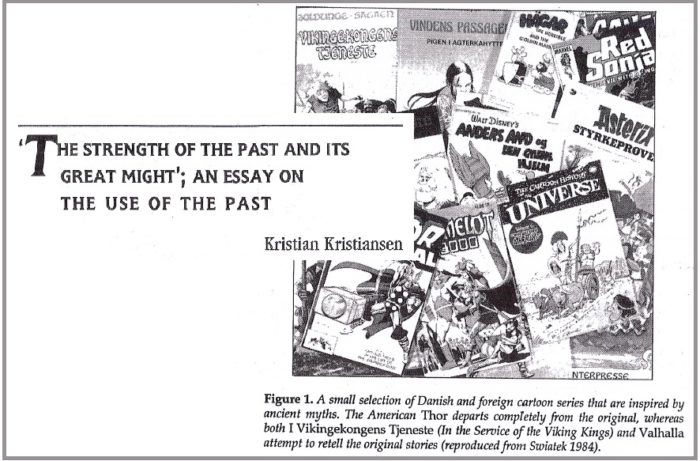
The Strength Of The Past And Its Great Might
Within the last generation, archaeology has undergone a major transformation, developing from an independent small-scale activity, based upon museums and a few university departments, into a large-scale state organization based upon national legislation.

This has entailed an increase in resources on an unprecedented scale, and has drastically changed the profile of archaeology, which is now firmly fixed within the political and national domains. Moreover, decision making within the discipline has shifted from museums and university departments towards various new national agencies for the conservation and protection of the cultural heritage.
The consequences of this development for the discipline as a whole had remained largely unnoticed until …..click here to read the complete electronic essay by Kristian Kristiansen University of Gothenburg.
Also available via our friends at academia.edu

4 Ways To Fortify Your Marriage & Manage Your Differences
Marriage is a complex, ever-evolving relationship that challenges partners to remain active in their efforts to maintain the relationship. While the components of a healthy relationship – passion, commitment and intimacy – may seem abstract, I have found specific actions through my practice as a clinical psychologist and marriage and family therapist that couples can do to prioritize their relationship and make it last.
• Continue or learn to communicate well. We all know to be polite to our bosses at work or strangers we meet, but it is often with those we are closest to that we slip into unhealthy habits of disrespect or inattentive listening. Most likely, at the point in your relationship when you plan to get married, you feel close and communicate well with your partner. It is over time that partners become busier, more distracted or simply make fewer efforts to communicate respectfully and openly with their spouses. But communication is a critical component to a healthy marriage. Couples must schedule time to check in with each other weekly. This “weekly check-in” may seem less necessary in the early years of marriage, but you will appreciate the habit later when work hours become longer and kids enter the picture. Use this time to coordinate schedules, check in about any issues in the relationship, and take time for each other away from technological distractions (that means no phones or TV in the background).
• Create a budget agreement. One of the most common areas of newlywed conflict is managing a joint budget. Even if you cohabitate with your partner before marriage, it is unlikely that you pooled all of your resources, and there is a lack of education about shared budgets. But money is important for your personal and relational well-being. Talk with your partner about your financial goals and concerns. Your spouse should be an equal partner in financial decisions. It is helpful for partners to regularly check in with each other about financial changes and decisions (you can easily incorporate this into your weekly check-ins). I advise couples to set a monthly personal budget – say $500 – that each partner can spend on individual expenses without consulting the other. If a partner wants to make a purchase that goes above the agreed-upon amount, he or she should wait until the other partner is consulted and agrees. By forming healthy spending habits and open communication about finances, partners can avoid one of the most common areas of marital conflict and feel closer as equals.
• Share responsibility for maintaining intimacy. In the early years of a relationship, intimacy seems to come naturally, so many partners take for granted the importance of actively maintaining a sense of emotional connection. This is not the responsibility of one partner, but a requirement that both spouses maintain an interest in fostering intimacy and keeping tabs on ways the other partner wishes to feel loved and cared for (because this does vary from person to person and over time). Date nights are a simple way to establish time to reconnect during a busy week, and they are essential in the early years of marriage and beyond. Take turns planning an evening for each other, and do not get trapped in thinking it has to be extravagant. If your lives are incredibly busy that week, find a time to relax at home or try to cook a new meal together.
Remember that human beings like novelty, so be willing to try new things together.
• Never be afraid to manage your differences. If I had to pick one major takeaway for couples considering marriage, it is to ensure that you are able to tell your partner when you are upset with him or her. That way your partner stands a chance of trying to fix the problem. Without this, resentment takes root and will continue to grow over time until it is addressed. This is so important because resentment often underlies any deficit in the previous points I made. It may sound basic, but it is often difficult for partners to place themselves in a vulnerable position where they can voice their concerns about the person closest to them. For couples to manage resentment, it is essential that partners create a safe conversational space where each can be heard and listen without feeling defensive or attacked. It is inevitable that you will have a different perspective than your partner at some point – whether regarding the family budget, division of household labor, or even the right way to show intimacy. Use any and every opportunity in the early years of marriage to practice talking with each other when one partner is upset with the other. Skills such as empathy, active listening and managing anger and frustration can be learned and need to be regularly utilized in couple conversation. For the Silo, Dr. Anne Brennan Malec.


Electronic Opera Uses Physical Spaces To Connect Narrative With Sound

Back in 2005, composer Lewis Spratlan and I began work on an opera inspired by Louis Kahn. Kahn, who excelled in music and once considered becoming a composer, was especially cognizant of how sound works in a physical space. “Space has tonality,” he often said. Kallick, a professor of music at Amherst College, made recordings of the “acoustic envelope” at several Kahn buildings, which were employed in composing the work’s prelude and interludes.

Key elements from Spratlan’s music were integrated into this electro-acoustic music, creating a seamless connection between the narrative world of the characters and the sounding spaces that filled their dreams. Opening in the ruins of Rome and ending with the healing waters at Kahn’s Salk Institute, ARCHITECT: A Chamber Opera narrates the dramatic arc of Kahn’s journey from dreamer to master builder.

Click the link below to read about Spratlan discussing the project with Frederick Peters, board chairman of New Music USA, which supports composers, performers, and audiences of new American music. For the Silo, Jenny Kallick- Amherst College.

Why It’s The Best Time Of Year To Try Laser Hair Removal
The temperature is dropping and the leaves are changing color, which makes it the perfect time to get this cosmetic procedure: laser hair removal. It sounds counter-intuitive to get rid of body hair when you’re going to be wrapped up in wool scarves and thick fall jackets, but it’s not. Find out why fall is the best season to start this treatment.
The Results Take Time
One of the biggest reasons why fall is a great time for laser hair removal is that it gives you enough time to get your sessions done before the next summer arrives. Laser therapy doesn’t work in a single session. You will need to book multiple appointments to get the results you want.
On average, people have to undergo five to seven sessions of laser hair treatment to get smooth, hairless skin. The number can vary depending on your rate of hair growth and the area you are targeting.
You will have to take breaks between sessions to go through a new hair growth cycle — this can take 4 – 12 weeks of waiting. The buffer between appointments prevents your chances of unwanted side-effects like scarring, hyperpigmentation and hypopigmentation.
So, if someone wanted to get their legs done, they would have to account for approximately seven sessions. After adding in the necessary buffer-time, the treatment spans seven months at the bare minimum. By planning ahead in the fall, the client can guarantee that they’ll have smooth legs to show off in shorts by the time the summer rolls around.
There’s Less Sunshine
Too much sun exposure before a laser treatment appointment heightens your risk of experiencing unfortunate side-effects. You could deal with painful burning and blistering. Or you could have long-term problems like scarring and hyper-pigmentation (darkened skin tone). That’s why professional clinics recommend that you avoid sun exposure for about six weeks before your session.
Avoiding sunshine during the summer months is a challenge. You will have to slather on sunscreen every day and opt out of popular outdoor activities to guarantee positive hair removal results. You can lessen the anxiety over sun exposure by scheduling your sessions during seasons with less sunshine, colder temperatures and full-coverage wardrobes.

It’s More Convenient
A small test that comes with laser hair removal is growing out your hair six weeks before the session. No waxing. No electrolysis. No plucking. You’re only encouraged to shave a day before your appointment.
If you’re worried that this step will be embarrassing, you should definitely plan your treatments for the fall and winter. The seasonal wardrobes give you more options to cover up and there are tons of people participating in month-long campaigns like No Shave November and Get Hairy February. You won’t feel singled out for your stubble.
Timing is everything. If you want to get rid of body hair so that you can feel confident when you pull on a pair of shorts or put on a bathing suit during the summer, you need to think about booking your laser therapy appointments now.

Coffee Table Book Expands Art Collecting By Including Original Works of Art
Vivant Books brings to the world a very exclusive breed of coffee table book. Their Deluxe Editions are not only fine art coffee table books, but also include collectible works of art at a price most art lovers can afford. A select number of Deluxe Editions contain original artwork by the artist that is featured. Not only does this component differentiate VivantBooks amongst other publishing companies, but it also enables expansion of an art collecting demographic.

“We found that sold separately, an original piece by the artists we feature in our deluxe packages could range anywhere from $3000 to over $100,000,” says Mia Benenate “What we want to do and what the artists are really interested in, is broadening the audience that is able to acquire a piece of their work.”
Vivant’s book features internationally renowned artist Brett Amory. Amory has gained extensive acclaim for his haunting, mesmerizing series, Waiting. His work is often depicted as architectural and structurally elegant, stark and emotive. Waiting focuses on the transition of individuals in precise moments of existing. The lush book, which contains a collected array of work which includes the Waiting series, was first offered earlier this year by a release party at the Clift Hotel in San Francisco. Deluxe Editions includes the collected works, a biography, excellent essays by luminaries such as Gwynn Vitello and an original piece of artwork by Amory himself.

In this age of digitalization Vivant Books presents fine art in a way that’s both elegant, stylish and inventive. Upcoming Vivant Books will feature such artists as Kimberly Brooks and Gottfried Helnwein.

Brett Amory — Limited Edition
95.00USD
Brett Amory, the American artist who rose to international acclaim for his “Waiting” series is featured in this deluxe coffee table edition. Alongside four-color reproductions of the artwork, the book includes a biography and selected essays from art world luminaries and patrons. Hardcover book housed in a full-color protective sleeve.
Deluxe Edition with original artwork also available.
You can learn more at: book at http://www.vivantbooks.com/ or email: marketingdirector@thesilo.ca for ordering and price information.