

Tag Archives: bloomberg.com

The Tricky Part Of Defending Data Centers From Strikes And Drone Attacks

“According to a report from Bloomberg, recently released satellite images appear to show damage done to two Amazon data centers in Bahrain, which the Iranian Revolutionary Guard Corps (IRGC) previously claimed to have hit.” gizmodo.com

With satellite imagery now appearing to corroborate the recent strikes on Amazon’s Bahrain data centers, the question of how commercial data centers actually defend themselves has become live.

Amazon’s presence in Bahrain is registered under Amazon Data Services Bahrain S.P.C, located at Bahrain World Trade Center, Level 9, Building B0001, Isa Al-Kabeer Avenue (Road 365), Flat 938, Clock 316, Manama, Bahrain

 Laurynas Šatas, CEO of Aktyvus Photonics, a defence technology company developing laser-based precision targeting systems for NATO tactical drone platforms. thinks data centers should defend themselves against drones, and partner with the state for missile defense.

A repeat of another attack

“A very similar attack on AWS data centers happened in March. But it’s worth separating the two events, because they involved different weapons. The confirmed March strikes used one-way attack drones. The July strikes on the Bahrain facilities appear to have involved missiles, and while Amazon hasn’t confirmed the extent of the damage, independent satellite imagery now appears to corroborate that it was significant.

“The March strikes marked a genuine shift. Commercial cloud facilities were never designed to sit inside a kinetic threat environment, and now they are being treated as legitimate military targets. That changes the security conversation for the whole industry.

The Bahrain World Trade Center (where the attacked Amazon data center is said to be housed) makes for a clearly visible and easily targeted object.

Transferable Model Of Defence

“It is important to be precise about the threat, though, because it is not one threat. Slow, low-flying, low-cost drones and high-speed missiles call for very different defences. Against the cheap and persistent drone threat, a layered counter-UAS approach – detect, track, then mitigate – is realistic and increasingly affordable. We already see this in Ukraine, where the private sector has taken on a real part of the air defence task against low-speed threats, using a mix of effectors. That model is transferable to critical civil infrastructure such as data centres.

“Faster-flying threats are a different problem. They require significantly more complex and far more expensive systems, which we cannot realistically expect a commercial operator to afford, or to be cleared and trained to operate. That part stays with state militaries.

“So the practical sequence for data centres is: defend yourself against drones first, and coordinate with the state for the missile threat. I expect this level of protection to become a standard part of how such sites are built and operated.”


For the Silo, Darija Grobova.
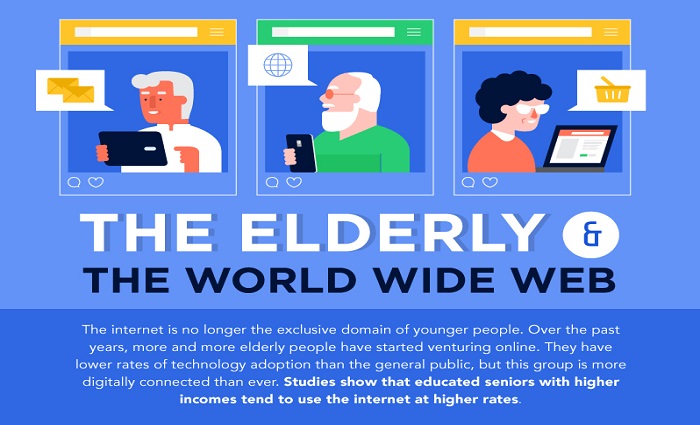
Seniors Are Doing What Exactly Online?

With 80% of baby boomers using the internet, it is clear that seniors are a lot more adept at using tech than we give them credit for. If you’re not convinced, just have a look at the statistics that MedAlertHelp compiled.

You will see that seniors are using the internet and smart devices a lot more regularly than most people would think. But what’s more interesting, perhaps, is the reason why they are using the internet. In this post, we will go through those reasons in more detail.


It’s Convenient

Raise your hands – who still uses an encyclopedia instead of checking the answer online? Do encyclopedias even exist anymore? Seniors are just as keen on using useful shortcuts as the rest of us.


Consider other apps that might be useful, such as internet banking, for example. In most cases, you’re not going to need to go to the bank unless you need to change your address or get a new card. Just about everything else you can do by using online banking or ATMs.


Easy Access to Information About Things That Interest Them

Most seniors cited that they enjoyed using the internet because it was an easy way to access information about things of interest. We can all relate to that. Just 20 years ago, learning something about your favorite hobby meant finding the right books or a person who could teach you.

Now, thanks to YouTube, that’s all changed. There is a wealth of information on the internet. Not all of it is great, but the support for hobbyists is nice. Want to learn how to crochet a jacket for your chicken? Google it – you will find a pattern. And, yes, there are people who crochet jackets for their chickens.


For Shopping

Online shopping and the elderly can be a match made in heaven, especially when there are mobility issues to consider. Online shopping has changed the world for a lot of us – making it possible to gain access to items that we cannot easily get otherwise.

But it can also be infinitely practical. You can shop for almost anything online, from groceries to clothing. This can be a boon for the elderly with mobility problems or issues finding transport.


For Entertainment Purposes

I have to be honest; this one was a bit of a surprise for me. Especially since I remembered growing up and being told that video games would rot my brain. However, almost half of the elderly who regularly use the net, also use it for entertainment purposes, like gaming.


Communication

The internet does provide us with a number of different ways to contact our families and keep in touch with friends. Seniors are taking advantage of services like Skype, Facebook, and other instant messaging services to keep in touch with the people who are important to them.


Conclusion

There is no doubt that the internet is a useful tool to make day to day living less complicated. We’re not counting the potential for wasting time on it here, though. But, if used correctly, the internet can save you time and a lot of stress. Is it any surprise that seniors are taking advantage of these benefits? For the Silo, Tarun Reddy.

What Elderly Do Online Infographic
