Tag Archives: NATO

US Sec Of State Rubio- In Defense Of Western Civilization

Via our friends at the U.S. StateDept

Oct, 2026
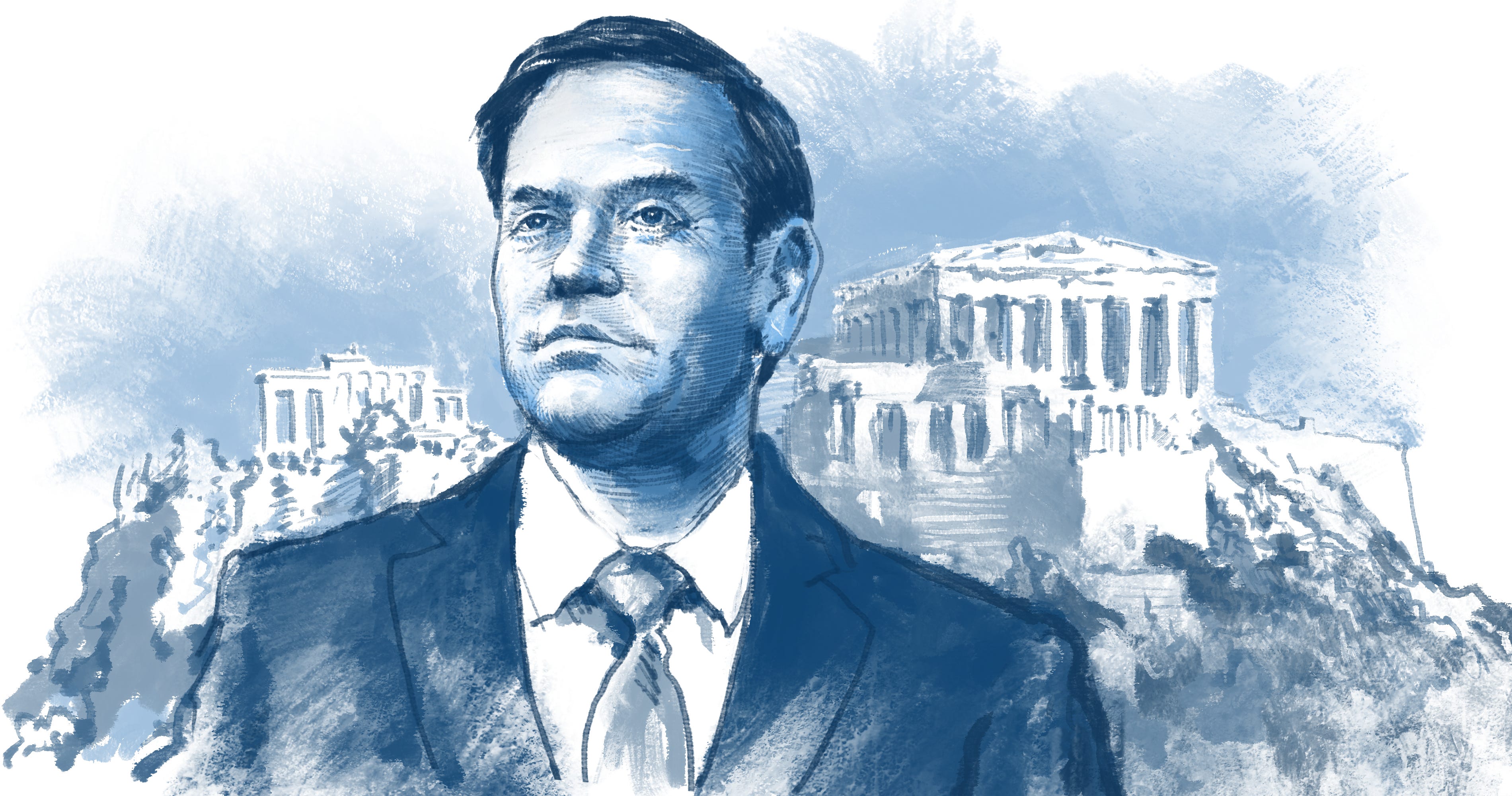
Author: U.S. Secretary of State Marco Rubio

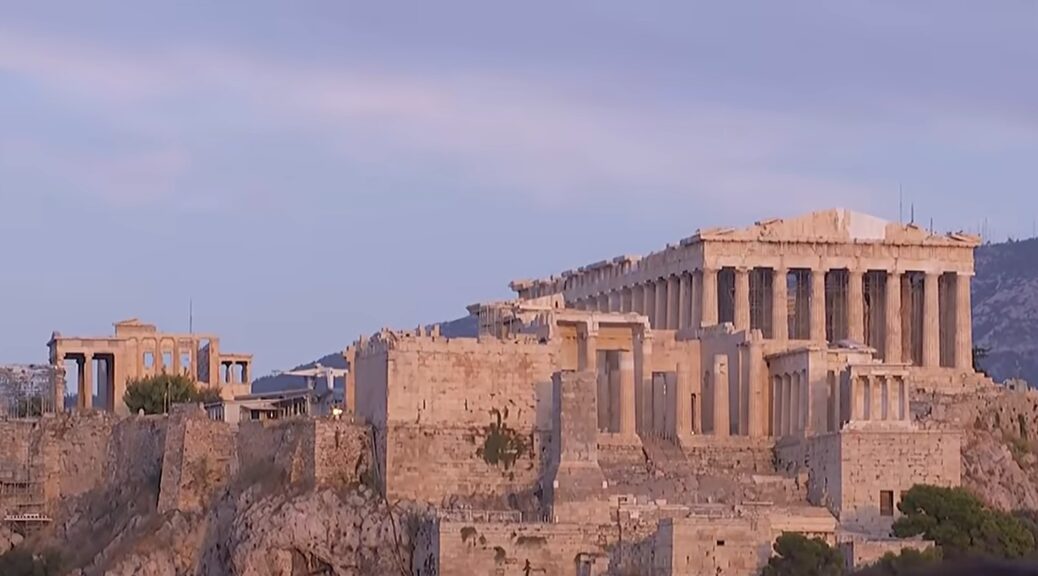
There are great ruins all across the world. In many cases, they are places where history seems to have exhausted itself: remnants of distant cultures that have long passed beyond living memory.

But the Acropolis is different.

For thousands of years, the civilization that built what stands behind me has captivated the imagination of the Western world. Generations of our statesmen, artists, and philosophers have looked to it – they’ve looked to it with wonder and they’ve looked to it with awe.

Now time has a tendency to dull the senses: great victories and catastrophic defeats, they seem to shrink to becoming like a footnote in a textbook, another fact for our schoolchildren to memorize and forget. But the Greeks of antiquity, they seem to have an almost mystical hold on our memory. They call us back to them, again and again.

480 years before Christ, the armies of Xerxes arrived in this city and they put its sanctuaries to the torch. Most Athenians had by then evacuated by ship to a nearby island. But there was a handful of them that refused to leave their home. So instead, they barricaded themselves in the rocky fortress of the Acropolis to fight an extraordinary last stand, heaving massive stones down the cliffs onto the Persian invaders and holding the greatest empire of the age at bay for days. They were eventually overwhelmed. The Persians plundered the temples, burned the shrines, and razed the Acropolis to the ground but when the Athenians returned, they gathered the broken remains of the old Acropolis and buried them in the hill where it had stood. And decades later, under Pericles, they raised the Parthenon.

For 25 centuries since, the Parthenon has stood. Empires have risen and fallen beneath its shadow. And the progeny of the men who built it – the sons of Athens and Rome – have carried their civilization with them to the ends of the Earth.

Two and a half centuries after the founding of the American republic halfway across the world from where I stand now – I stand here today as the Secretary of State of that republic, and a great-grandson of settlers who arrived in the new world from Spain – I stand here to testify to a debt that no lapse of time, no distance of space can ever extinguish.

The history of America, the history of my country, is covered with the fingerprints of antiquity. Greece is literally carved into the architecture of our government: in the towering columns, in the domes and the monuments across our capital city. The city where our Constitution was born – Philadelphia – is itself a Greek name.

The men who founded my country were fascinated by the heritage we inherited from yours. They were exceptionally well-read in history – they were vividly aware of their unique place in it – but no other age of the past held their attention or their imagination quite like that of antiquity. Many, many people are surprised to learn that the most commonly cited author in the Federalist Papers was not an Enlightenment philosopher or political theorist. No, the most commonly cited author in the Federalist Papers was Plutarch, the Greek biographer of Greece and Rome’s great men.

Now, much has been written and said about the influence of ancient Greece on the ideas of the American Founders – and, for that matter, on all of the Western philosophers and statesmen that preceded them. Most of us are familiar with the basic history. Athens gave us democracy. Plato and Aristotle gave us Western philosophy. Our ideas of law, of virtue, of citizenship, and republican government were shaped in the Greek city-states. Even much of our political vocabulary – words like democracy, tyranny, the word “politics” itself – found its origins here.

Now, all of that is true. But the things we owe to this place – as Americans, and as Westerners – are actually far far deeper. These institutions and ideas – these institutions and ideas were the outward expression of more fundamental qualities we see in the ancient Greeks – qualities that can’t be reduced to any particular political system or theory.

Here, in Athens, we found the first full realization of all the essential traits that would come to define the West: fierce individuality and relentless ambition; daring exploration and invention; a yearning for discovery, for adventure, risk and glory. An insatiable curiosity about the world and the principles by which it operates, a hunger to know the mysteries of nature and grasp the secrets of the cosmos. An impatience with the notion of impossibility, chafing at all boundaries and limits, straining to peer into the depths of the unknown.

These were not just the formulas or precepts of a particular school of philosophy. They were the characteristic of a people – expressed in their traditions, their stories, their imagination; in the qualities they demanded of their citizens; in the things they lived and fought and died for.

To know them is to know ourselves.

What blossomed here in this place was the Western desire to uncover all that ignorance, darkness, and distance had kept hidden from the mind of man. The Greeks did not just shape history; the Greeks gave us history itself. Much about – much of what we know about many ancient civilizations comes almost entirely from the records of Greek explorers and historians, explorers and historians who didn’t just chronicle the histories of their own people, but ventured outwards to observe and record the sagas of foreign peoples and cultures all across the world.

Where others looked inward, the Greeks were the first to direct their focus outward, to chase the thrill and glory of seeing all that was strange and new. It was this trait – it was this trait that would push the West to create and build things that others could not, marking us out from so many other cultures and civilizations where stability and subsistence were the highest ends of life.

But it is not just the ambition to explore the unknown that we inherit from the Greeks; it is the conviction that the unknown canbe known. The confidence that the world can be charted and measured and mapped and understood – and that there is a rational order to the cosmos, governed by certain fundamental laws, laws that men can observe and the mind can come to understand.

This was the foundation of the Western mind: our math, our science, our medicine. Our philosophy, ethics, and religion. It paved the way for the gospel of Jesus Christ to find fertile soil in Europe and flourish into the empire of Christendom. It was the foundation of the riches of Christian theology – of Augustine and Aquinas and the whole tradition of natural law.

It gave birth to a civilization marked not just by a common culture, it was marked by a common anthropology – a common view of man and his place in the universe. Its descendants would share not just the idea of a natural order, but a distinctive understanding of virtue; of destiny and fate; of truth, goodness, and beauty; of a code that dictates how men ought to live; of objective standards and ideals to strive towards.

For the Greeks of antiquity, the pursuit of excellence was the very principle of man’s existence. They organized all of civic life around contest, ambition, competition: in philosophy and poetry, in sculpture and drama, in athletics and art, in war and statecraft. The classical Greek city was an arena for great men to test and prove themselves, to hone their potential through perpetual struggle – to be the best, the strongest, the most beautiful, straining to inch ever closer to perfection.

Now I know that to modern ears, what I just described, this way of life, may sound odd; it may even sound cruel. The ideal of many ideologies in our time has, frankly, become a world of perfect safety, devoid of risk or failure, with neither the glory of victory nor the shame of defeat. Too often these days, we build downwards. We design our standards to ensure no one will lose; we preoccupy ourselves more with the comfort of the worst than the potential of the best. We hold the most exceptional things among us hostage to the average, the ordinary, the mediocre.

The men who made the Parthenon, they built upwards.They held that the highest and most noble aspiration in life was to surpass all others, to strive to be the best in all things. The ancient Greek city-states were filled. They were filled with intense passion and rivalry and faction and conflict. But from that constant struggle for distinction – from that came the great flowering of art and philosophy and political and intellectual energy that would transform a collective of Mediterranean cities into the birthplace of the greatest civilization in the world.

The thumos, as the ancient Greeks called it – the fire of passion, strength, courage, pride – is the heart of great civilization. And without it? Without it, nations lose their will to fight, the will to strive, the will to survive.
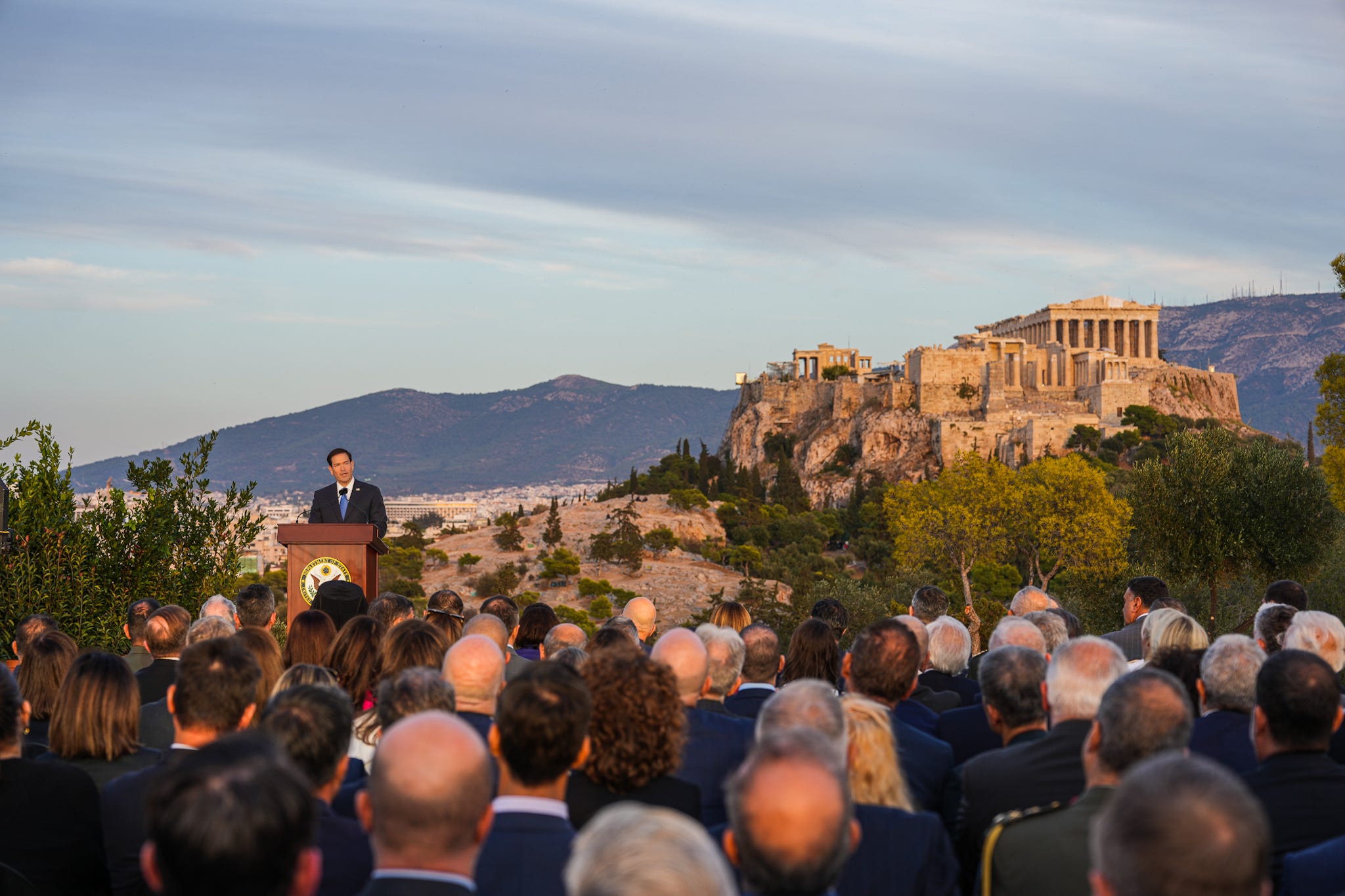
Marco Rubio was sworn in as the 72nd Secretary of State on January 21, 2025. The Secretary is creating a Department of State that puts America First.

Today, too much of the West has forgotten this quality. Over time, we in the West came to feel ashamed of the very things that made us exceptional. We felt embarrassed that our achievements set us apart from the rest of the world. Our prosperity somehow became a source of guilt. We no longer believed we deserved and had earned our greatness.

The word “nationalism” became a dirty word. And so we tore down our monuments; we condemned our own history. And in too many places, we taught our children to be ashamed of the countries they would inherit. In the process, we opened our borders and outsourced our industry, and allowed our militaries to wither and to decay.

And with every passing year, we seemed to outsource more of our sovereignty, transferring our decisions to global bureaucracies far beyond the reach of our control.

But others were all too happy to fill the vacuum that we left – the vacuum left behind by our weakness. And as the West’s confidence faltered, its adversaries and its rivals only grew more assertive, building up their own wealth and their own power in our stead.

And now, today, we find ourselves at a crossroads. Because the next decade and the decisions we make will write the story of the next century. The course we take will determine whether the West maintains its place at the head of the world or resigns itself to a future of atrophy and servitude and decline. We will either choose to act now or lose the choice to act at all.

Under President Trump, the United States has made its choice. We choose the unapologetic pursuit of national power: to take back control of our critical supply chains, to reindustrialize our economy, to rebuild our defense, to fight for dominance of the technologies and industries of the future.

We choose to reach for new frontiers: in advanced manufacturing and super intelligence; in drones, weapons, and warfare; in chips, minerals, cyber, and every other domain of human possibility. To unleash our energy, to rebuild our factories, to return our astronauts to the moon and launch a new age of exploration in space.

Now for all their lofty ideals, the ancient Greeks were not naive. They understood that nations have interests. They understood that statecraft requires prudence and diplomacy, but they also understood that it requires the ability to wield force when prudence and diplomacy fail. They understood that power requires not only having the means to defend yourself, it requires the credibility that you are willing to use it.

This is the classical understanding of politics and of statecraft that the Trump Administration hopes to reclaim – reclaim not just for our country, but for the whole of our civilization.

We believe that Europe can awaken from its long slumber and rekindle the fire that was lit here millennia ago.

There are already signs.

Across this continent, we are witnessing what we hope will be the beginnings of a generational shift: skyrocketing defense spending, a flurry of new partnerships and programs, expanded manufacturing and production, following on the historic defense commitments made last year in The Hague.

Greece has been at the center of this shift. The people of this nation have proved themselves once again to be an indispensable friend to Europe and to the United States alike, on everything from energy to migration to defense, where Greece has been a model ally.

And it’s our sincerest hope that all of Europe will follow your example.

Though passions may, at times, have strained the bonds of affection between the United States and Europe, it must not be allowed to break them. Together, we must strengthen an alliance capable of confronting threats of our age.

And we can. Because we do not believe the transatlantic friendship should be zero sum. Quite the opposite: our vision is of an alliance whose strength is greater than the sum of its parts. It is a vision we saw in action just last month, in an unprecedented new agreement between the United States, Denmark, and Greenland – an agreement that will reshape the Arctic and bolster the security of all of NATO. All three partners in that deal emerged victorious. All of Europe – and NATO and the United States emerged safer, stronger, and more secure because of it.

We want to win together. We must win together.

Now it’s has become fashionable today to believe that enlightened foreign policy means prioritizing the global community over one’s own people. And I think here, too, we have much to learn from the men of ancient Greece because they knew that there was nothing selfish or wrong about loyalty to your nation, nor anything selfish or wrong about fighting to defend its interests above all else.

They believed – fiercely – in the ideal of the great man: the exceptional individual who obtains immortality through his own deeds. But they believed that glory and fame, those things were won through striving, sacrificing and achieving greatly for something larger than yourself. The recurring hero of the ancient Greek world was the man who was willing to pay any cost for a cause worthy of his loyalty.

We see this in Socrates, who refused to abandon the inquiry into truth even at the cost of his own life. We see it in the legendary stand of 300 Spartans – surrounded and hopelessly outnumbered by the vast armies of Persia – who refused the chance to save themselves, choosing to fight to the last man rather than abandon their post or abandon their duty. And we see it in the epic myth of Achilles, who is offered the choice to return home and live a long and peaceful life – but chooses instead to remain at Troy and perish in pursuit of eternal glory.

These – these are the qualities that would shape the Western moral imagination. From the Christian martyr who refused to betray his faith to the patriot who gave his life for his country; from Saint Thomas More to the Battle of the Alamo, running through the immortal closing words of the Declaration of Independence of the United States which says, “We mutually pledge to each other our Lives, our Fortunes and our sacred Honor.”

It is from the Greeks that the West inherited its sense of duty – an unbreakable loyalty to one’s code, one’s cause, one’s country. Our heroes, the heroes of the West are those who choose to remain faithful to their duty precisely when it is most difficult and painful to do so: the man who is bound by his word, the soldier who will not abandon his post, the captain, the proverbial captain, who goes down with his ship.

This is wholly different from what we see, even now, for example from fanatics like the radical mullahs of Iran, whose cult of death hails child suicide bombers as national heroes, and portrays martyrdom as an end to itself.

Our heroes – our heroes may be willing to die for their cause; but our heroes do not worship death. It is precisely because we value life that we come to recognize the heroism in those who would sooner sacrifice it than to betray their principles. Now, we take the West’s conception of these things – heroism, honor, duty – we take these things for granted. We assume that these somehow are universal to all people in all times and in all places. They are not. They are the product of a distinct character, a distinct character which arose here and shaped the whole story of the civilization that came after it. A civilization that we must fight to defend today with the same passion as our forefathers did.

The men who built the Parthenon were succeeded by the architects of European Christendom, who raised the cathedrals of Milan, Cologne, and Florence. The quest to perfect the human form that moved the ancient Greek sculptors found a new expression in Michelangelo. The Greek philosophers’ search for the structure of the universe was inherited by Copernicus, and then Galileo, then Kepler, and in Newton.

The hunger for new knowledge, that’s what gave birth to Magellan’s first expedition around the world, to Columbus’ discovery of the Americas, and ultimately to Apollo 11’s journey to the moon. And the qualities that led Alexander to conquer the entire known world reappeared in Caesar, then Charlemagne, and Cortes.

And in America, that same tradition rediscovered itself anew. An open and wild land became the site of a great revival of Western imagination and ambition. The Greek aspiration for new horizons became the American frontier spirit. The civilization of Athens and Rome transformed an infant seaboard republic into a continental empire.

The greatest Americans of every generation have carried the unmistakable features of their forefathers – born in Athens, formed by Rome, baptized in Christendom, hardened in the furnace of medieval Europe, endowed with the English genius for liberty, and then carried across the Atlantic to be reborn on the shores of a new world.

Together, we must now rediscover that spirit. We are at an inflection point – an inflection point not only in the history of my nation, but an inflection point in the whole of our civilization.

The threats we face today are every bit as real as they were on the dramatic stage of antiquity.

National interests did not vanish in the face of international institutions. War did not disappear simply because we preferred peace. Other states continued to arm, to seek influence, to compete for territory, and technology, and resources, and markets, and energy, and power.

And now, there is war again. There is new competition between great powers again. There is vulnerability, aggression, terrorism, a whole universe of new threats and attacks again.

And so we must rebuild our institutions and our alliances to face these threats together – understanding that the purpose of these things is not to abolish the sovereignty of the nations that constitute them; it is to defend them. And that nations need not abandon their distinct identities in order to recognize their common interests.

We have built a model of that with our partners here in Greece. In our defense partnerships, in energy and technology, in our shared ambition to secure Europe’s borders from the threats of mass migration.

Our friendship dates back to the earliest years of my nation. When Greece rose in 1821 to recover its independence after centuries of Ottoman rule, Americans recognized something familiar in that struggle. Three years later, the great American statesman Daniel Webster, he delivered a famous address to Congress, helping bring the cause of the Greek Revolution before the representatives of the young American republic.

And he began by calling their attention to everything around them. This is what he said in his speech; he said: “This free form of government, this popular assembly… this practice of free debate, and public discussion, the contest of mind with mind… even the edifice in which we assemble, these proportioned columns, this ornamented architecture, all remind us that Greece has existed, and that we, like the rest of mankind, are greatly her debtors.”

Those words are as true today as they were when he said them. And all of us – not just Americans, but Europeans and our friends across the West – must relearn the lessons our forefathers took from this place and from its history.

The history of Greece – the history of Greece does not just offer us a glimpse – it does not offer a glimpse of our institutions in their earliest forms. The history of Greece shows us an image of ourselves.

It shows us that ours is the inheritance of great heroes, and that we should be proud – that we should be intensely proud – of where we come from. We should marvel at what our forefathers carved out of this countryside. The story of our civilization is the greatest story ever known to man. And it began here, with the first men and women of the West. From them – from them – we can rediscover the virtues, the courage, and the strength to confront the dangers that we face in our time.

Thank you.
President Trump At UN Assembly Counsels Courage To Meet Today’s Challenges

A 5 MINUTE READ from our friends at ShareAmerica.

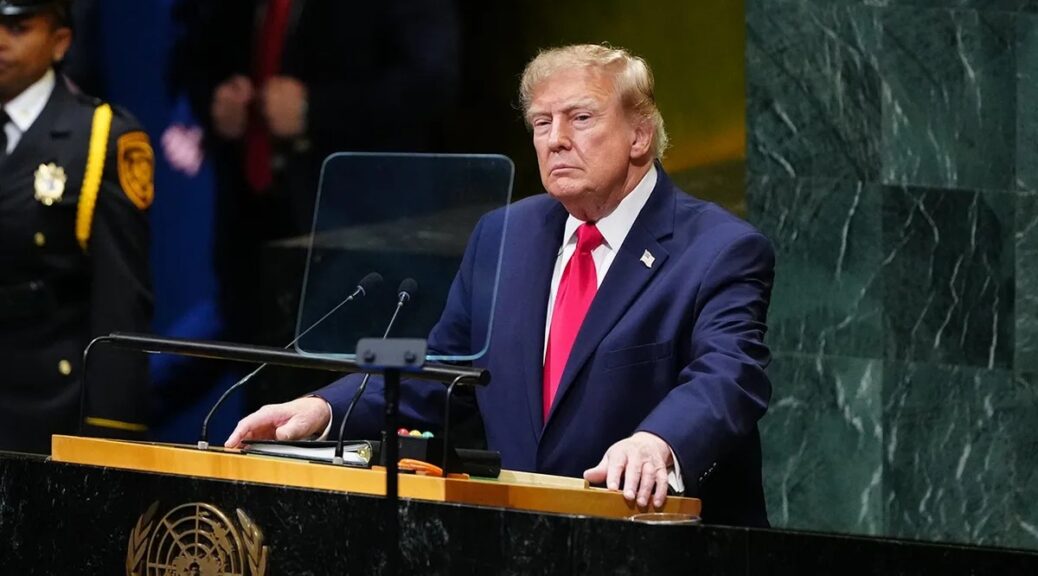
President Trump speaking at United Nations (© Michael M. Santiago/Getty Images)
President Trump speaks to leaders at the 81st session of the United Nations General Assembly September 22 in New York. (© Michael M. Santiago/Getty Images)

Heralding America’s “golden age” — as his administration has brought more jobs, lower poverty rates and less crime to the United States — President Trump encouraged world leaders to join him in building “a future for our people that is brighter, more hopeful and more magnificent than ever before.”

Speaking at the U.N. General Assembly yesterday September 22, Trump listed peace deals he has brokered. “While others have spoken of peace, I have made peace,” he said. He cited thank-you letters from leaders in Pakistan, Azerbaijan, Armenia, Cambodia and Rwanda.

Recalling the upcoming anniversary of the October 7 massacre in which Hamas killed 1,200 innocent civilians in Israel, Trump noted his administration’s work to free the hostages and called out Iran’s celebration of the massacre. To applause, Trump said that the Islamic Republic of Iran, “the bully of the Middle East … will never have a nuclear weapon.”

Shifting to the Western Hemisphere, the president said, “Our actions in Venezuela are proof that the United States will no longer permit threats to America to gain a foothold.” He commended the January 3 removal of Venezuela’s criminal leader, Nicolás Maduro, and subsequent release of political prisoners.

Today, he said, “we’re working closely with the leaders of Venezuela to forge a much better future for the Venezuelan people” and mentioned the recent U.S.-Venezuela deal to bring 65 billion barrels of oil to market.

After noting his administration’s designation of drug cartels as Foreign Terrorist Organizations, successful strikes on “drug boats” and successful mission with Venezuela to kill the leader of Tren de Aragua, Trump said the U.S. still faces threats from the hemisphere. He cited Cuban communist influence over U.S. groups and threats from Mexican drug cartels. “Communism will never be coming to America, but freedom will be coming to Cuba,” he said. “And safety and security will be coming to Mexico.”

‘A safer future’

While in New York, the president signed an agreement with Denmark and the people of Greenland to improve security in the Arctic for the United States, North America and Europe. The agreement enables the U.S. to review foreign military investments in Greenland for security risks. “This deal also protects Europe, in addition to America, and … very much enhances NATO,” Trump said, while commending NATO nations for increasing defense spending.

Noting the U.N.’s “great potential,” Trump said it must rein in globalist agendas that threaten the sovereignty of member nations.

He praised the defeat of the U.N.’s maritime agency proposal to charge shippers a carbon tax. “There is no global government, and while I’m president, there will be no global taxes.”

Trump vowed that the U.S. will remain at the forefront of artificial intelligence (AI) innovation and suggested that “super intelligence,” or SI, would be a better name for the promising technology. Cautioning against slowing the pace of SI development, he said, “I’m not going to stifle growth of something that will be bigger than the industrial revolution … or the internet itself.”

“We’re reasserting American power,” Trump said, “including American military power where necessary in our region and around the world to create a safer future for all of us.”

The Tricky Part Of Defending Data Centers From Strikes And Drone Attacks

“According to a report from Bloomberg, recently released satellite images appear to show damage done to two Amazon data centers in Bahrain, which the Iranian Revolutionary Guard Corps (IRGC) previously claimed to have hit.” gizmodo.com

With satellite imagery now appearing to corroborate the recent strikes on Amazon’s Bahrain data centers, the question of how commercial data centers actually defend themselves has become live.

Amazon’s presence in Bahrain is registered under Amazon Data Services Bahrain S.P.C, located at Bahrain World Trade Center, Level 9, Building B0001, Isa Al-Kabeer Avenue (Road 365), Flat 938, Clock 316, Manama, Bahrain

 Laurynas Šatas, CEO of Aktyvus Photonics, a defence technology company developing laser-based precision targeting systems for NATO tactical drone platforms. thinks data centers should defend themselves against drones, and partner with the state for missile defense.

A repeat of another attack

“A very similar attack on AWS data centers happened in March. But it’s worth separating the two events, because they involved different weapons. The confirmed March strikes used one-way attack drones. The July strikes on the Bahrain facilities appear to have involved missiles, and while Amazon hasn’t confirmed the extent of the damage, independent satellite imagery now appears to corroborate that it was significant.

“The March strikes marked a genuine shift. Commercial cloud facilities were never designed to sit inside a kinetic threat environment, and now they are being treated as legitimate military targets. That changes the security conversation for the whole industry.

The Bahrain World Trade Center (where the attacked Amazon data center is said to be housed) makes for a clearly visible and easily targeted object.

Transferable Model Of Defence

“It is important to be precise about the threat, though, because it is not one threat. Slow, low-flying, low-cost drones and high-speed missiles call for very different defences. Against the cheap and persistent drone threat, a layered counter-UAS approach – detect, track, then mitigate – is realistic and increasingly affordable. We already see this in Ukraine, where the private sector has taken on a real part of the air defence task against low-speed threats, using a mix of effectors. That model is transferable to critical civil infrastructure such as data centres.

“Faster-flying threats are a different problem. They require significantly more complex and far more expensive systems, which we cannot realistically expect a commercial operator to afford, or to be cleared and trained to operate. That part stays with state militaries.

“So the practical sequence for data centres is: defend yourself against drones first, and coordinate with the state for the missile threat. I expect this level of protection to become a standard part of how such sites are built and operated.”


For the Silo, Darija Grobova.

No Federal Budget Until Fall? Canada Spending Lots In Meantime

The Fiscal Update the Government Should Have Produced and the Budget Canada Needs

by William B.P. Robson, Don Drummond and Alexandre Laurin

Introduction: No Budget, No Plan

The federal government has said it will not release a budget until the fall. Delaying a budget until the fiscal year is more than half over is never good, but Canada’s current high spending trajectory makes this delay especially bad. The government is making costly commitments without showing us the key numbers: how much more tax it expects to collect; how far its new spending will exceed its revenues; and what the resulting higher deficits imply for interest costs and our debt burden.

To fill in at least some of the information the government should be providing, we present our own fiscal update: the outlook that provides a context for the next federal budget. We then discuss possible measures the next budget could contain to address runaway spending, perpetually high deficits and debt, and vulnerabilities Canada should avoid at a time of severe economic challenge.

A Deteriorating Fiscal Outlook

To calculate the federal government’s bottom line in the current fiscal year, 2025/26, and the three following years, we followed the steps summarized in Table 1 (on page 3):

  1. We started with the Liberal Party’s costing document for its election platform (Liberal Party of Canada 2025). Based on a March 2025 economic scenario from the Parliamentary Budget Office (PBO), it did not reflect the impact of US tariffs or Canada’s countermeasures (PBO 2025).
  2. We updated the economic assumptions based on the Bank of Canada’s April 2025 Monetary Policy Report, using the more optimistic of the two scenarios examined by the Bank, both regarding the severity of tariffs and resulting economic damage (Bank of Canada 2025).
  3. We calculated a revised baseline fiscal projection by including policy initiatives that appear firm – either because of definitive statements, such as the cancellation of the proposed changes to capital gains taxation and the June 2025 plans to first accelerate defence spending to 2 percent of GDP and then gradually increase it to 5 percent by 2035, or because legislation is currently before Parliament, as is the case for cuts to the bottom personal income tax rate, the GST break for first-time homebuyers under Bill C-4,1 and the government’s announcement that it will not proceed with the digital services tax (DST).
  4. We added the spending measures from the Liberal platform’s costing document that were not included in the previous step.
  5. We added platform proposals for increasing revenue from higher fines and penalties and, more significantly, for reducing spending through a review of public sector operations to boost productivity. We show these as a memo item, since the lack of concern about the bottom line evident in the platform and subsequent announcements, and the lack of urgency evident in the government’s decision to delay the budget, makes it reasonable to doubt that these savings will materialize.

The resulting bottom line represents a marked deterioration, as Table 1 shows. As recently as the April 2024 budget, the government projected the deficit to decline to $20 billion by 2028/29.2 With this baseline, and even if the imagined fines and savings were realized in full, the deficit that year would be more than three times that level. Even in this optimistic scenario, the deficit would average $78 billion annually over the four years, and the net debt-to-GDP ratio would remain stable around the elevated level of 2025/26. Excluding the speculative savings, the cumulative deficit would be almost $350 billion over four years – or an annual average of $86 billion – and the net debt-to-GDP ratio would increase to 44 percent. Further, the baseline deficit without any of the non-implemented initiatives in the electoral platform is still elevated at $66 billion per year on average.

These projections include our estimates of the potential impact of the new defence spending commitments made at the recent NATO summit. At that summit in The Hague, Canada joined a pledge to raise defence and security-related spending to 5 percent of GDP by 2035 (3.5 percent for direct military needs and 1.5 percent for security-related investments).

No details on the year-to-year increases have been announced, but countries are expected to submit multi-year roadmaps by mid-2026. Prime Minister Mark Carney also indicated that some of the 1.5 percent for security-related investments – such as critical mineral infrastructure, ports, telecommunications, and cyber – could be counted from existing budget envelopes.

In Table 2, we present a hypothetical scenario where annual defence spending rises gradually from 2 percent of GDP to 5 percent of GDP over 10 years, with half of the spending allocated to depreciable capital assets. Under this scenario, we estimate the increase would add $2.3 billion to the deficit this fiscal year, rising to $11.8 billion in four years. Assuming half of the new spending on security-related investments comes from existing envelopes, the deficit would be $17.8 billion higher in four years. These amounts continue to grow over the 10-year period as the 5 percent target approaches and the stock of amortized capital outlays increases. By year 10, new defence commitments could add a staggering $68.4 billion to the deficit under this scenario.

Separating Operating and Capital Spending is Unhelpful

The large deficits projected in this update cannot be downplayed or disguised by dividing the budget into two new categories – operating and capital – and targeting a balanced operating budget only, as proposed in the election platform. No firm details have been released about what each category will include, but logically, the operating budget will consist of whatever does not fall under the new capital category.

The rationale for introducing a capital budget is unclear. Under Public Sector Accounting Standards, the federal government, like all Canadian governments, uses accrual accounting. So its capital costs are amortized over the useful life of the assets. As a result, the government’s Statement of Operations already shows costs related to capital investments: depreciation (about $7 billion per year) and interest on debt incurred when the outlays occur. As more capital assets are added – such as ports or defence equipment – amortization expenses will rise. But amortization reflects the current consumption of capital assets and should remain part of the bottom line. Excluding it would disconnect the federal budget presentation from the audited financial statements – a serious blow to transparency and accountability.

More troubling is the pledge to recharacterize as capital spending “new incentives that support the formation of private sector capital (e.g., patents, plants, and technology) or which meaningfully raise private sector productivity” (Liberal Party of Canada 2025). Governments like to call many categories of spending “investment.” Would the new classification mean the government would exclude subsidies for housing construction or incentives for first-time homebuyers from the bottom-line target? Would it reclassify other subsidies – for clean technology, artificial intelligence, or training programs, for example – as capital? What qualifies as capital under this framework appears open to subjective interpretation, undermining accountability. Without clear standards audited by independent sources, this approach is ripe for abuse.

And for what purpose? The government appears intent on showcasing how much it is doing for growth. But this does not require a new accounting convention. Their efforts could be highlighted through words and dedicated tables – not by altering the definition of the bottom line.

What Canada Needs in the Next Federal Budget

Notwithstanding rhetoric about transforming Canada’s economy in the face of US trade threats and prioritizing growth, federal fiscal policy and promises do not support the transformation of Canada’s trade relations or promote investment over consumption. Adding $300 billion in federal debt while doing nothing to raise investment and productivity will make Canada more vulnerable, not less. The new 5-percent defence commitment, even if its fiscal impact will be felt mostly in the later years, further highlights the need for difficult tax and spending trade-offs. Given the scale of the new defence commitment, on top of the fiscal challenges created by the old one, it is all the more important for the government to ensure proper accountability.

For that reason, the next federal budget – which should come as soon as possible – should have the following features:

  1. Dropping more costly platform initiatives. Recent developments, including diminished US support for environmental action and related impacts on Canada, suggest that some potential spending items may cost less or be delayed. Still, it seems surreal to contemplate introducing another $28.3 billion in deficit-increasing platform measures this fiscal year, when the projected deficit would already be close to $60 billion. One of the more straightforward options for the government in the 2025 budget is to forgo implementing some of its platform commitments or fund them through existing envelopes. The list is extensive. For example, the platform proposes to allocate over $10 billion to various infrastructure transfer funds, including nation-building initiatives, trade corridors, digital infrastructure, rural transit, critical healthcare, and community development. In addition, more than 64 small-scale platform measures, each costing under $200 million, collectively amount to over $3.1 billion. These areas clearly present opportunities for reallocation or funding within existing envelopes.
  2. Finding deeper savings from existing operating spending. The C.D. Howe Institute’s 2025 Shadow Budget contemplates $97 billion in non-defence direct program expense savings over the budget horizon (Robson, Drummond, and Laurin 2025). Such savings are possible, but not achievable without strong leadership from the very top.
  3. Rely more on less damaging taxes. Canada’s personal income tax rates are already high – the top rate is over 50 percent in most provinces – and our corporate income taxes are uncompetitive, undermining the investment we need to become more productive and raise workers’ wages. Those rates should come down: if the federal government is determined to fund spending that requires higher revenues, the least damaging option is to raise the GST rate, as proposed in the Institute’s Shadow Budget.
  4. Cut federal transfers to provinces and territories. The Institute’s latest Shadow Budget also proposed cuts to transfers that fund programs that are not in the federal government’s jurisdiction (Robson, Drummond, and Laurin 2025). Provinces and territories would not welcome such a move – indeed, many might raise their own consumption taxes in response – but deficit-financed federal transfers are less consistent with fiscal sustainability and accountability than tax-financed ones, and the Canadian federation will be healthier if provinces and territories become more fiscally self-sufficient.

The Need for Clarity and Serious Choices

It is widely accepted that Canada’s economy is at a critical crossroads. So are Canada’s public finances. Beyond the economic drag of high deficits and rising debt, it is unfair to pass these burdens onto the current young and future generations.

The fact that the 2025/26 Main Estimates are before Parliament does not mean that the government has made itself accountable to the legislature for its fiscal plans.3 The Estimates support the appropriation bills through which Parliament authorizes funding for program spending not already provided for in existing legislation. They exclude any forward-looking policy initiatives typically included in a budget. They omit revenues and only account for a subset of expenses. They are prepared on a different basis of accounting than regular budgets and financial statements, making direct comparisons difficult. And they cover only a single fiscal year, making it impossible to assess the medium-term outlook.

The federal government itself should release full economic and fiscal projections to enable a proper national debate. But in their absence, this informal update will have to suffice.

Canada is on a troubling path. We need Parliament and the public to discuss the best way forward – economically and fiscally. The next federal budget should launch us on that path.

The authors extend gratitude to Colin Busby, Jamie Golombek, John Lester, Daniel Schwanen, and several anonymous referees for valuable comments and suggestions. The authors retain responsibility for any errors and the views expressed.

References

Bank of Canada. 2025. Monetary Policy Report. April. Ottawa: Bank of Canada. https://www.bankofcanada.ca/publications/mpr/mpr-2025-04-16/.

Leach, Cynthia, and Salim Zanzana. 2025. “What does greater defence spending mean for Canada’s economy?” RBC Economics. June 13. https://www.rbc.com/en/thought-leadership/economics/featured-insights/what-does-greater-defence-spending-mean-for-canadas-economy/.

Liberal Party of Canada. 2025. Canada Strong: Fiscal and Costing Plan. April. https://liberal.ca/wp-content/uploads/sites/292/2025/04/Canada_Strong_-_Fiscal_and_Costing_Plan.pdf.

Office of the Parliamentary Budget Officer (PBO). 2025. 2025 Election Proposal Costing Baseline. Office of the Parliamentary Budget Officer. March 24. https://www.pbo-dpb.ca/en/additional-analyses–analyses-complementaires/BLOG-2425-011–2025-election-proposal-costing-baseline–cout-mesures-proposees-pendant-campagne-electorale-2025-prevision-reference.

Robson, William B.P., Don Drummond, and Alexandre Laurin. 2025. Putting Canada’s Economy First: The C.D. Howe Institute’s 2025 Shadow Budget. Commentary 679. Toronto: C.D. Howe Institute. March. https://cdhowe.org/publication/putting-canadas-economy-first-the-c-d-howe-institutes-2025-shadow-budget/.

Sourang, Diarra. 2023. Digital Services Tax. Legislative Costing Note. Ottawa: Office of the Parliamentary Budget Officer. October 17. https://www.pbo-dpb.ca/en/publications/LEG-2324-013-S–digital-services-tax–taxe-services-numeriques.

This article courtesy of our friends at www.cdhowe.org The Fiscal Update the Government Should Have Produced and the Budget Canada Needs for The Silo by William B.P. Robson, Don Drummond and Alexandre Laurin.

Hope & Horror Of War Brought To Life At Canadian War Museum

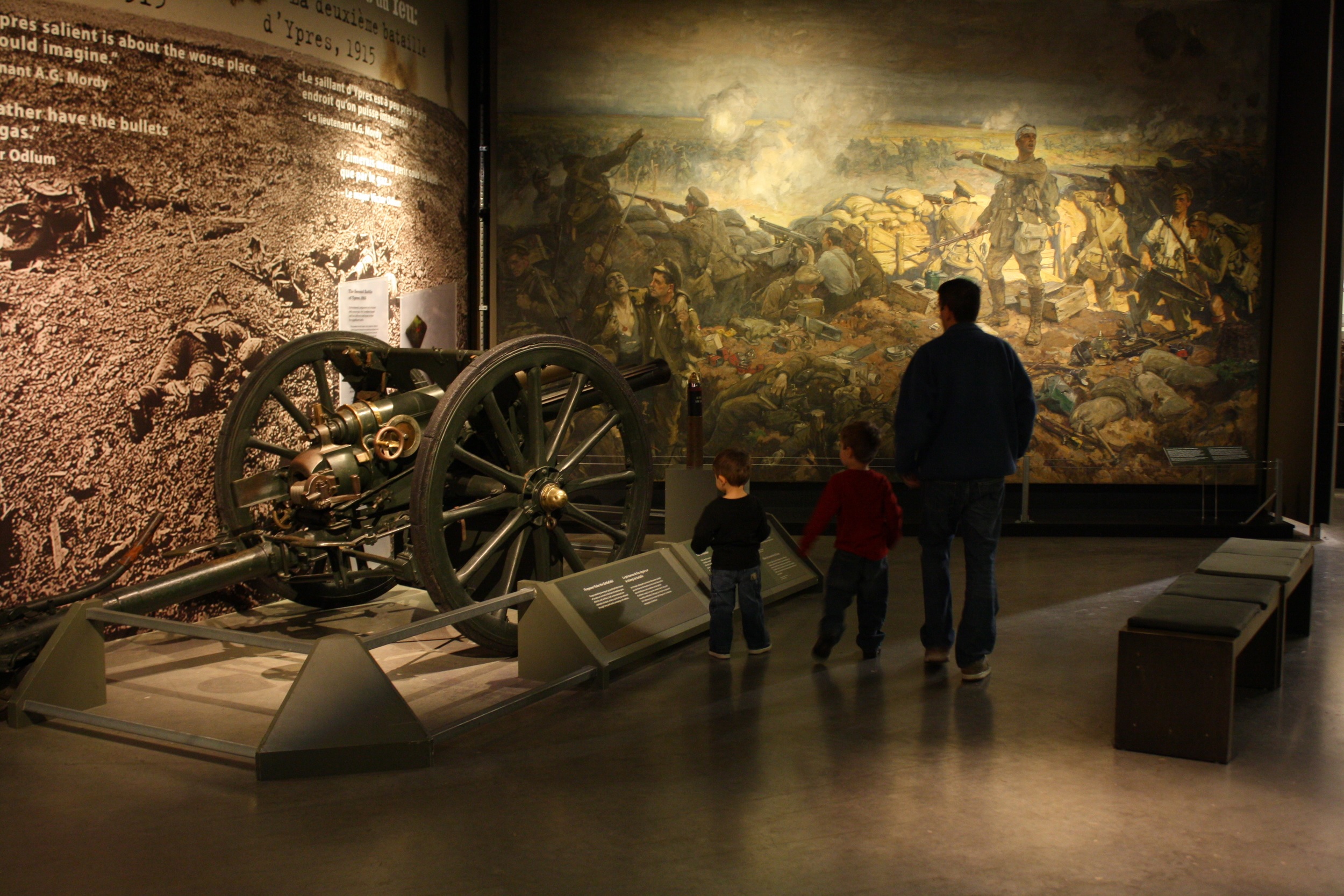
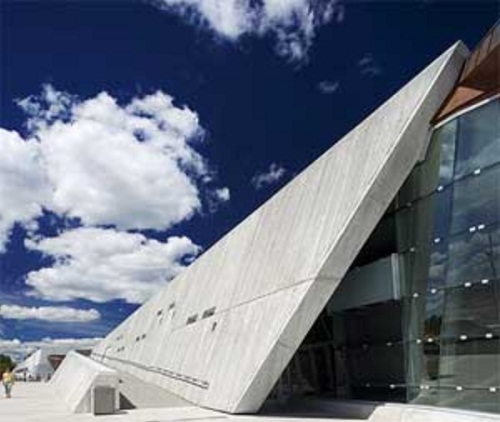
Every Remembrance Day I try to tour the Canadian War Museum   – a mammoth exhibition of battle since earliest times. Each year, “lest I forget”, the photos and exhibits tell a story of fear and courage, sacrifice and survival, humanity, brutality, violence, and hatred.

Early combat was limited to the distance you could throw a spear, fire an arrow or swing a club. Armour was made of wood. Much of war consisted of ambush and surprise. Today, though Canada’s military still use snowshoe and canoe, they not only prepare for ambush, but also for nuclear threat.

The War Museum describes 150 years of French-British conflict in North America, ending in the Seven Year’s War and the British conquest of Canada.

The Canadian War Museum

Then in 1775, American anger exploded into revolution – creating two countries in North America. For Americans, their invasions of Canada during the American Revolution and War of 1812 are considered minor campaigns. Yet north of the border, they were struggles for survival.

Canadian forces went abroad in 1899 and again in 1914 to fight wars as part of the British Empire. One thousand volunteers fought in South Africa; 620,000 fought World War I.

In 1914 Europe was a powder keg. Opposing alliances and secret treaties divided the heavily armed great powers. After the assassination of Austrian archduke Franz Ferdinand, countries rushed to settle old scores or to support allies. Britain, France and Russia stood against Germany, Austria-Hungary and Turkey. The rest of the world was dragged into a war that killed nine million and destroyed empires.

The War Museum focuses on the trenches of France and Belgium from 1915 to 1918, and the battles of the Somme, Vimy, Passchendale and the Hundred Days. Systems of fortified trenches stretched the length of the Western Front. Frontal assaults led to tremendous casualties. It was a long, bloody war.

In the 1930’s, Germany, Italy and Japan became aggressive dictatorships. The leading democracies – Britain, France, and the United States – tried to negotiate adopting a policy of appeasement. But the dictators responded with even more aggression.

War Museum exhibits cover Adolf Hitler and the rise of fascism, including an infamous Mercedes limousine used by Hitler at Nazi rallies. As World War II became a reality, Canada was the first Commonwealth country to send troops to Britain in 1939 – by the end of the conflict, 1.1 million Canadians served. Museum exhibits cover boots on the ground, as well as the costly Battle of the Atlantic where Canadians sunk 50 enemy submarines. The story of Canada’s air war is told, as well as our involvement in the British Commonwealth Air Training Plan – much of which took place at local airfields.

The Second World War alliance of the Soviet Union and the Western democracies was short lived. Opposing world views, and territorial disputes deteriorated into the Cold War of 40 years.

Communist North Korea’s invasion of South Korea in 1950 sparked a three-year war that killed or wounded 3.5 million.

And Canadians have gone on to serve in NATO, NORAD, the United Nations, the Persian Gulf, Kosovo, and Afghanistan.

The War Museum is well worth the visit.

It reminds us that history is filled with both horror and hope.

History is not only the story you read, it is the one you remember.

We will remember! For the Silo by MPP Toby Barrett