 |
Arabian Horse Association Celebrates Canada’s National Arabian Championship
Competition Celebrates the Strength, Heritage, andFuture of the Arabian Horse in Canada
Greenwood Village, CO, June, 2026 — The Arabian Horse Association (AHA) The Arabian Horse Association (AHA) is proud to formally recognize and support the 2026 Canada’s National Arabian Championship , taking place August 6–15, 2026, at the Keystone Centre in Brandon, Manitoba.Now in its fifth year under the management of The National Arabian Breed Society, a Canadian not-for-profit entity, the championship is the only Arabian horse competition in Canada where all disciplines compete under one roof. For ten days, Arabian and Half-Arabian horses, exhibitors, breeders, trainers, and enthusiasts from across Canada and the United States will gather to celebrate the beauty, athleticism, and extraordinary ability of the Arabian horse.
A Milestone Anniversary
This year marks the fifth anniversary of the show’s current era, launched in 2022 in Red Deer, Alberta, and the second year in which the event carries official AHA recognition for national achievement points. The championship’s roots run even deeper: the original show was established in 1958, making it an enduring part of the culture and fabric of Canadian Arabian horse sport.For 2026, organizers have added several new classes and are expecting 350 to 400 horses, more than 300 exhibitors, and upwards of 75 trainers, with an estimated 500 spectators daily. Participants will travel from communities across both Canada and the United States.
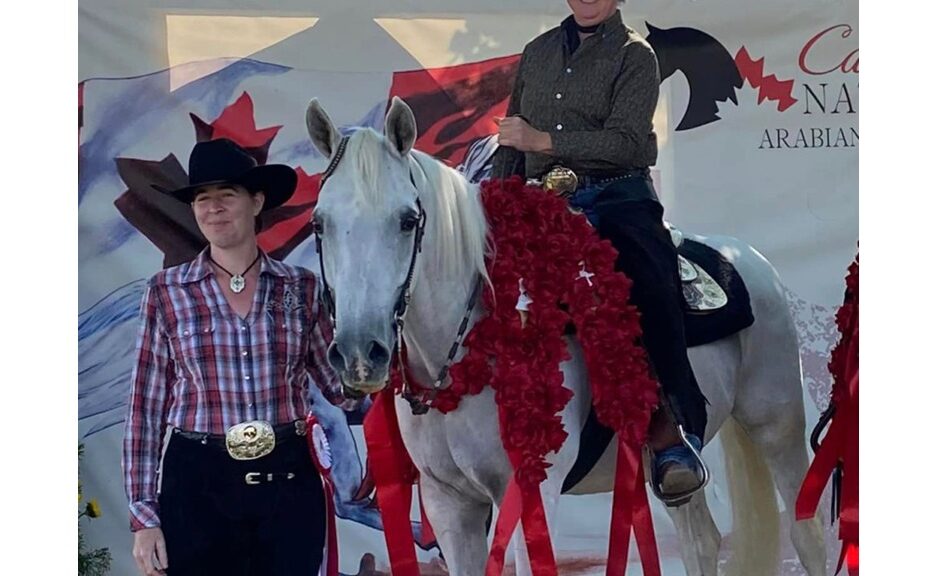
 A champion Arabian horse is celebrated with ribbons and a floral garland alongside owners, trainers, and RCMP honor guard at Canada’s National Arabian Championship — the largest Arabian horse competition in Canada. |
What Makes This Event Unique
Canada’s National Arabian Championship is the only national Arabian competition in Canada where all disciplines compete together at the same show — from the Sport Horse division to an array of Working Western, and don’t forget the extraordinary Main Ring competitions. The week unfolds in a carefully designed sequence: Dressage and Sport Horse classes open the event early in the week. Working Western takes center stage mid-show, and the championship concludes with several days of the top athletes competing in various ridden and in-hand competitions.
Free to the public, offering spectators an opportunity to witness the full range of what the best Arabian horses in the world can do. “Canada’s National Arabian Championship is a testament to everything that makes the Arabian horse community extraordinary — the dedication of breeders and exhibitors, the talent of the horses, and the deep sense of tradition that connects generations of enthusiasts. As AHA continues to strengthen its partnership with The National Arabian Breed Society, events like this one are vital to the future of our breed in North America.
We are proud to recognize this championship and look forward to celebrating another remarkable week of competition in Brandon,” said Taryl O’Shea, CEO, Arabian Horse Association.That spirit of partnership and shared purpose is equally felt by those closest to the show’s day-to-day heart. For the organizing team at The National Arabian Breed Society, the championship is as much about community as it is about competition — a sentiment that shines through in every aspect of the event’s planning and execution.”Canada’s Nationals is more than a competition — it is a celebration of the people, horses, and traditions that make our community so special. This show is largely run by a dedicated group of volunteers, and when you walk through the gates, it truly feels like arriving home. We are excited to welcome exhibitors and families from across the country and beyond for what promises to be an unforgettable week,” said Dana Romijn, Chair, 2026 Canada’s National Arabian Championship.
RCMP officers present the flags of the United States and Canada during the opening ceremony of Canada’s National Arabian Championship at the Keystone Centre in Brandon, Manitoba — a tradition that honors the event’s proud cross-border community of exhibitors, breeders, and enthusiasts.
Community, Charity & Celebration
The event has previously partnered with The Ames Foundation, auctioning off program cover artwork to benefit charitable causes, a tradition that reflects the community spirit at the heart of the show. Exhibitors and guests can look forward to two social events: an Exhibitor Party with live music and a full catered dinner on Thursday, August 13th, and a Championship Wrap-Up Celebration at the conclusion of the show on August 15th.
Economic Impact
Canada’s National Arabian Championship is the largest event held at the Keystone Centre all year, bringing significant tourism revenue to Manitoba and the Brandon region. Organizers estimate the event generates millions of dollars in direct economic impact through travel, accommodation, dining, and local spending by competitors and their families.
Join the Celebration
Head to the show to see some of the best competitors compete in a variety of championship classes and stay for some of the fun events. On Thursday, August 13, celebrate all things Canadian by joining the Canada Party after the evening classes! Everyone is invited to join us in the Triple Crown Lounge for a fun-filled evening of music, celebration, and community. This year’s festivities will feature special guest Julianna Moore, fresh from Canada’s Got Talent, providing live entertainment throughout the evening.Experience the excitement, cheer on the competitors, and celebrate the crowning achievements of the 2026 Canada’s National Arabian Championship as championship riders prepare to compete for the show’s final exciting evening of classes and awards. Then, help us close out an unforgettable week on Saturday night in the Triple Crown Lounge.
The Breed Behind the Competition
This is your opportunity to experience Arabian horses up close and discover what makes the breed so unique. Known for their beauty, intelligence, and versatility, Arabian horses are one of the oldest and most influential horse breeds in the world, shaping many modern equine disciplines today. Whether you are a lifelong horse enthusiast or seeing horses in action for the first time, Canadian Nationals offers a welcoming chance to learn, watch, and connect with the energy and presence of the Arabian horse in a live setting.
About Canada’s National Arabian Championship
Canada’s National Arabian Championship is a national-level horse show dedicated to showcasing the best of the Arabian horse in a Canadian setting while delivering an exceptional experience for competitors.As a Silver-level Equine Canada-sanctioned show and recognized by the AHA, this shows run by the people of Canada for the people of North America. This championship holds a unique and respected place on the national stage.And with a full roster of classes across every discipline, you’ll find no shortage of opportunities to showcase your horse. Come, show your Arabian horse, and experience our famous hospitality!
For more information, visit www.arabiannationals.com