Tag Archives: The American Revolution

America’s 250th Birthday Party Goes International

As Americans honor the 250th birthday of the United States in 2026, people around the world are joining them in marking the occasion. Other countries are commemorating America’s founding in a variety of ways, from minting coins and planting trees to flying over U.S. cities.

Kaci McEwan’s tribute is a red, white and blue tartan made with threads signifying early milestones in American history. “For me, the tartan was about telling a story,” said McEwan  of Scotland’s Heriot-Watt University’s School of Textiles and Design. “Every thread and colour represents a moment in the journey towards the Declaration of Independence.”

Her Old Glory-themed take on the traditional Scottish pattern has been selected to serve as a symbol of the close cultural ties between the United States and Scotland. McEwan will deliver the tartan to Washington on July 4, Independence Day.

Here are a few more ways other countries are honoring America’s 250th birthday.

Left: Red, white and blue tartan-patterned scarf (© Heriot-Watt University) Right: Large commemorative coin (Courtesy of the British Embassy)
An American-themed tartan design and an oversized coin from the U.K. Royal Mint commemorate the founding of the United States. (© Heriot-Watt University), (Courtesy of The British Embassy)

At the time of King Charles III and Queen Camilla’s visit to the White House in April, the United Kingdom’s Royal Mint issued a commemorative coin in honor of America’s 250th anniversary celebration. The large decorative coin features King Charles III on one side and America’s national bird, the bald eagle, on the other.

“Every detail tells a story of independence, partnership and the values that continue to unite our two nations,” the British Embassy in Washington said in April, when U.K. Ambassador to the United States Christian Turner delivered the coin to the White House.

Japan gifted the United States 250 new cherry blossom trees for the anniversary. The trees will replace aging ones dating to Japan’s original 1912 gift of 3,020 cherry blossom trees. The blossoms draw 1.5 million people a year to Washington for the National Cherry Blossom Festival, a springtime tradition that honors the friendship between the United States and Japan.

The United States has sent dogwood trees to Japan in return, establishing a unique diplomatic tradition. President Trump has praised the cherry blossom trees as a “living symbol of the cherished friendships” between our two nations.

Left: Trees being planted (NPS) Right: A 3-masted tall ship (© Fabrizio Villa/Getty Images)
Left: National Park Service employees plant new trees from the government of Japan in Washington. Right: The Italian Navy’s Amerigo Vespucci will visit the U.S. in July. (NPS), (© Fabrizio Villa/Getty Images)

The Spanish Royal Mint has issued three limited-edition coins paying tribute to early ties between the United States and Spain. The coins honor Spanish-born Jordi Farragut, who fought alongside the Continental Army in the American Revolution, as well as Spain’s King Charles III, who supported America’s fight for independence from Britain. The third coin recognizes an early U.S. coin modeled after Spanish currency.

The French Air and Space Force’s aerobatic flight team, the Patrouille de France, is commemorating France’s support for the American Revolution with a monthlong tour of flyovers of major East Coast sites, culminating July 4. Dubbed Liberté 250, the mission features aircraft painted red, white and blue in honor of the American and French flags and bearing the names of U.S. Founding Fathers Benjamin Franklin and George Washington.

French pilots will fly alongside American counterparts with the U.S. Navy’s Blue Angels and the U.S. Air Force’s Thunderbirds.

The Italian Navy’s Amerigo Vespucci, a tall sailing ship named for the 16th-century explorer who became a namesake for the United States of America, will visit New York City July 4. The Vespucci will participate in Sail4th 250 , a parade of ships from 20 countries, including Argentina, Germany, the Netherlands and Peru, making it the largest international maritime gathering in modern American history.

Hope & Horror Of War Brought To Life At Canadian War Museum

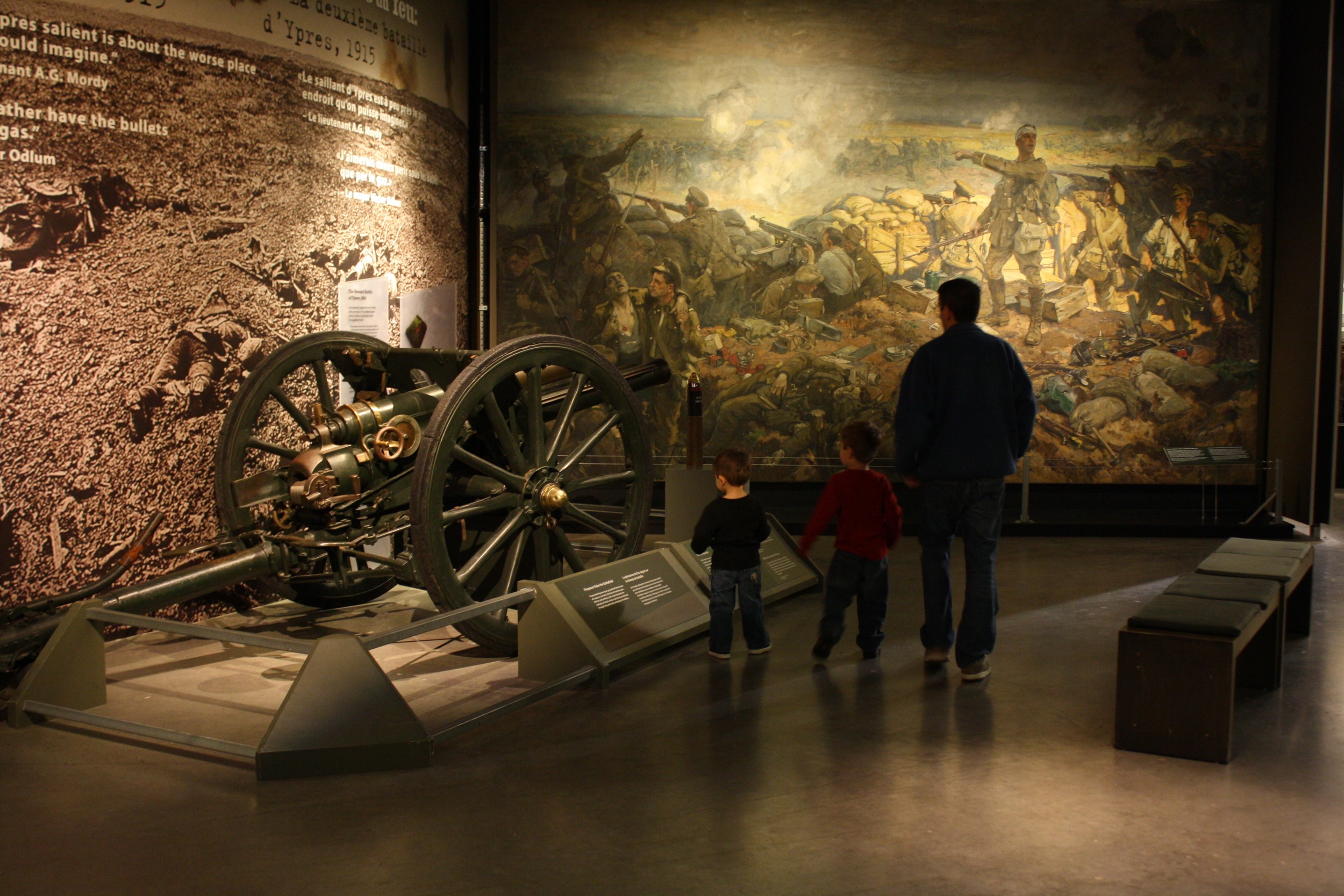
Every Remembrance Day I try to tour the Canadian War Museum   – a mammoth exhibition of battle since earliest times. Each year, “lest I forget”, the photos and exhibits tell a story of fear and courage, sacrifice and survival, humanity, brutality, violence, and hatred.

Early combat was limited to the distance you could throw a spear, fire an arrow or swing a club. Armour was made of wood. Much of war consisted of ambush and surprise. Today, though Canada’s military still use snowshoe and canoe, they not only prepare for ambush, but also for nuclear threat.

The War Museum describes 150 years of French-British conflict in North America, ending in the Seven Year’s War and the British conquest of Canada.

The Canadian War Museum

Then in 1775, American anger exploded into revolution – creating two countries in North America. For Americans, their invasions of Canada during the American Revolution and War of 1812 are considered minor campaigns. Yet north of the border, they were struggles for survival.

Canadian forces went abroad in 1899 and again in 1914 to fight wars as part of the British Empire. One thousand volunteers fought in South Africa; 620,000 fought World War I.

In 1914 Europe was a powder keg. Opposing alliances and secret treaties divided the heavily armed great powers. After the assassination of Austrian archduke Franz Ferdinand, countries rushed to settle old scores or to support allies. Britain, France and Russia stood against Germany, Austria-Hungary and Turkey. The rest of the world was dragged into a war that killed nine million and destroyed empires.

The War Museum focuses on the trenches of France and Belgium from 1915 to 1918, and the battles of the Somme, Vimy, Passchendale and the Hundred Days. Systems of fortified trenches stretched the length of the Western Front. Frontal assaults led to tremendous casualties. It was a long, bloody war.

In the 1930’s, Germany, Italy and Japan became aggressive dictatorships. The leading democracies – Britain, France, and the United States – tried to negotiate adopting a policy of appeasement. But the dictators responded with even more aggression.

War Museum exhibits cover Adolf Hitler and the rise of fascism, including an infamous Mercedes limousine used by Hitler at Nazi rallies. As World War II became a reality, Canada was the first Commonwealth country to send troops to Britain in 1939 – by the end of the conflict, 1.1 million Canadians served. Museum exhibits cover boots on the ground, as well as the costly Battle of the Atlantic where Canadians sunk 50 enemy submarines. The story of Canada’s air war is told, as well as our involvement in the British Commonwealth Air Training Plan – much of which took place at local airfields.

The Second World War alliance of the Soviet Union and the Western democracies was short lived. Opposing world views, and territorial disputes deteriorated into the Cold War of 40 years.

Communist North Korea’s invasion of South Korea in 1950 sparked a three-year war that killed or wounded 3.5 million.

And Canadians have gone on to serve in NATO, NORAD, the United Nations, the Persian Gulf, Kosovo, and Afghanistan.

The War Museum is well worth the visit.

It reminds us that history is filled with both horror and hope.

History is not only the story you read, it is the one you remember.

We will remember! For the Silo by MPP Toby Barrett