Toddlers are great. They are curious, active, and love learning. For them, every moment is an exciting opportunity to learn something new. Toddlers are continually focused on experiencing positive emotions. They are not focused on negativity, nor do they hold grudges for a lifetime. That is why it’s so fun to be around them.
No matter how fun they might be, it is up to their caretakers to provide them with the best possible surroundings.
When playing, toddlers don’t think much about food and drinks, no matter how hot it may be outside. This is why it is up to adults to mind their nutrition and to keep them hydrated all year round.
Here is how to keep them fresh on hot summer days and create safe playtime.
Hydration Comes First
Drinking enough water every day is important for many reasons, no matter the temperature, as it helps regulate body temperature, keeps joints lubricated, and helps organs function properly. If you live in a hot climate, you already know how important it is to have a bottle of water of your own.
To help your toddler refresh, keep a bottle of fresh spring water by your side and give him some sips on a regular basis, especially if you notice less energy and lower playfulness. Sometimes toddlers can not tell that they are thirsty so their bodies will try to communicate it.
Put A Hat On
Most effective tips are usually the most simple ones. Use a hat to keep your toddler well-protected. When shopping for the perfect hat, focus on finding the one with a wide brim and a flap to cover the neck.
When you are there shopping, get a hat for yourself as well. Seeing you with your own hat, your kid will understand that it is important to wear one and will do the same as you.
If Possible Avoid The Car
Cars are heat traps. On hot days it is really challenging to sit cool inside your car – it is easier if you have the right air conditioning. If possible, on hot days, walk to the park. If you have to use your car, think about traveling earlier in the morning or later throughout the day. If you have a dog, the same car rules apply.
Extra Tips On How To Refresh A Toddler On Hot Summer Day
1. Fill up the paddling pool
2. Get a nursery thermometer
3. Create a breeze
4. Ventilate your home
5. Use appropriate bedding
6. Give them a quick bath
7. Check toddlers temperature
Put yourself in their shoes. Treat your toddler as you would treat an adult. Do not overdress your toddler just because you think it’s too cold for him.
Ask yourself – is it really that hot? Would I be comfortable wearing this? Don’t forget to talk with your pediatrician if you have any questions or concerns about keeping your toddler safe in the heat.
No matter where you might be, or if you are staying all day indoors, make sure that you have fresh spring water on you – it will keep both you and your toddler well-hydrated and active.
One of my newest cheese loves is not a new cheese at all, but, actually, the traditional cheese of Spain. Manchego is a smaller wheel of Spanish sheep’s milk cheese that just makes the mouth water. It is regulated by Spain under the PDO (Protected Designation of Origin), which was granted through the European Union. (in a nutshell, PDO allows for exclusive food/geographical production so for example, in Europe, Parma Ham can only be sold and labelled as Parma Ham if it originated in Parma see link below for more CP ) This means that it must meet specific regulations in order to be called Manchego. It must be made from whole sheep’s milk taken from animals that have grazed in autumn in La Mancha province. Finished cheese must be aged from 60 days to 2 years. The milk must contain at least 6% fat and each stone, or wheel, of cheese must weigh between 2 and 3.5 kg.
There is a distinctive pattern engraved in the inedible brown rind of the cheese.
Originally, the Manchego curd was hand pressed in plaited esparto grass baskets. The grass was taken from the same fields where the sheep grazed, and the grass-flowers pressed into the top. Today, however, press moulds are formed using the traditional pattern and the grass baskets have been phased out of production. Still, the traditional zigzag is how you can recognize Manchego at your favourite cheese shop—and always look for the PDO label.
The inside of the cheese, or the paste, is an off-white that hints at golden. As the cheese gets closer to the rind, the colour progresses to more of an umber. Very small pockets of air are produced as the cheese ages and releases co2.
But enough of all this—the important part of Manchego is the taste. It has a wonderful, mellow flavour that is rich and subtle at the same time. There are slight hints of smoke, woody nuts, tobacco, honey and leather, and it finishes with the distinctive taste that only sheep’s milk can give you. Manchego can be served with olives, sundried tomatoes or hearty crusty bread. It pairs easily with a fine Rioja red wine or a fruity sherry—a wonderful way to stay warm on a winter’s evening.
Recently I heard that Manchego, cut in smaller chunks and dipped in honey poured on a plate, makes a fine conclusion to full meal. I tried this desert idea and the flavours of honey and cheese together are just wonderful. The smoky taste that coats the taste buds is a joy.
For the more daring, this traditional dessert of Spanish Manchego and honey also pairs well with a fine Cuban cigar. Enjoy your cheese.
Waaay back in 2007 the “Govinator” raised a few eyebrows at Ottawa’s Westin Hotel. After taking in a Sen’s hockey game, Arnold made an unscheduled stop for a 16$ Partagas Cuban
As the sun rises and the weather gets warmer, it’s time to revamp our breakfast routine to embrace the flavors of summer. A nourishing and refreshing morning meal is essential to fuel our bodies and minds for the day ahead.
Say goodbye to heavy and hearty breakfasts and say hello to delightful summer breakfast ideas that will leave you feeling energized and ready to take on the world. Let’s dive into a collection of mouthwatering recipes that celebrate the abundance of seasonal fruits, light and cool creations, and hydrating options to keep you cool all summer.
Iced and Refreshing Beverages
Cold Brew Coffee: Beat the heat with a refreshing black cold brew coffee. Serve it over ice with a splash of almond milk and a drizzle of honey for a smooth and satisfying coffee fix.
Iced Herbal Teas: Sip on iced herbal teas for a caffeine-free, hydrating option. Brew hibiscus, mint, orchamomile tea bags and let them cool in the fridge. Add a squeeze of lemon and a touch of honey for natural sweetness. These thirst-quenching teas are perfect for a laid-back summer morning.
Fresh and Fruity Delights
Smoothie Bowls: Start your summer mornings with a burst of tropical flavors in a smoothie bowl. Blend your favorite fruits like ripe mangoes, juicy pineapples, and sweet strawberries. Add coconut water or plain yogurt for a creamy texture. Top it off with sliced kiwi, chia seeds, and granola.
Fruit Salads: Elevate your regular fruit salad with zesty citrus flavors. Combine watermelon cubes, tangy oranges, and succulent blueberries. Drizzle honey and lime juice for a burst of freshness. This colorful medley will brighten your mornings and keep you hydrated.
Cool and Creamy Creations
Overnight Oats: Beat the morning rush with overnight oats. Layer rolled oats, almond milk, and a dollop of plain yogurt in a jar. Add a generous amount of sliced peaches, raspberries, and a sprinkle of cinnamon. Seal the jar and leave it in the fridge overnight. Wake up to a ready-to-eat, cool, creamy breakfast that keeps you full until lunch.
Chia Seed Pudding: Indulge in a velvety chia seed pudding. Combine chia seeds with coconut milk and a hint of vanilla extract. Let it sit in the refrigerator overnight until it thickens. Top it with juicy pineapple chunks, shredded coconut, and a drizzle of honey. This delightful treat will satisfy your sweet tooth without weighing you down.
Light and Refreshing Options
Avocado Toast: Elevate the classic avocado toast by adding colorful vegetables. Mash ripe avocados onto whole-grain toast and layer it with sliced cucumbers, cherry tomatoes, and baby spinach. A sprinkle of sea salt and a dash of lemon juice enhances the flavors, making this a light and nutritious breakfast option.
Greek Yogurt Parfaits: Create delicious and visually appealing yogurt parfaits—alternate layers of Greek yogurt with fresh berries, granola, and a drizzle of honey. The creamy yogurt and sweet berries will be the perfect harmony of flavors to kickstart your day.
Grilled and Savory Delicacies
Grilled Vegetable Frittatas: Turn your favorite summer vegetables into a delectable frittata. Grill zucchini, bell peppers, and cherry tomatoes until slightly charred. Whisk eggs and pour them over the grilled veggies. Bake until the frittata is golden and puffy. This savory delight is packed with nutrients and will satisfy you until your next meal.
Smoked Salmon and Cream Cheese Bagels: Elevate your bagel game with smoked salmon and cream cheese. Spread a generous layer of cream cheese on a toasted whole-grain bagel. Top it with luscious smoked salmon, thinly sliced red onions, and a sprinkle of fresh dill. This gourmet breakfast will transport you to a breezy seaside cafe.
With these delightful summer breakfast ideas, you can infuse your mornings with the season’s essence. Embrace summer fruits’ vibrant colors and flavors, indulge in light and cooling options, and start your day refreshingly.
These recipes will make your breakfasts a delightful celebration of the summer season. So, rise and shine to a wholesome and nourishing breakfast that will keep you energized and ready to make the most of your morning.
LOS ANGELES, Calif. –It’s not just people who are experiencing a high rate of being overweight. According to the Association for Pet Obesity Prevention (APOP), 54% of dogs in the country are considered overweight or obese. That adds up to 50 million dogs in the USA (and much more taking Canada and Mexico pet dogs into consideration) with an increased risk for health problems. This year, as people strive to make changes to improve their own health, Just Food For Dogs is setting out to give people assistance in getting their pet healthier, too.
“What we are doing is making it easy for people to help give their pets healthy food that they can feel good about,” explains Dr. Oscar Chavez, a professor of canine clinical nutrition and staff veterinarian for Just Food for Dogs. “We stick with making wholesome pet foods from good ingredients. Our foods will give dogs the nutrition they need and help improve their quality of life with every bite.”
APOP also reports that overweight and obese dogs are at an increased risk for having chronic inflammation, a reduced life expectancy, skin disorders, orthopedic disease, cancer, kidney dysfunction, respiratory disorders, and metabolic and endocrine disorders. Focusing on improving pet health can help avoid problems and can keep them feeling well.
Here are some tips from Dr. Chavez for helping to get dogs healthy:
Focus on fitness. In addition to taking your dog on walks (or runs) and playing fetch, focus on agility exercises. Look online to create your own obstacle course that will have your dog jumping, swimming, balancing, crawling and tunneling. Is it safe to put your dogs to work? Strength training is important and can be done by fitting your dog with weighted harnesses or latching it to light wagons or sleighs. However, this should only be attempted with properly trained dogs that are already conditioned and are deemed healthy by their veterinarian – just as you wouldn’t jump into strength training – they must ease into it.
Doggy diet do-over. Most commercial dog food is highly processed and can be made with byproducts from the 4 D’s (dead, dying, diseased or drugged) animals, this includes the popular raw diets. Traditional pet food can also contain toxins and cancer-causing agents. Seriously consider changing your dog’s diet to a lightly cooked, fresh, whole-food recipe.
Learn more about pet foods. It’s important to know about what pets need to be healthy and what should be avoided. Use only fresh whole food (ground beef, fish, broccoli, sweet potatoes, carrots, etc.), and avoid excess fillers that only fatten your pet. Veggies must be cooked, not served raw, as pets may not derive their full nutritional value when served raw and it can be tough on their digestive tract. No spices should be used as you would in human food as it disturbs their digestive system and can cause pain and intestinal problems. Once any potatoes are cooked to the desired level, immediately add ice to halt the cooking and cool the food. This will preserve the maximum nutritional value of the food.
Don’t just read my mind. Like people, dogs thrive on mental stimulation to keep them happy. A bored dog can become depressed, anxious and even ill. You can extend your dog’s life and enrich it by keeping them busy. As they age, keep their mind active with training, socialization, games, one-on- one attention, and other enrichment activities. Doggie daycares are a great way to let your dog stay stimulated when the alternative is to be home alone all day.
Sink your teeth into this one. Dental hygiene is an often-overlooked aspect of pet care. Many of us simply forget to brush our dogs’ teeth on a daily basis. Unfortunately, poor oral hygiene can lead to plaque, gingivitis, and eventually, periodontal disease, a bacterial infection of the mouth that has been linked to heart disease and organ damage. It’s a myth that kibble helps break down tartar – the only thing that will work is daily brushing, so make it a priority to brush your dog’s teeth at least once a day!
“Research shows that a focus on your dogs’ fitness leads to better fitness for yourself,” adds Dr. Chavez. “This is a lifestyle change that selfless and selfish at the same time. Make this the year where you and your dog get healthy together!”
Focusing on wholesome nutrition and freshness, the company doesn’t use any types of preservatives, growth hormones, BHA, BHT, pink slime, or artificial colors. All of their foods are made from recognizable ingredients that are approved for human consumption, lightly cooked, vacuum sealed, and immediately frozen. They remain good for up to 12 months in the freezer, or 3-6 days once in the refrigerator. Their collection of meals includes, turkey and whole wheat macaroni, beef and russet potato, chicken and rice, fish and sweet potato, lamb and brown rice, and venison and squash, and a line of prescription diets used by veterinarians to manage disease.
“Our mission is to help give people a way to get their pets healthier,” added Shawn Buckley, the founder of Just Food for Dogs. “Our dog food is created by dog lovers who want pets to be happy, healthy, and live longer lives. We treat your pet just like we treat our own.”
About Just Food for Dogs
The Just Food for Dogs kitchens and pantries are located in southern California in Costa Mesa, West Hollywood, Sherman Oaks, Manhattan Beach, Capistrano Beach, Downtown Los Angeles, Anaheim Hills, Long Beach, Glendale, Del Mar and Mission Viejo. The company also offers online recipes for those who want to make their own small batch pet meals from scratch at home. The company has a veterinary nutrition team of nine veterinarians, including a board certified veterinary nutritionist, a board certified veterinary toxicologist, and a board certified veterinary dermatologist. The company also offers treats, supplements, veterinary support recipes, and one recipe for cats. Their foods are also available online and can be shipped nationally.
[CHICAGO – August, 2023] – Alex Katz: Autumn is the artist’s tenth solo exhibition at GRAY and the first exhibition of large-scale landscapes since 2018. The exhibition follows his lauded career retrospective, Gathering, which opened at the Guggenheim Museum in New York in the fall of 2022. As Guggenheim curator Katherine Brinson described: “[One] might be surprised by the unbound rapture of the landscape paintings that have consumed much of the artist’s still-considerable energy in recent years. But [these works] are in fact the culmination of a lifelong artistic project that aspires to compress everything into ‘a single burst of energy… to paint it wide open.'”
Alex Katz has painted figures and landscapes in equal measure throughout his career. Expressed at great scale and in vivid color, the paintings exhibited in Autumn present enveloping compositions measuring as wide as fourteen feet. “I started to think about the environmental landscapes [as] being really an environment that wraps around you,” as Katz notes, “There is no narrative. You’re dealing with perception.”
Wedding Dress by Katz shows how much of a departure his new landscape paintings are.
Across eleven monumental canvases, Katz depicts the vibrant foliage, sweeping fields, and windblown trees of the changing season. Created between 2022 and 2023, Katz’s Autumn series relies on a bright fall palette, while other paintings in the exhibition, from the related series Field’s End and Tree Top, present quieter responses to the landscape in muted greens, yellows, and grays. The paintings are exhibited alongside a series of sixteen new portraits on paper. Each drawing possesses an economy of line and is titled after its sitter – Vivien, Niki, Levi, Isaac, Vincent, and others– in reference to the friends, family members, poets, dancers, and artists most central to the artist’s life.
Alex Katz: Autumn opens at GRAY Chicago (2044 West Carroll Avenue) with a public reception on Friday, September 8, from 5-7 PM CT, and will be on view through October 28, 2023. The exhibition will be accompanied by a fully illustrated catalogue featuring a new poem by Vincent Katz.
A behind the scene look of the conceptual artist’s solo show SHADOWLAND
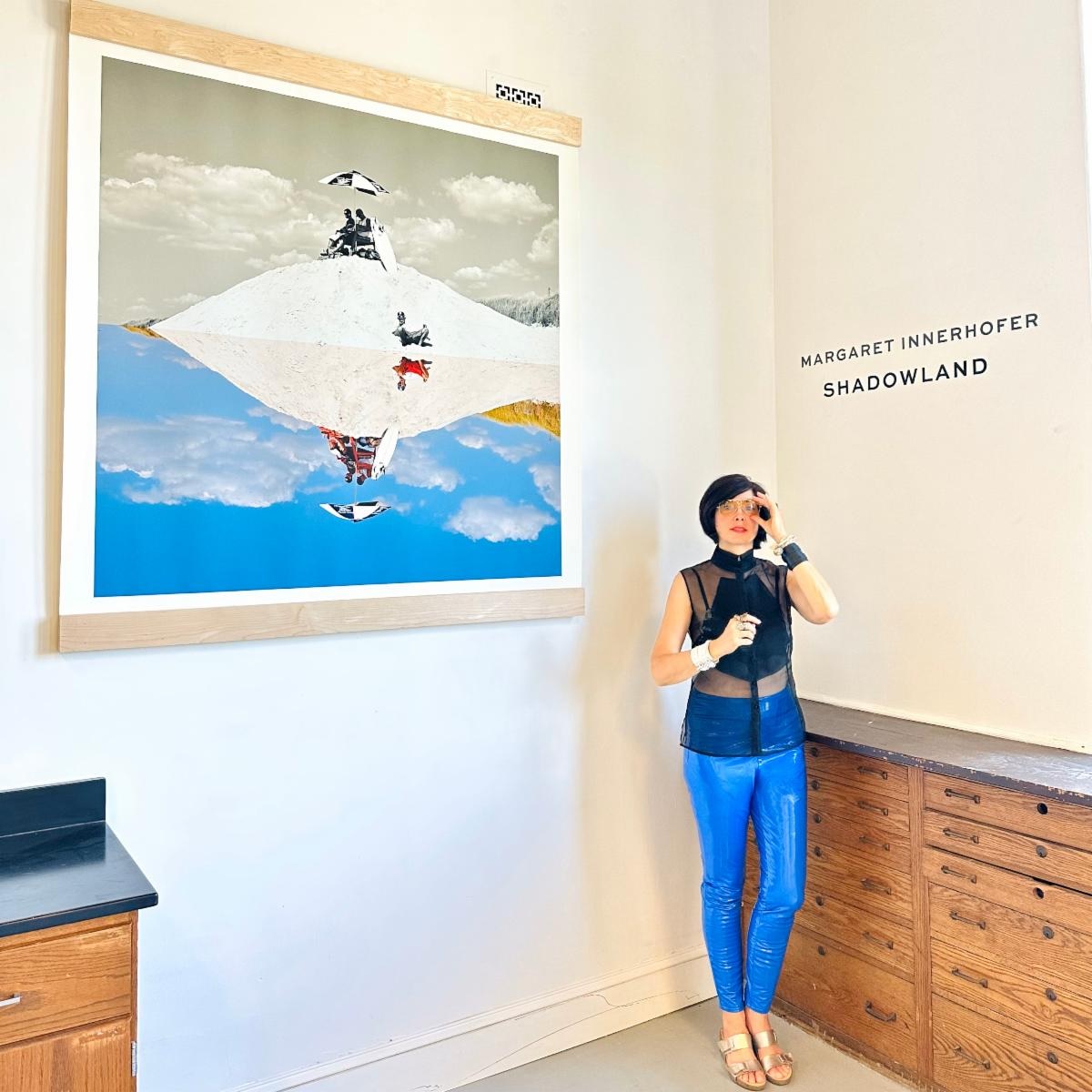
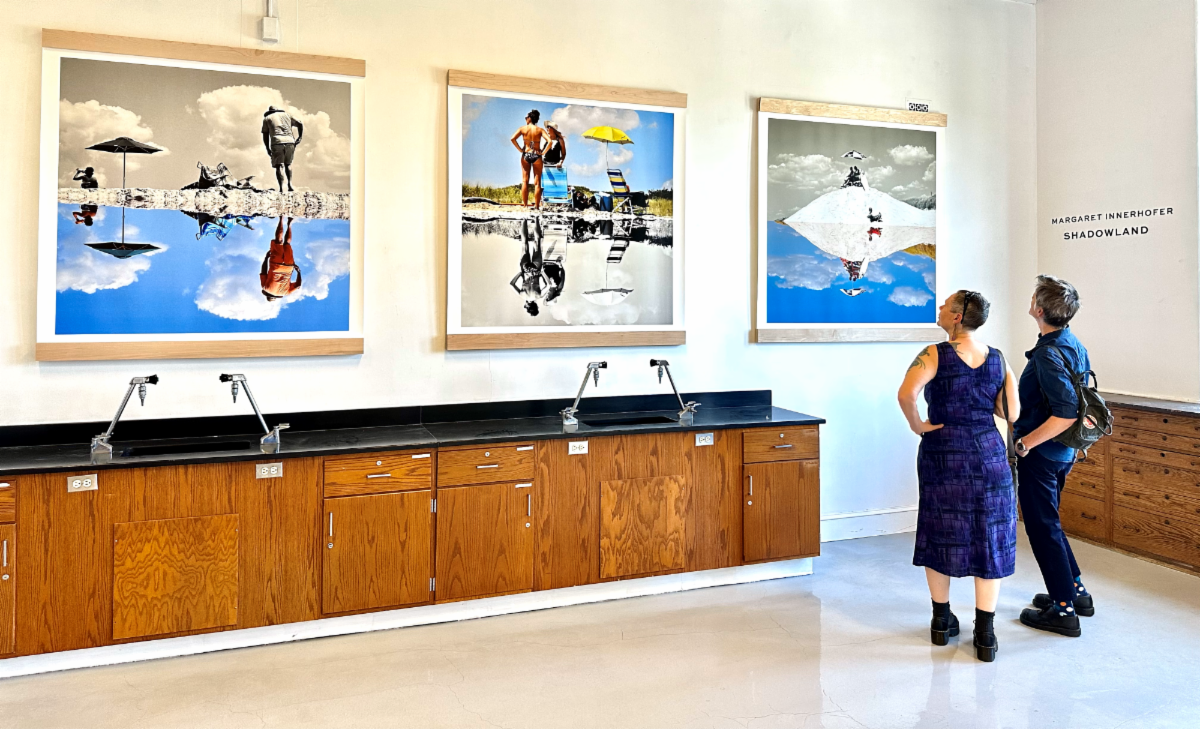
It is the first Saturday of Upstate Art Weekend and I am standing in a chemistry classroom of a former public school looking at inverted works, listening to Gregorian chants meets Jimmy Hendrix inspired music, and feeling that I am falling into a trance. In reality, I am meeting the artist Margaret Innerhofer for the first time at her solo show SHADOWLAND, at Ethan Cohen Gallery at The Kube Art Center in Beacon, NY. The renowned gallery describes her exhibition as: “Photo-based prints and framed canvases that explore the transitional spaces between spiritual and psychological borderlands. Each of the large-scale meditative compositions printed in color has a jarring and surreal black and white reflection that invites the viewer into an alternate psychological and temporal dimension.” So, what is behind these works laden with heavy and deep symbolism of awake versus sleep? I sat down with the elegant and stylish Margaret to understand how a dreamy child from the Tyrolean mountains became a philosophical artist in Beacon, NY. It turns out that we are all in a trance.
SHADOWLAND at Ethan Cohen Gallery at The Kube Art Center in Beacon
Let’s begin with your upbringing. Where were you born and raised?
I was born, and raised in the Tyrolean Alps, Italy, immersed in the idyllic beauty of its nature and harmonious sounds. My childhood was filled with long mountain climbs, horseback riding, yodeling, playing the guitar and drums, and singing Gregorian chants in a strict convent boarding school. I found fascination in Western movies and the Apache Indian lifestyle, particularly their deep connection with nature and the imagery of wild horses roaming freely in vast deserts, accompanied by their rhythmic chants and drum circles. These early experiences forged a profound bond with the natural world, which continues to be a driving force behind my visual and sonic artistic expression.
SHADOWLAND at Ethan Cohen Gallery at The Kube Art Center in Beacon
What was your first introduction to art, and how did you start evolving as an artist?
During my Architectural and Fine Art studies, I relocated to Milan, a city that would leave a lasting impact on my artistic path. Dating an artist during that time exposed me to a bohemian lifestyle and immersed me in Milan’s dynamic art, architecture, and design scene. The conceptual and minimalist concepts of the Arte Povera Movement captivated me, drawing me deeper into the contemporary art world. Socially engaging with fellow artists and actively attending art shows in galleries and museums across Italy and Europe, I was inspired by the diverse expressions of creativity. My early fascination with photography, particularly the works of conceptual artists from the Dada and Surrealist Movements, like Man Ray and Andre Breton, further fueled my artistic interests. This multifaceted exposure played a pivotal role in shaping me as an artist. It broadened my horizons, offered fresh perspectives, and allowed me to find my own artistic voice.
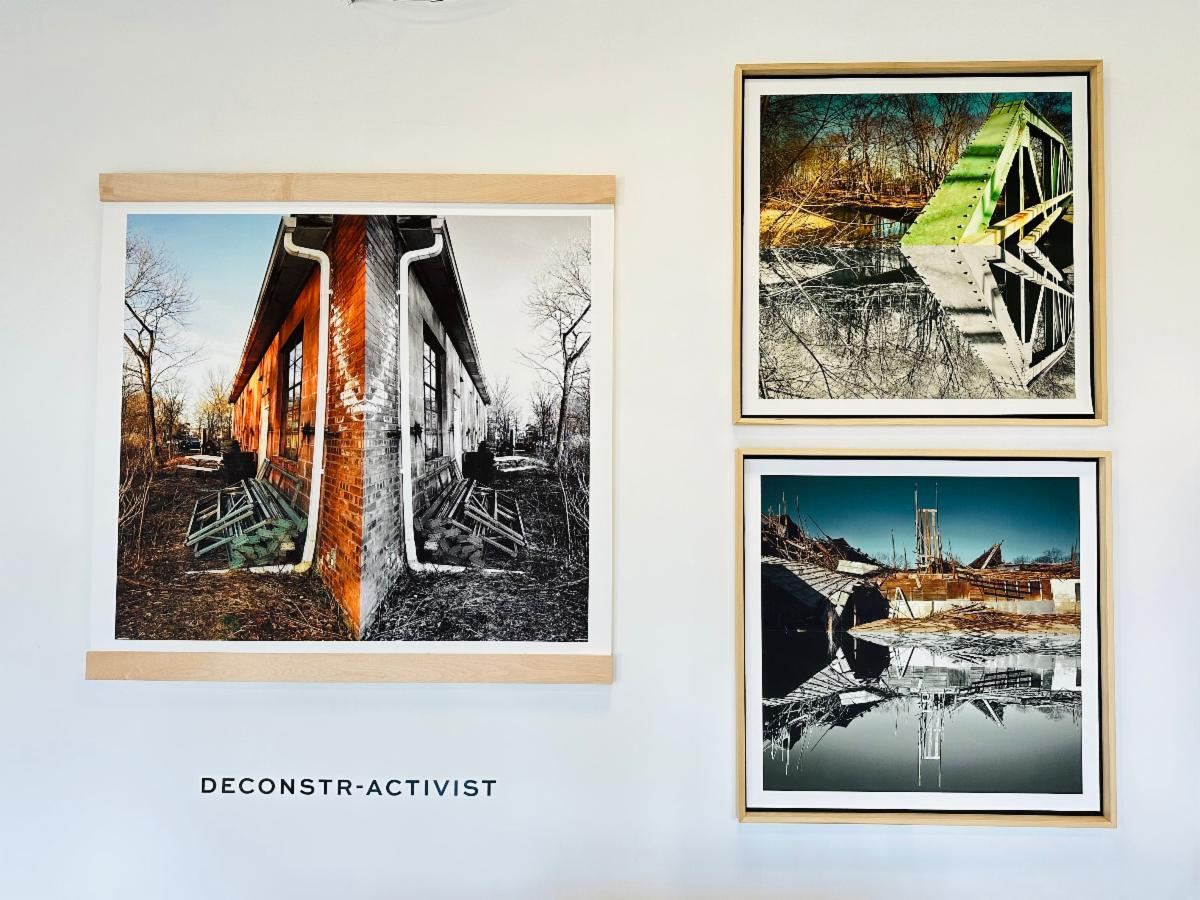
DECONSTR-ACTIVIST II, 2023
You now have a solo show called SHADOWLAND at Ethan Cohen Gallery at The Kube Art Center in Beacon, NY. What is the main inspiration for the three different series: Sandmen, Heavy Metal, and Deconstr-Activist?
In my latest exhibition, I delve into the intricate realms of the subconscious, guided by profound philosophical and scientific readings. Carl Jung’s exploration of collective consciousness has deeply fascinated me, leading me to explore how our subconscious influences our waking decisions and movements. Through my artwork, I seek to unravel the enigma of our subconscious control, drawing inspiration from scientific research, which reveals that a significant 80% of human behavior is governed by our subconscious, heavily influenced by experiences from our formative years, particularly ages 0 to 10. This revelation sheds light on why logical arguments may often be overshadowed by emotional reactions rooted in the gut. Another crucial thread in my exhibition revolves around the environment. I have been an environmental activist well before it became a trend, and I’ve actively co-produced environmental films and fought against practices like fracking. In SHADOWLAND, the subjects in my works interact with nature, and, in many instances, nature appears to reclaim them. This theme highlights the fragile bond between humanity and the natural world, provoking contemplation on our relationship with the environment.
Is it this exploration into the subconscious why the artworks are designed to be inverted? That they can be hung in either vertical orientation?
As I present my art to viewers, I give them the unique opportunity to evoke different visual and emotional responses by allowing them to choose how to hang each piece. They can opt for the color side up, revealing a figurative and realistic view of the artwork. Alternatively, they can explore the more conceptual, surreal, abstract, and volumetric perspective of the black-and-white ‘Shadow image’ when it faces upward. What’s intriguing is that showing the ‘Shadow image’ facing up, actually, represents a more realistic worldview, one that most people might be unaware of. It’s a perspective that delves into the subconscious, which I believe rules humanity and ‘runs the show.’ It’s a fascinating paradox: while the color side portrays the conscious perception of the world—what’s readily visible—the ‘Shadow image’ uncovers the hidden depths and complexities that shape our lives. By offering this choice of orientation, I invite viewers to question their own understanding of reality and delve into the intricacies of their subconscious minds. This art goes beyond mere aesthetics; it prompts introspection and contemplation, creating a multi-layered experience that challenges us to consider the complexities of human perception.
DECONSTR – ACTIVIST III, 2023Signature on the back. Archival Pigment Print on Hahnemühle Cotton Canvas,109.2 x 109.2 cm, 43 x 43 in, Edition of 3
Looking specifically at the three different subjects, can you first tell us more about Deconstr-Activist?
My Deconstr-Activist series draws inspiration from the ‘Deconstructivism’ architectural movement, challenging the rationality of modernism and embracing and revealing chaos and complexity. I delve into the intriguing world of shadows, volumes, negative versus positive space, and the interplay between light and darkness. This exploration stems from my background in architecture, which ignited my fascination with these artistic elements. Throughout the series, I endeavor to capture neglected structures that are gradually being reclaimed by nature. By doing so, I aim to shed light on the physical structures we create to accommodate our fragmented psyches. The juxtaposition of abandoned structures being overtaken by nature serves as a compelling visual metaphor for the inherent fragility and impermanence of human constructs.
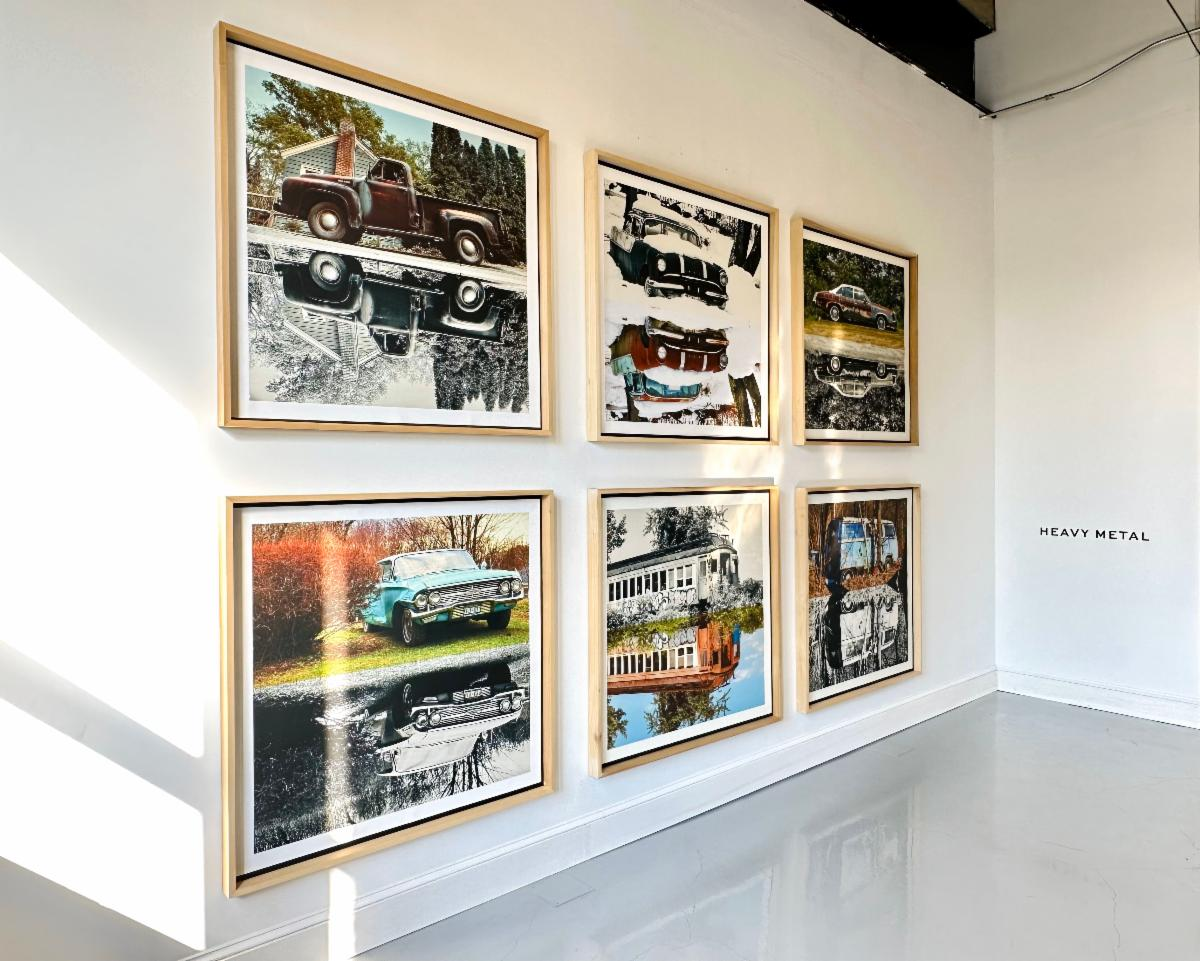
HEAVY METAL – VOLKS WAGEN, 2023Signature on the back. Archival Pigment Print on Hahnemühle Cotton Canvas,109.2 x 109.2 cm, 43 x 43 in, Edition of 3
What about Heavy Metal?
In my “Heavy Metal” series, the transition from the pristine mountain range to the Hudson Valley exposed me to a striking contrast—defunct cars replacing the beauty of flowers in many backyards. This encounter sparked an obsession, leading me to spend years capturing these scenes with vintage analog Leica cameras, which I acquired from flea markets, embracing the slight imperfections in their lenses as a welcomed artistic element. In this body of work, I explore my fascination with American vintage cars left abandoned and outdated, captured within the passage of time and the encroachment of nature. Each photograph alludes to the poignant collision between the past and the future, symbolizing our own embodiment within these vehicles that are increasingly outdated, yet perpetually trapped in the present. In “Heavy Metal,” I seek to evoke a sense of nostalgia while urging reflection on the transient nature of our material possessions and the fleeting nature of human creations. The juxtaposition of these forgotten vehicles with the ever-encroaching embrace of nature serves as a poignant reminder of the impermanence of all things, urging us to ponder our place in the grand tapestry of time and the inescapable passage into the unknown future.
SANDMEN III, 2023Signature on the back. Archival Pigment Print on Hahnemühle Cotton Canvas,152.4 x 152.4 cm, 60 x 60 in, Edition of 3
And finally, what can you tell us about Sandmen?
Within each frame, beachgoers blissfully inhabit the horizon, seemingly unaware of their inverted doppelgängers lurking just below the surface. This juxtaposition of colors and reflections becomes a visual metaphor for the duality of human existence—the conscious experience of the moment above the surface and the hidden depths of the subconscious below. Drawing inspiration from Carl Jung’s concept of the Shadow persona and Quantum Physics, I explore how these profound elements influence human actions and behaviors. The dreamy beachscapes serve as a canvas for contemplating the interplay between our conscious and unconscious selves, the tangible and the intangible aspects of our existence. In this series, I invite viewers to immerse themselves in the enigmatic world of “Sandmen,” where time seems to stand still, and the boundaries between reality and imagination blur. The photographs become a gateway to introspection, inviting you to reflect on the transient nature of human experiences and the profound complexities that shape our perceptions and actions.
What is your favorite piece in the show and why?
As an artist, it’s challenging for me to pick a favorite, each image represents a moment of inspiration, creativity, and a reflection of my inner world. Each image carries a distinct essence, resonating with different viewers in various ways. Together with the sound piece ‘Shadowland’ that I have composed, performed, and recorded specifically for this show, the fusion and synergy between my visual art and sound adds a multi-dimensional layer to the overall experience. The fusion of visual and auditory expressions allows each piece to resonate on a deeper level, connecting with viewers in unique and profound ways.
SANDMEN II, 2023On the back. Archival Pigment Print on Hahnemühle Cotton Canvas,152.4 x 152.4 cm, 60 x 60 in, Edition of 3
What is next on the horizon?
A beach vacation in Italy, is on the immediate horizon!
The next time that you sit down to a table in a local restaurant for a nice meal with friends, rest in a waiting room, or even thumb through an Ikea catalogue (apologies to those that ‘yuck’ on that idea)—take note of the furniture that stands before your eyes…have you ever given it more thought than the function it is about to perform for you? It has been designed by someone, who, perhaps, has been hired to make sure it is (hopefully) structurally sound, aesthetically appealing (again, hopefully), and possibly economically purchased, therefore mass produced.
The Eames’ designed Christmas Card
Is it a work of art? Do you consider it the work of a master?
Often little attention is given to the ingenuity and craftsmanship of design, so in order to pay it a little respect, I would like to introduce you to a pair whose work you might be somewhat familiar, or dare I say “comfortable” with, Charles Eames and his wife Ray Kaiser Charles Eames (American, b.1907), studied architecture at the Washington University in Illinois, during a time of great innovation in the discipline.
Great advances in building technology at the turn of the 20th century, namely steel reinforced concrete, allowed architects the design freedom to build taller buildings on a steel skeleton permitting the use of more glass and therefore, more natural light and a better view of the outdoors. After graduation in the late 1920s, Eames was fortunate enough to tour Europe and see the revolutionary designs of such masters in his field as Le Corbusier, Mies Van der Rohe and Walter Gropius. Although this was a time of reconstruction after the Great War and utilitarianism was the mode, steel technology allowed this group of architects the freedom to use more organic forms in their designs and, as a result of the option to employ more glass in their structures, buildings that were based more around their external surroundings.
Eames’ own work really began to take off when he joined forces with his second wife, Ray Kaiser (American, b.1912). Ray was a student of famous painter Hans Hoffman and had keen interest in all the arts, including film and dance. The pair, finding it difficult to secure work during the depression, settled in Los Angeles, Eames finding work designing sets for MGM and Kaiser creating covers for architectural magazines.
Secretly, in the evenings, the couple conducted plywood experiments in their apartment turned studio.
Their aim, along with several collaborators, was to make functional furniture with an attractive design that could be produced cheaply and quickly on a massive scale. Their experiments and designs proved to be successful and the Eames began to get contracts for their moulded plywood furniture that combined an organic aesthetic with technical ingenuity. Branching out from wood, the couple also pioneered such technologies that are widely used today, such as fibreglass, plastic resin, and wire mess chairs. Most notable is the 1956 Lounge Chair, made from leather and plywood, a design that is still quite popular in rec rooms today.
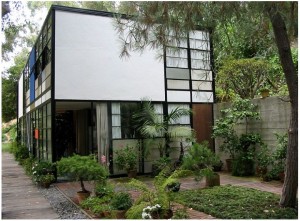
For the sake of the Eames lasting legacy in the history of modern architecture, it is necessary to mention the Eames House was constructed in 1949. The design for this landmark structure was proposed by the husband and wife team for the famous Case Study house program for Arts and Architecture magazine. The goal of this program was to have an architect design a modern house, elaborating on its functional requirements and then actually build the home. The house proposed by the Eames reflected their needs as a young married couple looking for a place to live, work and entertain.
They choose a site along the Pacific coast, and using mostly pre-fabricated steel and glass walls, constructed a home heavily influenced by cubist painter Mondrian’s “Composition in Red, Yellow and Blue”.
As a result, of the replacement of concrete walls for glass, the inhabitant of the home is afforded a spectacular view of the coastal property and exterior greenery, meanwhile, taking advantage of the natural light that is allowed to stream throughout the house. Of all of the proposals that were submitted for the Case Study houses, the Eames House is considered to be the most successful, as it not only made a definite architectural statement, but also functioned quite well as a comfortable and practical living space. The property is still maintained by the Eames family, who continue to use it as an occasional residence, and it was designated a National Historic Landmark in 2006.
So… consider this: although you might not find the Eames furniture in your hospital waiting room, rec room,or local restaurant, many mass produced models still bear their innovative legacy, either in their design, comfort or materials. For the Silo, Eve Yantha.
After a long day of work or school, it’s important to take care of yourself before bed.
Taking care of yourself at night ensures that you wake up feeling refreshed and ready to tackle the day ahead. Here are some tips on how to take care of yourself at night:
Take Care of Your Skin
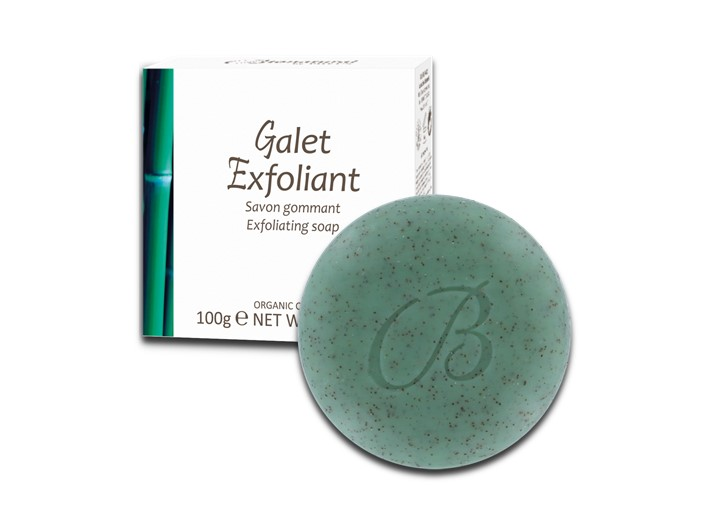
Taking care of your skin is an essential part of self-care. Before bed, make sure you remove your makeup and cleanse your face thoroughly. Apply a moisturizer that suits your skin type to keep it hydrated and prevent wrinkles and other skin problems. Don’t forget to use an exfoliating soap for the perfect beauty routine!
Unplug and Disconnect
We are constantly connected to our smartphones, laptops, and other devices. Before you go to bed, switch off all electronic devices or keep them away from your bedroom to ensure a peaceful and restful sleep. The blue light from electronic devices can disrupt our circadian rhythms and affect the quality of our sleep.
Create a Relaxing Environment
Your bedroom should be a peaceful and relaxing environment that promotes restful sleep. Make sure your room is dark, cool, and quiet. Use comfortable bedding and pillows that support your neck and spine. You can also use aromatherapy candles or diffusers to create a calming ambiance that helps you relax.
Practice Good Sleep Hygiene
Good sleep hygiene is essential for a good night’s sleep. Make sure you stick to a regular sleep schedule and go to bed and wake up at the same time every day. Avoid caffeine, alcohol, and heavy meals before bedtime as they can interfere with your sleep quality. Also, try to establish a bedtime routine that helps you unwind and relax, such as reading a book, taking a warm bath, or meditating.
Do Relaxing Activities
Engage in relaxing activities before bed to calm your mind and promote a restful sleep. You can try reading a book, listening to calming music, practicing yoga or meditation, or taking a warm bath. These activities help reduce stress and anxiety, which can interfere with your sleep quality.
In conclusion, taking care of yourself at night is crucial for your overall health and well-being. By following these tips, you can create a peaceful and relaxing environment that promotes restful sleep and helps you wake up feeling refreshed and energized. For the Silo, Bill Gordon.
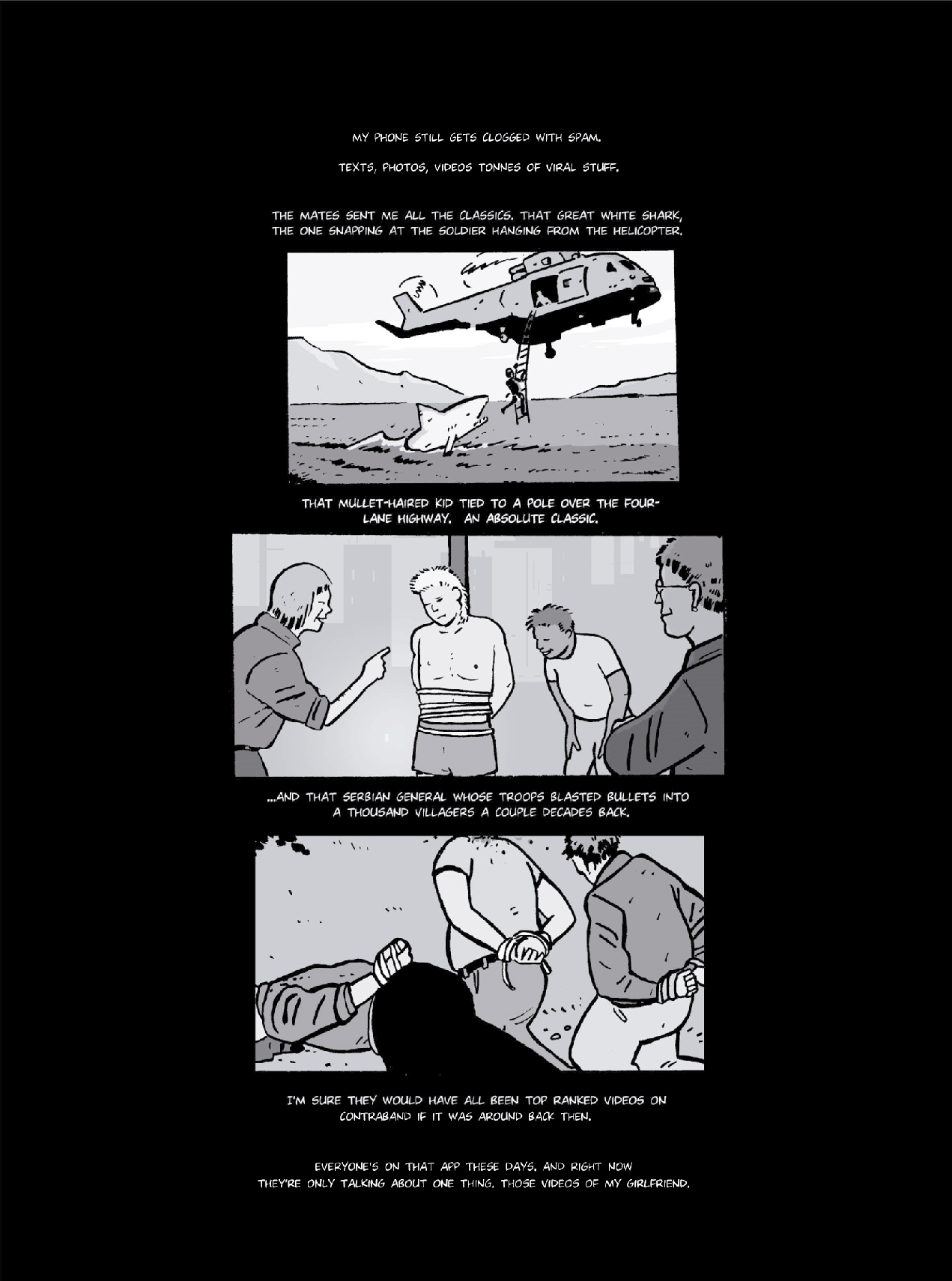
Mainstream Social is DEAD! State censorship, sponsored spam, cancel culture and inciter-banning means everyone who’s anyone is on the dark web. And no one knows it better than Tucker Scott.
Rampant cyberbullying. Fake news trolling. Spying, voyeurism and privacy invasion. This is Contraband, the ruthless entrepreneurs’ digital underground – where profit-hungry mobs prowl city streets filming violent events to satisfy society’s demand for sensational content.
Contraband is a unique cross-Atlantic graphic novel collaboration published by Markosia. Here are a few good reasons why you should definitely pick up this superbly relevant graphic novel.
1. Contraband focuses on one of the more timely, relevant topics in this year of our Lord, 2021, zeroing in on the early violent, criminal abuse of underground community sharing – and by doing so, adds a whole new meaning to disruptive video mobile and social media technology convergence.
But when activists hack Contraband giving control to any influencer with the most followers, it’s complete chaos as everybody chases the money and fame of being number one!
2. Some interesting comics and mainstream news media folks like what we’re doing: “Behe’s dialogue brings a hip, hyper-real energy to his plot while Elliot’s deceptively plain artwork evokes a shabby world of compromised morals.” The Financial Times
“As visionary as the technology Behe writes about. “ Broken Frontier
“Behe’s critique of the public’s willingness to watch all manner of depravity is a righteous, if not an original, one.” Entertainment Weekly
“Beneath Contraband’s ultra stylish cover lies a tale of high action and drama in a very near future where technology and communications have become inescapable.” Forbidden Planet
3. They’re an odd but solid partnership for making tech fiction graphic novels: There’s TJ Behe -a Canadian CEO of a self-sovereign ID privacy firm, an experienced social / telecoms consultant and an Ivey MBA graduate – along with Phil Elliott- a British illustration pro who’s been busy creating amazing comics for over 25 years with the likes of Alan Moore, Neil Gaiman and Eddie Campbell.
Around 75 million US and Canadian adults have a Netflix subscription, with the streaming service a huge hit. But, which Netflix original series and movies are most popular amongst us Canadians?
Our friends at Spin Genie- a leading online casino have helped us out with this one and looked at Google search data, viewing hours, news articles, Instagram posts and Tiktok views for Netflix’s biggest original series and movies to reveal the streaming service’s most popular projects.
Canada’s top 10 most Googled Netflix Original Series:
Rank
Title
Number of Google searches
1
Stranger Things Season 4
1,939,100
2
Bridgerton Season 2
656,500
3
You Season 4
605,700
4
The Crown Season 5
585,100
5
Love Is Blind Season 3
580,900
6
Love Is Blind Season 4
561,130
7
Ozark Season 4
469,400
8
Love, Death & Robots: Volume 3 Season 3
404,030
9
Cobra Kai Season 5
363,200
10
Ginny And Georgia Season 2
312,300
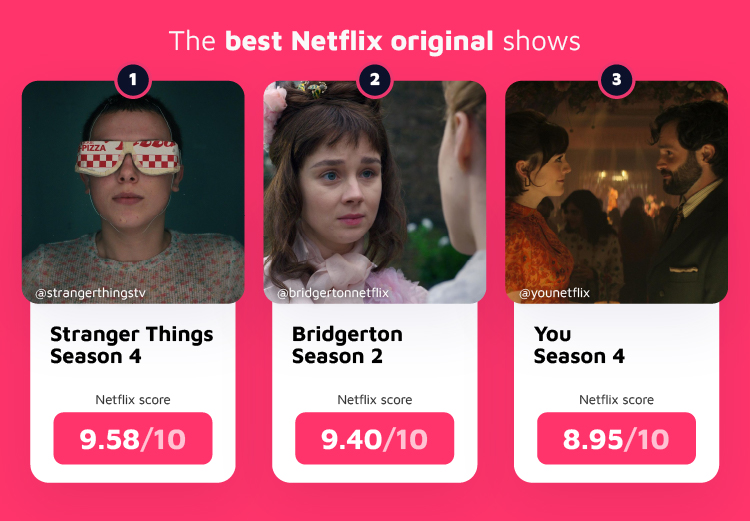
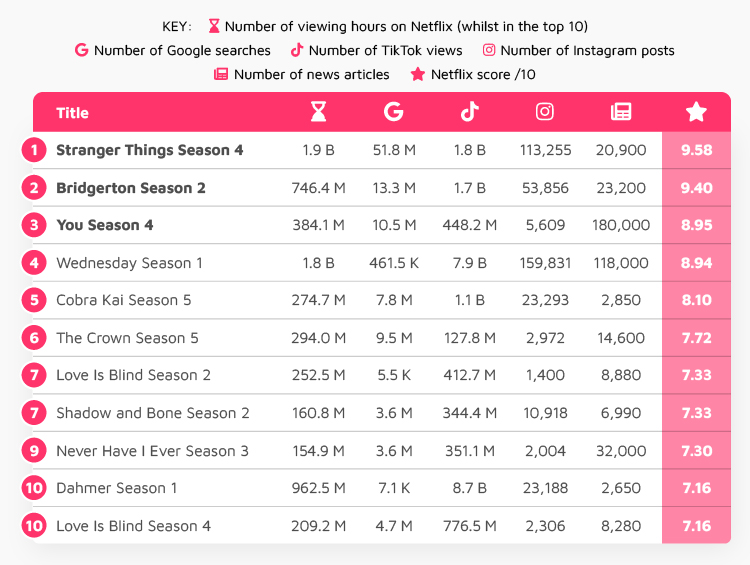
Taking the top spot is Stranger Things Season 4, with nearly 2 million Google searches between January 2022 to April 2023. Stranger Things Season 4 was also crowned Netflix’s best original series according to its overall Netflix score of 9.58/10.
Bridgerton Season 2 is Netflix’s second-most searched-for original series since January 2022, with more than 650,000 searches in Canada. The show also boasts over 1.7 billion Tiktok views, 23,200 news articles and 53,856 Instagram posts.
Rounding out the top three is You Season 4 with just over 600,000 Google searches. Season 4 of You had the most media coverage of any Netflix show, with around 180,000 articles written on Google News.
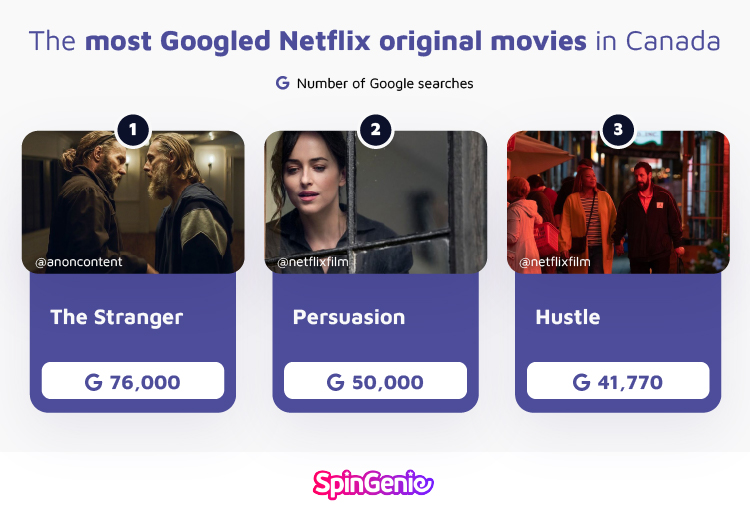
Canada’s top 10 most Googled Netflix Original Films:
Rank
Title
Number of Google searches
1
The Stranger
76,000
2
Persuasion
50,000
3
Hustle
41,770
4
Blonde
35,400
5
Troll
32,950
6
Purple Hearts
26,000
7
Senior Year
21,930
8
All Quiet on the Western Front
18,540
9
Pinocchio
16,810
10
White Noise
15,960
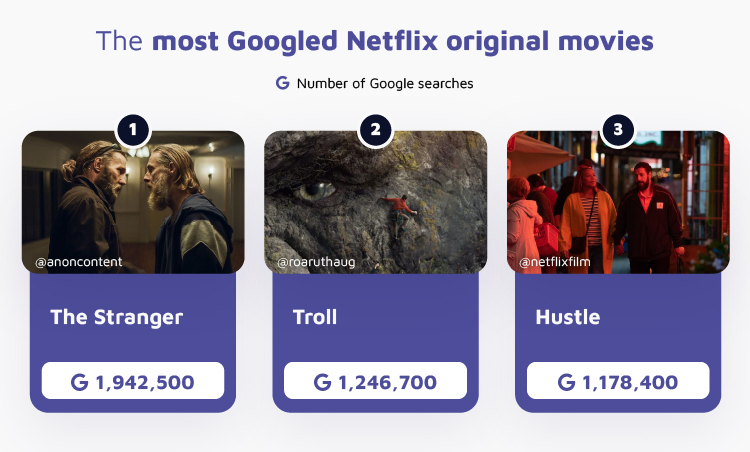
Taking the number one spot for the most Googled Netflix original movies in Canada, we have The Stranger, with around 76,000 searches since the start of 2022. The film was based on the non-fiction book, The Sting: The Undercover Operation That Caught Daniel Morcombe’s Killer by Kate Kyriacou.
In second place, we have Persuasion,another adaptation of Jane Austen’s novel of the same name. Since the start of 2022, this Netflix original movie has been searched for around 50,000 times.
Hustle rounds out the top three with searches up by 41,770. The sports comedy-drama features Adam Sandler as an NBA scout, and LeBron James was also a producer on the movie, through his company SpringHill.
The research also revealed the following:
Enola Holmes 2 is the most talked about Netflix original movie on Instagram with almost 109k posts. When it comes to Instagram’s most talked about Netflix original series, Wednesday tops the list with over 159k posts on the app.
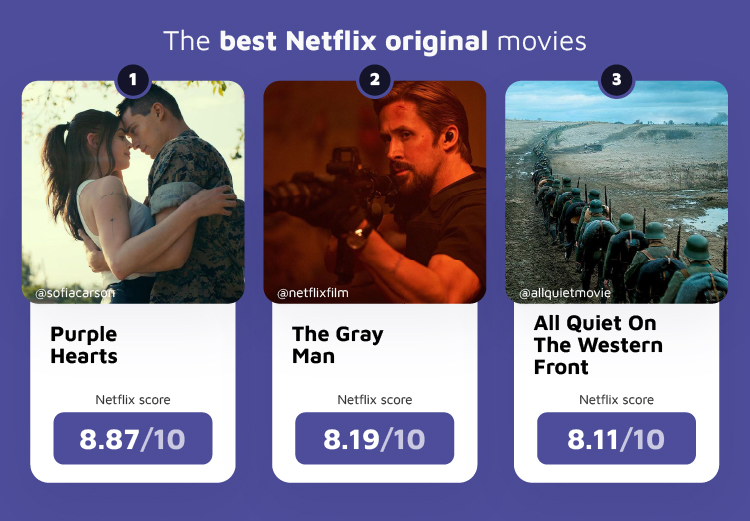
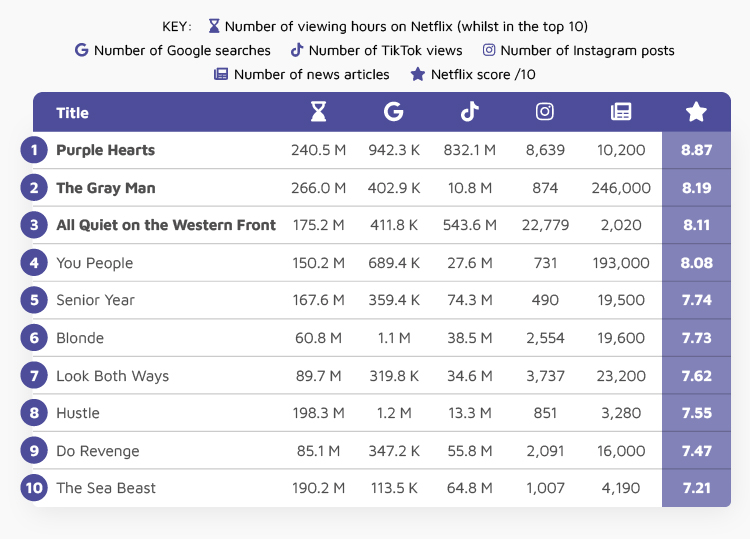
Purple Hearts is the best Netflix original movie according to its overall Netflix score of 8.87/10. Stranger Things Season 4 takes the crown as Netflix’s best original series, scoring 9.58.
Glass Onion: A Knives Out Mystery is the most-watched Netflix original movie, amassing301,730,000 viewing hours in its 7 weeks in the top 10.
Dahmer has been named TikTok’s most talked about Netflix series, with around 8.7 billion views on posts talking about its first season. When it comes to Tiktok’s most talked about Netflix film, Enola Holmes 2 takes the crown with around 2 billion views on the platform.
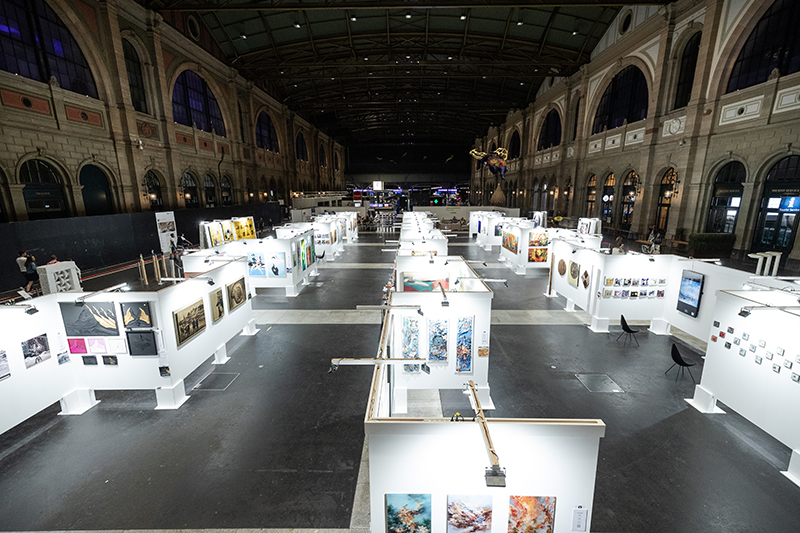
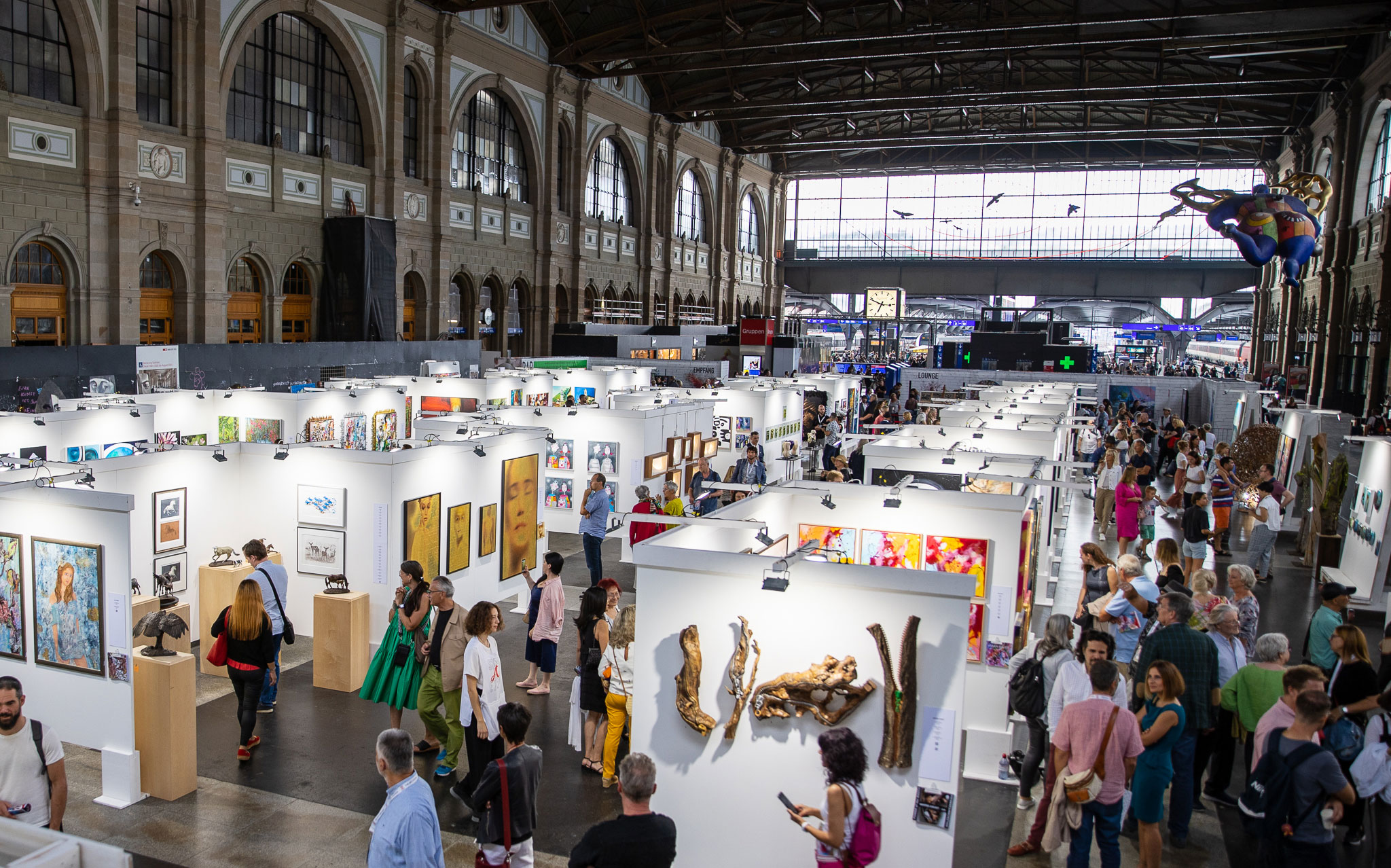
This year’s SWISSARTEXPO 2023 will be held in the beautiful Zurich main station. The art festival expects to draw 80,000 passers-by every day at the most visited hotspot in Zurich!
What is the ARTBOX.PROJECTS? The ARTBOX.PROJECTS have been taking place at regular intervals since 2015 at the most sought-after art hot spots worldwide. The aim of the ARTBOX.PROJECTS is to provide a platform for specially emerging artists so that they can be seen by a large audience. So far, for example, very successful exhibitions have been held in the following locations: Miami during Art Basel, New York during Armory Art Week, Basel during Art Basel, Barcelona, Venice during the Biennale d’Arte and many more! How does the ARTBOX.PROJECT Zurich 5.0 work? Our most popular art project, the ARTBOX.PROJECT Zurich, takes place every year during the SWISSARTEXPO. SWISSARTEXPO is a Swiss art festival that takes place in late summer in Zurich’s venerable Main Station Hall and presents over 100 artists from all over the world. The ARTBOX.PROJECT has a very prominent place in the front part of the exhibition, where the two 86″ HD screens are located, on which the artworks of the ARTBOX.PROJECT Zurich participants are presented digitally throughout all exhibition days.
Fitore Lleshi is a Comedian, Actress and host of the show Fitore Laughing at Life, offering a unique blend of comedy and self-help advice for single moms. Becoming a top producer out of 30+ nationwide stores in marketing, while also side hustling as a standup comedian, this single mom of 4 shares practical advice to other single mothers who struggle to get through the day, using music and laughter to connect on a deeper level.
Fitore says, “Growing up, I had always dreamt of becoming a movie star, but life took an unexpected turn when I found myself pregnant and married at a young age, throwing a wrench into my plans. I dabbled in different jobs with a common thread– whether it was convincing customers to opt for higher quality alcohol, matching pants for their jackets, or a larger home to rent, I thrived on the art of persuasion. I soon realized that these roles satisfied my ego, demanded quick thinking and creativity, and allowed me to unleash my comedic talents.”
Her TV and YouTube show, “Fitore Laughing at Life” also offers valuable insights into the world of fitness and personal growth.
Fitore Leshi is a rising personality in the entertainment industry with a multifaceted career that includes stand-up comedy, entrepreneurship, and mentorship. Her show, Fitore Laughing at Life, has been a success, offering a unique blend of comedy and self-help advice that has resonated with audiences. Through her show, Fitore has been able to share her personal experiences as a single mother, entrepreneur, and comedian, offering practical advice on everything from building self-esteem to achieving financial success. Her warm, relatable personality and humorous anecdotes have made her a beloved figure among her fans, and she has become a role model for women everywhere. As an entrepreneur and mentor, she has helped countless women achieve their dreams and overcome the obstacles that stand in their way.
The Raketa Watch Factory launches a new tool watch dedicated to the Lun-class Ekranoplan: a Soviet era hybrid machine — half ship, half plane — unlike anything else in the world.
Legendary soviet achievement
Part ship & part plane, the Lun-class Ekranoplan was built in the early 80s by the Soviet Union as an experimental coastal defence vehicle. It can claim to be one of the most extraordinary machines ever built by mankind. It combined the best characteristics of a ship and that of a plane: it could carry as much cargo as a ship and fly as fast as an airplane at speeds of up to 500 km/h. It flew over distances of up to 2,000 km using lift generated by the “ground effect” acting on its large wings when about 4 metres above the surface of the water. This enabled the Ekranoplan to fly undetected by radars.
The name “Lun” was chosen because it comes from the Russian word for “harrier”, a bird which characteristically hunts by flying silently low over open ground.
A remnant of the past
The only Lun-class Ekranoplan ever built lies today on a beach of the Caspian sea near the city of Derbent (Russia) as a lonely reminder of past achievements. With its gigantic size, unique hybrid characteristics and quirky design, the Ekranoplan is a testimony to the incredible originality of Soviet-era engineering. Even now, after almost half a century, it looks incredibly futuristic.
A watch as testimony to the Ekranoplan Lun
The Raketa Watch Factory has always been inspired by incredible human technical achievements. It has therefore designed and manufactured a tool watch as testimony to the Ekranoplan. Raketa also hopes this will attract more attention to the Ekranoplan, and thus contribute to saving it.
Especially for this model, Raketa developed a new stainless steel case and metal band: its sturdy design corresponds to the looks and spirit of the Soviet-era Ekranoplan. The Raketa “Ekranoplan” watch is directly linked to the Lun-class Ekranoplan:
– The insert of the rotating bezel is made from a piece of metal from the Lun-class Ekranoplan, officially given by the city of Derbent which is in charge of safeguarding the Ekranoplan;
– The design of the compass markings on the bezel is directly inspired by the design of the compass on the control panel in the cockpit of the Ekranoplan;
– An embossed image of the Ekranoplan is printed on the dial.
The back of the watch reveals the beautifully decorated 24-hour automatic movement which is entirely produced by the Raketa Watch Factory in Saint-Petersburg.
The Raketa “Ekranoplan” watch model is limited to 500 pieces.
Each watch model is complemented with a leather strap. The model is also available as part of a Gift set which includes the Raketa “Ekranoplan” watch model with stainless steel bracelet, an additional leather strap and a 1:400 scale model of the Lun-class Ekranoplan.
The price
The cost of the watch is 1.667 EUR (without VAT) $2,410.08 CAD at time of writing. The cost of the Gift set is 2083 EUR (without VAT) $3,011.52 CAD at time of writing. For the comfort of customers, Raketa watches are delivered worldwide free of charge by DHL directly up to their front door.
The insert of the rotating bezel is made from a piece of metal from the Lun-class Ekranoplan.
Specifications
Factory:
Raketa Watch Factory (Saint-Petersburg)
Movement:
Calibre:
2624
Functions:
Automatic
Number of jewels:
24
Testing positions:
4
Average rate (s/d):
-10+20
Average running time (h):
40
Frequency/hour:
18.000 / 2.5Hz
Bi-directional automatic winding
Yes
Decoration:
Nanocoating Neva waves Print
Case:
Material:
Stainless steel
Material of the bezel insert:
Metal from the Lun-class Ekranoplan
Size:
41,6 mm
Front glass:
Sapphire
Back glass:
Mineral
Water resistance:
20 АТМ
Hands:
Superluminova
Dial:
Superluminova
Strap/bracelet:
Material:
Stainless steel Genuine leather
Width:
22 mm
Sex:
Male
For the Silo, Lera Komolova. Photos: Lera Komolova
RAKETA “EKRANOPLAN” Entre ciel et mer !
La Manufacture horlogère Raketa lance une nouvelle montre spécialisée qui est dédiée à l’Ekranoplan Lun : un appareil hybride de l’ère soviétique – mi-avion, mi-bateau – absolument unique en son genre.
Un exploit légendaire de l’époque soviétique
Construit par l’Union soviétique au début des années 1980 en tant qu’engin expérimental de défense côtière – mi-avion, mi-bateau – l’Ekranoplan peut être considéré comme l’une des machines les plus extraordinaires jamais créées par l’homme. L’Ekranoplan réunissait les meilleures qualités d’un navire et d’un avion : il pouvait déplacer autant de cargaison qu’un bateau et pouvait voler aussi vite qu’un avion en atteignant une vitesse de 500 km/h. Il volait à des distances allant jusqu’à 2 000 km grâce à “l’effet d’écran” qui se formait sous ses immenses ailes à environ 4 mètres au-dessus de la surface de la mer. Ceci lui permettait de se déplacer sans être repéré par les radars.
Son nom « Lun » se traduit du russe comme « le busard », et non sans raison, car cet oiseau de proie est connu pour sa chasse en vol silencieux à basse altitude.
Un témoin du passé
Le seul Ekranoplan Lun jamais construit se trouve aujourd’hui sur une plage de la mer Caspienne près de la ville de Derbent (Russie), comme un rappel solitaire des exploits passés. Sa taille gigantesque, ses caractéristiques uniques et son étrange design témoignent de la force et de l’originalité de l’ingénierie soviétique. Encore aujourd’hui, presque cinquante ans après sa conception, il a l’air extrêmement futuriste.
Une montre en hommage à l’Ekranoplan Lun
La Manufacture horlogère Raketa a toujours été inspirée par les plus grands exploits techniques humains. Elle a donc produit une montre spécialisée en hommage à l’Ekranoplan Lun. Raketa souhaite aussi attirer l’attention sur l’Ekranoplan Lun et contribuer ainsi à sa préservation.
Un nouveau boîtier et bracelet en acier ont spécialement été conçus pour ce modèle : leur design rugueux et viril correspond à l’esprit de l’Ekranoplan soviétique. Le modèle Raketa “Ekranoplan” a plusieurs liens avec l’Ekranoplan Lun :
– l’insert de la lunette tournante est fabriqué à partir d’un morceau de métal de l’Ekranoplan Lun, officiellement transmis à la Manufacture Raketa par la ville de Derbent (qui est en charge de la préservation de l’Ekranoplan) ;
– le design des signes de boussole sur la lunette est inspiré de la boussole du tableau de commande situé dans le cockpit de l’Ekranoplan ;
– une image embossée de l’Ekranoplan est imprimée sur le cadran.
Le fond du boîtier permet de contempler un mouvement automatique à 24 heures Raketa, magnifiquement décoré et entièrement créé par la manufacture horlogère Raketa de Saint-Pétersbourg.
Raketa “Ekranoplan” est une édition limitée à 500 pièces.
Chaque montre est livrée avec un bracelet en cuir supplémentaire. Le modèle est également disponible dans un coffret cadeau comprenant la montre Raketa “Ekranoplan” et son bracelet en acier, un bracelet cuir supplémentaire et la maquette de l’Ekranoplan Lun à une échelle de 1:400.
Prix
Le prix est de 1 667 EUR HT pour la montre seule et de 2 083 EUR HT pour le coffret cadeau. Pour le confort de nos clients, les montres Raketa sont livrées gratuitement dans le monde entier par DHL jusqu’à leur porte d’entrée.
With legal ‘weed’ readily available from licensed dispensaries in Canada, more states to the South of us are legalizing marijuana for use in America and as such, the demand is increasing.
A good example is Colorado.
The state opened the first regulated recreational marijuana market in the world. A 2014 study also showed that 30% of the heaviest “pot” users in Colorado were responsible for 87% of the demand for the drug. Judging from these stats, we can see that the demand for marijuana is steadily rising as it is becoming accepted and legalized in more places around the world. The marijuana market is getting bigger by the day as Americans spend roughly $40 USD billion annually on legal and illegal marijuana. There is so much more to these impressive figures and the rest of this article and info-graphic will discuss these factors. Let’s dive in, shall we?
Legalization
Typically, only two countries in the world allow the recreational use of marijuana – Uruguay and Canada. Although marijuana is still illegal under federal law in the United States, there are state laws that make it legal to consume under certain conditions. Marijuana is legal in 12 states for recreational use, and in 33 states for medical use. In the states where marijuana is legalized for medical use, there are licensed dispensaries that distribute it. These states restrict the number of dispensaries and they are usually non-profits. If we take into consideration the fact that the majority of Americans (62%) support legalizing marijuana, we can surely expect even more states to adopt new marijuana-friendly laws. As the public learns more about proven marijuana benefits, the support increases.
Sales and Demand
The rising demand for marijuana keeps driving it to record high sales as 55 million people use marijuana regularly. Studies show that by the end of 2022, recreational marijuana sales in the U.S are projected to more than triple. The average price per ounce of marijuana differs in the U.S by state and it may vary greatly. For example, the District of Columbia has the highest price at $600.7 USD per ounce while Oregon’s price is $210.6 USD for the same quantity. Also, research shows that the cannabis market is projected to grow at a rate of 21% per year.
Employment
With the escalating demand, there is a corresponding rise in the need for greater production, and the industry provides jobs and opportunities for investments. People with degrees in pharmacology, botany, and chemistry can be very beneficial in the industry. As for the salaries, the starting pay is $40,000 for growers and pharmacologists. The three factors above paint a clear picture of the state of the marijuana market. It is very lucrative and expected to keep thriving.
Do you know what your child is doing on their phone at night? – stirring night-time outdoor ads portray the harsh reality on children’s phone screens.
Finland’s largest child welfare organization published an outdoor ad campaign to remind parents and adults of the content children see when browsing their phones, especially at night. Canada are you listening?
The campaign consisted of billboards disguised as a child’s screen recording, a continuous stream of disturbing and violent images, including cyberbullying and war. Highlighting the harsh reality that children can face on their phones, the ads were displayed only at night in Helsinki, Finland, because that is when children are most likely to use their phones without adult supervision.
The aim of The Mannerheim League for Child Welfare’s campaign is to support parents in media education for children. According to a Pew Research Center survey (2020), a majority of parents of children aged 11 or younger are concerned that their child is being exposed to inappropriate content online. 59 percent of US parents were concerned about their child accessing violent content online, and 56 percent were concerned about their child being bullied or harassed online*.
“Digitalization has revolutionized our world, for better and for worse. Media is intertwined with children’s lives, where for example the internet, social media, and games are part of their environment. A child has the right to safety in digital environments as well”, says Paula Aalto, The Mannerheim League for Child Welfare’s Head of School Cooperation and Digital Youth Work.
TBWA\Helsinki, the creative partner in the campaign, discovered an approach that allowed drawing attention to the time of day, when children are most likely to use their phones without adult supervision or support. Thus, the outdoor ads are visible only at night.
“Children are at their most vulnerable during the night. We created billboards that are active from 12:00 am to 2:00 am, displaying a stream of images that depict cyberbullying, nudity, war, and violence. It effectively reminds us, adults, about the availability of illicit online content to our children. We purposely hid the content of the billboards from the public – this became the core of our message. These images were too frightening to show, yet they are the harsh reality our kids are exposed to when we aren’t watching”, says TBWA’s Creative Director Joni Furstenborg.
Adults are the solution
The association does not blame adults or technology, but supports parents in educating their children about media.
“It is understandable that parents cannot constantly monitor their child’s phone use. However, as adults, we are the solution to protecting our children from inappropriate content. By developing our own media literacy skills, we also know how to act if a child has seen something scary or inappropriate on their phone”, says Aalto.
The Mannerheim League emphasizes that providing support entails exploring media together, achieving joint successes, and being present and genuinely interested in our children’s lives . Constant communication with the child on and off screen is of the utmost importance. For the Silo, Minna Närhilä.
“As a parent myself, I am concerned about my own children’s media use on their phones. Children are constantly exposed to harmful content, and parents must protect them from seeing things that they do not have the ability to process due to their young age.We, parents, are the solution”, Furstenborg ends.
(New York, June, 2023)—The Metropolitan Museum of Art announced today its upcoming summer and fall exhibitions along with new live arts performances and summer initiatives, including the return of the bike valet program, ongoing date night offerings, and more.
“The stories we tell at The Metropolitan Museum of Art are ever expanding,” said Max Hollein, Marina Kellen French Director of The Met. “Through groundbreaking exhibitions, compelling displays, and powerful performances and programs, this upcoming season is sure to delight, inspire, and engage audiences from near and far.”
Highlights of The Met’s summer exhibitions include: Grounded in Clay: The Spirit of Pueblo Pottery(opening July 14), a presentation of Pueblo Indian pottery and the first community-curated Native American exhibition in the history of The Met;Tree & Serpent: Early Buddhist Art in India, 200 BCE–400 CE (opening July 21), featuring never before publicly exhibited masterpieces that trace the aesthetic impact of the religion on Indian art; Art for the Millions: American Culture and Politics in the 1930s(opening September 7), surveying how artists searched for cultural identity during a decade of political and social upheaval in the United States; The Facade Commission: Nairy Baghramian, Scratching the Back(opening September 7), the fourth in a series of contemporary commissions for The Met’s facade and the artist’s first public installation in New York City; and Picasso: A Cubist Commission in Brooklyn (opening September 14), a focused exhibition dedicated to a captivating, but lesser-known chapter of the artist’s Cubist period. It will bring together for the first time six paintings linked to Picasso’s unrealized decorative commission for the Brooklyn residence of artist, collector, and critic Hamilton Easter Field (1873–1922).
Fall season highlights include: Manet/Degas (opening September 24), the first major exhibition examining one of the most significant artistic dialogues in the genesis of modern art; The Great Hall Commission: Jacolby Satterwhite, A Metta Prayer(opening October 2) an immersive multi-channel video installation and a series of performances that will transform the Museum’s iconic Great Hall; Vertigo of Color: Matisse, Derain, and the Origins of Fauvism (opening October 13), exploring how the artists manipulated and experimented with color to create a new artistic vocabulary; Proof: Maxime Du Camp’s Photographs of the Eastern Mediterranean (opening October 23), the first exhibition to focus on The Met’s rare collection of photographs made by Du Camp in advance of his landmark 1852 book, Egypte, Nubie, Palestine et Syrie; and Lineages: Korean Art at The Met(opening November 7), which will celebrate the 25th anniversary of the Museum’s Arts of Korea gallery with a collection of works tracing the history of Korean art.
Additionally, Africa & Byzantium (opening November 19), a major exhibition of nearly 200 works that explores the tradition of Byzantine art and culture in Africa from the 4th through the 15th century and beyond, will be presented at The Met Fifth Avenue through March 3, 2024, and feature many international loans being exhibited in the United States for the first time.
On November 20, 45 galleries dedicated to European Paintings, 1300–1800 will reopen, following the completion of an extensive skylights renovation project that began in 2018. The major reinstallation will highlight fresh narratives and dialogues among more than 700 works of art from the Museum’s world-famous holdings.
The 2023–24 season of MetLiveArts will include music, dance, and theatricalized culinary experiences that will invite deeper connections and make powerful observations about relevant cultural narratives as well as the Museum itself.
Upcoming public programs include Short Films for Short Nights, screenings of early video art accompanied by live music (July 7-9); the grand opening of the 81st Street Studio, a new children’s library and multipurpose active learning center (opening September 9); and the return of MetFest, the Museum’s community-wide block party (October 21).
The Museum also announced a continuing tradition of the summer season: the return of its popular bike valet program, which will be offered on Saturdays, Sundays, and select holidays through Labor Day (September 4). Guests visiting the Museum, regardless of transportation method, have the opportunity to experience The Met’s current blockbuster exhibition program, including Karl Lagerfeld: A Line of Beauty(through July 16), with extended viewing hours until 9 p.m. on Sundays, and Van Gogh’s Cypresses (through August 27).
Of course we are seen as primitive compared to alien life. If we could use 20-30% of our brain, then perhaps we may impress them a bit, and break out of our selfish habits.
Hopefully, aliens will try to ignore our downfalls and instead focus on our positive aspects like love, passion, kindness towards others and so on. Humanity has potential.
Dan Aykroyd Talks About Aliens Viewing Humans as an Inferior Species
The New Zealand Harold states: “Actor Dan Aykroyd is convinced alien life forms refuse to make contact with the human race because we are seen as a “violent, depraved, disgusting species”. The Ghostbusters star is a keen student of extraterrestrial sightings and is adamant he has encountered UFOs on several occasions in the US.
He even insists he saw two suspicious objects in the sky as the horrors of the 2001 attack on the World Trade Center in New York were unfolding, and believes that sighting gives a clue as to why aliens have not made contact with humans.”
Aykroyd tells The Sunday Times Magazine, “(It’s) because we are a violent species. They don’t want anything to do with us. They watch us. There were two white orbs over (New) Jersey when the second tower went down on 9/11. They were on CNN for about two minutes… They never showed it again.”
“Can you imagine what was going through their advanced minds when they saw what happened on 9/11? These humans crashing our highest evolution in aviation into our highest evolution in architecture and metallurgy like kids wrecking toys in the sandbox. They are disgusted with us, and rightly so. Because we are a depraved, disgusting species.” The New Zealand Harold . UFO Sighting News.
For the Silo, George Flier via Flier’s Files #46-2014- George A. Filer III New Jersey State Director MUFON Eastern Region Director
George A. Filer, III. I was a major in the U.S. Air Force and a navigator in various aircraft and tanker transport aircraft. He was an intelligence officer most of his career, and in that period, frequently briefed generals and congressmen on our capabilities and threats to our forces.
Due to longer lifespans, governments and employers must reshape approaches to retirement to ensure ageing populations can live fulfilling, healthy lives
New survey indicates shifting views on retirement and stark differences in how younger and older people see their future
World Economic Forum report provides new approaches to retirement that governments, employers and individuals can consider
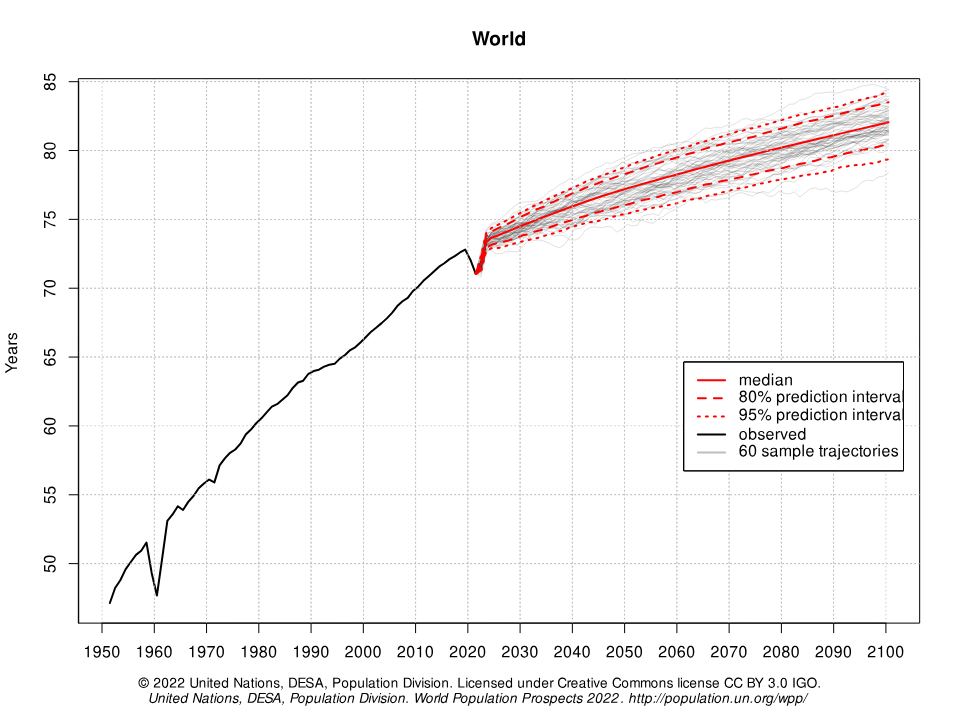
New York, USA, June 2023 – Life expectancy increased from an average of 46 to 73 years between 1950 and 2019 and the United Nations forecasts further increases, estimating that global average life expectancy will reach about 81 years by 2100. Longer lifespans are causing individuals, governments and business leaders to rethink their approach to work and retirement.
Living Longer, Better: Understanding Longevity Literacy, a new World Economic Forum report, in collaboration with Mercer, a business of Marsh McLennan, explores how lengthening lifespans are reshaping how individuals view their working lives and retirement. The report offers recommendations for government and employers to ensure they are adequately supporting people in multiple stages of work and retirement.
The report highlights purpose and quality of life in addition to financial health and resilience – themes that are traditionally associated with retirement planning. It offers options that individuals can consider to ensure they are approaching work, learning and retirement in ways that best meet their needs.
“When it comes to longevity and living longer, healthier lives, everyone has a role on this critical topic,” said Haleh Nazeri, Longevity Lead, World Economic Forum. “How will business support an older workforce and one with growing caregiving needs, what will policymakers do to help all citizens reach retirement equity, and finally, what can individuals do at every life stage to ensure they are able to stay financially resilient in a longer life.”
“Employers are thinking more about the current age distributions within the areas of talent needed to operate their organizations and how to influence the trajectory of these distributions,” said Rich Nuzum, Executive Director, Investments & Global Chief Investment Strategist, Mercer. “To leverage longevity and fight the war for talent effectively, moving from individual roles to team-based roles can help employers take full advantage of the diverse strengths of teams that comprise a combination of older and younger workers.”
Views on Retirement A new survey, Pulse Poll, of almost 400 professionals indicates that women and men view retirement differently. Women, for example, are 55% more likely to say they don’t know if they have saved enough for retirement.
The poll also reveals differences in how younger and older populations view their retirement futures. Both women and those under 40 are more willing to reskill but worry about associated costs. Both groups are also more likely to feel isolated.
Further results from the Pulse Poll can be found below and in the report:
Health is a top concern with two thirds of respondents indicating they expect to have caring responsibilities
Days of “Bank of Mum and Dad” may be reversing; many younger people are likely to have to financially support older family members
Pulse Poll respondents over 40 target lower income replacement levels in retirement
People are generally unaware of how to achieve their target levels of retirement income
More men looking forward to retirement, while more women need to understand their financial situation
Women are 55% more likely to say they don’t know if they have saved enough
Younger people are eight times more likely to use social media for financial advice
44% of under-40s want to retire by 60
Women and younger people are more willing to reskill but are also worried about associated costs
The respondent profiles to the Pulse Poll were homogeneous and predominantly included those who had undertaken higher education, were in more senior positions, were likely to be in employment at major global organizations and with a high level of individual agency and financial literacy.
While there are some sample limitations, the survey suggests how the findings can help start a conversation about the challenges faced and can contribute to the development of solutions for the population this group of respondents represents.
Recommendations for Governments and Employers As people are living longer lives, business and government need to restructure their approach to later life planning. Failing to adopt a multi-stakeholder approach towards longevity will inevitably result in a significant portion of people retiring into poverty. Recommendations are cover three key areas of work and retirement including quality of life, purpose and financial resilience.
Government
Facilitate upskilling of older workers and clamp down on ageism
Provide incentives for employers to offer more robust leave policies for caregiving needs
Explore the wider use of default auto-enrollment and default investment strategies to increase and maximize savings
Establish safety nets such as minimum pension levels provided by government
Enact enabling legislation to make all jobs flexible for longer-life working if desired and to accommodate all life-stage needs
Offer digital skills training and equipment to ensure equitable access to opportunities for all
Employers
Implement programmes offering support such as carers’ leave, information and advice for those who have caregiver responsibilities
Understand what impact the company’s retirement plan design has on the trajectory of retirement-readiness and labour flow – check if people can actually afford to retire
Provide flex-work programmes for caregivers, such as job-shares; allow part-time workers to contribute to defined contribution plans; provide training programmes for workforce re-entry, similar to those for early-career employees
Implement and review financial wellness programmes to:
Cover specific life-stage needs that account for gender, cultural and ethnicity differences
Consider personalized models to show the impact of different working arrangements and retirement ages on pay and pension
Cater to low-income earners who are likely to need the most support saving and planning for retirement
Individuals can also reimagine what their longer lives might look like as the three-stage life of school, work and retirement makes way for a multi-stage life that could include lifelong learning, career breaks and new occupations in later life. This includes pursuing upskilling and reskilling opportunities, as well as prioritizing retirement and pension planning if possible.
Increasing longevity globally will require new innovations and solutions to address how people can stay financially resilient in a retirement that may be 20 years longer than their grandparents. With supportive actions from government and employers, individuals will have a chance to try new approaches to longer lives and reassess how they want to study, live, work, save and retire in ways that are different from what has been done in the past century. For the Silo, Madeleine Hillyer/World Economic Forum.
As a Black man and a spiritual leader in the Linden community, I am concerned and am a personal victim about the disproportionate impact of prostate cancer on Black men. It is unacceptable that Black men are about twice as likely to get and die from prostate cancer than white men. While we still do not know definitively why this is the case, there are several factors that contribute to this reality.
Genetics may play a role. Studies have shown that prostate cancer in Black men has a different genetic profile, and it is a more aggressive form of the cancer. Additionally, Black men are underrepresented in clinical trials, which limits our ability to understand the disease’s impact and identify effective treatments. Lack of access to healthcare and inconsistent screening programs also contribute to the higher mortality rates among Black men.
But it’s not just genetics or lack of representation in clinical trials that cause this disparity. The cost of care, limited access to quality healthcare, and systemic racism create a barrier to care and early detection. Add to that the economic challenges faced by many Black men, such as the cost of cancer care and the inability to take time off work to recover from treatment, and it’s clear there is a multi-layered issue that must be addressed.
We cannot afford to remain silent on this issue. We must educate ourselves and our communities on prostate cancer risks and symptoms and the importance of timely screening. We must push for universal access to healthcare and encourage participation in clinical trials. And we must work to break down systemic barriers and create an equitable system of cancer care for all, regardless of race or ethnicity.
As a cancer patient myself, I understand how harrowing a prostate cancer diagnosis can be. However, it’s essential not to let the diagnosis define you and have faith that you can overcome any obstacle. Supporting each other and bringing awareness to life-saving prostate cancer screening is critical to reducing the disparities faced by Black men with prostate cancer. For the Silo, Imam Alfred
Imam Alfred Muhammed is working within the African American community on issues of leadership, peace, and interfaith outreach. Imam Alfred has inspired inner-city youth to self-actualization, promoted healthy family relationships, and improved economic development in the Linden community. He is now fighting stage 4A prostate cancer and has been forced to limit his engagements while spending more than $70,000 usd on alternative healthy treatments.
Before his conversion to Islam the Imam Alfred Muhammad was raised as a Christian in rural Virginia. His journey in religious leadership began in childhood as a Baptist preacher, but in 1960 the young minister Muhammad converted to the Nation of Islam. While in the NOI his desire was driven to become active in the 1960s Civil Rights Movement. Most notably, the Imam managed voter registration drives and worked closely with the lieutenants of Dr. Martin Luther King, Jr.
In today’s rapidly-evolved internet landscape, finding an effective domain name can be crucial to online success. Yet have you considered its immense power when choosing words? Linguistics – which studies language structure – is an indispensable asset when selecting domain names; in this article, we’ll look into how understanding its fundamentals can assist with building memorable and effective names for domain registrations. Let’s start this discussion with an example to highlight its significance!
Real-Life Story:
Sarah is passionate about sustainable living and has launched an eco-friendly store online. Sarah spends hours brainstorming possible domain names that reflect her ideals and those of her target market audience. Finally, after extensive research and studying linguistic principles, Sarah opted for “Greenovation.com.” This domain name captures both her brand’s essence and commitment to eco-consciousness instantly – her intuitive understanding of linguistics proved instrumental as this domain name resonated strongly with customers resulting in increased brand recognition and, ultimately, business success.
History & Foundation of Linguistics in Domain Names:
Its historical context must be investigated to understand linguistics impact on domain name selection. Early internet domain names were selected based on keyword availability or company names. However, as more domains crowded the online landscape, linguistic principles significantly distinguished one domain from its competition.
Linguistics encompasses numerous components that can substantially affect domain name selection, such as phonetics, semantics, and syntax. By understanding their function, you can craft memorable domain names that elicit positive emotions among your target audience and are easily pronounceable.
Domain names need to take into account language factors when creating domain names:
Phonology: Selecting domain names with appealing sounds and easy pronunciation will make them more memorable and accessible, like CrispClean.com, which features repeated “c” sounds that create a catchy rhythm while emphasizing cleanliness.
Semantics: Words have meanings, so selecting domain names that resonate with your brand’s values and offerings can increase its overall impact. For instance, specifying EcoGuru.com as the domain name conveys both environmentalism and expertise – creating instant trustworthiness associated with eco-friendly practices.
Syntax: The arrangement and order of words within a domain name can have an enormous effect on its readability and memorability, such as ShopQuickly.com, which utilizes simple syntax making it easily understandable and memorable.
Take advantage of the large choice at Squadhelp when looking for a domain name akin to exploring a linguistic treasure trove. From playful alliterations to clever word combinations, the linguistic aspect of domain names allows businesses to craft a distinctive online identity that resonates with their target audience.
Utilizing Linguistics in Domain Name Selection:
Building an impactful domain name takes careful thought and strategy. Here are a few helpful pointers:
Research Your Target Audience: Take steps to learn about and comprehend their language preferences, cultural nuances, and values to ensure your domain name resonates with them.
Focus on clarity and simplicity: Choose words that are easy for people to remember. Avoid complex or obscure terms which might mislead or confuse the audience.
Consider Emotional Appeal: Words can evoke strong emotional responses in people. Choose words that produce this desired emotional reaction in your target audience while aligning with your brand tone and messaging strategy.
Be distinctive and memorable: Separate yourself from the competition by choosing an eye-catching domain name that conveys the spirit and value proposition of your brand or value proposition.
Other considerations also play a part in domain name selection besides language considerations, including availability and compliance with your brand’s legal requirements. Furthermore, domain extensions like (.com.net.ca or org) could provide more relevant options that meet industry or target audience demands. For the Silo, Grant Polachek.
Conclusion:
In today’s digitally competitive landscape, harnessing linguistics as part of your domain name selection strategy can give your online presence a significant edge. Harnessing their power can give them a significant competitive advantage by understanding basic linguistic principles and considering historical context when selecting domain names for online ventures, harnessing their power can give them a significant competitive advantage. Words hold power that can impact perceptions and emotions and ultimately leave a lasting, impactful memory, so make wise selections when selecting names for online endeavors to maximize their full potential and achieve maximum returns from online ventures!
Upon it’s release in 1982 Bladerunner polarized film critics and quickly divided the viewing audience. Critics had no cinematic basis on which to make a comparison and watchers were unsure what to make of it. There were a few forward thinkers who sensed its bold departure from the ordinary and they mainly focused on the mindblowing design of its imagined world. We can say the same about the Pontiac Aztek upon it’s release in 2001.
More than an exercise in design.
Bladerunner crammed a lot into a relatively short running time: a detective story (which really should used the phrase “bounty hunter adventure”), a love story (how could Deckard NOT fall for the gorgeous Rachel?) , a revenge story (Batty’s answer to the inevitable end of his four year life span was to murder his creator)and a number of subplots that are beyond the scope of this short article. As the years passed, re-cuts and re-releases proved the critics to be wrong. Bladerunner is Shakespearean.
Before becoming a leading Futurist and designer for Hollywood, Syd Mead was an automobile concept artist. Top: A taxi cab design by Mead for Bladerunner. Bottom: The 2001 Aztek GT in Aztek Yellow.
Aztek
When it was released, The 2001 Aztek GT didn’t win over automobile reviewers or the car-shopping public but in the last half decade perspectives have changed, online fan pages have sprung up and buying demand is on the rise.
Have you ever felt like you need an upgrade on your life?
Most of us have – and there’s a way to get it, says veteran physician Sanjay Jain.
“First, I tell people, ‘Don’t be afraid of making your life clearer.’ but as we have paraphrased from Chinese philosopher Laozi, ‘The journey of a thousand miles begins with the first step,’ ”. Many argue that life is not simple and, therefore, there are no easy answers, says Jain, whose specialties include integrative medicine. He’s also an international speaker and author of Optimal Living 360 – (www.sanjayjainmd.com).
“Lives are built from many small components which, when viewed as an assembled whole, can appear overwhelmingly complex,” Jain says.
“But when we break them down and consider the pieces as we make decisions in our lives, it’s much easier to see how small adjustments can result in a better return on all of the investments we make – not only in health, but in relationships, finances, and all the other essential aspects of our lives.”
Jain offers four points to keep in mind as you start the journey.
• Life is short, so live it to its fullest potential. Live it optimally. This is your life, so don’t waste its most precious resource – time. No matter one’s spiritual leanings, economic and education status, health, intelligence level, etc. – one thing is true for all: Our time on Earth is finite. There will be a time for most of us when, perhaps after a frightening diagnosis from a doctor, we reflect deeply upon our time and consider the most important moments, and all the time that may have been squandered.
• Balance is key. Too much or too little of something, no matter how good, is actually not good. Balance is one of the easiest tenets to understand, but arguably the most difficult to maintain. Obviously, too much alcohol is bad; then again, there are some health benefits to moderately imbibing red wine. What about too much of a good thing; can a mother love her children too much? Yes, if she is an overprotective “helicopter parent.” The best antidote to overkill of anything is awareness; try to be aware of all measures in your life.
• Learn to tap your strengths and improve upon your weaknesses. Engaging your strengths at work and in your personal life is important. When we do what we’re good at and what comes easily, we feel self-confident and satisfied. Some people, however, are not in jobs that utilize their strengths, or they don’t put their talents to work at home because they’re mired in the prosaic work of living. It’s important to identify your strengths and find ways to engage them. It’s equally important to recognize our weaknesses and work on improving them (because we can!) This is essential for achieving balance.
• Life is about making the right choices. Integrative decision-making makes this easier. There are many different types of decision-making, including systematic, hierarchal, impulsive, decisive and flexible. Integrative decision-making can be used for problems large and small, and includes the following process: 1. Define the problem. 2. Frame the problem. 3. Develop all your options. 4. Analyze your options. 5. Make the decision. 6. Execute your decision. 7. Debrief yourself.
“Don’t be afraid of making your life clearer.” Dr. Sanjay Jain
While experts may be the best consultants for compartmentalized areas of your life, only you know the other aspects that affect your well-being and can determine how a decision in one area will affect another area. For the Silo, Ginny Grimsley
(May 12, 2023) Scientific evidence shows that yoga supports stress management, mental health, mindfulness, healthy eating, weight loss and quality sleep. This is according to the National Institutes of Health. On this edition of the Beth Linder-Moss Podcast, Beth specifically describes all those benefits and how to get started with Yoga.
Yoga is not just a form of exercise but a holistic approach to wellness that works on the mind, body, and spirit. From reducing stress and anxiety to building strength and flexibility, yoga offers numerous benefits for people of all ages and fitness levels.
According to Beth, yoga helps to calm the mind and reduce stress and anxiety. The practice of breathing exercises and meditation during yoga helps to quiet the mind, relax the body, and reduce cortisol levels. Cortisol is associated with higher stress levels. Studies have shown that regular yoga practice can also alleviate symptoms of depression, anxiety, and even PTSD.
Yoga can also help to improve focus, memory, and concentration. “Yoga helps to improve cognitive function, which leads to better decision-making, improved memory and concentration,” says Beth Linder-Moss.
Body Benefits of Yoga
The physical benefits of yoga are well known. Yoga helps to increase strength, flexibility, and balance. Practicing yoga regularly can help to tone muscles and improve overall body composition. Yoga also helps to reduce inflammation and improve digestion.
According to Beth, yoga is one of the best ways to stay fit and healthy, especially as we age. “Yoga is a low-impact exercise that can be practiced by people of all ages and fitness levels. The practice helps to maintain mobility and flexibility in the body, which is essential as we grow older.”
Spiritual Benefits of Yoga
Yoga is not just a physical practice but a spiritual one too. It helps to connect the mind, body, and spirit. Yoga philosophy talks about the interconnectedness of all things and encourages participants to live a life of compassion and kindness.
Beth believes practicing yoga can help to connect with our inner selves and find inner peace. “Yoga helps to inculcate a deep sense of awareness, concentration, and mindfulness. It helps to cultivate a sense of gratitude, compassion, and contentment,” she says.
Finally Beth says, “yoga is a practice that nourishes and sustains us, helping us to live better, healthier, and more fulfilling lives.”
“It’s the tiny town of Defoy. Only a gravel road from the main highway, but about a half a mile down there is the wonderful “antiques dump” of Rene Boudin and his freres.” photos: P. Ross
By the winter of 1982, we had been going to the Harbourfront Antique market every Sunday for about a year, and were making a pretty good living selling things we had bought at local auctions and garage sales. Then one day, I read in the excellent and entertaining “bible” of Antique dealing “The Furniture Doctor” by George Grotz , that the village of Defoy, Quebec was mecca for the antique picker.
To quote “there’s a wonderful secret wholesale place up in the province of Quebec. It’s the tiny town of Defoy. Only a gravel road from the main highway, but about a half a mile down there is the wonderful “antiques dump” of Rene Boudin and his freres. And here under enormous sheds you will find literally acres of antique furniture, chests, and tables piled three to five pieces high”.
“…it wasn’t hard to find because it was near town, and his name was painted boldly on the barn.”
The book had been out quite awhile so there was no telling if this situation still existed, so I asked the old guys at the market if they knew of such a place. I got several reports of it’s glory days, followed by “of course that was years ago and nobody goes anymore. That being said they also all encouraged me to give it a go, and gave me “leads” as to who may still be active. We gathered up our courage, our baby, and what cash we had, and set off.
That first twelve hour drive felt like an eternity. It was a tired crew who pulled in late afternoon to a tiny motel in Victoriaville, Quebec.
Our first move was to look up Marcel Gosselin in the phone book because he was one of our most promising leads. To our delight he was listed, and he answered and told us where and how to come the next morning. It wasn’t hard to find because it was near town, and his name was painted boldly on the barn. Marcel greeted us warmly and proceeded to lead us to his main barn. There, behind the red and white cross doors was the biggest pile of dining chairs I had ever seen. About thirty feet across it reached to the top of the barn.
Through the hatch work of legs I could see tantalizing glimpses of a cupboard and some chests. Then he took us upstairs where in a loft he had sorted hundreds of chairs in sets of four, six, or more. Some were painted and some varnished. It was $45cdn each for simple painted chairs, $65cdn each for nicer pressbacks and/or varnished ones. We got a couple of sets knowing we would get about $150cdn-$250cdn each for these when refinished., Next I asked him about that cupboard I had seen in the giant pile downstairs. He told me all about it including the age, condition and reasonable price of $250cdn and told me he would extricate it and have it ready for my next trip if I wanted it.
I said I did, and then he didn’t even want a deposit.
“That’s not the way we do it down here. Your word is good enough, until it isn’t” Marcel (R) Phil (L)
“That’s not the way we do it down here. Your word is good enough, until it isn’t. I liked him immediately and knew he was a man I would enjoy doing business with.
Next he took us to the garage attached to his 100 year old frame house. The downstairs was filled with every kind of “smalls” including small boxes, glassware, pottery, antique clothing, folk art, etc, etc; and the tiny, about to collapse, upstairs loft was filled with hundreds of pottery washsets. There were some beauties, and this was a hot item at the time in Toronto. Prices ranged from $45cdn-$75cdn per set. We bought 8 of the nicest sets knowing we would get between $145cdn to $375cdn back home.
This was getting truly exciting.
We spent a terrific four hours or so with Marcel that first day and pulled away from his place, with half our money spent, and half our truck full of interesting, excellent quality, and reasonably priced stuff, not to mention the overwhelming sense of warmth, excitement and wonderment of that first glimpse into a Quebec picker’s life. We were hooked, and we knew it was the first of many more trips to see Marcel. For the Silo,Phil Ross.
Featured image courtesy of tourismecentreduquebec.com
Vancouver, B.C. – Art Vancouver, Western Canada’s largest international art fair is once again uniting the world through art, held at the Vancouver Convention Centre West on May 4–7, 2023.
Art Vancouver’s vision is a noble one that seeks to use the universal language of art to connect people from different parts of the world and to promote a sense of global community.
By bringing together artists and galleries from across Canada and around the world, Art Vancouver aims to showcase a diverse range of contemporary artwork that reflects the unique perspectives, experiences, and cultures of each participating artist.
Art Vancouver marks its 7th edition, welcoming 100+ exhibitors, making Vancouver a destination city for artists, collectors and art lovers alike. Unique to this year, is a panel discussion about the intersection of Artificial Intelligence and art, providing valuable insights and perspectives from experts in the field.
Artist talks, demonstrations and art classes are always a great way for attendees to learn new skills and techniques, and having more of them available means that more people can benefit from the educational opportunities.
Art Vancouver has put together a diverse and engaging program that offers something for everyone. Whether attendees are artists themselves, or simply enthusiasts of art and creativity, there should be plenty of opportunities to learn, engage, and be inspired.
Established in 2017, the non-profit organization was started to make art accessible to everyone, with the goal of promoting and developing Vancouver’s visual art community into a thriving international art scene. VVAF hosts their main annual event, Art Vancouver, a four-day international art fair showcasing artists from across Canada and around the world. For the Silo, Christina Ioannou.
2023 marks 103 years since women were legally allowed to vote in the United States and 107 years since women were provided suffrage in the Western provinces of Canada.
It’s been about 3 weeks since many women celebrated Women’s Equality Day.
This day marks a significant turning point in the history of the struggle for equal treatment of women and women’s rights. In acknowledgment, we decided to look at some of the most successful women in business and how they made their millions (or in some cases, billions!).
The barriers to progress for women in the workforce are troubling.
How organizations deal with these barriers in the future will determine how our societies progress. After all, why would you want to ignore nearly half of the world’s workforce?
It’s time to celebrate the achievements of those who are paving the way for our future female leaders, CEO’s, scientists, bankers, journalists and media moguls.
In this info-graphic, we’ll show you some interesting facts about the current state of women in the workplace, gender equality and the pay gap. We’ll also give you some lesser known facts about the inspirational women we’ve chosen to profile, with information on their most prolific achievements.
If you’re in need of some girl power or motivation, then look no further than these business women who broke the mold. For the Silo, Angus Kirk.
Beth Linder-Moss got interested in health and fitness at the age of 16 after her father had his first heart attack. After this devastating event, she and the other members of her family changed their habits for the better.
This week on her Podcast, Beth discusses the importance of a positive mindset and taking responsibility for one’s life. Here are her suggestions on how to fix a negative mindset.
The Four Ways
1. The power of the mind:
Beth emphasizes the importance of having a positive mindset and how it can help individuals achieve their goals. She talks about how the mind can be programmed to focus on positive thoughts and how this can lead to a happier and more fulfilling life.
2. Taking responsibility:
Beth stresses the importance of taking responsibility for one’s life and not blaming others for one’s circumstances. She encourages individuals to take control and make the necessary changes to achieve their goals.
3. Overcoming challenges:
Beth talks about how challenges and obstacles are a part of life, but they can also be opportunities for growth and learning. She encourages individuals to face their challenges head-on and not give up when faced with adversity.
4. The importance of self-care:
Beth emphasizes the importance of taking care of oneself, both physically and mentally. She talks about how self-care can help individuals to maintain a positive mindset and achieve their goals.
“Focus on the positive, take control and do not give up when faced with challenges,” Beth told her audience. “It is easier said than done. To be at your best eat right, drink plenty of water, get your sleep and exercise.” For the Silo, Harold Nicoll.
Berlin’s vibrant art scene just got a little more exciting with the opening of Selina Berlin Mitte, the latest property from skyrocketing hospitality company, Selina. Dubbed an ‘art-forward’ hotel, Selina Berlin Mitte boasts a guest concept that revolves around art and music, offering visitors a memorable cultural experience to feel like a local.
Located in the heart of Berlin’s Mitte district, Selina Berlin Mitte offers guests an eclectic mix of accommodations, including standard, suite, shared, and hybrid options.
I was offered one of the suites, and I literally felt like I had relocated to my very own apartment in Berlin, stocked with a kitchen, fridge, modern shower and bathroom, couch, vintage record player and expansive views of the city. Perfectly situated for exploring the city, the hotel is steps away from some of Berlin’s best design stores and boutiques, galleries, restaurants, shops, and bars.
If you are looking to socialize, Selina Berlin Mitte features a rooftop co-working and bar area, plus a restaurant with contemporary Israeli and Mediterranean cuisine called HOWM, a grab-and-go dining option available 24 hours, and even a communal kitchen.
If you grab a drink at the hotel rooftop, you will be surrounded by lounge seating, fun board games, and a 360-view of the city, including Berlin’s iconic TV Tower. Selina goers can meet up for a “welcome drink,” rooftop yoga classes and meditation sessions. If you are searching for activities on the property, you can choose from workshops, live music, DJ sets, art exhibits, and lectures.
Sprawled along the hotel walls are carefully curated artworks by Berliners and international artists, with installations highlighting mixed media– reclaimed wood, mirrors, and vintage art objects. Using earthy and hip furniture, Selina has an industrial feel that opens your eyes to innovation and connection. Common areas are filled with murals, while in-room art combines classical Berlin prints and artworks. Large-scale artistic works are woven throughout the reception area, rooftop, corridors, and suite rooms.
On a mission to keep digital nomads connected, enabling them to travel and work without borders, Selina has plans to open 10-15 hotels in 2023, catering to millennials and Gen Z travelers.
On April 14-16, Selina Berlin Mitte celebrated its opening with the “Welcome to the Hau(E)” event, a 3-day experience showcasing curated local programming, food pop-ups, wellness activities, live music DJs, and a local artisan market.
Selina Berlin Mitte is the “IT” hotel, where art and music lovers unite into a cultural melting pot. Book a stay and indulge in the avant-garde, art-centric German capital, and all it has to offer. For the Silo, Kat Fleischmann.
For more information or to book a stay at Selina Berlin Mitte, visit www.selina.com.





 APOP also reports that overweight and obese dogs are at an increased risk for having chronic inflammation, a reduced life expectancy, skin disorders, orthopedic disease, cancer, kidney dysfunction, respiratory disorders, and metabolic and endocrine disorders. Focusing on improving pet health can help avoid problems and can keep them feeling well.
 Doggy diet do-over. Most commercial dog food is highly processed and can be made with byproducts from the 4 D’s (dead, dying, diseased or drugged) animals, this includes the popular raw diets. Traditional pet food can also contain toxins and cancer-causing agents. Seriously consider changing your dog’s diet to a lightly cooked, fresh, whole-food recipe.