In an issue of The Watchtower magazine from a few years ago, no doubt was left as to how Jehovah’s Witnesses should treat family members who have been “disfellowshipped,” or ex-communicated, from the religion. “Really, what your beloved family member needs to see is your resolute stance to put Jehovah above everything else – including the family bond,” warns the magazine on page 16, before asserting, “Do not look for excuses to associate with a disfellowshipped family member, for example, through e-mail.”
Shunning.
Jehovah’s Witness is not the only religion that calls upon its followers to ostracize anyone who leaves the faith. Described as psychological torture by University of California-Davis Professor Almerindo E. Ojeda, such social rejection is used in the United States by Anabaptists (the Amish, Mennonites, Hutterites), Scientology, and the Baha’i Faith, among others.
Some contemporary evangelical Protestant churches have renewed the practice of shunning, as in the case of a 71-year-old former Sunday school teacher who was arrested on trespassing charges after questioning her pastor’s authority.
The practice can have devastating consequences.
In 2011, Eric Reeder was disfellowshipped from the Jehovah’s Witnesses after sustaining injuries in a motorcycle accident that led to a blood transfusion – a medical treatment prohibited by the religion. His family subsequently shunned him in accordance with the faith’s rules.
Eric posted about his predicament in an online forum for ex-Witnesses in August of that year, admitting, “The only thing I am really going to miss is my folks … my dad is a hardcore elder and has told me he will no longer be able to speak to me 100% of the time.” In April 2012 he wrote that he was “still not used to my parents totally shunning me …” before adding, “It’s so hard … nobody should have to lose their parents twice.” By the end of September, Eric was found dead at age 51. He had killed himself.
Nobody can be certain what dark thoughts were swirling through Eric’s mind when he took his own life, or what finally drove him to such a desperate act. But we do know that in the preceding months, Eric was deeply tormented by the ostracism inflicted on him by members of his family.
While The Watchtower Society, the name of the legal entity used by Jehovah’s Witnesses, proudly publishes annual statistics related to its worldwide evangelism work, there are no official figures for those who are shunned, and no way to confirm how many of these former members, like Eric, feel desperate enough to take their own lives. However, one can find a great deal of anecdotal evidence on Internet forums frequented by Ex-Witnesses. One well-known researcher, Terri O’Sullivan, reported that being shunned worsens one’s mood within 60 seconds.
Ex- witness Richard E. Kelly is the Managing Director of AAWA and the author of Growing Up in Mama’s Club: A Childhood Perspective of Jehovah’s Witnesses.
In the absence of any popular or political impetus to address the issue of religion-incited shunning, I am proud to be part of an organization that dares to face it head on. Advocates for Awareness of Watchtower Abuses (AAWA) has been established to educate the world via its website (www.aawa.co) about some of Watchtower’s most shocking practices.
While these are often pardoned in the name of religious freedom, there are instances where governments have successfully sanctioned extreme shunning:
“The Jewish tradition frequently confronted this issue in the many Eastern European communities where the government outlawed the use of excommunication and shunning. Not surprisingly, when confronted with significant governmentally imposed sanctions against this practice, the Jewish authorities ceased using exclusion as a method of community formation or maintenance,” states an article by Michael J. Broyde, academic director of Emory University’s Law and Religion Program.
My colleagues and I believe that the shunning of relatives and friends represents mental and emotional abuse. Modern society must no longer allow Watchtower to promote this barbarous practice through printed word or otherwise. For the Silo Richard E. Kelly.
Julie Loeckx‘s colorful abstract artworks bring joy into any space, representing a kaleidoscopic universe brimming with zest for life and optimism. Using lines as influence, the endless experiment of color forms portraits with penetrating gazes and diverse emotions.
As a landscape architect with a Master’s in urban planning, she redesigned squares, streets and neighborhoods before entering project development. After discovering a box of watercolor paints in the attic, Julie experimented like an alchemist and abandoned her business life for a paintbrush.
Julie creates art with subtle nuances hidden in a poetic landscape, striking artifacts in an eclectic interior, drawing inspiration from colorful patterns on textile or jewelry. She finds external sources of inspiration: shopping windows, fashion, interiors, magazines, yet creates one recognizable signature in her artwork.
She uses painting as an outlet without boundaries and with a broad view of the world and in her paintings of women she channels feminism just in time for International Women’s Day and Women’s History Month.
She says, “Every woman is unique and scarred by life, resilient and determined, hesitant and searching, but always counting on a positive outcome. My paintings are sometimes bold and exuberant, or introspective and self-questioning, but always intense and passionate. They are a reflection of the woman behind the artist.”
Growing up as a daughter of two hippies and as a granddaughter of business people, she discovered painting at the age of 42 (mom of 3) and sold 100+ works, had national and international collaborations, including Levi’s Paint, and opened her own gallery in Antwerp in May 2022.
For the last couple of decades the term “Outsider art” has come into popular use as a catch all phrase to describe the work of those who live “outside” society. Prisoners, religious visionaries, the institutionalized, and hermits all fall into this category.
It is quite often grouped together with folk art in that it is also primarily work by an untrained hand, but it differs in that the work is often more wildly imaginative, or “edgy”.
Back in the early 90’s, I was fortunate enough to participate in the second and third Outsider Art Fairs in New York. I was struck and amazed at the high levels of both positive and negative energy generated by the various works from around the world on display there.
Everything from giant nightmare fantasies to what could best be described as visions of heaven fighting it out side by side. It was intense and worthwhile. It was also an interesting lesson in marketing, in that I observed how a handful of powerful art dealers control and establish who is “hot” and how much these works were going to cost.
The newly found amazing collage/paintings of Henry Darger were presented initially at about $4,000 for a small one. The second year the price was $40,000.
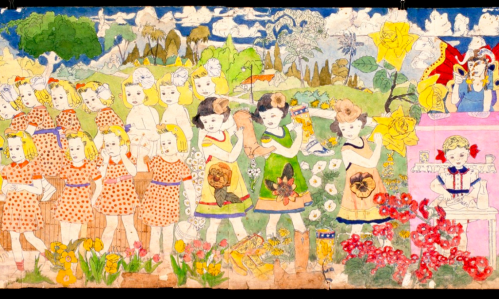
The book had come out on the Chicago recluse who spent all his days writing his posthumously discovered 15,145-page, single-spaced fantasy manuscript called The Story of the Vivian Girls, in What is known as the Realms of the Unreal, of the Glandeco-Angelinnian War Storm, Caused by the Child Slave Rebellion, along with several hundred drawings and watercolor paintings illustrating the story. Beautiful and disturbing.
Betwixt and Between: Henry Darger’s Vivian Girls
[This is a picture of Elsie Paroubek who was murdered at the age of five in 1911 in Chicago. The picture is most likely to have come from the Chicago Daily News. It was one of many newspaper photos of children collected by artist Henry Darger. According to his autobiography, his copy of Miss Paroubek’s photo was in amongst some items that were stolen when his locker at work was broken into, and he was unable to locate the picture in the newspaper archives. The tragic death of Miss Paroubek and the loss of her image inspired him to begin writing his monumental fantasy novel “The Story of the Vivian Girls.” Miss Paroubek was a central character in the novel, under the name Anna Aronburg. Photo is in the public domain. Text excerpt from wikipedia CP]
In Canada, there are just a few documented artists who could be considered “outsiders”. There is Clarence Webster who drew interesting childlike pictures to cheer up the walls of his institutional room.
A very interesting visionary artist was Alma Rumball who lived in a rural Muskoka cabin. Following a vision of Jesus, she became a clairvoyant recluse, at age 50, creating prolific, intricate, coloured pen and ink drawings. She watched, as “The Hand” drew by itself, unfamiliar forms, faces, and characters, separate from her consciousness.
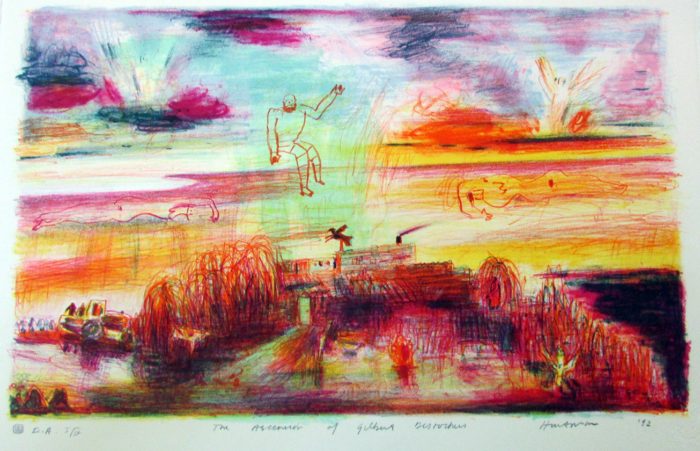
There is a good Vision T.V. documentary on this artist. Another example is Gilbert DesRochers, who after a religious vision moved to his brother’s farm near Perkinsfield, where he lived in a small trailer and attended church regularly, producing many religious based sculptures. He was discovered and documented by artist John Hartman in 1980 and a solo exhibition of his work was held at the McMichael Canadian Art Gallery from November 3, 1991 to March 1, 1992. For the Silo, by Phil Ross.
Featured image- The ascension of Gilbert DesRochers. Beaverbrook Art Gallery.
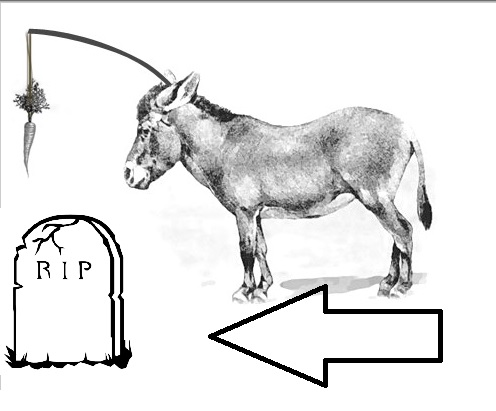
We work our asses off to buy stuff that we can’t enjoy because we are working our asses off to pay for the stuff we buy while diligently saving (or attempting to save) for our retirement which we keep pushing back because we keep working our asses off to buy yet more stuff to enjoy that we have to work our asses off to pay for, and there is always something else that we want or need or think we need (but really want) that we have to work our asses off to pay for and…
A generation ago somebody coined the phrase “rat race” to describe this phenomenon of modern consumerism, and the term stuck.
It’s wrong.
It ain’t a race.
You can win a race.
Modern consumerist life is a strictly no-win proposition, friends…
… and none of us gets out of here alive.
I began to think about this a few years ago, when I received a matched set of stainless steel rechargeable electric salt and pepper grinders as a gift.
Think about that: Electric salt and pepper grinders.
I am pretty sure this is an answer to a question nobody asked.
This gift made me ponder, and I came to some conclusions:
I must be one of those “hard-to-shop-for” people.
I’d rather have an LCBO gift card.
Grinding pepper over your mashed potatoes is apparently much more strenuous than I ever thought., that somebody decided the world needed this.
A gadget that doesn’t really save any appreciable time or effort and provides little entertainment required somebody to work to earn the money to purchase it.
Enough is enough.
Is mortal- consumerism (yep we just coined that CP) keeping society asleep?
At the time, I was working a gig that required me to work 12 hour days 6-7 days a week, put in 40 000 km a year behind the wheel of a car traveling to meet prospects, 75% of whom either don’t want or can’t afford what I am selling, so that I can afford the next toy/vacation/orthodontist payment/thing with the 50% of my income that the tax man has allowed me to keep. I was alienated from, and alienating, my kids, my wife, because of my absence from home life, and I became an overcompensating asshole for the same reason which increased the tension and…
…any of you out there who have climbed out of the wreckage of a crashed marriage know exactly where I’m coming from.
Actually, scratch that vacation part. At the time I hadn’t taken more than a long weekend off in over a decade.
And I thought I was successful.
I began to question where I was going, what I was doing, and why.
Frankly, I figured enjoying retirement is a myth.
That whole “Freedom 55” thing? Bullshit.
First, you gotta get there. With my diet, hours, stress level and number of miles driven every year, the odds were good I wasn’t gonna make it.
Second, you gotta pay for it. You need to keep squirreling away the cash, tending your investments, watching your nest egg grow, deferring and sacrificing today for the dream of a better tomorrow…
….As long as the market doesn’t tank, your health holds up, property values don’t plummet, or your kids don’t move back in, with their kids.
Money may not buy happiness, but always feeling like you don’t have enough will make you bitchy as hell.
I was sitting in the cockpit of our old, small, paid-for sailboat one morning, enjoying a cup of coffee when it hit me:
As a society we are conditioned to approach life like a big twin-engine cabin cruiser- heavy consumption, lots of noise, lots of flash, throwing a big wake. Unless you are getting noticed, you’re not succeeding.
I finally figured out that there is a lot to be said for living a NO wake lifestyle.
But how?
With a bit of soul searching we realized we had to quit confusing our wants with our needs.
My wife and I realized that we were perfectly content spending time on our old, small, paid-off boat in our low-cost slip on our no-frills dock. We didn’t need a bigger boat on a fancier dock.
And we didn’t need new cars. As long as the old cars keep running , it is always gonna be cheaper to fix ‘em than replace ‘em. If I need a new whip to impress you, you’re likely not worth impressing.
Besides, there’s something real liberating about parking wherever you damn well please, because dings and scratches just don’t matter.
And we didn’t need a $20 000 kitchen reno or a $10 000 bathroom makeover. Or a bigger house. Or a bigger garage.
Or a bigger mortgage.
For a longer time.
With fatter payments.
We didn’t need to stand in line to be grilled by a soul-patch sporting “barista” first thing in the morning just to get a simple cup of coffee which costs as much as a Happy Meal, when we had a perfectly good underused coffee maker on the kitchen counter.
We needed to live life NOW, on OUR terms.
A funny thing happened. By deciding what we could live without, we could now afford to live.
With less financial stress, I didn’t need to be on the road, living out of a car and fueling up on fast food three meals a day. My wife and I discovered that cooking dinner together was a great way to re-connect at the end of the workday. Chopping, sautéing, stirring with a glass of wine while recapping our respective days beats the hell out of eating a Whopper an hour from home.
We didn’t have to save dining at restaurants with tablecloths for a special occasion to fit the budget.
We could afford to drink the bottles of wine we could only read about before.
We could take vacation days without figuring out what we had to sacrifice to make up for the lost wages.
Hell, we could take whole damn vacations, for that matter!
The sunsets look just as pretty from a small, paid-off sailboat as it does from the bridge of a six-figure cabin cruiser.
The rum goes down just as well.
And I can enjoy it instead of working to afford it.
As the world continues to grapple with the pandemic and challenging mental health issues, it’s more important than ever to find ways to bring joy and beauty into our lives. One way to do this is by infusing our living spaces with personality, whether it’s our homes, offices, or our boats. For refined yacht owners, it’s natural to diverge towards things that bring comfort on-board – including art.
Not falling short on sophistication, the real value of art lies in its ability to inspire and uplift us. In practicality, however, when it comes to decorating a yacht, there are a few key concerns to keep in mind.
It’s important to consider the amount of art one wants to display. While it might be tempting to fill every inch of wall space with your favorite pieces, it’s important to strike a balance between aesthetics and functionality. An overcrowded space can be overwhelming and distract from the overall design. Equally essential, durability is a crucial factor to consider as art on-board will be exposed to elements like water and must withstand rough seas. Fortunately, there are experts in yacht customization that can deliver art in the most practical way.
For yacht owners, the key areas where art can really make a difference are the master bedroom, living area, and bathroom. In the master bedroom, a carefully chosen piece can create a calming and relaxing atmosphere, while in the living area, a bold and eye-catching piece can be the perfect conversation starter. In the bathroom, a fun and whimsical piece can add a touch of lightness.
For those who wish to incorporate contemporary art, The Margulies Warehouse boasts an extensive collection, featuring artists such as Jennifer Steinkamp and Daniela Wicki, who play with the symbiosis of materials and technology. Another great choice for those with eclectic taste and looking for individual pieces is The Gallery by Rudolf Budja, which offers a selective collection of texturized canvases and photography sure to impress any art lover.
Delving into ways to bring art on board, it is captivating to incorporate design elements into the very fabric of the yacht itself, a popular trend in yacht design. For example, Futurestones and KMD are experts in creating stone finishes. They transform spaces and bring a unique energy to the yacht with the use of murals and large-scale artwork as a backdrop for the interior. These details help create a cohesive design aesthetic and add a touch of personality to the vessel.
At the most recent Miami Discovery Boating Show, I observed a surge in stylish watercrafts, ranging from medium-sized yachts to super yachts.
One brand that stood out to me as an excellent example of balance in design elements is Fiart Mare, particularly their 35′ Seawalker and 39′ Seawalker models. These boats offer an exceptional combination of functionality and Italian design, maximizing the available cabin space. Yacht Creators, the exclusive dealer for Fiart Mare, has collaborated with top shipyards worldwide to bring unparalleled interior design to the US market.
In addition to Fiart Mare, Yacht Creators represents other renowned brands such as Prime Yachts, Van Der Valk, Leven Yachts, and Waterdream, all of which are built with exceptional craftsmanship and worth the time for someone who dreams of building and owning something special.
For me, interior design on yachts is “art on art”.
While yacht craftsmanship is a complex process that involves multiple layers of design, art on board can take many forms, from custom-designed furniture and fixtures to entire walls/doors adorned with intricate patterns and designs. These bespoke furnishings can range from tables and chairs to lighting and cabinetry, and serve to enhance the yacht’s individuality and make it truly one-of-a-kind.
The sky’s the limit when it comes to bringing a touch of artistic flair to a vessel and creatively maxing out cabin space. So whether you’re a seasoned collector or just starting out, don’t be afraid to bring a little bit of art on board your life – and your yacht.
For the Silo, Nancy Gonzalez/Private Yacht Finance. Featured image: Fiart Seawalker 35.
Kubrick. Scott. Which one of these directors needs their first name in order to be recognized by most movie watchers? Yeah, thought so. Let’s try this introduction another way: Kubrick. Ridley Scott. Ah that’s better.
Regardless of who is more recognizable, the fact remains that both of these cinema geniuses created masterpieces on celluloid.
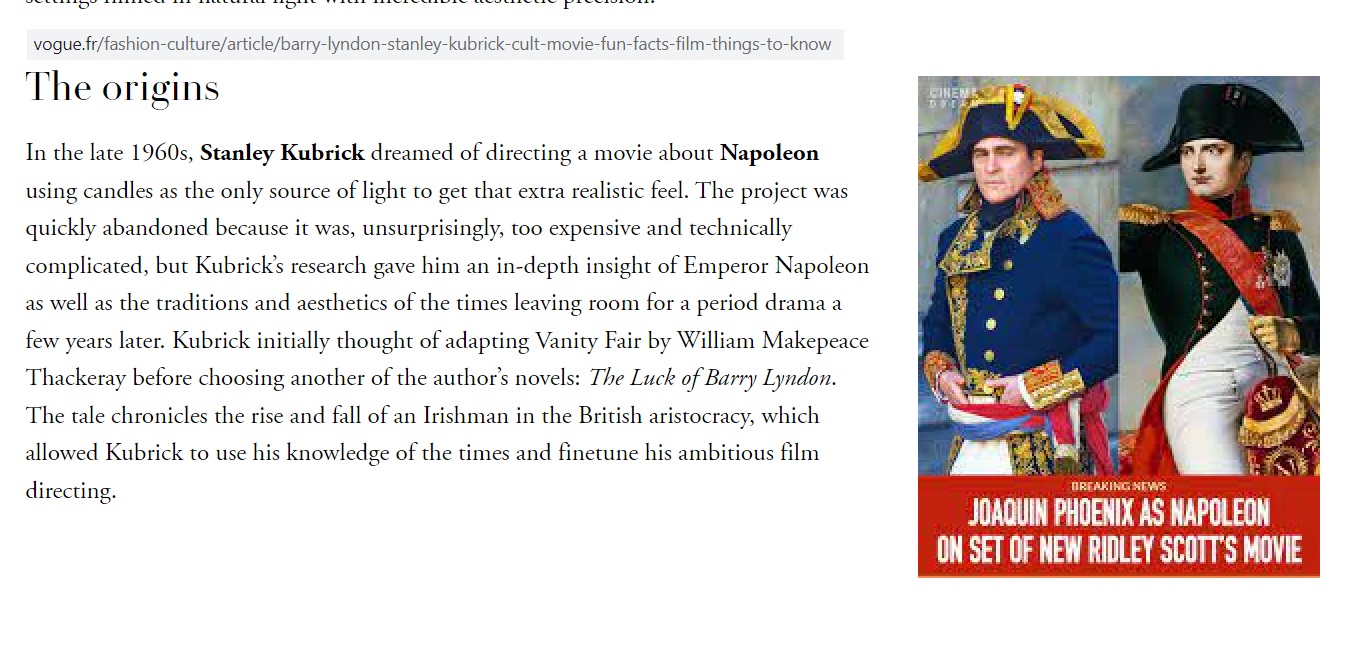
Stanley Kubrick’s work dates earlier than Sir Ridley’s films ( 1977’s The Duellists) by almost a quarter century (1953’s Fear And Desire) but this is balanced by the fact that Scott continues to make films. The upcoming Napoleon will be his 18th feature film since 1999- when Kubrick tragically passed away shortly after finishing Eyes Wide Shut.
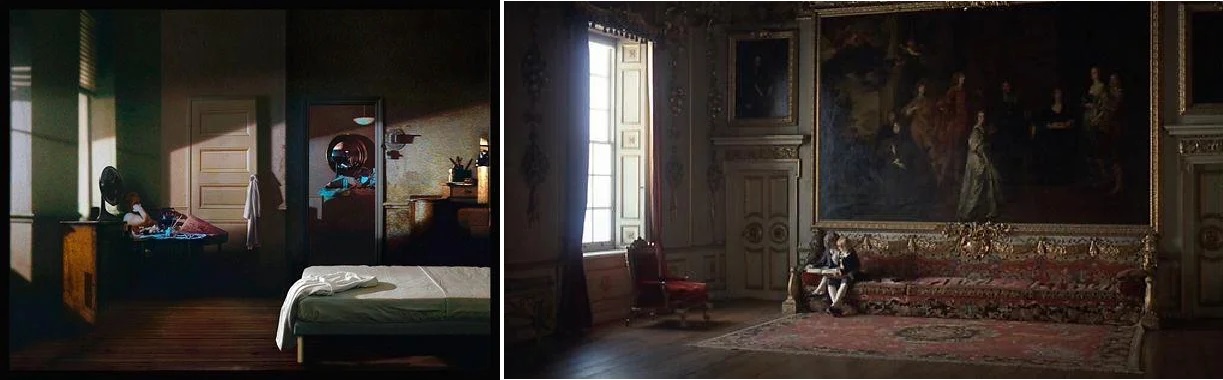
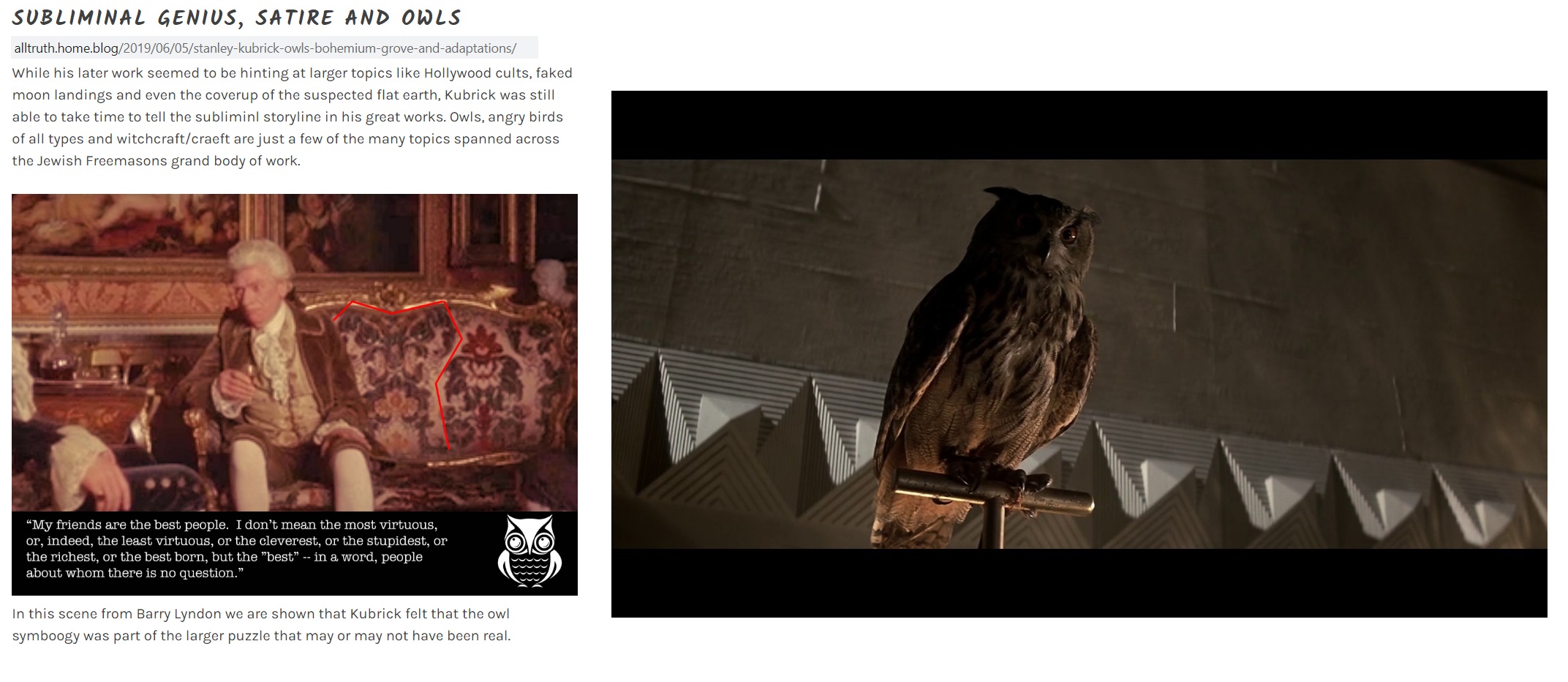
There are many films to choose from when picking a movie that is Stanley’s masterpiece but Barry Lyndon is receiving a renewed interest from film critics and writers. Shot entirely by natural light and candle light, Barry Lyndon required the assistance of NASA since it required an entirely new kind of camera lens to capture the scenes and oh those scenes!
There is something familiar about them….have I seen them before in a later film from another director perhaps?
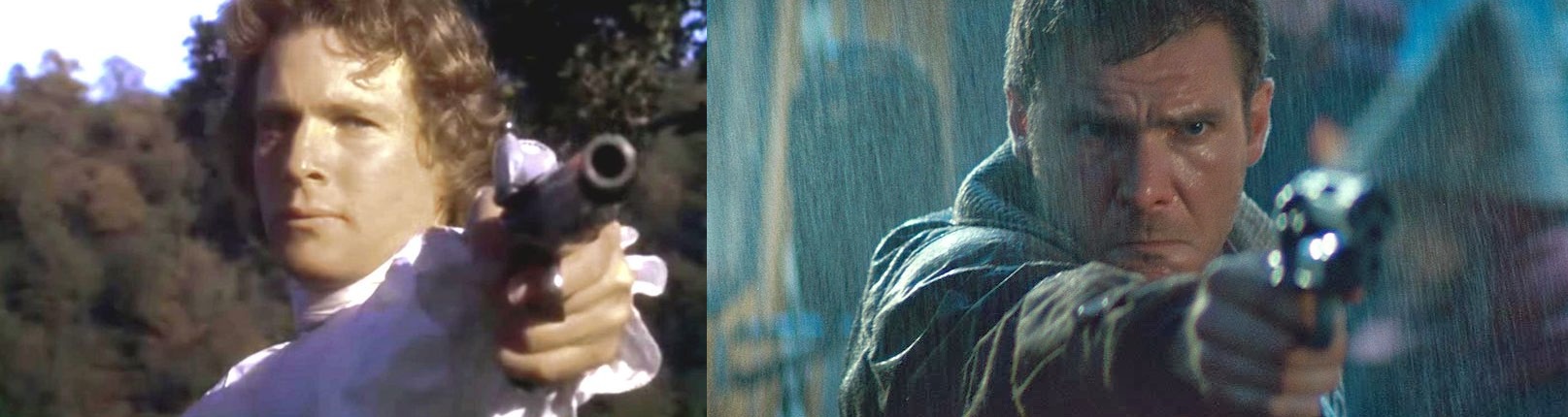
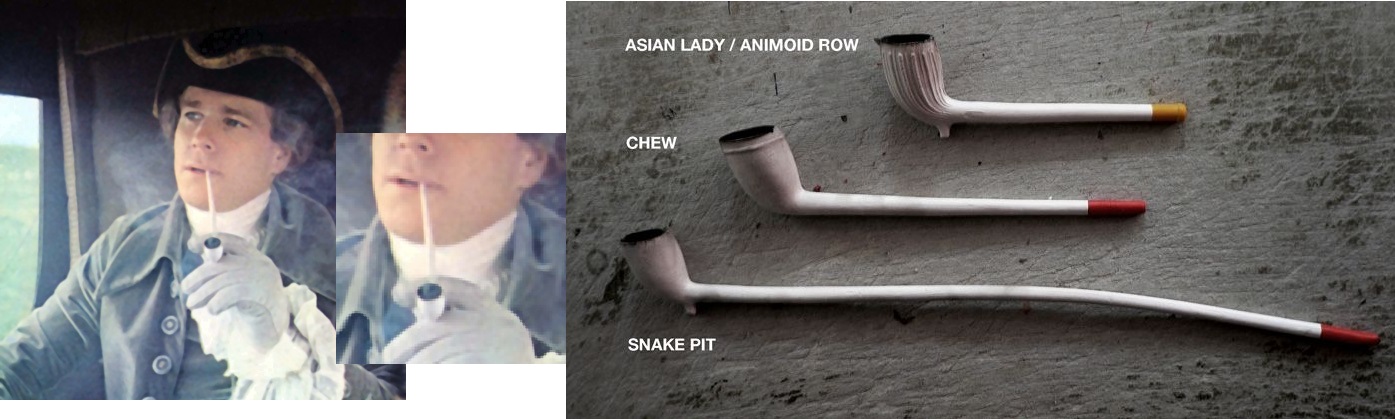
1982’s Blade Runner is heralded as the de facto science fiction film due to its own innovations. It offered a serious look at a believable and highly stylistic future and the earliest on screen representation of cyberpunk. The sets, scenes, compositions of shots, costumes and overall atmosphere were unlike anything seen on film before….or were they? Let’s take a look at both Barry Lyndon and Blade Runner side-by-side.
As I continue to compare and unravel more similarities I will update this post but in the meantime if you know of something I have missed please feel welcome to add your thoughts and discoveries in the comments section below. For the Silo, Jarrod Barker.
The World Happiness Report has anointed Finland as the world’s happiest country for six years straight. What makes a Nordic land with 5,5 million people so happy? In Helsinki, the capital of Finland, art and culture make the city a good place to live and visit.
According to the UN-published report, Finns rate highly on key issues such as a high level of education, affordable healthcare, social stability, and positive work-life balance. But it’s not just these societal indicators that affect how Finns view their quality of life – Culture and art are highly prized aspects as well.
“We see a vibrant cultural sphere that is accessible and affordable for all citizens as a major contributor to everyday happiness. And we are looking at culture through a broad lens: from urban city culture, to sauna culture, to high-end cultural offerings, such as the world-famous Helsinki Philharmonic Orchestra. It’s a diverse mix,” according to Reetta Heiskanen, Deputy Culture Director at the City of Helsinki.
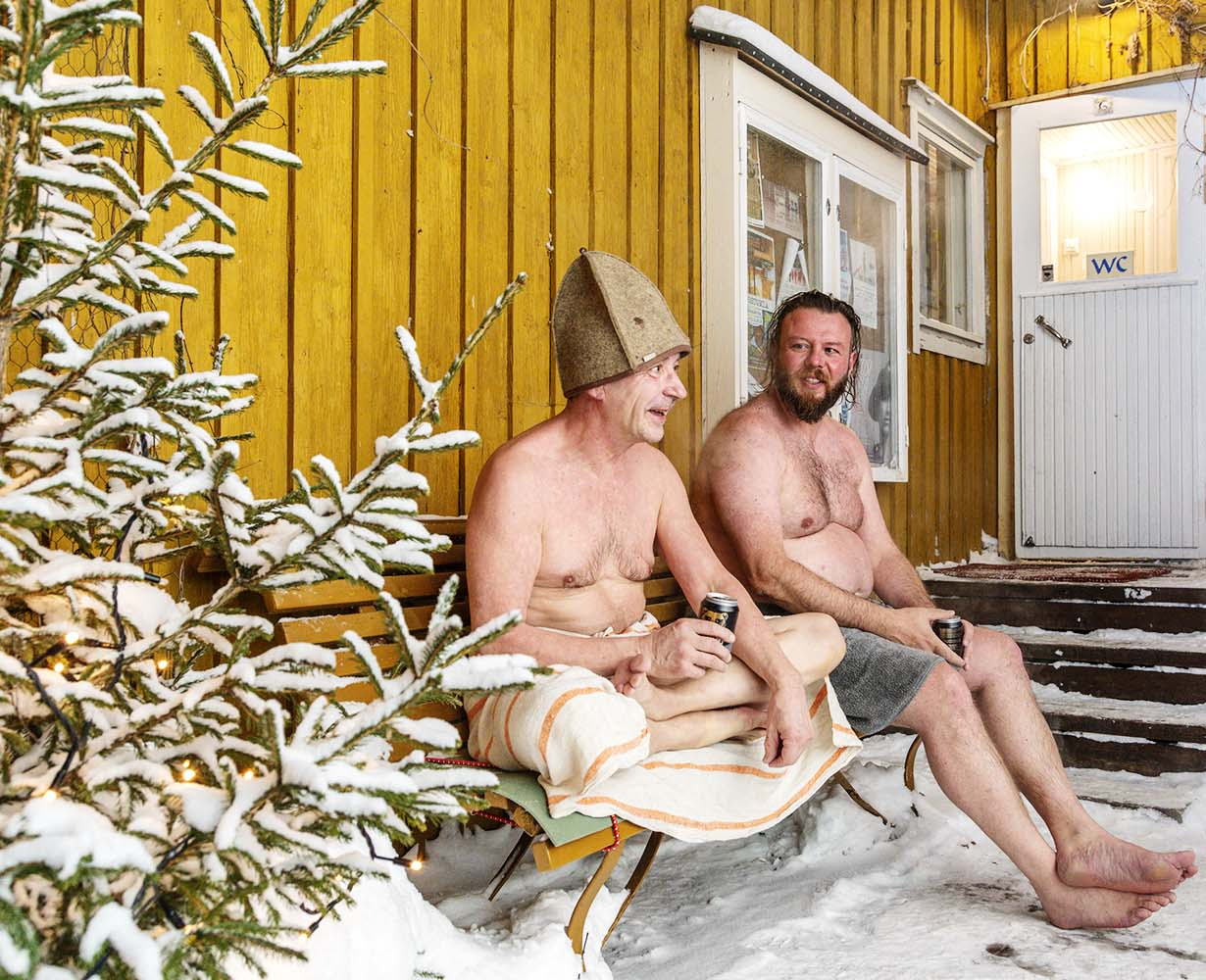
Sauna culture
In Helsinki, cultural events are designed for everybody, regardless the socioeconomic status, with world-class ambition. The city’s expanding cultural life makes the city a more exciting and diverse place for residents and visitors.
Photo: Julia Kivelä, Visit Finland
“Good examples are the Helsinki Festival and Flow Festival that draw international music lovers’ and urban hipsters’ attention to Helsinki every August. As well as the Helsinki Biennial, a visual art festival in summer – dealing this year with the wicked problems of our time, such as environmental crisis, political conflicts, and the consequences of technological development,” Heiskanen says.
“In Helsinki, culture belongs to everyone. For example, in the Culture Kids program, every child from Helsinki born in the 2020s has a cultural institution as a host, through whom the children and their families get a personal touch with art,” she adds.
Culture Supports Economy
Helsinki has a Nordic approach to art and culture: A unique urban culture is a key enabler of a good life – and culture also supports economic wellbeing.
Culture and events make Helsinki an enjoyable, dynamic, and attractive city. Cultural events boost economic development – while the city government is flexible, people and businesses find the city easy to work with when arranging events, big or small.
But what good would it be to provide interesting cultural offerings if people don’t have the time and energy to enjoy them? If you are working long hours, wouldn’t the sofa be the best option after a long day?
The answer is Finland’s emphasis on work-life balance. This year, Helsinki placed second in the Forbes worldwide work-life balance index of major cities. Generous paid leave and flexible work arrangements, such as hybrid and remote working, were among the factors cited for the high ranking.
“It’s a Nordic dream, a good everyday life, which you can achieve in Helsinki. This means that you can build a successful career and still have enough time and energy for a flourishing personal life and cultural experiences. A vibrant culture creates an attractive city that is easy to fall in love with,” Heiskanen concludes.
Unleash Your Curiosity About Finnish Culture
This year offers unique cultural offerings in Helsinki throughout the year. There are multiple great exhibition openings, such as world-famous Tom of Finland and Albert Edelfelt, in Ateneum, Finnish National Museum of Art, which will open its doors after a year-long renovation, and Helsinki Biennial, a contemporary art event, taking place for the second time in summer 2023, June 12th until September 17th. For the Silo, Leena Karppinen.
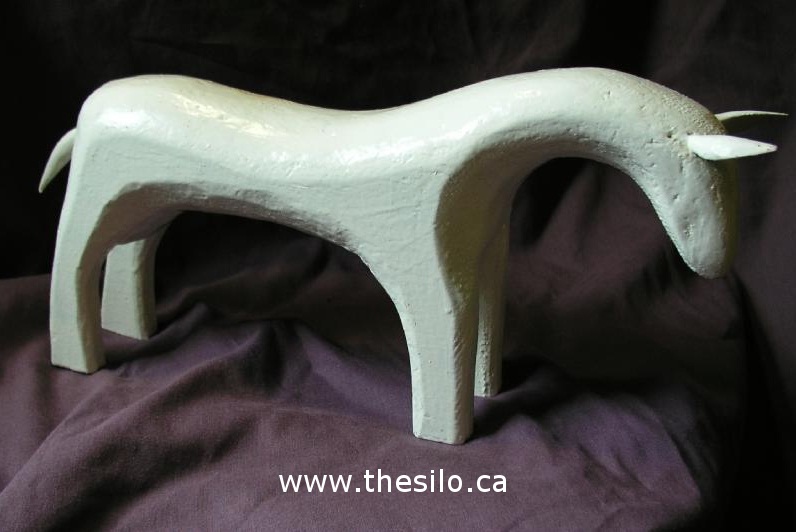
Desrocher’s Whitehorse- a very nice folk art piece acquired by the author.
What is folk art? Any precise definition of art is by nature a slippery process and open to question.
“Folk art” is a term applied to diverse objects, like a highly organized Mennonite fracture drawing which expresses a collective, ethically based decorative tradition. Yet it is also applied to the more individualistic outpourings of any untrained painter, sculptor or other art practitioner.
Folk art is usually one step beyond the mundane. Not just a container to bring water to the mouth for survival (cupped hands for example), but instead a cup lovingly fashioned to bring pleasure or attract notice even when it is not being used, such as an intricately carved canoe cup.
On another level we can simply say that folk art is the art of ordinary people. It is sometimes called “primitive art” or “the people’s art” because by definition the artist has not been academically trained.
Folk art is made for one or more of three reasons: to share beliefs and traditions, to make some useful object beautiful, or to express one’s feelings.
Folk art, by definition has been produced and appreciated since cavemen and women started smearing blood and feces on cave walls, but the academic study of folk art is a relatively new thing. An English writer named William John Thomas first coined the phrase “folk lore” in 1848. At the time most anthropologists considered folklore to be worthless peasant creations. They were more interested in studying artifacts such as weapons and tools. It was through popularized folk tales by the likes of the Brothers Grimm that peasant traditions and art forms became interesting to the intellectual class.
I would argue that folk art did not show up on the radar of fine art institutions until around the turn of the century in Paris when Pablo (Picasso) and the boys flipped-out over the African art they saw for the first time, and started producing what today is called modern art. This led to a wider acceptance of all forms of art.
Folk art has become increasingly popular and more frequently studied in Canada, beginning in earnest after Expo ’67 gave us a greater appreciation of who we are as a nation. For the Silo, Phil Ross.
Featured image- Selections from Jim Linderman’s collection of folk art sewer pipe sculptures made by workers from leftover pipe clay. Photo: Oresti Tsonopoulos
Let’s go back to 2016 and re-consider how the works highlighted below are more relevant today than ever when asking “What is and isn’t art?”. The recent surge in AI and chatbot produced ‘art’ has created new challenges in recognition, interpretation and validation. Or has it? [J.Barker Content Producer for The Silo] It became immediately apparent that the rephrasing of the question “What is art?” to “What isn’t art?” signaled a dissolution of the boundary separating metaphor from reality.
Since, citizen and artist alike have been plunged headlong into the bacchanals of postmodernity, and the question has been obscured under a heap of incongruous discourse and subtexts.
Eva Davidova multimedia installation view
Two curious and intrepid artists offer their answers to this exhausting and illuminating question in their discussions of unexplored spaces and shifting subtexts.
Painter and multimedia artist Eva Davidova tests the digital waters of virtual reality through immersive, programmatic experiences. Articulating the conviction that emerging technology is obliged to transcend commercial application, Davidova’s phantasmagoric 3D renderings attempt to draw the strings away from the hands of big business. Topics mentioned include the beauty of academic reciprocity, the fiscal realities of living in the metropolis, and the future of collaborative artistic environments.
Julie Mehretu’s Dispersion
Behind the meticulous and sweeping abstract landscapes from the mind of Julie Mehretu are subtle societal and historical cues, which inform and enrich the surface of her paintings. In her ebullient interview, Mehretu speaks of the benefits and restrictions that arise from using architectural semantics to ground explorations of political and social change.
Wrought from countless painterly quotations, the identity of Mehretu’s brushstroke vanishes the moment it falls under interpretation.
The elusive and curious nature of the Ethiopian artist’s aesthetic experiments, coupled with a steady ethical subtext make for an engaging and memorable listen.
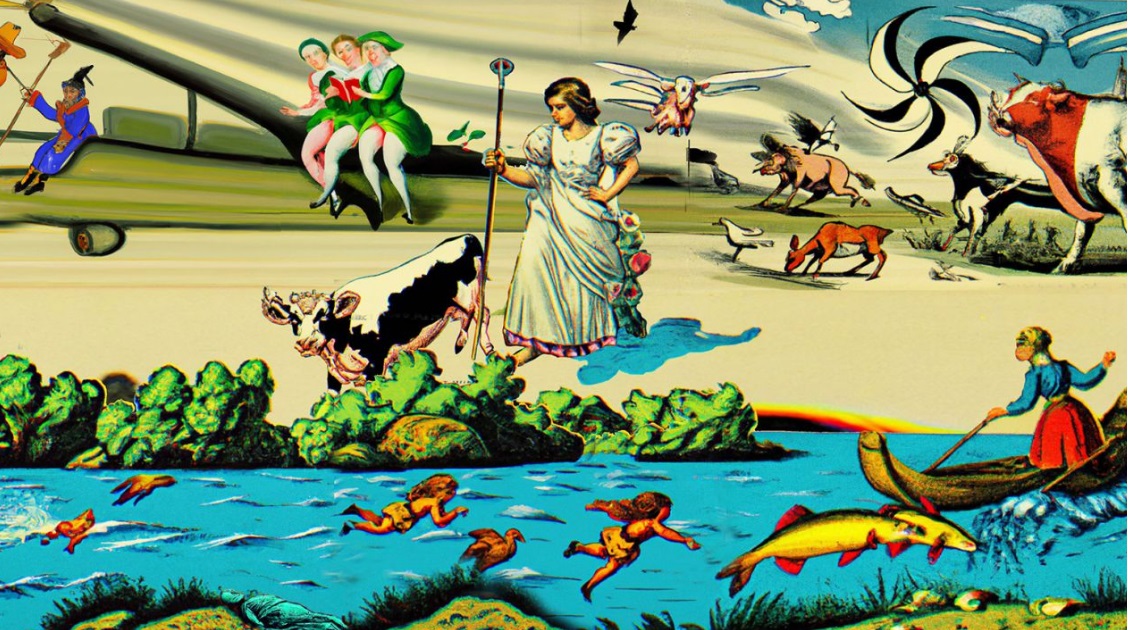
Featured image- “A Questionable Tale(#1)” 2022 Marina Zurkow/DALL-E (AI)
Breaking a leg is never an easy experience, and even though Canada has free healthcare, there can be other medical bills that come with it and they can be overwhelming. And what happens if you were traveling and had an injury outside of the country- what then? In addition to the physical pain and recovery process, you may also have to worry about how to pay for these other medical expenses. In this article, we’ll explore some of the steps you can take to pay for your doctor’s bills after breaking your leg.
Image: castnews.org this site profiles girls with casts in bikinis. Not. Even. Joking.
Check Your Insurance Coverage
The first step to take when facing medical bills is to check your insurance coverage. If you have health insurance as an extra, you may be covered for some or all of the expenses associated with your leg injury. Check with your insurance provider to understand the limits and deductibles of your policy. Understand any out-of-pocket expenses, such as co-payments or coinsurance.
Consider Financing Options
Is the payment plan not working for you? No worries! You can find an emergency loan in Canada that can be a viable option to help you pay your bill on time. Many financial institutions and online lenders offer emergency loans for unforeseen expenses, including medical bills. These loans can provide quick access to funds to cover your medical costs, allowing you to focus on recovery.
Before choosing an emergency loan, it’s essential to research your options and compare interest rates and fees to ensure you select the option that works best for your financial situation. Ensure you understand the loan agreement’s terms and conditions before signing up.
Negotiate the Medical Bills
When you receive a bill for medical services related to your leg injury, ask for an itemized bill. This will allow you to see exactly what you’re being charged for such as an ambulance fee and identify any errors or discrepancies. Once you have an itemized bill, you can try negotiating with your healthcare provider or hospital. Explain your situation and ask if they can reduce the bill or set up a payment plan that works for you. If you’re uncomfortable negotiating independently, you can seek assistance from a medical billing advocate or attorney.
Set up a Payment Plan
If you cannot pay your medical bills fully, you can work with your healthcare provider to set up a payment plan. Many providers are willing to work with patients to develop a payment plan that fits their budget. When setting up a payment plan, make sure you understand the terms and conditions. You should know how much you’ll be expected to pay each month, when payments are due, and whether there are any penalties for late payments. Sticking to the payment schedule is vital to avoid accruing late fees or other penalties.
Look for Assistance Programs
Another option you can look for is financial assistance programs from non-profit organizations or government agencies. These programs help individuals who cannot pay for medical services on their own. Research the available options and apply for assistance if you meet the eligibility criteria.
Paying medical bills after you have an injury can be daunting. However, several financing options are available to help you cover your medical expenses. The key is to research your options carefully, compare interest rates and fees, and understand the terms and conditions of any financing agreement before signing up. By doing so, you can effectively manage your medical expenses and focus on your recovery without undue financial stress.
A dishwasher is an essential appliance in any modern kitchen. It saves time, water, and energy, making cleaning up after meals much easier. However, a new dishwasher can be expensive, and only some have the money to pay for one upfront. This article will explore some options for paying for a new dishwasher.
Assess Your Finances
Before you start shopping for a new dishwasher, it’s important to assess your finances. Determine how much you can afford to spend and create a budget. Look for areas where you can cut costs to save money. For example, consider cutting back on dining out or entertainment expenses. Use the money you save to put towards your new dishwasher.
Consider Financing Options
Financing is a popular option for purchasing a new dishwasher. Many appliance retailers offer financing plans with low monthly payments and no interest for a set period of time. However, comparing financing options and reading the fine print is important. Ensure you understand the interest rates and fees associated with the financing plan.
One other form of financing that you may consider if you live in Canada is a payday loan. Payday loans in Canada are short-term loans that are typically due on your next payday. They are a quick and easy way to get cash and do not require collateral. They are unsecured personal loans that you can use for your short-term needs.
Whatever option you choose, carefully review the terms and conditions of any financing plan.
Look into Rebates and Discounts
Many appliance manufacturers and retailers offer rebates and discounts for dishwashers. Look for promotions on the manufacturer’s website or in-store. These promotions can include cash-back offers, discounts, or free installation. Some utility companies also offer rebates for energy-efficient appliances. Take advantage of these offers to save money on your new dishwasher.
Consider DIY Installation
Installation fees for a new dishwasher can add up quickly. If you are handy with tools and have experience with plumbing and electrical work, consider installing the dishwasher yourself. DIY installation can save you hundreds of dollars. However, ensure you have the necessary tools, knowledge, and experience to complete the job safely and correctly. If you need more clarification, hiring a professional to install the dishwasher is best.
Sell or Trade In Your Old Dishwasher
If you currently have a working dishwasher, consider selling it or trading it in for a discount on your new appliance. Selling a used dishwasher can offset the cost of a new one. Consider listing it for sale on local classifieds websites, such as Craigslist or Facebook Marketplace. Make sure to clean and repair any damages before selling it. If your appliance retailer offers a trade-in program, take advantage of it. You can receive a discount on your new dishwasher by trading in your old one.
Purchasing a new dishwasher can be a significant expense, but there are several options for paying for it. Assess your finances and create a budget to determine how much you can afford to spend. Consider financing options, but make sure to read the fine print and understand the interest rates and fees. Look for rebates and discounts to save money on your new dishwasher. Finally, sell or trade in your old dishwasher to offset the cost of your new one. By using these tips, you can make a smart and informed decision when purchasing a new dishwasher.
Have you ever dreamed of owning a piece of fine art but felt that it was out of reach financially? An art auction may be the answer to your dreams! Art auctions are an excellent way to purchase original artworks without breaking the bank. With the right approach, art auctions can be a great way to build a collection of art and save money.
The benefits of an art auction
For those who are looking to add to their art collection or simply just want to try something new, art auctions can be an excellent way to obtain art. Art auctions offer a unique opportunity to purchase artwork from all over the world at competitive prices. With a broad selection of works to choose from, they provide an exciting and engaging experience.
One of the main advantages of attending an art auction is that buyers have the chance to buy authentic artwork without the risk of buying a counterfeit piece. This can save buyers both money and time since they don’t need to worry about being scammed by an online seller.
Auctions also provide an opportunity for the buyer to get to know the artist and their work, as well as to discuss any questions with auctioneers or knowledgeable collectors.
How to participate in an art auction
Attending an art auction is a great way to find unique and valuable pieces of art. But it can be intimidating if you’ve never attended one before. Here are some tips to help make sure your first experience at an art auction is a successful one. Before you attend the auction, take some time to research the artwork that is being offered. Learn about the artist and the piece you are interested in. Knowing what you are bidding on can help you make informed decisions during the auction.
The difference between an art auction and an online sale
Auctions and online sales both offer a great way for art collectors to purchase artwork, but there are some key differences between the two. An art auction is a live event where bidders compete in a competitive environment to purchase pieces of art. Bidding is fast-paced and participants must be willing to pay the highest price in order to secure the artwork they desire.
Online sales are much different in that they are usually conducted over a longer period of time. Instead of a competitive environment, buyers have the opportunity to browse through the artwork and make their selections at their own pace. This allows buyers to take their time, research the piece, and evaluate whether it’s worth purchasing or not.
Furthermore, buyers may be able to negotiate a lower price as they may not have to compete with other bidders. Another difference between an art auction and an online sale is that auctions are typically reserved for more expensive pieces of art, while online sales tend to feature more affordable artwork. As a result, those who want to purchase high-end artworks may find it more beneficial to attend an art auction than to purchase from an online store.
FINAL ISSUE! The attempted assassination of President Quinn during peace talks with the Red Queen pushes Earth towards a galactic war with an alien enemy. But when the assassin’s identity is revealed as Stormy Daniels, Agent Aela Grant and the crew of the Helix II must choose sides. Will they join Space Force in their hunt for one of their own, or will they become criminals? The first season of Space Force ends in this explosive and game-changing issue!
Polka Spot: The World According to Llama #3
Writer: Michael Frizell
Artist: Yehia Mohran
In this fun, all-ages, action-adventure comedy, Polka Spot, everyone’s favorite drama llama, is on location filming her next movie, “The Princess and the Beast.” What she doesn’t know is that the film’s location is famous for sightings of the Hairy Man, a monster that haunts the woods. Meanwhile, someone plots behind the scenes to steal her necklace and crown! Can Polka Spot and her companion, the plucky cat, Jolene, solve the mystery of the hairy man, prevent the theft, and save the movie?
Black History Leaders: Volume 4: Mariah Carey, Donna Summer, Whitney Houston and Lil Nas X
Writers: Darren G. Davis, Michael Frizell, Raphael Moran
Artists: Victor Moura, Kirk Feretzanis, Pablo Martinena
From the hit “Fame” and “Female Force” imprints by TidalWave comics, this volume explores the musicians who have made an indelible mark on our culture, including: LaDonna Adrian Gaines, better known as Donna Summer, the Queen of Disco. Lil Nas X, the multi-award-winning rapper who breaks glass ceilings as a gay man in hip-hop. Whitney Houston, an idol to millions with the voice of an angel whose meteoric career defined a generation, couldn’t keep her demons at bay. Often called the Queen of Christmas and the Songbird Supreme, Mariah Carey’s rise to stardom was not without pitfalls – something she isn’t shy to explore with her five-octave range.
Bold and the Brave #15
Writer: Darren G. Davis
Artist: Breed
There is a new minotaur in town and what are his ties to the villainess Medusa. Will the 10th Muse has to join forces with her in order to save a family that is in chaos. Also the relationship between Emma and Zak heats up. Homage cover by Marvel Comics artist Yonami
Wrath of the Titans: Argos #1
Writer: Chad Jones
Artist: Marcelo Henrique Santana
Perseus is back to face off once again with the titans of myth. Set immediately after the defeat of the mighty Kraken, Perseus plans to rebuild the city of Argos. But his wife-to-be Andromeda is kidnapped by one of Medusa’s gorgon sisters out for her ultimate revenge.
TidalWave Comics Presents Volume 2
Writers: Andrew Shayde, Scott Davis, Adam David Gragg, Chad Rebman
Artists: Carlos Furuzono, Diego Garavano, Addullah, Esdras Cristobel
A new unique team-up ongoing series! The TidalVerse is here! The members of the series, teams up with the TidalWave Universe’s vast array of colorful, costumed adventurers for a series that hearkens back to the Bronze Age of comics when team-ups were something special! This homage series together for the first time features Camelot, Zeus, Orion the Hunter, Venus, Sigma, The Muse, Monsters Among Us and Dorian Gray.
10th Muse: New Beginnings #1
Writer: Darren G Davis and Michael Frizell
Artist: Igor Cicarini
The world met Emma Sonnet, the 10th Muse, 22 years ago when she debuted in the 6th highest-selling comic book of all time. After a personal tragedy, Emma relocates to NYC, hoping for a new start. But Hades, the king of hell, has other plans. TidalWave’s latest ongoing series starts here! Greek mythology has documented the nine Muses, the inspirational daughters of the almighty god Zeus. But history forgot one-the 10th Muse. Emma Sonnet mysteriously disappeared five years ago during a summer trip to Greece celebrating her graduation from law school. Yesterday, she resurfaced just as mysteriously as the newly appointed District Attorney, with a unique take on the law. Battling evil in the courtroom by day, and in the shadows at night, Emma Sonnet is tipping the scales of justice her way, as The 10th Muse.
TidalWave Comics Presents #9: Camelot and Zeus
Writer: Scott Davis
Artist: Abdullah
Resistance! Not all heroes are blessed with understanding or even control of their powers. And not all heroes, given powers to rival the Greek gods, are given Olympus’ blessing. So it’s no wonder that former legal assistant and current hero-in-training Camelot is having a bad day, only it’s about to get worse! His rent is late, the gods are gunning for him, and to top it all off, the nefarious Captain Steel is creating havoc of epic proportions. What’s a hero to do? The Odyssey returns with a story that shows it takes more than a cape and a cool name to be a hero. Guest starring Zeus, God of Thunder.
Where to Find TidalWave Comics
TidalWave Comics’ vast catalog of titles can also be downloaded digitally from Kindle, iTunes, EPIC!, Madefire, Izneo, ComiXology, Global Comics, DriveThru Comics, Google Play, Overdrive, Library Pass, Biblioboard, Nook, Kobo and wherever eBooks are sold.
New York – Through an innovative, children-led campaign delivered by the UN’s global fund for education in emergencies, Education Cannot Wait (ECW), crisis-impacted girls and boys worldwide are sharing “Postcards from the Edge” to call on world leaders and public and private sector donors to make good on promises to ensure education for all by 2030 as outlined in the Sustainable Development Goals.
These first-person accounts and drawings offer inspiring and thought-provoking portraits of the challenges facing girls and boys caught in conflict and protracted crises around the world.
“They are inspiring and compelling stories of hope and an incredible resilience in the face of adversity and testaments to the amazing power of education to transform lives. We must listen to the world’s children. They deserve their human right to an education. Their voice must speak to our decency, they deserve to be heard,” said Yasmine Sherif, Director of Education Cannot Wait.
To date, more than 50 letters, drawings and videos have been received from crisis-affected girls and boys supported through ECW-funded programmes across more than 20 of the world’s toughest country-contexts.
ECW’s strategic partners – including Educo, Plan International, Save the Children, Street Child, UNESCO, UNHCR, UNICEF, World Vision and many others – continue to collect these first-person accounts to highlight the singular power of education to end violence, hunger and poverty, and build a more peaceful world for generations to come.
In the Democratic Republic of the Congo, Lucas*, a 14-year-old refugee from the Central African Republic recounts the story of seeing his mother murdered and his village burnt to the ground.
Through a multi-year resilience programme delivered by UNHCR with funding from ECW, the boy is now back in school and dreams one day of becoming a doctor.
In his postcard, Lucas makes an impassioned plea for world leaders “to think of us refugee children and provide funding to let us finish our studies.”
Worldwide 222 million girls and boys like Lucas are having their futures ripped from them by the converging impacts of conflict, climate change, forced displacement and other protracted crises. Girls and children with disabilities are especially at risk.
Several letters were submitted from girls and boys in Afghanistan. With new rules banning girls from education and denying women their human rights, it is not clear if Zehab* from the Uruzgan Province will be able to continue her education. But for now, with the support of ECW and Street Child, she is still able to attend a non-formal community-based learning programme.
“I want to get education and become a well-known doctor. But I am wondering that I might not achieve my dreams, as girls are not allowed to attend schools in Afghanistan,” she says in her postcard. “I call on the world leaders to help us and give us the opportunity to learn and lead our future.”
Leaders across the globe will come together at the Education Cannot Wait High-Level Financing Conference on February 16 and 17 in Geneva, Switzerland, to make good on commitments to ensure every child, everywhere, is offered a quality education.
Throughout the event, youth advocates and global champions will read the Postcards from the Edge to ensure the voice of the world’s most vulnerable children are heard.
Education Cannot Wait is calling on donors, foundations and high-net-worth individuals to mobilize US$1.5 billion over the next four years. With this funding, ECW and its strategic partners will reach 20 million children and adolescents with the safety, hope and opportunity that only quality education can provide.
*Names have been changed for privacy purposes.
#PostcardsFromTheEdge – Letters from Children
POSTCARDS
“For me, #education is the only hope I have left to achieve my dream of becoming a doctor.”~Lucas, 14, 🇨🇫 refugee in #DRCongo. Read how @EduCannotWait+@UNHCR_DRC help children like Lucas achieve their dreams!👉bit.ly/3XTpzEf#PostcardsFromTheEdge
Darline, 14, from #Haiti🇭🇹 demands change & an #education! @EduCannotWait’s #PostcardsFromTheEdge Campaign amplifies the voices of girls & boys like Darline ahead of #HLFC2023.Read Darline’s powerful letter📨http://bit.ly/3ixhKoX @UNICEFHaiti#222MillionDreams✨📚
“I want to be an architect in the future to help build & reconstruct my country #Syria🇸🇾 & all the countries that are affected by war & destruction.” ~Kamil, 12, refugee in #Iraq. Read @EduCannotWait’s #PostcardsFromTheEdge delivered w/@SavetheChildren.📨 http://bit.ly/3kui6Nt
“I aspire to be a #teacher because I feel I have a heart to care, ears to listen, time to give & ideas to share” ~Huma, #Pakistan🇵🇰. Read her #PostcardsFromTheEdge to hear how @EduCannotWait+@UNICEF_Pakistan is making #222MillionDreams✨📚 come true.📨bit.ly/3R7l4UE
11-year-old Zawad, a refugee in #Bangladesh🇧🇩, wants his community and family to prioritize education. With support from @UNICEFBD+@EduCannotWait his dreams are coming true. Learn more in his inspiring #PostcardsFromTheEdge 👉bit.ly/3DcFl5s
“I call on the world leaders to help us and give us the opportunity to learn and lead our future.” ~Zehab, #Afghanistan🇦🇫. Read Zehab’s @EduCannotWait’s #PostcardsFromTheEdge 📨https://bit.ly/3CTEpmh Like & retweet if you agree #EducationCannotWait for #Afghan girls!
Life sometimes can seem off kilter as responsibilities mount and people plow all their physical and mental resources into what seems to be the most pressing crisis of the moment.
But Lumbie Mlambo says that’s a good time to take a step back. Everyone has the potential to shine in life’s darkest moments, but the key to achieving goals and an overall better existence is to maintain a balance so that one aspect of your life isn’t consumed by another.
While some people might say balance in life is an impossible goal, she disagrees and says when each of us find our equilibrium, we become more productive and a greater asset to our communities.
“There’s balance in everything we do, be it walking, talking, eating, sleeping, working or spending time with family,” says Mlambo, editor of Equanimity Magazine, an online publication that features inspiring stories of life and success.
“For example, look at how we try to deal with our work-life situation. We balance our workload so that we can still make room for other activities, to spend more time with our spouses or our children. We do that because we understand how important it is.”
She offers these reasons for why living a balanced life is essential.
• The health factor. Staying balanced is a key to a healthier and successful life. Both mental health and physical health benefit, and as a result, so do our overall lives. “When we’re healthy, we’re able to care for ourselves and others in our community,” Mlambo says.
• The empathy factor. When we find balance in life, we can better understand the importance of helping the underprivileged, says Mlambo, who grew up in a rural area in Zimbabwe. You begin to realize that someday you could be in their situation, which makes you a more empathetic person. “Your economic situation is like your health,” she says. “Nothing is guaranteed.”
• The role-model factor. Sharing our stories – whether it’s a tale of success or even a tale of failure – is important because others can learn from us or be inspired by us as they too strive for a balanced life. “When you tell your story, it empowers, motivates and encourages people to not give up on their dreams and goals,” Mlambo says. “Maybe you think your story is just not that interesting or important. But for someone out there, it may be the spark that ignites them to great things.”
Mlambo always strove to find balance in her life. But she became even more passionate about it after she suffered a stroke in 2001 that left her partially paralyzed. She since has recovered, but says the event had a profound impact on her and she will always consider herself a stroke patient.
“Before the stroke, I thought my life was balanced in a way,” she says. “I mean, I ate healthy foods. I exercised seven days a week. But it was not balanced in the way I wanted. I had been too focused on myself. I realized that life was not just about me, but about others.”
Finding balance in life isn’t just a feel-good concept, Mlambo says. As people achieve balance, they realize they have the potential to rise above their circumstances. They can become more productive in their communities and that is good for everyone.
“Staying proactive and shifting the way we think can even help the economy to grow and can help create more jobs,” she says.
Certainly, maintaining a balanced life may be tougher than ever because technology allows work – emails, text messages, telephone calls – to intrude on people’s “off” hours. But that’s just all the more reason to make a concerted effort to strive for balance, Mlambo says.
She says it’s become popular in some circles to argue that a balanced life is a myth and can’t be achieved. But regardless of their views, she says, most people seem to be trying to bring balance to their lives, even if they don’t think of it that way.
“We eat healthy to stay balanced, we get enough sleep or rest to avoid stress, we juggle our daily activities to stay balanced,” Mlambo says. “To be successful in anything we do, we must have some sort of balance.” For the Silo, Lumbie Mlambo.
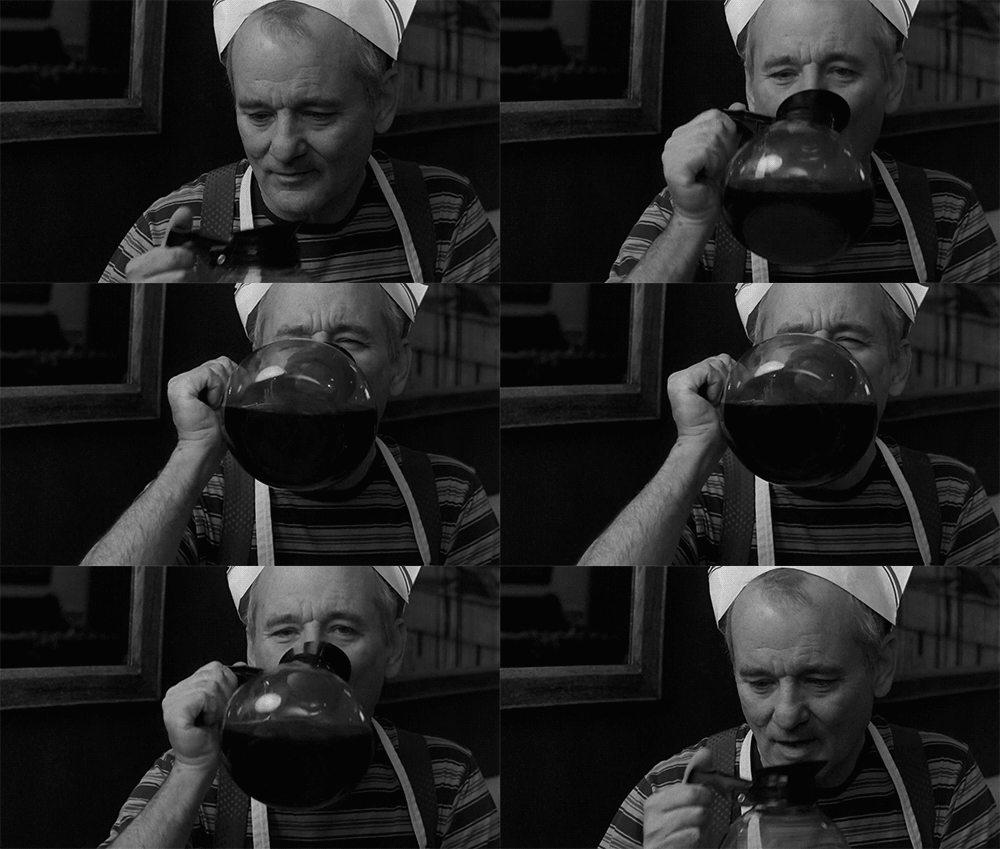
Screenshot from waaaay back in 2010 and from an Ontario Lottery Gaming commercial. The premise? You’re stuck in a desert in a stalled car with a giant robot attacking. But then you remember what’s in the glove compartment…watch the video below and realize that counting on a lottery win is not the best way to financial security.
Maybe you’ve seen the ad, or one like it? For example-an Ontario Lottery Gaming commercial that depicts an attractive woman climbing out of bed, enjoying a leisurely cup of coffee before climbing into the cockpit of a sailboat, the implication being that if one wins a multi-million dollar jackpot, one can have the “yachty” lifestyle.
As I write this, I am sitting in the cockpit of my sailboat sipping a cup of coffee while enjoying the morning sun, and I have never won the lottery. In fact, I will be going to work at my average-guy, average-wage job shortly. Then, at the end of the workday, I will be returning to my sailboat, to enjoy the sunset.
For several years my wife, and I, and our dog, have spent the spring, summer and fall aboard our small sailboat. We return to our “dirt-home” only occasionally, to do laundry, mow the lawn so the neighbours don’t complain, collect mail and make sure the place hasn’t burned down.
This is the view that Bryan enjoys along with his ‘dock coffee’ at the Port Dover Harbour Marina. photo: B. Jones
After all, we need some place to live when the water is too hard and too cold to float a sailboat.
When new acquaintances find out that we are sailors and dock-rats, we often hear, “Oh, I have always wanted to sail!” or “I have always wanted to live on a boat!” What follows is often an enjoyable conversation about how to make it happen, how to “live the dream.”
I will confess, though, when hearing “Oh, I have always wanted to…” that the curmudgeonly little voice in the back of my head wants to retort, “No, you haven’t. If you really did, you would be doing it.”
Because it ain’t that hard to do.
We’re not rich. As I mentioned, my wife and I are pretty average people. Average age, average income, average credit scores, average sized mortgage, kids in college… look up “average” in the dictionary, and you don’t see our picture, because there are millions of folks just like us, and somebody way up the line got the honour.
We made a choice. We chose to buy a good, old boat for a mid-four- figure sum, invest a few hundred bucks a year on maintenance and a few hundred more on a slip to dock it in.
Our boat cost less than the annual membership at many golf clubs, and our slip fee for 6 months is less than a two week cottage rental in Turkey Point.
Bryan’s solution to beating the heat is to leave the dock and sail into the wind.
(Okay, before you start pelting me with hate mail, there’s absolutely nothing wrong with golf or vacationing in Turkey Point. Really. Except the clothes. KIDDING!)
It isn’t all fun and games and Jimmy Buffett tunes though.
Before you dash out and buy an old boat, here’s ten things my wife and I have learned over the past few seasons:
1. The stuff that bothers each of you about each other in 2000 sq ft on land does not magically go away in less than 200 sq ft on water. Learn to communicate, consider and compromise.
2. If you take it out, put it away. Now.
3. Each new item onboard means an old item has to leave.
4. Its okay to not talk.
5. One cooks, one does dishes. Helping doesn’t help.
6. When the dog needs shore patrol, the dog. Needs. Shore. Patrol. Now.
7. Find your own quiet spot, whether it is the v-berth, quarter berth, foredeck or cockpit.
8. You don’t have to get there today. You don’t even have to get there tomorrow.
9. When docking, mooring, anchoring, tacking or damn near anything goes awry, talk it out, and then hug it out.
10. There is a difference between being heard, and yelling.
We live in a slip on a dock with no services. No electricity and no water (aside from that which the boat floats in, smart-alecks,) means we have to refill our onboard water tank from 6 gallon water jugs hauled up the dock a couple of times a week, heat water on our alcohol stove to wash dishes, use solar panels to keep our batteries topped up and we don’t have air conditioning, or a microwave, or a big flat screen TV. A shower is a 10 minute dinghy ride or 15 minute walk away.
And we’re cool with that. We have become better, more creative cooks, we read more, we talk more, and the sunsets here and the characters we share them with more than compensate. We have talked more, laughed more and shared more with our dock-side neighbors than we ever have with our neighbors “on the dirt.” Our house is a house, but this is our home. For the Silo, Brian Jones.
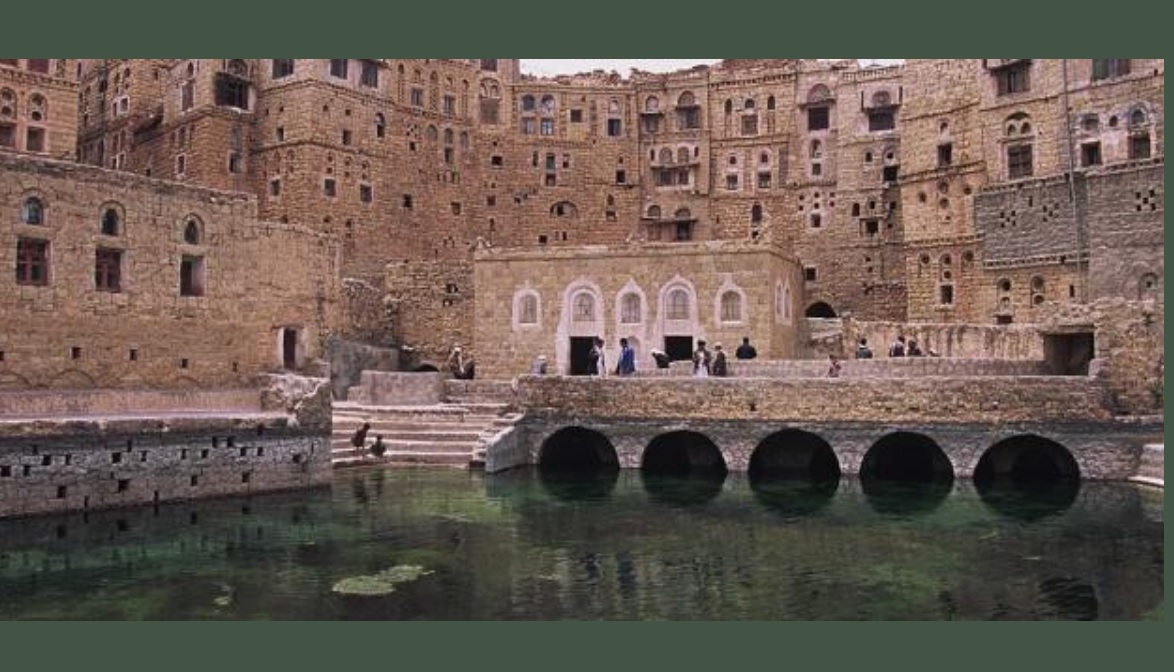
Paris, January, 2023 – The World Heritage Committee meeting in an extraordinary session on Thursday inscribed the Landmarks of the Ancient Kingdom of Saba, Marib (Yemen) on the List of World Heritage in Danger.
The Landmarks of the Ancient Kingdom of Saba, Marib, is a serial property comprising seven archaeological sites that bear witness to the rich Kingdom of Saba and its architectural, aesthetic and technological achievements from the 1st millennium BCE to the arrival of Islam around 630 CE.
Yemen’s recorded history started when it was known as Saba/Sheba three thousand years ago, on the main spice route from the east to Europe, and was rich and powerful. The Queen of Sheba’s visit to King Solomon appears in both the Bible and the Koran.
They bear witness to the complex centralized administration of the Kingdom when it controlled much of the incense route across the Arabian Peninsula, playing a key role in the wider network of cultural exchange fostered by trade with the Mediterranean and East Africa.
Located in a semi-arid landscape of valleys, mountains and deserts, the property encompasses the remains of large urban settlements with monumental temples, ramparts and other buildings.
The irrigation system of ancient Ma’rib reflects technological prowess in hydrological engineering and agriculture on a scale unparalleled in ancient South Arabia, resulting in the creation of the largest ancient man-made oasis.
Marib Dam photos before and after the destruction. photo: German Archaeological Institute/Burkhard Vogt
The World Heritage Committee used an emergency procedure to inscribe this site on the List of World Heritage in Danger, due to threats of destruction from the ongoing conflict.
The List of World Heritage in Danger provides access to enhanced international assistance, both technical and financial, and helps mobilize the entire international community for the protection of sites.
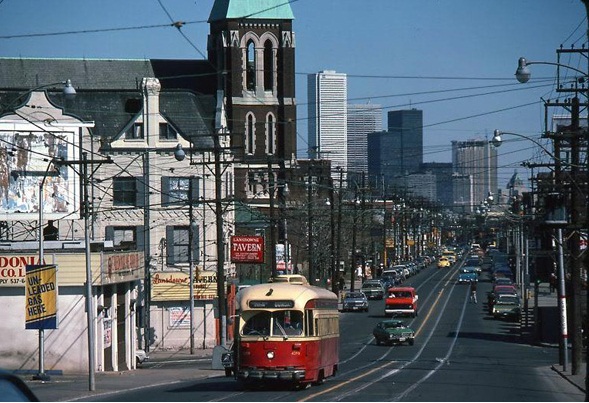
I am sure that many of you will agree that the streetcars that rumbled through Toronto from 1800s until… let’s say 1990’s helped shape many neighborhood. They were the most effective way to connect Toronto’s core with its suburbs and greatly encouraged development of the communities as new grocery stores, restaurants, galleries, shops and banks as amenities have been built near the streetcar lines.
Standing in the middle of road, going nuts being stuck behind a streetcar, it is sometimes difficult to appreciate how important role they have played in the city’s history.
First Streetcars in Toronto
Inspired by the success of horse-drawn streetcars in the U.S., Alexander Easton’s Toronto Street Railway company started operating in 1861. New rail lines played a vital important role in connecting the city centre with its sleepy suburbs. What started as an enterprise with 6 miles of track and 11 cars, turned slowly into 68 miles of track with 361 street cars. The company expired in 1891 and the management was turned over to the Toronto Transit Commission (TTC).
The next company to take control over the system was the Toronto Railway Company, under which first electric streetcars were introduced. All services were later taken over by the Toronto Transportation Commission, which was later renamed to the Toronto Transit Commission (TTC).
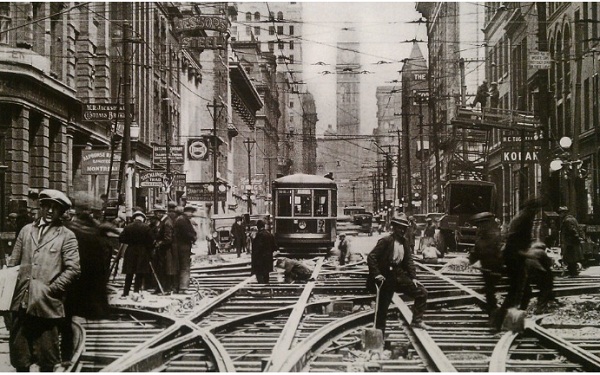
Building street car tracks on Bay St. Toronto circa 1918
However, even streetcars had their bad times. In the 1960s they were almost abandoned when people thought of it as an outdated mode of transportation. Thirty years later it fell upon hard times once again because of budget cuts, the recession and its inability to service the rapidly-growing parts of the city.
It took months for the TTC to pull itself out of its bad times, but streetcars somehow managed to return back to their previous fame. Since then, the company’s services have been improving every year, but there are still some issues. Let’s take a look at the current state of the streetcar rail services in Toronto, its advantages and the most annoying faults.
The Ashbridges Bay street car line 1917.
Present
Although the number of streetcars crossing the city declined in the latter half of the 20th century, they never disappeared completely. In fact, streetcars have become a vital part of Toronto’s history and nearly every citizen’s life. Nowadays, the city owns 247 streetcars, of which 52 are higher-capacity articulated streetcars. These operate over 11 routes, serving a total of 617 stops over a system length of 75 kilometers. These numbers make it by far the largest surface rail system in North America.
Public transportation in Toronto relies heavily on streetcars in the downtown core which is the thin red lines you see on the TTC map above. Technically, they’re light rail trains, but locals refer to them as streetcars. Each line usually follows a street e.g. 501 Queen St., so it shouldn’t be too hard to get on the right vehicle.
Done right, streetcars can really encourage the overall development of the city, they are able to define whole neighborhoods, reduce traffic congestion, reinforce retail, bring life to streets and fit easily into the surroundings without disruption to existing businesses, residents or traffic.
Pros
One of the main advantages of streetcars is its high passenger capacity. Streetcars carry between 75 and 100 people per vehicle.
Regarding energy efficiency, streetcars are believed to do a little bit more for the environment that other public transport systems. Because every streetcar user means one less car on the road, words such as clean air quality, for environmental sustainability, for climate protection are often associated with streetcars. In fact, nothing drops greenhouse gas emissions faster than effective rapid transit, so if we truly want green for Toronto, streetcars might be the answer.
Another argument made in favor of streetcars is their long lifespan. The vehicles are designed to be very durable and can keep running for over 30 years. In contrast, buses wear out after just 8 – 12 years.
One of the “last” Toronto street cars. image: blogto.com
Since they are longer-lasting than other means of transport, the cost of repair and replacement is typically also much lower.
One ride costs $3.25, making it a very cheap transit option across the city. At the same time they are relatively fast to build, without impacting the city for a long period of time and resulting in minimal disruption to the neighborhood.
Streetcars can be so charming. Well, this is a subjective opinion, but have you seen vintage trolleys in San Francisco or New Orleans? They’re so awesome.
Cons
There are two sides to every coin so we have to mention disadvantages of streetcars, too. Once again, let’s talk about their passenger capacity. Even though they carry a relatively high number of passengers, the difference between a streetcar, LRT and subway is noticeable. Just for comparison, a subway train can hold up to 1500 passengers and an LRV can hold up to 255 people in a single vehicle (depending on speeds, frequency and actual vehicle length and capacity).
Next, streetcars require “loops” to turn around, which slows them down. This is not the case with cars, LRVs or subways.
Streetcars are noticeably slower than cars as they are travelling at speed of about 17km/h. LRVs run at an average of 27km/h and subways at 32km/h.
Streetcars are said to contribute to traffic congestion greatly. Imagine a situation when a streetcar stops to let passengers load on or get off. In such situation, both lanes at of traffic are blocked. This causes delays and angst among riders. If you’ve ever driven behind a streetcar, you know how much of a problem this is. You have nowhere to go, unless you stand far back enough to turn your car around.
At certain times they may pose danger to both passengers and pedestrians. For example, when cars try to pass them before they stop.
When it comes to costs, it is important to distinguish between the cost of laying down streetcar tracks, maintaining the streetcars themselves and maintaining roads. Streetcars require a whole lot of special mechanics and thus the cost of maintenance is much higher.
And let’s not forget about pollution. You might disagree with a statement that streetcars are a reason behind increased pollution in our city, but if you think about it for a second, you will realize there is some truth in it. Since it creates traffic congestions, it also adds to pollution.
Future of Streetcars
Even though many people are getting more and more angry at streetcars, they are not going anywhere. When (then Mayor) Rob Ford tried to cancel the Transit City light-rail-plan and build tunnels underground in some parts of the city, city council decided to keep new transit lines above ground. The main reason behind this decision was the cost of tunneling and powering subways.
And for those unhappy citizens who are queuing up behind streetcars every morning, the least Toronto could do is indicate that they are keeping an open mind about new subway lines. And let’s not forget that the city intends to build and operate new light rail transit lines, which means that people will be able to travel in new dedicated lines, separated from motor vehicle traffic. For the Silo, Jamie Sarner.
When I think about whether working from home is right for any person, I remember a story that Richard Kiosaki told in his book “Poor Dad- Rich Dad”. He talks about his two dads who had two very different mentalities about money. One had the mentality of an employee and the other of a business owner. Both dads believed they were giving correct advice although they were advising exactly the opposite.
His “poor” dad told him to choose employment because it offered job security and corporate ladder, where he could become somebody after years of being promoted. The “rich” dad asked him to choose the path of an independent business owner because that way he could work for something that he owns.
Of course when you talk to most people about starting your own business and having a passion about some new idea, you will get two main reactions.
There will be … The Naysayers – These are the people who will tell you, “you will never make it” and that you are “stupid to attempt the impossible”.
But then you will find people who are…
The supporters – These are the people who will say go for it. They say “don’t worry” and “we will be there for you when you need us”.
While you may have your questions and even your doubts, listening to the naysayers will never get you where you want to go. Listen to those who will ask good questions, who will give you good advice and support you if your desire is to do something unique and be your own boss.
The fact is, working from home has some fantastic advantages. 1. Flexibility When you are juggling a family and other obligations, having a work from home business is a huge bonus. Firstly, you can more easily accommodate your customers in all the different time zones. Rather than being tied down to a regular office hour routine, having the ability to work part time or full time, takes on a whole new meaning.
2. Your overhead costs are reduced You will save money on gas, the wear and tear your vehicle (not to mention the wear and tear on your nerves), office space and utilities. The reality is that with those savings you can be a lot more flexible in how you are pricing your product.
3. Testing,Testing When you realize that more than 50% of all new businesses fail, then testing out your new business without a lot of overhead is common sense. When you test and tweak your home business, you can determine its viability before you start investing a lot of money!
4. Tax Benefits Many people don’t realize the major tax incentives there are for having a home business and while the tax laws are different from country to country, some of the perks are:
– A percentage for rent or mortgage costs (for the space you use to operate your business)
– A percentage for utility bills such as gas, electricity, water
– Business operating software and management tools, which also includes webpages etc.
– Phone and communications, including internet expenses
and of course the biggest tax saving
The initial investment you paid to start your business
5. Experience A home based business will allow you to gain invaluable business experience and business skills such as internet marketing, identifying markets, learning how to market yourself and all the other traits needed to run a successful home business. This experience can be transferred to other projects that you wish to pursue.
6. Turning Creativity into a profit Creating a home business is the ideal way to turn your hobbies or passions into a business that will be unique to your talents and what you really love to do.
You also have to be realistic in understanding what owning a home business is all about! “Working from home”, it has a wonderful sound to it doesn’t it? I bet many of you have visions in your head of sleeping in, lazing around and working when the mood strikes you right?
Like anything else there are also challenges that you should take into consideration and create a plan on tackling them. Any problem can be solved as long as you are prepared for what is coming your way.
1. Motivation It’s great to be your own boss, but with no code of conduct to follow or formal routines to keep you on track, it’s easy to fall into the trap of putting off doing your business and procrastination. If you have an ineffective time management schedule, it makes it hard to reach your goals.
Solution Make sure that you follow your passion and this will help you with getting motivated and working extra time when needed. 2. Lack of privacy Unless you have a separate office set up, privacy can be a big concern. For example if you have created your office near the family room, and your house guests drop by, they will be near your work area. Your documents, work and even files can be fair game to everyone! Take that thought one step further and if you have kids, they will come in and distract you while you work
. Solution
Create your own workspace and set your own hours. Make everyone aware that when you are working you can’t be disturbed and if anyone needs your help they need to respect your schedule like everyone else.
Finding a workplace that offers privacy can be a challenge at first. We don’t recommend setting up a home office in your bathroom. CP image: guardian.co.uk
3.Learning When starting a home based business, you are going to have to develop a lot of new skills, which will take time. You will be wearing many hats and in the beginning you won’t be able to afford to hire specialists who can quickly and efficiently do new tasks to you. You will have to learn things which you never thought you would need to learn.
Solution This generally is a positive thing. You would never embark on new challenges if it wasn’t for your business. As the oldsaying goes, “knowledge is power” and along with building your business you are becoming an expert in new domains.
4.While its nice to be the boss, you will find that you will be facing unexpected situations you will have to deal with on your own. When you make a mistake you will be dealing with the consequences on your own.
Solution Being the Boss is rewarding but paying unnecessary bills for unqualified decisions is not fun.
“One of the most important leadership lessons is realizing, you are not the most important person or the most intelligent person in the room at all times.”
~ Mario Btali
5.Loneliness is a huge downside to running your own business at home. In the beginning you love the fact that you can get your work done, but after a few days or weeks, you may find that you are tired of hearing your own voice.
It’s a sort of dread that happens and you might turn to such things as web surfing or chatting with friends to relieve the nervousness you may experience.
Solution
In business you need to talk to people about your ideas and brainstorm to see if they are workable. Set up a “support system” early in your business, and you will find yourself not only running into less problems, but you will have someone to exchange your ideas with and have good conversation when you need to step away from daily tasks.
6. Legalities. Most people do not realize that whether you are “telecommuting” or creating a home based business, you need to be sure that you are covered by insurance, that you have checked zoning laws, and that you have the proper paperwork for taxes. Completing paperwork like NDA forms is important to safeguard your business.
Solution First don’t worry about not knowing all the legalities. The Government and your suppliers will quickly communicate to you what your obligations are. They will scream loudest, and you will comply with their demands. 7. Dependency. Most people do not realize that even as a business owner, you need to create team of people who you work with. In case of a car accident, you still want to come back to functional business and want to have someone who can handle daily tasks where you are not around.
Solution Have family, business partners or a team of supporters be involved early in your business, at the very least have part time bookkeeper or a person who will answer phones for you when you are away. 7. Balancing your life. Working at home can cause a lot of stress in your life, juggling the needs of your family with the needs of your work and for some people it can cause a lot of strain in their relationships. You will want to take vacations which will require someone to look after your business while you rest and recharge. You will need to plan for things like this, so you are not surprised by life, because life has a tendency to surprise us when we least expect it.
Solution Although business is important at all times, you will not be able to benefit from it if you are stressed, tired and sick. Implement periodic holidays and time away from your work. Leave your home far enough so you can’t do anything business related while you are away. This will provide you with time to recharge.
As you can see having a home business can be a very workable solution to creating a good income. However, like anything, you need to look at all sides of the equation. Ask yourself the question, will you take the advice of the “poor” dad and be the employee or the “rich” dad and choose the path of becoming an independent business owner.
For me, I chose to be an independent owner and I have never had any regrets!
The Montecito mansion, where Prince Harry and Meghan Markle filmed much of their Netflix documentary Harry & Meghan, is on the market at $33.5 million. Fit for royalty, the Mediterranean-style, six-bedroom home with 13,599 square feet includes ocean and mountain views, multiple terraces, and a regal great room chandelier and arched windows – where Meghan was extensively filmed for the show’s interviews. The home was built in 2006.
The home’s exterior includes two acres of lush grounds with romantic walkways and year-round flowers, soaring palm trees and accent vines, a vegetable garden, citrus orchards, and even a chicken coop for fresh eggs. Amenities include a pool, hot tub, bar, gym, game room and a theater. A picturesque guest house is perfect for any king or royal relative who might drop by for the beautiful Southern California weather.
The Duke and Duchess of Sussex moved to Montecito in 2020 where they lived for a few months at Tyler Perry’s home before buying their own $14.7 million mansion. The six-part Harry & Meghan docuseries follows the couple from the early days of their courtship up to their well-publicized resignation from the royal family and move from England, and is setting television viewership records.
Montecito has long been a favorite escape for the wealthy, including John and Jacqueline Kennedy’s honeymoon in 1953, and increasingly drawing Hollywood types such as Oprah Winfrey, Kim Kardashian, Gwyneth Paltrow and Ariana Grande.
The home is listed with Ryan Malmsten of Santa Barbara Brokers. Photos by Jim Bartsh.
Until quite recently, the field of early modern history largely focused on Europe.
The overarching narrative of the early modern world began with the European “discoveries,” proceeded to European expansion overseas, and ended with an exploration of the fac-tors that led to the “triumph of Europe.” When the Journal of Early Modern History was established in 1997, the centrality of Europe in the emergence of early modern forms of capitalism continued to be a widely held assumption. Much has changed in the last twenty years, including the recognition of the significance of consumption in different parts of the early modern world, the spatial turn, the emergence of global history, and the shift from the study of trade to the commodities themselves.
Sometimes conferences disappear from view as soon as the delegates disperse.
Other times, when the papers are published in an edited volume, conferences come to be seen as important milestones in the historiography. The two volumes edited by James Tracy, entitled The Rise of Merchant Empires and The Political Economy of Merchant Empires published in 1990 and 1991, respectively, move through their various stages of production, ownership, transmission and transformation .
Moreover, those stages are overlapping, circulatory and contradictory; objects move in and out of collections, as they move in and out of fashion, and meanings are never stable. When a feathered crown is produced in Spanish America, for example, it has a very different meaning from when it enters into a cabinet of curiosity, and when it is taken out of the cabinet to appear in a spectacular performance in the street or in the theatre, it once again takes on a different meaning.
Objects gain biographies; earlier meanings of objects are never erased but reshaped and translated to new circumstances, as Leah Clark showed in her study of the circulations of gems and jewels through the hands of a variety of owners in quattrocento Italy. Have we lost this meaning connection with mass produced items from China?
Such insights have benefitted not only from the global turn but also from developments in the fields of anthropology and art history, making the field more interdisciplinary than it was when the study of the trade in goods focused more on their trade than on the goods themselves.
The Founding of a New Journal
Despite Tracy’s efforts, European actors continued to hold central stage in the field. When the Journal of Early Modern History (JEMH) was established in 1997, a decade after the Minnesota conference, the centrality of Europe in the emergence of early modern forms of capitalism, for example, continued (and still continues) to be a widely held assumption. In part, this can be explained by the powerful legacy of giants in the field like Fernand Braudel and Immanuel Wallerstein.
1 James Tracy, ed.,The Rise of Merchant Empires: Long-Distance Trade in the Early Modern World, 1350-1750, Studies in Comparative Early Modern History (Cambridge, 1990); James Tracy, ed., The Political Economy of Merchant Empires, Studies in Comparative Early Modern History (Cambridge, 1991).
2 Herman Van der Wee, “Structural Changes in European Long-Distance Trade, and Particularly in the Reexport Trade from South to North, 1350-1750,” in The Rise of Merchant Empires, 14-33; Niels Steensgaard, “The Growth and Composition of the Long-Distance Trade of England and the Dutch Republic before 1750,” in The Rise of Merchant Empires, 102-52; The importance of comparative methodologies is also spelled out in the short editorial that accompanies the first part of the first volume of the JEMH. See James D. Tracy, “From the Editors,” Journal of Early Modern History 1 (1 January 1997):3
Braudel’s concern was entirely with European history over the longue durée; Wallerstein’s 1976 study identified Europe as one of the core regions in the modern capitalist economy as it emerged in the sixteenth century. Regions like Central Africa, India and China were designated as peripheries, meaning that their natural resources and low-skill, labor-intensive production sustained the economic growth of the core region. Wallerstein’s framing of the relationship between the early modern European core and its peripheries formed the base for much of the scholarship of the past decades, including numerous studies of the long-distance or intercontinental trade between core and periphery.
Much that was written also continued to identify long-distance trade as the preserve of either the various East India Companies associated with individual nations, or of the specifically named merchant communities such as the Armenians, the Jews, Wang Gungwu’s Hokkien merchants, or the Bajaras and Banyas merchant communities.
Such groups appear in the literature as having a clear identity that separates them from other groups and an often marginal status that makes them especially suited to the life of the itinerant merchant who covers vast distances.
And for much of the 1990s and beyond, the emphasis continued to be on commodities traded over long distances, from Asia to Europe via land or sea routes, including luxury items that justified the high cost associated with their transport. Precious metals were sent from the Americas to Asia, silks and spices arrived in the Levant via overland trade routes, and once the Europeans had rounded the Cape of Good Hope, luxury goods like porcelains, precious stones, and exotic hardwoods were shipped across the oceans along with silks and spices. Long-distance trade as it appears in Tracy’s two volumes on merchant empires was undoubtedly seen as important, but as essentially different from the bulk trade in grains, timber and salt that, for example, underpinned the growth of the early modern Dutch economy.
3 Fernand Braudel,Civilization and Capitalism, 15th-18th Century, trans. Siân Reynolds, 3 vols. (Berkeley, 1992); Immanuel Maurice Wallerstein, The Modern World-System: Capitalist Agriculture and the Origins of the European World-Economy in the Sixteenth Century (New York, 1976). At least 23 research articles published between 1997 and the present in JEMHquote Braudel’s work, and a further five quote Wallerstein.
4 Gungwu Wang, “Merchants without Empire: The Hokkien Sojourning Communities,” in The Rise of Merchant Empires, 400-422; Irfan Habib, “Merchant Communities in Precolonial India,” in The Rise of Merchant Empires, 371-99.
In other words, when the JEMH was founded, the centrality of Europe in shaping global trade relations, the separation of agents into distinct nation-based groups, and the classification of goods over long distances as luxuries of less importance all still had a very strong presence.
One major change did occur, however, more or less between the appearance of The Rise of Merchant Empires in 1990, and the establishment of the JEMH in 1997.
John Brewer and Roy Porter’s 1993 Consumption and the World of Goods was one of those transformative collections of articles that inaugurated a whole new way of doing history.6 Brewer and Porter were not the first to use the title; Mary Douglas and Baron Isherwood had already published a book with a very similar title in 1979. But Brewer and Porter, and many others who went on to publish in the field of what we might call consumption studies, took the study of the consumer in a new direction, away from the eighteenth-century European debates over whether the consumption of luxury goods was morally justifiable, and towards sophisticated studies of the complex contexts in which people desired goods and in which that desire and demand for goods went on to transform society, culture and the ………… to continue reading click here for full document in PDF format.
For the Silo by Anne Gerritsen, University of Warwick. Paper courtesy of academia.edu
Personal power is a core leadership competency that everyone needs to develop before they can lead others. It has to do with being able to
lead yourself.
“Personal power is the ability to achieve what you want,” according to Frederick Mann, a successful entrepreneur and author of The Economic Rape of America.
“More than anything else, it is personal power that brings you success and happiness. The biggest barrier to success in almost
any endeavor is powerlessness, negativity, helplessness, and inertia. They belong together. The problem is not only our own powerlessness, but also the powerlessness of those around us.”
We can help harness and learn to use our personal power by understanding and working on our Emotional Intelligence (EI) skills.
Not long ago, when I worked in a corporate environment, there was a strong push to incorporate EI into the organization’s leadership
training curriculum as an array of skills and characteristics that drive leadership performance.
EI is “the ability to monitor one’s own and others’ feelings and emotions, to discriminate among them and to use this information to guide
one’s thinking and actions,” according to psychologists John D. Mayer and Peter Salovey, who co-developed the concept and were two of the three authors of the Emotional Intelligence Test.
a. Pay attention to the feedback of friends and co-workers, good and bad. Train yourself to repeat the behaviors that get positive feedback and work on eliminating those that make people react negatively.
b. View constructive criticism as just that. When we become defensive, we don’t hear what can be very helpful feedback.
c. Learn to handle conflict and confrontation from a perspective of compassion and caring.
Personal coaching can be very helpful in learning to be more diplomatic in your interactions with others.
Dr. Salovey (left) and Dr. Mayer (right)
My EI training and its practical applications to my work team environment still resonate in my personal life. They became skills that I now methodically apply to current situations in both personal and entrepreneurial pursuits.
There are several EI models, but the one to which I ascribe is the mixed model introduced by Daniel Goldman, a combination of ability and traits. Here are Goldman’s five main EI constructs, and my views on how each of us can develop them:
1. Self-awareness: the ability to know one’s emotions, strengths, weaknesses, drives, values and goals and recognize their impact on others while using gut feelings to guide decisions.
In order to become self-aware, you need to conduct an honest self-assessment to determine your strengths and weaknesses, such as powerlessness and inertia, and determine the root causes. You then need to create a plan that will help you overcome your fears, which are barriers to courage and stand between you and your successes.
While I am a big proponent of using my intuition to guide my decisions, whenever it is appropriate, I need to caution that unless your gut
feelings are often more right than wrong, you cannot make decisions solely based upon intuition. You need to use a balanced combination of intuition and logic.
2. Self-regulation: involves controlling or redirecting one’s disruptive emotions and impulses and adapting to changing circumstances.
Simply put, you need to exercise self-discipline and know how to control your emotions and be flexible in order to adapt to changing
situations. You cannot continue on the same trajectory or keep the same plans when the circumstances or facts have changed. Your plans need to be modified accordingly.
3. Social skills: managing relationships to move people in the desired direction.
Your social skills refer to your interpersonal skills or your ability to relate and connect with people, which can motivate them to deploy discretionary efforts to help you achieve goals that are best accomplished via partnership and collaboration.
Here are some tips for improving your social skills:
a. Pay attention to the feedback of friends and co-workers, good and bad. Train yourself to repeat the behaviors that get positive feedback and work on eliminating those that make people react negatively.
b. View constructive criticism as just that. When we become defensive, we don’t hear what can be very helpful feedback.
c. Learn to handle conflict and confrontation from a perspective of compassion and caring.
Personal coaching can be very helpful in learning to be more diplomatic in your interactions with others.
4. Empathy – considering other people’s feelings, especially when making decisions.
Some people believe empathy cannot be learned, but I believe just the opposite. Put yourself in the other person’s shoes and try to see
situations from their perspective. Might they be feeling fear? Shame? Guilt? How do those emotions make you feel? Understanding and addressing the concerns of others is essential to EI.
Always consider intent versus impact, and how your actions or decisions may affect the individuals or groups involved.
5. Motivation – being driven to achieve for the sake of achievement.
Simply put, what motivates you? What are your benchmarks for success? Once you achieve certain levels of success, you need to consistently
set new benchmarks to keep chasing personal excellence!
Practice your EI skills on yourself first, and you’ll develop greater personal power. That can lead to achievements you may never have dreamed possible. For the Silo, Lynda Chervil.
Lynda Chervil is the author of “Fool’s Return,” http://lyndachervil.com/, a new novel that incorporates valuable life lessons in a page-turning tale that touches on technology, the green movement, and other aspects of contemporary society.
Life insurance is commonly regarded as an investment that should be considered much later in life, when you are older. Young investors frequently favor high-risk, high-reward investments such as equities and commodities. Even the most conservative millennials prefer investments such as fixed deposits or debt mutual funds. Insurance is being replaced by investment options that promise greater monetary returns sooner.
However, the fact remains that investing in life insurance early has numerous benefits.
You’ll understand why investing in life insurance plans early in your career should be an important part of your retirement planning once you’ve learned the benefits. So, here are 3 of the many benefits of purchasing a life insurance policy at a young age.
You will pay lower premiums
Purchasing life insurance at a young age can save you money in the long run. The insurer frequently considers factors such as the applicant’s age and general health condition when determining the premium payable. People in their twenties and thirties are generally in better health.
As a result, premium charges are less expensive than those charged to older investors. Another reason why buying life insurance at a young age is less expensive is that your risk of dying is much lower. To take advantage of this provision, it is best to purchase life insurance early in life.
Your money has enough time to grow
When you purchase a life insurance policy at a young age, your money has more time to grow. As a result, investing in your twenties increases the death or maturity benefits payable at the end of the policy’s term.
For example, if you purchase a life insurance policy at the age of 25 and continue to pay premiums until you are 60, your money will have 35 years to accumulate into a retirement corpus. If you buy the same life insurance at 40, you only have 20 years to make your money grow. Investing early can thus increase your investment’s cash value in the long run.
The future of your family is secure
Most people, by the time they reach retirement age, will have amassed a sizable corpus to help keep their family financially secure. Most people’s children would have graduated from high school or have a job by the age of 50 or 60. When you’re younger and just starting out in your career, your family may be in a more vulnerable position.
In the unfortunate event that you die, your spouse and young children will struggle to cope without a financial safety net. Investing in a life insurance policy at a young age can provide your dependents with this benefit.
As you can see, investing in life insurance at a young age can be a really big deal if you want to save money in the long run. It will also protect you and your dependents no matter what if you had to die unexpectedly. If you need any advice, you should contact a professional that will help you choose the right life insurance according to your needs.
Domestic and foreign cinema has long been interested in the issue of gambling. The topic is as interesting as the very life of such a gaming establishment as a casino is impressive.
Life, shrouded in many secrets and intrigues, attracts the attention of the most famous screenwriters and directors. In this review we will show the diversity and originality of the approach to the description of the casino theme.
FAMOUS MOVIES OF THE LAST DECADES
Let’s list a few movies of recent years that deserve special attention:
Joueurs, premiered 2018 (France).
This is a film about the underground casinos of France and the life of adventurers-lovers. Adventures turning into a whole drama. The audience will be interested in the intriguing denouement of the plot.
Molly’s Game, premiered 2018 (USA).
The film is autobiographical. The plot was the life of the athlete Molly Bloom.
The House, premiered 2017 (USA).
This comedy will help to get away from the gray everyday life. Enterprising residents of one of the houses in the United States decided to make good money by opening a casino in the basement of their house. If this is the basement of the house, then we know that it is not very convenient compared to today’s opportunity to have fun and relax, say, in the same online slots in Canada. Comfortable, safe and no hassle.
Runner, Runner, premiered 2013 (USA).
In this crime thriller, Ben Affleck and Justin Timberlake perfectly played their roles. The intrigue itself will be promised to you.
Killing Them Softly, premiered 2012 (USA).
This criminal detective is quite interesting due to great play of the popular American actor Brad Pitt.
MOST POPULAR MOVIES
These movies have been heard for a long time and do not cease to amaze with their grandeur and scope of the topic. The following ones have the largest rollout:
The Hangover, premiered 2009 (USA).
This wonderful comedy has become the best in this genre. Watch and enjoy the game of famous American actors and the unpredictability of the plot.
Ocean’s Thirteen, premiered 2007 (USA).
This film is the conclusion of the famous American crime comedy trilogy (“Ocean’s Eleven” and “Ocean’s Twelve”).
Casino Royale, premiered 2006 (USA).
The well-known agent 007 James Bond appears before us in all his male attractiveness. Handsome, strong, smart, enterprising and mysterious – why not a hero to follow. Again – a great game of actors catches the eye.
The Cooler, premiered 2004 (USA).
The film, shot in the genre of romantic drama, tells about the life of an outstanding personality – a casino employee. The presence of this employee at the gaming table predicts a clear failure and loss to all players. And this, unfortunately, happens in films.
Pistol Whipped, premiered 2008 (USA).
The plot of this American action movie was based on the story of a police officer who was addicted to gambling and alcohol.
21, premiered 2008 (USA).
The very name of the show speaks for itself. It’s about the popular game of blackjack. The plot of the film is based on real events noted in the casinos of Las Vegas.
There may not be enough time today to even list films with a “casino” theme. All of them are interesting in their own way and, somewhere, even instructive. There is no “easy money” in gambling. To earn “big”, you need hard work and practice a lot. Gambling is loved by those strong in spirit and constant in their aspirations. Carpe diem!
Do you get tired of eating the same or similar food every day? No matter how creative you might be in the kitchen, you cannot avoid repeating some recipes over and over again.
Healthy eating is usually linked with habits, as only in that manner you can keep your health in balance and keep diseases away.
Still, what to do when you get bored eating great all the time? Should you go after that burger? Should you indulge in high-sugar food?
Or you should do something completely unexpected? The answer is very simple as all you should do is vary your meals.
If you eat broccoli on Monday and don’t place it on your plate before Friday again, you are spinning your meals and your body will love it.
Here is how to vary your meals, so you can still eat healthily.
Do Not Ignore Sweets
Healthy eating doesn’t mean that you should completely forget about eating sweets, ever again.
No, eating well is more about balance and finding ingredients packed with high-quality products and no sugar or with a more natural sugary option. This is why vegan frozen desserts are always a great idea when you want to continue eating great, but enjoying that taste that homemade treats offer.
Frozen desserts are always easy to store and great to have around when you have unplanned guests.
Add Greek Yogurt To Your Diet
Ok, this is a life hack. Greek yogurt is not only great to store, and easy to carry with you, but it is also very beneficial when it comes to your health.
Greek yogurt is famous for its creamy and thick texture, making it great for salads or a nice addition to fruit salad.
Greek yogurt can be used alone, as a snack on the go, and you can choose between plain and flavored options.
Increase Your Protein Intake
When you include protein-based food into your diet, you will immediately start eating healthier and more diverse.
Nuts are packed with protein and snacking them throughout the day sounds great, right?
Food that is naturally rich in protein is usually great to eat as a snack, to mix with other ingredients, and serves perfectly for weight loss.
Here are some sources of protein that should make your diet more diverse instantly:
dairy products
nuts
peanut butter
eggs
beans
lean meat
Last But Not Least… Drink Water
Did you know that people are often just thirsty when they need food? This is because when a dehydrated body sends signs that it needs to be filled, the brain doesn’t dissolve immediately if you need water or food.
This is why people tend to overeat and later on realize that they just need more glasses of water.
Plus, drinking water regularly is important for your overall health so stick to it.
Drinking with friends until late at night is fun, which is why lots of people do it especially on weekends. You get to talk with friends about your romantic problems and work issues, or you may enjoy watching live games in sports bar with other fervent fans. But what can you do after the bars close? Many take things easy and wind down with one of the excellent erotic massages in Montreal. That seems like the perfect way to end a fun night.
However, there are other ways to continue having fun even when the bars all seem closed late at night. Discuss matters with your friends, and see if any of these suggestions suit their fancy:
Drink Coffee
Haven’t you noticed how many of these specialty coffee shops are open 24 hours? That’s because they know that when people are done drinking but they don’t want to go home yet, they get coffee to continue their story-swapping activities.
Coffee is perfect for those who have been drinking, since it can keep people from just sleeping. Your friends will hate you if they have to drag your sleeping body home. So drink some coffee, and afterwards hire a cab back to your place. Just don’t drive! You may be awake, but you’re still drunk!
Eat Something
Lots of people experience the “munchies” when they’ve been drinking. So once the drinking is done, it may be time to continue the night with some fast food treat like a nice juicy burger or some hot pizza. You may also want to try shawarma.
Scientific studies have confirmed that alcohol can really make you feel hungry. It’s been found that alcohol fires up a type of brain cell that’s also active when you’re starving. So when you drink, your brain thinks you haven’t eaten for a long while.
Play Video Games
In some cities like Montreal, you may find arcade places where you can play various video games even at 3:00 AM. You can play Tekken and other fighting games if you’re one of those inclined to violence after a bit of drinking—at least this time, no one gets really hurt!
You can also try any of the racing games, and you may find out why it’s a bad idea to drink and drive. Of course, even if you do well in these games it doesn’t mean you’re ready to drive home for real.
Sing Some Karaoke
You may be a shy wallflower type when you’re sober, but you may be a performer yearning to break free once you’ve imbibed enough alcohol. You’re not alone, so why not join other would-be singers and have some fun belting out your favorite tunes?
The nice thing about being drunk is that it makes you brave enough to try this, and you’re also drunk enough to think you’ve done justice to that Bon Jovi song you’ve always liked. Most people in these places are non-judgmental, so even if you’re off-key they won’t mind. Not that you’d know you were off-key…
Go Bowling
Bowling is another activity that somehow seems a lot more fun when you’ve been drinking. It also shows you exactly how drunk you are—if your bowling ball can’t hit any of the pins every time, then it may be time to call it a night. Bowling is something you can do if the bar you went to closed early at 1AM or so, as some bowling places may close at 3AM.
Try Your Luck at a Casino
You better believe that if you’re a well-behaved drunk, the casino will love you. You get to enjoy yourself playing blackjack, while the casino plies you with drinks as they happily take your money! For the Silo, Dimitry Karloff.
Emerging soon- the Cecropia caterpillar takes two months to develop before forming their cocoon which has to last an entire winter.
The Cecropia Moth is North America’s largest native moth and is a member of the giant silk moth family. It can be found in all Canadian provinces except BC and Newfoundland. The wings are reddish brown, and crossed in the middle with a white band. In the middle of each wing there is a crescent-shaped white spot bordered with red. The moths can have a wingspan up to 160 mm (6 inches!)
Females have a large abdomen for egg production, and males have hugely feathered antennae to detect the pheromones that the female emits. The male is capable of smelling the female from over a kilometer away.
Once mated, the female will lay her eggs near host trees. Typically they choose maple trees for their host, but they can also be found on other trees like Birch, Alder, Apples and Willow. The eggs will hatch in about 2 weeks and the newly born caterpillar will eat its eggshell.
Young Cecropia larva are shedding their ‘skin’. image: courtesy www.wormspit.com
The Cecropia larva (caterpillar) has two rows of blue tubercles along each side, two rows of yellow tubercles down its back, and two pairs of large red tubercles on the thorax. It takes the caterpillar approximately 2 months to reach full size at which time they will find a dark secluded place to attach themselves to a branch or stick and form their cocoon. This cocoon will overwinter and the adults will emerge the following spring.
Adult Cecropia moths do not have mouth parts and thus are unable to eat. As a result, the lifespan for an adult is generally only about 7-10 days. For the Silo,Dixie Greenwood.
“YOUNG WOMAN SCAMS LOVE STRUCK ELDERLY MAN OUT OF $200,000” Headlines like this would be comical if they weren’t so sad – and numerous.
“Just Google and you’ll find all kinds of news stories about men who willingly give up their cash, their luxury cars, even an ex-wife’s diamond ring,” as in the Elk Grove case, says Charles D. Martin, author of “Provocateur,” (www.provocateurbook.com), a novel about smart, beautiful women and the power they wield over men.
Approximate net worth at time of marrying? $500,000,000usd
“As men, we never like to admit that we may be outsmarted by a woman – but the truth is, it is happening all the time!” And it’s getting worse, for men.
“Women are far outpacing men in numbers of college degrees. They now outnumber men, earning almost 60 percent of college degrees,” Martin says. “And while that doesn’t necessarily make them ‘smarter’ than men, it sure does add to their advantage.” In addition women have other (obvious) advantages.
Taking the power back! Author Charles D. Martin
“In the presence of a sexy woman, men lose their ability to think or act rationally,” Martin says. “
That’s an enormous advantage for women! Men do not realize that it is women that are in charge of the mating process.” How can men level the playing field? Martin has some suggestions:
• Recognize the predator –and the prey. If you are an older gentlemen, particularly one with some status or affluence and a young, attractive woman comes on to you be on guard. She probably has nefarious, not amorous, motives. Keep your pants zipped and your wallet stowed until you are totally persuaded that her affection for you is genuine.
• Remember, they don’t have to be young to be dangerous. The woman arrested in the Elk Grove, Calif., case was 30 years old. There are also recent news stories about a 54-year-old woman stealing more than $85,000 from a 93-year-old man, promising him a “big payoff.” In another case, a 45-year-old woman had a 60-year-old man paying for her elective surgeries, limousines, even a $1,000 dog. She was arrested in December. “They may be moms or grandmoms, but they’re still women,” Martin says.
• Even if you are happily married, you are still vulnerable. Beware the “perfect storm,” which occurs as a man ages and tries to hang on to his virility, just as his high school sweetheart is also showing signs of wear. That makes him vulnerable to a younger female with ulterior motives. If a sexy woman comes on to you, get away fast. These “Provocateurs” can get the best of you in a nanosecond.
About Charles D. Martin
Charles Martin runs a hedge fund, Mont Pelerin Capital, LLC, and serves on the investment committees of prominent universities. An established business writer, his first novel focuses on the intrigue that often exists between alpha females that take on – and conquer – dominant males. Martin lives with his wife in a coastal town south of Los Angeles. For the Silo, Ginny Grimsley.