Tag Archives: New York City

The Met to Present a Major Exhibition Dedicated to the Careers of Lee Krasner and Jackson Pollock

Featuring over 120 works from more than 80 U.S. and international lenders, this exhibition marks the first major New York presentation of either artist’s work in over two decades—and their first at The Met.

Exhibition Dates: October 4, 2026–January 31, 2027
Exhibition Location: The Met Fifth Avenue, Gallery 899, The Tisch Galleries


(New York, February, 2026)—Krasner and Pollock: Past Continuous at The Metropolitan Museum of Artis a major exhibition that charts the full arc of the careers of Lee Krasner (1908–1984) and Jackson Pollock (1912–1956) in parallel, examining the distinct yet connected practices of these artistic peers and life partners. On view October 4, 2026, through January 31, 2027, it marks the first major New York presentation devoted to either artist in more than 20 years, introducing their work to a new generation while reassessing their enduring impacts on modern and contemporary art.

A meeting of two great artists


Krasner and Pollock were emerging artists in New York when they met on the occasion of being included in a 1942 exhibition organized by the artist John Graham. They married in 1945 and moved to Springs, Long Island, where they remained entwined personally, artistically, and professionally until Pollock’s death in 1956. Pollock’s life’s work had secured his legacy, while the nearly three decades that Krasner survived him marked some of the most transformative years of her career. Drawing its subtitle, Past Continuous, from a 1976 painting by Krasner, the exhibition traces parallel lives and practices, first forged by lived experience and then shadowed by memory. It foregrounds the range and art historical significance of Krasner’s work while offering a sustained examination of Pollock’s rich and complex practice.

Number 31. 1950. Jackson Pollock

Outstanding philanthropy


The exhibition is made possible by Kenneth C. Griffin and Griffin Catalyst, Marina Kellen French, and the Barrie A. and Deedee Wigmore Foundation.
Additional support is provided Trevor and Alexis Traina, the Aaron I. Fleischman and Lin Lougheed Fund, The Huo Family Foundation, and Joyce Kwok.

Number 11. 1952. Jackson Pollock

A novel way of reexamining modern art


“With its distinctive premise and scope, Krasner and Pollock: Past Continuous exemplifies The Met’s commitment to reexamining modern art through rigorous scholarship and fresh perspectives,” said Max Hollein, Marina Kellen French Director and Chief Executive Officer of The Metropolitan Museum of Art. “By considering each artist on their own terms while also foregrounding their consequential relationship, the exhibition situates Krasner’s and Pollock’s work within a broader cultural and artistic context—an approach central to the mission of The Met’s Department of Modern and Contemporary Art and to the vision of the forthcoming Oscar L. Tang and H.M. Agnes Hsu-Tang Wing, opening in 2030. This project affirms Krasner and Pollock not only as defining figures of their moment, but as artists whose work continues to shape and inspire future generations.”

What makes an artist revolutionary?


Krasner and Pollock: Past Continuous begins with the fundamental premise that these artists are equals, partners in life, giants in the history of art, and revolutionaries who defined what abstraction could be,” said David Breslin, Leonard A. Lauder Curator in Charge, Department of Modern and Contemporary Art, The Met. “Each found a partner who would insist on the primacy of art over life; and they both aspired to an art that was forged out of historical connections but that also promised freedom and radical possibility in a world forever changed by war. The exhibition concerns entwined lives but is also about how different artistic directions come from shared terrain.”

Krasner and Pollock: Past Continuous approaches these artists not as a single story, but as two practices unfolding in proximity over time,” said Brinda Kumar, Associate Curator, Department of Modern and Contemporary Art, The Met. “The exhibition examines how Krasner and Pollock shared a commitment to testing the possibilities of abstraction—through shifts in scale, material, and form—and how those investigations continued to evolve along distinct trajectories.”

Krasner and Pollock: Past Continuous follows each artist’s life and work.

The exhibition highlights their differences as much as their interrelation, with some galleries that place the artists together and others where they are presented independently. Krasner and Pollock were shaped by their distinct upbringings and formative trainings. Krasner adopted and negotiated the tenets of the European avant-garde, particularly Pablo Picasso, Henri Matisse, and Piet Mondrian. Her training under Hans Hofmann was key to her development. Pollock’s network of broad influences included Thomas Hart Benton and American Regionalism, Mexican mural traditions, Surrealism, and even his own family of artists.

Their early paths unfold as complementary divergences, tracing distinct strands of American modernism that would ultimately converge in the rupture known as Abstract Expressionism. For Pollock, his breakthrough was the “drip” technique, a radical mode of painting that flourished in a condensed but prolific period from 1946 to 1951. Krasner’s varied practice was typified by ceaseless explorations of abstraction, often cued by her abiding interest in the possibilities of nature and color. This manifested in bold collages, gestural canvases and vividly hued hard-edge painting. Historically, Pollock’s reputation has eclipsed Krasner’s. LIFE Magazine asked in 1949 if Pollock was “the greatest living painter in the United States.” His early death and posthumous media attention further amplified his fame and eclipsed critical appraisal of Krasner’s contributions. Today, both artists’ practices are rightly recognized as key to the innovations of art from the mid-20th century onwards. This exhibition continues and amplifies this reevaluation.

Rarely loaned works
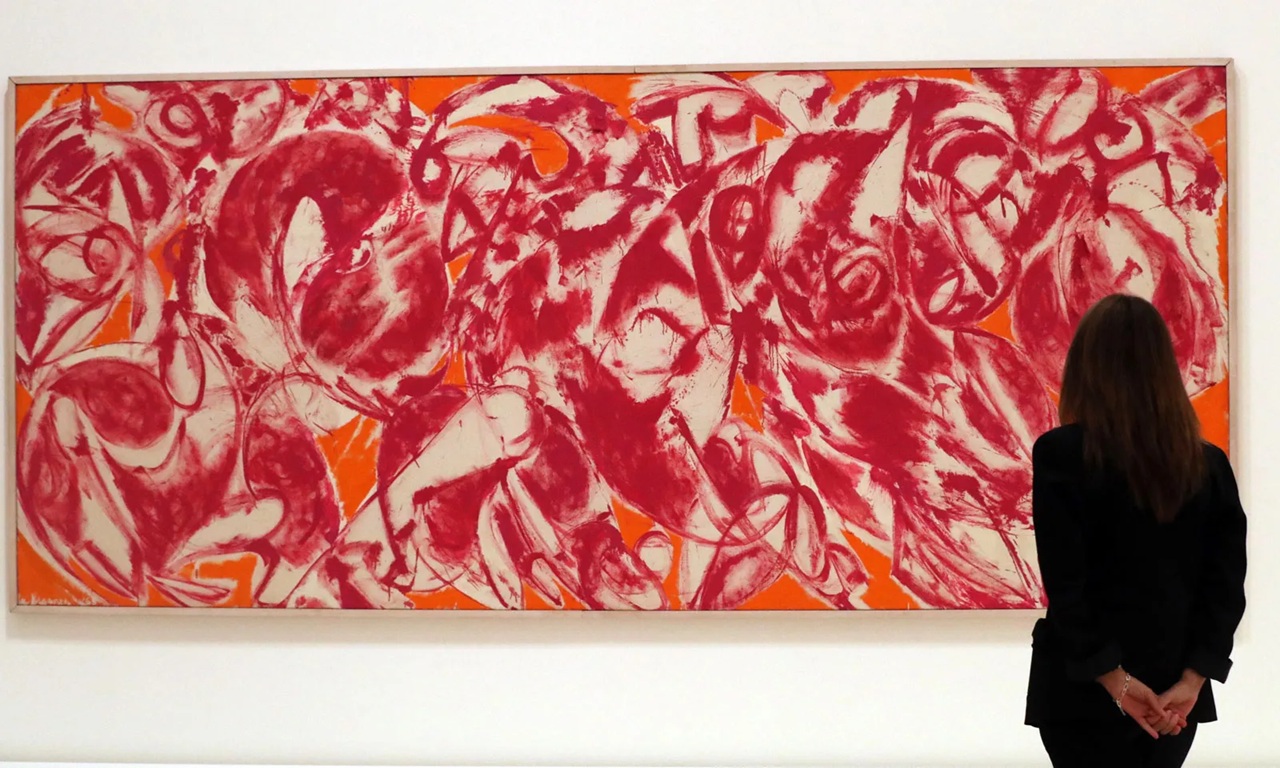
Combat. 1965. Lee Krasner


The exhibition draws on The Met collection and rarely loaned works from more than 80 U.S. and international lenders, bringing together over 120 paintings, works on paper, and ephemera to reconsider Krasner’s and Pollock’s careers—both on their own terms and in dynamic relation to each another and their shared artistic context. Major institutional lenders include Peggy Guggenheim Collection, MoMA, the Whitney Museum of American Art, Tate, National Gallery of Art, National Gallery of Victoria, Centre Pompidou, Buffalo AKG Art Museum, Dallas Museum of Art, The Art Institute of Chicago, and SFMoMA. The exhibition will also include several rarely seen works from important private collections.

Organized into 12 chapters that span each artist’s career and are punctuated by defining moments, Krasner and Pollock: Past Continuous unfolds from the 1930s through the postwar years to the end of their respective lives, moving between moments of convergence and difference. The exhibition’s design, informed in part by historic spaces and installations, enhances moments of exchange—across time and practices—while allowing for discrete encounters with works by each artist, from Krasner’s Little Images series and Pollock’s drip paintings of the late 1940s to his monumental canvases in the 1950s and Krasner’s Umber and Earth Green series. The exhibition charts ongoing dialogues—Pollock’s late return to earlier motifs in the mid-1950s and Krasner’s extended engagement through the 1960s and 1970s with artists such as Klee, Picasso, Mondrian, and Matisse. This presentation will reveal two artists in constant negotiation with each other, themselves, and the cultural, political, and aesthetic stakes of their time.

A constellation of landmark works anchor the exhibition’s exploration of both artists’ practices, including Lee Krasner’s Composition (1949), The Seasons (1957), The Eye is the First Circle (1960), and Combat (1965), along with Jackson Pollock’s Stenographic Figure (1942), Guardians of the Secret (1943), Number 1, 1950 (Lavender Mist) (1950), and The Deep (1953). Two earlier exhibitions, Krasner/Pollock: A Working Relationship (co-organized by Guild Hall and Grey Art Gallery, 1981) and Lee Krasner-Jackson Pollock: Kunstlerpaare Kunstlerfreunde (Kunstmuseum Bern, 1989–90), concentrated on the approximately 15-year overlap in the artists lives, from 1941, when they met, until Pollock’s death in 1956. Krasner and Pollock: Past Continuous is the first exhibition to consider both artists’ practices, in their full chronological sweep, together.

The Met has long been significant for both Krasner and Pollock.

Pollock first exhibited a painting at The Met in 1943 in an exhibition in support of World War II. By the end of the decade, he would be among the artists—The Irascibles—who mounted a notable critique of the Museum’s then-prevailing attitude to contemporary art. However, a short while after Pollock’s death, The Met acquired the landmark painting Autumn Rhythm (Number 30) (1950). The Met’s collection of works by Lee Krasner—from her earliest self-portraits to her late magnificent Rising Green (1972)—includes important gifts to the Museum by the artist during her lifetime. The Met was notably also the venue for Krasner’s memorial service in 1984. Krasner and Pollock: Past Continuous builds on this history, marking the Museum’s first major exhibition devoted to either artist. A focused survey, the exhibition traces the arcs of their artistic developments, offering fresh perspectives on two of the most influential figures of 20th-century art.

The exhibition also reflects The Met’s commitment to showcasing artists whose work continues to shape how art is made and understood today. Krasner’s and Pollock’s contributions to modernism and their serious engagement with the possibilities of painting continues to be significant for the work of contemporary artists. In advance of the opening of the Tang Wing for Modern and Contemporary Art, opening in 2030, Krasner and Pollock: Past Continuous models a curatorial approach that reexamines canonical narratives and connects 20th-century innovations to the concerns of today’s artists and audiences.
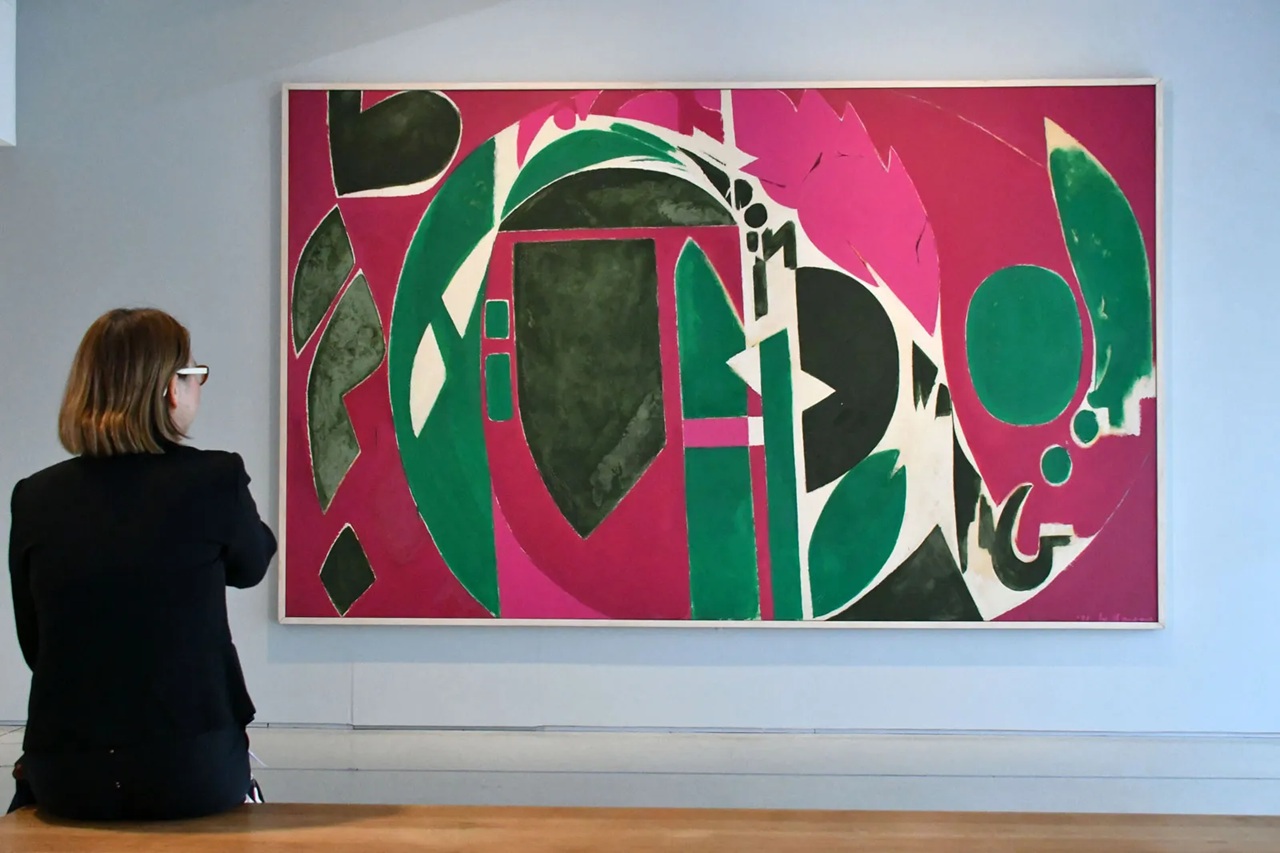
Palingenesis. 1971. Lee Krasner

Exhibition Catalogue


The exhibition’s accompanying catalogue, Krasner and Pollock: Past Continuous, expands the project’s central themes through newly commissioned texts. Featured essays by the exhibition’s curators as well as Johanna Fateman, Prudence Peiffer, and Matthew Holman consider a range of topics, including Krasner and Pollock’s intertwined creative lives as an artist couple, their strategies of abstraction in the 1950s, and the transatlantic reception of their work, while artist Amy Sillman offers a contemporary painter’s perspective on artistic breakthrough and legacy. The volume also includes an illustrated, interwoven chronology as well as reflections by leading contemporary artists, underscoring the enduring resonance of Krasner’s and Pollock’s work across generations.

The catalogue is made possible by the Pollock-Krasner Foundation.

Additional support is provided by the Aaron I. Fleischman and Lin Lougheed Fund, The Robert David Lion Gardiner Foundation, Karen and Sam Seymour, the Wyeth Foundation for American Art, Suzanne Deal Booth, and Kelly Williams and Andrew Forsyth.

For the Silo,  Julie Niemi.

Credits and Related Content
Krasner and Pollock: Past Continuous is curated by David Breslin, Leonard A. Lauder Curator in Charge, and Brinda Kumar, Associate Curator, with the assistance of CJ Salapare, Research Associate, all of the Department of Modern and Contemporary Art, The Met.

The Met will host a variety of exhibition-related programs, to be announced at a later date.

Featured Image: Lee Krasner (American, 1908–1984), Bald Eagle, 1955, Oil, paper, and canvas collage on linen, 77 × 51 1/2 in. (195.6 × 130.8 cm), ASOM Collection © 2026 Pollock-Krasner Foundation / Artists Rights Society (ARS), New York

Hallmark Of All Porsche Sportscars For Sale

  • Extensive restoration within the last decade
  • Restored in its originally delivered livery of Speedster White over Red leatherette
  • Considerable history dating back to the late-1970s, documenting long-term preservation into the late 2010s
  • Original U.S.-specification 1600 Speedster delivered to Hoffman Motors
  • Fitted with a period-correct 1956 1,600-cc engine with twin Solex carburetors paired with its numbers-matching transmission
  • Furnished with a copy of its factory Kardex warranty card, Porsche CoA, owner’s manual, and toolkit

Chassis No. 82181

Engine No. 63249
Transmission No. 8775

USD 485,000$/ CAD 678,130$ (exchange rate at time of posting)

Dispatched to Hoffman Motors in New York City in the spring of 1956, this 1956 Porsche 356 A 1600 Speedster was among those U.S.-market examples delivered via the legendary American-market distributor and tastemaker. It left the factory wearing Weiss (White) paint over Red leatherette, the same striking livery it wears today. Additional options noted on the Kardex include a speedometer in miles and sealed beam headlights.

The earliest history of the car dates to the late 1970s when it was sold via Weldon Scrogham’s G&W Motorwerkes to R.A. Hendricks of Waynesboro, Virginia. Service invoices show that by at least 1983 the car was in the hands of long-term owner Carter Elliott based in nearby Charlottesville. Elliott would take fastidious care of the car while under his ownership, a span that would last over three decades.

Invoices on file reveal more

Invoices remain on file showing parts purchases and work completed by the best suppliers throughout the 1980s and 1990s, including Stoddard, Performance Products, and H.G. Bieker. In 2018 the story of Speedster chassis number 82181 simultaneously began anew and circled back to familiar hands when noted 356 Porsche expert and restorer Cole Scrogham (son of Weldon) was tasked with a thorough refresh. Directed by its then-owner to keep as much of the original car intact as possible, Scrogham is said to have been able to retain the majority of its original, Reutter-built sheet metal with an eye on preservation while the car was refinished to “show quality” in its original shade of Speedster White.

A period-correct 1,600-cc flat-four (serial number 63249) from a 1956 356 A powers the wheels through its numbers-matching transmission. In the nicely detailed engine compartment, you’ll find proper FRAM and Bosch decals, correct finishes and components, as well as a pair of Solex carburetors topped by silver Knecht air cleaners.

Today, this Speedster appears just as Max Hoffman and the Porsche factory intended: in elegant White over Red, with such details as accessory chrome guards protecting the sealed-beam headlights, period-style Michelin XZX 165 tires, and gold-tone badging serving as clear indicators as the quality of its restoration. A matching red vinyl boot (trunk) covers the occasional soft top when it’s folded. Inside, the red vinyl bucket seats made famous by the Speedster wear contrasting ivory edge piping. A correct ivory two-spoke steering wheel with a horn ring frames a body color dashboard covered with a red upholstered top. VDO instruments feature with correct green lettering — including a miles-per-hour speedometer, as specified in the original Kardex. In a smart nod to modernity, the car is equipped with a pair of vintage style lap belts. Otherwise, Speedster chassis number 82181 presents very much as it did when delivered new in 1956 — down to its exquisite color selection.

In addition to extensive documentation dating back more than four decades, this iconic 356 A Speedster is furnished with a toolkit, a spiral-bound driver’s manual, a Porsche Certificate of Authenticity, a copy of its Kardex warranty card, and side curtains with their protective case.

For the Silo, Alexander Weaver/ Hagerty.

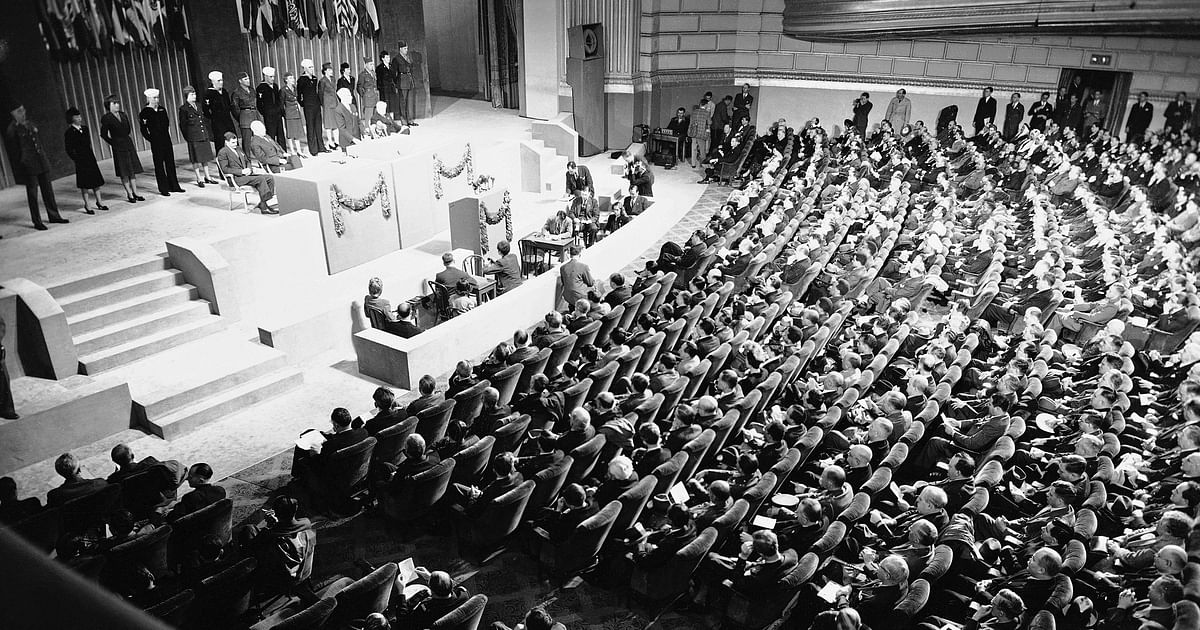
POTUS Delivers Poignant Remarks To UN General Assembly Without Teleprompter

Earlier this month marked the 80th session of the United Nations General Assembly (UNGA80), which opened  on September 9, 2025.  UNGA High-Level Week also took place this week and ends today, when leaders from around the world will gather in New York City.  

The 80th Anniversary of the founding of the UN is an opportunity to return the organization back to its founding mission of promoting peace and security around the world. This year the United States is prioritizing three themes through their engagement at the United Nations:  Peace, Sovereignty, and Liberty. 

“POURING IN OVER FOUR YEARS OF THE INCOMPETENT BIDEN ADMINISTRATION AND NOW WE HAVE IT STOPPED, TOTALLY STOPPED. IN FACT, THEY’RE NOT EVEN COMING BECAUSE THEY KNOW THEY CAN’T GET THROUGH. BUT WHAT TOOK PLACE IS TOTALLY UNACCEPTABLE. THE U.N. SUPPOSED TO STOP INVASIONS NOT CREATE THEM AND NOT FINANCE THEM.

IN THE UNITED STATES, WE REJECT THE UNITED STATES MASS NUMBERS OF PEOPLE FROM FOREIGN LANDS CAN BE PERMITTED TO TRAVEL HALFWAY AROUND THE WORLD, TRAMPLE OUR BORDERS, CAUSE CRIME AND DEPLETE OUR SOCIAL SAFETY NET. WE HAVE REASSERTED THAT AMERICA BELONGS TO THE AMERICAN PEOPLE AND I ENCOURAGE ALL COUNTRIES TO TAKE THEIR OWN STANCE IN DEFENSE OF THEIR CITIZENS, AS WELL. YOU HAVE TO DO THAT BECAUSE I SEE IT. I’M NOT MENTIONING NAMES, I SEE IT AND I COULD CALL EVERY SINGLE ONE OF THEM OUT, YOU ARE ENJOYING YOUR COUNTRIES, THEY ARE ENJOYING — BEING DESTROYED.

THEY ARE BEING BY ILLEGAL ALIENS LIKE NOBODY EVER SEEN BEFORE. ILLEGAL ALIENS ARE POURING IN AND NOBODY IS DOING ANYTHING TO CHANGE IT, TO GET THEM OUT. IT IS NOT SUSTAINABLE AND BECAUSE THEY CHOOSE TO BE POLITICALLY CORRECT, THEY ARE DOING ABSOLUTELY NOTHING ABOUT IT.” President Donald Trump

This article courtesy of the U.S. Department of State.

Eileen Gray and the House By the Sea Hybrid Documentary

She designed a sanctuary for herself.
Unfortunately, it turned out to be a modern masterpiece.

E.1027
Eileen Gray and the House by the Sea
Opens May 16 at the IFC Center in New York City
& May 23 at Laemmle Theatres in Los Angeles
Director Beatrice Minger will attend the New York and Los Angeles premieres and is available for interviews.
 
In 1929, Irish designer Eileen Gray created E.1027 on the sun-soaked Côte d’Azur – a bold and hidden gem of avant-garde architecture. This striking house was meant to be a personal refuge.

But when the legendary architect Le Corbusier stumbled upon it, fascination turned to obsession. He covered its walls with his murals, completely disregarding Gray’s wishes and her vision. His defiant act ignited a battle for creative control, with Gray demanding restitution for the destruction of her work, He ignored her wishes and instead built his famous Cabanon house directly behind E.1027.

E.1027 – Eileen Gray and the House By the Sea is an unusual hybrid docu-fiction film that tells a story about the power of one woman’s creative expression and a man’s desire to control it.
“Eileen Gray was a creative genius and the first woman to conquer the world of architecture at a time when men controlled it all. This new film reflects on Gray’s impressive career and her stunning modernist house on the Cote d’Azur.” – Meredith Taylor, Finito World

“The directors put architecture in dialogue with cinema in order to bring to life the sensibility of a woman who was a visionary yet is too rarely celebrated. Elegant and well thought-out, the film uses the cinematic medium to enrich a discourse.” – Giorgia Del Don, Cineuropa

“Based on the memoirs of Eileen Gray, this meticulously crafted docu-drama, where poetry slips into frames, angles and tones, almost feels like a hallucination.” – Le Monde

“As more women have the opportunity to make films, a distinct form of female narrative based on a particular female gaze and female sensitivity is being developed.” – Melita Zajc, Modern TImes Review
A First Run Features / Architecture & Design Film Festival Release
E.1027 – Eileen Gray and the House By the Sea
Written & Directed by Beatrice Minger
Co-Directed by Christoph Schaub
With Natalie Radmall-Quirke, Axel Moustache & Charles Morillon
90 minutes, color, 2024 | English & French w/English subtitles

For the Silo, Kelly Hargraves.

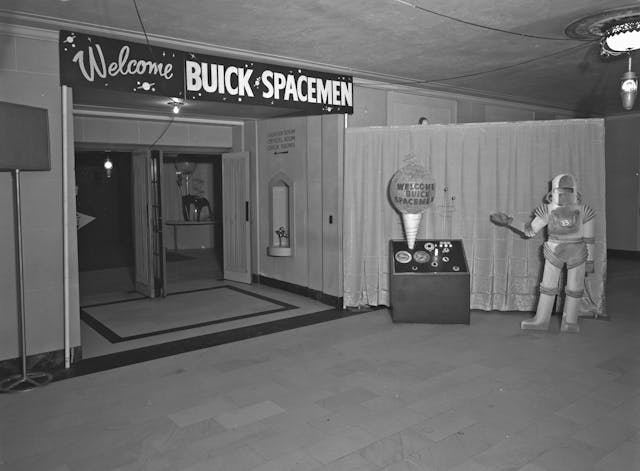
When Buick And Oldsmobile Promoted Cars With Space Themed Musicals

General Motors’ affinity for using entertainment to promote its products reached a fever pitch in 1955, as an estimated two million people attended Motorama in New York City, Boston, Miami, San Francisco, and Los Angeles. It was followed that same year by Powerama in Chicago, a show that highlighted GM’s non-automotive businesses and featured a musical dubbed “More Power to You.” It included French acrobats atop a 70-foot crane, 35-ton bulldozers dancing the mambo, and a battle of strength between a top-hatted elephant and a bulldozer in which the pachyderm is sent packing. The show ran for 26 days and attracted two million visitors. 

But that wasn’t the end of it, as GM produced musicals—yes musicals—to help move the metal. The result would be Buick’s Spacerama (so many -ramas) and Oldsmobile’s The Merry Oh-h-h.

Oldsmobile in 1955

1955 Oldsmobile black white
Flickr/Chad Horwedel

Having reached record sales of 583,179 units for the 1955 model year, Oldsmobile hoped to continue the sales boom for 1956, even though its lineup was mostly carryover. The biggest news was the Jetaway Hydra-matic automatic transmission, which was redesigned for the first time since its introduction in 1940. For the first time, it offered a Park position, like modern automatics, and featured two fluid couplings to enhance shifts between its four gears. The Jetaway was standard on the 98 and Super 88. 

J.F. Wolfram, Oldsmobile general manager, confidently predicted Oldsmobile would sell 750,000 cars for the 1956 model year as Oldsmobile employment reached a record high of 19,170 employees.

To stoke enthusiasm, the company created a musical dubbed “The Merry Oh-h-h”, which debuted in New York City at the Ziegfeld Theatre. The show starred Chita Rivera, who had appeared in “Call Me Madam” and “Can Can.” Here she plays Miss Jetaway Drive alongside singer Mildred Hughes and Billy Skipper, who danced in “Annie Get Your Gun.” Other notable names include Joe Flynn, Frank Gorshin, Charles Cooper and Bern Hoffman. It was directed by Max Hodge, who would go on to work on the TV shows “Mission: Impossible” and “Mannix.”

General Motors Merry Oh h h
GM

The musical, which at the time cost GM $150,000 usd / $210,000 cad to produce, espoused the glories of power steering, automatic transmissions and Rocket V8 engines. Songs included “Tops in Transmission,” “Advancing on Lansing” and “The Car is the Star.”

After its New York debut, the musical and its 34-member cast went on tour to San Francisco, Fort Worth and Chicago before arriving in Lansing, Michigan, Oldsmobile’s hometown, which included an appearance by pop star Patti Page.

But the show generated unintentional notoriety when its piano player, Robert Orpin, was found dead in his room at the Hilton Hotel in Fort Worth. Orpin, who hailed from Forest Hills, Long Island, was found in a filled bathtub with the hot water running. He was discovered by a maid who heard the running water running. His death was later ruled accidental. 

“The Merry Oh-h-h” would play to 30,000 Oldsmobile employees and their families nationwide. But it did little for Oldsmobile sales, as demand fell to 485,492 units for the model year.

Buick heads for Spacerama

General Motors Spacerama
GM

No doubt using a stage show to promote new models was hardly an isolated idea at GM in 1955. In fact, Buick arrived at the idea before Oldsmobile, thanks to their ad agency at the time, the Kudner Agency and its vice president, Myron Kirk.

Kirk had attended GM’s 1954 Motorama during its nine-day stand in Boston, where he ran into Ivan Wiles, vice president and general manager of Buick, and Al Belfie, Buick’s general sales manager. While watching the theatrics, Kirk told the executives of the impressive dancing he had seen in the then-new movie, “Seven Brides for Seven Brothers.” Kirk arranged a private viewing of the film for them, and afterwards, Kirk received approval to bring in the movie’s choreographer, Michael Kidd, to produce a show to promote the 1956 Buick lineup.

General Motors Spacerama
GM

He tapped Alan Lipscott and Robert Fisher to write the show. The duo was well-known for writing scripts for such TV shows as “Make Room For Daddy,” “The Donna Reed Show” and “Bachelor Father” along with many others. The plot concerned mankind’s search for the obtaining transportation from the Stone Age to the current day, where a trip to Mars reveals a depressed population. They overcome their depression when they are brought to earth to see the 1956 Buick lineup. The show starred Mark Dawson and comedian Jack E. Leonard. 

For the music, Kirk’s agency chose Bernie Wayne, who is best known for such songs as “Blue Velvet,” “The Magic Touch,” the Miss America theme, and the commercial jingle “Chock Full O’Nuts Is the Heavenly Coffee.” For Buick’s musical, Wayne composed such songs as “Just Like Coming Home Again,” “Switch the Pitch,” and ‘The Peak of Civilization.”

The show started in Flint, Michigan before heading to Los Angeles, Houston, Chicago, Atlanta, Detroit, and wrapping up in New York City. In all, 50,000 Buick dealers, employees and their families saw the show.

Still, you have to wonder why GM went to so much trouble. “We have about 12,000 dealers and their salesmen,” a Buick spokesman told the Detroit Free Press in September 1955. “Many of them will sell as much as $150,000 usd of our products next year. You surely can afford to spend $100 or more to entertain them.”

Of course, GM could afford such largesse; they were on their way to their first billion-dollar annual profit. Now that’s a lot of spacebucks. For the Silo, Larry Printz/ Hagerty. Featured image- GM’s Spacerama 2 promo.

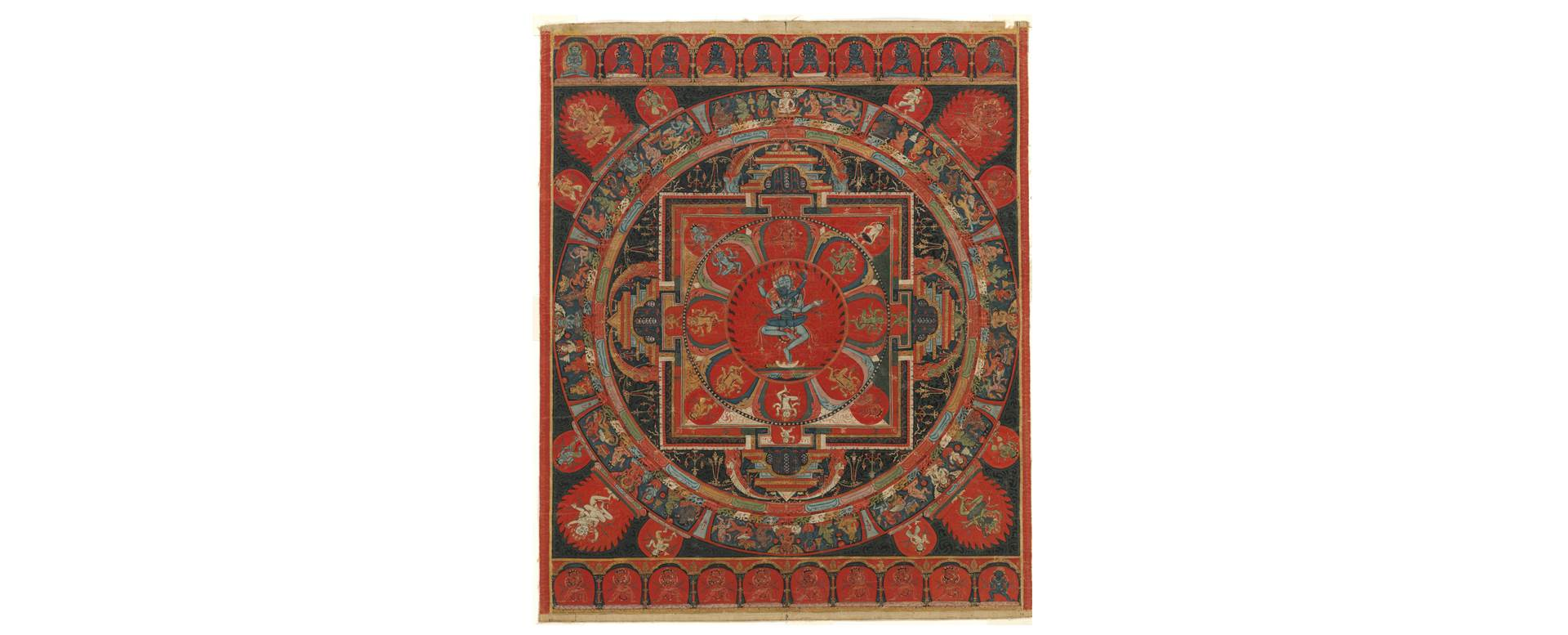
Mandalas- Buddhist Art Of Tibet Coming To The Met

A mandala is a diagram of the universe—a map of true reality that in Tibet is used to conceptualize a rapid path to enlightenment.

September 19, 2024–January 12, 2025

Upcoming at The Met Fifth Avenue in Galleries 963–965

This exhibition explores the imagery of the Himalayan Buddhist devotional art through over 100 paintings, sculptures, textiles, instruments, and an array of ritual objects, mostly dating between the 12th and 15th centuries.

“Tibetan Dharma drum, one of the eight dharma instruments of Tibetan Buddhism, is one of the dharma instruments in Tibetan Buddhism. There are many kinds of dharma instruments, such as big drum, bronze drum, waist drum, crank drum, jie drum and gapala drum. Mainly used in buddhist celebrations, religious festivals, living Buddha sitting on the bed, kaiguang ceremony and other major festive activities. The drum hammer of a crank drum is bent, like a bow.

The drum is about one meter in diameter. When chanting, the lama holds the drum handle in his left hand and hits the accompaniment with a crank drum hammer in his right hand. Kala drum, also known as “zama ru” in Tibetan, is made of wood, ivory and human skulls. The falbala is played with the diamond bell.” rugrabbit.com

This dazzling visual experience provides a roadmap for understanding Himalayan Buddhist worship through early masterworks, juxtaposed with a newly commissioned contemporary installation by Tibetan artist Tenzing Rigdol.

From emmanuelgallery.org- “Tenzing Rigdol’s imposing buddha silhouettes greet the viewer in their recognizable cross-legged seated positions—a posture often associated with meditation and peace—and with a stunning visual effect enhanced by the use of silks and fire imagery. The work brings vivid colors and interesting patterns to the eye, but the fires seemingly emerging from the bodies of the buddhas are also direct acknowledgements of the 155 Tibetans who have self-immolated since February 27, 2009.

In an ultimate act of sacrifice, these Tibetans set themselves on fire with the hope of bringing attention to the oppression currently faced by their society under the laws of the Chinese government. And yet, the buddhas seem peaceful, even welcoming in their balanced postures, their calming presences perfectly harmonized by an artist well-versed in representing both destruction and construction.

The contradictions on display are meant to challenge the viewer. They are simultaneously safe and subversive: beautiful to look at, devastating to comprehend. They are emblematic of this ambitious imagery created by Tenzing Rigdol, a Tibetan artist who has never set foot in Tibet.”

The Met exhibition is made possible by the Placido Arango Fund and Lilly Endowment Inc.

Additional support is provided by the Florence and Herbert Irving Fund for Asian Art Exhibitions and the E. Rhodes and Leona B. Carpenter Foundation.

We Should Be Consuming Fats Not GMOs

Archaeological studies have confirmed that ancient humans broke open bones for marrow and based on fossilized coprolites, ate a diet rich in fat. CP

When Dr. John Salerno – a protégé of “Atkins Diet” creator Dr. Robert Atkins – testified before the U.S.D.A. about plans for its most recent Food Pyramid revision, he spoke his mind: The food industry is corrupt and has supported recommendations that do not support the population’s health.

 “Hidden sugar, preservatives and highly processed white starch are what are really causing our health epidemic in the United States and Canada, Mexico, Australia and the United Kingdom,” says Salerno, author of “The Silver Cloud Diet,” (www.thesilverclouddiet.com). “Obesity, diabetes, heart disease, cancer and Alzheimer’s disease are killing this country, and it’s not because people are eating too much organic natural fats.”

Since the initial popularity of the Atkins food plan some years ago, however, there have been critics of the low-carbohydrate diet.

The science was and is sound, says Dr. Salerno, who worked closely with Atkins on research. The problem was that the diet itself was not sustainable.

After the terrorist bombings of September 11, 2001, Dr. Salerno served as the Medical Director for the World Trade Center Landfill, a position that earned him a commendation from then-mayor Rudy Giuliani. In this capacity, he was charged with monitoring the health of the public workers assigned to manage the landfill where debris from the World Trade Center was transferred.

“The basic principles needed revision both to make the diet sustainable and to take into account the foods available today,” he says. How does a low-carb diet work? Salerno answers the most frequently asked questions:


 • How is a low-carb diet today different from the Dr. Atkins plan? Thirty years ago, the food supply was less degraded. Now, low-carb dieters have to be more proactive about selecting chemical-free foods that are not highly processed. There are many more farming techniques today that introduce unnatural elements into our meats and vegetables, and there are many, many more highly processed foods on store shelves. We need to be vigilant about preservatives and additives; hormone-infused meat can wreak havoc on a body.


  • What’s the first step? The Fat Fast Detox quickly puts one’s body into fat-burning mode. Adhering to the carb-free diet for two weeks will have participants losing five to 15 pounds and two inches from the waistline. Breakfast, for example, could include two large organic eggs and a side of bacon, sausage or ham, which can be washed down with coffee or tea with cream and sweetener.
  • What about eating out? Sustaining a low-carb diet is pretty simple when eating at restaurants. Take the burger out of the bread and skip the French fries. You’re good to go with grilled fish, roast chicken, pot roast, pork tenderloin, shrimp, scallops and pates.


  • How can you eat on the run? A small amount of planning goes a long way. Boil eggs and keep them on hand for long car trips and office snacking. Add to that list jerky salmon, nuts and string cheese. These foods are dense with nutrients.


  • Where can you find “clean” foods? Buy as “close to the ground” as possible, meaning choose organic produce, eggs and dairy. Inquire at farmer’s markets where they grow crops. Find a local provider for meats and fish if possible.


  • Can you eat cake on a low-carb diet? As your health and vitality improves with lost weight and increased activity, you can introduce more carbohydrates into your diet.


  • Are low-carb meals safe for family members who do not need to lose weight? What’s good for you – a broad and varied diet of unprocessed foods – is good for your family!


  • When is the diet over? Eating foods that are healthy, unprocessed and natural is something you should never stop doing. However, if you feel you’re starting to gain excess weight, go on a detox regimen by cutting out carbs completely for one week.


  • So, fat is good for you? Natural fat is the most nutrient-dense food there is. It’s lubricates your joints and helps your brain function at its best. It also keeps your hair shiny and helps prevent wrinkles. When you cut out processed carbs from your diet, you don’t need to worry about natural fat, which is an appetite suppressant.
 For the Silo, Dr. John Salerno.


What Is The Mystery Phenomenon Of Shoe Tossing?

Shoe tossing and shoe posting are seen in most Canadian cities and rural motorways.

Its history and its symbolism are remarkably complex.

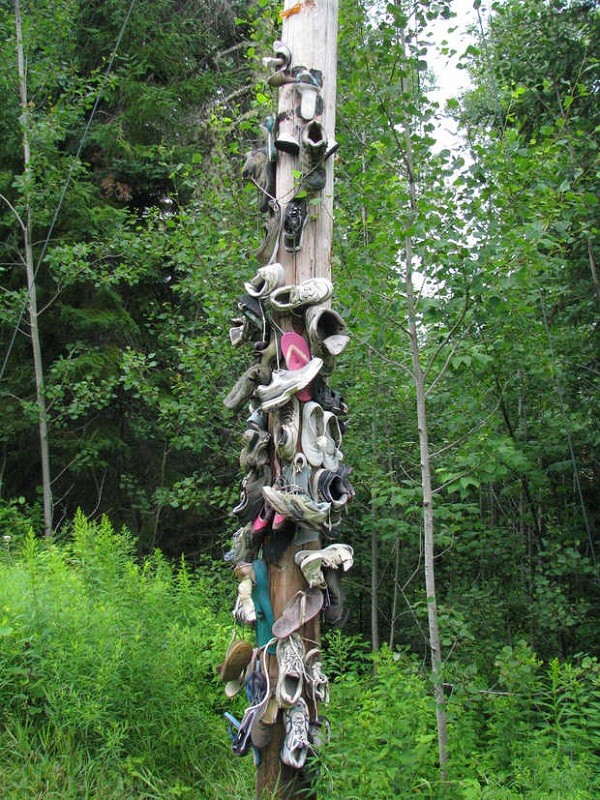
Shoe tossing is when shoelaces are tied and tossed over telephone or power lines so that the shoes hang loosely above the ground. Yet shoe tossing does not accurately describe shoes that are affixed to telephone poles or other inanimate objects using nails and staples. It seems that “shoe posting” would be a more appropriate terms for such occurrences. Nevertheless, each tossed or posted shoe represents either personal or cultural meaning.

There is a cultural meaning to each and every ‘tossed’ shoe- but what is it?

It may come as some surprise that shoe tossing holds a distressing history.

For example, many have noted that tossed shoes indicate the specific location where drugs like crack and heroin are used or sold. Moreover, others have mentioned that tossed shoes signify the physical boundaries of gang territory. For this reason the mayor of Los Angeles, California launched a campaign to remove tossed shoes from the city altogether. Further still, shoe tossing may be the product of bullying, theft and other forms of civil disobedience.

Is it safe to say that shoe tossing is primarily a form of civil disobedience or is there more to it?

On the other hand, there are some positive aspects of this mysterious phenomenon.

Shoe tossing, for instance, has been known to represent a rite of passage associated with graduation from an educational institution or a discharge from military service. While tossed and posted shoes mark our social environment in negative and positive ways they also call to mind images from the not so distant past.

Could there be a deep rooted collective unconscious meaning to shoe posting/nailing? H Joie Crockett Photos – Near the entrance to Rangeley Lake State Park you will find this oddity of a telephone pole with shoes nailed to it. The question is “Why?”

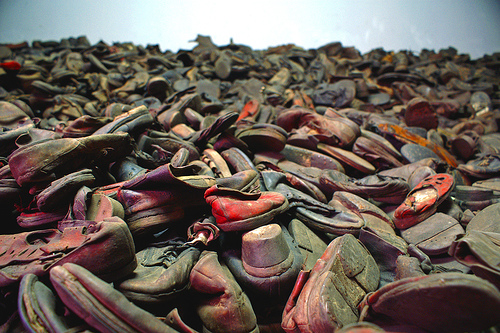
The pilfering of clothing and other possessions in extermination camps by Nazi forces during World War II included the shoes of men, women and children. These shoes were generally thrown on top of each other one by one. The result is a dense heap of shoes that were once filled with Jewish feet. Now, these shoes piles exist in Holocaust museums around the world as evidential markers of Nazi atrocity.

Holocaust shoes

Can tossed or posted shoes be thought of without considering the indelible Nazi shoe piles?

This is an idea that has not been explored and deserves further attention in visual culture discourse.
It is difficult to deny that the formal appearance of tossed and posted shoes in contemporary society reference past images of Nazi piles of Jewish shoes during the Holocaust. This may arguably be a far stretch for some; but for others, the sight of tossed and posted shoes may trigger the painful memories and agonizing reminders.
Shoe tossing is at once close to life but never far from death. The meaning one subscribes to these curious objects is, like most things, one’s own. However that does not suggest that particular objects seen in everyday life, like tossed or posted shoes, cannot allude to the images of history. For the Silo, Dr.Matthew Ryan Smith

Online Exhibition Of 1930s American Art Now Running

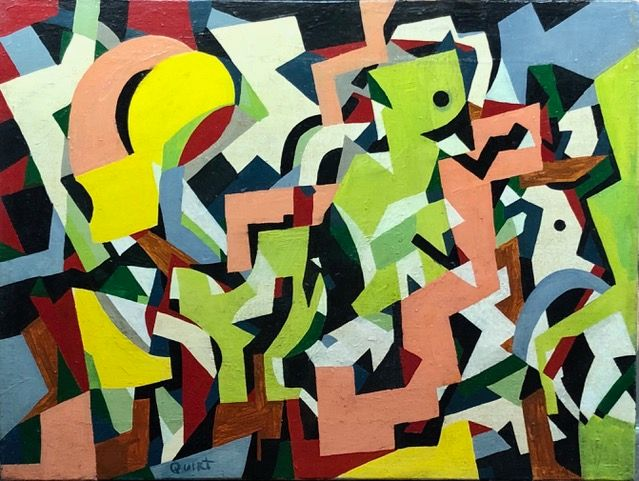
Walter Quirt

“This generation of Americans has a rendezvous with destiny.”           President Franklin Delano Roosevelt, June 27, 1936

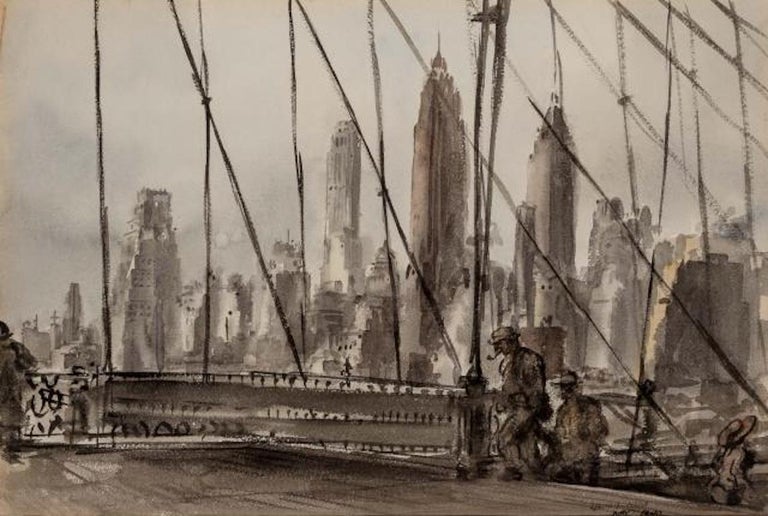
A Rendezvous with Destiny: 1930s American Art, the new online exhibition from Helicline Fine Arthas started and runs through November 5, 2023. The exhibition features a variety of artistic styles and subject matters from urban, industrial and rural to abstract, people working and scenes of everyday life. For New York City based artists, the City itself was glorified on canvas, paper and bronze. Several of the artists who thrived during that period are still well known today, but most are obscure.


The exhibition, of predominantly 1930s artworks, features that range. The Metropolitan Museum of Art’s new exhibition, “Art for the Millions: American Culture and Politics in the 1930s” celebrates the American spirit during the depression era and serves as the inspiration for Helicline Fine Art’s new exhibition. 

After the stock market crash of 1929, Americans experienced a time of great transition at every level of society. After a terrible slump, the men and women of the country came together to rebuild the economy, their lives and their spirits. For the first time, our government paid artists to create. To this day, many Federal buildings – post offices, court houses, schools, hospitals, administrative buildings – still have the murals of WPA artists emblazoned on the walls and statues standing in courtyards. The work of these artists reflected that renewal. 

The artists of that generation are being rediscovered in 2023 and for generations into the future, thanks to the Met’s new exhibition, and galleries that keep the modernist art flame burning. Helicline’s proprietors, Keith Sherman and Roy Goldberg, recall discovering the WPA period. “We had just moved into our first apartment, constructed in 1929, on the Upper West Side. In attempting to furnish our home we realized we had no sense of style or taste. We spent time in the Strand Book Store to see what homes looked like in the 20s and 30s,” said Goldberg. “We discovered Art Deco, the Machine Age, the WPA and more.

We spent time in museums, art fairs and something that has disappeared from the cultural landscape, antique shows, where we developed our eye. Today we are collectors turned dealers still collecting. The WPA period is in our hearts,” added Sherman. 

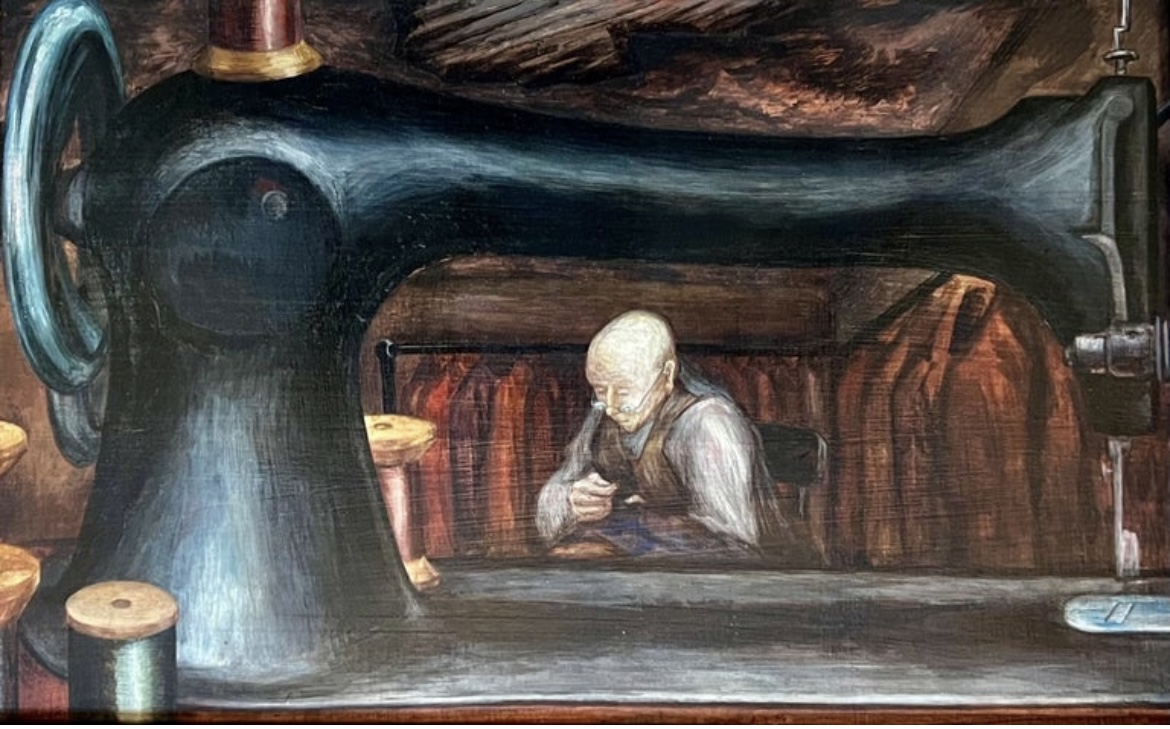
Highlights of A Rendezvous with Destiny: 1930s American Art include a bold Stuart Davis gouache on paper; a “Mercury” bronze by Joseph Freedlander that sat on top of 5th Avenue traffic lights from the 1930s-60s; two works by Daniel Celentano (Thomas Hart Benton’s first and youngest student), many works depicting New York City, including a Cecil Bell of street life under the EL train and a Reginald Marsh depicting the Brooklyn Bridge, mural studies, and a Mervin Jules oil of a tailor with astonishing perspective.
MORE ABOUT HELICLINE FINE ART:MORE ABOUT HELICLINE FINE ART:Helicline Fine Art, founded in 2008 by Roy Goldberg and Keith Sherman, specializes in American and European modernism. The gallery’s core offerings are works from the WPA period. Additionally, Helicline offers American scene, social realism, mural studies, industrial landscapes, regionalism, abstracts, and other artwork. Located in a private space in midtown Manhattan, Helicline is open by appointment. The artworks on the site represent a sampling of available works. Helicline’s offerings are also available on artsy.net and 1stDibs.com.

Featured image- |Reginald Marsh.

Mervin Jules

The Airy Mesh Dress For Beating Upcoming Summer Heat

As we all prep for the heat, we’re looking for all things mesh and breezy to stay cool.

Londre Bodywear just launched The Airy Mesh Dress with bell sleeves and a mock neck made sustainably from water bottles.

The fine mesh material comes in white, navy and black to pair over your favorite swim or to sport on the streets to beat the New York City or Toronto City heat! Pieces are currently available on LondreBodywear.com (Affiliated on ShareaSale) ranging from sizes XS-4XL priced at $118usd / 159$cad. For the Silo, Melissa Nicholls/Michele Marie.

Electronic Opera Uses Physical Spaces To Connect Narrative With Sound

Pullitzer Prize winning composer Lewis Spratlan.

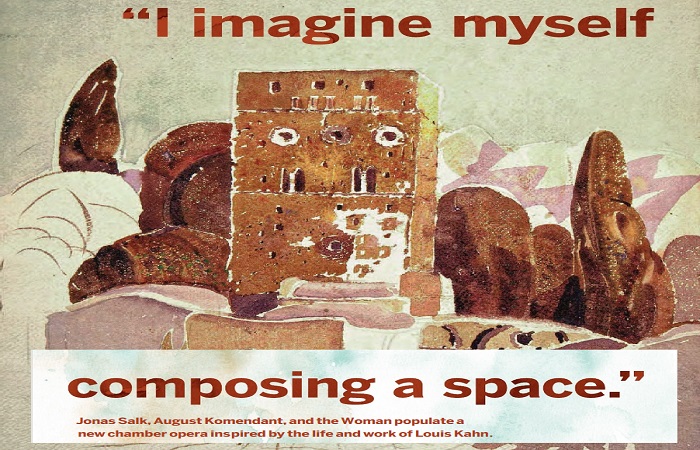
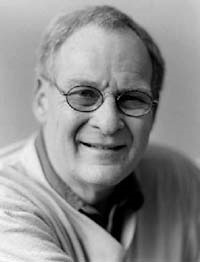
Back in 2005, composer Lewis Spratlan and I began work on an opera inspired by Louis Kahn. Kahn, who excelled in music and once considered becoming a composer, was especially cognizant of how sound works in a physical space. “Space has tonality,” he often said. Kallick, a professor of music at Amherst College, made recordings of the “acoustic envelope” at several Kahn buildings, which were employed in composing the work’s prelude and interludes.

Composer Jenny Kallick

Key elements from Spratlan’s music were integrated into this electro-acoustic music, creating a seamless connection between the narrative world of the characters and the sounding spaces that filled their dreams. Opening in the ruins of Rome and ending with the healing waters at Kahn’s Salk Institute,  ARCHITECT: A Chamber Opera narrates the dramatic arc of Kahn’s journey from dreamer to master builder.

Click the link below to read about Spratlan discussing the project with Frederick Peters, board chairman of New Music USA,  which supports composers, performers, and audiences of new American music.   For the Silo, Jenny Kallick- Amherst College.

The Biggest March On Climate Change Ever

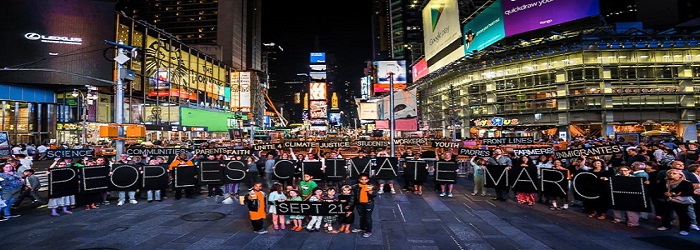
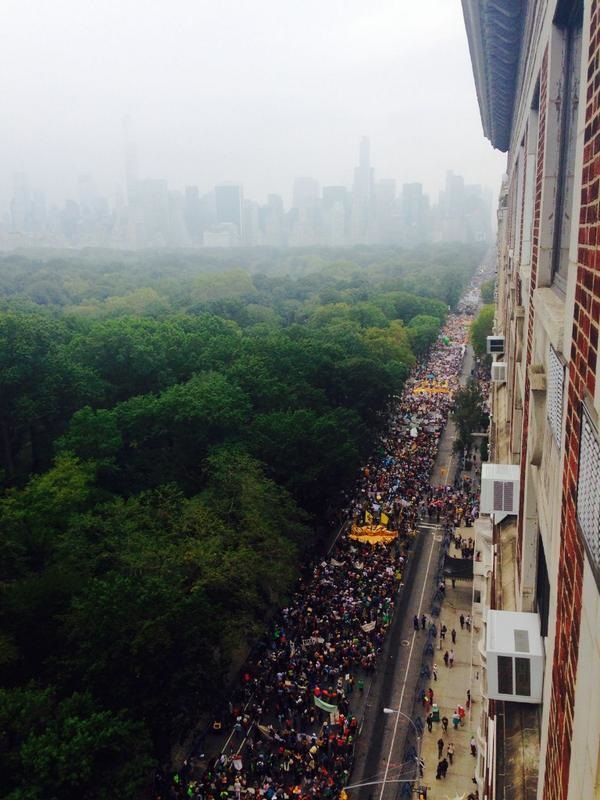
Way back in 2014, our community decided on a crazy goal – the largest mobilization on climate change in history. So on September 23rd, we blew past our wildest expectations, with a climate march *6 times* the size of anything before it!!! This was 80 city blocks of New York:

World March For Climate 2014 Avaaz

And this was London, Berlin, Bogota, Paris, Delhi, and Melbourne…

World March For Climate 2014

Over 675,000 of us marched around the world. It was a beautiful expression of our love for all that climate change threatens, and our hope that we can save this world and build a society powered by 100% safe, clean energy. Together, we made history, but it’s just the beginning. The crucial Paris climate summit is 15 months from now — that’s where we need a global deal. By March next year, countries have pledged to make their national commitments — so our movement will divide to focus on these national targets. But every few months until Paris we’ll come together globally again and again, bigger and bigger, to beat a drum for change, for 100% clean energy, that our leaders can only follow. The movement we’ve been waiting for has begun.

With gratitude, Ricken, Emma, Alice, Iain, Nataliya, Patri, Oliver, Diego, Rewan and the whole Avaaz team

PS – We worked with thousands of organisations to make this day happen and particularly love our friends at 350. But our community deserves to celebrate the step we’ve taken. The Avaaz team and community played a central role in almost all the marches and events held. The Guardian called it “an organising triumph” for Avaaz and the BBC said “the marches brought more people on to the streets than ever before, thanks to the organisational power of the social media site Avaaz.” We fielded hundreds of organisers and thousands of volunteers, and donations from our community provided millions in funding to the effort. The challenges of our time call us to be better, and together we’ve done that, growing and changing into a new and more effective kind of movement, a movement that is now both online, and offline. Huge gratitude to everyone who made it happen.

Avaaz.org is a 38-million-person global campaign network that works to ensure that the views and values of the world’s people shape global decision-making. (“Avaaz” means “voice” or “song” in many languages.) Avaaz members live in every nation of the world; our team is spread across 18 countries on 6 continents and operates in 17 languages. Learn about some of Avaaz’s biggest campaigns here, or follow us on Facebook or Twitter.

Prix d’Ami -Discovering Antique Pickers Barns

Kojak’s young helper. image: courtesy of P. Ross

Discovering the Picker’s barns…after visiting Marcel Gosselin [last issue- http://tinyurl.com/7g4oxnk CP ] we went on to a large picker’s barn we had noticed on the way into Victoriaville which is where we met Jean (Kojak) Deshaies. As we arrived, the place was buzzing with activity as several pickers clamored for the attention of a completely bald man; pointing at, and demanding prices of items still being unloaded from his pickup truck. Not being used to this type of “pressure” buying we went inside and started to peruse the rows of furniture and items there.

Nothing was priced. We made note of several things of interest, and waited.

After several minutes the bald man came in and approached us introducing himself in a distinctive, low raspy voice as Kojak, and started simply “how can I help you?”. I was slightly taken aback by the intensity of his voice, abrupt manner, powerful short build, and the fact that he had absolutely no facial hair including eyebrows. He seemed….slightly hostile. We explained that we were dealers from Ontario, and that this was our first trip to Quebec. He immediately broke into a big smile and grabbed my hand and gave it a firm shake, and after introductions asked us what we found interesting. As we pointed out several pieces of early furniture, rugs, carvings, etc., he would offer a short description and then bark out the prices. As we said yes to an item, a young helper would grab the piece and haul it off to a place by the entrance where he started to make a pile. Kojak wrote the prices on a piece of scrap paper. He warmed with every item chosen and before long would sometimes follow the price quoted with a second lower price he called “prix d’ami” or “friend’s price”.

After awhile I noticed the large pile we had accumulated. I expressed my concern that I might not have enough cash for everything, but he said not to worry because a cheque would be fine. I was surprised at this sign of trust but he joked that he knew I would be back, and besides if the cheque was not good he would soon be at my door to collect, and I wouldn’t want that to happen.

He told us that he and a few of the other local dealers were just back from New York City where they had marched unannounced into the office of a downtown lawyer who had bought several items in the area with bad cheques, and had not answered their calls. “We just walked into his office, grabbed him by the scruff of the neck and told him we wanted our stuff back.  We didn’t have to do more. He took us right to the warehouse. We were back home ten hours later.”If you had trouble covering a cheque it was fine as longs as you were up front about it, and made it right. No problem.”

Getting all of the stuff we bought into the truck was another thing but we managed. For the Silo, Phil Ross. Visit Phil’s blog at www.shadflyguy.com

New York Fashinnovation Show Connected Technology And Fashion

NEW YORK, FASHINNOVATION, a platform where fashion and technology connect with a mission to inspire and share knowledge in the fashion, entrepreneurship and technology sectors, hosted its second edition of its semi-annual conference on February 13, 2019. The all-day red carpet event took place during NYFW at one of the city’s premiere venues, Tribeca Rooftop, and featured panels, live performances, installations, displays, and aimed to “humanize homelessness” with the launch of a book titled: It Can Be You by The NYLON Project.

Panel topics included fashion tech innovation for retail, manufacturing, production, design, textiles, blockchain, customization, sustainability, augmented reality and more. Other discussions focused on women empowerment, entrepreneurship, and even a Twitter-based elevator pitch competition. Featured guests, panelists and moderators include: Eno Polo, CEO, Havaianas, Michael Ferraro, Director of FIT’s Information Design & Technology Lab, Ryan Leslie, Co-Founder, SuperPhone, David Meltzer, Host of Entrepreneur.com’s “Elevator Pitch”, Renata Black, Co-Founder, EBY, Mark Price, CEO, FIREWIRE Surfboards, Lilian Liu, Manager of Partnerships, UN Global Compact, Gonzalo Pertile, Sustainable Director, J. Crew, Giulio Bonazzi, CEO of Aquafil, Ivan Poupyrev, VP, Google Jacquard, Carolina Wang, Co-Founder, EatGoodNYC, and Paul Dillinger, VP and Head of Global Product Innovation, Levi Strauss and more.

“The future is now, and as the tech and fashion industries converge, there’s no better place than New York Fashion Week to formalize conversations and networking opportunities by bringing these two industries together,” said Jordana Guimaraes, co-founder of FASHINNOVATION.

“There’s a reason why companies such as Farfetch and Revolve exist and are valued at billions of dollars – we need to pay attention to fashion tech innovation, and FASHINNOVATION is at this intersection,” said Marcelo Guimaraes, founder of FASHINNOVATION.
FASHINNOVATION Second Edition expected approximately 500 guests and was presented by partner sponsors Runway Moda, ELYSIAIS, Lyft, and DisruptivAgency. The conference showcased a fashion installation by Constanza+LAB (Spain) and 19-year-old IMI by Imogen Evans, a mid-day cocktail hour and networking event, pop-up displays, a red carpet step-and-repeat, a special live performance by DeeMo, and an after-party by TROY. NYLON Project’s book,  It Can Be You, which included 50 stories of homelessness from influencers around the world, including Melissa Molinaro, Claudia Salinas,

Madeline Stuart, Eric Bigger, Thania Peck, Josh Heffler, and Jessica Ross, to name a few, were featured in a panel.

The first edition of FASHINNOVATION took place during NYFW on September 12, 2018, with hundreds of people exploring fashion tech panels from NASA, FIT, IBM, and more.
For more information, go to https://fashinnovation.nyc/. For the Silo, Ruben Ochoa.

Explore The Evolution And Creation Of America’s Music On Giant IMAX Screen

America’s Musical Journey follows singer/songwriter Aloe Blacc as he traces the roots of American music and explores the great musical cities- places like New Orleans, Chicago, Nashville, Miami, New York City and more- where such electrifying art forms as jazz, the blues, country, soul and rock and roll were born.

In America’s musical cities, every chord, every riff, every bang of a drum tells a story. In America’s Musical Journey these stories come together to create a soundtrack for the American experience—a soundtrack that showcases the nation’s diversity and its collision of cultures, culminating in a unique blend of sound, music and innovation unlike anywhere else in the world. Click here to read full PDF release.

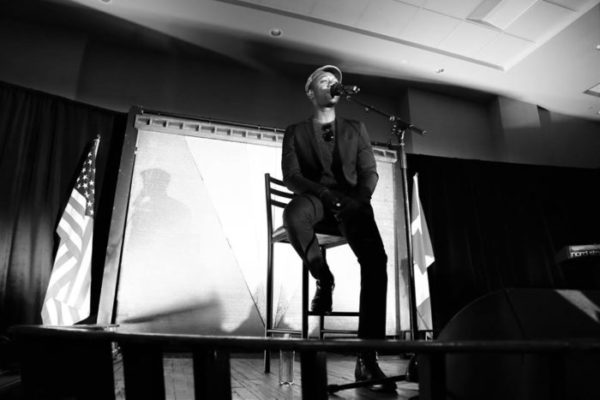
Aloe Blacc
Singer/songwriter Aloe Blacc tracing the roots of American music.

“There’s something exciting that happens when different cultures come together as they have in America. One of the things that happens is incredible creativity.”

Aloe Blacc US Consulate Toronto
Aloe Blacc- one of the stars of America’s Musical Journey- performing live this month at the U.S. Consulate in Toronto.

America's Musical Journey IMAX

America’s Musical Journey is a MacGillivray Freeman Film produced in association with Brand USA and presented by Expedia.

Director: Greg MacGillivray
Producer: Shaun MacGillivray
Executive Producer: Tom Garzilli
Writer: Stephen Judson
Music By: Steve Wood
Editors: Stephen Judson, Jason Paul and Victoria McGinnis
Director of Cinematography: Brad Ohlund
Aerial Cinematographer: Ron Goodman
Production Manager: Meghan MacGillivray
Production Manager: Kathy Almon
Visual Effects: Alan Markowitz

Click Me!

911 Heroes Memorial Run Series Happening Across America And The World

The Travis Manion Foundation (TMF), one the nation’s leading veterans advocacy organizations, is hosting its flagship event – the 10th annual 9/11 Heroes Memorial run in more than 50 communities across the country and around the world this September, including locally in in Annapolis, MD, and Alexandria, VA. The annual race series unites communities across the country to remember the nearly 3,000 lives lost on 911, as well as to honor our veterans, military, and first responders who serve our country. Proceeds from the 9/11 Heroes Run will benefit the Travis Manion Foundation, which empowers veterans and families of fallen heroes to develop character in future generations.

The 9/11 Heroes Run 5K series was inspired by Marine 1st Lt. Travis Manion, who was killed by a sniper in Iraq in April 2007 as he selflessly protected his battalion. Before his final deployment, Travis visited Rescue One in NYC—famous for losing almost all of their men on 9/11—and returned home with deeper passion about why he was fighting in Iraq. At its heart, the 9/11 Heroes Run is a tribute to a personal commitment to never forget the heroes of that day. Now in its tenth year, the 9/11 Heroes Run national race series will be held in more than 50 locations across the country and around the world. As part of the marketing campaign for the race series, TMF released the video found at the start of this article, to inspire runners and walkers of all ages to participate.

Last year, more than 50,000 people participated in race locations around the world or as virtual runners, to support military, veterans, first responders and their families through TMF. National sponsors of the events include Comcast NBC Universal and CBS Radio. Last year’s Annapolis run drew a crowd of over 2,000 participants including Maryland Governor Larry Hogan and midshipmen from the U.S. Naval Academy.

Ryan Manion, TMF President and Travis Manion’s sister, provided this statement:

“As I reflect on the 10 year anniversary of the 9/11 Heroes Run, I’m in awe at the number of communities across the country and around the world that have united to honor all those touched by the events of September 11th, 2001. We challenge all Americans to join us this September, to ensure our next generation never forgets the sacrifices of our veterans, active duty military, first responders, and civilians who were affected by the attacks on 9/11 and in the wars since.”

5 Key Races

  • 9/11 Run Alexandria, VA on Saturday September 9, 2017 at 9:00am ET
  • 9/11 Run Philadelphia, PA on Sunday September 9, 2017 at 9:00am ET
  • 9/11 Run Houston, TX on Sunday September 9, 2017 at 8:00am CT
  • 9/11 Run Annapolis, MD on Sunday September 17, 2017 at 2:00pm ET
  • 9/11 Run Doylestown, PA on Sunday September 24, 2017 at 2:00pm ET

See details for over 20 other races in cities across the U.S. linked here.

For the Silo, Tyler Bryant.

TMF empowers veterans and families of fallen heroes to develop character in future generations. In 2007, 1stLt Travis Manion (USMC) was killed in Iraq while saving his wounded teammates. Today, Travis’ legacy lives on in the words he spoke before leaving for his final deployment, “If Not Me, Then Who…” Guided by this mantra, veterans and survivors continue their service, develop strong relationships with their communities, and thrive in their post-military lives. As a result, communities prosper and the character of our nation’s heroes live on in the next generation.

Natural World Immediacy A Rare Concept

Immediacy? “Nothing important comes into being overnight; even grapes or figs need time to ripen. If you say that you want a fig now, I will tell you to be patient. First, you must allow the tree to flower, then put forth fruit; then you have to wait until the fruit is ripe. So if the fruit of a fig tree is not brought to maturity instantly or in an hour, how do you expect the human mind to come to fruition, so quickly and easily?” -Epictetus

The Worm (2008) and Watershort (2008) are time-contemplative short films by Canadian sound and visual artist Jarrod Barker.

In the natural world, immediacy is rarely a concept. While it is true the Mayfly lives only for a day, it is also true that each fly is one infinitesimal link in the long succession of the species. As humans have increasingly stepped beyond the boundaries of nature, we have begun to forget the importance of waiting and patience. We live surrounded by cheap treasures gotten easily and quickly. But like the Mayfly, these spoils of instant gratification perish quickly leaving us desiring more. No longer do we answer to the rhythm of nature, preferring instead to force the world to step up to our breakneck pace. All the while we are saturated with reminders that “good things come to those who wait” but too often choose to ignore this time tested wisdom.

Stefan Klein works in Berlin. Presently he is examining the concept of waiting. To this end, he has conducted quite a lot of field research. Waiting, he says, “is something that’s so routinely existing in our daily lives but at the same time has this very existential dimension to it so that almost everybody can relate to it but at the same time it’s a very abstract topic.” Another project, titled Introduction to Microeconomics is a book documenting Klein’s repeated ordering and return of a book by the same name. In this way, he examined documentation as a vital element of a whole work. Much of Klein’s work investigates complex systems through performative means. In September, Klein will begin a series of waiting sessions with people from various disciplines. He will meet with guests at a bus stop (a place of waiting) for a conversation. His audience will be comprised of both those who came to see the performance and those who happened to be waiting for the bus. In this way, Klein will access waiting from many perspectives.

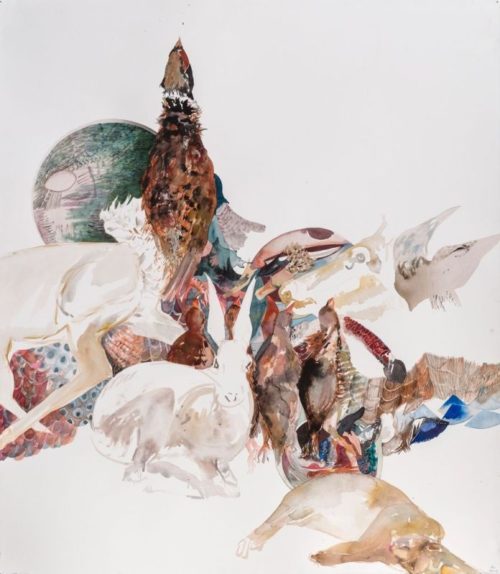
untitled watercolor Emilie Clark 2015

Emilie Clark is a New York City based artist who spends part of the year in New Hampshire. Much of her work is based on the work of nineteenth-century natural historians and scientists, most of them women. She also explores the literal interpretation of the word ecology (earth’s household) incorporating historical texts and working in the landscape. In New Hampshire, Clark works in a floating research station surrounded by the natural world. In New York City her experience is quite different though she has noticed similarities in plant species between the two locations. From her research station, Clark collects specimens, makes sound recordings, draws, paints, preserves, and fully immerses herself in nature. This process is rooted not only in creating but in learning.


Brainard Carey

A Few Words to Keep in your Pocket

A work of art, a career, a relationship, anything worth investing our hearts and minds in, must be given time. We must relearn to wait, to fall back in step with the world around us. For the Silo, Brainard Carey.

Brainard  is currently giving free webinars on how to write a better Artist bio and statement and how to get a show in a gallery – you can register for that live webinar and ask questions live by clicking here.

Canada Uses USA Ad Agency To Snipe American Trademark In Time For 150th

With this Saturday, July 1st marking the celebration of Canada’s 150th Anniversary, the country recently hired the renowned New York ad agency Juized (*satirical)  to rebrand the nation as “The Greatest Country On Earth”. This phrase has typically been associated with the U.S., but America let the trademark slip and Canada has scooped it up and taken it as her own.

image concept- J. Barker

Juized is actively promoting the phrase and image for Canada, while redesigning the Canadian flag and revamping the national anthem to reflect this new status.

Juized has just released this short video on the challenges of rebranding Canada in anticipation of the campaign release on Canada Day.

While the rebranding of Canada may be a marketer’s dream it is actually the imaginary creation of Media-Corps,a dual-client sales agency and the largest Canadian Media Representative in the U.S. The company created the Juized video * about Americans not getting Canada with the help of 2 top funny men — CBC’s Pat Kelly and Peter Oldring as a tribute to the Canadian milestone and to show appreciation for Canada’s unique culture.

Robert Laplante

A native Canadian, Media-Corp’s founder Robert Laplante helps American advertisers understand that for a brand to be successful beyond its own borders, it’s critical to understand the different demographics and their behaviors. For the Silo, Susan Mackasey.

Supplemental- Top Ten New York City Ad Agencies
Making History- No Other Team In USCAA History Has Won 3 Consecutive Titles

The non- scholarship players hail from some tough neighborhoods in the Bronx and Brooklyn and commute to school by subway. The Berkeley Knights team hasn’t lost since its opening game of the 2015- 16 season.Their drive to succeed on the basketball court extends to the classroom, where players are required to maintain a 2.5 GPA a half point higher than the SCAA’s requirement.

The team has achieved numerous national honors this year including USCAA Division II Men’s Basketball – National Coach of the Year for Coach Chris Christiansen who is also the team’s business professor. On Saturday, March 4, the Berkeley Knights brought home the 20 16-17 USCAA Men’s Division II National Championship – after a hard-fought 40 minutes, the Knights defeated PSU York 80-76 in overtime.

This win marks a historical season with an unblemished record of 29-0, a 53-game winning streak and the programs 3rd Consecutive Championship.

photo: Jeffery Mejia

A FATHER FIGURE

Coach Chris Christiansen is a father figure on the basketball court and an inspiration in the classroom, where he is the assistant chairman for Berkeley’s management department and has been named facility member of the year.

All 16 Knights players are pursuing degrees in Christiansen’ s department.

“The 53- game winning streak and this year’s National Championship are crucial factors of our legacy at Berkeley and Berkeley’s history. Not only have we been able to put Berkeley basketball on the map, we have done it in a remarkable fashion. These accomplishments are simply a translation of the team’s uncanny work ethic, togetherness, and dedication.”

“If there’s one thing that this winning mindset and the coaches have taught me is that I must always prepare. We win because we constantly and continuously prepare for our opponents. I will be taking the same approach to life, and a lot of success will be built of that.”

Jeffrey Mejia, Co-Captain, is in his fourth and final season for the Berkeley College men’s basketball team. He has been a member of two USCAA Division II National championship squads as well as a pair of Hudson Valley Intercollegiate Athletic Conference titles.

Mr. Mejia is a Bronx, NY, scholar-athlete with a 3.4 grade-point average who received a scholarship from the New York City Hispanic Chamber of Commerce. He expects to graduate in 2017 with a Bachelor’s Degree in Business Administration. He currently is managing his commitment to academic scholarship while participating in a required internship, working, as well as basketball practice. He also volunteers, coaches and mentors at the Manhattan Bible Church Youth group in upper Manhattan.

Starting point guard Jeffrey Mejia, 20, is Berkeley’s starting point guard and a team co-captain. Mejia lived in a Bronx homeless shelter with his mother and sisters as a teenager. Today, he maintains a 3.4 GPA and recently received a $2,000 usd academic scholarship from the New York City Hispanic Chamber of Commerce, accompanied at the ceremony by his coach.  For the Silo, Carrie Butler.
Showing In New York’s NADA Lobby- Drag As Radical Form Of Art Theater And Politics

Image
Image

NADA x PAOM: Contemporary Drag

We are pleased to announce NADA x PAOM: Contemporary Drag, a new collection of artist-designed limited editions curated by Gordon Robichaux for the sixth edition of NADA New York.

NADA (The New Art Dealers Alliance) is the definitive non-profit arts organization dedicated to the cultivation, support, and advancement of new voices in contemporary art. 

The collection features the artwork of Chris of Hur, Jimmy Paul, Juwelia, La’fem Ladosha, Lady Bunny, Linda Simpson, Patti Spliff, Sasha Velour, Tabboo!, and Tyler Ashley The Dauphine of Bushwick. The limited edition merchandise will be available for purchase in the lobby of NADA New York and on paom.com. 
Contemporary Drag features a wide range of intergenerational artists, performers, and cultural figures, and will highlight their engagement with drag as a radical form of art, theater, and politics.
For the complete schedule of programming and events, visit here

Chris of Hur V-neck
Chris of Hur V-neck

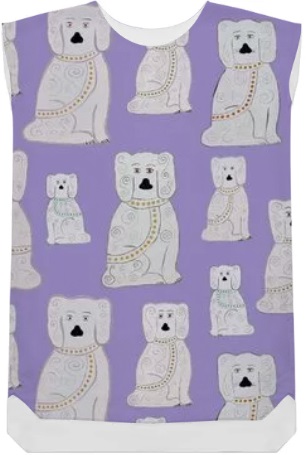
Juwellia Dogs Shift dress

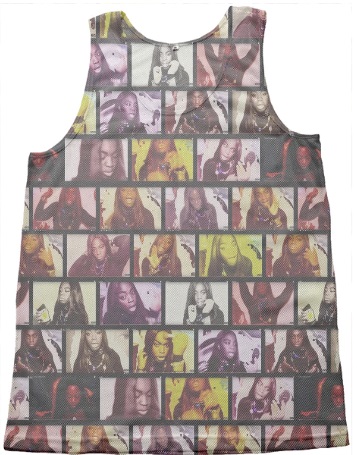
Lafem Ladosh mesh tank top

US Premiere of Small Wonders: The VR Experience At Metropolitan Museum Of Art

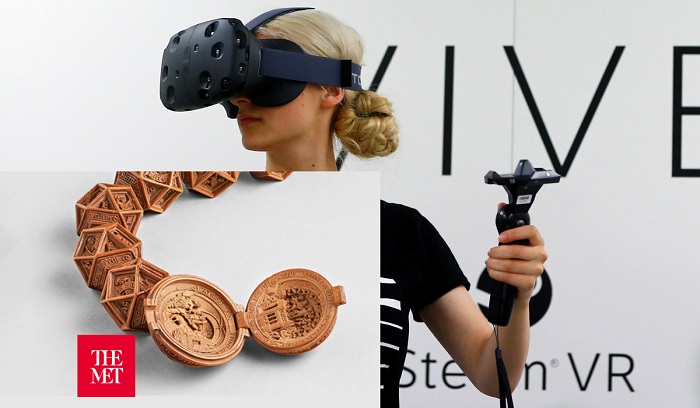
Walking through 500-year-old artOnce I put the VR headset and headphones on, it truly felt like I was transported to another world. You could walk through the levels of sculpture and detail in the bead, which was a frieze of heaven on top, purgatory in the middle, and hell below it. There were easily 20 fully carved objects – humans, demons, and animals – in the five centimeter bead, with multiple layers of objects on top of one another to create a three-dimensional image. I was astounded to be able to see, as close as I wanted to get, the bead in all its detail.”— Stefan Palios,betakit

The Canadian Film Centre’s Media Lab (CFC Media Lab), Seneca’s School of Creative Arts and Animation, and the Art Gallery of Ontario (AGO) are pleased to announce their groundbreaking virtual reality (VR) collaboration, Small Wonders: The VR Experience. It will screen for a special four-day limited-run as part of The Metropolitan Museum of Art’s new exhibition, Small Wonders: Gothic Boxwood Miniatures, February 22-27, 2017 at The Met Cloisters (99 Margaret Corbin Drive, Fort Tryon Park, New York, NY 10040).

From February 24 to 27 during public hours, visitors can don a VR headset and explore a 3D rendering of a miniature boxwood carving from the AGO’s collection. The experience is free with general admission, reservations required, and marks a significant first for The Met Cloisters—the integrated use of VR to enhance the exhibition experience.

The exhibition Small Wonders: Gothic Boxwood Miniatures, which runs through May 21st, brings together for the first time some 50 rare boxwood carvings from museums and private collections across Europe and North America. The exhibition offers new insight into the methods of production and cultural significance of these awe-inspiring works of art. Small enough to fit in the palm of the hand, these tiny masterpieces depict complex scenes with elegance and precision. Without fail, they inspire viewers to ask how a person could have possibly made them, a question that can only be answered today and a challenge perfect for VR technology.

“Much of the success of new VR will hinge upon the quality of experiences being created. Everyone is searching for that sublime encounter one can only have in VR. With the boxwood miniatures and their high-resolution scans, we have found the perfect, transcendent landscape to explore in this medium,” says Ana Serrano, Chief Digital Officer, CFC, and Producer, Small Wonders: The VR Experience.

The AGO, CFC Media Lab and Seneca’s School of Creative Arts and Animation partnered to create Small Wonders: The VR Experience. Using one of the AGO’s micro-computed topography (micro-CT) scans of the miniatures, the creative and technical team led by interactive artist and designer, Priam Givord, developed an experience specifically for the HTC Vive platform. Viewers can explore the intricate carvings of the prayer bead from various angles and in detail otherwise inaccessible to the human eye. The soundtrack, Treasures of Devotion: Spiritual Songs in Northern Europe 1500-1540, echoes the ambience of the wider show. The result: VR enriches the contemplative and immersive experience.

Barbara Drake Boehm, the Paul and Jill Ruddock Senior Curator for The Met Cloisters said: “At first glance, the VR experience might seem anomalous in the medieval ambiance of The Met Cloisters. But, thanks to the efforts of the CFC Media Lab, Seneca and the AGO, VR opens a portal through which our visitors can tumble into a tiny world, and sense the meditative power that these centuries-old works of art were intended to convey.”

Small Wonders: The VR Experience was created by Lisa Ellis, Conservator of Sculpture and Decorative Arts (AGO); VR Creative and Technical Director Priam Givord (Interactive Artist/Designer); VR Producers Ana Serrano (CFC Media Lab) and Mark Jones (Seneca College); VR Technical Team Craig Alguire, Morgan Young (Quantum Capture) and Tyrone Melkitoy (Mobius Interactive); Composer/Vocalist Anne Azema, Artistic Director (The Boston Camerata); Narrator Gillian McIntyre; and Micro-CT Scanner Andrew Nelson, Associate Professor of Anthropology, Sustainable Archaeology (Western University).

The exhibition continues at The Met Cloisters through May 21, 2017, but the VR experience will only run during public hours, February 24–27. To learn more about the Small Wonders exhibition and to plan your visit, go to: http://www.metmuseum.org/exhibitions/listings/2017/small-wonders

At The Met Cloisters, Small Wonders: Gothic Boxwood Miniatures is made possible by the Michel David-Weill Fund. It was organized by the Art Gallery of Ontario, Toronto; The Metropolitan Museum of Art, New York; and the Rijksmuseum, Amsterdam.

Social Media

Canadian Film Centre (CFC)
@cfccreates.comfacebook.com/cfccreates CFC Media Lab (CFC Media Lab)
@cfcmedialabfacebook.com/cfcmedialab
Seneca College
@senecacommsfacebook.com/senecacollegeArt Gallery of Ontario (AGO)
@AGOTorontofacebook.com/AGOToronto

The Metropolitan Museum of Art
@metmuseum | facebook.com/metmuseum

About CFC

The Canadian Film Centre (CFC) is a charitable organization whose mission is to invest in and inspire the next generation of world-class Canadian content creators and entrepreneurs in the screen-based entertainment industry. A significant economic and cultural driver in Canada and beyond, CFC delivers a range of multi-disciplinary programs and initiatives in film, television, music, screen acting, and digital media, which provides industry collaborations, strategic partnerships, and business and marketplace opportunities for talent and participants. For more information, visit  cfccreates.com.

About CFC Media Lab

The Canadian Film Centre’s Media Lab (CFC Media Lab) is an internationally acclaimed digital media think tank and award-winning production facility. It provides a unique research, training and production environment for digital media content developers and practitioners, as well as acceleration programs and services for digital entertainment start-ups and related SMEs. The Silo founder and Digital Editor Jarrod Barker and contributor Arthur Maughan are graduates and fellows of the CFC Media Lab. Program participants have emerged as leaders in the world of digital media, producing groundbreaking projects and innovative, sustainable companies for the digital and virtual age. CFC Media Lab is funded in part by the Federal Economic Development Agency for Southern Ontario. For more information, visit  cfccreates.com.

About Seneca

With campuses in Toronto, York Region and Peterborough, Seneca offers degrees, diplomas, certificates and graduate programs renowned for their quality and respected by employers. It is one of the largest comprehensive colleges in Canada, offering nearly 300 full-time, part-time and online programs. Combining the highest academic standards with work-integrated and applied learning, expert teaching faculty and the latest technology ensure Seneca graduates are career-ready. Find out more at  senecacollege.ca.

About AGO

With a collection of more than 90,000 works of art, the Art Gallery of Ontario is among the most distinguished art museums in North America. From the vast body of Group of Seven and signature Canadian works to the African art gallery, from the cutting-edge contemporary art to Peter Paul Rubens’s masterpiece The Massacre of The Innocents, the AGO offers an incredible art experience with each visit. In 2002, Ken Thomson’s generous gift of 2,000 remarkable works of Canadian and European art inspired Transformation AGO, an innovative architectural expansion by world-renowned architect Frank Gehry that in 2008 resulted in one of the most critically acclaimed architectural achievements in North America. Highlights include Galleria Italia, a gleaming showcase of wood and glass running the length of an entire city block, and the often-photographed spiral staircase, beckoning visitors to explore. The AGO has an active membership program offering great value, and the AGO’s Weston Family Learning Centre offers engaging art and creative programs for children, families, youth and adults. Visit ago.net to learn more.

About The Metropolitan Museum of Art

The Met presents over 5,000 years of art from around the world for everyone to experience and enjoy. The Museum lives in three iconic sites in New York City— The Met Fifth Avenue, The Met Breuer, and The Met Cloisters. Millions of people also take part in The Met experience online. Since it was founded in 1870, The Met has always aspired to be more than a treasury of rare and beautiful objects. Every day, art comes alive in the Museum’s galleries and through its exhibitions and events, revealing both new ideas and unexpected connections across time and across cultures.

The Met presents over 5,000 years of art from around the world for everyone to experience and enjoy. The Museum lives in three iconic sites in New York City— The Met Fifth Avenue, The Met Breuer, and The Met Cloisters. Millions of people also take part in The Met experience online. Since it was founded in 1870, The Met has always aspired to be more than a treasury of rare and beautiful objects. Every day, art comes alive in the Museum’s galleries and through its exhibitions and events, revealing both new ideas and unexpected connections across time and across cultures.

Mild Temperatures in NYC means Tropical Designs from PAOM

Here in the NYC, temperatures have been in the 60s all week, making this a tropical start to a typically snowy winter.
Josh McKenna’s palm frond adorned pieces from our ‘Concrete Junglist’ collaboration are perfect to keep the tropics on your mind no matter what temperature you’re living in. Check out more of our favorite warm climate inspired designs below, or design your own!
Barbican Sweatshirt by Josh McKenna, $68.00USD

Alexandra Pant by Josh McKenna, $74.00USD

Blue Floral Tank by Megamart, $36.00USD

Flora Bomber Jacket by YMT, $120.00USD

Smiley Sun Comic by jackpoint23, $145.00

Tropical Garden Jumpsuit by Spice, $180.00

Mint Green Sweatshirt by La Toma, $68.00

Stefany T-Shirt by kastorandpollux, $68.00

 HOLIDAY GIVEAWAYS 

CLOTHH

Enter for the chance to win a $200.00 gift card to use towards the collaboration, a free pair of lace up or slip on shoes, and a framed print!


SWORDS-SMITH x Calico

Enter here for a chance to win a custom-framed Calico print and another lucky winner will receive a $200.00 gift card to the collaboration, available only at Swords-Smith.

PRINT ALL OVER ME co-creates collection with WORKING NOT WORKING

WORKING NOT WORKING is an obsessively curated network of the world’s best creative talent. With so many incredible artists in their arsenal, it seemed obvious that PAOM (PRINT ALL OVER ME) and WNW should create a collection!

Eight amazing illustrators and designers from around the world were chosen to be a part of the first WNW X PAOM collection. They are Tatiana Arocha, Laura Callaghan, Annu Kilpeläinen, Uli Knoezer, David McLeod, Karan Singh, Brian Vu and Shawna X.

On Thursday, November 12th we hosted a party at Rivington Design House in NYC.

Tote bag by Tatiana Arocha, $28USD


Sweatshirt by Uli Knoezer, $85USD

Raincoat by Annu Kilpeläinen, $145USD

Backpack by Karan Singh, $65USD

Twill jacket by Brian Vu, $120USD

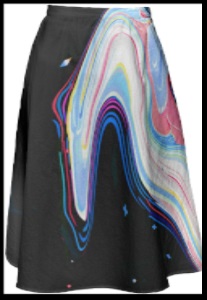
Midi skirt by Shawna X, $80USD

Kimono by Laura Callaghan, $72USD


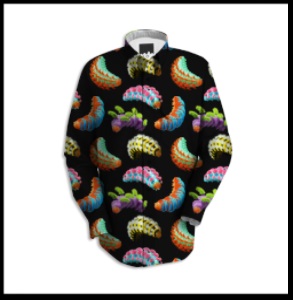
Workshirt by David McLeod, $89USD

For more from Working Not Working, check out their website and follow them on Twitter & Instagram. Shop the entire WNW x PAOM collection here.
All above photographs by Michael Burk, model Olu Alege.

Shining Hoodie by Jarrod Barker. Click me!

Celebrity Homes: Donald Trump’s First Mansion Is For Sale $54 Million USD

Donald Trump’s former Connecticut mansion that he bought at age 35 is for sale and featured this week at TopTenRealEstateDeals.com.

Donald Trump was born into the real estate business in 1946 in New York City where his father, Fred Trump, was a developer. Donald got a jump-start in the business while he was still in college in the 1960s working menial jobs at his father’s lower middle-class apartment complex in Cincinnati.  In 1971, he moved back to New York City where he took over his father’s company changing the name to The Trump Organization and earned a reputation as a fast-rising real estate tycoon on hotel, condominium and casino projects. In 1986, he made a deal with New York City Mayor Ed Koch to renovate Central Park’s Wollman Rink. The ice skating rink was going on its seventh year of renovations when Trump volunteered to finish and finance the restoration with his own money. He completed the job in just three months.

With his business success and wealth, Trump owns a roster of mansions. His main home is a posh three-level penthouse at Trump Tower on New York’s Fifth Avenue where he also runs his vast business operations. Also in the Gotham area, in 1996 Trump purchased a 60-room mansion in Bedford, New York with three pools and a bowling alley. He later bought Albemarle, a 23,000-square-foot mansion, vineyard and winery on 2,000 acres in Virginia for $12.7 million, a fraction of the original asking price of $100 million. Trump also keeps a large home on Rodeo Drive in Beverly Hills.

One of the interior sitting rooms in Trump's first mansion.
One of the interior sitting rooms in Trump’s first mansion.

When he isn’t running for president, firing someone or saying something controversial, Trump relaxes at his Mar-A-Lago mansion in Palm Beach, Florida that he purchased in 1985 for $10 million. The 1920’s mansion with 62,000 square feet and over 100 rooms was originally built for Post Cereal heiress, Marjorie Merriweather Post. Trump upgraded it to a private resort with initiation fees of $100,000, annual dues of $12,000 and nightly rates up to $3,000. Mar-A-Lago guests have included Bill Clinton, Regis Philbin, Tony Bennett and Barbara Walters.

Trump was only 35 in 1982 when he and wife, Ivana, purchased their first mansion, a 5.8 acre home on a peninsula in Greenwich, Connecticut for $4 million. Always a family-oriented business, Ivana was also remodeling the Plaza Hotel in Manhattan in the early 1980s and was able to incorporate many of the same materials in the decoration of their new home creating a residence dripping in gold leaf, elegant chandeliers and crown moldings. When they divorced in 1991 after 15 years of marriage, Ivana won the mansion in the property settlement. She sold the Greenwich home for $15 million in 1998, and the mansion’s new owners immediately began a renovation to tone it down to more livable neutrals and added tennis courts as well as a 4,000-square-foot addition which includes guest suites, a lap pool and a sauna. It is currently for sale at $54 million.

Click to view on I-tunes

Originally built in 1939, the 19,773-square-foot Georgian Colonial-style main house and a guest house have eight bedrooms, thirteen baths, a three-story rotunda foyer with double grand staircase, formal rooms overlooking views of the pool, grounds and Long Island Sound, home theater, a putting green, multiple terraces and patios, tennis courts and three fully-equipped staff apartments.

Awaiting a new Greenwich billionaire resident, Donald Trump’s former Connecticut mansion with major additions, six waterfront acres and private boat dock. The listing agent is Tamar Lurie of Coldwell Banker in Greenwich, Connecticut.

Real estate is never boring at TopTenRealEstateDeals. Check out today’s most entertaining, important and unusual real estate news stories of the week. News such as “Obama Vacation Home For Sale,” “Bacall’s Dakota Apartment Sells At Big Profit” and “New York’s First Penthouse.”

Visit TopTenRealEstateDeals.com for more historic, spectacular and celebrity homes.

CNBC’s “Secret Lives of the Super Rich”

Secret Lives Of The Super Rich

CNBC’s half-hour primetime series “Secret Lives of the Super Rich,” premiered Tuesday, June 10th at 10PM & hour episodes began airing each Tuesday for four consecutive weeks.

Reported by CNBC’s Robert Frank and featuring New York City super broker Dolly Lenz, “Secret Lives of the Super Rich” unlocks the mansion gates and gives you rare access to a world inhabited by the wealthiest people on the planet. Here’s a sneak peek courtesy of The Silo:
http://video.cnbc.com/gallery/?video=3000236913.

Dolly Lenz
Dolly Lenz

In the first episode, we met a man who’s taken his lifelong Lamborghini obsession from land to water. Also, “Secret Lives of the Super Rich” gets a rare invite on a luxury safari where there’s no shortage of wild life, or champagne. And, an exclusive look inside a Star Trek mega-mansion that may have you wondering if it’s actually the Starship Enterprise (video: http://www.cnbc.com/id/101735785 also see Star Trek Home Theater profiled here at the Silo: https://www.thesilo.ca/beam-me-up-35000000-usd-home-theater-for-sale-in-boca-raton/)


Dover Cheese Shop

REDKEN Beauty Products Move From Model Runway Into Homes

RedKen Fashion JORGE JOAO lead stylist for REDKEN  : “We saw a lot of mixed textures, fun ponytails and chic braids on the  runway . The great thing about these looks is they’re  easily transferable to  every day life, and can be recreated by anyone with any level of skill.”

Stylist tip: “To smooth any frizz, spritz Redken Fabricate 03 Heat Protectant Hair Texturizer go over the area with your closed curling iron – the heat will help leave a smooth, shiny finish.”

Try This at Home:
side part by pulling your hair away from your face towards the ear. Spray Redken Fashion Works 12 to set the hair, smooth any fly-a-ways and increase shine.
shaft of your hair with a curling iron. After spraying Redken Hot Sets 22 on your section, use the curling iron to create a slight bend, while leaving the ends straight.
3.   To finish the look, spray the left side with Redken Pillow Proof Two Day Extender- this will create the contrast matte finish.
Line Knitwear, Triarchy, Melissa Nepton

Play on Pony
Stylist tip: “Use Redken Control Addict 28 to soak the hair section and cook it in with a blow dryer at high heat/low air flow. No bobby pins needed!” Sid Neigum

Try This at Home:
1.   Prep hair with Redken Pillow Proof Blow Dry Express. Next, part your hair down the centre and pull into a low ponytail.
2.   Secure your ponytail with an elastic, leaving about 3 inches out, creating a loop-like shape.
3.   Finish by wrapping the remaining hair around the elastic and securing with bobby pins. Spray Redken Control Addict 28 Extra High Hold Hairspray to hold your look and Redken Shine Flash 02 Glistening Mist for added shine.
David Dixon, Gsus Industries, Sid Neigum
Day-to-Night Braids:
Stylist tip: “Hold your hands close to your head, or braid, to keep it secure. Use Redken Ruffle Up 14 for added grip.”
Joe Fresh

REDKEN


Try this at home:
1.   To prep hair, work Redken Fabricate 03 Heat Protectant Hair Texturizer through the roots. Next, start at the ends of your hair going up to the mid-shaft with Redken Full Frame 07 Volumizing Mousse and Redken Guts 10 Root Targeted Volumizing Hairspray
Foam to add grit and texture.
2.   Pull your hair into a left-side part, back-combing both sides to add texture and body, creating a wing-like affect just behind the ears.
3.   Next, loosely pull your hair to the side of your neck and create a messy braid. Secure with an elastic and finish the look with Redken Quick Dry 18 Shaping Mist.
Vawk, Triarchy, Melissa Nepton

A model walks the runway in the melissa nepton spring 2014 collection. image: windsorstar

Products Used:
*   Redken Fashion Work 12
*   Redken Hot Sets 22
*   Redken Pillow Proof Two Day Extender
*   Redken Pillow Proof Blow Dry Express
*   Redken Control Addict 28 Extra High Hold Hairspray
*   Redken Shine Flash 02 Glistening Mist
*   Redken Fabricate 03 Heat Protectant Hair Texturizer
*   Redken Full Frame 07 Volumizing Mousse
*   Redken Guts 10 Root Targeted Volumizing Hairspray Foam
*   Redken Quick Dry 18 Shaping Mist