The Canadian Film Centre’s Media Lab (CFC Media Lab), Seneca’s School of Creative Arts and Animation, and the Art Gallery of Ontario (AGO) are pleased to announce their groundbreaking virtual reality (VR) collaboration, Small Wonders: The VR Experience. It will screen for a special four-day limited-run as part of The Metropolitan Museum of Art’s new exhibition, Small Wonders: Gothic Boxwood Miniatures, February 22-27, 2017 at The Met Cloisters (99 Margaret Corbin Drive, Fort Tryon Park, New York, NY 10040).
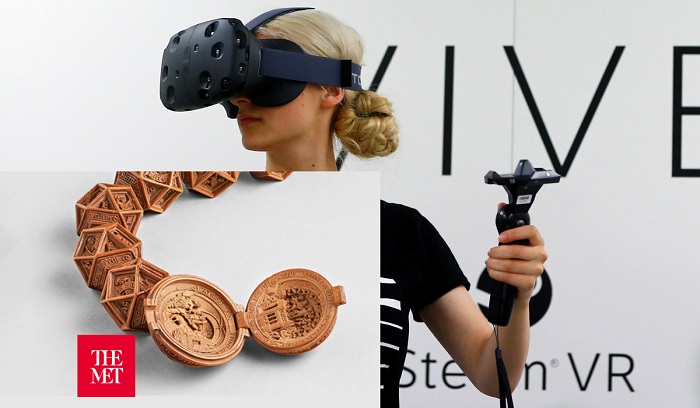
From February 24 to 27 during public hours, visitors can don a VR headset and explore a 3D rendering of a miniature boxwood carving from the AGO’s collection. The experience is free with general admission, reservations required, and marks a significant first for The Met Cloisters—the integrated use of VR to enhance the exhibition experience.
The exhibition Small Wonders: Gothic Boxwood Miniatures, which runs through May 21st, brings together for the first time some 50 rare boxwood carvings from museums and private collections across Europe and North America. The exhibition offers new insight into the methods of production and cultural significance of these awe-inspiring works of art. Small enough to fit in the palm of the hand, these tiny masterpieces depict complex scenes with elegance and precision. Without fail, they inspire viewers to ask how a person could have possibly made them, a question that can only be answered today and a challenge perfect for VR technology.
“Much of the success of new VR will hinge upon the quality of experiences being created. Everyone is searching for that sublime encounter one can only have in VR. With the boxwood miniatures and their high-resolution scans, we have found the perfect, transcendent landscape to explore in this medium,” says Ana Serrano, Chief Digital Officer, CFC, and Producer, Small Wonders: The VR Experience.
The AGO, CFC Media Lab and Seneca’s School of Creative Arts and Animation partnered to create Small Wonders: The VR Experience. Using one of the AGO’s micro-computed topography (micro-CT) scans of the miniatures, the creative and technical team led by interactive artist and designer, Priam Givord, developed an experience specifically for the HTC Vive platform. Viewers can explore the intricate carvings of the prayer bead from various angles and in detail otherwise inaccessible to the human eye. The soundtrack, Treasures of Devotion: Spiritual Songs in Northern Europe 1500-1540, echoes the ambience of the wider show. The result: VR enriches the contemplative and immersive experience.
Barbara Drake Boehm, the Paul and Jill Ruddock Senior Curator for The Met Cloisters said: “At first glance, the VR experience might seem anomalous in the medieval ambiance of The Met Cloisters. But, thanks to the efforts of the CFC Media Lab, Seneca and the AGO, VR opens a portal through which our visitors can tumble into a tiny world, and sense the meditative power that these centuries-old works of art were intended to convey.”
Small Wonders: The VR Experience was created by Lisa Ellis, Conservator of Sculpture and Decorative Arts (AGO); VR Creative and Technical Director Priam Givord (Interactive Artist/Designer); VR Producers Ana Serrano (CFC Media Lab) and Mark Jones (Seneca College); VR Technical Team Craig Alguire, Morgan Young (Quantum Capture) and Tyrone Melkitoy (Mobius Interactive); Composer/Vocalist Anne Azema, Artistic Director (The Boston Camerata); Narrator Gillian McIntyre; and Micro-CT Scanner Andrew Nelson, Associate Professor of Anthropology, Sustainable Archaeology (Western University).
The exhibition continues at The Met Cloisters through May 21, 2017, but the VR experience will only run during public hours, February 24–27. To learn more about the Small Wonders exhibition and to plan your visit, go to: http://www.metmuseum.org/exhibitions/listings/2017/small-wonders
At The Met Cloisters, Small Wonders: Gothic Boxwood Miniatures is made possible by the Michel David-Weill Fund. It was organized by the Art Gallery of Ontario, Toronto; The Metropolitan Museum of Art, New York; and the Rijksmuseum, Amsterdam.
Social Media
The Metropolitan Museum of Art
@metmuseum | facebook.com/metmuseum
About CFC
The Canadian Film Centre (CFC) is a charitable organization whose mission is to invest in and inspire the next generation of world-class Canadian content creators and entrepreneurs in the screen-based entertainment industry. A significant economic and cultural driver in Canada and beyond, CFC delivers a range of multi-disciplinary programs and initiatives in film, television, music, screen acting, and digital media, which provides industry collaborations, strategic partnerships, and business and marketplace opportunities for talent and participants. For more information, visit cfccreates.com.
About CFC Media Lab
The Canadian Film Centre’s Media Lab (CFC Media Lab) is an internationally acclaimed digital media think tank and award-winning production facility. It provides a unique research, training and production environment for digital media content developers and practitioners, as well as acceleration programs and services for digital entertainment start-ups and related SMEs. The Silo founder and Digital Editor Jarrod Barker and contributor Arthur Maughan are graduates and fellows of the CFC Media Lab. Program participants have emerged as leaders in the world of digital media, producing groundbreaking projects and innovative, sustainable companies for the digital and virtual age. CFC Media Lab is funded in part by the Federal Economic Development Agency for Southern Ontario. For more information, visit cfccreates.com.
About Seneca
With campuses in Toronto, York Region and Peterborough, Seneca offers degrees, diplomas, certificates and graduate programs renowned for their quality and respected by employers. It is one of the largest comprehensive colleges in Canada, offering nearly 300 full-time, part-time and online programs. Combining the highest academic standards with work-integrated and applied learning, expert teaching faculty and the latest technology ensure Seneca graduates are career-ready. Find out more at senecacollege.ca.
About AGO
With a collection of more than 90,000 works of art, the Art Gallery of Ontario is among the most distinguished art museums in North America. From the vast body of Group of Seven and signature Canadian works to the African art gallery, from the cutting-edge contemporary art to Peter Paul Rubens’s masterpiece The Massacre of The Innocents, the AGO offers an incredible art experience with each visit. In 2002, Ken Thomson’s generous gift of 2,000 remarkable works of Canadian and European art inspired Transformation AGO, an innovative architectural expansion by world-renowned architect Frank Gehry that in 2008 resulted in one of the most critically acclaimed architectural achievements in North America. Highlights include Galleria Italia, a gleaming showcase of wood and glass running the length of an entire city block, and the often-photographed spiral staircase, beckoning visitors to explore. The AGO has an active membership program offering great value, and the AGO’s Weston Family Learning Centre offers engaging art and creative programs for children, families, youth and adults. Visit ago.net to learn more.
About The Metropolitan Museum of Art
The Met presents over 5,000 years of art from around the world for everyone to experience and enjoy. The Museum lives in three iconic sites in New York City— The Met Fifth Avenue, The Met Breuer, and The Met Cloisters. Millions of people also take part in The Met experience online. Since it was founded in 1870, The Met has always aspired to be more than a treasury of rare and beautiful objects. Every day, art comes alive in the Museum’s galleries and through its exhibitions and events, revealing both new ideas and unexpected connections across time and across cultures.
The Met presents over 5,000 years of art from around the world for everyone to experience and enjoy. The Museum lives in three iconic sites in New York City— The Met Fifth Avenue, The Met Breuer, and The Met Cloisters. Millions of people also take part in The Met experience online. Since it was founded in 1870, The Met has always aspired to be more than a treasury of rare and beautiful objects. Every day, art comes alive in the Museum’s galleries and through its exhibitions and events, revealing both new ideas and unexpected connections across time and across cultures.
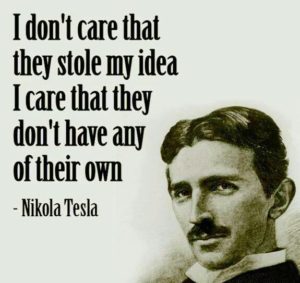
 This concern, of course, is not unique and strikes at the heart of something that all those in creative professions fear and must face. The ownership of ideas is difficult to prove. If you tell someone your plan in confidence and they, in turn, use it for their own purposes, there is very little you can do to show that you are the originator. Spreading this rumor is likely to make you look like the bad guy. It’s no wonder that this sort of generosity is cause for concern.
 But what about sharing your networks or some trade secrets that helped you get to where you are today? While you may have worked tooth and nail for everything you’ve gained, there were surely people along the way who said yes at the right moment and assisted your progress. No one can ask more than this, and as an artist of a certain standing, there is nothing wrong with offering this sort of help.
 No one exists in a vacuum. Even you, who may have scraped and fought your way to where you are today, benefited from the acceptance and help of others. Sure, you may have pounded the pavement endlessly in order to secure your position but that is no reason not to pay forward the success you have achieved. It is too easy to forget, once you have achieved a certain status, the myriad small moments that led you there. While it may seem as though hardly anyone was out to help you in the early days, surely there were some, otherwise you could not be where you are today. Even if it was just a few gallerists who were finally willing to take a chance, there are always rungs of assistance in the ladder to every success, no matter how small.
 For these reasons, there is a lot to be said for good old-fashioned face-to-face interaction. Being the sort of artist who is willing to mentor in the real world sets you apart. Establishing this sort of reputation, for being the one who will gladly share the bounty you have created, seldom reverses one’s own success and frequently opens new doors you may never have considered.
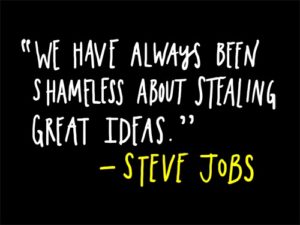
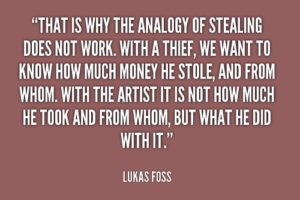 Arguably, there is no such thing as original art. Even some of the most contemporary artists’ work is derivative of past creations. Marina Abramovic, in her unique style, has absolutely drawn from (and occasionally been accused of copying) works by other artists. Pablo Picasso (and perhaps more famously, Steve Jobs who quoted him) said, “good artists copy, great artists steal.” This doesn’t mean that you should open yourself up to idea theft, but it does mean that perhaps being stingy with your concepts, your network, your position as an established artist, doesn’t count for as much security as you might think. Be smart about things, but in general, it is always a good idea to reach down the ladder and help those coming up behind you find the next rung. For the Silo, Brainard Carey.

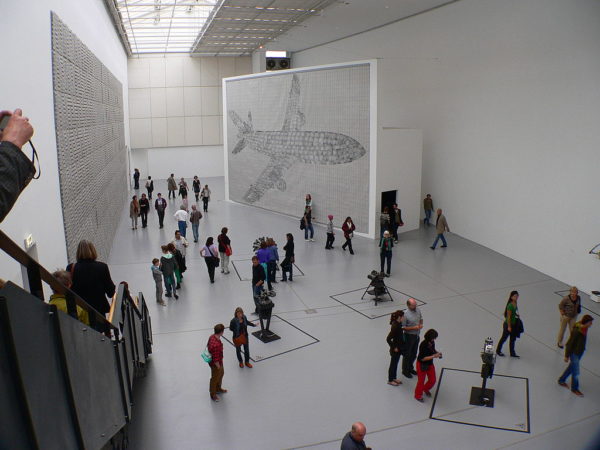
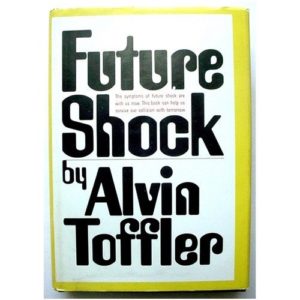 This year’s exhibition is rooted in Alvin Toffler’s 1970 book, Future Shock. Toffler examined the idea of collective shock as a result of living during a time of extreme change. Spinning out from the ancient curse, “may you live in an era of change” this year’s biennale seeks to disrupt the notion that extreme change is outside the ordinary and instead posits that all of human existence has been based around rotating times of chaos and calm. Open call for the 2017 biennale ended in December, but for future events (the next is slated for 2019) artists are always welcome to contribute their work for consideration.
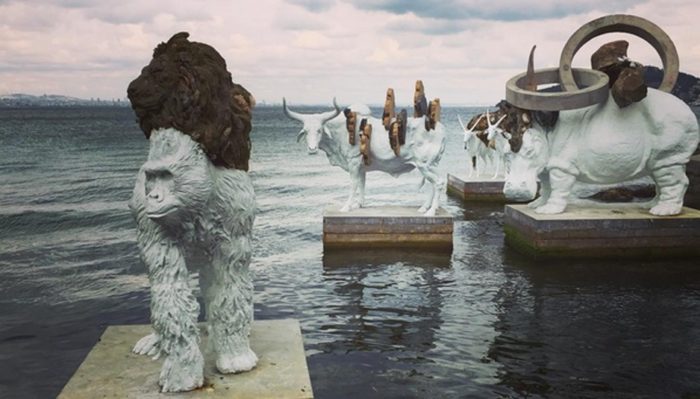
 And in 2015 Saltwater: a theory of thought forms. The 2017 biennial is working in collaboration with the 2017 Istanbul film festival, both of which are exploring the title topic A Good Neighbor. In addition to the contemporary art program, the biennial will include ten feature and five short films all curated by Elmgreen and Dragset. The films (as well as the art) will look at the concept of home as a means of portraying identity and the intricacies of community and co-existence. The 2017 Istanbul Biennial runs from September 16-Novermber 12.


 Regardless of your medium, I hope this glance into the minds of two established poets from very different walks of life can help dissipate the intimidating mist between process and product, as well as remind you that the transcendent and the familiar are often one in the same.
 Global spectator
 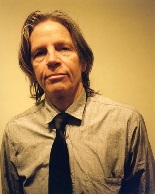 Myles, a breathing artistic currency, treats poetry as an extension of the self with the potency of a movement and the collective memory of a civilization. Myles proves that common experience and abstract phenomena are synonymous when we step back to look.
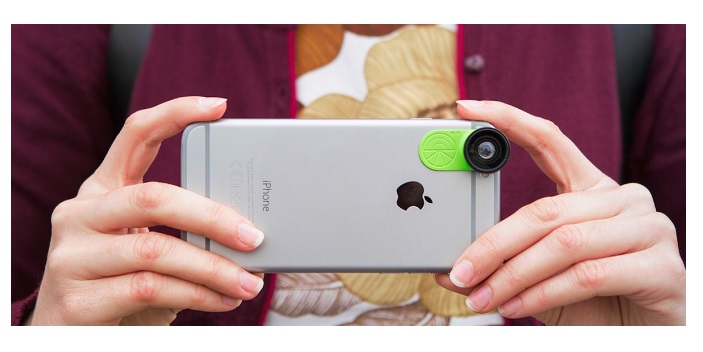
 Due to rapid advances in technology, the quality of smartphone cameras is now on a par, if not better, than some point-and-shoot cameras and entry-level DSLRs. With the increasing demand for smartphone accessories to maximize users’ photographic potential, Limelens offers superior quality smartphone lenses at a price within reach of the masses. Limelens lenses capture intricate detail that a smartphone camera could not achieve on its own.

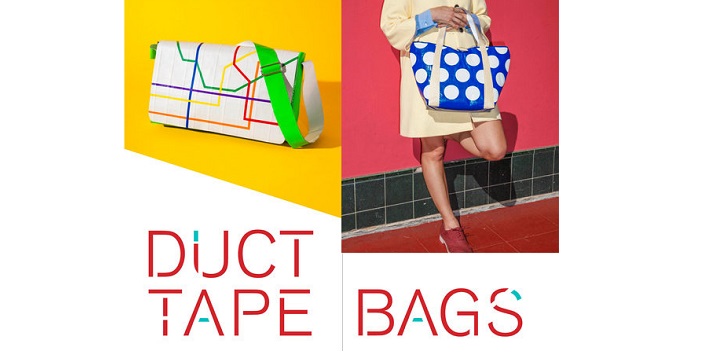
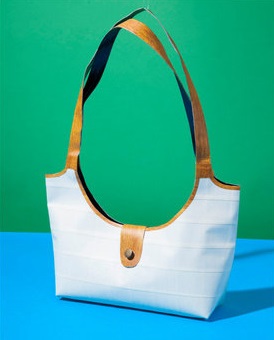
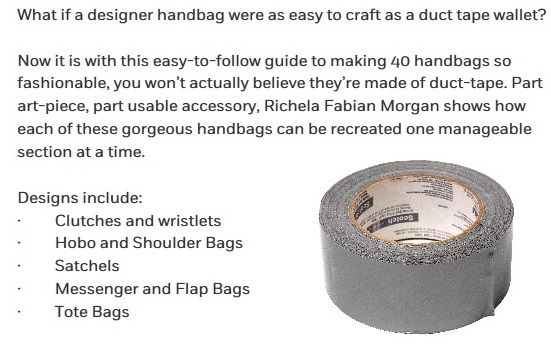
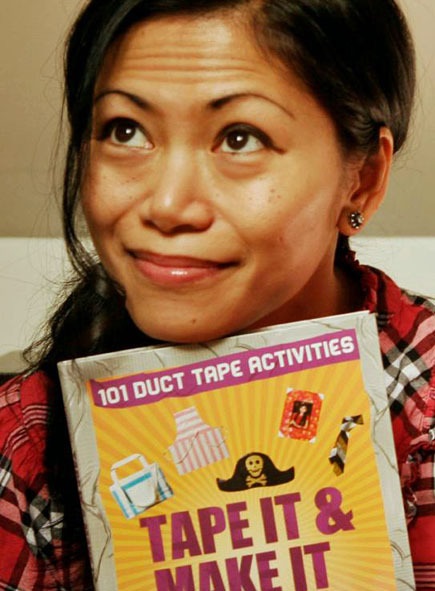 Everyone from trendy teens to famous fashionistas can begin exploring the infinite uses this easy-to-follow guide provides to making handbags so fashionable, you won’t actually believe they’re made of duct-tape. Part art-piece, part usable accessory, Fabian Morgan shows how each of these gorgeous handbags can be recreated one manageable section at a time.