All posts by The Silo

This Spring Improve Survival Of Trees You Plant

Every year the landowners of Ontario’s watershed areas collectively plant tens of thousands of trees. These trees help to restore the natural environment by protecting water quality in streams and rivers, providing wildlife corridors and purifying the air we breathe.

Unpredictable weather patterns mean it is even more important to keep planting trees. A number of crucial steps before and after planting will improve survival.

Right tree, right place

Factors such as soil texture, drainage and surrounding vegetation determine which tree species will thrive or die. Fine clay soils can hold trees like white cedar and Norway spruce. On the other hand, loose sandy soils are well suited to white pine and sugar maple. Silver maple and tamarack like wet sites, while larch and red oak will thrive in drier locations.

Road salt can contaminate the soil, but trees such as white spruce, larch and poplar have a higher tolerance for salt and these species are best for roadsides.

Site preparation

European buckthorn – Rhamnus carthartica – Invasive Plant Found In Ontario Watersheds
European buckthorn – Rhamnus carthartica

Preparing the land before planting will provide the best growth conditions for your trees. Clear areas of brush and invasive plants, such as European buckthorn. On larger sites, this can be done with a brush saw or a tractor and rotary mower to remove obstacles and provide growing space. Installing plastic mulch before tree planting is a great way to reduce weed competition and hold moisture in the soil. If planting into bare soil, seeding a cover crop of Dutch white clover is a great way to prevent excessive weed growth.

For the first years, control vegetation around the trees to make sure they have room to grow. This will give the trees the best chance of survival.

Click me to learn about Tree Planting incentives 🙂

Get trees into the soil quickly

The roots of bare-root stock (without soil around the roots) will dry out very fast when exposed to sun and wind and need to be planted very quickly. Keep these trees in their planting bag until they are directly planted into the ground. Potted trees can be kept in a shaded area and watered until they are planted.

Mulch madness

Mulching is one of the best ways to keep your trees growing well. Organic matter applied to the base of the tree acts as a blanket to hold moisture, protect against extreme soil temperatures and reduce grass competition. Make sure to place mulch in a donut shape around the tree, so that absolutely no mulch is touching the base of the tree. This can cause decay of vital root-collar tissue. A two to four inch layer of mulch at an inch or two away from the trunk is enough.

Water, water, water

For the first few years of growth, a tree expends a lot of energy trying to establish roots in the soil. Watering can be very important  during this time if rainfall is sparse. Water the tree right after planting and weekly during hot, dry weather. But be careful not to over water, because soggy soil inhibits the tree roots from accessing oxygen. There are many circumstances when watering is difficult due to distance from a water source or the number of trees planted. For the Silo, Lisa Stocco.


IN THE STUDIO WITH INTERIOR DESIGNER CAROLA PIMENTEL

I was immediately drawn to Carola Pimentel’s work when I was approached by a mutual friend to help with social media and public relations. Carola’s careful use of natural light, neutral color palettes, and layering of statement art and vintage finds from Europe reminded me of my time spent in Sao Paulo, Brazil as a teenager. What I didn’t realize then was that the homes and restaurants I would visit blended a certain modernism (perfect for the Brazilian climate) with a layering of European history from Portugal, Italy, and Holland (brought by years of immigration). The look I am referring to is Midcentury Brazilian design, and Carola is closely inspired by its cousin, Tropical Modernism. To dig deeper into what defines these two similar styles, I sat with the Caribbean raised and Miami based designer to discuss her careful and thoughtful approach to creating a home. 


Full renovation of a house dating from 1925 in a family compound. Assure was involved in the project from the beginning working with CMA Design Studio Inc. on the preservation, modernization, and addition of new spaces.


Growing up in the Caribbean, what inspired you to pursue your studies and career in interior design?


My parents, contemporary and Latin American art collectors, introduced me to the world of architecture and décor when they took me to see a hotel they were developing together. They always tried to incorporate interesting art into their projects. I was very young, perhaps 7 or 8-years old, but I remember loving every minute of watching them create, alongside architects and builders, wonderful spaces. By high school, I knew I didn’t want to be an architect or engineer, but I wanted to somehow be a part of building and design. During a college fair I luckily learned of the opportunity to pursue my studies in Interior Design at Ringling College in Florida. You could say that an enjoyment of art-filled homes, as well as my parents’ involvement in the interiors and hospitality industries, prepared me for my career. 


Assure Interiors completed a renovation and addition to a 1990s property on a large plot in Stonegate for a new family who required more space.


Your heroes include Oscar Niemeyer, Lina Bo Bardi, and Luis Barragan – all key examples of Latin American modernist architects. What do you love about their approach to planning, layout, and décor? 


First and foremost, I live in a tropical climate and design for clients who often have homes in various tropical locations. It is therefore a practical choice to favor a clean aesthetic and distinctive structure that lets in plenty of ventilation and light. To clarify, I don’t design with tropical patterns and colors like a palm tree printed wallpaper. Instead, I design with durable materials, such as rich woods, cool stones, and warm leathers. I also pay a lot of attention to the surrounding geography and nature as they inform my choices in paint tones, wallpaper patterns, texture of fabrics, etc. 


This Bal Harbour apartment was a collaboration with a long-standing client who was downsizing from a large penthouse to create a new home for her, as well as a setting for an important collection of twentieth century art and design.


I understand that you collect contemporary art. How do your favorite artists, their styles, and their works inform your approach to color, texture, and form?


Yes, I love art and I get a lot of inspiration from my own collection of contemporary Latin American and European works. Some of my favorite artists include Uruguay’s Pablo Atchugarry and Carlos Capelán, as well as Brazil’s Ernesto Neto, to name a few… I am particularly drawn to small scale sculpture and wall mounted installations, and attracted by the 3D quality and impact the pieces create in the context of a room. For me, art is a very important element of an interior as it gives a room character.


Assure Interiors was commissioned by a young and social art collecting family to create serene, light-filled and functional interiors. Assure was also asked to incorporate a collection of European antiques, French, Italian, Spanish 1950’s to 1970’s furniture, decorative art, and family heirlooms.


You have developed Assure’s aesthetic and style. Could you elaborate on the studio’s sensibility and point of view?


Since the beginning, I founded my studio in 2000, my priority has always been my clients. Delivering interiors where they always feel like home. I have been very lucky to learn from my own curiosity as well as my client’s passion for art and collecting. We often incorporate vintage elements found on sourcing trips to Europe and Latin America and mix these with exciting designs from galleries such as Ralph Pucci and Cristina Grajales (among others). We design rooms that acknowledge and respect these beautiful and unique objects, and then choose lighting, furniture and fabrics that beautifully complement them. The interiors that we create for our clients are modern, practical, functional, and elegant.


The client did not want to sacrifice lifestyle or comfort while living in this Coconut Grove apartment temporarily in between houses. Assure Interiors, therefore, was asked to incorporate existing furniture and create a stylish base for the family.


Looking to the future, what projects are you most excited about that will be completed soon?


We have several interesting residences across Florida and the Bahamas that will be ready in the next few months. However, what excites me the most about being an interior designer is the opportunity to start from the very beginning and to work alongside the architects on designing and planning the layout of a brand-new home. I love every minute of it from start to finish, including details like plumbing, lighting, and finishes. At Assure Interiors we are incredibly hands on and creates highly nuanced, timeless and livable homes.


Assure Interiors renovated and extended a recently purchased house in Cocoplum for repeat clients (an international couple and their three children). For the Silo, Victoria Hood.
Photography: Mark Roskams

Extraordinary Porsche 959 Attracted Extraordinary Customers

The sound. The style. The power. The experience. All inimitable….. Introducing you to classic PORSCHE 959, an exquisitely-produced book from publishers Delius Klasing. 

porsche959testvehicles

This fascinating boxed set is a literary monument to the Porsche 959 that is still breathtaking to behold 36 years after its first roll-out.

Readers will be taken through the history of one of the most exceptional vehicles in automotive history. Continue reading Extraordinary Porsche 959 Attracted Extraordinary Customers

International Monetary Fund- World Economy Still Recovering

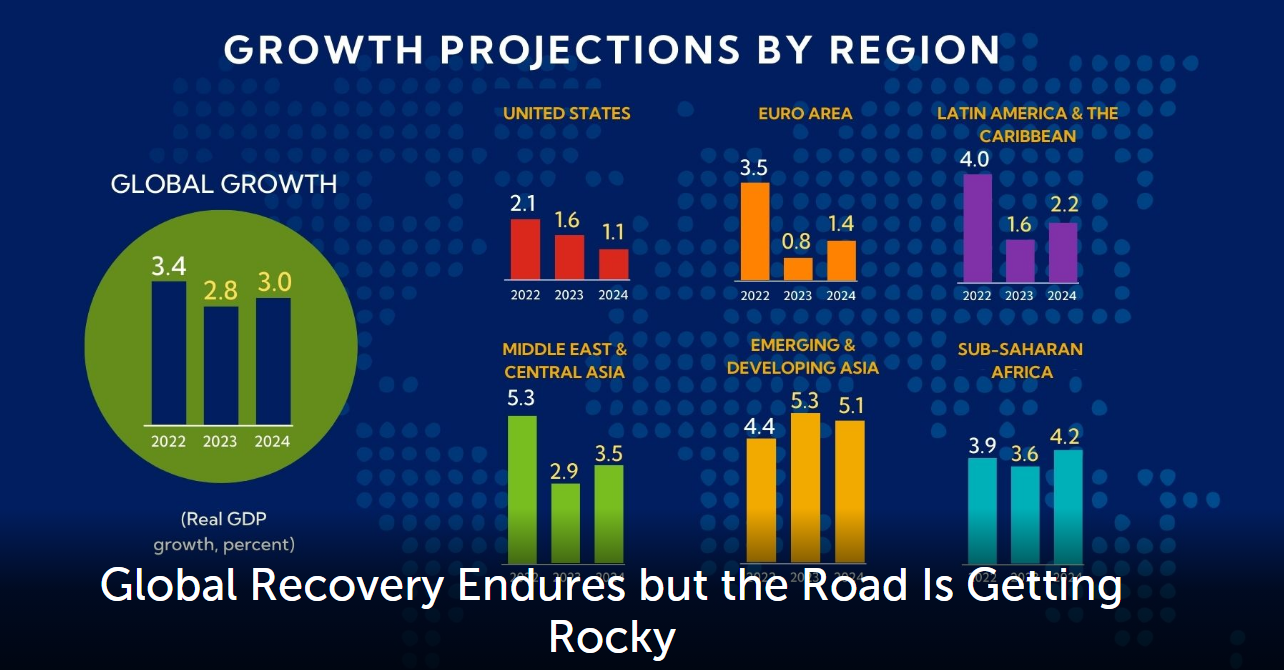
The IMF announced today (Tuesday, April 11, 2023) in the World Economic Outlook’s press briefing that the baseline forecast for global output growth is 0.1 percentage point lower than predicted in the January 2023 WEO Update, before rising to 3.0 percent in 2024.

“The world economy is still recovering from the unprecedented upheavals of the last three years, and the recent banking turmoil has increased uncertainties.”

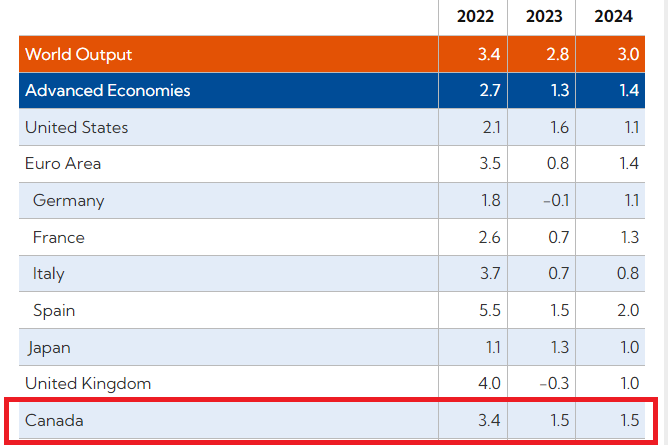
“We expect global output growth to fall from 3.4% last year to 2.8% in 2023, before rising to 3% in 2024, mostly unchanged from our January projections. Advanced economies are expected to see an especially pronounced growth slowdown from 2.7% in 2022 to 1.3% in 2023. Global headline inflation is set to fall from 8.7% in 2022 to 7% in 2023 on the back of lower commodity prices but underlying core inflation is proving to be stickier. Importantly, this outlook assumes that recent financial stresses remain contained,” said Pierre-Olivier Gourinchas, the IMF’s Chief Economist.

Much uncertainty clouds the short- and medium-term outlook as the global economy adjusts to the shocks of 2020–22 and the recent financial sector turmoil. Recession concerns have gained prominence, while worries about stubbornly high inflation persist.

Chart- world economic outlook projections including Canada.

“Once again, risks are heavily tilted to the downside, they have risen with the recent financial turmoil. Most prominently, recent banking system turbulence could result in a sharper and more persistent tightening of global financial conditions. The simultaneous rate hikes across countries could have more contractionary effects than expected, especially as debt levels are at historical highs. There might be a need for more monetary tightening if inflation remains stickier than expected. These risks and more could all materialize at a time when policymakers face much more limited policy space to offset negative shocks, especially in low-income countries,” added Gourinchas.

With the fog around current and prospective economic conditions thickening, policymakers have a narrow path to walk towards restoring price stability while avoiding a recession and maintaining financial stability. Achieving strong, sustainable, and inclusive growth will require policymakers to stay agile and be ready to adjust as information becomes available.

“First, as long as financial stress is not systemic as it is now, the fight against inflation should remain the priority for central banks. Second, to safeguard financial stability, central banks should use separate tools and communicate their objectives clearly to avoid unwarranted volatility. Financial policies should remain laser focused on preserving financial stability and watch for any buildup of risks in banks, non-banks, and the real estate sectors. Third, in many countries fiscal policy should tighten to ease inflation pressures, restore debt sustainability, and rebuild fiscal buffers. Finally, in the event of capital outflows that raise financial stability risks, emerging market and developing economies should use the integrated Policy framework, combining temporary targeted foreign exchange interventions and capital flow measures where appropriate,” said Gourinchas.

NORAD & U.S. Northern Command Will Conduct Exercise VIGILANT SHIELD 23

PETERSON SPACE FORCE BASE, Colorado – The North American Aerospace Defense Command and U.S. Northern Command will conduct its annual homeland defense exercise, VIGILANT SHIELD 23, Apr. 11-19, 2023.  

Exercise VIGILANT SHIELD is a bi-national exercise between the United States and Canada designed to assess and enhance the readiness of NORAD and USNORTHCOM, its components and mission partners to defend North America from attack.

Personnel from across the United States and Canada will participate, including the commands’ Headquarters, the Alaskan, Canadian and Continental NORAD Regions, USNORTHCOM components (U.S. Army North, U.S. Air Force North, U.S. Navy North, U.S. Marine Forces North, and Special Operations Command North), and other subordinate units and mission partners.  

VIGILANT SHIELD 23 provides NORAD and USNORTHCOM opportunities to examine and refine strategies, evaluate processes and procedures, and demonstrate the ability to address threats in various environments and domains. It is primarily a Command Post Exercise using simulated forces and involves the commander, the staff, and communications within and between headquarters. While the overall exercise scenario is classified, it is designed to assess and enhance NORAD and USNORTHCOM’s ability to defend North America across all domains, which include air, land, maritime, space and cyber. 

NORAD is a bi-national command formed by a partnership between Canada and the United States. NORAD provides aerospace warning, aerospace control and maritime warning for North America. USNORTHCOM conducts homeland defense, civil support and security cooperation to defend and secure the U.S. and its interests. The two commands have complementary missions and are co-located together on Peterson SFB, Colorado.

An earlier example of a Canada-United States bi-national command exercise. A Royal Canadian Air Force (RCAF) CP-140 long range patrol aircraft flies in formation with two U.S. Air Force F-16s and a RCAF CF-18 during North American Aerospace Defense Command’s Arctic air defense exercise, Amalgam Dart 21-02, March 22 and 23, 2021. The exercise will run from March 20-26 and range from the Beaufort Sea to Thule, Greenland and extend south down the Eastern Atlantic to the U.S. coast of Maine. Amalgam Dart 21-02 provides NORAD the opportunity to hone homeland defense skills as Canadian, U.S., and NATO forces operated together in the Arctic. A bi-national Canadian and American command, NORAD employs a network of space-based, aerial and ground-based sensors, air-to-air refueling tankers, and fighter aircraft, controlled by a sophisticated command and control network to deter, detect and defend against aerial threats that originate outside or within North American airspace. NATO E-3 Early Warning Aircraft, Royal Canadian Air Force CF-18 fighter aircraft, CP-140 long-range patrol aircraft, CC-130 Search and Rescue and tactical airlift aircraft, CC-150T air refueler, and CH-149 Cormorant Search and Rescue helicopters; as well as U.S. Air Force F-16 fighter aircraft, KC-10 Extender refueler, KC-46 Pegasus, KC-135 Stratotanker, as well as C-130 and C-17 transport aircraft will participated in the exercise. (Photo credit:RCAF)

Air- The Film About Jordan’s Nike Shoes

Note this review contains adult language and suggested themes.

AIR (2023): In 1984, shoe company Nike was barely keeping its head above water (they were third behind Converse and Adidas), when their talent scout Sonny Vaccaro got a wild hair up his ass about this up-and-coming b-ball phenom named Michael Jordan. He believed that he would be the key to Nike surviving *and* beating the competition. Hold on to your fuckin’ hats when I spoil this by telling you, yes, Jordan signed with Nike and the resulting shoe line known as “Air Jordan” went on to gross billions for everyone involved.

As to why I would be interested in watching some rich mofos get richer over some fuckin’ shoes that are most famous to me as being the kind of shoes people would shoot each other over, well, I wasn’t, not really anyway.

Sure, it’s directed by Ben Affleck, who I think is actually a good director (I still haven’t seen LIVE BY NIGHT, though), and it stars Matt Damon and a bunch of other people I didn’t know were in this. But still, why would I care to watch a movie about how a shoe that people would pay money hand-over-fist while neglecting their rent or child support payments — while goofing on the cheaper footwear worn by those who own a house and take care of their kids — came to be?

May be an image of 1 person and eyewear

I wouldn’t.

But I had a very nice steak dinner that I washed down with an entire bottle of Cabernet (I buy my sneakers at Big 5), and I certainly couldn’t drive in my condition. So I took a Lyft to a nearby movie theater where I sure as fuck wasn’t going to watch the fuckin’ plumber cartoon, so AIR it was.

It’s really good!

I think Tom Cruise really did something to Hollywood with his Xenu magic; from TOP GUN: MAVERICK onwards, I’ve been surprised by the increased frequency of old-school popcorn good times that have been hitting the big screen, like DUNGEONS & DRAGONS: HONOR AMONG THIEVES. This is the latest; a JERRY MAGUIRE for those who ain’t got time for the lovey-dovey bullshit or that weirdo kid with the head-weight obsession.

You will have to get any potential chips off your shoulder about the worshipping of athletes, as well as let go of any issues with the capitalist system of these great United States, if you intend to find any enjoyment from this. Because I don’t know what fantasy version of this film you are hoping for that would shit on both those things as some kind of cynical treatise, but this ain’t it.

Instead you have an audience-pleaser starring Matt Damon as Vaccaro; I’m looking at him and thinking “Hey, I might be OK because Jason Bourne and I are both in the same shape” and then everybody else in the movie proceeds to call him fat. He’s obsessed with signing Jordan, and tries to convince Nike co-founder Phil Knight (Affleck) to pony up all the endorsement budget on him only, and it’s all very entertaining and even funny at times, for what amounts to people talking in offices of various sizes.

I was surprised by some of the actors who popped up in this, but you won’t be, because either you saw the trailer or because you’re about to read the following: Viola Davis, Jason Bateman, Marlon Wayans, Jay Mohr, Chris Tucker (who seems to have a good thing going for him by only showing up every ten years or so to play a supporting role in critically acclaimed films), and Chris Messina, who by virtue of having co-starred with The Adorable Amy Adams *twice*, makes him A-OK with me.

The movie worships Michael Jordan, which makes sense considering the context.

Here’s a man who is arguably the greatest basketball player of all time, who took a struggling shoe company with him to the stratosphere, grossing billions upon billions. Shit, why *wouldn’t* this film suck him off and portray him as some kind of religious entity, even going as far as to not show his face, as if he were the Prophet Muhammad?

I’m fine with all that. What I’m not fine with is that at no point did I get to hear him say “Fuck them kids”, and that’s how a movie *doesn’t* get five stars on Letterboxd. For the Silo, E.F. Contentment.

Have you seen this movie? Are you planning on watching it? Leave us your comments below.

Channeling Female Faces Around the World through Art & For International Women’s Day

Julie Loeckx‘s colorful abstract artworks bring joy into any space, representing a kaleidoscopic universe brimming with zest for life and optimism. Using lines as influence, the endless experiment of color forms portraits with penetrating gazes and diverse emotions.

As a landscape architect with a Master’s in urban planning, she redesigned squares, streets and neighborhoods before entering project development. After discovering a box of watercolor paints in the attic, Julie experimented like an alchemist and abandoned her business life for a paintbrush. 

Julie creates art with subtle nuances hidden in a poetic landscape, striking artifacts in an eclectic interior, drawing inspiration from colorful patterns on textile or jewelry. She finds external sources of inspiration: shopping windows, fashion, interiors, magazines, yet creates one recognizable signature in her artwork. 

She uses painting as an outlet without boundaries and with a broad view of the world and in her paintings of women she channels feminism just in time for International Women’s Day and Women’s History Month.

She says, “Every woman is unique and scarred by life, resilient and determined, hesitant and searching, but always counting on a positive outcome. My paintings are sometimes bold and exuberant, or introspective and self-questioning, but always intense and passionate. They are a reflection of the woman behind the artist.”

Growing up as a daughter of two hippies and as a granddaughter of business people, she discovered painting at the age of 42 (mom of 3) and sold 100+ works, had national and international collaborations, including Levi’s Paint, and opened her own gallery in Antwerp in May 2022. 

For the Silo, Kat Fleischman.

High Altitude Fun This Spring and Summer In Colorado Mountain Towns

Colorado Come To Life Logo

Colorado’s mountain towns are known worldwide as an incredible wintertime paradise for skiers and snowboarders, but in summer, the same high-altitude ski towns become gorgeous playgrounds for outdoor adventure and family fun.

When the powder melts, popular slopes turn into verdant hiking and mountain biking trails and nearby rivers and lakes rise to new levels, ideal for fishing and boating. Colorado’s ski towns are not just about communing with nature — there is plenty for those who prefer less of a workout. The summer months welcome dozens of festivals celebrating music, food, art and more. From luxurious Aspen to historic Durango, take a look at some Colorado ski towns that shine in the summertime.

Colorado Ski Towns AspenSun salutations in Aspen

Head to luxurious Aspen for a total mind, body and spirit retreat this summer. Enjoy the fresh air and valley views with a session of mountain-top Hatha yoga at 11,000 feet, then cap off your mountain getaway with a mind-blowing body treatment at Remède Spa at the St. Regis Aspen, voted #1 spa in the world by Travel + Leisure.

Colorado Ski Towns Mountain TrainsTravel back in time in Durango and Silverton 

The Durango and Silverton Narrow Gauge Railroad winds through the same tracks settlers of the Old West took over a century ago. Today, tourists climb aboard the historic locomotive for a 45-mile trip through the still-wild San Juan Mountains to Silverton, where they can lunch and shop before re-boarding for the trip home. The train climbs nearly 3,000 feet to Silverton and the high mountain air will be on average about 10 degrees cooler than in Durango, so remember to pack layers and drink plenty of water before this high-altitude ride.

Colorado Ski Towns BreckenridgeGo local in Breckenridge

Head to local watering hole Breckenridge Brewery & Pub for spectacular views of the surrounding peaks, a relaxed patio atmosphere, refreshing beer and delicious Colorado comfort food. Located in the charming and historic mountain town of Breckenridge, this favourite hotspot is worth traveling for. Since 1990, local Breckenridge Brewery has grown into one of the most successful craft beer and restaurant companies in the USA. After dessert, stroll down quaint Main St., catch some live music and shop-till-you-drop at some of Colorado’s best local boutiques.

Colorado Ski Towns Steamboat SpringsFill your creel in Steamboat Springs

The Yampa River begins in the Flattops Mountain Range and moves through downtown Steamboat Springs, providing easy access to almost endless flat-water. The river is one of the best northern pike and smallmouth bass fisheries in the U.S., so warm up the BBQ and cast your line. Excellent fishing opportunities can also be found in one of the most plentiful trout fisheries in Colorado just upstream from Yampa River State Park.

Colorado Ski Towns Keystone Bike ParkTwo-wheel adventures in Keystone

Nestled between three mountains, Keystone is perfect for summer visitors looking for a world-class mountain biking adventure. Keystone Bike Park is the ultimate mountain-bike destination, offering 57 trails across 88 kilometers of terrain. The infamous Drop Zone, rated one of the best in the country, has progressive terrain for all riders. With rock gardens, drops, and high-speed features there is never a dull moment on your bike. There are also more than 100 miles of single track for touring. Or, for a more relaxing afternoon, take a cruiser ride or road bike along miles of paved bike path. Have I missed one or two other attractions that are must-see-must-do? Drop your ideas in the comments section below. For the Silo, Melissa Medeiros.

Acupuncturist Explains Eastern Medicine Methods and Chi

Living the EnerQi ConnectionAs westerners we’re used to running to the doctor for a prescription when we’re sick, but the down side to this is that many pharmaceuticals come with serious side effects.

  That’s just one reason why Asians believe in helping the body heal from more natural methods. Sheri Laine studied under one of the great Chinese medicine masters and in her new book, Living the EnerQi Connection, she shares a profound understanding of Asian medicine and explains the many benefits people are realizing from switching to natural products.

Many of us have heard the words Eastern/ Chinese/Asian medicine, acupuncture, and chi, but we don’t really understand what they mean or the long tradition behind the culture of it. We are westerners. We are used to doctors in white lab coats rushing to meet with us and write a prescription for whatever problem we have at the moment. Living the EnerQi Connection (HCI Books – $12.95) presents a new idea to health, medicine, and introduces us to what those words really mean.

The book discusses Asian medicine as a whole, but one of the main points that it touches on is qi (pronounced “chee” and sometimes spelled chi). This is the energy that is constantly circling through our bodies. Sometimes the flow of our qi can become blocked in some way, because we’re tired or run down which can leave our bodies susceptible to illness. Sheri Laine, L.Ac, has developed a way through Asian medicine to help us maintain our health and keep our qi flowing.

In this book Laine presents the L.A.I.N.E. system, which stands for: Learn, Align, Inform, Natural, and Energy.

Each chapter of the book explains a part of her system to give us a better understanding of the concepts of the energy in our bodies and the energy around us. This will help us to take a more active stance on our lives, our health and our healing.

Sheri Laine Diplomat of Acupuncture

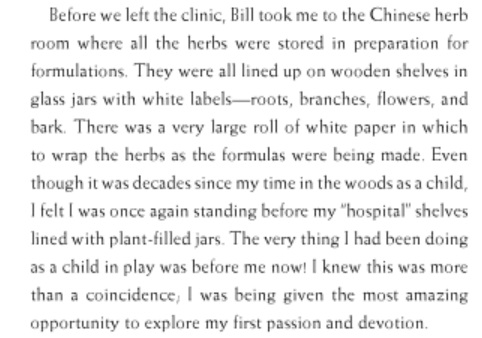
Laine shows us moments from her childhood when she loved to play doctor to her friends and family, giving them shots by sticking them with cactus needles and giving them medicine from the plants in her back yard. Many years later she is doing this again, but she is no longer playing make-believe. Acupuncture and herbal medicine are a powerful way for Laine to help enhance our qi and energy.

Doctor Richard Teh-Fu Tan LAc, OMD

Sheri Laine studied for many years under the Chinese medicine master, Richard Teh-Fu Tan. It is a long tradition that an apprentice study under a master for many years to get such an extensive knowledge of the medicine, the science, and the tradition behind it. This is how Laine is able to help us understand the concepts for ourselves so that we may apply them in our lives. She is the president of Eastern Medical Arts, a licensed acupuncturist, herbalist and nutritionist, with a focus on Integrative Lifestyle Medicine.

Page Excerpt

“Deep in their roots, all flowers keep the light. “– Theodore Roethke

Oriental Medicine draws from nature to diagnose internal medical challenges. We have all admired a great majestic tree. Your health is like that great majestic tree. The roots are your immune system, your qi essence, and the power of your qi essence. The branches of your tree are your subjective symptoms of a greater imbalance. The problem is not in a bad branch; it actually lies in the roots of the tree and within the soil that nourishes the tree, what is the underlying cause of distress?”– Chapter 2: Drawing from Nature: The Elements of EnerQi

Supplemental- Just how gentle can acupuncture be?

Guess Which Canadian Tourist Trap Has Featured In 143 Films

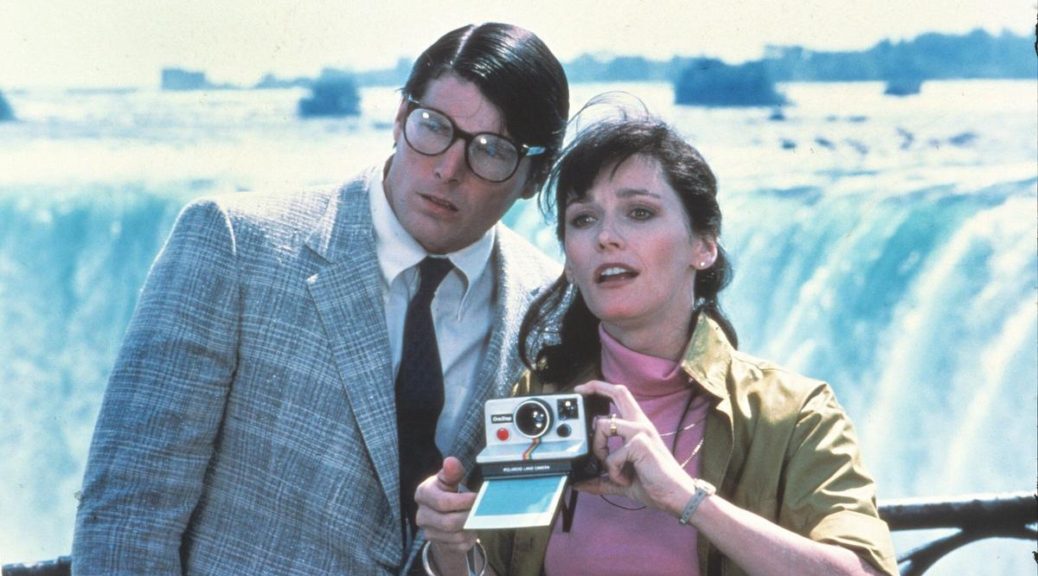
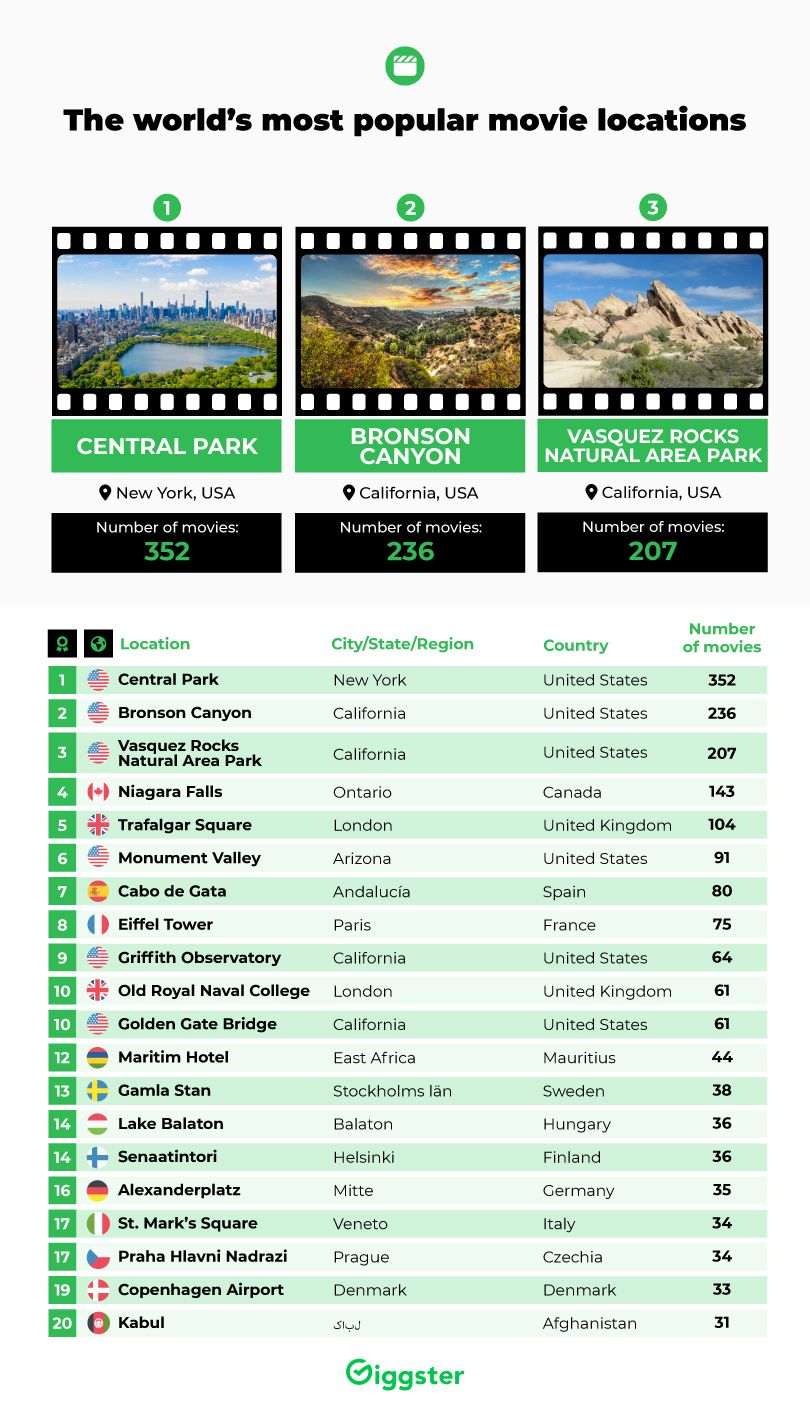
Forget about the recent media bashing. Niagara Falls is only a tourist trap in the sense of its awesomeness. How can anyone resist visiting? With that truth in mind, new research has revealed that Niagara Falls is the 4th most popular filming location in the world, having played a starring role in 143 films, including appearances in Pirates of the Caribbean and Superman 2 (1980).  

Giggster- a film location service, has revealed the most-used filming locations around the world, the locations that have the highest-grossing films, and the countries that have featured in the most movies. So, how does Canada fare?

Thor. Old Royal Naval College location London, England.

💰Niagara Falls is the sole location used in Canada from the study – featuring in 143 movies, with an average box office gross of $212,260,000 usd / $274,667,624 cad from its top-three films but so has Toronto (David Cronenberg’s 80s horror masterpiece The Fly) , Vancouver and Montreal as well as the Eastern and Western Provinces have also been featured in Hollywood films.

The research has also revealed:

🗽Central Park in New York is the most-used film location in the world – featuring in over 352 movies.

💵 The Griffith Observatory in Los Angeles is the highest-grossing filming location on average ($253,366,667 usd / $327,860,268 cad ).

The Griffith Observatory was also seen in the Disney cult favorite The Rocketeer.

🎥 The top 3 countries featured in the most movies are, The United States, The United Kingdom and Canada.

US locations featured in over 900 more movies than any other country; The states featured most are New York, Arizona and Massachusetts.

Exploring Outsider Visionary Art

For the last couple of decades the term “Outsider art” has come into popular use as a catch all phrase to describe the work of those who live “outside” society.  Prisoners, religious visionaries, the institutionalized, and hermits all fall into this category.

It is quite often grouped together with folk art in that it is also primarily work by an untrained hand, but it differs in that the work is often more wildly imaginative,  or “edgy”.

Back in the early 90’s, I was fortunate enough to participate in the second and third Outsider Art Fairs  in New York.  I was struck and amazed at the high levels of both positive and negative energy  generated by the various works from around the world on display there.

Everything from giant nightmare fantasies to what could best be described as visions of heaven fighting it out side by side.  It was intense and worthwhile.   It was also an interesting lesson in marketing, in that I observed how a handful of powerful art dealers control and establish who is “hot” and how much these works were going to cost.

The newly found amazing collage/paintings of Henry Darger were presented initially at about $4,000 for a small one.  The second year the price was $40,000.

The book had come out on the Chicago recluse who spent all his days writing his posthumously discovered 15,145-page, single-spaced fantasy manuscript called The Story of the Vivian Girls, in What is known as the Realms of the Unreal, of the Glandeco-Angelinnian War Storm, Caused by the Child Slave Rebellion, along with several hundred drawings and watercolor paintings illustrating the story.  Beautiful and disturbing.

Betwixt and Between: Henry Darger's Vivian Girls
Betwixt and Between: Henry Darger’s Vivian Girls

[This is a picture of Elsie Paroubek who was murdered at the age of five in 1911 in Chicago. The picture is most likely to have come from the Chicago Daily News. It was one of many newspaper photos of children collected by artist Henry Darger. According to his autobiography, his copy of Miss Paroubek’s photo was in amongst some items that were stolen when his locker at work was broken into, and he was unable to locate the picture in the newspaper archives. The tragic death of Miss Paroubek and the loss of her image inspired him to begin writing his monumental fantasy novel “The Story of the Vivian Girls.” Miss Paroubek was a central character in the novel, under the name Anna Aronburg. Photo is in the public domain. Text excerpt from wikipedia CP]

In Canada, there are just a few documented artists who could be considered “outsiders”.   There is Clarence Webster who drew interesting childlike pictures to cheer up the walls of his institutional room.

A very interesting visionary artist was Alma Rumball who lived in a rural Muskoka cabin. Following a vision of Jesus, she became a clairvoyant recluse, at age 50, creating prolific, intricate, coloured pen and ink drawings.  She watched, as “The Hand” drew by itself, unfamiliar forms, faces, and characters, separate from her consciousness.

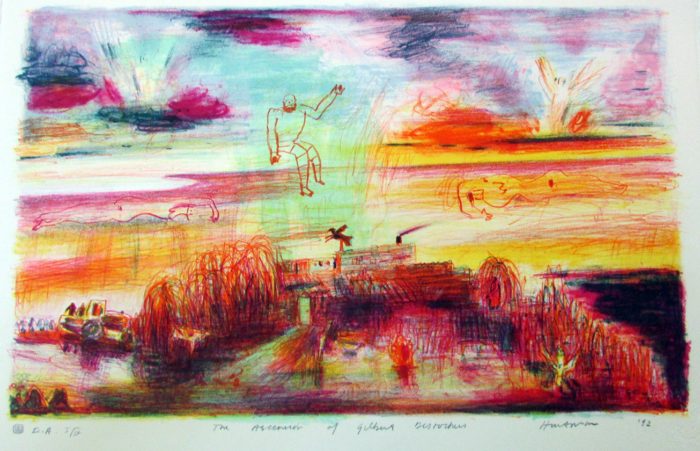
There is a good Vision T.V. documentary on this artist.  Another example is Gilbert DesRochers, who after a religious vision moved to his brother’s farm near Perkinsfield, where he lived in a small trailer and attended church regularly, producing many religious based sculptures.  He was discovered and documented by artist John Hartman in 1980 and a solo exhibition of his work was held at the McMichael Canadian Art Gallery from November 3, 1991 to March 1, 1992. For the Silo, by Phil Ross. 

Featured image- The ascension of Gilbert DesRochers. Beaverbrook Art Gallery. 

Is Retirement A Myth?

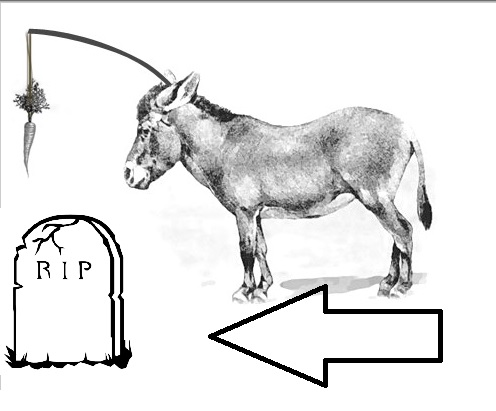
donkeyandcarrotWe work our asses off to buy stuff that we can’t enjoy because we are working our asses off to pay for the stuff we buy while diligently saving (or attempting to save) for our retirement which we keep pushing back because we keep working our asses off  to buy yet more stuff to enjoy  that we have to work our asses off to pay for, and there is always something else that we want or need or think we need (but really want) that we have to work our asses off to pay for and…

 A generation ago somebody coined the phrase “rat race” to describe this phenomenon of modern consumerism, and the term stuck.

It’s wrong. 


It ain’t a race.


You can win a race.


Modern consumerist  life is a strictly no-win proposition, friends…

…  and none of us gets out of here alive.


I began to think about this a few years ago, when I received a matched set of stainless steel rechargeable electric salt and pepper grinders as a gift.


Think about that:  Electric salt and pepper grinders.

 I am pretty sure this is an answer to a question nobody asked.


This gift made me ponder, and I came to some conclusions:

  1. I must be one of those “hard-to-shop-for” people.
  2. I’d rather have an LCBO gift card.
  3. Grinding pepper over your mashed potatoes is apparently much more strenuous than I ever thought., that somebody decided the world needed this.
  4. A gadget that doesn’t really save any appreciable time or effort and provides little entertainment required somebody to work to earn the money to purchase it.
  5. Enough is enough.

Is mortal- consumerism (yep we just coined that CP) keeping society asleep?


 At the time, I was working a gig that required me to work 12 hour days 6-7 days a week,  put in 40 000 km a year behind the wheel of a car traveling to meet prospects,  75% of whom either don’t want or can’t afford what I am selling, so that  I can afford the next toy/vacation/orthodontist payment/thing with the 50% of my income that the tax man has allowed me to keep.  I was alienated from, and alienating, my kids, my wife, because of my absence from home life, and I became an overcompensating asshole for the same reason which increased the tension and…


…any of you out there who have climbed out of the wreckage of a crashed marriage know exactly where I’m coming from.


Actually, scratch that vacation part.  At the time I hadn’t taken more than a long weekend off in over a decade.


  And I thought I was successful.


  I began to question where I was going, what I was doing, and why. 


   Frankly, I figured enjoying retirement is a myth.


That whole “Freedom 55” thing?  Bullshit.


 First, you gotta get there.  With my diet, hours, stress level and number of miles driven every year, the odds were good I wasn’t gonna make it. 

Second, you gotta pay for it.  You need to keep squirreling away the cash, tending your investments, watching your nest egg grow, deferring and sacrificing today for the dream of a better tomorrow…


….As long as the market doesn’t tank, your health holds up, property values don’t plummet, or your kids don’t move back in, with their kids.


    Money may not buy happiness, but always feeling like you don’t have enough will make you bitchy as hell.

I was sitting in the cockpit of our old, small, paid-for sailboat one morning, enjoying a cup of coffee when it hit me:

  As a society we are conditioned to approach life like a big twin-engine cabin cruiser- heavy consumption, lots of noise, lots of flash, throwing a big wake.  Unless you are getting noticed, you’re not succeeding.

   I finally figured out that there is a lot to be said for living a NO wake lifestyle. 

   But how?

  With a bit of soul searching we realized we had to quit confusing our wants with our needs.


  My wife and I realized that we were perfectly content spending time on our old, small, paid-off  boat in our low-cost slip on our no-frills dock. We didn’t need a bigger boat on a fancier dock.


  And we didn’t need new cars.  As long as the old cars keep running , it is always gonna be cheaper to fix ‘em than replace ‘em.  If I need a new whip to impress you, you’re likely not worth impressing.

    Besides, there’s something real liberating about parking wherever you damn well please, because dings and scratches just don’t matter.


   And we didn’t need a $20 000 kitchen reno or a $10 000 bathroom makeover.  Or a bigger house.  Or a bigger garage. 

Or a bigger mortgage.

For a longer time.

With fatter payments.


   We didn’t need to stand in line to be grilled by a soul-patch sporting “barista” first thing in the morning just to get a simple cup of coffee which costs as much as a Happy Meal, when we had a perfectly good underused coffee maker on the kitchen counter.


We needed to live life NOW, on OUR terms.


  A funny thing happened. By deciding what we could live without, we could now afford to live.


With less financial stress, I didn’t need to be on the road, living out of a car and fueling up on fast food three meals a day.  My wife and I discovered that cooking dinner together was a great way to re-connect at the end of the workday.  Chopping, sautéing, stirring with a glass of wine while recapping our respective days beats the hell out of eating a Whopper an hour from home.


  We didn’t have to save dining at restaurants with tablecloths for a special occasion to fit the budget.


  We could afford to drink the bottles of wine we could only read about before.


   We could take vacation days without figuring out what we had to sacrifice to make up for the lost wages.


   Hell, we could take whole damn vacations, for that matter!


    The sunsets look just as pretty from a small, paid-off sailboat as it does from the bridge of a six-figure cabin cruiser.

    The rum goes down just as well.

    And I can enjoy it instead of working to afford it.

    And so can you.

For the Silo, Brian Jones.


This 1961 Impala Was Excellent Moonshine Runner

What more is there to say about this car except “Wow”? Jim’s 1961 Tri-Power Chevrolet Impala is yet another pure gem hidden away somewhere in the rural wilds of Ontario, Canada.

Back in the day, these cars were known in the South as an excellent choice for moonshine runners. It must have been difficult if not impossible for a police car of that era to keep up with this 280 HP, Triple Deuce carbureted, 348 cubic inch big block.

With no power steering or power brakes you sure did get a pretty good feel for those windy, dirt back roads. Yet because of these removed features the car had no loss of available horsepower or throttle response.

With a borg-warner 100 T-10 4 speed transmission and posi 4:11 rear-end, this car puts the power directly to the road.

These traits also made these Impalas widely used in stock car racing and drag racing as well. This pure beauty of a car is painted in a factory Ermin white, with a factory red and ivory interior. Some of the rarer options include: front and rear bumper guards, E-Z eye solar guard glass and wide, white walls.

In a world of ‘rip it down and change it’, this car is still running an old school Delco battery and generator. It is very un-common to still have these options installed.

Owned by Jim, a stunt driver with Legend Filming Network you can bet the only way you’ll see this car in its home area of Delhi, Ontario is when it’s passing you in 3rd gear with all three deuces wide open.

Extra Facts

The big flag badging on the grille and trunk lid was specific to only 348 cars, they came in 240 HP, 280 HP and the high horsepower 350 HP models. In late 1961 Chevrolet introduced the 409. That same year, the windshield wipers swept in the same direction. For the Silo, Robb Price. 

Scientists Urge Caution On Underwater Mining

For years the ‘bad ones’ have poisoned rivers, devastated forests and displaced communities, and now massive companies are rushing to dig up the seabed for precious metals.

MIT: “The ocean’s deep-sea bed is scattered with ancient, potato-sized rocks called “polymetallic nodules” that contain nickel and cobalt — minerals that are in high demand for the manufacturing of batteries, such as for powering electric vehicles and storing renewable energy, and in response to factors such as increasing urbanization. The deep ocean contains vast quantities of mineral-laden nodules, but the impact of mining the ocean floor is both unknown and highly contested.”

Sledge From Sea Mining Operations
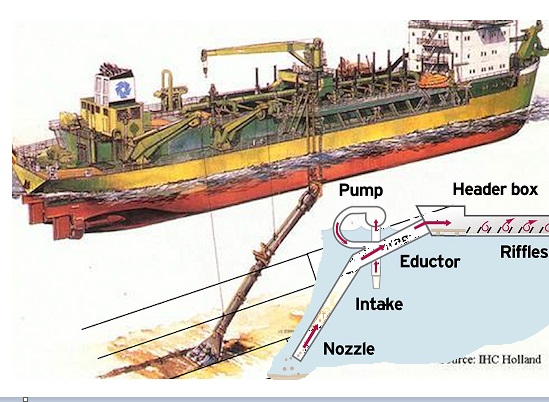
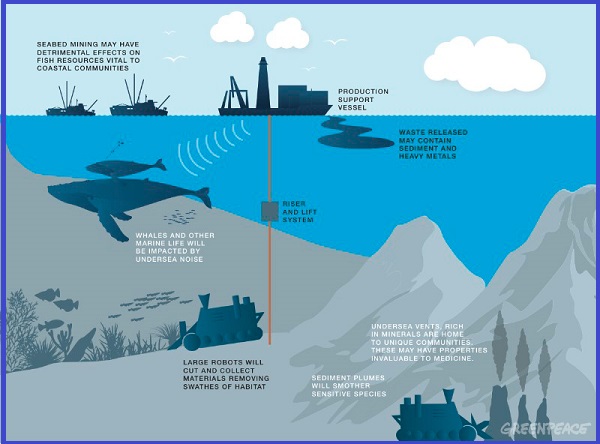
Sediment plumes following the wake of this deep sea mining ship.

And yet, only twenty-four people have the regulatory powers to stop this type of plunder in our planet’s most fragile places:  The International Seabed Authority.  You’ve likely never heard of them because this group attracts as little attention as an underwater mine miles offshore.

A few countries have agreed to full or partial bans, and leading scientists have appealed for a freeze on deep sea mining contracts.

Mining companies claim they can mine the seabed safely, but authorities in Namibia, Australia and New Zealand have blocked seabed mining projects.  Scientists point out that many deep water species are being discovered quite regularly, and that the ocean floor can take decades to recover from disturbances such as the creation of sediment plumes from deep sea floor bed mining.

There are limits to how deep Surface ships can reach- but is that enough to protect the deep of our Oceans?
There are technological limits to how deep Surface ships can reach- but is that enough to protect the deep of our Oceans? New technologies and techniques always lead to deeper mining.

Seabed Mining: The 30 People Who Could Decide the Fate of the — Oceans  Deeply
New technology allowing for deeper mining and intensified mining: A massive seafloor EV rover.

The International Seabed Authority has already issued licenses for exploratory mining across 1.2 million square kilometers of ocean floor. As mentioned earlier, this regulatory body is almost unknown, and its 24-person Legal and Technical Committee is solely responsible for the detailed scrutiny of proposals and environmental safeguards.

GreenPeace Graphic Deap Seabed Mining

Supplemental:

Deep sea mining: the new resource frontier? (Al-Arabiya)
http://english.alarabiya.net/en/views/news/world/2014/11/12/Deep-sea-mining-the-new-resource-frontier-.html

Marine mining: Underwater gold rush sparks fears of ocean catastrophe (The Guardian)
http://www.theguardian.com/environment/2014/mar/02/underwater-gold-rush-marine-mining-fears-ocean-th… 

New Interest in Seafloor Mining Revives Calls for Conservation (National Geographic)
http://voices.nationalgeographic.com/2013/12/11/new-interest-in-seafloor-mining-revives-calls-for-co… 

Deep sea mining hopes hit by New Zealand decision (Financial Times)
http://www.ft.com/intl/cms/s/0/6edaeea8-b894-11e4-a2fb-00144feab7de.html#axzz3VFC8Wm1y 

Scientists call for temporary halt on new deep sea mining projects (Popular Science)
http://www.ft.com/intl/cms/s/0/6edaeea8-b894-11e4-a2fb-00144feab7de.html#axzz3VFC8Wm1y

Shedding some light on the International Seabed Authority (University of Southampton)
http://moocs.southampton.ac.uk/oceans/2014/03/09/shedding-some-light-on-the-international-seabed-authority/

Interior Design On Yachts Is “Art On Art”

As the world continues to grapple with the pandemic and challenging mental health issues, it’s more important than ever to find ways to bring joy and beauty into our lives. One way to do this is by infusing our living spaces with personality, whether it’s our homes, offices, or our boats. For refined yacht owners, it’s natural to diverge towards things that bring comfort on-board – including art. 

Not falling short on sophistication, the real value of art lies in its ability to inspire and uplift us. In practicality, however, when it comes to decorating a yacht, there are a few key concerns to keep in mind. 

  1. It’s important to consider the amount of art one wants to display. While it might be tempting to fill every inch of wall space with your favorite pieces, it’s important to strike a balance between aesthetics and functionality. An overcrowded space can be overwhelming and distract from the overall design. Equally essential, durability is a crucial factor to consider as art on-board will be exposed to elements like water and must withstand rough seas. Fortunately, there are experts in yacht customization that can deliver art in the most practical way.
  2. For yacht owners, the key areas where art can really make a difference are the master bedroom, living area, and bathroom. In the master bedroom, a carefully chosen piece can create a calming and relaxing atmosphere, while in the living area, a bold and eye-catching piece can be the perfect conversation starter. In the bathroom, a fun and whimsical piece can add a touch of lightness. 
  3. For those who wish to incorporate contemporary art, The Margulies Warehouse boasts an extensive collection, featuring artists such as Jennifer Steinkamp and Daniela Wicki, who play with the symbiosis of materials and technology. Another great choice for those with eclectic taste and looking for individual pieces is The Gallery by Rudolf Budja, which offers a selective collection of texturized canvases and photography sure to impress any art lover.
  4. Delving into ways to bring art on board, it is captivating to incorporate design elements into the very fabric of the yacht itself, a popular trend in yacht design. For example, Futurestones and KMD are experts in creating stone finishes. They transform spaces and bring a unique energy to the yacht with the use of murals and large-scale artwork as a backdrop for the interior. These details help create a cohesive design aesthetic and add a touch of personality to the vessel. 

At the most recent Miami Discovery Boating Show, I observed a surge in stylish watercrafts, ranging from medium-sized yachts to super yachts.

One brand that stood out to me as an excellent example of balance in design elements is Fiart Mare, particularly their 35′ Seawalker and 39′ Seawalker models. These boats offer an exceptional combination of functionality and Italian design, maximizing the available cabin space. Yacht Creators, the exclusive dealer for Fiart Mare, has collaborated with top shipyards worldwide to bring unparalleled interior design to the US market.

In addition to Fiart Mare, Yacht Creators represents other renowned brands such as Prime Yachts, Van Der Valk, Leven Yachts, and Waterdream, all of which are built with exceptional craftsmanship and worth the time for someone who dreams of building and owning something special. 

For me, interior design on yachts is “art on art”.

While yacht craftsmanship is a complex process that involves multiple layers of design, art on board can take many forms, from custom-designed furniture and fixtures to entire walls/doors adorned with intricate patterns and designs. These bespoke furnishings can range from tables and chairs to lighting and cabinetry, and serve to enhance the yacht’s individuality and make it truly one-of-a-kind. 

The sky’s the limit when it comes to bringing a touch of artistic flair to a vessel and creatively maxing out cabin space. So whether you’re a seasoned collector or just starting out, don’t be afraid to bring a little bit of art on board your life – and your yacht.

For the Silo, Nancy Gonzalez/Private Yacht Finance. Featured image: Fiart Seawalker 35.

The World’s Weirdest Museums You Must Visit

More often than not, all our museum experiences are quite similar. We see some art or historical artifacts, learn about a subject, and sometimes listen to a lesson during a tour. 

And while every museum is invaluable, sometimes the heart wants something quirkier and unusual.  Evidently, many people had the same sentiment because if you really look, you’ll find some incredible gems in the world of museums. 

Here are the world’s weirdest museums you must visit. 

Momofuku Ando Instant Ramen Museum, Osaka, Japan 

Ramen is synonymous with Japan, so no wonder there is a museum dedicated to it! Momofuko Ando, the Taiwanese-Japanese inventor, invented Chicken ramen noodles in his backyard shed in 1958.  

The Momofuku Ando Instant Ramen Museum shows this Japan’s cult food that went global by displaying ramen noodle packages from around the world and giving the opportunity to taste limited-edition ramen from Hokkaido island and Tohoku region.  Visitors can also design their personal soup packet at the “My Cupnoodles” Factory.  

Spy Museum, Washington DC, USA  

Love spy movies or novels? Then this museum is for you! International Spy Museum in Washington DC has the largest public collection of espionage artifacts that includes various gadgets, cameras, secret weapons, cipher machines, and counterfeit money. 

It’s a rare chance to take a look at this secret profession and see how it’s developed over the years. 

Museum visitors can participate in interactive spy adventures, watch never-seen-before videos of spies and revel in the impressive photo collection.  And who wouldn’t wish for a super-gadget that would help make life easier, to help you in high-stakes situations like basketball betting on BetAmerica.com?  

Sulabh International Museum of Toilets, New Delhi, India 

Roughguides.com names the Sulabh International Museum of Toilets, New Delhi, India, which shows the history of hygiene and sanitation from 2500 B.C. to today, as one of the weirdest museums a person can visit. 

The visitors can see the toilet evolution over the ages – from Roman emperors’ gold-plated toilets to medieval toilets of peasants.  A fun fact – you can find a collection of rare toilet poems in the museum as well.  

British Lawnmower Museum, Merseyside, England 

Can there be something more British than a Lawnmower museum?  If you’re a garden enthusiast or simply like quirky things, you must visit the museum, which details this garden tool’s history. 

Lawnmowers - Picture of British Lawnmower Museum, Southport - Tripadvisor

You’ll find such items as the lawnmowers of Prince Charles and Princess Diana or the world’s first solar-powered robot grass-chopper in the collection.  Probably the cutest lawnmower at the museum is less than five centimeters high and is fully functional!  

Siriraj Medical Museum (Museum of Death), Bangkok, Thailand 

If it sounds scary, that’s because it is. Even though officially named a Medical museum, most people call it simply the museum of death.  If you’re squeamish or find the subject distressing, it’s probably best to skip this one.  

You’ll find severed and mutilated legs and arms, brains, skulls pierced with bullets, lungs that have been stabbed, and other similar things in the collection.  They all illustrate the dark and gruesome ways to transition to death and leave no one indifferent.  

If that’s not enough, you can also see the mummified body of a notorious cannibal Si Quey and the museum’s founder’s skeleton.  

The Museum of Broken Relationships, Zagreb, Croatia 

It is just as sad and beautiful as it sounds. It started as a joke by two Croatian artists who broke up after a long relationship and said they wanted to create a museum to honor it. Well, they did, and it blew up all over the world. 

You can see various mementos from people’s relationships in different countries that include an ax used to destroy a cheating partner’s furniture, jewelry, postcards, and more.  

Paris Sewer Museum, France 

Nobody likes to talk about it, but sewer systems are the basis for a civilized society! However, it’s not the first or even the fifth thing people want to see when visiting the city of love.  

Still, it’s so fascinating and complex.  Lifehack.org explains that it’s an entire network of tunnels as large as the city itself, and also a museum that tourists can visit and explored, complete with tour guides.   Don’t worry, it doesn’t smell that bad, and you’ll see a part of Paris you never thought you would. For the Silo, Milda Urbonaite.

Photo Essay- How Much Did Blade Runner Borrow From Barry Lyndon?

Kubrick. Scott. Which one of these directors needs their first name in order to be recognized by most movie watchers? Yeah, thought so. Let’s try this introduction another way: Kubrick. Ridley Scott. Ah that’s better.

Regardless of who is more recognizable, the fact remains that both of these cinema geniuses created masterpieces on celluloid.

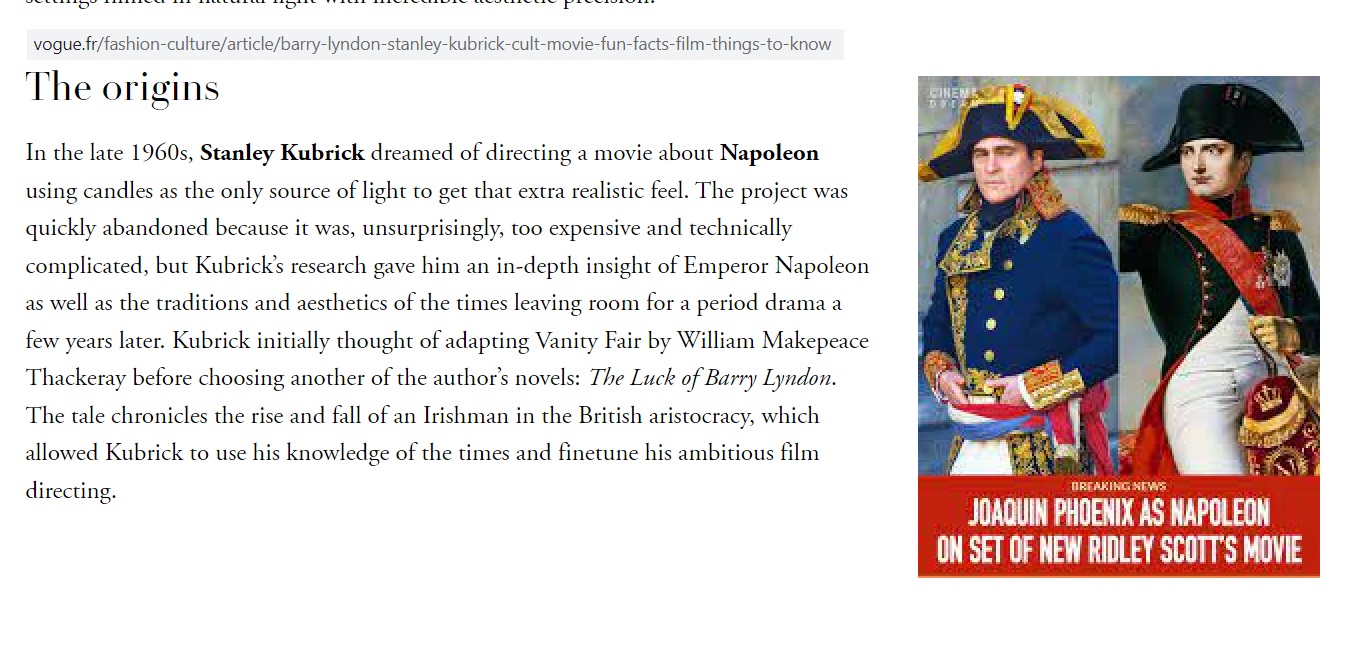
Stanley Kubrick’s work dates earlier than Sir Ridley’s films ( 1977’s The Duellists) by almost a quarter century (1953’s Fear And Desire) but this is balanced by the fact that Scott continues to make films. The upcoming Napoleon will be his 18th feature film since 1999- when Kubrick tragically passed away shortly after finishing Eyes Wide Shut.

There are many films to choose from when picking a movie that is Stanley’s masterpiece but Barry Lyndon is receiving a renewed interest from film critics and writers. Shot entirely by natural light and candle light, Barry Lyndon required the assistance of NASA since it required an entirely new kind of camera lens to capture the scenes and oh those scenes!

There is something familiar about them….have I seen them before in a later film from another director perhaps?

1982’s Blade Runner is heralded as the de facto science fiction film due to its own innovations. It offered a serious look at a believable and highly stylistic future and the earliest on screen representation of cyberpunk. The sets, scenes, compositions of shots, costumes and overall atmosphere were unlike anything seen on film before….or were they? Let’s take a look at both Barry Lyndon and Blade Runner side-by-side.

As I continue to compare and unravel more similarities I will update this post but in the meantime if you know of something I have missed please feel welcome to add your thoughts and discoveries in the comments section below. For the Silo, Jarrod Barker.

Study: Is your phone reading your mind? 33% of Canadians have noticed being tracked by their gadgets

Digital privacy expert discusses the possible violation of privacy and security of cross-device tracking 

Third of Canadians (33%) have ever noticed an ad on their devices of something they recently spoke about or saw on TV (but hadn’t searched for), according to research by NordVPN, a leading cybersecurity company. A majority of them noticed such ads on their smartphones (76%), computers (49%), or tablets (29%). Moreover, such experience made more than 4 in 10 (46%) Canadians feel tracked/followed as well as scared (12%). 

“That’s due to ultrasonic cross-device tracking. That’s when smartphones have apps that are continuously listening to inaudible, high-frequency ultrasonic sounds from the surroundings and gather a lot of information about you — all without your knowledge. Later, they share this data across other devices,” says Adrianus Warmenhoven, a digital privacy expert.

While tracking people’s behavior across devices is beneficial to marketers, cross-device tracking is often questioned by privacy experts because of its lack of transparency, security and protection of sensitive consumers’ data. 

What do our American friends think?

Ultrasonic cross-device tracking — a trending rise 

Ultrasonic cross-device tracking is used as a method to link all the devices you own to track your behavior and location. These ultrasonic audio beacons can be embedded in many things we interact with daily: TV shows, online videos or websites, or apps on our phones.

Imagine you are watching TV and you see  chocolate being advertised. You pick up your phone, and the same chocolate ad appears on your screen. By using ultrasounds, audio beacons can detect when your phone is nearby, and apps on your phone can listen for approximate audio beacons to track what you are doing.

“Many apps currently ask for permission to access the smartphone’s microphone to incorporate a particular type of ultrasonic beacon to track them. Since it requires no mobile data or Wi-Fi connection but only microphone access to listen to beacons, tracking works even when you have disconnected your phone from the Internet.

“It’s not possible to stop ultrasonic beacons from emitting sound frequencies around you. Therefore, the best way to reduce the chance of your smartphone listening for beacons is to simply restrict unnecessary permissions you have granted to the apps installed on your device,” says Adrianus Warmenhoven.

How can you reduce cross-device tracking?

NordVPN research shows that 65% of Canadians don’t know how to restrict their smartphone’s permissions from listening to them. No one likes to be tracked. Therefore, Adrianus Warmenhoven suggest several ways people can reduce the incidence of this happening:

  • Use a VPN. One of the best ways to protect yourself from being tracked is by using a VPN. A VPN is a tool that encrypts every bit of information about your internet activity. It also stops IP-based tracking because it masks your IP address.
     
  • Use a privacy browser. If you want to keep yourself from tracking, it is best to use a private browser like Tor or DuckDuckGo rather than the incognito mode in Google Chrome. These browsers do not profile you or save any of your personal data for sharing with marketers.
     
  • Change app permissions. The apps on your smartphone may have some permissions that are not required. For instance, why would a photo-editing app need access to your microphone? If apps on your phone have such non-required permissions, you should revoke these permissions.

“The consolidation of power among large tech companies allows them to obtain large quantities of data about individuals across multiple platforms and devices. In this way, technology giants have even more opportunities to obtain deeper insights into individuals’ habits and preferences. Data consolidation through cross-device and platform tracking may also increase data security risks,” says Adrianus Warmenhoven. For the Silo, Darija Grobova/NordVPN.

Metaverse Trademark Applications Surging

Over 5,800 Metaverse Trademark Applications Filed Last Year = Surging 200% Year-Over-Year

In 2022, there was a significant surge in trademark applications related to the Metaverse and non-fungible tokens (NFTs), indicating the growing importance and potential profitability of these emerging industries.

According to data collected by Blockchain Centre, there were 5,850 new Metaverse trademark applications and 7,746 NFT trademark applications registered last year.

This represents a growth rate of 205.64% and 259.61%, respectively, from the previous year. The monthly trends for trademark registrations steadily increased throughout the year, with at least 300 new applications filed every month.

Increasing interest in the Metaverse

Many big companies, including Meta, Formula One, Mastercard, McDonald’s, Gatorade, and the US Space Force, have also filed applications with the USPTO in 2022, indicating their interest in virtual products and involvement with crypto and blockchain.

The rise in trademark applications related to the Metaverse and NFTs has prompted an investigation by the US Patent and Trademark Office and US Copyright Office to examine how NFTs impact intellectual property rights.

According to the research:

“Recently, several prominent brands have faced challenges when their intellectual property or products were infringed upon by NFT marketplaces or platforms.”

Despite the ongoing ‘crypto winter’, the rise in trademark applications and growing interest in metaverse products have served as a counterbalance to concerns that the market is being negatively impacted. For the Silo, Lina Alisauskaite.

Finland Rates As World’s Happiest Country For Six Years Straight

The World Happiness Report has anointed Finland as the world’s happiest country for six years straight. What makes a Nordic land with 5,5 million people so happy? In Helsinki, the capital of Finland, art and culture make the city a good place to live and visit.

According to the UN-published report, Finns rate highly on key issues such as a high level of education, affordable healthcare, social stability, and positive work-life balance. But it’s not just these societal indicators that affect how Finns view their quality of life – Culture and art are highly prized aspects as well.

“We see a vibrant cultural sphere that is accessible and affordable for all citizens as a major contributor to everyday happiness. And we are looking at culture through a broad lens: from urban city culture, to sauna culture, to high-end cultural offerings, such as the world-famous Helsinki Philharmonic Orchestra. It’s a diverse mix,” according to Reetta Heiskanen, Deputy Culture Director at the City of Helsinki.

Sauna culture

In Helsinki, cultural events are designed for everybody, regardless the socioeconomic status, with world-class ambition. The city’s expanding cultural life makes the city a more exciting and diverse place for residents and visitors.

Photo: Julia Kivelä, Visit Finland

“Good examples are the Helsinki Festival and Flow Festival that draw international music lovers’ and urban hipsters’ attention to Helsinki every August. As well as the Helsinki Biennial, a visual art festival in summer – dealing this year with the wicked problems of our time, such as environmental crisis, political conflicts, and the consequences of technological development,” Heiskanen says.

“In Helsinki, culture belongs to everyone. For example, in the Culture Kids program, every child from Helsinki born in the 2020s has a cultural institution as a host, through whom the children and their families get a personal touch with art,” she adds.

Culture Supports Economy

Helsinki has a Nordic approach to art and culture: A unique urban culture is a key enabler of a good life – and culture also supports economic wellbeing.

Culture and events make Helsinki an enjoyable, dynamic, and attractive city. Cultural events boost economic development – while the city government is flexible, people and businesses find the city easy to work with when arranging events, big or small.

But what good would it be to provide interesting cultural offerings if people don’t have the time and energy to enjoy them? If you are working long hours, wouldn’t the sofa be the best option after a long day?

The answer is Finland’s emphasis on work-life balance. This year, Helsinki placed second in the Forbes worldwide work-life balance index of major cities. Generous paid leave and flexible work arrangements, such as hybrid and remote working, were among the factors cited for the high ranking.

“It’s a Nordic dream, a good everyday life, which you can achieve in Helsinki. This means that you can build a successful career and still have enough time and energy for a flourishing personal life and cultural experiences. A vibrant culture creates an attractive city that is easy to fall in love with,” Heiskanen concludes.

Unleash Your Curiosity About Finnish Culture

This year offers unique cultural offerings in Helsinki throughout the year. There are multiple great exhibition openings, such as world-famous Tom of Finland and Albert Edelfelt, in Ateneum, Finnish National Museum of Art, which will open its doors after a year-long renovation, and Helsinki Biennial, a contemporary art event, taking place for the second time in summer 2023, June 12th until September 17th. For the Silo, Leena Karppinen.

Free App Keeps Track Of Your Food Best Before Dates Saves Money

A major money saving and environmentally beneficial smart kitchen app launched waaaaay back in 2015, on World Environment Day, and deserves another look as it still works well and saves users up to $1,000 every year and helps reduce food waste.

The “Smart Kitchen” EatBy App reduces food waste, saving households up to $1,000 per year and helps the environment.

The staggering amount of wasted food continues to make headlines and back when the app was first created, husband and wife developers, Steffan and Barbara Lewis were focusing their passion for finding a solution to the environmental issues surrounding food waste and came up with the idea to develop and launch “Smart Kitchen” EatBy as soon as possible.

“We had the idea one lunchtime after we had to throw out the food we’d hoped to eat because it had passed it’s use by date. That led to a purge of all the out of date food in our kitchen. And quite frankly, we were shocked and disgusted with ourselves when we realised how much we waste.” said Barbara Lewis.

They decided to make the app free to download and offer expanded use with an optional shopping list that can be activated with an in app purchase.

“It’s important to us that the app’s basic functions have to be free in order to gain and benefit the maximum number of users. Collectively we can all make a huge difference to the environment. And it’s an added bonus that we’ll save around £700 ($1,000) each year.”

And the numbers add up.

Recent reports state that the average household wastes $80 usd ($109.23 CAD) every month on un eaten food. With over 123 million U.S. households that’s $9,840,000,000. Factor in similar habits throughout the rest of North America and an equivalent amount in Europe, the tally is somewhere around a staggering $236 Billion each year. It’s known that about one third of all food produced is discarded but the real cost to the environment is misunderstood: 1.3 billion tonnes of wasted food contributes 10% of worldwide total greenhouse gases.

Many strategies for reducing food waste have been proposed by environmentalists, government agencies and industry specialists. But the husband and wife creators of the EatBy App claim their app is the first practical personal tech solution to the problem of food waste. It is a simple to use Smart Kitchen App that effectively helps manage the food in your kitchen and lets you know when food items expire. The optional integrated shopping list will also help reduce buying too much food in the first place.

“We are under no illusion that our app will immediately solve this global problem,” Said Steffan Lewis, “But if only a few million people download and use it, then it’ll already make an impact and that’d be a great start. Obviously, we’d like everyone to use our app and benefit from it!”

The EatBy App is available for both Android and Apple devices. More information about the project’s history can be found at https://www.eatbyapp.com

Supplemental- Students in Vancouver, Canada feed 5,000 using ‘rescued food’

EMP Pulse Attack Would Cripple North American Energy Grids

EMP Attacks: Expert William Forstchen Describes Cataclysmic Impact

Washington, D.C., 2023 — An electromagnetic pulse (EMP) attack above the center of North America would cripple the already vulnerable energy grid, wiping out power and setting off a cascade of deadly events. But just how real is the threat?

“I believe the threat of America being hit by an EMP weapon is the single greatest danger to the survival of [North] America,” said William R. Forstchen, Ph.D.

Widely considered one of the foremost experts on EMP attacks, Forstchen has been consulted by agencies within the American federal and state governments and has spoken at conferences all over the United States.

Forstchen has also written extensively about the devastating impact of EMP strikes, beginning with his New York Times bestseller, One Second After, a realistic look at a weapon and its awesome power to destroy the entire United States and Canada, literally within one second.

One Second After immerses readers in the terrifying concept of an EMP attack, prompting discussions regarding:

  • The frightening specifics about EMP
  • The societal impact of an EMP attack
  • Hour-by-hour, day-by-day, month-by-month details on the effect an EMP attack would have on a community
  • What, if anything, can be done to protect people and the country against an EMP attack?
  • If EMP is such a threat, why aren’t we preparing?
  • The serious threats facing America regarding physical and cyberattacks on our nation’s infrastructure

The publication of One Second After spawned a series that includes One Year AfterThe Final Day and the upcoming book, Five Years Later. A feature film based on One Second After is currently being developed.

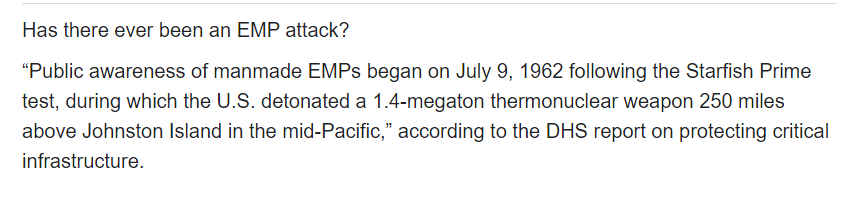
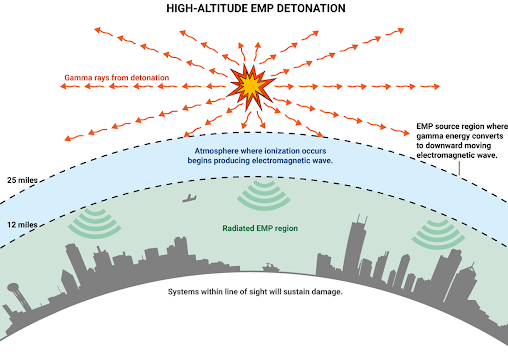
“EMP is a byproduct of detonating a nuclear weapon,” Forstchen said in an interview. “If you detonate a weapon 200-250 miles above the center of the United States … the gamma ray burst when it hits the upper atmosphere starts a chain reaction. … By the time this hits the earth’s surface at the speed of light, it is a giant electrostatic discharge … it blows out the entire power grid of the United States and Canada. Game over.”

William R. Forstchen is a New York Times bestselling author and holds a doctoral degree from Purdue University with a specialization in military history and technology. He is a noted expert historian and public speaker and has been interviewed on FOX News, C-SPAN, and Coast to Coast on topics ranging from history to technology and cultural issues, to space technology development, to security threats.

Can C3.AI Stock Keep Rallying with AI in the Spotlight?

The recent rise of Artificial intelligence (AI) programs such as ChatGPT has created a frenzy around AI-related stocks.


C3.AI, a pure play AI stock, is up over 100% since late December.

But is this rally sustainable? After all, the public was already surrounded by AI without realizing it. Almost everything people use in daily life is affected by AI already: 

  • advertising
  • entertainment streaming services
  • social media
  • cars (collision detection and blind spot monitoring)
  • fraud prevention
  • screening job applicants
  • email spam filters
  • many other applications

C3.AI is a company that creates software to help other companies deploy AI projects. C3 software is being used in multiple ways, including managing inventories, monitoring for energy inefficiencies, and predicting system failures. [Of particular note is one new product from C3 called ex machina which allows users to program AI initiatives without using any coding at all but instead via a series of visual programming tools. CP]

AI stocks, and technology stocks as a whole, were a neglected market in 2022. The Nasdaq 100, an index heavy in technology stock, fell more than 30% in 2022. C3.AI fell over 65% in 2022, and is currently down almost 90% from its 2020 high (even after the 100% rally in 2023). All currency quotes that follow are in USD.

C3.AI recently peaked at $30.92 on February 6. It then reached a low of $20.31 on March 1 before rallying back to $29.98. It has since fallen and is back near the $20.33 low.

This puts the stock at a crucial level.

An analyst from SafeTradeBinaryOptions.com had this input: “Right now, the stock is in an uptrend, albeit a precarious one. The price has been making higher swing lows and higher swing highs throughout 2023. But if the price drops much below $20, that will no longer be the case. The price will have made a lower high on March 6 (compared to February 6) and if the price drops below the March 2 low, that is a lower low. These are signs of a downtrend starting — not an uptrend.”

All facets of our modern world are already in the embrace of A.I. whether we know it or not.

This $20 region is important because if the area holds, this indicates the price is moving in a range, with the possibility of the price moving back up to the top of the range near $29. If that happens, there is still hope that the price will eventually break out of the range to upside, continuing its advance to $40, for example. 

However, if the price drops below the $20 region, the range is broken and the uptrend is in jeopardy. 

It’s important to watch C3.AI to see how investors are perceiving the future of AI, and what that may mean for the industry’s future. 

As of March 2023, C3 doesn’t have a lot of direct competition. The company is not yet even profitable. How the stock moves is based on whether investors believe the company can eventually generate profits — and in this case, its profits largely depend on whether AI becomes even more widespread than it already is. For the Silo, Kat Fleischman.

Defining Folk Art

Desrocher’s Whitehorse- a very nice folk art piece acquired by the author.

What is folk art? Any precise definition of art is by nature a slippery process and open to question.

“Folk art” is a term applied to diverse objects, like a highly organized Mennonite fracture drawing which expresses a collective, ethically based decorative tradition. Yet it is also applied to the more individualistic outpourings of any untrained painter, sculptor or other art practitioner.

Folk art is usually one step beyond the mundane. Not just a container to bring water to the mouth for survival (cupped hands for example), but instead a cup lovingly fashioned to bring pleasure or attract notice even when it is not being used, such as an intricately carved canoe cup.

On another level we can simply say that folk art is the art of ordinary people. It is sometimes called “primitive art” or “the people’s art” because by definition the artist has not been academically trained.

Folk art is made for one or more of three reasons: to share beliefs and traditions, to make some useful object beautiful, or to express one’s feelings.

Folk art, by definition has been produced and appreciated since cavemen and women started smearing blood and feces on cave walls, but the academic study of folk art is a relatively new thing. An English writer named William John Thomas first coined the phrase “folk lore” in 1848. At the time most anthropologists considered folklore to be worthless peasant creations. They were more interested in studying artifacts such as weapons and tools. It was through popularized folk tales by the likes of the Brothers Grimm that peasant traditions and art forms became interesting to the intellectual class.

I would argue that folk art did not show up on the radar of fine art institutions until around the turn of the century in Paris when Pablo (Picasso) and the boys flipped-out over the African art they saw for the first time, and started producing what today is called modern art. This led to a wider acceptance of all forms of art.

Folk art has become increasingly popular and more frequently studied in Canada, beginning in earnest after Expo ’67 gave us a greater appreciation of who we are as a nation.  For the Silo, Phil Ross. 

Featured image- Selections from Jim Linderman’s collection of folk art sewer pipe sculptures made by workers from leftover pipe clay. Photo: Oresti Tsonopoulos

AI Induced Shifting Subtexts- What Is And What Isn’t Art?

Let’s go back to 2016 and re-consider how the works highlighted below are more relevant today than ever when asking “What is and isn’t art?”.  The recent surge in AI and chatbot produced ‘art’ has created new challenges in recognition, interpretation and validation. Or has it? [J.Barker Content Producer for The Silo]   It became immediately apparent that the rephrasing of the question “What is art?” to “What isn’t art?” signaled a dissolution of the boundary separating metaphor from reality.

Since, citizen and artist alike have been plunged headlong into the bacchanals of postmodernity, and the question has been obscured under a heap of incongruous discourse and subtexts.

Eva Davidova multimedia installation view

Two curious and intrepid artists offer their answers to this exhausting and illuminating question in their discussions of unexplored spaces and shifting subtexts.

Painter and multimedia artist Eva Davidova  tests the digital waters of virtual reality through immersive, programmatic experiences. Articulating the conviction that emerging technology is obliged to transcend commercial application, Davidova’s phantasmagoric 3D renderings attempt to draw the strings away from the hands of big business. Topics mentioned include the beauty of academic reciprocity, the fiscal realities of living in the metropolis, and the future of collaborative artistic environments.

julie mehretu dispersion
Julie Mehretu’s Dispersion

Behind the meticulous and sweeping abstract landscapes from the mind of Julie Mehretu are subtle societal and historical cues, which inform and enrich the surface of her paintings. In her ebullient interview, Mehretu speaks of the benefits and restrictions that arise from using architectural semantics to ground explorations of political and social change.

Wrought from countless painterly quotations, the identity of Mehretu’s brushstroke vanishes the moment it falls under interpretation.

The elusive and curious nature of the Ethiopian artist’s aesthetic experiments, coupled with a steady ethical subtext make for an engaging and memorable listen.

Featured image- “A Questionable Tale(#1)” 2022 Marina Zurkow/DALL-E (AI) 

For the Silo, Brainard Carey.

Surprising Truth Behind Toxic And Non Toxic Spring Cleaning Products

While spring brings warmer weather, sunnier days, and beautiful flowers, it also brings the reminder that it’s time to air out, declutter our homes, and do some spring cleaning. At the same time, it might be tempting to spray our homes with disinfectants, a lot of common household cleaning products are actually pretty toxic to our health. This is why we’ve provided you with some tips on how to get your home sparkling, but not at the cost of your health.

When it comes to cleaning products, we Canadians buy a lot of them.

In 2014 alone, we spent more than $641 million on products like window sprays and floor cleaners. When you break that down, we’re spending $200-$300 per household annually on products that we think help us maintain healthy homes, when in fact they could be doing the opposite.

The Guide to Toxic and Non-Toxic Cleaning Products — Pro Housekeepers

Some of Canada’s most popular cleaning products contain harsh chemicals and fragrance ingredients that can harm you and your family’s health. (Tell the Canadian government that we need better protections from toxics in our personal care and cleaning products.)

We tested the homes of 14 volunteers and found that indoor air quality quickly deteriorates when some conventional cleaning products are applied.

The good news is that safer options are widely available. Even better, DIY alternatives for many spring cleaning items are not only easy to make, they can provide significant cost savings over store brands.

How concerned should we be about the impacts of cleaning products on indoor air?

We put some of Canada’s most popular cleaning products as well as certified green products and products that had non-verifiable green claims to the test! We sampled the air in volunteers’ homes while they cleaned their kitchens for half an hour to test for VOCs.

Your Cleaning Products are KILLING YOU!
Things are pretty much the same in the United States.

(Volatile organic compounds, or VOCs for short, are a common type of air pollutant. VOCs are a broad category of chemicals, some of which are linked to asthma and other health conditions, including cancer. A key concern with VOCs is that some of them can react with other pollutants present in the air, and form other contaminants that are even more toxic).

So, what did we find?

  • For the nine homes where conventional cleaners were used, total VOCs increased by an average of 120 per cent.
  • For the three homes cleaned with certified green products with full disclosure labels, the VOCs increased by an average of only 35 per cent.
  • For the two homes cleaned with products that made a green claim on the label but did not disclose ingredients, total VOCs averaged 100 per cent.

TOXIC-CHEMICALS-IN-CLEANING-PRODUCTS-Infographic-SQUARE.-300x300 -  Integrated Health Solution

Handy tips to keep your indoor air quality in good shape while getting the job done:

  • Choose green products that list their ingredients in full. Companies are not currently required to fully list their ingredients, but some forward thinking businesses offer this information to customers voluntarily.
  • Avoid cleaning products that list “fragrance” as an ingredient.
  • Keep rooms ventilated by opening windows or turning on fans during and after cleaning. This is especially important if you live in a condo or an apartment. Better air circulation will keep harmful VOC levels from building up.
  • Try some simple DIY recipes with two simple ingredients: water and vinegar.

Following these tips, and choosing green products, or making your own when possible, are great (and toxic-free) ways to get your spring cleaning done without dirtying the planet and your health!

For the Silo, Sarah Jamal Program Coordinator, Toxics environmentaldefence.ca

How Octapadist Became an Occupation in India

Run a search for “Octapad” or “Octapadist,” and you’ll find a vast musical community. Learn how the instrument became a household word.

Minimal Logo

Run a Google search for “Octapad” or “Octapadist,” and you’ll find a vast musical community. The overwhelming majority of these players have two fundamental traits in common. They use a device with eight rubber pads, and they likely live in a specific geographic location. But more on that in a moment.

An International Debut

When the Octapad Pad-8 debuted in 1985, it was a solution for artists looking to add MIDI to live performance. 1989’s  Octapad II Pad-80 delivered enhanced patch capabilities and memory storage.

Fans could see the instrument on global stages with Phil Collins, Eric Clapton, New Order, and UB40. Soon, the SPD line arrived—with the bonus of onboard sounds—and the Octapad name all but disappeared. 

Phil Collins in an early ad for the Octapad Pad-8
The evolution of the Octapad: the SPD-30
A Specific Niche

In 2010, with the SPD-30, the Octapad returned in a big way. Still, in one populous, musically-rich region, it never went away. Thanks to a mutable layout and portable design, the Octapad captured a specific niche in India. It remains the instrument of choice for devotional musicians and Bollywood players alike.

Today, artists like Priya Shiyara Flash Octapadist and Mayuranga Octapadist maintain Facebook profiles. They represent the tip of the social media iceberg. Octapadists with large followings appear all over YouTube, sharing skills and growing audiences at the same time.

Traditional Tones to YouTube 

Take Jiten Sunil Kriplani. He’s a popular YouTuber with almost a million subscribers who goes by the name Janny Dholi. “I’ve been using the Octapad for many years,” Sunil Kriplani says. “I absolutely love the true and dynamic tones which are customized especially for Indian artists. It’s the best for live shows and recording sessions.”

It was over 20 years ago that the original SPD-20 took the world—and especially India—by storm. Nowadays, legions of Indian musicians embrace the Octapad as their primary instrument. SPD-20 sounds permeate Bollywood, folk, devotional, and other musical styles across India. 

Roland SPD-20
A Practical Tool

Musical Director Tushar Deval says, “I’ve been working in this industry for almost thirty-five years. It was 1998 or 2000 that I first tried the SPD-20, and I have been using it ever since. Great experiences come from different places.”

For Deval, the speed of creation is part of what cements the Octapad in India’s professional music world. “Making patches in SPD-20 is so easy,” he explains. “Basically, any Hindi song comes on, and we can make five of them in ten to fifteen minutes.”

“Great experiences come from different places. Any Hindi song comes on, and we can make five of them in ten to fifteen minutes.”
-Tushar Deval

The 808 of India?

With such broad appeal, it’s easy to think of the Octapad as the TR-808 of India, so far-reaching is the instrument’s influence. The original eight-pad layout—much like the 808’s drum pads—is iconic. Like the 808, the Octapad’s look is instantly recognizable.

The instrument’s latest incarnation, the SPD-20 PRO, expands on the Octapad’s legacy. Among a host of sounds, it includes the following: dholak (a two-headed hand drum with drumheads attached by ropes), mridangam (a principal rhythmic accompaniment drum for Carnatic performances), kanjira (a frame drum from the tambourine family), ghatam (one of India’s most ancient percussion instruments), the duggi (an Indian kettle drum played with the fingers and palm).

Mridangam, Photo by Thamizhpparithi Maari

“The addition of 200 kits is mind-blowing,” Sunil Kriplani says of the upgraded Octapad. “It’s my favorite feature.”

Based in Pune, Maharashtra, Ajay Artre has used the Octapad for over six years. He appreciates the instrument’s core tones and interface. Artre praises “the sounds, editing, and especially the display.”

Roland’s history boasts many instruments intended for one use that became unexpected legends for something else entirely. Initially, an accompaniment device, the TB-303 kickstarted the acid house movement. Of course, the ultimate example of this trend, the TR-808, is inexorably linked to hip-hop’s history.

An Unusual Path

By contrast, the Octapad’s ascension from MIDI device to the go-to Indian devotional music tool is less clear. It doesn’t produce a sound utterly unlike anything that came before it. Rather, the Octapad plays a practical role in the musical culture of India. 

In a blog for Roland India, Rupesh Iyar describes the Octapad as “a passionate instrument to play.” Iyar stresses that “any percussion player can switch to the Octapad from their traditional instrument.”

“It’s a passionate instrument to play. Any percussion player can switch to the Octapad from their traditional instrument.”
-Rupesh Iyar

Therein lies the essence of the Octapad’s popularity in India. The device established its place in the country’s musical culture by bridging the past and the present. Those eight pads help move traditional sounds into the future, one pattern at a time.

Original article by our friends at Roland/ Ari Rosenschein.

England’s EV Commercial Truck Earns Grants For Urban Deliveries

Tilbury, England. March 2023: British electric vehicle manufacturer Tevva has secured government plug-in truck grant (PITrG) eligibility for its 7.5t battery-electric truck. UK organizations looking to decarbonize operations and future-proof their fleets will benefit from a potential £16,000 ($26,260 CAD) discount, removed from the purchase price by Tevva.  The current maximum Canadian EV amount is $5,000CAD.

To be eligible for the grant, N2 vehicles :trucks that weigh between 5-12 tonnes must have a CO2 emissions figure of at least 50 percent less than the conventional equivalent vehicle that can carry the same capacity and can travel at least 60 miles without any tailpipe emissions at all. (In the UK, a ton = 2,200 pounds and in Canada a ton is metric and = 2,000 pounds.) Tevva’s 7.5t battery-electric truck offers up to 140 miles (227 kilometers) from its 105-kWh battery on a single charge, and is ideal for last-mile and urban delivery fleets. 

The Tevva 7.5t battery-electric truck is the only vehicle from a British manufacturer to qualify for the PITrG, and becomes only the third eligible truck to be listed on the government website. The grant pays for 20 percent of the purchase price, up to a maximum of £16,000 ($26,260 CAD) , reducing Tevva 7.5t battery-electric truck total cost of ownership (TCO),

This news follows hot on the heels of another significant company milestone in January, when Tevva secured European Community Whole Vehicle Type Approval (ECWVTA) for its 7.5t battery-electric truck. This meant that Tevva could start producing and selling in volume across the UK and Europe and represented the key regulatory step in the development and commercialization of the Tevva business.

Tevva Founder and CEO Asher Bennett said: “We know first-hand that demand for electric trucks is growing at speed, as we have been inundated with requests for our 7.5t battery-electric truck since going into full production last month. Now we are able to offer UK organisations a noticeable discount, thanks to the government grant, which will surely make zero emission trucking even more appealing to fleets.”

Tevva’s 7.5t battery-electric truck will be followed by a 7.5t hydrogen-electric truck, which benefits from a hydrogen range-extender that enhances vehicle range to up to 354 miles (570 km). The hydrogen-electric truck recently completed a 620-mile ‘border run’ between Tevva’s London HQ and the Scottish border at Berwick-on-Tweed – England’s most northernmost town. The return journey saw the truck cover almost 350 miles alone, without needing a single stop for recharging.