Category Archives: Philanthropy

Daily Survival in Gaza Persists Post-Ceasefire: LIFE Continues Humanitarian Relief Amid Ongoing Needs

Post-Ceasefire, Gaza Families Face Prolonged Hardship as LIFE Continues Delivering Life-Saving Humanitarian Aid

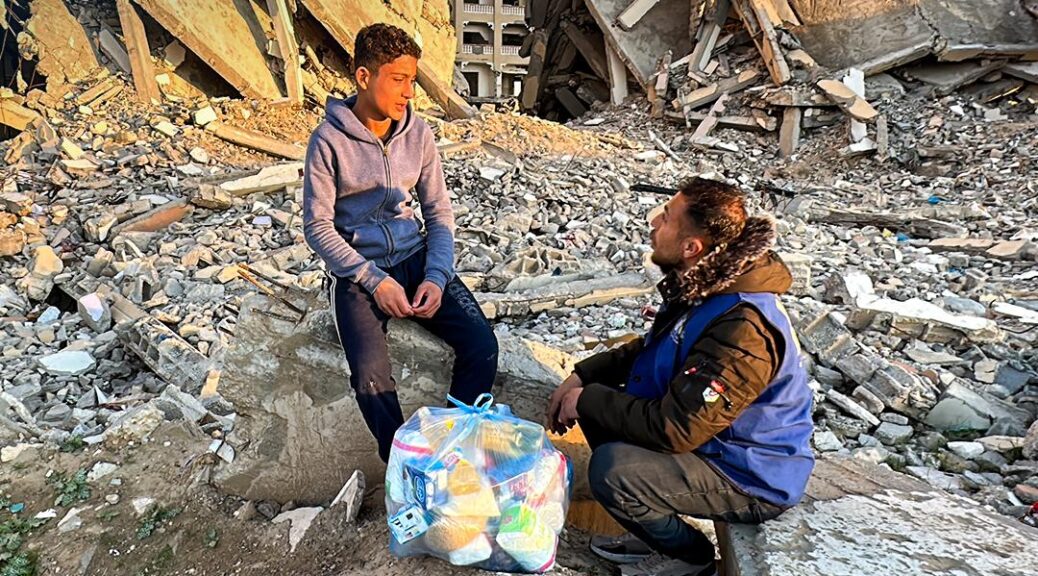
Despite the perception that ceasefires offer meaningful relief, conditions on the ground in Gaza demonstrate that humanitarian emergencies do not end when active conflict pauses. For civilians, the period following a ceasefire is often marked by continued displacement, damaged infrastructure, shortages of food and clean water, and limited access to essential services.
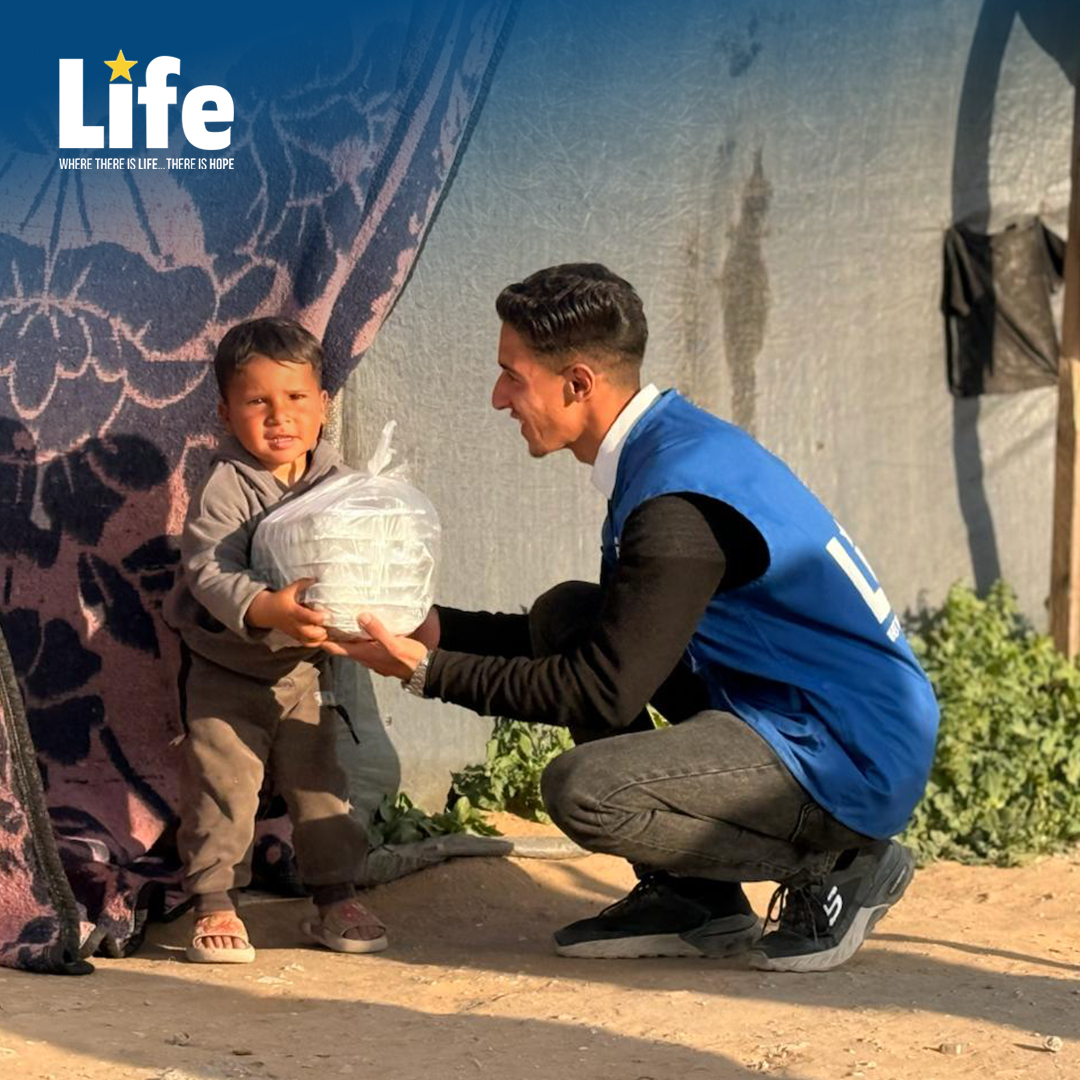
Life for Relief and Development (LIFE), a global humanitarian organization, has maintained an active presence throughout these periods, remaining one of the few international NGOs authorized to deliver aid inside Gaza. LIFE continues to respond to urgent, life-saving needs while navigating significant challenges.

Ceasefires Without Recovery

While ceasefires may reduce immediate violence, they do not restore stability. Families in Gaza frequently return to homes that are damaged or destroyed, seek refuge in overcrowded shelters, or reside in temporary tents without adequate protection. Water networks remain compromised, food availability is inconsistent, fuel shortages persist, and access restrictions continue to impede the flow of humanitarian aid.

Field reports from LIFE-supported operations indicate that displacement remains widespread, with families moving repeatedly in search of safety, food, and water. Even during ceasefires, civilians continue to face severe challenges, including:

  • Limited access to clean drinking water due to damaged infrastructure
  • Inconsistent food supplies and a lack of functional cooking facilities
  • Exposure to harsh weather conditions in makeshift shelters
  • Elevated public health risks stemming from overcrowding and poor sanitation

These conditions underscore the reality that a ceasefire does not equate to recovery or safety.
LIFE’s Ongoing Humanitarian Response in Gaza

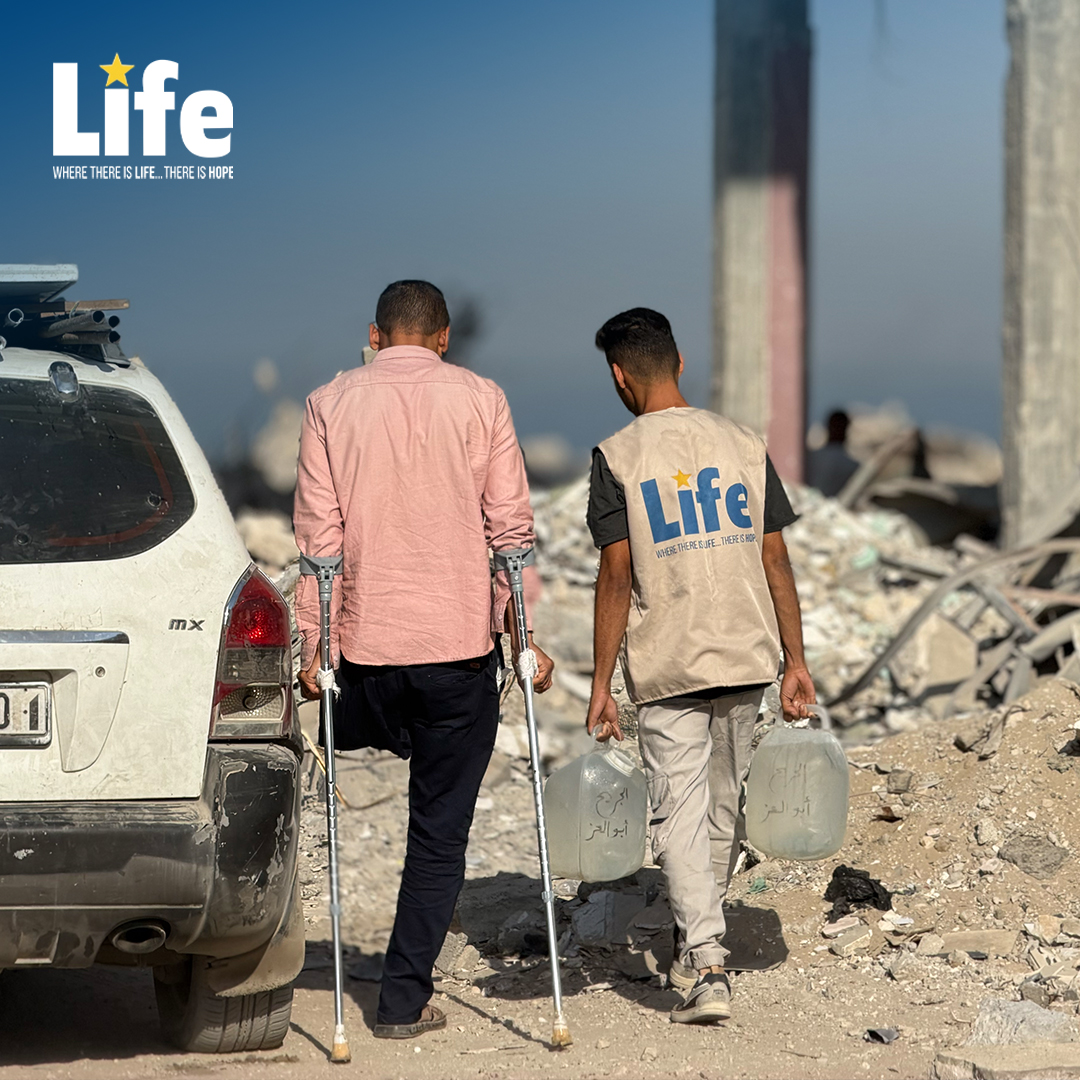
Despite restricted access and operational risks, LIFE has sustained a multi-sector humanitarian response aimed at meeting immediate survival needs and preserving human dignity. Through coordinated interventions across North, Central, and South Gaza, LIFE-supported programs have provided:

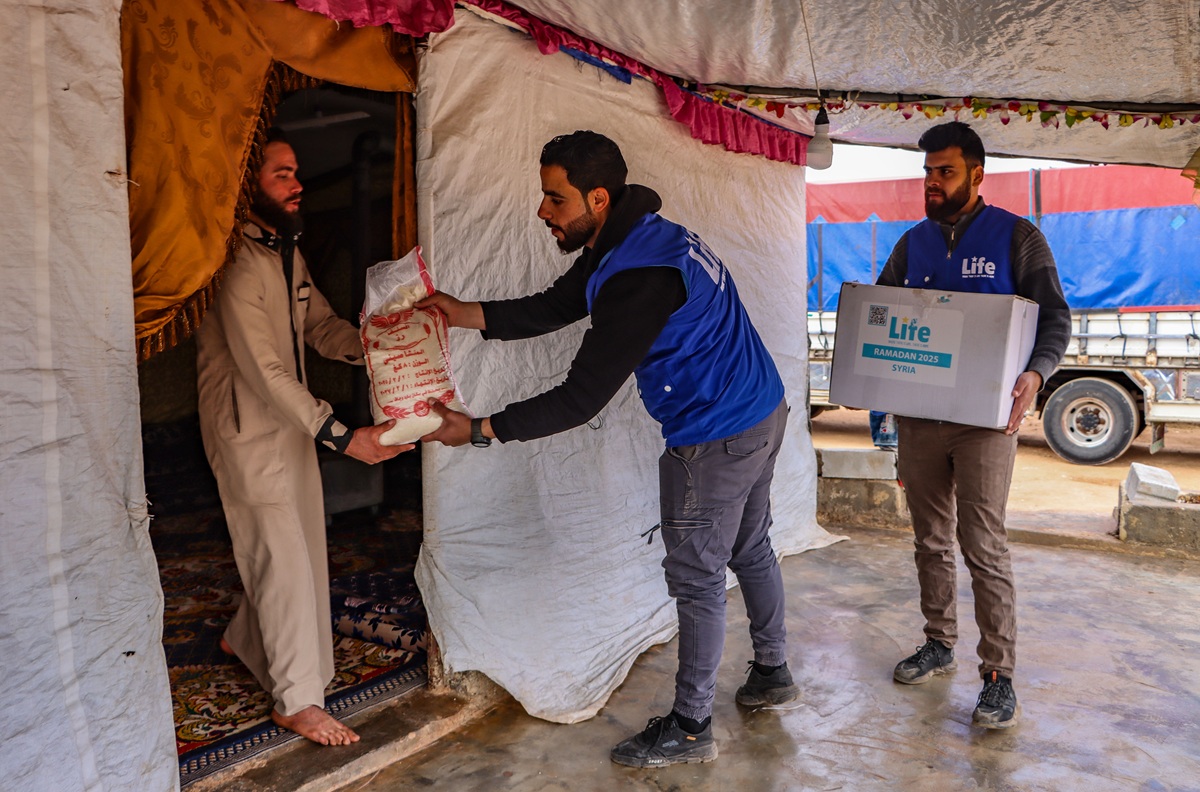
  • Emergency food assistance through hot meals, family food packs, and large-scale food convoys
  • Clean drinking water via tanker deliveries and the rehabilitation of damaged municipal water wells
  • Emergency shelter materials, including tents and weather-resistant covers for displaced families
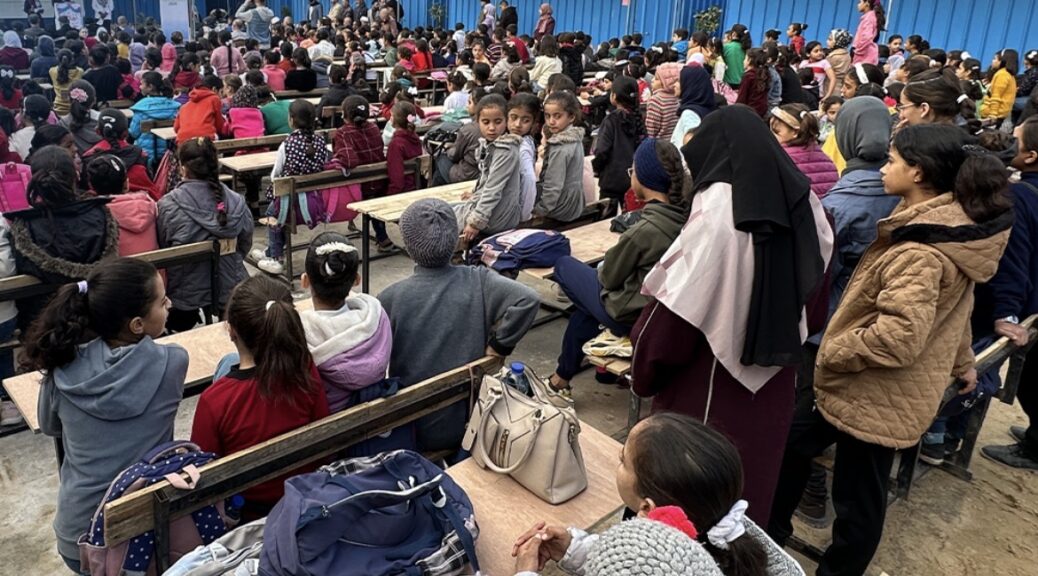
  • Winter relief, such as warm clothing and footwear for children and vulnerable individuals
  • Infant nutrition support to address critical shortages for families with young children

These interventions have reached hundreds of thousands of individuals across multiple phases of emergency response, including periods identified as ceasefires—during which needs remained acute.

Operating Under Constant Constraint

Providing aid in Gaza requires continuous adaptation. LIFE-supported teams have had to navigate border delays, limited fuel supplies, communication disruptions, and security-related restrictions. Daily adjustments ensure that relief reaches the most vulnerable populations, including displaced families, children, older adults, and households with no access to essential services.

By maintaining operations both during and after ceasefires, LIFE helps bridge the gap between temporary pauses in hostilities and the ongoing humanitarian needs that continue long after media attention subsides.

One beneficiary, Neama, a 38-year-old mother of four who has been displaced multiple times, described the uncertainty that continued beyond the ceasefire. Her family faced overcrowded shelters, a lack of cooking facilities, and severe food scarcity. Through LIFE-supported hot meal distributions, her family received freshly prepared meals over several days.

The hot food meant more than nutrition,” she shared. “It restored dignity and gave my children a sense of normal life again, even in the middle of everything.”

Humanitarian Needs Beyond the Headlines

A ceasefire does not end the humanitarian crisis for families in Gaza. Many continue to face shortages of food, water, shelter, and basic services, with recovery dependent on sustained humanitarian support rather than temporary pauses in conflict.

“A ceasefire may pause active fighting, but it does not pause human need,” said Dr. Hany Saqr, CEO of Life for Relief and Development (LIFE). “Families in Gaza continue to experience daily challenges accessing food, water, shelter, and essential services. Our responsibility as a humanitarian organization is to remain present, impartial, and responsive, ensuring that assistance reaches civilians when they need it most, regardless of circumstances.”

For the Silo, Tasneem Elridi.

About Life for Relief and Development (LIFE)

Life for Relief and Development, headquartered in Southfield, Michigan, is a global humanitarian relief and development organization committed to assisting individuals regardless of race, gender, religion, or cultural background. LIFE is a registered 501(c)(3) nonprofit organization and holds Consultative Status with the United Nations Economic and Social Council (ECOSOC).
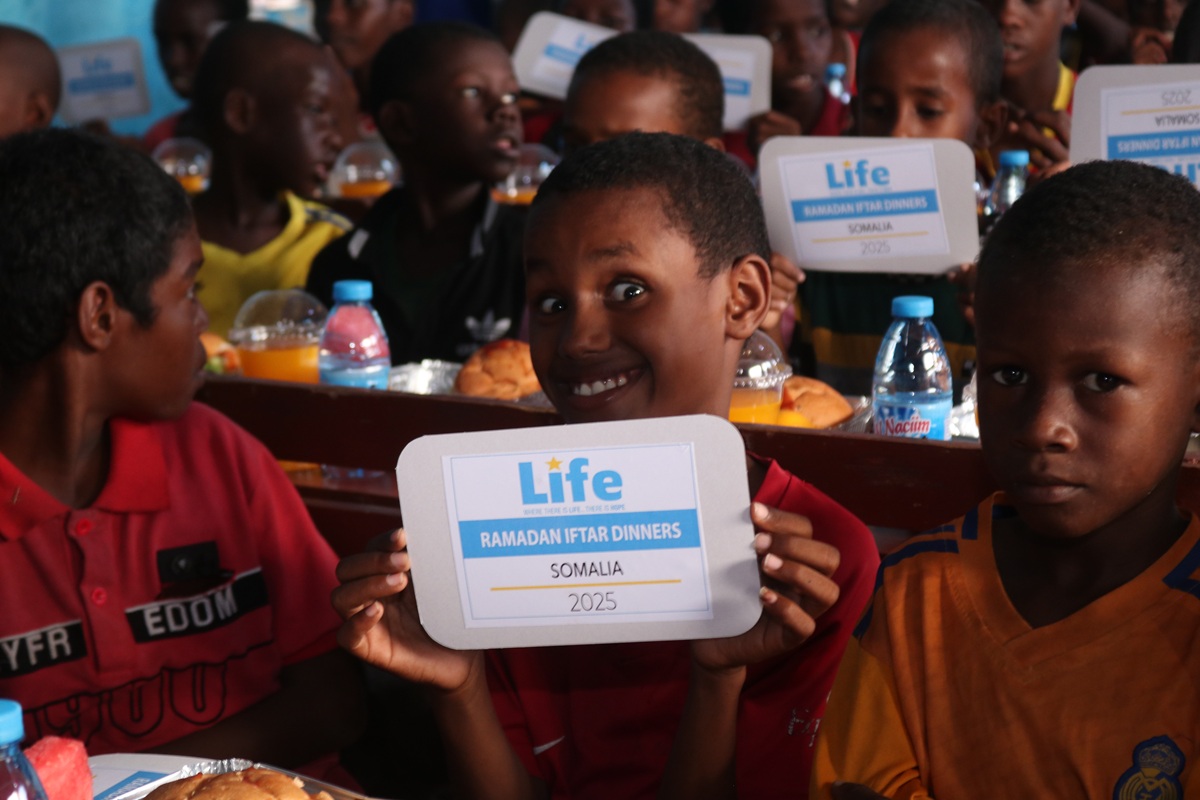
LIFE for Relief and Development in Its 33rd Ramadan: A Call for Unified Humanitarian Efforts to Confront Famine in The Developing World

As the blessed month of Ramadan approaches—bringing with it the values of mercy and solidarity—this year arrives amid a profoundly harsh humanitarian reality across vast regions of the Arab world.

Among the scattered tents of displacement that have become refuge for the uprooted, and in homes reduced to rubble—leaving behind only ruins, grief, and the names of the missing—some fasting individuals will observe Ramadan at meager tables, continuing their daily struggle to secure the simplest iftar meal after long hours of fasting. Others will fast without knowing how they will obtain their next meal.

Millions of Meals and Thousands of Beneficiaries

Humanitarian initiatives multiply each year, yet their impact varies. Some alleviate hardship, while others fall short of addressing the depth and complexity of ongoing crises.

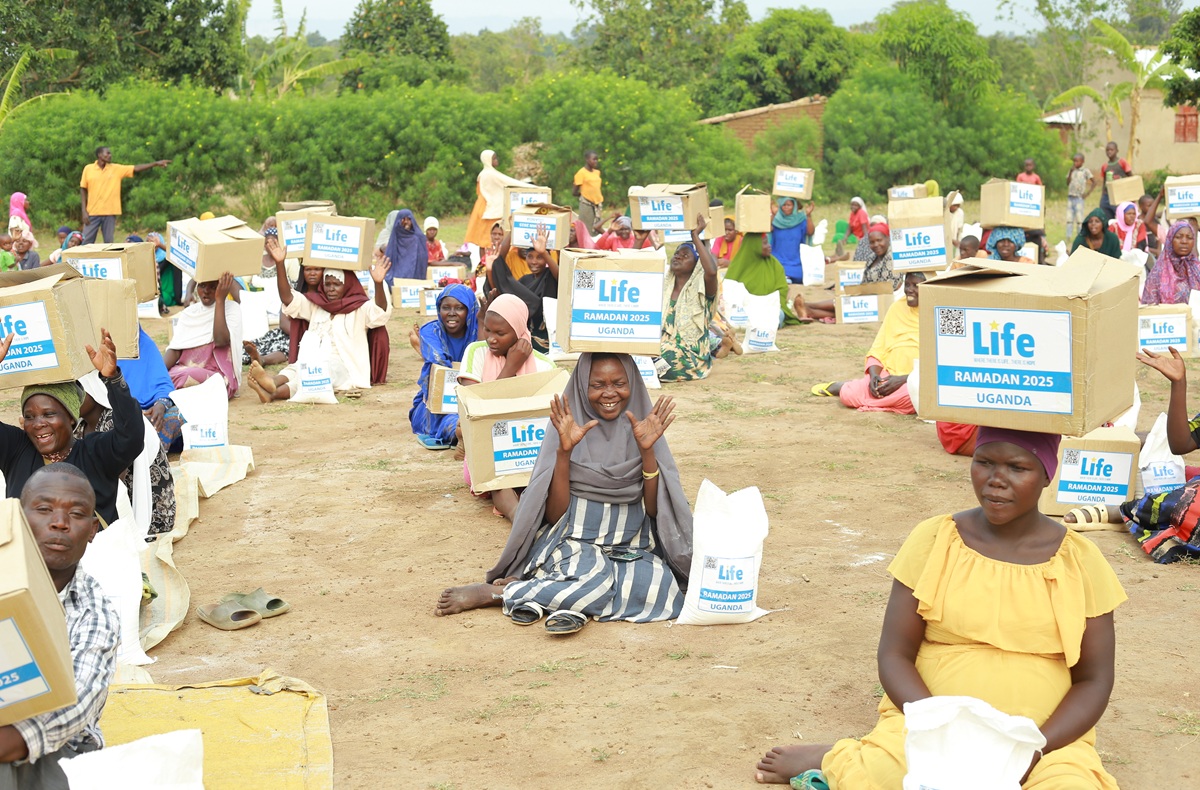
For 33 years, LIFE for Relief and Development has mobilized its efforts to fulfill its humanitarian mission during the holy month of Ramadan by implementing relief programs focused on meeting the basic needs of the poorest and most vulnerable families. Through the distribution of food parcels and the organization of communal and individual iftar meals, LIFE’s assistance reaches hundreds of thousands of families in need worldwide.

LIFE teams were present in 37 of the 60 countries where the organization operates sustainable development and relief projects. During Ramadan 2025, nearly 6 million meals were distributed through 16,000 nutritionally balanced food baskets. Additionally, 51,000 freshly prepared hot meals were provided, benefiting approximately 97,000 fasting individuals in need.

Gaza: A Communal Iftar Amid the Rubble

Gaza stood at the forefront of LIFE’s efforts. Amid the devastating landscape and the remnants of war, displaced families recall memories of past Ramadans—when loved ones gathered around one table and smiles preceded the meal. Though those scenes now seem distant, LIFE continues to revive the spirit of solidarity, instilling a glimmer of mercy and hope in hearts exhausted by crisis.

LIFE worked to provide food security for 2,883 families—sufficient to sustain them for three months—alongside organizing communal iftar gatherings open to anyone in need. Despite being held atop the rubble, these gatherings brought moments of joy to attendees.

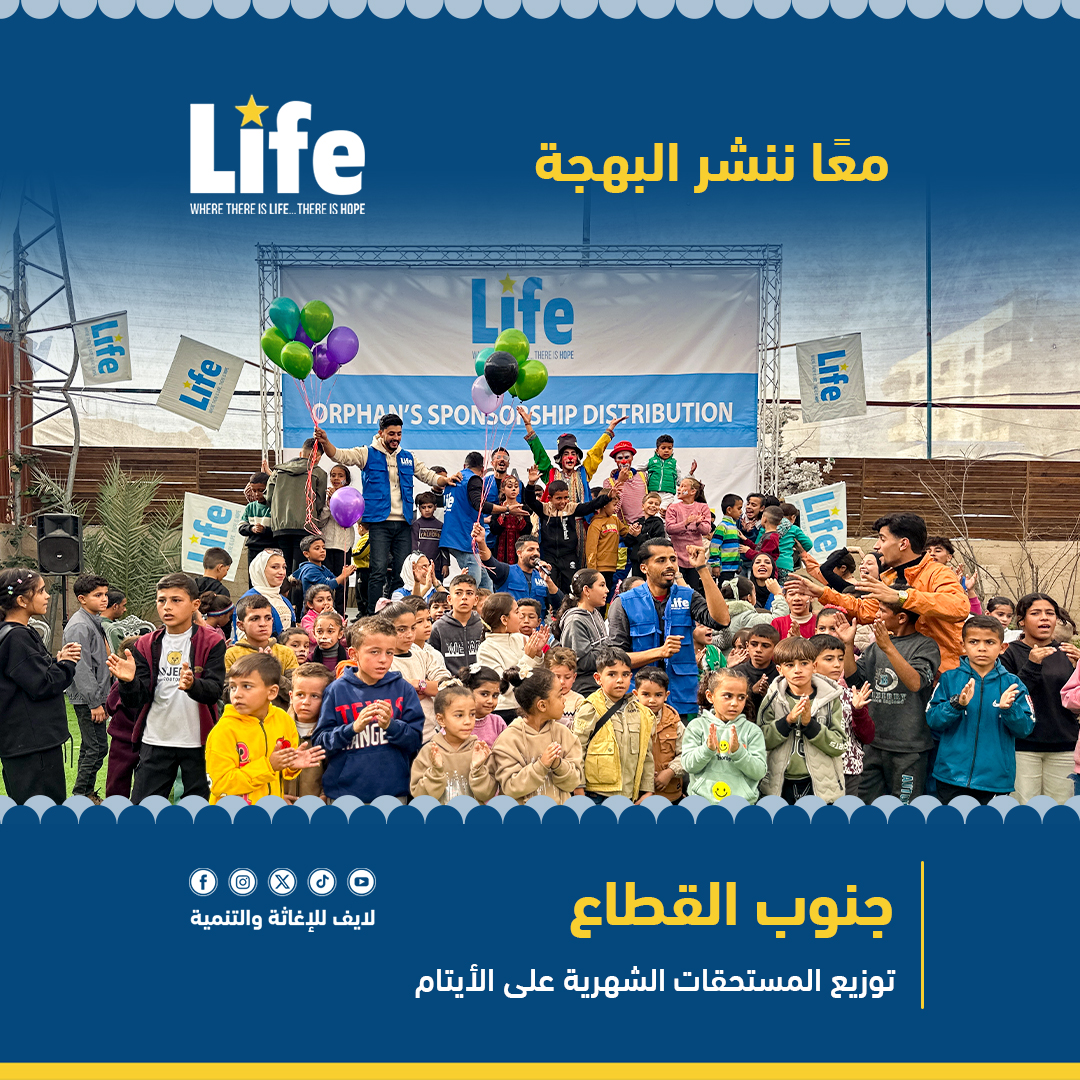
In addition, Eid celebrations were organized for orphans, benefiting 7,660 orphaned families, including 1,200 families at a special Gaza orphan event. Iftar and suhoor meals were also distributed at Al-Aqsa Mosque.

Confronting Famine in Sudan

From Sudan, we spoke with Ms. Rima Bakir, LIFE’s Projects Coordinator in Sudan, who described the scale of suffering:

“Ramadan will arrive for many children in Sudan not with joy, but with hunger and deprivation. They will welcome the month with empty stomachs, fear, exhaustion, and severe food shortages.

Pregnant and nursing women suffer from malnutrition and increasing health risks, while widows bear a doubled burden in securing food for their children after losing the family breadwinner amid rising living costs. They are living through daily hardship and a continuous struggle for survival.

Over the past year, we tracked displaced families in Kassala, where we provided suhoor and iftar meals to 845 families affected by the war. We also distributed nutritionally integrated food baskets weighing approximately 30 kilograms to support children’s healthy growth, in addition to providing clothing for orphans.”

Targeting the Poorest and Most Remote Communities

Regarding this year’s anticipated activities, Omar Mamdouh, Director of Projects, stated:

“We will intensify our teams’ efforts in the poorest areas facing potential famine, according to United Nations reports. We plan to support vulnerable families and displaced populations in crisis zones by strengthening social solidarity and spreading joy through food assistance projects, organizing iftar gatherings, and distributing hot meals and food baskets in remote areas often beyond the reach of charitable organizations.

Before Eid, we will also implement orphan sponsorship initiatives by providing Eid clothing, gifts, and financial and food assistance. We will distribute zakat and charitable donations to the most deserving beneficiaries, in addition to facilitating fidya and kaffarah contributions.”

Ranked Third Among the Best Organizations Fighting Poverty and Hunger

Vicky Robb, Director of International Programs, added:

“We will expand our food assistance projects in developing countries, particularly in displacement camps where children are suffering—such as those along the Pakistan-Afghanistan border, in war-affected regions of Sudan and parts of Africa, and in countries facing silent poverty in Southeast Asia.

LIFE distinguishes itself by strategically targeting areas inaccessible to most relief organizations—whether due to the severity of war, as currently in Gaza, Sudan, and Lebanon. Our teams have delivered Ramadan meals and food baskets on foot. In Bangladesh, they navigated deadly floods by boat to reach the hungry. In Afghanistan, despite mud and extremely difficult terrain, food was transported on horseback. In Tanzania, our teams left their own families for days to reach remote communities where hunger persists and infants cry silently from malnutrition. They relied on multiple forms of transportation to ensure aid reached beneficiaries before the start of the holy month.”

For the Silo, Tasneem El-Ridi.

For more information:
http://bit.ly/4rUIsqa
https://linktr.ee/LIFEUSA.ar

USA- Breaking The Cycle of Foreign Assistance Enabling Corruption

Moral Hazard – A situation where one party assumes greater risk because it understands that another will remedy the harmful effects.

While the hundreds of billions of dollars in U.S. foreign assistance spent over the years have dramatically improved many people’s lives and livelihoods around the world, too often the United States’ approach to foreign assistance failed to advance U.S. interests, failed to spur systematic development, and enabled and perpetuated dependence and corruption by leaders in recipient countries. Since 1991, the United States has provided more than $200 billion in foreign assistance to Africa, yet the African Union reports that African countries lose an estimated $88 billion each year through tax evasion, money laundering, and corruption. Too often, what is needed for economic growth and development is not more money, but sound reforms that incentivize enduring private investment and growth.

Instead of insisting on mutual accountability to use U.S. assistance to address the causes of poverty and underdevelopment, too often we funded outputs to allay the symptoms. In so doing, we failed both the American taxpayer and the citizens of developing countries who looked to their governments and ours to help create the conditions to realize a better future.

For decades, the United States did not have a consistent policy as to even whether assistance was charity or a foreign policy tool. We did not require a committed partner, a coherent business plan, equity collateral at risk, or funding subject to performance-based disbursements. We infantilized recipient governments instead of having candid discussions on mutual performance expectations. Too often our approach to developing countries – frequently perpetuated by the excuses of those same governments – reflected the soft bigotry of low expectations. We excused away the lack of political will as “capacity constraints,” dismissed it with “we shouldn’t expect too much,” and did not challenge them when governments acted in contrast to their professed commitments.

Too often, we were content to confuse governments’ commitments for actions. We misinterpreted our access to leaders as influence with those leaders. We mischaracterized aid projects’ outputs as outcomes and program objectives as results. We misconstrued governments’ permission for us to expend aid as evidence that they shared a commitment to advance professed objectives. Perhaps worst, we failed to acknowledge when leaders of aid recipient countries demonstrated over and over through their actions that they prioritized their personal interests over, and at the expense of, the interests of their own country and citizens. Virtually never did we withhold assistance funds because host governments failed to deliver on their commitments, instead we responded by providing even more aid “because they have needs.” By trying to save people from bearing the brunt of the bad governance and corruption of their leaders, we helped perpetuate that very same corruption and bad governance.

Quite simply, we violated the central maxim of international development: the donor cannot want development more than the recipient. By doing so, we fueled moral hazard. From the pure greed of Malawi’s “Cashgate” scandal under Joyce Banda to the systematic kleptocracies of Bangladesh or South Sudan, by back filling health and social service needs recklessly created by bad governance, we have enabled and underwritten government corruption. In the worst cases, such as the predatory abuses of Mali’s Ibrahim Keita or Guinea’s Alpha Conde against their own populations, corruption and the failure to deliver basic public services needs led to military coups and incursions by terrorist organizations.

American foreign assistance is not charity but a tool to advance American diplomacy, security, and prosperity.

To accomplish these goals, we must focus our assistance and insist on administering it with host-government buy-in and mutual accountability for outcomes. This, in turn, will leave space for market driven growth that will also help close off the means by which malign international actors exploit developing economies and workers. We should not be dissuaded by detractors who will attempt to vilify a more transactional approach as “neocolonialism.” Quite the opposite is true. By insisting on systematic reforms that spur transparent and accountable growth and allow governments to retain funds to support their people, the United States can do more to catalyze actual economic development and the upliftment of developing countries’ societies – and advance tangible U.S. interests – better than we have in recent decades. It is the dependency-oriented, NGO-driven old model of development that is fundamentally colonial in mindset – refusing to respect development nation sovereignty, determinism, or agency.

Operationalizing this approach involves adopting investment-oriented goals, requirements, and incentives:

  • A Serious Host Nation: Secretary Rubio has been clear, “Americans should not fund failed governments in faraway lands…we will favor those nations that have demonstrated both the ability and the willingness to help themselves.” If a government is not already taking steps to stem corruption and grow the economy when its own funds are at stake, we should have no expectation that they will be better stewards of U.S. funds. Without an aligned host-government, we should focus our resources elsewhere.
  • The Right Focus: Our purpose is not to give money away, but to catalyze systemic reforms that enable sustainable growth and opportunities for the U.S. and recipient country. Neither governments nor donors create growth; instead, our roles are to foster conditions for the private sector to invest, create jobs, spur growth, and pay taxes to fund public services. Hence, U.S. foreign assistance should focus on curbing corruption and overcoming and remediating binding constraints to growth to lay the foundation for a transparent, level, and accountable business enabling environment.

  • Confidence in The Business Plan: Most developing countries have national development plans, but too often they are unresourced and unprioritized works of fantasy, and seldom do governments enforce accountability for their actual implementation. What President Trump explained in clearly delineating America’s national interests in this year’s National Security Strategy is equally true of developing countries: when everything is supposedly a priority, nothing really can be. We should help sincere host governments develop focused, realistic strategies based on core sectors and targeting key constraints that are founded on candid analysis and include specific, tailored tactics.

  • Skin in the Game: If a country is not going to put its own resources behind an effort, it is either not really a priority, they are not really serious, or they don’t have confidence in their plan. Few investors would engage where the owner hasn’t put collateral down or his own equity at risk. Why should foreign assistance not require the same? Here, the Millennium Challenge Corporation (MCC) has demonstrated two key best practices that ensure buy-in. The first is a requirement for co-financing by the host government. The second is conditions precedent: tangible reform actions a host government takes before funding even begins, to enable the success of the project outcomes.

  • The Right Resources: Again, our purpose is not to give assistance away, and the history of both corruption and assistance has shown that money is not what is most lacking to spur development. So, building on an analysis of binding constraints to growth and a business plan that we have confidence in, it is incumbent on the United States and the recipient government to craft a bespoke package of technical assistance interventions to inform and enable the reforms needed. This should not be an approach of letting a thousand flowers bloom, and it must not be built around the question of “how can we help?” Instead, we must start with the questions “what are the outcomes we want to achieve in the American interest and what needs to happen to realize them?” and build an assistance program around that.

  • Have a Contract: Unlike the Development Objective Agreements (DOAGs) of USAID that bound the U.S. to fund sectors but seldom included host governments’ performance commitments, the MCC model again provides a best practice. Explicitly detailing shared objectives and commitments by both governments – typically ratified by the legislature to carry the force of law – reduces uncertainty and improves accountability by enshrining the binding obligations of both parties.

  • Performance-Based Funding: Too often, once development projects were approved, donors’ focus turned inward to implementation, achieving outputs, and keeping funds flowing even if receiving governments actively undermined them. Gradually, funding agencies have begun shifting to performance-based disbursements. By requiring a host government to demonstrate – through its actions, not merely its rhetoric – that it remains politically and financially committed to achieve professed objectives, we ensure that U.S. assistance achieves greater impacts.

Under President Trump and Secretary Rubio’s leadership, we have the opportunity and courage to acknowledge our mistakes, to embrace candid lessons learned, and to do better. America’s generosity in doing business with those who help themselves remains as strong as ever. We are not turning away from less developed nations, instead now is the time to lean in to lend a useful hand to those who are sincere and treat them as mature stakeholders. In engaging valued, sincere nations, nothing should be imposed, hidden, given as ultimatums, or come at the partner’s expense; we are not China. Foreign assistance that delivers for the American people and our partners must be founded on sincere, voluntary, and transparent engagement. But it must be backed by tangible action and, if a recipient nation proves through their actions that they are not committed to our professed shared objectives, our allegiance must first be to the American people to be stewards of their resources.

Having dedicated my life and career to Africa and the developing world, I am invigorated by the massive potential these nations possess, and I have witnessed how the United States can help turn that potential into a reality that benefits both nations. By restructuring our approach to foreign assistance and engaging developing countries based on national interest, we can help curb the corruption that deprives families of the hope of that better future. We can deliver lasting and systematic growth alongside recipient countries. And, we can deliver tangible value for the American people through a more secure and prosperous world.

For the Silo, U.S. Ambassador Michael C. Gonzales.

Michael C. Gonzales is the U.S. Ambassador to the Republic of Zambia and the U.S. Special Representative to the Common Market of Eastern and Southern Africa (COMESA). He has held senior posts throughout Africa and Asia over his career.
Life For Relief And Development Ranks Third Globally Among Humanitarian Orgs

According to Charity Navigator  2025

Amid escalating crises in the Middle East and the developing world, Life for Relief and Development (LIFE) has been recognized as the third-best global humanitarian organization by Charity Navigator. The organization also secured fifth place for its humanitarian work in Palestine, and fifth place worldwide in the fight against poverty. These achievements earned LIFE a 100% rating, an endorsement from the U.S. Agency for International Development (USAID), as well as recognition by Impactful Ninja as one of the top humanitarian organizations in North America. LIFE was further honored with the Humanitarian Partnership Award for its collaborative initiatives.

Sustainable Programs and Comprehensive Seasonal Projects 

Vicki Roob, Administrative Director at LIFE, explained that the organization was founded more than 33 years ago in the United States and works across more than 60 countries through 14 international offices.

Over the years, LIFE has distributed more than $624 million usd/ $859 million cad in humanitarian aid, supporting programs in food security, clean water, temporary shelter, healthcare, education, community development, family assistance, refugee support, and emergency relief during wars and natural disasters. Currently, the organization supports more than 13,100 orphans worldwide, providing essential care, nutrition, housing, and education, while also organizing annual Global Orphan Festivals filled with games, gifts, and entertainment to ensure children feel valued and supported.

Tent Camps That Saved Thousands of Lives in Conflict Zones

According to Dr. Abdulwahab Alawneh, Regional Director for Jordan and Palestine, LIFE implemented its “LIFE Organized Camps” project in Gaza, establishing nine camps across the north, center, and south of the Strip. Built with fire-resistant and durable materials, these camps provided shelter for 46,000 displaced people, featuring easily dismantled tents to accommodate recurring displacement. Each tent was equipped with bedding and essentials, alongside medical facilities, solar panels serving 7,000 individuals, and protective insulation for 3,000 residents against extreme weather. Clay ovens benefited 3,500 people, while 23 sanitation units were constructed.so LIFE Assisted 1.3 million Displaced People in general in GAZA.

Adding: “we’ve been proactively preparing to facilitate the delivery of urgent relief—shelter, food, water, medicine, and personal necessities—into Gaza. Our team on the ground has already begun implementing LIFE’s ninth camp project after tents arrived and installation began. We are now working to shelter 15,000 newly displaced families still exposed to the cold as winter approaches.

These are waterproof, cold- and humidity-resistant tents that also provide insulation against heat in summer. Made from PVC material, they have protected more than 29,000 families from fires during nighttime bombings in past years.

Using all borders to Gaza

We faced tough challenges but managed them through our extensive experience. We are not newcomers to Gaza’s relief field. We worked through approval requirements for specific items—like tent specifications—while some organizations struggled to get their tents through the crossings. Tents vary in size and function: family tents, medical point tents, hospital tents, and educational tents.

We are now awaiting approval for mobile housing units. However, shelter items like mattresses and blankets have been entering through Egypt on LIFE’s trucks without obstacles, while food parcels are transported through Jordan.

“For food items previously restricted for NGOs, we purchase them at discounted rates from local traders and distribute them to those most in need. We spared no effort to reach them—using animals or walking long distances on foot when necessary.

We also supply water—each truck carries 15,000 liters per camp, enough for 500 families for a week—alongside baby formula, infant supplies, medical kits, and medicines. We ensure field monitoring of activities, including eight camps already constructed, and we share updates regularly on social media in multiple languages.”

Emergency Relief and Orphan Care at the Forefront

In the past year alone, LIFE allocated approximately $1.1 million usd/ $1.51 million cad in emergency relief to families displaced by conflicts and natural disasters, including earthquake survivors in Afghanistan, Morocco, Nepal, Syria, and Turkey; war-displaced populations in Gaza, Sudan, Syria, and Lebanon; wildfire victims in Bangladesh; flood-affected communities in Afghanistan and Libya; and cyclone-hit regions in Myanmar.

Additionally, $6.4 million usd/ $8.81 million cad was invested in healthcare programs and medical supplies, $4.5 million usd/ $6.2 million cad in educational projects, and $2.1 million usd/ $2.89 million cad in in-kind aid shipments. Orphan support remained a priority, with more than $3.8 million usd/ $5.23 million cad dedicated to orphan sponsorship, education, and healthcare.

Seasonal projects also played a significant role: nearly $1.7 million usd/ $2.34 million cad was spent on Ramadan and Eid initiatives, with more than 11 million meals distributed across 36 countries during Ramadan alone. Over 272,620 individuals in 38 countries benefited from Qurbani (sacrifice) distributions. LIFE also allocated $1.4 million usd/ $1.93 million cad toward emergency food relief and constructed 122 water wells worldwide.

For the Silo, Tasneem Elridi.

Each November American Thanksgiving Includes Lots Of Giving Back

Most take part in the holiday’s rituals, including traveling to spend time with family and counting life’s blessings, and 19% also donate to charities  to help others eat well around the holiday, according to a recent poll. It is a time of year that many Americans volunteer at food banks, churches or service organizations in order to help prepare meals or provide ingredients to those without enough.

Volunteers with Operation Turkey, a national nonprofit based in Austin, Texas, cook and deliver thousands of Thanksgiving meals complete with turkey, stuffing, gravy, vegetables and a slice of pie.

After 25 years, the all-volunteer organization has expanded to about 20 cities and now operates in states beyond Texas, including North Carolina and Pennsylvania. “It’s inspiring and humbling watching our local community rally together to make a difference for their neighbors,” says Josh Ortiz , an Operation Turkey volunteer in Dallas. “It all matters and makes a difference.”

People serving Thanksgiving meals in a commercial kitchen (© Timothy Hiatt/Getty Images for Feeding America)
Volunteers serve food at a church in Chicago the day before an earlier Thanksgiving. (© Timothy Hiatt/Getty Images)

Exercising for a cause

Many Americans want to help others while also getting in a little exercise before the big meal. (The average American consumes 4,500 calories on Thanksgiving, according to the Calorie Control Council). Thus, turkey trots — events where people run or walk to raise money for charities — are held in cities and towns across the country. Turkey trots make Thanksgiving “the biggest U.S. running day of the year,” according to the website RunSignup.com.

How about Canadian Thanksgiving Calories?

Ohio Turkey Trot

The 5K Turkey Trot in Granville, Ohio, drew 1,900 runners in 2024  and raised $130,000 usd/ $183,300 cad for a local food bank. Michelann Scheetz, of St. Luke’s Church, which organizes the annual event, says a team of volunteers works to pull off the Thanksgiving Day tradition that started in 2005. America’s Trot for Hunger, held in Washington, is now in its 24th year and draws thousands.

Jessica McCrorie, who served as a teen ambassador for the national nonprofit Feeding America, said she saw Thanksgiving bring out her own and others’ spirit of generosity. While volunteering with Island Harvest, McCrorie helped the nonprofit in Melville, New York, collect 30 turkeys and hundreds of dollars in donations at a grocery store.

“I feel like people may have felt more generous and connected to the issue of hunger because the Thanksgiving holiday is a time for family and friends to come together and share a meal,” she told Feeding America .

Heroic Animal Rescue Efforts Amid Palisades Fire

In Defense of Animals Supports Evacuations & Offers Emergency Care

https://lh7-rt.googleusercontent.com/docsz/AD_4nXeJhpCpvFrnNduu2qNIvI4C3vjkHoEwXbU-aMjAMZR1C57DJIveYqsCQeGpb75tdXHnalzmlBoDZ4Sk0CrNdo_of46VNyPNY6NypbV8QVYaKZmgIDWaKXnisfTcS7mcUDZuNpR1jA?key=72roC9hKvq5eCyXOu_R5F1Kw

Watch video below-

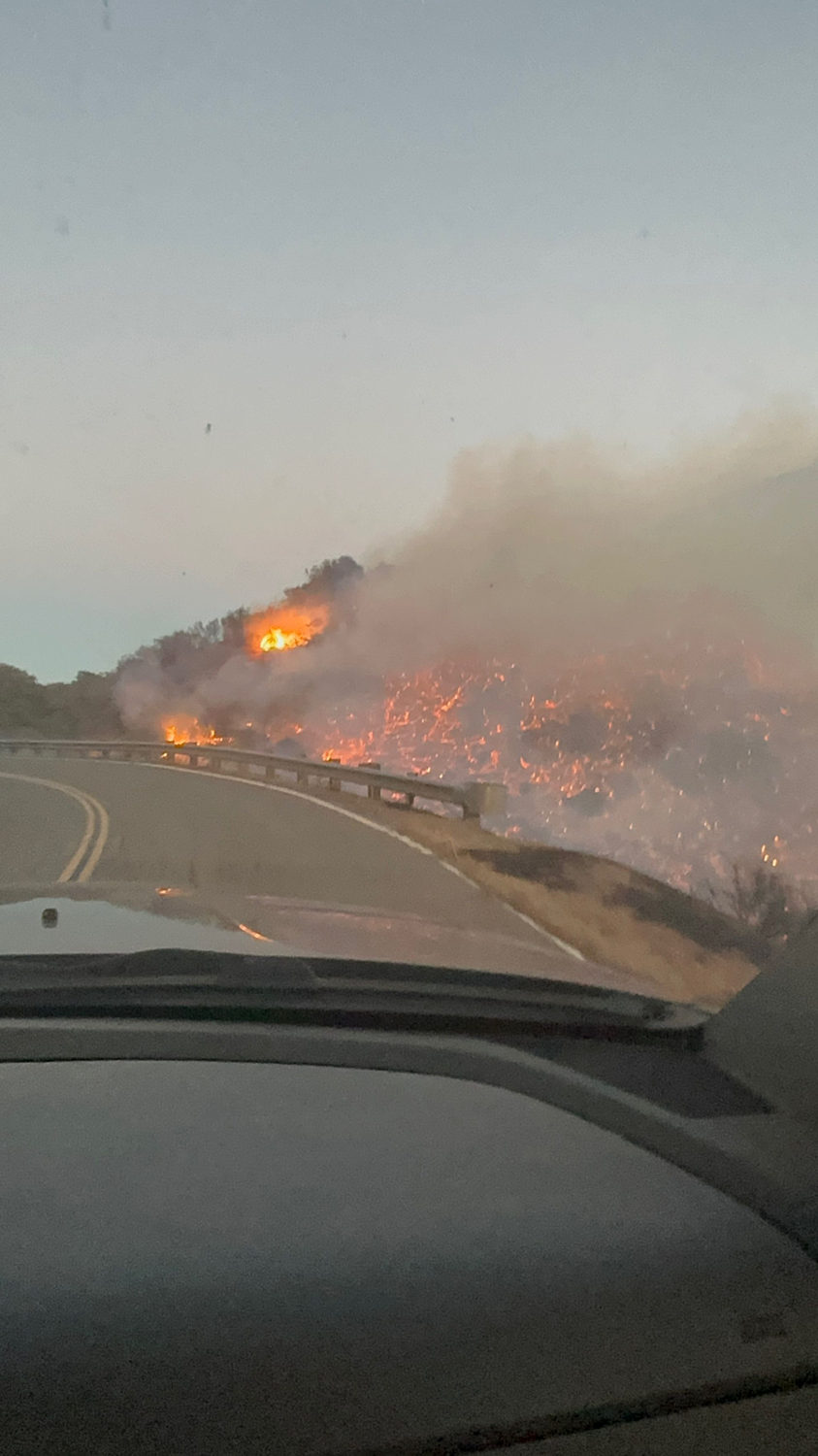
In Defense of Animals battled through downed power lines, rockslides, and fallen trees to aid animals, and is offering and seeking help for others. Photo: In Defense of Animals

LOS ANGELES (January, 2025) — As the devastating Palisades Fire and others continue to ravage communities in Los Angeles, In Defense of Animals is taking decisive action to support animal rescuers and provide life-saving aid for animals affected by the crisis. Among the heroic responders is In Defense of Animals board member Sammy Zablen, who has been working tirelessly to evacuate animals from dangerous areas.

On January 8, Zablen responded to a plea from Philozoia animal rescue in Malibu’s Tuna Canyon area to evacuate two ponies from their fire-threatened property. What would normally be a 20-minute drive took over three hours due to extreme conditions, including rockslides, downed trees, and fire debris blocking the route.

https://lh7-rt.googleusercontent.com/docsz/AD_4nXfoRc7K76lWydNR-WxG-9CO3o3Z9VkLfOHzAeLG6kKdilsKeBFxjulVGVG9ezF9e4W6Ote795cJG8r_7kyZQ2pH1lE3YQFXYX--nNWMCenGCij1vG4LSkEYABcF1kS1cjAauoiqDg?key=72roC9hKvq5eCyXOu_R5F1Kw

Navigating a treacherous path that included cutting brush and driving on hiking trails, Zablen’s team encountered harrowing obstacles such as a burning power pole, destroyed homes, and vehicles engulfed in flames. Upon arrival, the team discovered the ponies’ corral broken and the animals missing. Despite an active fire and dangerous rockslides, the team searched the area for 30 minutes, leaving food, water, and dousing the roof with water to mitigate further damage. 

The two ponies have now been recovered by Philozia, but two dogs remain missing and the rescue center burned down entirely. Earlier in the day, a pig and 38 dogs were successfully evacuated. Philozoia is seeking urgent foster care for several senior dogs.

https://lh7-rt.googleusercontent.com/docsz/AD_4nXco078SNaBP3mLTsMCPOCym3tn9UsUNClUoy3TCC51RV7JSKEXt_ZXaK5BtAwCjrDKPrza1sfcpLNSYhsL774PoyvWJQ7D985DNuIx3I9dsfnOWykoyis_KGiFZ-ofatQegyV2s?key=72roC9hKvq5eCyXOu_R5F1Kw

In Defense of Animals is collaborating with multiple local rescuers and organizations. Advanced Fire Rescue and Lifesavers Wild Horse Rescue were both vital in coordinating resources and gaining access to this dangerous area.

In Defense of Animals is offering emergency aid to animal rescuers and caregivers affected by the fires and providing free resources for temporary housing and care for wild and domestic animals.

https://lh7-rt.googleusercontent.com/docsz/AD_4nXfVbbZou9FZnpT-fJUBL70IYfFPi1bINXSCsuB2W94k0EK_bnu9Reg0GeHDo2p9dQOU1iieAcXQSeATmJ5PHZqtA5MFaFlqtCb2wdNC7OnccMw6XBWqPcG9PHB3eVRTdmizfM9iiA?key=72roC9hKvq5eCyXOu_R5F1Kw

“The devastation of these fires is unimaginable, and animals are often the most vulnerable victims,” said Marilyn Kroplick M.D., President of In Defense of Animals. “We are deeply grateful for the bravery of responders like Sammy Zablen and the other incredible organizations we are coordinating with to help on the ground. Together, we are making a difference for animals in crisis.”

In Defense of Animals urges anyone needing assistance with animal evacuations or free, temporary housing for wild or domestic animals to call Sammy Zablen at 310-869-2383. Please mention The Silo when contacting.

Los Angelenos who can foster a senior dog are encouraged to apply at www.philozoia.org/foster.

In Defense of Animals is seeking donations which are critical to support these emergency efforts, providing resources such as veterinary supplies, food, water, and temporary shelter: www.idausa.org/lafire For the Silo, Fleur Dawes.

  • Request Fire Assistance: Sammy Zablen, Board Member, 310-869-2383

In Defense of Animals is an international animal protection organization based in California with over 250,000 supporters and a history of fighting for animals, people, and the environment through education and campaigns, as well as hands-on rescue facilities in California, India, South Korea, and rural Mississippi since 1983. www.idausa.org

UN Specialized Fund & Program Combats Hunger In World’s Fragile Contexts

Storybook       JOINT PRESS RELEASE IFAD and WFP work together to combat hunger in fragile contexts 
Rome, Italy, March 2024. The UN’s International Fund for Agricultural Development (IFAD) and the World Food Programme (WFP) have today launched an action plan to work together in fragile contexts — countries simultaneously affected by economic shocks, and extreme weather, in combination with little or no institutional and government capacity to help people cope.

The UN agencies seek to leverage the strengths and expertise of each organization to enhance resilience in fragile environments and improve food security for those who need it most.

Fragility is a significant barrier to eradicating hunger and poverty. Moreover, frequent and severe extreme weather events are compounding these often-protracted crises worldwide. “We have decades of experience working in fragile contexts, because that is where so many of the rural poor live. But today, the rural environment is changing. It is becoming less predictable. Rapid changes in climate and demographics are making it harder than ever for rural populations to thrive on the land,” said Alvaro Lario, President of IFAD. “This new Action Plan is very exciting because together, we can be more than the sum of our parts,” added Lario.PR-20-2024©IFAD/Daniele Bianchi
Fragile situations are on the rise and could impact as much as 60 percent of the world’s extreme poor by 2030. Nearly 1 billion people are currently living in such contexts worldwide, according to the International Monetary Fund estimates. 
“WFP and IFAD teams work in many of the most fragile and challenging regions of the world, where millions of families who live on the frontlines of conflict, climate change and economic turmoil face a daily battle against hunger,” said WFP Executive Director Cindy McCain. “But it doesn’t have to be this way. Combining our expertise, resources and extensive global network, WFP and IFAD will step up our collaboration in key areas, such as food systems and climate resilience, to support sustainable development, peace and progress in the most vulnerable communities.”

IFAD and WFP will carry out joint assessments on fragility, integrate smallholder farmers into food assistance programmes, invest in rural communities’ climate resilience, and share logistical capacity, data, analysis and expertise, as well as provide technical and operational support.
For instance, IFAD’s investments in sustainable agricultural practices, such as the use of climate-resilient crops and climate insurance, will be combined with WFP’s climate-resilient local infrastructure and services.

Ethiopia, Haiti, Mozambique, Pakistan, South Sudan, Sudan, Yemen and Zambia are the initial countries for collaboration to address fragility and food insecurity in addition to geographic areas across the Sahel and Pacific islands. The action plan aims at maximizing impact, being responsive to dynamic challenges, and focuses on tackling some of the main drivers of fragility. The partnership also builds upon the broader collaboration of the three Rome-based UN food and agriculture agencies, including the Food and Agriculture Organization of the United Nations (FAO), which was reinforced with a new five-year partnership agreement signed last August during a joint visit to South Sudan.

Being able to work in fragile contexts is a priority for IFAD’s next three-year cycle (2025-2027), as the UN Fund plans to reach 100 million rural people. FAO, IFAD and WFP cover a spectrum of work that spans from humanitarian responses to emergencies and shocks, to resilience and development activities, aligning with the 2030 Agenda.

The Rome-based agencies are working together on agri-food systems transformation, nutrition, gender equality and women’s empowerment, resilience-building, youth, and climate change to achieving maximized impact and delivering tangible value added to countries and populations.
The United Nations World Food Programme is the world’s largest humanitarian organization saving lives in emergencies and using food assistance to build a pathway to peace, stability and prosperity for people recovering from conflict, disasters and the impact of climate change. Follow us on X, formerly Twitter, via @wfp_media

For the Silo, Julie Marshall.

Speedrunning (Beating Videogames Fast As Possible) Champs Playing For Make A Wish

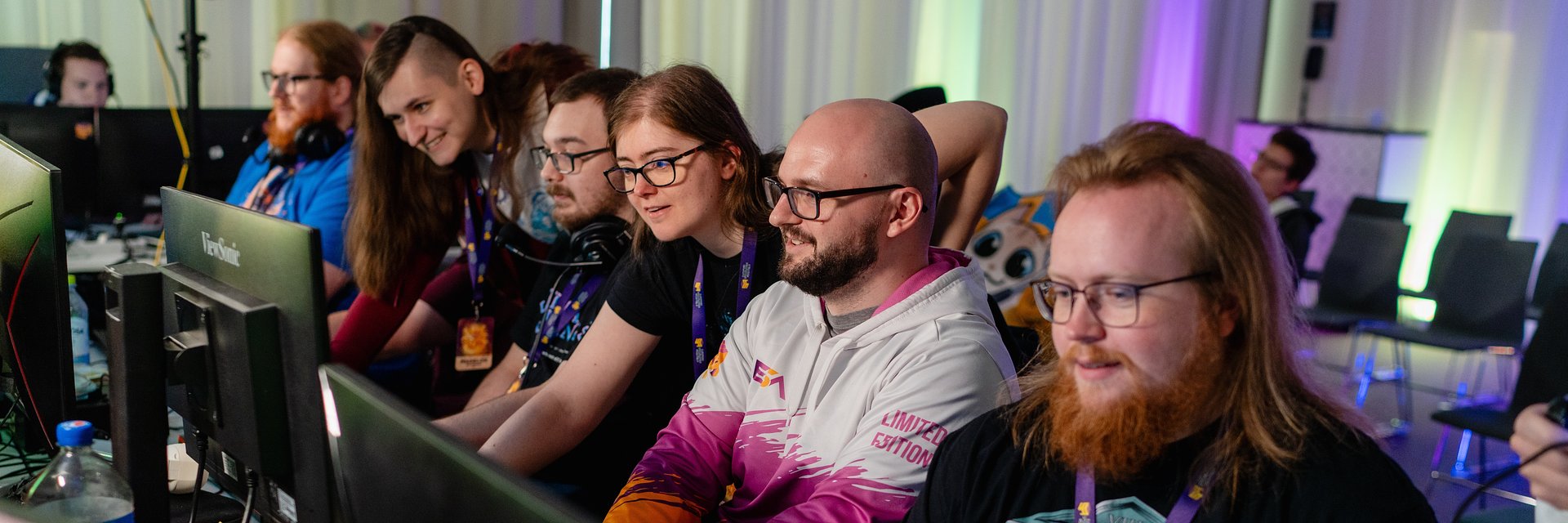
For the first time this year, the European Speedrunner Assembly (ESA) is set to host their recurring speedrunning event, where gamers aim to conquer video games at record speeds and showcase mind-blowing talents.

For the first time ever, ESA is teaming up with Make-A-Wish International — an organization dedicated to fulfilling the wishes of children facing critical illnesses. Last year, ESA Winter and Summer collectively raised an impressive $200,000 for Alzheimer’s research. ESA Winter is taking place right now in Malmö until February 24th. 

Set in Malmö, Sweden, the event will revolve around gaming, entertainment, and interactive fundraising. An onsite global audience of several hundred attendees are already interacting, accompanied by a substantial online viewership exceeding two million. Both the onsite and online audience have the opportunity to actively support the charity, for example, by donating $25 to influence the course of the games or to support various shows and performances, such as a Ikea furniture building duel or rhythmic displays.

Last year, Make-A-Wish International granted more than 19,500 wishes to children living with critical illnesses around the world, including more than 5000 gaming and entertainment wishes. They are the second most popular type of wish granted by the charity, after travel wishes.

Ida Lidholt, one of the ESA organizers says: “We are delighted to announce our new partnership with Make-A-Wish International. ESA Winter is a festival where gamers and the community unite. Through video games and speed, we level up to raise funds for children living with critical illnesses. It is heart-wrenching to witness the struggles of these kids. If we can alleviate their burden even a little by helping them fulfil their wishes, it holds profound significance for us.”

Luciano Manzo, President & CEO, Make-A-Wish International says: “Children undergoing treatment for critical illness can experience anxiety, loss of hope, and isolation from friends and loved ones. For many of these children, gaming offers them a sense of escape, helps them connect with friends and distracts them from their long and often difficult treatment journeys. That’s why gaming and entertainment wishes are so popular among wish children. The funds raised from ESA Winter 2024 will help continue to grant these types of wishes and many others. We are so grateful to ESA and the gaming community for helping make wishes come true with this event.”

ESA is globally livestreamed on Twitch.tv/esamarathon. Viewers are urged to contribute during the broadcast, with opportunities to, for instance, name game characters, present challenges to players, or vie for fantastic prizes. By backing ESA and Make-A-Wish, everyone can play a role in fulfilling the wishes of children living with critical illnesses. Support the talented speedrunners and participate in the fundraising—tune in to ESA and make a donation!

Follow the event at www.twitch.tv/esamarathon

About ESA 

European Speedrunner Assembly (ESA) is a biannual charity marathon dedicated to video game speedrunning, held in Sweden. Since its inception in 2012, these events have collectively raised over one million dollars for various charitable causes.

The two main flagship events, ESA Winter and ESA Summer, occur annually in February and July, respectively, each spanning seven days. Beyond these, ESA also organizes smaller speedrunning gatherings such as ESA Legends, a five-day in-person event uniting top RPG speedrunners, and Break the Record: Live, a three-day competition aimed at breaking world records in specified games and categories.

About Make-A-Wish International

Make-A-Wish creates life-changing wishes for children with critical illnesses. Founded in 1980, Make-A-Wish is the world’s leading children’s wish-granting organization, having granted more than 585,000 wishes in 50 countries worldwide. Together with generous donors, supporters, staff and more than 27,000 volunteers around the globe, Make-A-Wish delivers hope and joy to children and their families when they need it most. Make-A-Wish aims to bring the power of wishing to every child living with a critical illness because wish experiences can help improve emotional and physical health. For more information about Make-A-Wish International, visit worldwish.org

WFP BREAKS RECORD WITH FOOD SUPPORT IN SOMALIA AMID FAMINE RISK

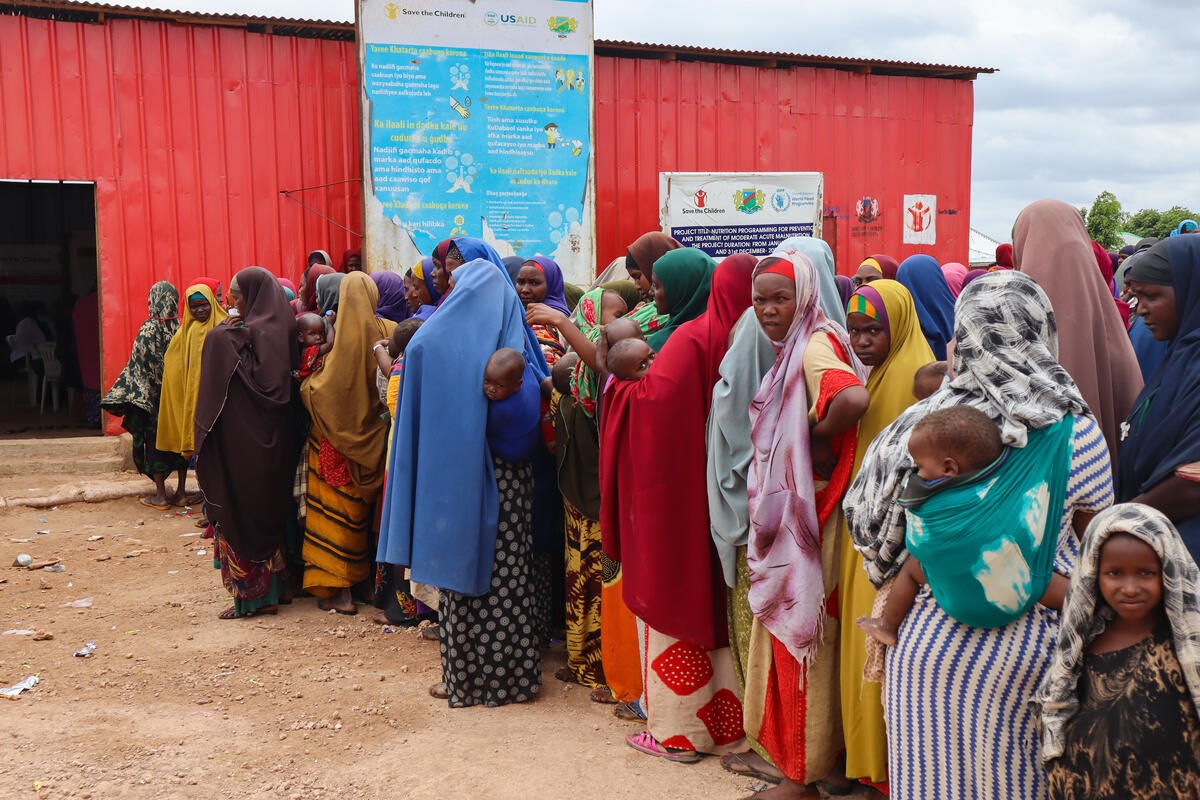
MOGADISHU – The United Nations World Food Programme is delivering life-saving food and nutrition assistance to record numbers of people in Somalia, with over 4 million people a month receiving urgent humanitarian support to prevent famine in the face of the region’s worst drought in over 40 years.

The scale-up has helped keep the worst outcomes of Somalia’s hunger crisis at bay so far.

But the situation on the ground remains dire, with lives and livelihoods being lost. WFP is racing against time to avert a projected famine and a death toll that could reach the tens or even hundreds of thousands.

Somalia, Baidoa, 12 October 2022 Nuuriya Ali Mohammed Nuur (30) and her baby Mohammed Nuur Mohammed (2 years old) travelled to Baidoa from a rural town in Southwest state. After four failed rainy seasons, all of Nuuriya’s livestock died due to the drought. She lost ten cows and one donkey which supported her livelihood. She has ten children and was only able to bring four children with her and the oldest stayed behind with their father. There were several stops on her journey to Baidoa, including walking on foot until she reached transportation to reach the camp. Her child was weak and malnourished when she arrived, but with WFP assistance he is starting to gain weight and become healthier. With no expectation to return and nothing left for her at home, she now lives in an IDP camp on the outskirts of Baidoa town, receiving both WFP relief assistance and nutrition services. She is receiving emergency relief cash assistance, each month receiving a mobile cash transfer to buy food. For nutrition, WFP is providing screening services for the baby, nutrition educational services for the mother on child nutrition, distribution of plumpy food for the baby, and referral to relief assistance receiving cash transfers. Photo: WFP/Geneva Costopulos

Additional information:

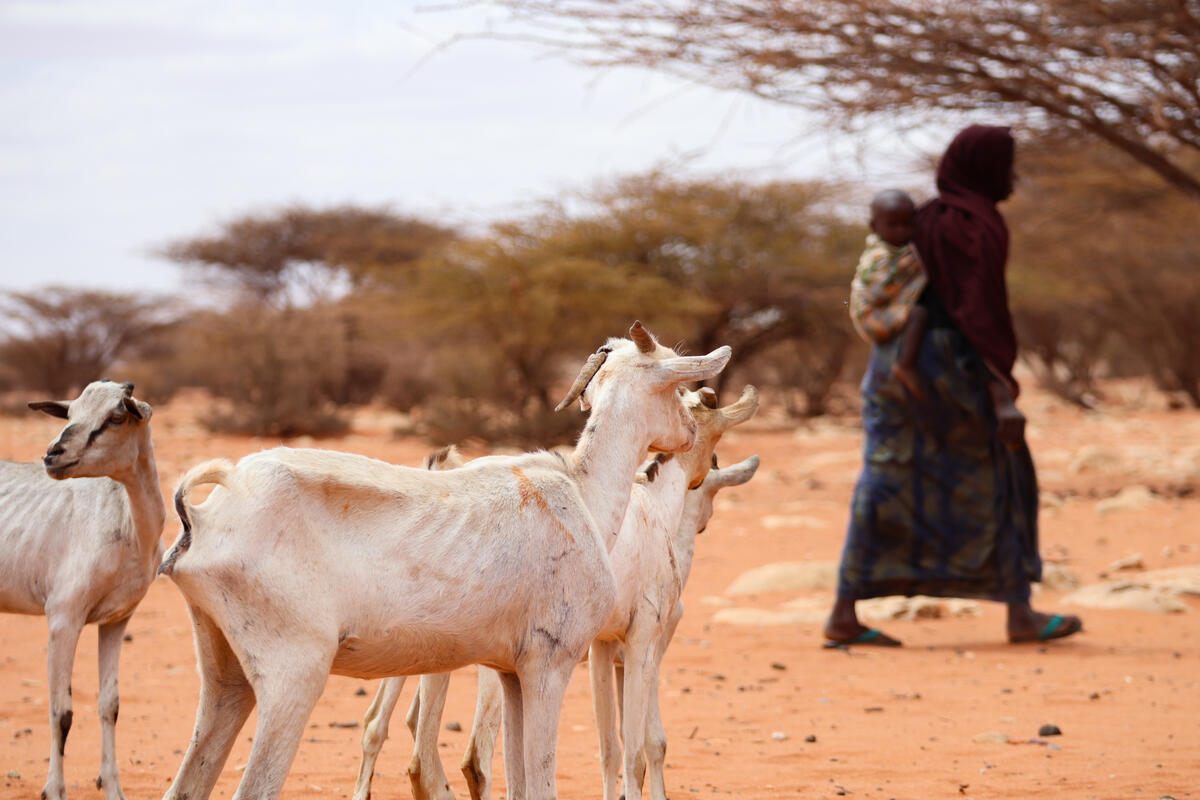
Somalia, Galkayo, Galmudug state, 6 August 2022 In the photo: struggling livestock goats and farmer in Qarqora, Galmudug. Photo: WFP/Geneva Costopulos
  • Nutrition prevention activities were almost entirely suspended from the second quarter of 2022 as WFP was forced to prioritize treatment services due to limited funds. The agency has resumed some prevention activities for children and pregnant or breastfeeding women and is working to do more.
  • WFP is reaching new rural areas, including in the famine risk districts of Baidoa and Burhakaba, with food assistance and cash transfers. WFP’s mobile money transfers are an efficient way to getting assistance rapidly to people in hard-to-reach areas.
  • WFP deployed a new helicopter in Somalia in September to deliver food assistance to hard-to-reach areas and get aid workers to the places they are needed most. The WFP-led Logistics Cluster is also using the helicopter to deliver humanitarian relief on behalf of other UN agencies and NGOs. The helicopter has so far conducted over 30 flights in September and October.
  • WFP is the largest humanitarian agency in Somalia, with 12 offices across the country providing coverage in every state.
  • WFP’s massive scale-up has largely been made possible thanks to timely support from key donors, particularly in recent months. It is essential that this is maintained. WFP has a funding gap of US$ 412 million / CAD$ 565.3 million across all activities for the next six months to March 2023, including a shortfall of US$ 315 million/ CAD$ 432.2 million for life-saving food relief and nutrition assistance.

The United Nations World Food Programme is the world’s largest humanitarian organization, saving lives in emergencies and using food assistance to build a pathway to peace, stability and prosperity for people recovering from conflict, disasters and the impact of climate change.

Featured image: Somalia, Baidoa, 12 October 2022 Nuuriya Ali Mohammed Nuur and her baby Mohammed Nuur Mohammed travelled to Baidoa from a rural town in Southwest state. After four failed rainy seasons, all of Nuuriya’s livestock died due to the drought. She lost ten cows and one donkey which supported her livelihood. She has ten children and was only able to bring four children with her and the oldest stayed behind with their father. There were several stops on her journey to Baidoa, including walking on foot until she reached transportation to reach the camp. Her child was weak and malnourished when she arrived, but with WFP assistance he is starting to gain weight and become healthier. With no expectation to return and nothing left for her at home, she now lives in an IDP camp on the outskirts of Baidoa town, receiving both WFP relief assistance and nutrition services. Photo: WFP/Geneva Costopulos

Providing Relief to Ukrainian Refugee’s and Their Pets

Paws of War Is On The Ground in The Ukraine

NESCONSET, New York – (March, 2022) –Over 10 million people have fled Ukraine in the last three weeks, many of them taking their beloved pets. As they cross the border, escaping to safety, they need all the help they can get for themselves and their pets. The majority fled with just a few possessions and nothing to care for their pet. Paws of War has teamed up with its overseas partners to be there at the border, ready to provide refugees with what they need to care for their pets. They are desperately seeking financial donations from the community to help support their refugee relief efforts.

“The flood of refugees crossing the border has overwhelmed the limited resources available. Many organizations have come together to help with the crisis, Paws of War has focused on caring for people’s pets. For some, their pet is all they have left, and it would be devastating for them if they could not care for their pet or were forced to leave it behind,” explains Robert Misseri, co-founder of Paws of War. “We are glad that we are able to help bring some comfort and relief to the people fleeing the Ukraine, clutching their pet in their arms. Being a refugee with a pet makes everything 10 times harder. We will do everything we can to help them.”

Paws of War volunteers have been scrambling to source the supplies so desperately needed, and are rushing them to the aid stations they have set up on the border.

They provide people with pet food, water, crates, leashes, toys, and giving out critical vaccines for dogs otherwise they will be stopped at the border. They are also providing assistance getting the animals travel passports which includes the necessary vaccines so they can continue their journey to the EU. Some refugees are asking if they can foster their pet or have made the heartbreaking decision they cannot care for their pet and hope we can relocate them to a great home in America. They have also assisted with the set up an emergency animal makeshift shelter near the border, which has already taken in over 50 dogs and numerous cats.

They are seeking financial donations to help support the humanitarian crisis and bring relief to those fleeing Ukraine.

Getting supplies to the area has been extremely challenging and the only option has been to obtain them in the surrounding countries. 100% of the donations collected will be used to help Ukraine refugees care for their pets. Currently they are not collecting supplies as there is no readily available way to get them where they are needed the most, and the situation on the ground is constantly evolving. They hope to have a supply drive once a more permanent location is set up for this ongoing crisis. 

“We are already low in supplies and are getting many requests for help, as the refugees are desperate, and more keep arriving each day,” added Misseri. “Our mission is to be there at the border to provide some much-needed relief. We can’t do it alone, though. We would love and appreciate every person reading this to make donations to help support the mission, no matter how much it may be.”

To help Paws of War provide Ukrainian refugee relief for their pets as they cross the border, visit the site: https://pawsofwar.networkforgood.com/projects/156471-help-save-the-refugees-pets-of-ukraine  

Paws of War has helped veterans with numerous issues, including suicide, service and support dogs, companion cats and dogs, food insecurity, veterinary care, and animal rescue for deployed military. 

As the demand for Paws of War’s services grew, traditional fundraisers like galas and golf outings were sidelined, putting a crimp in the needed funding to keep these services going. Paws of War has a large loyal following of supporters and looks forward to working with new corporate sponsors to keep these life-saving programs running.

Wyland paints team usa Tokyo Olympics surf boards

At the time of this writing, it is still unclear whether the already postponed Olympics will go ahead as planned for Summer. Tokyo Olympic officials have said reports of another cancellation are false and that enough Covid vaccines have been secured to vaccinate every citizen of Japan. That bodes well for the games going ahead. With that in mind let’s optimistically report on a story about one of our favorite Summer Olympic sports: Surfing.

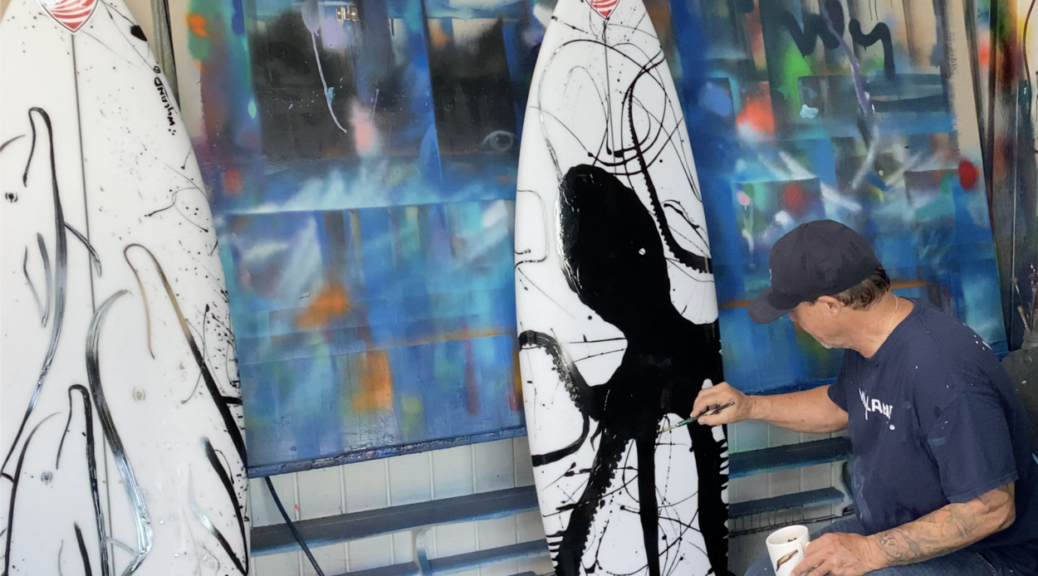
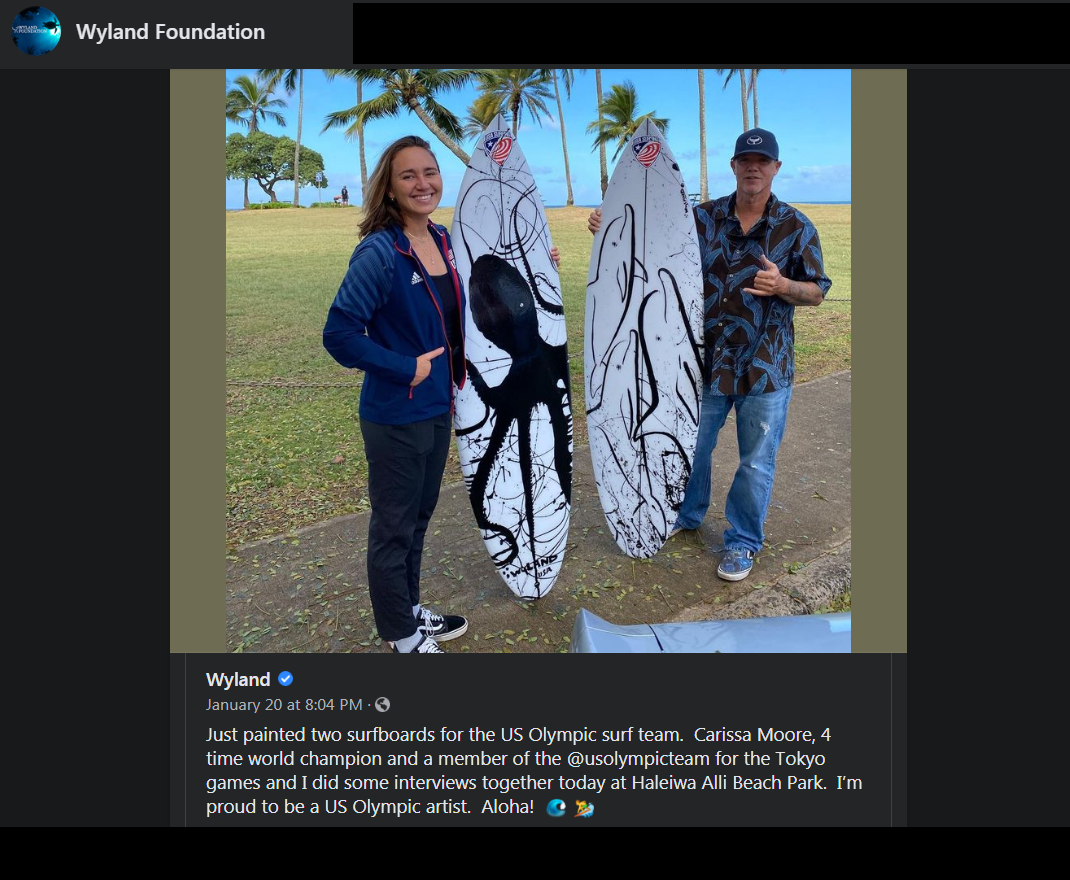
This year, the Wyland Foundation will be supporting the efforts of the USA Surfing team at the Tokyo Olympics through fundraising merchandise and Wyland painted surfboards to be auctioned off. The Wyland Foundation will be integrating the efforts to maintain healthy waterways and coasts into this year’s National Mayor’s Challenge for Water Conservation with an emphasis on the recreational role water plays in our lives.

“Just painted two surfboards for the US Olympic surf team. Carissa Moore, 4 time world champion and a member of the US Olympic Team for the Tokyo games and I pictured here at Haleiwa Alli Beach Park. I’m proud to be a US Olympic artist. Aloha!” said marine life artist, Wyland.

For years, WylandFoundation.org has rallied the support of mayors and cities throughout the United States to urge constituents to consider their environmental impact. The group works on educating constituents about CO2 emitted from our homes and lifestyles. Thousands participate nationwide annually pledging to save billions of gallons of water.

About the Wyland Foundation

Founded in 1993 by environmental artist Wyland (best known for his series of 100 monumental marine life murals), the Wyland Foundation, a 501c3 non-profit organization dedicated to promoting, protecting, and preserving the world’s oceans, waterways, and marine life. The foundation encourages environmental awareness through community events, educational programs, and public art projects. For more information, go to wylandfoundation.org.

Commonwealth Charity Match Will See Cricket Legends Bat For Barbados

Cricket legends will play a ‘Peace at the Crease’ charity cricket match later this year in Barbados on 17 October.

Proceeds will support activities to promote peace and tolerance in disadvantaged communities across the Commonwealth.

Commonwealth Secretary-General, Patricia Scotland, and Barbados Cricket Association president, Conde Riley, announced the event on Saturday.

SG-barbados-cricket2020.article.jpg

The match coincides with the 15th United Nations Conference on Trade and Development (UNCTAD) quadrennial meeting taking place in Barbados. 

Legends from the game will form Barbados XI and Commonwealth XI teams to play a T20 match at the Kensington Oval in Barbados.

The Secretary-General said: “I am very proud that Peace at the Crease – which draws on the ideals of cricket and the use of sport as a tool for the promotion of Commonwealth values – will soon be coming to the Caribbean.

“We are lighting the flame for peace and tolerance in the Caribbean. We hope it will spread to every region of our Commonwealth. I cannot wait for the game.”

The Secretary-General came up with the ‘Peace at the Crease’ initiative to use Commonwealth cricket connections to promote peace and development.

In 2018, the first match was played between the Popes XI and the Arch Bishop of Canterbury XI. The initiative has since grown into an independent ‘Peace at the Crease’ charity. 

President Conde Riley said: “Across the Caribbean, crime is going through the roof.  “We hope to use ‘Peace at the Crease’ and the Barbados season to sensitise everyone about where we are and what we need to do [for peacebuilding].”

Association vice-president Calvin Hope said the concept of ‘Peace at the Crease’ fits within the personality of all Barbadian cricket legends.  He added: “Cricket touches every household in Barbados. This initiative is a vehicle to renew Barbados’ hope.”

A similar event in Africa is currently being discussed, with Nairobi being considered as a potential venue. The Secretary-General thanked Kenyan Cabinet Secretary for Sports, Heritage and Culture, Amina Mohamed, for her ongoing support for the initiative.

More details about the charity match will be released soon. 

Fundraising Survey Shows More Canadians Are Giving But Giving Less

(Toronto, Ontario) Seven in ten Canadians have given to charity in 2018, and almost half of donors are open to different sorts of giving approaches than just the traditional solicitation letter, according to the 2018 What Canadian Donors Want Survey, conducted by the Association of Fundraising Professionals (AFP) Foundation for Philanthropy – Canada in partnership with Ipsos.

The survey, which featured 1,500 Canadians age 18 or older, found that the percentage of people giving to charity in 2017 jumped by four points from the 2015 survey, returning to previous giving levels. Even as more Canadians are giving, they are giving less—an average of $772 cdn in 2017 compared to average giving levels of $924 cdn in 2015 and $726 cdn in 2013.

Eighty percent of donors give to more than one cause, with 23 percent giving to 4-5 charities and 13 percent supporting 6 or more causes. The top recipients of donations are social services and health charities—more Canadians (59% and 57%) gave to those causes than any other.

Overall, Canadians are more confident in the charitable sector than ever before, with nearly eight in ten respondents (78%) saying they’re confident in the organizations that comprise the charitable sector. That figure represents a five-point increase from 2015 and is significantly higher than confidence in the private sector (67%) or the public sector (60%).

Roger Ali Foundation for Philanthropy Canada

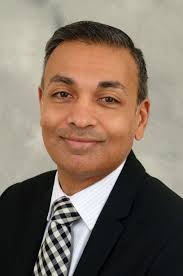
“Overall, the survey shows a Canadian population that is very supportive of the work of the country’s charities and a good understanding of how charities work to support communities,” said Roger Ali, CFRE, chair of the AFP Foundation for Philanthropy – Canada. “However, there are signs that donors are changing how they want to give and interact with charities, and the sector needs to understand and adapt to these changes so that we remain relevant to the people who support us and the people we serve.”

Changes in Volunteering, Giving Behavior

One troubling sign is a drop in volunteerism rates. According to the survey, one-third of Canadians volunteered their time to a charity or non-profit in the past 12 months and spent an average of 88 hours—down precipitously from 110 hours in 2015. “We’ll be watching this closely in our next survey to see if this is a one-time drop or a trend,” Ali added.

Canadians continue to change in how they want to be approached for donations. While 44% express a preference for traditional requests, such as mail, one quarter prefer a more personal approach like peer-to-peer contact or crowdfunding. Three in ten (31%) say they’re open to anything, having no specific preference.

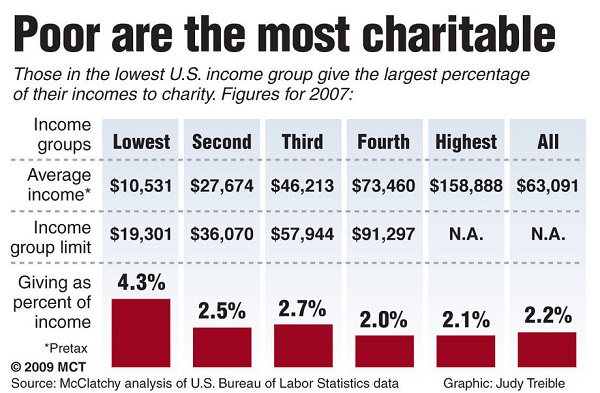
Poor Are Most Charitable In USA

Fundraising preferences vary significantly by age. Baby Boomers (54%) are the most likely to prefer being solicited through traditional requests, compared to Gen X’ers (43%) or Millennials (33%). By contrast, Millennials (17%) lead the way on crowdfunding, preferring this option to a greater extent than their Gen X (11%) or Boomer (5%) counterparts.

Perceptions of Charity Roles, Performance

Many underlying views on charities have remained relatively stable over time. Three-quarters of Canadians continue to agree that charities play an important role in society to address the needs not being met by the government, the public sector or the private sector. Majorities also believe that charities are trustworthy (61%) and act responsibly with the donations they receive (63%).

Canadians are more divided on how much charities spend on their programs and services vs. how much they spend on supplies, administration, salaries and fundraising. A growing majority (58%, up six percentage points from 2015) trust charities on how much they say they spend money on programs and overhead.

However, about a third of Canadians (34%, down 4 points) are less trusting, indicating that charities overstate how much they spend on the cause or programs (24%), or that charities are being intentionally misleading (10%). Yet, when presented with factors and asked how important each one is in evaluating a charity’s effectiveness, Canadians placed more emphasis on a charity’s ability to achieve its mission and create impact than managing its operation or its fundraising.

“Donors are looking for charities that create impact to change the world for the better,” said Lorelei Wilkinson, CFRE, chair of the AFP Foundation for Philanthropy – Canada Research Committee. “But it’s always clear that they keep a careful eye on administrative costs and a charity’s operations. The charitable sector needs to do a better job of explaining that overhead costs are essential for growth and sustainability —for things like equitable salaries, updated computer equipment, etc.— as part of being efficient with their use of donor dollars.”

Looking Ahead

Almost half of Canadians (46%) indicate that they are very likely to give in the next 12 months, while another one-third (34%) are somewhat likely to donate. However, 59% say they are also concerned about the economy, which may force them to reassess their giving plans.

A considerable number of Canadians (42%) proactively seek out information on the cause/charity and contact them to donate, while six in ten (58%) say the charity approaches them and they donate based on the information they receive. When looking for information on charities they support, Canadians continue to rely on online information (75%) as opposed to family, friends or colleagues (39%).

Social Media

The 2018 What Canadian Donors Want Survey also asked general questions about Canadians’ use of social media.

Similar to 2015, eight in 10 Canadians (81%) have a social media account. This applies across every age group, from 91% of Millennials through to 85% of Gen X’ers and 70% of Baby Boomers. Women (84%) are more likely than men (78%) to maintain at least one social media account.

Facebook dominates the Canadian social media landscape: three in four Canadians (75%) say they have a Facebook account, placing it well ahead of Twitter (29%), Instagram (28%), Reddit (5%) or other social media (13%).

Nearly two in ten Canadians on social media (18%) have donated to a charity in response to a request that came through their social media account. Millennials (23%) and Gen X Canadians (19%) are more likely than Baby Boomers (13%) to have made a charitable donation in response to a social media invitation or post.

“As generations age, we expect that email and social media will continue to become more prevalent in fundraising,” said Mary Bowyer, CFRE, member of the AFP Foundation for Philanthropy – Canada Research Committee. “For now, we’re seeing a blend of different approaches, and the most successful charities will be those who personalize their appeals based on what individual donors want, meaning a mix of mail, email, videos, Tweets and other communications.”

About the Survey

The 2018 What Canadian Donors Want Survey was based on a poll conducted between October 10 and October 17, 2017, on behalf of the AFP Foundation for Philanthropy – Canada. For this survey, a sample of 1,500 Canadians aged 18+ was interviewed. Weighting was then employed to balance demographics to ensure that the sample’s composition reflects that of the adult population according to Census data and to provide results intended to approximate the sample universe.

The precision of Ipsos online polls is measured using a credibility interval. In this case, the poll is accurate to within ±2.5 percentage points, 19 times out of 20, had all Canadian adults been polled. The credibility interval will be wider among subsets of the population. All sample surveys and polls may be subject to other sources of error, including, but not limited to coverage error, and measurement error.

The Association of Fundraising Professionals (AFP) is the largest international association of fundraising professionals in the world.  AFP has over 33,000 members world-wide, with 3,800 in Canada.  AFP promotes the importance and value of philanthropy, and enables people and organizations to practice ethical and effective fundraising.   AFP Canada was formally created in 2017.

As the philanthropic arm of AFP, the AFP Foundation for Philanthropy – Canada supports many programs and services through its fundraising efforts.  Fulfilling the promise of philanthropy by funding programs and services in the areas of research, diversity & inclusion, supporting the profession and leadership.  To find out more, please visit www.afpnet.org.


Mediterranean And Andaman Seas Became Floating Coffin Graveyards

Deadly Migration RoutesThe most persecuted peoples on our earth were taking to ‘floating coffins’ to flee violence and seek sanctuary for their families. But instead of responding with humanity, our governments closed their doors, letting them starve and drown at sea.

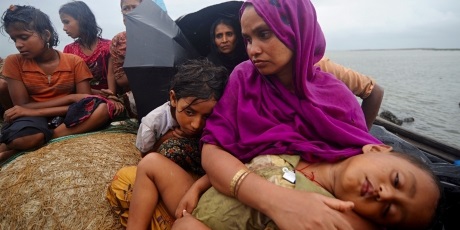
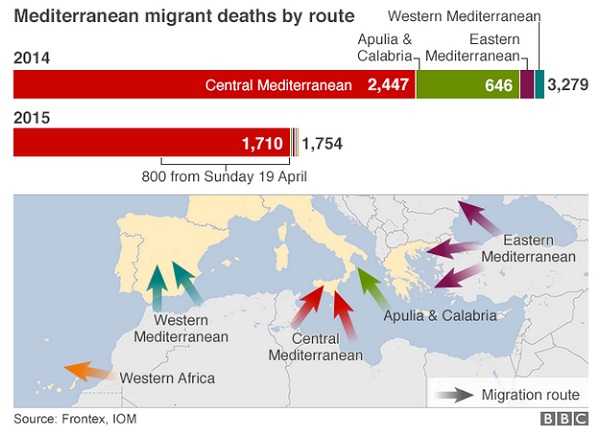
Burma is driving the Rohingya out, and thousands of families were drifting helplessly at sea, forced to drink their own urine because Malaysia, Thailand and Indonesia had turned them away. Syrians and Africans risked drowning every week off the coast of Southern Europe, braving the terrifying crossing as their last hope to escape torture, hunger, and traffickers.

We are facing the biggest refugees crisis since World War II, but so far governments have let them die in a climate of rising xenophobia. Now it has reached a crisis, and our community has a unique chance to jam the culture of fear with a wave of compassion.  If we each chip in a small amount now, we’ll help fund rescue operations at sea; build an Avaaz refugee team to assist those missions and resettlement, and create effective lobby cells to get leaders to open up borders; and launch ads to counter the racism.

Together we can help rescue refugees, and rescue our shared humanity.

Pledge to urgently launch the Avaaz refugee campaign — Avaaz will only process your donations if we raise enough to start saving lives: YES, I’LL PLEDGE $5, enough for a meal pack for a rescued child

As of  May 2015, The UK government had only allowed in 143 Syrians out of the 4 million refugees! In response, over 1,000 Avaazers joined forces to challenge this disgraceful policy by offering to help refugees resettle, and calling on  local councils to give homes to 50 Syrian refugees each. 4 councils had agreed and with our pressure, we hope many more will too.

But this isn’t just a UK and Syria problem. It is a crisis of humanity when our planet’s most vulnerable are treated as criminals and left to die. Here’s a five point plan of the most critical actions Avaaz could take if we raise enough together:

  1. Support organizations that are bravely rescuing the refugees at sea.
  2. Launch Flotillas for Humanity with more private boats to assist rescue operations.
  3. Build an Avaaz refugee team to lobby governments, the EU and the Association of South East Asian Nations (ASEAN) to push for effective search and rescue operations, and increased numbers of refugee places.
  4. Support local groups in Europe and South East Asia to provide assistance to refugees arriving in reception centres, and into communities.
  5. Run hard hitting billboards and newspaper ads to counter the culture of xenophobia.

30 thousand refugees could drown in the Mediterranean this year. These families are fleeing terror and misery, and their choice to board a boat may be the only choice they have. Let’s join forces to stop these tragedies at sea.

Mass Grave At Sea Image1

Supplemental:  Myanmar Muslim migrants abandoned at sea have been ‘drinking their own urine’ to survive  (The Independent UK)
http://www.independent.co.uk/news/world/asia/myanmar-muslim-migrants-abandoned-at-sea-drinking-their-own-urine-to-survive-after-thailand-refuses-boat-entry-10249854.html

Syria Refugee Regional Response (UNHCR)
http://data.unhcr.org/syrianrefugees/regional.php

Mediterranean migrants: Details emerge of deadly capsize (BBC)
http://www.bbc.com/news/world-europe-32399433

Lost at sea, unwanted: The plight of Myanmar’s Rohingya ‘boat people’ (CNN)
http://edition.cnn.com/2015/05/19/asia/rohingya-refugee-ships-explainer/

Stranded Rohingya migrants say: ‘We’re dying on board’ (Al Jazeera)
http://www.aljazeera.com/news/2015/05/stranded-rohingya-migrants-dying-board-150517130244345.html

Toronto Company Raising Cancer Fighting Funds Via Funky Gowns

Giftgowns logoGiftgowns, a Toronto based company specializing in redefining the archaic hospital gown, announced today the release of a limited-edition gown to raise funds and awareness for the Canadian Cancer Society in celebration of October Breast Cancer Awareness Month. The alternative hospital gown features graphics driven to motivate and inspire patients with quotes such as “You are Magic” and “Warrior”, available online at WWW.GIFTGOWNS.COM throughout the month of October.

Giftgowns Medical Gown “This October, we are pleased to partner with Giftgowns in the fight against breast cancer,” states Zahra Karimi, Corporate Development Officer at Canadian Cancer Society. “At the Canadian Cancer Society, we are taking action against the disease by funding high-quality breast cancer research, educating women about early detection and providing information and support services to those living with the disease.”

Founded by Jackie Moss under two years ago, Giftgowns’ inspiration originates from Moss’ own experience within some of Canada’s finest medical facilities. As a former patient, Moss recognized the need to create a modern, humourous and functional gown designed with snap enclosures on the backs and sleeves. The gowns are designed to make patients feel more comfortable in pyjama-like pieces that they might wear at home and aid healthcare practitioners easy access for medical needs.

“Breast Cancer Awareness Month is dedicated to not only raising awareness but working to save lives and we wanted to be part of this national effort,” says Jackie Moss, Founder, Giftgowns. 10% of the proceeds from the sale of the special edition gown will be donated directly to the Canadian Cancer Society.”

Giftgowns proceeds fight cancerMoss consulted with breast cancer survivors who gave positive feedback on the gown especially after a mastectomy. One survivor noted the function of the gown as an asset, with the easy access during the recovery period at home as more useful than a traditional robe or housecoat that cannot accommodate drainage tubes. For the Silo, Dani Matte.
MORE ABOUT GIFTGOWNS

Made with purpose, Giftgowns give patients an opportunity to share an active sense of their personal character with what they wear – even when dealing with less than ideal medical situations. Designed with the intention to bring positivity and a fresh take on the archaic hospital gown, Founder Jackie Moss believes creative and colourful hospital gowns give patients of all walks of life the ability to find individuality and joy through something as simple as a dressing gown.

Giftgowns ships worldwide daily through the e-commerce platform, www.giftgowns.com, as well as through Amazon and Etsy.

About the Canadian Cancer Society

The Canadian Cancer Society is a national, community-based organization of volunteers whose mission is to eradicate cancer and enhance the quality of life of people living with cancer. Thanks to our donors and volunteers, the CCS has the most impact, against the most cancers, in the most communities in Canada. For more information, visit cancer.ca or call our toll-free bilingual Cancer Information Service at 1-888-939-3333 (TTY 1-866-786-3934).


911 Heroes Memorial Run Series Happening Across America And The World

The Travis Manion Foundation (TMF), one the nation’s leading veterans advocacy organizations, is hosting its flagship event – the 10th annual 9/11 Heroes Memorial run in more than 50 communities across the country and around the world this September, including locally in in Annapolis, MD, and Alexandria, VA. The annual race series unites communities across the country to remember the nearly 3,000 lives lost on 911, as well as to honor our veterans, military, and first responders who serve our country. Proceeds from the 9/11 Heroes Run will benefit the Travis Manion Foundation, which empowers veterans and families of fallen heroes to develop character in future generations.

The 9/11 Heroes Run 5K series was inspired by Marine 1st Lt. Travis Manion, who was killed by a sniper in Iraq in April 2007 as he selflessly protected his battalion. Before his final deployment, Travis visited Rescue One in NYC—famous for losing almost all of their men on 9/11—and returned home with deeper passion about why he was fighting in Iraq. At its heart, the 9/11 Heroes Run is a tribute to a personal commitment to never forget the heroes of that day. Now in its tenth year, the 9/11 Heroes Run national race series will be held in more than 50 locations across the country and around the world. As part of the marketing campaign for the race series, TMF released the video found at the start of this article, to inspire runners and walkers of all ages to participate.

Last year, more than 50,000 people participated in race locations around the world or as virtual runners, to support military, veterans, first responders and their families through TMF. National sponsors of the events include Comcast NBC Universal and CBS Radio. Last year’s Annapolis run drew a crowd of over 2,000 participants including Maryland Governor Larry Hogan and midshipmen from the U.S. Naval Academy.

Ryan Manion, TMF President and Travis Manion’s sister, provided this statement:

“As I reflect on the 10 year anniversary of the 9/11 Heroes Run, I’m in awe at the number of communities across the country and around the world that have united to honor all those touched by the events of September 11th, 2001. We challenge all Americans to join us this September, to ensure our next generation never forgets the sacrifices of our veterans, active duty military, first responders, and civilians who were affected by the attacks on 9/11 and in the wars since.”

5 Key Races

  • 9/11 Run Alexandria, VA on Saturday September 9, 2017 at 9:00am ET
  • 9/11 Run Philadelphia, PA on Sunday September 9, 2017 at 9:00am ET
  • 9/11 Run Houston, TX on Sunday September 9, 2017 at 8:00am CT
  • 9/11 Run Annapolis, MD on Sunday September 17, 2017 at 2:00pm ET
  • 9/11 Run Doylestown, PA on Sunday September 24, 2017 at 2:00pm ET

See details for over 20 other races in cities across the U.S. linked here.

For the Silo, Tyler Bryant.

TMF empowers veterans and families of fallen heroes to develop character in future generations. In 2007, 1stLt Travis Manion (USMC) was killed in Iraq while saving his wounded teammates. Today, Travis’ legacy lives on in the words he spoke before leaving for his final deployment, “If Not Me, Then Who…” Guided by this mantra, veterans and survivors continue their service, develop strong relationships with their communities, and thrive in their post-military lives. As a result, communities prosper and the character of our nation’s heroes live on in the next generation.

Mark Canada 150 By Raising 150K Meals For Haiti Children With This UN App

CANADA – The United Nations World Food Programme (WFP) has launched the #ASK1TOASK1 campaign, asking all Canadians to join the challenge to raise 150,000 meals for children in Haiti through the ShareTheMeal app to mark Canada’s 150th anniversary.

Every day, countless children in Haiti turn up for school on an empty stomach, which makes it hard to focus on lessons. A daily school meal can mean not only better nutrition and health, but help the next generation reach its full potential. The #ASK1TOASK1 ShareTheMeal campaign will allow WFP to scale up their Home Grown School Meals programme in Haiti.

It costs just $4.55cdn, less than a bottle of maple syrup, to provide one week of nutritious meals to children in school through the ShareTheMeal app! The app allows users to share nutritious food with hungry children around the world by simply tapping on their smartphone and donating $0.65 or more.
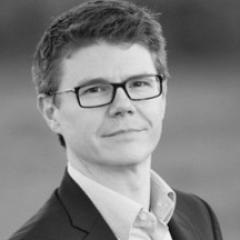
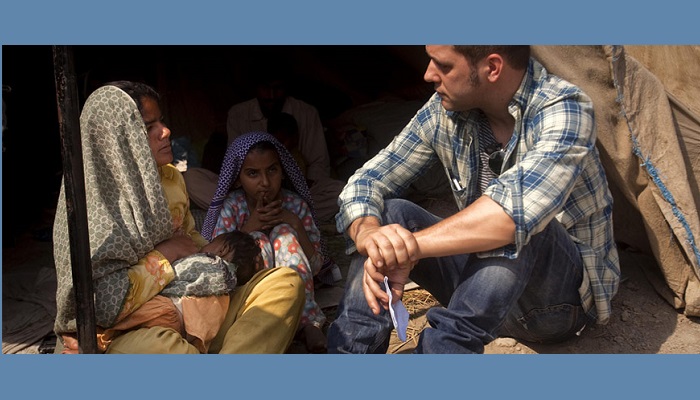
“WFP’s ShareTheMeal app and the #ASK1TOASK1 campaign provides Canadians with an easy way to share meals with hungry children in Haiti,” said Robert Opp, a Canadian who is Director of Innovation and Change Management at WFP.
“Daily school meals allow children to focus on their studies rather than their stomachs, feeding their dreams for the future.”

Robert Opp

Haiti has been repeatedly affected by a series of devastating natural disasters over the last two decades. 2016 was the third consecutive year of El Nino-related drought, and the country was hit by the category 4 Hurricane Matthew, which left more than 800,000 people in need of urgent food assistance.

In Haiti, WFP is working together with the Government to produce a sustainable, nationally-owned, school feeding programme linked to local agricultural production. WFP procures local commodities such as rice, fresh fruit and vegetables from the local smallholder farmers, giving them a predictable market for their products and the children enjoy a healthy diversified school meal.

Join WFP Ambassador Against Hunger, George Stroumboulopoulos and other celebrities like World Champion Wrestler Andre Berto, Singer Dawn Richard and Canadian national Olympic Weightlifter Isabel Lahela who have all committed to help fundraise for the children in Haiti. To get involved, simply download the free app, join team #Canuck and once you have fed a child for a week share with your social media network, using the hashtag #ASK1TOASK1.

WFP’s award-winning app has engaged a new generation in supporting the fight against hunger. More than 850,000 people have downloaded the app and shared over 14 million meals with thousands of vulnerable children in Jordan, Syria, Lebanon, Malawi, Cameroon, South Sudan and Yemen.

image- worldvision.org.uk

The ShareTheMeal community recently contributed to WFP’s famine response in South Sudan, where users shared 1 million meals with those people in dire need of food.

WFP is the world’s largest humanitarian agency fighting hunger worldwide, delivering food assistance in emergencies and working with communities to improve nutrition and build resilience. Each year, WFP assists some 80 million people in around 80 countries.

ShareTheMeal allows smartphone users to share their meals with hungry people via a free iOS and Android app. ShareTheMeal is an initiative of the World Food Programme Innovation Accelerator.

Download the app here.
For more information, please visit: https://sharethemeal.org/canuck.html

Follow us on Twitter @wfp_Canada and @ShareTheMealorg

For the Silo, Laura Mirarchi & Julie Marshall, WFP/Toronto.

Featured image- http://www.public-value.cbc.radio-canada.ca/story/1/

LE PAM ET SHARETHEMEAL LANCENT UNE CAMPAGNE POUR DISTRIBUER 150 000 REPAS À DES ENFANTS EN HAÏTI EN L’HONNEUR DU 150ÈME ANNIVERSAIRE DU CANADA

CANADA – Le Programme Alimentaire Mondial (PAM) des Nations Unies démarre aujourd’hui la campagne #ASK1TOASK1, qui propose aux Canadiens de participer à un challenge visant à distribuer 150 000 repas à des enfants en Haïti via l’application ShareTheMeal en l’honneur du 150ème anniversaire du Canada.

Chaque jour, de très nombreux enfants haïtiens vont à l’école le ventre vide, ce qui les empêche de se concentrer. En plus d’améliorer leur nutrition et leur santé, un repas scolaire quotidien peut permettre à la prochaine génération d’atteindre pleinement son potentiel. La campagne #Ask1toAsk1 de ShareTheMeal permettra au PAM d’étendre la portée de son programme “Home Grown School Meals”, qui fournit des repas scolaires produits localement.

Avec l’application ShareTheMeal, fournir une semaine de repas scolaires nourrissants à des enfants ne coûte que $4,55, soit moins qu’une bouteille de sirop d’érable ! L’application permet aux utilisateurs de partager de la nourriture saine avec des enfants dans le besoin en quelques clics sur leur smartphone, en faisant des dons de $0,65 ou plus.

Robert Opp, directeur canadien de l’Innovation et du Changement au PAM, dit que “ l’application ShareTheMeal et la campagne #ASK1TOASK1 offrent aux Canadiens un moyen simple de partager des repas avec des enfants dans le besoin en Haïti.”
“Des repas scolaires quotidiens permettent aux enfants de se concentrer sur leurs études et non sur leur estomac, alimentant leurs projets futurs”

Haïti a été touché par une série de graves catastrophes naturelles lors des deux dernières décennies. En 2016, le pays a connu pour la troisième année consécutive des sécheresses causées par El Nino, et a été touché par l’ouragan Matthew de catégorie 4. En conséquence, plus de 800 000 personnes ont un besoin urgent d’assistance alimentaire.
En Haïti, le PAM collabore avec le gouvernement pour mettre en place un programme de repas scolaires durable et public, qui s’appuie sur l’agriculture locale. Le PAM se fournit en produits locaux auprès d’agriculteurs haïtiens de petite taille. Ces achats de riz, fruits et légumes frais donnent accès aux producteurs à un marché stable et offrent aux enfants des repas sains et variés.

Rejoignez l’ambassadeur du PAM George Stroumboulopoulos et d’autres célébrités comme le Champion du monde de lutte Andre Berto, la chanteuse Dawn Richard et l’haltérophile Isabel Lahela, qui se sont engagés à aider à collecter des fonds pour les enfants en Haïti. Pour participer, vous n’avez qu’à télécharger gratuitement l’application, rejoindre l’équipe #Canuck et, après avoir partagé une semaine de repas avec un enfant, partager cela sur les réseaux sociaux en utilisant le hashtag #ASK1TOASK1.

ShareTheMeal, l’application du PAM, a gagné de nombreuses récompenses pour avoir impliqué la nouvelle génération dans la lutte contre la faim. Plus de 850 000 personnes ont téléchargé l’application et ont partagé plus de 14 millions de repas avec des milliers d’enfants vulnérables en Jordanie, en Syrie, au Malawi, au Cameroun, au Soudan du Sud et au Yémen.

La communauté ShareTheMeal a récemment participé à l’intervention du PAM au Soudan du Sud, partageant 1 million de repas avec des personnes ayant un besoin urgent d’assistance alimentaire.

Le PAM est la plus grande agence humanitaire de lutte contre la faim dans le monde, apportant une assistance alimentaire pour résoudre des situations d’urgence et travaillant avec les populations locales pour améliorer la nutrition et mettre en place un système alimentaire stable. Chaque année le PAM vient en aide à 80 millions de personnes dans 80 pays.

Grâce à l’application Android et iOS ShareTheMeal, les utilisateurs de smartphones peuvent partager leurs repas avec des personnes dans le besoin. ShareTheMeal est une initiative de l’accélérateur du Programme Alimentaire Mondial.

Téléchargez gratuitement l’application : http://ow.ly/IucL30cAl5h
Pour plus d’informations, rendez-vous ici : https://sharethemeal.org/canuck.html

Suivez-nous sur Twitter @wfp_Canada et @ShareTheMealorg

Dominican Republic Province Altagracia Suffering With Poverty

Villa Altagracia is the easternmost province of the Dominican Republic. The name “La Altagracia” (High Grace) commemorates a painting, Our Lady of La Altagracia, brought from Spain in the early 16th century. Our Lady of La Altagracia is known to the Dominicans as a protector of the Island, to create miracles.

Our Lady of Altagracia Painting by Unknown Artist. Exhibited at Basilica Nuestra Senora de La Altagracia

Altagracias 2

Sadly, as we drove up the hill of Altagracia, we couldn’t help but notice that a miracle is what this village needed the most. We noticed the roads were unpaved, uneven, and more so just paths of orange dirt. The houses are shacks, made of tree branches, plastic and debris from the streets, the bedrooms separated by tarps and bed sheets, sometimes, a single room holding a family of seven. As we made our way up, we spotted a young boy, fully nude – gripping onto his mother’s hand. She didn’t seem much more lively than the boy. Her skin was cracked and her spirit seemed tired and broken. These people aren’t living, they are merely surviving as best they can to provide for themselves, and their children.

La Altagracia is suffering from poverty.
Poverty. It isn’t being “broke”, it isn’t frugality, or living paycheck-to-paycheck, it isn’t going without your television for a month or cutting back on extravagances.
Poverty is real. It exists. For the people of La Altagracia, it is a normalcy, and it is a harsh reality. These people cannot turn on a sink to wash their hands or brush their teeth. They cannot flush a toilet or take a shower. They don’t have access to fresh, running water. In extreme hot temperatures, these people have to walk a mile and a half to get water from a lake and then walk back with only the amount of water they are able to carry. These people lack countless luxuries that most people take for granted, they don’t know anything else.

Any donations will be utilized to build a public restroom and a well in the village of Altagracia. In the future, we have planned on offering additional resources throughout the village. As for now, we are taking baby steps to provide them with necessities. You have the ability to provide our leaders of tomorrow with the resources they need to build their minds today. We need at least six notebooks per child, books, pens, and other basic school supplies – $10 per child is all it takes to change a life and provide an opportunity for a higher education. Your donations will help make this dream turn into the miracle this village so desperately needs.

Altagracias 3All donations will go out to the Village of Altagracia in Dominican Republic. Because of your generous giving, Villa Altagracia will be provided with water, a public restroom, educational resources, and an overall growth and unity in community living. For the Silo, Jessica Kirk.
Please visit their website at Altagracias.org 

1000 Apple Trees At Röbäcksdalen Fully Funded Via Kickstarter For Brännland Cider

Brännland Cider logotype

Brännland Cider’s new apple terroir at Röbäcksdalen in Umeå, Sweden.

At the beginning of November Brännland Cider, an international award winning cider producer in Umeå, Sweden, where I happen to work,  started a Kickstarter campaign called “1000 apple trees at Röbäcksdalen”, to fund the creation of an orchard and the start new apple terroir in their Northern home county of Västerbotten, not very far from the Arctic Circle.

30 days later, after international attention and countless shares on social media, the campaign is now fully funded. The funds have streamed in from private backers, businesses and institutions in the region and foreign backers in the markets where Brännland Cider is present, in the form of adoptions of the trees planted in the orchard.

Funding is primarily earmarked for research into organic farming practices and all research results and knowledge derived from the orchard will be shared with anyone who wants to grow fruit in Northern Sweden. The ultimate long term goal is to create a new apple terroir for cider production.

We’re totally amazed by the support that’s been coming in from our local as well as the national and international communities. In the past four years we’ve striven to produce the best cider and ice cider possible using the best Swedish apples. It is fantastic to see that our work has inspired confidence enough in what we do, that people want to lend us this kind of support.

Me in my happy place!

The next step for Brännland Cider is to create a dedicated web for the orchard where adopters can follow their specific tree through the seasons. In spring time, a limited edition cider will be produced and offered only to the backers of the Kickstarter campaign as a celebration of the funding of 1000 apple trees at Röbäcksdalen. For the Silo, Andreas Sundgren Graniti, CEO Brännland Cider AB.


Prizes and Awards:
www.brannlandcider.se/index.php/awards

Brännland Cider producerar iscider och cider på 100% svenska äpplen för en nationell och internationell marknad. Bolagets första årgång Brännland Iscider, ett isvin producerat på äpplen med sitt historiska ursprung i Kanada, släpptes 2012.

Supplemental- Ottawa’s Trees need your help! Adopt-a-tree.

Artist Is Member Of Christian Student Group Effecting Change

Sara Kuiper hoping to raise 4900$ by May photo courtesy of the author

Sara Kuiper, a Zoology major at Guelph University has fueled her fire with the help of an organization trying to reach the world.  Kuiper is a member of Power to Change, a Christian group for students.

Their mission is to reach the world by helping students discover Jesus.

“My first year of university I became part of Power to Change, I wanted to be part of a group that would help me grow in my faith and would genuinely help me,” said Kuiper.

“When you’re trying to figure out who you are spiritually you need to have a good support system, and while other students were going out partying and drinking there’d be alternative activities. It’s not about shoving religion down your throat, it just gives us a forum to talk about our beliefs, the challenges in our lives and what we want to accomplish.”

Kuiper travelled to Panama on a mission trip her second year of university, where she participated in hosting an English Club, and ran a sports outreach which culminated in a soccer tournament.

Compelled to continue her work, she applied to volunteer during a mission to Lima Peru, and was invited to be an intern during the one month trip.

“We would be at the universities and work with the students and make friends and offer help and share the gospel if they want to hear it,” said Kuiper.  

“I need to raise $4900 by May, I’m not too worried. I’m planning on hosting a fundraiser at my church and maybe auctioning off one of my paintings.”

Encouraged by Power to Change, Sara delved further into her love of art.

“There’s a big part of me as a painter and artist and thinking about what fuels the art, and the purpose of the art and it was actually at a retreat that really pushed me to follow through with my love of creation,” said Kuiper.

“If people want to explore their own spirituality, many universities have Power to Change Clubs, just check Facebook, or look up their school’s club listings.”  For the Silo by Lacie Williamson.