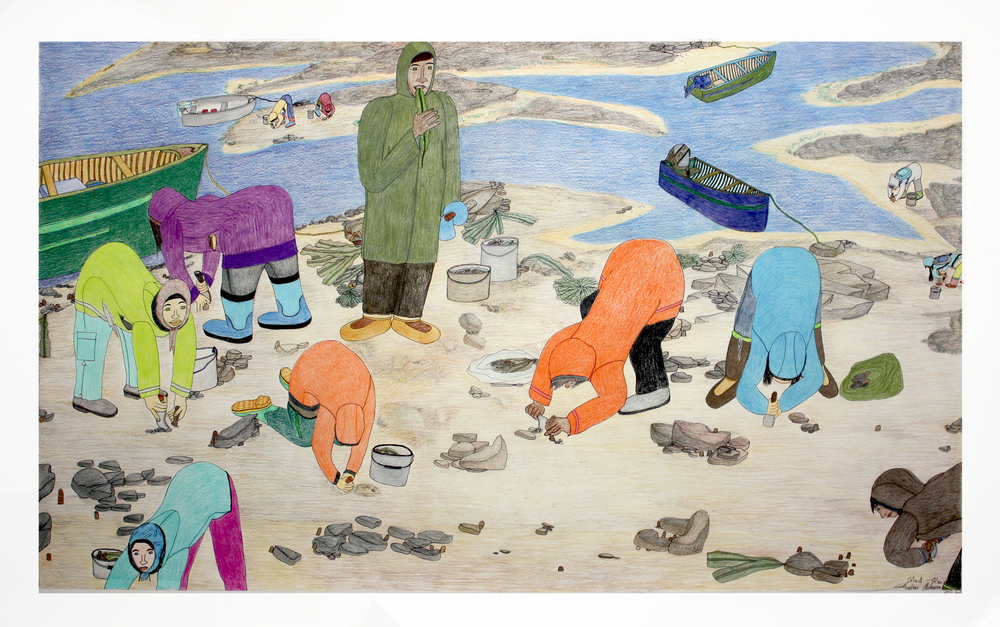
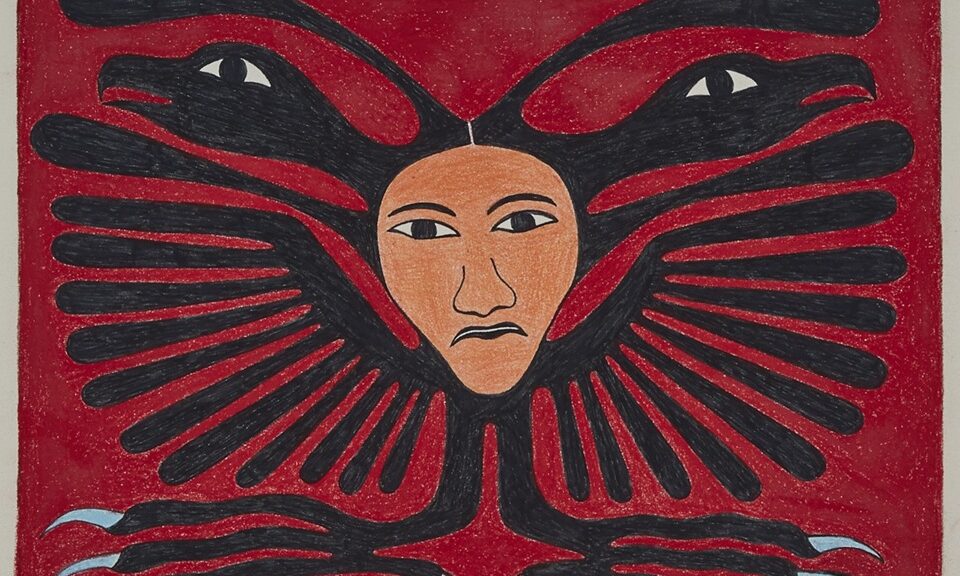
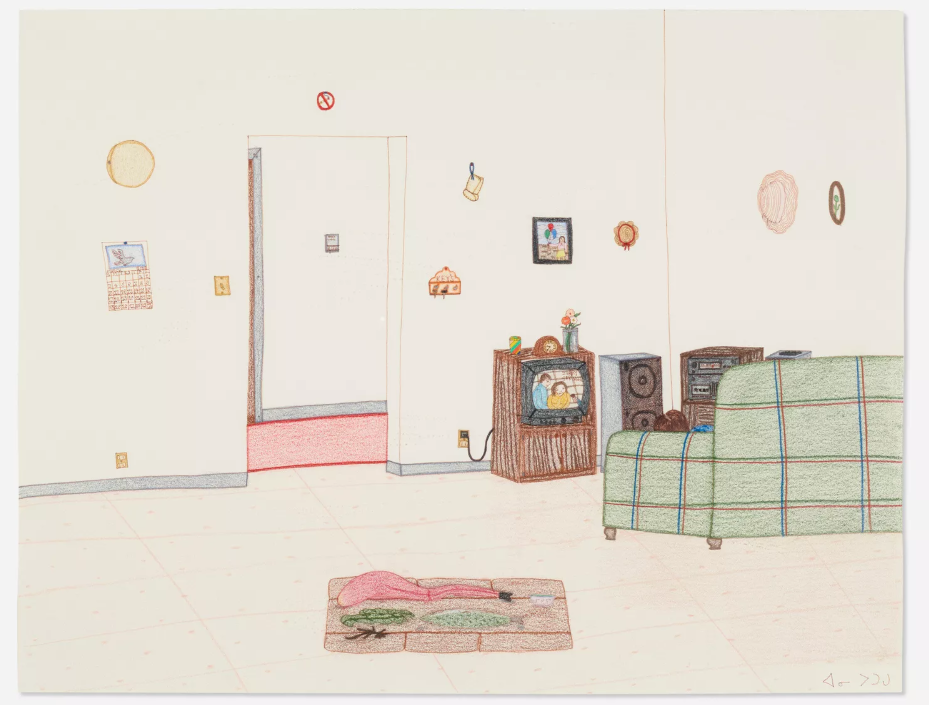
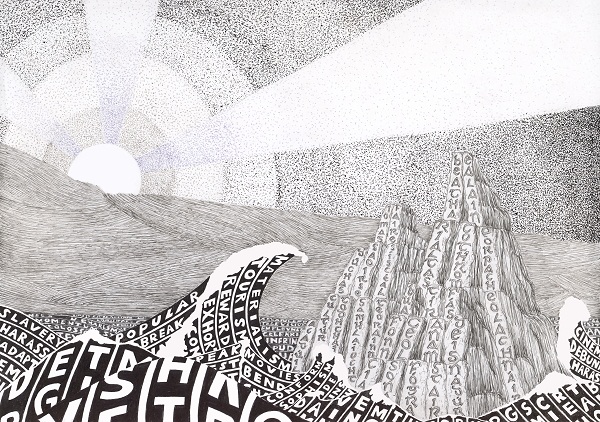
Annie Pootoogook’s drawing entitled Man Abusing His Partner was selected as one of the best 100 artworks of the 21st century by ArtNews.
Kinngait (Cape Dorset), Nunavut – A drawing by late Inuit artist Annie Pootoogook, who died under suspicious circumstances in 2016, has been named as one of the best artworks of the 21st century by ArtNews, one of the most trusted sources for news about the global art world and art market.
Known for her drawings that depict contemporary Inuit life, her drawing entitled Man Abusing His Partner was selected as one of greatest artworks of the past 25 years.
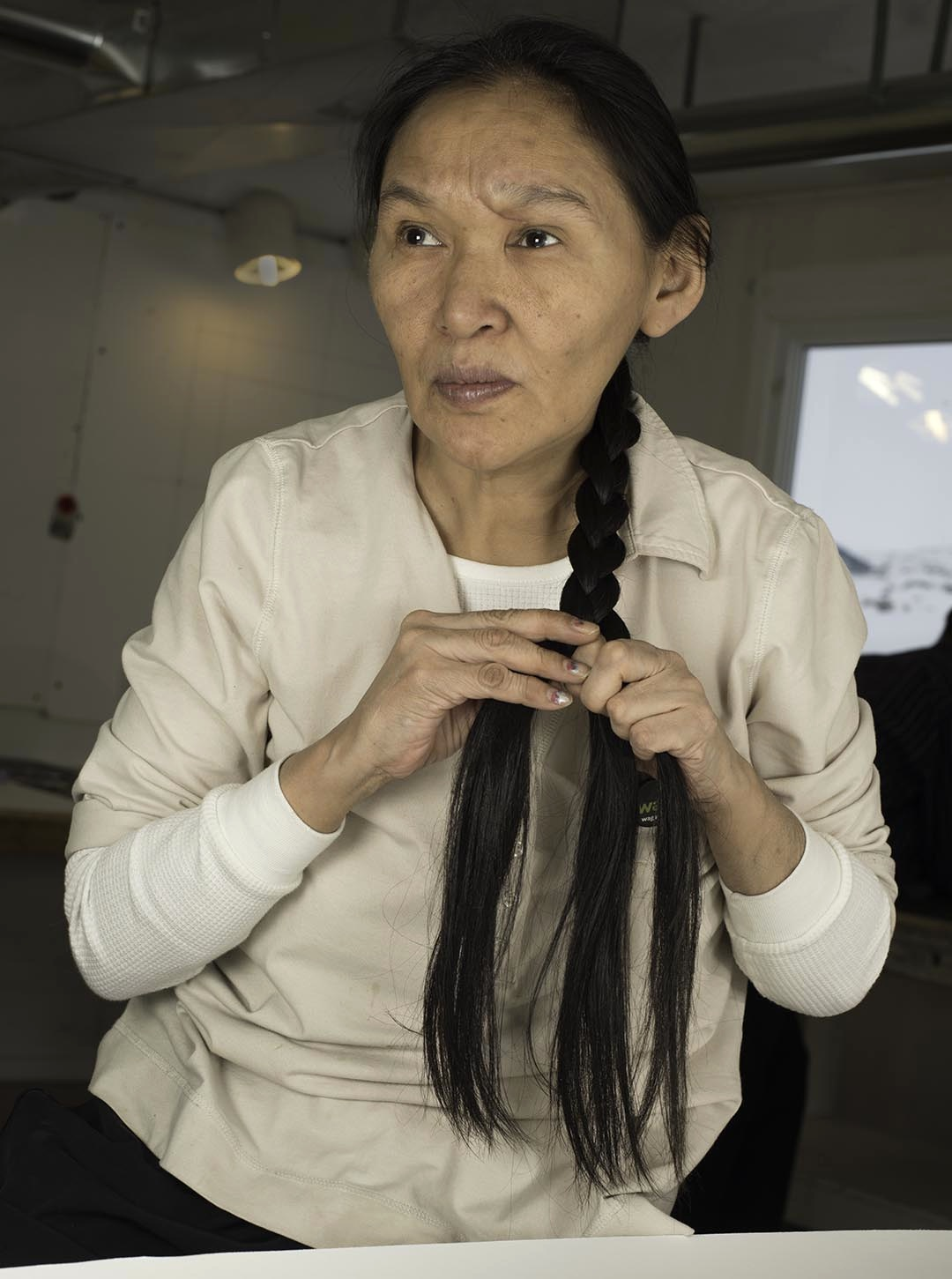
Annie Pootoogook works on her art on July 10, 2013, in Ottawa. The investigation into her 2016 death has stalled, sources tell CBC News. (Alexei Kintero)
The work on paper illustrates a haunting personal memory from Annie’s life during the early 1990s, when she was in an abusive relationship with a man in Nunavik.
The artwork depicts a violent and threatening scene, with a male figure holding a piece of wood above his head, directed toward a woman who lies defenseless on a bed. Initially, like many women facing similar situations, Annie remained silent about her experiences, reflecting the broader social stigma and silence surrounding violence against women. However, as she found her voice, it became clear that Annie possessed immense courage. She began sharing her story of survival as an Inuit woman, using her artwork as a powerful medium to communicate struggles with addiction, mental health, and intimate partner abuse.
Sadly, on September 19, 2016, Annie’s body was found in the Rideau River in Ottawa. Police declared it a suspicious death, however no arrests were ever made. Annie’s story, which she often conveyed through her work, became a representation of the broader experiences of Inuit and Indigenous women, highlighting the ongoing impact of colonialism and patriarchy in their lives. Her drowning and the subsequent police investigation drew significant attention because of her status as an internationally renowned artist and Inuit woman.
“This significant recognition of Annie Pootoogook is a testament to her enduring importance as a contemporary creator,” said West Baffin Cooperative President Pauloosie Kowmageak. “As we remember her significant contributions we also have the opportunity to look forward, knowing that her personal resilience and artistic innovation is inspiring new generations.’
Pootoogook was an artist member of the West Baffin Cooperative, Canada’s oldest Inuit owned and led social enterprise.
She was the third youngest in a family of ten children and grew up surrounded by artists, including both of her parents, as well as her grandmother, the renowned artist Pitseolak Ashoona (c.1904–1983), and her uncle, Kananginak Pootoogook (1935–2010).
Influenced by them, Annie based her drawings on her personal experiences, including her struggles with addiction and domestic violence. Her work found fame in the larger art world and was showcased at the National Gallery of Canada, Art Gallery of Ontario, McMichael Canadian Art Collection, The Power Plant, Biennale de Montreal, Art Basel and Documenta 12, among other exhibitions.
Established in 1959, West Baffin Cooperative has enjoyed an international reputation for the exquisite prints, drawings and carvings created by its Inuit artist members. In addition to operation of the Kinngait Studios at the Kenojuak Cultural Centre in Kinngait, the cooperative maintains a Toronto marketing division office, Dorset Fine Arts, which is responsible for interfacing with galleries, museums, cultural professionals, Inuit art enthusiasts and the art market globally. The mandate of West Baffin Cooperative includes public relations, promotion, advocacy, government relations and special projects relating to Kinngait Inuit art. Governed by an all-Inuit Board of Directors, the organization also maintains a local retail grocery/hardware store, a restaurant, rental properties and various utility contracts. As a community owned organization, practically all Kinngait adults are shareholders, profits are distributed back to the community in the form of annual dividends.
Featured image- Annie Pootoogook, Man Abusing His Partner, 2002 Coloured pencil and ink on paper, 51 x 66.5 cm Collection of John and Joyce Price
The Colorado River Indian Tribes include four distinct Tribes – the Mohave, Chemehuevi, Hopi, and Navajo. The reservation stretches along the Colorado River on both the Arizona and California side. It includes approximately 300,000 acres of land, with the river serving as the focal point and lifeblood of the area.
River Art Created Uniquely
Art honoring the Colorado River and benefitting the Colorado River Indian Tribes (CRIT) will be envisioned and created live during Scottsdale Art Week March 19-22 at WestWorld of Scottsdale. Artist Ben Miller, a Montana-based painter best known for his Endangered Rivers series, will travel to the Colorado River Indian Tribes reservation to paint a depiction of the Colorado River at the Ahakhav Tribal Preserve which will be created and featured during Scottsdale Art Week. A portion of the proceeds from the artwork will benefit the Colorado River Indian Tribes (CRIT). This comes at a time when the life of the Colorado River is in danger because of drought and overuse.
Ben Miller, in association with Gary Snyder Fine Art, has spent the past eight years painting the endangered western rivers of Montana, Washington, Colorado and Wyoming, and more recently the rivers of Chicago, New Jersey, New York, and Miami. On the end of a fishing rod, Miller attaches what he calls Fly Brushes, designed from wool, cotton, rubber, nylon and other materials, soaked in paint and cast onto clear plexiglass.
Ben Miller/ Gary Snyder Fine ArtMiller will bring his artistic vision to life during the art fair. His team will travel to CRIT’s Ahakhav Tribal Preserve to photograph and video the portion of the river that runs through the Preserve. On March 19 as Scottsdale Art Week begins, Miller will be on site at Scottsdale Art Week to begin Fly Cast Painting on a six foot by eight foot by one inch block of plexiglass weighing 300 pounds that will be on a special easel. Those attending will see Miller create the artwork as the painting emerges on the other side of the plexiglass. On Friday March 20th the finished work will be on display. A portion of sales will go to CRIT. Recently, CRIT has taken the bold step to acknowledge personhood status for the Colorado River which protects it under Tribal Law.
Miller said, “This year I will bring my vision of the Colorado River to life as Scottsdale Art Week begins. It’s only fitting that we do this as CRIT considers the River to be a living being which is why they acknowledged its Personhood Status.” Now in its second year Scottsdale Art Week will feature contemporary and fine art from more than 120 galleries from 18 countries. It is America’s first art fair with an emphasis on indigenous expression. The event will also host cultural seminars and innovative programming, including live music and a fashion show. For more information or for tickets and tables go to www.ScottsdaleArtWeek.com.
About Scottsdale Art Week Presented by Scottsdale Ferrari:
Scottsdale Art Week presented by Scottsdale Ferrari (SAW) is situated at the historical and cultural crossroads of the American Southwest, which attracted such art historical greats as Georgia O’Keeffe, Frank Lloyd Wright and major stars of the land art movement of the 20th Century. The largest new American fair of art & design in decades, SAW features an exciting combination of historical and contemporary works, welcoming well over 120 galleries from across the U.S. and around the world while honoring its home in Arizona by highlighting contemporary Indigenous artists.
Maybe you watch all the TV shows, follow the blogs, and read all the magazines (or perhaps just look at the pretty pictures) and still wonder what Interior Design really is, what a Designer does, and if you would benefit from working with one? If so, then read on because here’s the nitty gritty on Interior Design and the passionate Designers working within it.
Interior Design is about providing “creative design solutions for interior environments and its clients. It is the combination of technical and analytical skills with an aesthetic vision to achieve spaces that are functional, support the health, safety and well-being of users, enhance the quality of life of the occupants, and are visually attractive.
Balancing Factors
Interior Design can cover a variety of disciplines, including residential, corporate/workplace, retail, healthcare, hospitality, public, and institutional design. Designers pay special attention to function, space planning, ergonomics, lighting, and of course the “pretty” surface elements such as colours and fabrics. Interior Designers can be thought of as an “interior architect” and are skilled in the aspects of spatial planning, preparing technical drawings and documents, and can help design and renovate interiors from drawing up the initial floor plans to placing the last decorative accent.
How does an Interior Designer gets to be a certified professional?
It begins with 3-4 years of schooling, followed by a minimum of 2-3 years of work experience, and then certified by rigorous examinations facilitated by the professional bodies of ARIDO and IDC. Designers are required to carry liability insurance, participate in ongoing professional development programs, and uphold a professional code of ethics and standards to maintain their credentials.
Interior Designers can be hired for remodels, renovations, redecorating, and new build projects. They often work with architects, trades, and other design professionals to achieve the clients’ goals while following safety standards and building codes. Designers are often involved with planning from the very beginning but can be brought in at any stage of the design and construction process.
The cost of hiring an Interior Designer may seem prohibitive for those on a tight budget, but the benefits are advantageous.
Those who don’t have the time or desire to plan, shop, select, and oversee their project will ultimately profit from hiring an expert. An Interior Designer can prevent clients from making costly mistakes; whether it is with project management, decision-making, or providing savings on products and materials purchased. Designers bring with them an array of professional contacts for trades, suppliers, custom fabricators, and favorite stores. Regardless of the project size and needs, clients often have the option to choose from a variety of services to suit their budget.
If you are considering hiring an Interior Designer know what you want by determining your needs beforehand, and define your style through design and architecture magazine clippings. You can find a Designer through word of mouth, web-based research, professional associations, or trade magazines.
Most of all- have fun.
Interview them to review their portfolio, determine that your personalities mesh, discuss your project scope as well as the designer’s fees and process. Most important of all, have fun with the process – your interiors will thank you, and you will have made an investment into the enjoyment and functionality of your space. For the Silo, Ramee Cyr/ R Design Studio.
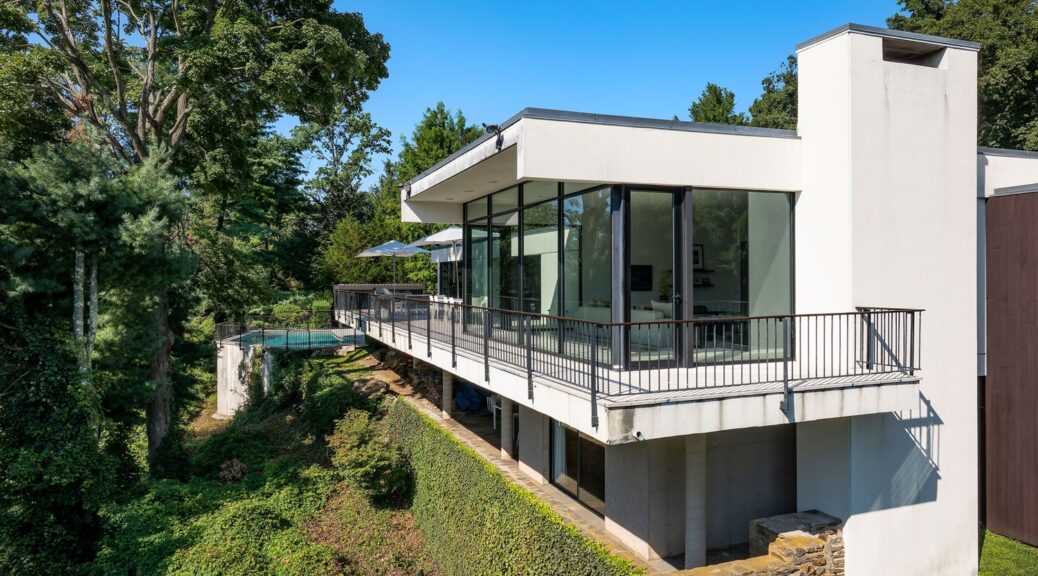
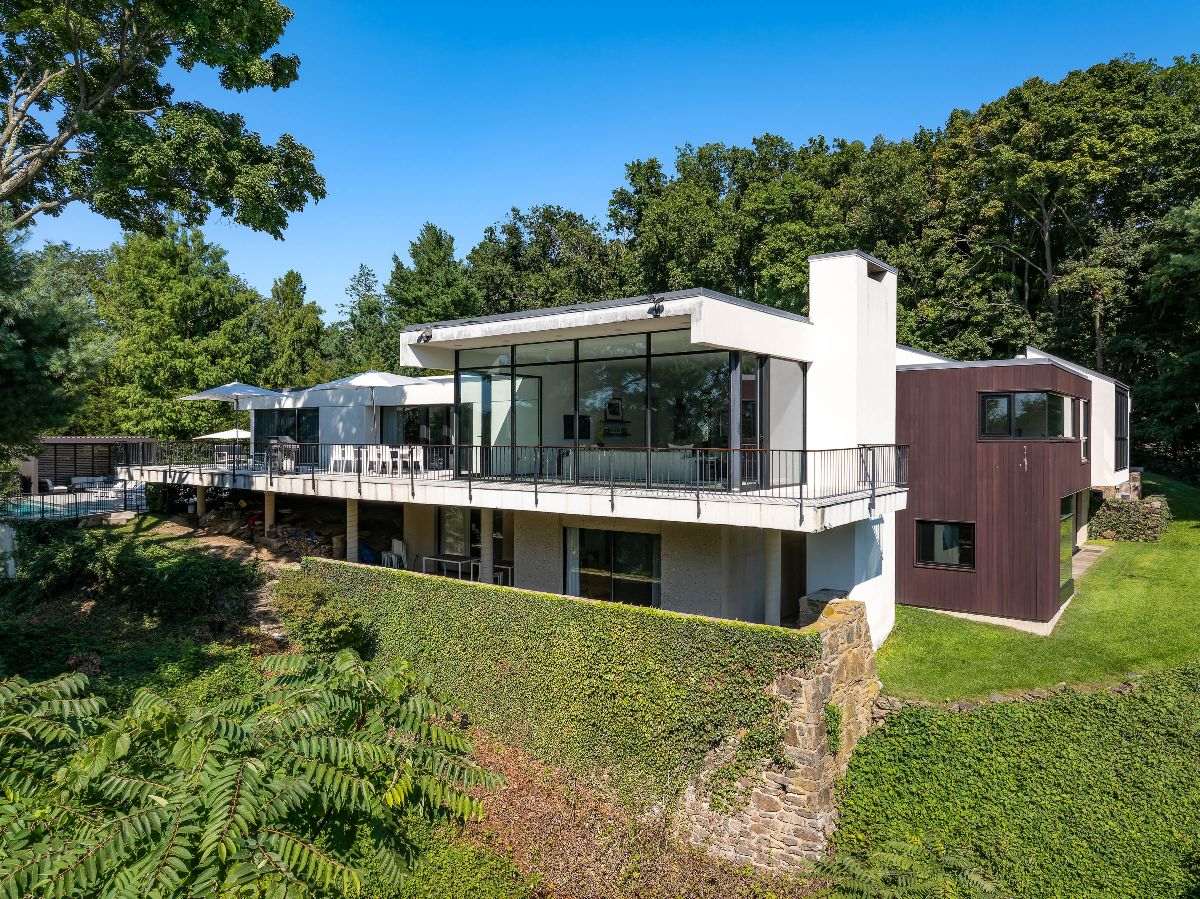
Featured image- Colwood house is a perfect mid-century nod to a modern Canada home designed by Erica Colpitts Interior Design.
JUROR: LYLA RYE DESIGNER: ELIZA TRENT RENNICK FOREWORD BY ARNIE GUHA
Abstraction is not an absence. It is a decision.
To abstract is to strip away the familiar scaffolding of representation and ask a more difficult question: what remains when narrative recedes? What persists when image is released from obligation to describe?
The works gathered in ABSTRACTS, curated and juried by Lyla Rye, demonstrate that abstraction is not a single language but a constellation of methods. Across painting, digital media, photography, drawing, sculpture, and mixed media, the artists in this exhibition approach abstraction not as retreat, but as inquiry. Form becomes structure. Colour becomes an event. Gesture becomes argument.
Some works carve space. Some map pattern. Some lean into material process; others into digital construction. Some are quiet. Others declare themselves boldly. What binds them is not style, but intention, a commitment to exploring what visual language can do when it is freed from depiction.
In a moment saturated with image and immediacy, abstraction asks us to slow down. It resists instant readability. It rewards attention. It invites the viewer into a more active role: not decoding a message but participating in meaning.
Lyla Rye’s curatorial vision has brought together an expansive and diverse group of artists, each working from a distinct vantage point. The result is not a unified aesthetic, but a dynamic field of approaches; evidence that abstraction remains a vital and evolving force within contemporary practice.
This catalogue, designed with clarity and care by Eliza Trent-Rennick, extends the life of the exhibition beyond the gallery walls. It documents not only the works themselves, but the range of conversations that abstraction continues to generate.
The Aird Gallery exists to provide a platform for artists across Ontario to present rigorous, thoughtful work. ABSTRACTSreflect that mandate fully. It demonstrates that abstraction is not a historical chapter closed in the twentieth century, but an ongoing experiment — one that continues to expand, fracture, and renew itself.
On behalf of the Aird Board and our partner societies, I extend sincere thanks to Lyla Rye for her discernment and generosity in shaping this exhibition, and to all participating artists for the strength and depth of their contributions.
Abstraction endures because it asks us not simply to look, but to engage. Thank you for engaging with the Aird and with our shared commitment to the arts in Ontario.
Arnie Guha Executive Chair
ABSTRACTS 2025 ARTIST LIST
Doug Adams, Maria-Bida Albulet, Sandra Altwerger, Hadeel Alzoubi, Jarrod Barker, Peter Barron, Peggy Bell, Leslie Bertin, Ioana Bertrand, Ilija Blanusa, Monica Burnside, Mike Callaghan, Jeannie Catchpole, Emily Conlon, Anne-Marie Cosgrove, Damon Couto-Hill, Edward Donald, Holy Dunlop, Agata Dworzak-Subocz, Azar Ebrahimi, Jill Finney, Saremifar Firouzeh, Julie Florio, Elissa Gallander, Monica Gewurz, Kathy Granger Tucker, Arnie Guha, Diana Hamer, Katherine Hartel, Katharine Harvey, Janet Hendershot, Leighton Hern, Ted Karkut, Hyunryoung Kim, Rupen Kungus, Em LeightonHern, Maureen Lowry, Dimitrije Martinovic, Lisa Mason, Claudia McKnight, Carole Milon, Leah Oates, Ovidiu Petca, Ann Piche, Fraser Radford, Leena Raudvee, Dale M Reid, Heather Rigby, Liz Ruest, Colleen Schindler, Pearl Sequeira, Sara Shields, Nancy Simmons Smith, Shawn Skeir, Alayne Spafford, Marisa Swangha, Karen Taylor, Sarah Thompson, Lorraine Thorarinson Bretts, Terry Torra, Margaret Wasiuta, Holly Winters, and Anna Yuschuk.
Lyla Rye is a Toronto based artist who began her studies in architecture. She works in installation, sculpture, video and photography to explore our experience of architectural space. Rye studied at the University of Waterloo, York University and the San Francisco Art Institute. For over 30 years her work has been exhibited in galleries and screenings across Canada and internationally including New York, San Francisco, Adelaide, Auckland, Paris, and Berlin. She has exhibited at The Power Plant, The Whitney Museum of American Art, Prefix ICA, Southern Alberta Art Gallery, The Textile Museum of Canada and Olga Korper Gallery among others. She represented Canada at the Karachi Biennale, Pakistan in 2019. She has work in the public collections of the Art Gallery of Nova Scotia, York University, Cadillac Fairview Corporation, The Tom Thomson Art Gallery, The Robert McLaughlin Gallery and as part of Ways of Something at The Whitney Museum of American Art, NY.
Featured image- Liminal Space number 4 by Jarrod Barker.
Featuring over 120 works from more than 80 U.S. and international lenders, this exhibition marks the first major New York presentation of either artist’s work in over two decades—and their first at The Met.
Exhibition Dates: October 4, 2026–January 31, 2027 Exhibition Location: The Met Fifth Avenue, Gallery 899, The Tisch Galleries
(New York, February, 2026)—Krasner and Pollock: Past Continuous at The Metropolitan Museum of Artis a major exhibition that charts the full arc of the careers of Lee Krasner (1908–1984) and Jackson Pollock (1912–1956) in parallel, examining the distinct yet connected practices of these artistic peers and life partners. On view October 4, 2026, through January 31, 2027, it marks the first major New York presentation devoted to either artist in more than 20 years, introducing their work to a new generation while reassessing their enduring impacts on modern and contemporary art.
A meeting of two great artists
Krasner and Pollock were emerging artists in New York when they met on the occasion of being included in a 1942 exhibition organized by the artist John Graham. They married in 1945 and moved to Springs, Long Island, where they remained entwined personally, artistically, and professionally until Pollock’s death in 1956. Pollock’s life’s work had secured his legacy, while the nearly three decades that Krasner survived him marked some of the most transformative years of her career. Drawing its subtitle, Past Continuous, from a 1976 painting by Krasner, the exhibition traces parallel lives and practices, first forged by lived experience and then shadowed by memory. It foregrounds the range and art historical significance of Krasner’s work while offering a sustained examination of Pollock’s rich and complex practice.
Number 31. 1950. Jackson Pollock
Outstanding philanthropy
The exhibition is made possible by Kenneth C. Griffin and Griffin Catalyst, Marina Kellen French, and the Barrie A. and Deedee Wigmore Foundation. Additional support is provided Trevor and Alexis Traina, the Aaron I. Fleischman and Lin Lougheed Fund, The Huo Family Foundation, and Joyce Kwok.
Number 11. 1952. Jackson Pollock
A novel way of reexamining modern art
“With its distinctive premise and scope, Krasner and Pollock: Past Continuous exemplifies The Met’s commitment to reexamining modern art through rigorous scholarship and fresh perspectives,” said Max Hollein, Marina Kellen French Director and Chief Executive Officer of The Metropolitan Museum of Art. “By considering each artist on their own terms while also foregrounding their consequential relationship, the exhibition situates Krasner’s and Pollock’s work within a broader cultural and artistic context—an approach central to the mission of The Met’s Department of Modern and Contemporary Art and to the vision of the forthcoming Oscar L. Tang and H.M. Agnes Hsu-Tang Wing, opening in 2030. This project affirms Krasner and Pollock not only as defining figures of their moment, but as artists whose work continues to shape and inspire future generations.”
What makes an artist revolutionary?
“Krasner and Pollock: Past Continuous begins with the fundamental premise that these artists are equals, partners in life, giants in the history of art, and revolutionaries who defined what abstraction could be,” said David Breslin, Leonard A. Lauder Curator in Charge, Department of Modern and Contemporary Art, The Met. “Each found a partner who would insist on the primacy of art over life; and they both aspired to an art that was forged out of historical connections but that also promised freedom and radical possibility in a world forever changed by war. The exhibition concerns entwined lives but is also about how different artistic directions come from shared terrain.”
“Krasner and Pollock: Past Continuous approaches these artists not as a single story, but as two practices unfolding in proximity over time,” said Brinda Kumar, Associate Curator, Department of Modern and Contemporary Art, The Met. “The exhibition examines how Krasner and Pollock shared a commitment to testing the possibilities of abstraction—through shifts in scale, material, and form—and how those investigations continued to evolve along distinct trajectories.”
Krasner and Pollock: Past Continuous follows each artist’s life and work.
The exhibition highlights their differences as much as their interrelation, with some galleries that place the artists together and others where they are presented independently. Krasner and Pollock were shaped by their distinct upbringings and formative trainings. Krasner adopted and negotiated the tenets of the European avant-garde, particularly Pablo Picasso, Henri Matisse, and Piet Mondrian. Her training under Hans Hofmann was key to her development. Pollock’s network of broad influences included Thomas Hart Benton and American Regionalism, Mexican mural traditions, Surrealism, and even his own family of artists.
Their early paths unfold as complementary divergences, tracing distinct strands of American modernism that would ultimately converge in the rupture known as Abstract Expressionism. For Pollock, his breakthrough was the “drip” technique, a radical mode of painting that flourished in a condensed but prolific period from 1946 to 1951. Krasner’s varied practice was typified by ceaseless explorations of abstraction, often cued by her abiding interest in the possibilities of nature and color. This manifested in bold collages, gestural canvases and vividly hued hard-edge painting. Historically, Pollock’s reputation has eclipsed Krasner’s. LIFE Magazine asked in 1949 if Pollock was “the greatest living painter in the United States.” His early death and posthumous media attention further amplified his fame and eclipsed critical appraisal of Krasner’s contributions. Today, both artists’ practices are rightly recognized as key to the innovations of art from the mid-20th century onwards. This exhibition continues and amplifies this reevaluation.
Rarely loaned works
Combat. 1965. Lee Krasner
The exhibition draws on The Met collection and rarely loaned works from more than 80 U.S. and international lenders, bringing together over 120 paintings, works on paper, and ephemera to reconsider Krasner’s and Pollock’s careers—both on their own terms and in dynamic relation to each another and their shared artistic context. Major institutional lenders include Peggy Guggenheim Collection, MoMA, the Whitney Museum of American Art, Tate, National Gallery of Art, National Gallery of Victoria, Centre Pompidou, Buffalo AKG Art Museum, Dallas Museum of Art, The Art Institute of Chicago, and SFMoMA. The exhibition will also include several rarely seen works from important private collections.
Organized into 12 chapters that span each artist’s career and are punctuated by defining moments, Krasner and Pollock: Past Continuous unfolds from the 1930s through the postwar years to the end of their respective lives, moving between moments of convergence and difference. The exhibition’s design, informed in part by historic spaces and installations, enhances moments of exchange—across time and practices—while allowing for discrete encounters with works by each artist, from Krasner’s Little Images series and Pollock’s drip paintings of the late 1940s to his monumental canvases in the 1950s and Krasner’s Umber and Earth Green series. The exhibition charts ongoing dialogues—Pollock’s late return to earlier motifs in the mid-1950s and Krasner’s extended engagement through the 1960s and 1970s with artists such as Klee, Picasso, Mondrian, and Matisse. This presentation will reveal two artists in constant negotiation with each other, themselves, and the cultural, political, and aesthetic stakes of their time.
A constellation of landmark works anchor the exhibition’s exploration of both artists’ practices, including Lee Krasner’s Composition (1949), The Seasons (1957), TheEye is the First Circle (1960), and Combat (1965), along with Jackson Pollock’s Stenographic Figure (1942), Guardians of the Secret (1943), Number 1, 1950 (Lavender Mist) (1950), and The Deep (1953). Two earlier exhibitions, Krasner/Pollock: A Working Relationship (co-organized by Guild Hall and Grey Art Gallery, 1981) and Lee Krasner-Jackson Pollock: Kunstlerpaare Kunstlerfreunde (Kunstmuseum Bern, 1989–90), concentrated on the approximately 15-year overlap in the artists lives, from 1941, when they met, until Pollock’s death in 1956. Krasner and Pollock: Past Continuous is the first exhibition to consider both artists’ practices, in their full chronological sweep, together.
The Met has long been significant for both Krasner and Pollock.
Pollock first exhibited a painting at The Met in 1943 in an exhibition in support of World War II. By the end of the decade, he would be among the artists—The Irascibles—who mounted a notable critique of the Museum’s then-prevailing attitude to contemporary art. However, a short while after Pollock’s death, The Met acquired the landmark painting Autumn Rhythm (Number 30) (1950). The Met’s collection of works by Lee Krasner—from her earliest self-portraits to her late magnificent Rising Green (1972)—includes important gifts to the Museum by the artist during her lifetime. The Met was notably also the venue for Krasner’s memorial service in 1984. Krasner and Pollock: Past Continuous builds on this history, marking the Museum’s first major exhibition devoted to either artist. A focused survey, the exhibition traces the arcs of their artistic developments, offering fresh perspectives on two of the most influential figures of 20th-century art.
The exhibition also reflects The Met’s commitment to showcasing artists whose work continues to shape how art is made and understood today. Krasner’s and Pollock’s contributions to modernism and their serious engagement with the possibilities of painting continues to be significant for the work of contemporary artists. In advance of the opening of the Tang Wing for Modern and Contemporary Art, opening in 2030, Krasner and Pollock: Past Continuous models a curatorial approach that reexamines canonical narratives and connects 20th-century innovations to the concerns of today’s artists and audiences.
Palingenesis. 1971. Lee Krasner
Exhibition Catalogue
The exhibition’s accompanying catalogue, Krasner and Pollock: Past Continuous, expands the project’s central themes through newly commissioned texts. Featured essays by the exhibition’s curators as well as Johanna Fateman, Prudence Peiffer, and Matthew Holman consider a range of topics, including Krasner and Pollock’s intertwined creative lives as an artist couple, their strategies of abstraction in the 1950s, and the transatlantic reception of their work, while artist Amy Sillman offers a contemporary painter’s perspective on artistic breakthrough and legacy. The volume also includes an illustrated, interwoven chronology as well as reflections by leading contemporary artists, underscoring the enduring resonance of Krasner’s and Pollock’s work across generations.
The catalogue is made possible by the Pollock-Krasner Foundation.
Additional support is provided by the Aaron I. Fleischman and Lin Lougheed Fund, The Robert David Lion Gardiner Foundation, Karen and Sam Seymour, the Wyeth Foundation for American Art, Suzanne Deal Booth, and Kelly Williams and Andrew Forsyth.
For the Silo, Julie Niemi.
Credits and Related Content Krasner and Pollock: Past Continuous is curated by David Breslin, Leonard A. Lauder Curator in Charge, and Brinda Kumar, Associate Curator, with the assistance of CJ Salapare, Research Associate, all of the Department of Modern and Contemporary Art, The Met.
The Met will host a variety of exhibition-related programs, to be announced at a later date.
When I first walked into Stephen Bulger Gallery to see Joan Lyons’s retrospective exhibition, I exclaimed without much thought: These are so contemporary!
A truly inane statement on my part, for many reasons. First, Joan Lyons is a contemporary artist who continues to make work into her 80s. Secondly, the work I was referring to was made in 1973, not the 1700s. And lastly, why would something being “contemporary” necessarily be a compliment?
I guess what I meant is that there’s an enduring quality to the work.
Photography, at its best, can capture something fundamental about the human condition. This is exactly what Lyons does. I look at her photographs, and I see myself, despite the half-century of time between us. Whether a frustrating conversation with a male doctor, a jacket that I could see myself wearing, or the faces of a woman staring unwaveringly at the camera—there I am.
In “Xerox Transfer Drawings: Women’s Portrait Series,” which spanned from 1972-1980, Lyons set out to capture historical representations of women, by women. Through multiple transfers of the Xerox machine—I recall creating similar portraits as a young girl visiting my mom at work—a single image is constructed. “They are not naturalistic, but awkward in gesture, immobile and flattened—women frozen in their representations,” writes Lyons in the accompanying description of the work. “They countermand the idea of a photographic portrait as the record of a fleeting moment. In the 1970s, I was seeking to find myself as a woman within my culture and to locate my art practice within the history of artmaking.”
In these photographs, the image plane is skewed at an unnatural angle.
It’s like gravity doesn’t exist. The portraits feel close, as if the bodies are pressed up against the other side of the glass. The lack of any telling historical or geographic information in these images creates an artifact that exists outside of time.
Lyons writes that she was interested in “constructing,” rather than “taking,” a photograph. This construction of a photographic image is central to most, if not all, of Lyons’s work. Her exhibition at Stephen Bulger Gallery through February 28 feels like a journey through the history of photography.
Lyons wasn’t precious about what camera she used or pledged a relentless allegiance to one brand.
Instead, she used various techniques and equipment—including Xerography, screen-printing, Diazo paper, large-format Polaroids, digital cameras and pinhole photography—as a way to communicate. Through the quirks and features of each, Lyons leans into the medium’s uses and misuses, wielding the camera to best capture not only the reality of life but also its undercurrents of emotion.
Polaroids
About her series of large-scale Polaroids from 1980, Lyons writes: “ ‘Presences’ is an investigation of photographic portraiture. The images have a lot to do with multiple selves and with faces as masks. In these long exposures, bodies move, and backgrounds are stationary.” The images are jarring at times; my mind can’t compute how they were achieved. A face is slightly disfigured with motion or seemingly collaged together. In another, a woman in the foreground is oversaturated and blurry, whereas the background is crisply in focus and well saturated. The blend of abstraction and realism compresses time. These photographs are not snapshots meant to capture a single moment. By shunning this style of capture, they capture something more viscerally close to the unusual reality of life.
Me, reflected
I couldn’t help but photograph myself within the negative space of one of the Polaroid photographs, layering my face on top of the subjects. A mask on a mask. A photograph of a photograph. Another layer of history. For the Silo, Tatum Dooley/artforecast.
Brockett Parsons, keyboardist for Lady Gaga with his PianoArc.
Max Rebo and his circular keyboard. Star Wars Return of the Jedi. 1983
The exhibition will feature an interactive space for visitors to make music through body movement, as well as immersive elements, live performances, and workshops
Exhibition Dates: June 7 –Sept 27, 2026 Location: The Met Fifth Avenue, Gallery 199
(New York, January, 2026)—From clapping hands and tapping feet to beatboxing and whistling, the human body is a musical instrument. In turn, instruments often draw their form and decoration from the body. Musical Bodies, which opens on June 7 at The Metropolitan Museum of Art, will explore the multifaceted relationship between musical instruments and the human body. This is the first major exhibition to address this theme and will bring together some 130 works from around the world and across time, including musical instruments, paintings, sculptures, and drawings from The Met collection along with important international loans.
“Musical instruments, which represent an important part of the Met’s collection, have long been recognized and celebrated as dynamic tools for creative expression, and also as works of art in their own right,” said Max Hollein, The Met’s Marina Kellen French Director and CEO. “This multisensory exhibition is the first to explore—through remarkable instruments, objects, and works of art—the fascinating ways in which sound, musical objects and the human form have been in conversation for millennia. Including outstanding instruments, powerful performances and immersive in-gallery experiences, Musical Bodies is a show that will resonate, fascinate and inspire.”
Barbara Mandrell’s Mosrite Crutch Guitar
Patrons Support
The exhibition is made possible by Barbara Tober, the Diane W. and James E. Burke Fund, the William Randolph Hearst Foundation, and the Gail and Parker Gilbert Fund.
Additional support is provided by Anonymous, The Dancing Tides Foundation, and the Vanguard Council.
Encompassing 4,000 years of music history and art, Musical Bodies will feature a range of objects from across the visual arts, literature, religion, pop culture, and mythology. This includes ancient Egyptian rattles, paintings by Titian and Degas, instrument-inspired apparel, and one of Prince’s most notable guitars. The ways in which the boundaries between body and instrument have been artfully blurred will be explored through visionary works such as Nam June Paik’s TV Cello; the PianoArc circular keyboard designed in collaboration with Brockett Parsons, keyboardist for Lady Gaga; and a steel guitar in the form of a crutch that was made for country music singer and songwriter Barbara Mandrell while she was recovering from an automobile crash.
Musical Bodies will include prominent works from across 10 of The Met’s curatorial departments, including over 50 instruments from the Department of Musical Instruments as well as ancient works from Egypt, 19th-century masterpieces from European Paintings, and 20th -century works from the Department of Modern and Contemporary Art. The exhibition will also feature significant loans from collectors and institutions such as the Musée de la musique (Paris), the National Music Museum (Vermillion, South Dakota), and the Royal College of Music (London). One of the earliest surviving bowed string instruments, a rare figural lira da braccio from the Kunsthistorisches Museum (Vienna), and a lavish hurdy gurdy from the Victoria & Albert Museum (London) will be shown in the United States for the first time.
“Musical Bodies first formed in my mind as a deceptively simple question: Why are so many instruments shaped and decorated like the human body?” said Bradley Strauchen-Scherer, Curator in the Department of Musical Instruments at The Met.”The quest for an answer has become an exploration of humanity through the lens of instruments and music. We find ourselves represented in these instruments because, for much of our history, music has been central to who we are and what we do. I hope this exhibition will reconnect all of us with our innate musicality and shared heritage of harmony.”
Through six thematic sections, the exhibition will illuminate the relationship between the body and musical instruments and how they serve as channels for self-exploration and expressions of culture and belief systems. Musical Bodies will also reveal how instruments are used to stand in for the body to address topics that are traditionally considered taboo, such as sex and death.
Musical Bodies was conceived as an experiential exhibition. An innovative interactive will enable visitors to create music through intuitive movements and explore the blurred boundaries between body and instrument. Large-scale projections will display newly commissioned footage of beatboxing, body percussion, tap dancing, and more by such acclaimed New York–based and international artists as tap dancer Savion Glover, Beatbox House, and whistler Molly Lewis. Special activations throughout the run of the exhibition will take place in the gallery and include musical performances from an array of artists as well as workshops that activate the body as an instrument. More details will be announced at a later date.
Credits and Related Content
Musical Bodies is conceived and organized by Bradley Strauchen-Scherer, Curator in the Department of Musical Instruments at The Met, assisted by Ava Valentino, Research Assistant in the Department of Musical Instruments.
A fully illustrated catalogue will accompany the exhibition and will be available for purchase from The Met Store.
The catalogue is made possible by the Mary C. and James W. Fosburgh Publications Fund.
The Met will host a variety of exhibition-related educational and public programs, including a Creative Convening, Artists on Artworks and Met Expert talks in the galleries, a music workshop, and more. Details will be announced.
Musical Bodies will be on view during the presentation of the exhibition Costume Art (May 10, 2026–January 10, 2027), which will examine the centrality of the dressed body in fashion and art. The two shows will provide visitors with distinct and engaging explorations of the body’s relationship to artistic expression.
Featured image– Thomas Zach, Violino Harpa Forma Maxima, 1874. Wood (spruce, maple, ebony), metal strings. Collections Musée de la musique / Cliché Claude Germain, 2020. Cité de la musique-Philharmonie de Paris
Because writing is generally a solitary activity, writers need to cultivate and maintain social contacts. For me the Cape Cod branch of the National League of American Pen Women serves as both a social and professional outlet. The following 1,000-word article was composed as the first in a series intended to deepen the connection between artists and writers who make up our organization.
A four-hour interview with photographer/writer Linda Ohlson Graham was the article’s basis. I think it is a good example of how the methodical collection of information serves a writer. Other than the correct spelling of her name, her town of residence and the general impression that she led an interesting life, I had no specific knowledge about Linda prior to our interview. I’ve conducted countless interviews (and will write about the process in future posts!), but, regardless of length, each one requires people to trust me with something that belongs to them.
A PROVINCETOWN ARTIST: LINDA OHLSON GRAHAM
Linda Ohlson Graham is a woman whose life and art have been defined by space and place. Her stunning photographs of sprawling, near shapeless coastal landscapes depict the glorious union of earth, sea and sky, a theme that has become the core of her writing as well as her photography. Her tiny 200-square-foot room on the ground level of a hilltop house behind Bradford Street in Provincetown, on the very tip of Cape Cod in Massachusetts, USA seems an anomaly until one learns she lived aboard a sailboat for five years and has survived three near-death experiences.
Born and raised in Worcester, Massachusetts, Graham moved to Provincetown at nineteen. Unhappy with the town’s in-season chaos, she decided to visit Detroit and stayed for six months, working in a restaurant and spending long, peaceful days in the presence of the grand frescoes of Diego Rivera in the Detroit Institution of Art. When she returned to Provincetown, she worked at several restaurants, but left again when the opportunity to go sailing arose.
EARTH OCEAN HEAVENS- with love. Photo- Linda Ohlson Graham.
She spent most of her late 20s and early 30s on several boats, exploring the Inland Waterway and covering 12,000 miles visiting ports in the Caribbean and Central and South America. Within these years she learned to meditate and chant, and cites an example of their benefit on a day the boat was becalmed and the engine “clanged and banged, then died,” says Graham. “We chanted for the wind and it came up.” In her travels she used a Canon Rebel with Fuji film to photograph people from diverse cultures and countries and has some particularly striking images of Haitians whom she describes having “joy in their hearts and a lilt in their voices.”
Graham also began developing a skyscape collection. “I always wanted the (shipboard) watches at sunrise and sunset because of the spectacularly gorgeous streams of color,’ she said. “Sunrises and sunsets are each so individual. The name “EARTH OCEAN HEAVENS came to me like a lightning bolt out on the open ocean, with the thought that I would publish a book some day by that title.”
After returning to Provincetown in the fall of 1978, she took a job cooking at the Café Edwige. She also crewed occasionally for the Hindu, a 65-foot, two-masted schooner that made cruises and day trips out of Provincetown. When she was 32, her mother encouraged her to come out to Colorado. In Denver she married Douglas Graham, twenty-three years her senior, who owned an extraordinary 1,000-piece collection of works by English Romantic landscape artist J. M. W. Turner. Together they opened his home as a Turner museum, and in it their daughter Isis was born. “I was proud of the museum and loved living in it,” Graham says. “We had popular concerts there once a month.”
PARADISE
She had not sought an explanation for her dizzy spells until she and her husband separated after nine years of marriage. A physician insisted she have a CAT scan immediately. It revealed a golf ball-sized cyst. She had brain surgery the next day. After surgery she began writing, a voluminous collection now titled “Notes from My Journal Immediately Following Brain Surgery.” She says that the writing simply flowed, and from it she began to pull out single lines or passages that particularly appealed to her. She has made framed work that incorporates both her photography and writings.
When she returned to the Cape in 1996, there was a rainbow over the Sagamore Bridge. Coming back to Provincetown “was heaven,” she says. “It was home in my heart. I know so many people here; I have so many longtime friends here. I’ve known one since he was fourteen. “
Photographs and Mementos
On a recent occasion she was heading back to Provincetown from an Upper Cape meeting on global peace. Her violet wool beret, plum-colored scarf, long black skirt, socks and clogs readily identified her as artistically inclined. She stepped aside to let a visitor enter her L-shaped room which contains a bed, two large chairs, four small chairs, two tables and an inestimable number of books whose titles reveal her interests and passions: Dead Sea Scrolls, the Gnostic Bible, Pablo Neurda, Milton, Discourses on Rumi. Photographs and mementos are everywhere. Colorful rugs cover the floor and a small bowl of dried leaves and silky white milkweed seeds serve as decoration, as do a collection of necklaces, horseshoes, and her daughter Isis’ artwork.
Inches, not feet, separate the components of her home.
A small refrigerator is a few steps away from her bed, table and chairs, and Graham says she does a lot of cooking on the diminutive stove nearby. Perhaps it is her Thoreauvian lack of material burdens that enables Graham to explore whatever interests her, whether Stonehenge monoliths and crop circles in England or Caribbean shores.
But for a free spirit, she has quiet ways. In conversation her dark chocolate brown eyes may glance mischievously for a listener’s response to some surprising revelation or turn aside to watch a distant idea take shape. She plays with her glasses as she recites a poem, one of many she has memorized. She has a soft speaking voice, but demonstration of a chant proves it to be surprisingly loud.
Graham has been a member of the Salt Winds Poets in Harwich and Gulf Gate Poets in Sarasota, Florida. Her art work has been displayed in solo exhibits at the Cape Cod Museum of Fine Art, Falmouth Library, and Cape Cod 5 Bank in Orleans, among others. Out of the majesty of her photographic images and the personal urgency of her prose writing has come a purpose, a mission: global peace.
She has worked on several peace initiatives and was named poet laureate of Colorado’s Department of Peace. Graham believes it is attainable through quieting the human mind. One of her favorite personal writings is “Please hold the thought with me that peace on earth and calm weather patterns can easily happen … in a moment or two of silence in enough of the collective mind.” She continues to write and photograph in hope that her vision of peace will find universal acceptance, if not today, perhaps tomorrow.
The formula for a life well lived might look something like this: Dive in head first > fail > repeat.
Life is a series of cycles.
There is of course the broad cycle, we are born, we live, we age, we die. But within this scope are countless other cycles for every part and parcel of our time on the planet. The cycle of making mistakes, of continually pouring your guts out to the world and enduring the consequences, is one of the most important there is for artists. From this process you learn the most about who you are, and how you fit in the world. There will be plenty of moments when you are a total mismatch, when you throw yourself into the deep end and struggle to stay afloat. Under no circumstances should these moments be viewed as set-backs or failure.
Salvador Dali once said, “Have no fear of perfection, you’ll never reach it.” Take a minute to consider that.
Really let it sink in. Let your mind internalize this notion and let it unleash a wave of relief through your whole body. What fantastic news this is, no matter what you do, no matter how long you live, you, I, we, not one of us, will ever be perfect. So how can you take this beautiful knowledge and use it to your own advantage? Once you are free from the restraints of perfection, how can this inform the way you continue on your path?
By adopting the formula above and not letting go no matter what.
You probably know stories about how mistakes have changed history for the better over and over again. The accidental discovery of Penicillin because scientists noticed that the mold on some forgotten fruit killed bacteria. Or the invention of silly putty (perhaps not on par with life-saving antibiotics when it comes to historic moments, but a great boon to childhood all the same) quite by accident in a military lab as scientists tried to create an inexpensive substitute for rubber. But have you ever really stopped to consider what these stories mean to an artist? How they can be freeing examples of the importance of making mistakes?
There is likely not a person out there who truly believes that perfection is attainable, but we are told far too often that we ought to strive for it. This leads to untold restraint, dissatisfaction, and who knows how many missed opportunities for glorious screw ups. Do not let this trap take hold of you. Throw your best and worst, craziest and most tame ideas out there for all the world to see. Who cares if you land flat on your face, as long as you’re still able to pick yourself up there’s no harm done.
As an artist you will be the recipient of rejection letters and emails.
Stacks of them. Count on it. In every creative field, there are piles and piles of rejections to be gone through. Walt Disney was once fired for what his editor deemed a lack of imagination. Countless famous artists throughout history were rejected in their lifetimes, some only achieving posthumous success. Van Gogh, Manet, Turner, they all have in common that they faced painful rejection in their lifetimes. They also have in common that they didn’t give up their unique perspective on the world nor did they allow something as insignificant as rejection stand in the way of their forward momentum.
Collect your rejection letters. Create a special binder for them. Own them with pride knowing that you earned each and every one of them by putting a piece of yourself out into the world. Begin to think of rejection as a victory in itself because it means you tried. The moment you receive a rejection letter, consider that at that same moment, had you not tried, there would be nothing at all. Not trying isn’t really a way of avoiding rejection, it is simply a way of hiding from the world. You will never get anywhere at all if you don’t reveal yourself.
Artists are perhaps particularly vulnerable when it comes to the consequences of baring their souls to the world. Art is highly personal and the thought of making a mistake when the stakes are so intimately high can be enough to frighten even the boldest spirit. Rejection can feel like a very personal affront and can make it difficult to want to try again. It comes down to a choice really, to stay safe and make no progress, or let it all hang out and learn from every single mistake.
Just like with everything else in life, you will become accustomed to accepting rejection and mistakes as par for the course. There will come a day when you will leaf through your binder of rejection letters with a wisdom that can only be gained through the repeated process of failing. For the Silo, Brainard Carey.
A few years ago, Keiran and I were visiting antique stores in Connecticut when we came across an American flag that had fallen from its flagpole and was lying on the steps to a manor house, which doubled as an antique store.
We looked at each other in horror. This was one of those All-American towns where flags flew proudly and the anthem played on the radio. The store owner probably played quarterback in high school. What would his reaction be to learn his flag had been desecrated?
Flags aren’t such a big thing in Canada, so I’m not entirely sure of the rules.
But I’m fascinated by the strict set of protocols for displaying and respecting flags, an inanimate object. Can you wear them? What happens if you accidentally fly one upside down? How do you store one? What spell do you have to cast if it accidentally falls on the ground? And most pressing: why?
The artist Carla Edwards is also interested in the state-issued protocols for handling the American flag, and sets out to upend said formal rules by dismantling, dyeing, and reconfiguring standard-issue American flags in her Flag Series. The work becomes unrecognizable from its origin, transformed into patterned tapestries with abstractions that harken to the domestic activity of quilting.
Edwards’s sculptural work, made from rope configured in gravity-dying shapes that come to take on human-like qualities, continues her pursuit of shifting materials through rigorous process. Just like a flag, it seems like ropes and knots come with their own set of rules: how to tie them properly, and the practical roles they play.
I think about all the metaphors we have for ropes and knots: walking a tightrope, enough rope to hang oneself, tied up in knots, tying the knot.
Another inanimate object takes on outsized proportions.
Edwards takes it even further, imbuing pieces with energy and anthropomorphic qualities that make the viewer think for a beat longer about what these objects mean—and, most importantly, why.
Below is a look inside Carla Edwards’s studio in Brooklyn, NY. The artist will have work at Art Basel Miami with Night Gallery.
Carla Edwards (b. Illinois) received her MFA in Sculpture from the Rhode Island School of Design, Providence, RI. She has exhibited her work nationally and internationally, including at the Studio Museum in Harlem, New York, NY; Louisiana State University Museum of Art, Baton Rouge, LA; Crystal Bridges Museum of American Art, Bentonville, AR; Paula Cooper, New York, NY; Nuit Blanche Toronto, Canada; Volta5, Basel, Switzerland; Night Gallery, Los Angeles, CA; and Lyles & King, New York, NY, among other venues. She has exhibited public sculpture at the Socrates Sculpture Park in Queens, NY and at Lighthouse Works, NY. The artist is an alumna of Skowhegan School of Painting and Sculpture and was a studio fellow in the Whitney Independent Study Program. Her works are included in numerous private collections and the public collections of Crystal Bridges Museum, Bentonville, AR; Institute of Contemporary Art, Miami, FL; Vera Institute of Justice, Brooklyn, NY; and JP Morgan Chase. She lives and works in Brooklyn, NY.
Initially divisive, the 996’s integrated headlamp clusters (combining main, high, and indicator lights under one cover) represented Porsche’s first major step into modern production efficiency. The “Fried Egg headlight” design was so controversial that when introduced, many car purchasers (especially those owning the first generation Porsche Boxster 986) modified the headlights with window tint to “hide the yolk”!
Regardless of how acceptance was split, the design was sensible and borrowed from the 911 GT1 race car, this setup improved aerodynamics and manufacturing simplicity. Over time, enthusiasts have come to appreciate its boldness, and we’re going as far as naming it in our top 10 list of the coolest Porsche headlights ever!
9. Porsche 911 RSR (2017–Present) — The Perfect Fusion of Heritage and Function
The 911 RSR’s headlights combine classic round symmetry with cutting-edge LED tech and aerodynamic sculpting. The signature four-point LEDs maintain Porsche’s unmistakable night-time identity. In endurance racing, where function dominates, the RSR’s lights prove that beauty and performance can coexist perfectly.
8. Porsche 917K (1970) — Racing Eyes Built for Le Mans
The 917K’s headlights weren’t just for show; they were shaped by necessity. With their low, wide fairings and Plexiglas covers, the lights became a critical aerodynamic component at speeds exceeding 220 mph. Their integrated look and teardrop housing gave the car a menacing, purposeful face that influenced Porsche’s endurance racers for decades.
7. Porsche 918 Spyder (2013–2015) — Laser Precision and Modern Drama
A leap into the hybrid era, the 918 Spyder’s four-point LED headlights introduced a motif that defined Porsche design for the next decade. Their sharp-edged housings and distinctive daytime running light pattern made them unmistakable, even in the dark. They also pioneered Porsche’s adaptive light technology, blending form, function, and digital precision.
6. Porsche 993 (1993–1998) — The Last of the Classic Round Lamps
The 993 introduced a new, sloped front end with headlights that followed the hood line, a significant break from tradition. The design, though controversial at launch, ultimately modernized the 911’s appearance and improved aerodynamics. Its flush, oval lenses became icons of the 1990s Porsche aesthetic and marked the final air-cooled era’s visual identity.
5. Porsche 911 (964) — Classic Form Meets Modern Function
The 964 retained the round 911 lights but subtly reshaped them to fit new, smoother bodywork. They were slightly more upright and used improved reflectors and halogen elements for better illumination. This generation is often overlooked, but its headlights mark the bridge between old-school air-cooled charm and modern Porsche precision.
4. Porsche 356 (1948–1965) — The Blueprint for Porsche’s “Eyes”
The 356 established the signature oval headlight shape that became Porsche’s visual identity for decades. Mounted high and slightly reclined, the chrome-rimmed lenses gave the car a friendly yet purposeful look. Though rooted in postwar simplicity, their integrated design flowed seamlessly with the rounded fenders, a foundational cue that carried into every 911 thereafter.
3. Porsche 959 (1986–1988) — Aerodynamic Function in a Supercar Form
The 959’s headlights were a turning point for Porsche’s design language. They maintained the classic round outline but were deeply recessed into the front fenders for aerodynamic efficiency. Flush glass covers gave the car a sleek, cohesive face that previewed Porsche’s shift toward modern integration and minimal drag. Beneath the surface, their lighting performance outclassed most of the era’s supercars.
2. Porsche Mission R Concept (2021) — The Future in Plain Sight
With its slim, vertically stacked LED units framed by a minimalist housing, the Mission R’s headlights reimagined Porsche’s “four-point” look for the electric age. They were both expressive and efficient, incorporating cooling ducts and DRL elements into a single sculptural assembly. The design hints at the next generation of motorsport and production cars from Porsche.
1. Porsche Carrera GT (2003–2007) — Pure Function, Clean Form
The Carrera GT’s headlights embodied Porsche’s design minimalism at its finest. With visible projector lenses under a clear polycarbonate cover, they echoed the look of endurance racers while maintaining a sculptural, lightweight appearance. The compact design allowed for large air channels around them, aiding cooling and aerodynamics, beauty born from engineering.
Since the collapse of the Berlin wall in 1989, the countries of eastern European have exploded in a painful big-bang that has changed the geography of Europe and Asia drastically. The new Russia was born, now being part of the Community of Independent States (CIS) that replaces the former USSR. The guitar fraternity in Russia has been living for more than 70 years in total isolation, prevented from being in touch with the West. The presence of many types of the instrument that we call “guitar” has been a constant one in Russian music life in all periods, having very old origins. But only recently has this guitar world started opening to western Europe, and we still know far too little about Russian composers for guitar and Russian guitarists. It was quite difficult for me to get information about some Russian guitarists, due both to the ever-present difficulties in communication (it is still difficult just to send a fax to Moscow during the day time)and to the problems of language comprehension.
The Guitar of the Czars- a new English summary redaction
In the past, references to the Soviet guitar world in Western music literature were always very scarce, and only in recent years has a subtle breath from that guitar world started blowing beyond the Urals. I wish to thank especially the guitarists Mikhail Goldort from Novosibirsk (central Siberia)and Piero Bonaguri, teacher at the Conservatory of Rovigo (Italy) as well as the composer Umberto Bombardelli, who helped me in collecting more information.
At the beginning there was the domra
The guitar was not the only known plucked instrument in Russia; two other instruments at least are worthy of mention: the domra and the balalaika. The domra is nowadays known in two variants with three or four metallic strings and in different sizes. It has a triangular shape, is tuned by fourths,and is played by means of a plectrum.
It is the most ancient plucked instrument, having been imported by the Mongols during the 13th century. Its tremolo is similar to the one of the Neapolitan mandolin and its range is large, due to its having 16 frets up to the junction of the neck. It is now employed both as a solo instrument and in an orchestra,together with the balalaika .
The balalaika has a peculiar triangular shape and three strings, among which two are tuned in unison and the other a fourth up. It appeared first during the 17th century. It was able to oust the domra in popularity, thanks to the preference of the Czars. It is played both by fingers and with the plectrum; from the last years of the Nineteenth Century it has existed in different sizes which cover all the frequency spectrum of the orchestra.
The guitar appeared in Russia during the 18th century, in a society far behind the European one in development. However, at the first half of the 19th century it was already known as a national instrument: the Russian guitar. Its own peculiarities were the tuning by thirds on the notes of the G scale, and having seven strings. It is known by the tender-sounding name of “semistrunaia” (a composite noun made from
“sem’ ” =seven and “struny” = strings).
Its popularity grew among the people of all ranks, both middle and upper class, as described by many Russian poets and writers. There are also many variants of this main type, in number of strings and dimensions. By studying the surviving photos of Russian guitarists of the last century, re-published in the volume Guitar in Russia and USSR (see photo in the full PDF article linked below), we see that the guitar with 7 strings on the neck and 4 strings outside of the neck was very popular. The famous photograph of Valerian Rusanov, one of the first Russian guitar historians, with his 11-string guitar is significant in this respect. This instrument shared favor with the six string guitar (the so-called “shestistrunaia“, from “shest,” which means “six” ) tuned as in the West, and many other types. Continue reading full article PDF by clicking here. For the Silo, Marco Bazzotti.
Before I started collecting art, I dipped my toe in the water by buying prints and art posters (the latter still has a soft spot in my heart). One thing that often gets overlooked when collecting works on paper in the pursuit of affordable art is just how expensive framing is. Now, when given a choice between a painting on canvas or paper, I’ll sometimes choose the former to avoid the cost of framing.
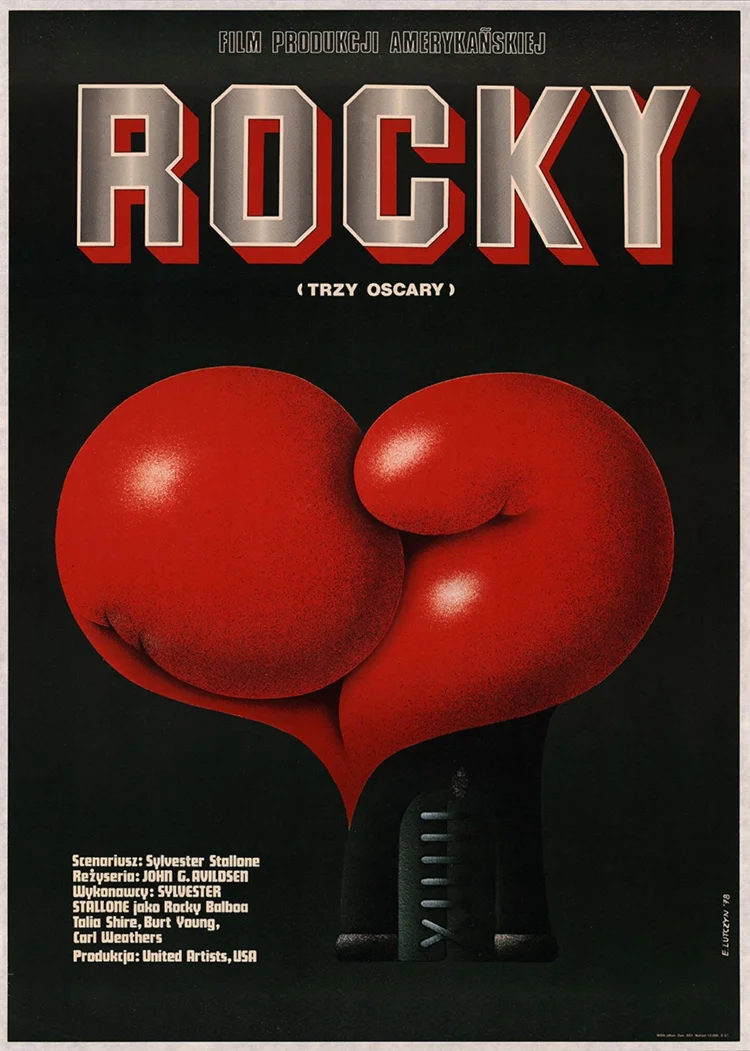
Polish Rocky Poster
Polish Back to the Future poster.
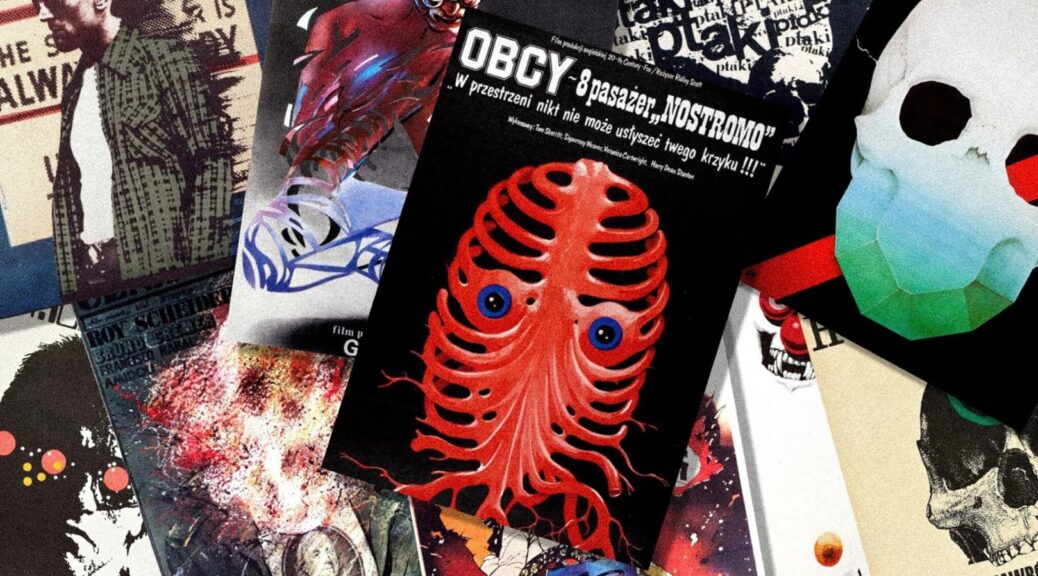
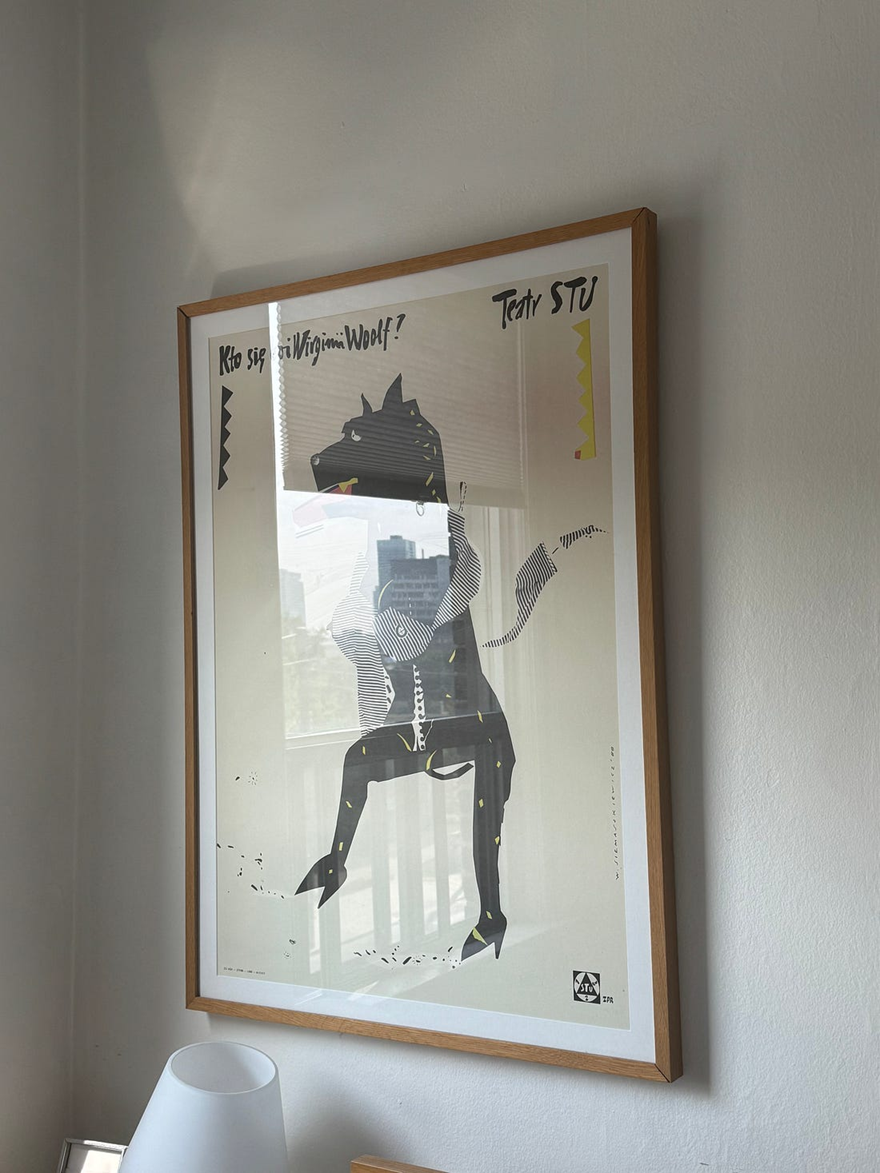
Years and years ago, on a trip to Cincinnati for the FotoFocus Biennial, I picked up this Polish theatre poster for a production of Who Killed Virginia Woolf. I love the history of Polish film posters, which have a distinct style that circumvented strict rules of the Stalinist regime around art making (you can read more about the history of that here). I love the weirdness and darkness of the posters, and with this particular poster, I love(d) the deeply pigmented pink.
Now I present my biggest art mistake:
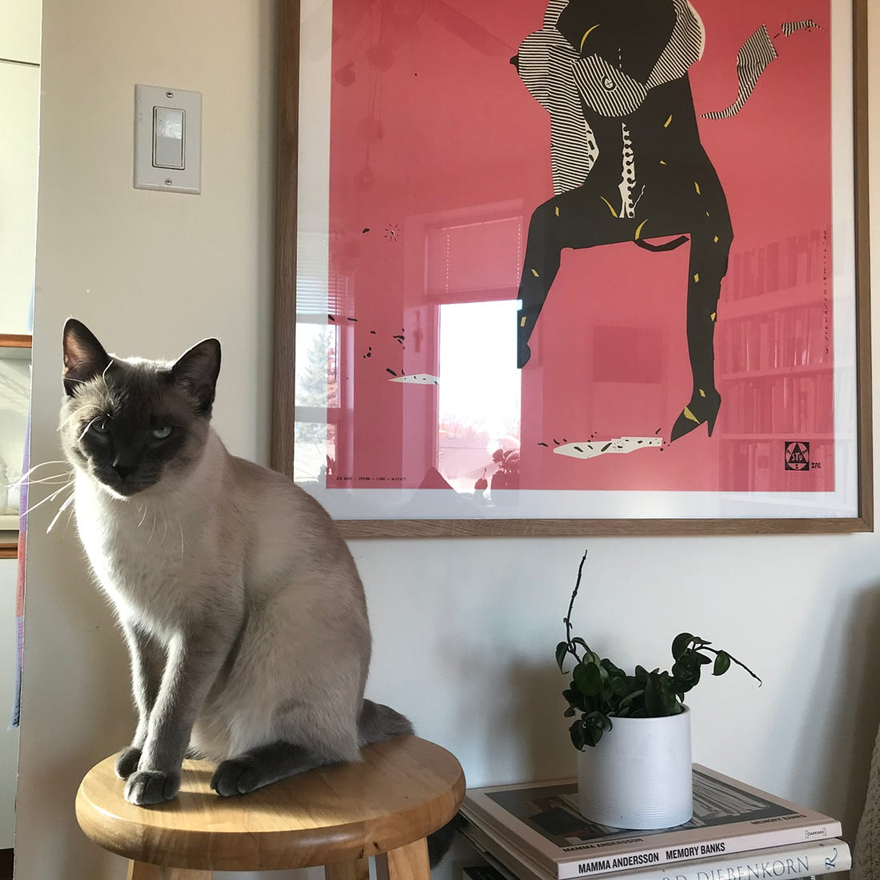
The poster four years ago:
Hi, Raffi
And the poster now:
I’m sure being directly beside a window doesn’t help matters
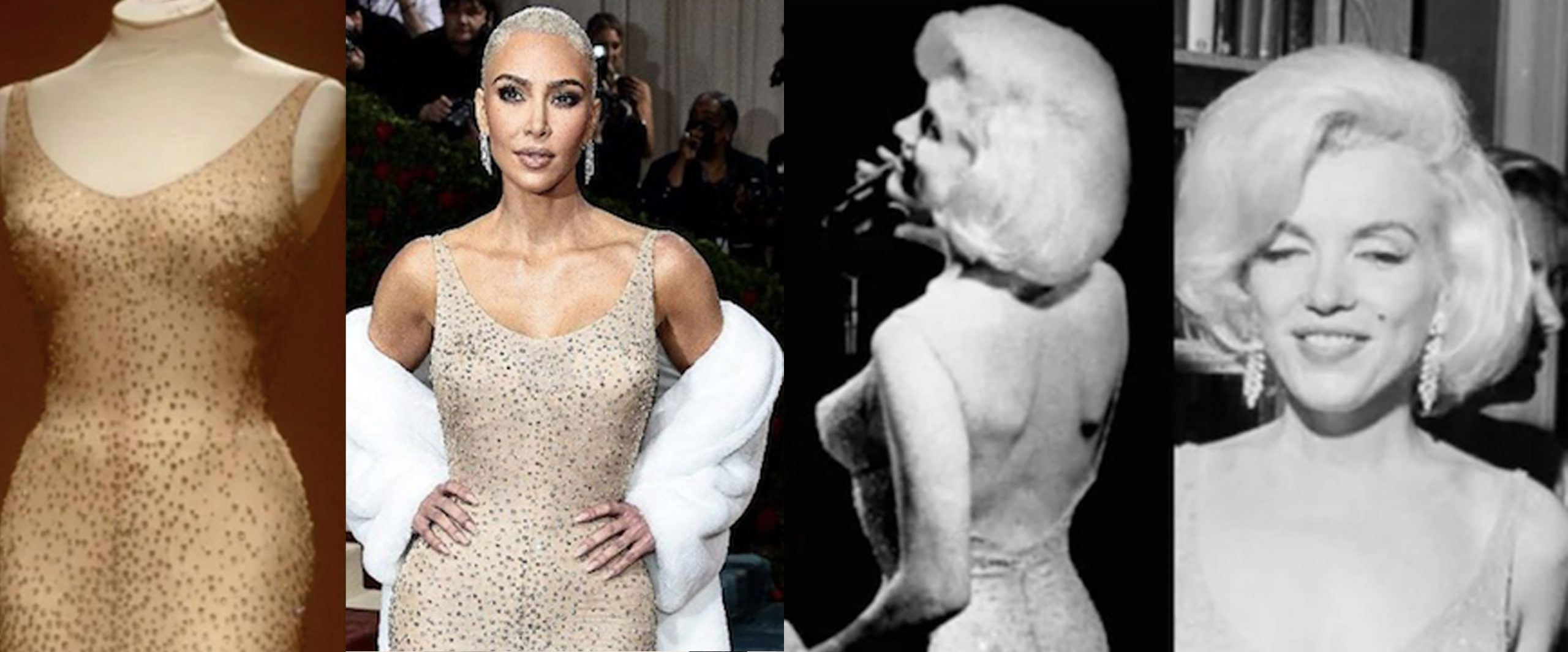
All the pink pigment is gone. Remember when Kim Kardashian wore Marilyn Monroe’s dress to the Met Gala and everyone was furious that she ruined something archival? That’s basically how I feel.
Lesson Learned: Go for the more expensive glass or acrylic option!
I emailed Mitch Robertson at Superframe, a top-of-the-line frame shop in Toronto, to ask about how I could have prevented this. His first response was to express disbelief: Were they really the same poster? Yes, unfortunately, it is.
He followed up with an in-depth breakdown of why the glass, specifically the UV protection, is important to consider when framing:
For art or anything that is light sensitive, the type of glass or acrylic used is one of the most important decisions in framing. The sun and any source of UV light can bleach or shift the colours in a print or photograph in particular and warm colours like red are the most susceptible.
To prevent this, clients should choose a glass or acrylic with a high UV filter. Standard glass and acrylic typically block around 50% of UV light. Conservation options block 99% of UV light but look much like regular glass. Finally, low reflection glass and acrylics offer a much better viewing experience and offer 92 to 99% UV protection.
There is a price difference between the three levels so deciding which option is right for you can depend on budget as well as the location the art will hang as well as how vulnerable the art is to UV light. A reputable framer should have a range of options available and can explain the pros and cons for each.
While the glazing is a very important part of the decision for protecting your new art, other factors such as how the art is hinged and the quality of matboard and backing will also affect the art over time and can lead to discoloration if the materials and hinging methods are not to museum standards.
Mitch’s response demonstrated something I came to learn the hard way: it’s not the time to cut costs when choosing the type of UV glass. A sidenote is I’ve also had polaroids fade after framing in store-bought frames, so if there are family photos that are important, the same lesson applies.
I then started thinking about a conversation I had in 2021 with Monique Palma Whittaker, an art conservator who works between Toronto and Italy. We discussed the importance of collectors being stewards of artworks, propelling them into the future for the next generation. This conversation has always stuck with me because it answers a question I think about often: What is the purpose of art collecting? The answer might be as simple as taking care of art for our lifetime, so that it can exist into the future. It’s a question of maintaining history!
When collecting, it’s not just about the cost of the artwork, but the cost to properly take care of it for its lifespan. If that price is too high, whether it be framing or a properly temperature-controlled room, then it’s better to collect something you can holistically afford to take care of. For the Silo, Tatum Dooley.
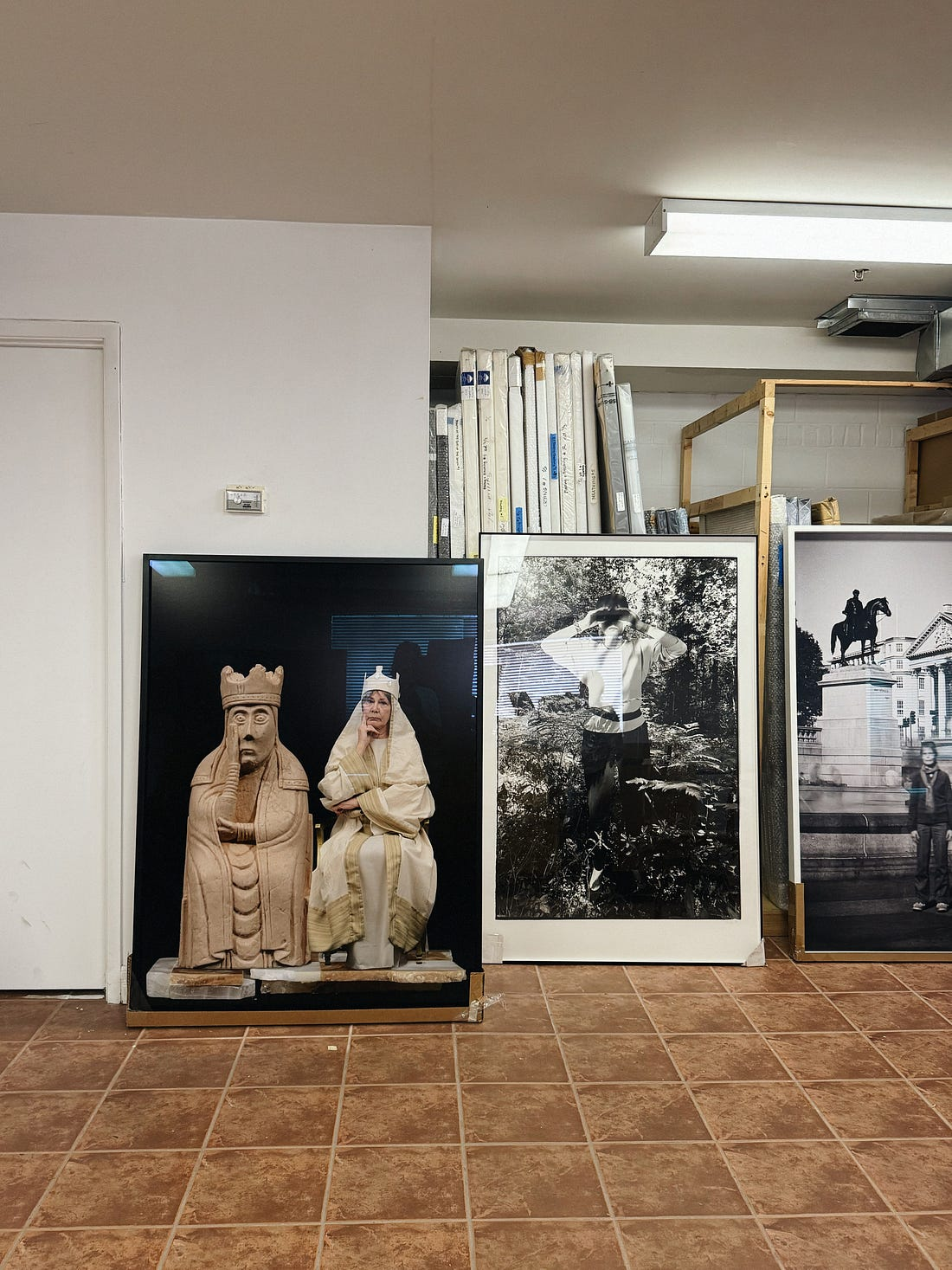
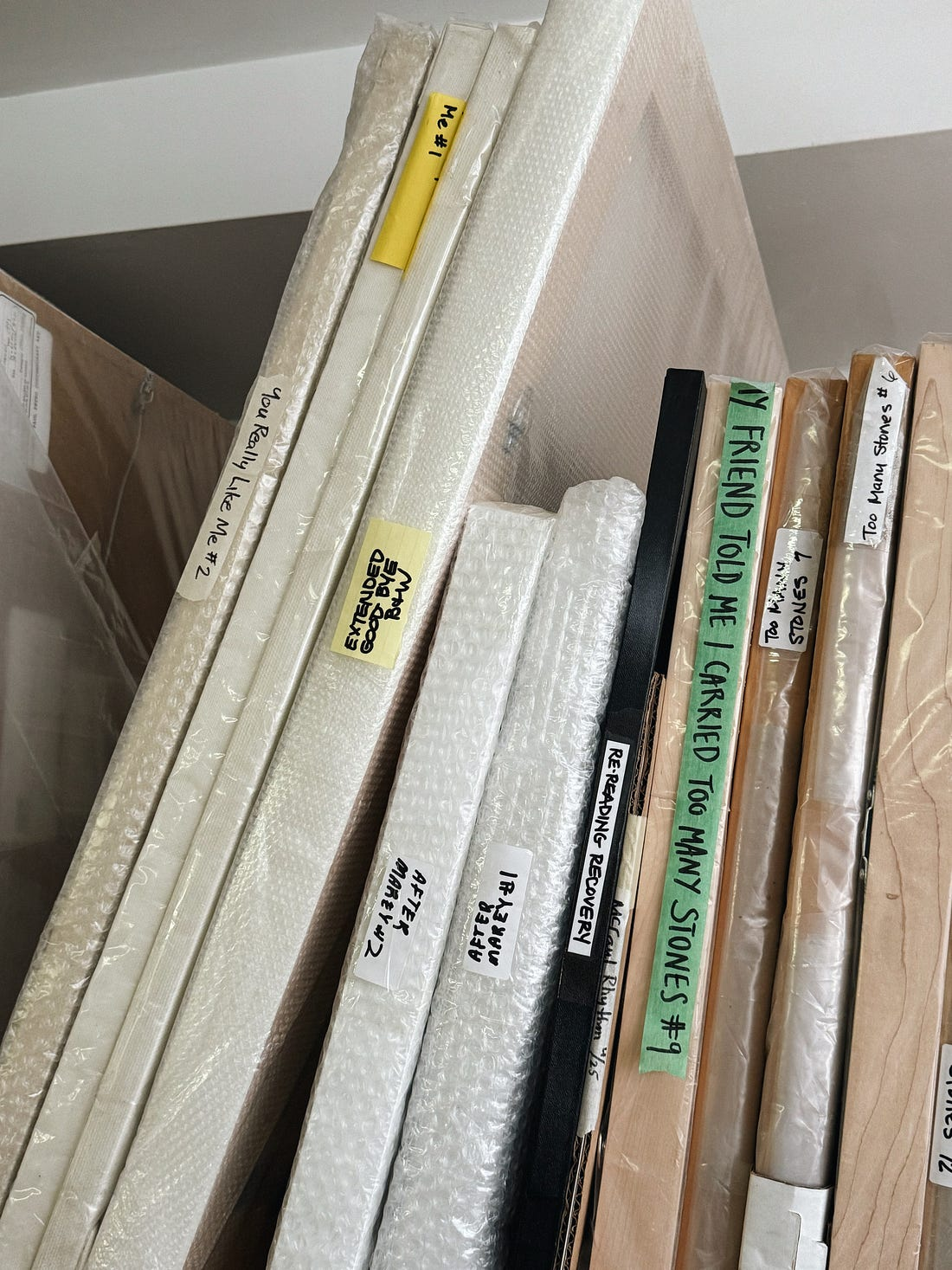
Roughly once a month, I visit an artist’s studio for the ongoing series Studio Visits. I take iPhone photos of the corners and nooks of their studio, offering a more intimate look into a practice that usually takes place behind closed doors. I’ve said it before, and I’ll say it again: it’s such a gift to be invited into an artist’s studio, which often doubles as a kind of sanctuary for them.I don’t often visit photographers’ studios.
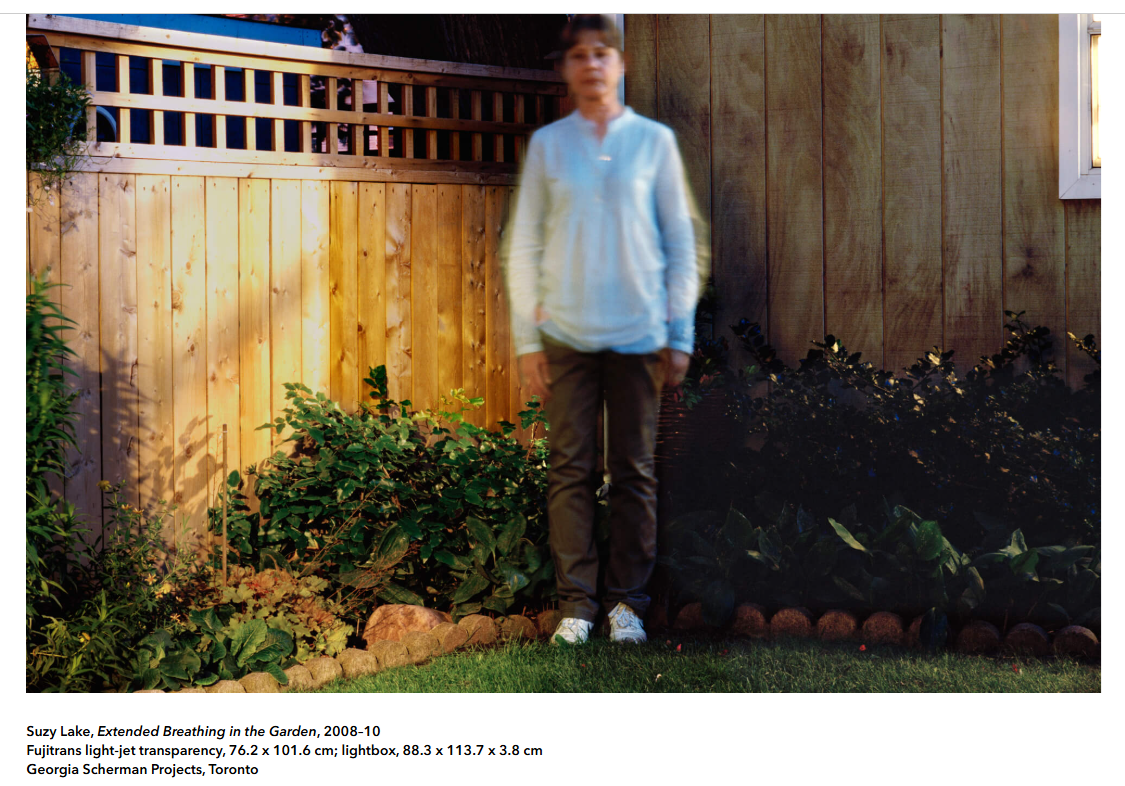
This changed a couple of weeks ago when I was invited to visit Suzy Lake at her studio in Toronto. I’m a huge fan of Lake, and I might have said as much a few times in our email correspondence, no doubt coming across as a crazed fan girl. But I’m a fan for good reason! An American-Canadian artist, Lake has been seminal in both countries for the last five decades. Her photographs combine self-portraiture and performance to comment on larger themes: political justice, the role of an artist, feminism, and aging.
She played a foundational role in shaping Conceptualism in Canada. There’s so much to admire in Lake’s career, and the work itself is equally compelling. So here I am, at Lake’s studio, one of the foremost photographers in Canada, and I am taking pictures. As you can imagine, I am very self-conscious. I start clicking away on my iPhone, no doubt diminishing the medium with my lack of artistic ability. (Of course, this series isn’t about the photos themselves, but a desire to document and archive important artist practices.)
For Lake, the act of photographing is important. The images are complex and layered. The photograph doesn’t happen the moment the shutter clicks, but in the process, creation, and performance that spans the duration of the photograph.For example, in her seminal series, Extended Breathing (2008-14) [see image below], Lake stands still for long enough to be picked up by the long exposure—at least 30 minutes. These photographs become touchstones for how we are remembered, the self as a constant, as life moves around us. Lake is asserting agency over the medium, conveying a powerful message through process.
Artist Bio: Suzy Lake is an American-Canadian artist based in Toronto, Canada. Lake’s work explores the politics of body and identity through performance, video and photography. Her later work addresses the ageing body, questioning structures of power politically and poetically. Lake’s work has been presented extensively across Canada and internationally at the Centre Pompidou-Metz, Museum of Modern Art (New York), Metropolitan Museum of Art (New York), National Gallery of Canada (Ottawa), Brandhorst Museum (Munich), Montreal Museum of Fine Arts, Vancouver Art Gallery, Hayward Gallery (London), Santa Monica Museum of Art, Los Angeles Museum of Contemporary Art, the Musée d’art contemporain de Montréal, and the Art Gallery of Windsor.
For the Silo, Tatum Dooley.
Featured image- Suzy-Lake_1983_Pre-Resolution_Using-the-Ordinances-at-Hand
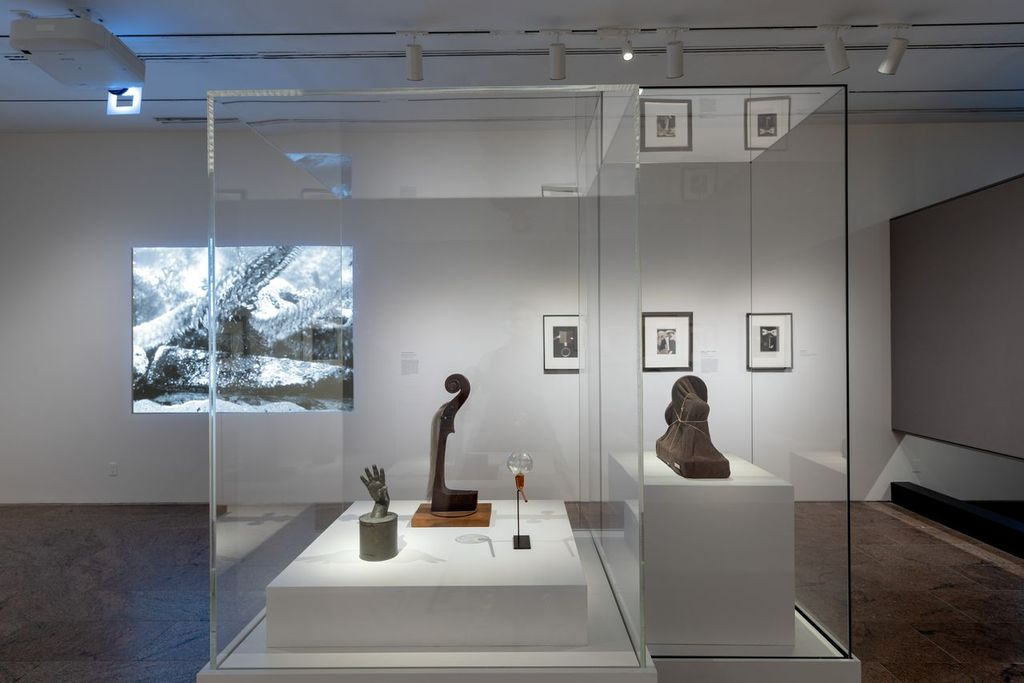
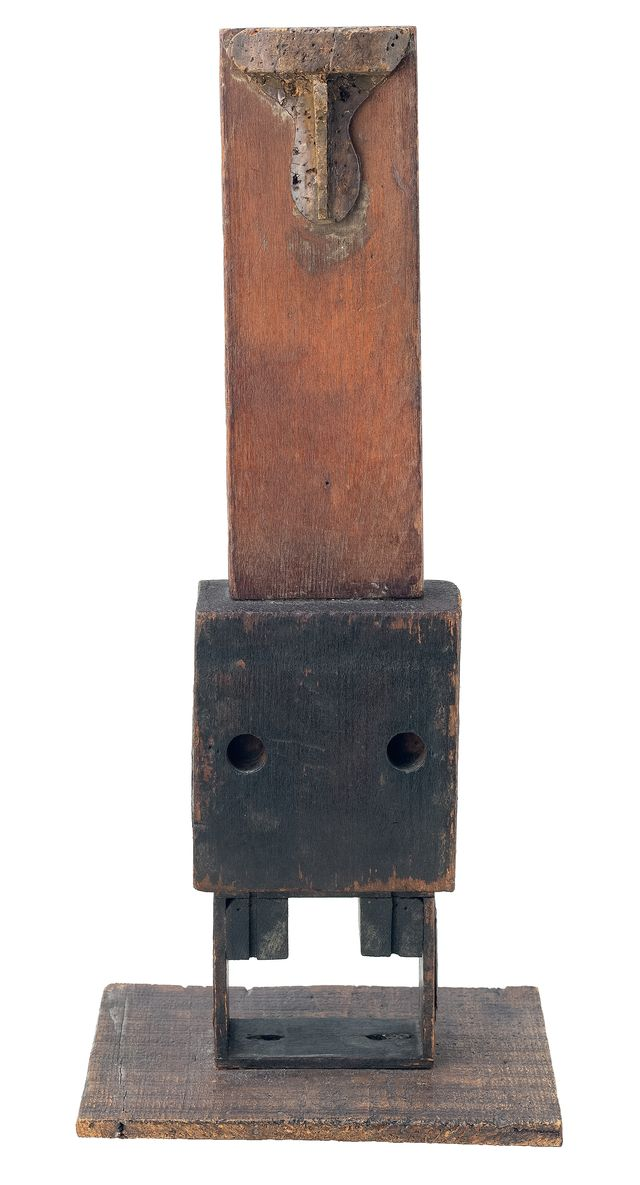
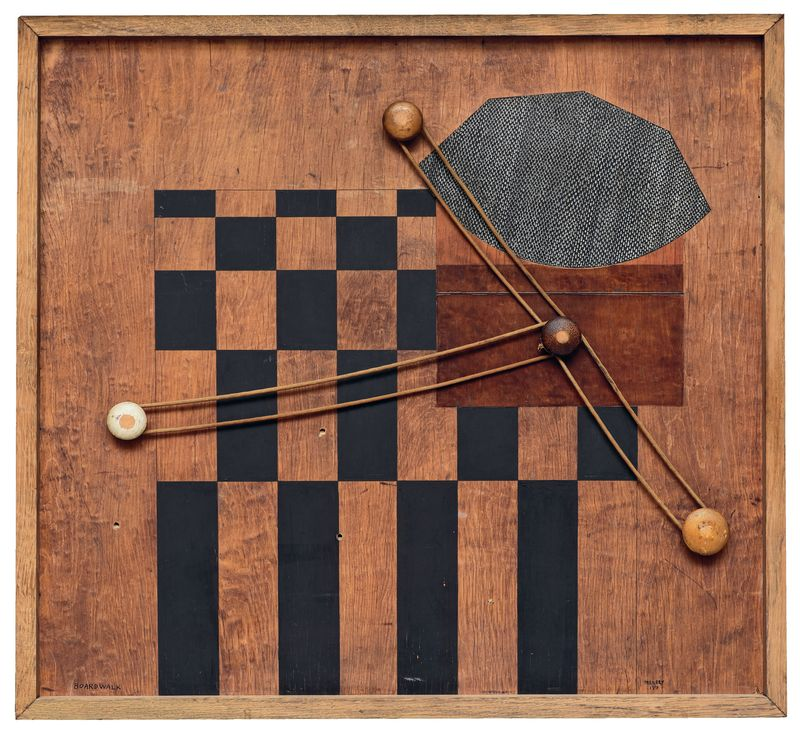
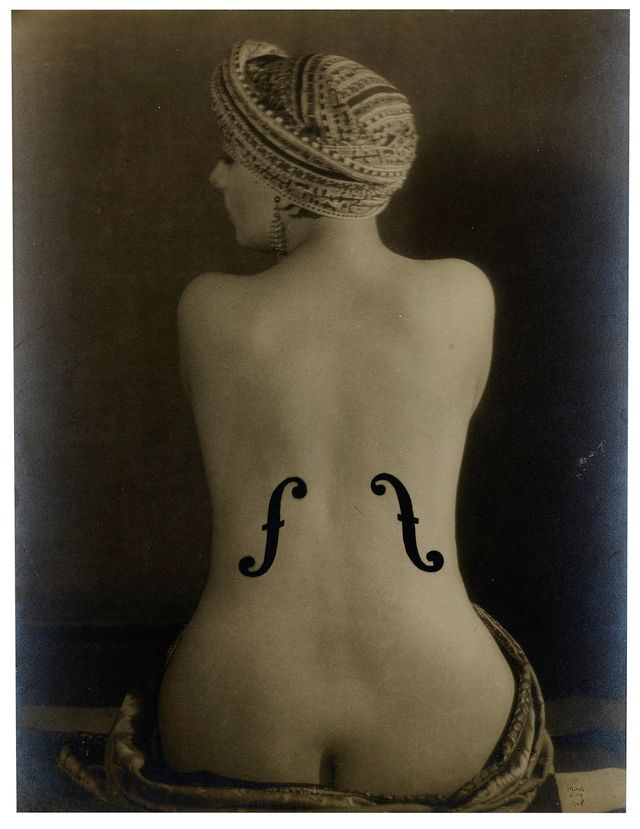
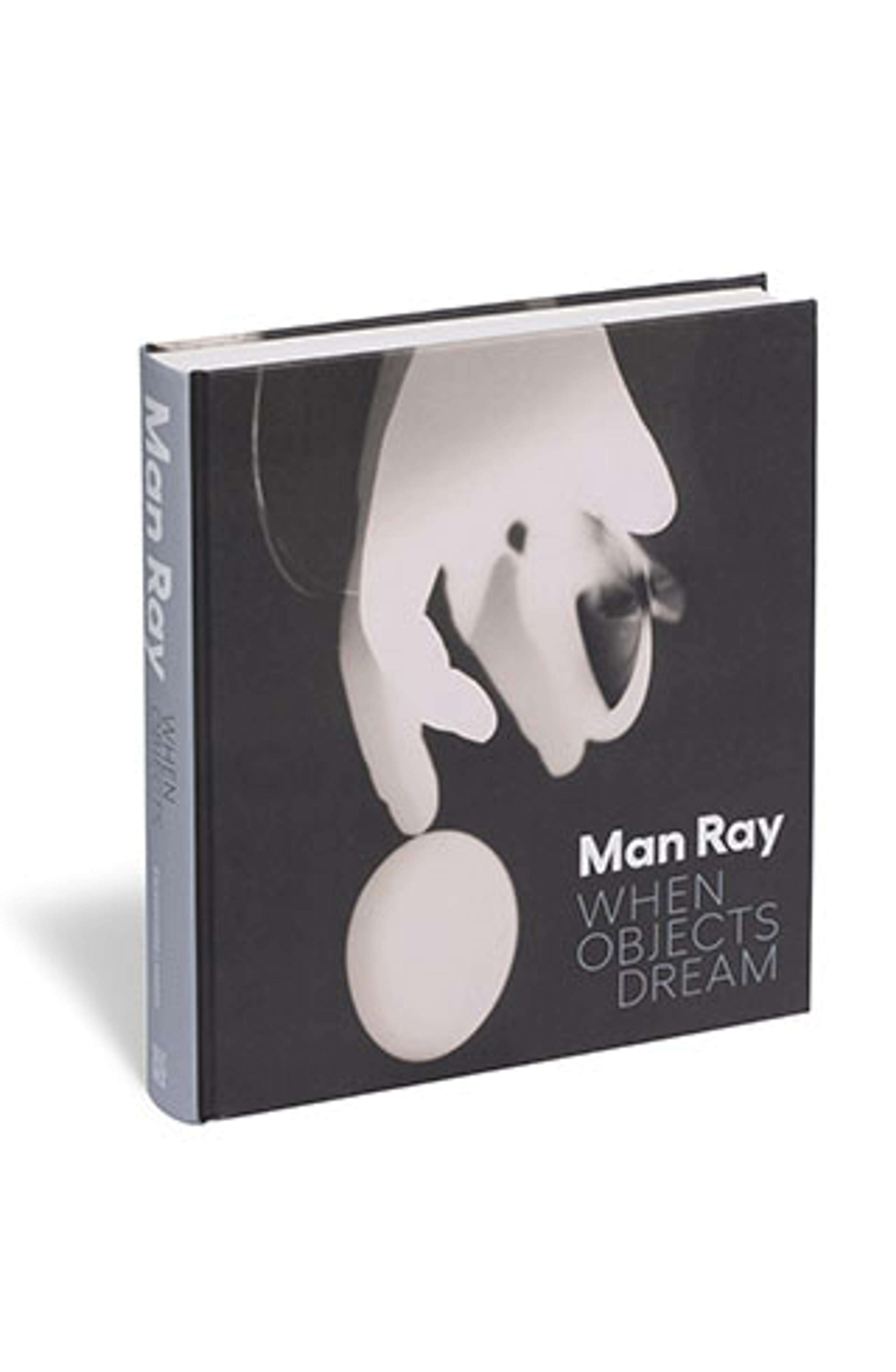
Installation view of Man Ray: When Objects Dream, on view September 14,2025–February 1, 2026at The Metropolitan Museum of Art. Photo by Anna-Marie Kellen, Courtesy of our friends at The Met.
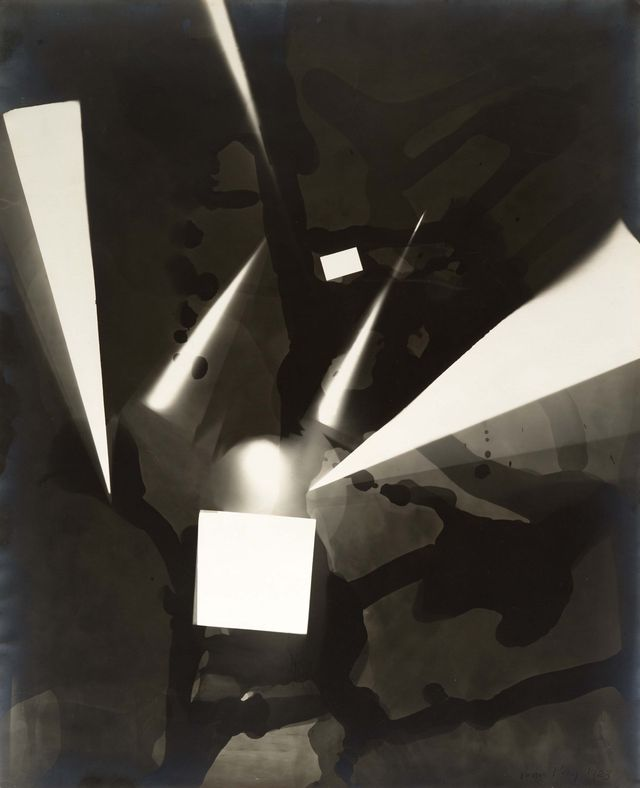
American artist Man Ray (1890–1976) was a visionary known for his radical experiments that pushed the limits of photography, painting, sculpture, and film. In the winter of 1921, he pioneered the rayograph, a new twist on a technique used to make photographs without a camera. By placing objects on or near a sheet of light-sensitive paper, which he exposed to light and developed, Man Ray turned recognizable subjects into wonderfully mysterious compositions.
Introduced in the period between Dada and Surrealism, the rayographs’ transformative, magical qualities led the poet Tristan Tzara to describe them as capturing the moments “when objects dream.”
The exhibition will be the first to situate this signature accomplishment in relation to Man Ray’s larger body of work of the 1910s and 1920s. Drawing from the collections of The Met and more than 50 U.S. and international lenders, the exhibition will feature approximately 60 rayographs and 100 paintings, objects, prints, drawings, films, and photographs—including some of the artist’s most iconic works—to highlight the central role of the rayograph in Man Ray’s boundary-breaking practice.
“Before my eyes an image began to form, not quite a simple silhouette of the objects as in a straight photograph, but distorted and refracted … In the morning I examined the results, pinning a couple of the Rayographs—as I decided to call them—on the wall. They looked startlingly new and mysterious.” — Man Ray
The exhibition is made possible by the Barrie A. and Deedee Wigmore Foundation.
Major funding is provided by Linda Macklowe, the Horace W. Goldsmith Foundation, The Daniel and Estrellita Brodsky Foundation, The International Council of The Metropolitan Museum of Art, Andrea Krantz and Harvey Sawikin, and Schiaparelli.
Additional support is provided by the Vanguard Council.
The catalogue is made possible by the Mellon Foundation.
Additional support is provided by James Park, the Carol Shuster-Polakoff Family Foundation, and Sharon Wee and Tracy Fu.
Exhibition Catalog
Man Ray: When Objects Dream
This volume is the first in-depth study of Man Ray’s groundbreaking rayographs of the 1920s and their interconnections with his Dada and Surrealist works.
American Federation of Arts Announces New Season of Touring Exhibitions for Fall 2025 through 2027 ‒ Museums in over 11 cities will headline art exhibitions created by the American Federation of Arts, with more cities to come ‒
The American Federation of Arts (AFA), the leader in traveling exhibitions worldwide since its founding in 1909, proudly announces the new season for the fall of 2025 through 2027. So far, museums in over 11 cities will headline several art exhibitions created by the AFA and its partners, with more cities to come. Throughout its celebrated 116-year history, the nonprofit institution has helped to spearhead the course of art for generations by enriching the public’s experience and understanding of the visual arts.
Pauline Forlenza at the 2024 AFA Gala in New York (Photo by Alycia Kravitz)
“The AFA’s expansive panorama of new exhibitions demonstrates the importance of listening to the input of visual arts leaders nationwide, focusing on what audiences want to see, and continuing our legacy of shining a light on new artists and trends,” says Pauline Forlenza, the Director and CEO of the American Federation of Arts. “Our longstanding commitment to touring art exhibitions, publishing exhibition catalogues with scholarly research, and developing educational programs is vital – now more than ever.”
These traveling museum shows will open doors to creativity for the next sixteen months to museumgoers. Some of the shows include:
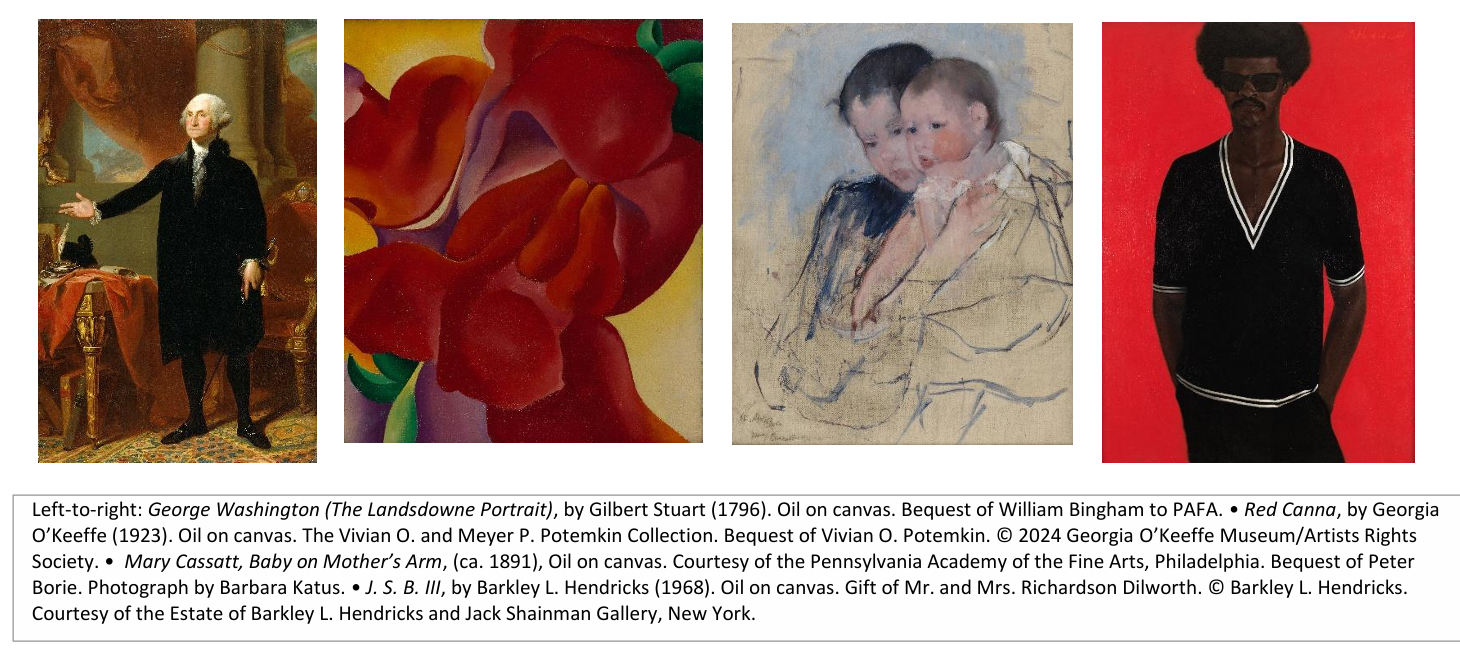
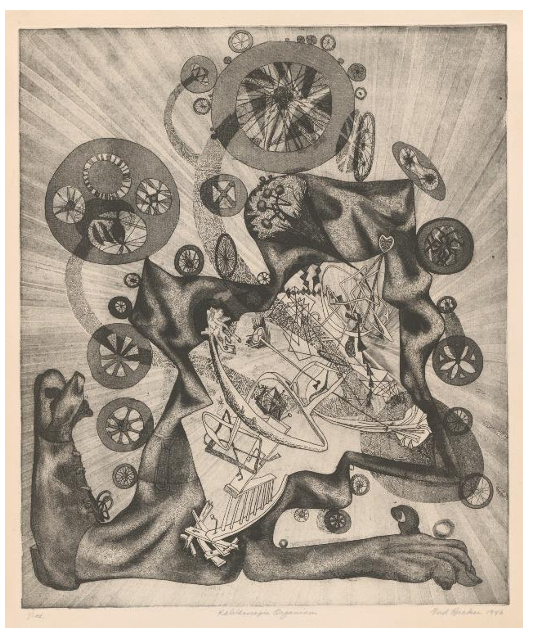
Abstract Expressionists: The Women • Alex Katz: Theater and Dance Civic Virtue in Rembrandt’s Amsterdam: 17th-Century Group Portraits from the Amsterdam Museum • Presence: The Photography Collection of Judy Glickman Lauder • Making American Artists: Stories from the Pennsylvania Academy of the Fine Arts, 1776–1976 • Experimental Ground: Modernist Printmaking in Paris & New York at Atelier 17
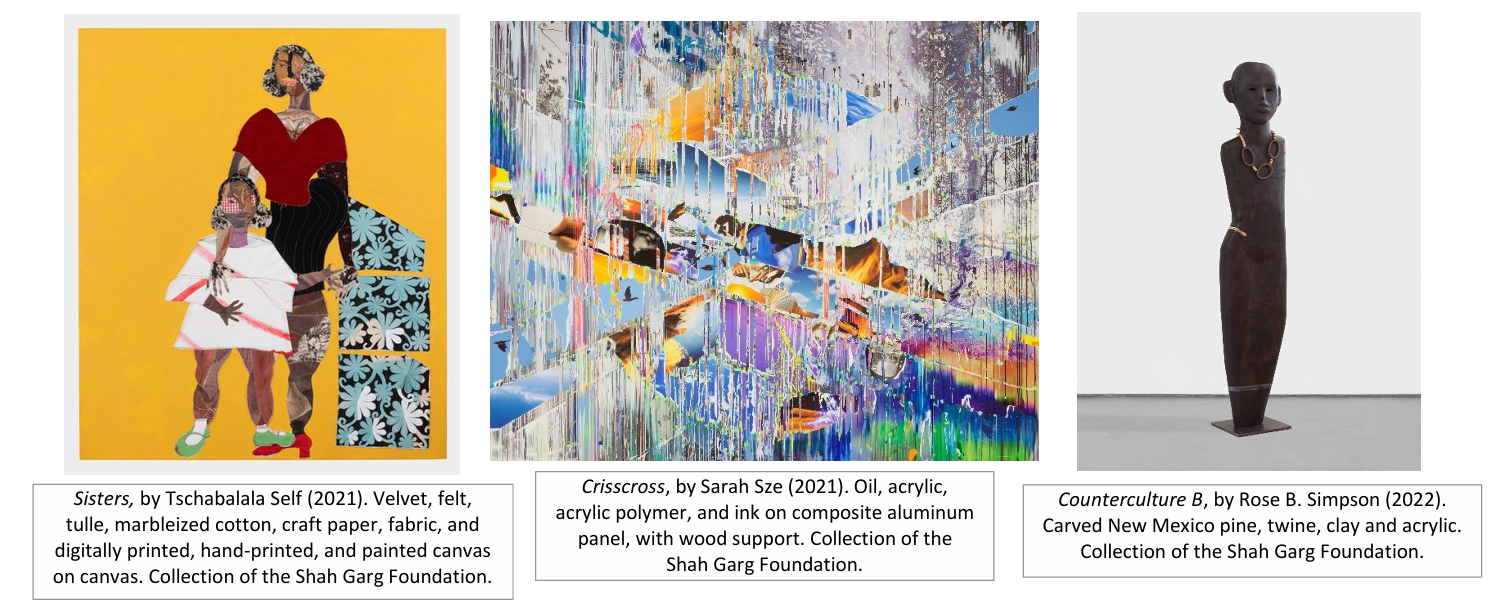
Making Their Mark: Works from the Shah Garg Collection, and more. Links to all of the AFA’s 2025 through 2027 exhibition tours may be viewed at: current shows and upcoming tours. Pauline Forlenza at the 2024 AFA Gala in New York (Photo by Alycia Kravitz)
Some of the museums across the country include: National Museum of Women in the Arts, Wichita Art Museum, Muscarelle Museum of Art, Southampton Arts Center, The Gibbes Museum of Art, Taubman Museum of Art, Peabody Essex Museum, Indianapolis Museum of Art, New Orleans Museum of Art, Mobile Museum of Art, and the Museum of Contemporary Art San Diego, among others.
Since 1909, the AFA has toured more than 3,500 exhibitions that have been viewed by millions of people in museums in every U.S. state, and in Canada, Latin America, Europe, Asia, and Africa. From the Smithsonian – “A vital part of American art history, the AFA was one of the first organizations to develop successfully the concept of traveling art exhibitions on a national and international level. Many arts organizations and museums have followed the AFA’s precedent. This national nonprofit museum service organization is recognized for striving to unite American art institutions, collectors, artists, and museums.”
“Through the years, the AFA has also had an impact on patronage in the arts. During its 116-year history, the Federation’s exhibitions of contemporary art provided collectors with knowledge of new artists and avant-garde art forms, creating a broader demand and market for this type of work. Museums and collectors began purchasing work by new or obscure American artists whom they learned about through AFA exhibitions and programs. The AFA also recognizes the importance of the exchange of cultural ideas.”
“Throughout its history, the organization has concentrated on its founding principle of broadening the audiences for contemporary American art, breaking down barriers of distance and language to expand the knowledge and appreciation of art. The touring exhibitions have brought before the public contemporary American artists and craftspeople, genres, and artistic forms of experimentation – exposing viewers to new ways of thinking and expression.”
Highlights from the New Season
View the full list of tours at: amfedarts.org/exhibitions/current and amfedarts.org/exhibitions/upcoming-exhibitions/. The complete lists of current and upcoming touring museum shows are updated regularly, as new exhibitions and new museum dates are added. Following are highlights of eight of the AFA exhibitions that will be touring during the fall of 2025 through 2027.
Abstract Expressionists: The Women
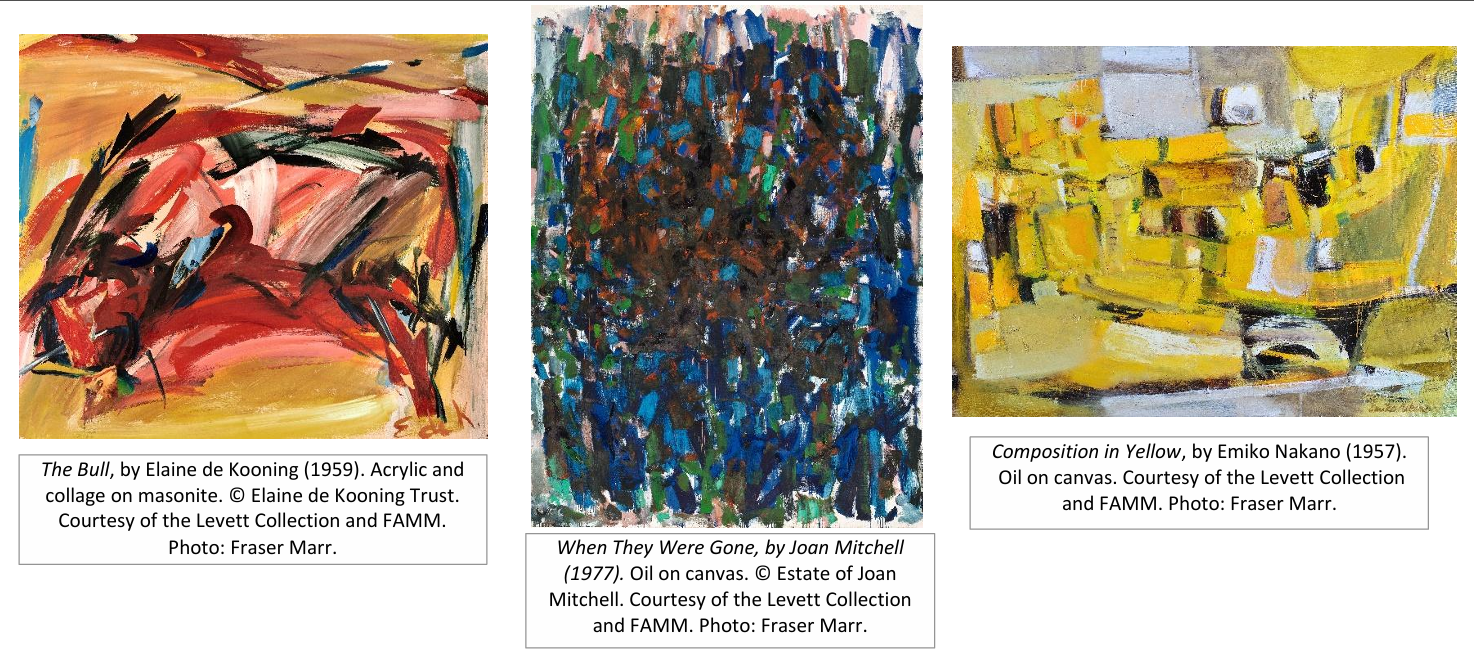
Explores the vital, under-acknowledged innovation of women artists in the Abstract Expressionist movement, the first internationally renowned artistic movement to originate in the U.S. • Featuring 47 works from The Levett Collection, by more than 30 women artists who worked in New York, California, and Paris from the early 1940s through the 1970s.
“Too often, the canon of art history has relegated women artists to supporting roles in major art movements,” says Pauline Forlenza, the Director and CEO of the AFA. “This exhibition upends that narrative, asserting that women painters were critical contributors to the formulation of Abstract Expressionism from the very beginning.
Equally talented and visionary, the female artists featured in this show helped put American art on the map,” adds Forlenza. The exhibition is organized by the American Federation of Arts from the Christian Levett Collection and FAMM (Female Artists of the Mougins Museum), France. This exhibition is curated by Ellen G. Landau, PhD, Andrew W. Mellon Professor Emerita of the Humanities at Case Western Reserve University.
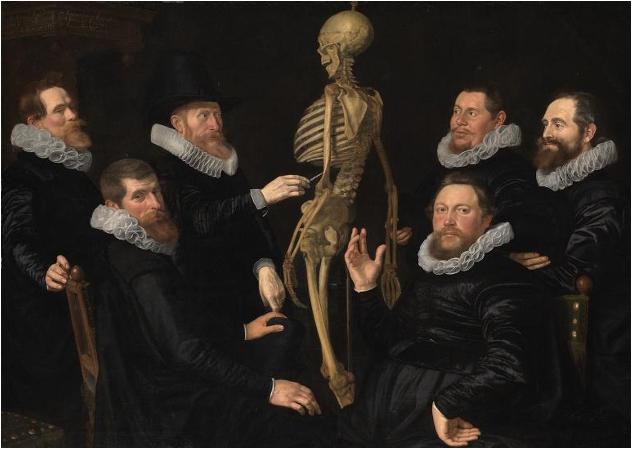
17th-Century Group Portraits from the Amsterdam Museum
The large group portraits in this exhibition have rarely left Amsterdam since they were commissioned in the 1600s, and have never traveled in the U.S. as a group. • The show traces how life in the largest and most important city of Holland was based on the collective responsibility of the burghers, who combined their mercantile wealth with political power. • Amsterdam’s economic success, however, was the result of ruthless trade wars within Europe, colonization and enslavement overseas. • Artists include Adriaen van Nieulandt, Gerrit Berckheyde, Ludolf Bakhuizen, Frederik Jansz, Dirck Santvoort, Ferdinand Bol, Bartholomeus van der Helst, Nicolaes Eliasz Pickenoy, Jan Victors, and of course, Rembrandt van Rijn. • By governing and guarding the city, by organizing and managing a social safety net for the poor and needy, and by stimulating scientific and industrial developments, the burghers contributed to making Amsterdam the most prosperous city in Europe.
The Osteology Lesson of Dr. Sebastiaen Egbertsz, artist unknown (1619). Oil.
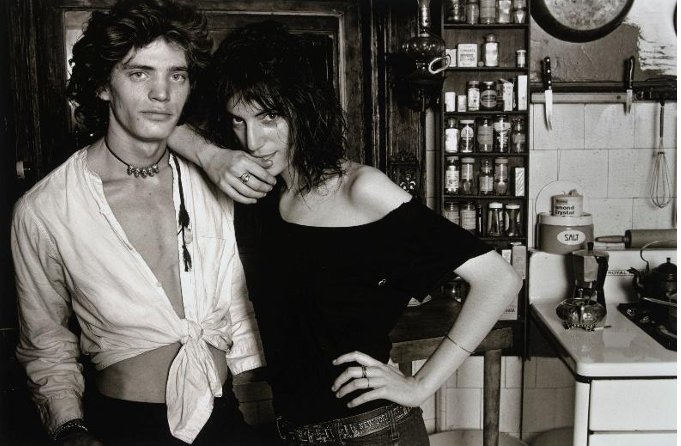
Presence: The Photography Collection of Judy Glickman Lauder 100 photographs by 70 artists. • Explores the concept of presence through the tenderness of portraits, the awe within landscapes, the clarity of reportage, and the spontaneity of cityscapes. • Works by Merry Alpern, Diane Arbus, Richard Avedon, Irving Bennett Ellis, Nan Goldin, Dorothea Lange, Danny Lyon, Sally Mann, Susan Meiselas, Helmut Newton, Ruth Orkin, Gordon Parks, Edward Steichen, Joyce Tenneson, James Van Der Zee, Todd Webb, Edward Weston, and more. • Photographs can be imprinted with the totality of human experiences, and this exhibition embraces that totality, examining the deeply humanistic history of photography.
Robert Mapplethorpe and Patti Smith, New York, by Norman Seeff (1969). Archival pigment print. Portland Museum of Art, promised gift from the Judy Glickman Lauder Collection.
Making American Artists: Stories from the Pennsylvania Academy of the Fine Arts, 1776–1976
Presenting more than 100 of the most acclaimed and recognizable works of American art. • New narratives of the history of American art, embracing stories about women artists, LGBTQ+ artists, and artists of color, alongside iconic works traditionally associated with PAFA. • Women artists participated in PAFA’s exhibitions as early as 1811, and this show includes paintings by Sarah Miriam Peale, Mary Cassatt, Cecilia Beaux, Alice Neel, and May Howard Jackson (the first African American woman to receive a scholarship to attend PAFA, in 1895). • By 1900, PAFA acquired its first work by a Black artist, Henry O. Tanner. PAFA educated African American artists and acquired their works throughout the twentieth century, and this show features works by Joshua Johnson (one of the first professional Black artists in America), Dox Thrash, Laura Wheeler Waring, Edward Loper, and Barkley L. Hendricks.
Curated by Anna O. Marley, PhD., a scholar of American art and material culture from the colonial era to today.
The first comprehensive museum presentation of Katzʼs highly collaborative and playful work with choreographers, dancers, and members of avant-garde theater ensembles over six decades. • Showcases Katz’s deep and lasting influence on the history of the American performing arts. • Rare archival materials, major sets and paintings, and previously unexhibited sketches from more than two dozen productions. • Spotlights fifteen productions that Katz produced with Paul Taylor, exploring their creative partnership that generated some of the most significant postmodern dance and art of the twentieth century. • Artworks from the show are drawn from the Alex Katz holdings at the Colby College Museum of Art (home to a collection of nearly 900 works by the artist), from Paul Taylor Dance Archives, and from the artist’s studio.
• Provides an innovative kind of retrospective: that of an artistic sensibility. • Attesting to the intertwined histories of painting and stage design in Katzʼs works. • Curated by Levi Prombaum, former Katz Consulting Curator, Colby College Museum of Art.
Willie Birch: Stories to Tell
Chronicles Birch’s unique vision of the Black American experience and examines the interconnected nature of global art forms. • The first ever career retrospective brings together groundbreaking works from the early 1970s to the present.
Throughout his career, the artist has explored how African traditions have been retained in music, art, and culture in America and beyond. • Birch was raised in New Orleans and trained in Europe, Baltimore, and New York. • His work as an artist, community organizer, and cultural provocateur questions why certain things are retained and not others, unearthing uncomfortable truths about American identity, but also offering possibilities for greater cultural awareness.
Left to-right: Memories of the 60’s, by Willie Birch (1992). Papier mâché, mixed media. Courtesy of Arthur Roger Gallery, New Orleans. • Uptown Memories (A Day in the Life of the Magnolia Project), by Willie Birch (1995). Painted papier-mâché and mixed media. New Orleans Museum of Art, Gift of Frederick R. Weisman. Image Copyright of New Orleans Museum of Art / Photo: Roman Alokhin.
Making Their Mark: Works from the Shah Garg Collection
Reveals the intergenerational relationships fostered among women artists over the last eight decades, assembling over 70 works made by 60 women artists between 1946 and today. • Sculpture, painting, installation, textiles, pottery, and mixed media works all converge. • Pioneering examples of post-war abstraction —including early works by Janet Sobel, Judy Chicago, and Mary Corse — are shown alongside compositions by leading contemporary artists such as Julie Mehretu, Lorna Simpson, and Aria Dean. • Paintings and mixed media works by Christina Quarles, Tschabalala Self, and Firelei Báez blur the boundaries between abstraction and figuration. • Connections between the handmade and digital emerge in the various forms of piecework employed in Faith Ringgold’s quilts, Howardena Pindell’s collages, and the pixelated, hypermediated canvases made by Jacqueline Humphries and Anicka Yi.
Works by the Freedom Quilting Bee, Françoise Grossen, and Sheila Hicks explore irregular geometries and eccentric abstractions via fabric and fiber. • Curated by Cecilia Alemani of High Line Arts in New York City. Sisters, by Tschabalala Self (2021). Velvet, felt, tulle, marbleized cotton, craft paper, fabric, and digitally printed, hand-printed, and painted canvas on canvas. Collection of the Shah Garg Foundation. Crisscross, by Sarah Sze (2021). Oil, acrylic, acrylic polymer, and ink on composite aluminum panel, with wood support. Collection of the Shah Garg Foundation. Counterculture B, by Rose B. Simpson (2022). Carved New Mexico pine, twine, clay and acrylic. Collection of the Shah Garg Foundation.
Experimental Ground: Modernist Printmaking
In Paris & New York at Atelier 17 The first large-scale survey of original prints made at Atelier 17 to tour the U.S. in 50 years. • This revolutionary printmaking workshop (1927 to 1988) was famous for its impact on the development of modern art.
Kaleidoscopic Organism, by Fred Becker (1946). Softground etching. Courtesy of O’Brien Art Project Foundation.
It served as a hub of artistic and intellectual exchange — first for Surrealists in interwar Paris, and after World War II for the exploration of abstraction and other modernist styles. • Commemorates 100 years since the founding of the studio. • Presents works by notable artists who gained formative skills at Atelier 17, such as Joan Miró, Yves Tanguy, Louise Bourgeois, Franz Kline, Jackson Pollock, Louise Nevelson, and Krishna Reddy, among many other artists who participated in intense collaborations at the studio. • Atelier 17 attracted hundreds of international artists, drawn to the radical vision of printmaking as a mode for experimentation rather than reproduction.
About the American Federation of Arts
The American Federation of Arts (AFA) is the leader in traveling exhibitions in the U.S. and worldwide. One of the first to successfully tour art exhibitions on a national and international level, the organization unites American art institutions, collectors, artists, and museums. The AFA has toured more than 3,500 exhibitions that have been viewed by millions of people in museums in every U.S. state, and in Canada, Latin America, Europe, Asia, and Africa.
A nonprofit organization founded in 1909, AFA is dedicated to enriching the public’s experience and understanding of the visual arts through organizing and touring art exhibitions for presentation in museums around the world, publishing exhibition catalogues featuring important scholarly research, and developing educational programs.
Abstract Expressionists: The Women is organized by the American Federation of Arts from the Christian Levett Collection and FAMM (Female Artists of the Mougins Museum), France. The exhibition is curated by Dr. Ellen G. Landau. It is generously supported by Berry Campbell Gallery, Betsy Shack Barbanell, Monique Schoen Warshaw, Christian Levett, and Clare McKeon and the Clare McKeon Charitable Trust. Additional support has been provided by the Pollock-Krasner Foundation and the Every Page Foundation.
Making Art, Making History: 200 Years of American Stories from the Pennsylvania Academy of the Fine Arts is co-organized by the American Federation of Arts and the Pennsylvania Academy of the Fine Arts. Lead support was provided to PAFA by the William Penn Foundation, with additional support from the Richard C. von Hess Foundation and donors to PAFA’s Special Exhibitions Fund. In-Kind support is provided by Christie’s and Gill & Lagodich Fine Period Frames, New York. This exhibition is supported by an indemnity from the Federal Council on the Arts and the Humanities.
Alex Katz: Theater and Dance is organized by the American Federation of Arts and Colby College Museum of Art. This exhibition is curated by Levi Prombaum, former Katz Consulting Curator, Colby College Museum of Art. The 2022 presentation of Alex Katz: Theater and Dance was organized by the Colby Museum with curatorial guidance from Robert Storr.
Willie Birch: Stories to Tell is co-organized by the American Federation of Arts and the New Orleans Museum of Art. Major support for the exhibition and catalogue is provided by the Andy Warhol Foundation for the Visual Arts, the Henry Luce Foundation, Wyeth Foundation for American Arts, and the Terra Foundation for American Art.
Making Their Mark: Works from the Shah Garg Collection is organized by the American Federation of Arts and the Shah Garg Foundation. The exhibition is curated by Cecilia Alemani, the Donald R. Mullen, Jr. Director and Chief Curator of High Line Arts in New York City.
Experimental Ground: Modernist Printmaking in Paris & New York at Atelier 17 is organized by the American Federation of Arts. This exhibition is curated by Ann Shafer and Christina Weyl. Civic Virtue in Rembrandt’s Amsterdam: 17th-Century Group Portraits from the Amsterdam Museum is organized by the American Federation of Arts.
Presence: The Photography Collection of Judy Glickman Lauder is co-organized by the Portland Museum of Art, Maine, and the American Federation of Arts.
Untitled. abstract expressionism- oil on canvas Jarrod Barker 2021
New Landmark Exhibition at The Met to Explore Powerful Imagery of the Gods of Ancient Egypt
Over 200 stunning works on view together for the first time will reveal how ancient Egypt’s important gods were believed to manifest themselves through extraordinary imagery and depictions. Exhibition Dates: Oct 12, 2025–Jan 19, 2026 Location: The Met Fifth Avenue, The Tisch Galleries, Gallery 899, 2nd floor
(New York, July, 2025)—Divine Egypt at The Metropolitan Museum of Art—the first major exhibition of Egyptian art at the Museum in over a decade—will explore how images of gods in ancient Egypt were experienced not merely as spiritual depictions in temples, shrines, and tombs but were the instruments that brought the gods to life for daily worship, offering ancient Egyptians a vital connection between the human and divine worlds. Opening on October 12, the exhibition will bring together over 200 spectacular works of art to examine the imagery associated with the most important deities in ancient Egypt’s complex and always-expanding constellation of gods.
Over more than 3,000 years, the Egyptian people’s belief system grew to include more than 1,500 gods with many overlapping forms and traits. Divine Egypt will feature impressive works of art, ranging from monumental statues to small elegant figurines in gleaming gold and silver and brilliant blue faience, that represent 25 of ancient Egypt’s principal deities, including the stately falcon-headed Horus, the potentially dangerous lion-headed Sakhmet, the great creator-god Re, and the serene mummiform Osiris. The exhibition will reveal the ways in which subtle visual cues, like what a figure wore, how they posed, or the symbols they carried, helped identify them and their roles.
The exhibition is made possible by The John A. Moran Charitable Trust.
Additional support is provided by the Kelekian Fund, Alaina and Stirling Larkin, and Norby Anderson.
“Divine Egypt will immerse visitors in the breathtaking imagery of the most formidable ancient deities and expansive universe of the Egyptian gods,” said Max Hollein, The Met’s Marina Kellen French Director and Chief Executive Officer. “The Museum’s galleries for Egyptian art are among the most beloved by our millions of yearly visitors, and this dazzling exhibition brings together some of our most exquisite works with loans from leading global institutions for an exceptional, once-in-a-lifetime exhibition of ancient Egyptian art.”
The exhibition will include magnificent works of ancient Egyptian art that have never been exhibited together before, many of them on loan from institutions such as the Museum of Fine Arts, Boston; the Musée du Louvre, Paris; and the Ny Carlsberg Glyptotek, Copenhagen. There will also be over 140 works from The Met’s own iconic Egyptian art collection. Highlights range from impressive sculpture to a striking pectoral in gold and lapis (the substances that the bodies of gods were believed to be made of) to detailed metal and wood sculptures. A solid gold statue of the god Amun will adorn a re-creation of a divine barque, a type of boat that held the principal deity of a temple and would be paraded through the streets during festivals so that people could commune directly with the god. Each section of the exhibition will provide an immersive opportunity to examine the ways in which the kings and people of ancient Egypt recognized and interacted with their gods.
“The ways in which the ancient Egyptian gods were depicted are vastly different from the divine beings in contemporary religions and therefore are intriguing to modern audiences,” said Diana Craig Patch, Lila Acheson Wallace Curator in Charge of Egyptian Art. “The identity of an ancient Egyptian god may at first seem easy to recognize but looks can be deceiving, as one form can be shared by many deities. Across more than 3,000 years of history, gods, attributes, roles, and myths were rarely dropped from use, yet the Egyptians of the time had no difficulty understanding and accepting the resulting multiplicity. Through hundreds of spectacular objects, Divine Egypt will allow visitors to understand the complex nature of these deities and help translate the images that were needed to make the inhabitants of the celestial realm available to ancient Egyptians.”
By focusing on the imagery associated with many of the most important and powerful deities in ancient Egypt, the exhibition will reveal the multifaceted nature of ancient Egyptian religion as well as the ease with which ancient Egyptians connected with their complicated divine landscapes. Some deities deceptively employed the same imagery with the result that one form could be shared by many gods, while in other cases the roles of deities would expand or change over ancient Egypt’s long history, with one god taking on many forms. The evolution of this landscape over time created deities with numerous roles often having a different representation for each manifestation. Hathor, for example, can appear as a cow, a woman wearing a headdress of horns protecting a sun disk, or a human-headed snake, while some gods maintained consistent forms over thousands of years, like Ptah, who is almost always mummiform and wears a cap.
Divine Egypt will also look at how two categories of society interacted differently with the gods: the Pharaoh and high priests had access to the gods in daily temple rituals, while non-royal Egyptians were not permitted to enter the inner sanctuaries of the great temples where the deities came to Earth and inhabited their images. Through objects of private devotion, including donations to offering tables and shrines in temples and images of deities found in homes and villages, the people of Egypt could find support from their gods daily.
The exhibition will conclude with artifacts relating to the transition to the next life—a reality shared by Egyptians of all rank—with depictions of the gods who together oversaw each person’s passage from this world to the next: chief god of the underworld, Osiris, supported by his sisters, Isis and Nephthys, and Anubis, the canid-headed god who supervises the embalming process.
Credits and Related Content
Divine Egyptis curated by Diana Craig Patch, Lila Acheson Wallace Curator in Charge of Egyptian Art at The Met, with Brendon Hainline, Research Associate, Department of Egyptian Art.
A fully illustrated catalogue will accompany the exhibition and be available for purchase from The Met Store.
The catalogue is made possible by the Kelekian Fund.
Additional support is provided by Patricia A. Cotti.
The Met will host a variety of exhibition-related educational and public programs, including “Sunday at The Met” on Sunday, October 19; Met Expert Talks; an afternoon of scholarly presentations on Thursday, December 4; a film screening; and art-making workshops at both the Museum and offsite with community partners. More details will be announced at a later date.
Education programs are made possible in part by the CORA Foundation.
The exhibition is featured on The Met website, as well as on social media.
Inuit artist Shuvinai Ashoona, recently received the King Charles Award III Coronation Medal for her long-standing contributions to the arts, which has brought international attention to Canada’s northern landscapes and contemporary Inuit art.
She is the first Inuit artist from West Baffin Cooperative to receive the prestigious award, and adds to her international acclaim as one of Canada’s preeminent visual artists. She previously was awarded a Governor General Award in Visual and Media Arts in 2024 and the prestigious Gershon Iskowitz Prize in 2018
West Baffin Cooperative. Established in 1959.
“It’s something like a strange thing to get an award from the King of England,” said Shuvinai Ashoona, who works from her home studio in Kinngait, Nunavut. “He probably hasn’t seen my drawings, but I hope that someday, he’ll get to know what my art is all about.”
Photo: William Ritchie
Never content to follow rules and expectations, Ashoona’s unconventional artistic vision has successfully challenged and revolutionized how the public perceives Inuit art and contemporary Indigenous art more generally, helping to create a new space for expression and artistic freedom.
SHUVINAI ASHOONA UNTITLED,2009 Graphite,Coloured Pencil 56 x 76 cm
Her artwork has been showcased across Canada and around the world including at the National Gallery of Canada, the Institute of Contemporary Art Miami, and the 59th International Art Exhibition, also known as the Venice Biennale. In September 2025, Ashoona’s artwork will be featured in Brazil at the 36th São Paulo Biennial. For the Silo, Paul Clarke.
The Met Receives Landmark Gift of More Than 500 of the Finest Guitars from the Golden Age of American Guitar Making With this collection, the Museum will become an epicenter for the celebration and study of this iconic instrument
(New York, May, 2025)—The Metropolitan Museum of Art announced today that it has received a landmark gift of more than 500 of the finest guitars from the golden age of American guitar making, spanning the years 1920 to 1970. This new collection of the most important guitars, anchored by a major gift from collector Dirk Ziff, will showcase the profound impact this celebrated instrument has had on popular music, culture, society, politics, and religion in America—and then resonated around the world. The collection displays the diversity of the guitar in all its forms—including electric, acoustic, archtop, bass, resonator, and lap steel—as well as related stringed instruments and amplifiers.
“This is truly a trailblazing and transformative gift, positioning the Museum to be the epicenter for the appreciation and study of the American guitar,” said Max Hollein, The Met’s Marina Kellen French Director and Chief Executive Officer. “We are immensely grateful to Dirk and his longtime advisor, Perry Margouleff, for their extraordinary commitment to assembling this world-class, one-of-a-kind collection over the course of decades. The guitar has been of singular importance to popular music of the past century and was used by musicians across geographic, racial, and economic backgrounds. This seminal American object of our time has had a profound impact on global culture, art, and society. These guitars are examples of outstanding artistry and craftsmanship as well as visually powerful tools of expression and distinction. This gift celebrates the innovators, inventors, and manufacturers who created many different forms of the guitar to meet the needs of individual musicians, while also telling the stories of American music through the 20th century.”
The collection includes a wide range of iconic examples, such as: Leo Fender’s first guitar, made in 1948; a Gibson 1955 J-50 acoustic guitar used by Delta blues musician Mississippi John Hurt; the 1941 Epiphone “Clunker,” an experimental prototype modified by Les Paul that was used in recordings and broadcasts by guitarist and vocalist Mary Ford and that is one of several guitars from Les Paul’s personal collection; the 1959 sunburst Les Paul guitar used by Keith Richards during The Rolling Stones’ first appearance on The Ed Sullivan Show in 1964, which ignited interest in this legendary model; the “Futura” guitar owned by blues guitarist Ponty Gonzalez around 1956 that led the Gibson company to create the futuristic Explorer model in 1958; and the Martin OM-45 guitar made by the C. F. Martin guitar company in 1930 that was the primary instrument of cowboy musician Roy Rogers. Some of the guitars included in this gift were featured in The Met’s widely popular and well-received special exhibition Play It Loud: Instruments of Rock & Roll (2019).
The donors and The Met have agreed that these carefully preserved instruments must remain alive and accessible. Almost all continue to be in prime playable condition and will be used frequently for special performances, recordings, and educational programs, including study by contemporary guitar builders. A number of the guitars will be on temporary display in the current Musical Instruments galleries prior to going on view in the new gallery dedicated to celebrating the American guitar.
Mr. Ziff said, “Since embarking on this journey with Perry in 1987, our objective has been to assemble a comprehensive collection of American guitars, many of them historic and culturally significant, and preserve them for the benefit of future generations. We always saw ourselves as custodians, not owners. It is genuinely thrilling to see our vision validated at the greatest cultural institution in the world. As someone who grew up in New York City and has been going to The Met since childhood, I am honored to help play a role in broadening the Museum’s reach and impact by making these great instruments accessible to legions of guitar lovers from all over the world.”
The collection exemplifies the visual design history of the guitar in the 20th century and how the instrument’s aesthetics evolved from small “parlor” guitars with Victorian-era decoration, to art deco–inspired archtop guitars, to the mid-century designs of the electric guitar informed by the major influence of the automobile and the fascination with the television age and space exploration—hence the legendary 1950s Fender model names “Telecaster” and “Stratocaster.” The collection is a celebration of industrial art, demonstrating innovative engineering, outstanding craftsmanship, and timeless 20th-century design aesthetics that, in many cases, remain entirely unchanged since their introduction and are as modern and relevant today as when they were first conceived. To this day, they remain the aspirational working instruments of choice for the finest guitar players around the world.
Jayson Kerr Dobney, Frederick P. Rose Curator in Charge of the Department of Musical Instruments at The Met said, “This is not just a once-in-lifetime gift; it is a once-in-a-century opportunity for the Museum—a visionary, comprehensive collection of American guitars, unparalleled in both its breadth and variety. The guitar was the driving force of 20th-century popular music. It changed culture and it changed the world. Now that Dirk and Perry have entrusted us with this amazing collection, we will work to create a unique and immersive permanent experience for our visitors that showcases these instruments and tells the powerful story of their evolution.”
The Met’s collection of musical instruments—which demonstrates the technical and social importance of instruments while also presenting them, with their visual and tonal beauty, as art objects themselves—includes approximately 5,000 examples from 300 BC to the present, representing six continents and the Pacific Islands. The Department of Musical Instruments currently has an outstanding collection of European guitars from the 17th to the 19th century and includes a famed collection of classical guitars.
STATEMENT FROM JIMMY PAGE
“When it first came on the horizon that The Metropolitan Museum of Art would have a feature exhibit celebrating the instruments of Rock & Roll, I was more than happy to loan a number of my most important guitars, amplifiers, effects, and even costumes. I was particularly excited to display my Telecaster—which I had hand-painted myself. As a student in art college, I never would have imagined that one of my paintings would find its way into one of the most prestigious art museums in the world!
My hope was that, by loaning my instruments, others would join in this celebration and lend their instruments as well. As it turned out, everyone was inspired and loaned an incredible array of musical instruments for this exhibition, which would become known as Play It Loud: Instruments of Rock &Roll.
The exhibit exceeded everyone’s expectations in terms of attendance as people traveled from around the world to enjoy this unique experience. This was a true win-win situation for everybody, including the guitars in general.
As a result of this incredible exhibition, I have now been made aware that The Met is building a permanent gallery to celebrate the American guitar. To know that there is so much passion behind this project is thrilling. I would like to take my hat off to the people who have been behind this—and to The Met for its dedication to construct something that is going to be of such great importance for generations to come. An inspirational arena for people old and young alike.
I am most curious to see how the young people are going to expand the guitar in the future. This gallery will truly be an epicenter and inspiration for the celebration of the guitar.” For the Silo,Meryl Cates, Ann Bailis.
Featured image– Jimmy Page reproduction via Fender of his original hand painted Telecaster.
Yale School of Architecture’s Dean, Deborah Berke, is an accomplished and decorated architect. The founder of the TenBerke firm, she is responsible for such notable projects as the Residential Colleges at Princeton University, the Cummins Indy Distribution Headquarters, the Rockefeller Arts Center at SUNY Fredonia, the Yale School of Art in New Haven, Connecticut, and the 21c Museum Hotels across the South and Midwest. She is the winner of the Topaz Medallion, the highest honor for architectural education, the Berkeley-Rupp Prize at the University of California at Berkeley, which is given to an architect who has advanced the position of women in the profession, and the AIA Gold Medal Award for a lasting impact on the theory and practice of architecture. In 2014, the venerable architect completed a bespoke renovation of a stunning mid-century-modern home in Rye, NY, winning the 2015 Hudson Valley Design Award. That home has now hit the market for $4.95 million usd/ $6.89 million cad.
Originally built in 1969 by notable architect Milton Klein, the 6,500-square-foot residence is a classic California-style modern with the walls of glass, steel-frame construction, stark lines, and an open floor plan characteristic of the coveted aesthetic. As described in her book, House Rules: An Architect’s Guide to Modern Life, Berke was primarily inspired by nature in her home renovation, a philosophy in keeping with the ethos of the modern design movement. She chose materials like warm mahogany to act as a deep contrast to the concrete and stucco features.
This post is a response to the comic book article found at popuniverse which begins like this:
“The comic book industry is the launchpad for one of the most unique and innovative storytelling mediums ever created. Powered by imaginative creators highly skilled in the written and visual arts. Forged by businesspersons who recognize the power of ideas to make an iconic impression on a global scale. Propelled by readers and fans who support the industry and the people who make the stories. The comic book industry is the source of multimedia interpretations of mythic and personal stories that inspire people, entertain the world, and ignite lifelong careers.
It is the adventure of a lifetime.
The comic book industry is a ruthless Darwinian landscape of cronyism, narcissism, and power moves. Its main fodder is the creators who are the engines of its continued existence. Full of flair and pomp, colors and characters both fictional and real-life. A road to hell paved with landmines, bear traps, and the opportunity to work on high-profile, profitable media while living on the precipice of poverty. The industry is fueled by organizations with finite funds and infinite hubris.“
“The comics industry is the illusory world of grenades disguised as dreams.“
The issue I see (and our comic illustrator household has personally experienced) in the comics and illustration / publishing industry is that the original contract terms were never set up fairly to compensate the artists and illustrators. While photographers and videographers retain the rights to their original images, and someone must pay them usage rights fees based on the size of the audience per usage, the artists are never granted that same fair compensation.
While actors get residuals when their TV shows play on in perpetuity, and musicians earn their royalty checks with every needle drop, the comics publishers can repurpose an illustrator’s iconic cover art in perpetuity and make millions from the image—on puzzles, lunch boxes, hoodies, sweatpants, and pajamas in my husband’s particular case—while the artist never sees a dime beyond the initial ANEMIC work-for-hire fee in these insanely unfair, one-sided deals. And if the artist DARES to complain? The smear merchants are only too happy to start their whisper campaigns, blackballing the artist as “too difficult to work with” and completely destroying their already financially challenged lives with nuisance law suits.
When I think back on how Ghost Rider co-creator Gary Friedrich was made the industry scarecrow in the last years of his life as greedy lawyers descended upon him like buzzards picking the last flecks of flesh from his bones, it sickens me.
This impoverished, unwell, elderly man was just trying to eke out the last days of his hard-scrabble life by selling sketches of his OWN co-creation at comic-cons. There’s nothing I despise more than anyone preying on the vulnerable. It’s appalling how Gary was treated.
And then we have AI “art” apps exploiting my husband’s already way underpaid art to create new, derivative works, but only GETTY Images can afford to lawyer up and go after these apps…because the photography world always negotiated image usage the CORRECT and fair way from the start.
The sobering truth is that if illustrators (and line artists, colorists, and letterers) were paid as well as photographers, every comic would sell for $100 per floppy and that would be the final nail in the #comics industry’s coffin.
…DAVE DORMAN… told me at dinner tonight that someone was selling AI art at SDCC last week and was summarily kicked out of Artists Alley. It gave me a brief glimmer of hope…I imagined a deafening crescendo of cheering as the non-talent skulked away, tail between his/her legs. That takes some gall to occupy the highly competitive table space of an ACTUAL hard-working artist (who’s paying off about $100k in art school student loans) with some Mid-Journey derivative crap. Wowzers. For the Silo, Denise Dorman.
She designed a sanctuary for herself. Unfortunately, it turned out to be a modern masterpiece. E.1027 Eileen Gray and the House by the Sea
Opens May 16 at the IFC Center in New York City & May 23 at Laemmle Theatres in Los Angeles
Director Beatrice Minger will attend the New York and Los Angeles premieres and is available for interviews.
In 1929, Irish designer Eileen Gray created E.1027 on the sun-soaked Côte d’Azur – a bold and hidden gem of avant-garde architecture. This striking house was meant to be a personal refuge.
But when the legendary architect Le Corbusier stumbled upon it, fascination turned to obsession. He covered its walls with his murals, completely disregarding Gray’s wishes and her vision. His defiant act ignited a battle for creative control, with Gray demanding restitution for the destruction of her work, He ignored her wishes and instead built his famous Cabanon house directly behind E.1027.
E.1027 – Eileen Gray and the House By the Sea is an unusual hybrid docu-fiction film that tells a story about the power of one woman’s creative expression and a man’s desire to control it.
“Eileen Gray was a creative genius and the first woman to conquer the world of architecture at a time when men controlled it all. This new film reflects on Gray’s impressive career and her stunning modernist house on the Cote d’Azur.” – Meredith Taylor, Finito World
“The directors put architecture in dialogue with cinema in order to bring to life the sensibility of a woman who was a visionary yet is too rarely celebrated. Elegant and well thought-out, the film uses the cinematic medium to enrich a discourse.” – Giorgia Del Don, Cineuropa
“Based on the memoirs of Eileen Gray, this meticulously crafted docu-drama, where poetry slips into frames, angles and tones, almost feels like a hallucination.”– Le Monde
“As more women have the opportunity to make films, a distinct form of female narrative based on a particular female gaze and female sensitivity is being developed.” – Melita Zajc, Modern TImes Review
A First Run Features / Architecture & Design Film Festival Release E.1027 – Eileen Gray and the House By the Sea Written & Directed by Beatrice Minger Co-Directed by Christoph Schaub With Natalie Radmall-Quirke, Axel Moustache & Charles Morillon 90 minutes, color, 2024 | English & French w/English subtitles
The Metropolitan Museum of Art to Receive Major Gift of Relief Prints by renowned Inuit printmakers from René Balcer and Carolyn Hsu-Balcer.
(New York, March, 2025)—The Metropolitan Museum of Art announced today the landmark gift of the René Balcer and Carolyn Hsu-Balcer Inuit Print Collection, which features over 500 relief prints by renowned Inuit printmakers from multiple regions across Nunavut and Nunavik, the semiautonomous Arctic homeland of Canada’s Inuit population. This important collection, gifted to The Met by René Balcer and Carolyn Hsu-Balcer, is among the strongest examples of Inuit graphic art in the United States. With works ranging from the mid-1940s to the present day, it includes major works by some of the most influential Indigenous women artists in history and will significantly enhance The Met’s collections of Inuit objects. The Balcer Collection represents diverse Inuit printmaking methods, including sealskin and paper stencils; monoprints; and carved stone, or stone-cuts, on paper, and features imagery of birds, animals, Inuit peoples, transformative figures, dreams, cosmologies, and hunting scenes.
Kenojuak Ashevak’s drawings and prints feature fantastical creatures and bold colors and forms. This captivating image of an arctic owl was among the first prints produced by the West Baffin Eskimo Cooperative. It quickly became a Canadian icon, and in 1970 the print was chosen for the country’s commemorative stamp.
“We are deeply grateful to René Balcer and Carolyn Hsu-Balcer for this extraordinary gift, which is a leading collection of Inuit masterworks in a U.S. museum,” said Max Hollein, The Met’s Marina Kellen French Director and Chief Executive Officer. “Mr. and Mrs. Balcer’s dedication to the support of Inuit artists is evident in this magnificent and comprehensive collection that celebrates the remarkable artistry of Native and Indigenous individuals and communities, and we are thrilled to be able to share these prints with visitors in our American Wing galleries.”
René Balcer began collecting Inuit art in Montreal, Canada, in the late 1970s. The René Balcer and Carolyn Hsu-Balcer Inuit Print Collection highlights the famous artists’ collective and printmaking studio at Baffin Island’s Cape Dorset, the source of Inuit printmaking that was established in the 1950s. The original artists working at Cape Dorset collectively identified as the West Baffin Eskimo Co-operative, and in 1960 they released their first official catalogued collection of 41 prints to great critical acclaim. The René Balcer and Carolyn Hsu-Balcer Inuit Print Collection includes some of the most celebrated Inuit artists associated with the collective, such as Jessie Oonark (1906–1985) and Kenojuak Ashevak (1927–2013), whose print The Enchanted Owl (1960) was featured on a commemorative Canadian postal stamp in 1970 and was on view in The Met exhibition A Decade on Paper: Recent Acquisitions, 2014–2024(August 26, 2024–February 23, 2025). Looking ahead, select works in the Balcer Collection will be included as part of ongoing annual rotations in the Art of Native America installation in the Museum’s American Wing.
“This is an aesthetically and culturally significant gift, and it has been an absolute pleasure to work with René Balcer and Carolyn Hsu-Balcer in our mutual goal to more strongly represent Inuit artists in The Met collection,” said Patricia Marroquin Norby (P’ urhépecha), Associate Curator of Native American Art in the American Wing. “The arrival of this beautifully curated collection aligns with our departmental vision to prioritize previously underrepresented artists and the presence, voices, and experiences of peoples and communities who have contributed greatly to our cultural and national identities. We look forward to collaborating with Inuit communities and individual artists to highlight these works in our galleries and programming.”
René Balcer and Carolyn Hsu-Balcer said, “One of the greatest challenges the Inuit face vis-à-vis the southern world is invisibility. At best, the Inuit and their brethren in the Circumpolar region are an abstraction to the rest of the world, glimpsed mostly through the distorted lens of pop history. At worst, the reaction the Inuit get when meeting non-Indigenous people is, ‘Oh, I thought you all died off years ago.’ It is our modest hope that this collection will demonstrate that the Inuit and their culture are very much alive and very much engaged in the modern world (to wit, see the following image of Annie Pootoogook’s Watching Jerry Springer from 2003). My wife, Carolyn, and I are very grateful to The Met for accepting the collection and committing its vast resources and reach to showcase to the world the creative brilliance, wisdom, and humor of Inuit artists.”
About René Balcer and Carolyn Hsu-Balcer
René Balcer is an Emmy-winning writer, producer, and creator of critically acclaimed TV series and documentaries. René’s engagement with the Canadian North began as a teenager working in lumber mills, hydro projects, and construction on airstrips in remote communities, often alongside First Nations and Inuit coworkers.
Among other artistic endeavors across North America and Asia, René and Carolyn recently organized and participated in a multiyear artist’s residency with Chinese artist Wu Jian’an and Inuit artists at the Uqqurmiut Centre for Arts and Crafts in Pangnirtung, Nunavut, and with renowned artists Shuvinai Ashoona, Ningiukulu Teevee, and Qavavau Manumie at Kinngait Studios (Cape Dorset). René’s poignant photographs of the Arctic have been featured in gallery exhibitions in New York and appear in his recently published portfolio, Seeing As (ACC Art Books UK). For the Silo, Meryl Cates/ The Metropolitan Museum of Art.
(above) Sample pages from Rene’s “Seeing As” Artbook
About The Met
The Metropolitan Museum of Art was founded in 1870 by a group of American citizens—businessmen and financiers as well as leading artists and thinkers of the day—who wanted to create a museum to bring art and art education to the American people. Today, The Met displays tens of thousands of objects covering 5,000 years of art from around the world for everyone to experience and enjoy. The Museum lives in two iconic sites in New York City—The Met Fifth Avenue and The Met Cloisters. Millions of people also take part in The Met experience online. Since its founding, The Met has always aspired to be more than a treasury of rare and beautiful objects. Every day, art comes alive in the Museum’s galleries and through its exhibitions and events, revealing both new ideas and unexpected connections across time and across cultures.
Feature Image: Kenojuak Ashevak. “Untitled (red woman/birds/wings/feet),”Drawing, pencil and ink 10x14in, 25.4×35.6 cm. Waddington, 9/18/20. René Balcer and Carolyn Hsu-Balcer Collection, Gift of René Balcer and Carolyn Hsu-Balcer, 2024 Kenojuak Ashevak. “Untitled (red woman/birds/wings/feet),”Drawing, pencil and ink 10x14in, 25.4×35.6 cm. Waddington, 9/18/20. René Balcer and Carolyn Hsu-Balcer Collection, Gift of René Balcer and Carolyn Hsu-Balcer, 2024
ArtyA unveils an avant-garde horological creation:
“Purity Wavy HMS Mirror” A fully in-house caliber reimagined through masterful handcraftsmanship. The perfect union of design and comfort, encased in the groundbreaking Wavy case, crafted from titanium with a transparent protective DLC coating. The first-ever mirror casebackStairway To Heaven: The Movement At the heart of this exceptional timepiece, ArtyA’s latest in-house caliber: Stairway To Heaven HMS. This manual-winding movement embodies the Manufacture’s dedication to both visual spectacle and horological excellence: • Microbead-frosted and hand-chamfered minute wheel train and balance bridges. • Pulsing at 4 Hz, the spectacularly “starified” escapement is positioned like a podium centerpiece, suspended in mid-air. • Traditional fine regulation – a hallmark of haute horlogerie that ensures optimal precision. This process involves meticulously adjusting the balance wheel’s inertia using peripheral weights (inertia blocks) to maintain the hairspring’s steady and consistent oscillation. The result: optimized caliber performance and lasting chronometric stability. • Twin barrels, working in parallel, equipped with longer, finer mainsprings for a more stable and linear energy release. The polished barrel blade reduces friction for improved efficiency. The redesigned drum barrels, with fluid, curving lines, seamlessly integrate with the bold bridge architecture of the movement. Proudly bearing the manufacture’s name and caliber designation, this subtle detail completes the movement’s refined aesthetic. Wavy Titanium Case A bold evolution in the Wavy collection, this is the first case crafted from grade 5 titanium, a material prized for its strength and lightness. • Ultra-light yet incredibly strong, titanium embodies both modernity and innovation, delivering exceptional comfort without compromising durability. • The matte finish results from meticulous hand polishing, followed by microbead frosting for a refined texture. • A transparent DLC coating boosts resistance to scratches, shocks, and fingerprints. For comparison, stainless steel has a Vickers hardness of 200 HV, titanium 400 HV, and transparent DLC-treated titanium an impressive 1,200 HV (1,800 HV for the black DLC version). • A mirror-polished lug-to-lug contour adds a discreet yet sophisticated touch, enhancing the timepiece’s elegance without diluting its avant-garde appeal. This meticulous finish – exceptionally complex to achieve on titanium – creates a striking contrast with the case’s matte surface, balancing power with refinement. • Designed by Jérémie Arpa, son of Yvan Arpa, the case embodies independent, family-driven watchmaking at its finest. Its flowing, organic contours evoke the power of ocean waves, an effect heightened by titanium’s natural opacity – delivering a case design unlike anything seen before in haute horlogerie.
Mirror Effects The Wavy Titanium’s mirror caseback introduces an unprecedented innovation, a world first in watchmaking: • A fully reflective surface that offers a striking new way to experience the movement. • From the front, seeing through to the mirrored bottom creates the illusion of depth, with the movement seemingly floating in space, enhancing the ethereal purity of the skeletonized caliber’s aesthetic. • From the back, the one-way mirror effect teases the complexity of the movement without fully revealing it complexity, adding an element of mystery and sophistication.
Limited Edition of 99 pieces Case Grade 5 titanium, satin-finished, mirror-polished lug-to-lug contour Transparent or black DLC protective coating Diameter40 mm Thickness13 mm Water resistance50 meters Caseback Screw-in, engraved, fitted with a one-way mirror Crystal Sapphire, triple ant-reflective coating, laser-engraved chapter ring Hands Brushed and diamond-polished Crown Engraved with the ArtyA signet Caliber ArtyA Purity Stairway To Heaven HMS in-house movement Winding Manual Indications Hours, minutes, and central seconds Power reserve Minimum 72 hours, thanks to twin parallel barrels Frequency 4 Hz (28,800 vph) Finishes Fine regulation through precision adjustment of inertia blocks on the balance wheelMicrobead-frosted minute wheel train and balance bridgesHand-chamfered edgesPolished mainsprings to optimize friction in the barrel assemblies Strap Alligator or grey nubuck leather Buckle ArtyA pin buckle, available with or without black DLC coating Swiss Made Entirely designed and crafted between Geneva and the Swiss Jura Price (excluding VAT)Titanium & Black Titanium CHF 25,900 (reference price) EUR 27,900 (subject to exchange rate) USD 29,900 (subject to exchange rate) CAD 42,754 Also available with transparent, hued or NanoSaphir case From CHF 44,900 (reference price) From EUR 47,900 (subject to exchange rate) From USD 50,900 (subject to exchange rate) VERSION FRANÇAISE
JG O’Donoghue imagines a ‘versus’ scenario to demonstrate the struggle of ‘languages at risk’
There is a mass decline in linguistic diversity happening all over the planet and in places geographically far apart and I think that if things don’t change, the loss of language diversity will be immense.
In the book, Irish in the globalcontext, Suzanne Romaine mentions that linguists believe 50 to 90 % of the world’s estimated 6,900 languages will simply vanish over next 100 years.
At this moment in time, 85% of the world’s languages have fewer than 100,000 speakers and over half of the world’s remaining languages are spoken by just .2 % of the world’s population. These facts have informed my work and have become the wider subject of my illustrations, specifically the linguistic decline of the Irish language.
In some ways the battle between the Irish and the English languages is one of the defining features in modern Irish culture, but it is Irish which defines this island more, and the Irish language tells the entire history of Ireland in its influences and in its form.
Ruairí Ó hUiginn said in his book The Irish language: you have influences of Latin from the Christianization of Ireland in ecclesiastical words, influences from Viking invasions in words for “seafaring, fishing and trade”, influences from the militaristic Normans [ French CP] in words for “architecture, administration and warfare”, and from English colonialism you get English in every day words.
“To create my intended mood, the english words are given a general typography while the Irish words are given a distinctive script reminiscent of Geoffrey Keating’s book Foras Feasa ar Eirinn”
Each influence shows an aspect of Irish culture. What people forget to realize is that a language is much more than something spoken to express oneself. Ancient peoples created language in an attempt to describe the world around them and the world within them, in other words their worldview.
An example in Irish is- you don’t say ‘I’m angry’, you say ‘tá fearg orm’, which means ‘I have an anger on me’.
Nevertheless, Irish is important internationally too, and Irish is the third oldest written language in Europe, after Latin and Greek, and as a spoken language it may even be older than both.
How should an artist illustrate a language? And more specifically the struggle of one language with another? I choose nature as my metaphor, from the ancient forests of Ireland, mostly gone now, to Islands which stand for thousands of years but are slowly worn away by the tide. The words that make up these landscapes are either ‘for’ or ‘against’.
My illustrations therefore visualize the real life drama of ancient language versus modern language.
I imagine a “versus” scenario. On the “against” side I chose English words plucked from peoples statements in online forums and in letters to newspapers. On the “for” side I chose Irish words, and they were chosen from recent investigations into the creation of the ancient Irish language. Irish words in my illustrations such as “dúchas (heritage), tír (country), litríocht(literature), and stair(history)” reflect the Irish language’s cultural importance, while “Todhchaí(future), féinmhuinín(self-confidence), beatha(life), and anam(soul)” reflect its importance in a metaphysical way to Ireland.
The Irish language forest- An Coill Teanga Gaeilge
The english ‘against’ words can range from the practical benefits of english within subjects such as “tourism, movies, business, and comics,” to words that reflect the interaction of English speakers with Irish. To illustrate the concept, I chose words like “conform, bend, harass, and adapt”.
To create my intended mood, the english words are given a general indistinctive typography reflecting uniform mono-linguilism, while the Irish words are given a distinctive Irish manuscript/Gaelic script reminiscent of Geoffrey Keating’s 17th century book- Foras Feasa ar Éirinn/History of Ireland.
The core message in my illustrations is a positive one, the sun is rising for a new day as the Irish language holds on, like a lot of minority languages. It is diminished but not beyond hope. I believe it can make a comeback, and this is exactly what is happening all over this country today, because of the work of people far more dedicated than myself. I hope my work can help reinforce linguistic diversity as well as all forms of heritage. I have the will to preserve these for future generations, so they too can live in a world full of diversity spending their lives discovering and exploring it in all its beautiful variety.
LANDSCAPES 2025 is an impressive online survey exhibition adjudicated by the notable public art gallery programmer Krista Young and the celebrated artist Clint Griffin. The John B. Aird Gallery is proud to presentitsfirst large group project organized around the Landscape Genre, a genre of art practiced for centuries around the world.
Broadly defined, a landscape practice is a migratory representation of an artist’s creativity within the fluid realms of two- or three-dimensional art, whether representational or non-representational.
This intentionally broad definition allows for a diverse range of artworks, reflecting the variety of contemporary art techniques and practices today.
LANDSCAPES features new work by fifty-five artists inclusive of John Abrams, Rhonda Abrams, Sue Archibald, Joe Atikian, Phill Atwood, Jarrod Barker, Ioana Bertrand, Matthew Brown, J. Lynn Campbell, Alyson Champ, Ava P Christl, Frances Cordero de Bolaños, Glen Cumming, Grace Dam, Fanny Desroches, Jennifer Dobinson, Edward M. Donald, Janice Evans, Tanya Fenkell, Marie Finkelstein, Julie Florio, Robert Fogel, Anna & Richelle Gaby-Trotz & Forsey, Elena Gaevskaya, Arnie Guha, Stev’nn Hall, Michael Hannan, Emily Honderich, Carol Hughes, Connie Ivany, Marlene Klassen, Lisa Litowitz, Ramona Marquez-Ramraj, Claudia McKnight, Susan Munderich, Mahnez Nezarati, Allan O’Marra, Sherry Park, Karen Perlmutter, Piera Pugliese, Jackie Rancourt, Katie Rodgers, Lynne Ryall, Kaija Savinainen, Lee Schnaiberg, Wendy Skog, Carolynn Smallwood, Margaret Stawicki, Kate Taylor, Robert Teteruck, Steph Thompson, Joanna Turlej, Dejana Veljko, Victoria Wallace and Don Woodiwiss.
The landscape work of these artists spans various themes, from expansive vistas and sophisticated gardens to untamed wilderness.
These pieces engage with the dialogue between traditional art history and contemporary interpretations. Some explore the connections between mythologies and landscapes, investigating the relationship between spirituality and nature, which may lead to more abstract representations. Conversely, other works critically examine the impacts of the railroad, displacement, and extraction industries, illustrating the lasting scars these forces leave on the land.
JURORS BIOGRAPHY
Clint Griffin lives and works in Toronto. His work has been widely shown in Canada and the United States. Celebrated in both the contemporary and folk art worlds, Griffin’s work can be found in many private and public collections including the Art Gallery of Ontario, Bank of Montreal and Canada Council Art Bank. Clint currently owns and operates a fine art services business providing service to galleries, artists, collectors and institutions throughout Ontario.
Krista Young has held roles in both administrative and programming capacities at public art galleries in Northern and Northeastern Ontario. Krista has assisted in the development of programming, publications and touring exhibitions. Now based in Toronto, Krista is a small business owner and mother of three.
We’ve touched on the symbiotic relationship between film and art in the past, such as our comparison between Blade Runner and Barry Lyndon. Let’s take a look at a few other examples. Hope you enjoy the article below and as always, if we have missed any please comment at the bottom of the page.
Art and cinema, two powerful forms of creative expression, often intersect in fascinating ways. Many of the most visually stunning movies, like the examples below, take their cinematographic style from the world of fine art. While fine artworks are only single frames, they are able to convey a sense of movement and story through their composition, perspective, form, color, and style.
For example, dynamic brushwork and lines can create a sense of energy and movement, while color and contrast can evoke emotion and progression in the narrative. Those same creative techniques are used by cinematographers to create unique cinematic experiences that resonate with audiences. And in some cases, a film’s visual inspiration is taken directly from specific fine art pieces rather than an overarching fine art visual style.
For artists, examining how filmmakers have drawn from fine art can help gain insights into how visual elements impact storytelling, convey emotions, and engage audiences, offering a wealth of inspiration and new approaches to consider in their own work.
The Exorcist – A Surreal Dance of Light and Darkness
“The Exorcist,” directed by William Friedkin, is a seminal horror film that tells the chilling tale of a young girl possessed by a demonic entity. This film’s stark and realistic visual style heightens the horror of the supernatural events unfolding on screen. There’s a scene in the film where Father Merrin, played by Max von Sydow, stands in front of the MacNeil residence, a street lamp casting an eerie glow in the foggy night.
Scene from “The Exorcist”: The eerie glow of the streetlamp mirrors Magritte’s paradoxical day and night, setting the stage for a chilling tale of good versus evil.
This iconic scene (also used for the movie poster) pays homage to René Magritte’s “Empire of Light” series. In Empire of Light, each painting in the series features a paradoxical scene where it is simultaneously day and night – the sky is bright and clear as if it’s daytime, while the landscape below is shrouded in the darkness of night, often with a single-lit street lamp. This juxtaposition creates an eerie, dreamlike atmosphere that challenges the viewer’s perception of reality.
Magritte’s signature surrealism style often embodied contrasts and contradictions, combining ordinary objects to create a sense of mystery and intrigue. In “The Exorcist,” the same visual concept was used to create a sense of dread and foreboding, using the bright light from the windows above against the lone streetlamp lit on the dark, desolate street. The use of this visual reference amplifies the film’s underlying theme of the clash between good and evil, light and darkness.
Empire of Light” by René Magritte: A surreal dance of light and darkness that challenges our perception of reality.
William Friedkin, director of the film, commented on that scene during an interview. He said:
“I chose the house to match the Magritte painting. . . I saw [this painting] in the Museum of Modern Art in New York, it’s called Empire of Light by Rene Magritte. I had that in mind, and I chose the house to match the Magritte painting… the streetlamp…the shaft of light.”
Using the same style of juxtaposition as Magritte’s painting helped Friedkin create tension and foreboding seen throughout this film. Whether it’s the contrast of light and dark, old and new, natural and artificial, or any other disparate elements, this technique can be a powerful tool for creating compelling and provocative art.
Also, by referencing a well-known piece of art, “The Exorcist” connects with the audience, adding depth to the film’s visual storytelling. Incorporating references to other works of art can be a way to engage the audience, create a dialogue with other artists, and contributes to the ongoing conversation that is art history.
Inception – A Labyrinth of Dreams and Reality in Visually Stunning Movies
Christopher Nolan’s “Inception” is a mind-bending exploration of dreams and reality. This visually stunning movie is characterized by its complex, surreal architecture and mind-bending visuals that defy the laws of physics. The scene where the dream architects fold the city onto itself is a clear homage to M.C. Escher.
Scene from “Inception”: The city folds onto itself, creating a multi-dimensional dreamscape that echoes the impossible spaces of Escher’s work.
Escher’s work is renowned for exploring impossible spaces and optical illusions, often playing with perspective and gravity to create mind-bending visual paradoxes. “Relativity” is a prime example of this, featuring a labyrinthine structure where staircases ascend and descend in various directions, defying the laws of gravity and normal spatial orientation.
“Relativity” by M.C. Escher: A mind-bending labyrinth of staircases that defy the laws of gravity and spatial orientation.
In Inception, Nolan employs similar visual trickery. The cityscape folds and twists in impossible ways, creating a multi-dimensional space that simultaneously feels possible and impossible. The scene is difficult for our minds to comprehend, much like the world depicted in Relativity. The scene is a visual spectacle and serves the narrative by symbolizing the boundless possibilities within the dream world.
In an interview with “Wired,” Nolan spoke about the influence of paradoxical architecture on the film and stated, “In trying to write a team-based creative process, I wrote the one I know.” Noting that he and his team “liked the idea of exploring paradoxical architecture,” the concept became a key element in the film. The visual correlation between Escher’s “Relativity” and the dream architecture in “Inception” is unmistakable.
For fine artists, the “Inception” and “Relativity” examples offer valuable insights into the power of perspective and the manipulation of space. By referencing “Relativity,” “Inception” brings these impossible spaces to life, creating a visual spectacle that serves the film’s narrative about the malleability of dreams.
Although these surrealist works go to the extreme in manipulating perspective and space, the same idea can be used in non-surrealist works to provide unusual viewpoints, adding a sense of intrigue and dynamism to other traditional art styles.
The impossible, labyrinthine architecture also serves as a visual metaphor for the complexity and unpredictability of the human mind. Artists should consider how visual elements can provide more than aesthetic value or overt narrative context. They can also convey deeper meanings, alternate themes, or subtexts, making the artwork more interesting and evocative.
There Will Be Blood – The Struggle of Man and Nature
Paul Thomas Anderson’s “There Will Be Blood” is a captivating film that delves into the ruthless world of oil drilling in the early 20th century. This beautiful movie’s visual style is stark and gritty, reflecting the harsh realities of its setting and pays homage to the works of Charles Marion Russell.
“Jerked Down” by Charles Marion Russell: A dramatic depiction of the struggle between man and nature in the American West.
Russell’s work often captures the dramatic tension and struggle between man and nature in the American West as exemplified in works like “Jerked Down,” depicting a cowboy being thrown off his horse amidst a thunderstorm – a powerful representation of this struggle. In There Will Be Blood, the scene where an oil derrick catches fire and creates a towering inferno against the barren landscape is reminiscent of Russell’s painting both in style and content.
Scene from “There Will Be Blood”: The towering inferno of the oil derrick, a stark symbol of man’s destructive ambition, mirrors the tension and drama of Russell’s painting.
Both works use light and shadow to heighten the tension and drama of their respective scenes. In “Jerked Down,” Russell uses stark contrasts between the dark stormy sky and the lightning-lit foreground to create a sense of impending danger. Similarly, in “There Will Be Blood,” the scene of the burning oil derrick is dramatically lit, with the fiery glow of the inferno starkly contrasted against the dark, barren landscape. This creates a visually striking image that underscores the danger and destruction caused by something uncontrollable.
Additionally, both works use composition to emphasize the scale and power of nature compared to man. In “Jerked Down,” the cowboy is depicted as small and vulnerable against the vast, stormy landscape, emphasizing the power of the natural elements he is up against. Similarly, in “There Will Be Blood,” the oil derrick, while man-made, is dwarfed by the towering inferno, symbolizing nature’s overwhelming response to man’s intrusion.
These similarities in the use of light, shadow, and composition create a visual link between the two works, suggesting a stylistic influence or at least a shared visual language in their depiction of man’s struggle against nature.
The visual elements create drama and a sense of tension but, more importantly, have a huge impact on the narrative. Depicting a struggle between opposing forces can add a sense of dynamism and narrative to an artwork.
Imagine the same scene in Anderson’s film, but instead of the character being small compared to the fiery event, the main character was in the full frame looking up at the fiery plume, which from that perspective, would be far above in the background of the shot. Such a change would remove the idea of a struggle between forces and minimize the metaphor of the oil derrick representing the protagonist’s destructive ambition.
Melancholia – a Psychological Masterpiece of Beauty and Despair
Lars von Trier’s “Melancholia” explores its characters’ psychological and emotional turmoil against the backdrop of an impending planetary collision. This beautiful movie’s visual style is lush and dreamlike, reflecting the inner worlds of its characters. One of the film’s most memorable scenes is directly inspired by John Everett Millais’ “Ophelia,” a painting that depicts the tragic heroine from Shakespeare’s “Hamlet” floating in a stream before her death.
“Ophelia” by John Everett Millais: A serene yet tragic scene that captures the beauty and despair of its titular character.
The painting is renowned for its detailed and emotive depiction of the famous character and for its lush, vibrant colors, intricate details, and sense of serene despair. In Melancholia, von Trier captures a similar mood in the scene where Justine, played by Kirsten Dunst, also floats in a stream surrounded by flowers and foliage. Justine’s floating figure, the serene water, and the surrounding nature all mirror the composition and mood of “Ophelia.” The scene is visually striking and serves the narrative by symbolizing Justine’s despair and resignation in the face of the impending planetary collision.
Scene from “Melancholia”: Justine floats in a stream, her despair and resignation in the face of impending doom mirroring the tragic serenity of Millais’ Ophelia.
The Pre-Raphaelite style that Millais helped pioneer, characterized by its vibrant colors, attention to detail, and emphasis on emotion, is apparent throughout the film, and the visual correlation between this particular scene and the painting is unmistakable.
By referencing Ophelia, Melancholia brings the beauty and tragedy of Earth’s impending doom to life, creating a visual spectacle that serves the film’s narrative about the psychological impact of the event.
The Whispering Wheat Fields of “Days of Heaven”
In the world of beautiful movies, Terrence Malick’s “Days of Heaven” stands as a testament to the power of visual poetry. The film’s imagery, a symphony of natural light and earthy tones, seems to whisper stories of the American heartland, echoing the quiet intensity of Andrew Wyeth’s painting “Christina’s World.”
“Christina’s World” by Andrew Wyeth: A quiet yet intense depiction of solitude and longing in the vast, open landscape.
“Days of Heaven” is a cinematic canvas where the characters are painted against the vast, open landscapes, much like the solitary figure in Wyeth’s work. The characters, dwarfed by their surroundings, become part of the landscape, their stories intertwined with the whispering wheat fields and the ever-changing sky, where humans are but a small part of the larger natural world.
Just as Wyeth captured the subtle play of light and shadow on the grass and Christina’s dress, Malick uses the soft, diffused light of dawn and dusk to paint his scenes, lending them an ethereal, almost dreamlike quality. This masterful use of light enhances the film’s visual appeal and adds depth to its narrative, reflecting the characters’ hopes, dreams, and inevitable disillusionments.
Scene from “Days of Heaven”: The characters, dwarfed by their surroundings, become part of the landscape, their stories whispered by the wheat fields and the ever-changing sky, echoing the quiet intensity of Wyeth’s painting.
The visual language of “Days of Heaven” speaks volumes about its influences. While Malick is a man of few words, letting his films speak for themselves, the cinematographer Nestor Almendros once mentioned that Malick wanted the film to resemble an “old family album.” This desire to capture the past’s fleeting, ephemeral moments resonates strongly with the nostalgic undertones of Wyeth’s work, suggesting a shared artistic vision.
So, what can fine artists glean from this? First, the power of light. Just as Malick and Wyeth used light to infuse their work with a certain mood, artists can experiment with light in their own work to create a specific atmosphere or to highlight certain aspects of their subject. Second, the importance of the environment. “Days of Heaven” and “Christina’s World” shows how the setting can become a character in its own right, influencing the work’s narrative and emotional tone. Artists can think about how the environment interacts with their subjects and how it can be used to convey deeper meanings and themes.
The Enduring Dialogue Between Cinema and Fine Art
The intersection of cinema and fine art is a fascinating exchange that enriches both mediums. As we’ve seen in these examples, beautiful movies like “The Exorcist,” “Inception,” “There Will Be Blood,” “Melancholia,” and “Days of Heaven” have drawn inspiration from fine art masterpieces, creating visually captivating films that audiences will enjoy for decades.
These films demonstrate how the language of fine art – its techniques, motifs, and themes – or its basic principles – such as composition, color, light, and symbolism – can be applied to other mediums to convey emotion, tell stories, and engage audiences.
Ultimately, the dialogue between cinema and fine art is a testament to the power of creativity and the endless possibilities of artistic expression. Whether you’re a filmmaker, a fine artist, or simply an art lover, there’s much to learn and appreciate in this fascinating intersection of art and cinema. For the Silo, Steve Schlackman/artrepreneur.
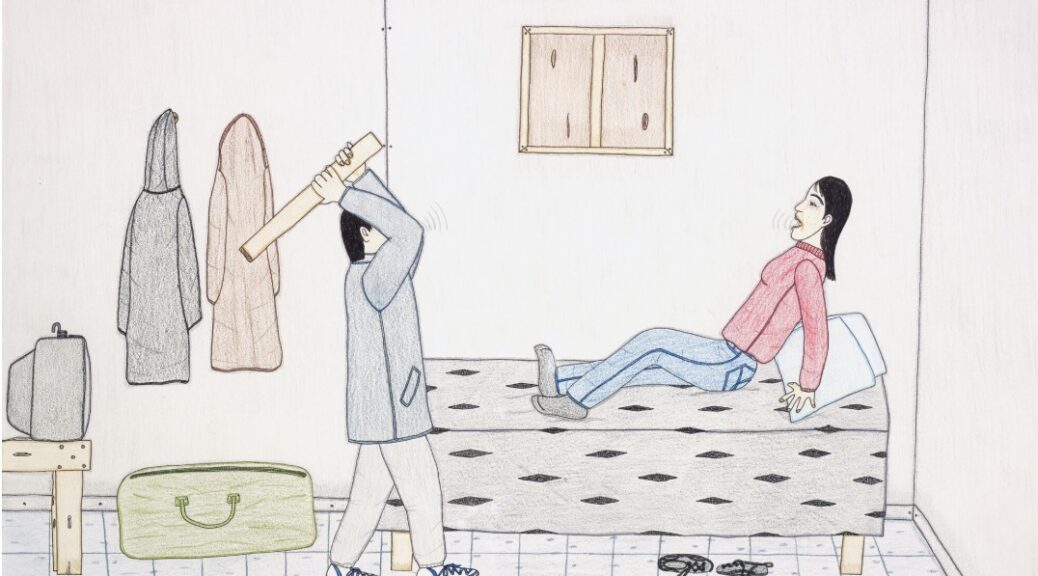


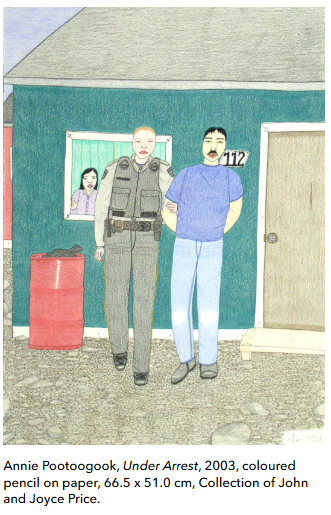
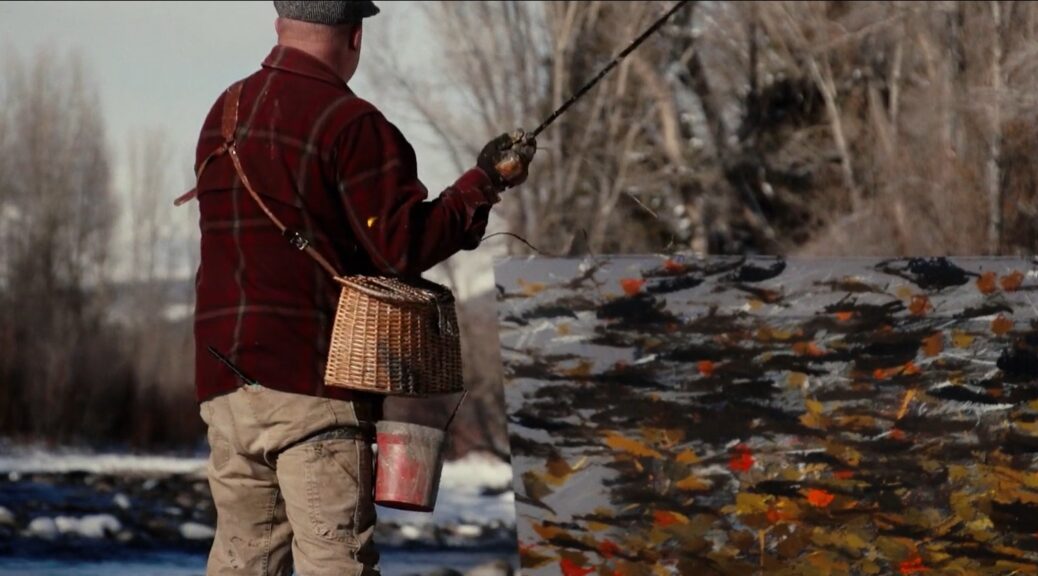

 Ben Miller/ Gary Snyder Fine ArtMiller will bring his artistic vision to life during the art fair. His team will travel to CRIT’s Ahakhav Tribal Preserve to photograph and video the portion of the river that runs through the Preserve. On March 19 as Scottsdale Art Week begins, Miller will be on site at Scottsdale Art Week to begin Fly Cast Painting on a six foot by eight foot by one inch block of plexiglass weighing 300 pounds that will be on a special easel. Those attending will see Miller create the artwork as the painting emerges on the other side of the plexiglass. On Friday March 20th the finished work will be on display. A portion of sales will go to CRIT. Recently, CRIT has taken the bold step to acknowledge personhood status for the Colorado River which protects it under Tribal Law.




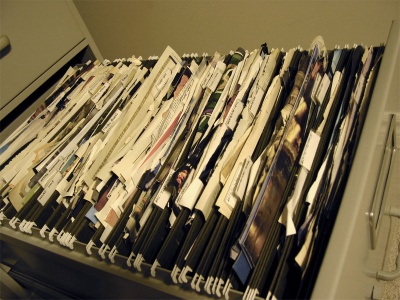

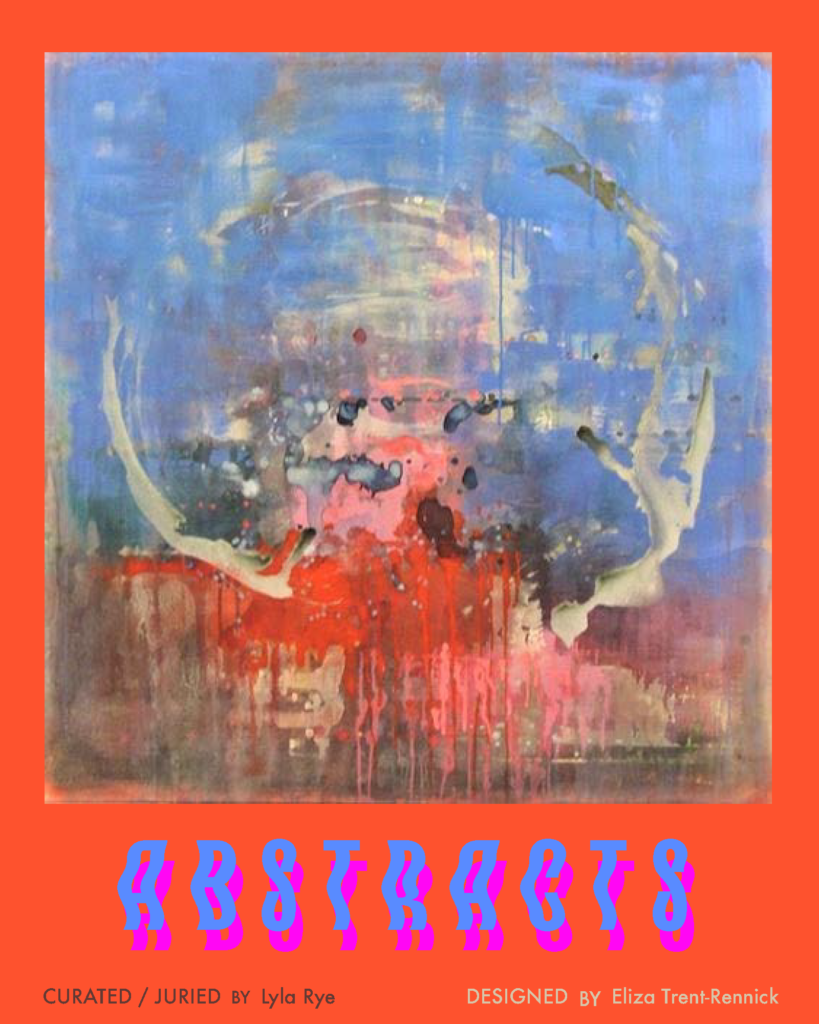
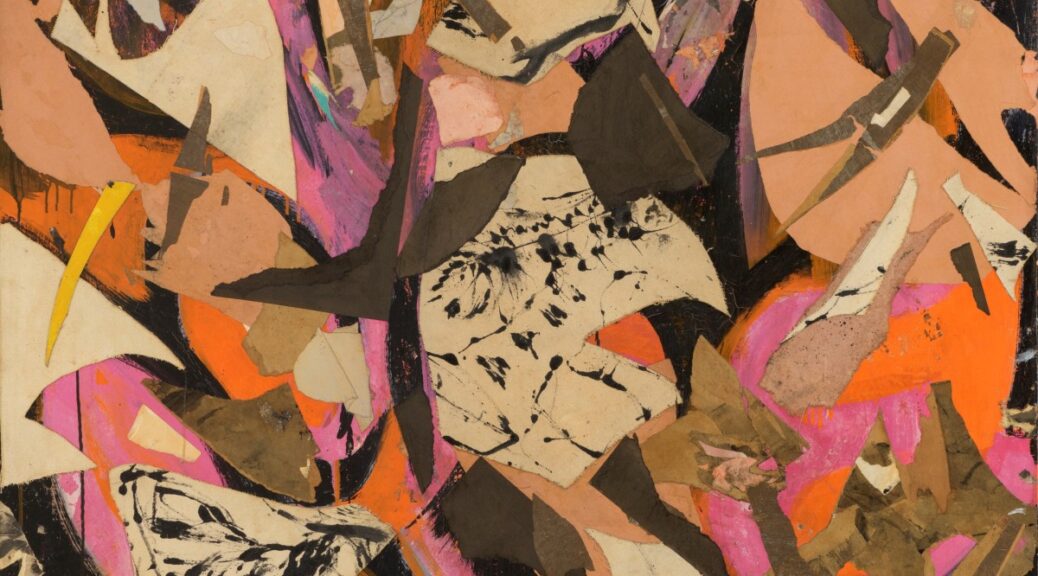
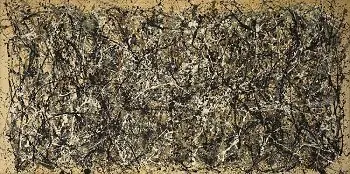
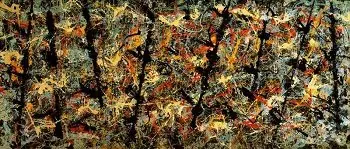
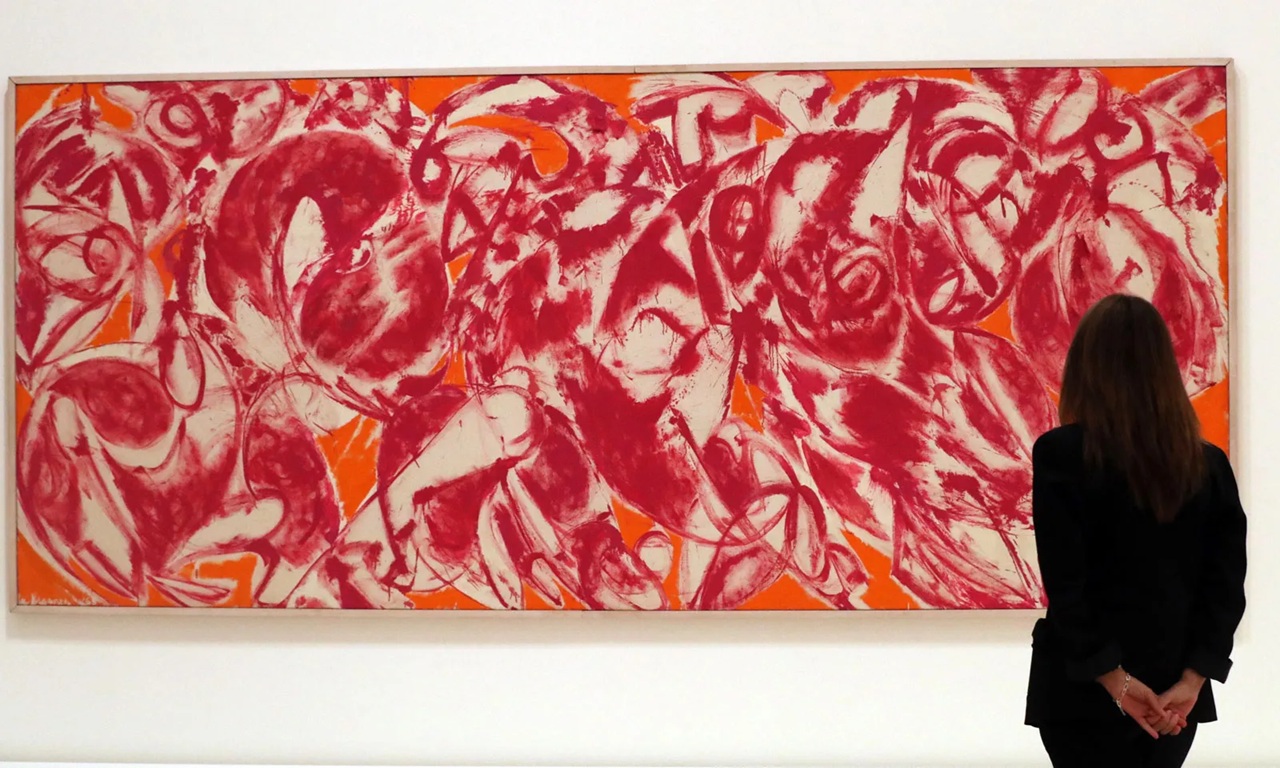
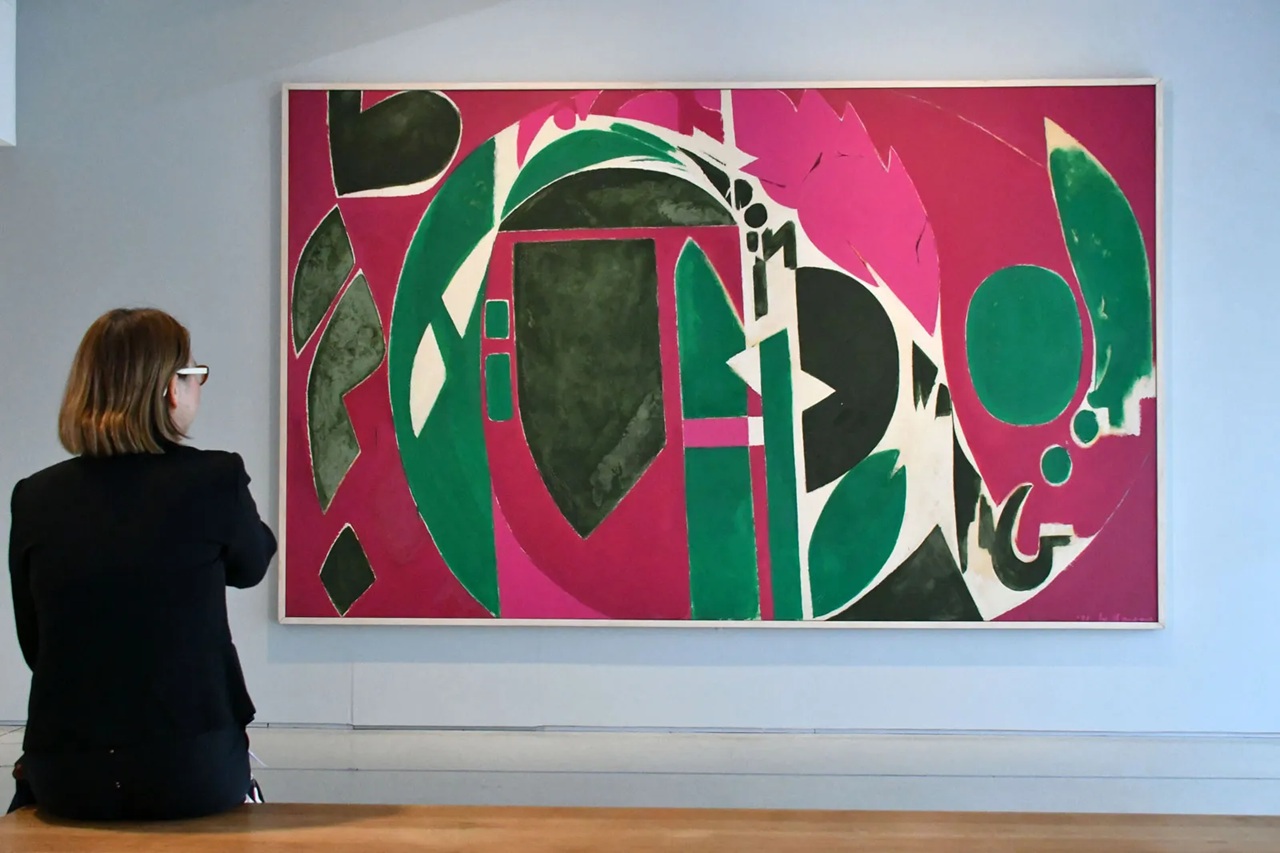
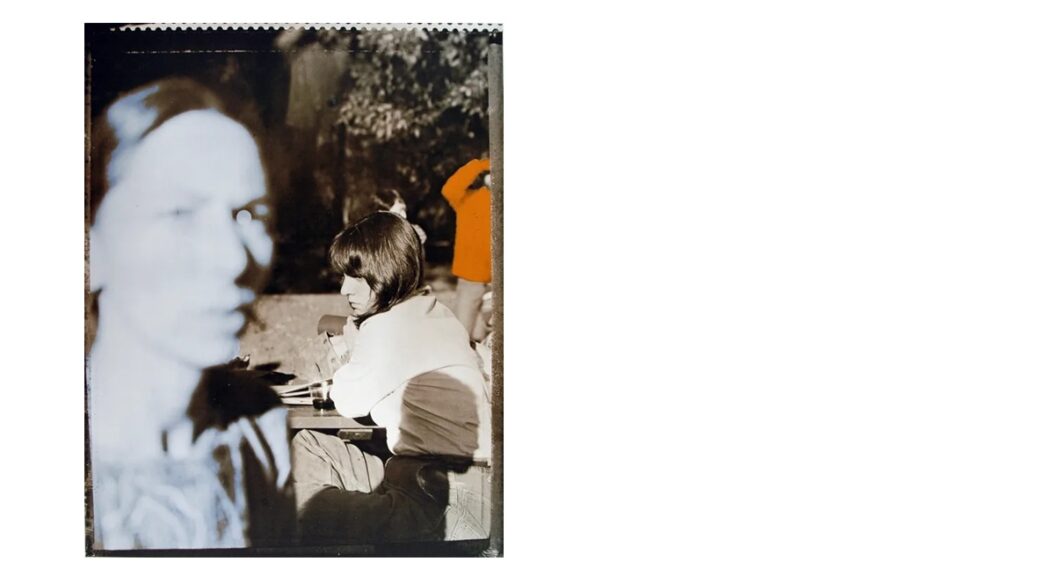
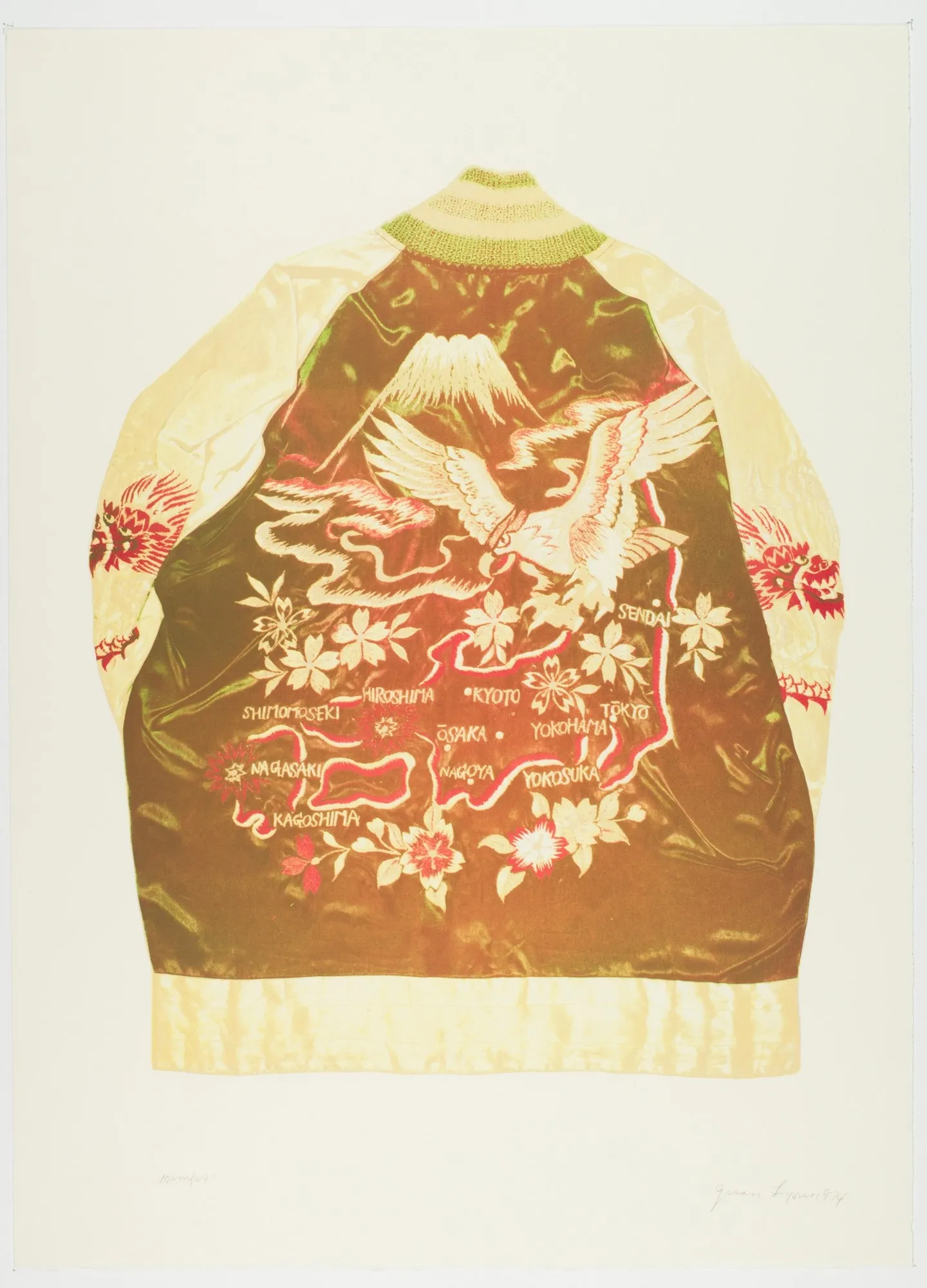
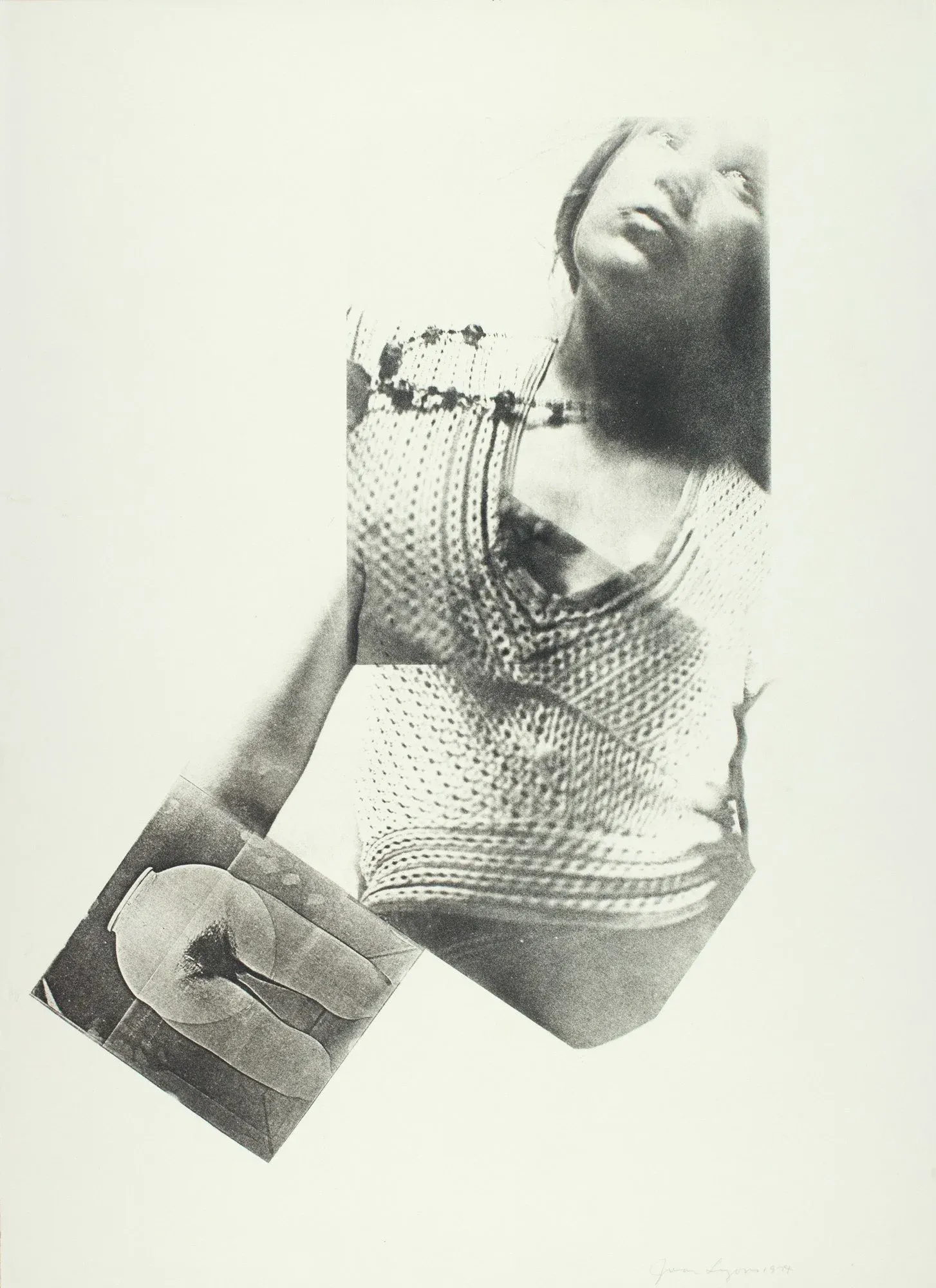
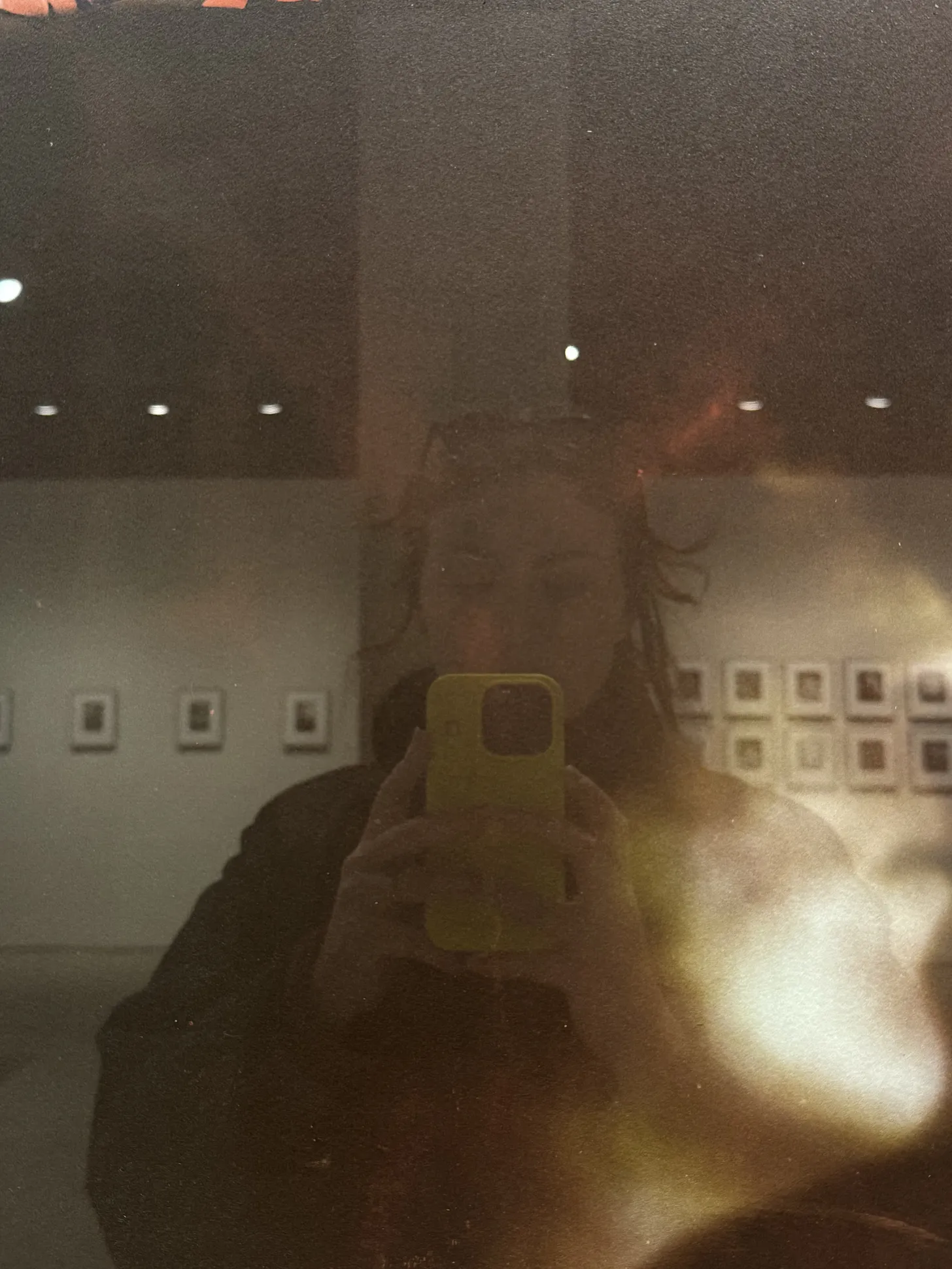
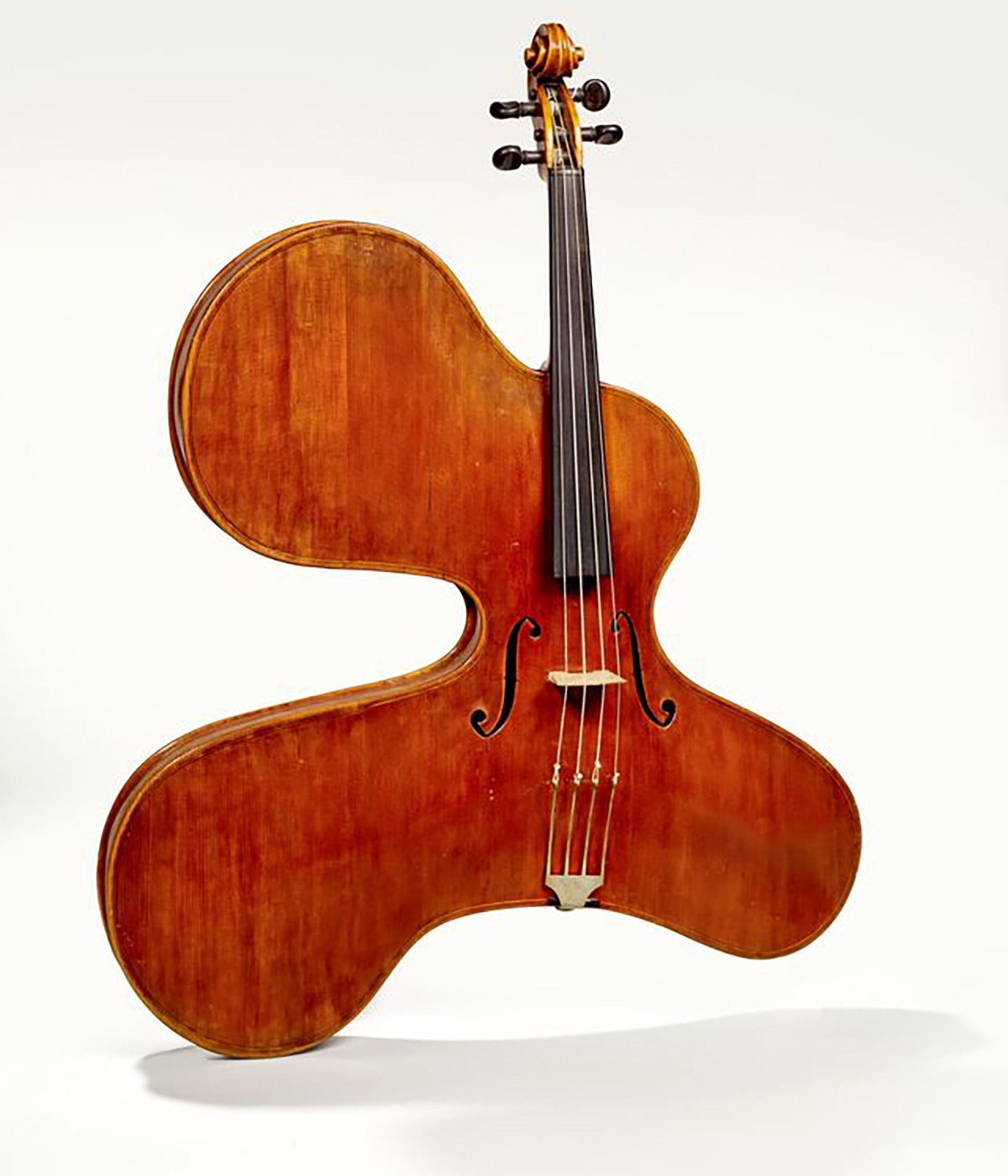
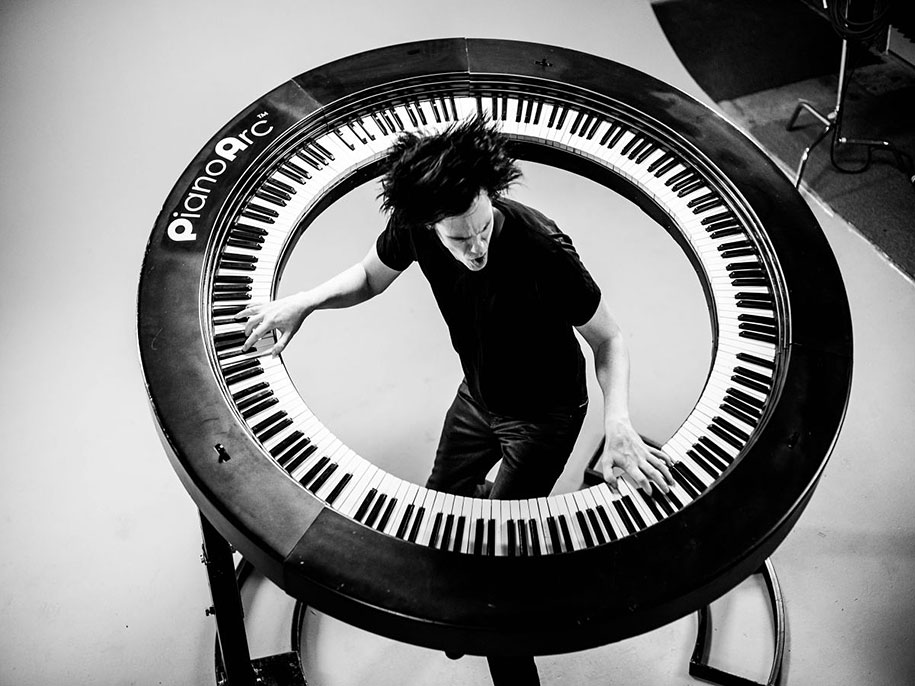

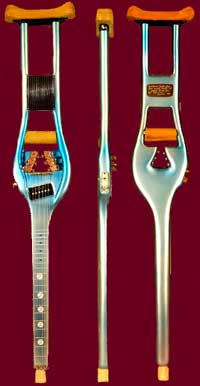
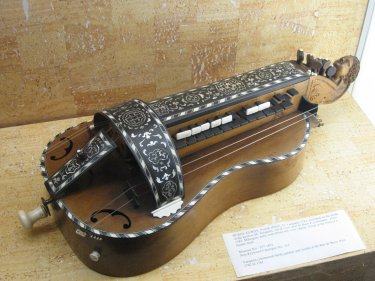





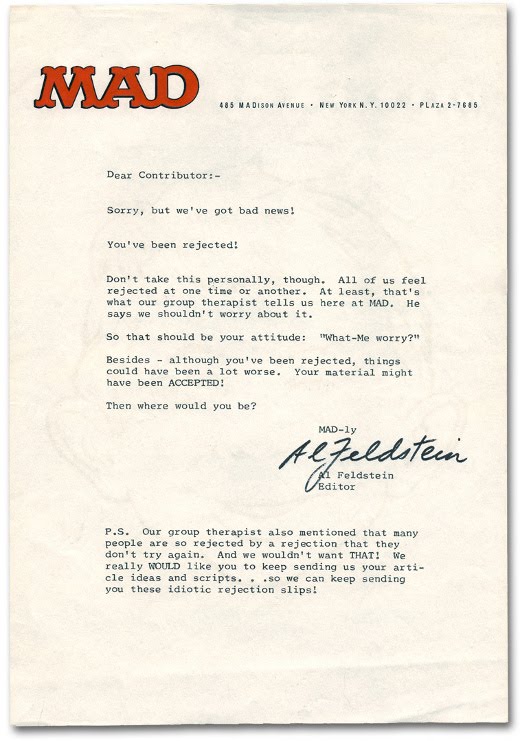 As an artist you will be the recipient of rejection letters and emails.
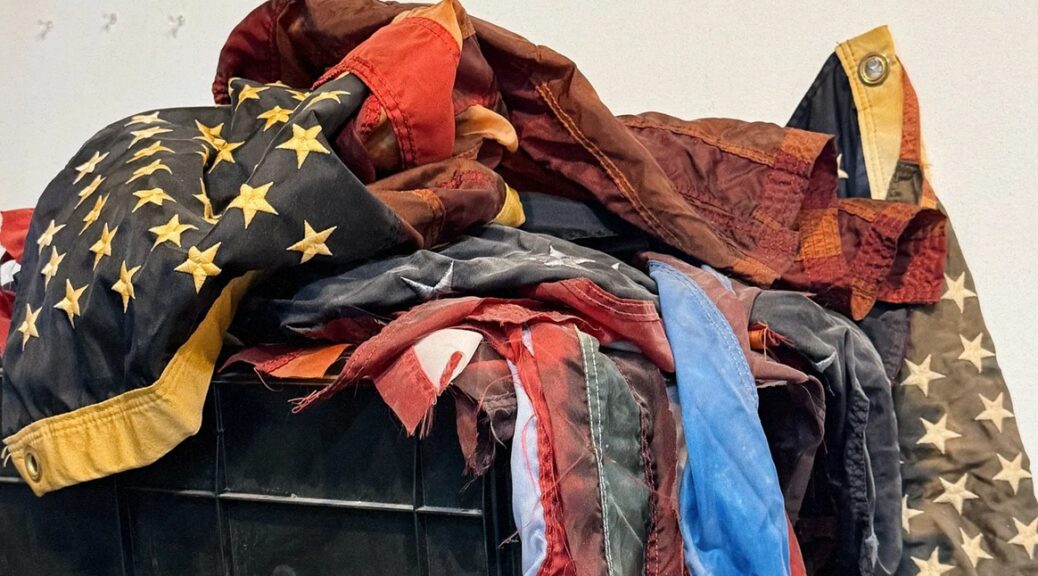
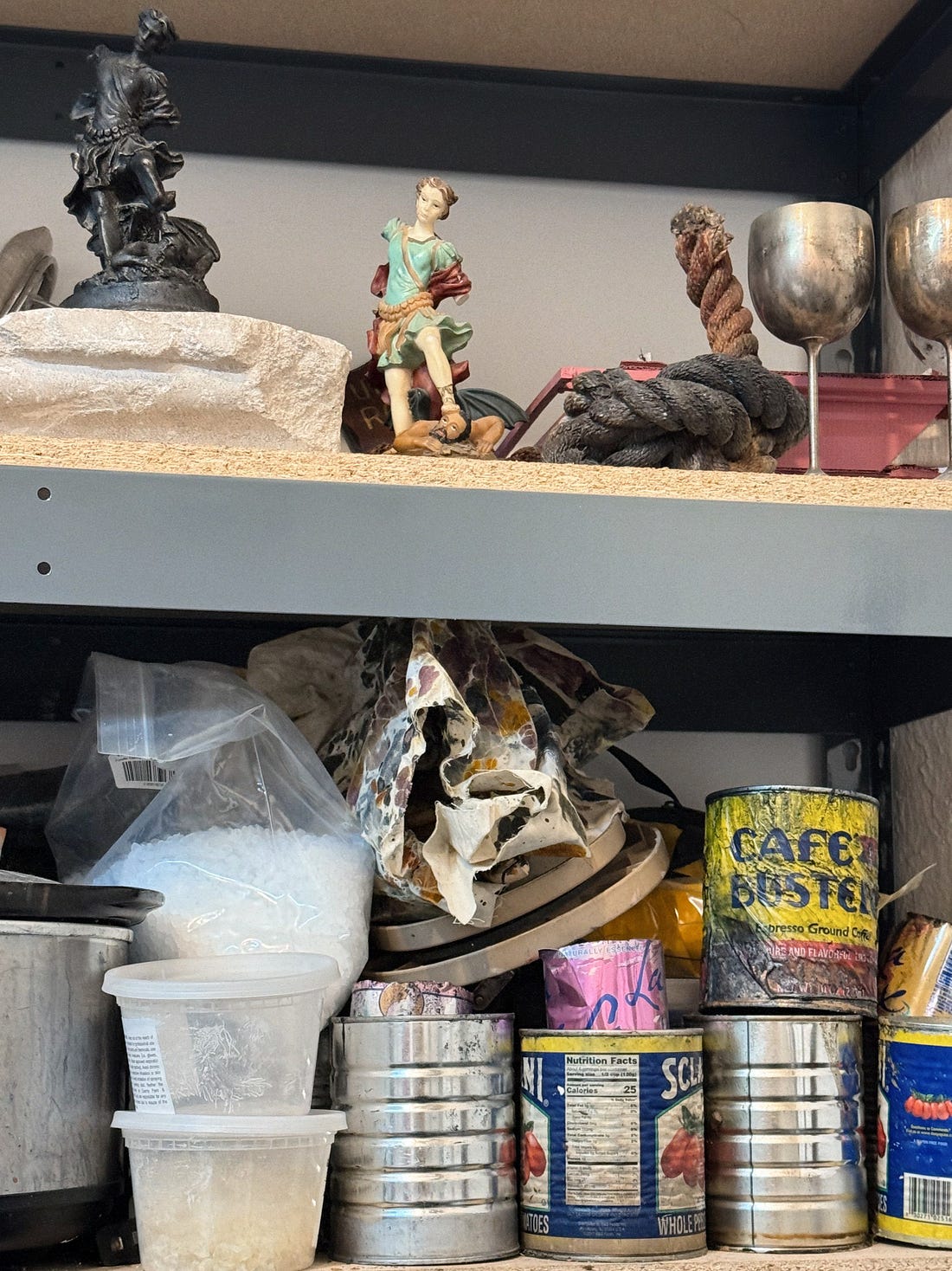
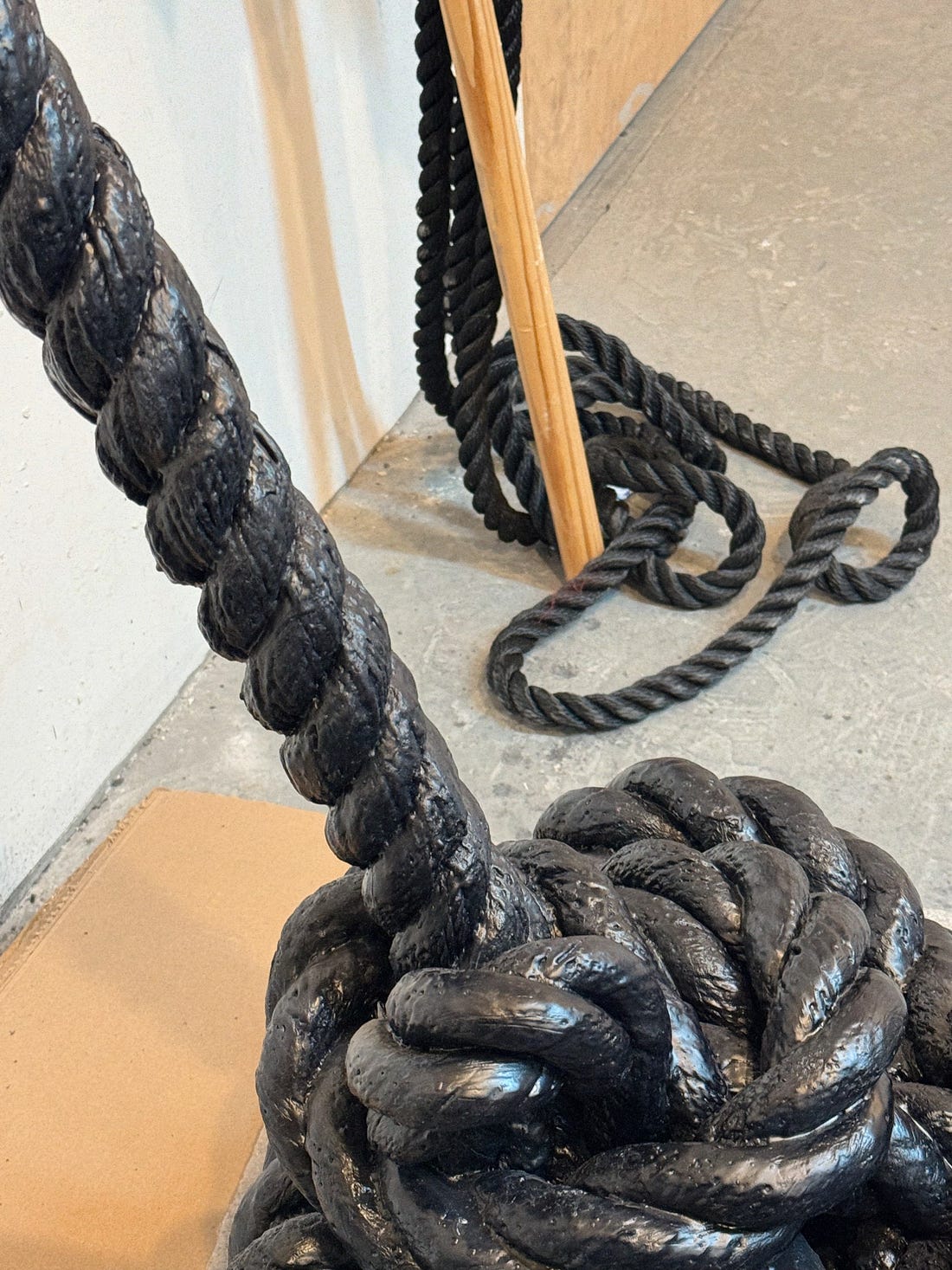
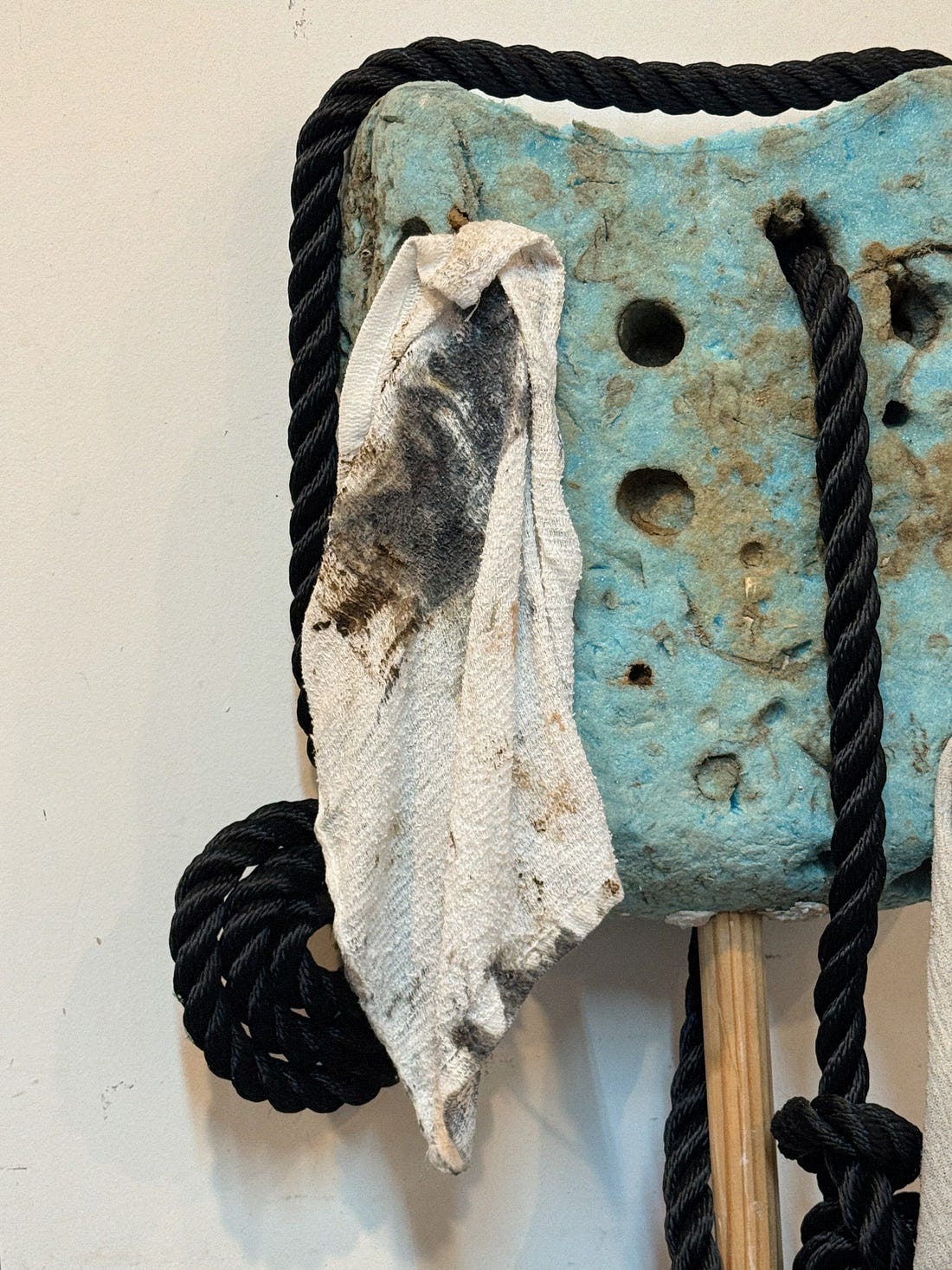
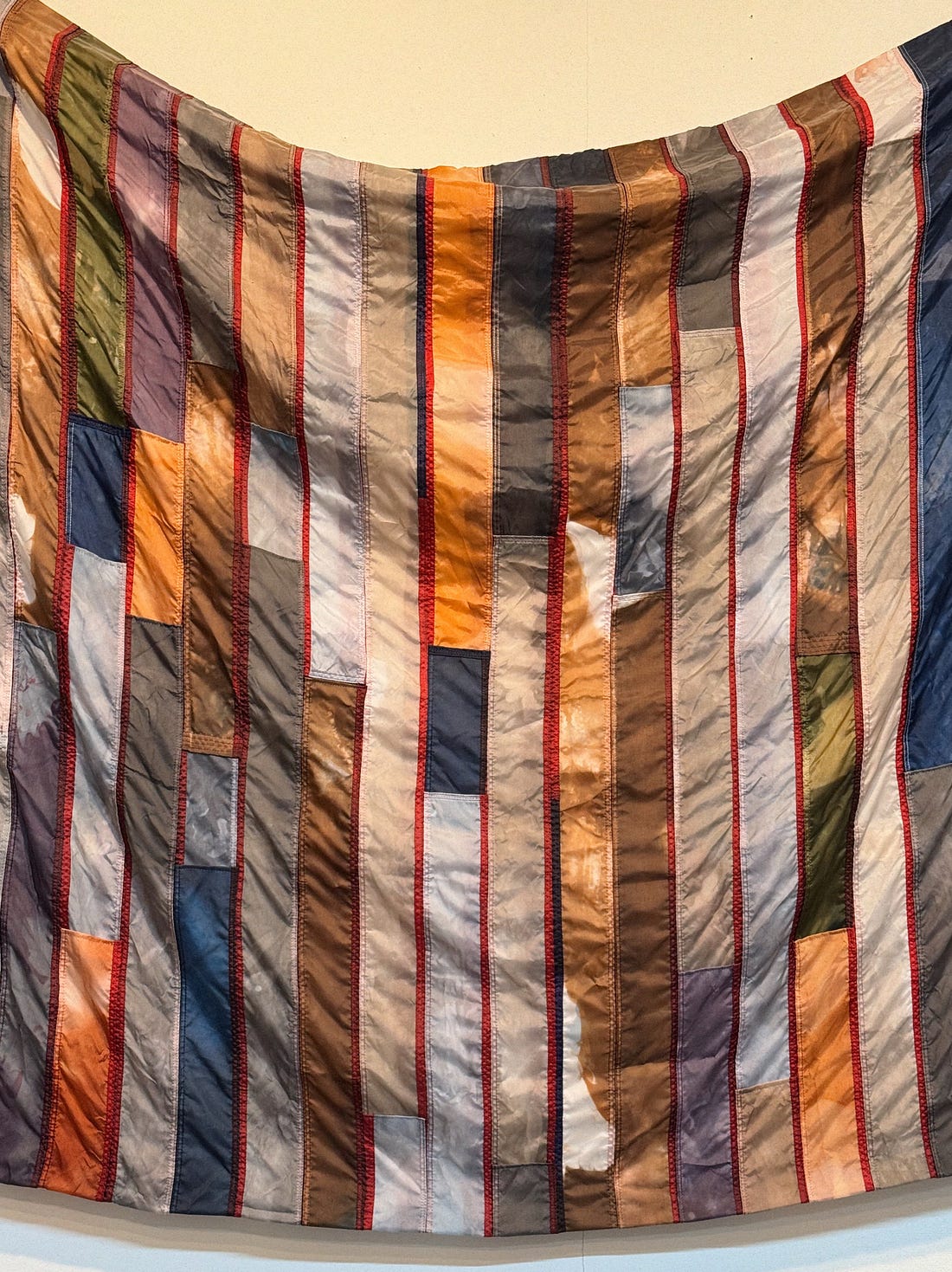
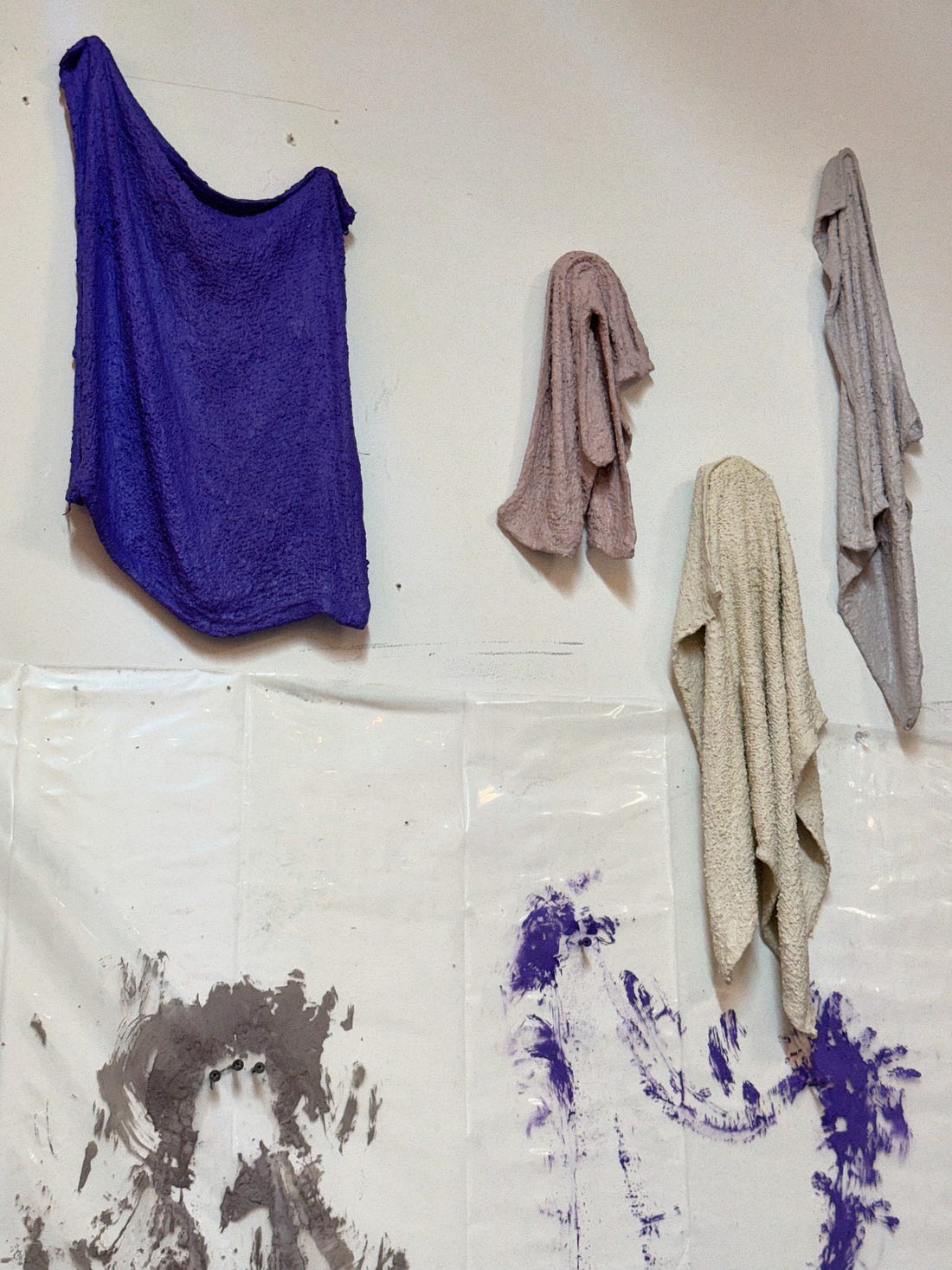
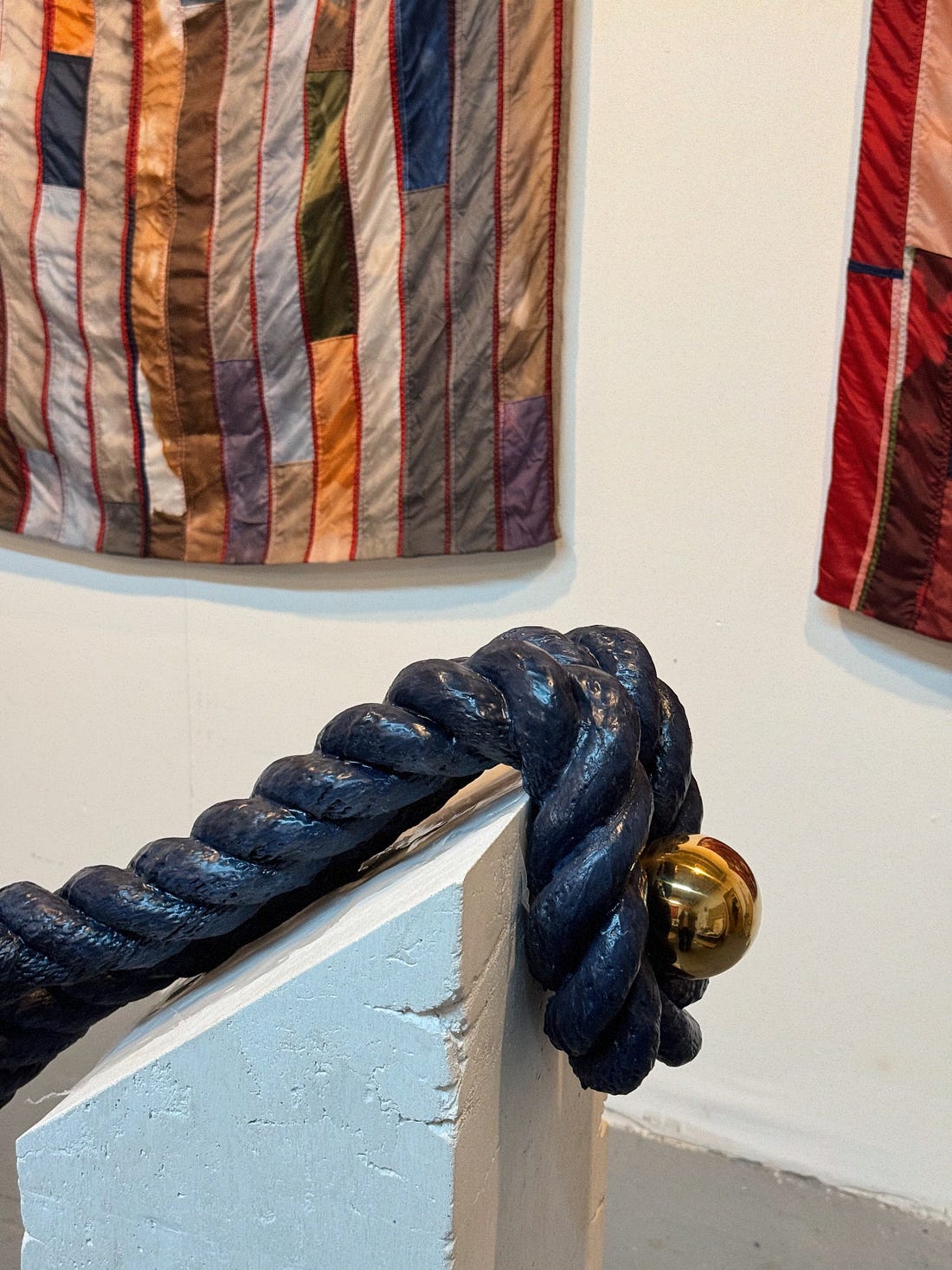
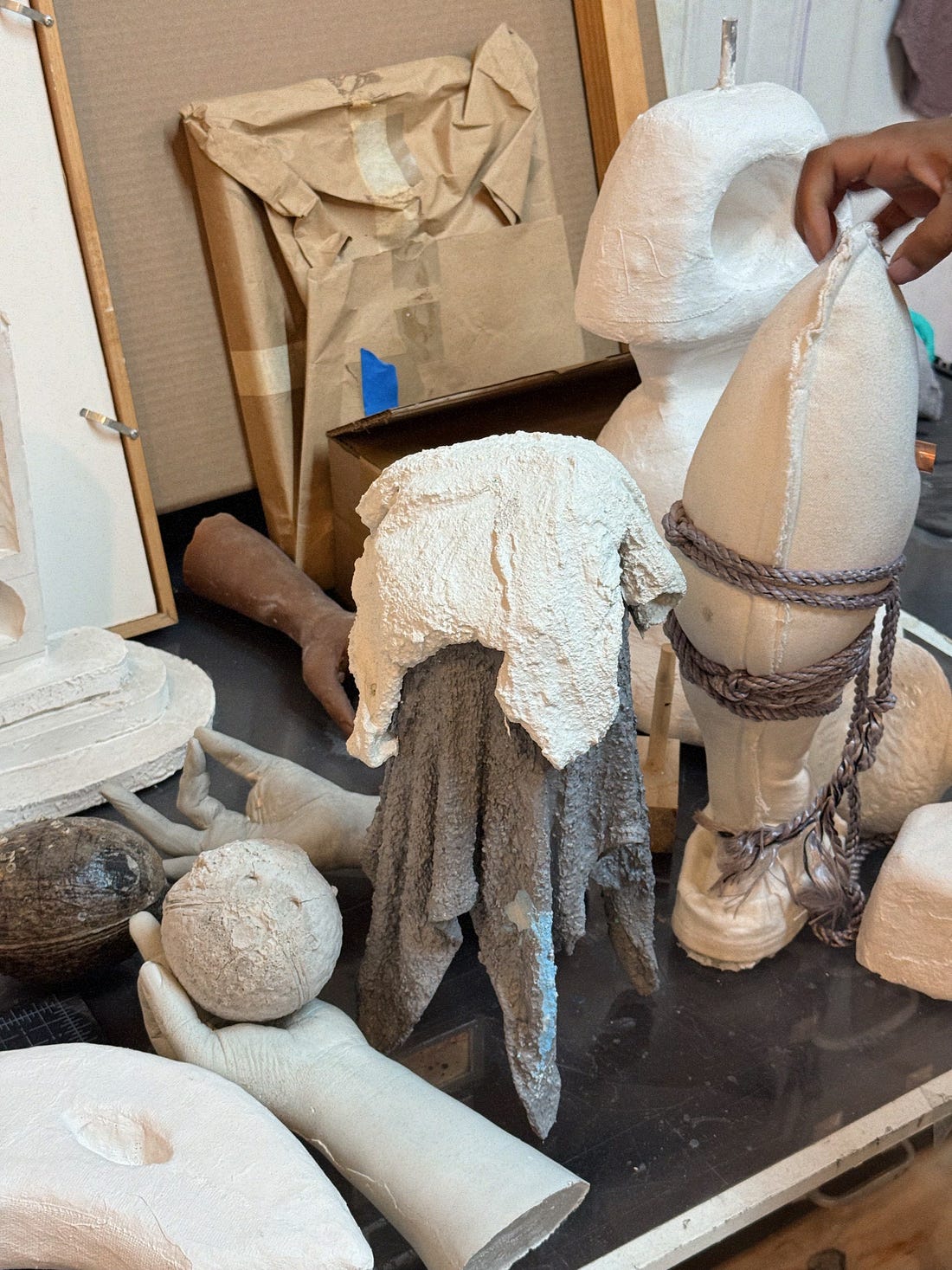
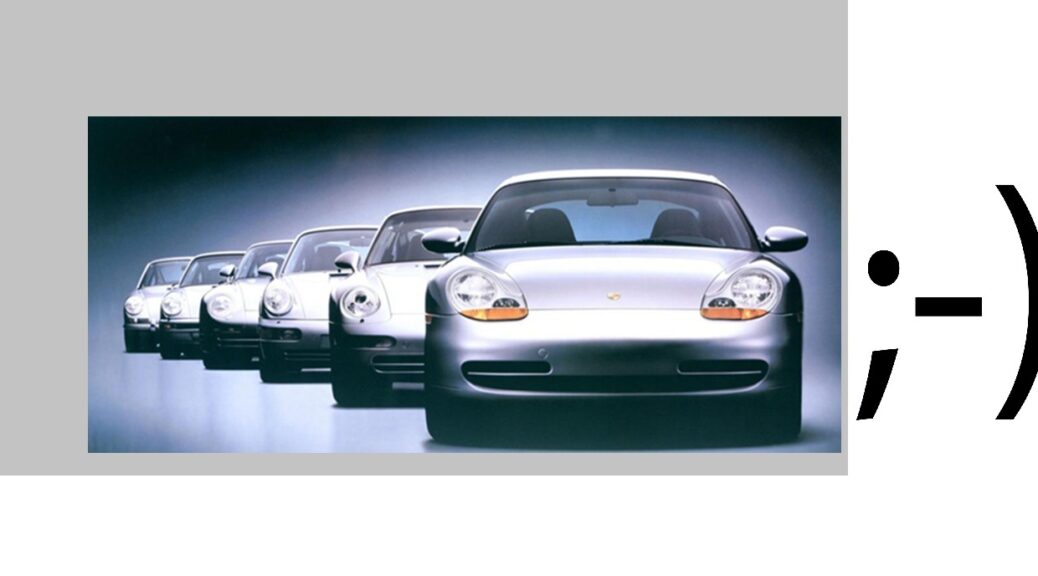







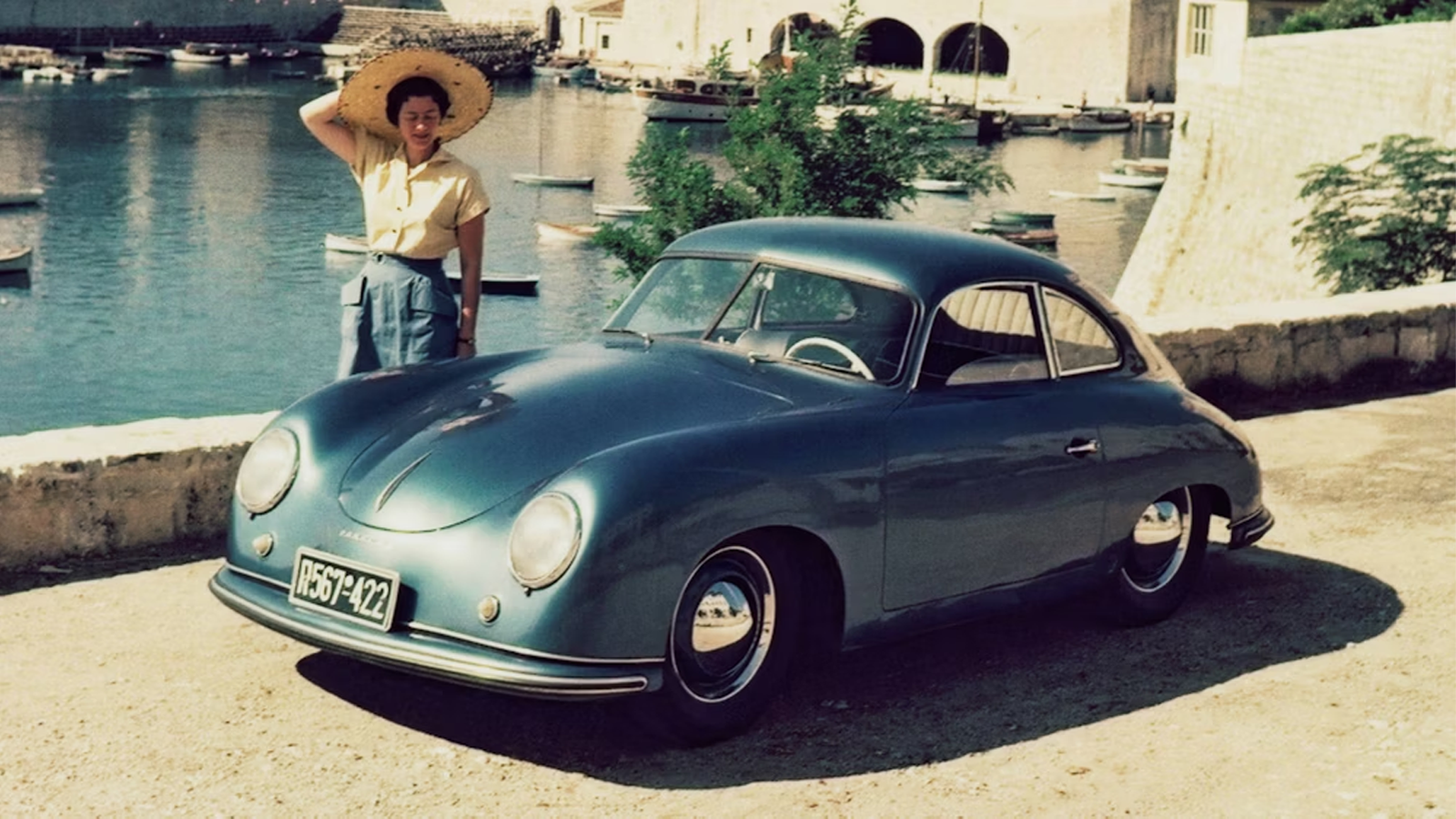
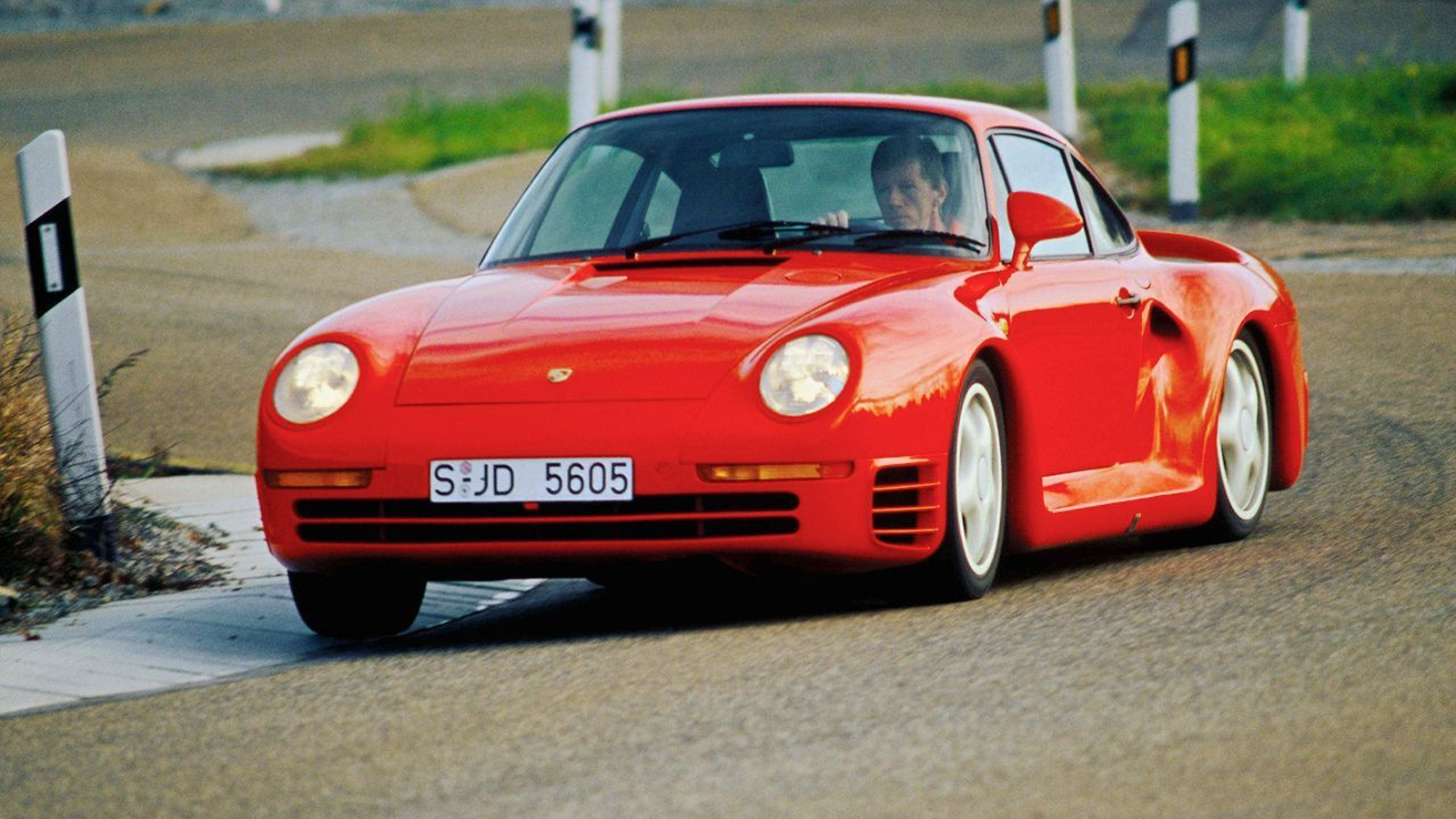




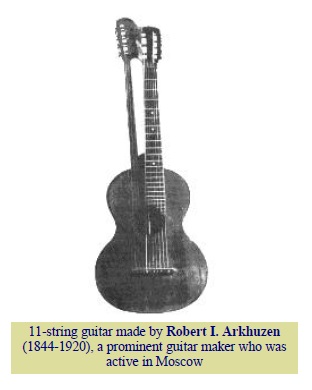 Russian music life in all