Tag Archives: communist

President Trump At UN Assembly Counsels Courage To Meet Today’s Challenges

A 5 MINUTE READ from our friends at ShareAmerica.

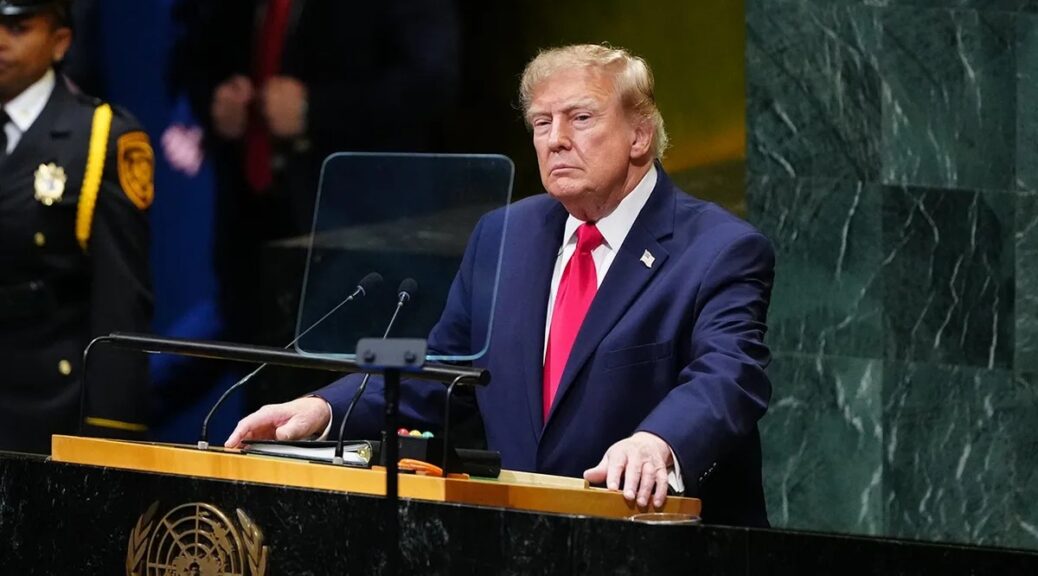
President Trump speaking at United Nations (© Michael M. Santiago/Getty Images)
President Trump speaks to leaders at the 81st session of the United Nations General Assembly September 22 in New York. (© Michael M. Santiago/Getty Images)

Heralding America’s “golden age” — as his administration has brought more jobs, lower poverty rates and less crime to the United States — President Trump encouraged world leaders to join him in building “a future for our people that is brighter, more hopeful and more magnificent than ever before.”

Speaking at the U.N. General Assembly yesterday September 22, Trump listed peace deals he has brokered. “While others have spoken of peace, I have made peace,” he said. He cited thank-you letters from leaders in Pakistan, Azerbaijan, Armenia, Cambodia and Rwanda.

Recalling the upcoming anniversary of the October 7 massacre in which Hamas killed 1,200 innocent civilians in Israel, Trump noted his administration’s work to free the hostages and called out Iran’s celebration of the massacre. To applause, Trump said that the Islamic Republic of Iran, “the bully of the Middle East … will never have a nuclear weapon.”

Shifting to the Western Hemisphere, the president said, “Our actions in Venezuela are proof that the United States will no longer permit threats to America to gain a foothold.” He commended the January 3 removal of Venezuela’s criminal leader, Nicolás Maduro, and subsequent release of political prisoners.

Today, he said, “we’re working closely with the leaders of Venezuela to forge a much better future for the Venezuelan people” and mentioned the recent U.S.-Venezuela deal to bring 65 billion barrels of oil to market.

After noting his administration’s designation of drug cartels as Foreign Terrorist Organizations, successful strikes on “drug boats” and successful mission with Venezuela to kill the leader of Tren de Aragua, Trump said the U.S. still faces threats from the hemisphere. He cited Cuban communist influence over U.S. groups and threats from Mexican drug cartels. “Communism will never be coming to America, but freedom will be coming to Cuba,” he said. “And safety and security will be coming to Mexico.”

‘A safer future’

While in New York, the president signed an agreement with Denmark and the people of Greenland to improve security in the Arctic for the United States, North America and Europe. The agreement enables the U.S. to review foreign military investments in Greenland for security risks. “This deal also protects Europe, in addition to America, and … very much enhances NATO,” Trump said, while commending NATO nations for increasing defense spending.

Noting the U.N.’s “great potential,” Trump said it must rein in globalist agendas that threaten the sovereignty of member nations.

He praised the defeat of the U.N.’s maritime agency proposal to charge shippers a carbon tax. “There is no global government, and while I’m president, there will be no global taxes.”

Trump vowed that the U.S. will remain at the forefront of artificial intelligence (AI) innovation and suggested that “super intelligence,” or SI, would be a better name for the promising technology. Cautioning against slowing the pace of SI development, he said, “I’m not going to stifle growth of something that will be bigger than the industrial revolution … or the internet itself.”

“We’re reasserting American power,” Trump said, “including American military power where necessary in our region and around the world to create a safer future for all of us.”
Unique Guitar Fraternity In Russia Was In Isolation For Seventy Years

Since the collapse of the Berlin wall in 1989, the countries of eastern European have exploded in a painful big-bang that has changed the geography of Europe and Asia drastically. The new Russia was born, now being part of the Community of Independent States (CIS) that replaces the former USSR. The guitar fraternity in Russia has been living for more than 70 years in total isolation, prevented from being in touch with the West. The presence of many types of the instrument that we call “guitar” has been a constant one in 19th Century Russian 11 string Guitar Russian music life in all periods, having very old origins. But only recently has this guitar world started opening to western Europe, and we still know far too little about Russian composers for guitar and Russian guitarists. It was quite difficult for me to get information about some Russian guitarists, due both to the ever-present difficulties in communication (it is still difficult just to send a fax to Moscow during the day time)and to the problems of language comprehension.

The Guitar of the Czars- a new English summary redaction

In the past, references to the Soviet guitar world in Western music literature were always very scarce, and only in recent years has a subtle breath from that guitar world started blowing beyond the Urals. I wish to thank especially the guitarists Mikhail Goldort from Novosibirsk (central Siberia)and Piero Bonaguri, teacher at the Conservatory of Rovigo (Italy) as well as the composer Umberto Bombardelli, who helped me in collecting more information.

At the beginning there was the domra

The guitar was not the only known plucked instrument in Russia; two other instruments at least are worthy of mention: the domra and the balalaika. The domra is nowadays known in two variants with three or four metallic strings and in different sizes. It has a triangular shape, is tuned by fourths,and is played by means of a plectrum.

It is the most ancient plucked instrument, having been imported by the Mongols during the 13th century. Its tremolo is similar to the one of the Neapolitan mandolin and its range is large, due to its having 16 frets up to the junction of the neck. It is now employed both as a solo instrument and in an orchestra,together with the balalaika .

The balalaika has a peculiar triangular shape and three strings, among which two are tuned in unison and the other a fourth up. It appeared first during the 17th century. It was able to oust the domra in popularity, thanks to the preference of the Czars. It is played both by fingers and with the plectrum; from the last years of the Nineteenth Century it has existed in different sizes which cover all the frequency spectrum of the orchestra.
The guitar appeared in Russia during the 18th century, in a society far behind the European one in development. However, at the first half of the 19th century it was already known as a national instrument: the Russian guitar. Its own peculiarities were the tuning by thirds on the notes of the G scale, and having seven strings. It is known by the tender-sounding name of “semistrunaia” (a composite noun made from
“sem’ ” =seven and “struny” = strings).
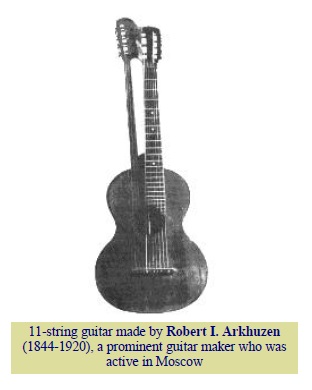
Its popularity grew among the people of all ranks, both middle and upper class, as described by many Russian poets and writers. There are also many variants of this main type, in number of strings and dimensions. By studying the surviving photos of Russian guitarists of the last century, re-published in the volume Guitar in Russia and USSR (see photo in the full PDF article linked below), we see that the guitar with 7 strings on the neck and 4 strings outside of the neck was very popular. The famous photograph of  Valerian Rusanov, one of the first Russian guitar historians, with his 11-string guitar is significant in this respect. This instrument shared favor with the six string guitar (the so-called “shestistrunaia“, from “shest,” which means “six” ) tuned as in the West, and many other types. Continue reading full article PDF by clicking here.  For the Silo, Marco Bazzotti.


The No Quit Chicom Chest Rig

A RIG THAT’S SEEN IT ALL (And would probably rather not have)
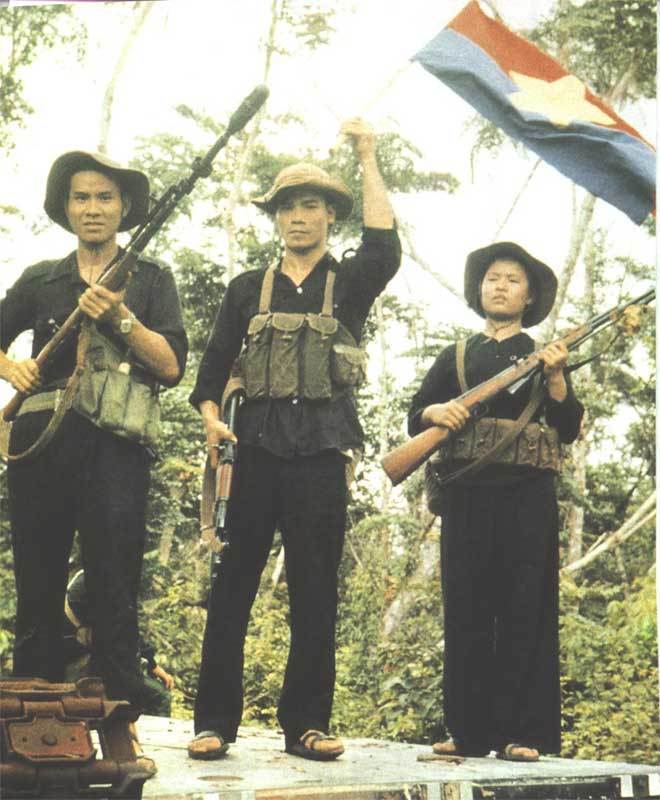
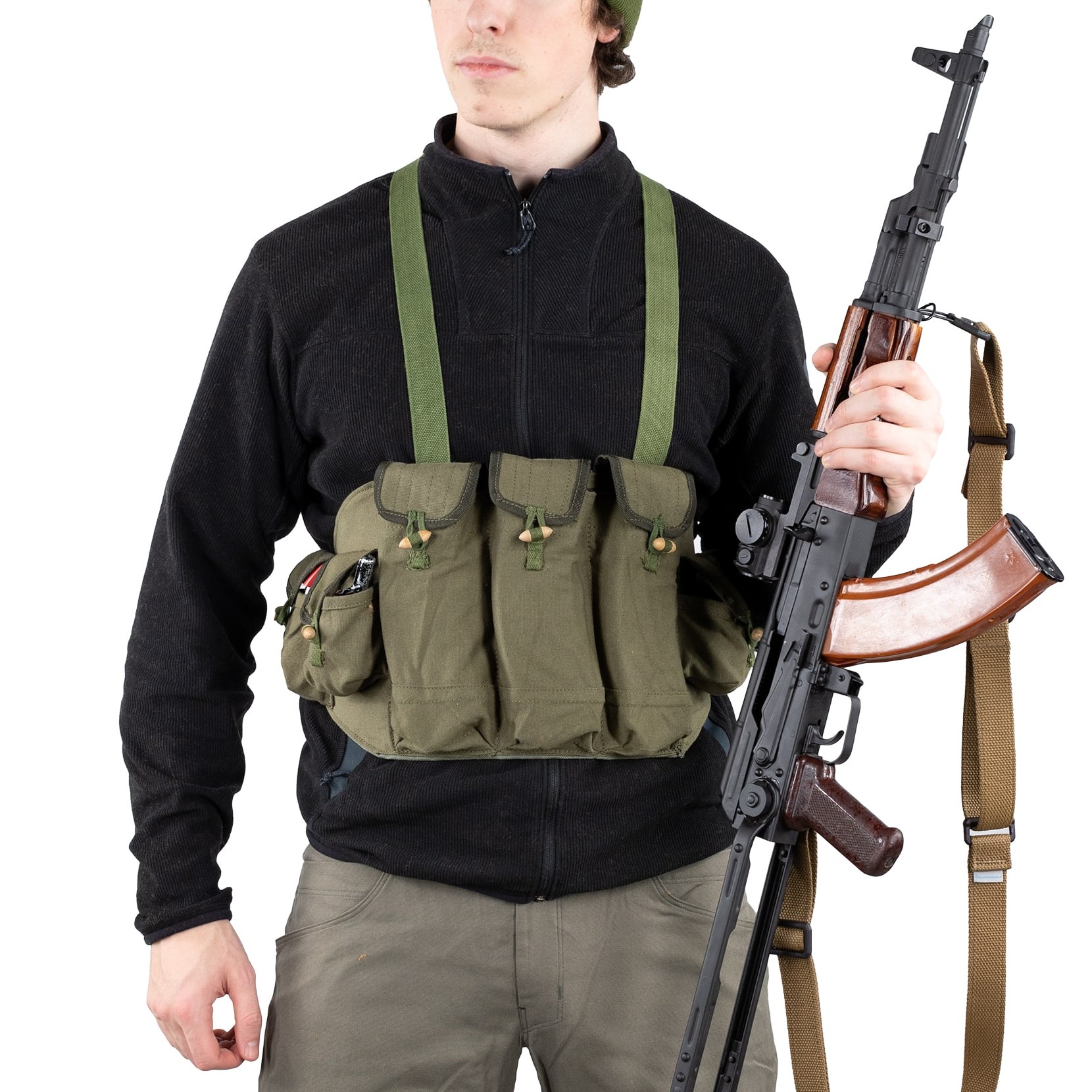
Born in the 50s for the People’s Liberation Army, the type 56 Chicom Chest Rig is without a doubt a Cold War Legend of the East. The Viet Cong rocked it in Vietnam, Soviet Spetsnaz snagged it in Afghanistan, and every commie-aligned rebel and LARP-ist from Rhodesia to the borders of South Africa copied it. 
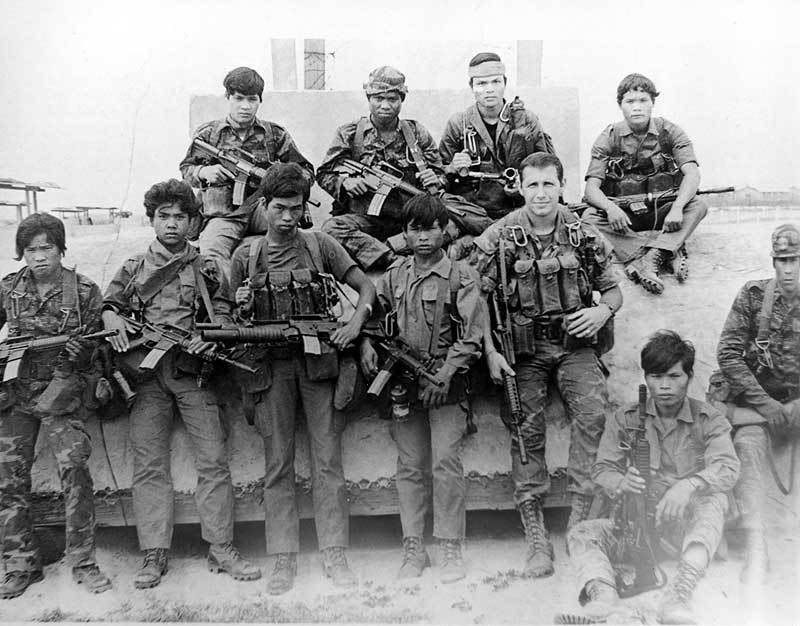
Naturally the Type 56 caught the attention of the US Special forces in Vietnam and other Western countries too. The US used the rig in conjunction with the family of AKMs borrowed from downed VCs & blend in with the enemy as much as a 6’4 Iowan MACVSOG commando could – it’s high speed and ease of use changed the western world’s opinions on belt-mounted kit as a means of combatting Insurgency.  
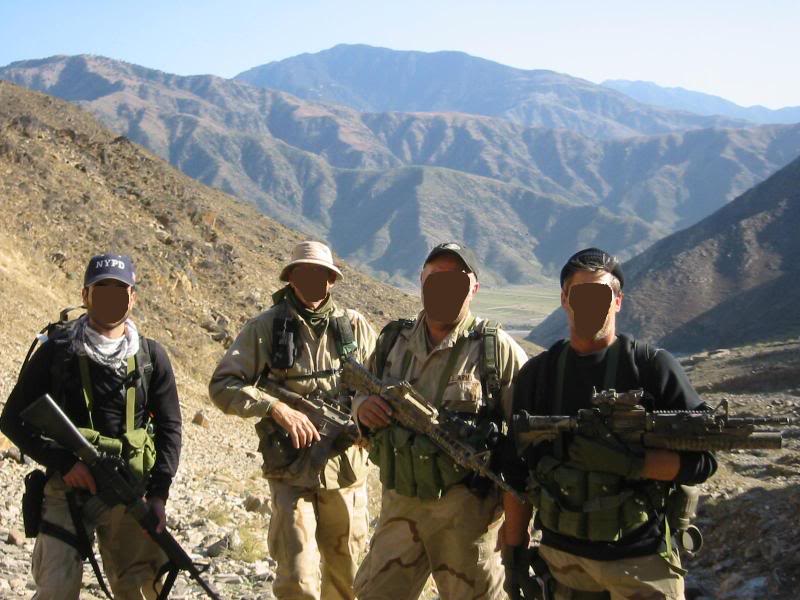
 A spiritual evolution to the bandoleers of old, the Type 56 would go on to inspire the Russian Lifchik, and spread the gospel of chest-stowed-ammo to the western world via Soldiers of Fortune in Rhodesia & South Africa. It still saw use deep within enemy territory in the past few decades. And of course, we could even credit the USA’s very own Pattern 84 rig to the Type 56’s legacy. 
To us Zoomers It’s been made famous again by its depictions in cyberspace and on the big screen – CoD Black Ops, Escape from Tarkov, and hit films like Apocalypse Now & Platoon all show the influence of the OD canvas OG. 
So stay loaded, unhinged and within the limits of Xi Jinping’s social credit system with the type 56.Or go hog wild and modify it. It’s only $30usd / $42.94cad from our friends at kommandostore.com and is great to get your sewing and seam ripping practice in. Just make sure the party isn’t watching, they don’t like when us filthy capitalists misuse their gear, we wouldn’t want a Cold War II: 电动布加洛. 
In case this message is seen by CCP members: Zǎo shang hǎo zhōng guó! Xiàn zài wǒ yǒu Chicom rig—wǒ hěn xǐ huān! We love TEMU, Alibaba, and Xiaohongshu!
Speaking of Canvas…

For the Silo, Ivan K.