Whistleblowers from Meta and TikTok revealed that both companies knowingly allowed more harmful content, including violence, extremism, and exploitation of minors, on their platforms to win the algorithm-driven engagement race, prioritizing stock prices and political relationships over user safety.
Disclaimer- According to Kate Miller at The Fastest Media, the original source for this story, Cybernews, has been caught in significant inaccuracies.
Cyberbullying Enabled
These platforms also prioritize resolving complaints from politicians over those from vulnerable people, such as minors experiencing cyberbullying.
“While platforms and lawmakers take their sweet time debating what borderline content is, people are left to deal with the psychological fallout of social media addiction. From the inability to tell right from wrong or fake from real, loss of concentration, sleep, and even sense of self, to radicalization, depression, and self harm – the consequences of companies toying with their algorithms to meet business goals are dire for humanity,” writes Jurgita Lapienytė, Editor-in-Chief at Cybernews.
Profit Over Safety?
A new BBC report revealed what we suspected all along – big tech platforms turn a blind eye to harmful content for the sake of profit. Platforms allow so-called borderline content – misogynistic, sexist, racist, conspiracy-driven – that is harmful yet legal.
According to the report, based on accounts from a dozen whistleblowers and insiders, Meta engineers were instructed to allow more borderline content to compete with TikTok. Meanwhile, TikTok is said to have prioritized several user complaints involving politicians to “avoid threats of regulation or bans.”
Unsurprisingly, big tech platforms denied any wrongdoing, insisting that they do not amplify harmful content.
Algorithms are allegedly designed to better understand user interests and needs, and cater to them accordingly. Unfortunately, most of what a user “wants” turns out to be conspiracy theories, AI slop, deepfakes, and pro-Nazi content. Or at least the algorithm seems to think so – because most of this is so-called ragebait content, designed to provoke a strong response from the user.
And since users engage with it, the algorithm is tricked into “thinking” this is what people want. Humans behind the algorithm must clearly understand this is not the case, but clicks translate to cash. So why would Big Tech cut the branch it’s sitting on?
In 2024, Meta earned $16 billion, or 10% of its annual revenue, from scam ads and banned goods. The information comes not from a third-party analytics firm but from Meta’s own documents, proving that the tech giant is well aware of how much harm it can spread – and how much money it can make along the way.
While platforms and lawmakers take their sweet time debating what borderline content is, people are left to deal with the psychological fallout of social media addiction. From the inability to tell right from wrong or fake from real, loss of concentration, sleep, and even sense of self, to radicalization, depression, and self harm – the consequences of companies toying with their algorithms to meet business goals are dire for humanity.
It’s not only our mental health that’s at stake. Adversaries, well aware of algorithmic logic, abuse it to spread misinformation and straightforward lies, sowing division to influence elections all over the world – making us wonder just how much harm performative compliance has already done to democracy.
Cybernews is a globally recognized independent media outlet where journalists and security experts debunk cyber by research, testing, and data.
Cybernews has earned worldwide attention for its high-impact research and discoveries, which have uncovered some of the internet’s most significant security exposures and data leaks. Notable ones include:
Cybernews researchers found that Android AI apps leak Google secrets the most, 700TB of files already exposed.
Cybernews researchers discovered multiple open datasets comprising 16 billion login credentials from infostealer malware, social media, developer portals, and corporate networks – highlighting the unprecedented risks of account takeovers, phishing, and business email compromise.
The research team also studies over 19 billion newly exposed passwords, and found that most people use 8–10 character passwords (42%).
Cybernews researchers analyzed 156,080 randomly selected iOS apps – around 8% of the apps present on the App Store – and uncovered a massive oversight: 71% of them expose sensitive data.
Recently, Bob Dyachenko, a cybersecurity researcher and owner of SecurityDiscovery.com, and the Cybernews security research team discovered an unprotected Elasticsearch index, which contained a wide range of sensitive personal details related to the entire population of Georgia.
The team analyzed the new Pixel 9 Pro XL smartphone’s web traffic, and found that Google’s latest flagship smartphone frequently transmits private user data to the tech giant before any app is installed.
The team revealed that a massive data leak at MC2 Data, a background check firm, affects one-third of the US population.
The Cybernews security research team discovered that 50 most popular Android apps require 11 dangerous permissions on average.
An analysis by Cybernews research discovered over a million publicly exposed secrets from over 58 thousand websites’ exposed environment (.env) files.
The team revealed that Australia’s football governing body, Football Australia, has leaked secret keys potentially opening access to 127 buckets of data, including ticket buyers’ personal data and players’ contracts and documents.
The Cybernews research team, in collaboration with cybersecurity researcher Bob Dyachenko, discovered a massive data leak containing information from numerous past breaches, comprising 12 terabytes of data and spanning over 26 billion records.
The team analyzed NASA’s website, and discovered an open redirect vulnerability plaguing NASA’s Astrobiology website.
Featured image via Cybernews- Elon Musk’s artificial intelligence (AI) firm xAI has said it is working to remove posts by its chatbot Grok that praised Adolf Hitler as the best person to deal with “vile anti-white hate.”
Annie Pootoogook’s drawing entitled Man Abusing His Partner was selected as one of the best 100 artworks of the 21st century by ArtNews.
Kinngait (Cape Dorset), Nunavut – A drawing by late Inuit artist Annie Pootoogook, who died under suspicious circumstances in 2016, has been named as one of the best artworks of the 21st century by ArtNews, one of the most trusted sources for news about the global art world and art market.
Known for her drawings that depict contemporary Inuit life, her drawing entitled Man Abusing His Partner was selected as one of greatest artworks of the past 25 years.
Annie Pootoogook works on her art on July 10, 2013, in Ottawa. The investigation into her 2016 death has stalled, sources tell CBC News. (Alexei Kintero)
The work on paper illustrates a haunting personal memory from Annie’s life during the early 1990s, when she was in an abusive relationship with a man in Nunavik.
The artwork depicts a violent and threatening scene, with a male figure holding a piece of wood above his head, directed toward a woman who lies defenseless on a bed. Initially, like many women facing similar situations, Annie remained silent about her experiences, reflecting the broader social stigma and silence surrounding violence against women. However, as she found her voice, it became clear that Annie possessed immense courage. She began sharing her story of survival as an Inuit woman, using her artwork as a powerful medium to communicate struggles with addiction, mental health, and intimate partner abuse.
Sadly, on September 19, 2016, Annie’s body was found in the Rideau River in Ottawa. Police declared it a suspicious death, however no arrests were ever made. Annie’s story, which she often conveyed through her work, became a representation of the broader experiences of Inuit and Indigenous women, highlighting the ongoing impact of colonialism and patriarchy in their lives. Her drowning and the subsequent police investigation drew significant attention because of her status as an internationally renowned artist and Inuit woman.
“This significant recognition of Annie Pootoogook is a testament to her enduring importance as a contemporary creator,” said West Baffin Cooperative President Pauloosie Kowmageak. “As we remember her significant contributions we also have the opportunity to look forward, knowing that her personal resilience and artistic innovation is inspiring new generations.’
Pootoogook was an artist member of the West Baffin Cooperative, Canada’s oldest Inuit owned and led social enterprise.
She was the third youngest in a family of ten children and grew up surrounded by artists, including both of her parents, as well as her grandmother, the renowned artist Pitseolak Ashoona (c.1904–1983), and her uncle, Kananginak Pootoogook (1935–2010).
Influenced by them, Annie based her drawings on her personal experiences, including her struggles with addiction and domestic violence. Her work found fame in the larger art world and was showcased at the National Gallery of Canada, Art Gallery of Ontario, McMichael Canadian Art Collection, The Power Plant, Biennale de Montreal, Art Basel and Documenta 12, among other exhibitions.
Established in 1959, West Baffin Cooperative has enjoyed an international reputation for the exquisite prints, drawings and carvings created by its Inuit artist members. In addition to operation of the Kinngait Studios at the Kenojuak Cultural Centre in Kinngait, the cooperative maintains a Toronto marketing division office, Dorset Fine Arts, which is responsible for interfacing with galleries, museums, cultural professionals, Inuit art enthusiasts and the art market globally. The mandate of West Baffin Cooperative includes public relations, promotion, advocacy, government relations and special projects relating to Kinngait Inuit art. Governed by an all-Inuit Board of Directors, the organization also maintains a local retail grocery/hardware store, a restaurant, rental properties and various utility contracts. As a community owned organization, practically all Kinngait adults are shareholders, profits are distributed back to the community in the form of annual dividends.
Featured image- Annie Pootoogook, Man Abusing His Partner, 2002 Coloured pencil and ink on paper, 51 x 66.5 cm Collection of John and Joyce Price
Is Tom Cruise the poster boy for alternative religion?
In most western-world countries, laws protect consumers from fraud and unethical business practices. But to date, there are no laws on the books that recognize destructive mind control, much less prohibit the use of it by cult-like groups of religion. However, if my colleague Steven Hassan, the pioneer of exit counseling for cult members and a critically acclaimed author, and thousands of other ex-cult members have any say about it, that may soon change.
The mind, despite all of its strengths, depends on a stream of coherent information for it to function properly.
Put a person into an environment where the senses are overloaded with incoherent information and the mind becomes numb. In this confused state, critical thinking skills don’t work and the mind becomes suggestible to those who would replace an individual’s self-interest with the group’s best interests.
Everyone, like it or not, is vulnerable to mind control. Everyone is looking for something better in life: more happiness, more meaning and more security. Recruiters prey upon these basic human needs. People don’t join; they are recruited, and more often than not, during a stressful time in their lives.
Mind-control religions use our fantasies of an ideal world to draw us in. The “love bombing” and the sincere, committed members that newcomers initially encounter prove far more attractive and convincing than the doctrines.
Recruitment doesn’t just happen.
“It’s a process,” Hassan says, “imposed on people by other people.”
During that orientation process—it could be a seemingly innocuous six-month Bible study—irrational phobias are placed in the potential member’s unconscious mind. The first is that no one can really be happy and successful if they’re not a member of that particular religion.
After they become members, life is about sacrifice and living in a fantasy world created by the group.
The need to live in the present is continually reinforced with warnings like “Armageddon is just around the corner,” giving members a sense of urgency about the tasks at hand. Those who begin to doubt will find leaving painful, as one of the penalties will be extreme shunning.
Children raised in these groups typically receive an inferior education, are taught that the world is an evil place controlled by the devil, and must rely on church leaders’ interpretation of reality.
Mind-control clichés like “we alone have the truth” or “all non-members will die at Armageddon” are continually reinforced, which puts up an invisible wall between believers and outsiders. This makes members feel special, believing they are counted among God’s chosen few.
Control. Control And Control.
Behavior control, Information control, Thought control and Emotional control (the BITE model) has great power and influence on the human mind. Together, these four control mechanisms are used by destructive religious groups to form a totalistic web, which can manipulate even the strongest-minded people. (Hassan provides a thorough explanation of how BITE works in his three best-selling books.) And if that’s not enough, mind-control religious members are required to proselytize; research in social psychology shows that nothing confirms one’s beliefs better than trying to sell those beliefs to other people.
Given freedom of choice, people will choose what they believe is best for themselves. However, the criteria for determining what is “best” should be one’s own, not someone else’s.
Freedom of choice is the first thing that one loses when one becomes a member of groups like Scientologists, Moonies and Jehovah’s Witnesses. Unchecked, these groups will continue to wreak untold psychological and physical damage on millions of people who have no idea of what constitutes unethical mind control. Unless action is taken to make destructive religious groups accountable to society for their violations of the basic civil rights of their members, in particular the children of members, they will continue to deceive the public into believing they are a harmless group of people, deserving the same constitutional guarantees as benevolent religions.
Grant money for research projects and treatment of mind-control victims is needed now. Reform within public education must be made to encourage people to think for themselves, to understand the psychological principles of mind control and to teach students to be suspicious of any environment that discourages them from asking critical questions. If you would like to help, go to www.freedomofmind.com.
The Colorado River Indian Tribes include four distinct Tribes – the Mohave, Chemehuevi, Hopi, and Navajo. The reservation stretches along the Colorado River on both the Arizona and California side. It includes approximately 300,000 acres of land, with the river serving as the focal point and lifeblood of the area.
River Art Created Uniquely
Art honoring the Colorado River and benefitting the Colorado River Indian Tribes (CRIT) will be envisioned and created live during Scottsdale Art Week March 19-22 at WestWorld of Scottsdale. Artist Ben Miller, a Montana-based painter best known for his Endangered Rivers series, will travel to the Colorado River Indian Tribes reservation to paint a depiction of the Colorado River at the Ahakhav Tribal Preserve which will be created and featured during Scottsdale Art Week. A portion of the proceeds from the artwork will benefit the Colorado River Indian Tribes (CRIT). This comes at a time when the life of the Colorado River is in danger because of drought and overuse.
Ben Miller, in association with Gary Snyder Fine Art, has spent the past eight years painting the endangered western rivers of Montana, Washington, Colorado and Wyoming, and more recently the rivers of Chicago, New Jersey, New York, and Miami. On the end of a fishing rod, Miller attaches what he calls Fly Brushes, designed from wool, cotton, rubber, nylon and other materials, soaked in paint and cast onto clear plexiglass.
Ben Miller/ Gary Snyder Fine ArtMiller will bring his artistic vision to life during the art fair. His team will travel to CRIT’s Ahakhav Tribal Preserve to photograph and video the portion of the river that runs through the Preserve. On March 19 as Scottsdale Art Week begins, Miller will be on site at Scottsdale Art Week to begin Fly Cast Painting on a six foot by eight foot by one inch block of plexiglass weighing 300 pounds that will be on a special easel. Those attending will see Miller create the artwork as the painting emerges on the other side of the plexiglass. On Friday March 20th the finished work will be on display. A portion of sales will go to CRIT. Recently, CRIT has taken the bold step to acknowledge personhood status for the Colorado River which protects it under Tribal Law.
Miller said, “This year I will bring my vision of the Colorado River to life as Scottsdale Art Week begins. It’s only fitting that we do this as CRIT considers the River to be a living being which is why they acknowledged its Personhood Status.” Now in its second year Scottsdale Art Week will feature contemporary and fine art from more than 120 galleries from 18 countries. It is America’s first art fair with an emphasis on indigenous expression. The event will also host cultural seminars and innovative programming, including live music and a fashion show. For more information or for tickets and tables go to www.ScottsdaleArtWeek.com.
About Scottsdale Art Week Presented by Scottsdale Ferrari:
Scottsdale Art Week presented by Scottsdale Ferrari (SAW) is situated at the historical and cultural crossroads of the American Southwest, which attracted such art historical greats as Georgia O’Keeffe, Frank Lloyd Wright and major stars of the land art movement of the 20th Century. The largest new American fair of art & design in decades, SAW features an exciting combination of historical and contemporary works, welcoming well over 120 galleries from across the U.S. and around the world while honoring its home in Arizona by highlighting contemporary Indigenous artists.
Maybe you watch all the TV shows, follow the blogs, and read all the magazines (or perhaps just look at the pretty pictures) and still wonder what Interior Design really is, what a Designer does, and if you would benefit from working with one? If so, then read on because here’s the nitty gritty on Interior Design and the passionate Designers working within it.
Interior Design is about providing “creative design solutions for interior environments and its clients. It is the combination of technical and analytical skills with an aesthetic vision to achieve spaces that are functional, support the health, safety and well-being of users, enhance the quality of life of the occupants, and are visually attractive.
Balancing Factors
Interior Design can cover a variety of disciplines, including residential, corporate/workplace, retail, healthcare, hospitality, public, and institutional design. Designers pay special attention to function, space planning, ergonomics, lighting, and of course the “pretty” surface elements such as colours and fabrics. Interior Designers can be thought of as an “interior architect” and are skilled in the aspects of spatial planning, preparing technical drawings and documents, and can help design and renovate interiors from drawing up the initial floor plans to placing the last decorative accent.
How does an Interior Designer gets to be a certified professional?
It begins with 3-4 years of schooling, followed by a minimum of 2-3 years of work experience, and then certified by rigorous examinations facilitated by the professional bodies of ARIDO and IDC. Designers are required to carry liability insurance, participate in ongoing professional development programs, and uphold a professional code of ethics and standards to maintain their credentials.
Interior Designers can be hired for remodels, renovations, redecorating, and new build projects. They often work with architects, trades, and other design professionals to achieve the clients’ goals while following safety standards and building codes. Designers are often involved with planning from the very beginning but can be brought in at any stage of the design and construction process.
The cost of hiring an Interior Designer may seem prohibitive for those on a tight budget, but the benefits are advantageous.
Those who don’t have the time or desire to plan, shop, select, and oversee their project will ultimately profit from hiring an expert. An Interior Designer can prevent clients from making costly mistakes; whether it is with project management, decision-making, or providing savings on products and materials purchased. Designers bring with them an array of professional contacts for trades, suppliers, custom fabricators, and favorite stores. Regardless of the project size and needs, clients often have the option to choose from a variety of services to suit their budget.
If you are considering hiring an Interior Designer know what you want by determining your needs beforehand, and define your style through design and architecture magazine clippings. You can find a Designer through word of mouth, web-based research, professional associations, or trade magazines.
Most of all- have fun.
Interview them to review their portfolio, determine that your personalities mesh, discuss your project scope as well as the designer’s fees and process. Most important of all, have fun with the process – your interiors will thank you, and you will have made an investment into the enjoyment and functionality of your space. For the Silo, Ramee Cyr/ R Design Studio.
Featured image- Colwood house is a perfect mid-century nod to a modern Canada home designed by Erica Colpitts Interior Design.
JUROR: LYLA RYE DESIGNER: ELIZA TRENT RENNICK FOREWORD BY ARNIE GUHA
Abstraction is not an absence. It is a decision.
To abstract is to strip away the familiar scaffolding of representation and ask a more difficult question: what remains when narrative recedes? What persists when image is released from obligation to describe?
The works gathered in ABSTRACTS, curated and juried by Lyla Rye, demonstrate that abstraction is not a single language but a constellation of methods. Across painting, digital media, photography, drawing, sculpture, and mixed media, the artists in this exhibition approach abstraction not as retreat, but as inquiry. Form becomes structure. Colour becomes an event. Gesture becomes argument.
Some works carve space. Some map pattern. Some lean into material process; others into digital construction. Some are quiet. Others declare themselves boldly. What binds them is not style, but intention, a commitment to exploring what visual language can do when it is freed from depiction.
In a moment saturated with image and immediacy, abstraction asks us to slow down. It resists instant readability. It rewards attention. It invites the viewer into a more active role: not decoding a message but participating in meaning.
Lyla Rye’s curatorial vision has brought together an expansive and diverse group of artists, each working from a distinct vantage point. The result is not a unified aesthetic, but a dynamic field of approaches; evidence that abstraction remains a vital and evolving force within contemporary practice.
This catalogue, designed with clarity and care by Eliza Trent-Rennick, extends the life of the exhibition beyond the gallery walls. It documents not only the works themselves, but the range of conversations that abstraction continues to generate.
The Aird Gallery exists to provide a platform for artists across Ontario to present rigorous, thoughtful work. ABSTRACTSreflect that mandate fully. It demonstrates that abstraction is not a historical chapter closed in the twentieth century, but an ongoing experiment — one that continues to expand, fracture, and renew itself.
On behalf of the Aird Board and our partner societies, I extend sincere thanks to Lyla Rye for her discernment and generosity in shaping this exhibition, and to all participating artists for the strength and depth of their contributions.
Abstraction endures because it asks us not simply to look, but to engage. Thank you for engaging with the Aird and with our shared commitment to the arts in Ontario.
Arnie Guha Executive Chair
ABSTRACTS 2025 ARTIST LIST
Doug Adams, Maria-Bida Albulet, Sandra Altwerger, Hadeel Alzoubi, Jarrod Barker, Peter Barron, Peggy Bell, Leslie Bertin, Ioana Bertrand, Ilija Blanusa, Monica Burnside, Mike Callaghan, Jeannie Catchpole, Emily Conlon, Anne-Marie Cosgrove, Damon Couto-Hill, Edward Donald, Holy Dunlop, Agata Dworzak-Subocz, Azar Ebrahimi, Jill Finney, Saremifar Firouzeh, Julie Florio, Elissa Gallander, Monica Gewurz, Kathy Granger Tucker, Arnie Guha, Diana Hamer, Katherine Hartel, Katharine Harvey, Janet Hendershot, Leighton Hern, Ted Karkut, Hyunryoung Kim, Rupen Kungus, Em LeightonHern, Maureen Lowry, Dimitrije Martinovic, Lisa Mason, Claudia McKnight, Carole Milon, Leah Oates, Ovidiu Petca, Ann Piche, Fraser Radford, Leena Raudvee, Dale M Reid, Heather Rigby, Liz Ruest, Colleen Schindler, Pearl Sequeira, Sara Shields, Nancy Simmons Smith, Shawn Skeir, Alayne Spafford, Marisa Swangha, Karen Taylor, Sarah Thompson, Lorraine Thorarinson Bretts, Terry Torra, Margaret Wasiuta, Holly Winters, and Anna Yuschuk.
Lyla Rye is a Toronto based artist who began her studies in architecture. She works in installation, sculpture, video and photography to explore our experience of architectural space. Rye studied at the University of Waterloo, York University and the San Francisco Art Institute. For over 30 years her work has been exhibited in galleries and screenings across Canada and internationally including New York, San Francisco, Adelaide, Auckland, Paris, and Berlin. She has exhibited at The Power Plant, The Whitney Museum of American Art, Prefix ICA, Southern Alberta Art Gallery, The Textile Museum of Canada and Olga Korper Gallery among others. She represented Canada at the Karachi Biennale, Pakistan in 2019. She has work in the public collections of the Art Gallery of Nova Scotia, York University, Cadillac Fairview Corporation, The Tom Thomson Art Gallery, The Robert McLaughlin Gallery and as part of Ways of Something at The Whitney Museum of American Art, NY.
Featured image- Liminal Space number 4 by Jarrod Barker.
“I hid a sandwich in my spacesuit,” Astronaut John W. Young confessed in the April 2, 1965, issue of Life Magazine. The conversation about and the consumption of the sandwich, which lasted only about 30 seconds during the Gemini III flight, became a serious matter that drew the ire of Congress and NASA’s administrator after the crew returned home. Congress was particularly upset and brought the matter to leadership’s attention at hearings about NASA’s 1966 budget. Representative George E. Shipley was especially disgusted, knowing how much money and time NASA had spent to prepare the Gemini III spacecraft for launch. The fact that a crewmember brought something into the crew cabin, which Shipley likened to a “surgeon’s operating room,” put the techniques used to prevent a spaceflight mission from failing at risk; crumbs could have made their way behind instrument panels interfering with the operation of flight equipment and the loss of the mission and its crew. Shipley called Young’s antics “foolish” and asked NASA leaders to share their thoughts.
A Beef with Corned Beef
George Mueller, associate administrator for Manned Space Flight, stated unequivocally that the agency did not “approve [of] unauthorized objects such as sandwiches going on board the spacecraft.” And he promised Shipley that NASA has “taken steps, obviously, to prevent recurrence of corned beef sandwiches in future flights. There was no detriment to the experimental program that was carried on, nor was there any detriment to the actual carrying out of the mission because of the ingestion of the sandwich.” Manned Spacecraft Center Director Robert R. Gilruth was more forgiving of Young’s decision. These sort of antics, he told the committee, helped the crews to “break up the strain” of spaceflight, and he hesitated “to be too strict in the future by laying down a lot of rules for men who have this responsibility and who, in all the flights so far, have done such good jobs.” Webb disagreed and said, “this is the United States of America’s space program and, as a matter of policy, we are not going to permit individuals to superimpose their judgment as to what is going to be taken on these flights. I think it is fine for Dr. Gilruth to take a very strong position with respect to the individuality of these men, but from those of us who have to look at the totality of the matter, this was not an adequate performance by an astronaut.”
The loss of a Gemini mission, especially one so early in the program, would have been particularly challenging for an agency attempting to land humans on the Moon where each mission built on the previous flight. The United States was in a race with the Soviet Union, and for Congress at least, the purpose of Gemini and the cost of the space program was far too serious for these sorts of fun and games. For NASA Administrator James Webb, it was a sign that Gilruth was too lax when it came to managing his astronauts. Gemini III was just one example of the lack of control he noticed, and he pressed Gilruth for a report on the sandwich incident to determine if Young should be disciplined or at the very least reprimanded.
The In-Flight Meal
Young hatched the idea during training, when his commander, Virgil I. “Gus” Grissom grew “bored” with the food they practiced with for the mission. Grissom regularly complained about the dehydrated “delicacies” food scientists concocted.Bringing a sandwich onboard, an item that was freshly made and did not have to be rehydrated, “seemed like a fun idea at the time” to Young.
Astronauts Gus Grissom (foreground), command pilot; and John Young, pilot, are shown inside their Gemini III spacecraft as they prepared for their launch from Cape Kennedy, Florida, on March 23, 1965.
NASA
One of the goals of their flight was to evaluate NASA’s flight food packaging and whether the containers leaked when foods were reconstituted, as well as the procedures for disposing of the meal and its packaging after eating. Foods included rehydratable items such as chicken bites, applesauce, or drinks, and compressed foods such as brownie bites. The Gemini food system was not haute cuisine, however, and crews complained about its taste. Young described the chicken bites as “barely edible” in his post-flight debriefing. Don L. Lind, a scientist-astronaut selected in 1967, described the early Gemini food as “strange.” Their class took some to jungle survival training in Panama, and while no one wanted to eat it on the first two days, by the third day they were so hungry that they were willing to give it a try. Another problem was that all rehydrated meals for Gemini were mixed with cold water, which made them less appetizing than a hot meal.
Food packets planned for the Gemini III flight, including dehydrated beef pot roast, bacon and egg bites, toasted bread cubes, orange juice and a wet wipe. The astronaut’s method for rehydrating a pouch of dehydrated food with water is shown in the top left.
Locally Made Corn Beef Sandwich
A freshly made corned beef sandwich made at a local restaurant sounded like a better option, so Young had fellow astronaut and backup command pilot Walter M. “Wally” Schirra pick one up. Schirra purchased the sandwich for Young, and as he headed out to the launchpad, Young put it in the pocket of his pressure suit.
Nearly two hours into the flight, as Young started his food and waste evaluation, he pulled out the sandwich from his suit and offered it to his commander. As captured on the air-to-ground recordings, Grissom asked what it was and where it came from. “I brought it with me,” Young responded, “Let’s see how it tastes.” He didn’t expect the sandwich to be so pungent, “Smells, doesn’t it?” Grissom took a bite but found the rye crumbled so he placed the sandwich in his suit pocket to prevent the crumbs from floating about the cabin.
Where did that come from?
Gus Grissom
Gemini III Commander
Two days later, nearly a thousand members of the media from the United States and around the world gathered to hear from the crew and NASA management at the postflight press conference at the Carriage House Motel in Cocoa Beach, Florida. Space reporter Bill Hines asked Young about the sandwich, erroneously referring to it as a “baloney sandwich,” and what happened when Gus was offered a taste. “And,” he asked, “what became of the sandwich?” Young seemed surprised, “How did you find out about that?” and then laughed adding Grissom “ate the sandwich.”
John Young and Gus Grissom speak with the press about the Gemini III mission during a news conference at the Carriage House Motel in Florida. Behind the table, left to right, are Dr. Kurt H. Debus, director of Kennedy Space Center, Christopher C. Kraft, Jr., MSC assistant director for Flight Operations, astronauts John Young and Gus Grissom, Dr. Robert R. Gilruth, MSC director, Dr. Robert C. Seamans, NASA associate administrator, and Julian Scheer, assistant administrator for NASA’s Office of Public Affairs.
Carry-on Restrictions for Spaceflights
Ironically the Gemini Program offered astronauts more control over their flights than during Project Mercury, including the ability to maneuver their spacecraft and to be more independent from Mission Control; but the uproar over this event led NASA to draft rules about what astronauts could and could not take onboard a spacecraft. Starting with Gemini IV, flight crews had to present a list of items they planned to take on their missions. Prohibited items naturally included sandwiches as well as bulky or heavy items or metal that could negatively impact the operation of spacecraft equipment. (NASA still allowed astronauts to take personal items such as wedding bands or coins for families and friends in their personal preference kit.)
Young never received a formal reprimand for the incident but was made aware of Congress’s frustration. Others in the corps were advised to avoid similar stunts and to focus on the mission. The decision to bring a sandwich onboard did not have a negative impact on Young’s career. He was the first astronaut to fly to space six times —two Gemini missions; two Apollo missions, including the dress rehearsal for the first lunar landing; and two space shuttle missions including STS-1, known as the bravest test flight in history. He also served as chief of the Astronaut Office for 13 years.
For the Silo,
Jennifer Ross-Nazzal. NASA Human Spaceflight Historian
Featured image- Astronaut John W. Young, the pilot for Gemini III, checks over his helmet prior to flight. Credits: NASA
Featuring over 120 works from more than 80 U.S. and international lenders, this exhibition marks the first major New York presentation of either artist’s work in over two decades—and their first at The Met.
Exhibition Dates: October 4, 2026–January 31, 2027 Exhibition Location: The Met Fifth Avenue, Gallery 899, The Tisch Galleries
(New York, February, 2026)—Krasner and Pollock: Past Continuous at The Metropolitan Museum of Artis a major exhibition that charts the full arc of the careers of Lee Krasner (1908–1984) and Jackson Pollock (1912–1956) in parallel, examining the distinct yet connected practices of these artistic peers and life partners. On view October 4, 2026, through January 31, 2027, it marks the first major New York presentation devoted to either artist in more than 20 years, introducing their work to a new generation while reassessing their enduring impacts on modern and contemporary art.
A meeting of two great artists
Krasner and Pollock were emerging artists in New York when they met on the occasion of being included in a 1942 exhibition organized by the artist John Graham. They married in 1945 and moved to Springs, Long Island, where they remained entwined personally, artistically, and professionally until Pollock’s death in 1956. Pollock’s life’s work had secured his legacy, while the nearly three decades that Krasner survived him marked some of the most transformative years of her career. Drawing its subtitle, Past Continuous, from a 1976 painting by Krasner, the exhibition traces parallel lives and practices, first forged by lived experience and then shadowed by memory. It foregrounds the range and art historical significance of Krasner’s work while offering a sustained examination of Pollock’s rich and complex practice.
Number 31. 1950. Jackson Pollock
Outstanding philanthropy
The exhibition is made possible by Kenneth C. Griffin and Griffin Catalyst, Marina Kellen French, and the Barrie A. and Deedee Wigmore Foundation. Additional support is provided Trevor and Alexis Traina, the Aaron I. Fleischman and Lin Lougheed Fund, The Huo Family Foundation, and Joyce Kwok.
Number 11. 1952. Jackson Pollock
A novel way of reexamining modern art
“With its distinctive premise and scope, Krasner and Pollock: Past Continuous exemplifies The Met’s commitment to reexamining modern art through rigorous scholarship and fresh perspectives,” said Max Hollein, Marina Kellen French Director and Chief Executive Officer of The Metropolitan Museum of Art. “By considering each artist on their own terms while also foregrounding their consequential relationship, the exhibition situates Krasner’s and Pollock’s work within a broader cultural and artistic context—an approach central to the mission of The Met’s Department of Modern and Contemporary Art and to the vision of the forthcoming Oscar L. Tang and H.M. Agnes Hsu-Tang Wing, opening in 2030. This project affirms Krasner and Pollock not only as defining figures of their moment, but as artists whose work continues to shape and inspire future generations.”
What makes an artist revolutionary?
“Krasner and Pollock: Past Continuous begins with the fundamental premise that these artists are equals, partners in life, giants in the history of art, and revolutionaries who defined what abstraction could be,” said David Breslin, Leonard A. Lauder Curator in Charge, Department of Modern and Contemporary Art, The Met. “Each found a partner who would insist on the primacy of art over life; and they both aspired to an art that was forged out of historical connections but that also promised freedom and radical possibility in a world forever changed by war. The exhibition concerns entwined lives but is also about how different artistic directions come from shared terrain.”
“Krasner and Pollock: Past Continuous approaches these artists not as a single story, but as two practices unfolding in proximity over time,” said Brinda Kumar, Associate Curator, Department of Modern and Contemporary Art, The Met. “The exhibition examines how Krasner and Pollock shared a commitment to testing the possibilities of abstraction—through shifts in scale, material, and form—and how those investigations continued to evolve along distinct trajectories.”
Krasner and Pollock: Past Continuous follows each artist’s life and work.
The exhibition highlights their differences as much as their interrelation, with some galleries that place the artists together and others where they are presented independently. Krasner and Pollock were shaped by their distinct upbringings and formative trainings. Krasner adopted and negotiated the tenets of the European avant-garde, particularly Pablo Picasso, Henri Matisse, and Piet Mondrian. Her training under Hans Hofmann was key to her development. Pollock’s network of broad influences included Thomas Hart Benton and American Regionalism, Mexican mural traditions, Surrealism, and even his own family of artists.
Their early paths unfold as complementary divergences, tracing distinct strands of American modernism that would ultimately converge in the rupture known as Abstract Expressionism. For Pollock, his breakthrough was the “drip” technique, a radical mode of painting that flourished in a condensed but prolific period from 1946 to 1951. Krasner’s varied practice was typified by ceaseless explorations of abstraction, often cued by her abiding interest in the possibilities of nature and color. This manifested in bold collages, gestural canvases and vividly hued hard-edge painting. Historically, Pollock’s reputation has eclipsed Krasner’s. LIFE Magazine asked in 1949 if Pollock was “the greatest living painter in the United States.” His early death and posthumous media attention further amplified his fame and eclipsed critical appraisal of Krasner’s contributions. Today, both artists’ practices are rightly recognized as key to the innovations of art from the mid-20th century onwards. This exhibition continues and amplifies this reevaluation.
Rarely loaned works
Combat. 1965. Lee Krasner
The exhibition draws on The Met collection and rarely loaned works from more than 80 U.S. and international lenders, bringing together over 120 paintings, works on paper, and ephemera to reconsider Krasner’s and Pollock’s careers—both on their own terms and in dynamic relation to each another and their shared artistic context. Major institutional lenders include Peggy Guggenheim Collection, MoMA, the Whitney Museum of American Art, Tate, National Gallery of Art, National Gallery of Victoria, Centre Pompidou, Buffalo AKG Art Museum, Dallas Museum of Art, The Art Institute of Chicago, and SFMoMA. The exhibition will also include several rarely seen works from important private collections.
Organized into 12 chapters that span each artist’s career and are punctuated by defining moments, Krasner and Pollock: Past Continuous unfolds from the 1930s through the postwar years to the end of their respective lives, moving between moments of convergence and difference. The exhibition’s design, informed in part by historic spaces and installations, enhances moments of exchange—across time and practices—while allowing for discrete encounters with works by each artist, from Krasner’s Little Images series and Pollock’s drip paintings of the late 1940s to his monumental canvases in the 1950s and Krasner’s Umber and Earth Green series. The exhibition charts ongoing dialogues—Pollock’s late return to earlier motifs in the mid-1950s and Krasner’s extended engagement through the 1960s and 1970s with artists such as Klee, Picasso, Mondrian, and Matisse. This presentation will reveal two artists in constant negotiation with each other, themselves, and the cultural, political, and aesthetic stakes of their time.
A constellation of landmark works anchor the exhibition’s exploration of both artists’ practices, including Lee Krasner’s Composition (1949), The Seasons (1957), TheEye is the First Circle (1960), and Combat (1965), along with Jackson Pollock’s Stenographic Figure (1942), Guardians of the Secret (1943), Number 1, 1950 (Lavender Mist) (1950), and The Deep (1953). Two earlier exhibitions, Krasner/Pollock: A Working Relationship (co-organized by Guild Hall and Grey Art Gallery, 1981) and Lee Krasner-Jackson Pollock: Kunstlerpaare Kunstlerfreunde (Kunstmuseum Bern, 1989–90), concentrated on the approximately 15-year overlap in the artists lives, from 1941, when they met, until Pollock’s death in 1956. Krasner and Pollock: Past Continuous is the first exhibition to consider both artists’ practices, in their full chronological sweep, together.
The Met has long been significant for both Krasner and Pollock.
Pollock first exhibited a painting at The Met in 1943 in an exhibition in support of World War II. By the end of the decade, he would be among the artists—The Irascibles—who mounted a notable critique of the Museum’s then-prevailing attitude to contemporary art. However, a short while after Pollock’s death, The Met acquired the landmark painting Autumn Rhythm (Number 30) (1950). The Met’s collection of works by Lee Krasner—from her earliest self-portraits to her late magnificent Rising Green (1972)—includes important gifts to the Museum by the artist during her lifetime. The Met was notably also the venue for Krasner’s memorial service in 1984. Krasner and Pollock: Past Continuous builds on this history, marking the Museum’s first major exhibition devoted to either artist. A focused survey, the exhibition traces the arcs of their artistic developments, offering fresh perspectives on two of the most influential figures of 20th-century art.
The exhibition also reflects The Met’s commitment to showcasing artists whose work continues to shape how art is made and understood today. Krasner’s and Pollock’s contributions to modernism and their serious engagement with the possibilities of painting continues to be significant for the work of contemporary artists. In advance of the opening of the Tang Wing for Modern and Contemporary Art, opening in 2030, Krasner and Pollock: Past Continuous models a curatorial approach that reexamines canonical narratives and connects 20th-century innovations to the concerns of today’s artists and audiences.
Palingenesis. 1971. Lee Krasner
Exhibition Catalogue
The exhibition’s accompanying catalogue, Krasner and Pollock: Past Continuous, expands the project’s central themes through newly commissioned texts. Featured essays by the exhibition’s curators as well as Johanna Fateman, Prudence Peiffer, and Matthew Holman consider a range of topics, including Krasner and Pollock’s intertwined creative lives as an artist couple, their strategies of abstraction in the 1950s, and the transatlantic reception of their work, while artist Amy Sillman offers a contemporary painter’s perspective on artistic breakthrough and legacy. The volume also includes an illustrated, interwoven chronology as well as reflections by leading contemporary artists, underscoring the enduring resonance of Krasner’s and Pollock’s work across generations.
The catalogue is made possible by the Pollock-Krasner Foundation.
Additional support is provided by the Aaron I. Fleischman and Lin Lougheed Fund, The Robert David Lion Gardiner Foundation, Karen and Sam Seymour, the Wyeth Foundation for American Art, Suzanne Deal Booth, and Kelly Williams and Andrew Forsyth.
For the Silo, Julie Niemi.
Credits and Related Content Krasner and Pollock: Past Continuous is curated by David Breslin, Leonard A. Lauder Curator in Charge, and Brinda Kumar, Associate Curator, with the assistance of CJ Salapare, Research Associate, all of the Department of Modern and Contemporary Art, The Met.
The Met will host a variety of exhibition-related programs, to be announced at a later date.
Maximizing Property Potential Via Popular Home Expansions
For many homeowners, the need for more space arrives long before the desire to move. Growing families, remote work, multigenerational living, and changing lifestyles are pushing homeowners to rethink how their existing homes can evolve. Home additions have become one of the most practical ways to gain space, improve comfort, and increase property value without starting over in a new location. Yet deciding which type of addition makes sense requires a clear understanding of costs, construction complexity, and long term return on investment.
Across the United States as in Canada, home addition costs vary widely depending on region, labor availability, building codes, and design choices. In America, the average cost of a home addition often exceeds the commonly cited figure of $51,000 usd/ $70,000 cad, especially for projects involving plumbing, structural changes, or second story construction. Per square foot costs typically range from roughly $100 usd/ $137 cad to $500 usd/ $684 cad, depending on the type of addition and level of finish. Understanding these ranges helps homeowners plan realistically and avoid budget shock midway through construction.
A dry addition or a wet addition?
One of the most important distinctions in home additions is whether a project is considered a dry addition or a wet addition. Dry additions include spaces such as bedrooms, living rooms, offices, or sunrooms that do not require plumbing. These additions are generally less expensive because they avoid water lines, drains, and complex waterproofing requirements. Wet additions include kitchens, bathrooms, and laundry rooms, which add cost due to plumbing work, additional permits, and stricter building code requirements. Knowing which category your project falls into is one of the most reliable ways to estimate overall expense early in the planning process.
Room additions, often called bump outs, are among the most approachable projects for homeowners looking to add space without a full-scale renovation. These additions typically extend an existing room by a few feet to create more usable square footage. Nationally, bump outs often cost between $250 usd/ $342 cad and $500 usd/ $685 cad per square foot, depending on size and finish. While smaller in scope, they can dramatically improve daily living by relieving cramped layouts and improving functionality.
Adding a second story
Second story additions represent one of the most transformative but also most expensive home addition options. By building upward rather than outward, homeowners can double their living space without sacrificing yard area. These projects often range from $300 usd/ $410 cad to $500 usd/ $685 cad per square foot and require extensive structural reinforcement. Foundations, load bearing walls, and framing may need upgrades to support the added weight. Plumbing, electrical systems, and roofing are also typically impacted. While the upfront cost is significant, second story additions can deliver substantial long term value, particularly for homeowners committed to staying in place for many years.
Sunrooms offer a different kind of expansion, focusing on light, comfort, and connection to the outdoors. These spaces are often used as family rooms, dining areas, or quiet retreats. Costs typically fall between $200 usd/ $274 cad and $400 usd/ $547 cad per square foot, with total project budgets ranging from $40,000 usd/ $55,000 cad to $90,000 usd/ $123,000 cad or more. Three season sunrooms tend to be less expensive, while fully insulated, climate controlled spaces cost more but offer year round usability. Energy efficiency requirements and insulation quality play a major role in pricing.
The most cost effective way to add livable space
Garage conversions are one of the most cost-effective ways to add livable space because they utilize an existing structure. Nationally, these projects often range from $120 to $200 per square foot, with total costs commonly between $20,000 usd/ $27,300 cad and $50,000 usd/ $68,400 cad. Conversions typically involve insulation, drywall, flooring, electrical upgrades, and heating or cooling systems. Adding a bathroom increases both cost and value, but requires plumbing work and additional permits. For homeowners seeking flexibility without major exterior changes, garage conversions often deliver strong value.
Over the garage additions combine vertical expansion with efficient land use. These projects create new living space above an existing garage and commonly cost between $250 usd/ $340 cad and $400 usd/ $550 cad per square foot. Structural reinforcement is often required, and design integration with the main house is critical. When executed well, over the garage additions add bedrooms, guest suites, or home offices without reducing yard space, making them appealing in many suburban and urban settings.
ADU- aka the accessory dwelling unit
Accessory dwelling units have become increasingly popular as homeowners look for rental income opportunities or space for extended family. ADU costs vary widely but often fall between $100,000 usd/ $137,000 cad and $300,000 usd/ $410,400 cad depending on size, design, and site conditions. Well planned ADUs can generate significant returns through rental income while increasing overall property value. In many markets, returns between 50 and 80 percent are possible when long term income and appreciation are considered together.
The most complex home improvement
Kitchen expansions and additions are among the most complex home improvement projects. Building a new kitchen or expanding an existing one typically ranges from $50,000 usd/ $68,400 cad to $150,000 usd/ $205,200 cad or more. These projects involve plumbing, gas lines, electrical systems, ventilation, and often structural changes. High quality finishes, appliances, and cabinetry can significantly increase costs, but kitchens consistently rank among the highest value improvements for resale.
Expensive to be sure
Bathroom additions and expansions also carry meaningful costs but deliver strong returns. Adding a new bathroom often ranges from $30,000 usd/ $41,000 cad to $75,000 usd / $102,600 caddepending on size and plumbing complexity. Expanding an existing bathroom typically costs less but still requires careful planning around waterproofing, ventilation, and fixture selection. Bathrooms add both daily convenience and resale appeal, particularly in homes with limited existing bath space.
What type of addition should you choose?
Choosing the right type of home addition requires balancing personal lifestyle needs with financial considerations. Homeowners should assess how they use their space today, how that use may change in the future, and which additions offer the greatest functional improvement. Equally important is considering how future buyers might perceive the added space. Additions that align with common buyer preferences tend to deliver stronger returns.
Successful home additions are built on careful planning. Hidden costs such as permit fees, utility upgrades, and structural repairs can emerge once construction begins. Understanding local building requirements, maintaining detailed budgets, and setting aside contingency funds are critical steps. Consulting experienced professionals early in the process helps homeowners avoid delays, unexpected expenses, and design mistakes that can be costly to correct later.
It’s not just about square footage
Ultimately, home additions are not just about adding square footage. They are about adapting a home to better serve the people who live there. When thoughtfully planned, an addition can improve daily life, increase long term property value, and allow homeowners to remain in communities they love. With clear expectations, realistic budgets, and informed decision making, home additions can be one of the most rewarding investments a homeowner makes. For the Silo, Jon Grishpul/ Greatbuildz.com.
In today’s uber-competitive, rapid-fire workforce, a headshot isn’t about looking good; it’s about being believed. ..in an instant. From LinkedIn profiles and resumes to professional biographies and press mentions, your professional photo becomes the stand-in for you when you’re not in the room. Psychology shows that people form impressions in milliseconds, and your image carries the weight of that decision. The difference between forgettable and compelling is rarely accidental. And the implications can be make-or-break consequential.
The Career Accelerator Headshot: How to Convey Trust, Authority & Likability in a Single Frame
In business, first impressions often happen before a word is spoken. This is what makes your headshot is more than a picture; it’s a visual handshake, a silent introduction that conveys confidence, likability, and professionalism in a single frame. Like a handshake, it can be firm and reassuring, or limp and forgettable. The difference often lies in small but critical choices.
It Lives Everywhere
A headshot lives everywhere a professional’s reputation does—LinkedIn, websites, pitch decks, press releases. Before colleagues, clients, partners, vendors or hiring managers meet you, they meet your image. That photograph carries cues about how trustworthy you appear, how engaged you seem, and whether you project authority or warmth. Research in psychology consistently shows that people form judgments of competence and likability in milliseconds. Your headshot is the first test of that instinct.
Here are some tips to best ensure your photo visually conveys your desired personal brand image:
Do’s: Making the Most of Your Visual Handshake
Do use genuine expression. Confidence is communicated through the eyes; likability through the mouth. Together they create the balance of authority and warmth that makes people lean in. Forced smiles or stiff stares fail that test. If your smile doesn’t reach your eyes, it is fake.
Do consider the message you want to send. A corporate board member may want gravitas; a startup founder may want energy. There is no right answer other than the one you decide on. The headshot should serve that purpose, not just “look good.”
Do refresh periodically. If your appearance has changed meaningfully, update your headshot. Mismatched expectations can erode trust before you’ve even said hello. A ten year old shot or an AI shot is professional catfishing.
Don’ts: Pitfalls That Undermine Presence
Don’t rely on selfies or casual snapshots. What may work for personal social media rarely translates into professional credibility.
Don’t over-edit. Excessive retouching may erase authenticity and make you look like you lack confidence. A headshot should present the best version of you, not an unrecognizable one.
Don’t ignore body language. Slight posture cues—a tilt, crossed arms, leaning too far back—can signal defensiveness or disengagement. Tilting your head towards the shoulder closest to the camera makes you look weak.
The Broader Impact
A strong headshot doesn’t just open doors; it can also align a team’s brand. When a company or firm presents cohesive, polished headshots across its leadership, it communicates unity, credibility, and attention to detail. Conversely, mismatched or outdated images suggest inconsistency and a lack of care and resources. In an age where clients, investors, and partners often vet online before meeting, those subtle cues matter.
Think of your headshot the way you’d think of a handshake in a critical meeting: intentional, practiced, and aligned with the impression you want to leave. Done well, it can become one of the simplest yet most effective tools in your professional arsenal.
For the Silo, Chris Gillett.
Famed headshot photographer and expression coach Chris Gillett is nationally-regarded for his work helping executives, entrepreneurs and attorneys master the “visual handshake” by combining confidence and likability in every image. Connect with him at www.liketherazor.com
When I first walked into Stephen Bulger Gallery to see Joan Lyons’s retrospective exhibition, I exclaimed without much thought: These are so contemporary!
A truly inane statement on my part, for many reasons. First, Joan Lyons is a contemporary artist who continues to make work into her 80s. Secondly, the work I was referring to was made in 1973, not the 1700s. And lastly, why would something being “contemporary” necessarily be a compliment?
I guess what I meant is that there’s an enduring quality to the work.
Photography, at its best, can capture something fundamental about the human condition. This is exactly what Lyons does. I look at her photographs, and I see myself, despite the half-century of time between us. Whether a frustrating conversation with a male doctor, a jacket that I could see myself wearing, or the faces of a woman staring unwaveringly at the camera—there I am.
In “Xerox Transfer Drawings: Women’s Portrait Series,” which spanned from 1972-1980, Lyons set out to capture historical representations of women, by women. Through multiple transfers of the Xerox machine—I recall creating similar portraits as a young girl visiting my mom at work—a single image is constructed. “They are not naturalistic, but awkward in gesture, immobile and flattened—women frozen in their representations,” writes Lyons in the accompanying description of the work. “They countermand the idea of a photographic portrait as the record of a fleeting moment. In the 1970s, I was seeking to find myself as a woman within my culture and to locate my art practice within the history of artmaking.”
In these photographs, the image plane is skewed at an unnatural angle.
It’s like gravity doesn’t exist. The portraits feel close, as if the bodies are pressed up against the other side of the glass. The lack of any telling historical or geographic information in these images creates an artifact that exists outside of time.
Lyons writes that she was interested in “constructing,” rather than “taking,” a photograph. This construction of a photographic image is central to most, if not all, of Lyons’s work. Her exhibition at Stephen Bulger Gallery through February 28 feels like a journey through the history of photography.
Lyons wasn’t precious about what camera she used or pledged a relentless allegiance to one brand.
Instead, she used various techniques and equipment—including Xerography, screen-printing, Diazo paper, large-format Polaroids, digital cameras and pinhole photography—as a way to communicate. Through the quirks and features of each, Lyons leans into the medium’s uses and misuses, wielding the camera to best capture not only the reality of life but also its undercurrents of emotion.
Polaroids
About her series of large-scale Polaroids from 1980, Lyons writes: “ ‘Presences’ is an investigation of photographic portraiture. The images have a lot to do with multiple selves and with faces as masks. In these long exposures, bodies move, and backgrounds are stationary.” The images are jarring at times; my mind can’t compute how they were achieved. A face is slightly disfigured with motion or seemingly collaged together. In another, a woman in the foreground is oversaturated and blurry, whereas the background is crisply in focus and well saturated. The blend of abstraction and realism compresses time. These photographs are not snapshots meant to capture a single moment. By shunning this style of capture, they capture something more viscerally close to the unusual reality of life.
Me, reflected
I couldn’t help but photograph myself within the negative space of one of the Polaroid photographs, layering my face on top of the subjects. A mask on a mask. A photograph of a photograph. Another layer of history. For the Silo, Tatum Dooley/artforecast.
A growing paradox is reshaping the 2026 workforce: strong performers are still losing their jobs. According to a January 2026 HR Dive survey, nearly 50 percent of companies expect layoffs in Q1, even as most plan to hire selectively for growth roles, exposing a market where competence alone no longer protects careers. Strategic growth advisor and ‘The CodeBreaker Mindset‘ author Chitra Nawbatt warns this moment marks the rise of a “competence trap,” where professionals optimize output while organizations quietly reprice value around speed, adaptability, and influence. The result is a workforce operating by outdated rules in a system that has already moved on. Below are more of her insights.
How to Stay Relevant in 2026
Across industries, a growing number of professionals share the same uneasy feeling: despite strong performance and proven competence, job security feels increasingly fragile. That anxiety is not imagined. The rules of work are shifting in plain sight, and the changes are cutting through roles that once felt insulated from disruption.
Layoffs
Layoffs are no longer limited to underperformers or redundant teams. They are appearing in the middle of organizational charts, within core functions, and among employees who were recently labeled essential. According to strategic growth advisor Chitra Nawbatt, author of “The CodeBreaker Mindset: The Unwritten Rules for Success,” this signals a deeper structural change in how companies define value.
“Competence used to buy you time,” Nawbatt explains. “In 2026, competence is table stakes. The market is rewarding a different set of behaviors, and many professionals are still playing by the old rules.”
This shift is often mischaracterized as a simple story about machines replacing people. In reality, the more immediate force is organizational redesign. Companies are flattening decision layers, reducing bureaucracy, and repricing labor around speed and adaptability.
Reuters already reported that Amazon was preparing additional corporate job cuts as part of an effort to streamline its structure and remove management layers, even as it continues to invest selectively in priority roles tied to long term strategy.
“The narrative is convenient,” says Nawbatt. “Blaming technology masks the harder truth. Many organizations are still figuring out how to operate efficiently in a volatile environment, and people get caught in that recalibration.”
Data shows a contradiction
Data from HR leaders underscores the contradiction. A January 2026 survey cited by HR Dive found that nearly half of companies expect layoffs will likely occur in the first quarter, while most also plan to hire selectively for roles tied to growth initiatives.
This dual track of hiring and cutting reveals why performance reviews alone no longer predict job security. The system itself is changing faster than individual output can keep up.
Rise of the CodeBreaker
Nawbatt describes the professionals who thrive in this environment as CodeBreakers. The term does not refer to rule breakers for their own sake, but to people who understand that success is governed by both written rules and unwritten ones.
“Written rules tell you how things are supposed to work,” she says. “Unwritten rules tell you how decisions actually get made when pressure hits. In periods of reorganization, the unwritten rules are what determine who stays and who goes.”
Based on her work advising leaders and teams across multiple industries, Nawbatt outlines five shifts that separate those who remain relevant from those who become interchangeable.
1. Stop optimizing and start reading patterns
Efficiency can feel reassuring in unstable times, but it can also be misleading. Nawbatt emphasizes that productivity without direction often leads professionals deeper into roles that are quietly being deprioritized.
“The winners are not the busiest people,” she notes. “They are the ones who can see where budgets are tightening, where automation is accelerating, and where their work is becoming easier to replace.”
2. Treat unwritten rules as the real operating system
Most professionals are trained to follow job descriptions and formal processes. During restructurings, however, informal dynamics take over. Who is protected, which narratives leadership repeats, and how risk is managed become far more important than stated policies.
“When written and unwritten rules diverge,” Nawbatt says, “the people who notice early have options. Everyone else is reacting.”
3. Build a nonlinear value stack
The traditional career ladder assumed stability and long time horizons. In today’s environment, resilience comes from a portfolio of relevance that spans skills, relationships, and credibility across contexts.
“You are not competing for a seat anymore,” Nawbatt explains. “You are trying to become a node in an ecosystem. The goal is to create value that travels with you when structures change.”
4. Focus on information quality, not quantity
Modern organizations are saturated with dashboards, metrics, and opinions. According to Nawbatt, the ability to distinguish data driven insight from perception driven or manipulation driven narratives is becoming a defining leadership skill.
“Clarity is power,” she says. “The person who can say what is true, what is assumed, and what is being spun becomes indispensable when decisions must be made under uncertainty.”
5. Replace ladders with loops
Career progress in 2026 is less linear and more iterative. Learning, testing, building proof, and compounding impact now matter more than waiting for titles or recognition.
“High performers often get stuck waiting to be noticed,” Nawbatt observes. “CodeBreakers build evidence. They create work that can be demonstrated, taught, and scaled.”
A Market That No Longer Rewards Comfort
If this moment feels uncomfortable, that discomfort may be the point. The market has stopped rewarding stability for its own sake. The professionals most likely to thrive are those who confront change early and adjust with intention.
AI will continue to improve. Organizations will continue to thin. The defining question is not whether people can outwork machines, but whether they can outgrow outdated playbooks.
As Nawbatt puts it, “The CodeBreaker mindset is not about fear. It is about clarity. It is about understanding how systems really work and moving with discernment when those systems shift.”
The path of pursuing a career in the arts for the last fifteen years has taught me that the journey is both as simple and as complex as you can imagine. Early on, I spent so much time wrestling with what to do, what to paint, later on what to post online, and who to reach out to. I was constantly hoping for some miraculous event that would finally put me on the path to my dream life.
I used to think that when someone finally noticed me, I would do the work. I thought that once the work sold, I’d paint bigger, or once I got the grant, I’d finally start that new body of work. But the reality is always the other way around.
The Science of Starting with Joy
We often think that success leads to happiness, but psychological research suggests the opposite is true. According to the “Broaden-and-Build” theory developed by Dr. Barbara Fredrickson, positive emotions like interest and love do more than just make us feel good in the moment. They actually broaden our sense of possibility and our ability to process information.
When you start from a place of doing what you love, your brain is chemically primed to see opportunities that a stressed or “discipline-only” mind would miss. This isn’t just fluffy advice. It is about how our biology responds to interest. Love and curiosity trigger the release of dopamine, which enhances creative problem-solving and cognitive flexibility. By starting with the thing you love, you are literally building the mental resources needed to sustain a career.
Moving Beyond the “When/Then” Trap
The real secret is that the vision must always come before the validation. We often wait for a sign to start, but devotion is required long before the proof arrives. It is not about a hardcore, drill-sergeant lifestyle of waking up at 4:00 AM. It is about really loving what you do and wanting to spend more time doing it. As a byproduct of that time, you get better. You articulate your vision more clearly, and people eventually respond to that.
Just this morning, I received a payment for paintings sold last month. While that feels normal to me now, it was once a burning hope for a younger version of myself who just wanted someone to want the things I loved creating. I’ve realized that I am only responsible for nurturing my own vision and falling in love with the process. People can sense when things are forced or formulaic, but they truly feel passion and love. When you resonate with your own work, the world eventually starts to resonate with it too.
Making the Day a Work of Art
Moving forward, my focus isn’t just on scaling a business or “growing my art career,” but on a deeper question: How can I make my day a work of art?When the path is enjoyable, you don’t have to force yourself to show up. It is kind of like how no one has to force you to get ice cream in the summer. You want that sweet, creamy, delicious dessert. If you are struggling with a creative or even business block, ask yourself if you are making the work for you or if you are following external pressure.
When you make something you are proud of, you naturally want to share it with the world. The social media and the newsletters happen on their own because they are just a byproduct of that excitement.
Cold, wintry and stormy weather in February can feel overwhelming. Its drab and grey and icy and it seems like warm days are a vast memory of the past. But there is light at the end of the tunnel.
Imagine a quiet February day in a snowy State or Province.
The sky is a seamless blanket of dull grey, stretching endlessly and merging with the horizon. The sun is a mere suggestion behind thick clouds, offering no warmth or light to the landscape below. Bare trees stand like silent sentinels along the empty streets, their branches reaching out like skeletal fingers against the monochrome backdrop. Patches of old snow cling stubbornly to the frozen ground, now more slush than powder, dulled by the passage of time and footsteps.
The air is crisp and biting, carrying a faint hint of dampness that seeps into your bones. The world feels paused—no birds chirping, no leaves rustling—just the distant hum of a car braving the cold. Sidewalks are lined with puddles reflecting the somber sky, and the occasional streetlamp flickers as if struggling against the gloom. It’s that in-between time where winter refuses to release its grip, yet spring feels like a distant hope.
On days like this, it’s easy to feel a sense of ennui, a kind of restless boredom that settles in like the overcast sky. But sometimes, in the midst of all the grey, you might catch a glimpse of something quietly beautiful—a warm light glowing from a window, the intricate patterns of frost on a windowpane, or the simple joy of a hot drink warming your hands.
A Turn?
These drab February days have a way of making us turn inward, reflecting on the past and dreaming of the future. Have you found any small comforts or surprises that brighten up these grey days?
Read
It may be obvious, but ask yourself this: when was the last time you actually sat down and read something good? We’re not talking about an old hard copy magazine or newspaper (remember those?) or scrolling through your social media accounts – we’re referring to an actual book with a great story that allows you to escape to another world. The merits of reading a book are known universally, yet so many of us have neglected these merits – so why not start now? If you’re thinking of what you can read, try searching online for recommended book lists; we’d start with a list of classic novels which people have enjoyed for years, even centuries.
Start a journal
Starting a journal is related to reading, in a way, but if you’ve never had a diary or your last one was way back in high school, now’s the perfect time to start (or re-start). The mere act of writing in a diary or journal is relaxing and reduces stress, and it’s a brilliant way to get a better perspective on an issue or problem. In addition, by writing in a journal, you can effectively release your concerns, ideas, feelings, and emotions so they don’t have to stay repressed inside you.
Play an easy game or two
It may also be the ideal time to unleash your love for gaming – and if you’ve spent many hours playing games as a child, then you know exactly what we mean. For example, you can play a board game with your loved ones, or if you are flying solo, you can play a nice and easy online game like those casino games that are so popular nowadays (you may even win a prize or two!). Look for the best online casino in Canada, and you can’t go wrong if you choose a popular and trustworthy site. Moreover, playing a game helps you de-stress since you’re concentrating on another thing that’s entirely different from your work or home concerns, and it can definitely put you in an excellent mood if you win.
Listen to your favorite tunes
If you’re finding it increasingly difficult to concentrate, you may need to rejuvenate yourself and recharge – and what better way to do it than by listening to your favorite tunes? So bring out your playlist and spend an hour or two getting lost in the music you love – and if you want something more relaxing, try looking for relaxation or meditation songs online. Listening to music can lower your heart and pulse rate and reduce your stress hormone levels. For the Silo, Diane Hutton.
Why on earth do you collect old Simmons electronic drums?” At some point I stopped counting how often I was asked this question. But probably the following story is a part of the answer.
Years ago, in May 2015, a scientific assistant of the National Museum of Music Research in Berlin contacted me. He explained that his institute is running a musical instruments museum. They were planning a special exhibition about the history of electronic musical instruments and if I would be willing to provide a Simmons exhibit. Of course I was!
Presenting Simmons gear is always better than storing it until the end of days. But nothing happened. He did finally contact me again and we negotiated the conditions. He was interested in an SDSV and I preferred to bring it by car (600km) rather than unromantically sending it with a carrier. Although the exhibition was from March to June, the institute needed the exhibits at the end of November in order to make the catalogue in time. So just a week before that deadline, I jumped into my car with a blue SDSV with brain and cymbal pad plus my Suitcase Kit and headed for Berlin.
Incidentally at the same time there was another SDSV for sale in Berlin.
I took the opportunity to bring one kit to the museum but also to bring a new kit back home. However… I had the chance to visit the museum and I am glad that I did. It was extremely cool!
Musical instruments representing all centuries.
Musical instruments I have never heard of. Very impressive. If you happened to have been in the Berlin area between March 25th and June 25th at that time and managed to visit the special exhibition “Good Vibrations – A story about electronic musical instruments” you know exactly what I am talking about. If you missed out- there is always this video to fill the void:
Early in the morning… Don’t make appointments at noon if you have 600km to go
At least not much traffic at that time
12:30. We are about to land soon
First stop in Berlin: Appointment with the seller of a white SDSV pad set. To be honest: A friend of mine asked me NOT to buy those pads and leave them for him. I agreed. He had been waiting for years to find a pad set for his brain. A round of applause for my modesty, please…
There is still some time until I meet the guy from the museum. Time to discover some essential buildings
Finally! The hall of fame!
After we brought the gear inside I explained how to set up the kit right
Inside the box on the left there’s a Mini Moog. The exhibition will include around 70 exhibits
I am invited to visit the museum.
It is much much bigger than I thought. It shows classical instruments from the 17th century as well as contemporary gear. But the focus is on classical instruments. My favorite exhibit is a “Trautonium”, a predecessor of the synthesizer
This is the space for the special exhibition. In some special events some of the gear will be explained and played
The craziest musical instrument I have ever seen. The organ is only the controller of a hall full of instruments like percussion, snares, timpanies, chromatic percussion, organ pipes… all triggered by compressed air.
I counted more than 20 harpsichords. All vintage and all restored in the institutes own workshop
I really recommend this museum if you are interested in music.
I will come and visit again (Will any of the instruments still recognize me?) and of course I went back to pick up my SDSV once the exhibition had ended. For the Silo, Wolfgang Stoelzle. Read much, much more about Simmons drums at Wolfgang’s blog here.
Missoku is a traditional Japanese breathing practice rooted in Zen philosophy, emphasizing slow, intentional breaths to cultivate calm, focus, and inner awareness. This article explores its origins, cultural significance, and practical steps for integrating Missoku into modern life.
Akikazu Nakamurabegan his professional journey as a quantum chemist, having graduated from the Department of Applied Chemistry at Yokohama National University. However, it wasn’t long until he turned to the shakuhachi for his future career.
Akikazu studied under numerous shakuhachi masters, including Katsuya Yokohama. He then went on to study composition and jazz theory at Berklee College of Music, USA, graduating summa cum laude. He finished his tertiary studies at the New England Conservatory of Music as a scholarship student in the Master of Music Composition and the Third Stream program.
His compositions are diverse and include orchestral music, choral music, chamber music, big band music, and traditional Japanese music.
He has established a performance method that makes full use of overtones, multiphonics, the traditional Japanese breathing technique of ‘Missoku’, and his own originally developed method of circular breathing, which involves exhaling and inhaling at the same time.
The Zen Origins of Missoku
ミソク
While staying true to the traditions of the Komusō monks and collecting, analyzing, and performing their repertoire, he also performs rock, jazz and classical music using a (previously unknown to the English-speaking world) Japanese Zen breathing technique of Missoku. Realizing that others will benefit from this technique and use it to pave a path towards a peaceful and mindful life, he has shared this zen secret of Japanese culture in this comprehensive book.
Final Thoughts: Rediscovering a Cultural Treasure
The interest in all things Japan, as well as the increasing effort to center both physical and mental health as a core value of any flourishing society, leads to the nexus explored in this book, Missoku, a unique breathing method that has been handed down through Japanese Zen tradition.
Missoku is a form of breathing in which the pelvis is tilted and the abdomen is in an expanded state. It’s proven to be effective in sports, martial arts, dance, theatre, and playing musical instruments. The benefits to overall health and stamina are bountiful. One incentive includes an increase in respiration capacity, which in turn stimulates the brain, balances autonomic nerves, and improves immune defenses.
People Also Ask
Q: Is Missoku the same as meditation?
No. Missoku is a breathing technique that can be used within meditation but also stands alone as a physical and mental discipline.
Q: How often should I practice Missoku?
Beginners can start with 5–10 minutes daily, gradually increasing as comfort grows.
Q: Is Missoku used in martial arts?
Yes. Many Japanese martial traditions incorporate controlled breathing to enhance focus, timing, and calmness.
Q: Can Missoku help with stress?
Yes. Slow, intentional breathing activates the parasympathetic nervous system, reducing stress and improving emotional regulation.
Why Missoku Matters in Modern Life
Missoku is a lesser‑known Japanese breathing discipline connected to Zen Buddhism and traditional arts such as tea ceremony, martial arts, and calligraphy. It teaches practitioners to synchronize breath with movement and awareness, promoting emotional regulation, clarity, and a grounded sense of presence. The article explains the cultural roots of Missoku, how it differs from Western breathwork, and why it remains an overlooked but powerful tool for stress reduction and mindfulness.
There’s an old joke, later made into an internet meme, that goes something like this: “Have you seen my dog? He has brown fur, he’s missing his right ear, blind in one eye and has three legs. He answers to the name of ‘Lucky’.” An underdog if ever there was one. And it’s in that spirit that I share the next installment of a sadly, almost endless list of cars with not-so-good reputations. They’re cars that for reasons neither I, my parents, my children, my wife, my close friends, nor even mere acquaintances can explain—I still want.
1980–82 Ferrari Mondial 8
Ferrari
What it is: The Mondial was the replacement for the Bertone-designed Ferrari (Dino) 308 GT4, a rather underrated, wedge-shaped mid-engine 2+2. The Mondial incorporated some of the design language of the Berlinetta Boxer and the Testarossa along with a pair of semi-usable rear seats. A cabriolet was added later.
What makes it bad: Road & Track asked if this was Ferrari’s Oldsmobile. Ouch. The two-valve, fuel-injected 3.0-liter V-8 was a bit of a dog. With a little over 210-horsepower, the Mondial 8 took an excruciating 9 seconds to reach 60 miles per hour. Mondial 8s were rust-prone and had fuse boxes reminiscent of the junior electrical engineer educational toy that brother bought my kid for his birthday a few years ago. Some people also found them unattractive. I find that assessment harsh, but truth be told, its predecessor, the 308 GT4 has aged better.
Why I want one: Ten years ago, I had a 308 GTS. It was great. Reliable (once I replaced the fuse box with a modern one), and a lot of fun to drive. Was it fast? Not really, but it sounded great, smelled great, and was wonderful to look at. Sadly, today I’d have to settle for a project car for what I paid for my perfect 21,000-mile 308 back then, so a Mondial is kind of it Ferrari-wise, unless I want to launch a raid on my kids’ college funds. I think the key here is to buy a coupe (the only way the two-valve 8 came). In black, they’re actually quite attractive, and there’s nothing like the sound of the little flat-plane crank V-8 and the tactility of a real gated shifter.
1985–89 Merkur XR4Ti
Ford
What it is: Ford had one success to its name in importing and selling one of its European sporty cars—the Capri was a sort of mini-Mustang that was hugely popular until exchange rate fluctuations made it less profitable to sell here. By the early 1980s, the exchange rate again favored the U.S. dollar and then-V.P. of Ford Bob Lutz thought it might be a good idea to import an Americanized version of the Ford Sierra, under the banner of “Merkur,” which is German for “Mercury.” Get it? The 2.3-liter turbo four, also found in the Thunderbird Turbo Coupe and SVO Mustang made the XR4Ti a credible E30 BMW competitor, but like every car on this list, there were issues.
What makes it bad: Apparently European Ford quality in the ’80s wasn’t at the top of the priority list and the XR4Ti suffered from electrical problems, overheating, and turbochargers with a short life. Mercury dealers despised them, and with Ford’s then-new 48-month/50,000-mile warranty, they saw tons of them. After 1989, the Merkur signs came down and Ford was done with the XR4Ti and its larger brother the Scorpio. Immediately after warranties expired, Merkurs began the not-so-slow slog into the automotive fossil record.
Why I want one: I love the Merkur’s many quirks like the goofy biplane rear spoiler, and XR4Tis are rare even at RADwood or LeMons events, which is precisely why I want one. Honestly, you could do worse that to put together a collection of Bob Lutz-inspired cars—Everything from a BMW Bavaria, to a Viper and a Pontiac G8. An XR4Ti would fit nicely in the middle, and a perfectly nice one would barely cost five figures.
1980–81 Triumph TR8
Triumph
What it is: The Triumph TR7 was supposed to be the car that brought the British sports car out of the paleolithic era of pushrod tractor engines and separate bodies and chassis. And while the story that Harris Mann designed it on the back of a cocktail napkin (after a lot of cocktails) might be apocryphal, it’s totally plausible. The idea behind the TR8 was to make buyers forget about the four-cylinder TR7’s odd looks by offering V-8 noise and performance. The ex-Olds/Buick/Pontiac aluminum 3.5-liter V-8 by Rover just about did the trick.
What makes it bad: The same thing that made every British car of the era bad—lousy workmanship, poor quality components from suppliers that still included the infamous Lucas, and low R&D budgets. While the TR8 was predominantly produced in what was arguably one of Jaguar/Rover/Triumph’s better plants (the Rover factory in Solihull which is still cranking out Land Rovers to this day), the TR7’s reputation soiled the TR8.
Why I want one: What can I say? I’m a glutton for punishment, and I happen to love a V-8 stuffed into a small British sports car. Of the three most famous—Shelby Cobra, Sunbeam Tiger and Triumph TR8—only the latter remains affordable. Nice ones can be had in the high-teens to low-20s.
1975–76 Chevrolet Cosworth Vega
Chevrolet
What it is: The Cosworth Vega was supposed to be a high-performance version of the compact Vega that had debuted for 1971. Cosworth in the U.K. developed an alloy DOHC cylinder head for the Vega’s four-cylinder, which was mated with Bendix electronic fuel injection. It was very modern, very European.
What makes it bad: While the Vega finally had a smooth, powerful engine, it still made 110 horsepower instead of the anticipated 140. Then there was the fact that it still wore the maligned Vega badge, and while good handling and balance were always part of the package, indifferent assembly quality and rustproofing were in the Vega’s DNA as well. Oh, and it was also barely cheaper than a Corvette.
Why I want one: The magazines of the day touted Cosworth Vegas as instant collectibles, and many of the cars were stored, or intentionally kept with very low miles. The idea of owning a genuine Malaise Era time-capsule is more than intriguing. Plus, I’ve always liked the way Vegas look, a bit like miniature Camaros.
1983–89 Isuzu Impulse
Isuzu
What it is: Isuzu had a surprisingly fruitful relationship with the great Giorgetto Giugiaro of Italdesign, and it stretched back to the 1960s, when Giugiaro styled the lovely Isuzu 117 coupe. That car lasted all the way up until 1981, so because of its longevity and popularity, its successor had to be something special. The car was teased as a nearly production-ready Isuzu “Ace of Clubs” concept car. It went on sale the next year as the Piazza outside of North America, and as the Impulse in the U.S. and Canada.
What made it bad: Seemingly, the entire budget for the car went to Italdesign. Brakes, chassis and engine were bargain-basement stuff, as under its pretty Italian skin, the Piazza/Impulse was based on the General Motors T-car platform. That’s right, it wouldn’t be much of a stretch to call the Impulse a Chevette in an Italian suit. Things did get a bit better later in the car’s run with turbocharging and chassis refinements by Lotus, but few were sold and almost none survive.
Why I want one: The low survivorship factor makes these cars exceedingly rare, and it’s one of the few opportunities that anyone has to own something that looks like an ’80s concept car. It’s also an opportunity to be king for a day at RADwood, and when Impulses do turn up, they’re almost always cheap.
This report via our friends at Canadian thinktank C.D. Howe Institute, argues that front-end security screening cannot replace in-person questioning at a hearing.
Accepting Asylum Claims Without Hearings Raises Legal, Security, and Integrity Risks
January, 2026 – Since 2019, the Immigration and Refugee Board of Canada (IRB) has accepted tens of thousands of asylum claims without holding an oral hearing through a paper-based process known as “File Review.” A new report from the C.D. Howe Institute argues that this policy raises serious legal, security, and governance concerns, may exceed the IRB’s authority, and risks undermining core safeguards in Canada’s asylum system.
In “Accepting Asylum Claims Without a Hearing: A Critique of IRB’s ‘File Review’ Policy,” lawyer James Yousif examines how File Review originated as a pilot during the 2017 Yeates Review, when structural reforms, including the possible dissolution of the Refugee Protection Division (RPD), were under consideration. The policy was formally institutionalized in 2019. Introduced as an efficiency measure, the policy allows certain categories of claims – defined by nationality and claim type – to be accepted without questioning claimants or holding a hearing.
Irreplaceable: Oral Interview
The report argues that front-end security screening cannot replace in-person questioning at a hearing, which can reveal inconsistencies, misrepresentation, and inadmissibility concerns that may not be detectable through document review alone.
The report finds that File Review did not achieve its stated objective of reducing the asylum backlog. Despite substantial increases in IRB staffing, resources, and annual decision output between 2016 and 2024, the backlog expanded dramatically from roughly 17,000 claims to nearly 300,000. Over the same period, Canada’s overall asylum acceptance rate rose to approximately 80 percent, roughly double that of peer jurisdictions.
While global migration pressures, post-pandemic travel patterns, and other policy factors contributed to the surge in claims, the report cautions that maintaining a policy that permits rapid acceptance of claims without hearings may reinforce perceptions of speed, success, and reduced scrutiny – potentially increasing Canada’s attractiveness as an asylum destination.
So Called ‘Soft Law’ Was Used To Implement Policy
The report notes that File Review was implemented by the IRB unilaterally using a Chairperson’s Instruction, a form of internal “soft law” typically used for tribunal operations, not for system-wide policy change. The report also raises concerns about adjudicative independence. It argues that File Review may improperly fetter the discretion of RPD adjudicators, delegate aspects of fact-finding functions to non-adjudicative staff, and impose a mandatory internal consultation process. These features, the report suggests, may be inconsistent with established principles of administrative law.
The report concludes that the File Review policy should be brought to an end and that the default requirement of oral hearings should be restored. While this would likely reduce short-term decision volumes, the author argues that a more rigorous adjudicative process would strengthen long-term system integrity, better protect genuine refugees, and help restore public confidence.
“Efficiency gains that rely on shortcuts may prove illusory,” says Yousif. “A policy that prioritizes speed over scrutiny risks reinforcing the very pressures it is meant to relieve.”
Why do we ignore the greatest threats to our pets well being, vulnerability to wildfires, floods, tornadoes, and other disasters?
Enter PHaR (Pet Help & Rescue app): the world’s first pet evacuation app.
Using a tight neighbors network, when disasters strike, activate the app, for a dedicated channel to arrange the rescue of your beloved animal companion.
Dave Crawford, Executive Director and Co-Founder of Animal Help Now, helped write the country’s first state legislative bill to double fines for traffic infractions in wildlife crossing zones; spearheaded RMAD’s nationwide boycott of Nalgene water bottles; stopped a multinational organization from building a Plexiglas zoo at Rocky Mountain National Park; and produced the country’s first video exposing conditions inside intensive egg facilities.
Crawford says, “PHaR was produced following the Marshall fire (Boulder County, CO; December 30, 2021), which took the lives of an estimated 1,000 dogs, cats and other pets.
Studies show – as did David’s personal experience in the Marshall Fire – that when disasters strike and you’re not home, your neighbors are your best bet to have your pets evacuated. PHaR is the only app of its kind. Not only in Canada and the United States, but in the entire world.”
A view of the destruction post tornado Moore, Oklahoma.
With this animal-focused tech nonprofit app, record and then, when needed, provide to your trusted contacts all the info they need to evacuate your beloved pets, including where their go-bag is, where their meds are, where they hide when scared, and how to get into your home.
For more info, visit www.AHNow.orgwww.PHaR.org @animalhelpnow @animalhelpnowapp (IG) @pethelpandrescue
More about the non profit
Animal Help Now, a nonprofit which operates its namesake wildlife emergency app, created PHaR. The 30-month effort started a week after the Marshall fire and culminated in the nationwide release on July 5, 2024.
Animal Help Now is a volunteer-based nonprofit with a budget under $200,000 USD/ $276,000 CAD. Creating PHaR was possible only because of public support and the dedication, perseverance and hard work of the organization’s mission-driven volunteers.
More about David:
David Crawford is co-founder and executive director of Animal Help Now. Dave has a Bachelor’s Degree in Computer Science and Mass Communication. He has been working on animal issues since 1989. He is co-founder and former long-time executive director of Rocky Mountain Animal Defense (RMAD). In that role, Dave led one of the most respected and effective regional animal advocacy organizations in the country; he produced the country’s first video exposing conditions inside intensive egg facilities; and he led the successful effort to stop a multinational organization from building a Plexiglas zoo at the Estes Park entrance to Rocky Mountain National Park. RMAD also convened the first national conference on prairie dogs – the 2001 Prairie Dog Summit – and was central to the founding of the Prairie Dog Coalition. For the Silo, Kat Fleischman.
The Art of Clairtone: The Making of a Design Icon, 1958-1971 is a fully illustrated stylish look back at the stereo story behind a Canadian design icon. This handsome hardcover is by Nina Munk and Rachel Gotlieb and is available on Amazon.
For an entire decade, in the 1960s, Clairtone Sound Corporation captured the spirit of the times: sophisticated, cosmopolitan, liberated. From its modern oiled-walnut and teak stereos to its minimalist logos and promotional materials, Clairtone produced a powerful and enduring body of design work. Founded in 1958 by two young Canadians, Peter Munk and David Gilmour, Clairtone quickly became known for its iconic designs and masterful advertising campaigns.
Its acclaimed Project G stereo, with its space-age styling, epitomized the Swinging Sixties. Famously, Hugh Hefner owned a Project G. So did Frank Sinatra.
Oscar Peterson affirmed that his music sounded as good on a G as it did “live”. In 1967, suggesting how deeply Clairtone’s G series had come to be identified with popular culture, the G2 appeared in The Graduate with Dustin Hoffman and Anne Bancroft.
With 250 illustrations, including previously unpublished drawings, rare film stills, confidential memorandums, and original photography, The Art of Clairtone is a candid and in-depth look at the company’s skyrocketing success — and sensational collapse.
Through the recollections of those who knew Clairtone best, from its founders to its designers, engineers, and salesmen, and with comments from Karim Rashid, Douglas Coupland, Tyler Brûlé, and Bruce Mau, among others, this elegant book, published on the 50th anniversary of Clairtone’s launch, celebrates an iconoclastic company that once seemed to represent the promise of Canada. For the Silo, Jarrod Barker.
Brockett Parsons, keyboardist for Lady Gaga with his PianoArc.
Max Rebo and his circular keyboard. Star Wars Return of the Jedi. 1983
The exhibition will feature an interactive space for visitors to make music through body movement, as well as immersive elements, live performances, and workshops
Exhibition Dates: June 7 –Sept 27, 2026 Location: The Met Fifth Avenue, Gallery 199
(New York, January, 2026)—From clapping hands and tapping feet to beatboxing and whistling, the human body is a musical instrument. In turn, instruments often draw their form and decoration from the body. Musical Bodies, which opens on June 7 at The Metropolitan Museum of Art, will explore the multifaceted relationship between musical instruments and the human body. This is the first major exhibition to address this theme and will bring together some 130 works from around the world and across time, including musical instruments, paintings, sculptures, and drawings from The Met collection along with important international loans.
“Musical instruments, which represent an important part of the Met’s collection, have long been recognized and celebrated as dynamic tools for creative expression, and also as works of art in their own right,” said Max Hollein, The Met’s Marina Kellen French Director and CEO. “This multisensory exhibition is the first to explore—through remarkable instruments, objects, and works of art—the fascinating ways in which sound, musical objects and the human form have been in conversation for millennia. Including outstanding instruments, powerful performances and immersive in-gallery experiences, Musical Bodies is a show that will resonate, fascinate and inspire.”
Barbara Mandrell’s Mosrite Crutch Guitar
Patrons Support
The exhibition is made possible by Barbara Tober, the Diane W. and James E. Burke Fund, the William Randolph Hearst Foundation, and the Gail and Parker Gilbert Fund.
Additional support is provided by Anonymous, The Dancing Tides Foundation, and the Vanguard Council.
Encompassing 4,000 years of music history and art, Musical Bodies will feature a range of objects from across the visual arts, literature, religion, pop culture, and mythology. This includes ancient Egyptian rattles, paintings by Titian and Degas, instrument-inspired apparel, and one of Prince’s most notable guitars. The ways in which the boundaries between body and instrument have been artfully blurred will be explored through visionary works such as Nam June Paik’s TV Cello; the PianoArc circular keyboard designed in collaboration with Brockett Parsons, keyboardist for Lady Gaga; and a steel guitar in the form of a crutch that was made for country music singer and songwriter Barbara Mandrell while she was recovering from an automobile crash.
Musical Bodies will include prominent works from across 10 of The Met’s curatorial departments, including over 50 instruments from the Department of Musical Instruments as well as ancient works from Egypt, 19th-century masterpieces from European Paintings, and 20th -century works from the Department of Modern and Contemporary Art. The exhibition will also feature significant loans from collectors and institutions such as the Musée de la musique (Paris), the National Music Museum (Vermillion, South Dakota), and the Royal College of Music (London). One of the earliest surviving bowed string instruments, a rare figural lira da braccio from the Kunsthistorisches Museum (Vienna), and a lavish hurdy gurdy from the Victoria & Albert Museum (London) will be shown in the United States for the first time.
“Musical Bodies first formed in my mind as a deceptively simple question: Why are so many instruments shaped and decorated like the human body?” said Bradley Strauchen-Scherer, Curator in the Department of Musical Instruments at The Met.”The quest for an answer has become an exploration of humanity through the lens of instruments and music. We find ourselves represented in these instruments because, for much of our history, music has been central to who we are and what we do. I hope this exhibition will reconnect all of us with our innate musicality and shared heritage of harmony.”
Through six thematic sections, the exhibition will illuminate the relationship between the body and musical instruments and how they serve as channels for self-exploration and expressions of culture and belief systems. Musical Bodies will also reveal how instruments are used to stand in for the body to address topics that are traditionally considered taboo, such as sex and death.
Musical Bodies was conceived as an experiential exhibition. An innovative interactive will enable visitors to create music through intuitive movements and explore the blurred boundaries between body and instrument. Large-scale projections will display newly commissioned footage of beatboxing, body percussion, tap dancing, and more by such acclaimed New York–based and international artists as tap dancer Savion Glover, Beatbox House, and whistler Molly Lewis. Special activations throughout the run of the exhibition will take place in the gallery and include musical performances from an array of artists as well as workshops that activate the body as an instrument. More details will be announced at a later date.
Credits and Related Content
Musical Bodies is conceived and organized by Bradley Strauchen-Scherer, Curator in the Department of Musical Instruments at The Met, assisted by Ava Valentino, Research Assistant in the Department of Musical Instruments.
A fully illustrated catalogue will accompany the exhibition and will be available for purchase from The Met Store.
The catalogue is made possible by the Mary C. and James W. Fosburgh Publications Fund.
The Met will host a variety of exhibition-related educational and public programs, including a Creative Convening, Artists on Artworks and Met Expert talks in the galleries, a music workshop, and more. Details will be announced.
Musical Bodies will be on view during the presentation of the exhibition Costume Art (May 10, 2026–January 10, 2027), which will examine the centrality of the dressed body in fashion and art. The two shows will provide visitors with distinct and engaging explorations of the body’s relationship to artistic expression.
Featured image– Thomas Zach, Violino Harpa Forma Maxima, 1874. Wood (spruce, maple, ebony), metal strings. Collections Musée de la musique / Cliché Claude Germain, 2020. Cité de la musique-Philharmonie de Paris
Screenshot from the 1981 Canadian sci-fi film Scanners directed by Canadian film maker David Cronenberg.
I am a chronic Migraine sufferer. Are you?
I was diagnosed when I was 18 and now in my 40’s I still get cluster migraines. Cluster Migraines are recurrent, severe headaches that usually stick to one side of the head, for me it’s the left. I’ve probably suffered from them since I was a very young child. Throughout my life, I have dealt with many hurtful comments from those unable to understand my affliction. Their comments used to really get under my skin. Migraines are very severe. They are not just a very bad headache. No two Migraine sufferers are the same when it comes to patterns of pain or management. To make matters worse Migraines are an ‘invisible illness’.
An invisible illness is something that the sufferer feels but no one else sees or acknowledges. Those that are afflicted with migraines are often accused of faking or imagining their disabilities.
But it’s not entirely hard to understand why- these disabilities are not always obvious to the onlooker and the cyclic nature of migraines means that they are a chronic disability that are never going to go away.
To suffer with migraines is to know not only physical pain but also at times, sociological pain and even ostracization. It’s when you’ve been motoring onward through life and everybody looks at you like you are a healthy person but in actuality, there’s that one thing that keeps you from being the person you see yourself to be. This compounds your mood and may even trigger that other “invisible illness”: Depression.
Yes, migraines come with a lot of misunderstandings from critics that refuse to believe what is happening.
My favorite line has always been: “You’re young, there is nothing wrong with you…”. It’s shameful! The idea of simplifying health into a debate about youth and middle or old age. You take the time to try to explain and inform people what your life is about and yet they still believe that your suffering is all in your head. That’s when I usually hear comments like- “Get outside and get some fresh air, that’ll fix it.” or ” You just need to get over it, move on with your life”. The worse thing for me to hear is ” If you’re that sick how come you are doing that?” The sad truth is that all these phrases come from people who can’t understand what it is like to deal with an invisible illness.
Migraines occur when the blood flows through the brain causing blood vessels to rapidly expand, which in turn causes pain and other symptoms.
For me, it all starts with an unbelievable pain that can persist anywhere from 24 to 72 hours. I refer to it as having a huge Mack truck stuffed inside my head. While this happens, symptoms include: vertigo, numbness, mass nausea, fainting, blurred vision, and sensitivities to light, sounds and smells. I have been told that many of these symptoms are very close to what one would feel if they were having a stroke. Sometimes these symptoms can occur without the associated pain. I look at those as ‘added extras’. They include bright sparkles in the sky that only I can see…an added extra.
When things are at their worse and I have tried taking all the suggested and prescribed medications such as aleve, and the pain just won’t go away I plop myself in a car and have somebody drive me to the hospital.
If you were me and had experienced this you may have ended up spending four hours at the hospital on a good night. When you were admitted they may have looked at you like you were a drug addict. They may have checked you for signs of a stroke at which point they may have placed you in a bed where you wait and wait and wait. You may have been hooked up to an IV with sodium solution to help rehydrate you. Then they may have started you on the meds.
For me it’s always been 2mg of Maxeran (anti-nausea medication for people who go through chemotherapy) and 5mg of Toradol ( a strong pain medication). Perhaps it’s that mixture that worked for you and you sat there and waited, maybe even had a snooze. The nurse observed when you started to feel better because the colour flowed back into your face and you became very hungry. At this point you are finally ready to go home and start all over again knowing that the next day will always be the best day.
Perhaps you are like me- I turn into a bit of an energizer bunny… with the pain removed and the symptoms gone I actually feel pretty healthy and am ready to face the world again.
But what triggers these attacks?
This is the hardest part. These horrid brain attacks can be caused by almost anything- physically exhausting yourself on one extreme or simply walking down the soap isle in the grocery store on another. Almost anything and everything can trigger a migraine for me. The weather for instance is a trigger that I have been stuck with for years. Before a storm, a build-up of barometric pressure can be an instant trigger. Flying on airplanes is a trigger due to the change in the atmosphere.
If you want simpler triggers how about MSG, Artificial Food Colourings, Caffeine, Red Wine or Preservatives? Even certain veggies tend to make the list. Other things that are triggers can be strong perfumes/soaps, too much stress, bright lights and loudness. Basically anything that could possibly cause a disturbance to my personal inner balance. It is consoling to know that not all of these are triggers for everyone who suffer with migraines. Somethings effect more people than others. Trying to maneuver between what does and what doesn’t trigger is a battle in itself.
This invisible illness leaves me helpless.
The idea that it can pop up at any point in time means there is no space for future time planning. Making plans in my life is non-existent. I can say I am going to go here or there but in the long run until I get up that morning I will never be sure. Then there are the times that I take the chance and go out because I am just so tired of my couch no matter how bad I feel. Other times I stay home and safe.
Few non-sufferers know that in certain places Migraines have been upgraded to a neurological disorder. Another fact that most people don’t know is that it will never go away. There is no cure only pacifiers that help you to deal with everything that transpires. Sometimes these pacifiers worsen the attack.
And the frequency of attacks?
I get them 15 days out of a month which doesn’t leave much time to actually live a carefree lifestyle. There are so many things that I and other sufferers have lost because of this illness. Jobs and career goals go right out the window. The simplest things like enjoying a movie at the theater, going to see a live band or even a family gathering are at risk. It has to be just right and on a good day. It’s very stressing trying to keep up. I haven’t even mentioned the troubles it creates within a personal relationship, between you and the significant other. Between everything you have to do and the things that you want to do. All this takes place within such limiting time frames. I almost feel grateful, to have dealt with them from such an early age because it has prepared me to deal with this kind of lifestyle. In a way it’s made me so much stronger then I ever thought I could be. I have learned how to look at life in a different way. Don’t get me wrong, I would give anything to live without them but because that is not an option…I will reluctantly settle for this.
This is a side of me that many people do not get to see.
It’s something that I have only shared with the most important people in my life. There is a huge stigma out there when it comes to diseases or conditions that go unseen. When I get an attack you wouldn’t know it, you can’t see it. You can’t see the numb and tingles that invade my body. A lot of people just do not understand nor do they really want to. In our fast paced society it gets lost. I am sharing my story because I would love to see the stigma removed. I want people to understand that just because someone seems healthy and able it doesn’t mean that they actually are.
All those comments that I pointed out at the beginning of this article are things that I have heard for years. I still deal with it to this day. People that I have had to deal with who never understood no matter how much you try to explain it. I know that other people have gone through the same things that I have and I want to let them know that they are not alone. I also want to let other people know that they need to think before making a judgment on somebody else. Keep in mind that old saying: “Do not assume or judge somebody until you have walked a mile in their shoes…” For the Silo, Dawn Bank.
Over the past decade, Canadian math scores on the Program of International Student Assessment (PISA) and Trends in International Mathematics and Science Study (TIMSS) have declined in all provinces. Canadian fourth-grade students performed below the international average on nearly every benchmark level of math achievement on the 2023 TIMSS assessment.
Research shows early math achievement predicts later academic achievement and future earnings. Strong math skills are crucial for career sectors like technology, finance, and data science.
Canada’s declining math performance is an urgent national concern requiring immediate action by provincial governments.
This E-Brief via our friends at the C.D. Howe Institute outlines five recommendations to reverse Canada’s declining math scores: align math instruction with the science of learning; use assessments and data to drive improvement; strengthen provincial math curricula; improve teachers’ math knowledge; and appoint implementers committed to reform goals.
Introduction
Strong math skills are essential for careers that drive Canada’s economy, including technology, artificial intelligence, finance, and data science. To remain globally competitive and address long-term income gaps, improving math achievement among Canadian students must be a national priority.
The link between early math skills and later academic success is well established (Duncan et al. 2011; Siegler et al. 2012). Early math achievement also correlates positively with future career earnings. According to Werner et al. (2024), math achievement in childhood is a better predictor of adult earnings at age 30 than reading, health, or social-emotional skills. These effects were observed across all demographic groups.
Canada ranked in the top 10 in math on the 2022 PISA survey, an international OECD assessment of 15-year-olds. However, ranking near the top of a falling curve does not imply that all is well. Math achievement has been falling for well over a decade, beginning well before the COVID-19 pandemic. More Canadian students now struggle in math, fewer excel, and in several provinces, the decline is roughly equivalent to two or more years of schooling.
The OECD estimates that a 20-point drop on PISA roughly equates to about one year of learning (OECD 2023). Math scores in all provinces declined more than 20 points since 2003. Seven provinces experienced declines of over 40 points,1 representing approximately two years of lost learning, while the 58-point drop in Manitoba and Newfoundland and Labrador is close to three years.
In all provinces, the share of students below Level 2 on PISA increased since 2003, more than doubling in every province except Prince Edward Island and Quebec. Level 2 reflects the baseline level of mathematics proficiency to participate fully in society. Over the same period, the proportion of top performers declined in every province (OECD 2023; Richards 2025). In four provinces, at least 30 percent of students scored below Level 2 on the 2022 PISA test.2
The latest results from TIMSS3 have flown under the radar in Canada, but they should be another wake-up call. PISA and TIMSS assess different constructs. PISA focuses on mathematical literacy while TIMSS tests Grade 4 and Grade 8 students on curriculum-based academic skills (e.g., arithmetic, fractions, pre-algebra), which are essential for later math courses.
Students from Alberta, Manitoba, Newfoundland and Labrador, Ontario, and Quebec wrote the 2023 Grade 4 TIMSS assessment. While not all provinces participated, these jurisdictions educate well over half of Canada’s students. Results showed a clear downward trend since 2015, predating the COVID-19 pandemic: Canadian Grade 4 students scored below their peers in the United States, well below those in England, and significantly below top-performing countries like Singapore (Figure 1).
Even more alarming, Canadian fourth graders fell below the international median at nearly every benchmark level of math achievement (Table 1).
Provincial assessments tell a similar story. Ontario’s most recent EQAO tests show that 36 percent of Grade 3 students, 49 percent of Grade 6 students, and 42 percent of Grade 9 students are not meeting provincial standards in 2024-2025. Scores have remained stagnant over the last three years, despite provincial efforts to improve math performance (EQAO 2025).
Canada invests heavily in education, spending more per student than the OECD average (Figure 2), but higher education spending does not necessarily translate into better outcomes. Evidence suggests that cumulative expenditure per student between ages six and 15 improves PISA performance up to approximately US$100,000/ CAD $139,000, after which additional investment yields minimal measurable gains in student achievement (OECD 2024). For example, the cumulative spending per student between ages 6 and 15 in Canada is US$125,260/ CAD $173,848, yet Canadian 15-year-olds are outperformed by their Japanese counterparts, even though Japan spends approximately 14 percent less per student (OECD 2024). This suggests that increased funding alone cannot resolve educational performance gaps.
High-performing systems tend to strategically allocate resources toward evidence-based interventions, such as teacher quality improvements, rigorous curriculum design, standardized assessments, and targeted student support. For countries already spending above the threshold, including Canada, improving educational outcomes may require refocusing resources rather than increasing spending.
Evidence-based instructional strategies need to drive education investment decisions. This E-Brief outlines actionable policy recommendations to reverse the downward trend in Canada’s math performance and maximize returns on existing educational expenditure.
Align Math Instruction with the Science of Learning
Math Instruction Must be Grounded in High-quality Evidence
A major barrier to improving math outcomes in Canada is that many school math programs are not grounded in scientific evidence about how best to teach and learn math. Many popular math programs emphasize approaches such as inquiry-based or discovery-based learning,5 collaborative problem solving, or open-ended tasks.6 But a large body of research shows that problem-solving ability develops most effectively through explicit teacher-led instruction, which incorporates clear explanations, worked examples, purposeful practice, and feedback (Archer et al. 2011; Fuchs et al. 2021; Hughes et al. 2017; Stockard 2018; Sweller et al. 2010; Kirschner et al. 2006; Hartman et al. 2023; Guilmois et al. 2025).
As Andreas Schleicher, Director for Education and Skills at the OECD, has noted, PISA results reveal that teacher-directed instruction is a stronger predictor of achievement than student-oriented learning (Schleicher 2019). Recent analyses of PISA data from a sample of European countries found that student-oriented (or inquiry-based) instruction was negatively associated with PISA math achievement (Liu et al. 2024). Similar correlations have been observed in the 2010 Pan-Canadian Assessment Program (PCAP) data; the use of teacher-directed instruction was associated with better math performance, while indirect instruction was strongly associated with lower scores (CMEC 2012).
Explicit instruction benefits diverse groups of learners and is particularly critical for novice learners. Powell et al. (2025) describe systematic, explicit instruction as “the instructional approach that has amassed the strongest research base in mathematics, particularly when supporting students with mathematics disabilities or difficulties.” Hughes et al. (2017) identified five essential components of explicit instruction, based on the research literature:
Model: Teacher demonstrates key concepts clearly and concisely.
Break down concepts: Teach complex skills in manageable steps.
Fade support: Gradually reduce instructional guidance as students gain independence.
Respond and feedback: Provide frequent opportunities for student responses and feedback.
Practice: Create purposeful practice opportunities to build mastery.
Teacher professional development in math rarely focuses on explicit instruction. Some popular Canadian math programs even actively discourage teacher-led demonstrations, disparaging explicit instruction as “mimicking” (Boryga 2024). This disconnect between evidence and classroom practices undermines student success.
Provinces Must Set Evidence Standards
Most math programs and instructional approaches are marketed as “research-based,” but the term carries no specific criteria for what qualifies as credible evidence. In science, that phrase usually means rigorous, replicated evidence. In education, it can mean a survey, a case study, or an opinion dressed up as evidence. Without clear standards for what constitutes evidence, schools will continue to adopt programs unsupported by rigorous studies.
The What Works Clearinghouse practice guides published by the Institute of Educational Sciences (IES) identify, evaluate, and rate recommended instructional approaches (e.g., Fuchs et al. 2021; Gersten et al. 2009). High-quality research on effective math instruction has also been summarized by the National Math Advisory Panel (NMAP 2008) and Barak Rosenshine (Rosenshine 2012).
Provincial governments should set evidence standards, drawing on evidence syntheses such as the NMAP Final Report and IES practice guides, prioritizing randomized controlled trials and peer-reviewed studies that show measurable improvements in math achievement. Funding should be directed toward evidence-based programs.
Engage Science of Learning Experts in Math Reform
Cognitive scientists, behavioral scientists, and educational psychologists have warned about the limited use of evidence-based math instruction and persistence of pseudoscientific practices in math classrooms (e.g., Codding et al. 2023; Hartman et al. 2023). These experts offer underused insights about how students develop mathematical knowledge and skills. Provincial governments should actively engage them in setting evidence standards and ensuring that instructional programs align with the best available research on how children learn math.
Math Reform Lags Behind Reading Reform
Recent Right to Read Inquiry reports in Ontario, Saskatchewan, and Manitoba (Ontario Human Rights Commission 2022; Saskatchewan Human Rights Commission 2023; Manitoba Human Rights Commission 2025) found that existing practices ignored the abundance of research on how to best teach reading, known as the “science of reading.” In response, some Canadian provinces and school districts have begun to correct decades of damage done in reading instruction by aligning policies with this evidence (Timmons 2024; CBC Radio 2024; Macintosh 2025). Math has not received the same level of attention or urgency. Despite a strong body of rigorous research, there is limited awareness among educators about how students learn math most effectively. Unlike literacy, where students may gain incidental exposure at home (e.g., by parents reading aloud), many Canadian students are only exposed to meaningful math learning in classrooms, making evidence-aligned instruction even more critical.
Actionable recommendations
Set clear evidence standards for math programs, prioritizing randomized controlled trials and peer-reviewed studies that demonstrate measurable gains in math achievement.
Prioritize funding for math programs and professional development aligned with high-quality evidence.
Engage science of learning experts, such as those in cognitive science, behavioural science, and educational psychology, alongside experienced educators with a track record of effective math instruction, to guide evidence-based practices for teaching math.
Use Assessments and Data to Drive Improvement
Canada lacks clear, consistent measures of student progress in math. Without reliable data, schools cannot accurately diagnose problems early, intervene effectively, or determine whether students are on track in math. Provincial governments should prioritize two types of assessments: standardized tests and universal screening.
Provincial Standardized Testing
Standardized tests are typically given at the end of a term or school year to measure student achievement, monitor system performance, and ensure transparency.
Test scores from school-aged students are a good predictor of later academic outcomes, including post-secondary readiness and future earnings (DeChane et al. 2024). Access to reliable data allows education systems to focus on closing proficiency gaps early, thereby narrowing educational disparities later. Bergbauer et al. (2018) analyzed PISA microdata from over two million students across 59 countries, spanning six testing cycles from 2000 to 2015, and found that accountability systems using standardized tests to compare results across schools and students are associated with higher student achievement. In countries like Estonia and Portugal, standardized assessments have led to rising PISA outcomes and greater equity. In contrast, systems with limited standardized testing, such as Spain in the 1990s, struggled to identify and support struggling students, leading to greater inequality (Crato 2021).
Standardized tests provide critical information for teachers, parents, policymakers, and the public. They give parents a clear picture of their child’s academic progress so they can advocate effectively. They provide policymakers with reliable data to evaluate system effectiveness and target resources. It is standard practice in many countries to conduct annual standardized assessments, with aggregate results published by school districts, enabling transparency and accountability to the public, but it is uncommon in Canada.
Current testing is too infrequent, which hinders early intervention and accountability.7 Moreover, provincial assessments may lack diagnostic value. For example, Ontario’s EQAO assessments allow calculators, even for Grade 3 students, making it impossible to determine whether students have mastered basic arithmetic or learned math facts to automaticity.
Math Fact Fluency Matters
Basic arithmetic fluency is the foundation for later math success, yet many provincial assessments do not adequately determine whether students have mastered foundational skills. England addressed this by introducing mandatory multiplication tables checks for nine-year-old (Year Four) students, sending a clear signal that math fact fluency matters, and prompting schools to prioritize automaticity with math facts (Gibb 2025; Gibb and Peal 2025; UK Department for Education 2025).
The ability to recall math facts, like times tables, accurately and effortlessly from memory, is known as math fact fluency8 or automaticity. This is crucial since it reduces cognitive load, making it easier to tackle complex math problems that involve math facts (National Math Advisory Panel 2008; Hartman et al. 2023; McNeil et al. 2025). For example, when adding two fractions with denominators 6 and 8, math fact automaticity allows students to quickly produce 24 as the least common denominator. Students without math fact automaticity will struggle with fraction arithmetic.
Evidence-based methods for developing math fact fluency have been documented (for example, see Codding et al. 2011; Poncy et al. 2007, 2010 and 2015; and Stokke 2024 for an overview), but if reliable data is not being collected, schools may not devote sufficient resources to this critical skill or may fail to identify students who need support. A mandatory times tables check in primary school is a straightforward, high-impact policy.
Universal screening identifies students at risk of falling behind
While standardized tests provide system-level data, universal screeners are brief, timed assessments given two to three times per year. They are designed to quickly identify students who are behind so that evidence-based interventions can be used to provide remediation to ensure more equitable access to the core curriculum.
Provincial Human Rights Commission reports highlight the importance of universal screening for reading (Ontario Human Rights Commission 2022; Saskatchewan Human Rights Commission 2023; Manitoba Human Rights Commission 2025). Math requires the same urgency. Early studies found that when this kind of data is paired with effective math interventions, student math achievement improved (Fuchs et al., 1989; Fuchs et al., 1991; Allinder et al., 2000; Nelson et al. 2023). The IES practice guide on Response to Intervention recommends screening K-8 students in math twice per year using measures that are efficient (less than 20 minutes), reliable, and demonstrate predictive validity (Gersten et al. 2009). Using valid screeners is essential to accurately identify students at risk (VanDerHeyden et al. 2021; VanDerHeyden and Solomon 2023).
Screening alone is insufficient. Screening must be paired with intervention programs that incorporate evidence-based strategies, since ad hoc or “design your own” programs are unlikely to turn things around for struggling students.
Addressing Myths About Timed Activities
Concerns that timed assessments cause math anxiety are not supported by research. In fact, struggling with math has been identified as a factor in the development of math anxiety (Maki et al. 2024). Therefore, the best way to reduce math anxiety is to improve student achievement in math. Timed activities, such as low-stakes timed practice and timed retrieval practice, are essential for developing fluency. Timed activities are a key recommendation in the IES practice guide on evidence-based supports for struggling students, and there is strong evidence that they increase math achievement (Fuchs et al. 2021). Many timed activities and assessments are brief, and students tend to enjoy them.
Timed activities such as standardized tests and screening are essential to ensure students get the support they need. Standardized tests allow students to show what they have learned, and universal screeners are like academic “check-ups,” helping to catch problems early.
Actionable recommendations
Adopt a mandatory times tables check before the end of Grade 4.
Prohibit calculators on primary school provincial assessments.
Implement universal screening in math for all K-8 students using screening tools with demonstrated predictive validity.
Pair screening with evidence-based interventions.
Strengthen provincial standardized testing, implementing tests at key grades and tracking student progress over time.
Strengthen Provincial Math Curricula
Delays in Foundational Content are Holding Students Back
In a 2015 C.D. Howe Institute Commentary (Stokke 2015), I recommended that K-8 math curricula focus on concepts critical for later success in algebra and beyond. Most Canadian math curricula still delay foundational skills, leaving students behind their peers in other countries. When students build strong fluency early, they are better equipped to participate in advanced problem solving and mathematical reasoning.
Some provinces have made changes since 2015. Alberta’s 2023 revisions of the K-6 curriculum reinstated core concepts at appropriate grade levels. Ontario’s 2020 curriculum update requires recall of multiplication facts up to 12 x 12 by Grade 5. This is later than international benchmarks, and it is unclear whether fluency will improve since EQAO tests permit calculators. Manitoba and Saskatchewan also delay recall of multiplication facts (up to 10 x 10) until the end of Grade 5 and provide no accountability measures to ensure mastery. British Columbia’s 2016 curriculum is even worse, delaying or omitting key concepts entirely, and explicitly stating in the Grade 5 curriculum that “memorization of [math] facts is not intended” (Province of British Columbia, Ministry of Education, 2016). In contrast, the US Common Core and other international curricula expect students to achieve multiplication fact fluency by the end of Grade 3.
Fraction arithmetic is a strong predictor of later math achievement (Siegler et al. 2012), but is not taught in most Canadian provinces until Grades 7 or 8. This is two to three years behind the US Common Core State Standards, where students learn fraction arithmetic in Grades 4 and 5 (National Governors Association Center for Best Practices & Council of Chief State School Officers 2023). The NMAP stressed improving fraction fluency to improve algebra outcomes (NMAP 2008).
Delays in teaching foundational topics widen inequities by disproportionately harming disadvantaged students, whose families are less able to pay for private tutoring to compensate for gaps. Delays reduce practice time, leading to compounding knowledge gaps and lower success in advanced math.
The above table, based on recommendations from the NMAP final report and benchmarks from high-performing jurisdictions, serves as a guide for when key topics should be covered.
Actionable recommendations
Revise provincial math curricula to emphasize foundational topics at earlier grades, using the above table as a guideline.
Require automatic recall of basic math facts as an explicit learning outcome in provincial curricula where it is not currently mandated.
Curriculum changes alone are not enough. Without evidence-based math programs and accountability measures such as mandatory times tables checks, rigorous standardized assessments, and restrictions on calculator use in early grades, even strong curriculum outcomes will have limited impact on improving student achievement.
Strengthen Teacher Content Knowledge in Mathematics
To improve math outcomes for students, we must ensure they are taught by teachers with strong math knowledge. The most practical time to build this knowledge is during university, when teacher candidates complete coursework to prepare for their careers. We have a responsibility to future generations to make this investment now, before teachers enter the profession and impact students.
Math Teachers Need More than High School Math
A high school math background and pedagogy courses are not sufficient preparation for teaching K-8 math. Teachers need deep mathematical knowledge, extending beyond the content they are expected to teach, in order to anticipate misconceptions and prepare students for future math success (Ma 1999; Hill et al. 2005).
Since provincial governments certify teachers, they have a duty to ensure that teacher preparation meets minimum standards. Claims suggesting that teachers’ math knowledge is unimportant or negatively related to teaching effectiveness have been debunked (Barr et al. 2024).
Most Canadian provinces follow a generalist model in K-8, where teachers instruct all subjects, including math. In my 2015 Commentary, I recommended that provinces require K-8 teacher candidates to complete at least six credit hours in math content courses designed to give them a solid understanding of the math they will teach. I also recommended implementing math teacher licensure exams for K-8 teachers to ensure minimum proficiency, a recommendation recently echoed by the National Council on Teacher Quality (NCTQ) (Drake et al. 2025).
The NCTQ recommends that teacher candidates receive at least 105 instructional hours in math content and 45 hours of math pedagogy,9 which is equivalent to three to four university-level math content courses in Canada. Apart from Quebec, no Canadian province meets this expectation, and some are regressing.
Manitoba briefly required two math content courses for students entering teacher preparation programs after 2015, with the first affected cohort graduating in 2020, but eliminated the requirement in 2024 (Macintosh 2025). While intended to boost enrolment in teacher education programs, this decision comes at the expense of students taught by unprepared teachers.
The NCTQ also recommends that elementary teacher candidates pass a strong math licensure exam, covering four core math topics.10 Ontario has recently introduced a Mathematics Proficiency Test for teacher certification, effective February 2025 (EQAO, n.d.). Other provinces have yet to follow suit.
Actionable recommendations
Require a minimum of six credit hours in math content courses tailored to K-8 teachers, as part of licensing requirements.
Implement rigorous math licensure exams for K-8 teachers prior to certification.
Appoint Implementers Committed to the Reform Goals
Reform in math education cannot succeed when implementation is entrusted to individuals who oppose or misunderstand its goals. Policymakers in Canada may recognize the problems within the current system and propose promising solutions to improve math achievement. However, too often, reforms fail when implementation is led by individuals invested in maintaining the very system that needs fixing. For example, despite the Ontario government’s commitment to improving student achievement, improvement has been inadequate, prompting a newly announced external review (Ontario Ministry of Education 2025). To achieve meaningful and lasting improvements in math outcomes, leaders must stay engaged at every stage of the reform process. This includes carefully selecting implementers who are genuinely committed to the goals of reform, building coalitions of educators and stakeholders who support evidence-based practices, and establishing clear accountability measures to track progress and address resistance.
Conclusion
Improving math achievement in Canada requires both immediate action and long-term investments. Policymakers can implement high-impact, low-cost reforms immediately, such as introducing a mandatory times tables check and implementing universal math screening. At the same time, they can work to ensure math instruction aligns with evidence, improve provincial math curricula, and strengthen teacher certification standards.
Below is a summary of actionable recommendations for provincial policymakers and education leaders:
Use assessments and data to drive improvement
Adopt a mandatory times tables check by the end of Grade 4.
Prohibit calculators on primary school provincial assessments to ensure arithmetic fluency.
Implement universal screening in math for all K-8 students, paired with evidence-based interventions.
Strengthen provincial standardized testing by adding assessments at key grades and tracking student progress over time.
Align math instruction with the science of learning
Set clear evidence standards for math instructional programs, prioritizing randomized controlled trials and peer-reviewed studies showing measurable gains in math achievement.
Prioritize funding for math programs and professional development aligned with high-quality evidence.
Engage science of learning experts, such as those in cognitive science, behavioural science, educational psychology, as well as experienced educators with a track record of effective math instruction to guide evidence-based practices for teaching math.
Strengthen provincial math curricula
Revise math curricula to introduce foundational topics earlier, following benchmarks from the National Math Advisory Panel.
Require automatic recall of basic math facts as an explicit learning outcome in all provincial curricula.
Strengthen teacher content knowledge in math
Require a minimum of 6 credit hours in math content courses tailored to K-8 teachers, as part of licensing requirements.
Implement rigorous math licensure exams for K-8 teachers before certification.
Appoint implementers committed to the reform goals
Appoint committed implementers who support evidence-based practices to ensure policies are carried out as intended.
Better math education is crucial for Canada’s students, workforce, and economic future. The time to fix math instruction in Canada is now. With committed leadership, evidence-based policies, and meaningful action, provinces can reverse the decline and set students up for long-term success in mathematics.
The author thanks Colin Busby, Brian Poncy, Narad Rampersad, John Richards, Andrew Sharpe, Benjamin Solomon, Ross Stokke, Rosalie Wyonch, and Tingting Zhang for comments on an earlier draft. The author also thanks John Mighton and Nuno Crato for discussions and advice. The author retains responsibility for any errors and the views expressed.
Archer, Anita, and Charles A. Hughes. 2011. Explicit Instruction: Effective and Efficient Teaching. New York: Guilford Publications.
Barr, Darja, Jim Clark, James Currie, Payman Eskandari, Shakhawat Hossain, Narad Rampersad, Anna Stokke, Ross Stokke, and Matthew Wiersma. 2024. “Fact-checking Research Claims about Math Education in Manitoba.” Nonpartisan Education Review 20(2): 1–47.
Bergbauer, Annika, Eric Hanushek, and Ludger Woessman. 2018. “Testing.” NBER Working Paper 24836. Cambridge, MA: National Bureau of Economic Research. https://doi.org/10.3386/w24836.
Codding, Robin, Corey Peltier, and Jared Campbell. 2023. “Introducing the Science of Math.” Teaching Exceptional Children 56(1): 6-11. https://doi.org/10.1177/00400599221121721.
Codding, Robin, Matthew Burns, and Gracia Lukito. 2011. “Meta–Analysis of Mathematic Basic–Fact Fluency Interventions: A Component Analysis.” Learning Disabilities Research & Practice 26(1): 36-47.
Council of Ministers of Education (CMEC), Canada. 2012. PCAP-2010 Contextual Report on Student Achievement in Mathematics. Toronto: Council of Ministers of Education.
CMEC, Canada. 2023. Measuring Up: Canadian Results of the OECD PISA 2022 Study. Toronto: CMEC.
Crato, Nuno. 2021. “Setting up the Scene: Lessons Learned from PISA 2018 Statistics and Other International Student Assessments.” In Improving a Country’s Education, edited by Nuno Crato. Cham: Springer.
DeChane, Darrin, Takako Nomi, and Michael Podgursky. 2024. “College and Career Ready: How Well Does 8th Grade MAP Performance Predict Post-Secondary Educational Attainment?” CALDER Working Paper No. 300-0524.
Deans for Impact. 2015. The Science of Learning. Austin, TX: Deans for Impact.
Drake, Glenn, Russell Noble, and Heather Peske. 2025. Teacher Prep Review: Solving for Math Success. Washington, DC: National Council on Teacher Quality. April.
Duncan, Greg, and Katherine Magnuson. 2011. “The Nature and Impact of Early Achievement Skills, Attention Skills, and Behavior Problems.” In Whither Opportunity?: Rising Inequality, Schools, and Children’s Life Chances, 47–69.
Fuchs, Lynn, Douglas Fuchs, Carol Hamlett, and Pamela Stecker. (1991). “Effects of Curriculum-Based Measurement and Consultation on Teacher Planning and Student Achievement in Mathematics Operations.” American Educational Research Journal 28(3): 617-641. https://doi.org/10.3102/00028312028003617.
Fuchs, Lynn, Rebecca Newman-Gonchar, Rebecca Schumacher, Barbara Dougherty, Natalie Bucka, Karen Karp, John Woodward, Bradley Clarke, Nancy Jordan, Russell Gersten, Madhavi Jayanthi, Brenda Keating, and Sarah Morgan. 2021. “Assisting Students Struggling with Mathematics: Intervention in the Elementary Grades (WWC 2021006).” Washington, DC: National Center for Education Evaluation and Regional Assistance, Institute of Education Sciences, US Department of Education.
Gersten, Russell, Sybilla Beckman, Benjamin Clarke, Anne Foegen, Laurel Marsh, Jon Star, and Bradley Witzel. 2009. “Assisting Students Struggling with Mathematics: Response to Intervention (RtI) for Elementary and Middle Schools (NCEE 2009-4060).” Washington, DC: National Center for Education Evaluation and Regional Assistance, Institute of Education Sciences, US Department of Education.
Gibb, Nick. 2025. “From Decline to Top Rankings: How England Transformed Education with Nick Gibb.” Interview by Anna Stokke. Chalk & Talk (podcast). May 30. https://www.podbean.com/ew/pb-zps9p-18c1e97.
Gibb, Nick and Robert Peal. 2025. Reforming Lessons: Why English Schools Have Improved Since 2010 and How This Was Achieved. 1st ed. London: Routledge.
Guilmois, Celine, Tom Rohmer, and Maria Popa-Roch. 2025. “Learning basic mathematic skills in primary school: testing the effectiveness of socio-constructivist and explicit instruction.” School Effectiveness and School Improvement. https://doi.org/10.1080/09243453.2025.2536485.
Hartman, Judith, Sarah Hart, Eric Nelson, and Paul Kirschner. 2023. “Designing Mathematics Standards in Agreement with Science.” International Electronic Journal of Mathematics Education 18(3): em0739. https://doi.org/10.29333/iejme/13179.
Hill, Heather, Brian Rowan, and Deborah Ball. 2005. “Effects of Teachers’ Mathematical Knowledge for Teaching on Student Achievement.” American Educational Research Journal 42(2): 371–406. https://doi.org/10.3102/00028312042002371.
Hughes, Charles, Jared Morris, William Therrien, and Sarah Benson. 2017. “Explicit Instruction: Historical and Contemporary Contexts.” Learning Disabilities Research & Practice 32(4). https://doi.org/10.1111/ldrp.12142.
Kirschner, Paul, John Sweller, and Richard Clark. 2006. “Why Minimal Guidance During Instruction Does Not Work: An Analysis of the Failure of Constructivist, Discovery, Problem-Based, Experiential, and Inquiry-Based Teaching.” Educational Psychologist 41(2): 75 86. https://doi.org/10.1207/s15326985ep4102_1.
Liu, Xin, Kajsa Hansen, Valcke, Martin, and Jan Neve. 2024. “A Decade of PISA: Student-Perceived Instructional Quality and Mathematics Achievement across European Countries.” ZDM: The International Journal on Mathematics Education. https://doi.org/10.1007/s11858-024-01630-7.
Ma, Liping. 1999. Knowing and Teaching Elementary Mathematics: Teachers’ Understanding of Fundamental Mathematics in China and the United States. Mahwah, NJ: Lawrence Erlbaum Associates.
Maki, Kathrin, Anne Zaslosky, Robin Codding, and Breanne Woods. 2024. “Math Anxiety in Elementary Students: Examining the Role of Timing and Task Complexity.” Journal of School Psychology 106. https://doi.org/10.1016/j.jsp.2024.101316.
Mayer, Richard. 2017. “Educational Psychology’s Past and Future Contributions to the Science of Learning, Science of Instruction, and Science of Assessment.” Journal of Educational Psychology 110: 174-179. https://doi.org/10.1037/edu0000195.
McNeil, Nicole, Nancy Jordan, Amanda Viegut, and Daniel Ansari. 2025. “What the Science of Learning Teaches Us About Arithmetic Fluency.” Psychological Science in the Public Interest 26(1): 10–57. https://doi.org/10.1177/15291006241287726.
National Mathematics Advisory Panel (NMAP). 2008. Foundations for Success: The Final Report of the National Mathematics Advisory Panel. Jessup, MD: US Department of Education.
Nelson, Gena, Allyson J. Kiss, Robin S. Codding, Nicole M. McKevett, Johna F. Schmitt, Soyoung Park, Monica E. Romero and Jiyung Hwang. 2023. “Review of Curriculum-Based Measurement in Mathematics: An Update and Extension of the Literature.” Journal of School Psychology 97: 1-42. https://doi.org/10.1016/j.jsp.2022.12.001.
OECD. 2023. PISA 2022 Results: The State of Learning and Equity in Education. Vol. I. Paris: OECD Publishing.
Poncy, Brian, Erica McCallum, and Ara Schmitt. 2010. “A Comparison of Behavioral and Constructivist Interventions for Increasing Math-Fact Fluency in a Second-Grade Classroom.” Psychology in the Schools 47(9): 917–930.
Poncy, Brian, Chris Skinner, and Kimberly Jaspers. 2007. “Evaluating and Comparing Interventions Designed to Enhance Math Fact Accuracy and Fluency: Cover, Copy, and Compare versus Taped Problems.” Journal of Behavioral Education 16(1): 27–37.
Poncy, Brian, Kathryn Jaspers, Paul Hansmann, Levita Bui, and William Matthew. 2015. “A Comparison of Taped-Problems Interventions to Increase Math Fact Fluency: Does the Length of Time Delay Impact Student Learning Rates?” Journal of Applied School Psychology 31: 63–82. https://doi.org/10.1080/15377903.2014.963273.
Powell, Sarah, Elizabeth Hughes, Erica Lembke, Matthew Burns, Gena Nelson, Brian Poncy, Robin Codding, Ben Clarke, Corey Peltier, and Genesis Arizmendi. 2025. “The NCTM/CEC Position Statement on Teaching Mathematics to Students with Disabilities: What’s in It and What’s Not.” Research in Special Education 2. https://doi.org/10.25894/rise.2796.
Siegler, Robert, Greg Duncan, Pamela Davis-Kean, Kathryn Duckworth, Amy Claessens, Mimi Engel, Maria Ines Susperreguy, and Meichu Chen. 2012. “Early Predictors of High School Mathematics Achievement.” Psychological Science 23(7): 691–697.
Stockard, Jean, Timothy Wood, Cristy Coughlin, and Caitlin Rasplica Khoury. 2018. “The Effectiveness of Direct Instruction Curricula: A Meta-Analysis of a Half Century of Research.” Review of Educational Research 88(4): 479–507. https://doi.org/10.3102/0034654317751919.
Sweller, John, Richard Clark, and Paul Kirschner. 2010. “Teaching General Problem-Solving Skills Is Not a Substitute for, or a Viable Addition to, Teaching Mathematics.” Notices of the American Mathematical Society 57(10): 1303–1304.
Timmons, Kristy 2024. “Changes Are Coming to Ontario’s Kindergarten Program – What Parents and Caregivers Need to Know.” The Conversation, February 12.
VanDerHeyden, Amanda, Matthew Burns, Corey Peltier, and Robin Codding. 2021. “The Science of Math: The Importance of Mastery Measures and the Quest for a General Outcome Measure.” Communiqué 50(5).
VanDerheyden, Amanda, and Benjamin Solomon. 2023. “Valid Outcomes for Screening and Progress Monitoring: Fluency Is Superior to Accuracy in Curriculum-Based Measurement.” School Psychology. https://doi.org/10.1037/spq0000528.
von Davier, Matthias, Ann Kennedy, Katherine Reynolds, Bethany Fishbein, Lale Khorramdel, Charlotte Aldrich, Allison Bookbinder, Ummugul Bezirhan, and Liqun Yin. 2024. TIMSS 2023 International Results in Mathematics and Science. Boston College, TIMSS & PIRLS International Study Center. https://doi.org/10.6017/lse.tpisc.timss.rs6460.
Werner, Kevin, Gregory Acs, and Kristin Blagg. 2024. “Comparing the Long-Term Impacts of Different Child Well-Being Improvements.” Washington, DC: Urban Institute.
Words like “sweatshirt” and “motel” are so common in Americans’ and Canadians everyday speech that it’s hard to imagine they were ever new. Yet in 1925 those were among the words just coming into regular use in U.S. society, according to Merriam-Webster .
A century later, in 2025, the Springfield, Massachusetts-based company issued the 12th edition of its Collegiate Dictionary, adding 5,000 new words to the volume that the editors call an “up-to-date reference for the current, active vocabulary of American English.”
The new words in Merriam-Webster’s first new Collegiate Dictionary in 22 years offer insight into how American English and the U.S. culture that influences it have evolved over the past two decades.
New additions, like “teraflop,” a measure of computer calculating speed, reflect the technological innovation that is a hallmark of American society.
In a nod to the internet’s continuing influence on North American life, Merriam-Webster President Greg Barlow notes that 1 billion visitors search the company’s website for definitions each year. “But people still love books,” Barlow said, announcing the new Collegiate Dictionary is “thoroughly updated and redesigned for students, professionals and word lovers.”
“Telework” is among the new words that reflect changing cultural trends. Others include “cold brew,” for coffee steeped 12 to 24 hours at room temperature or below, and “farm-to-table,” for food producers sell directly to consumers.
And there are new words for romance. “Love language,” a noun, is “a person’s characteristic means of showing love or care for another,” while “friend zone” is a state of friendship where one person’s romantic interest is unreturned.
The inclusion of informal, slang terms speaks to Merriam-Webster’s mission to “tell the truth about words by describing the language as it’s actually used.” While “rizz” conveys charisma or charm, “adulting” means performing the tasks of a responsible adult. “Doggo” even earned a place as an informal, relaxed term for man’s best friend. (U.S. State Dept./D. Thompson)
When pressure spikes, positive thinking and mental reframing often collapse, leaving people confused about why they cannot regain emotional control. New insights from somatic psychology suggest the issue is not mindset at all, but nervous system capacity. In a timely conversation, Owen Marcus, founder of MELD and a longtime emotional regulation authority, explains how the “window of tolerance” determines whether people stay present or slip into survival responses under stress. His perspective reframes stress, resilience, and emotional stability as trainable physiological skills rather than personal shortcomings, offering a more practical path to lasting regulation and mental steadiness.
Regulation, not mindset, determines how well you handle pressure, emotion, and connection
For years, conversations about stress, emotional regulation, and resilience have focused almost exclusively on mindset. Think differently. Reframe the story. Stay positive. While these approaches sound reasonable, they often fail at the moments people need them most, when the body has already shifted into threat. To understand why so many well-intentioned strategies break down under pressure, it helps to look beneath thoughts and behaviors and examine what is happening in the nervous system itself. That is where the concept of the window of tolerance becomes not just useful, but essential.
The phrase “window of tolerance” is widely used and often misunderstood. Many people treat it as a mindset issue, something to be managed through better thinking or stronger discipline. That framing misses the point. The window of tolerance is a physiological bandwidth. It reflects the capacity of the autonomic nervous system to stay present, relational, and responsive rather than slipping into survival.
When someone is within this window, emotions can be felt without being hijacked by them. Thinking stays flexible. Connection remains possible. When the system falls outside of this range, the nervous system shifts into threat. Choice narrows. Habit takes over. What looks like poor coping is usually a loss of regulatory capacity.
This distinction matters. The goal is not to cope better. Coping is often part of the survival strategy itself. The work is about regulating and recovering more quickly.
What the Window of Tolerance Actually Describes
At its core, the window of tolerance describes how much activation the nervous system can handle before defaulting into protection. Widening that window means increasing the range of activation that can be experienced while staying present.
Within this range, emotions move rather than run the system. Anger becomes an experience that is felt rather than a reaction that spills outward. When anger becomes disproportionate to the moment, it signals that the system has left the window. Others sense that immediately. Disconnection follows. Safety drops. Survival responses cascade.
This is rarely about the situation itself. It is about capacity.
Two Ways the Nervous System Leaves the Window
There are two primary ways the nervous system exits this optimal range.
The first is hyperarousal. This is the familiar fight or flight response. It often appears as anxiety, urgency, anger, fear, or a need for control.
The second is hypoarousal. This is the freeze response. When fighting or fleeing does not feel possible, the system drops into an older survival strategy. Dissociation follows. Emotional and sometimes physical collapse occurs. Fatigue, withdrawal, and numbness dominate.
Most chronic stress problems are not caused by too much stress. They result from too little regulatory capacity. The nervous system loses the ability to stay relaxed under activation.
Why Common Stress Approaches Fail
After decades of working with men and women, including running a mindfulness-based stress reduction company in the 1990s, a consistent pattern emerged. Most stress management approaches fail to create lasting change.
They rely on top-down strategies. Breathe more. Think positively. Reframe thoughts. Avoid triggers. Stay calm.
These methods ask the conscious mind to override a much older survival system. That rarely works when someone is already outside the window of tolerance. In a stress response, physiology dominates. Thinking cannot pull the system back.
The way forward is physiological. Sensation must be reconnected. The nervous system must be reoriented. Insight follows regulation.
The MELD Model and the Order of Change
Drawing on two decades of research and work with thousands of people, the MELD model was developed to align with how the nervous system actually changes.
The first principle is regulation before insight. When regulated, access to creativity, connection, and learning increases. When stressed, resources shift toward survival.
The second principle is capacity before catharsis. Emotional release alone does not widen the window unless the body has enough containment. Regulation must come first.
The third principle is repetition over revelation. Lasting change does not come from a single breakthrough. It comes from repeated mild to moderate activation followed by successful return to regulation. Neuroplasticity follows repetition.
What Widening the Window Looks Like
Widening the window does not mean eliminating activation. It means recovering faster. Spending less time in extremes. Having more choice under pressure.
Tension is noticed earlier. Breath shifts are felt. The body signals reaction before habit takes over. Over time, activation occurs less frequently and resolves more efficiently.
Somatic Awareness as Foundation
Somatic awareness is a foundational skill. It is the ability to track sensation. Stephen Porges describes this as interoception. Awareness of internal signals such as muscle tension, breath changes, or gut tightening.
When these signals are noticed early and named, a different path opens. The system stays within the window rather than sliding into overwhelm. Everything does not need to be felt at once. Small doses are enough.
Practiced over time, this reduces chronic stress, what researchers call allostatic load. Stimuli that once triggered threat become neutral. They pass through without sticking.
The ROC Formula
Another core principle is the ROC formula.
Relax. Slow down and allow the nervous system to settle. Open. Allow awareness beyond insight. Be vulnerable to experience. Connect. First to self. Then to others or the environment.
Emotion follows physiology. When the body is addressed first, the trajectory changes. Without this step, habitual reaction dominates.
Relational Regulation and Co-Regulation
Humans are wired for connection. Attachment theory shows that lack of connection registers as threat. Co-regulation describes how one regulated nervous system helps another settle. Through voice, posture, facial expression, and presence, safety is communicated. Mirror neurons respond automatically. When one person stays within their window, others often follow. Conflict shifts toward cooperation.
Communal Regulation and the Myth of Self-Reliance
The nervous system evolved in communities. Regulation happens more easily together. A supportive group can hold regulation when an individual cannot. Over time, this external regulation trains internal capacity. Children show this naturally. A regulated parent allows a child to settle quickly and return to play. The same principle applies throughout life.
The belief that regulation must be entirely self-generated is flawed. Healthy relationships and group-based somatic work scale capacity far beyond individual effort.
Trauma-Informed Without Trauma-Fixation
Being trauma-informed helps. Being trauma-fixated does not. Much of what is labeled PTSD reflects a physiological pattern stuck outside the window rather than a psychological story needing endless retelling. The goal is presence, not reliving.
Measuring Progress Differently
Progress is not fewer triggers. Triggers remain part of life. Progress is faster awareness. Faster recovery. Greater choice.
The nervous system learns through experience. With the right conditions, it can learn again.
Let’s face it you still misplace your tools from time to time don’t you?
Tools have a habit of disappearing in many shops. Set one down and look away for a moment, and poof! it jumps into an alternate dimension. That happens enough to be a trope, but finding new tools in your shop? Now that’s a wild concept. Could every day be new tool day in your garage? If you know where to look, you’ll probably find these seven.
Funnels
This was one made for some special task, but I have continued to use it because it’s handy. Kyle Smith
Something that is cheap, plentiful, and all of us have a few of that we can never find when we need them. Or worse, are never clean when we need them. Pouring oils and other chemicals can be messy and annoying at best and dangerous at worst, but funnels help keep the liquids flowing where we want them.
And when looking around your shop, a whole host of items are only one sharp blade away from being perfect funnels: Empty oil containers are the prime example. Cut a quart oil container in half, turn it upside down, and suddenly there is a funnel. Empty soda bottles are a great one to consider while on a road trip.
Breaker Bar Extension
Real luxury with the padded handle. Kyle Smith
Sometimes we just need a little extra oomph to get a stuck lugnut or suspension bolt broken loose, and while battery impact wrenches are getting smaller than ever, there is still a time and a place for an old-school breaker bar. And when the two-foot breaker bar still doesn’t have the leverage? Well, make it longer.
There are a few prime things to grab for this, which are often hovering around in a home shop. The handle of a hydraulic jack is often right nearby, but an old metal fence post or other off-cut of tubing is perfect. Be aware though, extending the handle of a breaker bar can create a lot of force for a little effort, so be careful and maybe even prepared for the head of the breaker bar to fail. Don’t put force on the handle in a way that would harm you should it let go. Of course, if you are at this stage, don’t forget penetrating oil and heat as helpers on your stuck-hardware journey.
Light-Duty Jack Extension
A good chunk of 4 x 4 fencepost can be helpful in supporting things a jack can’t reach. Kyle Smith
Floor jacks give us garage-dwellers superhuman strength to pick up and place our rusting hulks on safe stands for work. Sometimes these same jacks are called in to help support items during a repair or maintenance process. Supporting a transmission or lfting a control arm to release the spring pressure from a ball joint are prime examples.
In these instances, it can sometimes be a balancing act to get the car at the right height for the jack to actually reach and provide assistance. For these situations, there is a simpler solution: the good ol’ chunk of wood. Of course, this is something to be used carefully and specifically, and, as always, you should never get below something supported only by a jack. For the example above, the engine is still in its mounts but this block of wood keeps the whole thing from tipping back; the jack alone wouldn’t have reached high enough.
Small Lathe
Kyle Smith
For anyone who reaches a certain level of DIY, the capabilities of a lathe can unlock a kind of superpower. Few of us have the shop space or power required to install a lathe, though, and thus miss out on most of the benefits that come from having a machine to spin parts and pieces. However, you likely have a tiny lathe on your workbench and don’t even realize it: a drill.
Most corded or battery-powered drills have a three-jaw chuck that can hold up to a 1/2-inch round item. This can be useful for cleaning hardware quickly and easily. Chuck small round parts like caliper slide pins in a drill and turn them slowly, giving a perfect even finish when combined with an abrasive pad or polishing compound.
Drain Pans
Free, and easy to drain. Kyle Smith
Much like the funnels above, drain or catch pans can be anything—assuming they are well placed. Large sheet drip pans are great for catching the small drops that happen while parked between drives, but smaller catch containers are nice when doing work, and in my shop one that gets heavy use is a coolant jug with the side cut out. This leaves the lid for easy pouring when full, and I have almost a gallon of capacity. This is perfect for draining a differential or a motorcycle crankcase.
Wrench Extender
Leverage is always your friend. Kyle Smith
Sometimes all that fits on the bolt you need to get out is a wrench, and while there are some of us who multiple copies of each wrench in various lengths, others have the one set in hand and nothing else. Although a jack handle can be used here as seen in example 2 above, it can be tough to get a pipe that fits over the end of larger wrench sizes or that works well on smaller ones. Instead, look in the same wrench drawer rather than elsewhere.
Grab an open-end wrench a few sizes bigger than the one needed and combine the two to make plenty of leverage. Hooking the two wrenches together does take a little staring and thinking to get right sometimes, but in the end this is often a great solution.
Painting Hangers
Kyle Smith
Whether it’s putting a fresh coat of paint on an old part being restored or putting a more durable coat of matching paint on a new part going onto an old car, spraying paint is a common DIY task, and anyone who has done enough of it is familiar with the overspray on fingers and hands that often comes with trying to hold something while spraying. Instead, grab lanyards or wire coat hangers to enable trouble-free suspension of parts, not only for cleaner and more even paint coverage (not to mention cleaner fingers), but also for easy drying.
Albert Einstein (left) and Robert Oppenheimer (right) warned then-President Roosevelt about a number of security threats such as Nazi Germany’s work on an atomic bomb but what they sent along in 1947 was earth-shattering.
In June of 1947 Albert Einstein and J. Robert Oppenheimer together wrote a TOP SECRET six page document entitled “Relationships with Inhabitants of Celestial Bodies”. Aliens?
It was in 1947 and it said the presence of unidentified spacecraft is accepted as de facto by the military.
It also deals with where do they come from, what should we do in the event of colonization and/or integration of peoples, and why are they here? Finally, the document addresses the presence of celestial astroplanes in our atmosphere as a result of actions of military experiments with fission devices of warfare. Einstein and Oppenheimer encourage consideration of our potential future situation and safety due to our present and past actions in space. How can we avoid a perilous fate?
Extract majestic document:
Relationships with extraterrestrial men presents no basically new problem from the standpoint of international law; but the possibility of confronting intelligent beings that do not belong to the human race would bring up problems whose solution it is difficult to conceive. In principle, there is no difficulty in accepting the possibility of coming to an understanding with them, and of establishing all kinds of relationships.
If these intelligent beings were in possession of a more or less culture, and a more or less perfect political organization, they would have an absolute right to be recognized as independent and sovereign peoples. Another possibility may exist, that a species of Homo sapiens might have established themselves as an independent nation on another celestial body in our solar system and evolved culturally independently from ours. Living conditions on these bodies let’s say the moon,-or the planet Mars, would have to be such as to permit a stable, and to a certain extent, independent life, from an economic standpoint.
Hypothetically other planets may have life forms. Water has been found on our Moon and Mars that can be separated into hydrogen and oxygen, using an electric current or the short wave radiation of the sun. The oxygen could be used for breathing purposes; the hydrogen night be used as a fuel. There is indication that the inhabitants of celestial bodies, or extraterrestrial biological entitle (EBE) desire to settle here.
1.If they are politically organized and possess a certain culture similar to our own, they may be recognized as an independent people.
2.If they consider our culture to be devoid of political unity, they would have the right to colonize. Of course, this colonization cannot be conducted on classic lines. A superior form of colonizing will have to be conceived, that could be a kind of tutelage, possibly through the tacit approval of the United Nations. We cannot exclude the possibility that a race of extraterrestrial people more advanced technologically and economically may take upon itself the right to occupy another celestial body.
The division of a celestial body into zones and the distribution of them among other celestial states. A moral entity? The most feasible solution it seem would be this one, submit an agreement providing for the peaceful absorption of a celestial race(s) in such a manner that our culture would remain intact with guarantees that their presence not be revealed. It would merely be a matter of internationalizing celestial peoples, and creating an international treaty instrument.
The presence of unidentified space craft flying in our atmosphere (and possibly maintaining orbits about our planet) is now accepted by our military. Military strategists foresee the use of space craft with nuclear warheads as the ultimate weapon of war. Attack no longer comes from an exclusive direction, nor from a determined country, but from the sky, with the practical impossibility of determining who the aggressor is.
When artificial satellites and missiles find their place in space, we must consider the potential threat that unidentified space craft pose. One must consider the fact that miss-identification of these space craft for an intercontinental missile in a re-entry phase of flight could lead to accidental nuclear war.
This document was written in 1947 but extremely relevant what with the recent United States declassified UFO release.
Not all ideas are ‘shot down’ by an intimidating boss- Albert Einstein’s formal letter paved the way to American atom bomb research.
Everyone says they want innovation in their organization, but when an ambitious employee offers it to a Boss or CEO, for example, the idea is often shot down, says Neal Thornberry, Ph.D., faculty director for innovation initiatives at the Naval Postgraduate School in California. There has to be a way of getting your ideas accepted, right?
“Senior leaders often miss the value-creating potential of a new concept because they either don’t take the time to really listen and delve into it, or the innovating employee presents it in the wrong way,” says Thornberry, who recently published “Innovation Judo,” (www.NealThornberry.com), based on his years of experience teaching innovation at Babson College and advising an array of corporate clients, from the Ford Co. and IBM to Cisco Systems.
Neal Thornberry: ” Innovation should be presented as opportunities, not ideas. Opportunities have gravitas while ideas do not!”
Thornberry outlines a template for innovation that works:
1 Intention: Once the “why” is answered, leaders have the beginnings of a legitimate roadmap to innovation’s fruition. This is no small task and requires some soul searching.
“I once worked with an executive committee, and I got six different ideas for what ‘innovation’ meant,” he says. “One wanted new products, another focused on creative cost-cutting, and the president wanted a more innovative culture. The group needed to agree on their intent before anything else.”
2 Infrastructure: This is where you designate who is responsible for what. It’s tough, because the average employee will not risk new responsibility and potential risk without incentive. Some companies create units specifically focused on innovation, while others try to change the company culture in order to foster innovation throughout. “Creating a culture takes too long,” Thornberry says. “Don’t wait for that.”
3 Investigation: What do you know about the problem? IDEO may be the world’s premier organization for investigating innovative solutions. Suffice to say that the organization doesn’t skimp on collecting and analyzing data. At this point, data collection is crucial, whereas brainstorming often proves to be a waste of time if the participants come in with the same ideas, knowledge and opinions that they had last week with no new learning in their pockets.
4 Ideation: The fourth step is also the most fun and, unfortunately, is the part many companies leap to. This is dangerous because you may uncover many exciting and good ideas, but if the right context and focus aren’t provided up front, and team members cannot get on the same page, then a company is wasting its time. That is why intent must be the first step for any company seeking to increase innovation. Innovation should be viewed as a set of tools or processes, and not a destination.
If you’re gonna ‘demo’ your idea you better have practiced and perfected your routine before showing your boss-
5 Identification: Here’s where the rubber meets the road on innovation. Whereas the previous step was creative, now logic and subtraction must be applied to focus on a result. Again, ideas are great, but they must be grounded in reality. An entrepreneurial attitude is required here, one that enables the winnowing of ideas, leaving only those with real value-creating potential.
“Innovation without the entrepreneurial mindset is fun but folly,” Thornberry notes.
6 Infection: Does anyone care about what you’ve come up with? Will excitement spread during this infection phase? Now is the time to find out. Pilot testing, experimentation and speaking directly with potential customers begin to give you an idea of how innovative and valuable an idea is. This phase is part selling, part research and part science. If people can’t feel, touch or experience your new idea in part or whole, they probably won’t get it. This is where the innovator has a chance to reshape their idea into an opportunity, mitigate risk, assess resistance and build allies for their endeavor.
7 Implementation/Integration: While many talk about this final phase, they often fail to address the integration part. Implementation refers to tactics that are employed in order to put an idea into practice. This is actually a perilous phase because, in order for implementation to be successful, the idea must first be successfully integrated with other activities in the business and aligned with strategy. An innovation, despite its support from the top, can still fail if a department cannot work with it.
For the Silo, Neil Thornberry.
Working 9 to 5? Think about the best times to approach your boss.
Neal Thornberry, Ph.D., is the founder and CEO of IMSTRAT, LLC a consulting firm that specializes in helping private and public sector organizations develop innovation strategies. A respected thought leader in innovation, Thornberry is a highly sought-after international speaker and consultant. He also serves as the faculty director for innovation initiatives at the Center for Executive Education at the Naval Postgraduate School in Monterey, Calif. Thornberry, author of “InnovationJudo:Disarming Roadblocks & Blockheads on the Path to Creativity”, holds a doctorate in organizational psychology and specializes in innovation, corporate entrepreneurship, leadership and organizational transformation.














 Ben Miller/ Gary Snyder Fine ArtMiller will bring his artistic vision to life during the art fair. His team will travel to CRIT’s Ahakhav Tribal Preserve to photograph and video the portion of the river that runs through the Preserve. On March 19 as Scottsdale Art Week begins, Miller will be on site at Scottsdale Art Week to begin Fly Cast Painting on a six foot by eight foot by one inch block of plexiglass weighing 300 pounds that will be on a special easel. Those attending will see Miller create the artwork as the painting emerges on the other side of the plexiglass. On Friday March 20th the finished work will be on display. A portion of sales will go to CRIT. Recently, CRIT has taken the bold step to acknowledge personhood status for the Colorado River which protects it under Tribal Law.










































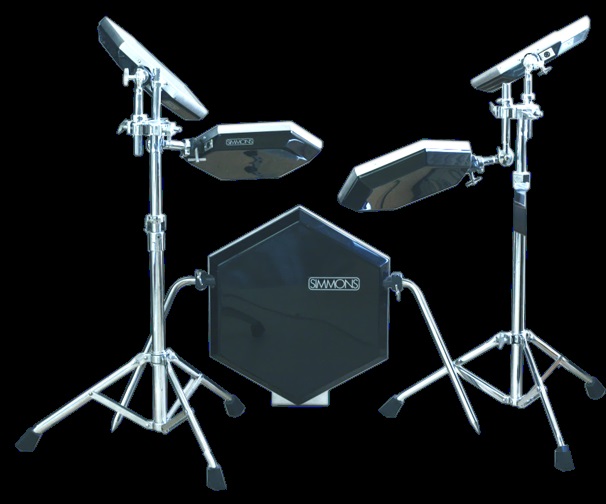






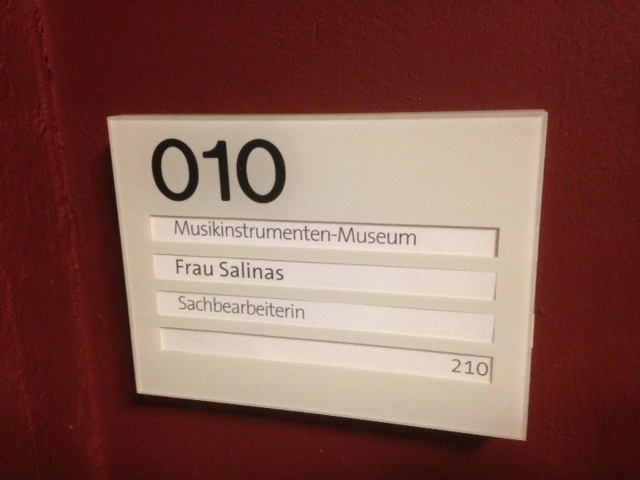
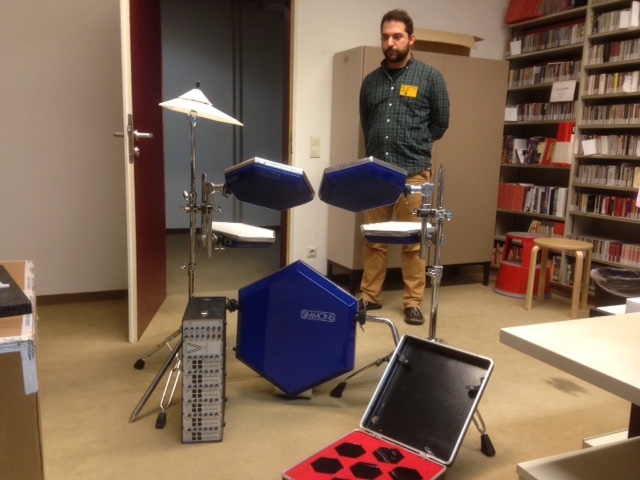

































 Research shows early math achievement predicts later academic achievement and future earnings. Strong math skills are crucial for career sectors like technology, finance, and data science.