Tag Archives: workbench

5 Spring Cleaning Tips For Your Garage

Another superbly helpful article from our friends at Hagerty– if you find yourself ‘shuffling’ things around without any real improvements in organization you are not alone. Read on……
Kyle Smith

Spring time means cleaning time?

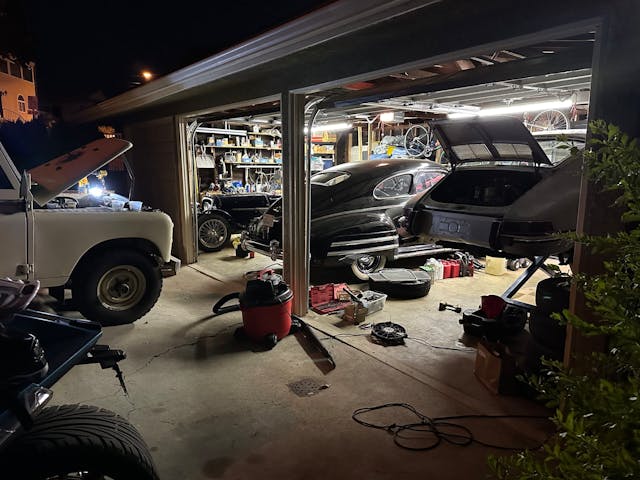
Spring cleaning is a concept that has existed for centuries. It’s the annual reminder to take personal stock of what we have, what we need, and what might need a little bit of organization or clean-up. Whether you take it seriously or not, spring cleaning is something worth at least trying if your garage is also a workshop or DIY space for your automotive habits. Make your annual cleanup better than ever with these five tips, straight from my overflowing and disorganized garage, direct to yours.

Beware of the organization trap
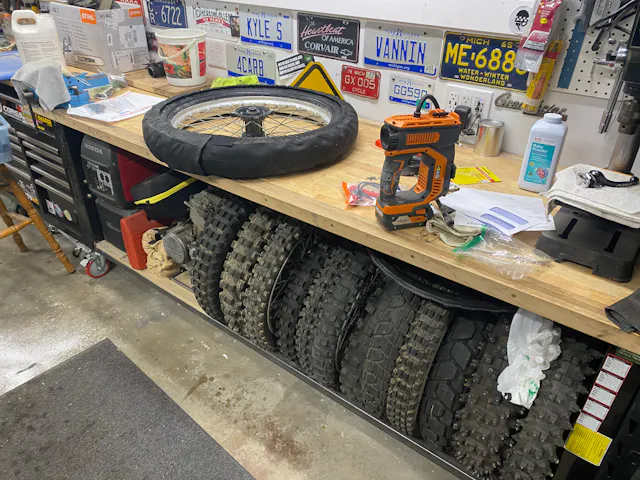
mounting ice tires XR250R Kyle's Garage
I think I might have a tire problem.Kyle Smith

When I was young, I would spend the occasional Saturday morning piddling around the garage with my father, who described the time as “organizing,” but if I snuck upstairs for a mid-morning snack, my mother would ask how dad was doing “shuffling his shit.” I spend a lot of my time shuffling my shit, so I guess that might be genetic. Perhaps you got that same gene.

If you do, be warned. We are the particularly gifted type who regularly put five pounds into the 10-pound bag—often without drama. The bag is not a literal bag here, but instead the area on a shelf or under a workbench. Packing things in more tightly is technically organizing, but it does not make it easier to get work done. Spending time unburying a part you now need but know is tucked behind a bunch of other things is still a waste of time. Organizing should make things easier to retrieve and use, not just allow you to fit more into the same space.

Be honest, are you actually gonna get to that?
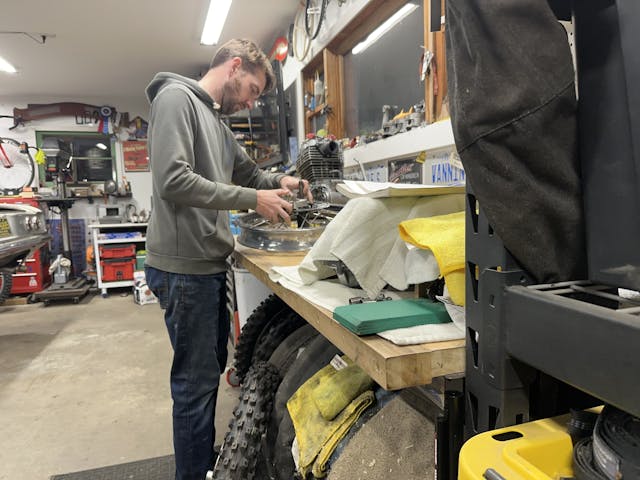
workbench height demonstration Kyle's garage
Maybe we don’t talk about how long the project hiding under that towel has been sitting there…Kyle Smith

Spring cleaning might be about returning your storage bench to a workbench, but it is also prime time to take stock of how much time you have against how many projects you have. This doesn’t have to be about getting rid of things. Instead, consider keeping the priorities up front and putting in a little extra effort to pickle and store the long-term projects better. This ensures that when you do get to them, they are how you left them—not a mismatched pile of parts that has been shuffled five times in three years, that’s also starting to rust.

Think forward

While most of the thinking in the garage is very present-focused, it’s also important to think about the future and what projects might be coming up. Are there some things in the trash pile that would be useful for that project? A few things worth hanging onto just a little bit longer?

It can be easy to simply default to “throw everything away” or “keep everything.” Resist this urge and instead look at the discoveries you make while spring cleaning and honestly assess them against the to-do list or calendar that helps keep track of the projects and tasks you have on the docket. Some make sense to keep and keep track of due to an upcoming task. Let this help guide your selection of what stays and what goes.

Take out the trash
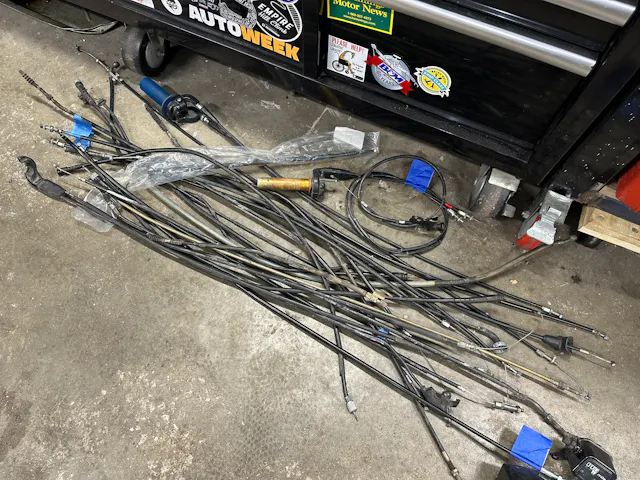
Motorcycle cables on garage floor
Every used cable I’ve taken off a project bike.Kyle Smith

It sounds simple, but actually throwing things away is tough. During an annual clean-out, a new pile will likely form in the garage, full of bits and pieces amassed during the colder months that you had every intention to throw out. It’s important to actually follow through.

The struggle—for me at least—is often that items in the trash pile do still have some small perceived value. For example, nearly every motorcycle I bring into the garage gets new control cables in the interest of safe operation. Some of the cables I pull off other bikes are still functional, just in less-than-desirable shape. Perfect spares, right? Yet I can easily find myself keeping all the cables “just in case,” which means I have a trash pile by a different name.

Create homes, not spots
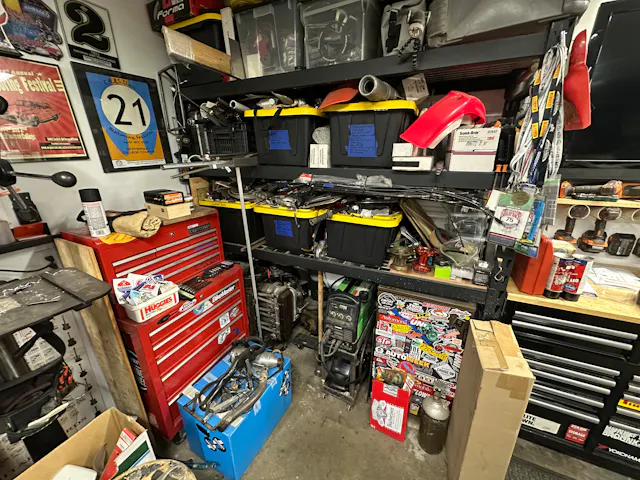
parts storage Kyle's garage
A lot of parts, a little organization.Kyle Smith

Organizing is hard. Putting things down is easy. Be careful not to fall back into just piling things together. Instead, take the time to catalog—even if only mentally—the parts and pieces as they appear from the depths of disorganization. This holds for tools also; the items that get rare usage might end up in the same spot, but it’s not a good spot for them to live. Spring cleaning is the time to look at workflow and space to put things where they should be, rather than a place where they fit.

Here’s an example: The vise for my drill press often ends up living on top of a toolbox, meaning it has to move each time I open the box and again when I go to use the drill press. This spring, it’s going to get a better home.

Spring cleaning should feel refreshing when complete. That can be tough in a garage where we are often forced to confront the progress (or lack thereof) on a project each year. Whether life was good to us or not, taking a moment this spring to assess and get back on track can be powerful. If you have tips or tricks you use for your spring cleaning, be sure to leave them in a comment below.

For the Silo, Kyle Smith.

7 Tools Hiding In Plain Sight On Most Workbenches

Let’s face it you still misplace your tools from time to time don’t you?

Tools have a habit of disappearing in many shops. Set one down and look away for a moment, and poof! it jumps into an alternate dimension. That happens enough to be a trope, but finding new tools in your shop? Now that’s a wild concept. Could every day be new tool day in your garage? If you know where to look, you’ll probably find these seven.

Funnels

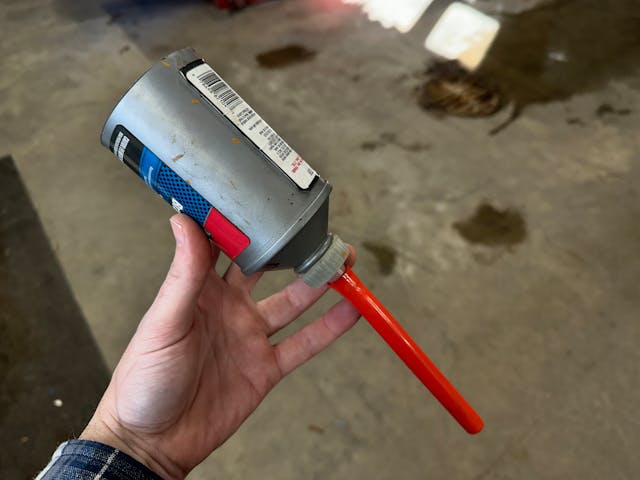
makeshift funnel 1
This was one made for some special task, but I have continued to use it because it’s handy. Kyle Smith

Something that is cheap, plentiful, and all of us have a few of that we can never find when we need them. Or worse, are never clean when we need them. Pouring oils and other chemicals can be messy and annoying at best and dangerous at worst, but funnels help keep the liquids flowing where we want them.

And when looking around your shop, a whole host of items are only one sharp blade away from being perfect funnels: Empty oil containers are the prime example. Cut a quart oil container in half, turn it upside down, and suddenly there is a funnel. Empty soda bottles are a great one to consider while on a road trip.

Breaker Bar Extension

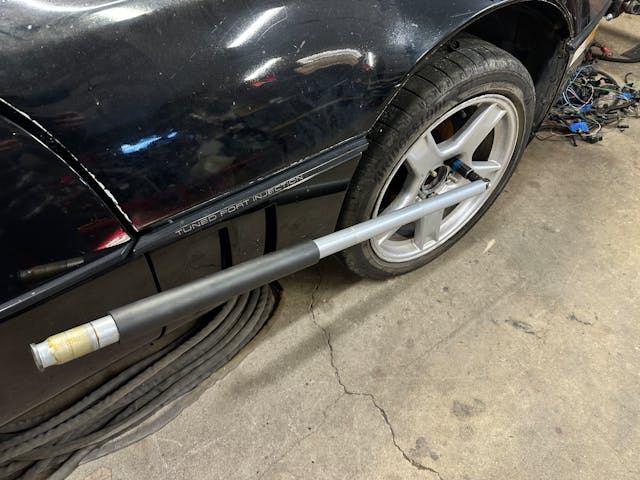
breaker bar exstension jack handle 1
Real luxury with the padded handle. Kyle Smith

Sometimes we just need a little extra oomph to get a stuck lugnut or suspension bolt broken loose, and while battery impact wrenches are getting smaller than ever, there is still a time and a place for an old-school breaker bar. And when the two-foot breaker bar still doesn’t have the leverage? Well, make it longer.

There are a few prime things to grab for this, which are often hovering around in a home shop. The handle of a hydraulic jack is often right nearby, but an old metal fence post or other off-cut of tubing is perfect. Be aware though, extending the handle of a breaker bar can create a lot of force for a little effort, so be careful and maybe even prepared for the head of the breaker bar to fail. Don’t put force on the handle in a way that would harm you should it let go. Of course, if you are at this stage, don’t forget penetrating oil and heat as helpers on your stuck-hardware journey.

Light-Duty Jack Extension

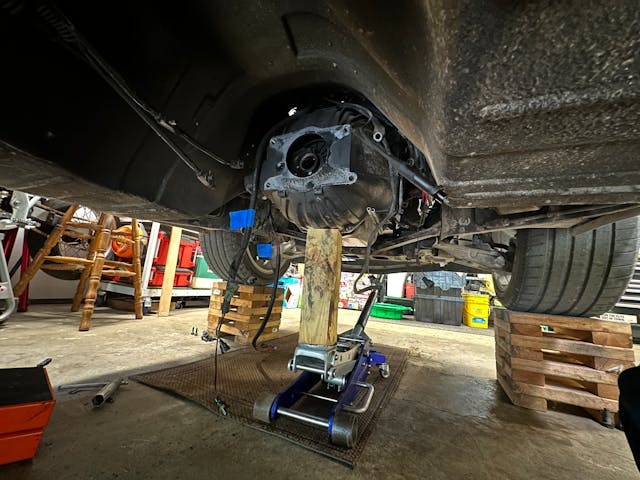
wood supporting transmission
A good chunk of 4 x 4 fencepost can be helpful in supporting things a jack can’t reach. Kyle Smith

Floor jacks give us garage-dwellers superhuman strength to pick up and place our rusting hulks on safe stands for work. Sometimes these same jacks are called in to help support items during a repair or maintenance process. Supporting a transmission or lfting a control arm to release the spring pressure from a ball joint are prime examples.

In these instances, it can sometimes be a balancing act to get the car at the right height for the jack to actually reach and provide assistance. For these situations, there is a simpler solution: the good ol’ chunk of wood. Of course, this is something to be used carefully and specifically, and, as always, you should never get below something supported only by a jack. For the example above, the engine is still in its mounts but this block of wood keeps the whole thing from tipping back; the jack alone wouldn’t have reached high enough.

Small Lathe

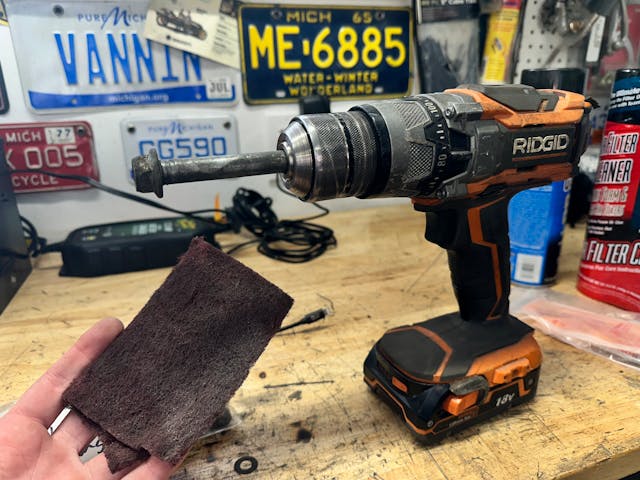
lathe drill 1
Kyle Smith

For anyone who reaches a certain level of DIY, the capabilities of a lathe can unlock a kind of superpower. Few of us have the shop space or power required to install a lathe, though, and thus miss out on most of the benefits that come from having a machine to spin parts and pieces. However, you likely have a tiny lathe on your workbench and don’t even realize it: a drill.

Most corded or battery-powered drills have a three-jaw chuck that can hold up to a 1/2-inch round item. This can be useful for cleaning hardware quickly and easily. Chuck small round parts like caliper slide pins in a drill and turn them slowly, giving a perfect even finish when combined with an abrasive pad or polishing compound.

Drain Pans

KTM front master swap 10
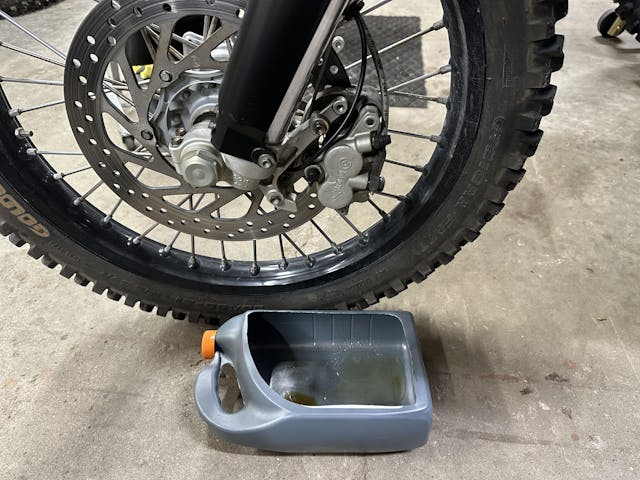
Free, and easy to drain. Kyle Smith

Much like the funnels above, drain or catch pans can be anything—assuming they are well placed. Large sheet drip pans are great for catching the small drops that happen while parked between drives, but smaller catch containers are nice when doing work, and in my shop one that gets heavy use is a coolant jug with the side cut out. This leaves the lid for easy pouring when full, and I have almost a gallon of capacity. This is perfect for draining a differential or a motorcycle crankcase.

Wrench Extender

double wrench trick 3
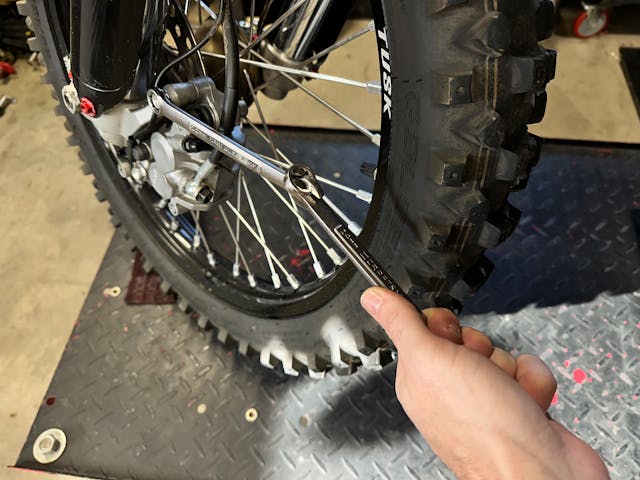
Leverage is always your friend. Kyle Smith

Sometimes all that fits on the bolt you need to get out is a wrench, and while there are some of us who multiple copies of each wrench in various lengths, others have the one set in hand and nothing else. Although a jack handle can be used here as seen in example 2 above, it can be tough to get a pipe that fits over the end of larger wrench sizes or that works well on smaller ones. Instead, look in the same wrench drawer rather than elsewhere.

Grab an open-end wrench a few sizes bigger than the one needed and combine the two to make plenty of leverage. Hooking the two wrenches together does take a little staring and thinking to get right sometimes, but in the end this is often a great solution.

Painting Hangers

home built paint booth Kyle Smith 4
Kyle Smith

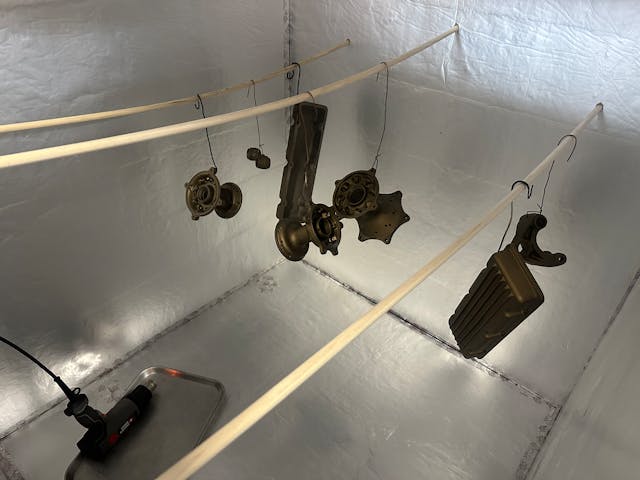
Whether it’s putting a fresh coat of paint on an old part being restored or putting a more durable coat of matching paint on a new part going onto an old car, spraying paint is a common DIY task, and anyone who has done enough of it is familiar with the overspray on fingers and hands that often comes with trying to hold something while spraying. Instead, grab lanyards or wire coat hangers to enable trouble-free suspension of parts, not only for cleaner and more even paint coverage (not to mention cleaner fingers), but also for easy drying.

For the Silo, Kyle Smith/ Hagerty.